
International Research Journal of Engineering and Technology (IRJET) e-ISSN: 2395-0056
Volume: 13 Issue: 01 | Jan 2026 www.irjet.net p-ISSN: 2395-0072
International Research Journal of Engineering and Technology (IRJET) e-ISSN: 2395-0056
Volume: 13 Issue: 01 | Jan 2026 www.irjet.net p-ISSN: 2395-0072
Dr. K.L. Senthilkumar1, V.Mugilan2, K.Munirathnam3, R.Muthalagi4
1, Principal, Sri Vijay Vidyalaya College of Pharmacy, Dharmapuri, Tamil Nadu (India) 2, 3, 4, B. Pharm, Students, Sri Vijay Vidyalaya College of Pharmacy, Dharmapuri, Tamil Nadu (India)
Abstract:The present study focused on the development and evaluation of a topical gel containing banana pseudo stem sap for wound-healing purposes. The sap was formulated using a Carbopol gel base and assessed for physicochemical characteristics and antimicrobial efficacy. The results demonstrated good stability and notable antibacterial activity, validating its traditional application in wound care.
Methods: Fresh sap was obtained from the Poovan variety of Musa paradisiaca, filtered, and stabilized before formulation. The stabilized sap was incorporated into a Carbopol 940 gel base using appropriate pharmaceutical excipients. The formulated gel was evaluated for physicochemical parameters including appearance, pH, viscosity, and homogeneity. Antimicrobial efficacy was determined by the agar well diffusion method against Staphylococcus aureus and Escherichia coli Microbial quality was assessed through microbial limit testing in accordance with the Indian Pharmacopoeia.
Conclusion: The findings indicate that banana sap can be effectively formulated into a stable topical gel exhibiting notable antimicrobial activity. These results validate its traditional use in wound healing and suggest that the formulation holds promise as a safe, economical, and natural herbal wound-care product, meriting further pharmacological and clinical investigations.
Keywords: Banana sap, topical gel, herbal formulation, wound healing, antimicrobial activity
INTRODUCTION
Traditional medicinal practiceshavelong beenemployedforthetreatmentof woundsandskindisorders,particularlyin developing regions where herbal remedies continue to serve as a primary source of healthcare. Wound healing is a multifaceted physiological process involving stages such as inflammation, tissue proliferation, and remodelling. The presence of microbial infection can significantly impair this process, highlighting the importance of topical therapeutic agents that possess both antimicrobial and protective properties. In recent years, herbal formulations have gained increasedinterestduetotheirperceivedsafety,cost-effectiveness,andwidespreadculturalacceptance.
Banana (Musa paradisiaca, Family: Musaceae) is a commonly cultivated plant in tropical and subtropical climates and holdsaprominentplaceintraditionalIndianmedicine.Differentpartsoftheplant includingthefruit,leaves,roots,and pseudo stem are known to exhibit medicinal properties. The sap extracted from the banana pseudo stem has been traditionallyusedforwoundtreatment,particularlyforcontrollingbleedingandenhancingtissuerepair. Ethnomedicinal evidence suggests that banana sap possesses antimicrobial, anti-inflammatory, and haemostatic activities. However, the directuseoffreshsappresentsseveralchallenges,suchasrapidoxidation,limitedshelflife,unpleasantodor,anda high riskofmicrobialcontamination.
To overcome these limitations, it is necessary to incorporate traditional herbal substances into modern pharmaceutical dosage forms that improve stability, safety, and patient compliance. Topical gel formulations are especially suitable for woundmanagementduetotheirnon-greasynature,easeofapplication,extendedresidencetimeatthesite ofaction,and compatibilitywithaqueousherbalextracts.Despitethetraditionalimportanceofbananasap,scientificdocumentationon its formulation into a stable topical gel and systematic evaluation is scarce. Hence, the present study aimed to develop a banana sap–based topical gel and to assess its physicochemical properties, antimicrobial efficacy, and microbial quality, therebyprovidingscientificsupportforitstraditionalwound-healingapplications.
International Research Journal of Engineering and Technology (IRJET) e-ISSN: 2395-0056
Volume: 13 Issue: 01 | Jan 2026 www.irjet.net p-ISSN: 2395-0072

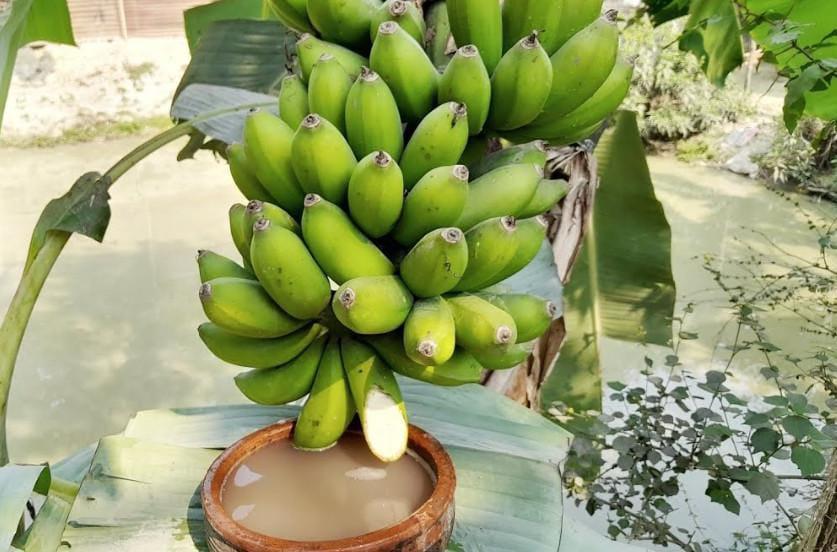
Taxonomical classification:
Kingdom: Plantae
Division: Angiosperms
Class:Monocotyledonae
Order:Zingiberales
Family: Musaceae
Genus:Musa
Vernacular Name:
English: Banana
Tamil: PoovanPazham
Malayalam: PoovanPazham
Telugu: PoovanArati
Kannada: PoovanBale
Hindi: Kela
MATERIALS AND METHODS
Freshbananapseudostemsapservedastheactiveherbalingredientintheformulation.Carbopol940,glycerin,propylene glycol,triethanolamine(TEA),andmethyl paraben wereobtainedfrom reputablesuppliersandwereofanalytical grade. Microbiological media, including nutrient agar, Mueller–Hinton agar, and Sabouraud dextrose agar, along with sterile normal saline, were also of analytical grade. All other chemicals and reagents used in the study met analytical-grade standards.
International Research Journal of Engineering and Technology (IRJET) e-ISSN: 2395-0056
Volume: 13 Issue: 01 | Jan 2026 www.irjet.net p-ISSN: 2395-0072
Freshsapwasobtainedbymakinganincisioninthebanana pseudostemandcollectingtheexudateinasterilecontainer. The sap was initially passed through muslin cloth and subsequently filtered using Whitman filter paper to eliminate fibrousandparticulatematter.Toimprovestability,thefilteredsapwassubjectedtomildheattreatmentinawaterbath maintainedat60–65°Cfor10–15minutes.Thestabilizedsapwasthenallowedto cooltoambienttemperatureandwas usedimmediatelyforgelpreparation.
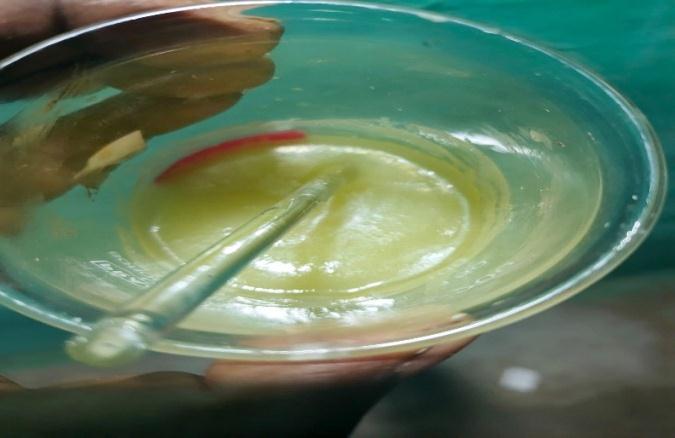
Carbopol940(1.25g)wasgraduallydispersedin40–45mLofdistilledwaterwithcontinuousgentlestirringandallowed to swell for 1–2 hours to ensure complete hydration. Glycerin (7.5 mL) and propylene glycol (5 mL) were then incorporated and mixed thoroughly to obtain a uniform base. Stabilized banana sap (10 mL) was added slowly with constant stirring. Methyl paraben (0.1 g), previously dissolved in warmed propylene glycol, was incorporated as a preservative. Neutralization was carried out by the drop wise addition of triethanolamine until a transparent gel with a skin-friendlypHrangeof5.5–6.8wasachieved.Finally,thevolumewasmadeupto100mLusingdistilledwater.

EVALUATION
Physical Evaluation
The formulated banana sap gel was examinedvisuallyfor colour, clarity,homogeneity,andconsistency. The formulation wasfoundtobesmooth,homogeneous,freefromgrittiness,andnon-greasyinnature,indicatinguniformdispersionofthe activeconstituents.
PH Determination
The pH of the formulated gel was determined using a calibrated digital pH meter at room temperature. About 1 g of gel wasdispersedin distilled waterand the pH was recorded. The pH of thegel wasfoundto be within theskin-compatible range,indicatingsuitabilityfortopicalapplication.
Viscosity Measurement
The viscosity of the banana sap gel was measured using a suitable viscometer at room temperature. The gel exhibited appropriateviscosity,ensuringeasyapplicationandadequateretentionatthesiteofapplication.
Spread ability
Spreadabilityofthegelwasdeterminedbyplacingafixedquantityofgelbetweentwoglassslidesandapplyingaknown weight. The time taken for the slides to separate was noted. The formulation showed good spread ability, which is essentialforuniformapplicationovertheskinsurface.
Homogeneity
The gel was tested for homogeneity by visual inspection after filling into containers. No lumps or aggregates were observed,indicatinguniformdistributionofingredients.
International Research Journal of Engineering and Technology (IRJET) e-ISSN: 2395-0056
Volume: 13 Issue: 01 | Jan 2026 www.irjet.net p-ISSN: 2395-0072
Stability Observation
The formulated gel wasobserved for physical stability atroomtemperature for a short period.No significantchangesin colour,consistency,orphaseseparationwereobserved,indicatingacceptablestabilityoftheformulation.
ANTIMICROBIAL ACTIVITY OF BANANA SAP GEL
Test Microorganisms
Two bacterial strains were selected for the antimicrobial evaluation. Standard cultures of Staphylococcus aurous and Escherichia coli wereprocuredfromtheMicrobialTypeCultureCollection(MTCC),InstituteofMicrobialTechnology, and Chandigarh,India.Theseorganismswereusedthroughoutthestudytoassessantibacterialefficacy.
Antibacterial Assay
i. Preparation of Inoculum
Stockculturesofthetestorganismswerepreservedonnutrientagarslantsat4°C.Forexperimentaluse,aloopfulofeach culturewastransferredasepticallyintotesttubescontainingMueller–Hintonbroth(MHB)andincubatedat37°Cfor24 hourswithoutshaking.TheresultingculturesweredilutedwithfreshMHBtoobtainastandardizedbacterialsuspension withanapproximateconcentrationof2.0×10⁶colony-formingunits(CFU/mL),asdescribedinstandardprotocols.
ii. Preparation of Sterile Swabs
Cotton swabs mounted on wooden or plastic applicators were prepared and sterilized prior to use. Sterilization was achieved either by autoclaving or, in the case of wooden swabs, by dry heat. The swabs were packed in culture tubes, paperwraps,ormetalcontainerstomaintainsterilityuntiluse.
iii. Sterilization of Forceps
Forceps used during the assay were sterilized by immersing them in alcohol followed by flaming to burn off the alcohol beforeeachuse.
Antibacterial Activity by Agar Well Diffusion Method
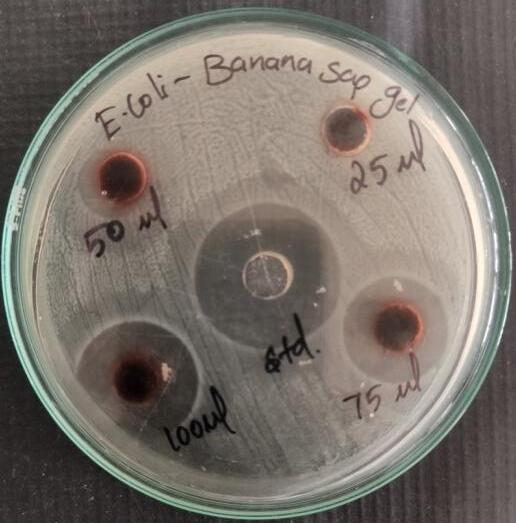
The agar well diffusion technique was employed to evaluate the in vitro antibacterial activity of the banana sap gel. Mueller–Hintonagar(MHA)obtainedfromHi media(Mumbai,India)wasusedastheculturemedium.Approximately15 mL of molten MHA was poured into sterile Petri plates and allowed to solidify. The surface of the agar was uniformly inoculated with 0.1 mL of the standardized bacterial suspension using sterile swabs and allowed to dry for 5 minutes. Wells were then aseptically bored into the agar, and 20 µL of different concentrations of the test formulation were introduced into the wells. The plates were incubated at 37 °C for 24 hours. Antibacterial activity was determined by measuring the diameter ofthezone of inhibition around eachwell,following NCCLSguidelines (1993). Chloramphenicol discswereusedasapositivecontrol.
Table no: 01 ZONE OF INHIBITION (MM)
S. NO
MICRO ORGANISMS
OF INHIBITION (MM)
International Research Journal of Engineering and Technology (IRJET) e-ISSN: 2395-0056
Volume: 13 Issue: 01 | Jan 2026 www.irjet.net p-ISSN: 2395-0072
ANTI MICROBIALACTIVITY OF BANANASAPGEL
Staphylococcus aureus
Escherichia coli

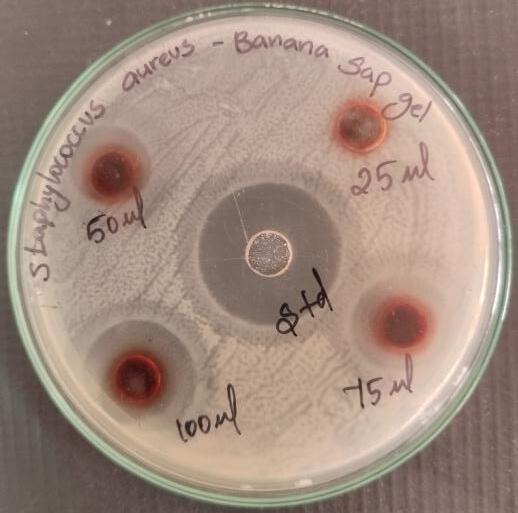

Conclusion
The banana sap–based gel showed notable antibacterial activity against key wound-related microorganisms, demonstrating its ability to suppress bacterial proliferation. The results substantiate the traditional medicinal use of banana sap in wound treatmentandsuggest that theformulation may serve asa safe, economical,and naturallyderived topicalantimicrobialagent.
REFERENCES
Indian Pharmacopoeia. Government of India, Ministry of Health and Family Welfare, Indian Pharmacopoeia Commission,Ghaziabad;Latestedition.
Clinical and Laboratory Standards Institute (CLSI).Performance Standards for Antimicrobial Susceptibility Testing.CLSIdocumentM100.Wayne,PA,USA.
KokateCK,PurohitAP,GokhaleSB.Pharmacognosy.56thed.Pune:NiraliPrakashan;2020.
EvansWC.TreaseandEvans’Pharmacognosy.16thed.ElsevierHealthSciences;2009.
International Research Journal of Engineering and Technology (IRJET) e-ISSN: 2395-0056
Venkatesh S, Reddy GD, Reddy BM. Antimicrobial activity of plant extracts used in traditional medicine. Indian JournalofPharmaceuticalSciences.2008;70(2):286–289.
PattanayakP,BeheraP,DasD,PandaSK.OcimumsanctumLinn.Areservoirplantfortherapeuticapplications:An overview.PharmacognosyReviews.2010;4(7):95–105.
AdebayoEA,IsholaOR,TaiwoOS,MajolagbeON,AdekeyeBT.Evaluations of antimicrobial properties of extracts of banana(Musaspp.).JournalofAppliedSciencesResearch.2009;5(10):1281–1285.
Volume: 13 Issue: 01 | Jan 2026 www.irjet.net p-ISSN: 2395-0072 © 2026, IRJET | Impact Factor value: 8.315 | ISO 9001:2008 Certified Journal | Page481