International Research Journal of Engineering and Technology (IRJET)
e-ISSN: 2395-0056
Volume: 13 Issue: 05 | May 2026
p-ISSN: 2395-0072
www.irjet.net
Federated Learning for Privacy-Preserving Systems Anjana Bala1, Kanchan Jyoti2 1Assistant Professor, Dept. of CSE, SBSSU Gurdaspur,Punjab,India 2Assistant Professor, Dept. of CSE, SBSSU Gurdaspur,Punjab,India
---------------------------------------------------------------------***---------------------------------------------------------------------
Abstract - Federated Learning (FL) has emerged as a
revolutionary paradigm in distributed machine learning that enables multiple clients to collaboratively train models without sharing raw data. This approach is particularly significant in privacy-sensitive domains such as healthcare, finance, and IoT systems. Traditional centralized learning methods expose sensitive data to risks such as breaches, misuse, and regulatory violations. FL addresses these challenges by ensuring data locality and enabling decentralized model training. However, despite its inherent privacy-preserving capabilities, FL is vulnerable to various attacks, including inference and poisoning attacks. This paper provides a comprehensive overview of FL, its architecture, privacy-preserving techniques, challenges, and future directions. A detailed literature survey is presented to highlight recent advancements and research gaps. The study concludes by proposing potential improvements for robust and secure FL systems. Key Words: Federated Learning, Privacy Preservation, Differential Privacy, Secure Aggregation, Distributed Machine Learning
1. INTRODUCTION The rapid growth of machine learning applications has significantly increased the demand for large-scale data. However, centralized data collection raises serious privacy concerns, especially in domains involving sensitive information such as healthcare and finance. Federated Learning (FL) addresses these concerns by enabling decentralized training where data remains on local devices and only model updates are shared(Xie, Koyejo and Gupta, 2019). FL operates on a collaborative framework where multiple clients train local models and send updates to a central server for aggregation(Albshaier, Almarri and Albuali, 2025). This ensures that raw data never leaves the device, thereby preserving user privacy . The paradigm is particularly useful in distributed environments such as edge computing and IoT systems(Wang et al., 2020). Despite its advantages, FL does not guarantee complete privacy. Model updates may still leak sensitive information through inference attacks. Therefore, integrating additional privacy-preserving mechanisms such as differential privacy and secure aggregation is essential(Agrahari, Dinker and Singh, 2026).
© 2026, IRJET
|
Impact Factor value: 8.315
|
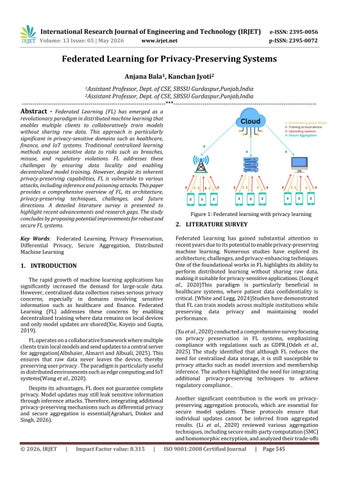
Figure 1: Federated learning with privacy learning
2. LITERATURE SURVEY Federated Learning has gained substantial attention in recent years due to its potential to enable privacy-preserving machine learning. Numerous studies have explored its architecture, challenges, and privacy-enhancing techniques. One of the foundational works in FL highlights its ability to perform distributed learning without sharing raw data, making it suitable for privacy-sensitive applications. (Long et al., 2020)This paradigm is particularly beneficial in healthcare systems, where patient data confidentiality is critical. (White and Legg, 2024)Studies have demonstrated that FL can train models across multiple institutions while preserving data privacy and maintaining model performance. (Xu et al., 2020) conducted a comprehensive survey focusing on privacy preservation in FL systems, emphasizing compliance with regulations such as GDPR.(Odeh et al., 2025) The study identified that although FL reduces the need for centralized data storage, it is still susceptible to privacy attacks such as model inversion and membership inference. The authors highlighted the need for integrating additional privacy-preserving techniques to achieve regulatory compliance . Another significant contribution is the work on privacypreserving aggregation protocols, which are essential for secure model updates. These protocols ensure that individual updates cannot be inferred from aggregated results. (Li et al., 2020) reviewed various aggregation techniques, including secure multi-party computation (SMC) and homomorphic encryption, and analyzed their trade-offs ISO 9001:2008 Certified Journal
|
Page 545