
International Research Journal of Engineering and Technology (IRJET) e-ISSN: 2395-0056
Volume: 12 Issue: 01 | Jan 2025 www.irjet.net p-ISSN: 2395-0072
International Research Journal of Engineering and Technology (IRJET) e-ISSN: 2395-0056
Volume: 12 Issue: 01 | Jan 2025 www.irjet.net p-ISSN: 2395-0072
Naviri Roja 1 , Dr. B. Mahesh Babu 2
1 PG-Scholar, M.Tech-CSE(Artificial Intelligence and Machine Learning), SRGEC, Gudlavalleru, India
2 Associate. Professor, Department of Electrical and Electronics Engineering, SRGEC, Gudlavalleru, India ***
Abstract - Tobacco products contain a complex mixture of chemicalcomponents,withnicotinebeingthemostprominent andaddictivesubstance.Thisstudyaimstoanalyzetheratios of nicotine and other critical components in various tobacco products and evaluate their combined impacts on health and addiction. Using advanced analytical techniques such as gas chromatography-mass spectrometry (GC-MS) and highperformance liquid chromatography (HPLC), chemical profiling was performed on a diverse range of tobacco samples.Thefindingsrevealsignificantvariationsintheratios of nicotine, tar, and secondary additives, highlighting synergisticeffectsthatenhancenicotine'saddictiveproperties. A comprehensive understanding of the chemical dynamics within tobacco products, offering valuable data for public health initiatives, regulatory frameworks, and the development of less harmful alternatives.
Key Words: Gas Chromatography-Mass Spectrometry, HPLC, nicotine, carbonyl compound
1.INTRODUCTION
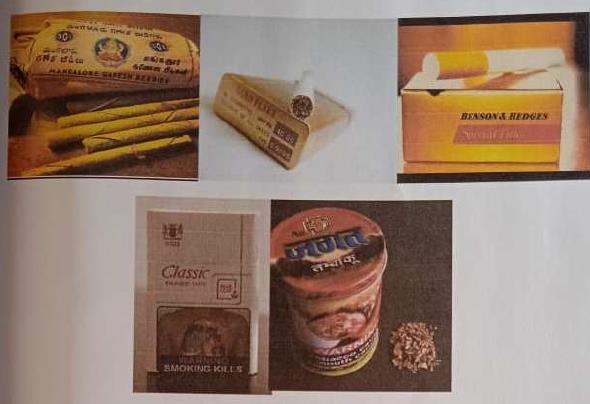
A plant that is grown all over Indonesia, tobacco is categorized as a plantation crop. Cigarettes, chewing tobacco,cigarettes,andotheritemsareallpartoftheglobal tobaccoindustry,whichisoneofthebiggestretailproduct categoriesworldwide[1].However,somedetrimentaleffects on social, health, and environmental situations have been linkedtotobaccocultivation.Thetobaccobusinesscontinues to make a substantial contribution to the Indonesian economyinspiteofthesedetrimentaleffects.Manypeople findworkinthisbusiness,especiallyinrurallocationswhere theremaynotbemanyotherjobpossibilities.Thepublic's concernoverthedetrimentaleffectsoftobaccofarminghas grown,nevertheless,andinitiativesareunderwaytosupport sustainabletobaccoproductionmethodsthatreducethese effects.Wastefromtobaccovaries
It is known that tobacco leaf waste still has a significant nicotine content. The roots of the tobacco plant can potentially release nicotine. Root exudation releases a certainquantityofnicotineintothesoilenvironment.The rhizosphere's release of nicotine enhances the uptake of nitrogen,calcium,iron,andzinc,whichinturnencourages the emergence and vigor of seedlings, the levels of chlorophyll,andthesubsequentgrowthofmaize.According toearlierstudies,nicotine'snitrogencontentisfoundinthe rootsandissubsequentlytakenupbythesoilbeforebeing dispersedthroughouttheentireplant,withtheexceptionof
the seeds. Although not as much as in the leaves, nicotine wasalsopresentinthestem.Additionalgarbage,including agro-industrialwasteandtobaccodust.
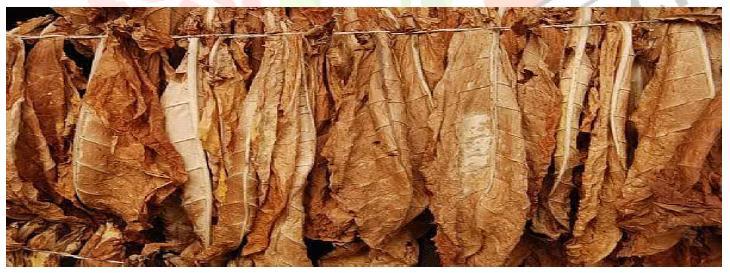
In the nightshade family, tobacco is a robust herbaceous plantthatbelongstothegenusNicotiana.TropicalAmerica wasitsbirthplace,anditiscurrentlybeinggrownallover the world. The Solanaceae family includes the cultivated tobaccoplantNicotianatobacco,whichyieldsingredientsfor medications, cosmetics, and fragrances. Of the alkaloids found in tobacco, nicotine is the mainalkaloid,making up about95%.Nicotineisextractedfromtobaccowaste,which isabundantinChinaandcanbeusedtoboostthevalueof thisotherwiseuselesssubstance.Nicotineisthecomponent of tobacco that has the greatest physiological impact. An imageoftobaccoleavesgivenbelow.
Nicotiana tabacum L (NTL),a tobaccoplant,isa source of nicotine.Thisplantbelongstothenightshadefamily,which alsoincludescocaleaves,tomatoes,potatoes,eggplant,and red peppers[2]. Nicotine is derived from tobacco plants, currently known as Nicotiana tabacum, which bears the nameofJeanNicotodevillemain,theFrenchambassadorto Portugalin1560,whobroughttobaccoseedsandleavesto Parisandpromotedtheiruseinmedicine.Tobaccoandits seeds wereconveyed toAmbassadorNicot fromBrazil by Luis de Gois. The tobacco plant is a widely recognized economiccrop.Between400and500milliontonsoftobacco are produced and consumed in China each year. Furthermore,almost200milliontonsoftobaccowasteare generatedeachyear.
3.
Let'slookatahigh-resolutionphotographI(x,y)thatwas takenbyaUAVoveranagriculturalareawheretobaccois beingplanted.Inthisimage,(x,y)standsforthecoordinates
International Research Journal of Engineering and Technology (IRJET) e-ISSN: 2395-0056
Volume: 12 Issue: 01 | Jan 2025 www.irjet.net p-ISSN: 2395-0072
ofthepox ell.WhenUAVsflyatrelativelylowaltitudes(a few hundred meters), they can capture photos with great spatialresolutions.BecauseUAVphotoshaveagreatlevelof detail,alotofpostprocessingisdonetofurtherexcludethe areasthatarenottobaccoplants.
startingwiththeisolationofanumberofpotentialareasin each picture that displayed signs of having identifiable tobacco plant life. When examining images to determine whethertheycontaintobaccoornontobaccovegetationin each area under inspection, it is important to carefully choose several spots within the image. It reliably and accuratelydividesvariousareasintotwogroups:thosewith healthycropsandthosewithtoxiconesthatarereadytobe eradicatedwithspecializedherbicidesthatwedevelopedat greatexpense,buttheyarewellworthitbecausetheyguard againstharmfulenvironmentalhazardsbroughtoninpart by human activity all over the world, which raises air pollutionlevelstothepointwhereevenairplanescannotfly oversomeareas.
Four important factors must be taken into consideration wheneffectivelyidentifyingpossibletobaccoplantregions.
1.Noise Filtering:Beforeusinganextra-greentechniquefor accurate soil area identification, we first remove any undesirednoisefromourdatausingaGaussiankernelwith optimumvalues.Usingthesemethods,ourmethodfindsthe essential characteristics needed to precisely isolate target sitesinintricateimagerydatasets
(x,y)=I(x,y)*w(x,y),whereIdistheUAVimagethathas beendenoised.
Dimensionsofw(x,y)arem=33;varianceσ2=0.25;and meanμ=0.
2.Soil Region Detection:Soilregionsaretypicallyvisiblein UAV photos. The extra-green method, which is defined as follows,isusedtoeliminatethesoilregionsandpreservethe plantregionsinUAVphotosinordertolessentheinfluence of soil regions: Bpr(X,Y)isequaltoBgr(X,Y)∩Bgb(X,Y).
Igr(x,y)=Ig(x,y)−Ir(x,y)
Bgr(X,V)=1lgr(X,Y)>w1Bgb(X,V)=1lgb(X,Y)>w2
3.Plant Region Extraction
Asspecialistsinourindustry,wehaveobservedafascinating featureintobaccoplants:theirinnerportionstendtoseem brighterthanthesurroundingleafsections.This behavior mayhelpusidentifyappropriatecropgrowthzonesusing UAV photography. We use a number of techniques to accomplishthiseffectivelyandprecisely,suchastranslating our denoised UAV Image Id into LAB color space for improved color calibration and accuracy. The B channel picture (IB) is then extracted because, in contrast to the
brightnessorAchannels,itoffersthebestcontrastbetween the central and leaf areas. We employ morphological reconstruction via erosion through a marker image F to remove any possibility of background interference within ourretrievedIB.
Whenweexaminethemorphologyoftobaccoplants,wefind thatN.tabacumandN.rusticaarethetwomainspeciesthat are frequently utilized for commercial purposes. The physical characteristics of these plants vary greatly, including the height of the plant, the angle at which the leaves affix to the stem, and the morphology of the leaves (i.e., shape, size, thickness, tip form, petiole/sessile attachmentstyle).
Furthermore,adventitiousrootsthatemergefromthemain stem make up the majority of the shallow root networks foundintobaccoplants.Dependingonthespecies,tobacco plantshave distinctive leaf formsandtraits. The leaves of Nicotianarusticaareusuallypetiolate,ovateorcordatein shape,withadarkgreenglossysurface.Theygrowspirally withequalspacingandexhibitheteroblasticdevelopment. Ontheotherhand, Nicotiana tobaccoleavesare primarily sessile.
Resources
Samplesoftobacco,beakers,aBuchnerfunnel,filterpaper,a conicalflask,a250mlseparationfunnel,ameasurecylinder, aweighingscale,astand,awaterbath,Amortarandpestle, test tubes, a test tube stand, tongs, a Bunsen burner, and sodiumfusiontubes.
Methanol, sodium metal, sodium hydroxide, diethyl ether, anhydrous potassium carbonate, picric acid, Sulfuric acid, ferrous sulfate, ferric chloride, phosphoric chloride, potassiumiodide,andhydrochloricacid.
Step1: Aweighingbalancewasusedtoweighonegramof eachofthefivetobaccosamplesthatwerecollected,andthe sampleswerethenputintoabeaker.
International Research Journal of Engineering and Technology (IRJET) e-ISSN: 2395-0056
Volume: 12 Issue: 01 | Jan 2025 www.irjet.net p-ISSN: 2395-0072
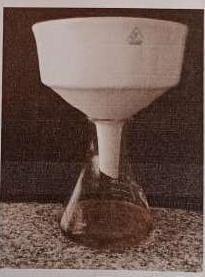
Step 2: FivegramsofNaOHweredissolvedinonehundred milliliters of water to create a 100 milliliter 5% NaOH solution.Thesampleandtheaforementionedsolutionwere combined in the beaker and vigorously swirled for fifteen minutes. The Buchner funnel was then used to filter the mixture.Aftermovingthecigarettestoabeakeroncemore, 30 milliliters of distilled water was added, swirled, and filteredoncemore
Step 3: Allofthefiltratesweregatheredtogether;ifthere were any contaminants, they were re-filtered. After being movedintoaseparatingfunnel,thefiltrateswereextracted using25millilitersofdiethylether.Afterthreeiterationsof theextraction,thefourfiltratesweregatheredinabeaker.
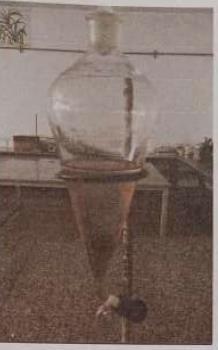
STEP 4: Twogramsofanhydrouspotassiumcarbonatewere used to dry the extract. It was then filtered and left on a water bath to evaporate the ether. Since excessive heat hydrolyzesnicotine,furtherheatwasavoided.

Step 5: Todissolvetheresultingoil,4millilitersofmethanol wereaddedaftertheetherhadevaporated.
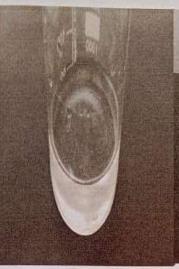
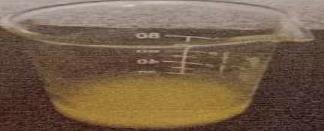
Step 6: Thebeakerwasfilledwith10millilitersofsaturated picricacidsolution.Thecrystalsofnicotinedipicratewere thenprecipitatedbycoolingitinanicebath.
International Research Journal of Engineering and Technology (IRJET) e-ISSN: 2395-0056
Volume: 12 Issue: 01 | Jan 2025 www.irjet.net p-ISSN: 2395-0072
Step 7: Afterlettingthecrystalsdry,theywereweighed.
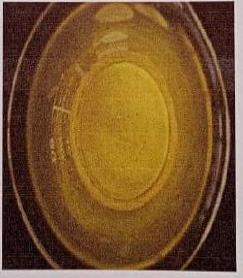
Fig-8: Crystallization
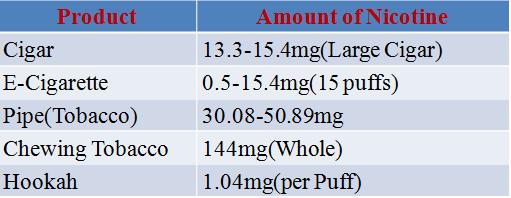
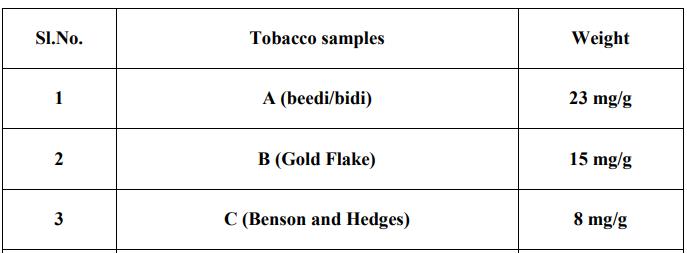
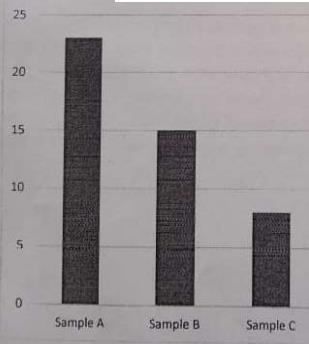
Nicotine Content in Tobacco[4]
Table-1:NicotineContentinTobacco
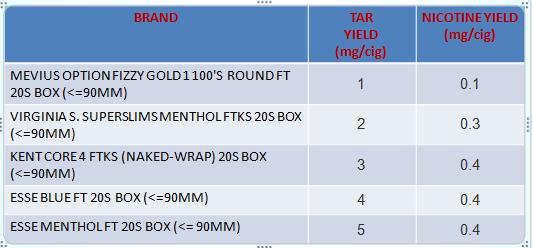
Nicotine-to-Tar Ratio in Tobacco
Table-2:Nicotine-to-TarRatioinTobacco
Evaluation of Nicotine's Quality:
The nitrogen test, or LASSAIGNE'S test
An approximately pea-sized piece of sodium metal was placedinasodiumfusiontubeandheatedgraduallyuntilit melted and produced a gleaming globule. The fusion tube was filled with a little amount of the sample, which was heatedfirstslowlyuntilthereactionwiththesodiummetal stopped, and then vigorously until the fusion tube turned red.Inamortarfilledwith10millilitersofdistilledwater, theredhottubewassubmerged.Filtered,thesolutionwas thengentlysimmeredforfiveminutes.Followingcollection andcooling,thefiltratewasutilizedasthefusionextractor stocksolution.
The IODOPLATINATE TEST is a general alkaloids test: Reagent:98millilitersofwaterweremixedwith2milliliters ofa5%(w/v)solutionofplatinicchlorideand5gramsof potassiumiodide,andthemixturewasthoroughlycleaned
A generic reagent for nitrogenous bases is called Dragendorf's test:
ThereagentWiththeuseofheat,1gofbismuthsubnitrate wasdissolvedin3mLof10Mhydrochloricacid,whichwas then diluted with water to get 20 mL. The mixture was supplementedwith1gofpotassiumiodide.
Examining the color of nicotine :
AnHClsolutioncontainingconcentratedvanillinwasmixed withthesample.
Example : Empty beaker weight (W1 gm) = 35.423 gm Beakerweightplussampleweight(W2gm)equals35.446 gm.
Thesample'smass(W2−W1)=35.446-35.423=0.023gm Itwasdiscoveredthat23mgofnicotinecouldberecovered fromonegramoftobacco.
Quality indices in flue-cured tobacco
Table-3:Qualityindicesinflue-curedtobacco
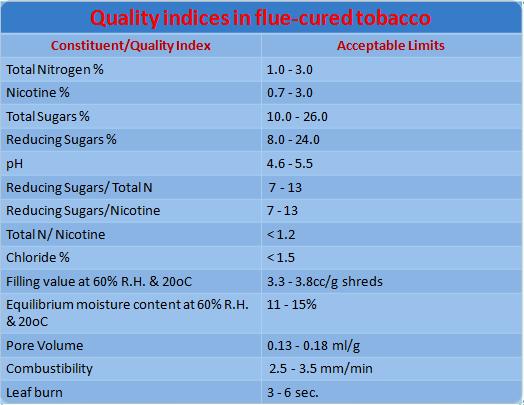
Whenitcomestoproducingtobaccowithapleasingflavor, thequalityoftheleavesisjustasimportantastheiroutput. Features including size, color, texture, and odor are importanttotakeintoaccountwhileevaluatingthequality oftobacco.Tobaccoisgreatlyaffectedbysoilcomposition, culturalcustoms,andcuringtechniques.Thehighestyield came from the conventional curing process. The standard methodofcuringtobaccoleaveswasusedforthisstudy[3].
International Research Journal of Engineering and Technology (IRJET) e-ISSN: 2395-0056
Volume: 12 Issue: 01 | Jan 2025 www.irjet.net p-ISSN: 2395-0072
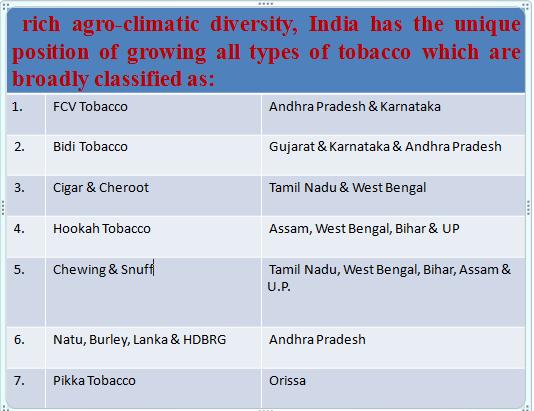
Table-4:richagro-climaticdiversity
A list of tobacco types thatare registered in the system is showninFig-9.

The tobacco variety to be examined is then chosen. Additionally,theTaketabisusedtouploadtheimageofthis species'tobaccoleaf(Fig-10).

To remove detrimental effects from light variations in uploadedphotographs(duetoweather,location,dateand time ofcapture,orientation, etc.),colorcorrectionisdone usinganX-ritechecker.
The ideal curing period for the tobacco leaves was determinedusingtheCCTvalues.ThefollowingEquation3 wasusedtotransformthenumbersintoapercentageQGin ordertomakethemeasiertounderstand
CCTstandsforthedailymeanvalueinEquation3,andideal curingtime(CCTT)istheCCTvalueobtainedwhentheideal curing time is reached. In this investigation, the value of CCTTwasfoundtobe3000K.
Table 5 shows how the correlated color temperature was usedtocalculatethequalitygradevalues
Table-5:correlatedcolortemperaturewithqualityvalues

The calculated CCT and QG values are displayed in the mobileinterface(Fig-11).
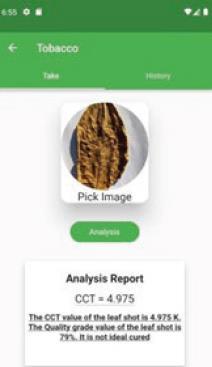
Fig-11 : The calculated CCT and QG values
Fig-12showshowtheaverageCCTvaluevariesbasedonthe daythateachleafsamplewastaken.Thetobaccoleafturns from green to light brown during the curing process, signifyingashiftintobaccoquality.
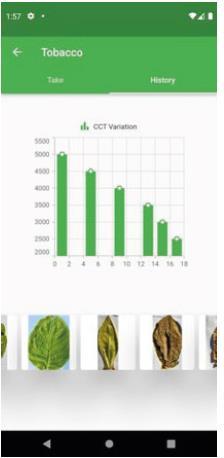
Fig-12 average CCT value varies based on the day that each leaf sample
International Research Journal of Engineering and Technology (IRJET) e-ISSN: 2395-0056
Volume: 12 Issue: 01 | Jan 2025 www.irjet.net p-ISSN: 2395-0072
5. CONCLUSIONS
Important details regarding the general caliber of the tobacco product can be gleaned from the physical characteristics of tobacco leaves[5]. One important determinant of tobacco leaf quality is color. Because fully grownleavesaretypicallythoughttobeofgreaterquality thanimmatureleaves[6],thecoloroftheleavesmightreveal informationabouttheplant'smaturity.Inadditiontocolor, otherphysicalattributesincludingsurfacetexture,size,and shapecanalsoprovideimportantdetailsaboutthequalityof tobacco leaves[7]. Higher-quality leaves are thought to be more uniform in size and shape than irregular or inconsistentones.Physicalcharacteristicscanbehelpfulin assessingthegeneralqualityoftobaccoleaves,howeverit's crucial
[1]Ren,N.,andTimko,M.P.(2001)AFLPanalysisofgenetic polymorphism and evolutionary relationships among cultivated and wild Nicotiana species, Genome, 44(4), 559-571.
[2] Lawson, N. S. (2015) from https:// www.slideshare.net/imtfuzz/introduction-aboutnicotine.
[3]https://ctri.icar.gov.in/
[4]
https://www.govtlab.gov.hk/en/our_work/publications/tar _and_nicotine_report.html
[5]Kurt, D., 2021. Impacts of environmental variations on quality and chemical contents of oriental tobacco. ContributionstoTobacco&NicotineResearch,30(1):5062.
[6]Bisong, E., 2019. Building Machine Learning and Deep Learning Models on Google Cloud Platform: A ComprehensiveGuideforBeginners.A-Press,NewYork.
[7]Zhenbo, L., Ruohao, G., Meng, L., Yaru, C., Guangyao, L., 2020.Areviewofcomputervisiontechnologiesforplant phenothyping.ComputersandElectronicsinAgriculture, 176:105672