
International Research Journal of Engineering and Technology (IRJET) e-ISSN: 2395-0056
Volume: 13 Issue: 05 | May 2026 www.irjet.net p-ISSN: 2395-0072
International Research Journal of Engineering and Technology (IRJET) e-ISSN: 2395-0056
Volume: 13 Issue: 05 | May 2026 www.irjet.net p-ISSN: 2395-0072
Ar. Mukesh Kumar1 , Pl. Arundhatee Mishra 2
1Master of Urban and Regional Planning Faculty of Architecture and Planning, Dr. A.P.J Abdul Kalam Technical University Lucknow, India
2(Assistant Professor) Faculty of Architecture and Planning, Dr. A.P.J Abdul Kalam Technical University Lucknow, India
Abstract - Urban redevelopment initiatives frequently result in the displacement of economically disadvantaged communitieslivingininformalsettlements.Rehabilitationand Resettlement (R&R) policies are designed to offer organized housing and enhanced living conditions for those who have beendisplaced.TheSabarmatiRiverfrontDevelopmentProject in Ahmedabad stands as one of India’s most significant urban redevelopment efforts, which involves the relocation of thousands of slum households situated along the riverbanks. This research evaluates the housing rehabilitation facilities provided to displace urban poor families as part of the Sabarmati Riverfront Project. The assessment focuses on various factors including housing quality, water supply, sanitation, transport accessibility, livelihood opportunities, and the social infrastructure present at the rehabilitation sites. The study utilizes both primary and secondary data sources, such as government reports, published literature, satellite imagery, and field observations. The results reveal that while there have been improvements in permanent housing and infrastructure, significant challenges persist regarding access to livelihoods, transportation costs, social integration,andmaintenanceissues.Thestudyconcludeswith recommendationsforplanningthatpromotesustainableand inclusive rehabilitation in urban redevelopment projects.
Key Words: Rehabilitation and Resettlement, Sabarmati Riverfront, Urban Poor, Ahmedabad, Housing, Urban Planning, Slum Relocation, Infrastructure
1. INTRODUCTION
The rapid urbanization occurring in Indian cities has intensified the demand for land, infrastructure, and environmentalresources.Urbanredevelopmentinitiatives, including riverfrontdevelopment,metrorail systems,and smart city projects, often necessitate the clearance of informalsettlementslocatedonpublicland.Theseinitiatives frequently result in the displacement of low-income communities that rely on central city areas for their livelihoods.TheSabarmatiRiverfrontDevelopmentProject in Ahmedabad was launched to reclaim the riverfront, enhancefloodcontrol,createpublicspaces,andfosterurban development. This project required the relocation of thousands of slum households living along the Sabarmati River.AsreportedbytheSabarmatiRiverfrontDevelopment
Corporation Limited (SRFDCL), over 10,000 households were rehabilitated as part of this initiative.Although the project is largely praised for its contributions to environmentalandurbantransformation,thereareconcerns regardingthequalityofresettlement,socialexclusion,and thedisruptionoflivelihoodsforthedisplacedcommunities. This research evaluates the effectiveness of the rehabilitationhousingfacilitiesofferedundertheSabarmati Riverfront Resettlement Program from the perspective of urbanplanning.
To evaluate the housing facilities for rehabilitation and resettlementofferedtourbanpoorfamiliesdisplacedbythe SabarmatiRiverfrontDevelopmentProjectinAhmedabad.
To evaluate housing and infrastructure amenities at rehabilitationlocations.Toreviewtheavailabilityofwater supply,sanitation,transportation,andsocialinfrastructure. Toinvestigatetheeffectsonlivelihoodsfollowingrelocation. Topinpointsignificantplanningchallengesinrehabilitation communities. To suggest planning strategies for inclusive resettlement.
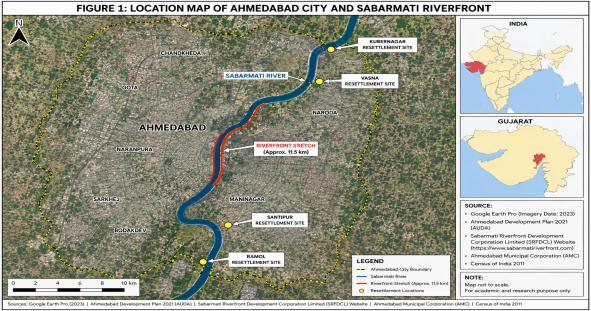
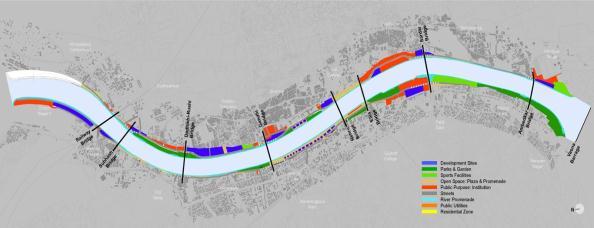
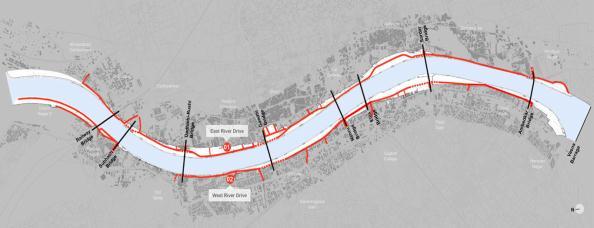
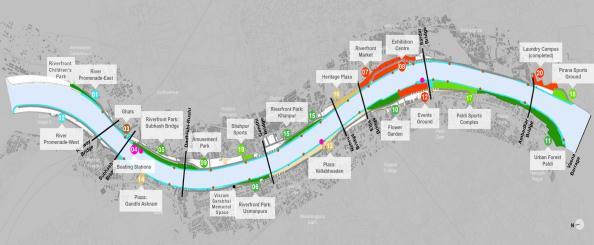
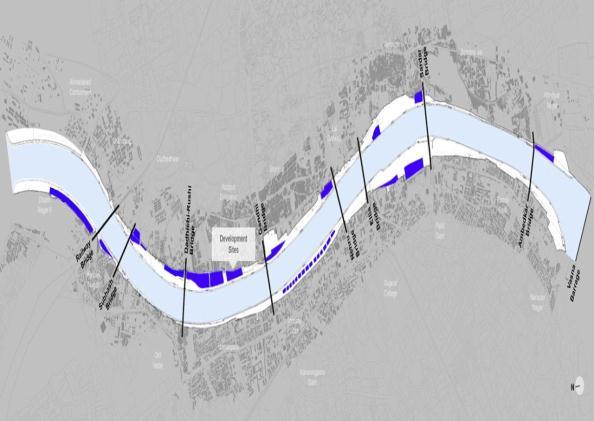
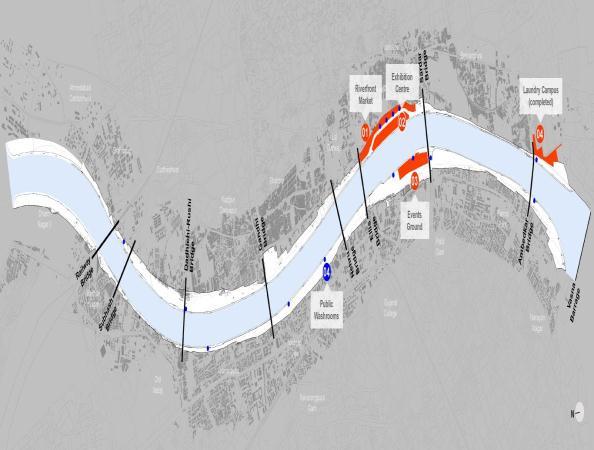
OverviewoftheSabarmatiRiverfrontProjecttheSabarmati RiverfrontDevelopmentProjectwasinitiatedalongthebanks oftheSabarmatiRiverinAhmedabad,Gujarat.Ahmedabad The objectives of the project included: Minimizingfloodriskreclaiminglandalongtheriverfront Creatingpublicspacesenhancingenvironmentalquality Encouraging tourism and urban growth the project spans roughly11.5kmalongbothsidesoftheriver.
International Research Journal of Engineering and Technology (IRJET) e-ISSN: 2395-0056
Volume: 13 Issue: 05 | May 2026 www.irjet.net p-ISSN: 2395-0072
2.5 General Facilities
2.6
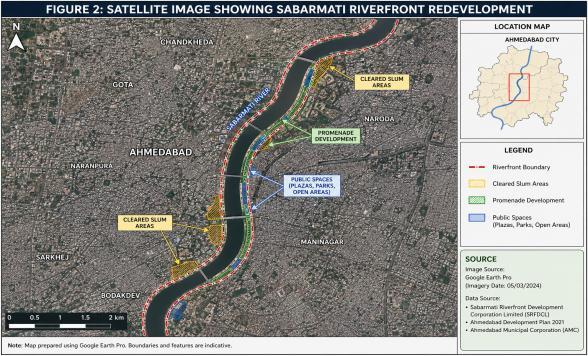
Theinitiativefocusedontherelocationofslumcommunities located along the riverbanks. According to SRFDCL, over 10,000householdshavebeenrehabilitatedthroughofficial housing programs.Multiple rehabilitation sites were establishedwithintheboundariesofAhmedabadcity.
3. LITERATURE REVIEW
Author Study Focus Key Findings
RenuDesai (2012) Slum resettlement politics Peripheral relocation affects livelihoods
Joshi & Maheshwari (2016)
R&Rassessment Inadequate inclusion of displaced communities
SRFDCLReports Rehabilitation housing Permanent housing provided to affectedfamilies
International Research Journal of Engineering and Technology (IRJET) e-ISSN: 2395-0056
Volume: 13 Issue: 05 | May 2026 www.irjet.net p-ISSN: 2395-0072
IIMAStudy Urban displacement Large-scale displacement and livelihood risks
Sources suggest that relocation locations are frequently situatedataconsiderabledistancefromjobhubs,leadingto higher transportation costs and increased social vulnerability.
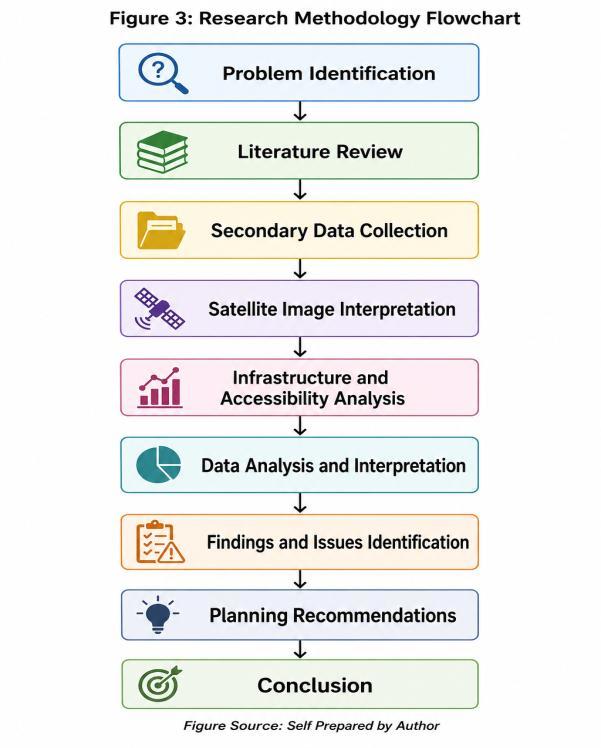
4.1 Data Collection
Theresearchreliessolelyonsecondarydataobtainedfrom government reports, published academic papers, satellite images, planning documents, and online databases. There wasnoprimarysurveycarriedoutforthisstudy.
4.2 Secondary Data Sources
Sabarmati Riverfront Development Corporation Limited (SRFDCL)providesupdates
AhmedabadMunicipalCorporation(AMC)presentsfindings CensusofIndia2011data AhmedabadUrbanDevelopmentAuthority(AUDA)planning documents
Publishedacademicjournalsandresearcharticles GoogleEarthProsatelliteimages MinistryofHousingandUrbanAffairs(MoHUA)publications
4.3 Survey Parameters
Parameter Indicators
Housing Ventilation, size of the dwelling
WaterSupply Qualityandavailability
Sanitation
Drainage,toilets
Accessibility Connectivity to public transport
Livelihood Accesstoemployment
SocialInfrastructure Healthcarecenters,schools
5. DATA ANALYSIS
5.1 Housing Condition Assessment
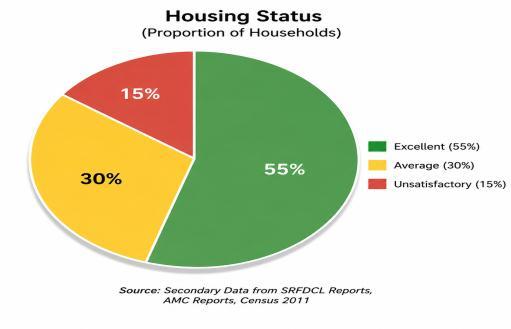
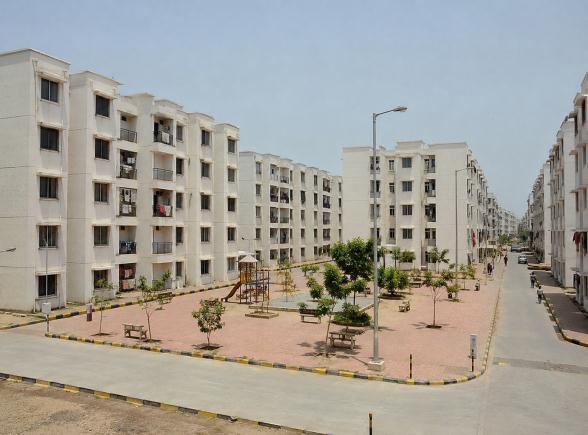
Figure 4: Rehabilitation Housing Blocks at Resettlement Site
5.2 Water Supply and Sanitation
Facility Status
WaterSupply Accessible but inconsistent
HouseholdToilets Operational
Drainage
Functioningpartially SolidWasteCollection Average
International Research Journal of Engineering and Technology (IRJET) e-ISSN: 2395-0056
Volume: 13 Issue: 05 | May 2026 www.irjet.net p-ISSN: 2395-0072
Findings
Water supply disruptions were noted in multiple rehabilitation colonies. Drainage obstructions and inadequatemaintenanceimpactedsanitationstandards.Solid waste collection services existed but were not entirely effective.
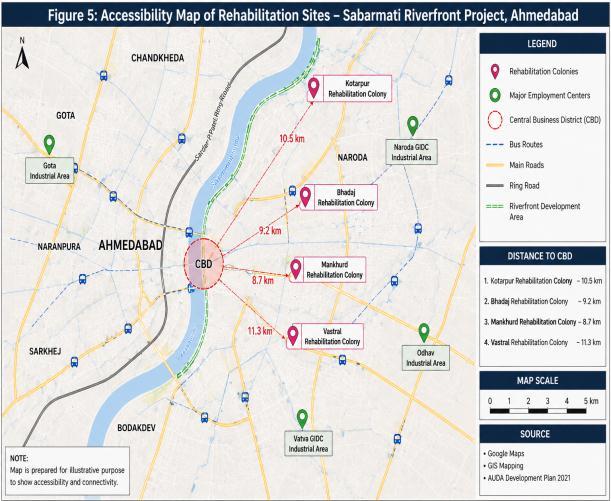
5.3 Transportation Accessibility
Parameter
Observation
Bus Connectivity Restricted
Distance from CBD Significant Travel Cost Elevated
Findings
Therelocationofperipheralareashasledtoanincreasein daily transportation costs.Long distances of travel have impactedinformalworkersandthoseearningdailywages. Access to public transport continues to be insufficient at variousrehabilitationlocations.
5.4 Livelihood Impact
Effect Insight
JobLoss ModeratetoHigh ImpactonInformalSector Significant EmploymentofWomen Decreased
Findings
Numerous households that were relocated encountered disruptions in their livelihoods following the move.The rehabilitation sites on the outskirts limited access to informal job opportunities.Women in the workforce dealt withchallengesrelatedtomobilityandaccessibility.
Relocation of displaced households to peripheral areas
RisingcostsoftransportationLimitedaccesstosustainable livelihoods Inadequate upkeep of public infrastructure Restricted social integration Issues with drainage and sanitationInsufficientlocaljobopportunities
7.1 Comprehensive Rehabilitation Planning
Rehabilitationlocationsoughttobeestablishedclosetojob andcommercialhubstominimizedisruptiontolivelihoods
7.2 Integrated Land Use Development
Commercial zones, local markets, and livelihood areas shouldbeincorporatedwithinrehabilitationcommunities.
7.3 Enhancement of Public Transport
Affordable and effective public transport links should be enhanced between rehabilitation communities and key employmenthubs.
7.4 Provision of Social Infrastructure
Healthcare services, educational institutions, parks, and communityareasshouldbecreatedwithinashortwalking distance.
7.5 Involvement of the Community
Residents should engage in maintenance and planning activitiestofosterlong-termsustainability.
TheSabarmatiRiverfrontDevelopmentProjecthasgreatly alteredtheurbanenvironmentofAhmedabadandenhanced the ecological conditions along the riverfront.The rehabilitationinitiativeofferedformalhousingsolutionsto displacedlow-incomefamiliesandimprovedtheiraccessto essential infrastructure. Nevertheless, numerous socioeconomic issues persist, especially concerning access to livelihoods, transportation costs, and social cohesion.This studyemphasizesthenecessityforacohesiverehabilitation strategy that merges housing, transportation, job opportunities, and social infrastructure to promote sustainableandinclusiveurbangrowth.
IwouldliketoexpressmydeepappreciationtoAsst.Prof. Ar.ArundhateeMishra,thesubjectfacultyforResettlement
International Research Journal of Engineering and Technology (IRJET) e-ISSN: 2395-0056
Volume: 13 Issue: 05 | May 2026 www.irjet.net p-ISSN: 2395-0072
and Rehabilitation in the Department of Architecture and Planning at Dr. A.P.J. Abdul Kalam Technical University, Lucknow.Herinvaluableguidance,unwaveringsupport,and academic encouragement were instrumental during the preparation of this research paper.Her insightful recommendations, motivation, and expertise in urban planningandrehabilitationstudiessignificantlyaidedinthe successfulcompletionofthiswork.Ialsowishtoconveymy heartfelt thanks to the Department of Architecture and Planning at Dr. A.P.J. Abdul Kalam Technical University, Lucknow,forofferingtheessentialacademicresourcesand conducive learning environment necessary for this study.Additionally, I acknowledge the contributions of variousgovernmentagencies,publishedjournals,planning reports, and online resources, including SRFDCL, AMC, CensusofIndia,GoogleEarthPro,andresearchpublications, which provided crucial secondary data and literature support for this research.Finally, I am thankful to all individuals and institutions whose indirect support and published works played a role in the completion of this study.
1) Sabarmati Riverfront Development Corporation Limited(SRFDCL)
2) AhmedabadMunicipalCorporation(AMC)
3) Joshi, A. & Maheshwari, N. (2016). The Sabarmati Riverfront Development Project: The Issue of ResettlementandRehabilitation.
4) Renu Desai (2012). Riverfront Development and Slum ResettlementinAhmedabad.
5) CensusofIndia2011
6) CensusofIndia
7) Ministry of Housing and Urban Affairs (MoHUA). MoHUAOfficialWebsite
8) AhmedabadUrbanDevelopmentAuthority(AUDA) DevelopmentPlanReports
9) Desai, R. (2014). Managing the Urban Poor: Riverfront Development, Slum Resettlement, and the Politics of Inclusion in Ahmedabad. Economic andPoliticalWeekly.
10) Mathur, O.P. (2009). Urban Poverty and RehabilitationPoliciesinIndia.NationalInstituteof PublicFinanceandPolicy,NewDelhi.
11) Dupont, V. (2008). An Evaluation of Slum DemolitionsinDelhisincethe1990s.Economicand PoliticalWeekly.
12) Patel,S.,Baptist,C.,&D’Cruz,C.(2012).Knowledge isPower–InformalCommunitiesClaimTheirRight to the City through SDI and Community-led Enumerations. Environment and Urbanization Journal.
13) Government of India (2013). The Right to Fair Compensation and Transparency in Land Acquisition, Rehabilitation, and Resettlement Act, 2013.
14) AhmedabadUrbanDevelopmentAuthority(AUDA). DevelopmentPlan2021Reports.
15) Centre for Urban Equity (CEPT University), Ahmedabad.ResearchonSlumRehabilitationand UrbanDisplacement.
16) Ministry of Housing and Urban Affairs (MoHUA). GuidelinesforPradhanMantriAwasYojana(PMAYU).
17) Sabarmati Riverfront Development Corporation Limited (SRFDCL). Project Reports and RehabilitationDocuments.
18) CensusofIndia(2011).PrimaryCensusAbstract.
19) United Nations Human Settlements Programme (UN-Habitat). (2010). The Right to Adequate Housing.
20) World Bank (2015). Practices in Urban ResettlementandLivelihoodRestoration.
21) Jain, A.K. (2011). Sustainable Urban Planning and SlumRehabilitationinIndia.
22) Sharma,R.&Singh,P.(2018).AssessingtheImpact ofUrbanRehabilitationHousingProjectsinIndian Cities.InternationalJournalofUrbanStudies.
23) NationalInstituteofUrbanAffairs(NIUA).Reports onUrbanHousingandInclusivePlanning.