
International Research Journal of Engineering and Technology (IRJET) e-ISSN: 2395-0056
Volume: 12 Issue: 04 | Apr 2025 www.irjet.net p-ISSN: 2395-0072
International Research Journal of Engineering and Technology (IRJET) e-ISSN: 2395-0056
Volume: 12 Issue: 04 | Apr 2025 www.irjet.net p-ISSN: 2395-0072
Ar.
Sandhya Singh1, Dr. Richa Ankush Pathe2
1PhD Scholar, Faculty of Architecture, RKDF University, Bhopal (M.P.)
2Proffessor, Faculty of Architecture, RKDF University, Bhopal (M.P.)
Abstract: Transport and connectivity are important for the development and accessibility of sports in India. The economic impact of transport infrastructure on sports is extensive, as major events like the Indian Premier League (IPL) and international cricket matches attract thousands of attendees, boosting local economies through tourism, hospitality, and related industries. The construction and maintenance of sports infrastructure create job opportunities and stimulate economic growth. The Union Budget 2024-25 emphasizes government investments in transport and sports infrastructure, highlighting their critical role in India's economic growth. Efficient transport networks, including roads, railways, and air travel, enhance accessibility for athletes, coaches, and fans, facilitating regular training, competitions, and talent scouting. In urban areas, the development of metro lines and bus services has significantly eased commuting to sports facilities, while transport connectivity in rural areas is key to discovering hidden athletic talent. Transport and connectivity also promote social and cultural integration through sports, bringing together people from different regions and backgrounds, promoting unity and a sense of community. Efficient transport networks enable fans to travel and support their teams, creating a vibrant and universal sports culture, especially during national and international events. Despite progress, challenges such as inadequate transport facilities in certain regions and accessibility issues for disabled sports fans persist. Addressing these challenges requires continued investment in transport infrastructure and innovative solutions, such as Geographic Information Systems (GIS), which can enhance sports accessibility by mapping facilities and transport networks, optimizing routes, and planning new infrastructure. In conclusion, transport and sports connectivity are integral to the growth and development of sports in India, enhancing accessibility, driving economic growth, and promoting social and cultural integration. Addressing existing challenges and investing in efficient transport networks will ensure that sports in India continue to grow and achieve new milestones.
Keywords: Transport and connectivity, Sports development, Accessibility, Urban transport, Transport challenges, Disabled accessibility, Geographic Information Systems (GIS)
TheroleoftransportationandconnectivityinshapingthelandscapeofsportsinIndiaisundeniablysignificant.India'sdiverse geography and extensive population present distinct challenges and opportunities in establishing an effective transport networkthatfacilitatessportsdevelopment.Thisnetwork'simportancetranscendsmereconvenience,influencingeconomic advancement,socialcohesion,andtheoverallqualityoflife.Thecountry'svariedterrain,whichincludesmountainousregions, sprawlingurbanareas,andisolatedrurallocales,posesuniquelogisticalhurdles.Awell-functioningtransportsystemhasbeen essentialinovercomingthesegeographicalbarriers,ensuringthatsportsfacilitiesandeventsarereachableforeveryone, irrespective of their location. Athletes hailing from remote villages have particularly depended on dependable transport solutionstoaccesstrainingfacilitiesandcompetitionslocatedinurbancenters.
Withapopulationexceeding1.3billion,thecomplexityoftransportplanninghasintensified,necessitatinginfrastructurethat meetsadiversearrayofneeds,includingthoserelatedtosportstravel.Thisdemandhashighlightedthenecessityforarobust andadaptabletransportnetworkcapableofaccommodatinglargeaudiencesduringsignificantsportingevents.Theinterplay between transport infrastructure and sports development is multifaceted, with one of the most prominent effects being economic.MajorsportingeventssuchastheIndianPremierLeague(IPL)andinternationalcricketmatchesdrawinlarge crowds, generating substantial revenue for local economies. This surge of visitors invigorates various sectors, including tourism,hospitality,andretail,therebycreatingjobopportunitiesandsupportinglocalenterprises.
Investmentsintransportinfrastructureyieldlong-termeconomicadvantages.Enhancedconnectivitydiminishestraveltimes and expenses, facilitating easier access to sports venues and events. This improved accessibility encourages greater participation in sports, both from athletes and spectators, contributing to the expansion of the sports industry and its associatedeconomicbenefits.
Furthermore,transportinfrastructureiscrucialinfosteringsocialandculturalintegrationthroughsports. Sportingevents serveasaplatformforindividualsfromdiverseregionsandbackgroundstounite,cultivatingasenseofcollectiveidentityand nationalpride.Efficienttransportnetworksenablethemovementoffans,athletes,andofficials,ensuringthateveryonecan
International Research Journal of Engineering and Technology (IRJET) e-ISSN: 2395-0056
Volume: 12 Issue: 04 | Apr 2025 www.irjet.net p-ISSN: 2395-0072
engageinandexperiencetheseevents.Duringnationaltournamentsorinternationalmatches,supporterstravelfromvarious cornersofthecountrytocheerfortheirteams,enrichingthesportsculturewithvibrancyandinclusivity.Thismovementnot onlyenhancestheexperienceofeventsbutalsopromotesculturalexchangeandunderstandingamongdifferentcommunities.
Accessibilitytosportsfacilitiesisvitalforbothathletedevelopmentandfanenjoyment.Awell-organizedtransportnetwork allows athletes to consistently attend training sessions, competitions, and talent scouting events without encountering significantlogisticalobstacles.Thisisespeciallycrucialforyoungandaspiringathleteswhodependonaccessibletraining venuestorefinetheirskills.Forfans,convenientaccesstosportsarenasimprovestheiroverallexperienceandencourages higher attendance rates at events. Public transportation options, including metro lines and bus services, have been instrumentalinprovidingaffordableandconvenienttraveltosportsvenues.Suchaccessibilityhascultivatedadedicatedfan baseandcontributedtothecommercialviabilityofsportsevents.
Recognizing the essential role of transport infrastructure in sports development, the Indian government has prioritized investmentsinthisarea.TheUnionBudgetfor2024-25hashighlightedthesignificanceoftransportandsportsinfrastructure, allocating considerable resources for the enhancement and expansion of these networks. Government initiatives aim to improve connectivity, stimulate economic growth, and elevate the quality of life for citizens. These investments are not confinedtourbansettings;theyalsotargettheenhancementoftransportinfrastructureinruralandremoteregions.Bydoing so,thegovernmentseekstofosteramoreinclusivesportingenvironmentwhereathletesandfansfromallregionsofthe countrycanaccessandbenefitfromsportsfacilitiesandevents.
Insummary,transportandconnectivityhavebeenintegraltotheevolutionandaccessibilityofsportsinIndia.Anefficient transportnetworkhasbridgedgeographicalgaps,driveneconomicgrowth,encouragedsocialandculturalintegration,and improvedaccessibilityforbothathletesandfans.Acknowledgingtheseadvantages,theIndiangovernmentiscommittedto investing in transport and sports infrastructure, ensuring that India continues to thrive as a nation that promotes and celebrates sports at every level. The relationship between transport infrastructure and sports development in India is profound;itservesasafoundationalelementsupportingthecountry'ssportingambitionsandaccomplishments.
1.1 Need of Study
I. India's diverse geography and vast population pose unique challenges and opportunities for creating an efficient transportnetworkforsportsdevelopment.
International Research Journal of Engineering and Technology (IRJET) e-ISSN: 2395-0056
Volume: 12 Issue: 04 | Apr 2025 www.irjet.net p-ISSN: 2395-0072
II. MajorsportingeventsliketheIPLgeneratesubstantialrevenueandcreatejobopportunities,highlightingtheeconomic impactoftransportinfrastructure.
III. Transportnetworkspromotesocialandculturalintegrationbyallowingpeoplefromdifferentregionstoattendsporting events,fosteringunityandnationalpride.
IV. Reliabletransportoptionsensureathletescanregularlyattendtrainingandcompetitions,whilefanshaveeasyaccessto sportsvenues.
V. TheIndiangovernmentprioritizesinvestmentsintransportandsportsinfrastructuretoenhanceconnectivity,stimulate economicgrowth,andimprovequalityoflife,includinginruralandremoteareas.
2. Tools and Methodologies
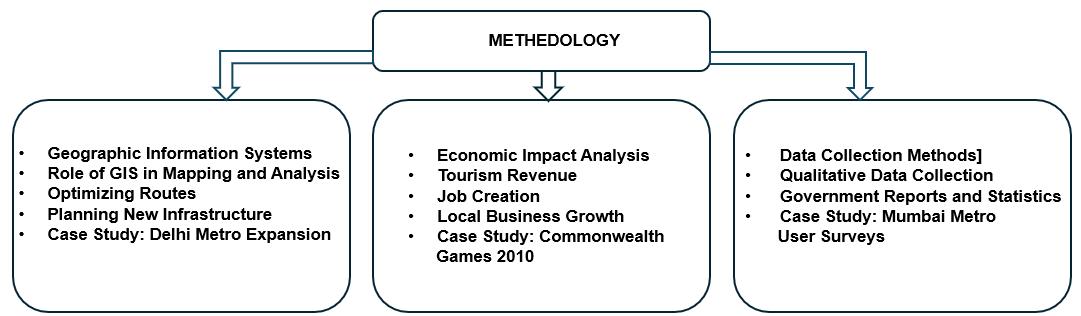
Amulti-facetedapproachisessentialtothoroughlyinvestigatetheimpactoftransportandconnectivityonsportsdevelopment. Toachieveacomprehensiveunderstanding,thefollowingtoolsandmethodologiesareemployed.
2.1
RoleofGISinMappingandAnalysis:GeographicInformationSystems(GIS)technologyisinstrumentalinvisualizingand analyzingspatialdatarelatedtotransportnetworksandsportsfacilities.GISallowsforthecreationofdetailedmapsthat highlightthelocationsofsportsvenues,existingtransportroutes,andareaslackingadequateconnectivity.Thisspatialanalysis iscrucialforidentifyinggapsininfrastructureandplanningnewprojectstoenhanceaccessibility.
2.1.1
GIScanoptimizetravelroutesforathletes,coaches,andfansbyanalyzingtrafficpatterns,roadconditions,andotherrelevant factors.Bydeterminingthemostefficientpaths,GIShelpsreducetraveltimeandcosts,makingiteasierforindividualstoreach sports facilities. For example, GIS can suggest alternative routes during peak traffic hours or identify the shortest paths betweendifferentvenues.
2.1.2
GISisalsovaluableforplanningnewtransportinfrastructureprojects.Byoverlayingdemographicdatawithexistingtransport andsportsfacilities,plannerscanidentifyhigh-demandareathatrequirenewinfrastructure.Thisensuresthatresourcesare allocatedeffectively,andnewprojectsaredevelopedwheretheyaremostneeded.
2.1.3
InDelhi,GIStechnologywasusedtoplantheexpansionofthemetronetwork.Byanalyzingpopulationdensity,trafficpatterns, and the locations of key sports venues, planners were able to design routes that maximized accessibility and minimized disruption.Theresultingmetrolineshavesignificantlyimprovedconnectivitytosportsfacilitiesacrossthecity.
2.2
Economic impact analysis is essential for evaluating the economic benefits of transport infrastructure investments. This involvesassessingvariousfactorssuchastourismrevenue, jobcreation,andlocal businessgrowth.By quantifyingthese
International Research Journal of Engineering and Technology (IRJET) e-ISSN: 2395-0056
Volume: 12 Issue: 04 | Apr 2025 www.irjet.net p-ISSN: 2395-0072
contributions, the analysis provides a clear picture of the economic benefits that transport infrastructure brings to the community.
2.3
Majorsportingeventsattracttouristsfromacrossthecountryandabroad,generatingsubstantialrevenueforlocaleconomies. Economicimpactanalysismeasuresthefinancialcontributionsofthesetourists,includingspendingonaccommodation,food, transportation,andentertainment.Forexample,duringtheIPLseason,citieshostingmatchesexperienceasurgeintourism, boostingthehospitalityandretailsectors.
2.4 Job Creation:
Transportinfrastructureprojectscreatenumerousjobopportunities,bothduringconstructionandinthelongterm.Economic impactanalysisevaluatesthenumberofjobscreated,theirduration,andthesectorsbenefitingfromtheseopportunities.For instance,theconstructionofnewmetrolinesrequiresskilledlabor,engineers,andadministrativestaff,whiletheongoing operationandmaintenanceoftheseservicesprovidesustainableemployment.
2.5 Local Business Growth:
Improvedtransportconnectionscanleadtoincreasedfootfallforlocalbusinesses,stimulatingeconomicgrowth.Economic impactanalysisexamineshownewtransportinfrastructureinfluencesconsumerbehaviorandspendingpatterns.Forexample, easieraccesstosportsvenuescanattractmorevisitorstonearbyrestaurantsandshops,boostingtheirrevenue.
2.6 Case Study: Commonwealth Games 2010:
TheCommonwealthGamesheldinDelhiin2010hadasignificanteconomic impactonthecity.Economicimpactanalysis revealed that the event generated substantial tourism revenue, created thousands of jobs, and stimulated local business growth.Theimprovedtransportinfrastructure,includingtheexpandedmetronetwork,playedacrucialroleintheseeconomic benefits.
2.7
2.7.1
Qualitative data collection methods involve gathering descriptive information that provides deeper insights into the experiences and perspectives of individuals. Interviews with key stakeholders, such as transport planners, sports administrators, and athletes, offer valuable qualitative data. These interviews can explore the challenges and benefits of transportconnectivityingreaterdetail,uncoveringissuesthatmaynotbeevidentfromquantitativedataalone.
2.7.2 Government Reports and Statistics:
Governmentreportsandstatisticsprovidevaluablesecondarydataforthestudy.Thesedocumentsincludeinformationon transportinfrastructureprojects,fundingallocations,andperformancemetrics.Analyzingthisdatahelpstounderstandthe broader context of transport and sports development and to benchmark the progress against national and international standards.
2.8 Case Study: MumbaiMetroUserSurveys:UsersurveysconductedontheMumbaiMetroprovideawealthofquantitative data about passenger experiences. These surveys collect information on travel times, ticket costs, and satisfaction levels, helpingtoidentifystrengthsandareasforimprovement.Additionally,interviewswithmetrostaffandcityplannersprovide qualitativeinsightsintotheoperationalchallengesandsuccessesofthemetrosystem.
So,byemployingamulti-facetedapproachthatincludesGIStechnology,economicimpactanalysis,andcomprehensivedata collection methods, the study provides a thorough investigation into the impact of transport and connectivity on sports developmentinIndia.Thesetoolsandmethodologiesensurethattheanalysisisrobust,data-driven,andcapableofinforming effectivepolicyrecommendationsandinfrastructureplanning.
2.8
Efficienttransportnetworksareessentialforenhancingaccessibility,drivingeconomicgrowth,andpromotingsocialand culturalintegrationinsports.Thissynthesislaysthegroundworkforinformeddecision-makingandstrategicplanningto improvetransportconnectivityandsupportthegrowthofsportsinIndia.
International Research Journal of Engineering and Technology (IRJET) e-ISSN: 2395-0056
Volume: 12 Issue: 04 | Apr 2025 www.irjet.net p-ISSN: 2395-0072
SuccessfulsportseventsandinfrastructureprojectsinbothIndiaandinternationally.Byexaminingspecificexamples,the studyaimstoextractvaluableinsightsandidentifybestpracticesthatcaninformfutureprojects.
2.8.1 Indian Case Studies:
Metro Lines in Delhi and Mumbai: The development of metro lines in these urban areas has significantly improved accessibilitytosportsfacilities.Forinstance,theDelhiMetroprovidesconvenientandaffordabletransportoptionsforfans attending events at major venues such as the Jawaharlal Nehru Stadium. Similarly, the Mumbai Metro has enhanced connectivitytosportscomplexes,reducingtraveltimeandcongestion.
Commonwealth Games 2010: HostedinDelhi,theCommonwealthGames2010requiredsubstantialinvestmentintransport infrastructure. The government expanded the metro network, improved road conditions, and upgraded public transport services to accommodate the influx of athletes and spectators. The event demonstrated the positive impact of transport improvementsonthesuccessfulhostingofamajorsportsevent.
2.8.2 International Case Studies:
London Olympics 2012: TheLondonOlympicsserveasaprimeexampleofhowintegratedtransportplanningcansupport large-scalesporting events. Thecity investedheavilyin upgradingits transport networks,including the expansionofthe London Underground, construction of new railway lines, and enhancement of road infrastructure. These efforts ensured seamlessmovementofathletes,officials,andspectators,contributingtotheoverallsuccessofthegames.
Sydney Olympics 2000: Sydney'stransportstrategyforthe2000Olympicsfocusedonmaximizingpublictransportuseand reducingrelianceonprivatevehicles.Thecityintroducednewbusandrailservices,improvedexistinginfrastructure,and implementedtrafficmanagementmeasures.Thisapproachnotonlyfacilitatedefficienttransportduringtheeventbutalsoleft alastinglegacyofimprovedtransportinfrastructureforthecity.
2.8.3 International Comparisons
By comparing the transport and sports infrastructure strategies of other countries, the study aims to identify potential strategies that India can adopt. International comparisons provide a broader perspective on best practices, innovative solutions,andsuccessfulintegrationoftransportandsportsinfrastructure.
2.8.4 United Kingdom:
TheUK'sextensivetransportnetworkhasplayedacrucialroleinhostingmajorsportingeventssuchastheOlympicsand Commonwealth Games. The government's proactive approach to transport planning, investment in infrastructure, and emphasisonpublictransporthavesetabenchmarkforothercountries.
2.8.5 Australia:
Australia'sexperiencewithhostingtheSydneyOlympicsandtheCommonwealthGamesoffersvaluablelessonsintransport planning and infrastructure development. The country's focus on public transport, sustainable practices, and community engagementprovidesamodelforenhancingtransportconnectivityinsupportofsportsdevelopment.
Bysynthesizingtheinsightsgainedfromtheliteraturereview,casestudies,andinternationalcomparisons,thestudyaimsto developa comprehensiveunderstanding of the interplaybetween transportinfrastructureand sportsdevelopment. This understandingwillinformrecommendationsforpolicyandpractice,ensuringthatIndiacaneffectivelyleveragetransport connectivitytofostersportsgrowthandachievenewmilestones.
International Research Journal of Engineering and Technology (IRJET) e-ISSN: 2395-0056
Volume: 12 Issue: 04 | Apr 2025 www.irjet.net p-ISSN: 2395-0072 © 2025, IRJET | Impact Factor value: 8.315 |
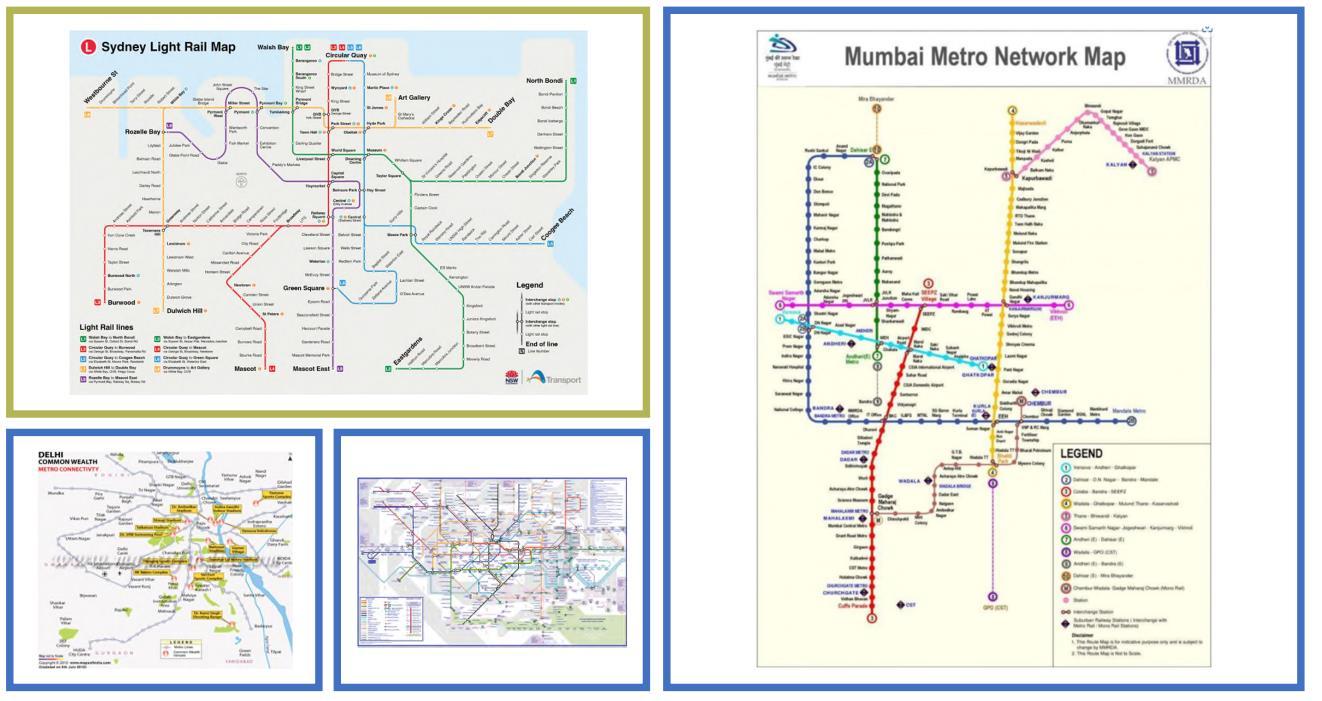
Fig -3:SydneyMetroMap,MumbaiMetroMap,DelhiMetroMap,LondonMetroMap
Table -1:
Comparison
Property Delhi Metro (India) MumbaiMetro (India)
Event Metro Development Metro Development
Commonwealth Games 2010 (India) London Olympics2012 (UK) Sydney Olympics 2000(Australia)
Commonwealth Games Infrastructure Olympics Infrastructure Olympics Infrastructure /Project
Location Delhi,India Mumbai,India Delhi,India
MainFocus Improvingurban transport Enhancingurban transport Expanding metro network,improving roads
Impact on Accessibility
Economic Impact
Social and Cultural Integration
Significantly improved accessibility to sportsfacilities
Reduced travel time and costs, boosted local businesses
Facilitated attendance at sports events,
Enhanced connectivity to sportsfacilities
Reduced congestion, increasedpublic transportuse
Improved accessibility for diverse
Facilitated movement of athletes and spectators
Generated tourism revenue,createdjob opportunities
Enhanced national pride, promoted culturalexchange
London, United Kingdom Sydney,Australia
Upgrading transport networks, new raillines
Seamless movement of athletes,officials, andspectators
Boosted local economy throughtourism and infrastructure development
Fosteredasense of community, supported
Publictransportuse, reducing private vehicles
Efficient transport during the event, lasting legacy of improvedtransport
Stimulatedeconomic growth through infrastructure projects
Promoted social cohesion, engaged localcommunities
International Research Journal of Engineering and Technology (IRJET) e-ISSN: 2395-0056
Volume: 12 Issue: 04 | Apr 2025 www.irjet.net p-ISSN: 2395-0072
Challenges Addressed
Innovative Solutions
promoted community engagement populations, fostered social cohesion
Traffic congestion, inadequate transport options
Expansion of metro lines, integrationwith other transport modes
cultural integration
Urban traffic, long commute times Infrastructuregaps, transport inefficiencies Overcrowding, transportdelays
Introduction of newmetrolines, improved existing infrastructure Upgraded public transport services, expanded metro network
Expansion of London Underground, construction of new railway lines
Traffic congestion, over-reliance on privatevehicles
Introduction of new busandrailservices, traffic management measures
The findings of the study reveal several key points that underscore the critical role of transport infrastructure in the developmentofsportsinIndia.Hereisadetailedelaborationonthesepoints:
3.1 Enhanced Accessibility
Efficienttransportnetworks,includingroads,railways,andairtravel,areessentialforenhancingaccessibilityforathletes, coaches, and fans. This accessibility facilitates regular training, competitions, and talent scouting, which are vital for the developmentandpromotionofsports.
3.1.1 Urban Areas:
Theintroductionofmetrolinesinurbanareas,suchasDelhiandMumbai,hassignificantlyreducedtraveltimeandcostsfor peopletravelingto sportsfacilities.This hasmade it easier forathletestoattend trainingsessionsand forfanstoattend sportingevents.Forexample,theDelhiMetrohasconnectedseveralkeysportsvenues,makingthemmoreaccessibletothe public.
3.1.2 Rural Areas:
Inruralareas,improvedtransportconnectivityhashelpeduncoverhiddenathletictalentbymakingiteasierforscoutsto traveltoremotelocationsandforathletesfromtheseareastoaccesstrainingfacilities.Forinstance,thedevelopmentofbetter roadnetworksinruralregionshasenabledyoungathletestotraveltourbancentersfortrainingandcompetitions,providing themwithopportunitiesthatwerepreviouslyunavailable.
3.2 Economic Growth
Thedevelopmentoftransportinfrastructurehasasignificanteconomicimpact.Majorsportingeventsattracttourists,generate revenueforlocalbusinesses,andcreatejobopportunities.
3.2.1 Tourism and Hospitality:
MajorsportingeventsliketheIndianPremierLeague(IPL)drawthousandsofattendees,boostinglocaleconomiesthrough tourism,hospitality,andrelatedindustries.Hotels,restaurants,andretailbusinessesbenefitfromtheinfluxofvisitors,leading toincreasedsalesandprofits.
3.2.2 Job Creation:
Theconstructionandmaintenanceofsportsinfrastructurecreatenumerousjobopportunities,bothtemporaryandpermanent. Forexample,thedevelopmentofnewstadiums,trainingcenters,andtransportlinksrequiresskilledlabor,engineers,and administrativestaff.Additionally,theongoingoperationandmaintenanceofthesefacilitiesprovidesustainableemployment opportunities.
International Research Journal of Engineering and Technology (IRJET) e-ISSN: 2395-0056
Volume: 12 Issue: 04 | Apr 2025 www.irjet.net p-ISSN: 2395-0072
3.2.3 Revenue Generation:
EventsliketheIPLcontributetothelocaleconomythroughticketsales,merchandise,andtourism.Thespendingbyvisitors andfansduringtheseeventsboostslocalbusinessesandgeneratessignificantrevenueforthehostcities.
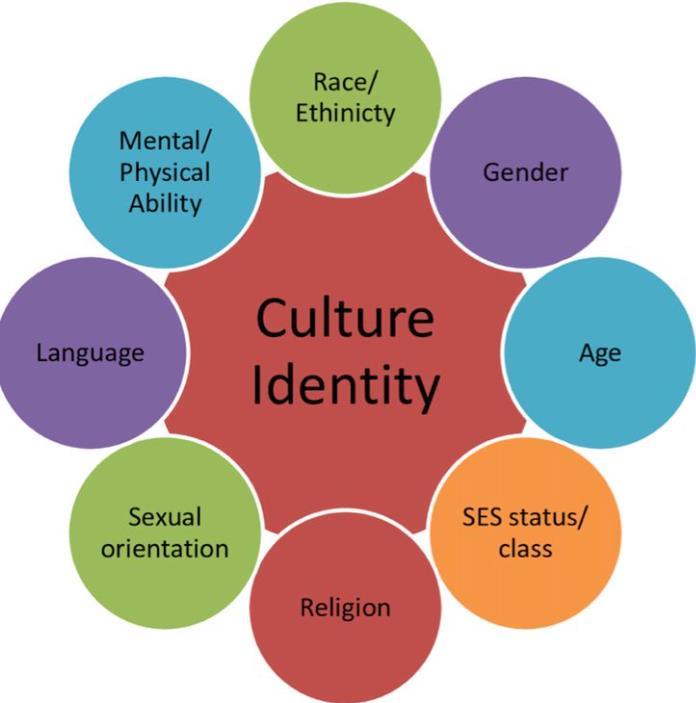
3.3 Social and Cultural Integration:
Transportinfrastructurepromotessocialandculturalintegrationbybringingtogetherpeoplefromdifferentregionsand backgrounds.Sportingeventsprovideaplatformforculturalexchangeandfosterasenseofcommunityandnationalpride.
3.4 Cultural Exchange:
Duringnationalandinternationalsportsevents,fanstravelfromvariouspartsofthecountrytosupporttheirteams,promoting culturalexchangeandunderstanding.Thismovementofpeoplehelpsbreakdownregionalbarriersandfostersasenseofunity andnationalidentity.
3.5 Community Building:
Sportseventscreateasenseofcommunityandbelongingamongfans.Thesharedexperienceofattendingaliveevent,cheering forateam,andcelebratingvictoriestogetherfosterssocialcohesion.Efficienttransportnetworksfacilitatethisbymakingit easierforpeopletocometogetherandparticipateinthesecommunalactivities.
4. Challenges:
Despitetheprogressmadeinimprovingtransportinfrastructure,severalchallengespersist.
4.1 Inadequate Facilities:
Inadequatetransportfacilitiesincertainregions,particularlyruralareas,limitaccessibilitytosportsfacilities.Thisdisparityin infrastructuredevelopmentcreatesbarriersforathletesandfansfromtheseareas,preventingthemfromfullyparticipatingin sportsactivities.
4.2 Accessibility Issues for Disabled Sports Fans:
Therearesignificantaccessibilityissuesfordisabledsportsfans.Manytransportfacilitieslackthenecessaryinfrastructureto accommodateindividualswithdisabilities,suchasaccessiblebuses,trains,andstations.Addressingtheseissuesrequires continuedinvestmentandinnovativesolutionstocreateamoreinclusiveenvironment.
International Research Journal of Engineering and Technology (IRJET) e-ISSN: 2395-0056
Volume: 12 Issue: 04 | Apr 2025 www.irjet.net p-ISSN: 2395-0072
Urban areas often face traffic congestion, which hinders the smooth movement of athletes and fans. Insufficient public transportoptionsfurtherexacerbatethisproblem,leadingtolongertraveltimesandincreasedfrustrationforcommuters.
Thestudy concludes thattransportandconnectivityareintegral tothegrowthand developmentofsportsinIndia.They enhanceaccessibility,driveeconomicgrowth,andpromotesocialandculturalintegration.Addressingtheexistingchallenges requirescontinuedinvestmentintransportinfrastructureandinnovativesolutionslikeGeographicInformationSystems(GIS) tooptimizeroutes,plannewinfrastructure,andimproveconnectivity.
Table -2: Thekeyfindingsofthestudy:
EfficientTransportNetworks:Essentialforathletes,coaches,andfans.
UrbanAreas:MetrolinesincitieslikeDelhiandMumbaireducetraveltimeand costs.
RuralAreas:Improvedconnectivityhelpsuncoverhiddenathletictalent.
TourismandHospitality:Majoreventsboostlocaleconomies
4.2EconomicGrowth
43SocialandCulturalIntegration
JobCreation:Developmentofinfrastructurecreatesjobs. RevenueGeneration: EventslikeIPLcontributethroughticketsales,merchandise,andtourism
CulturalExchange:Nationalandinternationaleventspromoteculturalexchange
CommunityBuilding:Sportseventsfosterasenseofcommunityandnationalpride Challenges:Persistentissuesintransportinfrastructure,particularlyinruralareas
InadequateFacilities:Limitsaccessibilitytosportsfacilities Accessibilityfor DisabledFans:Lackofnecessaryinfrastructure
TrafficCongestion:Urbanareasfacecongestionissues
Thistableprovidesaconciseoverviewofthestudy'sfindingsontheroleoftransportinfrastructureinthedevelopmentof sportsinIndia.
Thestudy concludes thattransportandconnectivityareintegral tothegrowthand developmentofsportsinIndia.They enhanceaccessibility,driveeconomicgrowth,andpromotesocialandculturalintegration.Addressingtheexistingchallenges requirescontinuedinvestmentintransportinfrastructureandinnovativesolutions.
Geographic Information Systems (GIS) offer a powerful tool for enhancing sports accessibility. By mapping facilities and transport networks, optimizing routes, and planning new infrastructure, GIS can help overcome current challenges and improveconnectivity.
Thestudyrecommendsthefollowingpolicymeasures:
5.2.1
TargetedInvestment:Allocatemorefundstodeveloptransportinfrastructureinunderservedregions,especiallyruralareas,to improveaccessibilitytosportsfacilities.Thiscanhelpuncoverhiddenathletictalentandpromotesportsparticipationinthese regions.
International Research Journal of Engineering and Technology (IRJET) e-ISSN: 2395-0056
Volume: 12 Issue: 04 | Apr 2025 www.irjet.net p-ISSN: 2395-0072
5.3 Urban Transport Development:
Continuetoinvestinandexpandurbantransportnetworks,suchasmetrolinesandbusservices,toenhanceconnectivityand reducecongestion.Prioritizeprojectsthatconnectkeysportsfacilitiestoensureeasyaccessforathletes,coaches,andfans.
5.3.1 Inclusive Transport Solutions
AccessibilityforDisabledIndividuals:Implementinclusivetransportsolutionstoensureaccessibilityfordisabledsportsfans. Thisincludesaccessiblebuses,trains,stations,andwalkways.Developpoliciesthatmandateaccessibilityfeaturesinallnew transportinfrastructureprojects.
Training and Awareness Programs:
Conducttrainingandawarenessprogramsfortransportstafftoassistdisabledindividualseffectively.Promoteacultureof inclusivityandsensitivitytowardstheneedsofallpassengers.
5.4 Integration of Sports and Transport Planning
5.4.1 Collaborative Planning:
Fostercollaborationbetweentransportandsportsplanningauthoritiestocreatesynergiesbetweenthetwosectors.Ensure thatsportsfacilitiesarewell-connectedbypublictransportandthattransportplanningtakesintoaccounttheneedsofsports eventsandfacilities.
5.4.2 Infrastructure Development:
Integratesportsfacilitydevelopmentwithtransportinfrastructureprojects.Forexample,whenplanningnewmetrolinesor busroutes,considerproximitytoexistingorplannedsportsfacilitiestoenhanceaccessibility.
5.5.1 Learning from International Examples:
Studyandadoptbestpracticesfromcountriesthathavesuccessfullyintegratedtransportandsportsinfrastructure,suchasthe UKandAustralia.Implementstrategiesthathaveproveneffectiveinenhancingaccessibilityandsupportingmajorsports events.
5.5.2 Sustainable Transport Solutions:
Promotesustainabletransportsolutions,suchaspublictransport,non-motorizedtransportoptions(e.g.,cyclingandwalking paths),andelectricvehicles.Encouragetheuseofpublictransportduringmajorsportseventstoreducetrafficcongestionand environmentalimpact.
5.5.3 Utilization of Geographic Information Systems (GIS)
Route Optimization:
UtilizeGIStechnologytomapsportsfacilitiesandtransportnetworks,identifyareaswithinadequateconnectivity,andplan newinfrastructure.GIScanhelpoptimizeroutes,makingiteasierforathletes,coaches,andfanstoreachtheirdestinations efficiently.
5.6 Resource Allocation:
UseGISdatatoallocateresourceseffectively,ensuringthatinvestmentsaredirectedtowardsareaswiththehighestneedfor improvement.GIScanprovidevaluableinsightsforstrategicplanninganddecision-making.
International Research Journal of Engineering and Technology (IRJET) e-ISSN: 2395-0056
Volume: 12 Issue: 04 | Apr 2025 www.irjet.net p-ISSN: 2395-0072
Public-Private Partnerships:
Encouragepublic-privatepartnershipstofundanddeveloptransportinfrastructureprojects.Privatesectorinvolvementcan bringinadditionalresources,expertise,andinnovation,contributingtotheoverallsuccessofinfrastructuredevelopment.
Incentives for Development:
Offereconomicincentives,suchastaxbreaksandsubsidies,tocompaniesthatinvestintransportinfrastructureprojectsthat supportsportsdevelopment.Thiscanattractmoreinvestmentandacceleratethedevelopmentofessentialinfrastructure.
1) CommunityEngagementandAwareness
Public Participation:
Engage local communities in the planning and development of transport and sports infrastructure projects. Involve stakeholdersindecision-makingprocessestoensurethattheirneedsandconcernsareaddressed.
Awareness Campaigns:
Conductawarenesscampaignstopromotethebenefitsofimprovedtransportconnectivityforsportsdevelopment.Highlight theeconomic,social,andculturaladvantagesofinvestingintransportinfrastructuretogarnerpublicsupportandparticipation.
Byimplementingthesepolicyrecommendations,Indiacanenhancethesynergybetweentransportinfrastructureandsports development, driving economic growth, promoting social and cultural integration, and ensuring inclusive accessibility. Continuedinvestment,innovativesolutions,andcollaborativeplanningareessentialtoachievingthesegoalsandfosteringthe growthofsportsinIndia.
Afterthetextedithasbeencompleted,thepaperisreadyforthetemplate.DuplicatethetemplatefilebyusingtheSaveAs commandandusethenamingconventionprescribedbyyourconferenceforthenameofyourpaper.Inthisnewlycreatedfile, highlightallofthecontentsandimportyourpreparedtextfile.Youarenowreadytostyleyourpaper.
(1)LinkedIn.(n.d.).DelhiversusMumbaiMetroProjects:ATaleofPlanning,Execution,andPost-ServiceChallenges.Retrieved fromhttps://www.linkedin.com
(2)KnowledgeatWharton.(n.d.).EconomicGains:WilltheCommonwealthGamesinDelhiDeliverWhatTheyPromised? Retrievedfromhttps://knowledge.wharton.upenn.edu
(3)Singh,G.(n.d.).EconomicImpactoftheCommonwealthGames2010ontheNCTofDelhiThroughTaxableSales.SSRN. Retrievedfromhttps://papers.ssrn.com
(4) The Economic Times. (n.d.). CWG 2010 will result in an economic impact of $4,940 million. Retrieved from https://economictimes.indiatimes.com
(5) House of Commons Library. (n.d.). London Olympics 2012: transport. Retrieved from https://commonslibrary.parliament.uk
(6)GOV.UK.(n.d.).Recordinvestmentplansfortransportnetwork.Retrievedfromhttps://www.gov.uk
(7) ParliamentofAustralia.(n.d.).Chapter3-TheroleoftheAustralianGovernmentinsuccessfullyhostingCommonwealth, OlympicandParalympicGames.Retrievedfromhttps://www.aph.gov.au
(8)GOV.UK.(n.d.).London2012transportplan(2ndedition).Retrievedfromhttps://www.gov.uk
(9)OlympicRoadsandTransportAuthority.(n.d.).Sydney2000OlympicandParalympicGamestransportstrategicplan. NationalLibraryofAustralia.Retrievedfromhttps://catalogue.nla.gov.au
International Research Journal of Engineering and Technology (IRJET) e-ISSN: 2395-0056
Volume: 12 Issue: 04 | Apr 2025 www.irjet.net p-ISSN: 2395-0072 © 2025, IRJET | Impact Factor value: 8.315 | ISO 9001:2008
(10) OECD. (n.d.). Sydney 2000: Integrated approach to games delivery. Retrieved from https://www.oecd-ioc-olympicsplanning-toolkit.org/case-study/sydeny-2000-integrated-approach-to-games-delivery.
End of Report