
International Research Journal of Engineering and Technology (IRJET) e-ISSN: 2395-0056
Volume: 13 Issue: 08 | Apr 2026 www.irjet.net p-ISSN: 2395-0072
International Research Journal of Engineering and Technology (IRJET) e-ISSN: 2395-0056
Volume: 13 Issue: 08 | Apr 2026 www.irjet.net p-ISSN: 2395-0072
Navjyoti Prakash1 , Ms. Naziya Anjum2, Dr. Sifatullah Siddiqi3
1PG Student, Dept. Of Computer Science and Engineering, Integral University Lucknow, Uttar Pradesh, India
2,3Assistant Professor, Dept. Of Computer Science and Engineering, Integral University Lucknow, Uttar Pradesh, India
Abstract – Cloud computing is a popular computing paradigm which offers scalable on-demand access to computing services including processing power, storage and networking services. Nonetheless, the fast development of cloud services has dramatically consumed more energy at cloud data centers caused by the persistentusageofresources, the inefficiency of the distribution of tasks as well as the use of the computing infrastructure that is not fully used. This is because high energy usage is not only costly to the operations, but it has also been identified as a source of environmental issues and hence energy efficiency is a major concern in the cloud computing environments.
Resource scheduling that isenergyefficienttacklestheissueby assigning tasks to the computing resources in such a way that the resource minimizes the amount of power consumed without affecting the performance of the system, its reliability or the Quality of Service (QoS). The issue of energy usage of cloud computing systems anddifferentenergy-awareresource scheduling methods are discussed in the paper. It talks about techniques like dynamic voltage and frequency scaling, consolidation of virtual machines, scheduling of tasks with attention on power consumption, and load balancing plans that tend to maximize the use of resources and minimize the consumption of energy.
The strategies are based on enhancing the efficiencyofagiven system through reduction of idle resource powerandensuring that workload is optimally distributed across the available computing resources. The paper will also indicate some of the important performance metrics that would be used to gauge the effectiveness of the energy-efficient scheduling algorithms such as energy consumption, resource utilization, time taken to complete a task and compliance with service level agreement.
The paper highlights the relevance of smart and adaptive scheduling system with respect to realization of sustainable cloud computing infrastructure.Energyefficientplanningthat is effective in cost minimization, carbon emission and increasing the effectiveness of the system and resources utilization. Consequently, the creation of enhanced time management methods is needed to enhance the sustainability and efficiency of the contemporary cloud computing environments.
Key Words: Cloud computing, Energy-efficient scheduling, Resource allocation, Virtual machine consolidation, Power consumption optimization.
Cloudcomputingisa revolutionarycomputingmodel that offerson-demandaccessofsharedcomputingresourcesin the form of processing power, storage and networking resources over the internet. It allows organizations and userstouseascalableandelasticcomputinginfrastructure without incurring huge expenses by making substantial investmentsinphysicalinfrastructuresorupkeep[1].
The speed at which people are moving towards cloud computingindifferentfieldssuchasbusiness,healthcare, educationandresearchhasgreatlysurgedthedemandofthe computationalresources.Thishasseenclouddatacenters growatanalarmingratetofacilitatethedeliveryofservices in large scale and constant accessibility to resources. The popularity of cloud computing has increased the rate of energyconsumptioninclouddatacenterseventhoughcloud computing has its benefits. They are scaled-up physical serverbaseddatacentersnumberinginthethousandswith networkingdevicesandsystemsaswellascoolingfacilities that need to be used 24hours round the clock to accommodatedynamicworkloadsanduserdemands[2].
Runningandinefficientuseofresourcesarealsosomeofthe factors that make energy consumption excessive. Servers also consume a lot of power even when they are underutilizedoridlewhichresultsinthewastageofenergy. Thishighpowerusageaddstothecostofoperationsofcloud service providers and is also a source of environmental issueslikecarbonemissionsandglobalwarming.Thus,the enhancement of energy efficiency of cloud computing has emerged as a research topic of interest to academia and industry.
Inefficientmanagementofresourcesisoneofthekeyissues thatinfluencetheenergyusageincloudenvironments.Cloud systems should assign tasks, applications and services to computing resources at hand, in a manner that would maximizeperformance,andguaranteeminimumwastageof resources[3].
Resource scheduling is an important part of this process whereby the allocation of tasks to virtual machines, processors,andstorageunitsisdone.Effectivescheduling aids in better utilization of resources, minimization of processing delays and increased system performance. Nevertheless, conventional scheduling methods are primarilyconcernedwithmaximizingperformanceanddo
International Research Journal of Engineering and Technology (IRJET) e-ISSN: 2395-0056
Volume: 13 Issue: 08 | Apr 2026 www.irjet.net p-ISSN: 2395-0072
not pay much attention to energy efficiency concerns [4]. Resourceschedulingthatiseco-friendlyissettoovercome this shortcoming by using power consumption as a key parameter when making decisions regarding resource allocation.Energy-efficientschedulingisaimedatthemain objectiveofachievingminimumenergyconsumptionwith systemperformance,reliabilityandQualityofService(QoS). Itentailstheselectionofthepropercomputingresources, workloaddistribution,andbringing[5]downthenumberof theactiveserverswhenthedemandislow.Energy-efficient schedulingwillenableorganizationstocutdownonpower consumption to a large extent without affecting service quality,sinceitwillbeachievedeffectivelythroughefficient allocationoftheresources.
Several methods have been invented to enhance the efficiency of energy consumption in the cloud computing systems.Thesearedynamicvoltagescalingandfrequency scaling which scales the processor speed according to workload needs and virtual machine consolidation which cuts back on the number of running servers by moving workloads to fewer servers [6]. There are other methods such as power-conscious scheduling of tasks and load balancing techniques that allocate workloads effectively within the available resources. The methods are aimed at maximizingtheperformanceofthesystemsandminimizing theconsumptionofunnecessaryenergy.Nevertheless,there are a number of difficulties in applying energy efficient scheduling in the cloud environment. The workloads in cloudsareverydynamicandunpredictableandhence,they are hard to allocate resources efficiently on the fly. Moreover,energysavingandsystemperformancetendtobe tradedoffwhereminimizingtheconsumptionofenergycan impactthespeedofprocessingandservicesdelivery[7].
The scheduling decisions are also complicated by the fact that it is harder to manage resource heterogeneity and guarantee adherence to service level agreements. In this paper, attention is paid to the concept of energy-efficient resourceschedulingincloudcomputingandthediscussion of different methods of minimizing energy consumption without affecting the performance of the systems [8]. It describesthenecessityofenergy-consciousschedulingtools, the various optimization strategies, and the major issues surrounding the concept of energy-efficient resource utilization. The research will seek to offer information regardinghowtoenhancethesustainabilityandefficiencyof cloudcomputingsystemswithrespecttoefficientresource schedulingstrategies.
Asignificantissueinthecloudcomputingsetupistheuseof energy because of the massive infrastructure and the constant running of the cloud data centers. Cloud service providershavethousandsof“physicalservers,networking equipment and storage to provide continuous services to users[9].Theseunitsconsumealotofelectricalenergyto
compute,processdataandcoolthemdown.Withtheongoing rapidexpansionofcloudservices,controloverenergyusage hasbecomea necessityintermsofdecreasingthecostsof operations,enhancingefficacyofthesystem,andlessening the effects on the environment [10]. Some of the major components that cause energy consumption in cloud environments are the areas of CPU processing, memory consumption, storage, and idle servers. Of these, CPU processing is thesingle greatest consumer of energysince most of the computational activities are performed by processors.WhentheCPUisusedheavily,itconsumesmore power particularly when handling complex workload or usinglargescaleapplications.Powerusedbyprocessorsis determined by their working frequency, voltage at which theyareoperating[11]andthelevel ofworkloadtheyare doing.Withtheriseinthedemand,theprocessorsrunfaster andhenceconsumemoreenergy.
Anotherimportantsourceofenergyconsumedbythecloud systemsinvolvestheusageofmemory.Evenwitharelatively lowworkload,memorymodulesactivelyusepowerbothto savedataandtoaccessit.Theuseofcloudapplicationsin largescaleconsumesalotofmemorycapacitytoprocessthe data which is a source of total energy consumption [12]. Likewise, storage processes like access, transfer and maintenanceofstoragedevicesalsodemandalotofpower. Cloud data centers are based on large storage systems to storelargevolumesofdataandwhenthedataissubjectto frequencyinputandoutputoperationstheenergydemands goup.Idleserversareoneofthebiggestenergywastersin thecloudcomputingenvironment.Serversalsoconsumealot ofpowertobeinoperationevenwhentheyarenotworking ontasks[13].Researchindicatesthatnonproductiveservers canuseahighpercentageofpeakpowerconsumption,which results in poor energy conversion. This is because servers havetobeonstandbytoreceiveincomingworkatanyone timehenceconstantpoweruseirrespectiveofthedegreeof work. In turn, the poor allocation of resources and overutilization of the servers contribute a lot to the total energyconsumptionintheclouddatacenters.
Besidescomputerparts,otherinfrastructureequipmentlike cooling systems and network devices are also sources of energyconsumption.Continuoususeofserversinclouddata centersproducesalotofheatthatmayneedsophisticated coolingsystemsinordertomaintainoptimaltemperaturesof theservers[14].Coolingmechanismsalsousemoreenergy which further adds to the overall power usage of cloud infrastructure.Transmissionandcommunicationofdatain networksarealsodonebynetworkdevices,whichneedtobe powered constantly contributing to the total energy consumption. Power usage in cloud computing is often modeled mathematically in order to gain a better understanding and control of the use of energy. A basic energyconsumptionmodelisgivenas:
International Research Journal of Engineering and Technology (IRJET) e-ISSN: 2395-0056
Volume: 13 Issue: 08 | Apr 2026 www.irjet.net p-ISSN: 2395-0072
InwhichtheEisthetotalenergyused,Pisthepowerusedby thecomputingresourceandTisthetimetakentorunatask. Accordingtothismodel,theamountofenergyconsumedbya systemandthetimeperiodofoperationofthesystemarethe factors that determine the energy consumption. Thus, the decreaseineitherpowerusageorexecutiontimecanbeused to reduce overall energy consumption. The energy consumptionincloudcomputingsystemstendstogrowas theresourcesareusedbutdoesnotdeclineonanequivalent proportionwhentheutilizationdeclines[15].Thisnon-linear associationleadstothepooruseofenergywhenworkloadis low. Consequently, there is a need to have an effective resource management strategy to achieve optimization of energyconsumptionandefficiencyofthesystem.
Resource scheduling can be of great importance when it comestominimizingtheuseofenergyconsumption,wherea taskisdistributedamongcomputingresourcesaccordingto the workload needs and energy efficiency. The purpose of energy-awareschedulingmethodsistoreducethecountof activeservers,theidlepowerconsumption,andoptimizethe useoftheresources[16].Cloudsystemscanalsousedynamic processingofworkloadsandtaskconsolidationtominimize unnecessaryenergyconsumption.Insum,itcanbeconcluded thatthesourcesandnatureofenergyconsumptionincloud computing are necessary to create an efficient way of resourcesscheduling,whichisenergy-efficient.Cloudservice providers can also ensure better system performance and lower the operation costs as well as increase the sustainability of cloud computing environments by determining significant contributors of power usage and employingoptimizedresourcemanagementstrategies.
Table -1: MajorSourcesofEnergyConsumptioninCloud DataCenters
Component
CPUProcessing Executes computational tasksandworkloads
MemoryUsage Stores and retrieves applicationdata
Storage Operations Data access, read/write operations
Network Equipment Data transmission and communication Medium
IdleServers Servers running without activeworkload
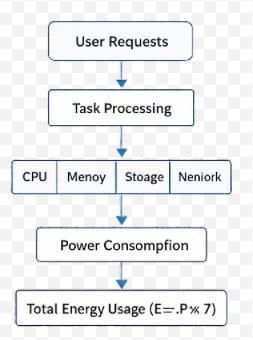
1. Energyconsumptionmodelincloudcomputing.
Energy-Efficient
Resource scheduling methods that can be used to lower power usage in cloud computing systems seek to deliver efficient use of energy without compromising the performance of the system or the quality of the services provided. The techniques aim at maximizing the usage of resources,reducingtheamountofidlepower,andenhancing the distribution of workloads among computing resources [17].
Various strategies have been devised in order to attain energyefficiencyincloudsystemamongthembeingdynamic voltageandfrequencyscaling,virtualmachineconsolidation, power-aware scheduling, and load balancing. All the techniques have the contribution of cutting down on the energy consumption in terms of various mechanisms and strategies.
Table 2: ComparisonofEnergy-EfficientScheduling Methods
Main Idea Advantages Limitations
Volume: 13 Issue: 08 | Apr 2026 www.irjet.net
Dynamic Voltage and Frequency Scaling (DVFS) is the popularmethodofdecreasingtheenergyofcloudcomputing systembymodifyingtheoperatingvoltageandtheoperating frequencyoftheprocessoraspertheneedsoftheworkload [18].Asthepowerconsumptionofanyprocessorisdirectly proportionaltothevoltageandthefrequencylevel,lowering theseparameterswhenthecomputationloadislowmaylead to a dramatic reduction in power consumption. DVFS has allowed processors to run with reduced power when the workloaddemandislowandboostperformancelevelswhen the computational demands increase. Such dynamic adjustmentisusefultomaximizetheuseofenergywithout fully immobilizing system resources. DVFS decreases the amountofrequiredpowertoprocesstasksbydecreasingthe operatingfrequency,therebydecreasingtheheatgeneration andcoolingdemands.Nonetheless,DVFScanslowdownthe timetakentoexecutetasksincaseprocessorsrunatlower speeds. Thus, there should be a proper balance between energy saving and system performance. In spite of this drawback,DVFSisstillausefulmethodofenhancingenergy efficiency,especiallyinsystemswhoseworkloadsvaryand systemsthathavedifferentresourcerequirements.
Introduces the concept of virtual machineconsolidation,a domainbetweenhardwareandsoftware,whichenablesless expensive hardware by restricting the capacityof physical resources.
Mintroduces thenotionofvirtualmachineconsolidation,a realmbetweenhardwareandsoftware,assuchthatallows less expensive hardware bylimiting the power of physical resources.
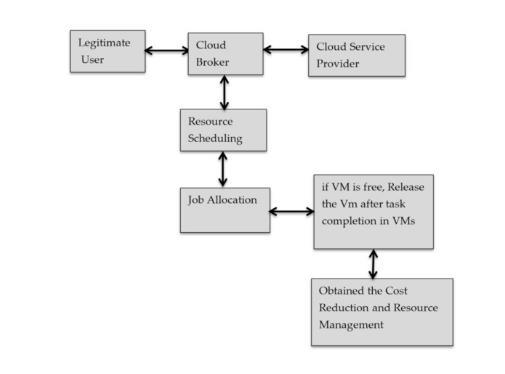
Another technique that is of significance to enhance the energy efficiency of the cloud is virtual machine consolidation. It is a process that entails the migration of workloads across several underutilized servers to fewer active servers. With tasks being concentrated on fewer underlyingmachines,idleorunderloadedserverscaneither be turned off or put into low power states, which helps to lower the overall amount of energy consumed [19]. Cloud computing is strongly dependent on the virtualization technology that enables the execution of several virtual machinesusingasinglephysicalserver.Usingthisfeature, virtualmachineconsolidationmaximizesresourceusageand reducesunnecessarypowerconsumptionbyidleservers.Itis not only a good way of saving energy, but also better utilization of hardware, minimization of operational costs. Nonetheless,thereisevidenceofsomechallengesposedby virtual machine migration including migration overhead, temporaryperformancedecreaseandaugmentednetwork traffic[20].Miscarriageofmigrationchoicescanalsohavean influence on service availability and system reliability. As such, effective workload monitoring mechanisms and migration strategies are required to see to it that virtual machineconsolidationiswellimplemented.
Power-aware scheduling is the task of assigning tasks to computing resources, using their energy consumption properties.Incomparisontotheconventionalapproachesto scheduling where performance is mostly the major focus, power-consciousschedulingtakesintoaccount the energy efficiencyasoneofthefactors,inmakingdecisionsrelatedto theallocationofresources.Thismethodteststheresources available,andthentheonesthatrequireminimumpowerand satisfytheperformanceneedsareselected.Itseekstoreduce thetotalconsumptionbythesystemenergybycuttingdown the unnecessary resources activation and optimisation of workloaddistribution[21].Otherpower-sensitivescheduling caninclude;choosingefficientservers,minimalswitchingof resources and system states in order to lower power
International
Volume: 13 Issue: 08 | Apr 2026 www.irjet.net p-ISSN: 2395-0072
consumption.Theusefulnessofthepower-awarescheduling will be determined by proper estimation of the energy consumptionoftheresourcesandin-timetrackingofsystem performance.Cloudsystemscanbemoreenergyefficientand still service the quality and reliability of the services by incorporatingenergymetricsintotheschedulingdecisions.
Loadbalancingisavitalresourcemanagementstrategythat allocates the workloads equally among the available computingresourcestoavoidoverloadofaparticularserver andunderloadofanalternativeserver.Equaldistributionof workload enhances economical use of resources and eliminates energy wastage by having the computing resources run effectively [22]. Distribution of workload in cloud environments may result in overloading of some serversandidleones.Serverswithhighloadsalsousetoo muchpower,producetoomuchheat,requiremorecooling and leave idle servers using unnecessary energy. Load balancing means solving this problem with the help of distributionof tasksdynamicallyonserversinaccordance withtheircapacityandworkloadstatus.Theuseofeffective loadbalancinghastheeffectofconservingenergy,improving the system performance as well as reliability. It is also scaleable as the cloud systems are able to support the growing workload without over activating the resources. Loadbalancing,whenusedincombinationwithotherpower savingschedulingmethods,isveryimportantinenhancing theuseofpowerandoveralleffectivenessofcloudcomputing systems.
Energyefficientresourceschedulingtechniqueseffectiveness in cloud computing is measured using numerous performancemeasures.Thesemetricscanbeusedtogauge the efficiency of the scheduling algorithms in terms of minimizing the energy use without compromising system performance and service quality [23]. An effective assessmentapproachguaranteesthatcloudservicevendors attaineffectiveuseofresources,loweroperationexpenses, and better Quality of Service (QoS). The key performance indicatorsappliedinmeasuringenergy-efficientscheduling are energy use, resource use, makespan,andadherenceto ServiceLevelAgreement(SLA).
Table 3: PerformanceMetricsforEvaluation
The most commonly used measure of energy efficient schedulingmethodsisenergyconsumption.Itisthesumtotal oftheelectricalenergyusedbycomputingresourcesinthe execution of tasks. The primary aim of energy efficient schedulingistoreducetotalpowerconsumptionbutwithout impairingtheperformanceandreliabilityofthesystem[24]. The use of energy in the cloud systems is variable, which relies on CPU, memory, storage, and server operating conditions.Themaingoalsofefficientschedulingmethods aretominimizetheenergyconsumptionbyminimizingidle serveractivity,optimalworkloadscheduling,andchoosing energy-efficient resources. Less use of energy leads to a decreaseinthecostofoperation,sustainabilityofthesystem and environment. Consequently, the overall energy consumptioncanbemeasuredtogiveadirectmeasureofthe efficiencyoftheschedulingmeasures.
Resource utilization is used to measure the degree of computing resources being used in executing tasks. Such resources are processors, memory, storage, and network bandwidth.Highresourceuseimpliesthatthereisefficient use of available infrastructure whereas low use implies resources wastage and poor scheduling. Energy efficient scheduling is primarily meant to make the best use of resources in that it allocates the tasks efficiently and minimizes the idle or underutilized servers. With proper utilizationoftheresources,lessnumberofserversisneeded tocarryoutthesameworkandthisreducestheamountof energyused.But,whenusedveryheavily,itcanoverloadthe systemandsimultaneouslyloweritsperformance.Assuch, thereshouldbeanideallevelofresourceconsumptionand system output. Resource utilization monitoring lets cloud providersunderstandtheinefficienciesofresourceallocation and better schedule decisions to increase efficiency in a system.
Makespanistheoveralltimeittakestoaccomplishanumber oftasksorworkloadswithinacloudcomputingenvironment. Itcomparesproductivityofthetasksasregardsthetimeof executionand productivityof thesystem.A reduced make spanmeansthattherewillbeincreasedspeedincompleting the task and the system will perform better. As much as energyefficientschedulingwillaimatmakingsurethatthe amountof power used is minimal,it mustnotcause much timetobewastedinexecutingthetasks.Inothersituations,
International Research Journal of Engineering and Technology (IRJET) e-ISSN: 2395-0056
Volume: 13 Issue: 08 | Apr 2026 www.irjet.net p-ISSN: 2395-0072
energyconservationbyloweringtheprocessorspeedoreven combining workloads can result in more execution time. Scheduling algorithms [25], therefore, should reduce the consumption of energy at an acceptable level and keep makespan at a reasonable level. Makespan is a significant performance indicator since it directly influences user satisfaction,systemresponsivenessandservicequality.The effectiveschedulingsolutionsareintendedtomeetthegoals ofenergyefficiencyandthecompletionoftasksintime.
Service Level Agreement (SLA) is a measurement of the capabilityofcloudsystemstosatisfythepredefinedservice performance requirements. SLAs stipulate particular performance criteria like response time, availability, throughput and reliability that cloud providers ought to providetousers.Themethodsofschedulingwillhavetobe energyefficient,andtheenergyoptimizationwillnotneedto goagainsttheSLAconditions.Asoneexample,whenthereis too much consolidation of workload or a low processing speed,itcancausedelaysinperformingtasksandlowquality ofservice.Serviceproviderscanfacefinancial finesdueto SLAbreachesthatcanbringaboutadverseeffectsontheuser [26]. Thus, it is important to maintain high levels of SLA complianceinapplyingenergyefficientschedulingplans.The algorithmsusedintheschedulingoftheenergysavingshould be closely balanced with the service performance to give dependableandstablecloudservices.
Thedynamicnatureofcloudcomputingandthecomplexity ofcloudcomputingexposestheresourceschedulingincloud computing to a number of challenges. Even though some methodshavebeendevisedtominimizetheusageofenergy and enhance the use of resources, the application of these methods in an effective manner necessitates that the challenge of resources variability in the workload, performance demands, resource heterogeneity and complexityareaddressed.Thekeyproblemsarethechanges in the workload dynamically, the trade-offs between performance and energy efficiency, the heterogeneity of resources,andthecomplexityofscheduling.Theworkloads inthecloudcomputingenvironmentsareverydynamicand unpredictable.Theuserrequests,applicationrequirements, andsystem requirementskeep on changing with timeand thus, it is hard to allocate the resources effectively. The demand in workloads can be on a sudden increase during rushhoursandonaheavydecreaseduringoff-peakhours. Thesechangesdemandthatschedulingalgorithmsbeflexible inrespondingtochangingconditions.
Changesintheworkloaddynamicallycomplicatetheprocess ofenergy-efficientschedulingsincetheallocationdecisionsof resourceswillalwayshavetobedoneinreal-time.Without the proper allocation of resources, it is possible to have serversbecomingoverloadedandstillhaveidleserversthus
resulting in poor utilization of energy and performance degradation. Thus, planning algorithms should be used to ensurethatresourcesaredynamicallyallocatedtoconstantly check the workload in the system and preserve its energy efficiency and performance. Balancing between energy savings or system performance is one of the greatest challengesinenergyefficientscheduling.Othermethodslike slowing down the computer processor, workload consolidation or idle server shut down can reduce power usage but might impact negatively on processing speed, responsetime,andservicequality.
Indicatively, reducing processor frequency to conserve energycanmakeexecutionoftaskstakelonger,whereasover consolidation of work can lead to delays or resource contention by the system. The providers of cloud services shouldbesurethatenergyoptimizationdoesnotaffectthe QualityofService(QoS)orbreachServiceLevelAgreements (SLAs).Toensureagoodbalancebetweenenergyefficiency andperformance,itisimportanttouseintelligentschemesof schedulingthattakeintoconsiderationbothoftheseaspects. Theenvironmentsofcloudcomputinghavevariedcomputing resources with varying processing capabilities, energy consumptionproperties,memorycapacity,andperformance. These nonuniform resources complicate the process of scheduling as different resources do not act in a similar mannertodifferentworkloads.
Efficientschedulinghasto takeintoaccountthe variantof hardware configurations, power consumption rates, and performance capabilities during the tasks allocation. The properestimationofresourceperformanceandenergyused isessentialtoselectthemostsuitableresourcetouseinthe particular workload. The problem of resource hate organisationrequireseffectivemanagementtomaximizethe useofenergyconsumptionandenhancetheoverallsystem efficiency. The size and scattered nature of cloud infrastructure makes the scheduling of resources energy efficientacomplexdecision-makingprocess.Thousandsof serversandvirtualmachinesarestoredinclouddatacenters, andittakesconsiderablecomputationalpowertodefinethe mostefficientassignmentoftaskstotheseresources.
Scheduling algorithms should take into account various aspectsincludingthenatureoftheworkload,availabilityof theresources,energyusage,executiontimeandperformance needs.Themoretasksandresourcesinvolved,themorethe complexityoftheschedulingdecisions.Itisalsoensuredby thefactthatreal-timeschedulingcancomplicatethisprocess evenmorebecausedecisionshavetobemadefastwithout anyimpactonthesystemperformance.Oneofthesignificant researchproblemsistodevelopschedulingalgorithmsthat are efficient and scalable to operate in large-scale cloud environments,withenergy-efficiency.
International Research Journal of Engineering and Technology (IRJET) e-ISSN: 2395-0056
Volume: 13 Issue: 08 | Apr 2026 www.irjet.net p-ISSN: 2395-0072
Thecomplexanddynamicenvironmentsofcloudcomputing pose a number of challenges to energy efficient resource schedulingincloudcomputing.Despitethedevelopmentof different methods that will help minimize the amount of energyusedandbettermanageresources,theapplicationof themethodologiesinpracticepresupposesthenecessityto face the challenge of the variability of the workload, performance needs, resource heterogeneity, and computationalcomplexity.Suchchallengesastheworkload dynamism, performance and energy efficiency trade-offs, resourceheterogeneity,andcomplexityofscheduleareall themajorissues.Cloudcomputingsystemshaveextremely unpredictableanddynamicworkloads.Thisisbecausethe numberofuserrequests,applicationdemandsandsystem requirementskeepsonchangingwithtimeanditishardto allocateresourcesefficiently.Thedemandworkloadcanalso suddenlyriseatthepeaktimeandreducetremendouslyat theoff-peakperiods.Suchchangesmandatethatscheduling algorithmsbefasttoadapttothevariations.
The nature of the dynamic workload variations leads to energy-attractiveschedulingas,atthemomenttheresources areallocated,itshouldbedeterminedinrealtime.Without proper allocation of resources, some of the servers might overload whereas others are underutilised and hence inefficientuseofenergyandwastageofperformance.The scheduling mechanisms should thus be able to keep a constant check on the workload of the system and dynamicallyallocateresourcestoensureenergyefficiency and system performance. A major problem in energy efficientschedulingisstrikingabalancebetweentheenergy saving and performance of the system. Some of the techniquesincludeslowingdownprocessorspeed,workload consolidationordecommissioningofidleserverswhichhas the effect of reducing energy use at the expense of processingspeed,responsetimeandservicequality.
At one time, an example of this is turning the processor frequencydowntoreduceenergyconsumption,raisingthe possibilityoflongerexecutionofatask,whereastoolargea workload consolidation could lead to system slowing or sharing of resources. Service providers should make sure thattheoptimizationofenergydoesnotleadtotheQuality ofService(QoS)ortheviolationofServiceLevelAgreements (SLAs). The only way to achieve a perfect compromise betweenperformanceandenergyefficiencyistohaveawise schedulingmechanismwhichtakesbothintoconsideration at the same time. Cloud computing environments are of heterogeneouscomputingresourcesofvariousprocessing capacities,energyconsumptionprofiles,memorycapacities and performance. These nonhomogenous resources complicatetheschedulingprocesssincedifferentresources responddifferentlytodifferentworkloads.
Proper schedulingshould beableto take intoaccount the disparitiesinhardwaresettings,powerconsumptionrates,
and performance facilities when distributing work. To choose the most suitable resource to provide a particular workload,onehastoestimatetheresourceperformanceand energy consumption properly. The management of heterogeneousresourcesisthekeytoresourceoptimization and the efficiency of the entire system. Scheduling of resources that are energy efficient entails complicated decision making processes owing to the scale and decentralization of the cloud infrastructure. Cloud data centershavethousandsofcomputers,virtualmachines,and ittakesmuchcomputingpowertofigureoutwhichtasksare besthandledonwhichresources.
Thereareseveralfactorsthatschedulingalgorithmsneedto take into consideration and these are: workload characteristics,resourceavailability,energyconsumption, execution time,andperformance requirements.The more tasks and resources are involved, the more complicated a scheduling decision becomes. This complexity is further enhancedbyreal-timeschedulingsincedecisionshavetobe made within a very short period of time without compromising on the performance of a system. A key researchquestionistocomeupwithefficientandscalable schedulingalgorithmscapableofmanagingtheoperationsof large-scalecloudenvironmentswithenergyefficiency.
1. Vakilinia,S.,Heidarpour,B.,&Cheriet,M.(2016).Energy efficient resource allocation in cloud computing environments.IEEEAccess,4,8544-8557.
2. Hua, W., Liu, P., & Huang, L. (2023). Energy-efficient resource allocation for heterogeneous edge–cloud computing.IEEEInternetofThingsJournal,11(2),28082818.
3. Shrimali, B., & Patel, H. (2020). Multi-objective optimization oriented policy for performance and energy efficient resource allocation in Cloud environment.JournalofKingSaudUniversity-Computer andInformationSciences,32(7),860-869.
4. Dewangan,B.K.,Agarwal,A.,Venkatadri,M.,&Pasricha, A. (2019). Self-characteristics based energy-efficient resource scheduling for cloud.Procedia Computer Science,152,204-211.
5. Singhal,S.,Gupta,N.,Berwal,P.,Naveed,Q.N.,Lasisi,A., &Wodajo, A. W. (2023). Energy efficient resource allocation in cloud environment using metaheuristic algorithm.IeeeAccess,11,126135-126146.
6. Dhaya,R.,Ujwal,U.J.,Sharma,T.,Singh,P.,Kanthavel,R., Selvan, S.,&Krah,D. (2022). Energy-efficient resource allocation and migration in private cloud data centre.WirelessCommunications&MobileComputing (Online),2022
International Research Journal of Engineering and Technology (IRJET) e-ISSN: 2395-0056
Volume: 13 Issue: 08 | Apr 2026 www.irjet.net p-ISSN: 2395-0072
7. Bitkuri, V., Kendyala, R., Kurma, J., Mamidala, J. V., Enokkaren,S.J.,&Attipalli,A.(2023).EfficientResource Management and Scheduling in Cloud Computing: A Survey of Methods and Emerging Challenges.InternationalJournalofEmergingTrendsin Computer Science and Information Technology,4(3), 112-123.
8. Thein,T.,Myo,M.M.,Parvin,S.,&Gawanmeh,A.(2020). Reinforcementlearningbasedmethodologyforenergyefficient resource allocation in cloud data centers.JournalofKingSaudUniversity-Computerand InformationSciences,32(10),1127-1139.
9. Li,H.,Zhao,Y.,&Fang,S.(2020).CSL-drivenandenergyefficient resource scheduling in cloud data center.JournalofSupercomputing,76(1).
10. Akki, P., &Vijayarajan, V. (2020). Energy efficient resource scheduling using optimization based neural networkinmobilecloudcomputing.WirelessPersonal Communications,114(2),1785-1804.