
International Research Journal of Engineering and Technology (IRJET) e-ISSN: 2395-0056
Volume: 13 Issue: 03 | Mar 2026 www.irjet.net p-ISSN: 2395-0072
“DESIGN & FABRICATION OF MULTIPURPOSE SIEVING MACHINE”
Mr. Kiran Baddal 1 , Mr. Girimallesh Banda2, Ms. Sneha Kambale 3 Ms. Ashwini Kamuni 4 Mr.Nanaware M.H 5
1,2,3,4 Student of Department of Mechanical Engineering , S.P.M. Polytechnic Kumathe, Solapur, Maharastra India 5Lecturer, Dept. of Mechanical Engineering, S.P.M Polytechnic Kumathe, Solapur, Maharastra , India
Abstract - This paper presents the design and fabrication of a multipurpose sieving machine used to separate materials of different sizes such as sand and grains. The machine works using an electric motor that provides continuous vibration for sieving. It reduces manual effort and saves time compared to traditional methods. Different mesh sieves are used to obtain required particle sizes. The machine is simple, cost-effective, and easy to operate, making it suitable for small-scale industries. The performance of the machine shows improved efficiency and better output
Key Words: Multipurpose Sieving Machine, Vibration Mechanism, Particle Separation, Low-Cost Machine, Mechanical Design
1.
INTRODUCTION
In today’s industrial and agricultural world, separation of materialsaccordingtosizeisaverycommonandimportant process.Sievingisoneofthesimplestandmostwidelyused methodsforseparatingmaterialssuchassand,soil,grains, powder, compost, and other granular materials. From construction sites to small-scale industries and farms, sievingplaysavitalroleinimprovingmaterialqualityand usability.However,traditionalsievingmethodsaremostly manual,time-consuming,andrequiremorehumaneffort.To overcome these problems, the design of a multipurpose sieving machine has become necessary. A multipurpose sievingmachineisdesignedtoperformsievingoperations for different types of materials using a single machine. Insteadofusingseparatemachinesormanualtoolsforeach application,thismachinecanhandlemultiplematerialsby changingthesievemesh.Thismakesthesystemeconomical, efficient,andsuitableforsmallindustries,workshops,rural areas,andeducationalinstitutions.
1.1 Background Of Sieving Process
Sieving is a mechanical process used to separate particles based on their size by passing them through a mesh or screen. The material is placed on a sieve, and motion is applied either manually or mechanically so that smaller particles pass through the openings while larger particles remainontop.Inearliertimes,sievingwasdoneusinghandheldsieves,whichrequiredcontinuousmanualshaking.This methodwasslowandcausedphysicalstraintotheoperator.
1.2 Need for Multipurpose Sieving Machine
Insmall-scaleindustriesandruralareas,budgetandspace are major constraints. Buying multiple machines for different sieving operations is not economical. Manual sieving also leads to problems such as low productivity, inconsistentresults,andhealthissueslikefatigueandjoint pain.Thereisastrongneedforamachinethatis:
Easytooperate
Lowincost
Requireslessmaintenance
Cansievedifferentmaterials
Consumeslesspower
2. LITERATURE REVIEW
Various researchers have developed different types of sievingmachinestoimprovematerialseparationandreduce manual effort. Earlier methods were manual and timeconsuming, while modern machines use vibration and motor-driven mechanisms for faster and more efficient operation.
Many studies focused on automatic and vibratory sieving machinesusingmeshscreenstoseparateparticlesbasedon size. Some researchers developed multi-layer and multisievesystemstoachievebettergradingandhigherefficiency. Advanced designs also include electronic and automated systemsforimprovedperformance.
However, most of the existing machines are designed for specific applications such as sand or grain separation and are often costly or bulky. Therefore, there is a need for a compact,low-cost,andmultipurposesievingmachinethat canhandledifferentmaterialsefficiently.
2.1 Research Gap
Intheproject “MultipurposeSievingMachine”,itisobserved thatmostexistingmachinesaresingle-purpose,bulky,and costly.Thereisalackofcompact,low-costmachinesthatcan handledifferentmaterialsusingadjustablemeshsizes.
International Research Journal of Engineering and Technology (IRJET) e-ISSN: 2395-0056
Volume: 13 Issue: 03 | Mar 2026 www.irjet.net p-ISSN: 2395-0072
2.2 Problem Statement
The project “Multipurpose Sieving Machine” aims to overcome the limitations of traditional sieving methods, which are time-consuming and labor-intensive, by developingamachinethatprovidesfaster,efficient,andlowcostmaterialseparation.
3. METHODOLOGY
Methodologyexplainsthecompleteprocedurefollowedto design,fabricate,assemble,andtestthemachine.Themain purpose of this machine is to separate or sieve materials using mechanical vibration or rotary motion instead of manual effort. The system uses a motor, pulley-belt drive, andperforatedsievetraymountedonasupportingframe.
Themethodologyincludes:
Problemidentification
Designplanning
Materialselection
Fabricationprocess
Assemblyprocedure
Workingoperation
Testingandperformanceevaluation
Thissystematicapproachensuresthatthemachineworks efficiently,safely,andeconomically.
4. DESIGN OF PROJECT
Themultipurposesievingmachineisdesignedwithasimple andcompactstructure.Itconsistsofamildsteelframe,sieve tray, electric motor, pulley and belt drive, shaft, and bearings.Theframeprovidessupportandstabilityduring operation.Thesievetrayismadeofaperforatedplatewith differentmeshsizes,whichcanbechangedaccordingtothe material.
Thepowerissuppliedbyanelectricmotor,andmotionis transmitted through a pulley and belt system. A crank or linkage mechanism is used to convert rotary motion into oscillatingmotionofthesievetray.
4.1 MATERIAL SELECTION
Materialsareselectedbasedonstrength,durability,cost,and availability.Mildsteelisusedfortheframeforstrengthand low cost, while stainless steel is used for the sieve tray to resist corrosion. Cast iron or aluminum pulleys provide smoothandlightweightmotion,rubberbeltsabsorbshock andvibration,andsteelshaftsensurehighstrength.Overall,
theselectedmaterialsimprovemachineefficiency,life,and performance.
Frame: MildSteel–Strongandeconomical
Sieve Tray: Stainless Steel / MS – Corrosion resistance
Pulley: Cast Iron / Aluminum – Lightweight and durable
Belt: Rubber–Flexibleandshockabsorbing
Shaft: Steel–Highstrength
Materialselectionisdonebasedonstrength,durability,cost, and availability to ensure efficient machine performance. Mild steel is used for the frame to provide strength and stability, while stainless steel or mild steel is used for the sievetrayfordurabilityandcorrosionresistance.Castiron oraluminum is selected for pulleys to ensuresmoothand lightweightoperation.Arubberbeltisusedforflexibleand shock-absorbing power transmission, and a steel shaft is usedforhighstrengthandreliablemotiontransfer.Overall, theselectedmaterialsimprovethemachine’sefficiency,life, andcost-effectiveness.
4.2 Fabrication process
The fabrication of the multipurpose sieving machine was carried out using simple and standard manufacturing processes.
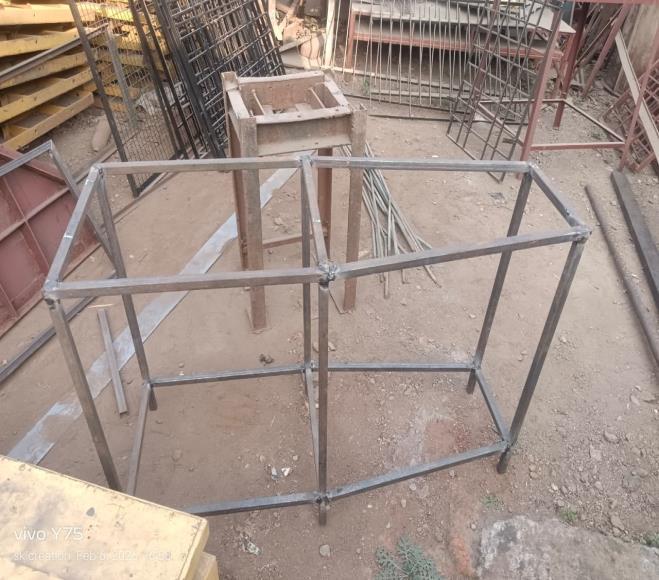
I) FRAME
International Research Journal of Engineering and Technology (IRJET) e-ISSN: 2395-0056
Volume: 13 Issue: 03 | Mar 2026 www.irjet.net p-ISSN: 2395-0072
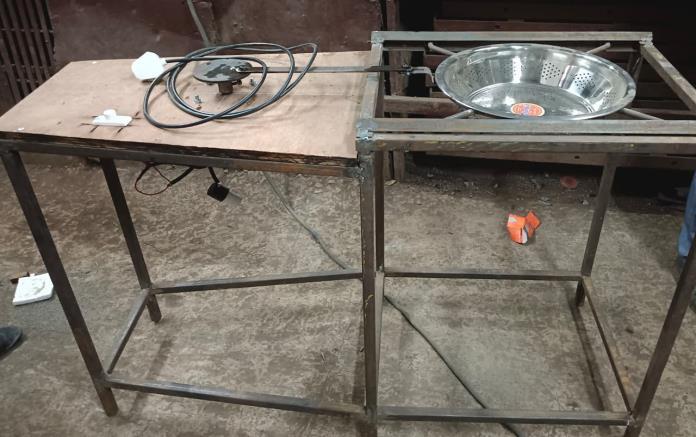
The supporting frame is the main body or skeleton of the sievingmachine.Allothercomponentsaremountedonthis structure.
Construction
Made from mild steel square pipes or angle sections.Designedinarectangularshapeforstability.Welded joints provide rigidity and strength.Four vertical legs supporttheentiresystem.
Functions
Supportsthesievedrum,motor,andtransmissionsystem. Maintainsproperalignmentofrotatingparts. Absorbsvibrationproducedduringoperation. Providesstabilityandpreventsmachinemovement.
Importance
Astrongframeensuressafeoperationandlongmachinelife. If the frame is weak, vibration may cause misalignment, noise,andmechanicalfailure.
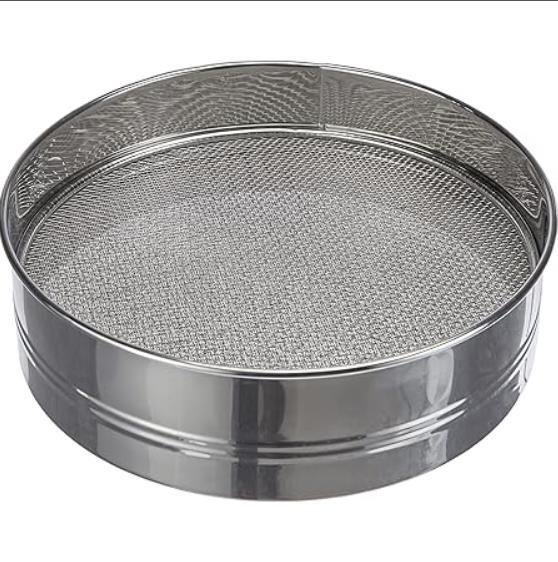
ii) Sieve Tray
The sieve drum is the main working component of the machinewhereseparationofparticlestakesplace.
Construction
Circularorcylindricalmetalcontainer. Bottom surface consists of a perforated mesh or sieveplate. Holesareuniformlydistributed. Madefromstainlesssteelormildsteelsheet.
Functions
Receivesrawmaterialtobescreened. Allowssmallerparticlestopassthroughholes. Retainslargerparticlesabovethemesh. Performsseparationbasedonparticlesize.
Working Principle
Whenthedrumrotatesorvibrates: Materialspreadsacrossthesievesurface. Smallerparticlesfallthroughperforations. Larger particles move outward and are collected separately.
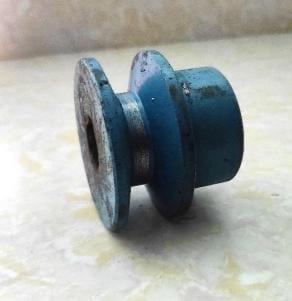
iii) Pulley
Thepulleysystemtransfersmotionfromthe motortothesievemechanismusingtwopulleysof differentsizesconnectedbyabelt.Themotorpulley (driver pulley) rotates first and transmits motion throughthebelttothesievepulley(drivenpulley). Thiscontrolsthespeedandproducestherequired vibrationorrotationforpropersieving.Thepulley size ratio plays an important role in determining machinespeedandimprovingsievingefficiency
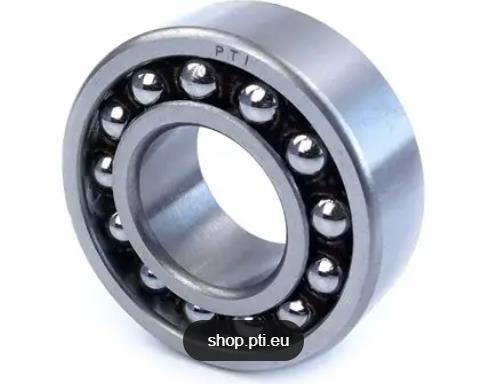
iv) Bearing
International Research Journal of Engineering and Technology (IRJET) e-ISSN: 2395-0056
Volume: 13 Issue: 03 | Mar 2026 www.irjet.net p-ISSN: 2395-0072
Bearingsarefittedatrotatingjointstoreducefrictionand support smooth shaft movement. They are usually ball or roller bearings placed inside housings at shaft supports. Bearings help the shaft rotate smoothly, reduce wear and energyloss,andcarryradialandaxialloads.Properuseof bearings improves machine efficiency and increases the lifespanofthemachine.
v) Electric Motor
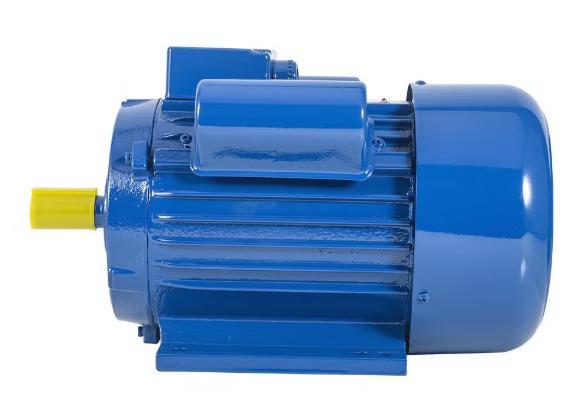
Theelectricmotoristheprimemoverofthemachineand providesmechanicalpower.Theelectricmotoristhemain driving component (prime mover) of the multipurpose sieving machine, responsible for providing the required mechanicalpowerforitsoperation.Itistypicallyasinglephase or three-phase induction motor, mounted on the lowersideoftheframeforbetterstabilityandproperweight distribution.Themotorisconnectedtothepulleyandbelt drive system, through which rotational motion is transmittedtotheshaftandfurtherconvertedintovibration ofthesievetray.
Machine Used for This Project
In this project, a multipurpose sieving machine is used to separate materials based on particle size. The machine consistsofaframe,sievetray,electricmotor,pulleyandbelt drive, and a vibration mechanism. It works by converting electrical energy into mechanical motion using a motor, which produces vibration in the sieve tray. Due to this vibration,fineparticlespassthroughthemeshwhilecoarse particles remain on the surface. This machine is used for sievingmaterialslikesand,grains,andpowdersefficiently withlessmanualeffort.
5. Working
Themachineworksontheprincipleofmechanical vibrationandsizeseparation.
1. Materialtobesievedisplacedonthesievetray.
2. Electricpowerissuppliedtothemotor.
3. Motorstartsrotatingataconstantspeed.
4. Driverpulleyrotatesalongwithmotorshaft.
5. Belttransfersmotiontodrivenpulley.
6. Linkagemechanismconvertsrotarymotioninto oscillatingmotion.
7. Sievetraybeginsvibrating.
8. Smallerparticlespassthroughholesduetogravity andvibration.
9. Largerparticlesremainontopandmovetowardthe edge.
Continuousvibrationensuresquickanduniformseparation. aterialFeeding
Materialsuchasgrains,sand,powder,orfoodparticlesis manuallyfedintothetray.Properfeedingensures: UniformdistributionBetterseparationefficiency
VibrationGeneration
Whenthemotorruns:
Pulleyrotatescontinuously.Linkageproducesperiodic motion.Trayvibratesinhorizontalandverticaldirections
.Thisshakingmotionloosensmateriallayers.
4.1SeparationProcess
Duringvibration:
Fineparticlesfallthroughperforations.
Mediumparticlesmoveslowly.
Largerparticlesremainabove.
Gravityandvibrationtogethercompleteseparation.
4.2MaterialCollection
Separatedmaterialsarecollectedas:
Finematerialbelowthetray
Coarsematerialonthetraysurface
Thisprocessreducesmanualsortingwork.
4.3ContinuousOperation
Themachinecanruncontinuouslyforlongperiods.
Advantages:
Higheroutput
Consistentquality
Lessoperatorfatigue
International Research Journal of Engineering and Technology (IRJET) e-ISSN: 2395-0056
Volume: 13 Issue: 03 | Mar 2026 www.irjet.net p-ISSN: 2395-0072
5. Results & Discussion
After fabrication and testing of the sieving machine, satisfactory results were obtained. The machine operated smoothly with proper alignment of the motor, pulley, and crank mechanism. The rotary motion provided by the electric motor was successfully converted into oscillating movement of the sieve tray, which enabled effective separationofmaterials.
During operation, the material spread uniformly over the perforatedsievesurface.Fineparticlespassedthroughthe holesofthesievemesh,whilelargerparticlesremainedon thetopandwereseparatedefficiently.Thebeltandpulley systemtransmittedpowerwithoutslipping,andthebearings ensuredsmoothrotationwithminimumfriction.
Themachineshowedthefollowingperformanceresults:
Efficientseparationofparticlesbasedonsize.
Smoothandcontinuousoperationwithlow vibration.
Reducedmanualeffortcomparedtotraditional handsieving.
Uniformgradingofmaterials.
Stablestructureduetostrongweldedframe.
Lownoiseandminimalpowerconsumption.
Easyhandlingandmaintenance.
Overall,thefabricatedmachineachievedtheexpected performanceandprovedsuitableforsmall-scaleindustrial andagriculturalapplications.
5.1 APPLICATION
AgricultureSector–Usedtocleanandseparate grainslikewheat,rice,andseedsbyremovingdust andstones.
FoodProcessingIndustry–Usedtoseparateflour, spices,andsugarpowderforbetterquality products.
ChemicalandPharmaceuticalIndustry–Usedto separatepowdersandgranulesaccordingto particlesize.
Small-ScaleandRuralIndustries–Suitableforsmall workshopsbecauseitissimple,lowcost,andeasy tooperate.
6. Conclusion
Thesievingmachineisasimpleandusefulmachineused forseparatingmaterialsaccordingtoparticlesize.Itworks withthehelpofanelectricmotor,pulleyandbeltdrive,and sieve drum.The machinereducesmanual work andsaves timecomparedtohandsieving.
Thefabricatedframeprovidesgoodstrengthandstability duringoperation.Thevibrationcreatedbythemechanism
helpsinproperseparationoffineandcoarseparticles.The machineworks smoothly, is easy to operate, and requires low maintenance. It is suitable for small industries, agriculture,andworkshopapplications.
7. References
1. DesignandFabricationofMultipurposeSievingMachine
Pise Sanket Madhukar, Mali Surendra Satyawan, Kulkarni Shekhar Shrikant, Bankar Avinash (2025). Thispaperpresentsamachinedesignedtosievematerials like sand and grains efficiently while reducing labor and time.
2.MultipurposeSievingMachine Aniket A. Chavan, PrathameshD.Kadam,Sahil .Lad,ManasM.Mankar,Sajid Shaikh(2022).Themachineusesamechanicalsystemand mesh screens to separate particles according to size automatically.
3.DesignandFabricationofAutomaticMultipurposeSieving MachineManjunathV.B.,VinayM.,VarunM.,SuchithraP., TharunP.(2024).Amotor-drivenvibratingsievingmachine capable of separating different materials using interchangeablemeshscreens.
4.Design of a Universal Sieving Machine A. A. Okafor, S. E. Abonyi, A. E. Ilechukwu, C. V. Obinani (2023).A universal sieving machine capable of handling materialslikecassavaflakes,sand,andflourwithefficiency upto98%.
5.Design and Fabrication of Multi-Sieve Sand Sieving MachineHimanshu Meshram et al. (2022). Multi-layersievedesignthatseparatessandinto different gradesusingreplaceablemeshscreens.
6.Design and Fabrication of Automated Sieve Machine Satyam Ganeshsinh Nakoriya et al. (2024). A multi-layer automated sieving system capable of separatingsandandgrainswithadjustablesievesizes.
7.Multipurpose Sieving and Screening Machine IJSREM Research Journal. Aslider-crankmechanismwithamotorisusedtovibratethe sievetrayforfasterseparationofmaterials.
8.DesignandDevelopmentofElectronicSievingMachinefor SeparationPradeep Kumar Krishnan, Bushra Zaid Humaid Alrisi.A smart electronic sand sieving system designed to improveconstructionmaterialquality.
9.DesignandDevelopment ofDouble-LayerGrainSieving Machinesian Journal of Advanced Research and Reports (2024).Agrainsievingmachineusingvibratingmeshwitha capacityofabout370kg/hourandefficiencyof85–95%.
10DesignandFabricationofMulti-LevelScreeningMachine
D.P.Jadhav,HarishchandraEkal,KaranJambhale,Mahadev Garad(2018).A two-screen machine used for separating materials into different particle sizes for industrial applications.