
International Research Journal of Engineering and Technology (IRJET) e-ISSN: 2395-0056
Volume: 13 Issue: 05 | May 2026 www.irjet.net p-ISSN: 2395-0072
International Research Journal of Engineering and Technology (IRJET) e-ISSN: 2395-0056
Volume: 13 Issue: 05 | May 2026 www.irjet.net p-ISSN: 2395-0072
1Final Year B.E Marine Cadet, PSNCET, Tamil Nadu. India
2,3 Assistant Professor, Dept. of B.E Marine Engineering, PSNCET, Tamil Nadu, India
4 Professor, Dept. of B.E Marine Engineering, PSNCET, Tamil Nadu, India***
ABSTRACT-Maritime Guardian is an innovative GPS-enabled smart band designed to enhance maritime safety and personal tracking for a crew members and passengers at sea. It integrates several safety features to prevent accidents, locate individuals in emergencies, and enhance communication during maritime travel. This wearable device integrates multiple sensors and technologiestoproviderealtimemonitoringofindividuals' vital signs, location, and environmental conditions. In emergency situations, such as man-overboard incidents or entrapment in enclosed spaces, the smart band sends distress signals to nearby vessels and shore-based authorities, facilitating rapid response and rescue operations. This project aims to improve maritime safety, reduce response time, and enhance overall well-being for individualsatsea.
Keywords: Maritime safety, Personal tracking, GPS, Wearable technology, Smart band, Emergency response, Man-overboard, Enclosed space entry.
Themaritimeindustryisavitalcomponentofglobaltrade andcommerce,withmillionsofpeopleemployedonships and vessels worldwide. However, the maritime environment poses unique safety risks, including man-overboard incidents, entrapment in enclosed spaces, and exposure to hazardous environmental conditions. Existingsafetymeasures,suchaspersonallocatorbeacons (PLBs) and emergency position-indicating radio beacons (EPIRBs), have limitations in terms of accuracy, response time,andfunctionality.
To address these challenges, this project aims to design, develop, and test a GPS-enabled smart band which is specifically designed for maritime safety and personal tracking. The Maritime Guardian smart band integrates multiplesensorsandtechnologies.
This project seeks to contribute to the improvement of maritime safety and reduce the risk of accidents and injuriesbyprovidingareliable,accurate,anduser-friendly safetysolution.
1.1.1
Data Acquisition: The smart band collects data from varioussensors and transmitsit tothecentral monitoring system. The central monitoring system processes the received data, analyzes it, and identifies potential safety risks. In emergency situations, the central monitoring system sends alerts and notifications to authorities, emergency responders, and designated contacts. The centralmonitoringsystemprovidesreal-timetrackingand monitoring of thesmart band'slocation and vital signs. In emergency situations, the central monitoring system dispatches emergency responders and provides critical information to facilitate rapid response and rescue operations.
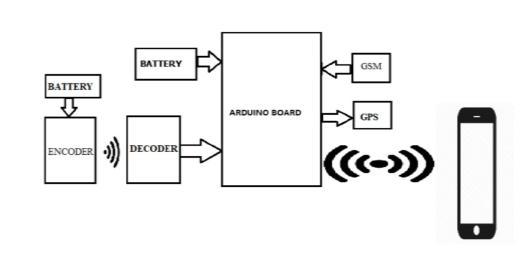
Figure 1-worinkingprincipleoftheGPSintegrated trackingsmartsafetyband
Ahigh-resolutiondisplayscreenthatshowsreal-timedata fromtheGPS-enabledsmartbands,includinglocation,vital signs, and safety status. Alert and Notification System alerts and notifies crew members and emergency responders in case of an emergency or safety risk. Tracking and Monitoring System allows crew members to track and monitor the location and safety status of other crew members and passengers in real-time. Emergency Response Button that crew members can press to initiate an emergency response in case of a safety risk or emergency. Communication System allows crew members to communicate with each other and with emergency respondersincaseofanemergency.
International Research Journal of Engineering and Technology (IRJET) e-ISSN: 2395-0056
Volume: 13 Issue: 05 | May 2026 www.irjet.net p-ISSN: 2395-0072
The GPS module collects location data, including latitude, longitude,altitude,and velocity.Thesmart band'ssensors collectdataonvitalsigns,suchasheartrate,bloodoxygen levels, and body temperature. The microcontroller processes the collected data and prepares it for transmission. The communication module transmits the processed data to the central monitoring system via cellular, satellite, or Wi-Fi connectivity. The central monitoring system receives the transmitted data and processes it for real-time tracking, monitoring, and emergency response. The central monitoring system transmits commands to the smart band, such as configurationupdatesoremergencyresponseinstructions.
The smart band receives the transmitted commands and executesthemaccordingly.
The GPS module, sensors, and environmental sensors collectdatainreal-time.Themicrocontrollerprocessesthe collecteddataandanalyzes itforpotentialsafetyrisks.Ifa potential safety risk is detected, the microcontroller triggers an alert and notification to the wearer and the central monitoring system.The display screen, vibration motor, audio speaker, and LED indicators provide real-timefeedbacktothewearer.
2.1 Hardware Components
GPS Module: Provides location information and trackingdata.
Microcontroller: Controls the smart band's functions andprocessesdata.
Accelerometer and Gyroscope: Detects movement, orientation,andimpact.
Heart RateandBlood OxygenSensors: Monitorsvital signs.
EnvironmentalSensors: Tracks temperature, humidity,andairquality.
Communication Module: Enables wireless communicationwiththecentralmonitoringsystem.
Battery and Power Management: Provides power to thesmartbandandmanagespowerconsumption.
Waterproof and Durable Housing: Protects the smart bandfromharshmaritimeenvironments.
2.2 Software Components
Firmware: Controls the smart band's hardware componentsanddataacquisition.
Maritime Guardian App: Provides a user-friendly interface for device configuration, data visualization,
andemergencyresponse.
Central Monitoring System: Receives and processes data from the smart band, alerts authorities in emergency situations, and provides real-time tracking andmonitoring.
Data Analytics and Machine Learning Algorithms: Analyzes data from the smart band and provides insightsonmaritimesafetyandpersonaltracking.
2.3 Connectivity and Communication Components
Cellular Connectivity: Enables communication with thecentralmonitoringsystemviacellularnetworks.
Satellite Connectivity: Enables communication with the central monitoring system via satellite networks inareaswithlimitedornocellularcoverage.
Bluetooth and Wi-Fi Connectivity: Enables communication with nearby devices and the central monitoringsystemviaBluetoothandWi-Finetworks.
2.4 Power and Battery Components
Battery:Providespowertothesmartband.
PowerManagementUnit:Managespower consumptionandoptimizesbatterylife.
Solar Charging: Recharges the battery using solar power.
2.5 Durability and Waterproofing Components
Waterproof Housing: Protects the smart band from waterandmoisture.
Durable Materials: Ensures the smart band can withstandharshmaritimeenvironments.
Shock and Vibration Resistance: Ensures the smart bandcanwithstandphysicalstressandimpacts.
3.1 Hardware Security Measures
Utilize a secure microcontroller that incorporates hardware-based security features, such as encryption and secure boot mechanisms. Design the smart band with tamper-proof features to prevent unauthorized physical access to the device. Implement secure communication interfaces,suchasencryptedBluetoothorWi-Fi,toprotect data transmitted between the smart band and the central monitoringsystem.
3.2 Software Security Measures
Developing secure firmware that incorporates encryption, secure boot mechanisms, and secure software updates. Encrypt all data transmitted between the smart band and the central monitoring system, as well as data stored on the device. Implementation of secure authentication
International Research Journal of Engineering and Technology (IRJET) e-ISSN: 2395-0056
Volume: 13 Issue: 05 | May 2026 www.irjet.net p-ISSN: 2395-0072
mechanisms, such as multi-factor authentication, to prevent unauthorized access to the smart band and the central monitoring system. Regularly update the smart band's firmware and software to ensure that any known vulnerabilitiesarepatched.
3.3 Network Security Measures
Utilization of secure communication protocols, such as Transport Layer Security (TLS) or Secure Sockets Layer (SSL),toprotectdatatransmittedbetweenthesmartband andthecentralmonitoringsystemandConfigurefirewalls torestrictincomingand outgoingtrafficto onlynecessary ports and IP addresses. Implementation of intrusion detection and prevention systems to detect and prevent potentialcyberthreats.
3.4 Data Security Measures
Encryption of all data stored on the smart band and the central monitoring system. Regularly backup data and implement a disaster recovery plan to ensure business continuityintheeventofacyber-attackordataloss.
3.5 User Security Measures
Implementation of secure user authentication mechanisms, such as multi-factor authentication, to prevent unauthorized access to the smart band and the central monitoring system and role-based access control, torestrictaccesstosensitivedataandfeatures.
4. SAFETY FEATURES AND BENEFITS OF MARITIMEGUARDIAN
4.1 Safety Features
Thesmartbanddetectsifthewearerhasfallenoverboard andsendsanalerttothecentralmonitoringsystem.Ithas anintegratedEmergencyPositionIndicatingRadioBeacon (EPIRB) that sends a distress signal to emergency responders in the event of an emergency. It also has an SOSbuttonthatallowsthewearertosendadistresssignal tothecentralmonitoringsysteminemergencysituations.
4.2 Benefits
The smart band enhances maritime safety by providing real-time tracking and monitoring of crew members and passengers. it facilitates rapid response and rescue operations in emergency situations and automates many tasks, such as tracking and monitoring, freeing up crew memberstofocusonothercriticaltasks.
5.1 Physical Security
Thisdeviceensuringthatisdesignedtopreventtampering and unauthorized access and withstand harsh maritime environments. It also stores sensitive data, such as encryption keys and personal identifiable information, securelywithinthedevice.
5.2 Data Security
This device encrypt all data transmitted between the device and the central monitoring system by using secure communication protocols, such as TLS or SSL, to protect data transmitted between the device and the central monitoring system. It access control mechanisms, such as role-based access control, to restrict access to sensitive data.
5.3 Network Security
This device Configure firewalls to restrict incoming and outgoing traffic to only necessary ports and IP addresses by using secure network protocols, such as HTTPS or SFTP. It also implements intrusion detection and prevention systems to detect and prevent potential cyber threats.
5.4 Software Security
Ensure the device's firmware is secure and up-to-date. By implementing secure software update mechanisms, preventunauthorizedaccessormaliciouscodeexecution.
5.5 User Security
By implementing secure user authentication mechanisms, such as multi-factor authentication and role-based access control, prevent unauthorized access to the device and restrictaccesstosensitivedataandfeatures.
6.CONCLUSION
The GPS-enabled smart band designed specifically for maritimesafetyandpersonaltrackinghasthepotentialto revolutionize the way we approach maritime safety. By providing real-time tracking, monitoring, and emergency response capabilities, this device can help prevent accidents, reduce response times, and improve overall safety for maritime personnel and passengers. The device's ability to detect falls, impacts, and other safety risks, and to automatically send alerts to emergency responders, can help ensure that help arrives quickly in emergency situations. Additionally, the device's ability to track vital signs, such as heart rate and blood oxygen levels, can help identify potential health risks before they becomemajorissues.
International Research Journal of Engineering and Technology (IRJET) e-ISSN: 2395-0056
Volume: 13 Issue: 05 | May 2026 www.irjet.net p-ISSN: 2395-0072
While there are potential challenges and limitations to the adoption of this technology, including cost, user acceptance, and regulatory compliance, the benefits of improved maritime safety and personal trackingmake itan importantinnovation worth exploring further. Ultimately, the GPS-enabled smart band designed specifically for maritime safety and personal tracking has the potential to save lives, reduce injuries, and improve overall safety for maritime personnel and passengers. As the maritime industry continues to evolve and grow, innovations like this will play an increasingly important role in ensuring the safety and well-being of those who workandtravelatsea.
GPS Module (u-blox NEO-6M)
Microcontroller (Arduino/ESP32)
Accelerometer and Gyroscope (MPU-6050)
Alarm and Notification System
Data Transmission and Reception Power Management
Bluetooth or Cellular Connectivity Module
Water-Resistant Casing and Straps
Emergency Button (SOS/Panic Button)
LED/LCD Display (Status Indicators)
Figure 2- flowchartofGPSintegratedtrackingsmart safetyband
7.REFERENCES
1. "Maritime Safety and Security: A Review of the CurrentStateofAffairs"(JournalofMaritimeResearch, 2020)
2. "GPS-Based Personal Tracking System for Maritime Safety"(JournalofNavigation,2019)
3. "Wearable Sensors for Maritime Safety and Health Monitoring"(Sensors,2020)
4. "Design and Development of a GPS-Enabled Smart Band for Maritime Safety" (Proceedings of the International Conference on Maritime Safety and
Security,2020)
5. InternationalOrganizationforStandardization(ISO)ISO9001:2015(QualityManagementSystems)
6. InternationalElectrotechnicalCommission(IEC)-IEC 60945:2016 (Maritime Navigation and RadiocommunicationEquipmentandSystems)
7. "Maritime Safety and Personal Tracking using Wearable Devices" (Proceedings of the International ConferenceonWearableTechnology,2019)
8. "GPS-Based Emergency Response System for Maritime Safety" (Proceedings of the International Conference on Emergency Response and Management, 2020)





I am pursuing B.E final year Marine Engineering cadet at PSN College of Engineering & Technology, Tirunelveli,TamilNadu.

Mr. C. INDRAKUMAR, Working as Assistant Professor at PSN College of Engineering & Technology (Autonomous), Melathediyoor, Tirunelveli,TamilNadu.
Mr. G. PETER PACKIYARAJ Project guidecum assistant professor PSN college of engineering and technology, Tirunelveli,Tamilnadu.


Dr. A MURUGAN, Working as Professor at PSN College of Engineering&Technology(Autonomou s), Melathediyoor, Tirunelveli, Tamil Nadu.