International Research Journal of Engineering and Technology (IRJET)
e-ISSN: 2395-0056
Volume: 13 Issue: 05 | May 2026
p-ISSN: 2395-0072
www.irjet.net
Deep Excavation for Contaminated Rainwater Storage Sump (CRWS) Using Raker-Supported Sheet Piling System – A Case Study Rajesh Paul1, Arpan Kumar2, Sandeep Maurya2 1Joint General Manager, Larsen & Toubro Construction, Tamil Nadu, India 2Senior Design Engineer (Geotechnical), Larsen & Toubro Construction, Tamil Nadu, India
---------------------------------------------------------------------***---------------------------------------------------------------------
Abstract -Deep excavations continue to present significant
Structure: Contaminated Rainwater Storage Sump Plan: 40 m × 28 m Excavation depth: 13.25 m Groundwater table: 3.5 m BGL
geotechnical challenges particularly under constrained site conditions. This paper presents a case study of a 13.25 m deep excavation for a Contaminated Rainwater Storage Sump (CRWS) at the Numaligarh Refinery Expansion Project, Assam. The excavation with a plan area of 40 m × 28 m in saturated alluvial deposits and a groundwater table at 3.5 m below EGL posed considerable stability concerns. Conventional stepped excavation with berms was not feasible due to severe space constraints and the proximity of adjacent pile-supported structures further restricted the use of ground anchors. Furthermore, conventional strut–waler systems were also not practical due to the large excavation plan area. Consequently, a braced sheet pile system supported by walers and inclined raker struts at two levels was adopted as the retention system. This case study focuses on a deep and large-scale shoring system in a highly constrained area highlighting the selection of raker struts over conventional horizontal struts and emphasizing the importance of sequential and staged construction for the deep sump.
Road
1. INTRODUCTION
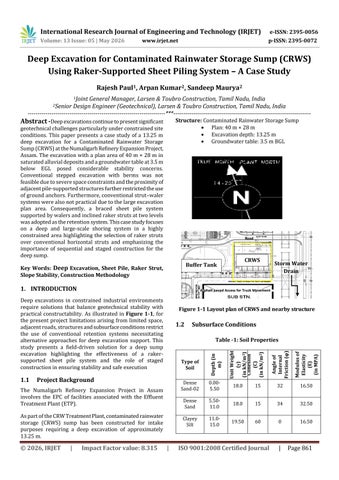
Figure 1-1 Layout plan of CRWS and nearby structure
1.2
|
Unit Weight () (in kN/m3) Cohesion (C) (in kN/m2)
Modulus of Elasticity (E) (in MPA)
Impact Factor value: 8.315
Angle of Internal Friction (φ)
As part of the CRW Treatment Plant, contaminated rainwater storage (CRWS) sump has been constructed for intake purposes requiring a deep excavation of approximately 13.25 m.
Type of Soil
Depth (in m)
The Numaligarh Refinery Expansion Project in Assam involves the EPC of facilities associated with the Effluent Treatment Plant (ETP).
|
Subsurface Conditions Table -1: Soil Properties
Project Background
© 2026, IRJET
Storm Water Drain
Asphalt paved Access for Truck Movement
Deep excavations in constrained industrial environments require solutions that balance geotechnical stability with practical constructability. As illustrated in Figure 1-1, for the present project limitations arising from limited space, adjacent roads, structures and subsurface conditions restrict the use of conventional retention systems necessitating alternative approaches for deep excavation support. This study presents a field-driven solution for a deep sump excavation highlighting the effectiveness of a rakersupported sheet pile system and the role of staged construction in ensuring stability and safe execution
1.1
CRWS
Buffer Tank
Key Words: Deep Excavation, Sheet Pile, Raker Strut, Slope Stability, Construction Methodology
Dense Sand-02
0.005.50
18.0
15
32
16.50
Dense Sand
5.5011.0
18.0
15
34
32.50
Clayey Silt
11.015.0
19.50
60
0
16.50
|
Page 861
ISO 9001:2008 Certified Journal