
International Research Journal of Engineering and Technology (IRJET) e-ISSN: 2395-0056
Volume: 13 Issue: 06 | Jun 2026 www.irjet.net p-ISSN: 2395-0072

International Research Journal of Engineering and Technology (IRJET) e-ISSN: 2395-0056
Volume: 13 Issue: 06 | Jun 2026 www.irjet.net p-ISSN: 2395-0072
1Mr. Kalpesh S. Bhumbar, 2Prof. Hemant Dahake, 3Prof. Apeksha Chaudhary
1PG Student, MTech Transportation engineering, G H Raisoni University (Amravati)
2Professor and Head, Civil Engineering Department, G H Raisoni University (Amravati)
3 Professor Civil Engineering Departments, G H Raisoni University (Amravati)
Abstract - Road safety in India remains in a developing phase, with traffic accidents arising from multiple contributing factors such as inadequate road conditions, human error, vehicle-related issues, lack of proper infrastructure for pedestrians and cyclists, and environmental influences like poor weather and low visibility. These incidents result in fatalities, injuries, property damage, social hardship, and environmental degradation. Areas on roadways with a high frequency of accidents are known as black spots. A case study conducted on NH-6 in the Amravati district of Maharashtra identified key problems, including poor road and shoulder conditions and the presence of trees and utilitypoles along the roadside. The study highlights these safetydeficienciesandproposesmeasurestoenhanceroad safetyandreduceaccidentsforallusers.
Key Words: Black Spot Analysis on NH-6, Accident Rate & Frequency, FIR index
RoadtransportplaysavitalroleinIndia’stransportation system and significantly contributes to the nation’s economy. Over the years, there has been substantial growthinmotorization,urbandevelopment,thenumber of vehicles, and the expansion of road networks to meet increasing transportation demands. However, this rapid growth
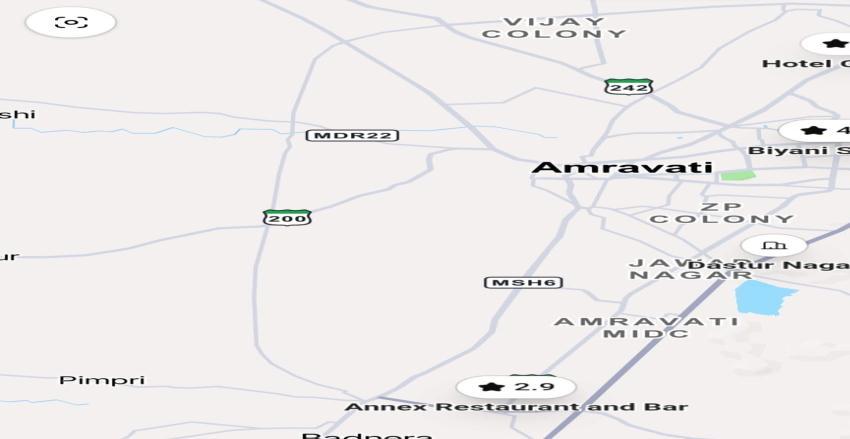

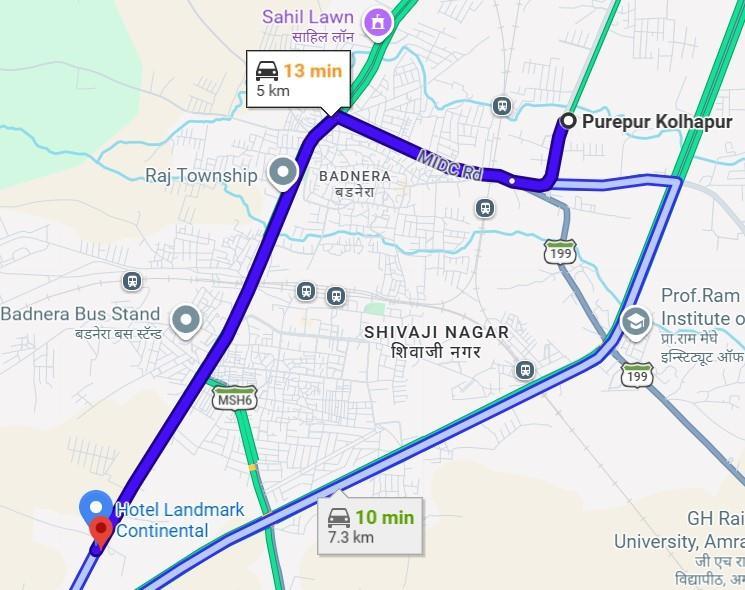
Fig 1 : Studyareasource:GoogleMap
has also led to a rise in road accidents and fatalities. Such accidents can be viewed as an unintended consequence of increased urbanization, motorization, and infrastructure expansion. They place a heavy burdenon individuals, society, and property. The sharp increase in traffic volumeon Indian roads inrecentyearshasfurther escalated the frequency of accidents. Since effective and sustainable safety measures have not yet been fully developed especially for remote and low-traffic rural areas it is important to adopt a structured hierarchy of control, similar to approaches used in occupational safety andhealth,toimproveroadsafetyoutcomes.
The selected road stretch was divided into four sections, andaccidentdatafromthepastelevenyearswasgathered for analysis. The main objectives of the study are as follows:
ToIdentifyAccident-ProneLocations(Black Spots)AlongTheSelectedRoad,
ToConductADetailedAnalysisOfTheMostCritical OrHigh-RankingSpots,And
To Recommend Suitable Corrective Measures ToReduceTheOccurrenceOfAccidents.
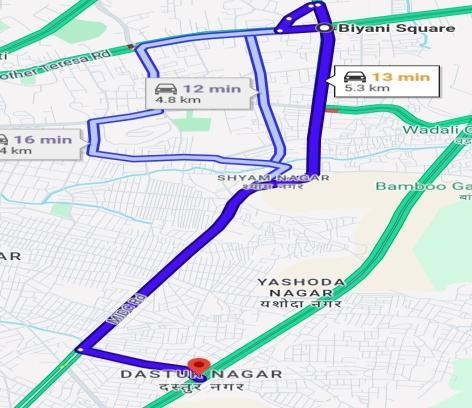
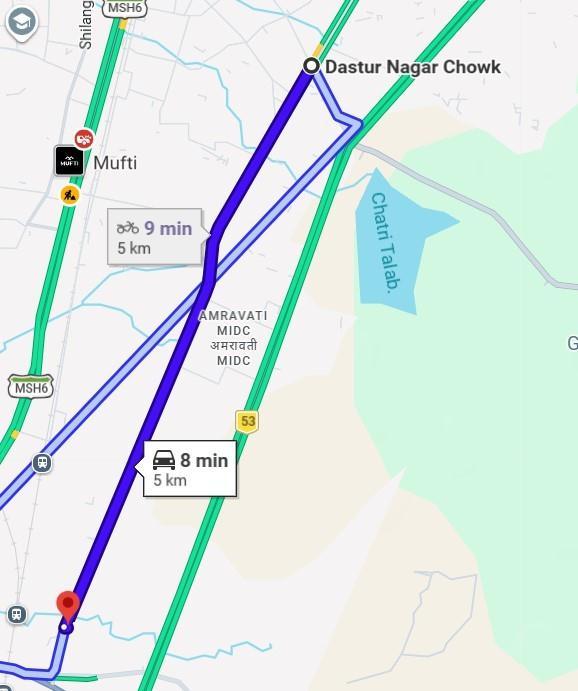
Forthis study, a two-lanestretch ofapproximately 20 km onNH-6,runningfromHotelGauriInntoHotelLandmark in Badnera, was selected. The route was further divided into four equal segments of 5 km each to facilitate systematic data collection and analysis. The identified sectionsare:
Stretch1–HotelGauriInntoBiyaniSquare,
Stretch2–BiyaniSquaretoDasturNagar
Stretch3–DasturNagartoPurepurkolhapur Restaurant
Stretch4–AnnexRestauranttoHotelLandmark
International Research Journal of Engineering and Technology (IRJET) e-ISSN: 2395-0056
Volume: 13 Issue: 06 | Jun 2026 www.irjet.net p-ISSN: 2395-0072
OverallAccidentRate=LengthofStretch(km)×11Sumof TotalAccidentsover11years
Lengthofeachstretch=5kmPeriod=11years
Calculateaccidentrateperkmperyearusingtheformula: AccidentRate=TotalAccidents(11years)
Length×Years
Table -1: Accident Rate
A road section where a high concentration of accidents occurs is referred to as a black spot. Analyzing such locations is essential for enhancing the overall traffic environmentandsafety.Adetailedassessmentofthefour selected stretches is presented in Figures 2, 3, 4, and 5, alongwithTables3,4,5,and6.
Table 3: BlackSpotAnalysisofStretch1
Accident Point Nos. Problems Safety Enhancement
Gauri
to Biyani Square
Square to Dastur nagar
Dastur nagar to Purepur Kolhapur
Kolhapur to Hotel landmark
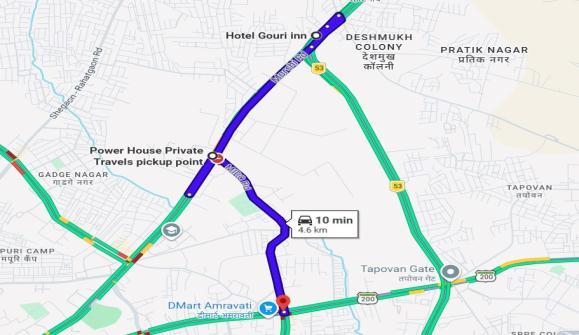
Table 2 Frequency of accident
HotelGauriinn 4 Unsignalised T junction Junction Improvement
ArjunNagar 2 Treeson Shoulder Trees on Shoulder should be removed
Welcomepoint 4 OnStreet Parking OffStreet Parking Facility Divisional commissioner office 3 Treesand poleson shoulder, Sight distance obstruction Clearance of obstructionon shoulder, Sightdistance visibility
Biyani Square 10 Cross junction, Unpainted median, Autostand Junction improvement
3 : BlackSpotPointsonStretch2
shoulder Onstreetparking
Clearanceofobstructionon theshoulder,offstreet parkingfacility
from shoulder
be removedRoad marking
International Research Journal of Engineering and Technology (IRJET) e-ISSN: 2395-0056
Volume: 13 Issue: 06 | Jun 2026 www.irjet.net p-ISSN: 2395-0072
Accident Point Nos. Problem Safety Enhancement
Dasturnagar 15

Unsignalised,Autostand
Vehicleparkingonshoulder, VendorsonShoulders
Gondbaba Temple 19 Crosssection ,Autostand,Blindcurve,Unpainted Median
Gunwantlawn 6 Crossjunction,BlindCurve,Trees andpolesonshoulder
LordsHotel 4 Tjunction
Junctionimprovement, Separateautostand Clearanceofobstructionfromshoulder
Speedlimitrestriction JunctionimprovementMedianstobe painted
Clearanceofobstructionfromshoulder Curvesightdistance
Clearanceobstructionfromshoulder
AnandMarble 3 Tjunction,Badconditionofroad Junctionimprovement Separateautostand
Shouldermaintenances,Roadmarking
AnandMarble 3 Tjunction,Badconditionofroad Junctionimprovement Separateautostand
Shouldermaintenances,Roadmarking
International Research Journal of Engineering and Technology (IRJET) e-ISSN: 2395-0056
Volume: 13 Issue: 06 | Jun 2026 www.irjet.net p-ISSN: 2395-0072
Table 6: BlackSpotAnalysisofStretch4
Accident Point Nos. Problems
Safety Enhancement
Purepur kolhapur 3 Plantsonshoulde,BadConditionofRoad,Road withoutmarking
Clearanceofobstructiononthe Shoulder,Maintenanceofroad
Bagiya Restaurant 7 Tjunction,SteepGradientonBlindCorner TreesonCornershouldberemoved, Speedrestriction
Savatamaidan 9 Treesonshoulder,school,Edgedrop
Clearanceofobstructiononthe shoulder,RoadMaintenance
BadneraPolice station 3` Tjunction,Badspeedbreakers Junctionimprovement, Maintenancesofspeedbreaker
JuniwastiBusstop 4 VendorsonRoad,RoadwithoutMarking RestrictiontoVendors,Road marking
Badnerabus stand 4
Motorgarage,shopsonshoulder
Clearanceofobstructiononthe shoulder
International Research Journal of Engineering and Technology (IRJET) e-ISSN: 2395-0056
Volume: 13 Issue: 06 | Jun 2026 www.irjet.net p-ISSN: 2395-0072
Stretch 4 is the most accident-prone (37.9%), followed by Stretch 2 (32.5%) and Stretch 3 (23%), whileStretch1hastheleastaccidents.
Roadsafetycanbeimprovedthroughtrafficcalming, better intersection design, shoulder maintenance, hazard removal, traffic signals, and safe curve visibility. Two-wheelers account for most fatalities (55%), highlighting the need for focused safety measuresforriders.
Accidentspeakinsummer(March–May)duetoheat, glare,anddriverfatigue.
Safety infrastructure like bicycle lanes, pedestrian paths, parking zones, and traffic calming is essential forurbanroads.
Continuous highway patrolling is needed for better monitoring, faster response, and enforcement of trafficrules.
Iwouldliketoacknowledgemydeepsenseofgratitudeto my project guide Prof. Apeksha Chaudhari Department of Transportation engineering of, G H Raisoni University, Amravati for his constant valuable guidance and encouragement. He gladly accepted all the pains in going through my work again and again and gave me opportunitytolearnessentialresearchskills.ThisReport would not have been possible without his insightful and critical suggestions, his active participation in constructing rightmodelsandaverysupportiveattitude.Iwillalways remain grateful to him for giving direction to my life. I express my sincere thanks to Honorable Vice Chancellor, Dean-Student Welfare, Dean Academics, Dean-School of Engineering & Technology and Head of Department for providing the necessary facilities for carrying out the researchwork.Iwouldliketoacknowledgethesupportof my parents and my siblings for their continuing support andencouragement.
1) https://en.wikipedia.org/wiki/Road traffic safety.
2) Dr.L.R.Kadiyali,TrafficEngineeringandTransport Planning.
3) Roadtrafficsafetydependsonpavementcondition, traffic volume, and roadway geometry (Kadiyali; RoadTrafficSafety).
4) Poor pavement condition (low PCI, low skid resistance, surface defects) increases accident frequency and severity (Al-Masaeid & Assolie, 2025;Lebakuetal.,2025;Amanietal.,2024).
5) Deteriorated pavements also influence unsafe driver behavior and raise single-vehicle crash risk, especiallywithpoorgeometry(Amanietal.,2024).
6) Models combining pavement and traffic data provide better crash prediction accuracy (Popoola etal.,2022;Gupta&Kaur,2021).
7) Inadequate road geometry (narrow lanes, poor shoulders, sharp curves) and low-friction surfaces significantly increase accidents (Kabir & Hossain, 2018;Baskaraetal.,2017).
8) Highertrafficvolumeincreasescrashfrequencydue to greater vehicle interaction (Safety Cube Project, 2016).
9) Poor surface conditions and geometric deficiencies arestronglylinkedtohighercrashrates(Elviketal., 2012;Lammetal.,2011;Harwoodetal.,2010).
10) Accident occurrence is influenced by the combined effect of traffic exposure, pavement quality, and roadwaydesign(Hakkert&Gitelman,2007;Sayed& Rodriguez,2005;Dingetal.,2003).