
International Research Journal of Engineering and Technology (IRJET) e-ISSN: 2395-0056
Volume: 13 Issue: 06 | Jun 2026 www.irjet.net p-ISSN: 2395-0072
International Research Journal of Engineering and Technology (IRJET) e-ISSN: 2395-0056
Volume: 13 Issue: 06 | Jun 2026 www.irjet.net p-ISSN: 2395-0072
1Shivam Kumar Singh, 2Ashish Kumar, 3Dr. Meenakshi Sharma
123Department of Computer Science and Engineering Galgotias University Greater Noida,India ***
ABSTRACT-The exponential growth of digital textual data across domains such as education, healthcare, law, and scientific research has created significant challenges in efficient information extraction, summarization, and document-centric question answering. Traditional document processing techniquesrelyheavilyonkeyword-basedretrievaland extractive summarization, which lack semantic understanding and struggle with long, complex documents. Although recent advances in Large Language Models have demonstrated impressive capabilities in natural language understanding and generation,theirstandalonedeploymentisconstrained by hallucination, lack of transparency, and poor grounding in domain-specific or private document collections. Furthermore, fine-tuning large models on continuously evolving datasets is computationally expensiveandimpractical.Toaddresstheselimitations, this paper proposes a Retrieval-Augmented Generation based framework for content summarization and document-grounded conversational interaction. By integrating semantic retrieval with generative modeling, the proposed system produces accurate, context-aware summaries and reliable answers while maintainingstrongalignmentwithsourcedocuments.
Keywords-Retrieval-Augmented Generation (RAG), Document Summarization, Document GPT, Large Language Models (LLMs), Semantic Search, Vector Database, Natural Language Processing.
The rapid digitization of information in the modern era has resulted in an overwhelming volume of unstructured textual data. Across academic, medical, legal,andindustrial domains,organizationsgenerate and store vast collections of documents on a daily basis. While this abundance of information offers unprecedented opportunities for knowledge discovery, it simultaneously creates significant challenges related to information overload. Extractingrelevantinsightsfromlengthydocuments, identifyingkeyconcepts,andansweringuser-specific queriesinatimelymannerhavebecomeincreasingly
complex tasks. Traditional document processing systems have attempted to address these challenges through information retrieval techniques such as keyword matching, inverted indexing, and ranking algorithms.Whilethesemethodsarecomputationally efficient,theylargelydependonsurface-leveltextual features and fail to capture deeper semantic relationships.Similarly,earlysummarizationsystems rely on extractive approaches that select important sentences directly from the source text. Although extractivesummariespreserveoriginalwording,they often lack coherence, logical flow, and contextual understanding. The emergence of Large Language Modelshastransformednaturallanguage processing by enabling machines to hallucination. Furthermore,LLMslackinherentaccesstoprivateor domain-specific document repositories unless explicitly trained or fine-tuned, which introduces scalability and cost challenges. These limitations highlight the need for hybrid approaches that combine the strengths of retrieval-based systems with the generative capabilities of LLMs. RetrievalAugmented Generation has emerged as a promising paradigm to address this need by grounding generatedresponsesinretrieveddocumentevidence. This paper explores the design and implementation of a RAG-based content summarizer and documentgroundedconversational systemaimedatimproving accuracy,transparency,andusability
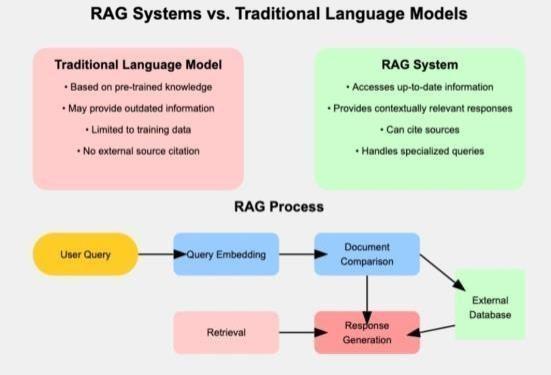
Fig 1 InformationOverloadinTraditionalDocument ProcessingSystem
International Research Journal of Engineering and Technology (IRJET) e-ISSN: 2395-0056
Volume: 13 Issue: 06 | Jun 2026 www.irjet.net p-ISSN: 2395-0072
Evidently, document summarization and document centric question answering are some of the most popular areas of research in natural language processing during the last few decades. The initial studies in this field weremainly extraction summarization methods, which determine and pick outsignificantsentences or phrases right out of the sourcetext.Sentenceimportancewastypically estimated using such statistical techniques as term frequency-inverse document frequency, sentence positionheuristics and lexical similarity measures. Although such methods are computationally efficient and easy to implement, they do not have semantic content and aresubject to giving fragmented, redundant and poorly structured summaries. Later developments offered machine learning-based summarization methods, such as supervised and unsupervised models that aretrained on labeled data to learn the importance of sentences. Graph based systems like Text Rank and LexRank represented thedocumentsasgraphswithsentences as nodes and relationship of similarity represented by edges. These strategies made the summary coherence somewhat better, but they were essentially extractive and failed to produce new sentences and paraphrase meaningfully. The invention of neural network models was a technical breakthrough in the direction of abstractive summarization. Attention-based sequence-tosequence models allowed systems to acquire the semantic understandingof text andproduce more fluent summaries. Although the readability was enhanced, the initial neural models were not quite capable of handling long texts and factual errors were common. Transformer-based architectures went a step furthertocontribute tobetter performance through parallel processing and better contextual modeling. Designed models like encoderdecoder transformers had shown good performance on benchmark summarization data, but were constrainedbylimitedinput length.
SOTA performance in a diverse set of natural language processing tasks such as summarization, question answering and conversational systems has recently been demonstrated by large language modelstrainedonmassivecorpora.Suchmodels use the self-attention processes to extract long- range dependencies and produce very fluent text. Nevertheless,variousreportshaveindicatedthatthe members of the LLMs often produce hallucinated messages, especiallyincaseswhere query questions necessitate strict factual basis. This is a serious limitation when it comes to their use in sensitive
fields like healthcare, law and even scientific research where traceability and accuracy are paramount.
Inordertoreducehallucinationand enhancefactual accuracy, scholars have sought ways of basing language models on external body of knowledge. Knowledge-based techniques augmented with knowledge or retrieval-based techniques use either structured or unstructured data in the generation process. One of them has become RetrievalAugmented Generation. The RAG-based systems access the desired document fragments in an external corpus and condition the output of the language effective in factual correctness and less hallucinatorythanstandalonegenerative models.
Various studies have used RAG-based architectures to open-domain question answering, presenting better answers and evidence grounding. RAG has been investigated by other studies to be applied to domain-specific problems, including analysis of biomedical literature and search of enterprise documents. These papers demonstrate the usefulness of dense vector retrieval in conjunction with generative modeling. Still, they also outline the challenges that have no solutions based on the best chunking strategy, the relevance of retrievals, latency,andscalability.
Even in light of these developments, relatively small amount of research has been conducted to create unified RAG-based systems which provide both content summarization, and interactive documentgroundedconversational interactionswithina single system.Furthermore,theavailableliteraturetendsto test systems based on limited criteria without the contextofdocumentcomplexityintherealworldand constantly changing data. These shortcomings drive the current study that seeks to come up with an allencompassing RAG-based content summarizer and document-guided conversations system that can overcometheweaknessesof thepreviousmethods.
Table 1:LiteratureComparison Study Method Strength
International Research Journal of Engineering and Technology (IRJET) e-ISSN: 2395-0056
Volume: 13 Issue: 06 | Jun 2026 www.irjet.net p-ISSN: 2395-0072
Theexponentialgrowthof digitaltextualdataacross domains such as education, healthcare, law, and research has made efficient information extraction, summarization, and document-centric question answering a critical challenge. Most existing document processing systems rely on traditional information retrieval or extractive summarization techniques, which are limited in their ability to understand deep semantic long documents, and adapt to diverse user queries. Recent advances in Large Language Models (LLMs) have significantly improved natural language understanding and generation capabilities. However, LLMs used in isolation suffer from major limitations, including hallucination, lack of transparency, and inability to reliably ground responses in domain-specific or private documents. These limitations reduce their applicability in high-stakes or research- oriented environments Where factual accuracy and traceabilitytosourcedocumentsareessential.
Furthermore, directly fine-tuning LLMs on large or continuously evolving document collections is computationally expensive, time- consuming, and often impractical. This creates a gap between the powerful generative capabilities of LLMs and the need for accurate, document- grounded summarizationandquestionansweringsystems.
Retrieval-Augmented Generation (RAG) has emerged as a promising paradigm to bridge this gap by combining information retrieval techniques with generative language models. By retrieving relevant document segments and conditioning the generation process on them, RAG-based systems can significantly reduce hallucinations and improve factual correctness. However, designing an efficient and scalable RAG-based architecture forcontentsummarization and interactive document querying remains an open research problem, particularly with respect to chunking strategies, retrieval relevance, response coherence, and system performance. Therefore, this researchaddresses the problem of developing an effective Content Summarizer and DocumentGroundedConversationalSystem using RetrievalAugmentedGeneration, capableof producing concise summaries, accurate, context-aware responses while maintaining strong alignment with the original sourcedocuments.
Table2.KeyChallengesandRAG-basedSolution
Challenge Existin g Systems RAG-based Solution
Hallucination High Reduced Long documents Poor handling Chunking
Scalability Retraining VectorDB Traceability Missing Document grounding
Retrieval-Augmented Generation is a hybrid framework that combines information retrieval with text generation. Instead of relying solely on the internal knowledge of an LLM, a RAG-based system retrievesrelevantdocumentsordocumentfragments andincorporatesthemintothegenerationprocess.
The retrieval component ensures that only relevant and contextually appropriate information is passed to the generative model. The generation component then produces responses based on this retrieved evidence,reducingthelikelihoodofhallucinationand improving factual accuracy. RAG systems are particularly well-suited for document-centric tasks, as they allow models to scale to large document collections while maintaining strong alignment with sourcematerial.
4.1Proposed System Architecture
The proposed content summarizer and documentgrounded conversational system consists of several interconnectedmodules.
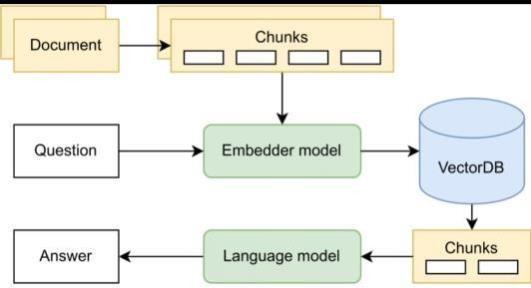
Fig 2.ArchitectureoftheProposedRAG-based ContentSummarizer
International Research Journal of Engineering and Technology (IRJET) e-ISSN: 2395-0056
Volume: 13 Issue: 06 | Jun 2026 www.irjet.net p-ISSN: 2395-0072
4.2 DocumentIngestion and Preprocessing
Documents are first collected from various sources and converted into a standardized textual format. Preprocessing steps includenoise removal, normalization, tokenization, and segmentation. Documents are divided into smaller, semantically coherent chunks to ensure efficient retrieval and manageable context lengths.
4.3 Semantic Embedding and Indexing
Each document chunk is transformed into a dense vector representation using semantic embedding techniques. These embeddings capture contextual meaning and enable similarity-based retrieval. The vectorsarestoredinavectordatabaseoptimizedfor fastnearest-neighborsearch.
4.4 Retrieval Module
When a user submits a query or summarization request, the system retrieves the most relevant document chunks based onsemantic similarity. This retrieval process ensures that only pertinent information is considered during generation stored in a vector database optimized for fast nearestneighborsearch.
4.5When a user submits a query or summarization request, the system retrieves the most relevant document chunks based onsemantic similarity. This retrieval process ensures that only pertinent informationisconsideredduringgeneration.
4.6Generative Module
The retrieved document chunks are provided as context to a language model, which generates summaries or answers constrained by the retrieved content. This grounding mechanism significantly reduces hallucinations and improves response reliability.
4.7 Output Generation and Validation
4.8
The final output is presented to the user along with optional references to source documents, enhancing transparencyandtrustworthiness.
Table 3.FunctionalModulesoftheProposedSystem
Module Description Ingestion DocumentUpload Preprocessing Cleaning Chunking Context Segmentation Embedding SemanticVectors Retrieval SimilaritySearch
The proposed methodology is meant to generatean effective, scaled, and dependable content summarization and document-based conversationalservice through Retrieval-Augmented Generation (RAG) paradigm. The systematicity of the methodology is a modular one that involves document preprocessing, semantic retrieval, and controlled text generation to guarantee the factual accuracy and contextuality. The collection and ingestion of documents will occur according to the definitions of the documentsandtheirdigitization.
Theinitialphaseofthemethodologyisthegathering ofdocumentsofvarioussourcesintheform of PDFs, text files, and research articles as well as legal documents and research in the domain-specific reports. The documents cannot be in the same structure, format and quality thus they are transformedintoastandardizedtextualform.Thisis done to allow compatibility with the downstream processing modules as well as to allow the same compliance with the processing of various types of documents.
5.2
After ingestion, preprocessing of the documents is done to increase the text quality and lessen noise. This involves elimination of meaningless symbols, textnormalization,stopwordsandsentencedivision. Preprocessing is important to enhance retrieval accuracy as it is important to make sure that semanticembeddingsreflectmeaningfulcontentand notformattingartifacts.
5.3 DocumentChunkingStrategy
To get around input length constraints of language models, long documents are decomposed into small, semantically coherent documents to enhance retrieval granularity. The logical divisions upon which chunking is conducted include paragraphs or sections, and overlap is regulated to maintain contextual coherence. An efficient approach to chunking makes sure the key information is not lost or divided, which directly relates to the relevance of retrievalandgenerationofinformation.
5.4 Semantic Embedding Generation
Semantic embedding techniques are used to converteach piece of documention dense representation as a vector. Such embeddings
International Research Journal of Engineering and Technology (IRJET) e-ISSN: 2395-0056
Volume: 13 Issue: 06 | Jun 2026 www.irjet.net p-ISSN: 2395-0072
encode sentence context and semantic lexicon relations. In contrast to the classical cigarette features of a keyword, a dense embedding to keywordallows similaritymatching of similarities of meaning, not the direct lexical overlap of query and document words, which means that the system can find a related content even when the query is expressedindifferentwordsthanthedocumentitself.
The suggested RAG-based solution points to a number of drawbacks of document processing and standalonelanguagemodelssolutions.The system balancestheweaknessesofeachofthetwoparadigms by separating retrieval and generation, which enhances the advantages of each paradigm. The hallucination has been reduced, which is one of the greatest benefits realized. Because the generative model derives onretrieved document evidence but not internal parametric knowledge on its own, thechancesofproducingunsubstantiatedorartificial information is significantly low. This renders the system more factual anddocument-centric.
Thereisalsoanimprovementinthe flexibilityofthe system. The proposed method can also implement new or updated documents by merely updating the vector database unlike the fine-tuned language models that need retraining every time that document collections vary. This feature is very cost effectiveinbothcalculationandmaintenance.Onthe scalability front, the scalability of the system is enabled by the use of semantic embeddings and vector indexing that enables the system to scale to large documents repositories. Nevertheless, the size of a chunk, the quality of embedding, and the threshold of retrieval are some of the factors that affectperformance.Poorchunkingcancausecontext losswhereasexcessivechunkingcancausethemodel to exceed its input capacity or include extraneous information.
Another relevant factor is latency. Retrieval also introduces a new step to the inference pipeline; however, the system as a whole is not impractical thanks to effective indexing and similarity search facilities. More optimization may be provided by using caching techniques and the approximation nearest-neighborsearchalgorithm.
Comprehensively, the discussion suggests systems based on the RAG yield a fair trade-off between precision,scalabilityandusability,and,therefore,are optimalinthedocument-centricapplications.
Table 4.QualitativePerformanceEvaluation
Aspect Observation
Hallucination Significantlyreduced
Scalability High
Adaptability Dynamicupdates
Latency Moderate
7. APPLICATIONS
The suggested content summarizer and documentbased conversational system is applicable in a wide rangeofareas:
7.1Research and Academic Areas
The system would be useful to the researchers in summarizinglengthyresearchpapers,extractingkey contributions, and responding to literature-related questions. This saves the time and time taken in conducting the literature review and improves the productivityoftheresearch.
7.2 Healthcare
Thesystemhastheabilitytoextractpatientrecords, clinical reports, and medical literature in a summarized format in healthcare settings. Clinical decision support is an area where documentgrounded responses are especially useful, and accuracyandtraceabilityarecrucial.
7.3 Legal Sector
The system allows legal professionals to analyze contracts, case laws and regulations. Efficiency and minimizing possibility of misinterpretation are enhancedbythecapabilityofretrievingandreferring totheparticularpartsofdocuments.
7.4 Organization
The system can be deployed by organizations to control internal documentation, policies and technical manuals. The interaction between documentsandqueriesallowsemployeestogetbrief summaries,enhancingaccesstotheknowledge.
7.5 Education
The system may be used in learning institutions to assist the students and teachers in in summarizing textbooks, lecture notes, and study resources and to replytocourse-relatedquestions.
International Research Journal of Engineering and Technology (IRJET) e-ISSN: 2395-0056
Volume: 13 Issue: 06 | Jun 2026 www.irjet.net p-ISSN: 2395-0072
Thisstudyprovidedanin-depthprocedure ofcreating a Retrieval-Augmented Generation based content summarizer and a document- based conversational system. The combination of semantic retrieval with controlled generative modeling makes the proposed approachsuccessfulinovercomingtheshortcomingsof conventional document processing systems and standaloneLargeLanguageModels.
Table 5.SummaryofContributionsandFuture Directions
Aspect Description
Contribution RAG-based unified system
KeyBenifit Grounded generation
Limitation Retrievallatency
FutureWork Citations
1) P.Lewis,E.Perez,A.Piktus,F.Petroni,V. Karpukhin, N. Goyal, H. Küttler, M. Lewis,W. Yih,T. Rocktäschel, S. Riedel, and D. Kiela, "RetrievalAugmented Generation for Knowledge-Intensive NLPTasks,"arXivpreprintarXiv:2005.11401,2020.
2) T. B. Brown, B. Mann, N. Ryder, M. Subbiah, J. Kaplan, P. Dhariwal, A. Neelakantan, P. Shyam, G. Sastry, A. Askell, S. Agarwal, A. Herbert-Voss, G. Krueger, T. Henighan, R. Child, A. Ramesh, D. M. Ziegler,J.Wu,C.Winter,C.Hesse,M.Chen,E.Sigler, M.Litwin, S.Gray,
3) B. Chess, J. Clark, C. Berner, S. McCandlish, A. Radford, I. Sutskever, and D. Amodei, "Language Models are Few-Shot Learners," arXiv preprint arXiv:2005.14165,2020.
4) S. Zhang, S. Roller, S. Goyal, and J. Pineau, "EfficientlySummarizing Text with a RetrievalAugmented Generation Model," arXiv preprint arXiv:2105.04623,2021.
5) L. Wang, Y. Li, S. Zhang, and S. Feng, "Enhancing Extractive Text Summarization with Topic-Aware Graph Neural Networks," in Proc. of the 2019 Conference on Empirical MethodsinNatural LanguageProcessing(EMNLP),2019,pp.3343
6) Y. Liu, M. Ott, N. Goyal, J. Du, M. Joshi, D. Chen, O. Levy, M. Lewis, L. Zettlemoyer, and V. Stoyanov, "A Survey on Neural Network-Based Summarization Methods,"arXivpreprintarXiv:1909.03186,2019.
7) D. Bahri, H. Ji, M. Mazouchi, and Y. Choi, "Bridging theGapbetweenRelevance MatchingandSemantic MatchingforDocumentSummarization,"inProc.of the 2020 Conference on Empirical Methods in Natural Language Processing (EMNLP), 2020,pp. 3002-3012.
8) Y. Liu, J. Gu, Z. Zhang, X. Wang, and J. Tang, "Hierarchical Transformers for Multi-Document Summarization," arXiv preprint arXiv:2004.06176, 2020.
9) Q. Cao, T. Shen, T. Xie, F. Wei, and T. Liu, "Pretrained Models for Natural Language Processing: A Survey," Science China Technological Sciences, vol. 63,no.10,pp.1872-1897,2020.
Authors would like to thank Dr. Meenakshi Sharma,Professor, Department of Computer Science andEngineering,Galgotias University,forhervalued guidance, encouragement, and sustained support for the development of this project. They are also grateful to the faculties of School of Computing Science and Engineering for providing the necessary technical infrastructures and favorable academic ambiance.Theauthorsarealsothankfultopeersand mentors for constructive suggestions and feedback, which led to significant enhancement in the quality andperformanceoftheproposedsystem.