
International Research Journal of Engineering and Technology (IRJET) e-ISSN: 2395-0056
Volume: 13 Issue: 06 | Jun 2026 www.irjet.net p-ISSN: 2395-0072
International Research Journal of Engineering and Technology (IRJET) e-ISSN: 2395-0056
Volume: 13 Issue: 06 | Jun 2026 www.irjet.net p-ISSN: 2395-0072
Sanjivani Dattatray Jagtap
PG Student, Applied Mechanics Department, Government College of Engineering, Amravati, Maharashtra, India
Abstract – Elevated water tanks play a vital role in providing a continuous water supply and are considered important lifelinestructures, especiallyinearthquake-prone regions. During seismic events, the staging system of the tank significantly influences its overall stability and performance. Therefore, selecting a suitable bracing arrangement is essential for improving the earthquake resistance of elevated water tanks. In the present study, a comparativeseismicanalysis ofelevatedsquare watertanks was carried out using STAAD.Pro under Seismic Zone IV conditions. Five different bracing systems, namely Diagonal Bracing, X-Bracing, V-Bracing, Inverted-V Bracing, and MidDiagonal Bracing, were considered. The analysis was performed for two staging heights, 9 m and 15 m, under both empty and full tank conditions. The seismic performance of the models was evaluated in terms of base shearandtopdisplacement. Theresultsshowedthatstaging height, tank condition, and bracing type significantly influence the seismic behaviour of elevated water tanks. Among all bracing systems, X-Bracing exhibited the best performance by producing the lowest base shear and top displacement values under both empty and full tank conditions. Compared to conventional Diagonal Bracing, XBracing reduced base shear by approximately 32–44% and top displacement by approximately 4–10%. Based on the analytical results, X-Bracing with a 9 m staging height is recommended for improved seismic stability, stiffness, and structuralsafety.
Key Words: Elevated Square Water Tank, Bracing Types, Staging Height, Empty and Full Tank Condition, Top Displacement, Base Shear, Seismic Zone IV, STAAD.Pro.
Elevatedwatertanksarelifelinestructuresandare important for the continuous supply of water. Their performances are critical during and after strong earthquakes. Elevated water tanks have experienced significant damage during past earthquakes due to inadequate understanding of staging behaviour and unsuitable structural configurations. This may be due to the lack of knowledge regarding the behavior of supporting system of the tank, and also due to improper selectionofgeometryofstagingpatterns
The seismic behaviour of elevated water tanks is greatly influenced by staging height and water storage condition. Variation in staging height affects the stiffness and stability of the supporting structure, while the empty and fulltankconditionschangetheseismicmassactingonthe tank during earthquake loading. Due to these variations, thestructuralresponsesuchastopdisplacementandbase shearmaydiffersignificantly.Therefore,itisimportantto study the performance of elevated water tanks under different staging heights and water level conditions to achieveasaferandmoreefficientdesign.
Differentbracingsystemsprovidevaryinglevelsoflateral stiffness and seismic resistance. Therefore, a comparative evaluationofdifferentbracing configurationsisnecessary toidentifythemosteffectivebracingsystemforimproving the seismic performance of elevated water tanks. In the present study, elevated square water tanks are analysed using STAAD.Pro under empty and full conditions for differentstagingheightsandbracingsystems.
In the present work, models of elevated square water tanks located in Seismic Zone-IV analysed using STAAD.Pro. The study focuses on the seismic behaviour of elevated water tanks with different bracing systems and staging heights under both empty and full tank conditions. The analysis includes evaluation of parameters such as top displacement and base shear for the given structures in order to determine the most effective bracing configuration and staging height for improvedseismicperformance.
Toperformseismicanalysisofsquareelevatedwater tanks
Toanalyzeandcomparetheperformanceofdifferent bracing types, specifically Diagonal bracing, Xbracing, V-bracing, Inverted-V bracing and Middiagonalbracing
To investigate the impact of staging height on the seismicbehaviourofelevatedwatertanks
International Research Journal of Engineering and Technology (IRJET) e-ISSN: 2395-0056
Volume: 13 Issue: 06 | Jun 2026 www.irjet.net p-ISSN: 2395-0072
To study and compare the seismic response of elevated water tanks under empty and full tank conditions.
To compare key structural parameters such as base shearandtopdisplacement.
Torecommendthemosteffectivebracingandstaging system for earthquake resistant square elevated watertanksbasedonanalyticalresults.
Bracings help distribute loads more evenly between the columns, reducing the chances of failure under dynamic loads.Bracedframescanabsorbanddissipateearthquake energy, reducing the risk the risk of collapse or severe damage during seismic events. Adding bracings can allow for smaller column and beam sizes, which can save material costs while still maintaining the required structuralstrength.
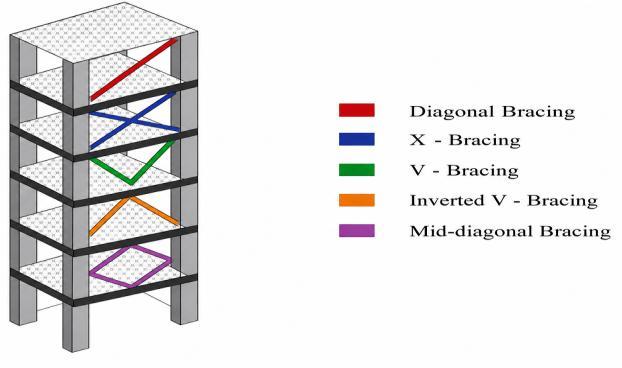
There are various bracing types as shown in Fig 1. Like diagonal bracing, x-bracing, v-bracing, Mid-diagonal bracing. In this study five types of bracing patterns are considered. They are diagonal bracing, X-bracing, Vbracing,invertedV-bracingandMid-diagonalbracing.
In this study, two different staging heights, 9m and 15m, are analysed to understand their effect on the water tank's stability. Staging height is a very important factor because as the height increases from 9m to 15m, the structure becomes more flexible and its vibration time changes during lateral loads. Testing these two heights helps us find out how much the height increases structural risk and how effectively different bracing systemscancontrolthisside-to-sidemovement.
4.1
Toperformthestructuralanalysis,STAAD.Prov8iwas utilizedastheprimarysoftwaretool.Thesoftwareenables efficient 3D modeling, structural analysis, and design of reinforced concrete structures under static and dynamic
loadingconditions.Itsuser-friendlyinterfaceandaccurate analyticalcapabilitiesmakeitsuitableforseismicanalysis ofelevatedwatertanks.
In the present study, elevated square water tank models were analyzed under Seismic Zone IV conditions using STAAD.Pro v8i. The models were evaluated for two staging heights, namely 9 m and 15 m, with five different bracing systems: Diagonal bracing, X-bracing, V-bracing, Inverted-V bracing and Mid-diagonal bracing. Seismic loadingwasappliedinaccordancewithIS1893provisions forliquidretainingstructures.Theseismicperformanceof the tanks was compared under empty and full tank conditionsbasedonimportantstructuralparameterssuch asbaseshearandtopdisplacement.
Thedesignparametersadoptedfortheanalytical modelling of elevated square water tanks are presented in Table 1 and Table 2. The same geometrical and material properties were maintained for all analytical models to ensure uniformity in comparative analysis. However, the staging height was varied from 9 m to 15 m, and accordingly, the column size was increased to maintain structural stability, stiffness, and loadcarryingcapacity.Asthestagingheightincreases,the structural flexibility also increases; therefore, larger column dimensions were provided for the higher stagingmodel.
Table 1: DesignParametersofTank
ofTank
ofcontainer
m SeismicZone ZoneIV
ofcolumns
ImportanceFactor(I) 1
Table 2:StagingHeightandMemberDimensionsofTank
International Research Journal of Engineering and Technology (IRJET) e-ISSN: 2395-0056
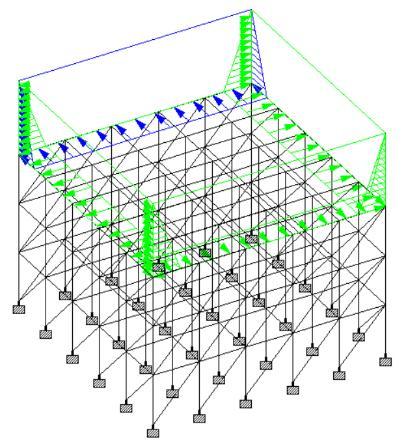
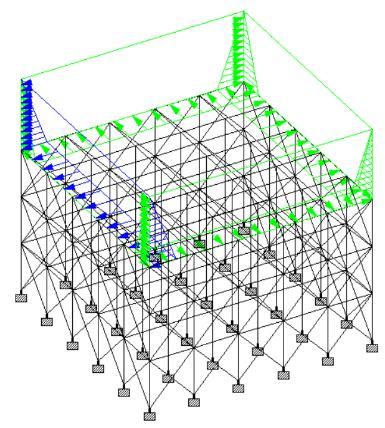
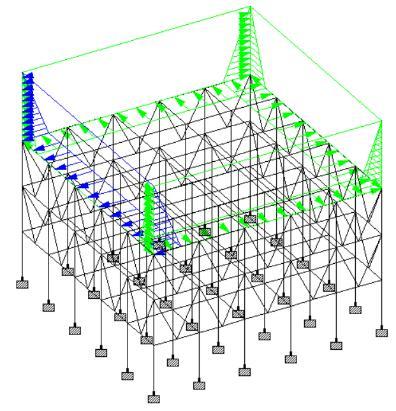
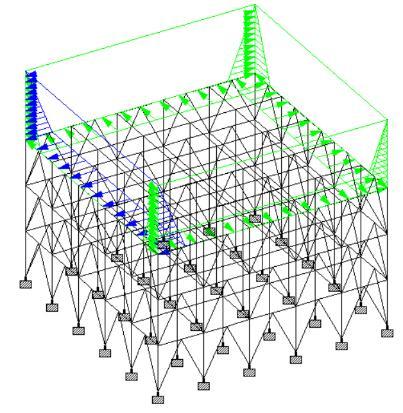
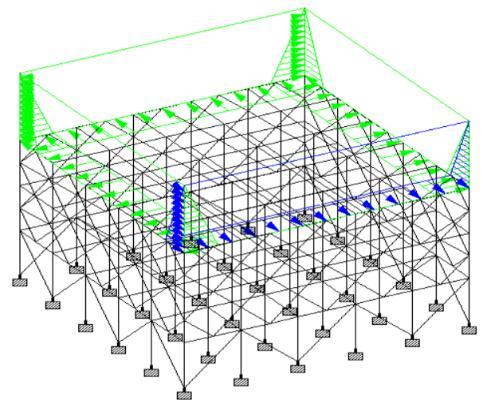
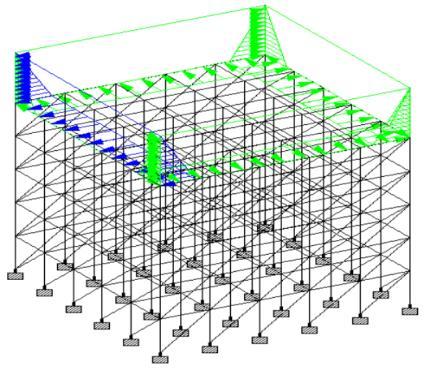
Fig. 2 and Fig. 3 display the square elevated water tank configurations for a 9 m and 15 m staging height. It highlightsfiveindividualmodelsintegratedwithDiagonal, X, V, Inverted-V and Mid-diagonal bracing systems to comparetheirstructuralperformance.
Staging Height 9 m
A. DiagonalBracing
B. X-Bracing
Volume: 13 Issue: 06 | Jun 2026 www.irjet.net p-ISSN: 2395-0072 © 2026, IRJET | Impact Factor value: 8.315 | ISO 9001:2008
C. V-Bracing
D. InvertedV-Bracing
E Mid-diagonalBracing
Fig 2:SquareWaterTankwith9mHeightofStaging
Staging Height 15 m
International Research Journal of Engineering and Technology (IRJET) e-ISSN: 2395-0056
Volume: 13 Issue: 06 | Jun 2026 www.irjet.net p-ISSN: 2395-0072
DiagonalBracing
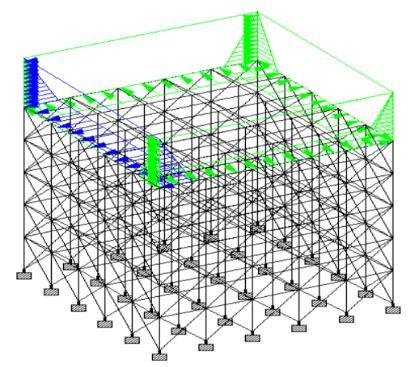
B. X-Bracing
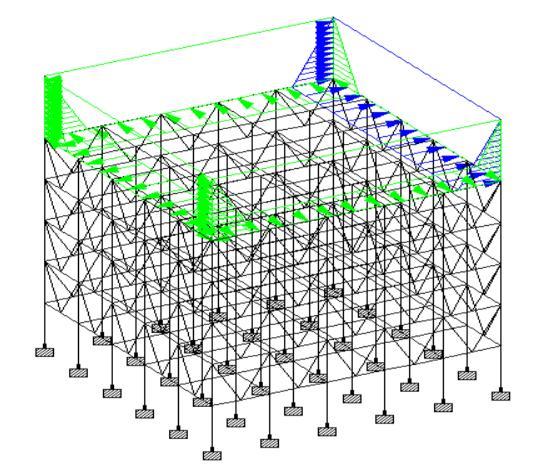
C. V-Bracing
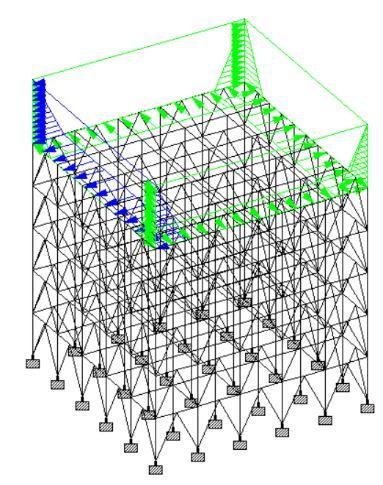
D. InvertedV-Bracing
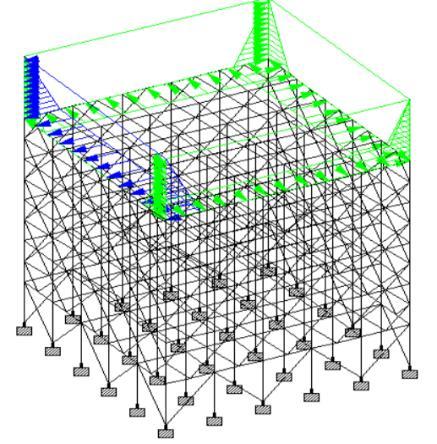
E Mid-diagonalBracing
Fig. 3:SquareWaterTankwith15mHeightofStaging
In this section, the analytical results obtained from the structural models simulated in STAAD.Pro v8i under Seismic Zone IV are presented and discussed. The study focuses on the comparative seismic analysis of elevated square water tanks with staging heights of 9 m and 15 m under empty and full tank conditions. Five different bracing systems, namely Diagonal bracing, Xbracing, V-bracing, Inverted-V bracing and Mid-diagonal bracing are considered to evaluate their effectiveness under earthquake loading. The structural performance of the models is assessed using two important seismic parameters: base shear and top displacement. The obtained resultsarecomparedtounderstandtheeffect of bracing type, staging height, and tank condition on the seismicbehaviourofelevatedwatertanks.
5.1 Base Shear
Base Shear under Empty Tank Condition
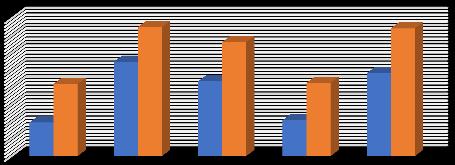
Table3showsthebaseshearvaluesunderemptytank condition for different bracing systems and staging heights. Base shear increases with increase in staging height. X-bracing gives the minimum base shear, while diagonalbracingshowsthemaximumvalue.
Table 3 BaseShearunderEmptyTankCondition
International Research Journal of Engineering and Technology (IRJET) e-ISSN: 2395-0056
Volume: 13 Issue: 06 | Jun 2026 www.irjet.net p-ISSN: 2395-0072
Fig. 4 shows that X-Bracing produced the minimum base shear under the empty tank condition for bothstagingheights.At9mstagingheight,thebaseshear values of Diagonal, Inverted-V, V, and Mid-Diagonal bracing were44.33%,30.05%, 1.58%,and36.03%higher than X-Bracing, respectively. Similarly, at 15 m staging height, the increase was 32.39%, 23.84%, 0.58%, and 31.67%, respectively, indicating the superior seismic performanceofX-Bracing.
Base Shear (kN)
For Staging Height 9m For Staging Height 15m
Base Shear under Full Tank Condition
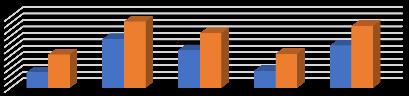
Table 4 presents base shear values under full tank condition. Due to the increased water mass, base shear values are higher than those in the empty tank condition. X-bracing shows the lowest base shear, while diagonal bracingshowsthehighest.
Fig. 5 shows that X-Bracing exhibited the lowest base shear under the full tank condition. Compared to XBracing,Diagonal,Inverted-V,V,andMid-Diagonalbracing showedincreasesof41.41%,27.56%,2.03%,and33.50%, respectively,at9mstagingheight.At15mstagingheight, the corresponding increases were 33.61%, 21.81%, 0.85%,and29.14%.
Base Shear (kN) For Staging Height 9m For Staging Height 15m
5.2 Top Displacement
Top Displacement under Empty Tank Condition
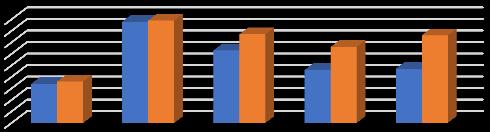
Table 5 shows the top displacement values under empty tank condition. Displacement increases with increase in staging height. X-bracing gives the minimum displacement, whereas diagonal bracing shows the maximumdisplacement.
Table 5 TopDisplacementunderEmptyTankCondition
Fig. 6 shows that X-Bracing resulted in the minimum top displacement under the empty tank condition. At 9 m staging height, Diagonal, Inverted-V, V, and Mid-Diagonal bracing produced 10.11%, 5.43%, 2.25%, and 2.43% higher displacement values than X-
International Research Journal of Engineering and Technology (IRJET) e-ISSN: 2395-0056
Volume: 13 Issue: 06 | Jun 2026 www.irjet.net p-ISSN: 2395-0072
Bracing, respectively. At 15 m staging height, the corresponding increases were 9.89%, 7.65%, 5.60%, and 7.46%.
Displacement (mm)
Top Displacement under Full Tank Condition
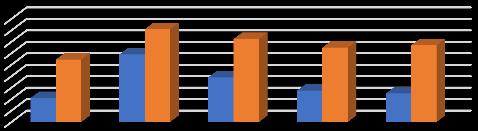
Table 6 presents top displacement values under full tankcondition.Thedisplacementvaluesarehigherdueto increased water mass. X-bracing shows the minimum displacement, while diagonal bracing shows the maximum.
Fig.7showsthatX-Bracingprovidedtheleasttop displacementunderthefulltankcondition.At9mstaging height,thedisplacementvaluesofDiagonal,Inverted-V,V, andMid-Diagonalbracingwere5.66%,2.68%,0.97%,and 0.60%higherthanX-Bracing,respectively.At15mstaging height, the increases were 3.76%, 2.56%, 1.49%, and 1.77%,respectively.
Top Displacement (mm) For Staging Height 9m For Staging Height 15m
The present study carried out the seismic analysis of elevated square water tanks located in Seismic Zone IV using STAAD.Pro. Five different bracing systems, namely Diagonal Bracing, X-Bracing, V-Bracing, Inverted-V Bracing, and Mid-Diagonal Bracing, were analyzed for stagingheightsof9mand15munderemptyandfulltank conditions. The performanceofthe modelswas evaluated basedonbaseshearandtopdisplacement.
A. Effect of Bracing Systems: The comparative seismicanalysisofDiagonalBracing,X-Bracing,VBracing, Inverted-V Bracing and Mid-Diagonal Bracing showed that the bracing configuration significantly affects the seismic performance of elevated square water tanks in Seismic Zone IV. Among all the bracing systems, X-Bracing exhibited the minimum base shear and top displacement values under both empty and full tank conditions, indicating superior seismic performance. Mid-Diagonal Bracing performed better than conventional Diagonal Bracing but was less effective than X-Bracing in controlling seismic response. Furthermore, compared to conventionalDiagonalBracing,X-Bracingreduced base shear by approximately 32–44% and top displacement by approximately 4–10% for both stagingheights,demonstratingitssuperiorlateral stiffnessandearthquakeresistance.
B. Effect of Staging Height: The increase in staging height from 9 m to 15 m resulted in higher base shear and top displacement values for all bracing systems.Thisincreaseismainlyduetothegreater flexibility of the taller staging system. Therefore, tanks with 9 m staging height showed better seismic stability compared to tanks with 15 m stagingheight.
International Research Journal of Engineering and Technology (IRJET) e-ISSN: 2395-0056
Volume: 13 Issue: 06 | Jun 2026 www.irjet.net p-ISSN: 2395-0072
C. Effect of Tank Condition: The full tank condition producedhigherbaseshearandtopdisplacement values compared to the empty tank condition. This is because the stored water increases the seismic mass of the structure, leading to greater earthquake-inducedforcesanddisplacements.
Based on the analytical results obtained from STAAD.Pro, X-Bracing with a 9 m staging height is recommended as themosteffectiveconfigurationforelevatedsquarewater tanks in Seismic Zone IV. This configuration provides minimum base shear and top displacement and therefore offers better seismic stability, stiffness, and overall structuralsafety.
1. TejaswiniandMamatha,(2024):DesignandAnalysis ofElevatedWaterTank
2. Jisha P.K. et al, (2024): Comparative Analysis of VariousBracingConfigurationsandTheirImpacton ElevatedWaterTankPerformance
3. Nathnael Azmeraw Workeluel et al, (2023): A ComparativeStudyOnAnalysisAndDesignOfR.C.C ElevatedWaterTankUsingDifferentCountryCodes
4. Tayyaba Anjum and Mohd. Zameeruddin, (2021): Evaluation of Efficacy of the Elevated Water Tank UndertheSeismicLoads
5. Amit K. Mali and Harsh Desai, (2021): Performance ofVariousStagingSystemsforElevatedWaterTank.
6. Yash Chouhan and Dr. Swati Ambadkar, (2021): Comparative Analysis of Water Tank with Varying ContainerShape
7. LathaM.S.(2021):ComparisonofAnalysisBetween RectangularAndCircularOverheadWaterTank
8. NidhiandAnuragBajpai(2020):StudyofIntzeTank withDifferentHorizontalBracingPatterns
9. Meraj Ahamad and V.K. Singh (2019): Seismic Performance of Elevated Water Tank with Different Bracing Pattern Considering Fluid Structure Interaction
10. PrashantA.BansodeandV.P.Datye,(2018):Seismic Analysis of Elevated Water Tank with Different StagingConfiguration
11. Salitha Elizabeth Ninan and Afia S. Hameed, (2018): Seismic Analysis of Rectangular and Circular RC ElevatedWaterTank
12. S.S. Quadri and R.M. Sawant, (2018): Seismic Analysis of RC Elevated Water Tank Using Different StagingPattern.