
International Research Journal of Engineering and Technology (IRJET) e-ISSN: 2395-0056
Volume: 13 Issue: 05 | May 2026 www.irjet.net p-ISSN: 2395-0072
International Research Journal of Engineering and Technology (IRJET) e-ISSN: 2395-0056
Volume: 13 Issue: 05 | May 2026 www.irjet.net p-ISSN: 2395-0072
Suraj Appaso Mane1 , Mohit Sunil Satpute2 , Sudeep Vijay Patil3, Ganesh Mahadev Bandagar4 , B. P. Kulkarni5
123Department of Electronics and Telecommunication Engineering
Padmabhooshan Vasantraodada Patil Institute of Technology, Maharashtra, India
Guide: Dr. B. P. Kulkarni
Abstract - The Colour Based Object Sorting Robotic Arm is an automation-based system designed to identify and sort objects according to their colour without manual effort. The main aim of this project is to reduce human work, improve sortingspeed, andincreaseaccuracyinindustrialapplications. The system works by usinga colour sensor to detect thecolour of an object and an IR sensor to identify the presence of the object on the conveyor belt. A microcontroller processes the sensor data and controls the robotic arm for pick-and-place operation. Servo motors are used to provide accurate movement of the robotic arm, while a conveyor belt helps in continuous object transportation. Once the colour is detected, the robotic arm picks the object and places it into the correct bin based on predefined programming logic. This project is useful in industries such as packaging, manufacturing, recycling, and quality control where automatic sorting is required. The system improves efficiency, reduces human error, and provides reliableperformance.Italsohelpsstudents understand practical concepts of robotics, embedded systems, sensor interfacing, and industrial automation. Overall, this project demonstrates a simple and cost-effective automation solution for colour-based sorting applications.
Key Words: Colour Sensor, Robotic Arm, Object Sorting, Automation, Microcontroller, Conveyor Belt, Servo Motor, EmbeddedSystem,IndustrialAutomation,RGBDetection
1.INTRODUCTION
Inmodernindustries,automationhasbecomeanimportant partofimprovingproductivity,reducingmanualwork,and increasingaccuracy.Manyindustriessuchasmanufacturing, packaging, recycling, food processing, and quality control require fast and efficient sorting of objects. Traditional manualsortingmethodsaretime-consuming,lessefficient, and may lead to human errors. To solve this problem, automatedroboticsystemsarewidelyusedforsortingand handling materials with better speed and precision. One suchusefulautomationsystemistheColour-BasedObject SortingRoboticArm.
TheColour-BasedObjectSortingRoboticArmisdesignedto identify objects based on their colour and automatically placethemintoseparatelocationsorbins. Thissystemmainlycombinesrobotics,embeddedsystems, sensors,andautomationtechnology.
Theprojectusesacoloursensortodetectthecolourofthe object,anIRsensortoidentifythepresenceoftheobject,a microcontrollertoprocesstheinputdata,andaroboticarm toperformpick-and-placeoperations.Aconveyorbeltisalso usedtomoveobjectscontinuouslytowardthesensingarea, makingtheentireprocessautomatic.
When an object reaches the sensing point, the IR sensor detects its presence and sends a signal to the microcontroller. The colour sensor then reads the RGB valuesoftheobjectandidentifiesitsdominantcolour.Based onprogrammedinstructions,themicrocontrollercontrols the robotic arm to pick up the object and place it in the correct bin. Servo motors are used to provide accurate movementandpositioningoftheroboticarmjoints,while motor drivers help control the conveyor belt motor smoothly.
This project is useful because it reduces human effort, minimizes sorting mistakes, and improves speed and efficiency.Itisalsocost-effectiveandsuitableforsmall-scale industries,laboratories,andeducationalpurposes.Students can learn practical knowledge of robotics, embedded systems, sensor interfacing, programming, and industrial automationthroughthisproject.
WiththegrowthofsmartmanufacturingandIndustry4.0, automated robotic sorting systems are becoming more importantinindustrialapplications.Therefore,theColourBasedObjectSortingRoboticArmisapracticalandefficient solutionforautomatedsortingtasksanddemonstratesthe effective use of robotics and automation in real-world applications.
In many industries, object sorting is still performed manually, which is time-consuming, less accurate, and inefficient. Manual sorting processes may lead to errors, reducedproductivity,andincreasedlabourcost,especially when many objects need to be sorted continuously. Traditional systems also lack automation and cannot perform fast real-time sorting operations with high precision. Therefore, there isa needforanintelligentand automated system that can accurately identify and sort objectsbasedontheircolourwithouthumanintervention. ThisprojectaddressestheproblembydevelopingaColourBasedObjectSortingRoboticArmthatautomaticallydetects
International Research Journal of Engineering and Technology (IRJET) e-ISSN: 2395-0056
Volume: 13 Issue: 05 | May 2026 www.irjet.net p-ISSN: 2395-0072
the colour of objects using sensors and sorts them into designated locations using a robotic arm. The system improvesaccuracy,reduceshumaneffort,increasesspeed, and enhances efficiency in industrial automation applications.
• To design and develop an automated robotic arm systemthatcandetect,pick,andsortobjectsbased ontheircolourwithminimumhumaninvolvement.
• To identify different coloured objects accurately usingacoloursensorandprocessthedetectedRGB valuesthroughamicrocontroller..
• Toreducemanualeffortandhumanerrorinsorting operationsbyreplacingtraditionalmanualsorting methodswithanautomatedsystem.
• To improve speed, accuracy, and efficiency in sorting objects for industrial and small-scale applications.
• Tocontrol roboticarmmovementpreciselyusing servomotorsforproperpick-and-placeoperations.
• Tocreateacost-effectiveandpracticalautomation model that can be used in educational projects, laboratories,andsmallindustries.
• To understand the working of robotics and automation systems including sensor interfacing, motorcontrol,microcontrollerprogramming,and objecthandling.
Many researchers have worked on automation systems related to object sorting, robotic arms, conveyor systems, and sensor-based industrial applications. Earlier research mainlyfocusedonconveyorbeltoptimization,roboticpickand-placesystems,andsensor-basedobjectdetection.Later studiesimprovedsortingaccuracybyusingcoloursensors, microcontrollers, image processing, and embedded automationtechniques.Recentresearchismovingtoward smartautomationbycombiningrobotics,IoT,andintelligent control systems. However, some systems are expensive, complex,orfocusonlyondetectionwithoutproperrobotic arm integration. Based on previous studies, the ColourBasedObjectSortingRoboticArmprovidesasimple,costeffective, and practical solution for automatic colour detectionandpick-and-placesortingoperations.
Authors(Year) MainFocus ResearchGap Embedded BasedIndustrial Automation System(2020) Sensor integrationwith roboticarm Didnotprovide properconveyorbasedautomatic object classification.
SmartObject SortingUsing IoTandSensors
–Kumaretal. (2022)
Automated ConveyorBelt SortingMachine (2023)
Colour Detectionand RoboticSorting System–Sharmaetal. (2024)
IoT-basedsorting automation Highcomplexity andhighercost forsmall-scale applications.
Automaticobject detectionand classification
Coloursensorbasedsorting system
Limitedfocuson roboticarm movementand precisepick-andplaceoperation
Focusedmainly oncolour identificationbut lackedmultifunctionalrobotic armintegration.
The proposed system is a Colour-Based Object Sorting RoboticArmdesignedtoautomaticallydetect,pick,andsort objects according to their colour without human intervention.Thissystemcombinessensors,microcontroller, servo motors, conveyor belt mechanism, and robotic arm controltoperformautomaticsortingoperationsefficiently. Themainaimofthisproposedsystemistoreducemanual effort, improve sorting speed, and increase accuracy in industrialandsmall-scaleautomationapplications.
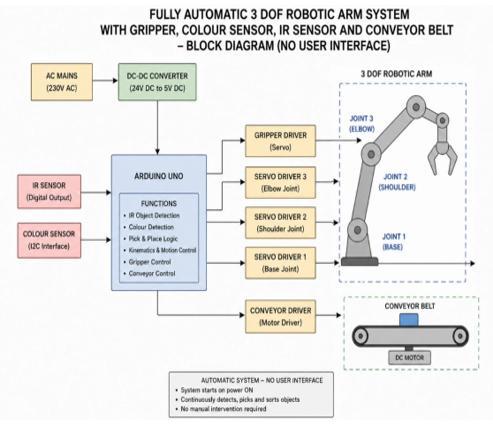
The system begins with a power supply unit, where AC mainspowerisconvertedintosuitableDCvoltageusinga DC-DC converter to provide power to the Arduino UNO, sensors, servo motors, and conveyor motor. The Arduino UNOactsasthemaincontrollerofthesystemandcontrols allhardwarecomponents.Itreceivesinputsignalsfromthe IRsensorandcoloursensor,processesthedata,andcontrols the robotic arm and conveyor system according to programmedlogic.
A conveyor belt mechanism is used to transport objects continuously toward the sensing area. The conveyor is driven by a DC motor connected through a motor driver circuit.Whenanobjectreachesthesensingposition,theIR sensor detectsitspresenceandsendsadigitalsignaltothe Arduino UNO. This allows the system to identify that an objectisreadyforcolourdetection.
After detection, the colour sensor scans the object and measuresitsRGBvalues.Basedonthesecolourvalues,the Arduino compares the result with predefined reference valuesstoredintheprogramandidentifiestheobjectcolour.
2395-0056
Volume: 13 Issue: 05 | May 2026 www.irjet.net p-ISSN: 2395-0072
Accordingtothedetectedcolour,thecontrollerdecidesthe targetpositionwheretheobjectshouldbeplaced. Theroboticarmusedinthissystemisa3DegreeofFreedom (3-DOF) robotic arm, which includes base joint, shoulder joint, and elbow joint. Each joint is controlled using servo motors to provide accurate movement and proper positioning.Agrippermechanismisattachedattheendof theroboticarmtoholdandreleaseobjects.Separateservo driverscontrolthemovementofeachjointandgripper. Oncetheobjectcolourisidentified,theroboticarmmoves toward the object, grips it, lifts it from the conveyor belt, rotates to the required destination, and places it into the correctsortingbin.Aftercompletingtheoperation,thearm returnstoitsinitialpositionandwaitsforthenextobject. This proposed system works as a fully automatic sorting mechanismwithoutrequiringanymanualoperationoruser interface. It can continuously detect, classify, and sort colouredobjectswithbetterspeed,accuracy,andreliability. The system is cost-effective and suitable for educational projects, research laboratories, and industrial automation applications where automatic sorting is required. Overall, theproposedsystemprovidesapracticalsolutionforsmart objecthandlingandcolour-basedsortingusingroboticsand embeddedautomation.
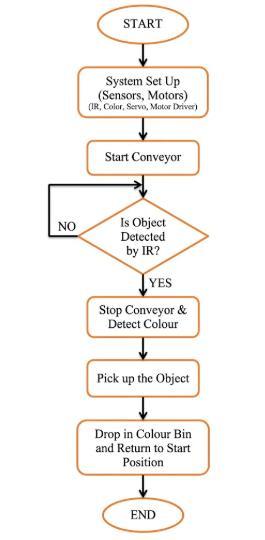
ThemethodologyoftheColour-BasedObjectSortingRobotic Armexplainsthe step-by-stepprocessusedto design and implementthesystem.Itdescribeshowthesystemdetects objects, identifies their colour, processes the information, andperformsautomaticsortingusingaroboticarm. Themethodologyisdesignedtoensureaccurateoperation, fastresponse,andreliableperformance.
I. Object Detection
Thefirststepinvolvesdetectingthepresenceofanobjecton theconveyor belt.AnIR sensorisplacednearthesensing area toidentify whenan objectarrives. Once the objectis detected,the sensorsendsasignal tothe microcontroller, and the conveyor belt temporarily stops for further processing.
After the object is detected, the colour sensor (such as TCS3200) reads the colour information of the object. The sensormeasuresRGB(Red,Green,Blue)valuesandconverts themintodigitalsignals.Thesevaluesarethentransmitted tothemicrocontrollerforanalysis.
III. Colour Identification
ThemicrocontrollerprocessesthereceivedRGBvaluesand comparesthemwithpredefinedthresholdvaluesstoredin theprogram.Basedonthecomparison,thesystemidentifies the colour of the object as red, green, blue, or another predefined category. This process ensures accurate classificationofobjects.
After identifying the colour, the system makes a decision regardingthesortinglocationoftheobject:
• Iftheobjectisred→PlaceinRedBin
• Iftheobjectisgreen→PlaceinGreenBin
• Iftheobjectisblue→PlaceinBlueBin
Thisautomateddecision-makingprocesseliminatestheneed formanualsorting.
The conveyor belt is driven by a DC motor controlled throughamotordrivermodulesuchasL298N.Theconveyor transports objects to the sensing area and stops automatically during colour detection and pick-and-place operations.Aftersortingiscompleted,theconveyorresumes movementforthenextobject.
Oncethecolourisidentified,theroboticarmperformsthe pick-and-place operation. The robotic arm consists of multiple servomotorsanda grippermechanism.The arm movestowardtheobject,picksitupusingthegripper,and placesitintotheappropriatebinaccordingtothedetected colour. Servo motors provide accurate angular movement andpositioning.
All components including the IR sensor, colour sensor, conveyor belt, motor driver, robotic arm, and microcontroller are integrated into a single automated system.TheArduinoUnoor8051microcontrolleractsasthe central controller and coordinates all system operations. ProgrammingisperformedusingEmbeddedCorArduino IDEtoensuresmoothfunctioningofthesystem.
International Research Journal of Engineering and Technology (IRJET) e-ISSN: 2395-0056
Volume: 13 Issue: 05 | May 2026 www.irjet.net p-ISSN: 2395-0072
The complete system is tested under different operating conditionstoevaluateitsperformance.Thetestingprocess includes:
• Accuracyofcolourdetection
• Responsetimeoftheroboticarm
• Conveyorbeltsynchronization
• Sortingaccuracy
• Reliabilityofsystemoperation
The system is verified to ensure stable and continuous automaticsorting.
7.Hardware Design:
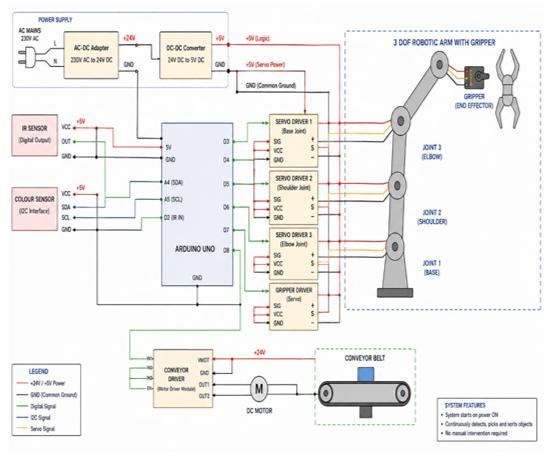
The design approach for the Colour-Based Object Sorting Robotic Arm focuses on developing an efficient, low-cost,
andfullyautomatedsystemcapableofdetectingandsorting objects based on their colour. The system is designed to performreal-timesensing,intelligentdecision-making,and precise object handling using a combination of sensors, microcontroller,androboticmechanisms.Itissuitablefor applications in industries, laboratories, and automated materialhandlingsystems.
The first stage of the design involves selecting a suitable microcontrollersuchasArduinoUnoasthemaincontroller. The microcontroller acts as the brain of the system by readinginputsignalsfromsensors,processingthedata,and controllingoutputdeviceslikemotorsandservos.Arduinois commonly preferred due to its easy programming using ArduinoIDE,availabilityoflibraries,andcompatibilitywith variousmodules.
Thesecondstageistheobjectdetectionunit.AnIRsensoris placedalongtheconveyorbelttodetectthepresenceofan object.Undernormalconditions,theconveyorbeltcontinues tomove.Whenanobjectisdetected,theIRsensorsendsa signaltothemicrocontroller,whichimmediatelystopsthe conveyormotortoallowaccuratesensingoftheobject.
Thethirdstageisthecolourdetectionunit.Acoloursensor suchasTCS3200isusedtodetectthecolouroftheobjectby measuring RGB (Red, Green, Blue) values. The sensor outputs frequency signals corresponding to different colours, which are then read and processed by the microcontroller. The system compares these values with predefinedthresholdstoidentifytheobjectcolour.
Thefourthstageistheprocessinganddecision-makingunit. Based on the detected RGB values, the microcontroller determines the category of the object (for example, red, green, or blue). This decision is made using programmed logic and calibration data to ensure accuracy in different lightingconditions.
The fifth stage is the actuation and sorting unit. A robotic armconsistingofmultipleservomotorsisusedtopickand place the object. After the colour is identified, the robotic armmovestotheobject,gripsitusingagripper,andplaces itinthedesignatedlocationorbin.Themovementofthearm iscontrolledpreciselythroughprogrammedangles.
The sixth stage is the conveyor control unit. A DC motor connectedthroughamotordriversuchasL298Nisusedto drive the conveyor belt. After the sorting operation is completed, the conveyor resumes movement to bring the nextobjectintoposition.
Thefinalstageincludesindicatorsandpowermanagement. LEDscanbeusedtoindicatesystemstatussuchasdetection,
International Research Journal of Engineering and Technology (IRJET) e-ISSN: 2395-0056
Volume: 13 Issue: 05 | May 2026 www.irjet.net p-ISSN: 2395-0072
sorting,andcompletion.Aregulatedpowersupplyensures stableoperationofallcomponents.
Thus, the complete design approach integrates sensing, processing,automation,andmechanicalcontroltocreatean accurateandreliablecolour-basedobjectsortingsystem.
The software section of the Colour-Based Object Sorting RoboticArmisdevelopedusingArduinoIDEwithEmbedded C programming for the Arduino Uno (or 8051 microcontroller). The complete software is designed to control the conveyor belt, detect objects, identify their colour,andoperatethe roboticarmforautomaticsorting. Arduino IDE provides an easy platform for writing, compiling, and uploading code, along with libraries for sensors,servomotors,andmotordrivers.
• Main Program (Arduino / Microcontroller)
1. Initialize GPIO pins for IR sensor, colour sensor (TCS3200), servo motors, and motor driver (L298N).
2. Initializeserialcommunicationfordebuggingand monitoringRGBvalues.
3. Setinitialpositionsforallservomotors(base,arm andgripper).
4. Starttheconveyorbeltmotorinforwarddirection.
5. Continuously monitor IR sensor to detect the presenceofanobject.
6. Whenanobjectisdetected,stoptheconveyorbelt motor.
7. ActivatethecoloursensorandreadRGBfrequency values.
8. ConvertfrequencyvaluesintodigitalRGBdata.
9. Compare RGB values with predefined threshold values.
10. Identifythecolouroftheobject(Red,Green,Blue, etc.).
11. Basedondetectedcolour,selectthecorresponding sortingposition.
12. Move robotic arm to pick position using servo motors.
13. Closegrippertoholdtheobject.
14. Lifttheobjectandrotatearmtowardtargetbin.
15. Open gripper to release the object in the correct location.
16. Returnroboticarmtoinitialposition.
17. Restartconveyorbelttoprocessnextobject.
18. Repeat the process continuously for all incoming objects.
• Colour Detection Logic
1. SetfrequencyscalingforTCS3200sensor.
2. ReadRed,Green,andBluevaluessequentially.
3. StoreandprintRGBvaluesonserialmonitor.
4. Apply calibration and threshold comparison for accuratedetection.
• Motor Driver Control (Conveyor Section)
1. Setmotordriverinputpinsforforwardmotion.
2. Enablemotordrivertorotateconveyorbelt.
3. Disablemotordriverwhenobjectisdetected.
The software is designed to ensure smooth coordination between sensing, decision-making, and actuation. Proper delaysareincludedforstablesensorreadingsandaccurate servo movement. Calibration of colour values improves detectionaccuracyunderdifferentlightingconditions.Thus, thesoftwareenablesafullyautomaticandreliablecolourbasedobjectsortingsystem.
The implementation of the Colour-Based Object Sorting Robotic Arm focuses on developing an automated system that can detect, identify, and sort objects based on their colour using sensors, a microcontroller, conveyor mechanism,androboticarm.Thecompleteimplementation wascarriedoutinbothhardwareandsoftwaresectionsto ensuresmoothandreliablesystemoperation.
ThehardwaresetupconsistsofanArduinoUNO,IRsensor, TCS3200coloursensor,servomotors,roboticarm,conveyor
Volume: 13 Issue: 05 | May 2026 www.irjet.net p-ISSN: 2395-0072
belt,DCmotor,motordriver(L298N),grippermechanism, andpowersupplyunit.TheArduinoUNOactsasthemain controller of the system. The IR sensor is placed near the conveyor belt to detect the presence of an object. The TCS3200 colour sensor is mounted in the sensing area to readthecolouroftheobject.
A 3-DOF robotic arm was designed using servo motors to control the base, shoulder, and elbow joints. A gripper is attachedattheendofthearmtoholdandreleaseobjects. The conveyor belt is driven by a DC motor connected throughtheL298Nmotordriverforsmoothmovement of objects.
The programming of the system was done using Arduino IDE.Embeddedprogramminglogicwasdevelopedtocontrol sensors, motor movement, colour detection, and sorting operations. The microcontroller was programmed to compare RGB values of detected objects with predefined referencevaluesforcolouridentification.
Initially,theconveyorbeltstartsmovingandcarriesobjects toward the sensing area. When an object reaches the detectionpoint,theIRsensordetectsitandsendsasignalto theArduinoUNO.Theconveyorbelttemporarilystopsfor coloursensing.
The TCS3200 colour sensor reads the RGB values of the object and sends the data to the microcontroller. The Arduino processes these values and identifies the object colour such as red, green, or blue. Based on the detected colour,thecontrollerdecidesthecorrectsortingposition. After colour identification, the robotic arm performs the pick-and-place operation. Servo motors move the arm towardtheobject,thegripperpicksitup,liftsit,rotatesto thetargetbin,andplacestheobjectinthecorrectlocation. Aftersorting,thearmreturnstoitsinitialposition,andthe conveyorresumesmovementforthenextobject.
The implemented system was tested for colour detection accuracy,conveyorsynchronization,roboticarmmovement, sorting speed, and overall system reliability. The results showed that the robotic arm successfully sorted coloured objectswithgoodaccuracyandreducedmanualeffort. Overall, the implementation of the Colour-Based Object SortingRoboticArmprovidedasimple,cost-effective,and efficient automation system suitable for industrial sorting andeducationalapplications.
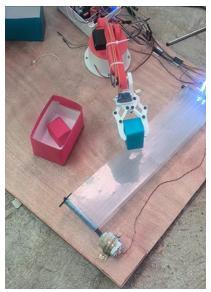
Thedevelopedcolour-basedobjectsortingroboticarmwas tested to check its performance in detecting and sorting different coloured objects. During testing,the robotic arm was able to identify colours such as red, green, and blue using the colour sensor and sort them into separate positions correctly. The Arduino controller successfully processedthesensordataandcontrolledtheservomotors toperformaccuratepick-and-placeoperations.
Thesystemshowedgoodaccuracyincolourdetectionunder properlightingconditions.Theroboticarmwasabletopick objectssmoothlyandplacetheminthecorrectsortingarea with minimum delay. The movement of the servo motors was stable, and the response time of the system was fast enoughforsmall-scalesortingtasks.
Itwasalsoobservedthattheroboticarmreducedmanual effortandimprovedsortingefficiencycomparedtomanual separation.Theintegrationofsensors,Arduino,andservo motors worked effectively to create an automatic sorting mechanism.
However, slight errors were noticed when lighting conditionschangedorwhenobjectswereplacedtooclose together,whichaffectedcolourdetectionaccuracy.Overall, thecolour-basedobjectsortingroboticarmwassuccessfully implemented and demonstrated reliable performance for automatic object sorting applications in industries, packagingsystems,andsmartautomationprojects.
Volume: 13 Issue: 05 | May 2026 www.irjet.net p-ISSN: 2395-0072
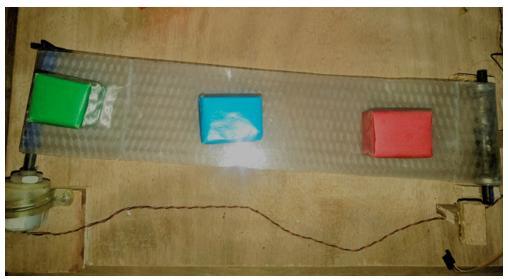
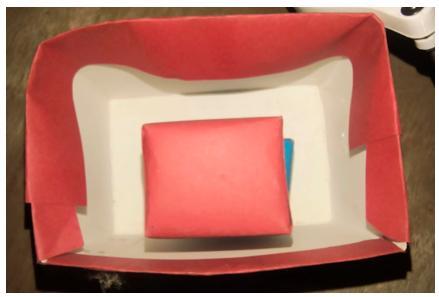
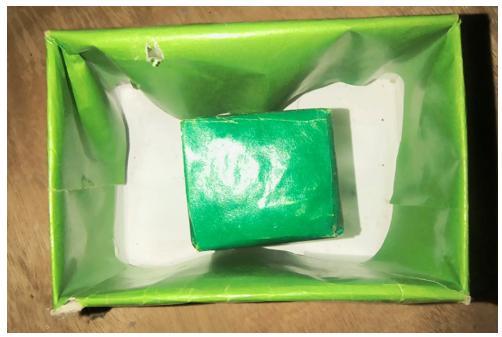
Thecolour-basedobjectsortingroboticarmwassuccessfully designedandimplementedtoautomaticallydetectandsort objectsbasedontheircolour.Themainaimofthisproject was to reduce manual effort and improve efficiency in sortingtasksbyusingautomation.ThesystemusedArduino Unoasthemaincontroller,alongwithacoloursensorand servomotorstoperformobjectdetectionandpick-and-place operations.
During the working process, the colour sensor identified differentcolouredobjectssuchasred,green,andblue,and the Arduino processed this information to control the movementoftheroboticarm.Theservomotorshelpedthe armtomovesmoothly,pickuptheobject,andplaceitinthe correctsortingarea.Thesystemshowedgoodaccuracyand stableperformanceduringtesting.
This project demonstrated that automation can be used effectively for repetitive industrial tasks where speed, accuracy, and reduced human effort are important. Compared to manual sorting, the robotic arm improved sortingspeedandminimizederrors.Italsoprovidedalowcost and practical solution for small-scale automation applications.
Although some limitations were observed, such as slight detectionerrorsunderpoorlightingconditionsorincorrect object positioning, the overall performance of the system was reliable and satisfactory. Proper calibration of the sensorhelpedimproveaccuracy.
Inconclusion,thecolour-basedobjectsortingroboticarm proved to be an efficient, simple, and reliable automation system. This project also showed how robotics and embeddedsystemscanbeappliedinreal-worldindustrial andeducationalenvironments.Infuture,thesystemcanbe enhanced with advanced sensors, machine learning, and conveyor-basedmechanismsforbetterspeed,accuracy,and large-scaleindustrialuse.
International Research Journal of Engineering and Technology (IRJET) e-ISSN: 2395-0056
Volume: 13 Issue: 05 | May 2026 www.irjet.net p-ISSN: 2395-0072
[1] S. Tsalidis and A. J. Dentsoras, “Design optimization of beltconveyorsystems,” International Journal of Simulation Modelling,vol.9,no.3,pp.123–134,2010.
[2] T. Huang, P. F. Wang, J. P. Mei, and X. M. Zhao, “Timeoptimal trajectory planning for a 2-DOF parallel robot,” International Journal of Advanced Robotic Systems,vol.4,no. 1,pp.85–92,2007.
[3]S. Sahu,P.Lenka,S. Kumari, K.B. Sahu,and B.Mallick, “Coloursensorbasedrobotichandlingsystemforindustrial automation,” InternationalJournalofEngineeringScience and Technology,vol.2,no.5,pp.1120–1125,2010.
[4] M. Khojastehnazhand, M. Omid, and A. Tabatabaeefar, “Development of a lemon sorting system based on colour andsize,” African Journal of Plant Science,vol.4, no.4, pp. 122–127,2010.
[5] Dogan Ibrahim, Microcontroller Based Applied Digital Control.WestSussex,U.K.:JohnWiley&Sons,2007.
[6] “Design of Automated Colour Sorting System,” International Journal of Engineering Research and Applications (IJERA),vol.2,no.3,pp.145–149,2007.
[7] “Robotic Arm for Pick and Place Application,” InternationalResearchJournalofEngineeringandTechnology (IRJET),vol.8,no.6,pp.2100–2105,2021.
[8] “Conveyor Belt Based Sorting Machine,” International Journal for Research in Applied Science and Engineering Technology (IJRASET),vol.11,no.5,pp.320–326,2023.
[9] “Embedded Based Industrial Automation System,” International Journal of Innovative Research in Science, Engineeringand Technology (IJIRSET),vol.9,no.8,pp.4500–4506,2020.