International Research Journal of Engineering and Technology (IRJET)
e-ISSN: 2395-0056
Volume: 13 Issue: 05 | May 2026
p-ISSN: 2395-0072
www.irjet.net
Cofferdam monitoring system using sensor to detect leakage P Soma Sundaram1, R Satheesh Raja2, C Indrakumar,3 M R Sudhakar4 1Final Year B.E Marine Engineering Cadets, PSNCET, Melathediyoor, Tirunelveli627152, Tamil Nadu 24Professor, Department of Marine Engineering, PSNCET, Tamil Nadu, India
3Assistant Professor, Department of Marine Engineering, PSNCET, Tamil Nadu, India
---------------------------------------------------------------***------------------------------------------------------------ABSTRACT- This journal presents a comprehensive description of the installation of an overfill sensor system in the ship's cofferdam, intended to enhance the ship's safety protocols. Sensors continuously monitor the liquid level within the cofferdam, alerting the crew if the level exceeds a critical threshold. This system is critical in preventing operational disruptions due to structural damage, environmental pollution and overfilling. The journal covers the initial steps, including site inspection and equipment procurement, as well as the detailed installation process, including sensor mounting, wiring, and system integration. Furthermore, it includes calibration and testing steps to ensure the reliability and efficiency of the sensor in real-world conditions. Ultimately, this initiative is designed to comply with maritime safety standards, improve crew response times and reduce the risks associated with overfill incidents, contributing to safer and more environmentally, responsible ship operations. KEYWORDS-Cofferdam, Safety, Stability
Leakage
Detection,
Figure1- construction and overview of cofferdam in the ship
2. COMPONENTS 2.1 Ultrasonic Sensor
Ship
1. INTRODUCTION Introduction Cofferdams are critical spaces on ships that prevent mixing of liquids or separate hazardous substances from other compartments. Overfilling of the cofferdam can result in structural damage, contamination, or safety hazards, requiring immediate crew intervention.
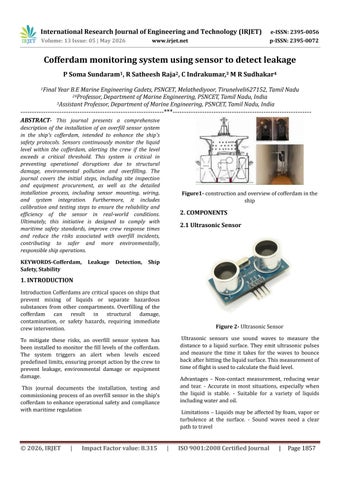
Figure 2- Ultrasonic Sensor Ultrasonic sensors use sound waves to measure the distance to a liquid surface. They emit ultrasonic pulses and measure the time it takes for the waves to bounce back after hitting the liquid surface. This measurement of time of flight is used to calculate the fluid level.
To mitigate these risks, an overfill sensor system has been installed to monitor the fill levels of the cofferdam. The system triggers an alert when levels exceed predefined limits, ensuring prompt action by the crew to prevent leakage, environmental damage or equipment damage.
Advantages – Non-contact measurement, reducing wear and tear. - Accurate in most situations, especially when the liquid is stable. - Suitable for a variety of liquids including water and oil.
This journal documents the installation, testing and commissioning process of an overfill sensor in the ship's cofferdam to enhance operational safety and compliance with maritime regulation
© 2026, IRJET
|
Impact Factor value: 8.315
Limitations – Liquids may be affected by foam, vapor or turbulence at the surface. - Sound waves need a clear path to travel
|
ISO 9001:2008 Certified Journal
|
Page 1857