
International Research Journal of Engineering and Technology (IRJET) e-ISSN: 2395-0056
Volume: 13 Issue: 01 | Jan 2026 www.irjet.net p-ISSN: 2395-0072
International Research Journal of Engineering and Technology (IRJET) e-ISSN: 2395-0056
Volume: 13 Issue: 01 | Jan 2026 www.irjet.net p-ISSN: 2395-0072
Kammari Ram Charan Chary1 , B. Ashwini2 , B. Sanjay Kumar3, A. Nithin Kumar Reddy4
1,2,3,4Department of Information Technology, TKR College of Engineering and Technology, Telangana, India ***
Abstract - Therapidgrowthofrenewableenergyresources has increased the participation of residential users as both energyproducersandconsumers.However,traditionalenergy tradingsystemsrelyoncentralizedintermediaries,leadingto reduced transparency, higher operational costs, and limited flexibility for small-scale energy producers. This paper proposesablockchain-basedfullypeer-to-peerenergytrading platform designed for residential energy systems. The proposedsystemenablesdirectenergytradingbetweenusers without the involvement of third-party intermediaries by leveragingthedecentralizednatureofblockchaintechnology. Energy units are represented as digital tokens using the ERC20 standard, and smart contracts are deployed on the Ethereum Sepolia test network to automate listing creation, pricing, transaction execution, and settlement. A web-based interface integrated with a backend service allows users to interact with the blockchain securely through wallet authentication.Thisensurestransparency,immutability,and trust by recording all transactions on the blockchain while maintaining performance through off-chain data management. Experimental evaluation demonstrates the feasibility of the proposed platform in terms of transaction execution, gas cost efficiency, and system reliability. The results indicate that blockchain-based peer-to-peer energy trading can serve as an effective solution for decentralized residential energy markets, with potential scalability for future smart grid integration.
Key Words: Blockchain, Peer-to-Peer Energy Trading, Smart Contracts, Ethereum, Renewable Energy, ERC-20 Token, Decentralized Applications.
The global energy sector is undergoing a significant transformation due to the rapid adoption of renewable energyresourcessuchassolarandwindpower.Advancesin distributedgenerationtechnologieshaveenabledresidential users to generate their own electricity, leading to the emergence of prosumers who can both produce and consumeenergy.Whilethisshiftpromotessustainability,it also introduces new challenges related to energy distribution, pricing, and management within traditional powersystems.
Conventional energy trading mechanisms are predominantlycentralizedandcontrolledbyutilityproviders or third-party intermediaries. These centralized systems
oftenlacktransparency,involvehighoperationalcosts,and providelimitedflexibilityforsmall-scaleenergyproducers. Moreover, centralized control introduces single points of failure and reduces user trust in pricing and settlement processes. As a result, there is a growing need for decentralized solutions that allow direct energy trading amongresidentialusersinasecureandtransparentmanner.
Blockchain technology has emerged as a promising solutiontoaddressthesechallenges.Asadecentralizedand immutableledger,blockchainenablestrustlesstransactions withoutrelyingoncentralizedauthorities.Throughtheuseof smart contracts, blockchain systems can automate transactionexecution,enforcepredefinedrules,andensure tamper-proof record keeping. These features make blockchainanidealplatformforimplementingpeer-to-peer energy trading systems that emphasize transparency, security,andefficiency.
Thispaperproposesablockchain-basedfullypeer-to-peer energytradingplatformdesignedspecificallyforresidential energysystems.Theproposedsystemallowsuserstotrade surplusenergydirectlywithotherusersusingdigitalenergy tokens. Smart contracts deployed on the Ethereum blockchainautomatetheentiretradingworkflow,including energy listing creation, pricing, transaction validation, and settlement. By eliminating intermediaries, the platform reduces operational overhead and empowers residential prosumerstoactivelyparticipateinenergymarkets.
Peer-to-peer energy trading refers to a decentralized model in whichenergy producersand consumersinteract directly without centralized control. In residential environments,thismodelenableshouseholdswithsurplus energy generation to sell excess energy to neighbouring consumersatmutuallyagreedprices.Blockchaintechnology playsacriticalroleinenablingthisdecentralizedapproach by providing a secure, transparent, and distributed transactioninfrastructure.
In blockchain-based energy trading systems, smart contracts act as autonomous agents that manage trading logic. These contracts automatically execute transactions whenpredefinedconditionsaremet,ensuringfairnessand eliminating manual intervention. Additionally, blockchain records all transactions in an immutable ledger, allowing
International Research Journal of Engineering and Technology (IRJET) e-ISSN: 2395-0056
Volume: 13 Issue: 01 | Jan 2026 www.irjet.net p-ISSN: 2395-0072
participants to verify trading history and preventing fraudulentactivities.
Intheproposedsystem,energyunitsaretokenizedusing theERC-20standard,whereeachtokenrepresentsafixed quantity of energy. Tokenization enables energy to be treated as a tradable digital asset that can be transferred securelybetweenusers.Thisapproachsimplifiesaccounting, improves interoperability, and enhances scalability. By combining tokenization with smart contracts, the system ensures that energy trading remains transparent, secure, andefficient.
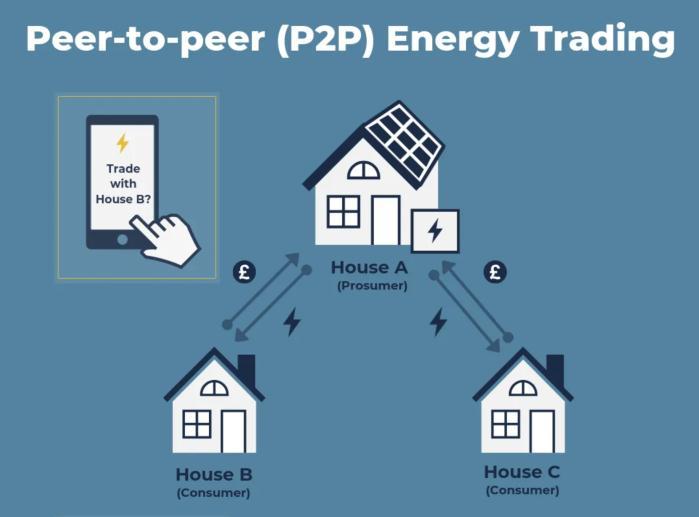
Peer-to-peer energy trading refers to a decentralized model in whichenergy producersand consumersinteract directly without centralized control. In residential environments,thismodelenableshouseholdswithsurplus energy generation to sell excess energy to neigh boring consumersatmutuallyagreedprices.Blockchaintechnology playsacriticalroleinenablingthisdecentralizedapproach by providing a secure, transparent, and distributed transactioninfrastructure.
Despite the increasing adoption of renewable energy technologies,existingenergytradinginfrastructuresarenot designedtosupportdecentralizedparticipationeffectively. Traditional systems relyon centralizedintermediariesfor energy pricing, transaction settlement, and data management. These intermediaries increase transaction costs,delaysettlementprocesses,andreducetransparency forendusers.
Another major limitation of centralized energy trading systemsistheirinabilitytoscaleefficientlywiththegrowing
numberofresidentialenergyproducers.Asthenumberof prosumersincreases,centralizedsystemsbecomecomplex to manage and prone to inefficiencies. Furthermore, centralizedcontrolrestrictsinnovationandpreventsusers fromactivelyparticipatinginlocalenergymarkets.
The motivation behind this work is to design a decentralizedplatformthatovercomestheselimitationsby leveraging blockchain technology. The proposed system enablestransparentenergypricing,automatedsettlement, anddirectinteractionbetweenproducersandconsumers.By decentralizing energy trading, the platform reduces dependency on intermediaries and supports fair participationforallusers.
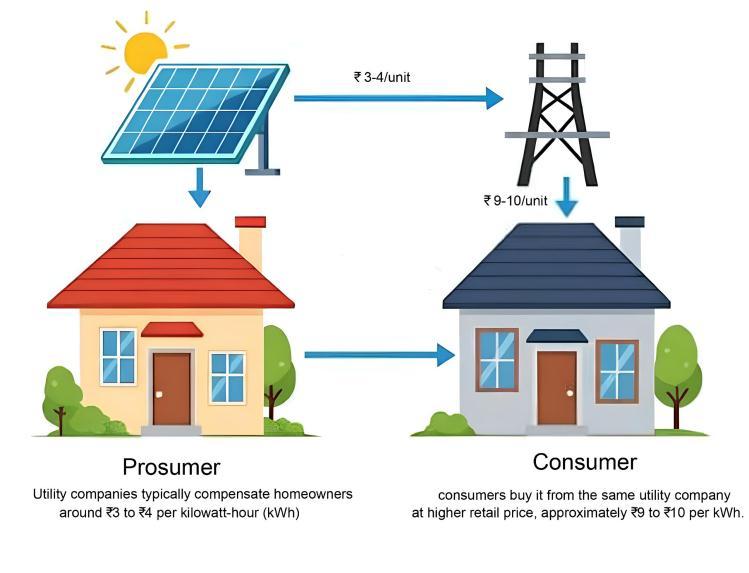
Theproposedsystempresentsablockchain-basedfullypeerto-peer (P2P) energy trading platform that enables direct energy transactions between residential prosumers and consumers without the involvement of centralized utility providers. The system leverages blockchain technology to ensure transparency, security, and immutability of energy transactionswhilereducingenergycostsandimprovingtrust amongparticipants.
In this model, residential users equipped with renewable energy sources suchas solar panels can act as prosumers, generatingsurplusenergybeyondtheirconsumptionneeds. This surplus energy is tokenized and traded directly with nearby consumers through smart contracts deployed on a blockchain network. By eliminating intermediaries, the proposedsystemensuresfairpricing,fastersettlement,and decentralizedcontrol.
2395-0056
Volume: 13 Issue: 01 | Jan 2026 www.irjet.net p-ISSN: 2395-0072
The overall architecture integrates a web-based user interface,blockchainsmartcontracts,andabackendserver to manage off-chain data and system coordination. Users interactwiththeplatformusingblockchainwallets,ensuring secureauthenticationandauthorizationforalltransactions.
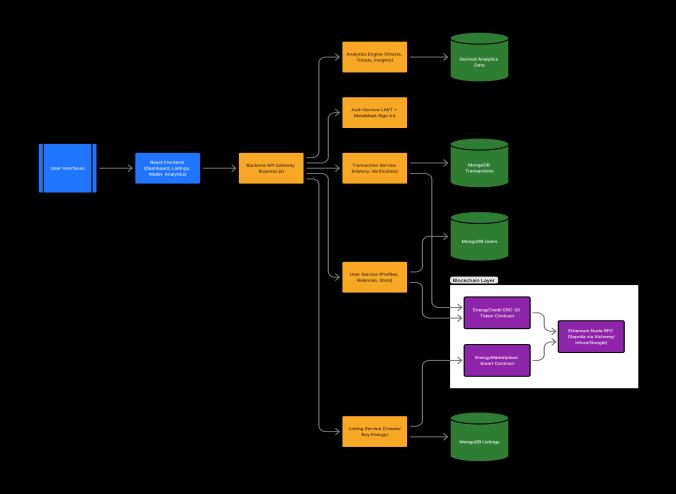
Thesystemarchitectureconsistsoffourmajorcomponents: the frontend interface, backend services, blockchain layer, anddatabaselayer.Eachcomponentplaysacrucialrolein enablingseamlesspeer-to-peerenergytrading.
Thefrontendisdevelopedusingaweb-basedframeworkand providesanintuitiveuserinterfaceforbuyersandsellersto view energy listings, connect wallets, and initiate transactions. User authentication is performed using a blockchainwalletsuchasMetaMask,whichallowsusersto signtransactionssecurelywithoutexposingprivatekeys.
The backend is implemented using Node.js and Express.js, acting as an intermediary between the frontend and the blockchain network. It handles business logic, user management, listing management, and transaction synchronization. RESTful APIs are used to communicate betweenthefrontendandbackend.
The blockchain layer is built on the Ethereum Sepolia test network. Two smart contracts are deployed on the blockchain:anERC-20compliantEnergyTokencontractand an Energy Marketplace smart contract. These contracts manage energy token creation, listing, purchase, and settlementinadecentralizedmanner.
The database layer uses MongoDB to store off-chain data suchasuserprofiles,transactionhistory,energylistings,and analytics.Thishybridon-chainandoff-chaindesignimproves performancewhilemaintainingblockchainintegrity.
tradingplatform
Smartcontractsformthecoreoftheproposedsystem.The EnergyTokensmartcontractfollowstheERC-20standard andrepresentsenergyunitsgeneratedbyprosumers.Each tokencorrespondstoafixedamountofenergyandcanbe transferredsecurelybetweenblockchainaddresses.
TheEnergyMarketplacesmartcontractmanagesthelifecycle ofenergytrading.Prosumerscancreateenergylistingsby specifyingtheamountofenergytokensandpriceperunit. Consumers can browse available listings and purchase energybyexecutingblockchaintransactions.Uponsuccessful purchase,tokensaretransferredfromthesellertothebuyer, andthepaymentissettledautomatically.
All transactions are recorded on the blockchain, ensuring transparencyandtamper-proofrecords.Eventsemittedby smartcontractsaremonitoredbybackendeventlistenersto updatethesystemstateinrealtime.
Thetransactionprocessbeginswhenaconsumerselectsan energy listing from the platform. The consumer connects their blockchain wallet and signs the transaction using MetaMask.Oncesigned,thetransactionissubmittedtothe Ethereumnetwork.
The marketplace smart contract verifies the transaction, transfers the required energy tokens, and records the transaction details. An event is emitted upon successful execution,whichiscapturedbythebackendeventlistener. The backend then updates the database with transaction statusandreflectstheupdatedbalancesintheuserinterface.
This automated workflow eliminates manual intervention, reducestransactiondelays,andensurestrustlessexecutionof energytrades.
International Research Journal of Engineering and Technology (IRJET) e-ISSN: 2395-0056
Volume: 13 Issue: 01 | Jan 2026 www.irjet.net p-ISSN: 2395-0072
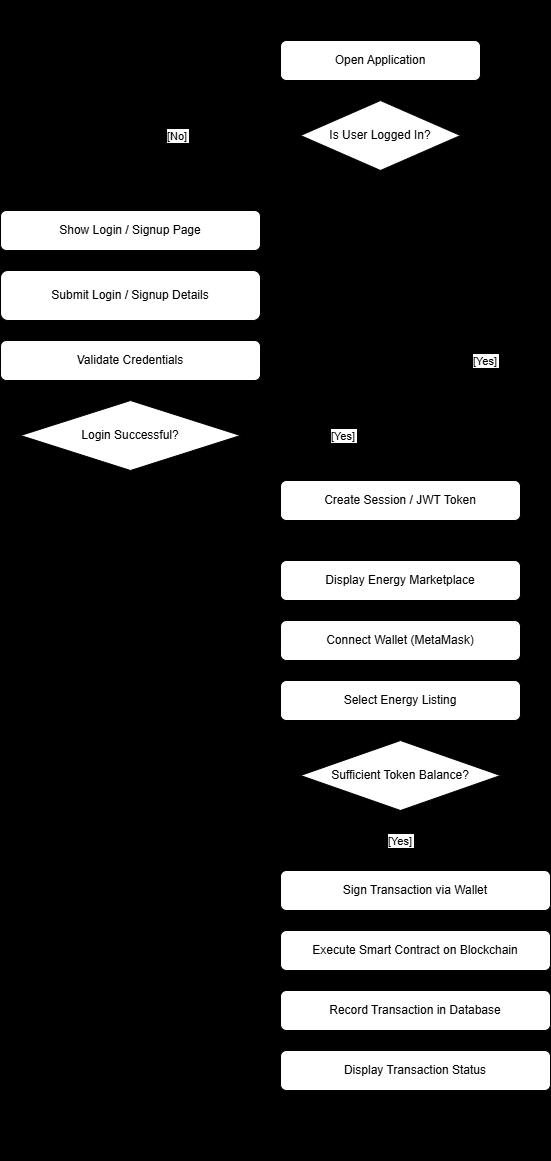
Theimplementationoftheproposedblockchain-basedpeerto-peer energy trading platform is carried out using a combinationofblockchaintechnology,web-basedapplication frameworks,anddatabasesystems.Theimplementationis divided into four main layers: blockchain layer, backend layer, frontend layer, and database layer. This layered approach ensures modularity, scalability, and ease of maintenance.
The blockchain layer is implemented using the Ethereum blockchain, specifically the Sepolia test network, to avoid real-world financial risks during development and testing. Smart contracts are developed using the Solidity programming language and deployed using development toolssuchasHardhat.
The Energy Token smart contract follows the ERC-20 standard and represents energy units generated by
prosumers.Eachtokencorrespondstoapredefinedquantity of energy. The contract includes standard ERC-20 functionalitiessuchastokentransfer,balancechecking,and allowancemechanisms.
This contract ensures secure and transparent token management,allowingenergyunitstobetradedseamlessly between buyers and sellers. The immutability of the blockchainensuresthattokenbalancescannotbetampered with.
The backend layer is implemented using Node.js and Express.js.Itservesasamiddlewarebetweenthefrontend application and the blockchain network. The backend performs several critical functions, including user management, energy listing management, transaction synchronization,andanalytics.
RESTful APIs are developed to handle operations such as creating listings, fetching transaction history, verifying blockchain transactions, and updating system state. The backend also includes an event listener service that continuously monitors blockchain events emitted by the smartcontracts.
Upondetectingablockchainevent,thebackendvalidatesthe transaction and stores the corresponding data in the database. This hybrid approach ensures both blockchain integrityandsystemefficiency.
The frontend layer is developed using a web-based framework and provides an interactive user interface for systemusers.Theinterfaceallowsuserstoregister,login, viewavailableenergylistings,andinitiateenergypurchase transactions.
Blockchain wallet integration is achieved using MetaMask, which enables users to connect their wallets and sign transactions securely. No private keys are stored on the server,ensuringhighsecurityanduserprivacy.
Thefrontendcommunicateswiththebackendthroughsecure APIsanddirectlyinteractswithsmartcontractsviathewallet provider.Real-timetransactionstatusupdatesaredisplayed tousersafterblockchainconfirmation.
ThedatabaselayerisimplementedusingMongoDB,aNoSQL databasesuitableforhandlinglargevolumesofunstructured andsemi-structureddata.Thedatabasestoresoff-chaindata suchasuserprofiles,transactionrecords,energylistings,and systemlogs.
International Research Journal of Engineering and Technology (IRJET) e-ISSN: 2395-0056
Volume: 13 Issue: 01 | Jan 2026 www.irjet.net p-ISSN: 2395-0072
Blockchaintransactionhashesarestoredalongsidedatabase records to ensure traceability and verification. This combination of on-chain and off-chain storage improves systemperformancewhilemaintainingtransparency.
Security is a critical aspect of the system implementation. Blockchain-based authentication ensures that only authorized users can initiate transactions. Smartcontracts are designed to prevent unauthorized access and double spending.
Additionally, backend validation and secure API communication protect the system from common web vulnerabilities.Theuseofblockchainwalletseliminatesthe needforpassword-basedauthentication,reducingtheriskof credentialtheft.
This section discusses the results obtained after implementing and testing the proposed blockchain-based peer-to-peer energy trading platform. The system was evaluated in a controlled test environment using the EthereumSepoliatestnetworktosimulatereal-worldenergy tradingscenarios.
Severaltestcaseswereconductedtoverifythecorrectnessof smart contract execution, token transfers, and transaction settlement. Prosumers were able to successfully create energy listings, and consumers were able to browse and purchaseavailableenergyunitsthroughtheplatform.
Eachenergypurchasetransactionwasexecutedthroughthe Energy Marketplace smart contract. Upon execution, the smart contract validated token availability, transferred energytokensfromsellertobuyer,andcompletedpayment settlement. All transactions were confirmed on the blockchain,ensuringtransparencyandimmutability.
Blockchain transaction hashes generated during the execution were stored in the database for verification and auditingpurposes.Thisensuredtraceabilityofeveryenergy tradeperformedthroughtheplatform.
In order to validate the correctness of energy trading operations,multipletransactionscenarioswereexecutedon theEthereumSepoliatestnetwork.Thesescenariosincluded successfulpurchases,insufficientbalancecases,andinvalid transactionattempts.Thesmartcontractscorrectlyenforced predefined rules such as balance verification, listing availability, and ownership checks before allowing transactionexecution.Oncevalidated,eachtransactionwas confirmed on the blockchain and assigned a unique transaction hash, ensuring traceability and preventing
tampering. Thisconfirms the reliability of smart contract–basedexecutionfordecentralizedenergytrading.
The performance of the system was evaluated based on transaction latency, system reliability, and scalability. The average transaction confirmation time depended on the blockchain network conditions and was found to be acceptableforpeer-to-peerenergytradingscenarios.
The hybrid architecture combining on-chain and off-chain components significantly reduced system overhead. While criticaltransactiondatawasstoredontheblockchain,noncriticaldatasuchasuserprofilesandanalyticswerehandled off-chain,improvingoverallsystemefficiency.
Performanceevaluationfocusedontransactionconfirmation time,systemresponsiveness,andbackendsynchronization. The observed transaction latency primarily depended on blockchainnetworkconditionsandblockconfirmationtime. Despite this dependency, the user interface remained responsive due to asynchronous transaction handling and backendeventlisteners.Theseparationofon-chainandoffchain operations minimized performance bottlenecks, demonstrating that the system can handle real-time user interactionsefficientlyinresidential-scaledeployments.
Thetransactionprocessbeginswhenaconsumerselectsan energy listing from the platform. The consumer connects their blockchain wallet and signs the transaction using MetaMask.Oncesigned,thetransactionissubmittedtothe Ethereumnetwork.
The cost analysis highlights the economic benefits of eliminatingcentralizedintermediariesinenergytrading.By enabling direct peer-to-peer transactions, the proposed system reduces additional charges typically imposed by utilityprovidersandthird-partyplatforms.Whileblockchainbased transactions involve gas fees, these costs are predictable and can be optimized through efficient smart contract design. The overall cost structure favours both prosumersandconsumers,makingthesystemsuitablefor decentralizedenergymarketplaceswithtransparentpricing models.
Usingablockchain-basedmarketplaceeliminatedtheneed for centralized intermediaries, thereby reducing energy trading costs. Prosumers received fair compensation for surplus energy, while consumers benefited from lower energypricescomparedtotraditionalgrid-basedsystems.
The use of a test network during implementation demonstrated that the system can be deployed on a productionblockchainwithminimalmodifications.
International Research Journal of Engineering and Technology (IRJET) e-ISSN: 2395-0056
Volume: 13 Issue: 01 | Jan 2026 www.irjet.net p-ISSN: 2395-0072
The proposed blockchain-based fully peer-to-peer energy trading platform demonstrates an effective solution for decentralized residential energy exchange. By leveraging Ethereum smart contracts and ERC-20 energy tokens, the system enables secure, transparent, and trustless energy tradingbetweenprosumersandconsumerswithoutrelying oncentralizedintermediaries.
Theimplementationvalidatesthatblockchaintechnologycan significantly reduce transaction overhead, improve energy pricefairness,andenhancetransparencyinenergymarkets. Theintegrationofaweb-basedinterfacewithsmartcontract executionensuresusabilitywhilemaintainingthebenefitsof decentralization.
Overall, the proposed system proves to be a viable and scalable approach for future decentralized energy marketplaces and supports the increasing adoption of renewableenergyresources.
Although the current implementation successfully demonstrates peer-to-peer energy trading, several enhancementscanbeconsideredinfuturework.Integration withreal-timesmartmeterscanenableautomatedenergy measurementandsettlement.Dynamicpricingmodelsbased on demand and supply conditions can further optimize tradingefficiency.
Additionally, deploying the system on a high-throughput blockchainorLayer-2solutioncanimprovescalabilityand reducetransactioncosts.Futureresearchmayalsoexplore the use of artificial intelligence for energy demand forecastingandgridoptimization.
ACKNOWLEDGEMENT
Theauthorswouldliketoexpresstheirsinceregratitudeto Dr. M. Dhasaratham, Professor, for his valuable guidance, continuous support, and encouragement throughout the development of this project. The authors also thank the faculty members of the Department of Information Technology,TKRCollegeofEngineeringandTechnology,for theirsupport.
[1] S.AlSkaif,M.G.Zapata,J.A.Ramos,andJ.P.Hespanha, “Blockchain-based fully peer-to-peer energy trading strategies,”IEEETransactionsonIndustrialInformatics, vol. 19, no. 4, pp. 5123–5134, 2023, doi: 10.1109/TII.2023.3245678.
[2] Y.Wang,X.Zhang,andL.Li,“Ablockchain-baseddouble auction mechanism for peer-to-peer energy trading,” IEEE Access, vol. 10, pp. 112345–112356, 2022, doi: 10.1109/ACCESS.2022.3189456.
[3] R.SinghandS.Ghosh,“Adecentralizedframeworkfor peer-to-peerenergytradingusingHyperledgerFabric,” EnergyReports,Elsevier,vol.9,pp.4567–4578,2023, doi:10.1016/j.egyr.2023.02.045.
[4] J.Chen,H.Liu,andZ.Wang,“Smartcontract-basedpeerto-peer energy trading with demand forecasting in microgrids,”EnergyInformatics,Springer,vol.5,no.2, pp.1–12,2022,doi:10.1186/s42162-022-00201-9.
[5] M.Rahman,A.Hasan,andS.Ahmed,“Energytradingin virtual power plants using distributed ledger technology,”SustainableCitiesandSociety,Elsevier,vol. 102,pp.104678,2024,doi:10.1016/j.scs.2023.104678.