
International Research Journal of Engineering and Technology (IRJET) e-ISSN: 2395-0056
Volume: 13 Issue: 02 | Feb 2026 www.irjet.net p-ISSN:2395-0072
International Research Journal of Engineering and Technology (IRJET) e-ISSN: 2395-0056
Volume: 13 Issue: 02 | Feb 2026 www.irjet.net p-ISSN:2395-0072
Ar. Mohd. Huzaifa Khan1 , Ar. Farida Husain2
1M.Plan (Urban and Regional) 2nd Year, Dept. of Architecture, Zakir Hussain College of Engineering and Technology, Aligarh Muslim University, Aligarh, Uttar Pradesh, 202002, India
2Former Guest Teacher, Dept. of Architecture, Zakir Hussain College of Engineering and Technology, Aligarh Muslim University, Aligarh, Uttar Pradesh, 202002, India
Abstract - TheUHI(UrbanHeatIsland) effect,definedas the phenomenon where urban areas experience higher temperatures than their surrounding rural environments, has emerged as a critical challenge for sustainable urban planning and climate resilience. Traditional mitigation strategies such as green roofs, reflective surfaces, and permeable pavements offer passive solutions but often fall short due to their static performance and limited responsivenesstofluctuatingenvironmentalconditions.This review critically examines the limitations of conventional UHI mitigation methods and explores bioresponsive infrastructure as an adaptive, nature-inspired alternative. Drawing from interdisciplinary literature and case studies, the paper identifies key features of bioresponsive systems such as humidity-sensitive façades and thermally adaptive materials that allow dynamic, multi-stimuli responses without external energy input. Comparative analysis demonstrates how these systems improve building performanceandcontributetoUHImitigationbyregulating heat gain, enhancing ventilation, and reducing ambient temperature through passive actuation. The review concludes by highlighting the broader implications of bioresponsive infrastructure for climate-resilient urban design and outlines key directions for future research, including material innovation, policy integration, andlargescale deployment. This study advocates for a shift from static to adaptive design principles in order to address the evolvingdemandsofurbanclimateadaptation.
Key Words: Urban Heat Island, Biore sponsive Infrastructure, Climate-Adaptive Design, Passive Cooling, Smart Materials, Sustainable Urban Planning
The phenomenon of the Urban Heat Island (UHI) effect, wherein urbanized areas exhibit significantly higher temperatures than their rural surroundings, has emerged as a critical environmental and public health challenge in rapidly urbanizing regions [1] . This temperature amplification is primarily attributed to excessive surface heat absorption, anthropogenic heat release, and the reduction of natural evapotranspiration surfaces caused by impervious urban materials, dense morphology, and concentrated human activity [2, 3] Conventional strategies to mitigate UHI typicallyinvolve static, surfacemodifying interventions such as green roofs, reflective
pavements, light-colored coatings, and vegetated facades, aimed at lowering ambient surface and air temperatures [4] . However, these approaches often lack adaptability and context-specific responsiveness, limiting their effectiveness in increasingly heterogeneous and dynamicallyshiftingurbanmicroclimates.
Recent investigations have underscored the inadequacies of static, prescriptive UHI mitigation strategies when applied within complex, multi-scalar urban environments [5] . These conventional approaches frequently fail to dynamically accommodate fluctuating environmental parameters such as diurnal temperature cycles, humidity variations, and localized solar exposure patterns. In response,agrowingbodyofinterdisciplinaryresearchhas shifted focus toward adaptive, bioinspired solutions capableofautonomouslymodulatingtheirperformancein real time. Among these, bioresponsive infrastructure has emerged as a particularly promising domain, encompassingsystemsand materialsdesigned to emulate biologicalprocessesormorphogeneticbehaviors,enabling themtoactivelyrespondtoenvironmentalstimulisuchas thermal gradients, atmospheric moisture, and solar radiation [6, 7] Unlike conventional mitigation systems, bioresponsive infrastructure incorporates thermochromic surfaces, hygroscopic materials, kinetic facades, and climate-reactive skins, offering continuous, energyefficient environmental regulation with minimal operationalinput.
This review aims explores how bioresponsive infrastructure can serve as a sustainable and adaptable solution to the Urban Heat Island (UHI) effect. It focuses on the growing need for innovative approaches that go beyond the limitations of conventional strategies like reflective surfaces or vegetation-based cooling. Based on an extensive review of current literature, the study highlights bioresponsive systems, such as humiditysensitive façades, thermally adaptive materials, and kinetic building skins, that are capable of passively adjusting to environmental changes without relying on mechanical input. The research method involves a critical evaluation of studies addressing the causes of UHI, existingmitigationstrategies,andemergingbio-integrated technologies, supported by relevant case studies. The reviewiscenteredonurbanapplicationsandsurface-level interventions, emphasizing the practical potential of bioresponsive systems in real-world settings. While the
International Research Journal of Engineering and Technology (IRJET) e-ISSN: 2395-0056
Volume: 13 Issue: 02 | Feb 2026 www.irjet.net p-ISSN:2395-0072
paperdoesnotcoverruralapplicationsorbroaderclimate systems, it offers a focused perspective on how these adaptive materials and systems could enhance thermal comfortandresilienceinthebuiltenvironment.
2.1
Thisstudyadoptsaqualitativeresearchdesignbasedona systematic review of secondary literature concerning UHI mitigation and bio responsive infrastructure. Rather than presenting a purely theoretical overview, the research is structured as a comparative analysis, contrasting conventional static mitigation interventions against emerging,dynamic,bio-inspiredarchitecturalsystems.
2.2
The literature search was conducted across major academic databases, specifically Google Scholar, ScienceDirect, and Scopus. To capture a comprehensive cross-section of both established and cutting-edge mitigation strategies,the searchstrategy utilized targeted keyword combinations, including “urban heat island mitigation,” “bio-responsive infrastructure,” “adaptive facade,” “passive cooling,” “bio mimicry,” and “smart materialsinarchitecture”.
2.3
Theliteratureselectionprioritizedpeer-reviewedarticles, scientific reviews, and documented architectural prototypes published between 2007 and 2024. To maintain a precise focus on practical building and infrastructure design, the scope was deliberately narrowed tosurface-level UHIinterventions within urban contexts.Consequently,studiesthatdealtexclusivelywith rural UHI phenomena, large-scale macroscopic climate modeling, or purely policy-centric approaches were intentionally excluded from the study. Emphasis was placed on materials and technologies demonstrating passiveormulti-stimuliresponsiveness.
In the final phase of the methodology, a comparative framework was utilized to assess the capabilities of bio responsiveinfrastructureagainsttraditionalmethods.The parameters for comparison included responsiveness to diurnal and seasonal thermal shifts , long-term maintenance demands , reliance on external mechanical energy inputs , and overall adaptability to heterogeneous urbanmicroclimates.
The Urban Heat Island (UHI) phenomenon refers to the temperature differential between urban areas and their surrounding rural environments. Urban regions often exhibit significantly higher surface and air temperatures due to the replacement of natural landscapes with impervious, heat-absorbing surfaces such as asphalt, concrete, and glass. These materials, coupled with highrise structures, reduce natural ventilation and trap heat withinthebuiltenvironment [8, 9] .
The primary causes of UHI include surface absorption of solar radiation by construction materials, limited vegetation, dense urban morphology, and anthropogenic heat sources such as HVAC systems, vehicular emissions, and industrial activity [10, 9] . While population growth and urban sprawl contribute to its intensity, the core mechanismremainsrootedinmaterialscienceandenergy flows.
ConsequencesofUHIaremultidimensional,affectingboth thebuiltenvironmentandhumanwell-being.InDelhi,for instance, every 0.6°C rise in midsummer temperatures increases peak-hour electricity demand by 1.5–2%, directly burdening the energy grid [11] . More critically, elevated urban temperatures contribute to excess morbidity and mortality rates, with studies in the EU estimating a 1–4% increase in mortality for each degree Celsiusaboveaspecificthermalthreshold [11]
The gatheredliterature wascategorized intotwo primary themes: the functional limitations of conventional mitigation strategies (such as high-albedo roofs and standardgreenwalls),andtheoperationalmechanismsof bioresponsive infrastructure. To validate the practical applicabilityofthetheoreticalliterature,themethodology incorporates a critical evaluation of real-world architectural case studies. Specifically, the study analyzes the BIQ House (Hamburg) to assess algae bioreactive facades , the Bloom Pavilion for thermobimetal shading applications,andtheHygroSkinMeteorosensitivePavilion (France)toevaluatehydro-actuatedkineticsystems.
The formation of UHI is closely tied to the thermal behavior of urban surfaces. Traditional construction materials have high thermal mass and low albedo, meaning they absorb and retain more solar radiation during the day and release it slowly at night, thereby elevating nocturnal temperatures [9] . Urban geometry, characterized by narrow streets, high building density, and low sky view factors that impedes air circulation, limits radiative heat loss, and traps longwave radiation in theloweratmosphere [10]
International Research Journal of Engineering and Technology (IRJET) e-ISSN: 2395-0056
Volume: 13 Issue: 02 | Feb 2026 www.irjet.net p-ISSN:2395-0072
Mechanical systems further exacerbate the heat problem. HVAC systems, industrial equipment, and automobile exhausts emit large quantities of waste heat into the surrounding environment, amplifying local temperatures and creating microclimates that are both energyinefficientandthermallyuncomfortable [8, 9]
UHI mitigation is necessary to address a cascading set of environmental, health, and energy-related challenges. Environmentally, UHIs contribute to degraded air quality, increased ground-level smog, and elevated CO₂ emissions duetoheightenedcoolingenergydemand [9] .Thisforms afeedbackloop:moreheatleadstomoreairconditioning, which leads to more emissions, further intensifying UHI andclimatechange.
Public health is directly impacted by UHI through increased instances of heat-related illnesses, reduced outdoor thermal comfort, and heightened vulnerability among elderly and low-income populations . In Manaus, Brazil, nighttime UHIs of 4°C have been associated with significantoutdoordiscomfortandhealthstrain [1]
From an energy perspective, UHI dramatically inflates demand for cooling, especially during peak hours, stressing power infrastructureand increasing operational costs [11, 9] . Studies report a 20–100% rise in cooling energyconsumptioninUHI-affectedregions [9] .
ConventionalUHImitigationstrategiestypicallyfallunder passiveandactivedesigninterventionsaimedatreducing surfaceandairtemperaturesinurbanareas.Theseinclude high-albedo or "cool" roofs, green roofs and walls, permeable pavements, urban forestry, and mechanical solutionssuchasHVACsystemsforindoorcooling [10, 9]
The underlying principle in most of these methods is to minimize heat gain by improving surface reflectivity, enhance evaporative cooling, or increase shade cover throughvegetation.
Coolroofingsystems,forinstance,functionbyreflectinga greater portion of solar radiation back into the atmosphere,therebyreducingsurfacetemperature.Green roofs, on theotherhand, leverage evapotranspiration and the insulation properties of soil and vegetation to lower indoor and outdoor heat [10] . Similarly, urban greening efforts,suchasincreasingtreecanopyordevelopinggreen corridors aim to moderate microclimates at the street or neighborhoodscale [8] .
However, these solutions often present functional and ecological limitations. For example, the effectiveness of greenroofsandfacadesmaydiminishinareaswithwater
scarcity or poor maintenance infrastructure. Cool roofs, while initially effective, tend to lose their reflectivity over time due to dust deposition or material degradation. Mechanical systems like air conditioners and HVAC units provide immediate thermal comfort but at the cost of increased urban heat and energy demand, creating a vicious feedback loop [9] . This loop exacerbates UHI in the long term and contradicts sustainability goals by contributingtogreenhousegasemissions.
Moreover, most conventional solutions do not respond dynamicallytofluctuatingenvironmentalstimuli.Theyare either passive and static (e.g., white paints, fixed insulation), or energy-intensive and polluting (e.g., mechanicalcooling).Asurbanheatintensifieswithclimate change and increasing urban density, the limitations of these methods highlight the need for more adaptive, selfregulating,andecologicallyembeddedsystems.
Urban Heat Island (UHI) mitigation strategies have traditionally relied on altering the thermal and reflective characteristics of urban surfaces and structures. These conventional approaches target components of the built environment that are responsible for surface absorption and thermal mass, including roofs, walls, pavements, and open spaces. While many of these techniques provide short- to medium-term benefits, their limitations in longterm adaptability, responsiveness to environmental changes, and maintenance demands warrant a more criticalevaluation.
Green roofs, or vegetated rooftop systems, involve the integration of plant layers over conventional roofing substrates. Typically, a green roof comprises vegetation, substrate, filter fabric, drainage material, a root barrier, and insulation [10] . By facilitating evapotranspiration, green roofs cool the surrounding air and reduce the absorption of solar radiation, thereby mitigating localized heat buildup[3, 8]. The latent heat associated with this processcontributestoatmosphericcooling [12]
Besides UHI reduction, green roofs offer thermal insulation for buildings, enhanced stormwater management, improved membrane longevity, and aesthetic upgrades [13] . However, the effectiveness of green roofs varies significantly with type. Intensive green roofs, which have thicker substrates and diverse vegetation, demand high capital investment and continuous maintenance, including irrigation and fertilization[10] .Incontrast,extensivegreenroofsoffera lighterandmoreeconomicalalternativebutarelimitedin thermalperformanceandbiodiversity.
International Research Journal of Engineering and Technology (IRJET) e-ISSN: 2395-0056
Volume: 13 Issue: 02 | Feb 2026 www.irjet.net p-ISSN:2395-0072
Green walls, comprising either green façades or living walls, are vertical greening strategies that use vegetation to reduce heat gain and enhance urban aesthetics. Green façades rely on climbing plants supported by trellises or frameworks, while living walls use panel-based systems withintegratedirrigationandgrowingmedia [14, 15] .
These systems not only mitigate UHI through evapotranspiration but also remove CO₂ and other pollutants, contributing to better indoor and outdoor thermal comfort and air quality [16] . However, their success hinges on proper plant selection, exposure to sunlight, and irrigation design. Living walls, while more visually impactful and thermally effective, require greater maintenance and technical precision than green façades [10] .
Expanding tree canopies and integrating permeable paving materials across parking lots and roadways represent another class of conventional UHI mitigation. Trees reduce surface and ambient temperatures via shadingand evapotranspiration, while pavementssuch as porous, pervious, and permeable types allow water infiltrationandevaporativecooling [17, 10] .
Thesesystemsimprovethermal comfort, especiallyinhot climates,andslowsurfaceheatconduction.However,their success is constrained by urban factors including soil compaction, pollution, and limited root volume [18] Permeable pavements, while better than conventional asphalt, can still absorb substantial solar radiation and oftenrequirerewettingtomaintaincoolingefficacy [19]
The development of "cool pavements" incorporates materials with reflective, evaporative, or heat-harvesting properties. These include light-colored concrete, thermochromic additives, water-retentive surfaces, and modified aggregates [20] . High solar reflectance reduces heatstorage,whilewater-retentivefillersenhancecooling throughevaporation[10]
Despite these innovations, practical challenges remain. Reflective pavements may increase wintertime cooling and degrade visually over time [21] . Thermochromic materials, while promising, may compromise structural strength and involve cost-intensive manufacturing [22] . Effectivecoolingalsodependsheavilyonsurfacemoisture availability [10] .
High-albedo materials and reflective paints applied to rooftops, façades, and pavements offer an accessible method of reducing surface temperatures[1]. Acrylic, silicone, and fluoropolymer-based coatings can reduce sensible heat release and moderate indoor temperatures [23] . Photocatalytic additives further enhance selfcleaningandreflectiveproperties [10]
However,thelong-termperformanceofthesematerialsis susceptible to aging, soiling, and weathering, leading to reflectanceloss [24] .Their contributionisalsolimitedin dense urban areas due to the re-reflection of solar radiation among vertical surfaces (urban canyons), reducingneteffectiveness [1] .
PCMs function by storing and releasing latent heat, thereby reducing peak surface temperatures of urban materials.Thesecanbeorganic,inorganic,oreutectic,and are often integrated into asphalt or concrete to improve thermalresilienceandreducecracking [25, 10]
While PCMs enhance the thermal mass and delay heat release, their efficacy depends on proper selection of melting point, incorporation method, and material compatibility. Low thermal conductivity during the liquid phasemayleadtosurfaceoverheating,andleakageduring melting remains a persistent challenge unless contained throughencapsulationtechniques [26]
Thermochromicmaterialsaltertheircolorandreflectivity based on temperature, potentially providing adaptive thermal behavior reflective during hot conditions and absorptive during colder ones. These materials can shift between multiple colors and be integrated into paints, polymers,orcoatings [27] .
Their capacity to dynamically adjust thermal properties holds theoretical promise for UHI mitigation. However, these materials often suffer from durability issues and may lose performance under prolonged environmental exposure. Their deployment in large-scale urban settings remainsexperimental,withlimited evidenceonlong-term viability [10]
Despite the diversity and proven short-term effectiveness of conventional UHI mitigation strategies, their long-term impact remains constrained by issues of scalability, durability, and adaptability to changing urban microclimates. Many approaches rely heavily on static materials or systems that demand high maintenance,
International Research Journal of Engineering and Technology (IRJET) e-ISSN: 2395-0056
Volume: 13 Issue: 02 | Feb 2026 www.irjet.net p-ISSN:2395-0072
frequent irrigation, or surface reapplication factors that are increasingly unsustainable in densely built and resource-constrained cities [2, 1] As cities continue to densify and global temperatures rise, there is a growing need for UHI mitigation solutions that are not only thermally efficient but also capable of dynamic environmental interaction. Conventional systems such as greenroofs,coolpavements,andreflectivecoatings,while helpful, often fall short in offering adaptive responses to diurnal orseasonal thermal shifts [10] . These limitations underscore the urgent demand for novel strategies that arelighter,moreresponsivetoenvironmentalstimuli,and require minimal upkeep, particularly in contexts where retrofitting dense urban fabrics is both technically and economically challenging. A paradigm shift is therefore needed one that embraces nature-informed, energyefficient, and low-intervention design approaches capable ofevolvingwiththeurbanclimate.
3.7 Bioresponsive Infrastructure as a promising Alternative
Bioresponsive infrastructure refers to built environment systems that actively respond to changing environmental stimuli, mimicking the dynamic behaviors of biological organisms. These infrastructures incorporate adaptive façades, smart materials, and kinetic elements that sense andreacttovariablessuch astemperature,humidity, and solar radiation in real-time. Unlike conventional static systems, which rely on passive or mechanical interventions, bioresponsive systems exhibit dynamic, self-regulating behaviors to optimize thermal performance,energyconsumption,andcomfortconditions [6]
This emerging typology is grounded in the principles of environmental responsiveness and biomimicry, where design strategies emulate natural processes to create structures capable of adaptation. According to [7] , bioresponsive infrastructures can be categorized as adaptive or reactive systems, integrating materials and control mechanisms that change physical properties or configuration based on external stimuli [9] further describethisinfrastructuretypethroughthelensofsmart building skins, highlighting their capacity to moderate indoorenvironmentsandmitigateurbanheatisland(UHI) effectsthroughdynamicfaçadesandsurfacesystems.
3.7.1
Keycharacteristicsofbioresponsiveinfrastructureinclude adaptabilitytoenvironmentalfactorssuchastemperature, humidity, wind, and solar radiation. These systems adjust surface properties like porosity, reflectivity, shading, or thermal conductivity to improve thermal regulation and occupant comfort. Often modular and lightweight, bioresponsive systems require minimal long-term
maintenanceduetotheirintelligentmaterialselectionand design [10] .
Integrated with smart control systems and sensor networks, these infrastructures autonomously regulate responses, leading to energy savings and improved urban microclimates. [5] highlight the limitations of conventional static solutions in urban heat mitigation, arguing that bioresponsive systems provide significantly greater efficiency and flexibility.[9] support this view, demonstrating how dynamic building envelopes actively respond to environmental loads, reducing reliance on artificialcooling.
3.7.2
Several case studies and prototypes demonstrate the practical application of bioresponsive systems. [6] document kinetic façades and climate-responsive architectural elements that adjust geometry or surface properties in real-time. [9] present façade-integrated systems that modulate reflectivity, shading, or airflow pathways, effectively mitigating UHI without the operationalburdenofvegetation-basedsolutions.
Additional innovations include thermo-bioreactive coatings that alter emissivity and heat absorption based onambienttemperatures,andsmartshadingsystemsthat adjust their orientation or expand in response to sunlight andheatgain.
Bio-reactivealgaefacadesareapioneeringexampleofbioresponsiveinfrastructureintegratinglivingorganismsinto building envelopes to dynamically respond to environmental conditions. These systems consist of transparent, water-filled flat panel photo-bioreactors (PBRs) mounted on building exteriors, within which micro-algae cultures are suspended in a nutrient-rich aqueous medium. The core working principle revolves aroundthedualfunctionalitiesofthepanels:
1. ThermalandSolarControl
2. BiomassGenerationandCO₂Sequestration
During daylight hours, sunlight penetrates the panels, promoting photosynthesis in the algae cultures. As the algae grow, the increased density modulates the transparency of the facade, functioning as a dynamic shading device. In periods of intense solar radiation, denser algae growth reduces light transmission and solar heatgain,whileduringperiodsoflowerradiation,thinner culturesallowmorenaturaldaylightpenetration [28, 29]
The facade system operates as a closed-loop, with a continuous supply of water, nutrients, and CO₂ being circulated through the panels [29]. Compressed air is
International Research Journal of Engineering and Technology (IRJET) e-ISSN: 2395-0056
Volume: 13 Issue: 02 | Feb 2026 www.irjet.net p-ISSN:2395-0072
introduced at the base to prevent sedimentation and to enhance gas exchange. Excess thermal energy generated during photosynthesis is extracted using a heat exchange and stored in thermal storage units, contributing to domestichotwaterandspaceheating [30]
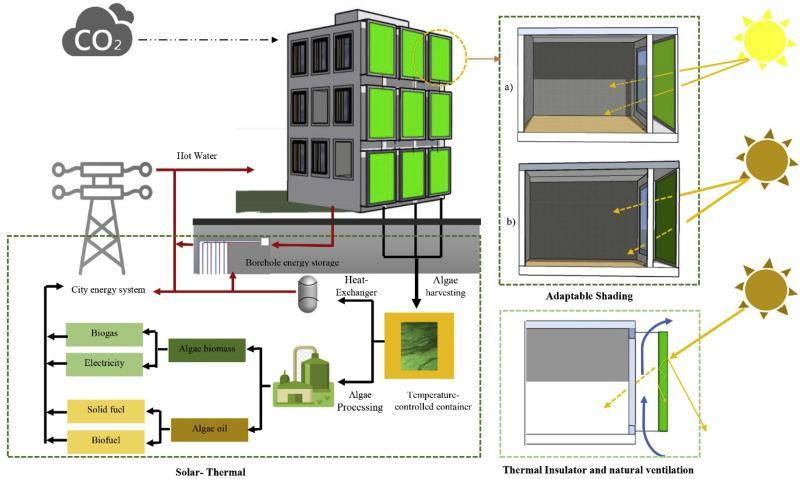
Fig. 1 - Schematicofthealgaebio-reactivefacadesystem functioningasasolar-thermalcollectorandshading device [29].
The BIQ House in Hamburg, Germany, represents the world’s first practical implementation of a bioreactive facadesystematbuildingscale.Designed bySSCStrategic Science Consult, ARUP, and Splitterwerk Architects, and inaugurated during the International Building Exhibition (IBA) Hamburg 2013, the BIQ House served as a testbed fortheoperationalviabilityofalgae-integratedfacades.
Key specifications of the system include:
129 individual bioreactor panels, each measuring 2.5m×0.7m
Integrationonsouthandsoutheastfacades
Continuous biomass harvesting and integration withthebuilding’smechanicalsystems [28]
The panels perform several simultaneous roles:
Algae growth dynamically shades the building, reducingsolargaininsummer.
Captures CO₂ from both outdoor air and internal exhaustsystems.
Producesbiomass,laterconvertedintobiofuels.
Excess heat is captured via integrated heat exchangersandrepurposedforwaterheatingand interiorclimatecontrol [30].
The BIQ facade generated approximately 4,500 kWh of bioenergy annually, outpacing the average residential
energydemandof3,500kWh [29] Additionally,dynamic facadetransparencyalteredthebuilding’sappearanceand thermal behavior seasonally, creating a visually responsiveandenvironmentallyinteractiveskin.
:
The bioreactor panels provided measurable reductions in interior ambient temperatures by limiting direct solar radiation, while simultaneously contributingtothermalmass.Theshadingeffectwas most pronounced during summer months, reducing indoor temperatures by up to 10°C compared to unshadedspaces [28] .
The algal biomass growth varied seasonally, with peakdensitiesachievedinsummer,increasingfacade opacityandreducingsolargain.Inwinter,loweralgal concentrations enhanced facade transparency, maximizingpassivesolarheatinganddaylightaccess, therebyreducinglightingandheatingloads [29]
Themicro-algaewithinthepanelsabsorbedCO₂both from external ambient air and internal air exhaust systems, achieving significant carbon capture rates. Accordingto [31] ,suchsystemscansequesterCO₂at rates comparable to a mature urban forest, with additional benefits of converting it into usable biomass.
Byintegratingheatexchangers,theBIQsystem recovered surplus thermal energy from the panels. This renewable heat source reduced reliance on conventional heating systems by up to 50%, contributing to the building’s overalloperationalenergyefficiency [31] .
Advantages and Strengths:
Simultaneously addresses shading, cooling, energy generation, and carbon sequestration within a single integratedsystem.
Adaptivefacademodulationrespondingtoreal-time environmentalstimuli.
Heatrecoverysystemslowerspaceheatingandhot waterdemands.
The shading, evapotranspiration-like effects of algae growth, and removal of atmospheric heat through photosynthesis collectively contribute to reduced urbansurfacetemperatures.
The living facade transforms throughout the year, offeringadynamicarchitecturalexpression[11]
© 2026, IRJET | Impact Factor value: 8.315 | ISO 9001:2008 Certified Journal | Page974
International Research Journal of Engineering and Technology (IRJET) e-ISSN: 2395-0056
Volume: 13 Issue: 02 | Feb 2026 www.irjet.net p-ISSN:2395-0072
:
Installation and integration with HVAC and water management systems involve significant capital investment.
Requires regularmonitoringofalgae health, nutrient levels, and mechanical cleaning systems, though automatedairjetsandbeadscrubbersreducemanual intervention [30]
Performanceissensitivetoregionalsolaravailability, potentially limiting applications in low-sunlight climates.
Potential Impact on Urban Heat Island (UHI):
Bydynamicallyshadingfacadesandpreventingsolar absorption by building exteriors, these systems reducesurfacetemperatures.
Water-filled panels act as thermal mass, dampening peaktemperaturefluctuations.
Though technically photosynthetic, the system mimics evapotranspirative cooling as heat is consumed by biomass growth, effectively reducing localmicroclimatictemperatures.
Reduces urban CO₂ concentrations, indirectly influencingtheatmosphericheatbalance.
According to [31] , bioreactive systems offer one of the highestintegratedbenefitsintermsofurbanmicroclimate regulation, energy efficiency, and environmental impact comparedtoothergreenfacadetypologies.
Thermobimetals are materials composed of two metal alloys with different coefficients of thermal expansion. When heated, one metal expands more than the other, causing the material to bend or curl. As the temperature decreases, it flattens. This reversible deformation can be used in building skins, allowing them to open, close, or ventilate in response to environmental changes, functioningsimilarlytotheporesinhumanskin [32]
3.9.1 Case Study: Bloom Pavilion by Doris Sung (2012)
The "Bloom" Pavilion, designed by Doris Sung, is a selfventilating structure made primarily of thermobimetals. The structure performs passive ventilation and heat regulation by responding to changes in temperature. The smart thermobimetal surface shades and ventilates areas oftheshellasitheatsup.Thepavilion'sdesignisinformed by digital technologies and parametric design, making it aninnovativeexampleofresponsivearchitecture.
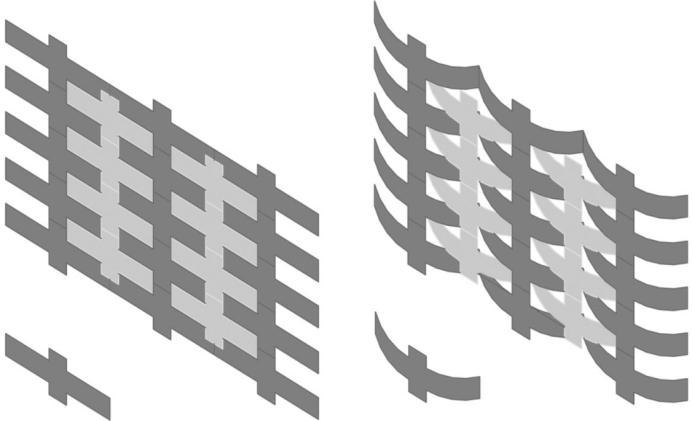
Fig. 2 -Alaminationoftwometalstogetherwithdifferent thermalexpansioncoefficientssimplydeformswhen heatedorcooled [32]
Design Details :
Thepavilion'ssurfaceismadeofthermobimetaltiles thatcurlinresponsetoheat.
The form comprises approximately 14,000 laser-cut pieces and 414 hyperbolic paraboloid-shaped panels [32].
The panels' undulating surfaces and interlocking aluminum frame provide structural stability while allowingthematerialtoperformasashell.
The pavilion is designed to perform optimally during the spring equinox, tracking time and temperature in a responsivemanner[32].
Passive Ventilation and Heat Regulation Performance:
Thermobimetal surfaces allow the pavilion to regulate internal temperature and provide shading without the need for external energy sources. The material's deformation regulates airflow and reduces heat gain in responsetochangingenvironmentalconditions.
Advantages & Strengths :
The thermobimetal system is entirely passive, requiringnoexternalpowersourcetooperate.
The material responds automatically to changes in temperature, making it a dynamic component of the building.
The material offers a wide range of possible shapes and configurations, allowing for creative, aestheticallyengagingdesigns.
International Research Journal of Engineering and Technology (IRJET) e-ISSN: 2395-0056
Volume: 13 Issue: 02 | Feb 2026 www.irjet.net p-ISSN:2395-0072
Thethermobimetallicbuildingskincanreducedirect sunlight exposure, lowering the temperature of the buildingsurfaceandreducingheatgain.
The dynamic response of the thermobimetal surface helps maintain a more comfortable indoor temperaturewithoutadditionalenergyconsumption.
By reducing heat absorption and providing natural ventilation, thermobimetals can help improve the local microclimate, potentially mitigating the effects oftheUrbanHeatIsland(UHI)phenomenon.
Recent advancements in 4D printed hygro-responsive systems utilize bio-based, cellulose-filled filaments [33] These materials deform autonomously in response to humidity, integrating active hygroscopic and passive restrictive layers within bilayer structures. As humidity fluctuates, these assemblies adjust their form predictably, creatingdynamicaperturesinbuildingskinsthatregulate light,airflow,andheatexchange[25]
Notably, most current MS-responsive systems in architecture facescalability andunilateral responsiveness challenges. To address this, integrating hybrid mechanisms such as combining moisture-responsive materialswithcolor-changingcoatingsorlight-responsive actuation systems can enhance the multi-dimensional adaptability of hydro-actuated facades. In the context of UHImitigation,suchfacadescandynamicallyreducesolar gain, increase surface albedo, regulate thermal loads, and enhance evaporative cooling, all of which are critical in counteractingurbanheataccumulation [7]
3.10.1
A notable application of bioresponsive façade systems is the HygroSkin Meteorosensitive Pavilion in France . This climate-adaptive pavilion employs a veneer composite skin featuring 1,100 humidity-sensitive apertures that autonomously open and close in response to relative humidity fluctuations (30%–90%)[6] . Unlike conventional mechanically operated or electronically controlled facades, HygroSkin demonstrates materialembedded responsiveness, inspired by the moisturedrivenopeningandclosingmechanismsofsprucecones.
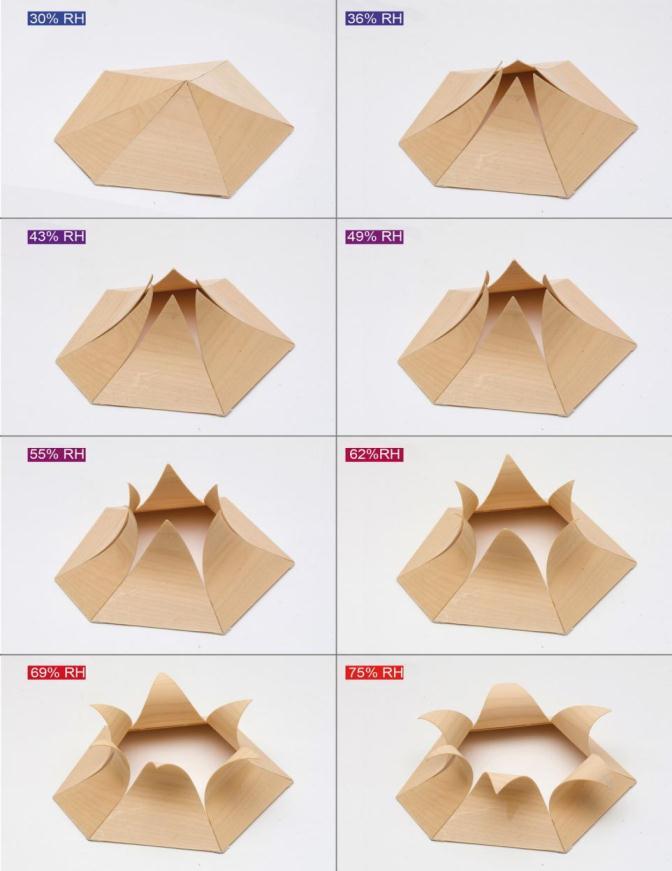
Fig. 3 - Hygroscopicactuationofwood-compositepanels demonstratingmeteorosensitiveadaptationfrom30%to 75%RH [6]
In spruce cones, anisotropic bilayer scales swell or contract with humidity changes, resulting in predictable shapetransformations.Thisprincipleistranslatedintoan architecturalsystemwhereroboticallyfabricatedplywood veneer elements serve as sensors, actuators, and regulators without the need for external energy sources. The responsive skin modulates light penetration, ventilation rates, and shading patterns, improving indoor thermal comfort while passively adapting to changing microclimaticconditions.
This project exemplifies the potential of low-energy, bioinspired, dynamic façades in providing passive environmental regulation. By enhancing natural shading, improving ventilation, and reducing solar heat gain, such systems contribute directly to UHI mitigation at the building scale. Additionally, by reducing reliance on mechanical cooling, these facades minimize waste heat discharge into the urban environment, a significant contributortoUHIformation.
Effects of Hydro-Actuated Bio-responsive Facades on UHI Mitigation :
Humidity-triggered movement creates self-adjusting shading,limitingsolarheatgain.
International Research Journal of Engineering and Technology (IRJET) e-ISSN: 2395-0056
Volume: 13 Issue: 02 | Feb 2026 www.irjet.net p-ISSN:2395-0072
Opening and closing of facade elements regulate airflow,reducingtrappedheat.
Moisture-responsive materials promote localized evaporative cooling, lowering surrounding air temperatures.
Hybrid systems combining humidity, light, and temperature responsiveness adapt better to fluctuatingurbanheatconditions.
Norelianceonmechanicalsystemsorexternalenergy sources reducingoperationalcarbonfootprint.
Collectively improves thermal comfort at the street and neighborhood level by reducing surface and air temperatures.
Demonstrated feasibility through prototypes like the HygroSkin Pavilion, providing a replicable model for urbanapplications.
Bio-responsive infrastructure is evolving, with several promisingtechnologiesunderdevelopment. [7] identifies bio-integrated phase change materials (PCMs), which passivelyregulatebuildingtemperaturesbyalteringphase states. [10] describe color-changing, thermo-adaptive surfaces that reflect or absorb heat based on external conditions. Other developments include biomimetic hydrophobic coatings that manage surface heat and moisture, as well as modular green proxies lightweight, non-rooted vegetation systems replicating the cooling effectsofgreenerywithoutmaintenancechallenges.
Bio-responsive infrastructures offer several advantages over traditional UHI mitigation methods. Their adaptability allows them to respond to rapidly changing urban climates, ensuring more consistent performance than static solutions [5] . Furthermore, these systems typically require less operational and maintenance input, avoiding issues associated with vegetation such as root damageandirrigationneeds.
Additionally, bioresponsive systems integrate seamlessly with Internet of Things (IoT) platforms and smart city analytics, facilitating data-driven environmental control and long-term monitoring [10, 9] . This makes them a sustainable and scalable solution for the next generation ofurbanenvironments.
Despitetheirpotential,bio-responsiveinfrastructuresface significant challenges. High initial costs, technical complexity, and the need for specialized expertise can hindertheirwidespreadadoption [10] Mostapplications are currently limited to experimental or pilot-scale projects, with real-world performance data still sparse. Furthermore, integrating these systems into existing regulatory frameworks and building codes presents institutional and policy challenges, requiring updated guidelines to accommodate new materials and adaptive systems.
Table -1: ComparativeAnalysisofConventional Mitigationstrategiesvs.BioresponsiveInfrastructure
1. Responsiveness to Diurnal and Seasonal ThermalShifts Static Performance -Interventions like reflective pavements or cool roofs maintain constant properties. Reflective surfaces may cause unwanted wintertime cooling, and fixed shading cannot adjust to daily solar trajectories [26, 32]
2.Long-Term Maintenance Demands High Upkeep - Vegetated systems (green roofs/walls) require continuous irrigation, fertilization, and root management [10]. Highalbedo coatings degrade over time due to
Dynamic ActuationSystems physically alter their state based onreal-time conditions. Algae facades grow denser in summerfor shadingand thinner in winter to allow passive solar heating [11, 29].
Minimal Interventio n -Smart materials like thermobime tals and hydroactuated wood rely onmaterialembedded responsiven ess, requiring minimal
Optimized Thermal ComfortBioresponsive systems continuously balance shading, daylighting, and thermal buffering according to immediate environmental needs [11, 29]
Operational LongevityAdaptive materials reduce the long-term economic and labor burdens associated with maintaining urban cooling infrastructure [10, 16].
International Research Journal of Engineering and Technology (IRJET) e-ISSN: 2395-0056
Volume: 13 Issue: 02 | Feb 2026 www.irjet.net p-ISSN:2395-0072
weathering and dust accumulation [24, 32]. ongoing maintenanc e [16, 23]
3. Reliance on External Mechanical EnergyInputs EnergyIntensiveMechanical cooling (HVAC) relies entirely on external electricity, emitting waste heat intotheurban canopy and creating a negative feedbackloop that exacerbates theUHIeffect [4, 26]
Passive / NetPositiveActuation occurs autonomou sly through natural physics (e.g., thermal expansion or hygroscopic swelling) without external power [16, 23]. Algae systemscan even recover heat to generate bioenergy [29, 30]
4. Overall Adaptability to Heterogeneous Urban Microclimates
ContextLimitedSolutions are prescriptive.A system applied to a specificurban canyoncannot dynamically adapt if local humidity, wind,orsolar exposure patterns change [31]
MultiStimuli Responsive nessSystems sense and react autonomou sly to localized microclimat ic triggers, such as atmospheri c moisture (HygroSkin) or thermal gradients (Bloom Pavilion) [16, 23].
Decarbonizat ion - Zero operational carbon footprint for actuation, directly supporting sustainable urban energy goals and climate resilience [26, 30].
contrast, bio-responsive infrastructure offers a more promising approach, providing dynamic, adaptable systemsthatrespondtoreal-timeenvironmentalchanges. Byincorporatingsmartmaterials,kineticfacades,andbiointegrated technologies, these systems demonstrate greater flexibility and energy efficiency, ultimately enhancingoccupantcomfortwhileminimizingrelianceon mechanical solutions. Furthermore, bioresponsive infrastructure aligns with broader environmental objectives by supporting biodiversity and contributing to circular economy principles, reflecting nature’s adaptive processes.
While bio-responsive infrastructure holds significant promise, the field is still in its developmental stages, with manysystemsremaininginprototypeformandfewlargescale applications available. The high upfront investment, regulatory complexities, and need for specialized knowledge present substantial barriers to broader implementation. Additionally, there is a need for further studiestoaddressthescalability,durability,andlong-term operational performance of these systems in varying urban contexts. Integrating bioresponsive technologies into the fabric of existing urban infrastructure also requiresovercominginstitutionalchallenges,includingthe need for updated building codes and regulations that are moresuitablefordynamicandbio-basedmaterials.
Microclimate ResilienceProvides continuous, localized, and self-regulating environmental moderation across highly diverse and complexurban morphologies [16, 26]
Despitetheirpotential,bio-responsiveinfrastructuresface significant challenges. High initial costs, technical complexity, and the need for specialized expertise can hindertheirwidespreadadoption [10] .Mostapplications are currently limited to experimental or pilot-scale projects, with real-world performance data still sparse Furthermore, integrating these systems into existing regulatory frameworks and building codes presents institutional and policy challenges, requiring updated guidelines to accommodate new materials and adaptive systems.Thesechallenges,combinedwiththecurrentlack of large-scale, real-world performance data underscore the need for continued innovation, policy reform, and interdisciplinarycollaborationtofullyrealizethepotential ofbioresponsiveinfrastructureinurbansettings.
To propel bioresponsive infrastructure as a mainstream UHImitigationstrategy,futureresearchshouldfocuson:
This review underscores the limitations of traditional urbanheatisland(UHI)mitigationmethods,suchasgreen roofs, reflective surfaces, and standard urban planning solutions. While these approaches offer some advantages, their inherent static nature, dependency on external factors like climate and maintenance, reduces their effectiveness over time in addressing UHI impacts. In
Investigating strategies to scale bioresponsive systems for large urban settings and integrate them effectivelyintoexistingbuildingsandurbanplanning practices.
Advancing the creation of more affordable, durable, and efficient materials that enhance the
© 2026, IRJET | Impact Factor value: 8.315 | ISO 9001:2008 Certified Journal | Page978
International Research Journal of Engineering and Technology (IRJET) e-ISSN: 2395-0056
Volume: 13 Issue: 02 | Feb 2026 www.irjet.net p-ISSN:2395-0072
responsiveness and sustainability of bioresponsive systems.
Leveraging Internet of Things (IoT) and smart city technologies to gather real-time data for adaptive optimization and ongoing monitoring of bioresponsivesystems.
Advocating for the creation of updated regulatory frameworks that accommodate bioresponsive technologies, thereby facilitating their widespread adoptionindiverseurbancontexts.
The future of UHI mitigation hinges on the widespread adoption of nature-inspired, bio-responsive technologies thatcandynamicallyadapttotheevolvingneedsofurban environments. As cities continue to grow and face mounting climate-related challenges, bioresponsive infrastructure presents an opportunity to create urban spacesthataremoreresilient,sustainable,andlivable.
Collaboration between researchers, urban planners, policymakers, and industry stakeholders will be key to overcoming the current hurdles and accelerating innovation in this field. For bio-responsive systems to reach their full potential, sustained investment in research,development,andreal-worldtestingisessential. Through continued cooperation and the establishment of clear, progressive regulatory frameworks, bio-responsive infrastructure can become a foundational element in future urban design, reducing UHI effects and fostering moreclimate-resilientcities.
[1] M. Santamouris, Energy and Climate in the Urban Built Environment.Routledge,2015
[2] T. R. Oke, “The energetic basis of the urban heat island,” Quarterly Journal of the Royal Meteorological Society,vol.108,no.455,pp.1–24,1982
[3] A. M. Rizwan, L. Y. C. Dennis, and C. Liu, “A review on thegeneration,determinationandmitigationofurban heatisland,” JournalofEnvironmentalSciences,vol.20, no.1,pp.120–128,2008
[4] D. Ürge-Vorsatz et al., “Heating and cooling energy trends and drivers in buildings,” Renewable and SustainableEnergyReviews,vol.41,pp.85–98,2014.
[5] Y. Zhang, Y. Wang, R. Zhao, and H. Jiang, “Humiditydriven soft actuators based on water-responsive materials: From plants to biomimetic designs,” AdvancedMaterials,vol.34,no.4,p.2104393,2022.
[6] A. Menges, S. Reichert, and O. D. Krieg, “Meteorosensitive architecture: HygroSkin Meteorosensitive pavilion,” Architectural Design, vol. 83,no.2,pp.44–53,2013.
[7] R. Khosromanesh, “Towards refining bio-inspired hydro-actuated building facades by emphasising the importance of hybrid adaptability,” Sustainability, vol. 16,no.3,p.959,2024
[8] K. Araque, P. Palacios, D. Mora, and M. Chen Austin, “Biomimicry-based strategies for urban heat island mitigation: A numerical case study under tropical climate,” Biomimetics,vol.6,no.3,p.48,2021.
[9] M.TalaeiandR.Azari,“Smartbuildingskinsforurban heat island mitigation: A review,” Journal of Architectural Engineering, vol. 30, no. 4, p. 03124005, 2024.
[10] A. M. M. Irfeey et al., “Sustainable mitigation strategiesforurbanheatislandeffectsinurbanareas,” Sustainability,vol.15,no.14,p.10767,2023
[11] A. Dhankhar, A. Kundu, N. Basumatary, S. Khune, and A. K. Jaglan, “A mitigating strategy for urban heat islands: The biomimicry approach case of Delhi,” Proceedings,vol.107,no.1,p.5,2024.
[12] J. Berardi, “The role of green roofs in the sustainability of urban environments,” Journal of UrbanTechnology,vol.27,no.2,pp.123–138,2020.
[13] K.L.GetterandD.B.Rowe,“Theroleofgreenroofsin sustainable development,” HortScience, vol. 41, no. 5, pp.1276–1283,2006
[14] E. Alexandri and P. Jones, “Temperature decreases inanurbancanyonduetogreenwallsandgreenroofs in Athens,” Energy and Buildings, vol. 40, no. 6, pp. 1035–1043,2008
[15] G. Pérez, M. Díaz, and G. Salazar, “Thermal performance and energy savings potential of living walls in urban buildings,” Energy and Buildings, vol. 77,pp.76–82,2014.
[16] K. Perini and V. Castaldo, “Green walls in the urban environment: An overview of the biological and architectural aspects,” Journal ofBuilding Engineering, vol.1,pp.123–137,2011.
[17] USEPA,“Urbanheatislandmitigation:Strategiesto reduceheatexposure,”2008
[18] C. P. Loughner, N. Elansari, and M. Shepherd, “Urban heat island mitigation: Strategies to reduce heat exposure,” Journal of Environmental Management, vol. 104,pp.50–63,2012.
International Research Journal of Engineering and Technology (IRJET) e-ISSN: 2395-0056
Volume: 13 Issue: 02 | Feb 2026 www.irjet.net p-ISSN:2395-0072
[19] L. Wang, J. Wang, and Y. Zhang, “Evaluation of permeable pavements in urban heat island mitigation,” Journal of Urban Climate, vol. 28, pp. 68–83,2019.
[20] M. Santamouris, “Recent advances in the developmentofcoolpavementsandurbanheatisland mitigation techniques,” Advances in Building Energy Research,vol.14,no.3,pp.567–579,2020.
[21] X. Zhao, X. Li, and Z. Zhang, “Performance degradation of reflective materials in urban areas: A review of factors and impacts,” Building and Environment,vol.76,pp.140–150,2014.
[22] N. Lechner and S. Sivapalan, “Thermochromic materials and their potential for energy-efficient buildings,” Energy and Buildings, vol. 234, p. 110741, 2021.
[23] H. Akbari and R. Levinson, “Global cooling: Increasing worldwide urban albedos to counteract CO₂,” Climatic Change, vol. 94, no. 3–4, pp. 275–286, 2008.
[24] A.Synnefa,H.Akbari,andI.Touloumis,“Theroleof reflective coatings in urban heat island mitigation,” Journal of Building Performance, vol. 8, no. 2, pp. 75–83,2007.
[25] R. Baetens, B. P. Jelle, and G. Vermeir, “Phase change materials for building applications: A state-of-the-art review,” EnergyandBuildings,vol.42,no.3,pp.1361–1368,2010.
[26] M. Kheradmand, V. M. Nik, and M. Sadeghi, “Development of phase change materials for sustainable energy systems: A review,” Energy Procedia,vol.61,pp.419–424,2014.
[27] D. Zhou, P. Zhou, and L. Zhang, “Thermochromic materials and their applications in urban heat island mitigation,” Journalof Materials Science, vol. 51, no. 1, pp.1–12,2016.
[28] J. Wurm and M. Pauli, “SolarLeaf: The world’s first bioreactive façade,” Architectural Research Quarterly, vol.20,no.1,pp.73–79,2016
[29] J. Jingshi, “Algae bio-reactive building envelope: Dynamic lighting and energy aspects for algae-based building skin,” in 2022 Building Performance Analysis Conference,pp.269–277,2022.
[30] J.Wurm etal.,“MonitoringFassadenkonstruktionaus Photobioreaktoren am Pilotprojekt BIQ,” Abschlussbericht,2016.
[31] L. Hovhannisyan and A. Sargsyan, “Bioresponsive urban infrastructure:Living materialsandmicroalgae integration for carbon-negative buildings,” The Latest TechnologiesinScientificActivity,no.16,2024.
[32] D. Sung, “Prototyping a self-ventilating building skin with smart thermobimetals,” Master’s thesis, USC, 2011.
[33] S. Tahouni, A. Kaynak, D. Li, and A. Z. Kouzani, “Hygro-responsive 4D printed structures using biobased filaments,” Materials & Design, vol. 230, p. 111999,2023.