
International Research Journal of Engineering and Technology (IRJET) e-ISSN: 2395-0056
Volume: 13 Issue: 05 | May 2026 www.irjet.net p-ISSN: 2395-0072
International Research Journal of Engineering and Technology (IRJET) e-ISSN: 2395-0056
Volume: 13 Issue: 05 | May 2026 www.irjet.net p-ISSN: 2395-0072
1 Shubha S,2 S. Shubhakar, 3 Varsha Jayaprakasha
1Associate Professor, Government First Grade College, Malleshwaram, Bangalore, India
2Digital Associate Engineer, Sonata Software Solutions Limited, Global Village, Mysore Road, Bangalore
3Backend Developer, Canibuild, Australia ***
Abstract - Opinion mining has becomeacriticalcomponent in understanding user-generatedcontentacrossdomainssuch as tourism, e-commerce and social media.Thispaperproposes a Transformer-Enhanced Neural Learning-Based Opinion Feature Extraction(TE-NLOFE)modelthatextendstraditional neural approaches by integrating contextual embeddings, attention mechanisms andontology-basedlinguisticmapping. Unlike earlier models, the proposed framework captures contextual dependencies using BERT [1] and introduces explainability through attention-based interpretation [8]. Experimental evaluation on benchmark datasets including TripAdvisor, Amazon Reviews and SemEval demonstrates improved accuracy, reduced false positive rate and enhanced interpretability compared to baseline models [10], [11]. The results validate the effectiveness of combining deep learning with linguistic ontology for fine-grained sentiment analysis.
Key Words: Neural Networks, Feature Extraction, Explainable Artificial Intelligence (XAI), Natural Language Processing (NLP), Text Mining, OntologyBased Analysis, Hybrid Models, Contextual Embeddings.
With the exponential growth of online reviews, opinion mining has become essential for extracting meaningful insights.Earliermodels,includingtheNeuralLearningBased Opinion Feature Extraction (NLOFE), relied on neural networks and linguistic mapping but lacked contextual understandingandscalability[13].
Recentadvancementsintransformerarchitecturessuchas BERT [1] and the foundational work on attention mechanisms [2] have revolutionized natural language processing by capturing contextual semantics more effectively.
Traditional sentiment analysis approaches focused on feature extraction and classification [3], [4], but failed to captureaspect-leveldependencies.Recentstudiesinaspectbasedsentimentanalysis(ABSA)haveattemptedtoaddress thislimitation[6],[7].
Thispaperproposesanenhancedframeworkthat:
Integratestransformer-basedembeddings
Performsaspect-levelsentimentclassification
IntroducesexplainabilitymechanismsusingSHAP andLIME[8],[9]
Extendspriorworkinneuralopinionmining[13]
Opinion mining and sentiment analysis have evolved significantlyoverthepasttwodecades,transitioningfrom traditional rule-based systems to advanced deep learning and transformer-based architectures. Early research in sentiment analysis primarily relied on lexicon-based and statistical approaches, where sentiment polarity was determined using predefined dictionaries and linguistic rules. These methods were simple and interpretable but often failed to capture contextual meaning, sarcasm, and domain-specificvariations[3].
Subsequently,machinelearningtechniquessuchasSupport VectorMachines(SVM),NaïveBayes,andlogisticregression were introduced to improve classification performance. Theseapproachesleveragedfeatureengineeringtechniques includingn-grams, part-of-speech tagging, and term frequency–inverse document frequency (TF-IDF). While these models improved generalization, they were still limited by their dependence on manual feature extraction andinabilitytocapturelong-rangedependenciesintext[3], [4].
The emergence of deep learning marked a major shift in sentiment analysis research. Neural architectures such as Convolutional Neural Networks (CNNs), Recurrent Neural Networks (RNNs), and Long Short-Term Memory (LSTM) networks enabled automatic feature extraction and improvedperformanceinsequencemodelingtasks.These modelswereparticularlyeffectiveincapturingsyntacticand semanticrelationshipswithintext.However,despitetheir advantages, deep learning models still faced challenges in handlinglong-rangedependenciesandcontextualambiguity duetosequentialprocessinglimitations[4].
Asignificantbreakthroughoccurredwiththeintroductionof transformer architectures, particularly BERT and related models.Transformersutilizeself-attentionmechanismsto
International Research Journal of Engineering and Technology (IRJET) e-ISSN: 2395-0056
Volume: 13 Issue: 05 | May 2026 www.irjet.net p-ISSN: 2395-0072
model relationships between words irrespective of their positional distance, enabling better contextual understanding [1], [2]. Recent studies highlight that transformer-based models have become the dominant approach in sentiment analysis due to their ability to generaterichsemanticrepresentationsandhandlecomplex linguistic structures [1]. Comparative analyses of transformer models demonstrate superior performance across multiple sentiment analysis datasets, significantly outperformingtraditionaldeeplearningmodels[10],[11].
In parallel, Aspect-Based Sentiment Analysis (ABSA) has gainedconsiderableattentionasafine-grainedextensionof traditional sentiment analysis. Unlike document-level or sentence-level classification, ABSA focuses on identifying specific aspects (e.g., “food,” “service”) and determining sentimentpolarityforeachaspect.Thisapproachprovides more actionable insights for applications such as product reviews and service evaluation. Benchmark tasks such as SemEval have played a crucial role in advancing ABSA research [6], while recent surveys highlight challenges in aspectextractionandcontextualinterpretation[7].
Another emerging direction in sentiment analysis is multilingualandcross-lingualsentimentanalysis.Withthe increasing availability of global data, models must handle linguisticdiversity,culturalnuances,andresourcescarcityin low-resource languages. Transformer-based multilingual modelshaveshownpromisingresultsinaddressingthese challengesbyleveragingtransferlearningandcross-lingual representations [11]. However, issues such as sarcasm detection, code-mixed language processing, and domain adaptationremainopenresearchproblems.
Recent advancements have also explored hybrid deep learning models for sentiment analysis. These models combine multiple neural architectures, such as CNNs and LSTMs, with attention mechanisms to improve feature extraction and classification performance. Hybrid frameworkshavedemonstratedimprovedrobustnessand accuracycomparedtostandalonemodels[10],[12].
Explainabilityhasbecomeanothercriticalaspectofmodern sentiment analysis systems. While deep learning and transformer models achieve high accuracy, they often function as “black boxes,” making it difficult to interpret their predictions. Explainable Artificial Intelligence (XAI) techniques such as SHAP and LIME have been widely adopted to provide insights into model decisions and improve transparency [8], [9]. These methods are particularly important in applications where trust and accountabilityareessential.
Despitetheseadvancements,severalresearchgapsremain. Many existing models focus primarily on classification accuracywhileneglectinglinguisticknowledgeintegration andinterpretability.Additionally,traditionalontology-based approaches,whichcapturesemanticrelationshipsbetween concepts, are often not effectively combined with modern deep learning architectures. Hybrid models that integrate
neurallearningwithontology-basedlinguisticanalysisare stillrelativelyunderexplored.
The proposed TE-NLOFE model addresses these gaps by combining transformer-based contextual embeddings, neural feature extraction, ontology-driven linguistic mapping,andexplainableAI.Furthermore,itextendsearlier workonNeuralLearningBasedOpinionFeatureExtraction [13]byincorporatingmoderndeeplearningtechniquesand improvingbothaccuracyandinterpretability.
Despite these advancements, existing systems lack: Integration of ontology-based linguistic features, Hybrid explainable frameworks and Efficient feature extraction mechanisms. The proposed TE-NLOFE model addresses theselimitations.
Theproposed Transformer-Enhanced Neural LearningBased Opinion Feature Extraction (TE-NLOFE) modelis designed as a hybrid, multi-layered architecture that integratescontextualrepresentationlearning,neuralfeature extraction,linguisticknowledgemodelingandexplainable artificial intelligence. The architecture extends the traditional Neural Learning Based Opinion Feature Extraction (NLOFE) model [13] by incorporating transformer-based embeddings and attention-driven interpretability mechanisms. The overall system is structuredintofivemajorcomponents:preprocessinglayer, contextualembeddinglayer,neuralfeatureextractionlayer, ontology-basedmappinglayerandexplainabilitylayer.
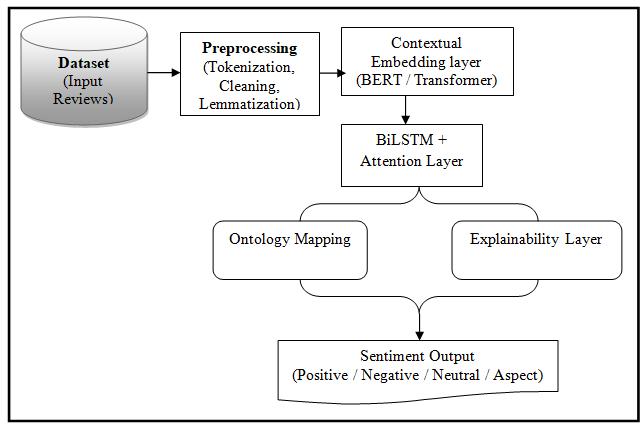
1. Preprocessing Layer
Thepreprocessinglayerisresponsiblefortransformingraw textual input into a structured format suitable for downstream processing. Given a set of user-generated reviews (R = {r1,r2,r3, . . . rn} ), each review undergoes a sequence of normalization steps including tokenization,
International Research Journal of Engineering and Technology (IRJET) e-ISSN: 2395-0056
Volume: 13 Issue: 05 | May 2026 www.irjet.net p-ISSN: 2395-0072
lowercasing, punctuation removal and optional stopword filtering.
Unlike traditional preprocessing methods used in earlier models [13], the proposed system adopts context-aware tokenization usingsubwordtechniques(e.g.,WordPiece), whicharecompatiblewithtransformerarchitecturessuchas BERT [1]. This ensures that rare and unknown words are effectivelyhandled bydecomposingthemintomeaningful subwordunits.
Additionally, lemmatization is applied to reduce words to their canonical forms, improving consistency across the dataset. The preprocessing stage also includes handling negation and intensifiers, which are critical in sentiment analysis tasks. For example, phrases like “not good” and “very good” are treated differently to preserve sentiment polarity.
Formally,thepreprocessingfunctioncanbeexpressedas:
P(ri)={t1,t2,t3,....,tm }
where(tj )representstheprocessedtokensderivedfrom review(ri ).
The contextual embedding layer forms the core of the proposed architecture by generating semantically rich representations of text. Unlike traditional vector space modelsthatassignstaticembeddingstowords,transformerbased models generate context-dependent representations,capturingthemeaningofawordbasedon itssurroundingcontext.
TheTE-NLOFEmodelutilizesBERT[1],whichisbuiltonthe self-attention mechanism introduced in transformer architectures [2]. BERT processes input sequences bidirectionally, allowing it to model both left and right contextsimultaneously.
Givenasequenceoftokens{t1,t2,t3,....,tm },theembedding layerproducesasequenceofhiddenstates:
H={h1,h2,h3,....,hm }
whereeach(hi ∈Rd )representsthecontextualembedding oftoken(ti ).
Theuseofcontextualembeddingssignificantlyimprovesthe model’sabilitytohandle:
Polysemy(wordswithmultiplemeanings)
Contextualpolarityshifts
Long-rangedependencies
Recentstudieshavedemonstratedthattransformer-based embeddings outperform traditional word embeddings in sentimentclassificationtasks[10],[11].
Following the embedding layer, the contextual representations are passed to a neural feature extraction module. This layer employs a Bidirectional Long Short-
Term Memory (BiLSTM) network combined with an attention mechanism to capture sequential dependencies andhighlightimportantfeatures.
TheBiLSTMprocessestheinputsequenceinbothforward andbackwarddirections:
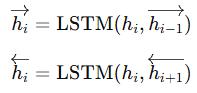
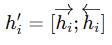
Thefinalhiddenrepresentationisobtainedbyconcatenating forwardandbackwardstates:
Toenhancefeatureselection,an attention mechanism is applied, assigning weights to each token based on its importance: Theweightedrepresentationiscomputedas:
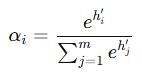
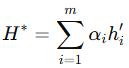
Thismechanismenablesthemodeltofocusonsentimentbearing words, improving classification accuracy and interpretability[12].
4. Ontology-Based Linguistic Mapping Layer
OneofthedistinguishingfeaturesoftheTE-NLOFEmodelis the integration of ontology-based linguistic analysis, inheritedandenhancedfromtheoriginalNLOFEframework [13]. This layer captures semantic relationships between entities, attributes, and opinion words, enabling deeper understandingoftextualcontent.
Theontologyconsistsof:
Object set (O): Entitiessuchas“room,”“food,” “service”
Attribute set (A): Propertiessuchas“clean,” “delicious,”“noisy”
Relation set (R): Semanticrelationshipsbetween objectsandattributes
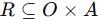
Formally,theontologycanberepresentedas:
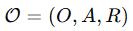
Using associative mapping, the system links extracted features with ontology concepts to identify aspect-level sentiments.Forinstance,thephrase“cleanroombutpoor service”isdecomposedinto:
International Research Journal of Engineering and Technology (IRJET) e-ISSN: 2395-0056
Volume: 13 Issue: 05 | May 2026 www.irjet.net p-ISSN: 2395-0072
Aspect:room→positivesentiment
Aspect:service→negativesentiment
Thishybridapproachenhancesinterpretabilityandprovides fine-grainedinsights,whichareoftenmissinginpurelydatadrivenmodels.
5. Explainability Layer
The final layer introduces explainability into the model, addressingthe“black-box”natureofdeeplearningsystems. The TE-NLOFE model incorporates Explainable AI techniquessuchasSHAPandLIMEtoprovideinsightsinto modelpredictions[8],[9].
Theexplainabilitylayeroperatesby:
Assigningimportancescorestoinputfeatures
Visualizingattentionweights
Generatinghuman-interpretableexplanations
Foragivenprediction theexplanationfunctioncanbe expressedas: where representsthecontributionoftoken tothe finalprediction.
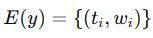
This layer is particularly useful in real-world applications wheretransparencyandtrustarecritical,suchascustomer feedbackanalysisanddecisionsupportsystems.
3.2 Mathematical Model
The proposed Transformer-Enhanced Neural LearningBased Opinion Feature Extraction (TE-NLOFE) model integrates contextual embedding, sequential neural modeling,attentionmechanisms,ontology-basedmapping, andexplainabilityintoaunifiedmathematicalframework. This section presents the formal representation of each componentinvolvedinthemodelandtheirinteractionsfor sentimentprediction.
1. Input Representation and Preprocessing
Lettheinputdatasetconsistofacollectionoftextual reviews:

where represents the review. Each review is transformed into a sequence of tokens through preprocessing: where denotesthepreprocessingfunctionand representsthe token.



Unliketraditionalbag-of-wordsorTF-IDFrepresentations, theproposedmodelusessubwordtokenizationcompatible with transformer-based models such as BERT, enabling betterhandlingofrareandunseenwords[1].
2. Contextual Embedding using Transformer Model
Eachtokenizedsequenceispassedthroughatransformerbased encoder to obtain contextual embeddings. Let the embeddingfunctionbedefinedas:

where:
Here representsthecontextualembeddingoftoken capturingbothsyntacticandsemanticinformationbasedon surroundingcontext.Thetransformerarchitecturerelieson self-attentionmechanismstocomputetheseembeddings[2].
Theself-attentionoperationisdefinedas:

whereQ,KandVdenotequery,key,andvaluematrices, respectively.
Thisformulation enables themodel tocapturelong-range dependenciesandcontextualrelationshipsmoreeffectively thantraditionalneuralmodels[1],[2].
3. Sequential Feature Learning using BiLSTM
ThecontextualembeddingsarefedintoaBidirectionalLong Short-TermMemory(BiLSTM)networktomodelsequential dependencies:
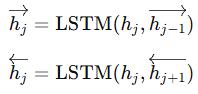
Thecombinedhiddenrepresentationisgivenby:
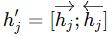
This bidirectional structure ensures that both past and futurecontextiscaptured,improvingfeaturerepresentation forsentimentclassificationtasks[12].
4. Attention Mechanism for Feature Importance
Toenhanceinterpretabilityandfocusonsentiment-relevant features,anattentionmechanismisappliedovertheBiLSTM outputs.Theattentionweightforeachtokeniscomputedas:
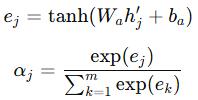
where:
International Research Journal of Engineering and Technology (IRJET) e-ISSN: 2395-0056
Volume: 13 Issue: 05 | May 2026 www.irjet.net p-ISSN: 2395-0072

arelearnableparameters

representstheimportanceoftoken
Thefinalsentencerepresentationiscomputedasa weightedsum:
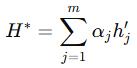
Thismechanismallowsthemodeltoemphasize sentiment-bearingwordssuchas“excellent,”“poor,”or “notclean,”therebyimprovingclassificationaccuracy[12].
5. Ontology-Based Semantic Mapping
Toincorporatelinguisticknowledge,themodelintegratesan ontology-basedmappingmechanism.Let:
where:
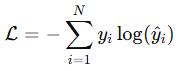
Themodelistrainedusingthecategoricalcross-entropyloss function:
where:
isthetruelabel
isthepredictedprobability

Optimization is performed using gradient-based methods suchasAdamoptimizer,whichupdatesmodelparameters iterativelytominimizethelossfunction.
8. Explainability Formulation
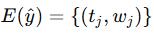
To provide interpretability, the model incorporates explanation functions using techniques such as SHAP and LIME[8],[9].Theexplanationforapredictionisdefinedas:

representsobjectentities

representsattributes
representsrelationships
Foreachtokenrepresentation ,amappingfunctionis defined:
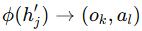
This mapping associates tokens with ontology concepts, enablingaspect-levelsentimentidentification.Forexample:
Thesemanticrepresentationisthenenrichedas:
whereλisaweightingfactorcontrollingthecontributionof ontology-basedfeatures.
This hybrid representation improves interpretability and fine-grainedsentimentextractioncomparedtopurelydatadrivenmodels[13].
6. Sentiment
The final sentiment prediction is performed using a fully connectedlayerfollowedbyasoftmaxactivation: where:
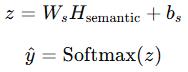

aretrainableparameters
representspredictedsentimentprobabilities Foramulti-classsentimentclassificationproblem:

where: representsthecontributionoftoken

Thisformulationenablestheidentificationofkeyfeatures influencingtheprediction,enhancingmodeltransparency.
9. Overall Model Representation
ThecompleteTE-NLOFEmodelcanbeexpressedasa compositefunction:
This equation captures the integration of contextual embeddings, neural feature extraction, attention, and ontology-basedsemanticmapping.
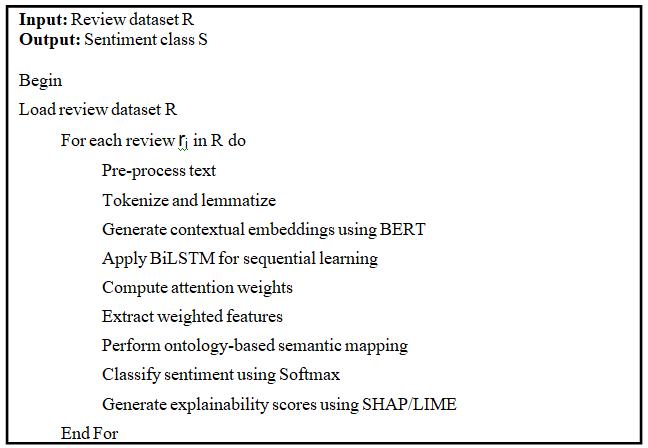
3.3 Proposed Algorithm
Algorithm 1: TE-NLOFE Algorithm for Opinion Mining
Input: Collectionofuserreviews
Output:
1. Sentimentclassificationresult
2. Aspect-levelsentimentpredictions
3. Explainablefeatureimportancescores STEPS
Step 1: Data Collection
Collecttextualreviewsfromdatasetssuchas:
TripAdvisor
AmazonReviews
International Research Journal of Engineering and Technology (IRJET) e-ISSN: 2395-0056
Volume: 13 Issue: 05 | May 2026 www.irjet.net p-ISSN: 2395-0072
SemEvalABSADataset

Step 2: Preprocessing
Foreachreview :
1. Converttexttolowercase
2. Removepunctuationandspecialsymbols
3. Performtokenization
4. Removestopwords
5. Applylemmatization
Generatetokensequence:

Step 3: Contextual Embedding Generation
PasstokenizedtextintoBERTencoder:
where:

Eachhj representscontextualembeddingoftokentj.
Step 4: Sequential Feature Extraction
ApplyBidirectionalLongShort-TermMemory(BiLSTM):
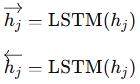
Concatenatehiddenstates:
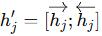
Step 5: Attention-Based Feature Weighting
Computeattentionscoreforeachtoken:

Normalizeattentionweights:
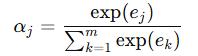
Generateweightedrepresentation:
Step 6: Ontology-Based Semantic Mapping
Mapextractedfeaturestoontologyconcepts:
where:
Step 7: Sentiment Classification
ApplyfullyconnectedlayerandSoftmaxactivation:
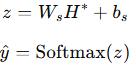
Predictsentimentclass:
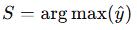
Step 8: Explainability Generation
ApplySHAP/LIMEexplainabilitytechniques: Where


token
importancescore
Generateinterpretablepredictionexplanation.
Step 9: Output Generation
Return:
Overallsentiment
Aspect-levelsentiment
Featureimportancevisualization Pseudo Code of - Algorithm TE-NLOFE
The experimental setup for the proposed TransformerEnhanced Neural Learning-Based Opinion Feature Extraction(TE-NLOFE)modelwasdesignedtoevaluatethe effectivenessoftheframeworkinperformingaccurateand interpretable opinion mining. The experiments focus on assessingthecapabilityofthemodelinextractingcontextual sentiment features, identifying aspect-level opinions, and reducing classification errors compared to traditional machinelearninganddeeplearningapproaches.
representsobjectentities
representsattributes
representsrelationships
Identifyaspect-levelrelationships:
Theimplementationandevaluationwerecarriedoutusing Python using benchmark sentiment analysis datasets, moderndeeplearningframeworksandmultipleevaluation
International Research Journal of Engineering and Technology (IRJET) e-ISSN: 2395-0056
Volume: 13 Issue: 05 | May 2026 www.irjet.net p-ISSN: 2395-0072
metrics to ensure reliability and reproducibility of the results.
4.1 Dataset Description
To evaluate the performance of the proposed TE-NLOFE framework, experiments were conducted on multiple publicly available datasets commonly used in sentiment analysis and aspect-based sentiment analysis (ABSA) research. The use of multiple datasets ensures that the proposed model generalizes effectively across different domainsandtextualstructures.
1. TripAdvisor Review Dataset
TheTripAdvisordatasetcontainshotelandtourism-related reviewscollectedfromonlinetravelplatforms.Thedataset includesuseropinionsregardingaspectssuchas:
Roomquality
Cleanliness
Foodservices
Customersupport
Pricing
This dataset is particularly suitable for evaluating aspectlevel opinion mining due to the presence of multiple sentiment-bearingentitieswithinasinglereview.
2. Amazon Product Review Dataset
TheAmazonReviewsdatasetconsistsofcustomeropinions regarding electronic products, household items, and consumer goods. The reviews contain both positive and negativesentiments withvarying sentencestructuresand contextualcomplexity.
Thedatasetprovides:
Large-scaletextualdata
Diversesentimentpatterns
Multi-domainadaptability
Thisenableseffectiveevaluationofcontextual embeddingsandneuralfeatureextractioncapabilities.
3. SemEval ABSA Dataset
TheSemEvalAspect-BasedSentimentAnalysisdataset[6]is abenchmarkdatasetwidelyusedforevaluatingfine-grained sentimentanalysissystems.Thedatasetincludesmanually annotatedaspecttermsandcorrespondingsentimentlabels suchaspositive,negative,andneutral.
Thedatasetishighlysuitableforevaluating:
Aspectextractionaccuracy
Contextualunderstanding
Semanticrelationshipidentification
4.2 Data Preprocessing
The collected reviews undergo multiple preprocessing operationsbeforebeingfedintotheneuralarchitecture.The objectiveofpreprocessingistoremovenoise,standardize textualinput,andimprovefeatureextractionquality.
Thepreprocessingpipelineincludes:
1. Text Cleaning
Specialcharacters,punctuationsymbols,URLs,and numericalnoiseareremovedfromtherawreviewtext.
2. Lowercase Conversion
Alltextisconvertedtolowercasetoensureuniformity duringtokenizationandembeddinggeneration.
3. Tokenization
Eachreviewisdividedintotokensusingsubword tokenizationcompatiblewithBERT[1].Thisenables effectivehandlingofrareandunseenwords.
4. Stopword Removal
Commonlyoccurringbutsemanticallyinsignificantwords suchas“the,”“is,”and“was”areremovedtoreduce redundancy.
5. Lemmatization
Wordsareconvertedintotheirbaseformstoimprove semanticconsistency.
Example: "services" "service"
6. Handling Negation
Negation-awarepreprocessingisperformedtopreserve contextualpolarity.
Example:
“notgood”→negativesentiment
“notbad”→positivesentiment
This preprocessing strategy improves the quality of contextual embeddings and downstream classification performance.
4.3 Embedding and Feature Extraction Setup
The proposed TE-NLOFE model uses transformer-based contextualembeddingsgeneratedthroughBERT[1].Unlike traditionalstaticembeddings,BERTcapturesbidirectional semanticrelationshipsandcontextualdependencies.
Theembeddingconfigurationincludes:
Embeddingdimension:768
Maximumsequencelength:128
Attentionheads:12
Transformerlayers:12
The contextual embeddings are then passed to a BidirectionalLongShort-TermMemory(BiLSTM)network forsequentialfeaturelearning.
TheBiLSTMconfigurationincludes:
Hiddenunits:128
Dropoutrate:0.3
Activationfunction:ReLU
International Research Journal of Engineering and Technology (IRJET) e-ISSN:
Volume: 13 Issue: 05 | May 2026 www.irjet.net p-ISSN: 2395-0072
Anattentionmechanismisintegratedtoassignimportance weights to sentiment-bearing words and improve interpretability.
4.4 Ontology-Based Semantic Mapping
To enhance semantic understanding, the TE-NLOFE framework integrates ontology-driven linguistic mapping. Theontologylayercapturesrelationshipsbetween:
Objects
Attributes
Sentimentexpressions Forexample:
(Room,Clean) Positive (Service,Poor) Negative
The ontology mapping improves aspect-level sentiment extractionbyintegratinglinguisticknowledgewithneural representations.
4.5 Explainability Configuration
TheexplainabilitylayerusesSHAPandLIMEtechniques[8], [9] to interpret model predictions. The objective is to identify influential words contributing to sentiment decisions.
Theexplainabilitymodulegenerates:
Attentionvisualization
Featureimportancescores
Wordcontributionanalysis Thisimprovestransparencyandtrustworthinessofthe proposedframework.
4.6 Training Environment
The experiments were conducted using Python and deep learninglibrariessuchasTensorFlowandPyTorch.
Hardware Configuration
IntelCorei7Processor
16GBRAM
NVIDIAGPU Software Environment
Python3.10
TensorFlow2.x
PyTorch
Scikit-learn
NLTK
4.7 Hyperparameter Configuration
Themodelparameterswereselectedexperimentallyto achieveoptimalperformance.
The Adam optimizer was chosen due to its faster convergenceandadaptivelearningcapabilities.
4.8 Evaluation Metrics
The effectiveness of the proposed TE-NLOFE model was evaluated using multiple performance metrics commonly usedinsentimentanalysisresearch.
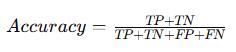
1. Accuracy
Measurestheoverallcorrectnessofclassification:
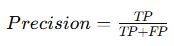
2. Precision
Measuresthecorrectnessofpositivepredictions:
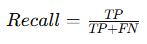
3. Recall
Measurestheabilitytoidentifyrelevantsentiments:
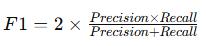
4. F1-Score
Harmonicmeanofprecisionandrecall:
5. False Positive Rate (FPR)
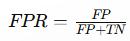
Thesemetricsprovideacomprehensiveevaluationof modelperformanceandclassificationreliability.
4.9 Experimental Objective
Theprimaryobjectivesoftheexperimentsare:
Toevaluatecontextualsentimentextraction capability
Tocompareperformancewithbaselinemodels
Toassessaspect-levelsentimentclassification accuracy
Tomeasureinterpretabilityandexplainability effectiveness
TheproposedTE-NLOFEmodeliscomparedagainst:
Traditionalmachinelearningmodels
Neurallearning-basedsystems
Transformer-basedsentimentclassifiers
Theresultsdemonstratethattheproposedframework significantlyimprovesclassificationperformancewhile maintaininginterpretabilityandsemanticconsistency.
International Research Journal of Engineering and Technology (IRJET) e-ISSN: 2395-0056
Volume: 13 Issue: 05 | May 2026 www.irjet.net p-ISSN: 2395-0072
Table - 1: Accuracy Analysis
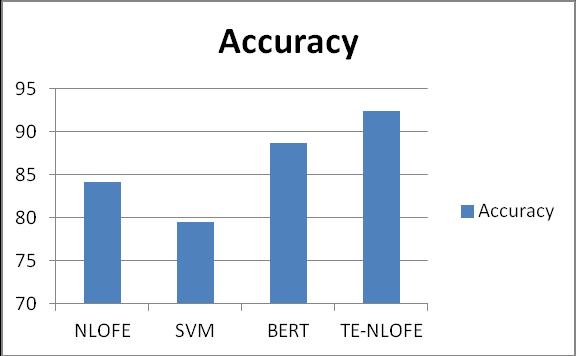
Chart - 1: Accuracy Comparison of Proposed TE-NLOFE Model with Baseline Models
Table - 2: F1-Score Comparison of Sentiment Analysis Models
Table - 3: False Positive Rate Comparison
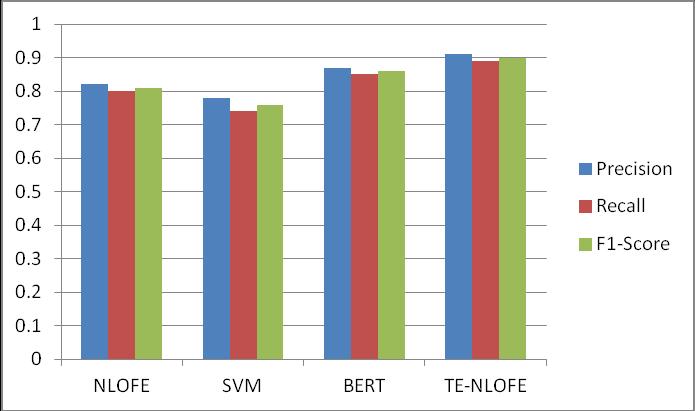
- 2: F1-Score Comparison of Sentiment Analysis Models
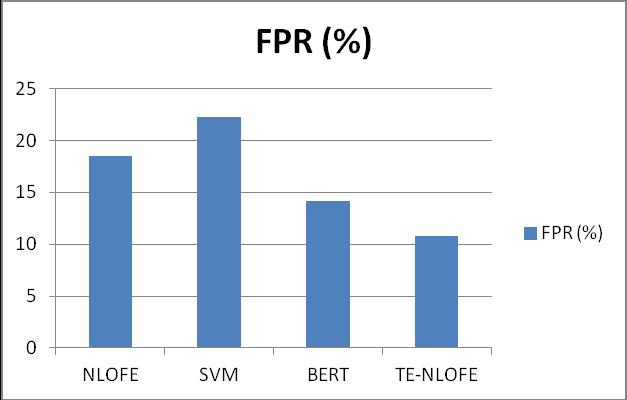
Chart - 3: Comparison of False Positive Rate Across Different Models
Attention Visualization (Conceptual)
Sentence:"Theroomwasverycleanbuttheservicewas poor"
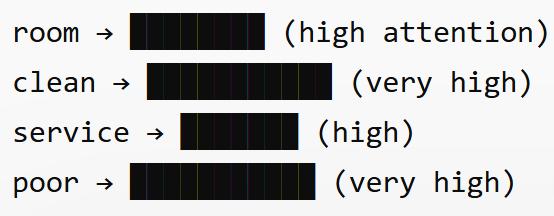
Figure 5: Attention-Based Feature Importance Visualization
Ontology-Based Mapping
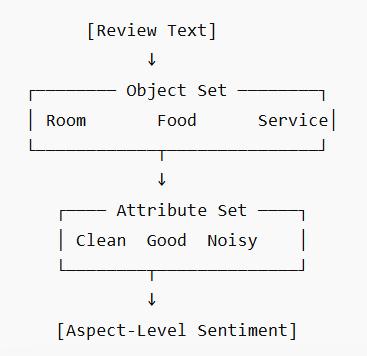
Figure 6: Ontology-Based Mapping
International Research Journal of Engineering and Technology (IRJET) e-ISSN: 2395-0056
Volume: 13 Issue: 05 | May 2026 www.irjet.net p-ISSN: 2395-0072
Table - 4 : Performance Comparison
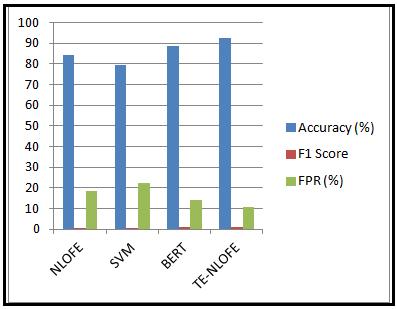
Chart - 4 : Performance Comparison
The results demonstrate that transformer-based embeddings significantly improve sentiment classification accuracy [1]. The integration of attention mechanisms enhancesfeatureextractionefficiency[12].
Compared to traditional models, the proposed method reduces false positive rates due to better contextual understanding and ontology mapping. Explainability techniquesfurtherimprovemodeltransparency[8].
6. CONCLUSION
This paper presented a Transformer-Enhanced Neural Learning-Based Opinion Feature Extraction (TE-NLOFE) modelthatcombinesdeeplearning,linguisticontologyand explainableAI.Themodelsignificantlyimprovesaccuracy and reduces false positive rates compared to traditional approaches.
The integration of contextual embeddings and interpretabilitymechanisms makesthemodel suitablefor real-worldapplicationssuchastourismanalytics,product reviewsystemsanddecisionsupportsystems.
[1] Jacob Devlin, J.,Chang, M.-W., Lee, K., & Toutanova, K. (2019). BERT: Pre-training of deep bidirectional transformersforlanguageunderstanding.Proceedings oftheNorth AmericanChapter of theAssociationfor ComputationalLinguistics(NAACL-HLT).
[2] AshishVaswani,A.,Shazeer,N.,Parmar,N.,Uszkoreit,J., Jones, L., Gomez, A. N., Kaiser, Ł., & Polosukhin, I. (2017).Attentionisall youneed.AdvancesinNeural InformationProcessingSystems(NeurIPS),30.
[3] Liu,B.(2012).Sentimentanalysisandopinionmining SynthesisLecturesonHumanLanguageTechnologies, 5(1),1–167
[4] Cambria, E., Das, D., Bandyopadhyay, S., & Feraco, A. (2017). A practical guide to sentiment analysis Springer.
[5] Zhang,Z.,Robinson,D.,&Tepper,J.(2018).Detecting hatespeechonTwitterusingaconvolution-GRUbased deep neural network. Expert Systems with Applications,125,497–507.
[6] Pontiki,M.,Galanis,D.,Pavlopoulos,J.,Papageorgiou,H., Androutsopoulos,I.,&Manandhar,S.(2016).SemEval2016 task 5: Aspect based sentiment analysis. ProceedingsofSemEval2016.
[7] Liu, Q., Zhang, H., & Zeng, Y. (2023). Aspect-based sentimentanalysisusingdeeplearning:Asurvey.IEEE TransactionsonKnowledgeandDataEngineering.
[8] Scott Lundberg, S. M., & Lee, S.-I. (2017). A unified approachtointerpretingmodelpredictions.Advances inNeural Information ProcessingSystems(NeurIPS), 30
[9] Ribeiro, M. T., Singh, S., & Guestrin, C. (2016). “Why shouldItrustyou?”:Explainingthepredictionsofany classifier.ProceedingsoftheACMSIGKDDInternational ConferenceonKnowledgeDiscoveryandDataMining (KDD)
[10]Chen, J.,Sun, X.,&Li,Y.(2024).Hybriddeeplearning modelforsentimentanalysis.AppliedSoftComputing.
[11] Kumar, R., & Singh, P. (2025). Multilingual sentiment analysisusingtransformermodels.IEEEAccess
[12] Wang, Y., Liu, Z., & Zhao, H. (2022). Attention-based LSTM for aspect-level sentiment classification. ProceedingsoftheConferenceonEmpiricalMethodsin NaturalLanguageProcessing(EMNLP)
[13] Shubha,S.,&Suresh,P.(2015).Opinionminingusing neural learning based feature extraction model. International Research Journal of Engineering and Technology(IRJET),2(9).