
International Research Journal of Engineering and Technology (IRJET) e-ISSN: 2395-0056
Volume: 13 Issue: 05 | May 2026 www.irjet.net p-ISSN: 2395-0072

International Research Journal of Engineering and Technology (IRJET) e-ISSN: 2395-0056
Volume: 13 Issue: 05 | May 2026 www.irjet.net p-ISSN: 2395-0072
1Final Year B.E Marine Cadet, PSNCET, Tamil Nadu. 234Assistant Professor, Dept. of B.E Marine Engineering, PSNCET, Tamil Nadu, India.
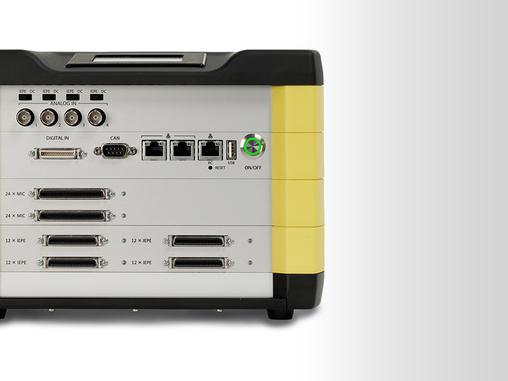
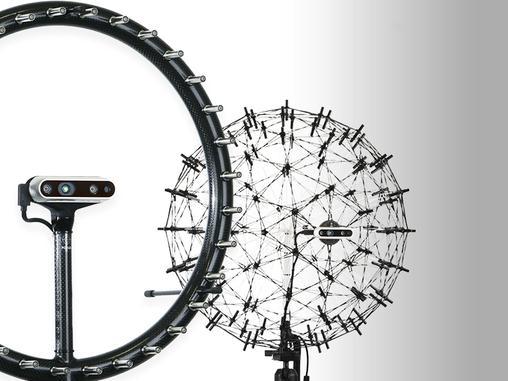
1-ABSTRACT-Acoustic cameras, also known as sound cameras, are advanced imaging systems that visually depict sound sources and their intensity. Unlike traditional microphones that only provide a single point of sound measurement, acoustic cameras use an array of microphones to capture sound from multiple directions simultaneously. This array, coupled with sophisticated signalprocessingtechniques,allows thesystemtoprecisely pinpoint the location and intensity of sound sources in a given environment, effectively creating a visual "map" of sound. Here is a description of the key aspects of acoustic cameras:
1.Microphonearray:Themaincomponentisa precisely arrangedarrayofmicrophones.Thenumberandspacing of these microphones directly affect the spatial resolution and accuracy of sound localization. Larger arraysgenerallyprovidehigherresolution.
2. Sound acquisition: Each microphone in the array records incoming sound waves independently. These signalsarethensynchronizedandprocessed.
3. Beam forming: This is the crucial signal processing step.Advancedalgorithms(oftenvariationsofdelay-andsum beam forming or more sophisticated techniques) compare the time difference of arrival (TDOA) of sound waves atdifferent microphones. By analysing these time differences, the system can triangulate the source of the sound.
4. Sound intensity mapping: The system not only pinpoints the location, but also calculates the intensity (loudness) of each sound source. This is displayed as a color-codedimageorvisualrepresentation,withwarmer colorstypicallyrepresentingloudersounds.
5.Imageformation:Theprocesseddataisthendisplayed asa visual representation, often overlayed on a video or still image of the environment. This allows for easy identification of the sound source’s location within the scene.
Applications:
Acousticcamerasfindapplicationsinvariousfields:
* Noise source identification and reduction: Pinpointing the origin of unwanted noise in industrial settings, vehicles or buildingsis crucial toimplementing effective noisereductionstrategies
* Predictive maintenance: Detecting subtle changes in the sound of a machine can indicate imminent failure, allowing proactive maintenance and preventing costly malfunctions.
* Leak detection: Detecting leaks in pipelines, compressedairsystemsorotherpressurizedsystems.
* Security and surveillance: Detecting intruders or identifyingthesourceofunusualsounds.
* Research and development: Analyzing sound propagation in different environments, improving productacousticsandstudyinganimalsounds.
* Environmental monitoring: Studying noise pollution levelsinurbanareasandidentifyingtheirsources.
Advantages:
* Accurate sound source localization: Pinpoints sound sources with significantly higher accuracy than conventionalmethods.
* Real-time visualization: Provides immediate visual feedback,speedinguptroubleshootingandanalysis.
* Comprehensive data: Captures both location and intensityinformation.
* Non-intrusive: Generally non-invasive and requires minimaldisruptiontotheenvironment.
Limitations:
* Cost: Acoustic cameras can be expensive, especially high-resolutionsystems.
* Environmental factors: Environmental noise, reflections,andechoescanaffectaccuracy.
* Complexity: Requires specialized knowledge and softwareforoperationandanalysis.
* Resolution: Resolution is limited by the size and spacingofthemicrophonearray.
In summary, acoustic cameras are powerful tools that provideanewdimensioninsoundanalysisbyvisualizing sound sources. Their versatility makes them applicable
Volume: 13 Issue: 05 | May 2026 www.irjet.net
across a broad spectrum of industries and research areas.
The primary benefits lie in improved maintenance, safety and potentially operational efficiency. However, challenges relating to the marine environmentandcostneedtobeconsidered.
Some of the potential uses of acoustic cameras on merchantnavyshipsareasfollows:
* Predictive maintenance: This is perhaps the most promising application. Acoustic cameras can be used to monitor the sounds of critical machinery such as engines, pumps, generators and gearboxes. By analysing sound patterns, engineers can detect subtle changes indicating wear and tear, developing faults or imminent failures. Early detection allows proactive maintenance, reducing downtime and preventing costly repairs or catastrophicfailuresatsea.
*Leakdetection:Detectingleaksinpipes,tanksorother systemsisvitaltopreventdamageandensurethesafety of crew and cargo. Acoustic cameras can be used to quickly identify the source of a leak, even in difficult-toreach areas. This is particularly valuable for detecting leaksinfueltanksorballastwatersystems.
*Hullintegritymonitoring:Whilechallengingduetothe sizeandcomplexityofaship’shull,acousticcamerascan potentially assist in detecting structural problems such as cracks or corrosion. This will require special equipment and careful calibration, but it can be a vital assettoensurethelong-termseaworthinessoftheship.
*Noisesourceidentification:Reducingnoiseon ashipis crucial for crew comfort and well-being. Acoustic cameras can help identify sources of excessive noise, allowing targeted noise reduction measures to be taken. It may also be relevant to complying with international noiseregulations.
* Propeller monitoring: Monitoring propeller noise can provideinformationabouttheconditionofthepropeller and its performance. Abnormal sounds can indicate cavitation, damage or other issues that affect fuel efficiencyandoverallperformance.
* Security: While not a primary use case, acoustic cameras can potentially enhance security by detecting abnormal sounds that may indicate unauthorized access orothersecuritybreaches.
Challenges and limitations:
*Harshmarineenvironment:Themarineenvironmentis challenging for acoustic cameras. Salt spray, humidity, vibration and temperature fluctuations can all affect performance and require robust and weatherproof equipment.
* Cost: Acoustic cameras, especially high-resolution systems,canbeexpensivetopurchaseandmaintain.This can be a significant barrier to adoption, especially for smallershippingcompanies.
* Integration: Integrating acoustic cameras into existing ship systems requires careful planning and possible modificationstoexistinginfrastructure.
* Data analysis: Interpreting data from an acoustic camera requires specialized skills and training. The volumeofdatageneratedmayrequiresophisticateddata analysistools.
As technology advances and costs come down, the use of acoustic cameras on merchant navy vessels is likely to increase. The development of more robust and cost-effective systems tailored to the marine environmentwillbekeytowideradoption.Wirelessdata transmission and cloud-based data analysis may also improve the practicality and effectiveness of these systems. The potential for significant reductions in maintenance costs and improved safety make acoustic camera technology a worthwhile area of on-going researchanddevelopmentwithinthemarineindustry.
International Research Journal of Engineering and Technology (IRJET) e-ISSN: 2395-0056
Volume: 13 Issue: 05 | May 2026 www.irjet.net p-ISSN: 2395-0072
Using acoustic cameras to prevent ship grounding is not a practical solution in its current form. Acousticcamerasareexcellentfordetectingandlocating sounds, but they do not provide the real-time, highprecision depth and position information needed for navigation in shallow water or crowded areas. Existing navigationalsystemssuchasradar,GPSandsonararefar bettersuitedtothistask.
However, acoustic cameras can play an indirect supporting role in improving navigational safety and potentiallyreducingtheriskofgrounding:
* Monitoring unusual sounds: Acoustic cameras can potentially be used to detect sounds associated with shallow water, such as the typical sounds of waves breaking in shallow water or the sound of the hull rubbing on the sea floor. Although this will not in itself prevent grounding, it can provide an additional warning signal if integrated into the ship's existing navigational system. It would be a supplementary warning, not a primarynavigationtool.
* Detecting other vessels in low visibility: In fog or poor visibility conditions, the acoustic camera may be able to detectthesoundsofothervessels'enginesorpropellers before they become clearly visible on radar. This early warning can provide additional time to manoeuvre and avoid collisions, which are a major cause of groundings. Again, this would be complementary to visual and radar detection.
* Monitoring machinery during shallow water navigation: An acoustic camera monitoring the ship's own machinery can give early warning of potential mechanical failures that could compromise the ship's ability to manoeuvre in shallow water. A problem in the rudderorpropulsionsystemcouldleadtogrounding
Why acoustic cameras are unsuitable for primary groundingprevention:
* Limited range: Acoustic cameras have limited range, and their effectiveness can be significantly affected by environmentalfactorssuchaswaterdepth,seastateand thepresenceofothersoundsources.
* Lack of depth information: They provide information primarily about the horizontal location of the sound source, not its depth. Accurate depth measurement is crucial for safe navigation in shallow water. Sonar systemsarefarsuperiorforthis.
* Data interpretation: Sounds detected by an acoustic camera must be interpreted correctly, which requires trainingandexperience.Falsealarmscanbedetrimental tosafenavigation.
* Existing systems are superior: Existing navigational systems, including radar, GPS, electronic charting systems (ECDIS) and depth sounders, provide far more reliable and comprehensive information to prevent grounding.
Insummary,whileanacousticcameracanprovidesome supplementary information to improve situational awarenessandindirectlyreducetheriskofgrounding,it isnotasuitablereplacementorprimarycomponentina ship's navigational system designed to prevent grounding. It is seen as a potentially useful additional sensor to monitor specific parameters that indicate potentialproblems.
Applied Acoustics - This journal focuses on the applications of acoustics in various fields, including environmental and industrial acoustics. Articles related toacousticimagingandcamerasoftenappearhere.
TheJournaloftheAcousticalSocietyofAmerica(JASA)This journal publishes research across all areas of acoustics,includingstudiesinvolvingacousticcameras.
ExperimentinFluids-Thisjournalmaycontainresearch articles where acoustic cameras are employed in fluid dynamicsstudiestovisualizeflowandturbulence.
Measurement Science and Technology - This journal covers advancements in measurement techniques, including those related to acoustic measurement and imaging.
Sensors and Actuators A: Physical - This publication includes articles on sensors used for various applications, including acoustic sensors and imaging systems.
International Research Journal of Engineering and Technology (IRJET) e-ISSN: 2395-0056
BIOGRAPHIES:




Volume: 13 Issue: 05 | May 2026 www.irjet.net p-ISSN: 2395-0072 © 2026, IRJET | Impact Factor value: 8.315 | ISO 9001:2008 Certified Journal | Page1936
I am pursuing B.E Third year Marine Engineering cadet at PSN College of Engineering & Technology, Tirunelveli,TamilNadu
Project guidecum assistant professor PSN college of engineering and technology, Tirunelveli, Tamilnadu.
MEO class III Marine Engineer and workedvariouscountries
WorkingasAssistantProfessoratPSN College of Engineering & Technology (Autonomous) Melathediyoor, Tirunelveli,TamilNadu.
Working as Assistant Professor at PSN College of Engineering & Technology (Autonomous) Melathediyoor, Tirunelveli,TamilNadu.