
International Research Journal of Engineering and Technology (IRJET) e-ISSN: 2395-0056
Volume: 13 Issue: 05 | May 2026 www.irjet.net p-ISSN: 2395-0072

International Research Journal of Engineering and Technology (IRJET) e-ISSN: 2395-0056
Volume: 13 Issue: 05 | May 2026 www.irjet.net p-ISSN: 2395-0072
Dr.
G. Tabitha1 , B. Vinod2 , B. Anil Kumar3 , G. Jhansi4 , P. Chaitanya5
1 Associate professor, Department of Civil Engineering, SanketikaVidya Parishad Engineering College, Visakhapatnam, A.P 530041, INDIA
2 B. Tech Student, Department of Civil Engineering, SanketikaVidya Parishad Engineering College, Visakhapatnam, A.P 530041, INDIA
3 B. Tech Student, Department of Civil Engineering, SanketikaVidya Parishad Engineering College, Visakhapatnam, A.P 530041, INDIA
4B. Tech Student, Department of Civil Engineering, SanketikaVidya Parishad Engineering College, Visakhapatnam, A.P 530041, INDIA
5 B. Tech Student, Department of Civil Engineering, SanketikaVidya Parishad Engineering College, Visakhapatnam, A.P 530041, INDIA
ABSTRACT: The incorporation of polypropylene fibre in concrete is an emerging solution to overcome the limitations of conventional concrete, particularly in terms of brittleness, low tensile strength, and susceptibility to cracking. This study investigates the effect of polypropylene fibre on the mechanical performance of M20 grade concrete. Mechanical tests such as compressive strength and split tensile strength were conducted at 7, 14, and 28 days to examine the influence of fibre inclusion on strength development. Concrete is one of the most widely used construction materials due to its high compressive strength; however, its low tensile strength and brittle nature often lead to cracking and reduced durability. This study focuses on the strengthening of M20 grade concrete using polypropylene fibre (Recron) as a reinforcing admixture. An experimental investigation was carried out by incorporating varying percentages of polypropylene fibres (0%, 0.25%, 0.5%, and 0.75%) into the concrete mix to determine the optimum fibre content.The results indicate that the inclusion of polypropylene fibres significantly improves the compressive, tensile, and flexural strength of concrete, while also enhancing crack resistance and durability.
Concreteisthemostwidelyusedconstructionmaterialin the world, yet its brittle nature and susceptibility to cracking remaining major limitations in structural applications. To overcome these challenges, researchers have increasingly focused on Fiber-reinforced concrete (FRC), where Fibers are incorporated into the cementitious matrix to improve its mechanical performance,durability,andcrackresistance.Amongthe
various Fibers available, polypropylene Fibers have gained significantattentionduetotheirchemicalstability,lowcost, and ease of incorporation. However, conventional polypropylene Fibers often exhibit limitations in bonding efficiencyandmechanicalcontribution,promptingtheneed formodificationsinFiberproperties.
ModifiedpolypropyleneFibers,throughsurfacetreatments or structural alterations, are designed to enhance Fiber–matrix interaction and improve the overall performance of concrete. Evaluating the effectiveness of these modifications requires not only experimental testing but also robust statistical analysis to validate results and establish reliability. Statistical tools help in identifying significant differences, correlations, and trends across multiple test parameters, ensuring that conclusions are scientificallysound.
The study not only contributes to the understanding of Fiber-reinforced concrete but also demonstrates the importance of statistical validation in civil engineering research. Through systematic evaluation using SPSS, the project seeks to provide reliable insights into the role of modified polypropylene Fibers in enhancing concrete performance,thereby supportingthedevelopmentofmore durableandsustainableconstructionmaterials.
Concrete isa compositematerial and combination offine andcoarseaggregatebondedtogetherwithafluidcement that hardens over time. Concrete is the very important substance in the world after water, and is the generally usedbuildingmaterial.Itsusageworldwide,tonforton,is twice that of steel, wood, plastics, and aluminum combined. Concrete is probable to be a key material for structures resilient to climate disasters, as well as a
International Research Journal of Engineering and Technology (IRJET) e-ISSN: 2395-0056
Volume: 13 Issue: 05 | May 2026 www.irjet.net p-ISSN: 2395-0072
solutiontoeasethepollutionofotherindustries,taking wastes such as coal fly ash or bauxite tailings and residue. When aggregate is mixed with dry Portland cementandwater,themixtureformsafluidslurrythat is easily poured and molded into shape. The cement reactswiththewaterthroughaprocesscalledconcrete hydration that hardens over several hours to form a hard matrix that binds the materials together into a durable stone-like material that has many uses. This time allows concrete to not only be cast in forms but also to have a variety of tooled processes preformed. The hydration process is exothermic, which means ambient temperature plays a significant role in how long it takes concrete to set. Often, additives (such as pozzolans or superplasticizers) are included in the mixture to improve the physical properties of the wet mix, delay or accelerate the curing time, or otherwise change the finished material. Most concrete is poured with reinforcing materials to provide tensile strength, yielding reinforced concrete. In the past, lime-based cementbinders,suchaslimeputty,werenormallyused but sometimes with other hydraulic cements, such as calcium aluminate cement or with Portland cement to form Portland cement concrete. Many other noncementitious types of concrete exist with other methods of binding aggregate together, including asphalt concrete with a bitumen binder, which is used for road surfaces, and polymer concretes that use polymersasabinder.Concreteisdistinctfrommortar. Whereasconcreteisitselfabuildingmaterial,mortaris a bonding agent that holds bricks, tiles and other masonryunitstogether.
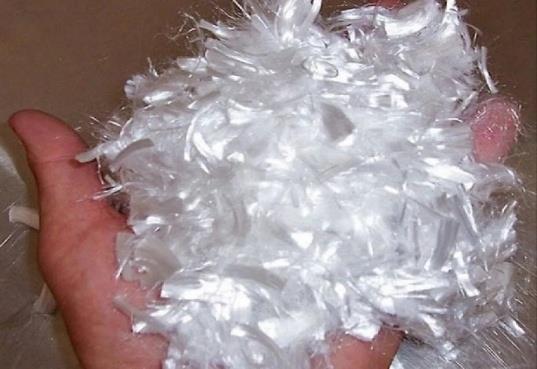
Polypropylene Fibers are synthetic Fibers made from thermoplastic polymer polypropylene, widely used in concrete to improve durability, reduce cracking, and enhance resistance to impact, abrasion, and chemical attack. They are lightweight, cost-effective, and increasingly adopted in civil engineering projects acrossIndiaandglobally
• Material: Derived from polypropylene, a thermoplasticpolymer.
• Form: Fine, hair-like synthetic Fibers added to concretemixes.
• Purpose: Act as reinforcement to control microcracksandimprovestructuralperformance.
1.4
Polypropylene Fibers are synthetic, thermoplastic Fibers with a unique combination of physical, thermal, chemical, and mechanical properties that make them highly valuable in civil engineering and textile applications. Physically, they are extremely lightweight (density ~0.91 g/cm³), hydrophobic, and flexible, which means they do not absorb water and disperse easily in concrete mixes. Thermally, they have a relatively low melting point (160–170°C) but excellent insulation due to their very low thermal conductivity, making them warmer than many natural Fibers. Chemically, they are highly resistant to acids, alkalis, and most solvents, and being noncorrosive, they do not rust or degrade in aggressive environments. Mechanically, they offer good toughness, abrasion resistance, and impact resistance, though they do not contribute significantly to
International Research Journal of Engineering and Technology (IRJET) e-ISSN: 2395-0056
Volume: 13 Issue: 05 | May 2026 www.irjet.net p-ISSN: 2395-0072
tensile strengthcomparedto steelFibers.
Polypropylene Fibers are widely used in concrete and cement-based materials to improve performance and durability. When mixed withfreshconcrete,theseFibers form a three dimensional network that controls plastic shrinkage and settlement cracks at an early age, which arecommoncausesofdurabilityproblems.Theyimprove thetensileandflexuralbehaviourofconcretebybridging micro-cracks, thereby increasing resistance to impact, abrasion, and fatigue. This makes polypropylene Fiber reinforced concrete especially suitable for floor slabs, pavements, industrial floors, and warehouse slabs subjectedtorepeatedloads.Inprecastconcreteelements such as blocks, pipes, panels, and tiles, the Fibers help maintain dimensional stability and reduce handling damage. In shotcrete and tunnel linings, polypropylene Fibers improve cohesion, reduce rebound losses, and enhance structural integrity. They are also used in mortar, plaster, and repair works to minimize surface cracking and improve bond strength. Additionally, polypropylene Fibers enhance fire resistance by melting at high temperatures and creating micro channels that relieve internal vapor pressure, thereby reducing explosive spalling and improving the safety and service life ofconcretestructures.
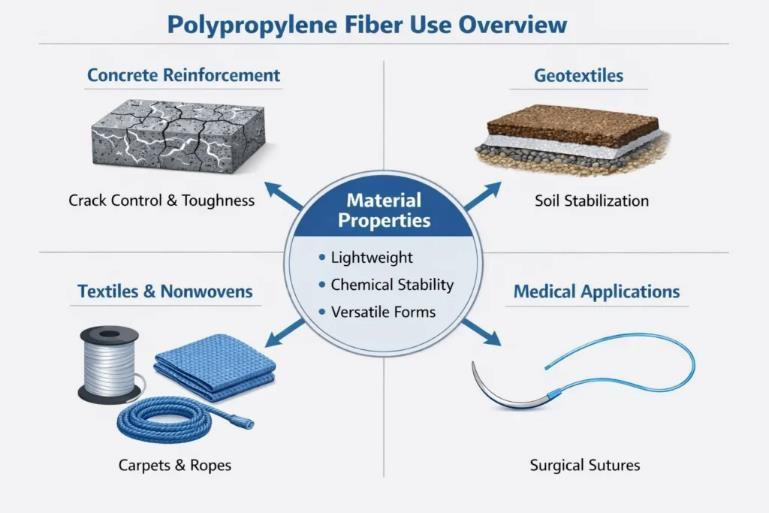
1.6 APPLICATIONS OF POLYPROPYLENE FIBERS
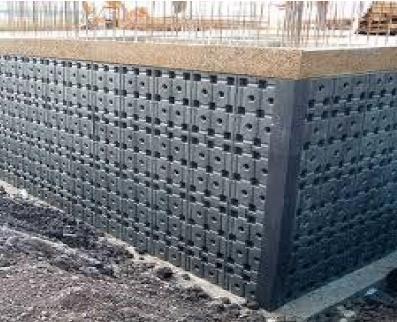
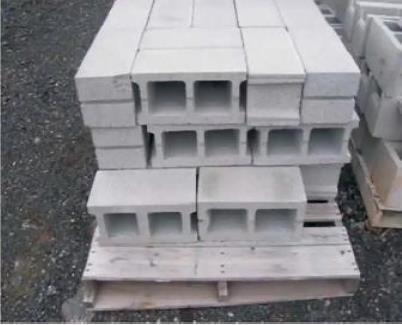
Thepolypropylenefibresfindapplicationsinventilated facadeskudo,PrecastConcreteBlocksforRoadsand Pavements,ConcreteFlooring,highways.Someofthe applicationsareshowninFigures1.2to1.3.
Itisestimatedthatmorethan60%ofpolypropylenewaste is not effectively recycled and ends up in landfills or the natural environment. Because polypropylene is nonbiodegradable, it can persist in the environment for hundreds of years, contributing to soil, water, and marine pollution. In developing countries, improper waste management further increases the accumulation of polypropylenewaste.
Themainadvantageofusing(waste)polypropyleneFibers is their ability to control plastic shrinkage and early-age cracking. During the initial setting period, concrete is vulnerable to micro-cracks caused by rapid evaporation of water. Waste polypropylene Fibers form a randomly distributed Fiber network within the concrete matrix, which restrains shrinkage and bridges micro-cracks, preventing themfromdevelopingintovisiblecracks.
International Research Journal of Engineering and Technology (IRJET) e-ISSN: 2395-0056
Volume: 13 Issue: 05 | May 2026 www.irjet.net p-ISSN: 2395-0072
Waste polypropylene Fibers are chemically inert, noncorrosive, and moisture resistant, so they do not react withcementoraggressivechemicals.Unlikesteel Fibers, theydonotrust,whichenhancesthelong-termdurability ofconcrete,especiallyinenvironmentsexposedtowater, chlorides, or sulphates. Their low water absorption also helpsreducebleedingandsegregation,leadingtoamore uniformanddenseconcretemix.
• To find the optimum strength characteristics of polypropylene Fiber in terms of workability and strength.
• ToComparetheNormal concrete andFiber reinforced concrete.
• To design and develop M30 grade Polypropylene Fiber Reinforced Concrete (PPFRC) with varying fiber volumefractions(0%,0.25%,0.50%,0.75%).
• To analyze the influence of polypropylene fibers on mechanical performance
• To identify the optimum fiber dosage that provides maximum improvement in mechanical strength without compromisingworkability.
2.1
A literature review is a comprehensive analysis and synthesis of existing scholarly research on a specific topic. Rather than reporting new original work, its primary goal is to situate current research within the broaderacademiclandscape,identifyingpatterns,trends, andknowledge.
2.2
Someofthepapersthatarereferredduringtheproject workaregivenbelow:
1. Alhozaimy et al. (1995) focused on the mechanical characteristicsofpolypropylenefiberreinforcedconcrete (PFRC)andthespecificroleofpozzolanicmaterialsinthe mix.Theauthorsobservedthattheadditionofpozzolans helps in densifying the interfacial transition zone betweenthefibersandthecementpaste.Thisrefinement leads to improved bonding, which effectively increases the flexural toughness and impact resistance of the composite compared to traditional fiber-reinforced mixes.
2. ASTM C39 (2020) serves as the definitive standard test method for determining the compressive strength of cylindrical concrete specimens. This protocol outlines the specific requirementsforspecimenpreparation,curing,and the application of compressive loads. Adherence to this standard is fundamental in research and industry to ensure that strength data is reproducible and can be safely used for structural designandqualityassurance.
3. ASTM C494 (2019) provides the essential specifications for chemical admixtures used in concrete, categorizing them into seven distinct types including water-reducers, retarders, and accelerators. This standard establishes the performance criteria that admixtures must meet to be considered effective, ensuring that chemical additives used in experimental concrete mixes do notadverselyaffectthelong-termpropertiesofthe cementitiousmatrix.
4. Ahmadi and Shekarchi (2010) explored the potential of natural zeolite as a supplementary cementitiousmaterial(SCM)toreplace aportionof Portland cement. Their research focused on the environmental and mechanical benefits of zeolite, discovering that its high reactive silica content contributes to a strong pozzolanic reaction. The study concluded that 10% to 15% cement replacement with zeolite can lead to significant improvements in sulfate resistance and overall durability.
5.Ahmadi-Nedushan (2012) developed advanced computational models to predict the elastic modulusofbothnormalandhigh-strengthconcrete. ByutilizingAdaptiveNeuroFuzzyInferenceSystems (ANFIS) and optimal nonlinear regression, the author demonstrated that these AIdriven models could outperform traditional empirical equations. The research provides a reliable framework for engineers to estimate stiffness based on mix proportions without the need for destructive testing.
6. Eskandari et al. (2015) investigated the hybrid influence of nano-silica and micro-zeolite on the mechanical and durability properties of concrete. The researchers aimed to leverage the high surface area of nano-materials alongside the pozzolanic capacity of zeolite. The results showed a "filler effect" where the nano-particles occupied the voids between zeolite and cement grains, resulting in an exceptionally dense and high-strengthconcretematrix.
International Research Journal of Engineering and Technology (IRJET) e-ISSN: 2395-0056
Volume: 13 Issue: 05 | May 2026 www.irjet.net p-ISSN: 2395-0072
7. Emam and Yehia (2017) evaluated the performance of concrete incorporating zeolite as a sustainable supplementary cementitious material. Their workfocusedonbalancingmechanicalstrengthwiththe ecological benefits of reduced cement consumption. The study confirmed that zeolite-enhanced concrete meets the rigorous demands of modern construction while significantly lowering the carbon footprint associated withtraditionalconcreteproduction.
8. Gayathri and Dhanalakshmi (2017) conducted a "health analysis" of high-performance concrete (HPC) by integrating natural coconut fibers and zeolite. The study explored the environmental sustainability of using agricultural waste in construction. Their findings indicated that while zeolite improves the compressive strength,thecoconutfibersprovidemuch-neededtensile reinforcement, effectively preventing the sudden, brittle failureoftenseeninhigh-performancemixes.
9. IswaryaandBeulah(2020)providedacomprehensive review of the current literature regarding the use of zeolite and various industrial waste materials in the production of high-strength concrete. Their analysis synthesizeddatafrommultipleglobalstudies,concluding that the integration of industrial by-products not only improves the chemical resistance of concrete but also offers a viable pathway for the construction industry to transitiontowardacirculareconomy.
10. Ikotun and Ekolu (2010) investigated the effects of modified zeolite additives on the strength and durability of concrete. By treating natural zeolite to enhance its reactivity, the researchers were able to achieve superior resistance to acid attacks and water permeability. The study emphasizes that modified zeolites are more effective than raw zeolites in ensuring the long-term structural integrity of concrete exposed to aggressive environmentalconditions.
11. JassimandAnwar(2016)performedanexperimental study on the behavior of polypropylene fiber-reinforced concrete (PFRC), focusing primarily on its mechanical response.Thestudydetailedhowtheadditionoffibersat varying volume fractions affects the modulus of rupture and split tensile strength. They concluded that PFRC is particularly effective in structural applications where high impact resistance and crack control are prioritized overpurecompressiveload-bearing.
12.Ly et al. (2019) introduced an improved ANFIS model specifically designed to predict the compressive strength of concrete made with manufactured sand. Recognizing the variability in manufactured sand compared to natural river sand, the researchers
developedamorerobustalgorithmicapproach.Their improved model demonstrated high correlation coefficients, providing a precise tool for predicting concrete performance based on sand geometry and mixratios.
13.Naseri et al. (2017) utilized Support Vector Machine (SVM) algorithms to predict the properties of selfcompacting composites reinforced with polypropylene fibers and nanoCuO. The research integrated experimental observations with machine learning to navigate the non-linear relationships between the additives. The SVM model provided a highlyaccuratepredictionofcompressiveandtensile strengths,provingtheutilityofsupervisedlearningin advancedmaterialsscience.
14.NagrockieneandGirskas(2016)conductedadetailed research project on the modification of concrete properties through the addition of natural zeolite. The study specifically measured the density, water absorption, and freeze-thaw resistance of the specimens. Their findings revealed that zeolite increases the volume of closed pores, which significantly enhances the frost resistance of the concrete, making it a viable additive for cold-climate infrastructure.
15.Rahman and Dev (2020) researched the application of nano-alumina in the development of highstrength concrete.Theirexperimental data showedthatnanoalumina particles significantly accelerate the formation of Calcium-Silicate-Hydrate (C-S-H) gels duringtheearlystagesofhydration.Thisacceleration results in a much faster gain of early-age strength, which is highly beneficial for pre-cast concrete industriesandrapidconstructiontimelines.
16.Ramezanianpour et al. (2015) presented a comprehensive study on natural zeolitecontained concretes, analyzing the material at both micro and macro levels. By examining the pore structure and chemical composition, the researchers demonstrated that zeolite significantly reduces chloride ion penetration and water absorption. Their macro-level testing confirmed that these microscopic improvements translate into enhanced compressive strength and superior durability in harsh chemical environments.
17.Saradar et al. (2017) addressed the technical challenges associated with restrained shrinkage cracking in high-strength concrete (HSC). Since HSC is prone to brittleness and early-age cracking, the researchers introduced various fiber reinforcements to mitigate these effects. The study provided
International Research Journal of Engineering and Technology (IRJET) e-ISSN: 2395-0056
Volume: 13 Issue: 05 | May 2026 www.irjet.net p-ISSN: 2395-0072
empirical evidence that the inclusion of fibers effectively redistributes internal stresses, thereby reducing the width of shrinkage cracks and enhancing the long-term serviceability of high-performance structures.
1. Investigate the effect of different volume percentages (typically 0% to 2% by volume or weight ofcement)ofpolypropylenefiberonthecompressive, split tensile, and flexural strength of M20 grade concrete.
2. Determine the optimum dosage of polypropylene fiber that provides the maximum strengthening effect onM20concretewhilemaintainingworkability.
3. Analyze the workability of fresh concrete with varying percentages of PPF using slump cone and compactionfactortests.
4.Evaluate the post-cracking behavior and crack resistance of PFRC (Polypropylene Fiber Reinforced Concrete)toreduceplasticshrinkage.
5. Compare the mechanical performance of Polypropylene Fiber Reinforced Concrete with ConventionalConcrete.
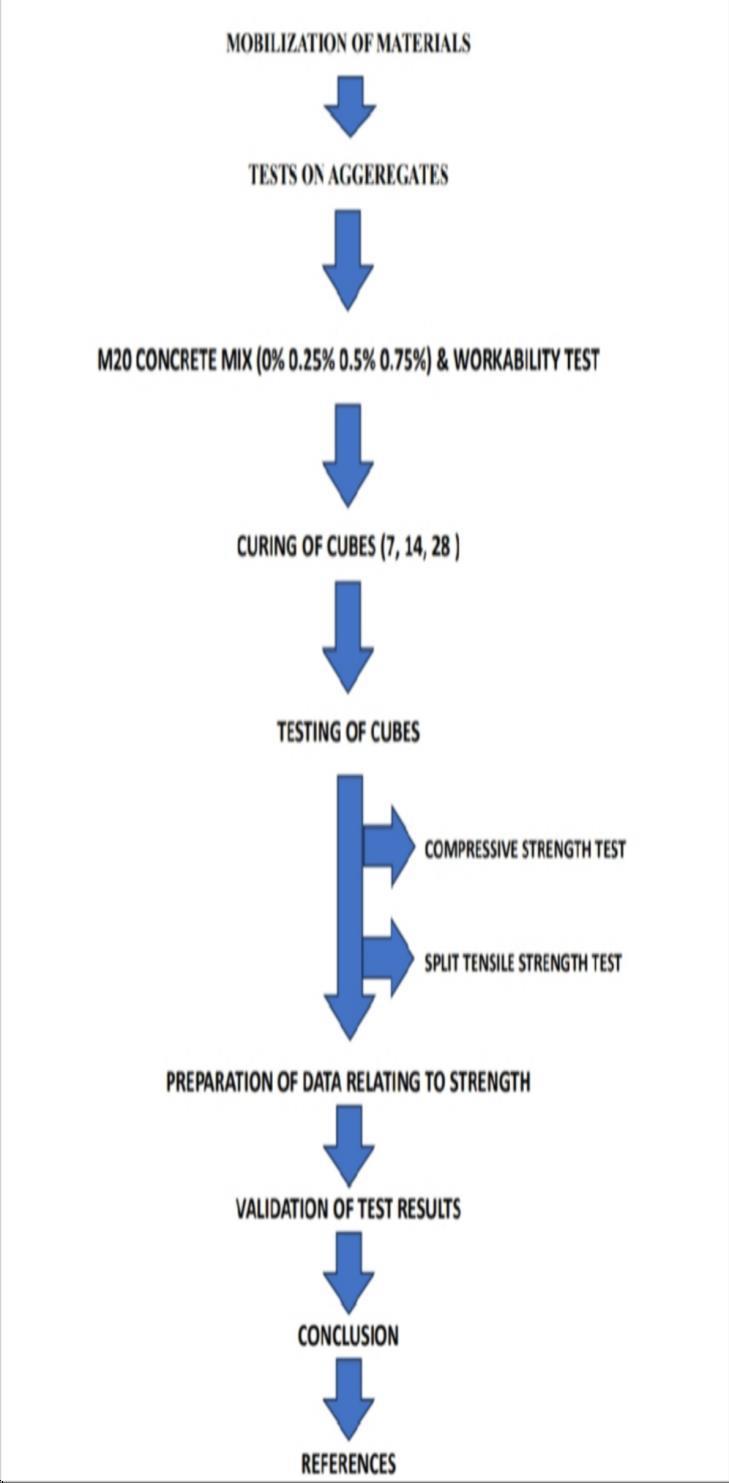
Thepurposeofmethodologyinvolvesstagestofullfillthe objectivesofthepresentresearchwork.
1.Thefirststepinvolvestheidentificationoftheresearch problem and reviewing the previous literature to fix the objectiveoftheresearch.
2.The second step involves collecting materials, designmixpatternsforcommencingthework.
3.The third step involve calculating the quantities requiredforcastingcubesspecimens.
4.The fourth involves testing materials for workability, weight proportions i.e. slump cone test, specific gravity testasperrequirementsofIScodes.
5.The fifth step consists of mixing concrete (hand mixing), polypropylene Fibers by weight proportions, fine & coarse aggregate, with suitable water cement ratio.aspertherequirementsofIndianstandardscode.
6.Thesixthstepinvolvesfilledtheconcretemixintothe cubes (150mmx150mmx150mm) and allowed to settle forhardeningfor24hours.
7. The seventh step the cube specimens are cured for respectiveages.
8. The eight step, the strength test are conducted on compression testing machine (CTM). And note the result.
9. And the final step is to conduct multi-variate regression analysis for determining the performance parameters relating to fibre reinforced concrete containingPolypropyleneFiber.
4.1 CEMENT: structure.

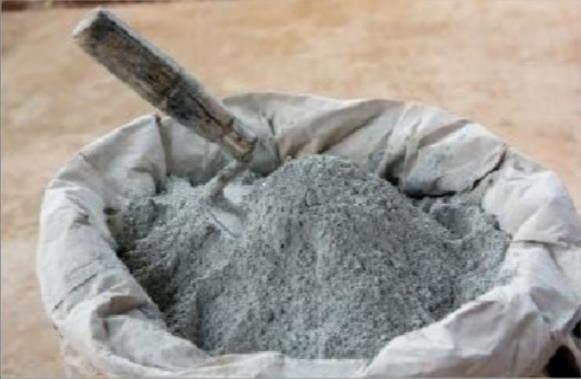
Fig. 4.1 OPC 53 GRADE CEMENT
4.2 COMPOSITION AND PROPERTIES OF OPC 53 GRADE :
OPC 53 Grade cement is a high-strength Ordinary PortlandCementwidelyusedinstructuralapplications.It is composed mainly of lime (CaO), silica (SiO₂), alumina (Al₂O₃),andironoxide(Fe₂O₃),andisknownforitsrapid strengthgain,highcompressivestrength,anddurability.
ThechemicalcompositionisregulatedbyIS12269:1987 standards:
Table 4.1 Chemical composition of OPC 53 grade
INGREDIENTS
CaO66.67
SiO218.91
Fe2O34.94
Al2O34.51
SO32.5
MgO0.87
K2O0.43
Na2O0.12
International Research Journal of Engineering and Technology (IRJET) e-ISSN: 2395-0056 Volume: 13 Issue: 05 | May 2026 www.irjet.net p-ISSN: 2395-0072 © 2026, IRJET | Impact Factor
CaO66.67
SiO218.91
Fe2O34.94
Al2O34.51
SO32.5
MgO0.87
K2O0.43
Na2O0.12
Lossofignition1.05 Lossofignition1.05
OPC 53 grade concrete is primarily composed of calcareous and argillaceous, silica, aluminium or iron oxide-bearing materials. the ingredients are then burned at high temperature to create a nodular material called clinkers which is then grounded to form a fine powder. This fine powder is known as cement. Portland cement is widelyusedcement.thespecificcombinationand proportion of these constituents influence the cement’sproperties.Specific gravityofcementis 3.15 as per procedures conducted conforming to IS12269-1987code.
1. Concrete Production: Cement is mixed with aggregates (sand/gravel) and water to produce concrete for building homes, skyscrapers, foundations,andhigh-strength structures.
2. Mortar and Masonry: Used to create mortar forbindingbricks,stones,andconcreteblocks,as well as for plastering walls to achieve a smooth finish.
3. Infrastructure Development: Essential in constructing roads, highways, bridges, tunnels, dams,andlighthouses.
4. Precast Concrete Members: Used in the fabrication of precast items like pipes, fencing
International Research Journal of Engineering and Technology (IRJET) e-ISSN: 2395-0056
Volume: 13 Issue: 05 | May 2026 www.irjet.net
posts, manhole covers, railway sleepers, and concretepiles.
5. Waterproof and Specialized Structures: Applied to create watertight floors, water tanks, septic tanks, swimming pools, and sewage disposal systems.
6.Soil Stabilization: Used in engineering to strengthen soil for foundations, roadways, and slopestabilization.
7. Industrial/Decorative Applications: Used in terrazzo surfaces, architectural finishing, and decorativeelements(whitecement).
8. Specialty Uses: High-alumina cement is used for refractory concrete in furnaces, while other types areusedforgroutingandsealingjoints.
PolypropyleneFibersarecollectedthrougha meltspinning process where polypropylene resin pellets are melted, extruded through spinnerets into filaments, cooled, and then stretched to align thepolymerchains.Thesecontinuousfilamentsare either wound onto spools or chopped into short Fibersdependingontheapplication.Commercially available polypropylene fibres procured from Reliance Industries Ltd., Chennai were used. The properties of polypropylene fibres are presented intable.
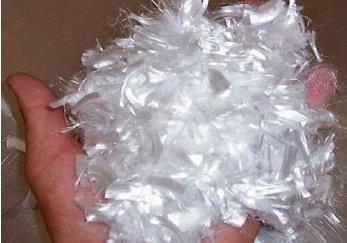
Table 4.2 Properties of Polypropylene Fibers
Elasticity Modulus (GPa) 5 7. Shape Triangular
Uses of Polypropylene in PPC mix :
1. Automotive Industry: PPC is frequently used for automotive components such as car bumpers, dashboards, interior door trims, and battery casings becauseofitshighimpactresistanceandlowweight.
2.Packaging: Due to its excellent toughness, it is used in rigid packaging applications, including food containers, crates,pails,anddairytubsthatneedtowithstandrough handling.
3. ConsumerGoods:PPCiscommonlyusedinhousehold itemslikestorageboxes,luggage,furniture,andtoys.
4. Medical Equipment: Its durability and sterilization capabilitymakeitsuitableformedicaldevices,suchas syringes,labware,andpillcontainers.
5. Pipes and Fittings: It is used in manufacturing piping systemsforpotablewaterorindustrialapplications,asit resistscorrosionandchemicaldegradation.
6.Living Hinges: Because PPC offers good fatigue resistance, it is used to create "living hinges" thin, flexible slices of plastic that can be bent multiple times withoutbreaking,commonlyfoundoncapsandlids.
Water is the key ingredients, which when mixed with cement,forapastethatblindstheaggregatetogether. The water causes the hardening through a process called hydration. The quality of water has great influence on strength and durability of concrete.PH valueofwatershouldbetween6to8.Watershouldbe
International Research Journal of Engineering and Technology (IRJET) e-ISSN: 2395-0056
free from organic impurities locally available potable waterfreefromimpuritiesisusedinpresentstudy.
4.5 FINE AGGREGATE:
Natural river sand was used as a fine aggregate. TheaggregatesweretestedasperIS383:2016.The
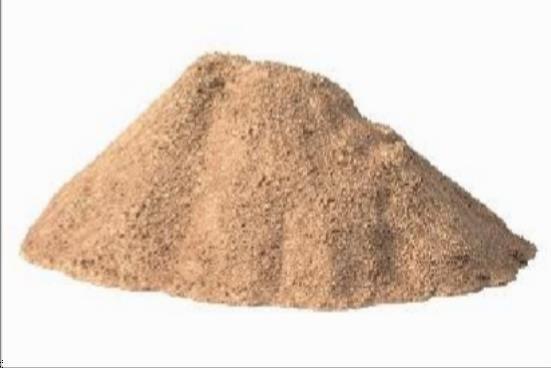
specific gravity of coarse aggregate is 2.61 and grading zone is ZONE-lll. The particles are passed from4.75mmsieve.
Fig. 4.3 Fine Aggregate
4.6. COARSE AGGREGATE:
Crushed granite coarse aggregate was used conforming to IS 383:2016. The maximum size of coarseaggregateusedwas20mm.Theparticlesare retained on 4.75mm sieve. The specific gravity of coarseaggregateis2.80.
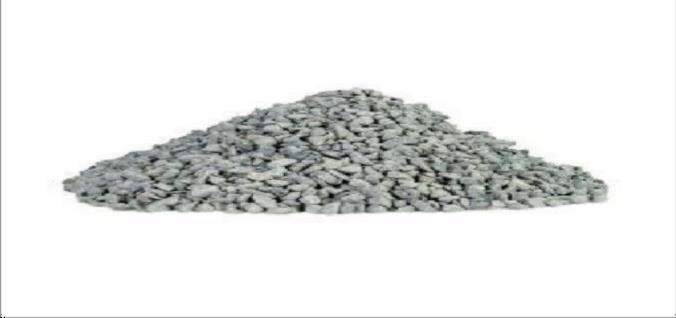
Fig. 4.4 Coarse Aggregate
Properties of coarse aggregate:
1. Size and Gradation: Coarse aggregates usually range from4.75 mm to 80 mm, with ideal grading enhancing workability.
2. Shape and Texture: Angular aggregates offer better interlocking, resulting in higher strength, while rounded
aggregates improve workability. Flaky or elongated particlesareundesirableastheyweakenthemix.
3. Strengthand Hardness:Theymustbestrong enough to withstand crushing under heavy loads and tough enoughtoresistabrasion(wearandtear).
4.Specific Gravity and Density: Typically, high-quality coarse aggregatehas a specific gravity between2.6and 2.9 and high bulk density, contributing to the overall strengthoftheconcrete.
5. Absorption and Moisture: Aggregates should have low water absorption to prevent excessive water uptake,whichcanaffecttheworkabilityandbonding.
6. Soundness and Durability: They must withstand weather conditions, specifically freezethaw cycles and chemicalattacks.
Cleanliness: Must be free from organic impurities, clay, and coatings that reduce the bond between aggregate and cement.
4.7 CONCRETE MIX DESIGN :
M30
TypeofCement OPC53Grade conforming toIS 12269:1987
MaximumCement Content(IS 456:2000) 300kg/m3
Volume: 13 Issue: 05 | May 2026 www.irjet.net p-ISSN: 2395-0072 © 2026, IRJET | Impact Factor value: 8.315 | ISO 9001:2008 Certified Journal | Page1107
International Research Journal of Engineering and Technology (IRJET) e-ISSN: 2395-0056
Volume: 13 Issue: 05 | May 2026 www.irjet.net p-ISSN: 2395-0072
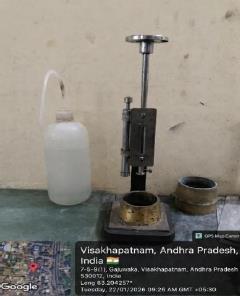
The water requirement for making specimens for the determinations of initial and final setting times and of tensile and compressive strength of cement sand mortars and for soundness tests depends upon the normal consistency of cement to be used. This normal consistency or water demand of cement depends upon the compound composition and fineness ofthe cement. The initial setting time of the cement is limiting time beyond which paste mortar of concrete made from it cannot be placed or compacted without loss of useful propertiese.g.strength.The finalsettingtimeisthetime limitbeyondwhichmouldcanberemoved.Forgenerally available cements the normal consistency varies from 30 to 35 percentage initial setting time 30 minutes initial setting andfinalsettingtime10hours. Materialtestperformedforcement(IS4031)
Standard Consistency of Cement:
It is the amount of water required to make a cement paste of such consistency that the Vicat plunger penetrates5–7mmfromthebottomofthemould.
Fineness of Cement:
It is the measure of the particle size of cement, expressedasthepercentageofcementretainedona90micronsieve.

Material test performed for Fine aggregate (IS
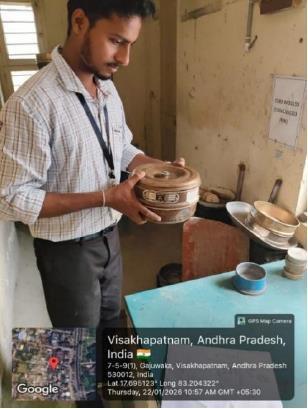
1.Siltcontent:0%ornil
2.Sieveanalysis:zoneII
3.Specificgravity:2.63
4.Bulk density /unit weight: zoose(1239.2kg/m3)Compacted(1451.1kg/m^3)
5.Moisturecontent:2.04%
Silt Content:
The silt content of the given sample is 0% (nil), indicating that the material is free from fine impuritieslikeclayandsilt.
Sieve Analysis:
TheaggregatefallsunderZoneII,whichindicates moderately graded sand suitable for concrete works.
Specific Gravity:
The specific gravity of the material is 2.63, showing it has normal density and is suitable for constructionpurposes.
Bulk Density / Unit Weight:
The bulk density is 1239.2 kg/m³ (loose) and 1451.1kg/m³(compacted),indicatingtheweight ofaggregateindifferentconditions.
Moisture Content:
Themoisturecontentis2.04%,whichrepresents theamountofwaterpresentintheaggregate.
International Research Journal of Engineering and Technology (IRJET) e-ISSN: 2395-0056
Volume: 13 Issue: 05 | May 2026 www.irjet.net p-ISSN: 2395-0072

Material test performed for Coarse aggregate(IS 2386)
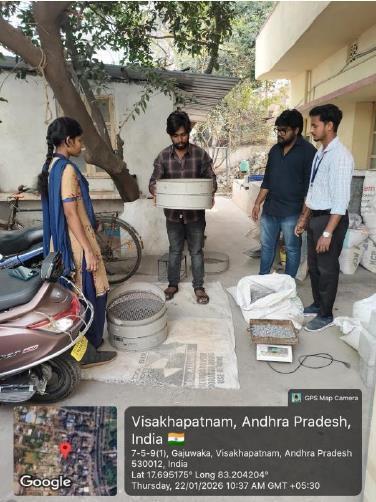
1.Specificgravity:2.69
2.Sieveanalysis:wellgraded
3.Impactcrushingstrength:24.3%
Specific Gravity:
The specific gravity of the material is 2.69, indicating goodstrengthandsuitabilityforconstruction.
Sieve Analysis:
The aggregate is well graded, meaning it has a good distribution of particle sizes, which improves strength andworkability.
Impact Crushing Strength:
Theimpactvalueis24.3%,indicatingthattheaggregate has good resistance to impact and is suitable for concreteworks.

International Research Journal of Engineering and Technology (IRJET) e-ISSN: 2395-0056
Volume: 13 Issue: 05 | May 2026 www.irjet.net p-ISSN: 2395-0072
Mixing of concrete is the process of combining cement, sand,gravel,and water to makea uniformand workable mixture used in construction. The main aim is to make sure all the materials are evenly mixed so that the concrete becomes strong and durable after it hardens. This mixing can be done by hand for small works or by using machines for bigger projects, where better quality is required. It is important to use the right amount of waterandmixthematerials properly,becausetoomuch ortoolittle watercanaffect thestrengthoftheconcrete. Good mixing helps in achieving a smooth, consistent mixture,whichplaysamajorstrength.
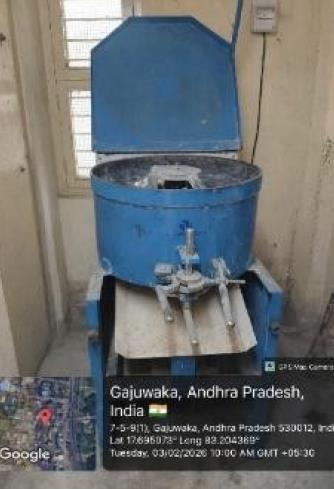
4.10
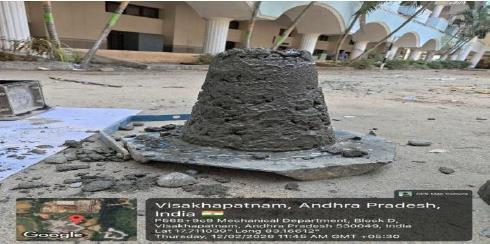
Proceduretodetermineworkabilityoffreshconcreteby slumptest.
• Clean the internal surface of the slump cone and the base plate. Dampen them with a moist cloth to reduce surfacefriction,butensurenoexcesswaterremains.
•Placetheconeonthebaseplateandholditdownfirmly by standing on the foot pieces. Fill the cone with fresh concreteinthreeequallayers(byvolume).
• Compact each layer with 25 strokes of the tamping rod, distributing the strokes uniformly acrossthesurface.
• After compacting the final layer, strike off the excess concrete from the top using the tamping rod in a rolling or sawing motion until it is flush withtheMold.
• Immediately remove any spilled concrete from around the base. Lift the Mold carefully and vertically in a steady motion without twisting or lateral movement. The lift should take approximately5to10seconds.
• Turn the slump cone upside down and place it next to the concrete mass. Place the tamping rod across the top of the cone so it extends over the concrete. Measure the vertical distance from the bottomoftherodtothedisplacedoriginalcentre of the top surface of the concrete. The difference inheightinmmistheslumpoftheconcrete.
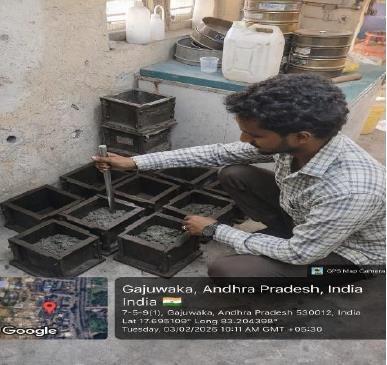
•Cleanthemouldsandapplyoil.
• Fill the concrete in the moulds in layers approximately5cmthick.
• Compact each layer with not less than 35 strokes per layer using a tamping rod (steel bar 16mm diameter and 60cm long pointed at lower end).
•Levelthetopsurfaceandsmoothenitwithatrowel.
International Research Journal of Engineering and Technology (IRJET) e-ISSN: 2395-0056
Volume: 13 Issue: 05 | May 2026 www.irjet.net p-ISSN: 2395-0072

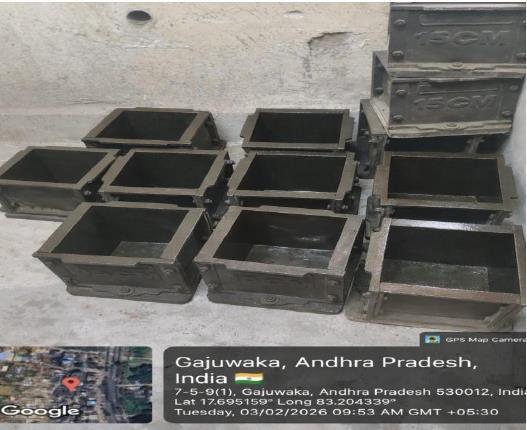
Theconcretecubesspecimensarestoredinmoistairfor 24hoursandafterthisperiodthespecimensaremarked and removed from the Molds and kept submerged in clearfreshwateruntiltakenoutpriortotest.
Demoulding is the process of removing hardened concrete from the mould after a specified time without damagingitsshapeorsurface.
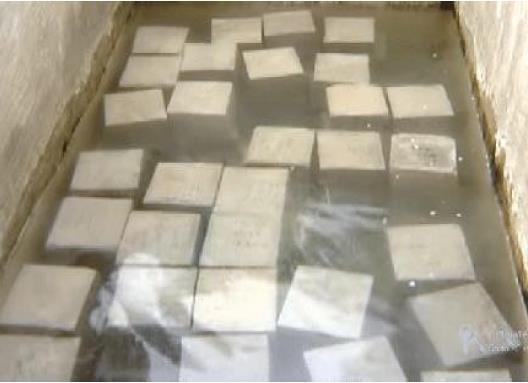
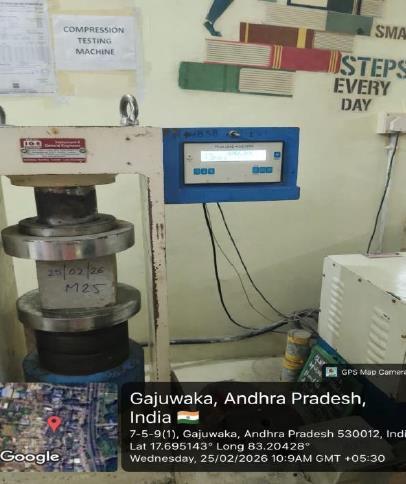
4.13 COMPRESSIVE STRENGTH PROCEDURE IN POLYPROPYLENE FIBER CUBES
Aim : Tofindouthowmuchcrushingloadaconcretecube withplastic(polypropylene)fiberscantake beforeitbreaks.
© 2026, IRJET | Impact Factor value: 8.315 | ISO 9001:2008 Certified Journal | Page1111
International Research Journal of Engineering and Technology (IRJET) e-ISSN: 2395-0056
Volume: 13 Issue: 05 | May 2026 www.irjet.net p-ISSN: 2395-0072
Precautions:
• NoClumping:Makesurethefibers don'tsticktogether inballsduringmixing.
• Smooth Surface: Clean the machine plates so there is nogritorsandbetweenthemetalandthecube.
• Center It: Place the cube exactly in the middle of themachinetoavoidunevenbreaking.
• Side Loading: Always turn the cube on its side (test thesmoothfacesthattouchedthemold,nottherough top).
Procedure:
1.Mixcement,sand,andstone.Addthefibersslowlyso theyspreadoutevenly.
2.Pourthemixintocmmetalmoldsin3layers,poking eachlayer35timeswitharodtoremoveair.
3.Letitsitfor24hours,takeitoutofthemold,andputit inwaterfor7or28days.
4. Take the wet cube out, wipe it, and put it in the testingmachine.
5.Turnthemachineon.Itwillslowlysqueezethecube untilitcracks.
Result: Notedownthehighestnumber(load)onthe screen.
Calculation formulae: Strength=Maximumload(kgorN)/AreaofFace

International Research Journal of Engineering and Technology (IRJET) e-ISSN: 2395-0056
Volume: 13 Issue: 05 | May 2026 www.irjet.net p-ISSN: 2395-0072
PROCEDURE IN POLYPROPYLENE FIBER CUBES
Aim :
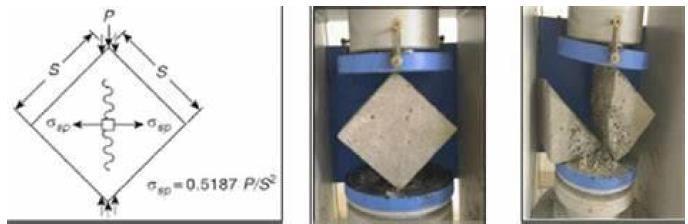
Tofindthetensile(pulling)strengthoftheconcreteby splittingacube.
Procedure :
1.Takethewetcubeoutofthecuringwaterandwipeit dry.
2. Draw a line down the middle of two opposite faces toshowwheretheloadwillgo.
3. Placethecubeonitssideinthemachine.Ensurethe loadhitsthefacesthatweretouchingthemold,notthe roughtop.
4. Put thin plywood strips (thick) exactly on your markedlines,bothontopandbottomofthecube.
5.Startthemachine.Itwillpressdownonthestripsuntil thecubesplitsverticallyintwo.
6.Notethemaximumloadatthemomentofthesplit.
Precautions :
Alignment: The plywood strips must be perfectly centeredonyourmarkedlines.
Direction: Never apply the load to the rough "trowelled"surfacefromthetopofthemold.
FiberMix:Ensurefibers aremixed evenly;anyclumps willcausethecubetosplitunevenly.
RESULTS ON MATERIALS
5.1 CEMENT
Cementof53GradeOrdinaryPortlandCementwasused.
5.1 : Test Results on Cement
5.2 FINE AGGREGATE
Table 5.2 : Test Results on Fine Aggregate
COARSE AGGREGATE
Table 5.3 Test Results on Coarse Aggregate
5.4 CONCRETE NOMINAL MIX
Table 5.4 Mix Ratios of Nominal mix of Concrete
International Research Journal of Engineering and Technology (IRJET) e-ISSN: 2395-0056
Volume: 13 Issue: 05 | May 2026 www.irjet.net p-ISSN: 2395-0072
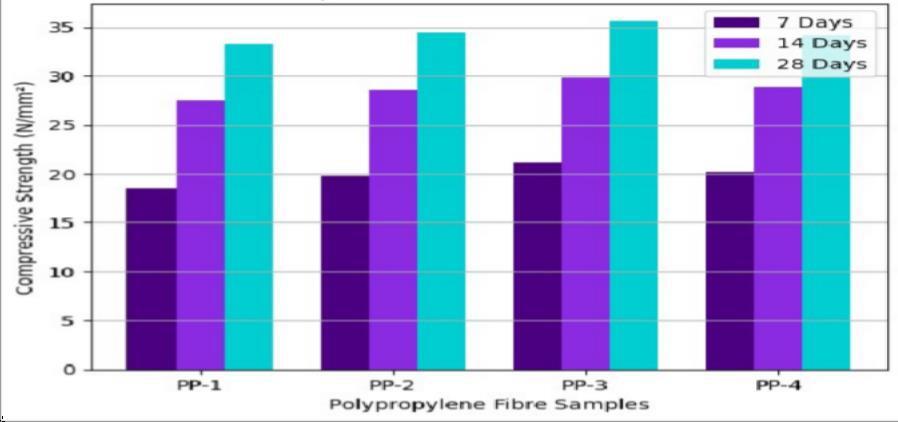
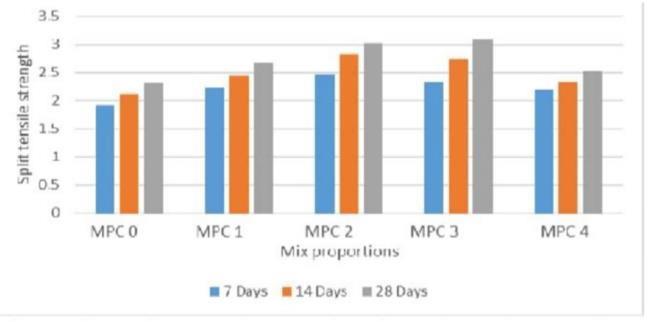
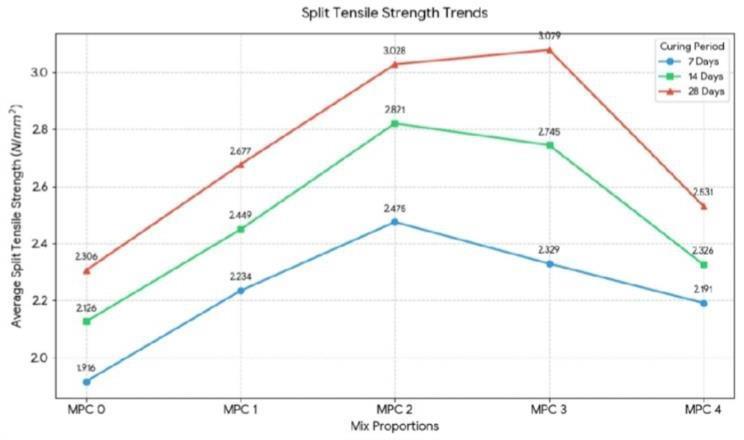
5.5 COMPRESSIVE STRENGTH OF CONCRETE WITH VARIOUS PROPORTIONS OF PP FIBER MIX
Table 5.5 Mix Proportions of Polypropylene Fiber Concrete
– 7 days curing (N/mm2 ) Strength – 14 days of curing (N/mm2 ) Stren gth –28 days of curin g (N/m m2)
International Research Journal of Engineering and Technology (IRJET) e-ISSN: 2395-0056
Volume: 13 Issue: 05 | May 2026 www.irjet.net p-ISSN: 2395-0072
RESULTS AND DISCUSSION
6.1 COMPRESSIVE STRENGTH FOR NOMINAL CONCRETE
Table : 6.1 Compressive Strengths Cubes
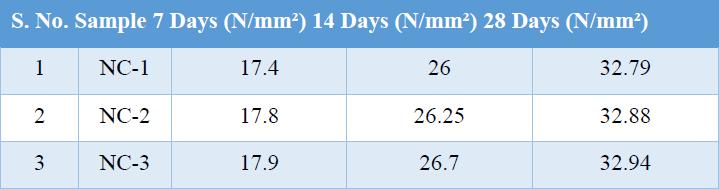
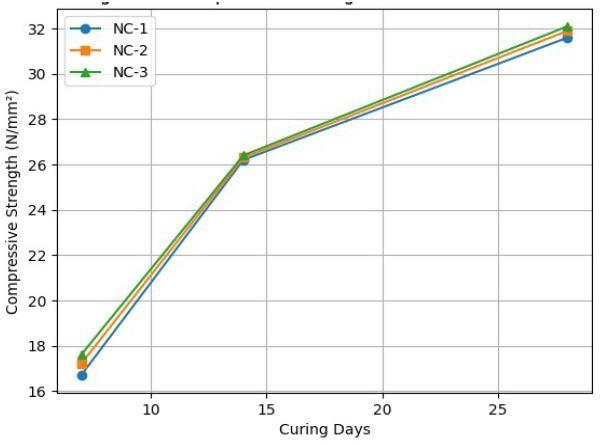
The Compressive strength of nominal concrete cubes increased with curing age. At 7 days, the strength ranged from 16.7 to 17.6 N/mm².At14 days,it increased to 26.2 to 26.4 N/mm². At 28 days, the strength reached 31.6 to 32.1N/mm²,indicatingsatisfactorystrengthdevelopment.
The results confirm that the nominal M20 concrete achieved the required compressive strength and can be usedasareferencemixforfurthercomparison.
1. The nominal M30 concrete achieved an average compressive strength of 32 N/mm² at 28 days, satisfyingIScoderequirements.
2.The adopted water–cement ratio of 0.45 provided adequate strength and durability under moderate exposureconditions.
3. Theadditionofpolypropylenefibresimprovedthe compressive strength of concrete compared to nominalmix.
4. The compressive strength increased with fibre content up to an optimum level and then decreased beyondthat.
5. The optimum polypropylene fibre content was foundtobe0.5%,givingmaximumstrength.
International Research Journal of Engineering and Technology (IRJET) e-ISSN: 2395-0056
Volume: 13 Issue: 05 | May 2026 www.irjet.net p-ISSN: 2395-0072
6. At 0.5% fibre content, the concrete achieved a maximumcompressivestrengthof38.56N/mm².
7.Fibre addition slightly reduced the workability of concrete due to fibre interlocking and reduced flowability.
8. Polypropylene fibres improved crack resistance, ductility,anddurabilityofconcrete.
9. The results showed a strength improvement of approximately14%comparedtonominalconcrete.
10. Overall, polypropylene fibre reinforced concrete is more efficient and suitable for practical construction applications, especially where durability and crack controlareimportant.
1. Alhozaimy A.M, Soroushian P, Mirza F (1995), Mechanical Properties of Polypropylene Fibre Reinforced Concrete and the Effect of Pozzolanic Materials, Cement and Concrete Composites, 18, 8592
2. Ali Akbar Ramezanianpour, Rahimeh Mousavi, MoosaKalhori, Jafar Sobhani, Meysam Najimi (2015), Micro and Macro Level Properties of Natural Zeolite Contained Concretes, Construction and BuildingMaterials,101(2015)347-358.
3. Ashkan Saradar, Behzad Tahmouresi, Ehsan Mohseni, Ali Shadmani (2017), Restrained Shrinkage Cracking of Fibre-Reinforced HighStrengthConcrete, Fibres, 6(12),1-13.
4. ASTM C39:2020 Standard Test Method for Compressive Strength of Cylindrical Concrete Specimens,AmericanSocietyforTestingMaterials.
5. ASTM C494 Standard Specifications for Chemical Admixtures for Concrete, American Society for TestingMaterials,2019.
6. Babak Ahmadi, Mohammad Shekarchi (2010), Use of Natural Zeolite as a Supplementary Cementitious Material, Cement and Concrete Composites, 32,134-141.
7. Behrouz Ahmadi-Nedushan (2012), Prediction of Elastic Modulus of Normal and High Strength Concrete using ANFIS and Optimal Nonlinear Regression Models, Construction and Building Materials,36,665-673.
8. Eskandaria H. M. Vaghefi and K. Kowsaric (2015), InvestigationofMechanicalandDurabilityProperties of Concrete Influenced by Hybrid Nano Silica and MicroZeolite, ProcediaMaterialsScience,11,594-599.
9. Esraa Emam, Sameh Yehia (2017), Performance of Concrete Containing Zeolite as a Supplementary Cementitious Material, International Research Journal of Engineering and Technology, 4(12),16191625.
10. Farzad Naseri, Faezeh Jafari, Ehsan Mohseni, Waiching Tang, Abdosattar Feizbakhsh, Mohsen Khatibinia (2017) Experimental observations and SVM-based prediction of properties of polypropylene fibres reinforced self-compacting composites incorporating nano-CuO, Construction and BuildingMaterials, 143,589-598.
11. Gayathri R, Dhanalakshmi G (2017), Health Analysis of High- Performance Concrete Using Zeolite and Coconut Fibre, International Journal of EngineeringTrendsand Technology, 45(3),136-140.
12. Gowram Iswarya, Beulah M (2020), UseofZeolite and Industrial Waste Materials in High Strength Concrete–AReview, MaterialsToday,329, 1-7.
13. Hai-Bang Ly, Binh Thai Pham Dong Van Dao Vuong Minh Le, Lu Minh Le and Tien-Thinh Le (2019), Improvement of ANFIS Model for Prediction of Compressive Strength of Manufactured Sand Concrete, Applied Sciences, 9(18),384, 1-16.
14. Hamed M. Jassim, Abdulkader G. Anwar (2016), Experimental Study of Polypropylene FibreReinforced Concrete, International Journal of R and D in Engineering Science and Management, 4 (3), 149-161.
15. Ibadur Rahman, Nirendera Dev (2020), Nano Alumina Based High Strength Concrete. International Journal of Innovative Technology and Exploring Engineering,9(4),356-363.
16. Ikotun B.D, Ekolu S (2010), Strength and Durability Effect of Modified Zeolite Additive on concrete Properties, Construction and Building Materials, 24,749-757.
17. M .S. Shetty, Concrete Technology (Theory and Practice),S.Chand&CompanyLtd.,NewDelhi.