
International Research Journal of Engineering and Technology (IRJET) e-ISSN: 2395-0056
Volume: 12 Issue: 04 | Apr 2025 www.irjet.net p-ISSN: 2395-0072
International Research Journal of Engineering and Technology (IRJET) e-ISSN: 2395-0056
Volume: 12 Issue: 04 | Apr 2025 www.irjet.net p-ISSN: 2395-0072
Nargis Siddiqui1, Deepshikha2
1Master of Technology, Computer Science and Engineering, Lucknow Institute of Technology, Lucknow, India
2Assistant Professor, Department of Computer Science and Engineering, Lucknow Institute of Technology, Lucknow, India
Abstract - Code plagiarism is a problem increasingly important in academic and industrial settings both, with respect to intellectual property, academic integrity and software quality. Current plagiarism detection methods (e.g. strings matching, syntax tree comparison) are insufficient in detecting highly sophisticated techniques like logic replication and code obfuscation. In recent years, Natural Language Processing (NLP) and Machine Learning (ML) have made significant advances which have provided new way for real time, accurate and scalable code plagiarism detection. In this review paper, I explore ways to tackle the shortcomings of the traditional way of solving NLP by using NLP and ML techniques together. In this work we analyze the use of NLP for semantic analysis and preprocessing of code, and ML models that address whether code structure and/or logic are similar, using supervised, unsupervised, and deep learning based methods. We further elaborate on the architecture of real time plagiarism detection systems, their usage in academia and industry as well as the scalability, the cross language detection, and the intrinsic ethical problems. Finally, the paper also suggests future research directions about how to leverage more advanced transformer based models, ways to make the solutions more explainable and ways to enable cloud based collaborative solutions. This review synthesizes existing research and identifies gaps, aiming to provide a comprehensive knowledge of current status of the real time code plagiarism detection and inspires further innovation in this critical region.
Key Words: CodePlagiarismDetection,NaturalLanguage Processing (NLP), Machine Learning (ML), Real-Time Systems,SemanticAnalysis,DeepLearning
1.1.Background and Motivation
With so much riding on it, code plagiarism detection has become a very serious concern at the industrial front as wellastheacademicworld.Withthegrowinguseofonline learningplatformsanditsadoptionasaningredientinthe entiretyofacademia,includingprogrammingassignment’s utilization, has contributed to the ability of students to claim copying or reuse other’s code without giving all the needed credits. This makes educational system a suspect
and crude the process of developing real programming skills in the students. In code too, plagiarism is similar to how it is in research, if you do not cite someone else’s work, it amounts to an unethical practice; such as replicating another’s algorithm or methodology, which might distort scientific progress. Therefore, code plagiarism is a big menace in the industrial sphere. But one of the common challenges addresses is that proprietary code is seldom reused or stolen, making it financially lossy as well as legal trouble. Additionally, reusing code without proper scrutiny may introduce vulnerabilities,resultinginlowqualityandsecurityofthe software.
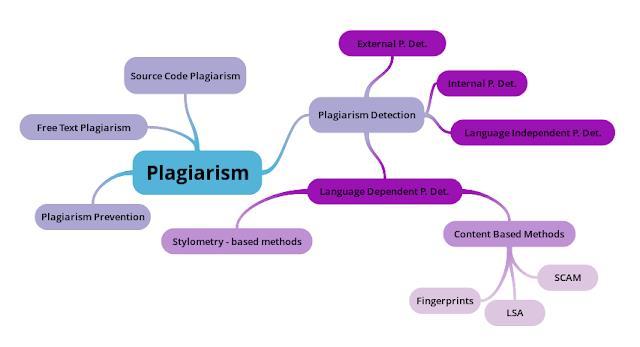
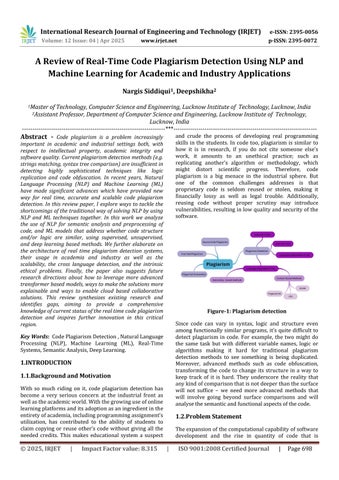
Since code can vary in syntax, logic and structure even among functionallysimilar programs,it’s quite difficult to detect plagiarism in code. For example, the two might do the same task but with different variable names, logic or algorithms making it hard for traditional plagiarism detection methods to see something is being duplicated. Moreover, advanced methods such as code obfuscation, transforming the code to change its structure in a way to keep track of it is hard. They underscore the reality that anykindofcomparisonthatisnotdeeperthanthesurface will not suffice – we need more advanced methods that will involve going beyond surface comparisons and will analysethesemanticandfunctionalaspectsofthecode.
1.2.Problem
Theexpansionofthecomputationalcapabilityofsoftware development and the rise in quantity of code that is
International Research Journal of Engineering and Technology (IRJET) e-ISSN: 2395-0056
Volume: 12 Issue: 04 | Apr 2025 www.irjet.net p-ISSN: 2395-0072
createdrequiresdevelopmentofa real time,accurateand scalableplagiarismdetectionsystem.Oftenthese nuances escape the order and accuracy that the traditional methods string matching and the syntactic tree comparisons provide. In cases were code has been paraphrased,restructuredorobfuscated,theyhaveavery hard time finding out if it is plagiarism or not. Furthermore, these methods are not meant for real time usage which is needed for eg. automated grading systems in academia or continuous integration pipes lines in industry. They are also not applicable in massive open online courses (MOOCs) and enterprise-level code repositoriesbecauseofthelackofscalablesolutions.
1.3.Objectives
The main goal of this review is to systematically examine the features of existing techniques, tools and frameworks for code plagiarism detection. It consists of an evaluation ofexistingmethodsandmorerecentmethodsthatborrow from Natural Language Processing (NLP) and Machine Learning(ML).Thecodedescriptionissupportedbyakey focus on exploration of uses of NLP to preprocess and analyze code at a semantic level, in order to detect code similarities beyond just syntax. Furthermore, the review will further address the role of ML models such as supervised, unsupervie and deep learning to improve the accuracy and efficiency of the plagiarism detection systems.
A second aim is to find gaps in the existing research and suggest future ways of innovation. This includes solving cross language plagiarism detection challenge of translating or adapting code to a different programming language, as well as making the outputs of ML models explainable to gain transparency and trust. This review synthesizes existing knowledge, and identifies potential areas of future exploration in order to support the development of more robust and flexible plagiarism detectionsystemsinbothacademicandindustrialterms.
2.1.Types
Plagiarismofcodeistheuseofsomeother’scodewithout right attribution or authorization and then presenting the same as one’s own. The practice of this kind is a form of unethical practice for which there is no end of complication.Oneofthesimplesttypesofcopyingisdirect copying when the entire section of code is copied verbatim.Thisformmaybeeasiertodetect,butstillhasa lotofpresence,especiallyamongbeginnersorundertime constrains. The second form is paraphrasing, a method where the original code is slightly altered – such as in changing variable names, changing comments, or reordering statements – to mask its source. While these
changes might not seem too drastic they can shield an attackerconsiderably.
Logic replication is another type of more advanced plagiarism, which involves the code reproduction apart from copying the syntax by directly copying the logic or the algorithm of the original code. This is harder to identifyusingtraditionalwaysandneedsadeeperinsight ofthecodefunctionality.Inthelastcase,codeobfuscation isaverycomplexapproachwherethecodeifintentionally transformedtobehardtounderstandortotrace.Hidethe original source by using techniques like renaming the variables to meaningless strings, inserting redundant piece of code, and using complex control structure. They further warrant robust detection methods that can be appliedtoavarietyofformsofplagiarism.
The traditional ways of detecting code plagiarism have made used of the structural and syntactic analysis. String matching is one of the earliest and most widely used techniques,andthecodeistreatedasplaintext,wherethe sequences of characters are compared to find out similarities. The advantages of this method are that it is simple and effective at detecting copying, but it doesn’t consider even minor changes such as variable name and formatting changes. To overcome this limitation, tokenization was introduced where the code is broken downintotokens(keywords,operators,identifiers)witha finer degree of comparison. The detection accuracies improve using this approach as it only considers the logical aspects of the code as compared to its textual representation.
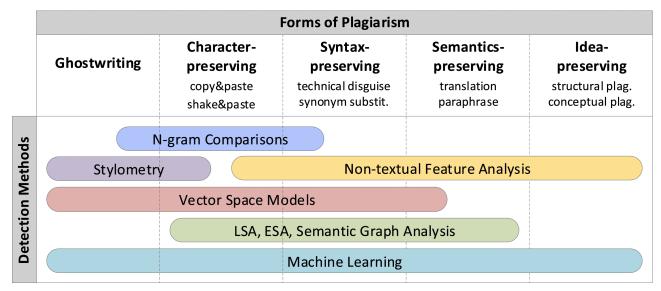
Figure-2: Suitability of detection methods for identifying certain forms of plagiarism.
Another commonly used approach is abstract syntax tree (AST) comparison, which is parsing code into a tree like structure which represents the syntactic hierarchies. This method compares the AST of two code segments and would be much more effective than a string based approachsinceitcomparesthestructureandorganization of code. But AST comparison is powerful, but computationally expensive and it may not be able to compareverymuchrestructuredorobfuscatedcode.Code
International Research Journal of Engineering and Technology (IRJET) e-ISSN: 2395-0056
Volume: 12 Issue: 04 | Apr 2025 www.irjet.net p-ISSN: 2395-0072
plagiarism detection based on these traditional methods has been the foundation for what is nowadays availablethey are however very limited when it comes to taking intoaccountmoresophisticatedformsofplagiarism.
However,traditionalmethodsincodeplagiarismdetection have limited their contributions. The biggest drawback is that they cannot deal with semantic similarities. These methods are good in word but fell short when they could not identify where the logic or functionality of the code has been replicated but not copied. For example, two programs can have no semantic relationship at all, but implement the same algorithm, they are the same (are) semanticallyequivalent. But noonehasmade themwork, andtraditionalapproachesaretunedtoworkingwithso called surface level features, and are ill equipped to recognizesimilaritiesthisway.
Another major limitation of them is their vulnerability to code obfuscation. Such techniques as renaming variables, addingredundantcode,changingcontrolstructures,easily fool conventional detectors, as they are based on the structure of the code which can easily be changed. Moreover, these methods tend to be not scalable or efficient enough for real time applications including automated grading and continuous integration pipelines where the purpose is both speed and correct. However, these shortcomings suggest that more sophisticated techniques, which can deal with code plagiarism’s intricacies,arenecessaryandNLPandMLareexpectedto playanimportantroleinthisfield.
Preprocessing of raw code is the very first step to apply Natural Language Processing (NLP) to code plagiarism detection. First is the tokenization where the code is broken down into smaller pieces of code such as keywords, operators, identifiers, and literals. It aids in capturing the core constituent of the code so that it is simpler to analyze and compare. Consider, for example a lineofcode,`int x= 10;` wouldgiveus `x =int,x, =,10, ;`. Tokenizationisveryhelpfulforworkingwithvariationsin formatting or spacings, such as ones that can be found in plagiarizedcode.
After that, normalization is done to represent code in an standardway.Usually,itisconvertingtokenstoconsistent format (e.g. converting all variable names to generic placeholder (like for example VAR1, VAR2) or removing languagespecificsyntaxthatdoesnothaveanyimpacton the code logic. Normalization reduces the noise and directs the analysis on structural and functional elements of code and does not care about superficial differences.
Next, parsing is used to generate a structured representationof the code(anabstractsyntaxtree (AST), a control flow graph (CFG), etc.). They capture the hierarchical and logical relations among code elements which is then used as a casing for further analysis. However, for NLP techniques to be able to analyze and compare code regardless of whether it has been modified orobfuscated,preprocessingisrequired.
NLP in code plagiarism detection is one of the most beautifulthingsandhereitperformsmostoftheworkand thisisthereasonforwhichitcandosemanticanalysisi.e. it compares not only syntactically but also the logic and functionality.Thetraditionalmethodsfocusonthesurface features of the code while NLPs handle the deep thinking of the meaning and intent behind the code. For example, two segments with totally different syntax may perform the same algorithm or solve for the same problem. These semantic similarities can be captured by NLP models, in particular deep learning based models, which can learn such patterns and relationships through large amounts of codeinadataset.
In this regard, techniques, such as word embeddings and transformer-based models (e.g., BERT, CodeBERT) have workedquitewell.Theseallowustorepresentcodeinthe form of high dimensional vectors and therefore allow meaningful comparisons of its semantic meaning. For instance,amodelprovidedwithalargecorpusofcodecan infer that from a 'for' loop and a 'while' loop that have equivalentlogic,theirsyntaxcanbesaidtobefunctionally equivalent. This capability is very handy for detecting more advanced forms of plagiarism like logic replication or paraphrasing, where in fact the functionality is not changed but the implementation does. NLP takes the semantic analysis approach to overcome the limitations associated with traditional plagiarism detection methodology.
There are significant challenges to applying NLP to code plagiarism detection. An issue also is how to handle nuances of programming languages. None of the programming languages follow the same syntax, idioms nor the best practices. For example, block structure in Pythonis radicallydifferent fromhowitisdoneinC with braces.Theselanguagespecificfeaturesneedtobetrained ontheNLPmodelsandthedatacanbehugeplusitwould requirelotsofcomputationalresources.Butcontinuingto writing for more languages directly translates to multilingualplagiarismdetection whereapieceofcode needs to be translated (or adapted) to another programminglanguage whichisevenmorechallenging as models are forced to generalize across language and structuredifferences.
International Research Journal of Engineering and Technology (IRJET) e-ISSN: 2395-0056
Volume: 12 Issue: 04 | Apr 2025 www.irjet.net p-ISSN: 2395-0072
Dealingwithcodeobfuscation(wherethecodeismadeto hide its original structure or intent) is another very importantissue.NLPmodelsstruggletoreadandmeasure code accurately since techniques like variable renaming, inserting redundant code as well as using and complex control structures may make it hard for models to read and understand code. Preprocessing steps such as normalization can reduce some of these issues, but code that can be highly obfuscated may still go undetected. Additionally, there is a lack of standardized datasets and evaluation metrics for code plagiarism detection, which makes the approach of different NLP baselines in this problem space difficult to benchmark and compare. The existence of these challenges emphasizes the importance offurtherresearchandinventiontomakethemostofNLP inthisarea.
4.1.Supervised
The use of supervised learning as a tool to detect plagiarized code with the help of already labeled dataset for training classification models has emerged as a powerful tool. Due to this, in this approach, the system is given examples of the plagiarized and non plagiarized code to learn out the pattern and the feature which differentiatebetweentwo.Thecodeisfedtothemodelby extracting features like token sequences and control flow structures, syntactic from the code. For instance, algorithm like decision trees, SVMs and random forests areusedforthis.Forinstance,suchamodelcanbetrained tolookforcertainpatternsofvariablerenamingorcontrol flow alteration which are indicative of plagiarism. In particular, supervised learning is effective when large, high quality labeled datasets are available because they allow the model to generalize well to code that is unseen. But one pitfall of using said data is that they rely on the presence of labeled data, and it becomes difficult to formulateexpensivedatasets.
4.2.Unsupervised
Supervisedmethodsinvolvecreatinglabeleddatatolearn and decide on plagiarism automatically. In contrast with this, these approaches try to understand the patterns and similarity in the code using techniques such as clustering and similarity detection. Structural or semantic similarities of code segments are utilized by clustering algorithms like k-means or hierarchical clustering to group code segments, so that cases of plagiarism can be identified within the clusters. As one specific example, if twocodesegmentshavethesamecontrolflowgraph,such astokens,thentheymaybegroupedtogethertopointout potential instances of copying or paraphrasing. Another frequently used unsupervised approach is a similarity detection where we use the cosine similarity or Jaccard index to compare the code segments by their features.
Since it is particularly useful in cases where there is not enough or even no labeled data available, unsupervised learning is a versatile tool for using in plagiarism detection. However, the effectiveness of this approach is reliant on the quality of feature extraction and the code space is extremely complex, thus more sophisticated methodsareneededtolearnsubtlesimilaritiesinthecode space.
Byallowingtheautomaticextractionofcomplicateduseful features and patterns of code, deep learning has revolutionized code plagiarism detection. RNNs and LSTMs are particularly suited to working with tokenized code, and hence process sequential data well. They can also capture long range dependencies and contextual information to find similarities that do not concern immediate surface features. Imagine an example such as an LSTM model that may learn to realize that two code pieces are functionally analogous, despite if they use different variable names or control codes. However,more recent transformer based models, such codes like BERT and CodeBERT have become popular as these models can work with large scale data and also learn semantic relations between code. The models are given the entire context of the code using self-attention mechanisms and are very effective for tasks such as semantic similarity detection. However, deep learning models are capable to learn from complex and obfuscated code but they still needhugecomputationalresourcesandlargequantitiesof trainingdatatoprovideacceptableperformance.
4.4.Hybrid
The hybrid models incorporate the inputs from both NLP and machine learning to boost the accuracy and robustnessindetectingcodeplagiarism.Thesemodelscan alsointegratethesemanticunderstandingyieldedthrough NLP with machine learning’s pattern recognition capabilities, but through the integration of both domains. In other words, one of the models could use NLP techniques to preprocess and tokenize the code, and then pass it to a deep learning model to extract high level features and perform similarity analysis. Finally, another method is to combine supervised and unsupervised learning methods, also combining the supervised models todoinitialclassificationandunsupervisedtechniquesfor refining the results or identifying edge cases. In practice, hybrid models are an excellent way of overcoming the shortcomings of each approach; for instance, an inherent assumption is that supervised learning requires access to labeled data, while an obliviousness to semantics is a limitation ofunsupervised methods.Hybrid modelsbased on the joint use of NLP and machine learning provide a more sophisticated and reliable solution to the identified challenges in detecting code plagiarism both in academic andindustrialresearch.
International Research Journal of Engineering and Technology (IRJET) e-ISSN: 2395-0056
Volume: 12 Issue: 04 | Apr 2025 www.irjet.net p-ISSN: 2395-0072
We review real time code plagiarism detection using NaturalLanguageProcessing(NLP)andMachineLearning (ML)asexamplestopointouthowthesetechnologiescan be used to solve an issue that is important to solve, both on the academic and the industrial side. Although basic, traditional methods cannot cope with the intricacies of current code plagiarism like semantic similarity, logic replication,etc.,aswellasadvancedobfuscation.NLPand MLintegrationprovidesaparadigmshift,whencombined canallowsystemsto analyzecode athigherlevel,such as seeing not only syntactic patterns but also semantic and functional relationships. Tokenization, semantic analysis, andtransformersasdeeplearningmodelsaresomeofthe techniques that have shown to be very capable in detecting plagiarized code, even in the face of extensive modifications.
NLP and ML hold the possibility of transforming code plagiarism detection in a way code is processed and understood by machines in a manner akin to human reasoning. These technologiesleveragelargedatasetsand sophisticated algorithms to pick up on the subtle similarities and patterns that standard approaches frequentlymiss.Finally,realtimesystemsbuiltusingNLP and ML for instance automated grading in academic and continuous code review in industry become probable. In additiontosignificantlyincreasingaccuracyandefficiency, these systems offer scalable solutions which can accommodate growing volume and complexity of code in thepresentdigitalenvironment.
1. A. Aiken, "Moss: A system for detecting software plagiarism," Journal of Systems and Software, vol. 83, no. 12, pp. 2504–2515, Dec. 2010, doi: 10.1016/j.jss.2010.07.013.
2. L. Prechelt, G. Malpohl, and M. Philippsen, "Finding plagiarisms among a set of programs with JPlag," Journal of Universal Computer Science, vol. 8, no. 11, pp. 1016–1038,Nov.2002,doi:10.3217/jucs-008-11-1016.
3. S. Burrows, S. M. M. Tahaghoghi, and J. Zobel, "Efficient plagiarism detection for large code repositories," Software: Practice andExperience,vol.37,no.2, pp.151–175,Feb.2007,doi:10.1002/spe.757.
4. M. S. Rahman, C. K. Roy, and I. Keivanloo, "Recommending insightful comments for source code using crowdsourced knowledge," IEEE Transactions on Software Engineering, vol. 43, no. 6, pp. 538–558, Jun. 2017,doi:10.1109/TSE.2016.2615307.
5.Z.Li,S.Lu,S.Myagmar,andY.Zhou,"CP-Miner:Finding copy-pasteandrelatedbugsinlarge-scalesoftwarecode,"
IEEETransactionsonSoftwareEngineering,vol.32, no. 3, pp.176–192,Mar.2006,doi:10.1109/TSE.2006.28.
6. C. K. Roy and J. R. Cordy, "A survey on software clone detection research," Queen’sSchool of Computing TR,vol. 541,no.115,pp.64–68,2007,doi:10.15388/ioi.2019.03.
7. M. Ghaffarian and H. R. Shahriari, "Software vulnerability analysis and discovery using machinelearning and data-mining techniques: A survey," ACM ComputingSurveys,vol.50,no.4,pp.1–36,Aug.2017,doi: 10.1145/3092566.
8. D. Perez and S. Chiba, "Cross-language clone detection bylearningoverabstractsyntaxtrees,"IEEETransactions on Software Engineering, vol. 46, no. 12, pp. 1350–1367, Dec.2020,doi:10.1109/TSE.2019.2896965.
9. Y. Bengio, A. Courville, and P. Vincent, "Representation learning: A review and new perspectives," IEEE Transactions on Pattern Analysis and Machine Intelligence,vol.35, no.8,pp.1798–1828,Aug. 2013, doi: 10.1109/TPAMI.2013.50.
10. J. Devlin, M.-W. Chang, K. Lee, and K. Toutanova, "BERT:Pre-trainingofdeepbidirectionaltransformersfor language understanding," arXiv preprint arXiv:1810.04805,2018,doi:10.48550/arXiv.1810.04805.
11. Z. Feng et al., "CodeBERT: A pre-trained model for programming and natural languages," arXiv preprint arXiv:2002.08155,2020,doi:10.48550/arXiv.2002.08155.
12.A.Vaswanietal.,"Attentionisallyouneed,"Advances in Neural Information Processing Systems, vol. 30, pp. 5998–6008,2017,doi:10.48550/arXiv.1706.03762.
13. S. Karaivanov, V. Raychev, and M. Vechev, "Phrasebased statistical translation of programming languages," ACM SIGPLAN Notices, vol. 49, no. 10, pp. 173–184, Oct. 2014,doi:10.1145/2714064.2660203.
14. M. Allamanis, E. T. Barr, C. Bird, and C. Sutton, "Learning natural coding conventions," ACM SIGSOFT Software Engineering Notes, vol. 39, no. 1, pp. 1–10, Jan. 2014,doi:10.1145/2557833.2561957.
15. C. Chen, Z. Liu, and Y. Sun, "A neural framework for retrieval and summarization of source code," IEEE Transactions on Software Engineering, vol. 47, no. 9, pp. 1899–1912,Sep.2021,doi:10.1109/TSE.2019.2940987.
16. M. White, M. Tufano, C. Vendome, and D. Poshyvanyk, "Deep learning code fragments for code clone detection," IEEE/ACM International Conference on Automated Software Engineering (ASE), pp. 87–98, 2016, doi: 10.1145/2970276.2970326.
International Research Journal of Engineering and Technology (IRJET) e-ISSN: 2395-0056
Volume: 12 Issue: 04 | Apr 2025 www.irjet.net p-ISSN: 2395-0072
17. H. K. Dam, T. Tran, and J. Grundy, "DeepSoft: A vision for a deep model of software," IEEE Transactions on SoftwareEngineering,vol.46,no.12,pp.1285–1298,Dec. 2020,doi:10.1109/TSE.2019.2893173.
18. R. Gupta, S. Pal, A. Kanade, and S. Shevade, "DeepFix: FixingcommonClanguageerrorsbydeeplearning,"AAAI Conference on Artificial Intelligence, vol. 31, no. 1, pp. 1345–1351,2017,doi:10.1609/aaai.v31i1.10771.
19. U. Alon, M. Zilberstein, O. Levy, and E. Yahav, "Code2Vec:Learningdistributedrepresentationsofcode," Proceedings of the ACM on Programming Languages, vol. 3,no.POPL,pp.1–29,Jan.2019,doi:10.1145/3290353.
20. S. Wang, T. Liu, and L. Tan, "Automatically learning semantic features for defect prediction," IEEE Transactions on Software Engineering, vol. 44, no. 3, pp. 209–222,Mar.2018,doi:10.1109/TSE.2017.2678538.
21. M. Allamanis, M. Brockschmidt, and M. Khademi, "Learning to represent programs with graphs," International Conference on Learning Representations (ICLR),2018,doi:10.48550/arXiv.1711.00740.
22.Y.Liu,M.Ott,N.Goyal,andJ.Du,"RoBERTa:Arobustly optimized BERT pretraining approach," arXiv preprint arXiv:1907.11692,2019,doi:10.48550/arXiv.1907.11692.
23. C. Sutton, T. Hoos, and M. Allamanis, "Learning semantic representations for software artifacts," IEEE Transactions on Software Engineering, vol. 45, no. 12, pp. 1206–1223,Dec.2019,doi:10.1109/TSE.2018.2867724.
24. P. Yin, G. Neubig, M. Allamanis, and M. Brockschmidt, "Learningtorepresentedits,"InternationalConferenceon Learning Representations (ICLR), 2019, doi: 10.48550/arXiv.1810.13328.
25. T. Zhang, G. Upadhyaya, A. Reinhardt, and H. Rajan, "Are code examples on an online Q&A forum reliable? A study of API misuse on Stack Overflow," IEEE International Conference on Software Maintenance and Evolution (ICSME), pp. 23–34, 2018, doi: 10.1109/ICSME.2018.00013.