
International Research Journal of Engineering and Technology (IRJET) e-ISSN: 2395-0056
Volume: 13 Issue: 02 | Feb 2026 www.irjet.net p-ISSN: 2395-0072
International Research Journal of Engineering and Technology (IRJET) e-ISSN: 2395-0056
Volume: 13 Issue: 02 | Feb 2026 www.irjet.net p-ISSN: 2395-0072
Ravi Kumar Gupta1 , Mr. Ushendra Kumar2
1Master of Technology, Civil Engineering, Lucknow Institute of Technology, Lucknow, India
2Head of Department, Department of Civil Engineering, Lucknow Institute of Technology, Lucknow, India
Abstract -Plan configuration plays a decisive role in governing the lateral load response of reinforced concrete (RC) buildings subjected to seismic and wind actions. While geometrically uniform configurations generally exhibit predictable stiffness distribution and stable modal characteristics, plan-distorted buildings such as L-, T-, and U-shaped layouts often develop torsional coupling, drift concentration, and irregular force redistribution. Despite extensive research on seismic irregularities, a consolidated synthesis comparing the lateral response characteristics of uniform and plan-distorted RC configurations remains fragmented.Thisreviewsystematicallyexaminesexperimental investigations, analytical formulations, and numerical simulationspublishedoverthepastthreedecadestoevaluate response differentiation between these configurations. Key responseparametersconsidered include baseshear demand, inter-storeydriftratio,torsionalamplification,naturalperiod variation, and plastic hinge formation patterns. The review identifies consistent trends indicating amplified torsional effects, localized damage concentration, and increased displacement demand in plan-distorted structures, particularly under nonlinear dynamic loading. Variations in findings are attributed to modelling assumptions, structural system type, and irregularity severity. The study further evaluatesthetreatmentofplanirregularitiesincontemporary seismicdesignprovisionsandhighlightscriticalresearchgaps. The synthesized insights aim to support improved performance-based design strategies and more rational assessmentof irregular RC buildingconfigurations.
Key Words: Lateral response; Plan irregularity; Reinforced concrete buildings; Torsional amplification; Seismic performance; Nonlinear dynamic analysis
1.1 Background
1.1.1 Importance of Lateral Load Resistance in RC Buildings
Reinforcedconcrete(RC)buildingsareprimarilydesignedto resist gravity loads; however, their performance during extreme lateral loading events such as earthquakes and strong winds governs structural safety and serviceability. Unlike gravity loads, lateral forces induce bending, shear,
axial–flexural interaction, and torsion simultaneously, leading to complex stress redistribution within structural members.Inseismicregions,inadequatelateralresistance hashistoricallyresultedincatastrophicfailures,particularly inmulti-storeymoment-resistingframeslackingsufficient stiffness and ductility (Paulay and Priestley, 1992). The lateral response of RC buildings is strongly influenced by stiffness distribution, mass regularity, redundancy, and energy dissipation capacity. Modern performance-based seismicdesignframeworksemphasizedriftcontrol,ductility demand, and damage limitation, further underscoring the importanceofunderstandinglateralloadbehaviour(Chopra, 2017).
Contemporary architectural demands increasingly favour asymmetric and aesthetically complex layouts, leading to widespread adoption of irregular plan geometries. Functionalrequirements,siteconstraints,andurbandensity considerations often necessitate L-, T-, and U-shaped configurations.Whilearchitecturallyappealing,suchforms introduce non-uniform stiffness and mass distribution, whichalterdynamiccharacteristicsandmodalparticipation factors.Empiricalobservationsfollowingpastearthquakes have demonstrated that buildings with plan irregularities exhibitsignificantlydifferentresponsepatternscomparedto regular configurations (Moehle, 2014). Consequently, the divergence between architectural form and structural regularity has become a critical concern in seismic design practice.
Plandistortion induceseccentricity between thecentre of mass and centre of rigidity, generating torsional response under lateral excitation. This torsional coupling amplifies displacement demands at peripheral elements, often resultinginlocalizeddamageconcentrationandpremature yielding.Studieshaveshownthattorsionalirregularitycan substantially increase inter-storey drift demands, particularlyundernonlineardynamicloading(Chandlerand Duan, 1997). Post-earthquake reconnaissance reports, including observations from major seismic events such as
International Research Journal of Engineering and Technology (IRJET) e-ISSN: 2395-0056
Volume: 13 Issue: 02 | Feb 2026 www.irjet.net p-ISSN: 2395-0072
the1994Northridgeearthquake,highlightdisproportionate damage in irregular RC buildings, reinforcing the vulnerabilityassociatedwithplandistortion(FEMA,2000).
1.2.1
Geometrically uniform configurations refer to building layouts characterized by symmetry in plan, uniform mass distribution, and consistent stiffness along principal axes. Suchconfigurationstypicallyexhibituncoupledtranslational modes and predictable dynamic behaviour. Regularity minimizes torsional amplification and ensures relatively uniform drift distribution across storeys. Seismic design codes often consider symmetric rectangular plans as idealized reference systems due to their stable modal characteristics and reduced accidental eccentricity effects (CEN,2004).
Plan-distorted configurations are defined by geometric asymmetry or discontinuities that disrupt uniform load paths.Thesedistortionsmayarisefromre-entrantcorners, setbacks, diaphragm openings, or uneven distribution of verticalresistingelements.Structuralirregularitymodifies stiffness matrices and modal shapes, introducing coupled translational–torsional behaviour. The resulting dynamic interaction complicates force redistribution and increases sensitivitytogroundmotioncharacteristics(TsoandWong, 1995).
1.2.3
Commonplandistortionsincludere-entrantcorners(asinL,T-,andU-shapedbuildings),torsionaleccentricitycaused bynon-coincidentmassandstiffnesscentres,anddiaphragm discontinuitiessuchaslarge openings.Re-entrantcorners generate stress concentration and diaphragm shear amplification at internal corners, whereas torsional eccentricity amplifies edge displacements. Discontinuous diaphragmsinterruptforcetransfermechanisms,affecting globallateralstiffness.Seismicprovisionssuchasthosein international standardscategorizetheseconfigurationsas plan irregularities requiring special design consideration (ASCE,2016).
1.3 Problem Statement
1.3.1 Fragmented Knowledge Regarding Comparative Lateral Response
Although numerous studies have investigated plan irregularity, the literature remains fragmented across experimental, analytical, and numerical domains. Many investigationsfocusexclusivelyonspecificirregularforms orparticularanalyticalprocedures,limitingcomprehensive
comparison. Furthermore, variations in modelling assumptions, material properties, and ground motion selection hinder generalization of findings. As a result, a unified understanding of lateral response differentiation betweenuniformanddistortedRCconfigurationsremains incomplete.
Comparative assessment is further complicated by inconsistentresponsemetrics.Somestudiesemphasizebase shearandnaturalperiodvariation,whereasothersprioritize inter-storeydrift,torsionalamplificationfactors,orplastic hingedistribution.Theabsenceofstandardizedquantitative indices for evaluating plan-induced irregularity limits objective cross-study synthesis. Additionally, nonlinear dynamic analyses often produce divergent outcomes depending on ground motion scaling procedures and dampingassumptions(Shibata,2010).Thismethodological diversitynecessitatesastructuredsynthesis.
2.1
2.1.1 Databases Consulted
The present review adopts a structured and replicable literaturesearchstrategyconsistentwithsystematicreview practices in engineering research. Major bibliographic databases were consulted to ensure comprehensive coverage of peer-reviewed publications. These included ScopusandWebofScienceCoreCollection,bothrecognized for indexing high-impact journals in structural and earthquake engineering. Supplementary searches were conducted through Google Scholar to capture early-view articles and conference proceedings that may not yet be indexedinprimarydatabases.Theuseofmultipledatabases minimizes publication bias and enhances coverage across interdisciplinarydomains(KitchenhamandCharters,2007). Search strings combined keywords such as “plan irregularity,” “torsional response,” “reinforced concrete buildings,”“lateralloadbehaviour,”and“nonlineardynamic analysis.”
2.1.2 Time Span
The review primarily covers studies published between 1990 and 2025. The starting point aligns with the widespreadadoptionofperformance-basedseismicdesign principlesandtheadvancementofnonlinearcomputational toolsintheearly1990s.Thisperiodalsocorrespondswith significantrevisionsinseismicdesignprovisionsworldwide. Emphasiswasplacedonliteraturepublishedduringthelast fifteen years to capture developments in nonlinear timehistory analysis, advanced finite element modelling, and performance-based evaluation approaches. Earlier
International Research Journal of Engineering and Technology (IRJET) e-ISSN: 2395-0056
Volume: 13 Issue: 02 | Feb 2026 www.irjet.net p-ISSN: 2395-0072
foundationalstudieswereincludedselectivelywherethey contributedsubstantiallytotheoreticalunderstanding.
2.1.3
Inclusion criteria were established to maintain methodological consistency and relevance. Only peerreviewed journal articles, authoritative technical reports, and recognized seismic code documents were considered. Studieswererequiredtoexplicitlyexaminelateralresponse characteristicsofreinforcedconcretebuildingswitheither geometricallyuniformorplan-distortedconfigurations.Both linearandnonlinearanalyticalinvestigationswereincluded, providedthatresponseparameterssuchasdrift,baseshear, torsionalamplification,ormodalpropertieswerereported.
Exclusioncriteriaeliminatedstudiesfocusingexclusivelyon vertical irregularities, material-level experimental investigationsunrelatedtoglobalstructuralresponse,and research on structural systems other than reinforced concrete. Non-English publications and studies lacking sufficientmethodologicaltransparencywerealsoexcluded tomaintainanalyticalreliability,followingsystematicreview standardsinengineeringresearch(Snyder,2019).
2.1.4
The screening process followed a multi-stage approach. Initially, titles and abstracts were reviewed to eliminate clearlyirrelevantstudies.Subsequently,full-textscreening was conducted to assess methodological adequacy and alignment with the review objectives. Duplicate records were removed prior to evaluation. The final selection comprisedstudiesthatprovidedquantifiablecomparative data or theoretical insight into lateral response differentiation. This structured filtering process enhances transparencyandreproducibility,aligningwithsystematic synthesispracticescommonlyadoptedinscientificreviews (Tranfield,DenyerandSmart,2003).
2.2 Classification Framework
To facilitate coherent synthesis, selected studies were categorized based on methodological orientation and analytical depth. This classification enables structured comparison and identification of trends across research domains.
Experimentalstudiesincludeshaketabletests,pseudo-static cyclic loading tests, and scaled model investigations examining torsional response and drift concentration in irregular RC configurations. These investigations provide empirical validation of analytical predictions and reveal realistic failure mechanisms such as edge column overstressing and diaphragm cracking. Experimental evidence is particularly valuable for understanding
nonlinear behaviour and damage progression under dynamicloading.
Numericalinvestigationsconstituteasubstantialportionof the literature, employing finite element modelling and structural analysis software to evaluate both linear and nonlinear responses. These studies typically incorporate response spectrum analysis, pushover analysis, and nonlineartime-historysimulationstoassessdisplacement demand,stiffnessdegradation,andtorsionalamplification. Numerical modelling allows parametric variation of irregularityseverity,structuralheight,andgroundmotion characteristics, enabling systematic comparison between uniformanddistortedconfigurations.
Analytical studies focus on mathematical modelling of torsional coupling, stiffness eccentricity, and modal interaction effects. These works develop simplified formulations or generalized dynamic equations to predict responseamplificationinasymmetricsystems.Theoretical contributionsarecriticalforunderstandingthemechanics underlying plan-induced irregularity and for deriving torsionalirregularityindicesusedindesignevaluation.
Code-based assessments examine how contemporary seismic design standards treat plan irregularity. These studiesevaluatetorsional amplificationfactors,accidental eccentricity provisions, and drift limitations prescribed in internationalguidelines.Comparativeassessmentsofcode requirements help identify potential inconsistencies between empirical evidence and regulatory frameworks, thereby informing improvements in performance-based designapproaches.
3.1
3.1.1
Thelateralresponseofreinforcedconcrete(RC)buildingsis governed by the interrelated parameters of stiffness, strength,andductility.Lateralstiffnesscontrolsdeformation demand under service-level loading and influences the natural period of vibration, thereby affecting spectral acceleration demand during earthquakes. Structural strength determines the maximum lateral force that the system can resist before yielding or failure. However, in seismicdesign,ductility thecapacitytoundergosignificant inelastic deformation without substantial loss of loadcarrying capacity is equally critical. Modern capacity
International Research Journal of Engineering and Technology (IRJET) e-ISSN: 2395-0056
Volume: 13 Issue: 02 | Feb 2026 www.irjet.net p-ISSN: 2395-0072
design principles prioritize ductile failure mechanisms, typicallythroughstrong-column–weak-beamhierarchies,to ensureenergydissipationthroughcontrolledplastichinging (Paulay and Priestley, 1992). The balance between these threeparametersdefinestheglobalperformancelevelofRC structures under lateral excitation, as emphasized in structuraldynamicsformulations(Chopra,2017).
Under lateral loading, forces are transmitted through diaphragmstoverticalresistingelementssuchasmomentresistingframesandshearwalls.Theefficiencyofthisload path depends on diaphragm rigidity, connectivity, and continuity of structural elements. In idealized regular systems,lateralforcesaredistributedproportionallytothe stiffness of vertical elements, resulting in predictable deformation patterns. However, once yielding initiates, redistribution occurs as stiffness degrades in selected members,alteringinternalforceequilibrium.Thisnonlinear redistribution is central to performance-based seismic assessment and is strongly influenced by redundancy and structural configuration (Moehle, 2014). In irregular configurations,discontinuitiesmayinterruptuniformforce transfer,intensifyinglocalizeddemand.
3.2.1
Torsional response arises when lateral forces do not act through the centre of rigidity of a building. Inherent (or structural) eccentricity results from asymmetrical distribution of mass or stiffness within the plan, causing torsional rotation even under symmetric ground motion. Accidental eccentricity, in contrast, accounts for uncertaintiesinmassdistribution,constructiontolerances, and modelling approximations. Seismic design codes typically incorporate an additional accidental eccentricity factortoensureconservativetorsionaldemandestimation (ASCE, 2016). The combined effect of inherent and accidental eccentricities can significantly amplify edge displacements and member forces, particularly in plandistortedconfigurations.
3.2.2
Insymmetricbuildings,translationalmodesdominateand torsional components remain minimal. However, in asymmetric systems, lateral translation becomes coupled with rotation about the vertical axis, resulting in complex modalinteractions.Thiscouplingaltersmodalparticipation factors and can lead to concentration of deformation at building extremities. Analytical studies demonstrate that torsionally flexible systems experience amplified displacement demands when the torsional frequency approaches the fundamental translational frequency, creating resonance-like effects (Tso and Wong, 1995).
Nonlinear time-history analyses further reveal that such coupling intensifies damage localization during strong groundmotion.
Geometricallyuniformbuildings,typicallyrectangularwith symmetricstiffnessandmassdistribution,exhibitdecoupled translational and torsional modes. This modal regularity resultsinmoreuniforminter-storeydriftdistributionand reducedtorsionalamplification.Thedynamiccharacteristics of such systems are relatively predictable, facilitating simplified analytical modelling and reliable response spectrum analysis. Regularity in plan also promotes balanced energy dissipation across structural elements, reducing the likelihood of premature localized failure (ChandlerandDuan,1997).
Plan distortion disrupts uniform stiffness distribution, producing stiffness gradients and localized rigidity concentrations.Re-entrantcornersandasymmetricalshear wall placement generate differential lateral displacement patterns,whichinturninduceadditionaltorsionalmoments. Theresultingstiffnessirregularitymodifiesnaturalperiods andaltershigher-modeparticipation,particularlyinmid-to high-rise buildings. Research indicates that such irregularities may significantly increase inter-storey drift andplastichingeconcentrationinperipheralcolumnsunder seismic excitation (Shibata, 2010). Consequently, plan geometry becomes a primary determinant of lateral responsedifferentiationbetweenuniformanddistortedRC configurations.
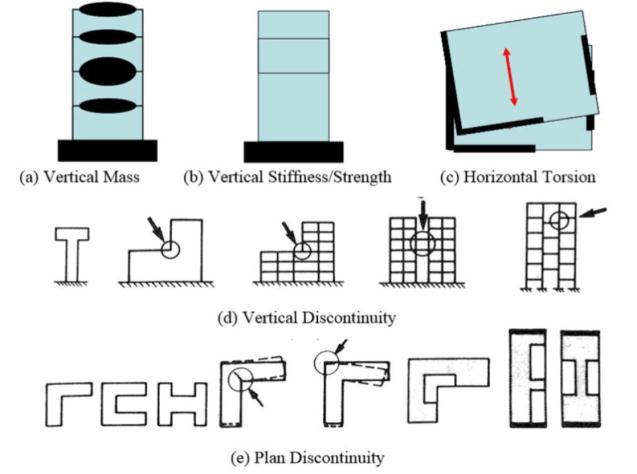
Figure-1: Types of Structural Irregularities
International Research Journal of Engineering and Technology (IRJET) e-ISSN: 2395-0056
Volume: 13 Issue: 02 | Feb 2026 www.irjet.net p-ISSN: 2395-0072
4.1.1
Systematic investigation into plan irregularity began with analytical studies examining torsional response in asymmetric structural systems. Early theoretical formulations demonstrated that eccentricity between the centre of mass and centre of rigidity produces coupled translational–rotational motion, leading to amplified edge displacements and non-uniform force demand. These pioneering works established that torsional flexibility significantlyincreasesdeformationdemandwhentorsional and translational frequencies are closely spaced (Kan and Chopra,1977).Subsequentanalyticalrefinementsconfirmed that even moderate stiffness asymmetry can trigger substantial amplification under seismic excitation, particularlyinsystemswithlimitedredundancy(DelaLlera and Chopra, 1994). These foundational contributions provided the theoretical basis for later experimental and numericalresearchontorsionalvulnerability.
4.2.1 Shake Table and Pseudo-Static Tests
Experimentalresearchhasplayedacriticalroleinvalidating analyticalpredictionsregardingtorsionalbehaviour.Shake table tests on scaled RC building models with asymmetric layoutshavedemonstratedpronouncedtorsional rotation and drift concentration at flexible edges. Such studies
revealed that asymmetric stiffness distribution modifies modalparticipationandacceleratesdamageprogressionin peripheralcolumns(TsoandZhu,1992).Pseudo-staticcyclic loading experiments further clarified inelastic behaviour under torsionally coupled deformation, highlighting degradation in stiffness and strength with repeated displacementcycles(Fajfar,2000).Experimentalevidence consistently indicates that irregular configurations experience earlier onset of localized cracking and reinforcement yielding compared to symmetric counterparts.
Observedfailuremechanismsinplan-distortedspecimens frequentlyinvolveconcentrationofinter-storeydriftatreentrantcornersandbuildingextremities.Diaphragmstress concentrationandsheartransferirregularitiesintensifylocal demand, promoting premature hinge formation in edge columns.Laboratoryinvestigationshavealsodocumented out-of-planetorsional rotationleadingtodifferential axial forceaccumulationinverticalelements.Thesebehavioural patterns confirm that irregular geometry fundamentally alters the internal force redistribution mechanism during stronggroundmotion(PenelisandKappos,1997).
4.3.1
Linearstaticandresponsespectrumanalysesconstitutethe earliest numerical approaches used to quantify torsional amplification. Such methods evaluate elastic response characteristics and provide preliminary assessment of displacement and base shear demand. Parametric studies using response spectrum procedures have shown that torsionalirregularityindicesincreasewitheccentricityratio andstiffnessasymmetry(GoelandChopra,1993).Although computationally efficient, linear analyses often underestimate displacement demand in highly irregular systemsduetoneglectofnonlinearredistributioneffects.
Nonlinearstaticorpushoveranalysisgainedprominenceas apracticaltoolforevaluatinginelasticbehaviourinirregular buildings. Through incremental lateral loading, pushover analysis reveals plastic hinge formation sequences and global capacity curves. Studies applying pushover procedurestoL-andU-shapedRCbuildingsreportuneven hinge distribution and reduced displacement capacity compared to regular plans (Kappos and Penelis, 2000). However,limitationsarisefromtheinabilityofconventional pushovermethodstocapturehigher-modetorsionaleffects accurately.
International Research Journal of Engineering and Technology (IRJET) e-ISSN: 2395-0056
Volume: 13 Issue: 02 | Feb 2026 www.irjet.net p-ISSN: 2395-0072
Nonlinear time history analysis provides the most comprehensiveframeworkforevaluatingdynamicresponse under realistic ground motion records. Advanced finite element modelling has demonstrated that plan-distorted buildingsexhibitamplifiedtorsionalrotation,irregulardrift patterns, and asymmetric damage concentration under bidirectional excitation (Rutenberg and Tso, 2006). Time historystudiesconsistentlyshowthatnonlinearinteraction betweentranslationandtorsionintensifiesundernear-fault ground motions, significantly influencing plastic hinge developmentandresidualdisplacement.
4.4.1
Comparativeinvestigationsexplicitlyevaluatingsymmetric andasymmetricRCbuildingsprovidevaluableinsightinto lateralresponsedifferentiation.Studiesemployingidentical structuralparametersexceptforplangeometryrevealthat plandistortionprimarilyaffectsdriftdemandandtorsional responseratherthanoverallstrengthcapacity(Chopraand Goel,1991).Symmetricbuildingsgenerallyexhibituniform driftprofiles,whereasdistortedplansexperiencelocalized deformation concentration, particularly under nonlinear loading.
4.4.2
Researchers have proposed quantitative metrics such as torsionalirregularityratio,edgedisplacementamplification factor, and drift concentration index to characterize performance divergence. Analytical comparisons demonstrate that torsional irregularity ratios increase nonlinearly with eccentricity magnitude, indicating sensitivityofdynamicresponsetogeometricasymmetry(De Stefano and Pintucchi, 2008). These indices facilitate objectivecomparisonacrossstudiesandprovidemeasurable criteriaforevaluatingdesignadequacy.
4.4.3 Sensitivity to Height, Aspect Ratio, and Structural System
Building height and aspect ratio significantly influence torsional response characteristics. Mid- to high-rise buildingsexhibitincreasedhigher-modeparticipation,which mayamplifytorsional–translationalinteraction.Parametric analyses indicate that irregularity effects intensify with increasedslendernessratioandreducedtorsionalstiffness (Valmundsson and Nau, 1997). Additionally, the type of lateral force-resisting system modulates the severity of responsedifferentiation.
4.5.1
Moment-resistingframes(MRFs)relyprimarilyonflexural action for lateral resistance. In asymmetric MRF systems, limited torsional stiffness may exacerbate rotational demand, leading to pronounced drift amplification at perimetercolumns.Studiesshowthatpureframesystems areparticularlysensitivetostiffnesseccentricityduetotheir comparativelylowertorsionalrigidity.
Shear wall systems enhance lateral stiffness and reduce overall drift; however, asymmetrical wall placement may intensifytorsionaleffects.Analyticalevaluationsrevealthat unevendistributionofwallscanshiftthecentreofrigidity significantly, increasing rotational demand despite higher globalstiffness(Moehle,2014).
Dual systems combining moment frames and shear walls generally provide improved redundancy and energy dissipationcapacity.Comparativeassessmentssuggestthat dual systems mitigate torsional amplification more effectivelythanpureframesystems,thoughirregularwall placement can still generate stiffness imbalance. The interaction between frame flexibility and wall stiffness governsglobalresponsecharacteristics.
4.6.1 Treatment of Plan Irregularity in Seismic Design Codes
Modernseismicdesigncodesincorporatespecificprovisions toaddressplanirregularity,includingtorsionalamplification factors,accidentaleccentricityrequirements,anddriftlimits. Forexample,internationalstandardsprescribeamplification ofdesignforceswhentorsionalirregularitythresholdsare exceeded. These provisions aim to compensate for uncertaintiesinmodellingandconstructiontolerances(CEN, 2004).
4.6.2
Despite these measures, inconsistencies remain between empirical findings and code formulations. Code-based torsionalamplificationfactorsareoftenderivedfromelastic analyses and may not fully capture nonlinear interaction effectsobservedinexperimentalandtime-historystudies. Furthermore,threshold-basedclassificationofirregularity may oversimplify the continuum nature of geometric distortion (De Stefano and Pintucchi, 2008). These limitations underscore the need for refined performance-
International Research Journal of Engineering and Technology (IRJET) e-ISSN: 2395-0056
Volume: 13 Issue: 02 | Feb 2026 www.irjet.net p-ISSN: 2395-0072
based evaluation frameworks that integrate deformationbasedmetricswithtorsionalresponseindicators.
5.1.1
A synthesis of experimental, analytical, and numerical investigationsrevealsseveralconsistentbehaviouraltrends distinguishinggeometricallyuniformandplan-distortedRC configurations. Across methodologies, plan irregularity is repeatedly associated with amplified torsional response, uneven inter-storey drift distribution, and localized concentration of inelastic demand. Linear elastic analyses identify stiffness eccentricity as the primary driver of torsionalcoupling,whereasnonlinearproceduresconfirm thatsuchcouplingintensifiesunderinelasticdeformation. Comprehensive reviews of irregular structures have demonstrated that deformation-based response parameters particularlydriftdemand aremoresensitive toplandistortionthanglobalforcemeasuressuchasbase shear (De Stefano and Pintucchi, 2008). Moreover, timehistory simulations consistently indicate that response amplificationbecomesmorepronouncedunderbidirectional groundmotionexcitation,highlightingthemultidirectional sensitivityofasymmetricsystems.
5.1.2
DistortedRCbuildingsexhibitcharacteristicfailurepatterns that differ from those observed in regular configurations. The most frequently reported mechanism involves plastic hingeconcentrationinperimetercolumnslocatedatflexible edges, often coupled with torsional rotation of floor diaphragms. Re-entrant corners tend to develop stress concentration zones, promoting early cracking and shear distress.Insystemswithasymmetricshearwalldistribution, uneven axial force demand can accelerate compression failureinboundaryelements.Experimental andnonlinear analytical studies confirm that these mechanisms are primarily deformation-driven rather than strengthcontrolled, emphasizing the vulnerability of distortioninduced stiffness gradients (Penelis and Kappos, 1997). Consequently,distortedplansdisplayreduceddeformation capacity and increased damage localization compared to symmetriccounterparts.
5.2.1
Despitebroadagreementontorsionalamplificationeffects, the magnitude of response differentiation reported in the literature varies considerably. Some studies suggest that moderate eccentricity produces limited impact on global performance when torsional stiffness is sufficiently high,
whereas others report significant drift amplification even under small asymmetry ratios. Comparative pushover investigations have occasionally indicated minimal difference in base shear capacity between uniform and distorted plans, contradicting findings from nonlinear dynamic analyses that reveal substantial displacement amplification(Fajfar,2000). Thesedivergencesstemfrom differencesinevaluationcriteria,groundmotionselection, andstructuralmodellingstrategies.
Variabilityinmodellingassumptionssignificantlyinfluences reported outcomes. Key parameters include diaphragm rigidity representation, damping modelling, plastic hinge assignment, and ground motion scaling techniques. For instance, assuming rigid diaphragms may overestimate torsionaldemandincertainconfigurations,whereasflexible diaphragm modelling may redistribute forces differently. Additionally, higher-mode effects and bidirectional excitation are often neglected in simplified analyses, potentially underpredicting torsional–translational interaction (Chopra, 2017). Material nonlinearity models and confinement assumptions further contribute to discrepancies in predicted hinge formation patterns. Therefore,interpretationofcomparativefindingsrequires carefulconsiderationofanalyticalframeworkandboundary conditions.
Inter-storey drift ratio remains the most widely adopted deformation-based performance indicator for evaluating lateralresponsedifferentiation.Synthesizedresultsindicate that plan-distorted buildings frequently exhibit amplified driftatflexibleedges,oftenexceedingaveragestoreydriftby significant margins. Drift concentration factors have been proposed to quantify this amplification, demonstrating nonlinearcorrelationwithstiffnesseccentricitymagnitude. Elevateddriftratiosaredirectlyassociatedwithincreased damageprobabilityandreducedserviceabilityperformance, particularlyinmid-riseasymmetricstructures(DelaLlera andChopra,1994).
Torsionalirregularityindicesprovidequantitativemeasures of rotational amplification relative to translational displacement. Common metrics include the ratio of maximumedgedisplacementtoaveragestoreydisplacement and normalized eccentricity parameters. Parametric analyses reveal that torsional irregularity ratios increase disproportionatelywitheccentricitywhentorsionalstiffness islow,indicatingheightenedsensitivityinflexiblesystems (Tso and Wong, 1995). These indices facilitate objective
International Research Journal of Engineering and Technology (IRJET) e-ISSN: 2395-0056
Volume: 13 Issue: 02 | Feb 2026 www.irjet.net p-ISSN: 2395-0072
cross-study comparison and support performance-based classificationofirregularconfigurations.
Plan distortion also influences dynamic characteristics through modification of effective stiffness and modal coupling. Nonlinear response often produces period elongation due to stiffness degradation, which may differ betweensymmetricandasymmetricsystems.In distorted configurations, coupling effects can alter higher-mode participation and shift effective modal periods under inelastic response conditions. Observed period elongation trendssuggestthatreliancesolelyoninitialelasticperiods mayunderestimatedisplacementdemandinasymmetricRC buildings (Rutenberg and Tso, 2006). This observation reinforcestheimportanceofnonlineardynamicevaluation whenassessingplan-inducedirregularityeffects.
This review synthesizes three decades of analytical, experimental, and numerical research examining lateral responsedifferentiationbetweengeometricallyuniformand plan-distorted reinforced concrete (RC) building configurations. The collective evidence consistently demonstrates that plan distortion primarily influences deformation-based performance indicators rather than global strength parameters. While overall base shear capacitymaynotvarysubstantiallybetweensymmetricand asymmetric layouts, inter-storey drift amplification, torsionalrotation,andlocalizedplastichingeconcentration aremarkedlymorepronouncedindistortedconfigurations. Coupledtranslational–torsionalmodes,stiffnesseccentricity, and diaphragm discontinuities emerge as the principal drivers of response amplification. Nonlinear time-history analyses reveal that these effects intensify under bidirectionalandnear-faultgroundmotions,underscoring the limitations of purely elastic or simplified static procedures.
Comparative studies further indicate that response differentiation is sensitive to building height, aspect ratio, andstructuralsystemtype.Moment-resistingframesexhibit higher torsional flexibility, whereas dual systems provide improved redistribution capacity, though irregular wall placement may still induce stiffness imbalance. Despite codified torsional amplification provisions, discrepancies remain between regulatory simplifications and observed nonlinearbehaviour.Thesynthesishighlightstheneedfor deformation-based evaluation metrics, unified torsional irregularity indices, and performance-based assessment frameworks that explicitly account for plan-induced asymmetry. Overall, the findings reinforce that geometric regularityenhancespredictabilityandseismicrobustness, whereas plan distortion necessitates refined analytical scrutiny to ensure reliable performance under extreme lateralloading.
This review is limited to peer-reviewed English-language publications and selected international code documents, whichmayexcluderegion-specificresearchcontributions. Variability in modelling assumptions, ground motion selection,andperformancemetricsacrossstudiesconstrains directquantitativecomparison.Additionally,thesynthesis relies primarily on published analytical and numerical investigations,asfull-scaleexperimentaldataonirregular RCbuildingsremainlimited.Finally,emergingtopicssuchas soil–structure interaction and advanced material systems werebeyondthedefinedscopeofthisreview.
1. ASCE (2016) Minimum Design Loads and Associated CriteriaforBuildingsandOtherStructures(ASCE/SEI 7-16).Reston,VA:AmericanSocietyofCivilEngineers.
2. CEN (2004) Eurocode 8: Design of Structures for Earthquake Resistance (EN 1998-1). Brussels: EuropeanCommitteeforStandardization.
3. Chandler,A.M.andDuan,X.N.(1997)‘Inelasticseismic response of asymmetric-plan buildings’, Engineering Structures,19(9),pp.724–735.
4. Chopra, A.K. (2017) Dynamics of Structures: Theory andApplicationstoEarthquakeEngineering.5thedn. Boston:Pearson.
5. Chopra,A.K.andGoel,R.K.(1991)‘Amodalpushover analysisprocedureforestimatingseismicdemandsfor buildings’, Earthquake Engineering & Structural Dynamics,20(10),pp.979–997.
6. De la Llera, J.C. and Chopra, A.K. (1994) ‘Accidental torsion in buildings due to asymmetry’, Journal of StructuralEngineering,120(4),pp.1025–1045.
7. De Stefano, M. and Pintucchi, B. (2008) ‘A review of research on seismic behaviour of irregular building structures since 2002’, Bulletin of Earthquake Engineering,6(2),pp.285–308.
8. Fajfar, P. (2000) ‘A nonlinear analysis method for performance-based seismic design’, Earthquake Spectra,16(3),pp.573–592.
9. FEMA (2000) Prestandard and Commentary for the Seismic Rehabilitation of Buildings (FEMA 356). Washington, DC: Federal Emergency Management Agency.
10. Goel,R.K.andChopra,A.K.(1993)‘Periodformulasfor moment-resisting frame buildings’, Journal of StructuralEngineering,119(6),pp.1787–1801.
International Research Journal of Engineering and Technology (IRJET) e-ISSN: 2395-0056
Volume: 13 Issue: 02 | Feb 2026 www.irjet.net p-ISSN: 2395-0072
11. Kan,C.L.andChopra,A.K.(1977)‘Torsional coupling andearthquake responseof buildings’, Journal ofthe StructuralDivision,103(ST11),pp.2221–2237.
12. Kappos, A.J. and Penelis, G.G. (2000) ‘Seismic assessment of irregular buildings using pushover analysis’,EngineeringStructures,22(5),pp.558–572.
13. Kitchenham,B.andCharters,S.(2007)Guidelinesfor PerformingSystematicLiteratureReviewsinSoftware Engineering.KeeleUniversityTechnicalReport.
14. Moehle, J. (2014) Seismic Design of Reinforced ConcreteBuildings.NewYork:McGraw-Hill.
15. Paulay,T.andPriestley,M.J.N.(1992)SeismicDesignof ReinforcedConcreteandMasonryBuildings.NewYork: Wiley.
16. Penelis, G.G. and Kappos, A.J. (1997) EarthquakeResistantConcreteStructures.London:E&FNSpon.
17. Rutenberg,A.andTso,W.K.(2006)‘Seismictorsional response of asymmetric buildings’, Engineering Structures,28(6),pp.858–867.
18. Shibata, A. (2010) Dynamic Analysis of Earthquake Structures.Tokyo:Springer.
19. Snyder, H. (2019) ‘Literature review as a research methodology:Anoverviewandguidelines’,Journalof BusinessResearch,104,pp.333–339.
20. Tranfield,D.,Denyer,D.andSmart,P.(2003)‘Towards a methodology for developing evidence-informed management knowledge by means of systematic review’,BritishJournalofManagement,14(3),pp.207–222.
21. Tso, W.K. and Wong, C.M. (1995) ‘Evaluation of accidental torsion provisions in seismic codes’, EarthquakeEngineering&StructuralDynamics,24(7), pp.1001–1018.
22. Tso, W.K. and Zhu, Y. (1992) ‘Torsional balance of asymmetric buildings’, Journal of Structural Engineering,118(7),pp.1972–1988.
23. Valmundsson, E.V. and Nau, J.M. (1997) ‘Seismic response of building frames with vertical structural irregularities’, Journal of Structural Engineering, 123(1),pp.30–41.
24. Anagnostopoulos, S.A. (1988) ‘Torsional response of multistory buildings’, Earthquake Engineering & StructuralDynamics,16(6),pp.833–852.
25. Anagnostopoulos,S.A.andKyrkos,M.T.(1992)‘Torsion inbuildings:Codeprovisionsversusdynamicanalysis’, EngineeringStructures,14(1),pp.3–12.
26. Bozorgnia, Y. and Bertero, V.V. (2004) Earthquake Engineering: From Engineering Seismology to Performance-Based Engineering. Boca Raton: CRC Press.
27. Chandler,A.M.,Hutchinson,G.L.andDuan,X.N.(1996) ‘Inelastic seismic response of asymmetric buildings’, JournalofStructuralEngineering,122(2),pp.130–138.
28. Chopra,A.K.andGoel,R.K.(2002)‘Amodalpushover analysis procedure to estimate seismic demands for unsymmetric-planbuildings’,EarthquakeEngineering &StructuralDynamics,31(3),pp.561–582.
29. De Stefano, M. and Pintucchi, B. (2008) ‘A review of research on seismic behaviour of irregular building structures since 2002’, Bulletin of Earthquake Engineering,6(2),pp.285–308.
30. Fardis, M.N. (2009) Seismic Design, Assessment and RetrofittingofConcreteBuildings.Dordrecht:Springer.
31. Ghobarah,A.andTso,W.K.(1986)‘Seismicanalysisof torsionally unbalanced systems’, Canadian Journal of CivilEngineering,13(5),pp.599–609.
32. Goel, R.K. and Chopra, A.K. (1994) ‘Evaluation of torsional provisions in seismic codes’, Journal of StructuralEngineering,120(2),pp.376–394.
33. Humphreys, J. and Tso, W.K. (1995) ‘Evaluation of torsional code provisions for asymmetric buildings’, EarthquakeEngineering&StructuralDynamics,24(7), pp.1023–1039.
34. Kappos,A.J.,Panagopoulos,G.andPenelis,G.G.(1998) ‘Seismic performance of irregular RC buildings’, EngineeringStructures,20(9),pp.751–761.
35. Khaloo, A.R. and Karimi, H. (2008) ‘Seismic performance of asymmetric reinforced concrete buildings’, Structural Engineering and Mechanics, 29(4),pp.437–452.
36. Maheri,M.R.andAkbari,R.(2003)‘Seismicbehaviour of asymmetric RC buildings’, Engineering Structures, 25(4),pp.453–462.
37. Moehle, J.P., Hooper, J.D. and Lubke, C.D. (2008) ‘Seismicdesignofreinforcedconcretespecialmoment frames’,StructuralDesignofTallandSpecialBuildings, 17(3),pp.489–505.
International Research Journal of Engineering and Technology (IRJET) e-ISSN: 2395-0056
Volume: 13 Issue: 02 | Feb 2026 www.irjet.net p-ISSN: 2395-0072
38. Mwafy,A.M.andElnashai,A.S.(2001)‘Staticpushover versus dynamic collapse analysis of RC buildings’, EngineeringStructures,23(5),pp.407–424.
39. Papanikolaou,V.K.andElnashai,A.S.(2006)‘Analytical assessmentoftheeffectofplanirregularity’,Journalof EarthquakeEngineering,10(1),pp.1–28.
40. Priestley,M.J.N.,Calvi,G.M.andKowalsky,M.J.(2007) Displacement-Based Seismic Design of Structures. Pavia:IUSSPress.
41. Riddell, R. and Garcia, J.E. (2001) ‘Hysteretic energy spectrumanddamagecontrol’,EarthquakeEngineering &StructuralDynamics,30(12),pp.1791–1816.
42. Rutenberg,A.(2002)‘Seismicresponseofasymmetric structures’,JournalofStructuralEngineering,128(2), pp.152–160.
43. Shakib,H.andPirizadeh,M.(2014)‘Nonlineardynamic response of RC buildings with plan irregularity’, Soil DynamicsandEarthquakeEngineering,60,pp.1–11.
44. Stathopoulos, T. and Anagnostopoulos, S.A. (2005) ‘Wind-inducedtorsionalresponseofbuildings’,Journal ofStructuralEngineering,131(5),pp.689–698.
45. Tena-Colunga, A. and Abrams, D.P. (1996) ‘Seismic behaviour of asymmetric RC structures’, Journal of StructuralEngineering,122(7),pp.752–761.
46. Valmundsson, E.V. and Nau, J.M. (1997) ‘Seismic response of building frames with vertical structural irregularities’, Journal of Structural Engineering, 123(1),pp.30–41.
47. Vamvatsikos,D.andCornell,C.A.(2002)‘Incremental dynamicanalysis’,EarthquakeEngineering&Structural Dynamics,31(3),pp.491–514.
48. Wong, C.M. and Tso, W.K. (1994) ‘Seismic torsional response of asymmetric buildings’, Engineering Structures,16(6),pp.405–413.
49. Yari,M.andRahgozar,R.(2011)‘Torsionalresponseof asymmetric-plan buildings under bidirectional excitation’,EngineeringStructures,33(2),pp.514–526.