
International Research Journal of Engineering and Technology (IRJET) e-ISSN: 2395-0056
Volume: 13 Issue: 02 | Feb 2026 www.irjet.net p-ISSN: 2395-0072
International Research Journal of Engineering and Technology (IRJET) e-ISSN: 2395-0056
Volume: 13 Issue: 02 | Feb 2026 www.irjet.net p-ISSN: 2395-0072
Bhawesh Sanwal1, Mrs. Arifa Khan2
1Master of Technology, Computer Science and Engineering, Lucknow Institute of Technology, Lucknow, India 2Assistant Professor, Department of Computer Science and Engineering, Lucknow Institute of Technology, Lucknow, India ***
Abstract - The rapid proliferation of REST-based web services in enterprise and cloud-native environments has intensifiedtheneedforrobustandfine-grainedauthorization mechanisms. While authentication verifies identity, modern distributed systems require context-aware, policy-driven authorization to regulate resource access at granular levels. This review critically examines existing frameworks and methodologies for constructing fine-grained authorization systemsinREST-basedJavaapplications,withaspecificfocus on tokenized access governance and NoSQL backend integration.Thestudysynthesizesliteratureonauthorization paradigms such as Role-Based Access Control (RBAC), Attribute-Based Access Control (ABAC), and policy-based models, alongside token standards including OAuth 2.0 and JSONWebTokens(JWT).ItfurtheranalyzeshowJavasecurity frameworks suchasSpringSecurityandrelatedmiddleware solutions implement policy enforcement within REST architectures. Additionally, the review evaluates the security implications and access control mechanisms associated with NoSQL databases, highlighting integration challenges and governance limitations in distributed environments. Comparativeanalysisofexistingapproachesrevealstrade-offs in scalability, performance overhead, policy expressiveness, andinteroperability. The paper identifies persistent research gaps, including standardized fine-grained token governance, dynamic policy adaptation, and cross-layer security coordination between application and database tiers. By consolidating current knowledge and outlining emerging directions, this review provides a structured foundation for researchers and practitioners aiming to design secure, scalable, and policy-driven authorization frameworks for modern Java-based REST ecosystems.
Key Words: Fine-Grained Authorization; REST API Security; Token-Based Access Control; OAuth 2.0 and JWT; Java Security Frameworks; NoSQL Access Governance
Therapiddigitaltransformationofenterpriseshasledtothe widespreadadoptionofservice-orientedandmicroservices architectures,predominantlyimplementedthroughRESTful webservices.AsapplicationsincreasinglyexposeAPIsover public and hybrid cloud environments, securing these
interfaces has become a critical concern. While authenticationmechanisms confirmuseridentity,modern distributed systems demand more sophisticated authorizationmodelscapableofenforcinggranular,contextaware access control policies. This review examines the evolution and integration of fine-grained authorization frameworks in REST-based Java applications, particularly those leveraging tokenized governance mechanisms and NoSQLbackends.
1.1.1 Importance of Secure Web Services in Modern Applications
Web services form the backbone of contemporary digital ecosystems,enablinginteroperabilityacrossheterogeneous platforms. REST (Representational State Transfer), introduced by Fielding (2000), has become the dominant architectural paradigm due to its scalability and statelessness.However,RESTfulAPIsareinherentlyexposed over HTTP, making them susceptible to threats such as unauthorized access, token replay, injection attacks, and privilege escalation (OWASP, 2023). As organizations increasingly rely on API-driven architectures for financial transactions, healthcare systems, and cloud-native deployments, the security of service endpoints becomes a matterofoperationalandregulatorysignificance.Effective authorization mechanisms therefore play a crucial role in preservingconfidentiality,integrity,andavailabilitywithin distributedsystems(Stallings,2018).
1.1.2 REST-Based ApplicationsinEnterpriseEcosystems
Enterprise environments commonly deploy REST APIs within microservices architectures to achieve modularity andscalability.FrameworkssuchasSpringBootandJakarta EE facilitate rapid development of REST-based Java applications,oftenintegratedwithAPIgatewaysandidentity providers. These systems typically operate in cloud or containerizedinfrastructureswhereservicescommunicate over internal and external networks. The decentralized natureofsucharchitecturescomplicatescentralizedsecurity enforcement and requires robust, interoperable authorization models (Richardson, 2018). Furthermore,
International Research Journal of Engineering and Technology (IRJET) e-ISSN: 2395-0056
Volume: 13 Issue: 02 | Feb 2026 www.irjet.net p-ISSN: 2395-0072
stateless communication patterns shift security responsibilitiestowardtoken-basedmechanismsratherthan traditionalsession-basedcontrols.
Authenticationestablishesidentity,whereasauthorization determinespermittedactions.IndistributedRESTsystems, coarse-grained role checks are insufficient for dynamic environments involving multi-tenant systems, contextual policies, and resource-level permissions. Fine-grained authorizationmechanisms,suchasAttribute-BasedAccess Control (ABAC), evaluate contextual attributes including user roles, resource metadata, and environmental conditions beforegrantingaccess(Hu,Kuhn&Ferraiolo, 2015). Token-based governance frameworks, particularly OAuth 2.0 (Hardt, 2012) and JSON Web Tokens (Jones, Bradley & Sakimura, 2015), enable scalable delegation of access rights across services. However, improper configurationorinsufficienttokenvalidationmayintroduce vulnerabilities,highlightingthenecessityofstructuredand policy-drivenauthorizationframeworks.
Thisreviewfocusesonthe constructionand evaluation of fine-grained authorization frameworks specifically within REST-basedJavaapplicationsthatemploytokenizedaccess governanceandNoSQLbackends.Thescopeencompasses authorizationmodelssuchasRBAC,ABAC,andpolicy-based access control; token standards including OAuth 2.0 and JWT; enforcement mechanisms within Java security frameworks; and access governance considerations in NoSQL databases such as MongoDB and Cassandra. Emphasis is placed on architectural patterns, interoperabilitychallenges,andscalabilityconsiderationsin distributedsystems.
The review excludes broader authentication protocols unrelated to tokenized delegation (e.g., password-only systems), non-REST communication paradigms such as SOAP, and relational database-specific authorization mechanisms unless directly relevant for comparative analysis. Cryptographic algorithm design and low-level networksecurityprotocolsarealsobeyondthescope,except where they intersect with token security or policy enforcement.
The primary objective is to synthesize existing literature, identifyprevailingarchitecturaltrends,evaluatestrengths and weaknesses of current approaches, and highlight unresolved challenges in integrating fine-grained authorizationacrossapplicationanddatalayers.
Arigorousunderstandingoffoundationalsecurityconcepts is essential for evaluating fine-grained authorization
frameworks in REST-based Java applications. This section outlines the architectural principles of REST security, distinguishesauthenticationfromauthorization,explainsthe rationaleforfine-grainedaccesscontrol,discussestokenized governance mechanisms, and examines NoSQL-specific securityconsiderations.
2.1.1
REST(RepresentationalStateTransfer)isanarchitectural style characterized by stateless communication, resourceorienteddesign,anduniforminterfaces(Fielding,2000).Its statelessnessenhancesscalabilityandsimplicitybutshifts responsibility for maintaining security context to each request.SinceRESTAPIstypicallyoperateoverHTTP,they inheritweb-basedvulnerabilitiesincludinginjectionattacks, brokenobject-levelauthorization,cross-sitescripting,and improper rate limiting (OWASP, 2023). Furthermore, the exposureofAPIsincloudandmicroservicesenvironments increases the attack surface, especially when services communicateacrosstrustboundaries.Theabsenceofbuiltinsessionstaterequiresexplicitmechanisms oftentokenbased to securely propagate identity and authorization informationacrossdistributedcomponents.
REST API security must align with the classical CIA triad: confidentiality, integrity, and availability. Confidentiality ensuresthatsensitivedataisprotectedagainstunauthorized disclosure, typically through encryption protocols such as TLS.Integrityguaranteesthattransmitteddataisnotaltered maliciously during transit, while availability ensures that servicesremainaccessibleunderlegitimateusageconditions (Stallings, 2018). In REST systems, achieving these goals requires layered security controls, including transport security,robustinputvalidation,securetokenhandling,and fine-grained authorization enforcement at resource endpoints.
Authentication and authorization, though closely related, servedistinctsecurityfunctions.Authenticationverifiesthe identityofauserorsystementity,oftenthroughcredentials suchaspasswords,certificates,orfederatedidentitytokens. Authorization, in contrast, determines the actions that an authenticated entity is permitted to perform within the system (Sandhu et al., 1996). In distributed REST environments, decoupling these processes enhances scalabilityandmodularity.
Tokenized access mechanisms bridge authentication and authorization by encapsulating identity claims and permissionscopeswithindigitallysignedtokens.Standards
International Research Journal of Engineering and Technology (IRJET) e-ISSN: 2395-0056
Volume: 13 Issue: 02 | Feb 2026 www.irjet.net p-ISSN: 2395-0072
suchasOAuth2.0providedelegatedauthorizationwithout exposingusercredentials,enablingthird-partyapplications toaccessprotectedresourcessecurely(Hardt,2012).Thus, while authentication establishes “who” the subject is, authorization defines “what” the subject can do, often evaluateddynamicallybasedonpolicyrulesandcontextual attributes.
Fine-grained authorization refers to the enforcement of accesscontroldecisionsatagranularlevel suchasspecific API endpoints, HTTP methods, resource attributes, or contextual conditions rather than broad role-based permissions.TraditionalRole-BasedAccessControl(RBAC) assignspermissionsaccordingtopredefinedroles,whichcan becomerigidindynamicenterpriseenvironments(Sandhu et al., 1996). In contrast, Attribute-Based Access Control (ABAC) evaluates multiple attributes related to users, resources, and environmental context, offering higher flexibilityandpolicyexpressiveness(Hu,Kuhn&Ferraiolo, 2015).
InenterpriseRESTAPIs,fine-grainedcontroliscriticalfor multi-tenant systems, microservices coordination, and regulatorycompliance.Forexample,accessdecisionsmay dependnotonlyonauser’srolebutalsoonrequestorigin, time of access, or data sensitivity classification. Without granularenforcement,systemsriskover-privilegedaccess andincreasedexposuretolateralattacks.
Tokenized governance mechanisms provide scalable and interoperablesolutionsformanagingauthorizationacross distributed systems. OAuth 2.0 defines a framework for delegated authorization using access tokens issued by an authorizationserver(Hardt,2012).JSONWebTokens(JWT) encode claims in a compact, digitally signed format, facilitatingstatelessvalidationbyresourceservers(Jones, Bradley & Sakimura, 2015). Security Assertion Markup Language(SAML)supportsXML-basedidentityassertions, commonlyusedinenterprisesinglesign-oncontexts(Cantor etal.,2005).OpenIDConnectextendsOAuth2.0toprovide standardizedidentityverification.
Policy enforcement involves validating token signatures, verifying scopes, and ensuring claim integrity before grantingresourceaccess.Tokenintrospectionmechanisms allow resource servers to query authorization servers to confirm token validity and metadata (Lodderstedt et al., 2013).Effectivegovernancerequireslifecyclemanagement, revocationstrategies,andsecurestorageofsigningkeysto mitigatereplayandforgeryrisks.
NoSQL databases emerged to address scalability and flexibility requirements of modern applications. They are broadlycategorizedintodocumentstores(e.g.,MongoDB), key-value stores (e.g., Redis), column-family stores (e.g., Cassandra), and graph databases (e.g., Neo4j). Unlike traditional relational databases, many NoSQL systems initiallyprioritizedperformanceandschemaflexibilityover maturesecuritycontrols(Okmanetal.,2011).
Security challenges in NoSQL environments include inconsistent access control models, weak default authentication configurations, injection vulnerabilities specifictoJSON-basedqueries,andlimitedsupportforfinegrainedauthorizationatthedata-fieldlevel.Indistributed architectures, aligning application-layer authorization policies with database-level permissions is complex. Therefore, authorization frameworks in REST-based Java applications must incorporate mechanisms that ensure policyconsistencyacrossserviceanddatatiers,particularly in microservices ecosystems where multiple services interactwithsharedNoSQLresources.
This section surveys, categorizes, and critically evaluates existingresearchonauthorizationmechanismsrelevantto REST-based Java applications with tokenized governance and NoSQL backends. The review synthesizes theoretical models,practicalimplementations,andidentifiedlimitations toestablishacomprehensiveunderstandingofthedomain.
3.1.1
Role-BasedAccessControl(RBAC)remainsoneofthemost widelyadoptedauthorizationmodelsinenterprisesystems. RBAC assigns permissions to roles rather than individual users, simplifying administrative management and policy enforcement (Sandhu et al., 1996). In REST-based APIs, RBAC is typically implemented through role mappings embedded in tokens or evaluated at middleware layers. While RBAC offers scalability in structured organizational hierarchies,itexhibitslimitationsindynamic,context-aware environments. Over-privileging and role explosion are frequently cited issues when attempting to represent complex access policies within RESTful microservices (Ferraiolo, Chandramouli & Kuhn, 2003). Consequently, researchers argue that RBAC alone is insufficient for finegrained,distributedauthorizationscenarios.
Attribute-Based Access Control (ABAC) extends RBAC by evaluatingpoliciesbasedonattributesofsubjects,resources, actions, and environmental conditions. ABAC supports
International Research Journal of Engineering and Technology (IRJET) e-ISSN: 2395-0056
Volume: 13 Issue: 02 | Feb 2026 www.irjet.net p-ISSN: 2395-0072
dynamic decision-making and fine-grained enforcement suitableforRESTAPIshandlingheterogeneousclients(Hu, Kuhn&Ferraiolo,2015).PolicylanguagessuchasXACML formalize attribute evaluation rules and decision logic (OASIS, 2013). Studies demonstrate that ABAC improves flexibility and contextual awareness but introduces computationaloverheadandpolicymanagementcomplexity. IndistributedRESTecosystems,attributesynchronization acrossservicesremainsakeychallenge,particularlywhen authorizationdecisionsspanmultiplemicroservices.
3.1.3
Policy-based access control frameworks decouple policy decisionpoints(PDP)frompolicyenforcementpoints(PEP), enabling centralized governance with distributed enforcement.Thisarchitectureenhancesconsistencyacross REST endpoints but may introduce latency in highthroughput systems. Capability-based models, in contrast, grantaccessthroughunforgeabletokensorreferencesthat embody specific rights (Dennis and Van Horn, 1966). Modern token systems resemble capability constructs, where possession of a valid token confers certain permissions.However,capabilityrevocationanddelegation managementremainopenresearchconcernsindistributed webarchitectures.
3.2
3.2.1 Overview of OAuth 2.0 Extensions
OAuth2.0providesadelegationframeworkenablingclients toaccessprotectedresourcesonbehalfofresourceowners (Hardt, 2012). Extensions such as Proof Key for Code Exchange(PKCE)andtokenintrospectionenhancesecurity inpublicanddistributedclients.ResearchhighlightsOAuth’s scalabilityinmicroservicesarchitecturesbutalsoidentifies misconfiguration risks, including improper redirect URI validation and scope mismanagement (Fett, Küsters & Schmitz,2016).EmergingadaptationsintegrateOAuthwith API gateways and service meshes to support fine-grained governanceacrosscloud-nativedeployments.
3.2.2
JSONWebTokens(JWT)provideacompact,self-contained format for transmitting claims between parties (Jones, Bradley & Sakimura, 2015). JWTs support stateless validation, reducing database lookups and improving scalability.However,literaturedocumentssecurityconcerns such as weak signature verification, improper algorithm handling, and token replay vulnerabilities (Mainka et al., 2017).Researchemphasizesbestpracticesincludingshort token lifetimes, secure key rotation, and strict claim validationtomitigaterisksinREST-basedsystems.
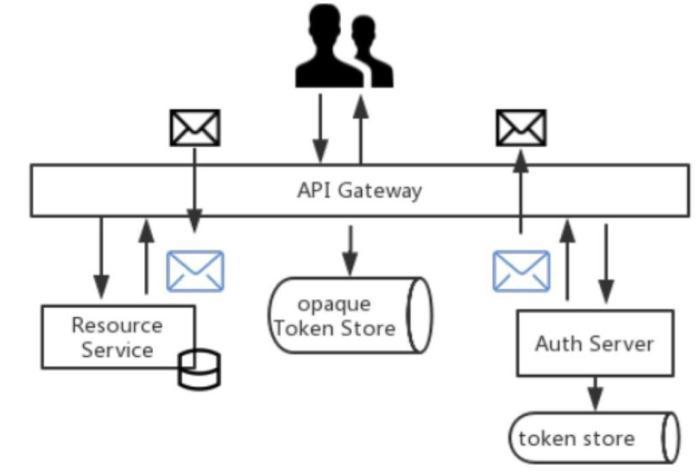
Comparativestudiescontrastopaquetokens,self-contained JWTs, and SAML assertions in terms of performance, revocationcomplexity,andinteroperability.Opaquetokens require server-side introspection, enhancing revocation control but increasing latency. Self-contained tokens improve efficiency but complicate real-time revocation. SAMLassertionsproviderichattributestatementsbutare heavierinXMLrepresentation,makingthemlesssuitablefor lightweight REST APIs (Cantor et al., 2005). The choice of tokenformatthusreflectstrade-offsbetweenscalabilityand governancestrictness.
Spring Security is the dominant framework for securing REST-based Java applications. It supports method-level security, expression-based access control, and Access Control List (ACL) modules for object-level authorization. Expression-basedmechanismsenablecontextualevaluation of request parameters and user attributes, aligning with ABACprinciples. Studies indicatethat Spring’s filterchain architecture allows integration with OAuth 2.0 and JWT validators while maintaining modular policy enforcement (Pivotal Software, 2022). Nevertheless, configuration complexity and policy sprawl may increase maintenance overheadinlarge-scalesystems.
Apache Shiro provides modular authentication and authorization services with pluggable realms and permission-based models. Java Authentication and Authorization Service (JAAS) offers a pluggable security architectureintegratedwithintheJavaplatform.WhileJAAS provides extensibility, it lacks native REST-centric abstractions, requiring additional middleware layers. Comparative analyses show that modern frameworks prioritize annotation-driven security and integration with identityproviderstostreamlinefine-grainedenforcement.
Middleware components, including servlet filters and API gateways, function as policy enforcement points in REST architectures.Theyvalidatetokens,enforcescopes,andlog accessattemptsbeforedelegatingrequeststobusinesslogic layers. Research in microservices security highlights the effectivenessofcentralizedgatewayenforcementcombined with decentralized service-level validation to achieve defense-in-depth (Newman, 2019). However, improper layering maycreateinconsistenciesbetween gatewayand service-levelpolicies.
International Research Journal of Engineering and Technology (IRJET) e-ISSN: 2395-0056
Volume: 13 Issue: 02 | Feb 2026 www.irjet.net p-ISSN: 2395-0072
3.4.1 Access Control Mechanisms Native to NoSQL Systems
NoSQL databases implement varied authorization models depending on architecture. Document databases such as MongoDB support role-based privileges at database and collectionlevels,whilecolumn-familystoreslikeCassandra provideroleandpermissionmanagementatkeyspacelevels. Early research identified security gaps in default configurations and limited granularity compared to relational systems (Okman et al., 2011). Recent versions incorporate improved authentication and encryption features,yetfine-grainedfield-levelaccesscontrolremains limitedinsomeimplementations.
3.4.2 Integration Challenges Between Application and NoSQL
Integrating application-layer authorization with NoSQL backendcontrolsintroduces consistencychallenges.REST applicationsoftenenforcepoliciesattheservicelayer,while databases maintain independent privilege models. Misalignment can result in bypass vulnerabilities or redundant enforcement. Studies emphasize the need for coordinatedgovernancestrategieswhereapplication-level policies dictate backend access scopes, reducing overexposureofdataresources.
3.4.3
Security patterns in NoSQL-backed systems include least privilege design, centralized identity integration, and encrypted communication channels. Anti-patterns involve hard-coded credentials, disabled authentication for performance reasons, and over-reliance on perimeter security. Literature underscores that secure NoSQL deploymentrequirespolicyharmonizationwithREST-layer authorization to prevent data leakage and privilege escalation.
3.5.1 Trends and Common Strategies
TheliteraturerevealsaclearshiftfromstaticRBACmodels toward dynamic, attribute-driven and token-based authorization frameworks. Integration of OAuth 2.0 with JWT has become standard practice for RESTful services, while enforcement mechanisms increasingly rely on middlewareabstractionandpolicydecoupling.
3.5.2 Contradictions and Unresolved Issues
Despite advancements, contradictions remain regarding optimaltokendesign balancingstatelessefficiencyagainst revocation control. Similarly, while ABAC enhances
flexibility, its computational overhead raises concerns in high-throughputmicroservicesenvironments.Standardized governanceacrossheterogeneousNoSQLsystemsremains underexplored.
3.5.3
Existingstudiesevaluateauthorizationframeworksbasedon latency overhead, throughput impact, scalability under concurrent requests, and policy expressiveness. Security robustnessisoftenmeasuredthroughvulnerabilityanalysis and compliance with established standards. However, the absenceofunifiedbenchmarkingframeworkslimitscrossstudycomparability.
Thissectionprovidesastructuredcomparisonofprominent authorization models,token governancemechanisms,and Java-based enforcement frameworks discussed in the precedingliteraturereview.Theobjectiveistoevaluatetheir suitability for constructing a fine-grained authorization frameworkinREST-basedJavaapplicationsintegratedwith NoSQL backends. The comparative analysis focuses on functionalcapabilities,scalabilitycharacteristics,integration complexity,andsecurityrobustness.
4.1.1
Fine-grainedcontrolisadefiningrequirementindistributed REST ecosystems. RBAC-based frameworks such as those derivedfromtheNISTRBACmodelprovidestructuredrole hierarchiesbutlackcontextualexpressiveness(Sandhuetal., 1996). In contrast, ABAC systems and XACML-based implementationsofferattribute-leveldecisionlogic,enabling object-level and contextual authorization (OASIS, 2013). Spring Security supports method-level annotations and expression-basedaccesscontrol,facilitatingresource-level enforcementwithinJavaservices.Capability-inspiredtoken systems, such as OAuth 2.0 access tokens with scoped permissions,allowdelegatedandgranularaccess;however, scopegranularitydependsheavilyonimplementationdesign (Hardt,2012).
Scalabilityisessentialinmicroservicesarchitectureswhere RESTAPIshandlehighconcurrency.StatelessJWTvalidation improves performance by avoiding persistent lookups, enabling horizontal scaling (Jones, Bradley & Sakimura, 2015). However, ABAC engines that evaluate complex attribute policies may introduce computational latency. Centralizedpolicydecisionpointsenhanceconsistencybut can become bottlenecks under heavy loads. Research indicates that hybrid models combining decentralized enforcement withcentralizedpolicygovernance achieve
International Research Journal of Engineering and Technology (IRJET) e-ISSN: 2395-0056
Volume: 13 Issue: 02 | Feb 2026 www.irjet.net p-ISSN: 2395-0072
better scalability-performance trade-offs in distributed environments(Newman,2019).
Frameworkmaturityandecosystemcompatibilityinfluence integration complexity. Spring Security provides seamless integration with OAuth 2.0 resource servers and identity providers, reducing development overhead in Java-based REST systems. Apache Shiro offers modular security but requires additional configuration for token-based REST scenarios. JAAS, while extensible, lacks REST-native abstractionsandoftendemandscustommiddlewarelayers. Frameworksalignedwithmoderndependencyinjectionand annotation-based configurations demonstrate superior maintainabilityinenterprisedeployments.
Token management encompasses issuance, validation, revocation, and lifecycle monitoring. Opaque tokens validatedthroughintrospectionendpointsenablestronger revocationcontrol butincur additional network overhead (Lodderstedt et al., 2013). Self-contained JWTs reduce latency but complicate real-time revocation unless short expirationtimesorrevocationlistsareimplemented.SAML assertions support rich attribute exchange but introduce higher message complexity and are less optimized for lightweight REST communication (Cantor et al., 2005). Effective governance frameworks therefore balance operationalefficiencywithsecurityenforcementrigor.
4.1.5 NoSQL Backend Support
Support for NoSQL backend authorization varies across frameworks. Application-layer enforcement using Spring Securityorsimilarmiddlewareensurespolicyconsistency independent of database vendor. Native NoSQL role models such as those implemented in MongoDB or Cassandra provide coarse-grained database-level access butmaynotaligndirectlywithREST-levelpolicygranularity (Okmanetal.,2011).Integratedgovernancearchitectures thereforerelyonlayeredenforcement,whereapplicationlevelfine-graineddecisionsrestrictbackendqueriestopreauthorizedscopes.
4.2.1 Comparative Strengths
RBAC frameworks excel in administrative simplicity and predictableperformanceinstructuredenvironments.ABAC modelsprovidesuperiorflexibilityandcontextualprecision. OAuth2.0combinedwithJWTsupportsscalable,stateless authorization suitable for cloud-native systems. Spring Securityofferscomprehensivetooling,ecosystemmaturity, and annotation-driven policy configuration. Capability-
orientedtokensenhancedelegationefficiencyindistributed microservices.
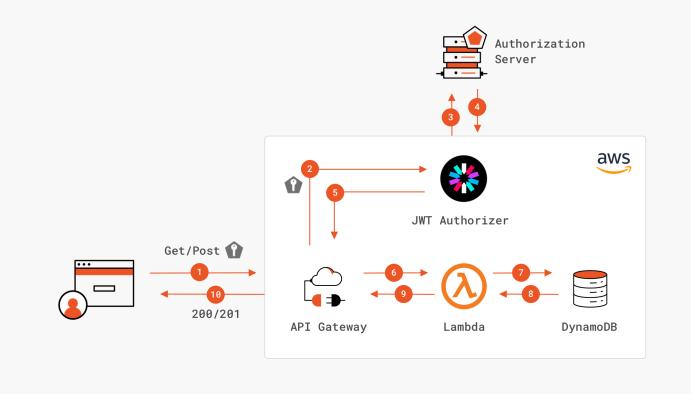
Despite their advantages, each approach presents limitations. RBAC suffers from role explosion in complex organizations. ABAC increases policy complexity and evaluationoverhead.StatelessJWTmechanismscomplicate revocation and may expose systems to replay risks if not carefullyconfigured.Centralizedauthorizationserverscan introduce single points of failure. Furthermore, inconsistenciesbetweenREST-layerenforcementandNoSQL backend privileges may create residual attack surfaces if policiesarenotharmonizedacrosstiers.
4.2.3
Performance evaluations across studies typically measure latency overhead, throughput degradation, and scalability under concurrent load. Stateless token validation consistently demonstrates lower runtime overhead comparedtointrospection-basedmodels,thoughatthecost ofdynamicrevocationflexibility.Fine-grainedABACpolicies increase decision accuracy but may reduce throughput in high-frequencyAPIcalls.Therefore,anoptimalframework for REST-based Java systems with NoSQL backends often adopts a hybrid strategy: coarse-grained database permissions,fine-grainedservice-layerenforcement,shortlivedtokens,anddistributedpolicyevaluation.
The design of a fine-grained authorization framework for REST-based Java applications requires architectural alignment between service layers, token governance mechanisms,andbackenddatastores.Beyondselectingan authorizationmodel,effectiveimplementationdependson secure architectural patterns, coordinated policy governance, and consistent integration with NoSQL backends.Thissectionsynthesizesbestpracticesidentified inexistingliteratureandindustrystandards.
International
Volume: 13 Issue: 02 | Feb 2026 www.irjet.net p-ISSN: 2395-0072
5.1.1
API gateways serve as centralized entry points for REST services, providing authentication validation, token verification, rate limiting, and request filtering before forwarding traffic to backend services. In microservices architectures, gateways function as primary policy enforcement points (PEPs), reducing duplicated security logicacrossservices(Richardson,2018).Whenintegrated with OAuth 2.0 authorization servers, gateways validate access tokens and enforce scope restrictions. However, relying solely on gateway-level enforcement may create security gaps if downstream services do not perform secondaryvalidation.Defense-in-depthprinciplestherefore recommendlayeredenforcementmechanisms.
5.1.2
Microservices architectures decompose applications into independently deployable services communicating over REST APIs. This decentralization improves scalability but complicates security management. Each service must independently validate tokens and enforce authorization decisions to prevent lateral movement attacks (Newman, 2019). Service-to-service communication commonly employsmutualTLSandshort-livedtokenstominimizerisk exposure. Distributed policy evaluation combined with centralized governance repositories provides a balanced approachtoscalabilityandconsistency.
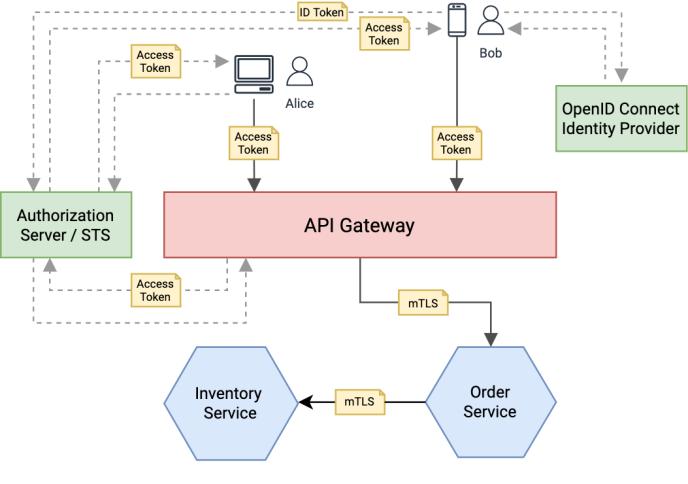
Effective token management includes secure issuance, storage, expiration control, and revocation. OAuth 2.0 frameworks define flows for access and refresh token handling (Hardt, 2012). Best practices recommend shortlivedaccesstokenscombinedwithrefreshtokenstoreduce replayattackwindows.Tokensigningkeysmustberotated periodically,andvalidationlogicmuststrictlyverifyissuer, audience,expiration,andsignatureclaims(Jones,Bradley& Sakimura, 2015). Improper lifecycle management is a recurringvulnerabilityinREST-basedsystems,emphasizing theneedforstructuredgovernancepolicies.
5.2.1
Modernauthorizationarchitecturesseparatepolicydecision points (PDPs) from policy enforcement points (PEPs), enhancingmodularityandgovernanceconsistency.ThePDP evaluates policies against contextual attributes, while the PEP intercepts requests and enforces decisions. This separation aligns with XACML-based architectures and supports dynamic policy updates without redeploying services (OASIS, 2013). In Java ecosystems, PEPs are commonlyimplementedthroughservletfilters,interceptors, or Spring Security components. Centralized PDP services improve policy uniformity but must be designed to avoid latencybottlenecksandsinglepointsoffailure.
Comprehensive logging and audit trails are essential for compliance, forensic analysis, and anomaly detection. Securityevents includingtokenvalidationfailures,access denials, and privilege escalations should be logged in tamper-resistantstoragesystems.StandardssuchasISO/IEC 27001 emphasize accountability and traceability as core
International Research Journal of Engineering and Technology (IRJET) e-ISSN: 2395-0056
Volume: 13 Issue: 02 | Feb 2026 www.irjet.net p-ISSN: 2395-0072
governance principles (ISO, 2013). In distributed REST architectures, centralized logging frameworks combined with real-time monitoring tools facilitate detection of suspiciousaccesspatterns.However,excessiveloggingmay impact performance and expose sensitive data if not properlysanitized.
5.3.1Consistencyand Partition-ToleranceConsiderations
NoSQLsystemsfrequentlyfollowtheCAPtheoremtradeoffs, balancing consistency, availability, and partition tolerance in distributed environments (Brewer, 2012). In REST-basedapplications,eventualconsistencymodelsmay affectauthorizationdecisionsifattributedataisreplicated asynchronously.Designersmustensurethatsecurity-critical attributes such as user roles or permissions are synchronized reliably to prevent stale authorization outcomes.Strongconsistencyguaranteesarerecommended foridentityandaccessmanagementdatastores.
5.3.2
NoSQL databases provide native role-based privilege management; however, these mechanisms are typically coarse-grained compared to application-layer policies (Okmanetal.,2011).Bestpracticedictatesenforcingfinegrained authorization at the application layer while restricting database accounts to least-privilege roles. This layeredapproachminimizesriskexposureincaseofservice compromise. Field-level encryption and encrypted communication channels further enhance confidentiality. Anti-patterns, such as disabling authentication for performancegainsorembeddingadministrativecredentials withincode,significantlyincreasevulnerability.
5.3.3
REST services interacting with NoSQL backends must validate input parameters rigorously to prevent injection attacks specific to JSON-based query languages. Parameterizedqueries,schemavalidation,andstrictinput sanitizationreduceattackvectors.Datagovernancepolicies should define clear mappings between REST resource permissions and database-level access controls, ensuring consistency across service boundaries. Coordinated governanceframeworksthatintegrateidentitymanagement, policyevaluation,andbackendprivilegeconfigurationoffer themostresilientsecurityposture.
TheincreasingrelianceonREST-basedJavaapplicationsin enterpriseandcloud-nativeenvironmentshasunderscored thecritical needforsecure andfine-grainedauthorization mechanisms. This review systematically examined the
evolution, models, and implementation strategies for constructing authorization frameworks that integrate tokenized access governance and NoSQL backends. RoleBased Access Control (RBAC) provides a structured foundationformanagingpermissionsbutlackscontextual flexibility,whereasAttribute-BasedAccessControl(ABAC) andpolicy-basedapproachesofferdynamic,context-aware enforcement suitable for complex, multi-tenant systems. Tokenizedmechanisms,includingOAuth2.0andJWT,enable scalable,statelessdelegationofaccessrights,thoughsecure lifecycle management and revocation remain essential to prevent misuse. Java-based frameworks such as Spring Security, Apache Shiro, and JAAS provide middleware support for fine-grained enforcement, while REST-layer enforcement must be carefully coordinated with backend NoSQL privileges to maintain consistency and prevent residualvulnerabilities.Comparativeanalysesrevealtradeoffsbetweenperformance,scalability,andexpressiveness, highlighting the importance of layered enforcement, centralizedgovernance,androbustmonitoring.Overall,the synthesis of literature emphasizes that effective design requiresintegrationofarchitectural bestpractices,secure token management, and coordinated backend policies. By consolidatingcurrentresearchandpracticalconsiderations, this review provides a comprehensive reference for developers and researchers aiming to design secure, scalable, and context-aware authorization frameworks in modernREST-basedJavaecosystems.
This review is limited by its focus on REST-based Java applications and does not cover alternative web architectures such as SOAP or gRPC. While it addresses NoSQL backends,relational databaseintegrationandlowlevelcryptographicmechanismsareoutsidethescope.The literature synthesis relies on available published frameworks and may not fully capture proprietary or emerging commercial solutions. Additionally, quantitative performance benchmarking was not included, limiting empiricalcomparisonofframeworksunderreal-worldloads. Finally,thereviewemphasizesarchitecturalandgovernance considerations, potentially overlooking implementationspecificnuancesordeveloperadoptionchallengesthatmay influencepracticaldeploymentoutcomes.
1. Brewer,E.A.(2012)‘CAPTwelveYearsLater:Howthe “Rules”HaveChanged’,Computer,45(2),pp.23–29.
2. Cantor,S.etal.(2005)AssertionsandProtocolforthe OASIS Security Assertion Markup Language (SAML) V2.0.OASISStandard.
3. Dennis, J.B. and Van Horn, E.C. (1966) ‘Programming Semantics for Multiprogrammed Computations’, CommunicationsoftheACM,9(3),pp.143–155.
International Research Journal of Engineering and Technology (IRJET) e-ISSN: 2395-0056
Volume: 13 Issue: 02 | Feb 2026 www.irjet.net p-ISSN: 2395-0072
4. Fielding, R.T. (2000) Architectural Styles and the Design of Network-based Software Architectures. Doctoraldissertation.UniversityofCalifornia,Irvine.
5. Ferraiolo, D., Chandramouli, R. and Kuhn, D. (2003) Role-BasedAccessControl.ArtechHouse.
6. Fett, D., Küsters, R. and Schmitz, G. (2016) ‘A ComprehensiveFormalSecurityAnalysisofOAuth2.0’, ProceedingsoftheACMConferenceonComputerand CommunicationsSecurity.
7. Hardt, D. (2012) The OAuth 2.0 Authorization Framework.RFC6749.IETF.
8. Hu, V.C., Kuhn, D.R. and Ferraiolo, D.F. (2015) ‘Attribute-BasedAccessControl’,Computer,48(2),pp. 85–88.
9. ISO(2013)ISO/IEC27001:2013InformationSecurity Management Systems. International Organization for Standardization.
10. Jones,M.,Bradley,J.andSakimura,N.(2015)JSONWeb Token(JWT).RFC7519.IETF.
11. Lodderstedt, T. et al. (2013) OAuth 2.0 Token Introspection.RFC7662.IETF.
12. Mainka, C. et al. (2017) ‘On the Security of Modern SingleSign-OnProtocols’,IEEEEuropeanSymposium onSecurityandPrivacy,pp.13–28.
13. Newman, S. (2019) Building Microservices. O’Reilly Media.
14. OASIS (2013) eXtensible Access Control Markup Language(XACML)Version3.0.OASISStandard.
15. Okman, L. et al. (2011) ‘Security Issues in NoSQL Databases’, IEEE 10th International Conference on Trust, Security and Privacy in Computing and Communications(TrustCom),pp.541–547.
16. OWASP(2023)OWASPAPISecurityTop10.OpenWeb ApplicationSecurityProject.
17. Pivotal Software (2022) Spring Security Reference Guide.PivotalSoftware,Inc.
18. Richardson,C.(2018)MicroservicesPatterns.Manning Publications.
19. Sandhu, R. et al. (1996) ‘Role-Based Access Control Models’,IEEEComputer,29(2),pp.38–47.
20. Stallings,W.(2018)EffectiveCybersecurity:AGuideto UsingBestPracticesandStandards.Addison-Wesley.
21. Mohamed, A.K.Y.S., Auer, D., Hofer, D. and Küng, J. (2023)Asystematicliteraturereviewofauthorization andaccesscontrol requirementsandcurrentstateof the art for different database models, International JournalofWebInformationSystems,20(2).
22. Fett, D., Küsters, R. and Schmitz, G. (2016) ‘A comprehensiveformalsecurityanalysisofOAuth 2.0’, arXivpreprint,arXiv:1601.01229.
23. Mladenov,V.,Mainka,C.andSchwenk,J.(2015)Onthe security of modern single sign on protocols: Second ordervulnerabilitiesinOpenIDConnect,arXiv preprint,arXiv:1508.04324.
24. Gupta,E.etal.(2022)‘Enablingattribute basedaccess controlinNoSQLdatabases’,PMC(PubMedCentral).
25. Gopal,S.(2025)BuildingarobustOAuthtokenbased API security: a high level overview, arXiv preprint, arXiv:2507.16870.
26. Access Control on NoSQL Databases (2024) NIST IR 8504,NationalInstituteofStandardsandTechnology.
27. de Almeida, M.G. et al. (2022) ‘Authentication and authorization in microservices architecture: a systematicliteraturereview’,AppliedSciences,12(6), pp.3023.
28. Al Wadi,R.A.andMaaita,A.A.(2023)‘Authentication and role based authorization in microservice architecture: a generic performance centric design’, ResearchGate.
29. Ron,A.,Shulman Peleg,A.andBronshtein,E.(2015)No SQL, No Injection? Examining NoSQL security, arXiv preprint,arXiv:1506.04082.
30. Pokorny,L.B.(2022)‘End to Endsecuritymodelingin microservicesarchitecturesusingOAuth2andJWTina Spring Boot ecosystem’, International Journal of MicroservicesandApplications(IJMA).
31. Modadugu,J.K.,Venkata,R.T.P.andVenkata,K.P.(2024) ‘Evaluating security models for database driven microservices using Java and Hibernate’, Journal of Information Systems Engineering and Management, 9(4s).
32. AdvancedAPISecurity:SecuringAPIswithOAuth2.0, OpenID Connect, JWS, and JWE (2013) Prabath Siriwardena,Springer.
33. Saverio,P.andOthers(2022)‘SecureAPIdevelopment inJava:implementingOAuth2.0andOpenIDConnect’, EJAET,9(5),pp.168–173.
International Research Journal of Engineering and Technology (IRJET) e-ISSN: 2395-0056
34. Simonyan,H.(2025)Authorizationexplained:whento useRBAC,ABAC,ACL&more,Substack.
35. Authentication and Authorization in Microservices Architecture:ASystematicLiteratureReview(2022), Applied Sciences, 12(6), MDPI. (duplicate title but separaterecord)
36. Richardson, C. (2025) ‘Microservices architecture securityandauthorizationmechanisms’,IJRISS,IJRISS Publications.(conference/archivaleducationalsource)
37. Role-BasedAccessControlinRESTAPISecurity(2024) SecureCodeCards.
38. Attribute BasedAccessControl(2025)Wikipedia.(asa taxonomyreference)
Volume: 13 Issue: 02 | Feb 2026 www.irjet.net p-ISSN: 2395-0072 © 2026, IRJET | Impact Factor value: 8.315 | ISO 9001:2008