
International Research Journal of Engineering and Technology (IRJET) e-ISSN: 2395-0056
Volume: 13 Issue: 02 | Feb 2026 www.irjet.net p-ISSN: 2395-0072
International Research Journal of Engineering and Technology (IRJET) e-ISSN: 2395-0056
Volume: 13 Issue: 02 | Feb 2026 www.irjet.net p-ISSN: 2395-0072
Jyoti Yadav1 , Mrs. Arifa Khan2
1Master of Technology, Computer Science and Engineering, Lucknow Institute of Technology, Lucknow, India 2Assistant Professor, Department of Computer Science and Engineering, Lucknow Institute of Technology, Lucknow, India
Abstract - Classimbalanceisapervasivechallengeinspam email classification, where legitimate messages overwhelminglyoutnumberspaminstances,leadingtobiased learning and degraded classifier performance. This review paper critically examines two major strategies for handling highly skewed spam email datasets: cost-sensitive learning and data-level balancing techniques. Cost-sensitive learning embeds misclassification costs directly into the learning process to penalize errors on minority classes, whereas data-level methods adjust the dataset distribution using samplingstrategiessuchasoversampling,undersampling,and synthetic sample generation. Through a systematic synthesis of contemporary research, this review highlights the theoretical foundations, algorithmic implementations, and practical impacts of these approaches on popular spam datasets such as SpamBase, Enron, and LingSpam. Comparativeevaluationsrevealthatwhiledata-levelmethods like SMOTE variants and hybrid sampling can improve class representation, they may introduce noise or overfitting. Conversely, cost-sensitive frameworks offer flexible decision boundariesbutoftenrequirecarefulcostmatrixtuning.Direct comparativestudiessuggestthathybridcombinationsofboth strategies yield more robust performance across diverse imbalanceratios.Thereviewalsoidentifieskeylimitationsin existing literature including a lack of standardized benchmarking,limitedexaminationofevolvingspampatterns, andunderexploreddeeplearningadaptations.Finally,future research directions are outlined to bridge current gaps and enhance spam detection in increasingly dynamic environments.
Key Words: Imbalanced Learning, Cost-Sensitive Classification, Data-Level Balancing, Spam Email Detection, Synthetic Oversampling
1. INTRODUCTION
1.1 Background
1.1.1 Importance of Email Spam Detection
Email spam detection remains a critical area of study in machine learning and cybersecurity due to the massive volume of unsolicited emails circulated daily and the potential risks these messages pose to users and network
infrastructures. Unwanted or malicious emails contribute notonlytouserfrustrationandproductivityloss,butalsoto thepropagationofphishingattempts,malwaredistribution, anddatatheftcampaigns,whichcancompromisesecurity andprivacyacrossdigitalecosystems (Fernández-Lópezet al.,2018;Akeeletal.,2025).Traditionalrule-basedfilters, which once dominated early spam filtering systems, often failtocopewithevolvingcontentpatternsandobfuscation techniquesemployedbyspammers,necessitatingtheuseof more advanced machine learning and NLP-driven classification methods (Akeel et al., 2025). Machine learning-basedapproachesimproveadaptabilitybylearning discriminative patterns from historical datasets, making them resilient to changing spam tactics and text variations (Asliyuksek,Tonkal&Kocaoglu,2025).
1.1.2 Challenges Posed by Highly Skewed Datasets (Class Imbalance)
Oneofthecorechallengesinspamclassificationistheclass imbalance problem, where legitimate (non-spam) emails significantly outnumber spam instances. This imbalance leads standard learning algorithms to bias predictions towardsthemajorityclass,resultinginpoordetectionofthe minority(spam)classandinflatedperformancemetricssuch as overall accuracy that mask poor recall on the minority category (Fernández-López et al., 2018). Such skewed distributions reduce the effective learning of decision boundariesforrareclasses,whileincreasingfalsenegatives acriticalissueinreal-worlddeploymentswheremissed spam can have serious consequences. To mitigate these issues, researchers propose both data-level balancing (resampling) and cost-sensitive learning strategies that adjusteitherthedatadistributionorthelearningprocessto improve minority class detection without discarding valuableinformation.
1.2.1 Comparing Cost-Sensitive
Balancing Is Important
In the literature on imbalanced classification, two broad paradigms have emerged to address skewness: data-level techniques alter the dataset itself (e.g., oversampling,
International Research Journal of Engineering and Technology (IRJET) e-ISSN: 2395-0056
Volume: 13 Issue: 02 | Feb 2026 www.irjet.net p-ISSN: 2395-0072
undersampling, synthetic sample generation), whereas cost-sensitivelearningembedsmisclassificationcostsinto algorithms to penalize errors on the minority class more heavily.Bothstrategiesaimtoreducethebiasintroducedby imbalanceddata,buttheydifferfundamentallyinapproach and implications for classifier performance (Feng, Zhou & Tong,2020;Fernández-Lópezetal.,2018).Databalancing hasbeenshowntoimproverepresentationofrareclassesby augmentingorundersamplingdata,butmayintroducenoise or information loss if not carefully tuned. Cost-sensitive frameworksfocusonadjustingthedecisioncriterionrather than altering the dataset, potentially preserving valuable information while explicitly incorporating error costs. However, the effectiveness of these methods varies with dataset characteristics, model choice, and the imbalance ratio, making comparative evaluation essential for understandingtheirrelativestrengthsandtrade-offs.
Althoughtherearesurveysonclassimbalanceandgeneral strategies for handling skewed datasets, many existing reviews lack focused comparative analysis specifically tailoredtospamemailclassificationdatasets.Priorreviews oftenconsiderbroadapplicationssuchasfrauddetectionor medicaldiagnosis,whereimbalancecharacteristicsandcost implications differ significantly from text-based spam problems.Moreover,fewsurveysintegraterecentadvances in synthetic sample generation or hybrid models that combine both cost-sensitive and balancing techniques, leaving a gap in comprehensive assessment of these strategiesinthecontextofevolvingspamtacticsandtextual features. This review aims to fill that gap by synthesizing current research and providing detailed comparisons informedbyrecentempiricaloutcomes.
This paper systematically examines the literature on cost-sensitiveanddata-levelimbalancehandlingstrategies asappliedtospamemaildatasets.Itsurveyskeymethods, including oversampling, undersampling, synthetic data techniques, and cost-sensitive algorithm adaptations, drawinginsightsfromvariedexperimentalevaluationsand algorithm implementations. By comparing performance trendsandobservedtrade-offsacrossdifferentstudies,the review highlights where each strategy shows promise or limitations, and synthesizes conclusions that can guide futureresearchandpracticalapplications.
2.1.1 Characteristics and Features of Spam vs. Legitimate Emails
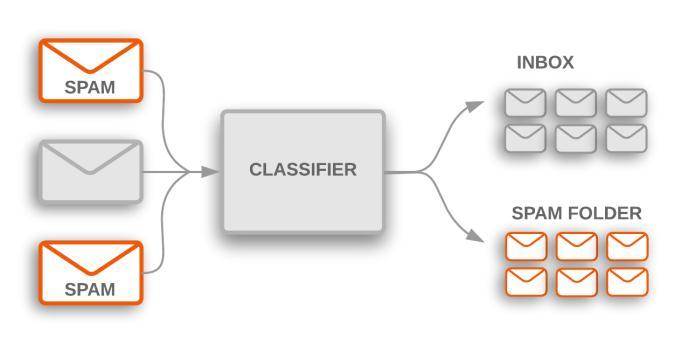
Spamemailclassificationisatext-basedbinaryclassification task that differentiates unsolicited or malicious emails (spam) from legitimate emails (ham). Spam emails often exhibit distinctive linguistic and structural patterns, includingtheuseofpromotionalkeywords,deceptiveURLs, excessivecapitalization,andunusualpunctuation,whereas legitimate emails generally follow formal, contextually relevantstructures (Asliyuksek,Tonkal&Kocaoglu,2025). Features commonly employed for classification include lexical attributes (word frequency, n-grams), semantic features derived from natural language processing (NLP), sender metadata, and email header information (Fernández-López et al., 2018). High-quality feature extraction is essential because spam techniques continuously evolve, with spammers using obfuscation methods such as text randomization, embedding URLs within images, and content variation to evade detection (Akeel et al., 2025). Accurate representation of thesecharacteristicsinmodelinputsisthereforecriticalfor effective spam detection, particularly when dealing with largeandheterogeneousemaildatasets.
2.2.1 Nature and Implications of Class Imbalance
In spam detection datasets, legitimate emails usually outnumberspamemailsbyasignificantmargin,leadingto highly skewed or imbalanced class distributions. This imbalance can bias standard machine learning algorithms toward predicting the majority class, resulting in a disproportionate number of misclassified minority instances (Feng,Zhou&Tong,2020).Imbalancealsoreduces theabilityofclassifierstolearndiscriminativepatternsfor theminorityclass,whichisparticularlyproblematicinrealworldscenarioswherespamemailsmaycarryphishingor malwarerisks.
International Research Journal of Engineering and Technology (IRJET) e-ISSN: 2395-0056
Volume: 13 Issue: 02 | Feb 2026 www.irjet.net p-ISSN: 2395-0072
Traditionalevaluationmetricslikeoverallaccuracycanbe misleading under class imbalance, often suggesting high performance even when the classifier fails to correctly identify spam instances (Fernández-López et al., 2018). Metricsthataccountforimbalance,suchasprecision,recall, F1-score, area under the ROC curve (AUC), G-mean, and Matthews correlation coefficient (MCC), provide a more realistic assessment of classifier effectiveness for the minority class. These metrics help highlight the trade-offs betweenfalsepositives(legitimate emailsmisclassifiedas spam) and false negatives (spam emails missed by the classifier),whicharecrucialinpracticaldeployments.
2.3.1 High Dimensionality
Spamdatasetsoftenincludeaverylargenumberoftextual and metadata features, leading to high-dimensional data spaces. High dimensionality increases computational complexity,risksoverfitting,andcandilutetheeffectiveness of traditional machine learning algorithms if irrelevant or noisy features are not appropriately filtered (Akeel et al., 2025).
2.3.2 Evolving Spamming Patterns
Spammers constantly adapt their methods to bypass detection systems, introducing evolving patterns that complicateclassification.Thesemayincludedynamicsubject lines,changingsenderaddresses,andcontent obfuscation strategies,whichrequireclassifierstogeneralizeeffectively across unseen spam types and maintain robustness over time (Asliyuksek,Tonkal&Kocaoglu,2025).
2.3.3
Despitethelargenumberofemailsinreal-worlddatasets, featuresrelevanttospamdetection suchasrarekeywords, uncommonURLs,orembeddedmalwareindicators canbe sparse.Sparsedatareducesstatisticalstrengthforlearning, particularly for minority class instances, and necessitates specialized methods like oversampling, synthetic data generation,orcost-sensitivelearningtoimproveclassifier performance (Feng,Zhou&Tong,2020).
3.1.1 Definitions
Class imbalance in machine learning refers to scenarios where the number of instances in one class (typically the majority)significantlyexceedsthoseinanother(minority), creating a skewed distribution (Fernández-López et al., 2018). This imbalance is prevalent in real-world domains
suchasfrauddetection,medicaldiagnosis,andspamemail classification, where minority instances carry higher importance.Inthecontextofspamdetection,themajority class typically consists of legitimate emails, while spam emails represent the minority class, often comprising less than10%ofthedataset.
3.1.2
Imbalanceddatasetsposeasignificantchallengetostandard machine learning algorithms, which tend to favor the majorityclass.Thiscanresultinclassifiersexhibitinghigh overall accuracy while performing poorly on the minority class, leading to false negatives that are particularly detrimentalinspamdetection,wheremissedspamemails maycarrymalwareorphishingthreats (Feng,Zhou&Tong, 2020).Furthermore,imbalancecancomplicatethelearning ofdiscriminativeboundaries,reducemodelgeneralization, andexacerbateoverfittingontheminorityclassifimproper balancingstrategiesareapplied.
The confusion matrix is a foundational tool for evaluating classificationperformanceunderimbalance,asitprovidesa detailed breakdown of true positives,true negatives, false positives, and false negatives. This granular view enables researcherstoidentifybiasestowardthemajorityclassand assesshowwellminorityinstancesarecaptured.
Metrics such as precision, recall, and F1-score are more informative than overall accuracy in imbalanced scenarios (Fernández-Lópezetal.,2018).Precisionindicates the proportion of correctly identified positive instances among all predicted positives, while recall measures the proportionofcorrectlyidentifiedpositiveinstancesrelative toallactualpositives.TheF1-score,astheharmonicmeanof precision and recall, balances both aspects and is particularlyusefulforevaluatingminority-classdetection.
Advanced metrics like the Area Under the Receiver OperatingCharacteristicCurve(AUC-ROC),geometricmean (G-Mean),andMatthewsCorrelationCoefficient(MCC)offer more comprehensive performance assessment for imbalanced datasets. AUC-ROC evaluates classifier discriminationcapabilityindependentofthreshold,G-Mean balancessensitivityandspecificity,andMCCaccountsforall four confusion matrix elements, making it robust against skeweddistributions (Feng,Zhou&Tong,2020).
International Research Journal of Engineering and Technology (IRJET) e-ISSN: 2395-0056
Volume: 13 Issue: 02 | Feb 2026 www.irjet.net p-ISSN: 2395-0072
Inaddition,cost-sensitivemetricsassigndifferentpenalties to misclassifications of minority versus majority classes. Thesemetricsareessentialincontextslikespamdetection, wherethecostofmissingaspamemail(falsenegative)may outweigh incorrectly flagging a legitimate email (false positive) (Akeel et al., 2025). Incorporating these metrics helpsguidealgorithmdesignandevaluation.
3.3.1 UCI SpamBase, Enron, LingSpam
Severalbenchmarkdatasetsarewidelyusedforresearchin imbalanced spam email classification. UCI SpamBase contains 4,601 emails with a 39.4% spam ratio, featuring word frequency, character frequency, and capital letter statistics. Enron Email Dataset includes millions of realworldemailswithextensivemetadataandanapproximate 13% spam ratio, providing opportunities for large-scale evaluation. LingSpam Dataset comprises around 2,893 emails,withroughly23%spam,emphasizingtextualcontent andstructuralfeatures.
3.3.2 Feature Characteristics and Imbalance Ratios
Thesedatasetsvaryintermsoffeaturetypesandimbalance ratios,whichdirectlyaffectalgorithmperformanceandthe choice of imbalance mitigation strategies. UCI SpamBase emphasizes token-level lexical features, Enron offers metadata and social network features, while LingSpam focuses on linguistic patterns. Understanding these characteristics is crucial for selecting appropriate resampling methods, cost-sensitive algorithms, or hybrid approaches.
Data-levelbalancingstrategiesarewidelyusedtechniquesto addressclassimbalancebymodifyingthetrainingdataset rather than changing the learning algorithm itself (Fernández-Lópezetal.,2018).Thesemethodsaimto provideclassifierswithmorerepresentativeexamplesofthe minorityclass,therebyimprovingpredictionperformance. Theyareparticularlyrelevantinspamemailclassification, whereminorityspammessagesareoftenunderrepresented anddifficulttodetectaccurately.
4.1.1 Basic Approach
Random oversampling increases the number of minority classinstancesbyrandomlyduplicatingexistingsamplesin thetrainingdataset (Feng,Zhou&Tong,2020).Thisensures thattheminorityclassismoreequallyrepresentedduring
modeltraining,whichcanimprovetheabilityofclassifiersto recognizerarespamemails.
4.1.2
While oversampling is simple and effective, it can lead to overfitting, as the classifier may memorize duplicated minoritysamplesinsteadoflearninggeneralizedpatterns. This is especially problematic in high-dimensional spam datasets,whereduplicatedemailsmaynotcontributenew informationbutstillbiasthemodel (Akeeletal.,2025).
4.2.1
Random undersampling reduces the number of majority class instances to balance the dataset. Although it can mitigatebiastowardthemajorityclassandreducetraining time, it may result in loss of critical information, as legitimate emails that carry diverse patterns are discarded (Fernández-Lópezetal.,2018).Forspamdatasets withlimitedminorityinstances,thiscannegativelyimpact themodel’sgeneralizationperformance.
4.3.1 SMOTE and Its Variants
Synthetic Minority Oversampling Technique (SMOTE) generates new minority class samples by interpolating betweenexistinginstancesinthefeaturespace (Feng,Zhou &Tong,2020).VariantssuchasBorderline-SMOTEfocuson generatingsyntheticsamplesnearclassboundaries,while ADASYN (Adaptive Synthetic Sampling) generates more samples in regions where the minority class is harder to learn.
Synthetic generation works by selecting a minority class instanceandcreatingnewexamplesalongthelinesegments connecting it to its nearest minority neighbors. This approach increases diversity among minority samples, reducingoverfittingcomparedtorandomoversampling.
4.3.3
Inspamemaildatasets,SMOTEanditsvariantshavebeen appliedtoaugmentrarespammessages,improvingclassifier recall and F1-score without significantly affecting precision (Akeeletal.,2025;Asliyuksek,Tonkal&Kocaoglu, 2025).Thesetechniquesareparticularlyeffectivewhenthe spam content is textual and highly variable, as synthetic samplesprovideadditionaltrainingpatterns.
International Research Journal of Engineering and Technology (IRJET) e-ISSN: 2395-0056
Volume: 13 Issue: 02 | Feb 2026 www.irjet.net p-ISSN: 2395-0072
4.4.1 Combination of Oversampling and Undersampling
Hybridmethodscombineoversamplingoftheminorityclass withundersamplingofthemajorityclasstoachievebetter balance while mitigating the disadvantages of each individualmethod (Fernández-Lópezetal.,2018).
4.4.2 Evolutionary and Clustering-Based Balancing
Advancedhybridapproachesuseclusteringorevolutionary algorithms to intelligently select samples for removal or generation. Clustering helps preserve representative majority class samples, while evolutionary strategies optimize the sample distribution to maximize classifier performance.Thesemethodshavedemonstratedsuperior performanceoncomplexandhigh-dimensionaldatasetslike EnronandSpamBase.
4.5 Recent Data-Level Strategies
4.5.1 Ensemble Sampling
Ensemble sampling generates multiple balanced datasets and trains a separate classifier on each. Predictions are combined using majority voting, which improves stability andreducesvarianceinperformance,especiallyforskewed spamdatasets (Feng,Zhou&Tong,2020).
4.5.2 GAN-Based Oversampling
Generative Adversarial Networks (GANs) can synthesize realistic minority class samples, including textual spam emails,offeringamoresophisticatedalternativetoSMOTE. GAN-basedoversamplingpreservescomplexpatternsand improves model generalization, particularly when spam contentcontainssubtlelinguisticorstructuralcues (Akeelet al.,2025).
4.5.3 Data Augmentation for Text Data
Text-specific data augmentation techniques, such as synonymreplacement,back-translation,andparaphrasing, can artificially expand the minority class. These methods generate diverse spam examples without duplicating existingsamples,enhancingclassifierlearningforminority patterns (Asliyuksek,Tonkal&Kocaoglu,2025).
5. COST-SENSITIVE
Cost-sensitivelearningstrategiesaddressclassimbalanceby embedding the consequences of misclassification directly into the learning process rather than altering the dataset. These approaches are particularly relevant in spam email detection, where the cost of missing a spam email (false negative) is often higher than incorrectly flagging a legitimate email (false positive) (Fernández-López et al., 2018).Cost-sensitivemethodsallowclassifierstoprioritize
minorityclassaccuracywhilemitigatingbiasintroducedby imbalanceddistributions.
5.1.1 Cost Matrix and Misclassification Costs
At the core of cost-sensitive learning is the cost matrix, which specifies penalties for different types of misclassification.Inabinaryspamclassificationcontext,a typicalmatrixassignshighercoststofalsenegatives(spam emails classified as legitimate) than to false positives (legitimateemailsclassifiedasspam).Misclassificationcosts influencethelearningobjectiveofalgorithms,guidingthem to reduce high-cost errors even when minority class instances are scarce (Feng, Zhou & Tong, 2020). By formalizingthetrade-offbetweensensitivityandspecificity, cost-sensitivelearningensuresthatmodelsfocusonmore criticalclassificationerrors.
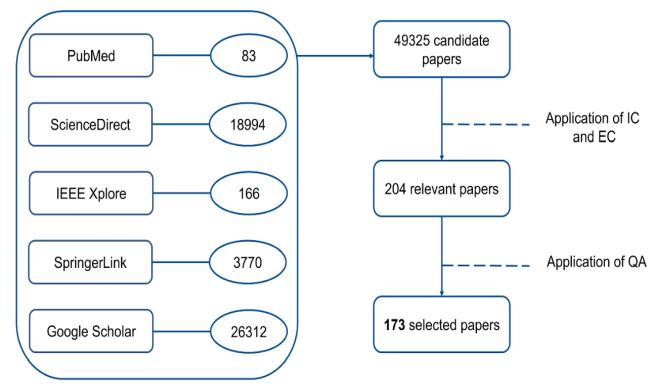
Figure-2: Cost-sensitive learning for imbalanced medical data
5.2.1 Cost-Sensitive Decision Trees
Decision treealgorithmscanincorporate misclassification costs byadjusting splitting criteria or weightingleaf node predictions. Cost-sensitive decision trees prioritize splits that reduce the overall expected cost, improving minority classdetectioninskeweddatasets (Akeeletal.,2025).
5.2.2 Cost-Sensitive SVM, kNN, Naïve
Other popular classifiers can also be adapted for cost sensitivity.InSVM,penaltyparameterscanbesetdifferently foreachclasstominimizecostlyerrors.k-NearestNeighbors (kNN) can weigh neighbor votes according to misclassification costs, and Naïve Bayes can adjust prior probabilitiesorlikelihoodstoreflectcostdifferences (Feng, Zhou& Tong,2020).These adaptations enhanceclassifier performanceonminorityclasseswithoutalteringthedataset distribution.
International Research Journal of Engineering and Technology (IRJET) e-ISSN: 2395-0056
Volume: 13 Issue: 02 | Feb 2026 www.irjet.net p-ISSN: 2395-0072
5.3.1 Wrapper
Meta costing refers to wrapper methods that convert any standard classifier into a cost-sensitive classifier. These methods iteratively adjust training weights or decision thresholds to minimize expected misclassification costs (Fernández-López et al., 2018). Meta costing is versatile because it allows existing algorithms to benefit from cost-sensitive optimization without modifying their internal structure, making it suitable for spam detection wheremultipleclassifiertypesmaybeemployed.
5.4.1 Posterior
Cost-sensitive learning can also be applied at the decision threshold level. By adjusting posterior probabilities, classifiers can alter the probability cutoff for labeling an instanceasspamorlegitimate,effectivelyreducingtherisk ofhigh-costerrors (Akeeletal.,2025).
5.4.2 Decision Threshold
Decisionthresholdscanbeoptimizedtobalancesensitivity and specificity according to misclassification costs. For example, lowering the threshold for classifying spam increases recall (reduces false negatives) but may slightly reduceprecision.Thisapproachprovidesflexibilityinrealworlddeploymentscenarioswhereerrorcostsdiffer.
5.5 Evaluation in Cost-Sensitive Framework
5.5.1 Cost-Weighted Metrics
Traditional metrics like accuracy are insufficient in costsensitivesettings.Cost-weightedmetrics,suchasweighted F1-score or cost-sensitive error rate, incorporate misclassificationpenaltiestoevaluateperformance.These metrics ensure that classifiers are assessed according to their ability to minimize costly errors rather than maximizingoverallaccuracy (Fernández-Lópezetal.,2018).
5.5.2 Risk Minimization Strategies
Cost-sensitiveframeworksoftenoptimizemodelsusingrisk minimizationstrategies,whichaimtoreducetheexpected costoverthedistributionofinstances.Byintegratingcosts intothelearningobjective,thesestrategiesenhancemodel robustnessandminorityclassdetection,whichiscrucialin spamemaildatasetswithhighlyskeweddistributions (Feng, Zhou&Tong,2020).
Theliteratureonspamemailclassificationforhighlyskewed datasetshasevolvedsignificantly,focusingontwoprimary strategies:data-levelbalancingandcost-sensitivelearning. While both approaches aim to improve minority class detection,theirmethods,strengths,andweaknessesdiffer, asreflectedintheempiricalstudiesreviewedbelow.
Severalstudieshaveevaluatedtheeffectivenessofdata-level balancingstrategiesforspamdetection.Forinstance,Akeel et al. (2025) applied SMOTE and hybrid oversampling–undersamplingtechniquesontheUCISpamBaseandEnron datasets.Theyobservedsignificantimprovementsinrecall andF1-scorefortheminority(spam)class,whileprecision remainedrelativelystable. Asliyuksek,Tonkal &Kocaoglu (2025)focusedonLingSpamandEnrondatasets,comparing SMOTE, Borderline-SMOTE, and ADASYN. Their results highlightedthatsyntheticoversamplingenhancesminority classrepresentationandreducesbiastowardmajorityclass instances. However, they noted the potential for noise introduction in high-dimensional feature spaces. Fernández-López et al. (2018) also examined random oversamplingandundersampling,emphasizingthetrade-off between reducing biasand preserving information, which aligns with findings from recent hybrid strategies. Collectively,thesestudiessuggestthatdata-levelbalancingis highly effective in improving spam recall but may require carefultuningtoavoidoverfittingorinformationloss.
Cost-sensitive learning studies aim to integrate misclassificationcostsintolearningalgorithmstoprioritize minority class detection. Feng, Zhou & Tong (2020) investigated cost-sensitive SVM and decision trees on SpamBaseandEnrondatasets,reportingimprovedminorityclassrecallwithoutduplicatingsamples.Akeeletal.(2025) demonstratedthatcost-sensitiveNaïveBayesandkNNalso increased the detection of rare spam instances while maintaining acceptable precision. These methods are particularly beneficial when dataset augmentation is not feasible,astheypreservethenaturaldistributionofemails. Limitations noted across studies include the difficulty in selecting appropriate cost matrices and the sensitivity of resultstothresholdsettings,whichmayaffectgeneralization acrossdifferentspamdatasets.
International Research Journal of Engineering and Technology (IRJET) e-ISSN: 2395-0056
Volume: 13 Issue: 02 | Feb 2026 www.irjet.net p-ISSN: 2395-0072
6.3.1
Direct comparisons of data-level and cost-sensitive approachesarelimitedbutinsightful.Asliyuksek,Tonkal& Kocaoglu (2025) compared SMOTE-based oversampling against cost-sensitive SVM on the LingSpam dataset. They foundthatsyntheticoversamplingproducedhigherrecall, while cost-sensitive methods provided better precisionstability,particularlywhenspamprevalencewasextremely low. Hybrid approaches that combine oversampling with cost-sensitive learning were shown to outperform either strategy alone, achieving a balance between recall and precisionacrossdiversespamdatasets(Fernández-Lópezet al., 2018). Weaknesses in existing comparative studies include the lack of standardized evaluation metrics and limited exploration across multiple, heterogeneous spam datasets.
6.4.1
Currenttrendsindicatethathybridframeworksintegrating both data-level balancing and cost-sensitive learning are becomingdominant,astheyleveragethestrengthsofeach strategy while mitigating weaknesses. Deep learning approaches, combined with text augmentation and costsensitive loss functions, are emerging as powerful alternatives for high-dimensional, evolving spam datasets (Akeel et al., 2025). Additionally, researchers are increasinglyusingensemblemethodstostabilizepredictions acrossimbalancedsamplesandimproverobustness.These trendspointtowardmulti-strategypipelinesthatcanadapt todynamicspampatternsandmaintainperformanceacross varyingdatasetcharacteristics.
The critical discussion synthesizes insights from the literatureondata-levelbalancingandcost-sensitivelearning strategiesforimbalancedspamdatasets.Itevaluatestheir relative effectiveness, the influence of dataset characteristics,practicalrelevance,andlimitationsobserved incurrentresearch.
7.1.1
Data-level balancing techniques, particularly synthetic oversamplingmethodslikeSMOTEandADASYN,generally perform well in improving recall for the minority (spam) class by increasing sample representation and diversity (Akeeletal.,2025).Theyareespeciallyeffectivewhenthe datasetcontainssufficientfeaturestogeneratemeaningful syntheticinstances.Incontrast,cost-sensitivelearningtends
tooutperformdata-levelmethodsinscenarioswheredataset augmentationisinfeasibleorwhenoverfittingisaconcern, as it preserves the original data distribution while emphasizingcostlymisclassifications(Feng,Zhou &Tong, 2020).Hybridapproachesthatcombinebothmethodshave shownthemostconsistentperformance,achievingbalanced recall and precision across different spam datasets. These findings suggest that the choice of method depends on dataset size, dimensionality, and the acceptable trade-off betweenfalsepositivesandfalsenegatives.
7.2.1
The effectiveness of both data-level and cost-sensitive strategies is significantly influenced by dataset characteristics. High imbalance ratios exacerbate bias towardthemajorityclass,oftenrequiringmoreaggressive resamplingorcostadjustmentstomaintainminorityclass detection(Fernández-Lópezetal.,2018).Featuresparsity, commonintext-basedspamdatasetswithhigh-dimensional n-gram representations, can reduce the ability of oversamplingtogenerateinformativesyntheticsamples,and may necessitate dimensionality reduction or feature selection. Noise and outliers in email datasets can further complicatemodellearning,asbothoversamplingandcostsensitivemethodsmayamplifyerrorsifnoiseisnotfiltered, highlighting the need for preprocessing and careful algorithmictuning.
7.3.1 Industrial
From an industrial perspective, imbalanced learning strategiesareessentialfordeployingreliablespamdetection systems.Falsenegatives(missedspam)carryriskssuchas phishing attacks, malware propagation, and reputational damage,makingminority-classperformanceacriticalmetric (Akeel et al., 2025). Data-level methods can be integrated into batch training pipelines, while cost-sensitive approachesallowreal-timeclassificationwithoutmodifying the dataset, which is advantageous in large-scale email systems. Hybrid frameworks and ensemble strategies provide further robustness, supporting deployment in dynamic, production-level environments where spam patternscontinuouslyevolve.
7.4.1 Lack of Standardized Benchmarking
Amajorlimitationinthecurrentliteratureistheabsenceof standardizedbenchmarking,makingitdifficulttocompare studies objectively. Different papers use varied datasets,
International Research Journal of Engineering and Technology (IRJET) e-ISSN: 2395-0056
Volume: 13 Issue: 02 | Feb 2026 www.irjet.net p-ISSN: 2395-0072
preprocessing steps, and evaluation metrics, limiting reproducibilityandgeneralizability(Fernández-Lópezetal., 2018).
7.4.2 Limited Comparisons Across Multiple Datasets
Manystudiesfocusonasingledataset,suchasSpamBaseor Enron, without cross-dataset validation. This restricts understanding of how methods perform under varying characteristics, such as imbalance ratio, feature space, or emailcontentdiversity(Akeeletal.,2025).
7.4.3 Neglect of Evolving Spam Patterns
Finally, existing research often assumes static spam distributions. In practice, spammers continuously evolve their tactics, introducing new keywords, obfuscation techniques,andemailstructures.Fewstudiesexaminehow imbalance strategies perform under concept drift or dynamically changing spam patterns, which is critical for designing adaptive spam detection systems (Asliyuksek, Tonkal&Kocaoglu,2025).
8. CONCLUSION
Thisreviewcriticallyexaminedstrategiesforhandlingclass imbalanceinhighlyskewedspamemaildatasets,focusingon data-levelbalancingandcost-sensitivelearningapproaches. Data-level techniques, including random oversampling, undersampling,SMOTEvariants,andhybridmethods,have been widely employed to enhance minority class representation.Theseapproachesgenerallyimproverecall andF1-scoreforspamdetectionbyincreasingthenumberof trainingexamplesoroptimizingclassdistribution.However, theyaresusceptibletooverfitting,noiseintroduction,and informationloss inhigh-dimensional featurespaces.Costsensitive learning strategies, encompassing cost-adjusted decision trees, SVM, kNN, Naïve Bayes, and meta-cost frameworks, provide an alternative by embedding misclassificationpenaltiesdirectlyintothelearningprocess. These methods preserve the original dataset distribution whileemphasizingerrorsonminorityinstances,improving robustness in scenarios where resampling is infeasible. Comparativestudiesindicatethatneitherstrategyaloneis universallysuperior;hybridandensembleapproachesthat integratedata-levelandcost-sensitiveframeworkstendto achievemorebalancedperformance,effectivelyoptimizing both precision and recall across diverse datasets. The literature also highlights the critical influence of dataset characteristics,suchasimbalanceratio,featuresparsity,and noise,onclassifierperformance,emphasizingtheneedfor tailoredsolutions.Emerging researchtrendsincludedeep learningmodelscombinedwithcost-sensitivelossfunctions, advancedtextaugmentation,andGAN-basedoversampling. Overall,thesynthesisunderscorestheimportanceofmethod selection based on dataset properties, application requirements, and practical constraints, providing a comprehensiveroadmapforresearchersandpractitioners
seeking to enhance spam detection in imbalanced email environments.
Despiteofferingacomprehensivesynthesisofdata-leveland cost-sensitiveapproachesforspamemailclassification,this review has certain limitations. First, the analysis relies primarily on published studies using benchmark datasets such as SpamBase, Enron, and LingSpam, which may not capturethefulldiversityofreal-worldemailtraffic.Second, the review is constrained by the availability of direct comparativestudiesbetweendata-levelandcost-sensitive methods, limiting the ability to generalize performance conclusionsacrossallimbalancedscenarios.Third,rapidly evolving spamming techniques and concept drift are not fully addressed in the existing literature, meaning the effectivenessofreviewedstrategiesmaydifferindynamic operationalenvironments.Finally,emergingmethodssuch astransformer-basedmodelsandGAN-generateddataare still in early stages, and their long-term efficacy remains underexplored.
1. AkeelA.,ButtK.K.,JavedK.,TariqM.&YousafM.(2025) Email Spam Detection Using Machine Learning with Optimized Feature Engineering and Classification Techniques. Journal of Computing & Biomedical Informatics.
2. Asliyuksek H., Tonkal Ö. & Kocaoglu R. (2025) A ComparativeEvaluationofaMultimodalApproachfor Spam Email Classification Using DistilBERT and StructuralFeatures.MDPI.
3. Fernández-LópezM.,GarcíaS.,HerreraF.,ChawlaN.V. & Krawczyk B. (2018) ‘Strategies to mitigate class imbalance’ in Artificial Intelligence Review, Springer, pp.1–38.
4. Feng Y., Zhou M. & Tong X. (2020) Imbalanced classification:aparadigm-basedreview.arXivpreprint arXiv:2005.04542.
5. Jáñez-MartinoF.,Alaiz-RodríguezR.,González-Castro V.,FidalgoE.&AlegreE.(2022)Areviewofspamemail detection: analysis of spammer strategies and the datasetshiftproblem.ArtificialIntelligenceReview.
6. Gangavarapu T., Jaidhar C.D. & Chanduka B. (2020) Applicabilityofmachinelearninginspamandphishing email filtering: review and approaches. Artificial IntelligenceReview.
7. Shaukat A. et al. (2024) Improving spam email classification accuracy using ensemble techniques: a
International Research Journal of Engineering and Technology (IRJET) e-ISSN: 2395-0056
Volume: 13 Issue: 02 | Feb 2026 www.irjet.net p-ISSN: 2395-0072
stackingapproach.InternationalJournalofInformation Security.
8. MishraG.&GautamP.(2025)ImprovingEmailSpam Detection and Classification Through Data Balancing and Ensemble Machine Learning-Based Boosting Approaches. International Journal of Environmental Sciences.
9. Spam Detection in Emails Using Machine Learning Techniques(2024)IJCiT.
10. ShirvaniG.&GhasemshiraziS.(2025)AdvancingEmail Spam Detection: Leveraging Zero-Shot Learning and LargeLanguageModels.arXivpreprint.
11. A survey on imbalanced learning: latest research, applicationsandchallenges(2024)Springer.
12. Feng Y., Zhou M. & Tong X. (2020) Imbalanced classification:aparadigm-basedreview.Wiley.
13. ASystematicReviewonImbalancedDataChallengesin MachineLearning(2020)ACM.
14. Ratadiya P. & Moorthy R. (2019) Spam filtering on forums: Synthetic oversampling for imbalanced classification.arXivpreprint.
15. Cost-SensitiveMachineLearning(Encyclopediaentry) byLing&Sheng.
16. AroraJ.etal.(2022)MCBC-SMOTE:MajorityClustering for Balanced Classification. Computers, Materials & Continua.
17. ChawlaN.V.,BowyerK.W.,HallL.O.&KegelmeyerW.P. (2011) SMOTE: Synthetic Minority Over-Sampling Technique.JournalofArtificialIntelligenceResearch.
18. SinghM.etal.(2020)Resolvingtheimbalanceissuein short messaging service spam dataset using cost-sensitive techniques. Journal of Information SecurityandApplications.
19. Zhao C., Xin Y., Li X. et al. (2020) Heterogeneous ensemble learning framework for spam detection in social networks with imbalanced data. Applied Sciences.
20. Cost-SensitiveLearningforImbalancedClassification:A Comprehensive Review (2024) Artificial Intelligence Review.
21. Cost-SensitiveDeepLearningandEnsembleMethods (CSE-IDS2021)Computers&Security.
22. Meta-Cost: A General Method for Making Classifiers Cost-Sensitive(OriginalCost-SensitiveLearningpaper, 1999)–foundationalmethodreferencedwidely.
23. AComparativeAnalysisofClassicalMachineLearning AlgorithmsforSpamDetection(IJCT2025).
24. Classification Model of Spam Emails Based on Data Mining–DeepLearningTechniques(IIETA2023).
25. ImprovingKnowledgeBasedSpamDetectionMethods: TheEffectofFeatureEngineering(SCIRP,2017).
26. Alkhodhairy G. & Saleem K. (2025) Machinelearning algorithm for detecting suspicious email messages usingNLP.AlexandriaEngineeringJournal.
27. Advancesinspamdetectionforemailspam,webspam, socialspam(SAGE2021).
28. HybridClusteringStrategiesforEffectiveOversampling andUndersampling(NatureScientificReports2024)–generalizedimbalancetechnique.
29. He H. & Garcia E. (2009) Learning from Imbalanced Data.IEEETransactions.
30. Imbalance in Machine Learning: Foundations, Algorithms,Applications(Book2013).
31. Sajid A. et al. (2017) LIUBoost: Locality Informed UnderboostingforImbalancedData.arXiv.
32. Shu R. et al. (2022) Reducing the Cost of Training Security Classifier via Optimized Semi-Supervised Learning.arXiv.
33. Deep Learning based Frameworks for Handling ImbalanceinEmailandURLDataAnalysis(SimranK.et al.2020).
34. AStackingApproachMachineLearningforSpamEmail Detection(2025,PMC).
35. Spamvs.HamNLPclassifier –FeatureEngineering& Resampling(Casediscussion,methodologicalinsight).