Members’ Newsletter

May 2026

May 2026
Dear member,
May is here, and those outside the hospitality industry will be planning through summer holidays. Now is the time to conduct training needs analysis for your teams, and decide what skills you would like to develop in your team. Our colleagues in Jobs.ie have completed research that shows while 73% of workers in SMEs are satisfied with their remuneration, a majority will actively seek work with employers that offer healthcare, work flexibility, enhanced pension, work/life balance, and additional skills. We know you can’t provide all of them, but it is worth knowing that salary/wages is not always the end-point of discussion for satisfied employees.
In response to the fuel protests last month, Government has announced the Road Transporters Support Scheme (RTSS) which is a fixed payment for each vehicle on a reduced sliding scale. While this is not tied to a haulage licence, it is tied to vehicles over 3,500kg, which will impact a great many of our small delivery businesses. There are also a wide range of businesses which are not transport based but suffer high energy bills. If the middle east conflict continues, and if it affects gas prices, electricity costs will spike also. ISME will be to the fore in seeking an expansion of available supports. Please let us know if your business is badly affected.
The EU-Mercosur trade deal comes into provisional effect on 1st May. While we are aware of objections from certain quarters in the farming lobby, the benefits of the Mercosur deal far outweigh any downsides. ISME supports Mercosur, and we have a number of members in the agri-food sector who would stand to gain from a trade agreement with South America. This deal creates the largest trade bloc in world history, with 700m people. You can read our position on it HERE.
We had a great crowd in Stillorgan for our Leadership & Networking Forum. Great learning and networking for all attendees, and we look forward to meeting you at our next one in Cork in June, date TBC. Stay tuned.
Our AGM takes place in 17 Kildare St. on May 19th in hybrid format, we look forward to seeing members there.
A successful wrap to ISME Leadership & Networking Forum in Dublin
Thank you to all the attendees who joined us at the Leadership & Networking Forum in Talbot Hotel Stillorgan last week.
Missed the event?
No problem you can catch up on the key takeaways through the presentation deck by downloading it here.
Attended the event?
Give us your feedback on how you liked the event and help us improve future events: Answer the survey
To view photos from the event, please visit our website here
ISME welcomes Mercosur commencement and urges focus on its benefits
ISME has welcomed the provisional commencement of the EU–Mercosur trade agreement on Friday 1st May, describing it as a landmark development that will create a trading bloc of over 700 million people. ISME has also called for a greater focus on the deal’s many benefits and urged Ireland to take full advantage in the years to come.
The association called the Irish debate on the deal disproportionately negative, with its risks overstated and the benefits largely absent from commentary.
Read full article here
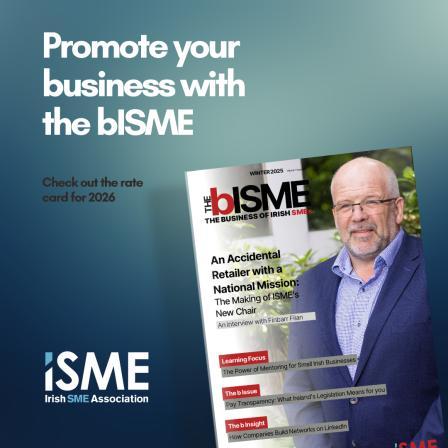
Reach Ireland’s SME Decision Makers in 2026!
Put your brand in front of over 15,000 Irish SMEs and key business leaders through The bISME the official business magazine of ISME, Ireland’s leading independent association for small and medium enterprises. The bISME combines highvalue editorial with trusted insights across sectors like retail, manufacturing, services, construction, transport and more and every issue is emailed directly to business owners and promoted online.
Download the spec here or email marketing@isme.ie for more information
The ISME Group Life Plan is open for new members. This optional employee benefit is designed to protect staff by paying out a lump sum to a employees next of kin in the event of death in service.
This cover is not available to the general public and is rated specifically for ISME member companies, and it does not incur BIK where an employer pays on behalf of staff.
ISME Members can join now using our fully online application on the following link: https://halligan.ie/isme-life-group-application/
The benefits and costs are as follows:
Cover of €100,000 – Annual Premium €309
Cover of €80,000 – Annual Premium €247
Cover of €60,000 – Annual Premium €185
The plan is open to new members from 1st May to the 31st May 2026. The entry window then closes until May 2027
To support Members to deal with the everchanging world of HR and employment law, we have created a portal to give you access to guides, templates, contracts, policies and more to support you in managing HR in your business. We have curated the information based on the HR Life Cycle: Attraction, Recruitment, Onboarding, Policies & Training, Performance Management and Exit.
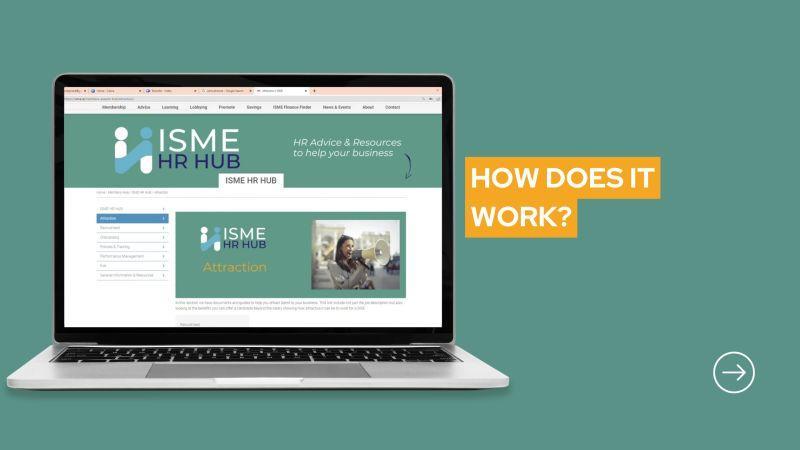
You can also find information from government agencies and other third parties in our General Information & Resources page, links to the top downloads and view our selection of blogs including Statutory Sick Pay FAQs and EU Directive on Transparent and Predictable Working Conditions.
To find out how it works and looks, click on the video about the portal here. To use the ISME HR Hub log into the Members Area, click on the top left button.
The ISME Finance Finder, developed in partnership with Swoop Funding, is an online platform designed to streamline access to finance for Irish SMEs. It offers a centralized solution for businesses seeking funding options to start, expand, improve cash flow, refinance debt, acquire assets, or invest in new markets.
Additionally, businesses can avail of a complimentary 30-minute one-on-one consultation with Swoop's funding experts, offering confidential and obligation-free advice.
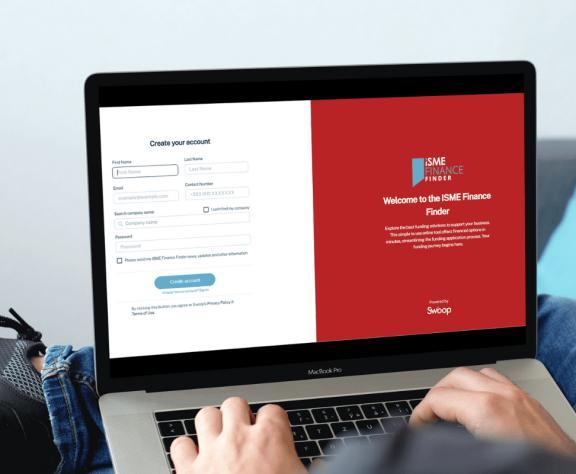
For more information or to begin your funding journey, visit the ISME Finance Finder.
Register now for Sustainable Energy Authority of Ireland (SEAI) 2-part webinar series to learn how your SME can save costs, save energy & become more resilient to energy price-hikes
In this first of the 2-part webinar series 'Energy Easy Wins for SMEs', SEAI's SME Business Supports team, alongside their Local Enterprise Office (LEO) colleagues, will outline the no/low-cost measures you can take to save money and energy for your business.
In the part 1, they will talk through the benefits and step through how to apply for SEAI's free energy training, no/low- cost energy audits and SEAI's EV-fleet assessment. You will also learn about LEO's Green for Business support, what it is and how it can help your business operate more effectively.
Click here to learn more and register for Part 1
In part 2, they will talk through the benefits and step you through the application process for SEAI's Rapid Approval Business Grants. You will also learn about LEO's Energy Efficiency grant, what it is and how it can help your business operate more effectively.
Click here to learn more and Register for Part 2
Check out other SEAI events here
❑ Workplace Occupational Safety and Health Training (HSA Resources): Employees require Occupational Safety and Health (OSH) training at different points in time. Providing comprehensive occupational health and safety training for staff is essential to fostering a safe and healthy workplace environment. The provision of training helps reduce the risk of work-related injuries and ill health. This page provides links to information including the employee OSH learner journey, workplace OSH training requirements and approach, tips for procuring training, training providers, hsalearning.ie and more.
❑ Code of Practice: Safe Use of Industrial Trucks: This Code of Practice provides practical guidance on compliance with legislation related to the use of rider operated industrial trucks in all workplaces.
❑ Driving for Work: Risk Management Guidance for Employers: This guidance document has been jointly developed by An Garda Síochána, the Health and Safety Authority and the Road Safety Authority to help employers understand and manage the main risks that working drivers face and create when driving for work.
❑ Annual Review of Workplace Injuries, Illnesses and Fatalities 2022–2023 report presents the Annual Review of Workplace Injuries, Illnesses, and Fatalities for 2022- 2023. In preparing this report, we recognise the importance of providing reliable and up-to-date statistical information as an evidence base for decision-making.
❑ A Short Guide to Health Surveillance in the Workplace aims to assist employers and health professionals working on their behalf in understanding their legal requirements regarding health surveillance in the workplace. It also highlights the key elements to consider when implementing a health surveillance programme.
❑ Employing Apprentices: Safety On the Job information sheet is written for people who employ apprentices. It provides a summary overview of how employers should fulfil their duties as an employer and protect apprentices, who may be more at risk of injury and ill health.
❑ Safety On the Job for Apprentices- This information sheet is written for Apprentices. It provides some essential tips to help Apprentices stay safe and healthy as they start their career.

Key events that influenced foreign exchange markets in April
• The dominant market driver for the month was the escalation of the United States – Iran conflict, with Brent crude oil averaging close to USD 115 per barrel for the month
• Market Inflation expectations re accelerated, forcing a repricing of interest rate cut odds as Government bond yields rose sharply across the U.S. and Europe
• The euro area annual inflation rate was 2.6% in March 2026, up from 1.9% in February. A year earlier, the rate was 2.2%.
• The IMF downgraded the Global growth forecast to 3.1% for 2026, down from 3.4% previously
• US Nonfarm payrolls rose a seasonally adjusted 178,000 in March, a reversal from the 133,000 decline in February and better than the Dow Jones consensus estimate for 59,000.
What data and factors could impact the major currencies in May?
• Friday May 8th - US Nonfarm Payrolls employment data
• Wednesday May 13th - Euro Area Q1 GDP
• Thursday May 14th - UK GDP Q1
• Wednesday May 20th – European inflation rate year on year
As an ISME member, you have exclusive access to Fexco’s dedicated account manager John Barry, who will help you with all your foreign exchange requirements.
• Reduce your cross-border payments costs
• Protect your business from currency volatility
Discover the benefits to your business without an obligation to trade!
>>Tell Me More>>
The Employment Equality Acts 1998 – 2015 (the EEA), places a legal duty on employers to do all that is reasonable to accommodate a person with a disability by providing special treatment or facilities.
What is considered a disability is quite broad. In Ireland, a disability under the Employment Equality Acts 1998-2015 includes a wide range of physical, intellectual, mental, or emotional conditions that cause a substantial, often longlasting, limitation on a person’s ability to work. It covers past, present, temporary or future conditions, such as physical injuries, chronic illness, or mental health issues.
Broadly, disability can include a variety of physical, intellectual, learning, cognitive, emotional or medical conditions. It’s defined within a variety of legislations, including the Disability Act 2005 and the Employment Equality Acts 1998-2021.
Case law has also established disability to include conditions such as depression, epilepsy, claustrophobia, agoraphobia, alcoholism and addiction, facial scarring, HIV infection, diabetes, and dyslexia.
For instance the Disability Act 2005 interprets disability as meaning a “substantial restriction in the capacity of the person to carry on a profession, business or occupation in the State or to participate in social or cultural life in the State by reason of an enduring physical, sensory, mental health or intellectual disability”.
If an employee with a disability as defined above is returning to the workplace following a period of sick leave, an employer cannot decide that they are incapable of doing a job without considering whether they could take appropriate measures to support them. Medical evidence or Occupational Health appointments can assist with this assessment.
Employers must take “appropriate measures” to enable a person who has a disability to:
• have access to employment
• participate or advance in employment
• undergo training
This duty on the employer is limited by the extent to which such a measure would constitute a “disproportionate burden”. While accommodations are required, employers are not obliged to incur excessive costs. The "Disproportionate Burden" test considers the employer's size, financial resources, and the possibility of public funding. Measures are not required if they cause excessive costs and an administrative burden for the company. Case law has helped to clarify the extent of this duty, in particular the landmark Supreme Court decision of Daly v Nano Nagle School (Nano Nagle).
Common adjustments include providing assistive technology, flexible working hours, re-allocating non-essential tasks, or modifying workstations.
The obligation to provide reasonable accommodation can only be properly satisfied where an employer has carried out an assessment, whether that is medical, ergonomic or occupational, in order to see what appropriate measures can be put in place.
It’s also recommended that employers consult with the employee in the assessment process. While Irish law does not go so far as to say consultation is a mandatory obligation in each and every case, The Supreme Court decision of Daly v Nano Nagle School (Nano Nagle) makes it clear that employers would be wise to do so. As quoted by the Supreme Court, “a wise employer will provide meaningful participation in vindication of his or her duty under the Act”.
All decisions regarding: (i) the viability of any and all appropriate measures considered and (ii) whether such appropriate measures would constitute a disproportionate burden should be clearly documented. Employers would also be wise to revisit the accommodation with the employee on an ongoing basis to ensure it remains effective, especially if circumstances change.
The person may decide to make a complaint to the WRC for discrimination on the grounds of disability for failure to provide reasonable accommodation.
In the event of a successful discrimination claim to the WRC, an employee may be awarded compensation for the effects of discrimination resulting from the failure to provide reasonable accommodation up to a maximum of two years’ remuneration or €40,000 (whichever is greater).
As always, if you require any support with HR or Employment Law you can contact the ISME HR Team on 01 6622755 Option 2 or via HR@ISME.ie
The ISME Skillnet service is here to help both the business owner and their employees.
ISME Members can receive up to 40% discount on ISME Skillnet training, view courses below.
An Introduction to Power BI Tool
Thursday, May 14th, 2026 View Course
Introduction to Canva Tuesday May 19th, 2026 View Course
Effective Telephone Sales
SME Management UpSkilling programme.
MS Excel Intermediate
Thursday May 21st, 2026 View Course
Friday May 22nd, 2026 View Course
Thursday May 28th, 2026 View Course
Customer Service & Complaints Handling Thursday May 28th, 2026 View Course
SCAN THE QR CODE TO FIND THE FULL LISTING