Members’ Newsletter

July 2026


July 2026

Dear member,
At time of writing, it appears we have an agreement to end conflict in the Gulf of Hormuz. Let’s hope it will stick, but even assuming it does, we can expect long tail-effects from the closure of the strait. Energy in one form or another affects just under 10% of the components of CPI, therefore we are looking at a period of elevated inflation, which will pressurise wage demands. We are already in what the Department of Finance calls the “adverse” scenario, where inflation could hit 4%. Were we to enter the “severe” scenario, inflation could hit 6.7% by January. The Central Bank has echoed these inflation concerns.
The Vice Chair and I attended the National Economic Dialogue last month, and despite the record amounts of Exchequer expenditure, there was only demand for more. This desire is not accompanied by a willingness to pay more for our unfunded pension liabilities. The statistics presentation was sobering: with a declining birth rate and an increase in life expectancy, the pensioner to worker ratio is set to increase markedly over the next few decades, giving us some uncomfortable fiscal choices.
I’m delighted to say that despite a reduced training budget, our mentorship programme will recommence in August, please register your interest now if you intend to avail of this valuable service.
The Cost of Business Advisory Forum has completed its work and will soon report. It has made 63 recommendations. The hard work will, of course, be in the execution. We will ask that there is a plan of work put in place to do so.
Ireland’s presidency of thee EU commences 1st July. The first ministerial delegation will be hosted by Minister Calleary for welfare ministers in Ballina, Co Mayo, on 6th and 7th July. ISME Chair Finbarr Filan and our Brussels affiliate SMEunited will represent ISME in what is a key ministry and engagement for small businesses. We wish them well.
Our pre-budget submission will be published later in the month. The focus of this year’s pre-budget is very narrow, and is to introduce the tax and spending packages necessary to deliver on our Indigenous Enterprise Policy which we published in March.
Worryingly, a definitive end to the conflict in the Gulf is not yet in sight. This could have very significant implications for energy prices in the short to medium term, and is likely to have far wider impacts, including on food prices, if we do not have a peaceful resolution soon.
This month we have seen the Society of Actuaries Report which showed that whiplash awards in Ireland remain dramatically higher than in the UK, with the gap most pronounced for shorter duration injuries. For a whiplash injury that clears up within three months, an Irish claimant can expect an award of €1,750, compared with just €281 in England and Wales, a difference of 532%.
Even at the upper end of the scale, where an injury takes up to two years to resolve, Ireland's award of €9,000 is still 82% higher than the €4,932 in England and Wales. They introduced a statutory whiplash tariff in 2021 that set fixed payments based on how long injuries lasted, with no associated legal costs. There is clearly more work to be done on insurance reform.
While ISME has asked Minister Foley to consider an extension to the timetable for delivery of the Pay Transparency Directive, this has not come to pass. You need to ensure your business takes steps to comply with the directive, and thanks to Sinead and Anna-Marie, you’ll find an FAQ page on the directive on our HR Hub.
Don’t forget our next Leadership and Networking Forum takes place on Wednesday, 24th June at the Clayton Hotel Cork City from 8:00am–11:30am. The content will be excellent, and we’re looking forward to seeing as many of you as possible there.
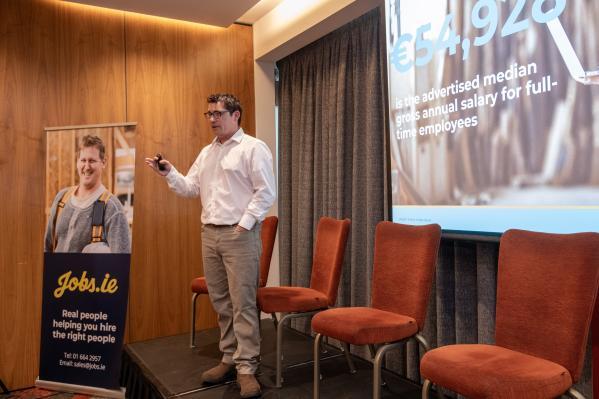
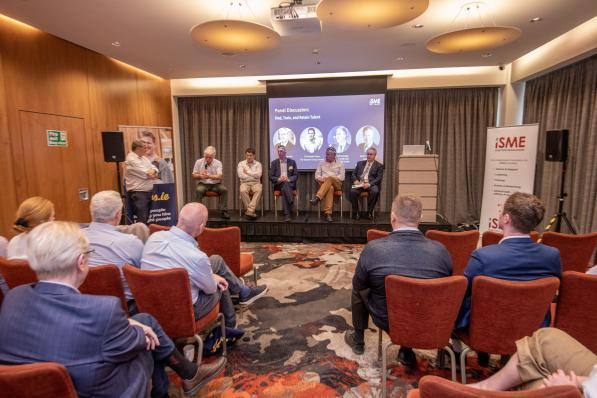
A successful wrap to ISME Leadership & Networking Forum in Cork
Thank you to all the attendees who joined us at the Leadership & Networking Forum in Clayton Hotel, Cork City
Missed the event?
No problem you can catch up on the key takeaways through the presentation deck by downloading it here.
Attended the event?
Give us your feedback on how you liked the event and help us improve future events: Answer the survey
To view photos from the event, please visit our website here





The Employment (Contractual Retirement Ages) Act 2025 has comes into effect on 29th June, introducing significant changes to the way employers manage contractual retirement ages in Ireland. The legislation is designed to address the gap that can arise where employees are required to retire before reaching the State Pension Age of 66.
Under the Act, employees who are subject to a contractual retirement age below 66 and who have completed any probationary period may notify their employer that they do not consent to retire at that age.
In such circumstances, the employer cannot enforce the contractual retirement age unless it can demonstrate that the retirement is objectively and reasonably justified by a legitimate aim and that the means of achieving that aim are appropriate and necessary.
The Act does not apply where a maximum retirement age or service limit is prescribed by law. It also introduces protections against penalisation for employees who exercise their rights under the legislation and provides access to complaint and redress mechanisms through the Workplace Relations Commission.
Employers should review retirement policies, employment contracts and retirement procedures to ensure compliance ahead of the commencement date.
Guidance will be provided in the WRC Code of Practice, as well as a template policy guideline document for a business; ISME will update members as they are issued.
If you need any further details, call our HR team at ISME on 01 6622755 or email us at hr@isme.ie.
Watch ISME HR Advisor Anna Marie Walsh answer some questions on the latest Employment (Contractual Retirement Ages) Act 2025
Ireland has launched a commemorative postage stamp to mark its Presidency of the Council of the European Union, which runs from 1 July to 31 December 2026. The stamp was unveiled by Minister for Foreign Affairs and Trade Helen McEntee, Minister for Culture, Communications and Sport Patrick O'Donovan, and Minister of State for European Affairs Thomas Byrne.


This is Ireland's eighth time holding the rotating Presidency of the Council of the European Union. According to the Government, the Presidency provides an opportunity for Ireland to help shape EU policy, lead important aspects of the EU's work, and showcase the country's engagement, expertise and the values at the heart of Europe.
The 2026 Presidency will also be the first during which Irish will have full working language status across all EU institutions. Irish will be used in official communications and Council meetings, with guidance provided to Government departments to support the use of the language throughout the Presidency.
Designed by Dublin-based Boyle Design, the new 'E' rate stamp reflects the official Irish EU Presidency logo, inspired by the spiral structure of the nebula first identified in Birr, Co. Offaly, in 1845. The commemorative stamp and a specially designed first day cover envelope are available to purchase online www.anpost.com/shop with free postage and in selected post offices nationwide from Thursday 2nd July.
We want to continue our Shop Local message with our Summer Spending campaign encouraging people to Think Local for holidays, activities, entertainment and shopping
ISME Members can advertise for free so please add your details here if you would like your business featured or to update your existing ad in our Shop Local portals To find out more please contact marketing@isme ie

The ISME Finance Finder, developed in partnership with Swoop Funding, is an online platform designed to streamline access to finance for Irish SMEs. It offers a centralized solution for businesses seeking funding options to start, expand, improve cash flow, refinance debt, acquire assets, or invest in new markets.
Additionally, businesses can avail of a complimentary 30-minute one-on-one consultation with Swoop's funding experts, offering confidential and obligation-free advice.
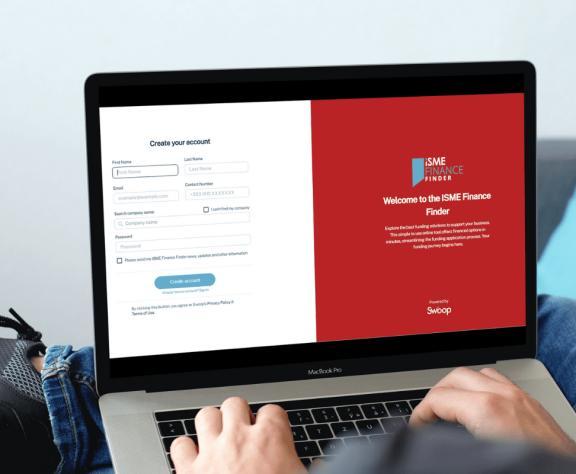
For more information or to begin your funding journey, visit the ISME Finance Finder.
Ireland’s SMEs and car rental companies express alarm at potential impact of proposed European EV mandate
ISME and the Car Rental Council of Ireland have joined a Europewide campaign opposing the European Commission's proposed Clean Corporate Vehicle (CCV) legislation, which would require car rental companies to purchase only battery electric vehicles (EVs) from 2030.

The representative bodies argue that while the industry remains committed to the EU's 2035 transition to zero-emission vehicles, the proposed legislation is premature and risks placing unnecessary pressure on businesses before the supporting infrastructure is in place. They contend that many SMEs rely on rental vehicles as temporary replacements or to meet seasonal demand, and that limiting fleets to battery EVs could create operational challenges where charging infrastructure remains inadequate and affordability continues to be a concern.
Joint statement on the CCV from Leaseurope, SMEUnited, UETR, Eurofinas, IRU and FIGIEFA.
Read the press release here
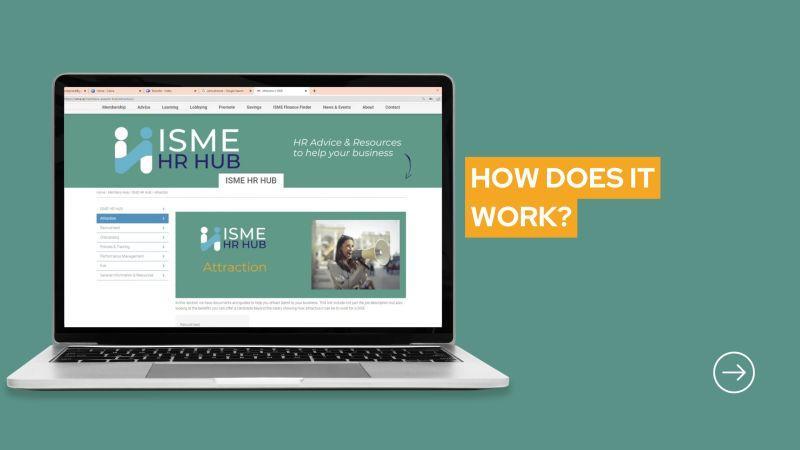
To support Members to deal with the ever-changing world of HR and employment law, we have created a portal to give you access to guides, templates, contracts, policies and more to support you in managing HR in your business. We have curated the information based on the HR Life Cycle: Attraction, Recruitment, Onboarding, Policies & Training, Performance Management and Exit.
You can also find information from government agencies and other third parties in our General Information & Resources page, links to the top downloads and view our selection of blogs including Statutory Sick Pay FAQs and EU Directive on Transparent and Predictable Working Conditions.
To find out how it works and looks, click on the video about the portal here. To use the ISME HR Hub log into the Members Area, click on the top left button.
Please take some time to complete our new Bank Watch survey based on your experiences of accessing finance and engaging with lenders in Q1 of 2026.
The Bank Watch Survey provides us with the latest up to date information on SME’s access to finance. The findings of these surveys will be circulated to media and will feed into relevant groups and committees ISME sit on.
Reports will also be uploaded to the ISME website, view previous reports here.
Complete the survey here
Please share this survey with your network.
❑ Workplace Occupational Safety and Health Training (HSA Resources): Employees require Occupational Safety and Health (OSH) training at different points in time. Providing comprehensive occupational health and safety training for staff is essential to fostering a safe and healthy workplace environment. The provision of training helps reduce the risk of work-related injuries and ill health. This page provides links to information including the employee OSH learner journey, workplace OSH training requirements and approach, tips for procuring training, training providers, hsalearning.ie and more.
❑ Code of Practice: Safe Use of Industrial Trucks: This Code of Practice provides practical guidance on compliance with legislation related to the use of rider operated industrial trucks in all workplaces.
❑ Driving for Work: Risk Management Guidance for Employers: This guidance document has been jointly developed by An Garda Síochána, the Health and Safety Authority and the Road Safety Authority to help employers understand and manage the main risks that working drivers face and create when driving for work.
❑ Annual Review of Workplace Injuries, Illnesses and Fatalities 2022–2023 report presents the Annual Review of Workplace Injuries, Illnesses, and Fatalities for 2022- 2023. In preparing this report, we recognise the importance of providing reliable and up-to-date statistical information as an evidence base for decision-making.
❑ A Short Guide to Health Surveillance in the Workplace aims to assist employers and health professionals working on their behalf in understanding their legal requirements regarding health surveillance in the workplace. It also highlights the key elements to consider when implementing a health surveillance programme.
❑ Employing Apprentices: Safety On the Job information sheet is written for people who employ apprentices. It provides a summary overview of how employers should fulfil their duties as an employer and protect apprentices, who may be more at risk of injury and ill health.
❑ Safety On the Job for Apprentices- This information sheet is written for Apprentices. It provides some essential tips to help Apprentices stay safe and healthy as they start their career.

Key events that influenced foreign exchange markets in June
• Donald Trump signed a 14-point agreement with Iran, claiming it delivered a “major win” for the United States
• The European Central Bank raised interest rates as expected, hoping to prevent an Iran war-induced surge in energy prices from broadening out into higher inflation. The rate hike came as the ECB raised its 2026 inflation projection to 3.0% this year from 2.6% seen in March, and lifted the 2027 outlook to 2.3% from 2.0%.
• US CPI inflation rose to a three-year high at 4.2% in May
• Kevin Warsh held his first meeting in charge of the US Federal Reserve, promising to remove forward guidance on interest rates, commissioning five task forces to rethink how the Fed communicates, what data it trusts, and how it defines inflation – post the meeting, there was a significant strengthening of the US dollar.
• The Bank of England kept interest rates at 3.75%, where they have been since December 2025, although two of nine policymakers voted to raise rates to 4%
What data and factors could impact the major currencies in July?
• Thursday July 2nd - US Nonfarm Payrolls employment data
• Tuesday July 14th – US CPI Inflation (One of the most important inputs into US Fed interest rate policy expectations)
• Thursday July 23rd - ECB interest rate decision
• Wednesday July 29th – US Fed interest rate decision
• Thursday July 30th – Bank of England interest rate decision
As an ISME member, you have exclusive access to Fexco’s dedicated account manager John Barry, who will help you with all your foreign exchange requirements
• Reduce your cross-border payments costs
• Protect your business from currency volatility
Discover the benefits to your business without an obligation to trade!
>>Tell Me More>>
Can you outline what this new piece of legislation is about?
The Employment (Contractual Retirement Ages) Act 2025 creates a new employment right that allows eligible employees to notify their employer that they do not consent to retire at the contractual retirement age, where this is lower than the State pension age of 66.
However, employees are not obliged to remain in employment beyond their contractual retirement age if they do not wish to do so.
The Employment Contractual Retirement Age Act 2025 came into effect here in Ireland on June 29th 2026.
Will an employee need to give notice that they wish to stay until they are 66 years?
Employees will need to give a minimum of 3 months notice before their expected retirement date but not more than a year, and this notice needs to be in writing. If an employee’s contract requires a longer notice period than 3 months, they must give either this amount or 6 months' notice, whichever is shorter.
Can an employer refuse a request from an employee to remain in work beyond their retirement age up until aged 66?
Employers will be required to respond to written requests from employees in writing within 1 month of receiving it, explaining their reasons if they are refusing a request.
Employers cannot require an employee to retire before aged 66 years unless they can clearly justify this decision. They will need to clearly show that the retirement is objectively and reasonably justified by a legitimate aim.
What is the penalisation if an employer doesn’t comply with the rules under the act?
An employee can bring a complaint to the Workplace Relations Commission (WRC) where an employer does not comply with its obligations under the Act. The WRC may:
Declare that the complaint is or is not well founded
Require the employer to take a specified course of action, including reinstatement or re-engagement
Require the employer to pay the employee compensation of maximum 104 times the employee’s weekly salary or €40,000, whichever is greater
What if an employer doesn’t respond to an employee’s request?
This is an offence and is punishable by a fine not exceeding €5,000 or a maximum 12-month prison term, or both. Where this offence is committed by a company with the consent or knowledge of a director, manager, secretary or other officer of the company, that person shall also be guilty of an offence.
Are there any employers that are excluded from this new requirement?
Yes, certain employment relationships like the prison service, the Gardai and the Fire Service are excluded from the Act, for example those jobs that are subject to a maximum retirement age by law or one that is subject to a statutory maximum service limit.
Will there be any supports and guidance for employers?
ISME have updated the Retirement Policy on our HR Hub, and members can access this by logging into the HR Hub on the ISME Website.
The Workplace Relations Commission’s (WRC) updated ‘Code of Practice on Longer Working’ will provide guidance on how this new employment right works in practice. It will contain key practical information including templates for employers and employees to use. This Code of Practice is available here
Do you have any practical tips for employers on what they should do right now?
• Employers should review their policy and procedure/Handbooks, to ensure the retirement age is clear and that notification requirements and the process required is updated.
• Where an employer accepts an employee’s notification request, arrangements should be made to reflect the employee’s continuation in employment in their contract of employment.
• If an employer plans to keep their retirement age as is and it’s less than 66 years, they will need to think objectively about their reasons and ensure they are able to justify them by legitimate aims. The Code of Practice as mentioned above should assist employers with this.
• Identify employees that are subject to a contractual retirement age below 66 and who are due to reach this age in the next 18 - 24 months. Where appropriate, encourage early, informal discussions with employees approaching retirement age to manage expectations and reduce the likelihood of disputes. Apply retirement ages and justifications consistently across comparable roles to mitigate discrimination risk.
• If an employer decides to extend the retirement age following a request by an employee, check how this extended employment may interact with occupational pension schemes, insurance cover and other age-related benefits, and take advice where necessary.

The ISME Skillnet service is here to help both the business owner and their employees.
ISME Members can receive up to 40% discount on ISME Skillnet training, view courses below.
Business & Email Etiquette
Tuesday 14th July View Course
Effective Telephone Sales Wednesday 15th July View Course
Managing and Growing a Small Business
Tuesday 28th July or Thursday 17th September View Course
MS Excel Introduction Wednesday 29th July View Course
MS Excel Intermediate Wednesday 5th August View Course
MS Excel Advanced Wednesday 12th August View Course
MS Excel: Dashboards And Data Visualisation Thursday 20th August View Course
Microsoft Excel Creating & Working with Pivots
HR Bite Sized Essential’s
Wednesday 26th August View Course
Tuesday 8th September –Tuesday 17th November View Course
SCAN THE QR CODE TO FIND THE FULL LISTING