26. HR Focus 2: AI in the Workplace –What employers need to know
28. Member Focus ALS Technical Services Limited
30. Learning Focus ISME Skillnet
S.T.A.G.E.S Mentoring Programme
31. Another Side of...
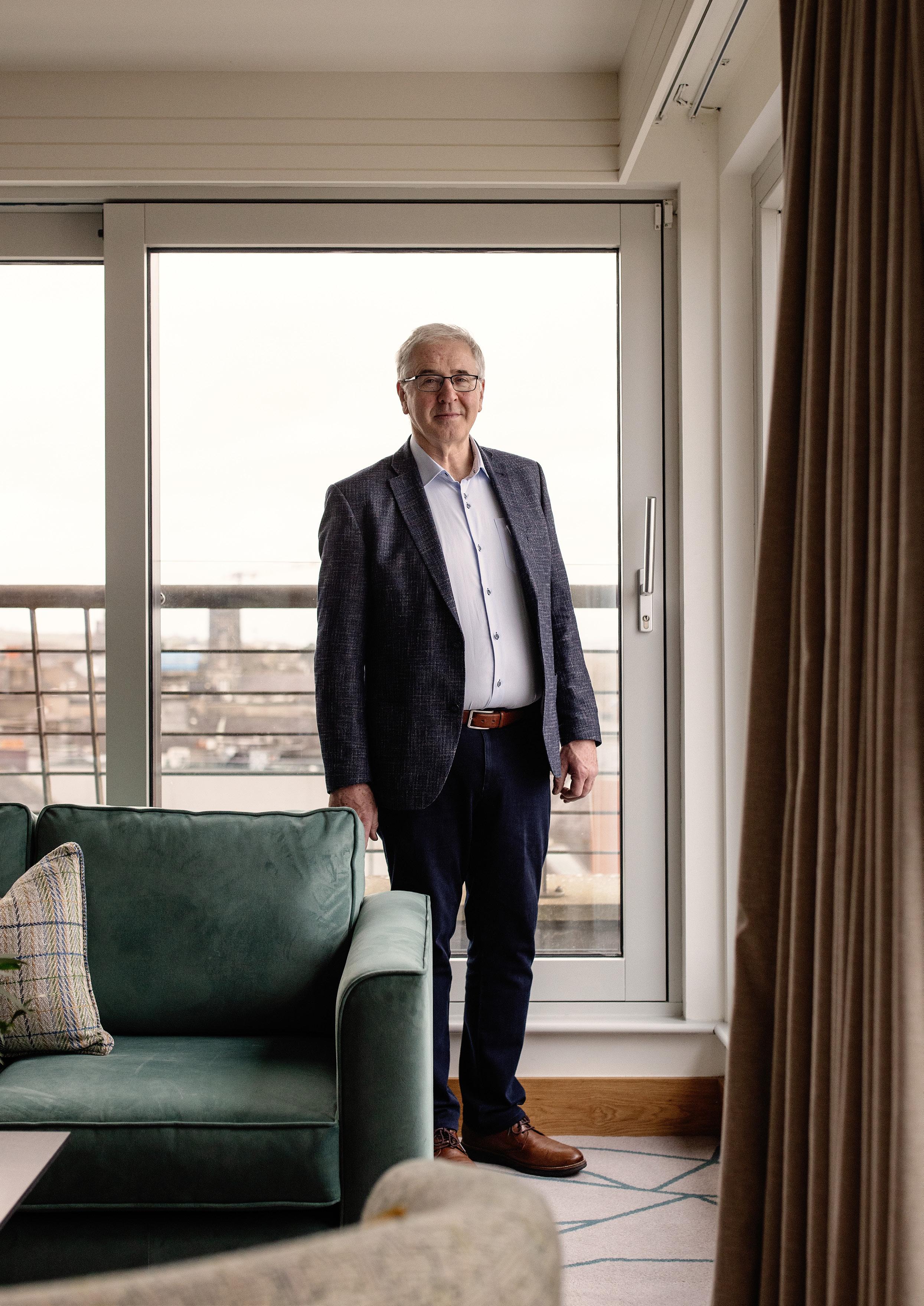
The bISME talks to ISME National Council Member, Eamon Rheinisch about his interests and hobbies.
Inflation, Reform, and Advocacy...
Colleagues,
At time of writing, it appears we have an agreement to end conflict in the Gulf of Hormuz. Let’s hope it will stick, but even assuming it does, we can expect long tail-effects from the closure of the strait. Energy in one form or another affects just under 10% of the components of CPI, therefore we are looking at a period of elevated inflation, which will pressurise wage demands. We are already in what the Department of Finance calls the “adverse” scenario, where inflation could hit 4%. Were we to enter the “severe” scenario, inflation could hit 6.7% by January. The Central Bank has echoed these inflation concerns.
The Vice Chair and I attended the National Economic Dialogue last month, and despite the record amounts of Exchequer expenditure, there was only demand for more. This desire is not accompanied by a willingness to pay more for our unfunded pension liabilities. The statistics presentation was sobering: with a declining birth rate and an increase in life expectancy, the pensioner to worker ratio is set to increase markedly over the next few decades, giving us some uncomfortable fiscal choices.
I’m delighted to say that despite a reduced training budget, our mentorship programme will recommence in August, please register your interest now if you intend to avail of this valuable service.
The Cost of Business Advisory Forum has completed its work and will soon report. It has made 63 recommendations. The hard work will, of course, be in the execution. We will ask that there is a plan of work put in place to do so.
Ireland’s presidency of the EU commences 1st July. The first ministerial delegation will be hosted by Minister Calleary for welfare ministers in Ballina, Co Mayo, on 6th and 7th July. ISME Chair Finbarr Filan and our Brussels affiliate SMEunited will represent ISME in what is a key ministry and engagement for small businesses. We wish them well.
Neil McDonnell, Chief Executive, ISME
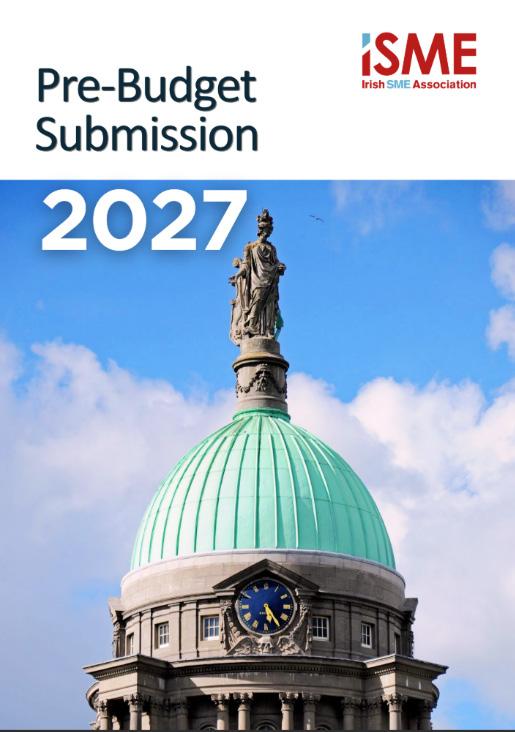
Our pre-budget submission was published last month. The focus of this year’s pre-budget is very narrow, and is to introduce the tax and spending packages necessary to deliver on our Indigenous Enterprise Policy which we published in March.
Worryingly, a definitive end to the conflict in the Gulf is not yet in sight. This could have very significant implications for energy prices in the short to medium term, and is likely to have far wider impacts, including on food prices, if we do not have a peaceful resolution soon.
Last month we have seen the Society of Actuaries Report which showed that whiplash awards in Ireland remain dramatically higher than in the UK, with the gap most pronounced for shorter duration injuries. For a whiplash injury that clears up within three months, an Irish claimant can expect an award of €1,750, compared with just €281 in England and Wales, a difference of 532%.
Even at the upper end of the scale, where an injury takes up to two years to resolve, Ireland’s award of €9,000 is still 82% higher than the €4,932 in England and Wales. They introduced a statutory whiplash tariff in 2021 that set fixed payments based on how long injuries lasted, with no associated legal costs. There is clearly more work to be done on insurance reform.
While ISME has asked Minister Foley to consider an extension to the timetable for delivery of the Pay Transparency Directive, this has not come to pass. You need to ensure your business takes steps to comply with the directive, and thanks to Sinead and Anna-Marie, you’ll find an FAQ page on the directive on our HR Hub.
Neil McDonnell ISME CEO
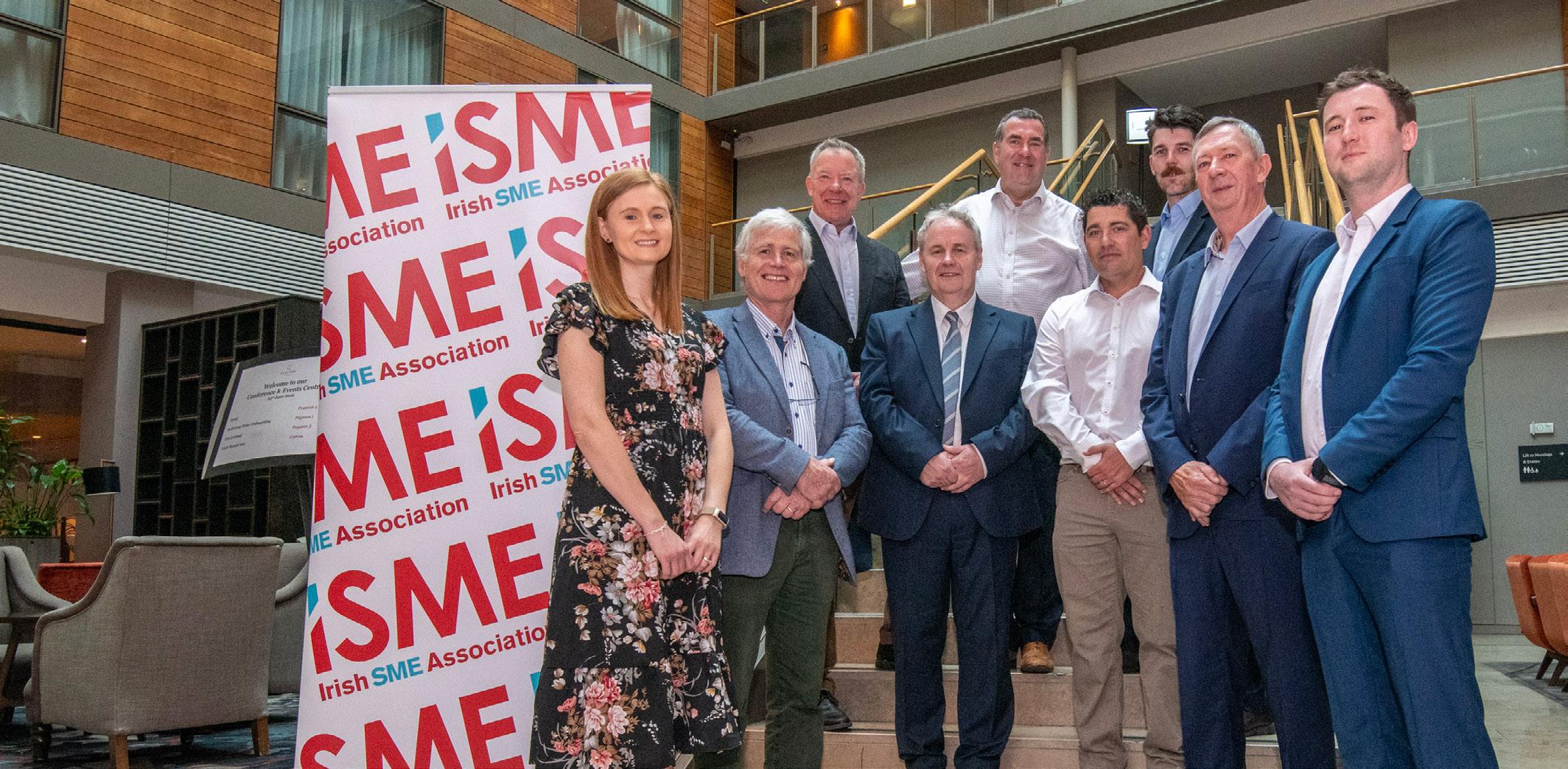
Leadership & Networking Forum ISME
CORK
SURVEYS TO COMPLETE & SHARE TO INFORM OUR LOBBYING
Q2 2026 Business Trends Survey
How did your business find the first quarter of 2026? In an everchanging business environment, we want to hear from you on how your organisation has been impacted by completing our Trends Survey for Q2 2026 here.
Bank Watch Survey 2026
Please take some time to complete our new Bank Watch survey based on your experiences of accessing finance and engaging with lenders in Q1 of 2026. This survey provides us with the latest information on SME’s access to finance. The findings of these surveys will be circulated to media and will feed into relevant groups and committees ISME sit on.
Complete the Bank Watch Survey here
Reports will also be uploaded to the ISME website, view previous reports here.
Ireland’s SMEs and car rental companies express alarm at potential impact of proposed European EV mandate
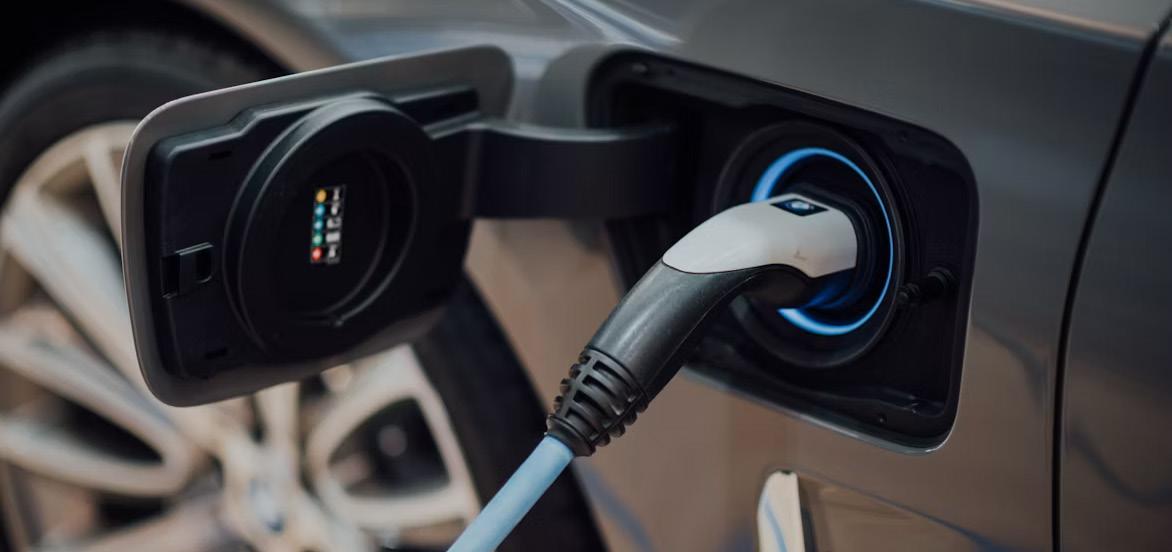
ISME and the Car Rental Council of Ireland have joined a Europewide campaign opposing the European Commission’s proposed Clean Corporate Vehicle (CCV) legislation, which would require car rental companies to purchase only battery electric vehicles (EVs) from 2030.
The representative bodies argue that while the industry remains committed to the EU’s 2035 transition to zero-emission vehicles, the proposed legislation is premature and risks placing unnecessary pressure on businesses before the supporting infrastructure is in place. They contend that many SMEs rely on rental vehicles as temporary replacements or to meet seasonal demand, and that limiting fleets to battery EVs could create operational challenges where charging infrastructure remains inadequate and affordability continues to be a concern.
Peter Boland, Chief Executive of the Car Rental Council of Ireland, warned that mandating EV purchases would not address the key barriers to adoption, such as charging availability or consumer demand. Instead, he said, it could slow rather than accelerate the availability and uptake of electric rental vehicles.
ISME CEO Neil McDonnell echoed these concerns, stating that compelling SMEs to adopt EVs before Ireland is fully prepared could hinder economic activity and divert attention from the enabling conditions needed to support the transition.
Both organisations are calling on the Irish Government and EU policymakers to replace the proposed binding targets with an incentive-led framework that prioritises investment in charging infrastructure, affordability measures and practical supports. They have also expressed their support for a joint European position backed by SMEUnited and other industry organisations advocating a more balanced approach to fleet decarbonisation.
Joint statement on the CCV from Leaseurope, SMEUnited, UETR, Eurofinas, IRU and FIGIEFA.
Latest Updates on Employment
(Contractual Retirement Ages) Act 2025
The Employment (Contractual Retirement Ages) Act 2025 has comes into effect on 29th June, introducing significant changes to the way employers manage contractual retirement ages in Ireland. The legislation is designed to address the gap that can arise where employees are required to retire before reaching the State Pension Age of 66.
Under the Act, employees who are subject to a contractual retirement age below 66 and who have completed any probationary period may notify their employer that they do not consent to retire at that age.
In such circumstances, the employer cannot enforce the contractual retirement age unless it can demonstrate that the retirement is objectively and reasonably justified by a legitimate aim and that the means of achieving that aim are appropriate and necessary.
The Act does not apply where a maximum retirement age or service limit is prescribed by law. It also introduces protections against penalisation for employees who exercise their rights under the legislation and provides access to complaint and redress mechanisms through the Workplace Relations Commission.
What steps
do you as an employer need to take?
Employers should review retirement policies, employment contracts and retirement procedures to ensure compliance ahead of the commencement date.
Guidance will be provided in the WRC Code of Practice, as well as a template policy guideline document for a business; ISME will update members as they are issued.
If you need any further details, call our HR team at ISME on 01 6622755 or email us at hr@isme.ie.
Watch ISME HR Advisor Anna Marie Walsh answer some questions on the latest Employment (Contractual Retirement Ages) Act 2025
ISME HR HUB: Your HR Support
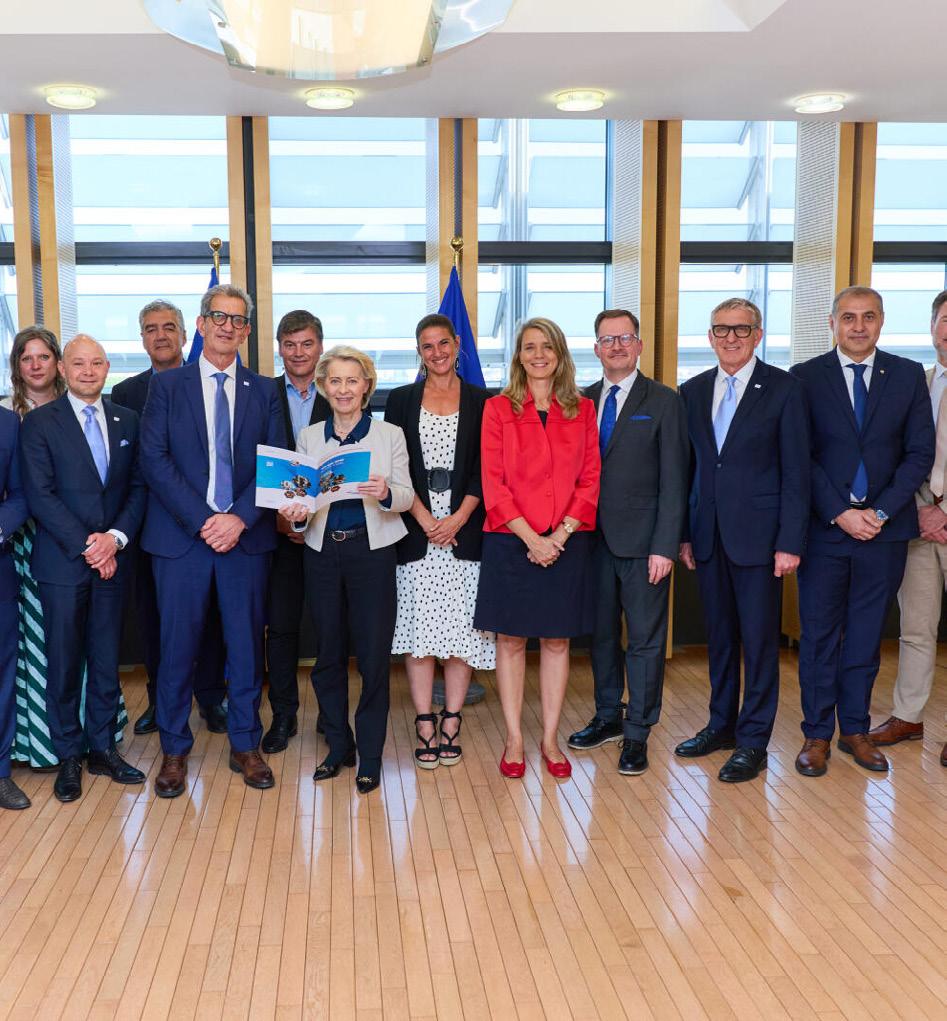
SMEunited discusses SME-friendly policy with President von der Leyen
SMEunited has called on the European Commission to put small businesses at the centre of EU policymaking, stressing that microenterprises make up 94% of businesses across Europe. Following a meeting with Commission President Ursula von der Leyen, the organisation urged policymakers to apply the “Think Small First” principle in all legislation and to simplify regulations for SMEs.
SMEunited also highlighted the need for affordable energy, a stronger Single Market, and dedicated SME support in the next EU budget. Additionally, it has requested a temporary pause in implementing the Pay Transparency Directive to give SMEs more time to prepare. Read the full article here
To support Members to deal with the ever-changing world of HR and employment law, we have created a portal to give you access to guides, templates, contracts, policies and more to support you in managing HR in your business. We have curated the information based on the HR Life Cycle: Attraction, Recruitment, Onboarding, Policies & Training, Performance Management and Exit.
You can also find information from government agencies and other third parties in our General Information & Resources page, links to the top downloads and view our selection of blogs including Statutory Sick Pay FAQs and EU Directive on Transparent and Predictable Working Conditions.
To find out how it works and looks, click on the video about the portal here. To use the ISME HR Hub log into the Members Area, click on the top left button.
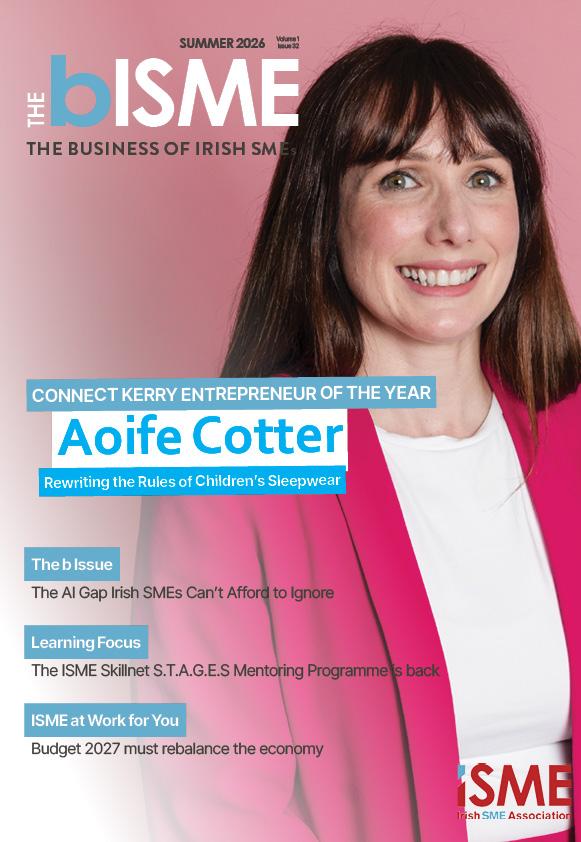
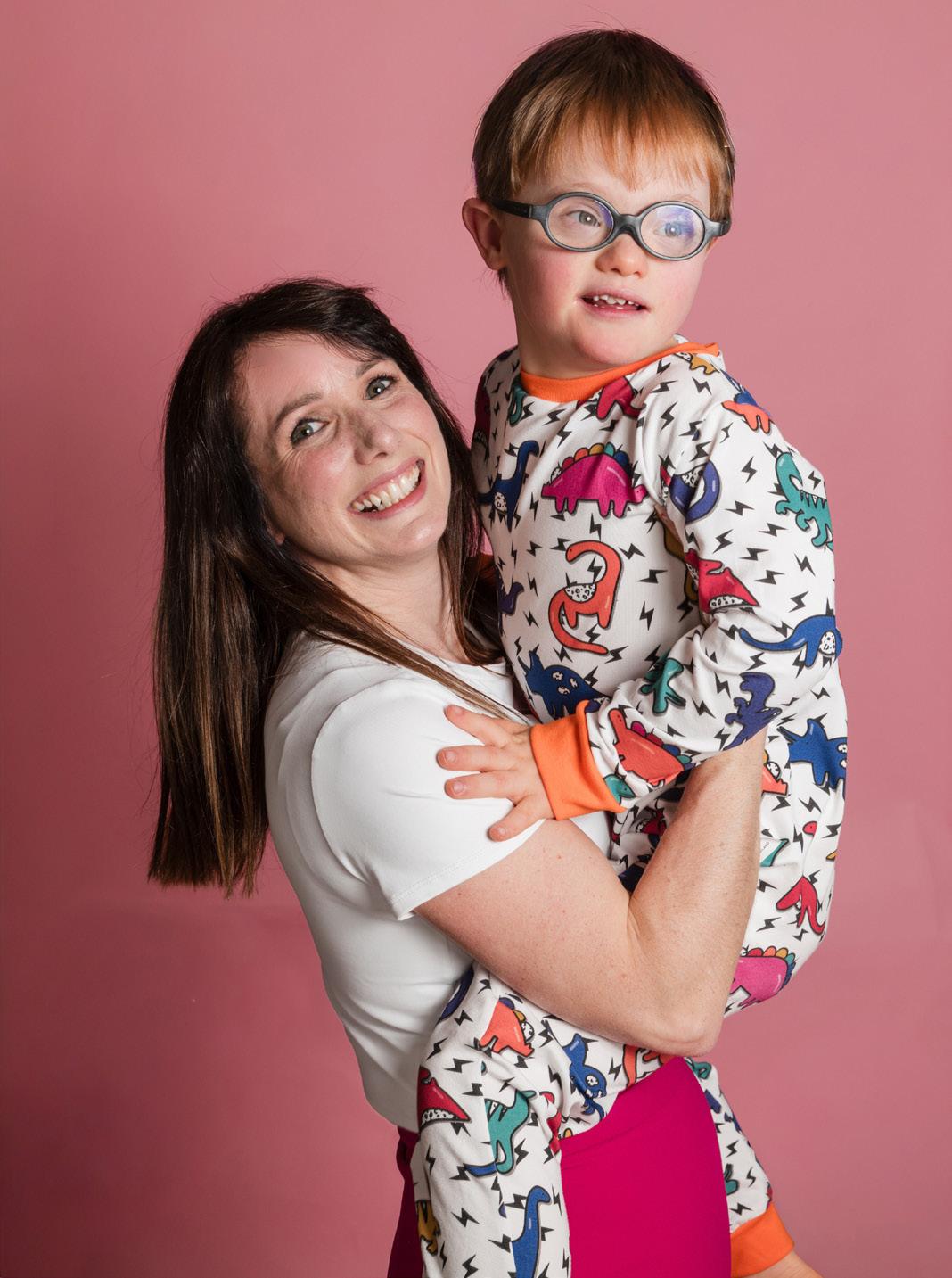
Zipping Up the Market Gap: How One Mum Built Ireland’s Most Vibrant Adaptive Brand
A sit down with Aoife Cotter, Founder Born Zippy and Entrepreneur of the Year Award at Connect Kerry Women in Business Awards
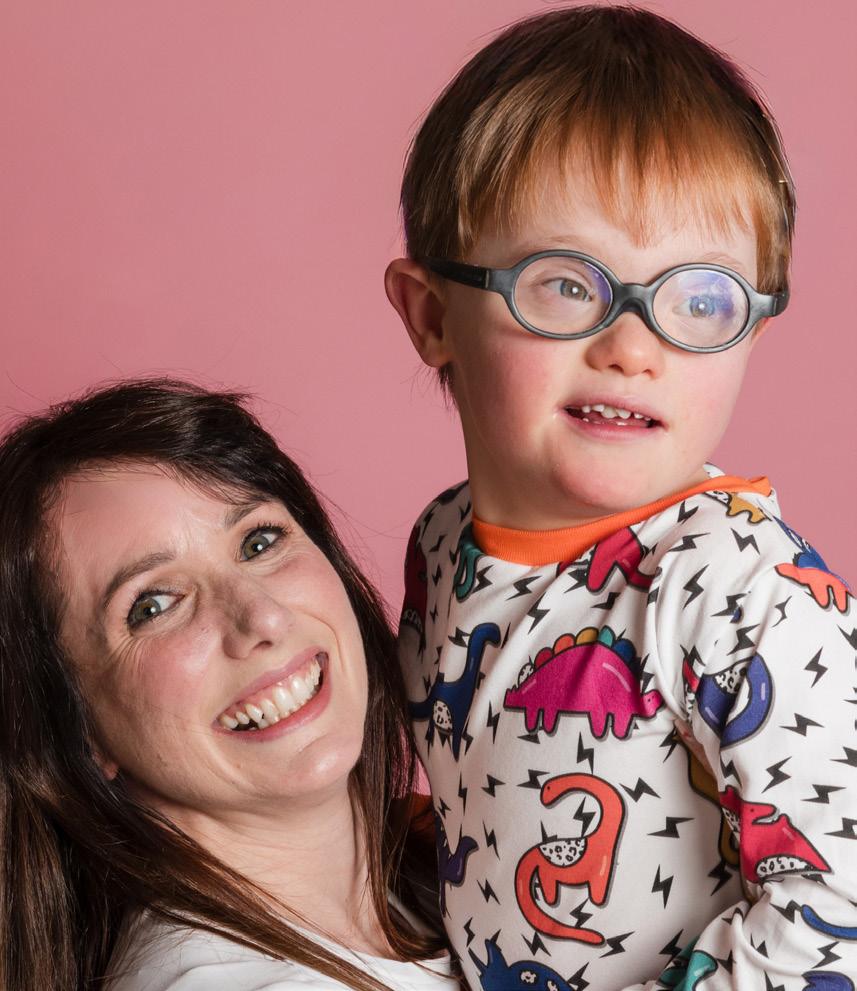
Born Zippy grew directly from your personal experience as a parent. Can you walk us through your journey and the experiences that inspired you to create Born Zippy?
This time last year, we were in the middle of toilet training our son Ted. Toilet training can be challenging for any family, but it can be even more complex when a child has additional needs. As Ted became more aware of his bodily functions, he also began waking very early and removing his nappy, creating a stressful situation for everyone.
After a lot of research, I discovered that one of the most effective ways to break the habit was simply to remove access. What we needed were pyjamas with a zip at the back. To my surprise, they weren’t available in Ireland. I had to order them from the UK, deal with customs charges, and wait weeks for delivery. When they arrived, they were functional but very clinical and dull looking. In my opinion, that’s not what children’s PJs should look like!
That experience made me realise there was a real gap in the market. Families needed adaptive sleepwear that was not only practical but also fun, colourful and designed with children in mind. That’s how Born Zippy began.
What have been some of the most rewarding moments for you as a founder, particularly seeing the impact your products have on children and families?
Without question, the most rewarding part has been hearing directly from parents. I’ve received so many messages from families who are relieved that an Irish company is finally creating products designed around their children’s needs.
Many parents of children with additional needs are already navigating long waiting lists, therapy appointments and school placement challenges. They shouldn’t also have to source specialist clothing from abroad or modify garments themselves at home.
Knowing that Born Zippy is removing even one source of stress for families is incredibly rewarding. That’s exactly why I started the business.
Your products are made using GOTS-certified, chemical-free fabrics, and Born Zippy was developed with zero-waste design principles from the outset. How central is sustainability to the brand’s identity, and how did your partnership with Change Clothes in Dublin come about?
Sustainability has been part of Born Zippy from day one. When I first started researching manufacturers, I knew I wanted to work with partners who shared my values around ethical production and responsible sourcing.
Through a friend, I was introduced to Rainie and the team at Change Clothes in Dublin. Their support was instrumental in helping me turn an idea into a real product.
As a social enterprise and now a charity, they aligned perfectly with the values I wanted the business to represent.
We use GOTS and OEKO-TEX certified fabrics, and throughout the design process we’ve continuously looked for ways to reduce waste. Every stage of product development has been approached with sustainability in mind, and we’re committed to finding ways to repurpose fabric offcuts into future products.
Adaptive clothing is still not widely available on the high street. In your view, does enough attention get paid to accessibility and inclusivity within the fashion and retail industry?
The industry is improving, but there’s still a long way to go.
We’re seeing more awareness of adaptive fashion and the diverse needs of both children and adults, which is encouraging. Historically, many larger retailers viewed adaptive clothing as too niche, but that’s changing as demand and awareness continue to grow. Dunnes were one of the first to include an adaptive clothing range. Penneys now have a small range online also.
For me, the future of adaptive fashion is inclusion. Clothing doesn’t need to be labelled as “special needs clothing.” Small, thoughtful adaptations can make garments more accessible while still appealing to a broad audience. That’s where I believe the industry should be heading.
Your son Ted and the wider Down Syndrome and special needs community clearly sit at the heart of everything Born Zippy stands for — has that community, including organisations like Down Syndrome Ireland and the Down Syndrome Centre, as well as your son’s school and support network, rallied behind the brand, and what has that support meant to you on this journey?
The Down Syndrome community in Ireland is extraordinary. From the moment we learned Ted would have Down Syndrome during pregnancy, we were surrounded by support, positivity and practical guidance. There’s very much a feeling of ‘we are all in it together’. Parents reached out, shared their experiences and helped us navigate what was ahead. One parent even brought me to visit the Down Syndrome Centre before Ted was born. There is a genuine sense that everyone is looking out for one another.
That same support continued when Born Zippy launched. Organisations such as Down Syndrome
Ireland, the Down Syndrome Centre, along with Ted’s school and countless families, have been incredibly encouraging. Having that community behind me has meant everything and has reinforced why this work matters.
What are your plans for the future growth of Born Zippy, and are there new products, markets or opportunities you’re excited to explore?
I have big ambitions for Born Zippy because the need is clearly there.
Adaptive clothing for children remains hugely underserved, and I believe families deserve products that are fun, colourful and stylish as well as functional. There are several products I’d love to bring to market, but developing and testing them properly takes time and investment.
Over the next year, my goal is to expand the range with some new products and extend sizing up to 18 years. Longer term, I’d love to grow Born Zippy internationally. We’ve already had orders from overseas, which shows the demand exists. The next step is continuing to build
awareness and reach more families.
Running a purpose-driven business comes with both challenges and opportunities. From your experience, what have been some of the biggest lessons you’ve learned as an entrepreneur?
The biggest lesson is that entrepreneurship is a constant learning curve. After spending 20 years as a primary school teacher, stepping into product development, manufacturing and retail was completely outside my comfort zone. I’ve had to learn new skills quickly and become comfortable with uncertainty.
I’ve also learned that as a founder, you’re never really “off.” There’s always something to plan, solve or follow up on. At the same time, I’ve discovered that I genuinely enjoy building a business, so it rarely feels like work.
Perhaps the most important lesson has been learning to put myself forward. Like many Irish people, selfpromotion doesn’t always come naturally. But if you believe in your product and your mission, you have to be willing to tell that story confidently.
For independent Irish brands operating in a niche space, what are some of the biggest challenges when it comes to production, sourcing and scaling?
One of the biggest challenges is simply finding the right manufacturing partners.
Ireland has very limited clothing manufacturing capacity, which often means looking overseas. That creates additional logistical challenges around travel, communication and sampling. Many manufacturers also require large minimum order quantities, which can be risky for a small business trying to test a new product.
That’s why working with Change Clothes was so valuable. Their small-batch production model allowed me to validate the concept in a lean and sustainable way before scaling.
As businesses grow, balancing quality, cost and production capacity becomes increasingly important, and that’s a challenge many Irish brands face.
Beyond your work with Born Zippy, what other interests or passions do you enjoy, and how do they influence your personal or professional life?
I’ve always been drawn to creative pursuits. Music has been a huge part of my life since childhood, and the instrument I’ve stayed most committed to is the
Irish harp. I also love being active. Running has been a passion since college, and I completed my first Dublin Marathon last year, which was an incredible experience. Over the years I’ve also enjoyed roller derby, yoga and Pilates, and more recently I’ve become a regular gymgoer.
Those hobbies give me balance, but they also influence how I approach business. Whether it’s music, sport or entrepreneurship, progress comes from consistency, resilience and a willingness to keep learning.
Do you have a business mentor? What advice or guidance has been most valuable in your journey, and what advice would you give to SMEs operating in today’s business environment?
Yes. When I was approved for the Local Enterprise Office feasibility grant, I was fortunate to be matched with Ruth Larkin as my mentor.
Ruth has extensive experience in the fashion industry, and her guidance has been invaluable. One piece of advice that has really stayed with me was to focus on pyjamas and swimwear first rather than trying to do everything at once.
As an entrepreneur, it’s tempting to chase every opportunity, particularly when you see so many unmet needs. Ruth helped me understand the importance of staying focused, building a strong foundation and growing strategically.
The AI Gap Irish SMEs Can’t Afford to Ignore
A major new all-island study is mapping AI adoption among SMEs in Ireland and Northern Ireland. The findings will be publicly available and designed to help smaller businesses make informed decisions. Here’s what it covers and why it matters.
For most small business owners, artificial intelligence still sounds like something that happens to other businesses, the bigger ones, with larger budgets and dedicated IT or transformation teams.
The competitive gap between businesses that have started using AI and those that have not is growing. Not through any dramatic shift, but through lower operating costs and faster decision-making. The businesses doing this are not always visible about it.
SME owners trying to assess whether any of this is relevant to them are, for the most part, working without solid evidence. The research that exists tends to be global, designed for large enterprises, and largely silent on the specific conditions Irish businesses face. A new study from InterTradeIreland is designed to address that directly.
Research Built for the Island of Ireland
The InterTradeIreland AI Adoption, Opportunities and Impact for SMEs study is being conducted by Sans Souci Consulting in partnership with Queen’s University Belfast and Ulster University. It covers businesses across all sectors, with equal representation from both sides of the border.
The methodology combines a large-scale quantitative survey with in-depth case studies, regulatory analysis, and international benchmarking. The aim is to produce findings that are directly applicable to the businesses being studied.
One area the study addresses that no comparable research has examined is the regulatory environment facing businesses on the island of Ireland. Since Brexit, SMEs operating across both jurisdictions are subject to two separate and diverging AI governance frameworks: the EU AI Act in the Republic, and a distinct UK framework in Northern Ireland. For cross-border businesses, this creates a genuine compliance question that has not previously been mapped through the lens of SME burden. The study’s regulatory analysis will do exactly that, and the findings could save businesses considerable time and cost in understanding their obligations under each framework.
Taking the Barriers Seriously
The research does not assume AI adoption is straightforwardly good for businesses and that SMEs simply need to move faster. It examines the structural barriers that make adoption genuinely harder for smaller businesses: skills gaps, cost, regulatory complexity, and the post-Brexit divergence between the two governance frameworks. That grounding matters. Recommendations that emerge from an honest assessment of obstacles are more useful than those built on optimistic assumptions about what smaller businesses can readily absorb.
What the Study Will Deliver
The research will quantify what AI adoption delivers
across four dimensions: operational efficiency, revenue and growth, innovation capacity, and competitive positioning. For SME owners weighing up whether to invest in AI, locally grounded evidence will be considerably more useful than international data that does not reflect Irish business conditions.
One of the practical outputs will be an AI Readiness Scorecard. This identifies where a business currently stands and surfaces the most relevant next steps, whether the business has no AI experience or has already begun embedding it across its operations. The scorecard is designed to be personalised to each business’s situation.
Alongside the main findings, the study will publish sector-specific opportunity briefs, giving businesses a clearer picture of where AI adoption is delivering results within their own industry.
What happens next?
The study is currently in the field. The findings, including sector-specific opportunity briefs and recommendations, will be published by InterTradeIreland later this year and will be publicly available, representing the most directly relevant evidence-based resource available to Irish SMEs for making informed decisions about AI adoption. Businesses wishing to contribute to the research can participate in the survey now. A wider range of respondents means more useful findings for the SME community.
Click here to take the survey now.
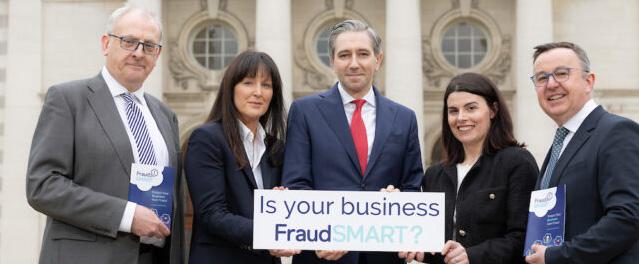
FraudSMART Warns SMEs Over Impersonation Scams
Recent figures from FraudSMART, the fraud awareness initiative led by Banking & Payments Federation Ireland (BPFI) show that Irish SMEs have lost almost €19 million (€18.9m) to email-related scams over the past two years, with average losses exceeding €22,000 per incident.
For most businesses, this represents a material financial hit, with direct consequences for cashflow, supplier relationships and operational stability. Beyond the immediate financial loss, fraud incidents often disrupt supplier relationships and place additional strain on already limited resources.
The common factor in these cases is not a failure of technology or systems; it is how everyday business processes are being exploited. Fraud works best when it looks routine, feels familiar and fits seamlessly into day-to-day operations.
Invoice redirection
Invoice redirection fraud occurs when a criminal contacts a business pretending to be a legitimate supplier or service provider. The email may closely resemble genuine correspondence, using familiar language, logos or signatures, and requests that future payments be sent to new bank account details.
Because the requests often appear routine and reasonable, the change is processed as part of business as usual. The fraud may only be discovered weeks later, when a genuine supplier queries a missing payment. By that stage, funds have often moved through multiple accounts, making recovery difficult.
CEO Impersonation
CEO and senior management impersonation scams follow a similar pattern but relies more heavily on urgency and authority. An employee receives a request that appears to come from a senior figure within the organisation, asking for a payment to be made or an action to be completed quickly. The pressure here is behavioural rather than technical. Staff may be reluctant to question a senior colleague or delay what appears to be an important business matter.
Fraudsters exploit trust, often sending messages when senior staff are unavailable (they may know from their social media that they are travelling for work for example), to increase the likelihood that the request will be acted on without verification.
Why SMEs are particularly exposed
These scams are particularly effective against SMEs because they mirror everyday business activity. Criminals understand how finance processes work, when payments are approved and where time pressure exists. In addition, smaller businesses are often operating with stretched resources, leaner teams and fewer layers of oversight than larger corporations, leaving them more vulnerable.
If a business does fall victim to fraud, it is critical to act immediately by reporting the incident to the bank and to An Garda Síochána.
FraudSMART tips to protect your business:
Verify Account Changes: Establish a strict check for any supplier bank updates.
Dual Authorisation: Require two people to electronically approve third-party payments.
Staff Fraud Training: Train employees to spot phishing and email fraud.
Check Every Invoice: Review invoices thoroughly for irregularities.
Keep Systems Updated: Turn on automatic updates for computers and mobiles.
Limit Social Sharing: Avoid posting sensitive business or personal info online.
Businesses can download a free copy of the FraudSMART ‘Protect your business from fraud’ guide and sign up to fraud alerts on the FraudSMART website – www.FraudSMART.ie - where they can also find a wealth of other information on fraud types and prevention advice.
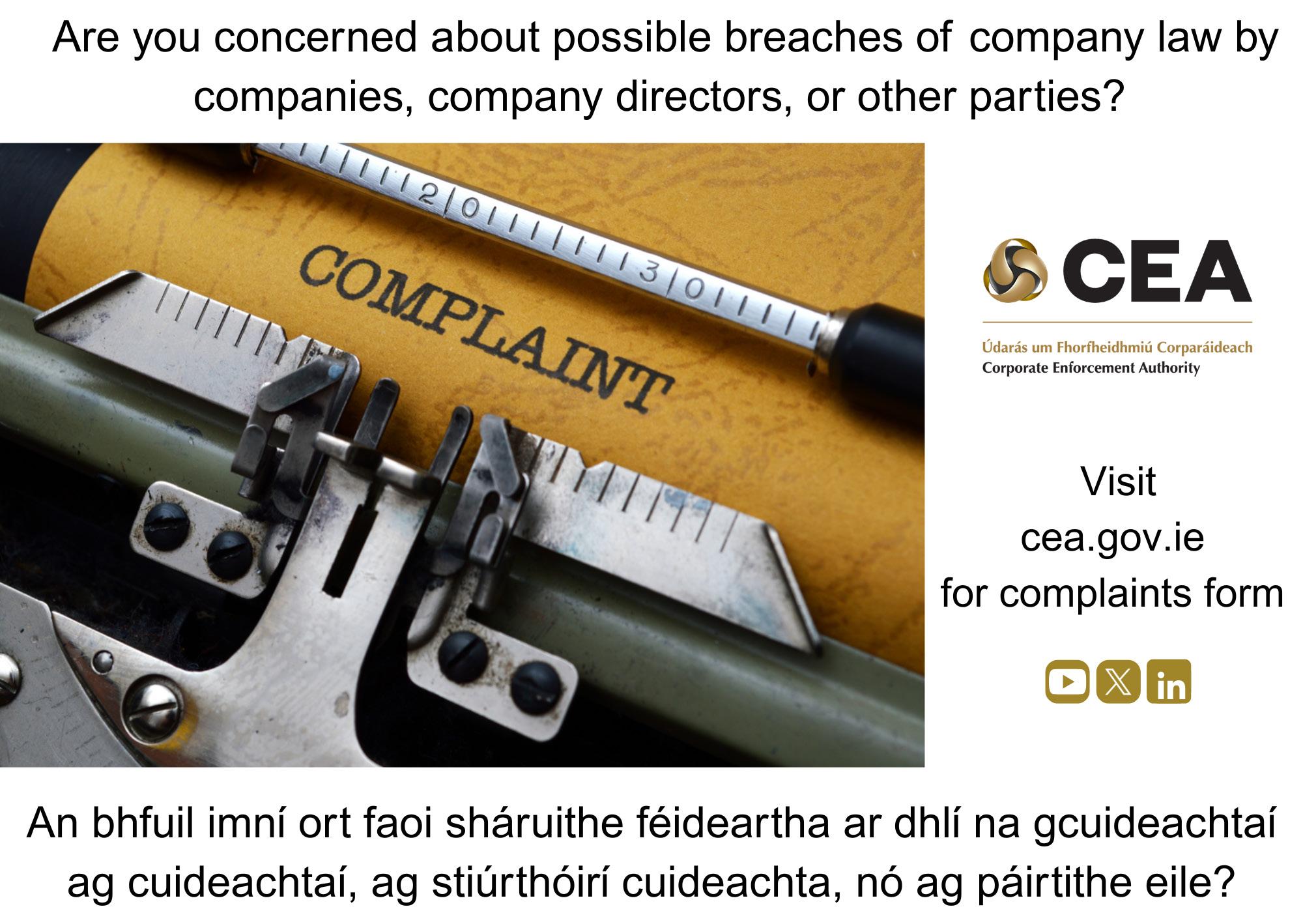
Corporate Enforcement Authority issues guidance on electronic participation in companies’ general meetings
The Corporate Enforcement Authority has published a new Information Note on electronic participation in companies’ general meetings. The aim of this Note is to support companies in meeting governance requirements while promoting transparency, fairness, and ease of understanding in how meetings should be conducted.
The recent amendments to the Companies Act 2014 enable more flexible and technology - enhanced general meetings. However, compliance depends on deliberate planning, clear communication, and a strong commitment to fair and inclusive participation. Companies that embrace these principles will be better positioned to strengthen governance, transparency, and member engagement.
The Information Note provides practical guidance for companies and their directors and members on the lawful and effective conduct of virtual general meetings under the Companies Act 2014 as amended. The guidance explains the permanent statutory basis for hybrid and virtual meetings, clarifies obligations, and highlights best practices, particularly in ensuring inclusive participation for stakeholders who may be less digitally proficient.
The Information Note provides a ‘key reminders’ checklist for companies when conducting their general meetings online. Companies are reminded to ensure members have the same rights whether attending in person or online and to provide extra assistance for less digitally literate members if a company is aware of such assistance being required to ensure a reasonable opportunity to participate.
Companies should use secure platforms that meet requirements under Section 176A (5), and issue notices in compliance with Section 181, including clear online access instructions.
They should also regularly review the company’s constitution and update meeting rules for virtual or hybrid formats.
If necessary, companies are encouraged to consider investing in user-friendly platforms and offer training or guidance for participants, and to remedy any technical issues as soon as possible once meetings commence.
Attendees of online general meetings must be able to hear the Chairperson and any person introduced by the Chairperson. Attendees must also be able to speak and submit questions or comments during the meeting (as permitted by the company’s constitution).
The full Information Note is available to read now on the CEA’s website, along with a number of other information and guidance booklets that may prove useful to company directors, members and other stakeholders. These can all be read at www.cea.gov.ie.
The CEA has also released the second episode of our new podcast series: EnforCEAble. The second episode, which is available on Spotify, Apple and all podcast players, features a conversation with the CEA’s Director of Legal Dr. Michael Dillon, about the fundamentals of company law. The episode features an in depth chat with CEA Chairperson Ian Drennan covering different company structures and the reasons behind, and benefits of, incorporation.
You can listen to the latest episode of EnforCEAble wherever you get your podcasts and make sure to subscribe, leave a positive review and share the podcast on your networking platforms.
Credit where it’s due.
Having difficulty getting a new business loan or restructuring your existing debt with your bank?
Established by the Minister for Finance, Credit Review is here to help.
Talk to the credit experts today on 0818 211 789 or visit creditreview.ie
Irish SMEs are Emerging as a Driving Force in Ireland’s Energy Transition
For many years, the conversation around sustainability was often viewed as the domain of large multinational corporations with dedicated ESG teams and significant investment budgets. However, new Flogas research suggests that Irish small and medium-sized enterprises (SMEs) are increasingly becoming one of the most important drivers of Ireland’s energy transition.
According to the inaugural Flogas Sustainability Report, SMEs across Ireland are showing a strong appetite for practical sustainability measures that can deliver both environmental benefits and commercial value. At a time of continued uncertainty in global energy markets, Irish businesses are seeking solutions that offer greater cost control, improved energy security and long-term resilience.
Among the most notable findings is the growing interest in solar energy. The research found that solar is now the leading sustainability investment priority for Irish SMEs, with 34% of medium-sized businesses and 31% of small businesses planning to adopt the technology. Even more significantly, nearly half of medium-sized businesses intending to invest in solar expect to have installations completed within the next year.
This reflects a broader shift in mindset. Sustainability is no longer viewed solely as a compliance exercise or a long-term environmental ambition. Increasingly, it is being recognised as a practical business decision that can reduce operating costs, improve competitiveness and strengthen resilience against market volatility.
As businesses continue to operate in an environment shaped by fluctuating energy costs and uncertainty in global markets, many organisations are recognising the value of reducing exposure to external energy shocks through greater self-generation and renewable energy adoption.
Solar energy, is proving attractive because it offers businesses a tangible and visible return on investment. Analysis by Wind Energy Ireland found that solar generation displaced almost 188 million cubic metres of gas from Ireland’s electricity generation mix last year,
avoiding approximately €94 million in gas and carbonrelated costs. For businesses, this demonstrates the growing role solar can play in reducing dependence on traditional energy sources while supporting sustainability goals.
One of the most significant trends identified in the research is the rise of Solar-as-a-Service, with 72% of medium-sized businesses considering this approach. By removing or reducing the need for significant upfront capital expenditure, such models can help businesses access the benefits of renewable energy while maintaining financial flexibility.
The report also highlights growing interest in longerterm renewable energy solutions such as Corporate Power Purchase Agreements (CPPAs). While awareness of CPPAs remains relatively low, businesses become significantly more receptive once the concept and potential benefits are explained. The attraction is clear: greater price certainty, reduced exposure to wholesale market fluctuations and enhanced sustainability credentials.
While the appetite for action is clear, challenges remain. The Flogas Sustainability Report found that upfront cost continues to be the primary barrier to investment, cited by 62% of businesses surveyed. For many SMEs, balancing sustainability ambitions with cashflow realities remains a key consideration.
What emerges from the research is a picture of an SME sector that is both ambitious and pragmatic. Businesses are seeking practical solutions that can deliver measurable outcomes, whether through lower energy bills, improved energy security or progress towards climate commitments.
As Ireland continues its transition to a lower-carbon economy, SMEs will play a critical role in shaping the pace and scale of change. Their growing appetite for commercially viable renewable energy solutions shows that sustainability and business performance are increasingly aligned. With the right supports and frameworks in place, Ireland’s SME community is well positioned not only to participate in the energy transition, but to lead it.
How the SEAI Energy Academy Helps SMEs Discover What They Don’t Know
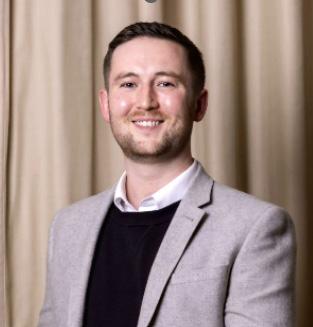
Luke Fagan, Programme Executive - Business Supports, SME at SEAI
For many SMEs, the biggest barrier to improving energy efficiency is not a lack of intent - it’s not knowing where inefficiencies exist in the first place.
Energy waste is rarely dramatic. It does not usually arrive as a flashing warning sign or a sudden operational failure. Often, it hides quietly in everyday routines, like heating systems running unnecessarily, refrigeration equipment working harder than it should, lighting left operating in empty spaces, or staff behaviours that have gradually become normal over time.
Like a slow leak, these inefficiencies are easy to overlook day to day, despite their long-term impact on operational costs. Many SMEs are not intentionally ignoring opportunities for improvement, they simply have not uncovered them yet.
This is one of the reasons the SEAI Energy Academy has become an increasingly valuable resource for SMEs across Ireland. The free online learning platform was designed to help businesses better understand energy use, uncover hidden opportunities and build confidence around the practical steps they can take to improve efficiency.
For many SMEs, one of the most powerful realisations is that not all energy savings begin with expensive investment. In fact, SEAI research has shown that businesses can achieve savings of over 10% through behavioural and operational changes alone.
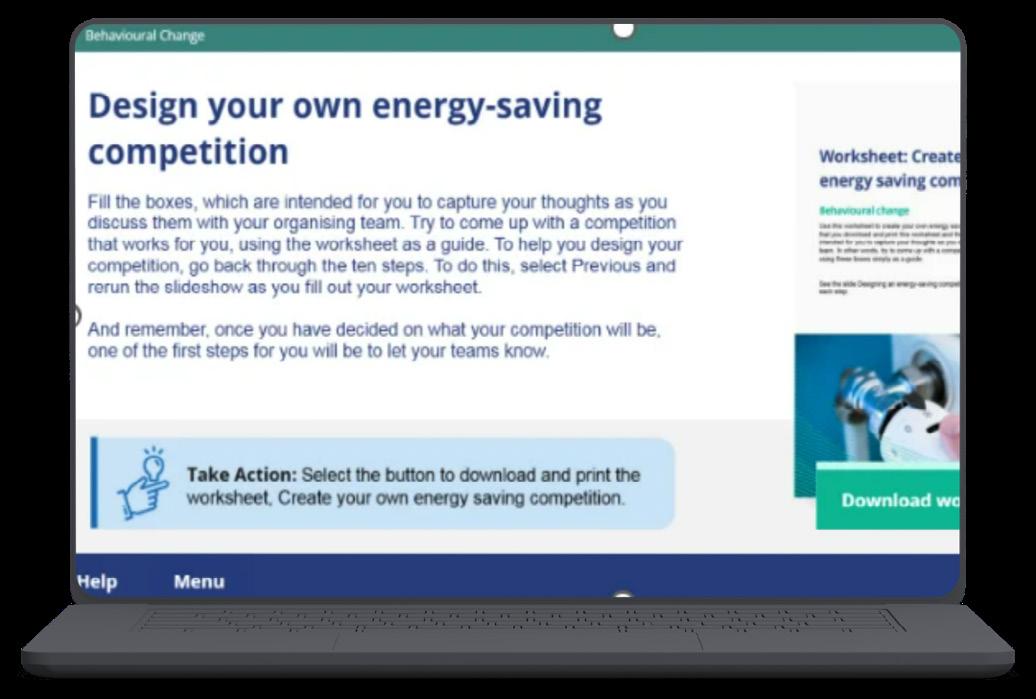
This idea sits at the centre of the Energy Academy’s Behavioural Change module, which focuses on engaging employees in practical no-cost and lowcost energy-saving actions around the workplace. This is particularly relevant in SMEs, where responsibility for sustainability or decarbonisation may sit with one person already balancing multiple roles. Building awareness across the wider organisation helps turn energy efficiency into part of everyday decisionmaking rather than a standalone initiative.
Screenshot from the Behavioural Change module on the SEAI Energy Academy. As part of this lesson, learners discover the energy savings that can be made through behavioural change and can access templates to create an energy saving competition in the workplace.
As businesses begin to learn more, they often start noticing opportunities in areas they had previously overlooked. Heating, lighting, hot water, refrigeration and office equipment can all contribute to unnecessary energy use over time.
For organisations that want a clearer picture of where energy is actually being consumed, the Energy Academy’s Energy Audit module explains how energy audits can help identify the true energy “hotspots” within a workplace. Rather than relying on assumptions, audits provide evidence and direction, helping businesses focus on the actions likely to deliver the greatest impact. Through SEAI’s Support Scheme for Energy Audits, SMEs can also access a €2,000 voucher towards the cost of a professional energy audit.
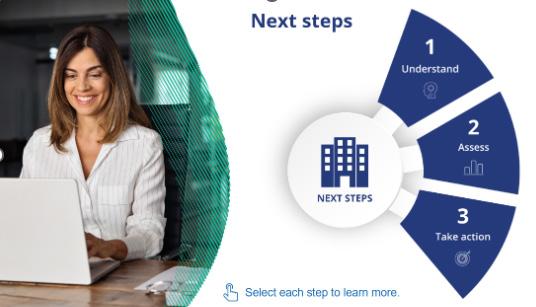
The Academy also helps businesses understand the wider range of supports available through SEAI. The Energy Upgrades for Your Business module introduces SMEs to the broader journey of understanding, assessing and investing, from free online learning and audit supports to rapid approval grants and tailored business supports. For many businesses, these supports are not ignored intentionally; they simply remain undiscovered.
Screenshot from the Energy Upgrades for your Business module on the SEAI Energy Academy. This module walks you through the range of sustainable energy supports available for SMEs, from no cost and low-cost initiatives, to rapid approval investments and more tailored supports.
Since launching in 2020, more than 13,000 learners have registered on the Energy Academy, completing over 45,000 modules. That continued engagement reflects an important reality: energy management is rarely a once-off exercise. As businesses build knowledge and confidence, new opportunities for improvement continue to emerge, including opportunities they may never previously have considered.
You can sign up to the Energy Academy here.
Luke Fagan is a Programme Executive within the Business Supports team at SEAI, where he leads on the Energy Academy. With a background spanning sustainability, digital learning and climate-focused technology, he has worked across the energy, biodiversity and corporate sustainability sectors for over eight years. His experience includes developing and delivering sustainability training and learning platforms that have supported the upskilling of more than 15,000 professionals.
Managing Ergonomic Risk in Small Businesses
Ola Taiwo Higher Executive Officer, Francis Power Senior Ergonomist (Inspector), Health and Safety Authority
Why is Managing Ergonomic Risk Important?
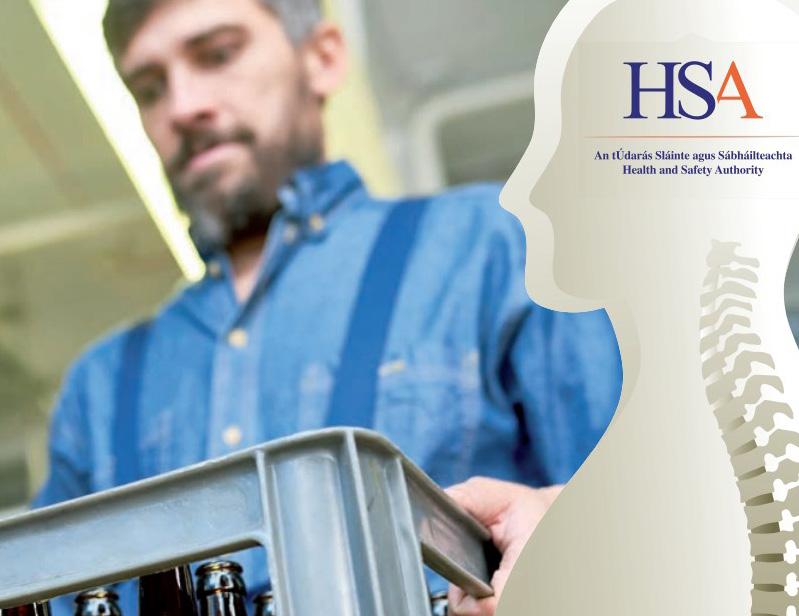
Many musculoskeletal workplace injuries develop gradually over time rather than result from a single incident. Employees who regularly lift and carry loads, work at computer workstations, perform repetitive tasks, or maintain awkward postures may be exposed to ergonomic risks that can contribute to musculoskeletal disorders (MSDs).
Musculoskeletal disorders affect muscles, joints, tendons, ligaments and other soft tissues of the body. Common symptoms include pain or discomfort in the back, neck, shoulders, arms and wrists. These injuries can affect an employee’s ability to carry out their work and may result in sickness absence, reduced productivity and increased costs for employers.
For small and medium-sized businesses, preventing musculoskeletal injury is an important part of managing workplace safety and protecting employee wellbeing.
What is Ergonomics?
“Ergonomics applies information about human behaviour, abilities and limitations and other characteristics to the design of tools, machines, tasks, jobs and environments for productive, safe, comfortable and effective human use” (McCormick and Saunders 1993).
The goal is to ensure that employers plan or design work activities that can be carried out safely and meet the needs of the people performing them.
Good ergonomic design takes account of how people move, lift, reach, sit, stand and interact with equipment and their work environment. It recognises that poorly designed tasks can place unnecessary stress on the body and increase the likelihood of injury or ill health.
A proactive approach to ergonomics focuses on preventing problems before they occur by identifying and addressing risk factors (e.g. Excessive force on
the body due to having to lift a heavy load) during the planning and design stages of work activities and workplaces.
Common Ergonomic Risk Factors
Ergonomic risks are present in many sectors, including retail, hospitality, manufacturing, healthcare, agriculture, construction and office-based work.
Some of the most common risk factors include:
• Lifting, carrying, pushing or pulling heavy loads.
• Repetitive work activities carried out throughout the working day.
• Bending, twisting, reaching or working above shoulder height.
• Remaining in the same position for prolonged periods.
• Poor workstation design.
• Limited workspace or poor workplace layout.
• Inadequate lighting or environmental conditions.
While any one of these factors may contribute to discomfort or fatigue, the risk of injury increases when several factors occur together. For example, repetitive work combined with forceful exertion and awkward posture can significantly increase the likelihood of musculoskeletal injury.
Legal Requirements
Employers have a legal duty to manage ergonomic risks in the workplace and to put appropriate measures in place to avoid or reduce the risk of musculoskeletal injury.
Relevant legislation includes:
• The Safety, Health and Welfare at Work Act 2005.
• Chapter 4 (Manual Handling of Loads) of the Safety, Health and Welfare at Work (General Application) Regulations 2007.
• Chapter 5 (Display Screen Equipment) of the Safety, Health and Welfare at Work (General Application) Regulations 2007.
These legal requirements place an obligation on employers to assess workplace risks and implement appropriate control measures to protect employees.
Managing Ergonomic Risk
Risk assessment is central to the effective management of ergonomic risk. The purpose of the assessment is to identify hazards, understand how work is carried out, evaluate risk factors, and determine suitable control measures.
When assessing work activities, employers should consider:
The physical demands of the task.
• The weight and characteristics of any loads being handled.
• Workplace layout and available space.
• Workstation design.
• Frequency and duration of tasks.
• Opportunities for rest and recovery.
• Employee feedback regarding discomfort or difficulties encountered during work.
• Employees should be consulted throughout the assessment process, as they often have valuable insights into how tasks are performed and where improvements can be made.
Practical Control Measures
• Many ergonomic risks can be reduced or avoided through practical workplace improvements, including:
• Using mechanical aids to reduce manual handling activities.
• Designing workstations that allow employees to work in neutral postures.
• Keeping frequently used items within easy reach.
• Reducing unnecessary bending, twisting, and reaching.
• Providing adjustable seating and display screen equipment where required.
• Rotating tasks where appropriate to reduce repetition.
• Allowing adequate recovery time and breaks during repetitive work.
• Providing training on safe work practices and ergonomic principles.
Introducing ergonomic improvements at the design stage of new workplaces, equipment, or work processes is often more effective and less costly than making changes after problems occur.
Further Information
Managing ergonomic risk is an important part of protecting employee health and preventing musculoskeletal injuries. Through effective risk assessment, good workplace design, employee consultation, and practical control measures, small and medium-sized businesses can create safer, healthier, and more productive workplaces.
By taking a proactive approach to ergonomics, employers can reduce the likelihood of injury, improve employee wellbeing, and support the long-term success of their business.
ISME submission says Budget 2027 must rebalance the economy in favour of indigenous enterprise
Ireland’s economic success has been driven by decades of attracting Foreign Direct Investment (FDI), but the country’s growing dependence on a small number of multinational corporations presents a significant risk that can no longer be ignored.
In this Pre-Budget Submission for 2027, ISME warns that just 297 companies, representing 0.1% of all businesses, accounted for 84% of corporation tax receipts in 2025. While multinational investment has delivered jobs, exports and tax revenue, such a concentration of receipts leaves public finances vulnerable to decisions made in a small number of boardrooms outside Ireland.
ISME argues that Budget 2027 should mark a shift in enterprise policy towards strengthening indigenous businesses and SMEs, which remain the largest source of employment across the country. The objective is not to reduce Ireland’s attractiveness to multinational investment, but to create a more balanced and resilient economy.
The submission sets out seven policy goals to achieve this rebalance:
1. Development of a tax system that encourages scale-up.
2. Ensuring a competitive indigenous enterprise base rather than seeking to develop individual champions.
3. Providing businesses with ready and affordable access to capital.
4. Providing an education system that addresses the educational under-performance of adults, and our deficits in life-long learning.
5. Ensuring Ireland’s FDI policy attracts businesses which have positive spill-over effects for indigenous enterprise.
6. Ensuring objective-oriented enterprise policy drives tax policy, not the other way round.
7. Wrapping these objectives into a coherent enterprise strategy, like that of Italy’s Industry 4.0 strategy.
The submission is anchored in ISME’s Indigenous Enterprise Policy published in March and highlights that Ireland has the lowest entrepreneurial participation rate among 20 to 29-year-olds in the EU, at 5.1%, compared with an EU average of 7.9%. At the same time, SME credit in sectors such as construction, retail, hospitality and community services has declined over the past four years, despite strong economic growth. According to ISME, this gap between available capital and SME investment represents one of the most significant missed opportunities in the Irish economy.
Access to finance remains a persistent challenge for many small businesses seeking to expand. Supporting government proposals for a savings and investment regime, ISME argues that improving the flow of capital into productive indigenous enterprises is essential if Ireland is serious about building a stronger domestic business base.
Skills development is another area requiring attention. ISME highlights that the Skillnet Ireland budget has been reduced from €63 million in 2025 to €54.2 million in 2026, despite employers contributing €1.2 billion annually to the National Training Fund. The organisation is calling for funding to be restored to at least €100 million and for apprenticeship and vocational education systems to be strengthened in line with leading European economies.
The broader message is clear. Ireland’s economy has benefited enormously from FDI, but longterm resilience requires greater investment in indigenous enterprise. A stronger SME sector would help diversify the tax base, create opportunities across all regions and reduce exposure to external shocks.
As Budget 2027 approaches, the challenge for Government is not identifying the risks but deciding how to address them. ISME believes the opportunity now exists to rebalance enterprise policy, strengthen the SME sector and ensure Ireland’s future prosperity is not overly dependent on a small number of multinational corporations
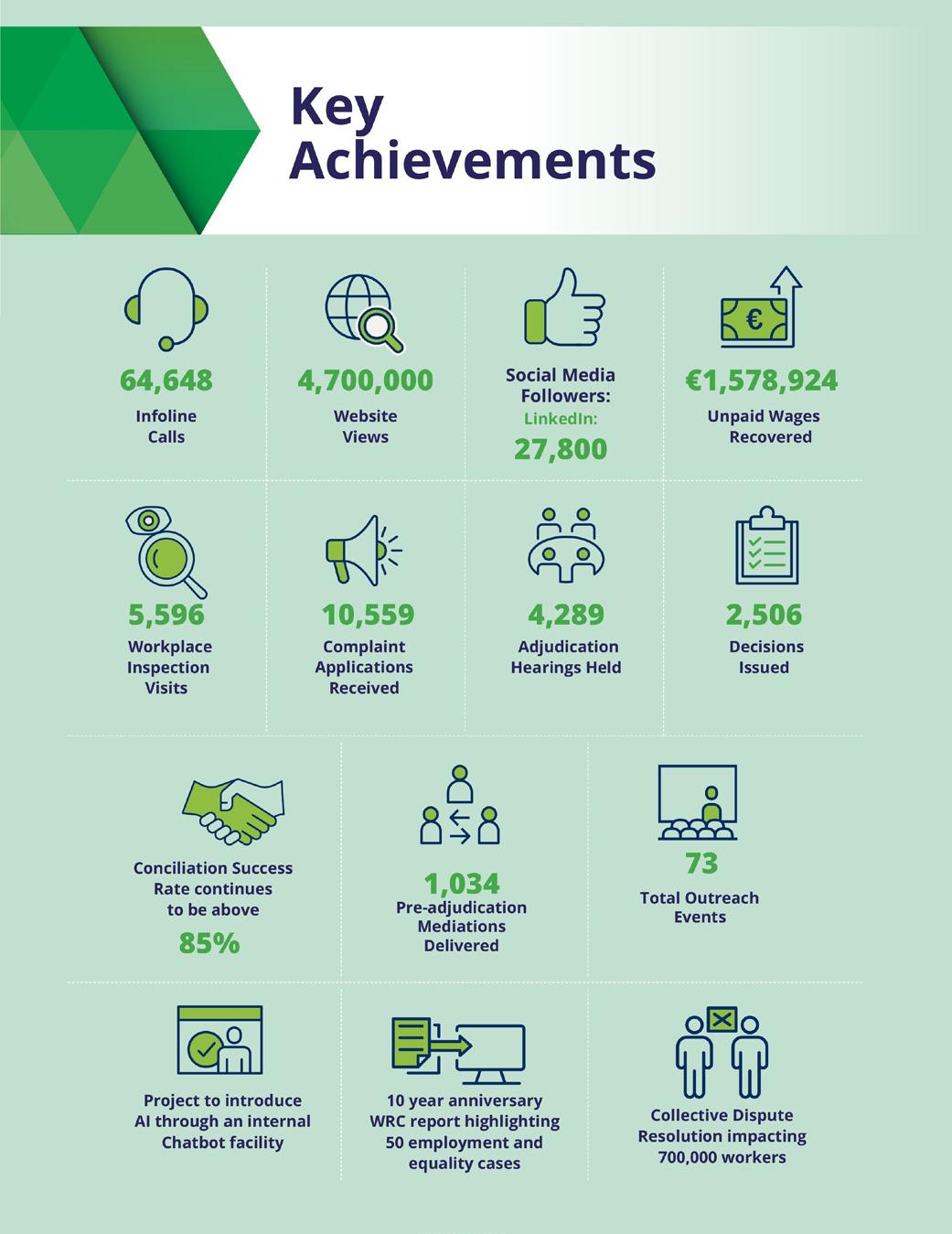
The WRC has recently published its Annual Report; here at ISME, we wanted to save you the time of reading the comprehensive report released by the WRC and instead give you an overview of the aspects of the activities of the WRC that may be of interest to you. A total of 7,727 hearings were scheduled in 2025, compared to 9,054 in 2024, representing a 15% decrease, 4,289 adjudication hearings were held and 2,506 decisions were issued in 2025 compared to 4,779 in 2024.
Complaint Breakdown:
10,559 complaint applications received encompassing 19,068 individual complaints were received by the WRC in 2025; this represents a 44% rise in complaint applications when compared to 2024. The main types of complaints were as follows:
• Pay (4,939) – 27% increase compared to 2024
• Unfair Dismissal (3,270) – 15% rise in claims over 2024 applications
• Discrimination/Equality/Equal Status (2,658)
• Terms & Conditions (1,658)
• Hours to Work (1,550) - Breaches of the Organisation of Working Time Act 1997
Within the discrimination complaints, 56 specific complaint applications were received under the Pensions Act 1990, which represented an increase of 30% compared to 2024
Mediations
2025 saw an increase in cases selected for mediation with 2,950 resulting in 574 mediations ended in resolution citing a 54% increase for the year.
While there were 574 resolved mediations, a total of 1,052 specific complaints were resolved through mediation, and a further 814 specific complaints were resolved after parties engaged with mediation services. This represents a total of 1,866 specific complaints concluding before an adjudication hearing took place following intervention from mediation services.
Decisions
Of the 2,506 Decisions/Recommendations issued by the Adjudication Division in 2025, approximately 12% were appealed to the Labour Court which is considerably low in the context of the overall volume of complaints received by the WRC year on year. Of these, 68% were upheld, 15% overturned and 17% were amended/varied.
Inspection and Enforcement Services
The inspection service completed inspections on 5,145 employers and recovered €1,578,924 in unpaid wages.
Of the 5,145 employers inspected, some 1,775 were found to have contraventions of employment law.
The report notes most employers inspected are compliant or become compliant during the inspection process. Employers who fail to become compliant may be subject to enforcement action, including prosecution; 223 prosecutions were conducted, of which 183 resulted in successful outcomes.
Most notable cases
MARY TRACY V. SMURFIT KAPPA IRELAND LTD
T/A THE EDUCATIONAL COMPANY OF IRELAND – DISCRIMINATION ON THE GROUNDS OF DISABILITY, REASONABLE ACCOMMODATIONS AND DISCRIMINATORY DISMISSAL
Legislation: Employment Equality Acts 1998 to 2021
The complainant, an educational sales representative with lupus, was medically restricted from lifting over 3kg. Although temporary accommodations were provided, the employer deemed her role unviable and sought redeployment. After her employment ended, she claimed disability discrimination and failure to
provide reasonable accommodation. The employer argued accommodations were impractical and burdensome.
Key Findings:
The AO confirmed the complainant’s lupus qualified as a disability under the Employment Equality Acts. Employers must provide reasonable accommodation unless it creates a disproportionate burden.
The complainant established a prima facie case of discrimination as medical evidence stated she was fit to work with a 3kg lifting restriction.
The employer failed to properly explore accommodations or engage sufficiently with the complainant by not carrying out a recommended workplace assessment.
Outcome: Employer breached its duty under section 16 of the 1998 Act. complainant was awarded €29,000 for failure to provide reasonable accommodation and an additional €35,000 was awarded for discriminatory dismissal.
NAOMI HANLON V. EMER MCGRATH –PREGNANCY-RELATED DISMISSAL
Legislation: Employment Equality Acts 1998 to 2021 –Terms of Employment (Information) Acts 1994 to 2014 – Organisation of Working Time Act 1997
The Complainant, employed with the respondent as a Nanny from August 2020 until her employment was terminated in December 2023. The complainant claimed she was dismissed after announcing her pregnancy, alleging pregnancy discrimination and breaches of employment rights. The employer argued she intended to resign and was dishonest about outside business interests, damaging trust. The employment relationship deteriorated after disputes over maternity leave, annual leave, and alleged conflicting work commitments.
Key Findings:
Once a pregnant employee is dismissed, the employer must prove the dismissal was unrelated to pregnancy.
Evidence about an October 2023 meeting conflicted, with disagreement over whether the complainant resigned or planned maternity leave.
The AO found the informal nature of the meeting could reasonably have caused misunderstanding.
However, once the complainant clarified she had not resigned, the employer should have accepted this.
The employer’s concerns about outside employment were not handled fairly.
No formal investigation or disciplinary process took place, breaching fair procedure rights.
The employment relationship deteriorated only after the complainant disclosed her pregnancy.
The AO concluded the complainant was discriminated against on grounds of pregnancy.
Outcome: Compensation of €55,575 (15 months’ salary) was awarded for discriminatory dismissal.
CATHAL HUSSEY V. TESCO IRELAND
Legislation: Unfair Dismissals Acts 1977 to 2015
The Complainant, a warehouse operative with 17 years’ service was dismissed for gross misconduct after calling his manager “useless.” Initially given a final written warning, this was upgraded to dismissal on appeal. The employee minimally engaged with disciplinary proceedings. He claimed unfair dismissal, while the employer argued his conduct destroyed trust and confidence.
Key Findings:
Key learnings from this case highlight the importance of issuing reasonable sanctions in disciplinary matters. The disciplinary process was broadly fair, despite the investigator overstepping by suggesting a policy breach occurred. There was adequate separation between investigation, disciplinary, and appeal stages. Procedures do not need to be perfect, only fair overall.
The AO found dismissal disproportionate in the circumstances. It was deemed a final written warning would have been an appropriate sanction.
The employer failed to adequately justify increasing the sanction from a warning to dismissal on appeal. Disciplinary procedures should be progressive and allow employees an opportunity to improve before dismissal. The employer therefore failed the reasonableness test under section 6(7)(a) of the Act. The AO ordered re-engagement due to the complainant’s long service, age, and the employer’s large workforce with alternative roles available. The final written warning was to remain active for one year after re-engagement
Awarded to the employee: Employee was re-instated to their role with the period between dismissal and reengagement treated as unpaid suspension.
The complete WRC Annual Report 2025 can be found on the ISME HR Hub.
If you require any HR assistance for your business don’t hesitate to contact the HR Team via HR@ISME.ie , or alternatively phone 01 6622755 Option 2.
AI in the Workplace –
What
employers need to know
It’s important that employers provide guidance and procedures to employees in regard to their use of artificial intelligence (AI) tools in the workplace. AI is becoming an integral part of work, and it is vital that employees understand their role in using these tools effectively, safely, and ethically. Employers have a key role in ensuring this understanding.
Without clear safeguards, AI tools can introduce risks ranging from data breaches to biased decision-making. Employers need to create straightforward policies and guidelines on how AI tools should be used. This includes defining approved platforms, acceptable use, and restrictions on sensitive activities such as decisionmaking in hiring or finances.
Policies should also address the input of confidential data into AI systems. One of the biggest risks with AI is private and confidential data being shared. Employers must ensure that employees do not upload sensitive company, client, or personal data into public AI tools. Implementing secure, AI solutions and using data protection regulations is essential. Protecting sensitive company data, intellectual property, and confidential information when using AI tools is vitally important.
Employers should only approve the use of reputable AI tools and should be cautious about using tools developed by individuals or companies without established reputations. Any AI tool used by employees must meet your company existing security and data protection standards.
Employees need to understand both the capabilities and limitations of AI. Training is required in this regard. AI should support work, but not replace employee’s judgement or decision making. If employees are using AI for certain work tasks, employers should require all AI-generated outputs to be reviewed and amended as necessary, and employees should not be using AI in high-stake decisions. Understanding the potential risks, limitations, and ethical implications associated with using AI tools is vital.
By setting clear rules, training and educating employees, and maintaining oversight, employers can harness AI’s benefits while minimizing its risks. Employers must ensure that the use of AI tools is safe and secure for all employees and customers, as well as the organisation itself. Clear guidelines are important for employees so as employers can maximize the benefits of AI tools while minimising the potential risks.
You’ll find the ISME AI Tool Usage Policy here.
It’s important for employers to have a policy, that employees understand and have signed off on. And employees need to be aware that breaches of the policy will be dealt with in line with the normal company Disciplinary Policy.
ISME HR Team
ALS Technical Services Limited
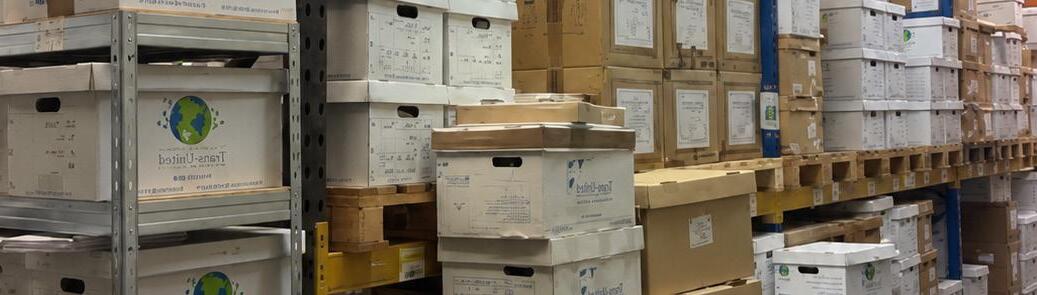
ALS Technical Services Limited is a specialist records management and digital transformation company based in Shannon, Ireland, with deep experience supporting highly regulated, document-intensive industries. Rooted in aviation technical records and founded in 2020, the company’s core capabilities are directly applicable to any organisation that manages large volumes of physical or digital records and is seeking to improve control, accessibility, compliance, audit readiness and operational efficiency.
ALS helps businesses move from paper-based, fragmented or manually controlled records environments to structured, searchable and secure digital records systems. Their comprehensive services cover the full lifecycle of records management, including physical archive assessment, document collection, inventory creation, scanning, indexing, OCR processing, digital file structuring, metadata capture, quality control and secure storage. Beyond digitisation alone, the company supports clients in establishing practical records management procedures so that information can be controlled consistently going forward, rather than simply digitised once and allowed to become disorganised again.
A key strength of the business is their ability to handle complex, high-volume records projects where accuracy, traceability and process discipline are essential. ALS is accustomed to working with records that must be complete, well organised and readily available for audits, inspections, transactions, client requests, regulatory reviews or internal decision-making. This makes the service particularly relevant to professional services firms, engineering companies, utilities, public bodies, healthcare-related organisations, property and facilities businesses, logistics providers, financial services firms and any organisation managing legacy archives or compliancesensitive documentation.
The company’s approach is practical and outcome focused. They begin by understanding the client’s current records environment—where documents are stored, how they are accessed, what risks exist, and what the business needs from a future-state solution. From there, ALS can design and deliver a structured
digitisation and records control programme that may include physical archive mapping, box-level or filelevel inventories, document preparation, scanning, digital indexing, naming convention development, folder structure design, searchable PDF creation, audit sampling and exception reporting.
Beyond service delivery, ALS has developed their own digital records platform, DocuTrace, to help organisations connect their physical and digital records environments. The platform supports asset, box or file-level tracking, QR-based identification, digital document linking, structured metadata, search functionality and project visibility. This allows clients to move beyond basic scanning towards a more controlled digital records ecosystem where documents can be located, verified and managed with confidence.
The company understands that many organisations want to “go digital” but are unsure how to begin, particularly where archives are large, poorly indexed or spread across multiple storage locations. Their role is to provide the structure, resources and process expertise required to make that transition manageable. Whether the requirement is a once-off archive digitisation project, an ongoing managed records service, a compliance clean-up exercise, or the implementation of a digital records platform, ALS can provide a scalable and professional solution.
Their objective is simple: to help organisations turn records from a storage burden into a reliable, searchable and value-adding business resource.
For inquiries, please contact Siobhán Thynne, Sales Manager on +353 86 8311706 or email siobhan. thynne@aviationpartners.ie
Leadership & Networking Forum ISME
Learning Focus ISME Skillnet
S.T.A.G.E.S Mentoring Programme
The ISME Skillnet S.T.A.G.E.S Mentoring Programme emerged as a definitive success story in 2025, providing crucial strategic coaching to help small and medium enterprises (SMEs) overcome scaling bottlenecks and accelerate their technological innovation. By pairing ambitious small business owners with seasoned and certified industry practitioners, the initiative successfully helped local firms implement advanced technologies, diversify into international markets, and boost overall economic resilience.
The 2025 programme was 100% funded by Skillnet Ireland under the initiative of Pathways to Innovate and was a welcome addition to the ISME Skillnet’s other funding schemes. Off the back of last year’s success, ISME Skillnet will be launching the 2026 STAGES programme to focus on same themes:
S
urvive, Thrive
Accelerate, Grow
Export , Scale
The Core Challenge:
Small companies face immense hurdles when trying to transition from regional operations to international scaling. Some of the key obstacles addressed during the 2025 cycle included:
• Digital transformation lags due to limited technical expertise.
• Market concentration risks that left small firms vulnerable to local economic shocks.
• Management gaps in handling complex human resources and financial forecasting.
How the Programme Works:
The S.T.A.G.E.S initiative delivers highly targeted, fully funded support through structured interactions.
• Business Needs Analysis: Every participant undergoes an initial operational assessment.
• Bespoke Matching: Owners are paired with a certified coach holding specific domain expertise in tech, finance, or operations.
• 1-to-1 Advisory: Mentors offer external, objective insights to refine corporate structure and business models.
Quantifiable Impacts Achieved:
The 2025 programme delivered clear, operational milestones for participating small businesses:
Tech Adoption: Over 80% of participants successfully integrated new software or automated processes into their daily workflows.
Export Expansion: Small firms utilise strategic planning to build entry roadmaps into broader European and global markets.
Management Quality: Business owners reported vastly improved capabilities in forecasting budgets and managing team resources.
The Human Element:
Beyond numbers, the programme systematically reduced the “founder isolation” commonly experienced by small business managers. Giving leadership teams access to trusted, experienced confidants provided the operational confidence needed to take calculated risks and execute large-sc ale innovation.
We are now taking expressions of interest for the 2026 launch at the end of August. We will be looking to engage 30 companies in Q3 and Q4 and provide 12 hours of mentoring with a suitable business expert.
If you wish to embark on your innovation journey, please complete the below business questionnaire. Due to limited numbers, we will be using a first in / first served approach.
Business Questionnaire for Mentoring
Email stages@isme.ie for more information.
A series that highlights the lives and interests of ISME members and staff. In this edition, The bISME talks to ISME National Council Member, Eamon Rheinisch about his interests and hobbies.
What hobbies do you have outside of work?
I most enjoy spending time with my two girls: my wife, Dawn, and our daughter, India. That said, they’d probably tell you I’m obsessed with golf. I’m a member of Kilcock Golf Club in County Kildare and try to get out for a round once a week.
Why does golf interest you?
In a past life, I represented Ireland in canoe slalom and raced at senior level. When that chapter ended, I felt a bit lost, as many athletes do. I wanted to find a hobby I could enjoy without taking it too seriously.
I tried several sports, but every time the athlete’s brain kicked in, what was meant to be relaxing became another source of pressure. Someone eventually suggested golf. My immediate response was, “Golf isn’t a sport!” After some thought, I decided to try it, partly because it seemed like a great way to spend more time with my dad, Donal.
Unfortunately, my pursuit of perfection soon followed me onto the course. There were new clubs, golf lessons and, eventually, a full-scale putting green in the back garden. I had it installed while Dawn was away for the weekend and 36 weeks pregnant, confident that once she saw it, she’d understand the journey we were apparently on together. I may have been slightly optimistic.
Do you have an interesting story about your hobby?
My favourite golf memories are of picking up Dad every Saturday morning and playing a round with him. He was a master of match play and mind games. I can still hear him laughing after chipping in from off the green or holing an absolute raker to take a few quid from my pocket.
This was usually followed by “Back of the onion sack!”, a rendition of Johnny Tillotson’s “Poetry in Motion”, or a laugh like Muttley from the Dick Dastardly cartoon. More importantly, Dad was always there for me, on and off the course, whether the issue was big or small. I’ll always be grateful that he supported me on two of my biggest days as an amateur: the Captain’s Prize in 2019 and the All-Ireland Captain’s Prize that same year. He couldn’t hit the shots for me — and, by God, there were moments when I wished he could — but knowing he was there, ready with a thumbs-up or the odd laugh, meant more than money could ever buy.
Are there any hobbies or challenges would you like to try?
I’m open to most challenges, although bungee jumping and skydiving remain firmly off the list.
Talk to us about the work you do at ISME?
I currently sit on ISME’s National Council and help wherever I can. It’s a pleasure to see first-hand the team’s effort and passion for supporting small and medium-sized businesses across Ireland. ISME’s membership brings enormous value.
How important do you think it is to have an interest outside work and how do you think it can benefit your work?
Having an interest outside work is hugely important. I’ve been involved in high-performance sport since I was ten, and golf has taught me a different lesson. Whatever your age or fitness level, it’s predominantly a mental game. Any sense of mastery is fleeting: one day you play out of your skin; the next, you wonder whether someone has grafted a different pair of hands onto your body overnight.
People say your golf game mirrors your life, and I think that’s true. Whatever was happening in business or at home, Dad could play 18 holes laughing, singing and enjoying himself. Perhaps that’s why he always played so well.
He used to say, “Life is an experience to be enjoyed, not an ordeal to overcome.” That balance matters in life and business. Work hard, enjoy the process of building something and keep looking for ways to improve. Even a one per cent improvement can make a meaningful difference, both to an individual and to the growth of a business.