Reducing restraint incidents by implementing core data strategies Nov 24
Presented by:
➢ Dr Andrew Hider, Consultant Clinical and Forensic Psychologist/ Approved Clinician. Clinical Director, Iris Care Group
➢ Adam Pitt, Head of Learning and Development, Iris Care Group
November, 2024
Where are we now?
Mental Health, unlike any other areas of health and social care, is riven with ideological conflict about how to think about and what to do in a response to disorder and distress. These philosophical problems are not divorced from the operational delivery of the mental health system –they continually shape it
Developments and debates in the last 10 years aimed at resolving these issues have been ineffective in that the impatient system has not improved as a result, on a number of metrics. There is a need for pragmatism and values to come together to improve how the system works.
Workshop Schedule
• Restraint Reduction as a Wicked Problem
• Group exercise
• Restraint Reduction data – 9 years
• Patterns and trends
• Use of statistical process control.
• Examining the implementation of the core strategies
• Core learning from implementation
• Organisational diagnosis
• What we did
• What’s left for the system to do
• Group exercise – challenges for your system
• Proposed organisational readiness tool for restraint reduction
• the ICG Restraint Reduction Readiness Tool
• Conclusion and Discussions
Company Overview
Company Name: Iris Care Group
Description: Independent sector health and social care provider.
Services: Inpatient, social care, education, forensic mental health, rehabilitation, learning disabilities, autism, and neuropsychiatry.
Staff: Approximately 1600 whole-time equivalent staff
Capacity: 520 beds across 54 sites
Wicked Problems
Wicked Problems
• There is no definitive formulation of a wicked problem.
• Wicked problems have no stopping rule.
• Solutions to wicked problems are not true-or-false, but good or bad.
• There is no immediate and no ultimate test of a solution to a wicked problem.
• Every solution to a wicked problem is a "one-shot operation"; because there is no opportunity to learn by trial and error, every attempt counts significantly.
• Wicked problems do not have an enumerable (or an exhaustively describable) set of potential solutions, nor is there a well-described set of permissible operations that may be incorporated into the plan.
• Every wicked problem is essentially unique.
• Every wicked problem can be considered to be a symptom of another problem.
• The social planner has no right to be wrong (i.e., planners are liable for the consequences of the actions they generate).
Rittel, Horst W. J.; Melvin M. Webber (1973). "Dilemmas in a General Theory of Planning" . Policy Sciences. 4: 155–169.
Wicked Problems
Conklin later generalized the concept of problem wickedness to areas other than planning and policy.
The defining characteristics are:
1. The problem is not understood until after the formulation of a solution.
2. Wicked problems have no stopping rule.
3. Solutions to wicked problems are not right or wrong. 4. Every wicked problem is essentially novel and unique. 5. Every solution to a wicked problem is a 'one shot operation.'
Wicked problems have no given alternative solutions.
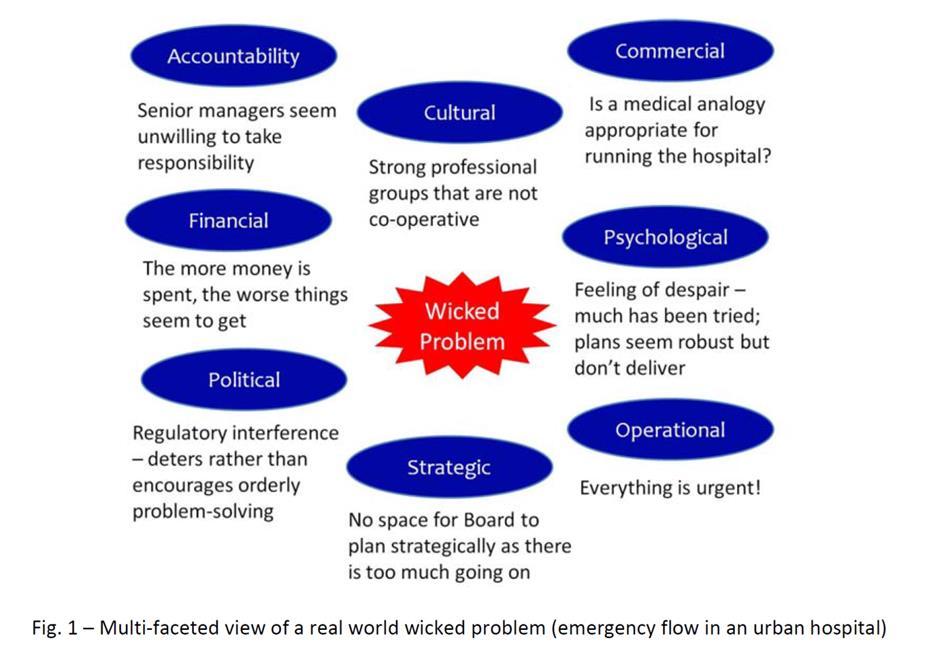
A Problem as Wicked as they come
Accountability - to who and for what?
•Financial: What outcomes should be linked to spend, and to spend in what areas?
•Political: Spoils for perceived success change according to the political cycle.
•Cultural: The MDT in Behavioural/mental healthcare is an unresolved issue. Ideology, guilds, and evidence often clash.
•Commercial: Risk of unhealthy claims regarding potential to deliver. Rewards for quick wins when they may be unsustainable.
•Psychological: Overload, parallel process, and ‘fast thinking.’
Discipline bias often unconsciously acted out?
•Operational: Unit and task-based in an environment requiring strategic focus.
•Strategic: The current world defies prediction: data can confuse as much as clarify.
Strategies to Solve Wicked Problems
Authoritative
These strategies seek to tame wicked problems by vesting the responsibility for solving the problems in the hands of a few people. The reduction in the number of stakeholders reduces problem complexity, as many competing points of view are eliminated at the start. The disadvantage is that authorities and experts charged with solving the problem may not have an appreciation of all the perspectives needed to tackle the problem.
Competitive
These strategies attempt to solve wicked problems by pitting opposing points of view against each other, requiring parties that hold these views to come up with their preferred solutions. The advantage of this approach is that different solutions can be weighed up against each other and the best one chosen. The disadvantage is that this adversarial approach creates a confrontational environment in which knowledge sharing is discouraged. Consequently, the parties involved may not have an incentive to come up with their best possible solution.
Collaborative
These strategies aim to engage all stakeholders in order to find the best possible solution for all stakeholders. Typically, these approaches involve meetings in which issues and ideas are discussed and a common, agreed approach is formulated
Restraint Reduction in the Mental Health System: A Wicked Problem
Restraint reduction is a wicked problem due to:
• Complex, interrelated challenges in mental health care systems.
• Competing priorities and ethical considerations.
• Need for interdisciplinary collaboration and sustained leadership.
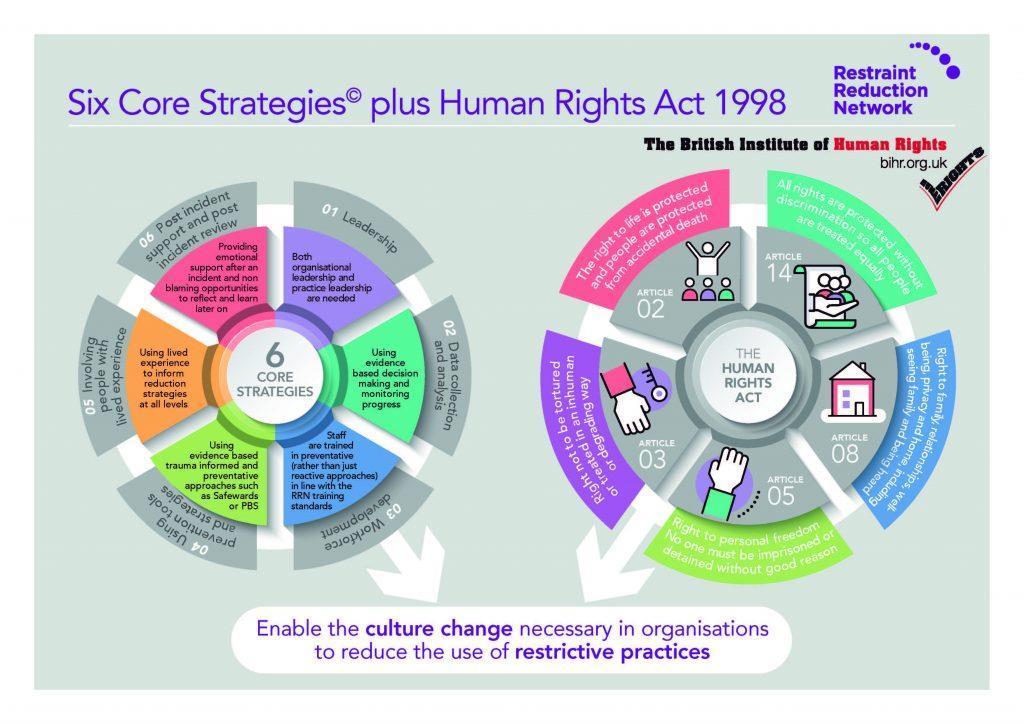
The 6 Core Strategies address these complexities:
1. Leadership: Drives organizational and practice-level changes.
2. Data Collection and Analysis: Informs evidence-based decisions and monitor's progress.
3. Workforce Development: Builds preventative skillsets aligned with RRN training standards.
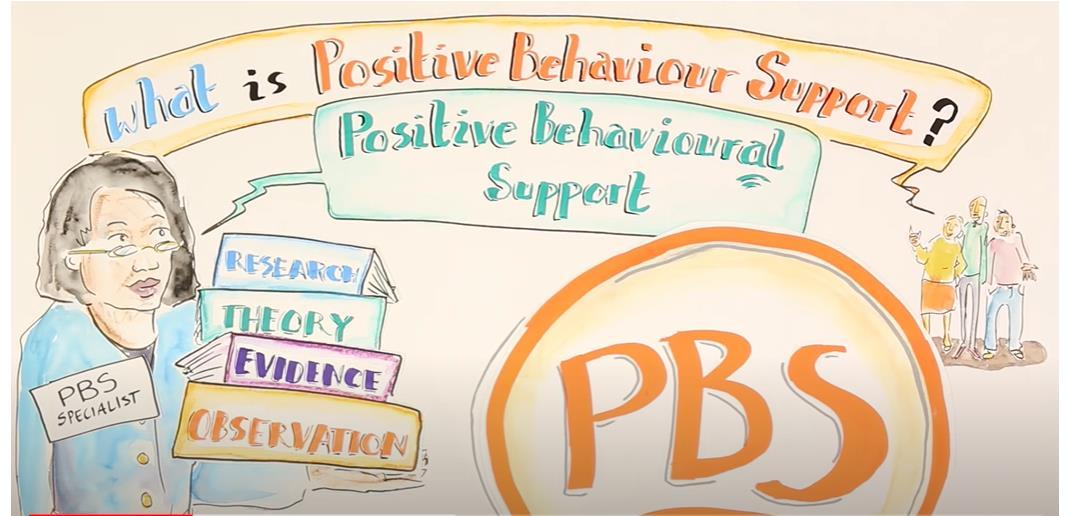
4. Using Prevention Tools and Strategies: Incorporates trauma-informed, proactive approaches like Safewards or PBS.
5. Involving People with Lived Experience: Ensures policies and practices are informed by real-world insights.
6. Post-Incident Support and Review: Creates learning opportunities to prevent future incidents.
Accountability
Many professional conduct cases arise from nurses’ lack of awareness/ uncertainty of accountability
Strategic
Staff who reported high expressed emotion attributed challenging behaviour as internal and controllable
Financial
Treatment is provided in many settings, which affects the cost
Political
Operational
Wicked
Problem
Psychological
Bullying, discrimination and overwork deprive staff of emotional resources to deliver compassionate care
Culture
MDT teamwork can be superficial; difficult to make decisions when potentially conflicting values are in play
Commercial
Motivations to make claims re : delivery of PBS
Our critique of recent policy for mental health is that, in their zest to secure improvement in a neglected field, policymakers unleashed a surfeit of downwards-directed actions, paid insufficient attention to the need to build strong partnerships across the system as a whole and failed to examine sufficiently the cumulative effects of their activities.
At a time when new collaborations are being sought in the furtherance of a novel public mental health agenda, the challenge for the future must be to meaningfully reengage with providers and recipients of services so that problem formulations can be agreed by as many as possible, actions negotiated, and the likely waves of consequence be better anticipated.
The extent to which policymakers might achieve this remains to be seen.
Hannigan, B., & Coffey, M. (2011). Where the wicked problems are: The case of mental health. Health Policy, 101(3), 220–227. Retrieved from https://orca.cardiff.ac.uk/id/eprint/7499
Six Core Strategies
Where were we in 2016
High use of restraint in many sites particularly hospitals
Some cultural resistance to restraint reduction
Fear of increased risk?
Organisational Memory
Assumption of inevitability?
Minimisation of power environmental and practice change?
Obvious likelihood of increasing governance and assurance requirements from commissioners
Our Strategic Aims
• Systematically reduce restraint using the 6 core strategies.
• Improve staff safety and wellbeing, and service user safety satisfaction and family / carer confidence
• Demonstrate that even in ultra-high acuity services where reason for referral is often challenging behaviour restraint can be substantially reduced.
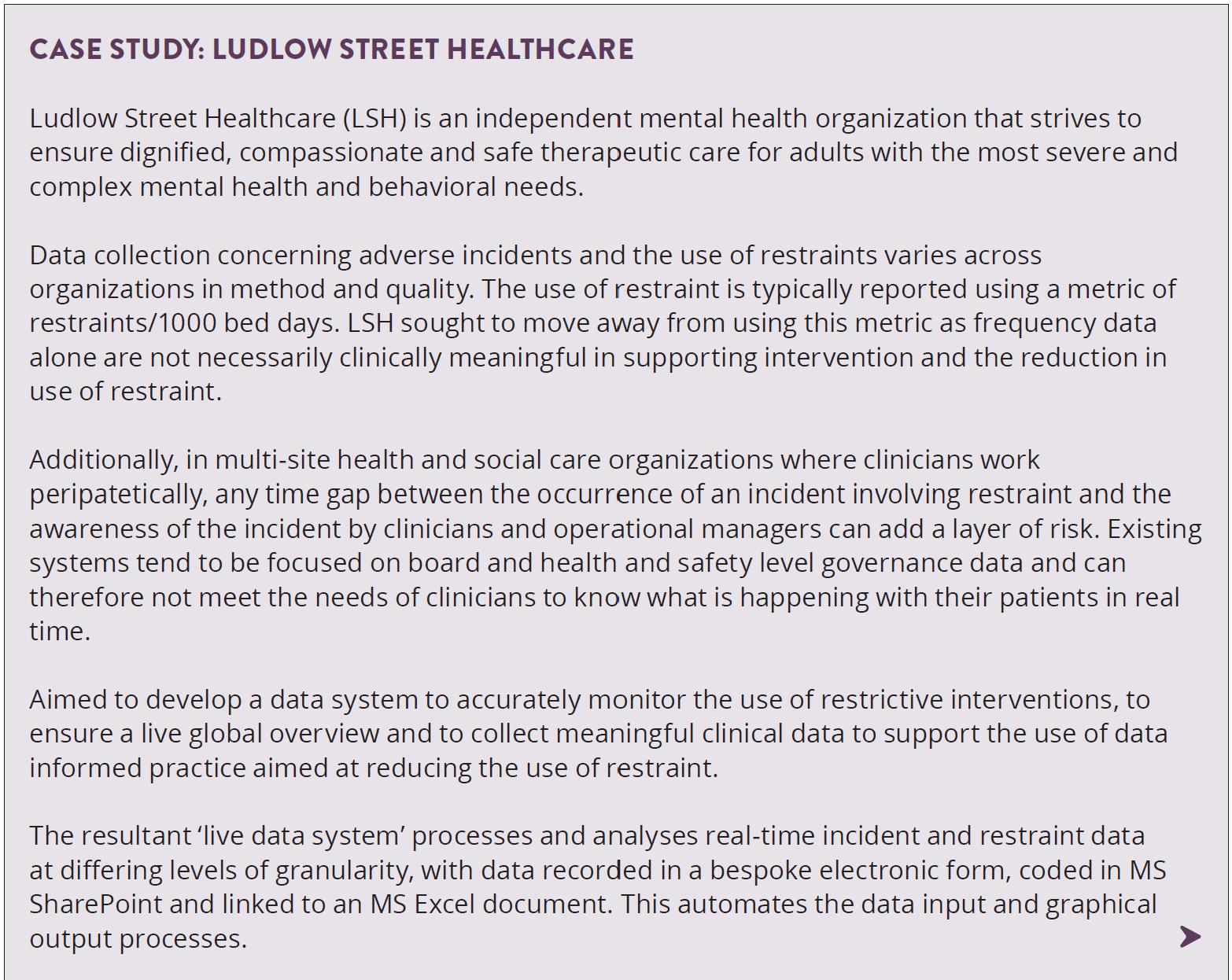
• Deliver a live data system regarding incident and restraints that supported immediate organisational visibility of all restraint use to everyone who needed to know, across all sites,
• Systematic Change and Leadership Involvement in planning and driving implementation.
"The journey starts with a commitment to change at all levels of the organisation."
Progress on Restraint Reduction 2016-2024
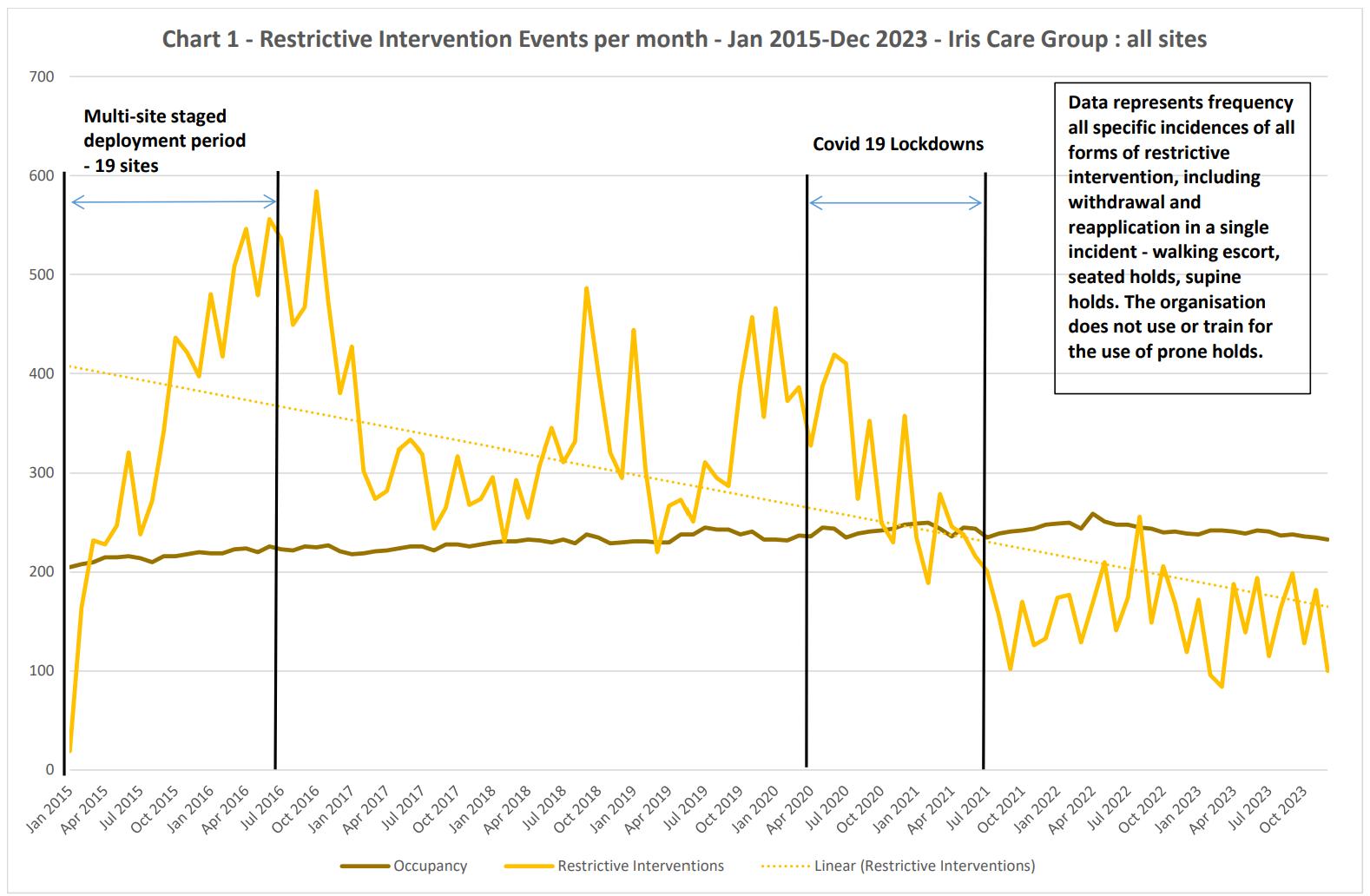
• Sustained decrease in use of restraint in all sites.
• Maintained zero use of prone holds.
• Gradient of response means that standing / escorts are most frequent holds used.
• Greater reduction in learning disability services.
• Older Adult services – most restraint not connected to Challenging Behaviour – specific training for personal care holds.
• Mental health – reductions less consistent but still reducing
• Social care – greater reductions than hospital sites. Effective zero restraint use in most sites.
• Harms caused by Pandemic response did not stop progress.
• Data system needs update – project currently ongoing to align with new mental health act and practice changes.
The Results
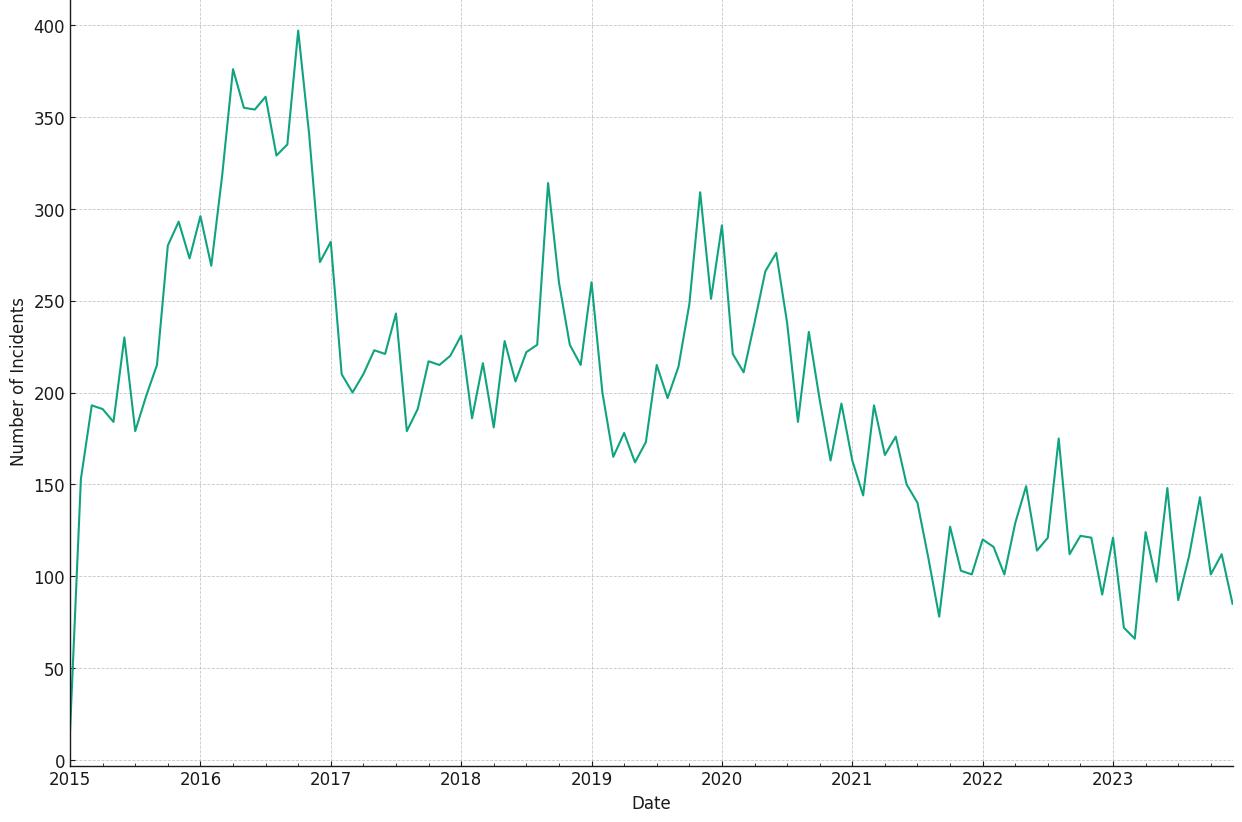
All Restrictive Interventions (Frequency) – All Sites
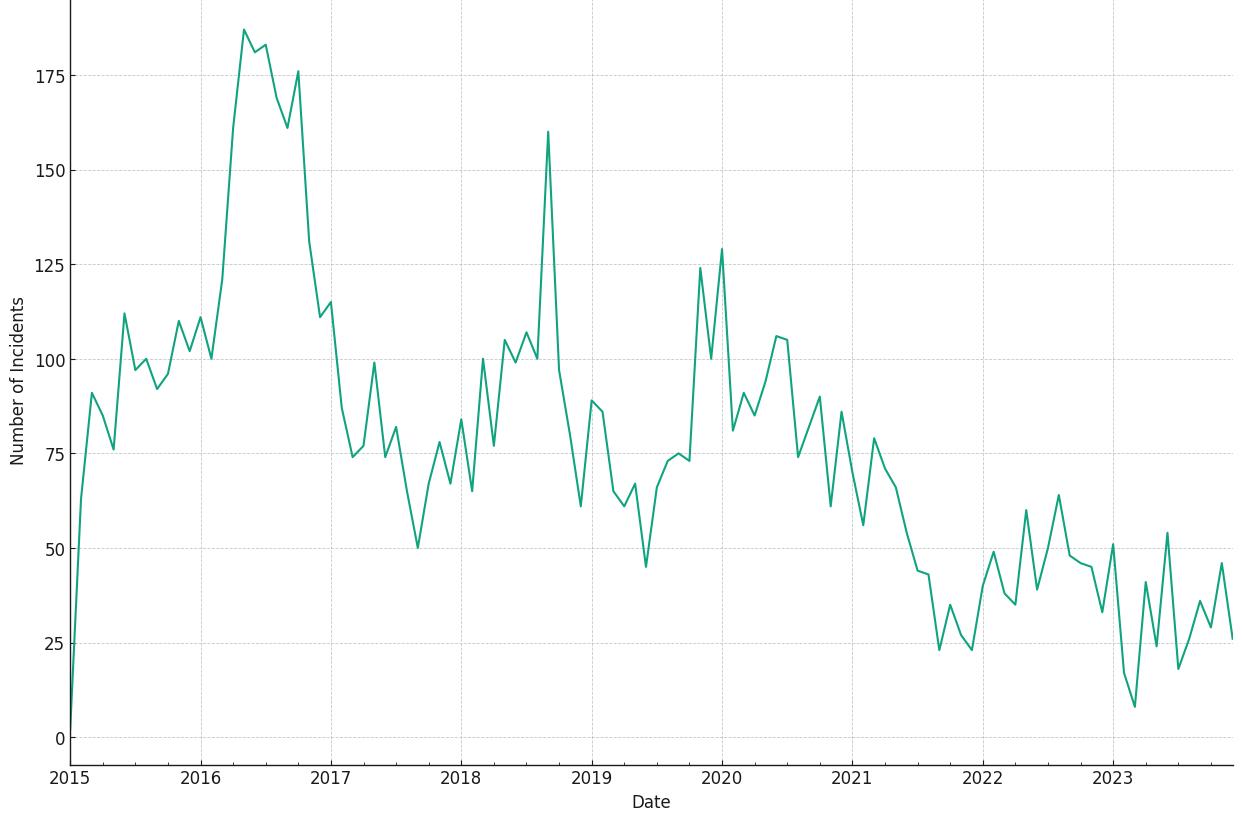
Floor Safehold Interventions (Frequency) – All Sites
The Results
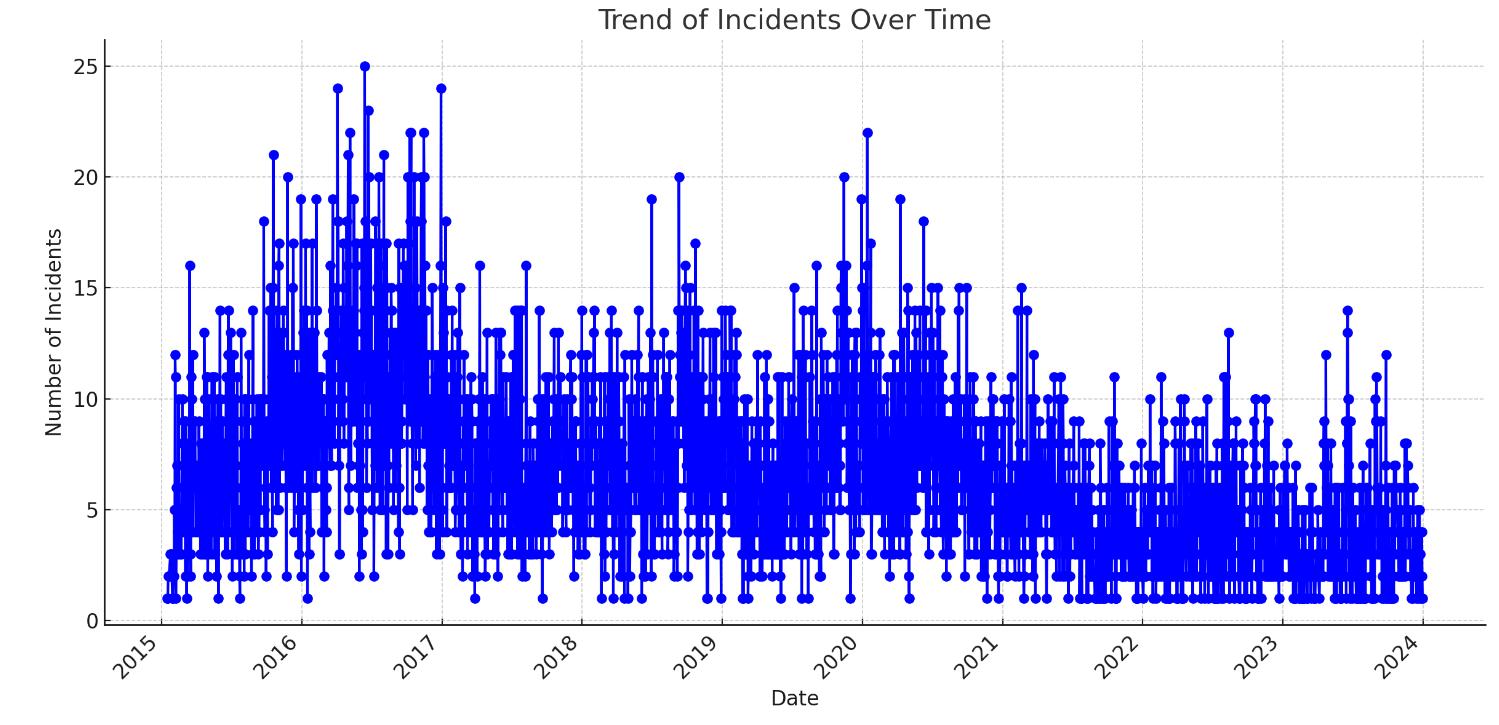
• Incidents by day – used to develop autoregressive model
• Variance narrows over time but outliers remain – this is why SPC is important.
• The increase in zero count frequency in the second half of the time series (dots at zero).
The Results
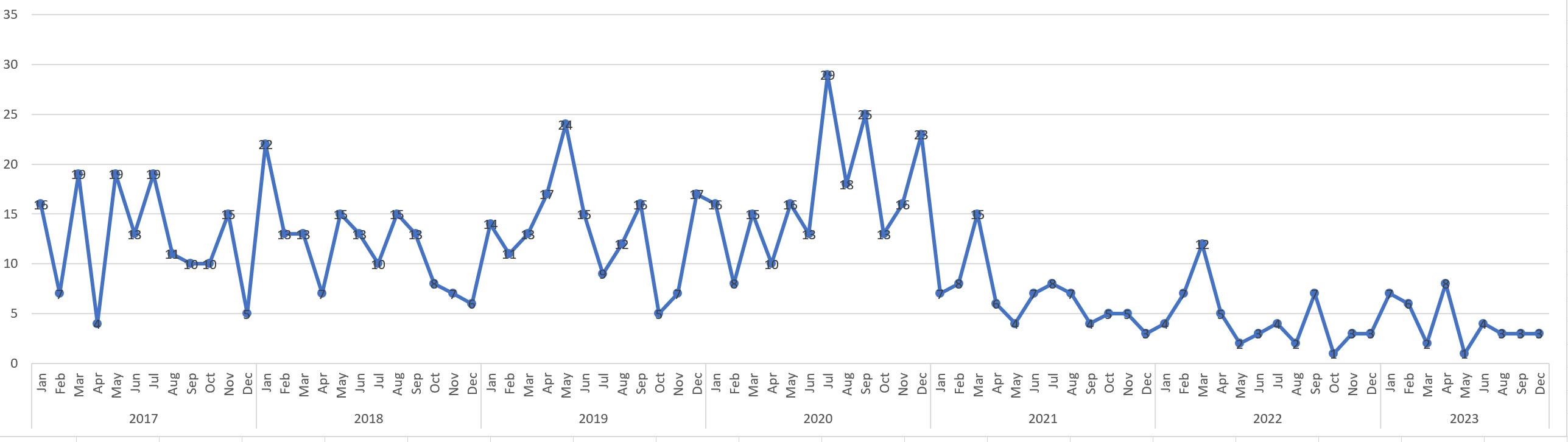
• Longitudinal graph for one service showing deterioration / delay in progress during covid lockdowns
• Data is helpful to illustrate safety risks caused by imported decisions.
The Results
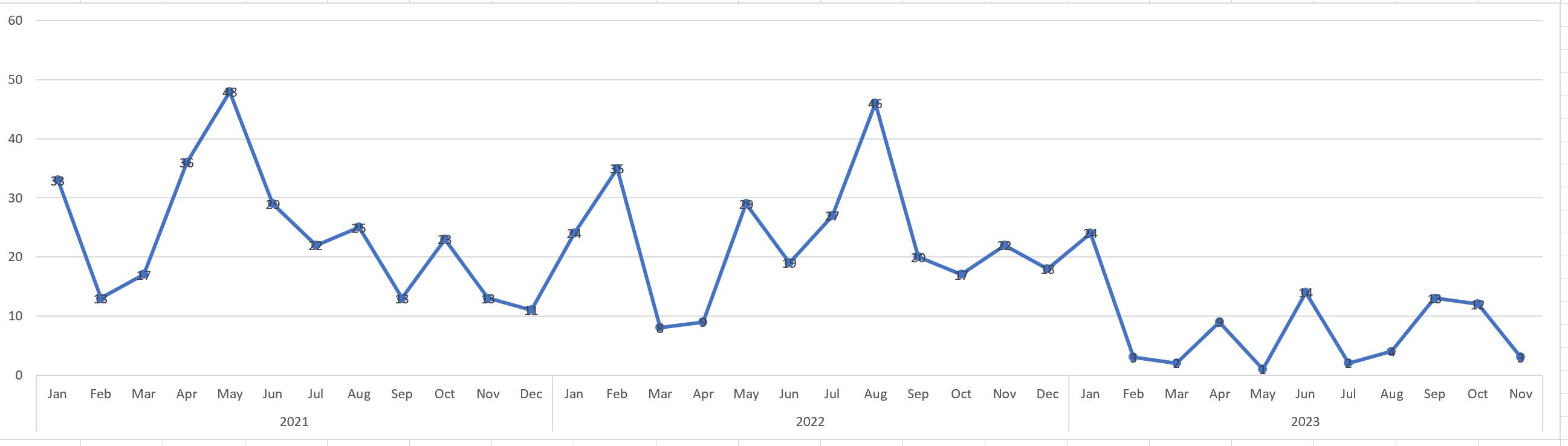
• Three-year graph for another service with compliance issues.
• Improved compliance from end 2022
• Mid 2023 – service achieved zero restraint for first time
Thematic Review
6 key themes emerged from thematic review of reflections:
• Resistance from others
• Compliance vs buy-in
• The importance of support and debrief
• Understanding Positive Behaviour Support
• Understanding variance and data science
• Giving back
Lesson 1: Expect Resistance
Acknowledging Resistance
• Influenced by Kahneman and work on ‘wicked problems’ and patient safety (particularly ‘Safety 2’).
• Acknowledgement that psychological and behavioural models (inc PBS) often seem counterintuitive to staff (because sometimes, they are).
• Acknowledgement that senior clinicians may assume that their ‘fast thinking’ styles can be trained into people, when they cannot.
• Assumption of emotional barriers to safe care in CB services – fear, anger, sadness, frustration.
• Assumption of widescale preference falsification – that beliefs are resistant to change and beliefs as well as practice, moral exhortation, and application of training, drive the safety of the care environment.
• Development of Human Factors components into system design and training materials.
Acknowledging Resistance
• Early stages involved recognising and addressing resistance which is a critical first step in the core strategy of organisational commitment.
• Restraint is part of the praxis of inpatient mental health services. A ‘Core Belief’?
• Core Strategy Emphasis: Leadership and Workforce Development "Resistance
varies, but much of it may not be spoken."
Lesson 2: Compliance and buy in
Ensuring Compliance and buy in
• Balancing mandatory compliance with voluntary buy-in by engaging staff through the core strategy of workforce involvement.
• Clarity in organisational communication – all restraint events are safety events. We would not tolerate acceptance of patient safety risks in other areas of healthcare without debrief and examination.
• In other areas of healthcare, we do not tolerate unqualified staff making important patient safety decisions / varying a care plan / deciding not to comply with one. It is no different in behavioural care / mental health care. This did involve communication around hierarchy, legal responsibility and the requirements of the MHA and MCA codes. “Judge on your shoulder”.
• Core Strategy Emphasis: Involving people with lived experience, Post incident support and post incident review.
"It's as much about compliance as it is buy-in."
Lesson 3: Staff support, psychological safety and debrief
Lesson 3: Staff support, psychological safety and debrief
Implementing core strategies of post-restraint debriefing for service user and staff, and ongoing staff education to support and secure staff well-being.
• Avoiding restraint is hard. A lot of work needed to convince staff that debrief was not a covert disciplinary process.
• Policy standards for debrief involving any potentially distressing event, not just those where restraint was used – to further reinforce the intention as supportive and safety driven, not disciplinary / management driven.
• Ensuring that supportive debrief always offered first.
Core Strategy Emphasis Workforce development and post incident support.
"Support and debrief staff even when restraint isn’t used."
Lesson 4: Explaining PBS
Education around Positive Behaviour Support
Repeatedly stressing the use of PBS as about staff behaviour and not about ‘how to respond to challenge’ is important to influence the ‘praxis’ of a service towards prevention.
• Lots of communication around PBS – not a treatment technology or ‘model’ like CBT, flexible, values driven, incorporates multiple clinical models.
• PBS as a container for multiple interventions and safe responses in a person-centred care plan.
• PBS as a co-produced care plan
• PBS as a tool to support relational care
• PBS as an ergonomic tool to support staff to easily know the what, why, and when and how.
Core Strategy Emphasis: Using prevention tools and strategies, Involving people with lived experience
"You will have to explain Positive Behaviour Support over
and over again."
Lesson 5: Understanding Data
Leveraging Data and Understanding Variance
Understanding data science helps you design systems that track progress and setbacks, essential in the core strategy of data-informed decision making.
• Construction of bespoke system aimed specifically around restraint reduction – “Livedata”
• Use of SPC to track variance and identify real progress/deterioration
• The same data at multiple levels – person, area, organisation.
• Using data to celebrate targets and emphasise achievements.
• Using data to support accurate and safe governance
• Using data to communicate transparently about restraint use, internally and externally.
Core Strategy Emphasis: Data collection and analysis
"Unless you know your data, you won’t know how to focus."
Lesson 6: Give, give, give
Effective Communication for Engagement
Using communication strategies effectively is critical to achieving any goal.
• Simple message “Restraint is risky, restraint can harm, we want to do less restraint”
• Clear linkage to legal authority and legal requirements
• Empathising with experience of everyone – complex care is difficult, work is difficult, emotions can be painful, there are no simple explanations for extremes of human distress and behaviour.
• Making good on the deal – asking for information leads to information coming back.
Core Strategy Emphasis: Workforce development, involving people with lived experience.
"Anticipate non-compliance and clarify expectations."
Sharing Resources and Good Practice
Encouraging a culture of sharing and collaboration is essential in any strategy for community development and learning.
• Open sharing of data, resources, information.
• Assumption that we can all be taught and that we are often wrong.
• Making friends and allies, internally and externally.
• Sharing, sometimes, even when others don’t seem interested, can be a slow influence.
• Not claiming to have found the answer. No information guarding. Shared knowledge is power.
• Quarterly thematic reviews shared across services – using thematic data from learning debriefs
Core Strategy Emphasis: Leadership
"Give, give, give—share knowledge and resources."
Improvement Process
System diagnosis
• We identified barriers to the implementation of each core strategy
What we did
• We undertook specific actions to minimise the impact of those barriers
What’s left to do
• Our thoughts now about how we and the system need to continue to improve to further drive down the use of restraint and unnecessary restrictive practice.
Leadership
Both organisational leadership and practice leadership are needed.
Diagnosis
Leadership re-alignment needed.
Governance structures and processes insufficiently geared towards restraint reduction.
Administrative leadership sometimes prioritised over practice leadership.
What We Did
Enhanced leadership supervision. Group CPD programme. Polices focused on staff behaviour as the driver of better care.
Governance ToR aligned around compulsory restraint reduction processes.
Clarified accountability of leaders.
Strengthened clinical leadership roles and reach –including leadership awareness of key organisational safety principles such as ‘normalised deviance’
Greater oversight of policy compliance.
What’s Left to Do (Systems)
Regulatory alignment with restraint reduction requirements.
Mental health clinician training – greater focus on leadership and system drivers of poor practice.
Training on how to avoid ‘clinical nihilism’ – (team belief that improvement is impossible, and restraint use inevitable).
Mental Health System understanding that rhetoric using complex models and intuitively positive concepts such as kindness and compassion and trauma informed will probably not result in change unless allied with process, compliance, governance and staff wellbeing.
Data Collection and Analysis
Using evidence-based decision-making and monitoring progress.
Diagnosis
Splintered data collection on restraint use across multi-site organisation.
Clinical detail not captured – weighting towards reporting not understanding.
Hard for peripatetic clinicians to be aware of restraint use in multiple sites.
No feedback to staff re: performance.
What We Did What’s Left to Do
Designed and implemented ‘Livedata’ system as a restraint reduction aligned data collection / analytics /reporting / oversight system.
Clinician, not computer designed.
Automated notification system to improve visibility of restraint use.
Graphical outputs to support frequent feedback to staff and service users re: restraint use.
Statistical Process Control Run Charts compulsory for local and corporate governance oversight –rather than arbitrary targets
System Wide improvements in live oversight of restraint use.
Standardised systems for electronic reporting of restraint use – current EHR ‘Wild West’ means some systems don’t capture the right data.
Feedback to family / carers and service users re: restraint use in all settings.
‘No collection without evidence of mitigation’ –safety responses made compulsory in data reporting.
Workforce Development
Staff are trained in preventative (rather than just reactive) approaches in line with the RRN training standards
Diagnosis
PBS trained to compliance rather than to understanding.
‘Training’ seen as didactic information giving (tick box) about task, not about process of relational care delivery.
Supervision seen as compliance more than a training / development opportunity
What We Did What’s Left to Do (Systems)
Standardised protocols for team reflection days to support staff training in how to work best with individuals
Development of new suite of materials based on practice workbooks – staff can’t complete without reflecting on application in practice.
Development of mental health specific PBS materials incorporating trauma informed models and evidence-based approaches.
Human Factors training and supervision materials developed and evaluated.
Greater consensus on interventions necessary to maximise restraint reduction across different settings.
Work on countering risks of ‘preference falsification’ since some models are not intuitive and can be rejected.
Common standardised training in human group behaviour risks for all registered clinical professionals and social care leaders.
Using Prevention Tools and Strategies
Using evidence-based trauma-informed and preventative approaches such as Safewards or PBS.
Diagnosis
Models of care existed as abstractions –insufficient integration with policy and audit.
PBS mandated but not aligned to groups other than LD / Challenging Behaviour. Technical behavioural focus not always suitable for other populations
What We Did What’s Left to Do (Systems)
Integration into policy and prescribed process of restraint prevention, debrief and learning response processes.
Development of specific PBS formats, supervision and monitoring in LD/ASD/Mental Health and Neuropsychiatry services.
Development of new active support systems alongside changes to PBS to ensure oversight of active therapeutic intervention
Clarity on models and processes for ‘PBS’ in all specialties / systems where people are at risk of restrictive practice.
Reduce academically driven conflict over whether ‘PBS’ is “effective” – focus on fact that it connects to consensus models of public health promotion (i.e. primary, secondary, reactive). The how and what of delivery of individualised care is effective (or not) – not “PBS”.
Involving People with Lived Experience
Using lived experience to inform reduction strategies at all levels.
Diagnosis
Insufficient involvement of service users / families and carers in debrief and support plan construction.
Excessive references to complex psychological/ medical models in service user focused literature.
Inadequate use of PROMs / PREMs
What We Did What’s Left to Do (Systems)
Policy directed sharing and consultation with service users for all plan reviews. New specific debrief formats tailored for communication abilities.
Use of automated readability check for all service user focused literature. Use of formal consultation in materials development.
Mandatory use of PROMs and PREMs for all episodes of care, linked to all service performance indicators
Transparent publication of both support and reactive activities, and thematic feedback from debrief, in each site
Improved information sharing via technology (e.g. service user access to care records).
Requirement for ‘face validity’ checks for care models advanced by psychology / psychiatry to ensure understandability.
Post-Incident Support and Post-Incident Review
Providing emotional support after an incident and non-blaming opportunities to reflect and learn later on Diagnosis
Fear driven culture of defensivity and resistance to self criticism in some services.
Inadequate attempts to involve people with communication challenges in debrief.
What We Did What’s Left to Do (Systems)
Mandated supportive and learning debrief processes for service users and staff – monthly compliance checking.
Leadership supervision on acknowledging mistakes and maintaining clinical optimism.
Continual messaging on non blame based drivers for debrief.
Feedback loops monitored from learning debriefs to MDT decision making to support plan review with service users.
Promotion of ‘Safety 2’ principles (learning from success) to counterbalance and complement necessary learning from error
New staff often culturally socialised into defensive responding – extent of ongoing supervision to embed self critical and reflective practice over blame based assumptions.
Work to ensure that understandable reactions to staff assault are not disallowed (can drive punitive culture if not acknowledged).
Iris Care Group Restraint Reduction Readiness Tool
Checklist Item
Leadership Commitment
- Is there a clear leadership endorsement for restraint reduction?
- Are the six core strategies embedded in organizational policies?
- Is there a RACI grid to define roles and responsibilities?
Training and Awareness
- Are all staff trained in Positive Behaviour Support (PBS)?
- Is there ongoing education about the importance of restraint reduction?
- Are debriefing processes post-incident part of training?
Staff Support and Engagement
- Are staff supported with debriefings after distressing incidents, even when restraint isn't used?
- Is there a culture of psychological safety and supervision?
Iris Care Group Restraint Reduction Readiness Tool
Checklist Item
Data-Driven Decision Making
- Are variance and data science concepts applied to track progress?
- Is Statistical Process Control used to differentiate real improvement from noise?
- Are teams engaged with data and its implications?
Cultural Change
- Is the moral mission of restraint reduction communicated effectively?
- Is a culture of compliance (with meaningful engagement) fostered?
- Are 'normalised deviance' tendencies identified and addressed?
Service User Involvement
- Are service users aware of restraint reduction initiatives?
- Is feedback from users incorporated into improvement plans?
Shared Learning and Resources
- Are resources and practices shared within communities of practice?
Domain Strength Ratings and Action Plan
Leadership Commitment
Training and Awareness
Staff Support and Engagement
Data-Driven Decision Making
Cultural Change
Service User Involvement
Shared Learning and Resources
Conclusions
Restraint reduction and the mental health system itself are wicked problems. The system is not improving in terms of outcomes and demand / capacity balance. All our efforts should be looking at why that is. System capability can only be worked on when everyone agrees what a capable mental health system looks like.
Structured implementation of the 6 core strategies can result in significant reductions in the use of restraint in settings caring for the most complex groups of people.
Maintaining compliance with the processes that you decide to use to implement is an ongoing challenge – mental health settings intrinsically tend towards fast thinking and reactive responding as the mainstay.
While a values driven approach is important, it is not enough to drive real change. Leadership capability is critical. Systems can’t risk being tolerant with non-compliance. The mental health system may have been too busy arguing about what it should be doing to focus on compliance with effective approaches to restraint reduction.
Conclusions
Restraint does not always go down even when everything you need to do to reduce it is in place – unpredictable factors drive this. But when it goes up, examination often reveals shortfalls in strategy implementation.
Without visible data on the granular detail of restraint use in complex multi-site health and social care systems, driving change and assessing effectiveness of what you are doing is impossible. But data is one component. People are not numbers and organisations are not data.
There are some readiness features of organisations that might be useful to measure in order to gauge the likelihood of success – a suggested tool has been presented.
System Formulation
•Cognitive biases: Self-serving attribution bias (Sedikides et al., 1998)
•In-group/out-group biases: Tribal mentality towards patients (Taylor & Doria, 1981)
•Empathic Burnout: Reducing empathy and attentiveness (Wilkinson et al., 2017)
•Preference falsification : reducing compliance with models of care / clinical processes particularly those related to behaviour. (Kuran, 1997)
•Impact: Reduced quality of patient care. High demand, low reinforcement environments. High restraint and restrictive practice. A ‘Psychological witches brew’ –conducive environment for poor care.
Mental Health Services – Implicit Expectations?
Do we expect staff to demonstrate ‘indiscriminate kindness’ on the basis of knowledge of (clinical) theory (of the causes of challenging behaviour) alone?
Do we expect staff to accept that in the clinical / care setting, justice is absent (according to their innate perception of injustice – for example a colleague being severely assaulted)?
Do we expect systems to automatically organise around a principle of ingroup (staff) benevolence towards an outgroup that is sometimes threatening to the safety of ingroup members?
Do we support a space to allow for rationality to intervene on automatic moral judgements and ‘moral’ behaviour.
Do we think psychologically about whether our psychological (treatment) and psychological (system improvement) models are intuitive, understood and might be resistant to being believed by staff working in our services
References
Emerson, E., Hastings, R.P. and McGill, P. (1994). Values, attitudes and service ideology. pp.209–231. doi:https://doi.org/10.1007/978-1-4899-2961-7_9.
Hastings, R.P. (1997). Measuring staff perceptions of challenging behaviour: the Challenging Behaviour Attributions Scale (CHABA). Journal of Intellectual Disability Research, 41(6), pp.495–501. doi:https://doi.org/10.1111/j.1365-2788.1997.tb00742.x.
Head, B. W. (2022). Wicked problems in public policy: Understanding and responding to complex challenges (p. 176). Springer Nature.
Heaton, S. and Whitaker, S. (2012). The attitudes of trained and untrained staff in coping with challenging behaviour in secure and community settings. International Journal of Developmental Disabilities, 58(1), pp.40–47. doi:https://doi.org/10.1179/2047387711y.0000000006.
Horn, R. E. (2001, July). Knowledge mapping for complex social messes.A speech to the Packard Foundation Conference on Knowledge Management (http://www. stanford. edu/~ rhorn/SpchPackard. html). Accessed 30/4/24
Horn, R. E., & Weber, R. P. (2007). New tools for resolving wicked problems: Mess mapping and resolution mapping processes. Watertown, MA: Strategy Kinetics LLC
Kahneman, D. (2011). Thinking, Fast and Slow. New York: Farrar, Straus and Giroux.
Laukkanen, E., Vehviläinen-Julkunen, K., Louheranta, O. and Kuosmanen, L. (2019). Psychiatric nursing staffs’ attitudes towards the use of containment methods in psychiatric inpatient care: An integrative review. International Journal of Mental Health Nursing, 28(2), pp.390–406. doi:https://doi.org/10.1111/inm.12574.
Main, T.F. (1957). THE AILMENT*. British Journal of Medical Psychology, [online] 30(3), pp.129–145. doi:https://doi.org/10.1111/j.20448341.1957.tb01193.x.
NHS England. (2020). Statistical process control tool. Retrieved from https://www.england.nhs.uk/statistical-process-control-tool/
References
Thomas, W., Hujala, A., Laulainen, S., & McMurray, R. (Eds.). (2018). The management of wicked problems in health and social care. Routledge.
Timur Kuran (1997). Private truths, public lies : the social consequences of preference falsification. Cambridge, Mass.: Harvard University Press.
Wong, W.K. and Bressington, D.T. (2022). Nurses’ attitudes towards the use of physical restraint in psychiatric care: A systematic review of qualitative and quantitative studies. Journal of Psychiatric and Mental Health Nursing. doi:https://doi.org/10.1111/jpm.12838.
Wynn, K., Bloom, P., Jordan, A., Marshall, J. and Sheskin, M. (2017). Not Noble Savages After All: Limits to Early Altruism. Current Directions in Psychological Science, 27(1), pp.3–8. doi:https://doi.org/10.1177/0963721417734875.
All ICG publications and documents can be found here: https://www.iriscaregroup.co.uk/health-professionals/knowledge-sharing-clinical-delivery/