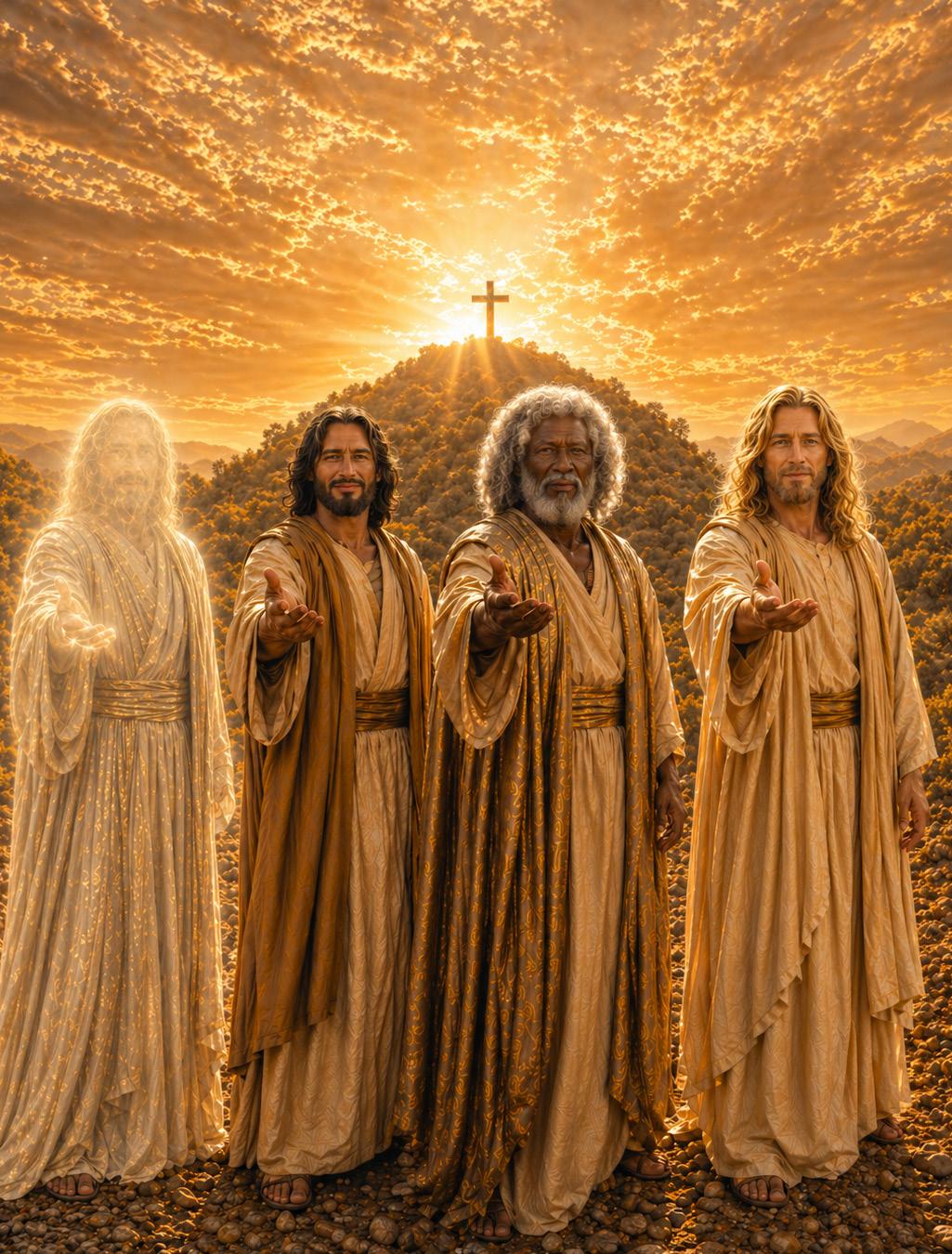


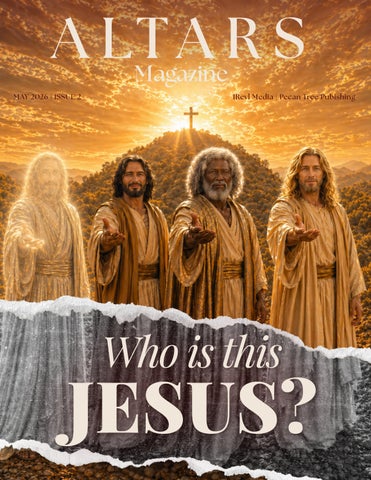
ALTARS restores the significance of God’s Kingdom assignment and purpose. Serving as an “apostolic sacred desk,” it challenges misplaced structures and philosophies with biblically rooted, revelation-rich articles. We trace the altar from Genesis to today’s call for authentic worship, obedience, repentance, justice, sanctification, and formation.
Publisher
Irevl Media
Editor-in-Chief
E. Claudette Freeman
Associate Editor
Carol Lynne Wheeler
Encountering Jesus Facilitator
Stephanie Outten
The Altar is Open Facilitator
Christina LaDonna
Writing Team
Toni Seaton, Cie Thomas, Marsha Tate, Hillary Trivette, Faith Norton, Ruth Bryant, Omar Campo, Douglas James, Renna Iyola and Elizabeth Olagunju
Special Contributors
Pas. Shun Dennis Strickland
Rev. Maudie M. Murray
Apostle Yvonne Strachan
Priscilla R. Haley
Yvette Freeman Davis
Bookstore Manager
Tamijah Scriven
IRevl Media (a division of Pecan Tree Publishing) exists to amplify Kingdom truth with editorial excellence and practical discipleship for daily life. We curate voices, stories, and resources that help readers encounter God, apply Scripture with wisdom, and live the “exceedingly abundant life” with
and joy.
There are some questions that do not leave us alone. They follow us into prayer, into pain, into church, into disappointment, into healing, and into the quiet places where we are trying to make sense of who God has really been in our lives. Who is this Jesus? is one of those questions.

I have known Him intimately in some ways. I know the Jesus who heals. I know the Jesus who grabs you when you are sliding down a wall after hearing a chronic and critical diagnosis, when your body is weak, your mind is racing, and your heart is trying to stay anchored. I know the Jesus who was preached loudly and unapologetically on Saturday mornings through the Rev. Ike Radio Show while we were in Georgia visiting my grandmother’s home. I know the Jesus who blessed my life with a son when others were quietly wondering whether I was even mother material. I know the Jesus who has kept, loved, rescued, corrected, and covered me.
And yet, if I am honest, I am still learning Him too. I still struggle in places to know Him as Jehovah Jireh, Provider, Source, and Resource, not because He has failed, but because some emotional and communal misbeliefs can sit so deeply in us that we have to let Christ untangle them layer by layer. Even there, I know Him as the Jesus who continually invites me into a stronger embrace, into deeper trust, into places in our relationship where He desires to be known more fully.
That is what makes this issue so important to me. In these pages, you will encounter writers who
challenge us not to reduce Jesus to a symbol when He is Savior, Lord, crucified, risen, and reigning. You will see Jesus beyond the Eurocentric frame and meet Him again as the Jewish Messiah, historically grounded and eternally glorious. You will be invited to wrestle with identity in The Mirror and the Maker, to think honestly about culture in The God of My Culture, and to remember that Jesus is not the property of one nation, one people, or one perspective. You will also encounter the tenderness and strength of Jesus in how He sees women, how He meets those wounded by church hurt, and how He calls earthly shepherds to feed rather than fleece.
And then there are the testimonies. Those are especially dear to me, because they remind us that Jesus is not theory. He is the One who rescues, carries, steadies, heals, restores, and remains.
My prayer is that this issue will do more than inform you. I pray it will draw you. I pray you will study Jesus in the very places where you struggle most, in your identity, your purpose, your healing, your trust, your provision, your grief, your calling. He truly can be, and longs to be, everything you need Him to be in your life.
Get to know Him. Not just the idea of Him. Not just the version of Him others handed you. Get to know Jesus.
Emily Claudette Freeman

As we tackle a question that is so broad, the potential responses, testimonies, and viewpoints could outlast of each of our lifetimes, we pause to pray that you will lean into the question, dive into its potential, and meet the Jesus of whom we speak.
Scan the QR Code or click the image



In this moment of spiritual confusion, many people are still willing to admire Jesus as a symbol, teacher, activist, healer, disruptor, or moral example. The deeper Christian claim, however, is far more demanding and far more astonishing: Jesus is not merely a figure to interpret but the crucified, risen, reigning Son of God, and if the church softens that claim, it does not simply lose an emphasis. It loses the gospel. That is why any serious answer to the question Who is this Jesus? must move beyond a sentimental Christ and return to the scandalous center of the faith: His atoning death, His bodily resurrection, and His present lordship.
A symbol can inspire. A symbol can unify. A symbol can even
comfort. But a symbol cannot save. A symbol cannot bear sin. A symbol cannot conquer death. A symbol cannot intercede for the saints or summon the nations to repentance. The New Testament does not present Jesus as an ornament for our values or an illustration for our causes. It presents Him as Savior and Lord, the One through whom God has acted decisively in history.
Andrew Wilson, in the Christianity Today article The Old Testament Foretells the Crucifixion. What about the Resurrection? (February 27, 2024), writes, “Fundamentally, the gospel is the life, death, burial, and resurrection of Jesus Christ in fulfillment of Scripture.” That sentence is helpfully unromantic. It pulls the conversation back from mood and
“Fundamentally, the gospel is the life, death, burial, and resurrection of Jesus Christ in fulfillment of Scripture.”
~ Andrew Wilson, Christianity Today
preference to event and revelation. Christianity is not built on an atmosphere. It is built on what God has done in Christ, in public, in history, in fulfillment of His own Word.
That matters because modern spirituality often prefers a Jesus who improves life without confronting death, or who comforts the self without demanding surrender. In the March/April 2026 Christianity Today interview, “We’re God’s Guerrilla Warriors,” Fleming Rutledge warns
against a self-focused faith and insists that Christianity is not self-help. She says life with Jesus “doesn’t change your life just to make you a better you.” That observation cuts through a great deal of contemporary religious language. Jesus does not come merely to refine our habits, strengthen our branding, or give us a more attractive interior life. He comes to rescue, redeem, and reconstitute a people through His death and resurrection.
And that is why the Cross cannot be treated as a dramatic illustration of love detached from judgment, sacrifice, covenant, and reconciliation. Don Carson, preaching in The Cross and Christian Ministry (October 8, 2006), says, “The death and the resurrection hung together as the matters of first importance.” He then explains that the good news is that God comes to “buy back his people” through the sin-bearing death of Christ, a death publicly vindicated by the resurrection. Carson’s point is crucial. The Cross without the Resurrection becomes tragedy. The Resurrection without the Cross becomes spectacle. Held together, they announce the gospel: sin dealt with, death defeated, Christ vindicated, hope opened.

“The death and the resurrection hung together as the matters of first importance.”
~ Don Carson, The Cross and Christian Ministry
rescuer while resisting Him as ruler. But Scripture does not offer us that division. The One who saves us is the One who claims us. The One who forgives is the One who commands. The One who bears our sin is also the risen Lord before whom every knee will bow.
Rutledge makes the same point from another angle in that same 2026 interview when she says, “The Cross and Resurrection are one event—you can’t have one without the other.” She goes on to say that if Jesus had not been raised from the dead, “we would never have heard of him.”
That is not a rhetorical flourish. It is theological realism. Rome crucified people in order to erase them, to strip them of dignity and memory. If Jesus stayed dead, then crucifixion won. But He did not stay dead. The resurrection did not merely console the disciples after loss. It announced that the One rejected by earthly power had been declared by God to be exactly who He said He was. That declaration also means Christ cannot be separated into categories we find convenient. R. C. Sproul, in his Ligonier sermon Introduction on Romans, states, “The Apostle Paul knew no dichotomy between Christ as Savior and Christ as Lord.” Sproul is confronting the old and persistent temptation to welcome Jesus as
This is where the church must speak with tenderness and clarity. Jesus is more than an example for our ethics, though He is that as well. More than an argument for justice, though He is never less than just. More than a companion in suffering, though He is profoundly that too. He is the Lamb of God who takes away the sin of the world. He is the crucified Messiah whose blood speaks better things. He is the risen Christ whose empty tomb means death is no longer ultimate. He is the reigning Lord who does not merely advise the church but owns it.
So perhaps the urgent editorial task of this hour is not simply to defend Jesus from distortion, though that work matters. It is to say again, without embarrassment, that the church’s hope is not in a curated Christ of symbolism and tone. Our hope is in the Son of God who was crucified for our sins, raised for our justification, and exalted in power. Anything less may still sound spiritual. It just is not Christianity.
In modern Christian communities, a quiet but profound identity crisis is unfolding. Across the globe, believers are increasingly tempted to substitute their foundational, God-given identity for temporal, earthly labels. The remedy to this crisis is not found in cultural evolution or modern psychology, but in the ancient, unchangeable genesis of humanity: the Imago Dei—the Image of God. Recently, a local Christian school, aptly named Imago Dei, highlighted this vital mission in realtime. By serving a variety of children with diverse special needs, the thriving school operates on the foundational Genesis principle of recognizing the divine image inherent in every student. Seeing this lived out is a beautiful, real-time reminder of a truth the broader world is desperately trying to rewrite.
In an era defined by fractured cultural identities and relentless ideological division, the modern church faces a profound crisis of self-understanding. Instead of allowing the Image of God to shape us, we are increasingly tempted to substitute our created identity for earthly labels. Worse, we are actively trying to conform Jesus to our own image. As believers, we must examine how we project our politics, fears, and desires onto the Savior, so we can return to the true, disruptive Christ of the Gospels and reclaim our authentic Kingdom identity. Our identity is super important to us. Growing up, we go through years where we seek to recognize, form, and explore exactly who we are, especially in those turbulent teen years. And it doesn’t stop there. Sometimes people go through an identity crisis

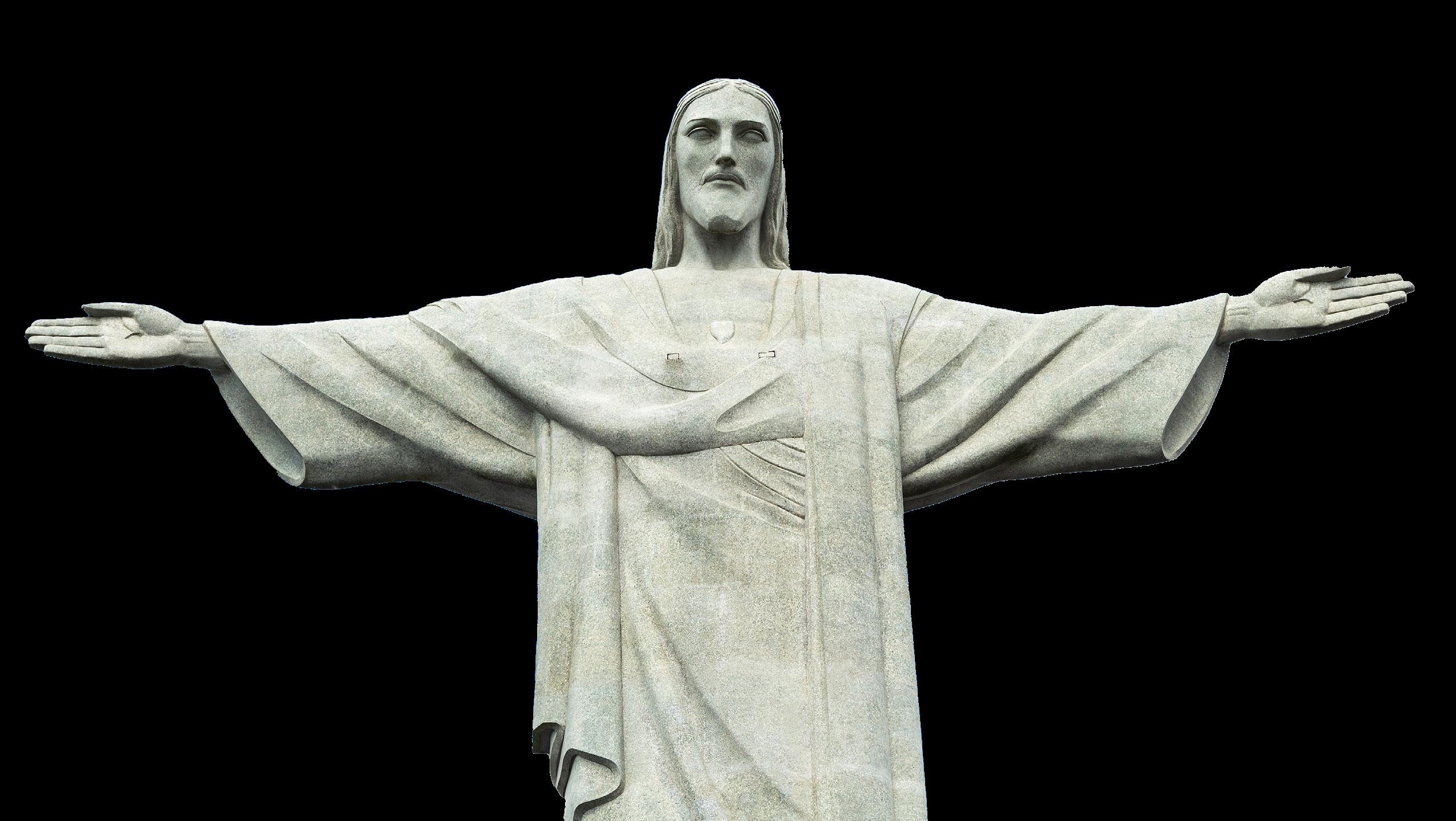
at a certain stage of life—hitting their 40s, or after the kids leave home to start their own lives. We often tie our identities to our jobs, raising our kids, our volunteer work, our achievements, our success, or our titles. Those earthly measures and roles are perfectly fine as a part of who we are, but they shouldn’t overpower who we are in Christ.
Lately, a hot topic across theology blogs and podcasts has been the cultural clash between “Identity Politics” and “Kingdom Identity.” The world places a massive emphasis on organizing people around shared characteristics like race, ethnicity, gender, sexuality, religion, or disability, rooted in common experiences of discrimination or marginalization. While this can sometimes raise important awareness of unfair treatment, it fundamentally relies on creating divisions. It emphasizes an “us vs. them” view, trapping people in an oppressor-versus-oppressed dynamic.
The worldly solution for people seeking meaning and healing is to honor a self-proclaimed radical identity aggressively, pushing the isolating belief that “others just don’t understand your true self.” But staying in that victim-mentality mode means identifying more with individual experiences, cultural categories, and power dynamics than with who God actually created you to be. Christian apologist C.S. Lewis warned against
this exact fragmentation of the soul, noting, “Look for yourself, and you will find in the long run only hatred, loneliness, despair, rage, ruin, and decay. But look for Christ, and you will find Him, and with Him everything else thrown in.”
So, what does God’s Word actually say about our identity? It tells us we are created in the Image of God (Imago Dei).
Genesis 1:27 lays the definitive foundation: “So God created man in his own image, in the image of God he created him; male and female he created them.” Just before that, God assigned humanity the unique role of having dominion over the earth. Because of this, God considers the lives of His likeness-bearers incredibly precious. Genesis 9:6 establishes that there are severe consequences for harming an image-bearer. And it’s not just about physical harm; James 3:9 warns us about the way we speak, noting that we cannot bless our Lord with our tongues while simultaneously cursing people who are made in His likeness.
But our calling goes beyond just recognizing our created form; we are also being sanctified and conformed into the Image of Christ (Imago Christi). Colossians 3:10 instructs us to “put on the new self, which is being renewed in knowledge after the image of its creator.” Ephesians 4:24 echoes this, commanding us

to be “created after the likeness of God in true righteousness and holiness.” While this is a lifelong process, we have to be intentional about reading the Word, practicing spiritual disciplines, and allowing the Holy Spirit to work in our hearts. We are meant to be living proof of this transformation. As 2 Corinthians 3:1 reminds us, our lives are letters from Christ, “written not with ink but with the Spirit of the living God, not on tablets of stone but on tablets of human hearts.”
Yet, as humans, we face a constant, dangerous temptation: we aren’t supposed to take Jesus and try to make Him into our own image, but we certainly try to do so. Theologian John Calvin famously observed, “The human heart is a perpetual idol factory.” Today, that factory frequently produces a customized, fabricated Christ. As A.W. Tozer noted, “What comes into our minds when we think about God is the most important thing about us.” Sadly, instead of looking to the Scriptures and humbly asking, “Who is Jesus?” many look for evidence of, “How can I show that Jesus agrees with me?”
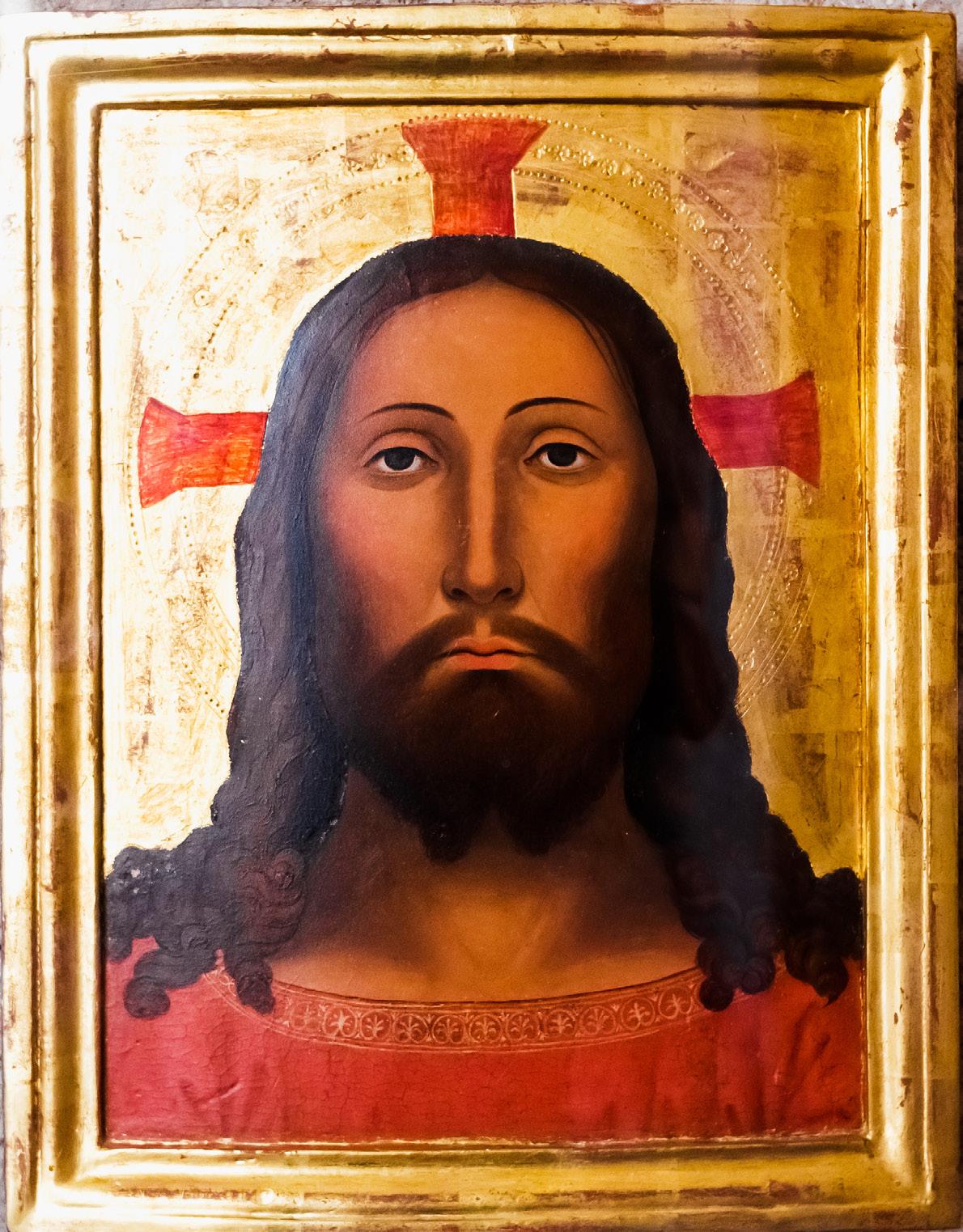
We often remake Jesus into an ally of our comfort zones, assuming He saves only “our kind.” Yet, as theologian Miroslav Volf notes, the true God is one who embraces the “other.” Jesus consistently crossed ethnic and moral boundaries, shattering the molds society tried to place Him in. When we read the Gospels, we see a massive pattern of people projecting their own desires onto Jesus—and we see Him definitively dismantling those projections every single time.
In John 6, after feeding the multitudes, the crowds wanted a Savior who would guarantee provision without requiring transformation. Jesus’ response was to withdraw and deliver the hardest sermon in the Gospels, talking about eating his flesh and drinking his blood. He knew it would drive people away, and “many of his disciples turned back and no longer walked with him” (John 6:66). Jesus refuses to be a vending machine, Messiah. Remember when Peter rebukes Jesus about the cross in Matthew 16? Peter projected a victorious Messiah who conquered without suffering. No weakness. No death. No humiliation. I mean, it sounds nice. Until Jesus says, “Get behind me, Satan.” Whoa, wait, what? Actually, that’s not an insult—it’s Jesus naming the temptation: a crown without a cross.
Theologian Dietrich Bonhoeffer defined this human desire as “cheap grace,” the preaching of forgiveness without requiring repentance. Jesus exposes that Peter’s image of Him is shaped entirely by human values, not God’s.
The Pharisees did the same thing. In Matthew 23 and Mark 7, they portray Jesus as a religious enforcer who upholds their traditions, protects their authority, and rewards outward obedience. Instead, He calls them whitewashed tombs, exposes their performative righteousness, and intentionally heals on the Sabbath. Jesus refuses to be a mascot for religious control.
Could Jesus be a moral teacher who will affirm that we’re already doing great—and maybe add a spiritual tip? That’s what the Rich Young Ruler hoped for in Mark
10. But Jesus lovingly exposes the one thing the man won’t surrender: his wealth. Jesus doesn’t shame him, but He also doesn’t soften the demand.
Even those who walked closely with Him lost the Jesus they wanted when the real one wouldn’t cooperate. For generations, the Jews hoped for a political or revolutionary Messiah who would act decisively against Rome. When Jesus chose sacrifice over revolt, Judas’s fabricated Jesus collapsed. Judas didn’t just betray Jesus—he walked away because the real Savior wouldn’t fit his political mold. Similarly, Pilate couldn’t understand a King whose power was not coercive. Jesus doesn’t overthrow Rome; He exposes it by refusing to imitate it, operating from a larger truth: “My kingdom is not of this world.”
Ultimately, it comes down to the two thieves on the cross in Luke 23. The mockers projected a worldly view
of power: “If you’re really the Son of God, save yourself.” But the repentant thief saw something completely different: a suffering king whose mercy extends even at death. It was the same Jesus, but two totally different interpretations. Only one saw clearly.
There is a huge pattern in the Gospels that mirrors our modern world. People want Jesus to fix their circumstances, validate their power, help them avoid suffering, reward their goodness, and destroy their enemies. But the actual Jesus of the Bible does the exact opposite. He calls for deep repentance, redefines power as service, chooses suffering love, exposes our self-righteousness, and commands us to love our enemies.
The truth is, every generation asks Jesus: “Will you be the kind of Savior I want?”
And to every generation, Jesus keeps answering with the same definitive standard: “Follow me—or walk away.”



SEEING CHRIST BEYOND THE FRAME
Cie Thomas

What happens when Christians stop imagining Jesus through a Eurocentric lens and begin to see Him in His first-century Jewish, Middle Eastern reality? More than our artwork changes. Our witness does too.
There are some images so familiar that we stop questioning them. For many Christians in the West, Jesus has long been presented through paintings, stained glass, and devotional imagery that render Him pale, soft-featured, and unmistakably European. These images have lived quietly in sanctuaries, classrooms, books, and homes, shaping imagination without announcing their influence. But they are not neutral.
The Jesus of history was a first-century Jewish man from the ancient Near East, formed within a people living under Roman occupation. Historian Sarah Pruitt, writing in History, quotes biblical scholar Robert Cargill, who describes Jesus as “a Jewish Galilean.” Joan E. Taylor, Professor of Christian Origins, explains that later depictions of Jesus were often created “to make theological points,” not to reflect His physical appearance.
Over time, those artistic interpretations became something more than symbolic. They became assumed truth. And what is assumed is rarely examined. Social psychologist and theologian Christena Cleveland names the consequence of that assumption plainly in Christianity Today: “Jesus is not white.” She goes further, warning that many believers have become “disciples of a white Jesus.” This is not simply about correcting art. It is about confronting formation. When Jesus is consistently imagined through a Eurocentric lens, believers can often, unconsciously, begin to associate holiness, authority, and even divine legitimacy with that cultural framework.
A Westernized Jesus does more than misrepresent history. He reshapes discipleship.
When Christ is filtered through a narrow cultural lens, He begins to feel familiar in ways that can prevent deeper seeking. If Jesus already looks like the dominant culture, speaks like it, and affirms its assumptions, then there is little perceived need to
wrestle with Him, to be corrected by Him, or to be transformed by Him.
This is how distortion works. It does not reject Jesus. It reduces Him. And once reduced, He becomes easier to manage than to follow. Greg Galindo, in an American Reformation interview examining whether the church has “Westernized Jesus,” presses this concern beyond imagery into theology and practice. The issue, he suggests, is not simply how Jesus has been depicted, but how He has been interpreted; often in ways that align more comfortably with cultural power than with biblical truth. A culturally edited Jesus rarely disrupts. The real Jesus often does.
Before Christianity became a structured, institutional religion, the earliest followers of Jesus were known as people of “the Way.” The book of Acts preserves this language, describing a movement defined not by cultural identity but by lived allegiance.
“The Way” was not performative religion. It was a transformation. It was costly obedience.
It was a life patterned after Jesus Himself.
A Westernized Jesus can obscure that path.
When Christ is made overly familiar, contained within cultural assumptions, believers may stop seeking the Jesus who calls them into transformation and instead settle for a version of faith that affirms what already exists. But the historical Jesus disrupts that comfort. He calls people out of systems. Out of assumptions. Out of inherited blindness. And into a way of life shaped by the Kingdom of God.
To understand that call, we must return to Jesus’ actual context. Encyclopedia Britannica notes that Jewish Palestine during Jesus’ lifetime was under Roman rule. This was a world shaped by empire—by taxation, military presence, political pressure, and social inequality. Jesus did not minister above that reality. He ministered within it.
Contemporary writer Andrew Springer, in his March 1, 2026, essay A Brief Introduction to the Historical Jesus,

argues: “The historical Jesus — the real one, the one scholars can actually reconstruct from the evidence — was a poor Jewish peasant who spent his ministry confronting the economic and religious powers that were crushing ordinary people, and who was executed by the most powerful empire on earth for the trouble.”
Springer’s framing pushes us to reconsider not just who Jesus was, but what it means to follow Him. If Jesus confronted systems that oppressed the vulnerable, then discipleship cannot be reduced to personal spirituality alone. It must also confront injustice.
That confrontation begins with Jesus’ earliest life. Joan E. Taylor writes that Jesus spent His early years “as a refugee in a foreign land” and later lived with “nowhere to lay his head.” These are not poetic embellishments. They are historical realities. The child Christ crossed borders to survive. The family of Jesus fled violence. The Lord we worship entered human history among the vulnerable, not the insulated. A de-Westernized Jesus makes it difficult to ignore those realities today.
Another distortion emerges in how Jesus is handled within Western and American culture.
Jesus is often pulled into political frameworks claimed, defined, and deployed to support competing ideologies. He is presented as endorsing one agenda, one worldview, one national identity over another. But this tug-of-war weakens His message. Because the Kingdom Jesus proclaimed was not reducible to political alignment. It transcended it.
When Jesus is made into political property, His teachings are trimmed. Certain aspects are emphasized while others are ignored. His concern for people experiencing poverty may be highlighted while His call to repentance is softened. His call to righteousness may be emphasized while His concern for the marginalized is dismissed.
In both cases, the result is the same:
A partial Jesus.
A fragmented gospel.
A weakened witness.
A dangerous ploy against liberation.
Pastor Anika Wilson Brown says pointedly, “The religion that has initiated your bondage is not the same religion that will liberate you! We must decolonize our theology! There IS another level!”
Kevin “KB” Burgess addresses this distortion directly in his March 2023 book, Dangerous Jesus: Why the Only Thing More Risky than Getting Jesus Right Is Getting Jesus Wrong:
“Imagine a gospel so twisted that maintaining White supremacy is perceived as faithfulness to God... While the idea that we could all live together in racial harmony is a relatively new pursuit for this country, it is not new to God—racial harmony was a key indicator of the power of the early church. Yet in America, often the loudest and too often the discouraging voices in the debates on whether immigrants should be embraced or expelled or whether the issues of minorities deserve national attention are people who IDENTIFY as Christians.”
Burgess’ position is not merely social commentary. It is a theological warning. A distorted Jesus produces distorted discipleship.
Kaitlin Curtice, author and speaker, writing in Faith & Leadership in March 2020, while addressing those primarily of indigenous/Native American descent, offers a necessary challenge: “The church has to decide who it wants to be in this moment… Christians need to be honest about what Christianity in America has done to those on the margins…” She continues, “Decolonization must include an examination of the systemic way in which the church has grown and profited off the poor and the abused throughout history… it is time to acknowledge them, and to work toward a new way of existing here.”
This is not about abandoning Christianity.
It is about refining it.
Purifying it.
Returning to its roots.
Howard Thurman, in Jesus and the Disinherited, writes of those who live with their “backs… against the wall” and describes Christianity as “a technique of survival for the oppressed.”
Kevin “KB” Burgess reinforces this perspective, pointing believers back to Jesus as the one who proclaims, “good news to the poor and the oppressed” and reminding us that He is “the one from Nazareth.”
Nazareth—not prestige.
Nazareth—not power.
Nazareth—not the center.
And still, that is where glory came from.
When Jesus is seen clearly, everything shifts. Diversity is no longer a trend. Equity is no longer optional. Justice is no longer peripheral. They become discipleship.
Who is seen?
Who is heard?
Who is believed?
Who is overlooked?
A de-Westernized Jesus brings those questions into every space we inhabit.
He is the Son of God, fully divine and fully human.
He is the Jewish Messiah.
He is the refugee child.
He is the man from Nazareth.
He is the Savior who walked among the poor, the burdened, and the overlooked.
He is no less glorious for being historically grounded.
He is more astonishing.
A de-Westernized Jesus does not weaken faith.
He purifies sight.
And perhaps that is what this moment requires— not a trendier Jesus, not a politicized Jesus, not a rebranded Jesus—
But the truer Jesus.
The Jesus Scripture reveals.
The history of Jesus confirms.
The Jesus empire could not contain.
The Jesus who still asks His followers not only to worship Him— but to resemble Him.
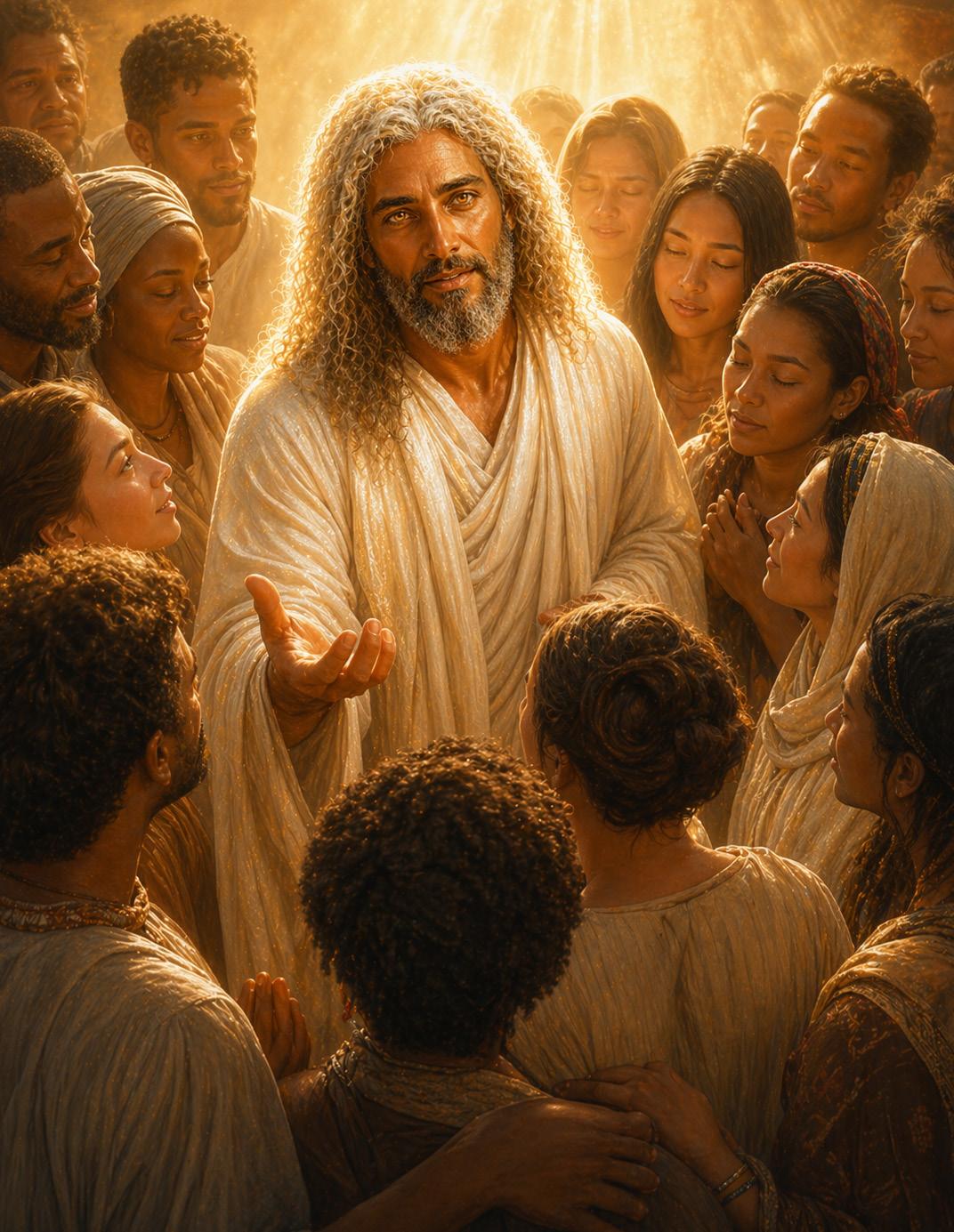
Douglas James
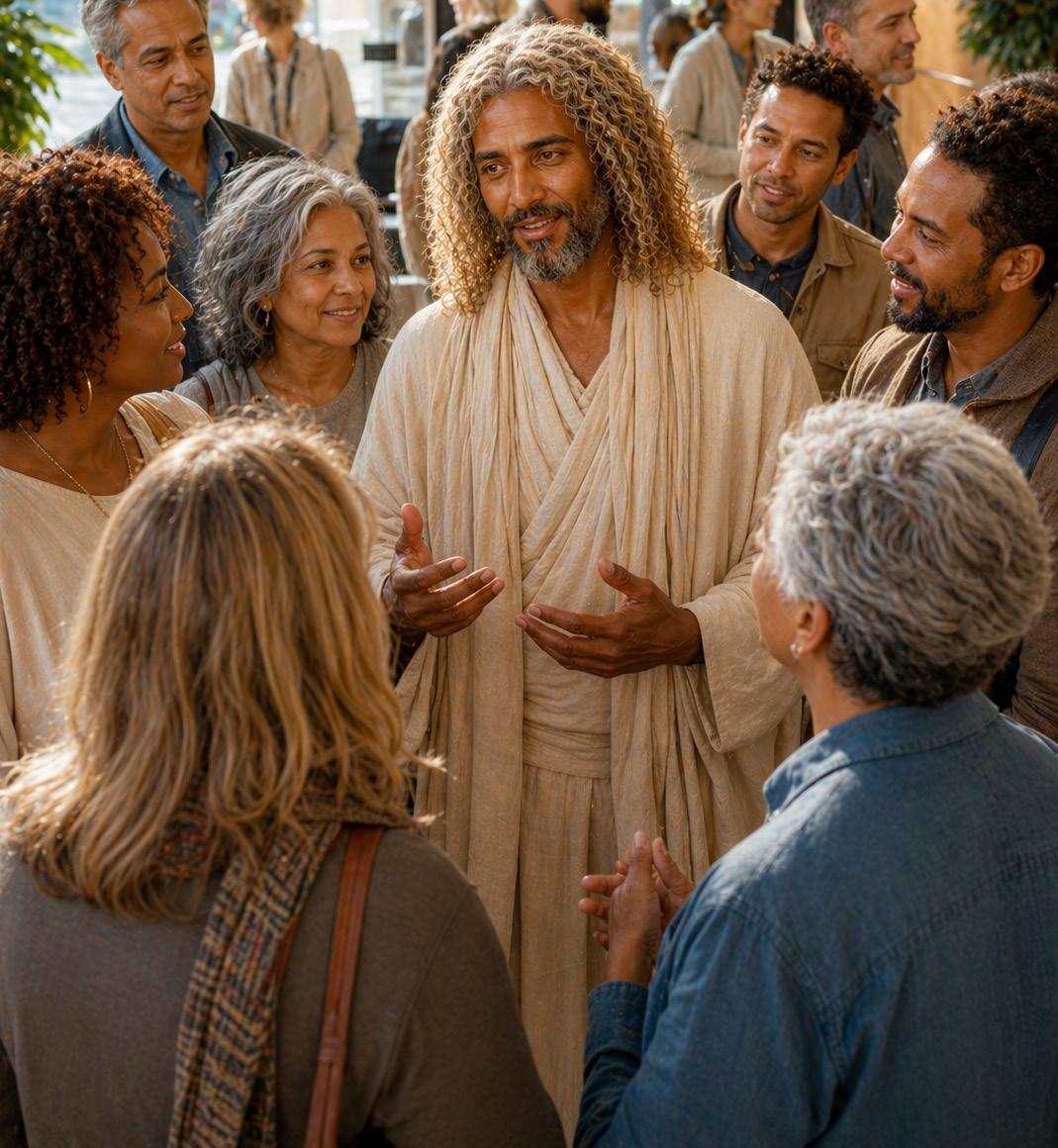
One of the church’s recurring mistakes is to speak of Jesus in universal terms while stripping away the very particular story that gives those terms their meaning. We call Him Savior, Lord, Redeemer, King, Son of God, and Light of the World, and rightly so. But if Jesus is detached from Israel’s Scriptures, Israel’s hopes, Israel’s covenant history, and Israel’s God, then He becomes abstract. He may remain spiritually useful, but He is no longer the Jesus the Gospels proclaim. He becomes a generic redeemer rather than the Jewish Messiah through whom God fulfills His promises to Israel and, through Israel, blesses the nations.
That loss matters because the New Testament does not introduce Jesus as a divine interruption to the Hebrew Bible. It presents Him as its climax. Matthew begins with Abraham and David. Luke places Him in Israel’s worshiping life. John speaks of Word, glory, tabernacling, Passover, temple, shepherd, vine, and kingdom. Even the title “Christ” is not a Chris-
tian last name. It is the Greek rendering of “Messiah,” the Anointed One. The church does not truly know Jesus when it knows Him only in generalized religious language. It knows Him when it recognizes Him inside the long story of promise, exile, covenant, kingship, sacrifice, and hope.
Michael Bird makes this point forcefully in Jesus as Messiah: An Interview with Michael Bird (August 20, 2009). He says, “Jesus can only be the Savior of Gentiles if he is first and foremost the Savior of Israel.”
That sentence should permanently disrupt any reading of Jesus that tries to leap straight from Bethlehem to personal spirituality without passing through Abraham, Moses, David, Zion, exile, and restoration. Bird goes on to insist that Jesus cannot be “ripped out of the Scriptural storyline.” That is exactly right. The Messiah is not a floating symbol of redemption. He is Israel’s promised King, Priest, and Prophet, and only as that Messiah does He become the hope of the world.

The BibleProject article How Does the Bible’s Story Lead to Jesus? (March 28, 2022) says that when the risen Jesus meets the disciples on the Emmaus Road, He shows them that “these Scriptures had been describing that kind of Messiah all along.” That sentence captures the disciples’ surprise and the church’s ongoing need. They expected a Messiah, yes, but not one who would suffer, die, and rise. Jesus did not discard the messianic hope; He truly re-read it. He located Himself in Genesis as the serpent-crusher, in Isaiah as the suffering servant, in the Psalms as the righteous sufferer and vindicated king.
The Gospel Coalition essay The Messianic Hope makes the same case in more formal terms. It traces the promise from Eve’s offspring to Abraham’s line to David’s throne and then says that Jesus fulfills the expectation that God would send a king “to be the savior of the world.” The essay is especially helpful because it refuses the false choice between Israel’s story and the nations’ hope. The reason Jesus can be the Savior of the world is not that He bypasses Israel, but because He fulfills her calling. He is the faithful Davidic king, the obedient servant, the one in whom the promises of God become Yes and Amen.
This also helps clarify why the resurrection matters so much. N. T. Wright, in Jesus and the Identity of God, argues that the basic meaning of the resurrection was that Jesus “was indeed the Messiah.” Wright is careful here. Resurrection, in itself, is not a random proof of divinity detached from context. It is God’s vindication of Jesus within Israel’s storyline. As Wright explains, resurrection pointed to messiahship, messiahship pointed to the Cross, and the Cross pointed back to the God who had promised to act. In other words, Easter is not a freefloating miracle. It is the divine declaration that Israel’s Messiah has come and has accomplished the work the covenant story anticipated.
Brad East sharpens this even further in the Christianity Today essay The God Who Must Not Be Named (July 1, 2025), where he writes, “Jesus isn’t deity in general incarnate. He is Israel’s God in flesh and blood.” That line is worth lingering over because it prevents a familiar modern reduction. Jesus is not a vague religious access point to transcendence. Nor is He a detached deity wearing
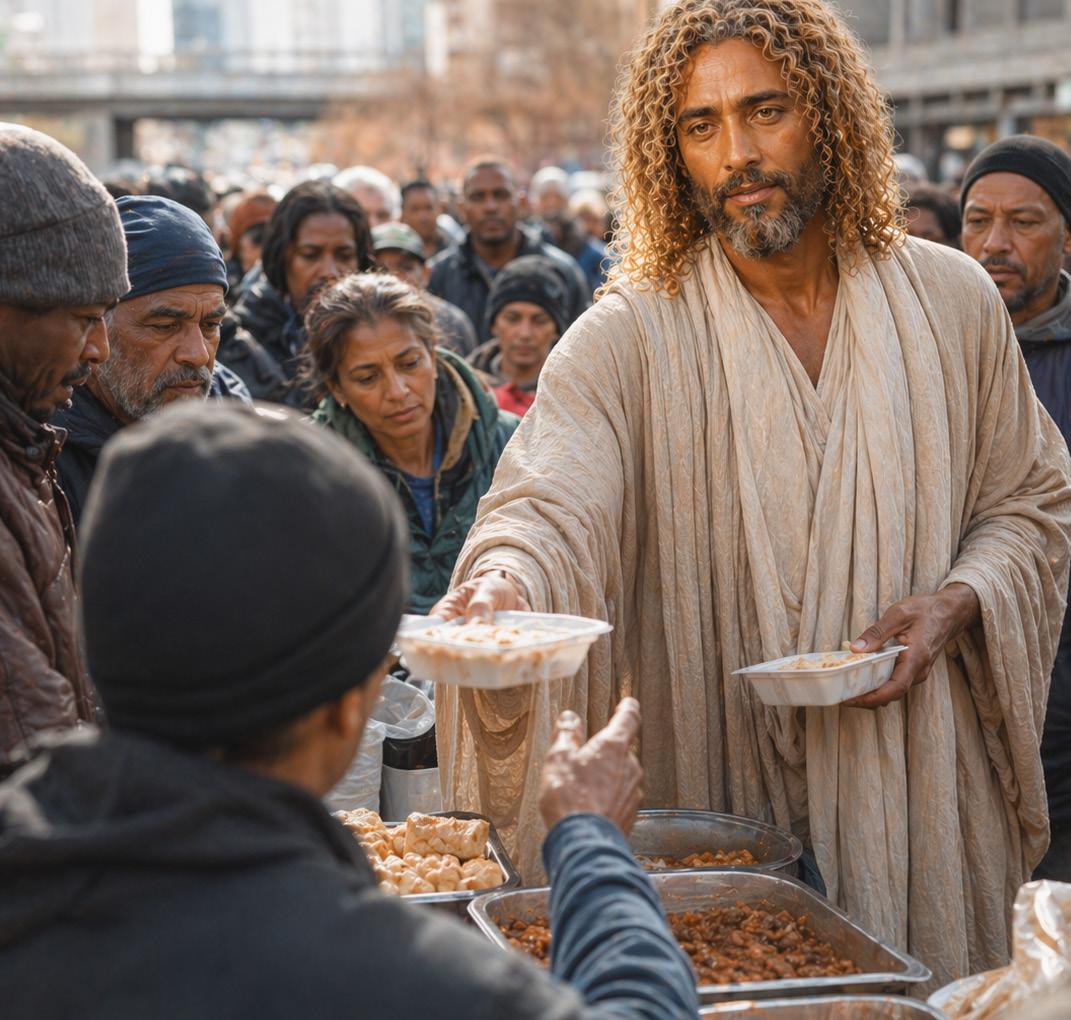
human skin. He is the Lord God of Israel, come among His people. The Name, the covenant, the promises, the presence, the return of God to Zion, the rescue from exile, the reign of the true king: all of that is bound up in Him.
And this has practical implications for the church. First, it means Christians cannot speak carelessly about “the Old Testament God” as though Jesus introduces a different deity with a softer temperament. The God of Abraham, Isaac, and Jacob is the Father of Jesus Christ. Second, it means the church must resist using Jesus for nationalist fantasy or civilizational branding. The Messiah comes from Israel, but He is not tribal property. He is
Israel’s Messiah for the life of the nations. Third, it means discipleship must learn to read Scripture as one coherent story, not as disconnected moral lessons topped off with a New Testament ending.
So who is this Jesus? He is not a generic spiritual teacher who dropped into history. He is the Jewish Messiah, the Son of David, the seed of Abraham, the suffering servant, the Lord’s anointed, the one Israel longed for and often misunderstood, the one the nations need, whether they know it or not. Losing that Jewish particularity does not make Jesus more accessible. It is to make Him less true.

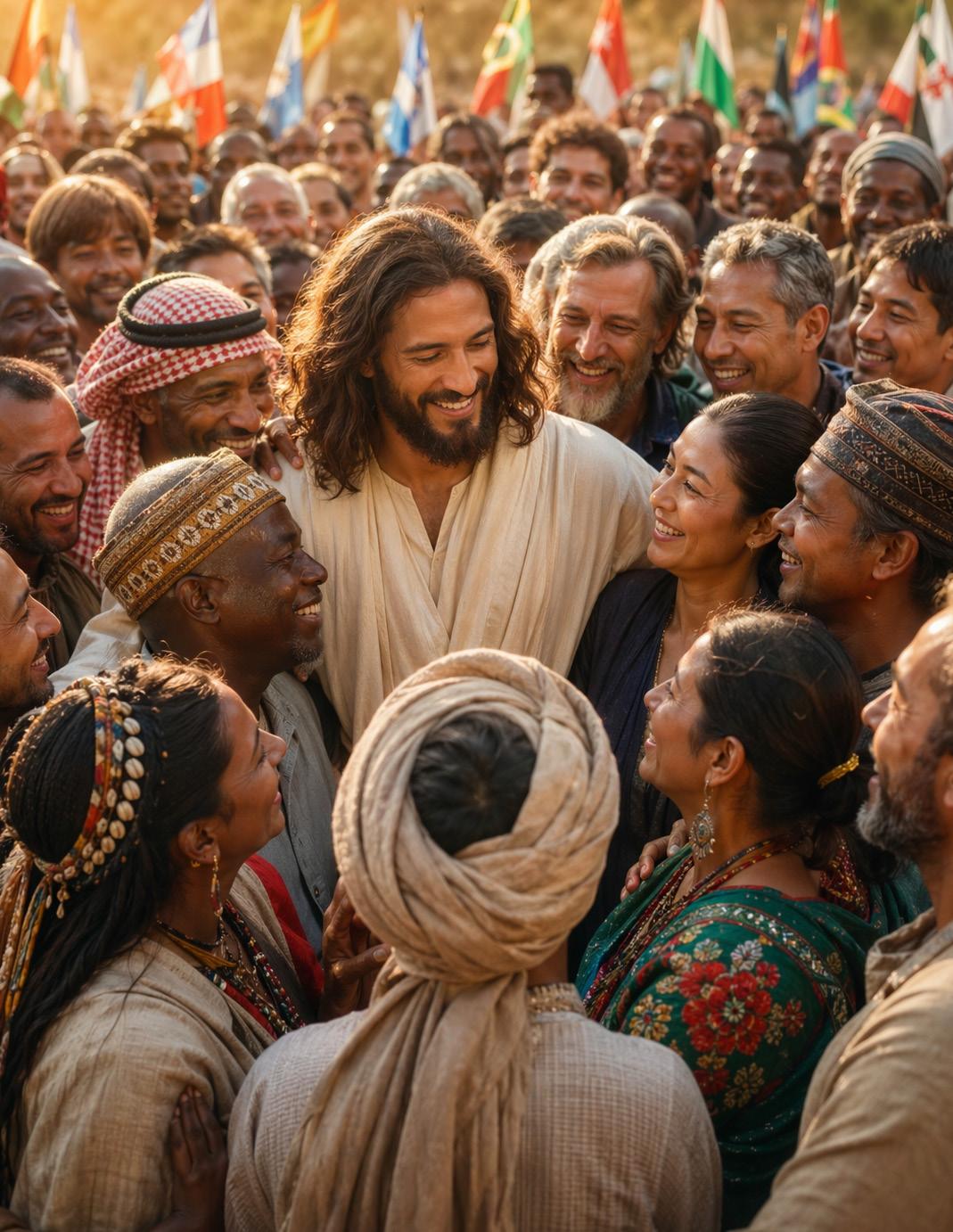
E. Claudette Freeman
For many believers, this question sits quietly beneath worship, Bible study, and even personal devotion: Must faith in Jesus come wrapped in whiteness, American, Puritan approval to be considered sound? Put another way, does following Christ require the erasure of cultural memory, inherited practices, and embodied ways of knowing God? For Black, Latinx, Asian, and other believers shaped by histories of colonization, migration, and spiritual inheritance, that question is not theoretical. It is personal. It lives in the choir stand, at the family table, in the way grief is held, in the colors worn for sacred moments, and in the uneasy silence that settles when culture is welcomed in every space except church.
The struggle seems to be not simply whether those who honor and celebrate culture and cultural practice love Jesus. It is whether loving Him requires losing themselves. Beneath worship styles, family traditions, inher-
ited rituals, and cultural memory sits a quieter, sharper question: Must a person become spiritually or culturally detached to be considered theologically right? And if not, what does it look like to let Christ redeem culture without allowing culture, ritual, or practice to become competition for Him?
That tension is not new, and it is not confined to one people group. It has surfaced in Black church spaces, Latinx communities, Asian and South Asian conversations, and across Christian communities shaped by colonization, migration, and inherited religious memory. Some believers insist that the problem is not culture itself, but the way Western Christianity has often treated its own cultural norms as if they were the gospel. Others warn that some practices, however beautiful or familiar, can pull the heart toward divided allegiance. What sits between those positions is discernment.
“I believe our spiritual culture, beliefs, and practices


can either aid in healing, provide temporary calmness, or exacerbate the symptoms associated with silent anxiety. Because God is the architect of all things, including culture, I do not believe he wants to destroy it. It is the misalignment or worship of cultural practices that can lead to the dishonoring of God when they are idolized and elevated above the Most High. Our cultural teachings, experiences, and lessons are designed to provide opportunities to become knowledgeable, discerning, and disciplined in our lives and things of God,” says Atlanta-based reader Deanna Harris.
Rev. Dr. Anika Wilson Brown, Pastor of Union Temple Baptist Church, Washington, DC, a predominantly African American church, steeped in cultural teachings, shared in a January 2, 2024, social media post: “Some only experience the sacred in the form of suffering! Read that again! That must be a miserable, salvific, slave-like experience. When you deconstruct and decolonize your religiosity and embrace an Afrocentric understanding, you will find God, holiness, and sacredness in pleasure, dance, laughter, and sex! … Do the deep dive rather than repeating what you’ve been told. Who separated sacred
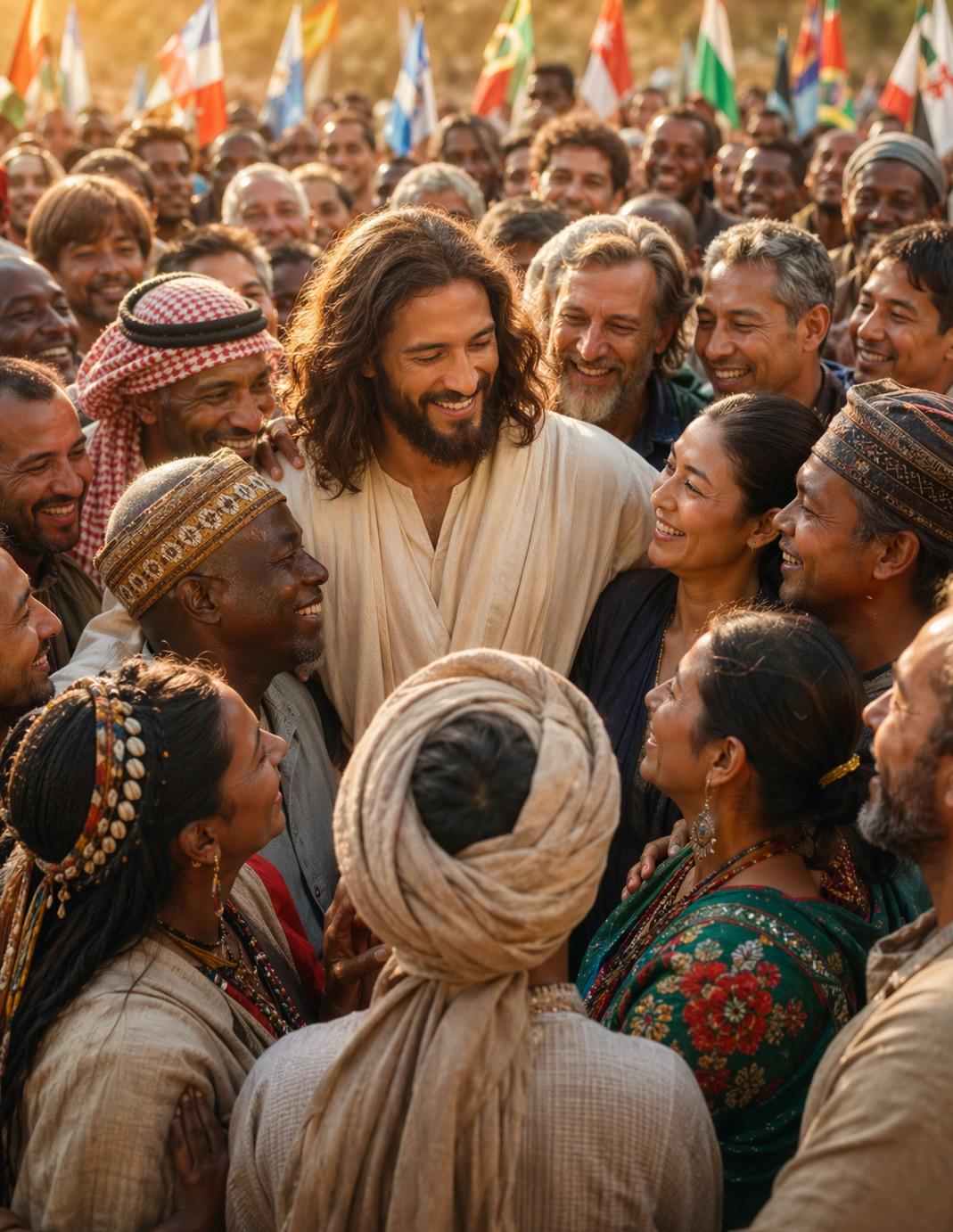
and secular, and what defines the two? When we get to the place where we can truly decode this… perhaps our joy will become uncloseted so that we can experience it before going up yonder! Until then, use your energy to evolve instead of constantly evaluating others!”
Her words press on a wound many Christians of color know well. Too often, faith has been presented in ways that seem to honor suffering more readily than joy, suspicion more quickly than embodiment, and control more comfortably than cultural complexity. That does not mean every inherited practice is above question. But it does mean the church has to be honest about how often cultural stripping has masqueraded as holiness.
In the opinion piece “Black Christians, Don’t Demonize African Spirituality” written for Religion News Service (January 5, 2021), Darnise Martin wrote, “Our long-established societies, cultures, religions, and customs were presented as savage, heathen. We were told to be grateful for our enslavement. We were told that enslaved Christianity was better than living as free African people. We were terrorized into giving up our names and much of our spirituality. Even in this trauma, African people in the Americas reshaped the predominant Christianity. We mixed and remixed a slave religion with our African spiritualities and those we encountered in the New World into a faith that emphasized freedom.”
She also wrote: “White evangelical Christianity is imploding from the weight of its own hypocrisies. Don’t go down with a ship that doesn’t recognize your African blended Christianity: It might be just the thing that saves you after all.”
Martin’s language is provocative, but it names something real. For many believers, especially those from communities that survived conquest, enslavement, and forced conversion, the question is not whether culture belongs near Christ. The question is whether the church has wrongly taught people to fear their own cultural memory while leaving Western habits of faith unexamined. That same concern appears beyond Black Christian life.
Sandy Ovalle’s online article in Sojourners (September 28, 2023), “My Latine Christian Faith Embraces What Western Faith Demonizes,” notes that many Latines in this country have embraced a White, Western expres-
sion of Christianity, often at the cost of cultural identity, community connection, and a sense of belonging. In the process, many have had to wrestle with a version of faith that treats Indigenous, Afro-Latino, and mestizo (mixed race, more specifically Indigenous, Portuguese, and/ or Spanish descent) wisdom and spiritual practices as something to fear, reject, or condemn.
She writes that one of the key areas where this demarcation between culture and Christianity has occurred is in ancestral honoring. “It is a common understanding in many Latin American Indigenous cultures that the veil between the living and the dead is thin, and relating with our ancestors can be an everyday occurrence. Scriptures that speak of the clouds of witnesses surrounding those who follow Jesus resonate strongly with many Latine folks. We know that those who have endured the race set before them still encourage us today. We think of Jesus on a mountain conviviendo (living together) and communing with Moses and Elijah before his three disciples as an experience that can be part of our reality too (Luke 9:30-36). We may not call them ghosts, but we recognize our ancestors are still with us.”
Diving deeper into what some view as the de-culturizing of Jesus, Ovalle observes, “Colonial approaches to the Christian faith force conversion and dehumanize those with different faith practices or beliefs. Colonial approaches to Christian faith disconnect us from our intuition. They disconnect our bodies from our hearts and minds and overvalue the mind. Instead, our traditions are embodied. La mente, el corazón y el cuerpo (mind, heart, and body) must know God. We feel God. We hear God in our intuition.”
This is where the conversation becomes more complicated than slogans allow. The issue is not only whether a practice is old, ethnic, embodied, or non-Western. The issue is what that practice asks of the believer. Does it call a person toward gratitude, remembrance, beauty, and reverence under Christ’s lordship? Or does it become a source of trust, power, access, comfort, or protection that belongs to Christ alone?
That middle ground matters. The Willowbank Report from the Lausanne Movement offers a framing that is both generous and sober. It says, “Conversion should
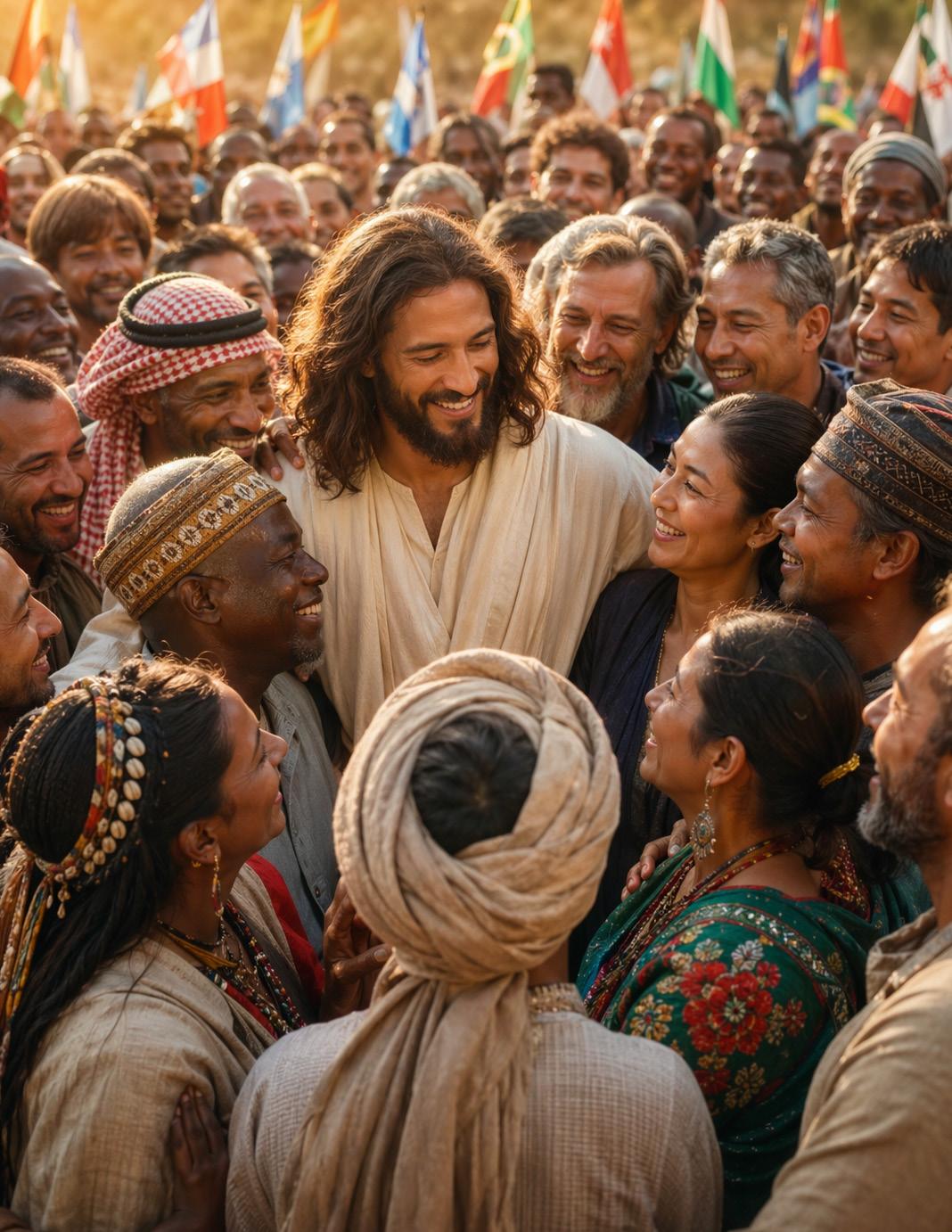
not ‘de-culturize’ a convert.” It also says that “a culture cannot be brought under the Lordship of Christ without a radical change of allegiance.” In other words, Christ does not ask people to become culturally blank, but He does confront every culture, every tradition, and every practice wherever they begin to rival His place.
That helps explain why practices tied to ancestors, ritual remembrance, and sacred symbolism cannot be answered with a shallow yes-or-no. In Christianity Today’s discussion of Día de los Muertos, Alexia Salvatierra argues that participation is “a question of discernment in context, using the guiding principle of love for one’s neighbor.” That does not erase spiritual danger. It does, however, remind believers that not every family memorial functions as worship, and not every cultural act should be judged before it is understood.
Even so, discernment is not permission to drift. There are also practices that many Christians believe do dishonor Christ or risk syncretism, especially when they are rooted in spiritual systems that define salvation, divine union, or transcendence in ways that conflict with the gospel.
In tackling the sub-theme What harm is there in achieving a higher state of consciousness through meditation? In the article “Dangerous Meditations” for Christianity Today, Douglas Groothuis (November 2004) offers, “Many Eastern religions teach that the source of salvation is found within, and that the fundamental human problem is not sin against a holy God but ignorance of our true condition. These worldviews advocate meditation and “higher forms of consciousness” as a means of discovering a secret inner divinity. Yoga, deeply rooted in Hinduism, essentially means to be “yoked” with the divine. Yogic postures, breathing, and chanting were originally designed not to bring better physical health and well-being (Western marketing to the contrary), but a sense of oneness with Brahman—the Hindu word for the absolute being that pervades all things. This is pantheism (all is divine), not Christianity.”
“The biblical worldview is completely at odds with the pantheistic concepts driving Eastern meditation,” Groo-
thuis argues. “We are not one with an impersonal absolute being that is called “God.” Rather, we are estranged from the true personal God because of our “true moral guilt,” as Francis Schaeffer says. No amount of chanting, breathing, visualizing, or physical contortions will melt away the sin that separates us from the Lord of the cosmos—however “peaceful” these practices may feel. Moreover, Paul warns that “Satan himself masquerades as an angel of light” (2 Cor. 11:14). “Pleasant” experiences may be portals to peril.”
That warning is not merely Western anxiety speaking about something foreign. Christianity Today’s reporting on Indian Christians showed internal disagreement there as well. One believer concluded that “as long as our intentions are clear and we do not chant the mantras, it should be okay, for God looks at the heart.” That perspective reflects the kind of practical distinction many Christians try to make between physical exercise and spiritual participation. Still, the larger disagreement remains: intention matters, but so do meaning, roots, and spiritual direction.
And that may be where this conversation lands best for the church. The deepest question is not whether a thing is cultural. Everyone worships Christ from within culture. The deepest question is whether Christ is being reduced by the practice, displaced by it, or asked to share His authority with it. If a practice helps a believer remember, celebrate, mourn, or embody gratitude while keeping Jesus fully central, that is one matter. If it slowly becomes a source of spiritual reliance, fear, power, revelation, meditation, or identity apart from Him, then that is another matter.
For ALTARS, that may be the clearest way to name the tension: culture is not the enemy, and embodiment is not the enemy, but idolatry remains idolatry no matter how beautiful, inherited, or familiar it may be. Christ does not need believers to become culturally White to belong to Him. But neither does He agree to be decreased. He redeems, convicts, purifies, and receives what is brought under His lordship. The real question, then, is not whether culture can come to Christ. It is whether, once it gets there, it bows.
Carol Lynne Wheeler
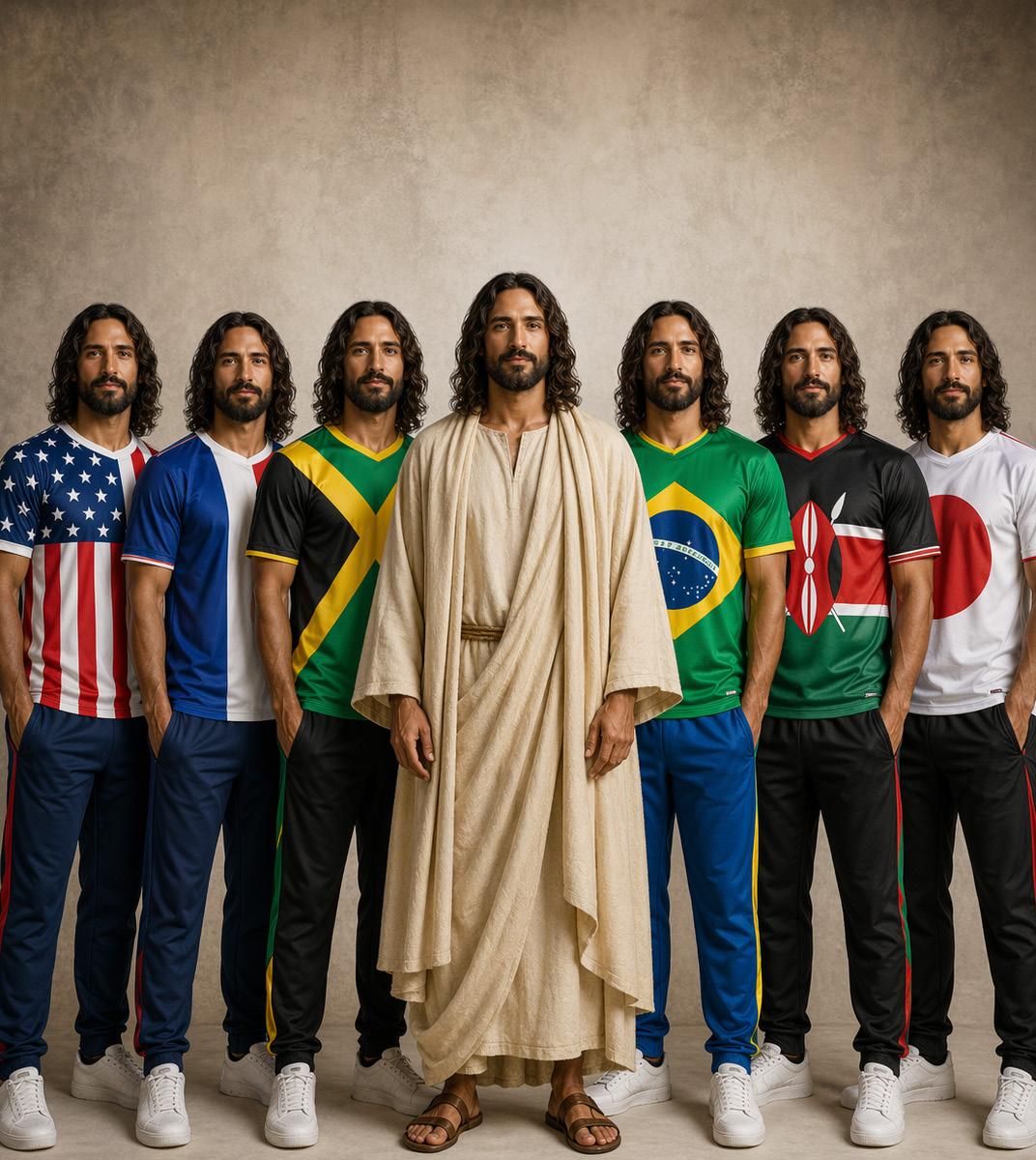
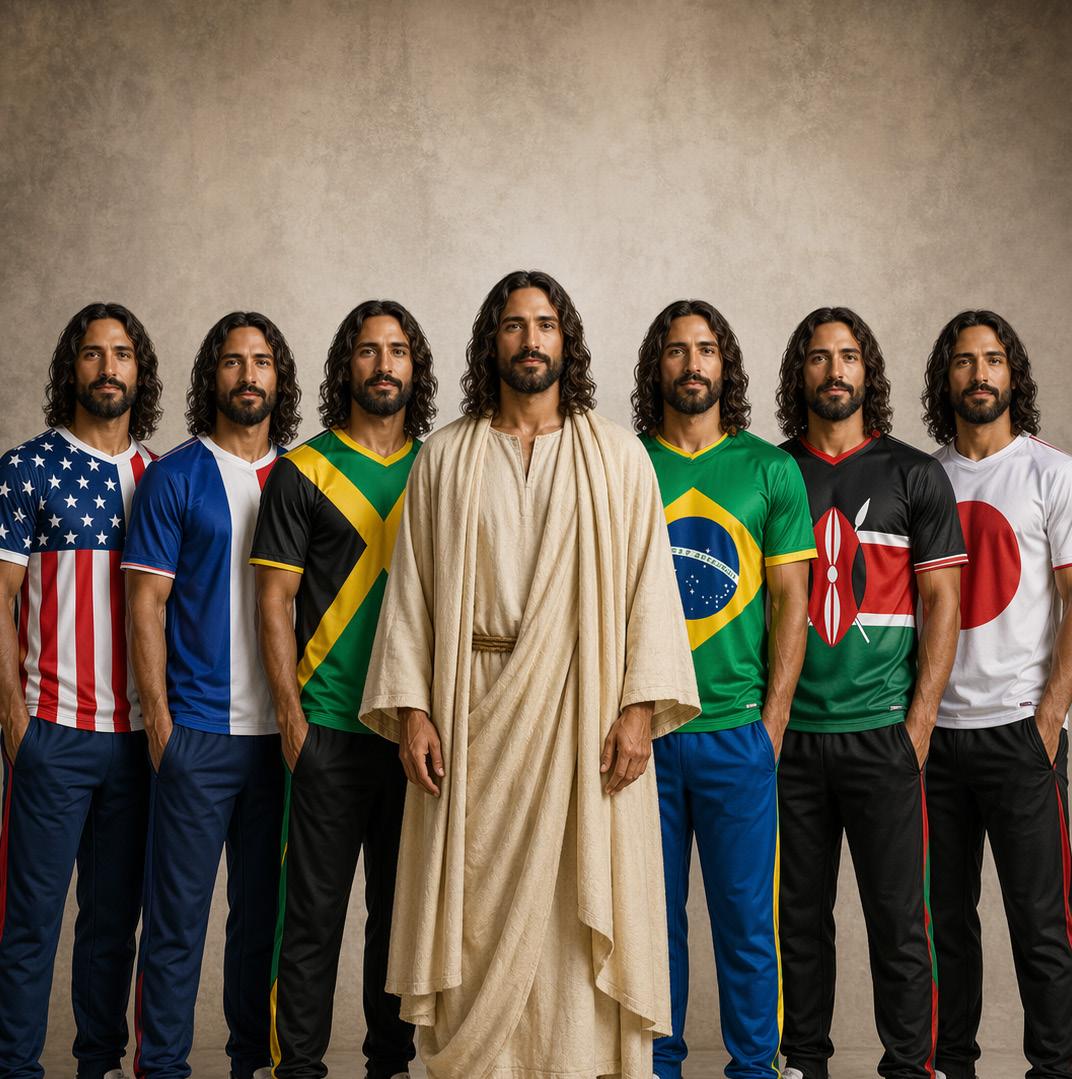
There is something both beautiful and dangerous about the way we talk about God and country. Beautiful, because gratitude for where we live is not wrong. Dangerous, because when we are not careful, we can slowly begin to blur the line between devotion to God and devotion to a nation. And when that line blurs, our understanding of who Jesus is begins to shrink.
Jesus is not the God of one nation. He is the God of all nations. That truth is not just poetic language. It is deeply biblical.
From the very beginning, God’s heart was never limited to one people group. When He called Abraham, He made a promise that through him, all the families of the earth would be blessed. Not some. Not a select few. All.

When we get to the life of Jesus, we see that same pattern continued. Jesus did not move only among one type of person. He crossed cultural lines. He spoke with Samaritans. He healed the servant of a Roman centurion. He responded to the faith of a Canaanite woman. Over and over again, Jesus showed that the Kingdom of God was never meant to be contained within borders.
And then there is the Great Commission. “Go and make disciples of all nations.” That was not a suggestion. That was a declaration of scope. The gospel was always meant to reach beyond what is familiar, comfortable, and culturally similar.
So what does it really mean to say Jesus is the God of all nations? It means His authority is not confined to geography. He is not more powerful in one country and less present in another. He does not belong to one culture more than another. He is not owned, shaped, or defined by any nation’s history, politics, or preferences.
He is Lord over all. That truth alone should humble us. Because if Jesus is Lord over all nations, then no nation can claim exclusive access to Him. No country can say, “God is ours” in a way that excludes others. No flag
can wrap itself so tightly around the cross that the two become indistinguishable. And yet, if we are honest, we have seen this happen. There has been a quiet, subtle drift where faith and nationalism have become intertwined. Where phrases like “one nation under God” have, at times, been interpreted to mean something they were never meant to mean.
Let’s be clear. Saying a nation is under God should mean that it is accountable to Him, not that it has a special claim on Him. There is a difference. To be under God is to be submitted. To be guided. To be corrected. To be held to His standards of justice, righteousness, and truth. But somewhere along the way, many have shifted from seeing God as authority over the nation to seeing the nation as uniquely favored above all others.
That is where we must pause and examine our hearts.
1. Have we, even unintentionally, elevated one nation as if it holds a higher spiritual status than others?
2. Have we reduced the global, expansive Kingdom of God into something that feels local and exclusive?
3. Have we begun to see people from other nations, especially those who do not look like us, as outside of what God is doing?
Because the truth is, God is moving all over this world. He is moving in places we have never been. He is speaking in languages we do not understand. He is raising believers in cultures that look nothing like ours. There are people across the globe who love Jesus deeply, serve Him faithfully, and walk in obedience with a level of surrender that should inspire us.
And yet sometimes, we overlook them. Or worse, we unconsciously assume that our way of doing faith is the standard.
The Kingdom of God is not American. It is not African. It is not European. It is not confined to any one expression. It is eternal. It is diverse. It is beautifully complex. Revelation gives us a glimpse of what is to come. A great
multitude that no one can number, from every nation, tribe, people, and language, standing before the throne. That is the Kingdom. That is the family of God. Every nation represented. Every culture is present. All worshiping the same King. So, how should we relate to nations from a biblical perspective?
First, with humility.
We must recognize that our perspective is limited. Our experience is not universal. Our culture is not the standard by which all others should be measured. Humility allows us to learn, to listen, and to appreciate the ways God reveals Himself across different contexts.
Second, with love.
Jesus did not call us to rank nations. He called us to love people. All people. That includes those who look different, speak differently, and live in places we may never fully understand. Love removes the temptation to elevate ourselves above others.
Third, with awareness.
We must be mindful of how easily national pride can turn into spiritual superiority. It is one thing to be grateful for where God has placed you. It is another to assume that your nation holds a higher position in His Kingdom.
Fourth, with alignment.
Our ultimate allegiance is not to a nation. It is to the Kingdom of God. Nations will rise and fall. Policies will change. Leaders will come and go. But the Kingdom of God is unshakable. We are citizens of Heaven first. That does not mean we disengage from where we live. It means we engage from the right posture. We represent Christ within our nation, but we do not confuse our nation with Christ.
And finally, with reverence.
Because when we truly understand that Jesus is the God of all nations, it should cause us to stand in awe. The same God who is moving in our lives is moving in the lives of people across the world. The same Spirit that speaks to us is speaking to others in different places, in different ways.
He is bigger than we imagined. So no, God is not confined to one nation. And no, “one nation under God” does not mean it is the only nation under God. Every nation is under His authority. Every people group is within His reach. His presence touches every corner of this world.
And the more we embrace that truth, the more our hearts begin to look like His. Wide. Welcoming. And deeply aware that His Kingdom is far greater than anything we could ever contain.



If the church wants to answer the question Who is this Jesus? Honestly, it cannot treat women as a supporting detail in the story. The women around Jesus are not a decorative background, nor are they occasional examples inserted into the Gospels for balance. They are one of the clearest windows into His character. How Jesus taught women, defended women, received women, healed women, and entrusted women tells us something essential about the kind of kingdom He brought and the kind of Lord He is.
That matters now because many women have learned to expect Jesus to be filtered through traditions, sermons, and church cultures that often say less about Him than they do about the anxieties of the people interpreting Him. In some spaces, women have been told to admire Jesus while quietly expecting less from His church. In others, Jesus has been reduced to an ally in modern arguments rather than encountered as the Lord who confounds everyone. But the Gospels themselves are harder to control than our talking points. Again and again, Jesus’ interactions with women destabilize both ancient assumptions and modern simplifications.
Rebecca McLaughlin, in the article Jesus Changed Everything for Women (March 22, 2021), says, “Jesus’s
treatment of women was revolutionary. That’s why they flocked to him.” The line is direct, but it holds. Women came to Jesus not because He was fashionable, but because He was different. They found in Him seriousness, dignity, mercy, and truth. They were not merely tolerated around Him. They were addressed, healed, taught, and remembered.
The Gospels show this in scene after scene. A bleeding woman touches His garment, and instead of being treated as contaminated, she is called “daughter.” Mary of Bethany sits at His feet in the posture of a disciple. Instead of being redirected to acceptable domesticity, she is defended. Martha is not treated as spiritually second-tier but is given one of the most stunning revelations in Scripture: “I am the resurrection and the life.” The Samaritan woman is not dismissed as socially compromised and theologically inconvenient. She becomes the recipient of Jesus’ longest recorded private conversation in the Gospels and one of the earliest public witnesses to His identity.
McLaughlin makes another crucial observation in Did Jesus Have Female Disciples? (May 25, 2022). “Luke makes it clear that this larger group of disciples included many women.” That is more than a technical correc-

tion. It challenges a habit of reading Jesus’ ministry as if women hovered nearby while men handled discipleship. Luke 8 says otherwise. Women traveled with Jesus, supported the mission, heard the teaching, and remained closer to the Cross than many men did. They were not accidental to the story. They were within the company of disciples.
This is one reason Jesus continues to unsettle both patriarchy and reductionism. He neither erased difference nor accepted the terms of female diminishment. He moved toward women with a gravity that communicated full personhood. The CBE International article What Jesus Thought About Women notes that “Jesus’ respectful regard for women was unusual and sometimes even scandalous to those around him.” That phrase is especially helpful because it places Jesus in His historical context. He was not merely normal for His world. He was disruptive within it.
He was also unwilling to let social shame dictate how women were read. In Four Important Lessons We Can Learn from Jesus and the Woman in John 8 (January 4, 2023), CBE observes that Jesus “respected them as full human beings.” That sounds almost too basic to need saying, yet church history and present life both prove otherwise. One of the most striking features of Jesus’ ministry is that He refused to treat women as temptations, inconveniences, or moral symbols first. He met them as image-bearers. Sometimes that meant mercy. Sometimes correction. Often both. But always personhood.
Even the resurrection accounts make this plain. The risen Christ entrusts the first witness of the empty tomb to women. In a culture where female testimony held less public weight, Jesus does not rearrange the story to suit social credibility. He honors the women who stayed, who came, who wept, who watched, who returned. That does not feel incidental. It feels consistent.
And that consistency matters for the church now. If Jesus received women as disciples, spoke theology with women, defended women against public shame, and entrusted women with resurrection witness, then any Christian culture that is casual about women’s diminishment should at least admit it is working against the grain of the Gospel narrative. Whatever one’s convictions are
about roles, offices, and ecclesial practice, the church cannot afford to become less attentive to women than Jesus was.
This is also why the women around Jesus should not be preached merely as moral types. Too often, Mary becomes “devotion,” Martha becomes “service,” the Samaritan woman becomes “bad choices,” and the woman in John 8 becomes “forgiveness.” But Jesus is the center of those accounts, and what He reveals in those encounters is far richer. He sees women clearly. He speaks to their minds, not just their emotions. He addresses grief, shame, intellect, hunger, and witness. He receives faith from women publicly. He praises them publicly. He lets them learn. He lets them remain in the frame.
So perhaps one of the sharpest ways to ask Who is this Jesus? is to ask how He treated women when no one was pressuring Him to be progressive, platform-aware, or socially strategic. The answer the Gospels keep giving is that He made room, spoke truth, restored dignity, and welcomed discipleship. Not as a side note. As a sign.


- Books, essays, and stories for each of us pondering, Who Is This Jesus?
For this issue’s theme, these titles push past a softened, familiar picture of Christ. Some confront the ways Western Christianity and public religion have blurred Him. Others move through exile, beauty, ancient spiritual wisdom, or story to help us meet Jesus with clearer eyes. A few are already on shelves, and a few are part of this Spring’s conversation, but all feel like worthwhile companions for those who want more than an easy answer.
Dangerous Jesus: Why the Only Thing More Risky than Getting Jesus Right Is Getting Jesus Wrong — Kevin “KB” Burgess
If this issue is asking who Jesus is, this is one of the clearest places to begin if you are tired of a polite, domesticated Christ. KB presses against the American habit of remaking Jesus in our own image and makes the case that the Jesus of Scripture confronts injustice, false power, and every version of faith that has become more cultural than holy. What makes the book work is that it does not read like a lecture. It feels urgent, conversational, and spiritually awake. For readers wrestling with how Christ has been used, misused, or flattened by politics and public religion, this title calls them back to a Savior who disrupts, heals, and demands allegiance deeper than slogans.
Publisher: Tyndale Momentum
Publication date: March 7, 2023
ISBN: 9781496459480
Format: Hardcover
Braving the Truth: Essential Essays for Reckoning with and Reimagining Faith — Rachel Held Evans, edited by Sarah Bessey
This collection brings together Rachel Held Evans’s essays in a single volume and reminds us why her voice still matters. For a theme centered on Jesus, the book is compelling because it keeps returning to a deeper question beneath the headlines and arguments: what kind of faith can survive honesty, grief, doubt, and hard questions without losing Christ altogether? Evans writes with warmth, intelligence, and a willingness to name the damage done by patriarchy, religious nationalism, and rigid certainty. Even if you do not land in every one of her conclusions, you may appreciate the book’s insistence that Jesus need not fear serious questions. It is a thoughtful pick for those who want faith writing that is candid, searching, and unafraid to tell the truth.
Publisher: HarperOne
Publication date: February 24, 2026
ISBN: 9780062894502
Format: Hardcover



We Mend with Gold: An Immigrant Daughter’s Reckoning with American Christianity — Kristin T. Lee
Kristin T. Lee offers one of the timeliest spring titles if you’re thinking about how Western Christianity has often obscured rather than revealed Jesus. Writing from within the Asian American Christian experience, she uses the image of kintsugi, the art of repairing what has been broken with gold, to explore fractured faith, belonging, exile, and repair. The book’s strength lies in its being both personal and theological. Lee is honest about harm, but she is also interested in what healing might require when faith has been shaped by empire, silence, and narrow scripts. This is a strong recommendation for a more expansive and more honest account of following Jesus, one that takes culture seriously without losing tenderness, hope, or the possibility of mending.
Publisher: Broadleaf Books
Publication date: April 7, 202
ISBN: 9798889835028
Format: Hardcover
The Way of the Desert Elders: How the Wisdom of Ancient Christians Sustains Us Today — Lisa Colón DeLay
This is a quieter recommendation, but it fits beautifully in a Jesus-centered issue because it draws away from spectacle and back toward the kind of spiritual life that can actually sustain devotion. Lisa Colón DeLay introduces the desert mothers and fathers not as distant curiosities but as companions whose struggles, disciplines, and prayers still speak to modern restlessness. If you’re worn thin by noise, platformed certainty, and the performance of religion, this book offers an older and steadier witness. It helps recover a picture of Christian life shaped by prayer, humility, self-examination, and a hunger for God that is deeper than trend or branding.
Publisher: Broadleaf Books
Publication date: January 27, 2026
ISBN: 9798889835318
Format: Paperback
One of the more intriguing spring releases, this book argues that beauty and justice belong together. That feels especially needed in a moment when public Christianity can become harsh, purely argumentative, or stripped of wonder. The Fujimuras invite readers to see Jesus-shaped living as courageous, creative, humane, and attentive to both suffering and restoration. If you’re interested in culture, the arts, public faith, and moral imagination, this one could open up fresh conversation. It is a thoughtful recommendation for anyone asking what Christian life should look like when it is formed by grace, courage, and renewal.
Publisher: Brazos Press
Publication date: April 7, 2026
ISBN: 9781587436468
Format: Hardcover




A Deeper Well: The Story of the Woman at the Well — Jill Eileen Smith
gf you receive truth most deeply through story, this biblical novel revisits the woman at the well and imagines the ache, shame, history, and longing behind one of the Gospels’ most memorable encounters. The power here is that it does not reduce Jesus’ meeting with her to a neat lesson. It slows the moment down and lets us feel what it means to be fully seen. In an issue centered on who Jesus is, that matters. This is a reminder that Christ is not only a teacher and a challenger, but also the one who meets wounded lives with truth and mercy. Readers who enjoy fiction that stays close to Scripture while giving emotional depth to familiar scenes may want to keep this one close.
Publisher: Revell
Publication date: February 17, 2026
ISBN: 9780800744809
Format: Paperback




Which Jesus Did You Give Your Life To? And Which Jesus are You Worshipping?

Pastor Shun Dennis Strickland, Co-Founder and Pastor (along with her husband, Pastor Edwin Strickland) of Fellowship of Champions Church International
There is a version of Jesus for every comfort zone. Let’s take an honest look at them and which one you might be worshipping.
1. Motivational Jesus:
He exists to inspire you, not crucify your flesh. He’s your fulltime cheerleader. He’s always clapping, never correcting.
2. Tolerant Jesus:
He blesses all desires and never disagrees. His grace excuses your sin instead of calling you out of it.
3. Political Jesus:
He votes like you and backs your ideology. He’s louder on cable news than He is in the Gospels.
4. Co-Signing Jesus:
He will never offend you. He loves without rebuke, accepts every lifestyle, and lets you run your life.
5. Religious Jesus
He enforces rules but never cultivates a relationship. He’s all regulation and no revelation.
6. Therapeutic Jesus
He wants you healed, but not holy. He supports your victim story but never reminds you that you’re more than a conqueror.
7. Silent Jesus (I often pair Him with Co-Signing Jesus)
He doesn’t speak clearly, so you can do what you want, or say He’s “still working on you,” so you need never feel convicted.
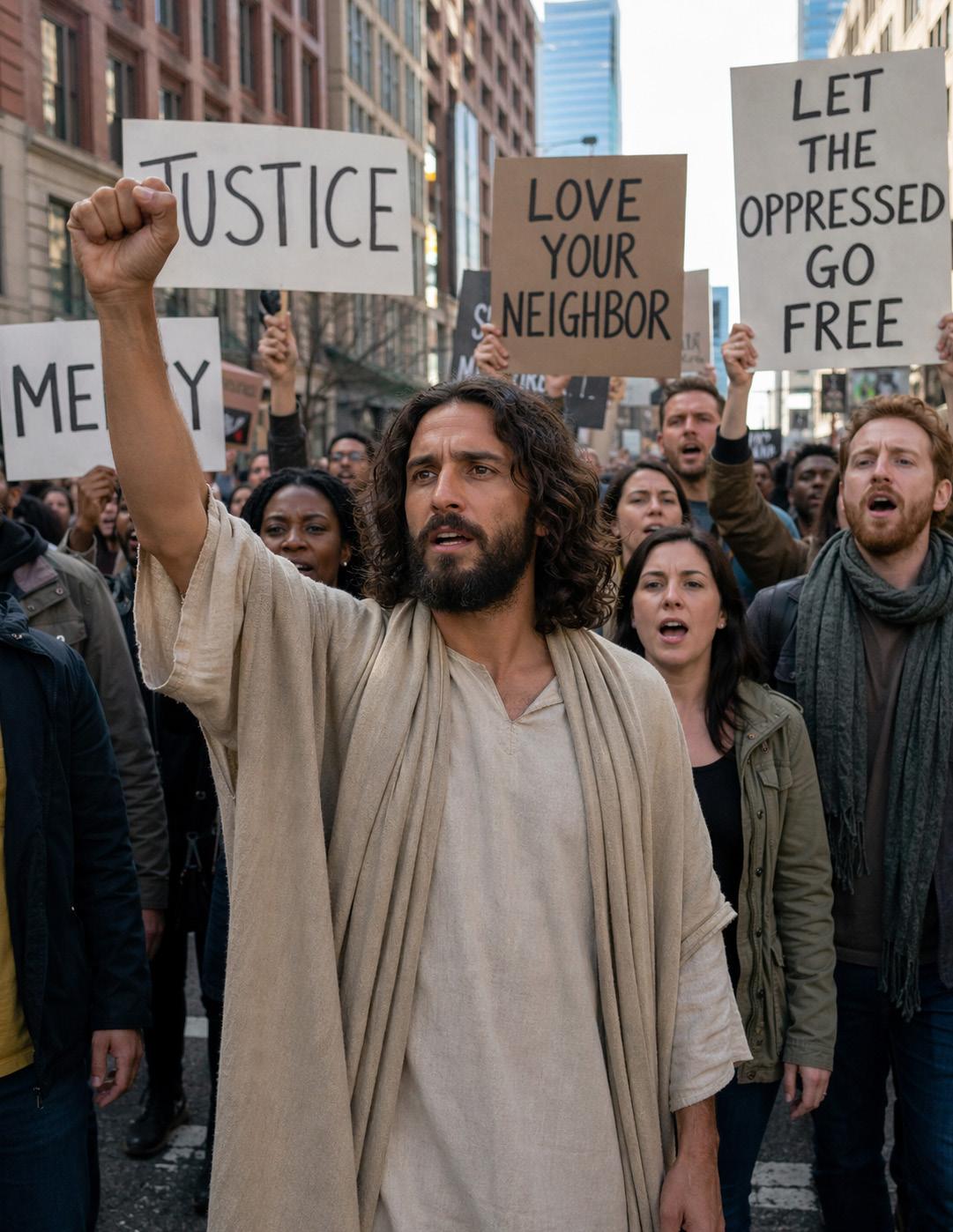
8. Justice Jesus:
He cares about social causes but not soul condition. He marches for justice but never calls for repentance. He’s anti-oppression but never confronts personal rebellion.
They all sound appealing. They all feel safe. But they are all contradictions of the Jesus revealed in Scripture— and none of them can save you.
Galatians 1:6–9 (New Living Translation) reads: “I am shocked that you are turning away so soon from God…You are being fooled by those who deliberately twist the truth concerning Christ. Let God’s curse fall on anyone… who preaches a different kind of Good News than the one we preached to you.”
Paul didn’t say they were misguided. He said they were accursed. There is only one Christ. Only one gospel. And only one name under heaven by which we must be saved.
So, ask yourself: Do I follow Jesus as He is or just the version I prefer?
And if you want to give your life to the Jesus of the Bible, allow someone who knows Him intimately to lead you to Him! Or connect with me on social media, and I will happily introduce you to Him.
If you want to see Jesus clearly? Read Colossians
(New Testament book in the Bible). In Colossians, you will discover Jesus, the true and living King.
Not the cultural version.
Not the emotional version.
Not the Jesus of motivational soundbites.
The real Jesus.
The One who created all things, holds all things together, and reconciles all things through the Cross.
“He is the image of the invisible God…”
– Colossians 1:15
“By Him all things were created…”
– Colossians 1:16
“In Him all the fullness of God dwells…”
– Colossians 2:9
Colossians will help you grow in the knowledge of our Lord and Savior so that you can stand when the counterfeit versions are presented to you.
Take your time. Read it slowly. Let the Word introduce (or reintroduce) you to the Jesus who doesn’t adjust; He reigns. Remember, we don’t define Jesus; we discover Him in the Word.


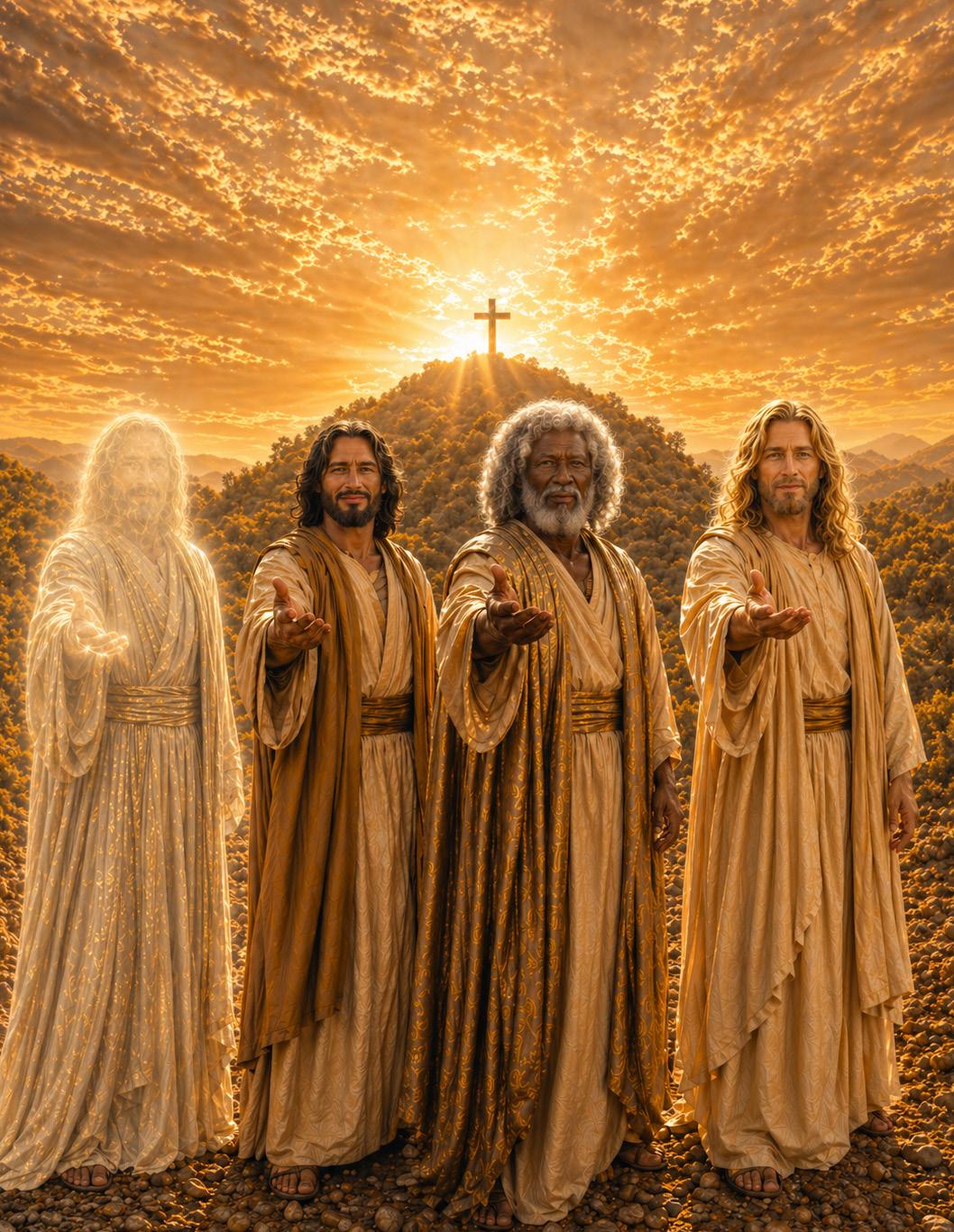
We come to Jesus when we accept Him as our Savior. We become intimate with The Christ when He powerfully presents His presence right in the mix of life.
“Who is this Jesus?” I am so full of answers, testimonies, and commentaries that I don’t know where to start. One of my favorite worship songs immediately comes to mind: “You are Alpha and Omega. We worship You, our Lord; You are worthy to be praised.”

“I am the way, the truth, and the life; no one comes to the Father except through me.” -John 14:6
Jesus is the Son of God. He is my Lord and my Savior. He is my way maker, He is the Truth, and He is my life. I came to know Him intimately during many dark times of my life. He kept me when my son died suddenly, and I found myself struggling for air. I couldn’t remember how to breathe! He breathed for me; He led the way out of that dark valley for me. I didn’t eat for weeks, and the only thing I could drink was sweet tea. My grandson stayed by my side and took note of who visited and what they brought. He made sure we both had plenty of sweet tea! Jesus brought me out of the darkness into His marvelous light. He saved my life.
Jesus helped me to see the truth that we are fearfully and wonderfully made. In my grief recovery, He called me into the ministry. I was sure He had reached the wrong number. I didn’t come from a bloodline of preachers. I was in a difficult marriage, and my spouse
seemed to hate preachers, and anything connected to the church. And many folks still don’t take kindly to female preachers. I was in transition in my job, and quite frankly, I couldn’t see myself as a minister of the sacred Gospel. Yet as I was making my case for why this was a bad idea, Jesus, the Truth, spoke to me and said: “So what I did for you on Calvary and on the Cross was not enough for you?” He is that Jesus—the Jesus Who is always enough.

Rev. Maudie M. Murray
Local Elder
Lee Memorial AME Church Cleveland, Ohio
Many may have heard the song “Alabaster Box” by CeCe Winans. Many think the song is just about a woman pouring expensive perfume on the feet of Jesus. She, like I and so many others, had a personal encounter with Jesus.
Part of the lyrics says, “You weren’t there the night He found me; you did not feel what I felt when He wrapped His love all around me.”

This is personal. When you are someone who has gone through depression and suicidal tendencies, you learn that only Jesus can heal you. I was abused, molested, and raped, and I almost lost my mind. But it was Jesus who stepped in and healed me, not only my heart but also my mind. The doctors didn’t do it, the medication didn’t do it, and isolation didn’t do it. It was only the touch from Jesus that healed me.
Do I still go through things? Yes. We were never promised a carefree life without problems or challenges. We are promised that He will never leave us or forsake us, and He will be there every step of the way. It sounds cliché, right? I thought so too, until I stepped back and went over some of the darkest places in my life. He was there each time. I questioned, as many do, “If You were
there and You are sovereign, then why didn’t You stop it?” Why didn’t You save me?”
But He did save me. He kept me from death, and He stopped all the attacks that came against me from going farther than they could have. The things that were meant to kill me and destroy me, Jesus bore the pain and used them to make me stronger and wiser. As I cried concerning this revelation, I could feel the tangible presence of Jesus still holding me and comforting me.
In moments where I cannot see Him or trace Him, I pause so that I can feel His heart. He is always present and ready to rescue me when I cry out.

Christina LaDonna Kingdom Author, Speaker Certified Life Coach and Christian Counselor

He is my consummate companion and friend. Because of our relationship, I now walk continuously in soundness of mind and wholeness, with Him as my voice of reason. In moments when life threatened to overwhelm me, He steadied my thoughts and anchored my soul. Through seasons marked by abandonment, betrayal, and profound loss—including the passing of my mother, sister, daughter, and son—He remained my constant and faithful Friend. Where grief could have fractured my mind and spirit, Jesus restored my soul with unfailing grace.
He has revealed Himself to me as a Promise Keeper, faithful to fulfill His Word in every season of my life. Through Him, I have learned that God’s intent is not merely for survival, but for abundance—life marked by purpose, resilience, and joy. Now, at the age of seventy-four, I stand firm, strengthened by His sustaining presence. Daily, His gentle voice reassures me, whispering, “You are enough, and your obedience has commanded My favor.”
In 2021, my faith was tested when illness left me unable to walk. For over a year, I endured physical therapy, uncertain of what was happening within my body. Yet I chose to trust my LORD, even when I could not trace His hand. In that season, He reminded me that there was purpose in my pain. Today, in 2026, I testify that after years of pressing forward,
I now walk—and run— without weariness, living proof that He remains faithful.
a breakthrough came suddenly. I now walk—and run—without weariness, living proof that He remains faithful.
My test became a testimony of trusting God not for what He would do, but for who He is—my Redeemer and my Healer. My relationship with Jesus is not built on clichés, but on intimate, authentic communion. He corrects, chastens, and loves me unconditionally. Through Him, I have learned to embrace and enjoy my earthly journey. Truly, Jesus has been—and continues to be—my faithful Friend.

Apostle Yvonne Strachan
New Life Provision Christian Ministries Ministry In Motion Inc.
“God is within her; she will not fall; God will help her at the break of day.”
— Psalm 46:5

Jesus, to me, is not a distant figure in history or a concept shaped by tradition. He is the steady presence who has proven Himself in moments when life felt uncertain and my footing was unsteady. He is the God who dwells within; close enough to strengthen, present enough to sustain.
I have come to know Jesus as the One who does not always calm the storm immediately, but as the One who anchors me while it rages. When circumstances shifted, and familiar ground felt unstable, He did not abandon me in the shaking. Instead, He established Himself within me. Psalm 46:5 became my personal truth. I learned that falling was not inevitable because His presence was already securing me.
Jesus has met me in the quiet hours before answers formed, before clarity arrived, and before daylight broke through. He is the God of the break of day, faithful in the waiting, attentive in the unseen moments. In those spaces, He strengthened my resolve, renewed my hope, and reminded me that help was already in motion.
He has revealed Himself as healer, patient, and precise. As a provider, consistent and sufficient. As
a rescuer, lifting me not only from circumstances, but from discouragement and fear. He restores what life tries to wear down and breathes life into places I thought were finished.
This Jesus is my Shepherd, guiding with care. My Defender, standing guard. My Way Maker, clearing paths I could not see. Above all, He is Emmanuel, God with me. Because He is within me, I stand. I endure. And I trust that help always comes, right on time, at the break of day.

Priscilla R. Haley
Mentor, Author
Passionate about healing, restoration, and helping others encounter God through lived experience, prayer, and truth.

For this time—in this season—Jesus has revealed Himself to me as the beautifully multifaceted Savior He has always been. Not theoretical. Not distant. But present, powerful, and personal.
He showed Himself as Omnipresent. He met me in the emergency room—twice—when my strength was gone, and answers were scarce. He met me in the workplace when I stood before unjust, harsh systems that sought to break my spirit rather than honor the truth. In every place I entered, shaken, He was already there—just as Scripture declares: “Where can I go from Your Spirit? Or where can I flee from Your presence?” (Psalm 139:7).
He revealed Himself as Omnipotent. What tried to crush me did not succeed. What tried to silence me did not prevail. Jesus outpowered institutions, processes, and pressures that seemed immovable. He proved Himself to be the original Hammer—the One whose Word breaks rock in pieces (Jeremiah 23:29), and whose authority no system outranks.
He made Himself known as Omniscient. He connected me to resources, advocates, and people at precisely the right moments—alignments so exact that only divine orchestration can explain them. Doors opened that I did not knock on. Help arrived that I did not
request. As the Word affirms, “Before a word is on my tongue, You, Lord, know it completely” (Psalm 139:4).
As of this writing, I have faced one of the toughest seasons since my youth. It exceeded my existing faith and required me to “Duc in altum,” the Latin term meaning “to launch out into the deep” (Luke 5:4). I could not rely on shallow waters or familiar strength.
This was the season I was carried.
Like the assurance in the poem Footprints in the Sand, when I could see only one set of footprints, it was because Jesus was carrying me. I was too weak and worn to take care of myself—and He did not rebuke me for that. He whispered, in that still small voice, “Babygirl, I got you.”
This is THAT Jesus—the One who meets, overcomes, knows, and carries us. Even now, just as He promised: “Even to your old age…I will carry you” (Isaiah 46:4).
Yvette Freeman Davis


Our identities are God-given reflections of Himself. We are a part of Him, as John 15:5 illustrates. “I am the vine; you are the branches. If you remain in me and I in you, you will bear much fruit; apart from me you can do nothing.” Nothing that lasts, for sure!
One temptation is to try to define ourselves apart from Him. We use worldly measures of success. Or wanting our autonomous self-rule over His leadership. Or letting our emotions rule and/or defining ourselves by others’ opinions and approval. Sometimes we even define ourselves by sin – our own with pride, our past with shame, or others’ sin and the consequences that have affected us.
When God revealed Himself to Moses in the Old Testament book of Exodus, He said, “I AM.” It’s His identity – the self-existent, eternal, and unchanging God. The Gospel of John contains seven “I AM” statements that reveal who Jesus is and what His work in the world is. While they are great metaphors, they also reveal layers of theology for us in tangible subjects and concepts.
This includes pointing back to who God the Father has said He was all along: “Before Abraham was, I AM”
(John 8:58). This also is a claim of equality with the Father as the Son.
Unlike the manna that spoiled overnight in the desert and had to be constantly renewed (Exodus 16), the Bread of Life, Jesus, is the sustainer of eternal life. He’d just fed the 5,000… one case of situational irony. But beyond meeting a physical need, He was telling us that He is the provision we are seeking for eternal life.
As the source of Truth, the Word, Jesus relates his nature to light, which is the opposite of all the darkness we hate so much. In this passage, He was healing a blind man, so look at the irony of turning darkness into light! In Matthew 5:14, we are told to be that light as He is: “You are the light of the world. A town built on a hill cannot be hidden.”

The door of the sheep shows Jesus’ care for those whom He saves. The gate to the sheepfold is very protective. Through this gate alone can we obtain eternal life. This role is essential to fend off that which threatens to do us harm. In ancient sheepfolds, the shepherd often lay across the opening, serving as the “door” that protected the sheep.
Similarly, as the Good Shepherd, He saves His sheep and has a relationship with them. They follow His voice, and He guides them lovingly. He was willing to lay His life down for His sheep. Psalm 23 tells us that He leads us in this way. And Psalm 100:3 says, “Know that the Lord, he is God! It is he who made us, and we are his; we are his people, and the sheep of his pasture.”
Hope and salvation came through Jesus’ work on the cross. It’s hope for our problems today, hope for tomorrow, and for obtaining eternal life in the presence of God and an abundant life through knowing the Lord. The world tries to convince us we can “manifest” success, an abundant life, and a future, but God has already provided everything we need for our journey.
6
I am the Way, the Truth, and the Life (John 14:6)
Not a way or just one of a multitude of ways –He’s the Way. Not a truth or one of many truths, the Truth. Not one way to live or one offer of life, but Life. Everyone is searching for these things, and they are things only found in the Messiah. The world says proclaim your own way, but God says He is the only way.
7
He’s speaking here of being the source of life. We thrive in Him, and in Him alone do we find
our identity. We have to stay connected to the True Vine to grow and become all that we were created to be. In contrast, without Him, we can do nothing spiritually fruitful; it’s no use to pretend because everyone will know if you are connected to the True Vine by your fruit.
We are called to become more like Christ, and knowing His roles helps us understand who He is, and in turn, who we are. We are more than what we do, feel, have, or control, and we should not put those things in the place of God. When we try to build our identity on other foundations, we see our failures and shortcomings work against us. When we claim our identity in Him, we realize it’s like grace and salvation itself – we receive our identity from Him, as well as our created purpose, our worth, and our security.
This recipe is from the Pecan Tree Publishing Anthology, This Way to Love’s Heart: Food, Fiction and Finding Good Love. The book, available at www.pecantreebooks.com, combines poetry, short stories, and food and beverage recipes for the romantic at heart.

INGREDIENTS:
• 2 tablespoons of butter, divided
• 1 tablespoon extra-virgin olive oil
• 1 pound medium shrimp, peeled and deveined
• 1 lemon, thinly sliced, plus juice of 1 lemon
• 3 cloves of garlic, minced
• 1 teaspoon Crushed red pepper flakes
• Kosher Salt
• 2 tablespoons dry white wine (or water)
• Freshly chopped parsley for garnish
1. In a large skillet over medium heat, melt 1 tablespoon of butter and olive oil. Add shrimp, lemon slices, garlic, and cherished red pepper flakes, and season with salt.
2. Cook, stirring occasionally, until shrimp is pink and opaque, about 3 minutes per side.
3. Remove from heat and stir in remaining butter, lemon juice, and white wine. Season with salt and garnish with parsley before serving.
Perfect side dishes are: Garlic-parmesan roasted asparagus, Roasted broccoli, Caesar salad, or Greek veggie salad.


Exploring what Jesus’ way of leadership, labor, prayer, and stewardship says to a work culture shaped by efficiency, visibility, and the pressure to keep climbing. –Ruth Bryant
In offices, ministries, nonprofits, consultancies, and family businesses, many Christian professionals are wrestling with the same question in real time: what does it mean to follow Jesus in a culture that prizes speed, scale, return, visibility, and constant availability? We are living in a moment that applauds the ladder, the grind, the measurable win, and the image of the leader who never stops. Yet the Jesus of the Gospels keeps moving in another direction. He stops for one suffering woman while a larger crisis is still waiting. He makes room for children. He speaks with the socially overlooked. He withdraws to pray when the need is still pressing. He is not careless, passive, or vague, but He is also not frantic. That tension sits at the center of this conversation. Many of us have learned how to admire Jesus as a visionary, a builder, and a leader, but we are less comfortable when His way of leading refuses the modern corporate script. The question is not whether believers should work hard, build wisely, or lead well. The question is whether we have begun to remake Jesus into a CEO because we are unsure what to do with a Carpenter whose ministry often looked inefficient by professional standards.
The Gospels do not present Christ as anti-work. They present Him as perfectly aligned work. He moved with urgency, but never with vanity. He was disciplined, but never self-advertising. He carried authority without becoming intoxicated by status. He could feed the multitudes and still disappear to pray. He could enter cities full of need and still refuse to become captive to every demand. In that sense, the contrast between the CEO mold and the Carpenter’s life is not really a contrast between excellence and indifference. It is a contrast between obedience and self-importance. Jesus did not reject impact. He rejected ambition that sought power without surrender. He did not avoid leadership. He rede-
fined leadership through service, attention, restraint, and a visible dependence on the Father.
In the article “The Rhythm and Rest of Your Life and Work” (January 21, 2021) for NACWE, Dr. Karen Lindwall-Bourg writes, “We want the rhythms and rest of our business endeavors to be assigned and aligned by God’s purpose and plan for our lives.” That line reaches beyond encouragement for overworked entrepreneurs. It names the deeper issue. Our pace is always being disciplined by something. If our rhythms are being assigned by fear, insecurity, comparison, competition, or a private need to prove ourselves, then our problem is not only fatigue. It is misalignment. Jesus’ invitation in Matthew 11 is not simply a comfort verse for burned-out believers. It is a working pattern. He calls the weary not merely to stop, but to learn of Him, to walk with Him, and to carry what He gives in the way He gives it.
Lindwall-Bourg makes a related point in the NACWE article “God’s Grace and Power are Sufficient For Your Life and Work (Working God’s Way)” (February 2, 2021), where she writes, “When we are focused on what God has assigned to us and our efforts are aligned with His Precepts, His Grace is sufficient.” The language matters. Grace does not call us away from responsibility. Grace calls us away from self-powered striving. It reminds us that assignment is not the same thing as accumulation and that not every open door is a holy one. The Carpenter works with intention, but He never works from panic.
That same challenge appears in Mike Sharrow’s Biblical Leadership article “Resting at a High Rate of Speed” (November 14, 2019). Recounting a mentor’s prayer, Sharrow includes this striking line: “Abiding in you is not conditional upon a lack of demands in life.” Later in the piece, he warns against “Calendar Atheism.” That phrase reaches directly into modern Christian

work culture. It describes what happens when we profess dependence on God but structure our days as if everything ultimately depends on us. Jesus exposes that lie simply by how He lives. He prays while there is still work to do. He withdraws while people still want access. He refuses to let urgency become lord. For those of us shaped by hustle culture, that witness is corrective. Rest in Christ is not merely the reward for finishing. It is part of how faithfulness is sustained even when the demands remain.
Anthony O’Neal approaches the issue from the side of vision and discernment. In his article
“6 Reasons Why You Need A Personal Vision Statement (And How to Write One)” (March 6, 2023), he observes that “Your personal vision statement helps you wade through the sea of good opportunities to find the few great ones that will truly move you forward.” That observation lands well in a Christian discussion of work because many of us do not lose direction only through obvious rebellion. We lose direction through attractive excess. We say yes to too much, pursue too many good things, and gradually surrender clarity to volume. O’Neal echoes the same principle in his article “10 Things to do Differently With Your Money in 2024” (June 11, 2024), where he writes, “The word of God needs to be your navigation system when it comes to your finances.” Applied more broadly, the point is plain. If Scripture is


Christian Stewardship Network, in the article “What I Wish Every Church Leader Knew About Stewardship” (October 3, 2019), states it with welcome clarity: “Since God created and still owns all we have, stewardship is recognizing God is the owner, and we are His managers.” Once that truth settles in, work changes. Pressure changes. Titles change. Even success changes. The lower-paid employee, the struggling client, the inconvenient interruption, and the less glamorous assignment no longer sit outside the real work. They become part of what faithfulness requires because nothing in the Christian life belongs outside the lordship of Christ.
That is also why Jesus’ attention to the lowly and the overlooked cannot be dismissed as beautiful but impractical. His ministry to the poor, the weak, the sick, and the socially inconvenient was not a distraction from the mission. It revealed the mission. If God is the owner and we are managers, then people cannot be reduced to inefficiencies in the calendar. They are part of the stewardship. Zenet Maramara, in the NCF article “On Stewardship and Second Kingdoms” (February 14, 2021), warns that “A faithful steward strives to build the Kingdom of God and consciously avoids building a second kingdom.” That sentence reaches well beyond money or governance. It names a temptation in Christian leadership itself. We can build excellent structures, admired organizations, and influential platforms while quietly constructing a second kingdom around our names, our preferences, our appetite for control, and our fear of being unseen. Jesus refused that path. He did not climb by self-promotion. He moved in obedience, and because He moved in obedience, He was free to kneel, to serve, to wait, and to stop for the one.
Nehemiah gives this discussion an especially useful Old Testament frame because his rebuilding work joins prayer, planning, courage, and divine favor without sounding like a modern hustle. Kirk points to Nehemiah as a man who, in effect, put his career on hold when God opened the way for the rebuilding of Jerusalem’s walls.
Costi Hinn develops the point in the article “Leadership Lessons from Nehemiah” (February 27, 2026), writing that Nehemiah “motivated them by explaining the favor God had shown them in opening the doors for a rebuild.” That is a deeply instructive detail. Nehemiah did not
rally the people with personality alone. He did not build the wall by charisma, urgency, or image. He prayed first. He grieved first. He assessed quietly. He moved when favor opened the door. He organized the work, armed the builders, and called the people forward, but he did so with the clear understanding that God had already gone before them. That is unorthodox leadership in the best sense. It is burden before branding, prayer before platform, favor before frenzy.
The comparison to Jesus becomes difficult to miss. Like Nehemiah, Christ did not confuse motion with mission. He knew when to move publicly and when to withdraw privately. He understood the value of obedience over optics. He built people before He built anything that could be counted as institutional success. He refused shortcuts in the wilderness, refused performance for the sake of spectacle, and refused a ladder that would have required disobedience to climb it. For Christian professionals, that witness remains searching. It asks whether our idea of leadership has become too close to domination, whether our understanding of productivity leaves enough room for prayer, whether our ambition can still recognize the poor, and whether we have confused being in demand with being in step with God.
In the end, the issue is not whether believers should be effective. The issue is what kind of effectiveness we are willing to call faithful. Jesus does not teach us to despise work. He teaches us to place work under worship. He does not forbid building. He forbids the sort of building that quietly enthrones the builder. He does not ask us to abandon responsibility. He shows us how responsibility looks when it is carried by a soul at rest in the Father. For many of us, that may be the real challenge of this moment. We do not need a Christ who blesses our addiction to the climb. We need the Carpenter, who still teaches us to stop without laziness, to pray without apology, to serve without image management, and to build the way Nehemiah rebuilt, trusting God’s favor more than human frenzy. That is not weak leadership. It is holy leadership. And in a culture exhausted by the demand to keep ascending, it may be the very witness the marketplace needs most.


Music, Talk, Poetry, Meditation and More
All about Edification, Inspiration, Evangelism, and Discipleship
Be ready for ear-pleasing Kingdom radio like you’ve never experienced.
Does viewing pastors as spiritual parents affect intimacy with Jesus?

In many faith communities, the language of “spiritual mothers” and “spiritual fathers” carries weight. It speaks of covering, guidance, nurture, and formation – a picture of discipleship where someone more seasoned in faith walks alongside someone still learning to hear God clearly. At its best, this language reflects biblical mentorship and relational growth within the Body of Christ.
But beneath that language lives an important question: Does elevating spiritual leaders to parental roles ever weaken their image of, position to, or intimacy with Christ?
I have lived on both ends of this tension.
I lost the man who was my spiritual father in February 2024. He was a man who, by every account, embodied wisdom, steadiness, and spiritual integrity. He was not biologically mine, but he filled a sacred role in my life. He modeled what it looked like for a man to govern his home spiritually. He led with humility, strength, and consistency. He was safe. He showed me a picture of fatherhood rooted in Christ.
When he passed away, I wrestled not only with grief, but with identity. Who would I call for counsel? Who would
confirm what I sensed God saying? Who would help me process spiritual questions or leadership decisions?
And in that silence, I realized something both uncomfortable yet liberating: I had to grow up spiritually.
His guidance had been a gift, but there were places where I had leaned on him more than I realized. His voice had become a source of reassurance that sometimes kept me from fully wrestling with God on my own. Without him, I had to learn to linger longer in prayer, to trust the Holy Spirit’s guidance without immediate external affirmation, and to cultivate a deeper personal reliance on Christ.
It felt like stepping into spiritual adulthood.
But my story with spiritual parenting began long before that loss. As a young Christian searching for safety and belonging, I found myself working at – and eventually joining – a non-denominational, charismatic church led by a single female pastor who was deeply admired by many. I served faithfully. I immersed myself fully. For seven years, it felt like home.
It wasn’t until year seven that I began to recognize dynamics that felt deeply unsettling and patterns that,


in hindsight, resembled what many would describe as cult-like. The environment was filled with passionate believers, many of us new in faith, carrying boundary issues and people-pleasing tendencies. Dependence on leadership was subtly cultivated. Questioning felt like disloyalty. Personal discernment became secondary to collective alignment with the leader’s voice.
What initially felt like covering slowly became control. What felt like spiritual parenting eventually revealed itself as spiritual abuse.
Leaving fractured my trust not only in leadership but also in my own discernment. I had to relearn how to trust God’s voice without fear, rebuild healthy boundaries, and confront the reality that my desire for safety had made me vulnerable to surrendering more authority than was wise. Where grief had taught me dependence on Christ, this experience taught me discernment and the slow work of reclaiming my own spiritual responsibility.
Scripture affirms spiritual mentorship. Paul refers to himself as a spiritual father (1 Corinthians 4:15), and the New Testa-
ment consistently highlights the importance of shepherds, teachers, and guides. Healthy spiritual leadership nurtures growth, offers wisdom, and provides accountability.
But leadership was never meant to replace intimacy with Christ. Spiritual parents are meant to point, not possess. To guide, not govern identity. The risk emerges when the image shifts and when believers begin to rely on a human voice as the primary source of validation, direction, or spiritual confirmation, when discernment is outsourced. When closeness with a leader becomes mistaken for closeness with Jesus.
Spiritual maturity means more than having someone else cover you in prayer. It means developing the confidence and discipline to go before God yourself. The prayers of others are powerful gifts, but they were never meant to replace your own conversations with Him. Maturity looks like learning to stand in His presence personally, to wrestle in prayer, and to cultivate intimacy that is not borrowed, but built.
Healthy spiritual parenting leads people toward independence in Christ, not independence from community, but freedom from dependence on any intermediary.
John the Baptist modeled the healthiest posture for spiritual leadership when he declared, “He must increase, but I must decrease” (John 3:30).
Whether through loss, departure, or disillusionment, many believers eventually face a moment when the spiritual parent figure is no longer present. And in that space, something sacred happens, the invitation becomes clear: Will you now stand on Christ alone?
Losing a spiritual father and walking away from unhealthy leadership taught me the same lesson from opposite directions. Human leaders may come and go – through death, distance, or disappointment – but Jesus remains constant. There comes a moment when every believer must step forward without leaning on another voice and discover that the Holy Spirit has been speaking all along.
The safest place for your faith is not in a person’s shadow, but in Christ’s presence.


Faith Norton
For many wounded believers, the crisis is no longer abstract. It is not merely a debate about bad leadership, celebrity culture, or institutional failure. It is personal. It is the young adult who still loves Scripture but cannot walk into a sanctuary without shaking. It is the family that served for years and now cannot hear certain church phrases without feeling sick. It is the person who prayed, gave, volunteered, trusted, submitted, stayed quiet, and was harmed anyway. The question, then, is not simply whether church hurt is real. It is whether Jesus can still be found when the people who spoke most loudly in His name became the source of the wound.
That question deserves a serious answer because too many hurting people have been rushed past their pain. Some have been told to “just forgive” before the truth was even named. Others have been urged to return to unsafe environments in the name of reconciliation. Others still have been made to feel that their grief is proof of rebellion rather than evidence of injury. But pain does not become less painful because it happened in a church. In some ways, it becomes more disorienting. The place that promised refuge became the place of confusion.
The first thing to say is this: being harmed by people in the church is not the same as being abandoned by Christ. In Church Hurt: Beyond Disappointed, Beyond Loved, Part One (October 25, 2021), the Biblical Counseling Coalition speaks directly to the wounded and says, “Jesus knows what it’s like to be attacked in the holy places.” That line matters because it refuses cheap reassurance. It does not tell wounded people to get over it. It tells the truth about Jesus. He knows betrayal. He knows misuse of power. He knows what it is to be rejected among people who were supposed to know God. He is not standing outside this pain, analyzing it from a distance.
That same BCC article is also helpful because it distinguishes ordinary disappointment from something deeper. It describes church hurt as “the pain of abuse, misuse of power, and unrepentant sin which leadership refuses to address.” That is necessary clarification. Not every disagreement is abuse. Not every correction is control. But some wounds are not misunderstandings. Some are the result of real exploitation, real silence, real cover-up, and real spiritual manipulation. Naming that truth is not bitterness. It is honesty.

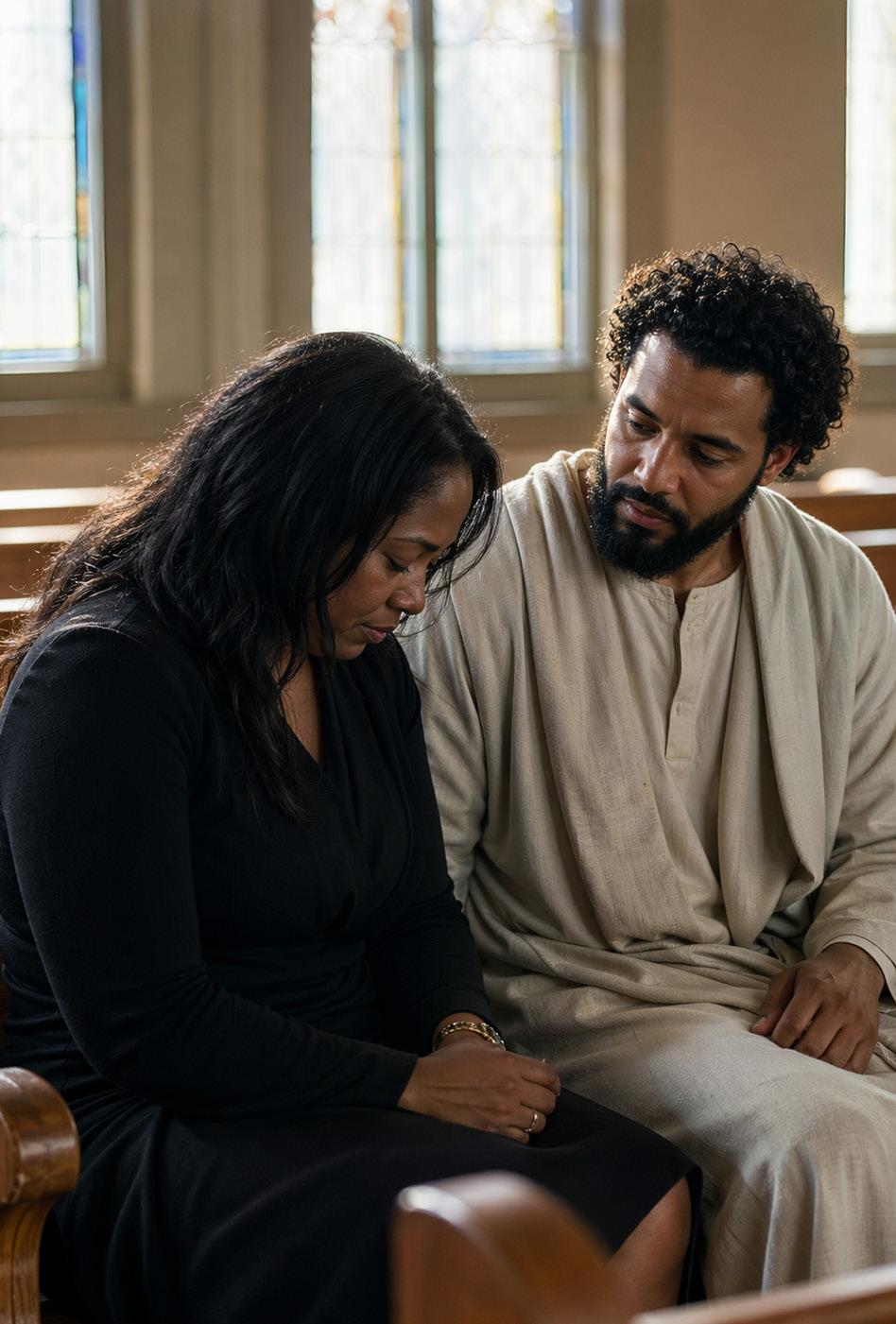
Diane Langberg has been one of the clearest Christian voices on this. In her article When the Sheep are Preyed Upon: Acknowledging the Tragic Reality of the Church’s Spiritual Abuse Problem (December 17, 2020), she writes, “We have protected the institution of shepherding rather than the sheep.” That sentence explains why church hurt has become such a deep and public crisis. Too often, energy has gone into preserving the image of leadership rather than protecting the vulnerable, telling the truth, or making repentance visible. Where that happens, the church does not merely make a mistake. It obscures its own Head.
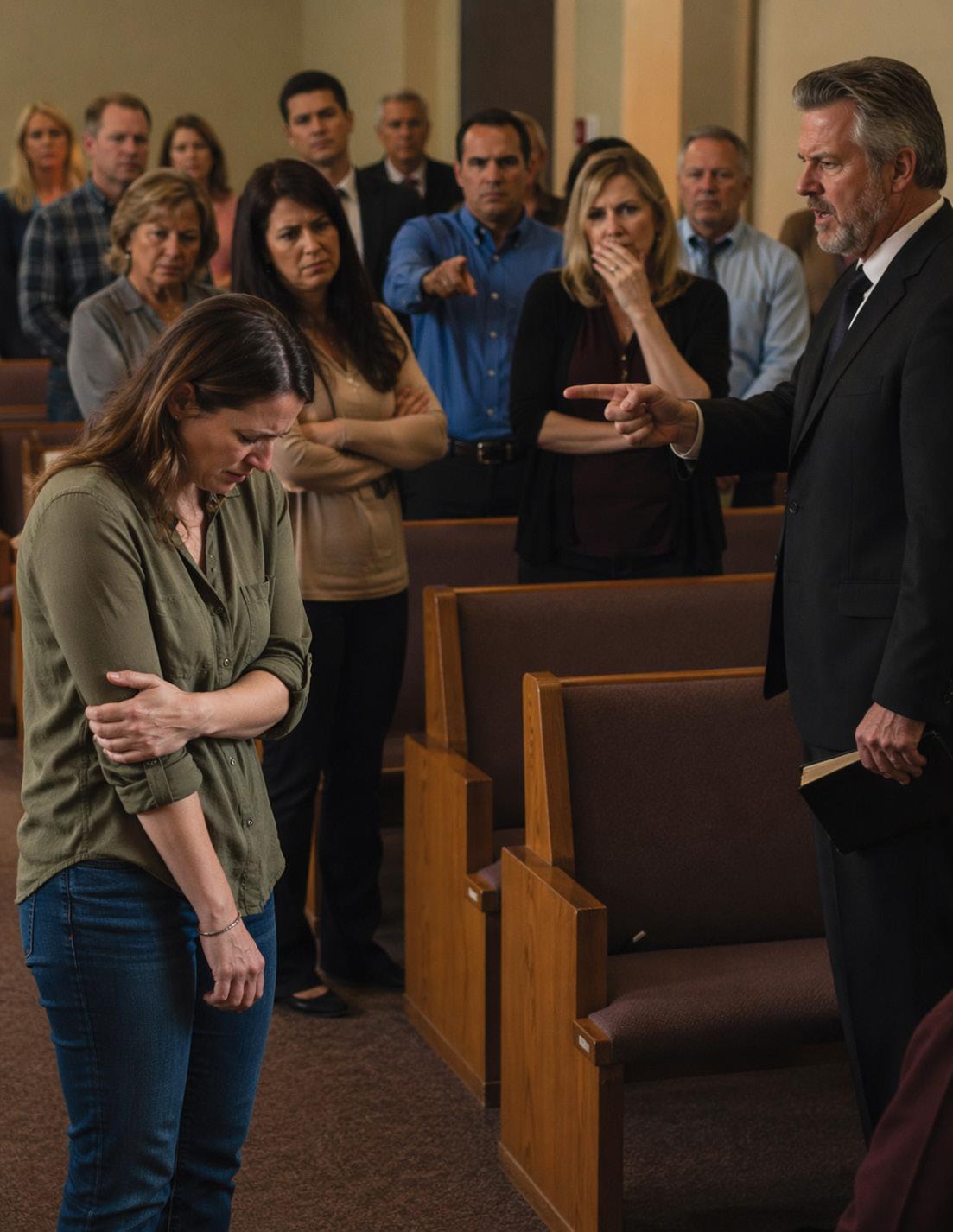
Still, if the article stopped there, it would leave us wounded with a diagnosis but no direction. The next question is how healing begins. Here, the answer is not simplistic. Some people need distance for a while. Some need counseling. Some need help learning to listen to their own bodies again. Some need to discover that saying no is not rebellion. Some need to relearn prayer in a language that does not sound like the language used against them. And some need permission to grieve before they are asked to rebuild anything.
There is also a deep comfort in knowing that Jesus does not ask wounded people to pretend. He never demanded performance from the broken. He asked questions. He made room. He told the truth. He did not crush bruised reeds. Even after the resurrection, He invited Thomas to bring his wounds and questions into the room. The church often rushes to a resolution. Jesus often begins with presence.
Jeremy Linneman, in the article We’re Hurt, and Healed, in Community (May 18, 2021), writes, “We’re
hurt in relationship, and we find healing in relationship.” That is a hard sentence, but it is often true. Healing does not always mean returning to the same people or the same systems. It certainly does not mean bypassing safety or discernment. But it does mean that total isolation is rarely the definitive answer. At some point, many hurting believers need to encounter embodied faithfulness again: a wise pastor, a truthful elder, a gentle church mother, a healthy small group, a therapist who honors both trauma and theology, a community that does not demand instant trust but patiently earns it.
That is why the church must be careful in how it speaks to the wounded. We do not need one more slogan about not “throwing the baby out with the bathwater.” We need churches that make it believable that Jesus is not like the people who misuse His name. We need leaders who are willing to repent publicly, listen slowly, and give up power when power has become unsafe in their hands. We need communities where truth is not seen as disloyalty and where lament is not treated as a threat.
So, can we still find Jesus after church hurt? Yes, but often not by pretending the hurt was small. Not by calling wolves shepherds. Not by asking the wounded to carry the burden of protecting the institution. We find Him where He has always been: near the brokenhearted, truthful about sin, gentle with the bruised, and unwilling to confuse His own voice with the voices that harmed His sheep. For many, that may be the beginning of hope—not that the church has always represented Him well, but that He is still Himself.
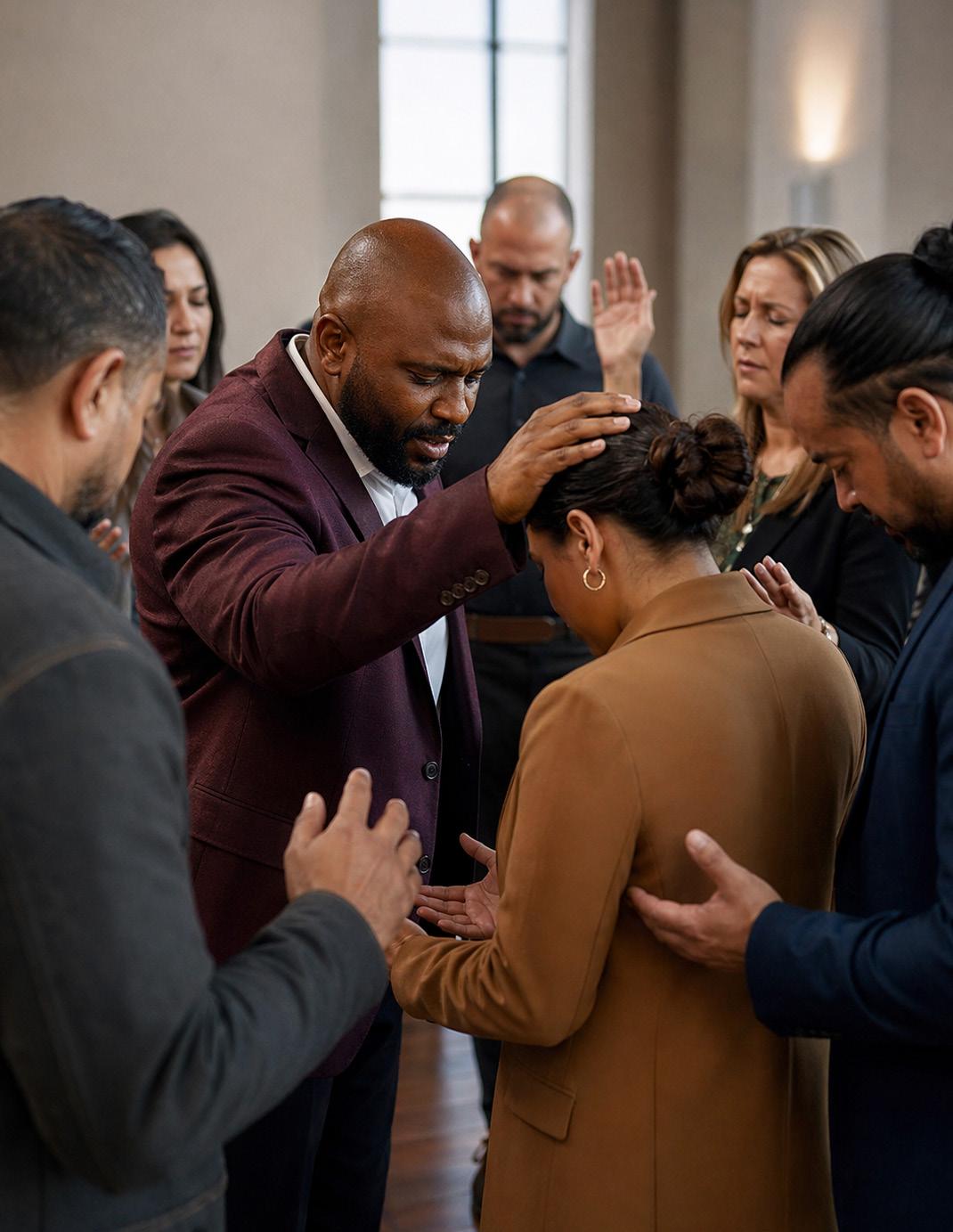
Elizabeth Olagunju, PhD Author, Speaker & Financial Consultant
Over the last decade, church hurt has moved from private pain to public crisis. We have watched professionals, families, and college-aged young people walk away from church communities, not always because they stopped loving Jesus, but because they no longer trusted the people who claimed to represent Him. Many felt used more than cared for, managed more than shepherded, and silenced more than seen. This article is not an argument against pastors or spiritual authority. It is a call to accountability and a call back to the Word. In Ezekiel 34, the Lord rebukes shepherds who feed themselves instead of the flock. In John 10, Jesus distinguishes the Good Shepherd from the hired hand. In Acts 6, the apostles model both spiritual responsibility and wise delegation. Taken together, these passages remind us that biblical shepherding is not celebrity, control, or self-preservation. It is feeding, protecting, knowing, serving, and answering to God.
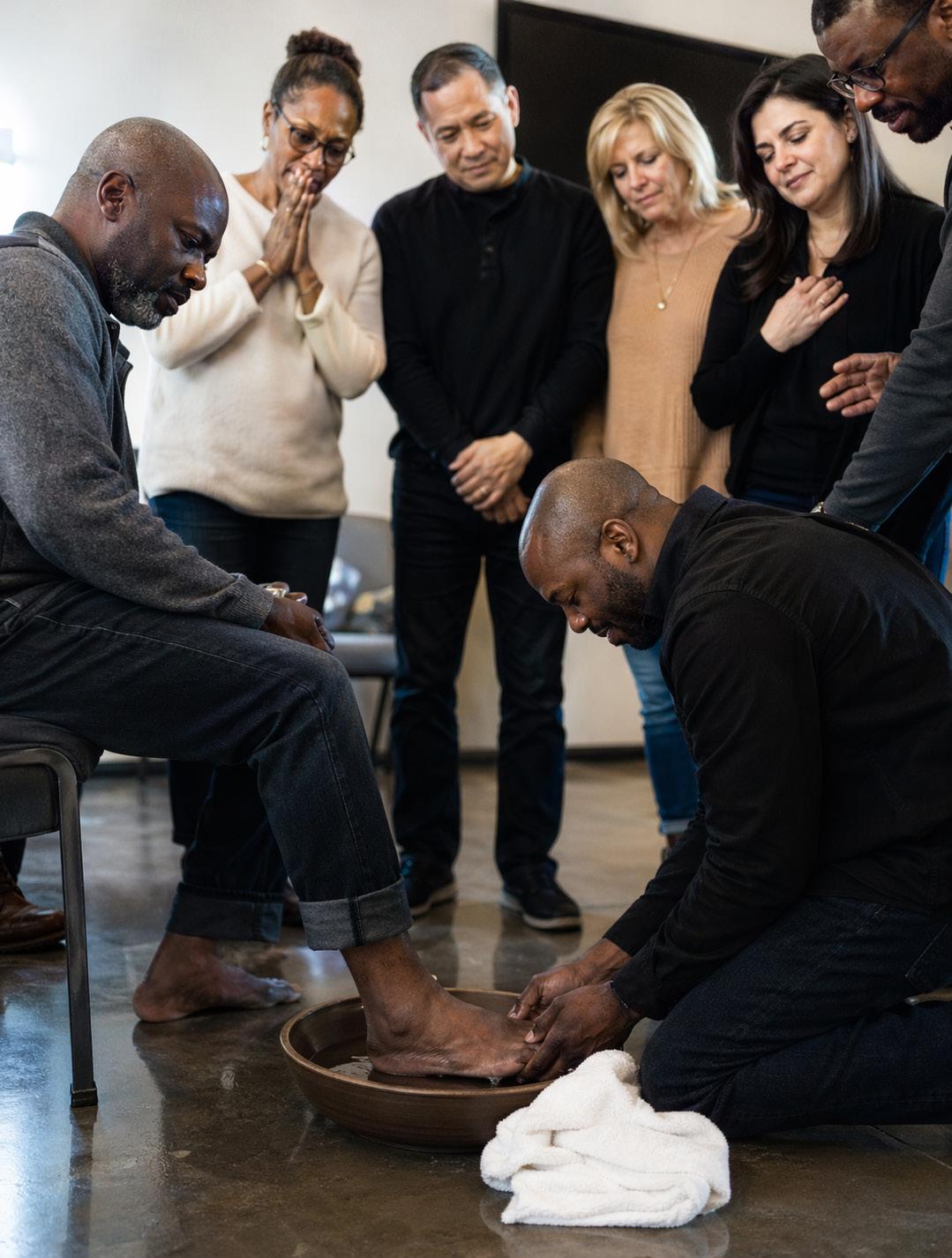
Reading Matthew 21 during Palm Sunday and Holy Week, one image stands out sharply: Jesus driving the marketers out of the temple, overturning what had turned worship into transaction. The money changers, traders, and religious opportunists were not operating in a vacuum. Leaders had created the atmosphere and the permission structure for that exchange. The week before Passover was busy. People came to Jerusalem from many places, hungry to worship God. Yet, some were exploited by merchants who pretended to find blemishes in their offerings and then offered “acceptable” replacements or approved coins for a price. What should have drawn hearts toward the Almighty instead became an opportunity to fleece worshipers and line human pockets.
Unfortunately, this still happens, only in different forms. Many shepherds take advantage of people’s needs. People who truly crave and desire to worship God can be pushed into a transactional mode of worship, where access, belonging, and even spiritual affirmation begin to feel tied to what can be given, bought, built, posted, pledged, or publicly performed.
Of course, people are to serve God with their talents, treasures, and time. Scripture makes room for generosity, sacrifice, service, and support for the work of ministry. It becomes an issue when shepherds fall short of God’s expectations in Ezekiel 34:4, where they are called to strengthen the weak, care for the sick, bind up the injured, and bring back the lost. Instead, some shepherds of today still rule with force and harshness.
“The weak you have not strengthened, the sick you have not healed, the injured you have not bound up, the strayed you have not brought back, the lost you have not sought, and with force and harshness you have ruled them.” –Ezekiel 34:4 (ESV)
That prophetic rebuke is one reason church hurt cuts so deeply. When a shepherd wounds people, they are often wounded in the very place where they came looking for refuge. Many of us have seen what happens when churches become more committed to preserving image than practicing repentance. We have seen
communities rally to protect a pulpit, a platform, or an institution while the wounded are told to wait, to be quiet, to pray harder, or to leave. That is not shepherding. That is self-preservation dressed in church language.
Mez McConnell, in the article “Redeeming Authority for Those Who’ve Only Known Its Abuse” (September 30, 2016), states the matter plainly: “Pastors are called to shepherd the sheep, not abuse them.” That sentence is simple, but it is needed. It is needed because abuse in church settings is not always dramatic at first. Sometimes it looks like spiritual intimidation. Sometimes it looks like financial secrecy. Sometimes it looks like emotional manipulation, selective access, or the protection of influential people while ordinary members are left exposed.
Lack of accountability also leads, in some cases, to wealth accumulation by some of today’s shepherds at the expense of the sheep. That concern is not about whether pastors should be cared for. Scripture supports honoring those who labor in word and doctrine. The concern is what happens when the congregation becomes a funding stream for a leader’s image, lifestyle, or personal empire. Jenny Terry, in the 9Marks article “Handling Your Church’s Finances with Transparency and Integrity” (September 30, 2022), writes, “Trust starts with transparency. Transparency enables accountability.” That is not corporate theory. It is a stewardship principle. If offerings are sacred, then secrecy about their use should never be the norm. Churches should not have to guess whether money is serving ministry or subsidizing platform-building.

alone. It also exposes what happens when a scandal breaks open in a church. Do leaders protect the victim, or do they protect the institution? Do they move toward truth, repentance, and repair, or toward damage control? Do they guard the flock, or do they guard the brand?
John 10 gives the church another measure for leadership. Jesus says the hired hand runs when the wolf comes because he does not genuinely care for the sheep. That image reaches far beyond false teaching
He who is a hired hand and not a shepherd, who does not own the sheep, sees the wolf coming and leaves the sheep and flees, and the wolf snatches them and scatters them. He flees because he is a hired hand and cares nothing for the sheep.
–John 10:12–13 (ESV)
Paul Alexander, in the article “Lessons in Shepherding 3: The Gospels” (February 26, 2010), observes, “The good shepherd isn’t aloof from his sheep.” That insight reaches into one of the most pressing temptations in contemporary church culture: the rise of the inaccessible pastor. A shepherd cannot truly know the condition of the flock from a green room, a security corridor, or a curated distance. Christopher David, in the article “Why Your Ordinary Neighborhood Pastor is Better for Your Soul Than Online Celebrity Pastors” (July 7, 2022), makes a similar point when he writes, “A ‘celebrity pastor’ is a distant figure on a pedestal whom you hear through second-hand experience.” That does not mean pastors should have no boundaries. It does mean that celebrity culture is a poor substitute for biblical presence.
That presence matters because shepherding is not merely preaching to a crowd. It is knowing names, noticing wounds, discerning who is drifting, sitting with grief, correcting with love, and showing up when the sheep are in danger. The Lord requires accountability from shepherds. He requires them to take care of the sheep and defend them from wolves. He does not call them to retreat behind status, title, or entourage.
Pastors sometimes handle scandals the way the
corporate world protects its brands. The hurt sheep do not matter as long as the brand is protected. This falls below God’s standard. At times, some leaders would rather display wealth, access, and influence than feed the hungry and feel what the congregants feel. Yet Jesus leaves no room for that kind of distance from human need.
Matthew 25 also exposes the poverty of brand-first ministry. Jesus identifies Himself with the hungry, the thirsty, the stranger, the sick, and the imprisoned. A shepherd who cannot feel the condition of the congregation has already drifted from the heart of the Chief Shepherd. The Lord is seeking shepherds who care for the rich and the poor, the little people, and the big people. Accountability and reconnection with the sheep are essential to strengthening His church.
At the same time, this is not a call for pastors to do everything alone. Acts 6 gives the church a better model. The apostles did not abandon prayer and the ministry of the Word, but neither did they use calling as an excuse for distance or disorder. They delegated prayerfully so that the body could be well served. Healthy shepherding includes visibility, humility, shared leadership, and a structure that protects the flock instead of exhausting it.

1
We are all familiar with Pastor Appreciation Month. Churches should also set aside intentional time to thank volunteers and everyone who quietly participates in the life of the church. Recognition should not only flow upward; it should also flow outward toward those who serve faithfully.
1
Being pastored is not the same as simply attending church. It means allowing trusted, biblically faithful leaders to know us, teach us, correct us, and help us grow in Christ.
2
Delegation should be practiced prayerfully so that more members can be involved in the life of the church and can grow into meaningful leadership roles. The pastor does not have to do everything alone.
3
Pastors must shepherd like Jesus in spirit and in action. That means radiating love, embodying integrity, and serving as visible, believable role models for the church.
4
Churches should encourage loving relationships among members through small groups, prayer circles, and other spaces of real fellowship. This builds accountability, friendship, and a deeper sense of belonging.
5
Discipleship must remain central. Sermons and teaching should help congregants understand that it is not enough to admire Christ from a distance; we are called to become disciples who live what we hear.
6
There must be a way for pastors to be visible and available to the congregants. Pastors are not called to be celebrities. They are called to serve the sheep; while still honoring biblical delegation and the order we see in Acts 6.
7
Pray for each member by name. Do not simply remain in the office. Lift the people to the throne of grace and let them know they are being carried before the Lord.
2
Healthy shepherding requires proximity. Sheep cannot expect deep care while remaining perpetually hidden, detached, or unwilling to be known. Presence matters on both sides.
3 Submission to godly leadership is biblical, but submission is not silence in the face of sin, abuse, manipulation, or spiritual intimidation. Sheep are never asked to excuse what God condemns.
4
A pastor is not Christ, but an under-shepherd under Christ. Sheep should not idolize pastors, and pastors should never demand the kind of loyalty that belongs to Jesus alone.
5
Loving correction is part of care. A shepherd who never warns, counsels, or confronts, when necessary, may be keeping the peace outwardly while neglecting the soul inwardly.
6
Sheep also have responsibilities. They are called to pray for their leaders, receive sound teaching with humility, honor faithful labor, and participate in the life of the body rather than consume it from a distance.
7
No sermon clip, livestream, podcast, or platform can fully replace embodied local shepherding. God’s design is still a real flock, in a real place, being cared for by real pastors who know their people.
* Some of the seven tips listed are encouraged by Joey Foster’s book, The Heart of Being Pastored: A Practical Guide for Growing Under Spiritual Guidance, Warner Aldridge’s article “Am I Willing to be Shepherded?” and John Piper’s article “The Podcast Pastor”.

There is a thriving, hidden economy operating in the shadows of our globalized world, one that trades not in goods, but in human lives. Today, an estimated 49.6 million people are enslaved across the globe, generating a staggering $236 billion annually for those who exploit them. It is a sobering reality, a profound darkness characterized by violence, abuse, and the systematic stripping away of human dignity. Yet, as believers, we are not called to retreat from the dark; we are commissioned to shatter it. We are mandated to be God’s hands and feet, to step into the breach, and to take care of those in the deepest trouble. Leading this charge on the frontlines of modern-day abolition is the A21 Foundation.
Founded by evangelist and author Christine Caine and her husband Nick, A21 began with a singular, audacious mission: to abolish slavery everywhere, forever. What started in 2008 with the rescue of a single survivor in Greece has since exploded into a global force for freedom. The Caines recognized that prayer, while essential, must be coupled with relentless, boots-on-the-ground action. Trafficking is a hidden, fast-growing, and complex crisis. According to A21’s latest data, over 43 percent of victims are lured in through false job advertisements, deceived by the promise of a better life. Fighting an industry built on such profound deception requires an equally sophisticated and unwavering response. For over fifteen years, A21 has proven that when the body of Christ mobilizes, darkness loses its grip.
The foundation’s operational strategy is both comprehensive and highly effective, built on three foundational pillars: Reach, Recover, and Restore.
Through their Reach initiatives, A21 prevents exploitation before it can even begin. They deploy extensive educational curricula and run expansive public awareness campaigns, such as the global “Can You See Me?” initiative. By educating communities to recognize the subtle signs of trafficking—such as controlled movement, lack of official identification, and sudden isolation, A21 equips the public to become the eyes and ears of the vulnerable. In a single recent year, their prevention resources reached hundreds of thousands of minors, successfully stopping traffickers in their tracks by cutting off their supply of vulnerable targets.
The Recover phase focuses on actively rescuing victims and bringing perpetrators to swift justice. A21 operates multiple 24/7 human trafficking hotlines around the world, which have fielded tens of thousands of calls. They establish Child Advocacy Centers that provide a safe, trauma-informed environment for children coming out of exploitation. Working in lockstep with law enforcement, A21’s professional training ensures that frontline workers know how to identify and safely assist victims. The impact is undeniable: through tireless legal assistance and advocacy, A21 has helped prosecute hundreds of traffickers, resulting in
thousands of years in collective prison sentences and millions in fines. Every conviction is a resounding blow to the machinery of abuse.
Finally, the Restore pillar is where true, lasting healing begins. Freedom is not just an unlocked door; it is a life entirely rebuilt. A21 has provided trauma-informed, holistic aftercare to nearly 2,000 survivors.
Through
A21 Homes, survivors receive safe accommodation, medical care, psychological support, and the necessary life skills to reintegrate into society. It is here that extreme brokenness meets the boundless compassion of Christ, giving survivors the space to reclaim their independence and future.
For the Christian community, supporting organizations like A21 is not merely an act of charity; it is an act of spiritual warfare. When we invest our resources, our voices, and our prayers into this fight, we actively dismantle the work of darkness, violence, and abuse. Scripture repeatedly commands us to defend the oppressed, to seek justice, and to bind up the brokenhearted. By standing with A21, we ensure that individuals who once knew only the pain of captivity can now experience sanctuary and hope. We become the tangible expression of God’s love to a world in desperate need of rescue.
The fight for freedom is immense, but the victories are very real. Whether it is through participating in the annual Walk for Freedom, hosting a Global Freedom Summit screening, or financially supporting the daily rescue operations, every action matters. We cannot allow the massive statistics to paralyze us. Instead, let them propel us. The darkness of sexual trafficking is vast, but it is ultimately fragile against the light. Together, functioning as God’s hands and feet, we have the power to shatter it—one life, one rescue, and one restored soul at a time. This is our mandate. This is A21.


Come more fully into the place of resting in, trusting, believing in, and loving the Redeeming Christ. Allow this issue’s curated playlist to usher you into an overwhelming time of praise and worship.
1. The Center of My Joy - Richard Smallwood
2. Jesus Saves - Tasha Cobbs
3. Jesus At the Center - Israel & New Breed
4. Nobody Greater - Vashawn Mitchell
5. Worthy Is the Lamb - Hillsong Worship
6. Is He Worthy? - Andrew Peterson
7. I Speak Jesus - Charity Gayle
8. In Christ Alone - Keith& Kristyn Getty
9. No One Ever Cared for Me Like JesusSteffany Gretzinger
10. Revelation Song - Passion, Kari Jobe
11. Jesus Paid It All - Passion, Kristan Stanfill
12. Open My Heart - Yolanda Adams
13. Alpha and Omega - Jesus Image, Steffany Gretzinger, John Wilds
14. Closer/Wrap Me in Your Arms - William McDowell
15. You Reign - William Murphy
16. Firm Foundation - Maverick City Music, Cody Carnes, Chandler Moore
17. Gracefully Broken - Tasha Cobbs Leonard
18. You Know My Name - Tasha Cobbs Leonard, Jimi Cravity
19. Lord Do It for Me - Zacardi Cortez
20. Our God - Micah Stampley, Micah Stampley II, Adam Stampley
21. Holy Forever - CeCe Winans
22. Worthy of It All - CeCe Winans
23. Believe For It - CeCe Winans
24. Constant - Maverick City Music, Jordin Sparks, Anthony Gargiula
25. God Will Work It Out - Maverick City Music, Israel Houghton, Naomi Raine
26. Trust in God - Aware Worship, Mark Gutierrez
27. I Know a Name - Elevation Worship, Chris brown, Brandon Lake
28. The Jesus I Know Now - Brandon Lake, Lainey Wilson
29. Psalms 23 (I am Not Alone) - People & Songs, Joshua Sherman
30. Jireh - Maverick City Music, Naomi Raine, Chandler Moore



Before you pick up your colors, take a moment to pause. This month’s theme— “Who is this Jesus?”—is not just a question to be answered, but an invitation to encounter Him more deeply.
As you engage with these coloring pages, you will reflect on the fullness of who Jesus is. In one image, you’ll see His heart for the nations, His love that stretches across borders, cultures, and people. In the other, you’ll encounter both His tenderness as the Good Shepherd and His authority as the Righteous Judge. These are not separate versions of Jesus; they are all Him.
As you color, let this be more than a creative activity. Let it become a quiet space of reflection. Notice what stirs in your heart. Where do you see His love? Where do you feel His correction? Where do you recognize His care for you? Move slowly. Breathe. Reflect.
And as the colors fill the pages, allow truth to fill your spirit: Jesus is not one-dimensional. He is love. He is leader. He is shepherd. He is judge. And He is inviting you to know Him more.