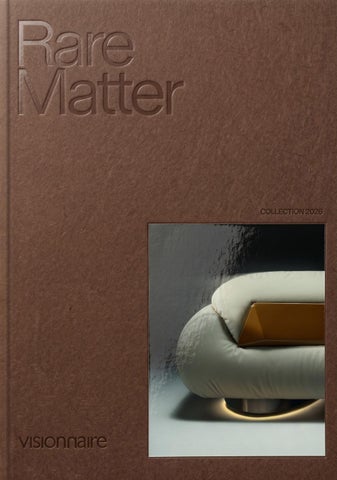
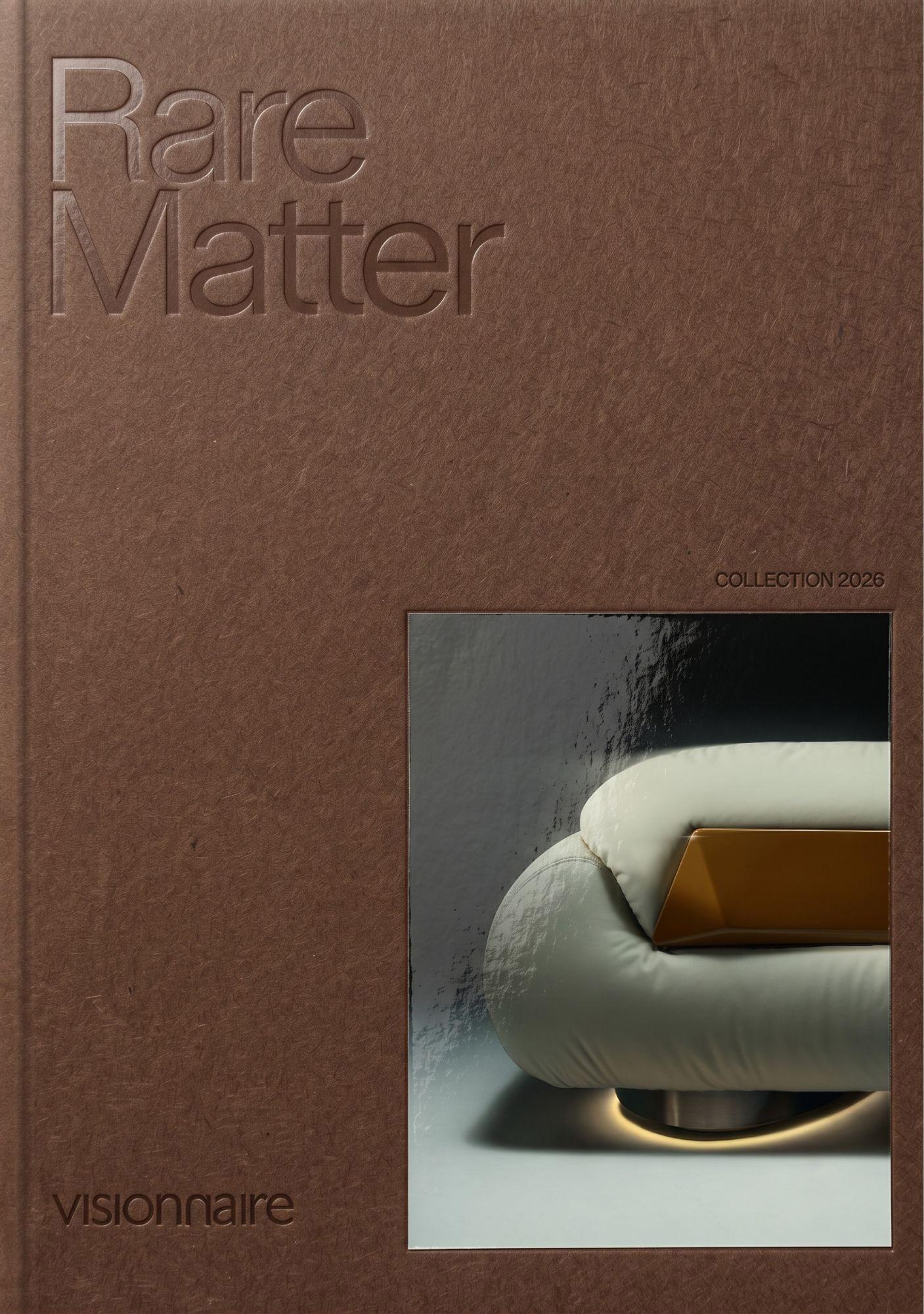
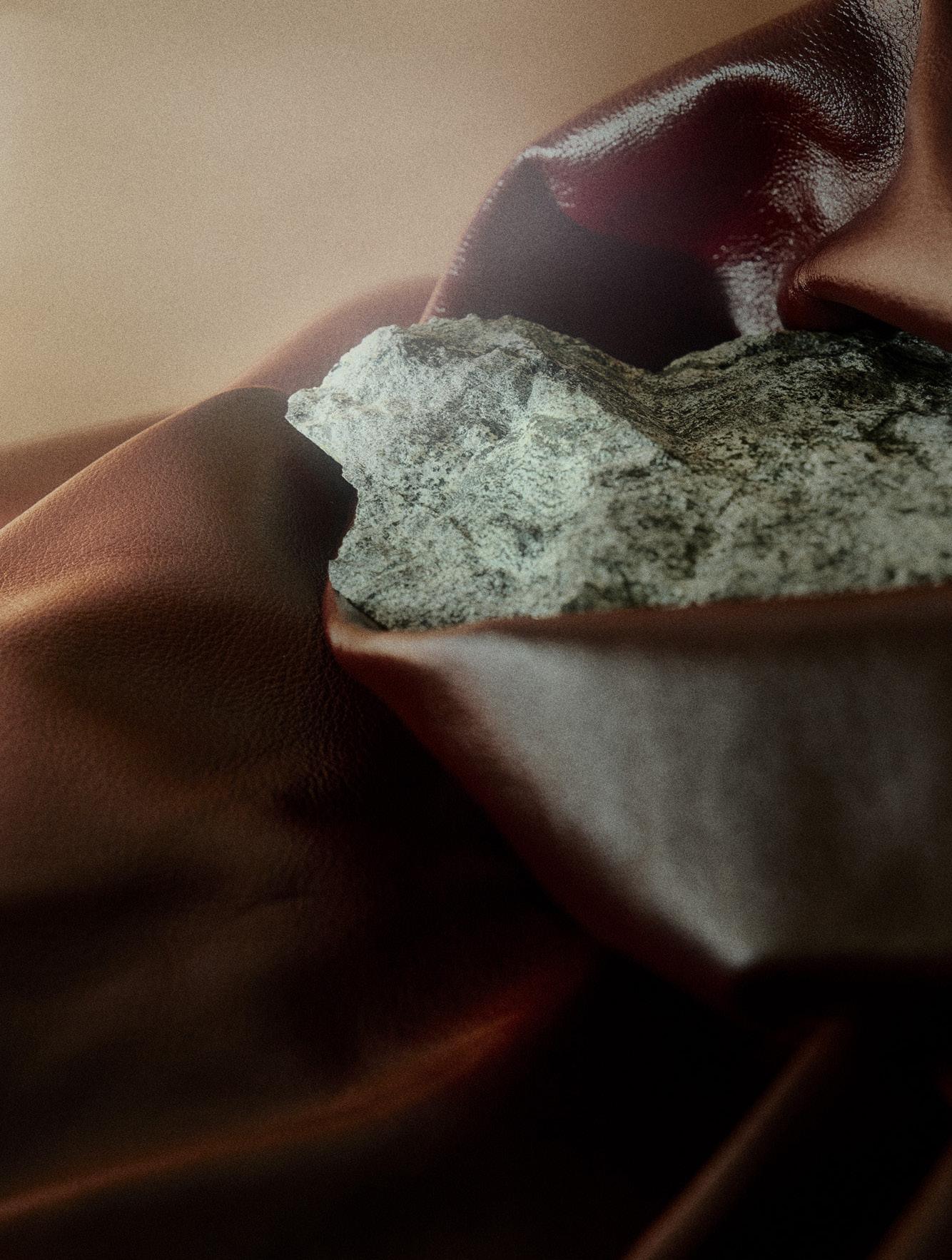
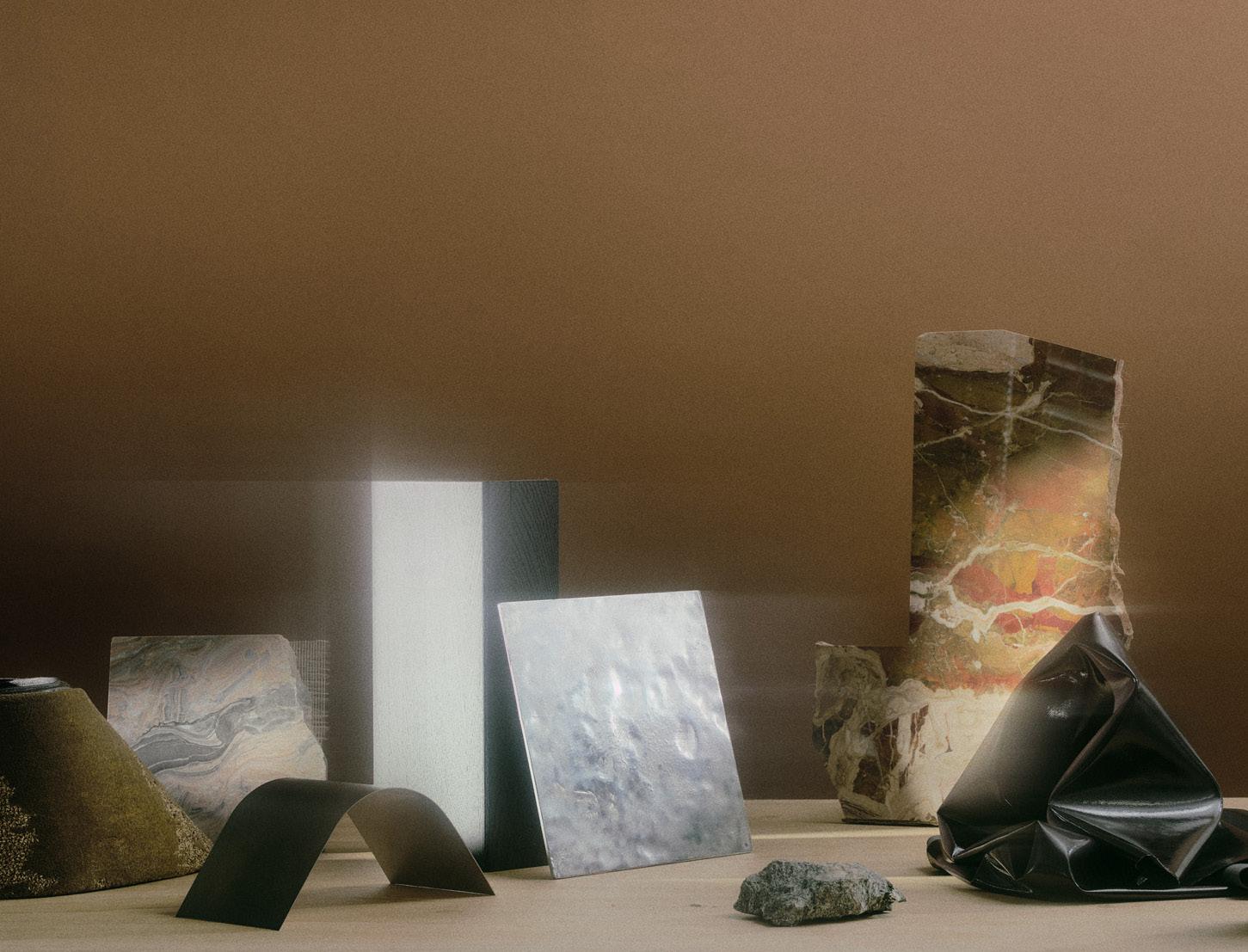
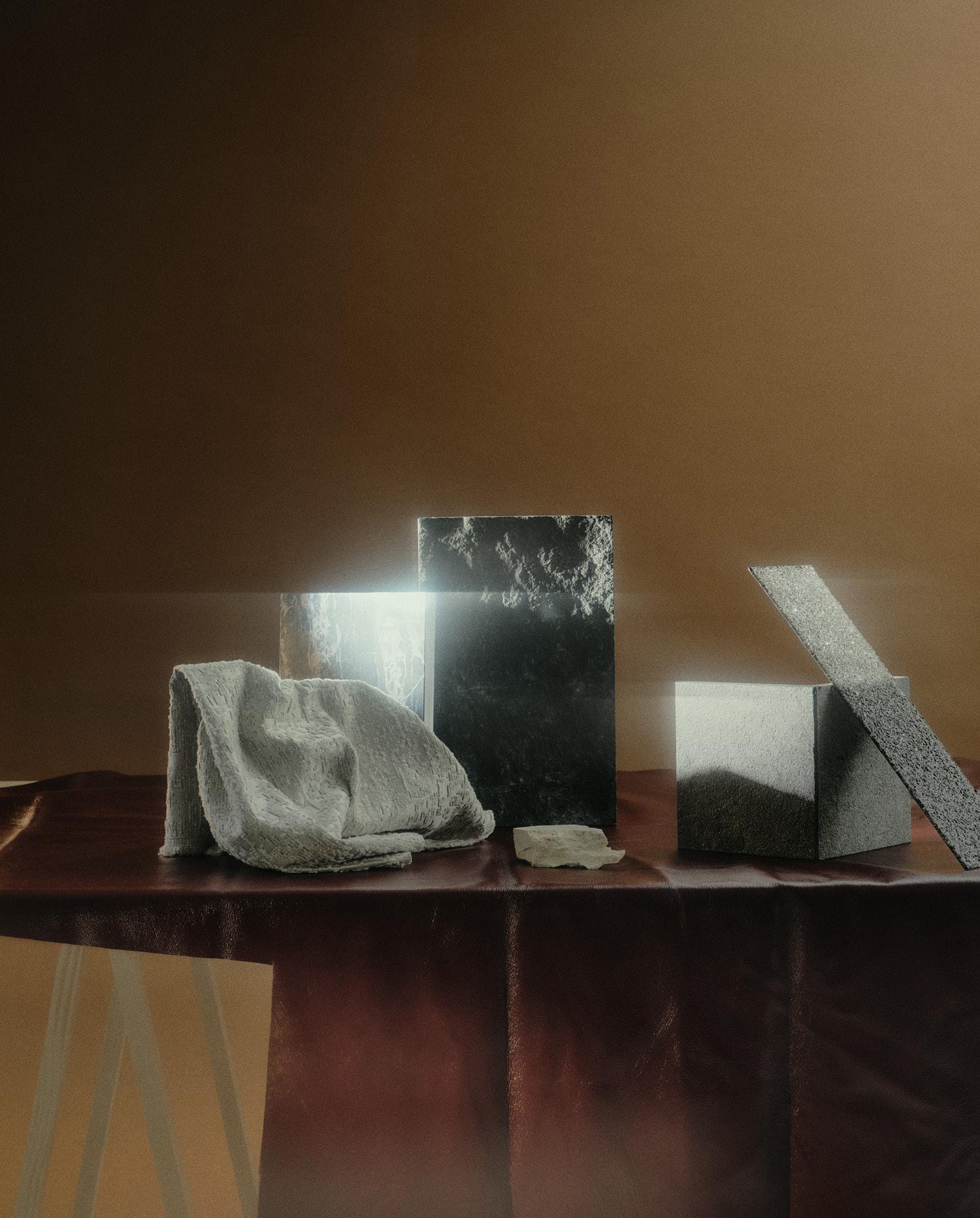
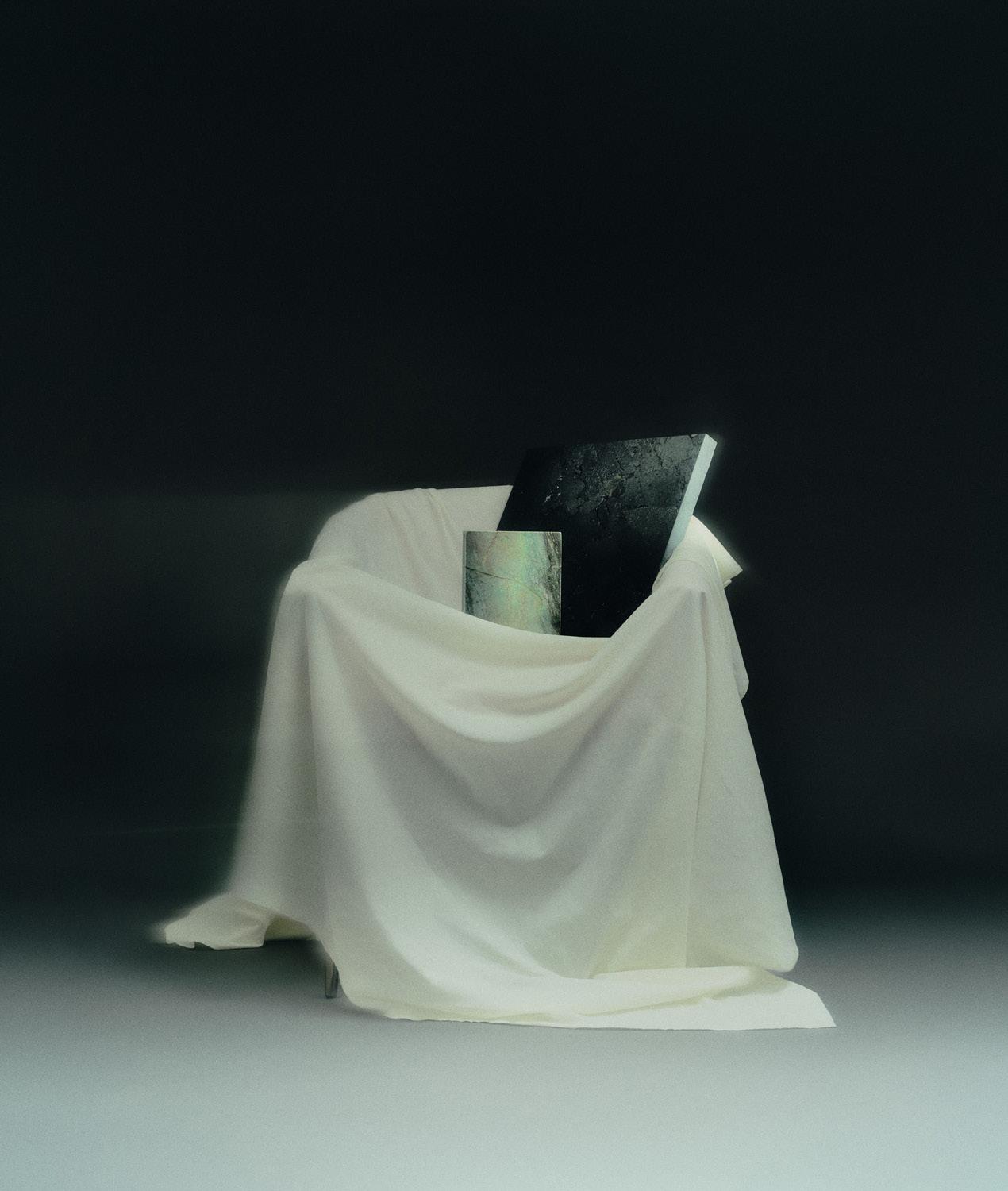
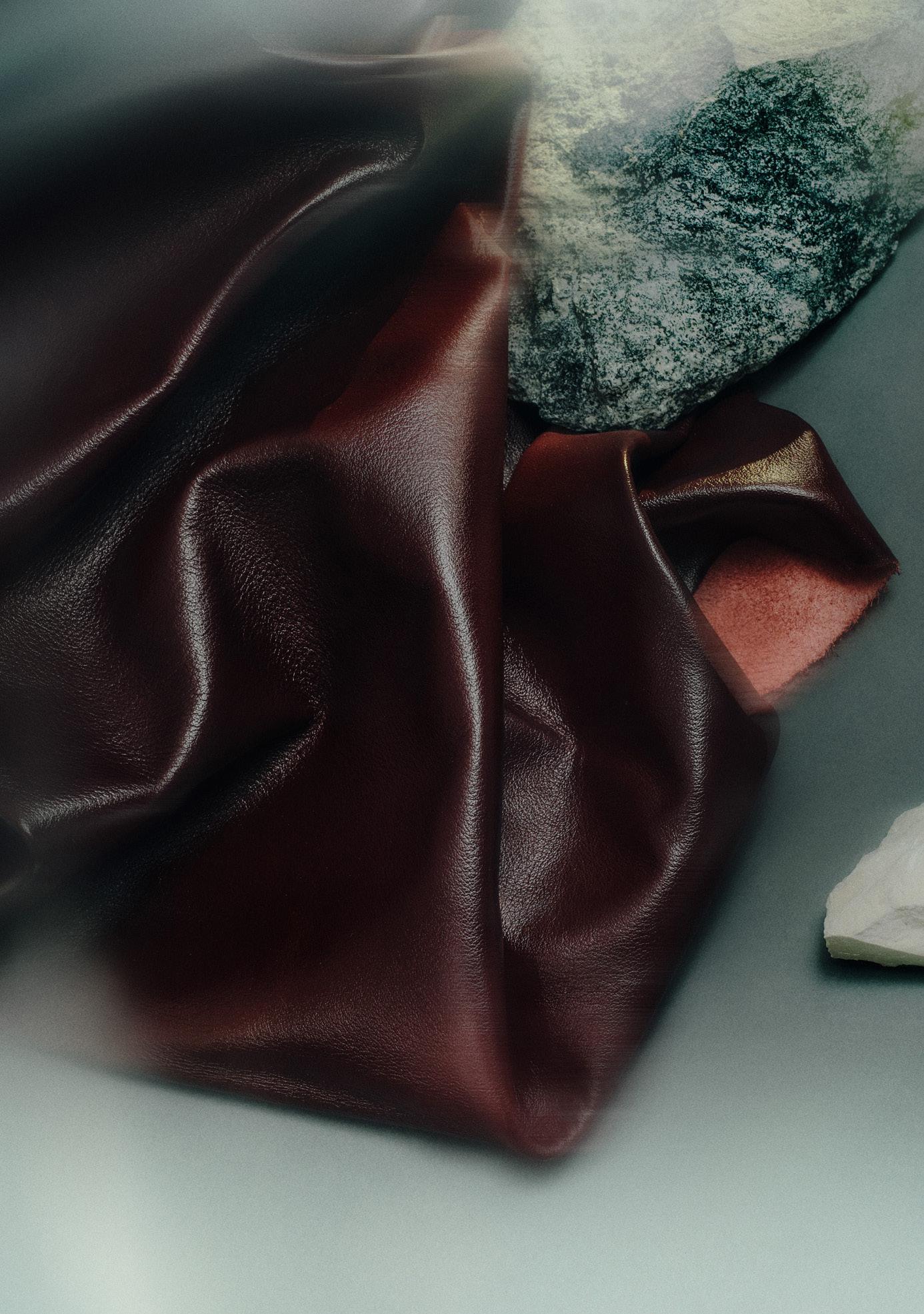
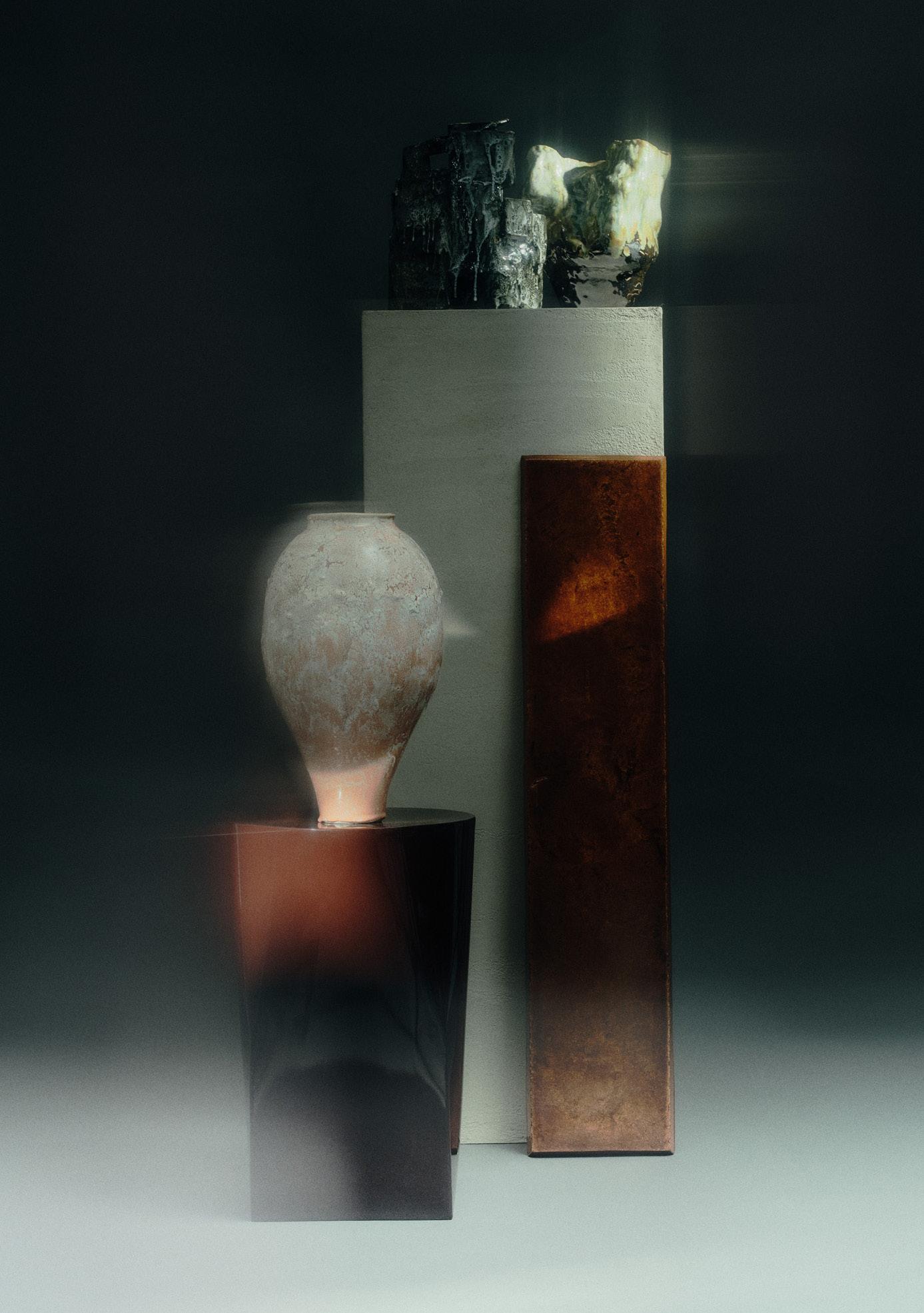
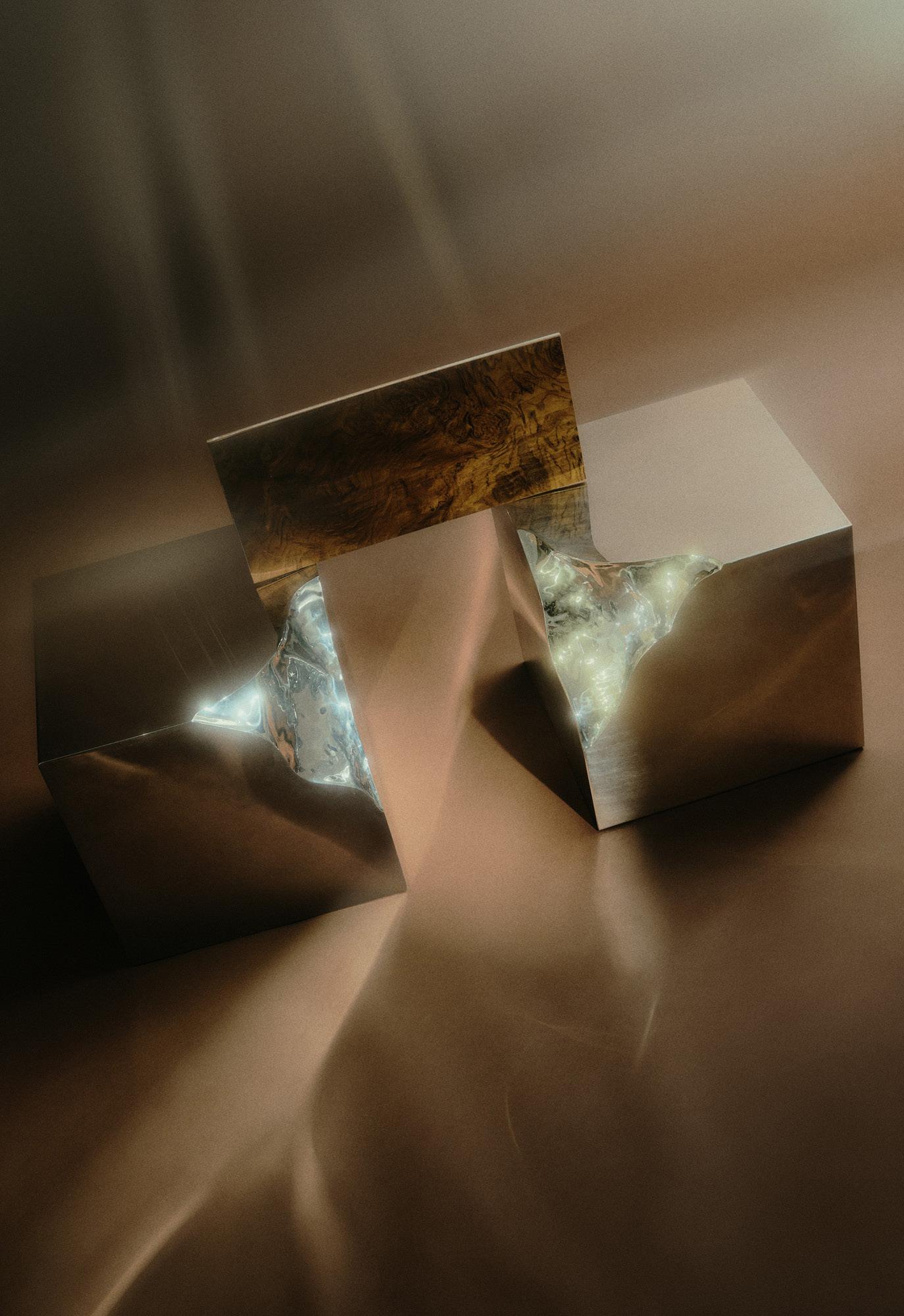
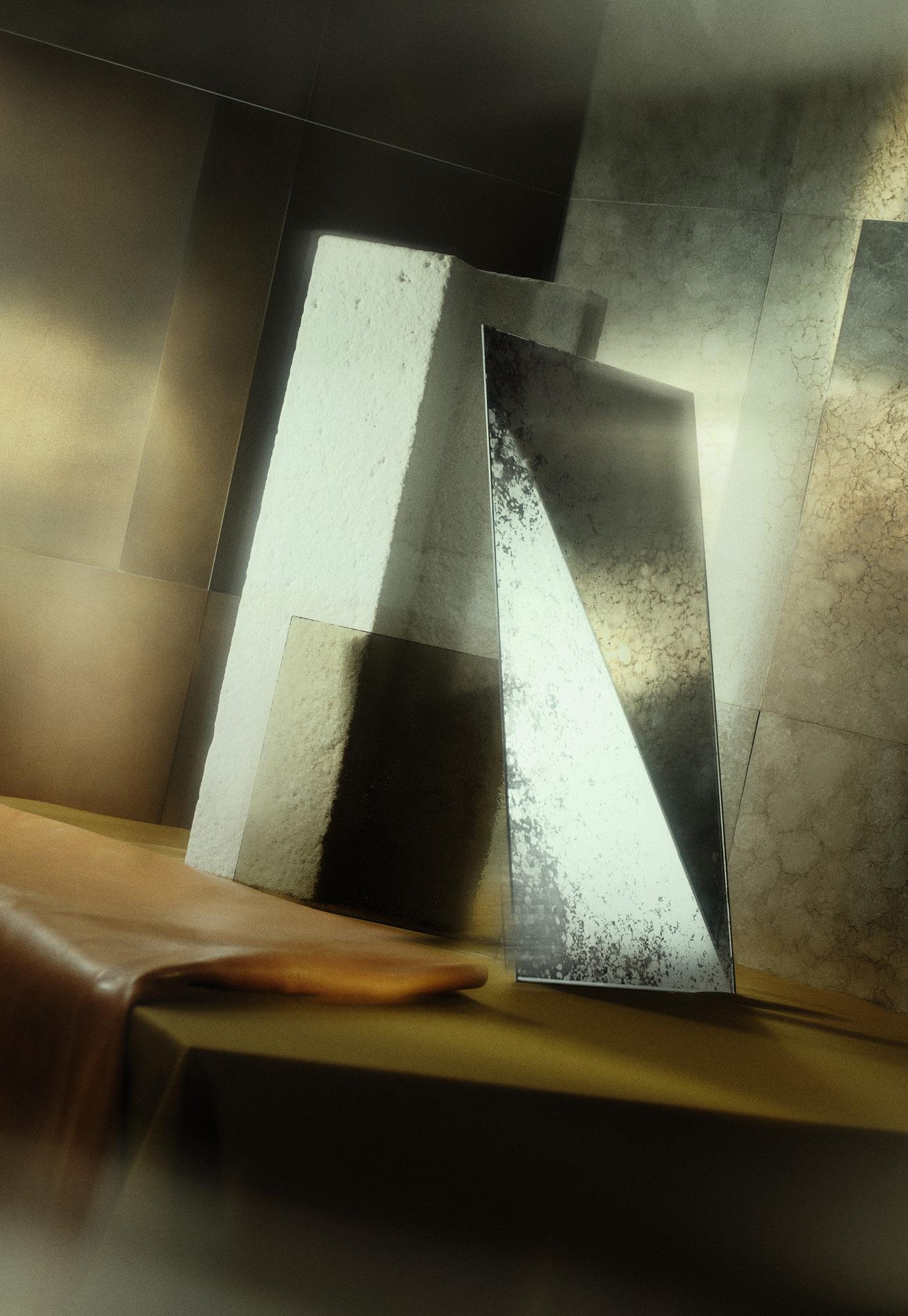
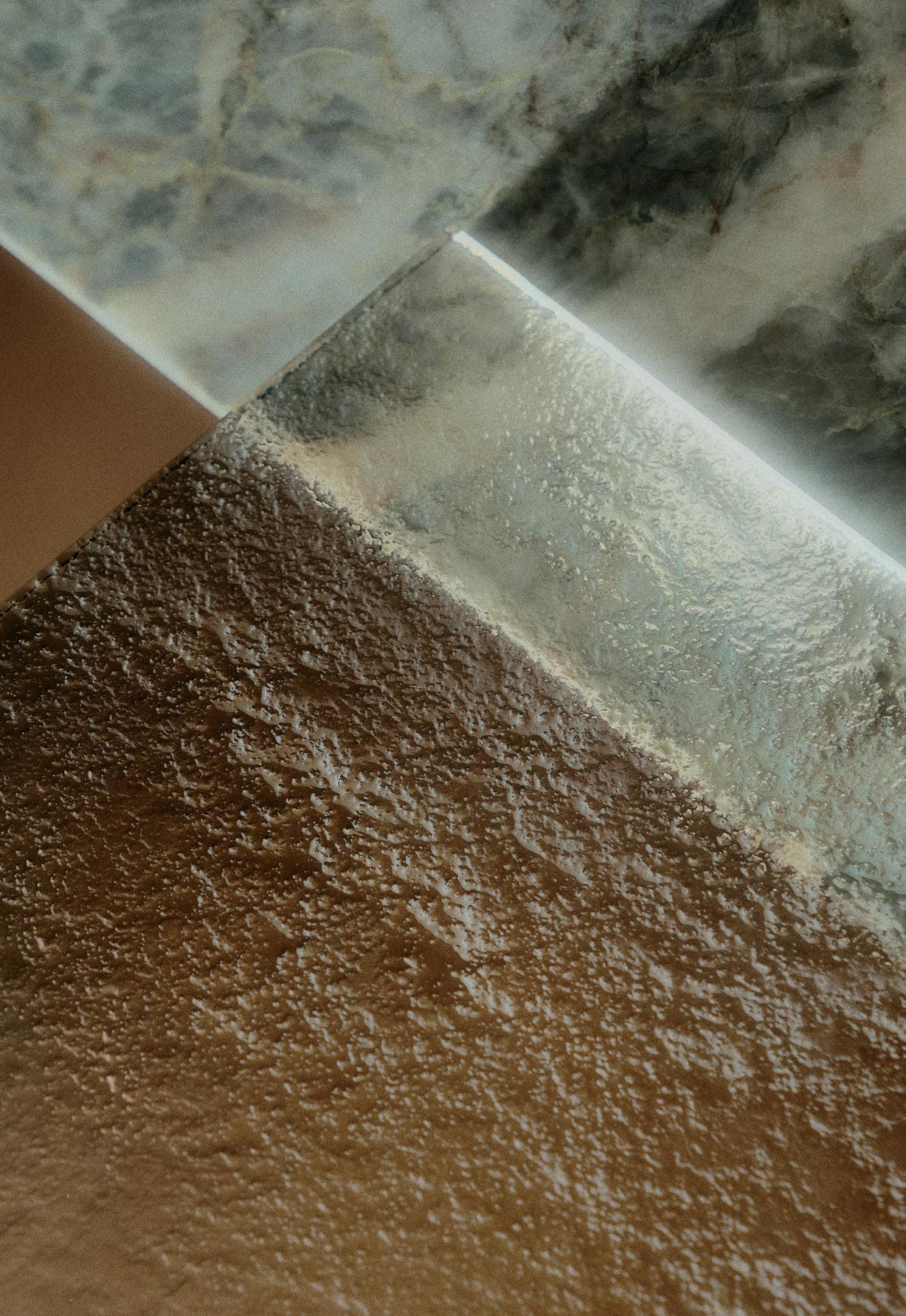
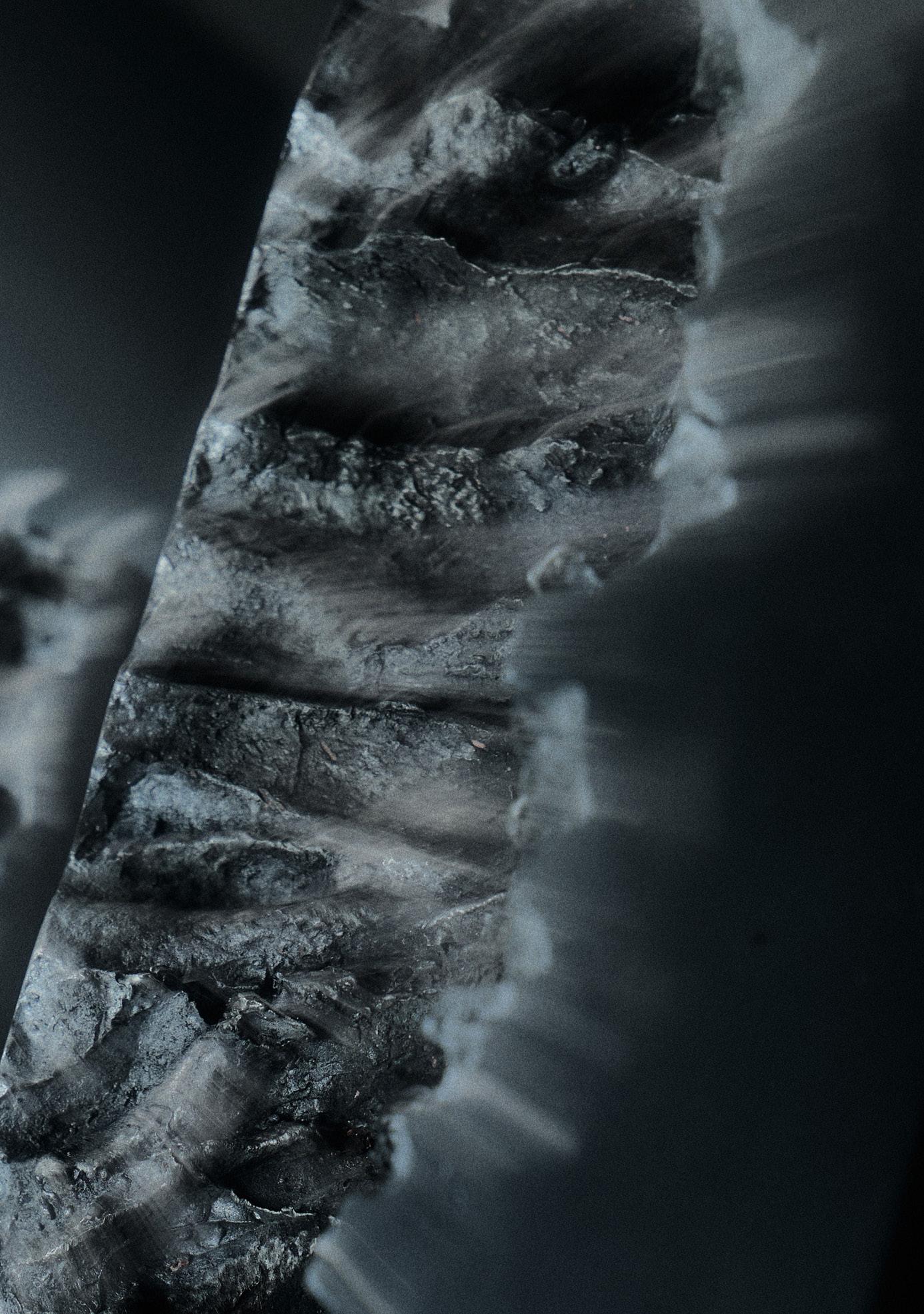
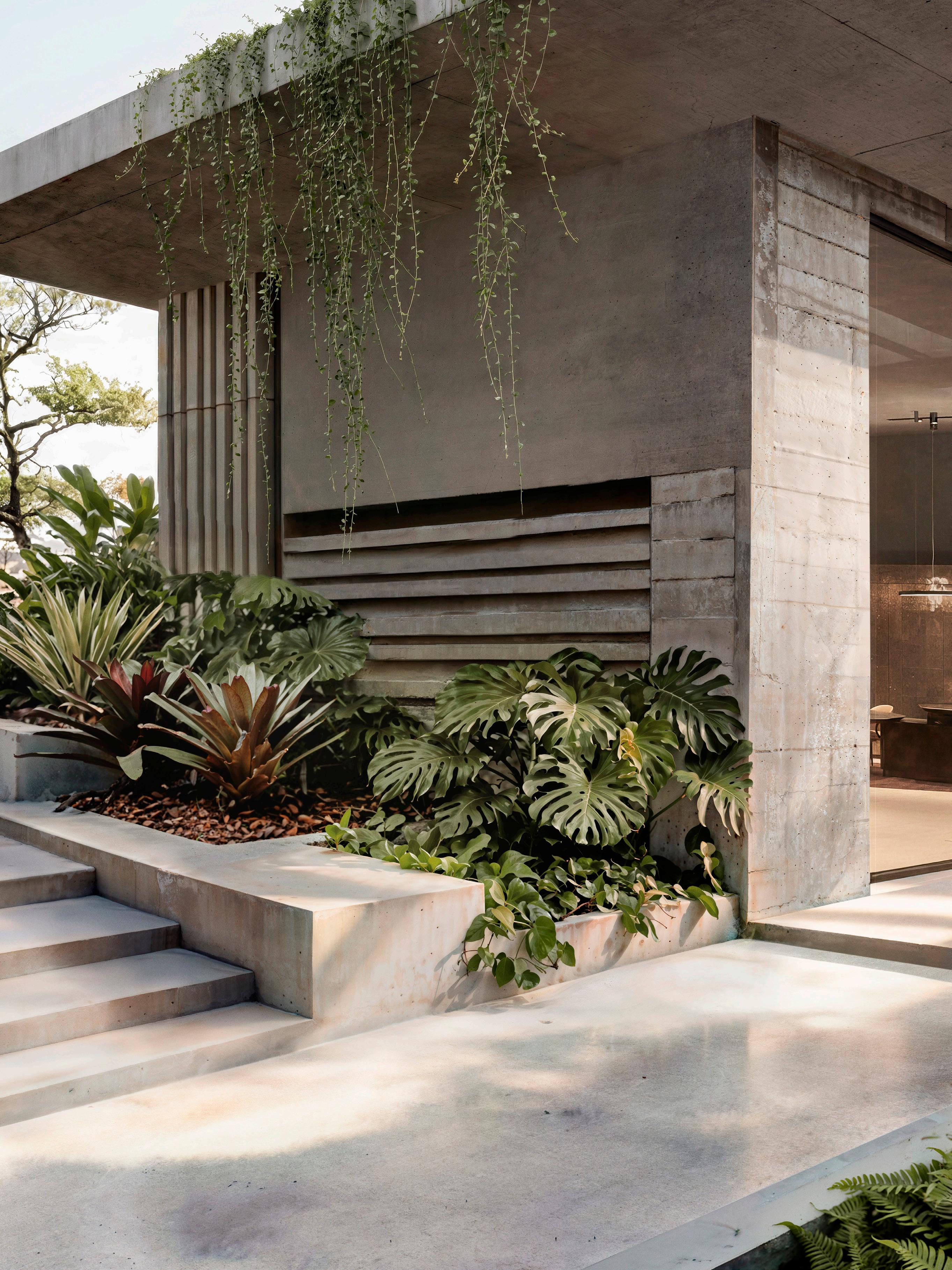
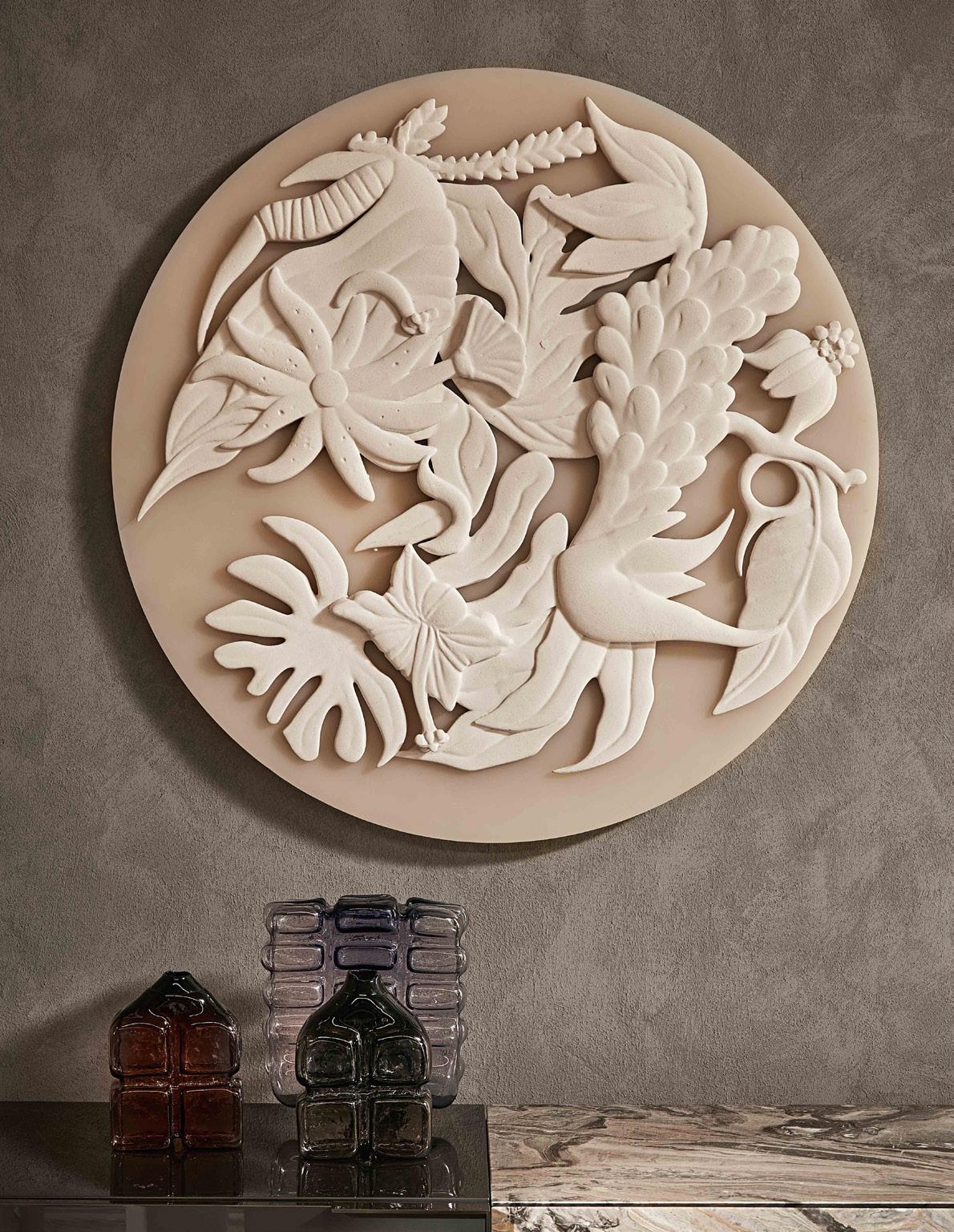
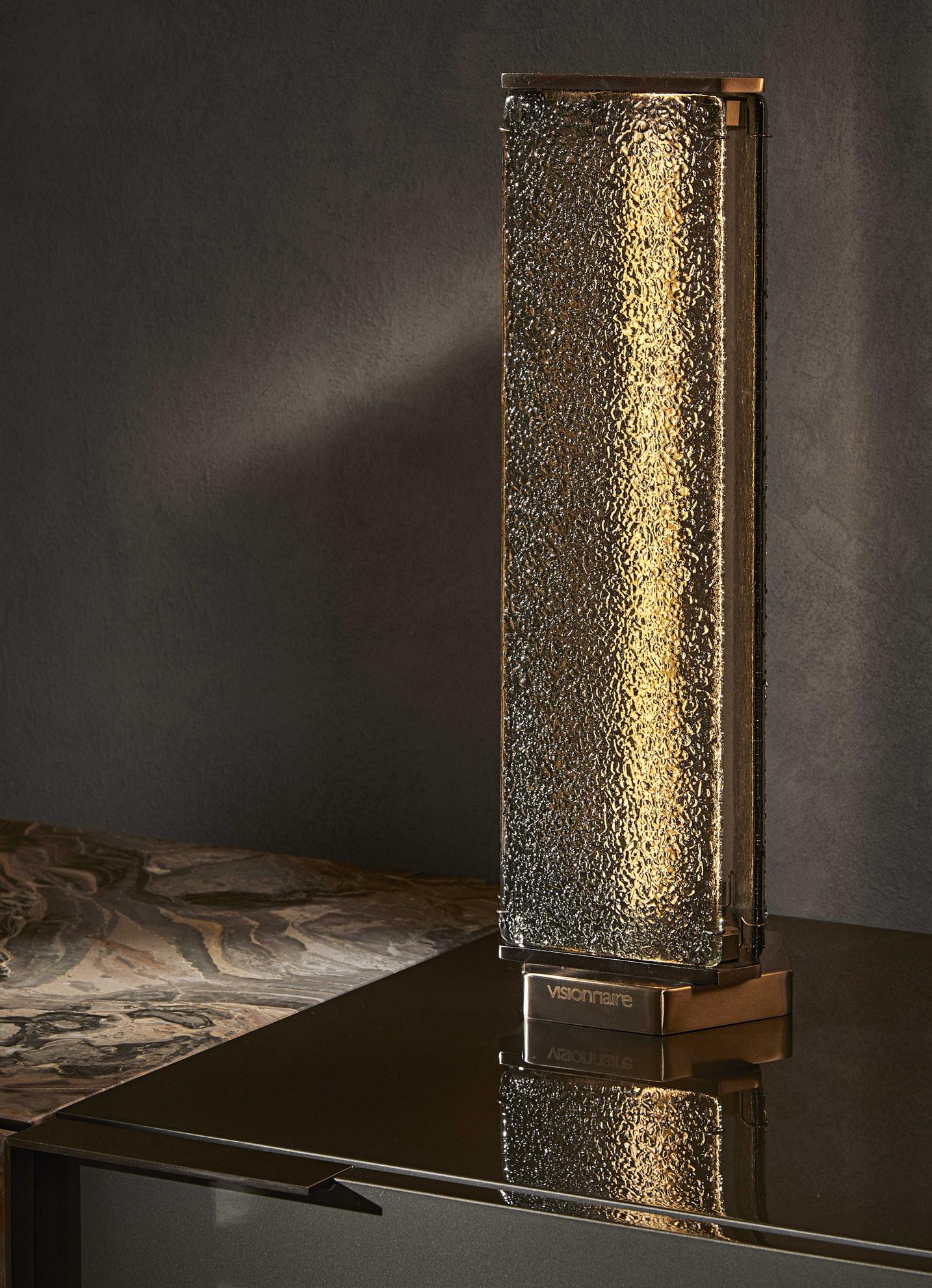
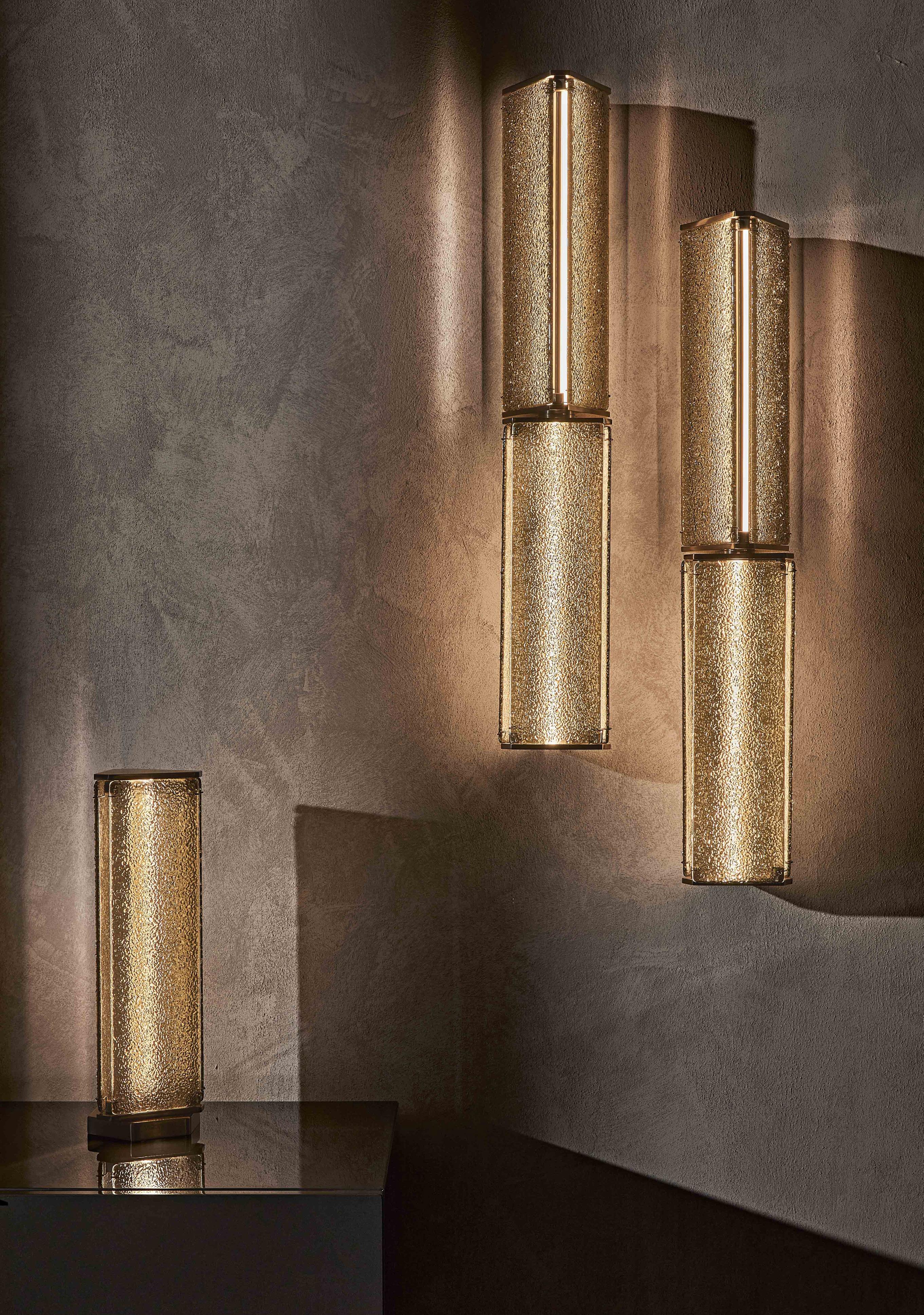
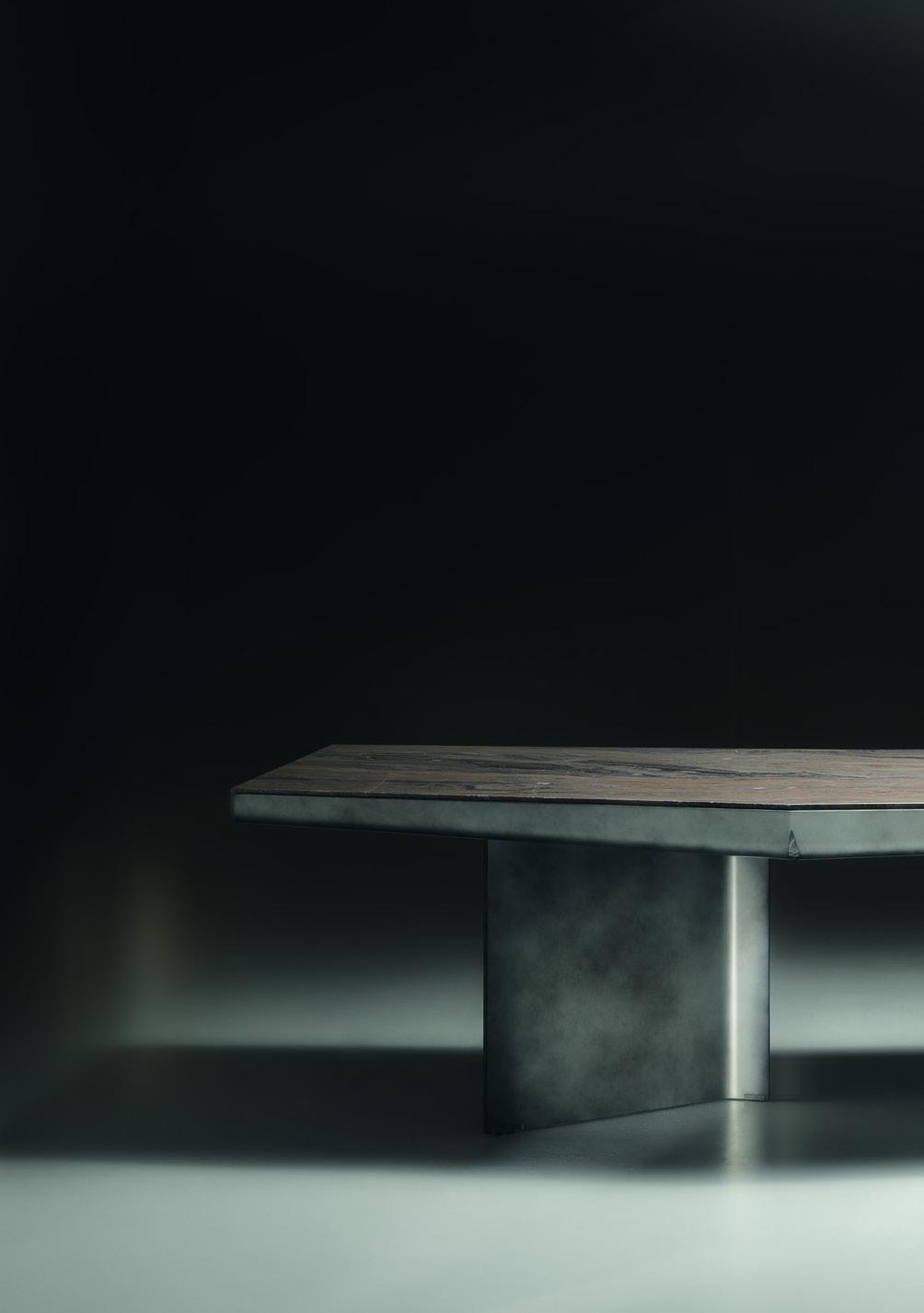
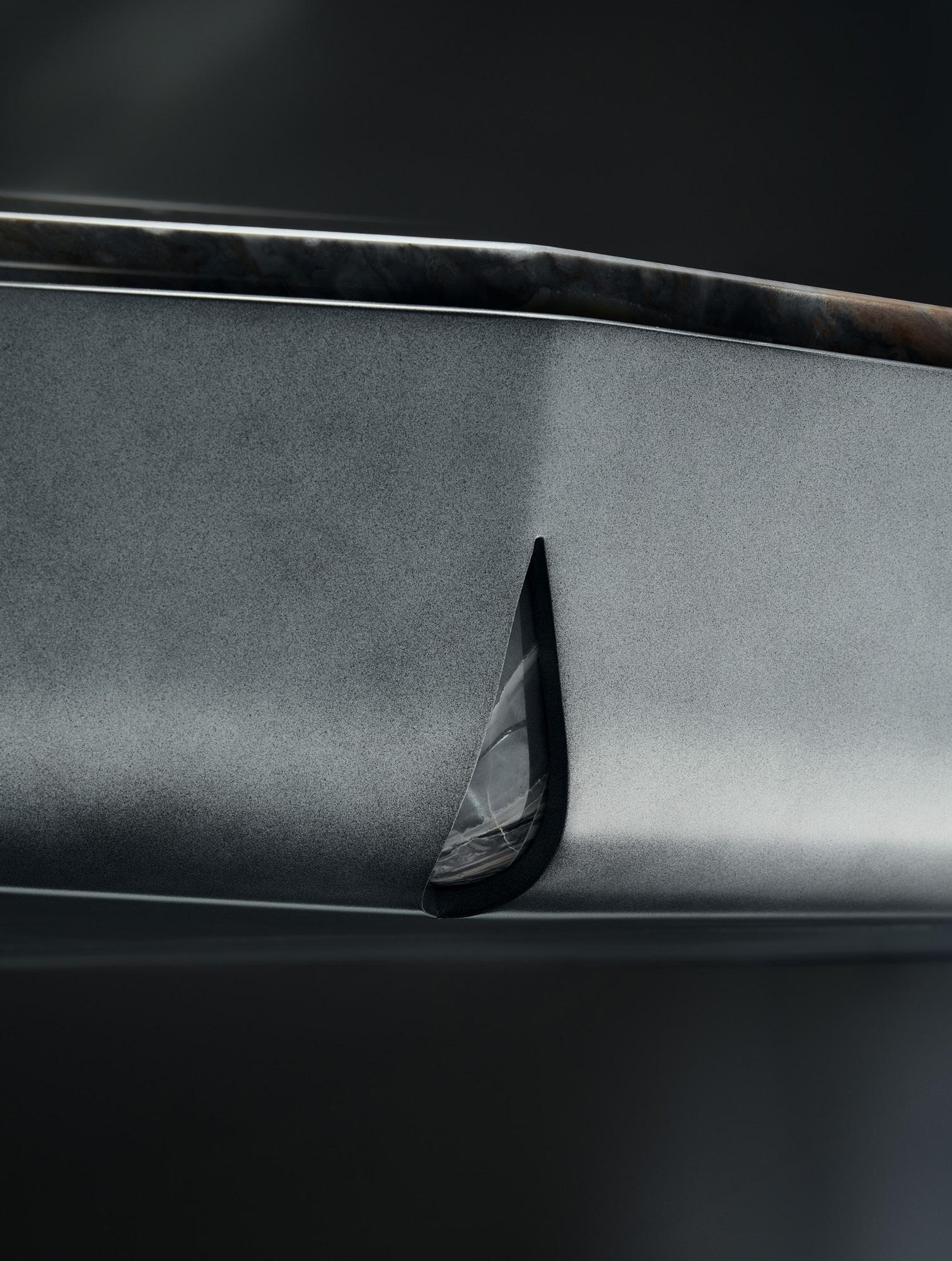
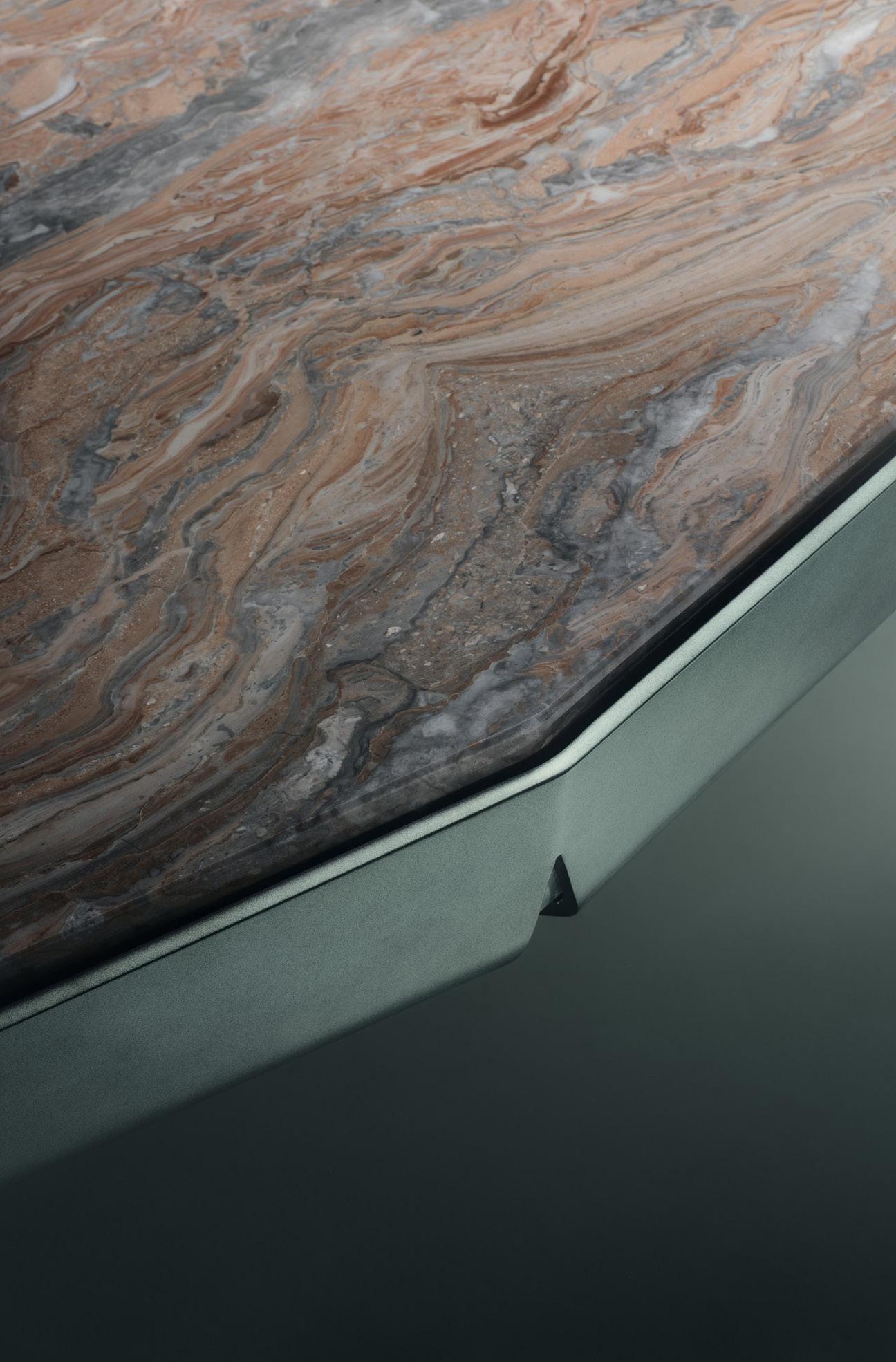
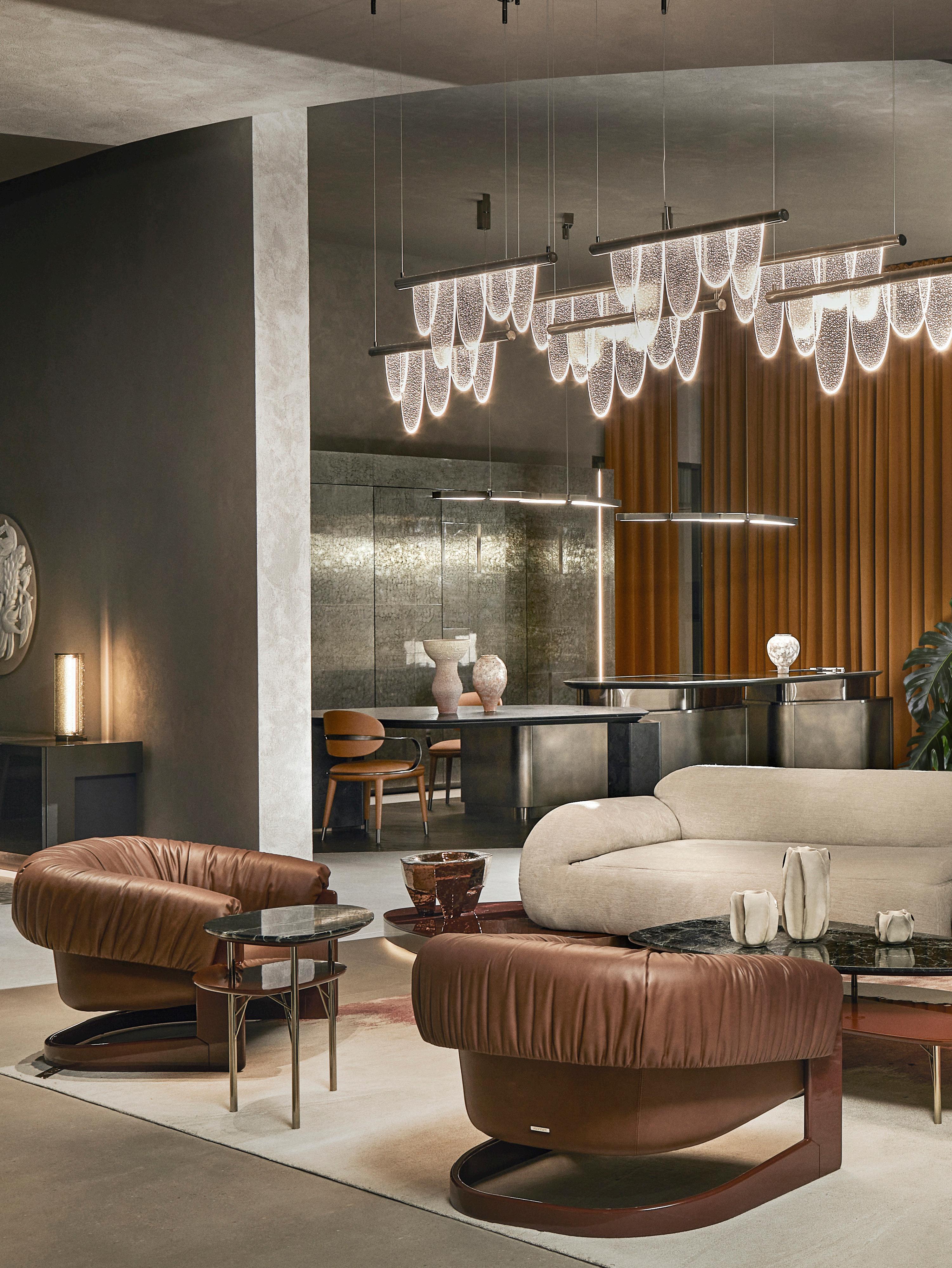
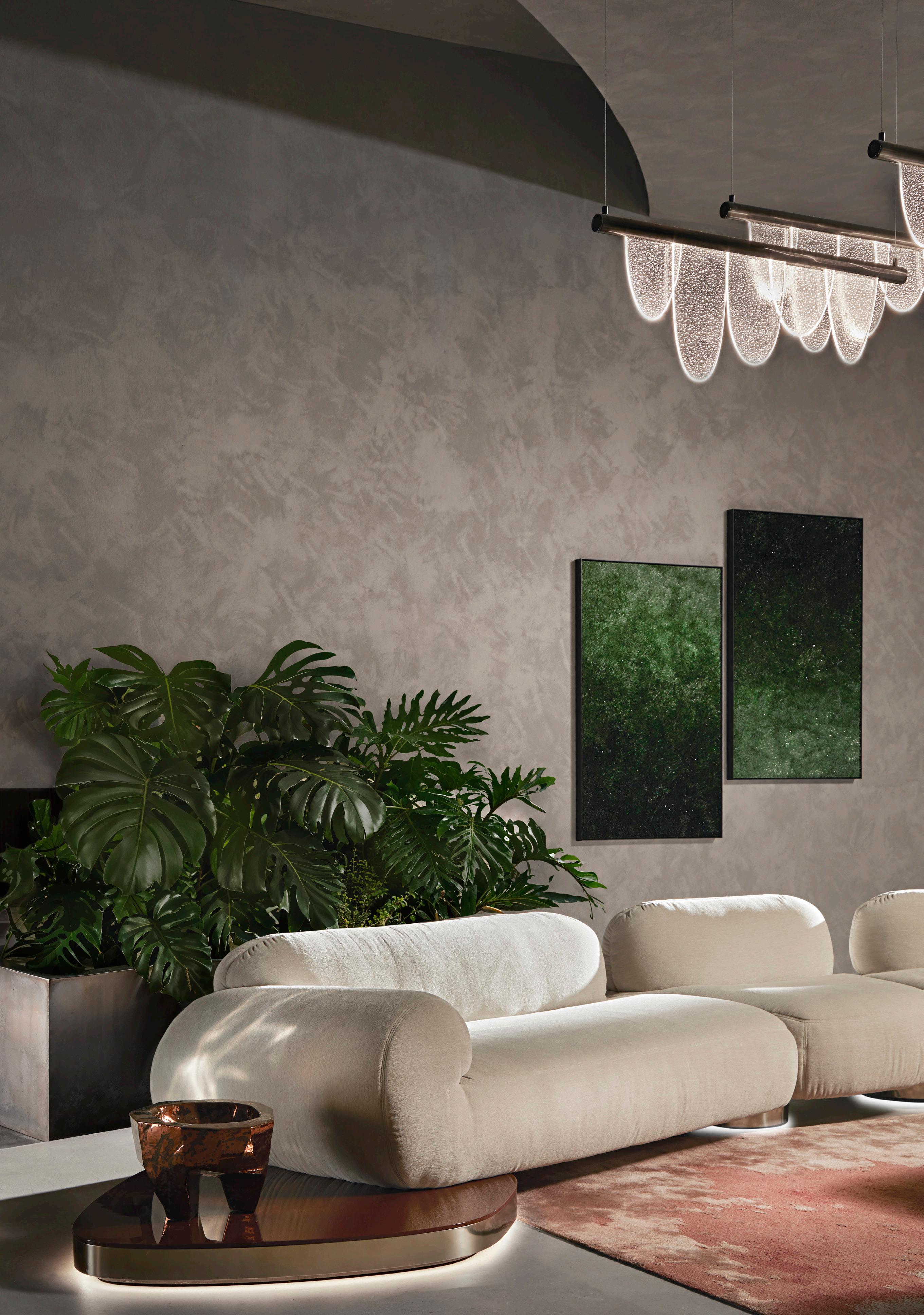
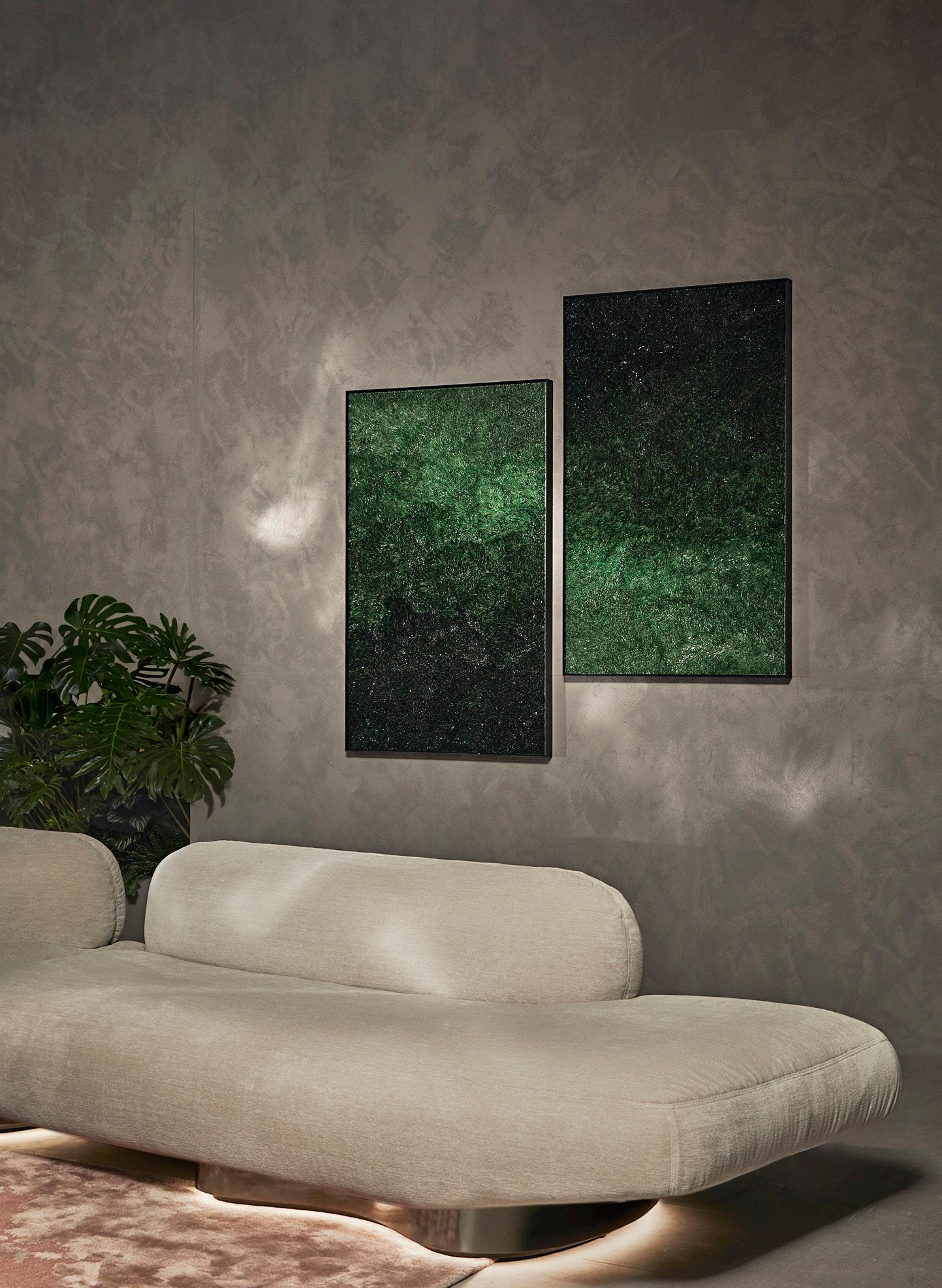
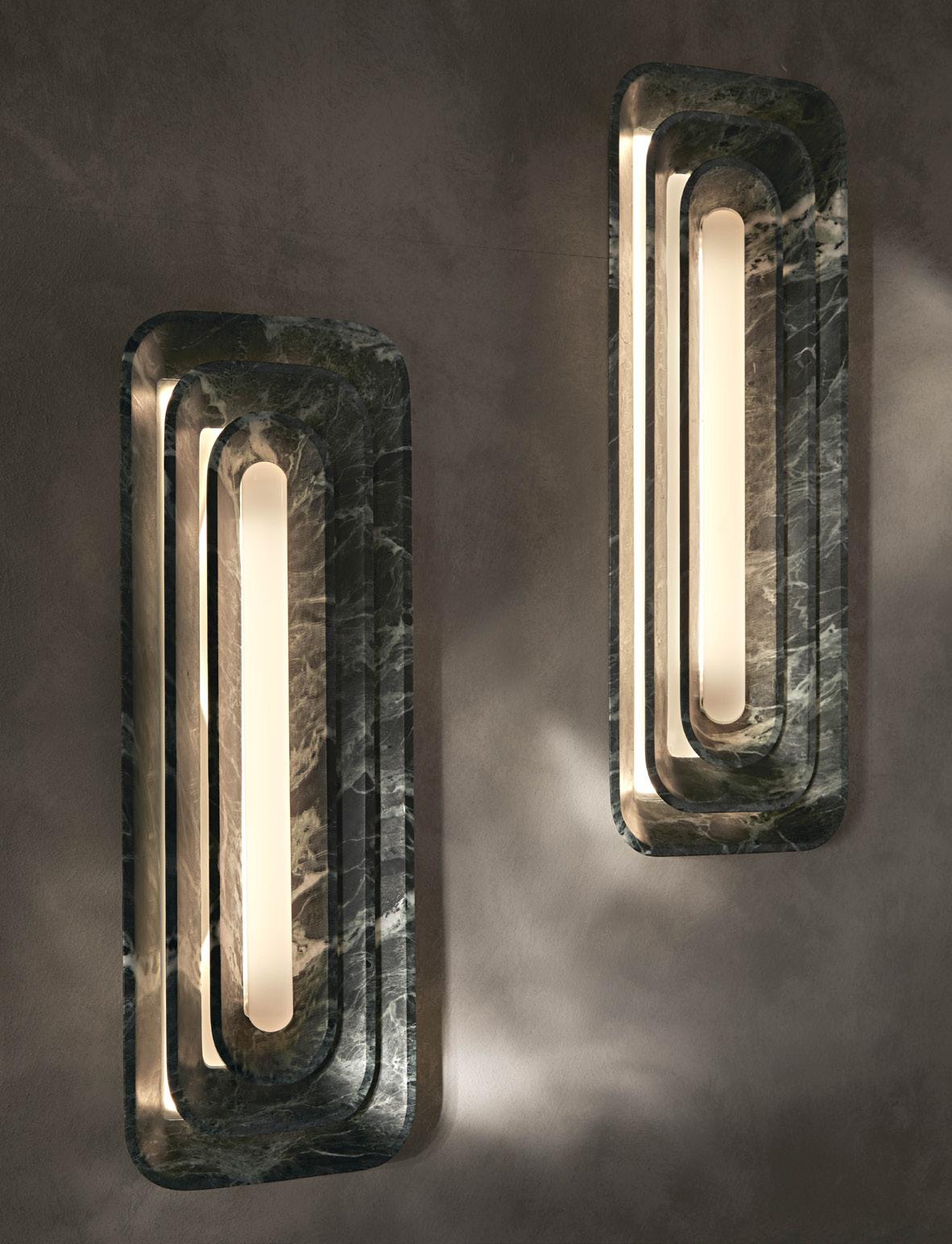
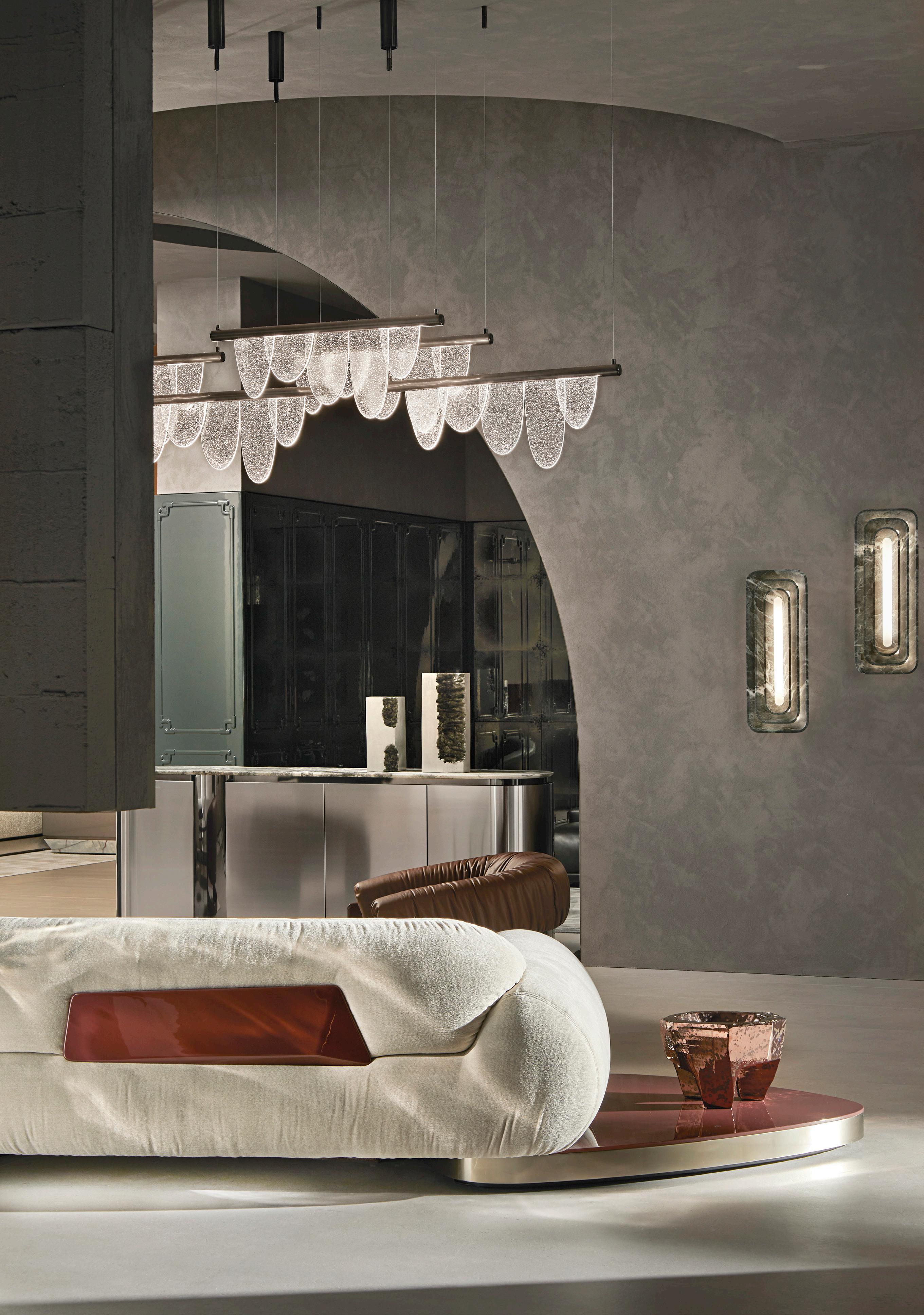
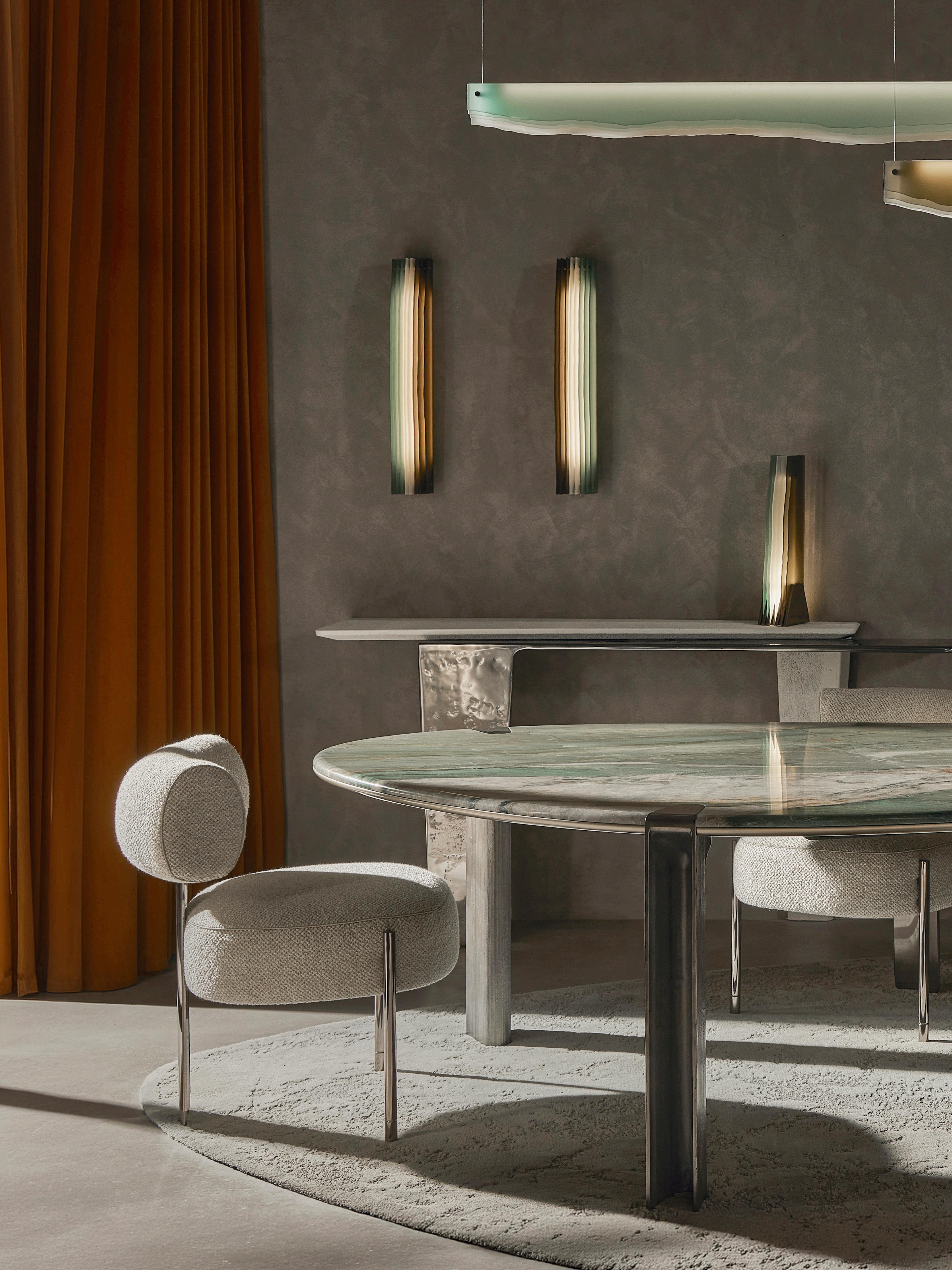
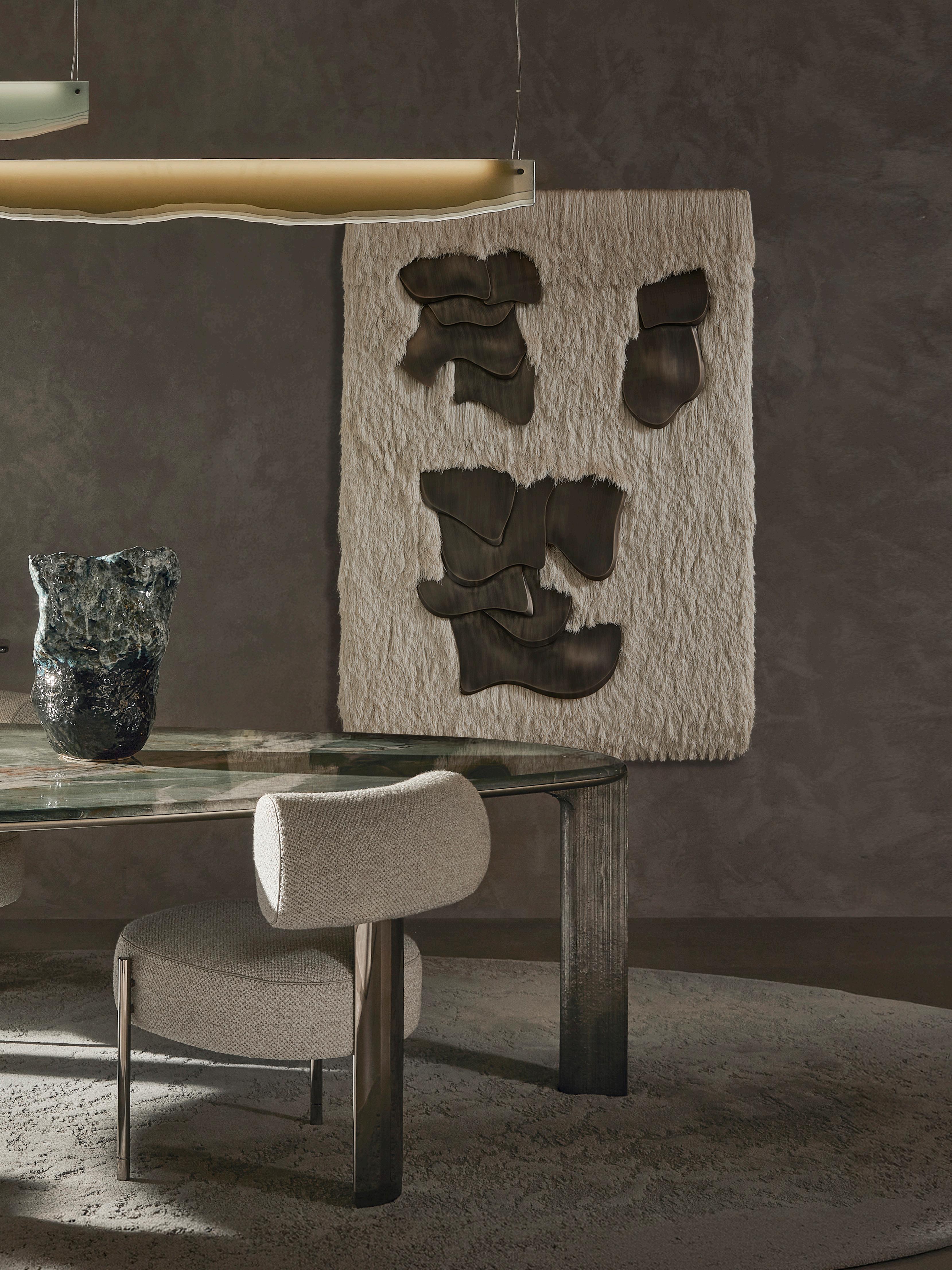
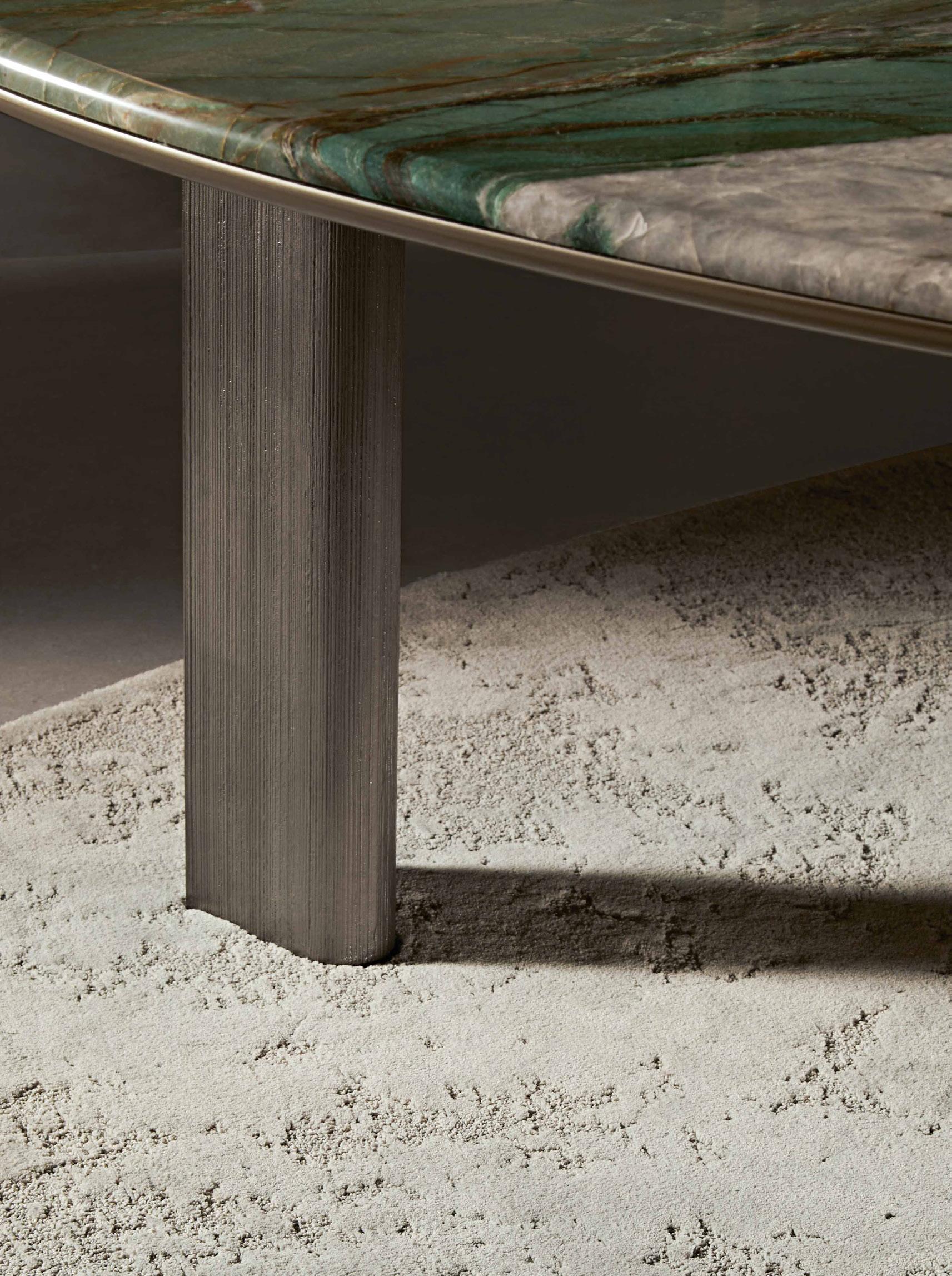
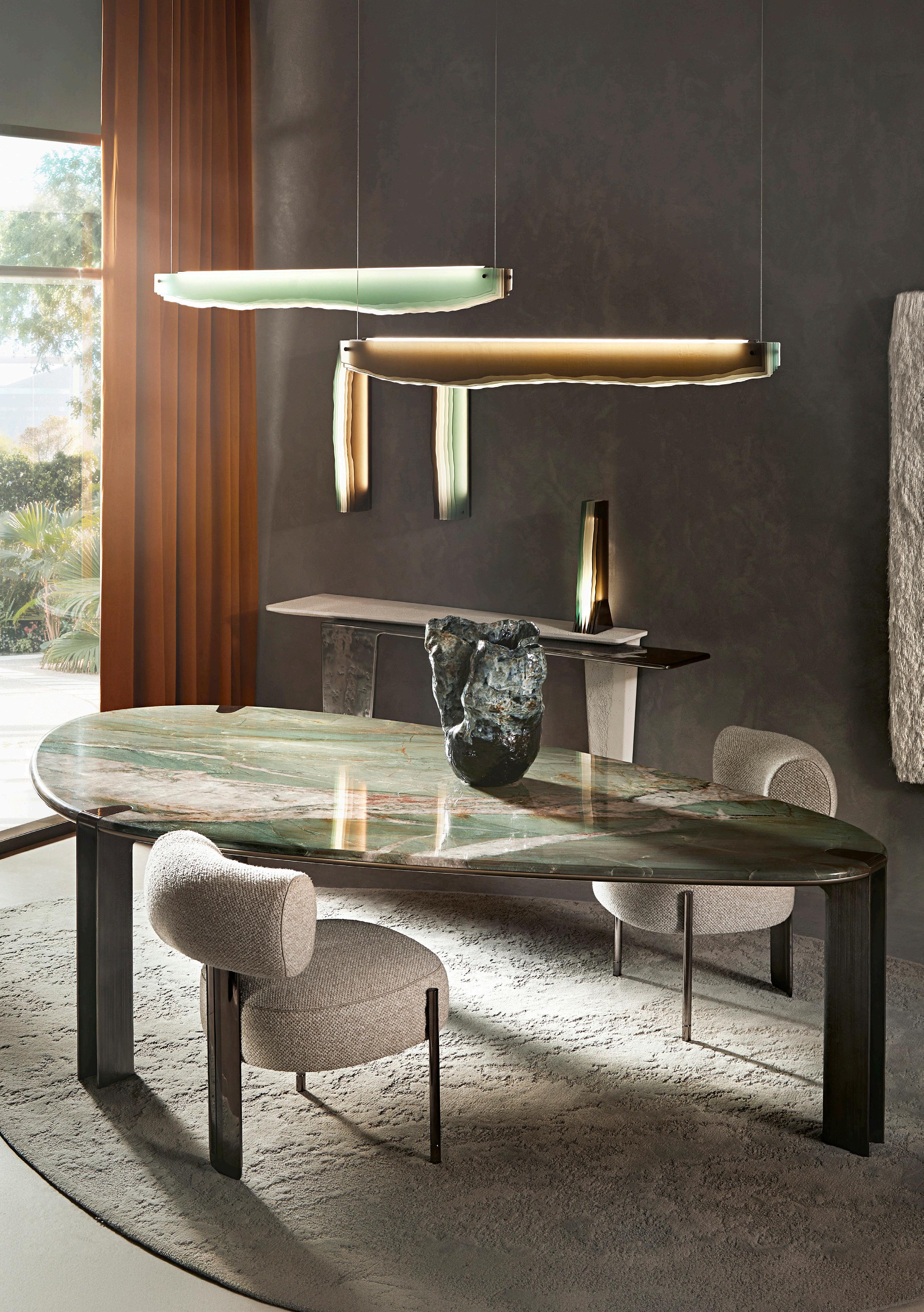
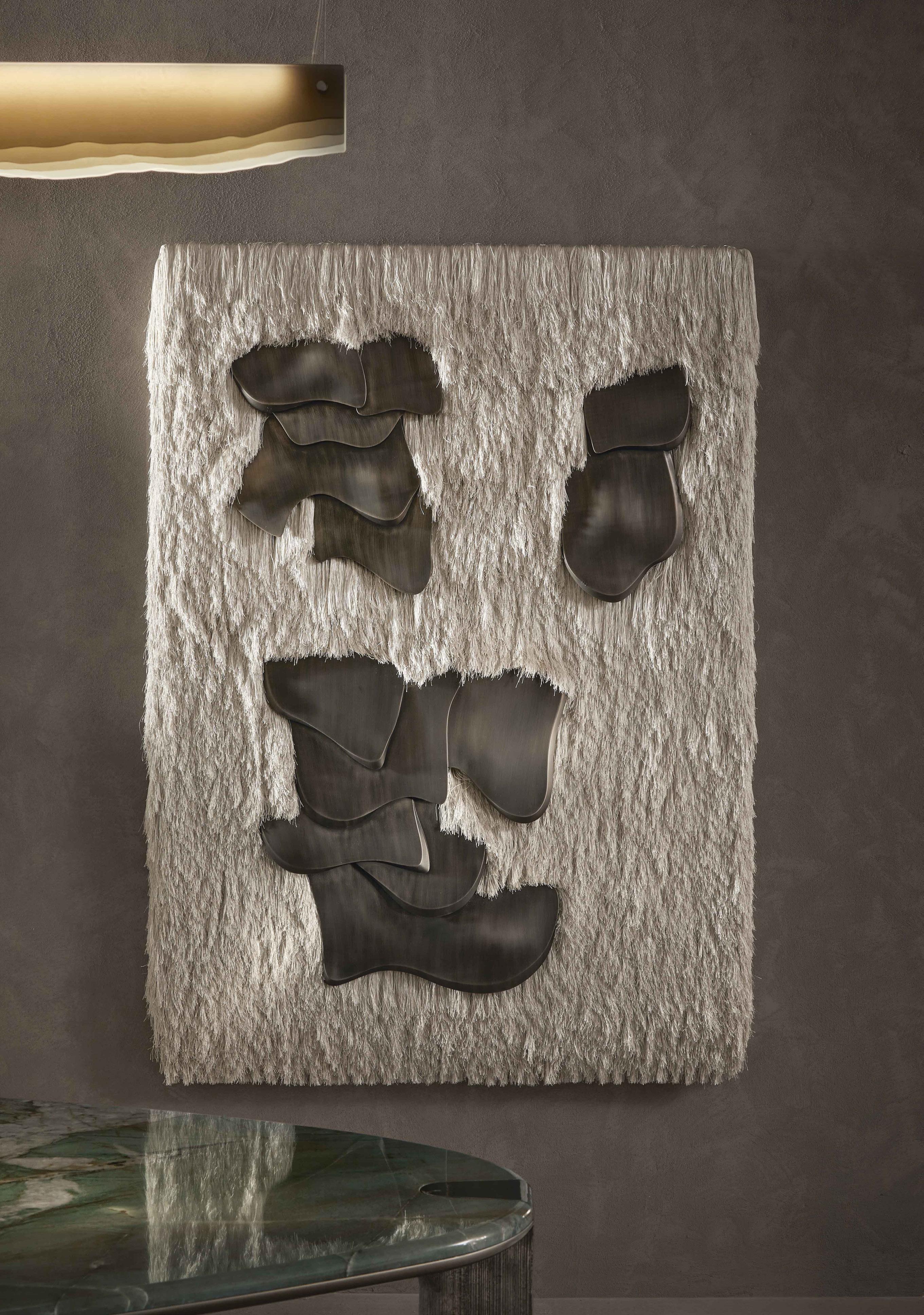
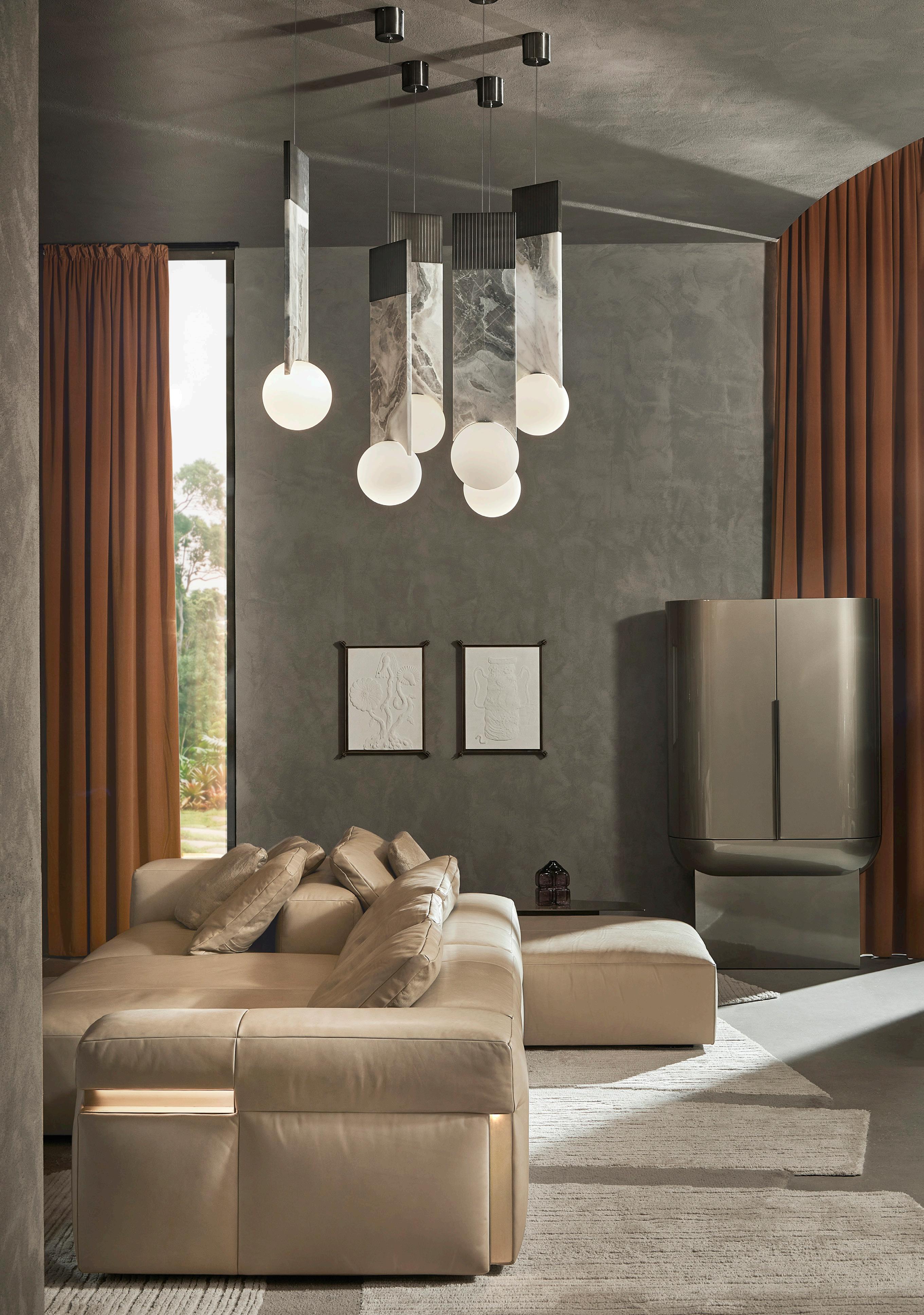
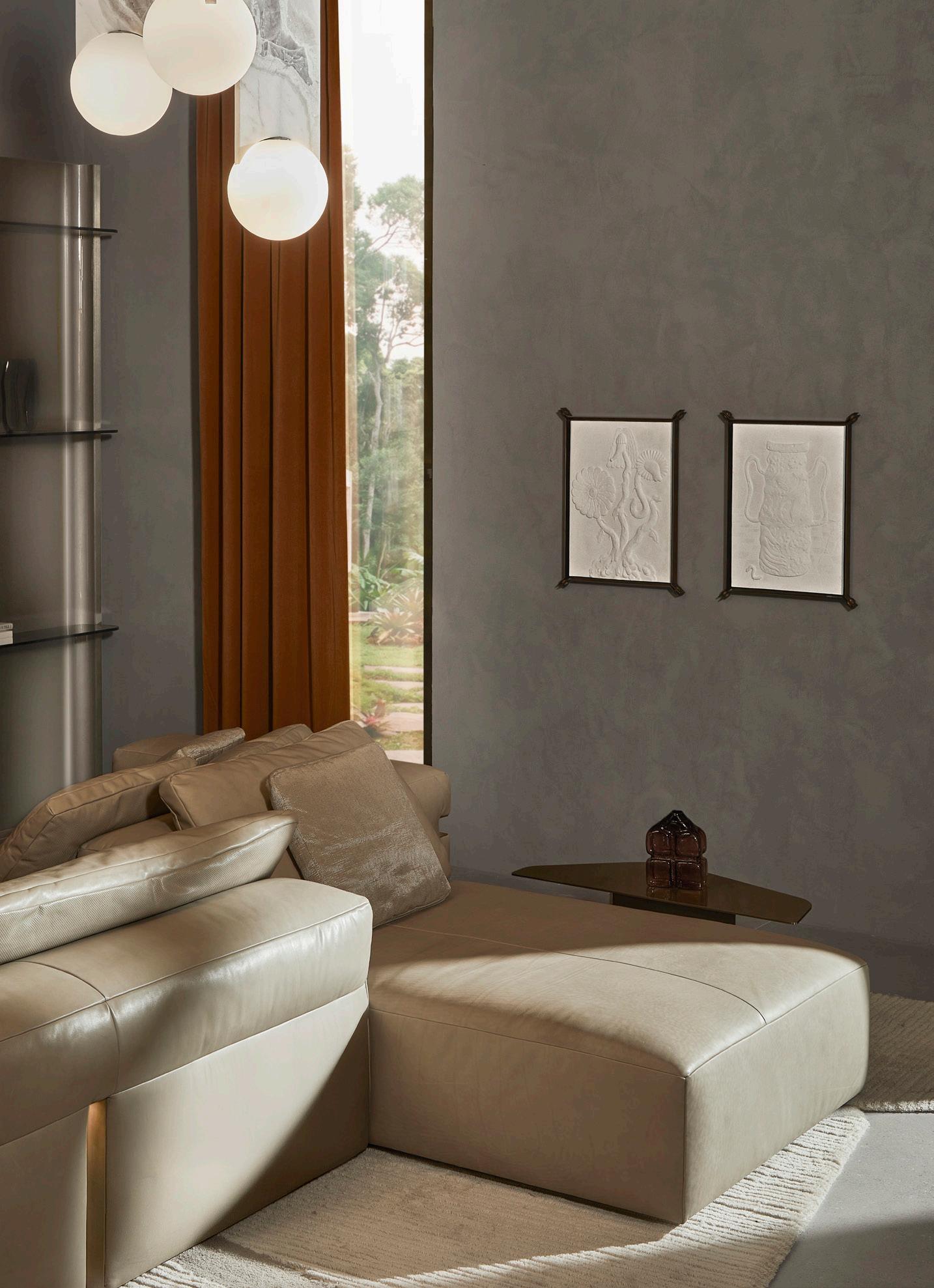
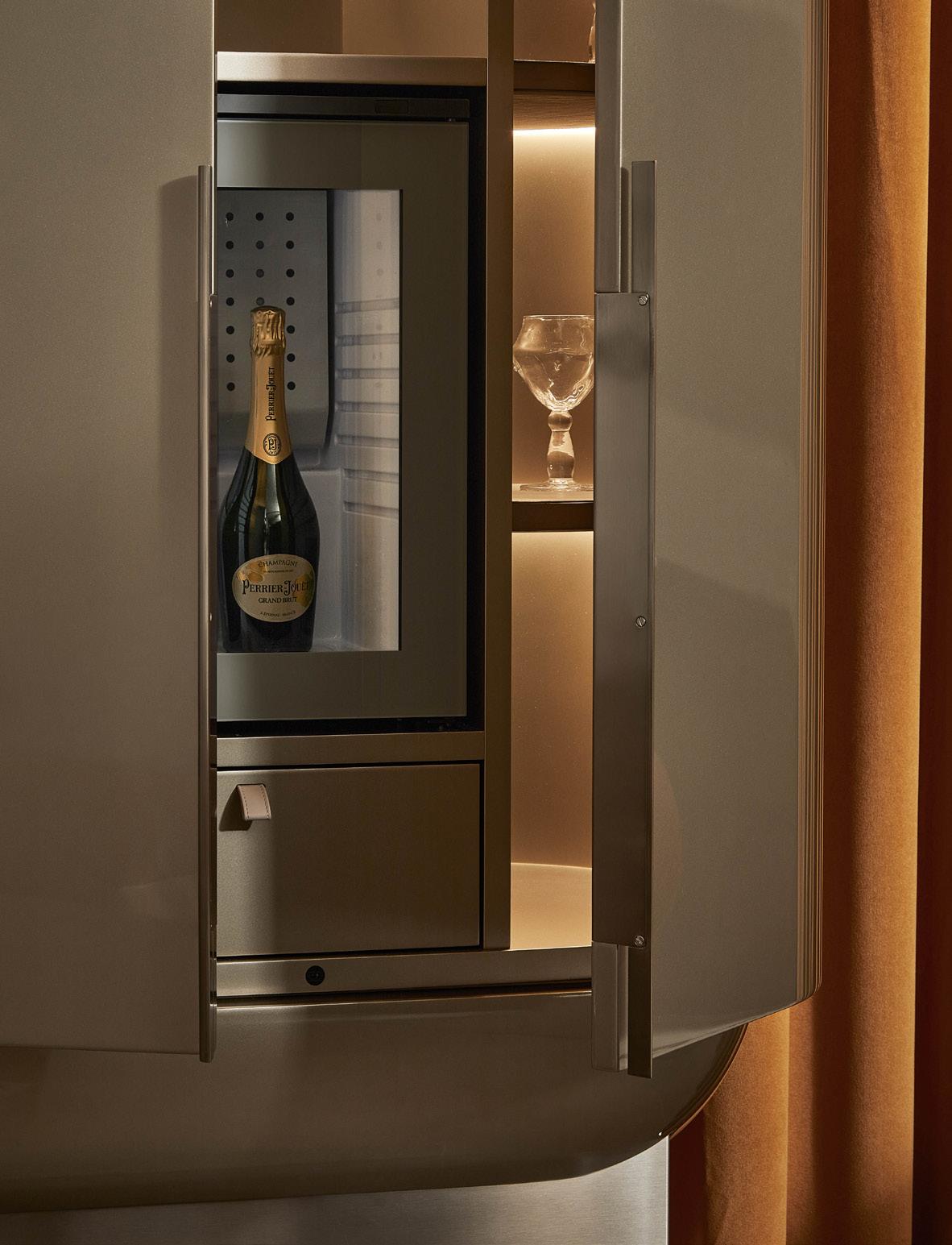
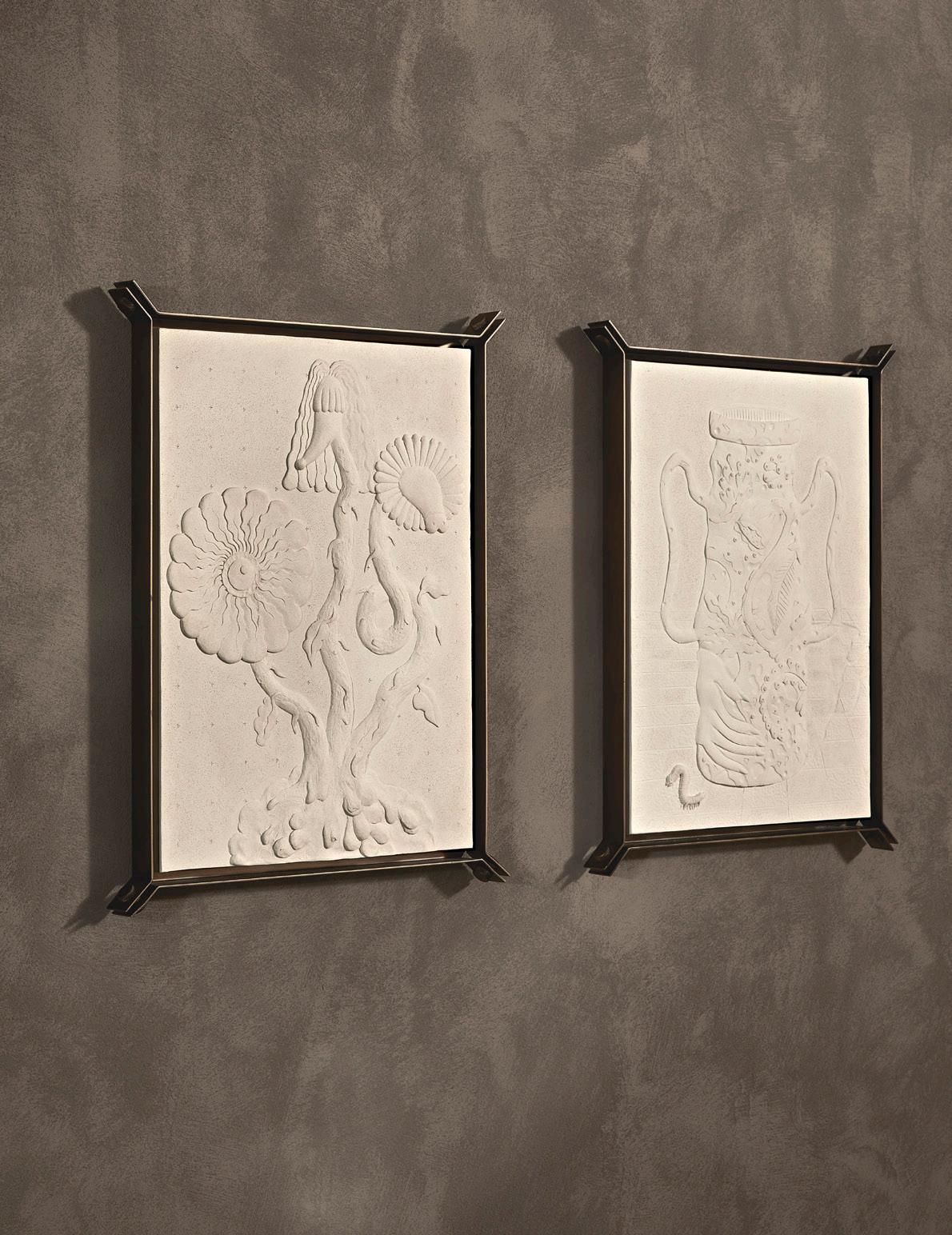
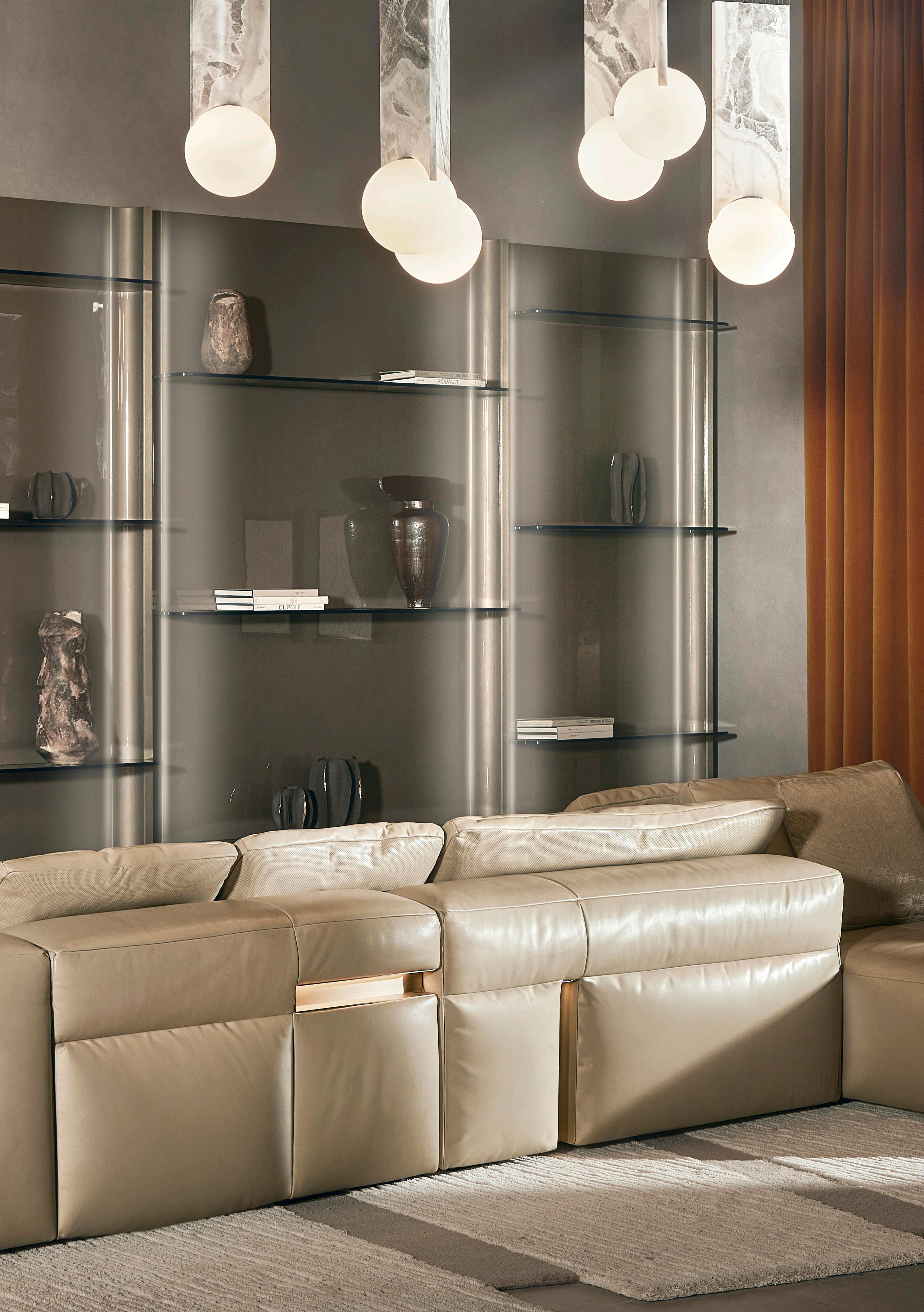
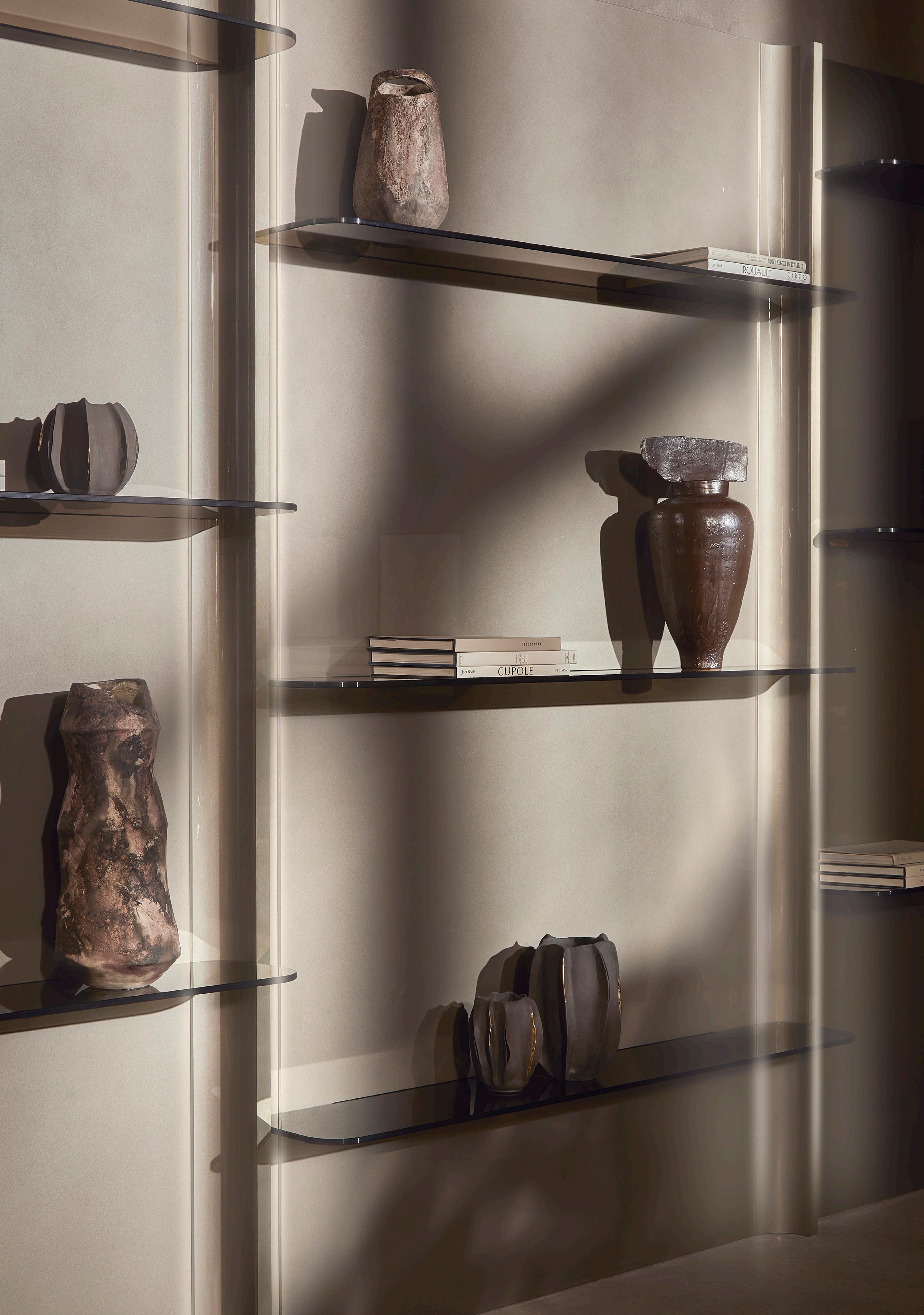
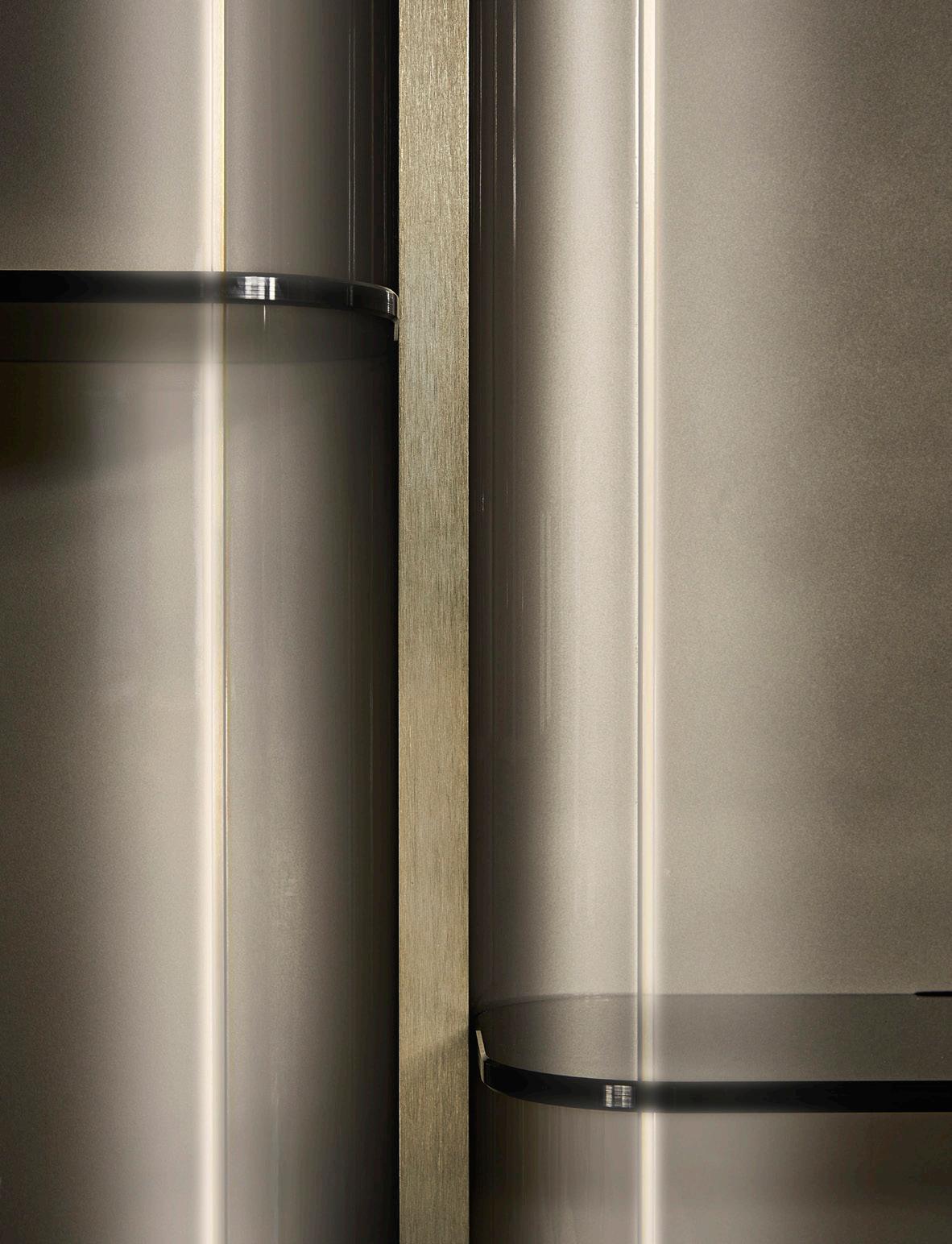
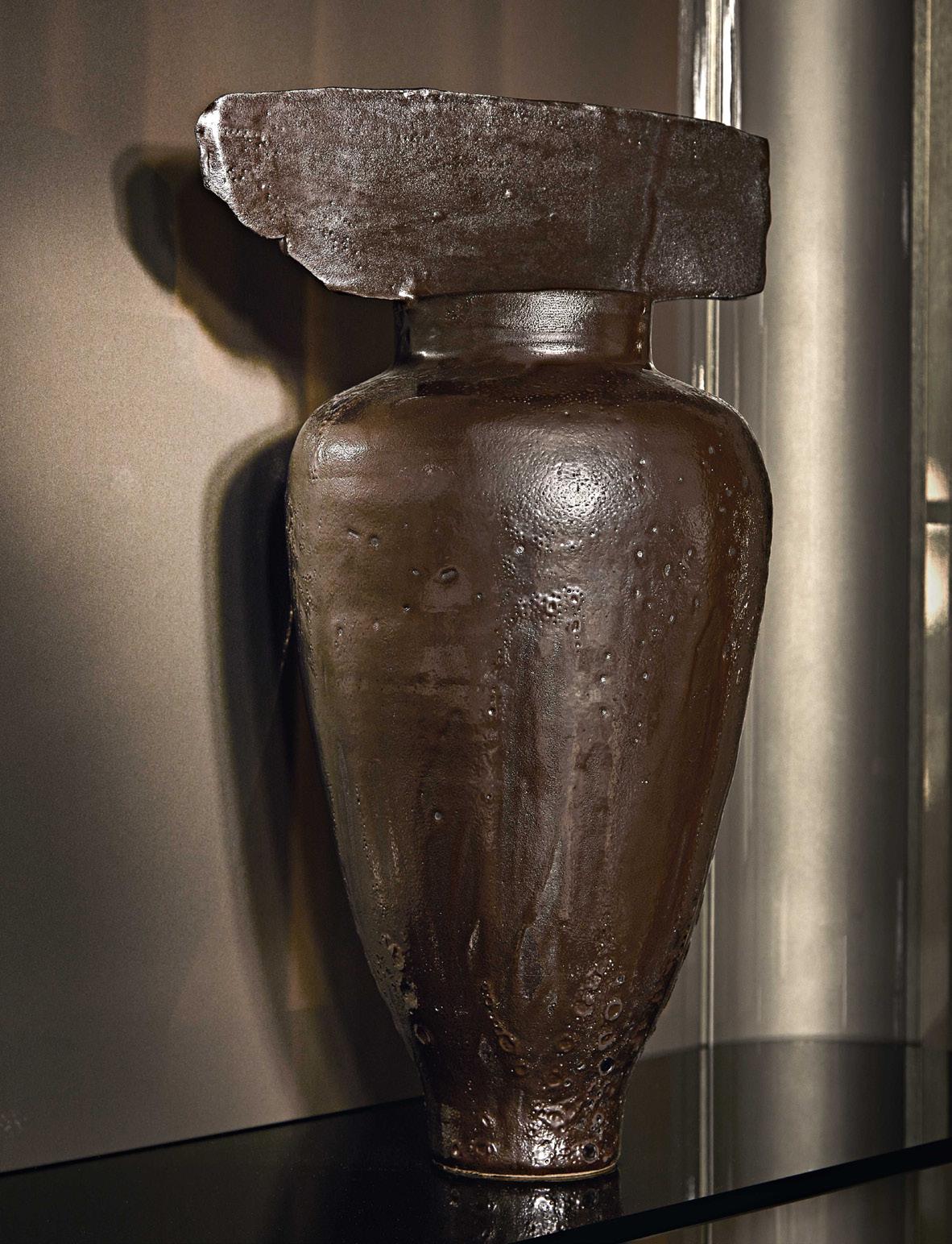
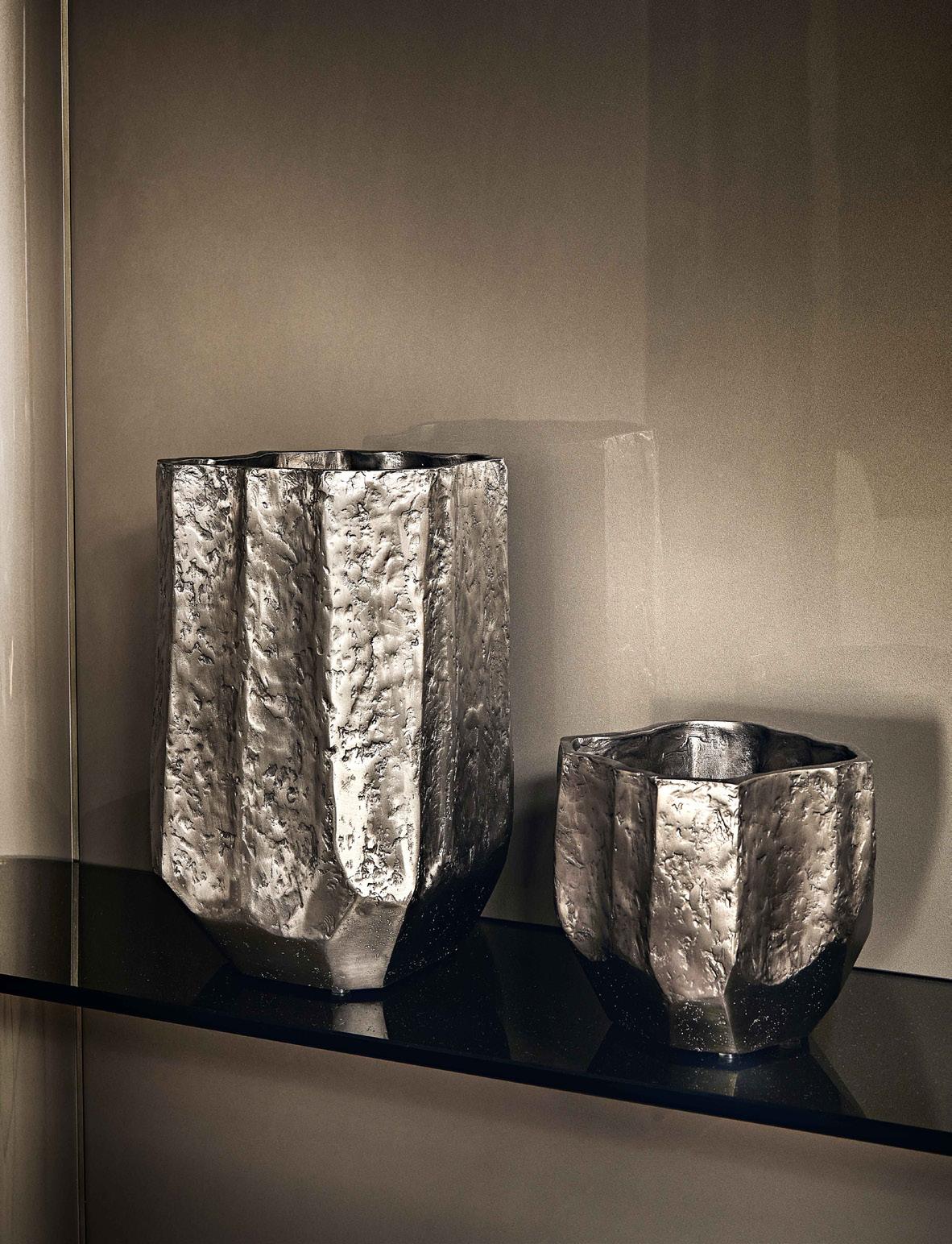
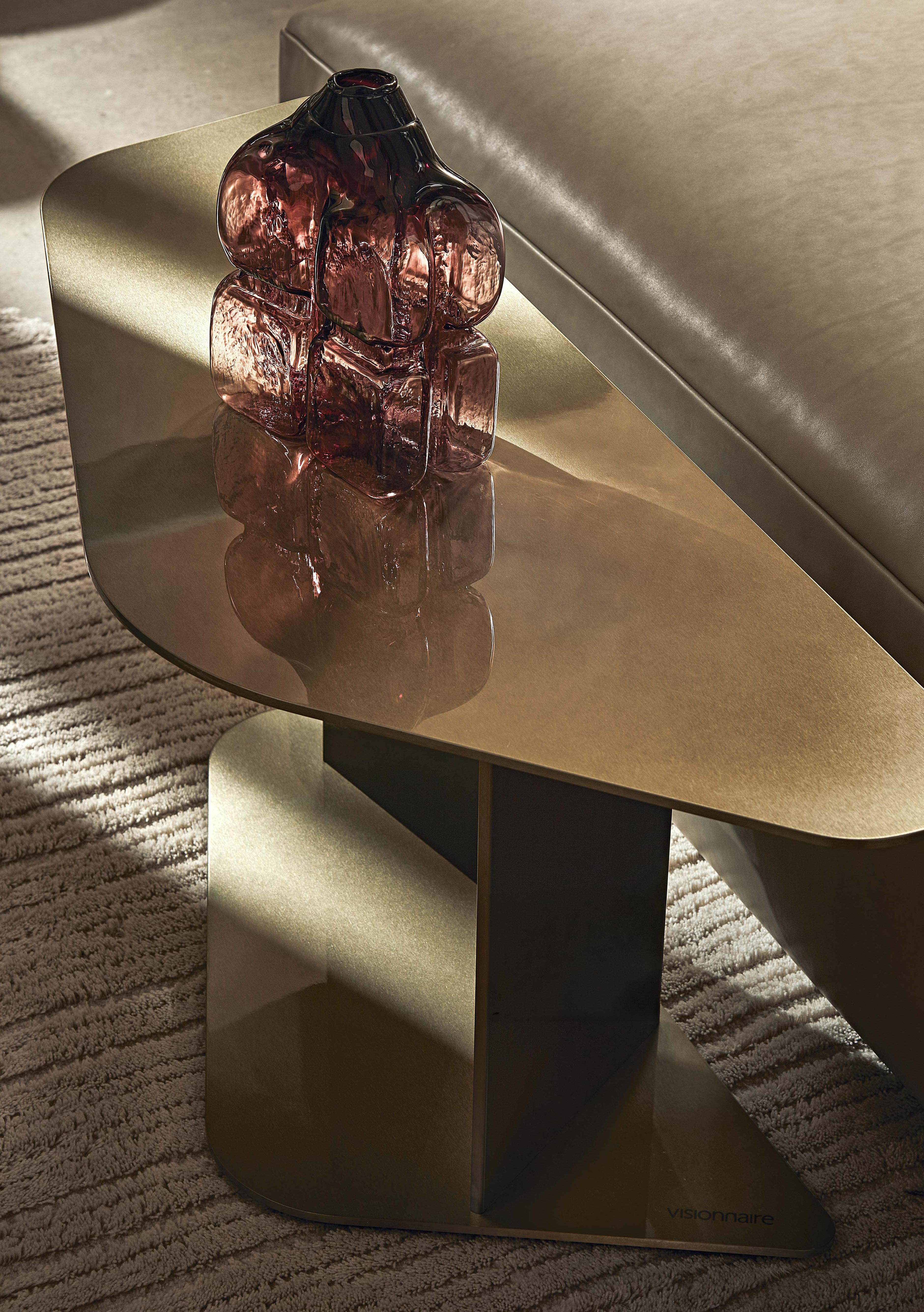
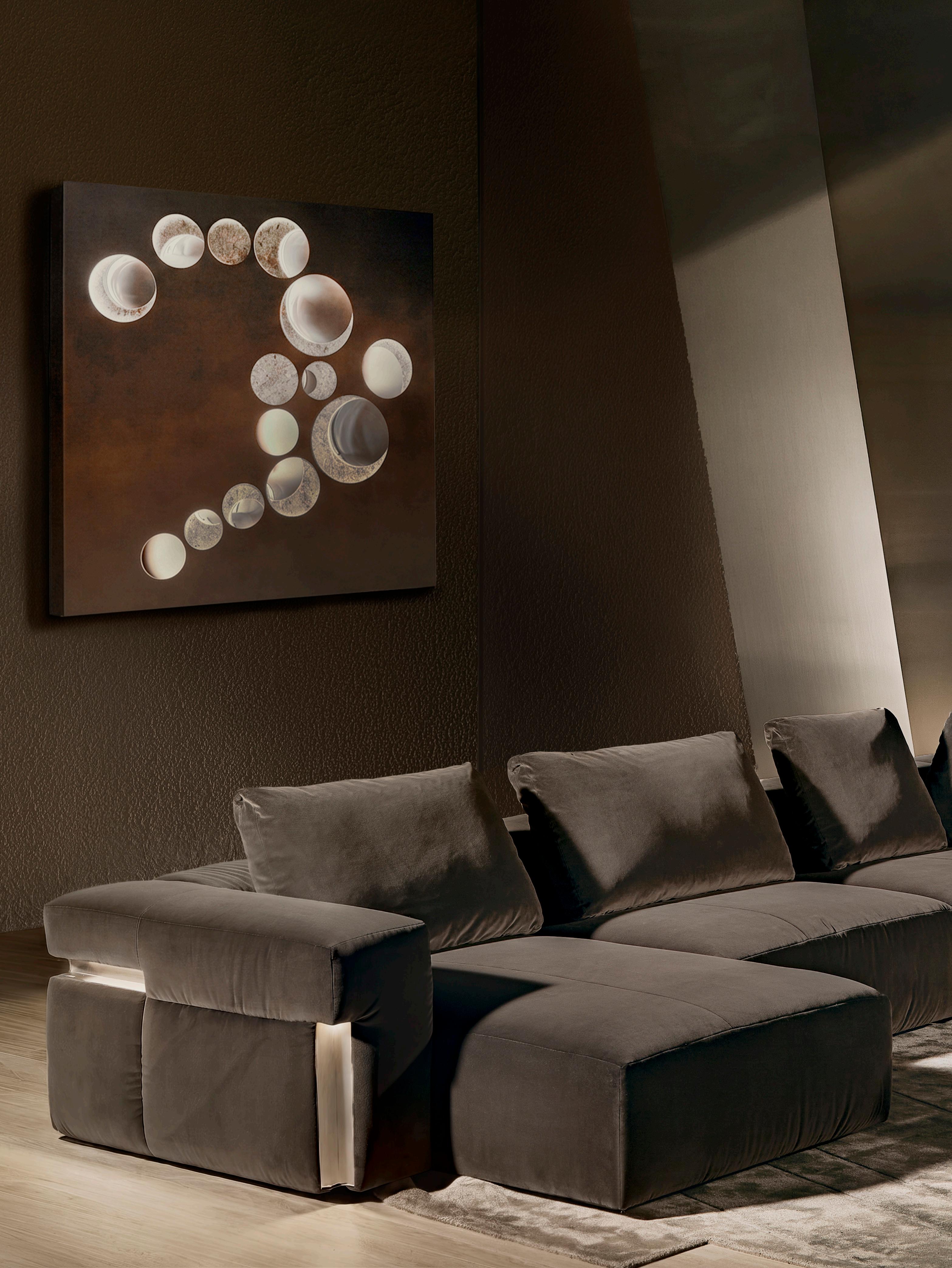
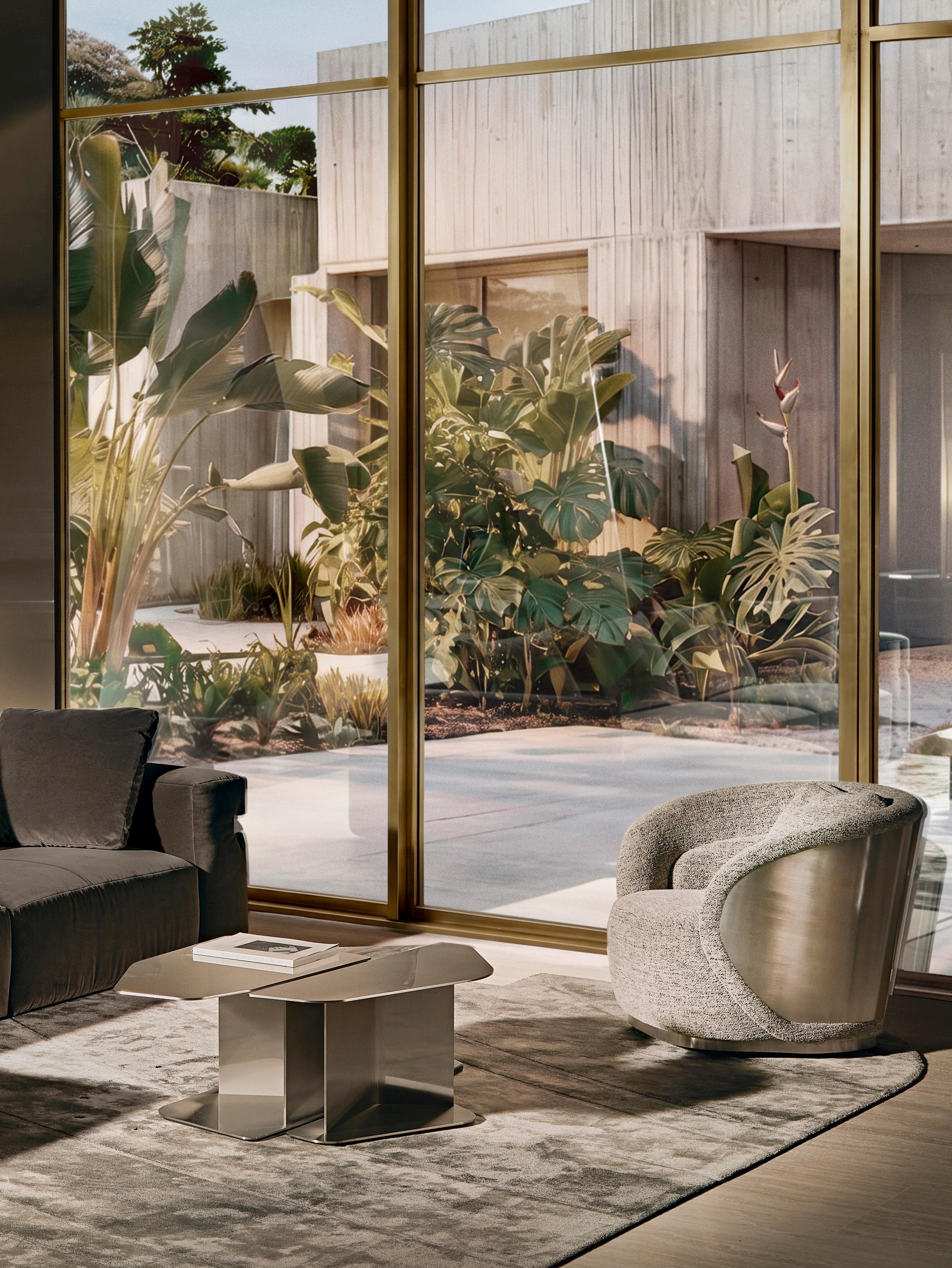
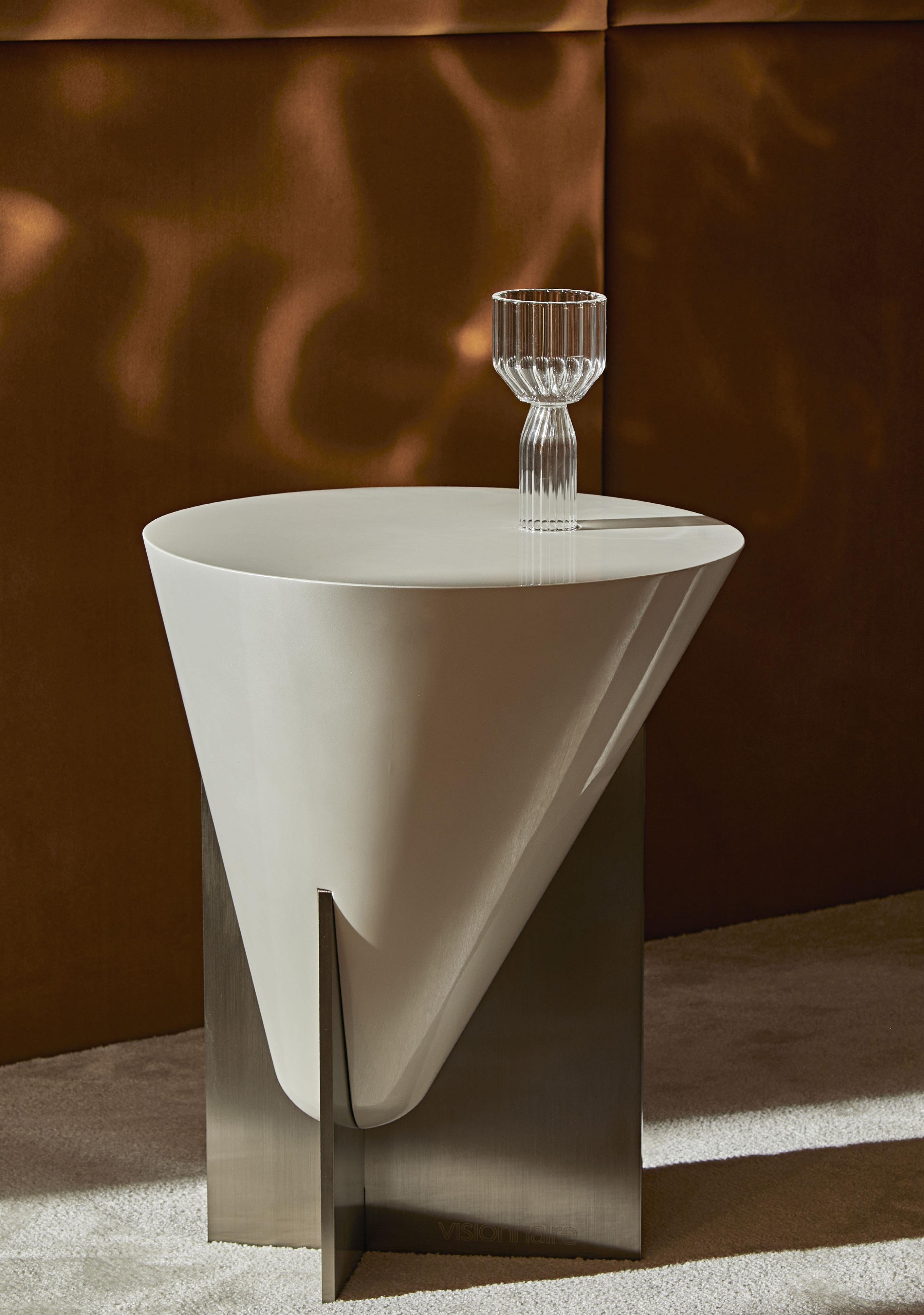
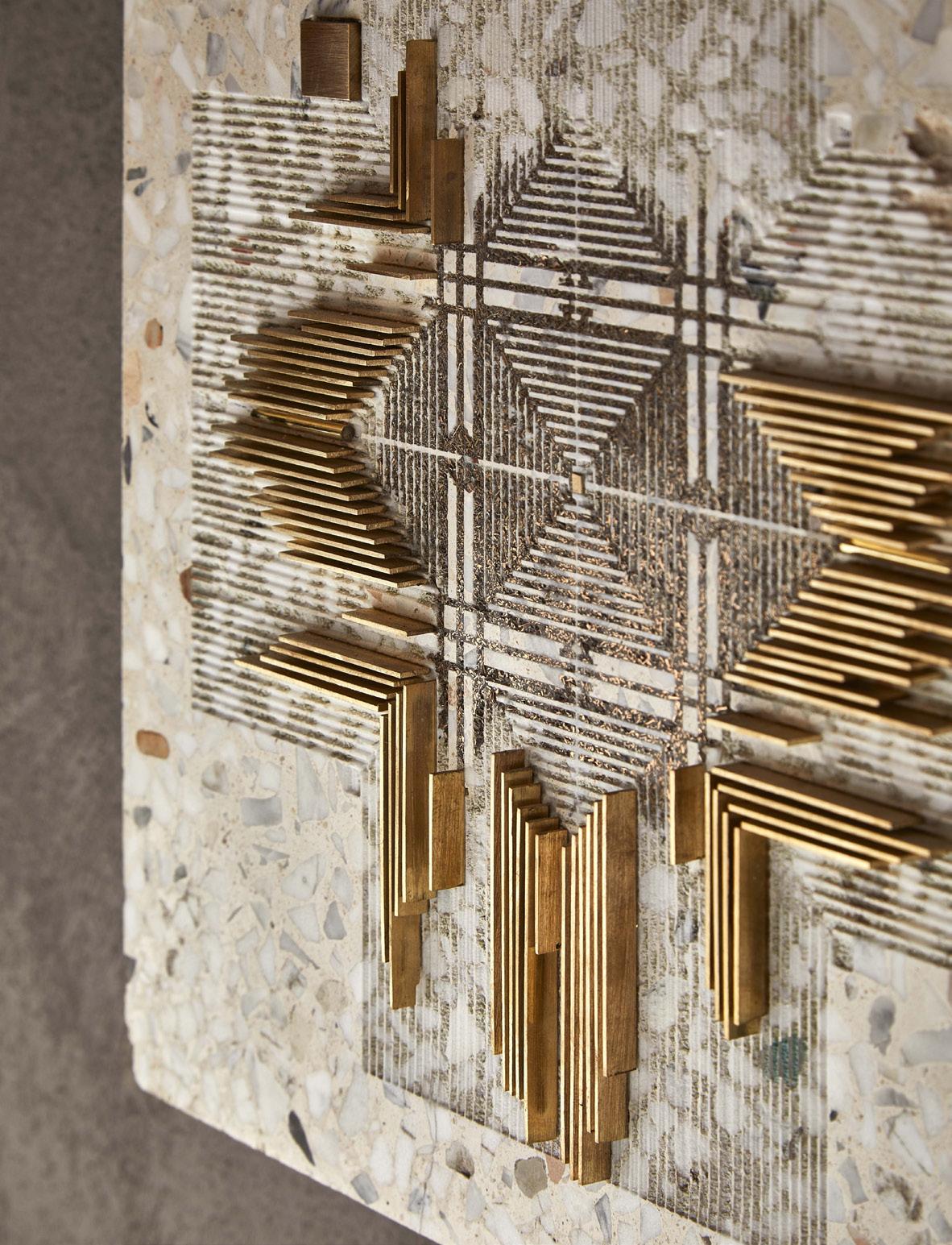
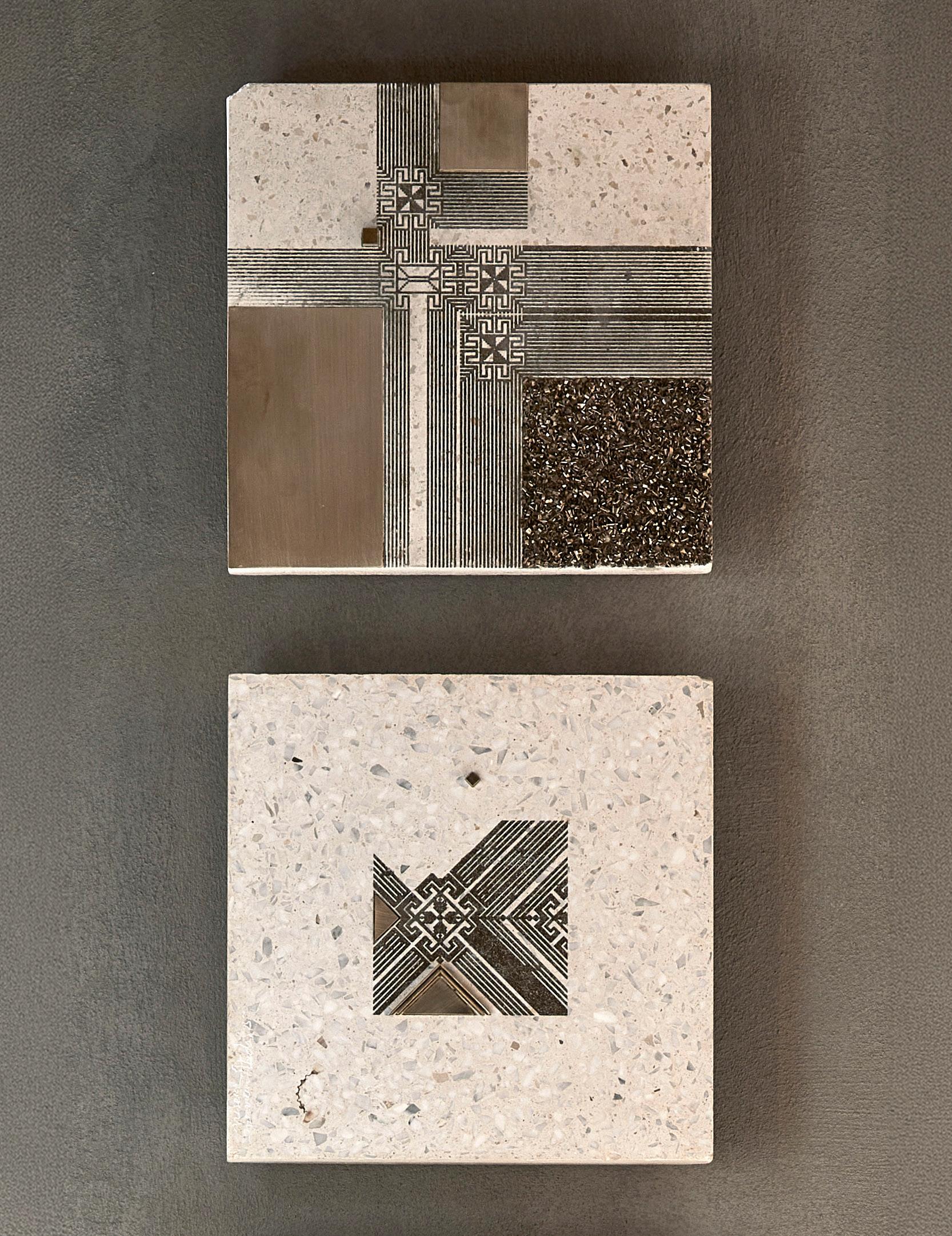
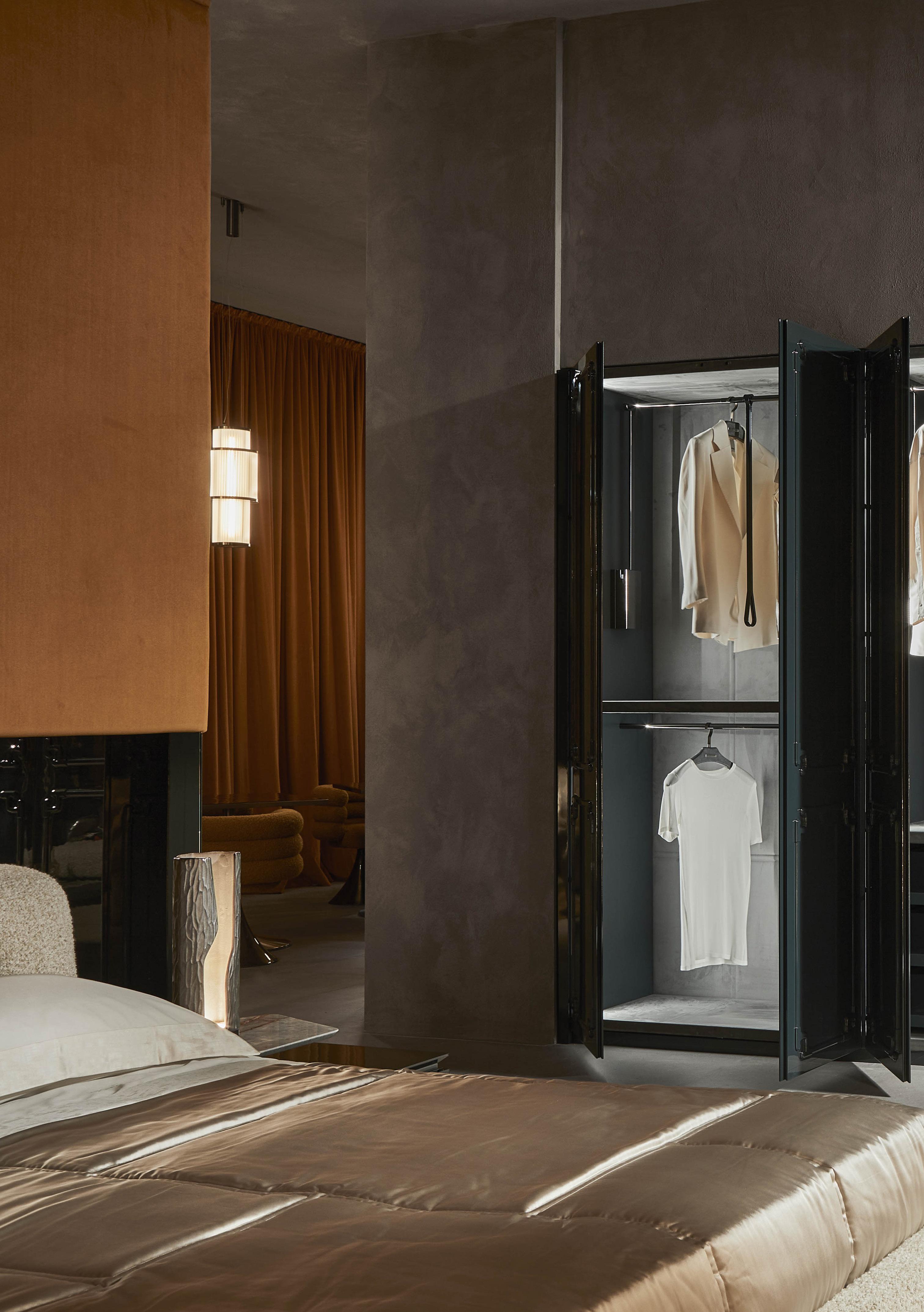
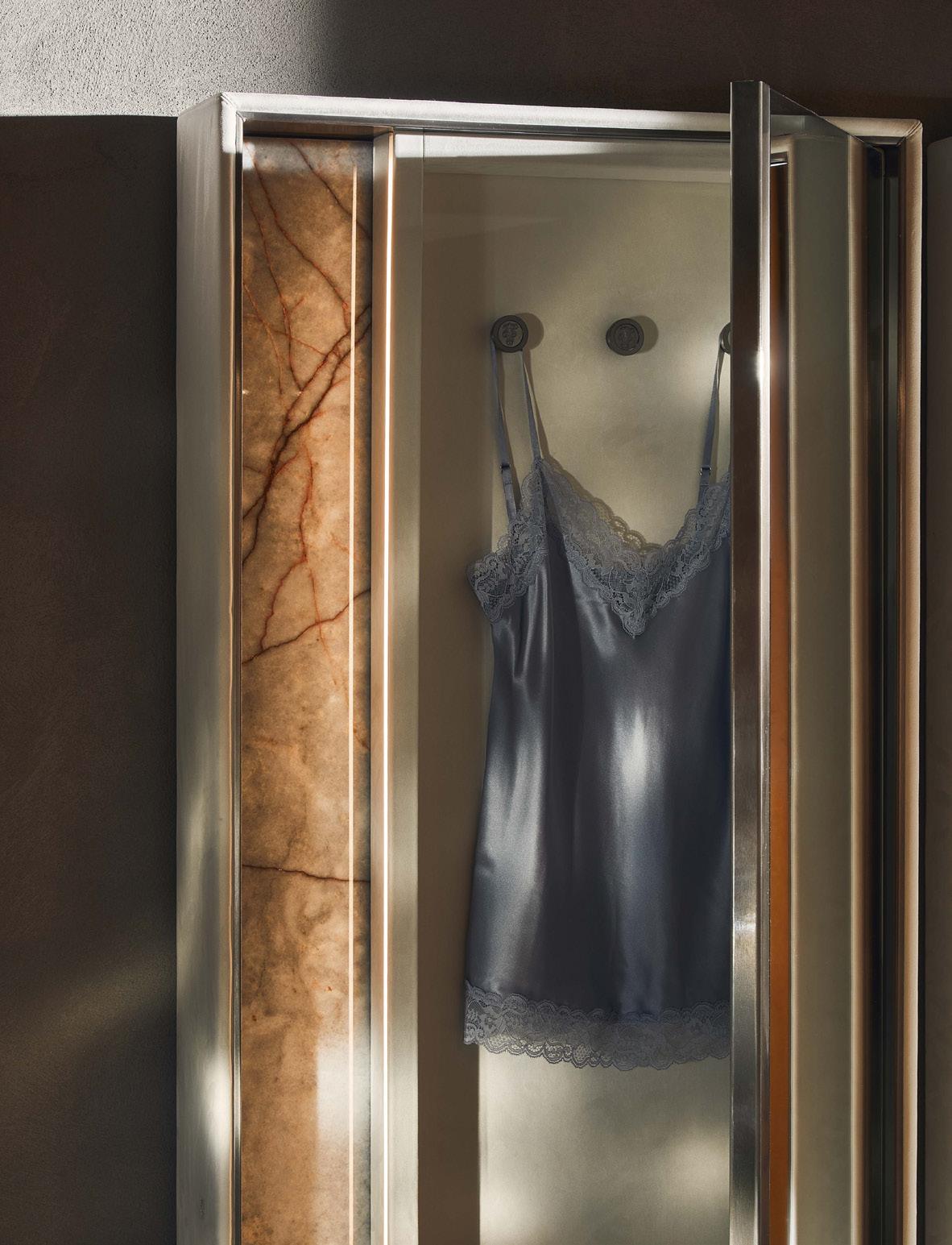
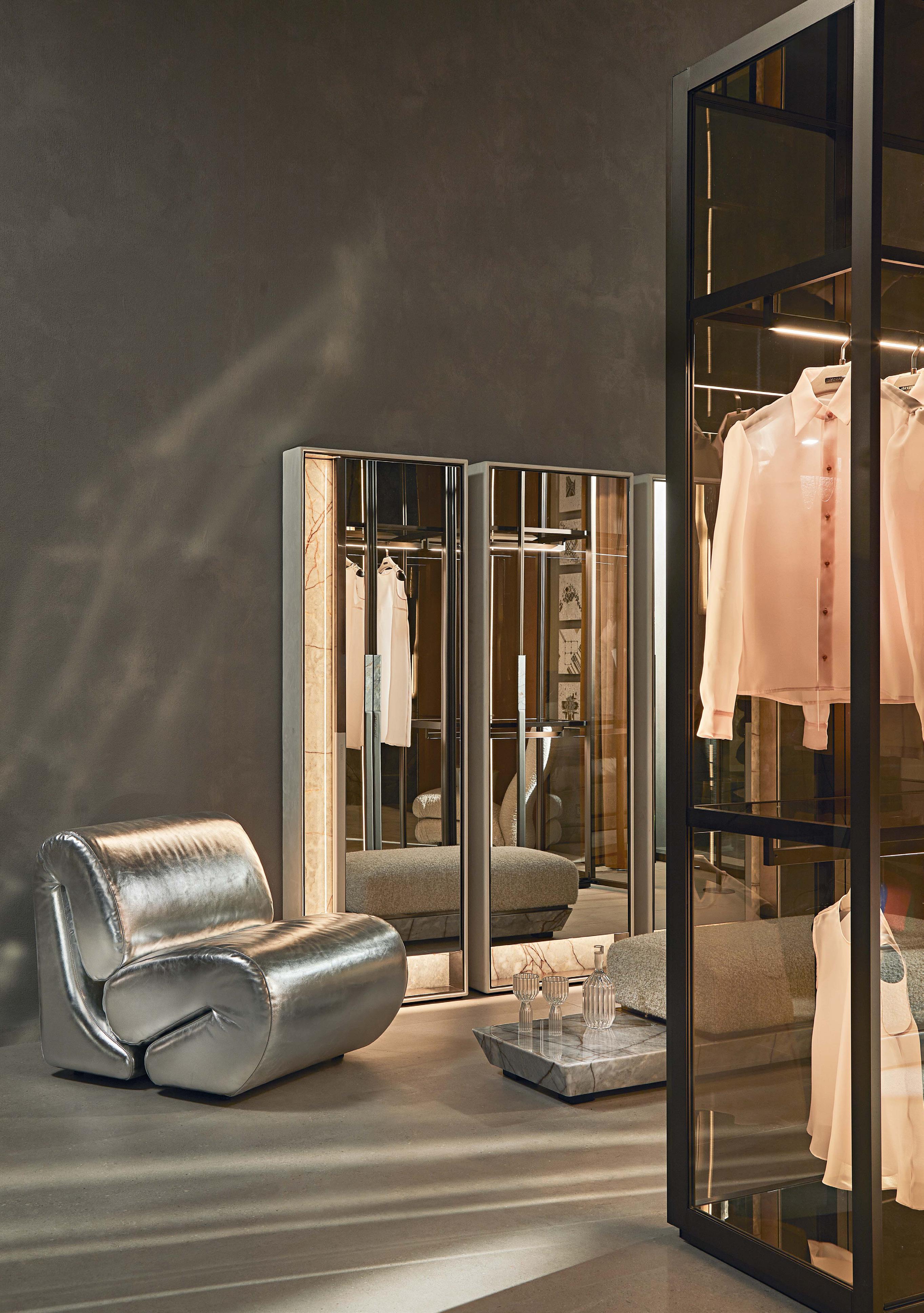
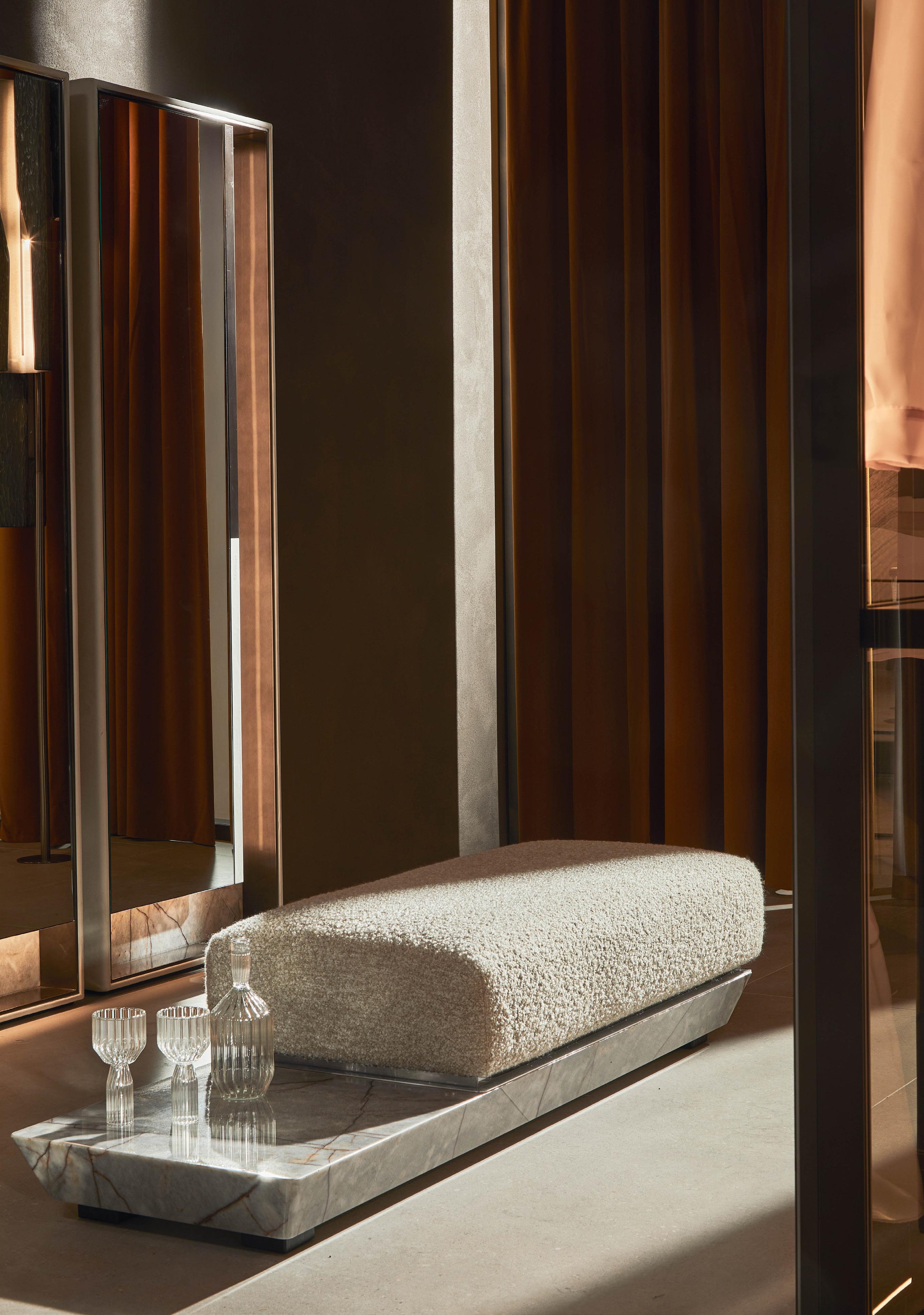
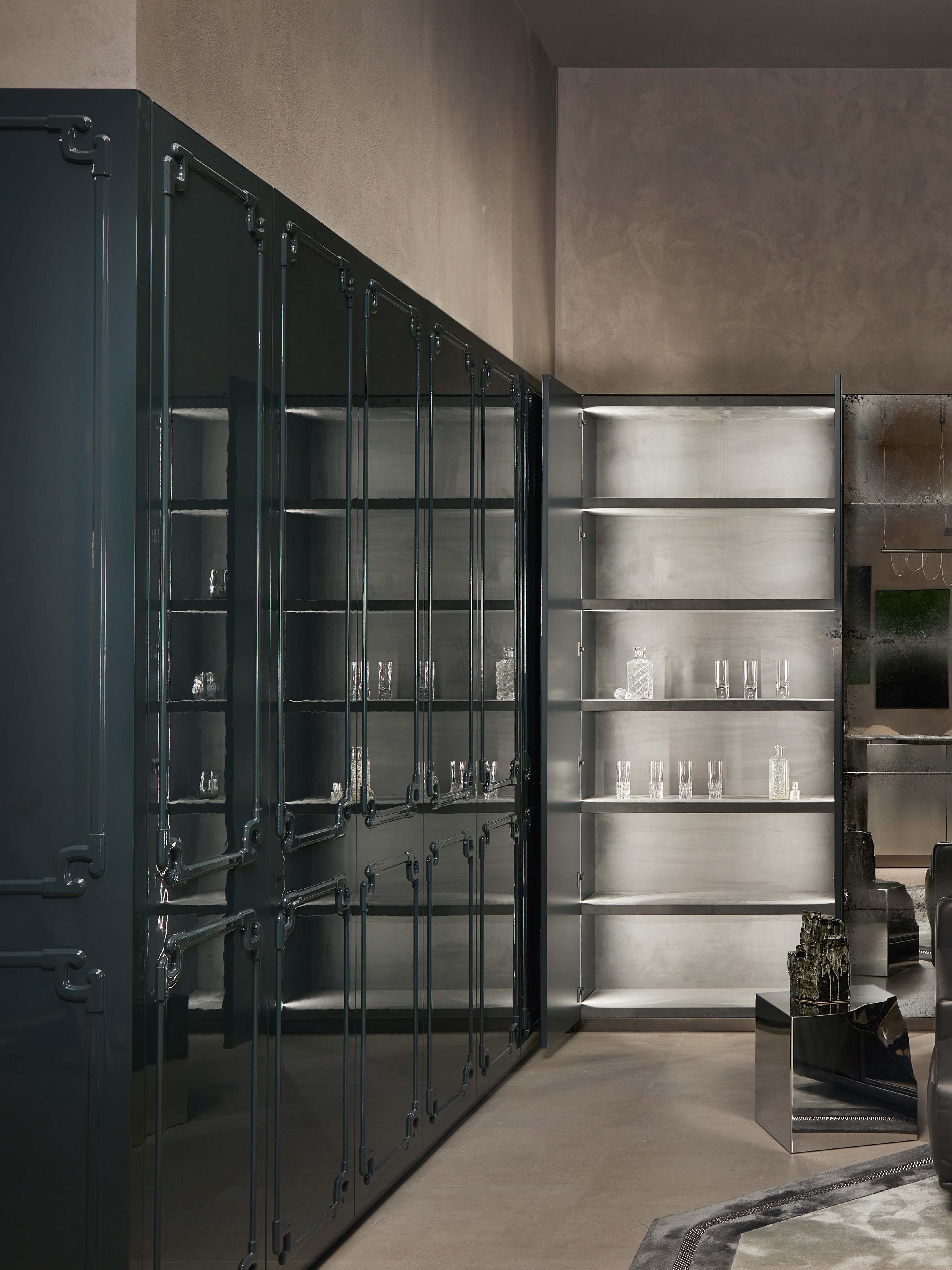
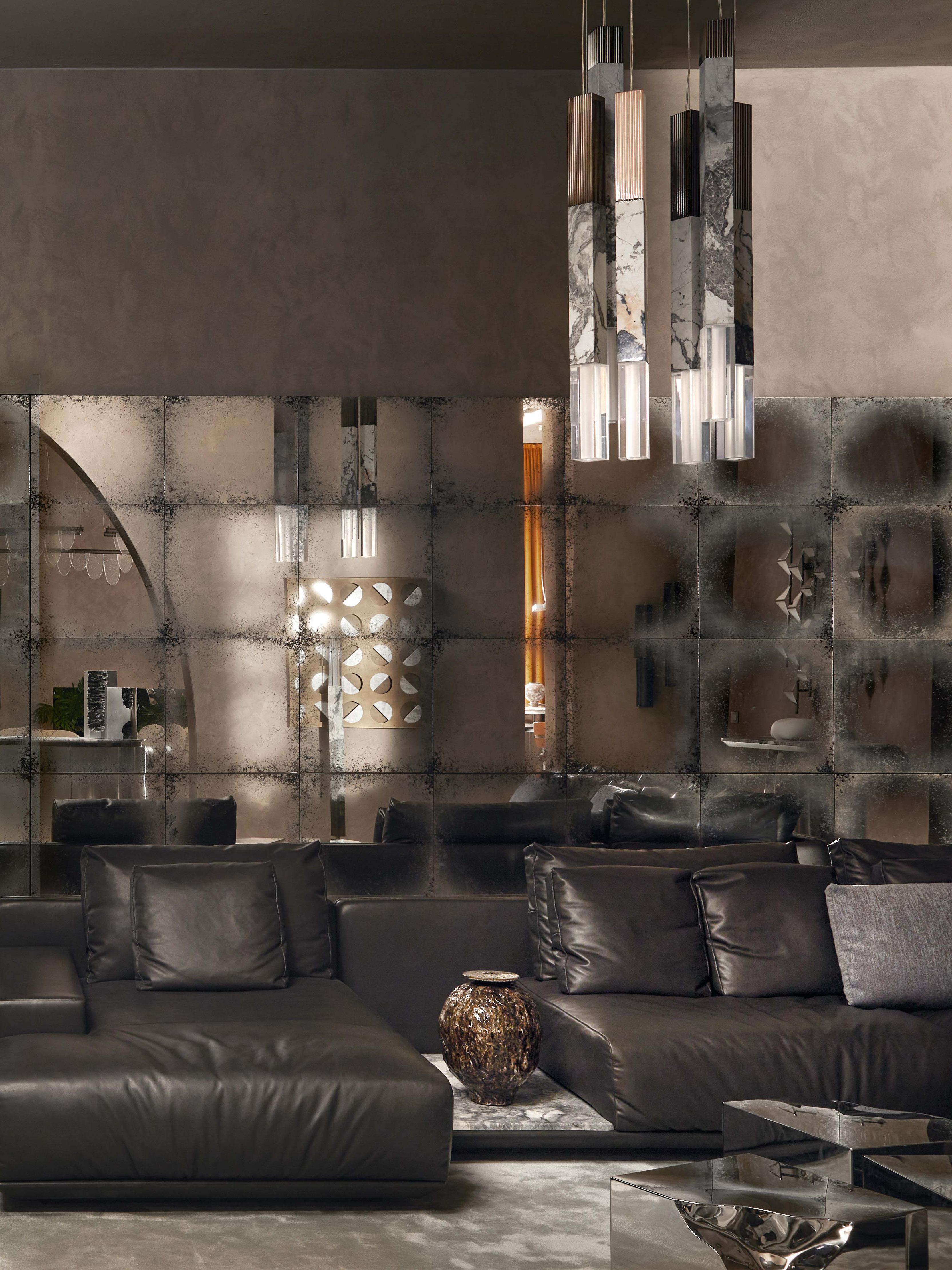
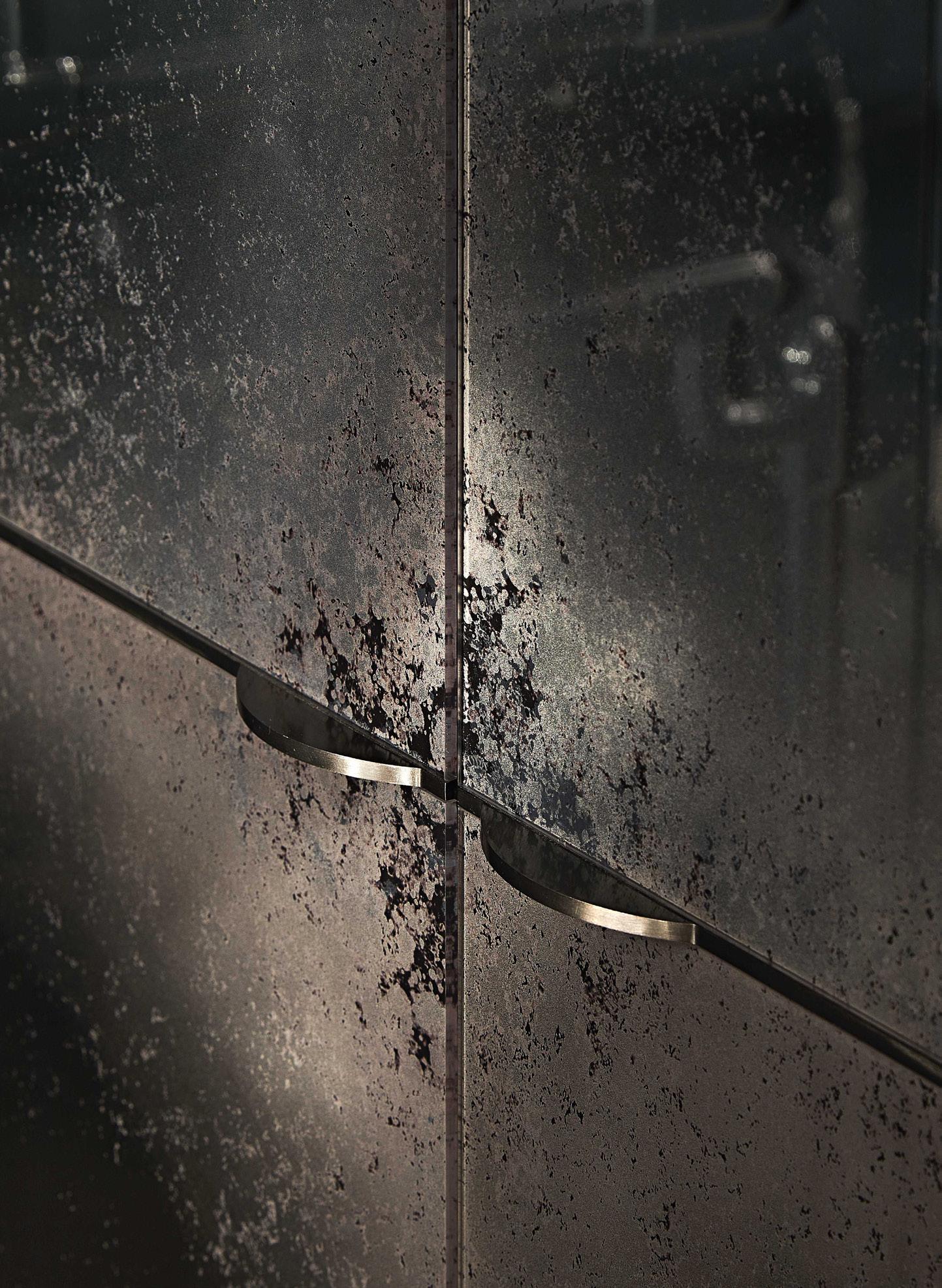
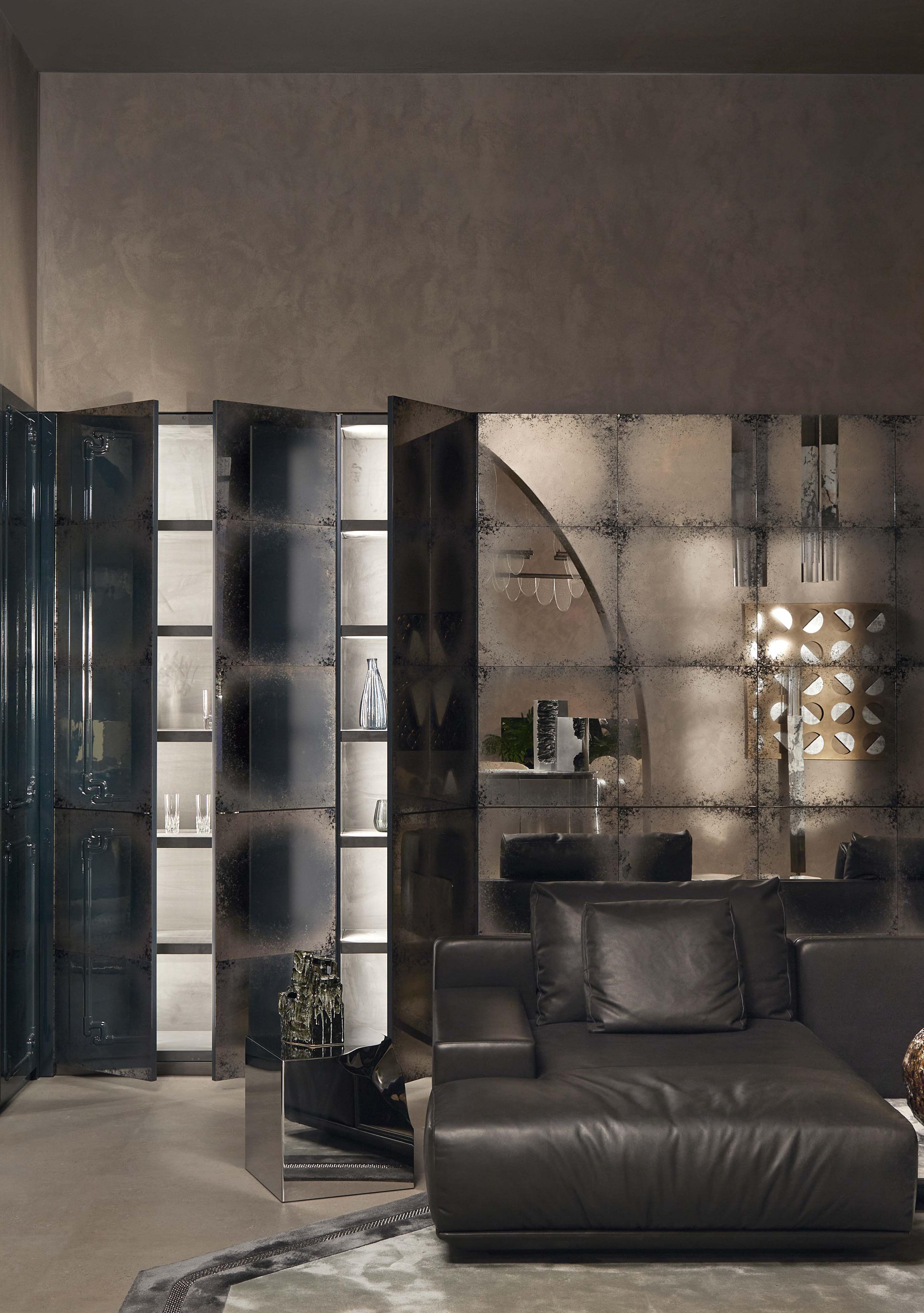
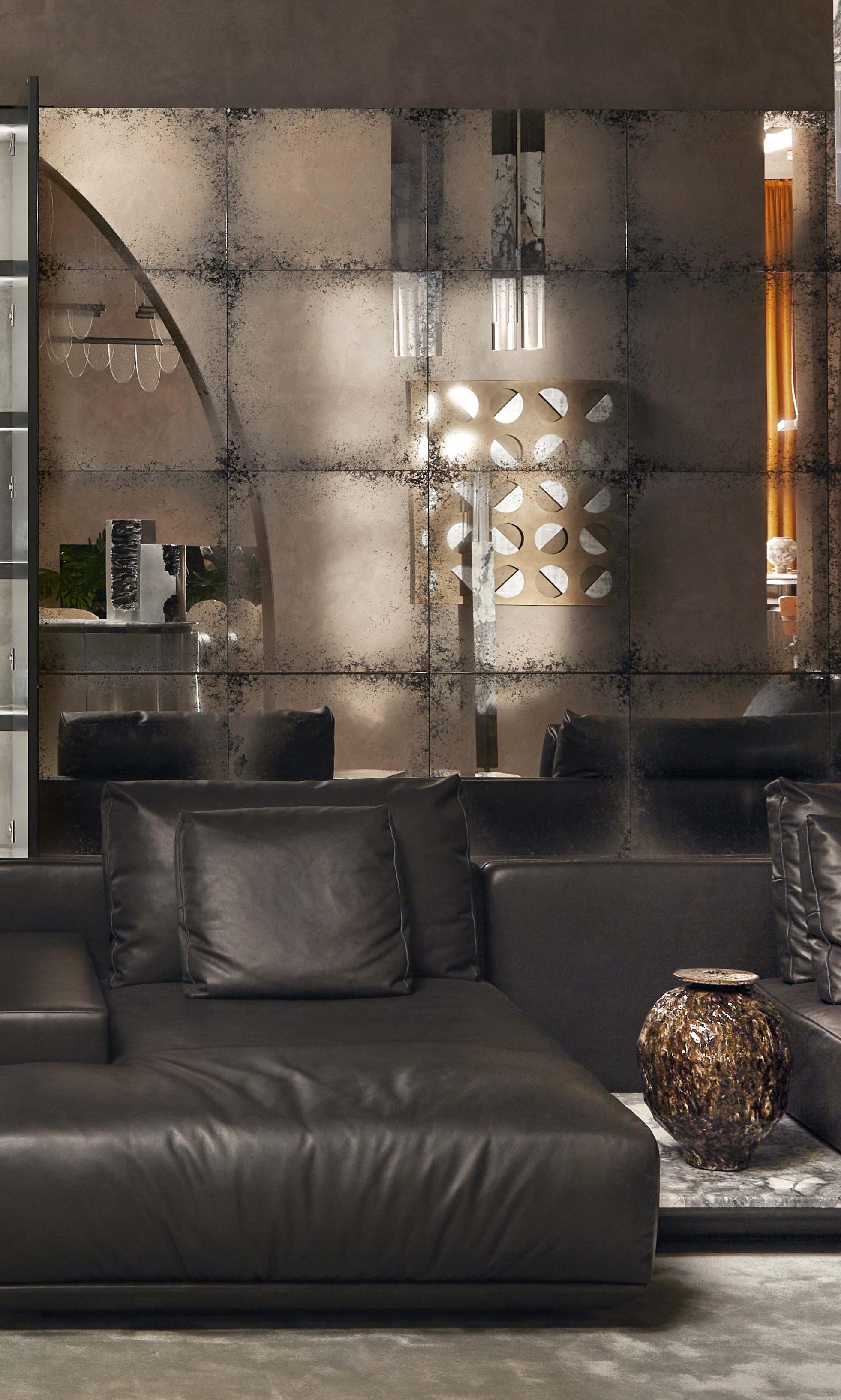
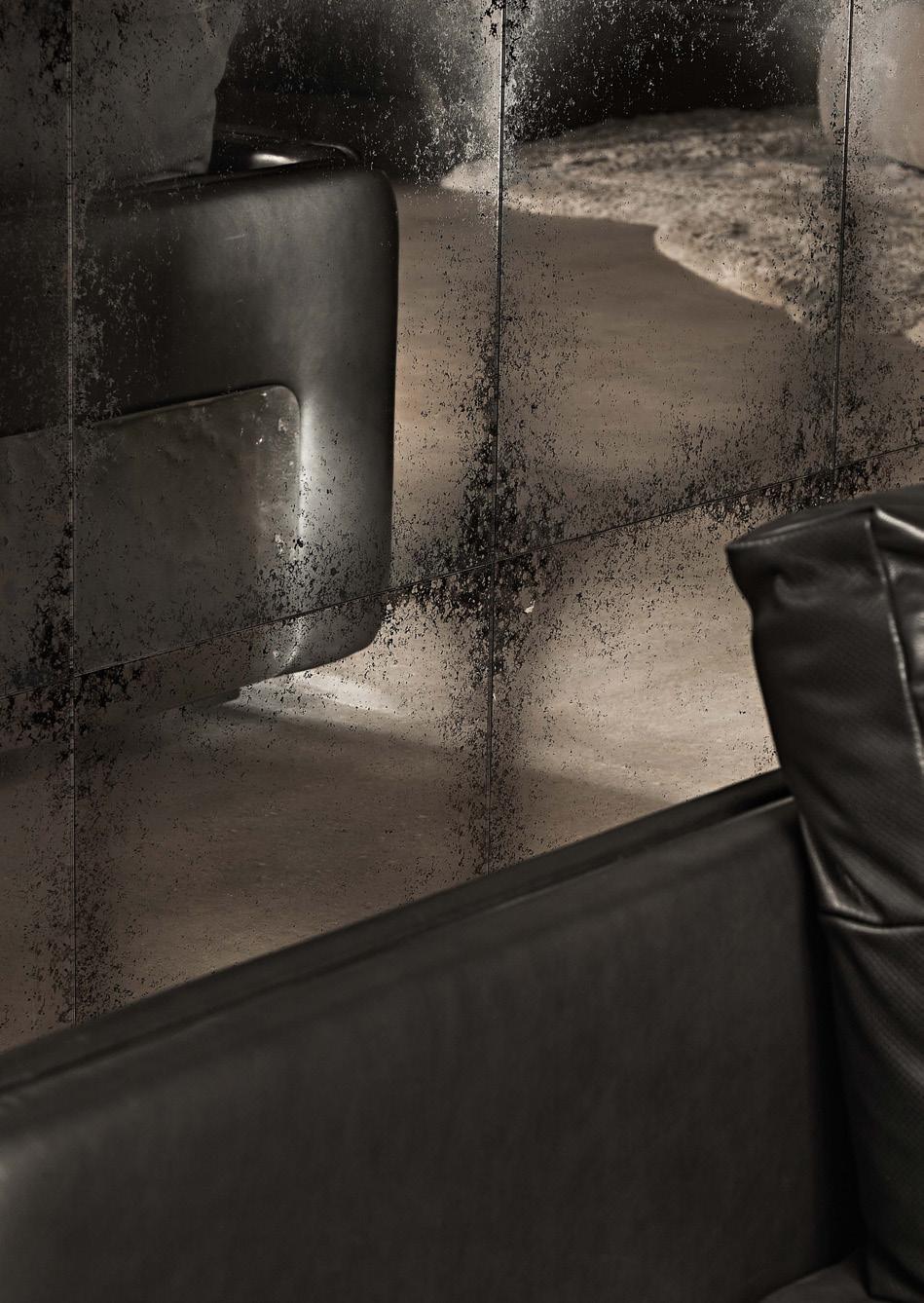
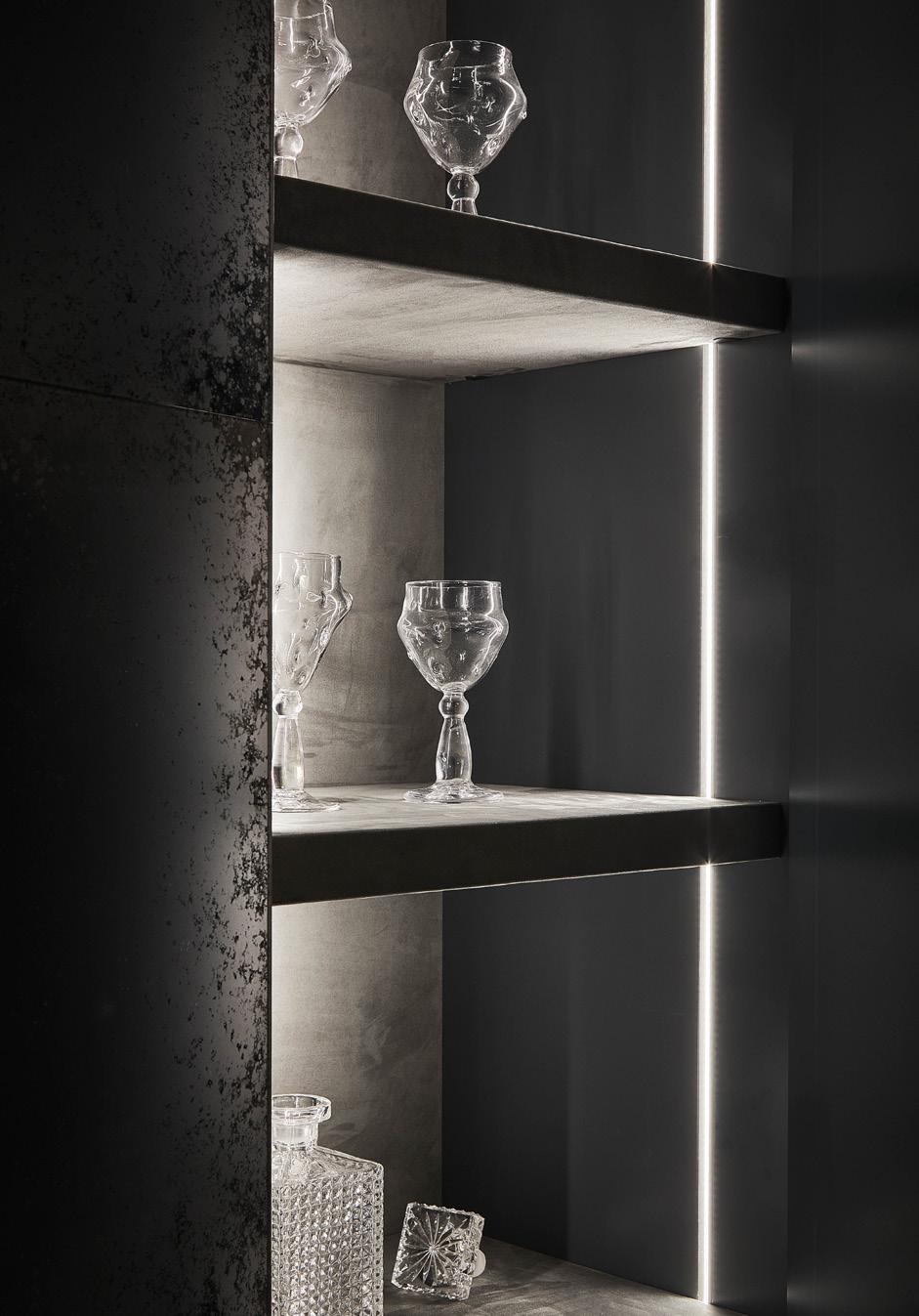
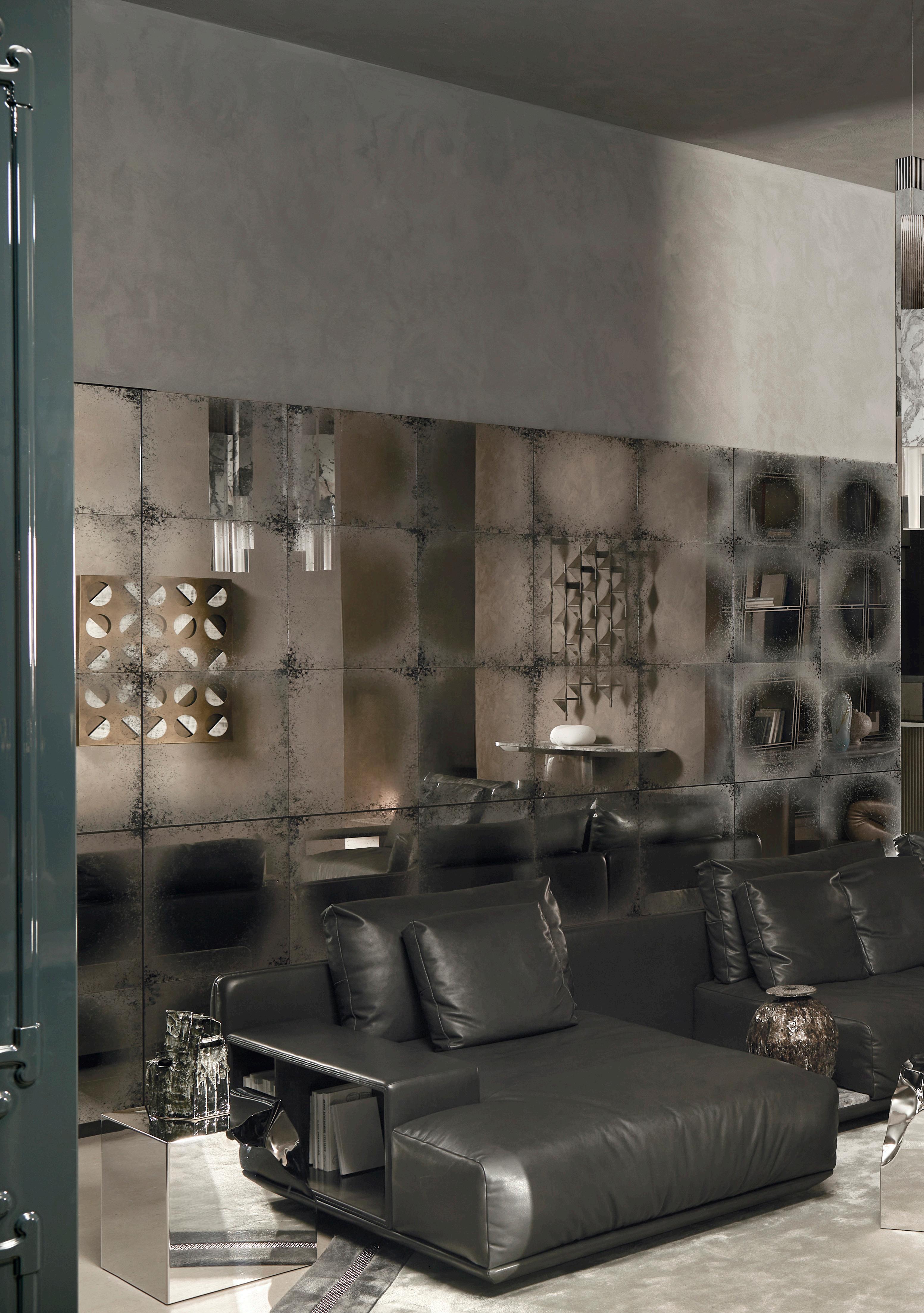
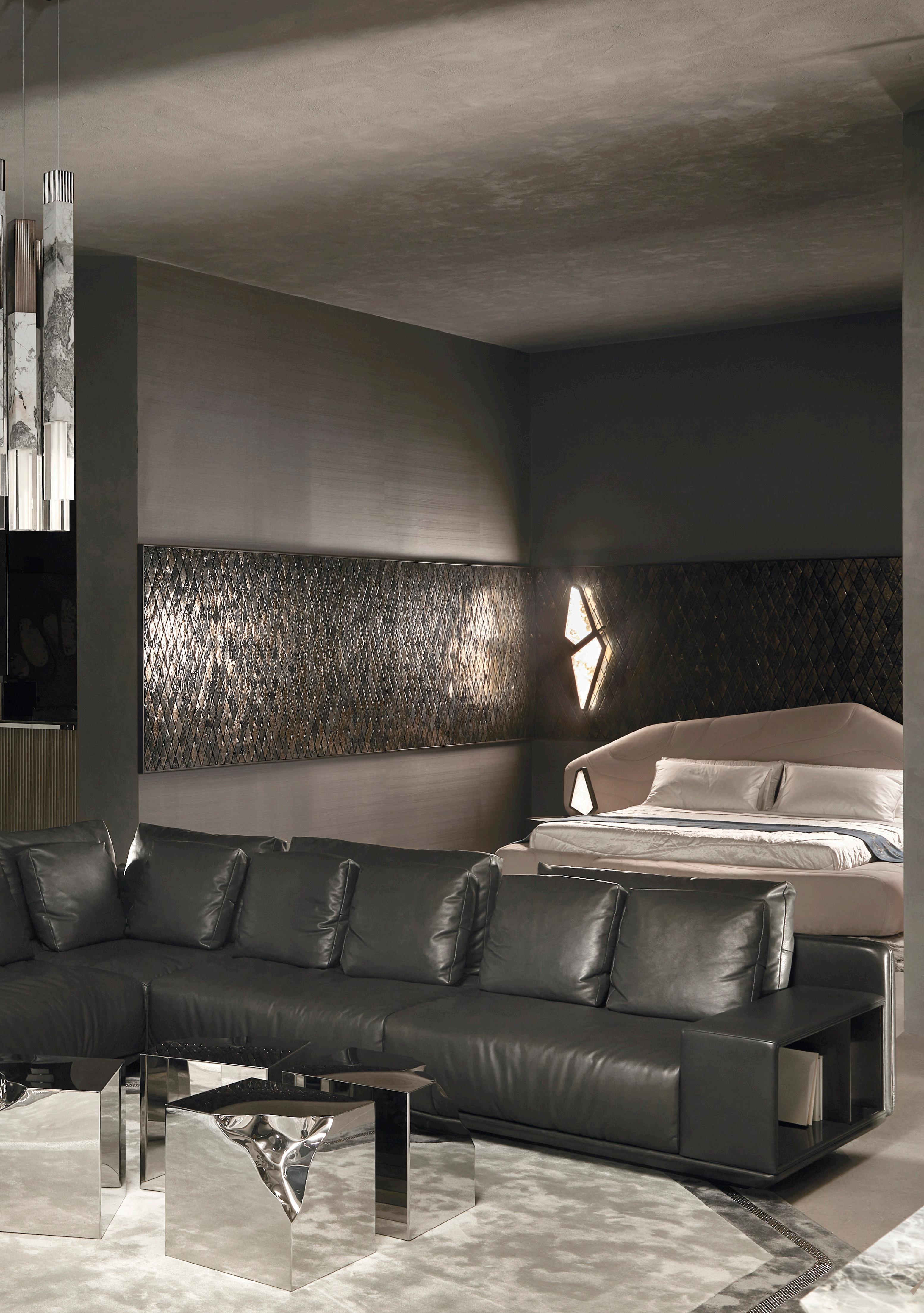
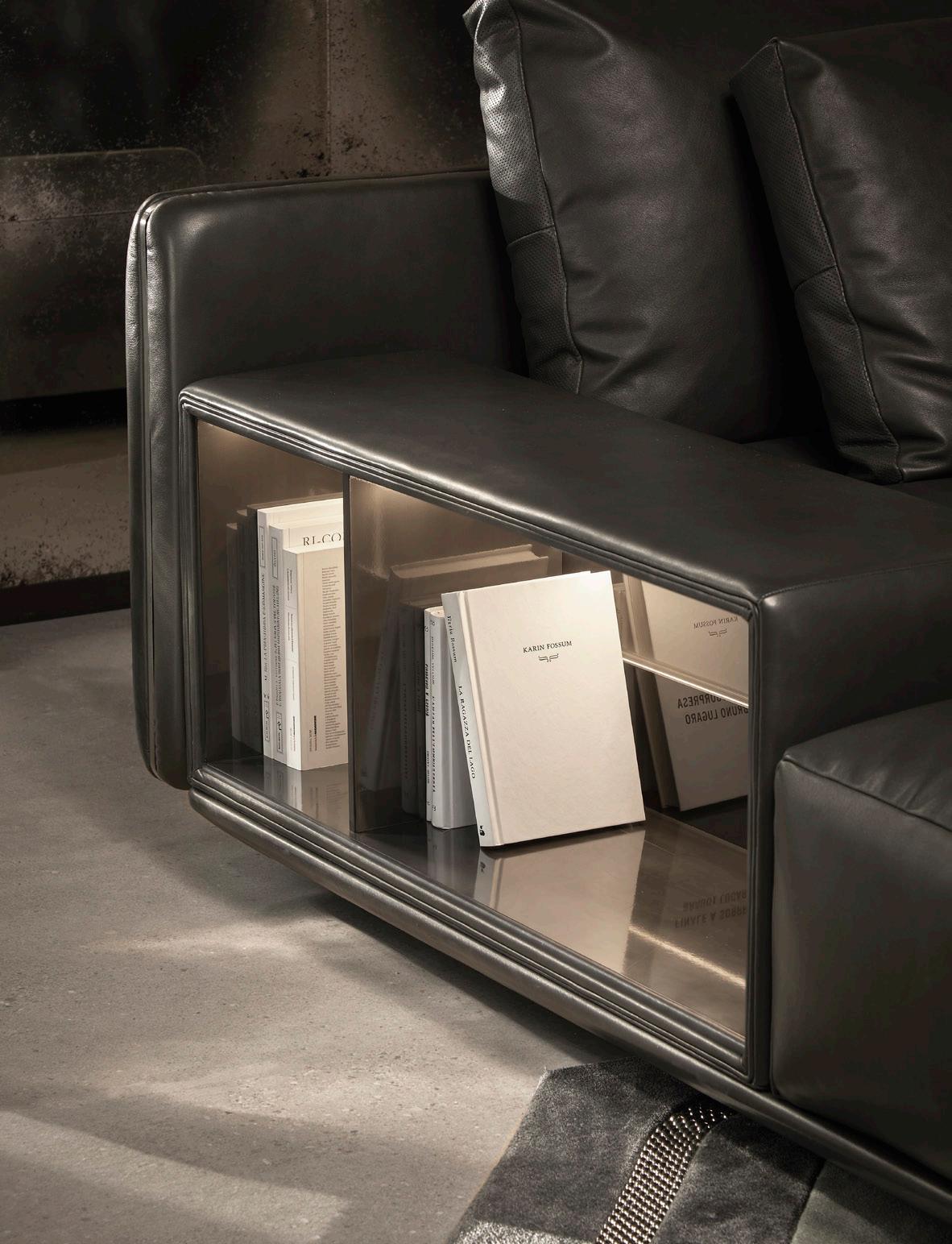
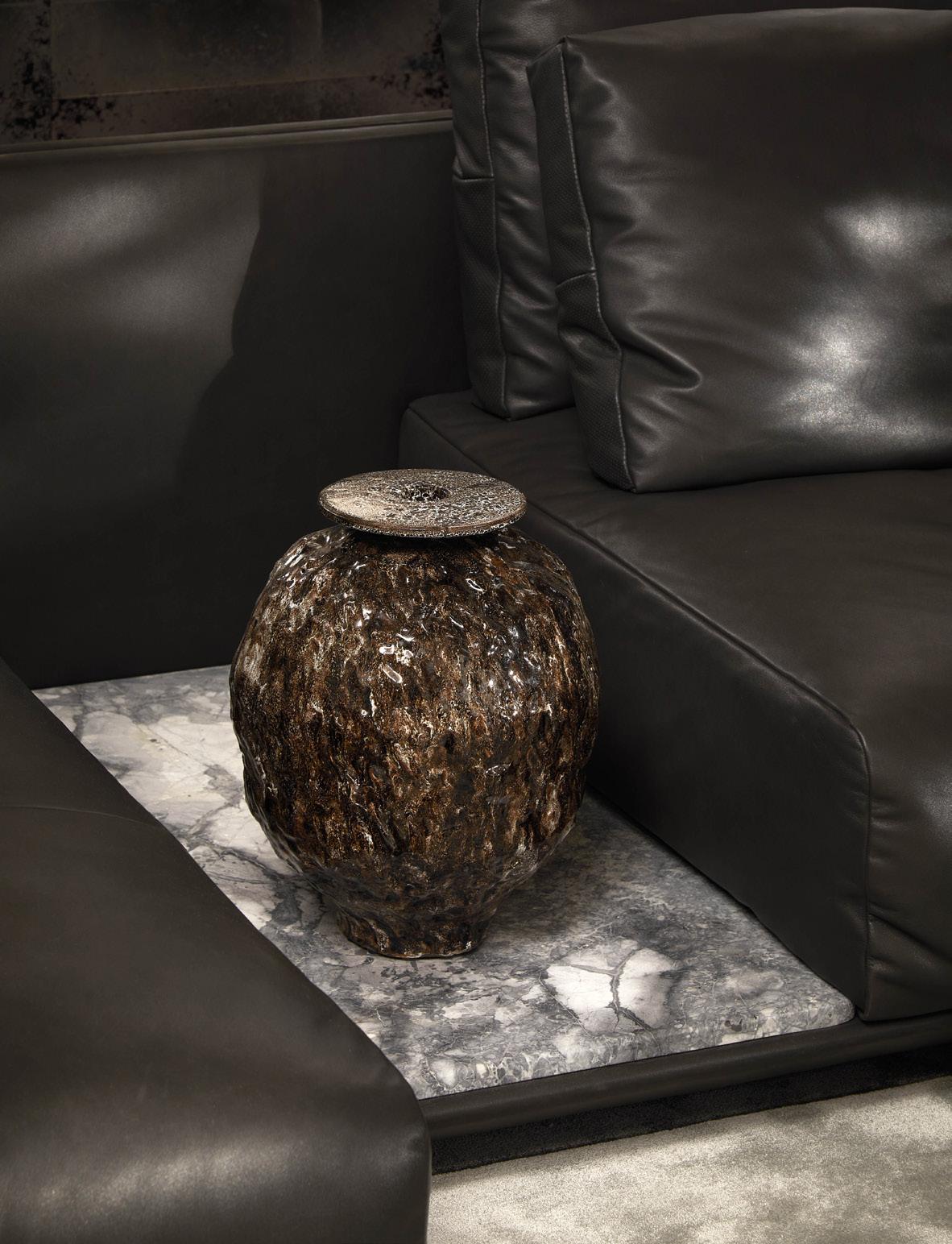
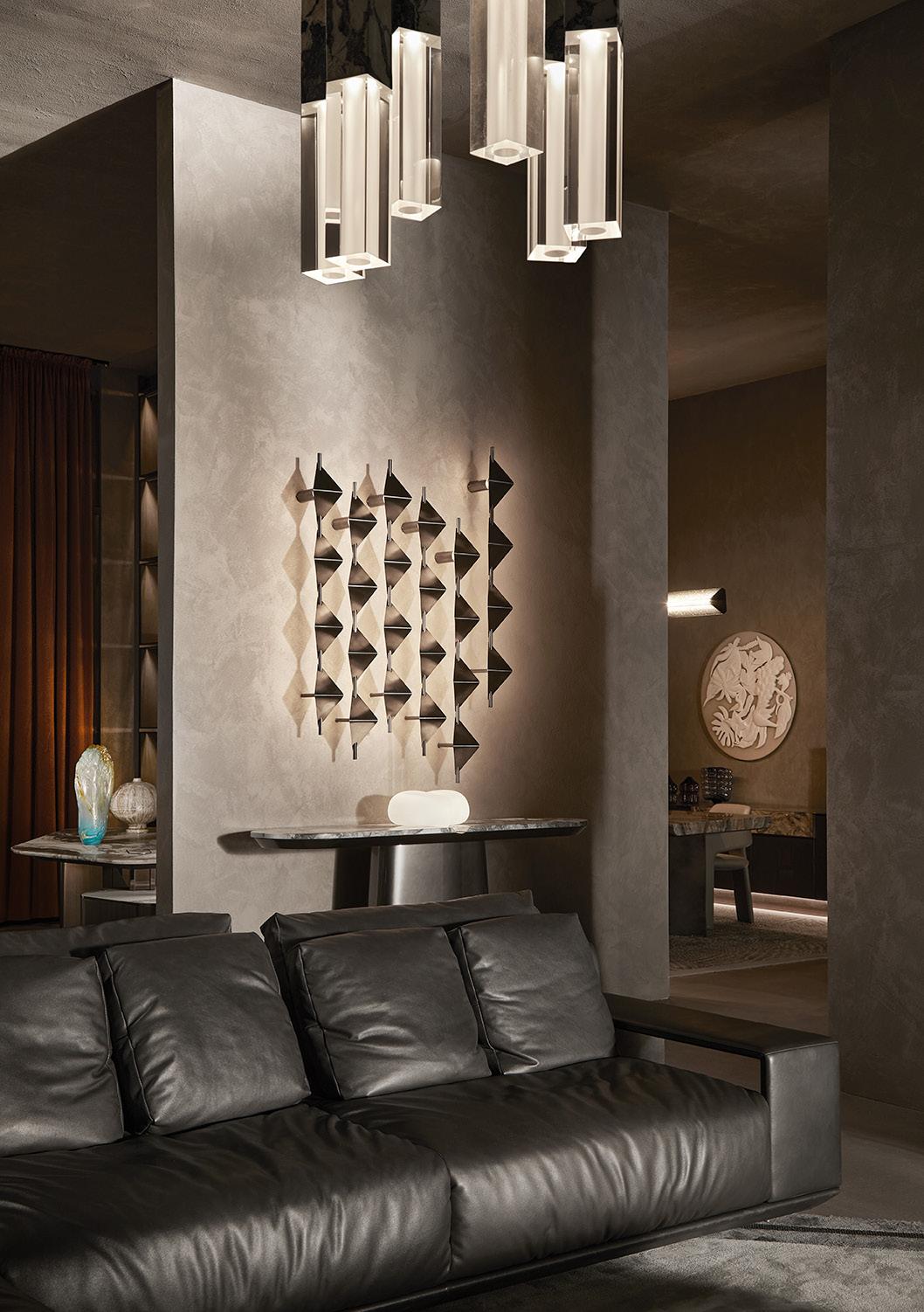
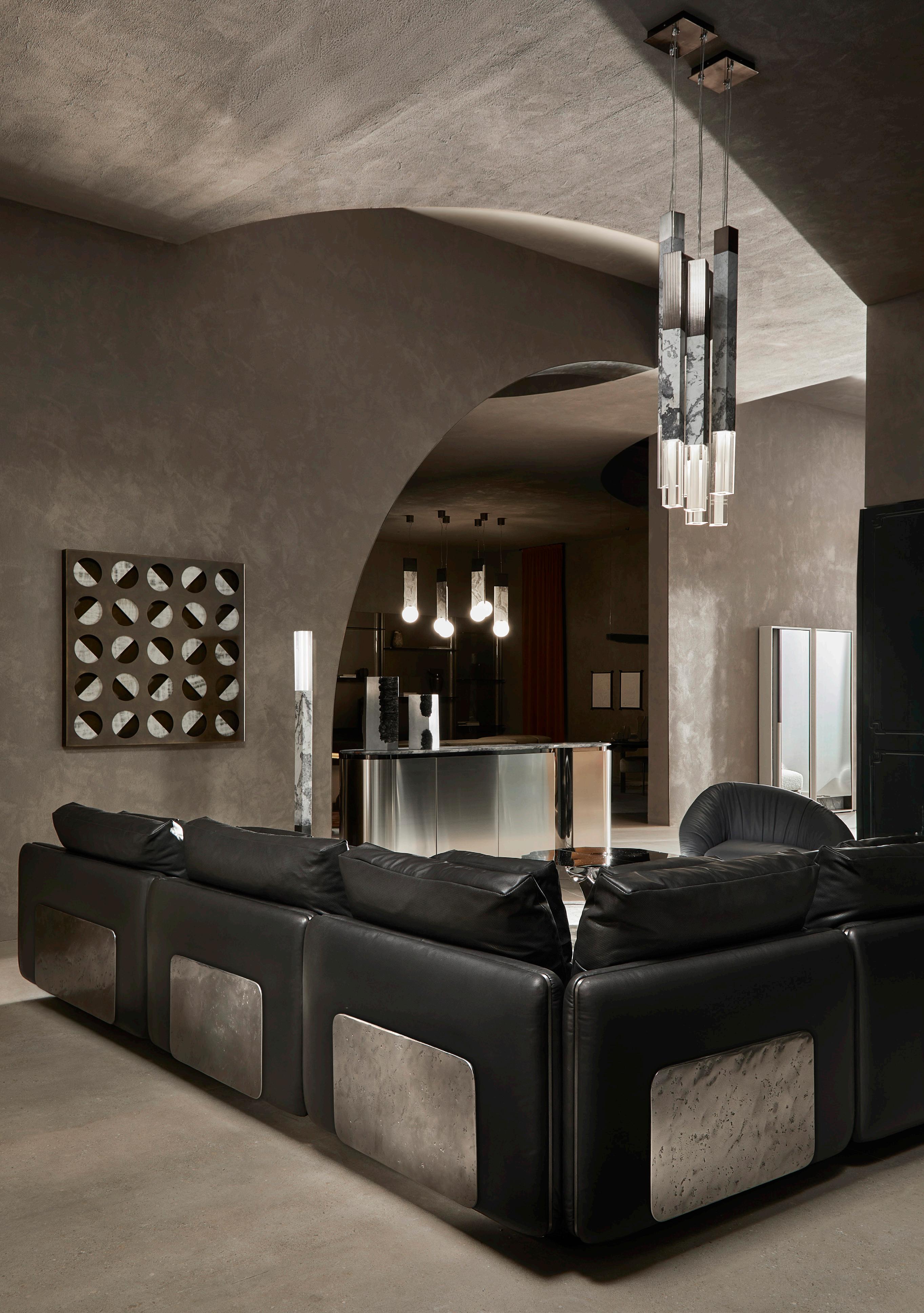
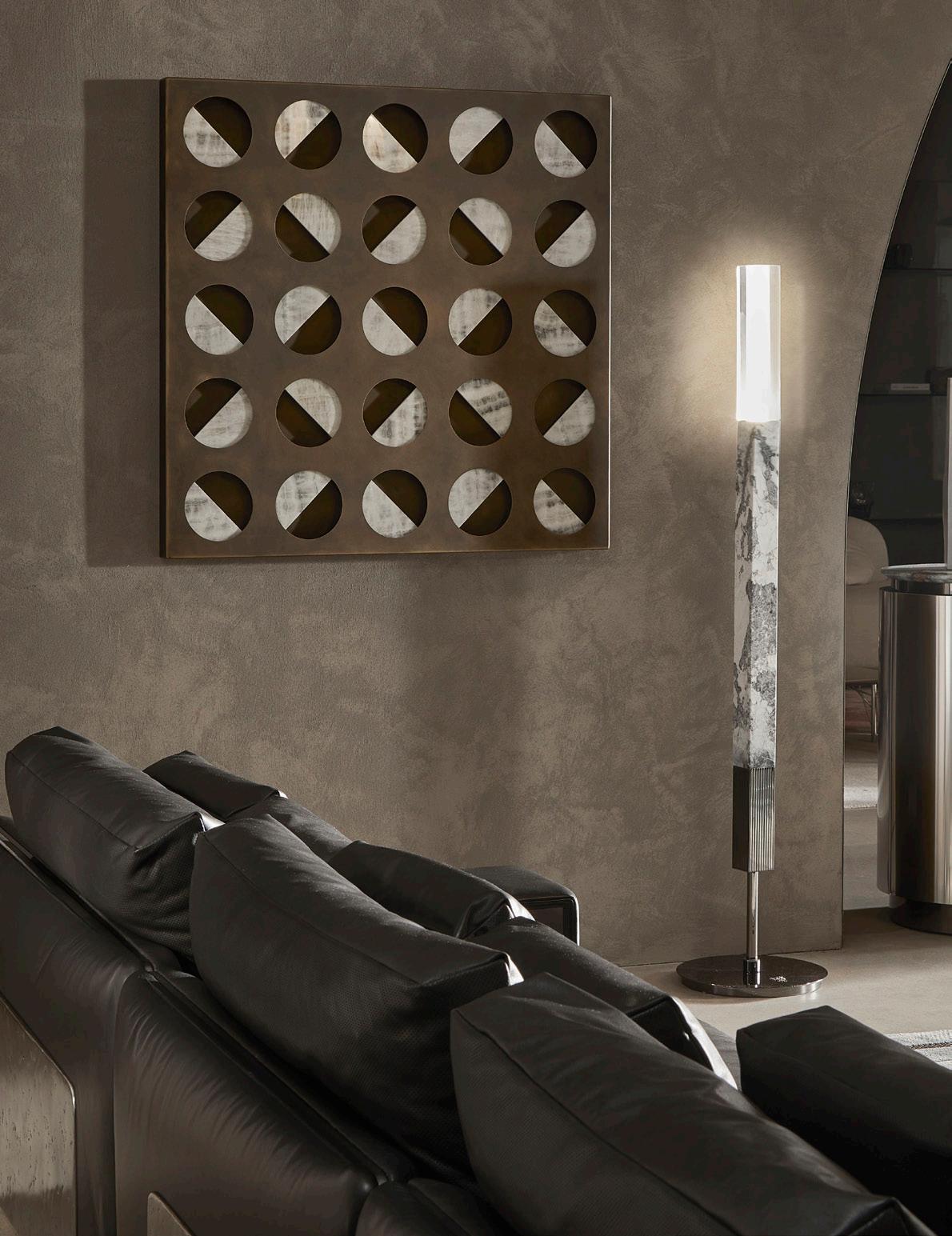
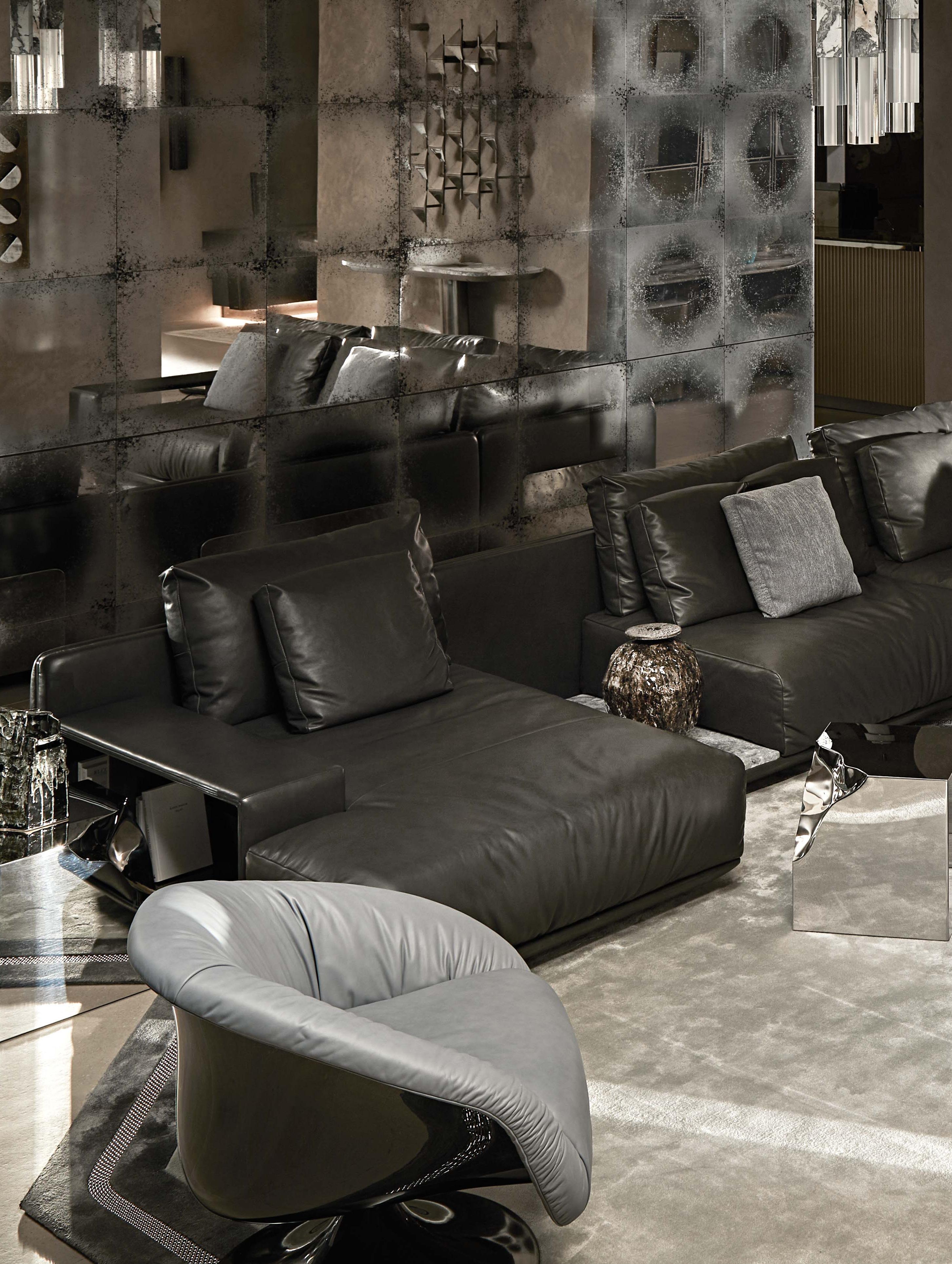
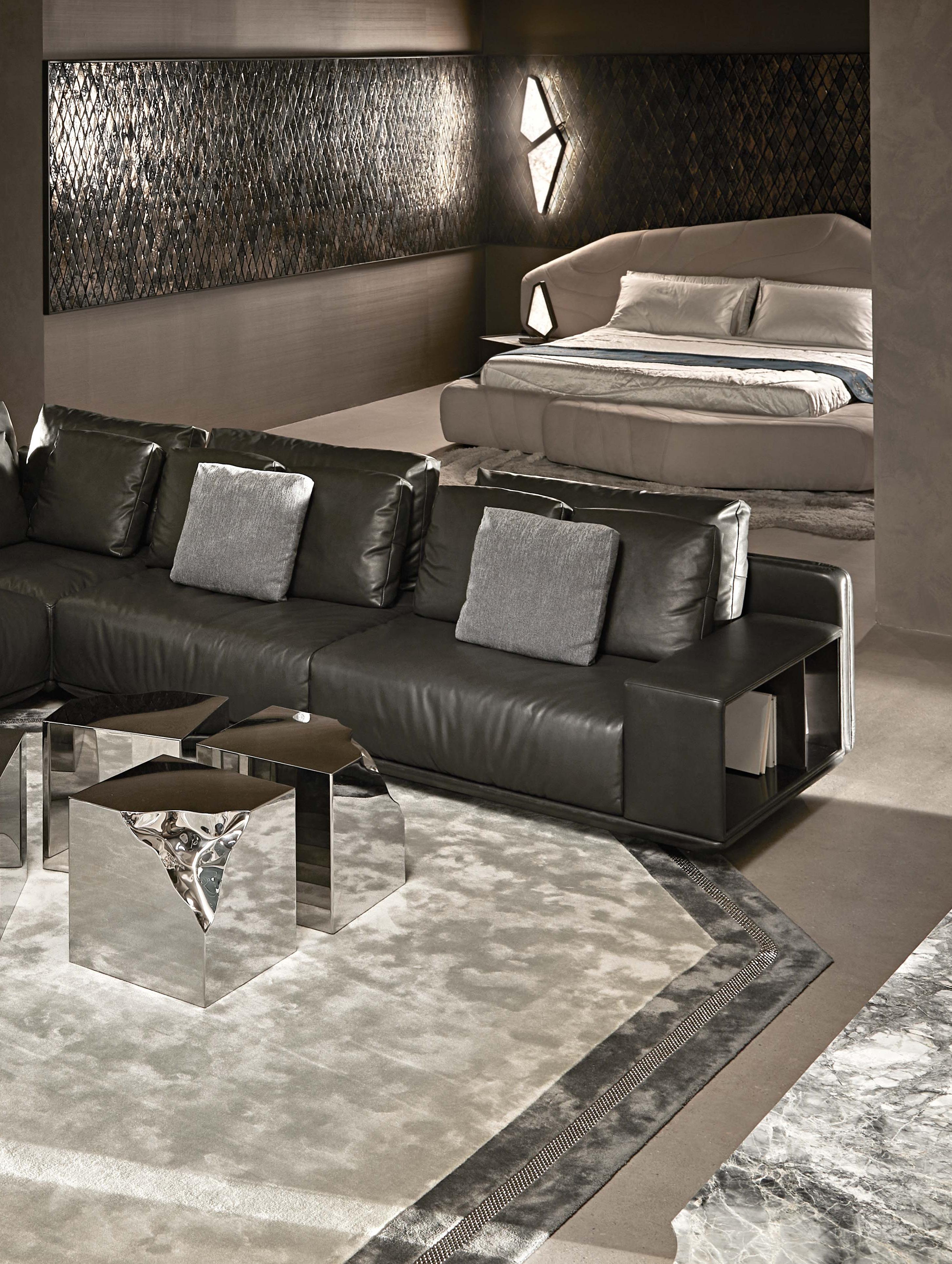
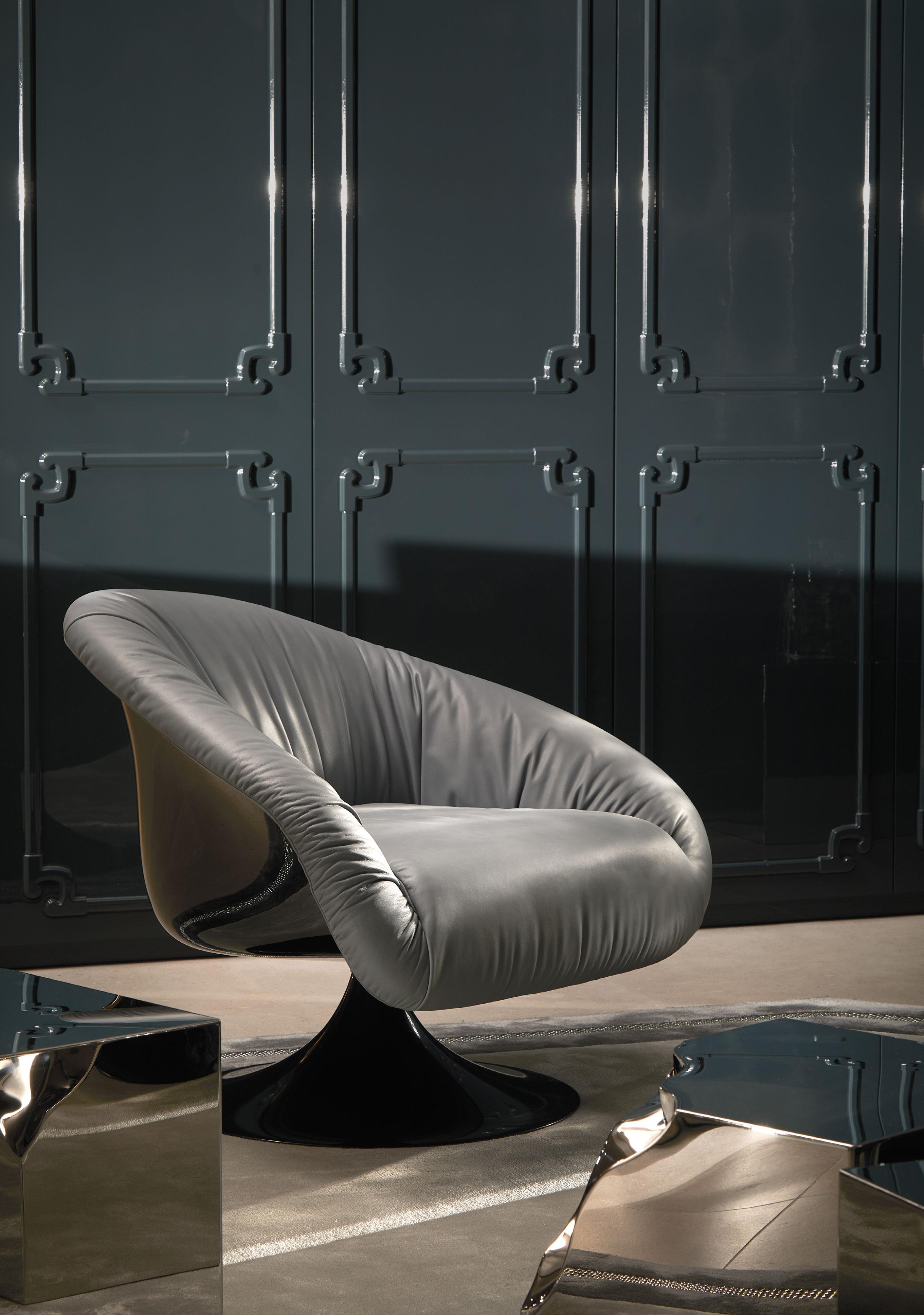
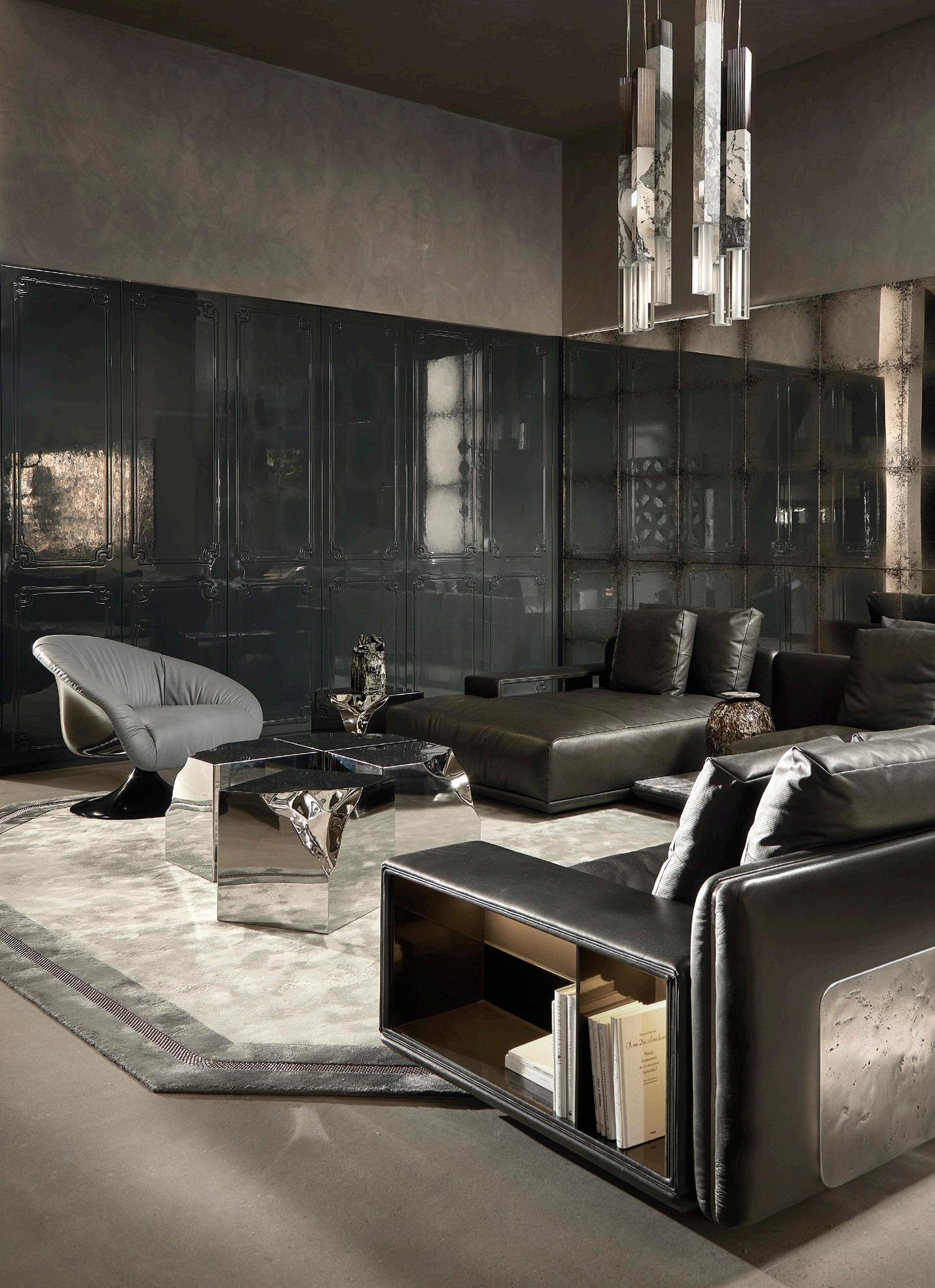
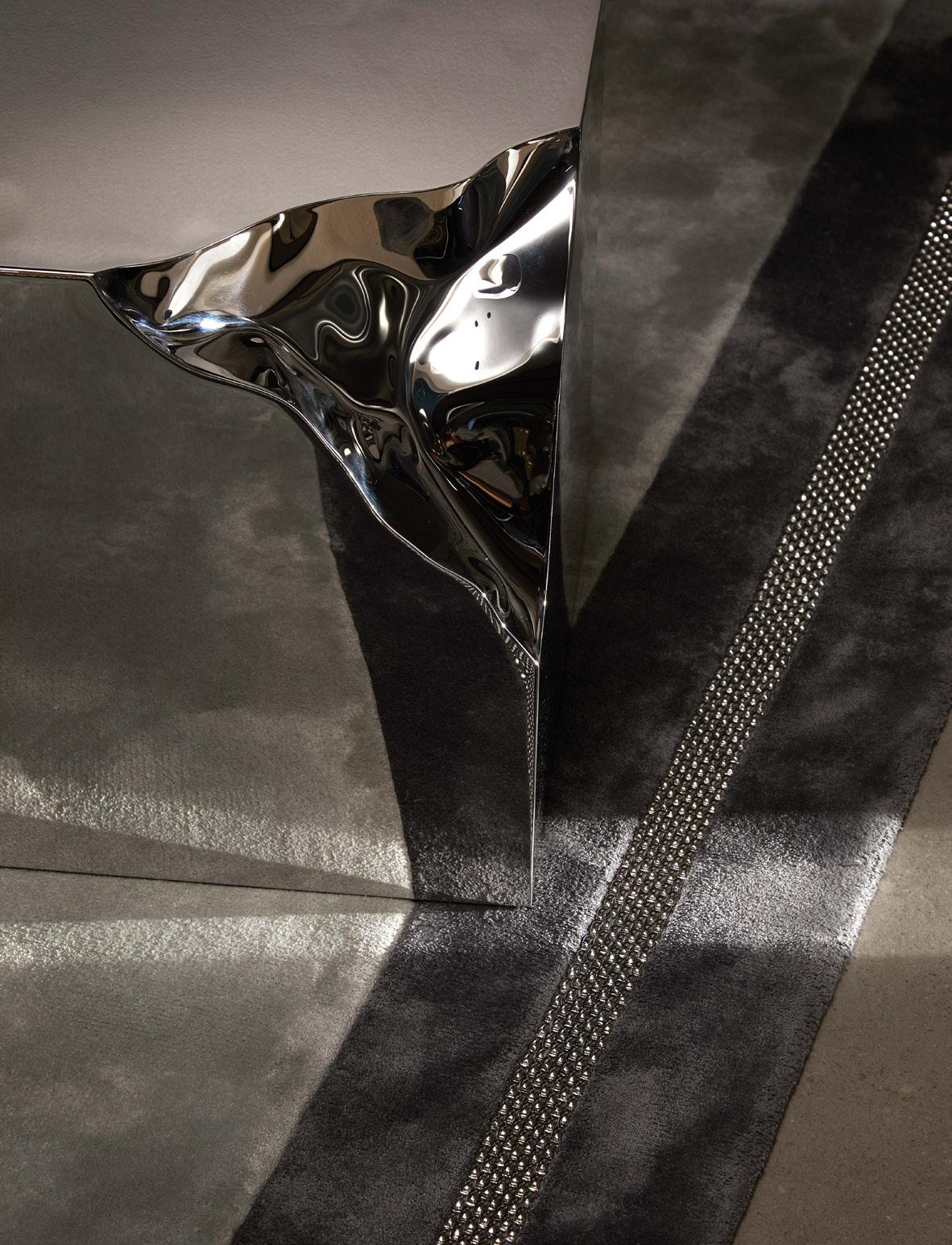
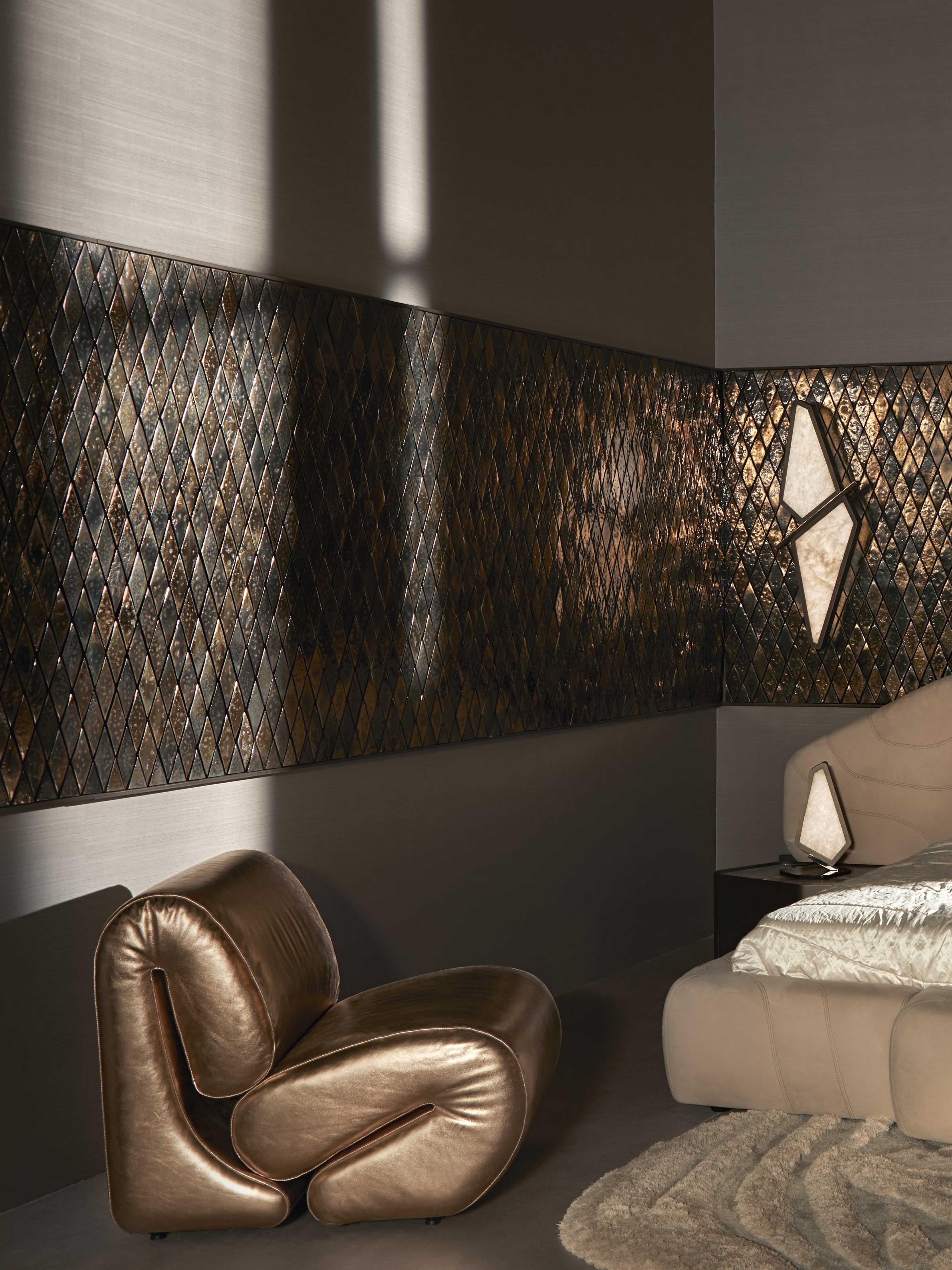
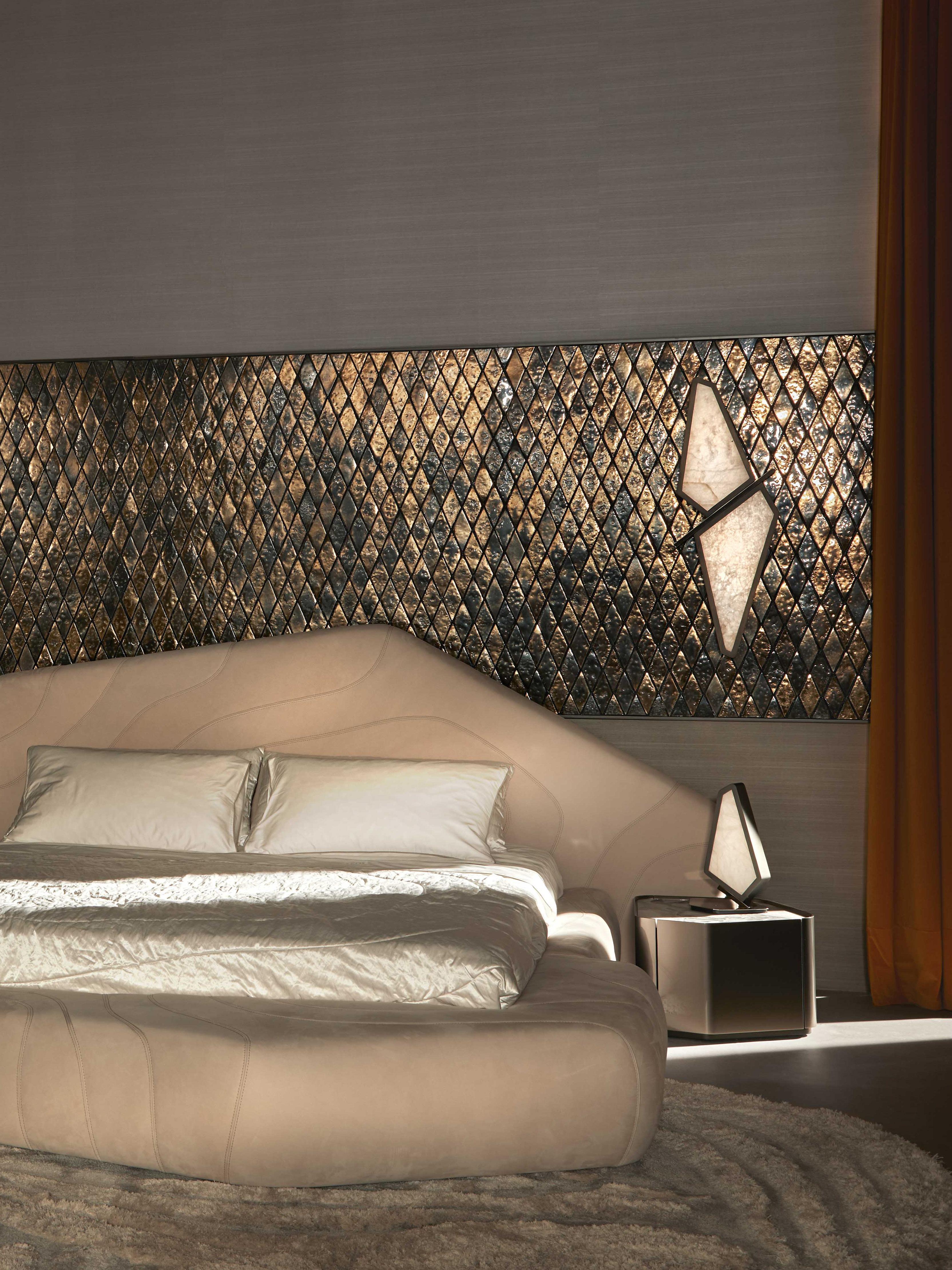
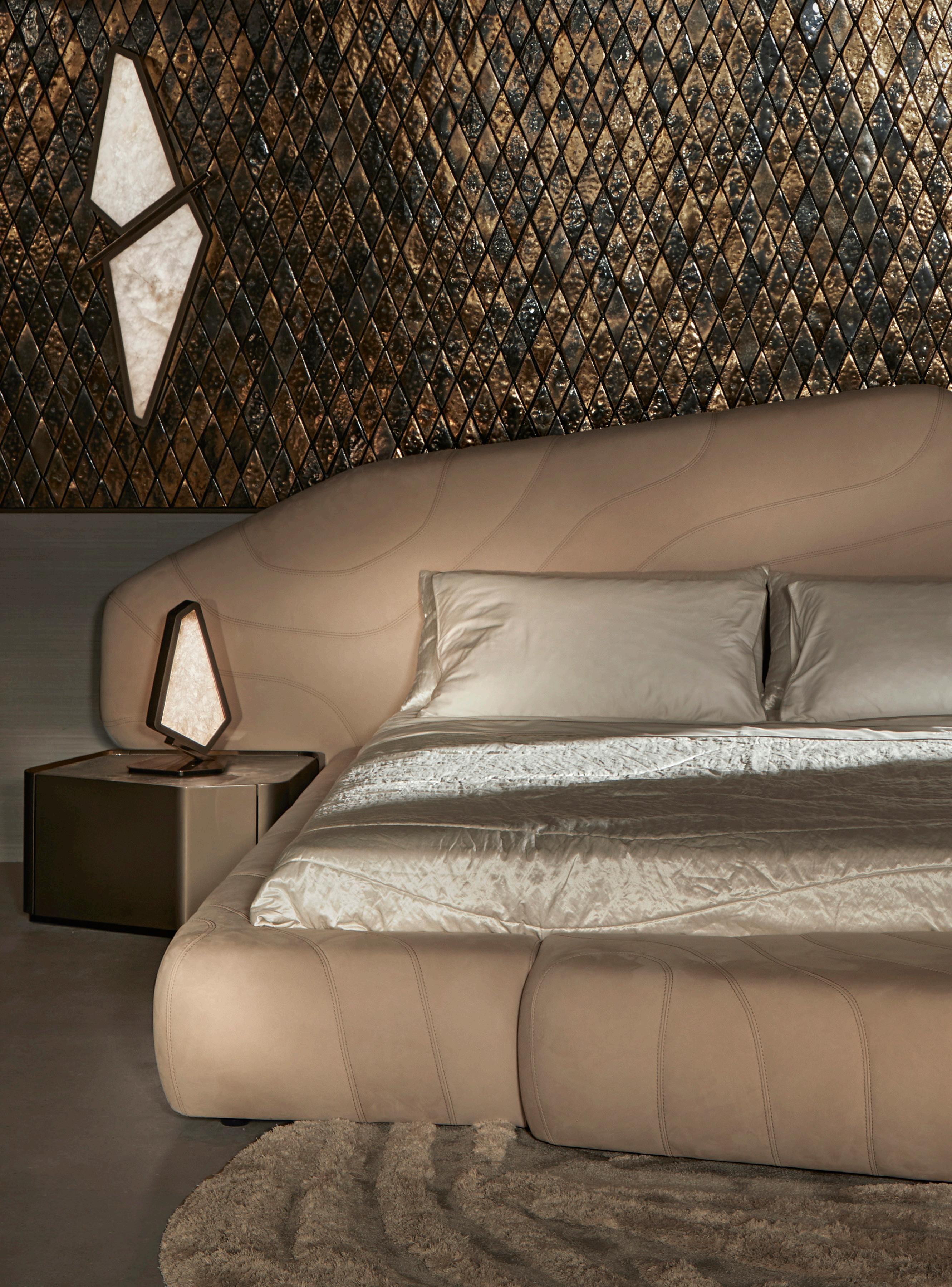
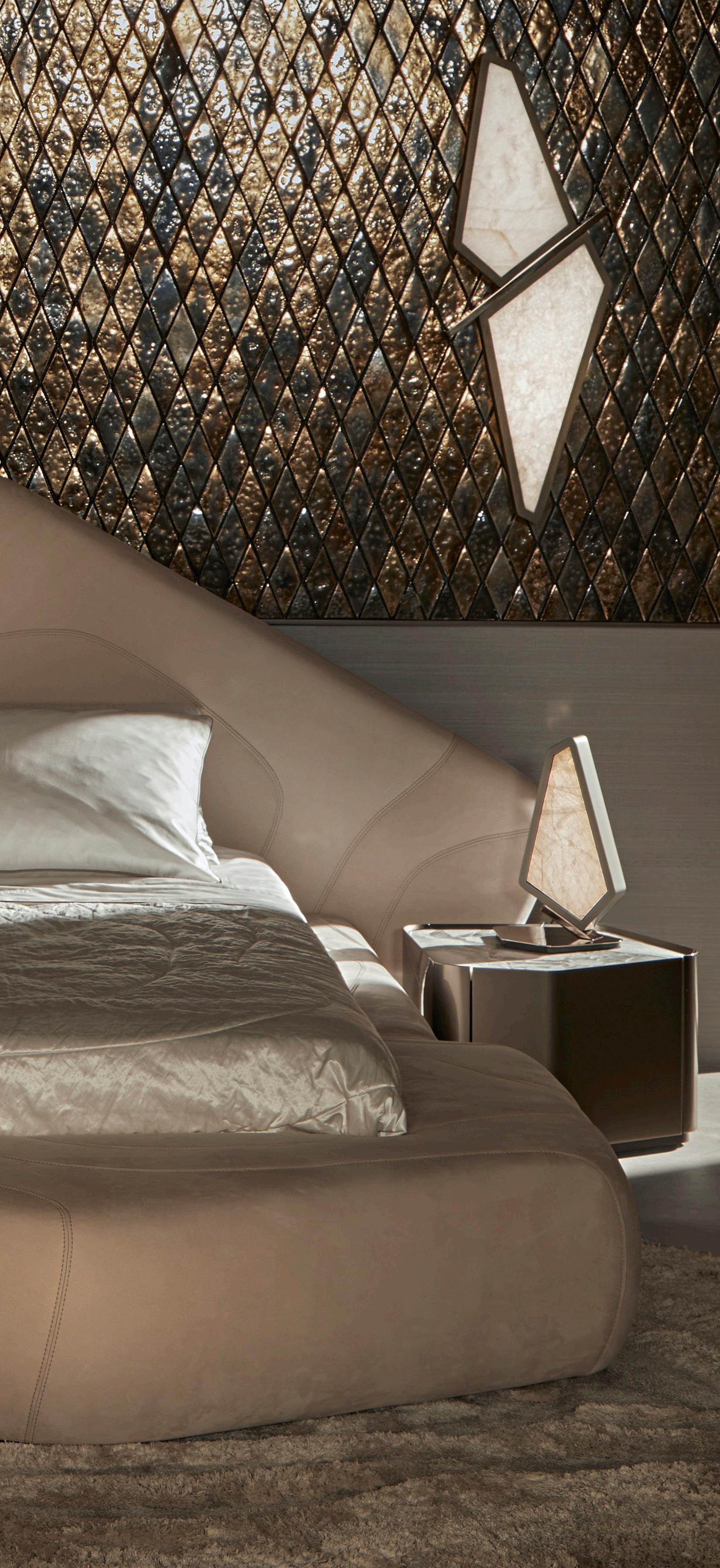
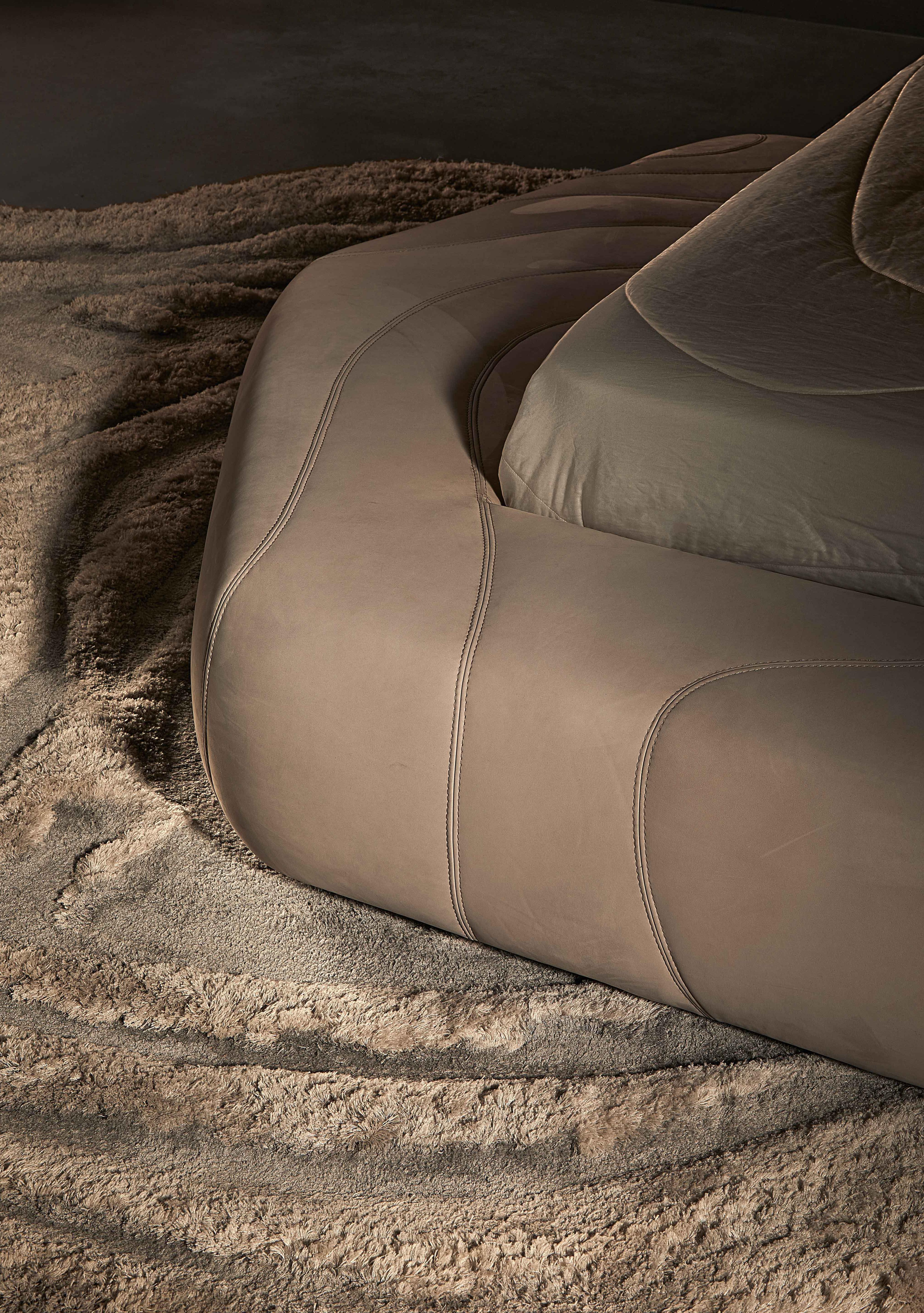
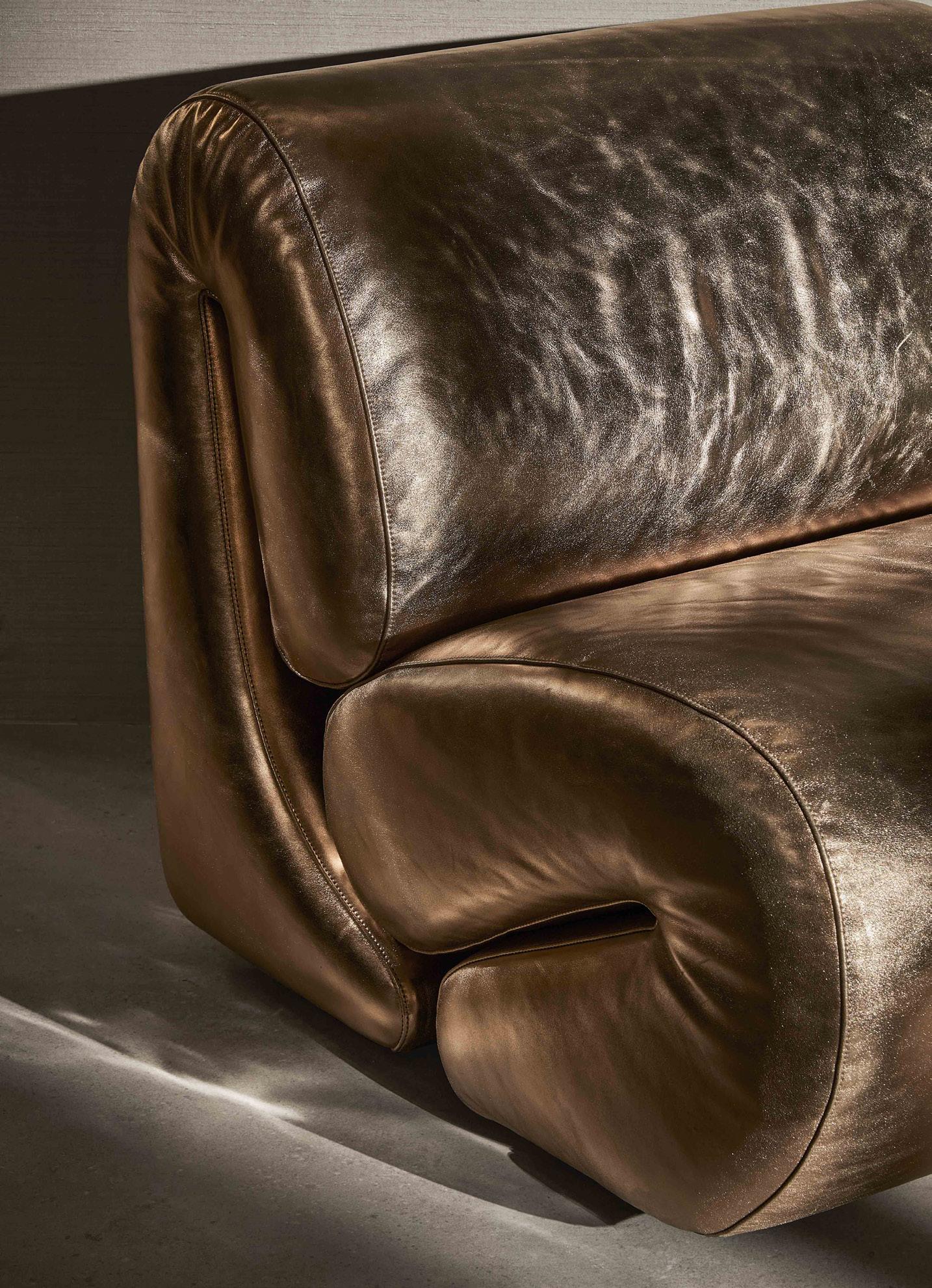
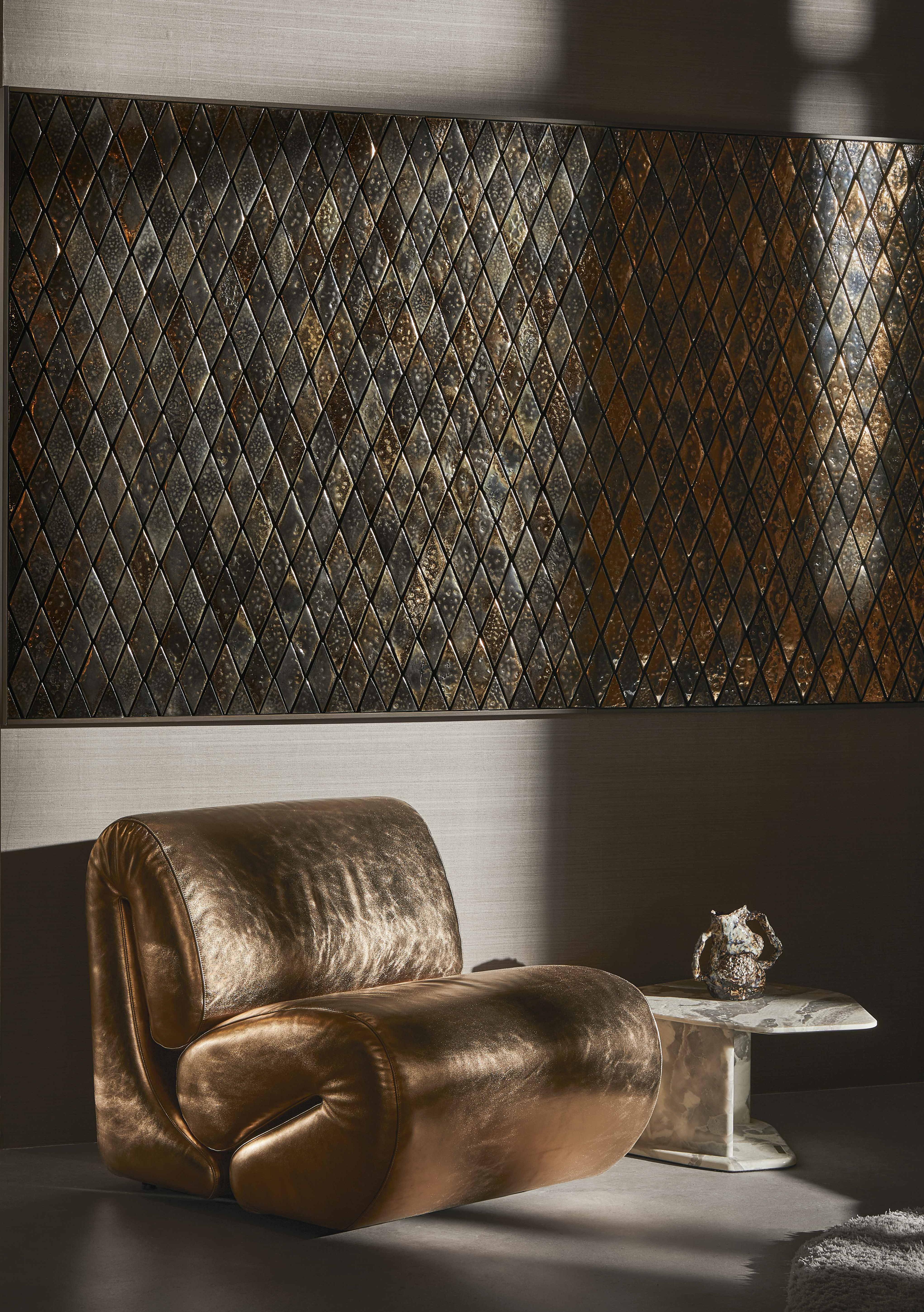
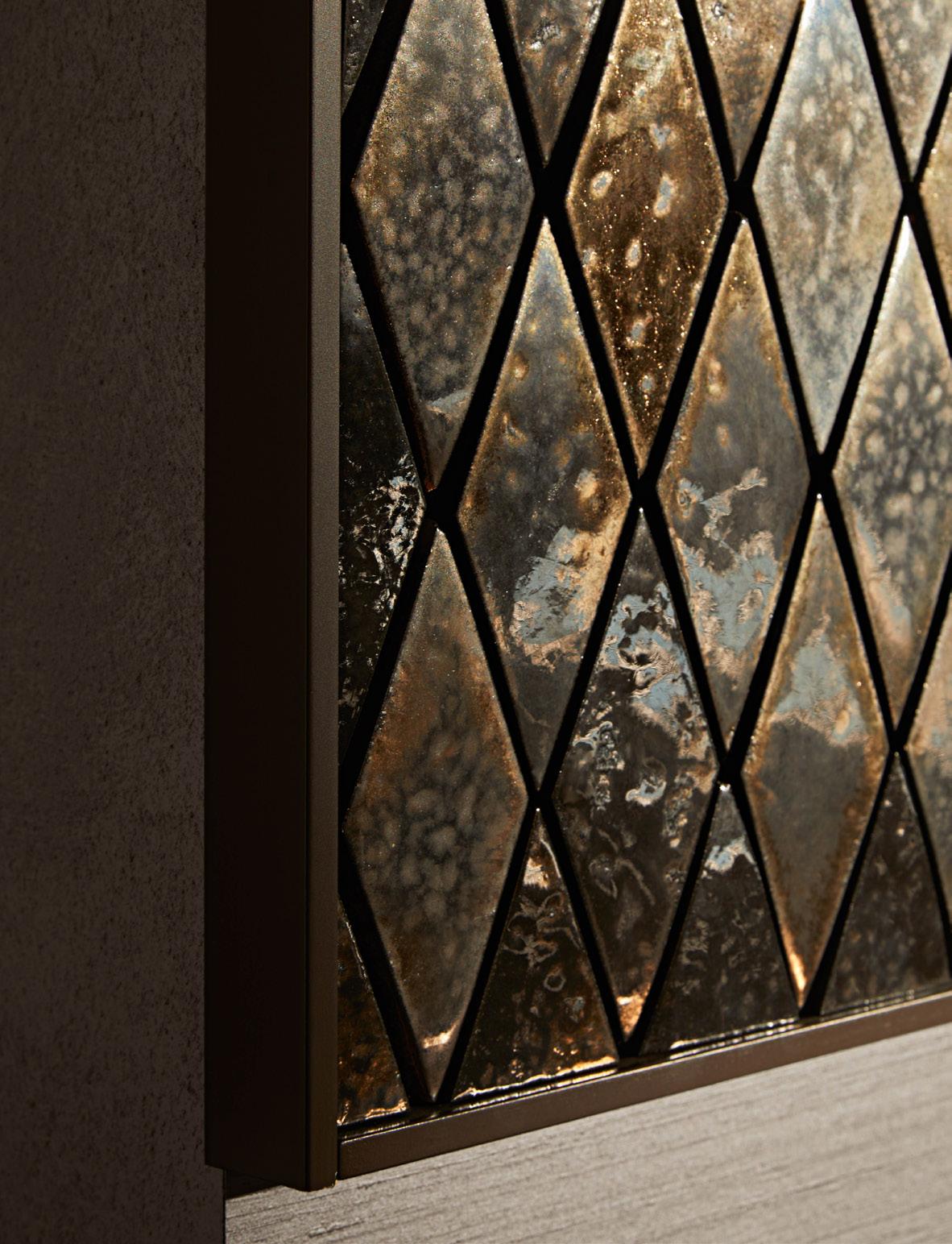
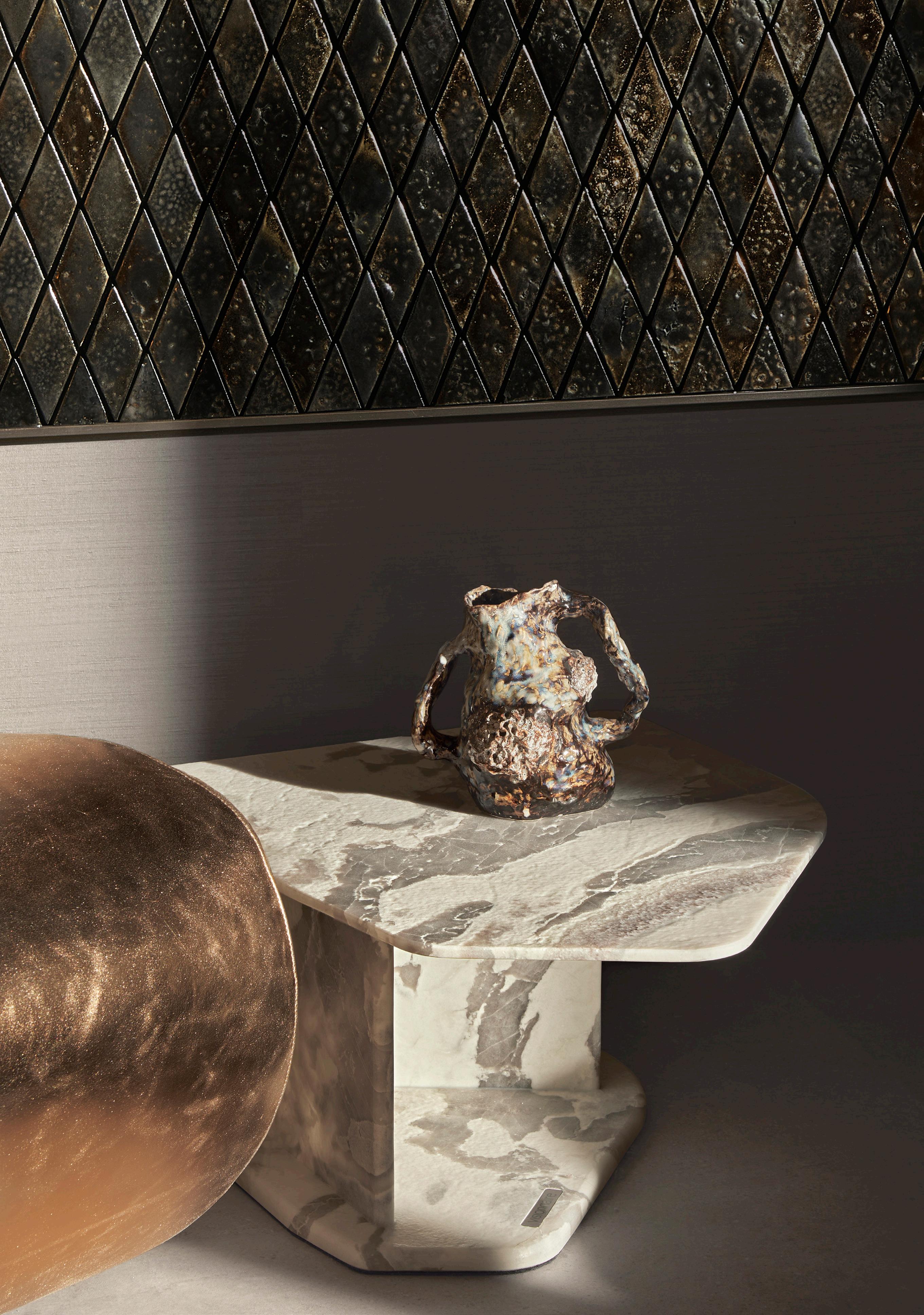
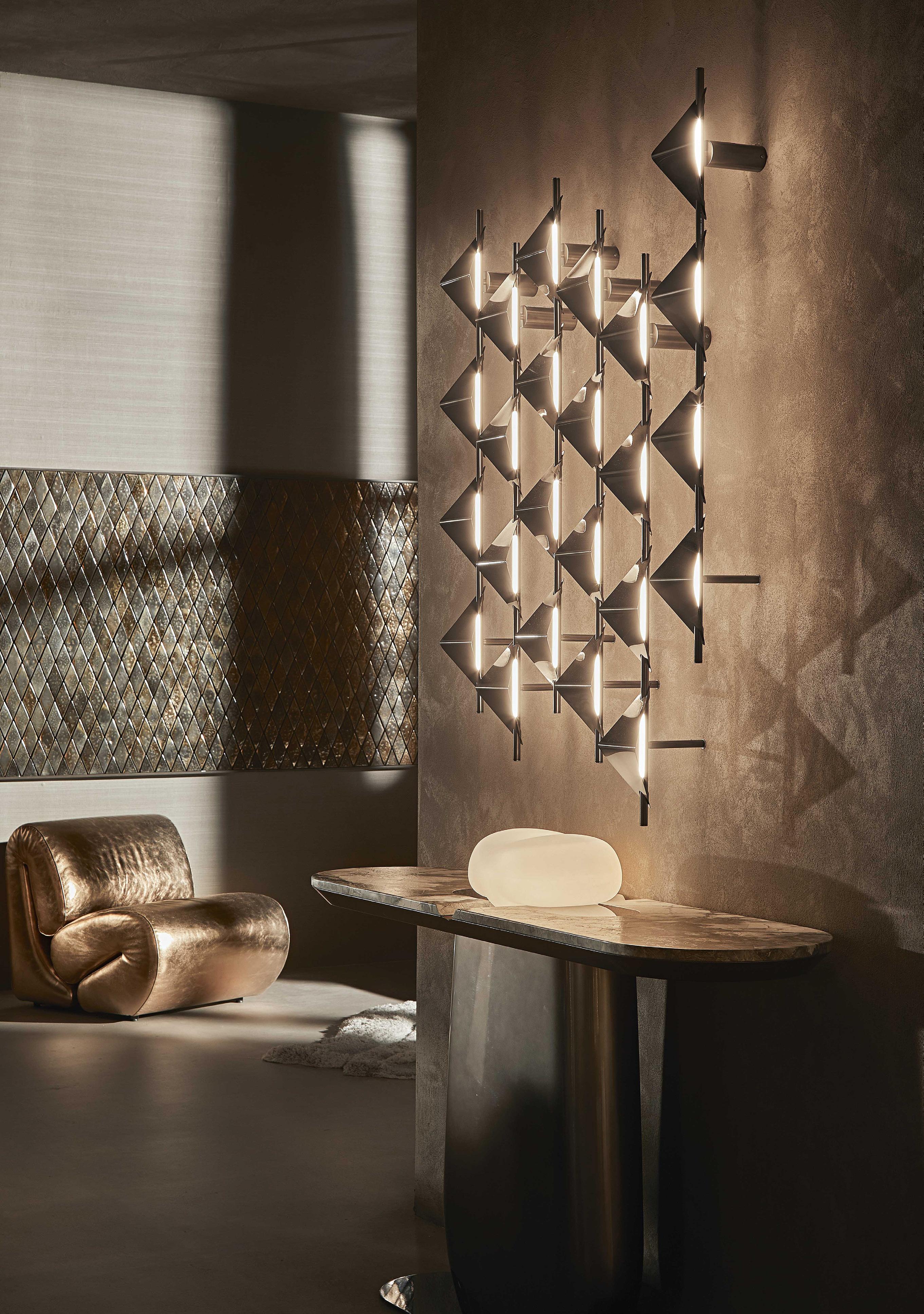
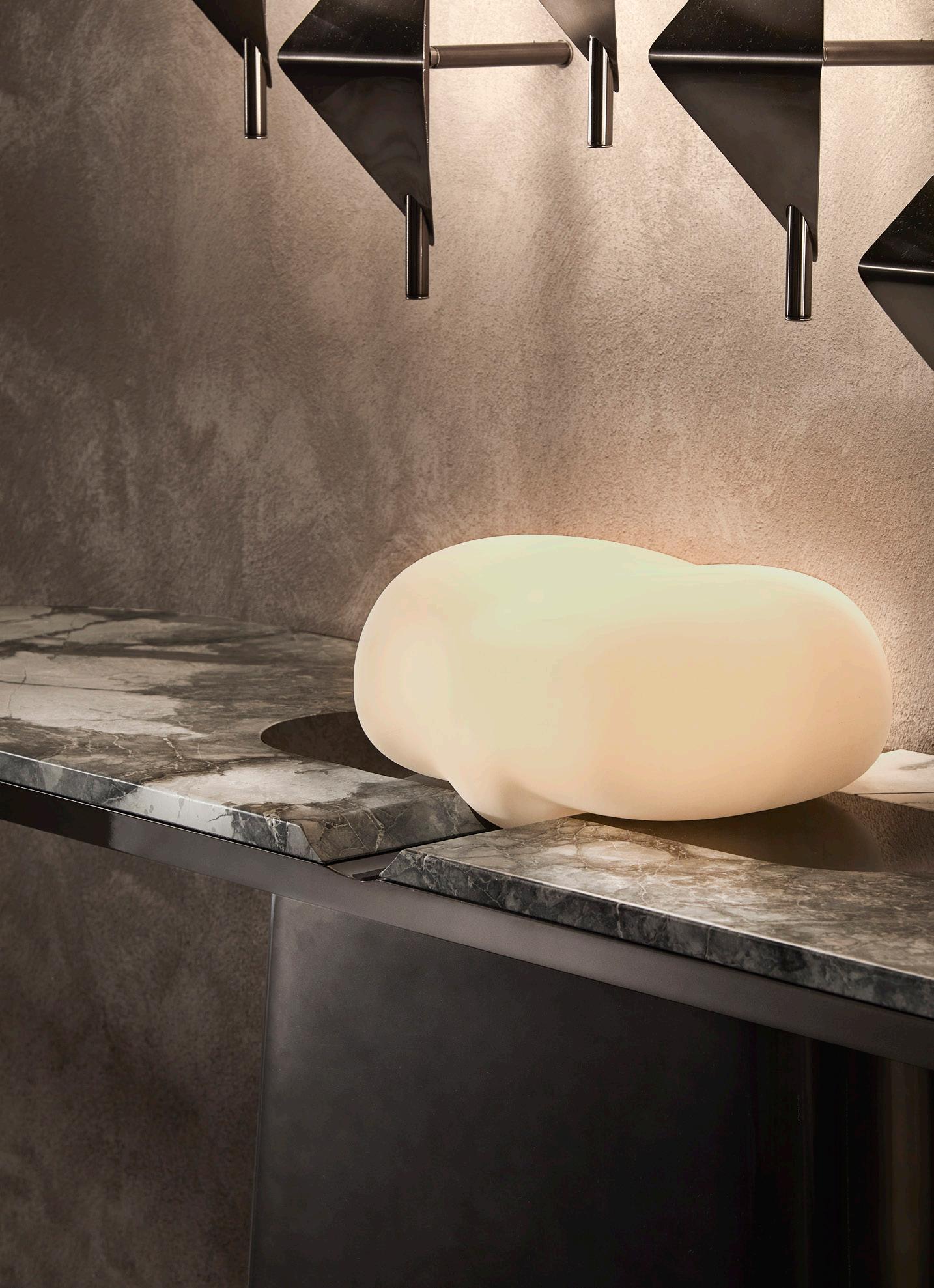
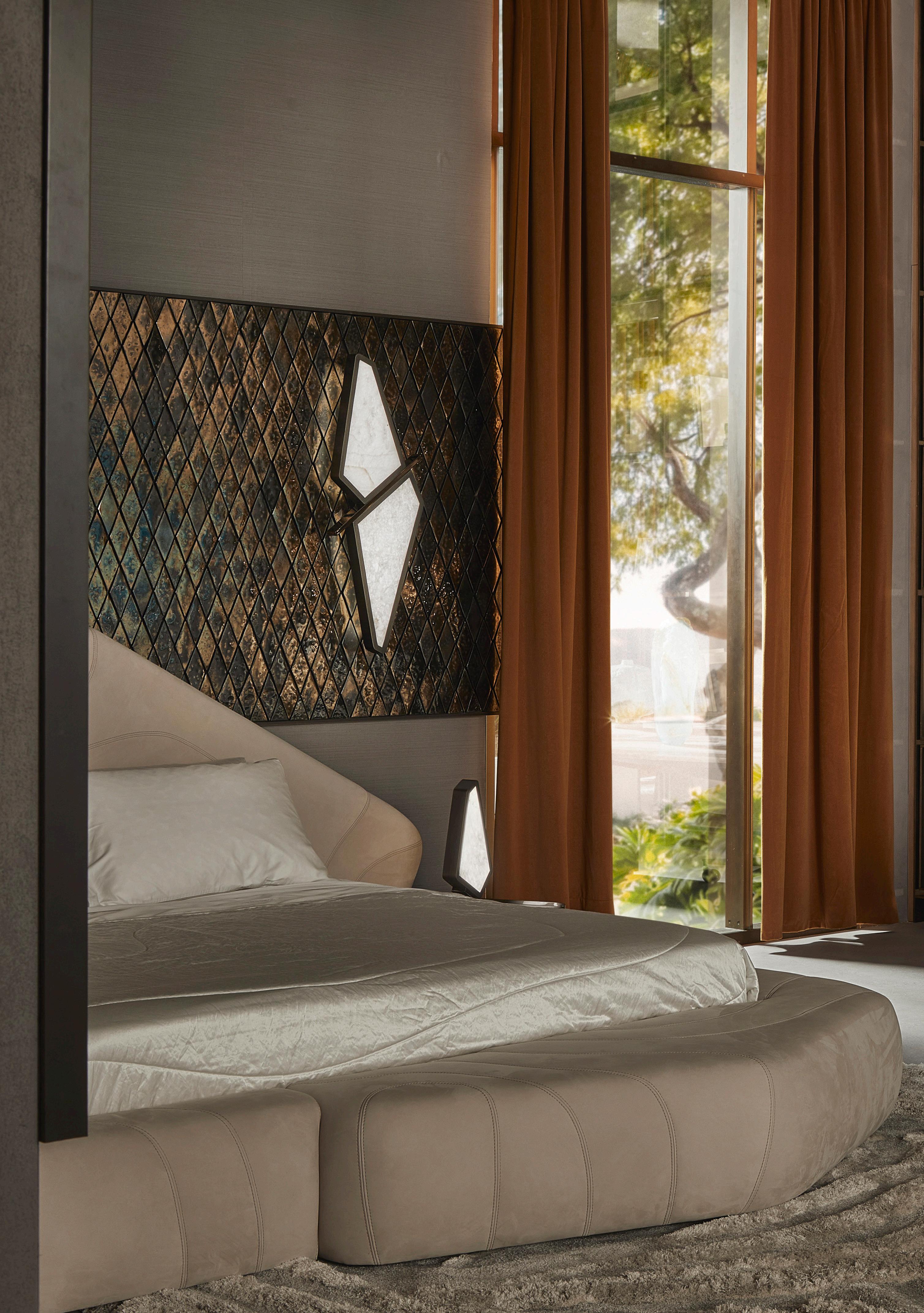
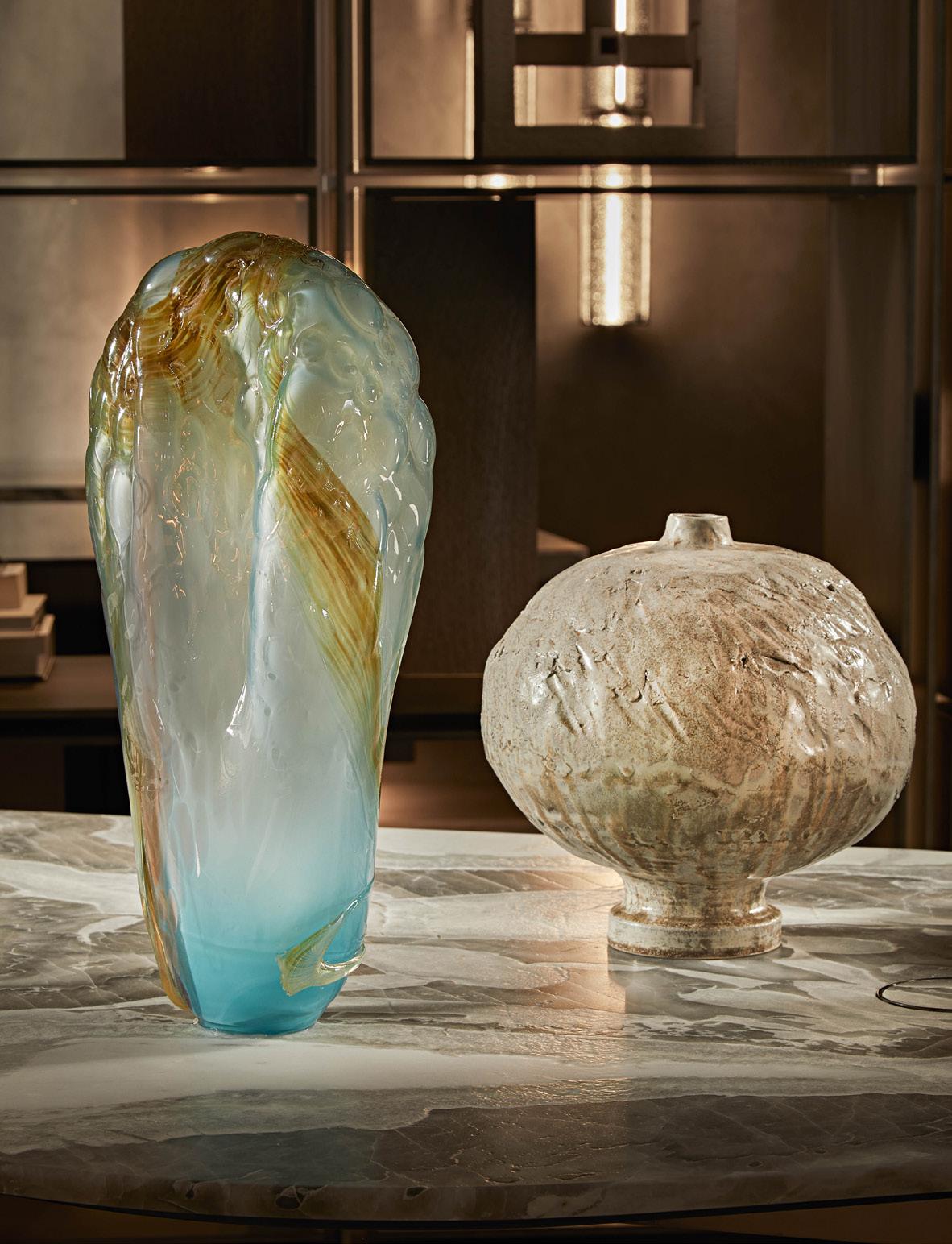
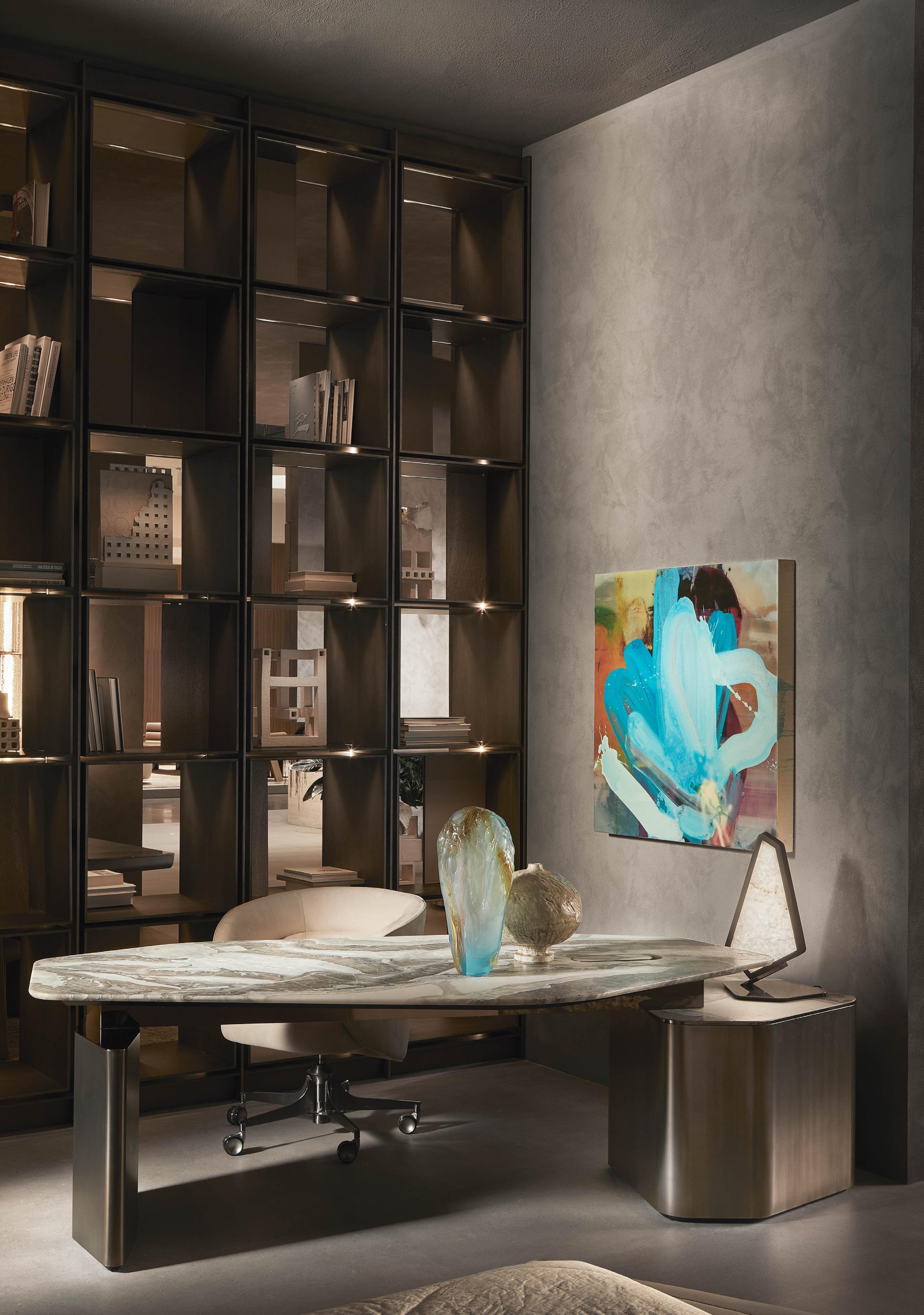
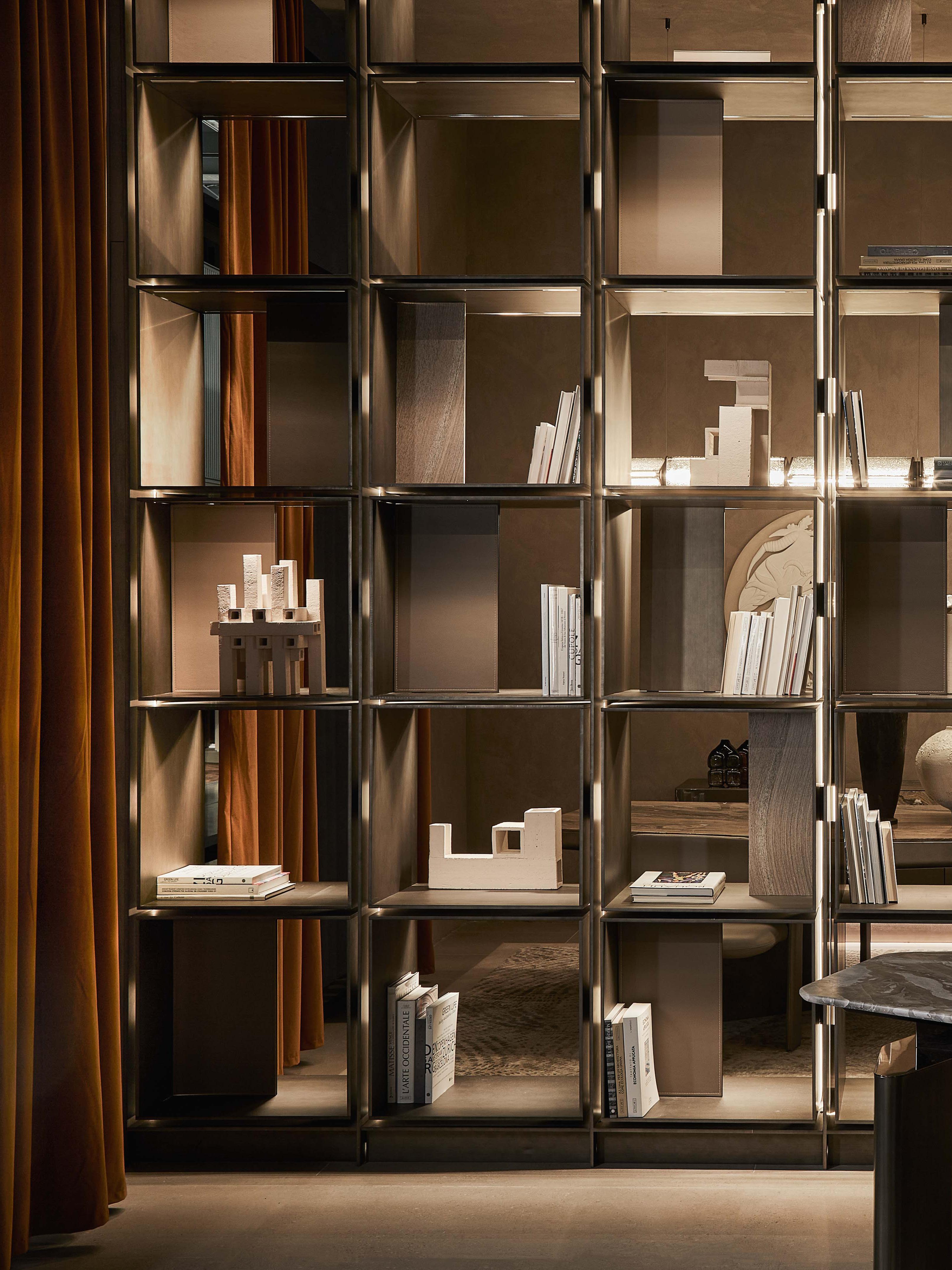
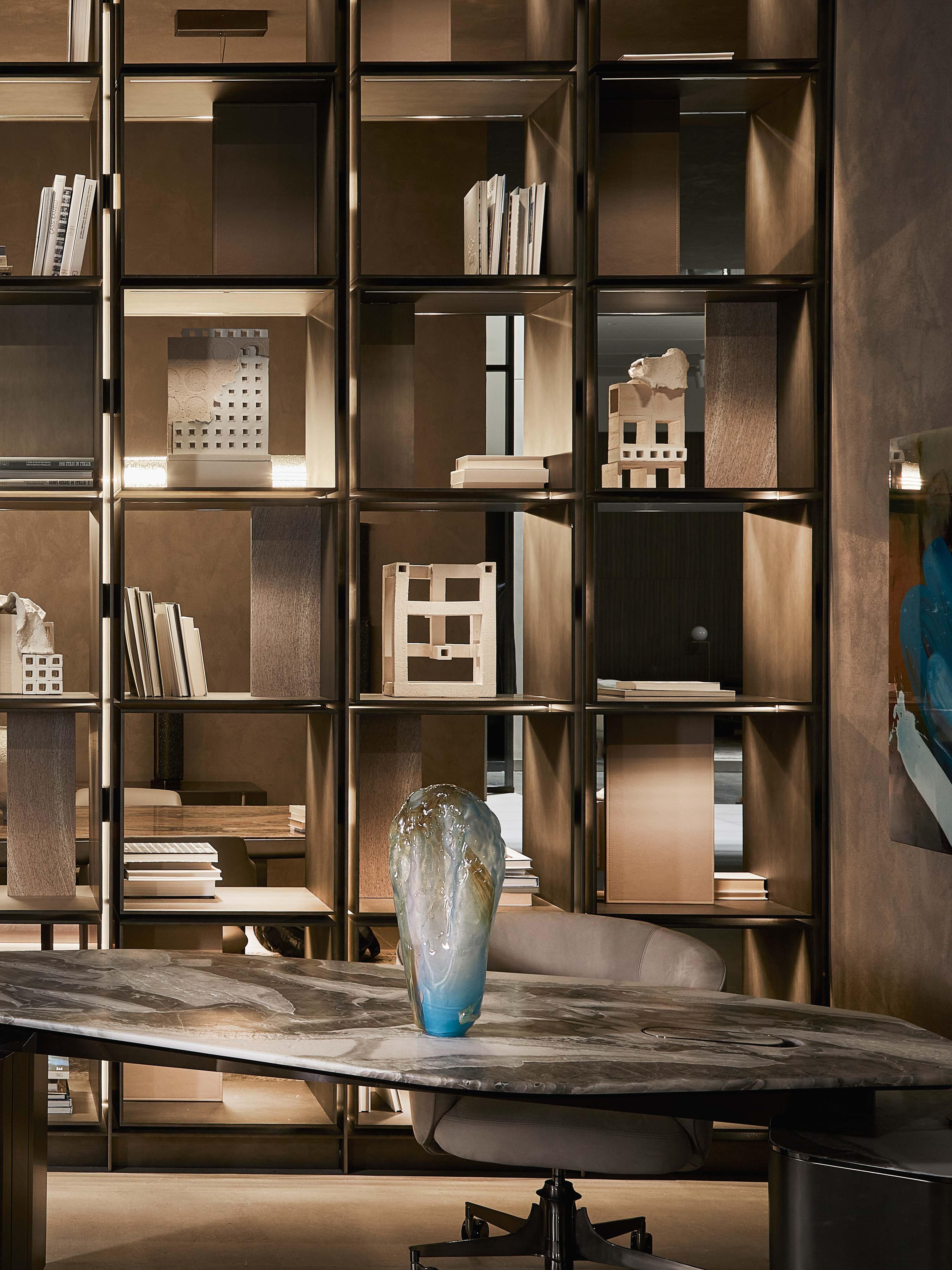
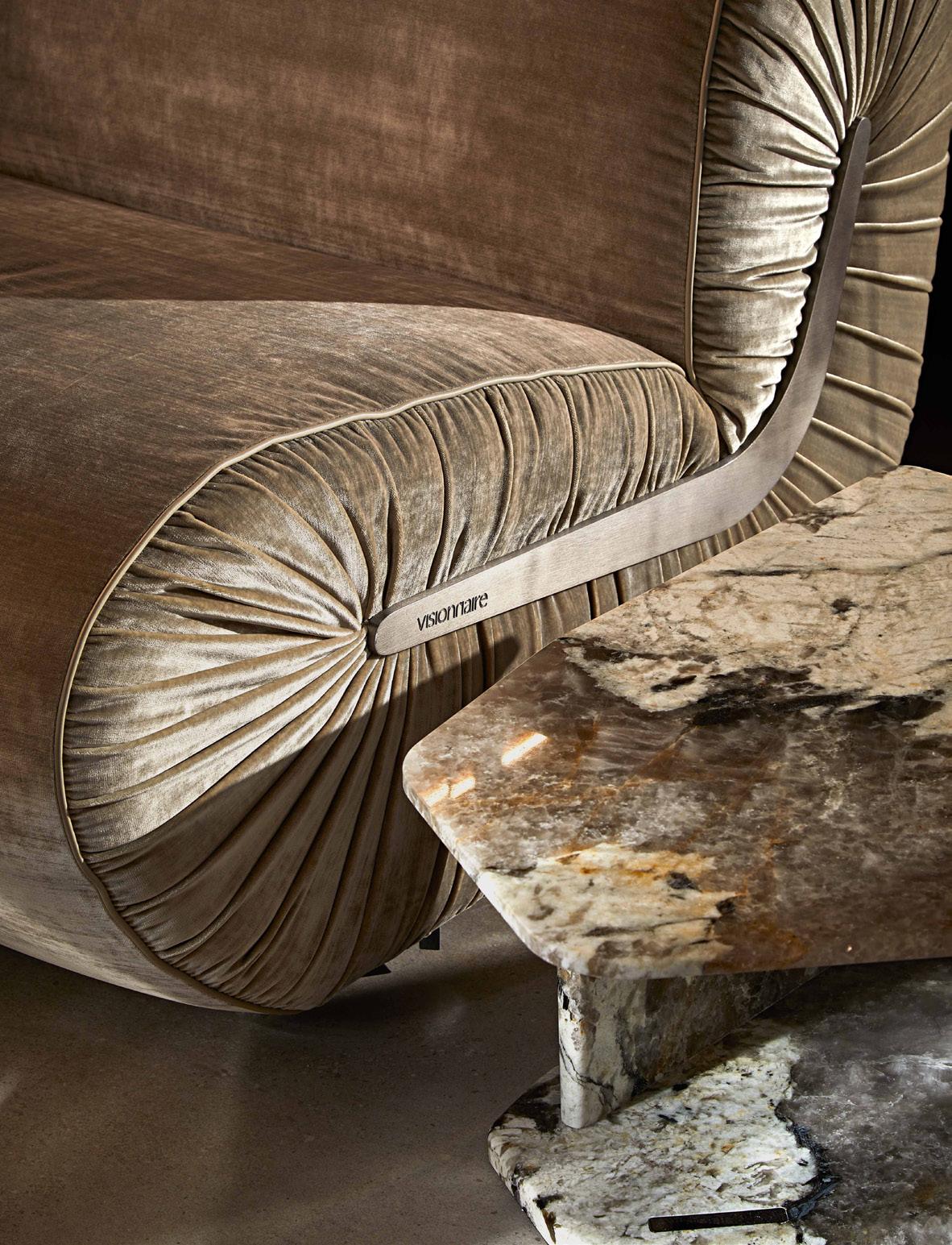
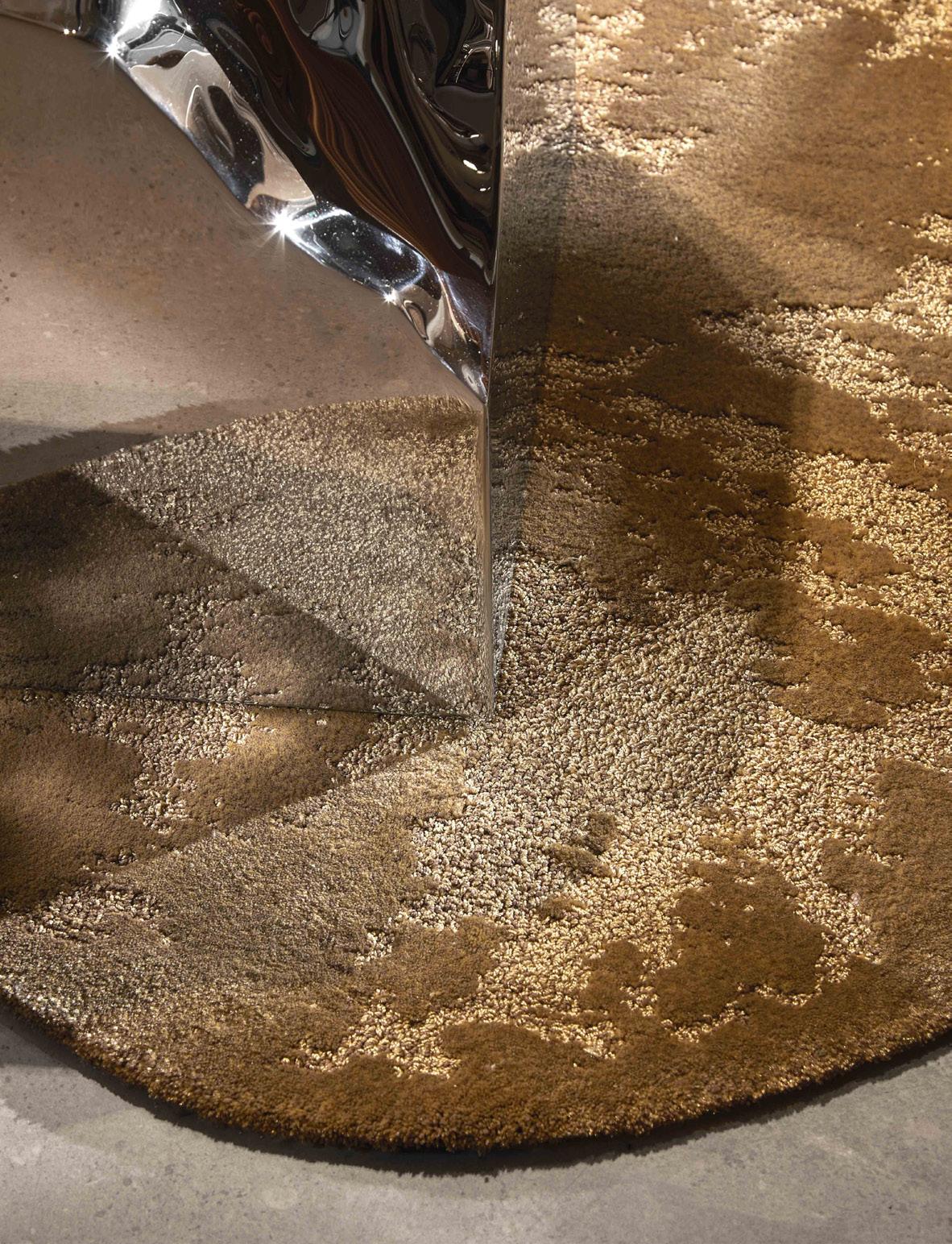
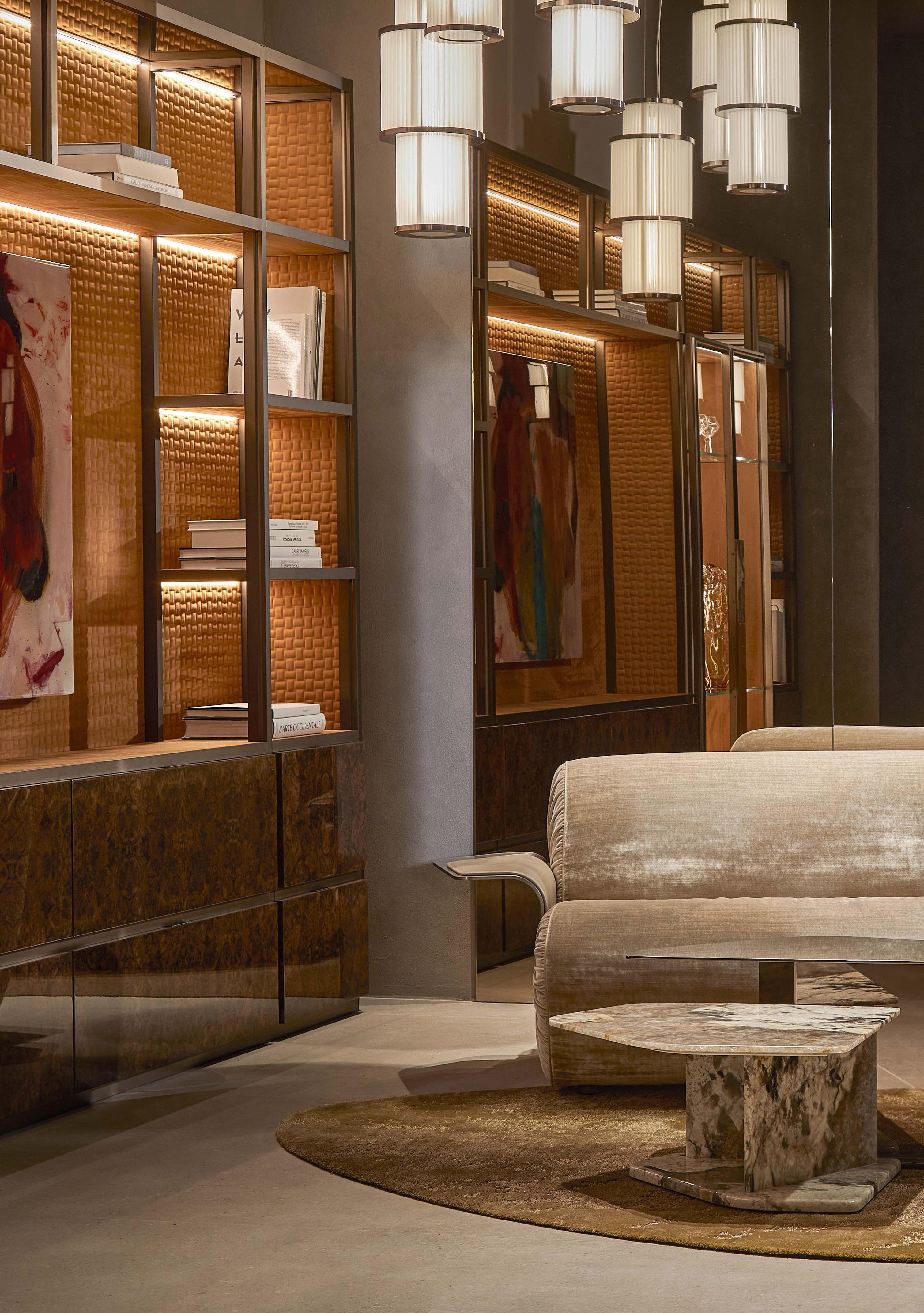
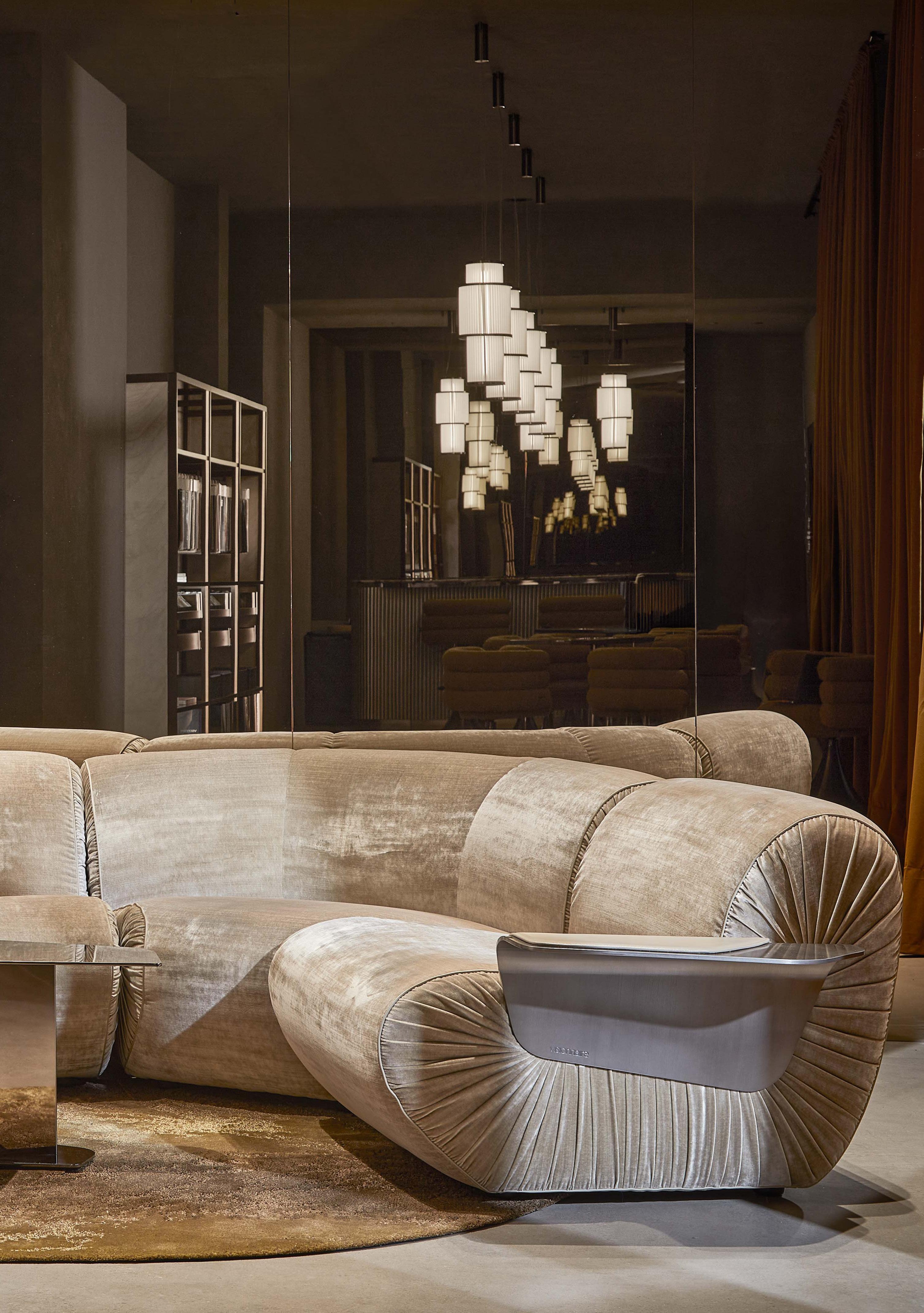
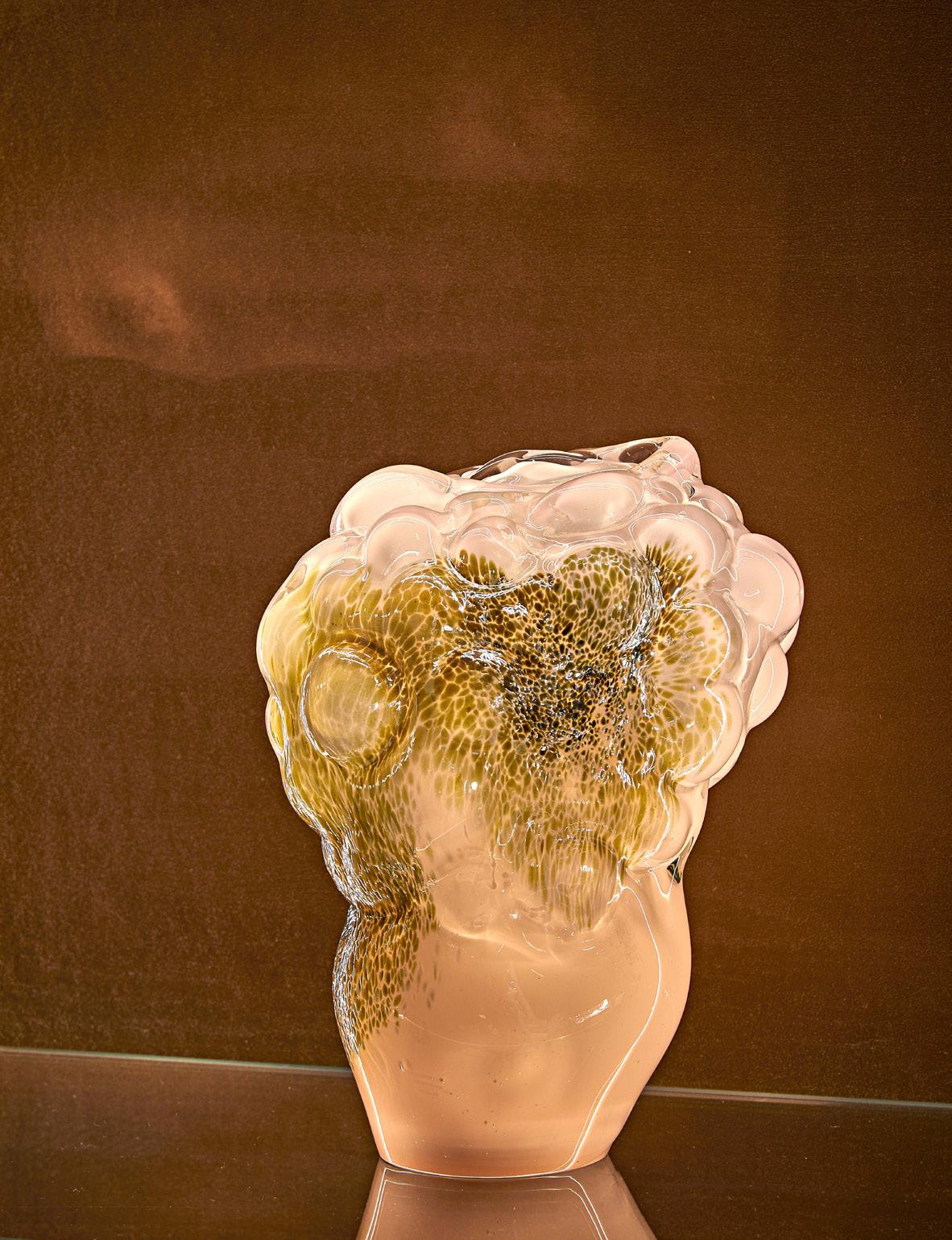
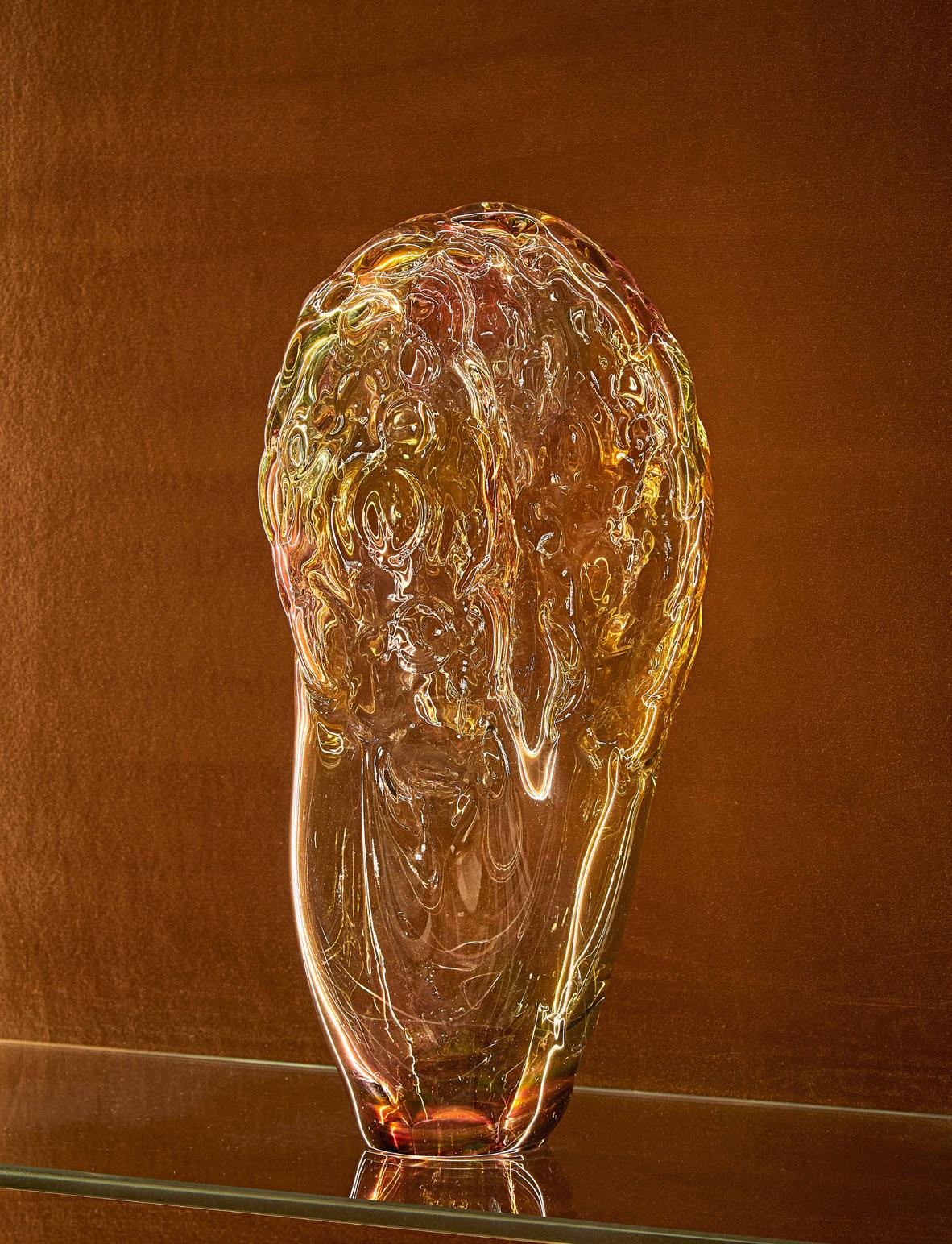
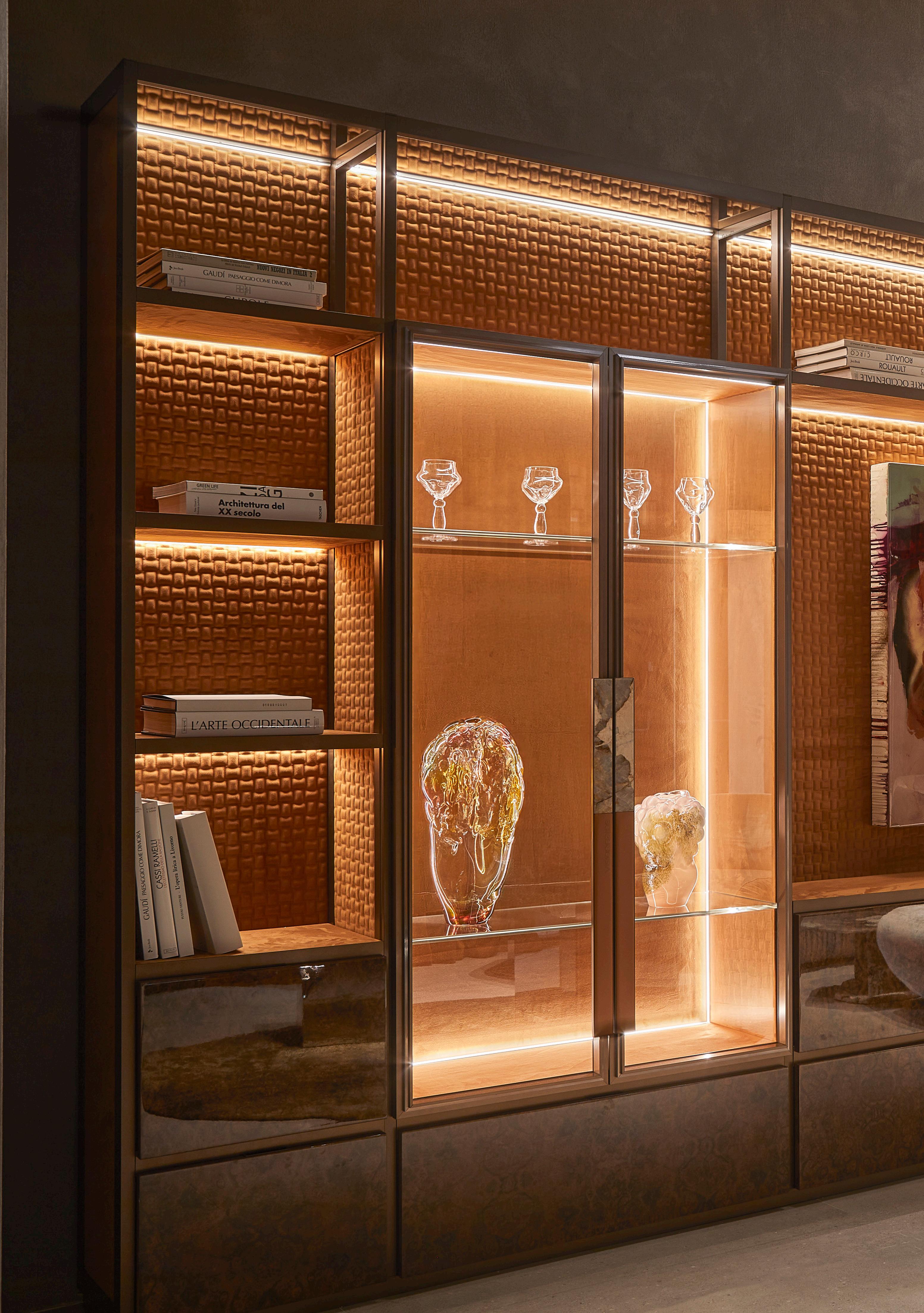
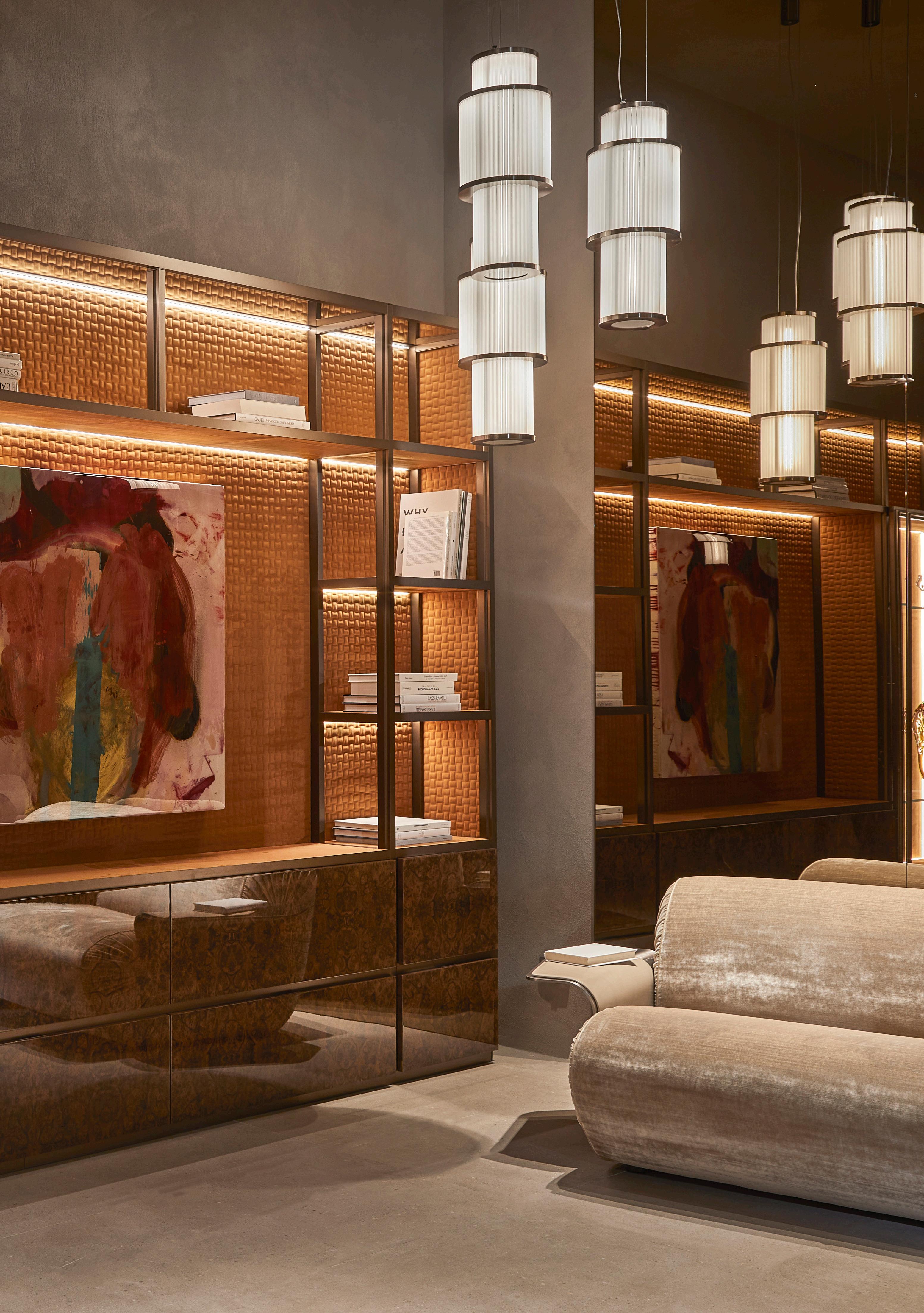
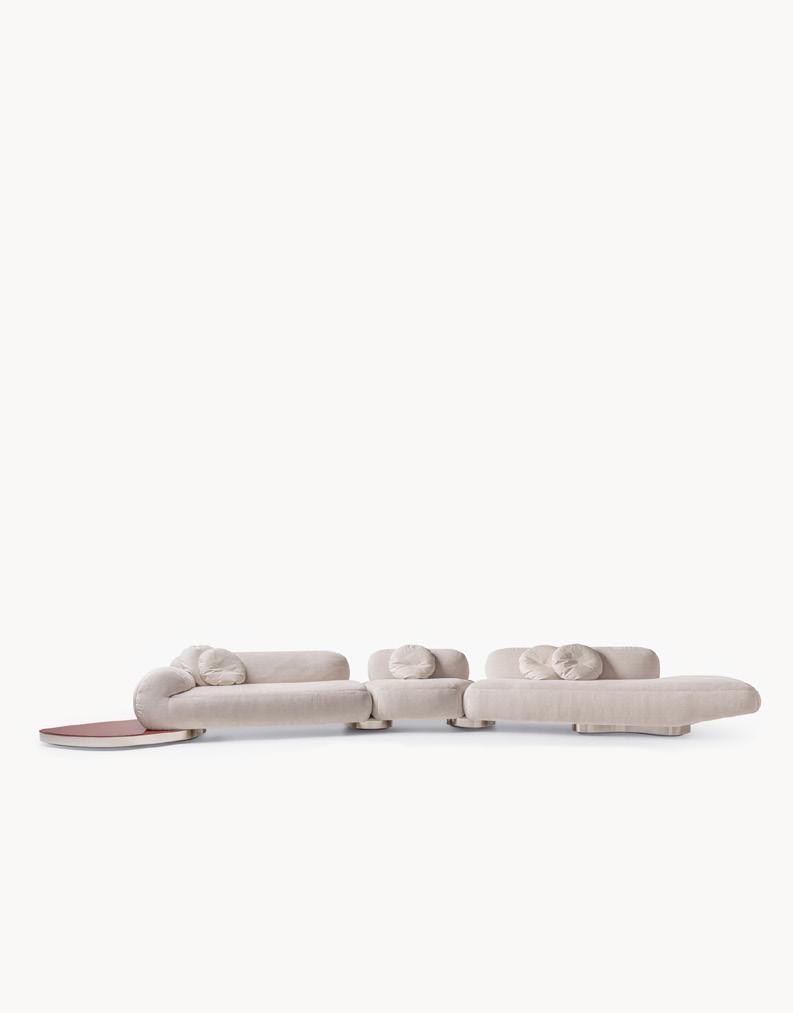
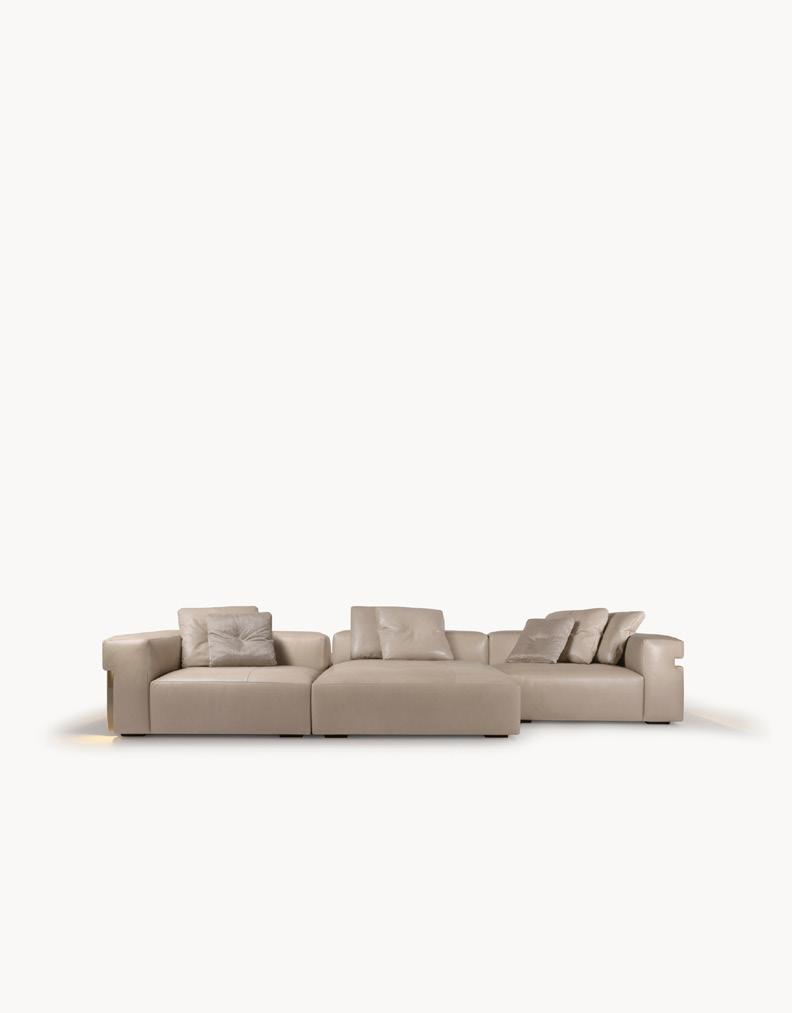
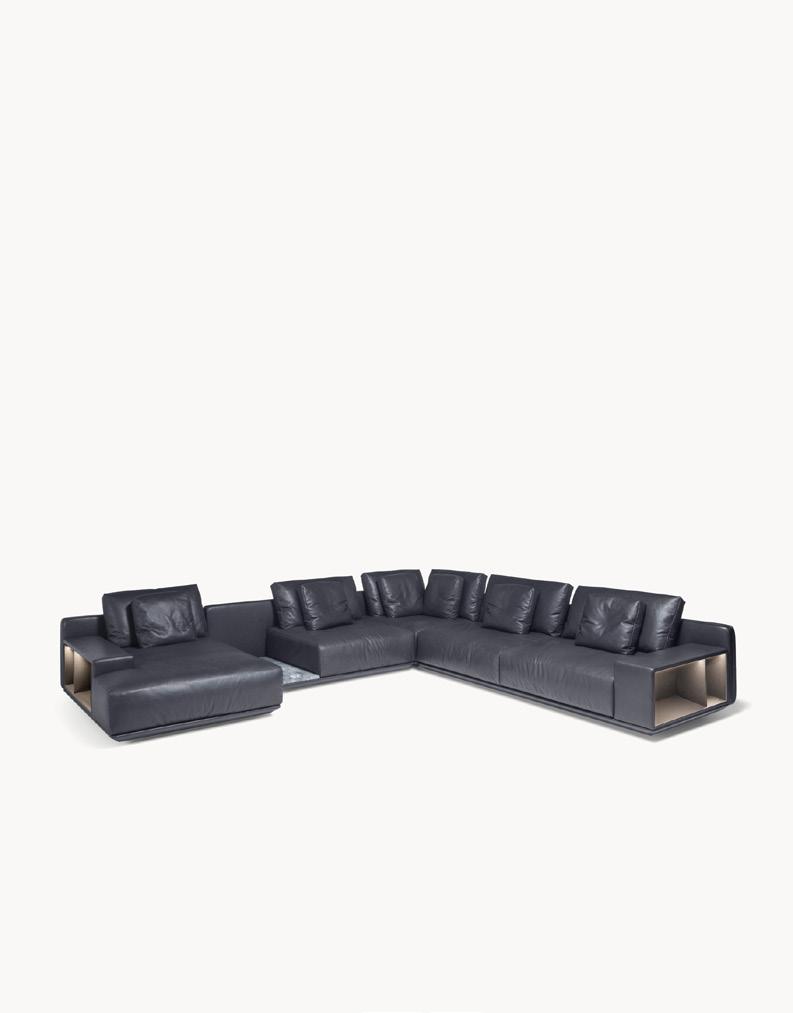
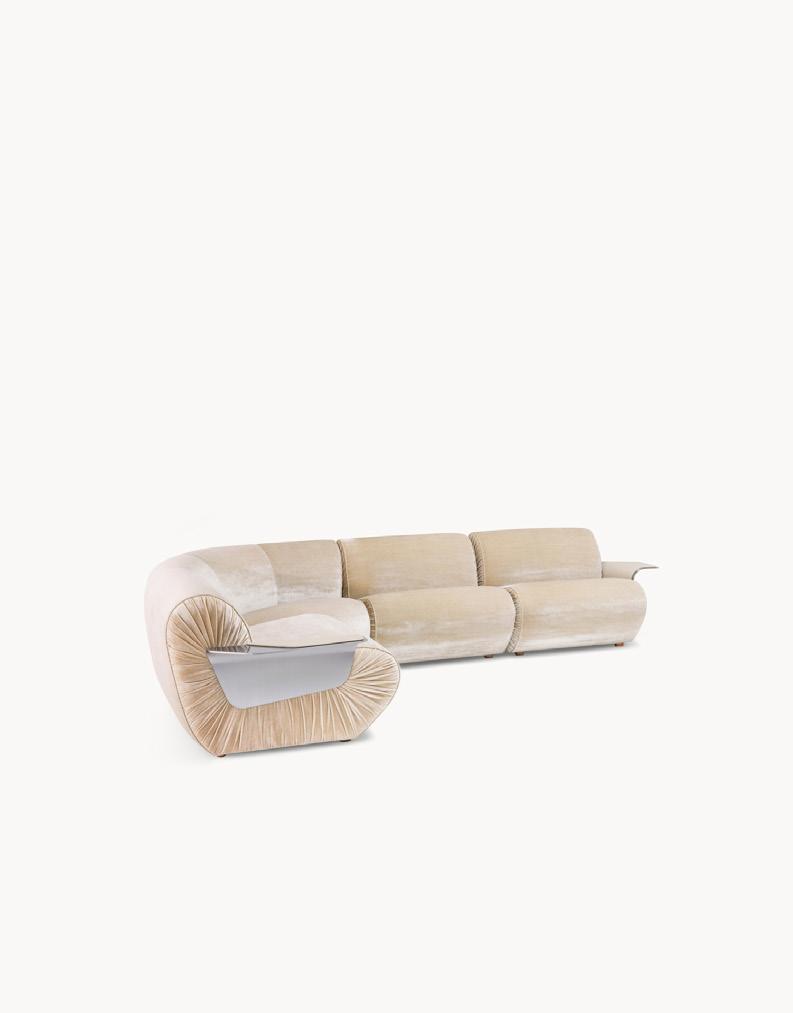
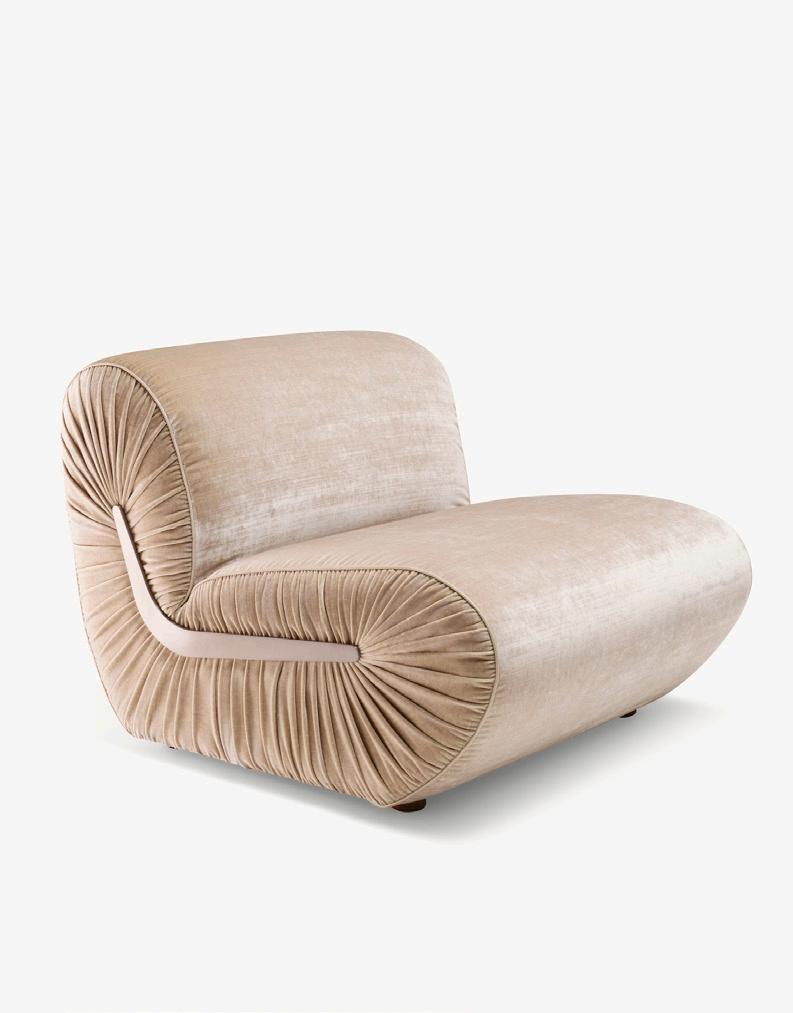
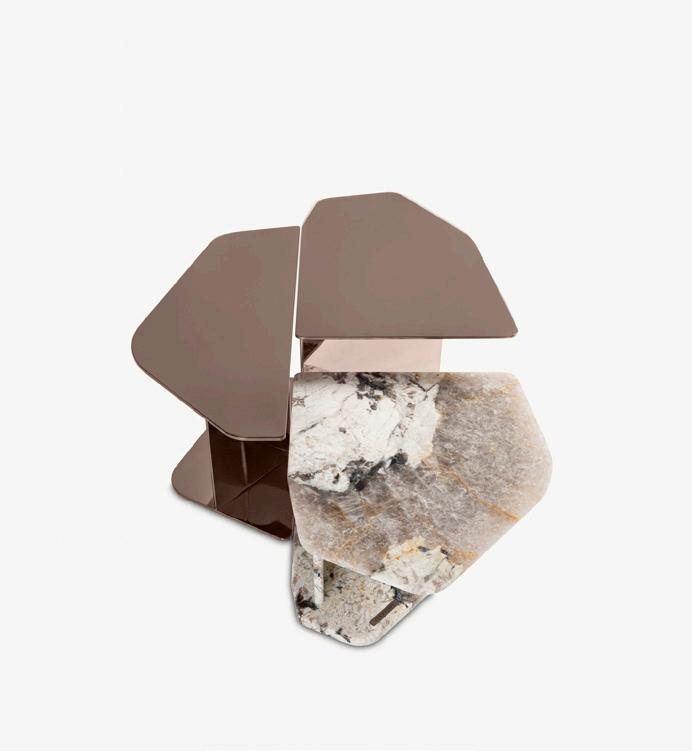
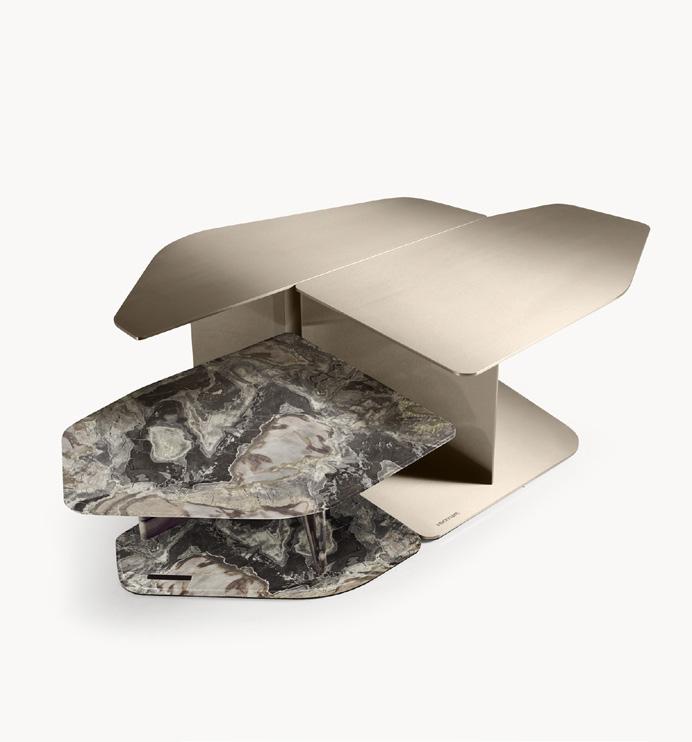
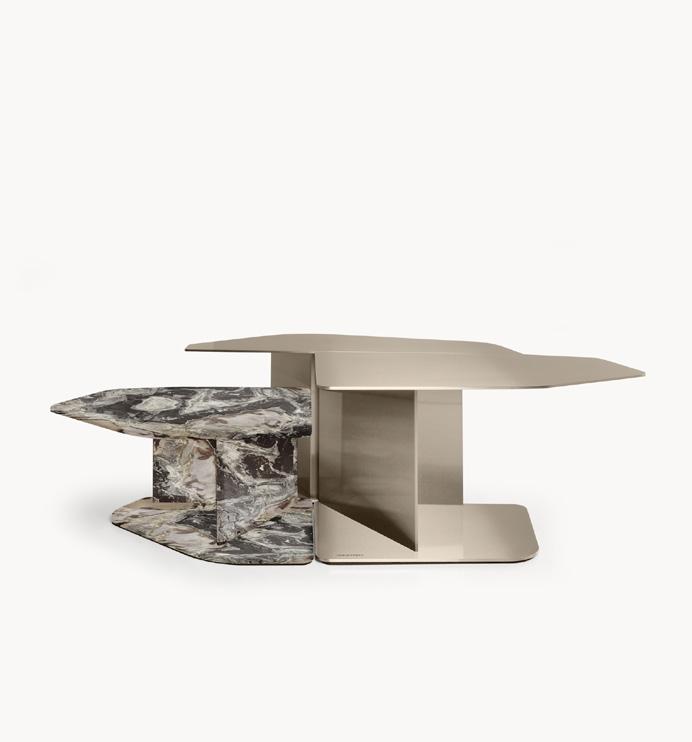
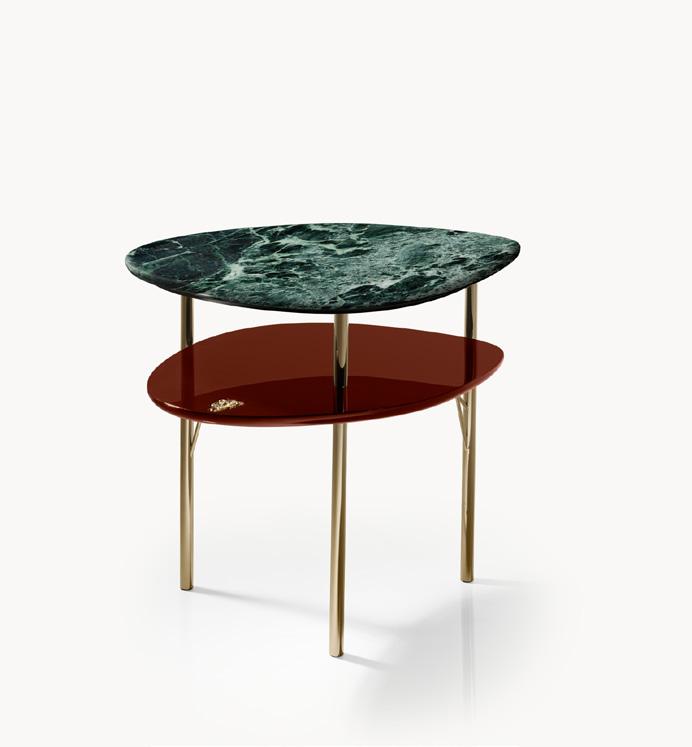
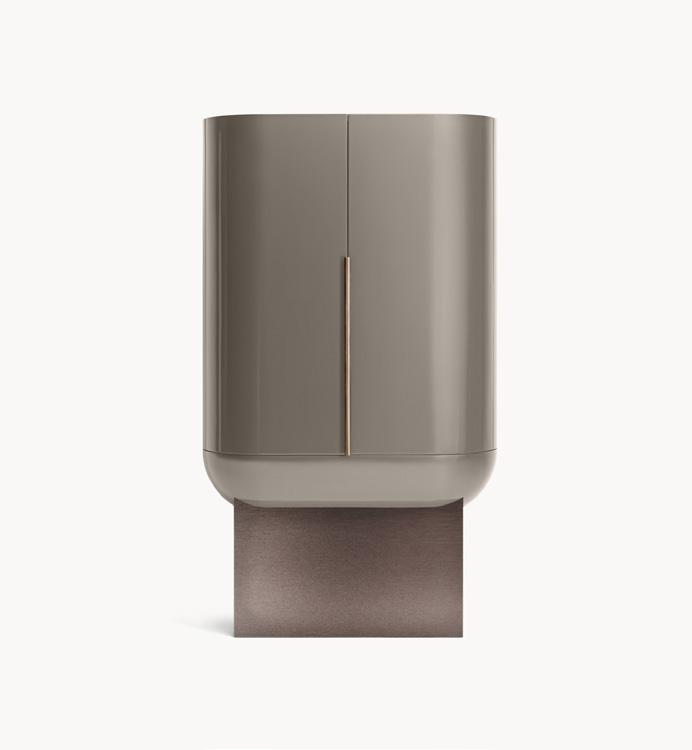
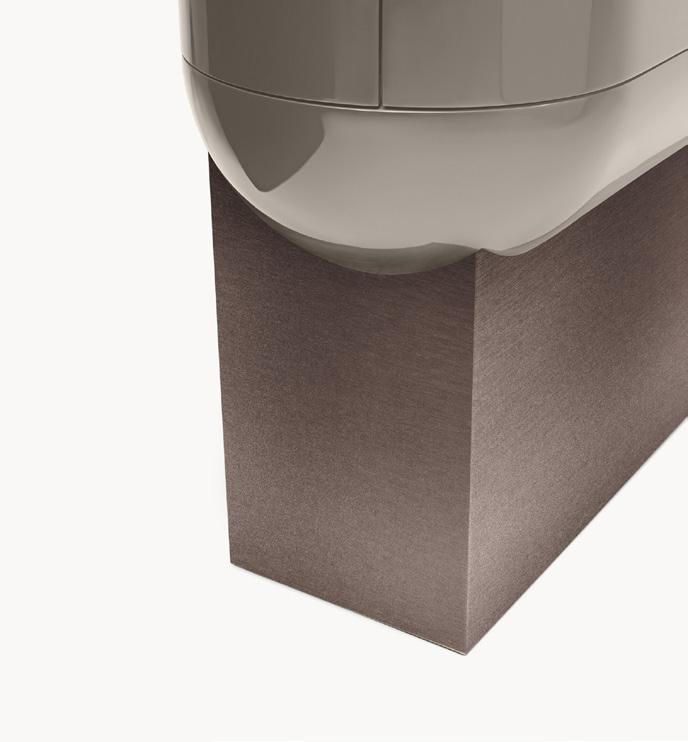
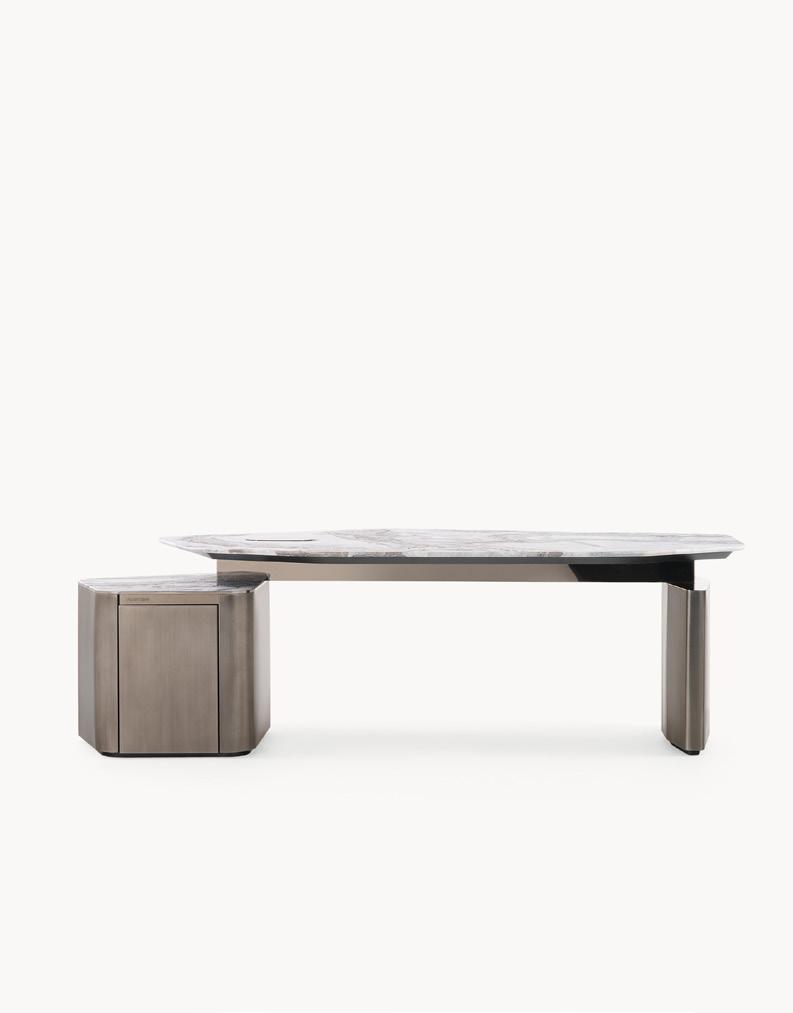
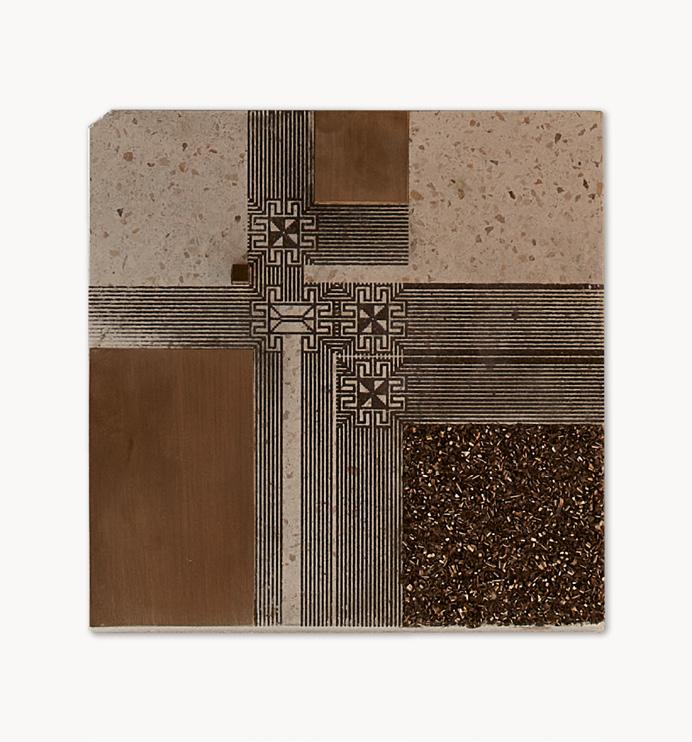
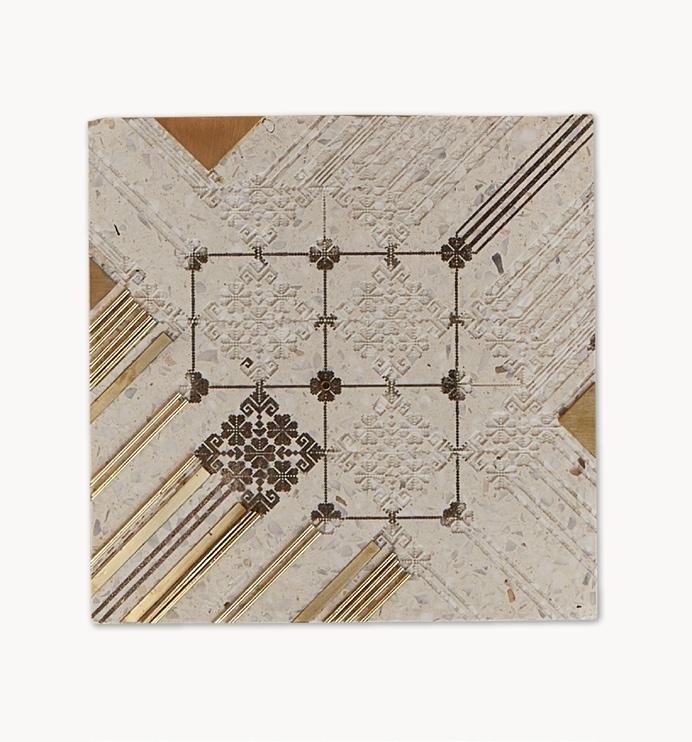
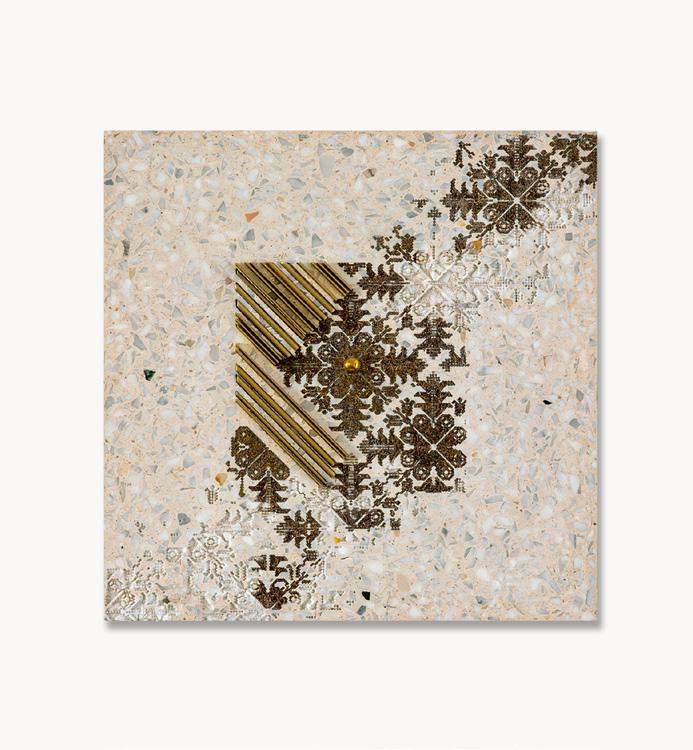
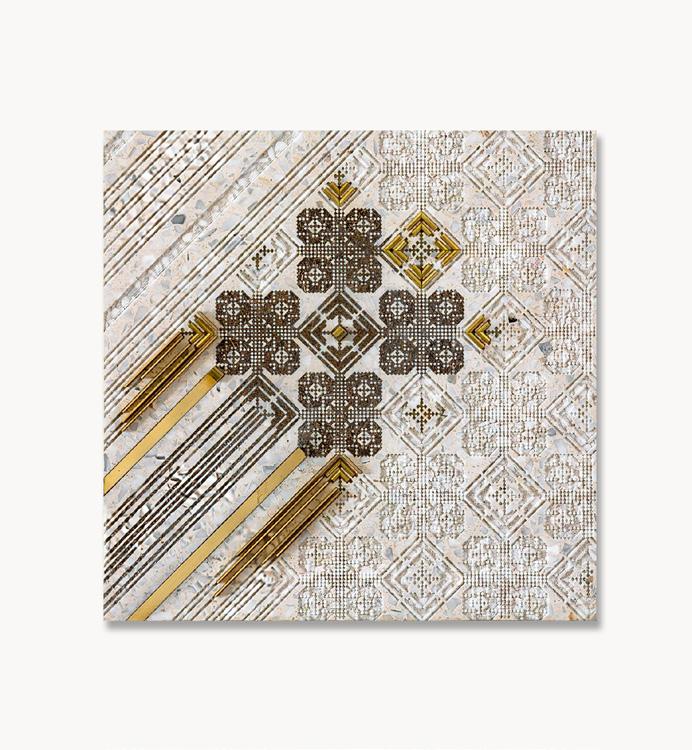
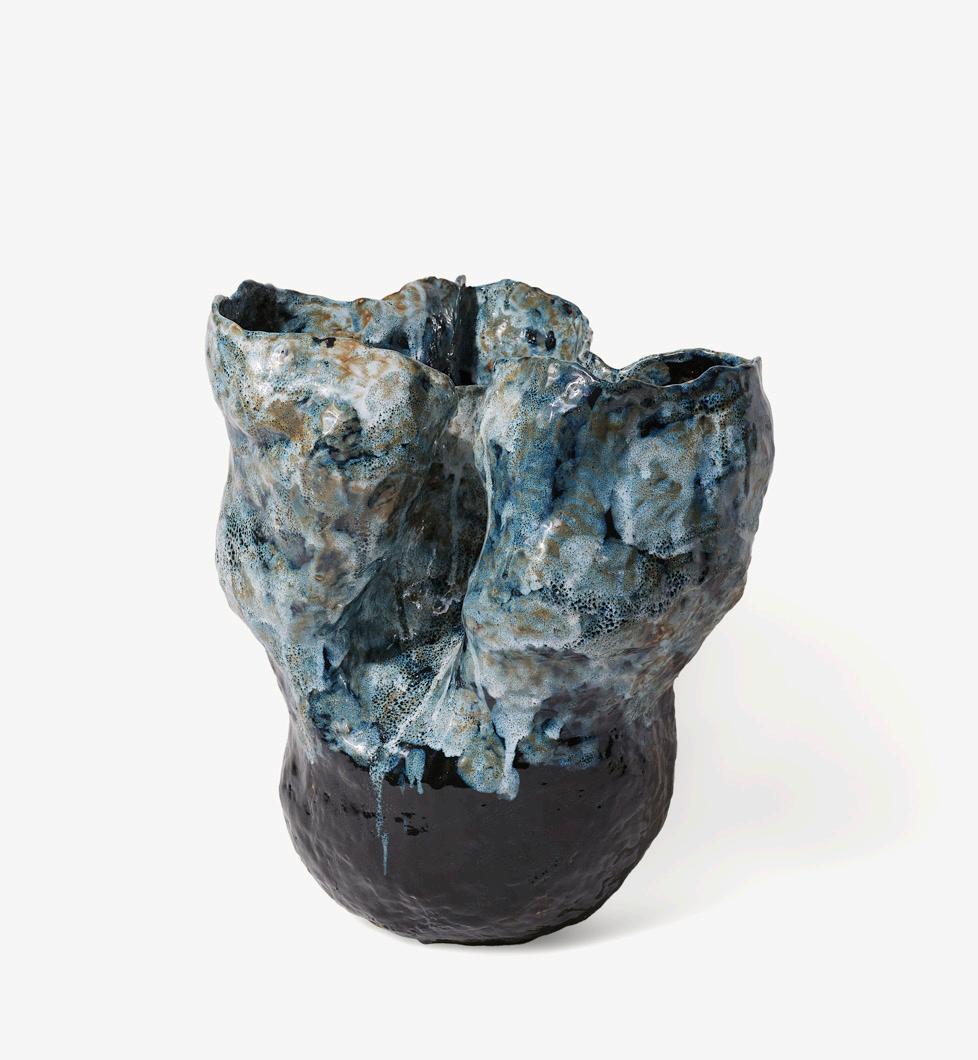
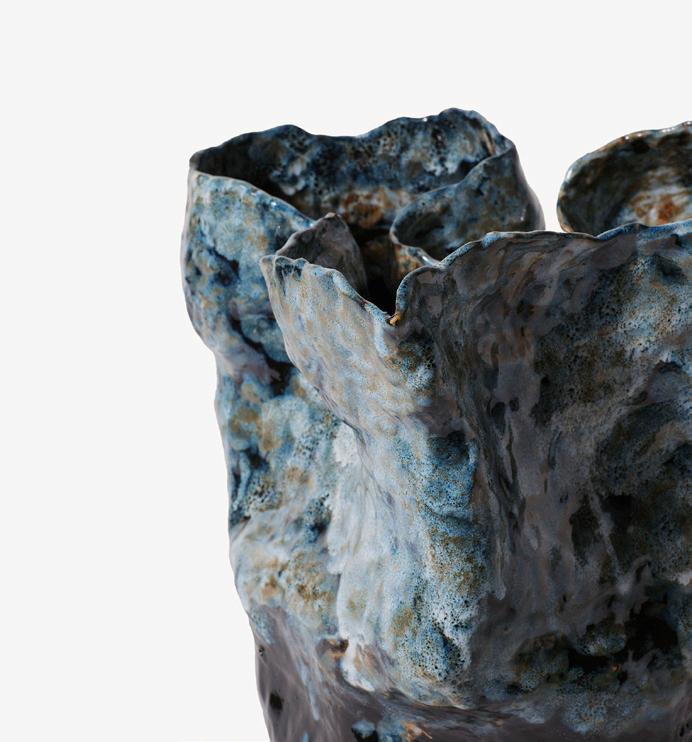
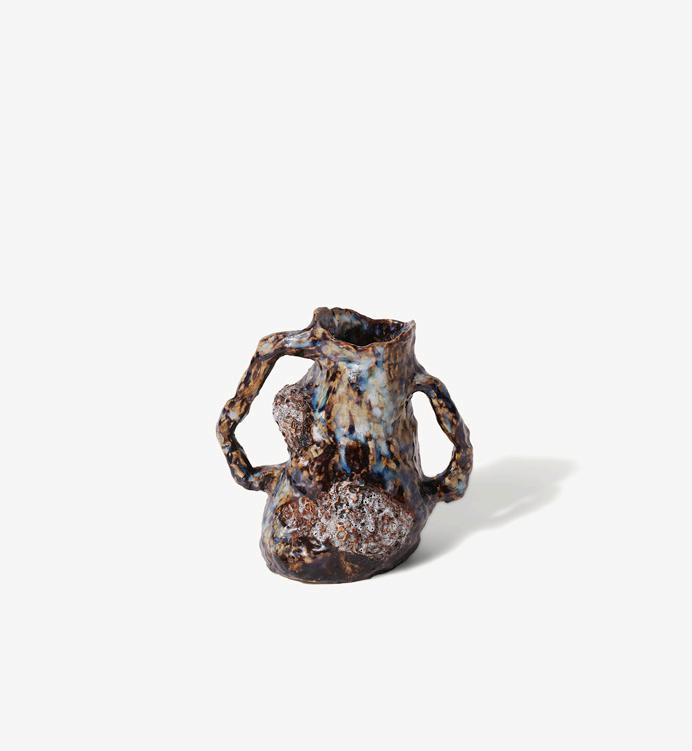
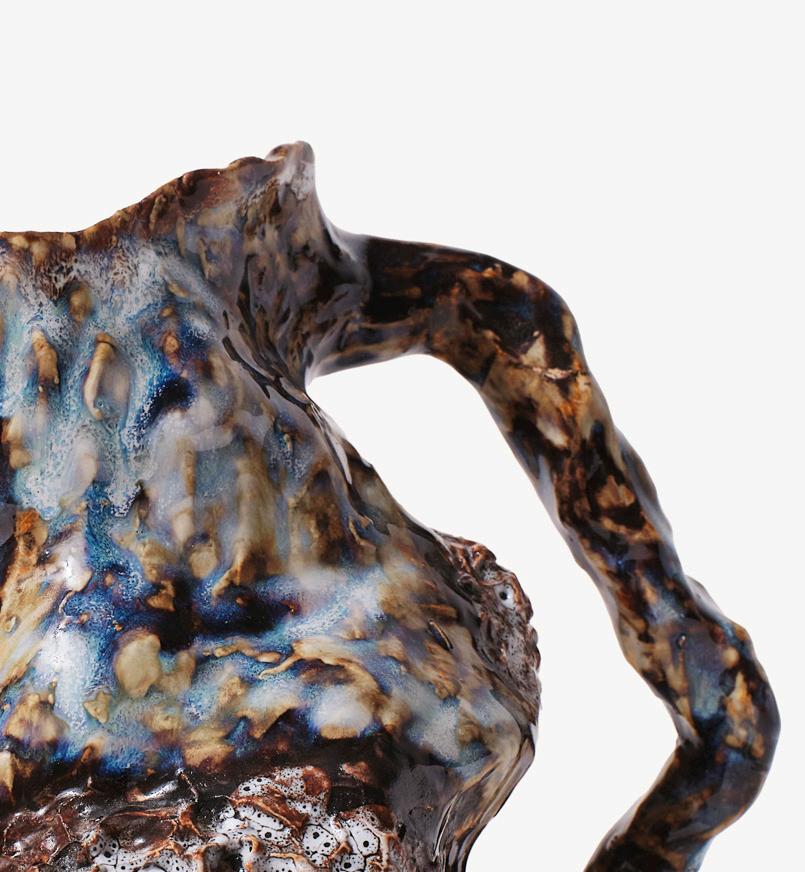
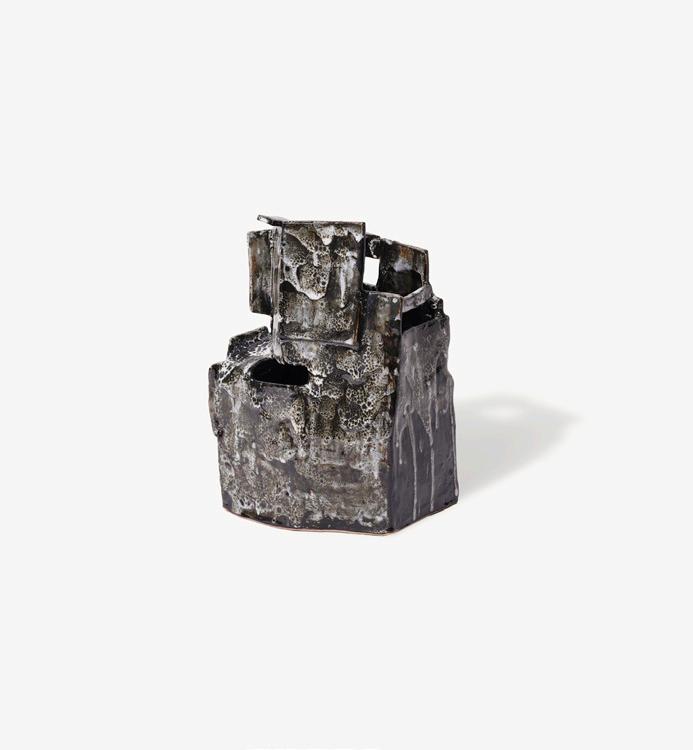
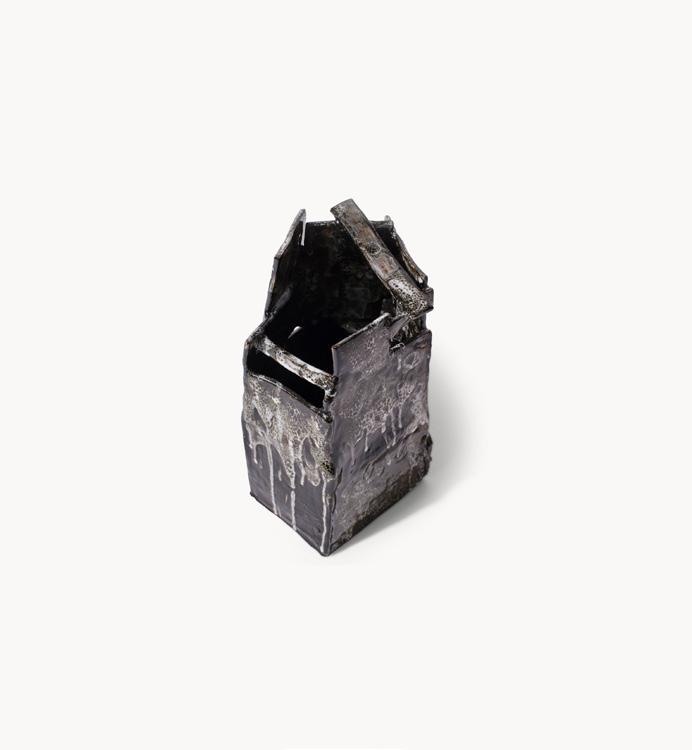
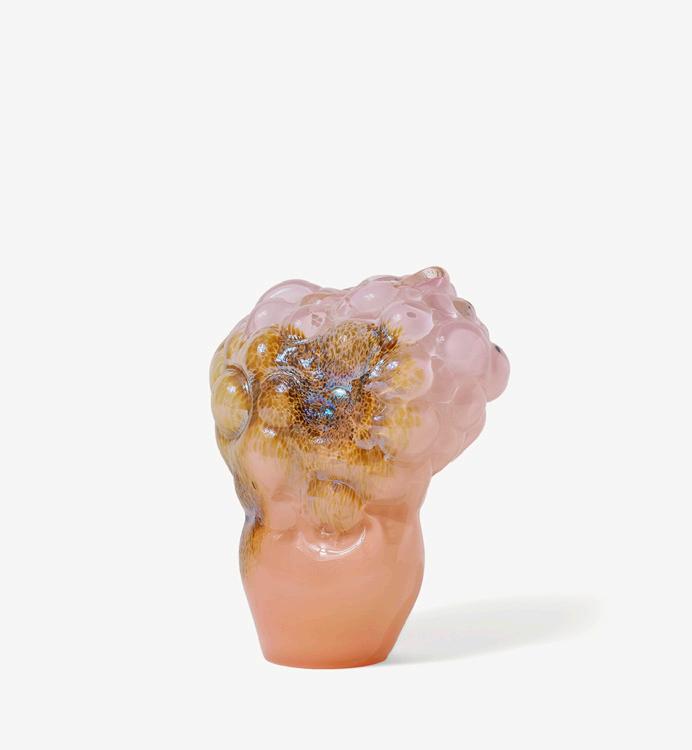
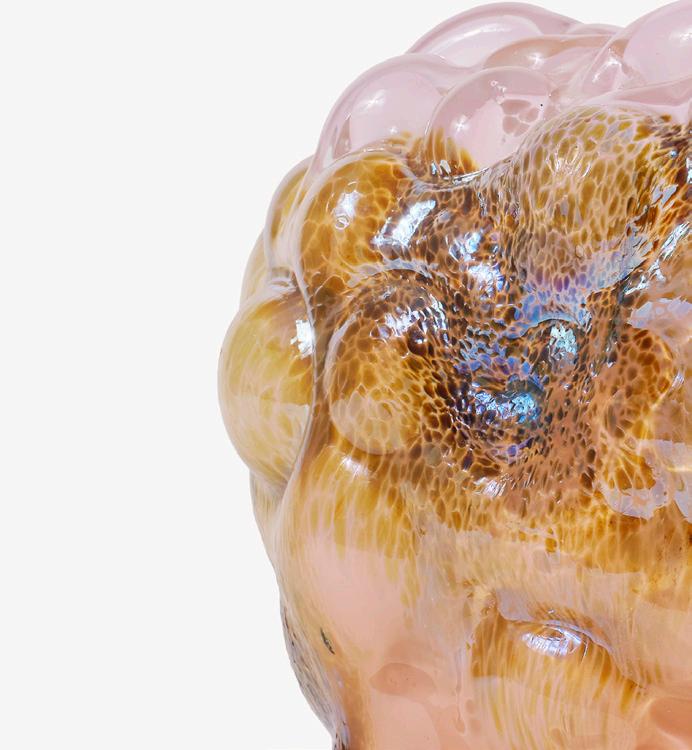
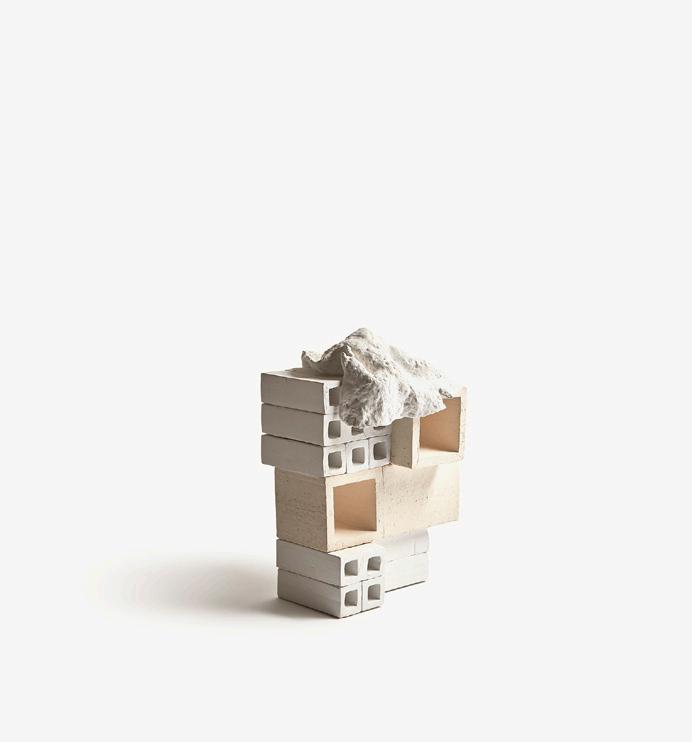
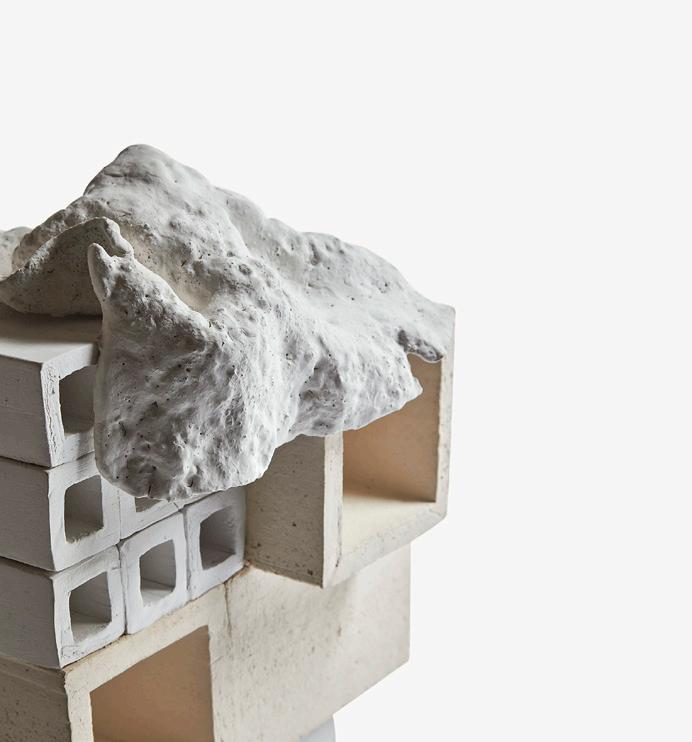
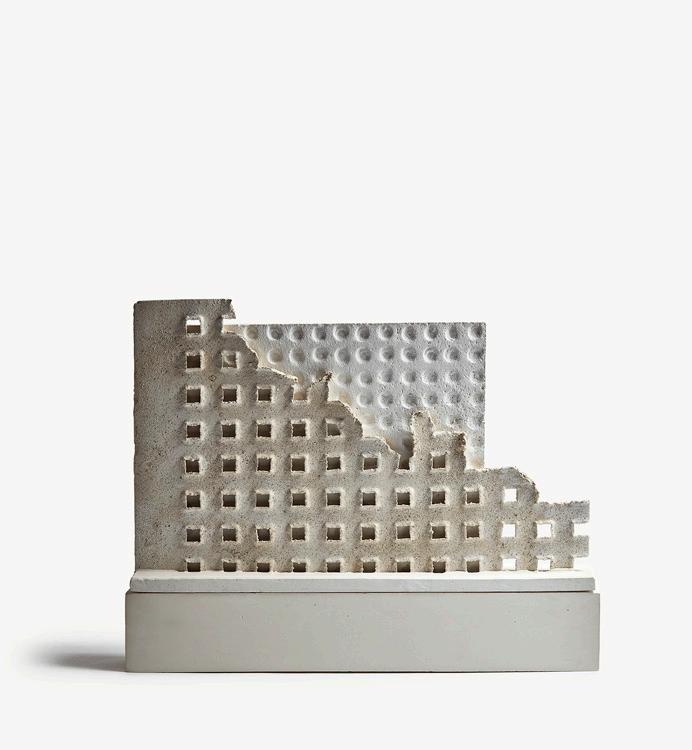
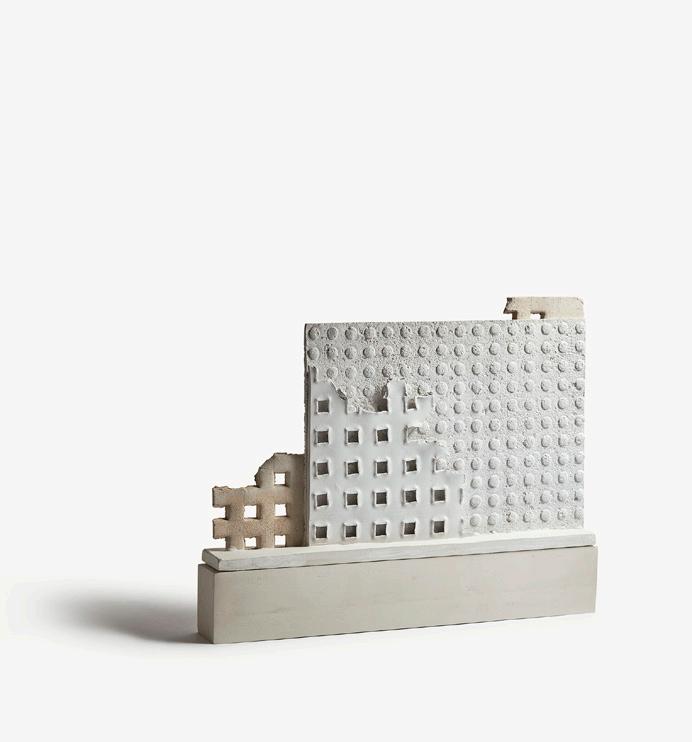
In a time increasingly shaped by speed, replication and immateriality, Visionnaire chooses density, gravity and permanence. The project develops as a statement on the expressive force of matter: rare stones, dimensional glass, oxidized metals, antiqued mirrors and cement become primary elements – raw, sculptural bodies capable of defining space through weight, texture and presence.
The language of Retro-Brutalism becomes the narrative framework of the collection. Brutalist volumes, sharp geometries and architectural proportions are elevated by artisanal precision, generating a constant tension between strength and refinement. Industrial forms acquire a crafted intelligence; surfaces become stratified, tactile, alive. The "retro" dimension does not refer to nostalgia, but to continuity: a living archive in which memory, heritage and material culture are reinterpreted through a contemporary vision. Matter is never treated as a finish. It is origin, substance, structure. It determines the identity of each piece, guiding its proportions, its visual impact and its relationship with light. Stone is not merely decorative, but geological memory. Metal is not only a detail, but oxidation, reflection and time. Glass is not transparency alone, but depth, thickness and distortion. Cement is not a background, but an architectural body.
In un tempo sempre più plasmato dalla velocità, dalla serialità e dall’immaterialità, emerge una diversa idea di progetto: fondata su densità, gravità e permanenza. Il racconto si sviluppa come una dichiarazione sulla forza espressiva della materia: pietre rare, vetri dimensionali, metalli ossidati, specchi anticati e cemento diventano elementi primari – corpi grezzi e scultorei, capaci di definire lo spazio attraverso peso, texture e intensità materica.
Il linguaggio del Retro-Brutalismo diventa la cornice narrativa della collezione. Volumi brutalisti, geometrie nette e proporzioni architettoniche vengono ammorbiditi ed elevati dalla precisione artigianale, generando una tensione costante tra forza e raffinatezza. Le forme industriali acquisiscono un’intelligenza manifatturiera; le superfici si fanno stratificate, tattili, vive. La dimensione "retro" non allude alla nostalgia, ma alla continuità: un archivio vivente in cui memoria, heritage e cultura materiale vengono reinterpretati attraverso una visione contemporanea. La materia non è mai trattata come finitura. È origine, sostanza, struttura. Determina l’identità di ogni pezzo, guidandone le proporzioni, l’impatto visivo e la relazione con la luce. La pietra non è semplice decorazione, ma memoria geologica. Il metallo non è solo dettaglio, ma ossidazione, riflesso e tempo. Il vetro non è soltanto trasparenza, ma profondità, spessore e distorsione. Il cemento non è sfondo, ma corpo architettonico.
The collection recalls the lesson of Carlo Scarpa: stratification, controlled imperfection, sculptural light and the intelligence of the joint. Every surface carries the trace of a process, the sign of transformation, the tension between raw material and precise execution. The result is a series of objects that behave as architectural presences rigorous, dense, almost monolithic yet enriched by a subtle sartorial sensitivity. Each piece is conceived as a singular project, not by exception, but by vocation. Rarity is not celebrated as pure exclusivity, but as a cultural stance: the value of what cannot be fully replicated, the power of natural variation, the beauty of matter when it preserves its own identity.
Through this vision, Visionnaire defines a landscape of interiors where objects are no longer simply placed within space, but become part of its architecture. A collection shaped by density, permanence and material truth, where matter is not cladding, but origin; not finish, but substance.
La collezione richiama la lezione di Carlo Scarpa: stratificazione, imperfezione controllata, luce scultorea e intelligenza del giunto. Ogni superficie porta con sé la traccia di un processo, il segno di una trasformazione, la tensione tra materia grezza ed esecuzione precisa. Il risultato è una serie di oggetti che agiscono come presenze architettoniche – rigorose, dense, quasi monolitiche – e al tempo stesso attraversate da una sottile sensibilità sartoriale. Ogni pezzo è concepito come un progetto singolare, non per eccezione, ma come principio fondativo. La rarità non viene celebrata come pura esclusività, ma come posizione culturale: il valore di ciò che non può essere pienamente riprodotto, la forza della variazione naturale, la bellezza della materia quando conserva la propria identità.
Attraverso questa visione, prende forma un paesaggio di interni in cui gli oggetti non sono semplicemente collocati nello spazio, ma entrano a far parte della sua architettura. Una collezione plasmata da densità, permanenza e verità materica, dove la materia non è rivestimento, ma origine; non finitura, ma sostanza.
Memory, not nostalgia. Rarity as stance.
The space becomes an architectural narrative, balancing rigor and softness.
Rare Matter encounters the imaginary of architectural Brutalism through a shared tension towards matter as the generative principle of space. Not surface, not cladding, but body: a physical, structural presence capable of defining volumes, shadows and relationships. In Brutalism, the rigour of concrete coexists with the warmth of wood and ceramics, with the vibration of light, with the breath of nature and with a fluid continuity between interior and exterior. Surfaces do not aspire to abstract perfection; rather, they preserve traces, density, irregularities and memory. It is a language inhabited by time, less ideological and more sensorial than its history might suggest. Rare Matter embraces this legacy and translates it into a contemporary register. The point of connection is not formal, but cultural: matter as the origin of the project. Rare Matter does not look to Brutalism as a repertoire to be quoted, but as an attitude to be reactivated.
Rare Matter incontra l’immaginario del Brutalismo architettonico in una tensione condivisa verso la materia come principio generativo dello spazio. Non superficie, non rivestimento, ma corpo: una presenza fisica, strutturale, capace di definire volumi, ombre e relazioni. Nel brutalismo, il rigore del cemento convive con il calore del legno e delle ceramiche, con la vibrazione della luce, con il respiro della natura e con una continuità fluida tra interno ed esterno. Le superfici non aspirano a una perfezione astratta ma custodiscono tracce, densità, irregolarità, memoria. È un linguaggio abitato dal tempo, meno ideologico e più sensoriale di quanto la sua storia non lasci supporre. Rare Matter raccoglie questa eredità traducendola in un registro contemporaneo. Il punto di connessione non è formale, ma culturale: la materia come origine del progetto. Rare Matter non guarda al brutalismo come a un repertorio da citare, ma come a un’attitudine da riattivare.
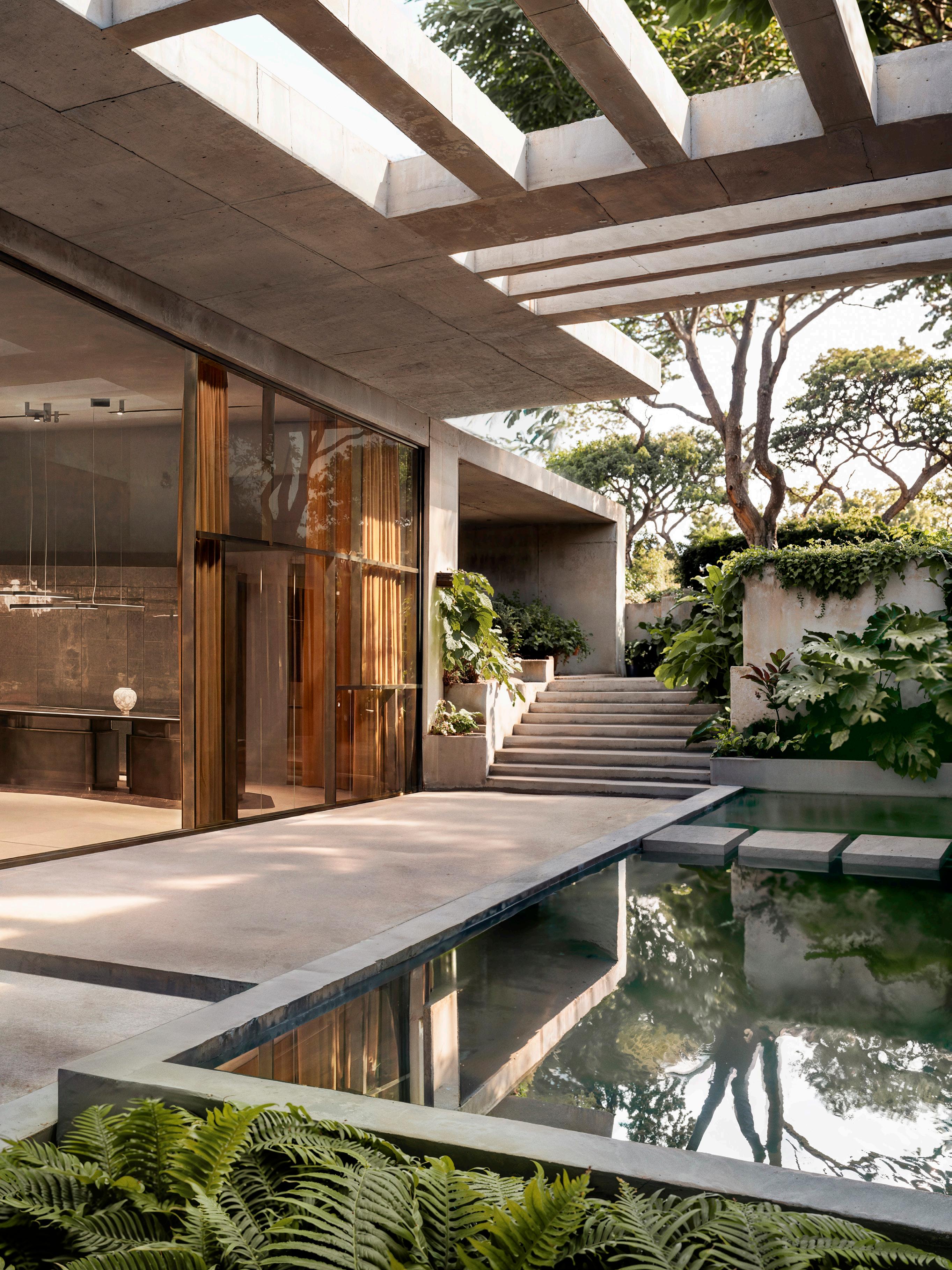
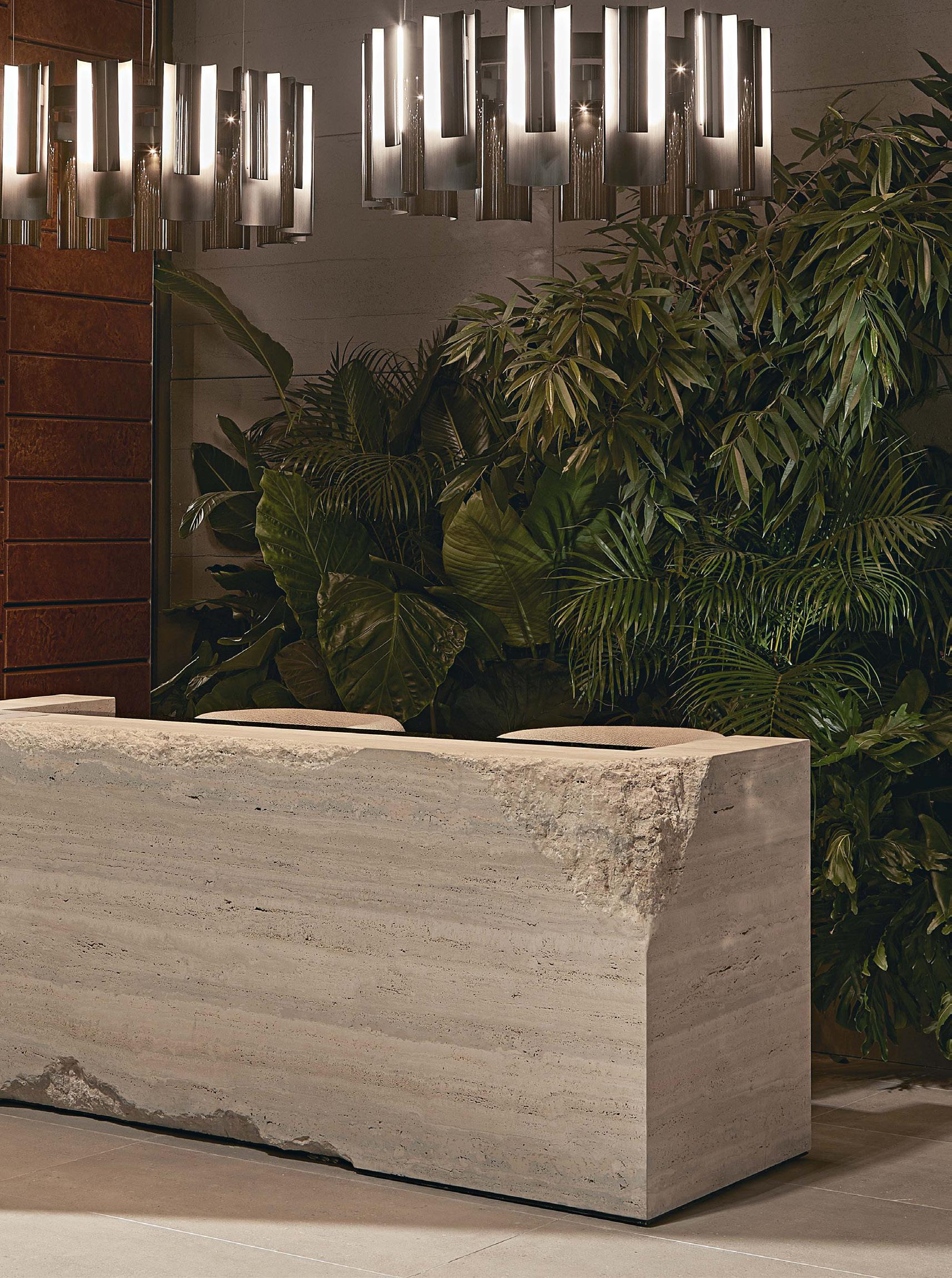
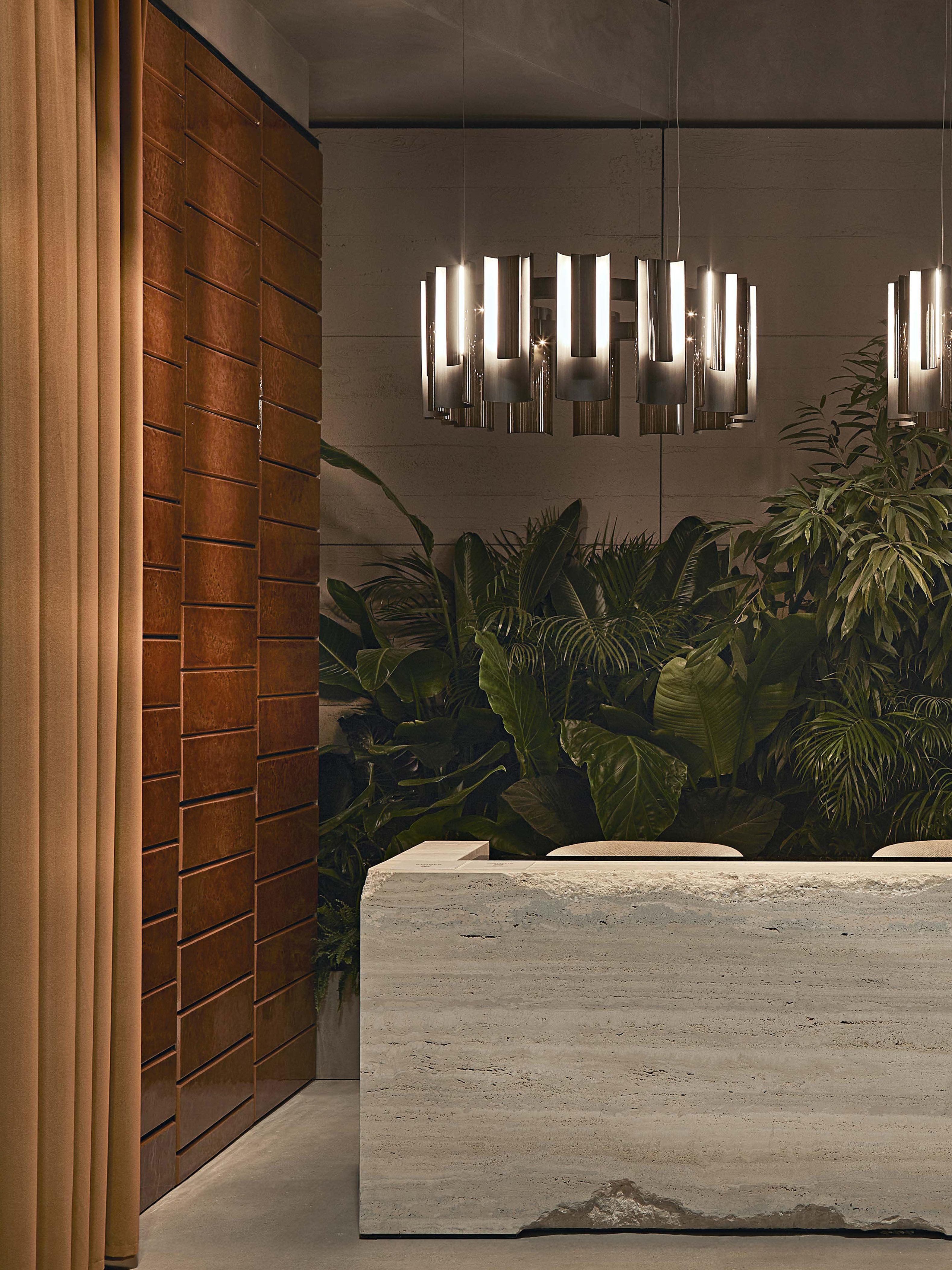
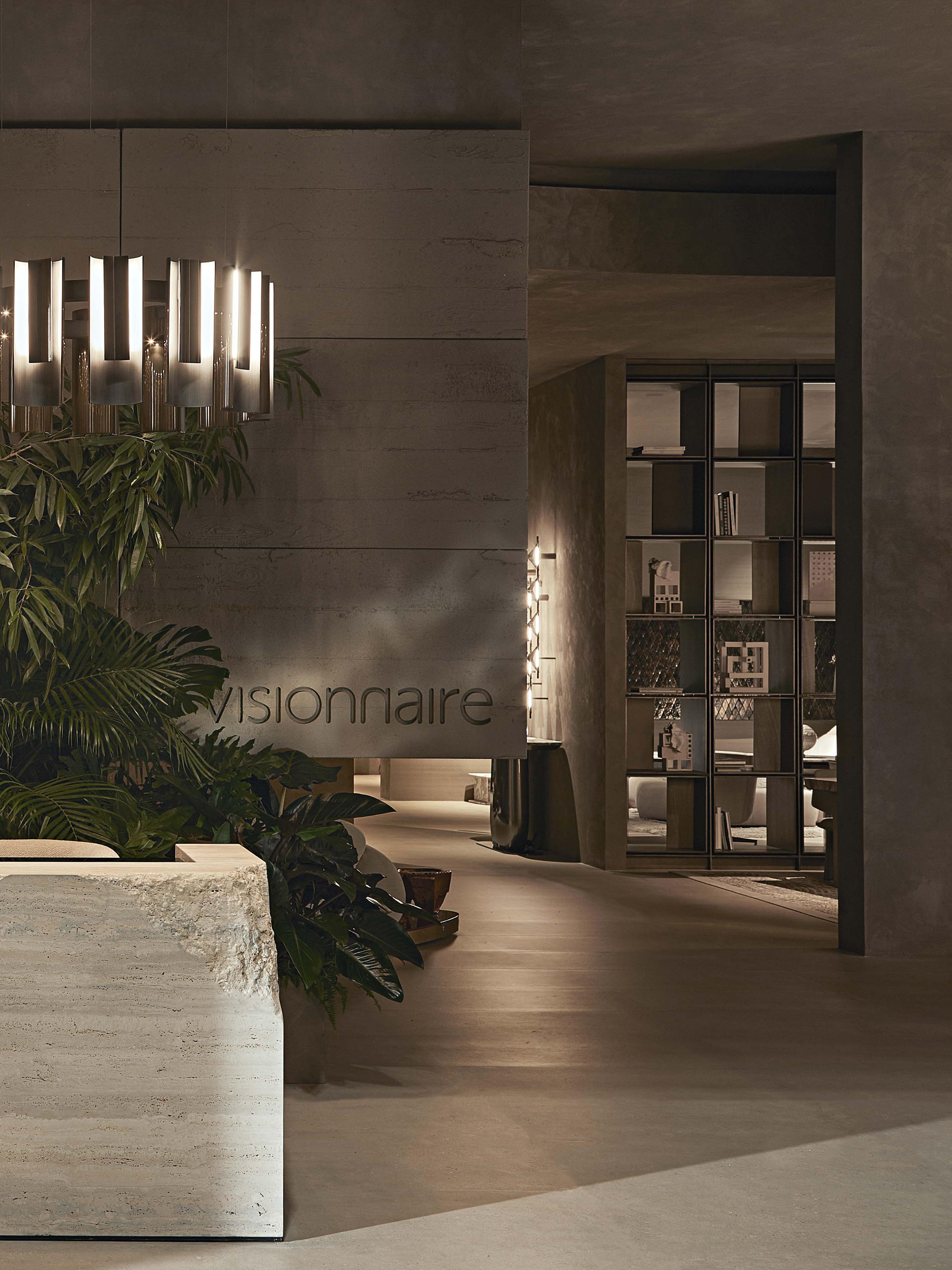
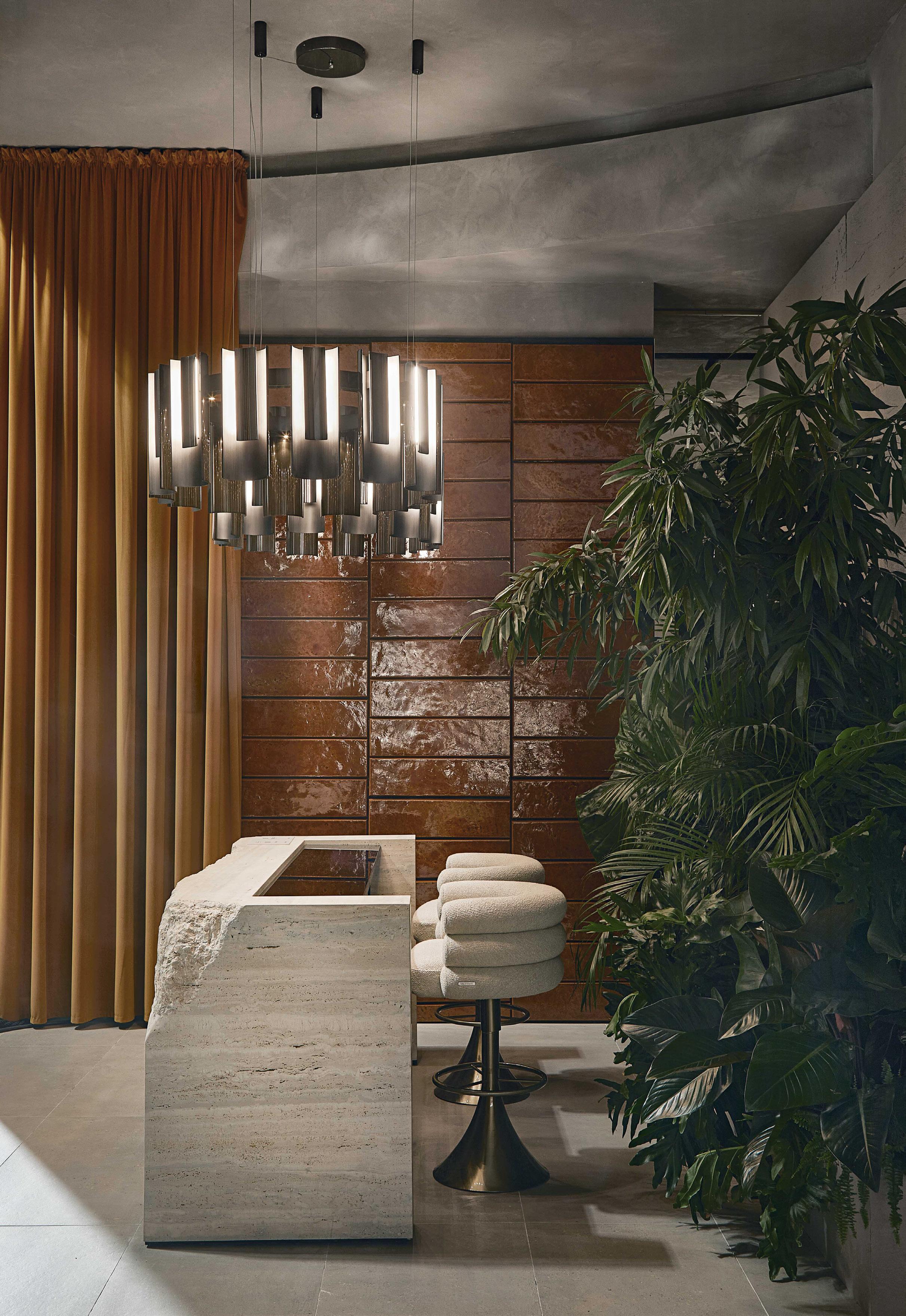
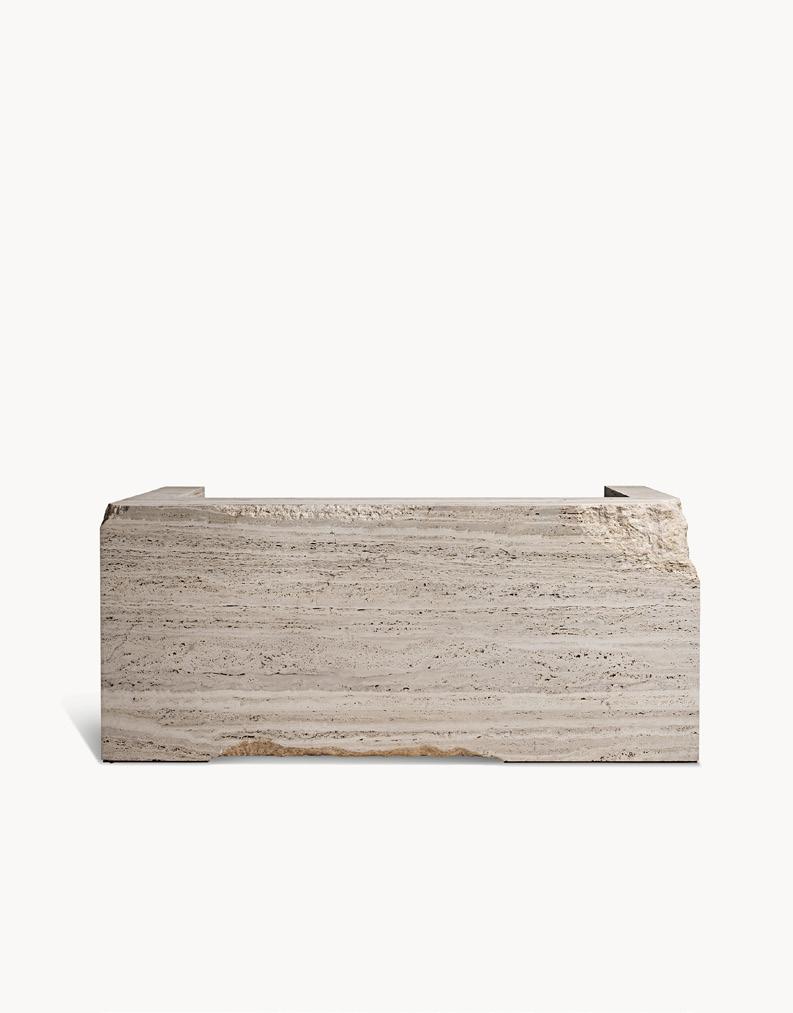
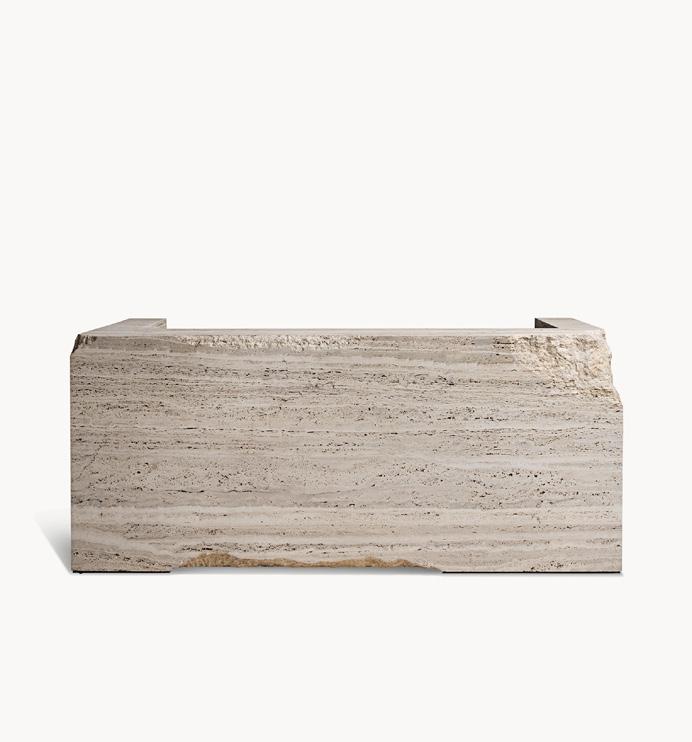
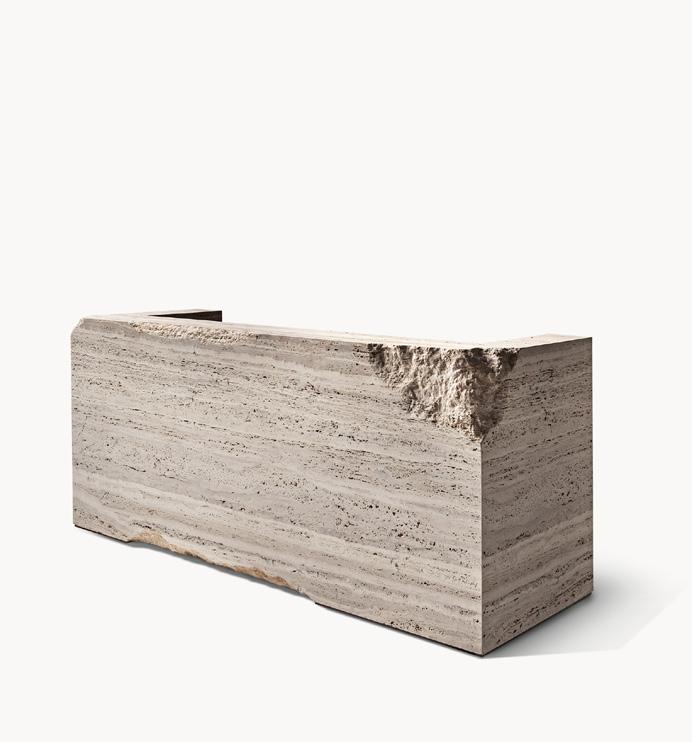
Dolmen, hand-carved in open-pore Classic Travertine with a polished surface, interprets matter as an architectural presence through a raw block effect with a strong and primordial impact. The interior, defined by lacquered wood shelves, contrasts with the materiality of the exterior, introducing a balance between solidity and refinement. The glass top completes the composition with essential elegance, lightening the volume and enhancing the sculptural strength of the project.
Dolmen, scolpito a mano in Travertino Classico a poro aperto con superficie levigata, interpreta la materia come presenza architettonica, attraverso un effetto blocco grezzo dall’impatto forte e primordiale. L’interno, definito da mensole in legno laccato, si contrappone alla matericità esterna, introducendo un equilibrio tra solidità e raffinatezza. Il top in vetro completa la composizione con essenzialità, alleggerendo il volume e valorizzando la forza scultorea del progetto.
Dolmen Entrance
A primordial threshold, where matter welcomes and living regains its depth.
Una soglia primordiale, dove la materia accoglie e l’abitare ritrova la propria profondità.
Dolmen entrance
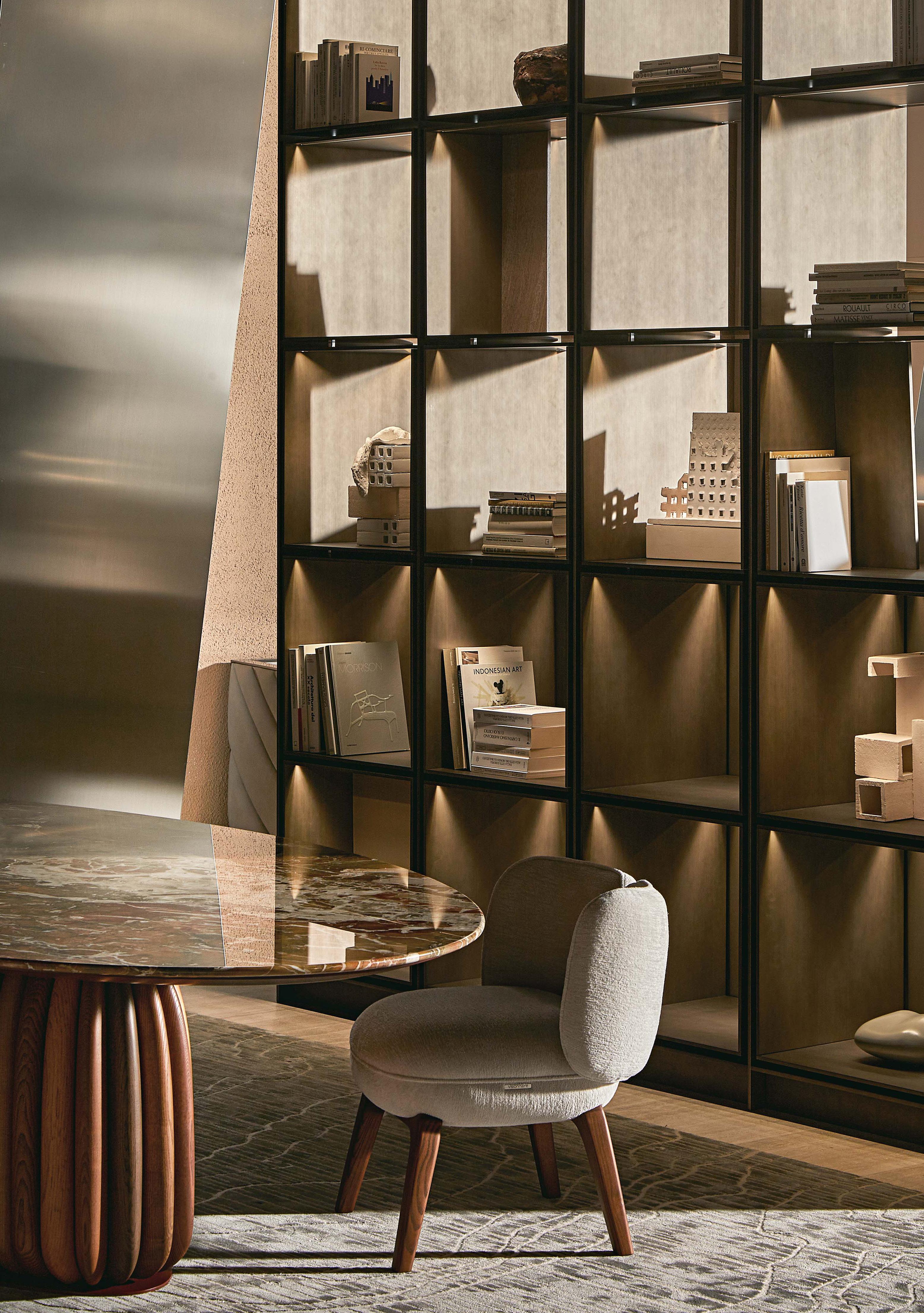
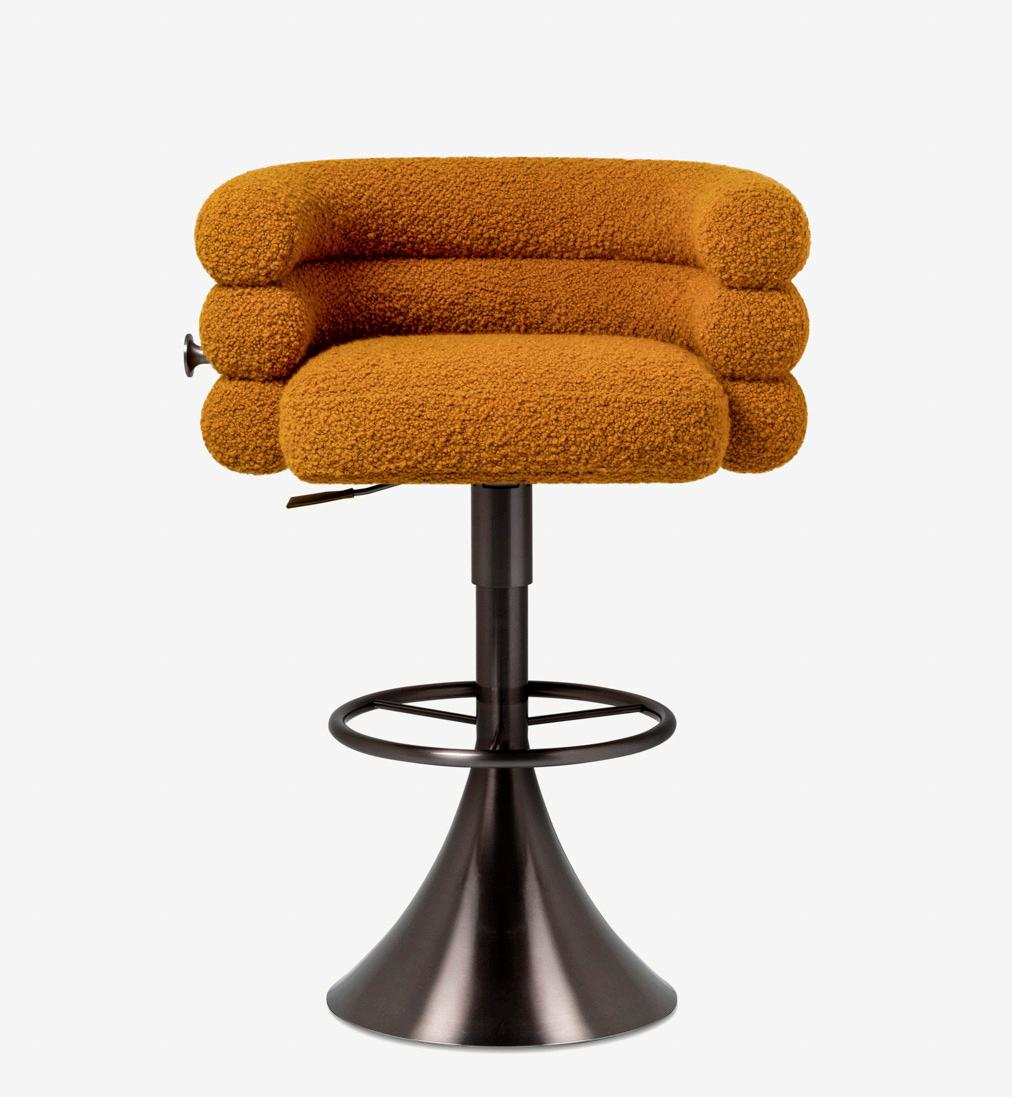
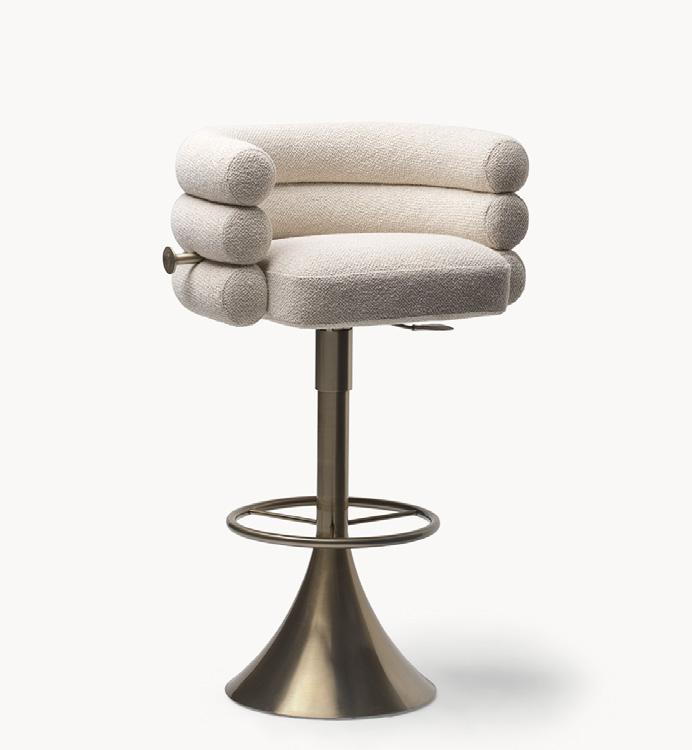
Dolmen desk Voluptas stool
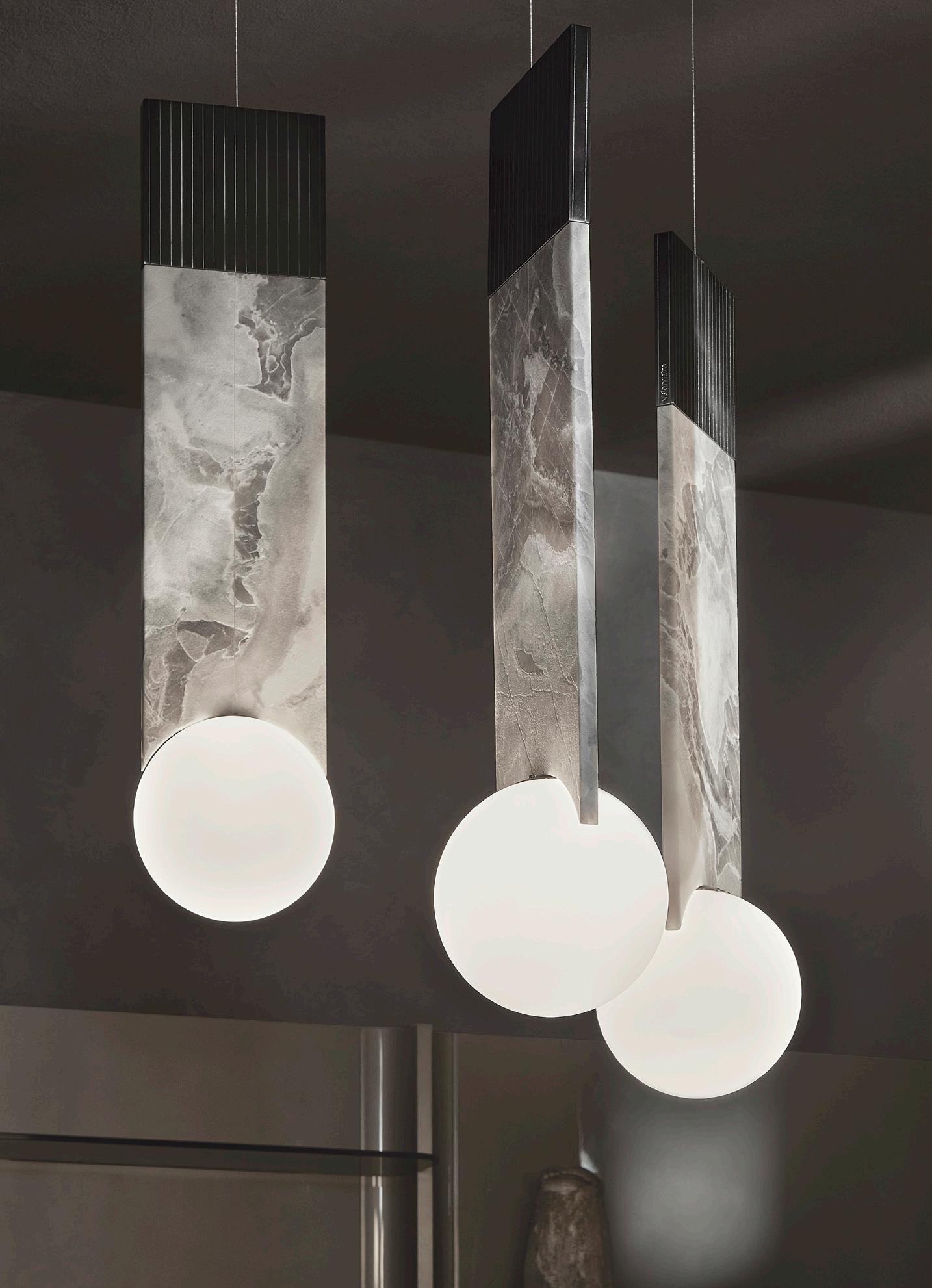
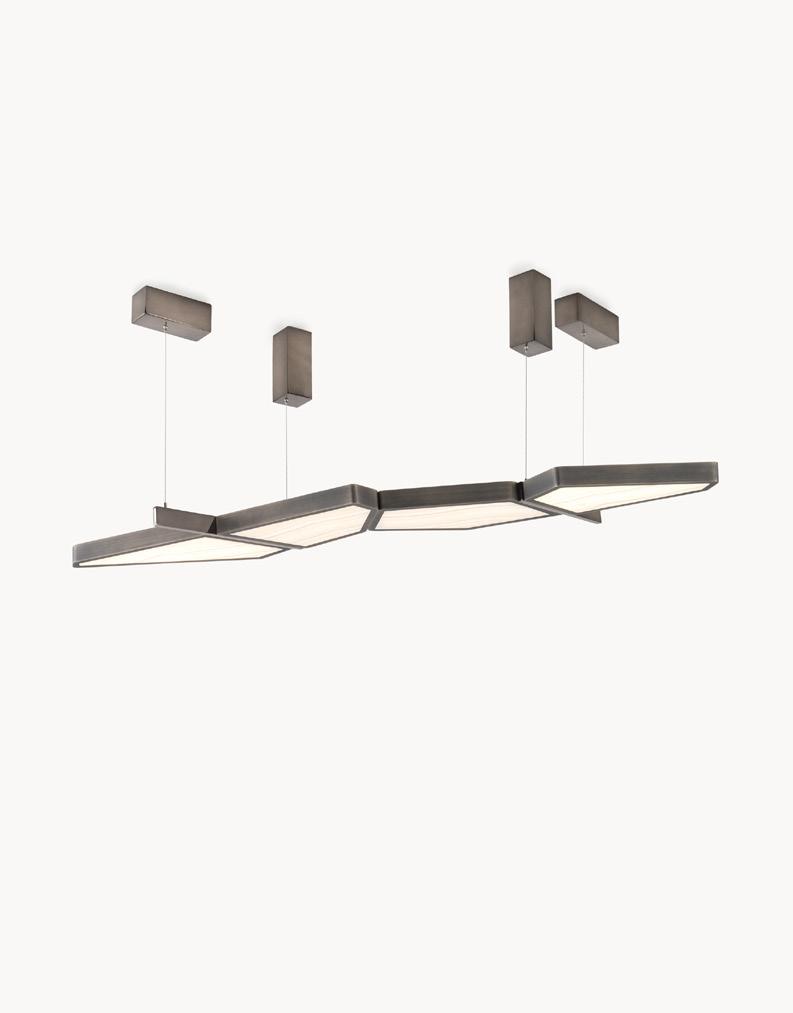
Polaris Steel suspension lamp
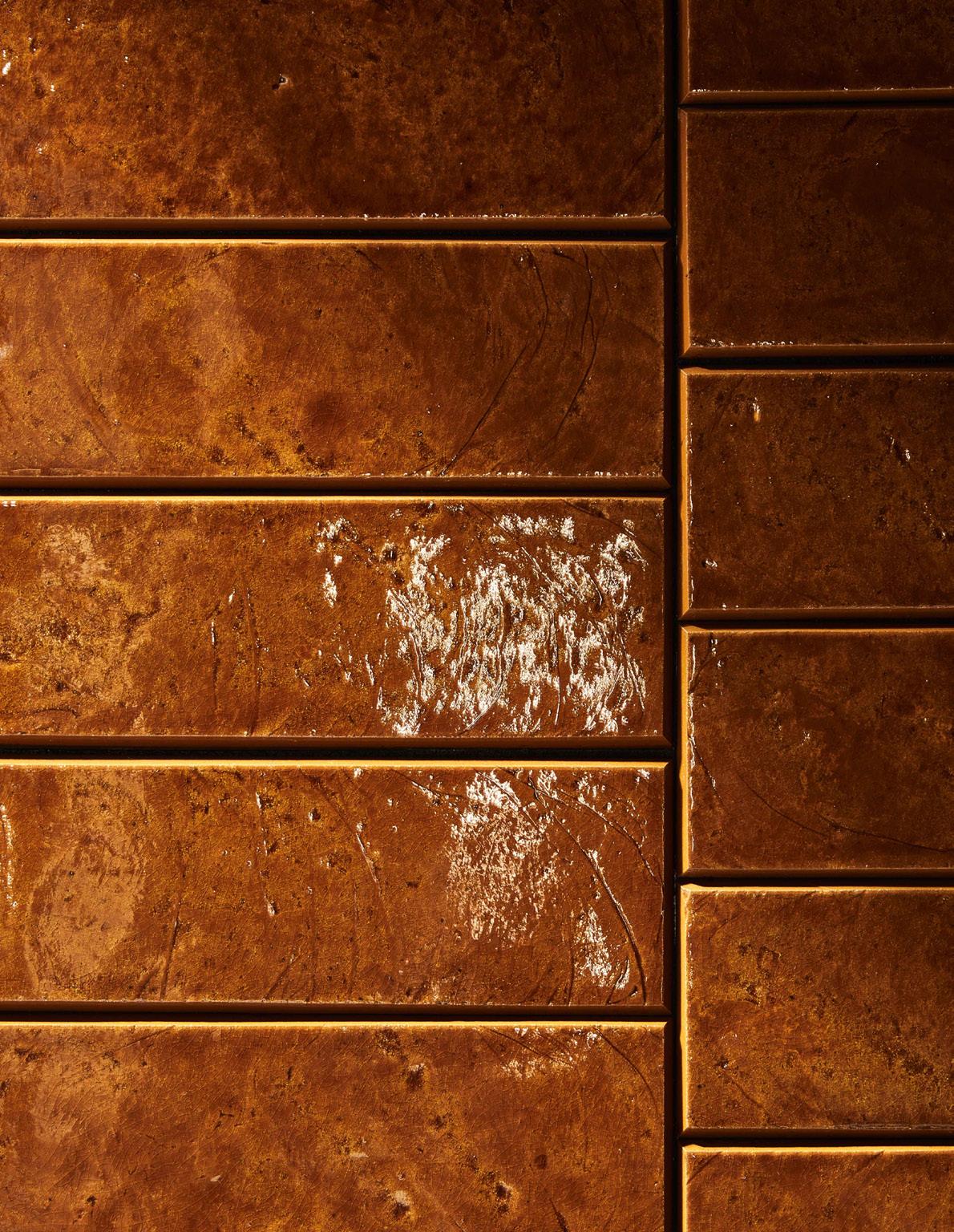
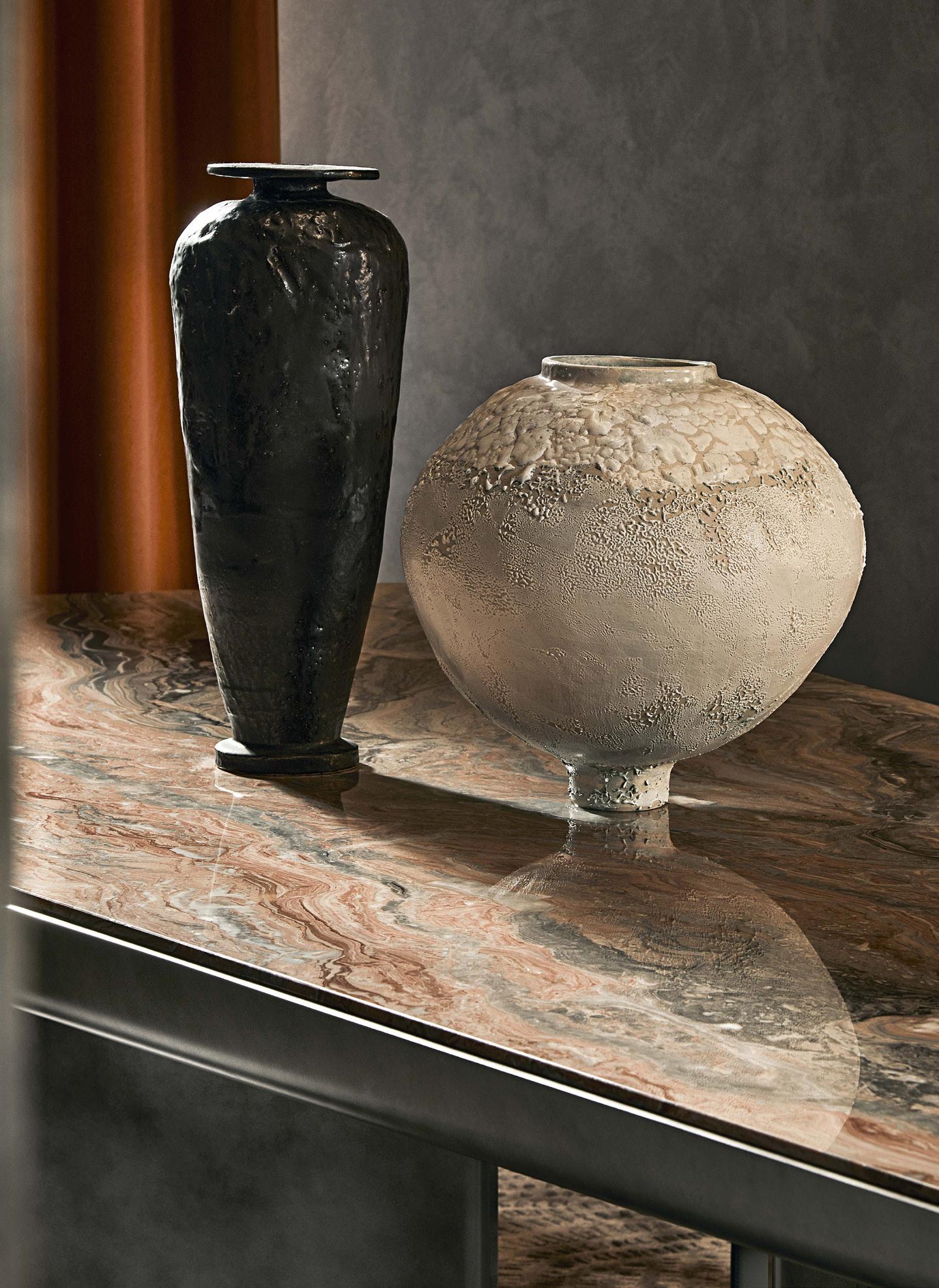
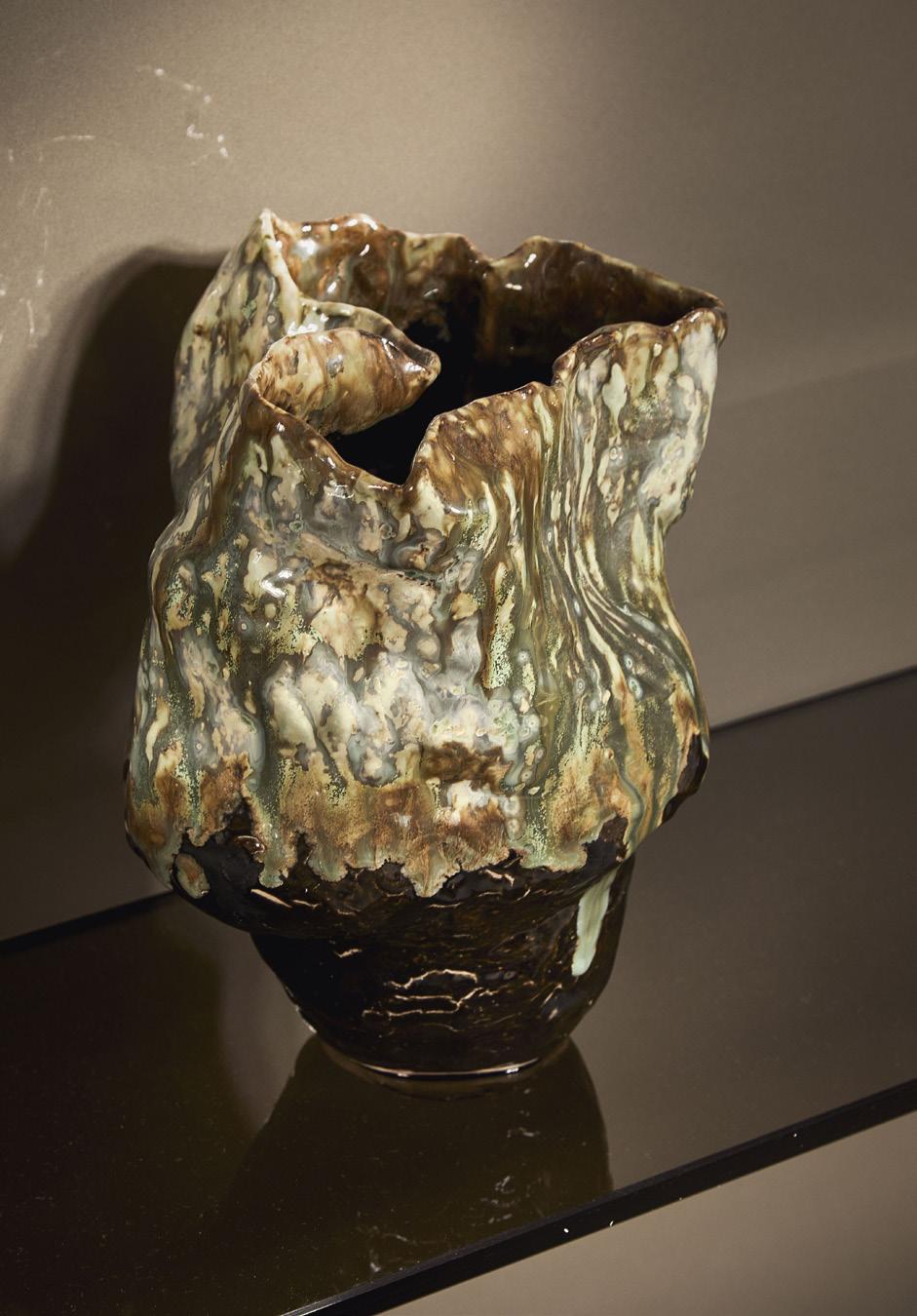
Salerno hand-crafted clay by Studiopepe by Alessandro La Spada
wall finishing
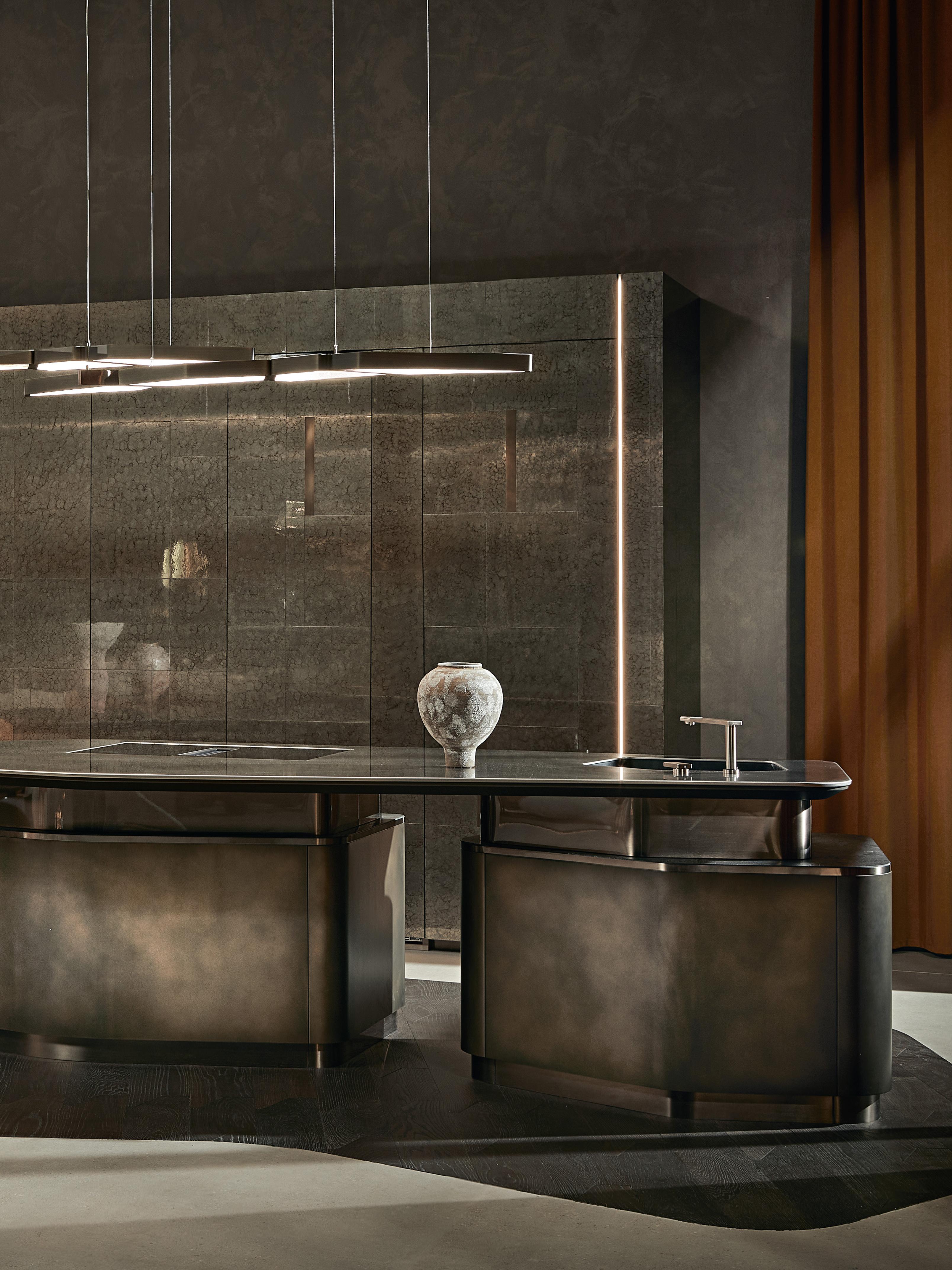
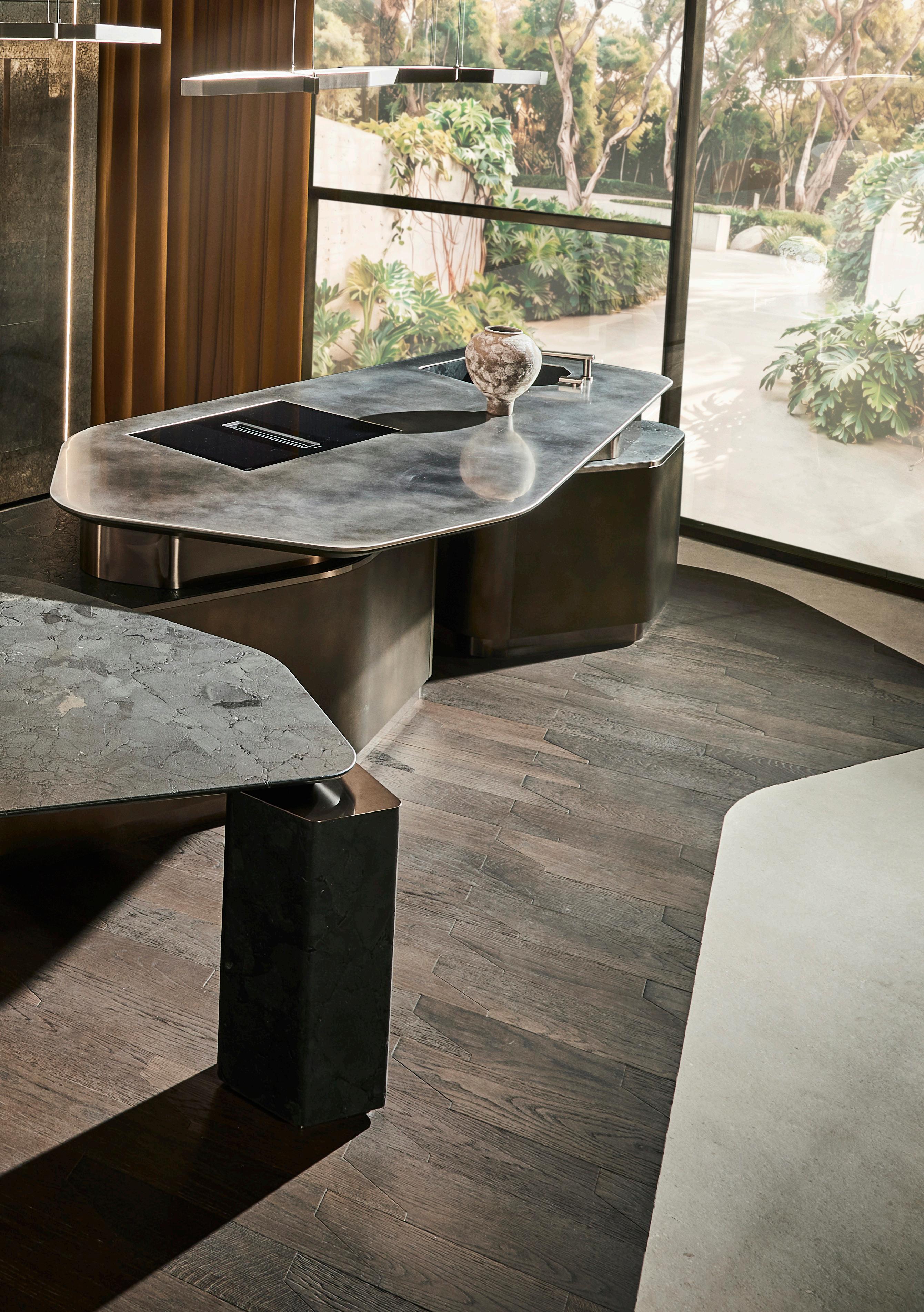
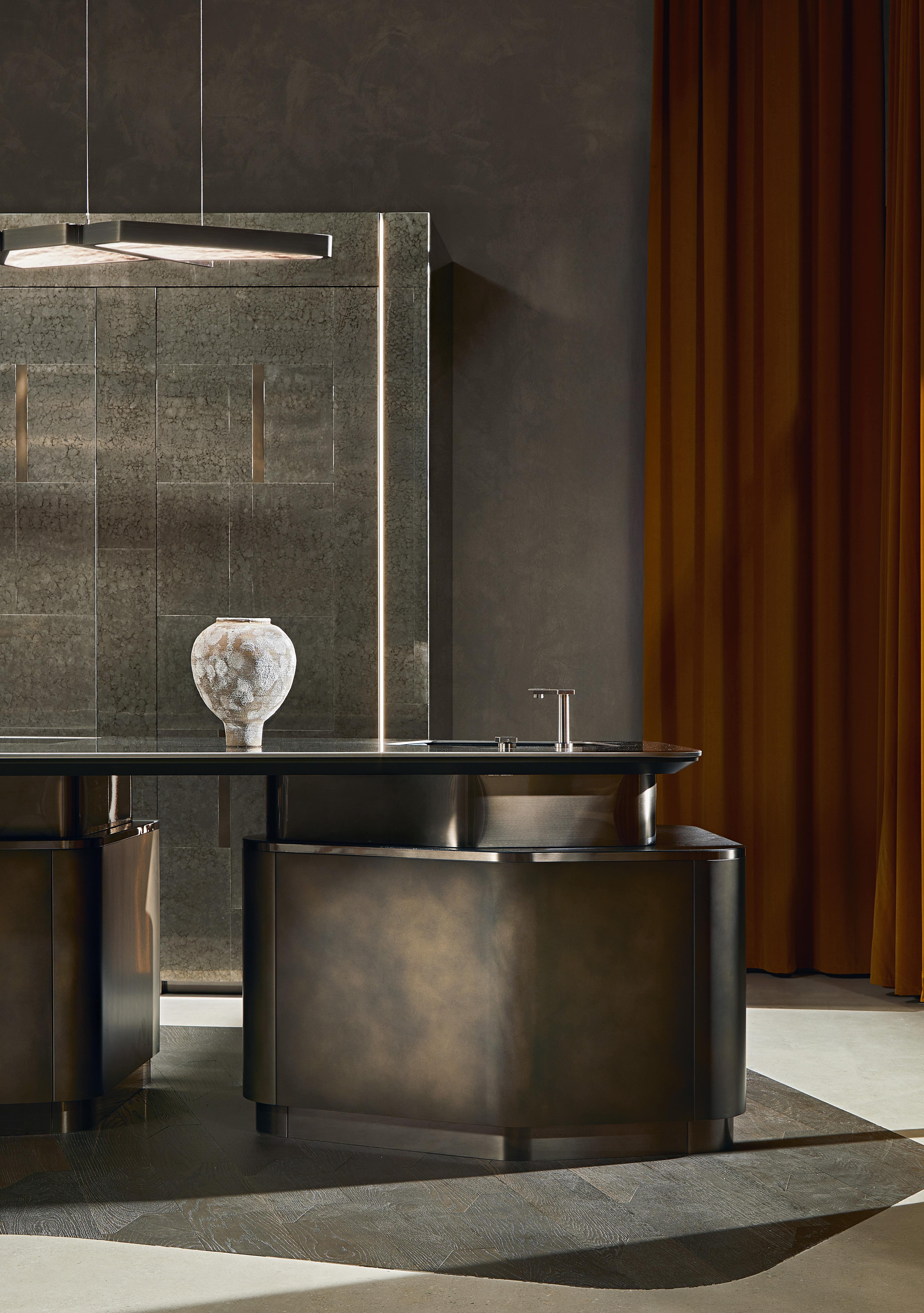
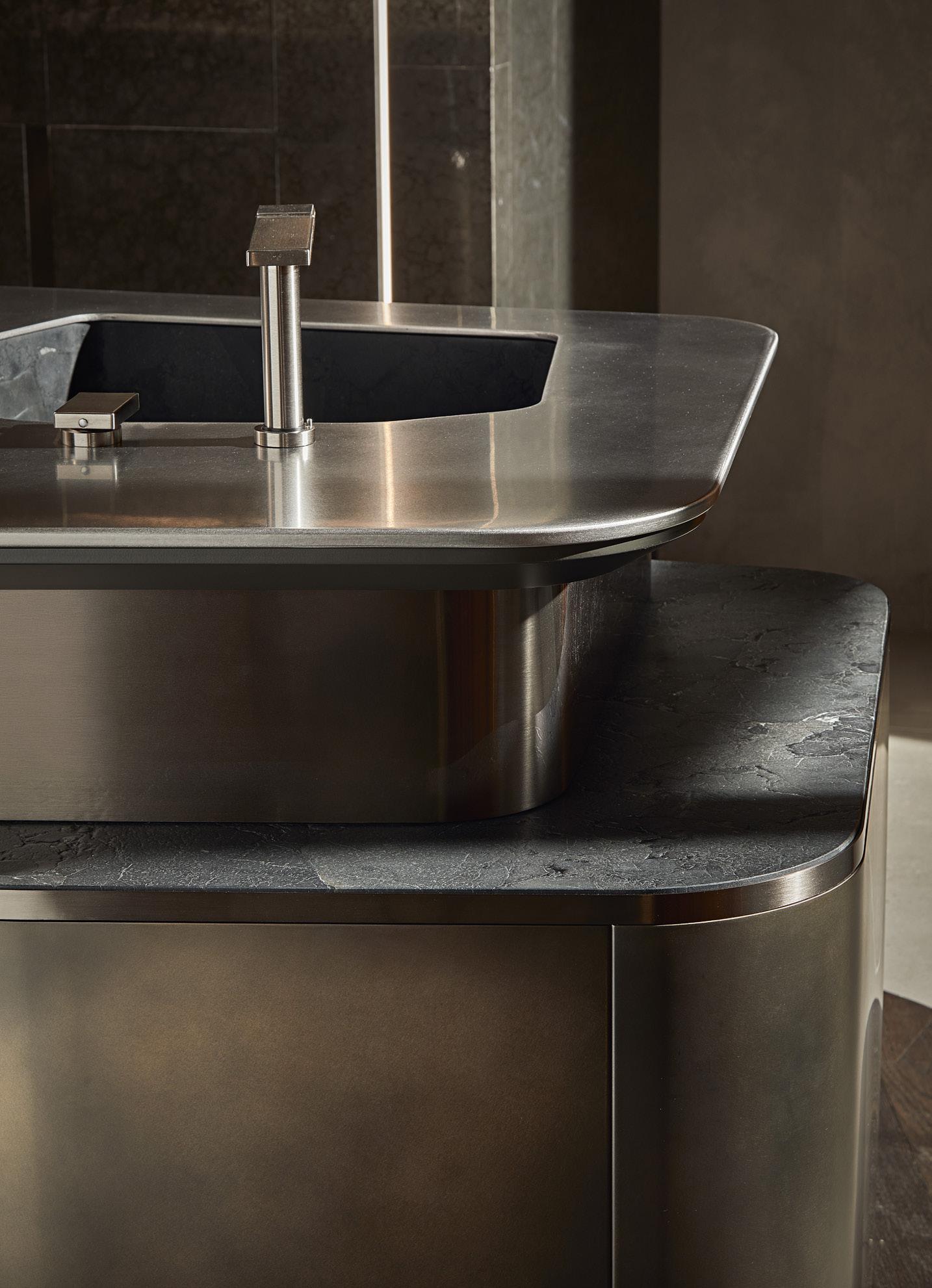
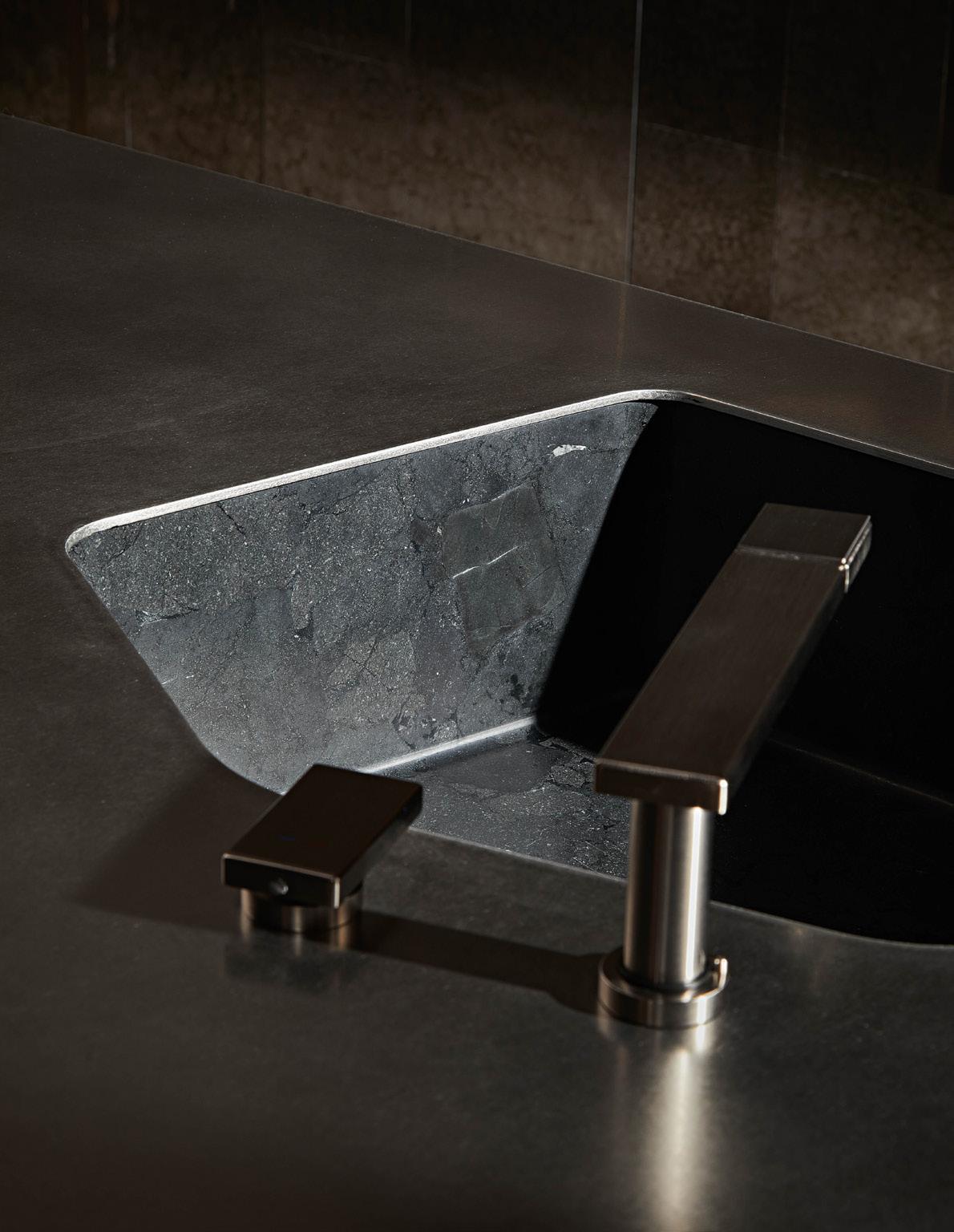
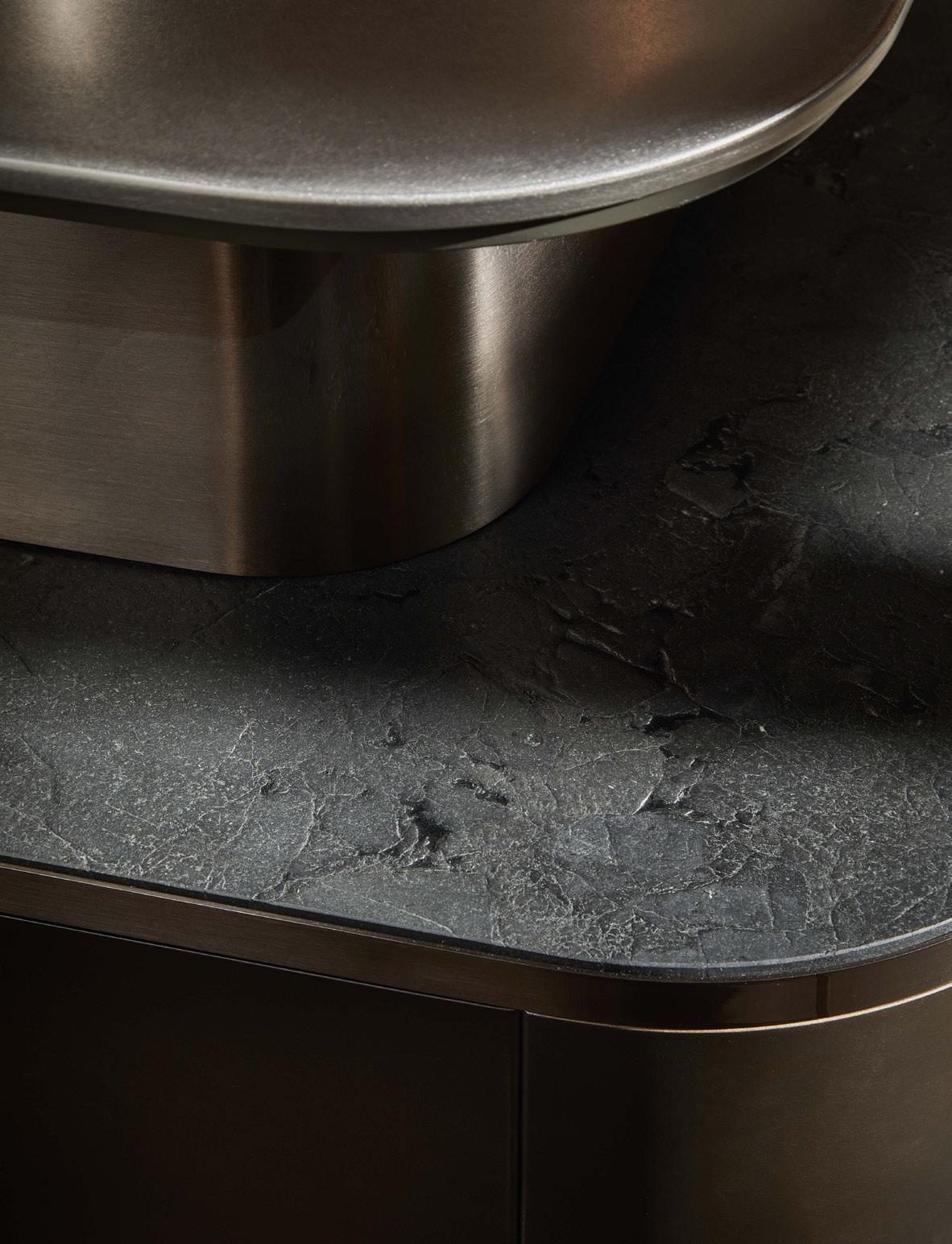
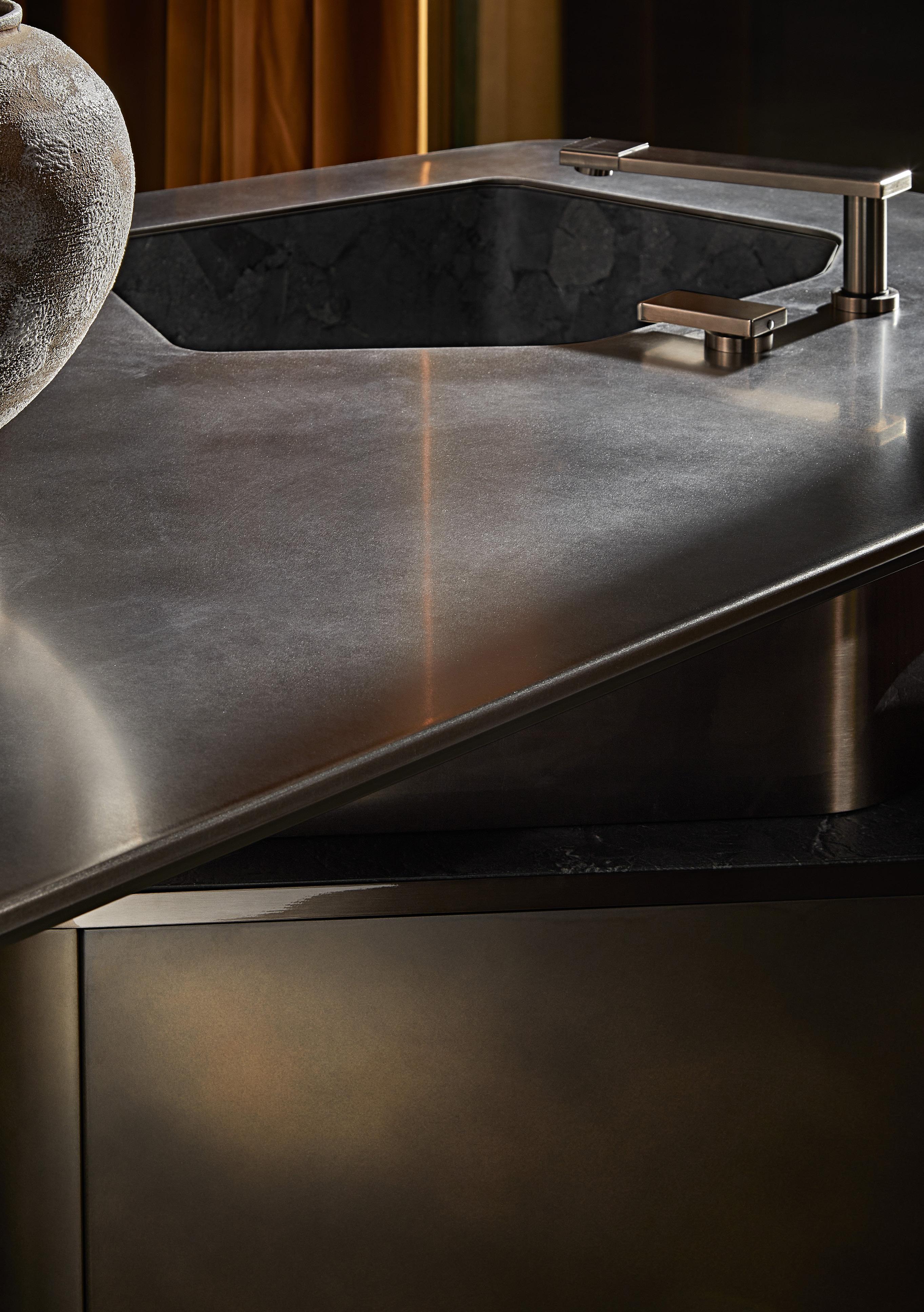
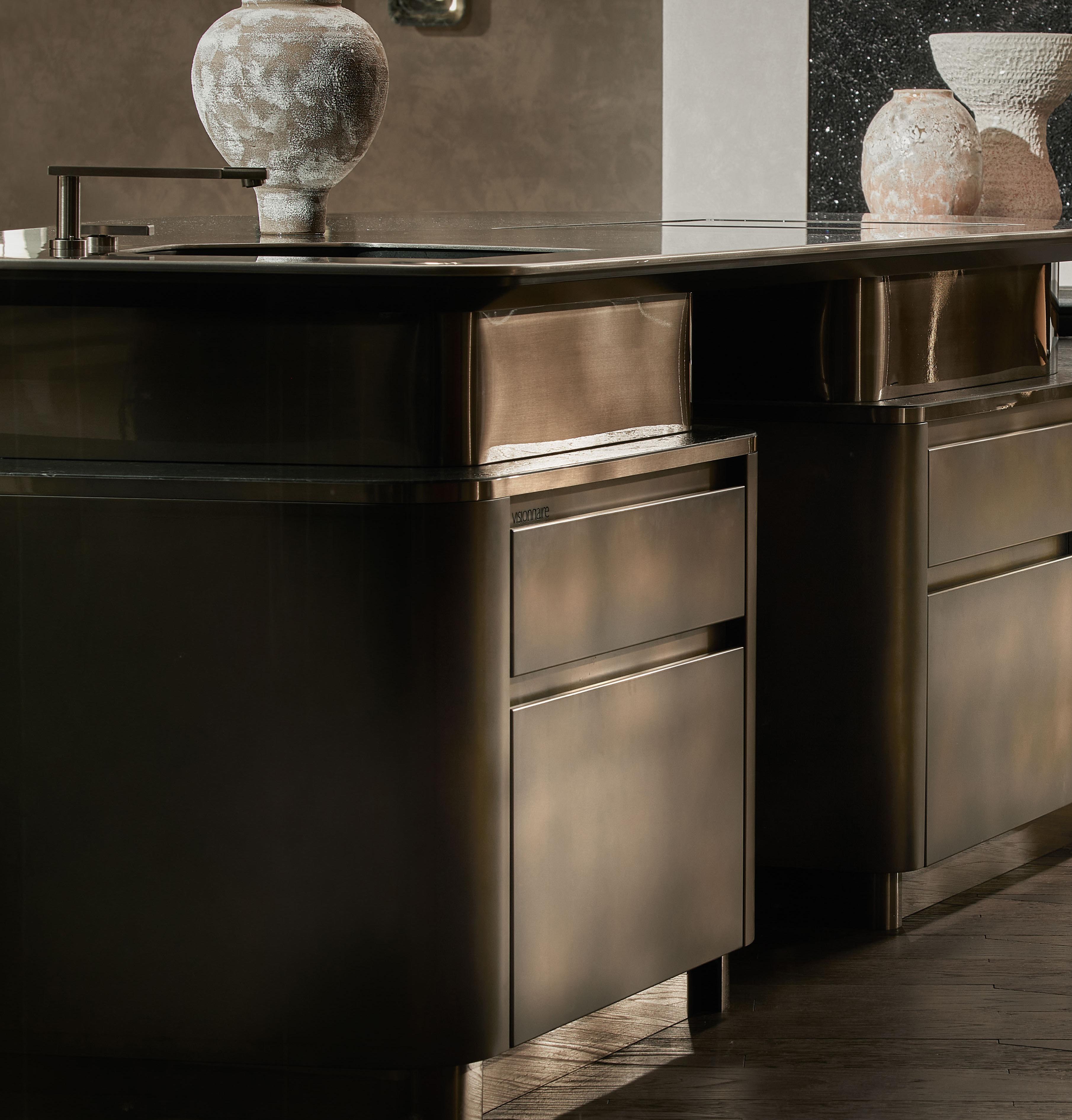
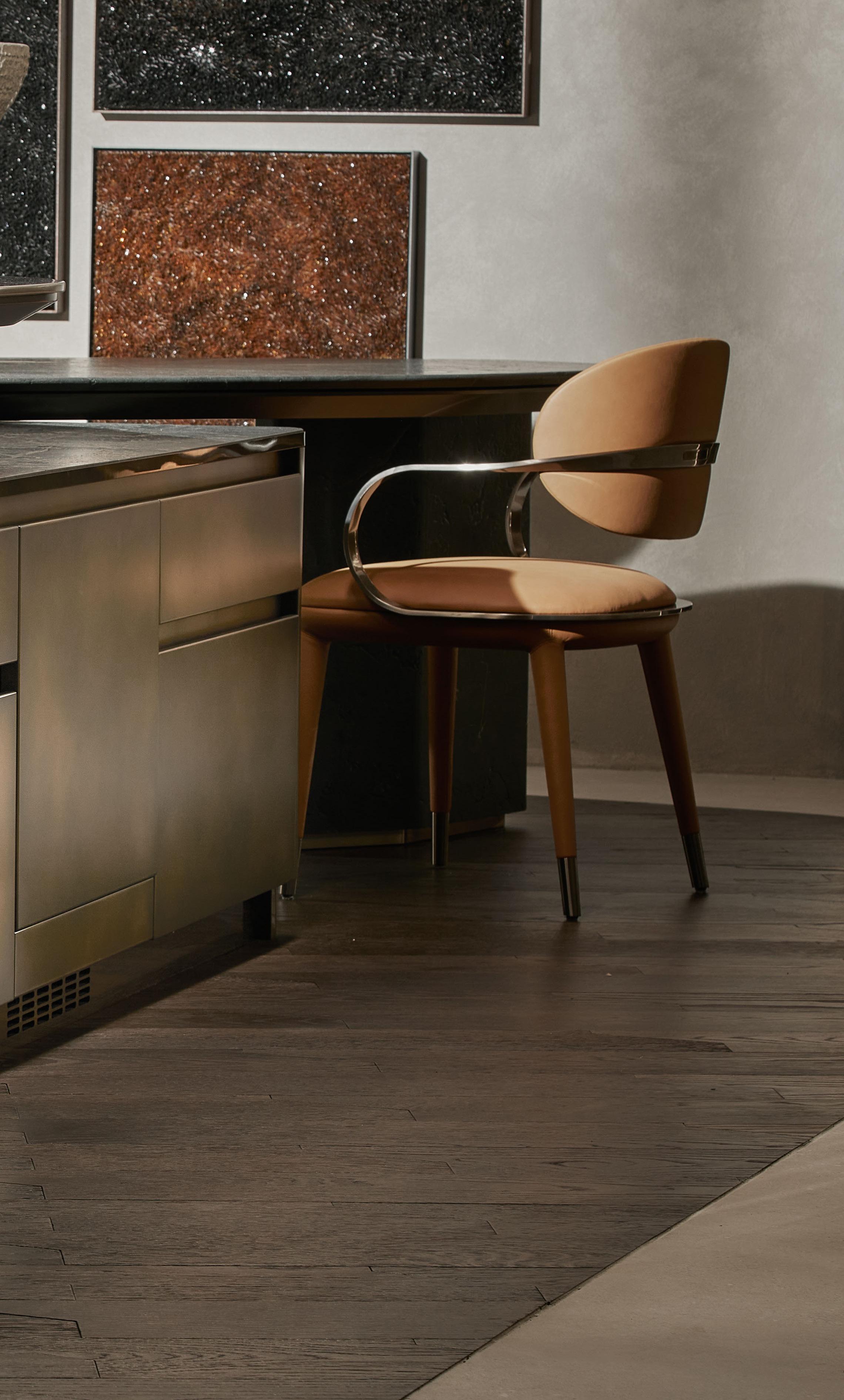
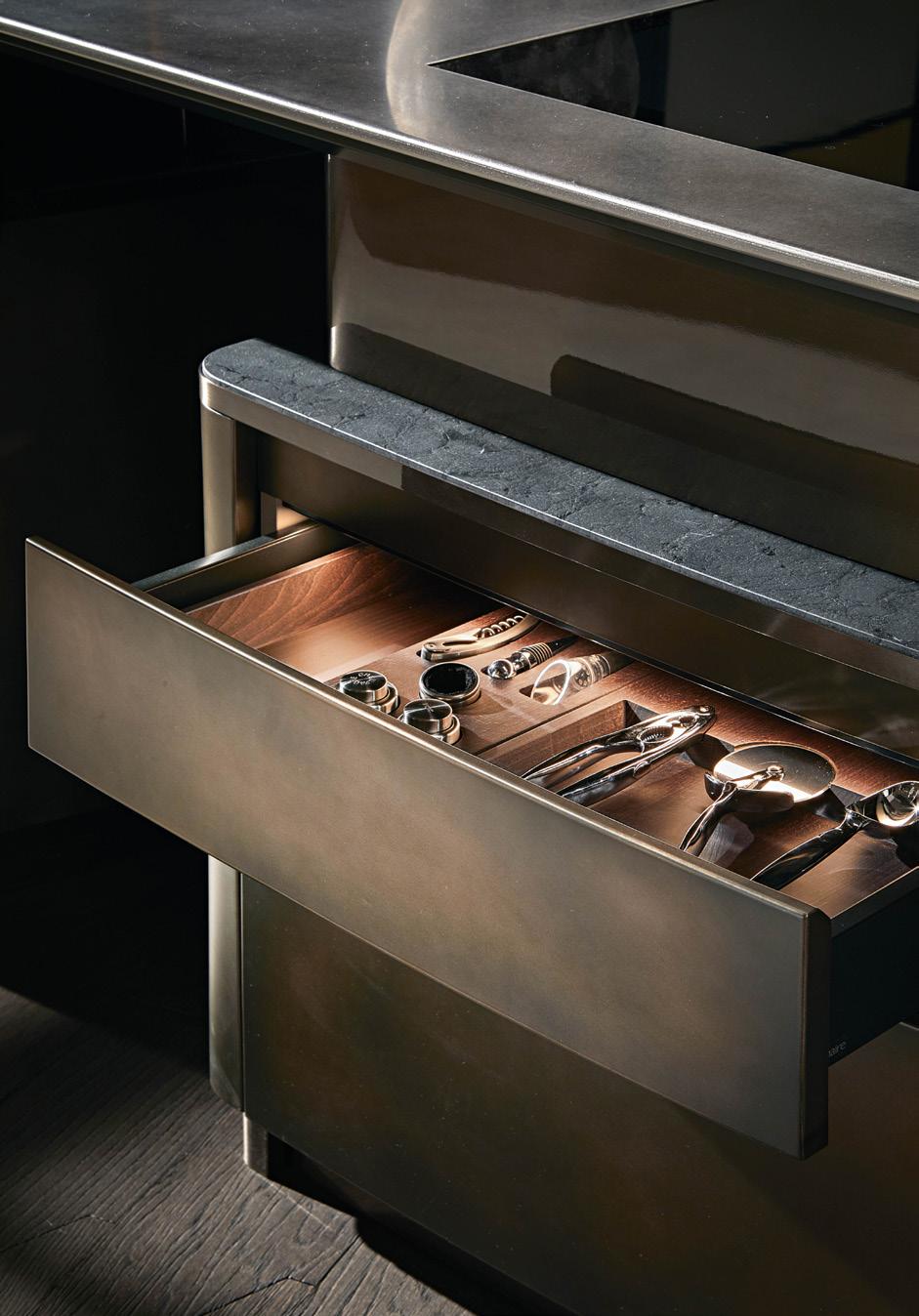
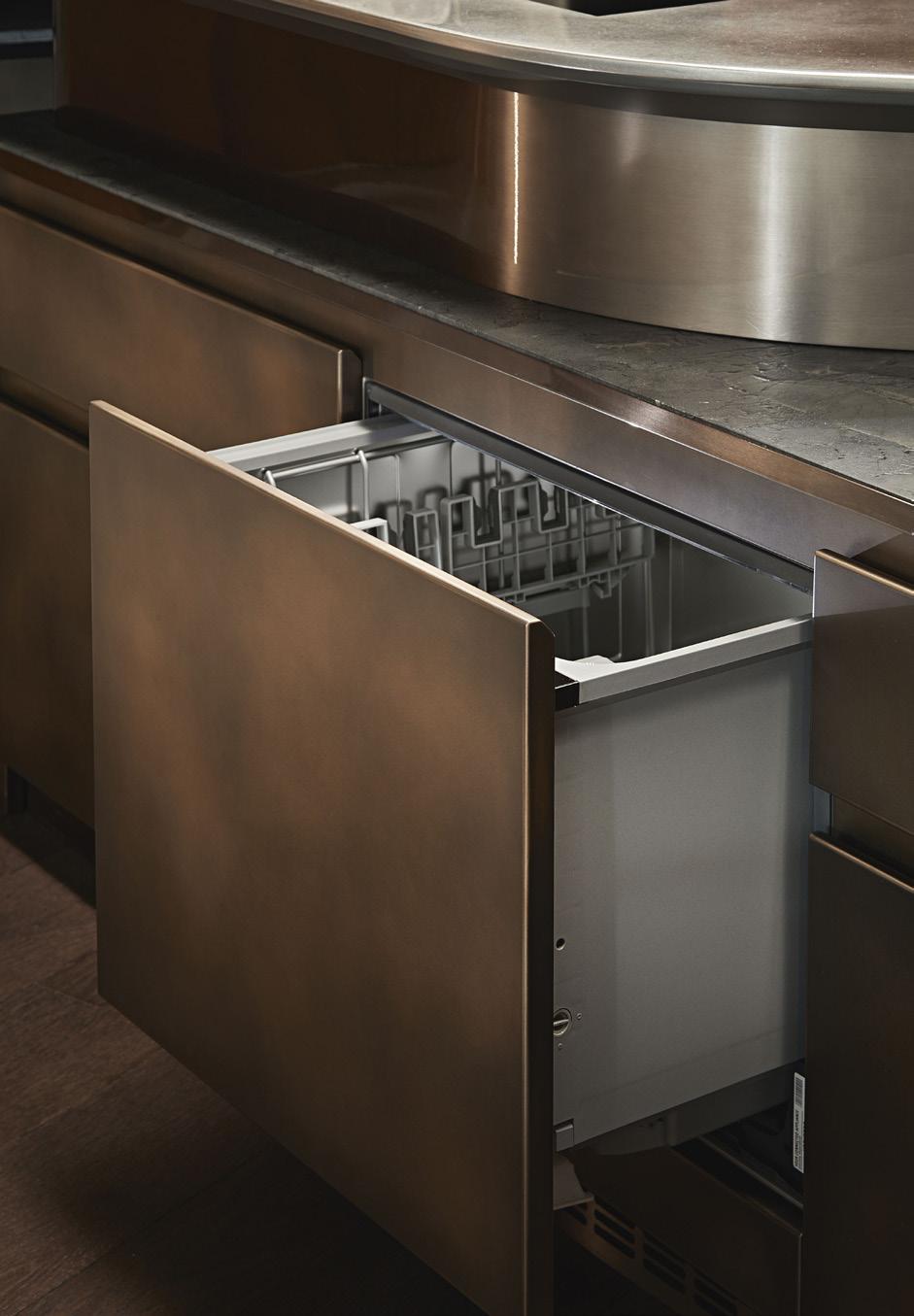
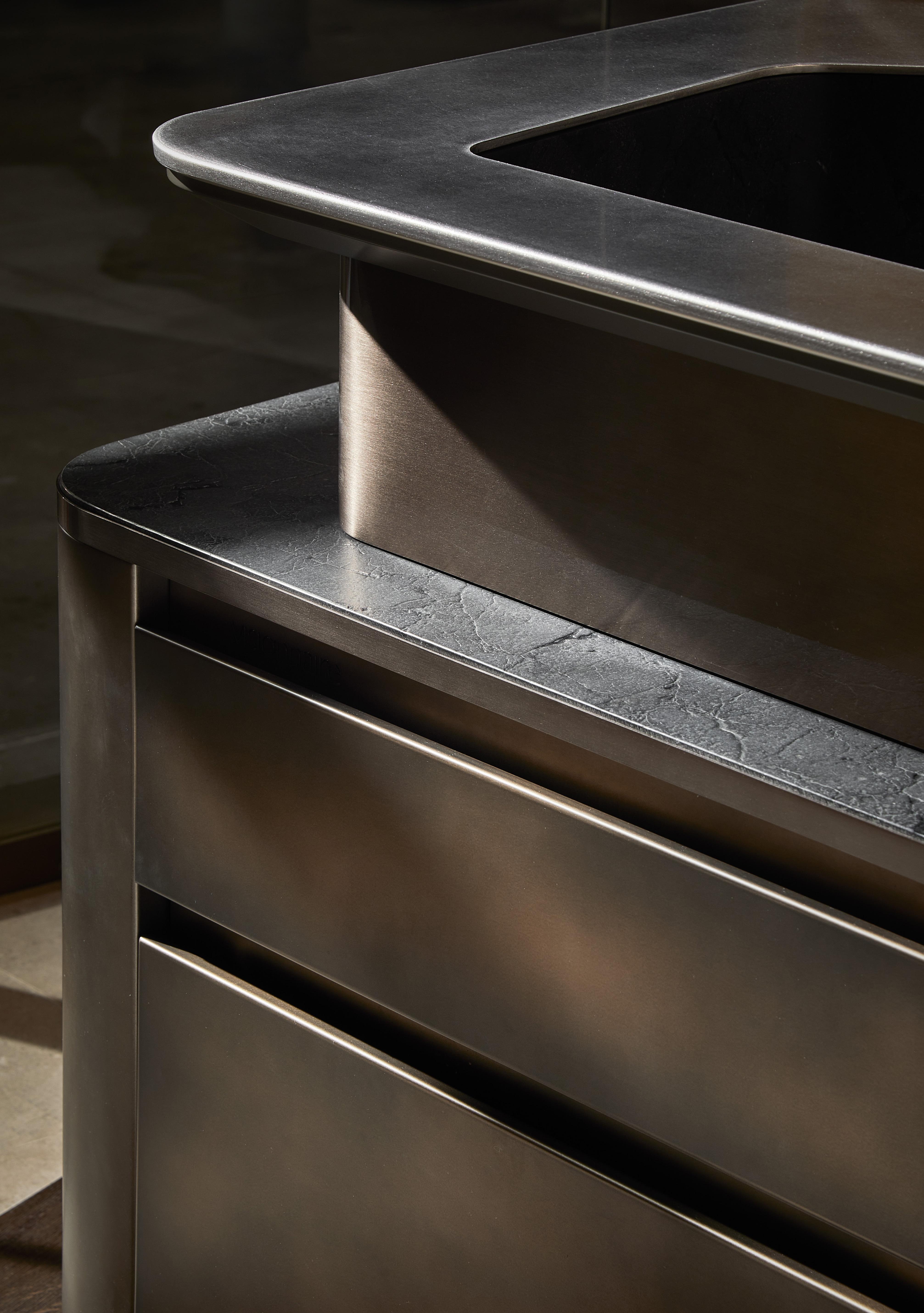
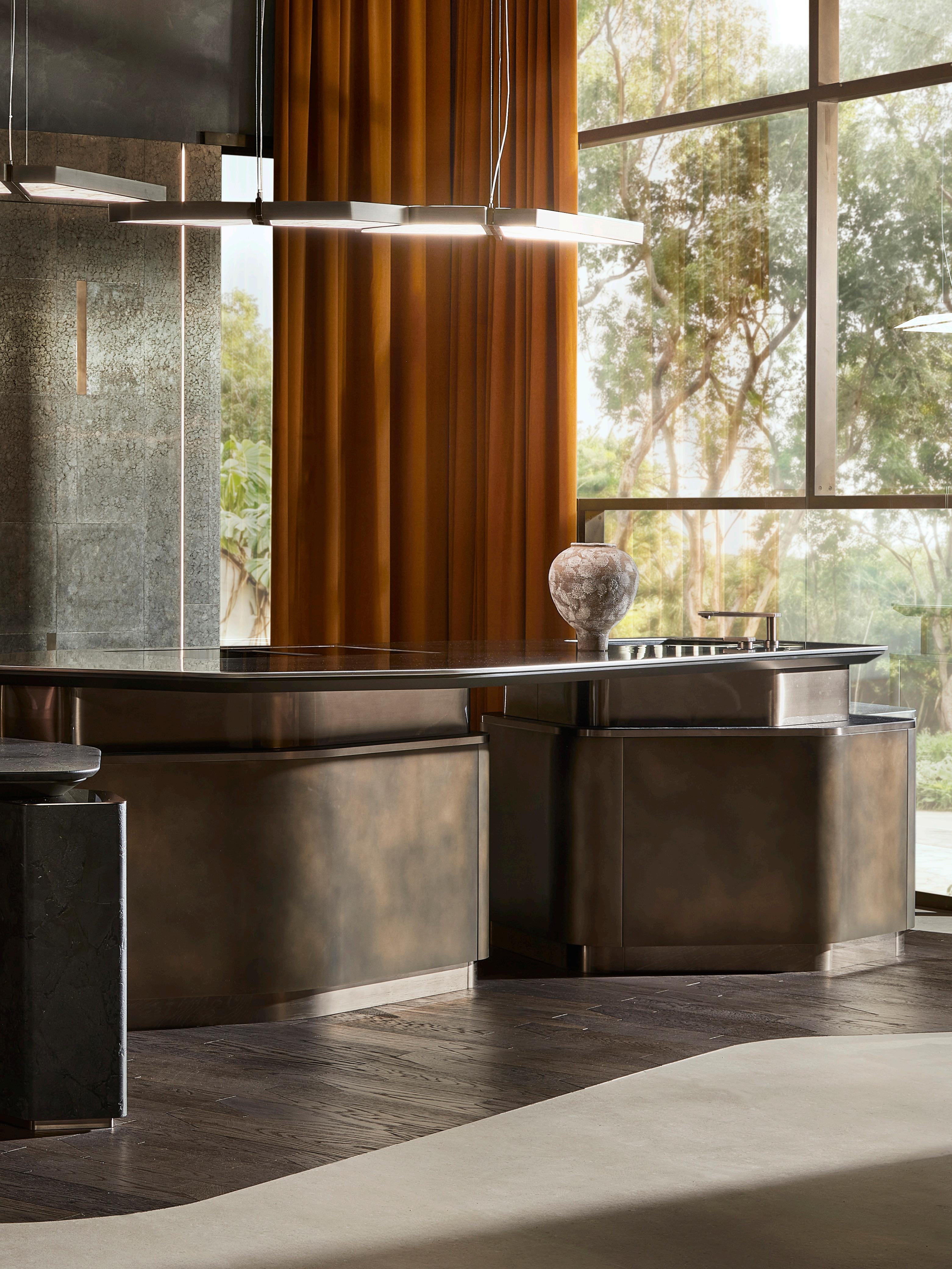
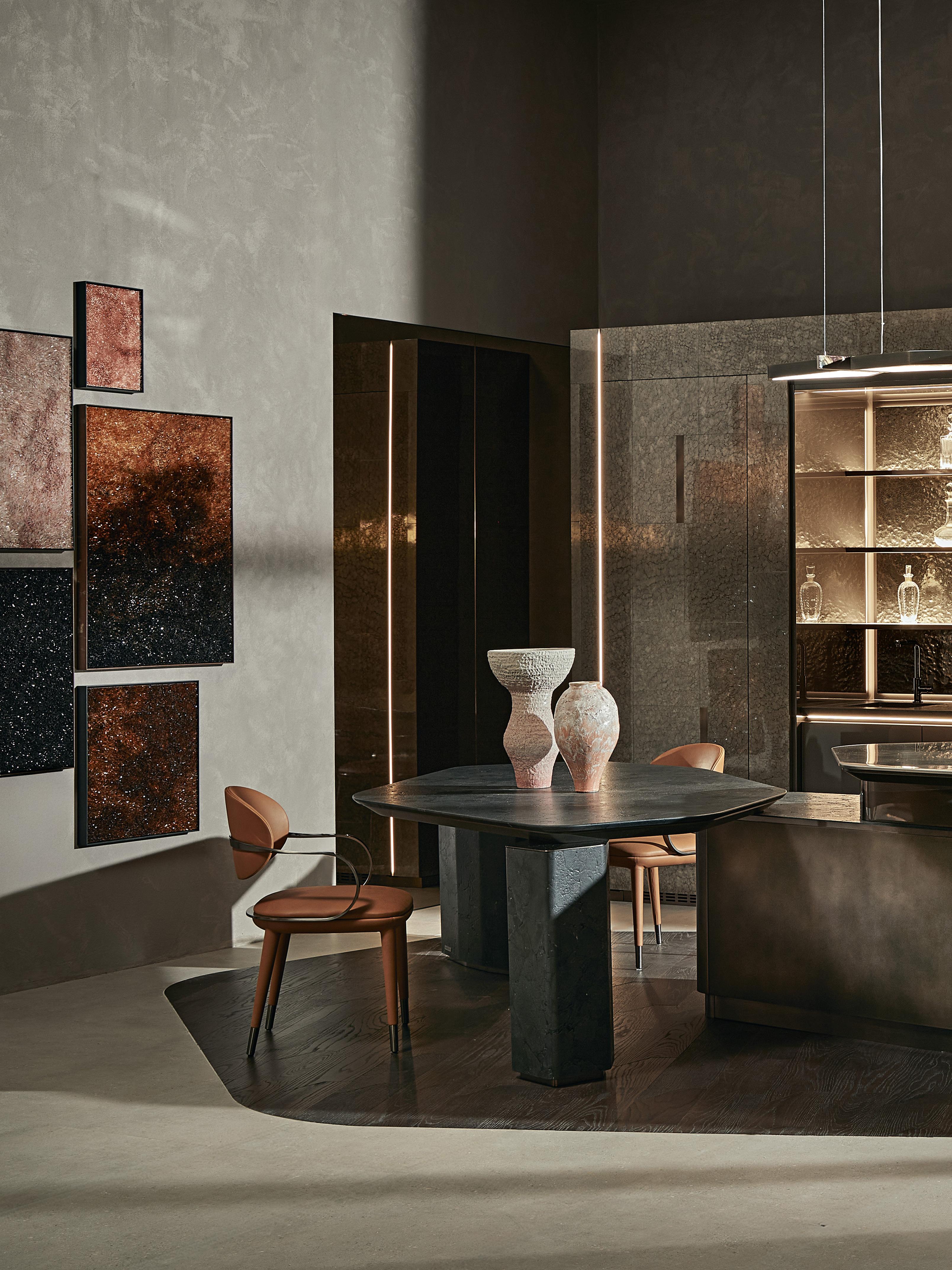
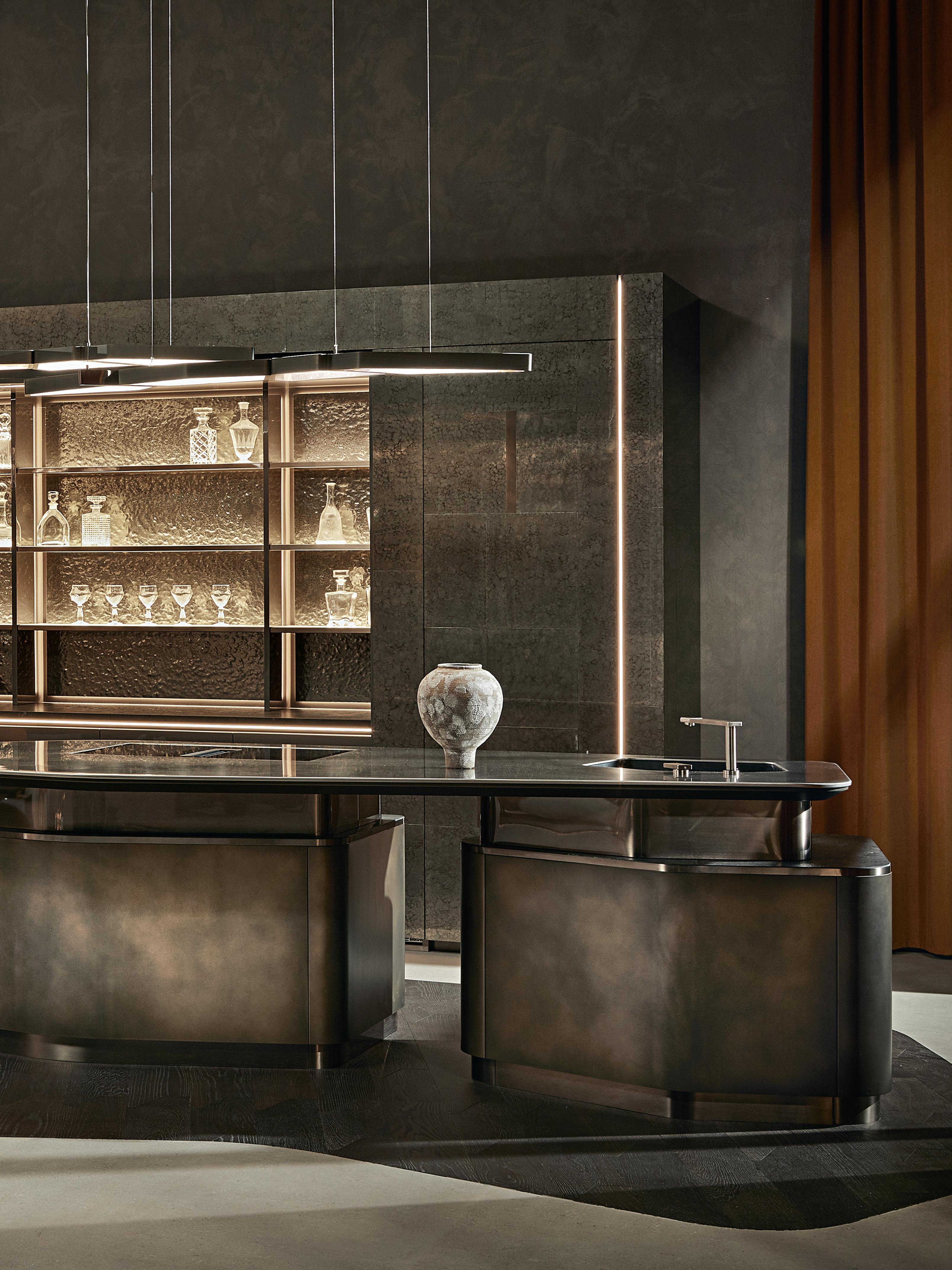
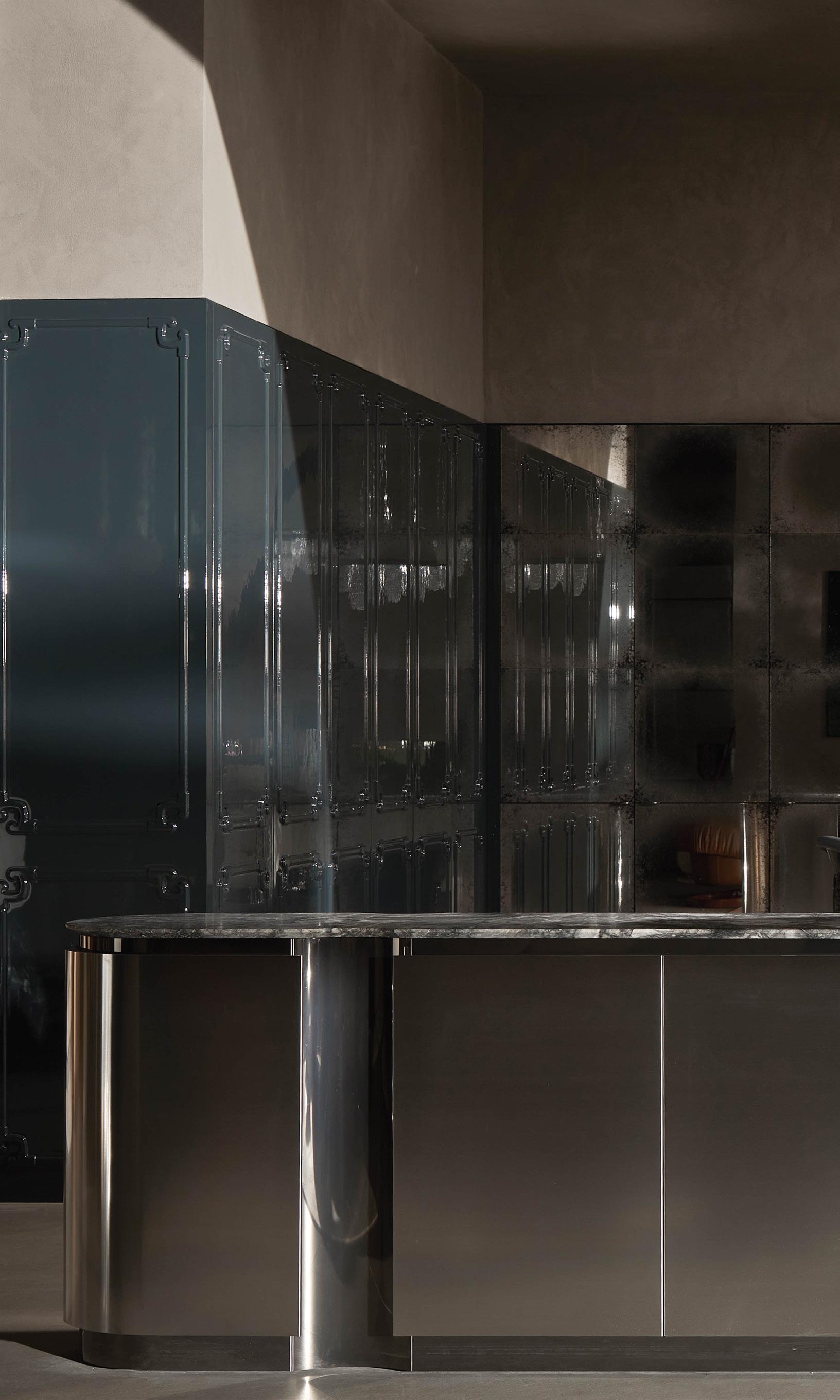
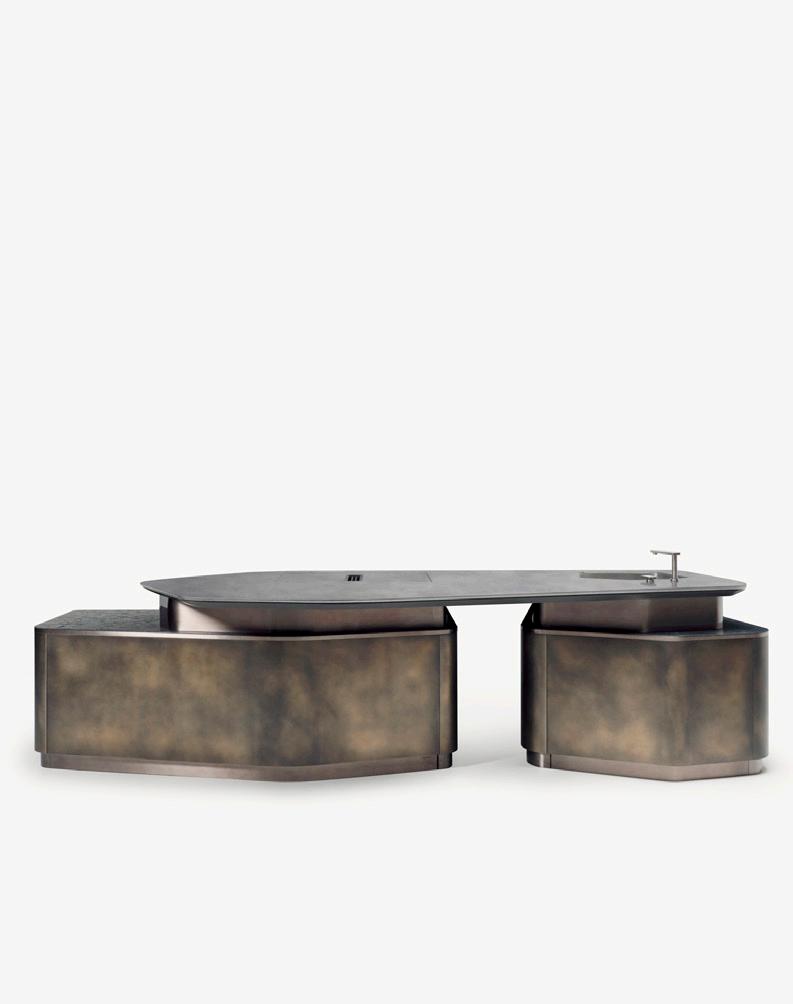
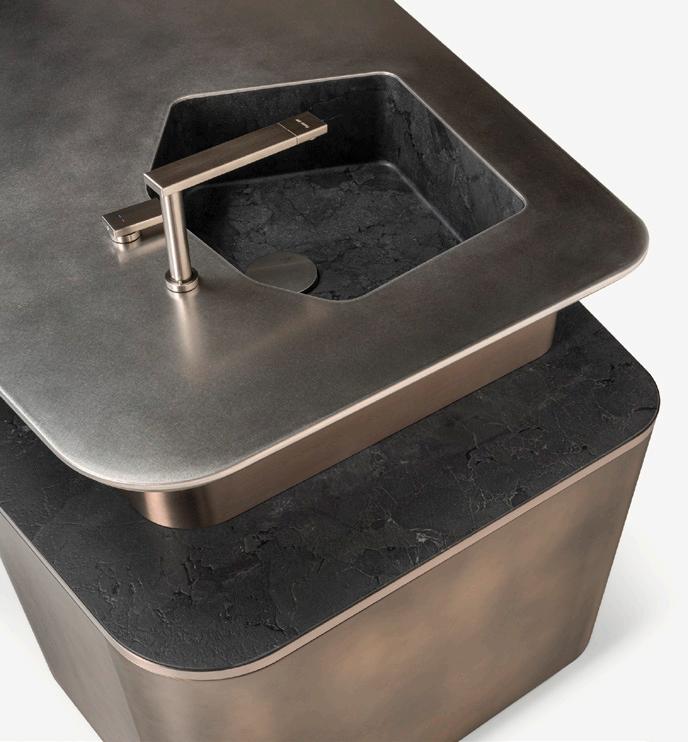
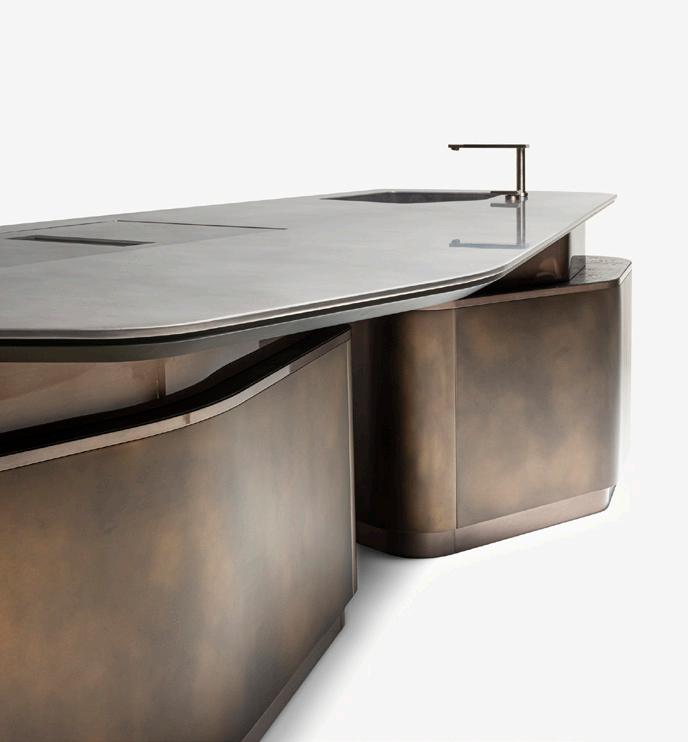
Basalt is a kitchen island defined by a compact volume and clean geometries. The main body rests on a recessed metal base that lightens its visual weight and emphasizes its presence within the space. The surfaces, finished with subtle material variations, reflect light irregularly, highlighting depth and layering. The central block integrates the functional elements with precision, emerging seamlessly from the structure. The metal top features chamfered edges and rounded transitions that establish a measured balance between solid and void. Basalt is conceived as an architectural element capable of structuring space through proportion and formal control.
Basalt è un’isola caratterizzata da un volume compatto e geometrie nette. Il corpo principale poggia su una base metallica arretrata che ne alleggerisce la percezione e ne sottolinea la presenza nello spazio. Le superfici in metallo, lavorate con leggere variazioni materiche, riflettono la luce in modo irregolare, evidenziando profondità e stratificazione. Il blocco centrale integra con precisione gli elementi funzionali, che emergono in continuità con la struttura. Il piano in metallo presenta spigoli smussati e raccordi arrotondati che definiscono un equilibrio misurato tra pieni e vuoti.
Basalt si configura come un elemento architettonico capace di strutturare lo spazio attraverso proporzione e controllo formale.
Basalt
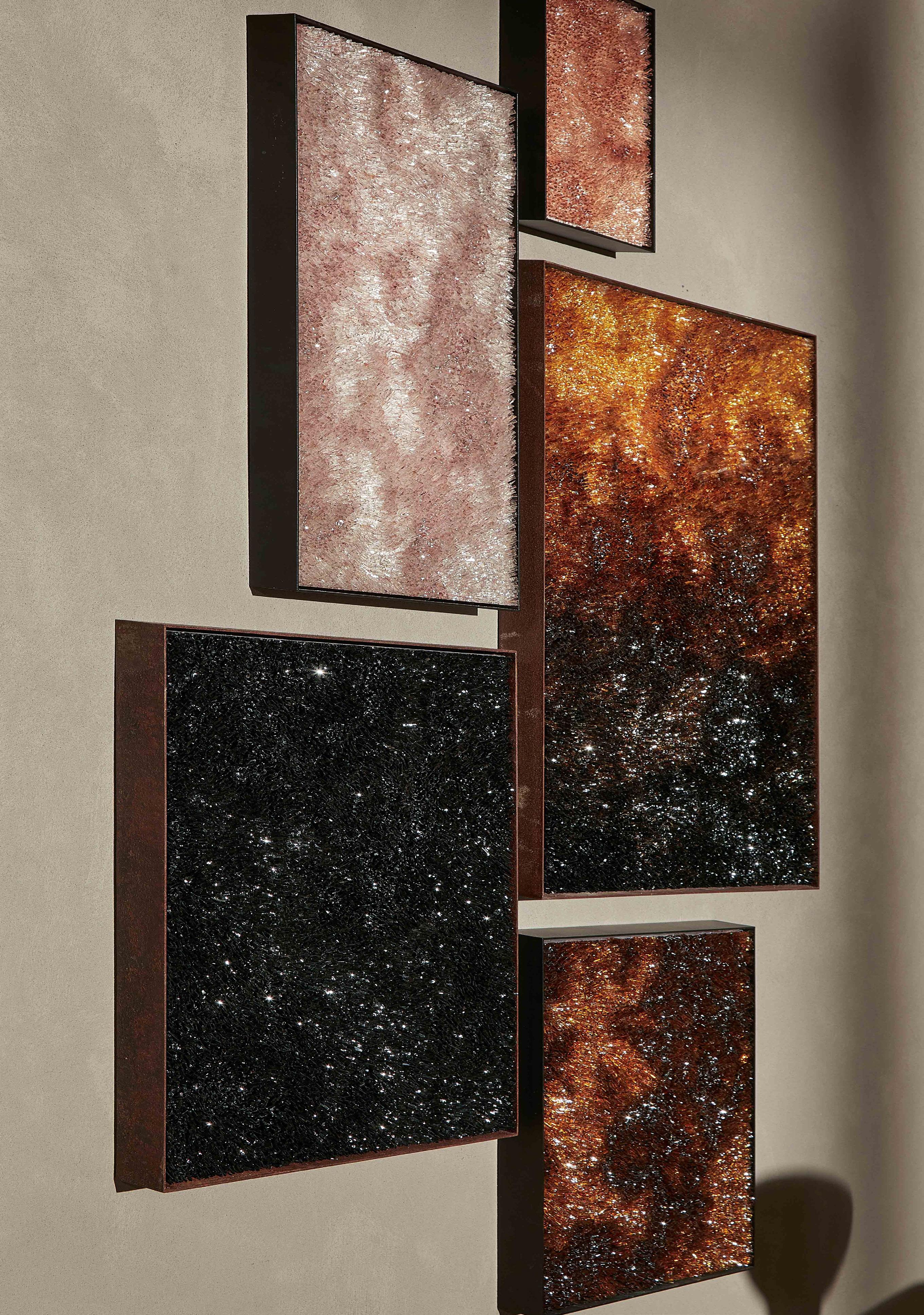
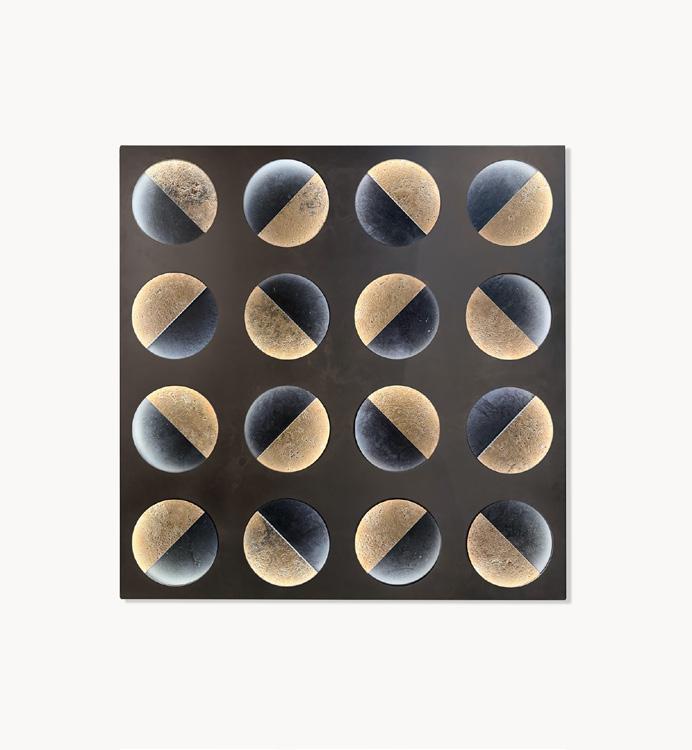
Cattedrale 147-151 , artwork composition
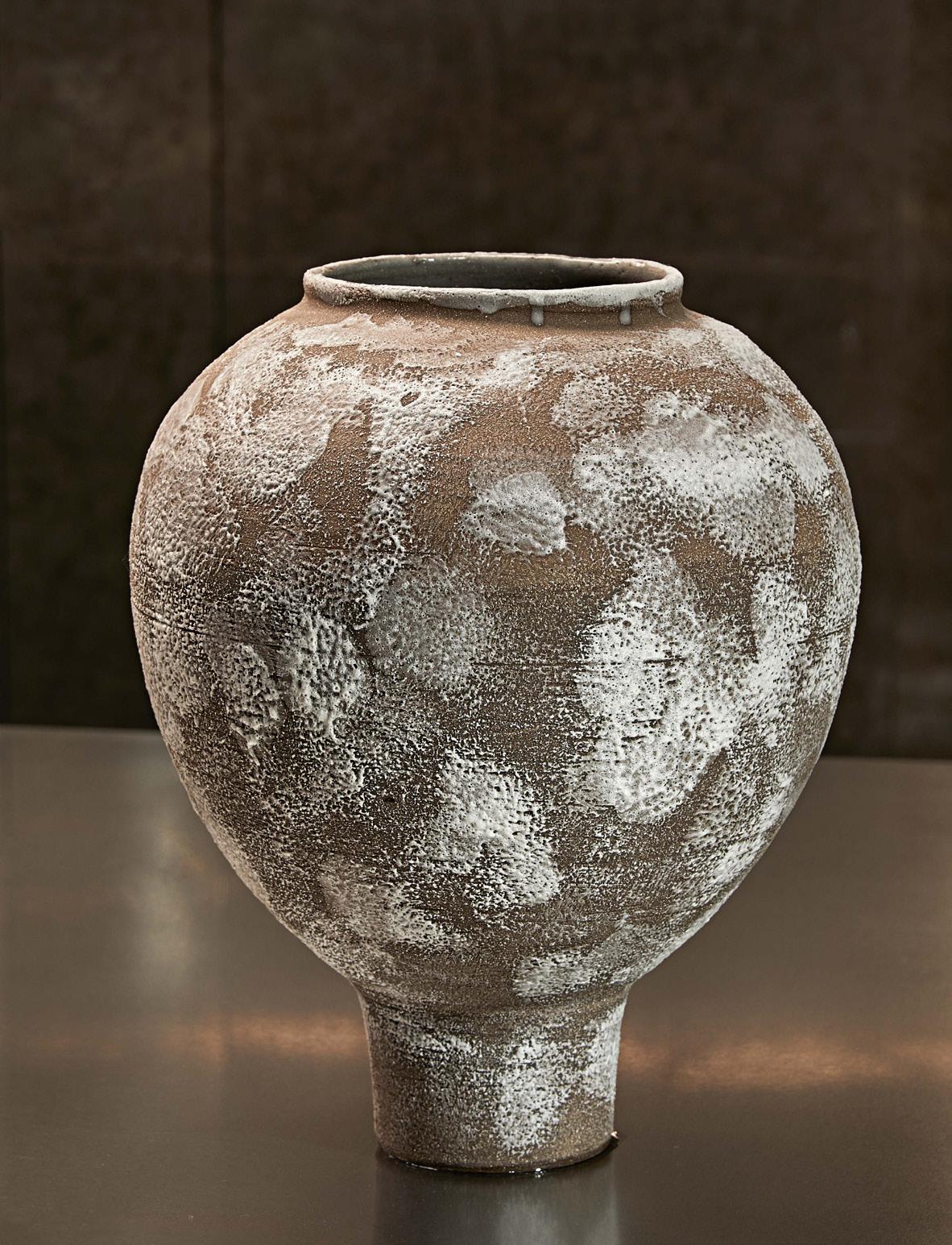
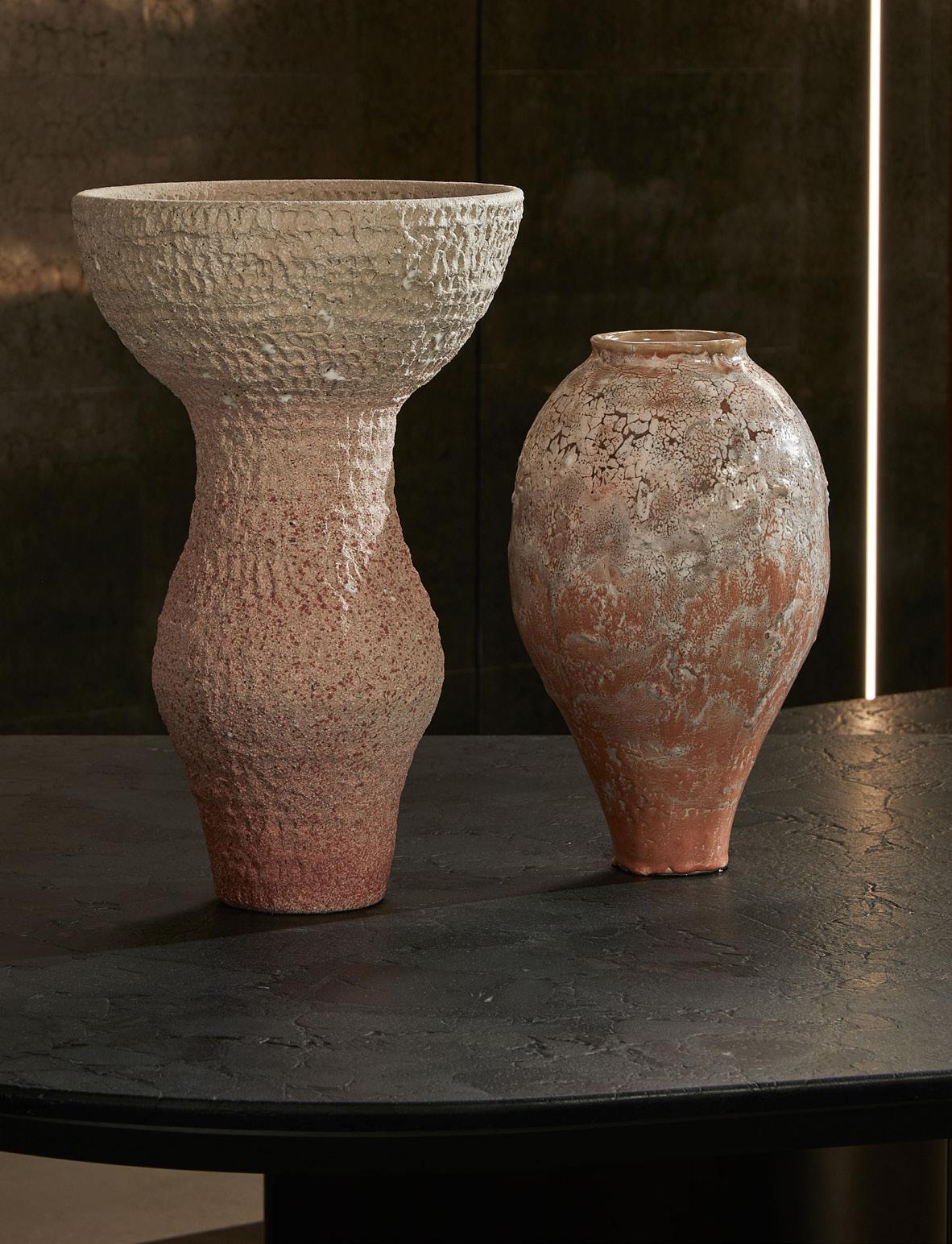
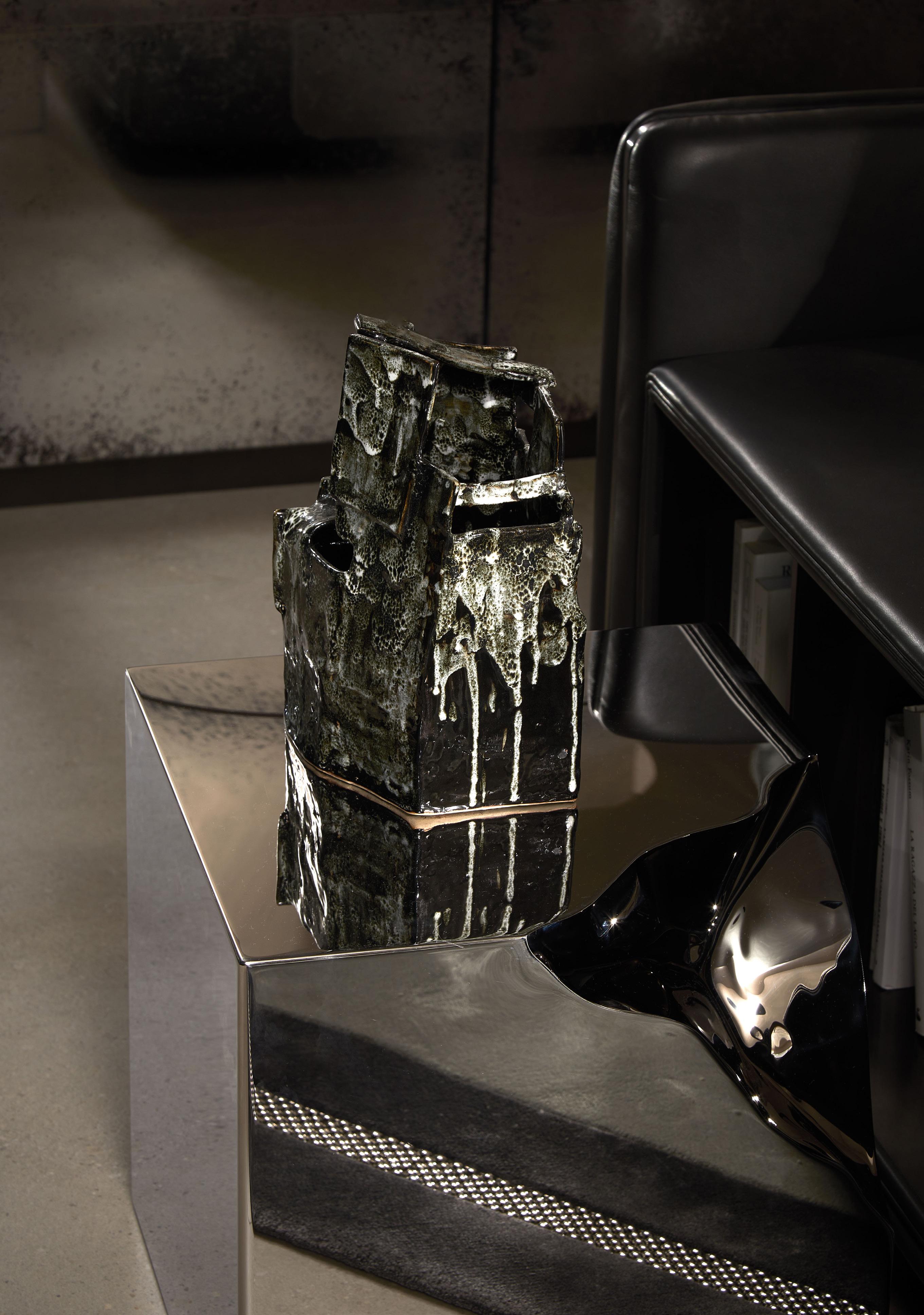
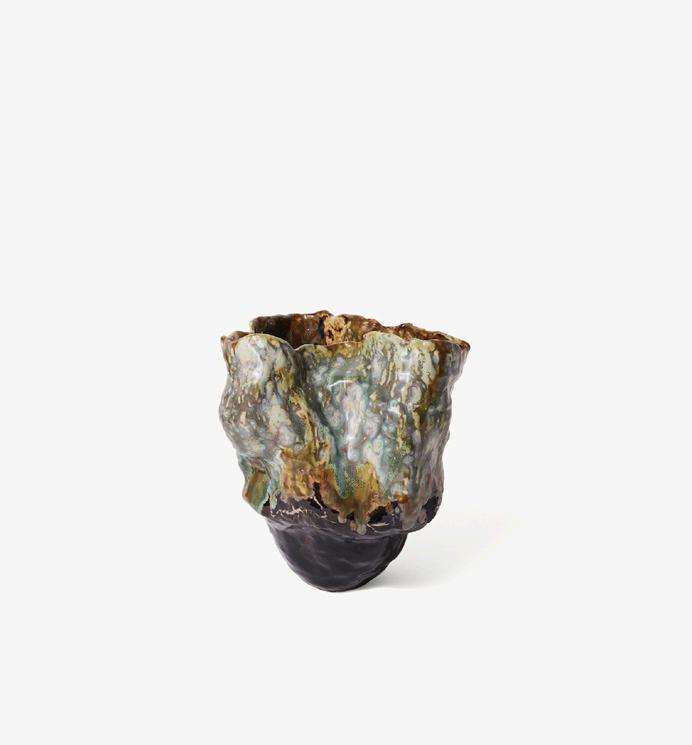
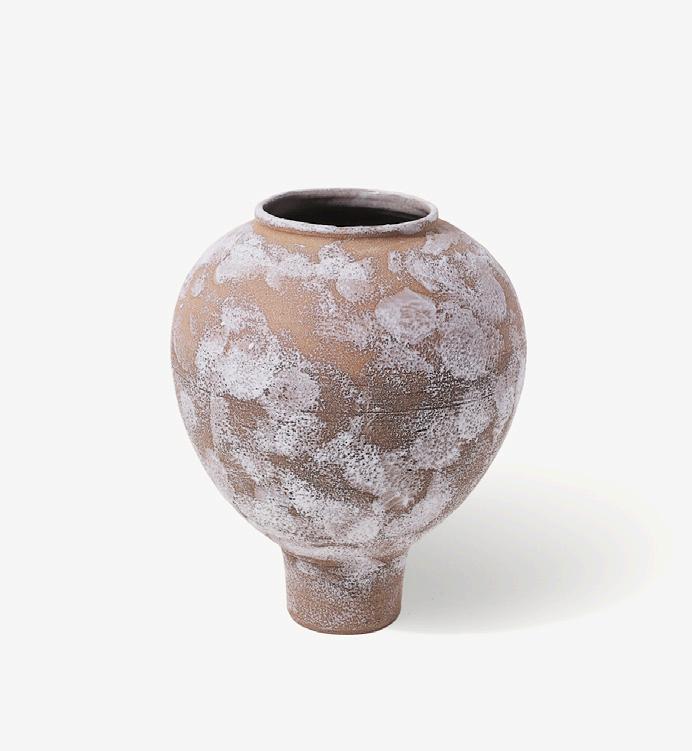
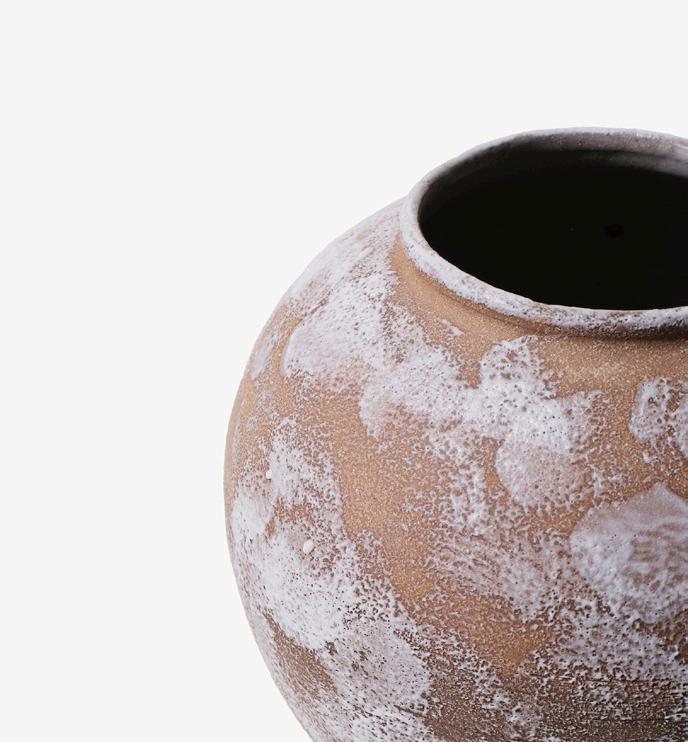
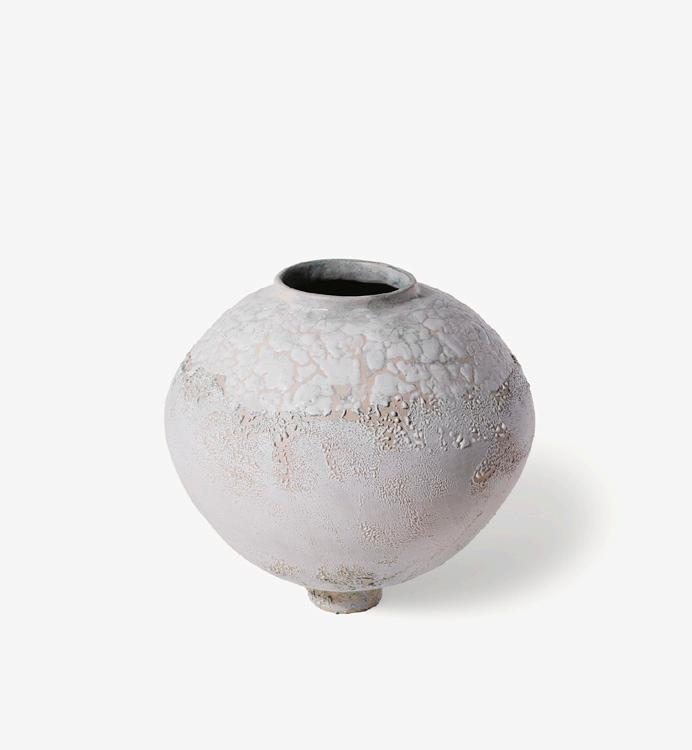
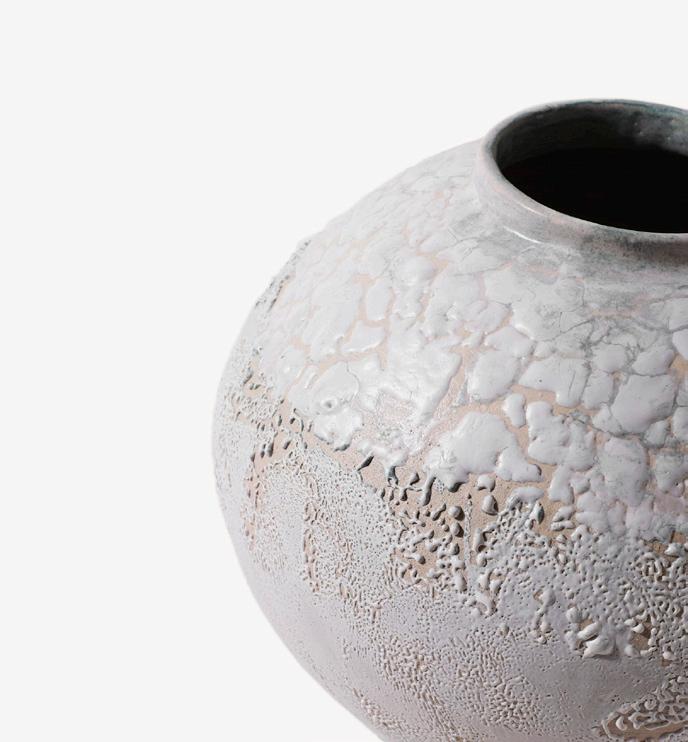
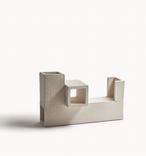
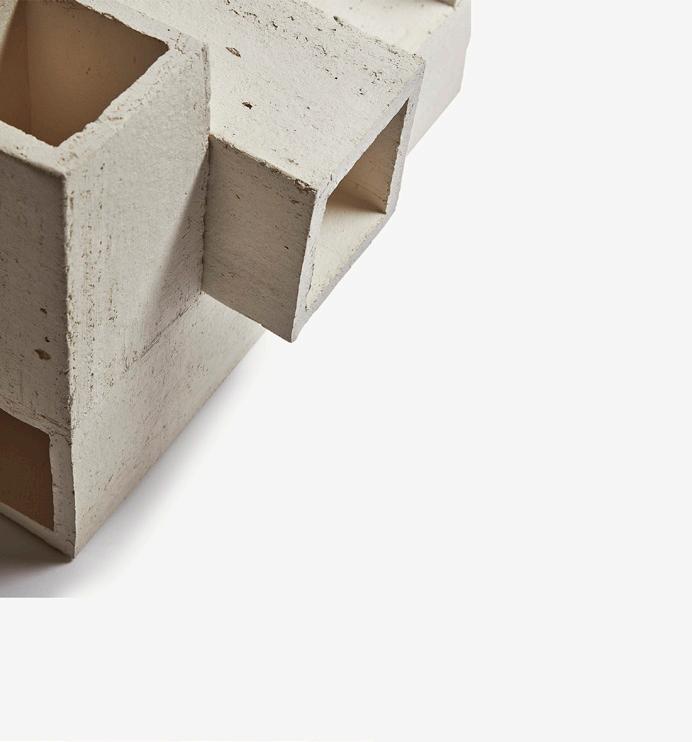
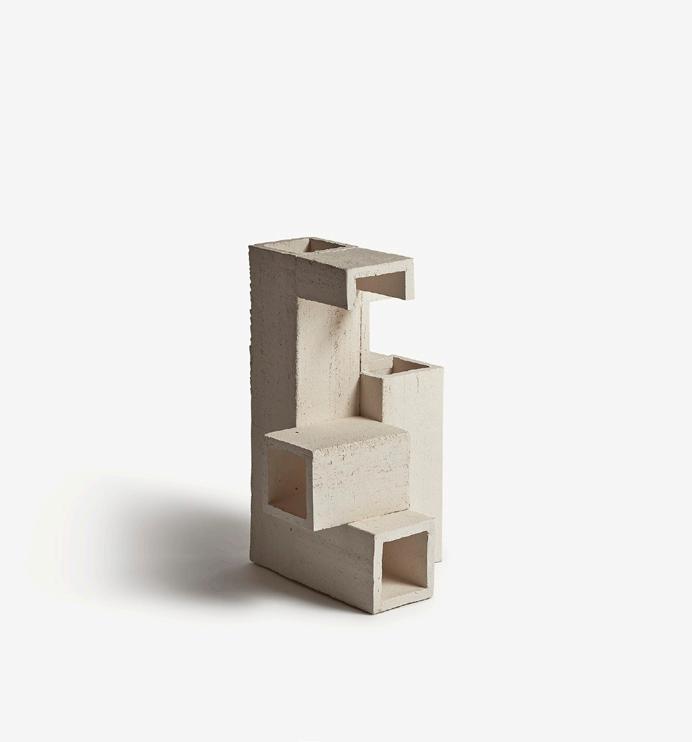
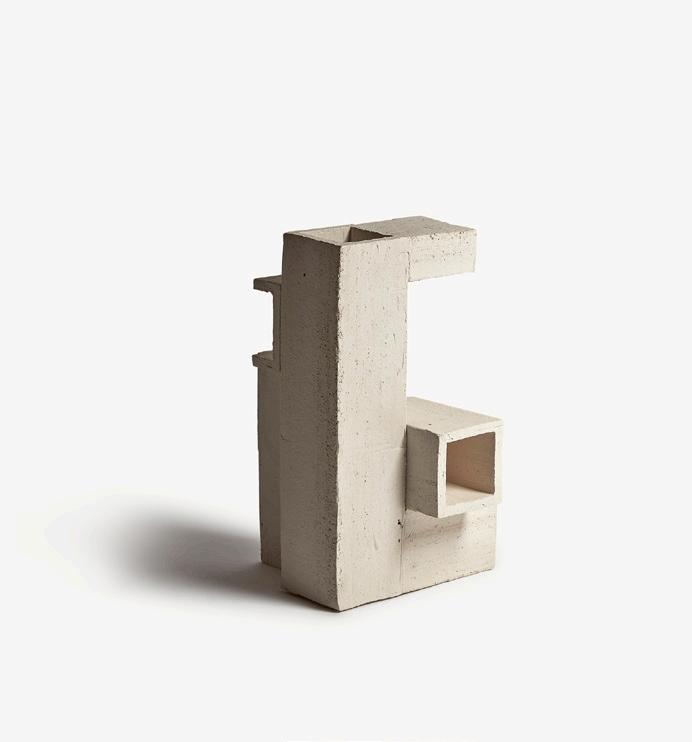
Engobe/Crawl, vases
Explore the room ↗
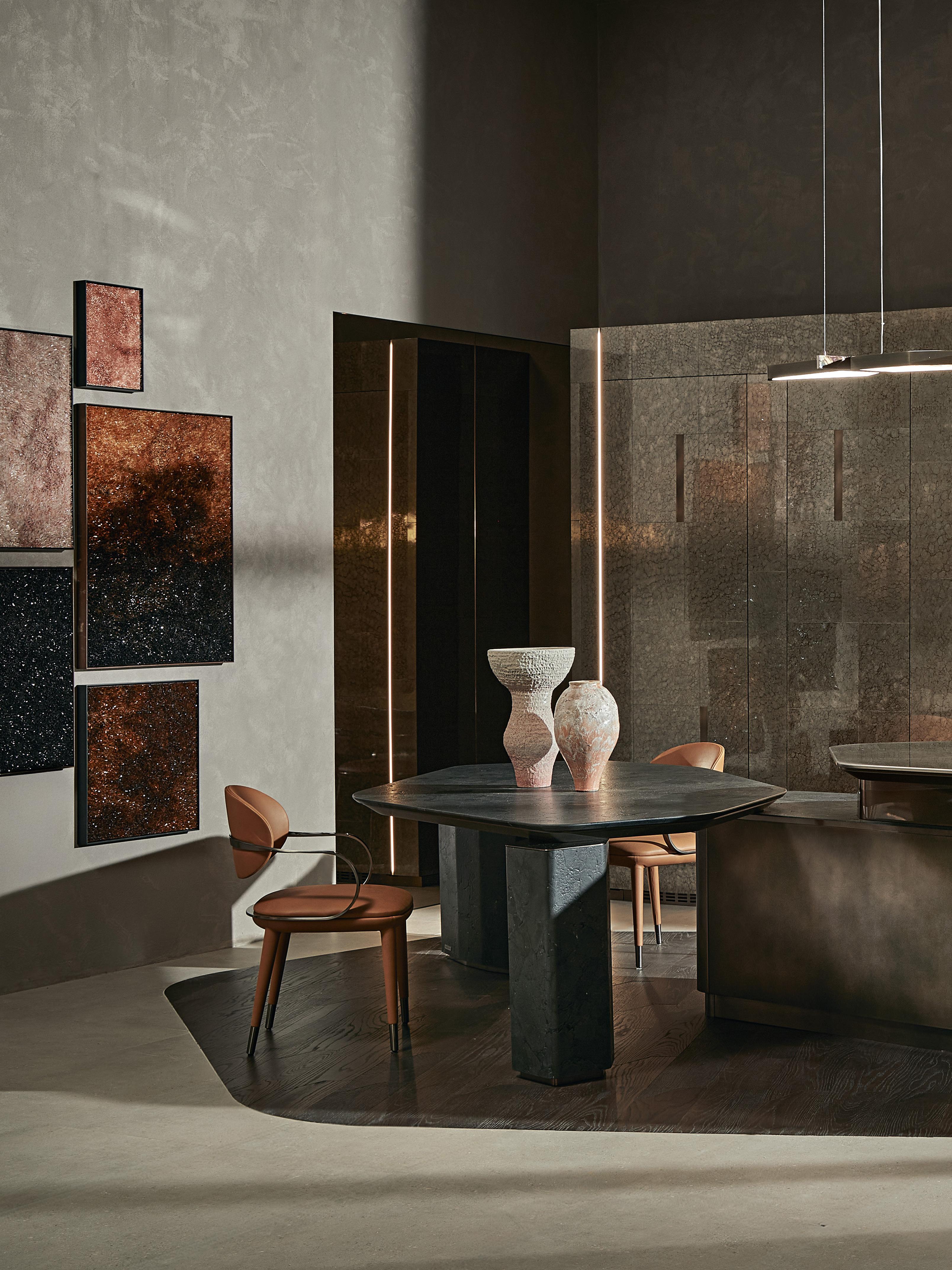
Basalt, kitchen island Titan, table
Duncan, recessed wall/bar unit Elixir, chair
Astralis, suspension lamp
Matter captures the light, fractures it, and returns it as sensory depth.
La materia assorbe la luce, la frattura, la restituisce come profondità sensoriale.
Basalt kitchen island
Engobe vase by Alessandro La Spada by Arina Antonova
Basalt kitchen island
by Alessandro La Spada
Basalt kitchen island Elixir chair by Alessandro La Spada
Basalt kitchen island by Alessandro La Spada
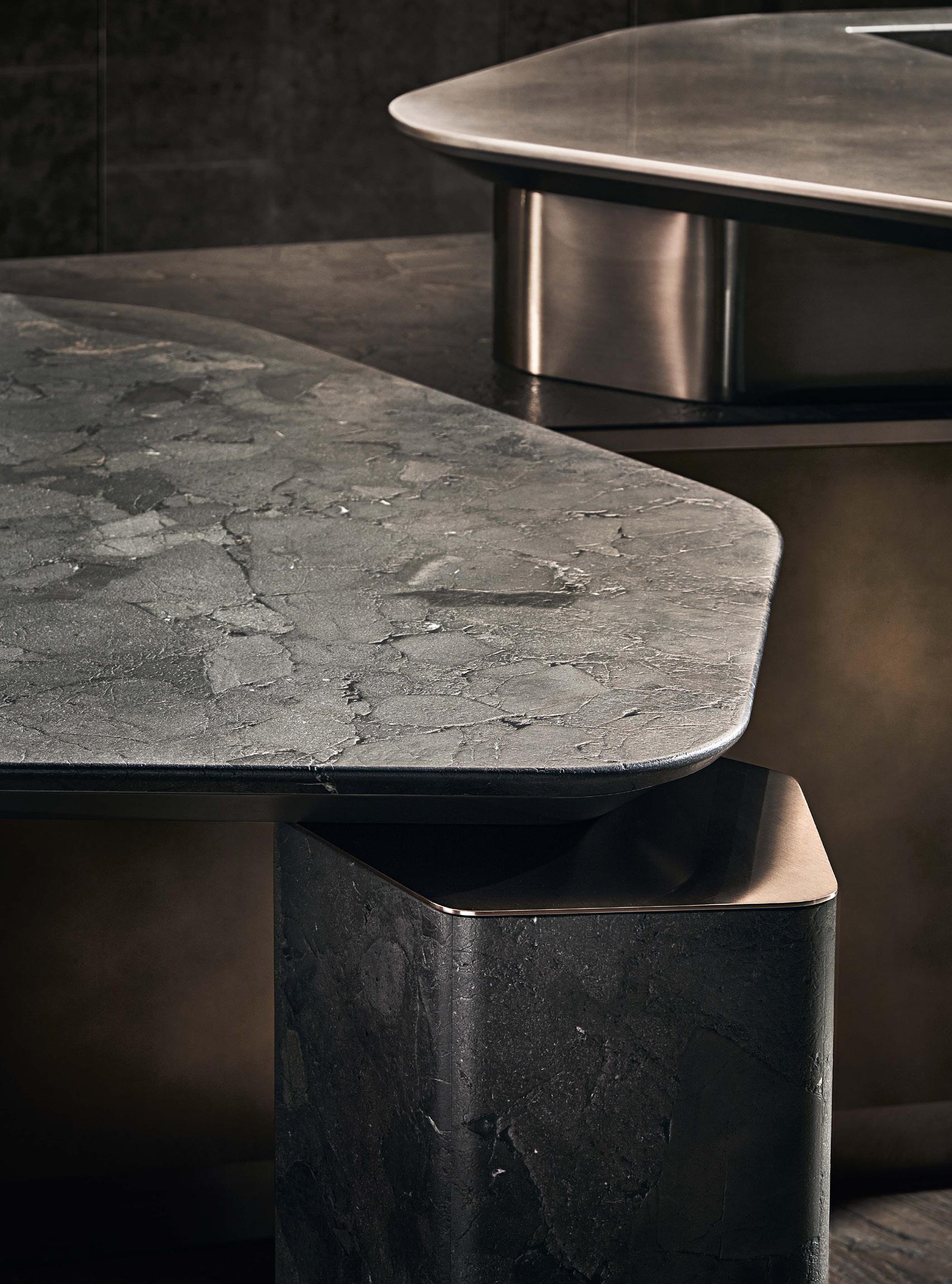
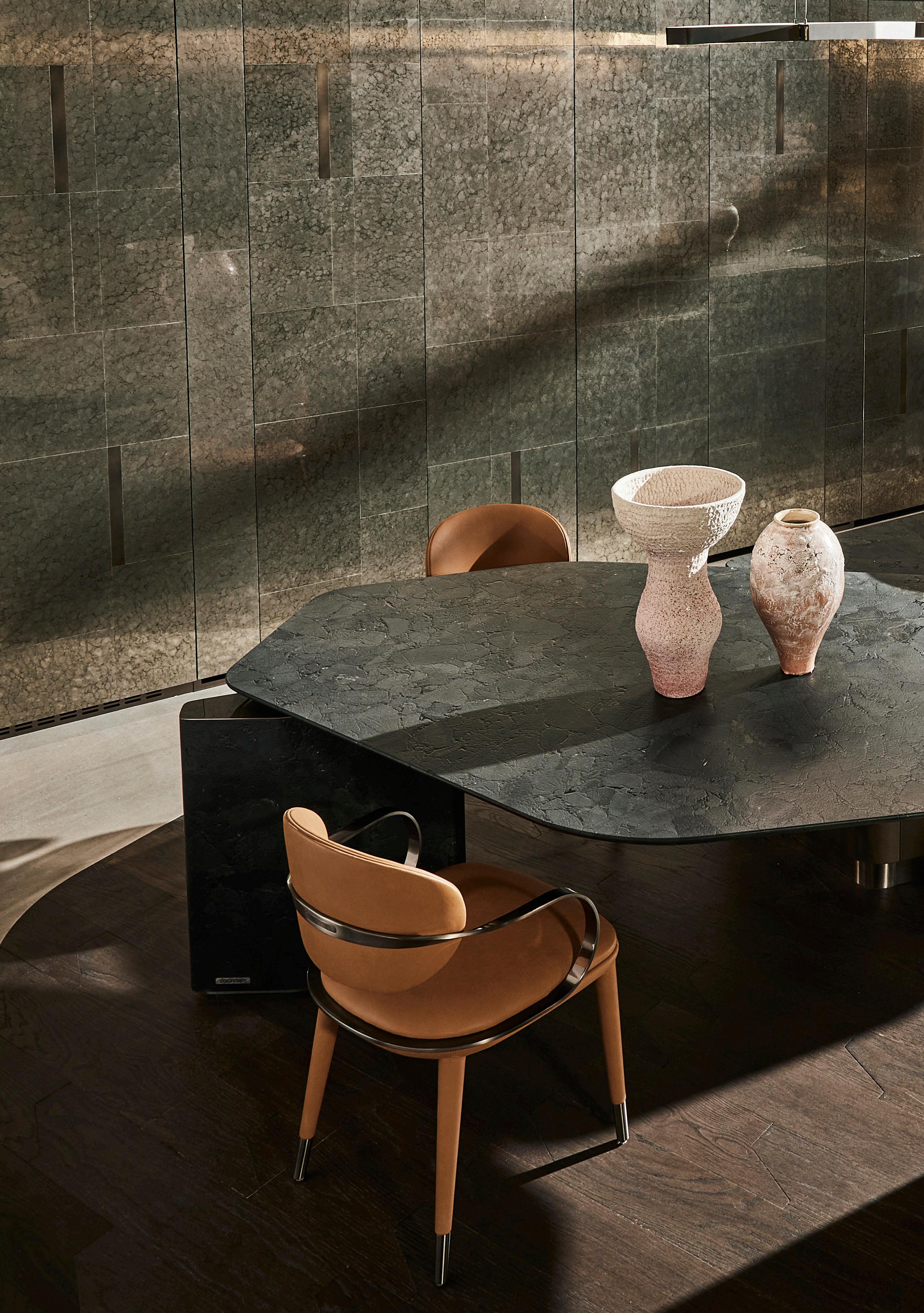
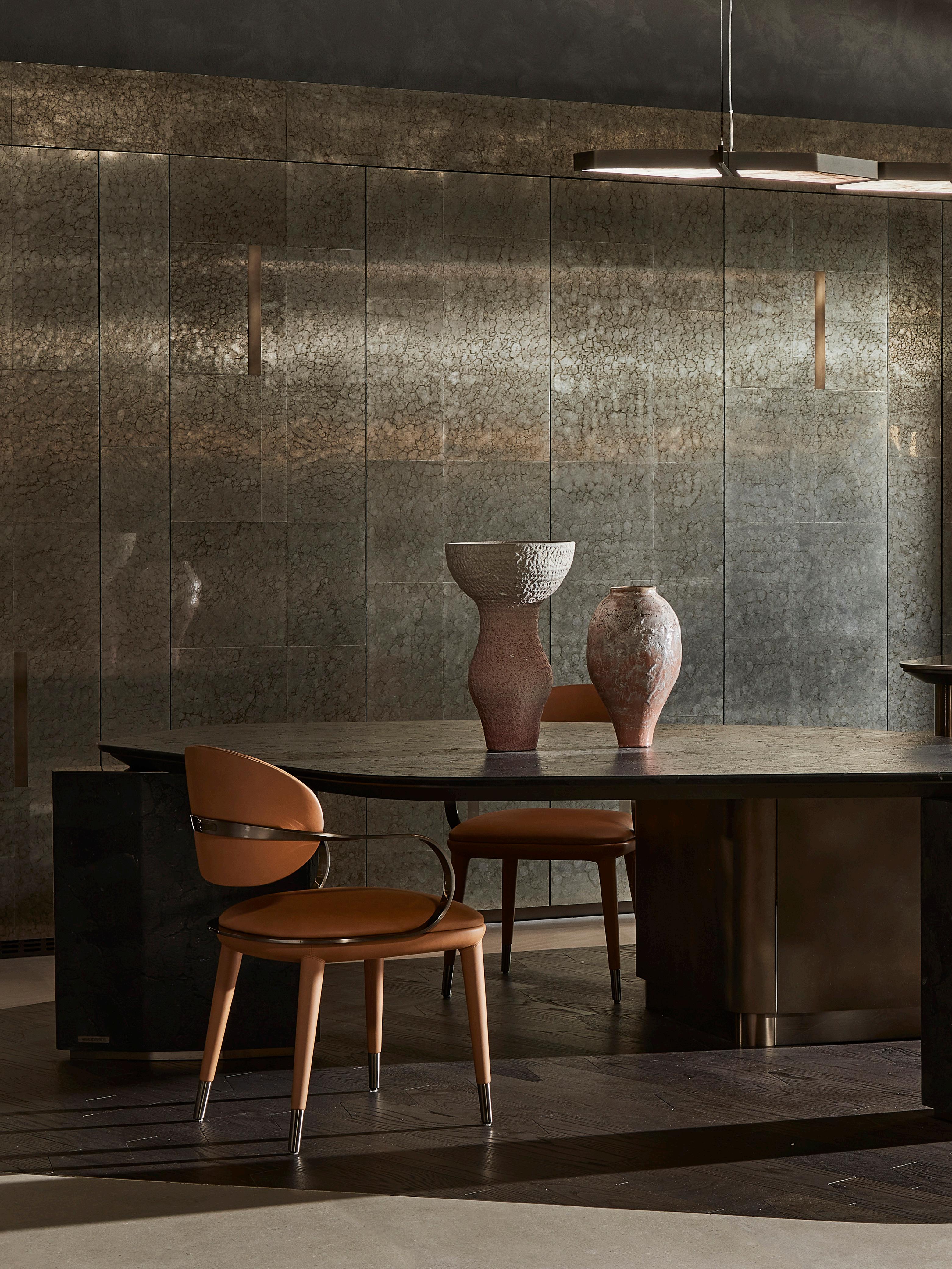
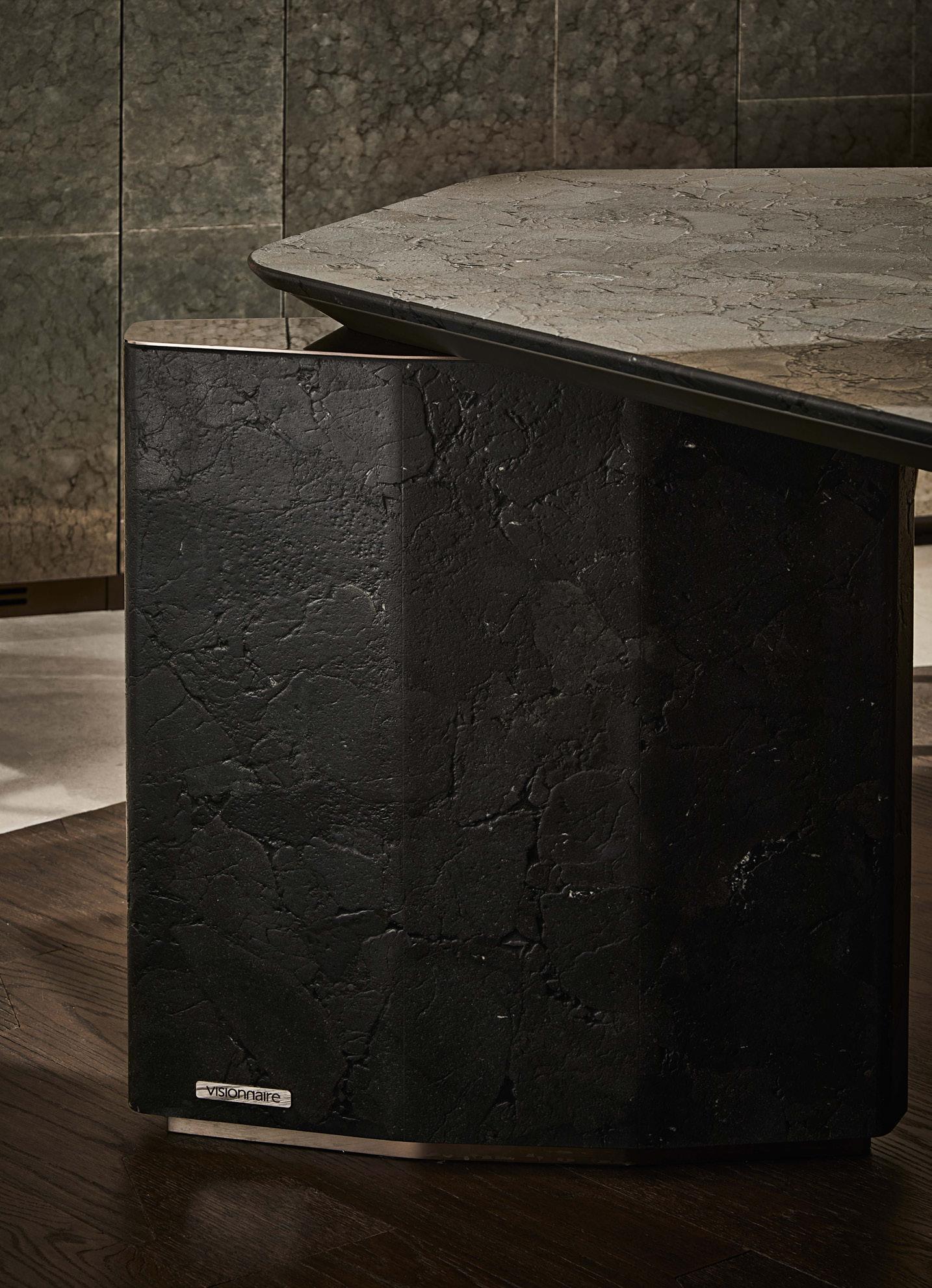
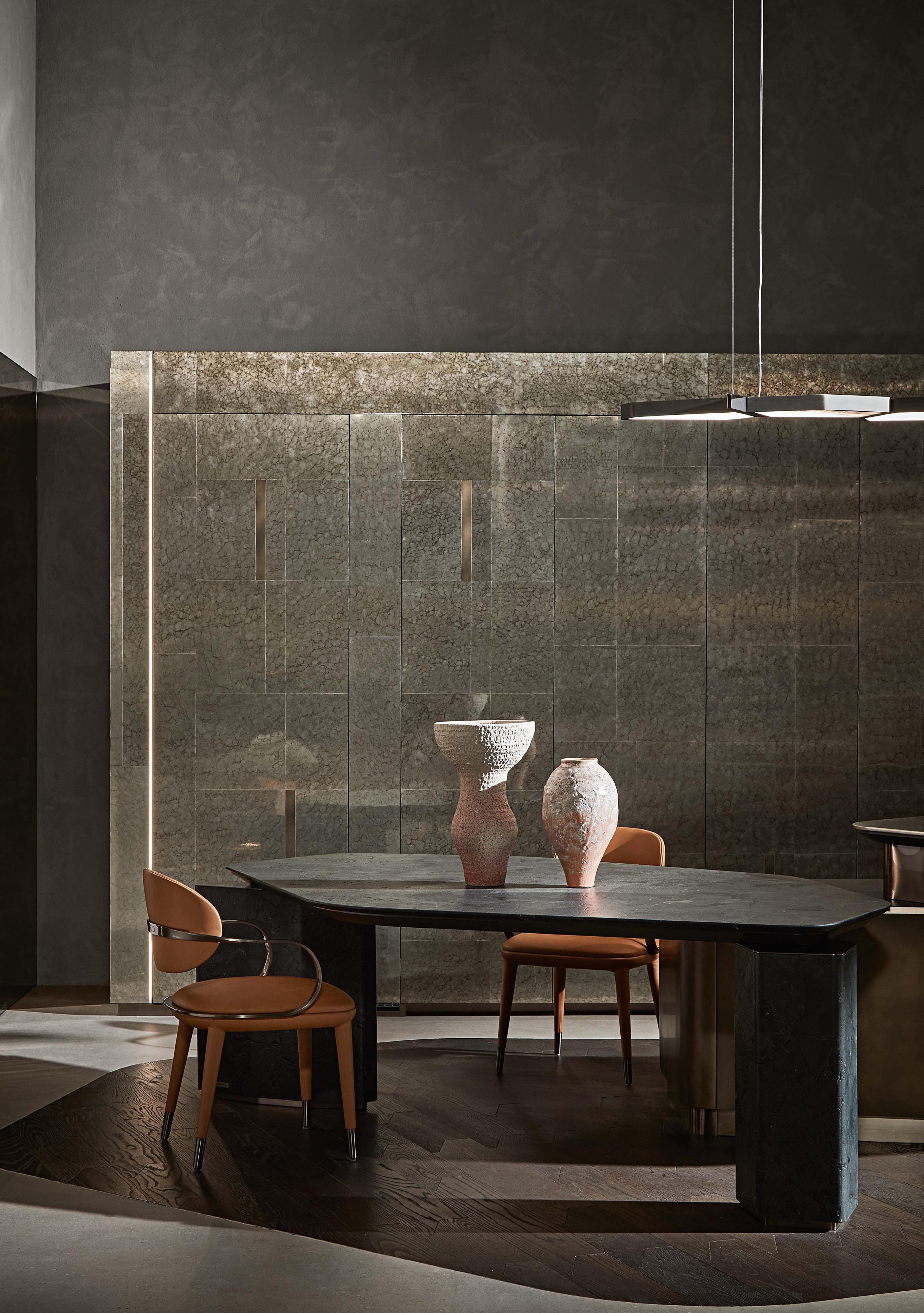
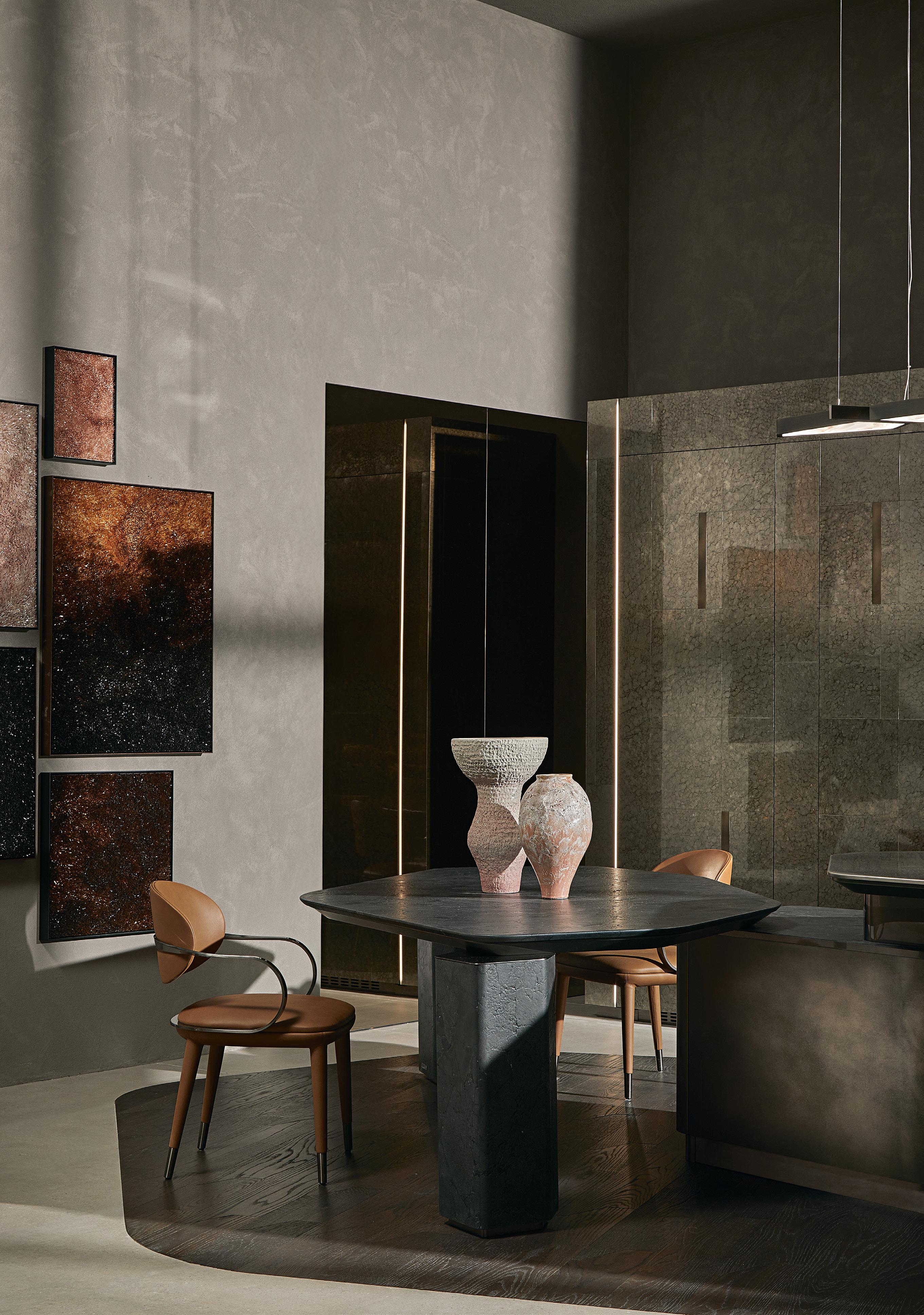
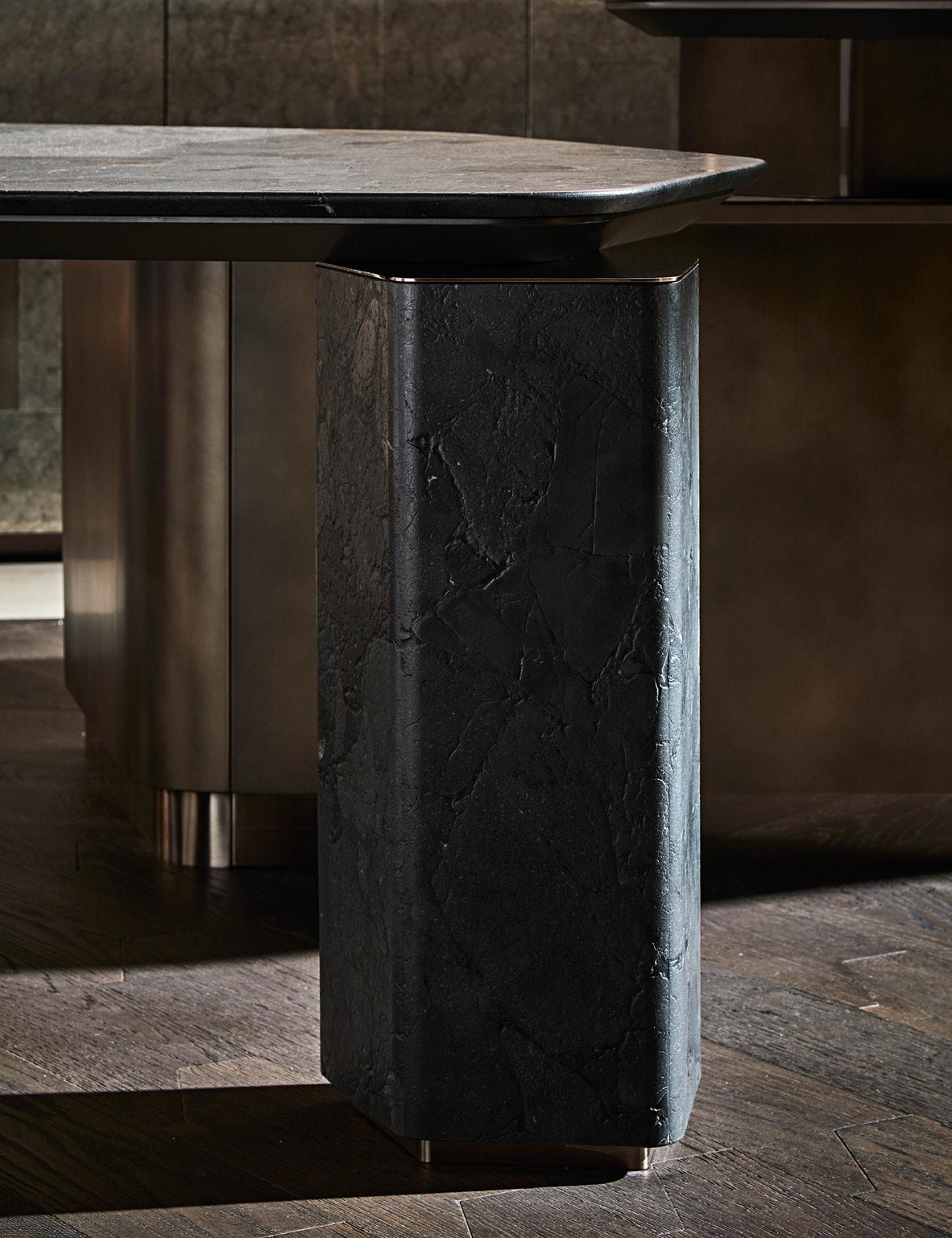
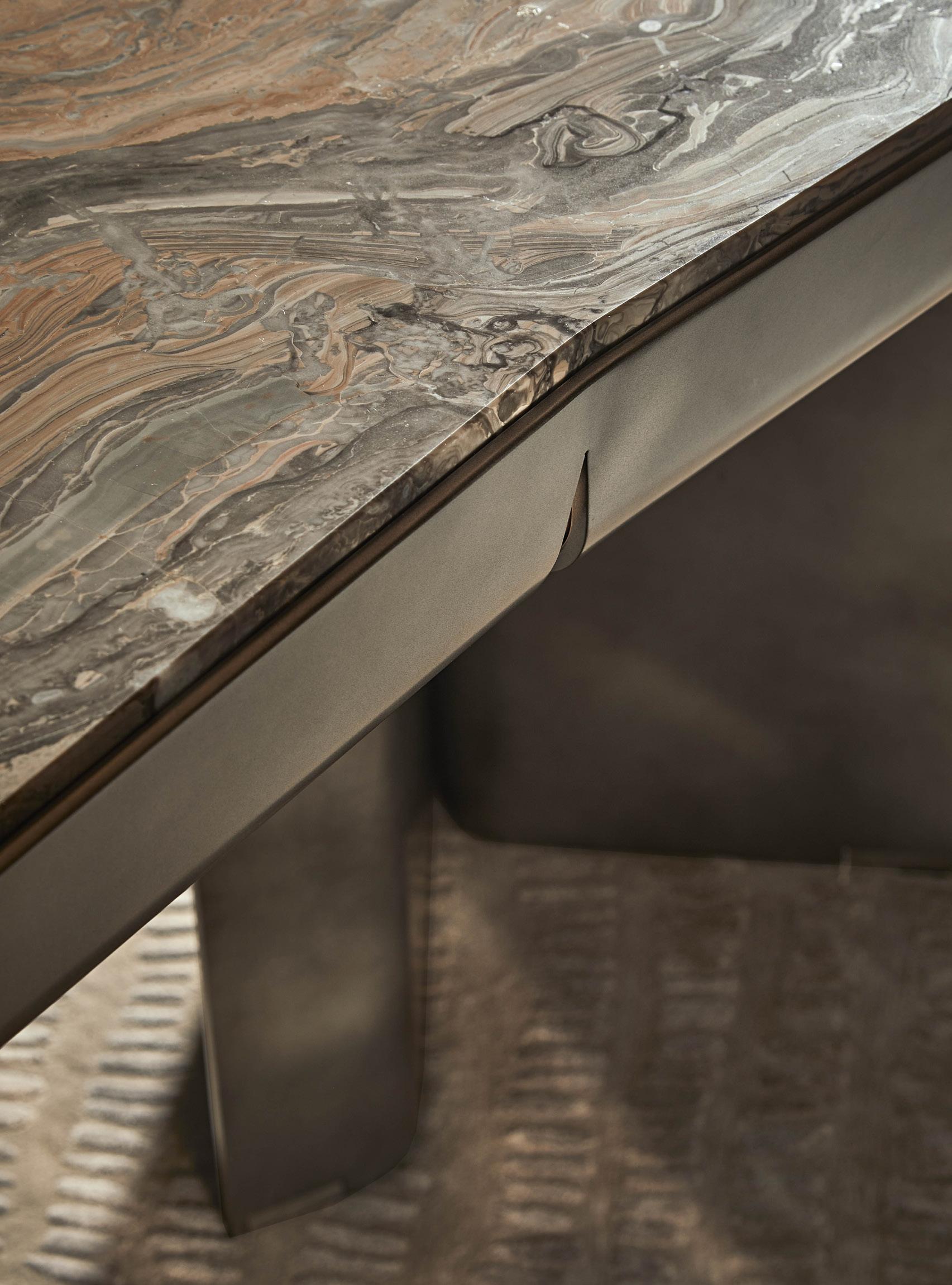
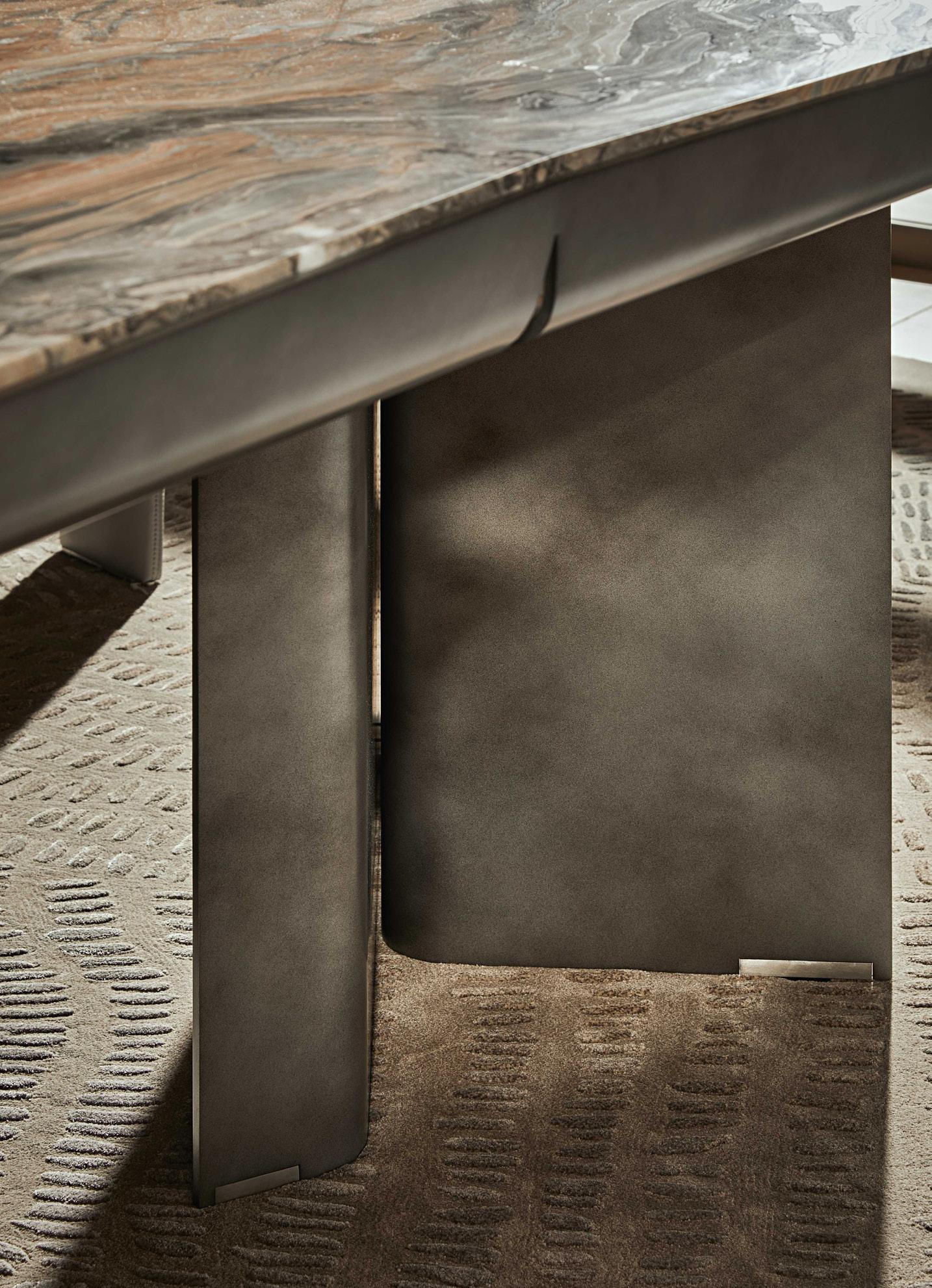
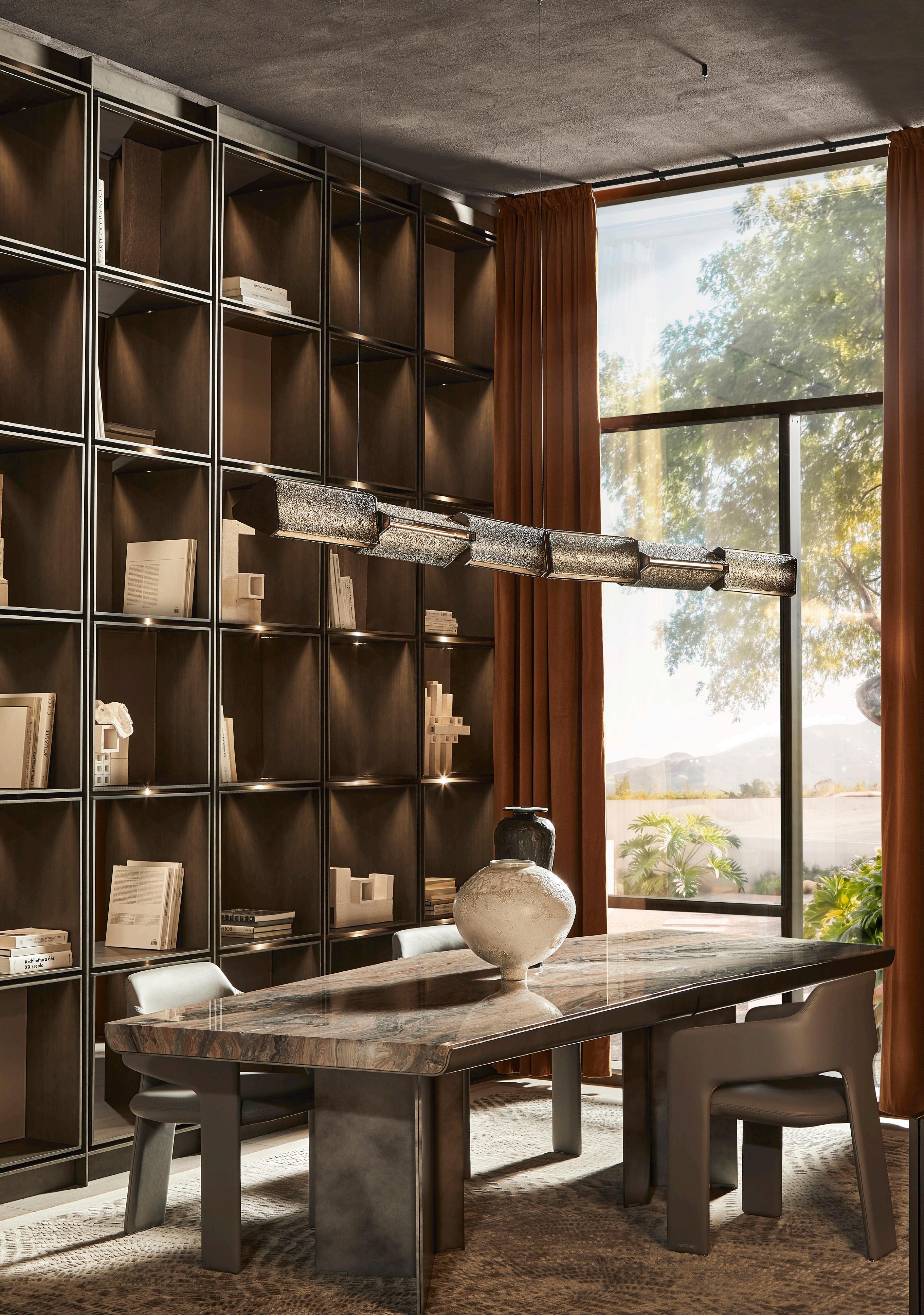
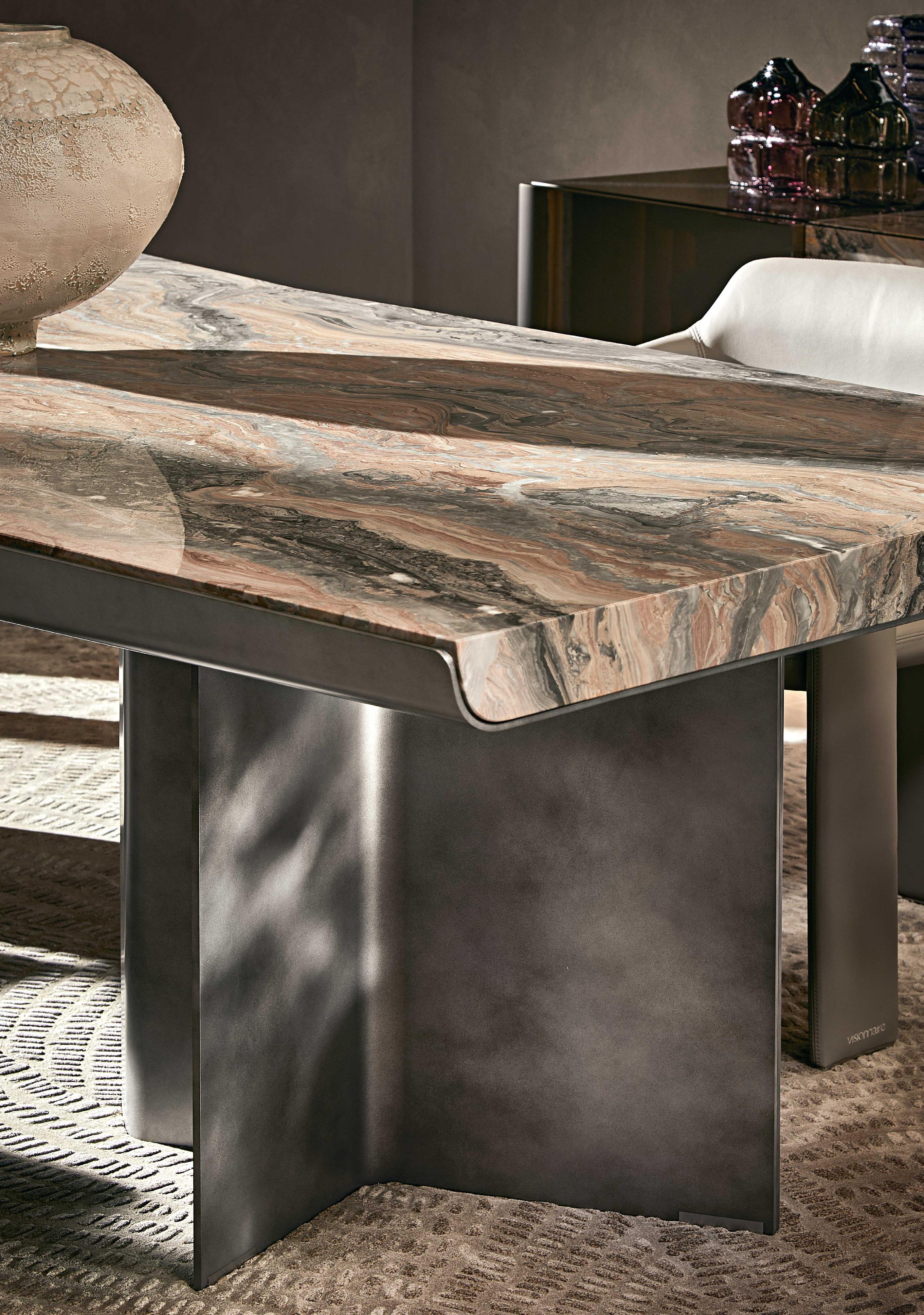
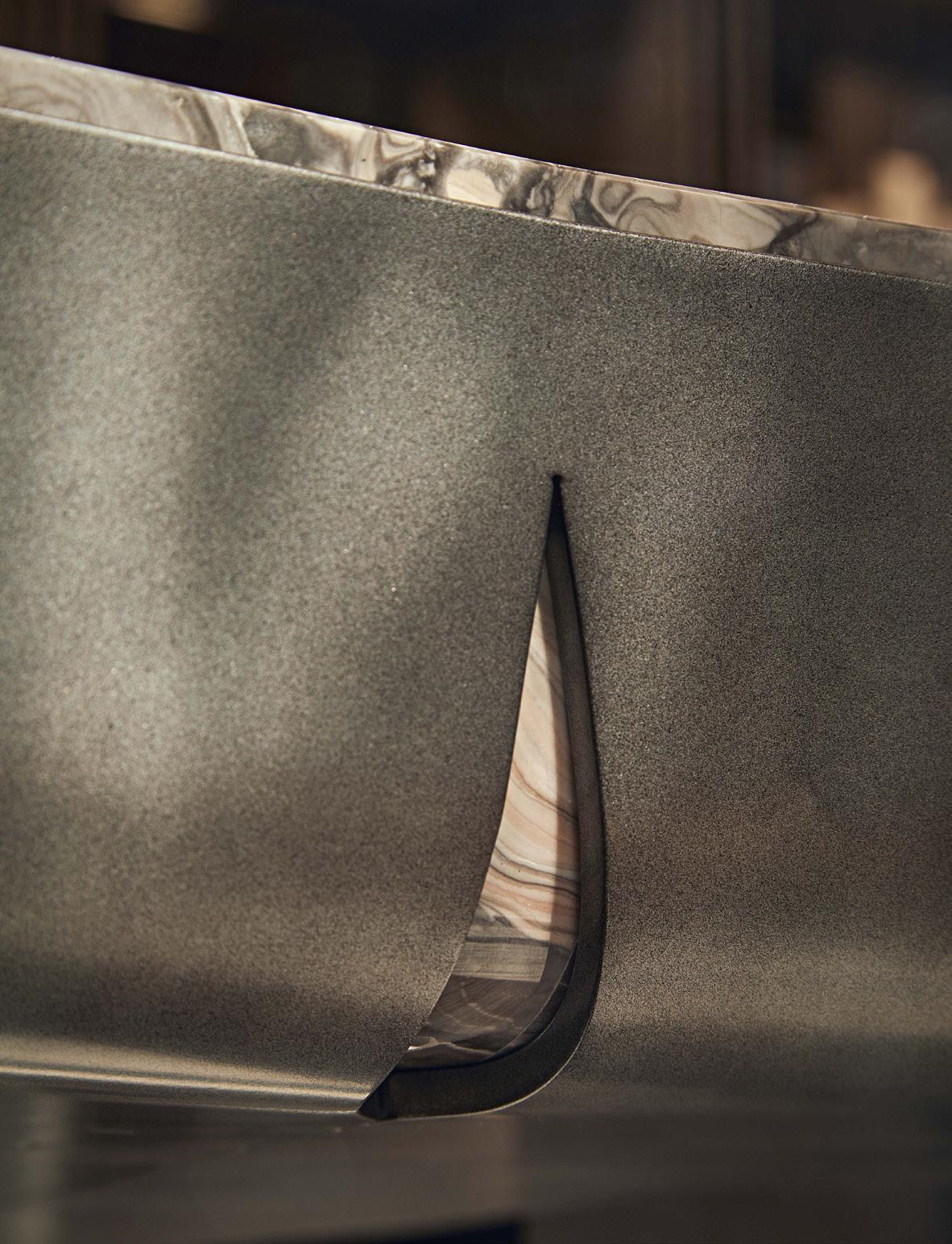
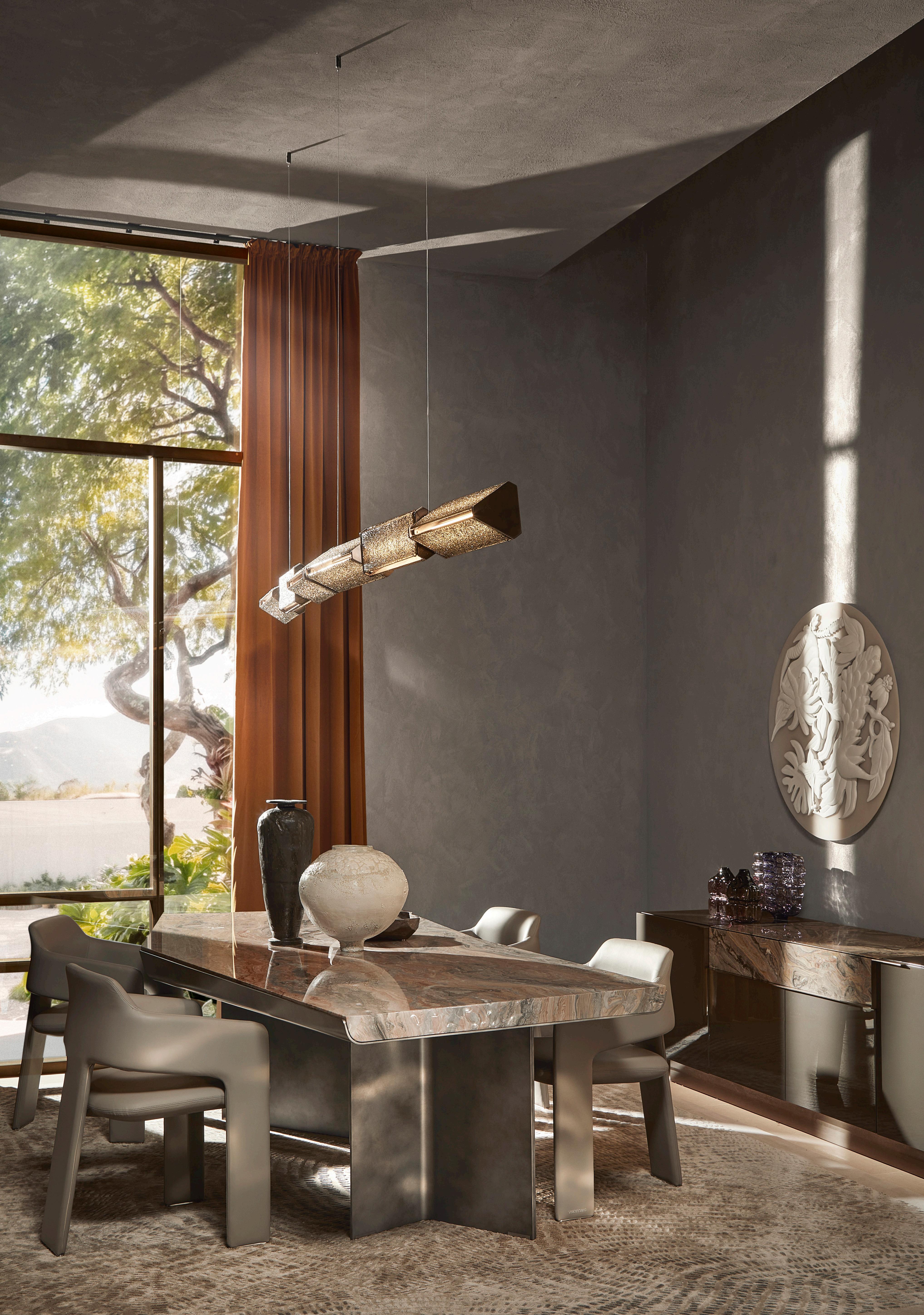
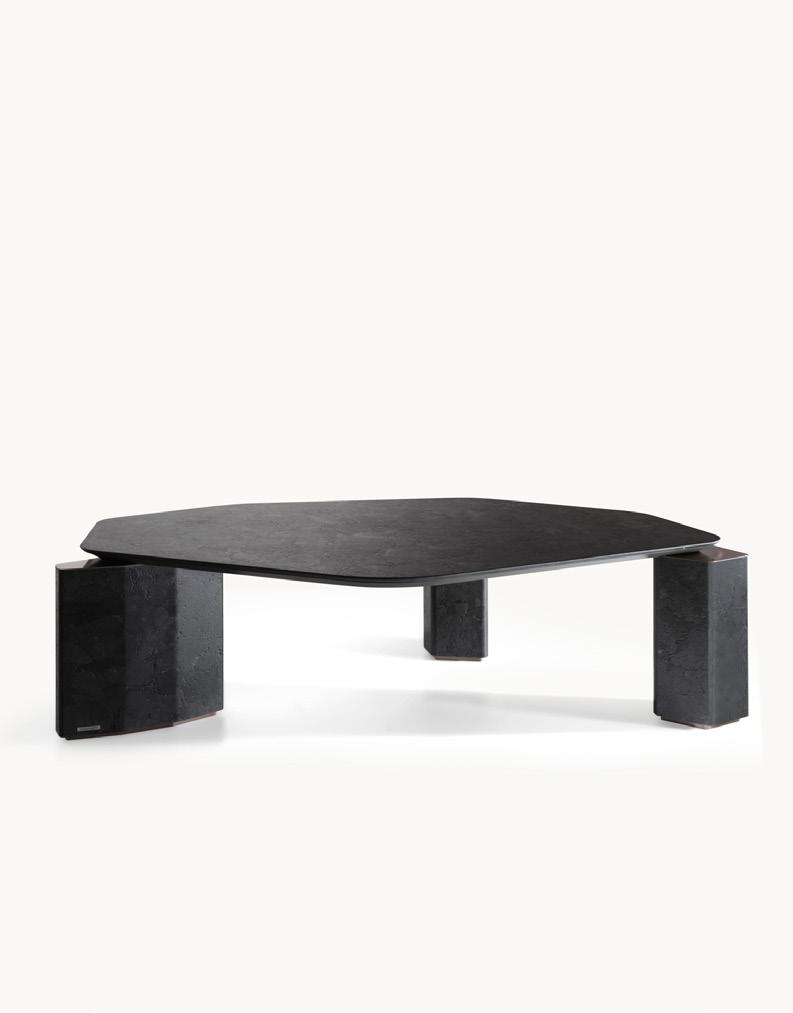
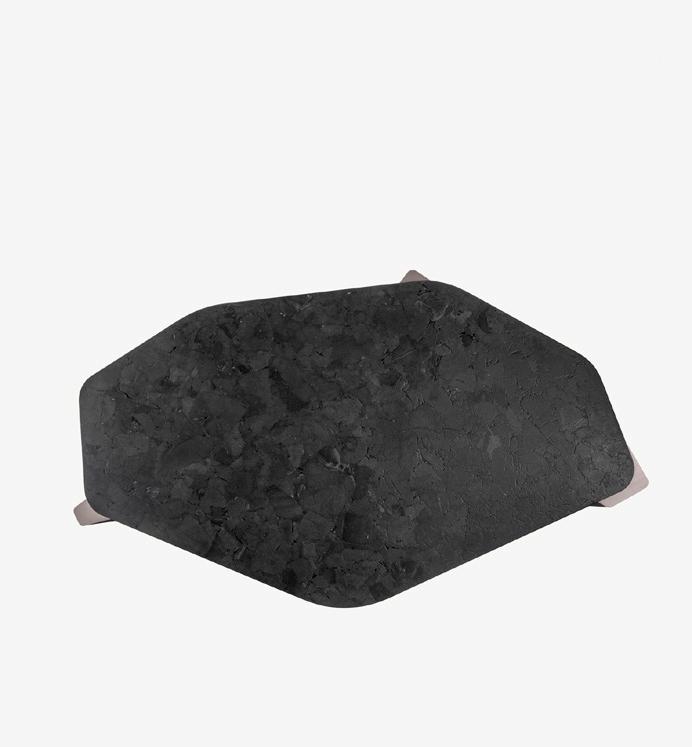
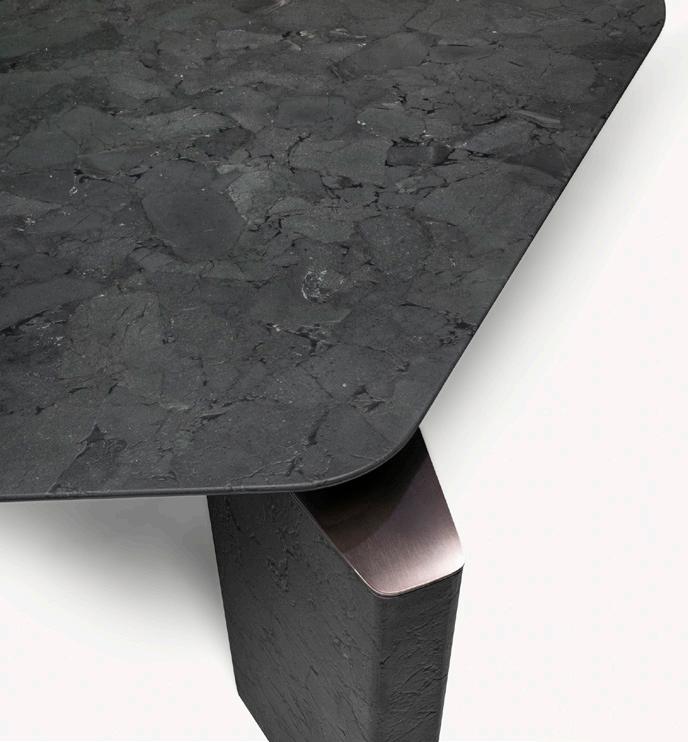
Titan is a dining table designed to accompany the Basalt island or stand as an independent element. Its Negresco marble top, dark and deeply veined, rests on asymmetrical legs that define the table’s structural identity with quiet precision.The project is distinguished by an essential compositional language, shaped by clear volumes and a coherent dialogue between structure and material.
Titan è un tavolo da pranzo pensato in abbinamento all’isola Basalt o come elemento indipendente. Il piano in marmo Negresco, caratterizzato da una superficie scura e venata, poggia su gambe asimmetriche che ne definiscono l’identità strutturale. Il progetto si distingue per un linguaggio compositivo essenziale, basato su volumi definiti e coerenza tra struttura e materiale.
Titan table Elixir chair
Crawl vase
by Alessandro La Spada
by Arina Antonova
Engobe vase
Cattedrale 147-151 artworks
by Arina Antonova by CaCO3
Crawl vase by Arina Antonova
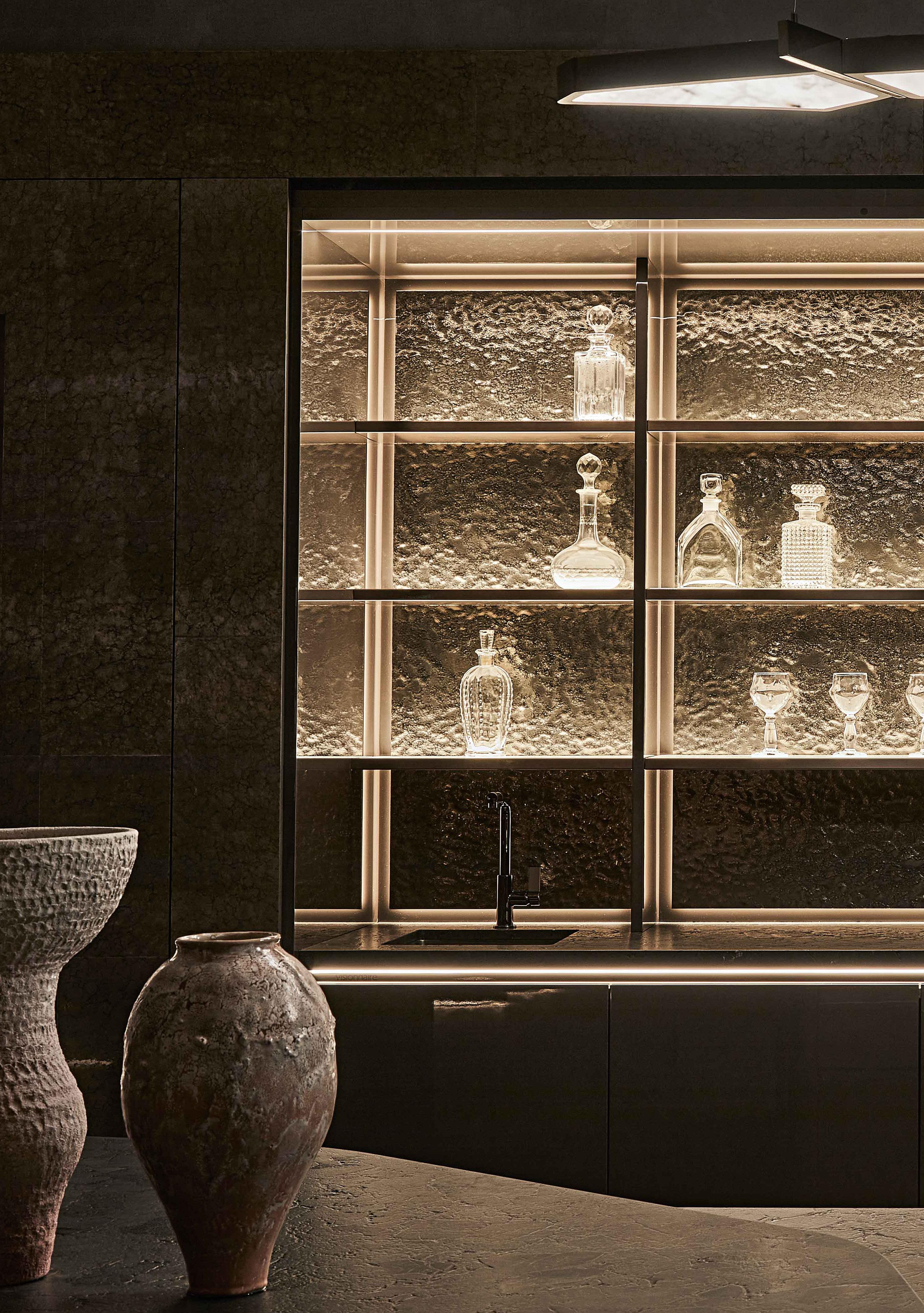
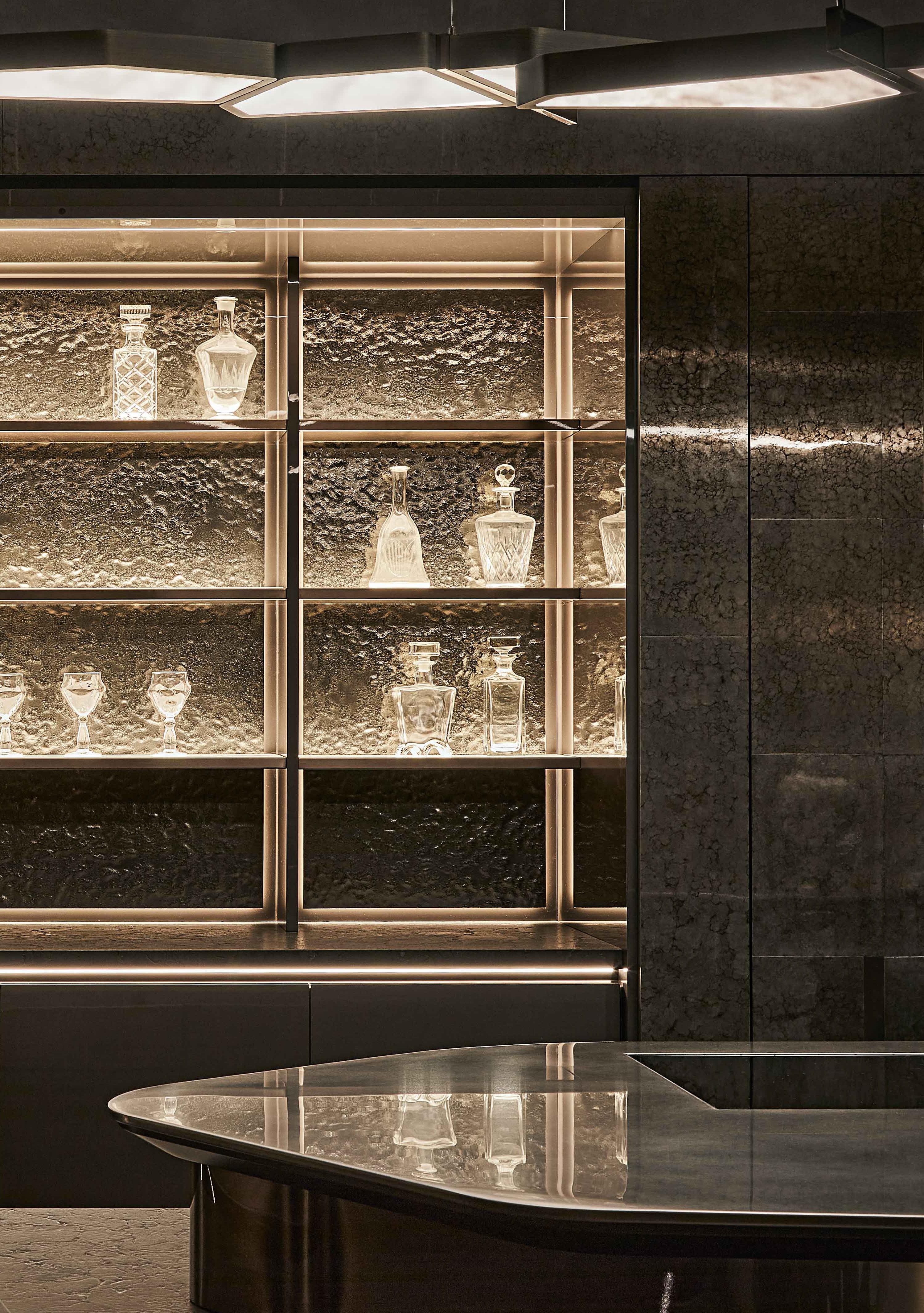
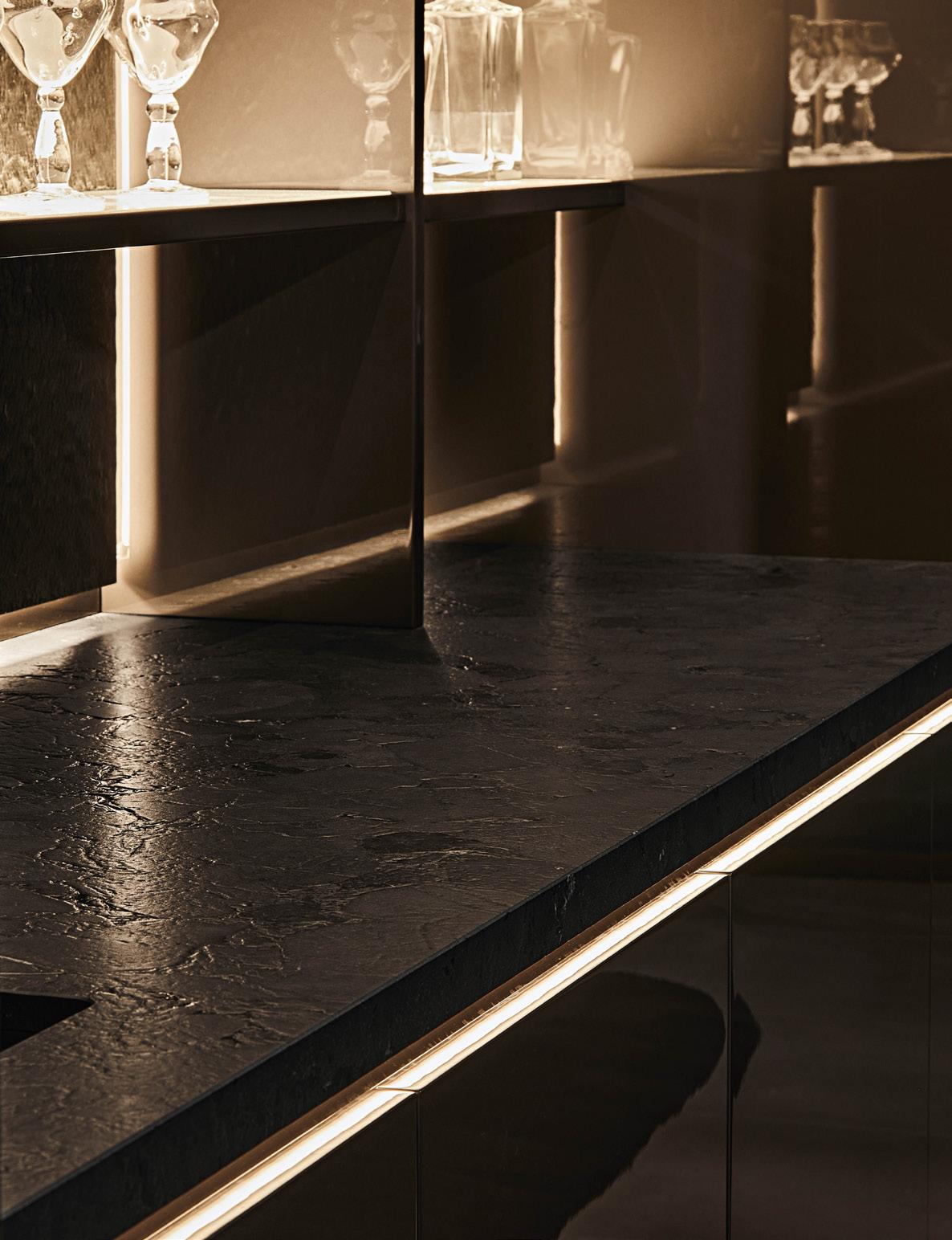
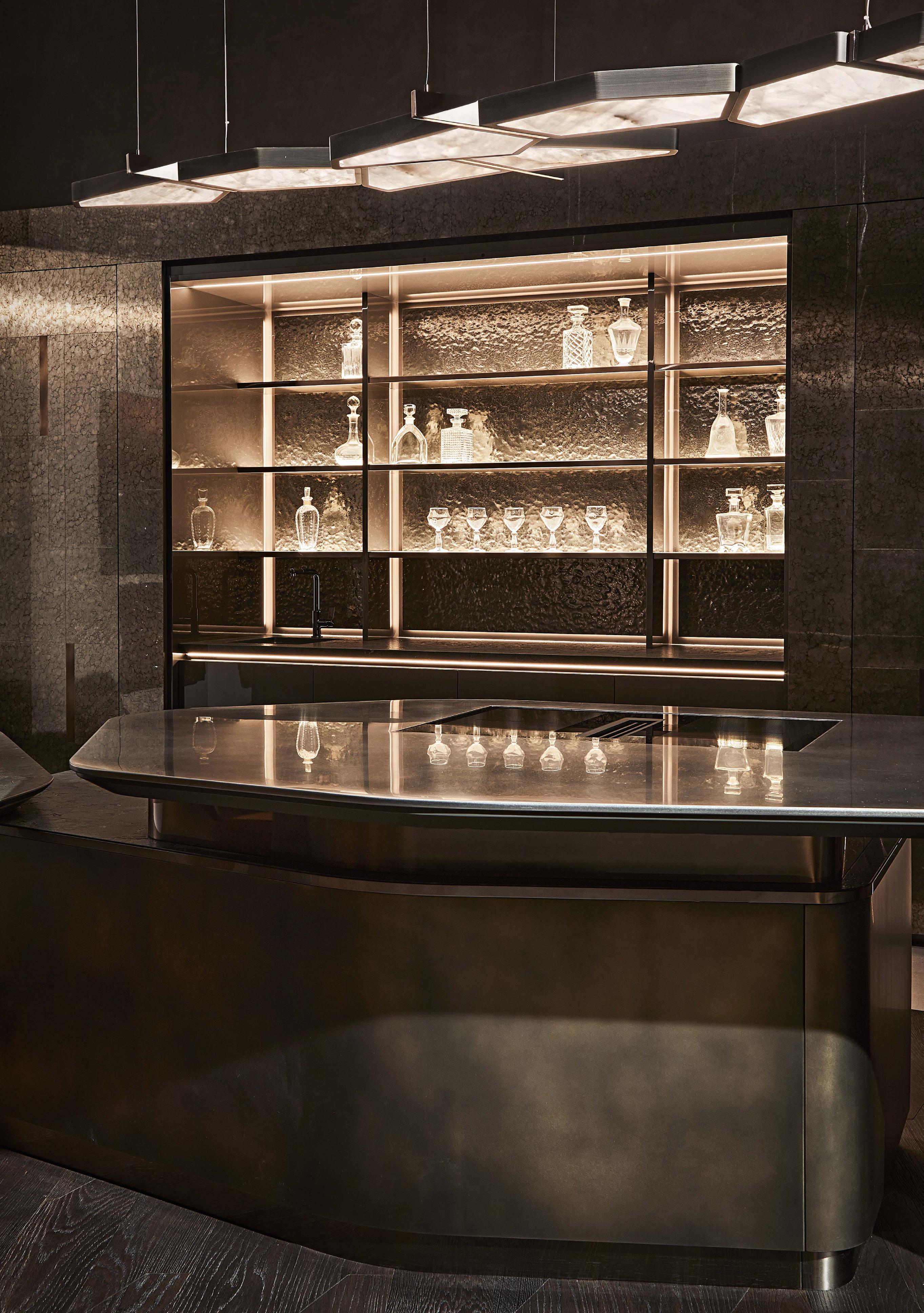
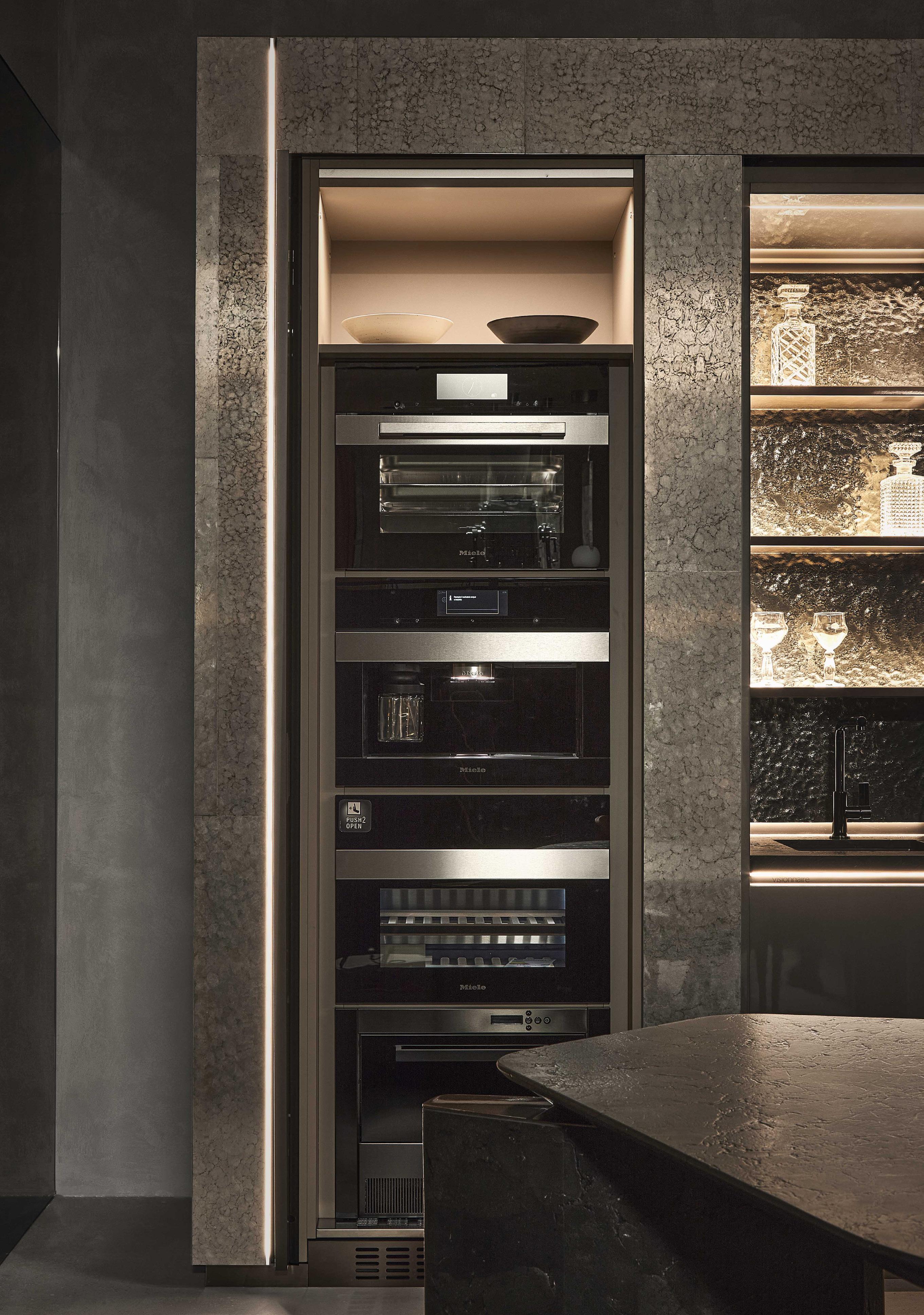
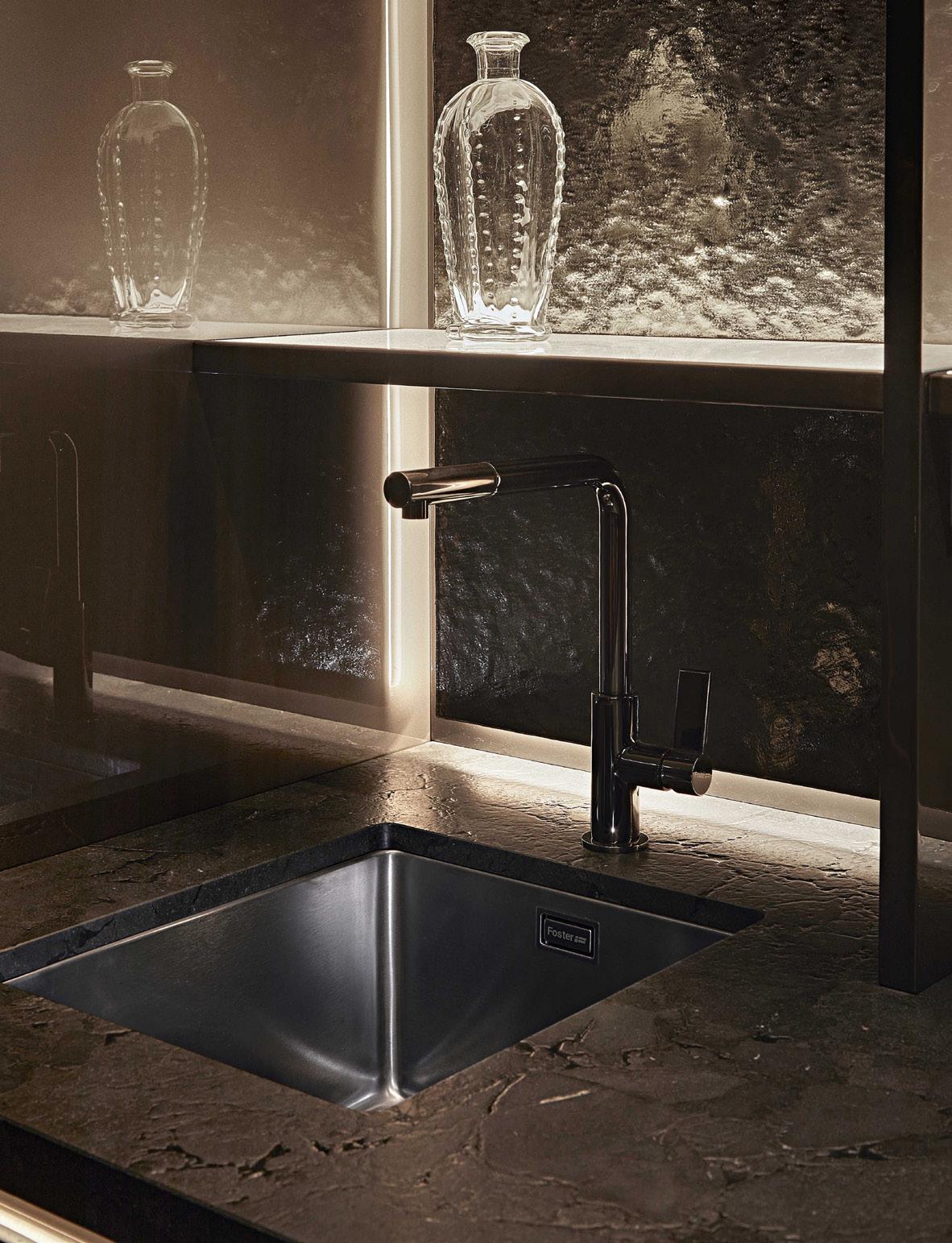
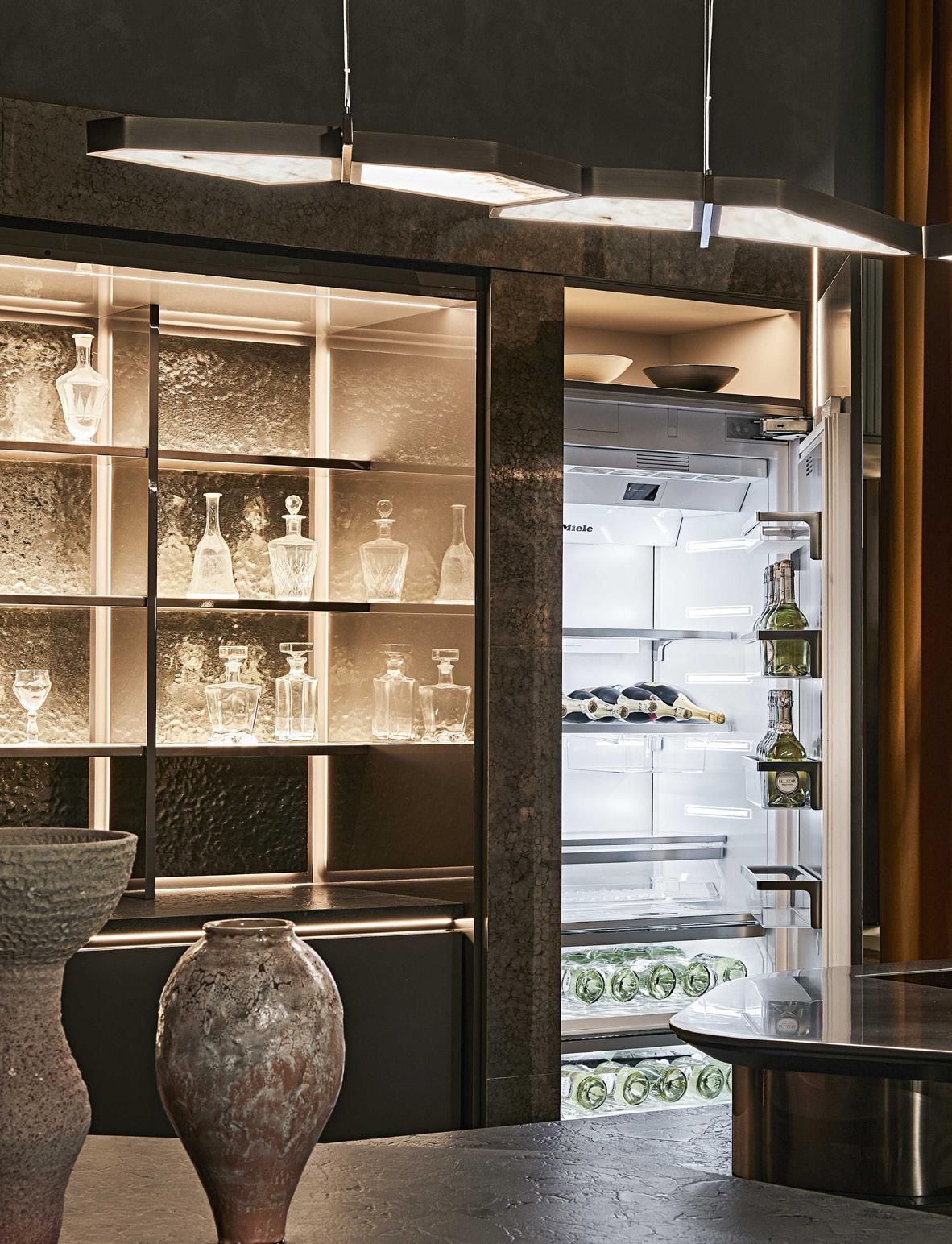
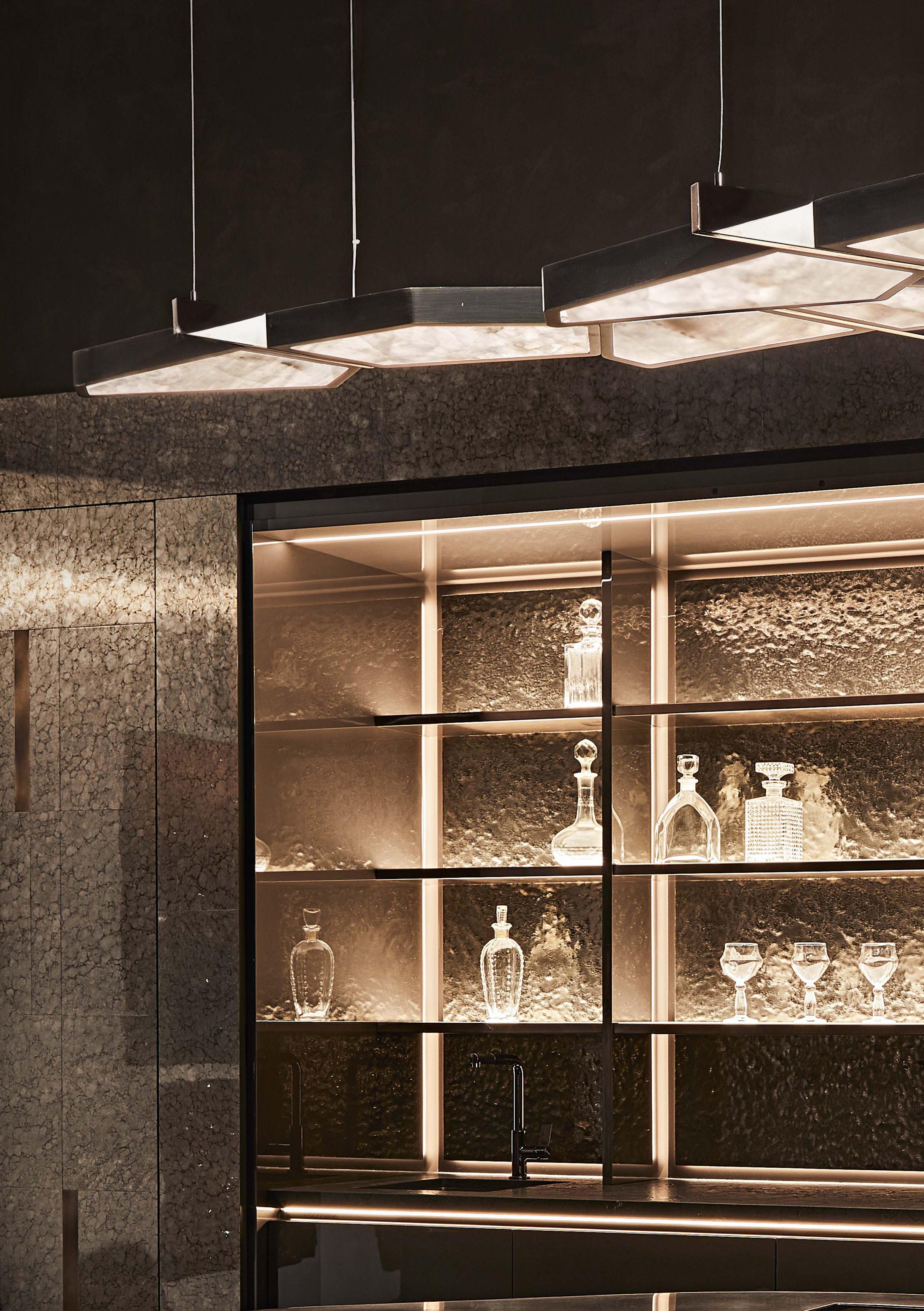
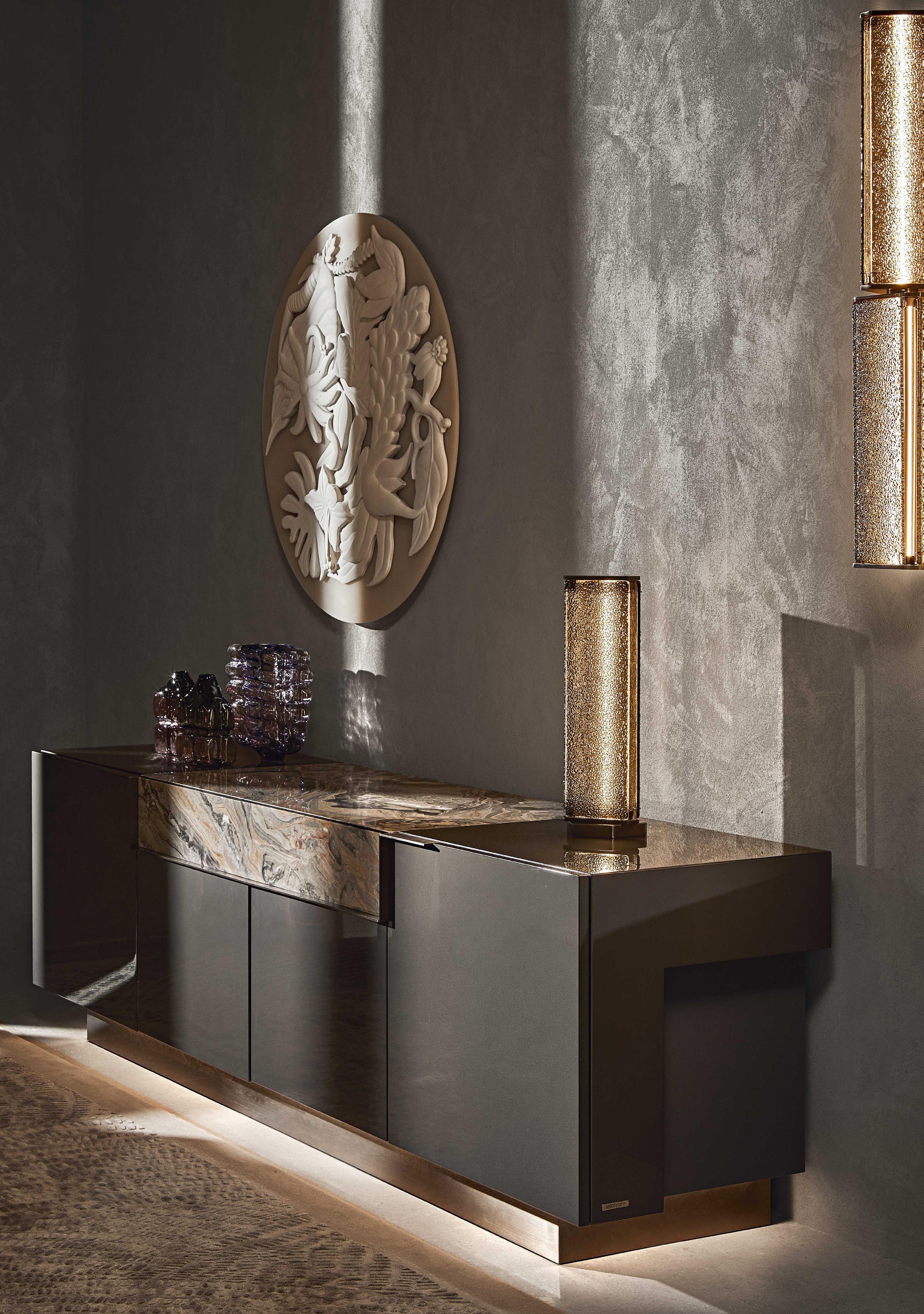
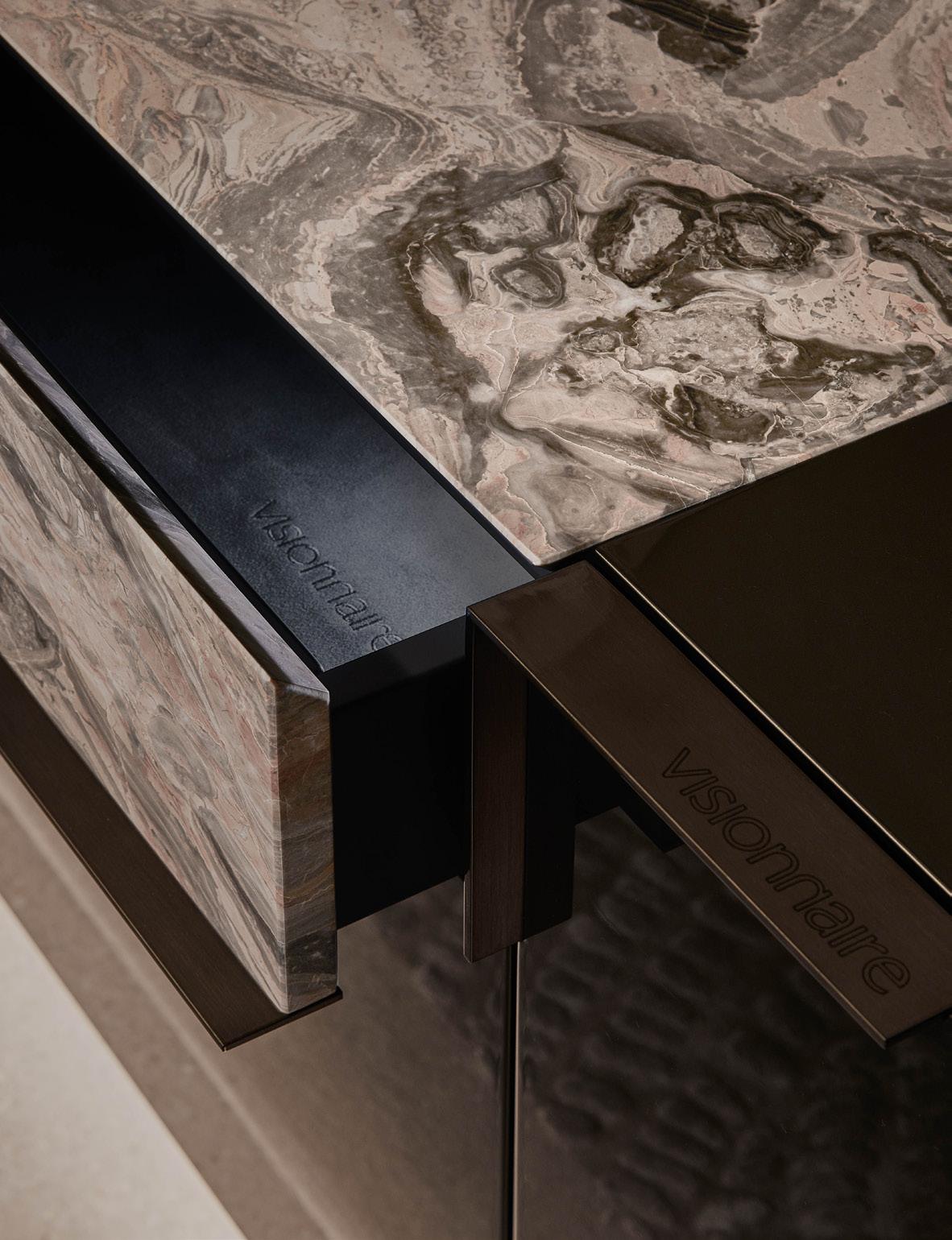
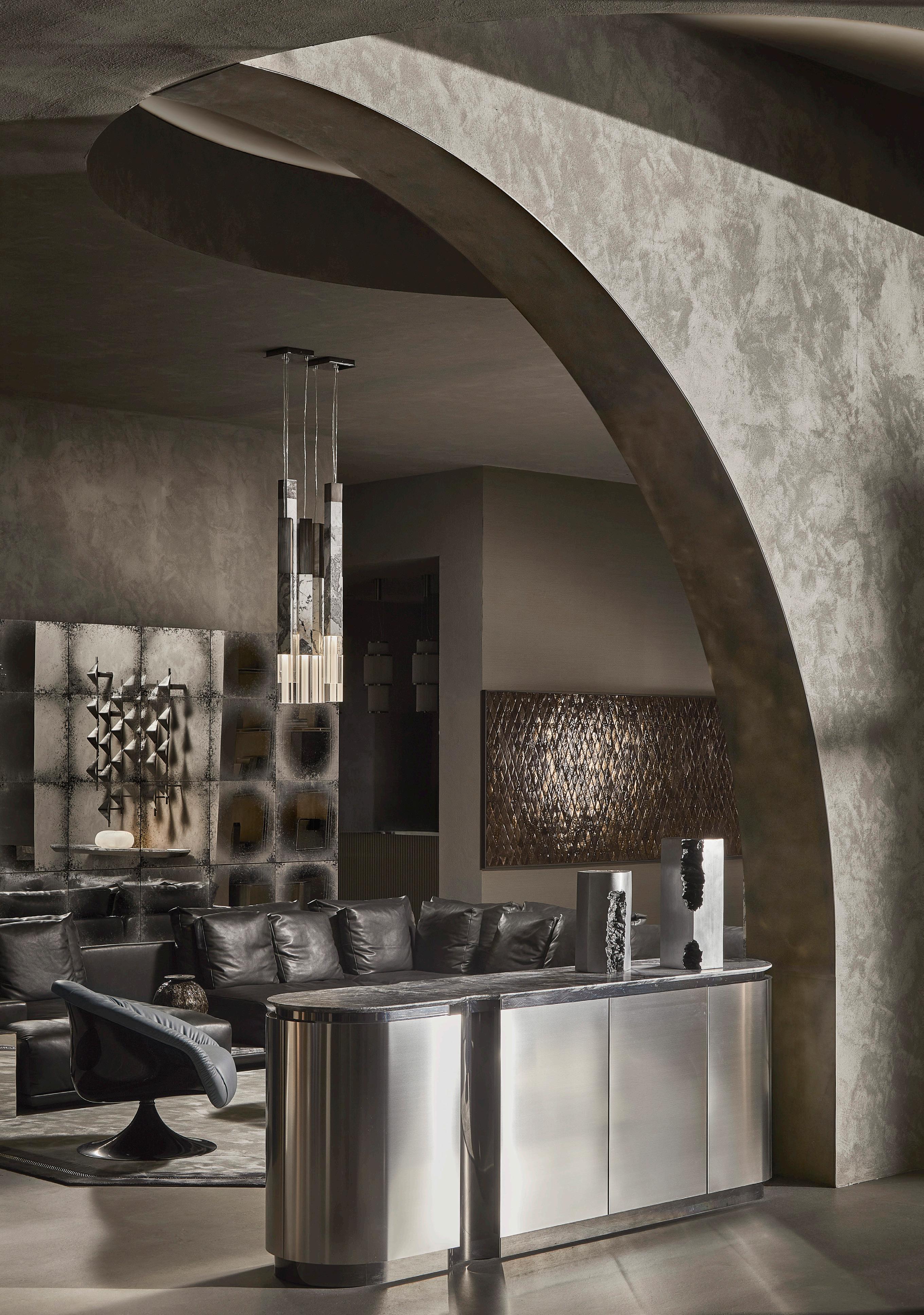
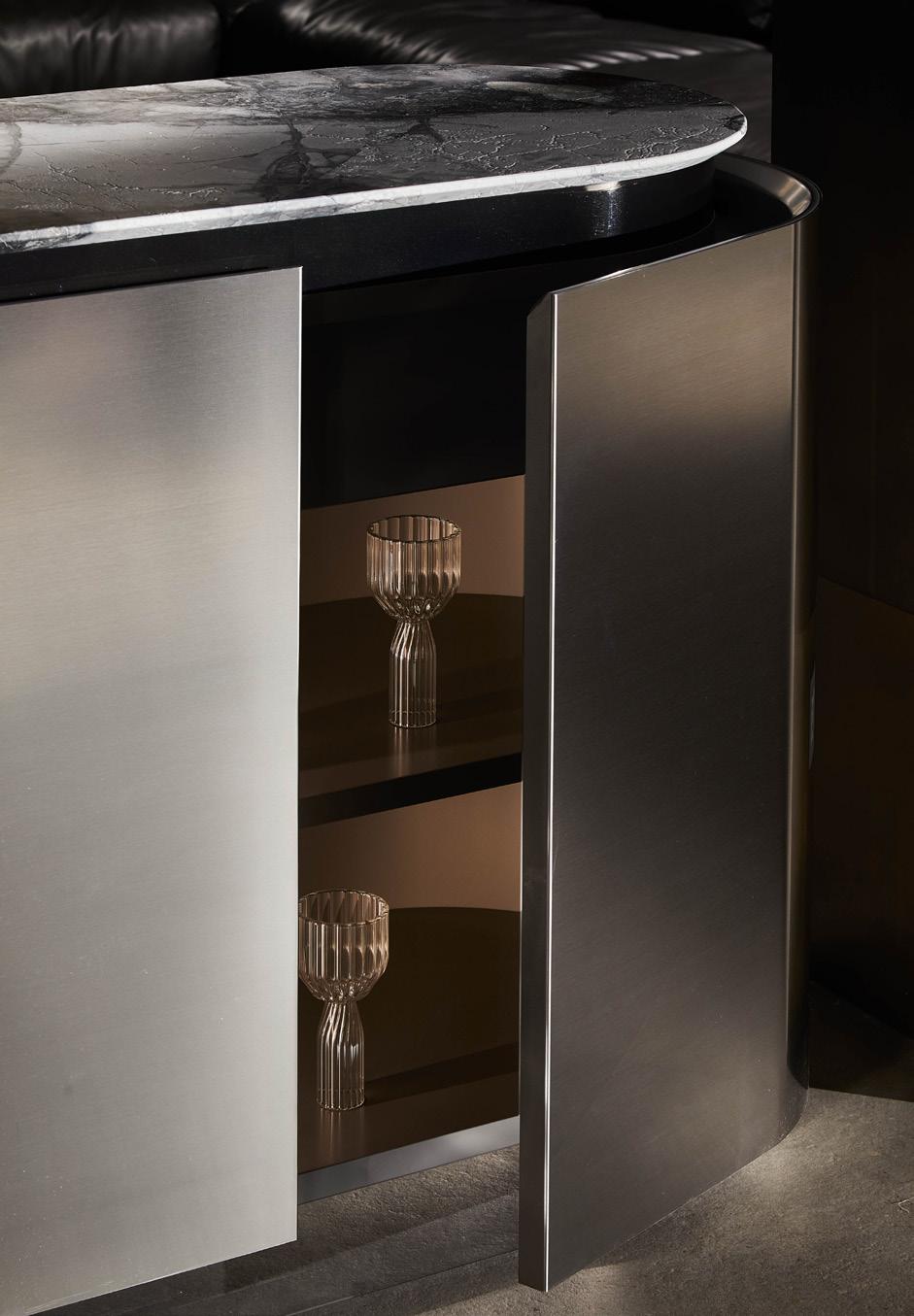
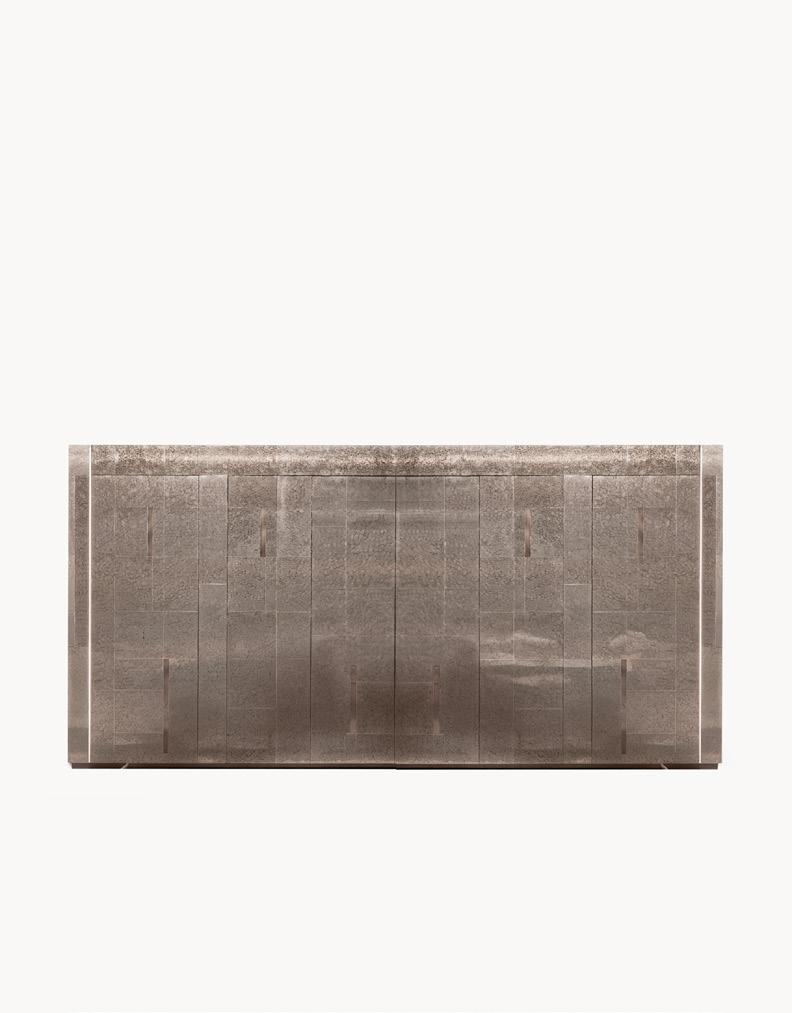
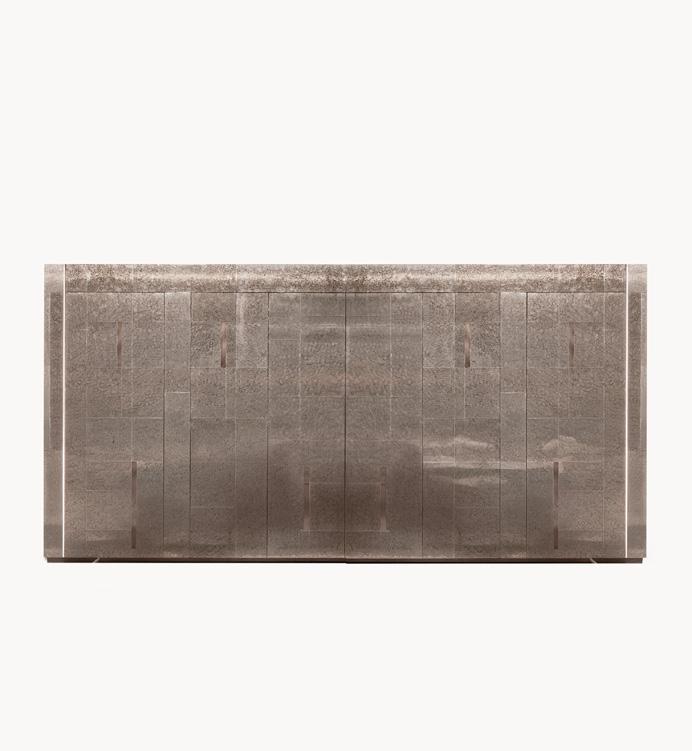
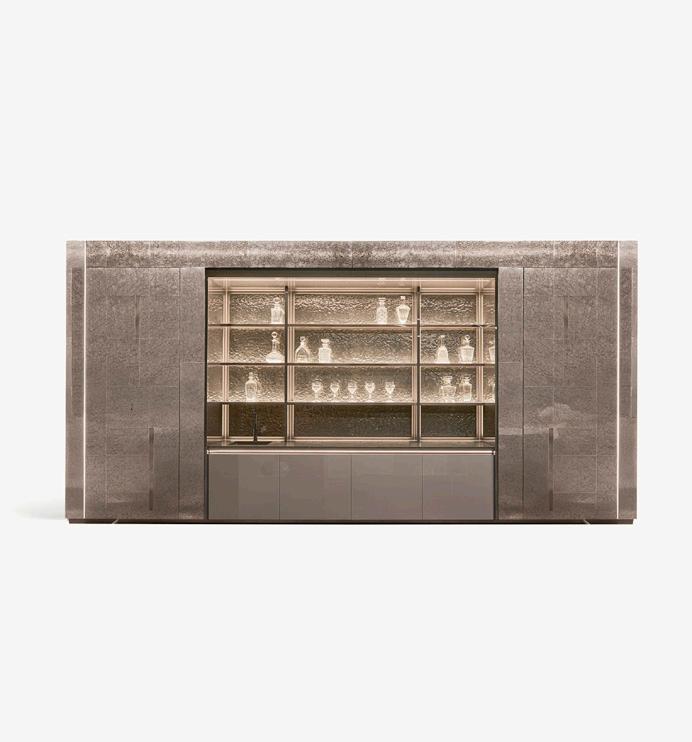
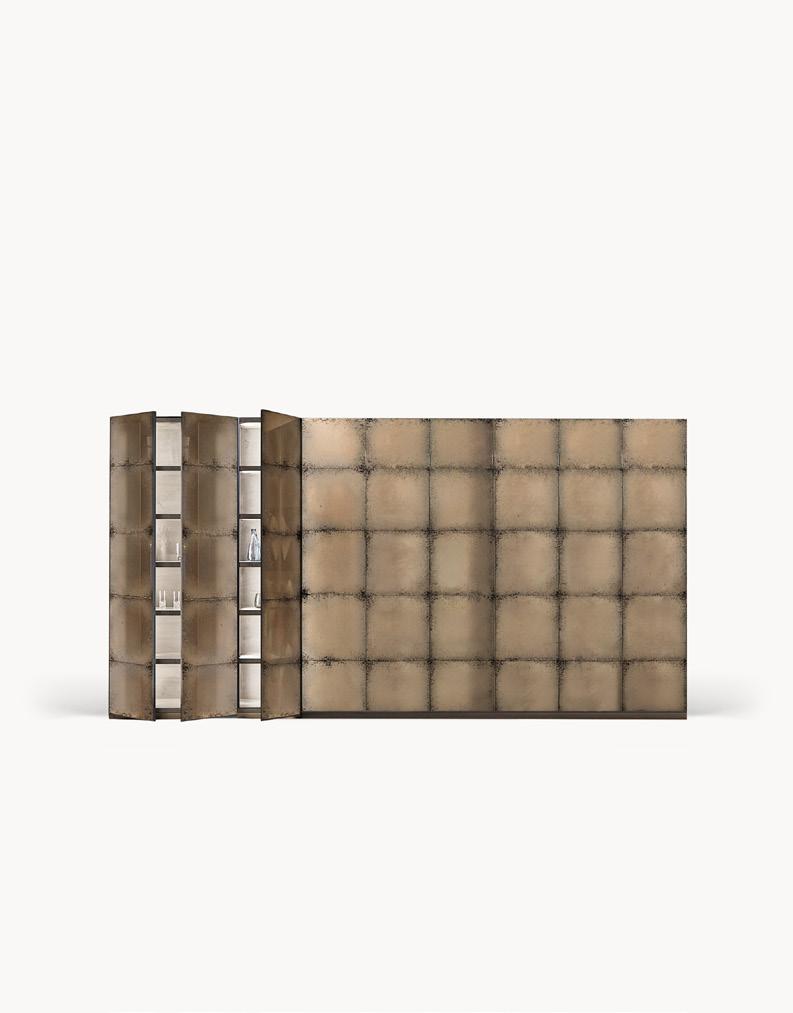
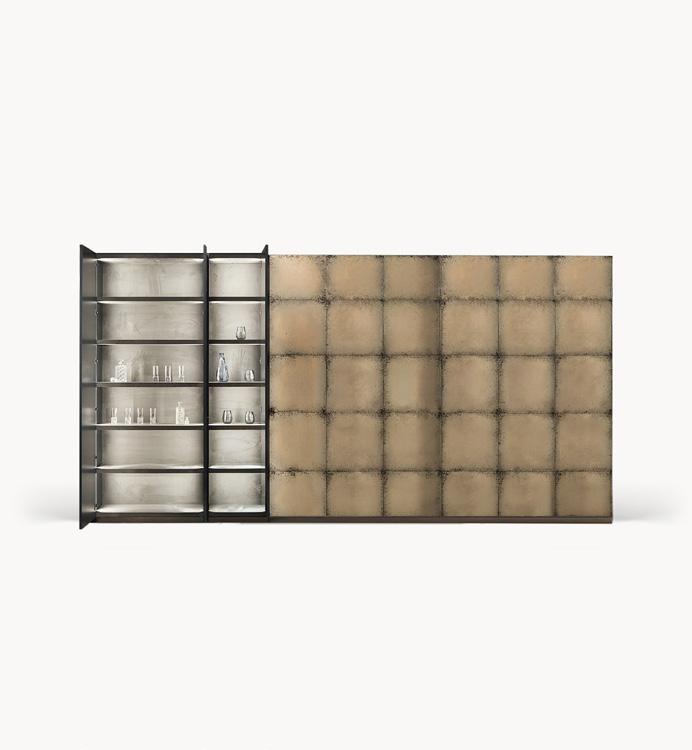
Duncan bar unit is conceived as a precious chest: its surface is clad in a camouflaged skin, an irregular mosaic of oxidized metals with deep tones and a vibrant texture. A cladding that evokes archaic atmospheres, where imperfection becomes language and material turns into narrative. Through a simple automated command, the wall slides and disappears into dedicated side compartments, revealing the bar block in its entirety.
Duncan è una parete bar concepita come un prezioso scrigno: la superficie si veste di una corteccia mimetica, un mosaico irregolare di metalli ossidati dalle tonalità profonde e dalla texture vibrante. Un rivestimento che richiama atmosfere arcaiche, dove l’imperfezione diventa linguaggio e la materia si fa racconto. Grazie a un semplice comando automatizzato, la parete trasla e scompare all’interno di vani laterali predisposti, lasciando il blocco bar completamente visibile.
Duncan recessed wall/bar unit
Astralis suspension lamp
by Alessandro La Spada
Duncan recessed wall/bar unit Astralis suspension lamp by Alessandro La Spada
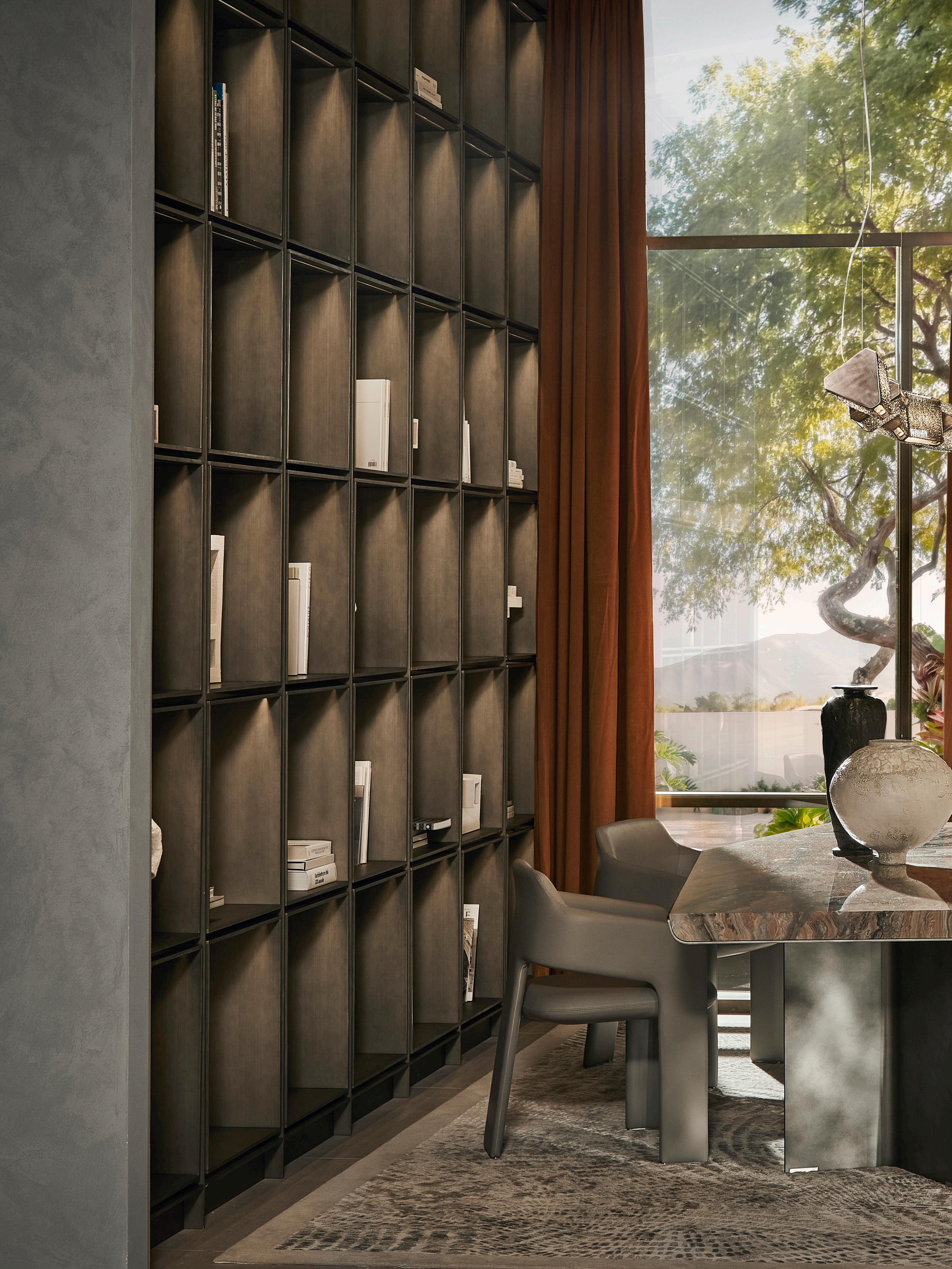
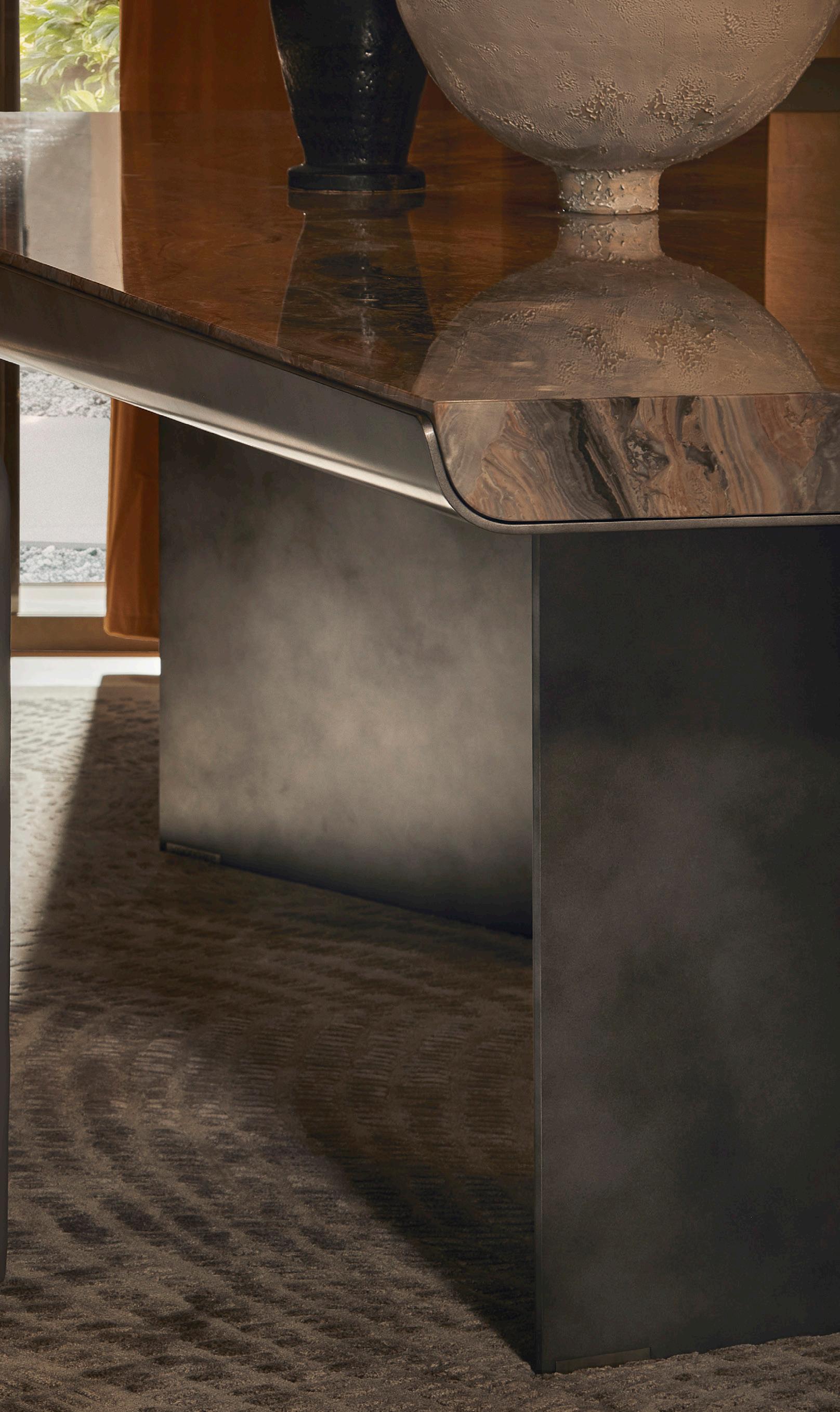
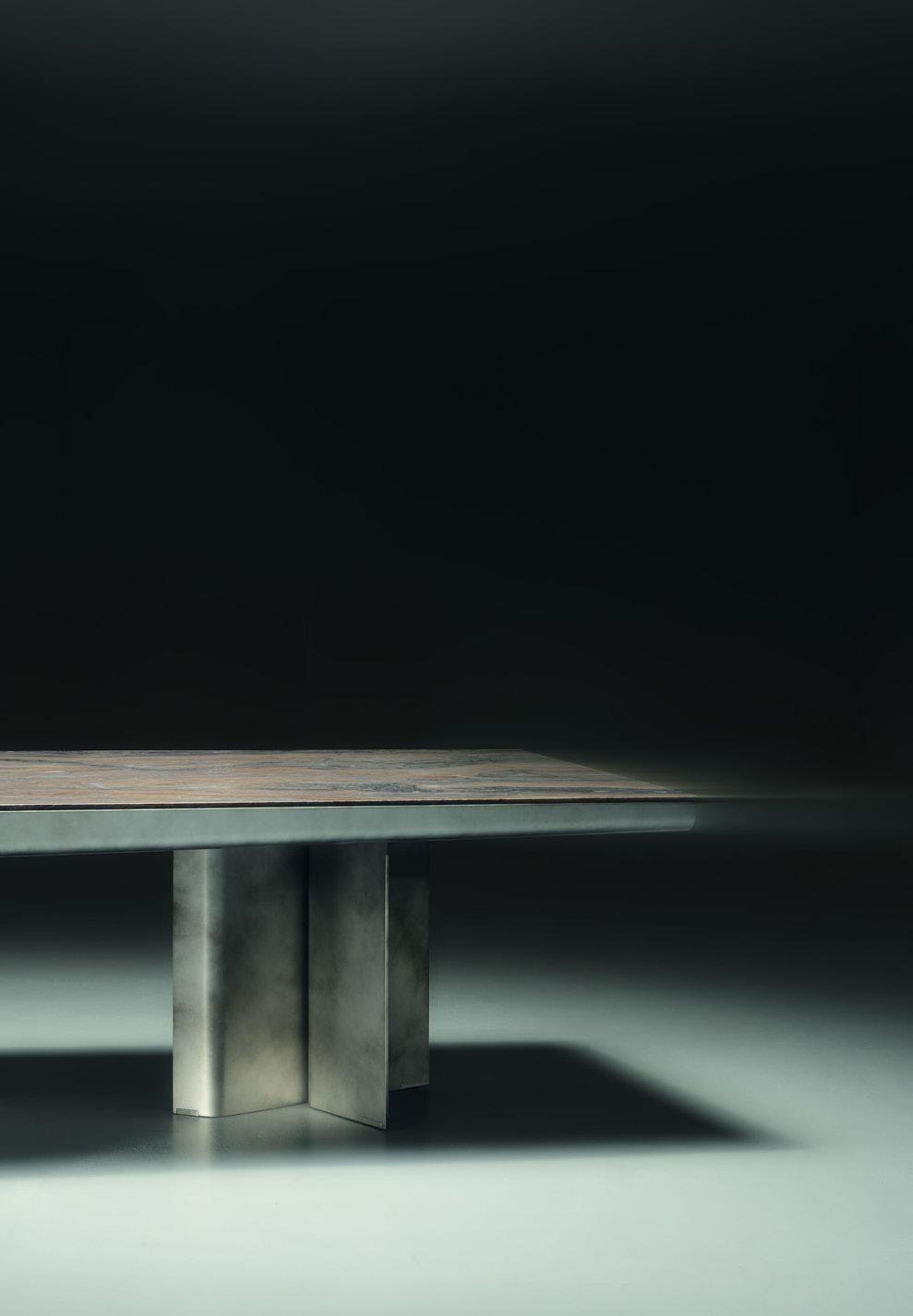
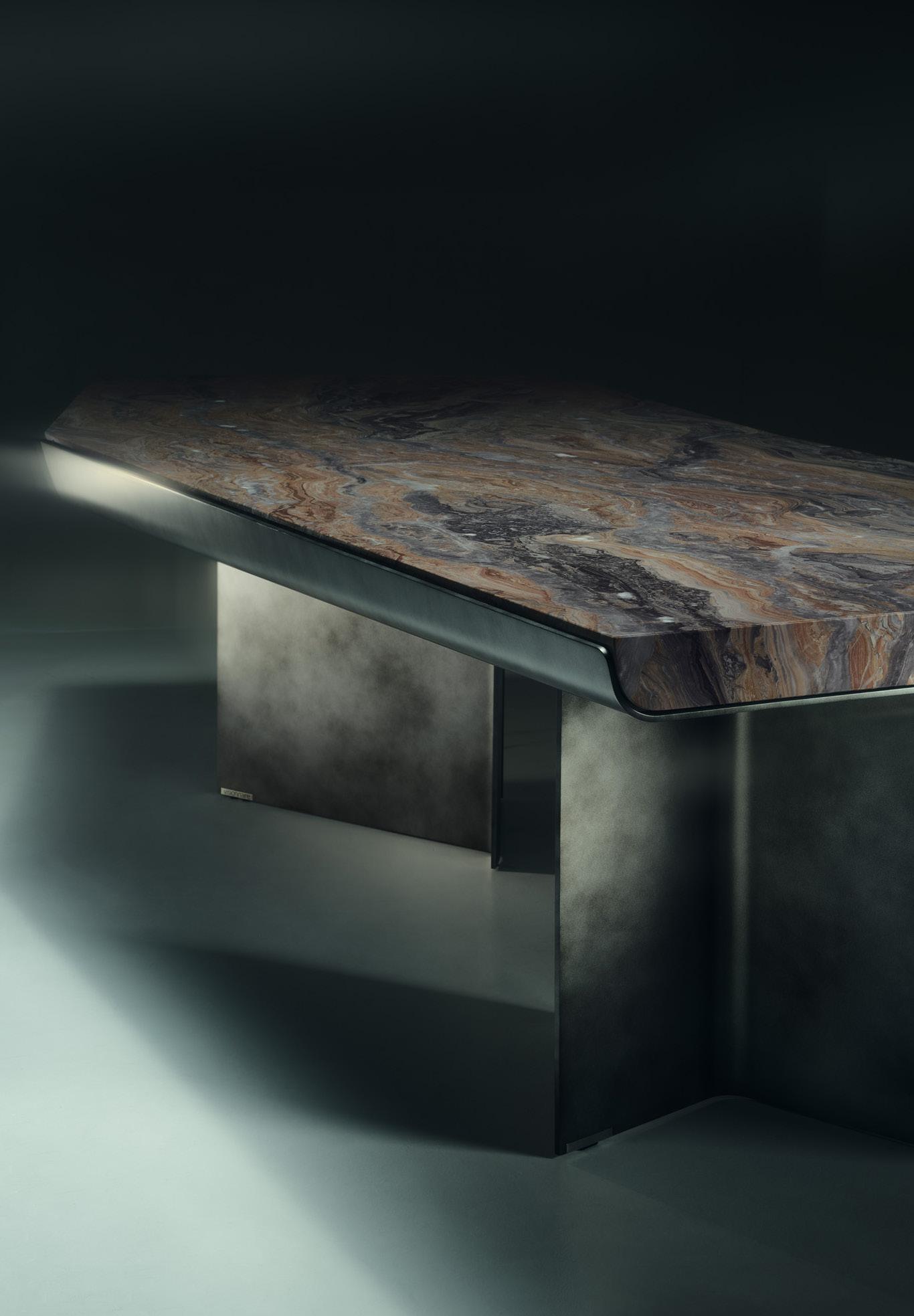
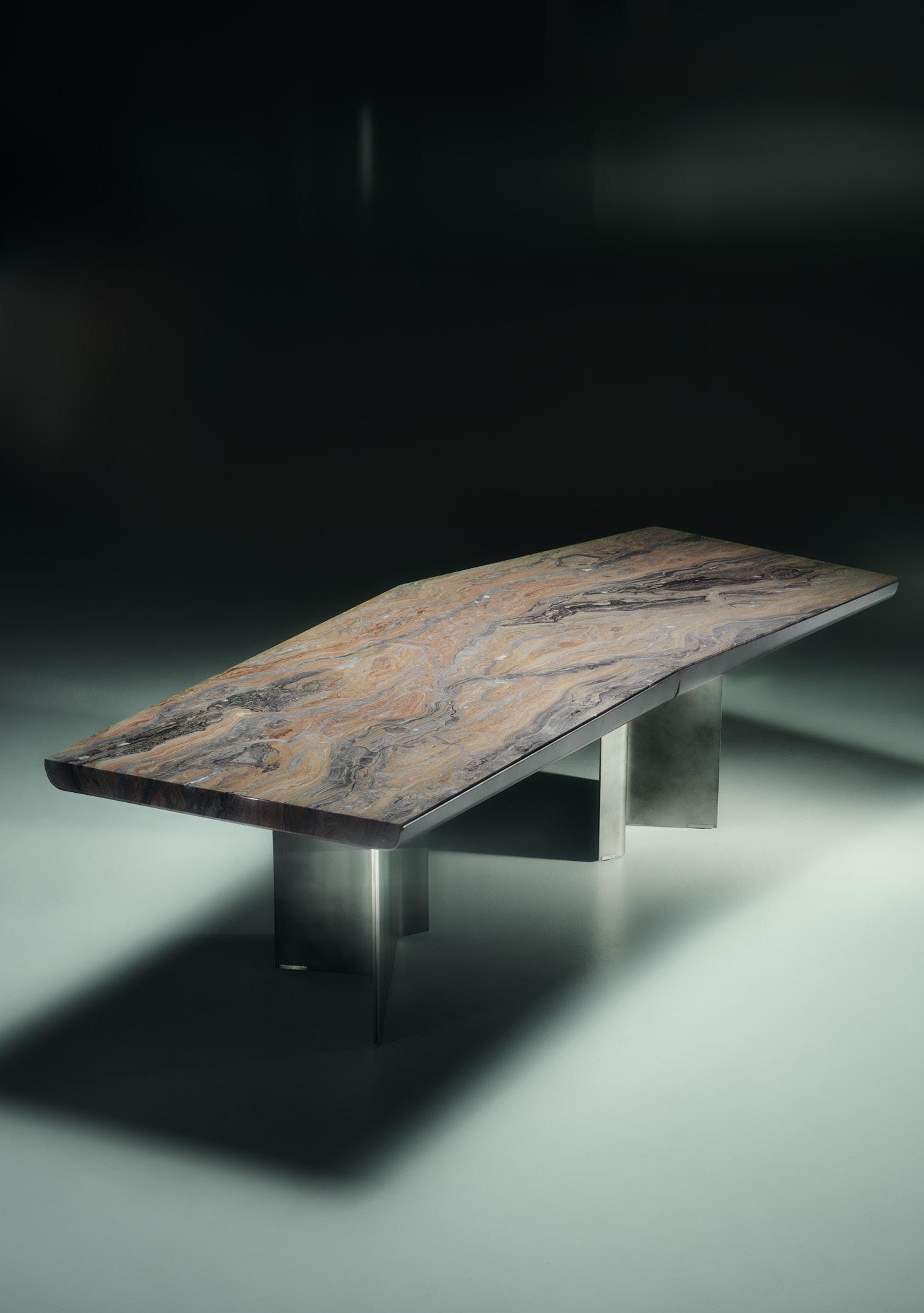
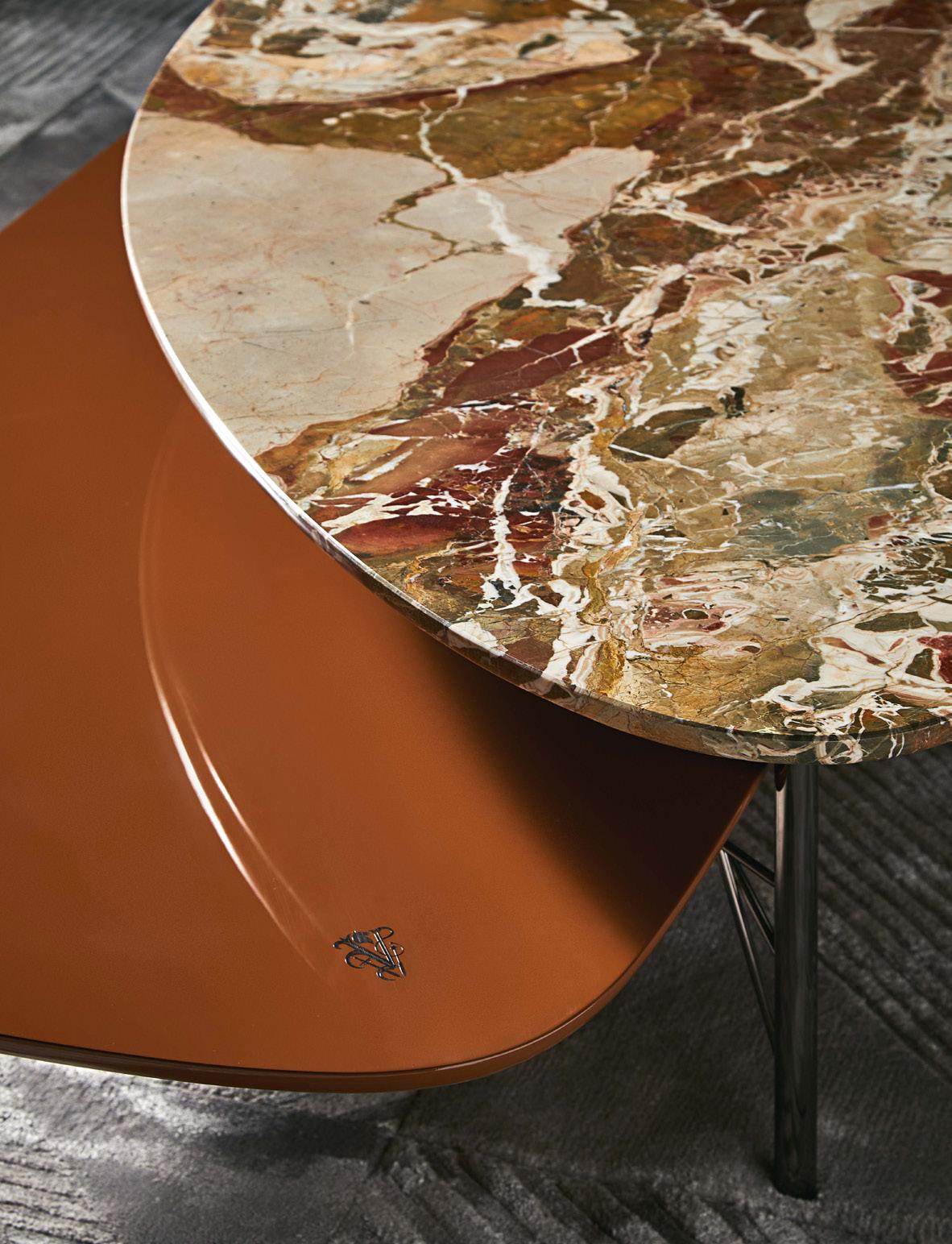
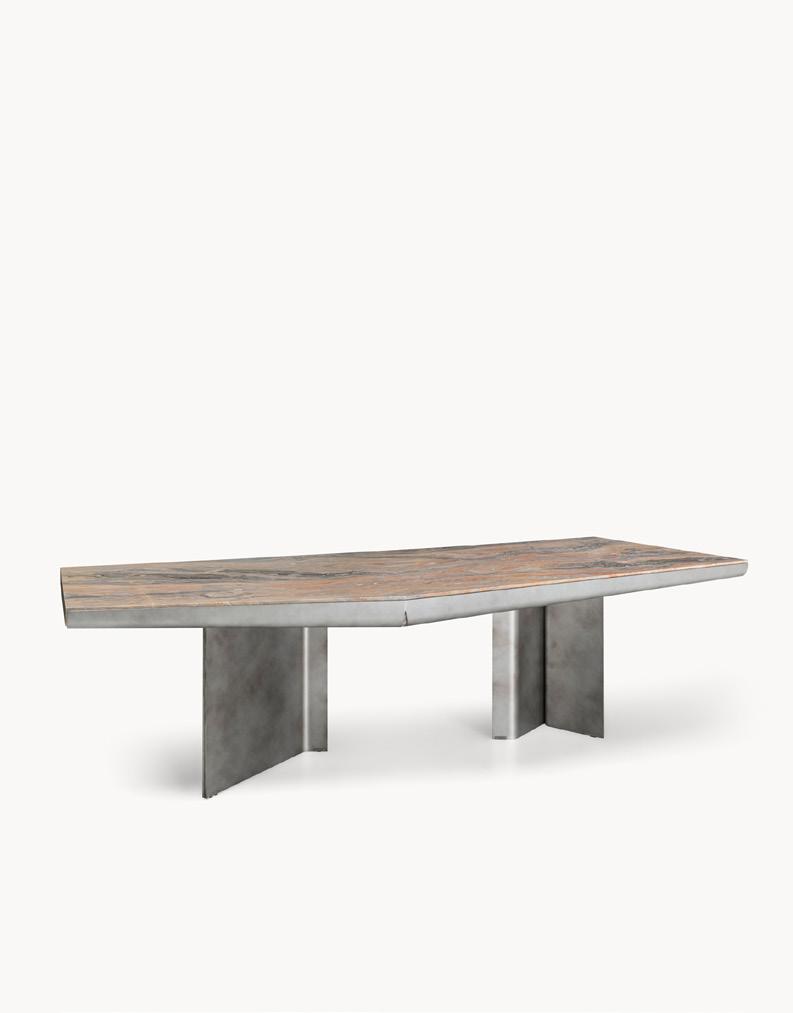
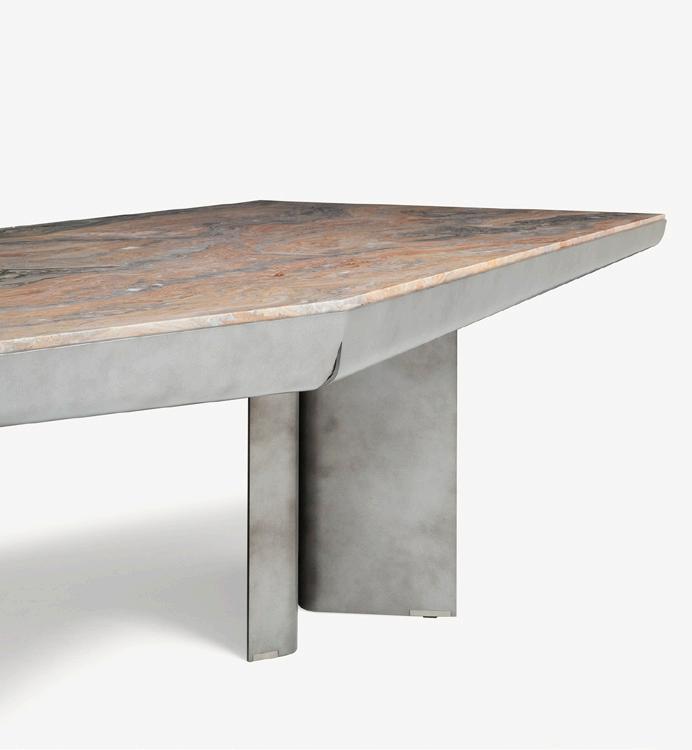
Catskill immediately strikes for its declared strength — a primordial energy that recalls the mountain region west of the Hudson Valley from which it takes its name. The table asserts its identity through matter, weight and gesture. Archaic accents run through the structure, evoking the memory of forged metal, of heat and pressure transforming raw matter into a complete form. The surface does not conceal the process: it reveals it, in a balance between rigor and refinement. The legs express an almost primitive solidity, while the under-top shell, with its irregular and textured surfaces, captures the light dynamically. Each element is treated as living matter, worked to achieve a unique, unrepeatable result. The marble top completes the composition with a gesture of ancestral elegance.
Catskill colpisce immediatamente per la sua forza dichiarata — un’energia primordiale che richiama la regione montuosa a ovest della Hudson Valley da cui prende il nome. Il tavolo afferma la propria identità attraverso materia, peso e gesto. Accenti arcaici attraversano la struttura, evocando la memoria del metallo forgiato, del calore e della pressione che trasformano la materia grezza in forma compiuta. La superficie non nasconde il processo: lo rivela, in equilibrio tra rigore e raffinatezza. Le gambe esprimono una solidità quasi primitiva, mentre lo scafo del sottopiano, con superfici irregolari e texturizzate, cattura la luce in modo dinamico. Ogni elemento è trattato come materia viva, lavorata per ottenere un risultato unico, irripetibile. Il piano in marmo completa la composizione con un gesto di eleganza ancestrale.
Catskill
Catskill, table
Rochester, chair
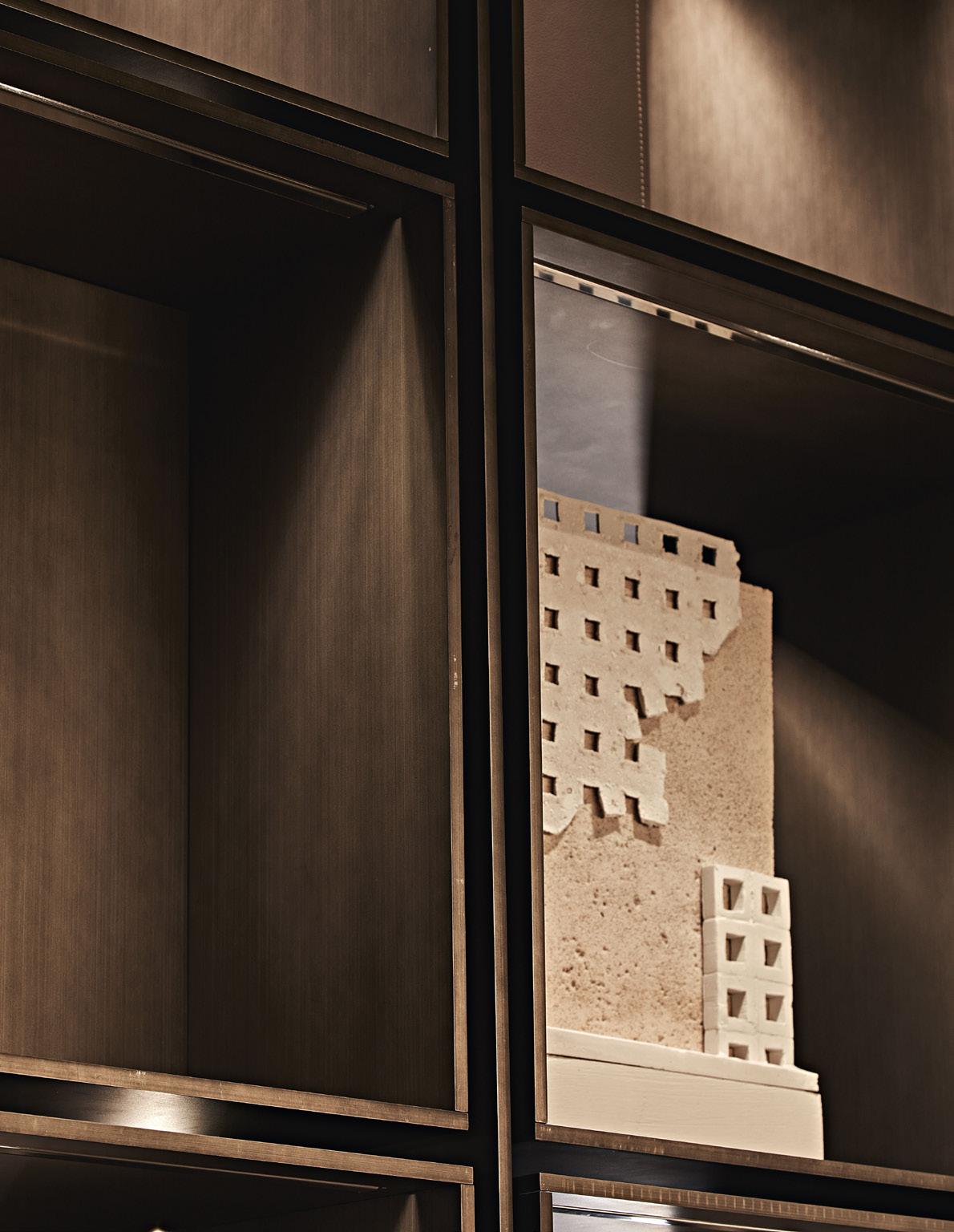
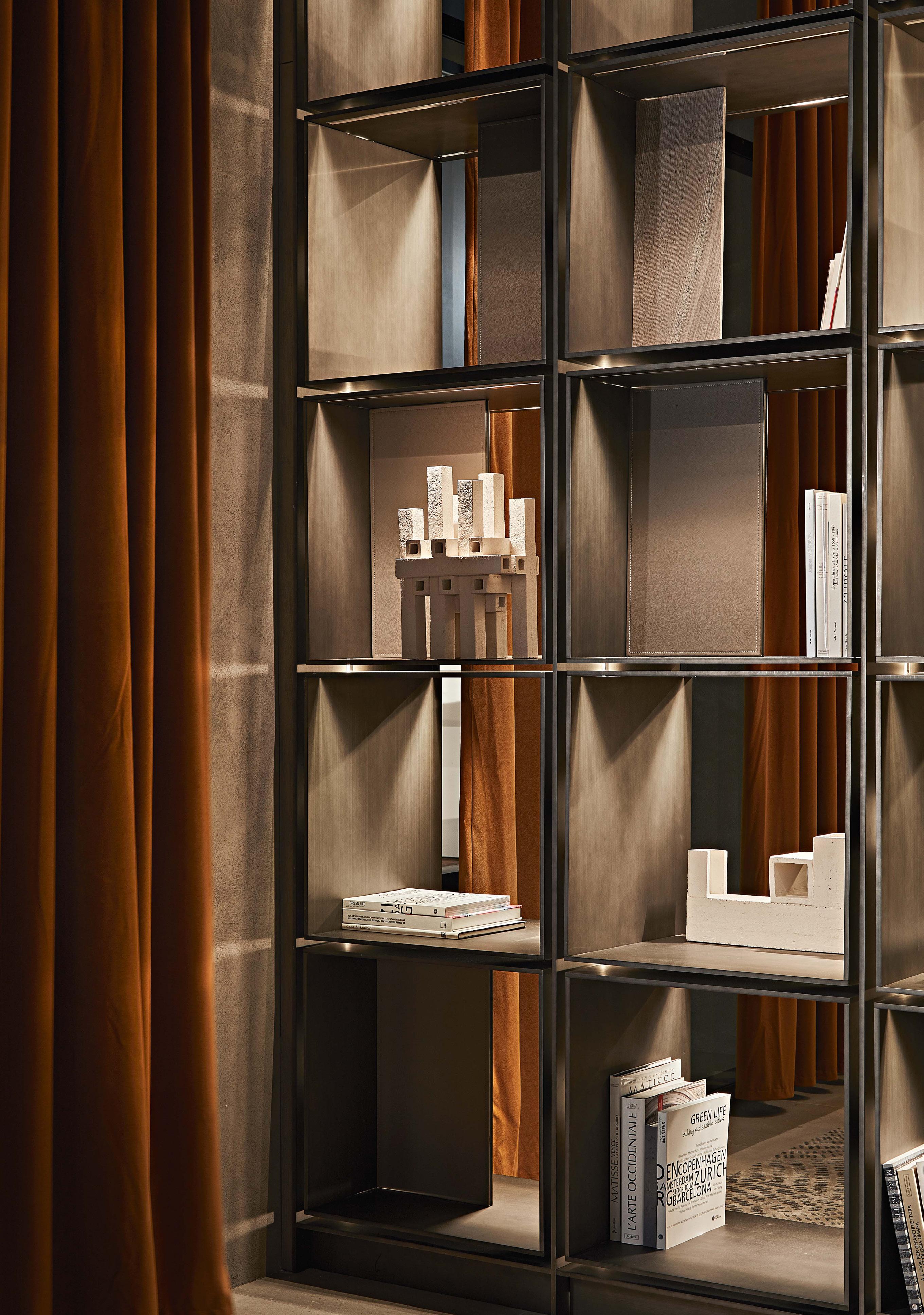
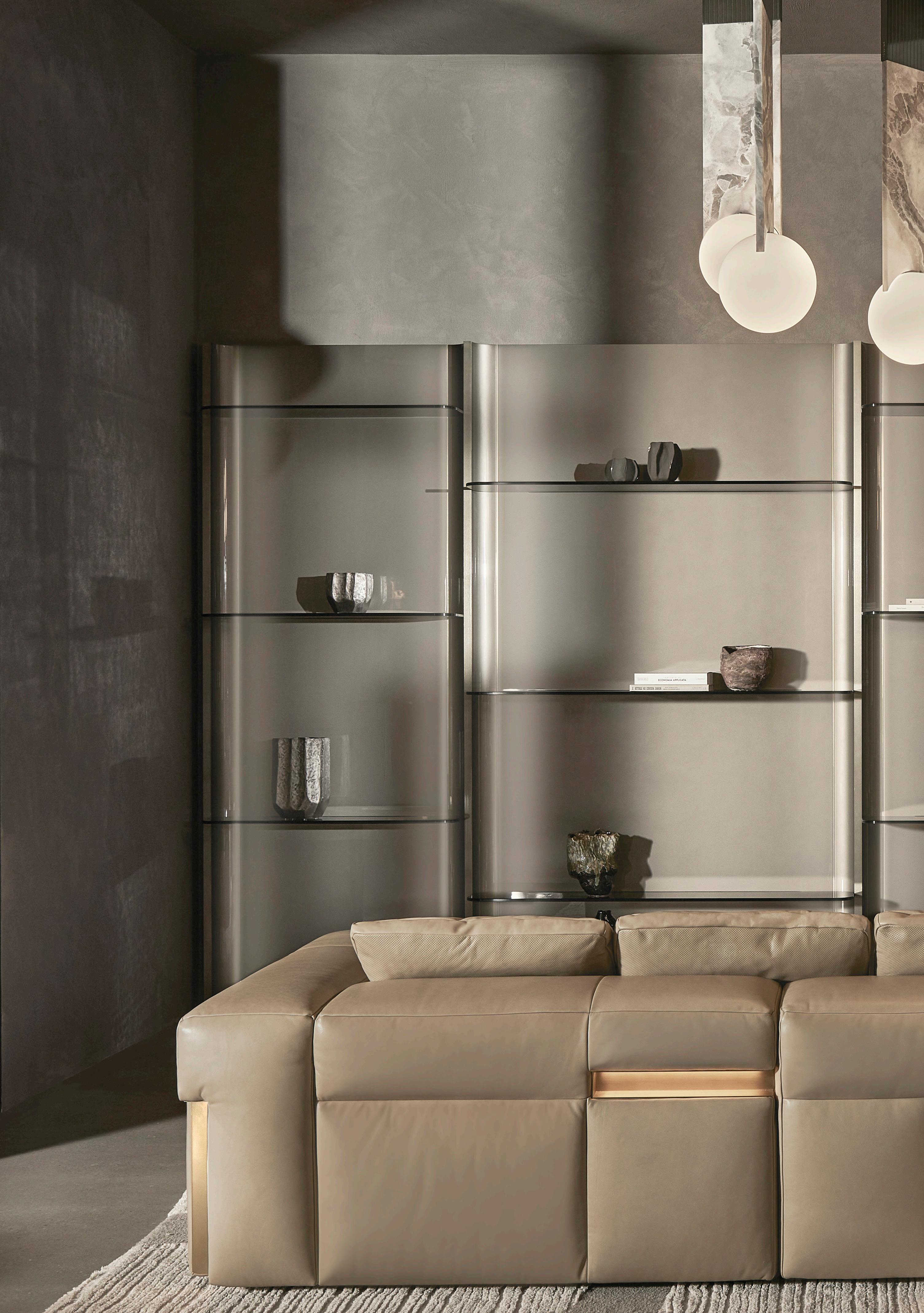
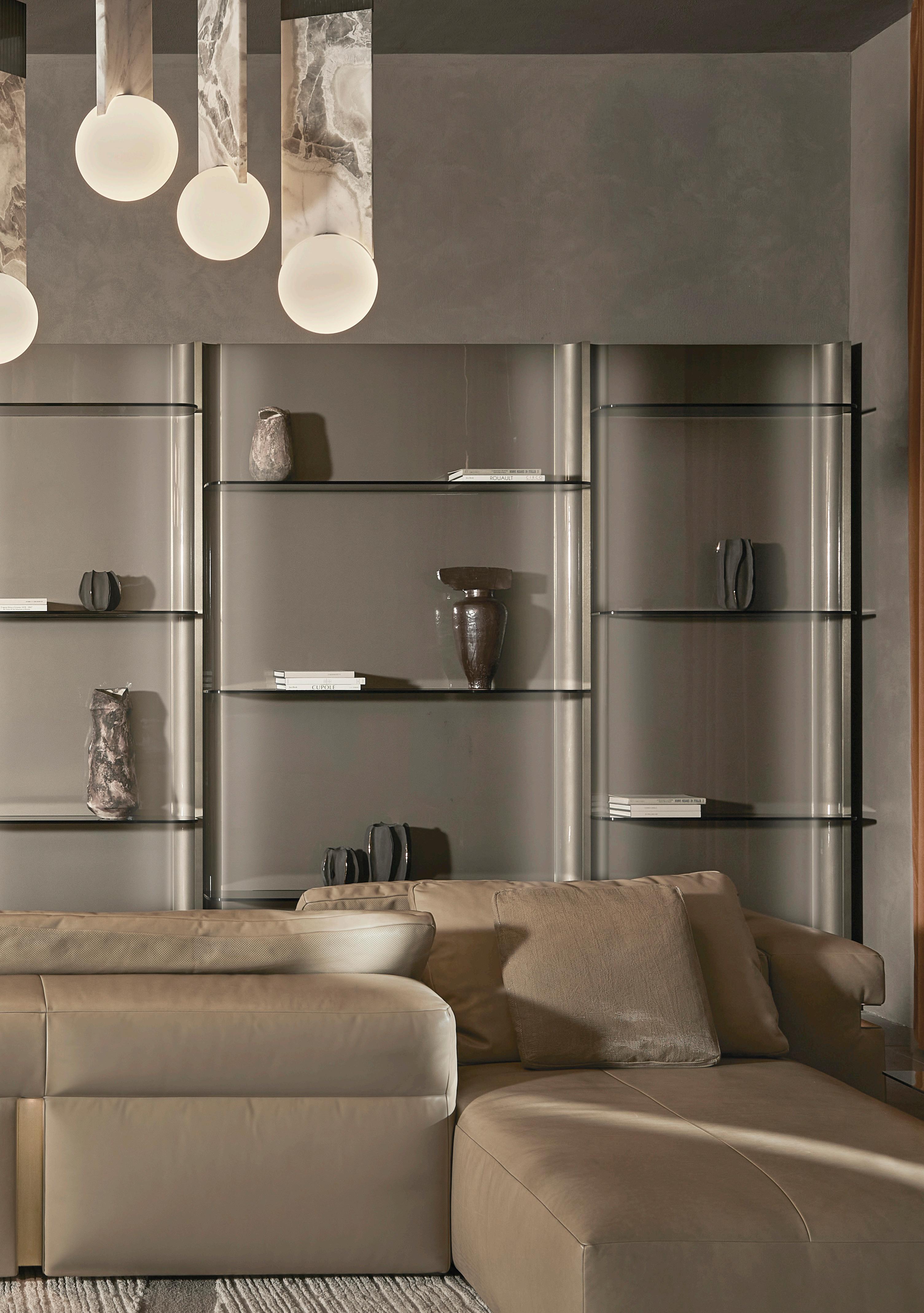
C-Square,bookshelf
Core, ceiling/wall/table lamp
Bronson, cabinet
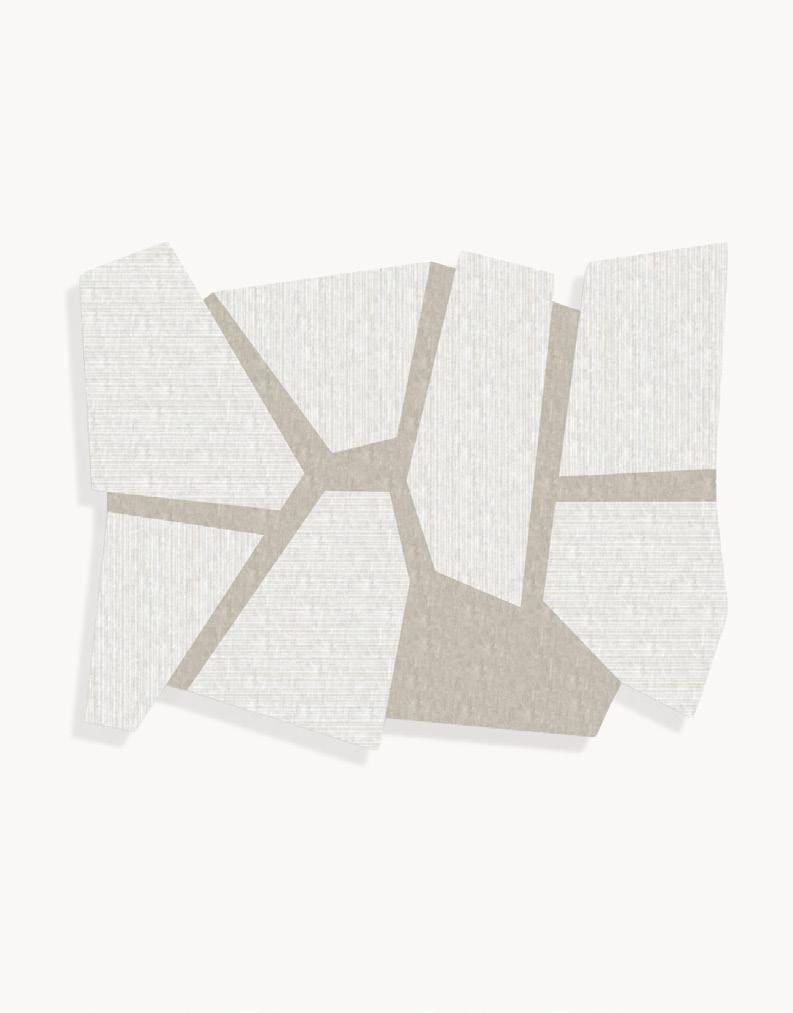
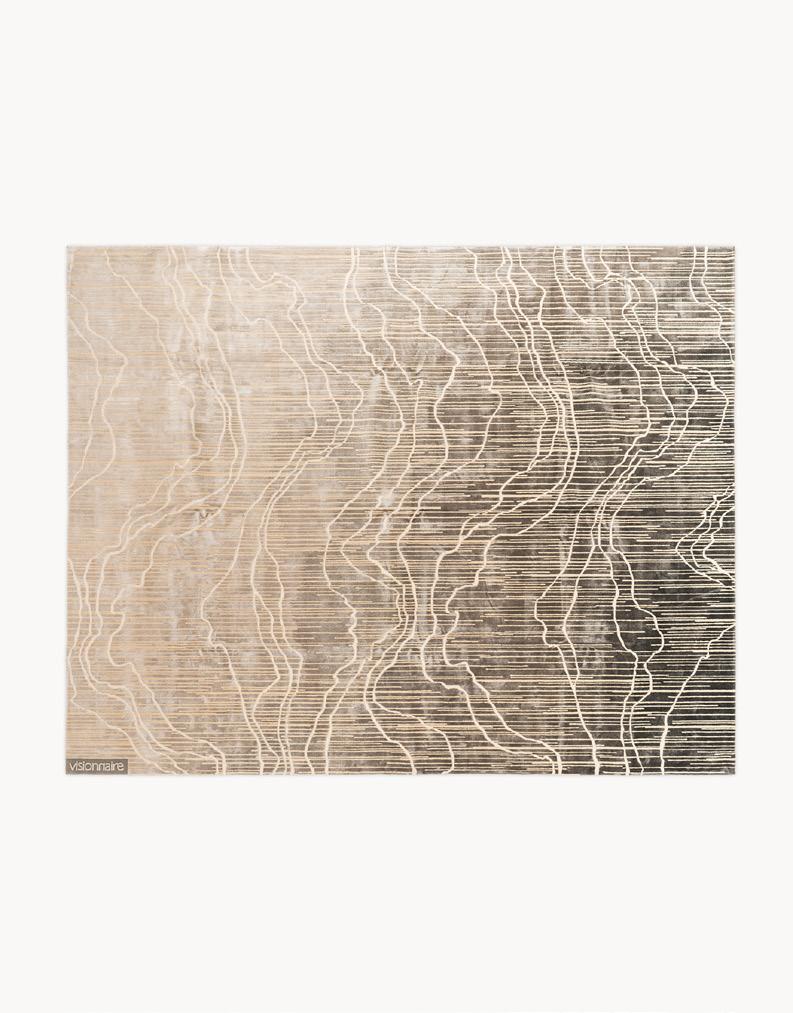
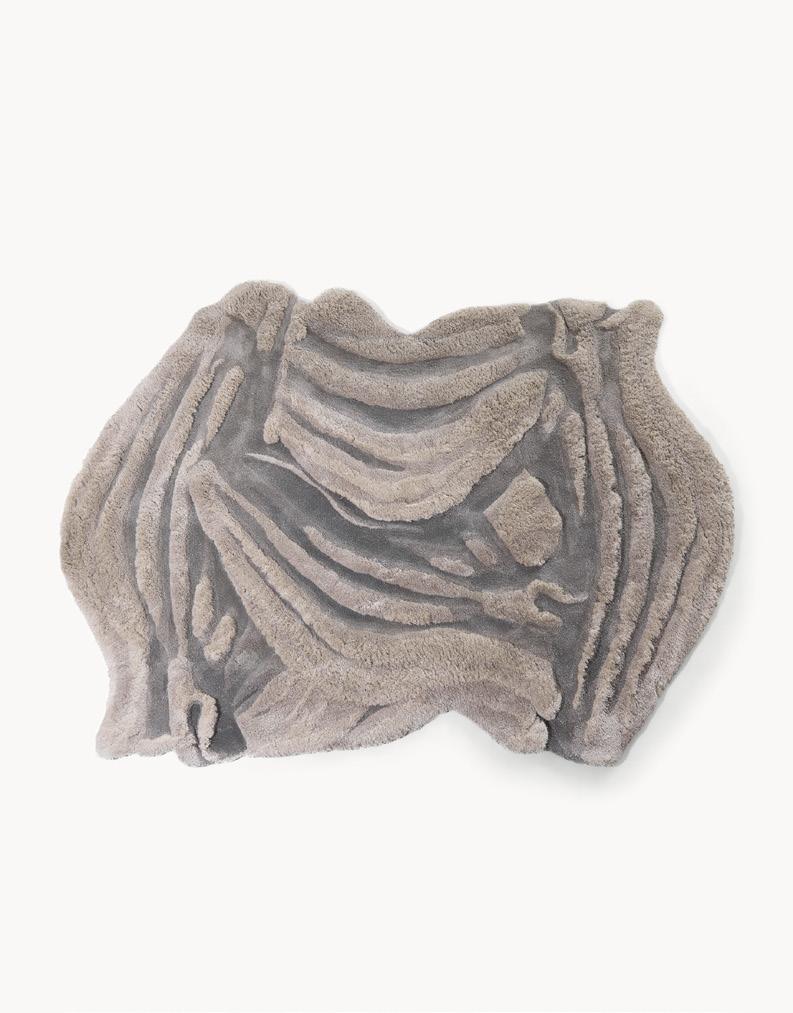
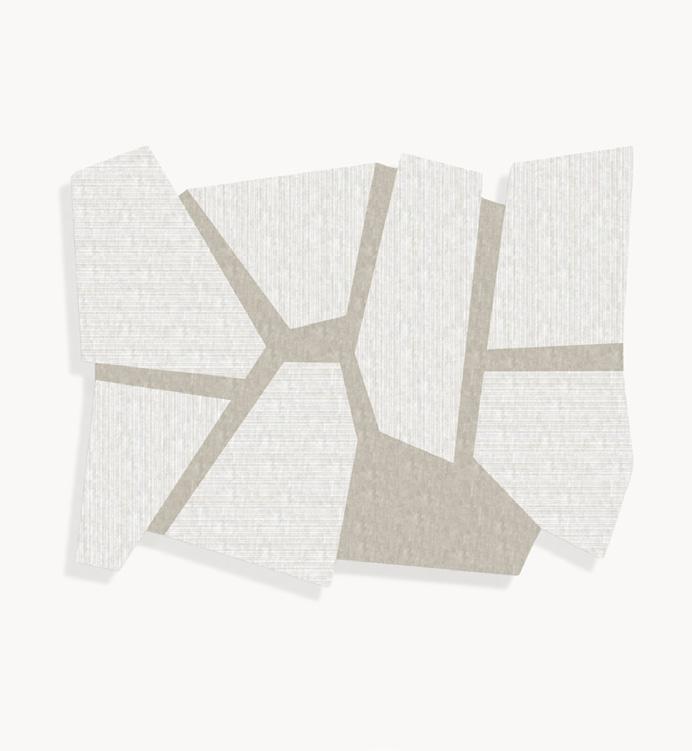
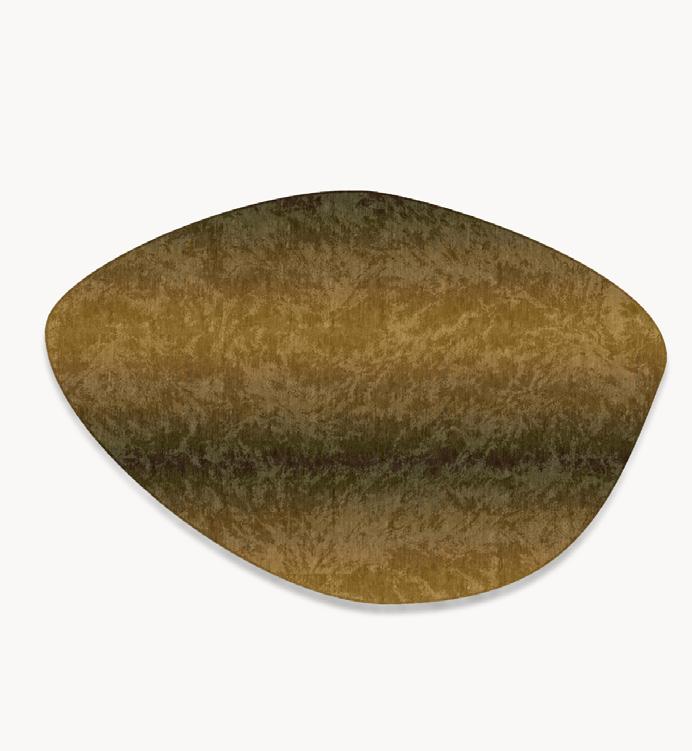
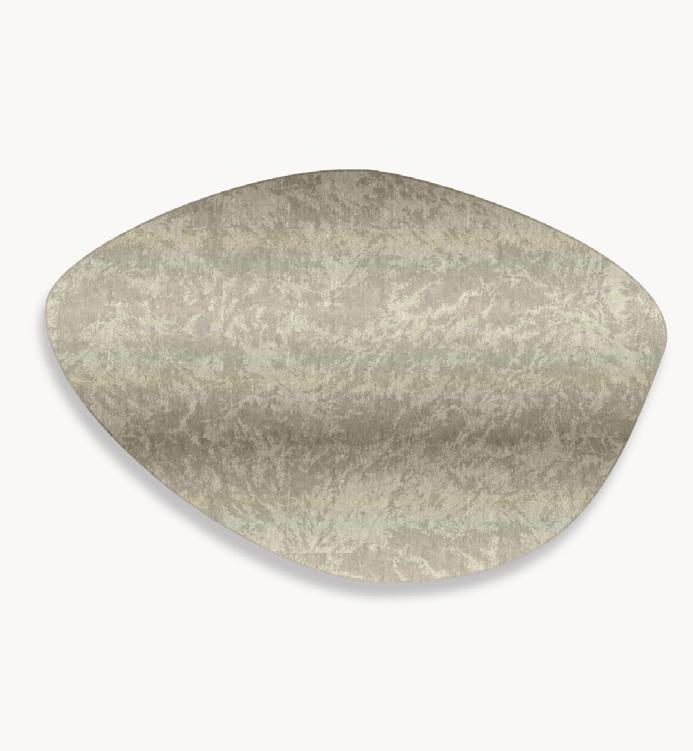
Sablè, carpet
Cameo, artwork
Explore the room ↗
, accessories
Black Sicilian/ White Moon, vases Screen/ VNVCO/F2
A sculptural sense of gathering, where light and proportion turn conviviality into a contemporary ritual.
Una convivialità scolpita nella materia, dove luce e proporzione trasformano l’incontro in un rito contemporaneo.
Catskill table by Mauro Lipparini
Core suspension lamp by Marco Piva
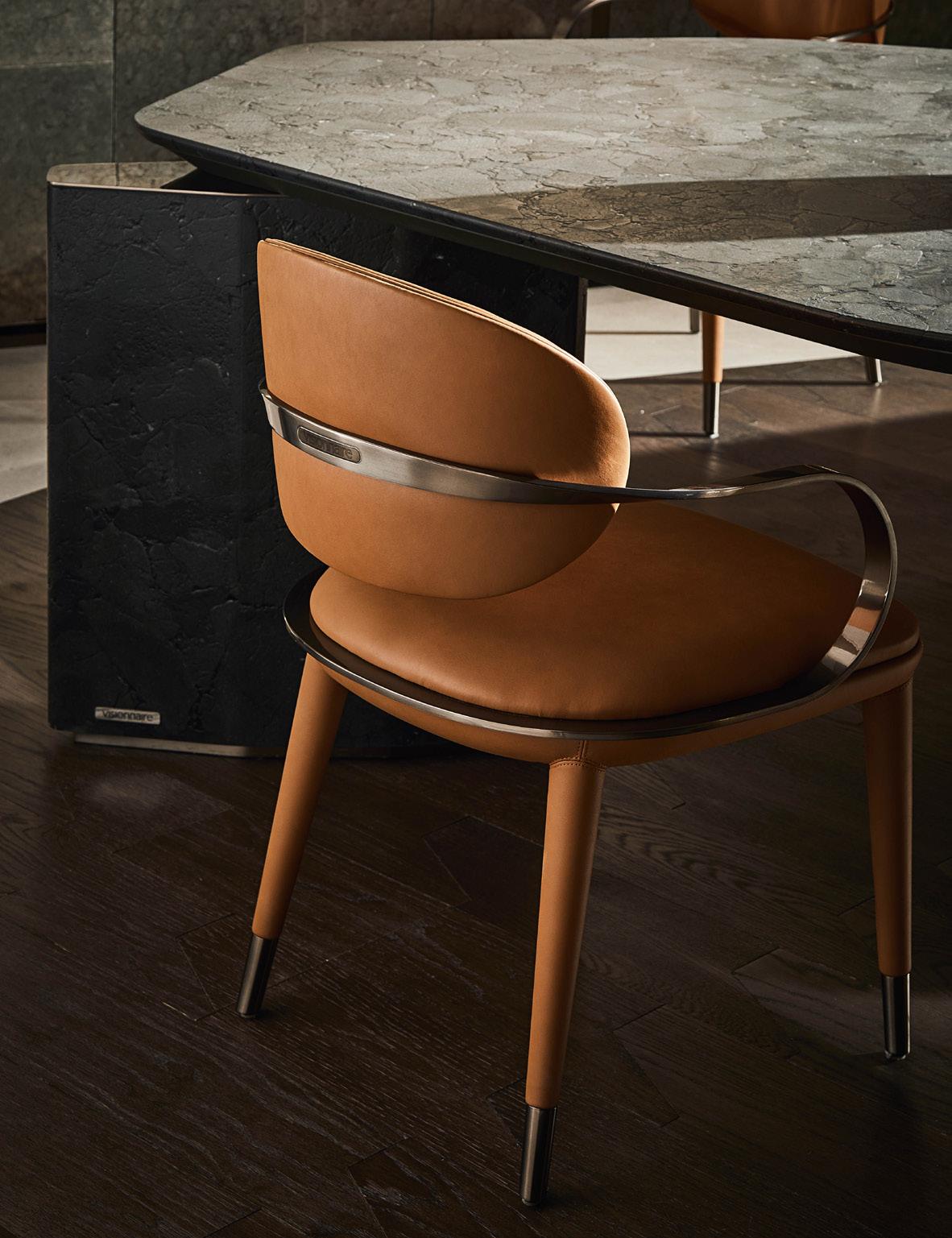
Rochester chair by Mauro Lipparini
Catskill table by Mauro Lipparini
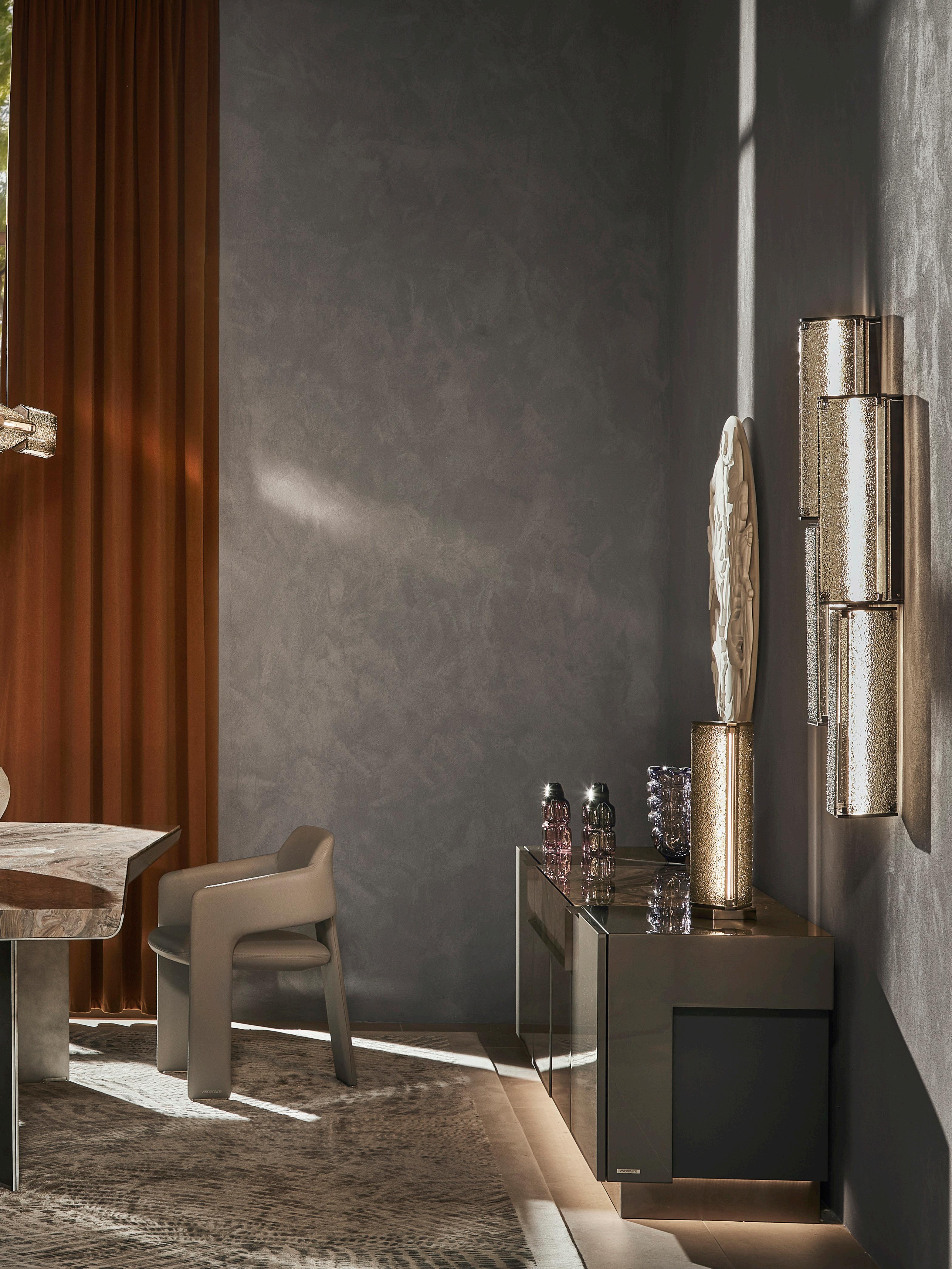
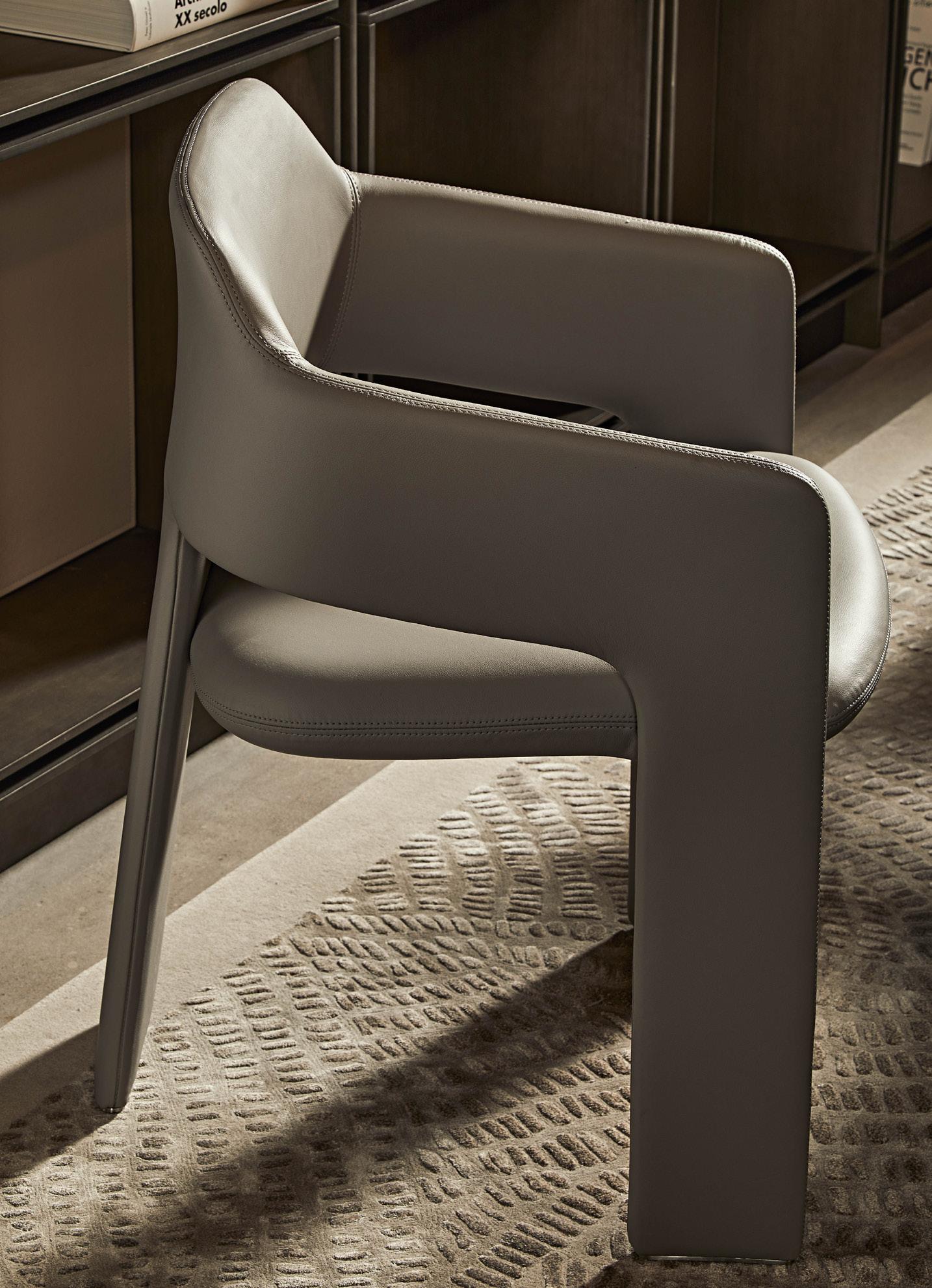
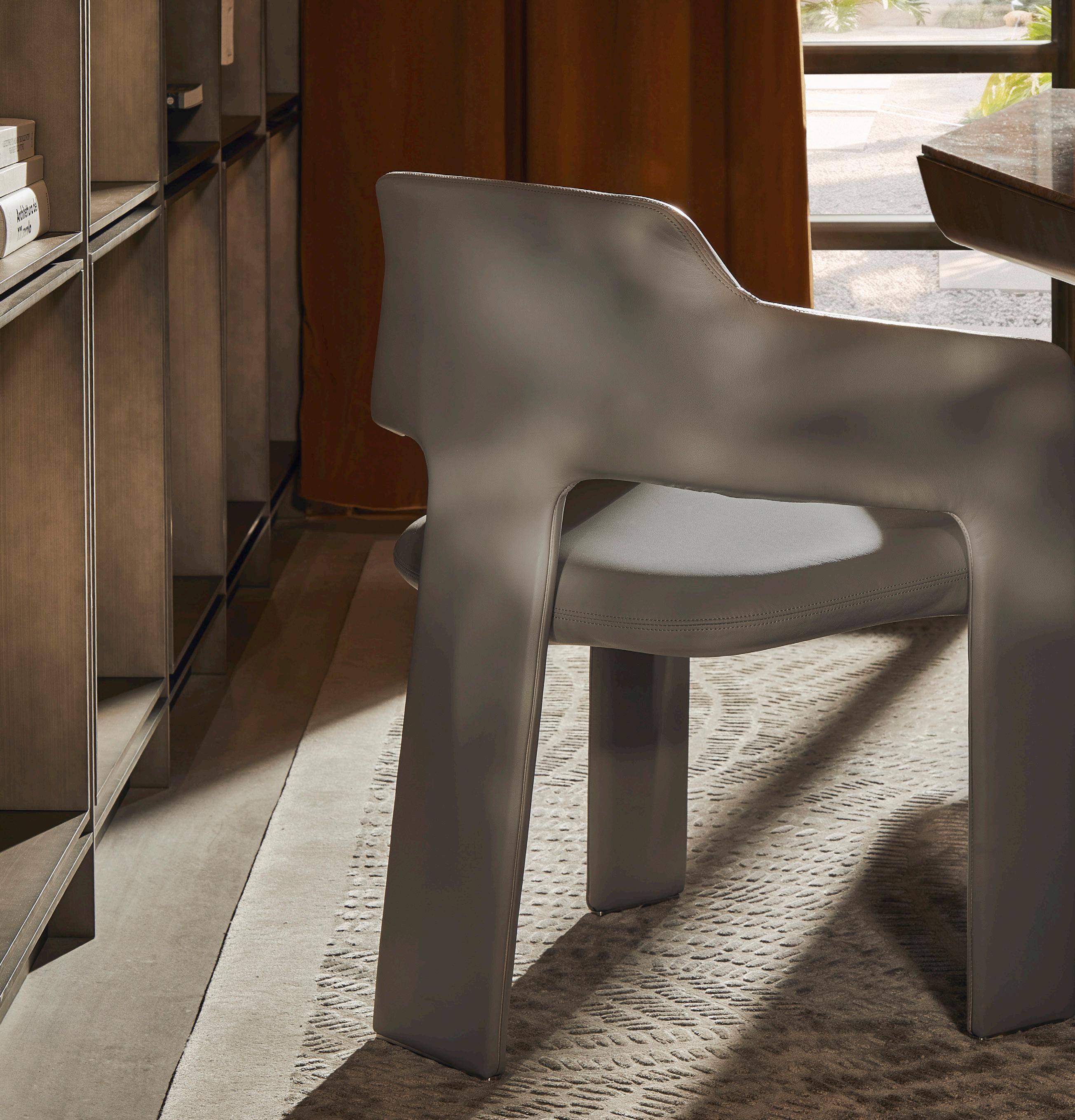
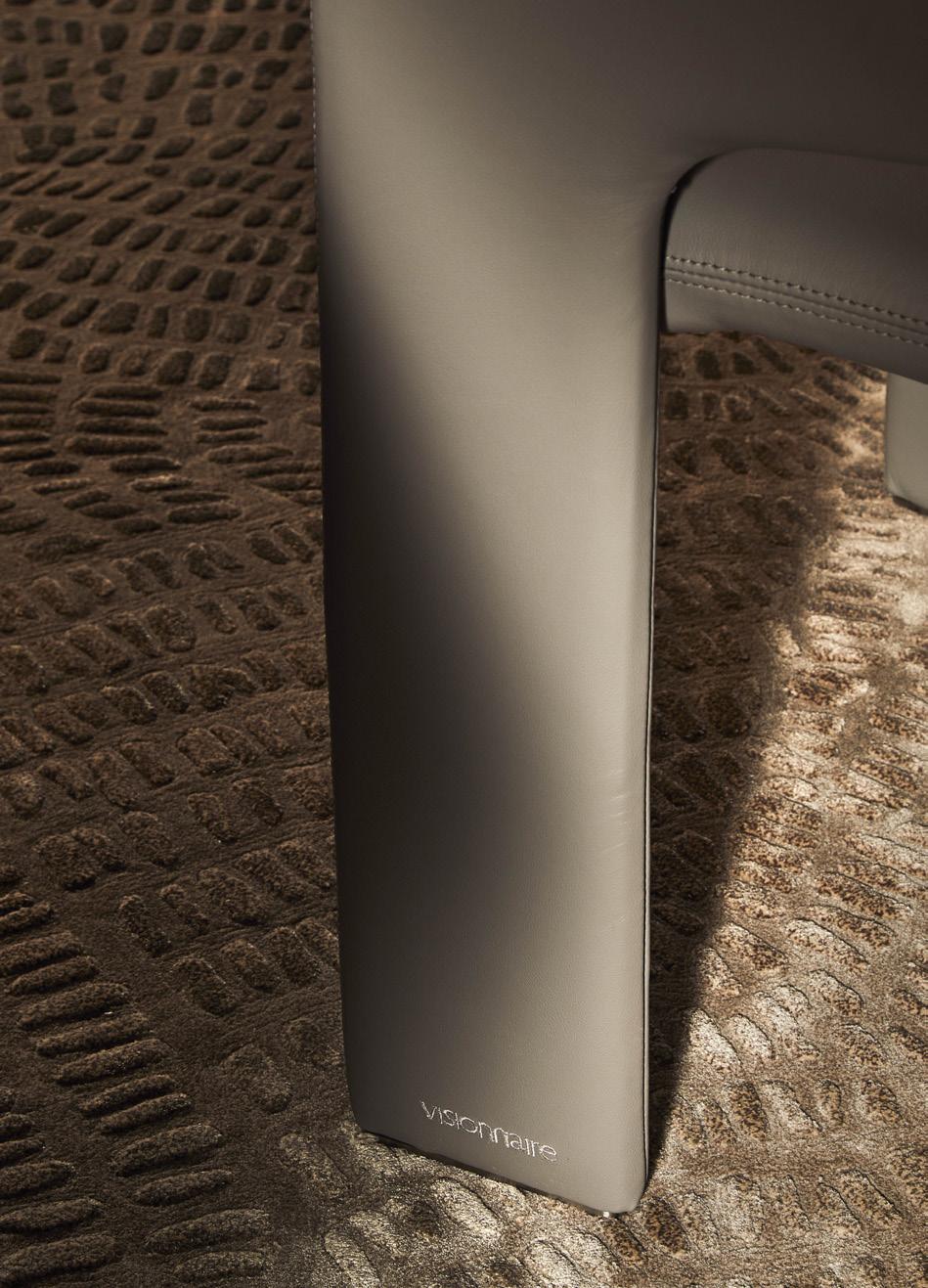
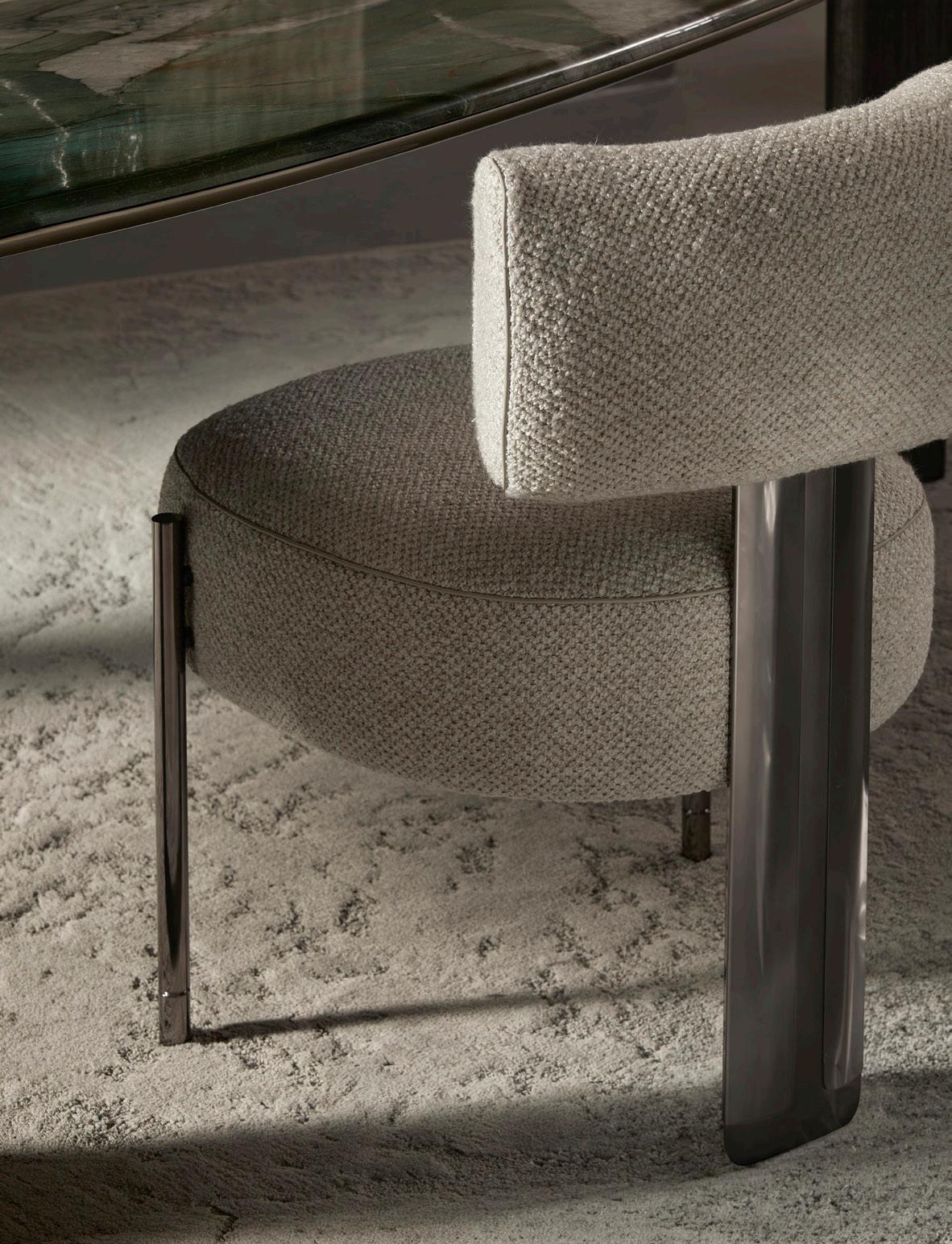
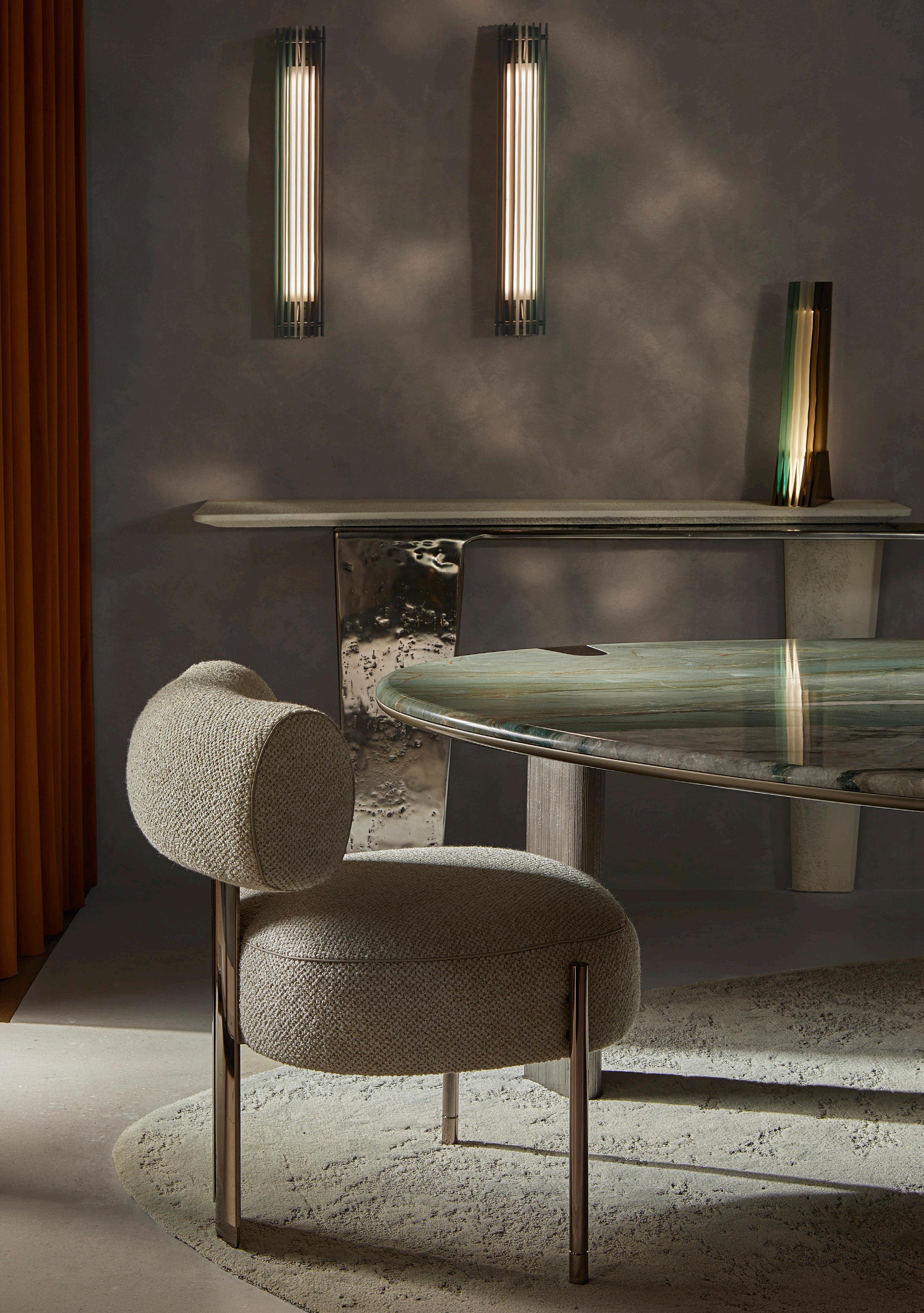
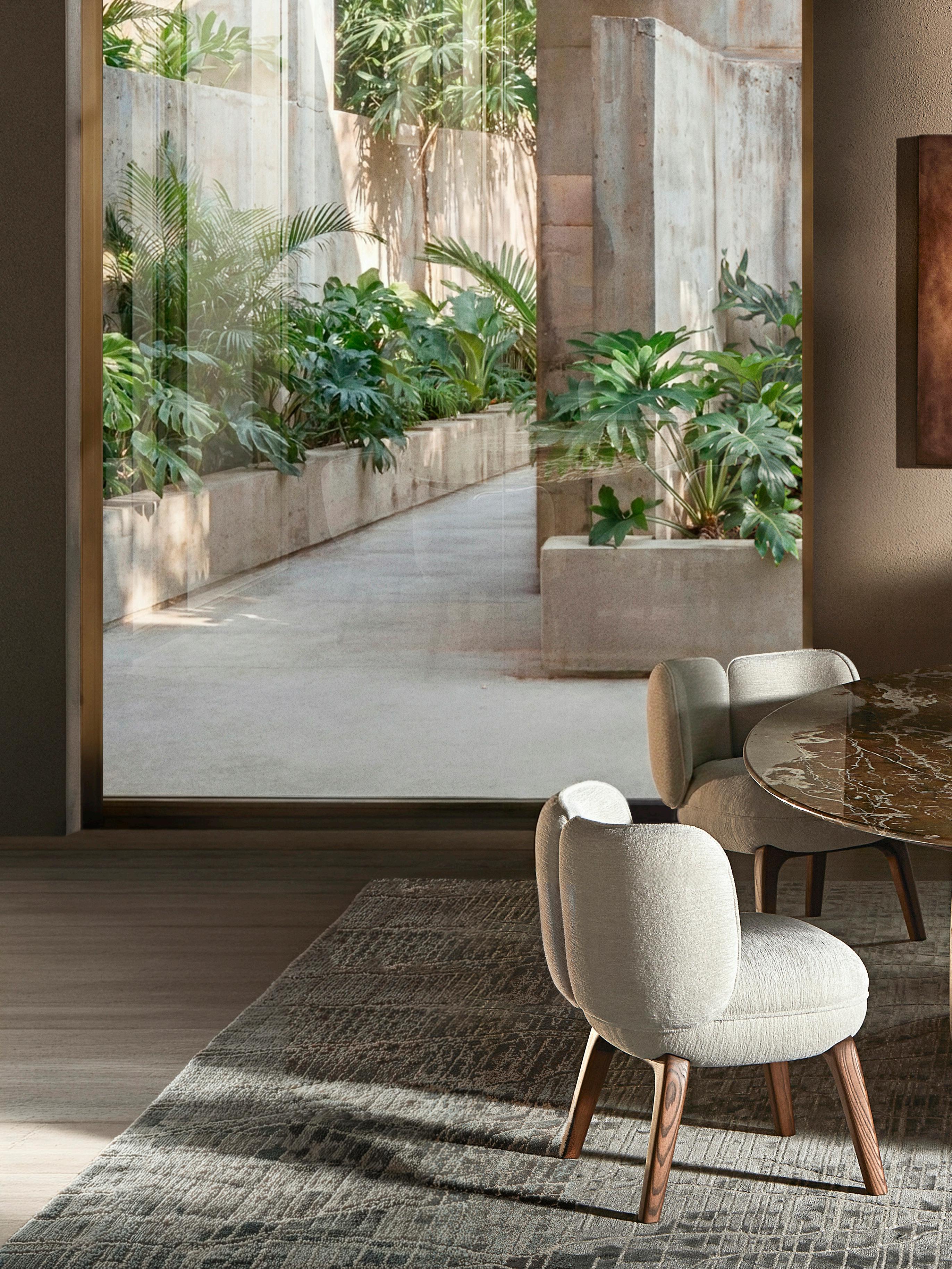
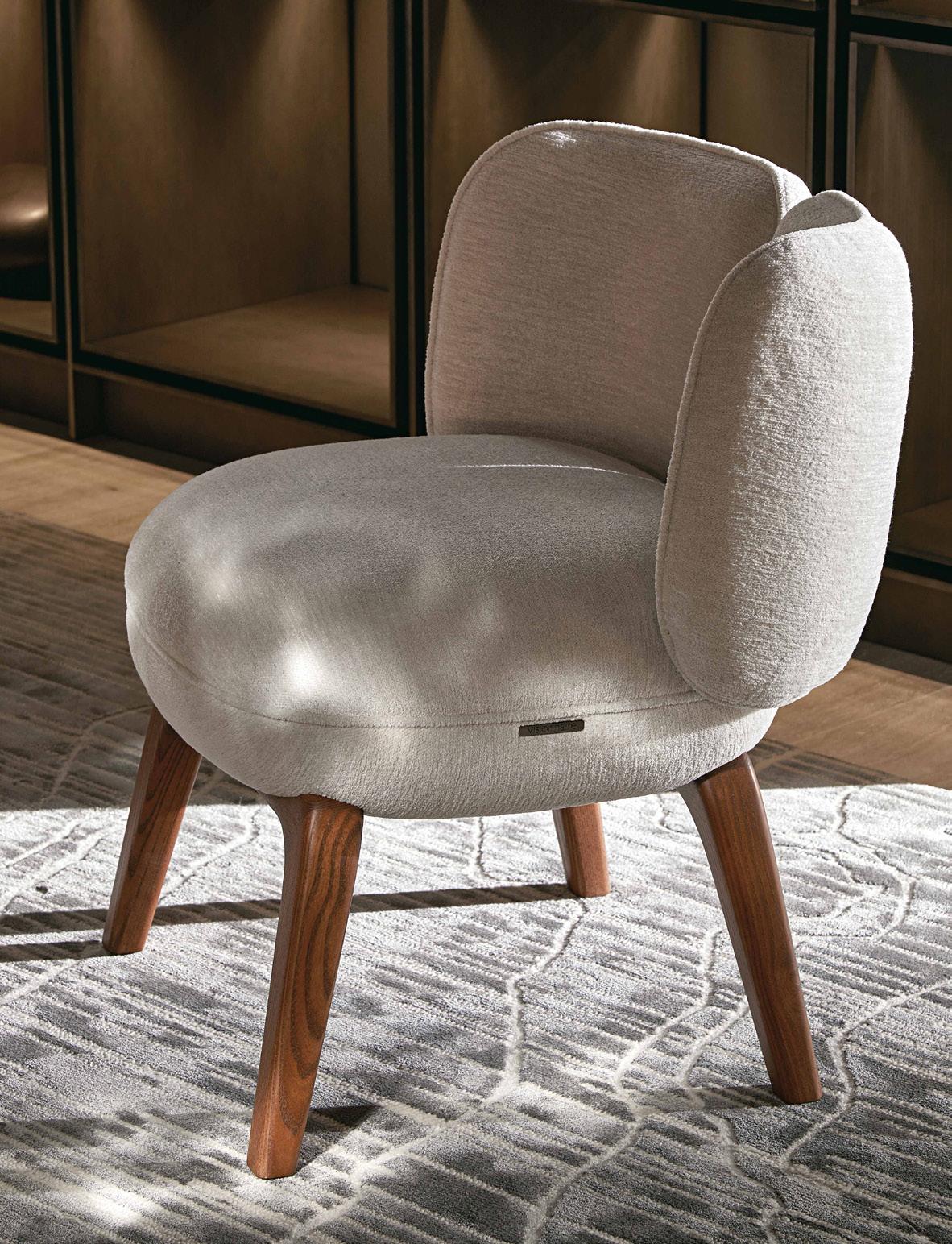
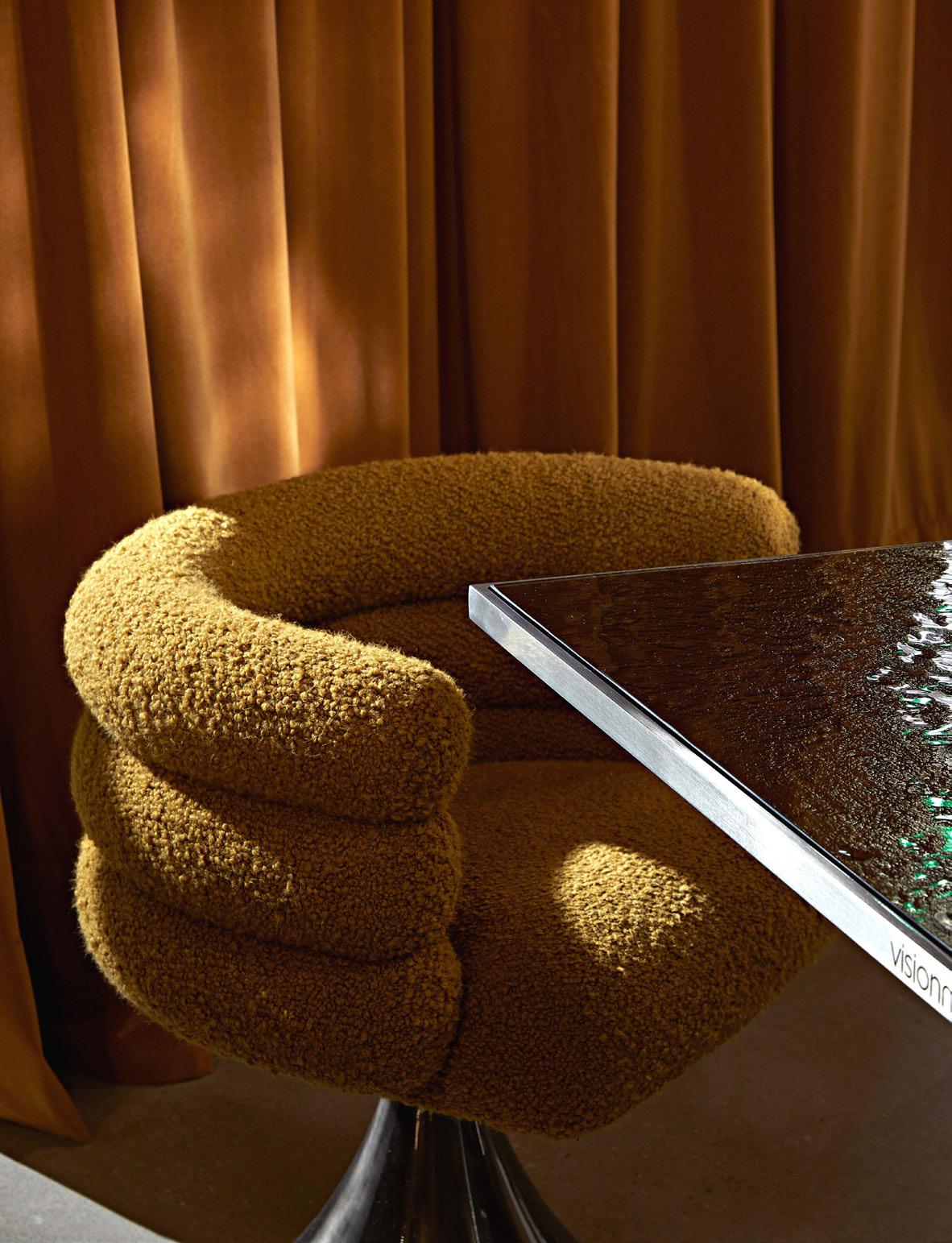
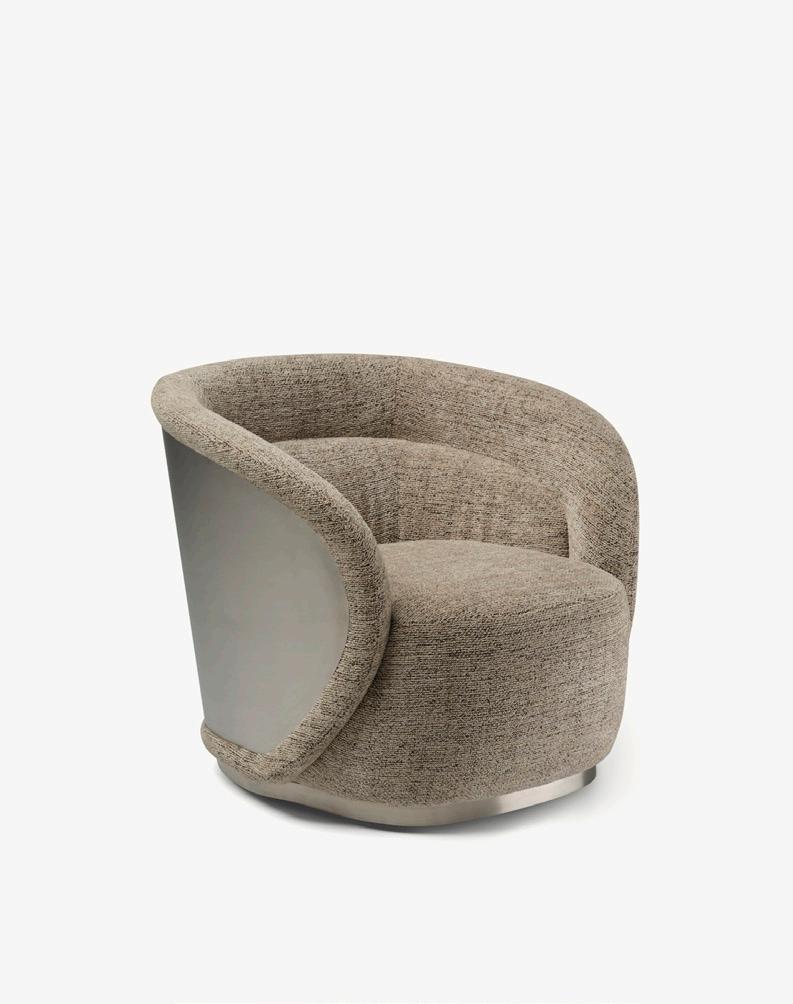
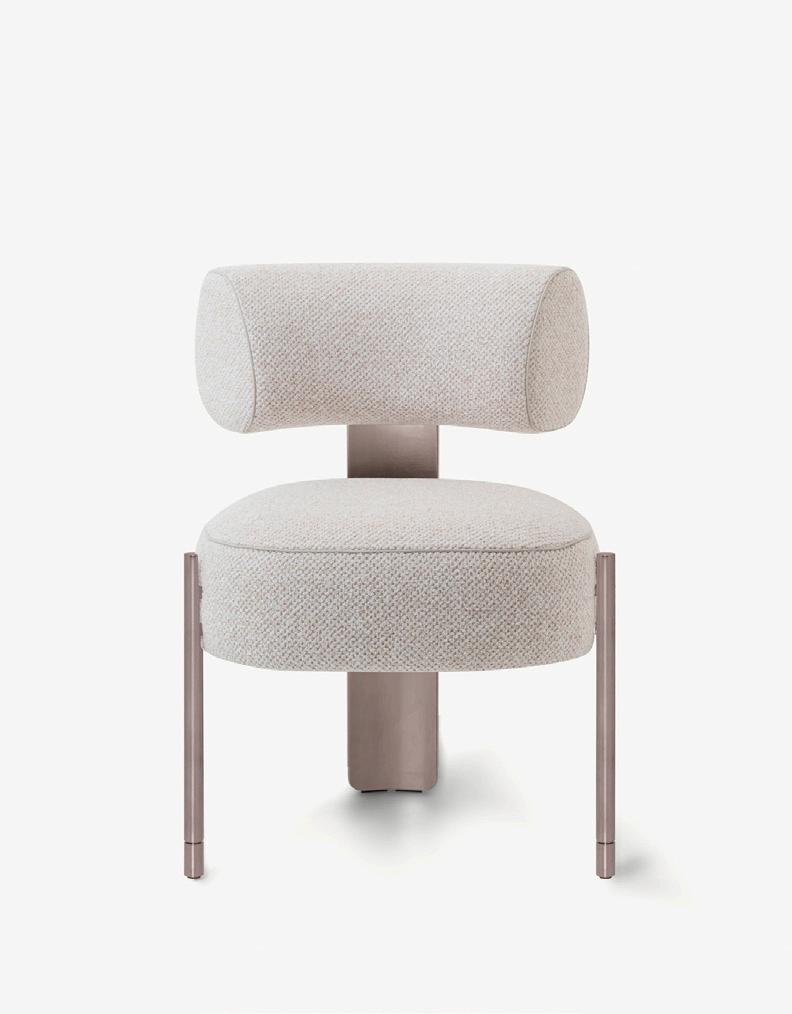
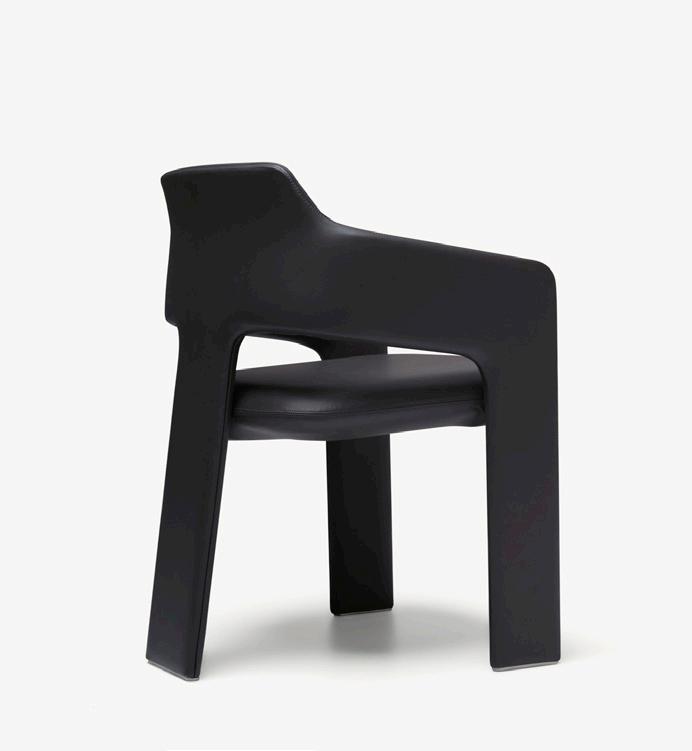
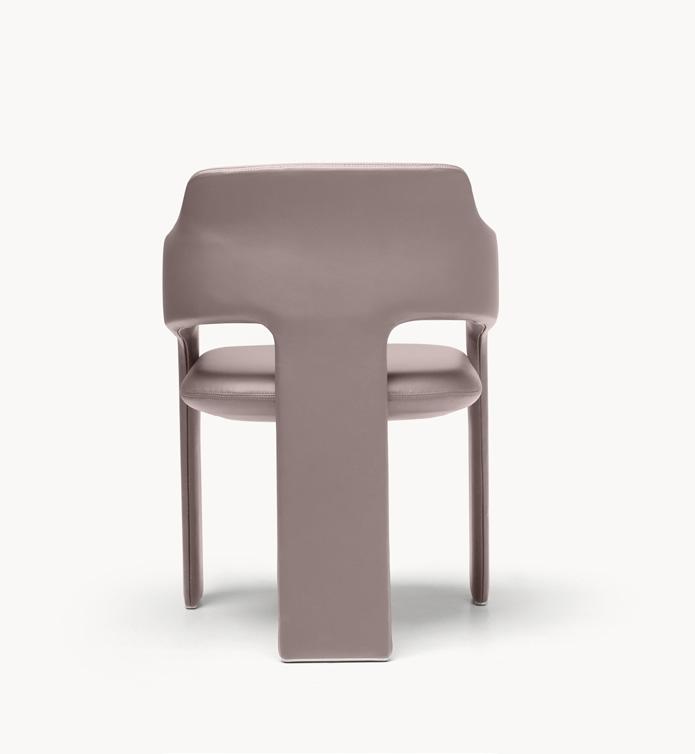
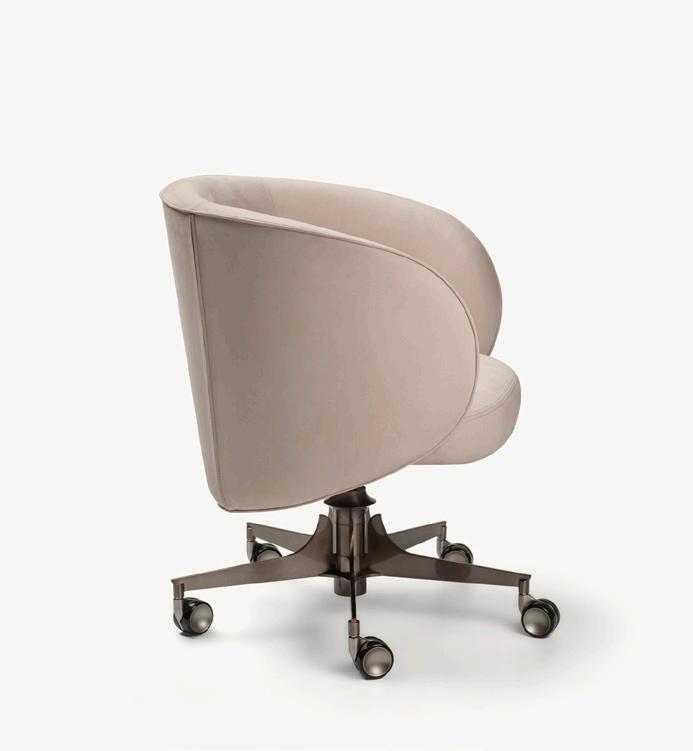
The Rochester chair features a compact, enveloping form. The bucket seat is integrated into a single body that wraps around the backrest and armrests, generating a clear and cohesive silhouette. The structure is based on three supporting elements: two front legs and a central rear support. A vertical element and a horizontal one meet with constructive simplicity, creating a precise balance between solid surfaces and openings. The torusshaped section outlines a continuous, fluid silhouette capable of introducing rhythm into a rigorous framework. The material is expressed openly, the form is sharp, the presence is defined. Its name references the city of Rochester, in the State of New York, guardian of a direct and unornamented architectural season. From that urban memory, the chair absorbs a clear and concise attitude, composed of primary lines and precise proportions.
La sedia Rochester ha una forma compatta e avvolgente. La seduta a pozzetto è integrata in un corpo unico che avvolge lo schienale e i braccioli, generando una forma compatta e leggibile. La struttura si basa su tre elementi portanti: due gambe anteriori e un sostegno centrale posteriore. Un elemento verticale e uno orizzontale si incontrano con semplicità costruttiva, creando un equilibrio preciso tra superfici piene e aperture. La sezione a toro disegna una silhouette continua e fluida, capace di dare ritmo a un impianto rigoroso. La materia è dichiarata, la forma è netta, la presenza è definita. Il nome richiama la città di Rochester, nello Stato di New York, custode di una stagione architettonica diretta e priva di ornamenti. Da quella memoria urbana la sedia assorbe un’attitudine chiara e sintetica, fatta di segni primari e proporzioni precise.
Sablé carpet by Alessandro La Spada
Catskill table Rochester chair by Mauro Lipparini
C-Square bookshelf Screen/ VNVCO/F2 sculptures by Stefano Maria Pozzi by Roberto Renzi
Core suspension lamp by Marco Piva
Black Sicilian vase
White Moon vase by Moïo Studio by Arina Antonova
Bronson cabinet
Core table/wall lamp
Cameo artwork by Giuseppe Viganò
by Marco Piva
by Matteo Cibic
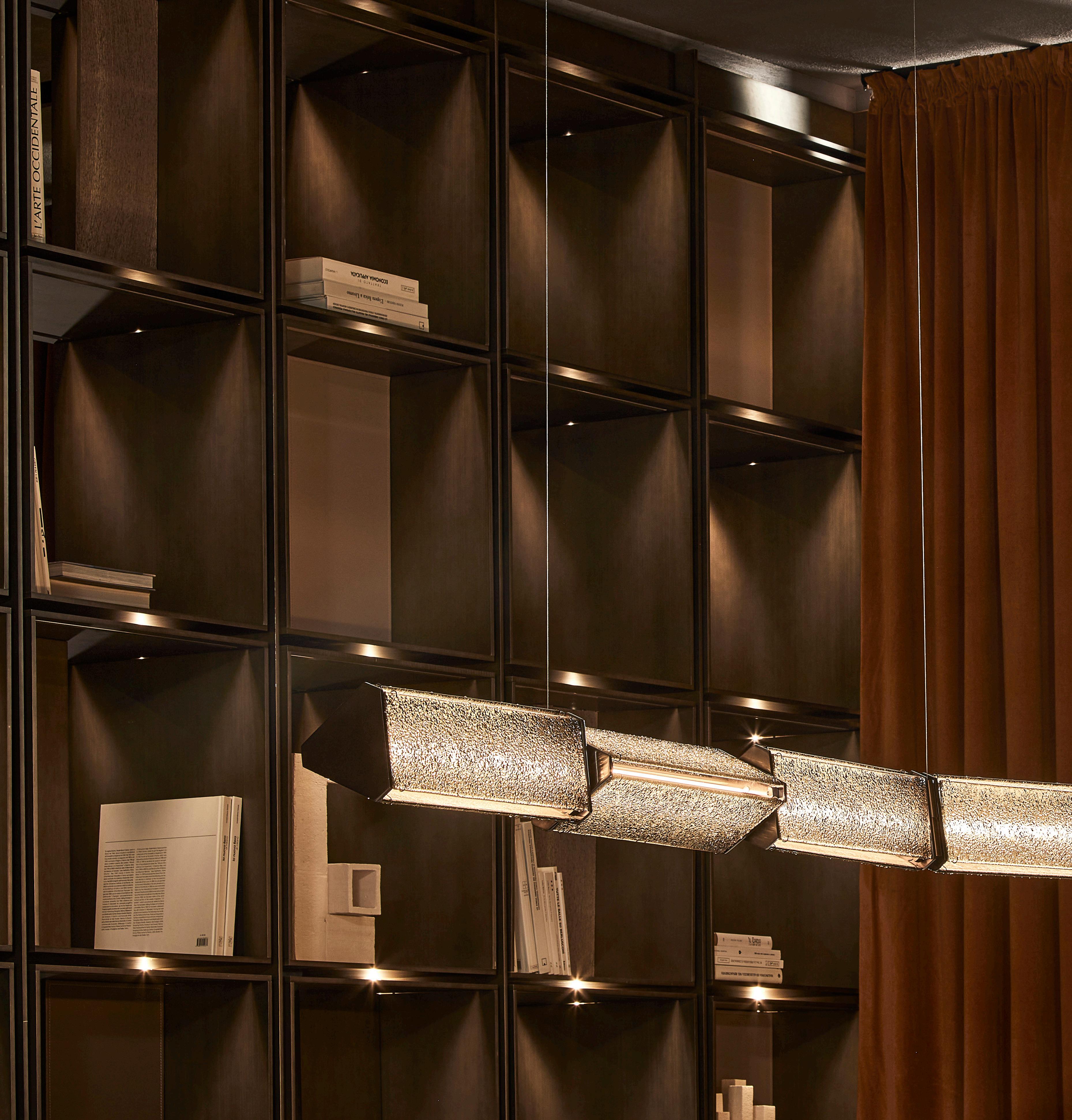
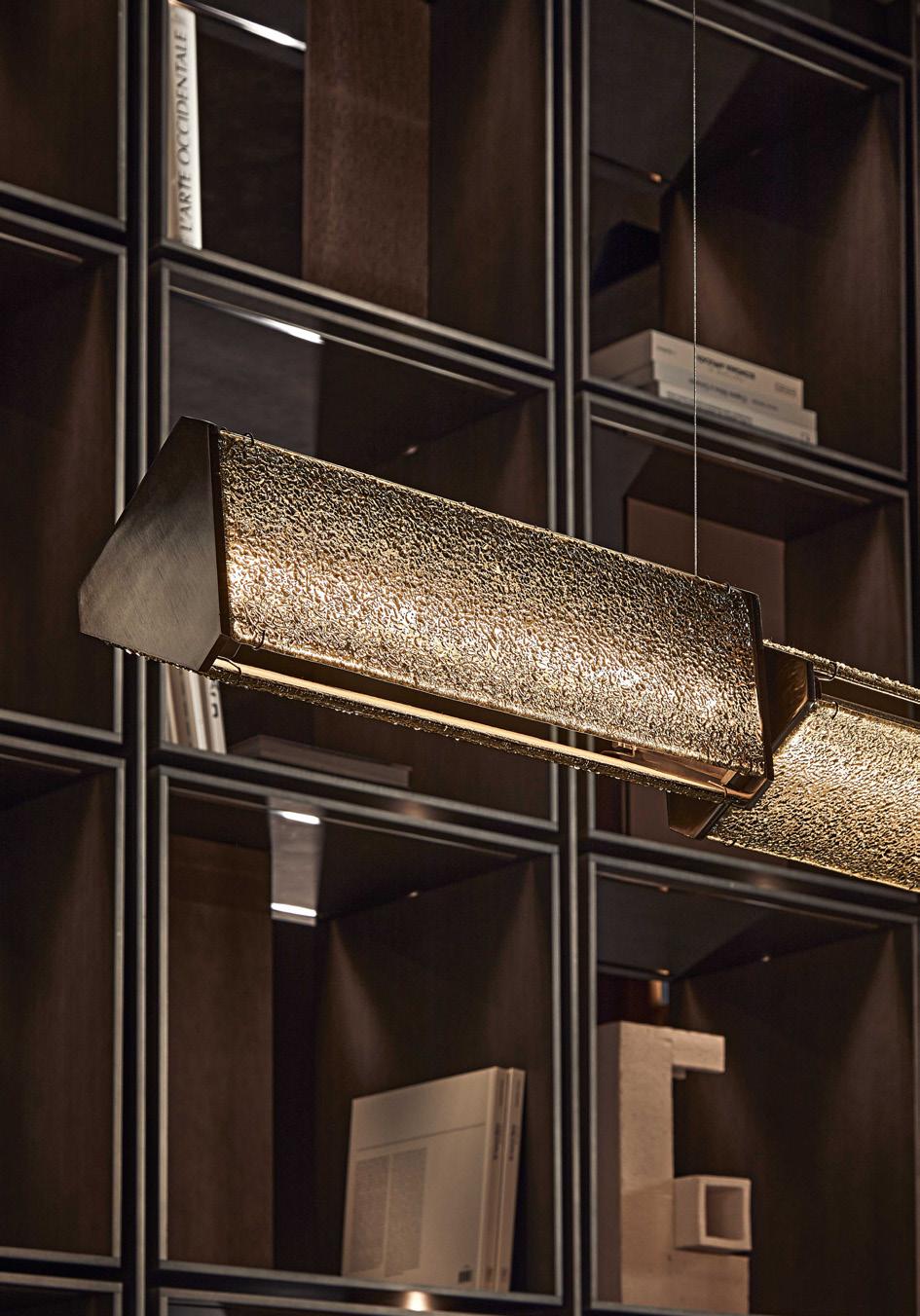
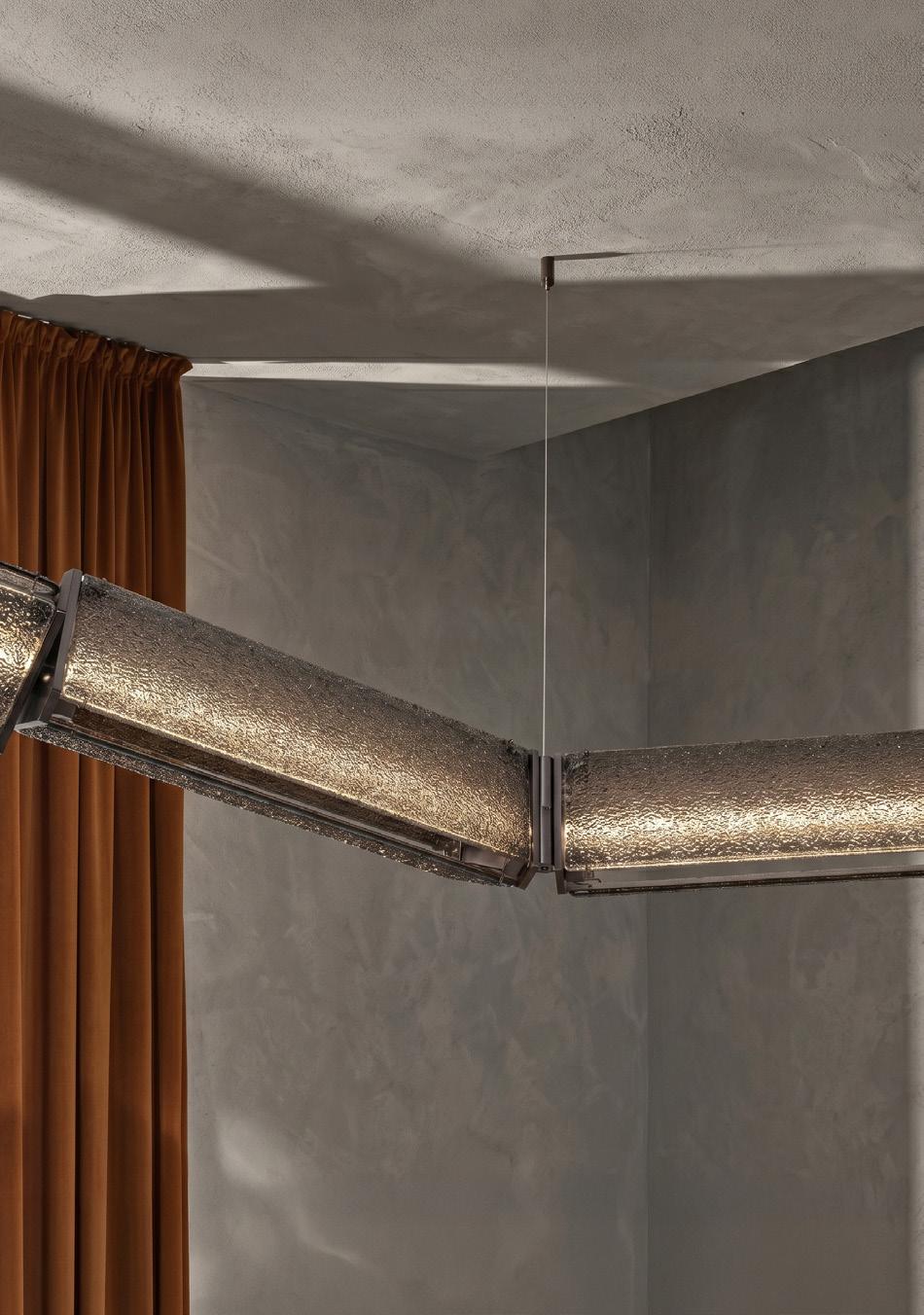
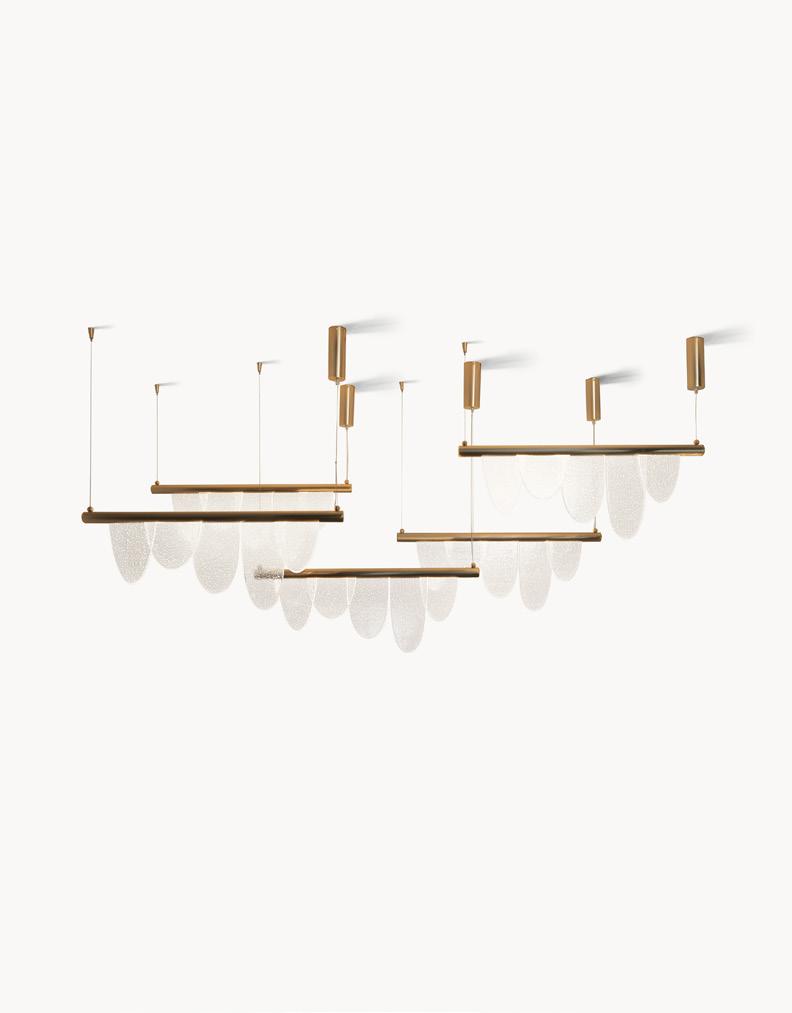
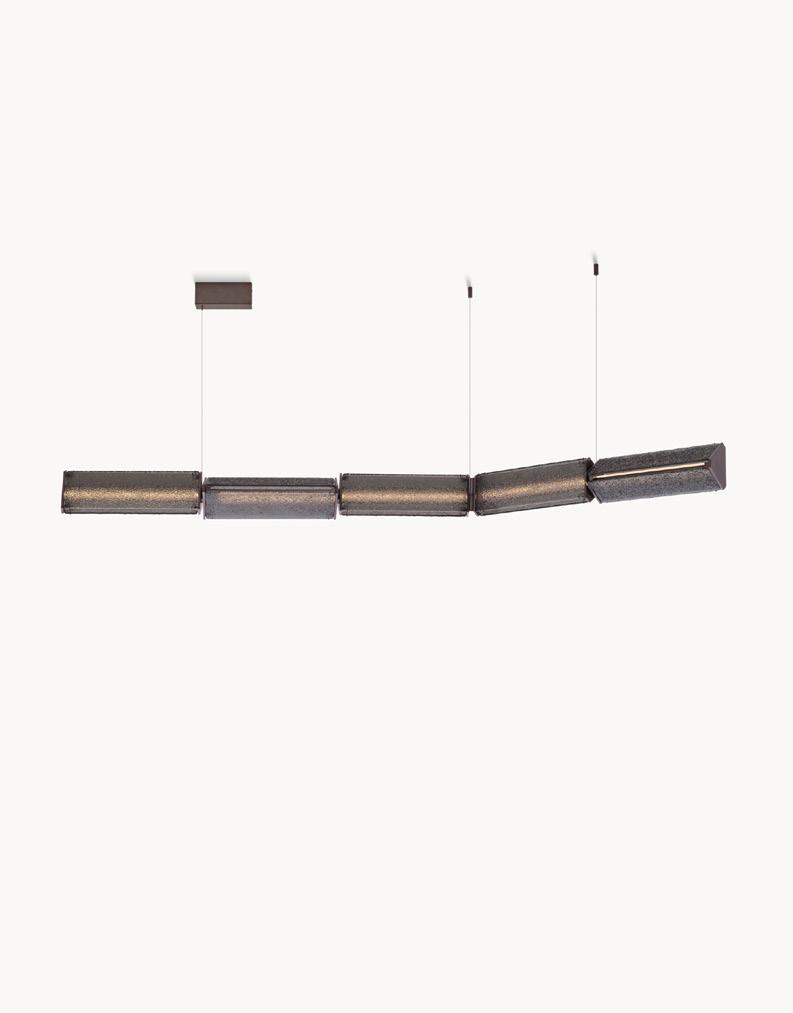
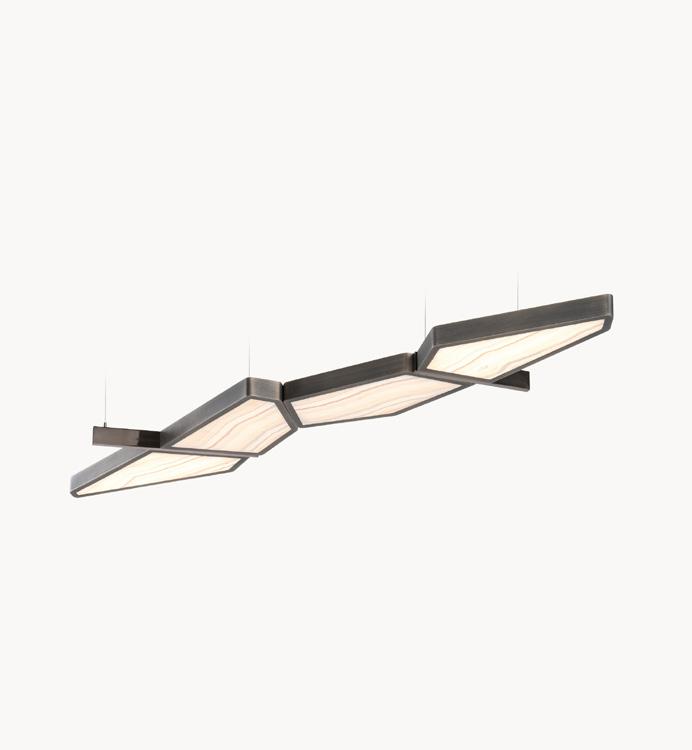
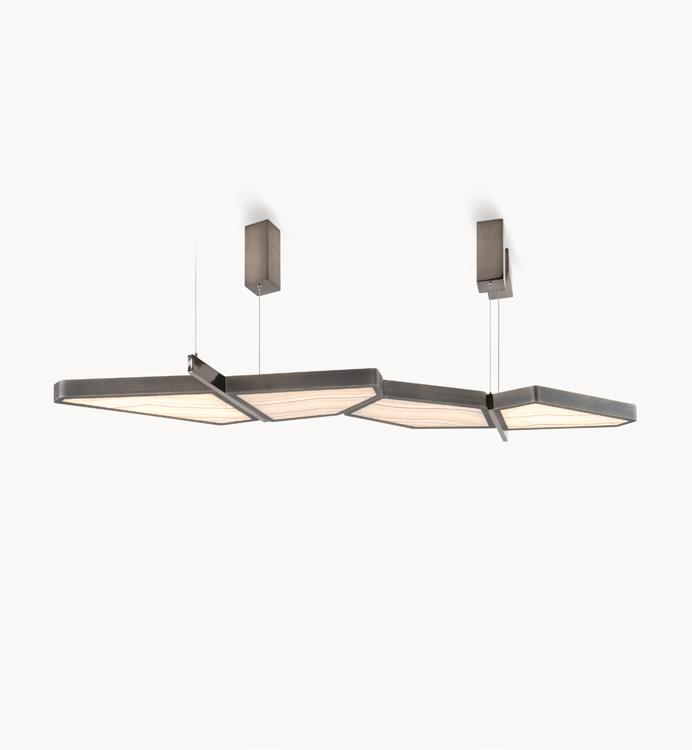
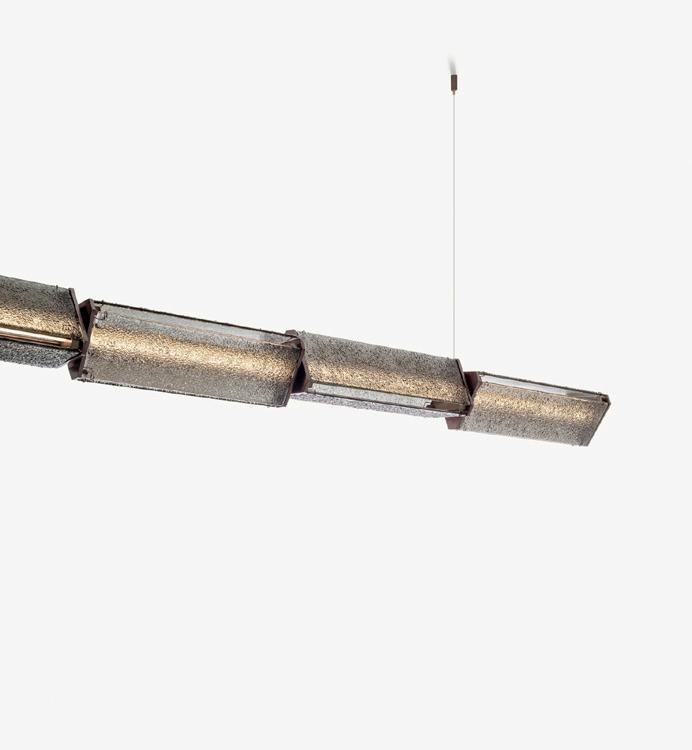
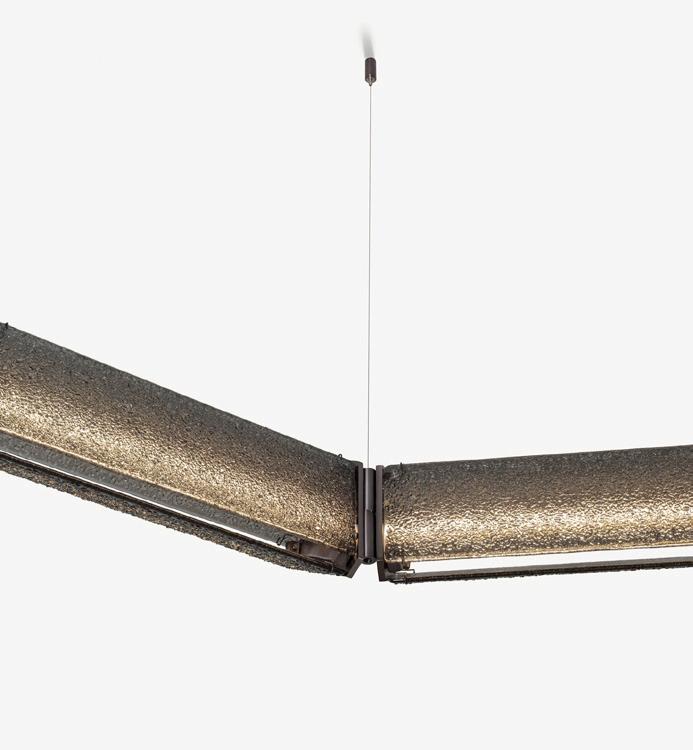
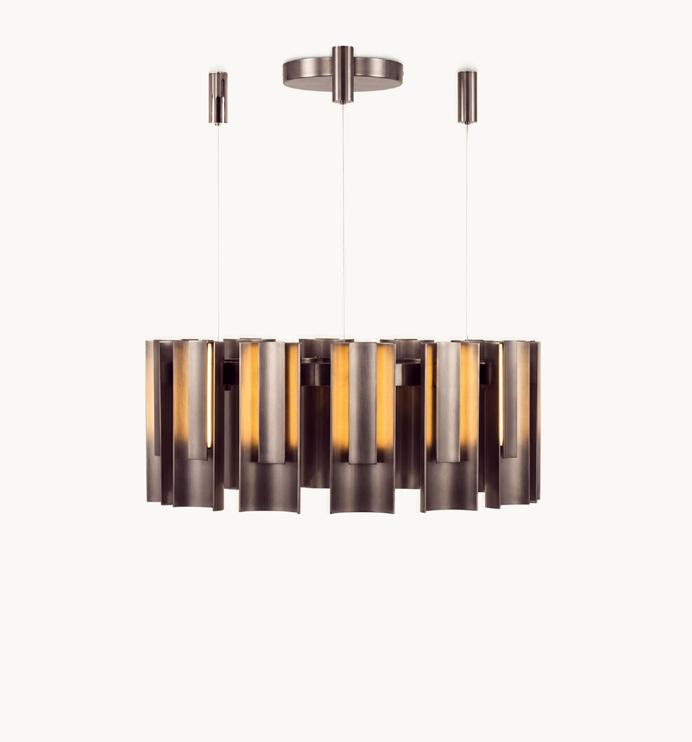
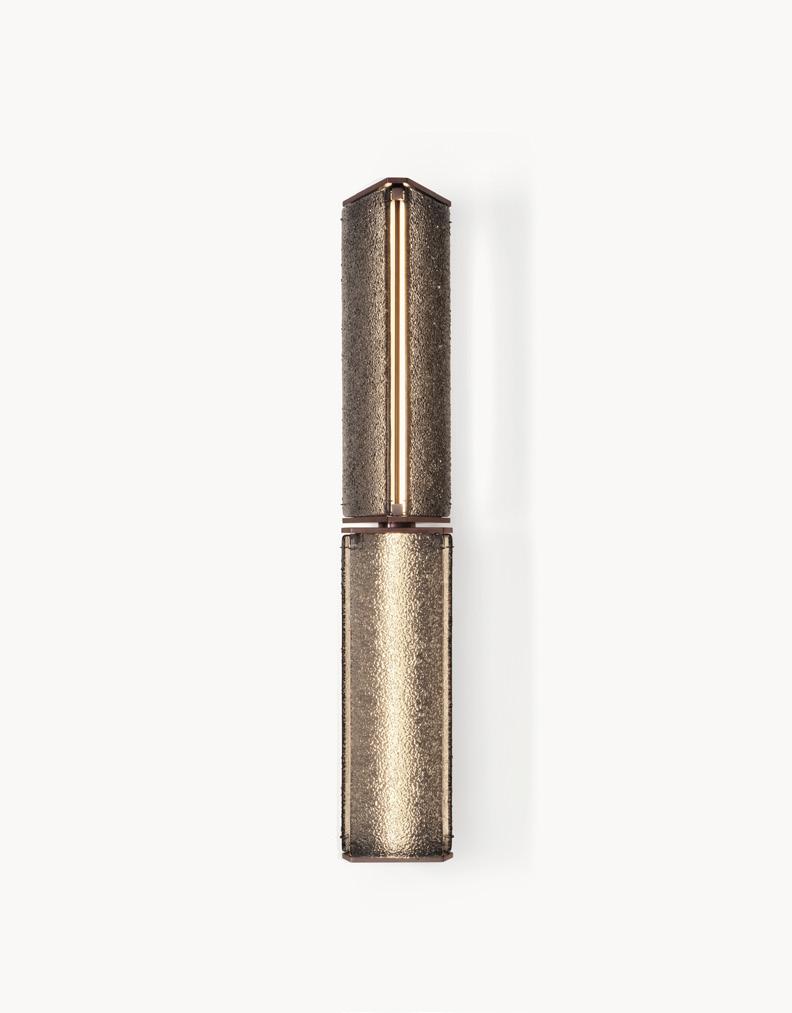
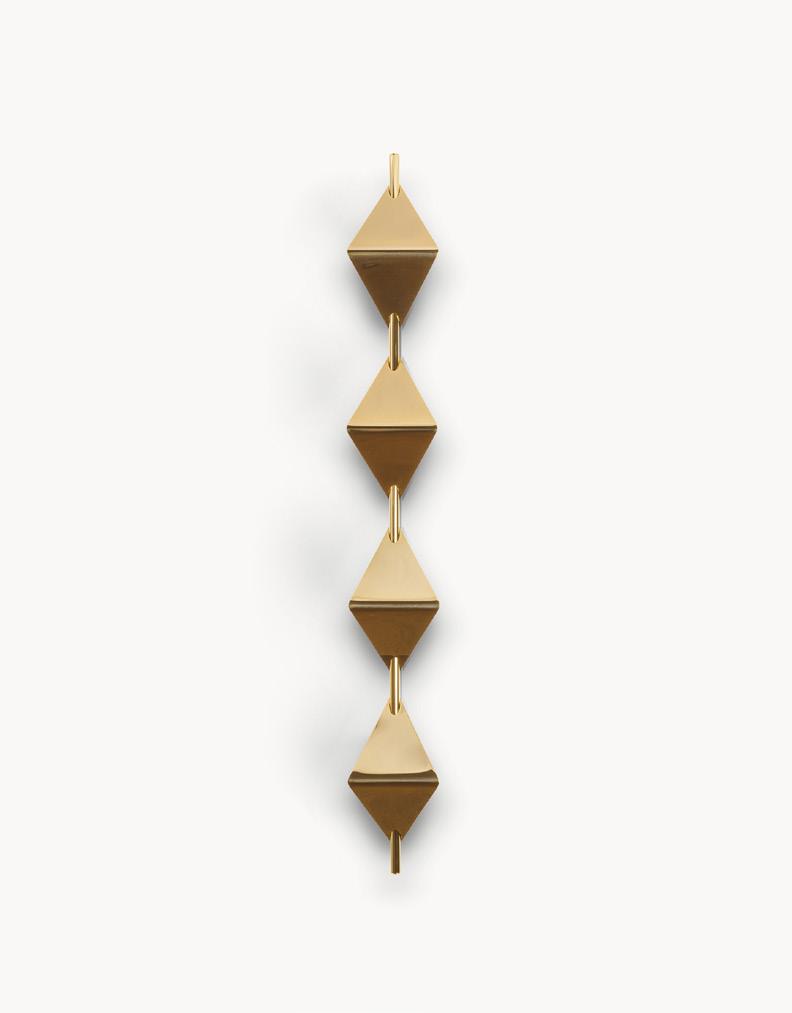
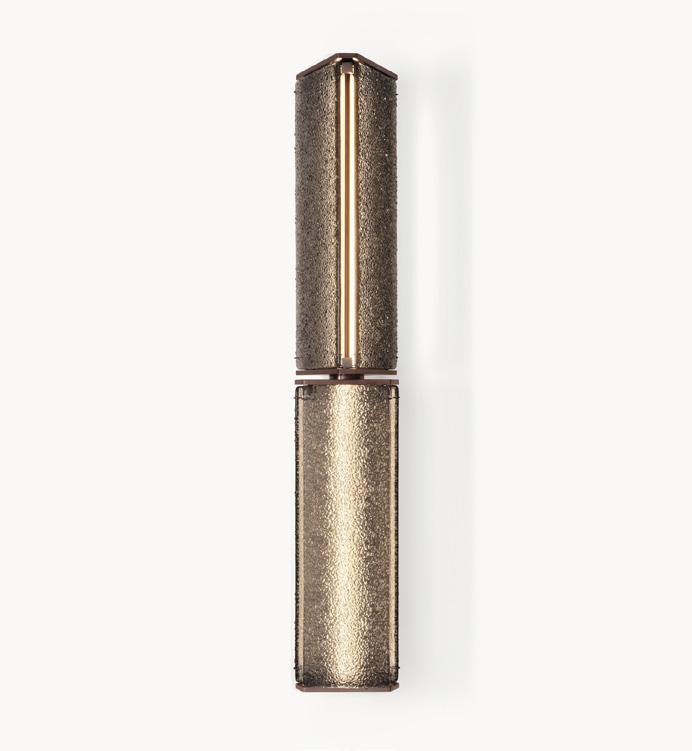
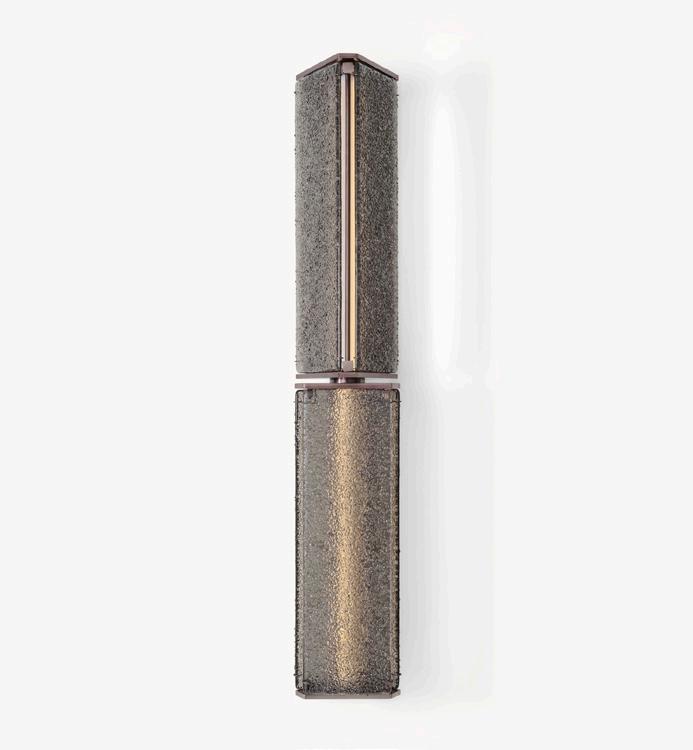
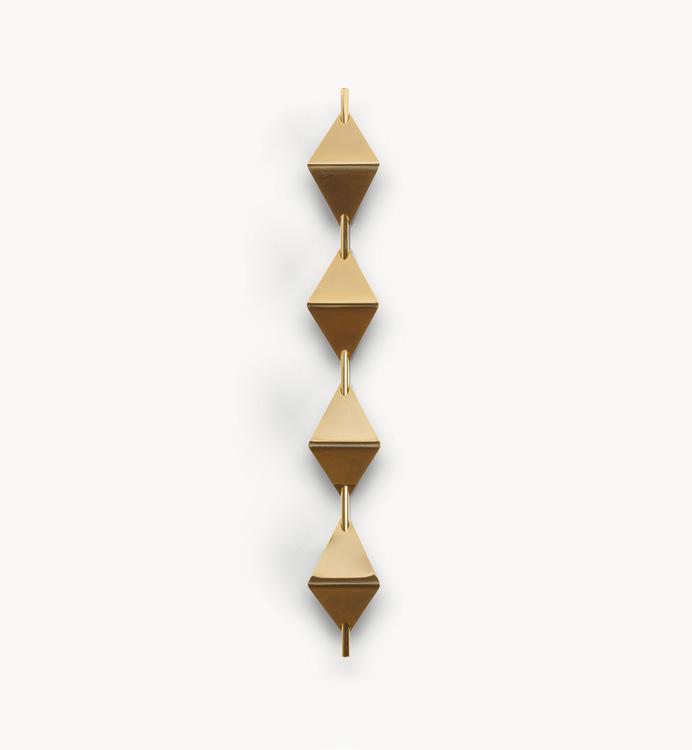
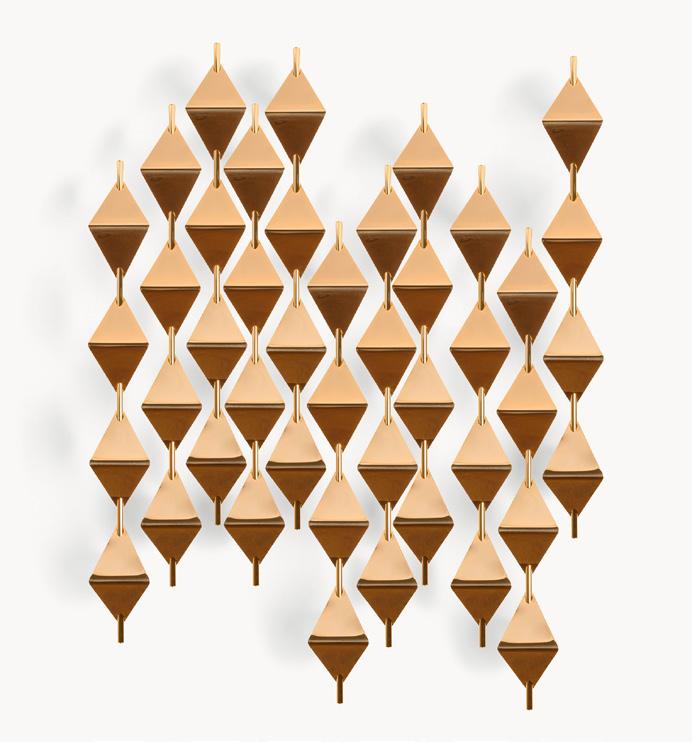
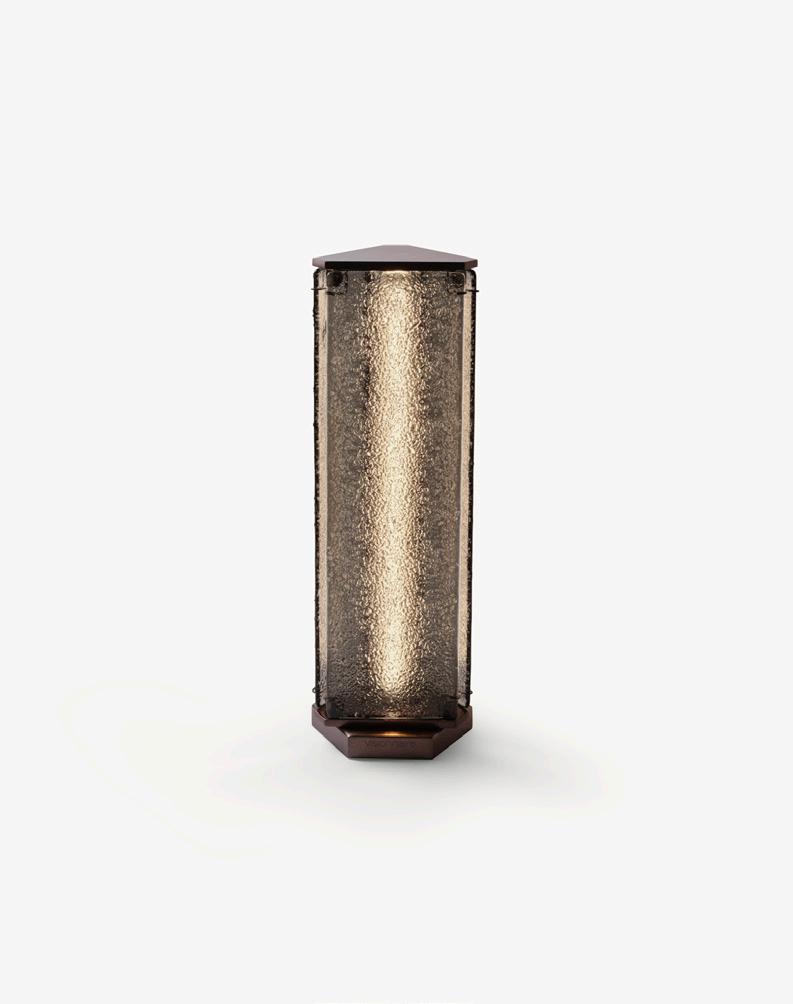
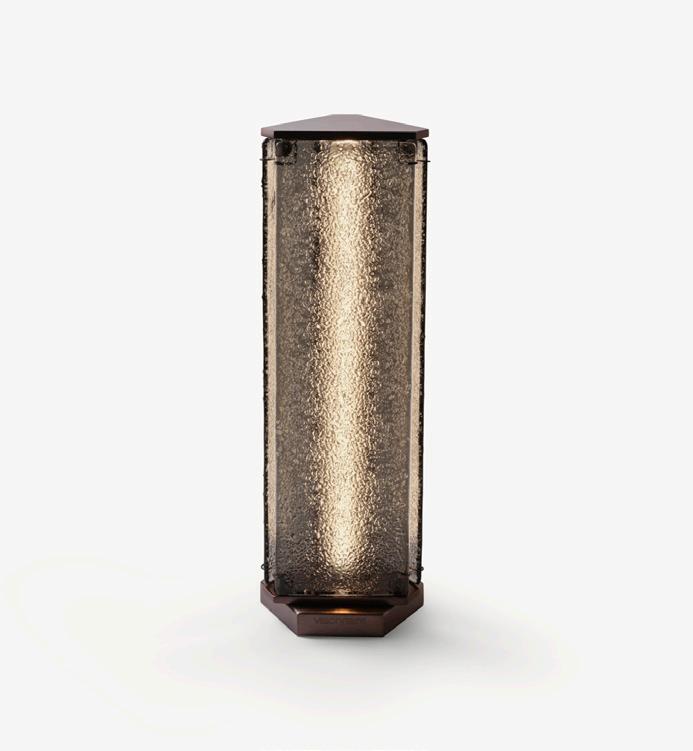
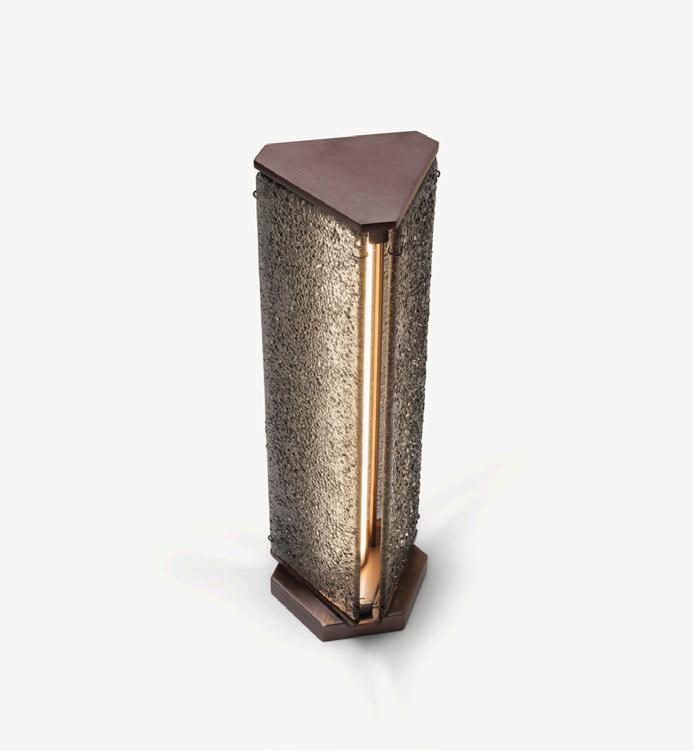
Core emerges as an expression of the original nucleus of light and architecture, placing the structural heart at the center as a generative and identity-defining principle of space. The name recalls the brutalist concept of the “core” as an essential load-bearing center: the axis around which form is organized and the constructive logic of the project is revealed. Not merely a technical element, but the very origin of the object, made visible and protagonist. At the center of the system, a continuous luminous core runs through glass panels with a vibrant, irregular surface. This vital axis does more than emit light; it constructs rhythm, presence, and depth, establishing a calibrated dialogue with the material strength of the metal joints, intentionally expressed as structural nodes and design statements. Based on a triangular-section module, the project generates linear or polygonal compositions that evoke suspended micro-architectures.
Core nasce come espressione del nucleo originario della luce e dell’architettura, mettendo al centro il cuore strutturale come principio generativo e identitario dello spazio. Il nome richiama il concetto brutalista di “core” inteso come centro portante ed essenziale: l’asse attorno a cui si organizza la forma e si rivela la logica costruttiva del progetto. Non un semplice elemento tecnico, ma l’origine stessa dell’oggetto, resa visibile e protagonista. Al centro del sistema si sviluppa un core luminoso continuo che attraversa lastre di vetro dalla superficie vibrante e irregolare. Questo asse vitale non si limita a diffondere luce, ma costruisce ritmo, presenza e profondità, instaurando un dialogo calibrato con la forza materica delle giunzioni metalliche, dichiarate come nodi strutturali e segni espressivi. Fondato su un modulo a sezione triangolare, il progetto genera composizioni lineari o poligonali che evocano delle micro-architetture sospese nello spazio.
Catskill
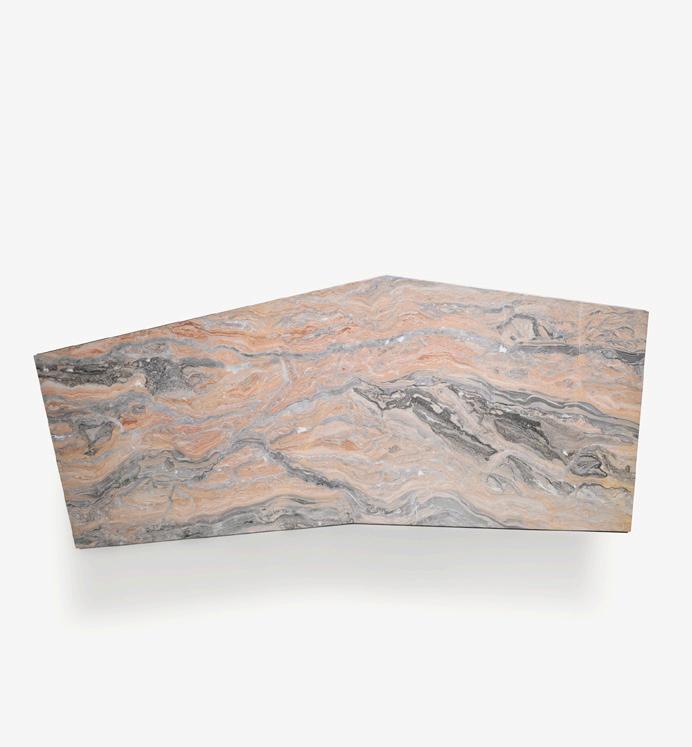
Catskill carries within matter the mark of an ancient force: broken surfaces, sharp cuts, fissures that seem to emerge from a process rather than from a drawing. The fracture becomes a threshold, a point of tension between mass and void. The surfaces do not seek absolute smoothness, but retain shadow, relief, the memory of gesture and transformation. Marble introduces a quieter, almost mineral gravity, in dialogue with the carved and vibrant matter of the structure.
Catskill porta nella materia il segno di una forza antica: superfici spezzate, tagli netti, fenditure che sembrano affiorare da un processo più che da un disegno. La spaccatura diventa soglia, punto di tensione tra massa e vuoto. Le superfici non cercano levigatezza assoluta, ma trattengono ombra, rilievo, memoria del gesto e della trasformazione. Il marmo introduce una gravità più silenziosa, quasi minerale, in dialogo con la materia incisa e vibrante della struttura.
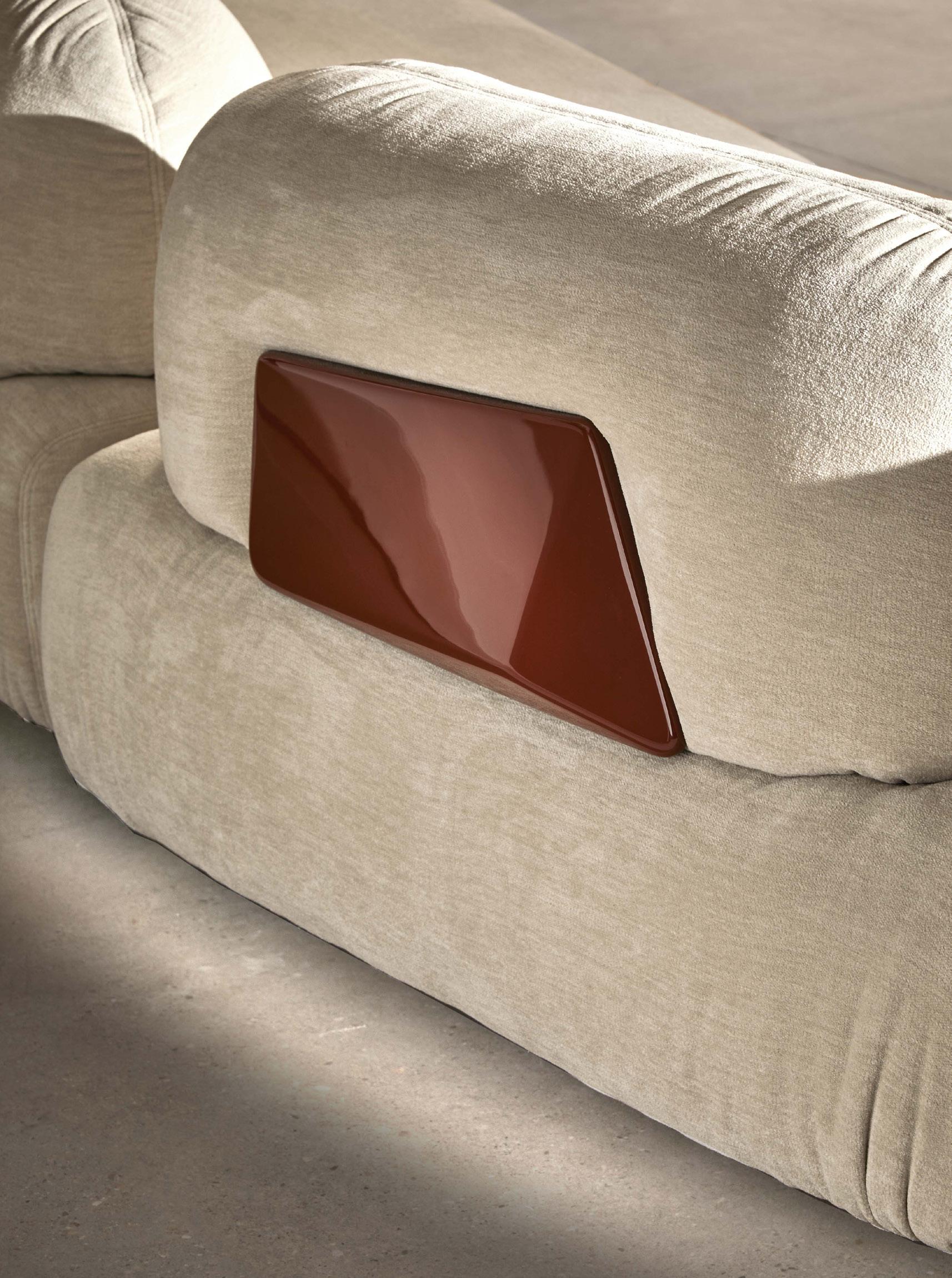
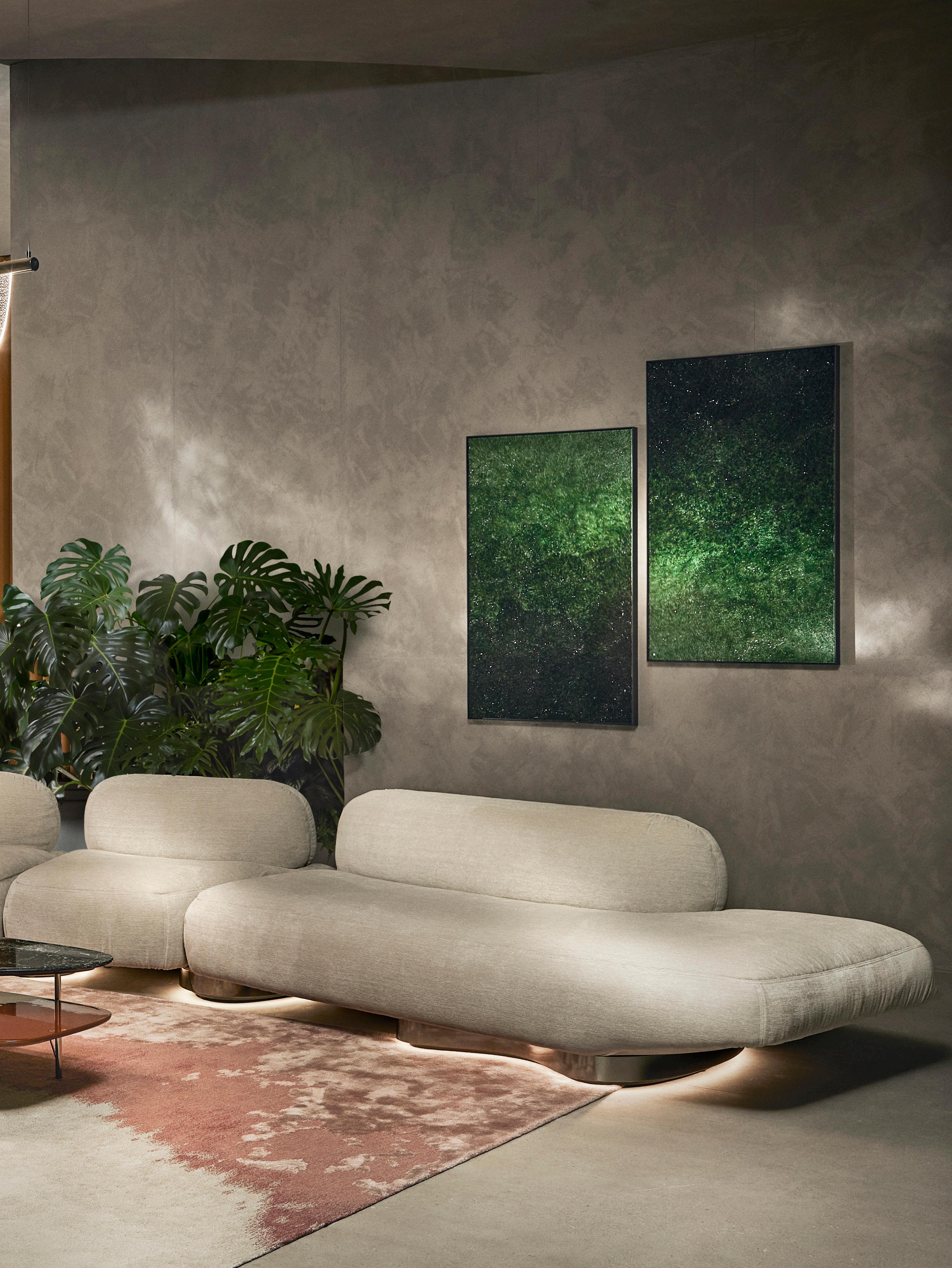
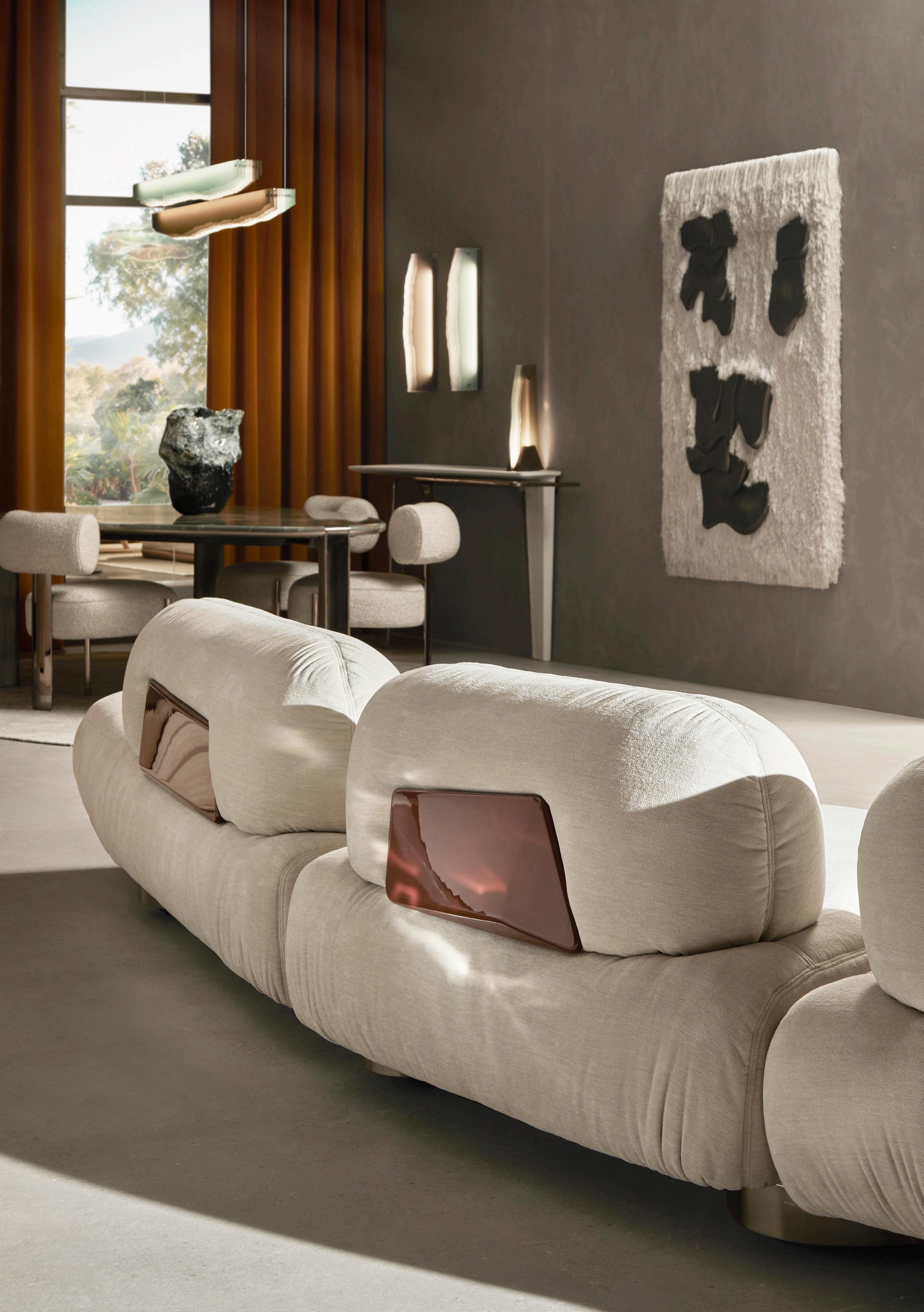
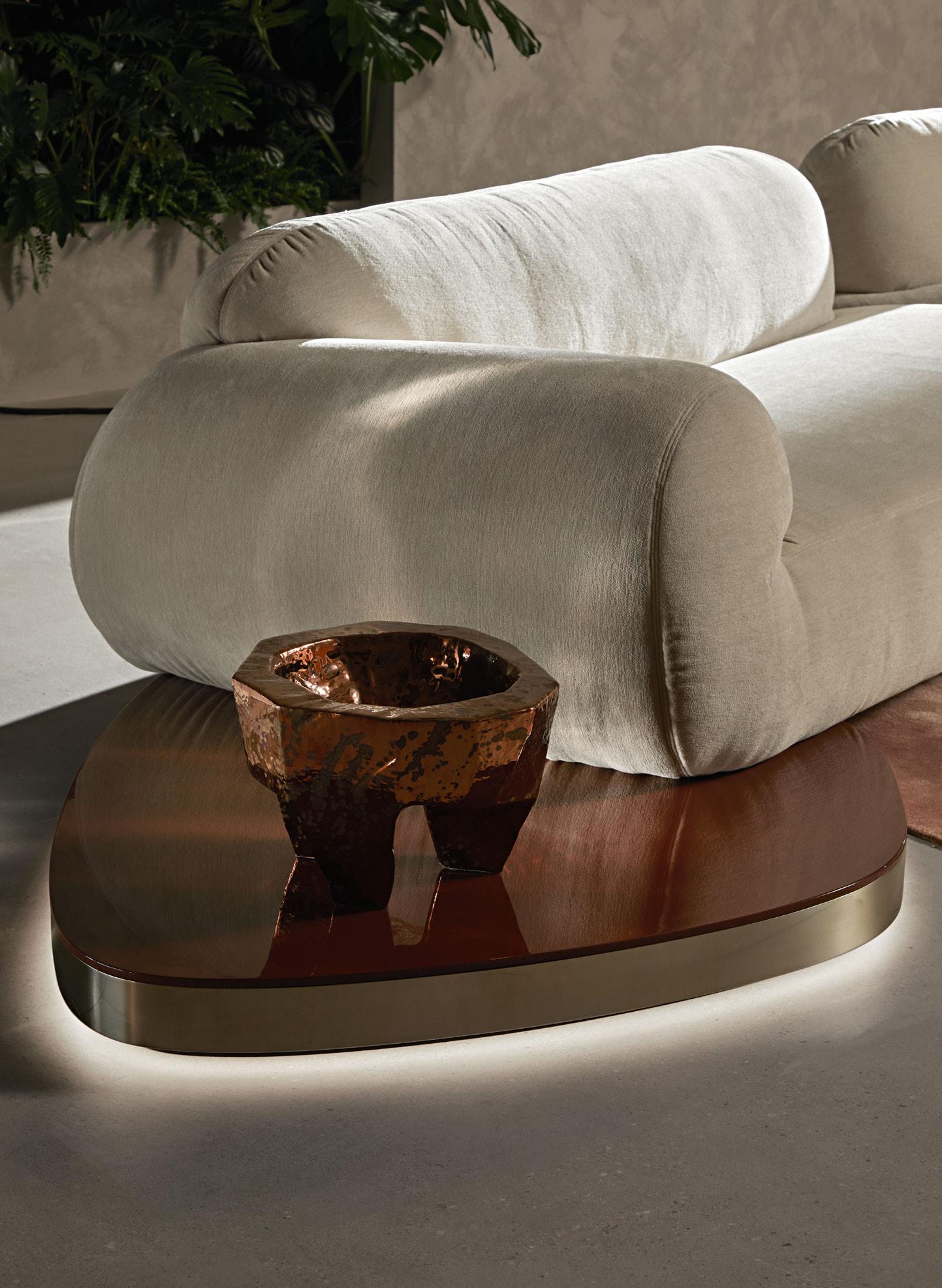
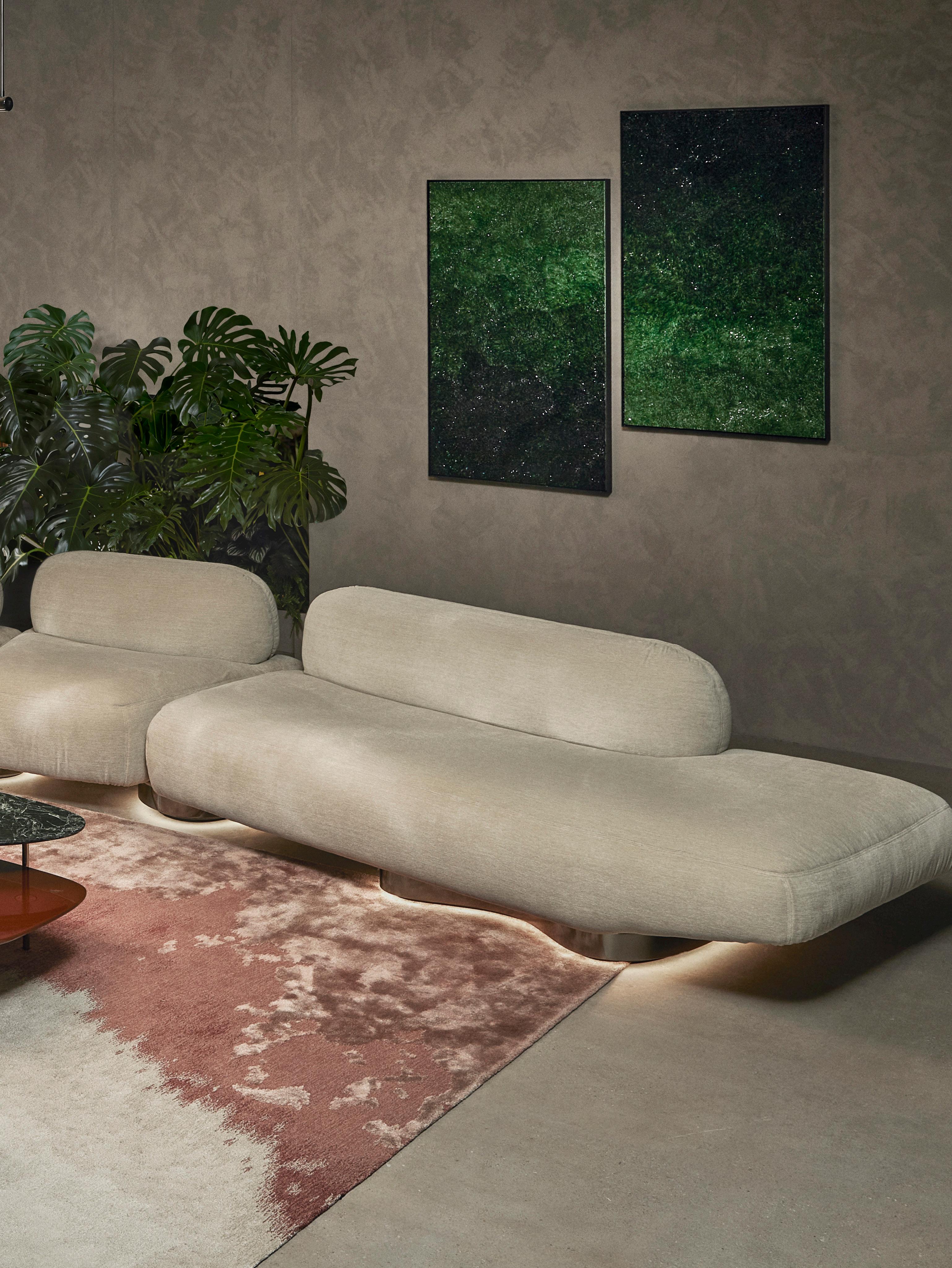
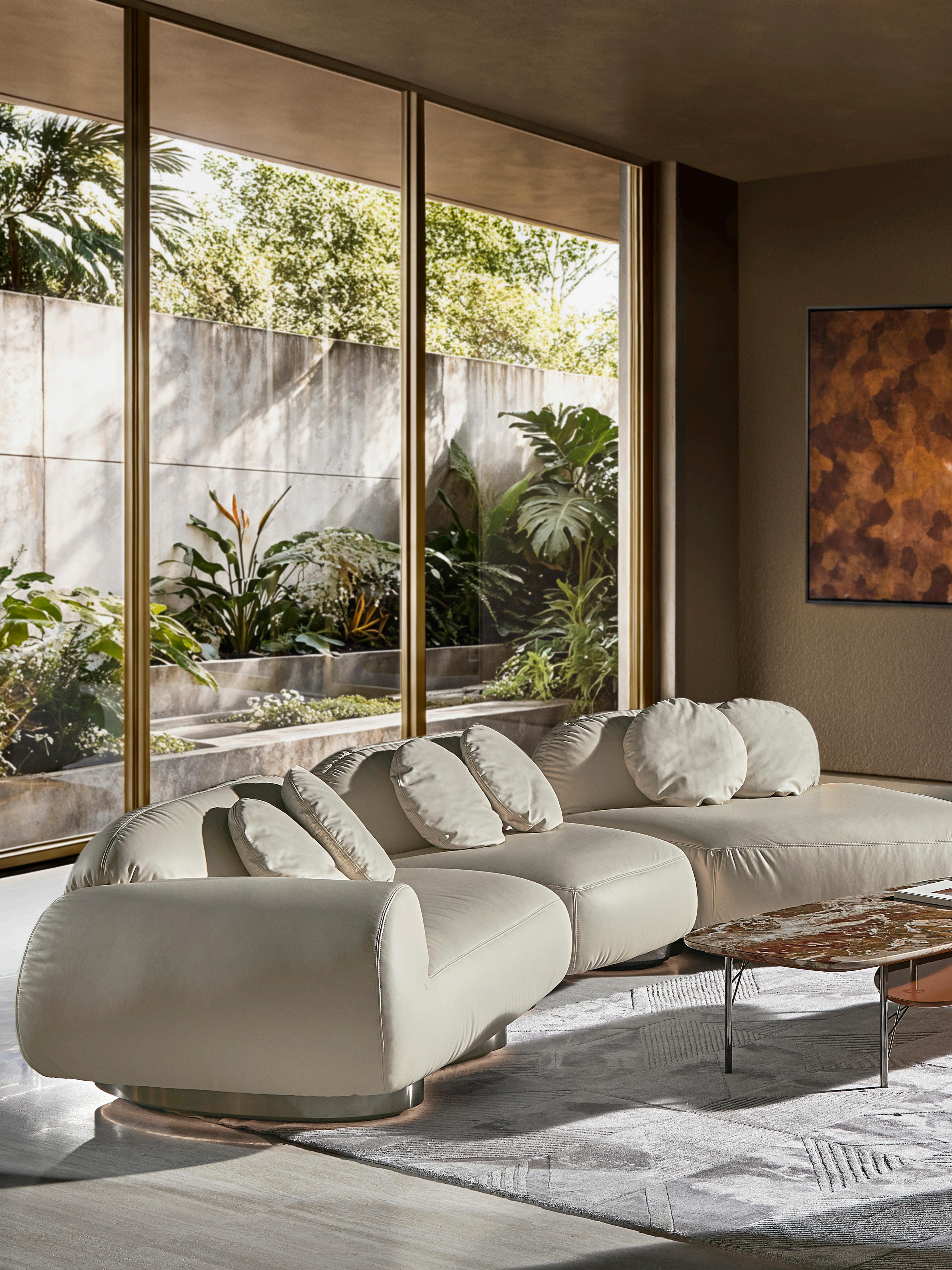
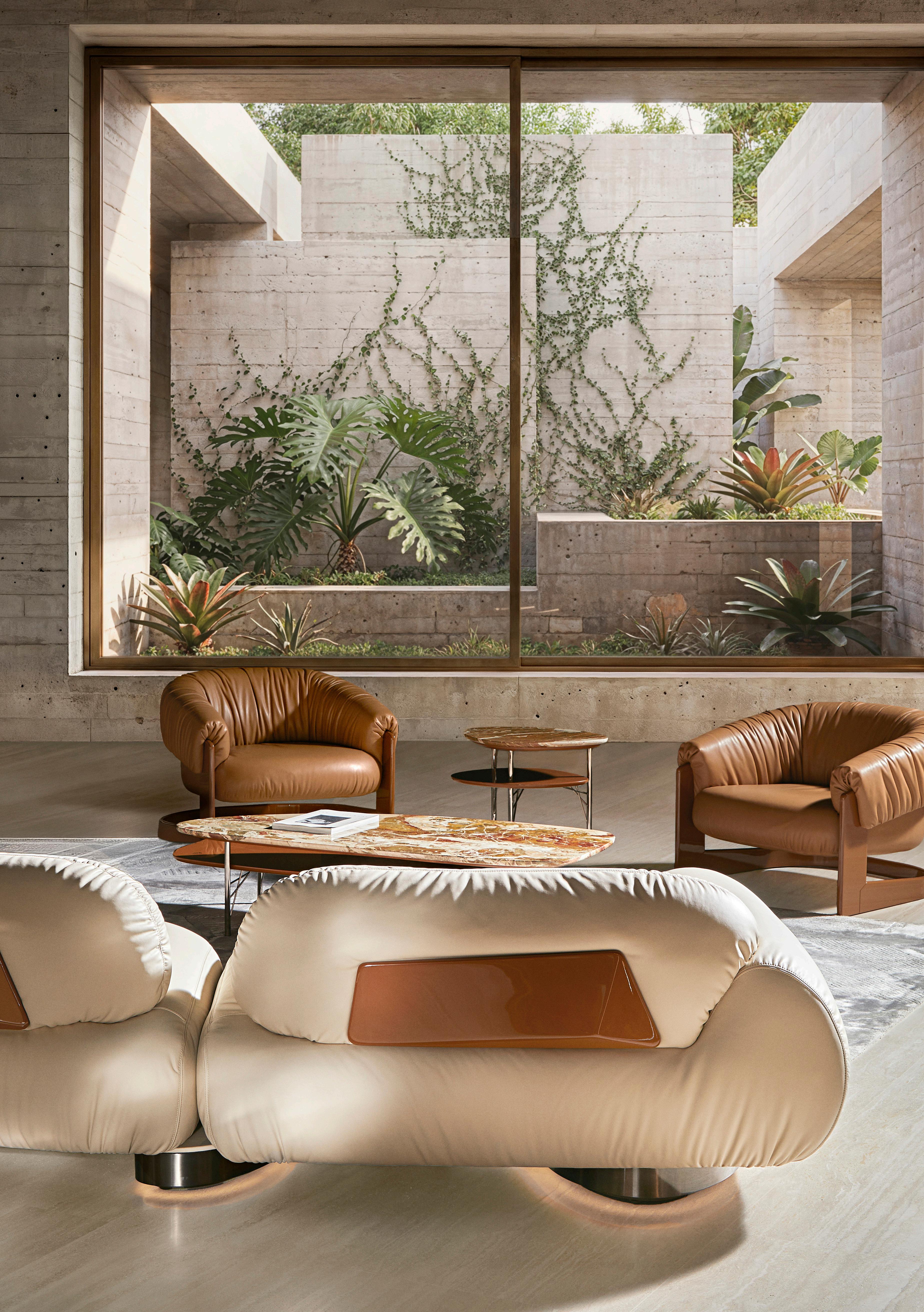
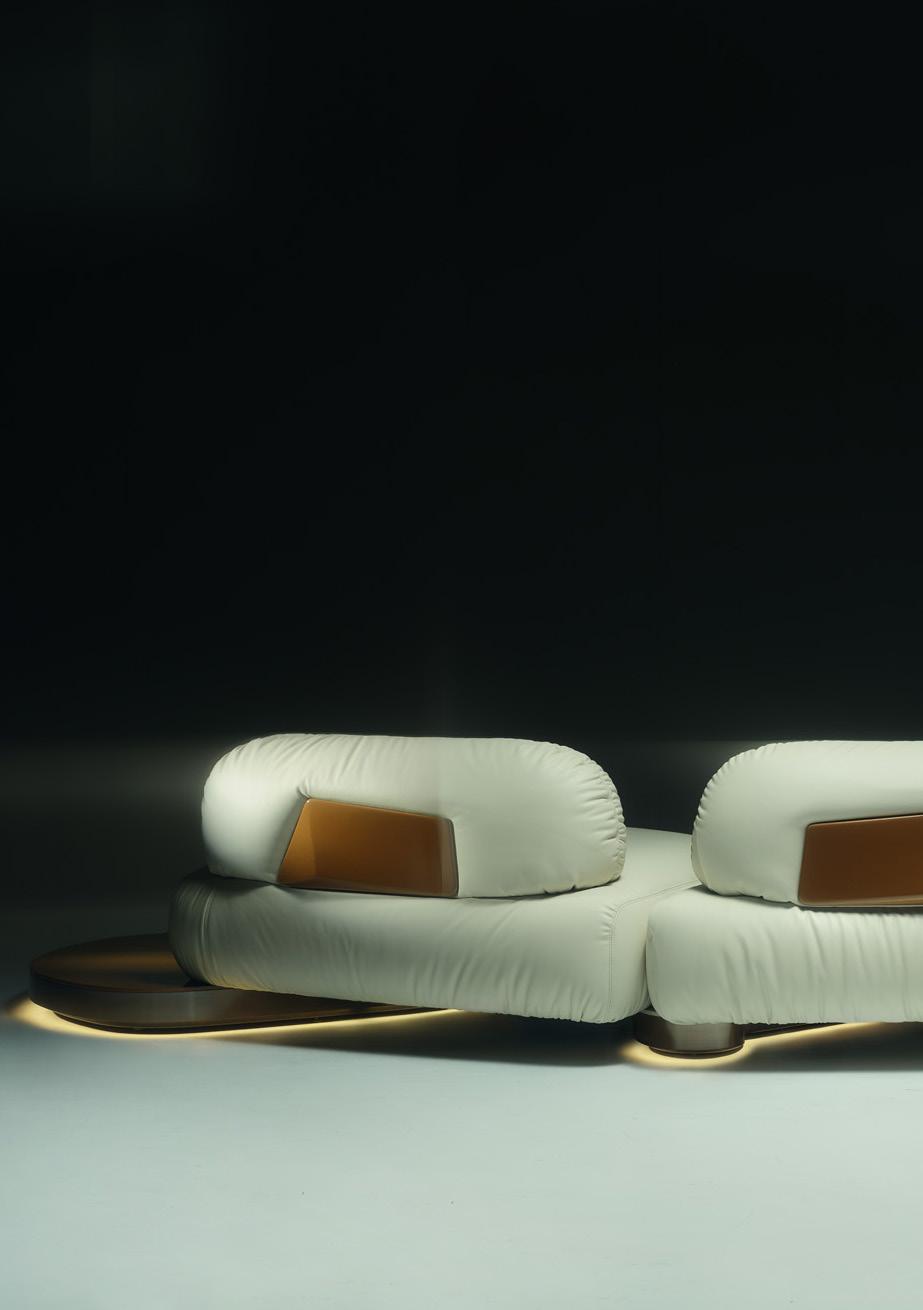
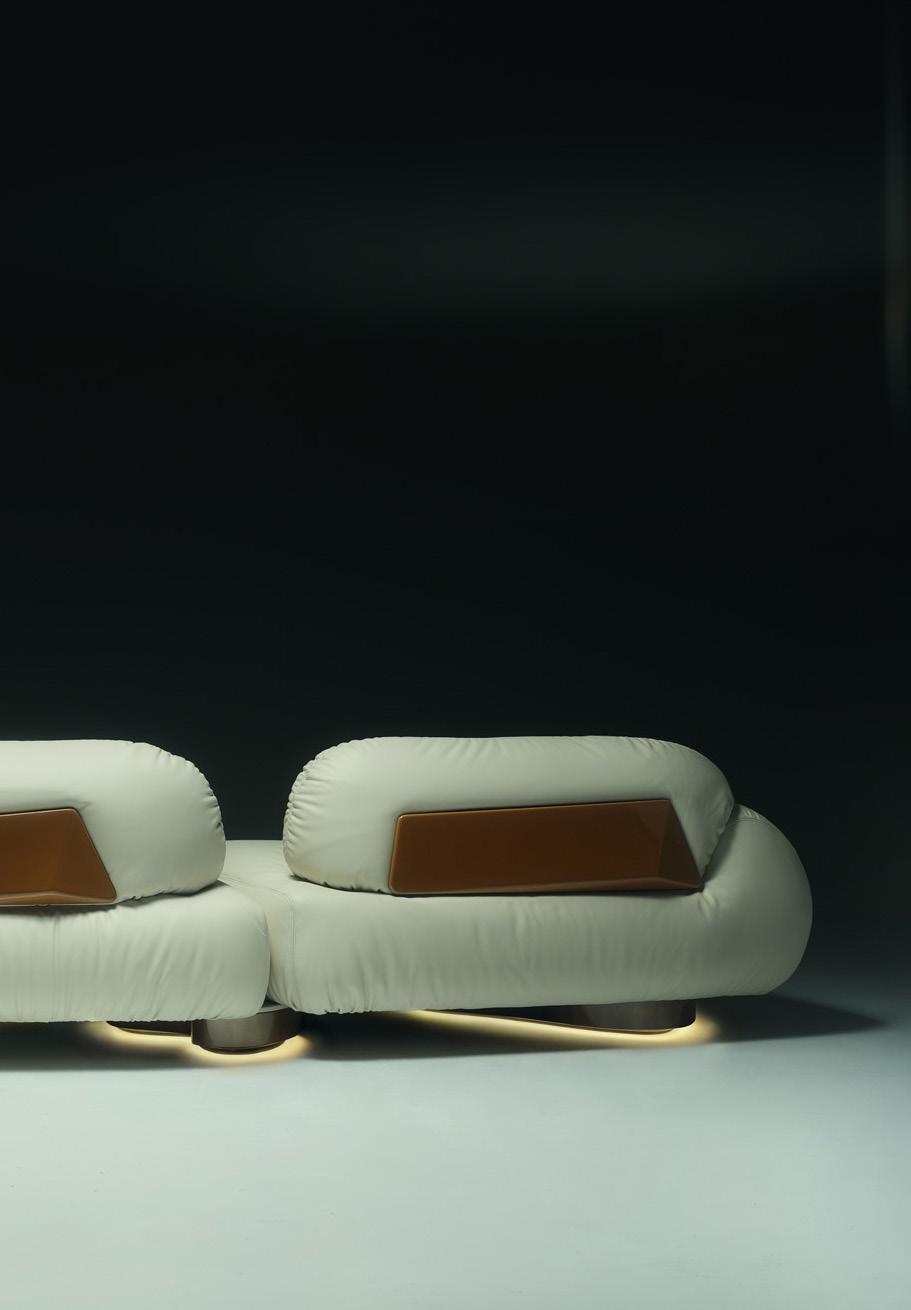
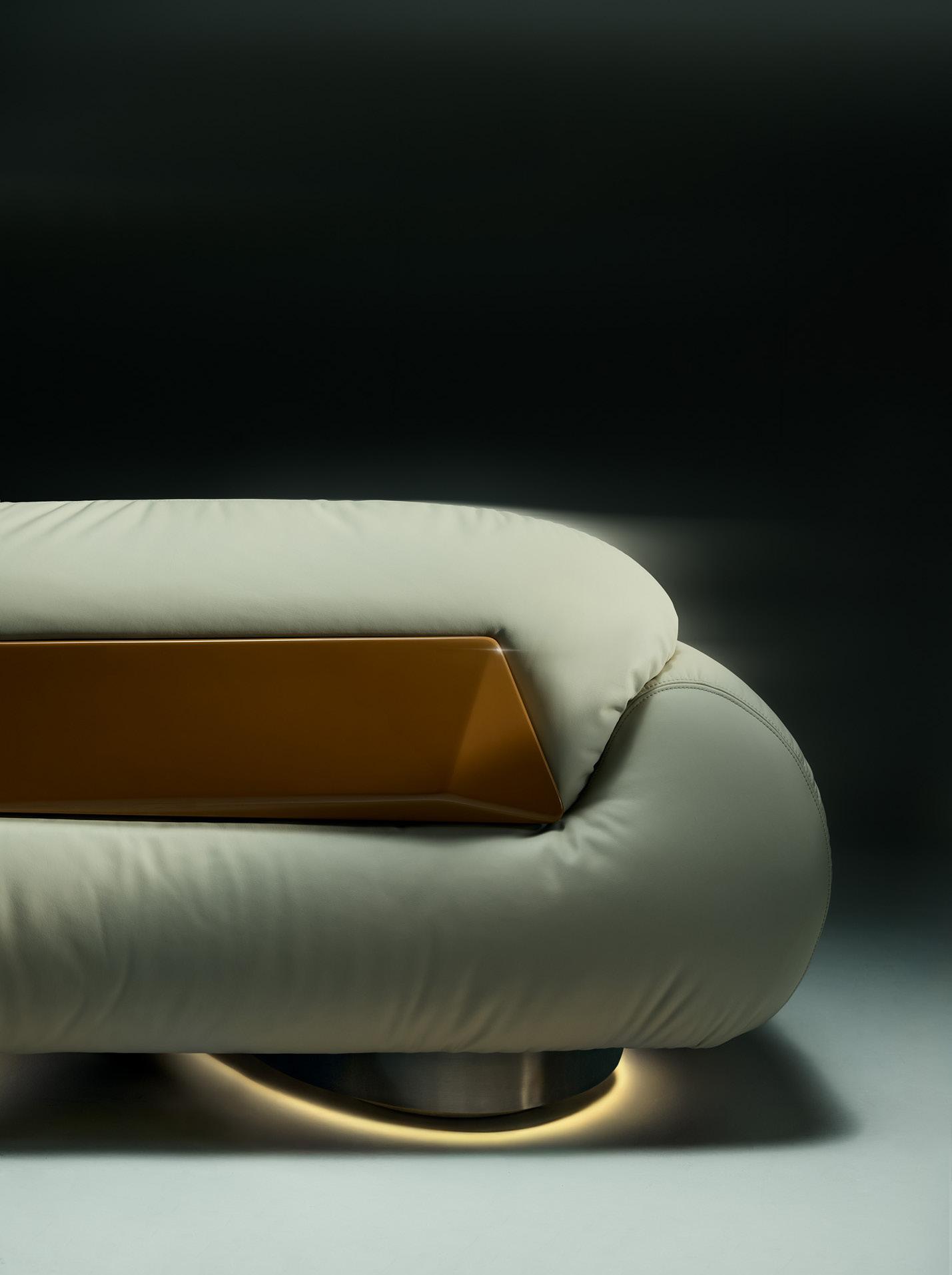
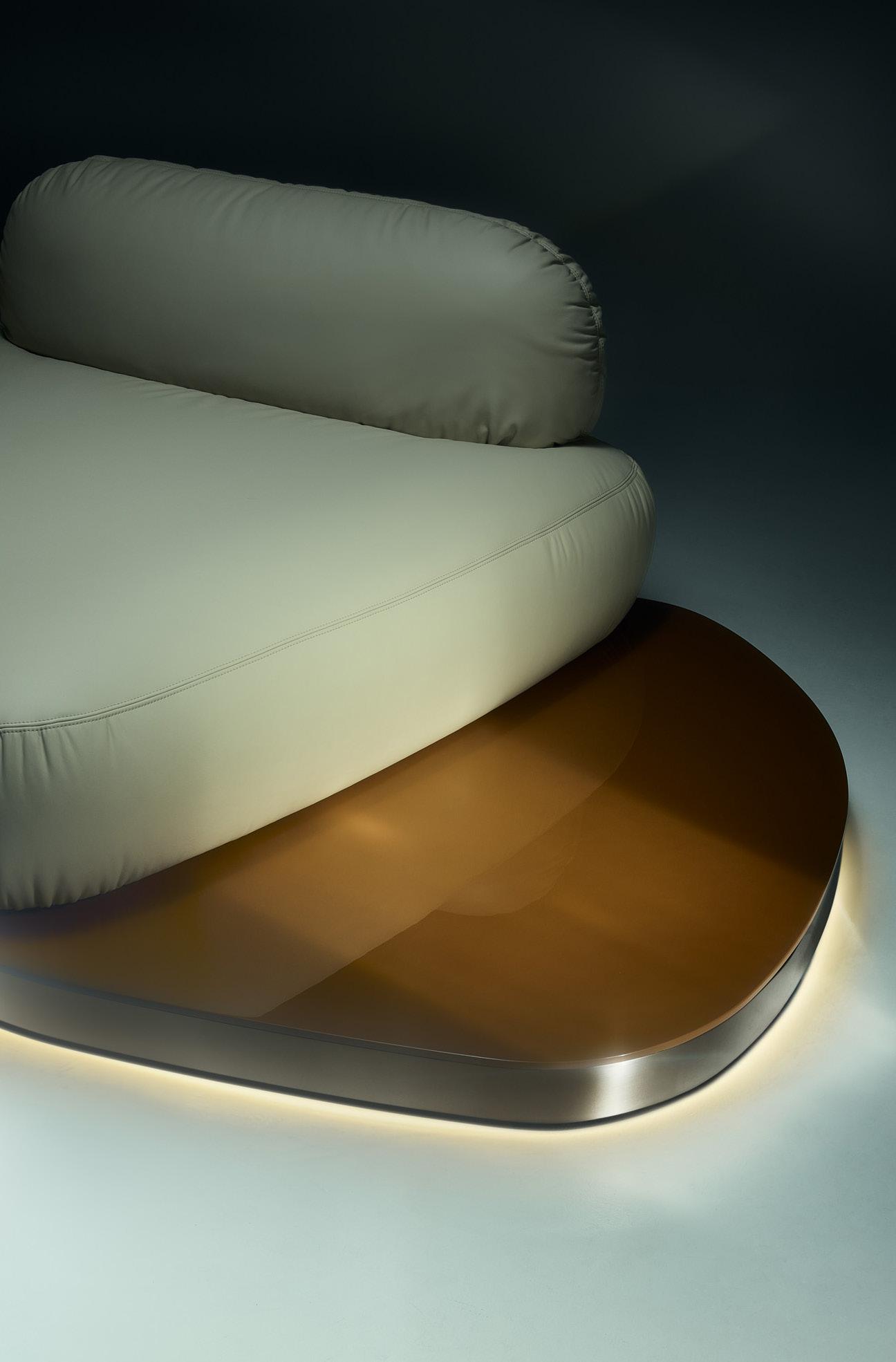
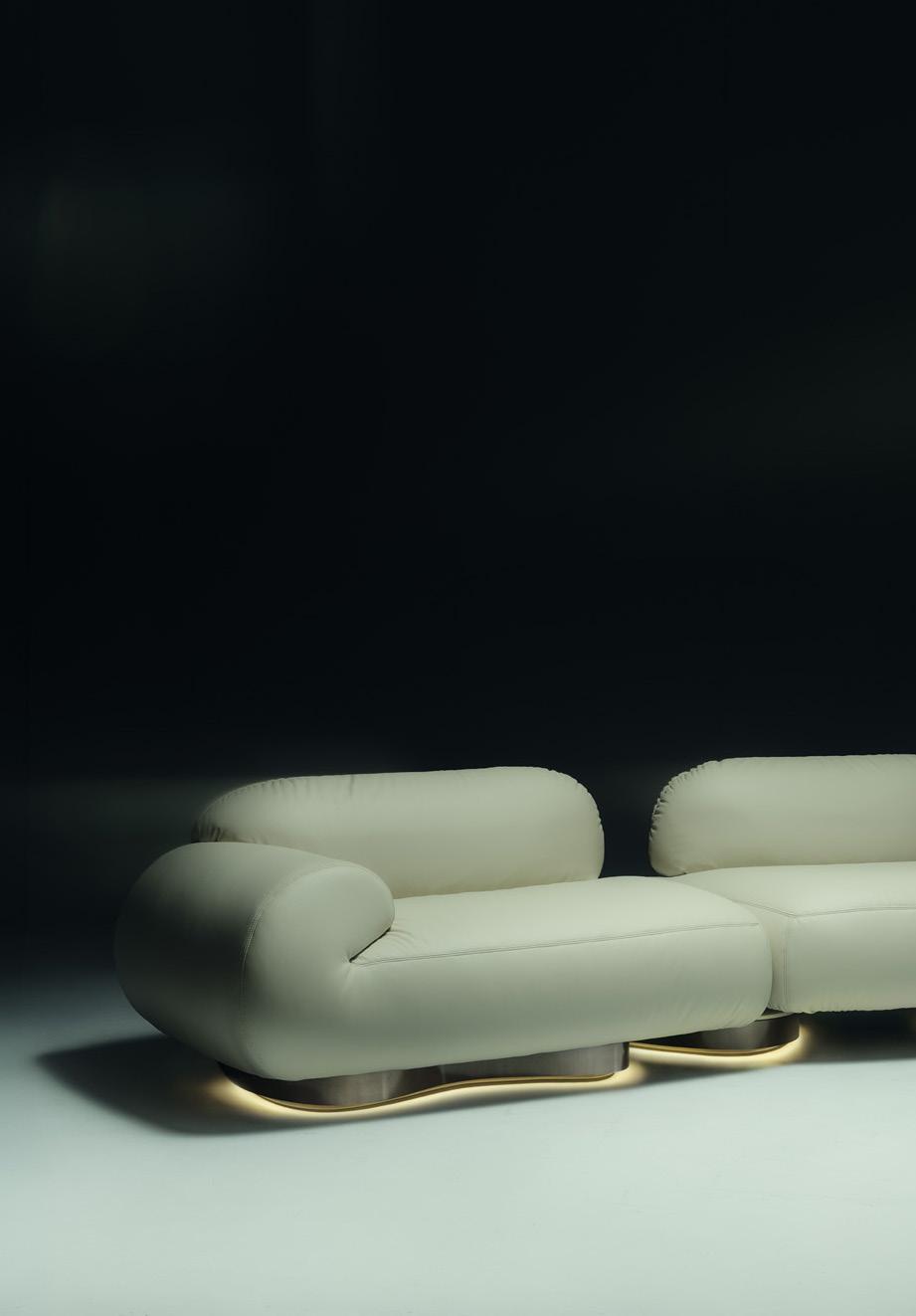
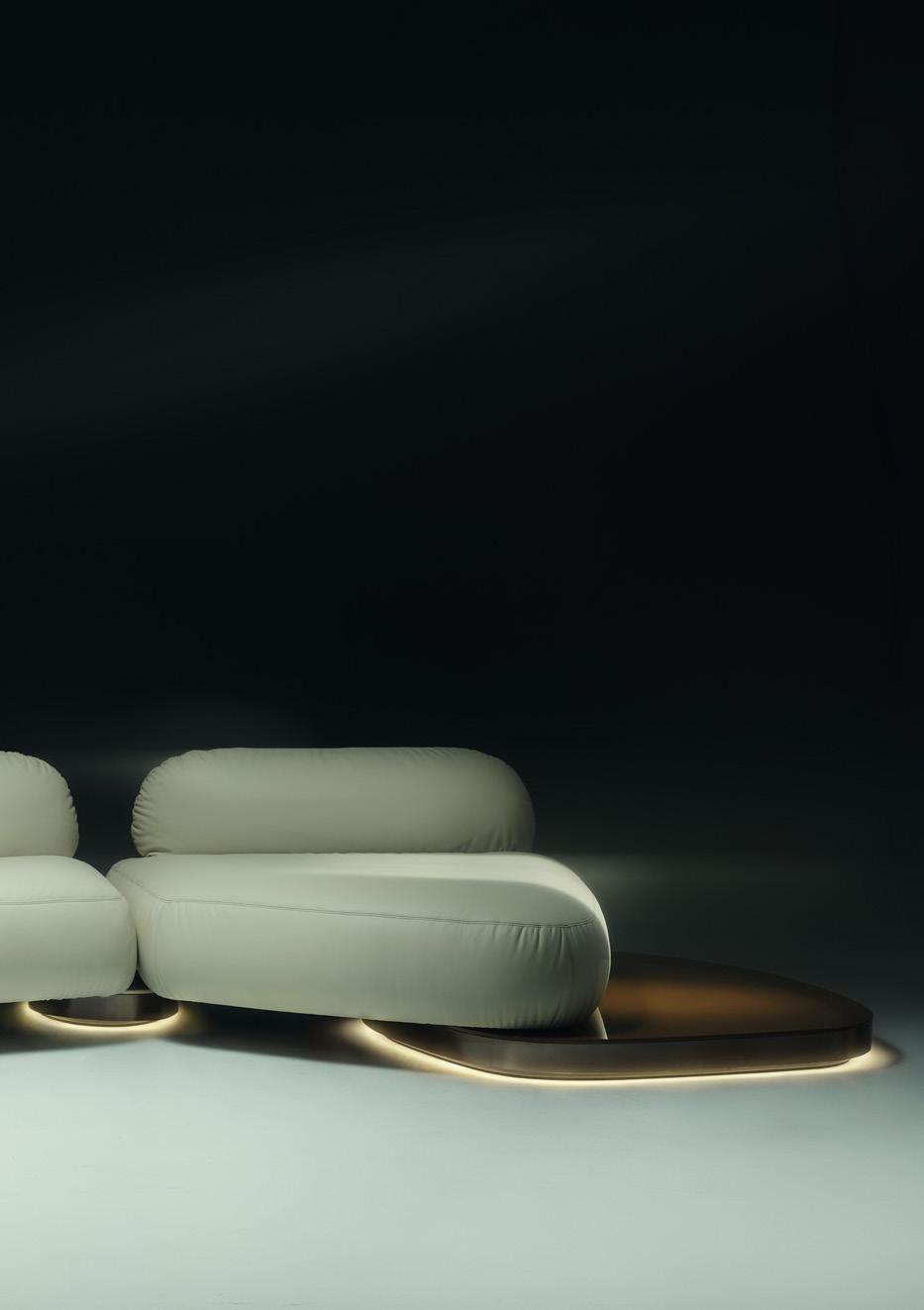
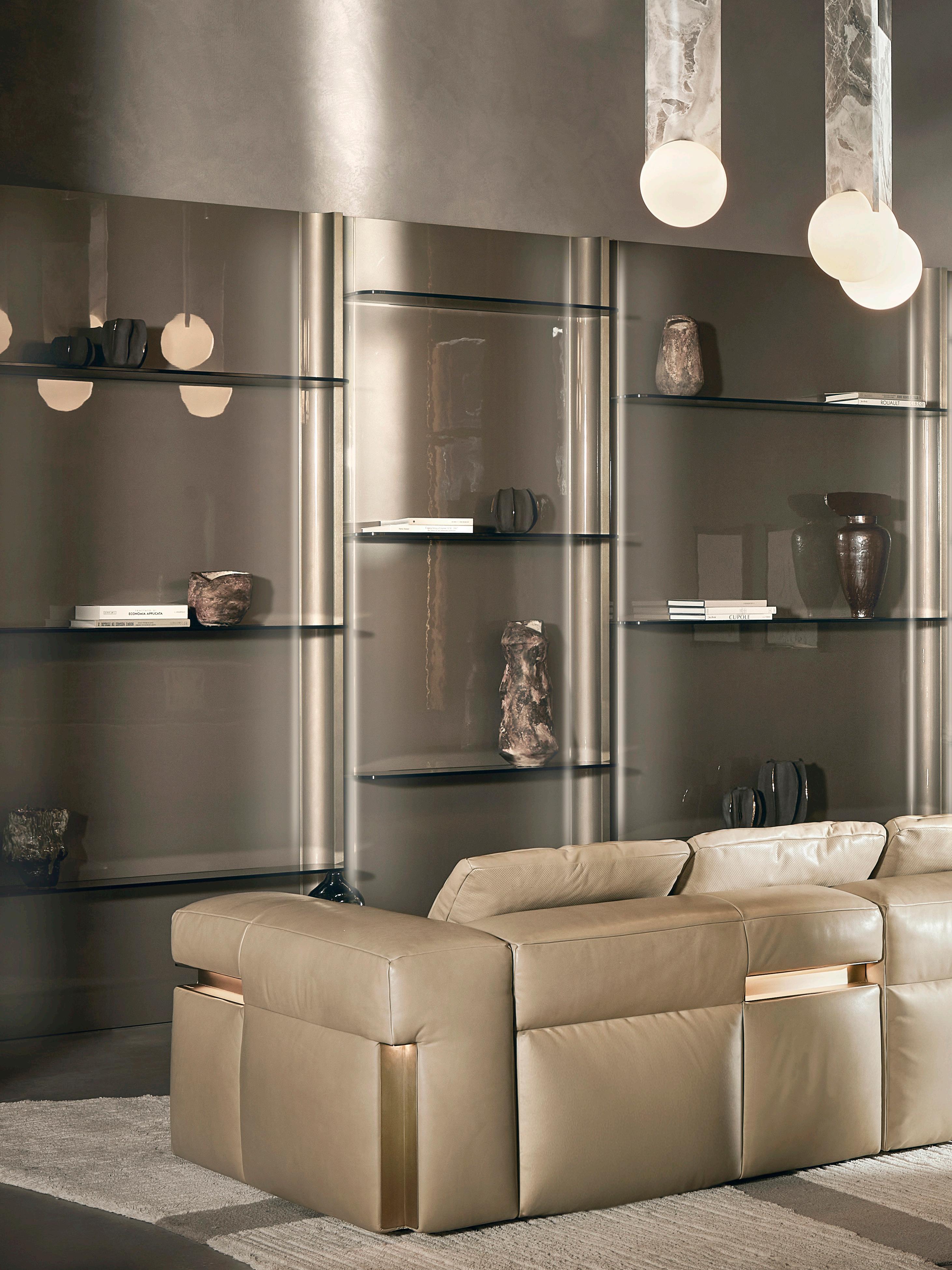
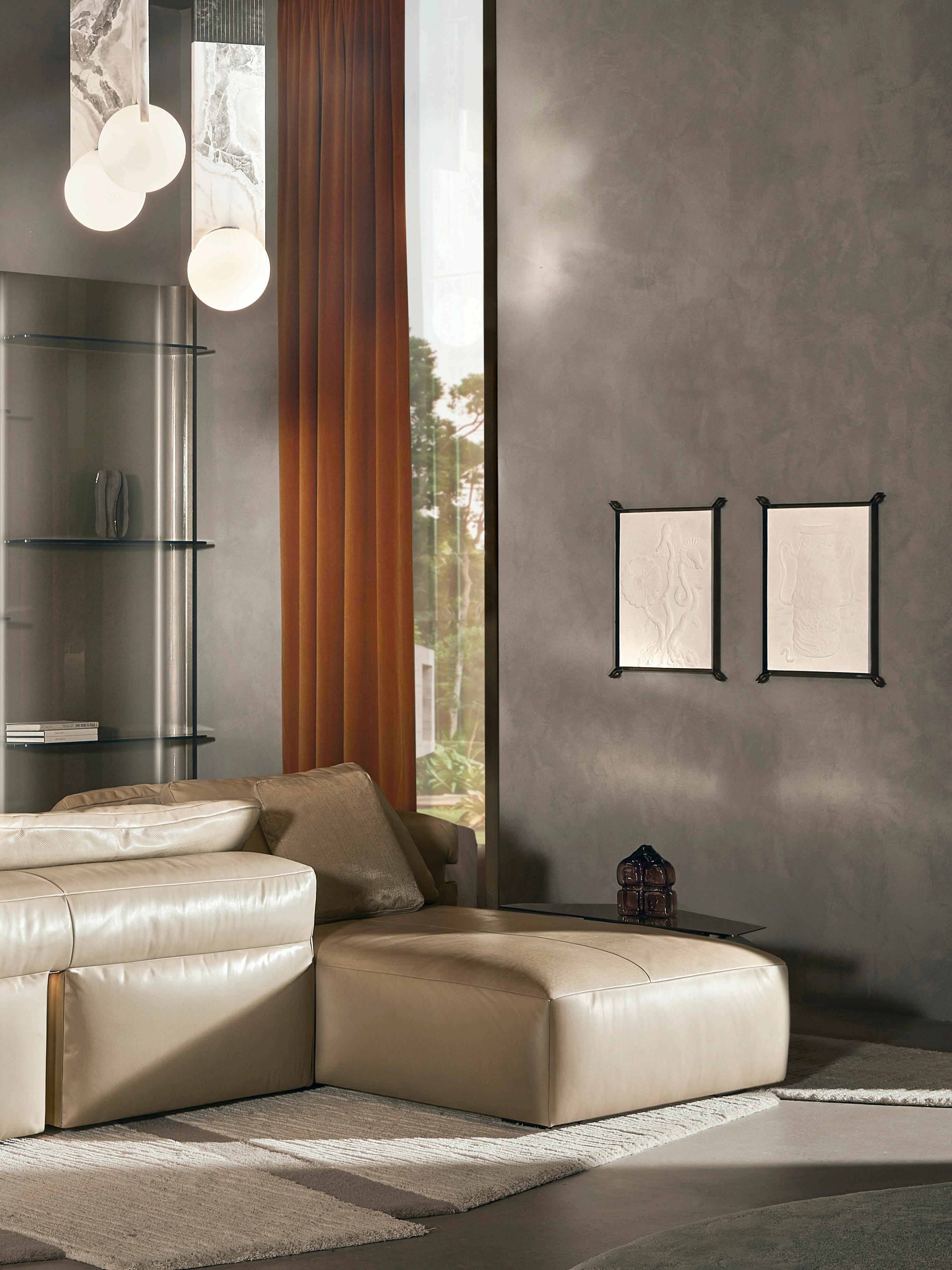
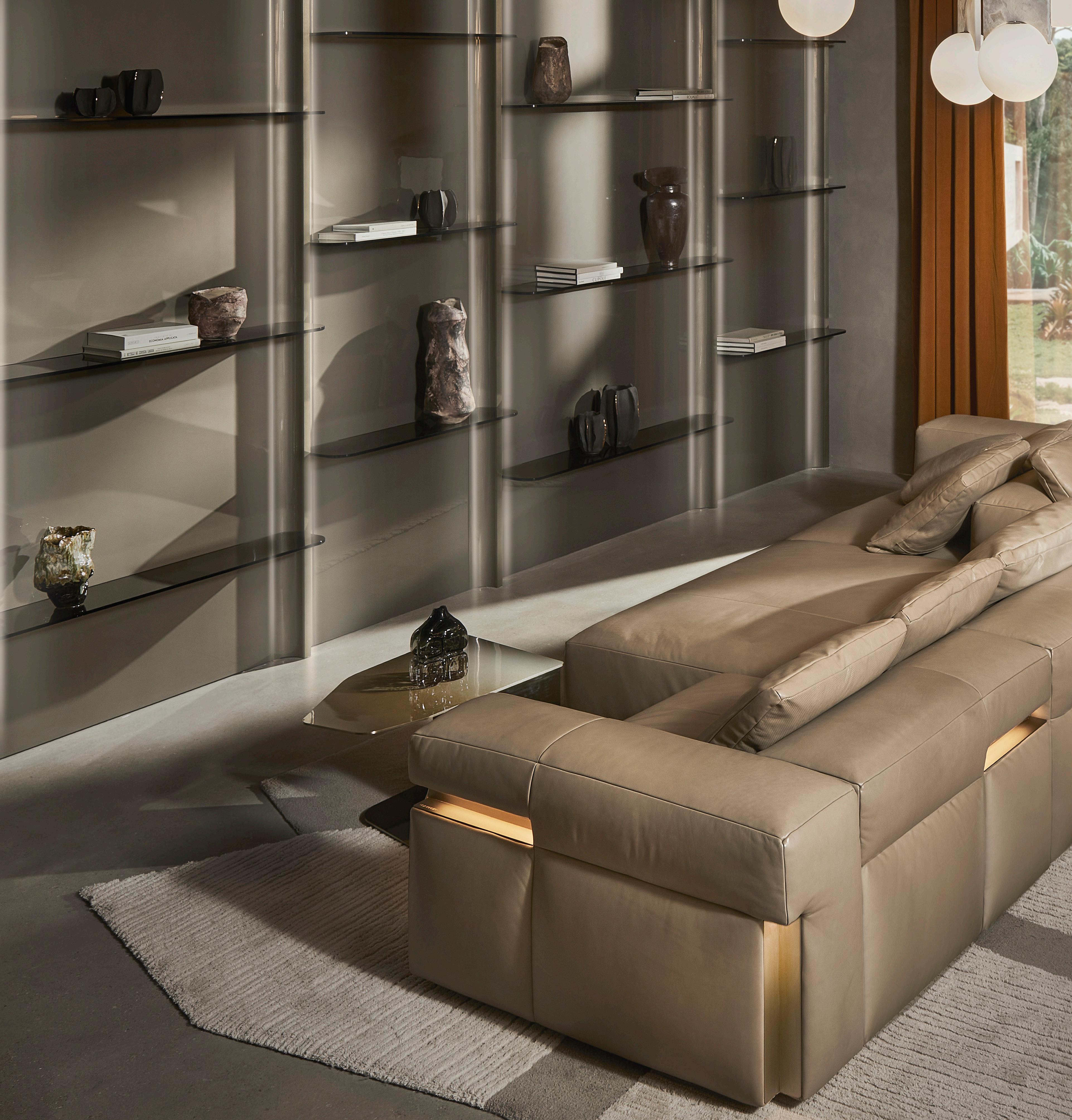
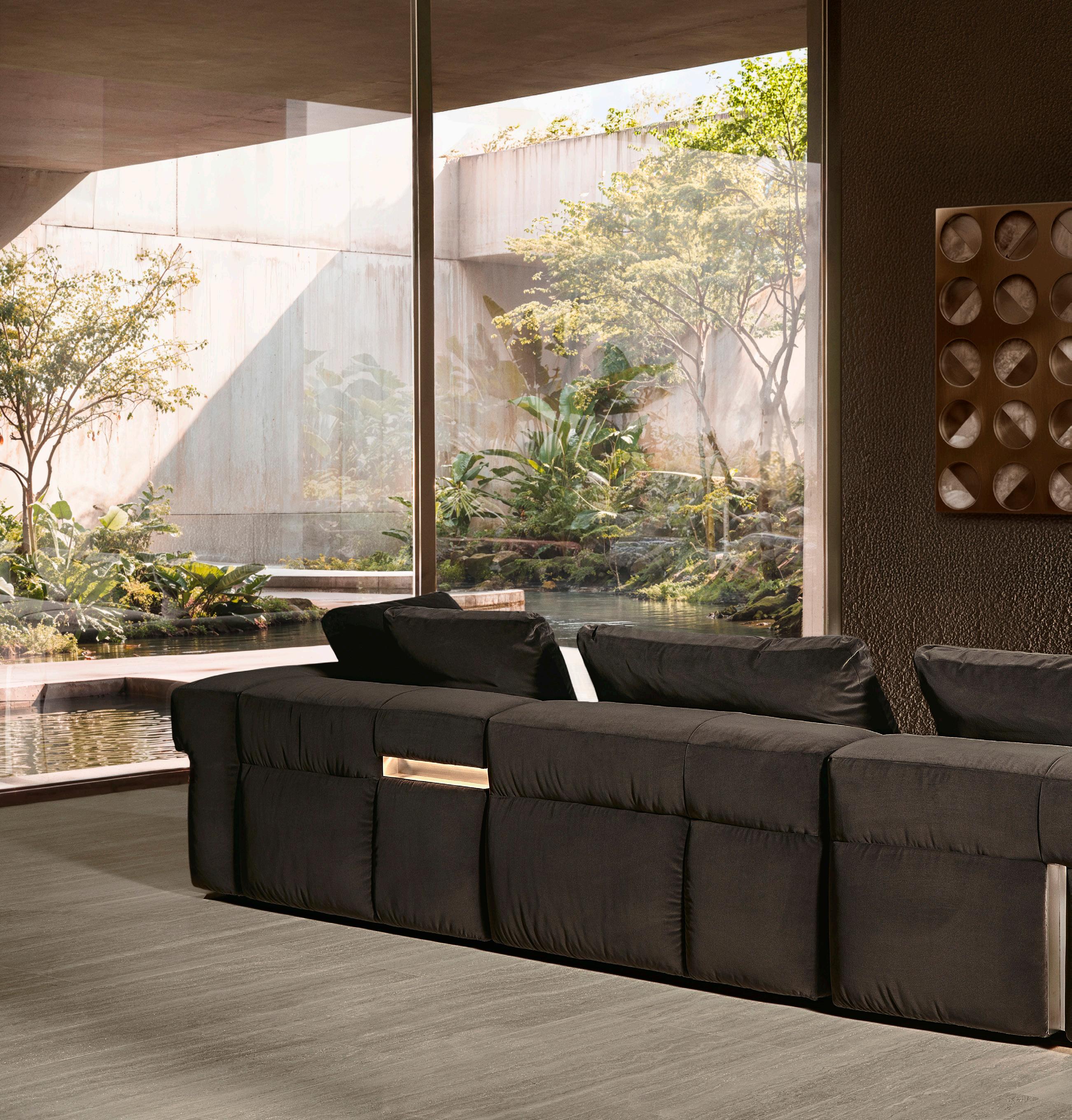
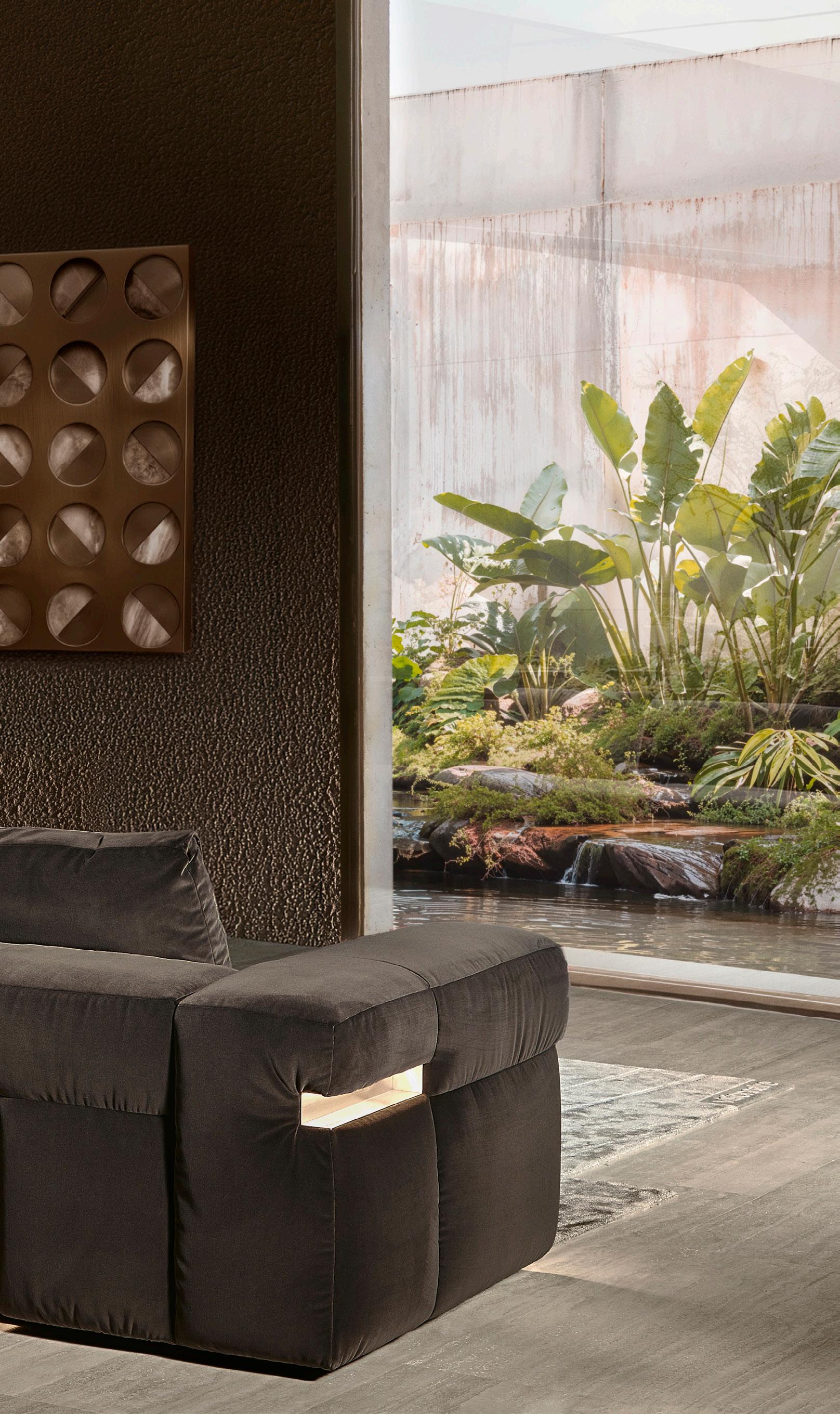
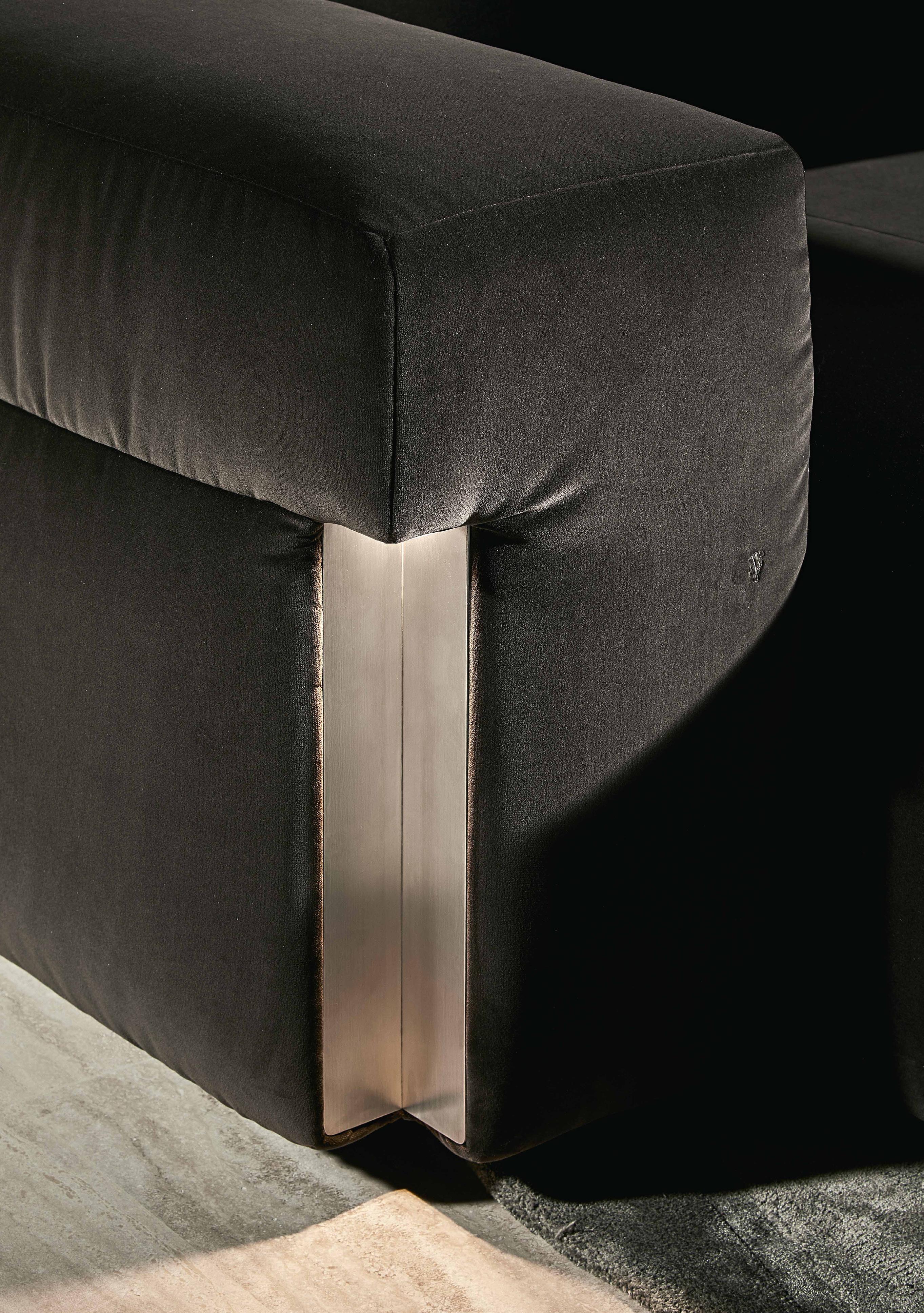
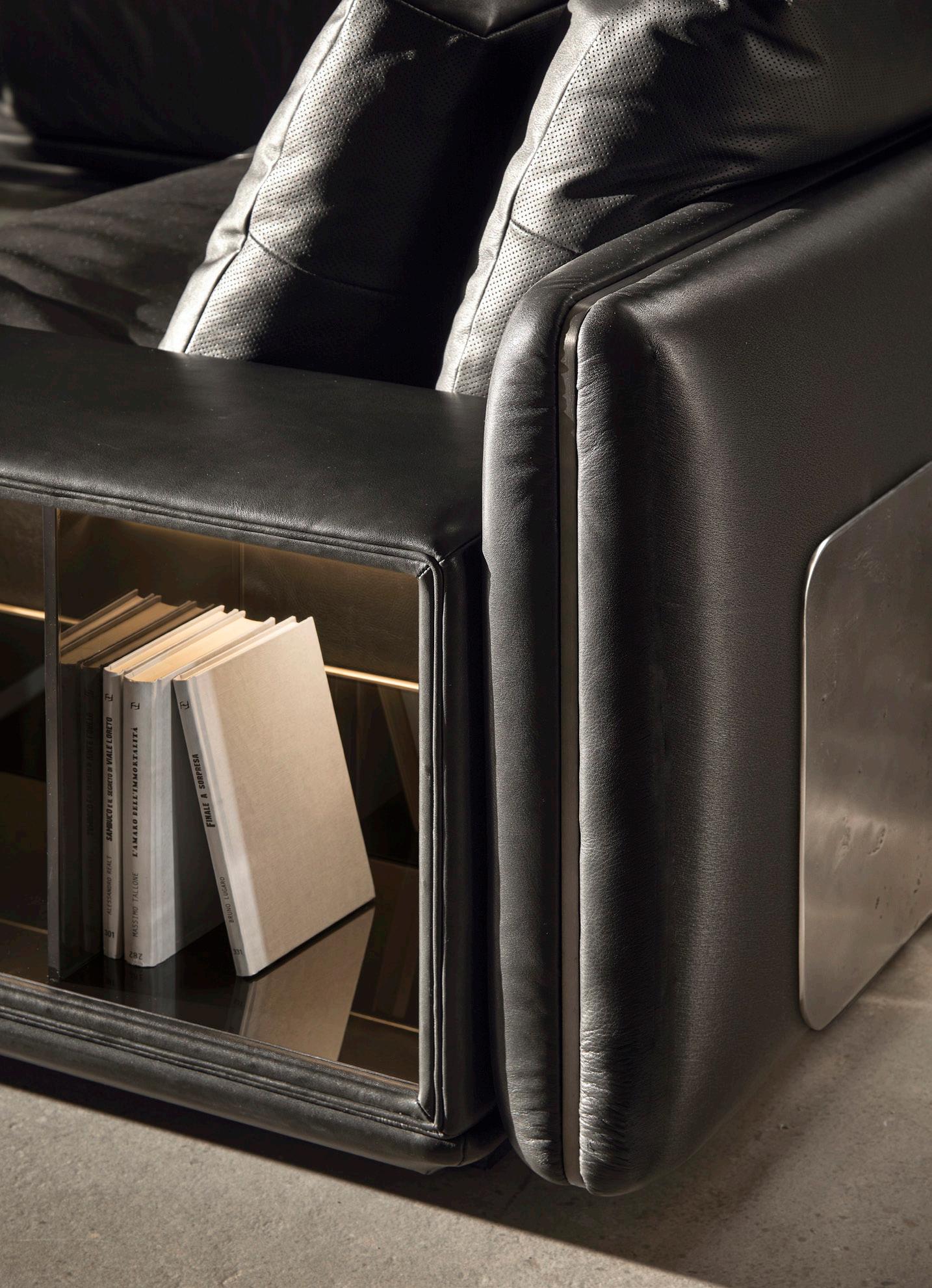
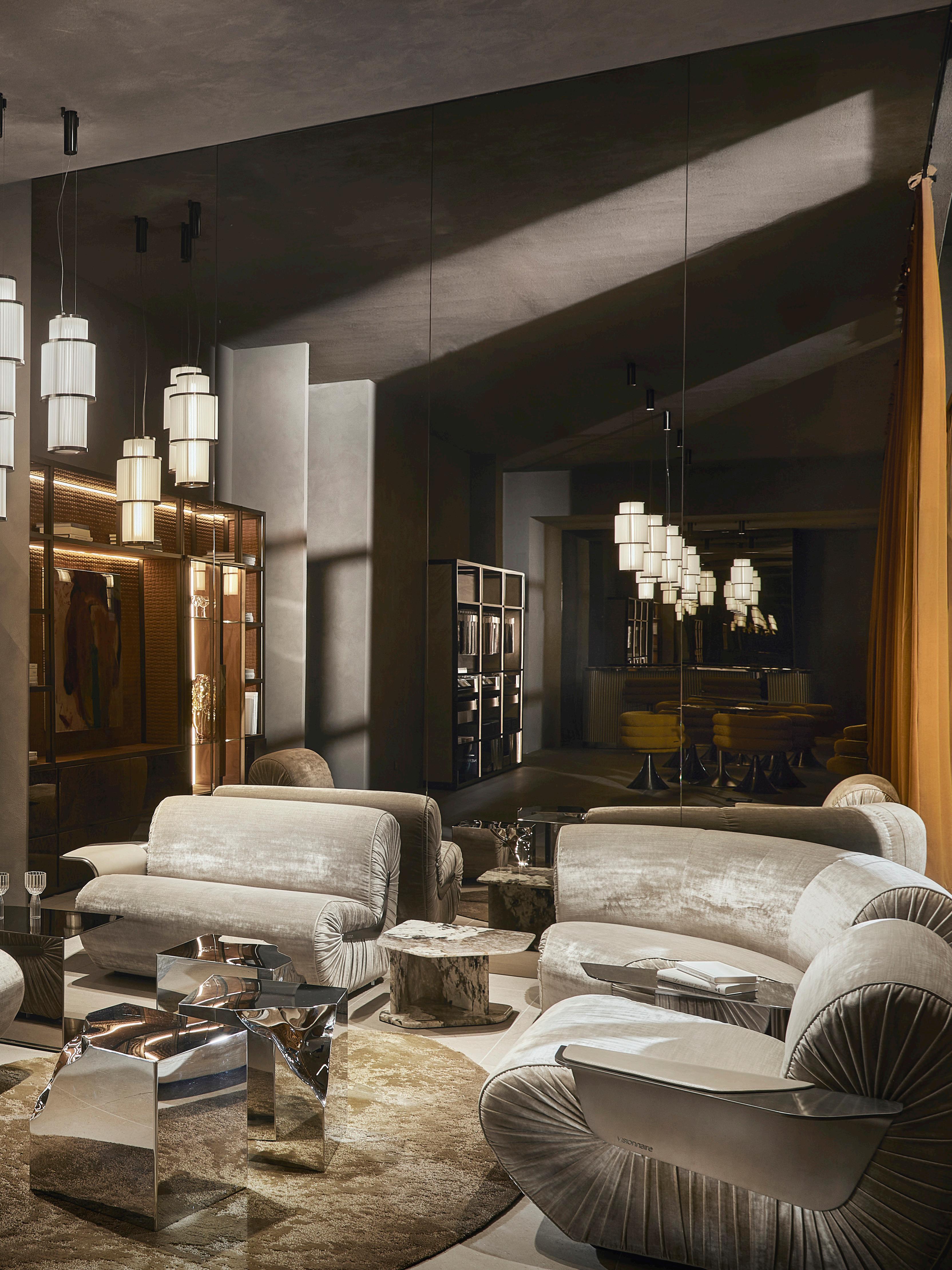
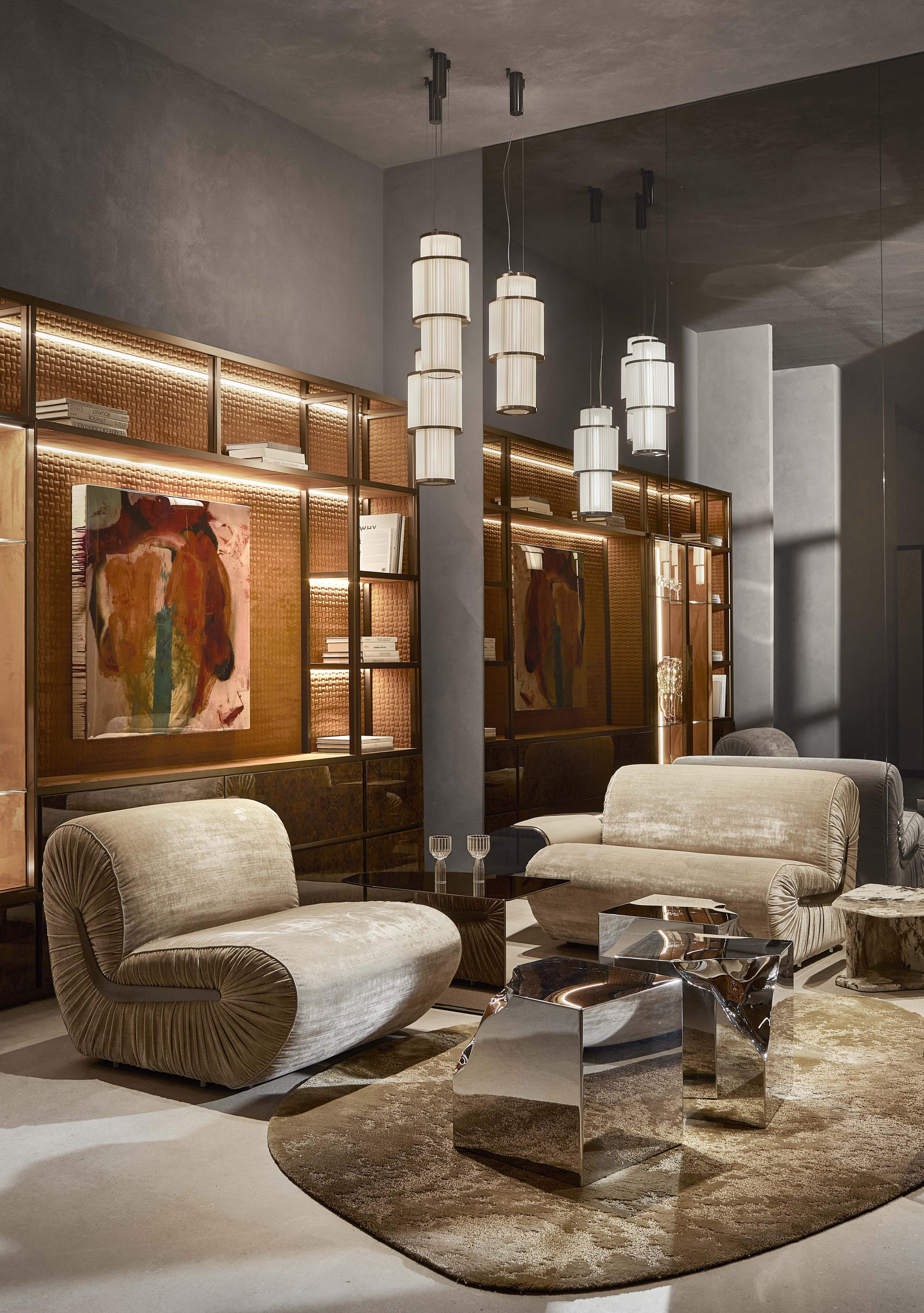
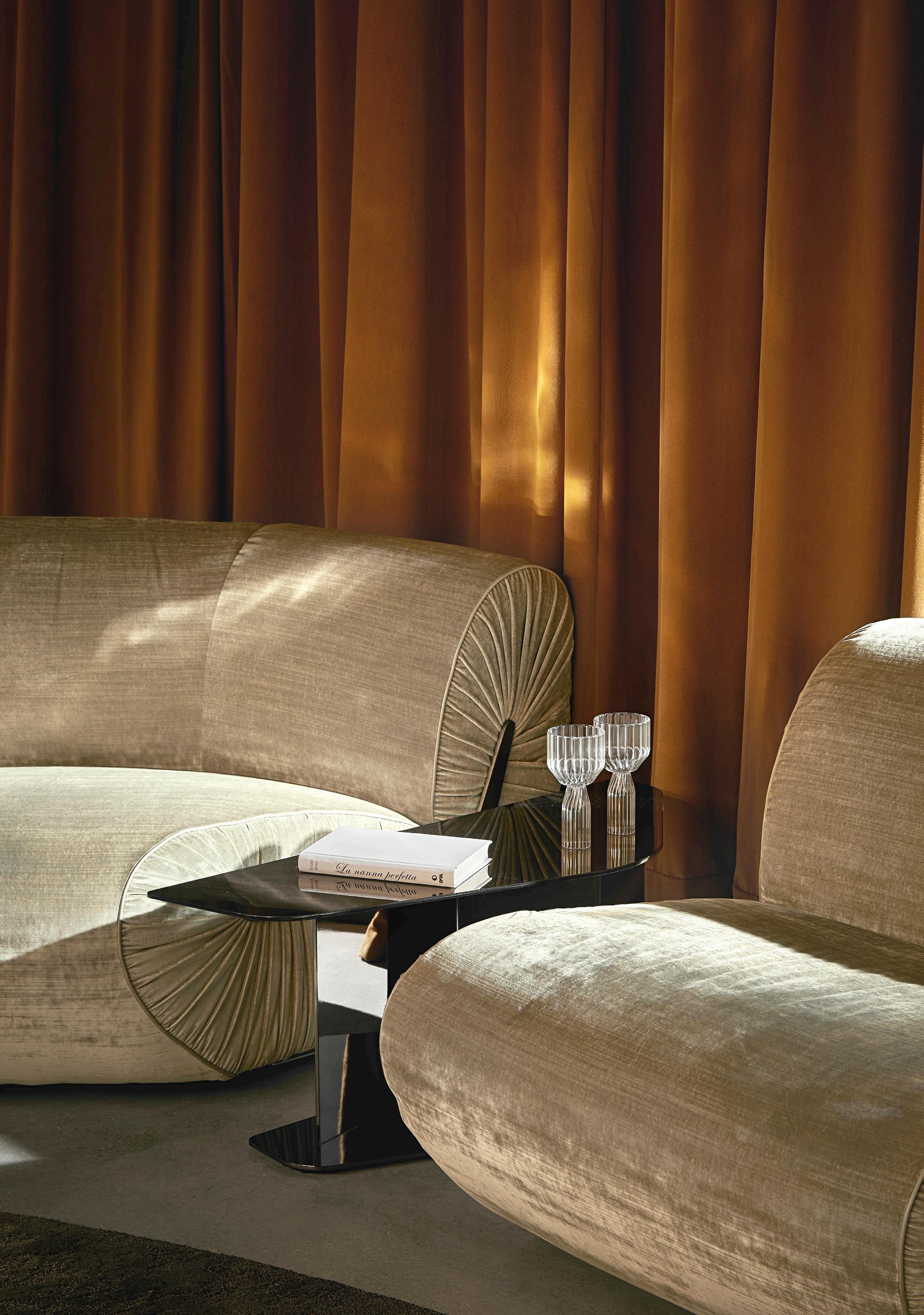
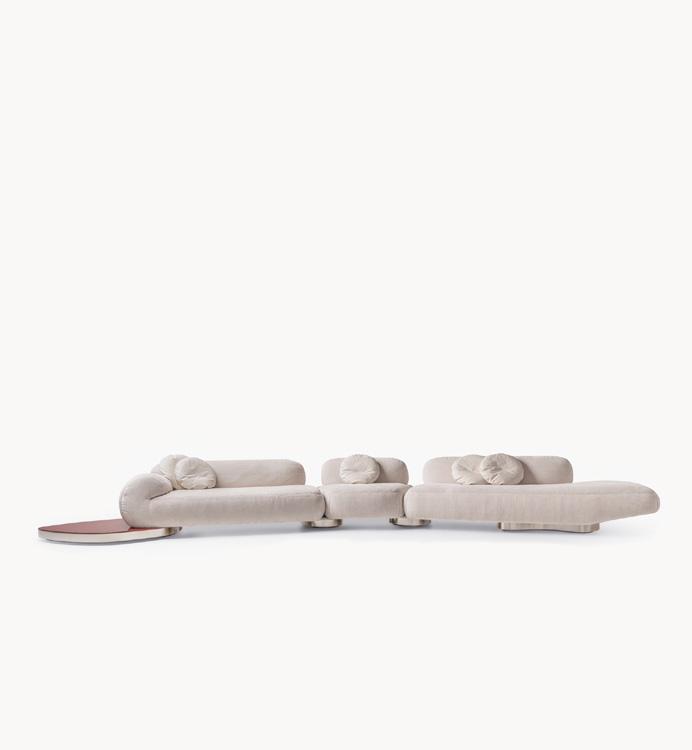
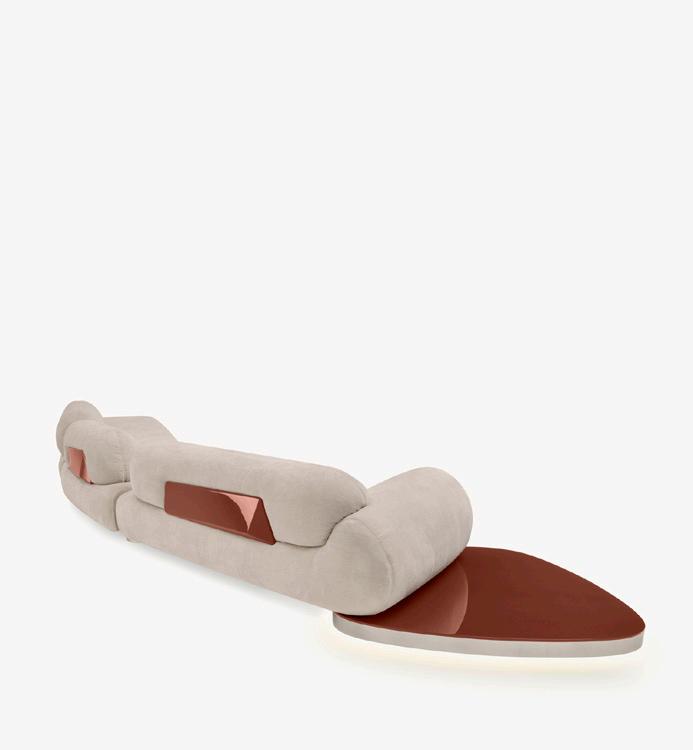
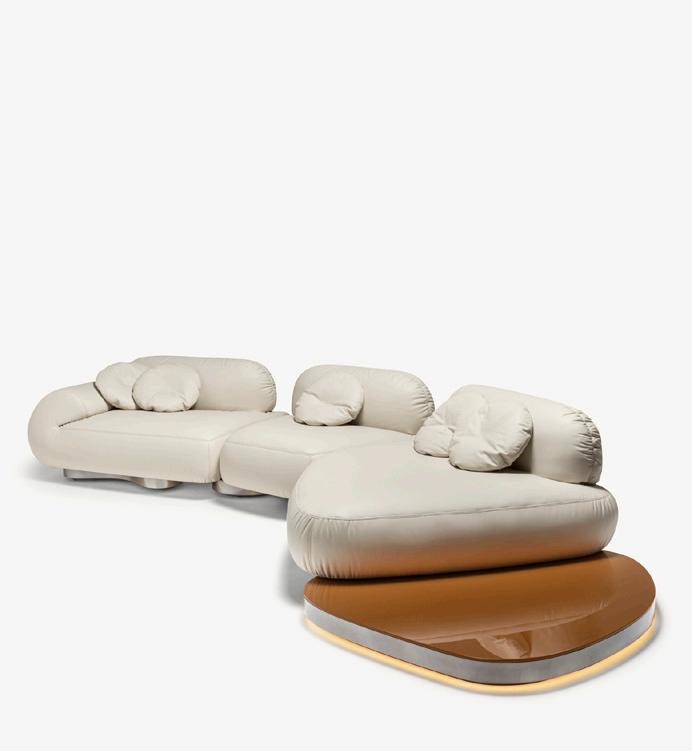
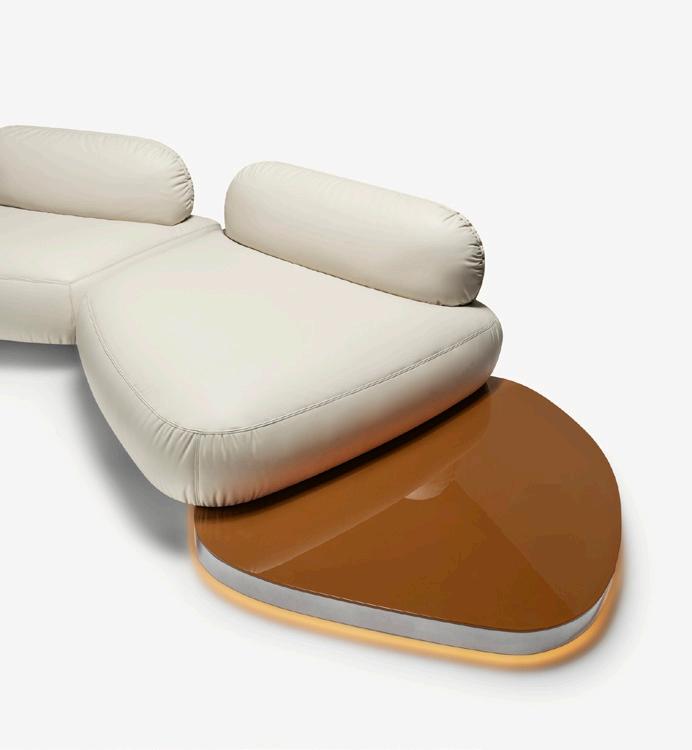
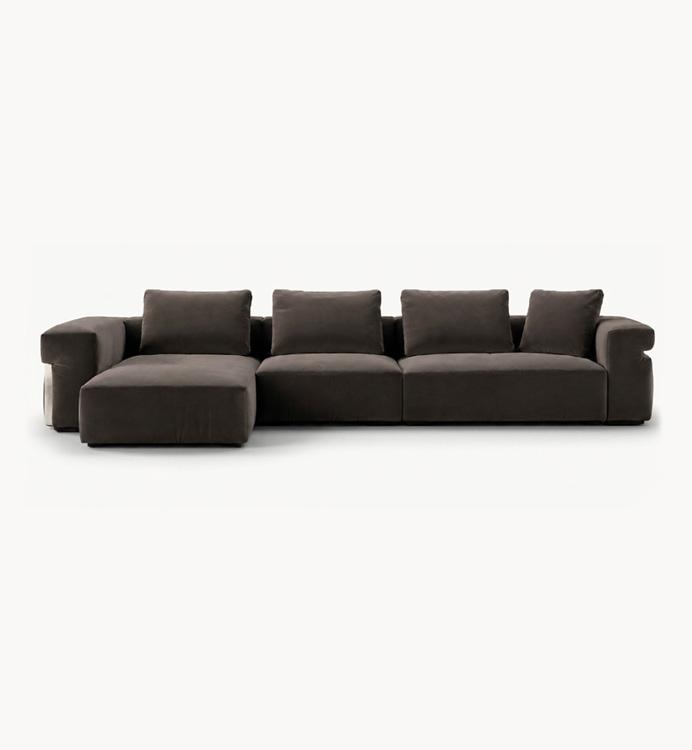
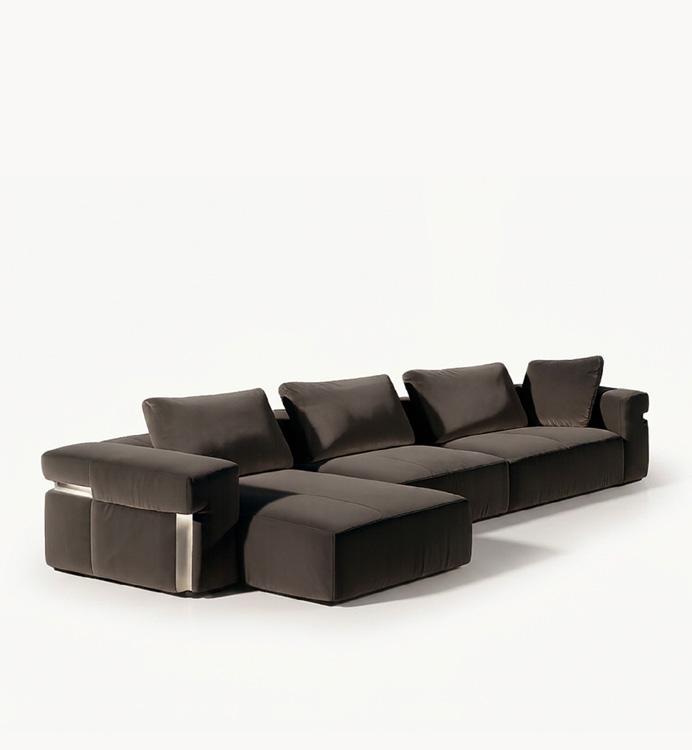
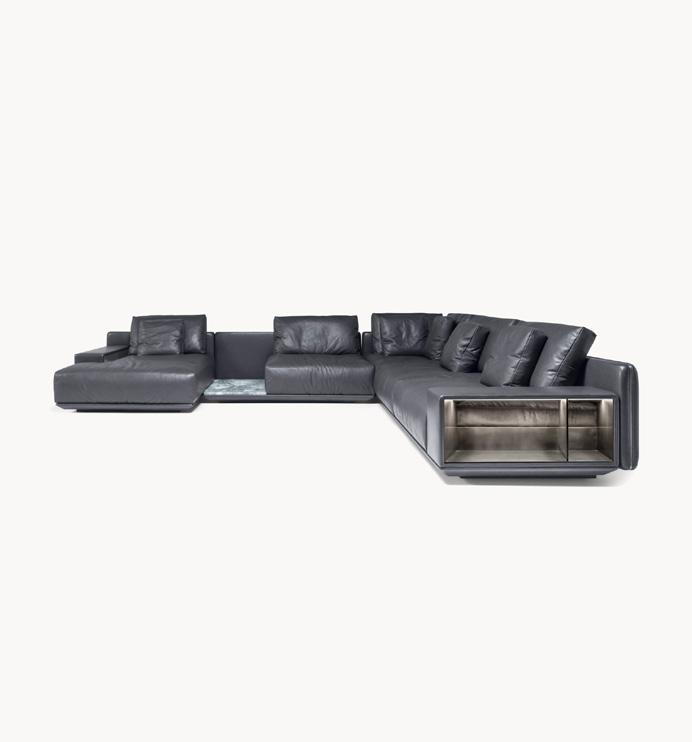
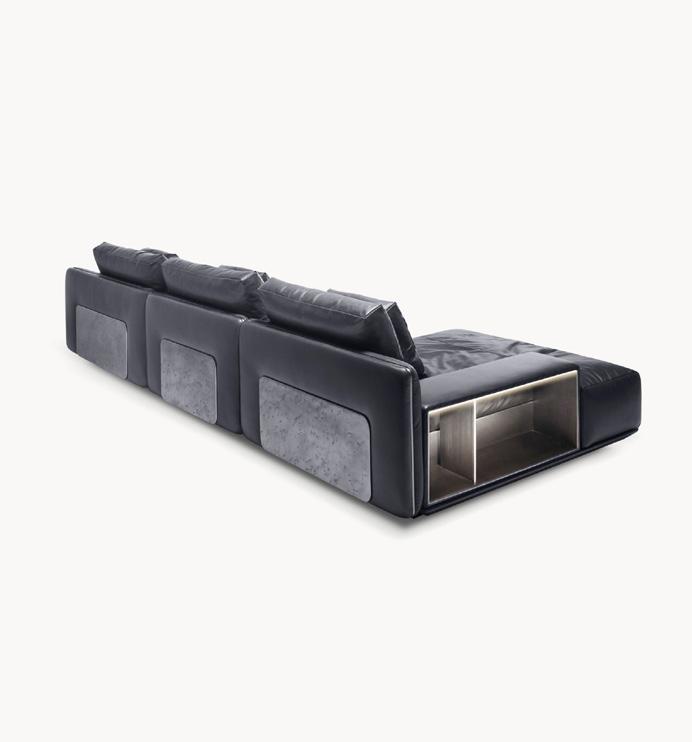
Baton Rouge originates from a clear, compact and continuous volumetric gesture. Its surfaces flow without interruption, asserting a solid and coherent presence within the space. Mono-volumetric platforms, generous armrests and organically shaped backrests create a balanced system, where mass, comfort and momentum interact naturally. The rear “shields” introduce a measured geometric tension, revealing method, precision and manufacturing quality.
Baton Rouge takes shape as a spatial device capable of constructing the interior landscape through the silent strength of form, evoking in its name the continuous flow of the Mississippi.
Baton Rouge nasce da un gesto volumetrico netto, compatto e continuo. Le superfici scorrono senza interruzioni, affermando una presenza solida e coerente nello spazio. Piattaforme mono-volumetriche, braccioli generosi e schienali dalle linee organiche costruiscono un sistema equilibrato, dove massa, comfort e slancio dialogano con naturalezza. Gli “scudi” posteriori introducono una tensione geometrica misurata, dichiarando metodo, precisione e qualità manifatturiera. Baton Rouge si configura come un dispositivo spaziale capace di costruire il paesaggio interno attraverso la forza silenziosa della forma, evocando nel nome il fluire continuo del Mississippi.
Baton Rouge
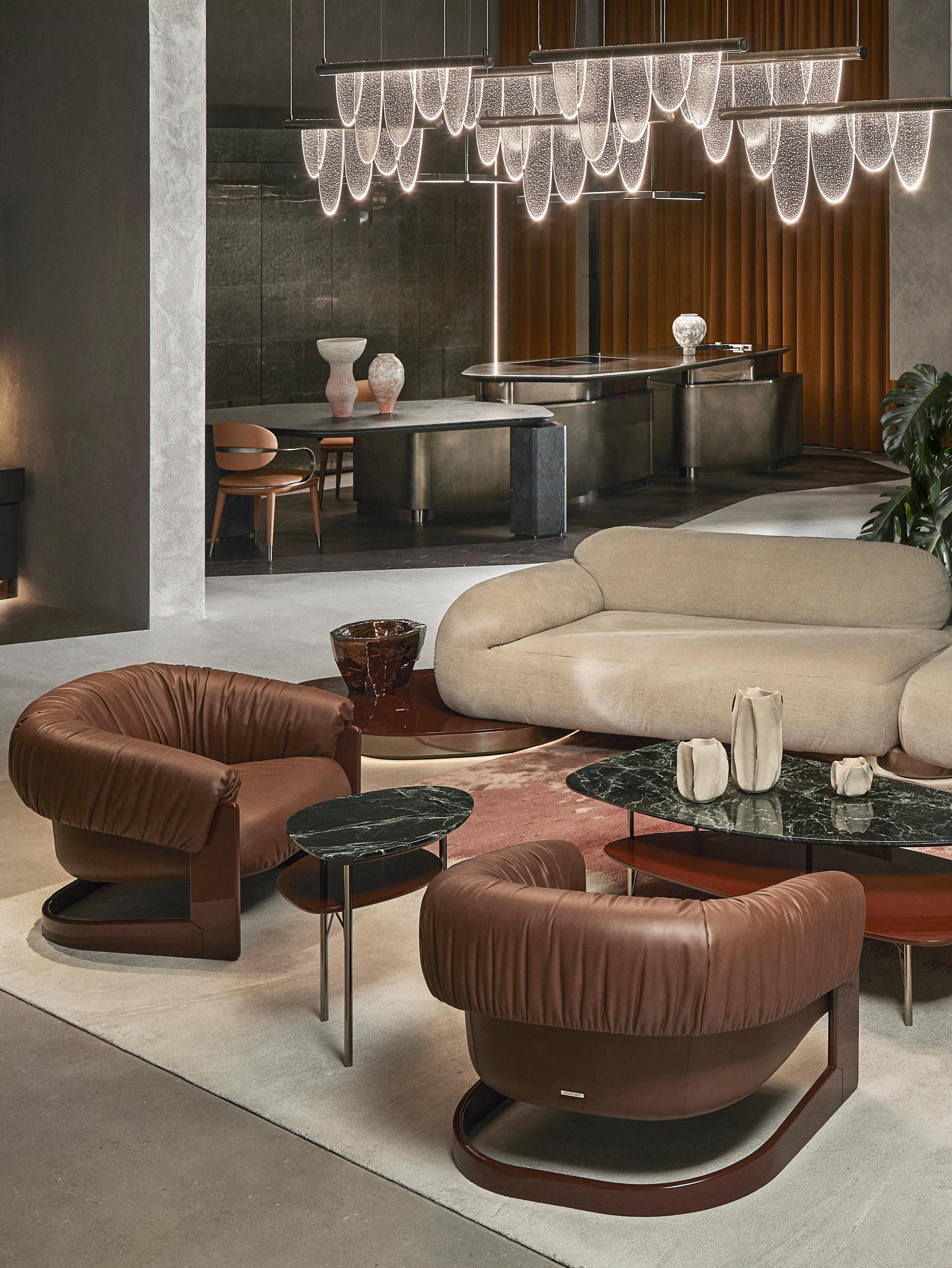
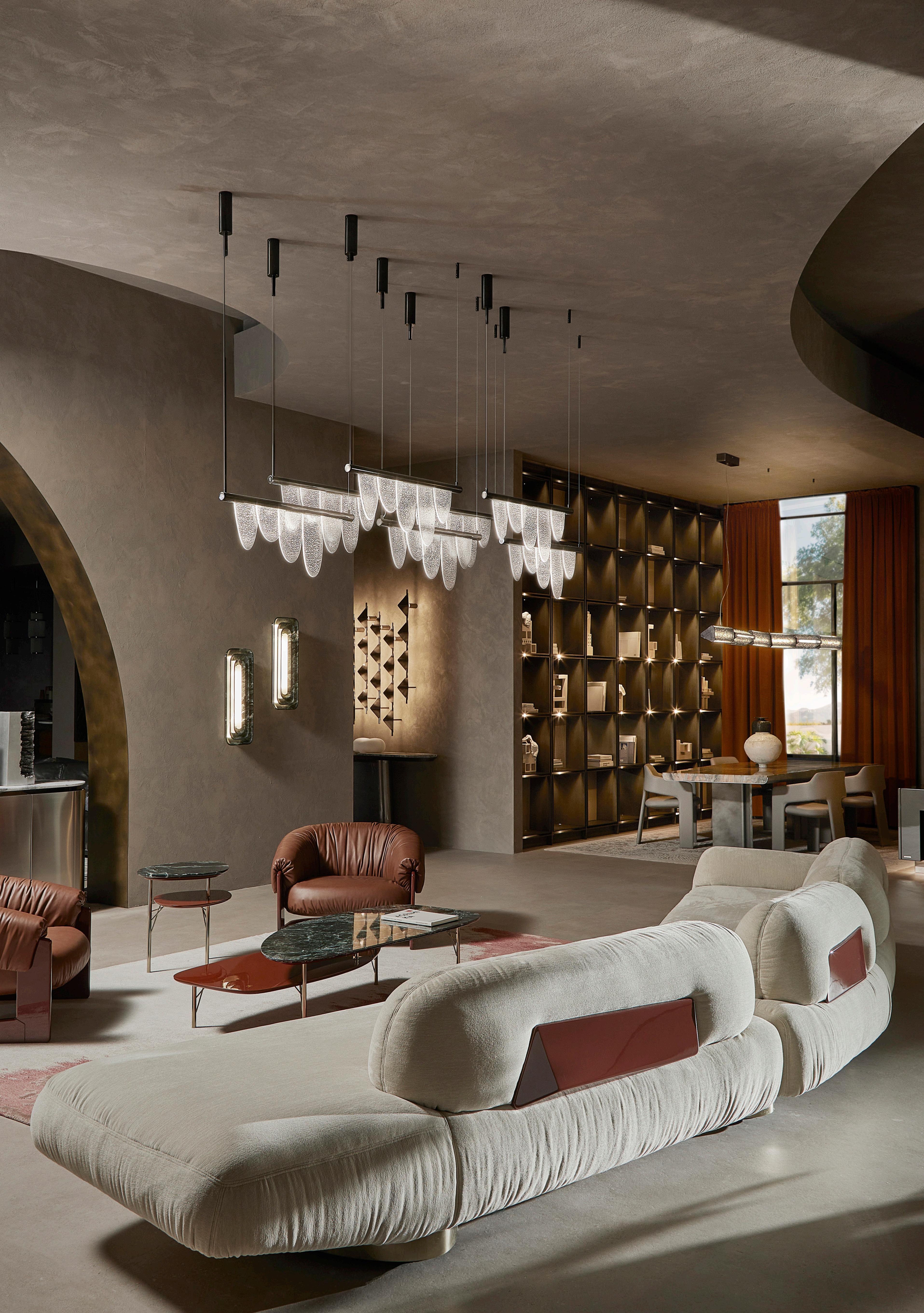
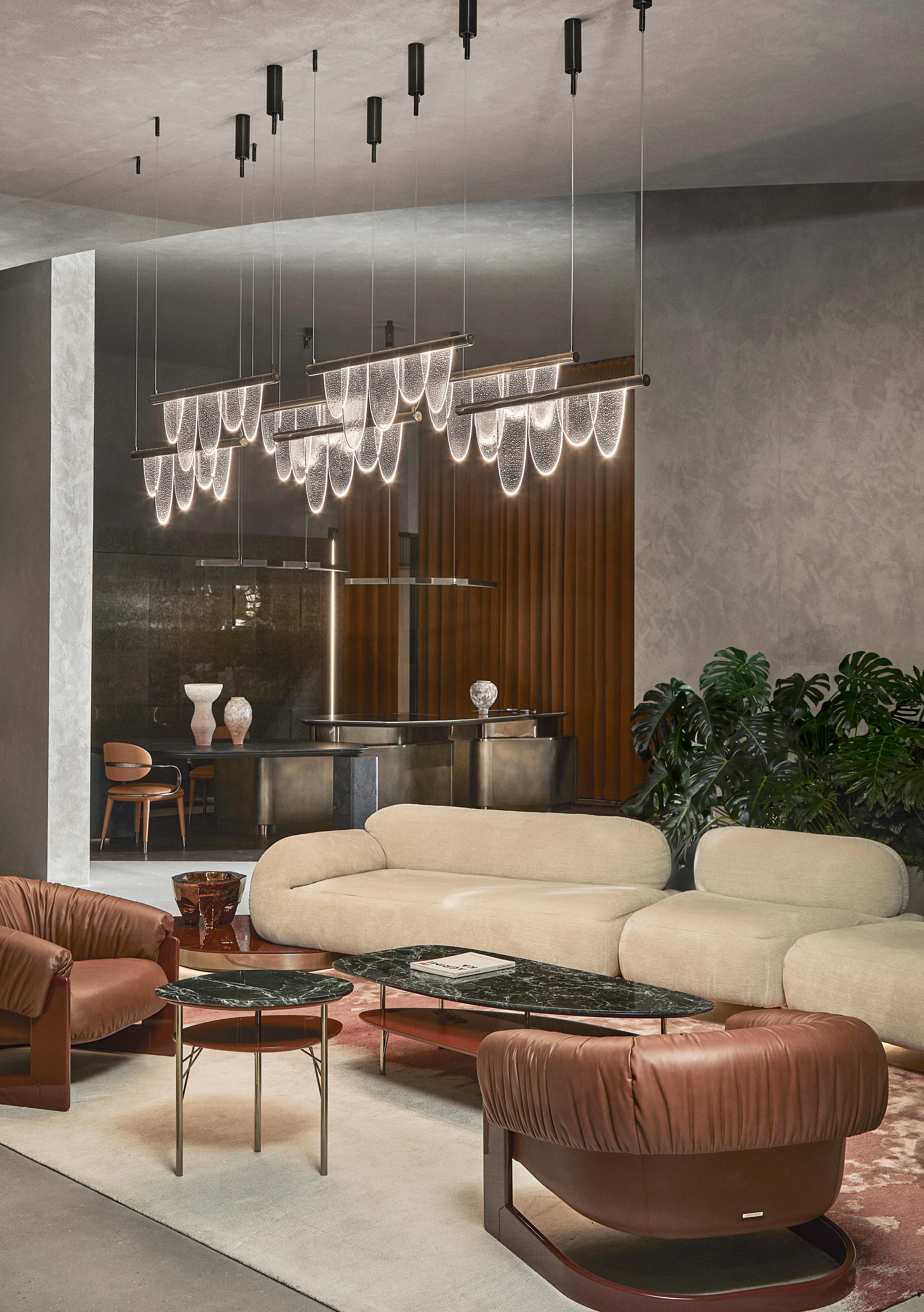
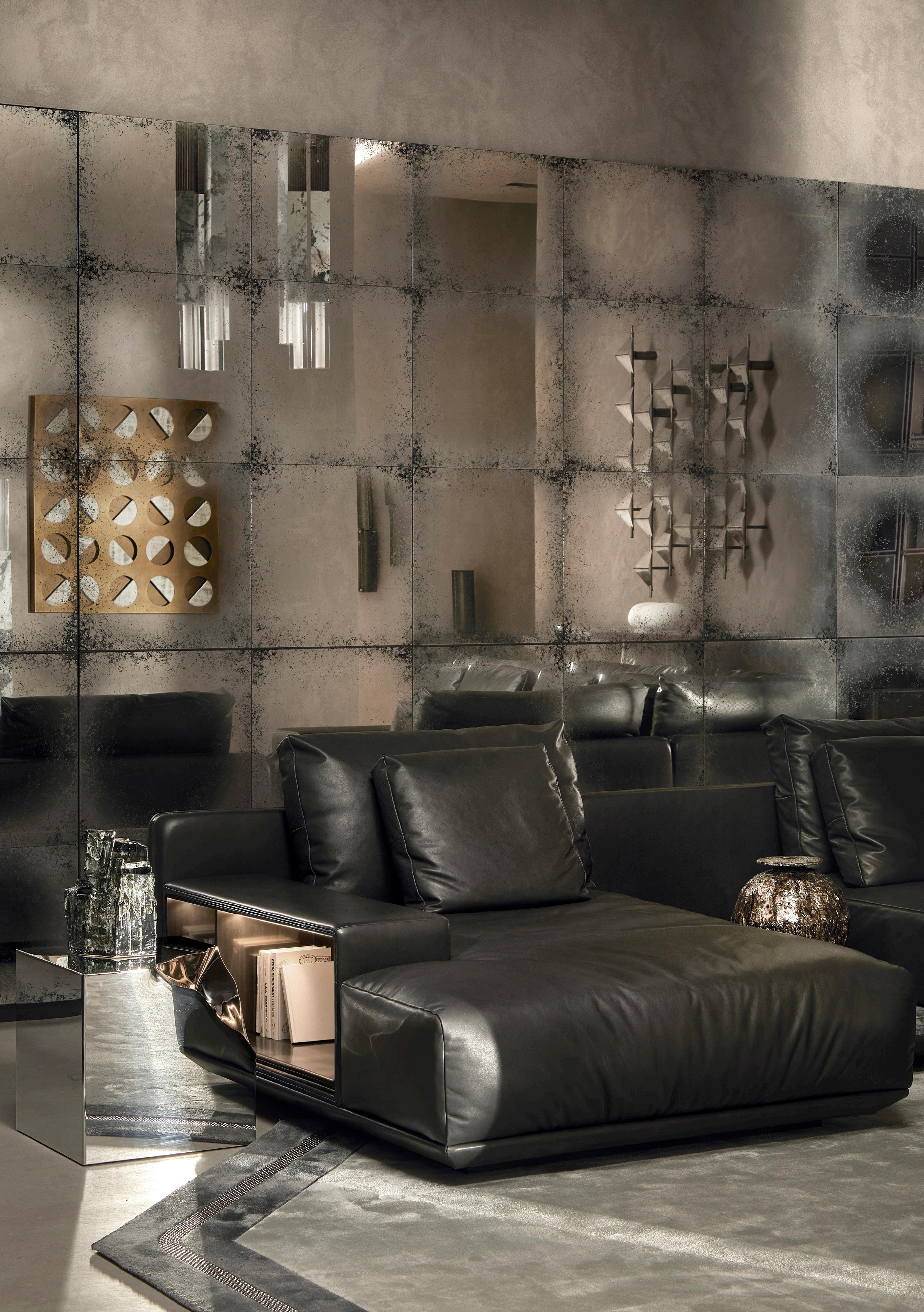
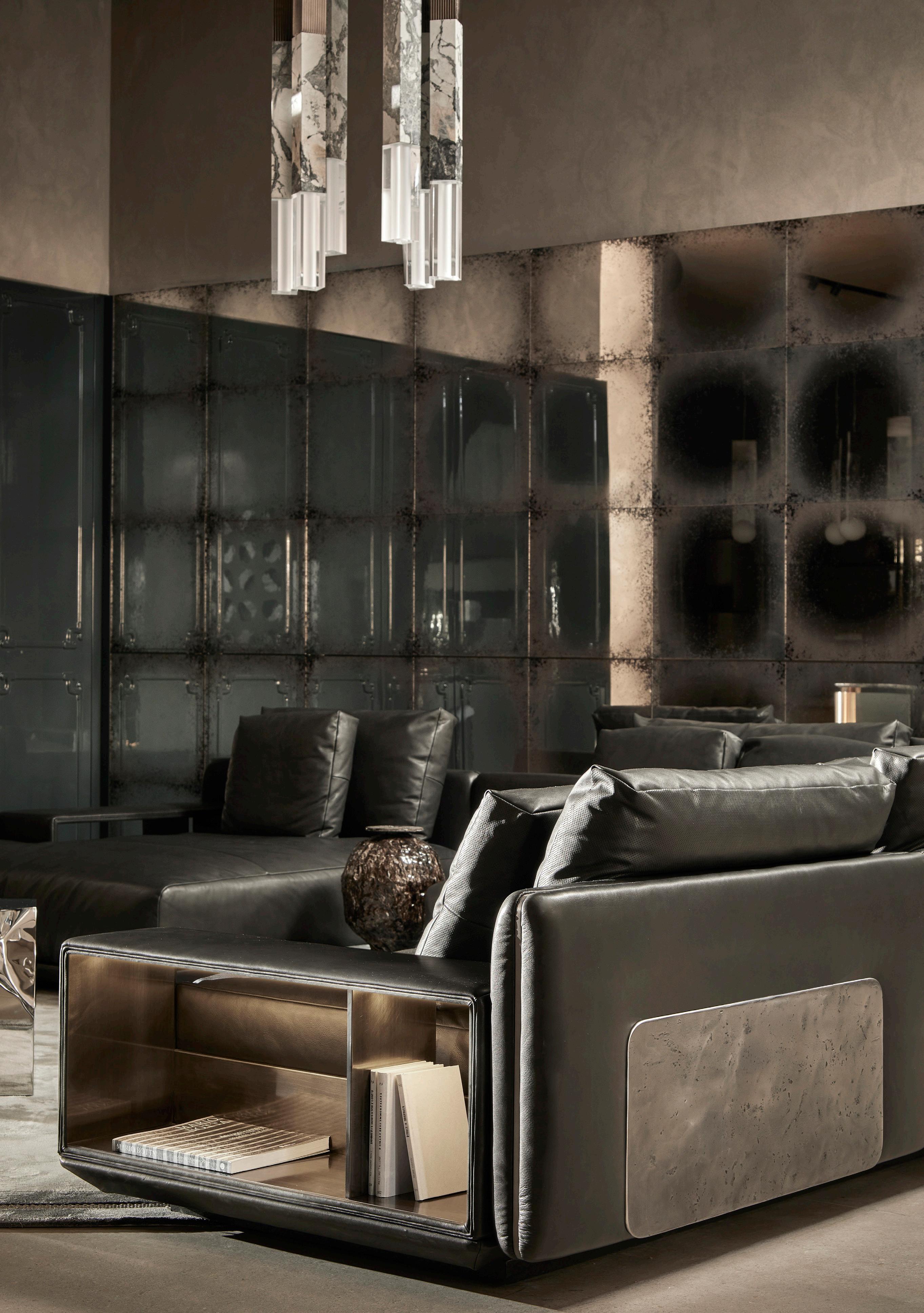
Baton Rouge, sofa
Hampshire, armchair
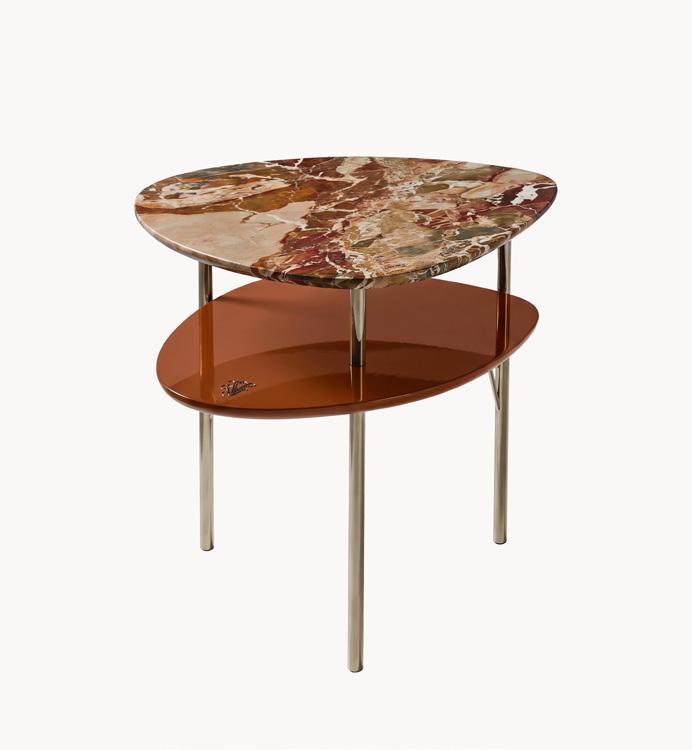
Trapeze, small tables
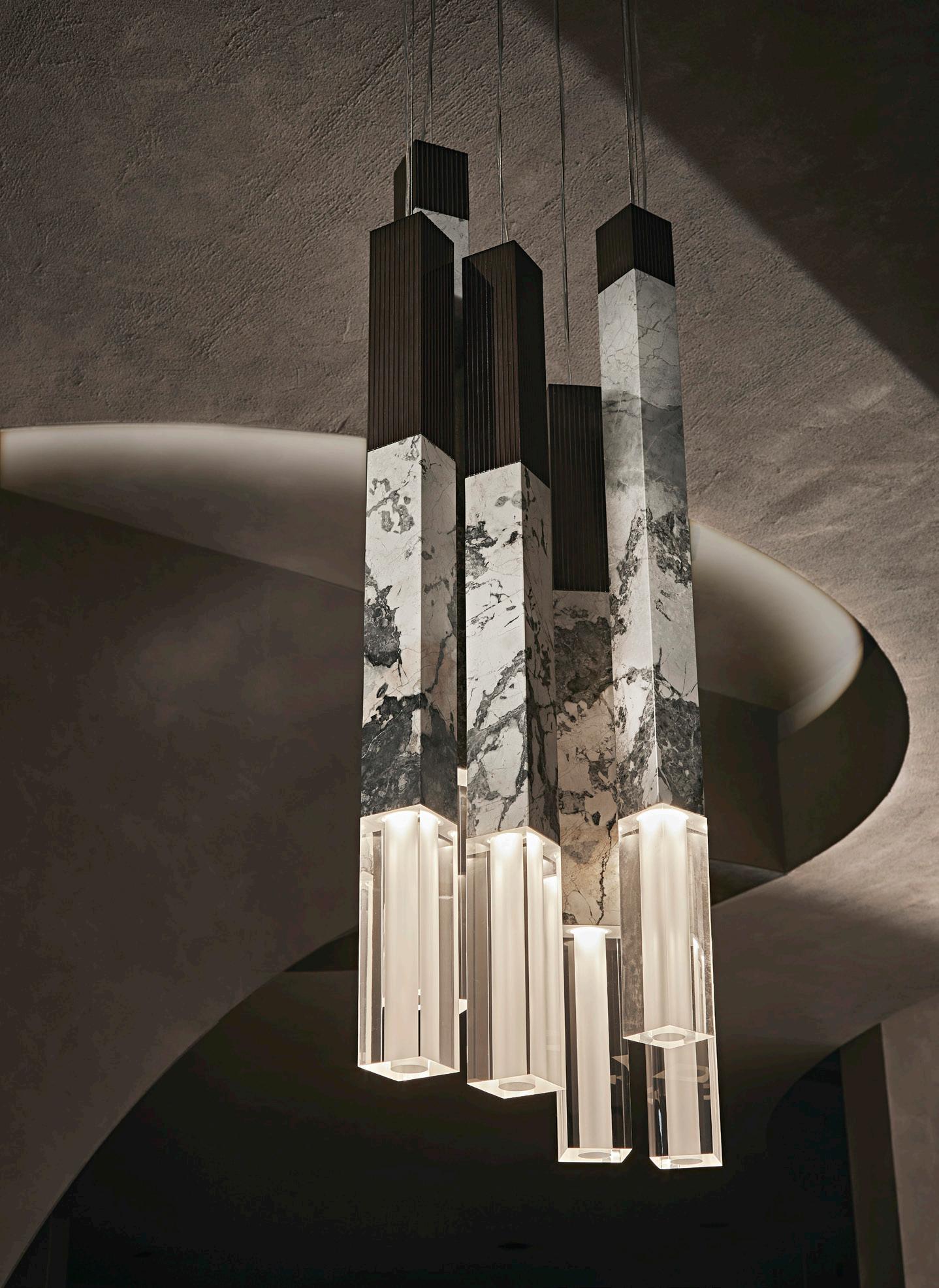
Parade, suspension lamp
Sfogliatella, wall lamp
Burgundy/ Luxor, carpets
Cattedrale 41-42/Aggregate 1, artworks
Seeds White, accessory
Monolite 2, vase
Explore the room ↗
A continuous, sculpted form, where comfort becomes landscape and presence finds the slow rhythm of permanence.
Una forma continua e scolpita, dove il comfort diventa paesaggio e la presenza ritrova il ritmo lento della permanenza.
Baton Rouge sofa by Mauro Lipparini
Cattedrale 41-42 artworks by CaCO3
Sfogliatella wall lamp by Marc Ange Parade suspension lamp by Studiopepe
Monolite 2 vase by Roberto Renzi
Baton Rouge sofa by Mauro Lipparini
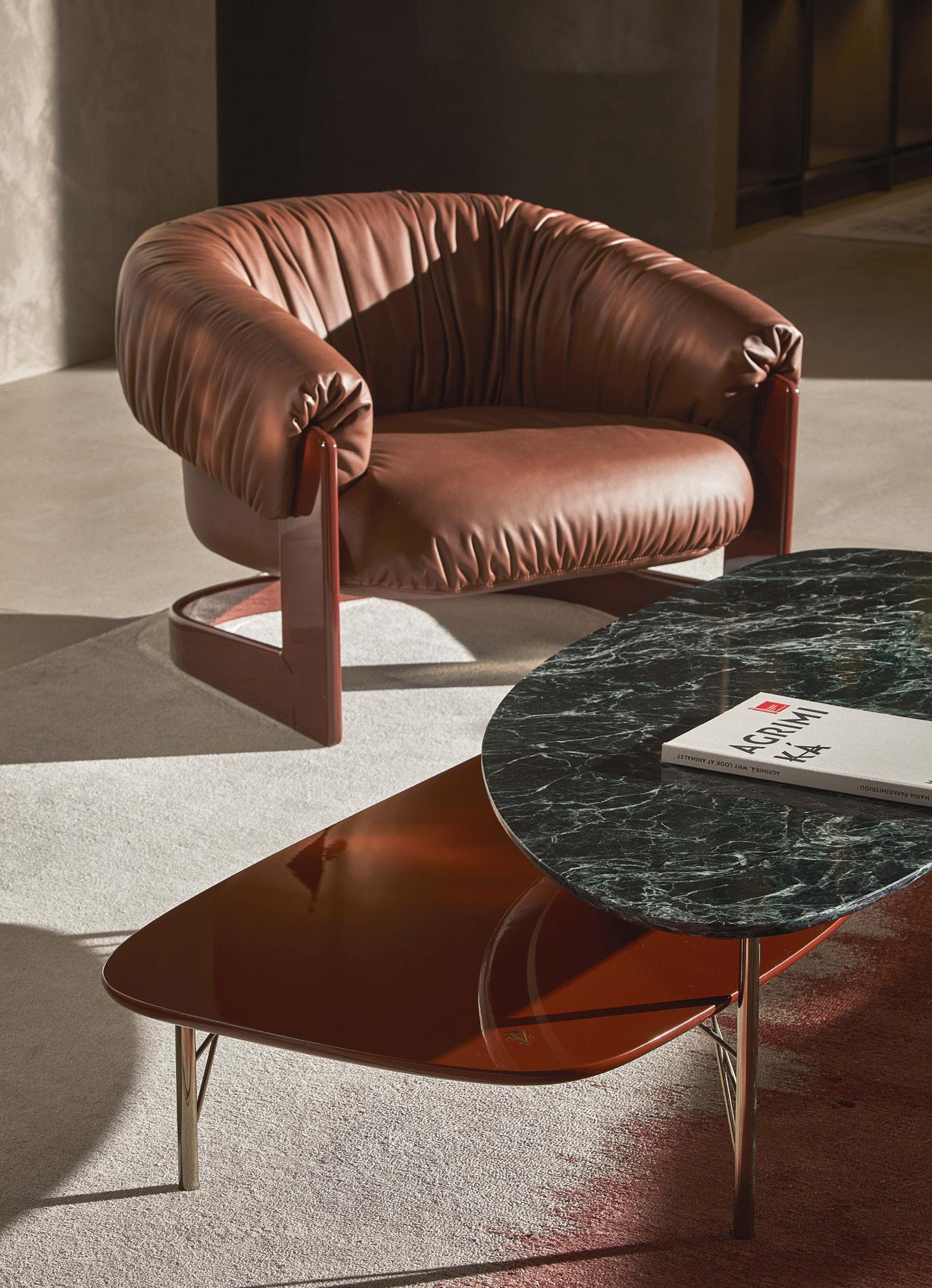
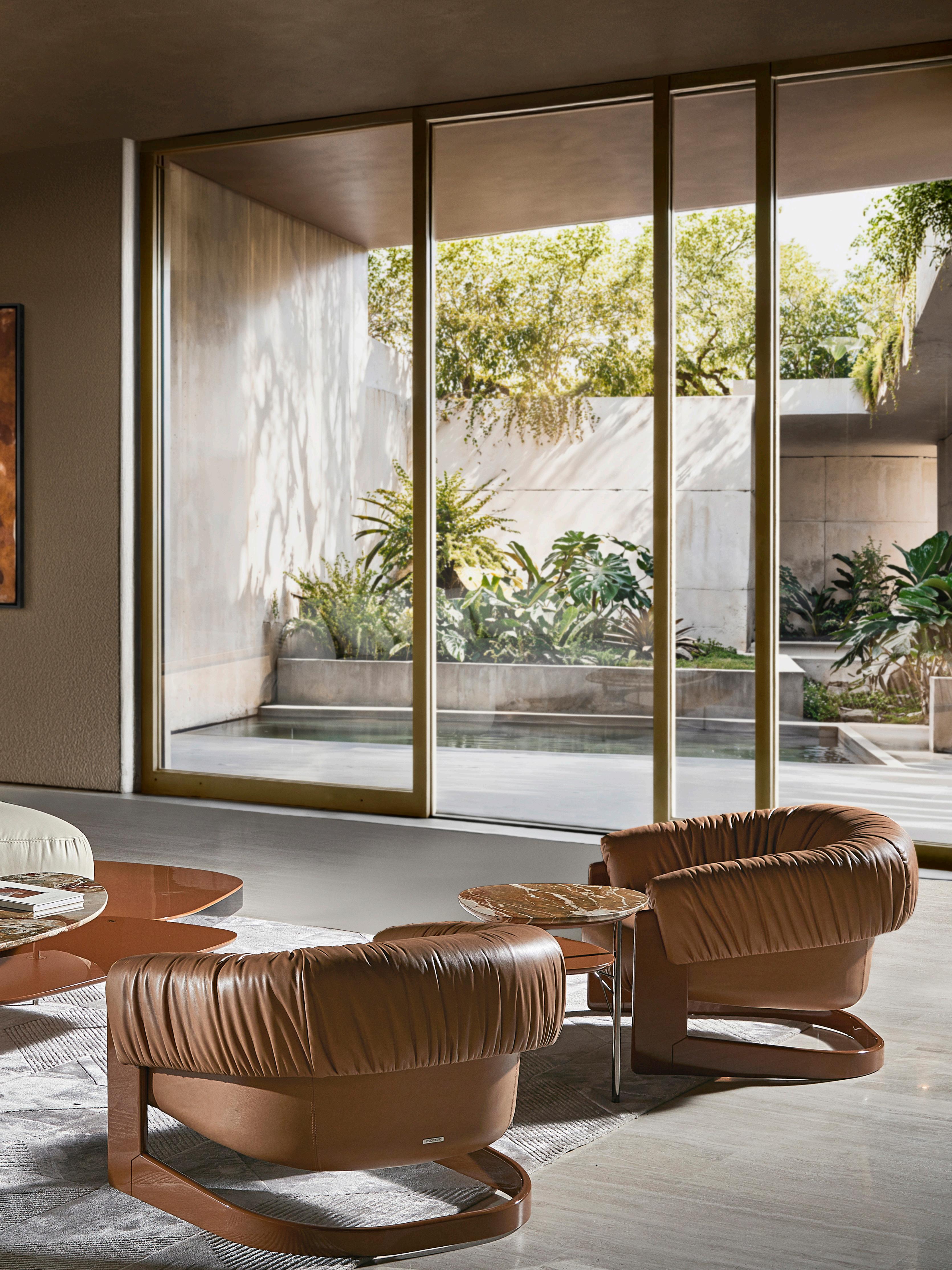
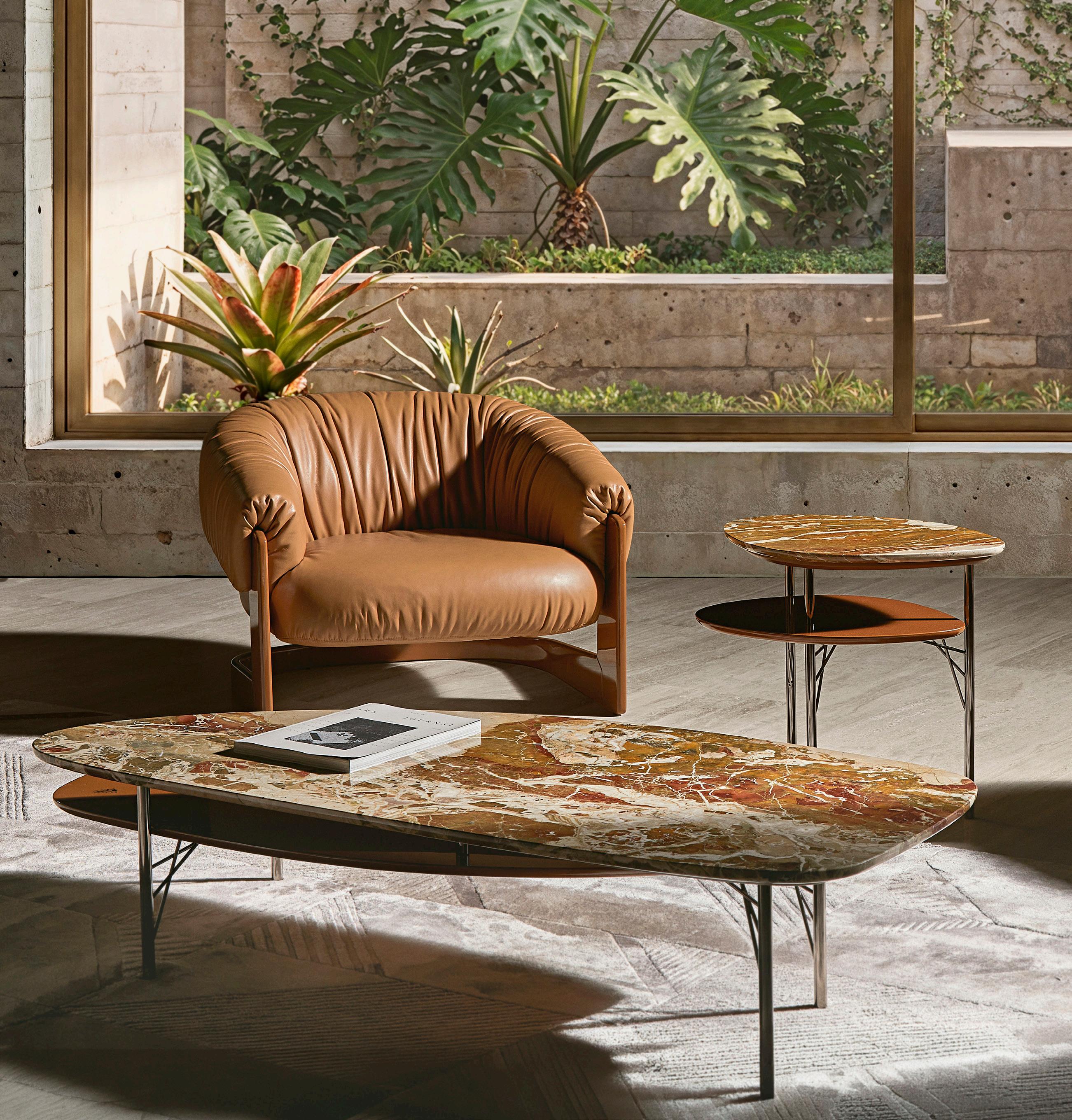
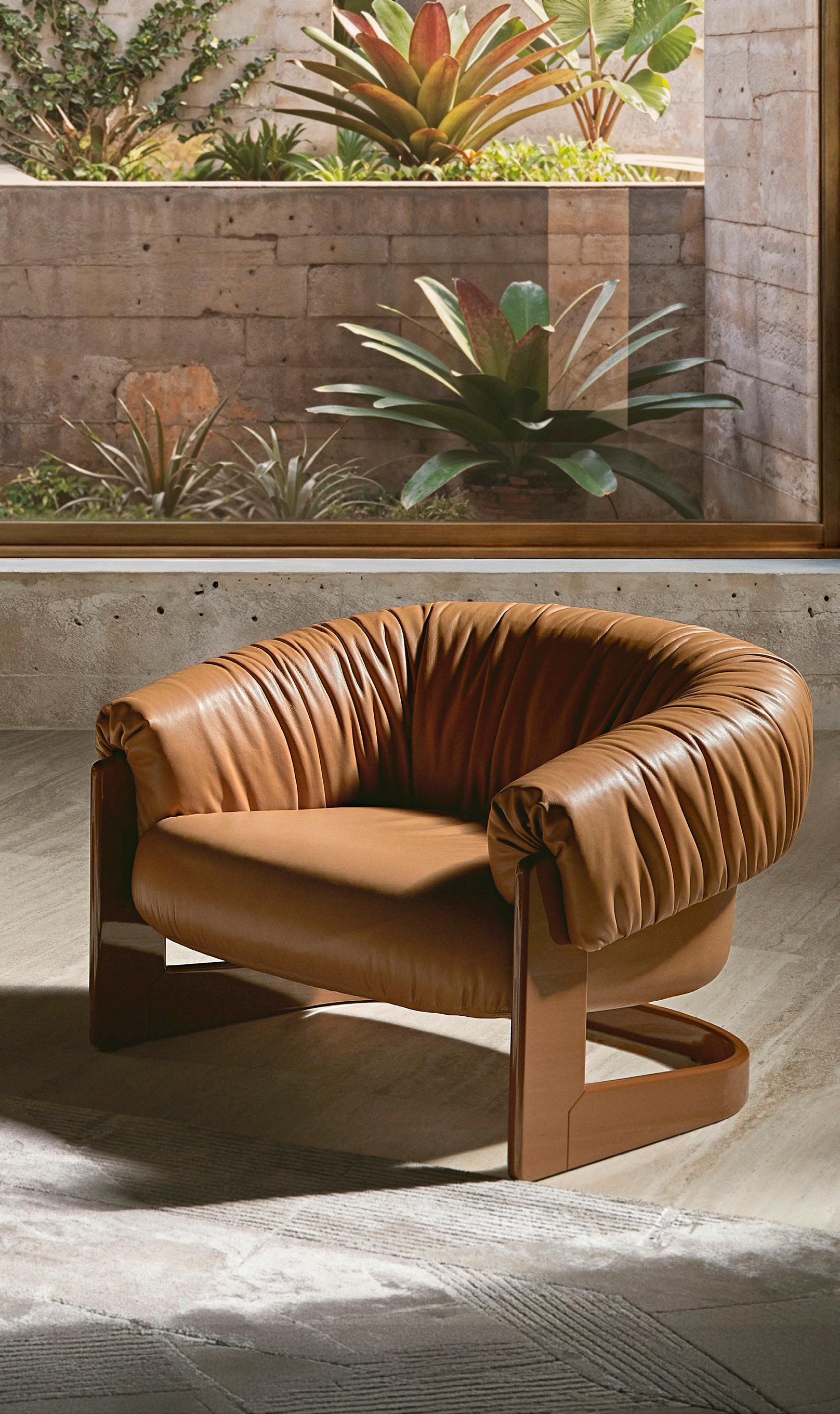
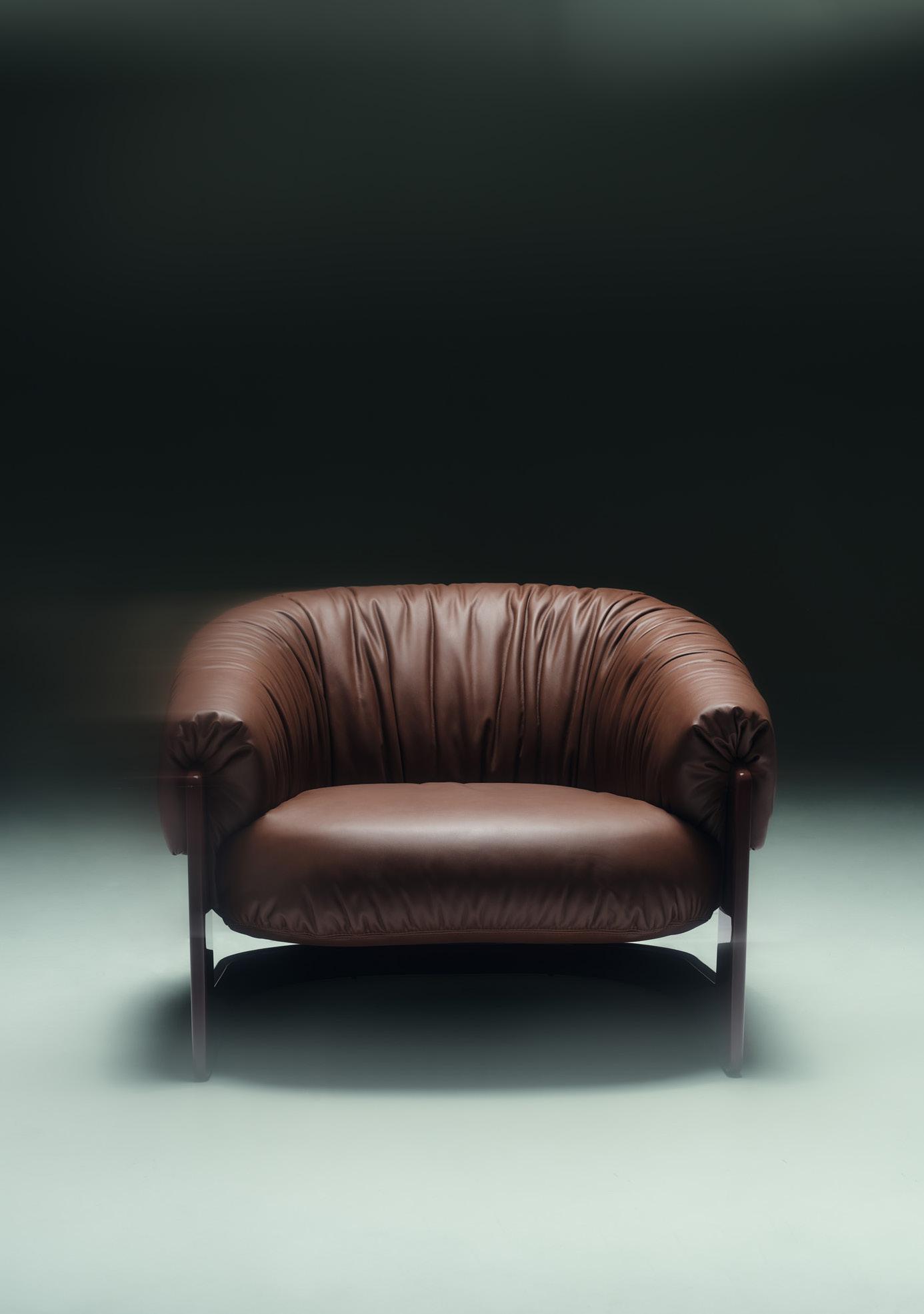
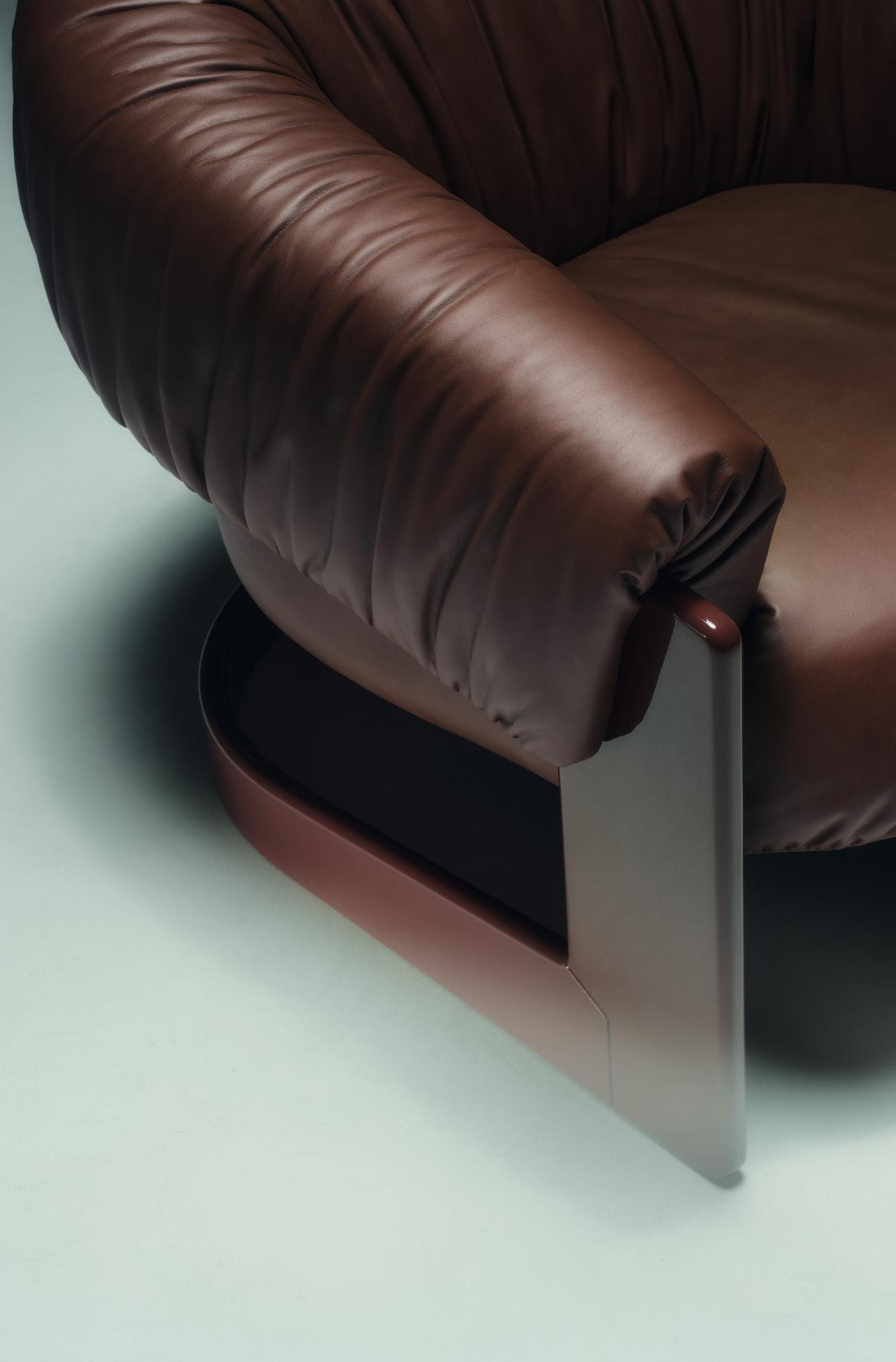
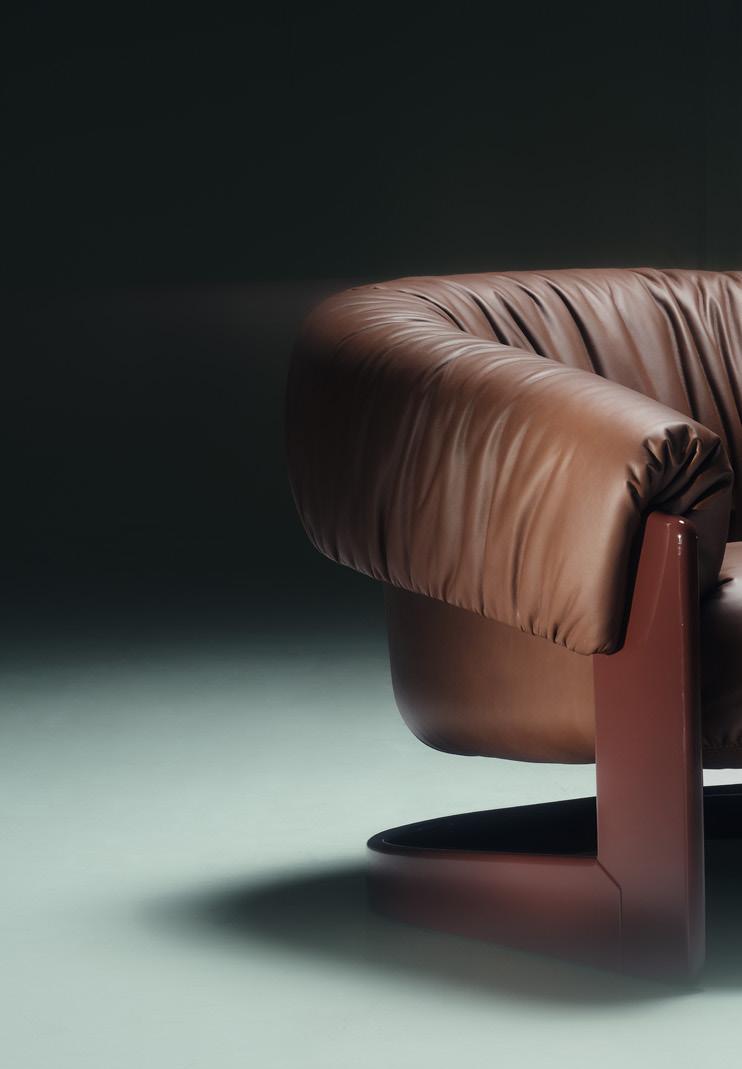
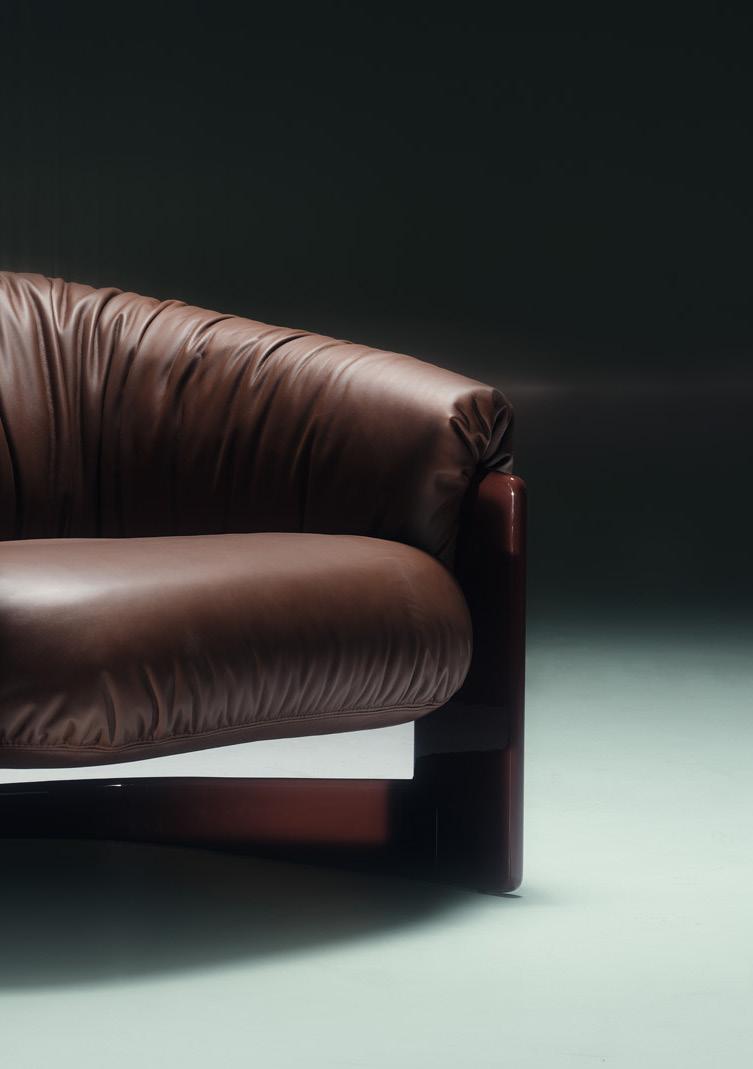
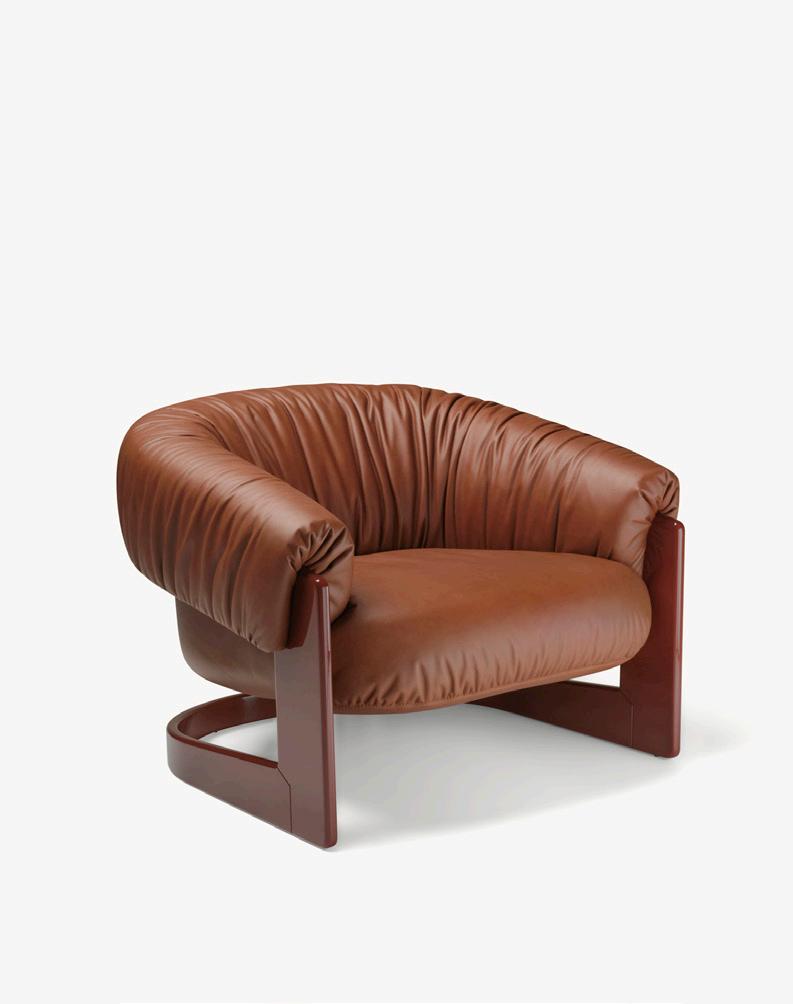
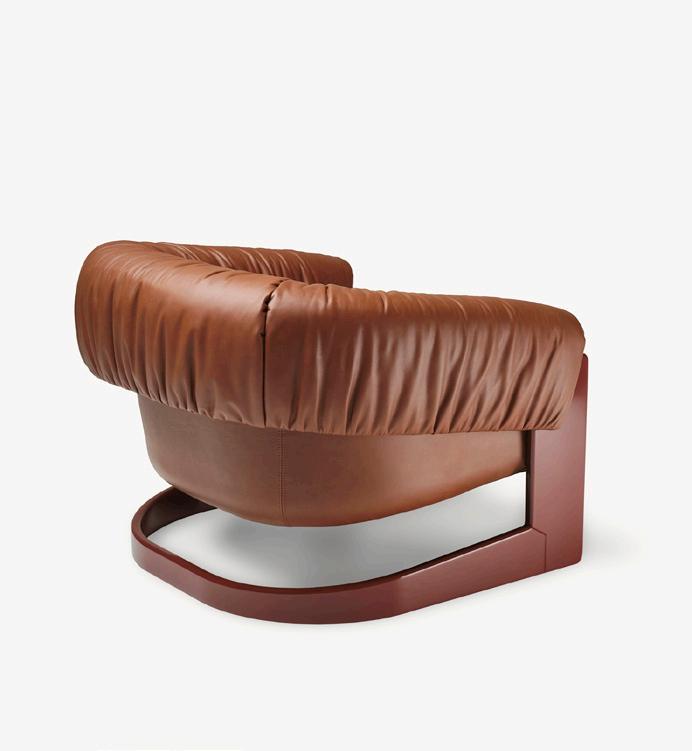
The Hampshire armchair is defined by two essential elements: the load-bearing wooden frame and the upholstered volume that rests upon it with natural composure. The frame, rational in its layout and decisive in its proportions, is conceived with wide flat sections and rounded edges. The upholstery introduces a more relaxed attitude. It settles over the visible skeleton with controlled softness. Gloss lacquer finishes recall a 1970s sensibility, introducing a bold material and chromatic counterpoint to the natural composure of the upholstery. The Hampshire armchair celebrates the beauty of necessary things. It enhances the tactile presence of natural materials through authentic forms, rooted in memory yet projected into the present.
La poltrona Hampshire è definita da due elementi essenziali: la struttura portante in legno e il volume imbottito che vi si posa con naturale compostezza. La struttura, razionale nell’impostazione e decisa nelle proporzioni, è concepita con sezioni piatte di grande ampiezza e bordi arrotondati. L’imbottitura introduce un’attitudine più rilassata. Si adagia sullo scheletro a vista con morbidezza controllata. Le finiture laccate lucide recuperano una sensibilità anni Settanta, inserendo un contrappunto materico e cromatico audace rispetto alla naturale compostezza del rivestimento. Hampshire celebra la bellezza delle cose necessarie. Esalta il tatto delle materie naturali attraverso forme autentiche, radicate nella memoria ma proiettate nel presente.
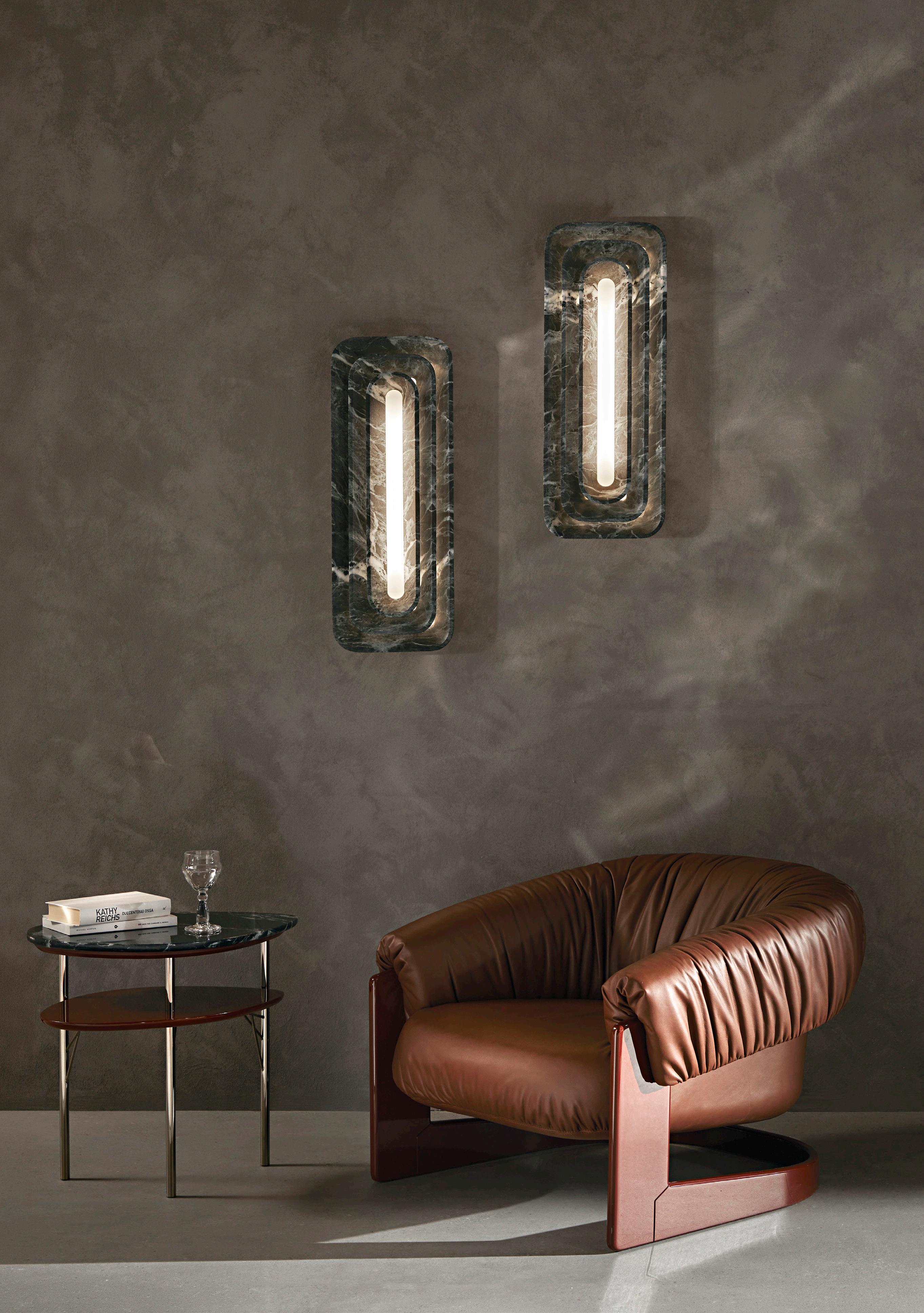
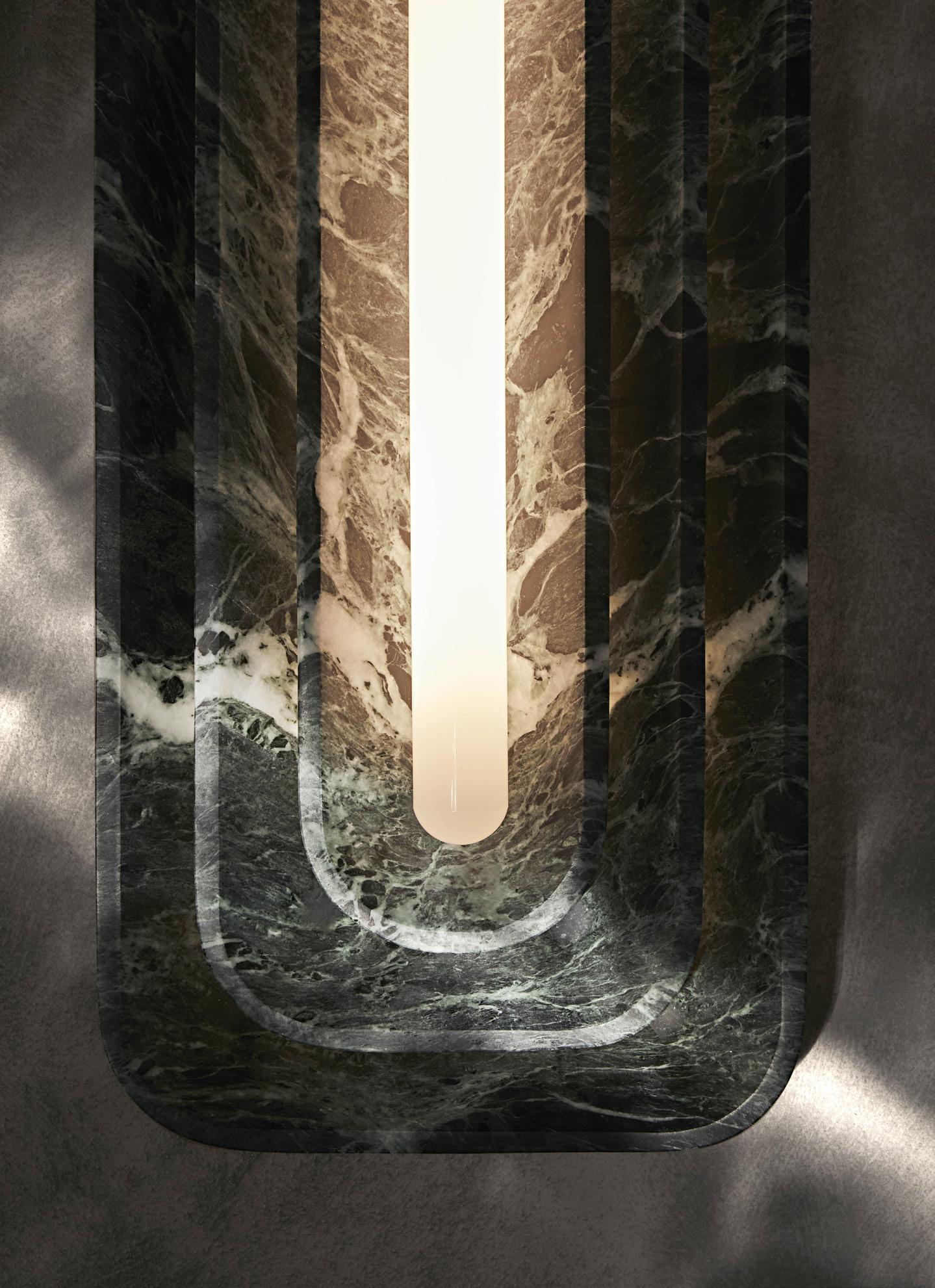
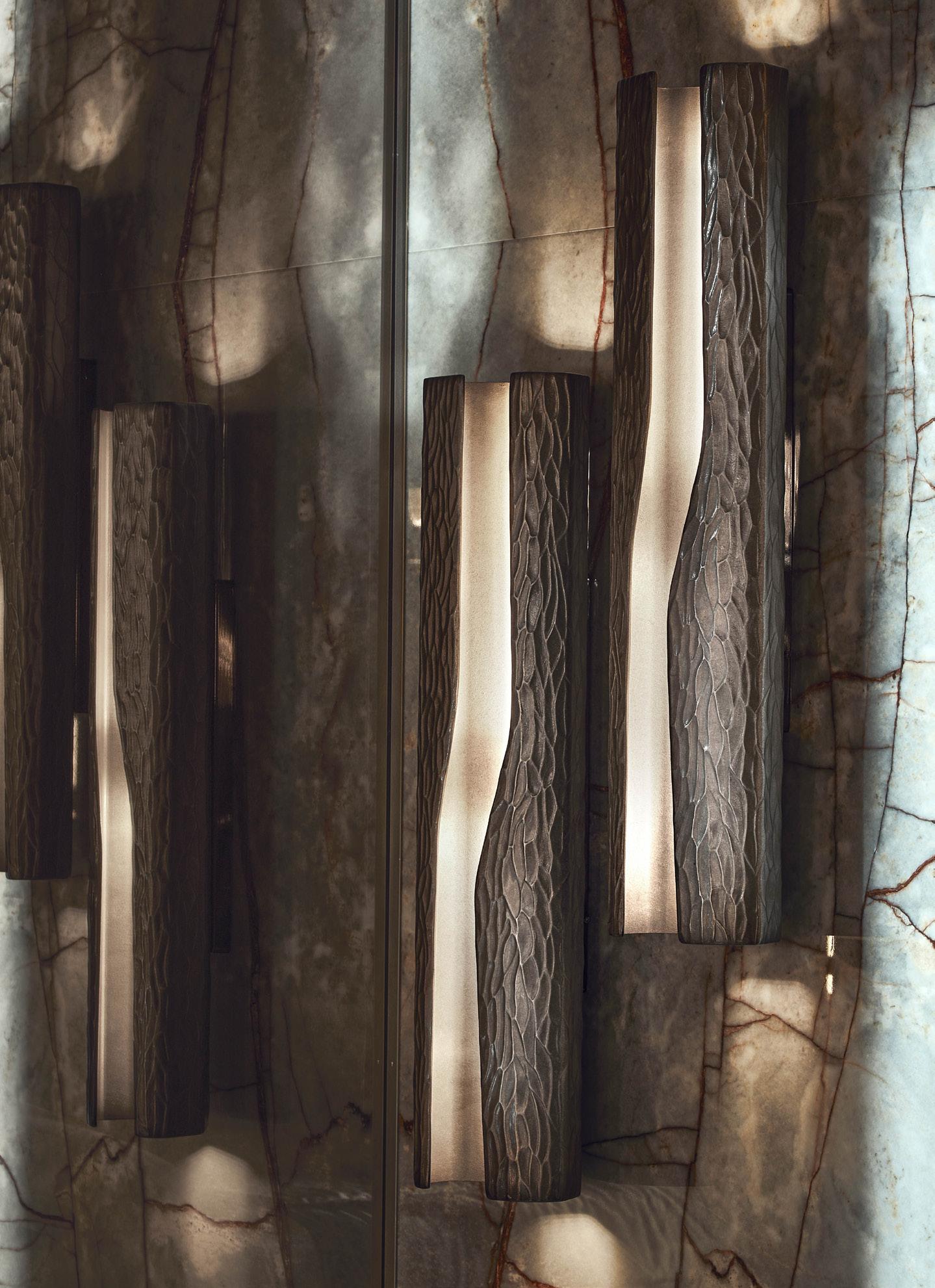
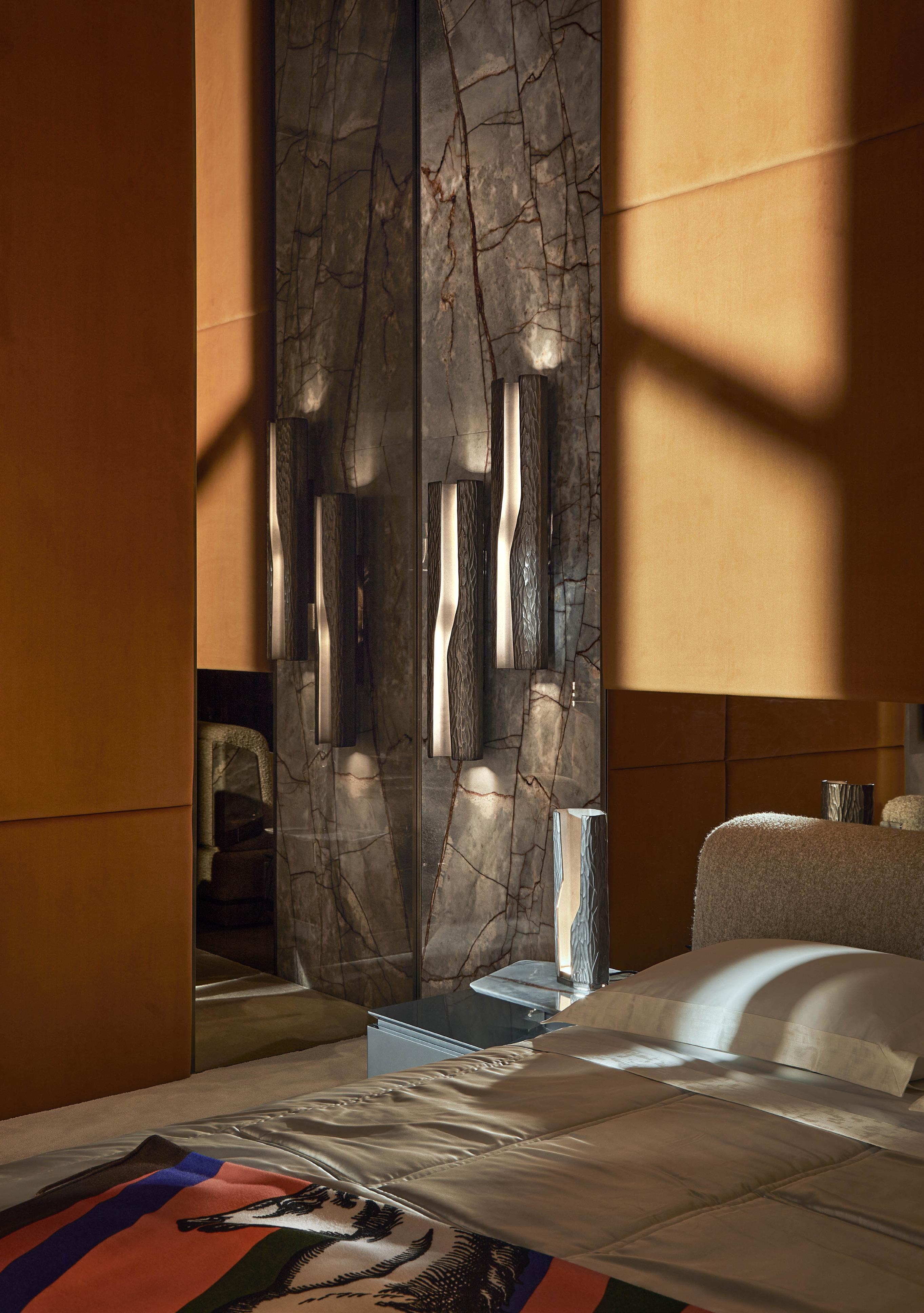
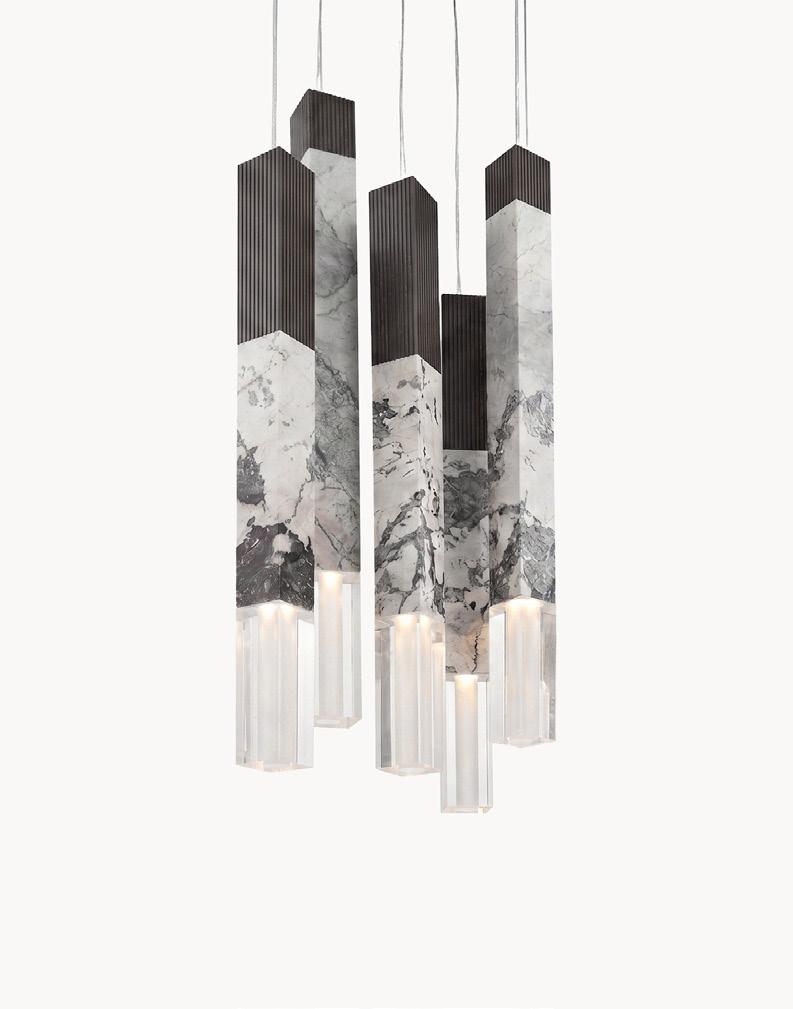
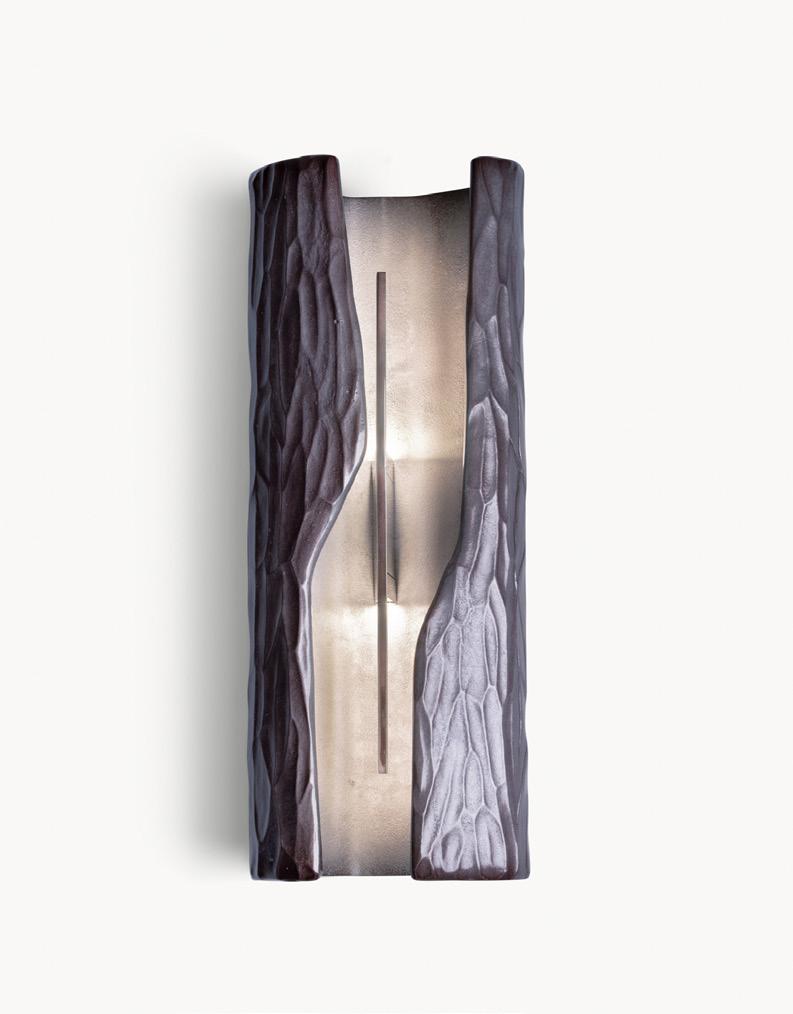
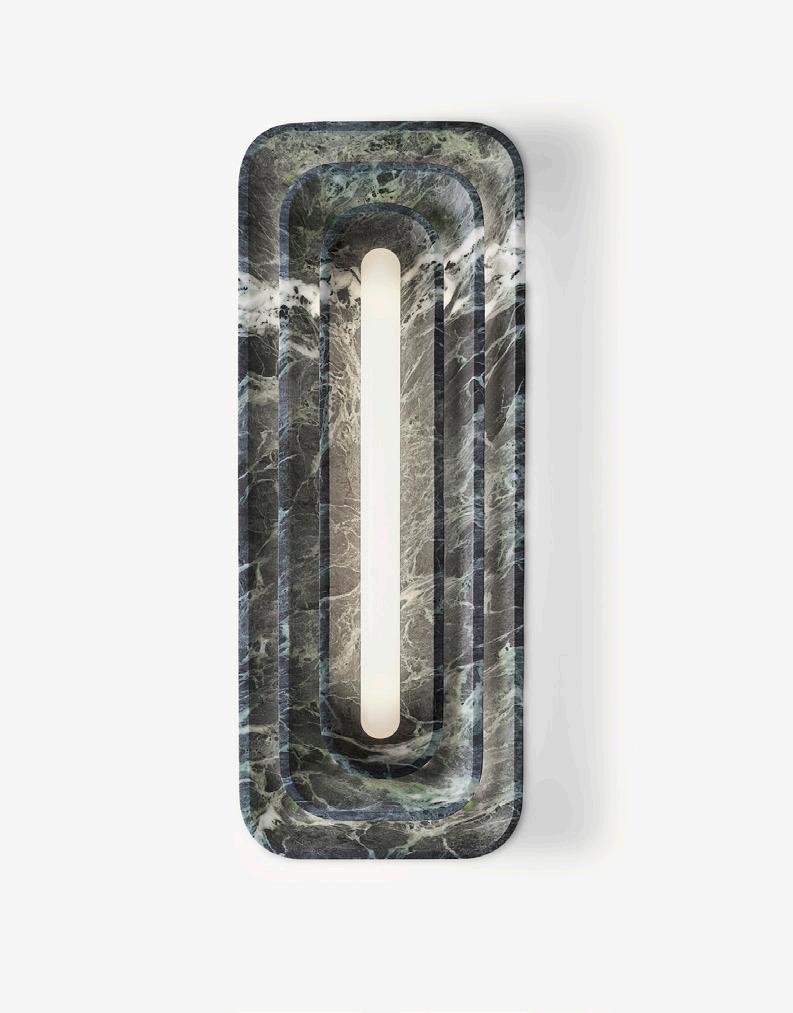
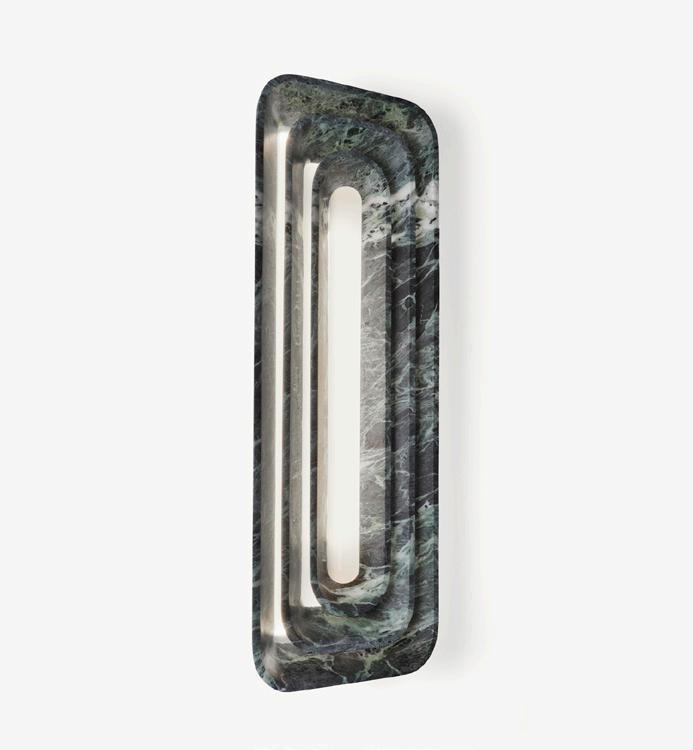
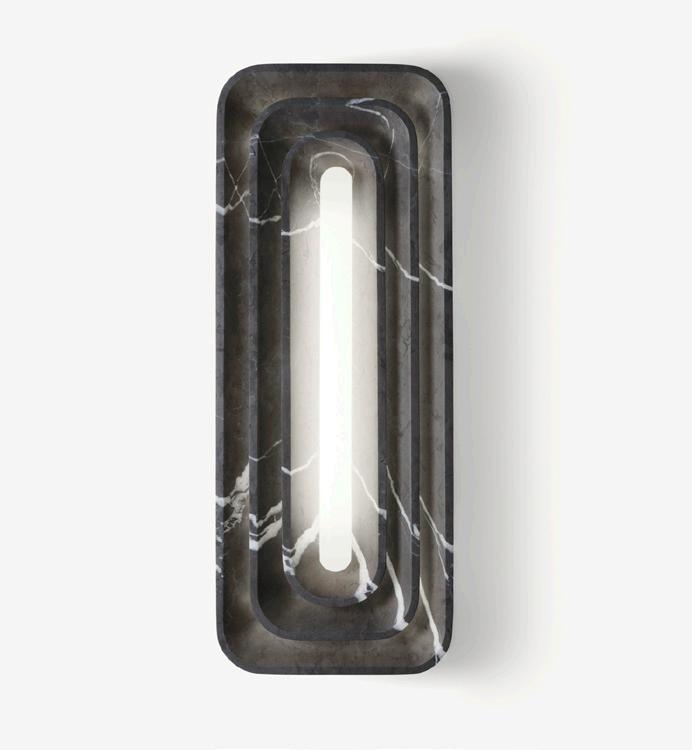
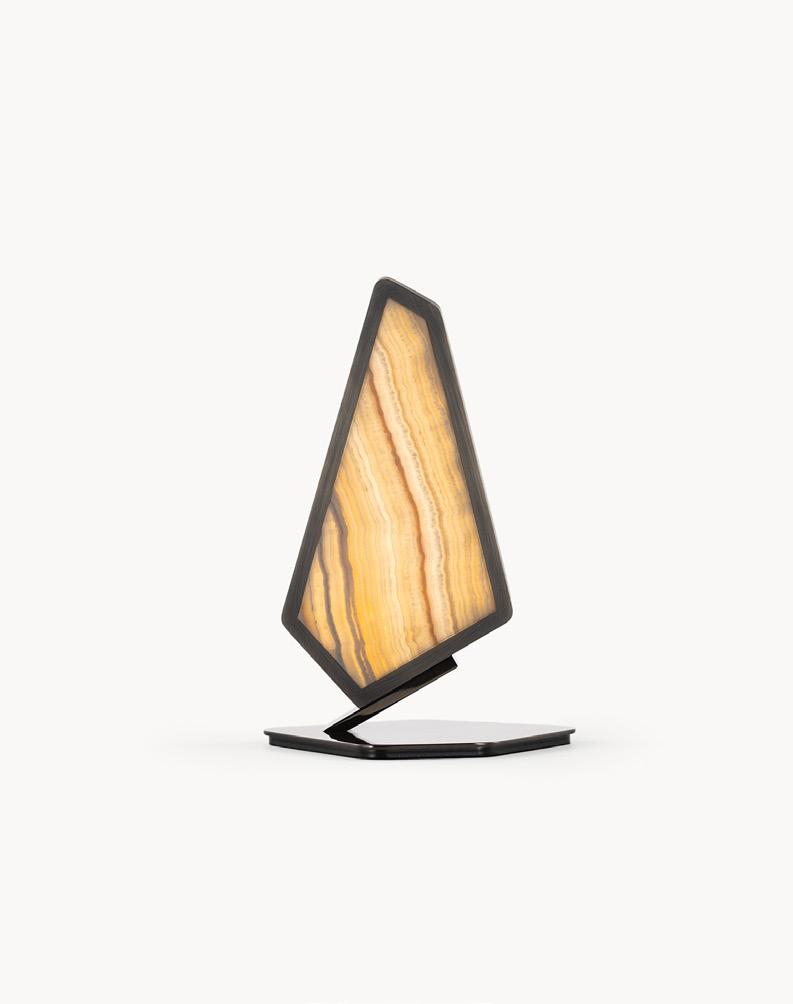
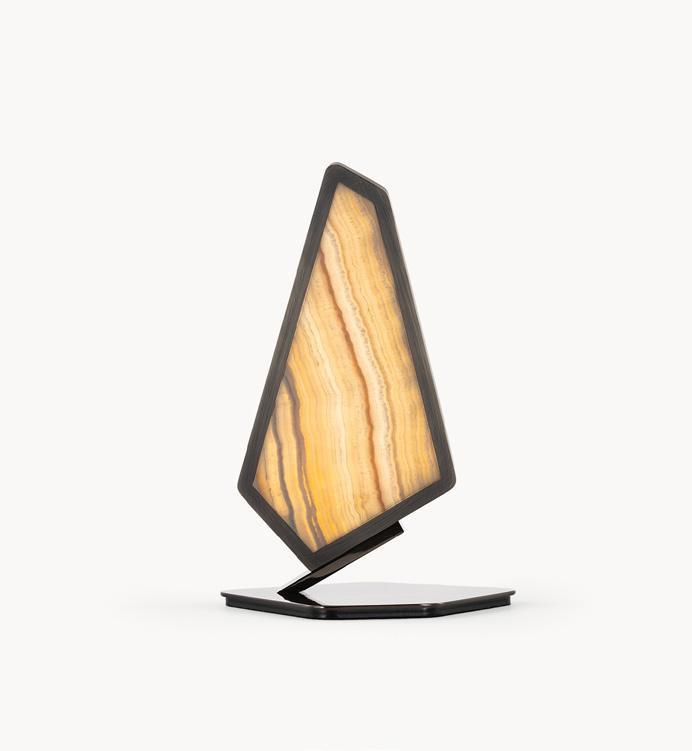
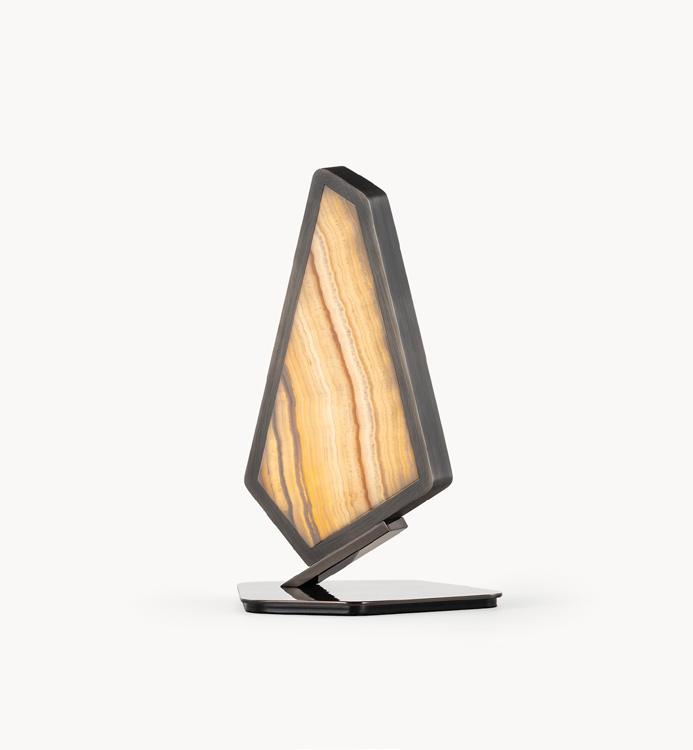
Sfogliatella appears like a wall-born cocoon — a silent organism emerging from stone. Layer upon layer, a body folds into itself, sheltering a hidden glow. The material seems to breathe, as if something were resting inside: neither animal nor vegetal, but suspended in a quiet state of becoming. Light pulses from within the mass, contained yet alive. The form feels protective, almost secret, like a presence that chose the wall as its refuge. The object evokes the idea of transformation — enclosure as preparation, darkness as gestation, stone as a vessel for light. Sfogliatella carries a name from elsewhere, from another time, where layers once held sweetness and mystery in equal measure. Here, the reference becomes abstract, emotional, and tactile. The lamp becomes not only illumination, but a living fragment of architecture — intimate, protective, and quietly luminous.
Sfogliatella appare come un organismo silenzioso che emerge dalla pietra. Strato dopo strato, un corpo si ripiega su sé stesso, custodendo un bagliore nascosto. La materia sembra respirare, come se qualcosa riposasse al suo interno: né animale né vegetale, ma sospeso in un silenzioso stato di trasformazione. La luce pulsa dall’interno del volume, contenuta ma vitale. L’oggetto evoca l’idea di metamorfosi — l’involucro come preparazione, l’oscurità come gestazione, la pietra come custode della luce. Sfogliatella porta con sé un nome che proviene da altrove, da un altro tempo, in cui gli strati racchiudevano dolcezza e mistero in egual misura. Qui il riferimento diventa astratto, emotivo, tattile. La lampada non è solo fonte di illuminazione, ma frammento vivo di architettura — intimo, protettivo e silenziosamente luminoso.
Parade suspension lamp
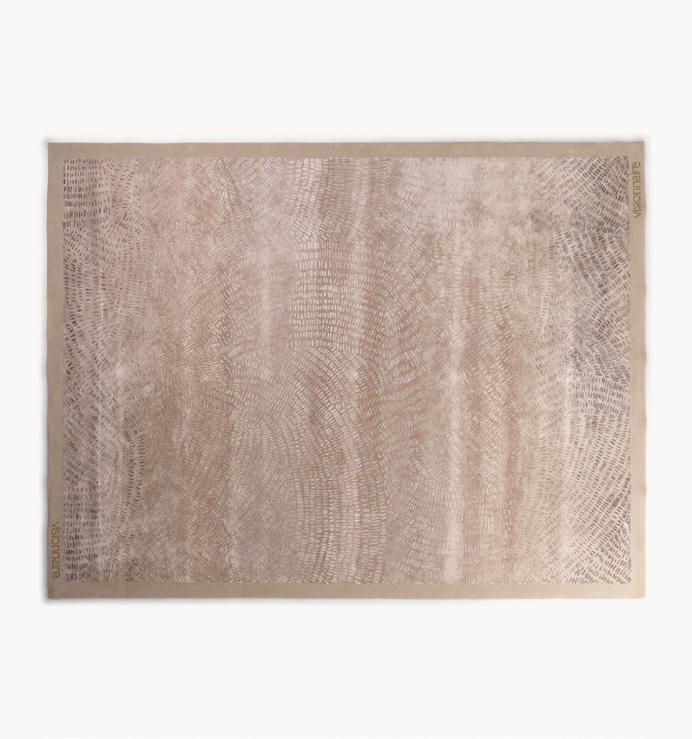
Burgundy carpet by Studiopepe by Luigi Cavalli
Hampshire armchair
Trapeze small tables by Mauro Lipparini
by Alessandro La Spada
Aggregate
CaCO3
Trapeze small tables
Luxor carpet
by Mauro Lipparini
by Alessandro La Spada
Hampshire armchair
Trapeze small tables Luxor carpet by Mauro Lipparini by Alessandro La Spada
Baton Rouge
Baton Rouge engages with the Brutalist language through the primal strength of volume: compact, continuous and structural forms define an almost architectural presence, where mass is never mere monumentality, but is refined into proportion, comfort and permanence.
Baton Rouge incontra il linguaggio Brutalista nella forza primaria del volume: forme compatte, continue e strutturali costruiscono una presenza, quasi architettonica, in cui la massa non è mai pura imponenza, ma diventa misura, comfort e permanenza.
Hampshire
Hampshire originates from a clear constructive gesture: a cantilever structure that supports and defines the seat with precision. Its decisive proportions and the balance between frame and upholstered volume recall a Brutalist logic shaped by essentiality, strength and function. Comfort does not interrupt the rigour of the form, but completes it through a controlled and composed softness. Between Seventies memory and design discipline, Hampshire conveys an idea of seating that is solid, authentic and free from superfluous decoration.
Hampshire nasce da un gesto costruttivo chiaro: una struttura a cantilever che sostiene e definisce la seduta con precisione. Le proporzioni decise e l’equilibrio tra struttura e volume imbottito richiamano una logica Brutalista fatta di essenzialità, forza e funzione. Il comfort non interrompe il rigore della forma, ma lo completa attraverso una morbidezza controllata e composta. Tra memoria anni Settanta e disciplina progettuale, Hampshire restituisce un’idea di seduta solida, autentica e priva di decorazione superflua.
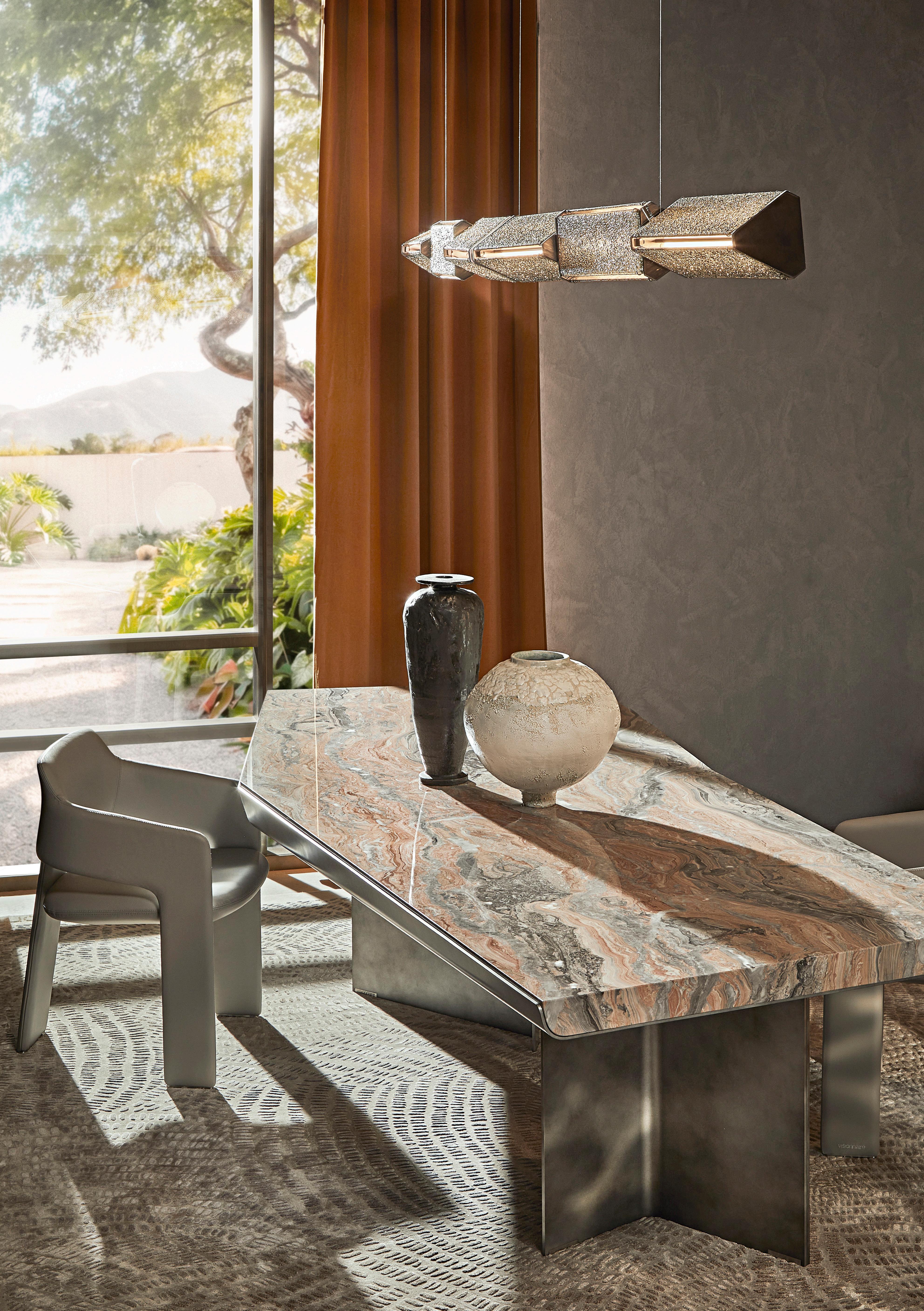
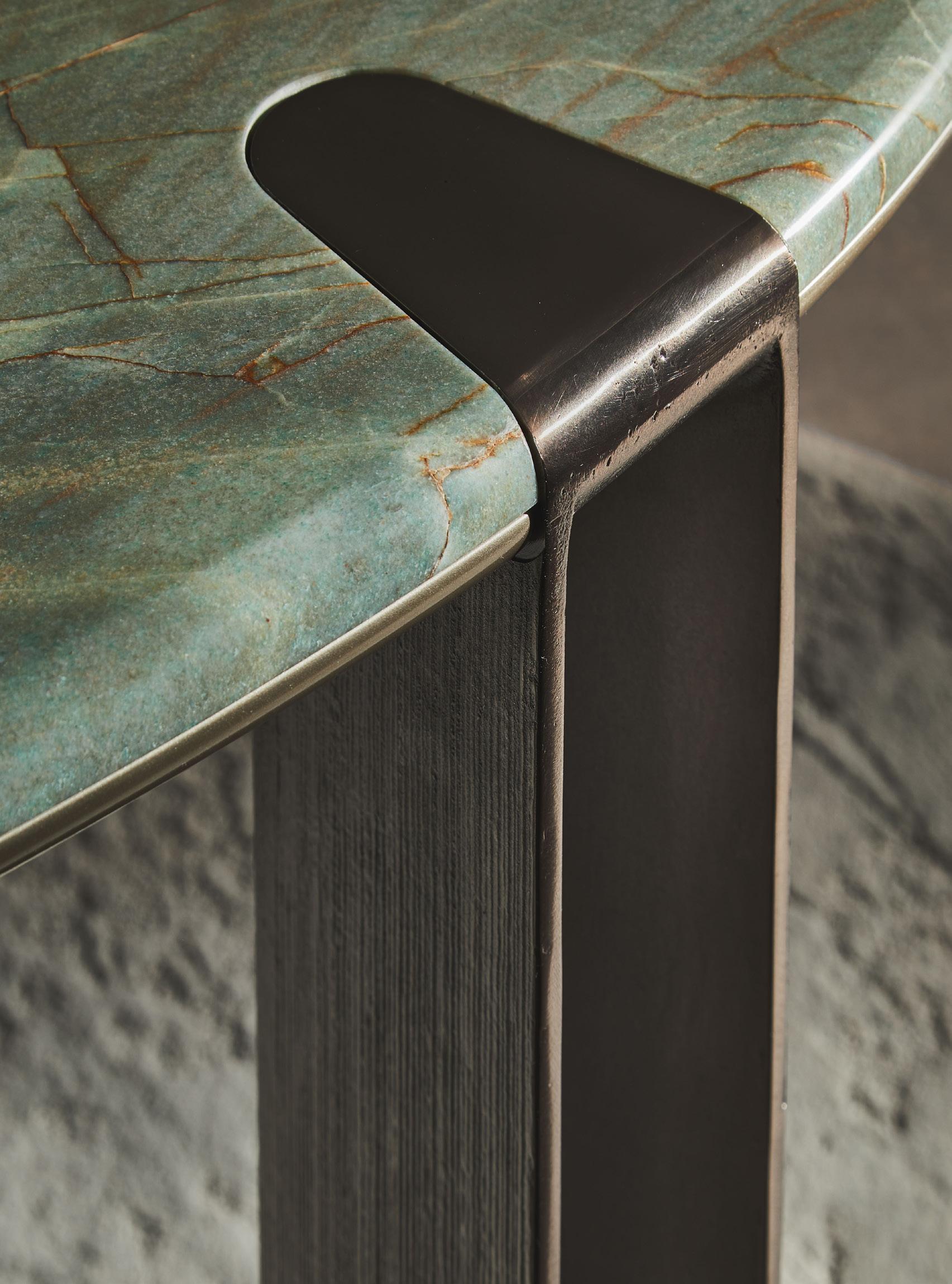
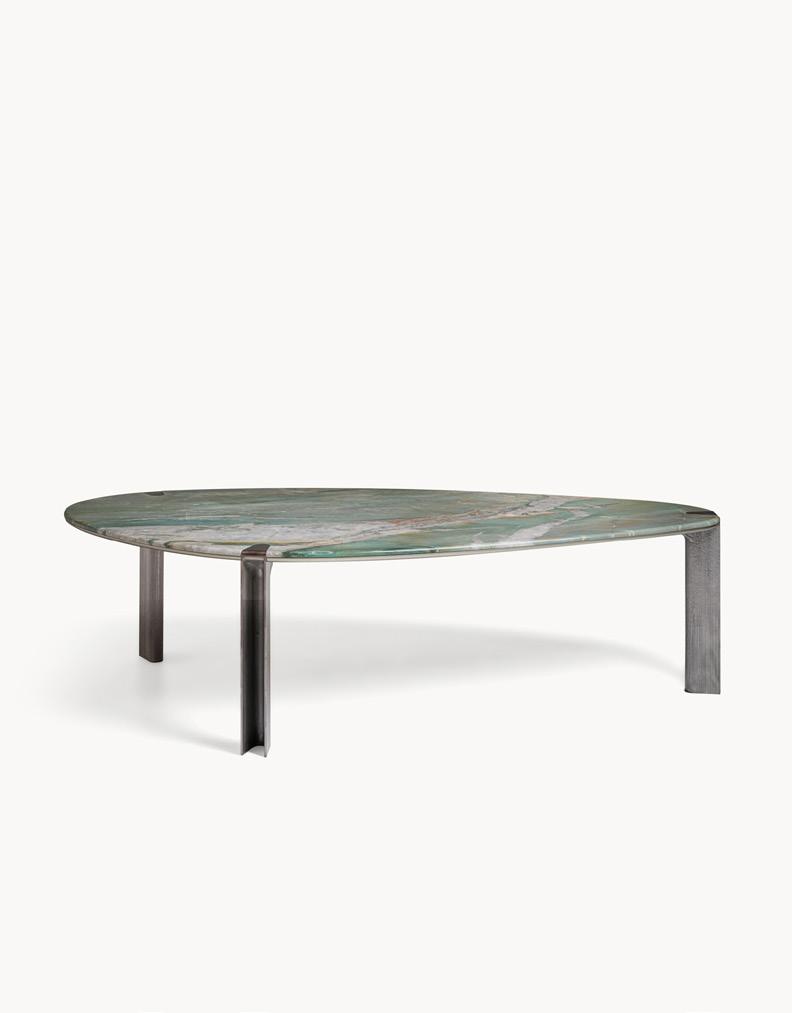
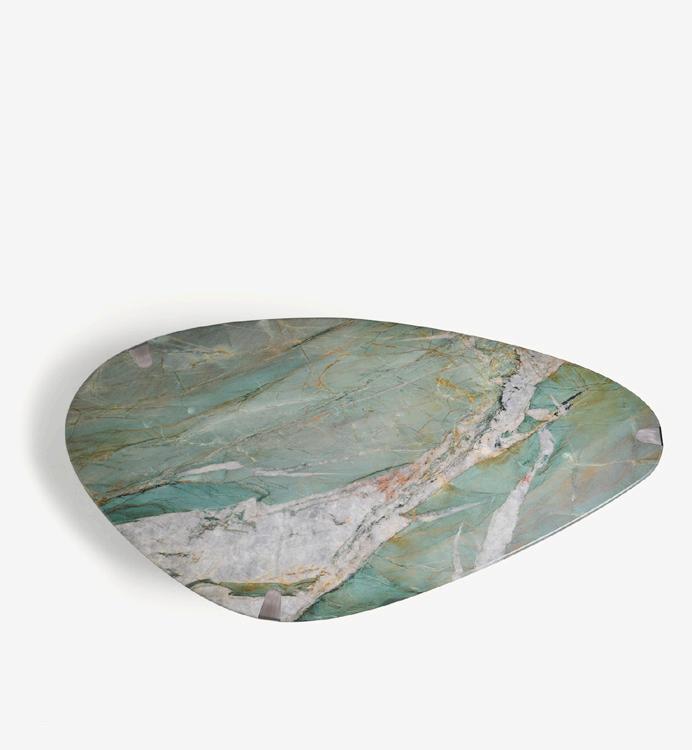
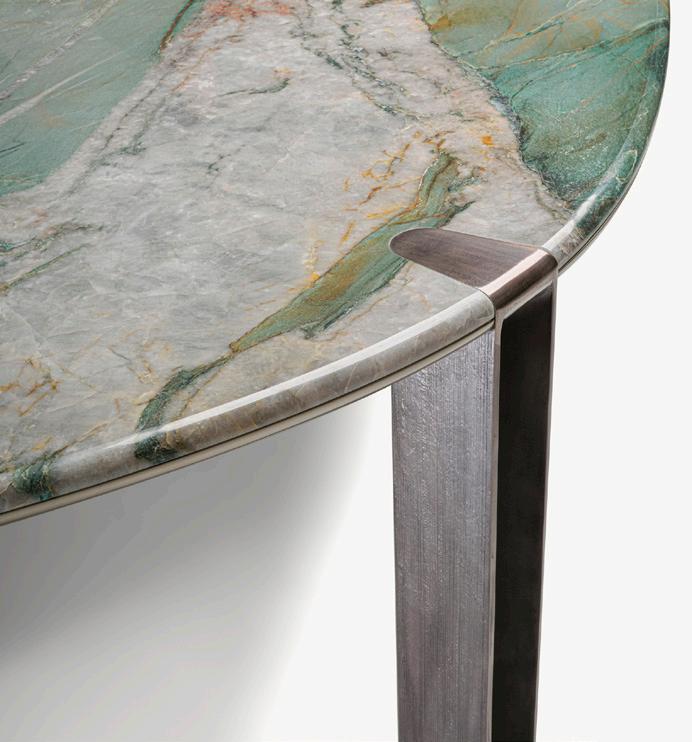
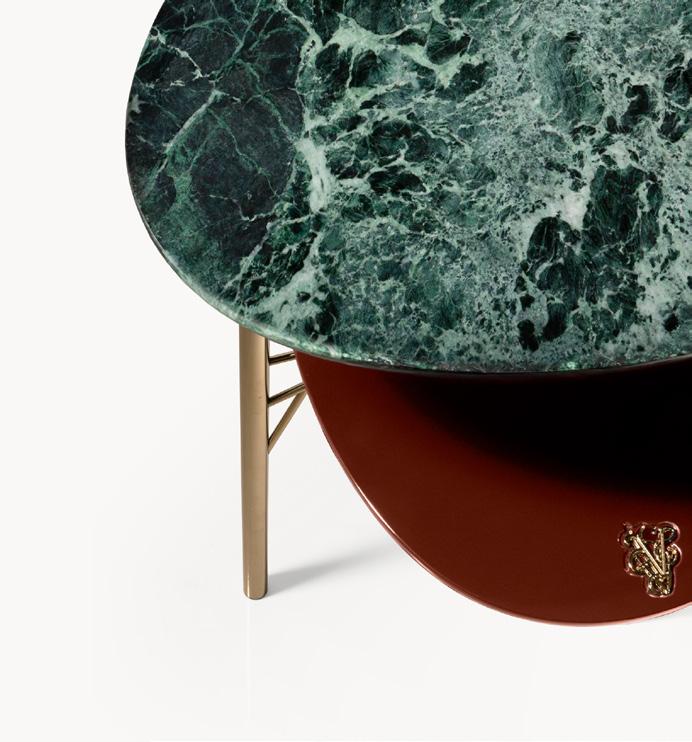
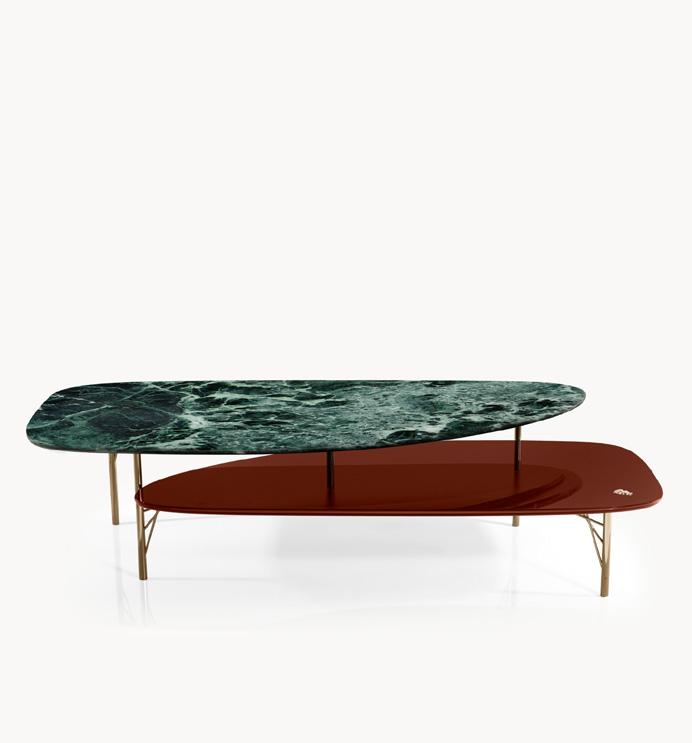
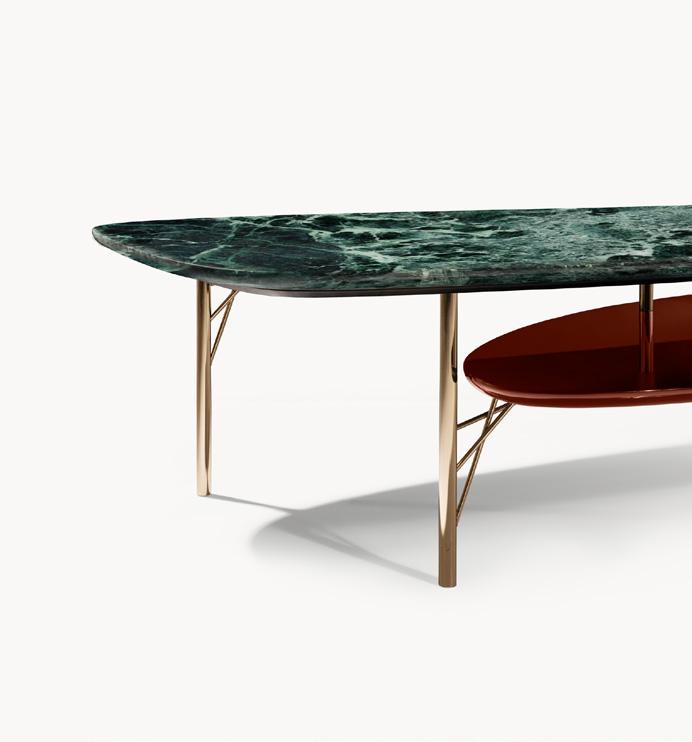
Mystic celebrates nature in its essential, sculptural form, combining elegance and material presence. The top, in Patagonia Green Lux marble with a “mano leather” finish, features soft, organic lines. The legs, produced through die-casting, play on the contrast between solid and void. The dual finish — polished on the inside and brushed on the outside — adds depth and dynamism to the structure, enhancing the table’s three-dimensionality and giving it a distinctive character.
Mystic è una celebrazione della natura nella sua forma essenziale e scultorea, unisce eleganza e matericità. Il top in Patagonia Green Lux con finitura “mano leather”, presenta linee morbide ed organiche. Le gambe, realizzate con uno stampo in presso fusione, giocano con il contrasto tra pieno e vuoto. La doppia finitura –lucida all’interno e spazzolata all’esterno – aggiunge profondità e dinamismo alla struttura, enfatizzando la tridimensionalità del tavolo e conferendogli un carattere distintivo.
Mystic
Mystic, table
Zoe
, chair
Lego, console
Gea, suspension/wall/table lamp
Explore the room ↗
Deco
Cobble Ivory, carpet
Fuzzy, artwork
Mossblood Blue, vase
A fluid geometry, where nature sets the rhythm and matter becomes a suspended gesture.
Una geometria fluida, dove la materia segue il ritmo della natura e la forma diventa presenza sospesa.
Mystic table by Alessandro La Spada
Zoe Deco chair
Cobble Ivory carpet by Draga & Aurel by Luigi Cavalli
Mystic table
Gea suspension/wall/table lamp
Zoe Deco chair Lego console by Alessandro La Spada by Gupica by Draga & Aurel
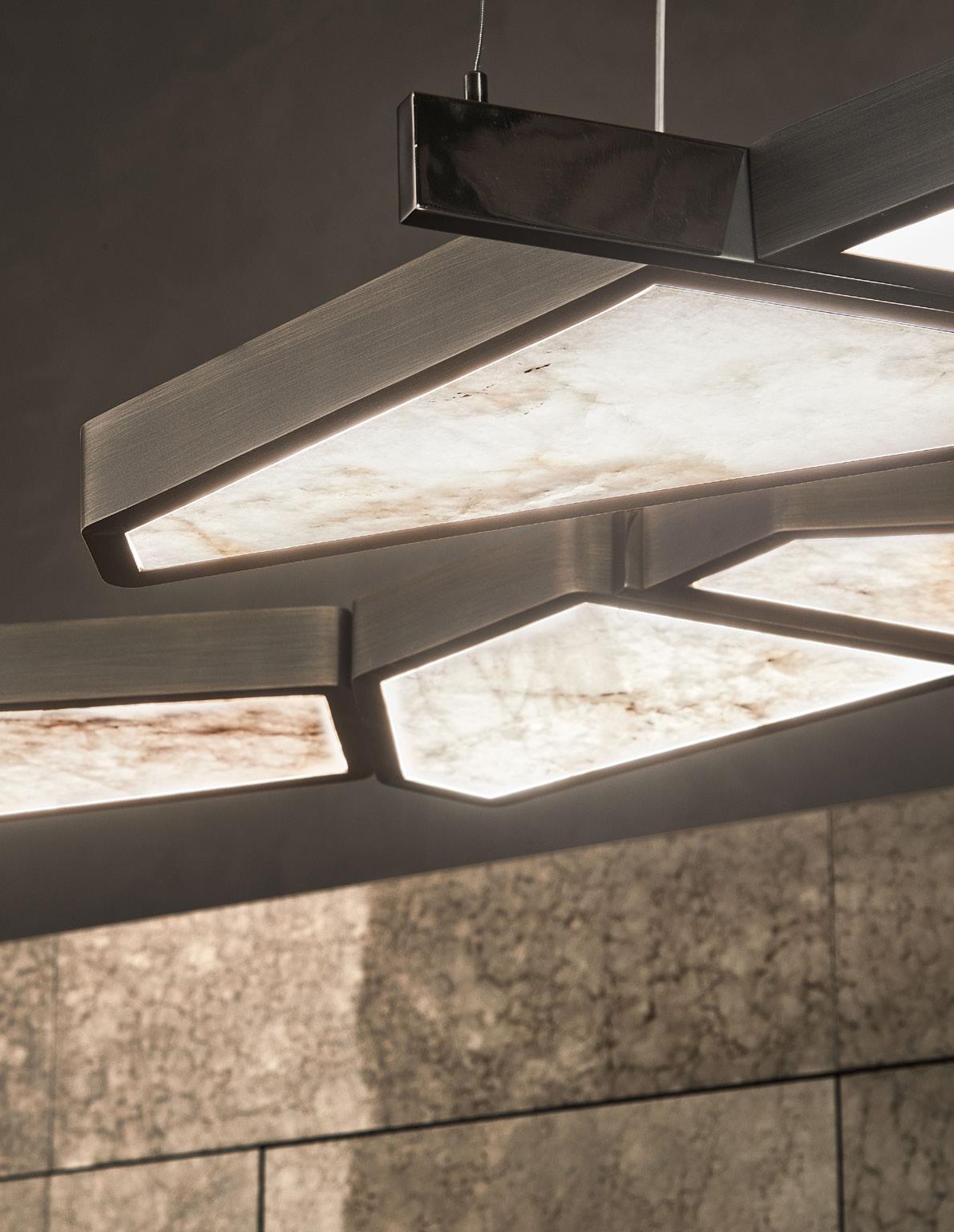
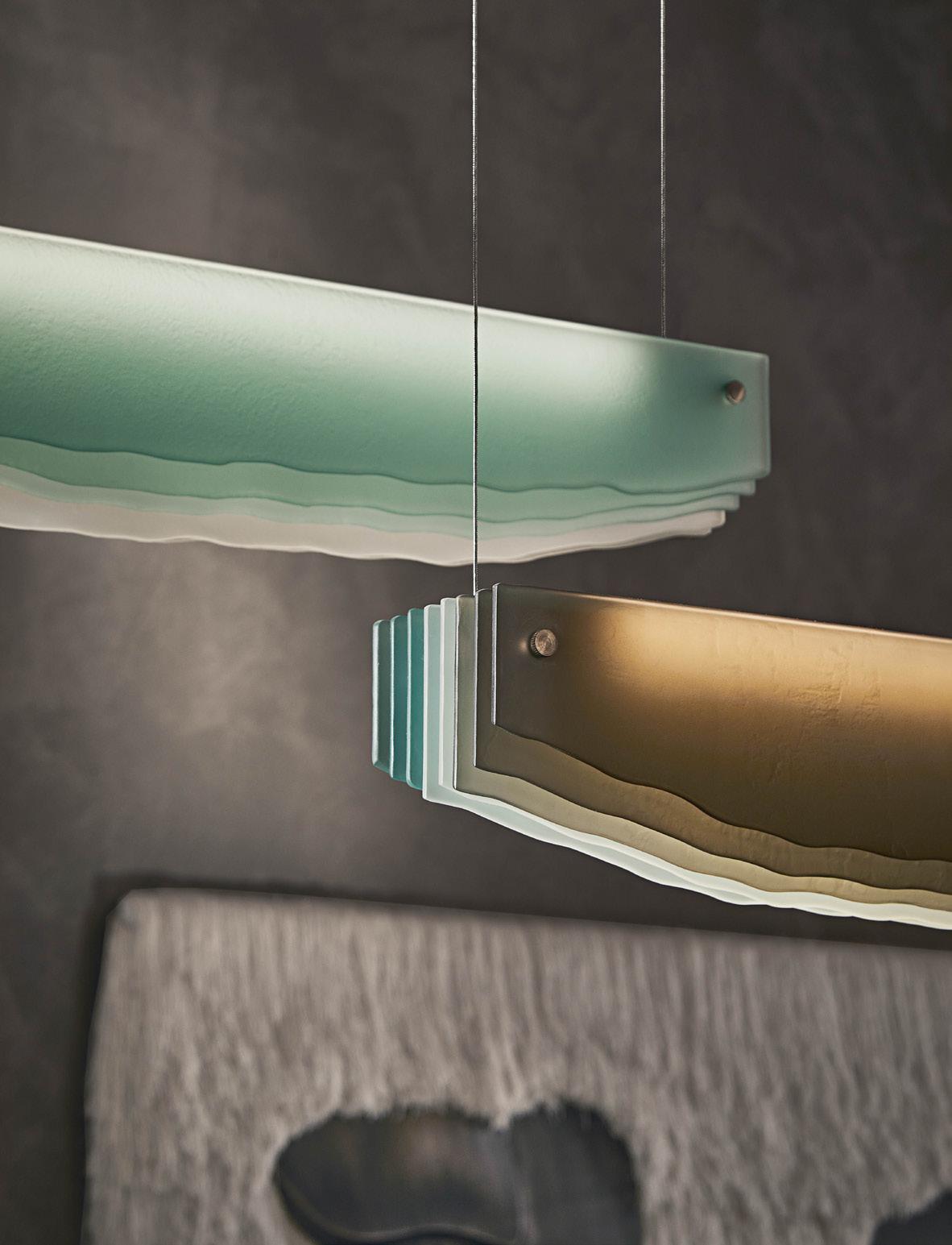
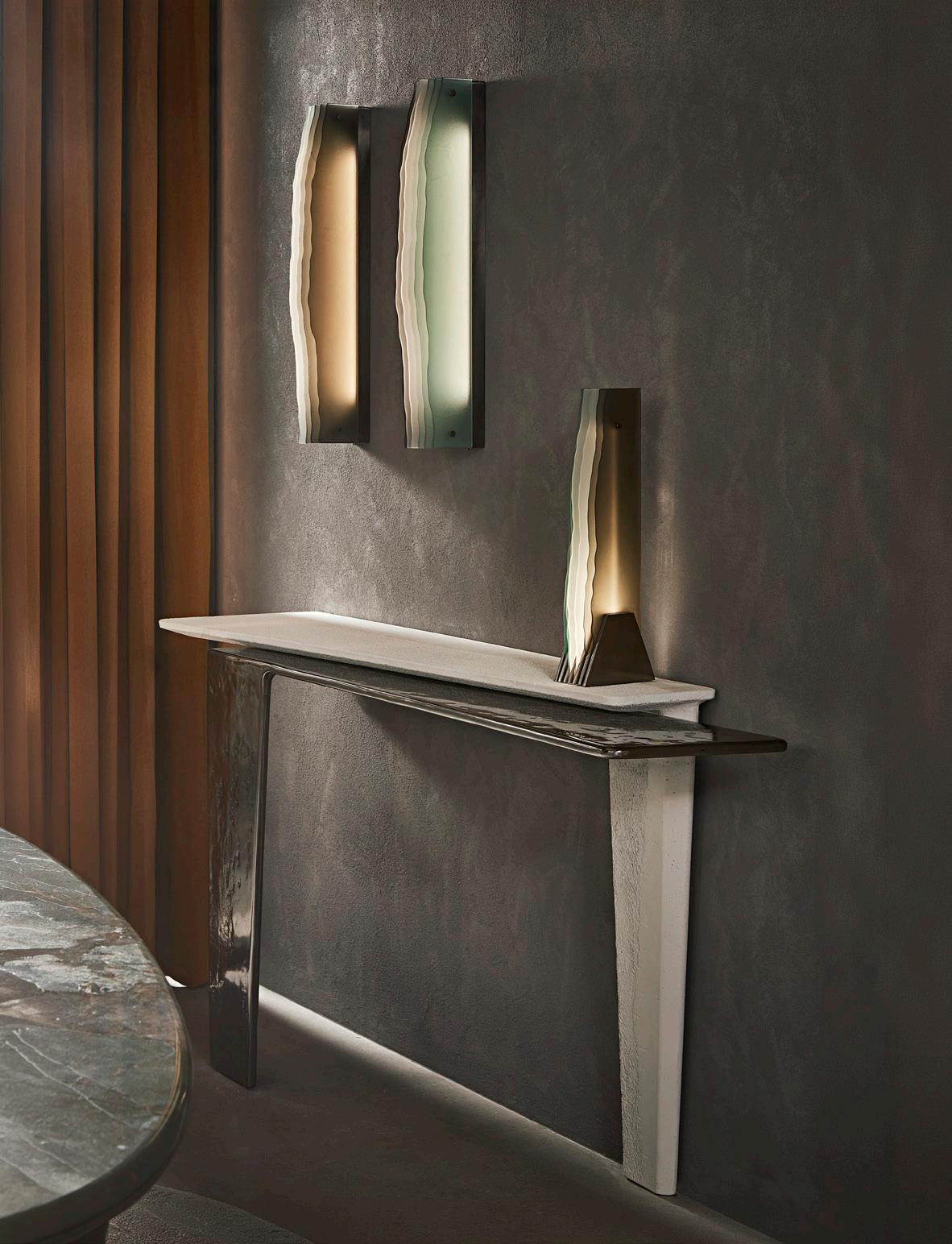
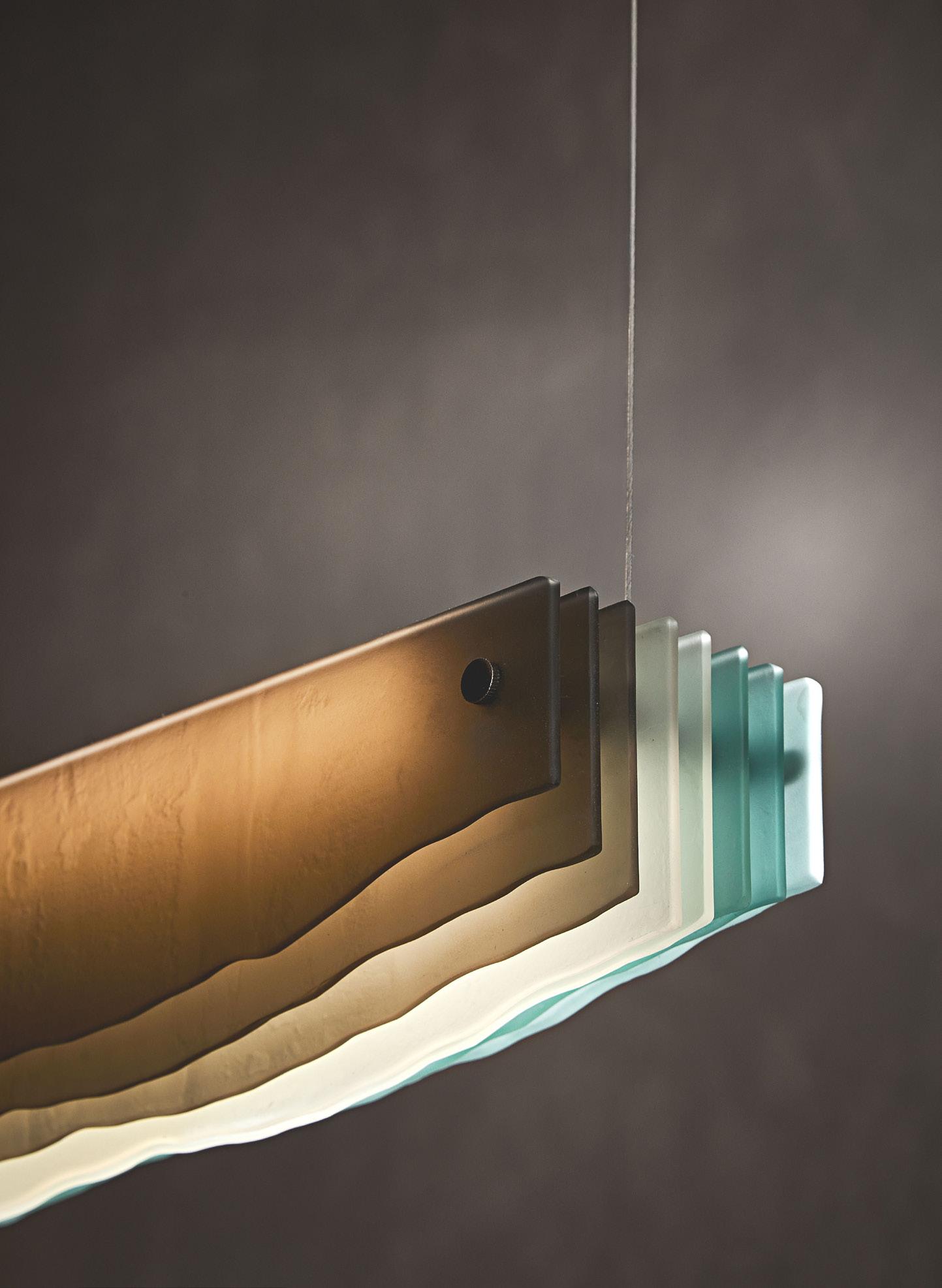
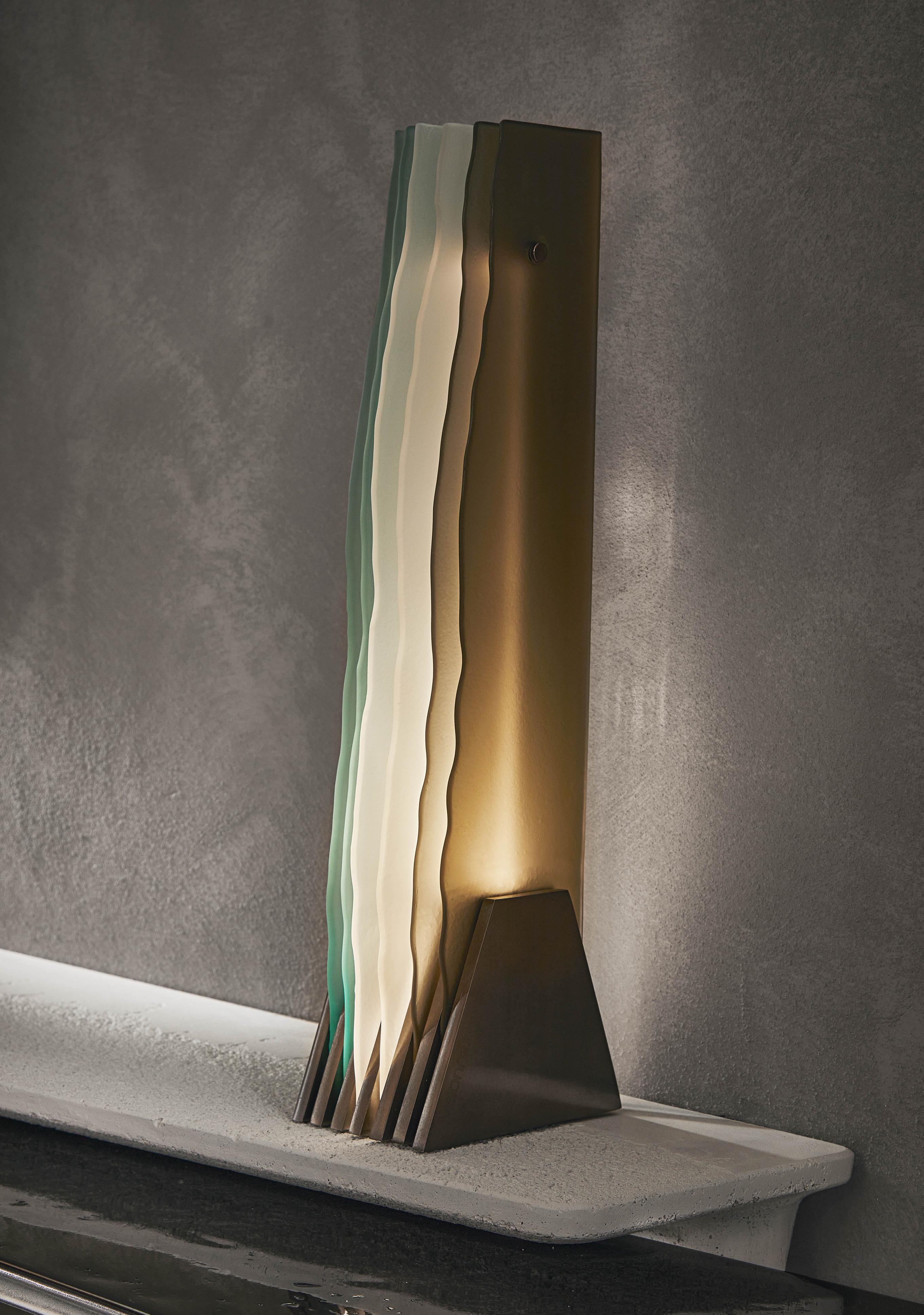
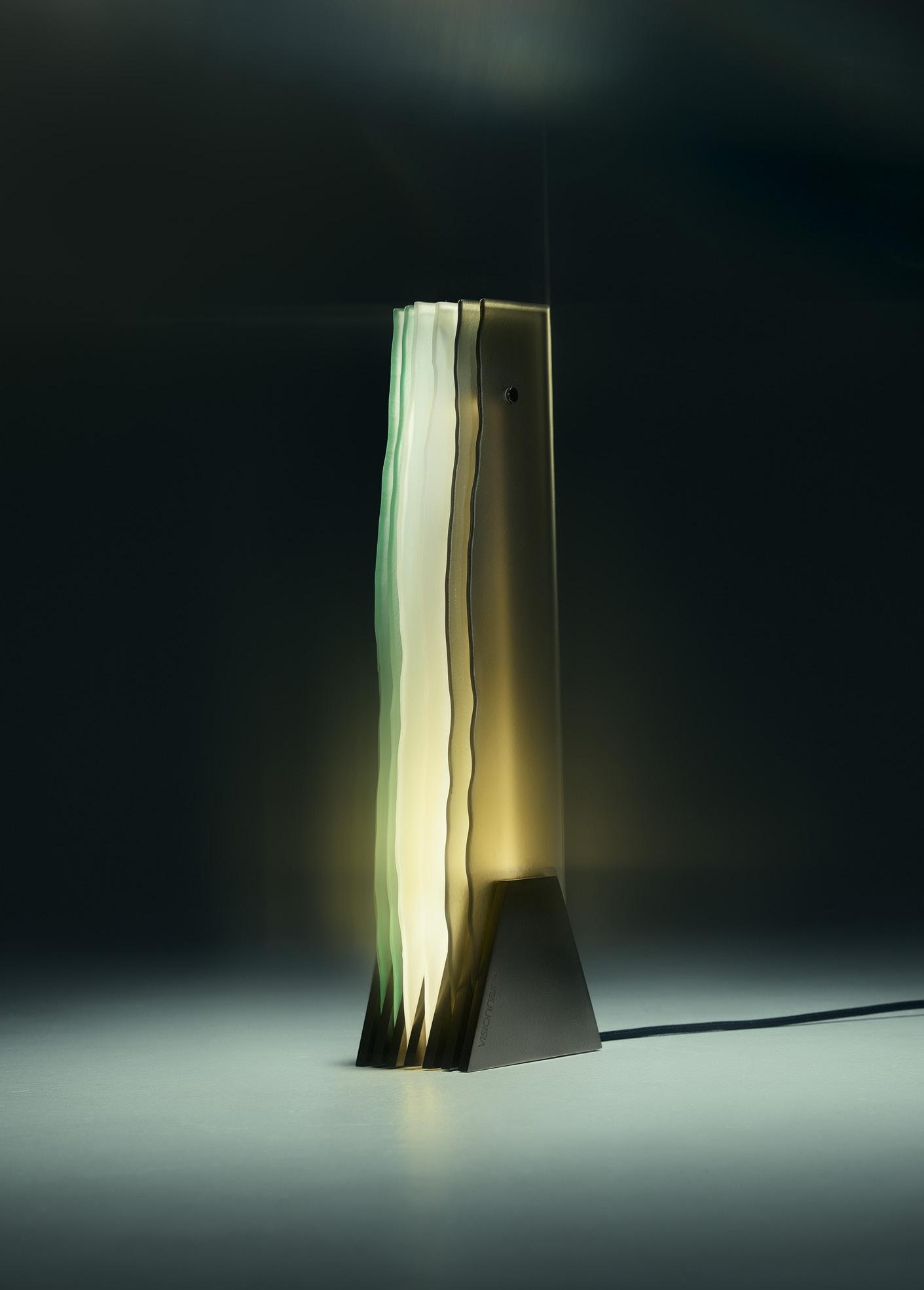
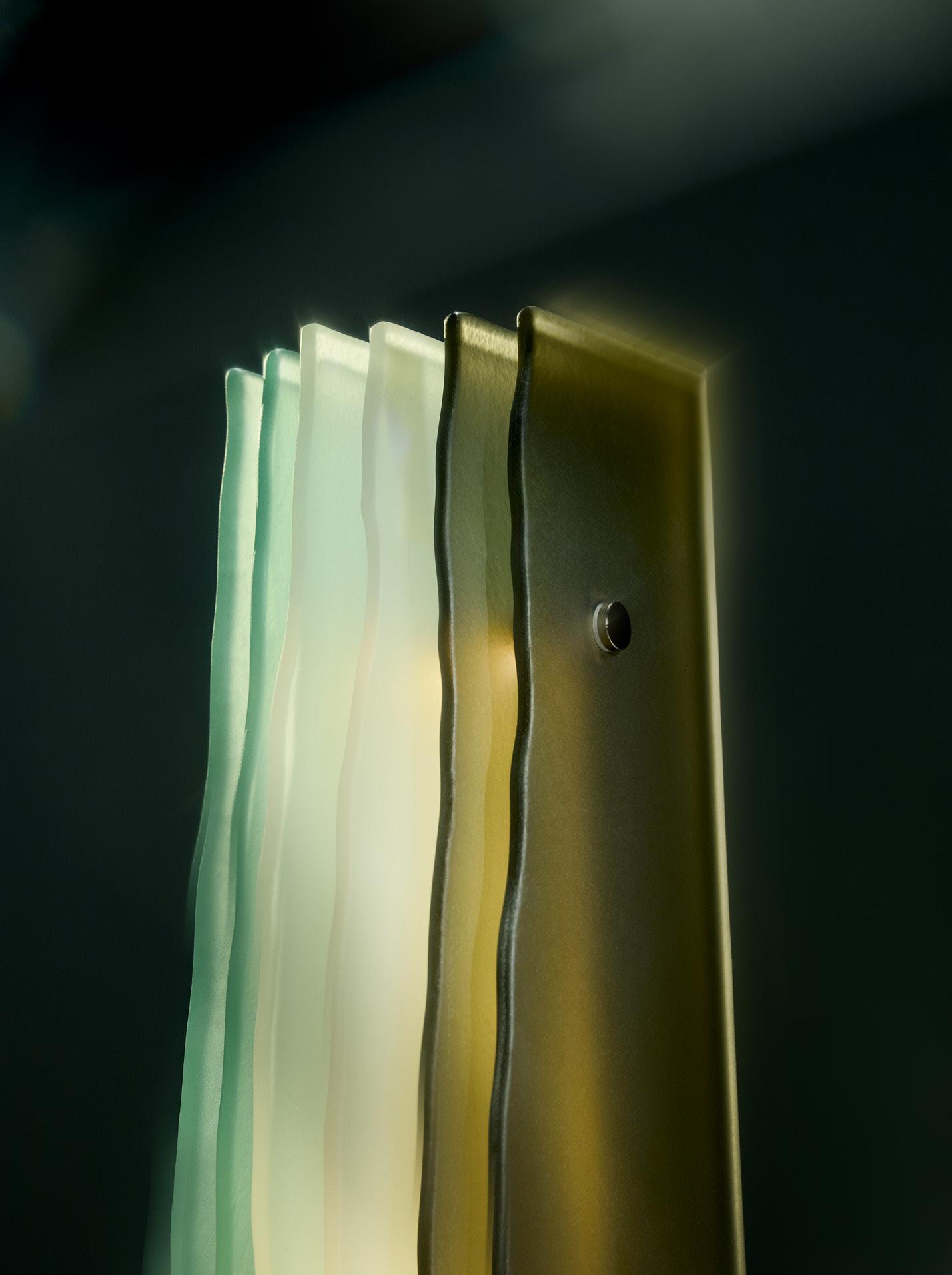
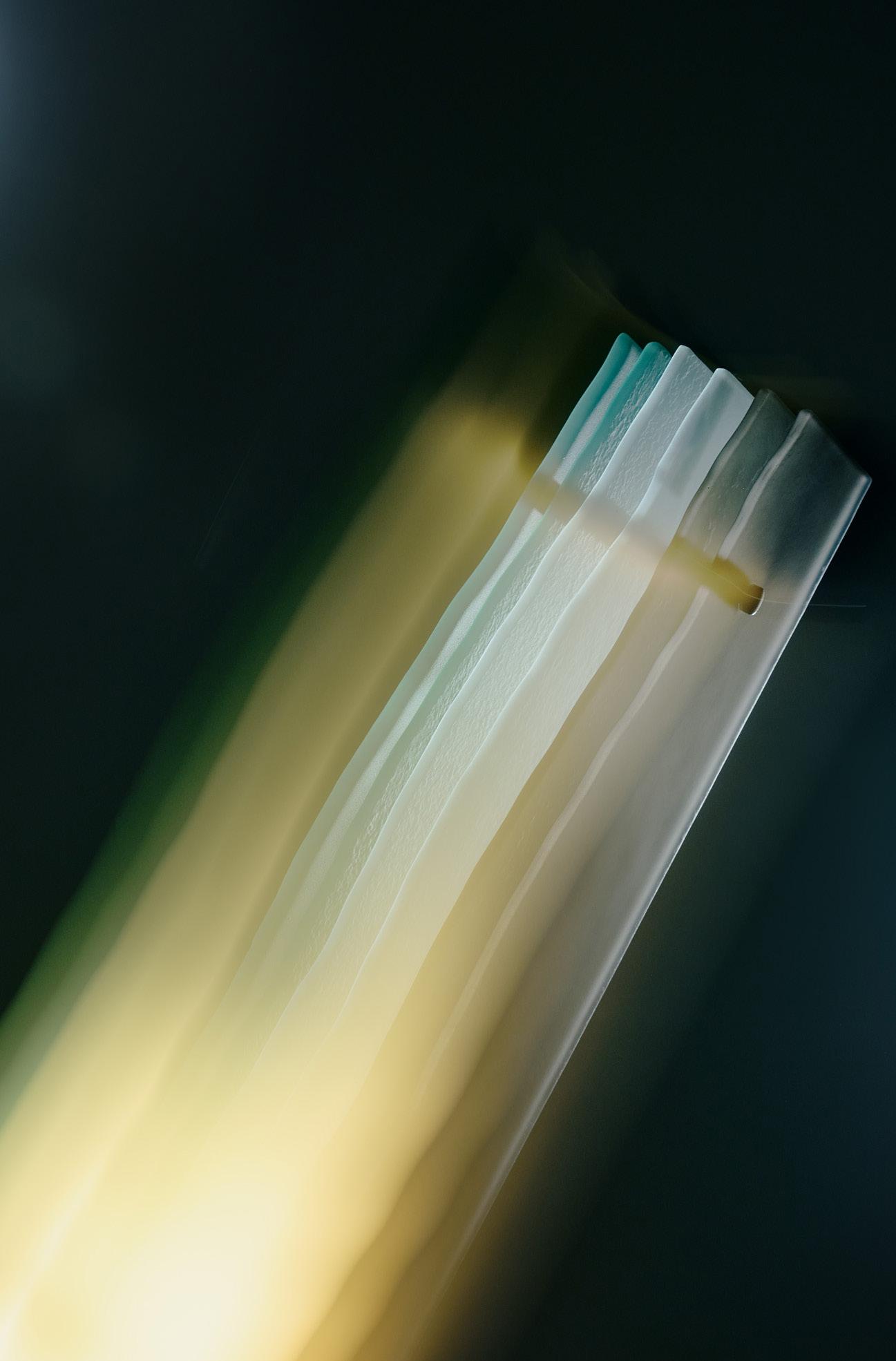
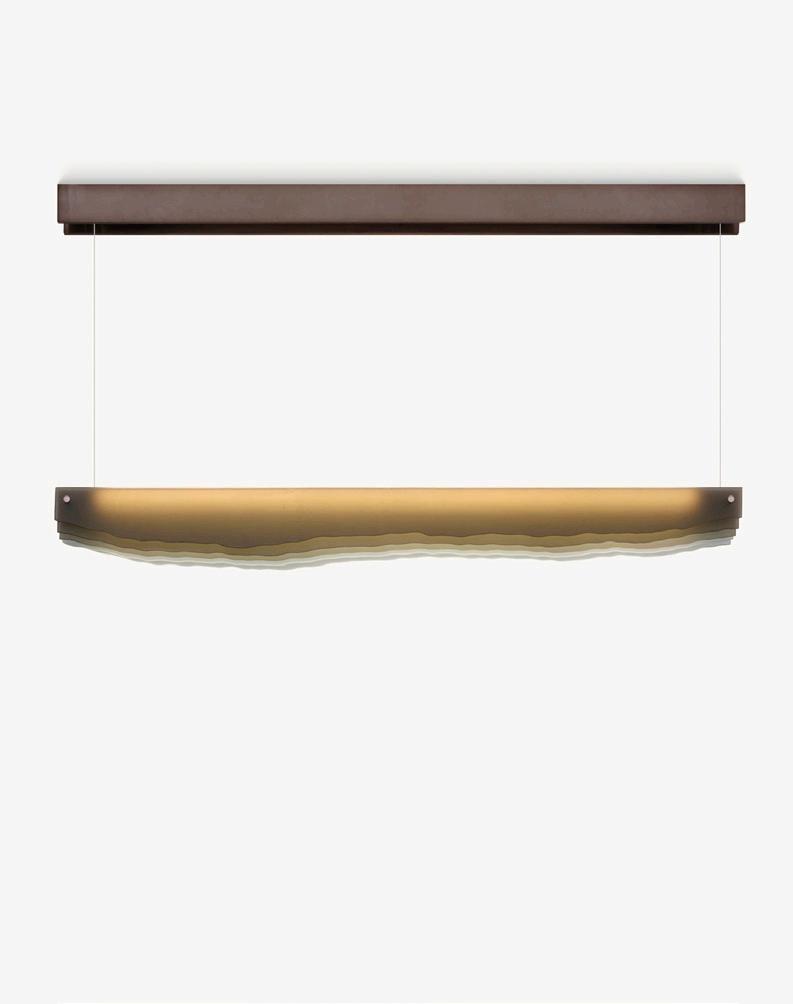
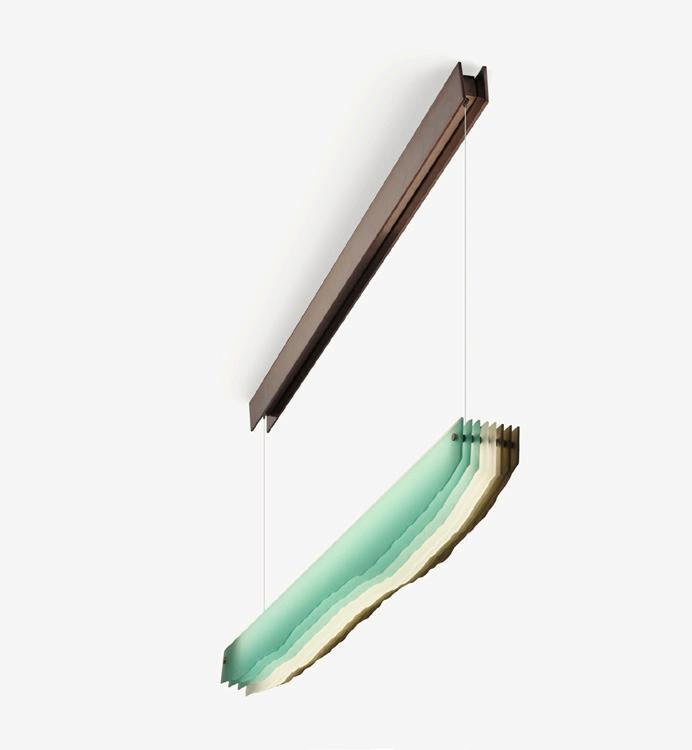
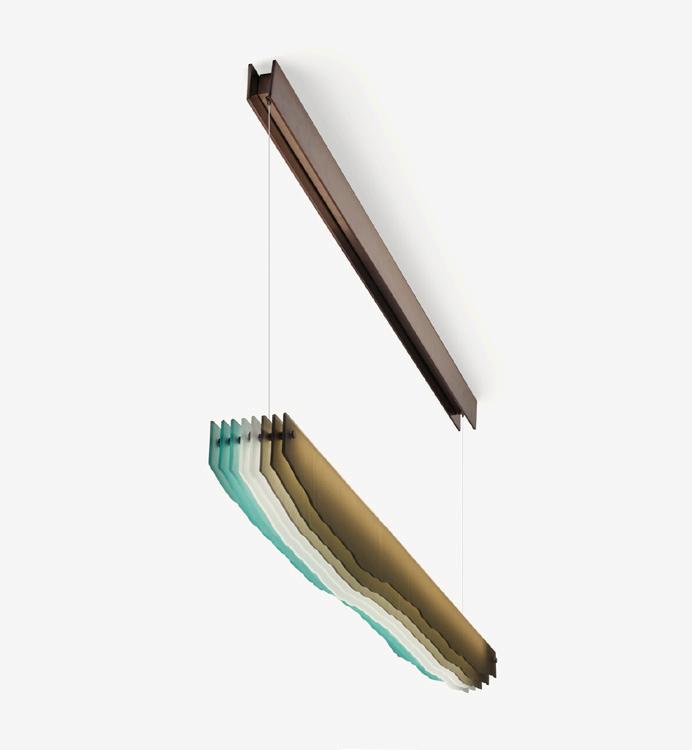
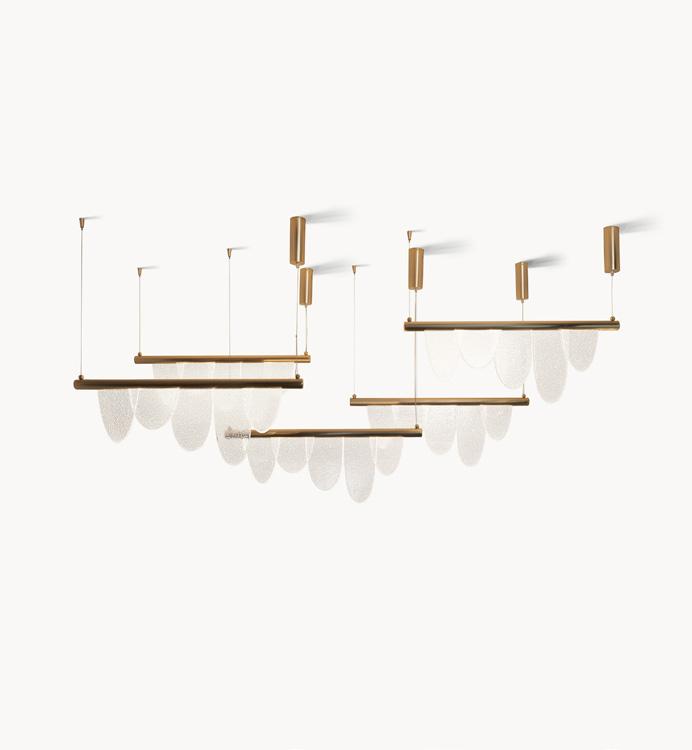
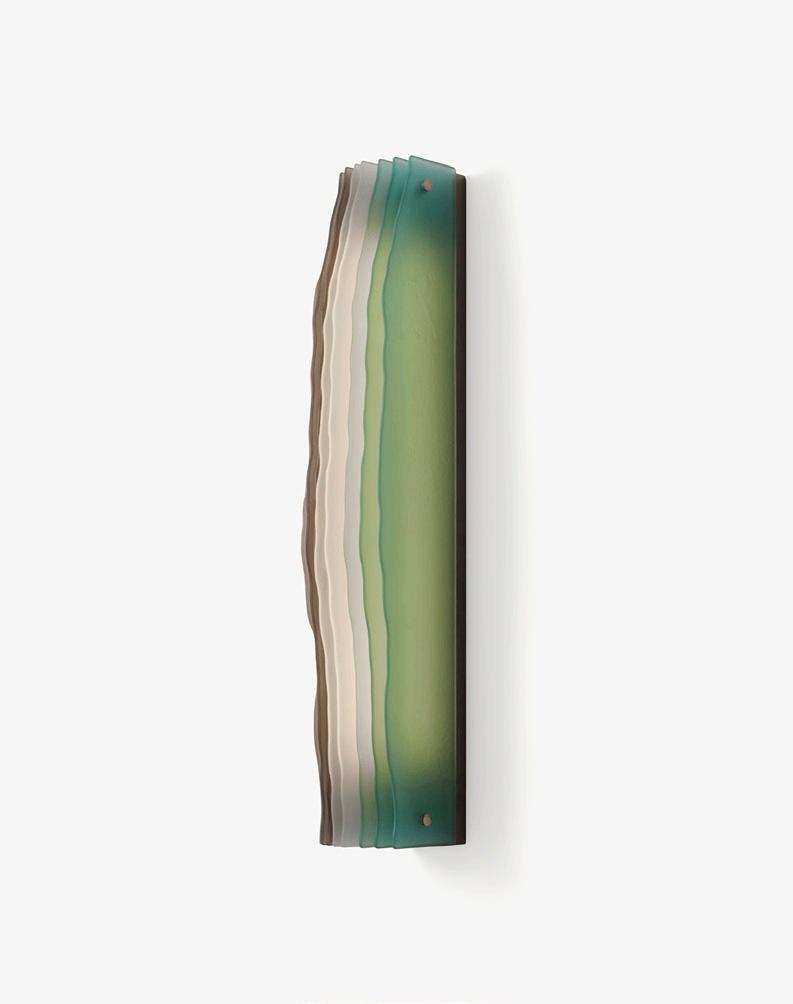
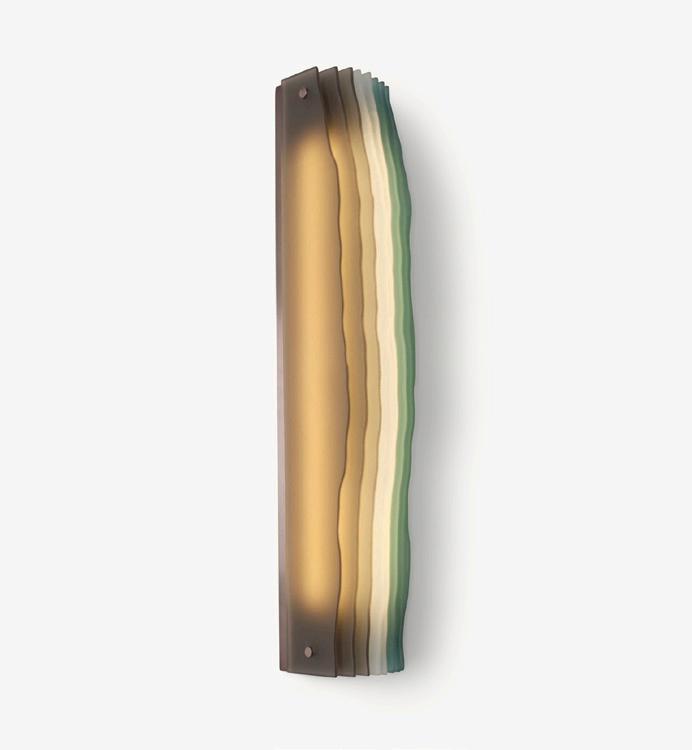
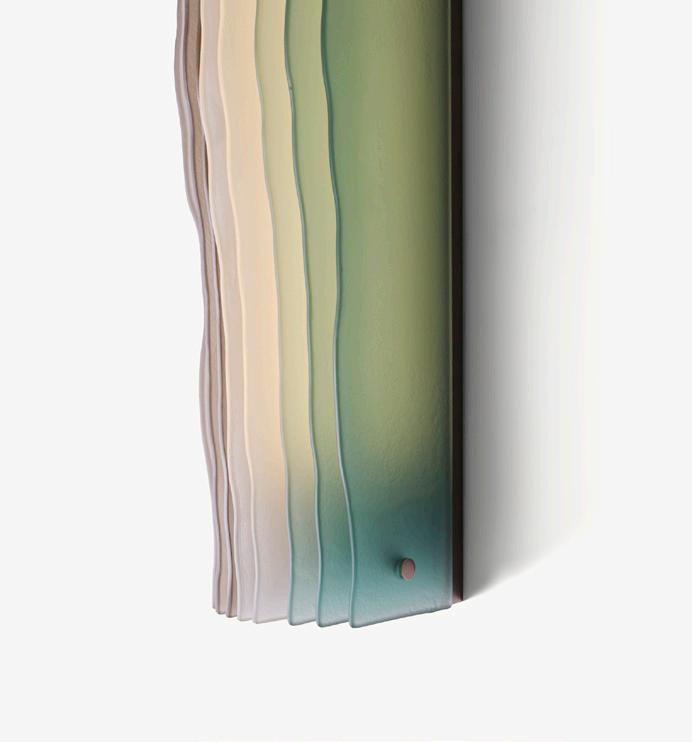
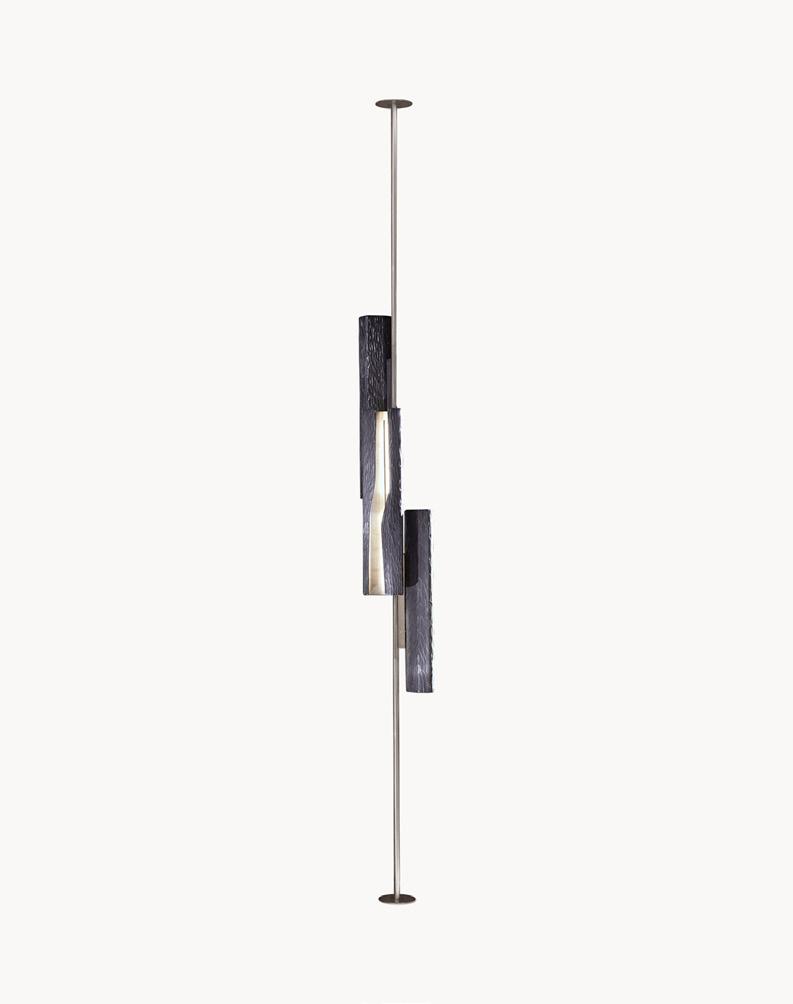
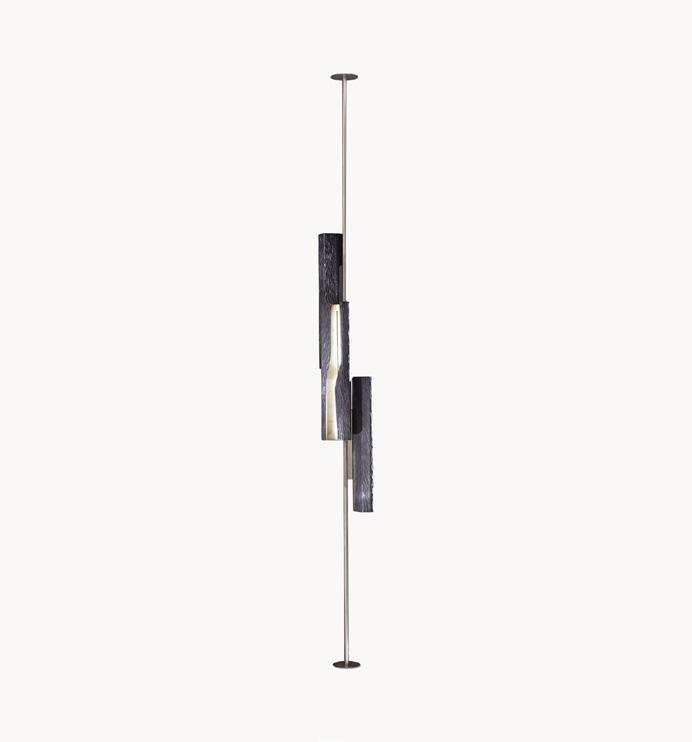
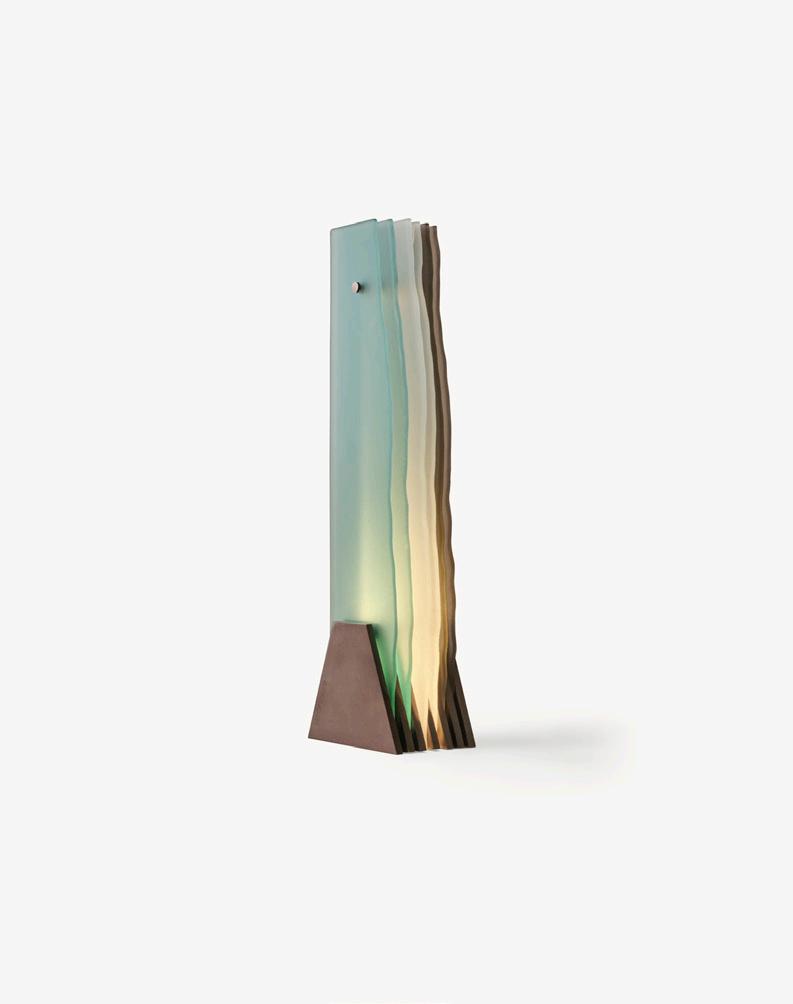
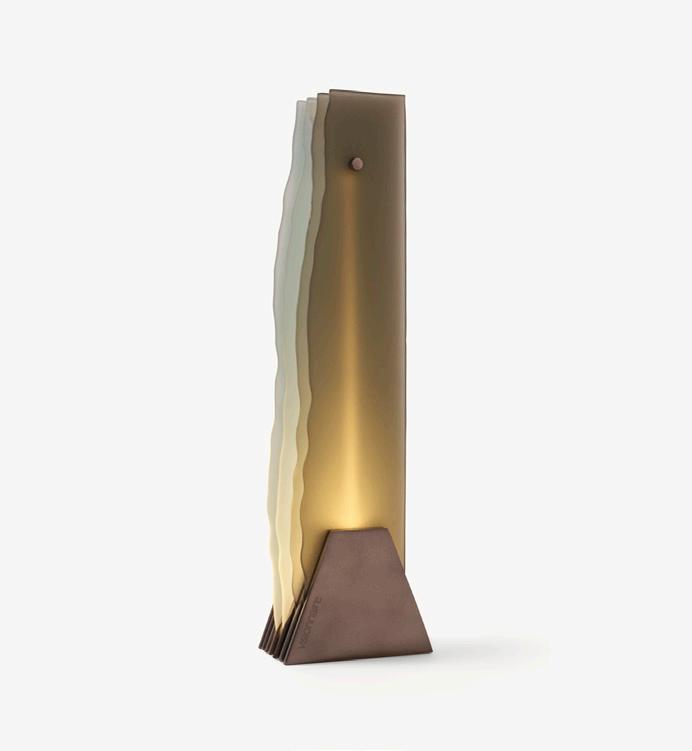
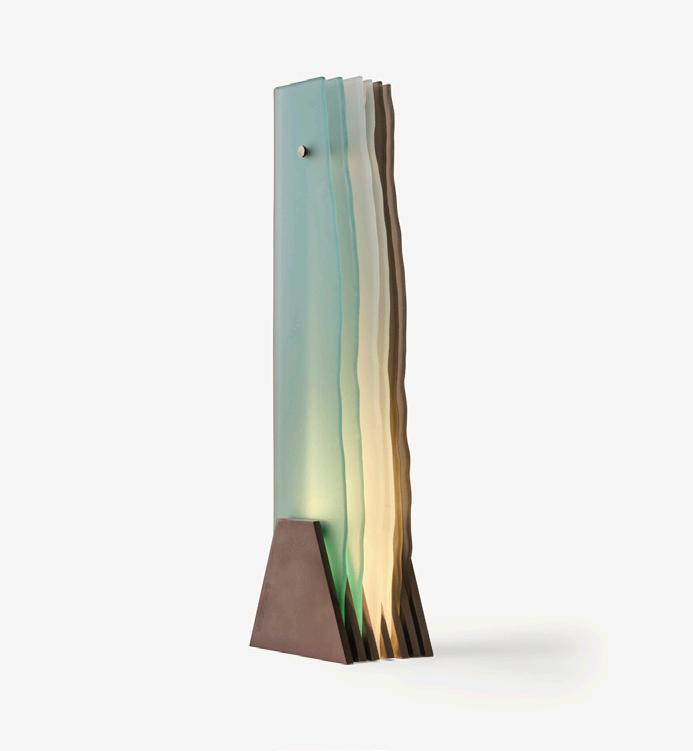
Gea, from the Greek for “earth”, explores the relationship between light and matter through a language inspired by geological processes. The collection interprets the stratigraphic principle, transforming it into structure, rhythm and luminous perception. The project adopts sedimentary stratification as a formal and narrative device. A sequence of colored glass slabs, arranged side by side in a rhythmic composition, creates a volume that recalls the sections of the Earth’s crust. The chromatic nuances of the glass evoke mineral variations and the depths of matter, giving shape to a dynamic luminous composition. The hand-worked opal glass, with jagged edges generated through a parametric system, is both a constructive material and an element that diffuses light. The centrally positioned LED source passes through the individual slabs, emphasizing their thicknesses, transparencies, textures and overlays. The result is an iridescent, stratified effect, making visible the dialogue between technology and matter. Starting from a base module, the system develops into a family of lamps available as a suspension lamp and a wall lamp. Each configuration becomes a section of time: a luminous stratification that pays homage to the slow construction of matter.
Gea, dal greco “terra”, esplora il rapporto tra luce e materia attraverso un linguaggio ispirato ai processi geologici. La collezione interpreta il principio stratigrafico, trasformandolo in struttura, ritmo e percezione luminosa. Il progetto assume la stratificazione sedimentaria come dispositivo formale e narrativo. Una sequenza di lastre in vetro colorato, accostate e ritmate, costruisce un volume che richiama le sezioni della crosta terrestre. Le cromie del vetro evocano le variazioni minerali e le profondità della materia, dando forma a una composizione luminosa dinamica. Il vetro opale, lavorato a mano, con i bordi frastagliati generati attraverso un sistema parametrico, è sia materia costruttiva sia elemento diffondente della luce. La sorgente LED, collocata centralmente, attraversa le singole lastre, enfatizzandone spessori, trasparenze, texture e sovrapposizioni. Ne deriva un effetto cangiante e stratificato, rendendo visibile il dialogo tra tecnologia e materia. A partire da un modulo base, il sistema si articola in una famiglia di lampade declinabile nei modelli lampada a sospensione e applique. Ogni configurazione diventa una sezione di tempo: una stratificazione luminosa che rende omaggio alla lenta costruzione della materia.
Fuzzy artwork by Matteo Cibic
Mossblood Blue vase by Hsin Hua Lee
Gea
Gea carries matter into a luminous and archaic dimension, where glass loses any decorative lightness and becomes thickness, trace, depth. The slabs overlap like sediments of a remote time, shaping a fragile and intense geography crossed by light. Its closeness to the retro-brutalist imaginary lies in matter left free to speak: irregular edges, visible stratifications, controlled imperfections, physical presence. Light does not simply illuminate; it carves, reveals, and moves through the density of glass like an inner force. Gea thus becomes a poetic section of the earth: a presence suspended between rigor and vibration, technology and mineral memory.
Gea porta la materia verso una dimensione luminosa e arcaica, dove il vetro perde ogni leggerezza decorativa e diventa spessore, traccia, profondità. Le lastre si sovrappongono come sedimenti di un tempo remoto, costruendo una geografia fragile e intensa, attraversata dalla luce. La sua vicinanza all’immaginario retro-brutalista vive nella materia lasciata parlare: bordi irregolari, stratificazioni visibili, imperfezioni controllate, presenza fisica. La luce non illumina soltanto, ma scava, rivela, attraversa la densità del vetro come una forza interna. Gea diventa così una sezione poetica della terra: una presenza sospesa tra rigore e vibrazione, tecnologia e memoria minerale.
Bold takes shape as an essential, compact and radical presence, where design asserts itself as inhabitable sculpture and contemporary cultural language. Conceived for a younger audience, it interprets a distinctive and determined aesthetic, capable of engaging with dynamic, metropolitan contexts without renouncing Visionnaire’s sophistication. Also available in a double-sided version, it is designed to be positioned at the center of the room. Its full, structured volumes, inspired by brutalism, relate to the space like a silent and authoritative architecture. Horizontal and vertical incisions cross the surface with sharp gestures, becoming cuts of light that enhance tridimensionality, shadow, matter and depth.
Bold prende forma come una presenza essenziale, compatta e radicale, dove il design si afferma come scultura abitabile e linguaggio culturale contemporaneo. Pensato per un pubblico giovane, interpreta un’estetica identitaria e determinata, capace di dialogare con contesti dinamici e metropolitani senza rinunciare alla sofisticazione Visionnaire. Disponibile anche in versione bifacciale, è pensato per essere posizionato centro stanza. I suoi volumi pieni e strutturati, ispirati al brutalismo, si relazionano allo spazio come un’architettura silenziosa e autorevole. Incisioni orizzontali e verticali attraversano la superficie con segni netti, trasformandosi in tagli di luce che valorizzano tridimensionalità, ombra, materia e profondità.
A compact, radical presence, where light carves through matter and comfort becomes architecture.
Una presenza compatta e radicale, dove la luce scava la materia e il comfort diventa architettura.
Bold sofa by Alessandro La Spada
Roma suspension lamp by Armando Bruno, Alberto Torres
Tivoli bookshelf by Mauro Lipparini
Aggregate carpet by Luigi Cavalli
Bold sofa by Alessandro La Spada
Mossblood Green vase by Hsin Hua Lee
Shear small table by Alessandro La Spada
Bold sofa
Tivoli bookshelf
Roma suspension lamp
by Alessandro La Spada
by Mauro Lipparini
by Armando Bruno, Alberto Torres
Night Ochre Sand vase
Orée vases
Seeds Black vases by Mauro Lipparini by Moïo Studio by Claire Fréchet by Ceramica Gatti 1928
Tivoli bookshelf
Shear small table
Rawmorph H/M accessories
by Alessandro La Spada by Tipstudio
Bold sofa Shell armchair
Eclissi/Interstellar artworks by Alessandro La Spada by Michele Astolfi
Bold sofa
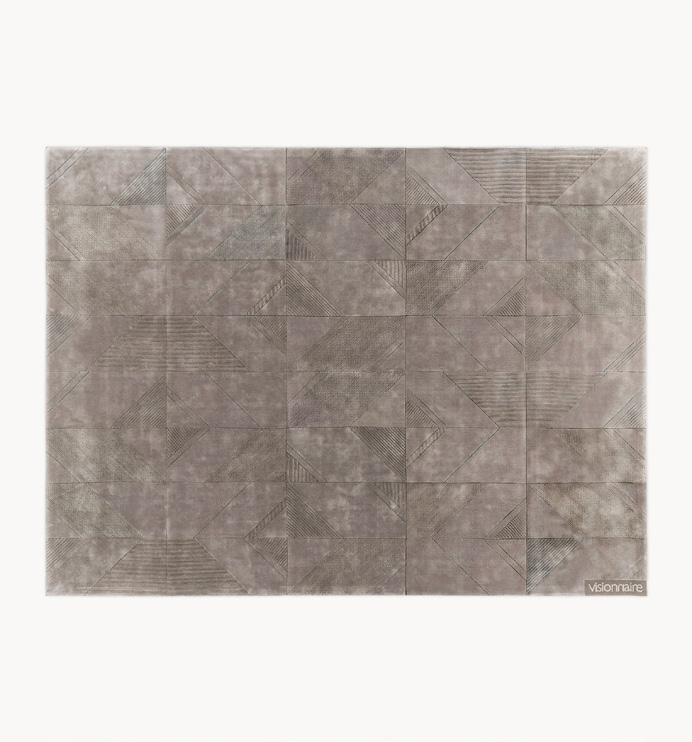
Shear small table Imperium carpet by Alessandro La Spada
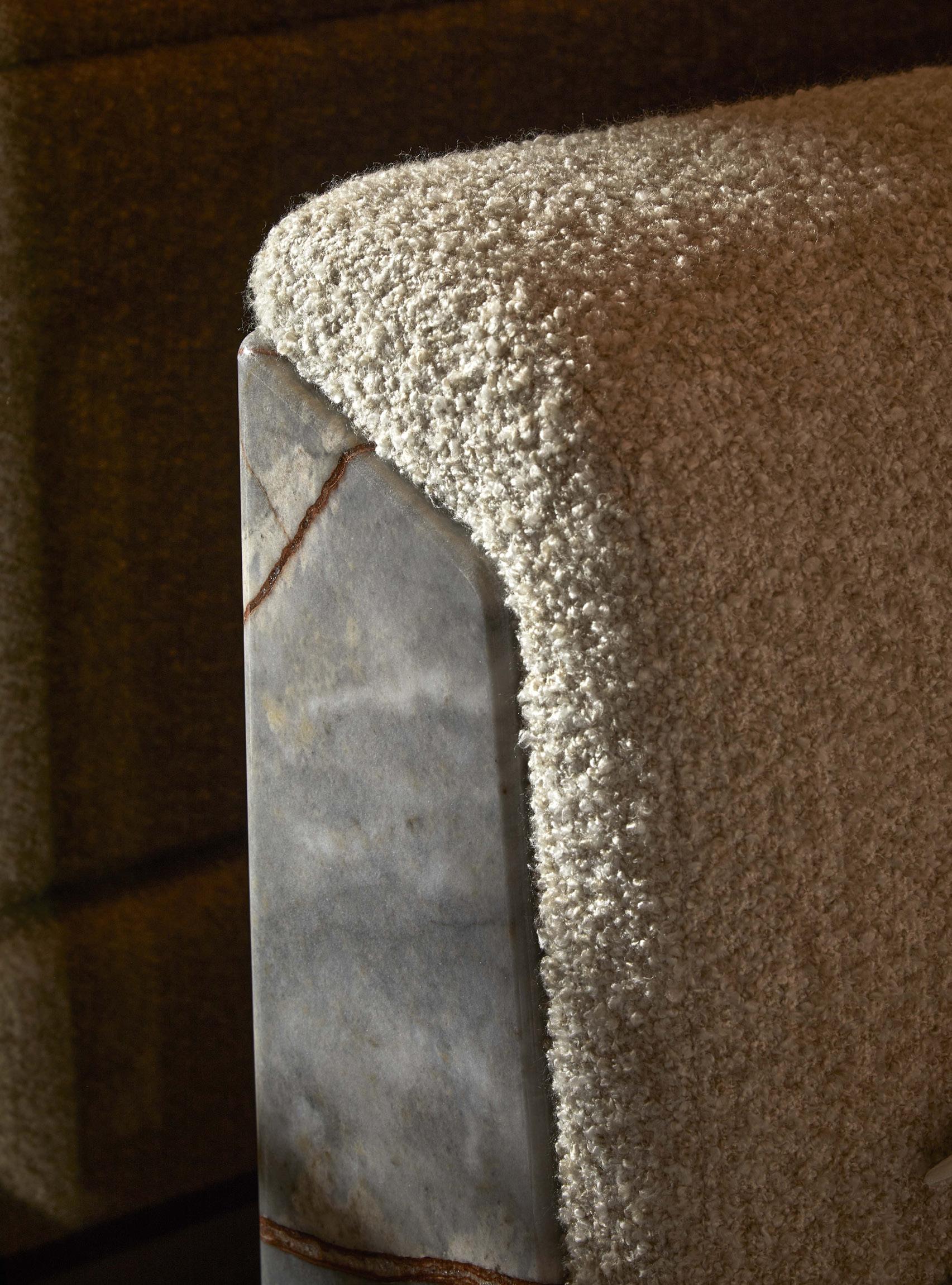
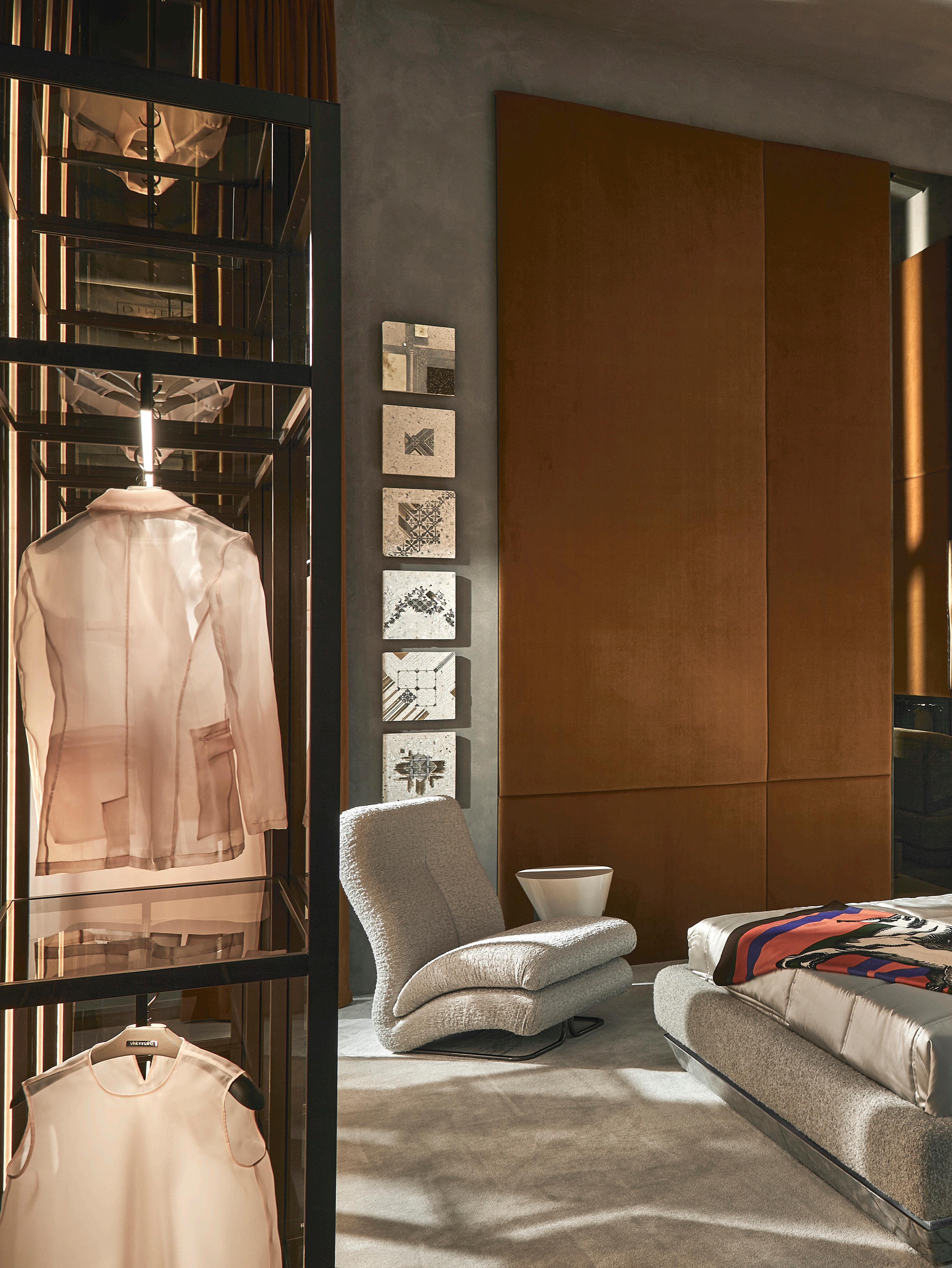
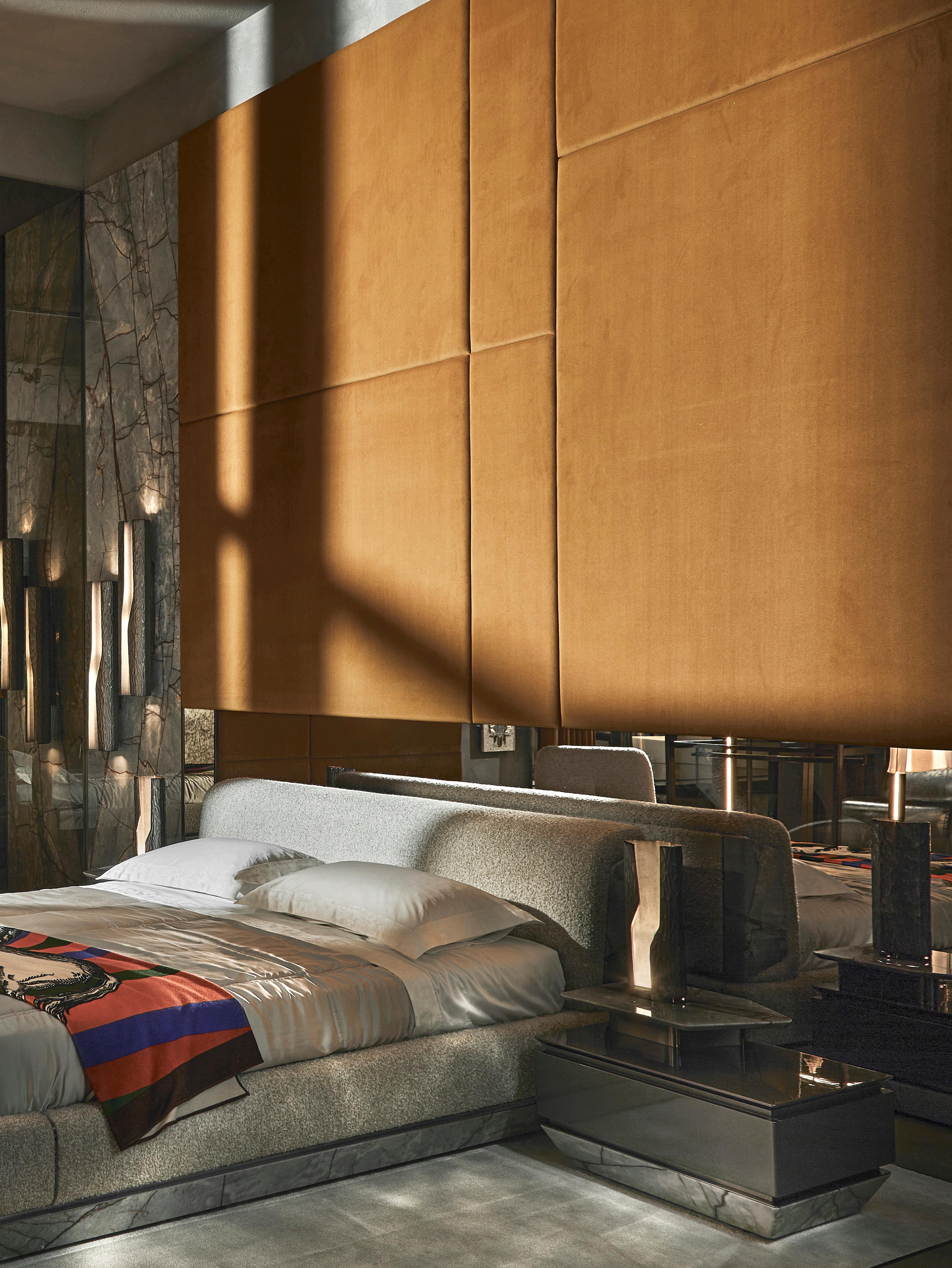
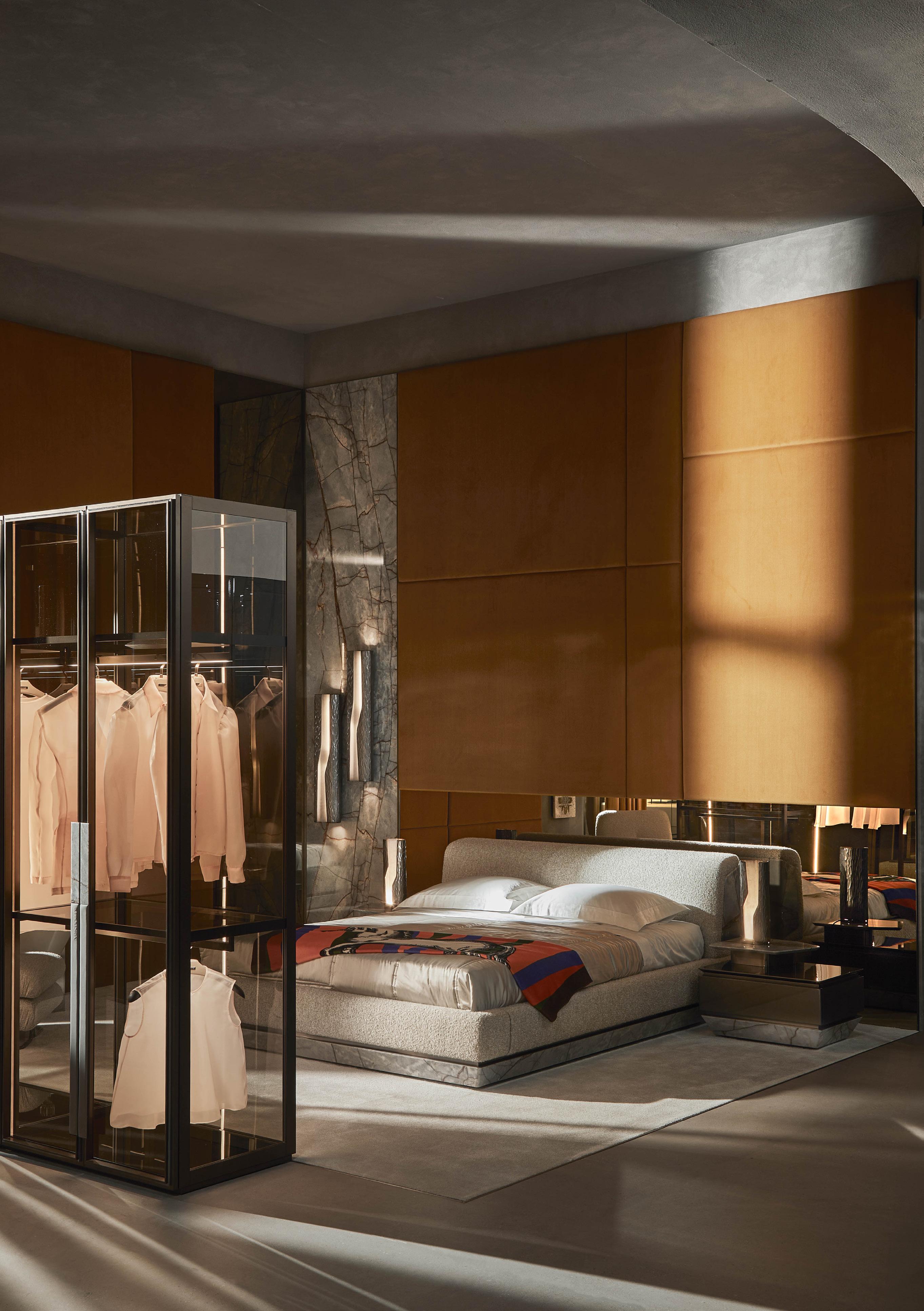
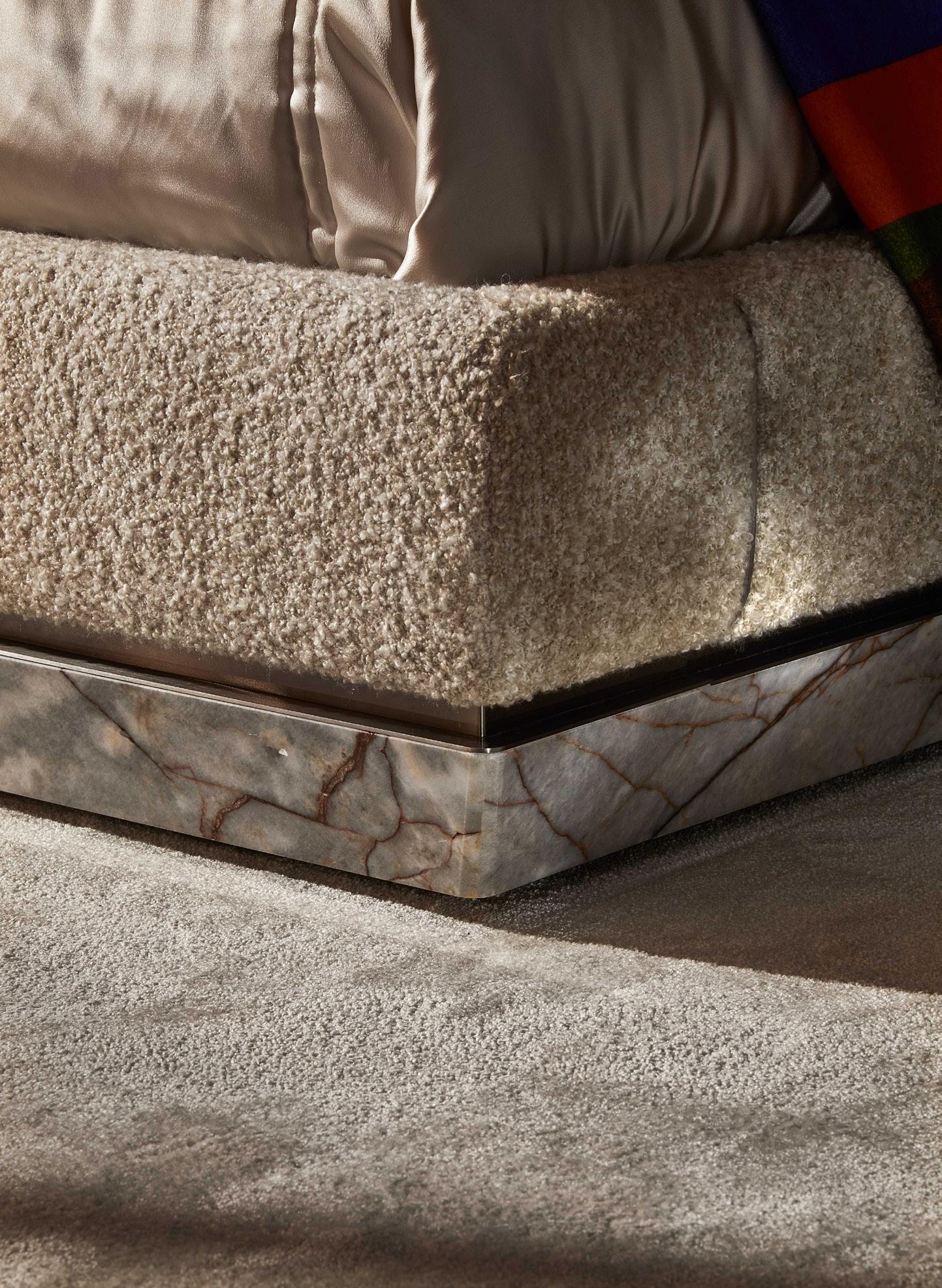
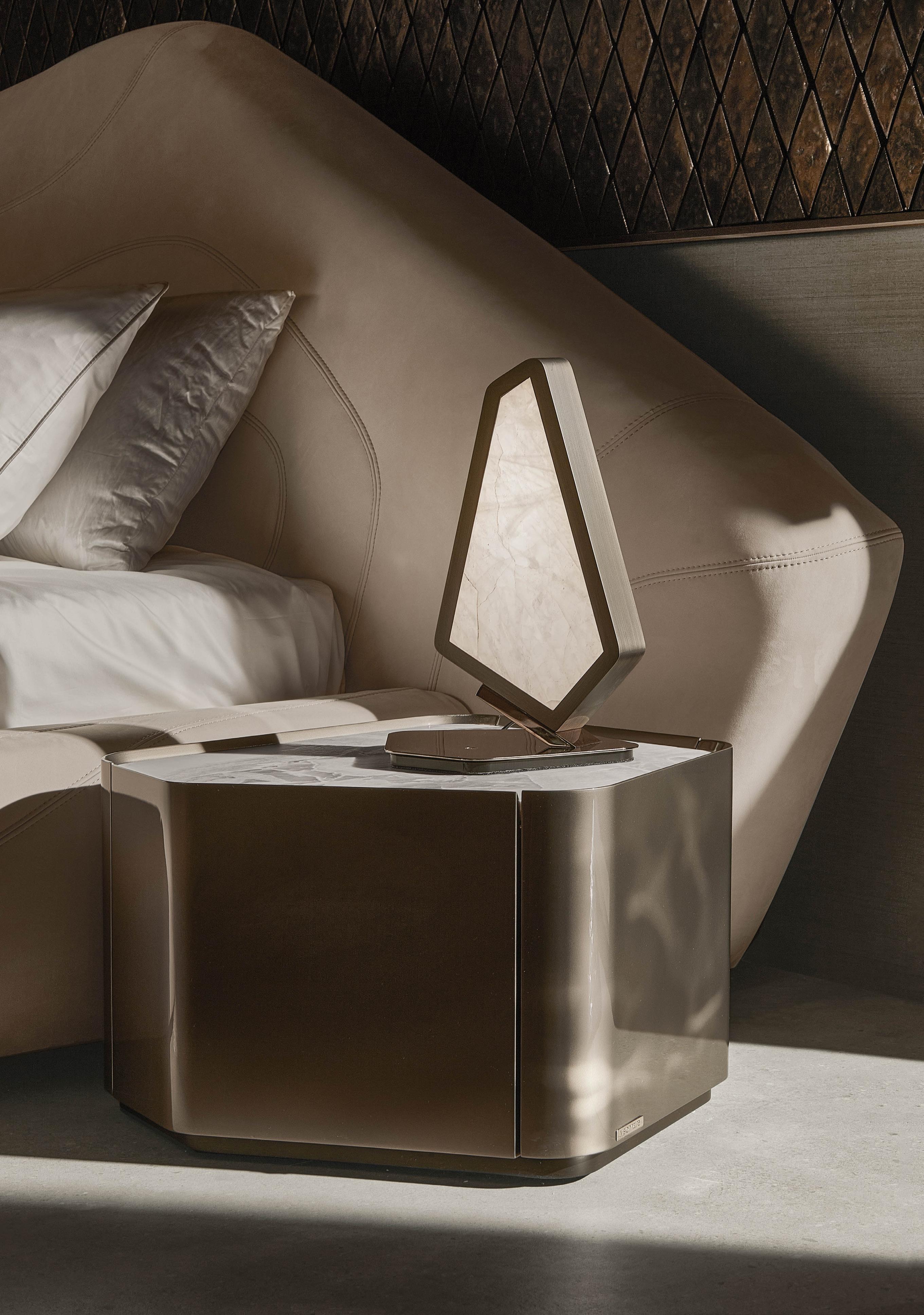
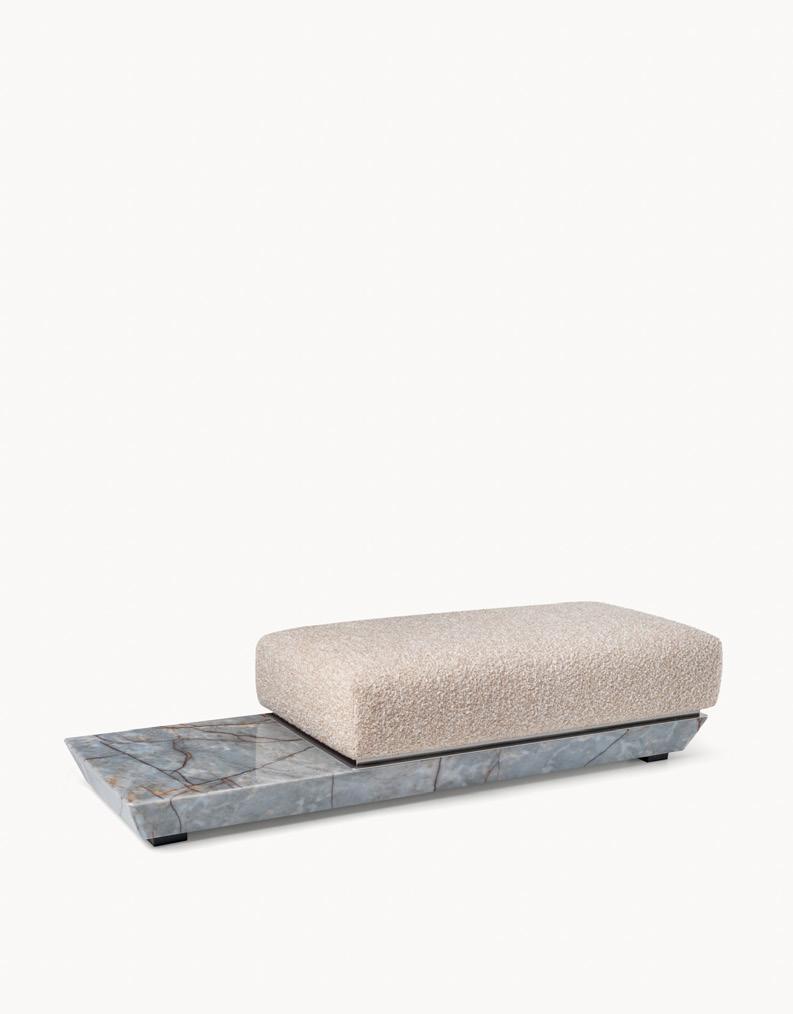
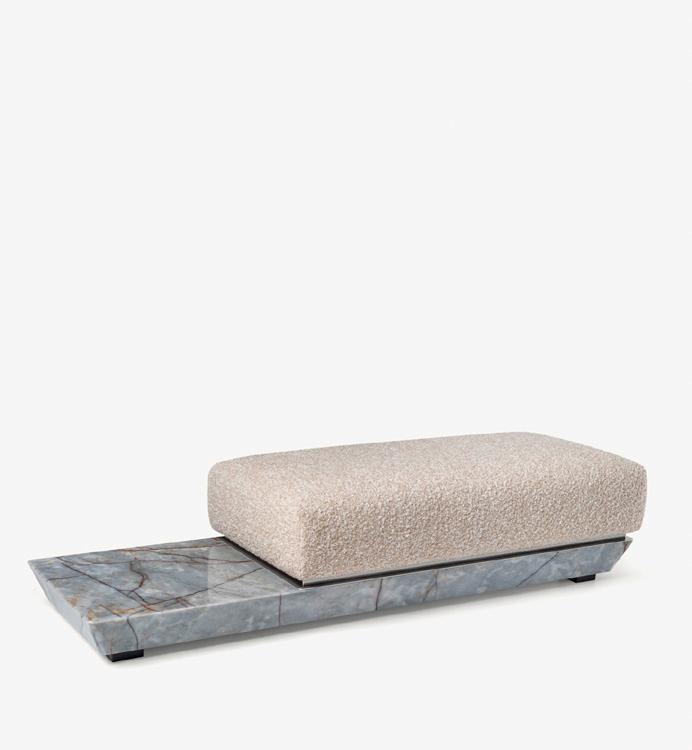
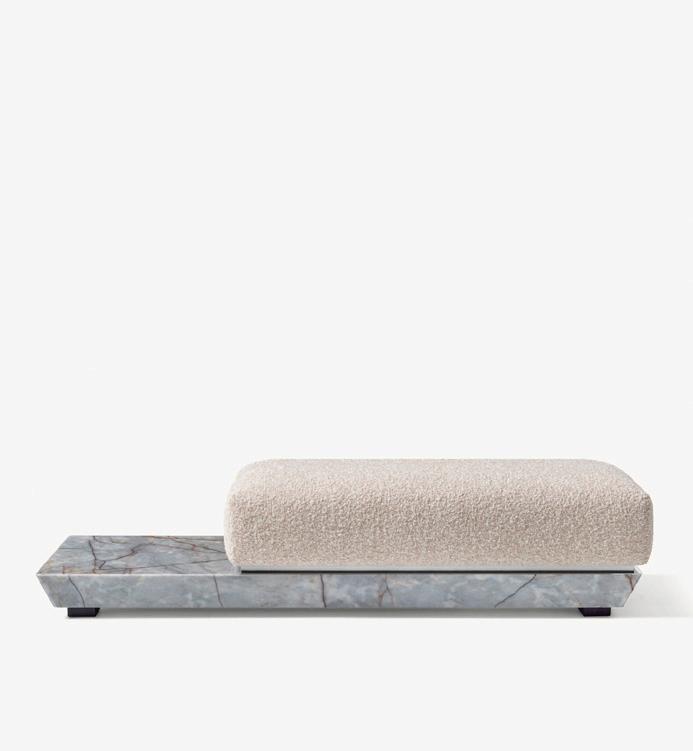
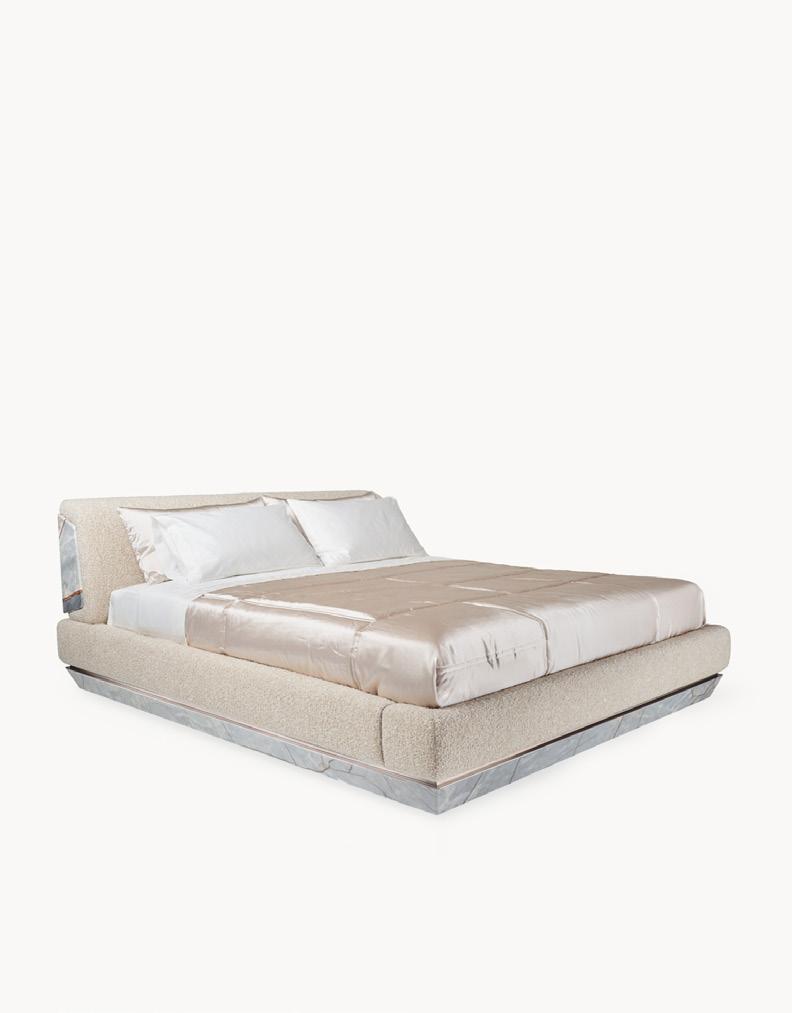
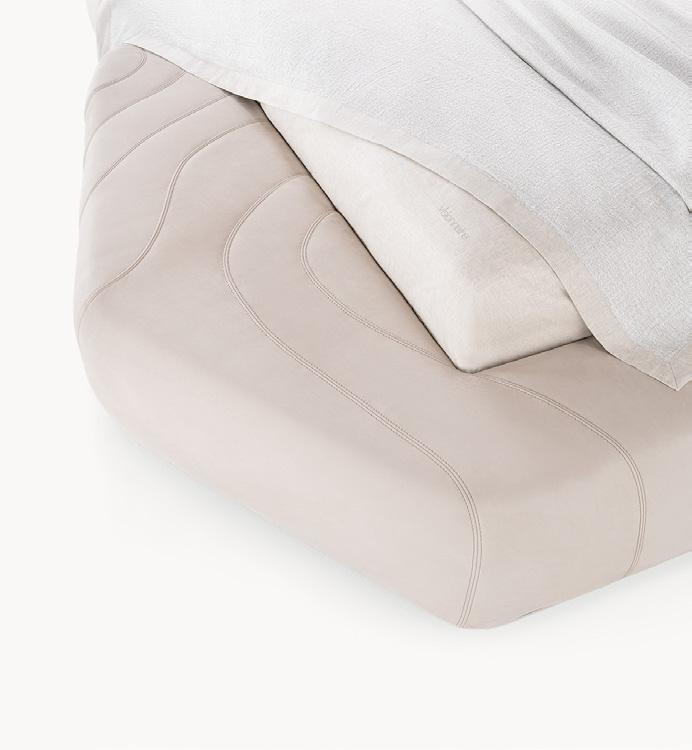
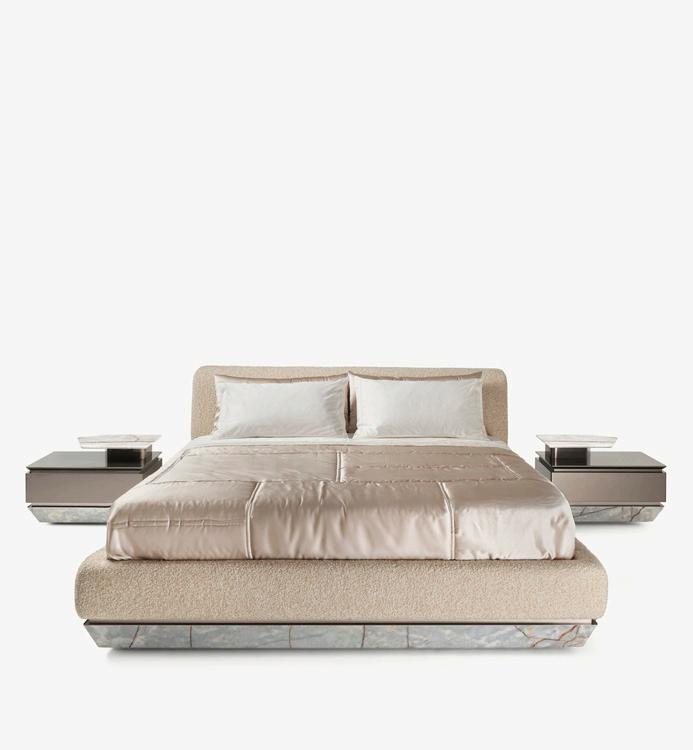
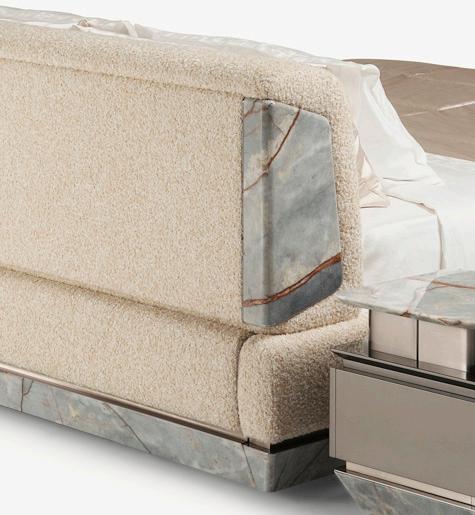
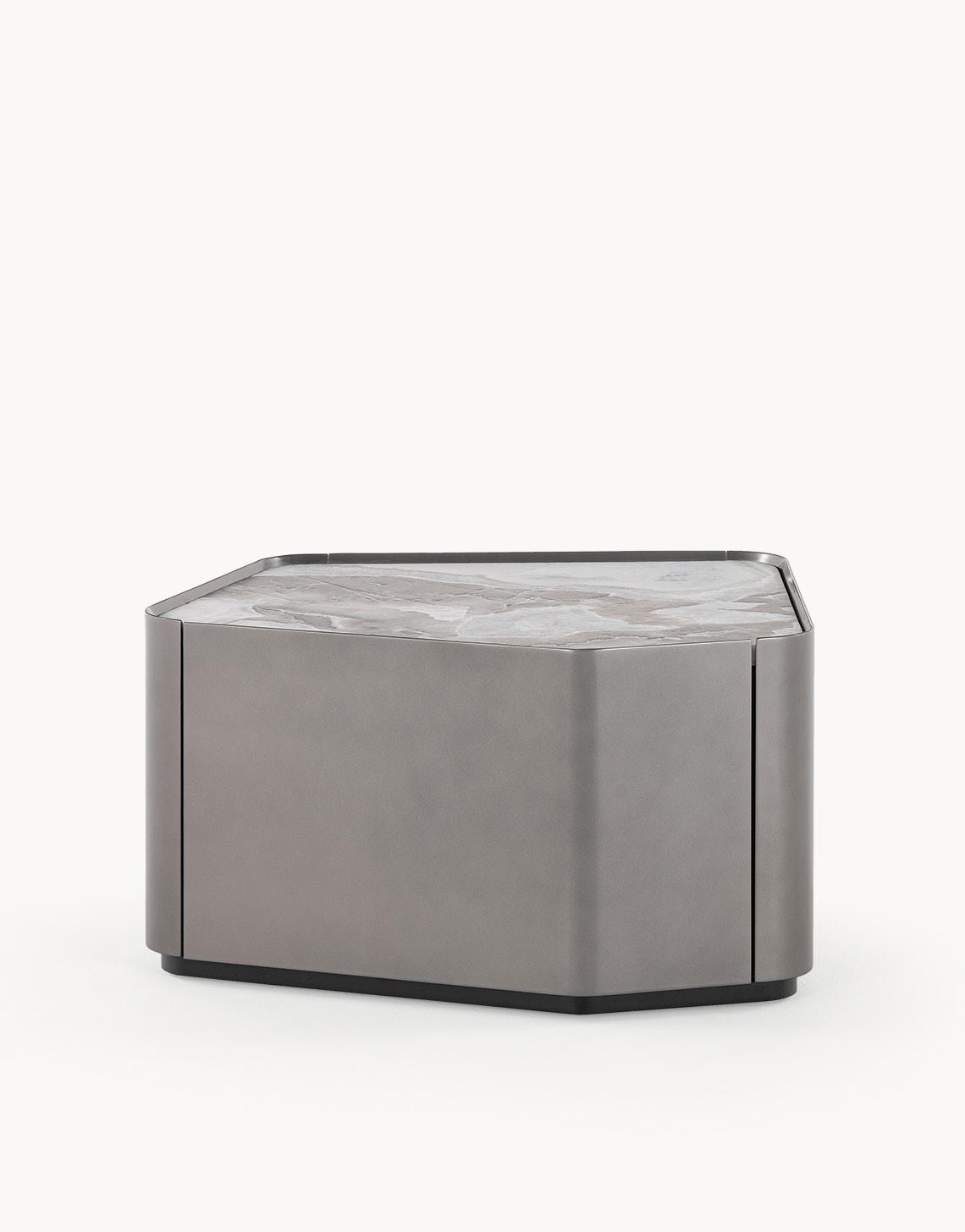
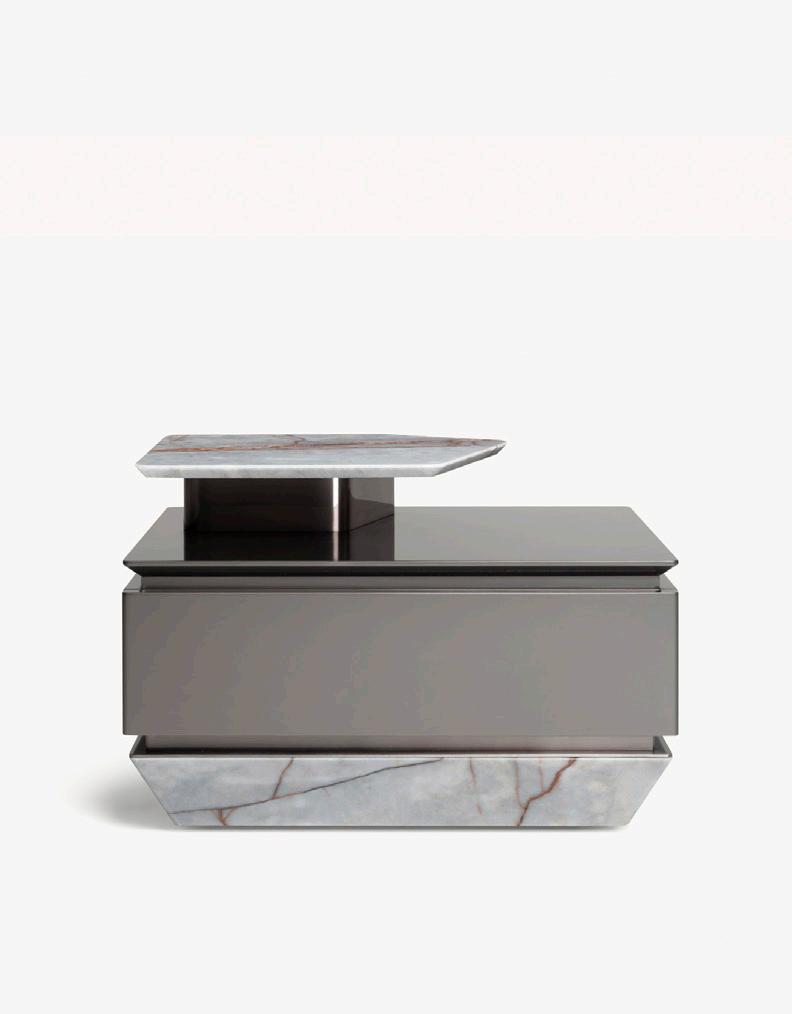
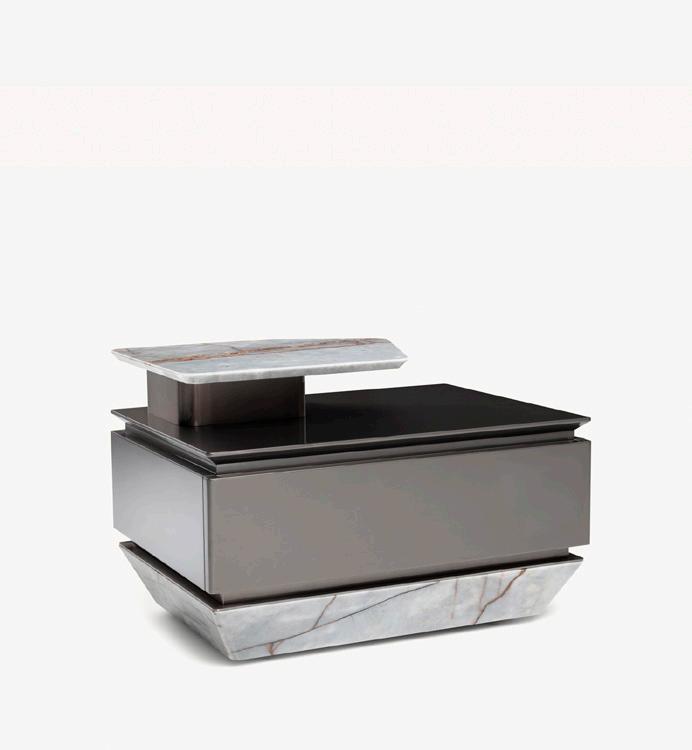
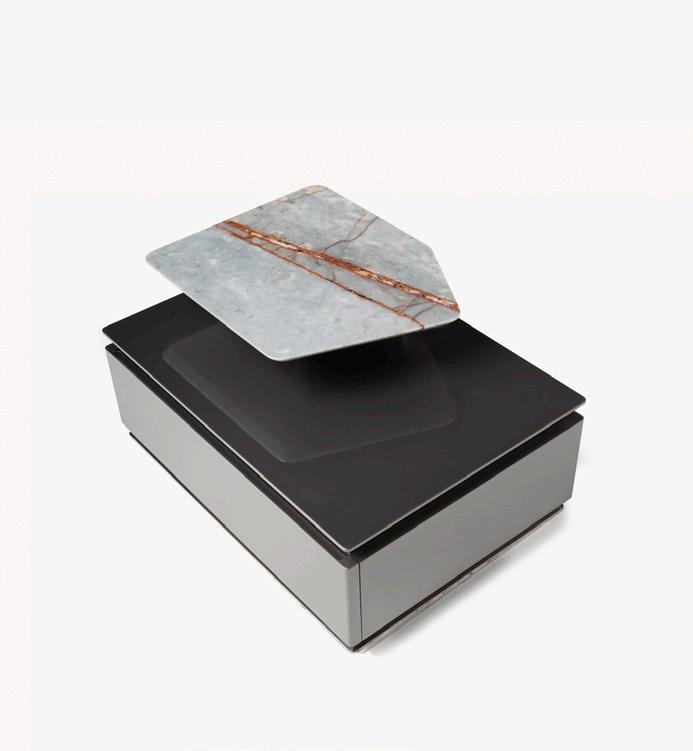
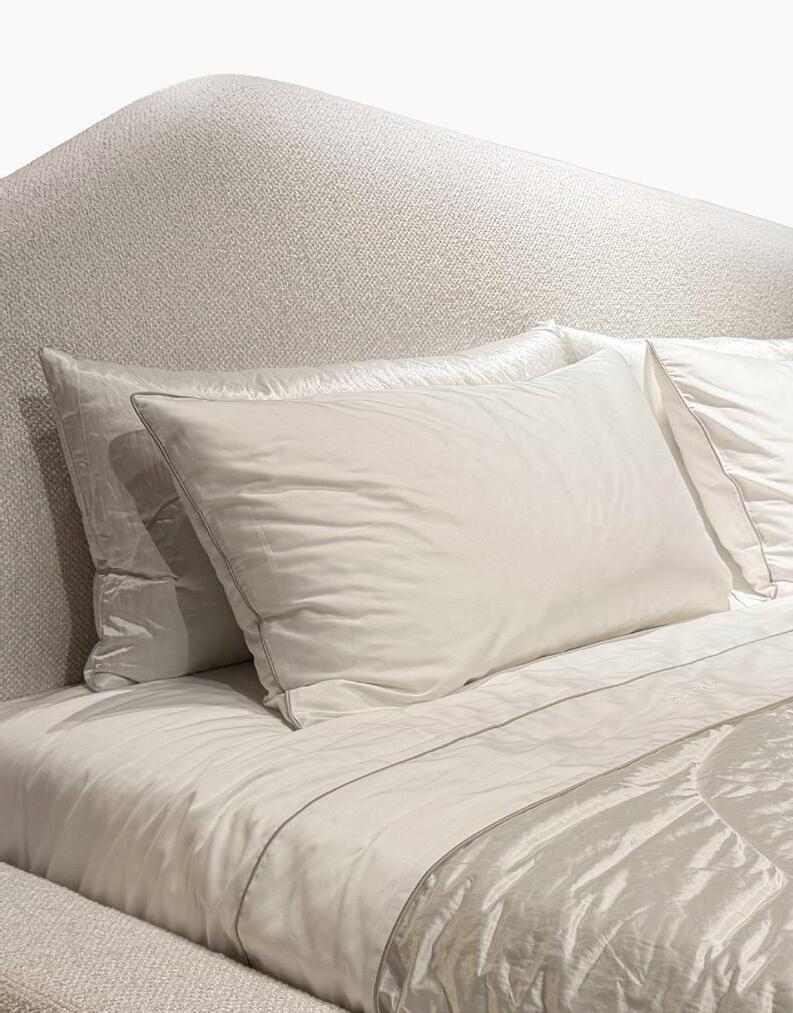
Prelude originates from the encounter between architectural gesture and intimate dimension, defining itself as a bed capable of constructing space through a balance between full matter and soft surface. The marble base marks the generative principle of the project: a clear, solid horizontal line that anchors the whole with authority, transforming the base into a sculptural platform able to give rhythm and depth to the composition. Above this structural threshold, the wide and enveloping headboard, upholstered in fabric or leather, introduces a tactile and intimate dimension, while marble details define its profile. The Prelude family is completed by bedside tables and a bed-end bench.
Prelude does not seek effect, but compositional measure: it interprets the bedroom as a conscious architectural space, where sculptural presence and intimacy coexist in balance.
Prelude nasce dall’incontro tra gesto architettonico e dimensione intima, definendosi come un letto capace di costruire lo spazio attraverso un equilibrio tra materia piena e superficie morbida. Il basamento in marmo segna il principio generativo del progetto: una linea orizzontale netta e solida che ancora l’insieme con autorevolezza, trasformando la base in una piattaforma scultorea capace di dare ritmo e profondità alla composizione. Sopra questa soglia strutturale, la testata ampia e avvolgente, rivestita in tessuto o pelle, introduce una dimensione tattile e raccolta, mentre dettagli in marmo ne definiscono il profilo. La famiglia Prelude è completata da comodini e dalla panca scendiletto.
Prelude non ricerca l’effetto, ma una misura compositiva: interpreta la camera da letto come spazio architettonico consapevole, dove presenza scultorea e intimità coesistono in equilibrio.
Prelude
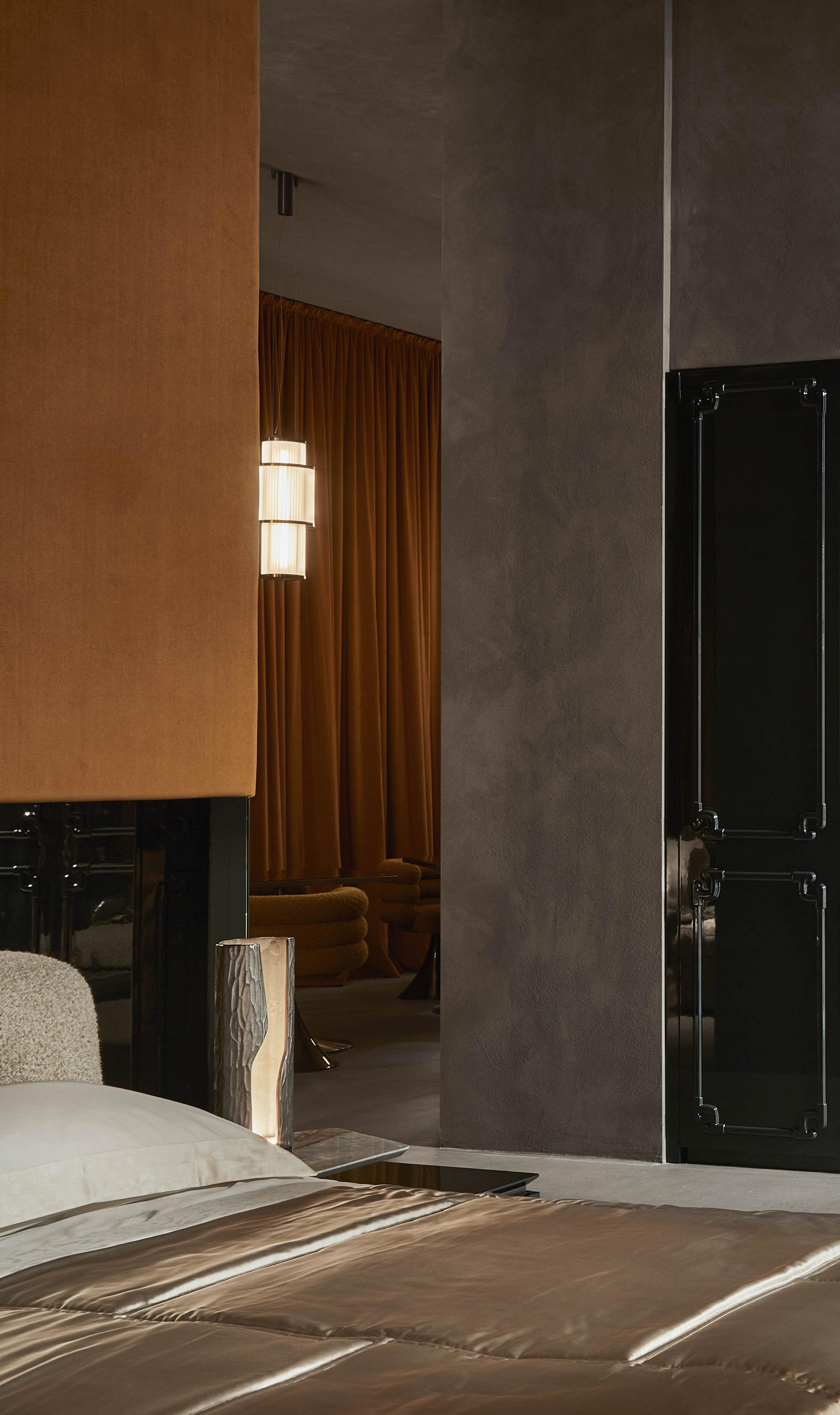
Prelude, bed/bedside table/bench
Bachi, armchair
Cigno, armchair
Rift, suspension/wall/table lamp
Minstrel, small table
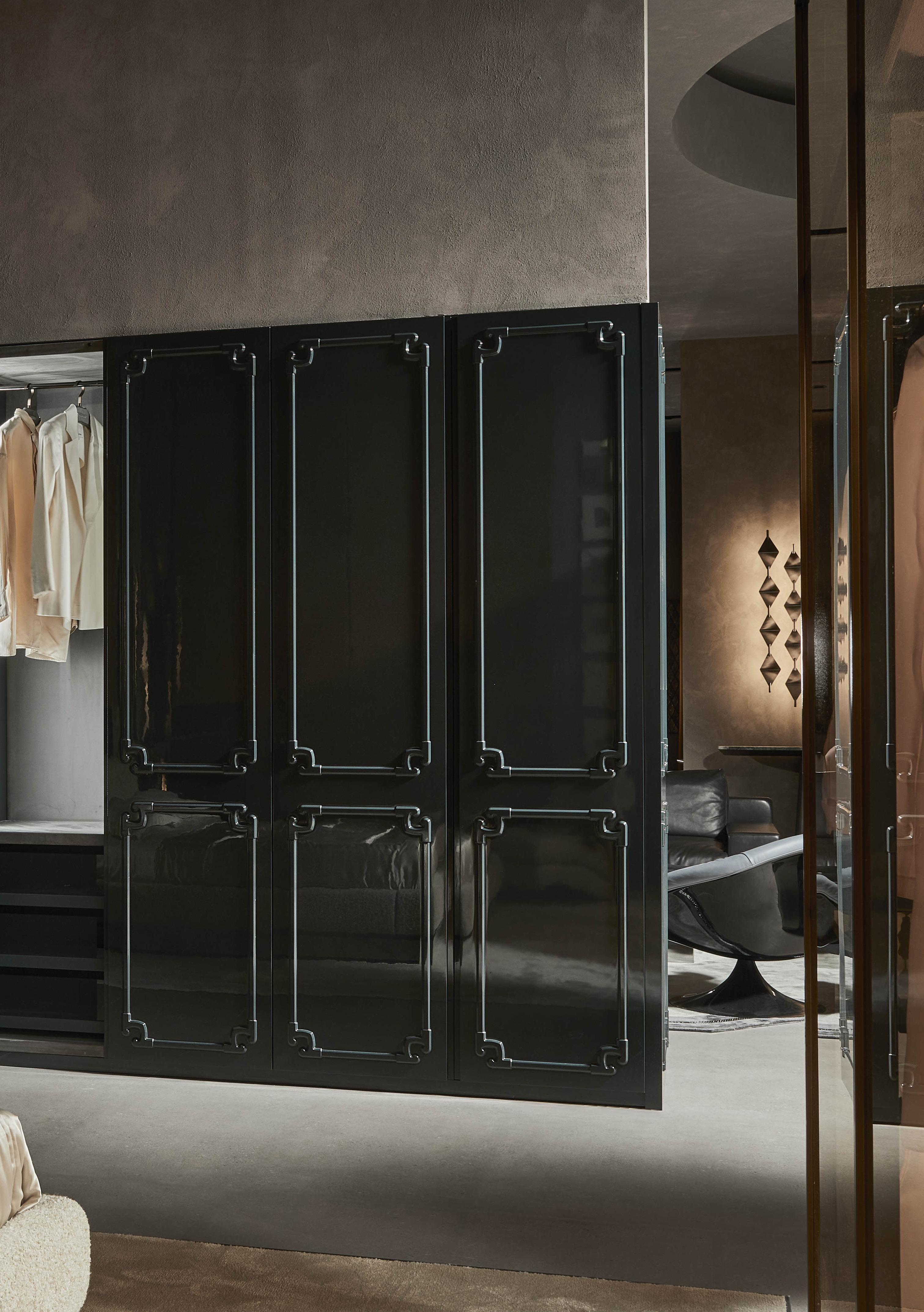
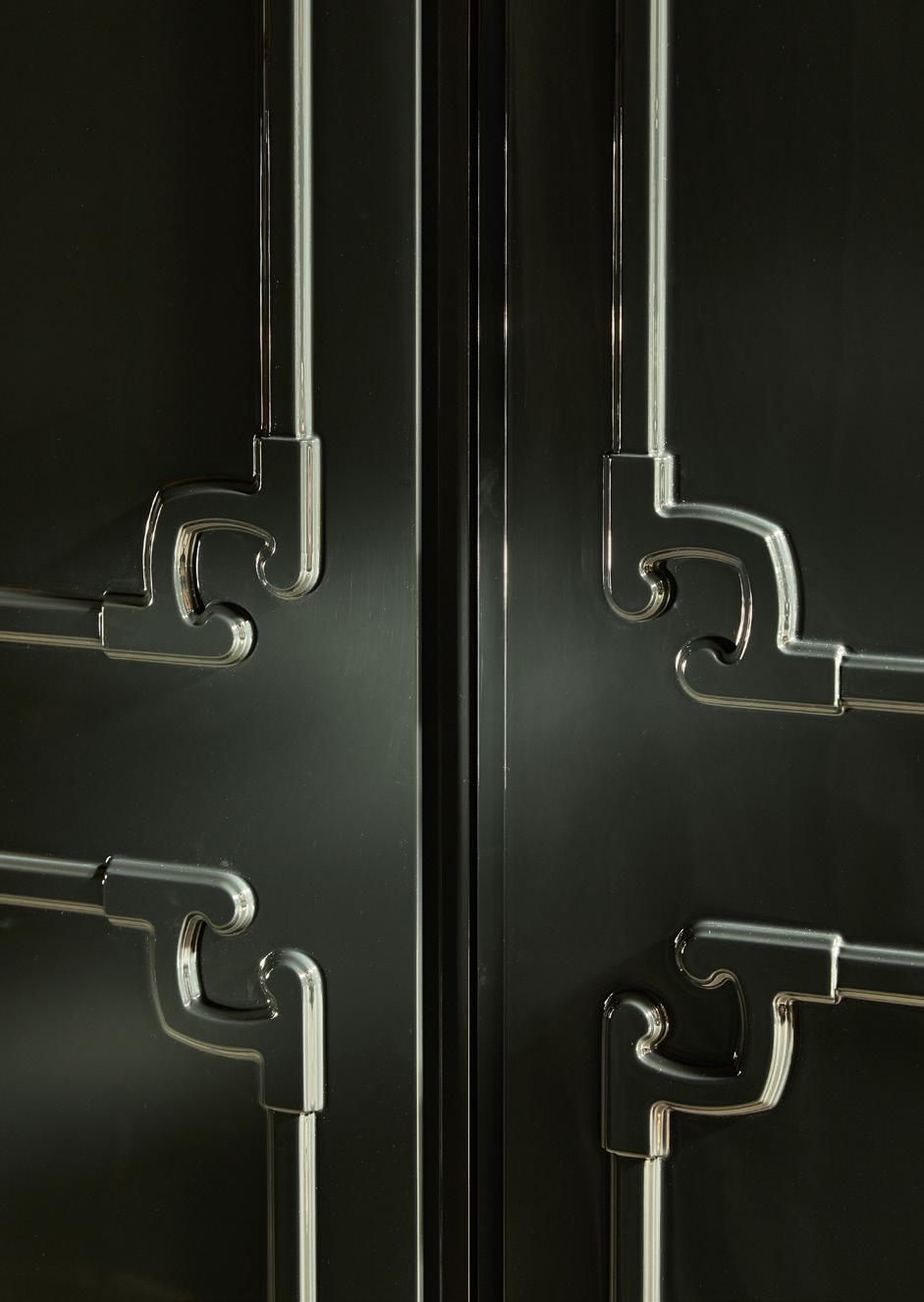
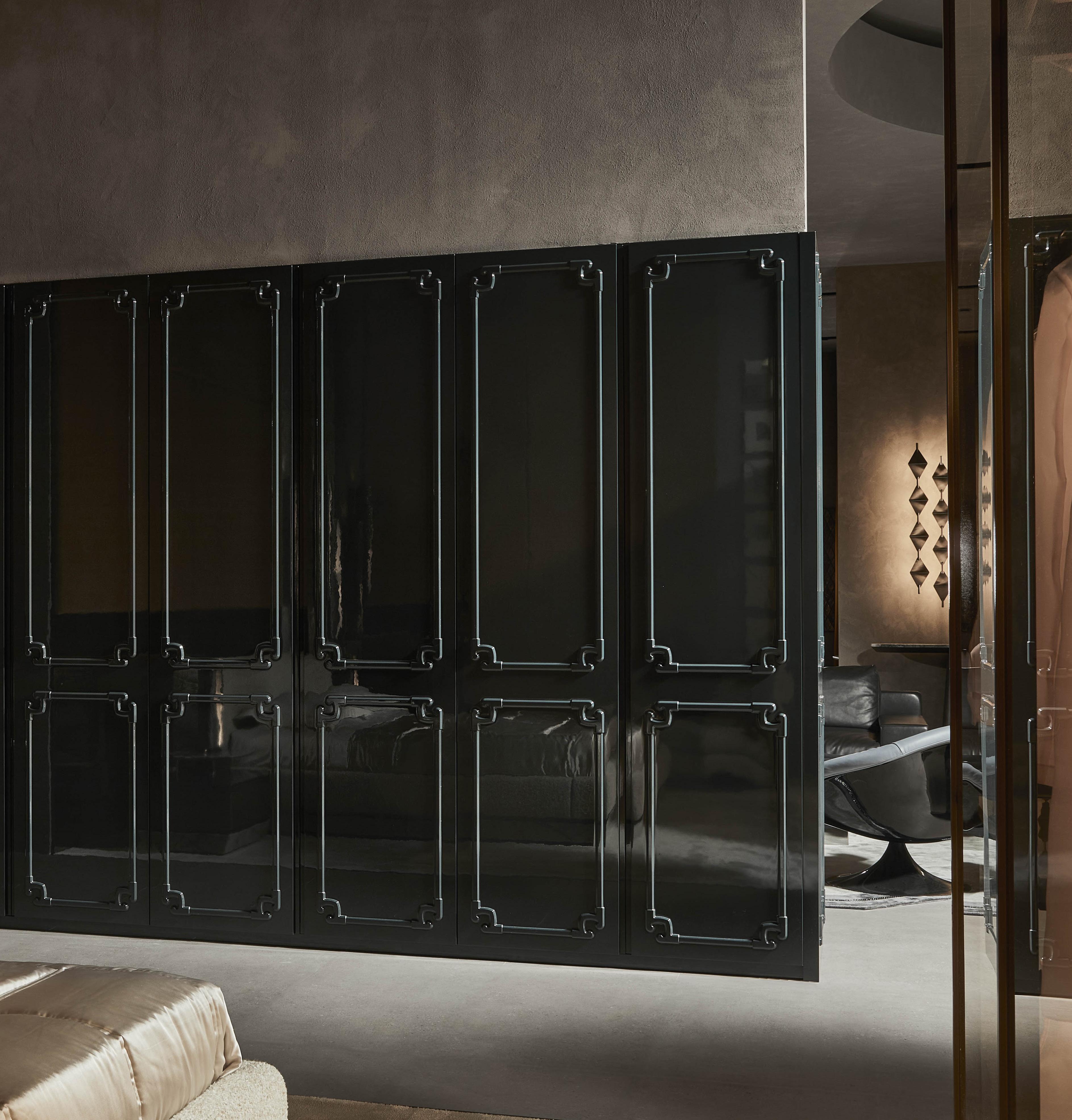
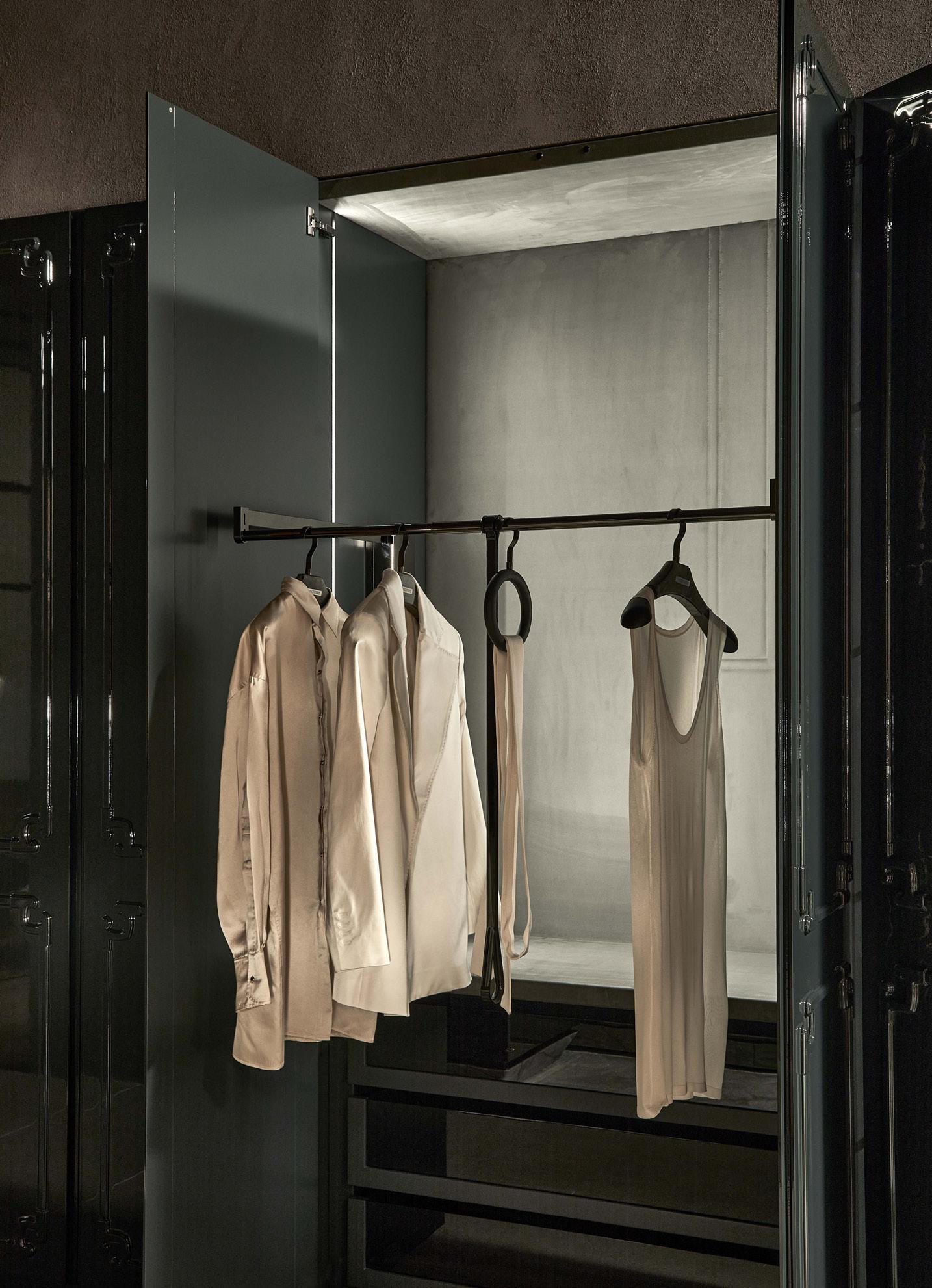
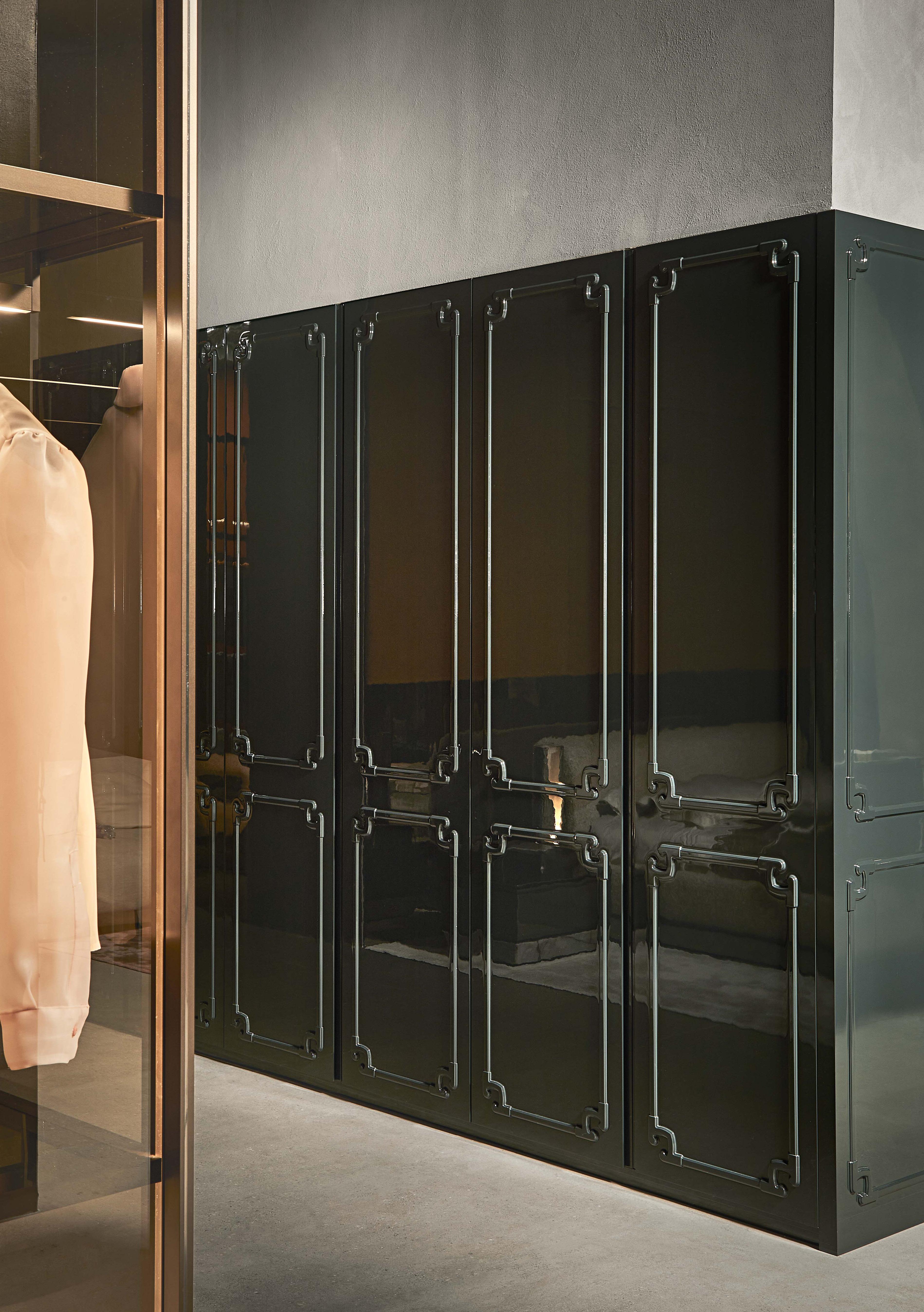
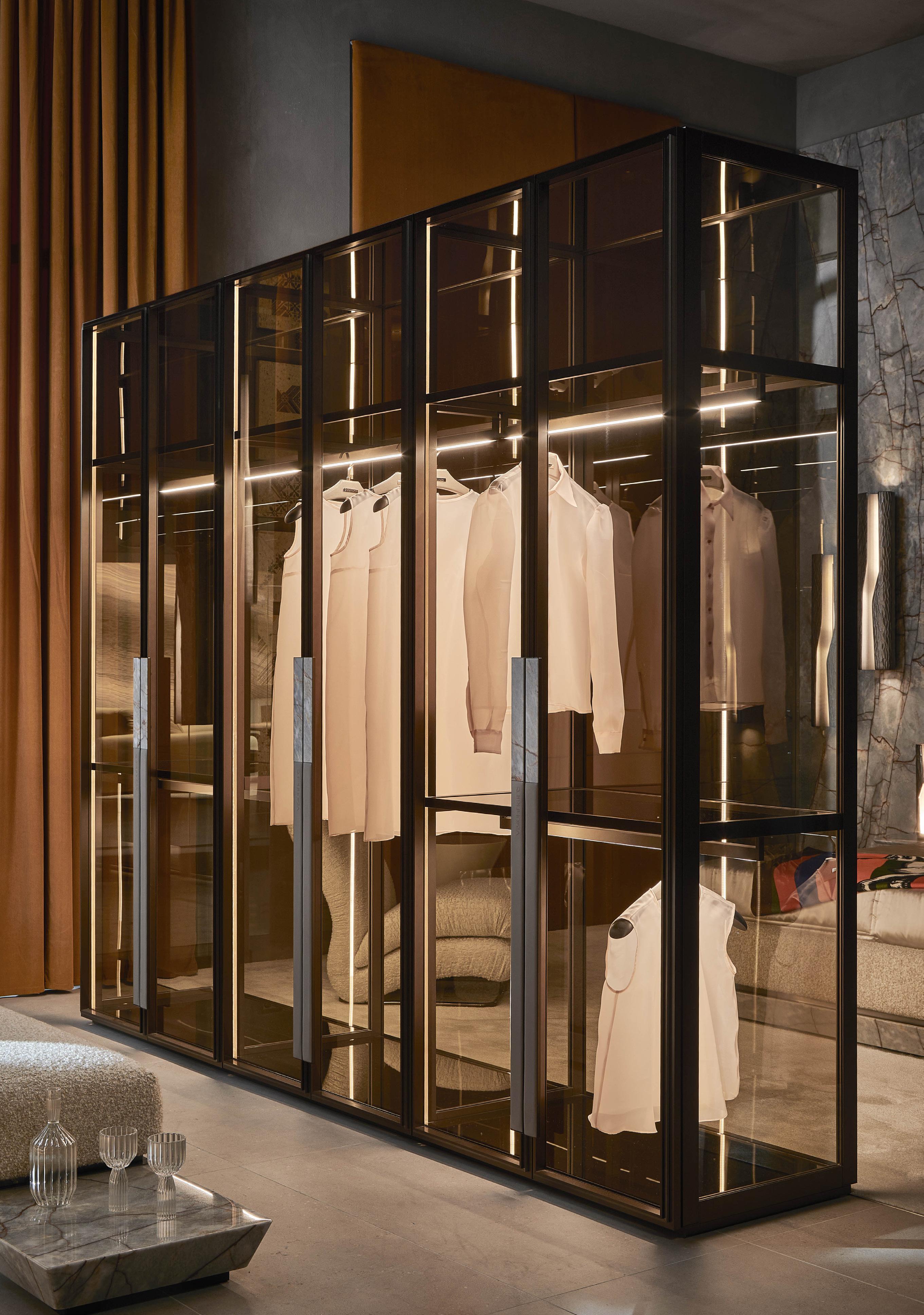
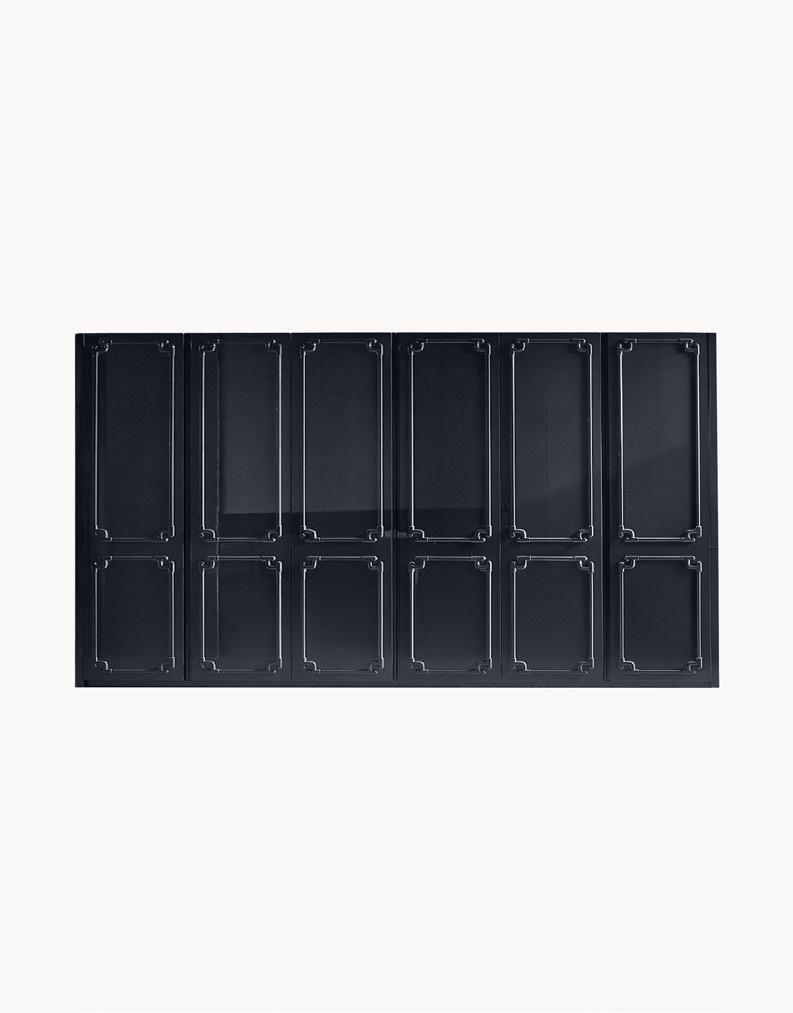
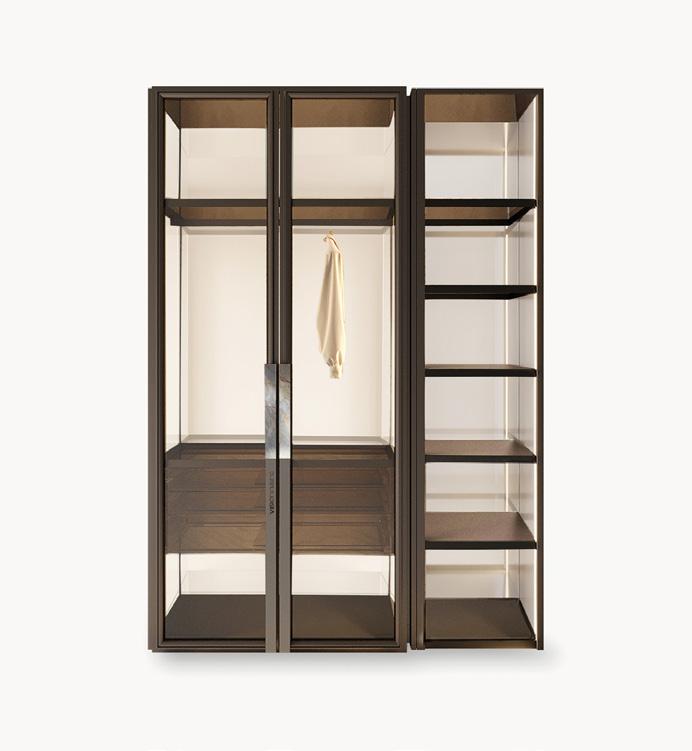
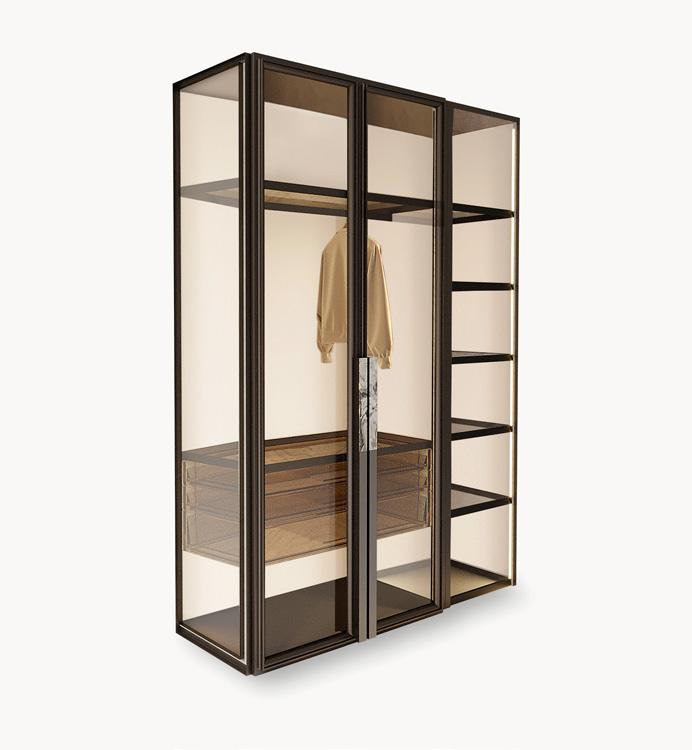
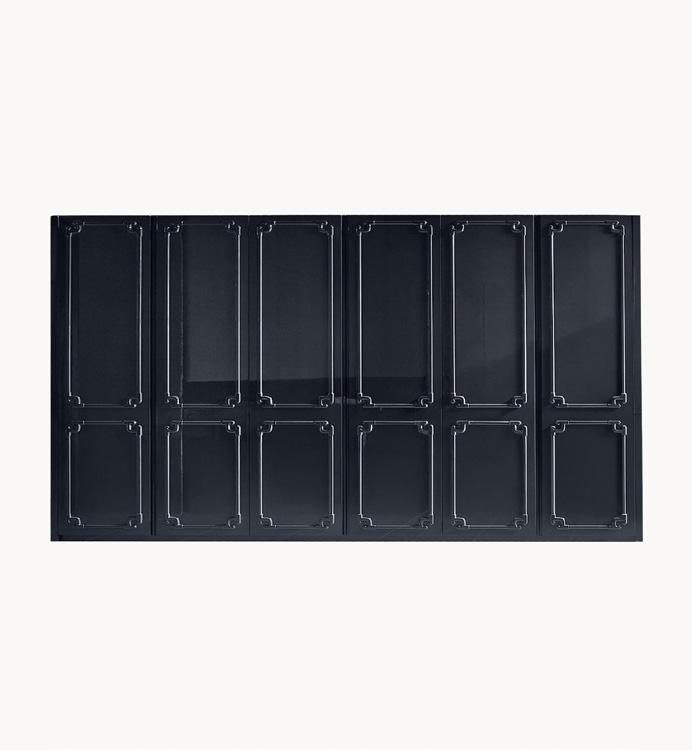
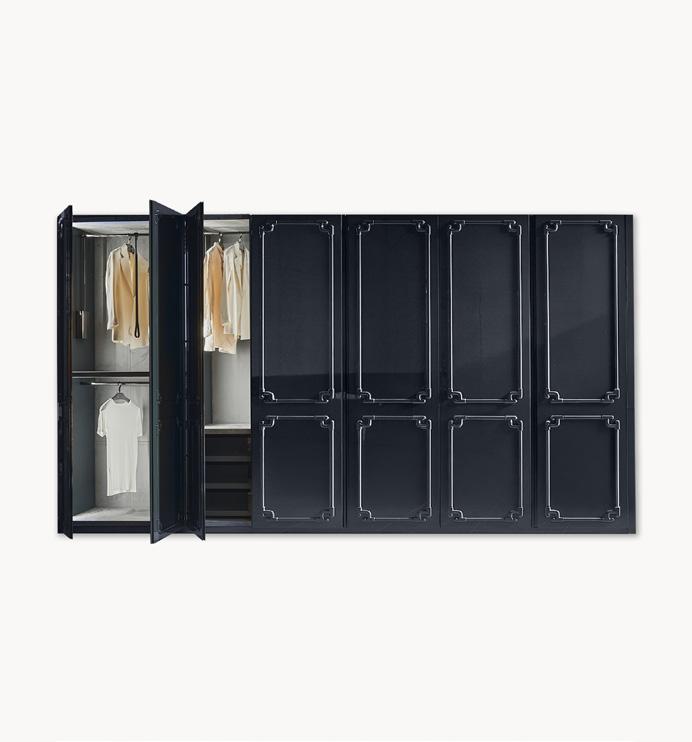
Eidos/ Trace, wardrobes
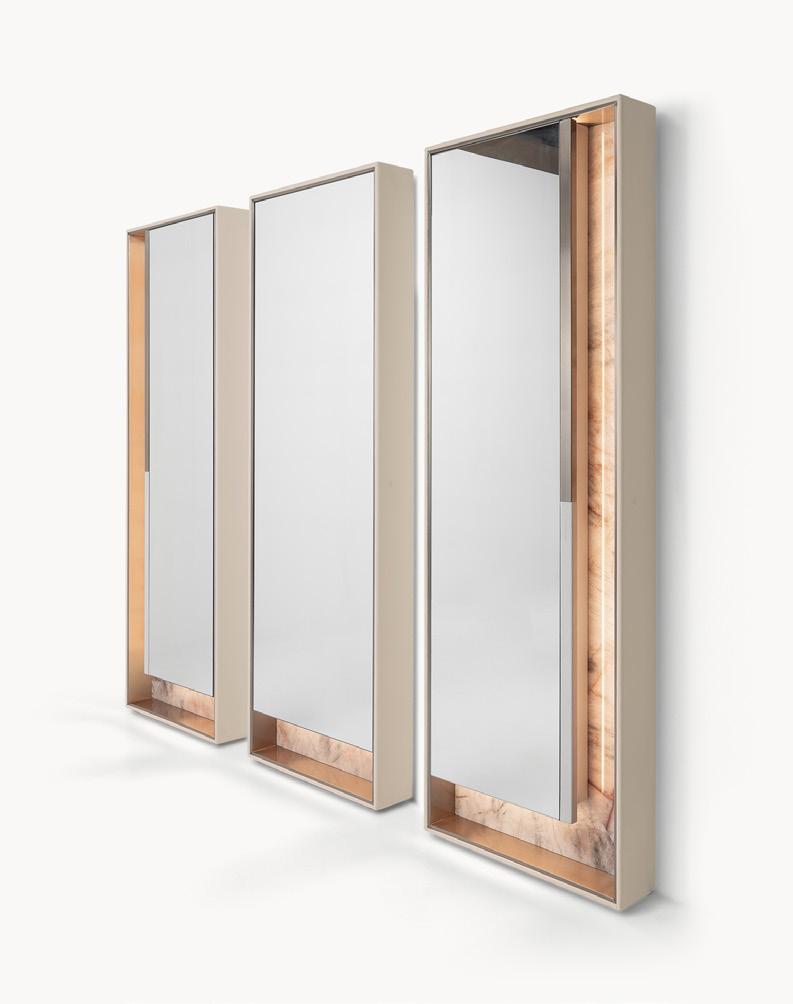
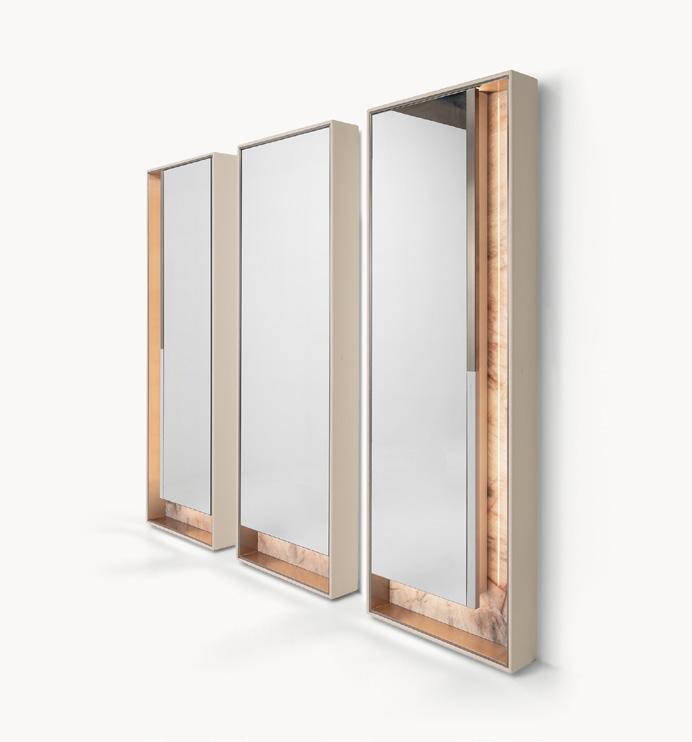
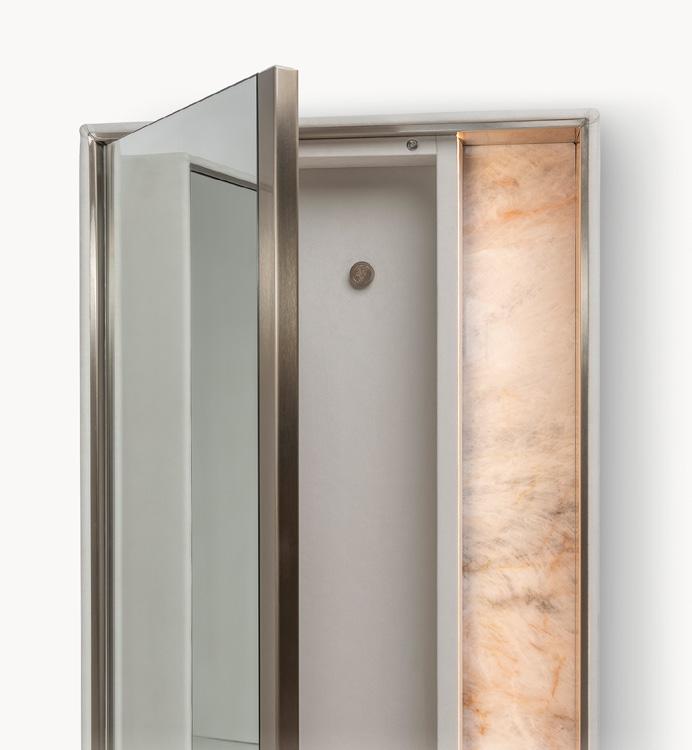
Bartok , mirrors
Balatat Pasha Tent/ Pasha Tent 2/ Disk with feathers, artworks
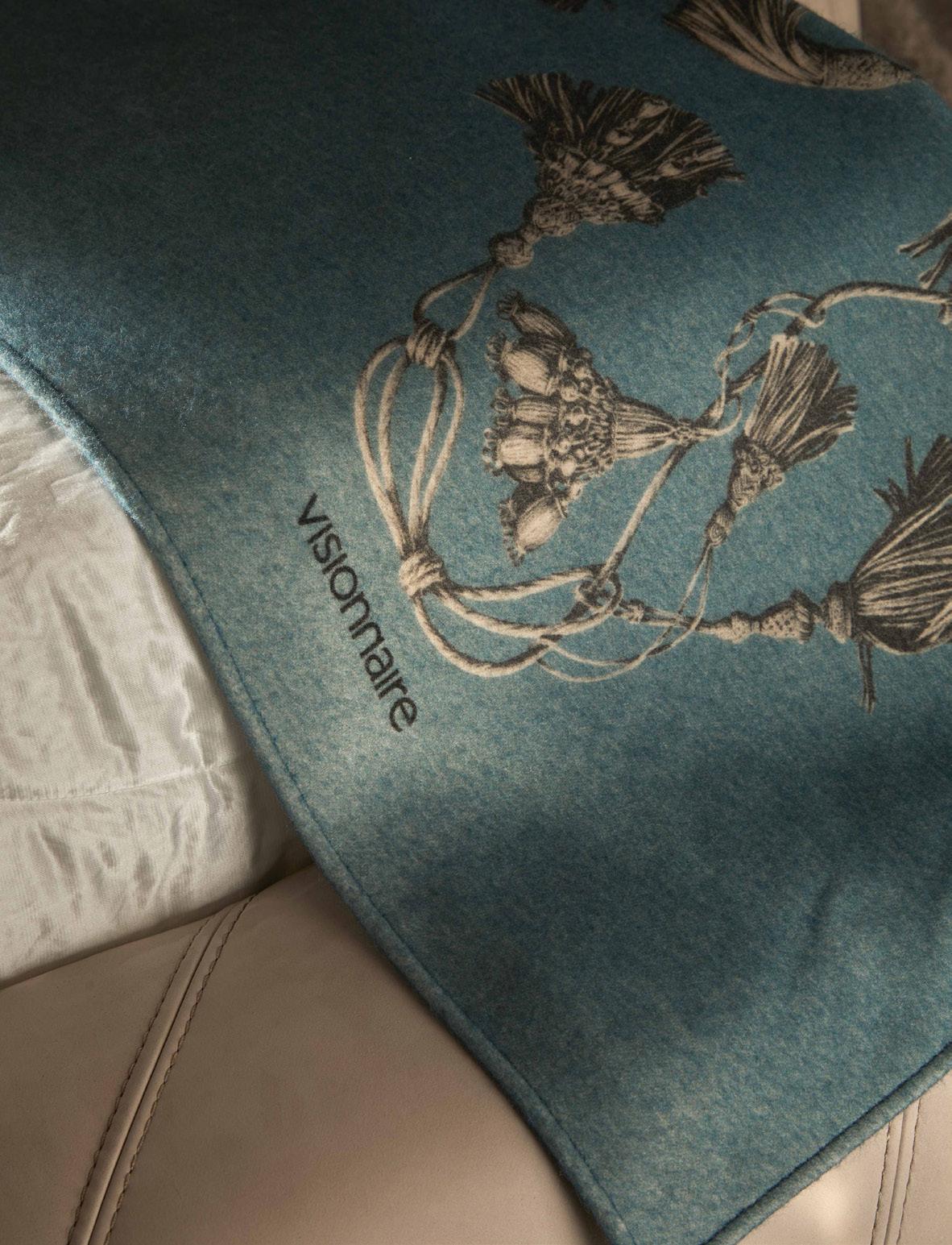
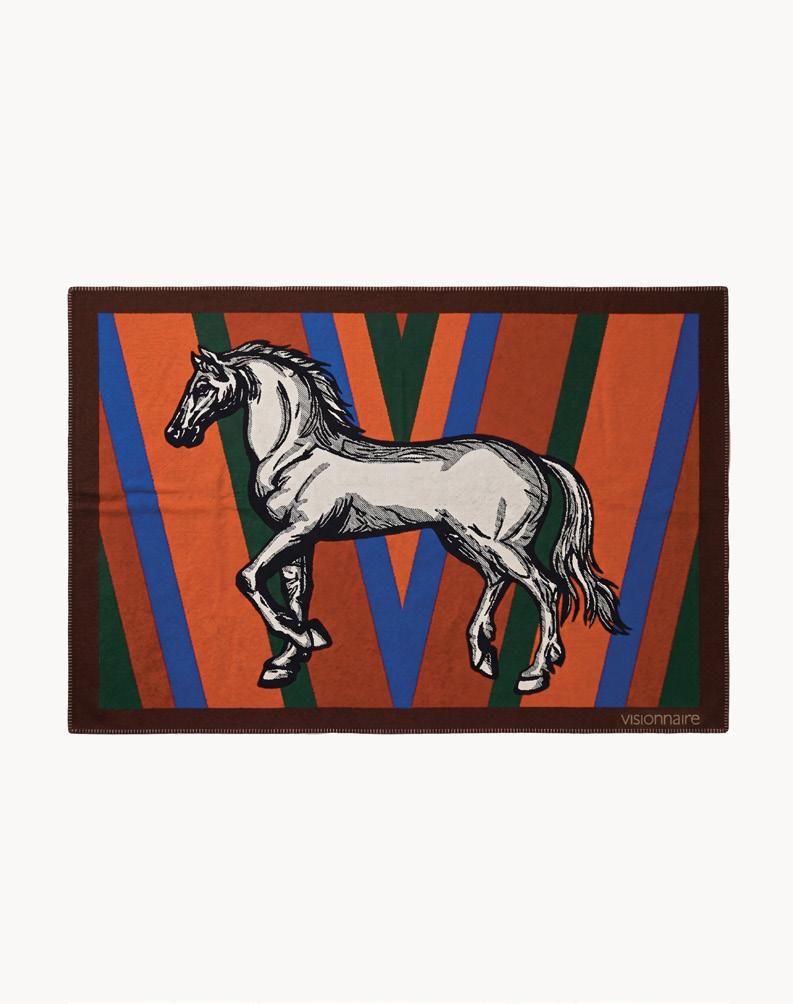
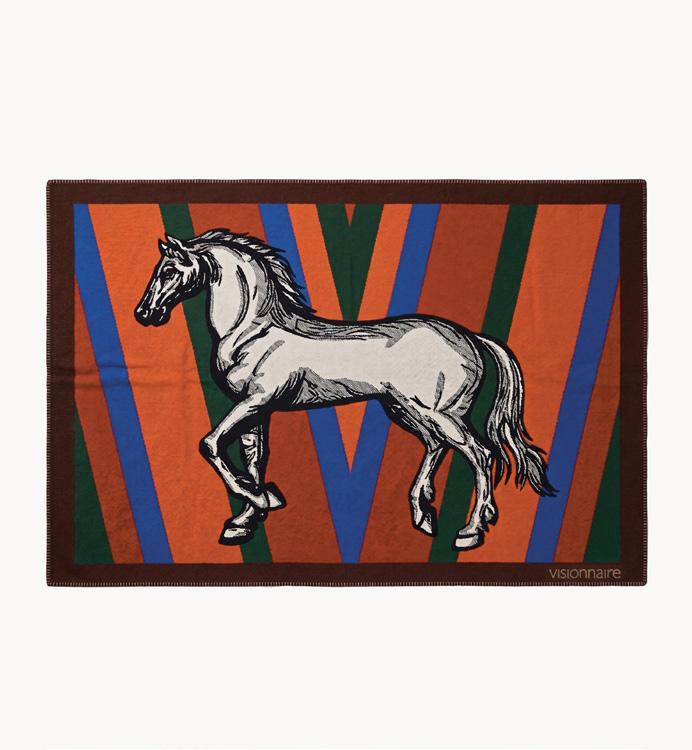
Cavallo, blanket
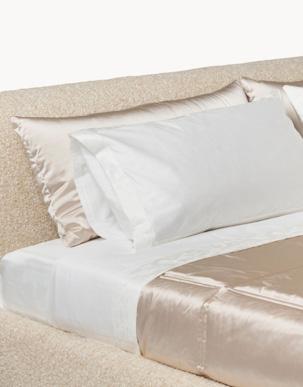
Overture, set of sheets
Explore the room ↗
A silent presence, where matter brings measure to comfort and night finds an architectural rhythm.
Una presenza silenziosa, dove la materia dà misura al comfort e la notte assume un ritmo architettonico.
bed/bedside table
Prelude
Rift table lamp
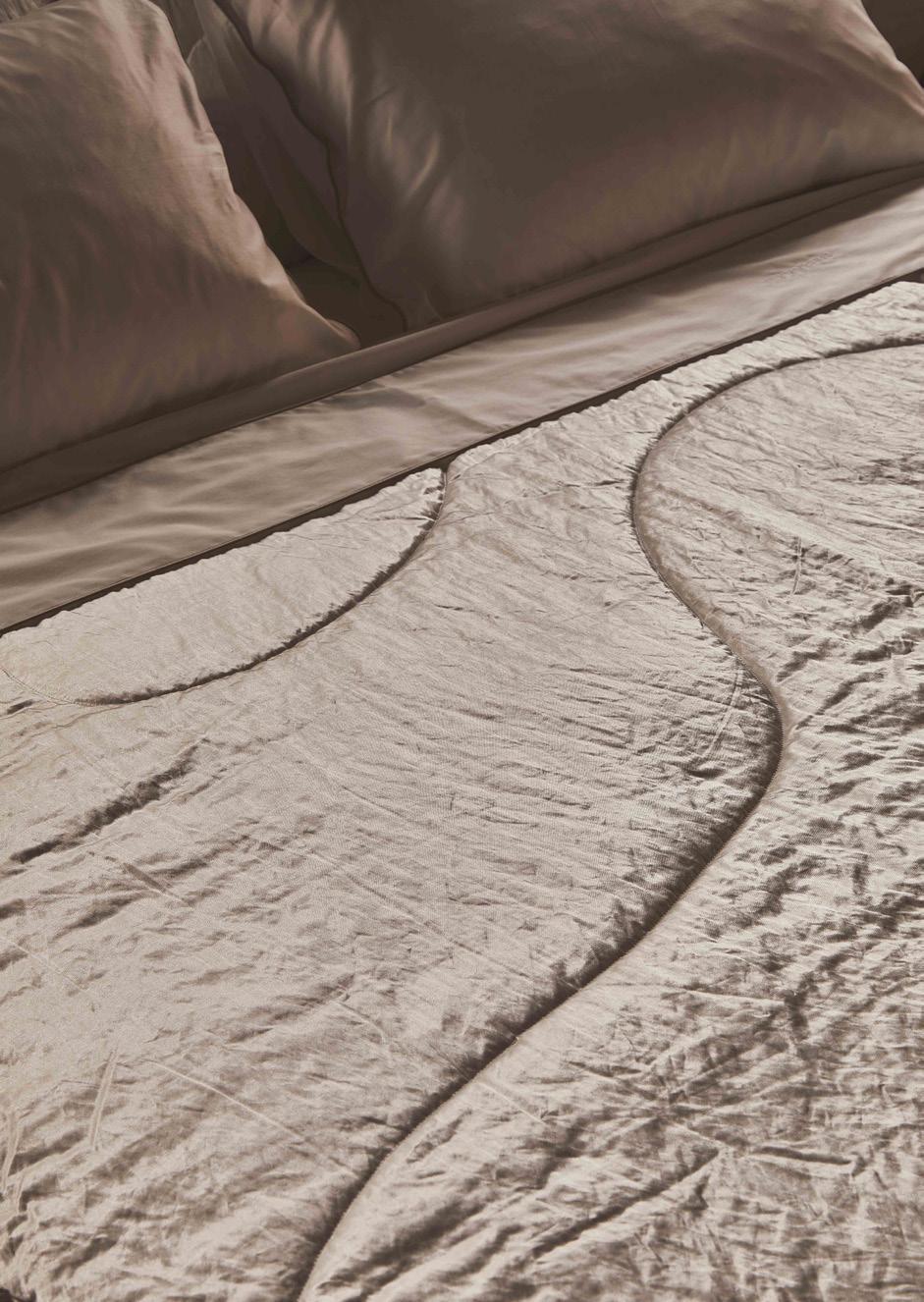
Overture set of sheets Cavallo blanket by Alessandro La Spada by Luigi Cavalli
Prelude bedside table
Rift table lamp
by Alessandro La Spada
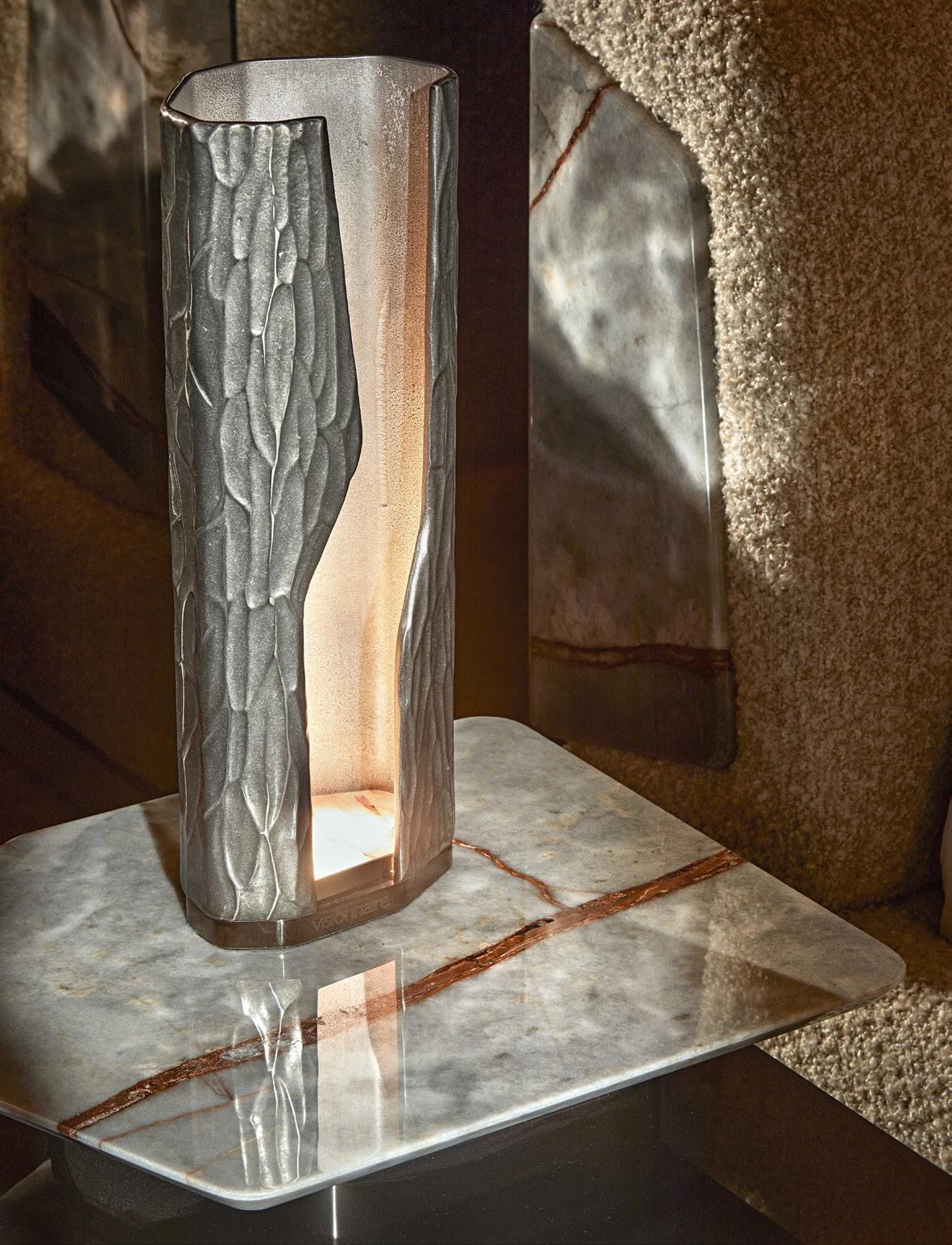
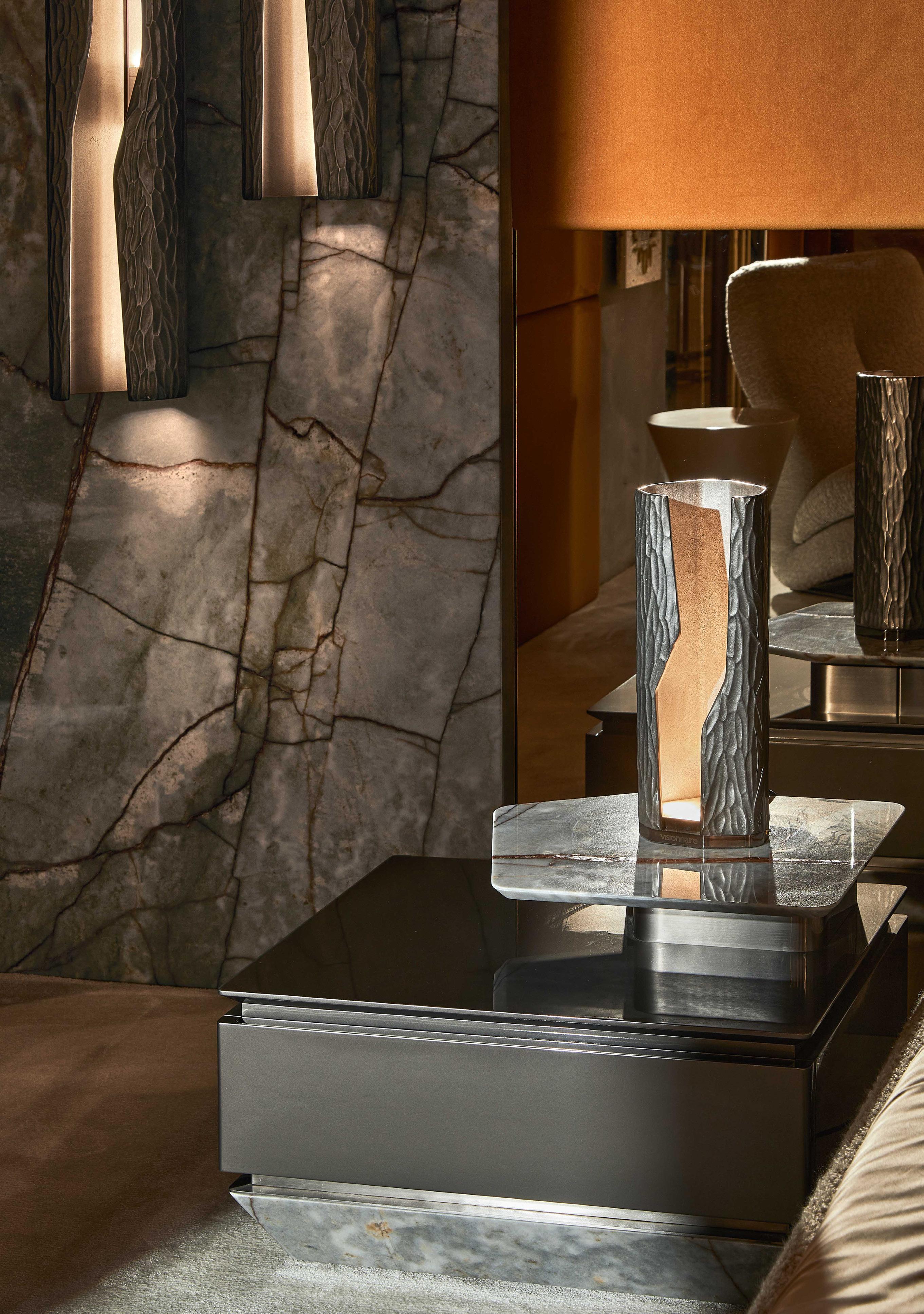
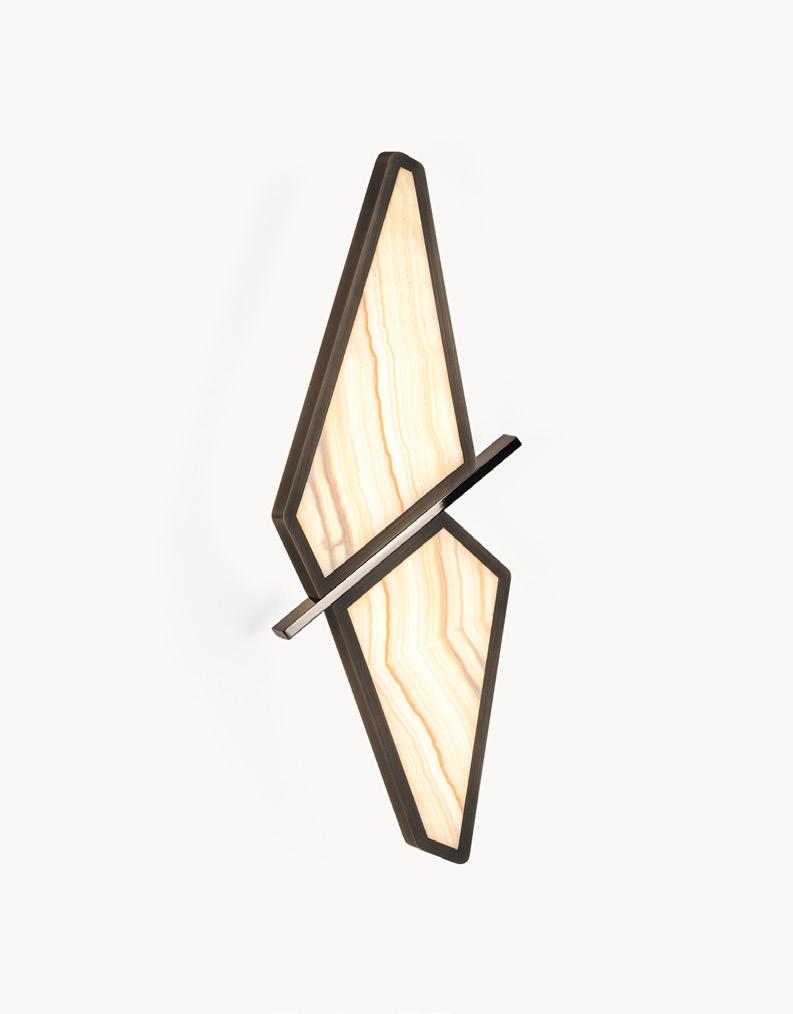
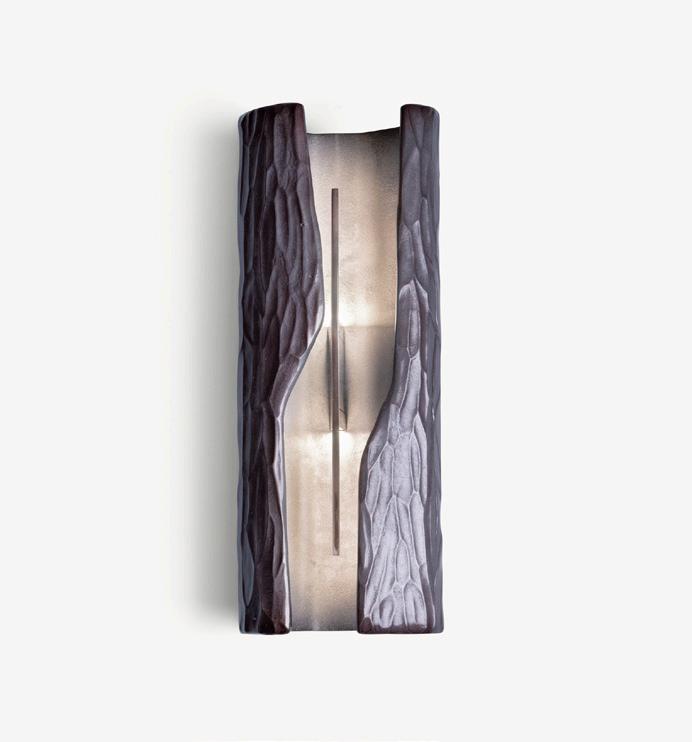
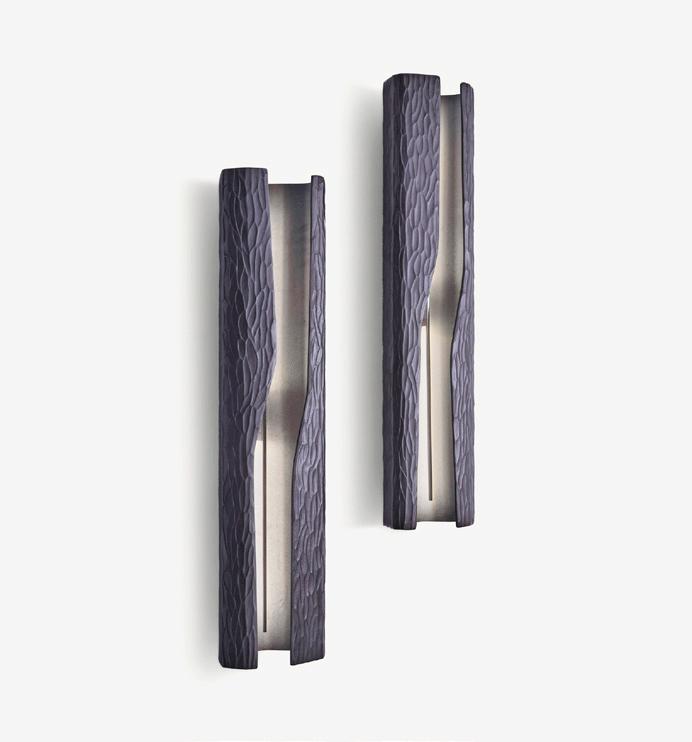
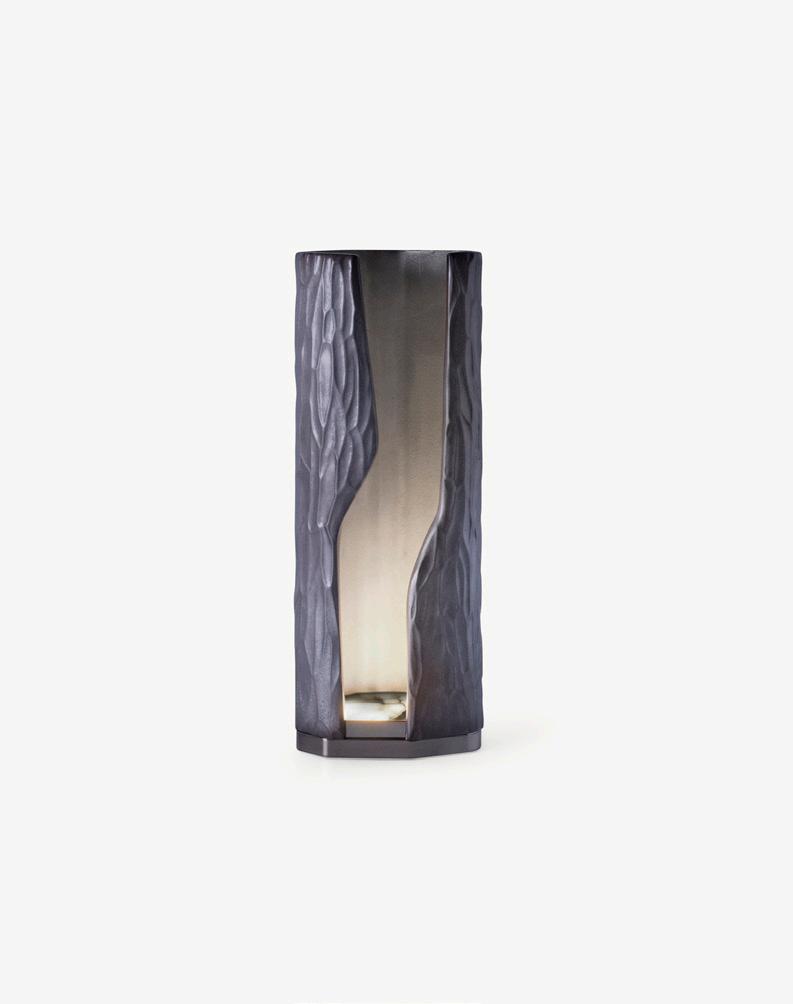
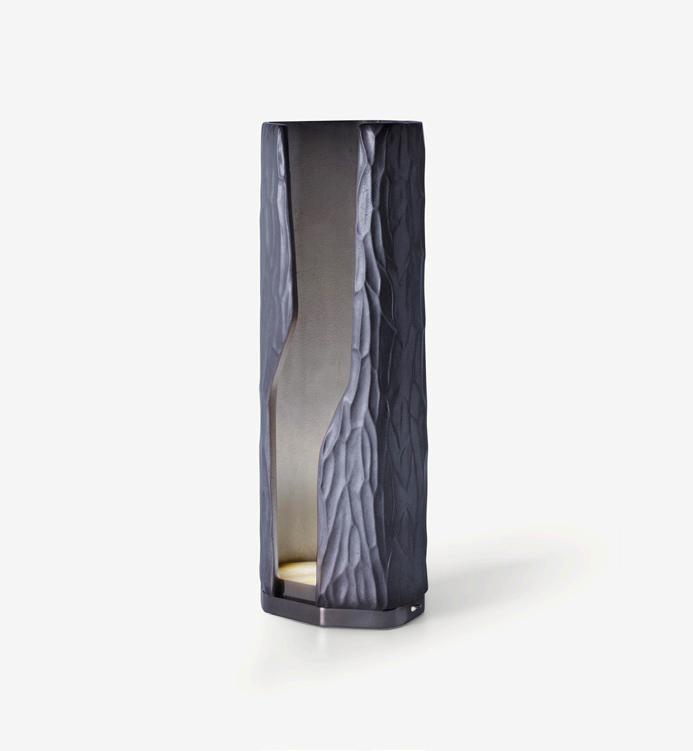
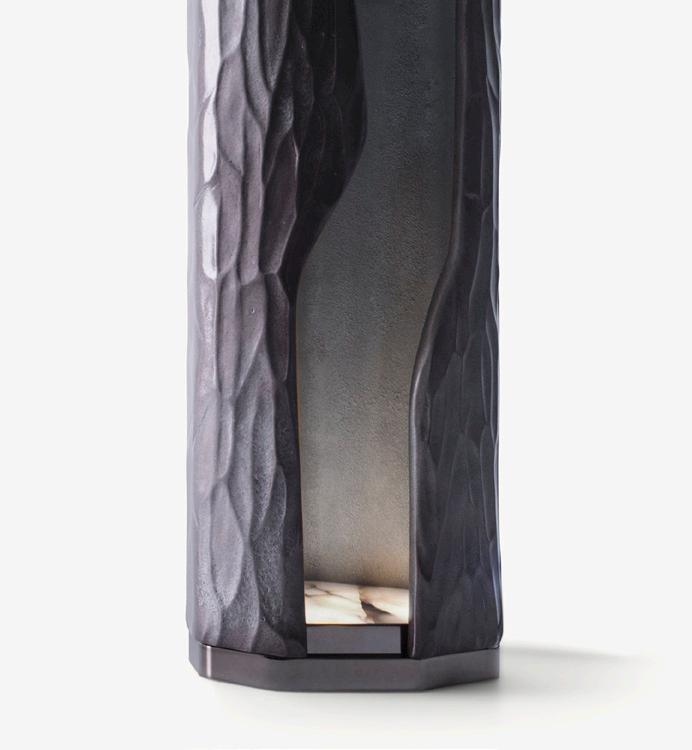
Rift draws inspiration from nature, defining itself as a compact volume marked by an irregular fracture that reveals its luminous core. The exterior, cast in aluminum, features an uneven texture reminiscent of stone — a living, vibrant surface that is never decorative, capable of capturing light in constantly shifting ways and intensifying the dialogue between shadow and relief. Each facet reflects the making process, and every imperfection becomes part of its language. Inside, the cut opens onto a satin bronze metal, warm and deep. The contrast is radical: mineral opacity on the outside, enveloping light within, reflecting and multiplying to generate a charged atmosphere. The fracture becomes a deliberate design gesture; the material expresses its primal force, and light emerges as the active nucleus of the project.
Rift prende ispirazione dalla natura e si definisce come un volume compatto inciso da una frattura irregolare che ne rivela l’anima luminosa. L’esterno, in fusione di alluminio, è lavorato con una texture irregolare che richiama la pietra; una superficie viva, vibrante, mai decorativa, capace di catturare la luce in modo sempre diverso e di amplificare il dialogo tra ombra e rilievo, dove ogni sfaccettatura racconta il processo e ogni imperfezione diventa linguaggio. All’interno, il taglio si apre su un metallo satinato bronzeo, molto caldo e profondo: il contrasto è radicale, opacità minerale all’esterno e luce avvolgente all’interno, che si riflette e si moltiplica generando un’atmosfera intensa. La frattura diventa gesto progettuale, la materia esprime la propria forza originaria e la luce si afferma come nucleo attivo del progetto.
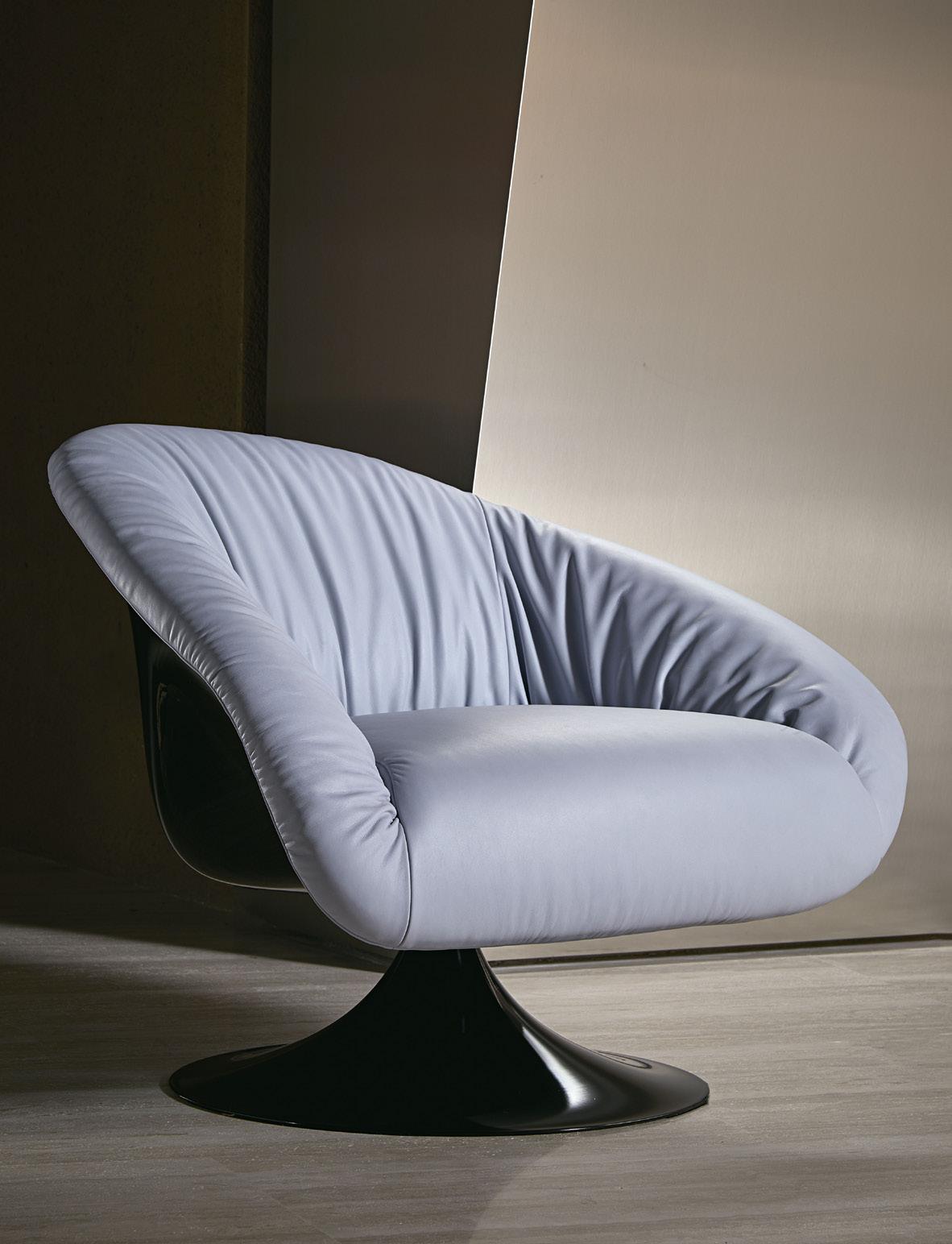
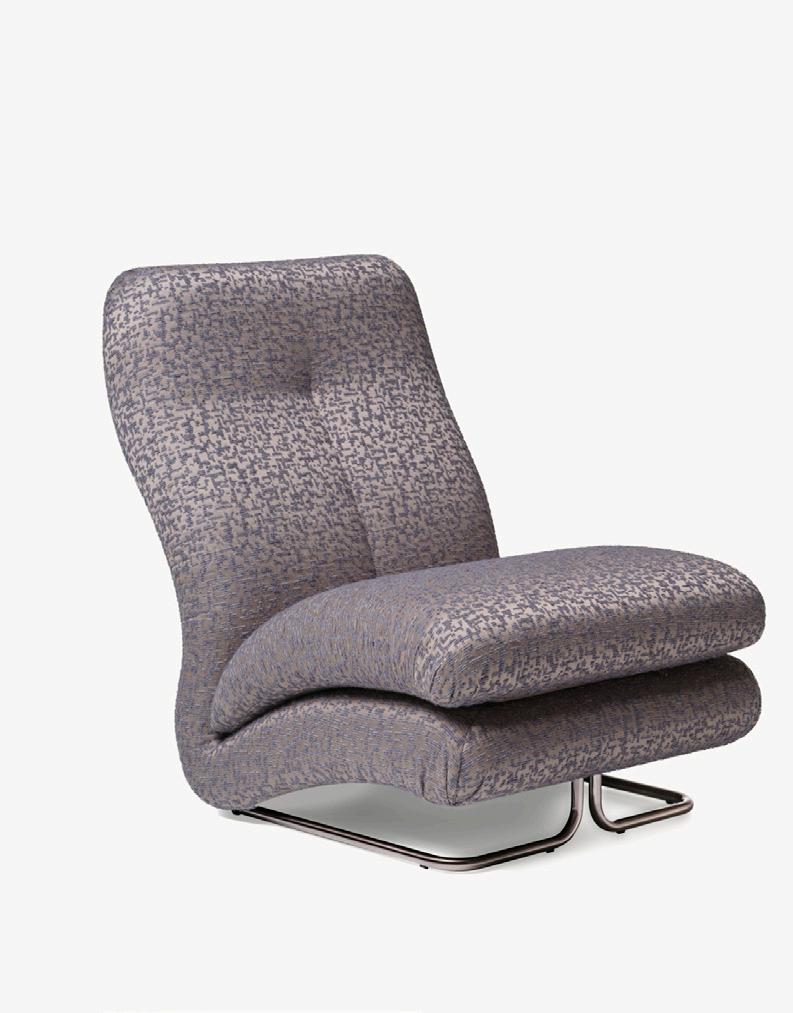
The Cigno armchair is defined by a fluid, enveloping silhouette, the seat unfolds as a single continuous volume, with no visual interruption between backrest and upholstered base. Its ascending, harmonious curvilinear profile subtly recalls the elegance of a swan, translating into form the plastic tension characteristic of organic modernism. The lower structure in chromed tubular metal creates a sharp and sophisticated contrast with the soft body of the armchair. This dialogue between mass and lightness, craftsmanship and industry, is emblematic of late 1960s Italian design — a period marked by the introduction of polyurethane foam and a new expressive freedom in upholstered forms. Conceived as a lounge chair, Cigno moves beyond pure functionality to assume a sculptural and identity-defining role. More than fifty years later, Cigno retains its formal strength, standing as a significant testament to the excellence of Italian design in the second half of the twentieth century.
La poltrona Cigno è caratterizzata da una silhouette fluida e avvolgente, la seduta si sviluppa come un unico volume continuo, privo di interruzioni visive tra schienale e base imbottita. Il profilo curvilineo, ascendente e armonico, richiama con discrezione l’eleganza del cigno, traducendo in forma la tensione plastica tipica del modernismo organico. La struttura inferiore in tubolare metallico cromato crea un contrasto netto e sofisticato con il corpo morbido della poltrona. Questo dialogo tra massa e leggerezza, tra artigianalità e industria, è emblematico del design italiano di fine anni ’60, periodo segnato dall’introduzione del poliuretano espanso e da una nuova libertà espressiva nelle forme dell’imbottito. Pensata come lounge chair, Cigno supera la dimensione puramente funzionale per assumere un valore scultoreo e identitario. A distanza di oltre cinquant’anni, Cigno mantiene intatta la sua forza formale, confermandosi come testimonianza significativa dell’eccellenza progettuale italiana del secondo Novecento.
Minstrel small table
Balatat Disk with Feathers/ Pasha Tent 2/ Pasha Tent artworks
by Alessandro La Spada by Naqsh Collective
Trace wardrobe
by Alessandro La Spada
Trace wardrobe by Alessandro La Spada
Eidos wardrobe by Fabio Bonfà
Bachi armchair
1960 design by Vittorio Varo / Re-edition 2026
Bartok mirrors by Luigi Cavalli
by Alessandro La Spada
Prelude bench by Alessandro La Spada
Rift floor to ceiling lamp by Alessandro La Spada
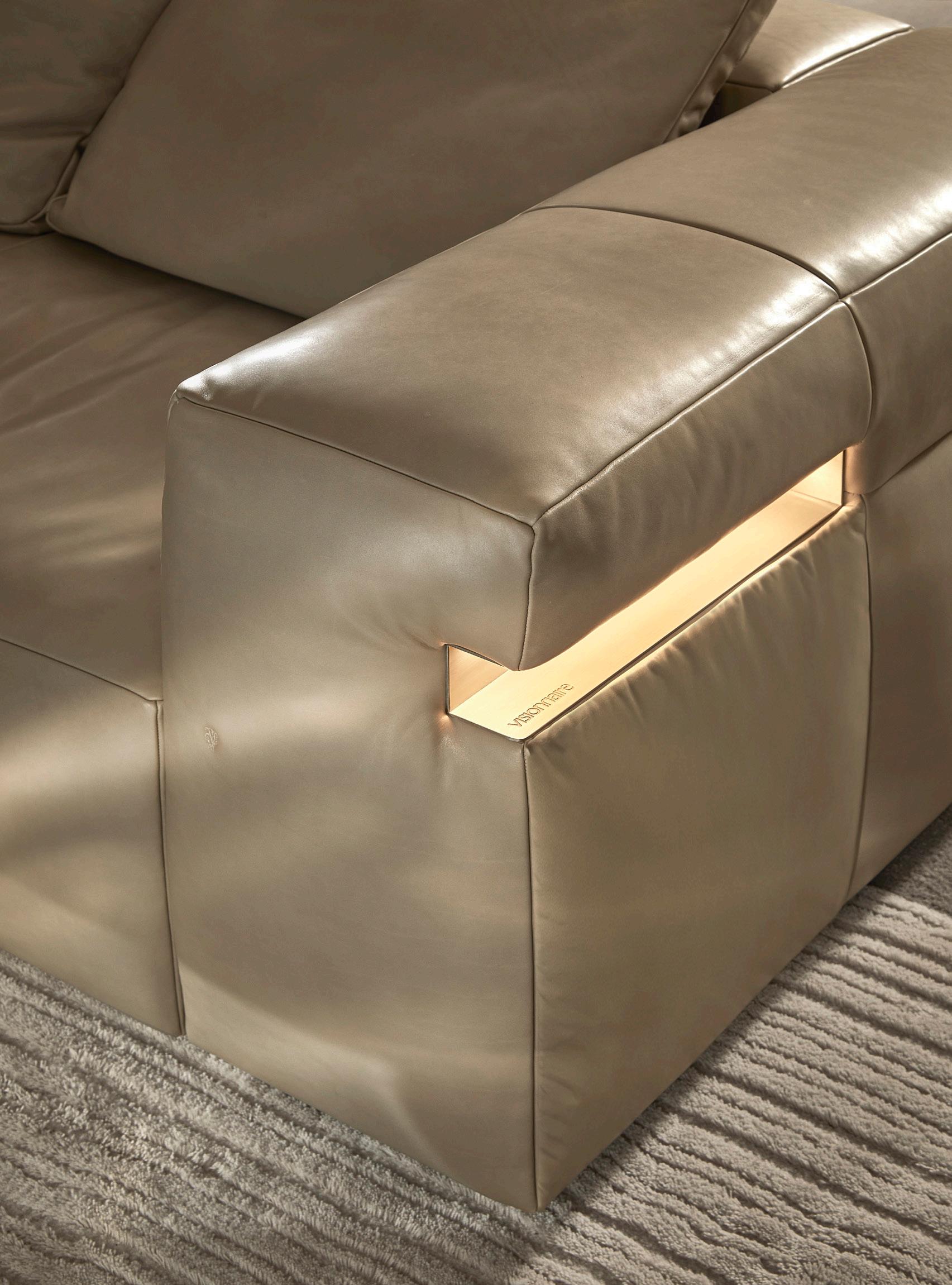
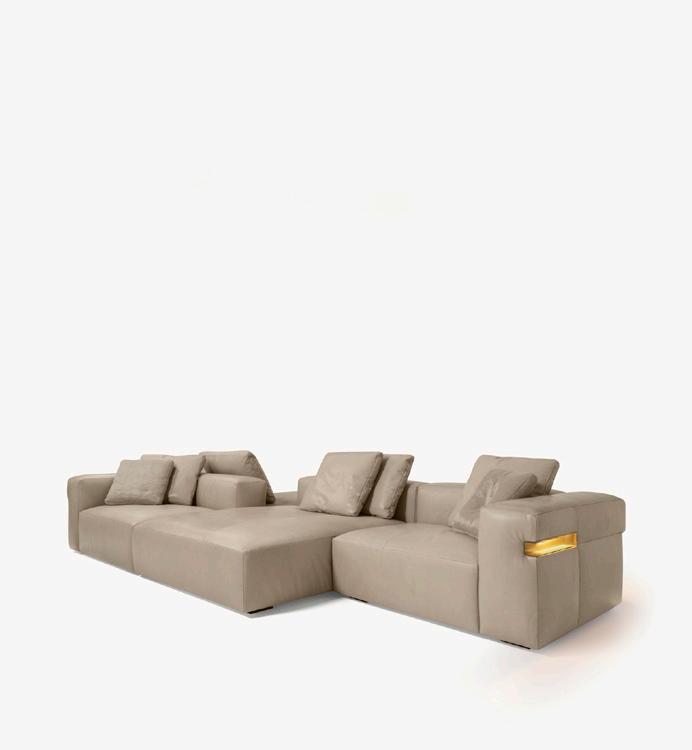
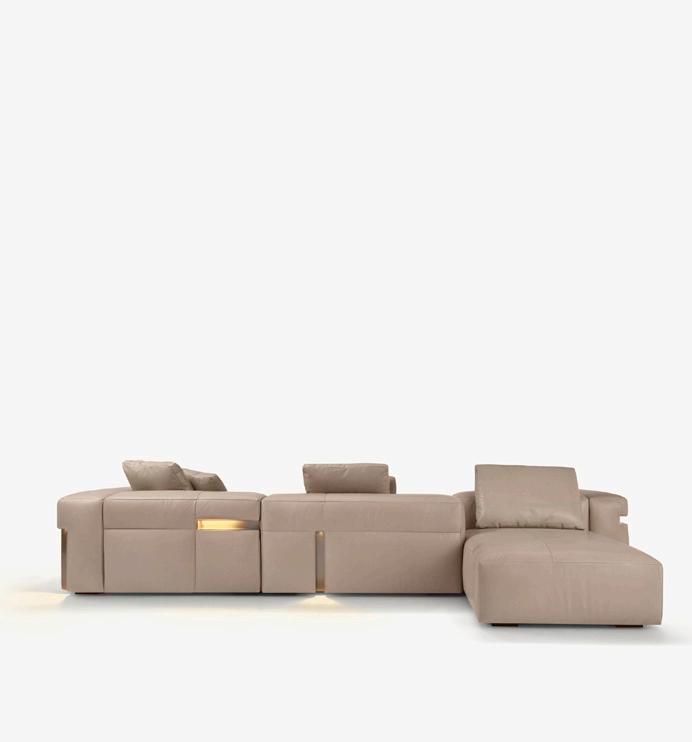
Frame arises from a reflection on structure as the founding principle of the project. The name itself is not a decorative frame, but a declarative act: the frame as a generative element, as a matrix that supports, defines and delimits. The wide, deep seat is constructed through compact volumes upholstered in leather, where solid blocks and calibrated voids create balance through opposition. The hollowed armrest, clad in metal, becomes both a structural and expressive element: a taut line that frames the space and creates a clear dialogue between mass and lightness. This alternation reveals the brutalist character of the project, not as a stylistic reference but as an attitude. Frame does not soften the structure: it makes it inhabitable, taking shape as a domestic micro-architecture in which the frame defines a way of occupying space.
Frame nasce da una riflessione sulla struttura come principio originario del progetto. Il nome stesso non è una cornice decorativa, ma un atto dichiarativo: il telaio come elemento generativo, come matrice che sostiene, definisce, delimita. La seduta, ampia e profonda, è costruita attraverso volumi compatti rivestiti in pelle, dove blocchi pieni e vuoti calibrati generano equilibrio nell’opposizione. Il bracciolo svuotato, rivestito in metallo, diventa elemento strutturale ed espressivo: una linea tesa che incornicia lo spazio e crea un dialogo netto tra massa e leggerezza. In questa alternanza risiede il carattere brutalista del progetto, non come citazione stilistica ma come attitudine. Frame non ammorbidisce la struttura: la rende abitabile, configurandosi come una micro-architettura domestica in cui il telaio definisce un modo di stare nello spazio.
Frame
Frame, sofa
Bloomington Baggy, armchair
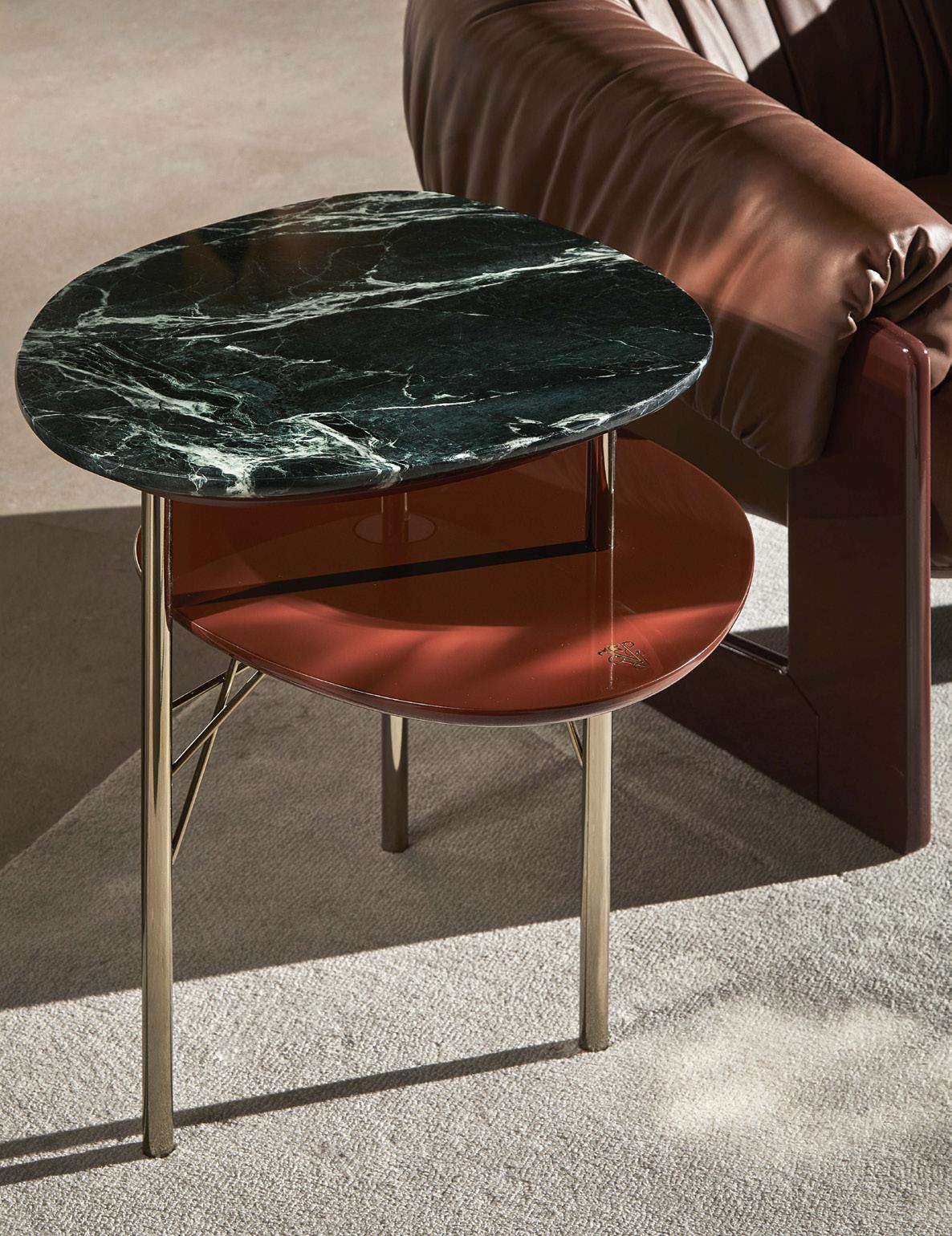
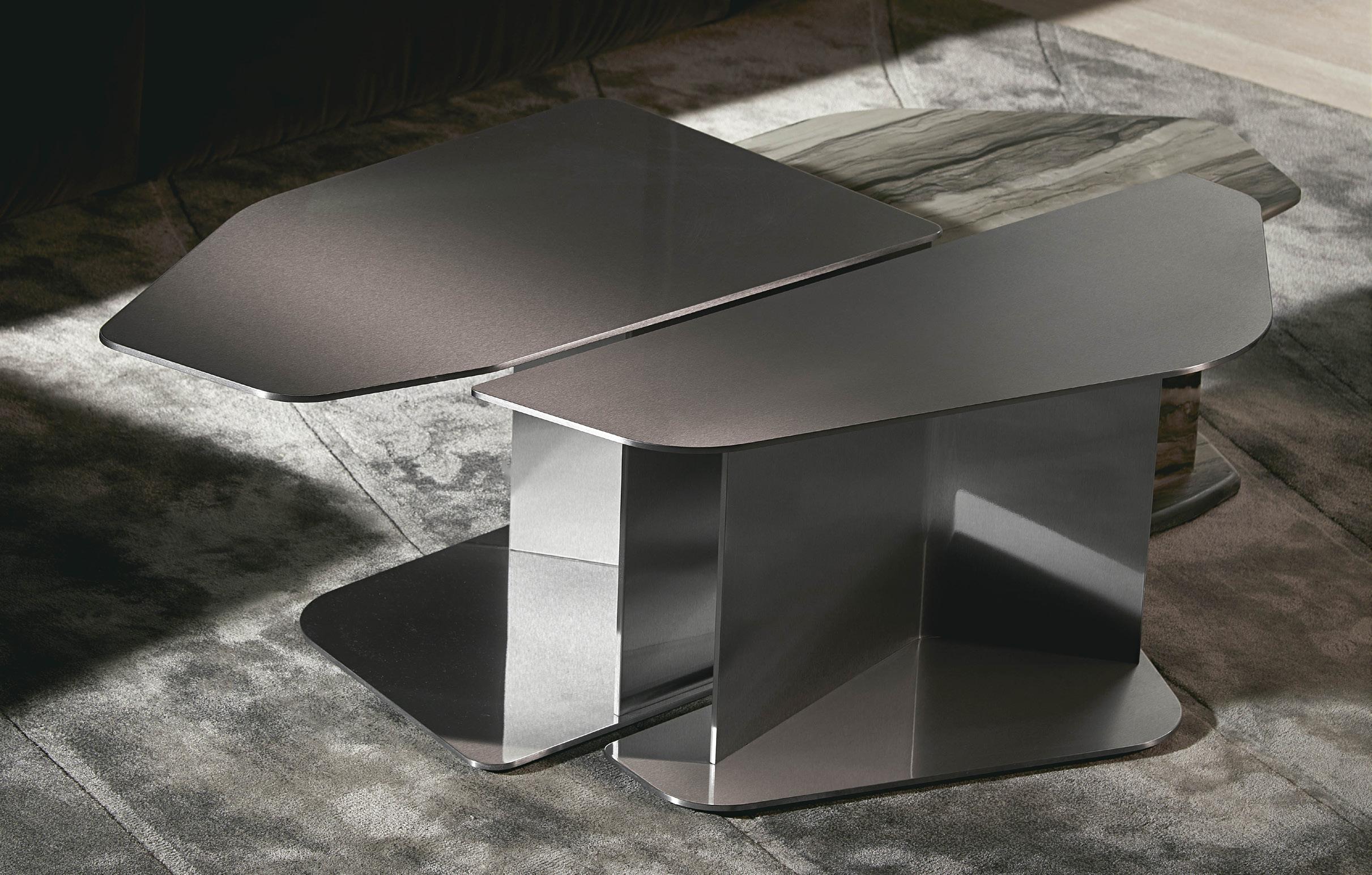
Shard, small table
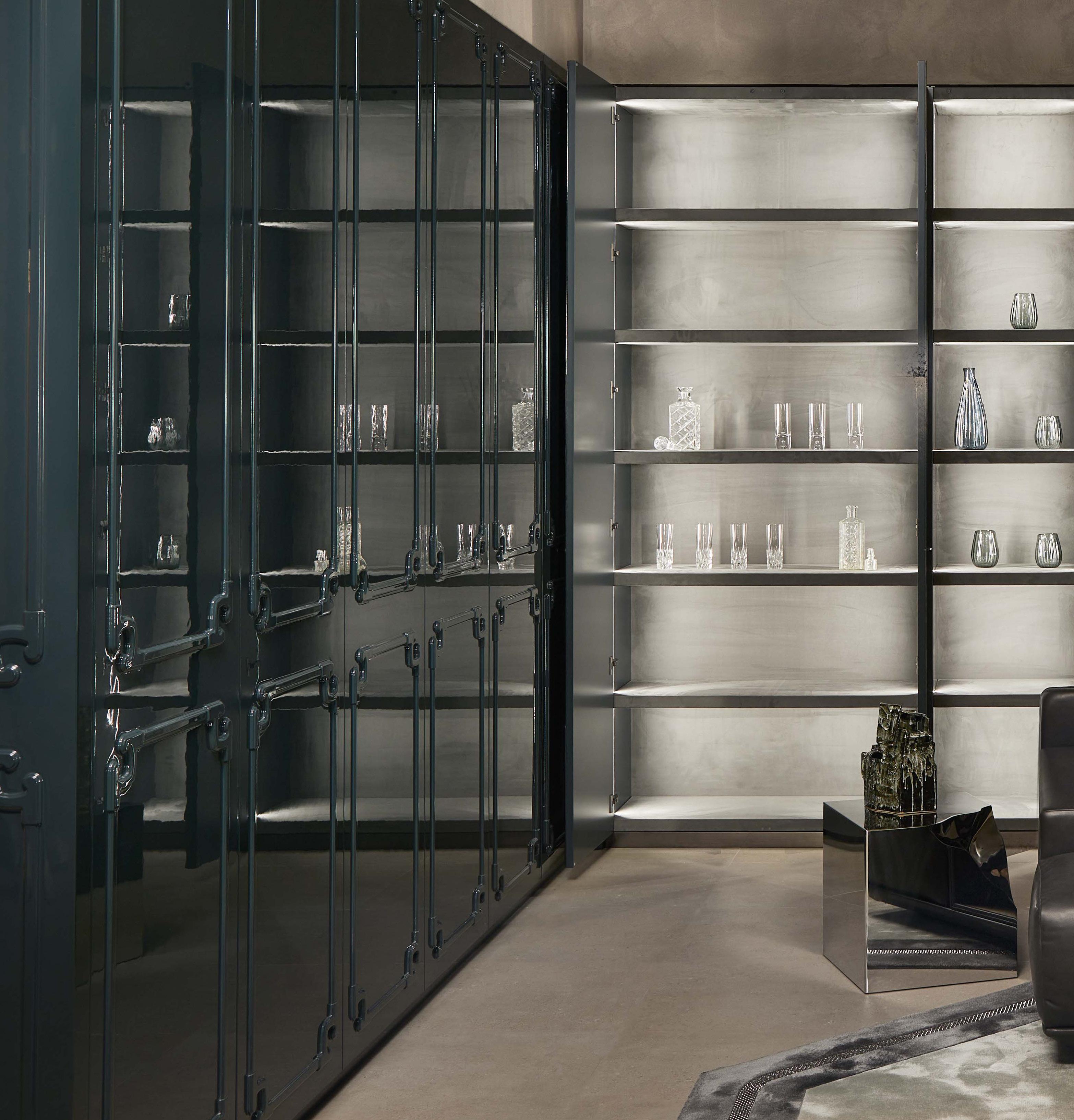
Gardienne, storage wall
Leonardo Steel, double-sided high unit
Milano, suspension/floor lamp
Sfogliatella, wall lamp
Variety Cold, carpet
Eclissi, artwork
Oil Spot Roche/ Vestige, vases
Fregio H/ L , accessories
Explore the room ↗
Between leather, metal and textured reflections, form reveals a silent tension shaped by fullness, void and depth.
Tra pelle, metallo e riflessi materici, la forma rivela una tensione silenziosa fatta di pieni, vuoti e profondità.
Gardienne storage unit
Frame sofa
by Alessandro La Spada
by Fabio Bonfà
Gardienne storage unit
Shard small table
Frame sofa by Alessandro La Spada
by Fabio Bonfà
Frame sofa Oil Spot Roche vase
Variety Cold carpet
by Fabio Bonfà by Moïo Studio
by Samuele Mazza
Shard small table
by Alessandro La Spada
Frame sofa by Fabio Bonfà
Gardienne storage unit by Alessandro La Spada
Milano suspension lamp
by Armando Bruno, Alberto Torres
Frame sofa by Fabio Bonfà
Milano suspension lamp/floor lamp
Eclissi artwork by Armando Bruno, Alberto Torres
by Michele Astolfi
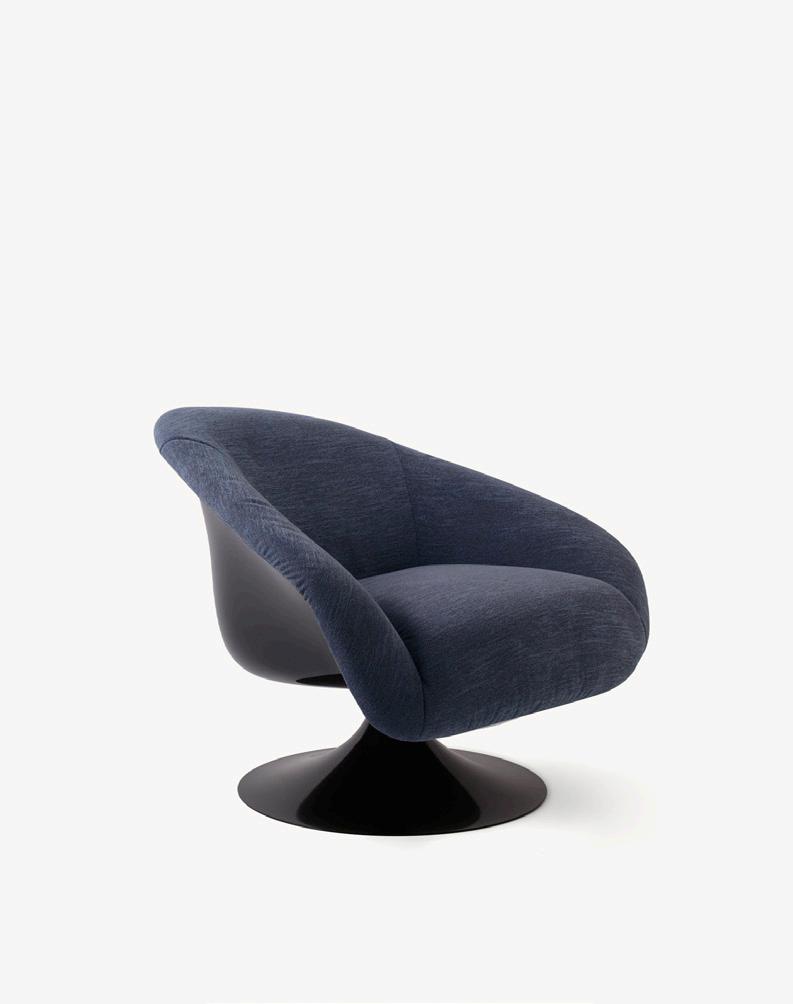
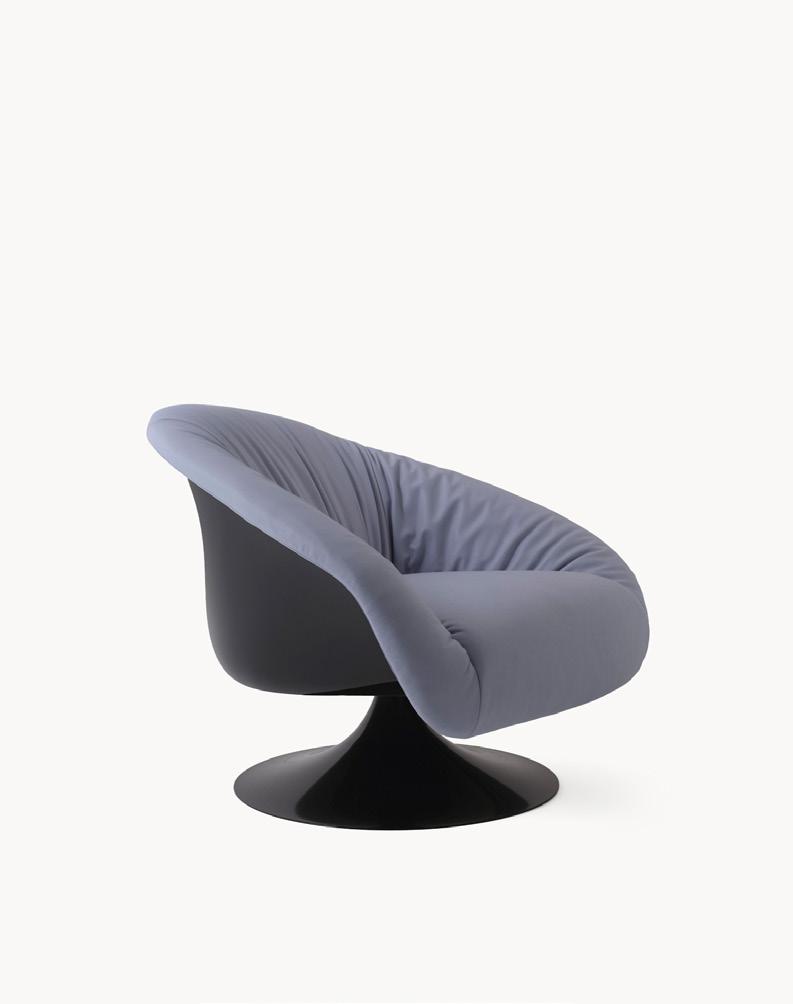
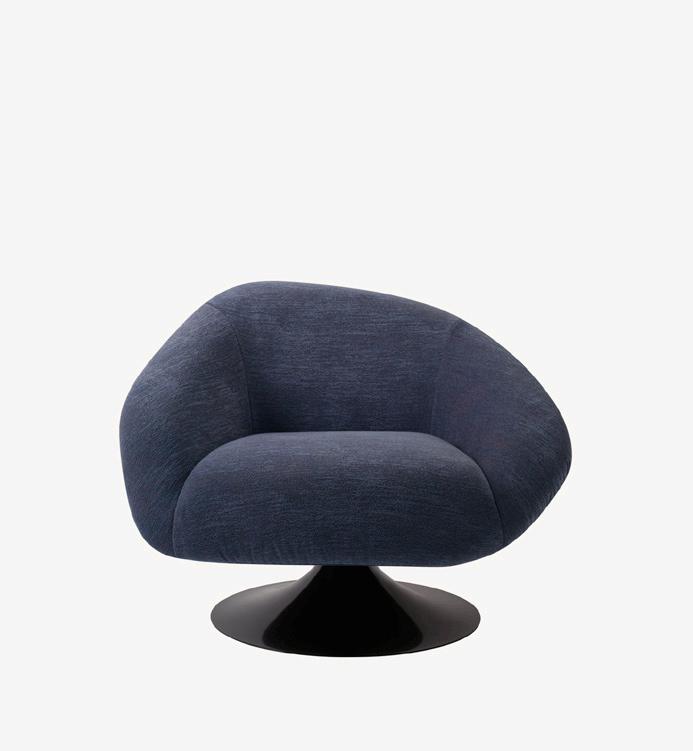
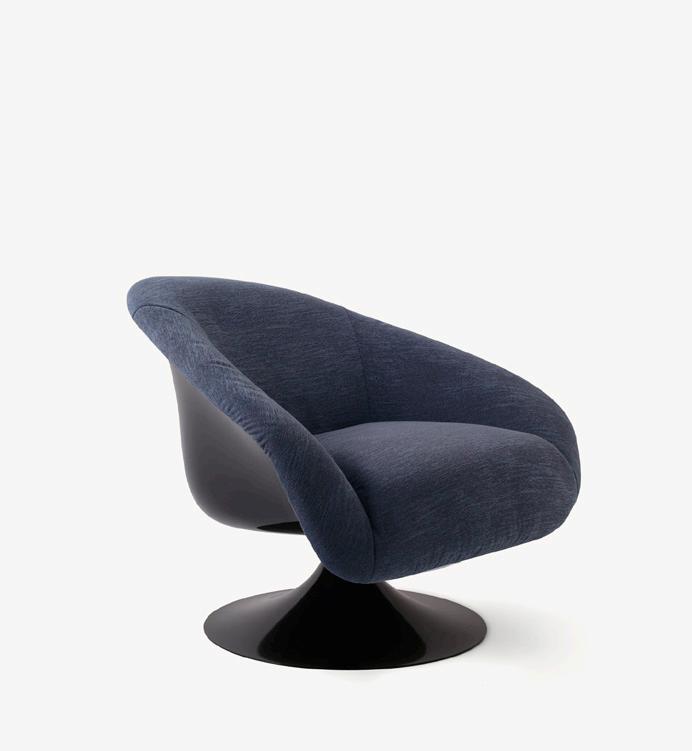
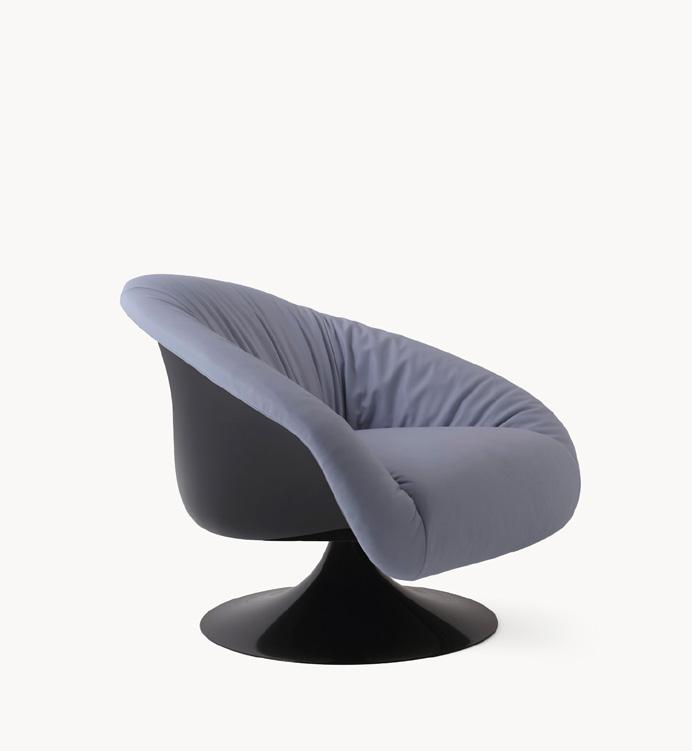
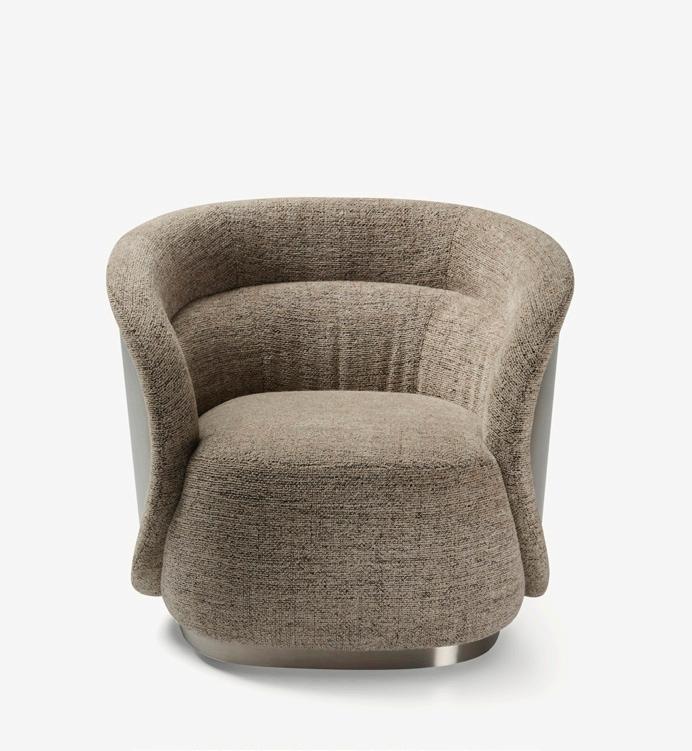
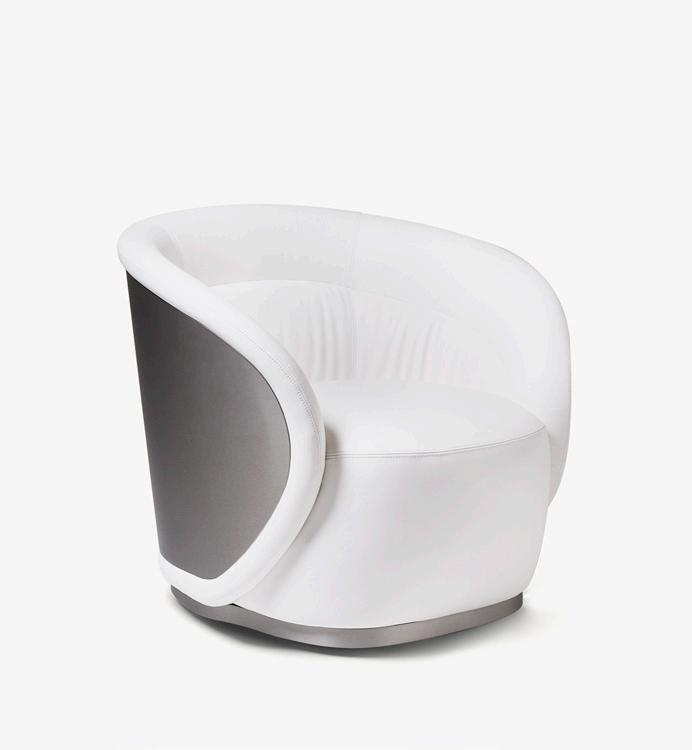
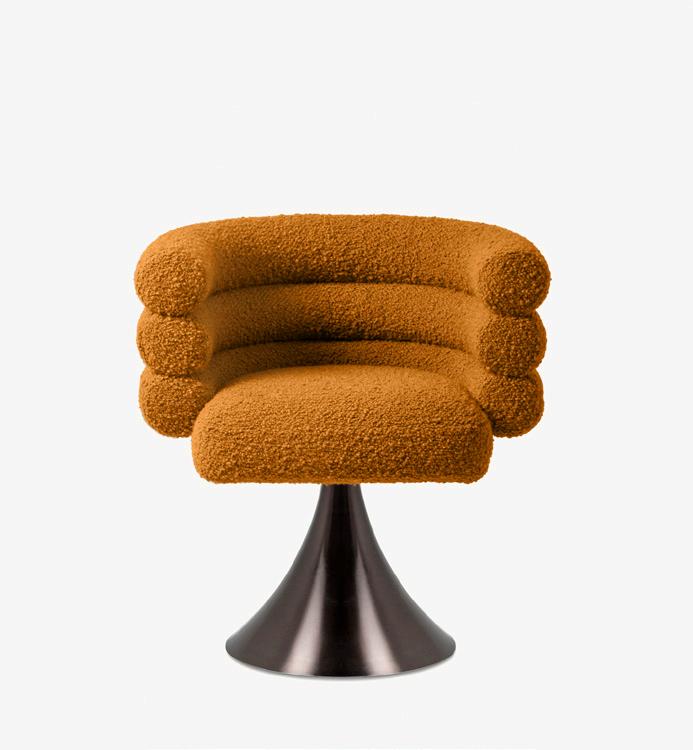
In the name Bloomington, the verb “to bloom” resonates. Yet here, the blossoming is architectural—a construction of form in space. The Bloomington armchair emerges as a volume shaped by gesture, a three-dimensional sign that asserts itself with both clarity and ease, defining space even before accommodating the body. Its enveloping lines evoke the profile of a calla lily, yet this organic suggestion is translated into a structural language: a compact outer shell, polished to a mirror-like surface. Light flows across its high-gloss finish, amplifying curves. The trumpet-shaped base lifts the seat, transforming it into a suspended chalice.
Nel nome Bloomington risuona il verbo «to bloom», sbocciare. Ma qui la fioritura è architettonica, una costruzione della forma nello spazio. La poltrona Bloomington si manifesta come un volume plasmato dal gesto, un segno tridimensionale che emerge con decisione e naturalezza, definendo lo spazio prima ancora di accogliere il corpo. Le linee avvolgenti evocano il profilo di una calla, ma la suggestione organica è tradotta in linguaggio strutturale: un guscio esterno compatto e levigato, fino a diventare superficie specchiante. La luce scorre sulla superficie lucidissima amplificandone le curvature. La gamba a trombetta solleva la seduta trasformandola in un calice sospeso.
Shard small table
Vestige sculpture by Alessandro La Spada by Hsin Hua Lee
Leonardo Steel double-sided high unit
Fregio H/L accessories
Bloomington Baggy armchair by Alessandro La Spada by Tipstudio by Mauro Lipparini
Leonardo Steel double-sided high unit
by Alessandro La Spada
Fregio H/L accessories by Tipstudio
Sfogliatella wall lamp
by Marc Ange
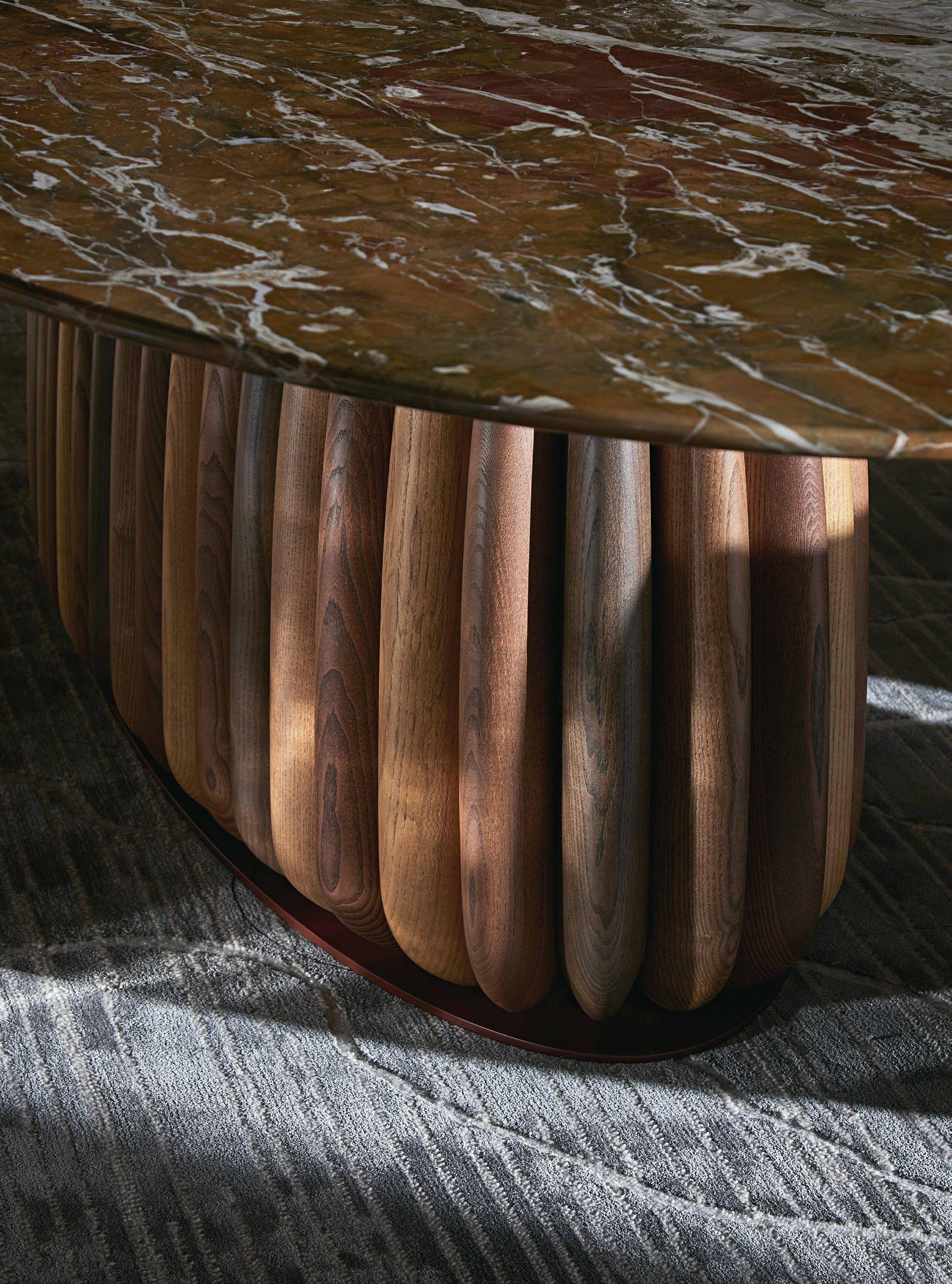
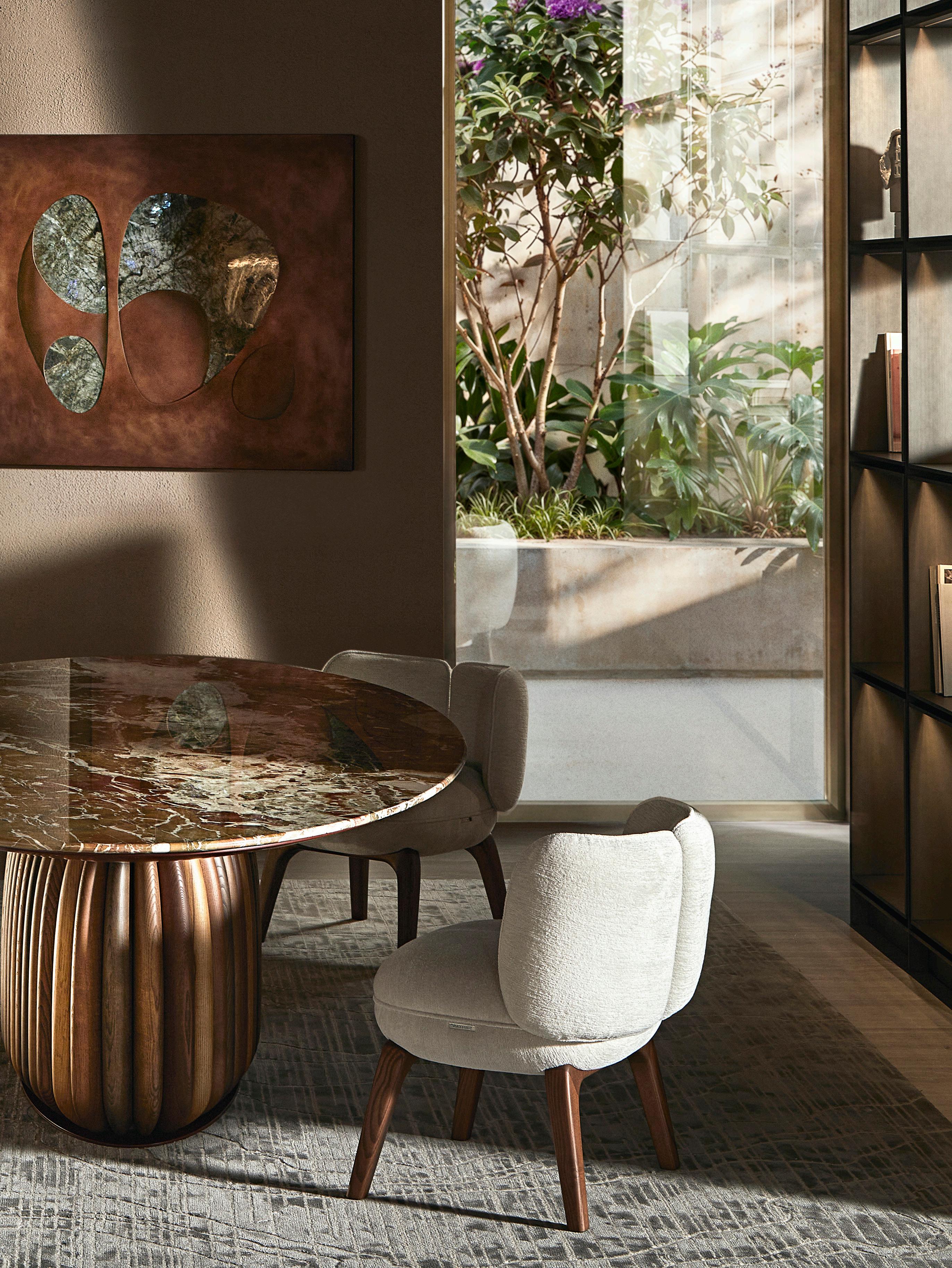
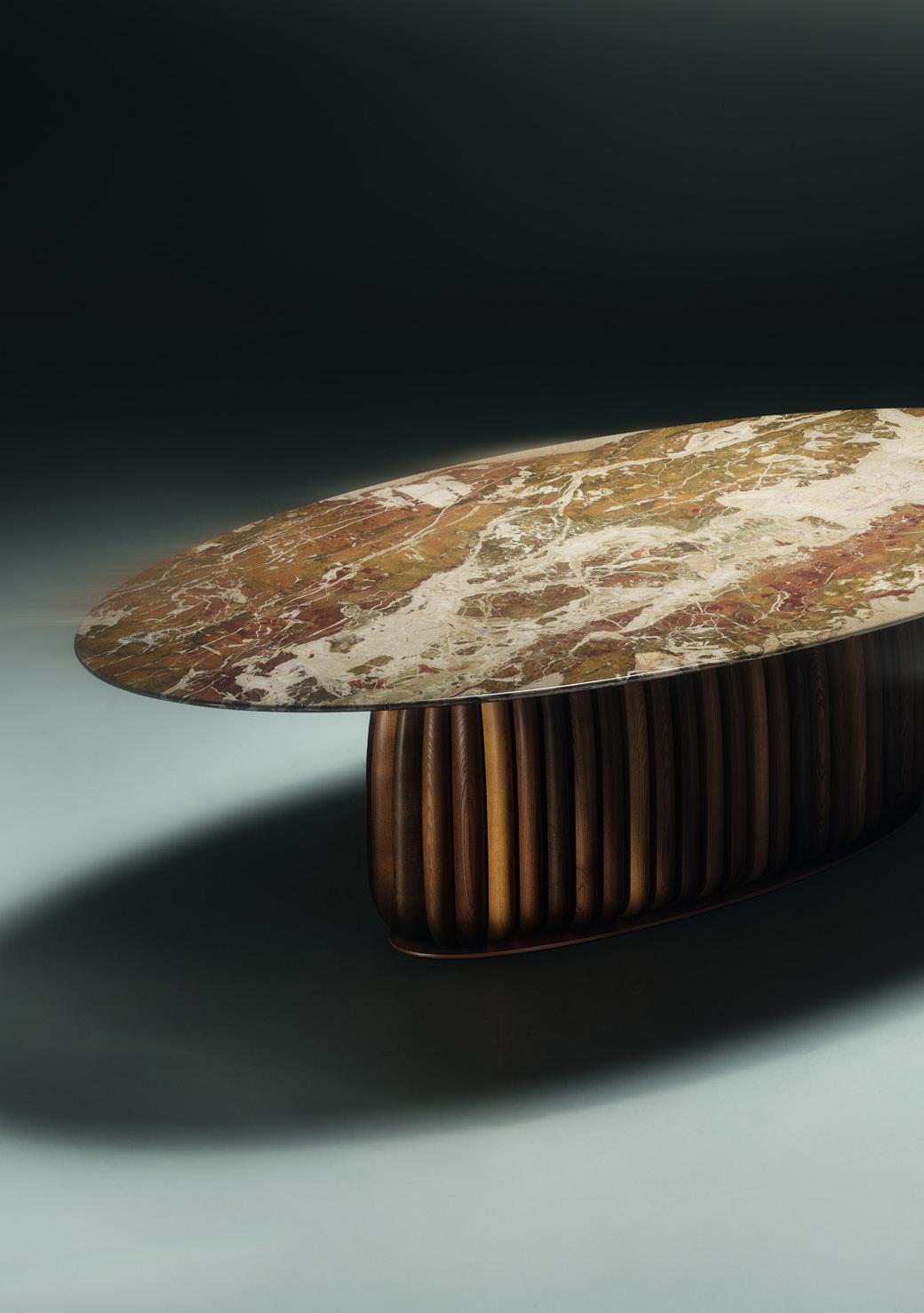
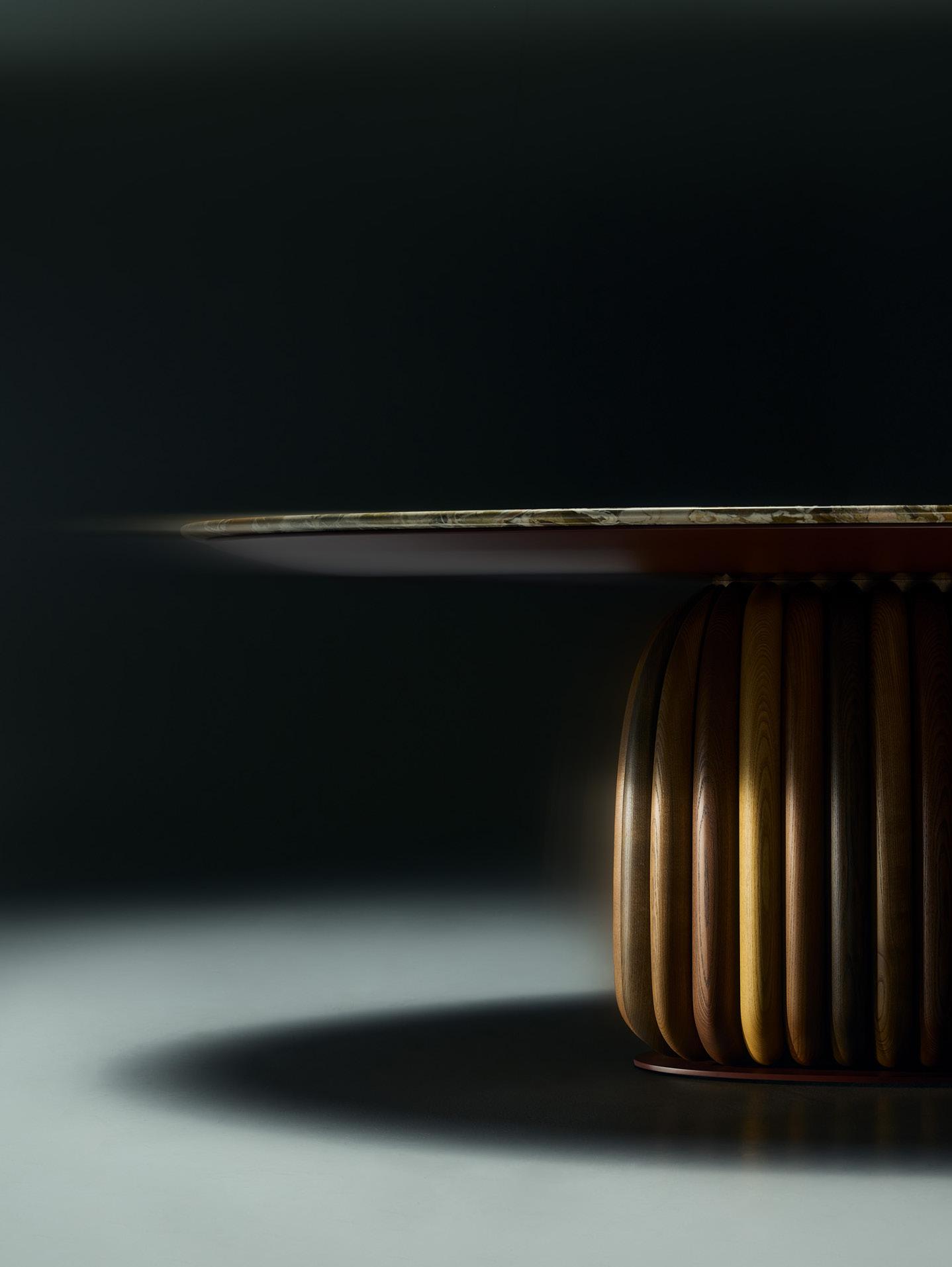
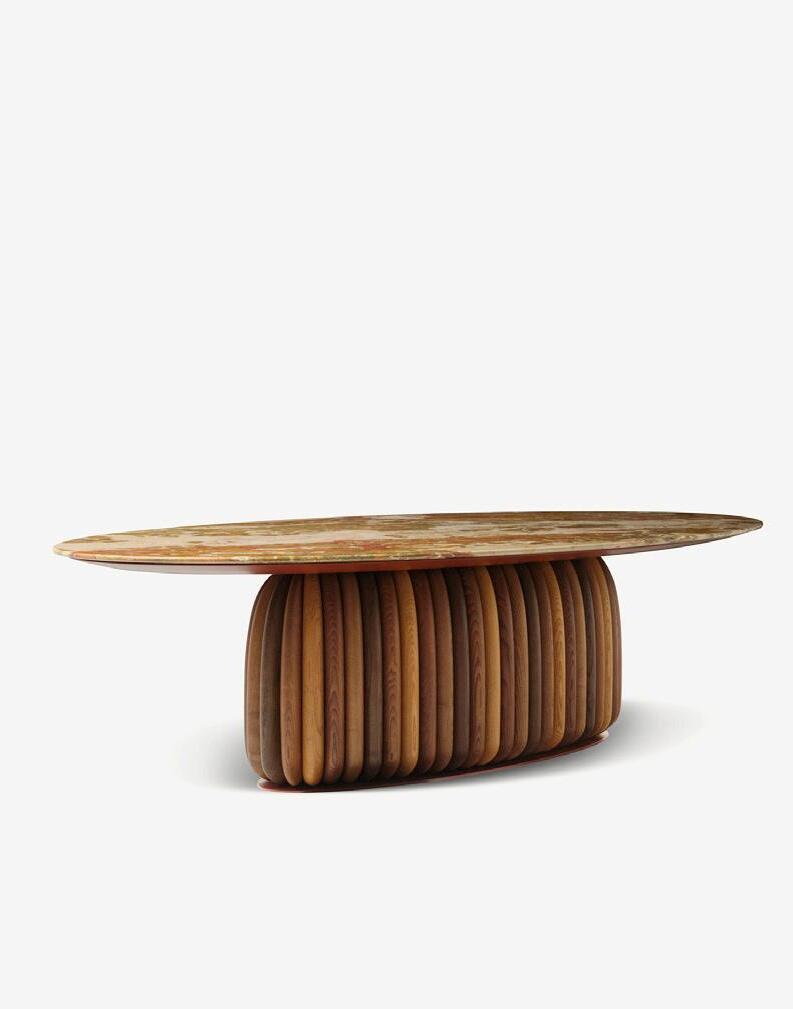
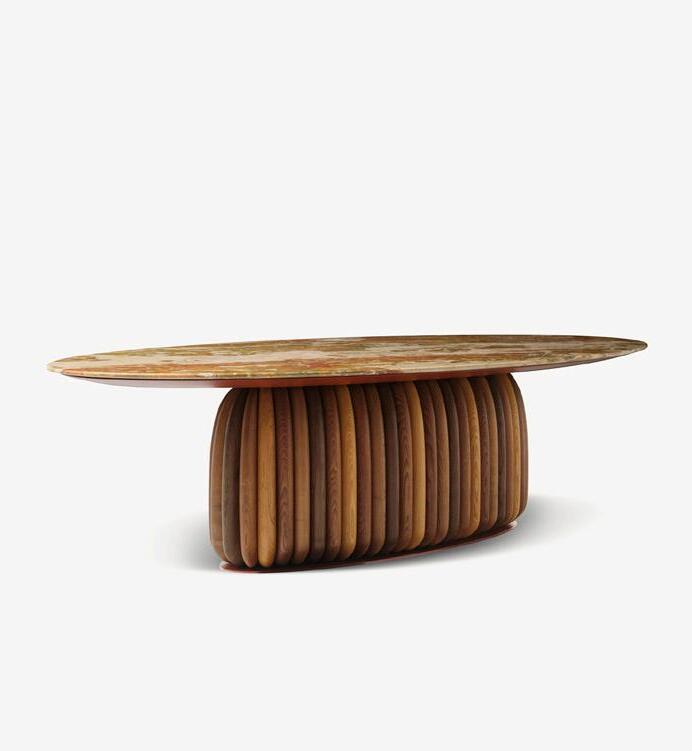
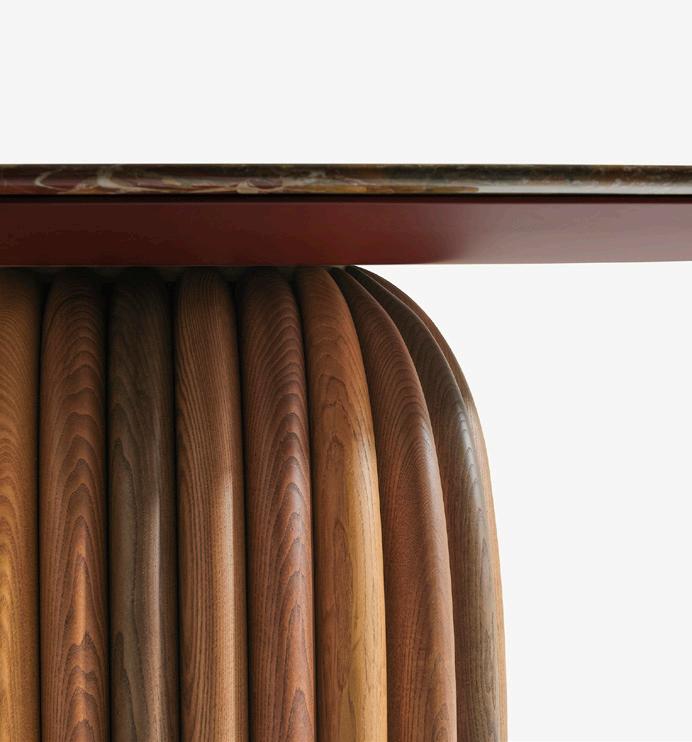
Macrodosing draws inspiration from the ambiguity of the mushroom — a form suspended between nourishment and alteration, between delicacy and poisonous nature. Its beauty holds a margin of uncertainty: it attracts and disorients at the same time. The table translates this duality into structure. A compact vertical core rises from the ground, composed of rhythmic vertical slats that recall the hidden gills beneath the mushroom cap. The repetition of the elements generates depth and shadows, giving shape to a protective and slightly enigmatic organic architecture. The use of different wood essences reinforces the idea of multiplicity, with subtle variations in tone and grain suggesting a concealed complexity. Above, the wide Breccia Pontificia top extends like a covering that both welcomes and asserts its presence. Macrodosing transforms a natural form charged with meaning into a monumental table: elegant yet instinctive, welcoming yet powerful, anchoring the space while preserving a silent aura of mystery.
Macrodosing trae ispirazione dall’ambiguità del fungo — una forma che si colloca tra nutrimento e alterazione, tra delicatezza e natura velenosa. La sua bellezza custodisce un margine di incertezza: attrae e disorienta allo stesso tempo. Il tavolo traduce tale dualità in struttura. Un nucleo verticale compatto si innalza dal suolo, composto da listelli verticali ritmati che richiamano le lamelle nascoste sotto il cappello del fungo. La ripetizione degli elementi genera profondità e ombre, dando forma a un’architettura organica protettiva e leggermente enigmatica. L’impiego di diverse essenze lignee rafforza l’idea di molteplicità, con sottili variazioni di tono e venatura che suggeriscono una complessità celata. Al di sopra, l’ampio top in Breccia Pontificia si estende come una copertura che accoglie e afferma la propria presenza. Macrodosing trasforma una forma naturale carica di significato in un tavolo monumentale: elegante ma istintivo, accogliente ma potente, ancora lo spazio conservando un’aura silenziosa di mistero.
Macrodosing
Explore the room ↗
An organic, mysterious architecture, where the depth of matter emerges as a compact, magnetic presence.
Un’architettura organica e misteriosa, dove la profondità della materia affiora in una presenza compatta e magnetica.
Macrodosing table Fantino chair
Cosmical artwork
Caelum carpet by Marc Ange
by Michele Astolfi by Luigi Cavalli
C-Square bookshelf by Stefano Maria Pozzi
Macrodosing
Macrodosing is born from an idea of stratified matter, built through successive layers of memory, shadow and presence. The layers are not only compositional, but also perceptuals: what appears compact from a distance reveals, up close, an inner complexity made of rhythm, variation and stratification. Matter thus becomes origin and narrative, capable of holding time, evoking a primordial nature and returning it as a monumental presence. Macrodosing does not simply occupy the space: it anchors it, building an equilibrium between instinct, gravity and mystery.
Macrodosing nasce da un’idea di materia stratificata, costruita per layer successivi di memoria, ombra e presenza. Gli strati sono non solo compositivi, ma percettivi: ciò che appare compatto da lontano rivela, avvicinandosi, una complessità interna fatta di ritmo, variazione e stratificazione. La materia diventa così origine e racconto, capace di trattenere il tempo, evocare una natura primordiale e restituirla come presenza monumentale. Macrodosing non occupa semplicemente lo spazio: lo ancora, costruendo un equilibrio tra istinto, gravità e mistero.
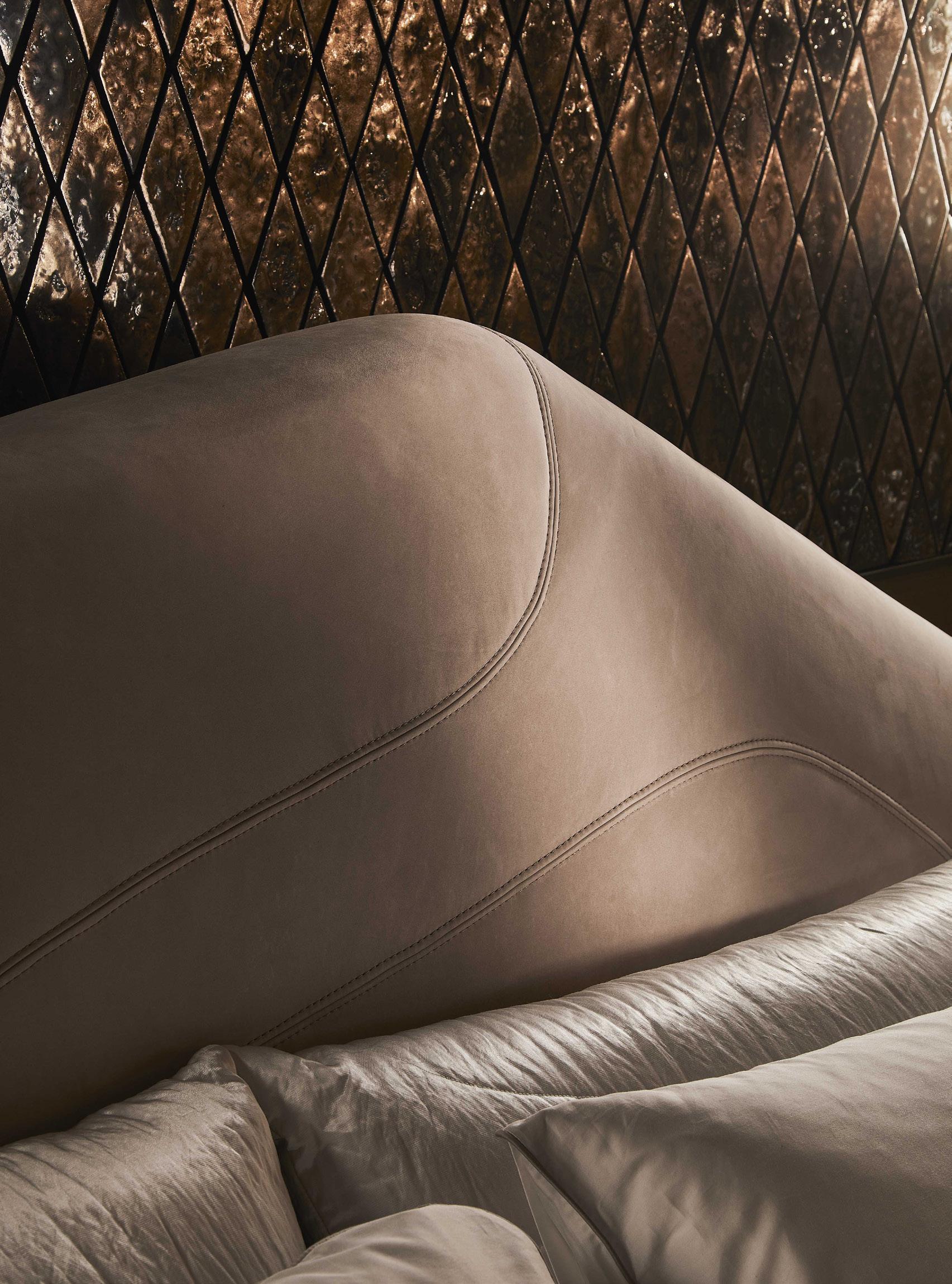
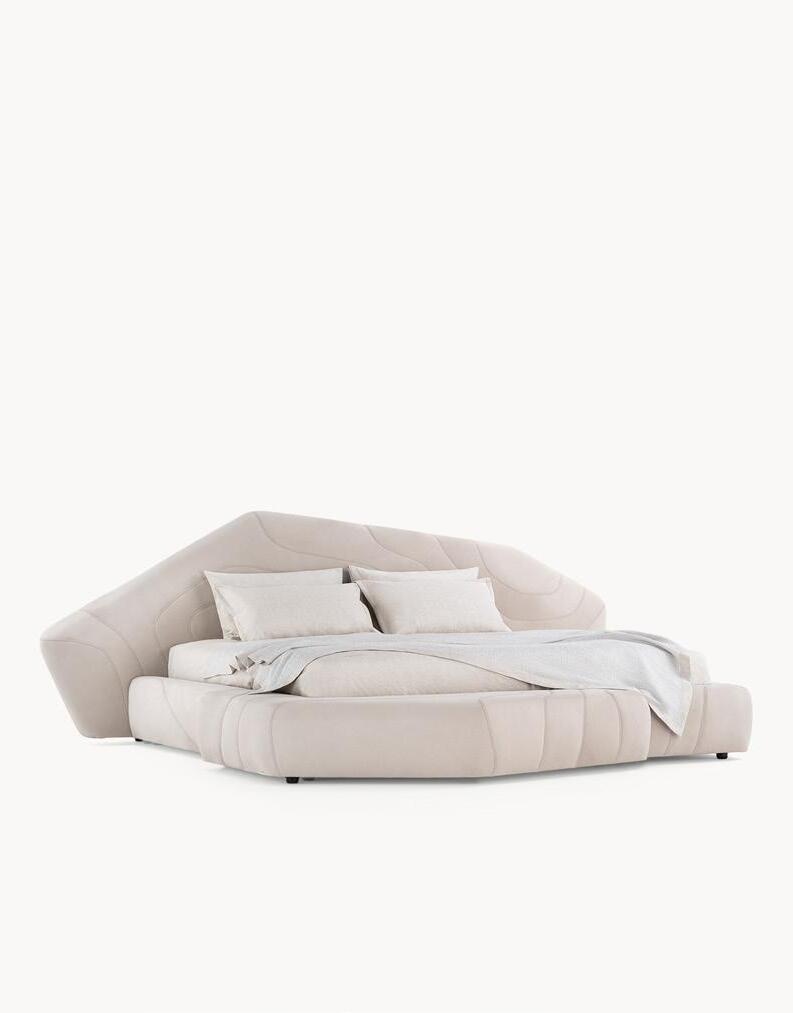
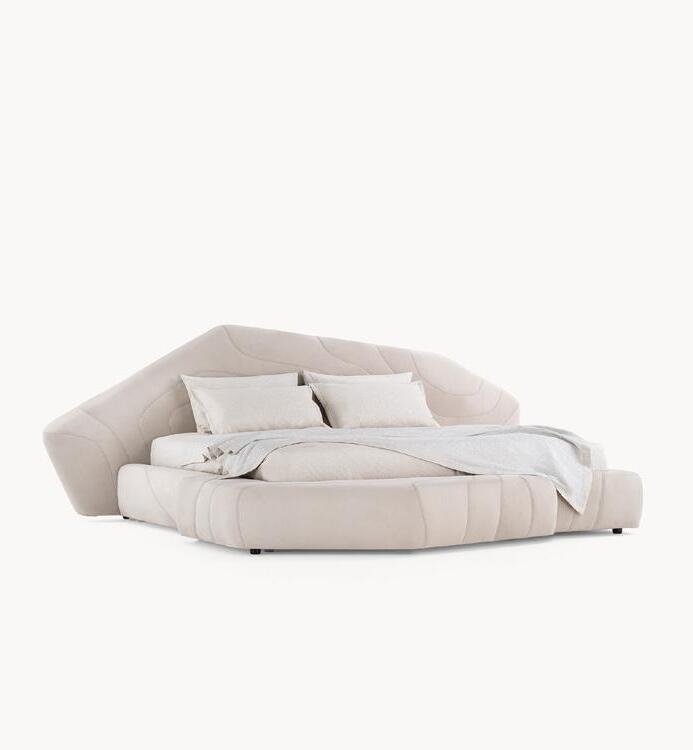
Neolito Bold celebrates the power and beauty of nature, reinterpreting its primordial geometries into an enveloping refuge. Upholstered in leather, the bed is characterized by shaped, padded bands, individually stitched with double topstitching using a two-needle technique. The quilting, which decorates the headboard and bedframe, brings dynamism to the design and enhances the depth of the surfaces, transforming the bed into a sculptural and material presence. Bedside tables with polished stone tops complete the project, weaving together past and contemporary charm.
Neolito Bold celebra la potenza e la bellezza della natura, reinterpretando le sue geometrie primordiali in un rifugio avvolgente. Il letto, rivestito in pelle, è caratterizzato da trapuntature a fasce sagomate, imbottite e cucite singolarmente con cucitura doppia ribattuta a due aghi. La trapuntatura, che decora la testata e il giroletto, conferisce dinamismo al design e valorizza la profondità delle superfici, trasformando il letto in una presenza scultorea e materica. I comodini con top in pietra levigata completano il progetto, intrecciando fascino passato e contemporaneo.
Neolito Bold
Neolito Bold, bed
Neolito, bedside table
Bachi, armchair
Nubia, console
Astralis, abat-jour/table/wall lamp
Sputnik , wall lamp
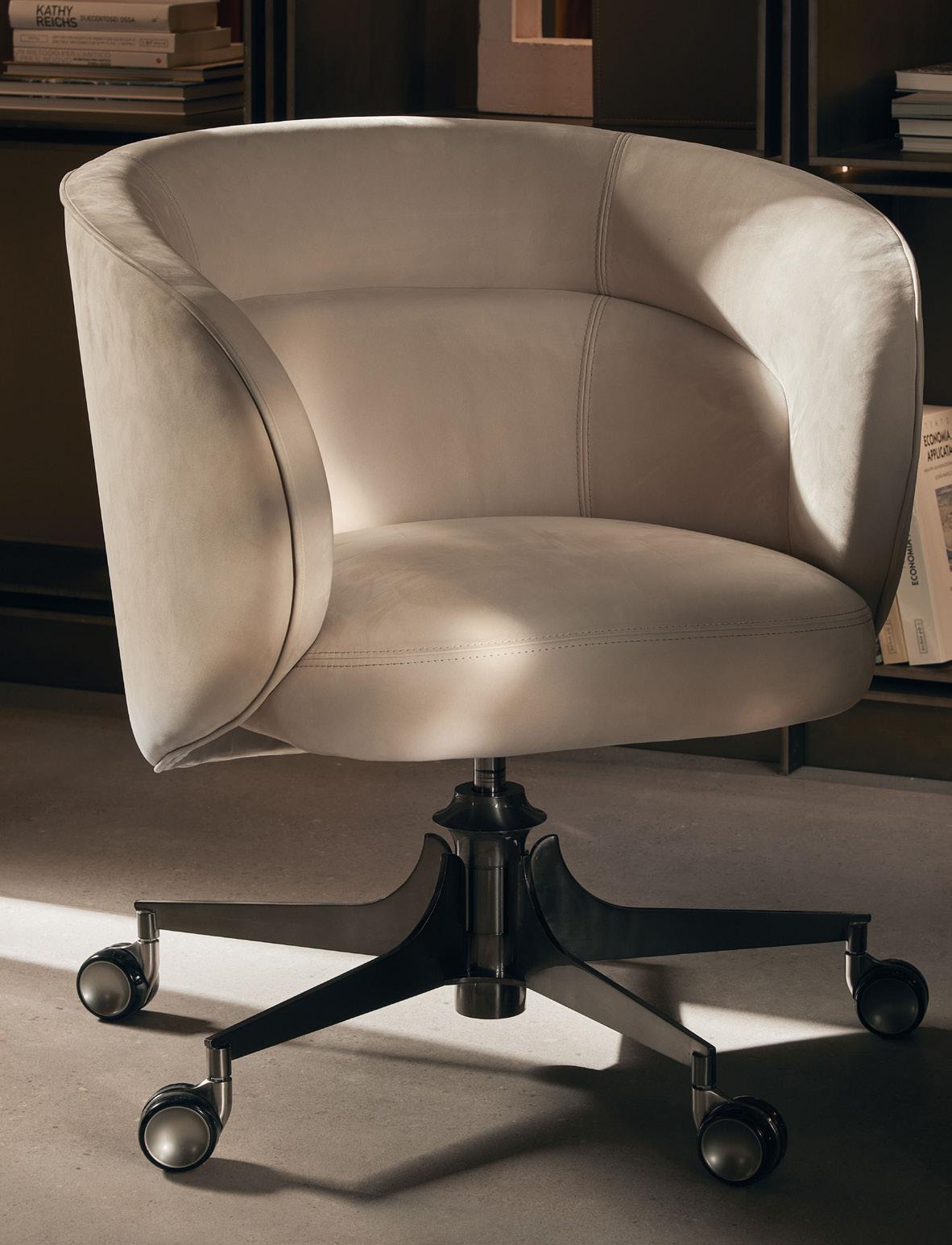
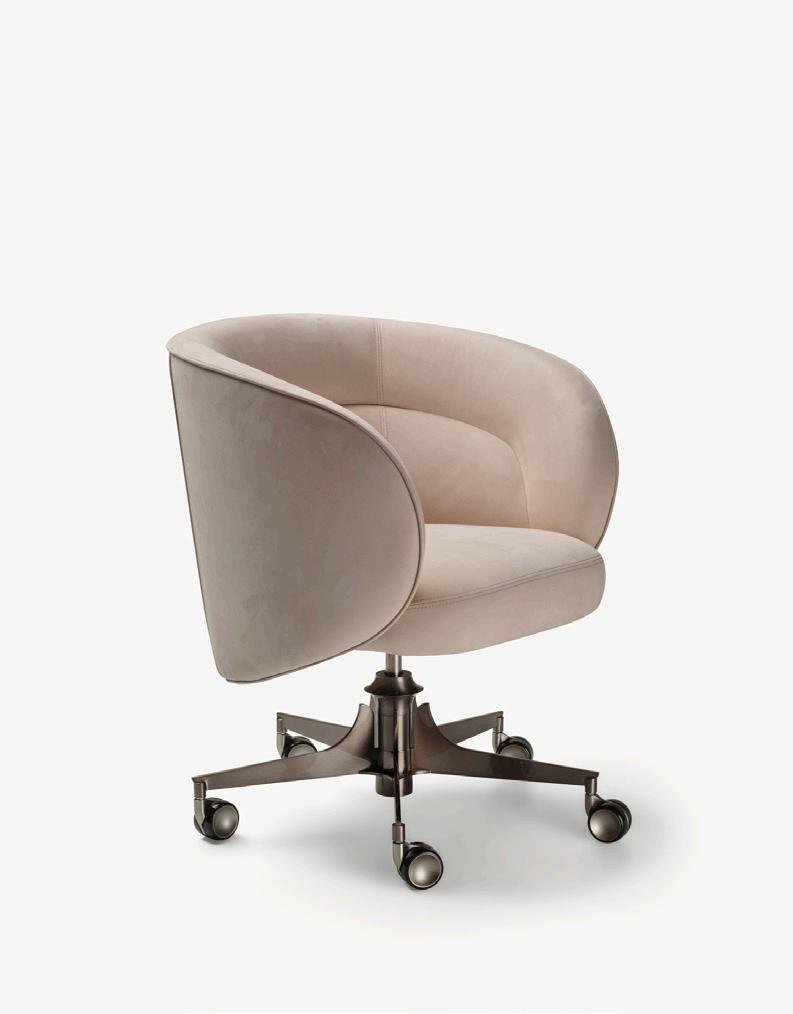
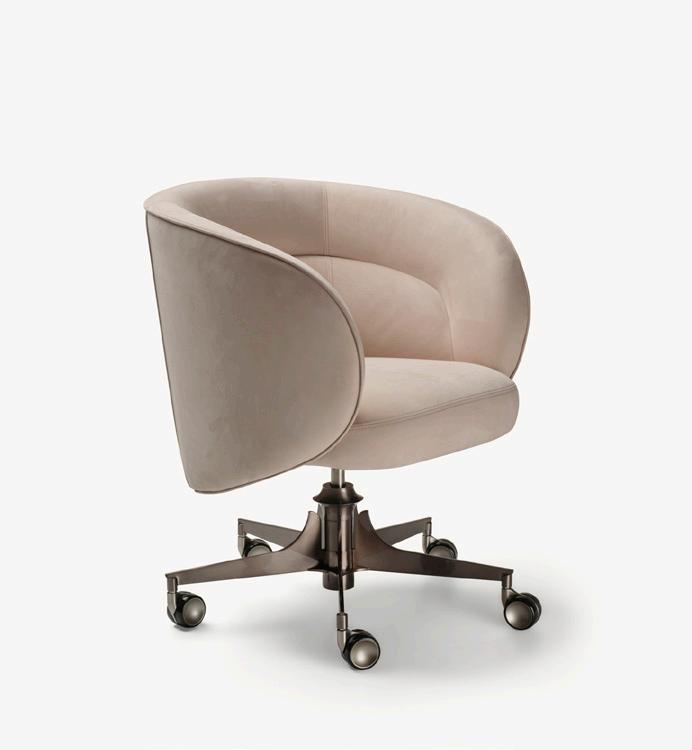
Mac Callum, office chair
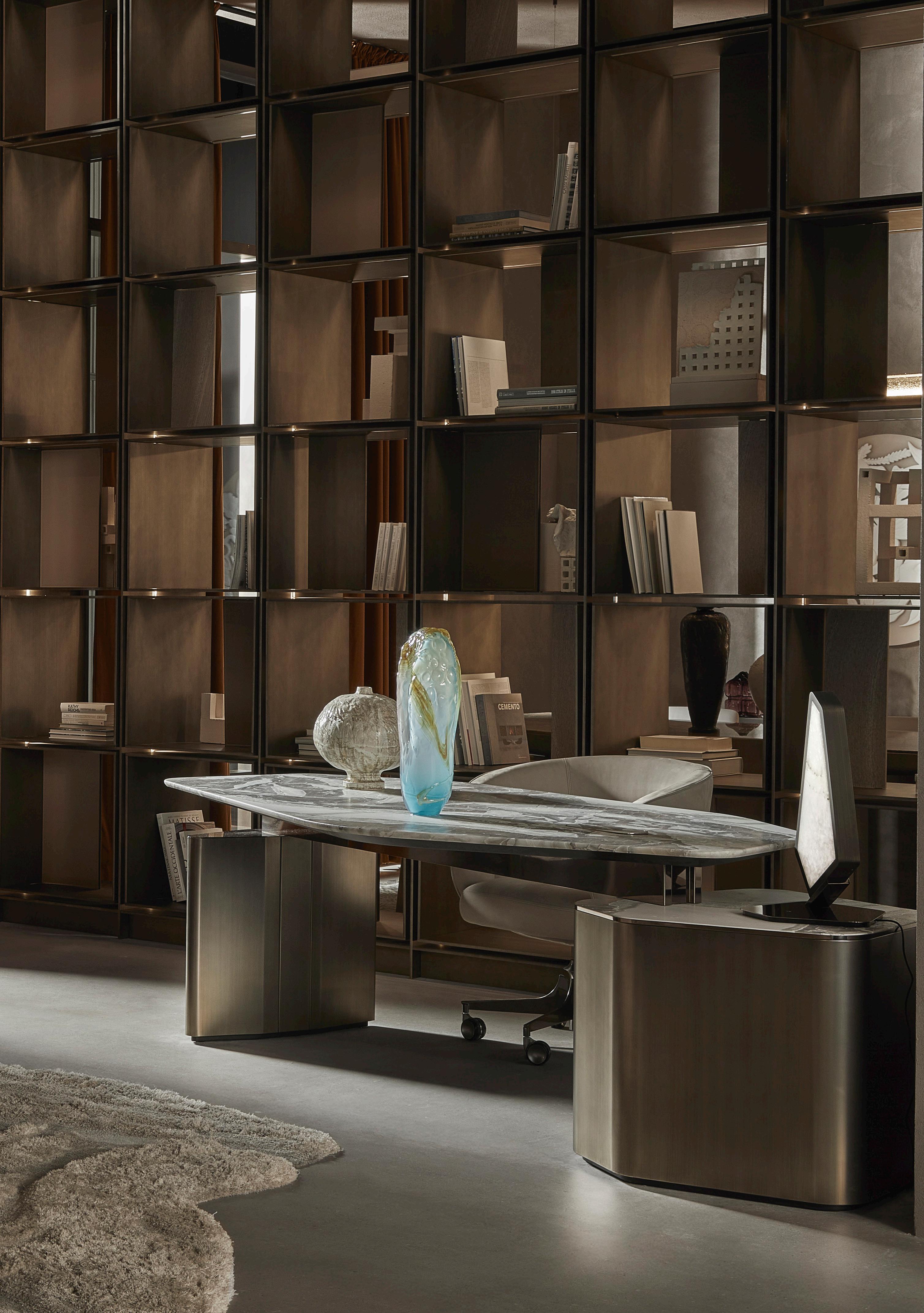
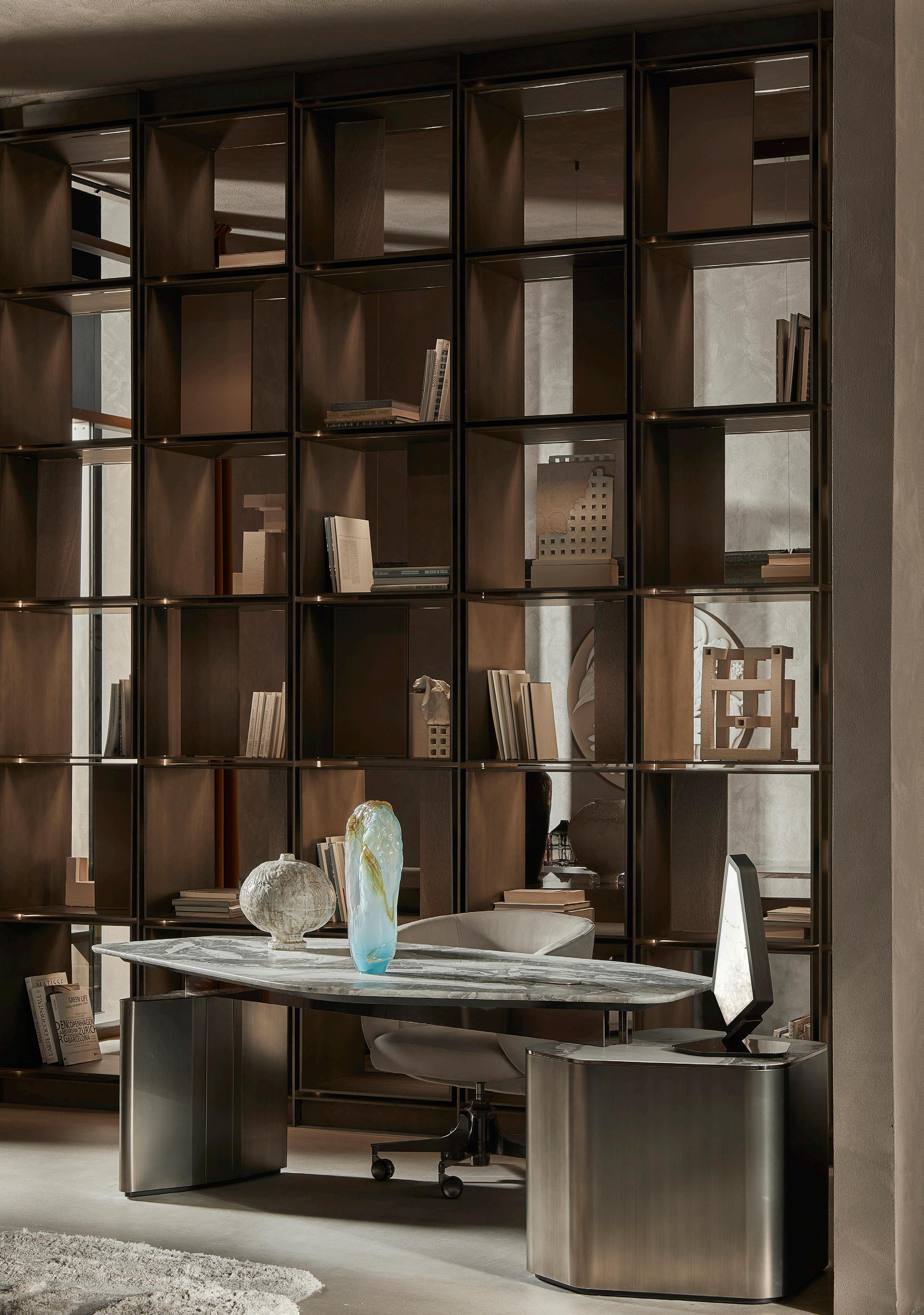
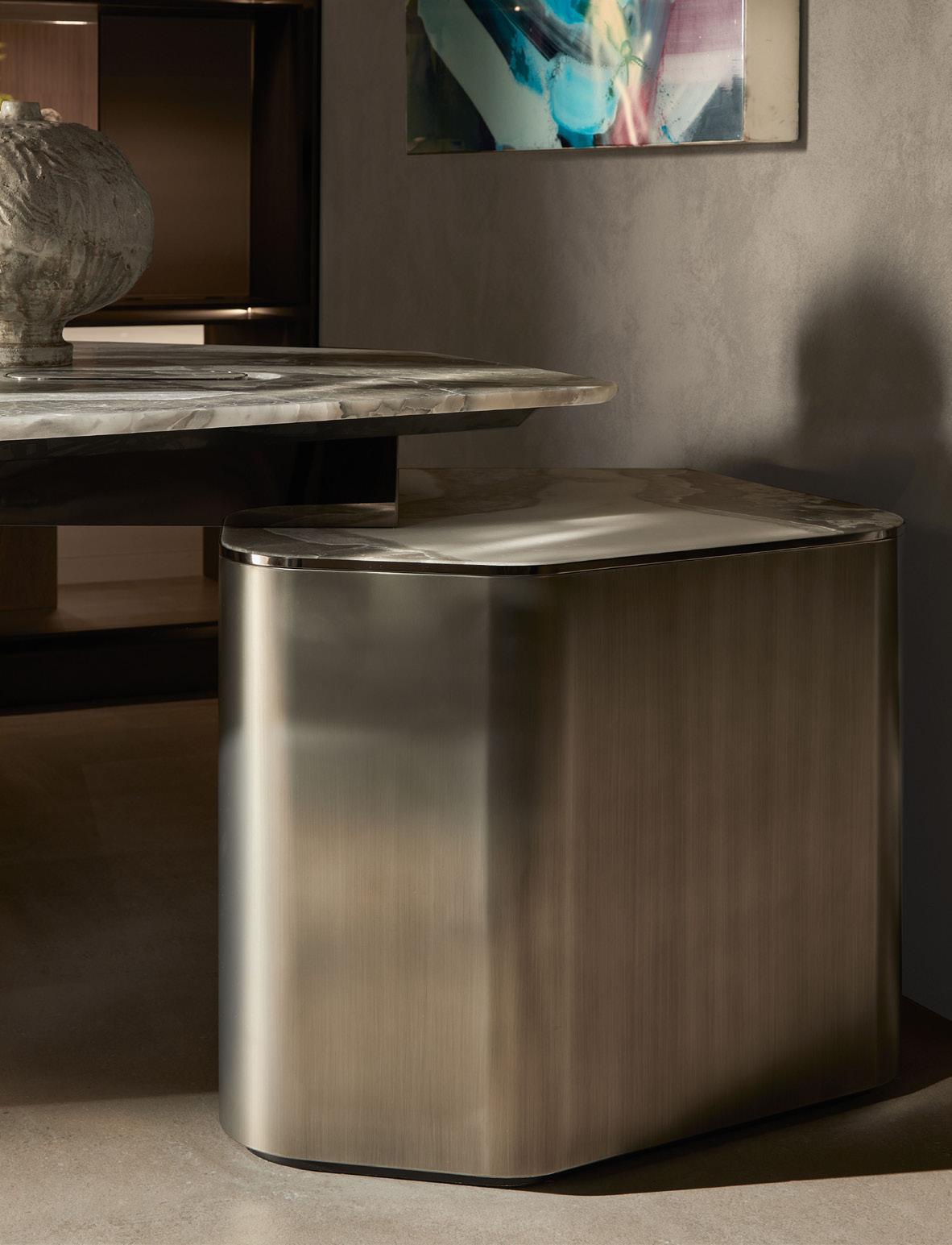
Ephir, desk
Shear, small table
Thufir, carpet
AKB_23_101, artwork
Harlequin Wall, wall cladding in hand crafted clay
Bubble Blue/ Persona/ White Ochre, vases
Nappe, blanket
Cryos, set of sheets
Explore the room ↗
The surface comes alive in restrained waves, where light and stitching trace a rhythm that is soft yet defined.
La superficie si anima in onde trattenute, dove luce e cuciture disegnano un ritmo morbido ma deciso.
Neolito Bold bedroom
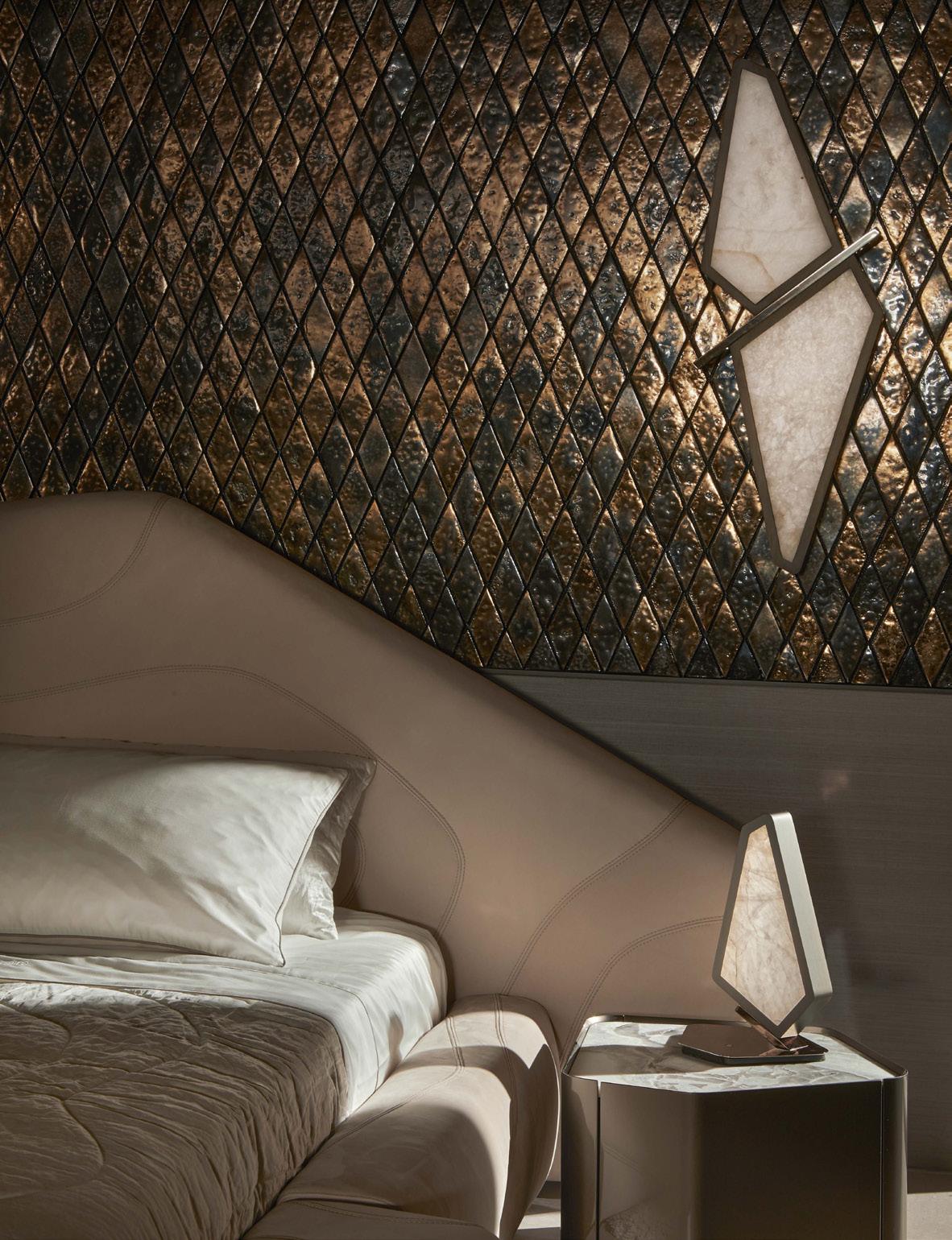
Neolito Bold bed Neolito bedside table Astralis abat-jour/wall lamp
Cryos set of sheets by Alessandro La Spada by Luigi Cavalli
Neolito Bold bed
Neolito bedside table
Astralis abat-jour/wall lamp
Harlequin wall finishing wall cladding in hand crafted clay
by Alessandro La Spada
Thufir carpet
Nappe blanket by Matteo Cibic
by Luigi Cavalli
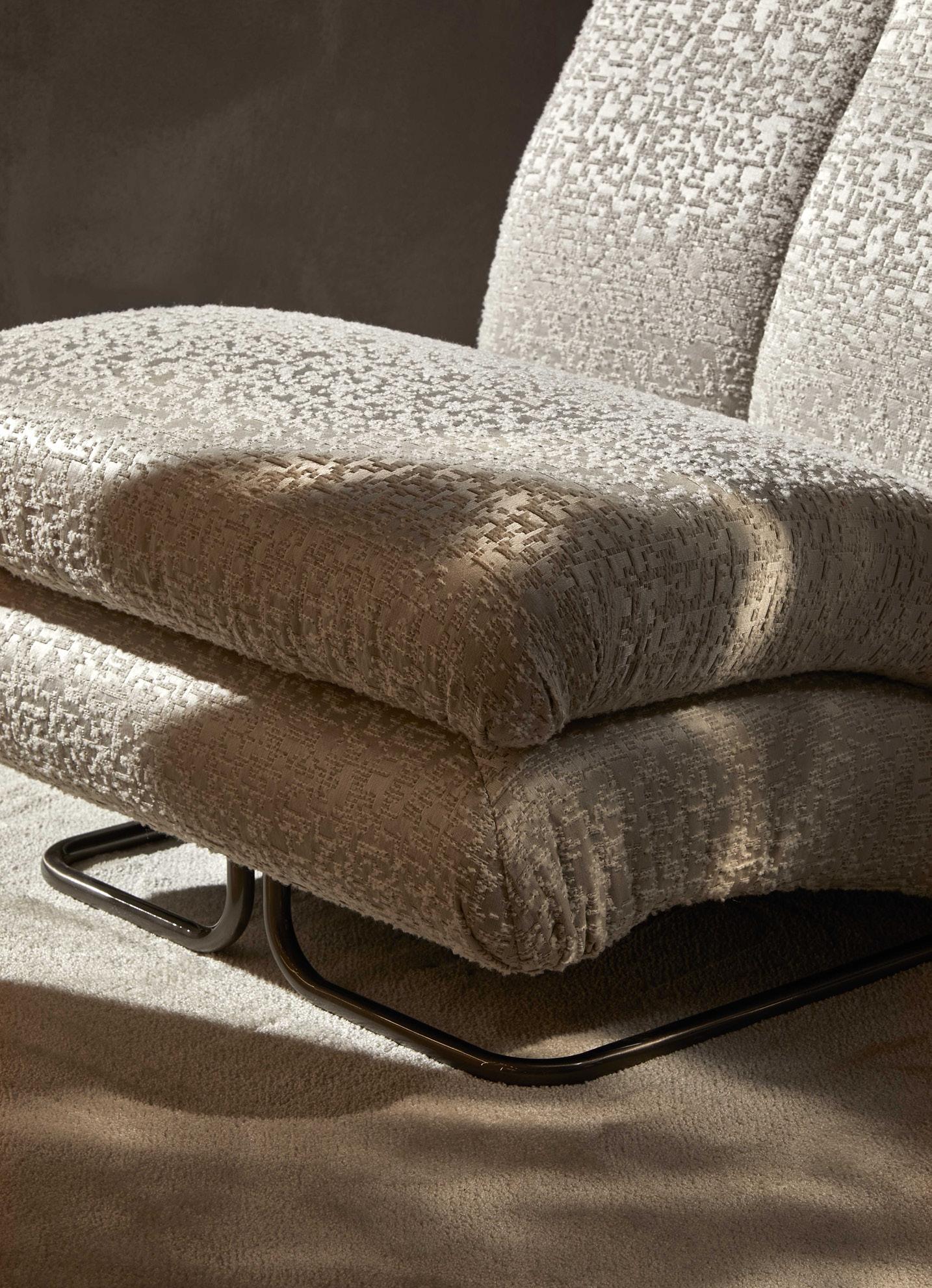
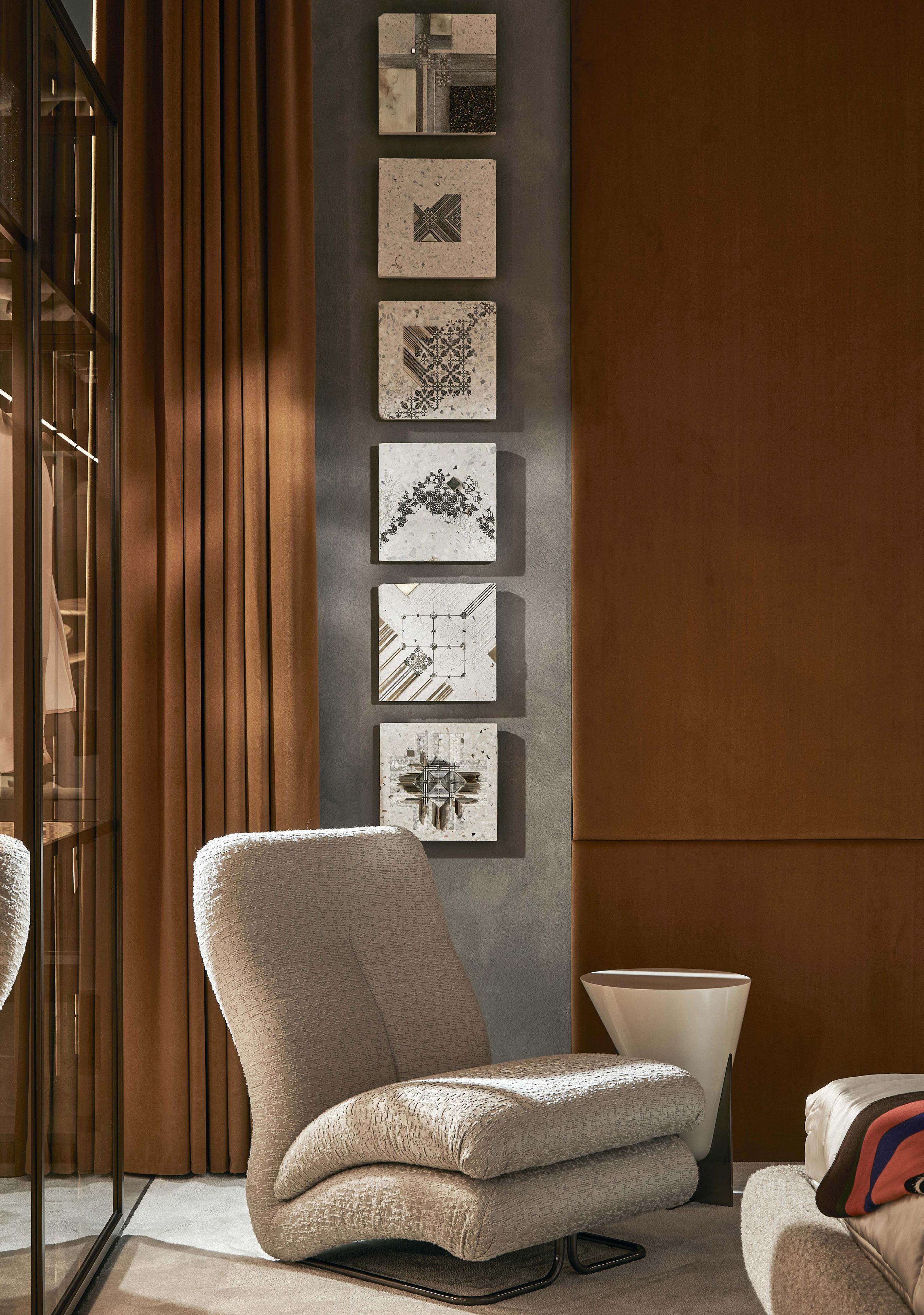
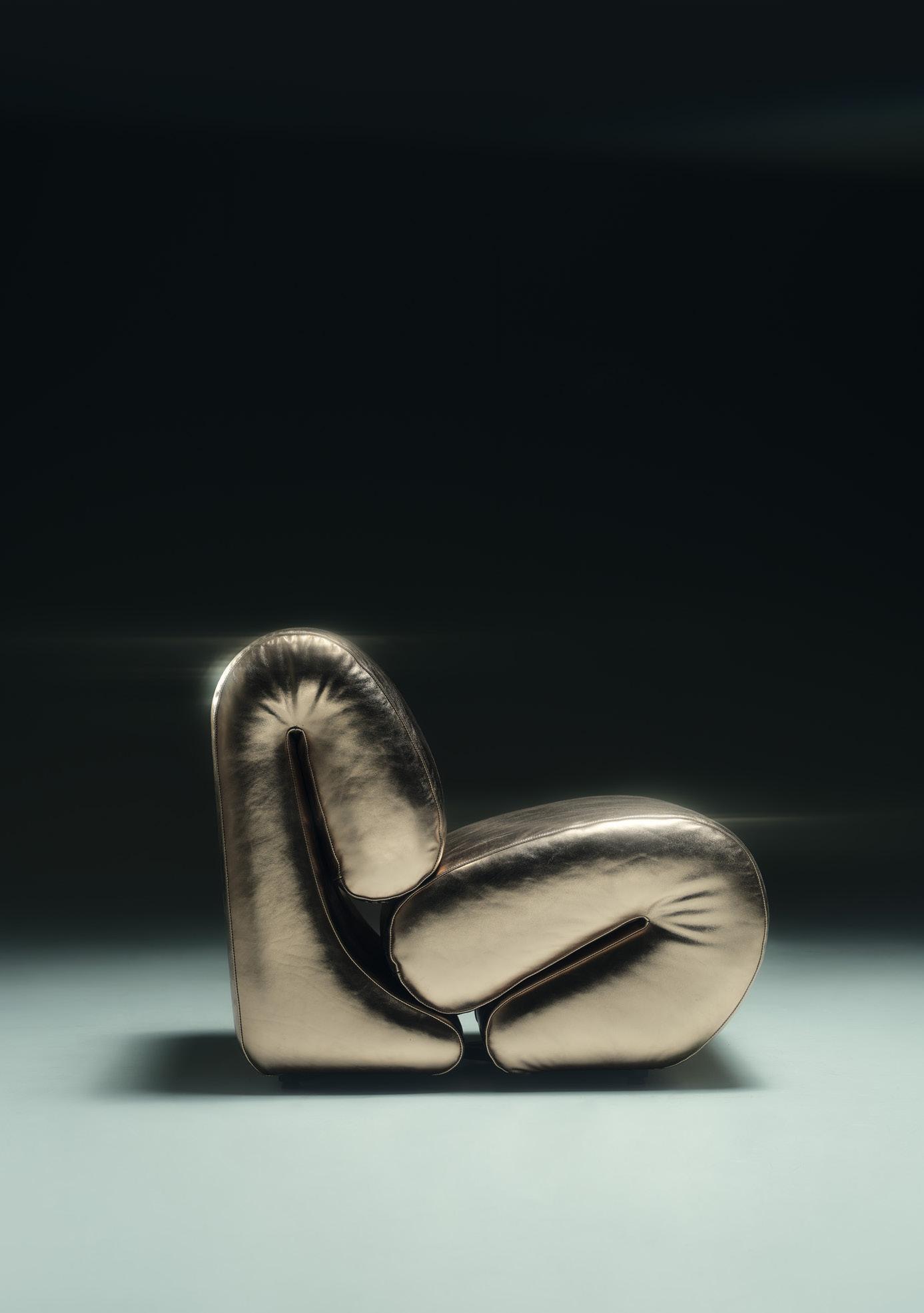
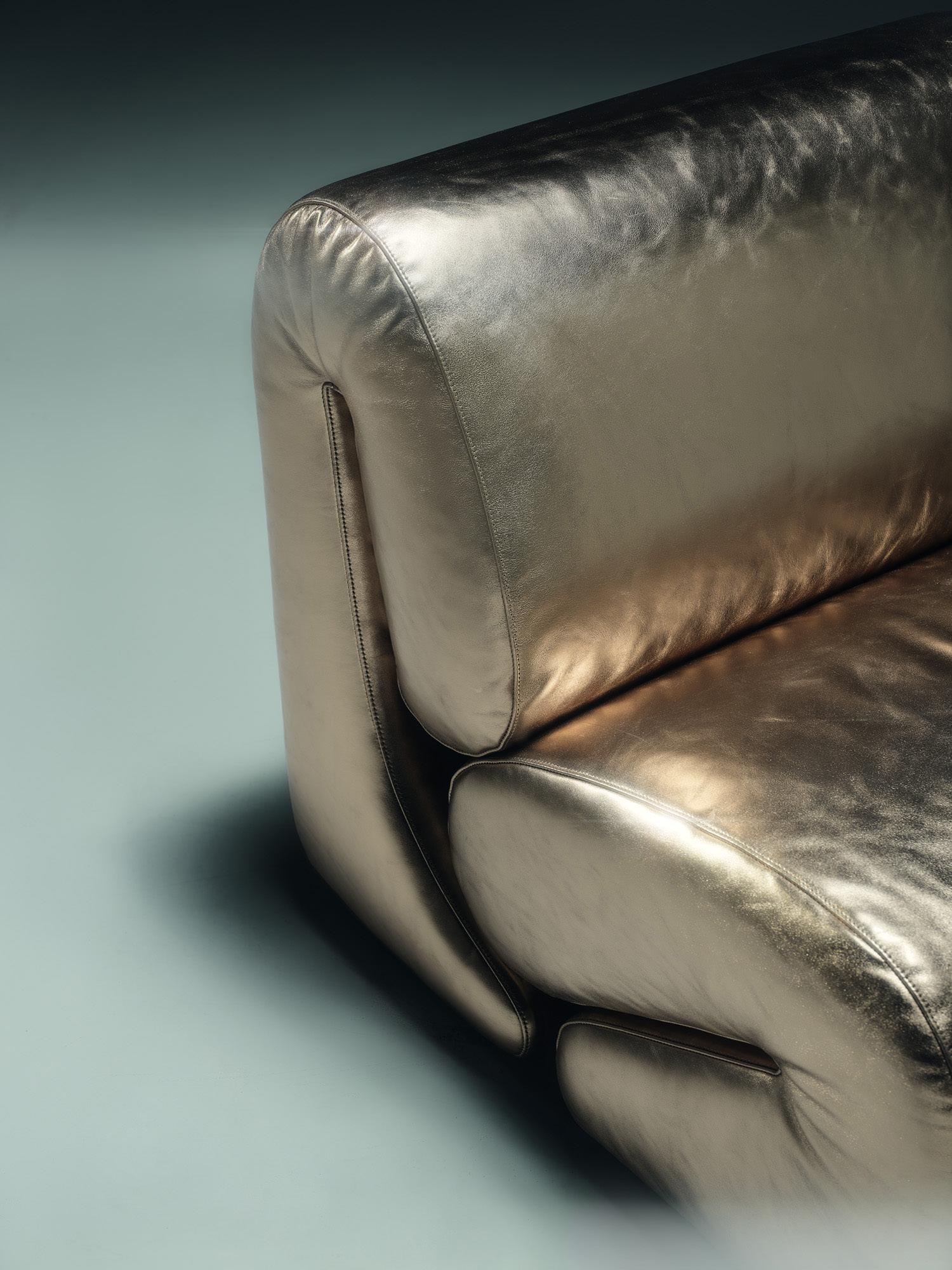
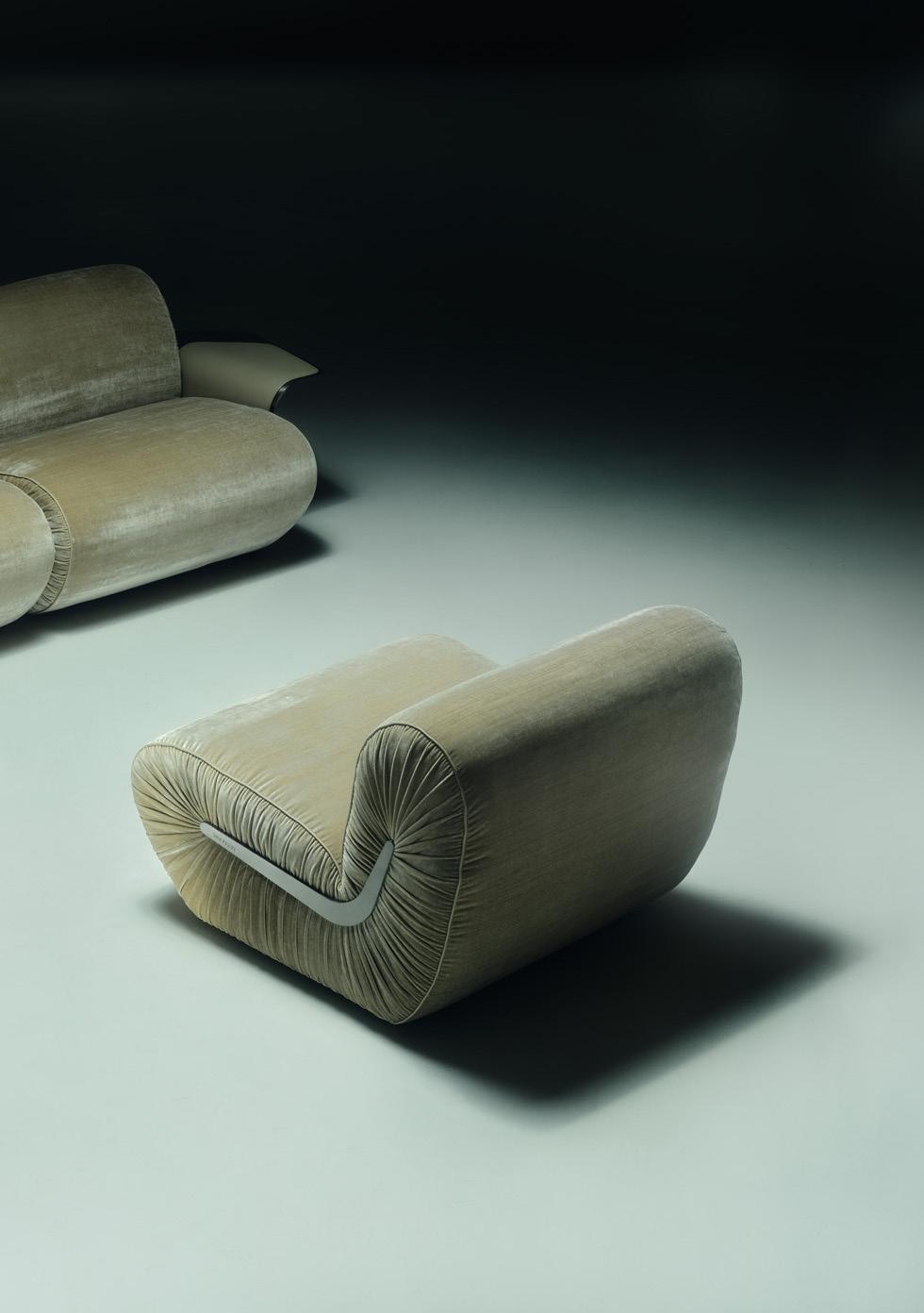
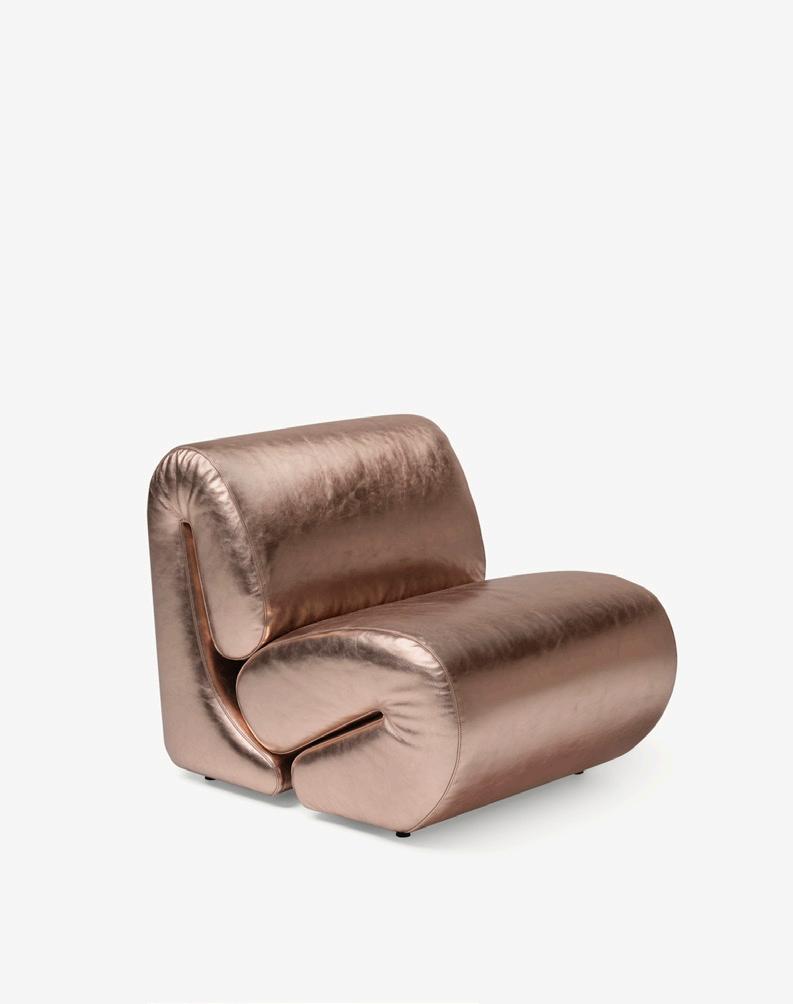
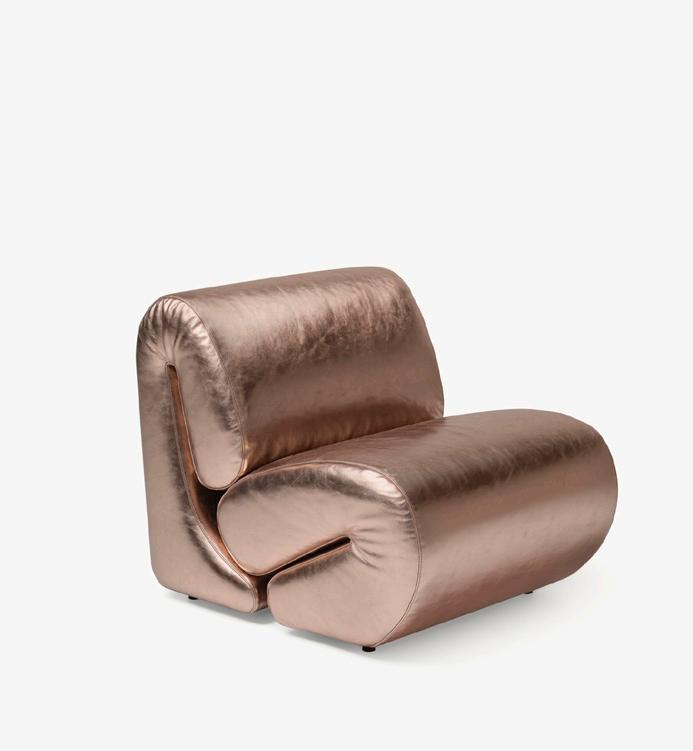
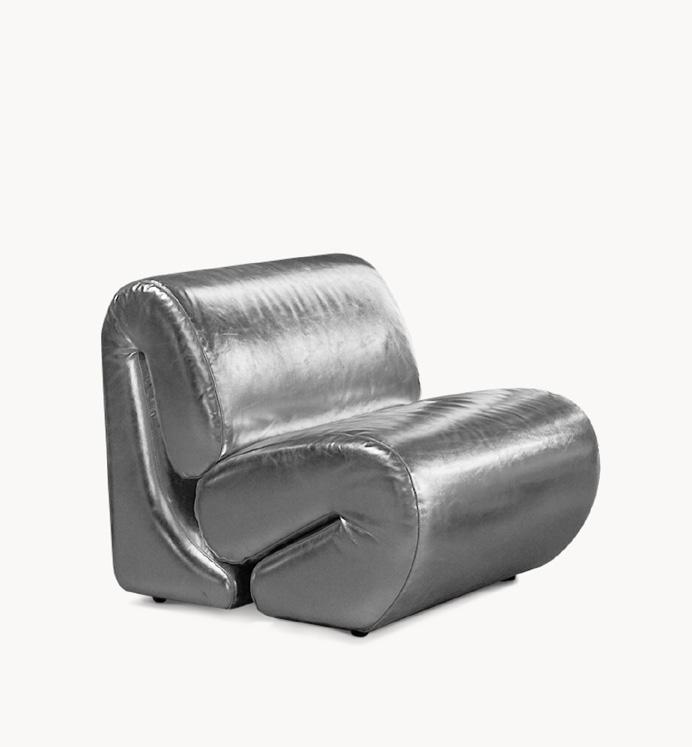
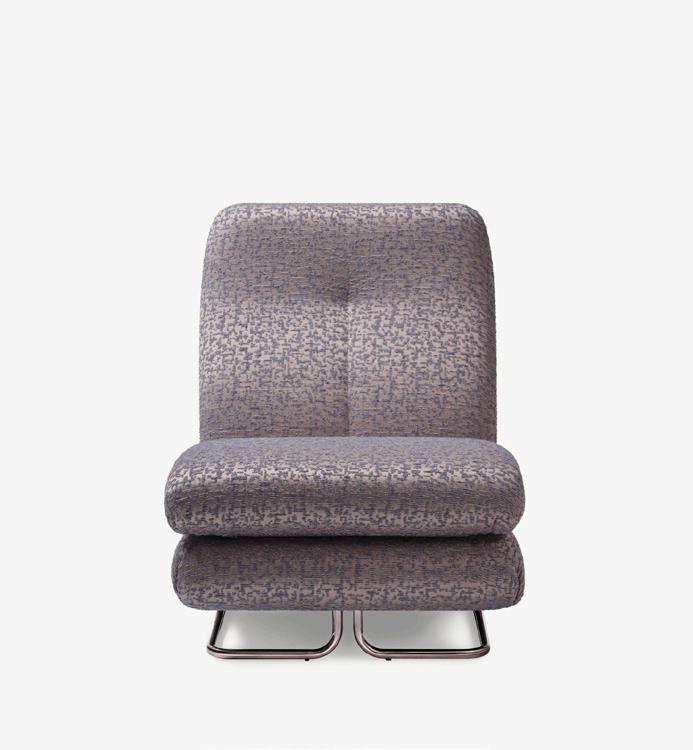
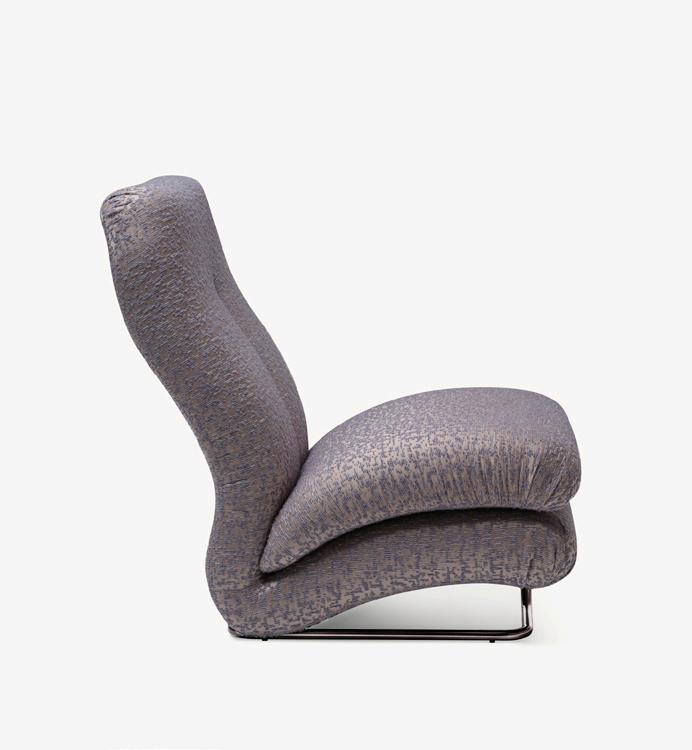
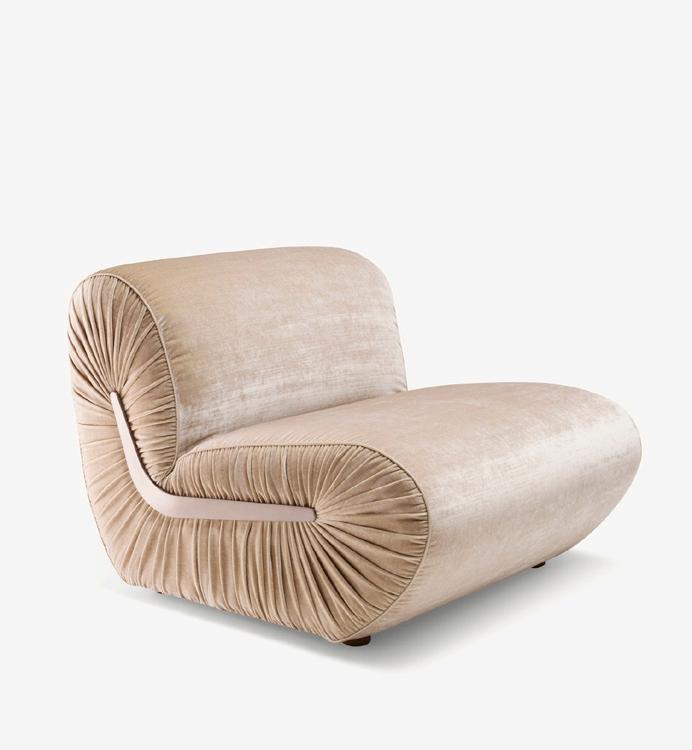
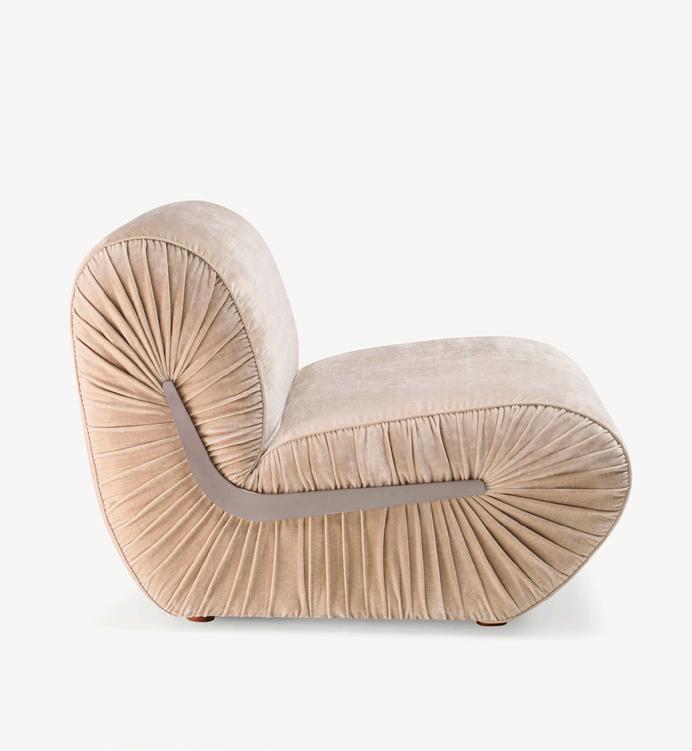
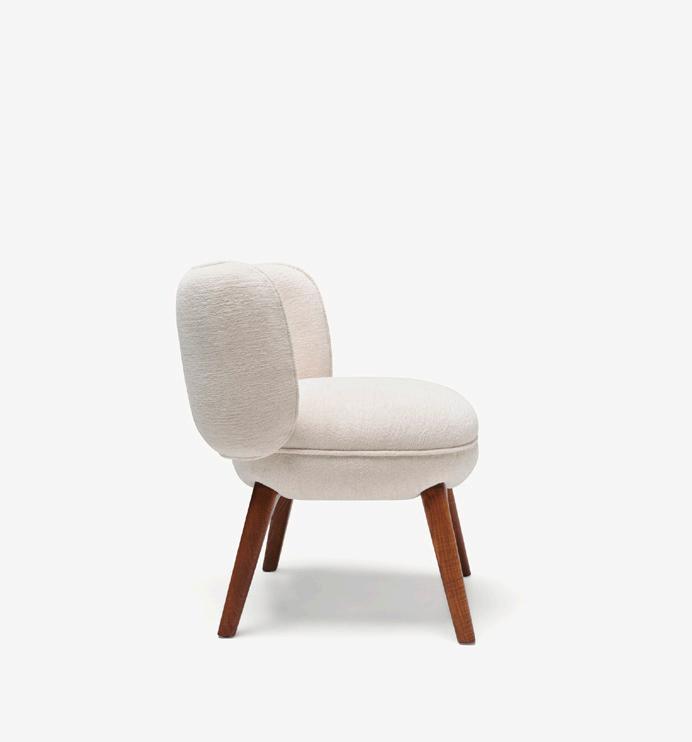
The Bachi armchair originated in the 1960s from a playful and free approach to design, characteristic of the most experimental phase of Italian design. Its fluid lines and unconventional volumes reflect the period’s interest in formal exploration and innovation in furniture. Conceptually, Bachi represents two cushions folded onto themselves and brought together: one positioned vertically to form the backrest, the other horizontally to create the seat, generating a soft, enveloping volume. This design translates the simple, playful gesture of folding and overlapping into an organic, sculptural language. The design incorporates materials and colors typical of the era: textured fabrics, vibrant palettes, and bold surfaces that enhance the three-dimensional quality of the seat. Revisited today, the armchair retains its stylistic coherence and expressive strength, demonstrating how a historical classic can engage in dialogue with contemporary interiors.
La poltrona Bachi nasce negli anni Sessanta da un approccio ludico e libero al progetto, caratteristico della stagione più sperimentale del design italiano. Le linee fluide e i volumi non convenzionali riflettono l’interesse dell’epoca per la sperimentazione formale e l’innovazione nell’arredo. Concettualmente, Bachi vuole rappresentare due cuscini ripiegati su sé stessi che si avvicinano: uno verticale a definire lo schienale e uno orizzontale a formare il sedile, generando un volume morbido e avvolgente. Questo disegno traduce in forma il gesto semplice e giocoso di piegare e sovrapporre, conferendo alla poltrona un linguaggio organico e scultoreo. Il design integra materiali e colori tipici del periodo: tessuti dalle texture marcate, palette cromatiche vivaci e superfici audaci che esaltano la tridimensionalità della seduta. Rivisitata oggi, la poltrona conserva la sua coerenza stilistica e forza espressiva, dimostrando come un classico storico possa dialogare con l’arredo contemporaneo.
Shear small table
Persona accessory
Harlequin wall finishing cladding in hand crafted clay
by Alessandro La Spada
by Hsin Hua Lee
Nubia console
Sputnik wall lamp
by Hagit Pincovici
by Draga & Aurel
Ephir desk
Mac Callum office chair
Astralis table lamp by Alessandro La Spada
Bubble Blue accessory
White Ochre vase
AKB_23_101 artwork
by Ammy Olofsson
by Moïo Studio
by Aurel K. Basedow
Bachi
Bachi interprets Retro-Brutalism through a soft monumentality, where volume is not rigid but full end enveloping. Born from the encounter of two forms folded onto themselves, it transforms a simple gesture into a sculptural mass capable of embracing the body. The memory of the Sixties does not emerge as nostalgic quotation, but as living continuity: an archive returning through matter, proportion and formal strength.
Bachi interpreta il Retro-Brutalismo attraverso una monumentalità morbida, dove il volume non è rigido ma pieno ed avvolgente. Nata dall’incontro di due forme ripiegate su sé stesse, trasforma un gesto semplice in una massa scultorea capace di accogliere il corpo. La memoria degli anni Sessanta non emerge come citazione nostalgica, ma come continuità viva: un archivio che ritorna attraverso materia, proporzione e forza formale.
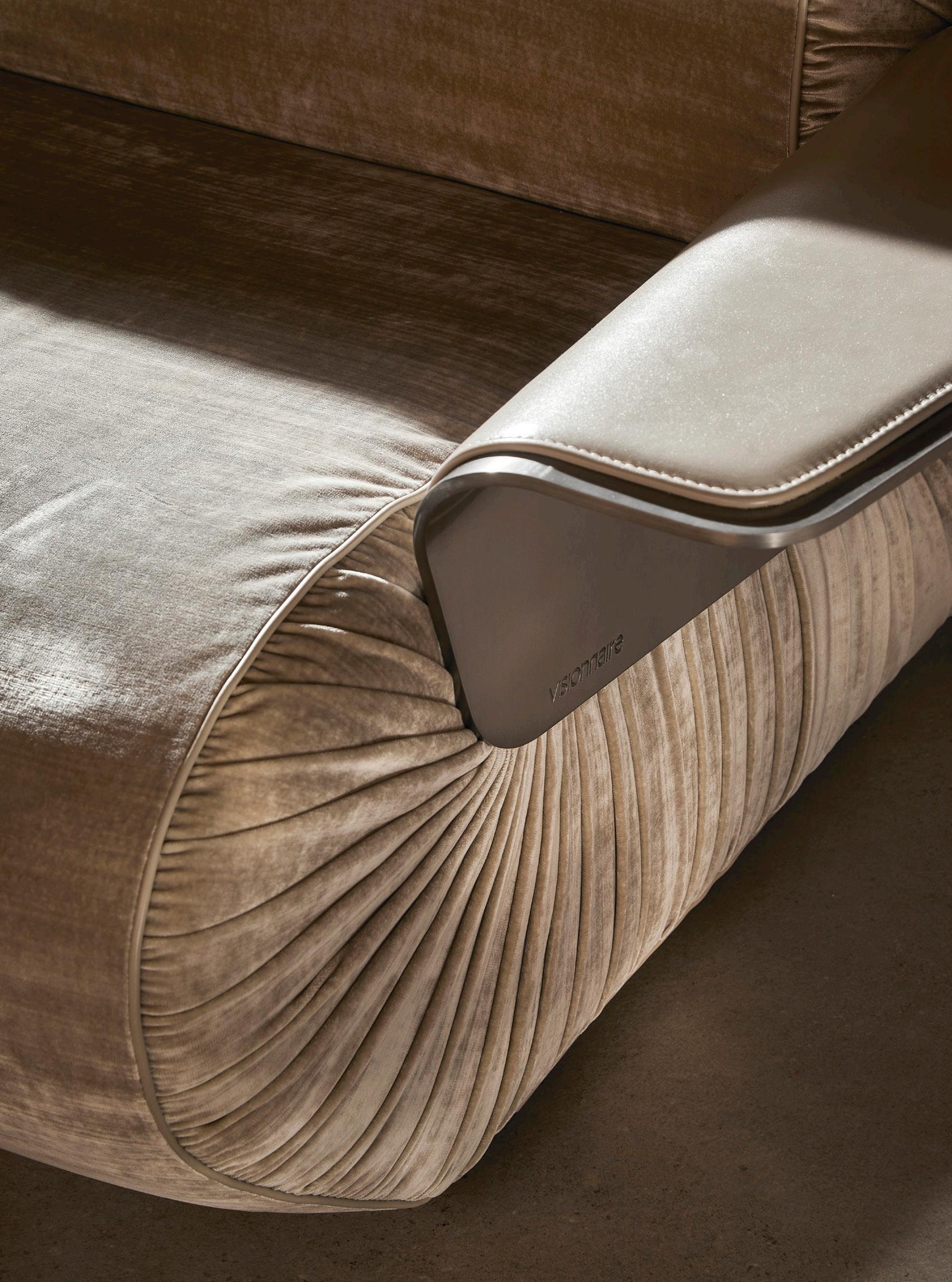
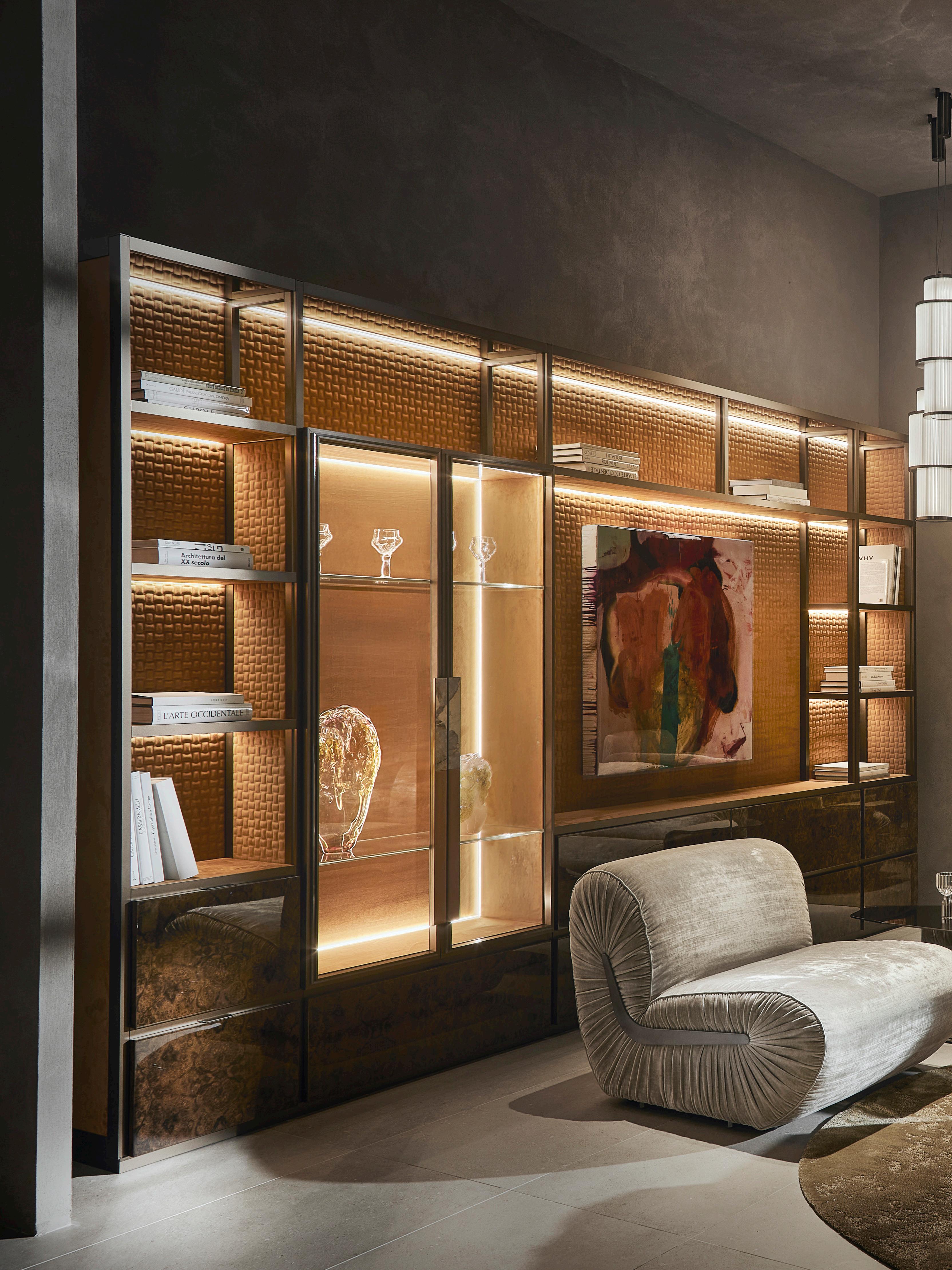
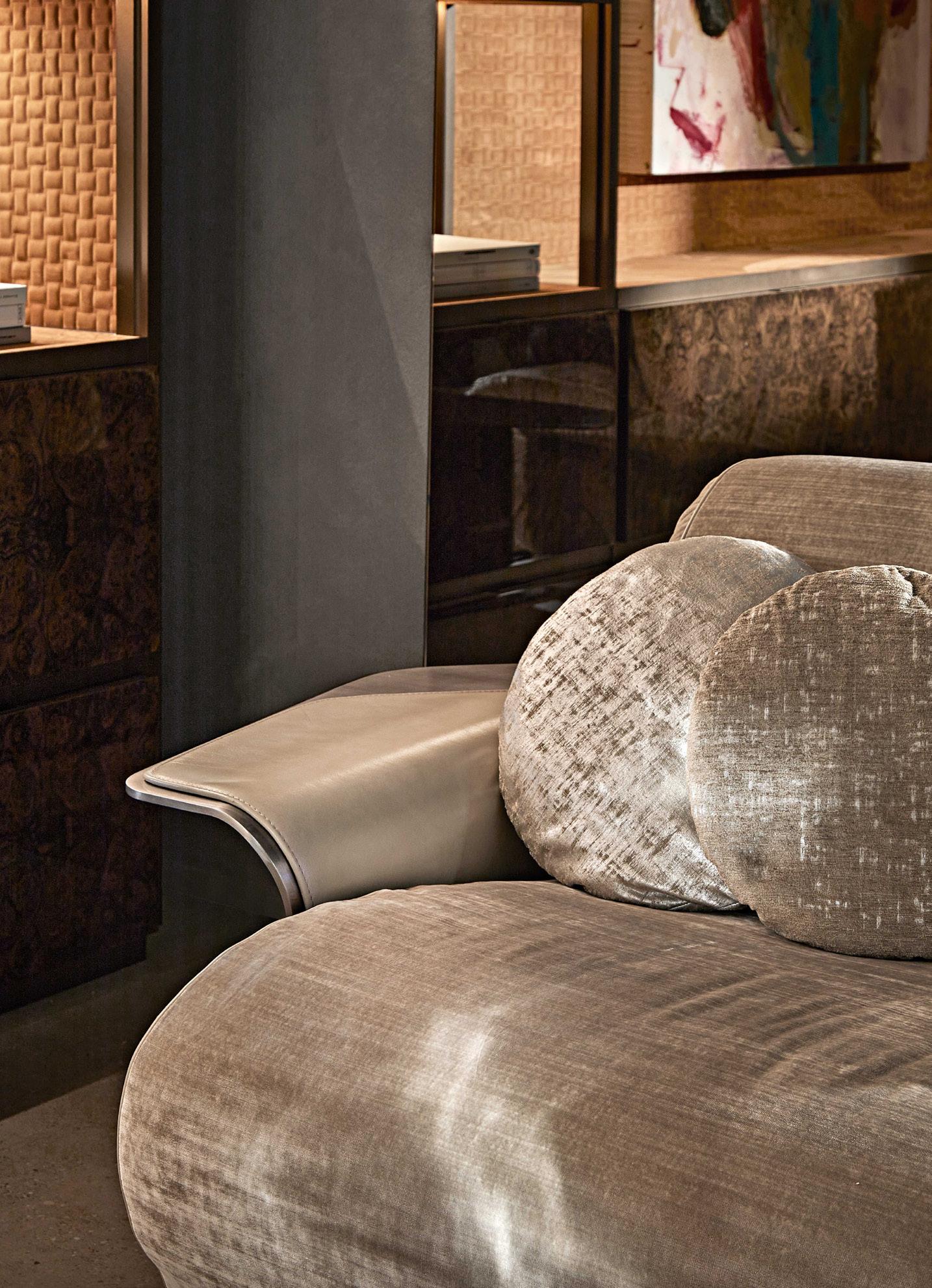
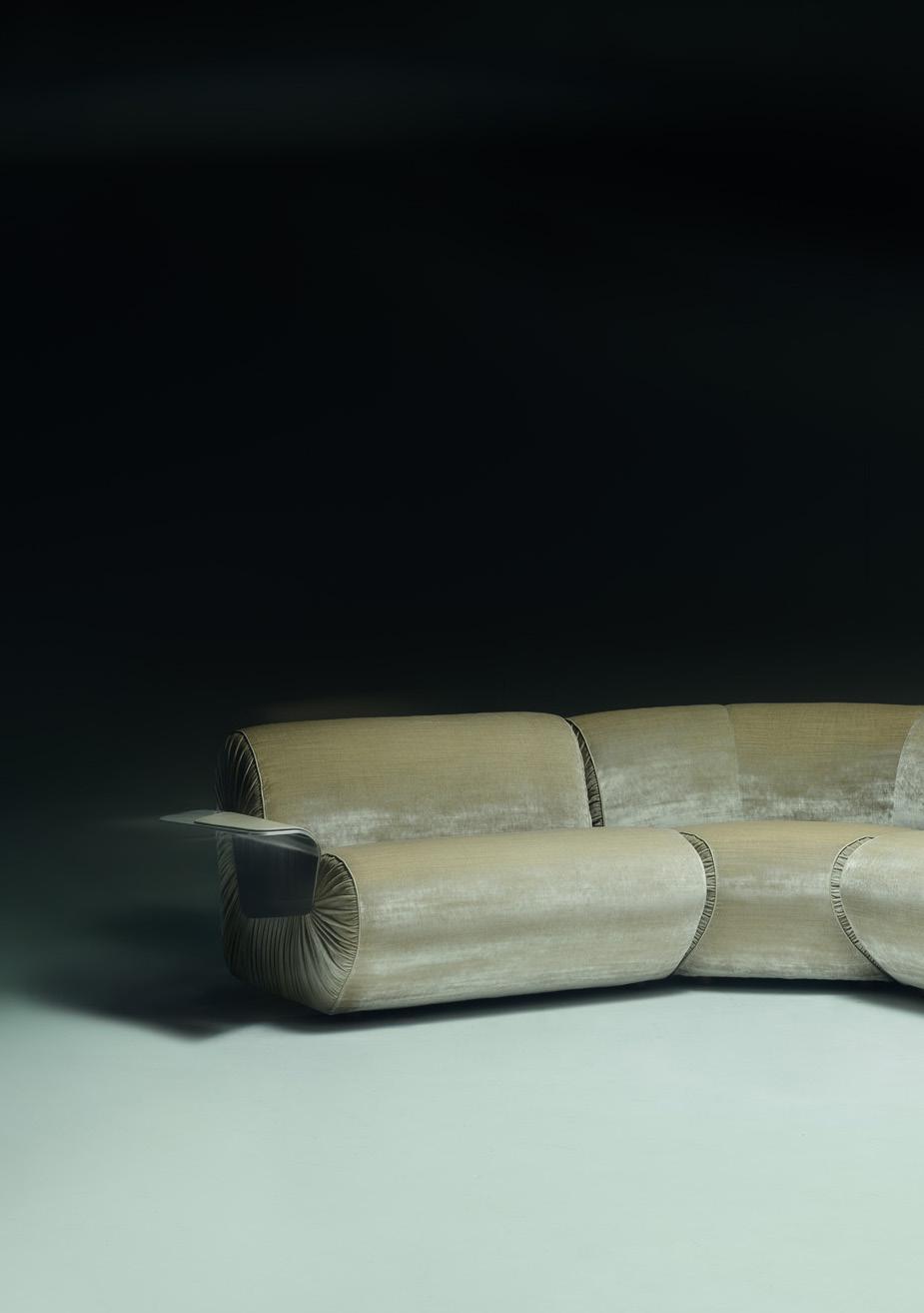
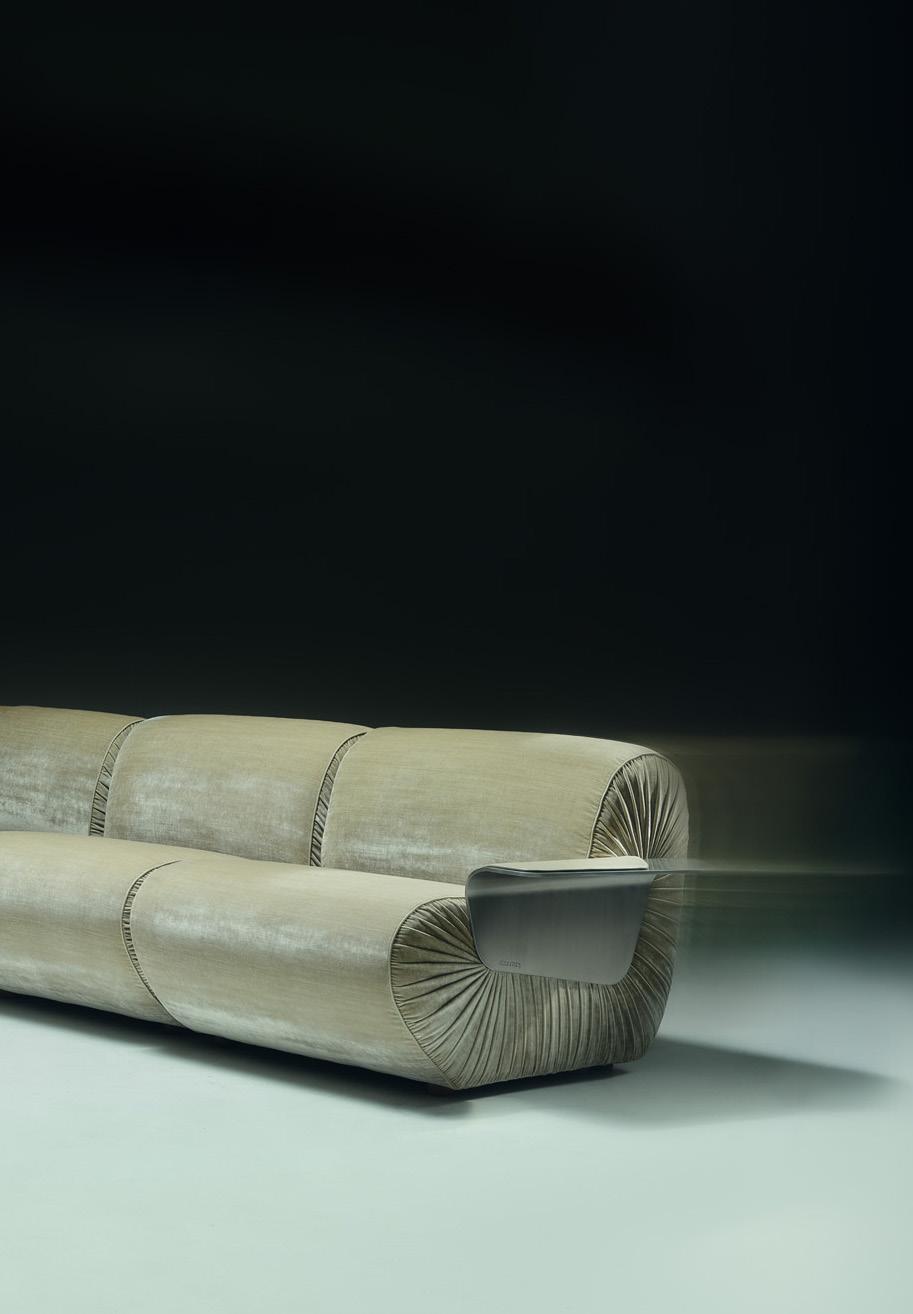
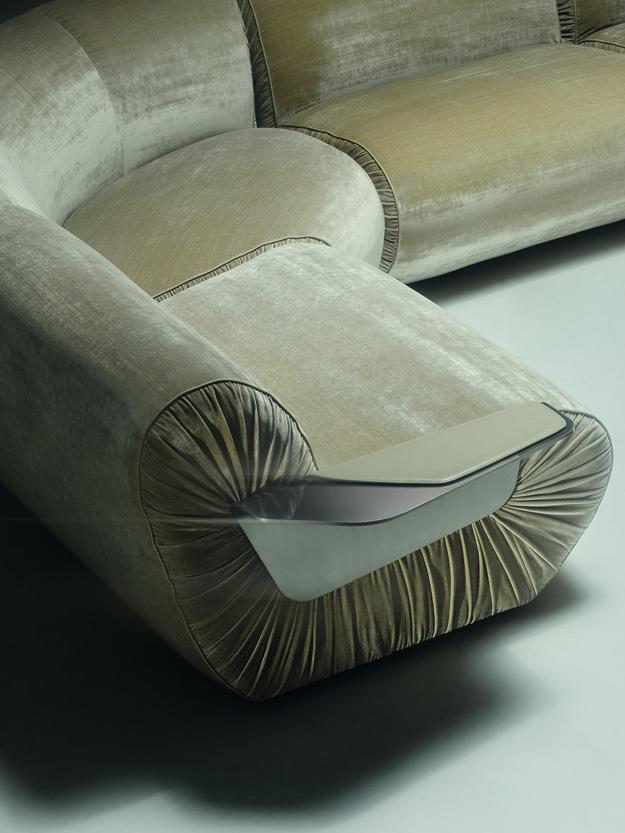
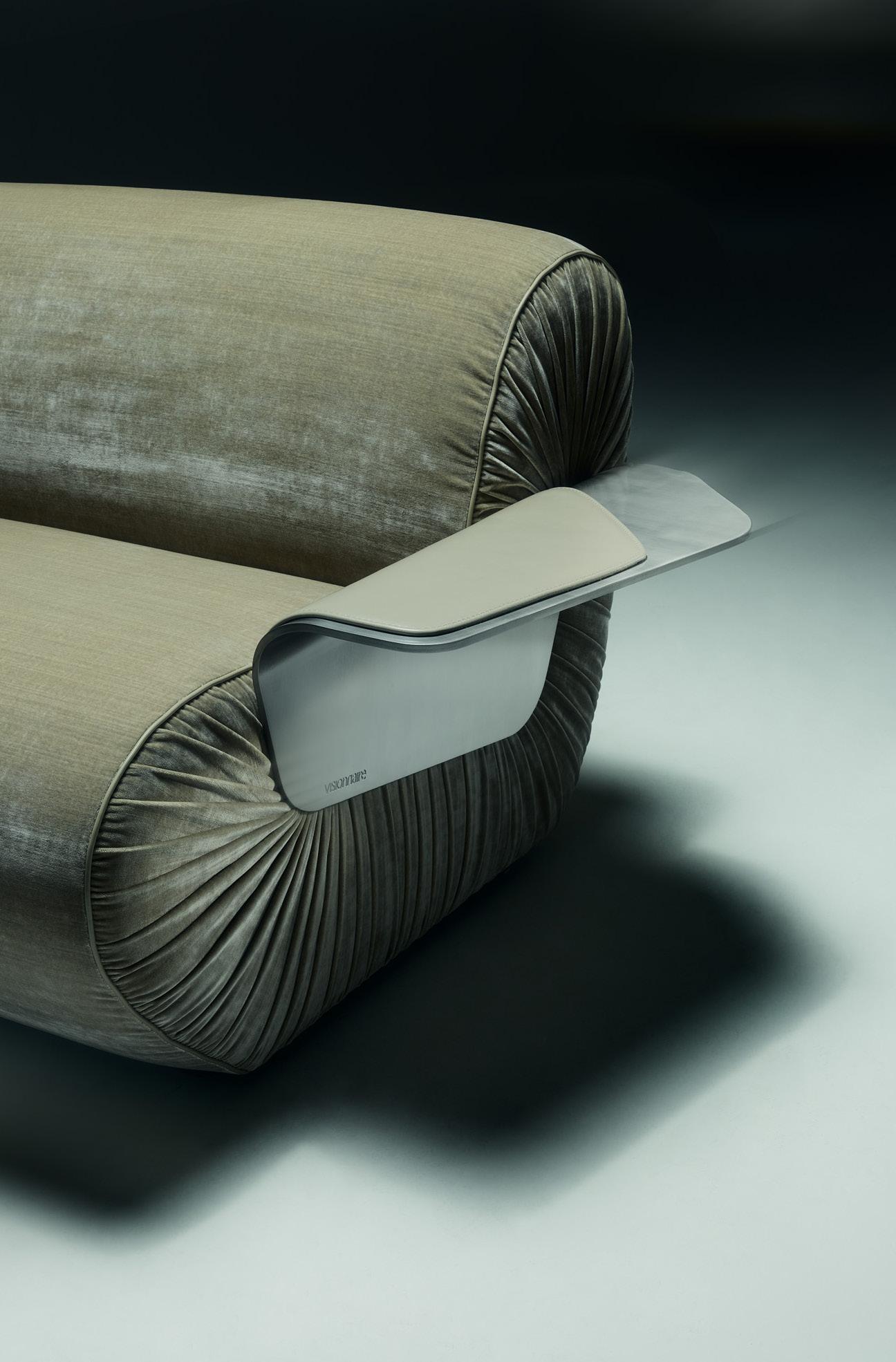
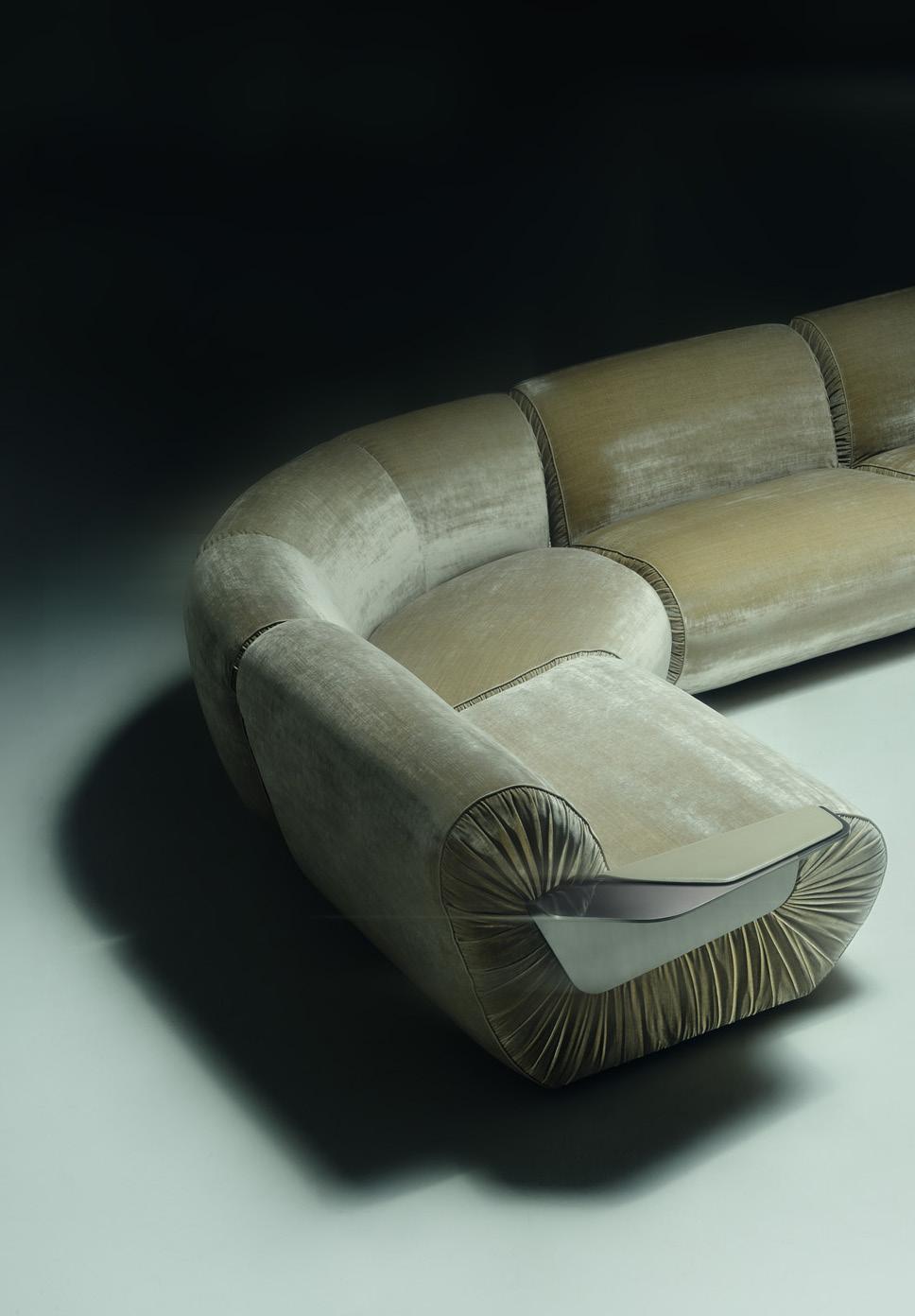
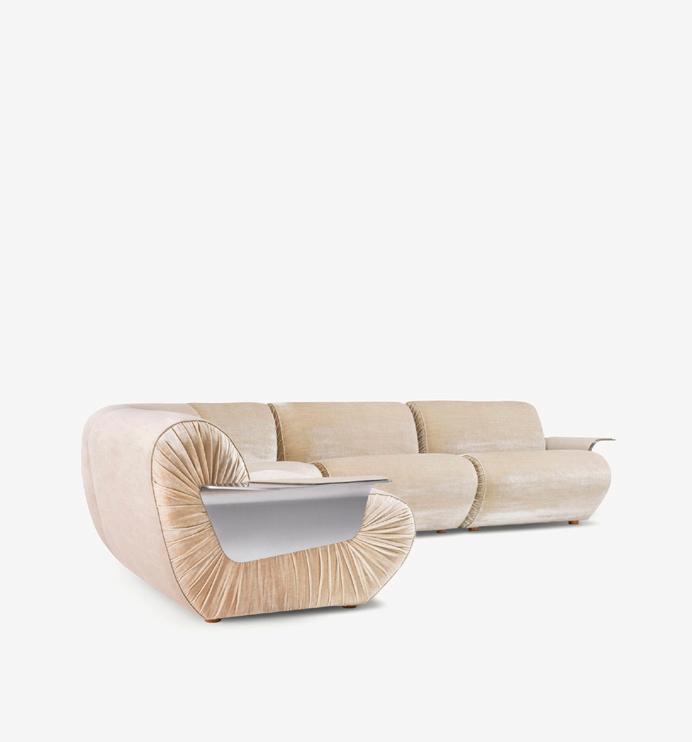
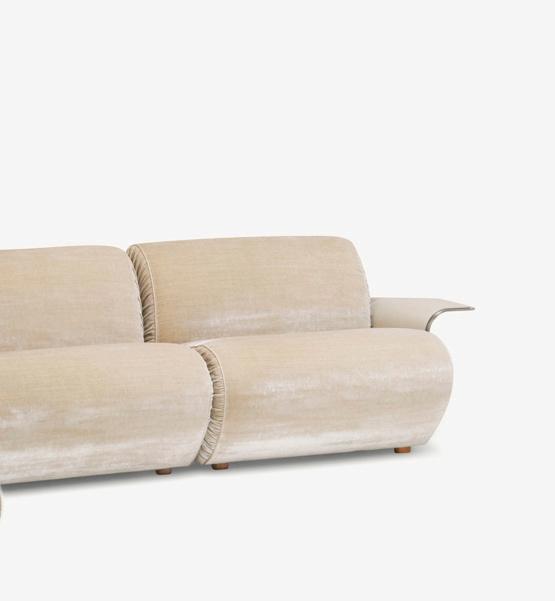
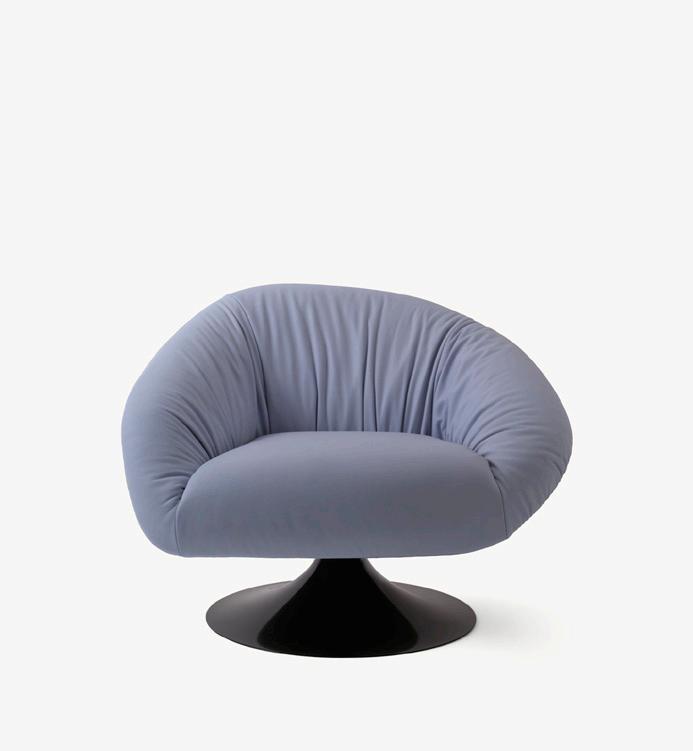
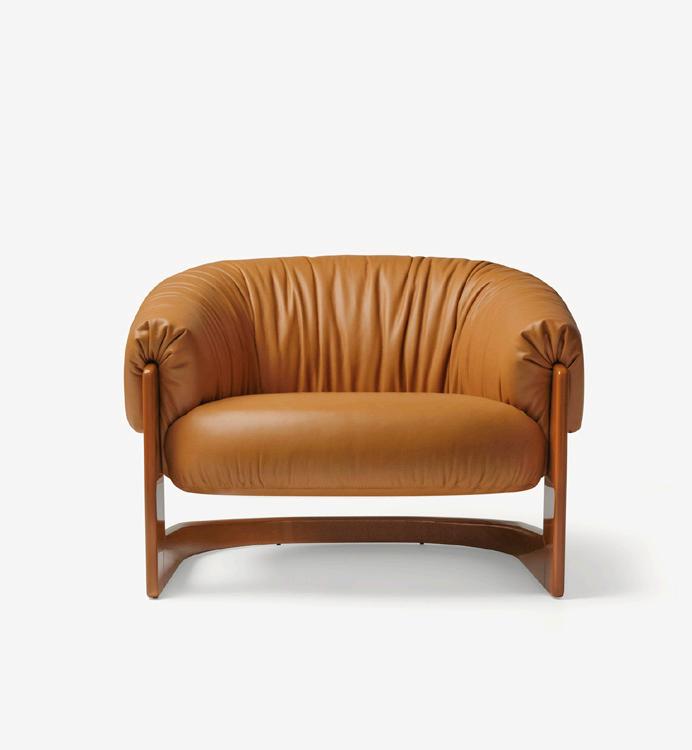
Joker was conceived as a tribute to the organic and sensory imagination of the Seventies, reinterpreted through a contemporary language that brings together memory and vision. Its geometry develops along a continuous and enveloping line, where the profile becomes a distinctive feature and the sides define the sculptural identity of the project. The generous proportions and deep seat encourage authentic comfort, creating a relaxed and immersive experience within the living space. The surface comes alive through contemporary pleating, a fluid gesture that amplifies the tactile perception of the material and the dialogue between light and shadow. Enhancing this expressiveness are metal inserts, capable of capturing the light with a decisive contrast and framing the surfaces with rigor. Completing the project is the metal armrest, available in two versions: a wider one, with a “wing-like” design, upholstered with a leather pad; and a flatter one, essential and contemporary.
Joker nasce come omaggio all’immaginario organico e sensoriale degli anni Settanta, reinterpretato attraverso un linguaggio contemporaneo che unisce memoria e visione. La sua geometria si sviluppa lungo una linea continua e avvolgente, dove il profilo diventa tratto distintivo e i fianchi definiscono l’identità scultorea del progetto. Le proporzioni generose e la seduta profonda favoriscono un comfort autentico, per un’esperienza rilassata e immersiva dello spazio living. La superficie si anima attraverso una plissettatura contemporanea, un segno fluido che amplifica la percezione tattile della materia e il dialogo tra luce e ombra. A valorizzare questa espressività intervengono inserti in metallo, capaci di catturare la luce con un contrasto deciso e di incorniciare le superfici con rigore. Completa il progetto il bracciolo in metallo, disponibile in due versioni: una più ampia, dal disegno “alare”, rivestita con un pad in pelle; l’altra, più piatta, essenziale e contemporanea.
Joker
Joker, sofa/armchair
Shear/Shard, small tables
Eidos, bookshelf
Giano, suspension lamp
Cobble Earth, carpet
AKB_25_34, artworks
Bubble Pink/Yellow, accessories
Explore the room ↗
Curves, reflections and surfaces resonate in a fluid balance, where comfort becomes a free, sensory gesture.
Curve, riflessi e superfici vibrano in un equilibrio fluido, dove il comfort diventa gesto libero e sensoriale.
Joker sofa/armchair
Shard small table
Giano suspension lamp
by Alessandro La Spada
Cobble Earth carpet
by Luigi Cavalli
Joker sofa/armchair
Shear small table
Cobble Earth carpet by Alessandro La Spada
by Luigi Cavalli
Eidos bookshelf
by Fabio Bonfà
by Aurel K. Basedow
Bubble Pink vase
Bubble Yellow vase
AKB_25_34 artwork
by Ammy Olofsson
Joker
Joker asserts a full and compact presence, where comfort takes on the strength of an architectural volume. The continuous line embraces the form, while the repetition of the pleating introduces a deep rhythm, almost carved into the matter. This reiterated sign amplifies light and shadow, transforming the upholstered surface into a sculptural and structural texture. Metal inserts interrupt the softness with precision, bringing rigor and tension to the whole. A dense and enveloping form, suspended between organic memory, gravity and presence.
Joker afferma una presenza piena e compatta, dove il comfort assume la forza di un volume architettonico. La linea continua avvolge la forma, mentre la ripetizione della plissettatura introduce un ritmo profondo, quasi inciso nella materia. Questo segno reiterato amplifica luce e ombra, trasformando la superficie imbottita in una trama scultorea e strutturale. Gli inserti metallici interrompono la morbidezza con precisione, portando rigore e tensione all’insieme. Una forma densa e avvolgente, sospesa tra memoria organica, gravità e presenza.
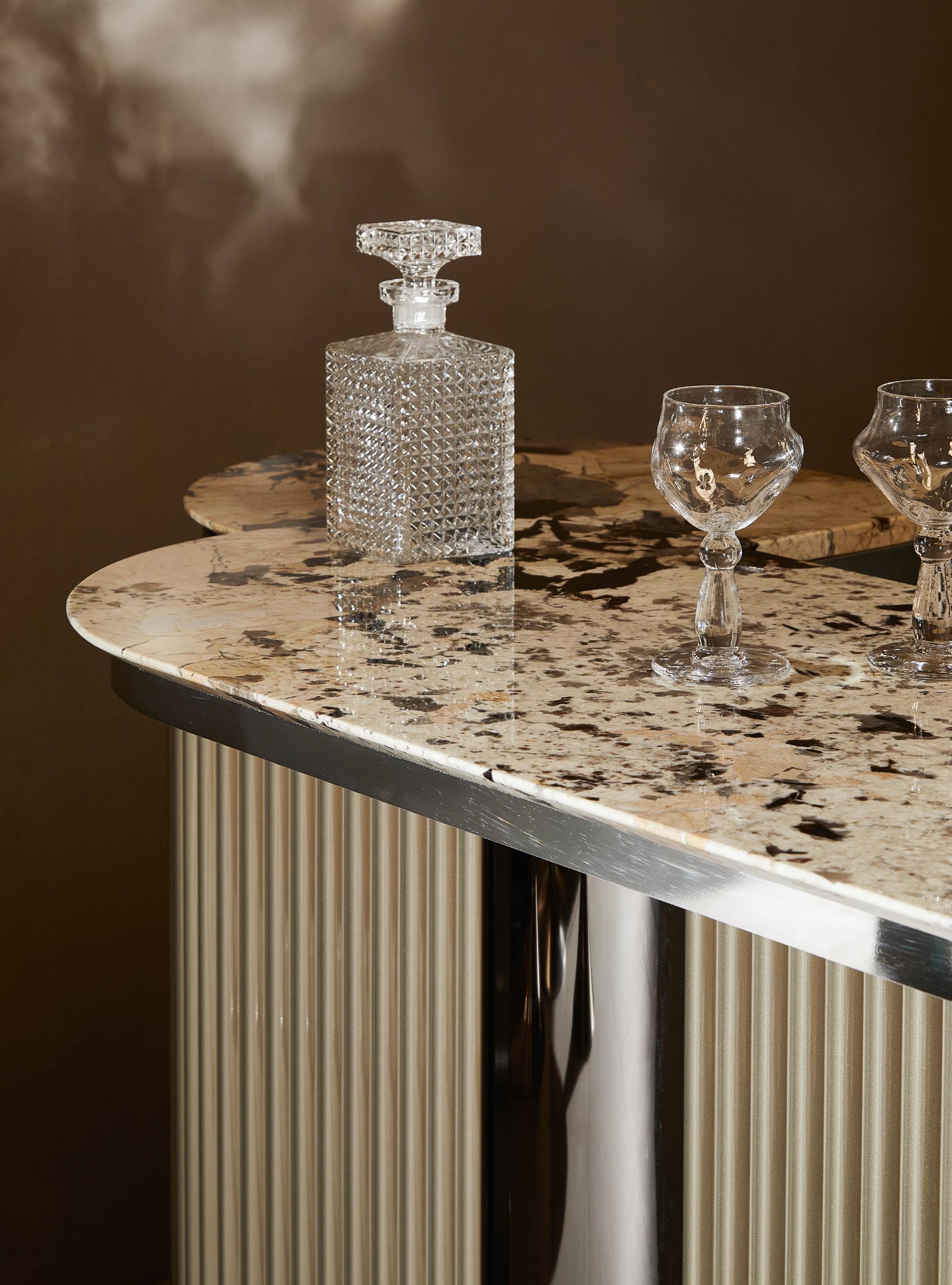
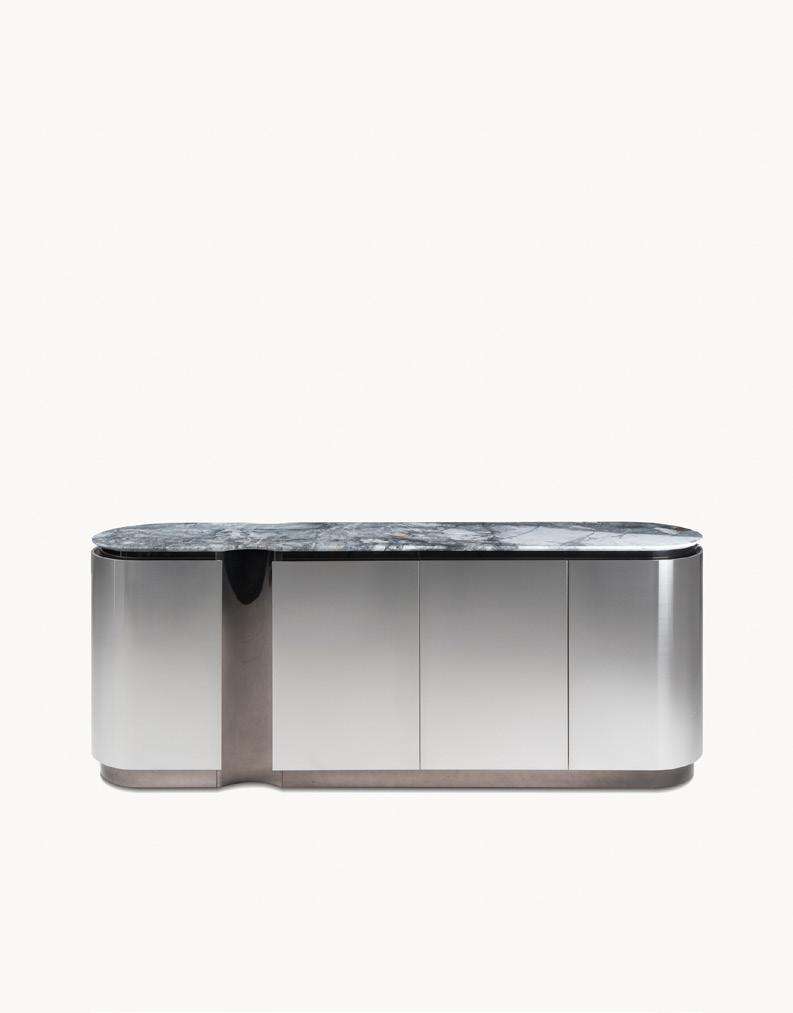
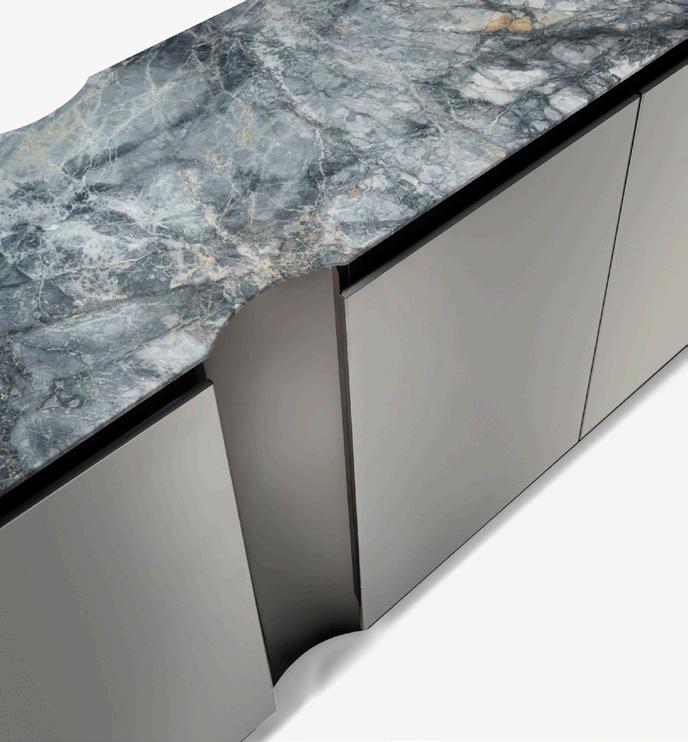
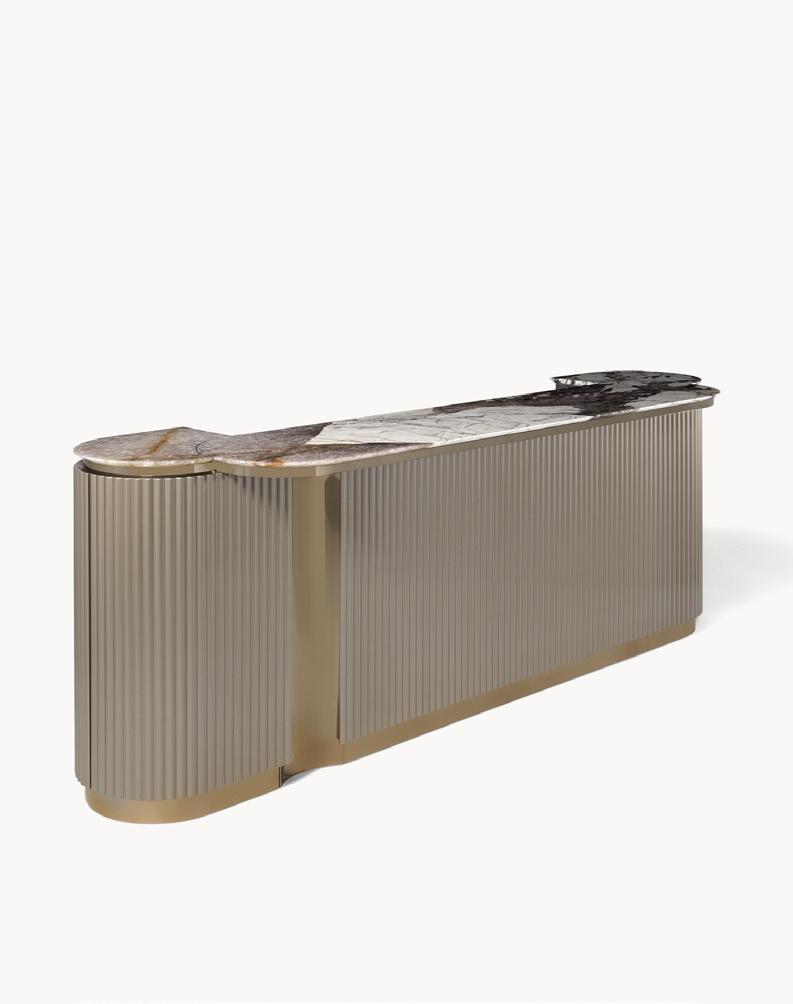
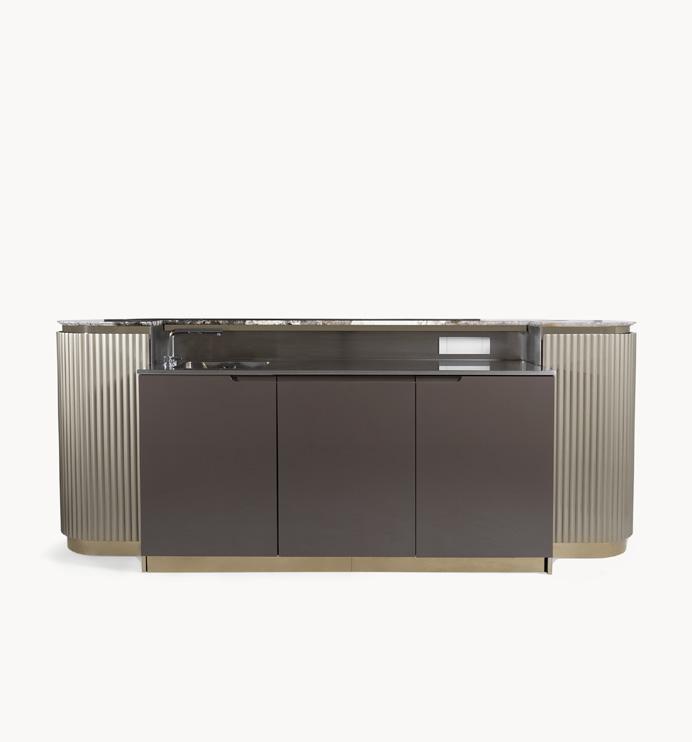
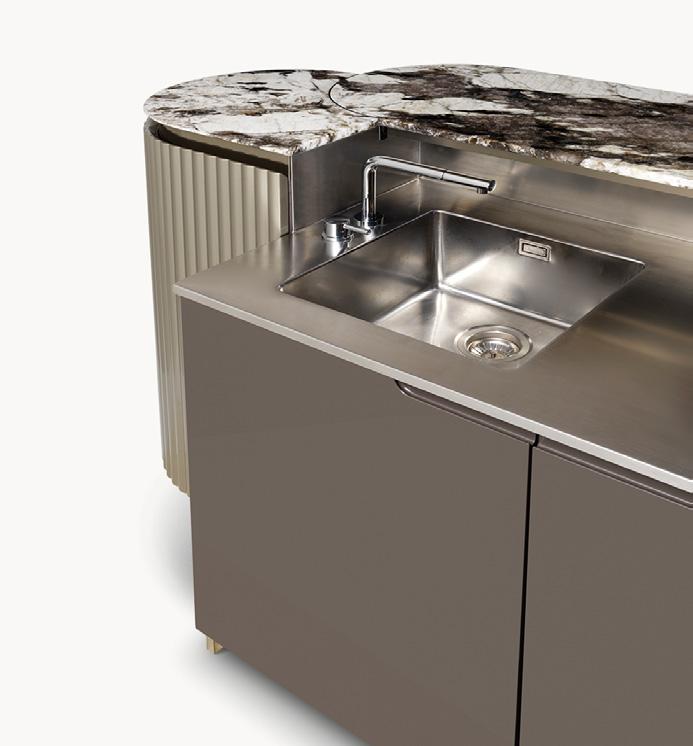
Duke is distinguished by its surface in layered mdf, molded and 3D-machined with vertical canneté detailing. Another defining feature is the curvature of the metal element, which ideally subtracts part of the central structure. The oval top, crafted in Patagonia marble, completes the project with a sculptural presence.
Duke si contraddistingue dalla superficie in mdf stratificato in stampo e lavorato in 3d con cannettatura verticale. Altra caratteristica è la curvatura dell’elemento metallico, che sottrae idealmente parte della struttura centrale. Il top ovale realizzato in marmo Patagonia completa in modo scultoreo il progetto.
Duke
Explore the room ↗
The volume opens with measured restraint, revealing a scenographic presence shaped by rhythm, matter and gesture.
Il volume si apre con misura, lasciando emergere una presenza scenica fatta di ritmo, materia e gesto.
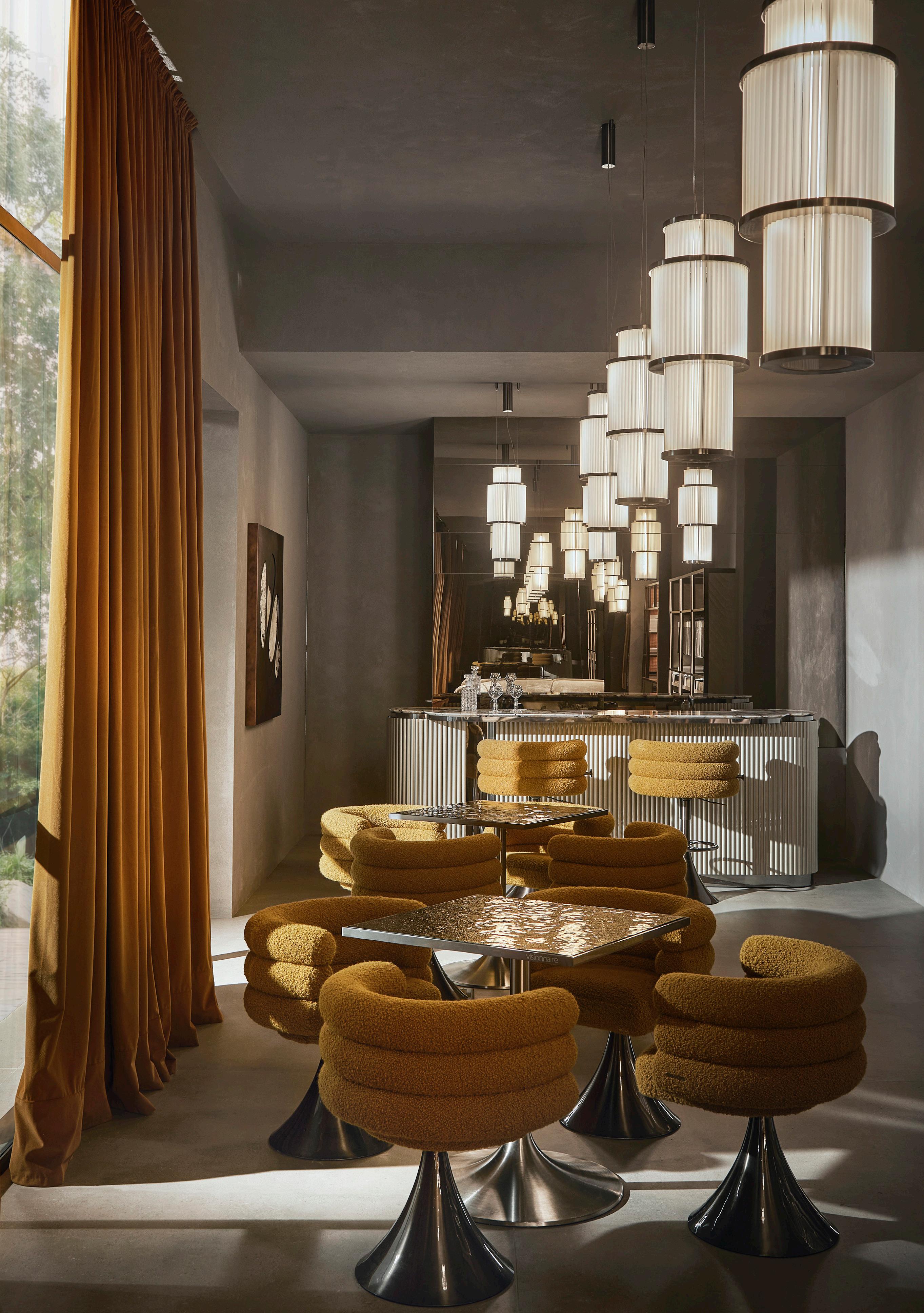
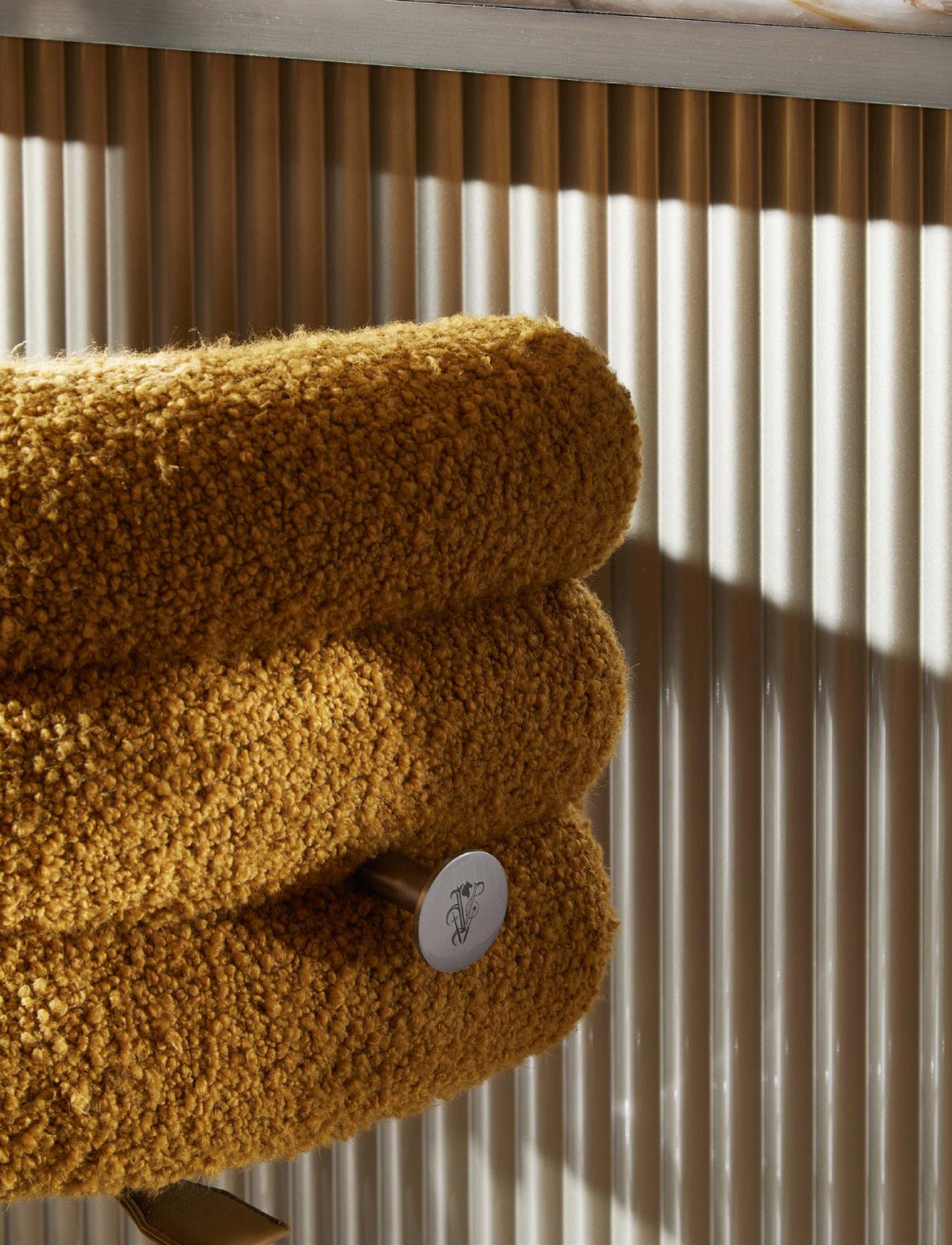
Voluptas chair
Otis table
Giano suspension lamp by Studiopepe
by Luigi Cavalli by Alessandro La Spada
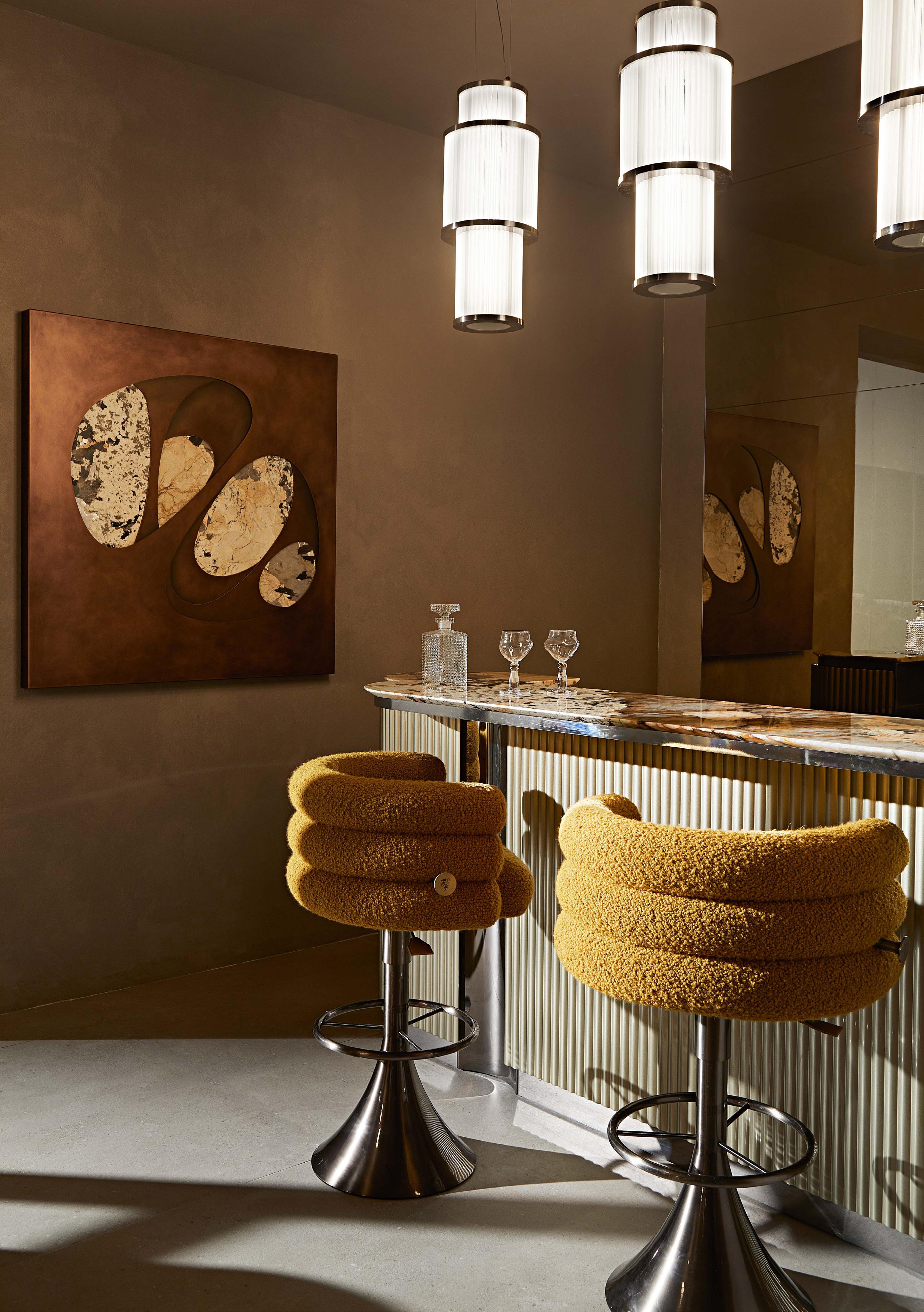
Voluptas stool
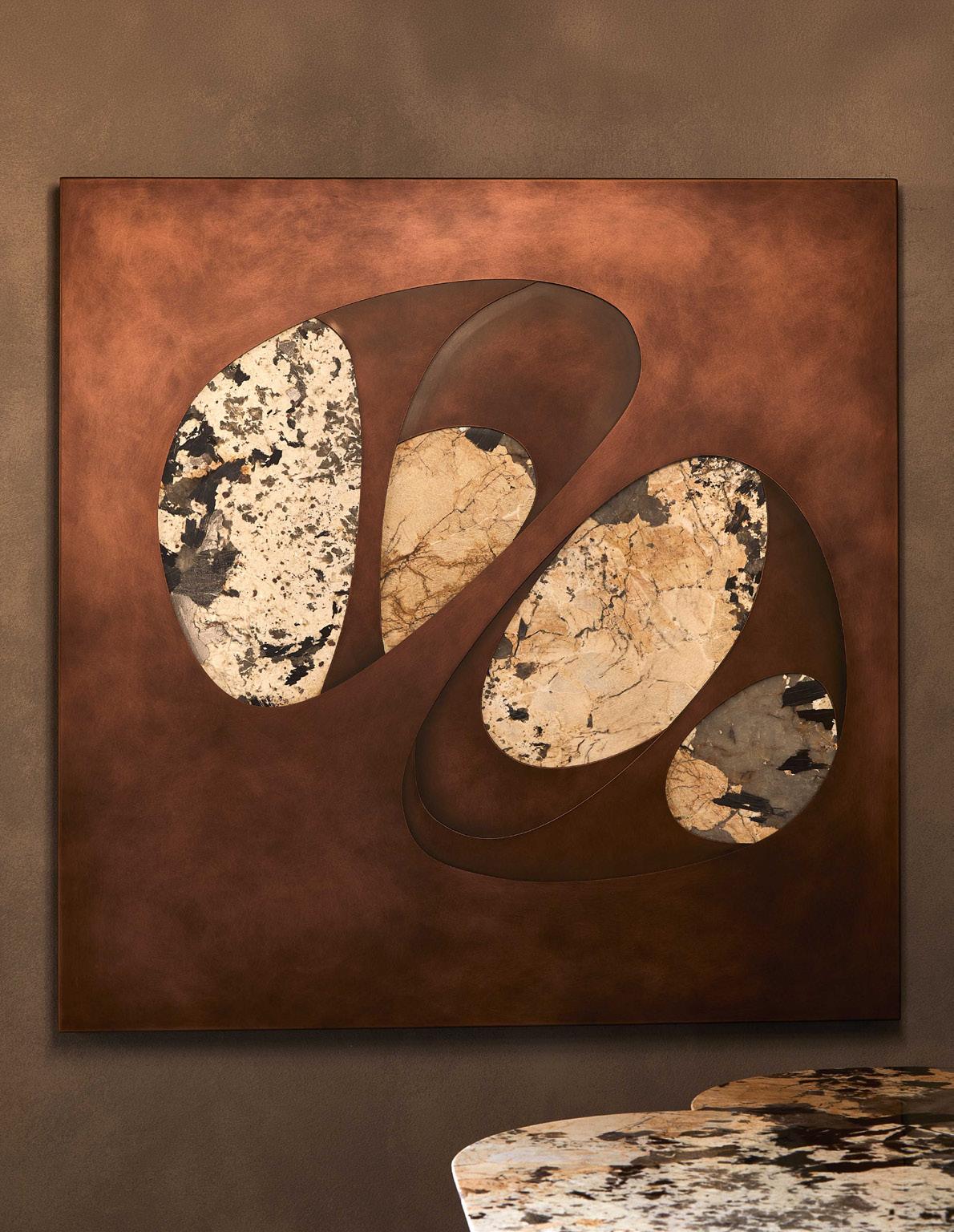
Orbital artwork
Duke bar unit
Giano suspension lamp by Studiopepe
by Michele Astolfi
by Alessandro La Spada
TECHNICAL BOOK
DIVANI/ SOFAS
BATON ROUGE
JOKER
FRAME
BOLD
BATON ROUGE
Mauro Lipparini
L 636 × H 70 × W 198 cm
L 250 3/8” × H 27 1/2” × W 78”
N.1 Left lateral element L 111 1/4” × H 27 1/2” × W 49”
N.1 Central shaped element L 46 7/8” × H 27 1/2” × W 45 3/8”
N.1 Right shaped terminal element L 90 1/2” × H 27 1/2” × W 45”
Loose cushions Ø17 3/4” cm in Soft leather 1193 Ostrica
Option: LED lighting
Seat upholstery: Sarah 24374/108 Camelia
Back upholstery: Polished lacquered wood RAL 8015
Metal: Champagne polished finishing
N.1 Elemento laterale sinistro L 282 × H 70 × W 125 cm
N.1 Elemento centrale sagomato L 119 × H 70 × W 115 cm
N.1 Elemento terminale sagomato destro L 230 × H 70 × W 114 cm
Cuscini decorativi Ø45 cm in pelle Soft 1193 Ostrica
- Parete divisoria con ante fisse e scorrevoli/a scomparsa
- Finitura metallo testurizzato e dettagli in metallo bronzo satinato
- Predisposizione per elettrodomestici (non inclusi): lavastoviglie, frigorifero, freezer, macchina del ghiaccio, macchina da caffè, forno, miscelatore
Top: Quarzite Negresco “leather finishing”
Internal: Polished Antrax lacquered wood
Backlit shelves: Metal profiles in satinized gunmetal
Internal wall: Artistic champagne mirror
Top: Quarzite Negresco “mano-leather”
Interni: Legno laccato Antrax lucido
Ripiani retroilluminati: Profili in metallo in finitura canna di fucile satinato
Parete interna: Specchio artistico champagne
DUKE
Alessandro La Spada
L 280 × H 110 × W 98 cm
L 110 1/4” × H 43 1/4” × W 38 1/2”
Steel worktop with built-in sink and taps
Option: fridge
Top di lavoro in acciaio con lavabo ad incasso e rubinetteria
Optional: frigorifero
Top: Polished Patagonia marble
Front structure: Ribbed polished lacquered wood RAL 1035 pearl beige
Back: Lacquered doors RAL 7022
Metallo: Polished gunmetal
Top: Marmo Patagonia lucido
Struttura frontale: Legno laccato lucido cannettato RAL 1035 beige perlato
Retro: Ante laccate RAL 7022
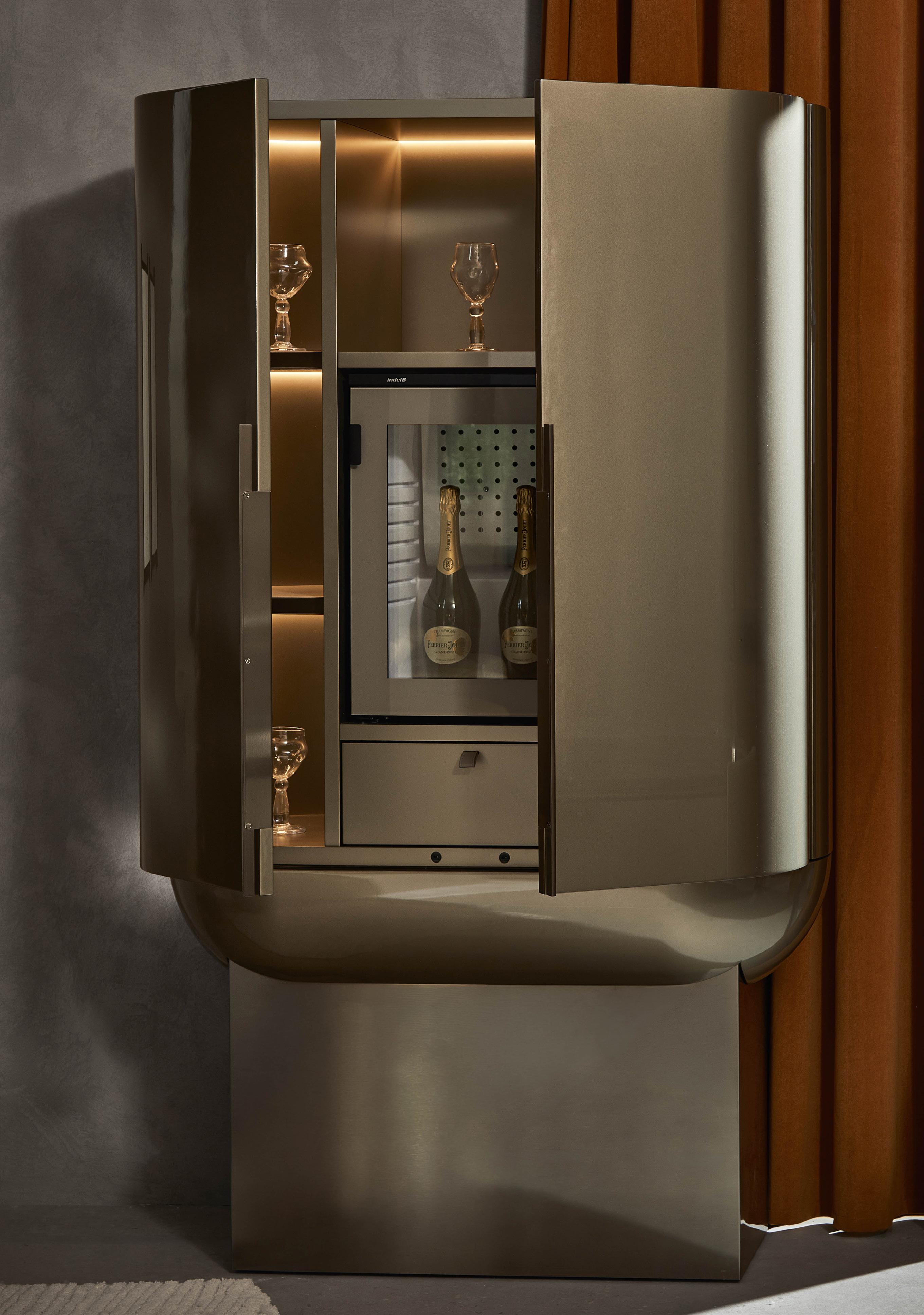
Metallo: Canna di fucile lucido
Product details
Product details
SIONA
Matteo Cibic
L 110 × H 188 × W 50 cm
L 43 1/4” × H 74 1/8” × W 19 5/8”
Refrigerator inside Frigorifero interno
Structure: Polished Ral 7048 pearl grey
Back and inside: Matte RAL 7048
Shelves: Soft leather 1170 Camoscio
Base: Satinized gunmetal
Struttura: RAL 7048 Grigio perlato lucido
Retro e interno: Opaco RAL 7048
Ripiani: Pelle Soft 1170 Camoscio
Base: Canna di fucile satinato
Product details ↗
SCRIVANIE/ DESKS
DOLMEN
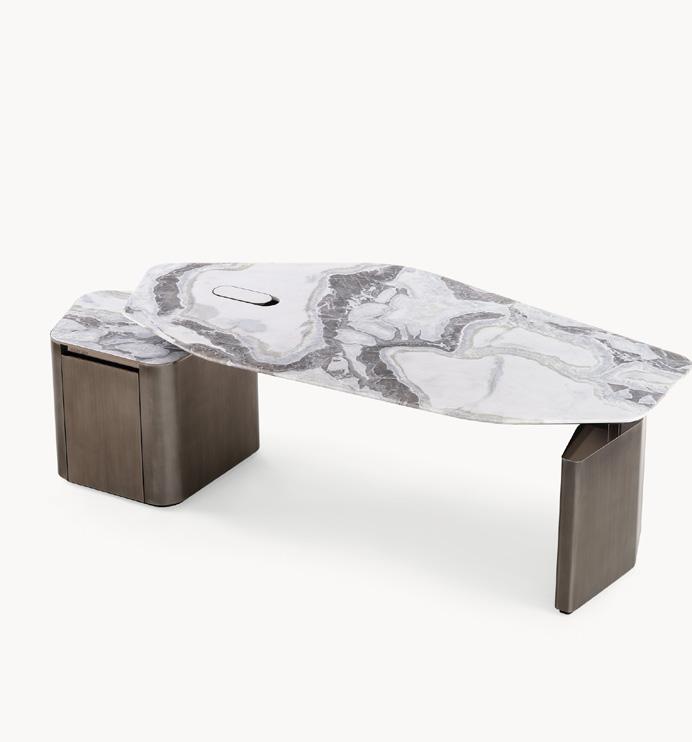
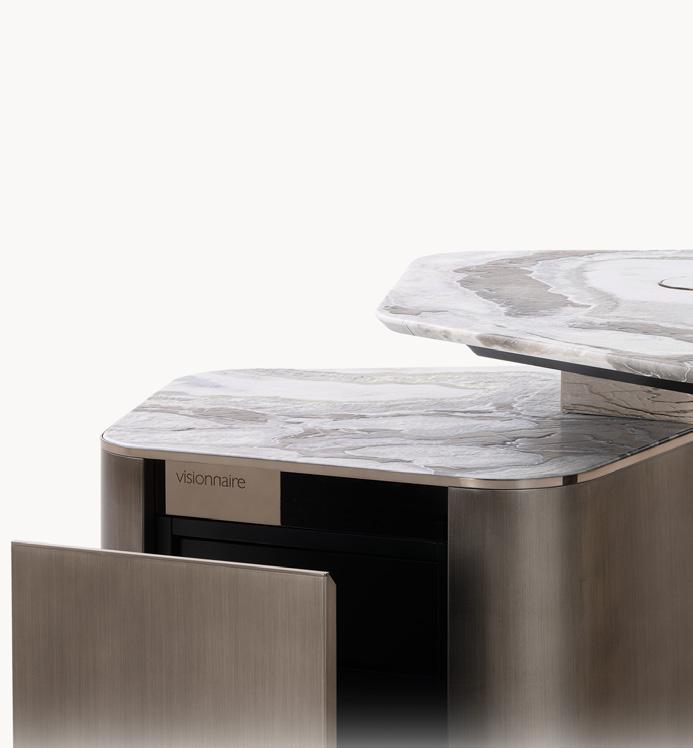
EPHIR
DOLMEN
Studiopepe
L 240 × H 100 × W 80 cm
L 94 1/2” × H 39 3/8” × W 31 1/2”
Reception desk
Scrivania reception
Structure: Travertine marble hand-made sculptur
Back structure: Matt NCS S 2005 Y40 R lacquered wood
Back top: Black glass
Struttura: Scultura in marmo Travertino realizzata a mano
Retro struttura: Legno laccato opaco NCS S 2005 Y40 R
Retro top: Vetro nero
EPHIR
Alessandro La Spada
L 252 × H 75 × W 110 cm
L 99 1/4” × H 29 5/8” × W 43 1/8”
Top: Dover White marble “leather finishing”
Structure: Satinized gunmetal finishing
Top: Marmo Dover White “mano-leather”
Struttura: Canna di fucile satinato
LIBRERIE/ BOOKSHELVES
EIDOS
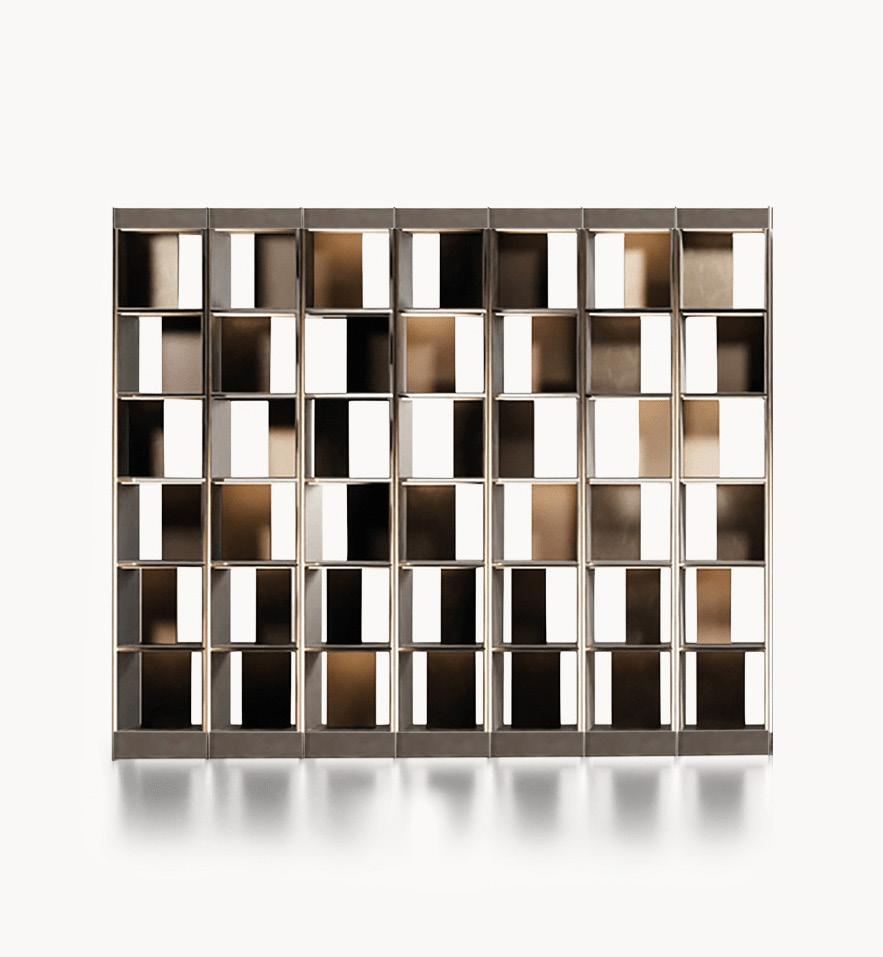
C-SQUARE
TIVOLI
Stefano Maria Pozzi
L 326 × H 378 × W 50 cm
L 128 3/8” × H 148 3/8” × W 19 5/8"
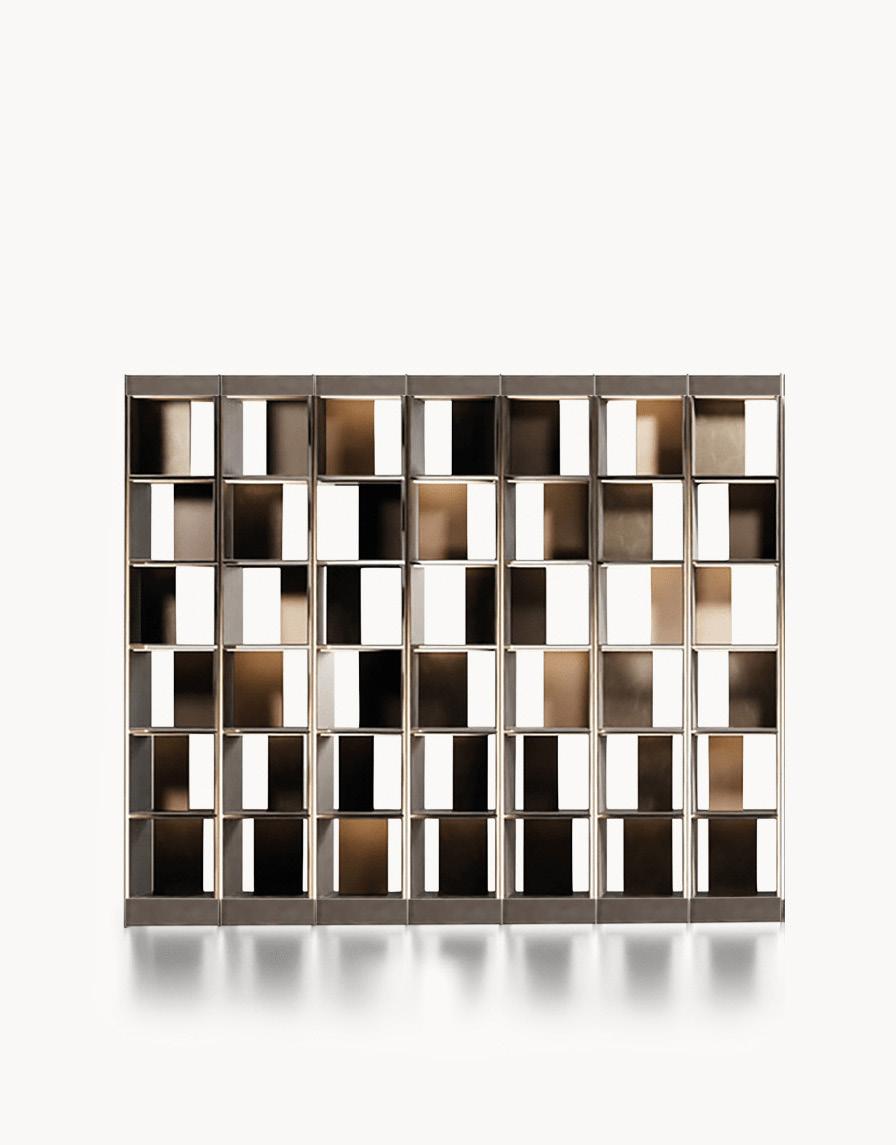
Including controlled lighting scenario - option 1: dividers in metal upholstered in 24309 Tender leather (n.8 05 Tortora colour, n.8 07 Talpa colour) - option 2: dividers in metal striped finishing - option 3: dividers in metal striped finishing with veneer wood Dune
Incluso scenario luminoso controllato
- opzione 1: divisori in metallo rivestiti in pelle 24309 Tender (n.8 colore 05 Tortora, n.8 colore 07 Talpa ) - opzione 2: divisori in metallo con finitura rigata - opzione 3: divisori in metallo con finitura rigata e impiallacciatura in legno Dune
Structure: Lacquered aluminium - striped effect
Struttura: Alluminio laccato con lavorazione effetto rigato
C-SQUARE TIVOLI
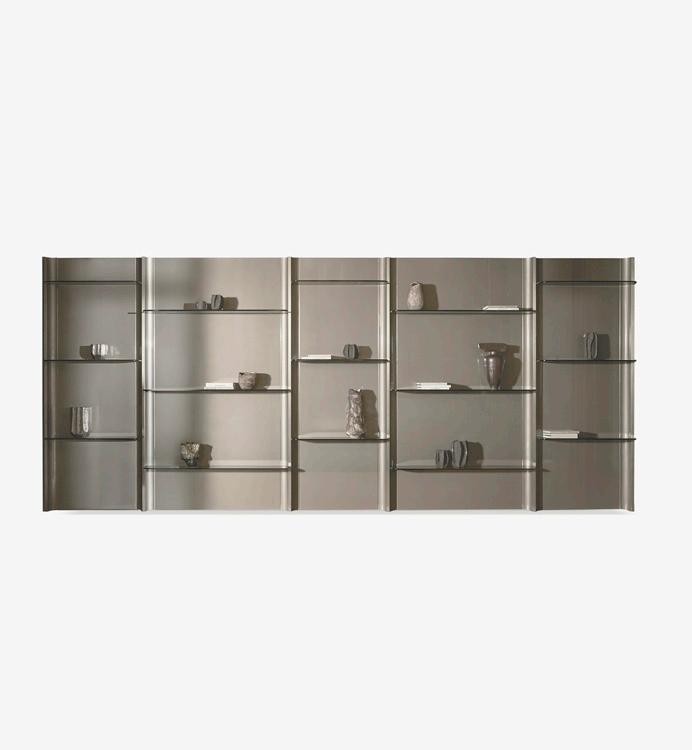
Mauro Lipparini
Boiserie L 150 × H 265 × W 25 cm
Boiserie L 100 × H 265 × W 25 cm
Boiserie L 59” × H 104 3/8” × W 9 7/8”
Boiserie L 39 3/8” × H 104 3/8” × W 9 7/8”
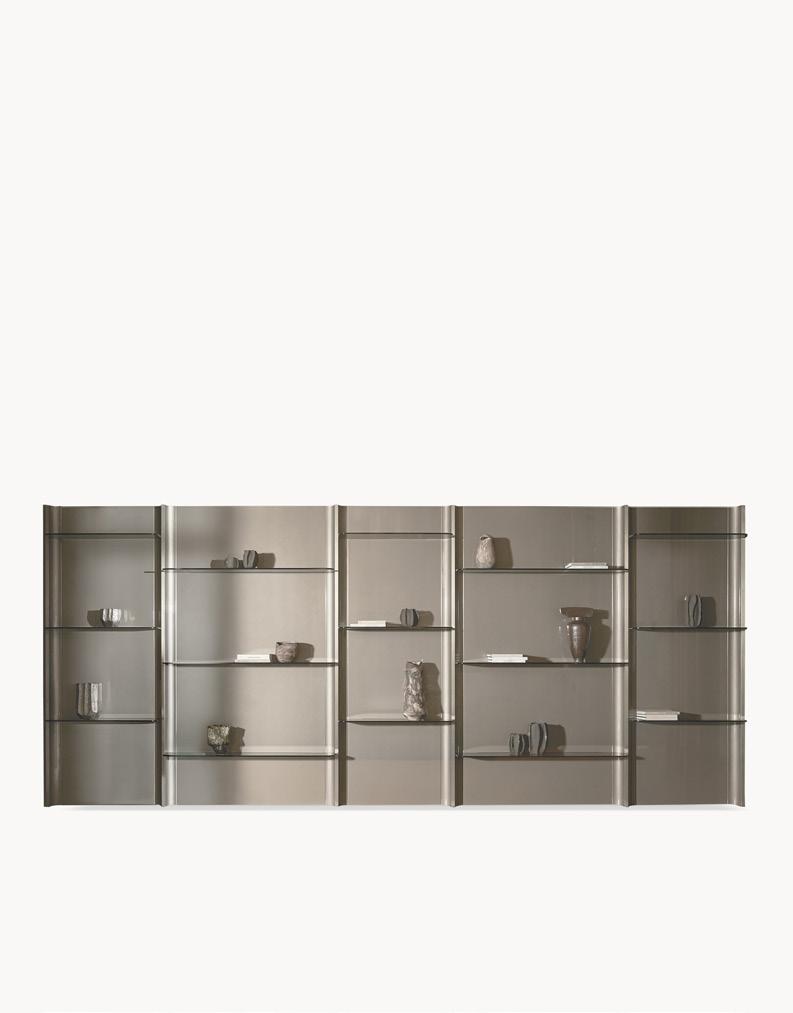
Structure: Polished laquered RAL 7048 Pearl Grey
Shelves: Bronze glass
Metal: Satinized champagne finishing
Struttura: RAL 7048 Grigio Perlato lucido
Ripiani: Vetro bronzo
Metallo: Champagne satinato
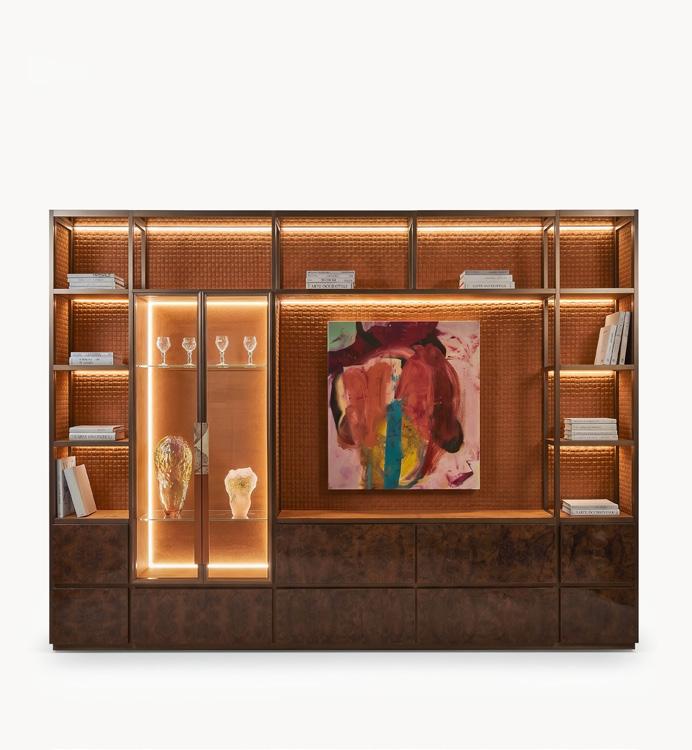
EIDOS
L 406 × H 248 × W 35 cm
L 159 7/8” × H 97 5/8” × W 13 3/4”
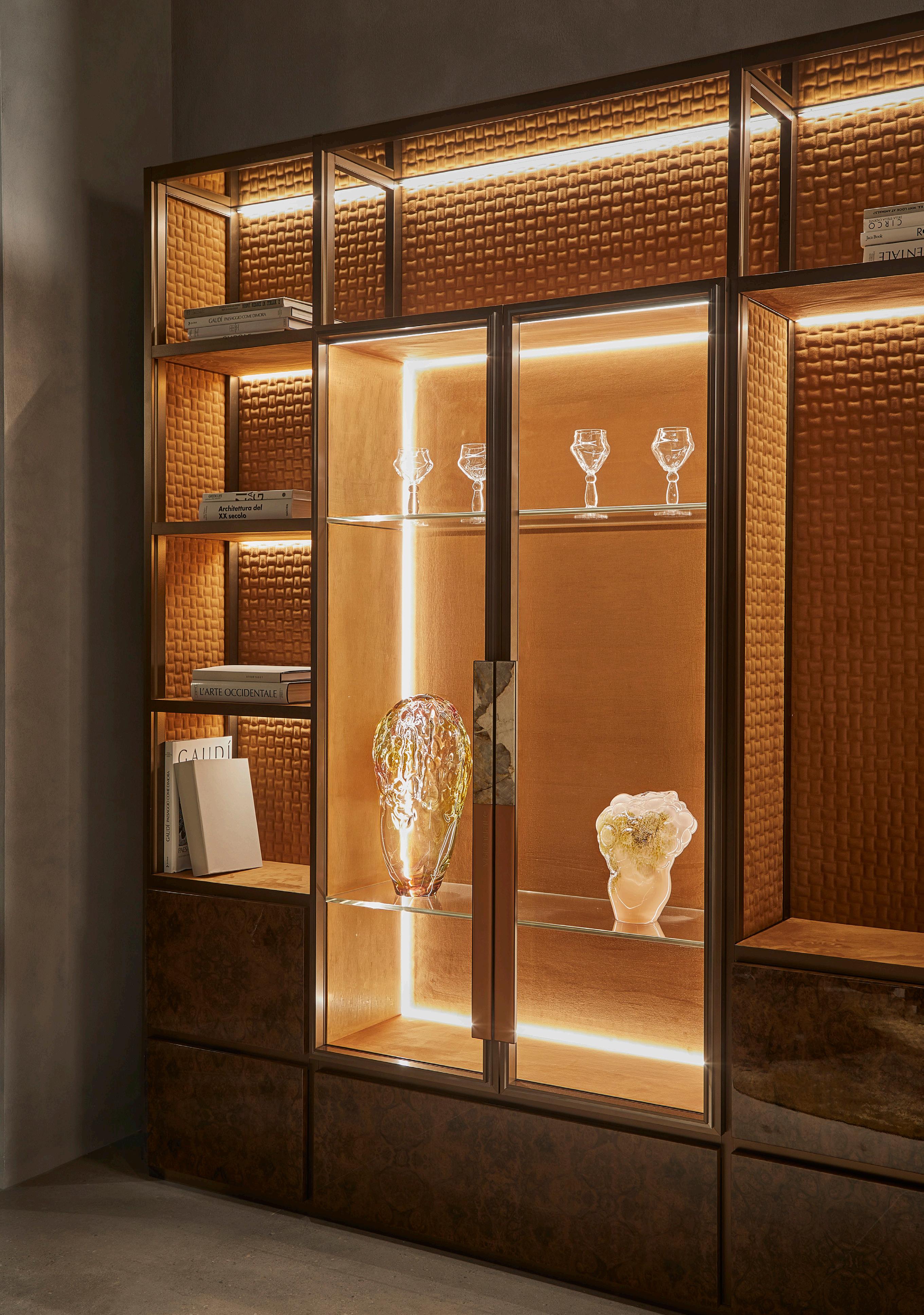
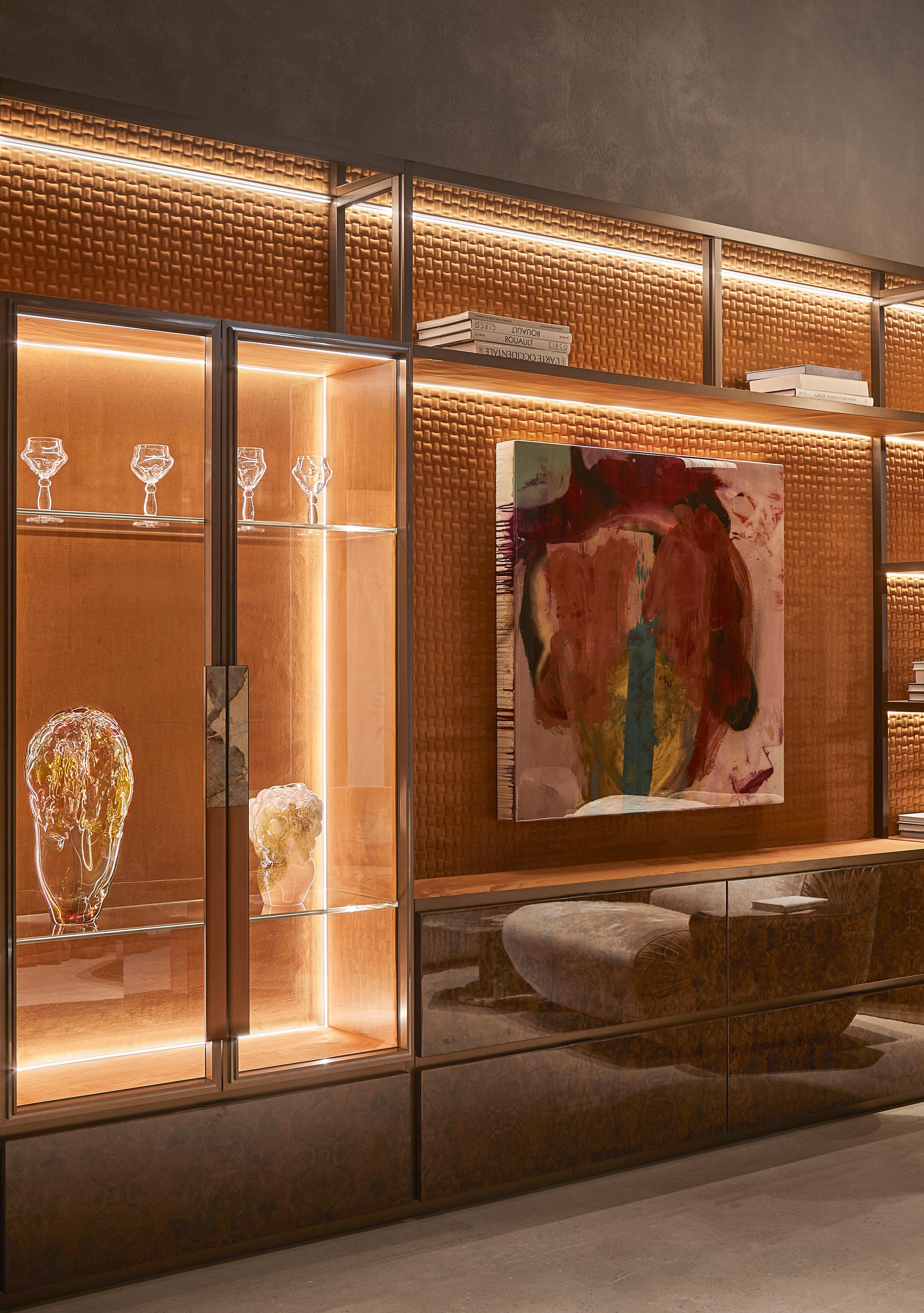
- Illuminazione interna a LED - Interior LED lighting
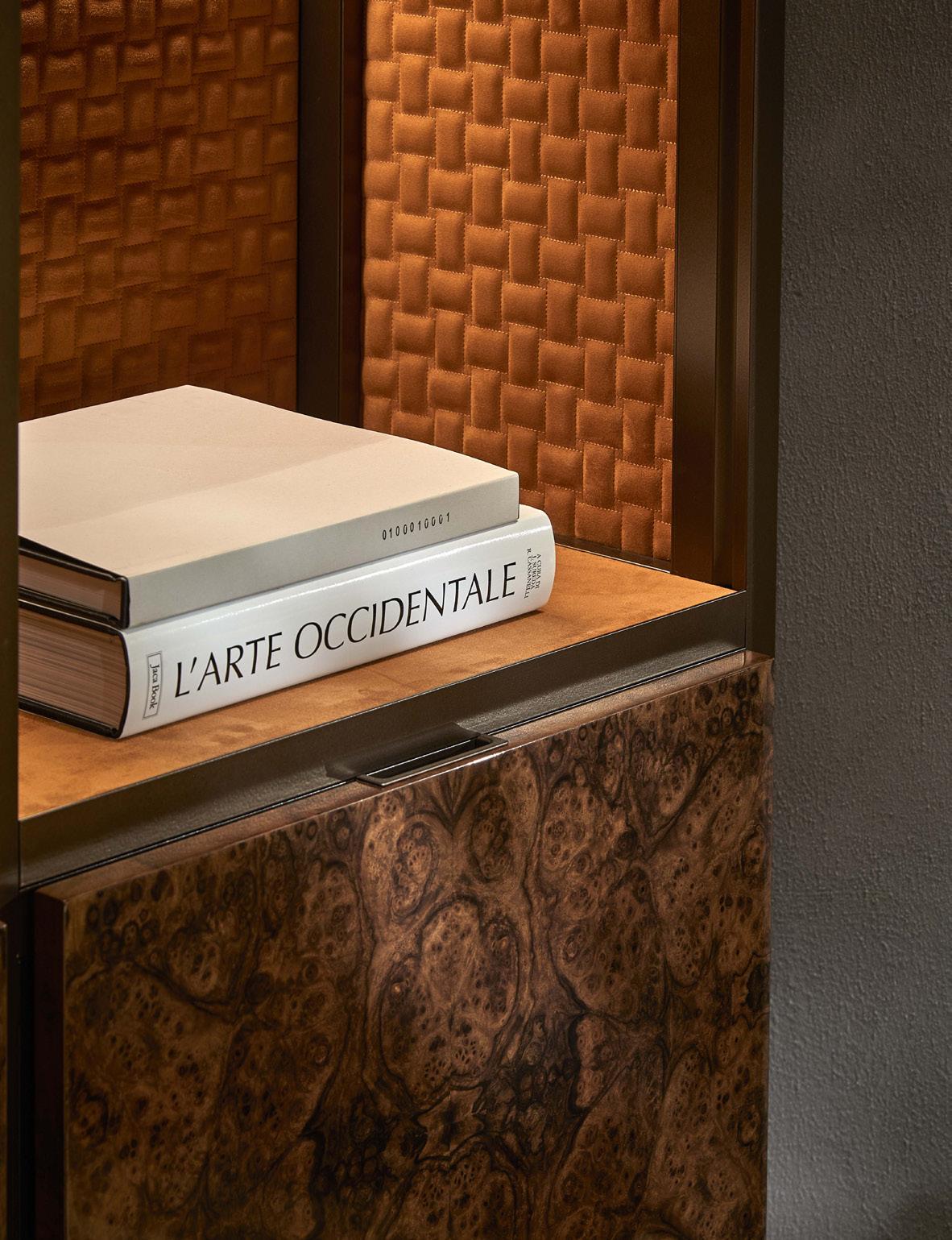
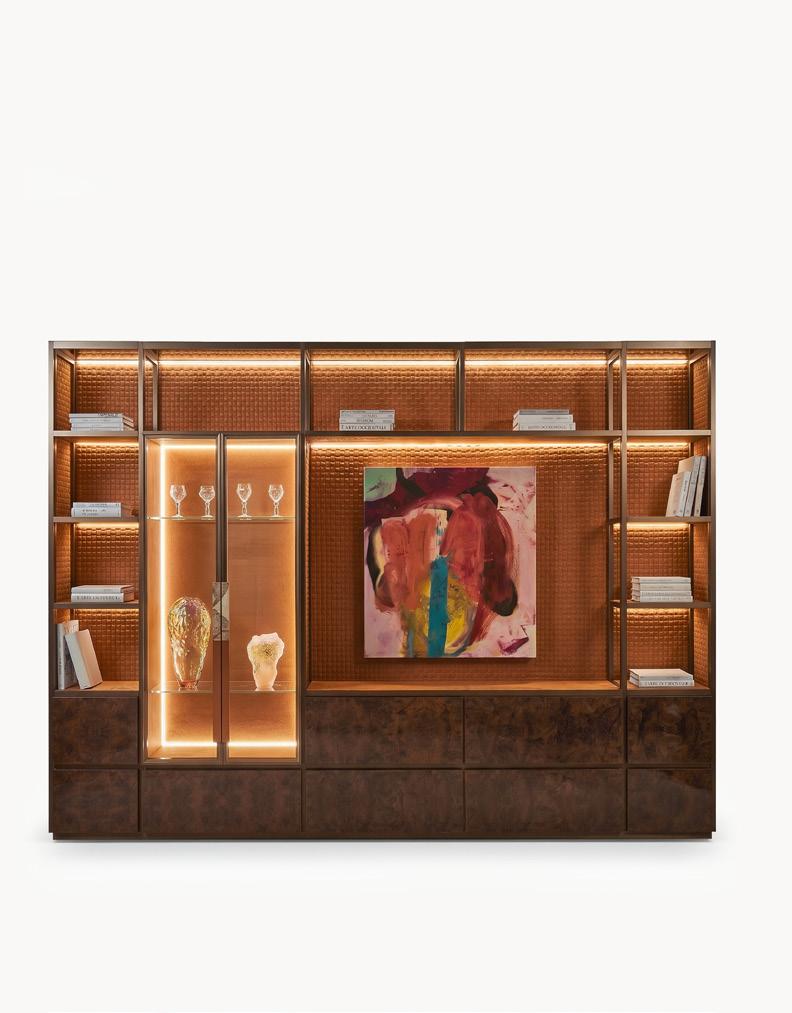
Drawer fronts: Radica R.001
Backs and sides: Sean 5018/501 Caramel with “Holden” embroidery
Shelves: Sean 5018/501 Caramello
Glass: Extra-clear
Metal: Polished Gunmetal - Structure in Bronze sablè VE08 aluminium
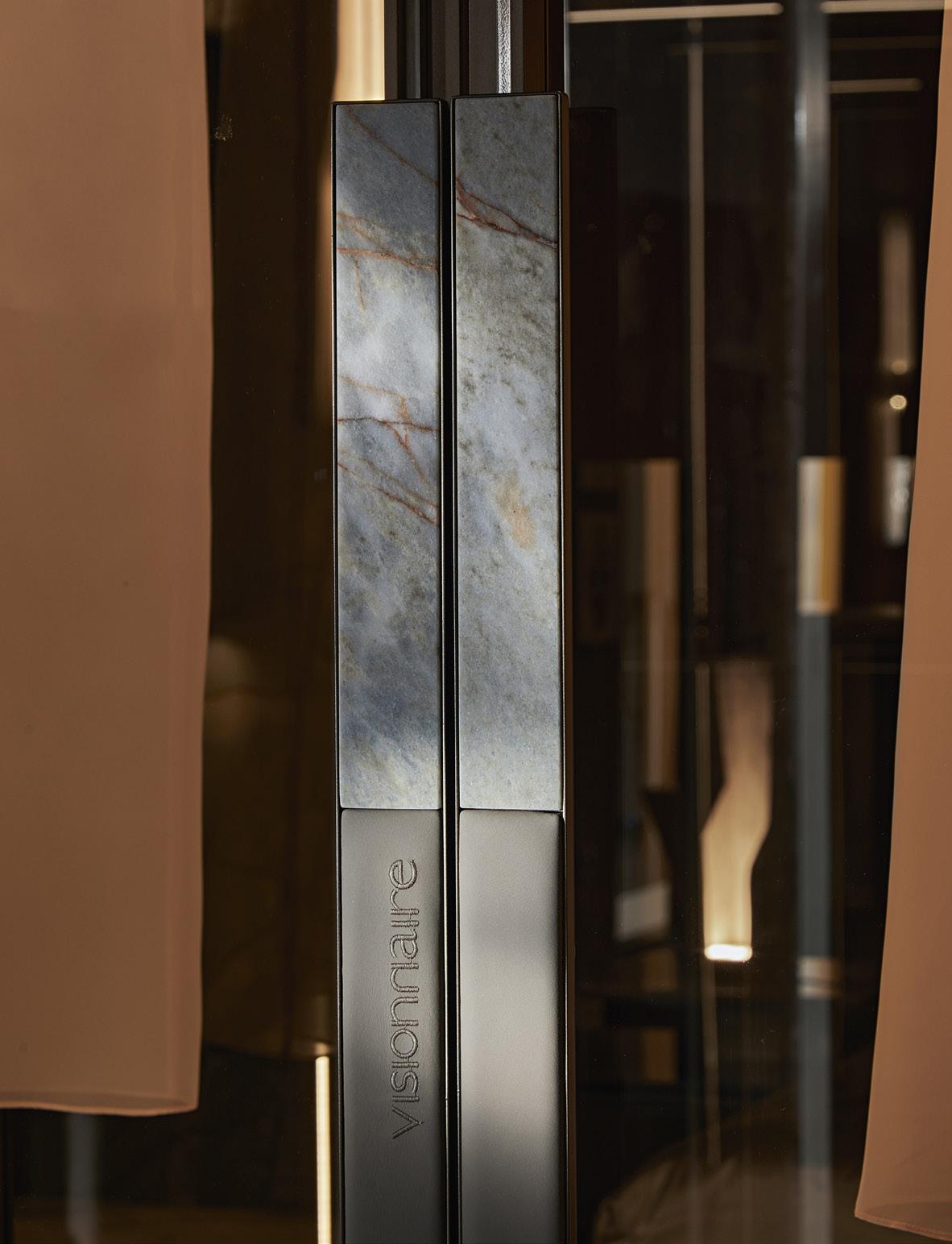
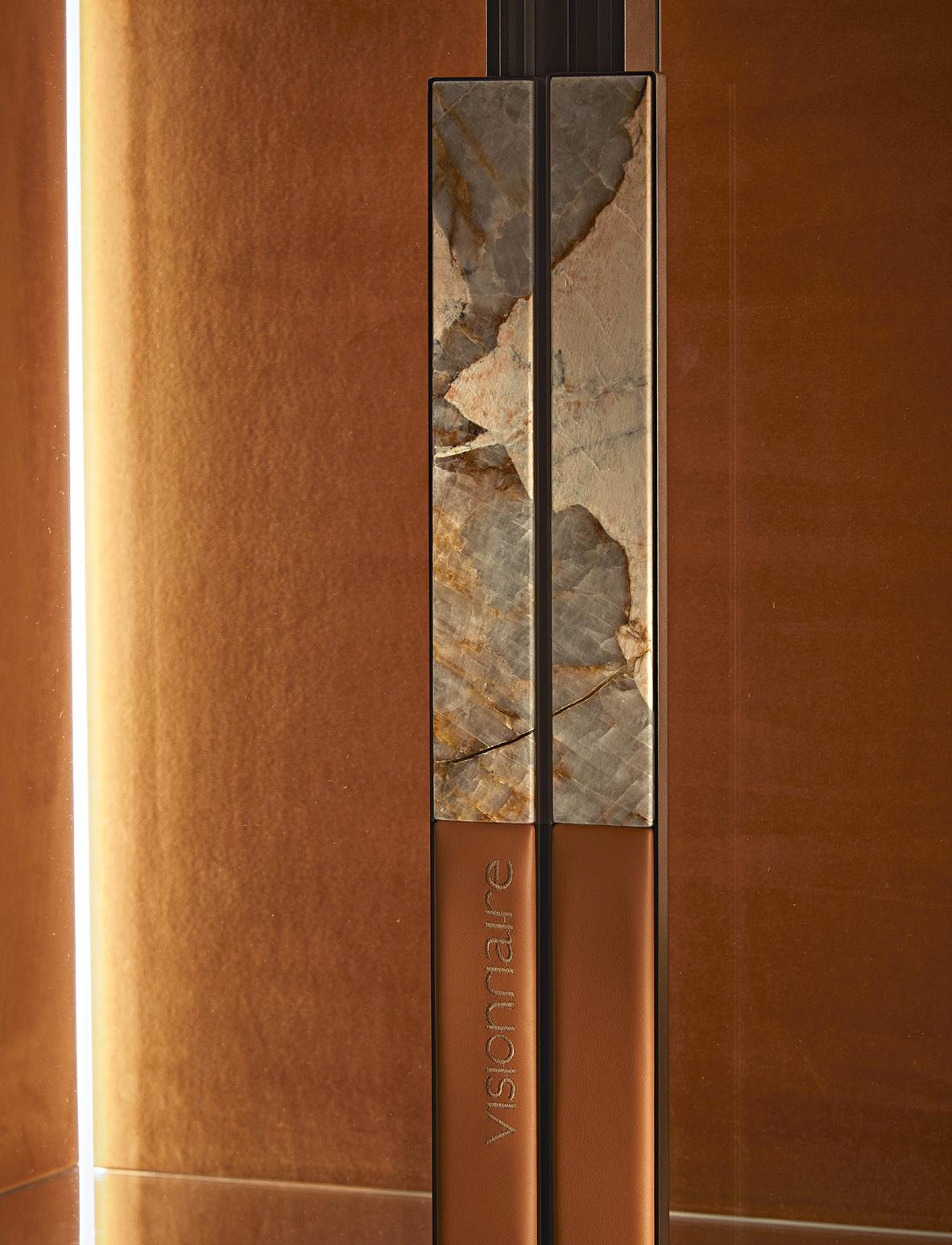
Handle: Patagonia marble matt and Soft Leather 1100/1133 Biscotto
Frontale cassetti: Radica R.001 lucido
Schienali e fianchi: Sean 5018/501 Caramello con ricamo “Holden”
Ripiani: Sean 5018/501 Caramello
Vetro: Extra-chiaro
Metallo: Canna di fucile lucido - Struttura in alluminio Bronze sablè VE08
Maniglia: Marmo Patagonia lucido e Soft Leather 1100/1133 Biscotto
Fabio Bonfà
ARMADI/ WARDROBES
EIDOS
TRACE
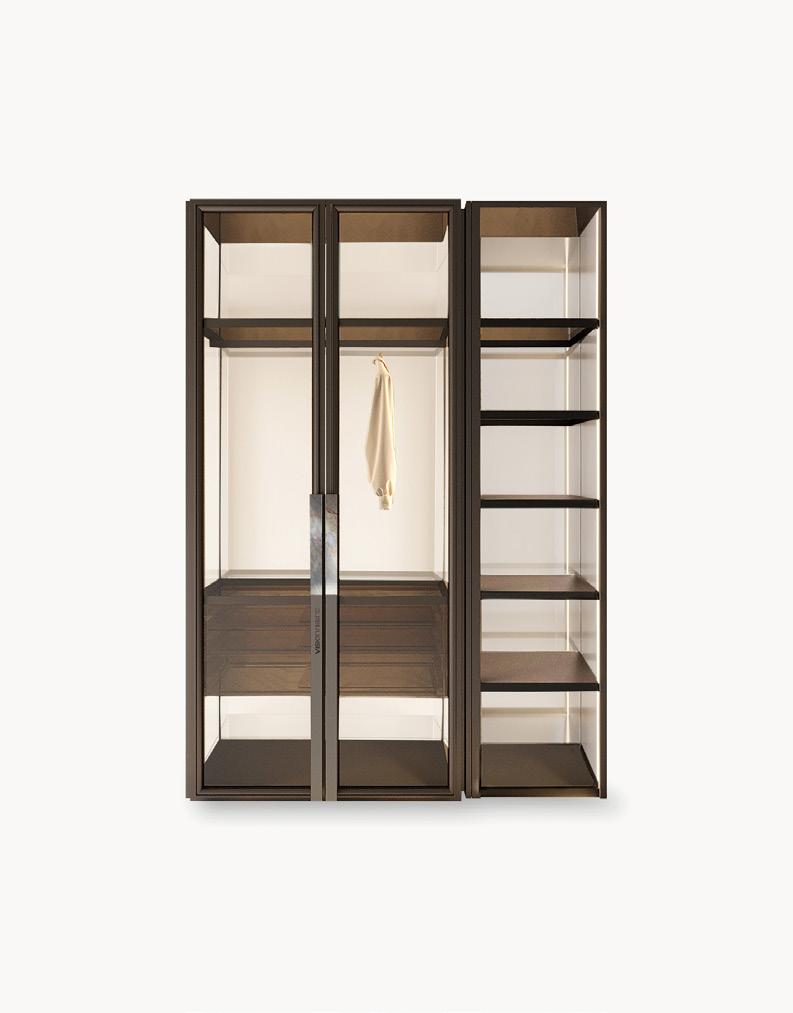
EIDOS
L 300 × H 248 × W 62 cm
L 118 1/8” × H 97 5/8” × W 24 3/8”
Structure: Bronze sablè
Frame: Gunmetal finishing
Glass: Bronzed
Top: Bronze mirror
Handles: Marble Sahara Roots “leather finishing” and upholstered in Glitch 24371/07 Tortora
Struttura: Bronzo sablè
Cornice: Finitura gunmetal
Vetro: Bronzato
Cornice: Specchio bronzo
Maniglie: Marmo Sahara Roots “mano-leather” e rivestite in Glitch 24371/07 Tortora
TRACE
L 364 × H 250 × W 65 cm
L 143 1/8” x H 98 3/8” x W 25 3/4”
Internal layout featuring shelves, coat hooks and drawers, with LED lighting – customisable
Configurazione interna con ripiani, appendiabiti e cassetti, con illuminazione a LED - personalizzabile
Structure: RAL 7016 lacquered wood
Internal: Embroidered Sean 5018/611 Ardesia
Front drawers: Smoked glass
Struttura: Legno laccato RAL 7016 lucido
Interni: Sean 5018/611 Ardesia ricamato
Frontale cassetti: Vetro fumé
Alessandro La Spada
Fabio Bonfà
MOBILI CONTENITORI/ STORAGE UNITS
GARDIENNE
Alessandro La Spada
L 530 × H 250 × W 47 cm
L 208 3/4” × H 98 3/8” × W 18 1/2”
Interior layout with shelves and LED lighting
Configurazione interna con ripiani ed illuminazione a LED
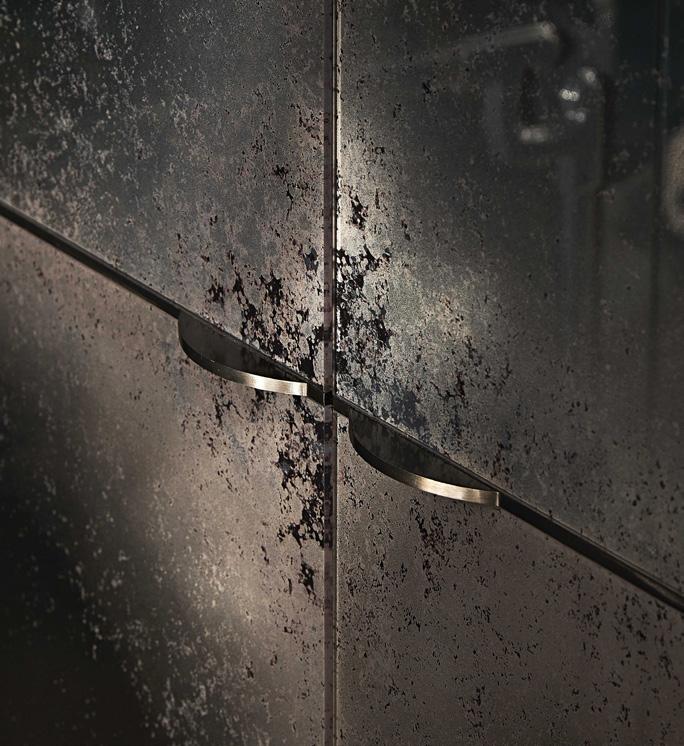
Covered: Mirror with antique finish
Inside upholstery: Sean 5018/611 Ardesia
Rivestimento esterno: Specchio con finitura anticata Rivestimento interno: Sean 5018/611 Ardesia
SPECCHI/ MIRRORS
BARTOK
Alessandro la Spada
Specchiera centrale L 68 × H 201 × W 17 cm
Central mirror L 26 3/4” × H 79 1/8” × W 6 3/4”
Specchiere destra/sinistra apribili
L 68 × H 201 × W 17 cm
Left/right openable mirror
L 26 3/4” × H 79 1/8” × W 6 3/4”
Marble details with LED lighting Dettagli in marmo con illuminazione a LED
Upholstery: Sean 5018/103 Gesso
Insert: Polished Sahara Roots marble
Metal: Satinized gunmetal
Rivestimento: Sean 5018/103 Gesso
Inserto: Marmo Sahara Roots lucido
Metallo: Canna di fucile satinato
LAMPADE A SOSPENSIONE/ SUSPENSION LAMPS
ASTRALIS
GIANO
GEA
CORE
MILANO
ASTRALIS
La Spada
L 165 × H 200 × W 42 cm
L 65” × H 78 3/4” × W 16 1/2”
Marble: Patagonia honed quartz
Metal: Striped satin gunmetal
Marmo: Quarzite Patagonia levigato
Metallo: Canna di fucile effetto striato
CORE
Piva
L 239 × H 100 × W 35 cm
L 94 1/8” × H 39 3/8” × W 13 3/4”
L 284 × H 100 × W 50 cm
L 112” × H 39 3/8” × W 19 7/8”
L 236 × H 100 × W 16 cm
L 93” × H 39 3/8” × W 6 1/4”
N.5 o 6 elementi snodato (configurazione 3+2 o 3+3)
N.5 elementi lineare
N.5 or 6 articulated elements (3+2 or 3+3 configuration)
N.5 linear elements
Structure: Core artistic glass
Metal: Satinized black nickel finishing
Struttura: Vetro artistico Core
Metallo: Nichel nero satinato
GEA
L 131 × H 100 × W 11 cm
L 51 5/8” × H 39 3/8” × W 4 1/2”
n.8 frosted glass diffuser
n.8 diffusori in vetro
Metal structure: Satinized gunmetal finishing
Struttura metallo: Canna di fucile satinato
Alessandro
Marco
Gupica
GIANO
Alessandro La Spada
Ø 25 × H 100 cm
Ø 9 7/8” x H 39 3/8”
Diffusers: Borosilicate glass
Metal: Gunmetal satinized finishing
Diffusori: Vetro borosilicato
Metallo: Canna di fucile satinato
MILANO
Armando Bruno, Alberto Torres
L 19 × H 138 × W 21 cm
- n.2 elementi L 7 × H 96 × W 7 cm
- n.1 elemento L 7 × H 106 × W 7 cm
L 7 1/2” × H 54 3/8” × W 8 1/4”
- n.2 medium element L 2 3/4” × H 37 3/4” × W 2 3/4”
- n.1 big element L 2 3/4” × H 41 3/4” × W 2 3/4”
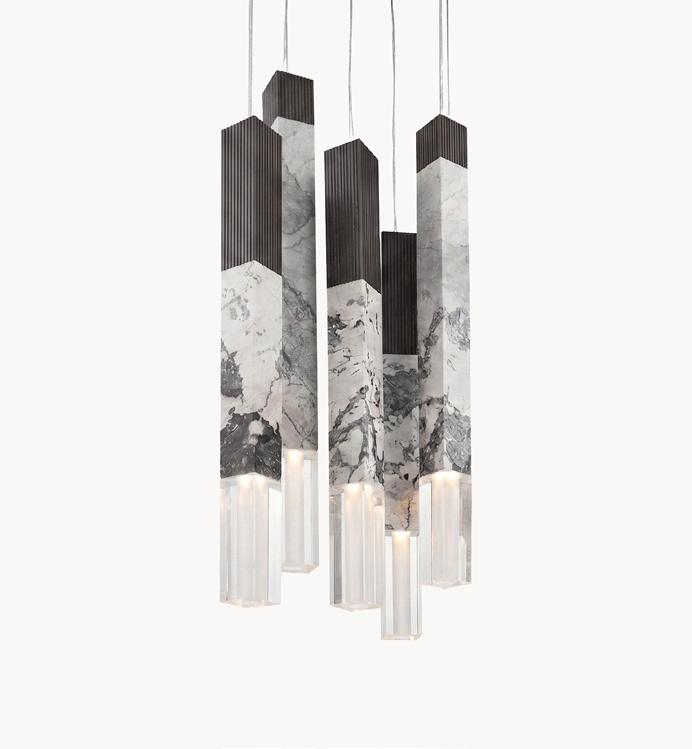
Structure: Polished black nickel
Marble: Invisible grey
Struttura: Nichel nero lucido
Marmo: Invisibile grey
PARADE
Studiopepe
L 88 × H 234 × W 4 cm
L 34 5/8” × H 92 1/8” × W 1 5/8”
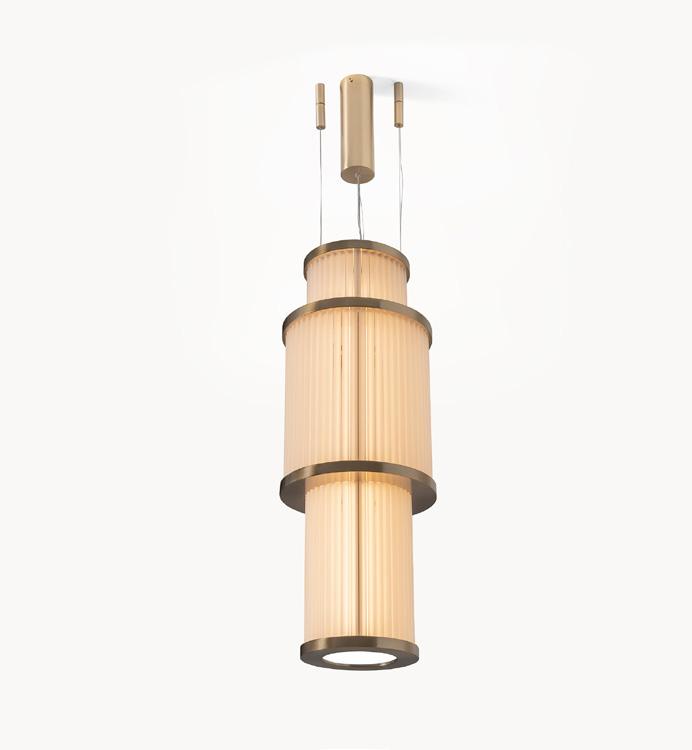
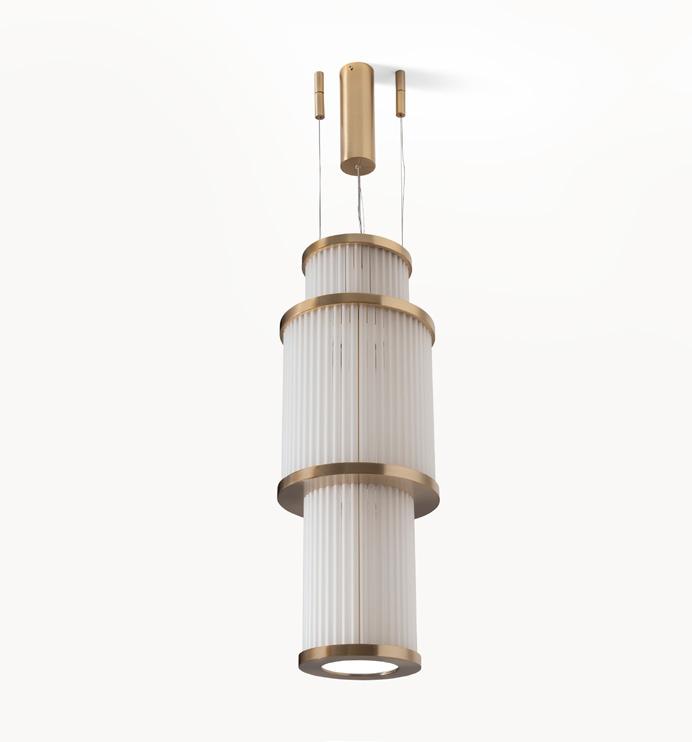
n.5 kiln-cast glass diffuser n.5 diffusori in vetrofusione
Structure: Satinized black Nickel
Rivestimento: Nichel nero satinato
Product details ↗
Product details ↗
Product details ↗
POLARIS STEEL
L 99 × H 55 × W 99 cm
L 39” × H 21 5/8” × W 39” - n.14 elementi - n.14 lights elements
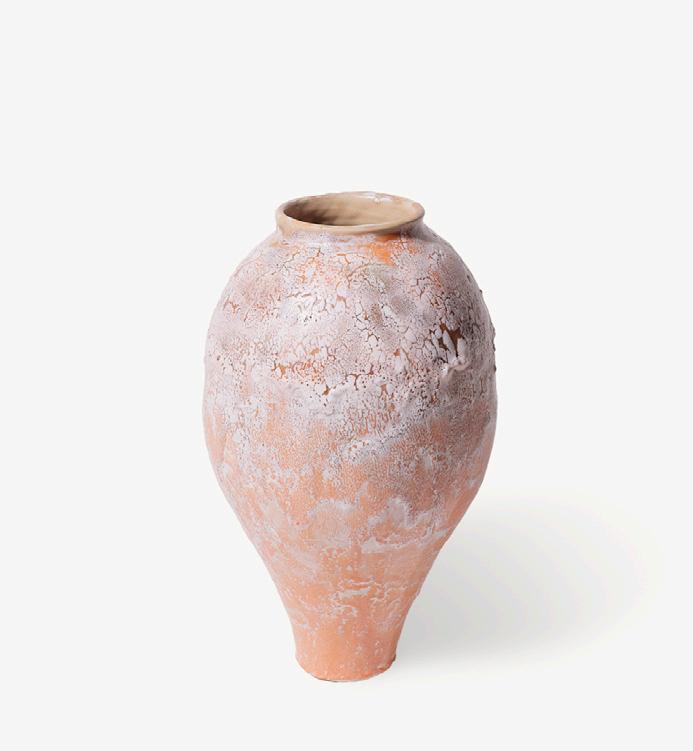
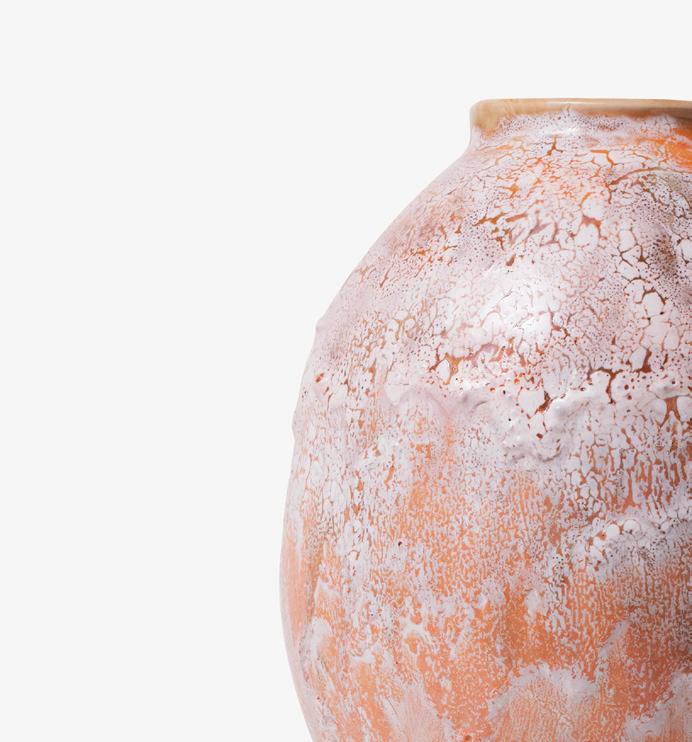
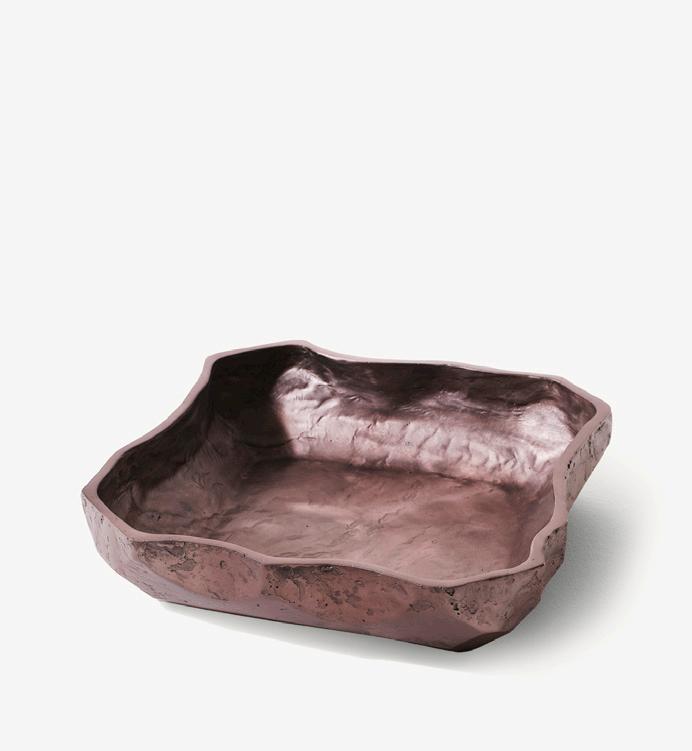
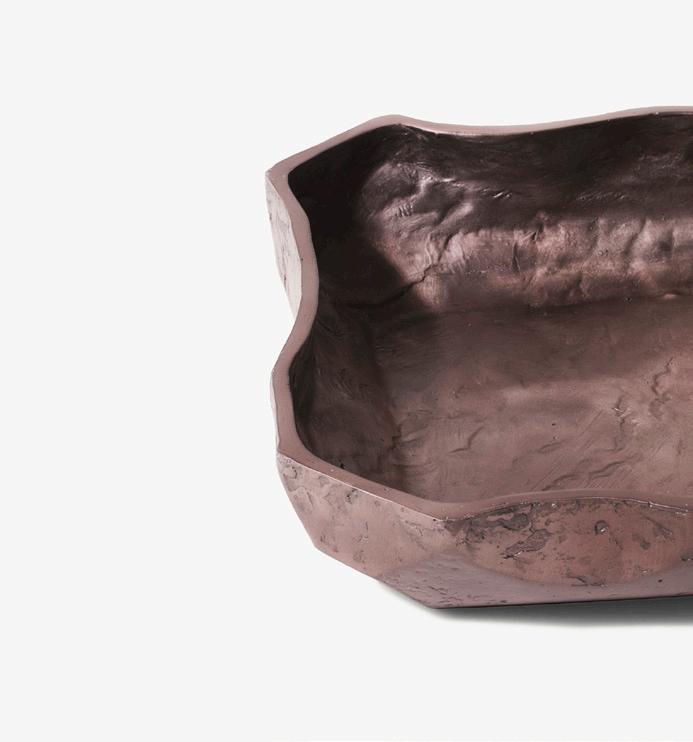
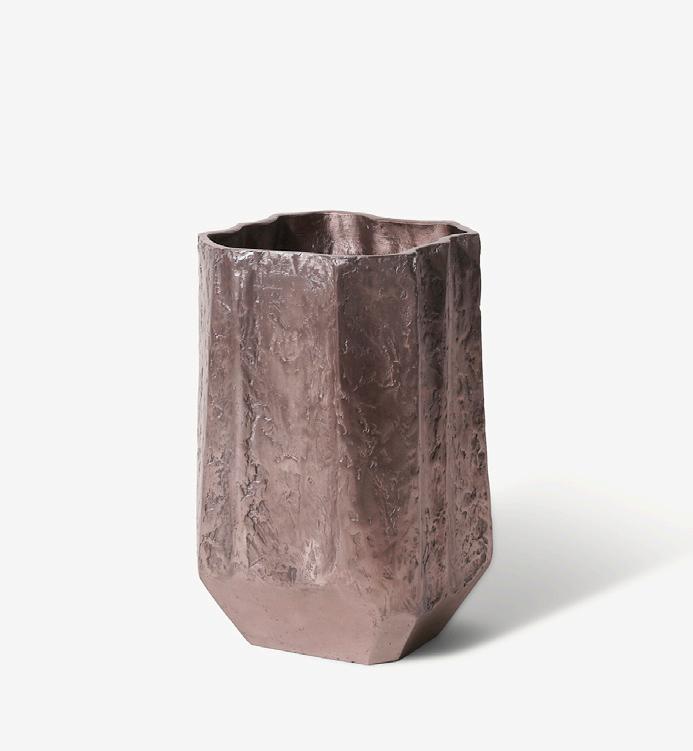
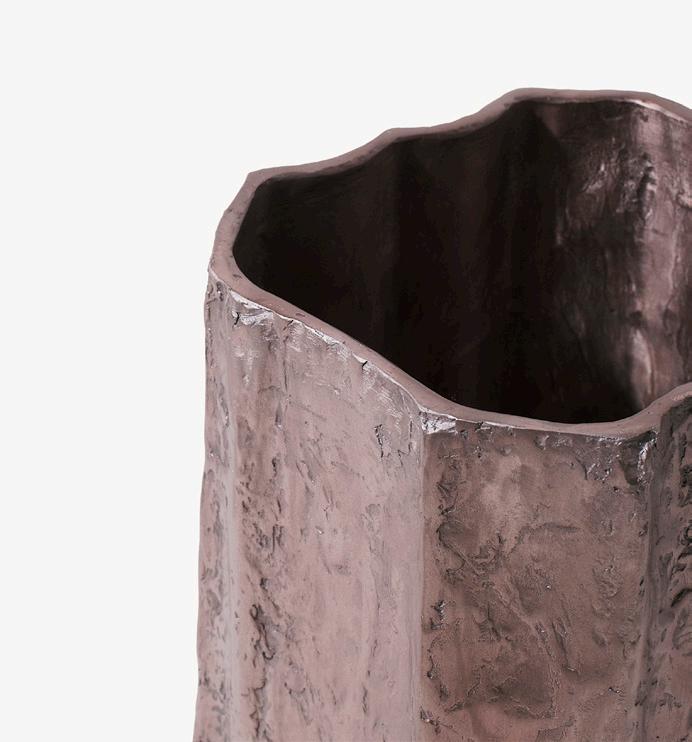
Handcrafted porcelain stoneware vases, with polished, textured exteriors, glazed interiors, a smoky finish, and iridescent patina details-each a one-of-a-kind composition of tactile sophistication.
Vasi in ceramica-grès porcellanato lavorati interamente a mano, con superficie esterna lucidata e texturizzata, interno smaltato, finitura fumé e patine decorative cangianti.
Product details ↗
Product details ↗
SEEDS
Ceramica Gatti 1928
Ø 13 × H 13 / 18 / 27 cm
Ø 5 ⅛” × H 5 ⅛ / 7 ⅛ / 10 5/8”
Ø 13 / 13 / 14 × H 15 / 29 / 20 cm
Ø 5 ⅛ / 5 ⅛ / 5 ½” × H 6 / 11 ⅜ / 7 ⅞”
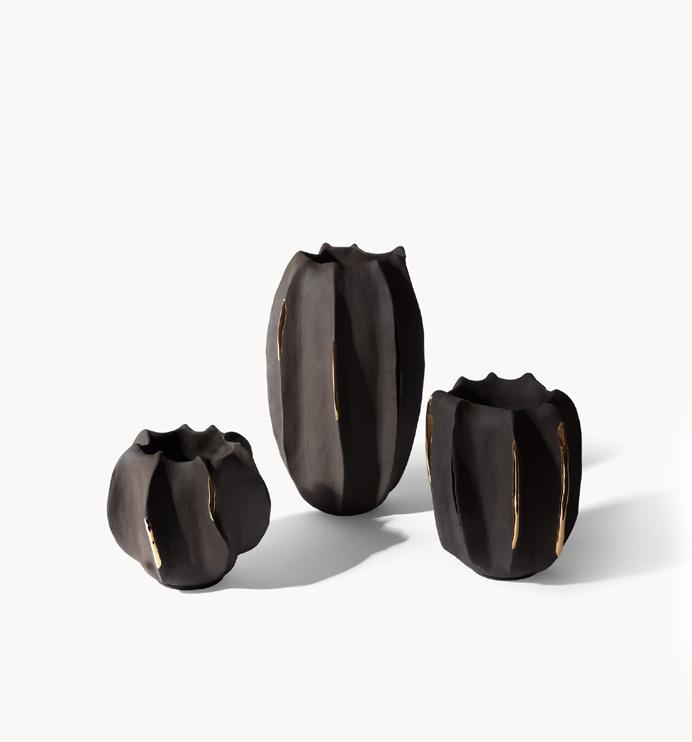
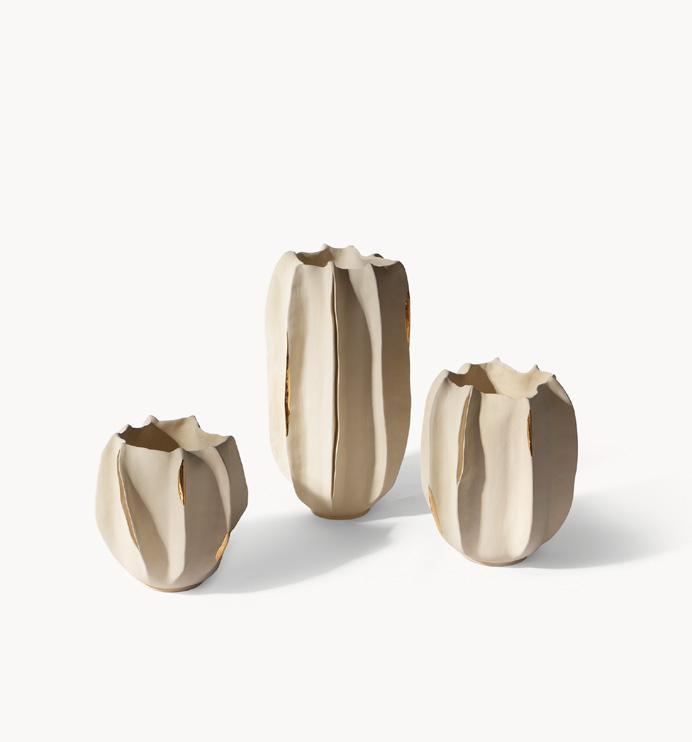
Vases in white or black stoneware, wheel-thrown and fired, hand-decorated with irregular brush applied 24K gold fragments
Vasi in grès bianco o nero modellati a mano al tornio e cotti, decorati a pennello con frammenti irregolari in oro zecchino
Product details ↗
Product details ↗
Year Product Award
VISIONNAIRE MILANO, Flagship Store
LINFA da Visionnaire
FREGIO by Tipstudio, sculpture
C-SQUARE by Stefano Maria Pozzi, bookshelf
NARRAZIONI INTRECCIATE by Draga & Aurel
SIONA by Matteo Cibic, bar unit
ZAHARA by Alessandro La Spada, cabinet
DUNCAN by Alessandro La Spada, kitchen
SHIBARI by Studiopepe, armchair
LEONARDO by Alessandro La Spada, bookshelf
DARSENA DEL SALE
ALYA by Steve Leung, armchair
ARIES by Draga&Aurel, armchair
CA’ FOSCARI by Alessandro La Spada, sofa
APPLE by m2atelier, floor lamp
IL CHIOSTRO
IMAGINE by Mauro Lipparini, armchair
ADMETO by Marco Piva, coffee table
BASKET by m2atelier, armchair
LEGO by Draga&Aurel, console
IL PAVONE by Marc Ange, armchair
CAMDEN by Mauro Lipparini, armchair
ACCESSORIES CAPSULE COLLECTION, catalogue
FAUNA by Sara Ricciardi, vase
MARTY by Marco Piva, console
KOBOL by Alessandro La Spada, wellness unit
OPERA by Alessandro La Spada, dining table
TANYA by Roberto Lazzeroni, chair
TEA-PARTY by Alessandro La Spada, coffee table
BALIN, ELMO, GALDOR, TAREG by Armando Bruno, mirrors