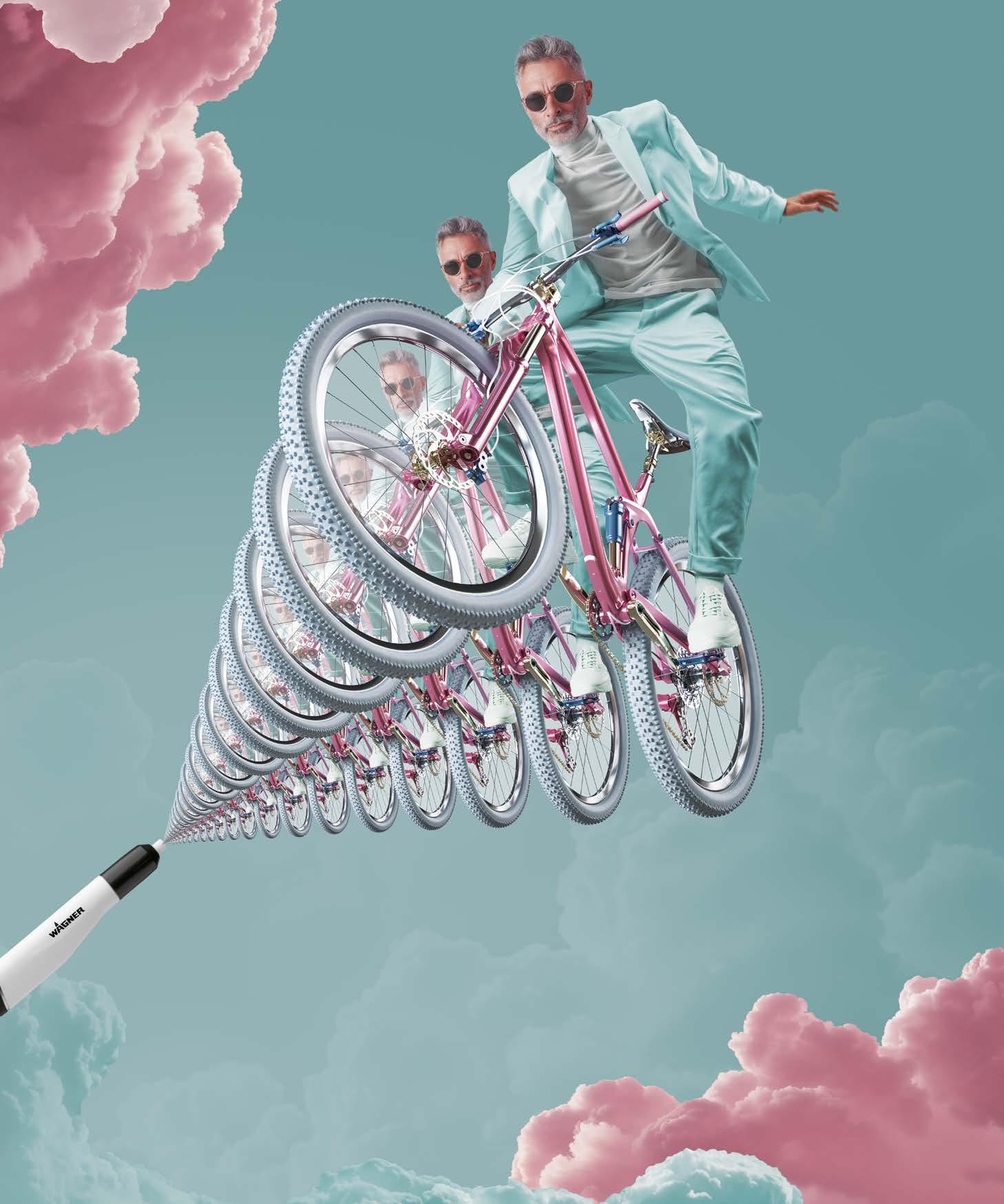
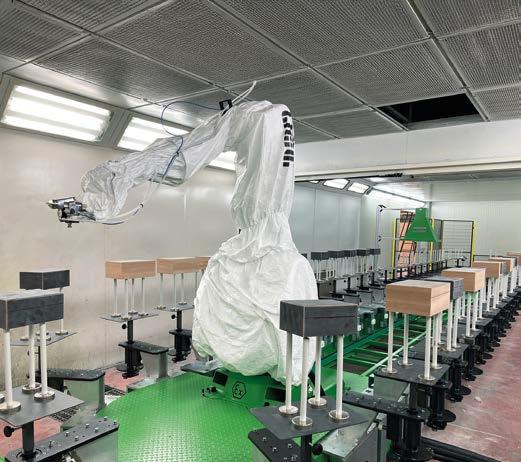
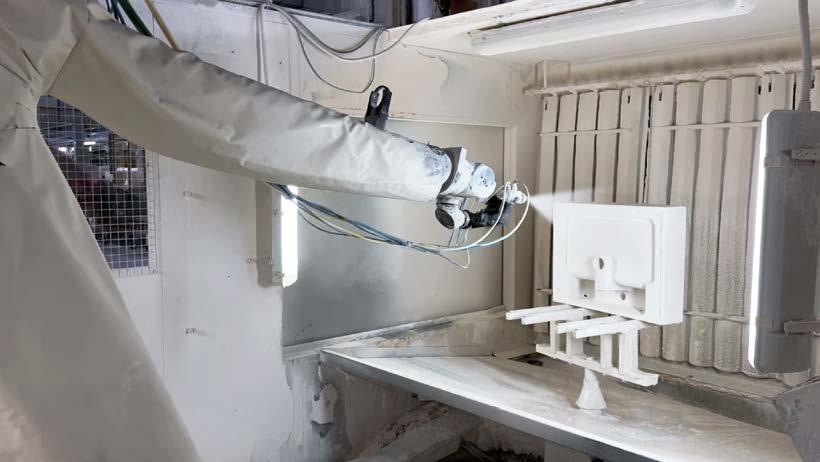
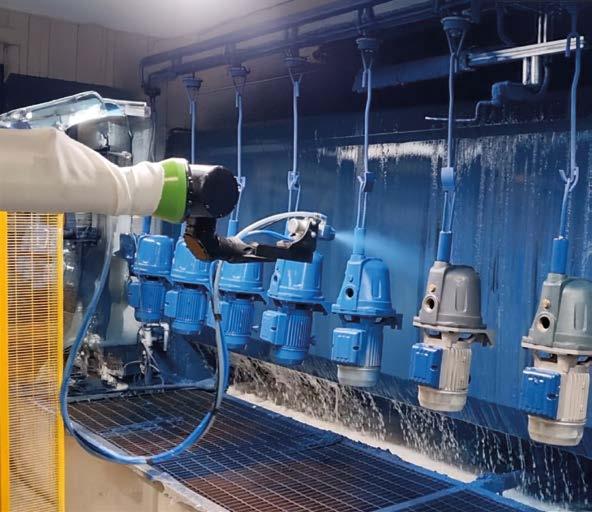
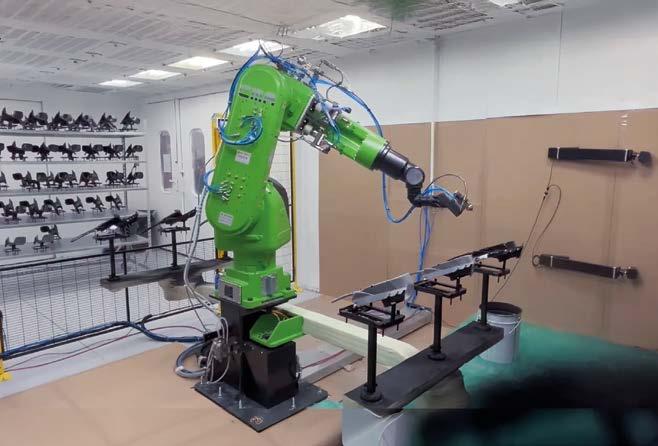
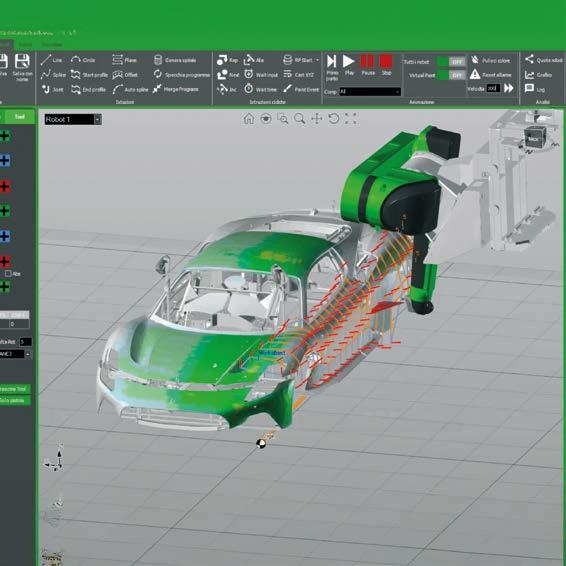
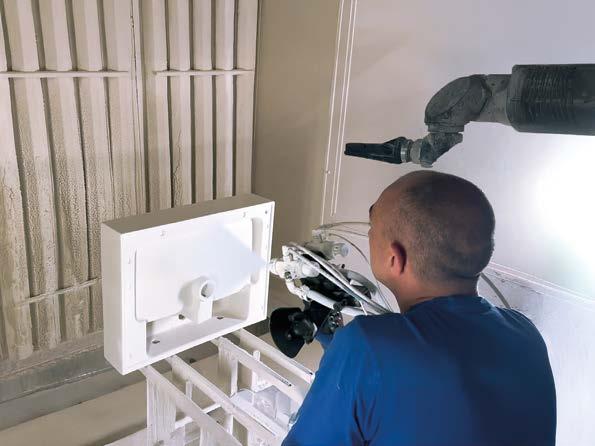
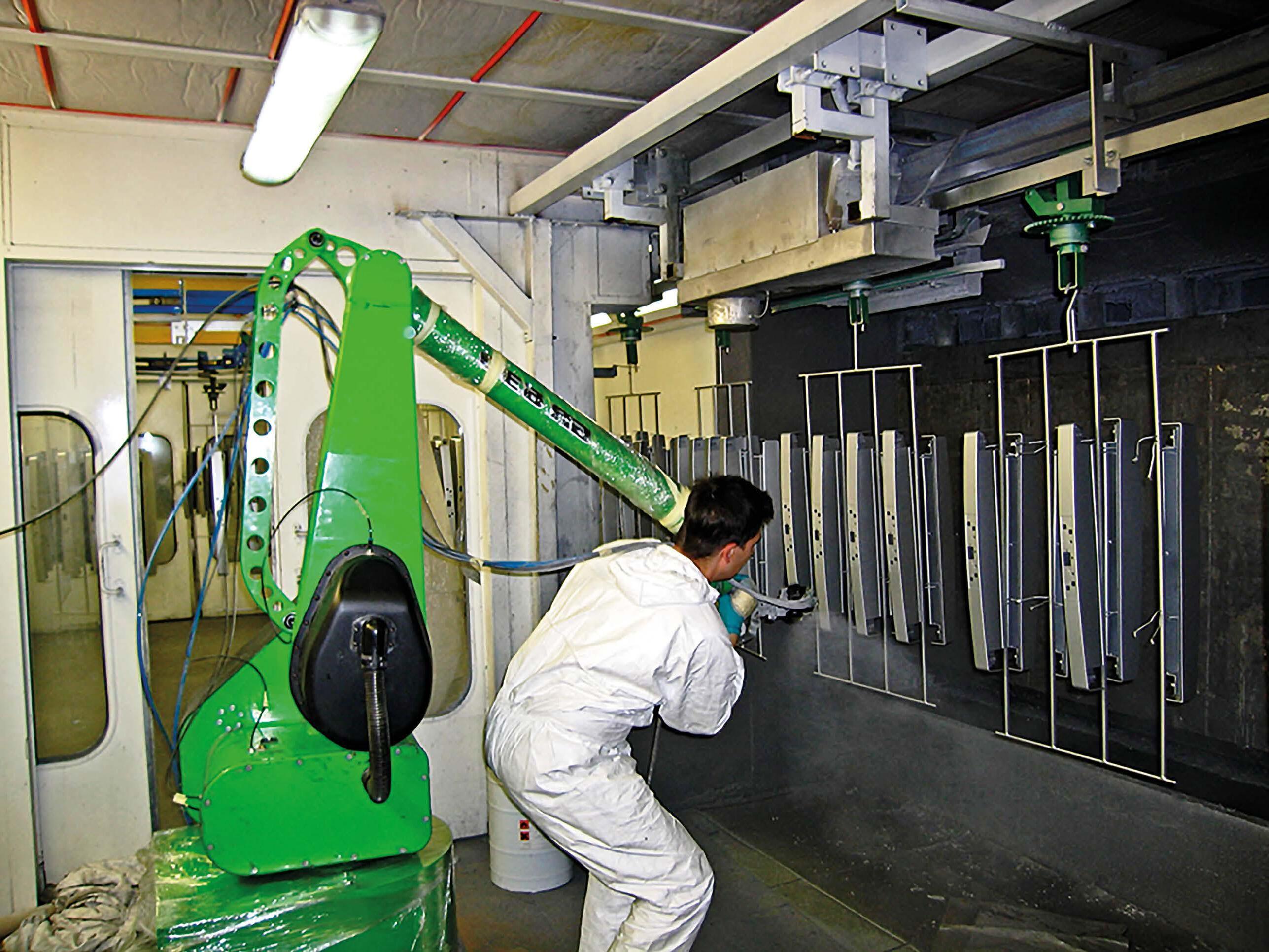
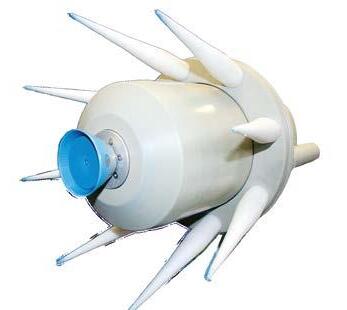
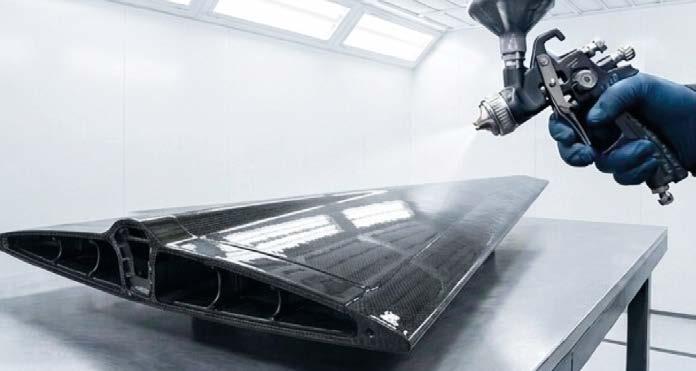
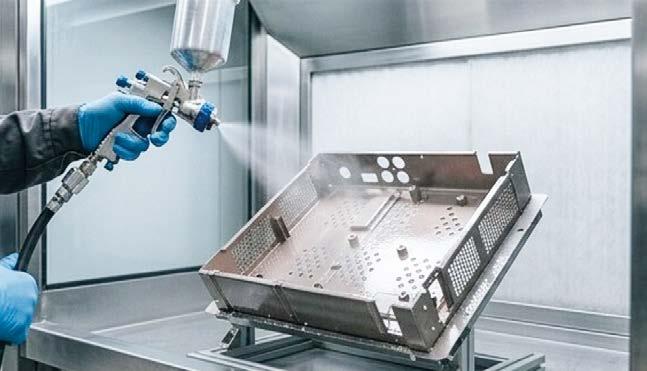
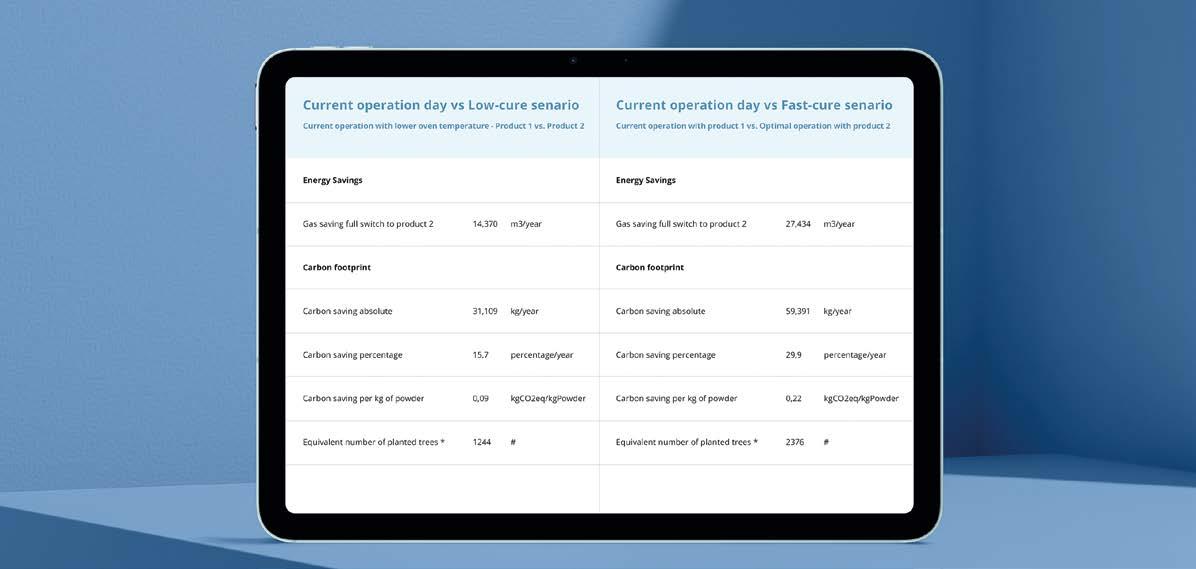
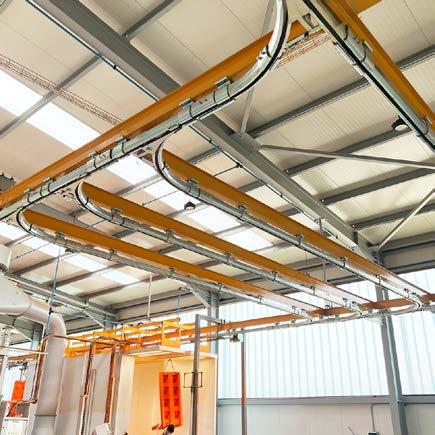
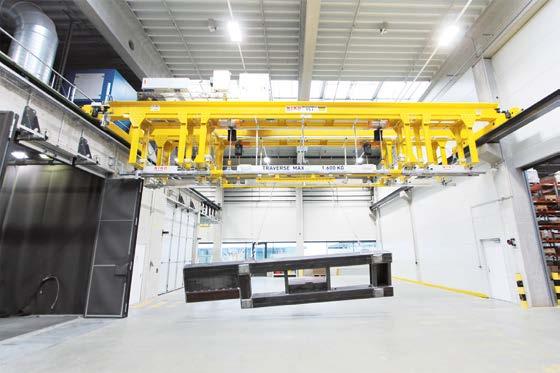
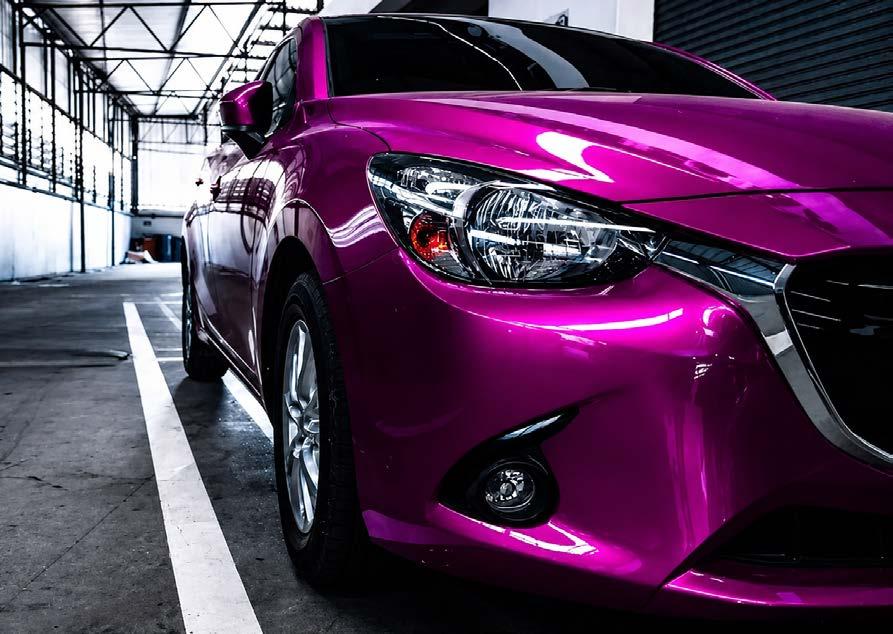
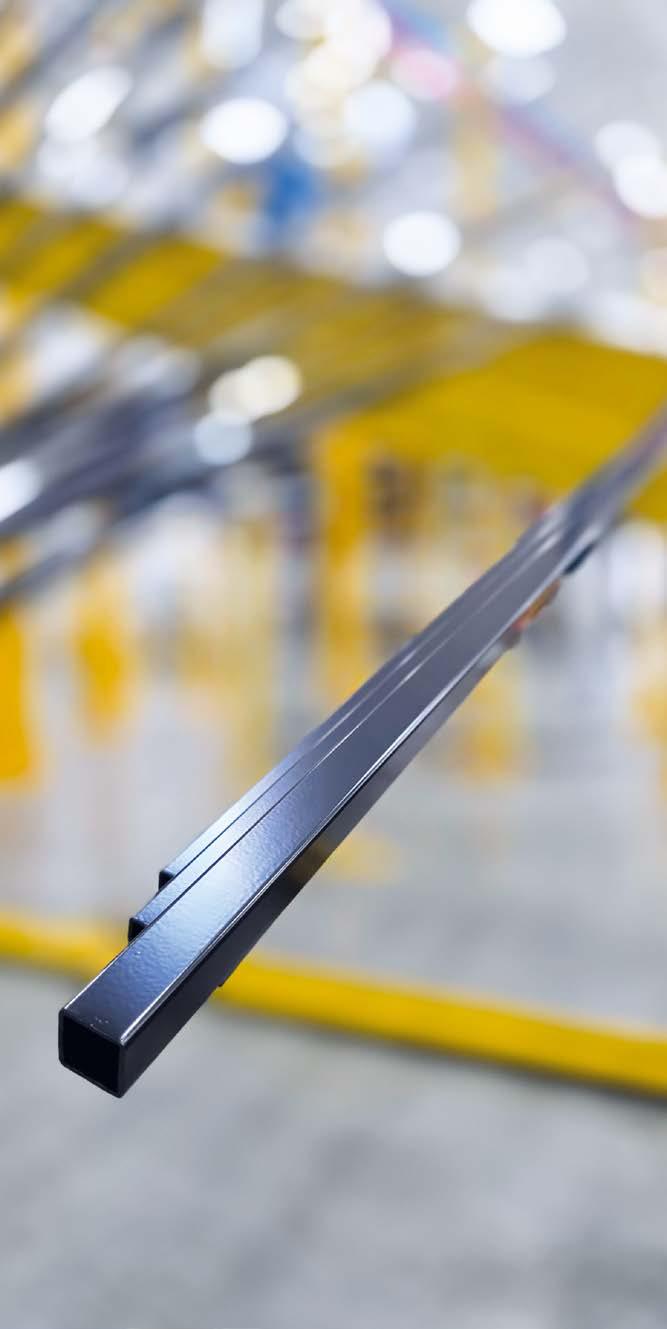
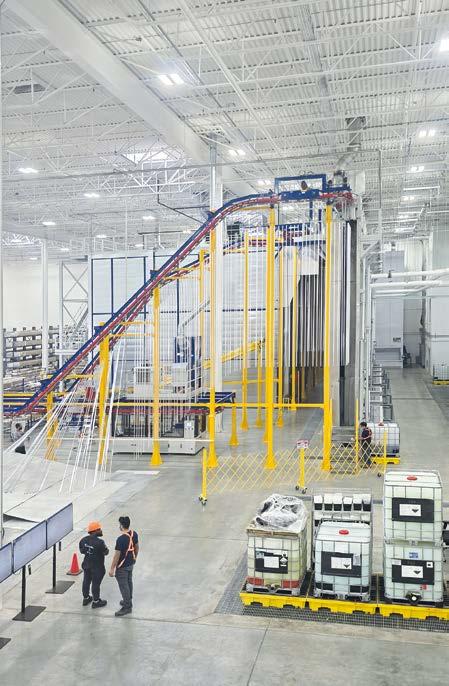
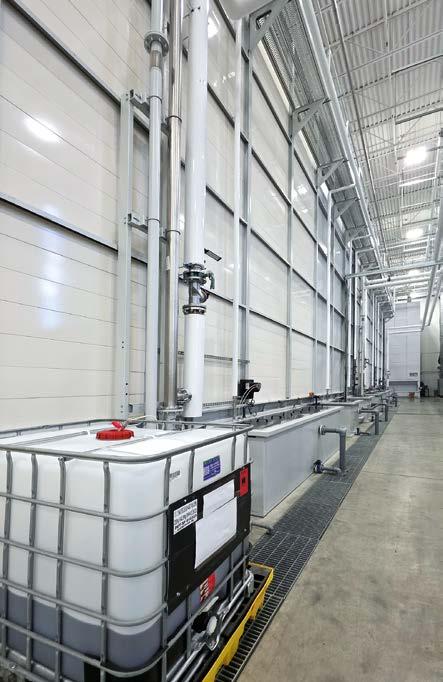
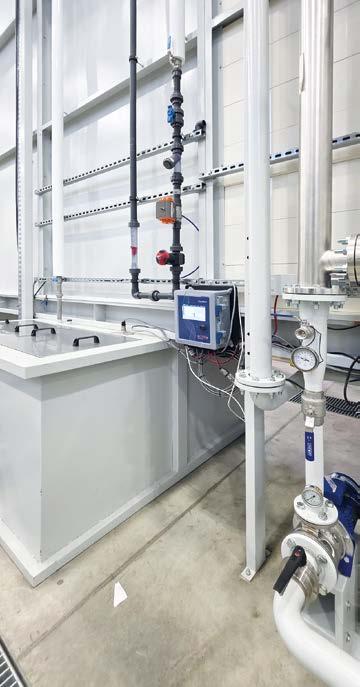
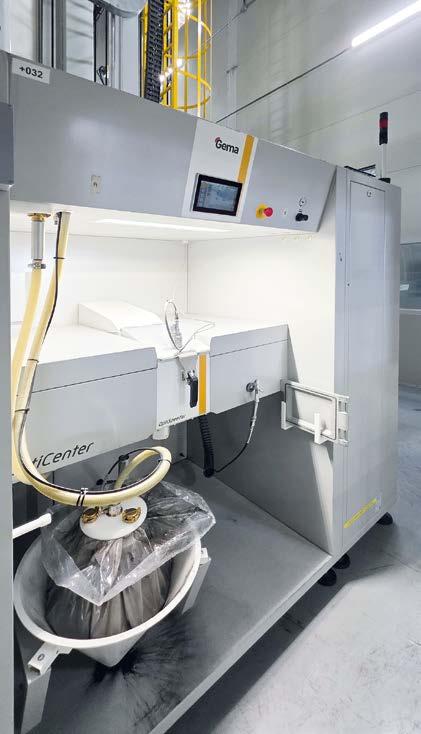
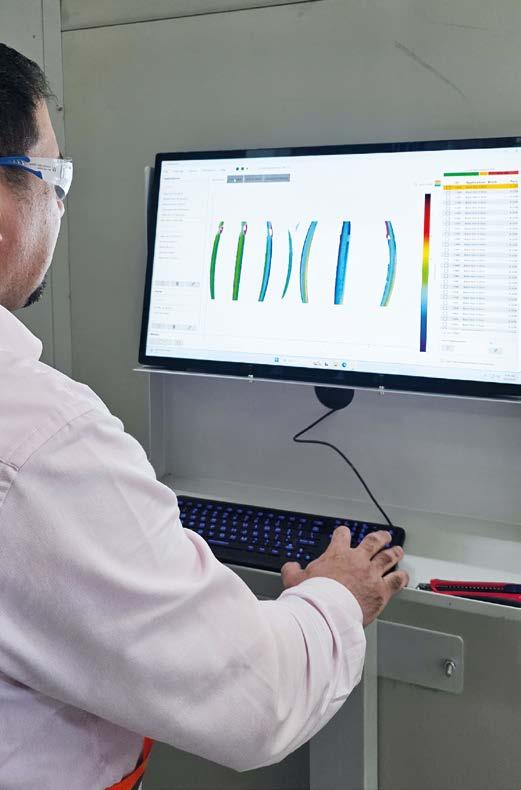
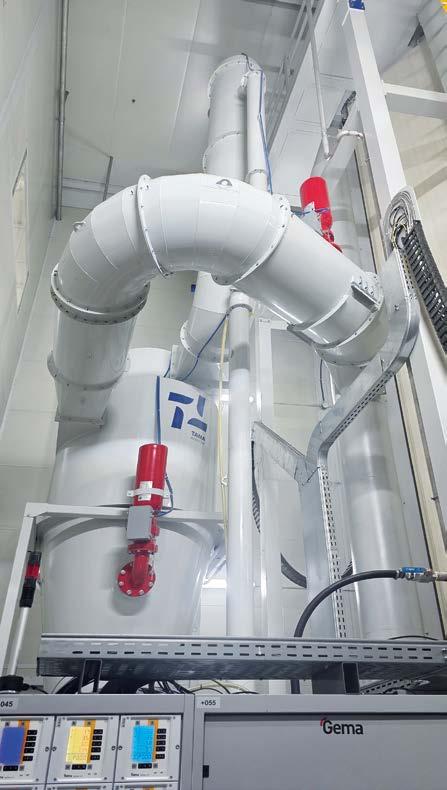
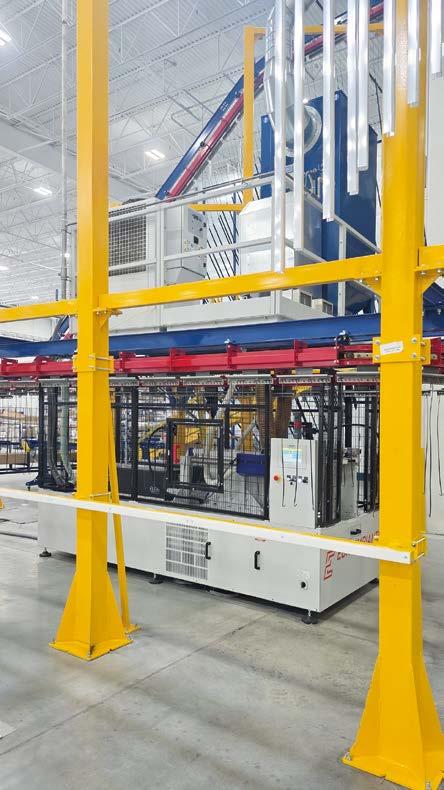
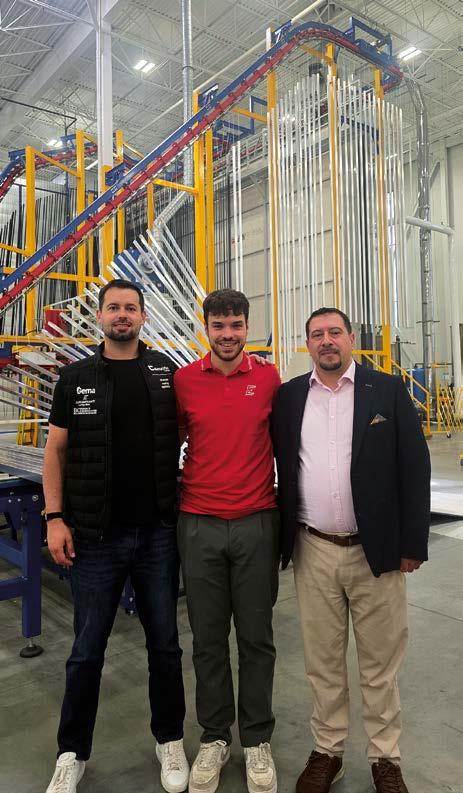
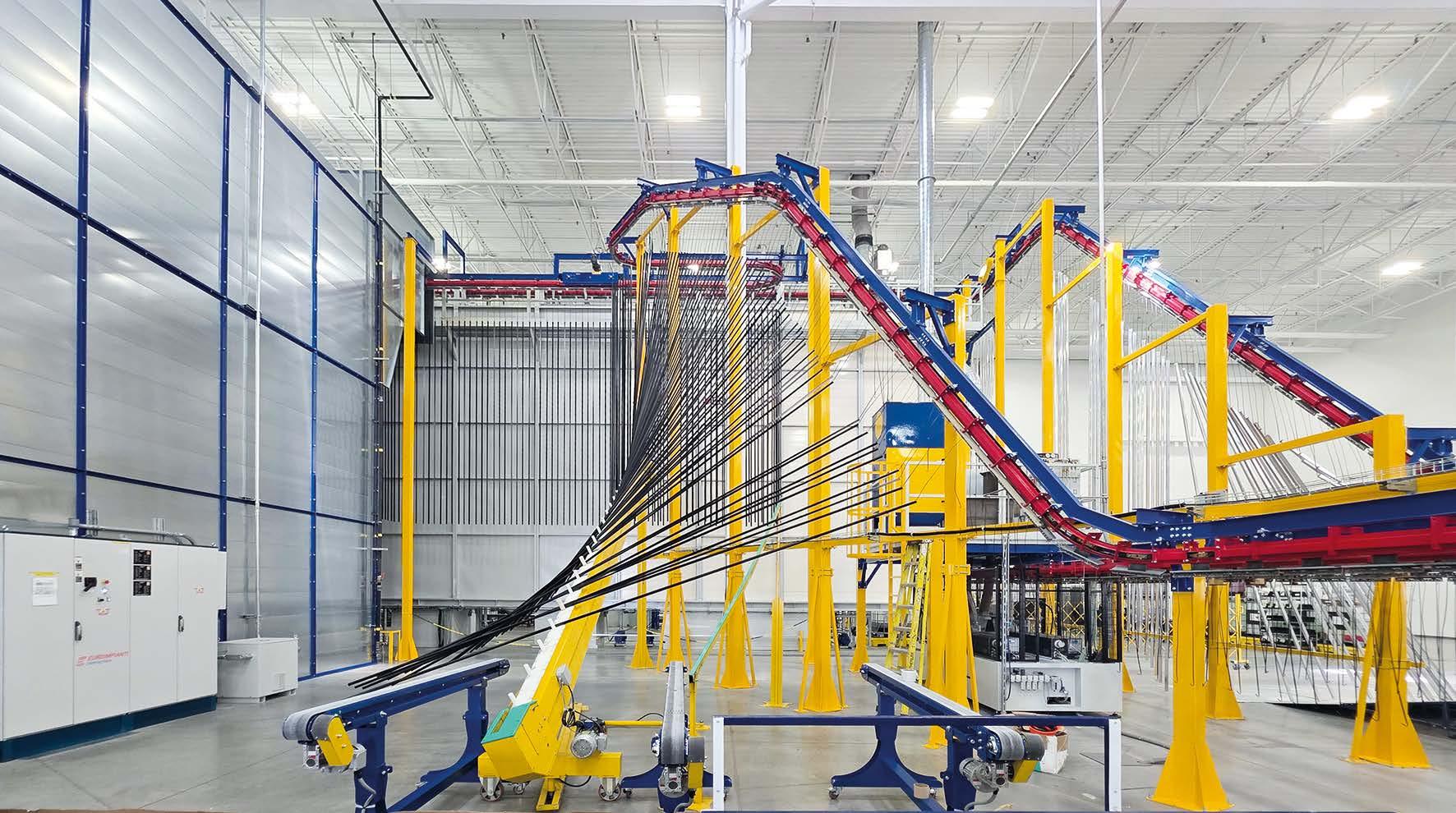
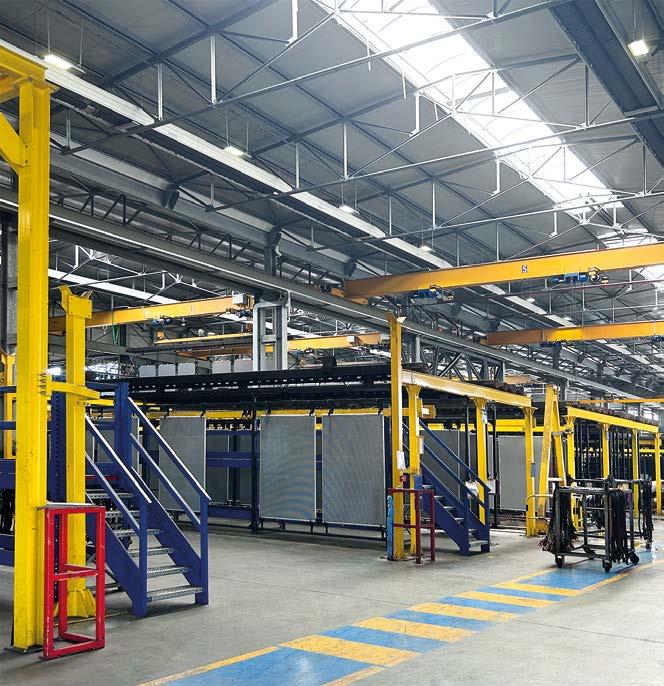
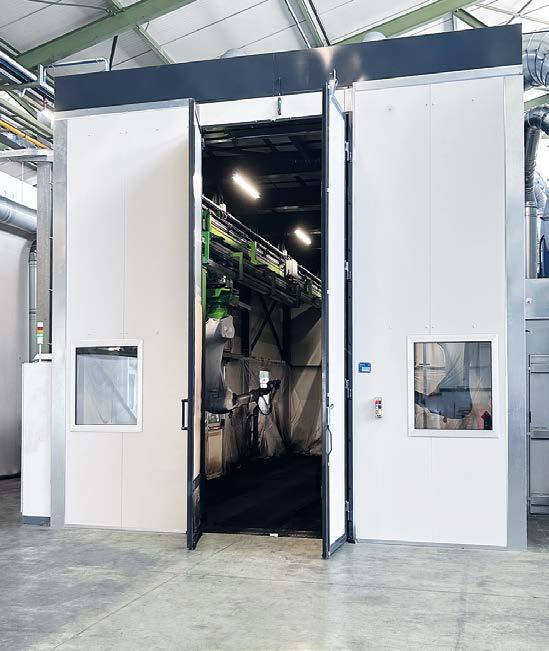
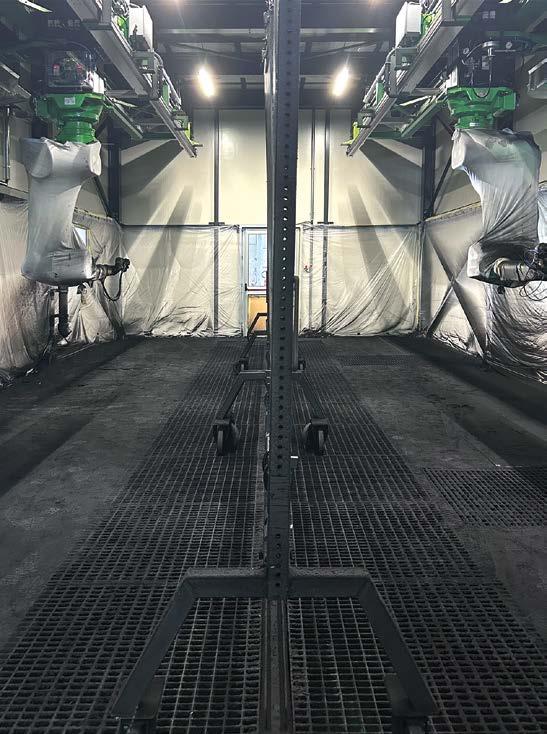
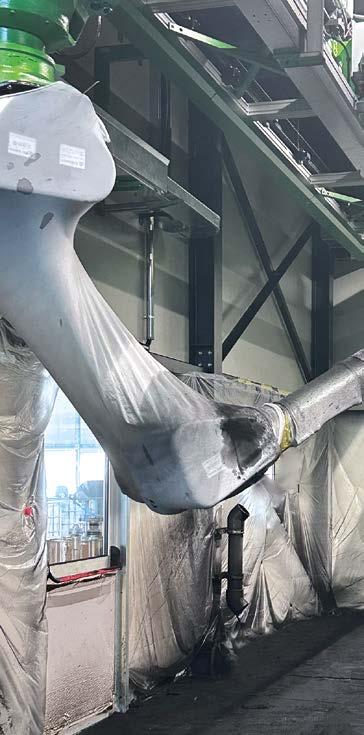
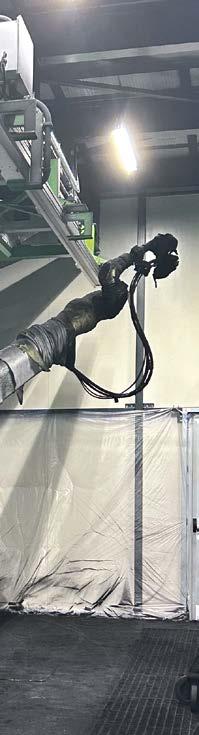
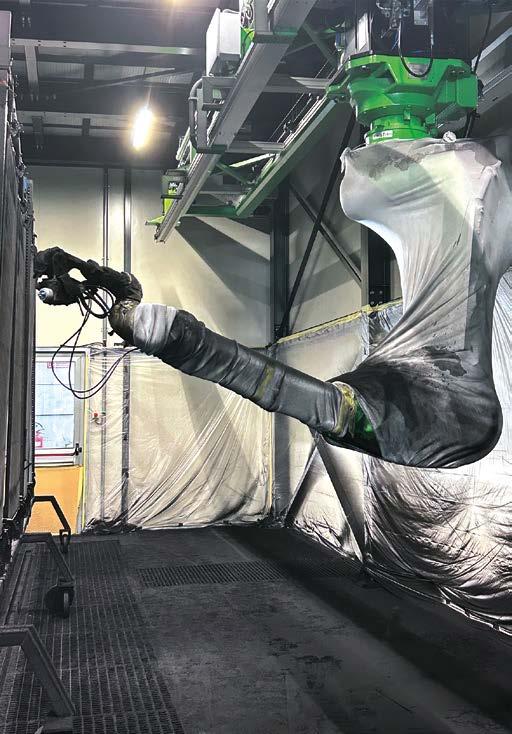
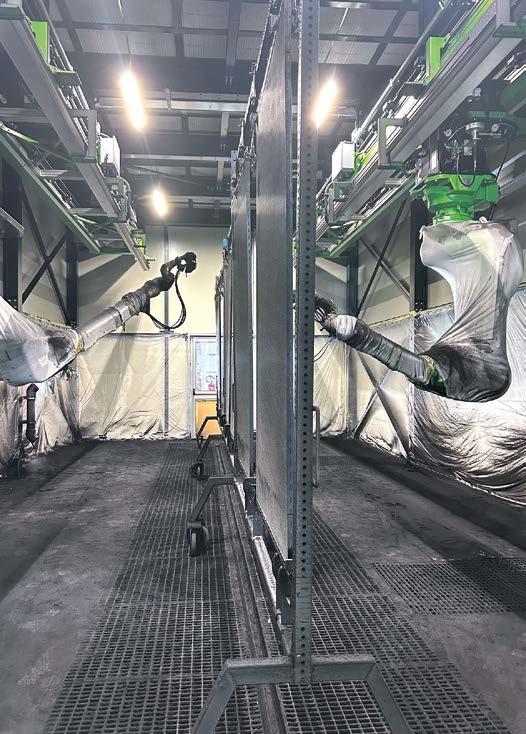
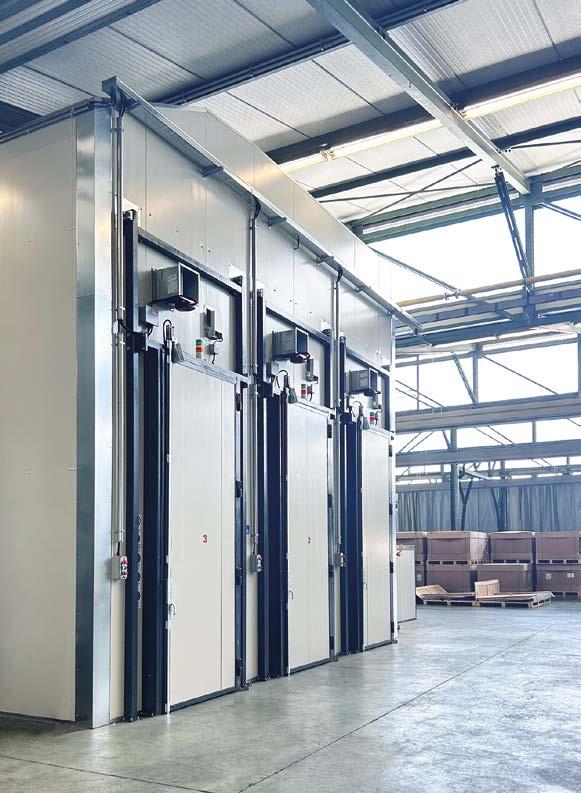
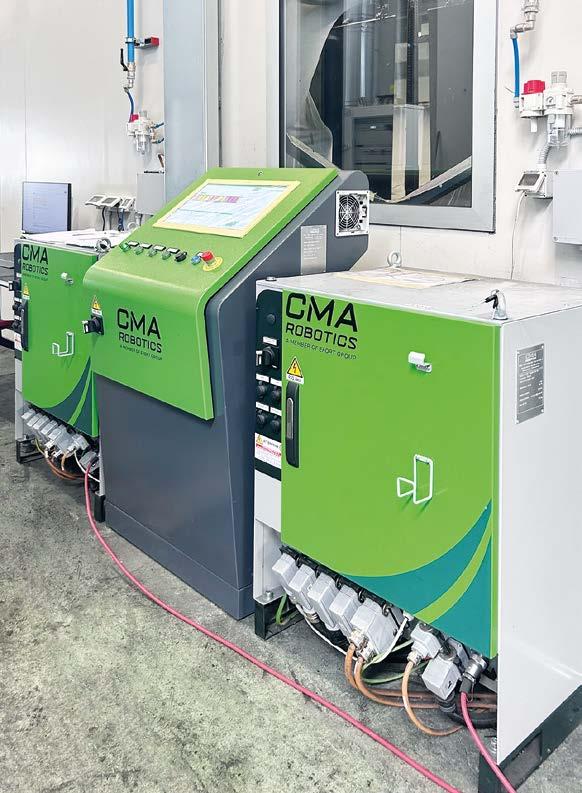
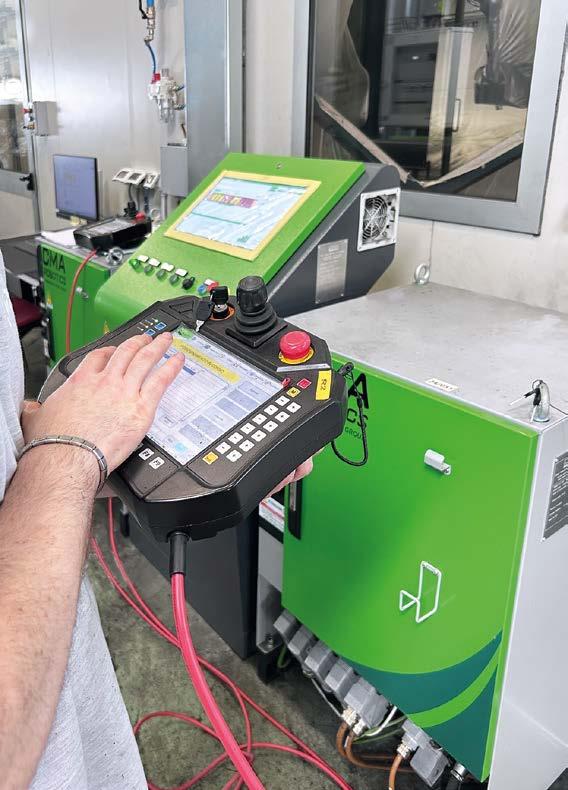
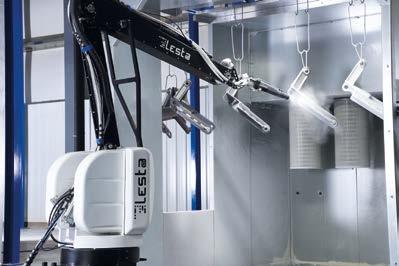
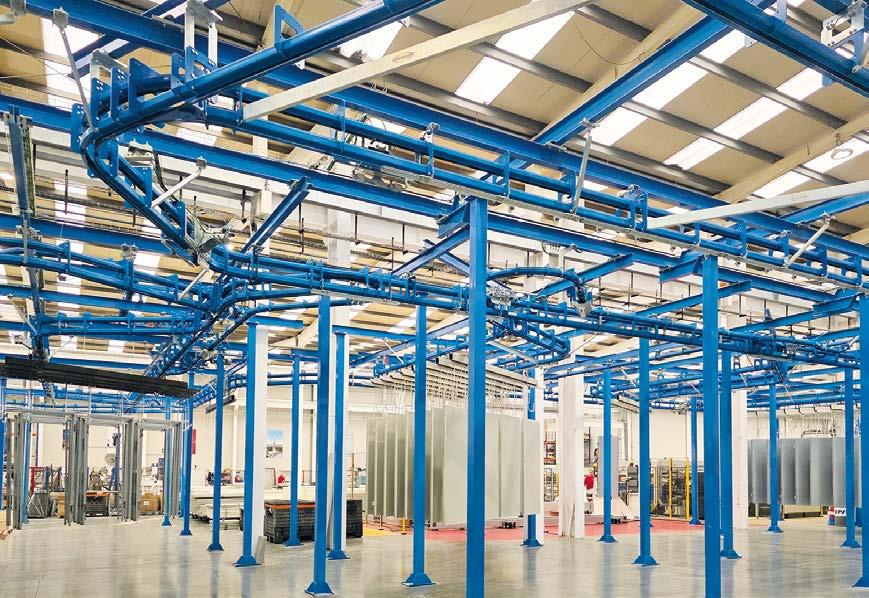
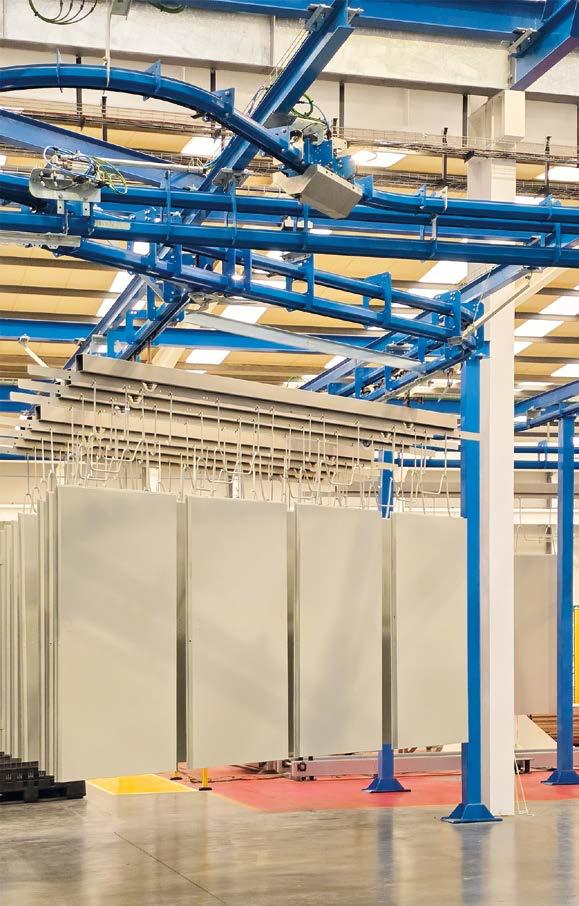
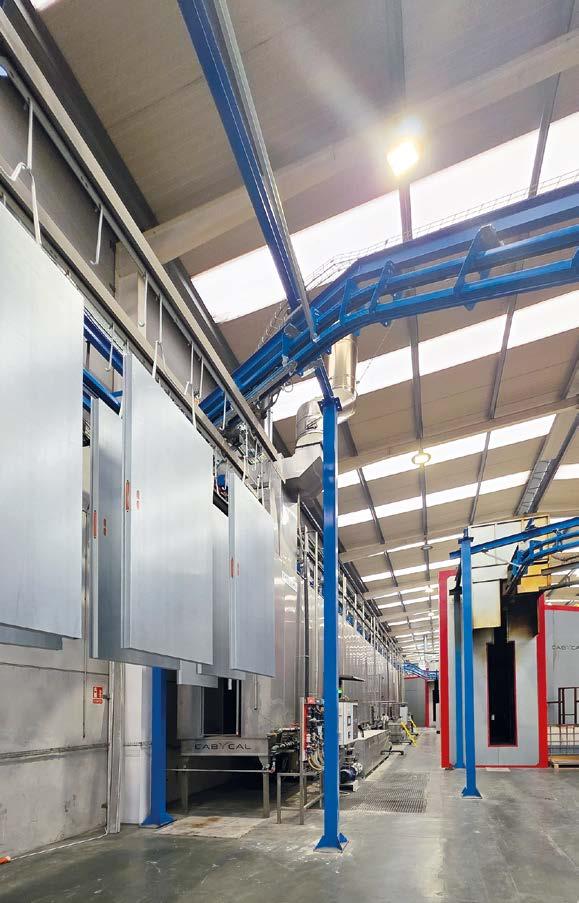
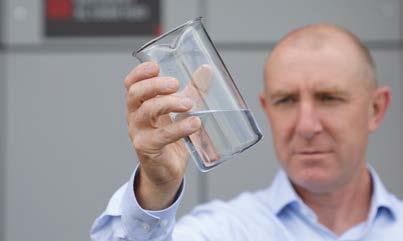
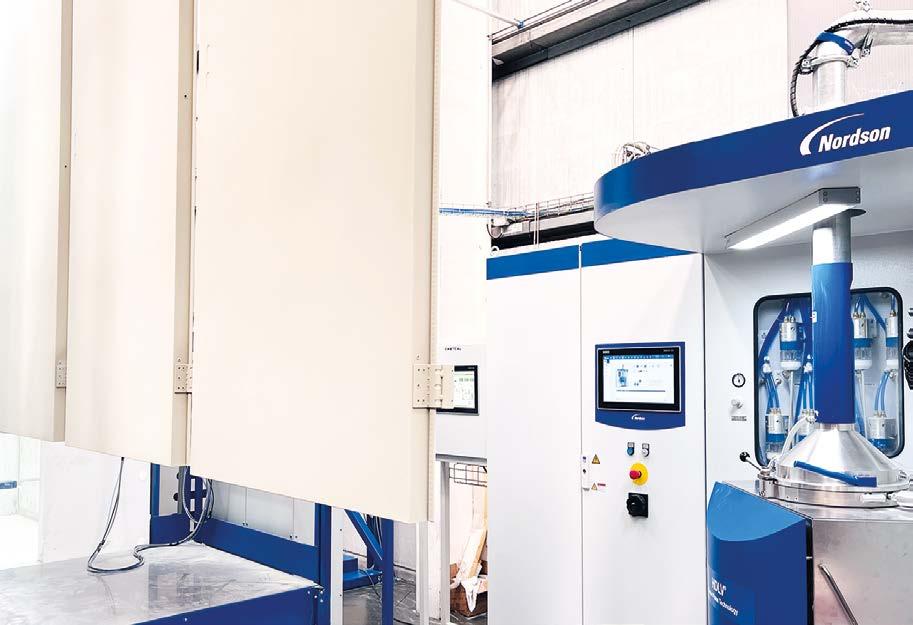
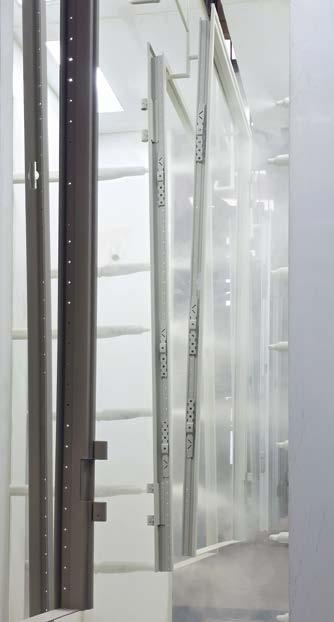
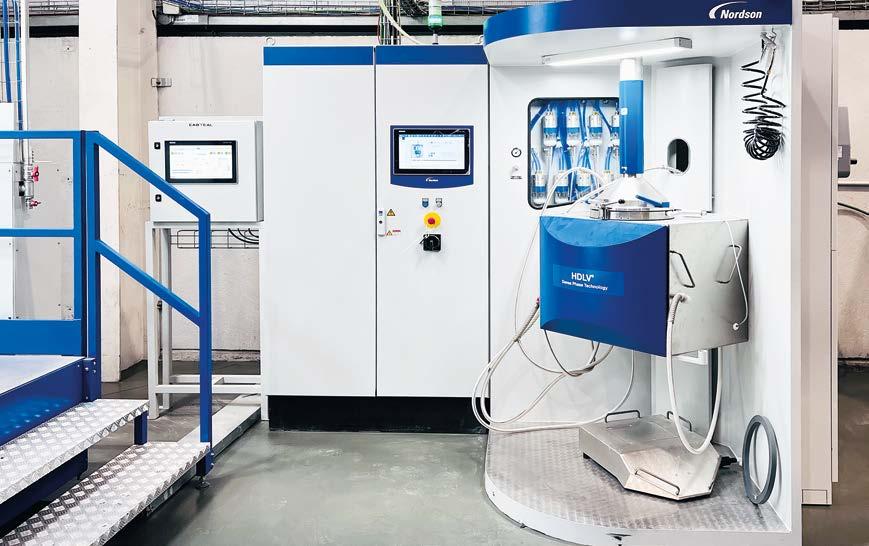
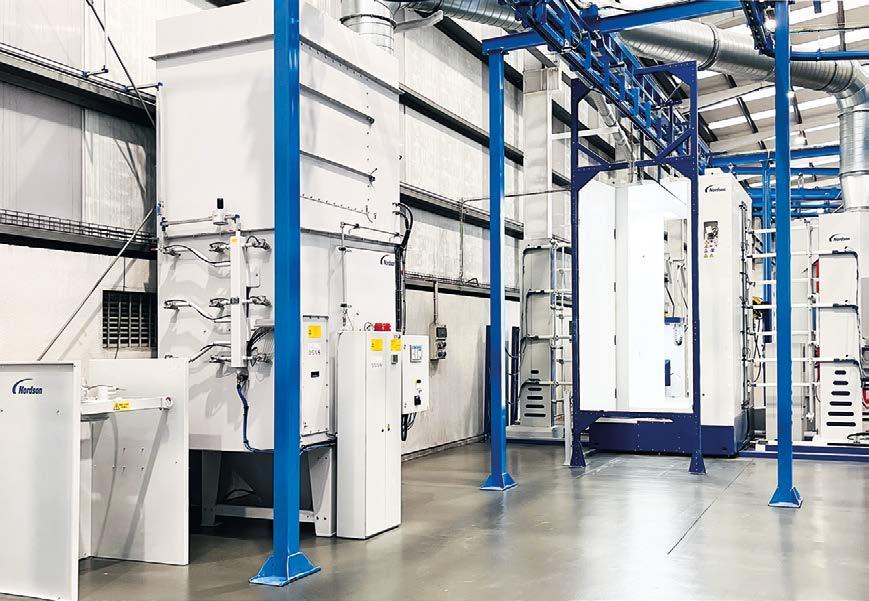
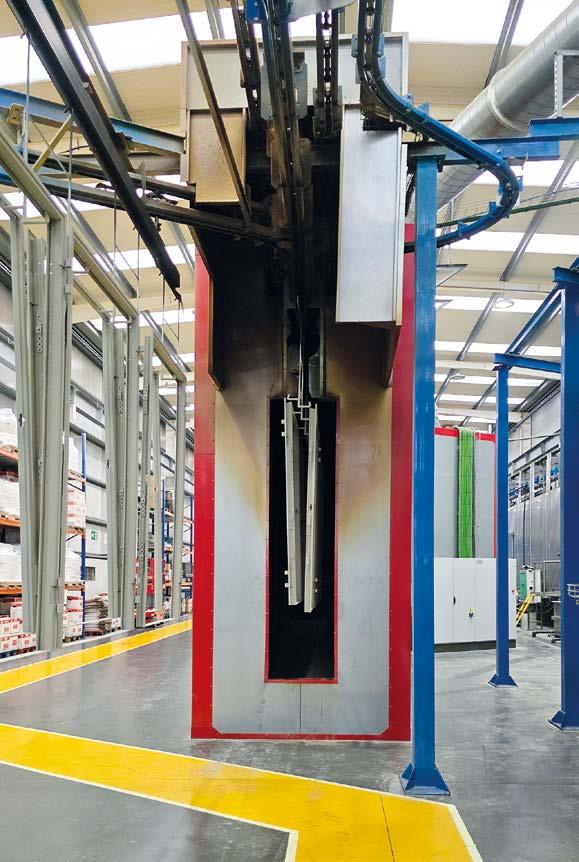
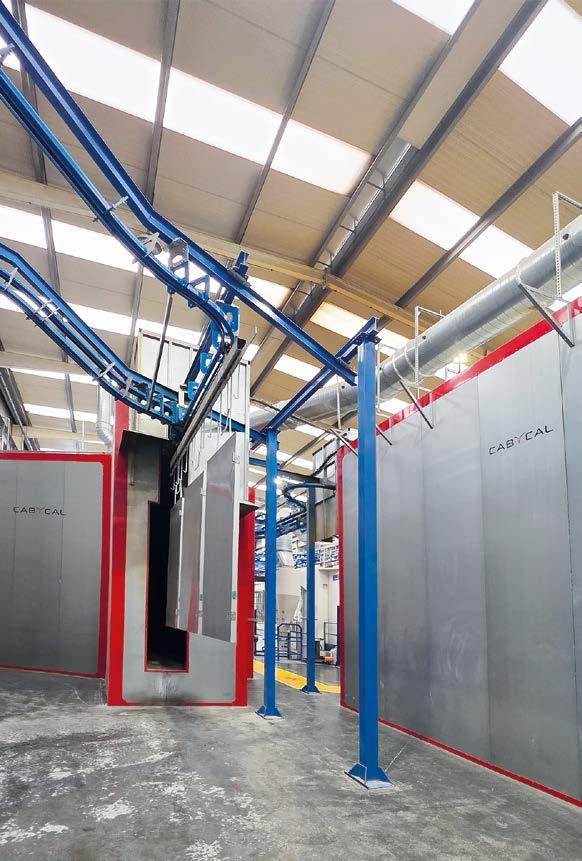
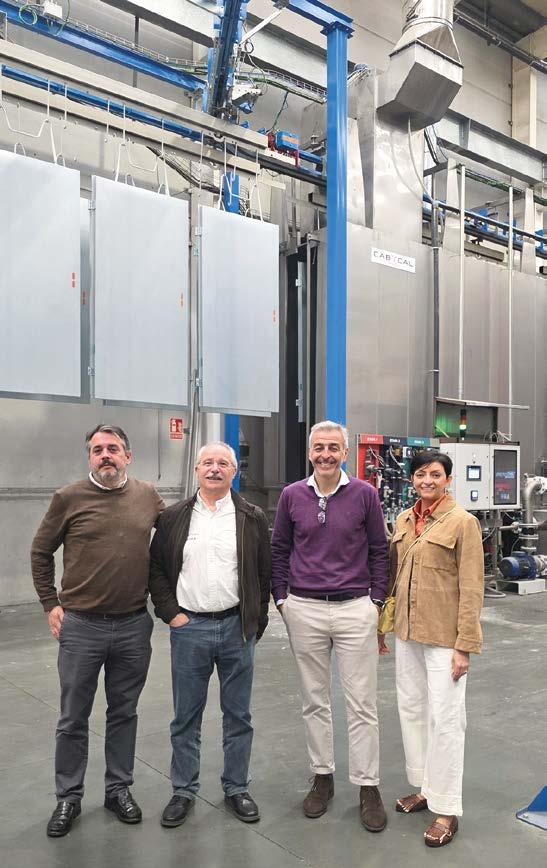
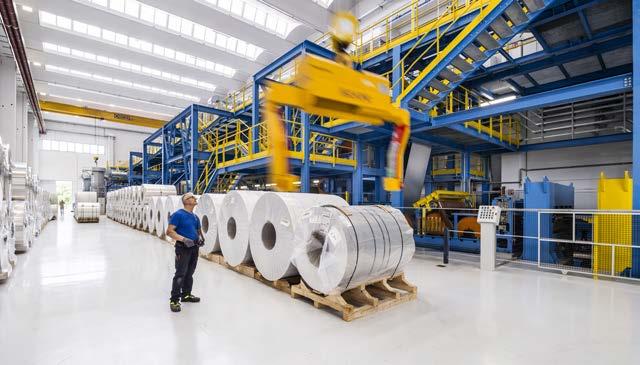
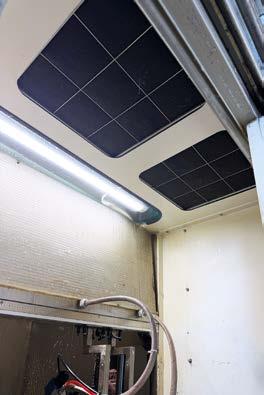
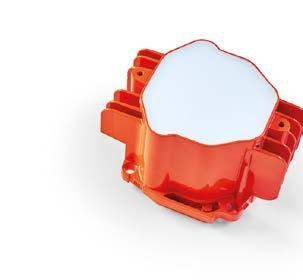
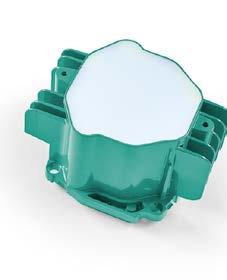
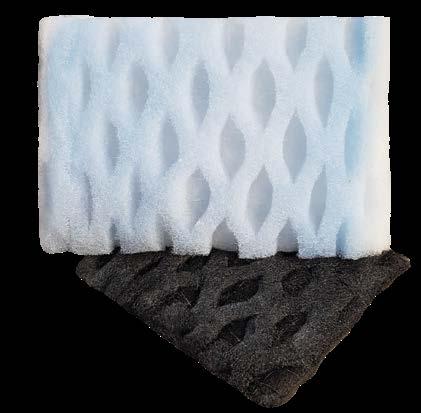
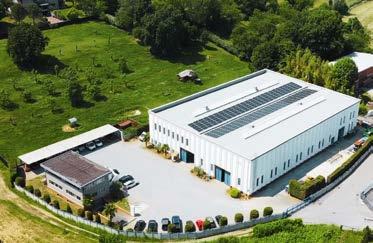
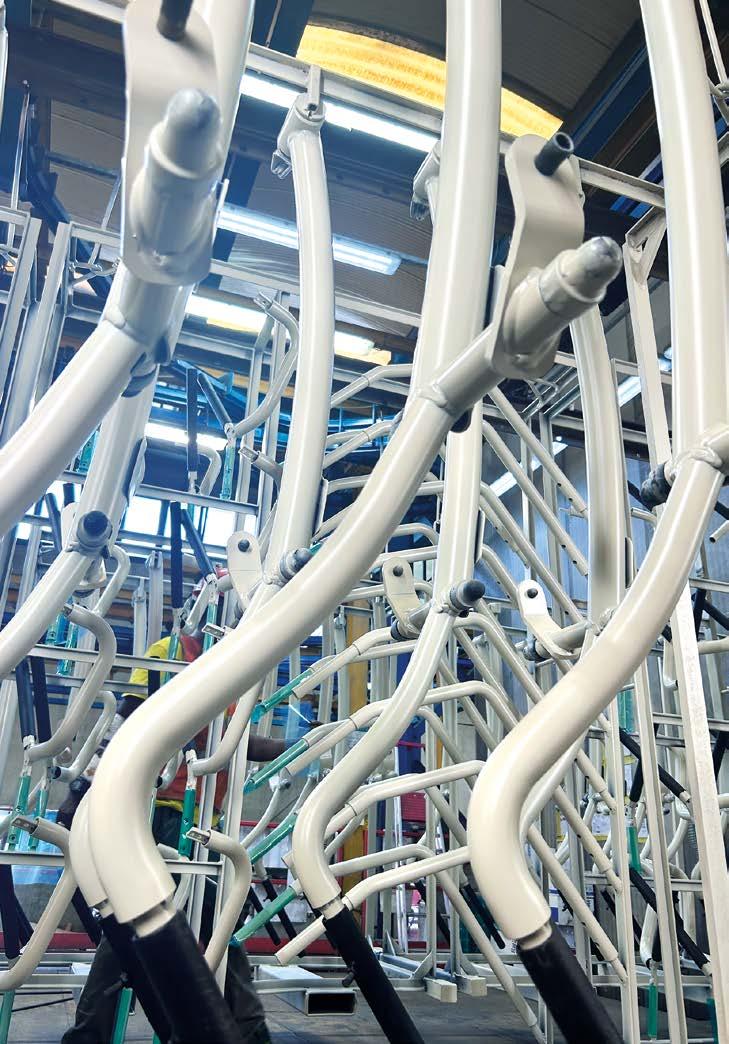
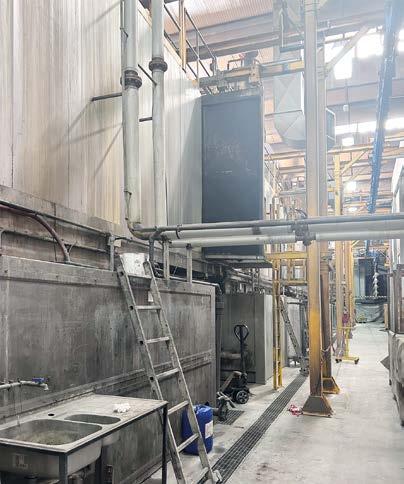
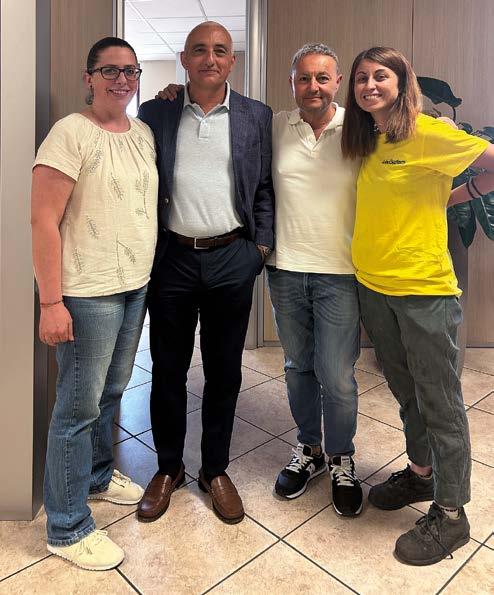
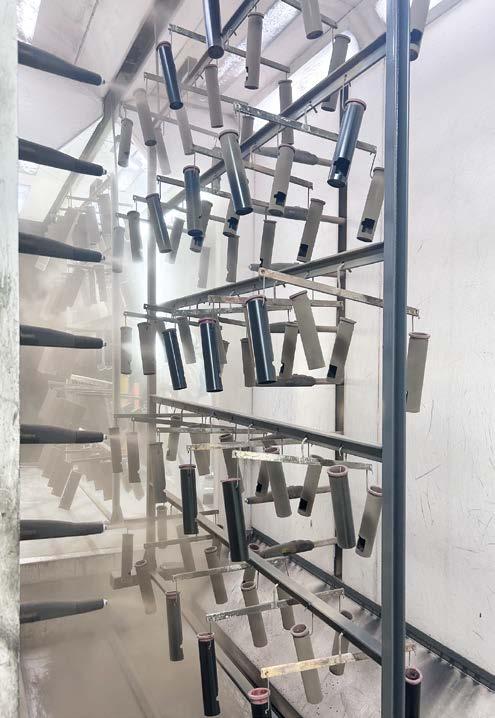
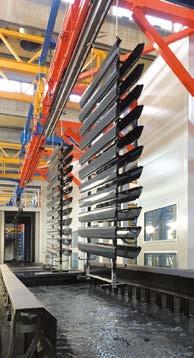
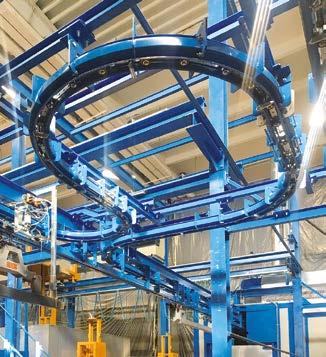
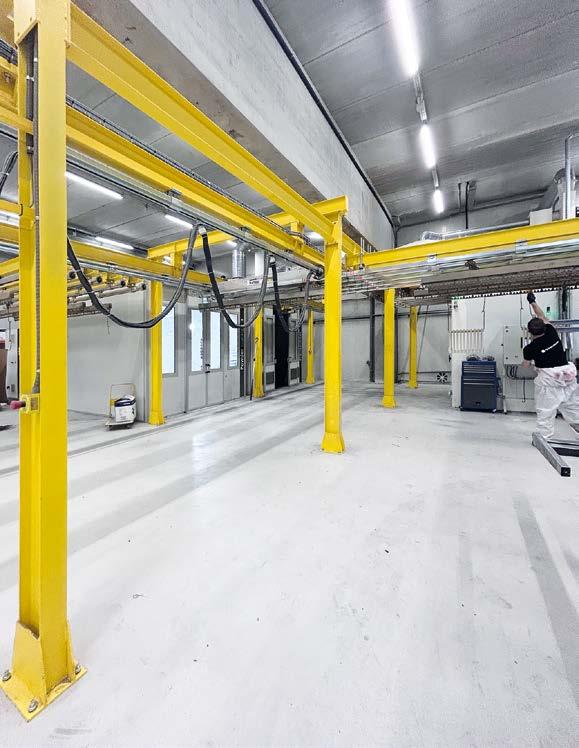
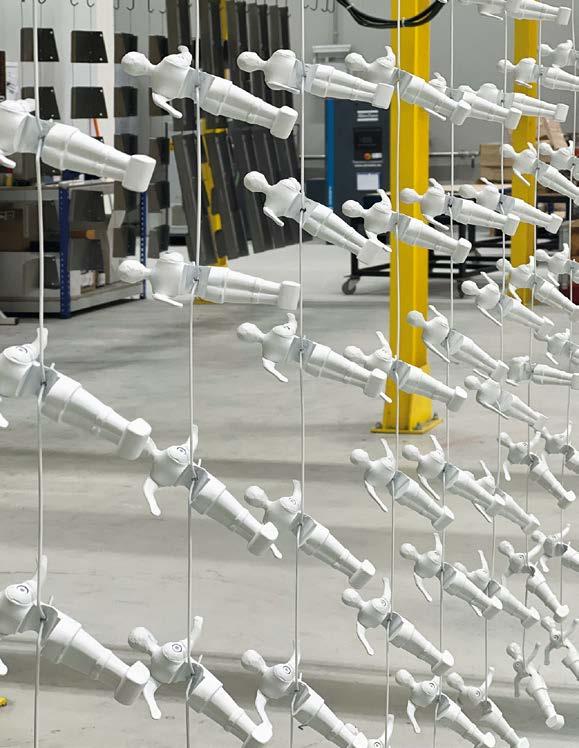
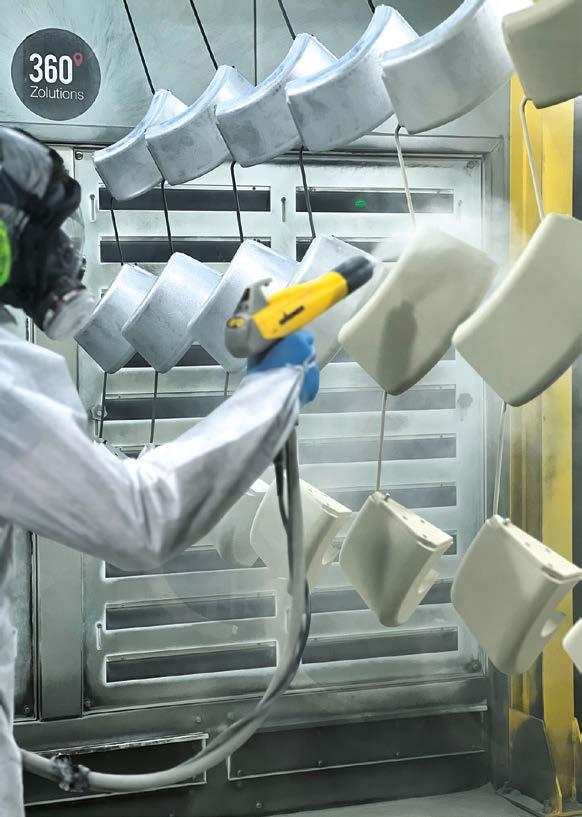
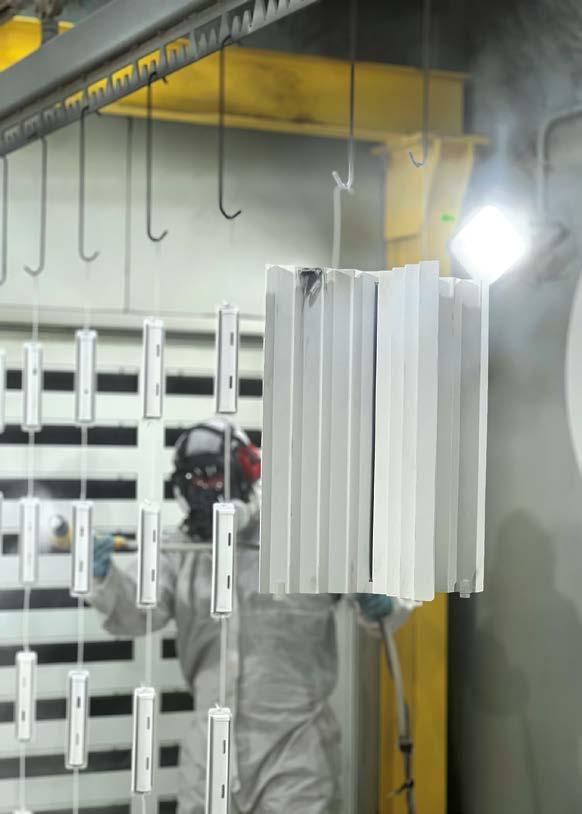
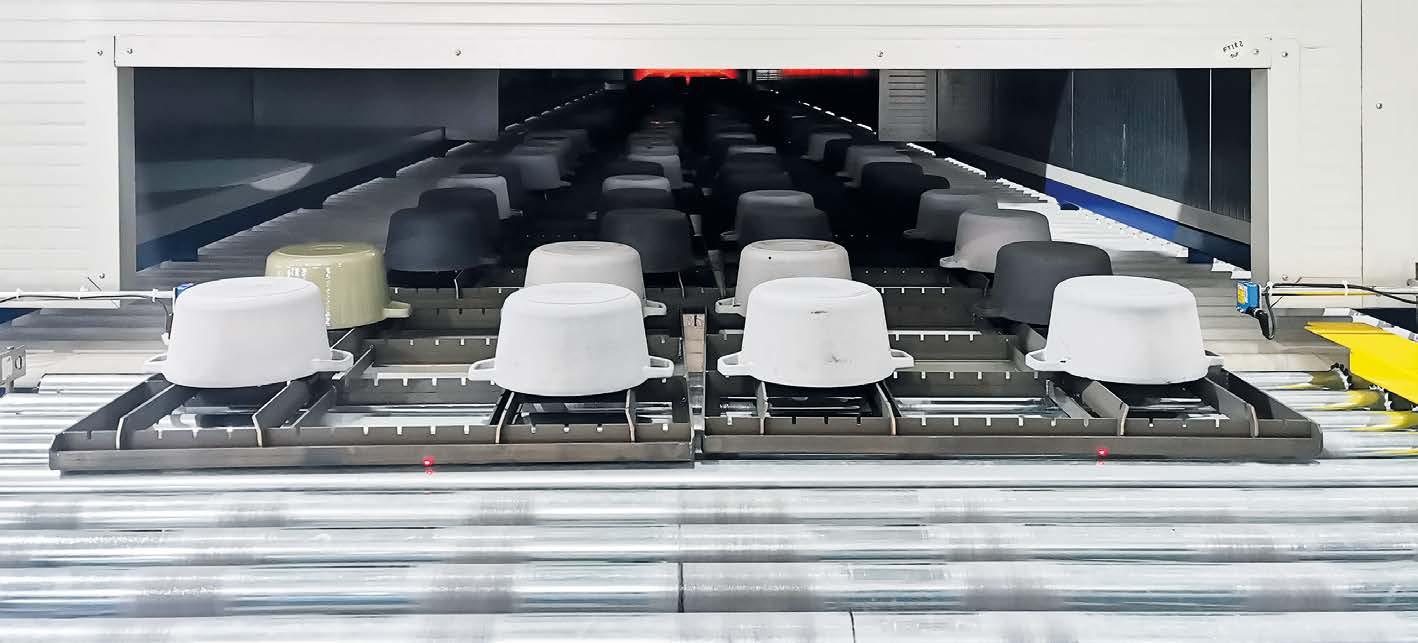
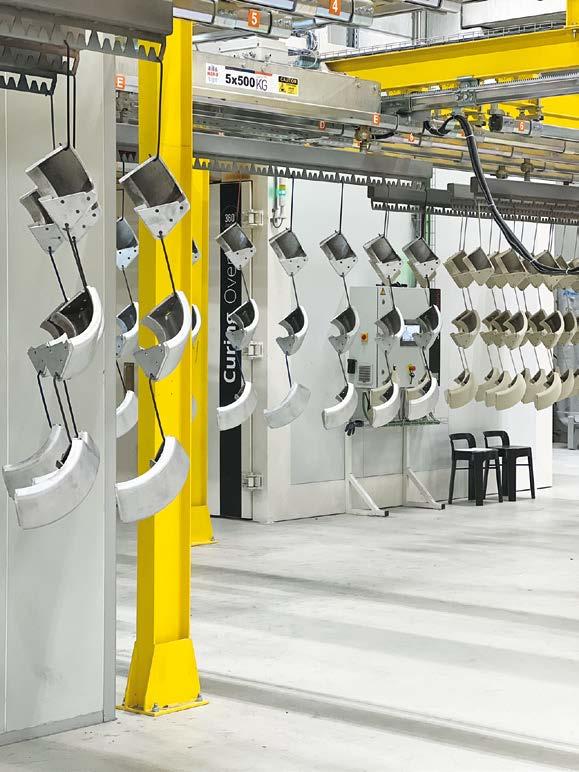
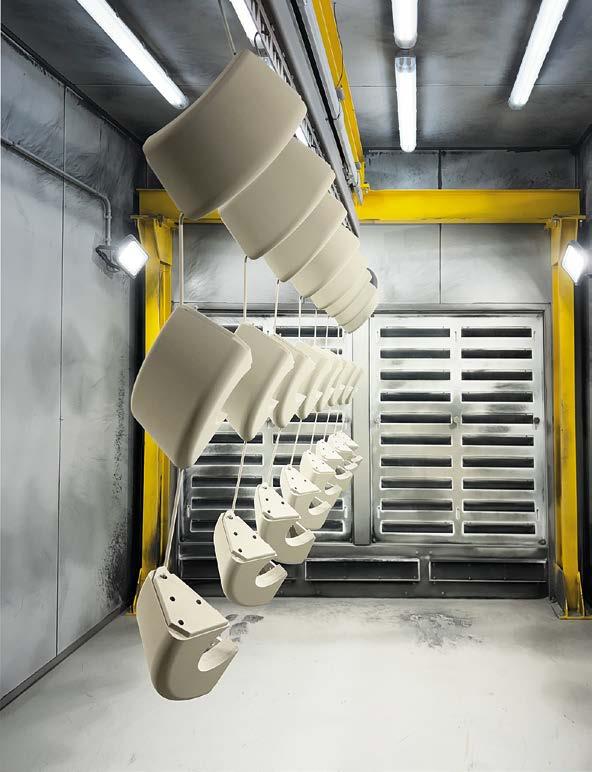
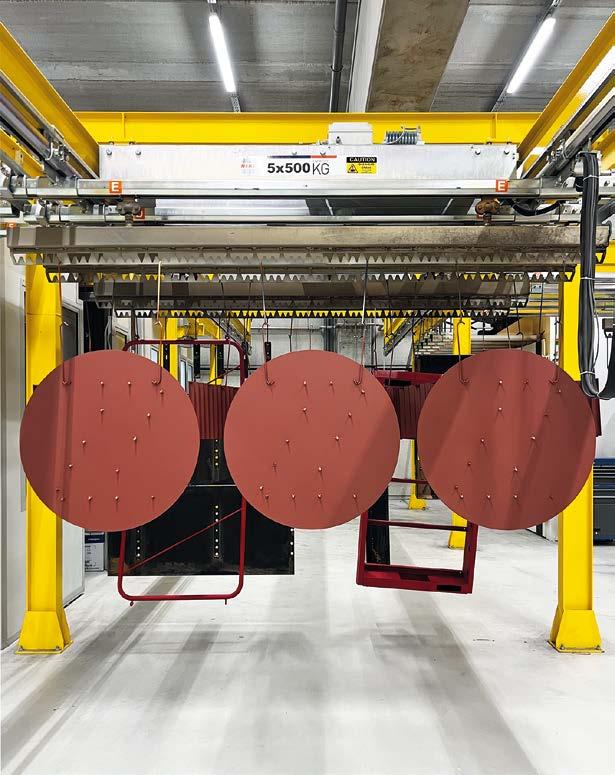
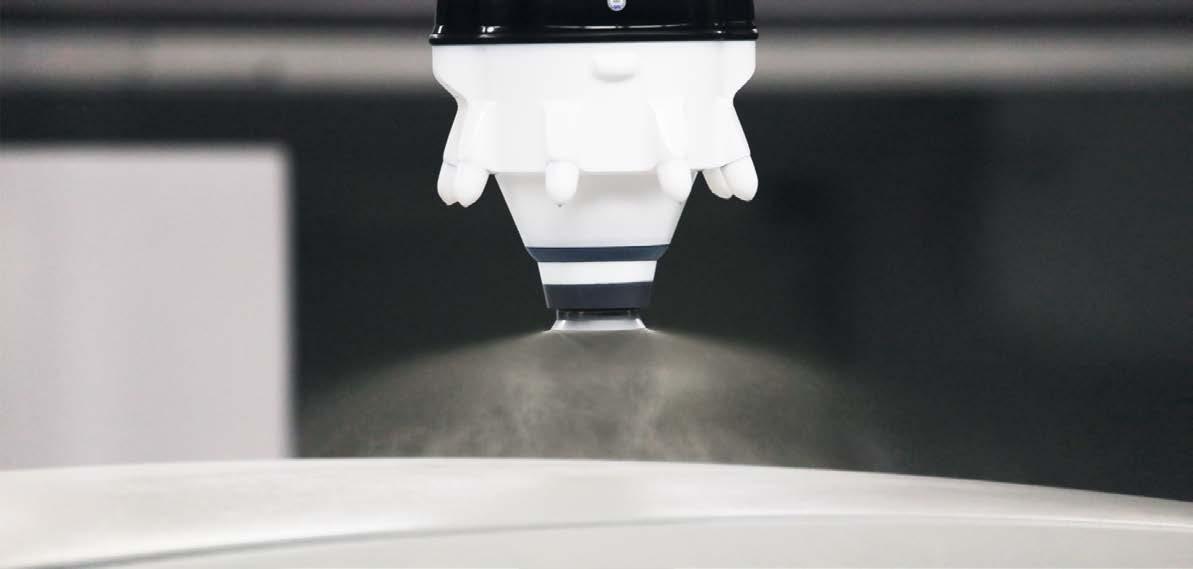
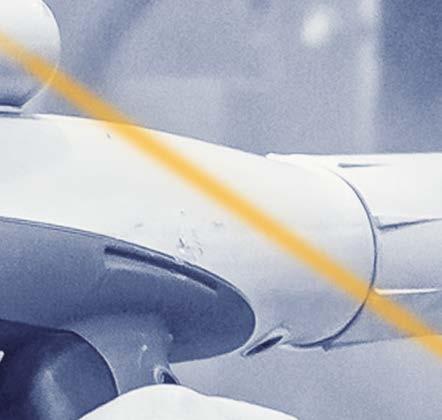
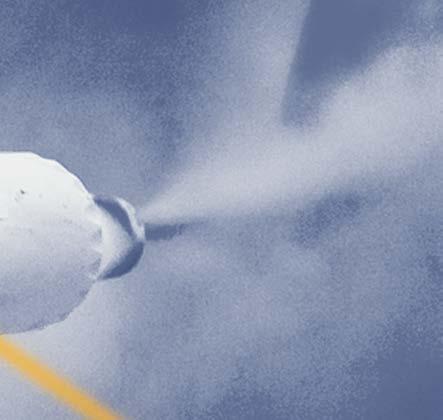
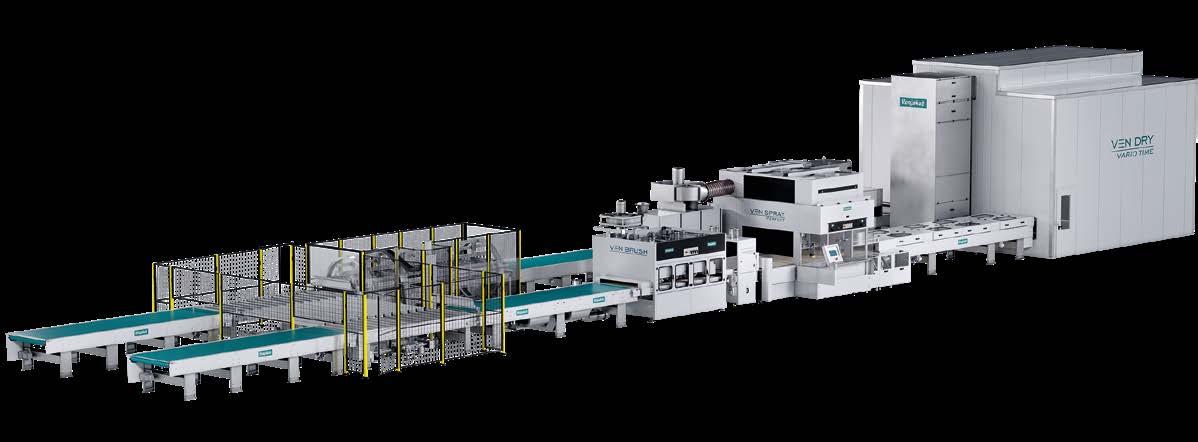
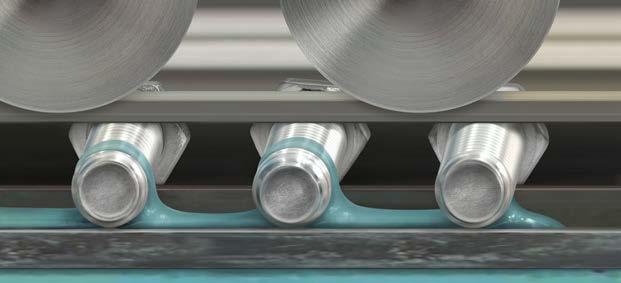
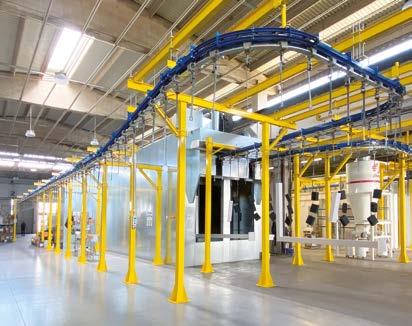
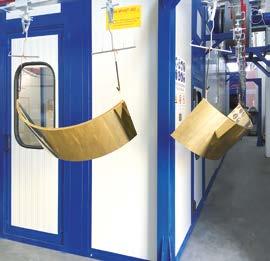
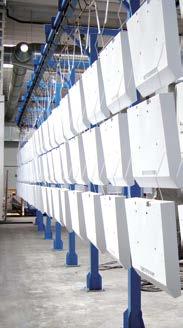
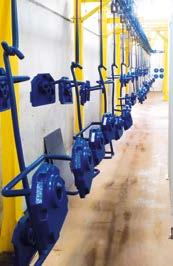
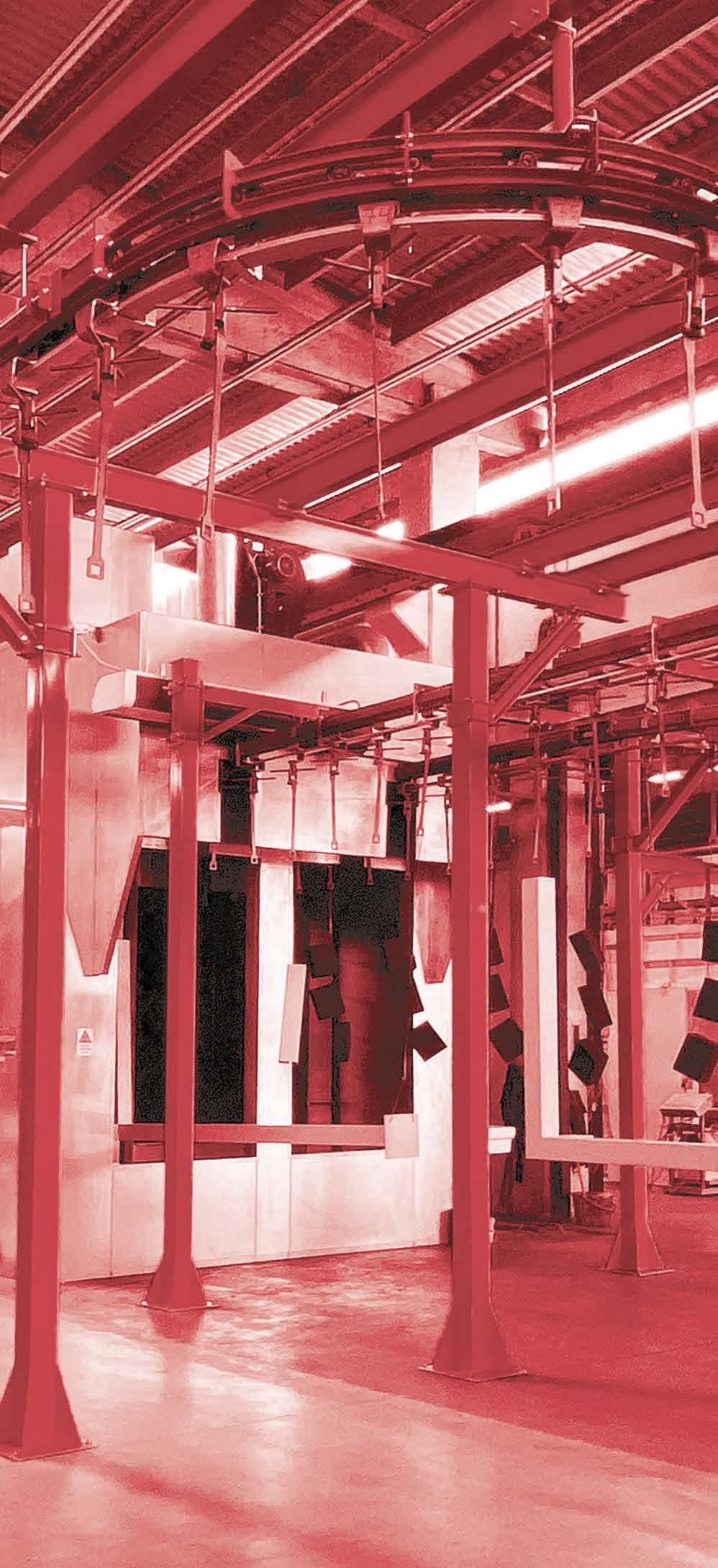
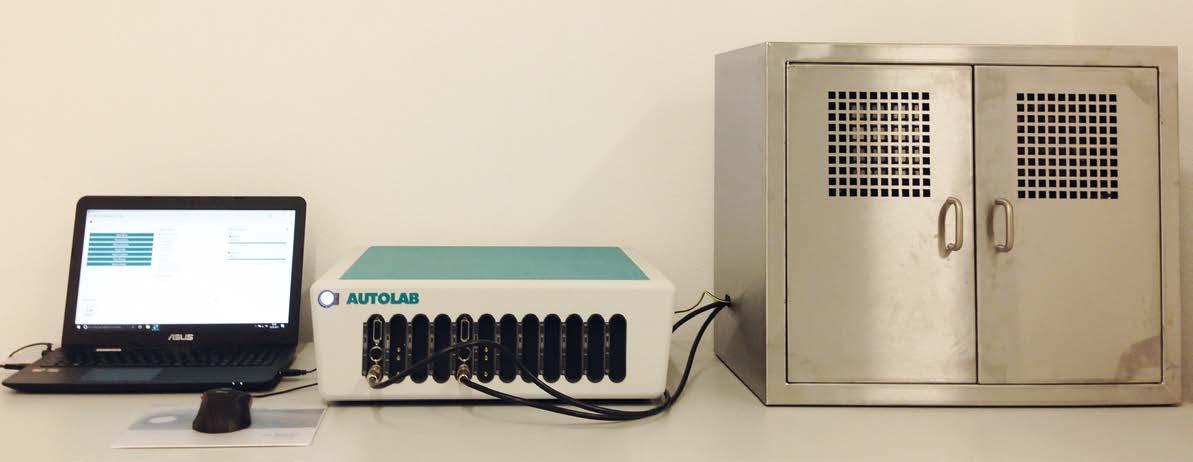
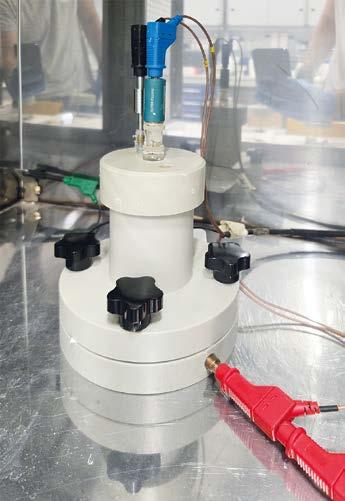
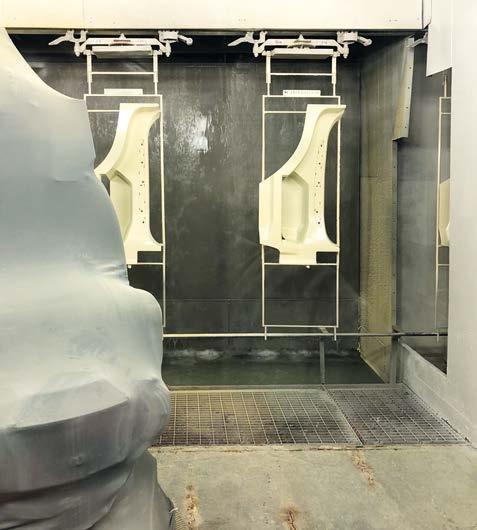
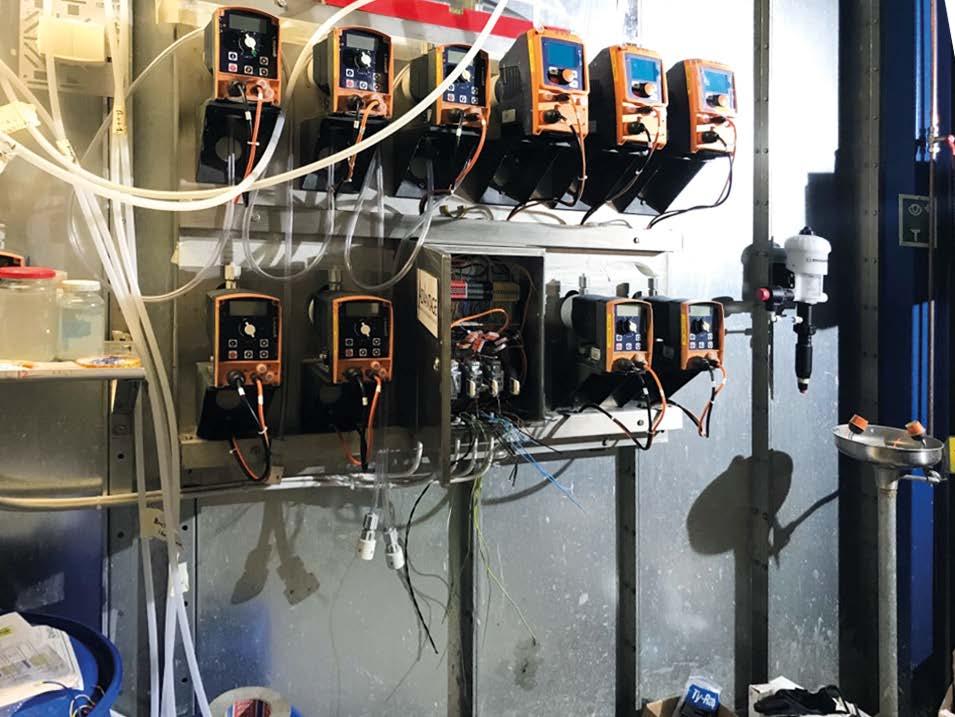
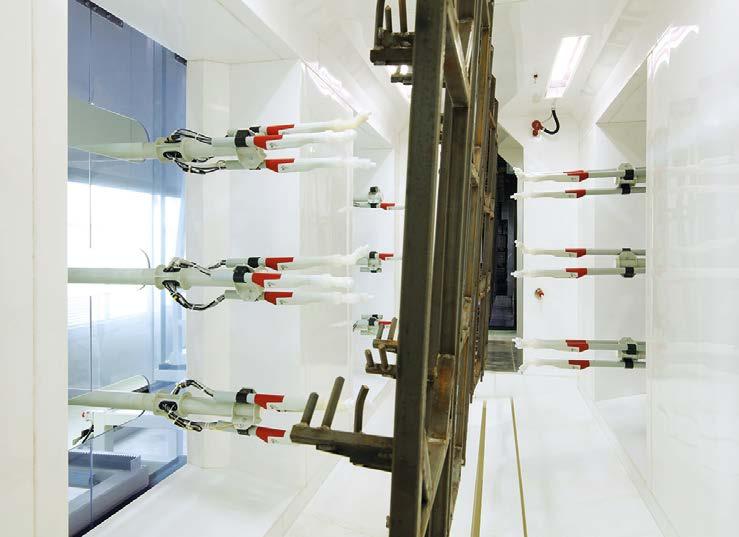
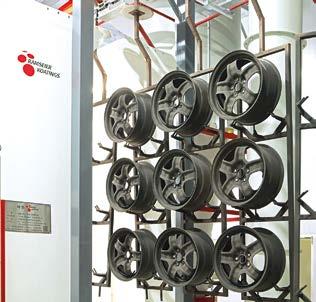
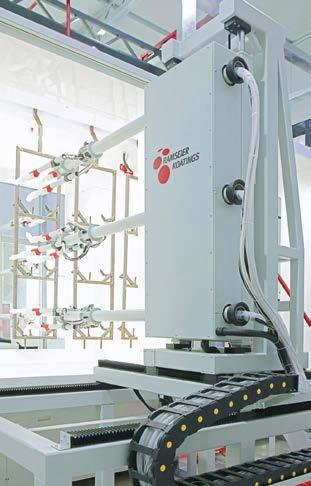
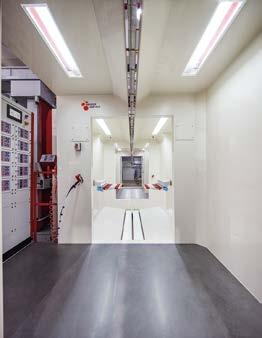
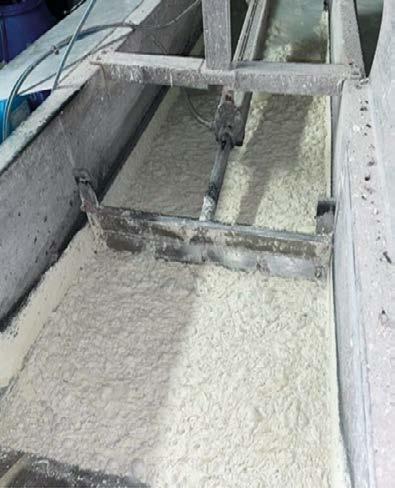
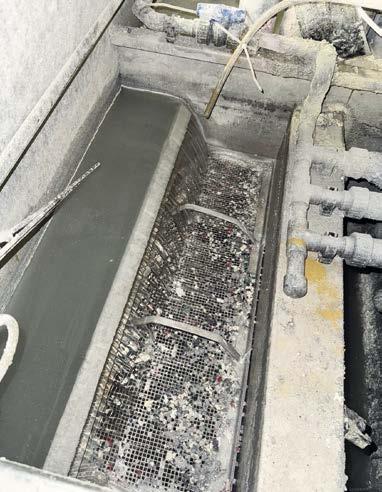
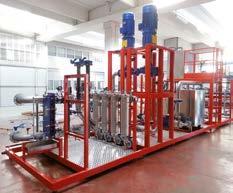
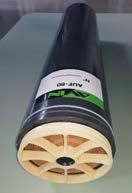
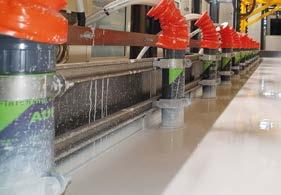
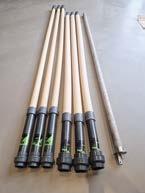
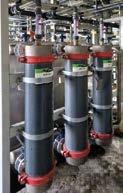
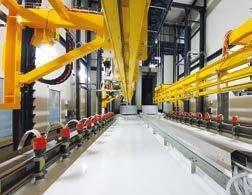
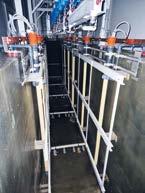
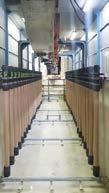
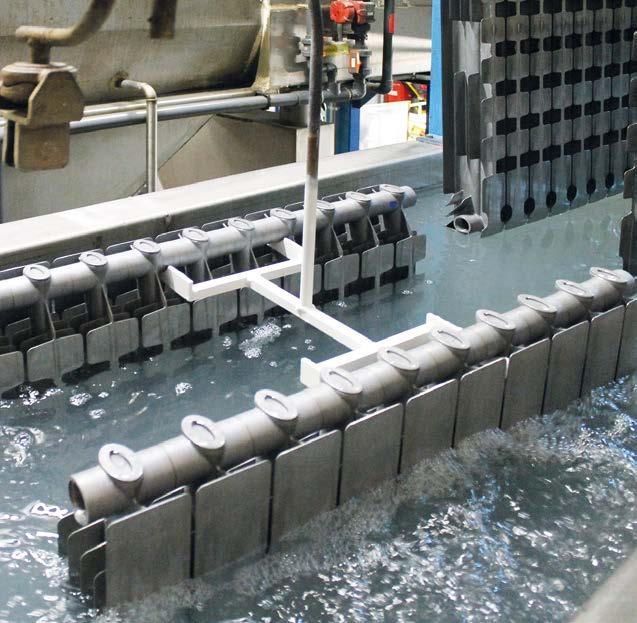
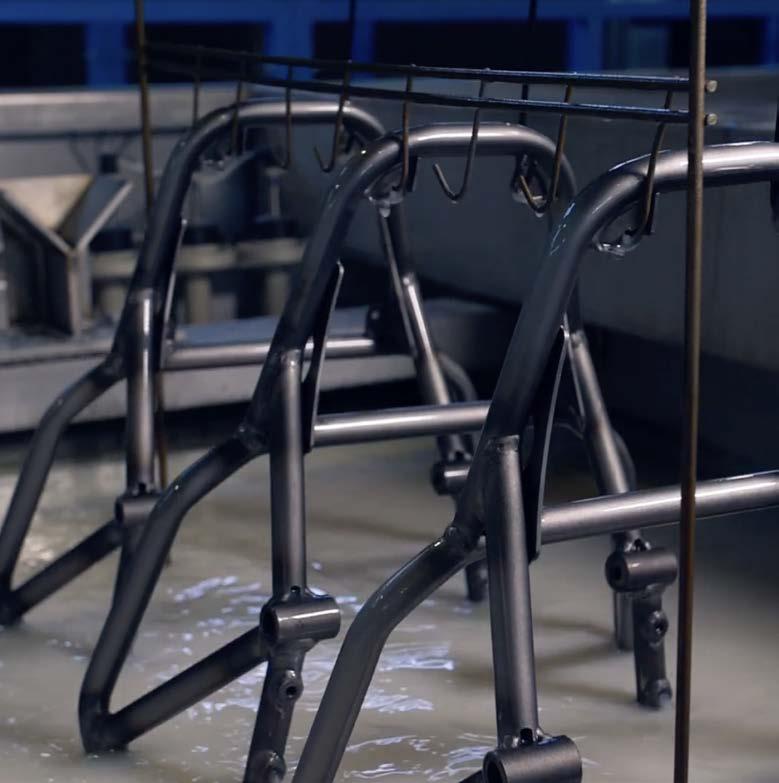
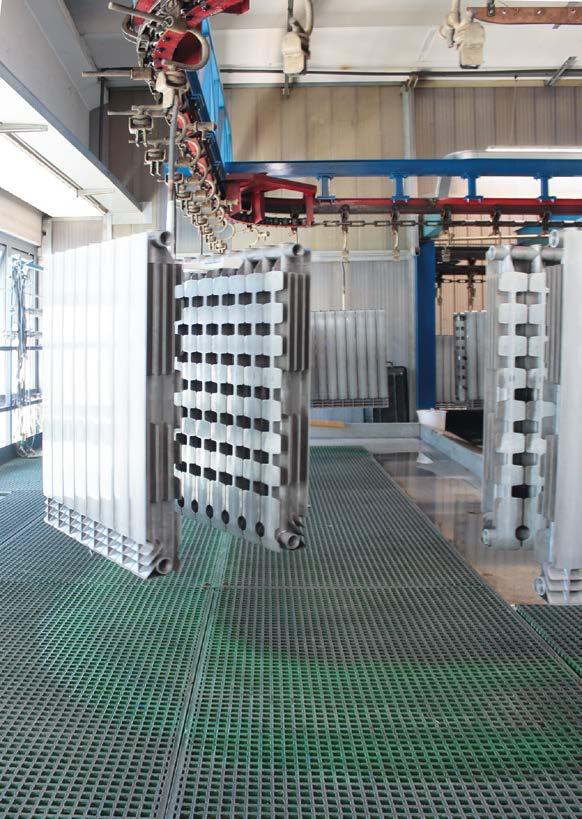
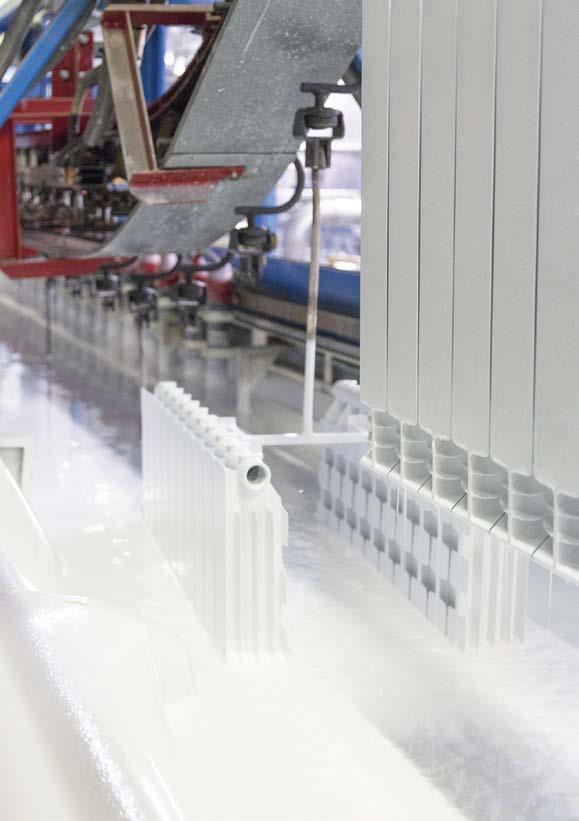
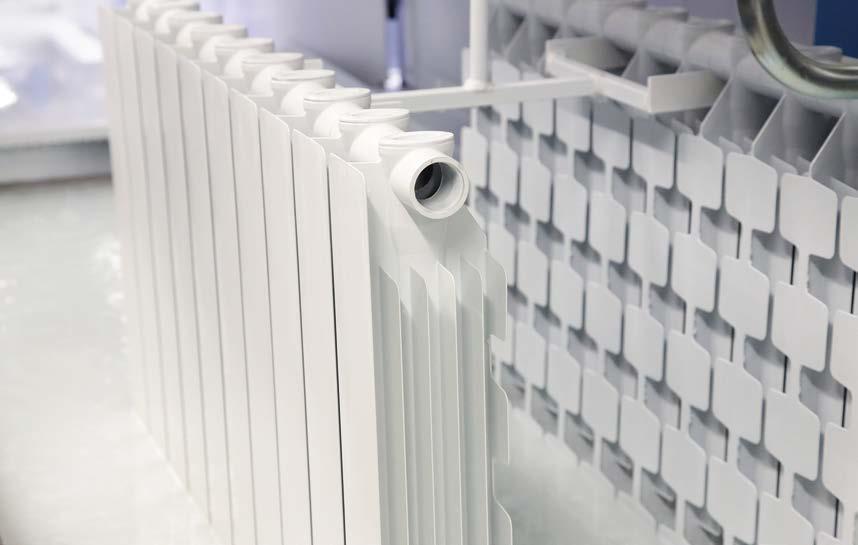
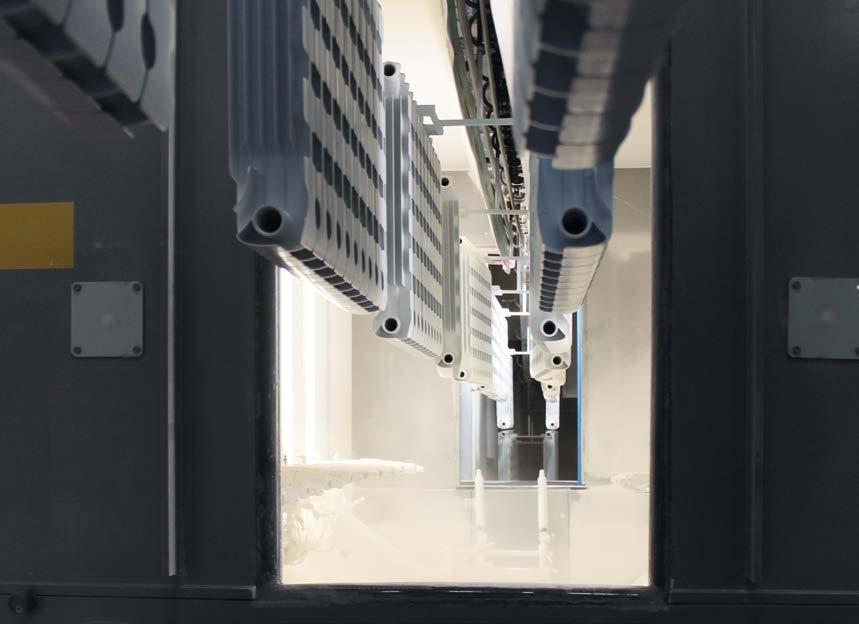
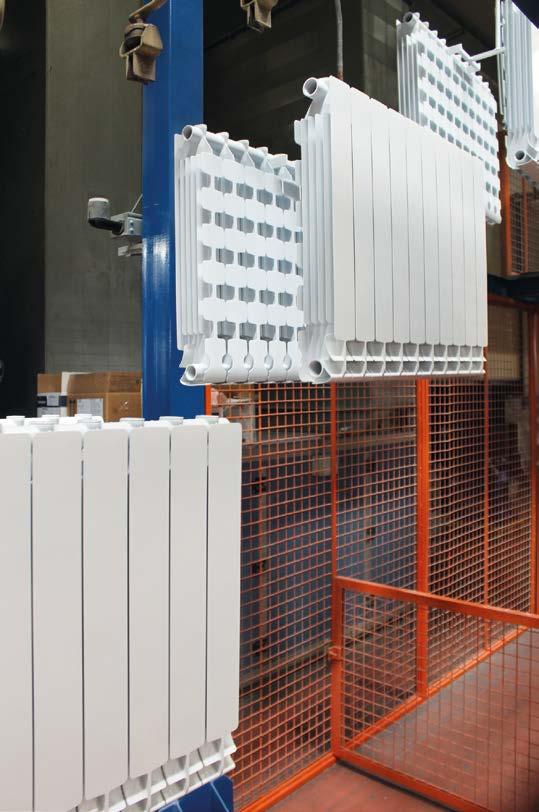
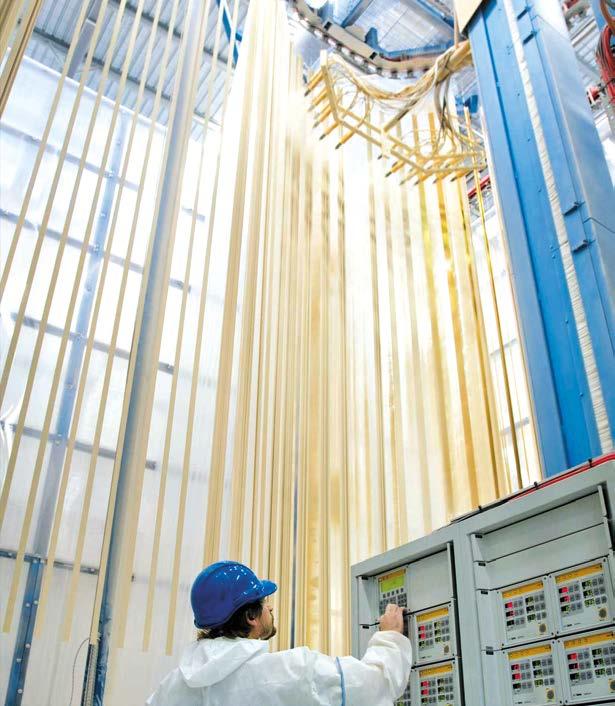
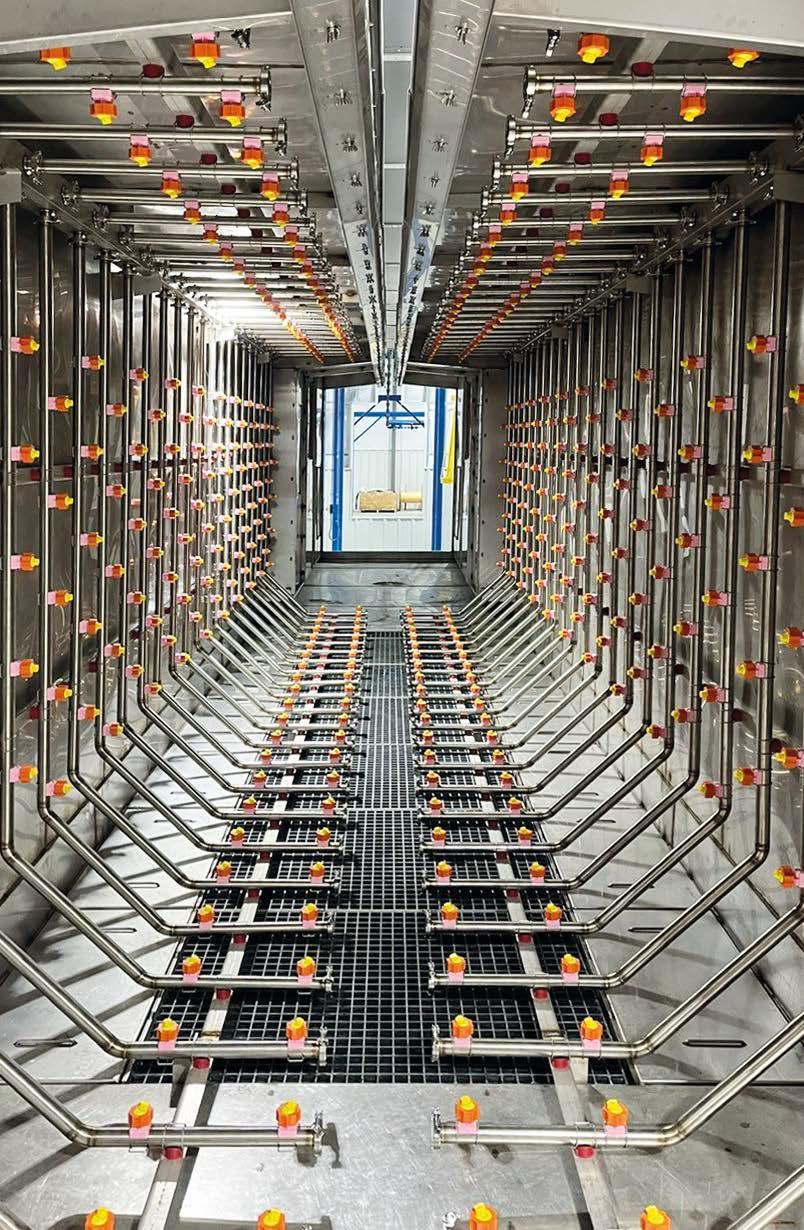
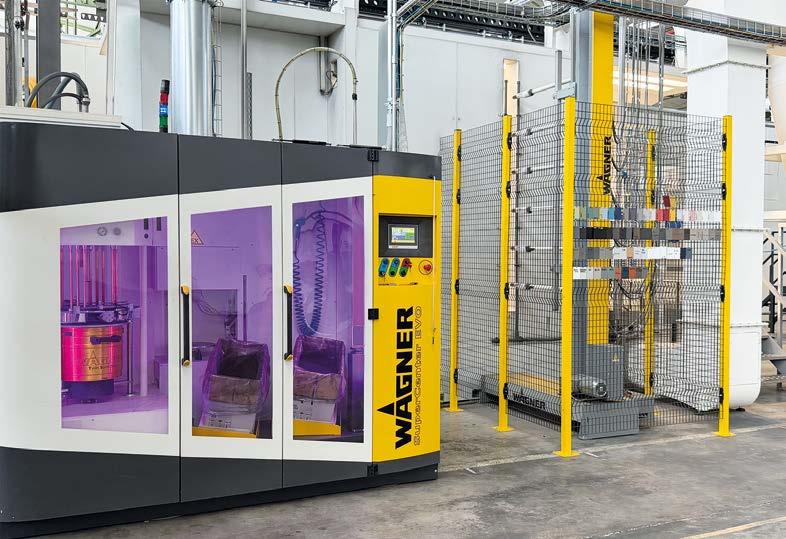
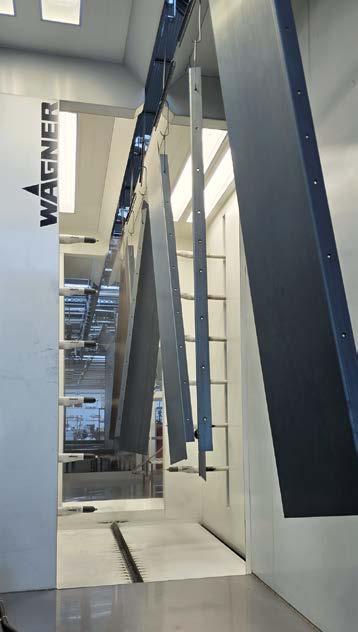
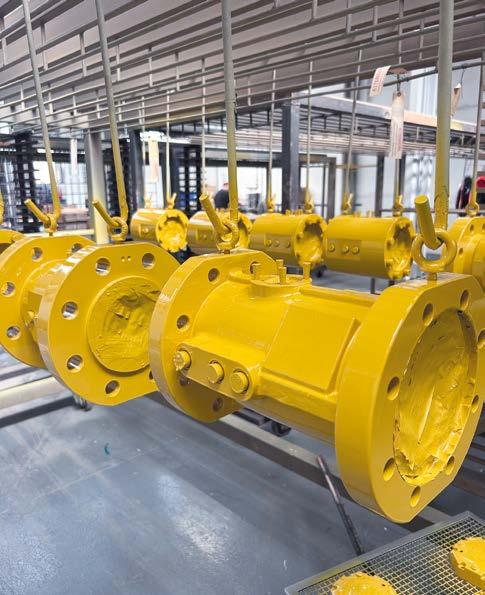
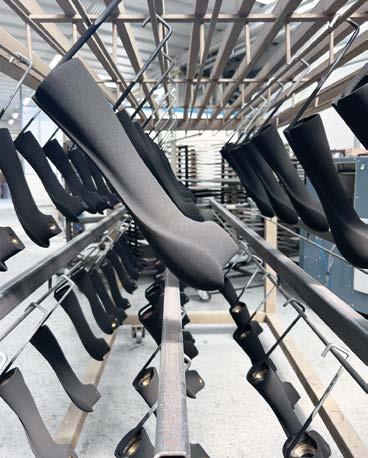
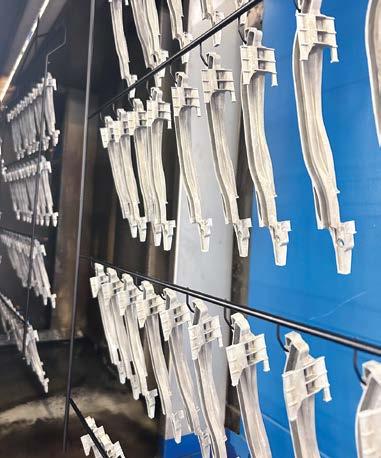
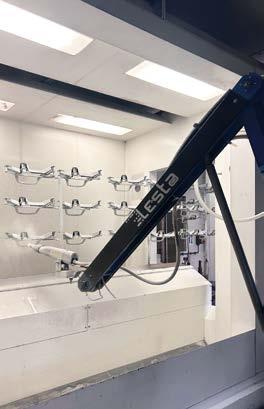
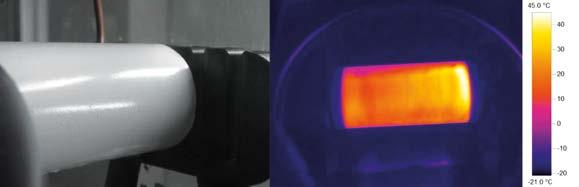
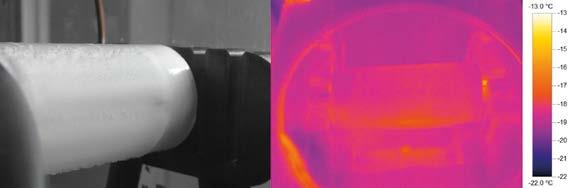
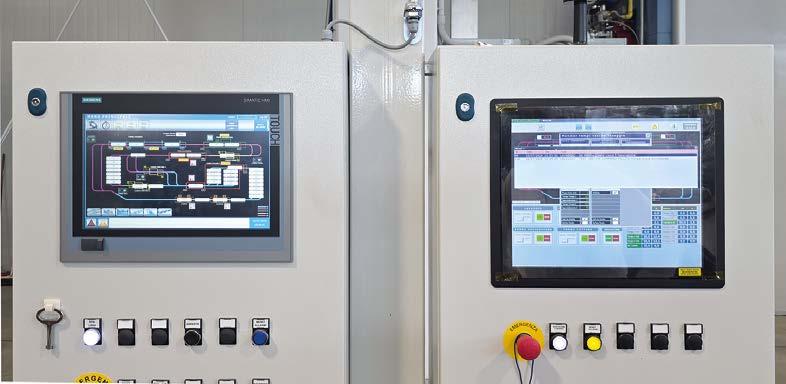
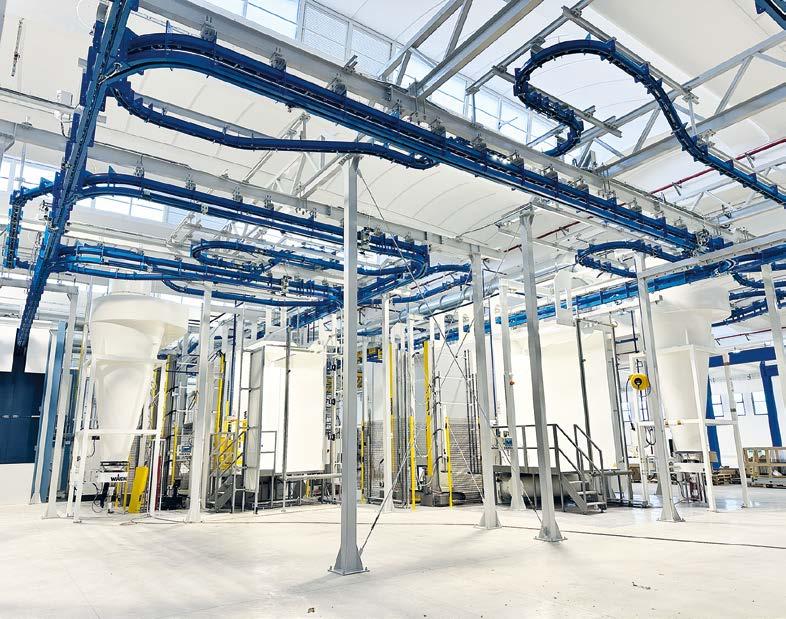
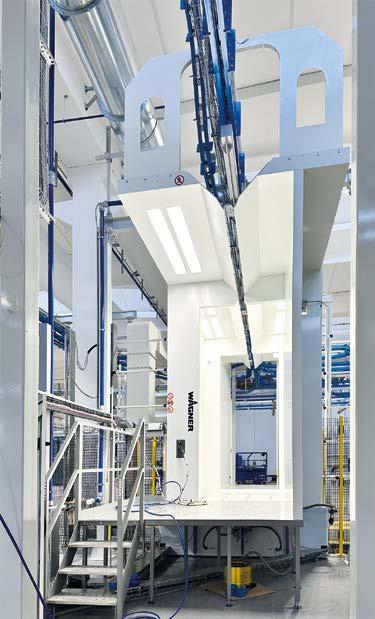
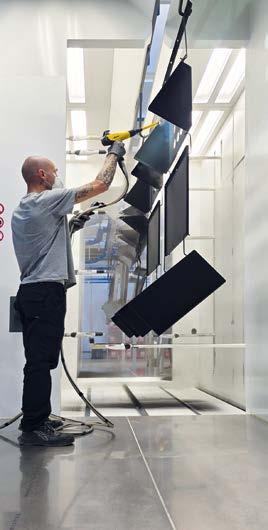
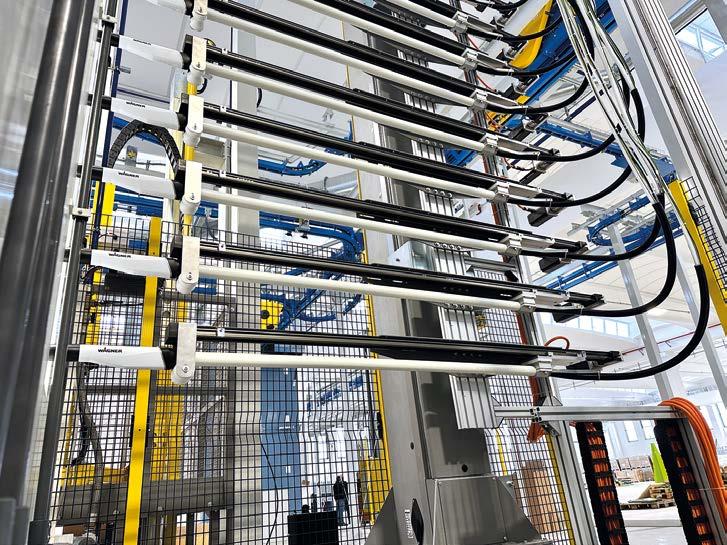
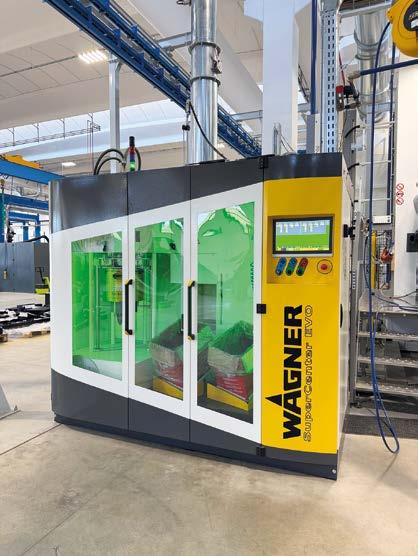
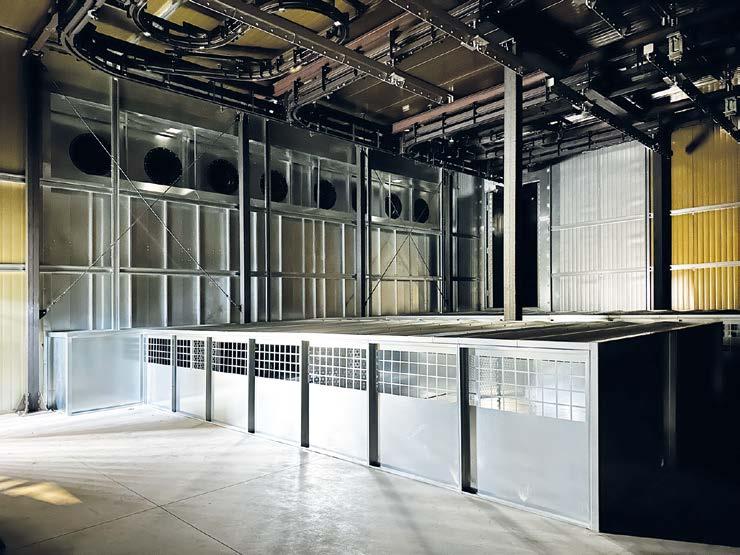
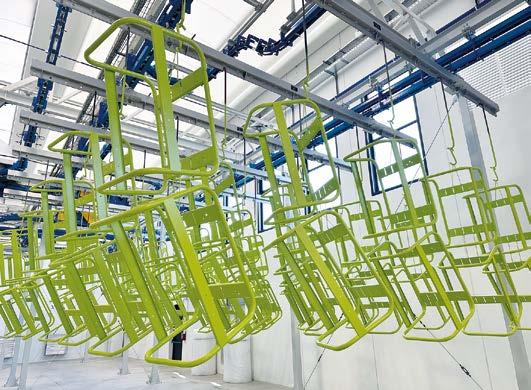
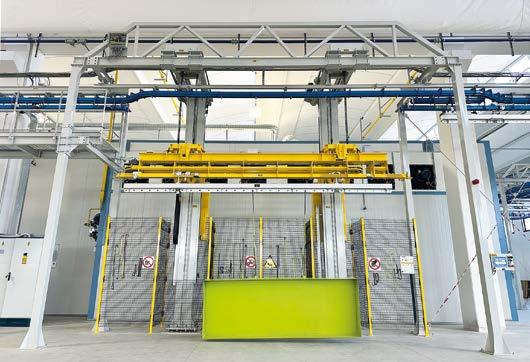
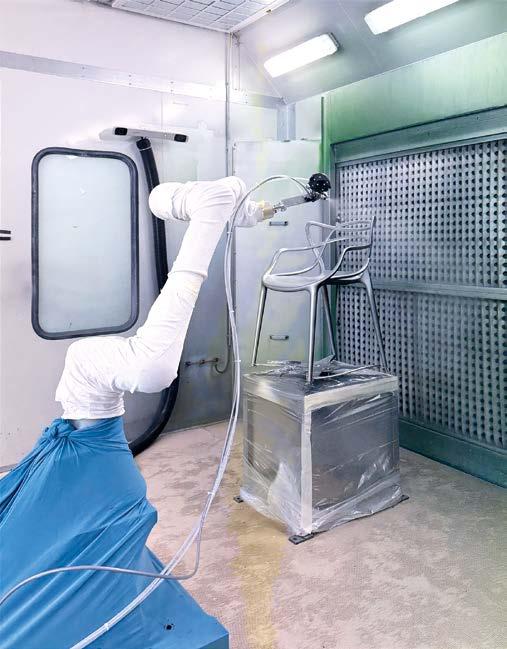
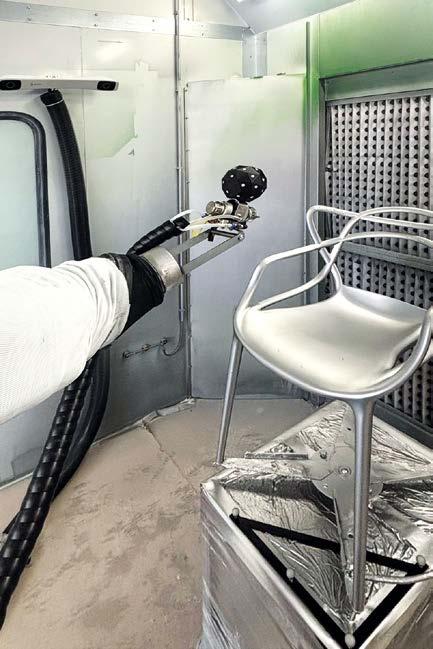
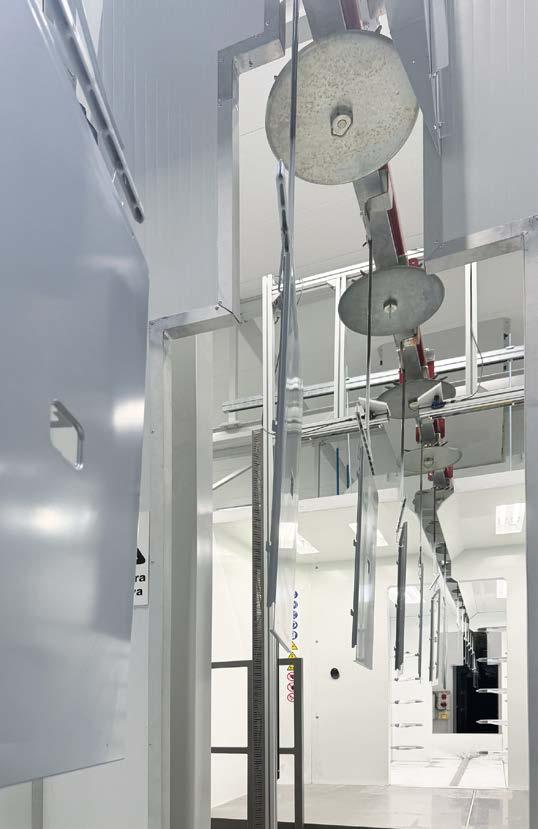
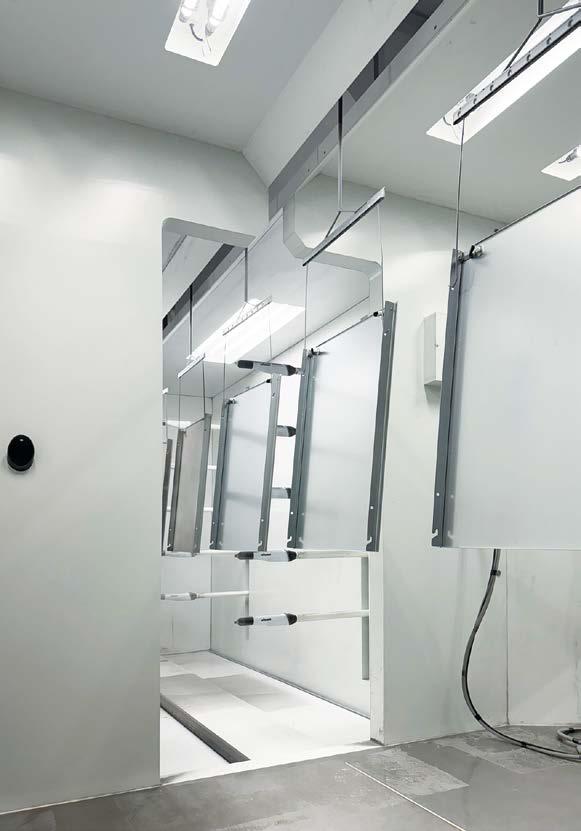
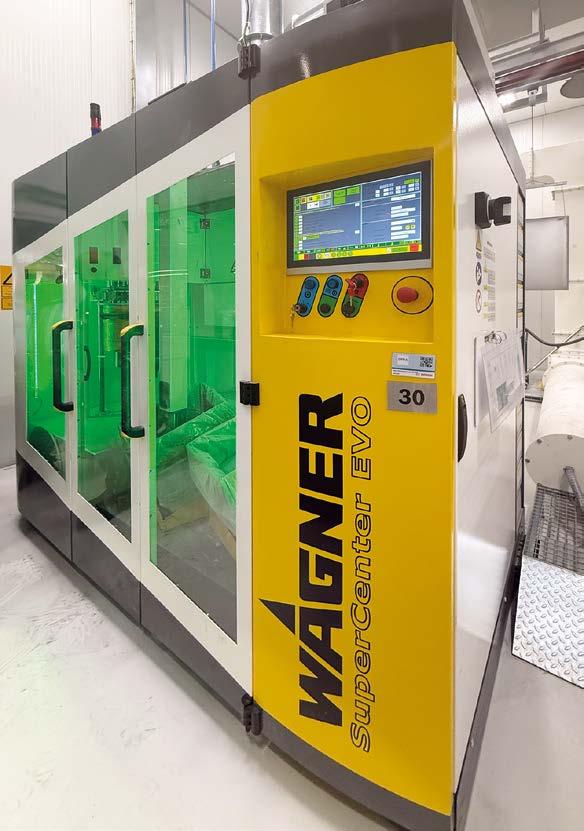
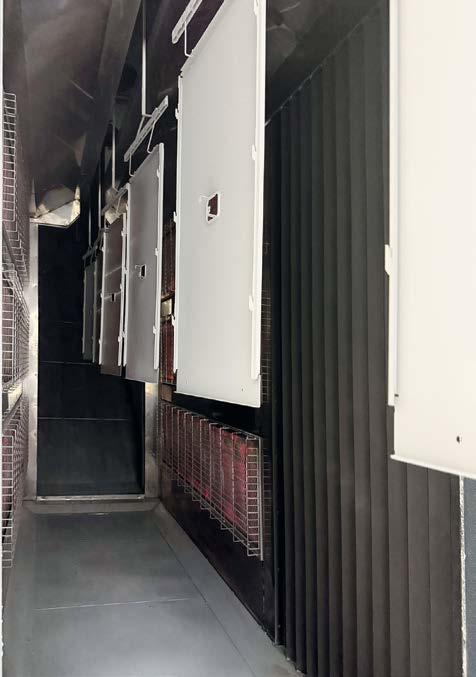
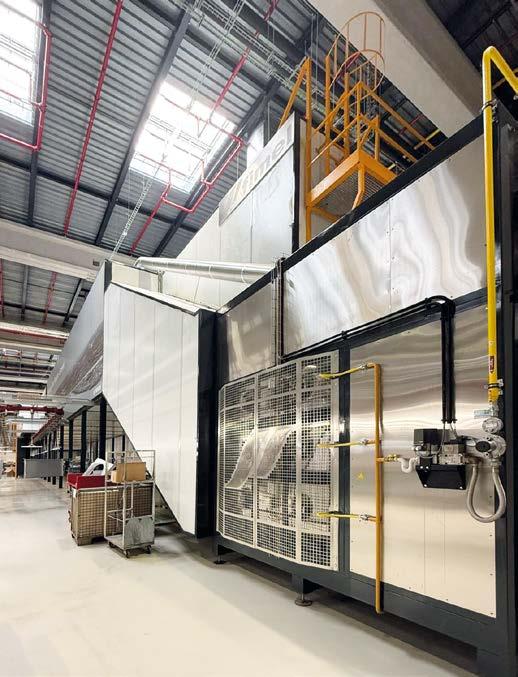
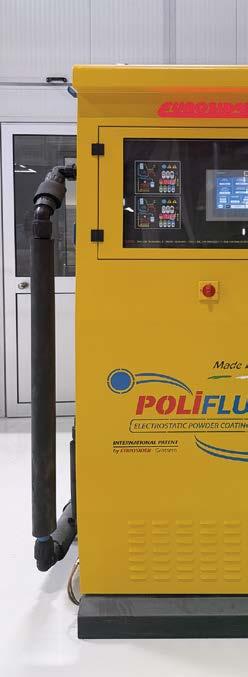
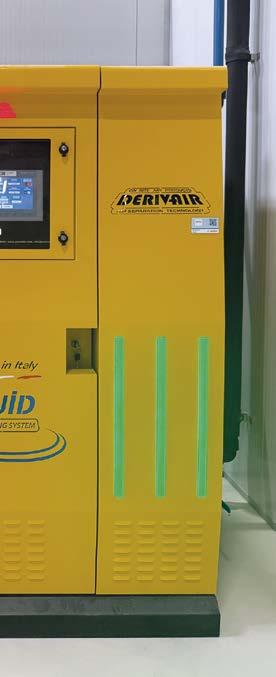
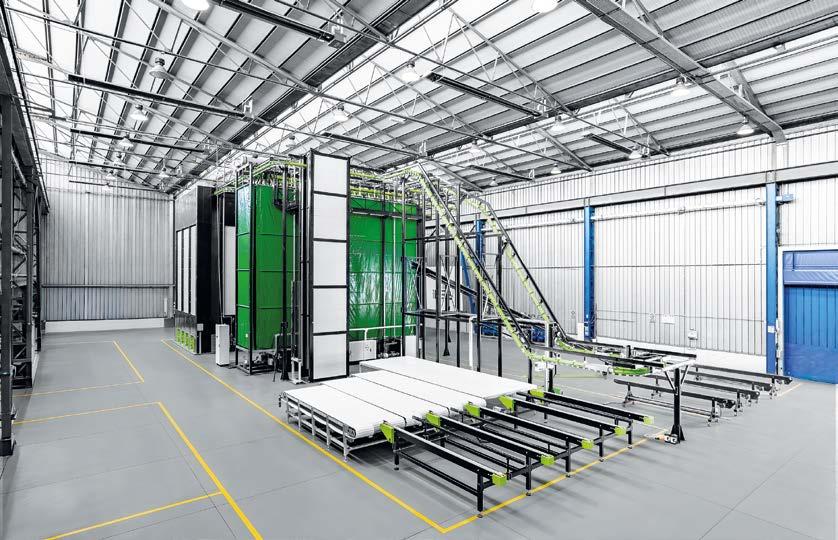
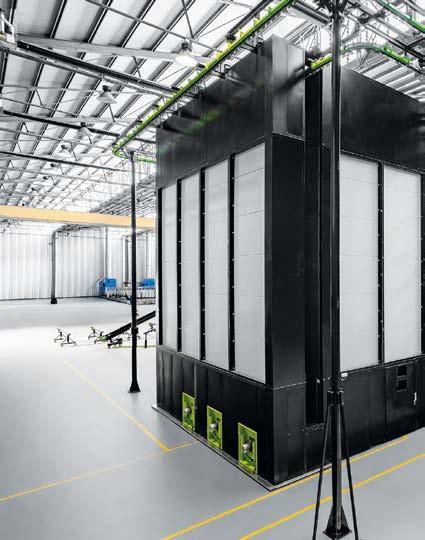
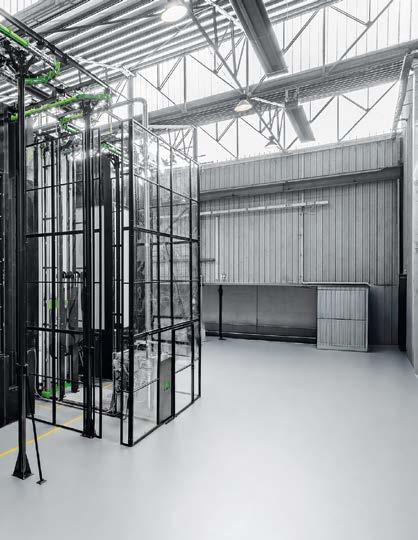
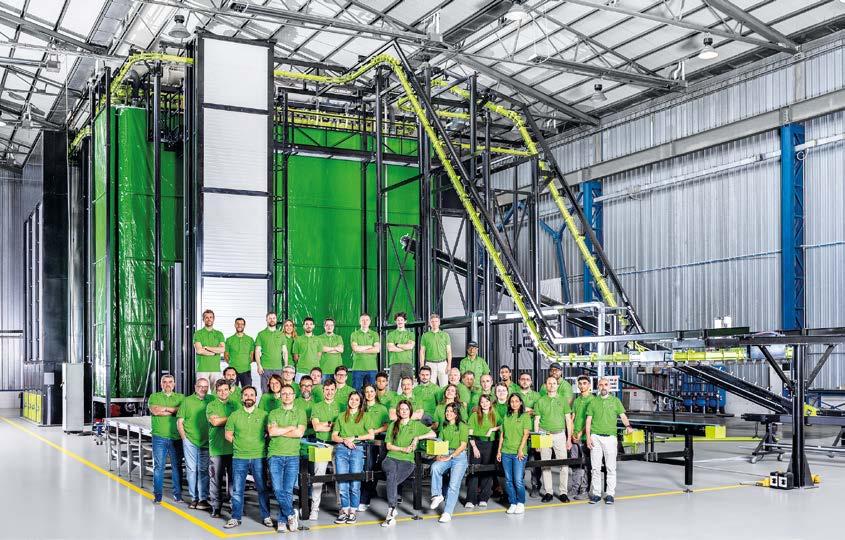
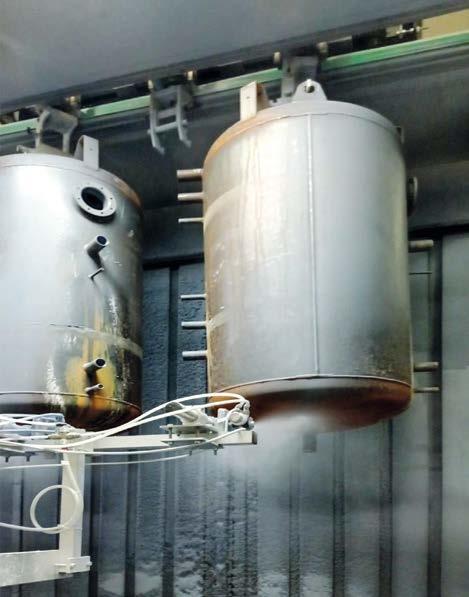
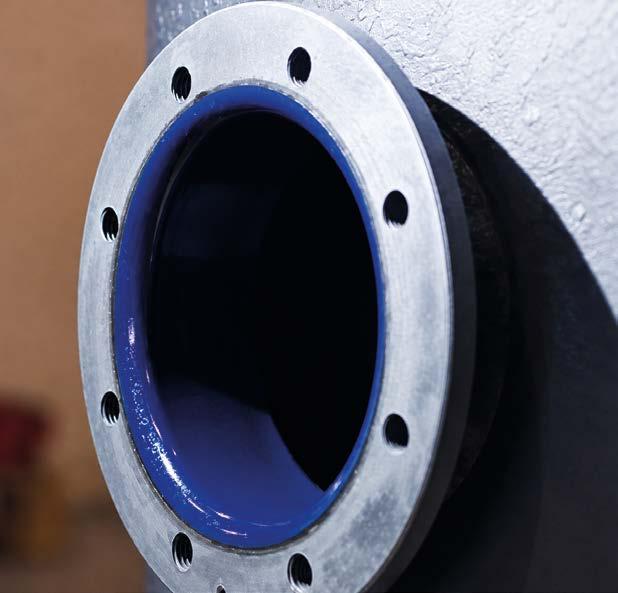
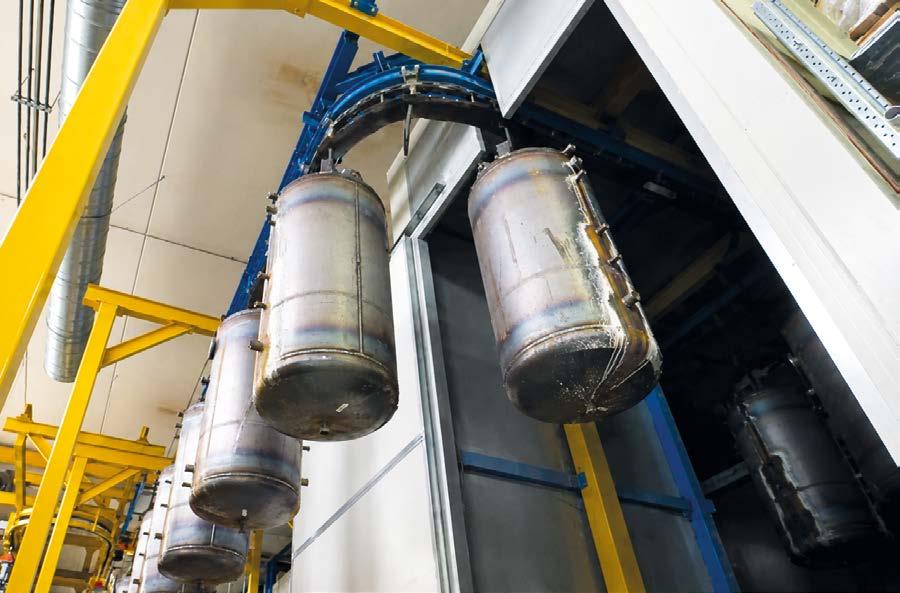
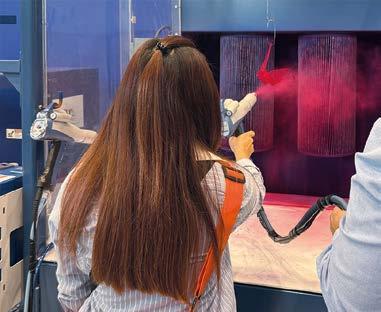
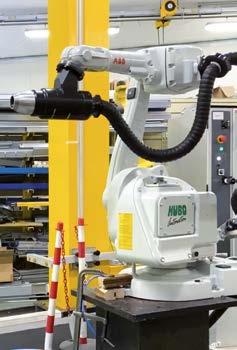
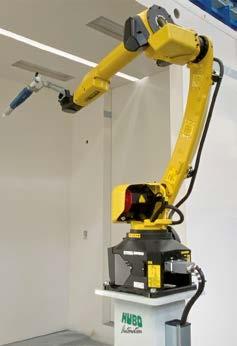
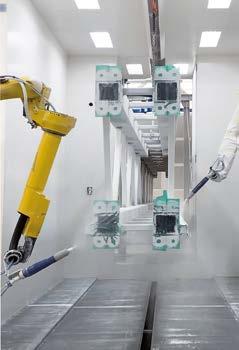
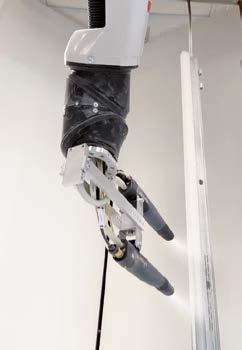
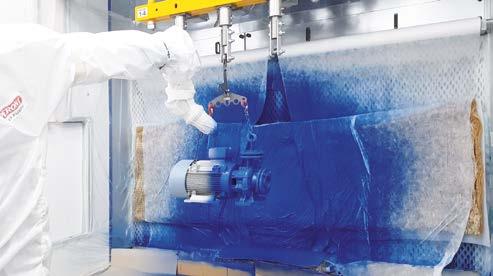
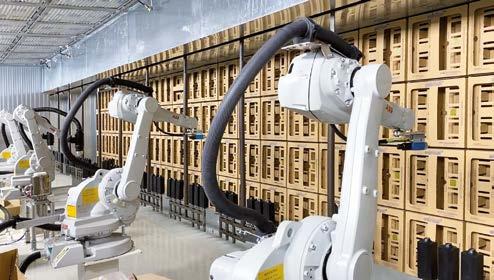
Let‘s talk about powder coating. A technology that is proven since decades and actually, it‘s just getting started with FLOWSENSE. FLOWSENSE? It‘s a software masterpiece and a bunch of small sensors that do big things: Consistent powder output from the rst to the last workpiece. Reliability, measured in real time. Put quality on repeat!
SAVIM EUROPE DESIGNS AND BUILDS HIGH-VALUE INDUSTRIAL PAINTING SYSTEMS.
Advanced technologies and a highly tailored approach make every project unique - from initial assessment and engineering to post-installation support Built for special applications and complex processes, our plants ensure high performance, consistent quality, and maximum safety, fully compliant with the most rigorous sustainability standards. savimeurope.com
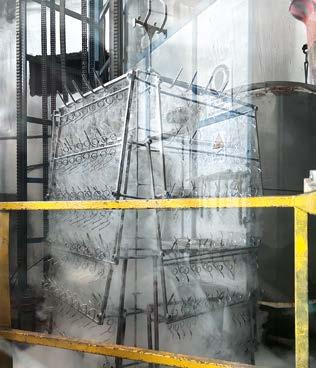
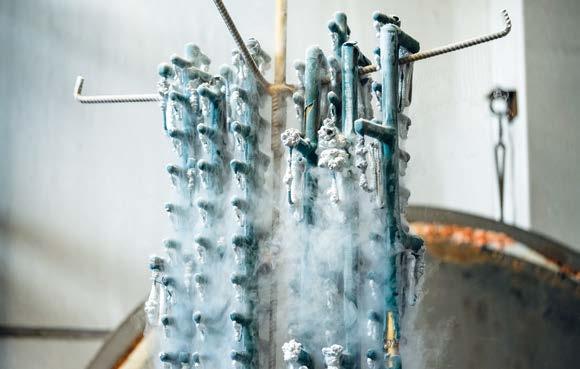
MEC, over thirty-five years of innovation: from cryogenic paint stripping to the new frontiers of industrial cryogenics 36 FOCUS ON TECHNOLOGY
Colourific Coatings’ industrial project for transforming the North American powder coating market
FOCUS ON TECHNOLOGY
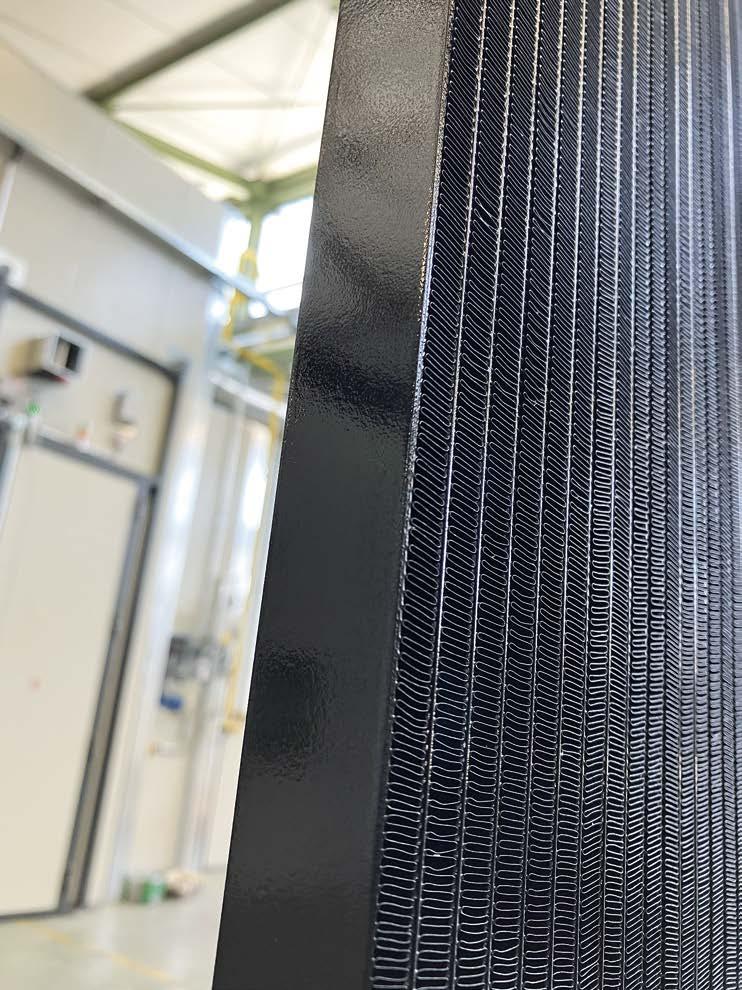
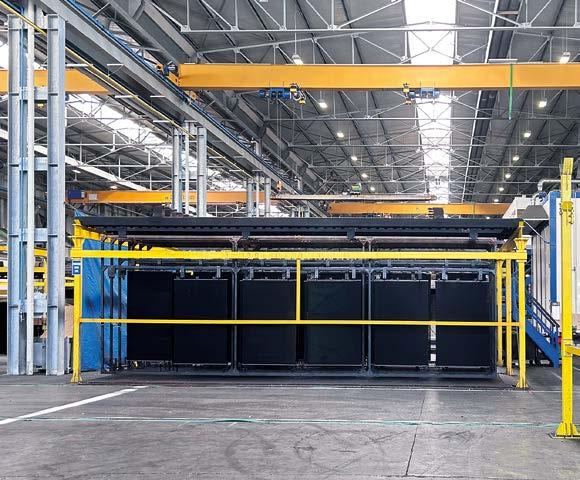
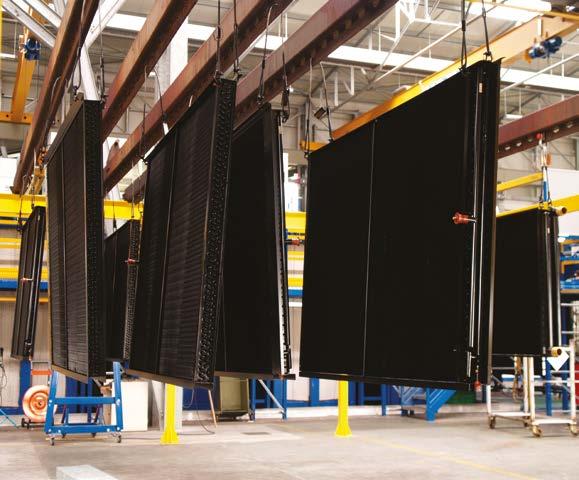
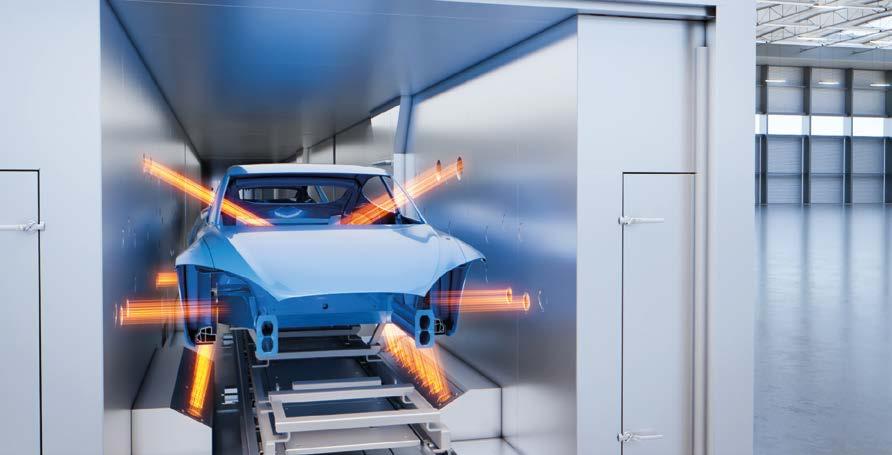
An advanced robotic system to ensure repeatable UV coating results on heat exchangers treated with ElectroFin® technology
HIGHLIGHT OF THE MONTH
Galstaff Multiresine unveils its new digital identity
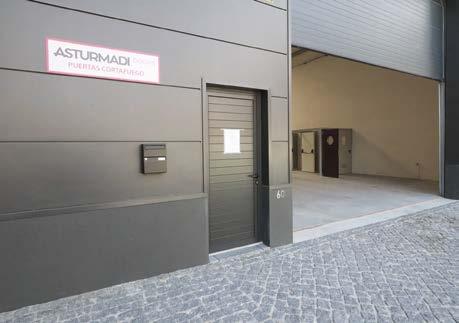
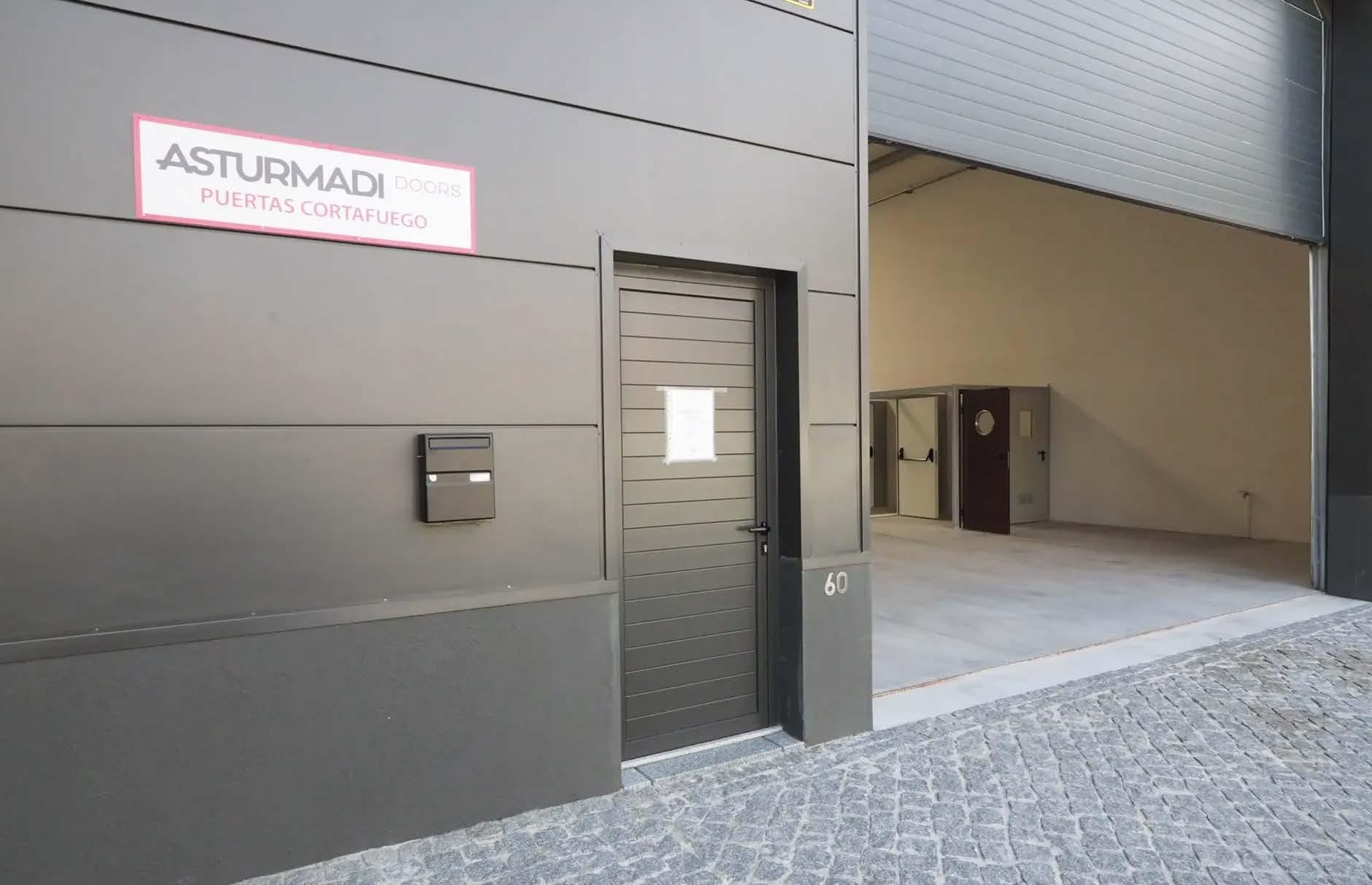
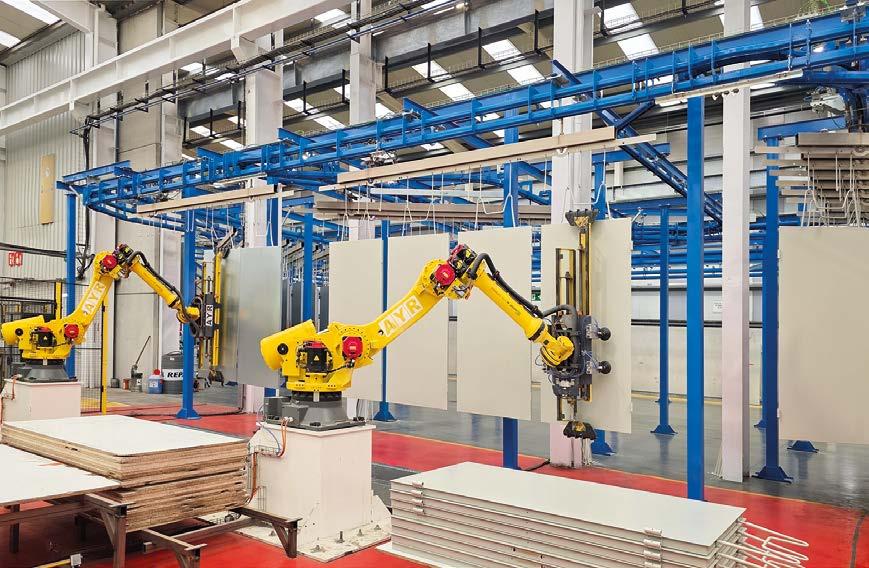
Asturmadi Doors improved the efficiency of its coating line through the seamless integration of manual and automated handling solutions
STORIES
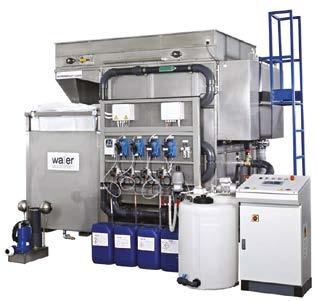
Cleaning water as a new production resource: Water Energy’s contribution to Cimentol’s circular economy model
FOCUS ON TECHNOLOGY
Filtration solutions that make a difference in metallising processes for cosmetic packaging 76 FOCUS ON TECHNOLOGY
Ideal System: twenty years of innovation in nanotechnology-based pre-treatments 82 FOCUS ON TECHNOLOGY
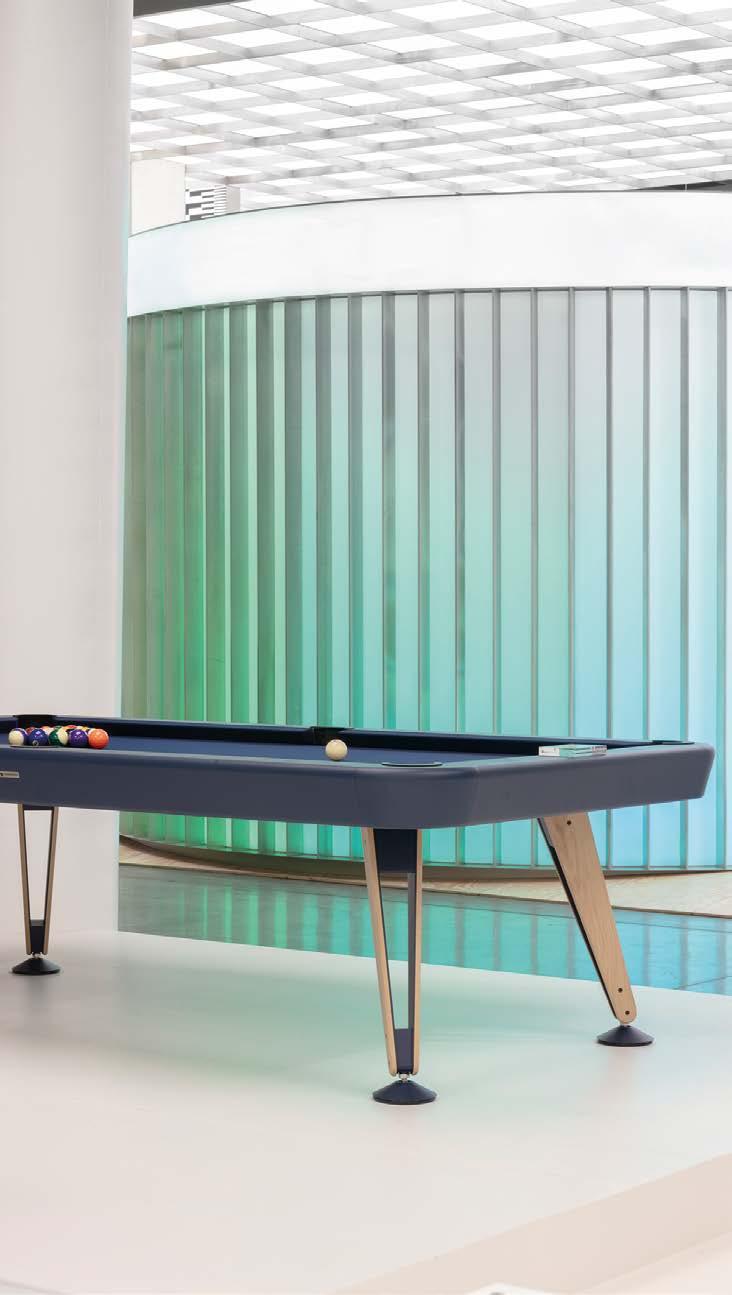
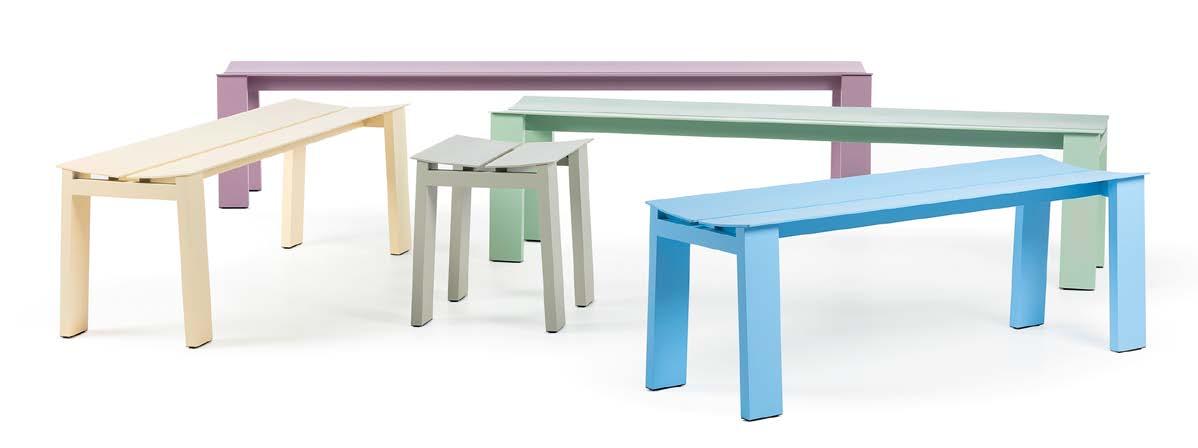
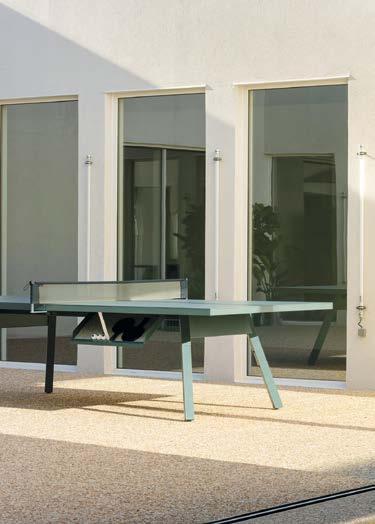
When finishes and colours turn playthings into design icons 90 ROAD TO 2050
Dürr implementing a CO2-efficient paint shop with cross-plant system integration
Powder from Nature
The strength of Europolveri powder coatings comes not from the carefully selected blend of raw materials alone, but from the people who study, shape and formulate these products thanks to more than 40 years of experience, and provide customers with a range with more than 1 000 products available in stock and over 40 000 already formulated
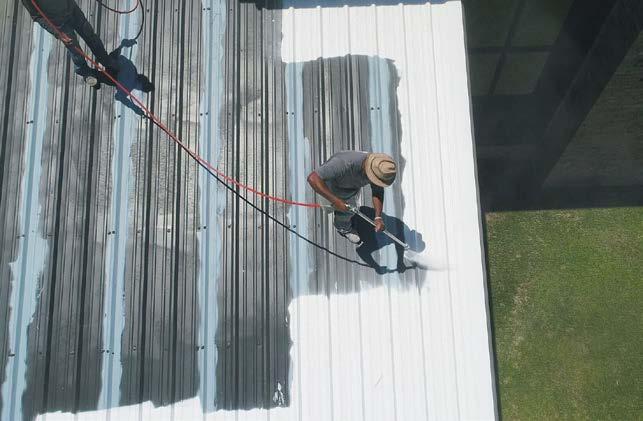
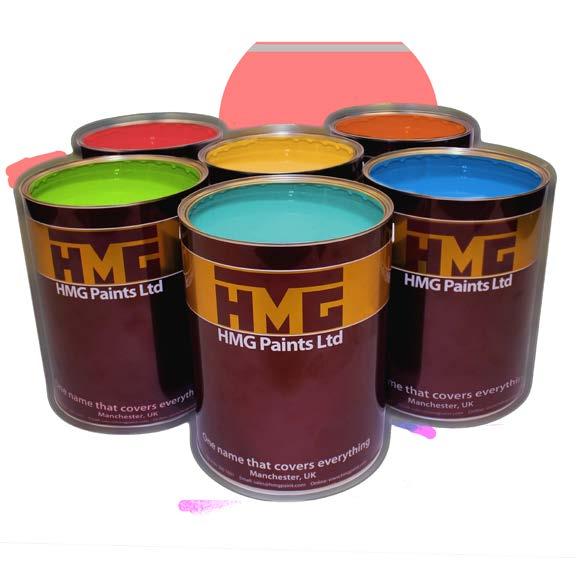
HMG Paints joins global ‘Cool Roofs. Smarter Choice’ initiative to tackle rising temperatures
102 ADVANCEMENTS
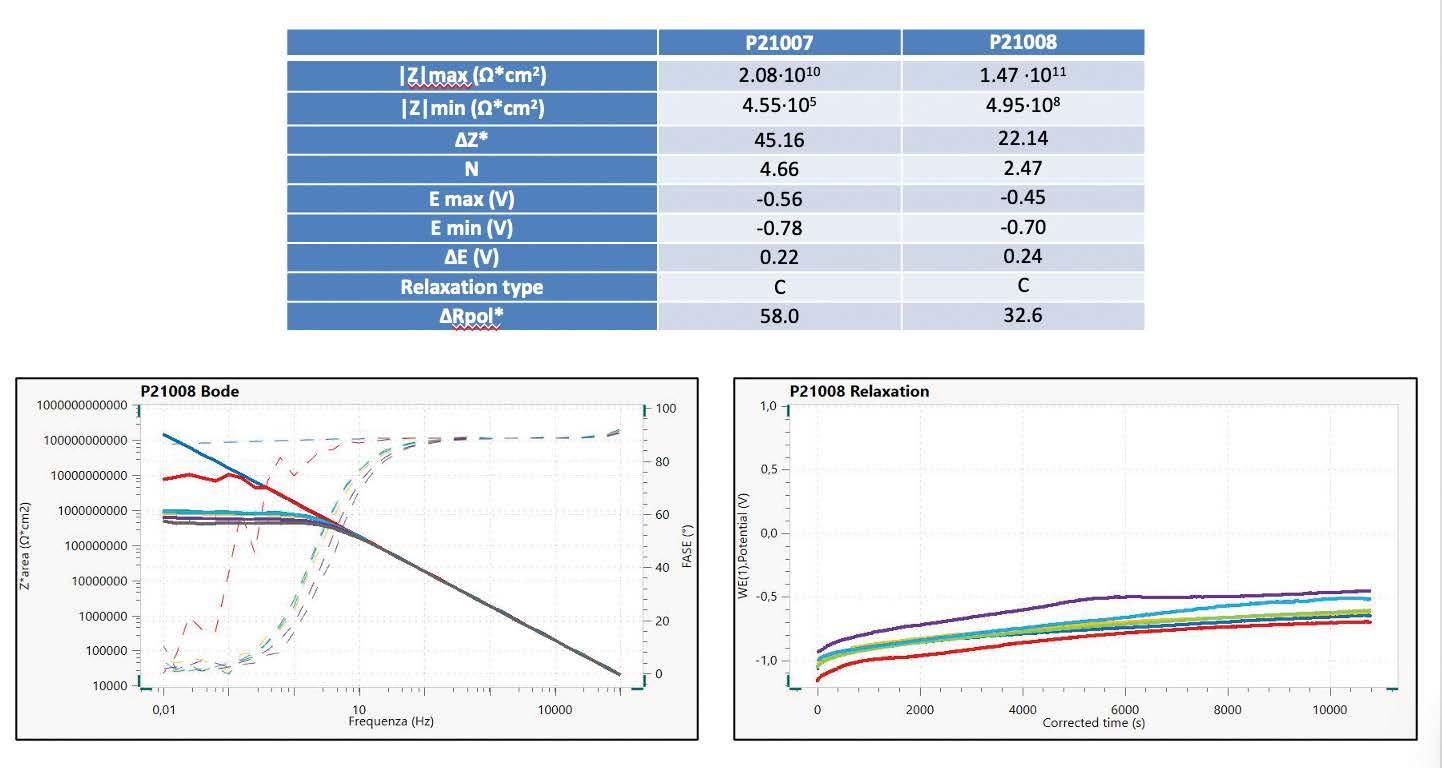
ACET METHOD: scientifically measuring corrosion resistance in 24 hours
106 SUCCESS STORIES
Optimisation of the overspray treatment system: performance enhancement and reduced chemical consumption
110 ADVANCEMENTS
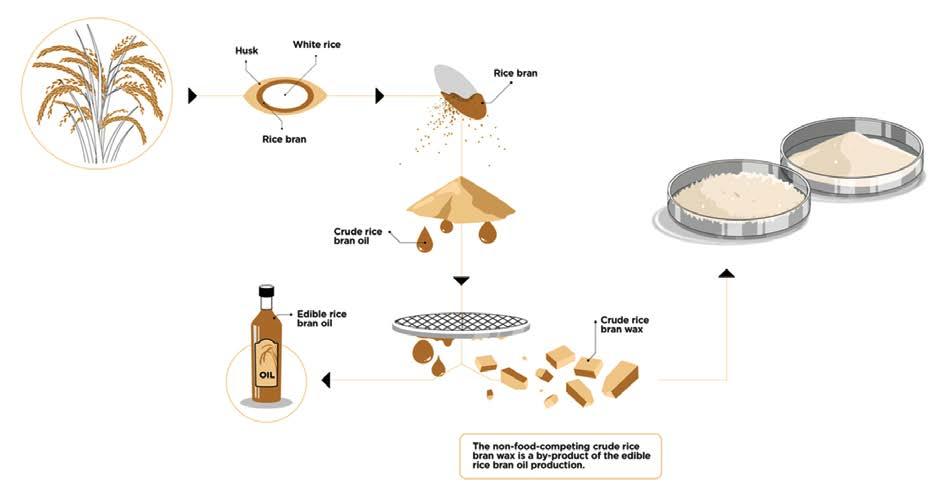
Easy dispersible waxes: a sustainable solution for instant emulsion preparation across industrial application
116 FOCUS ON TECHNOLOGY
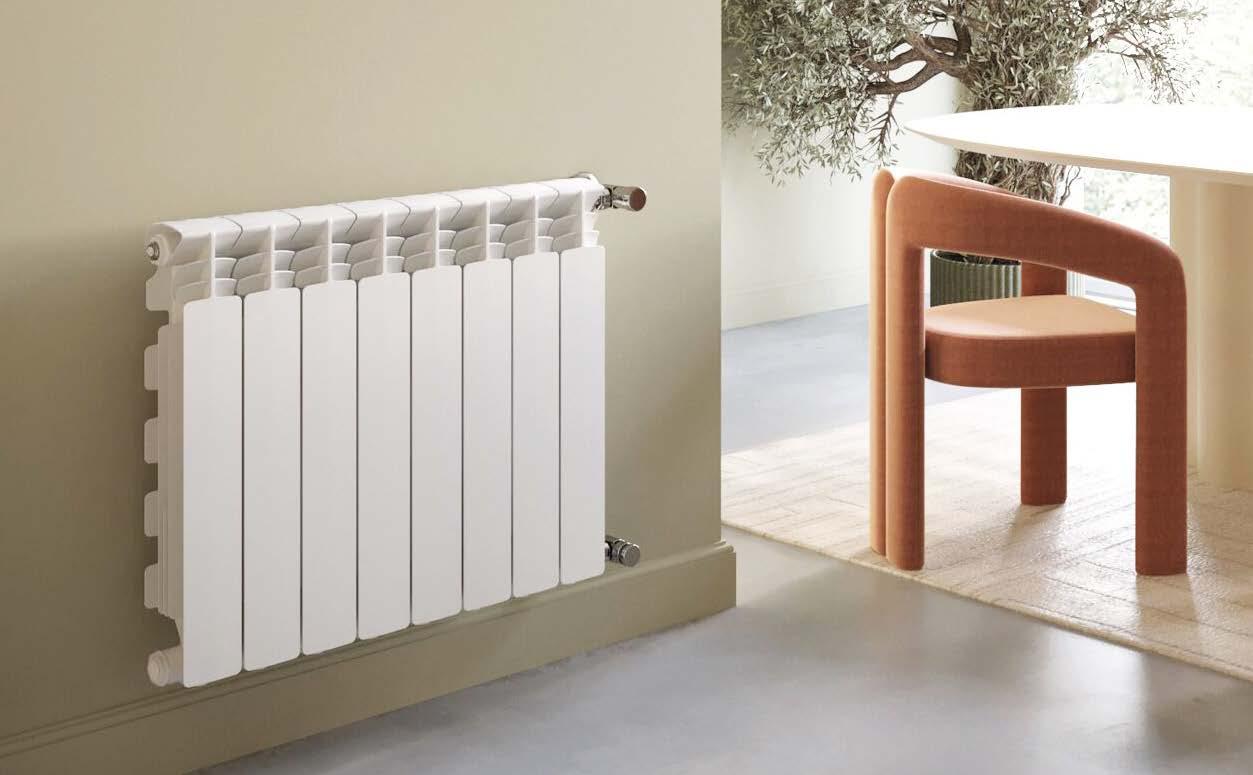
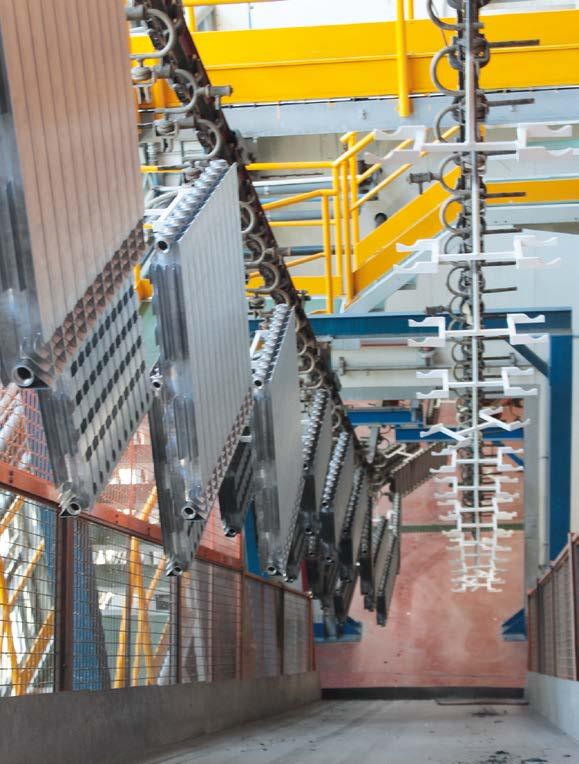
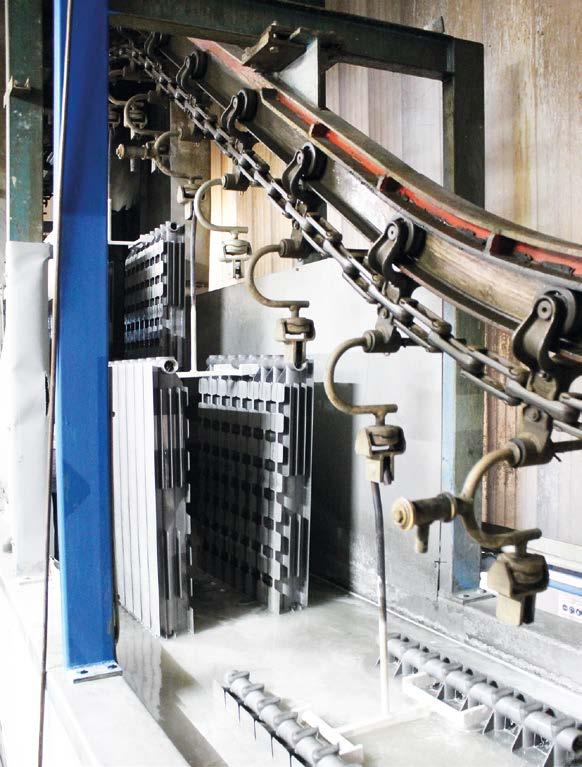
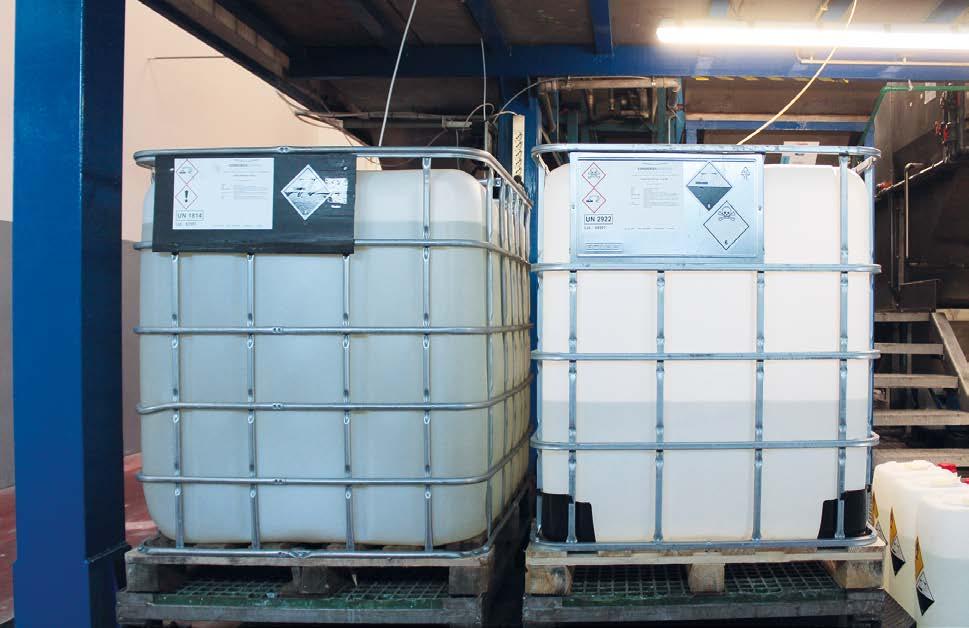
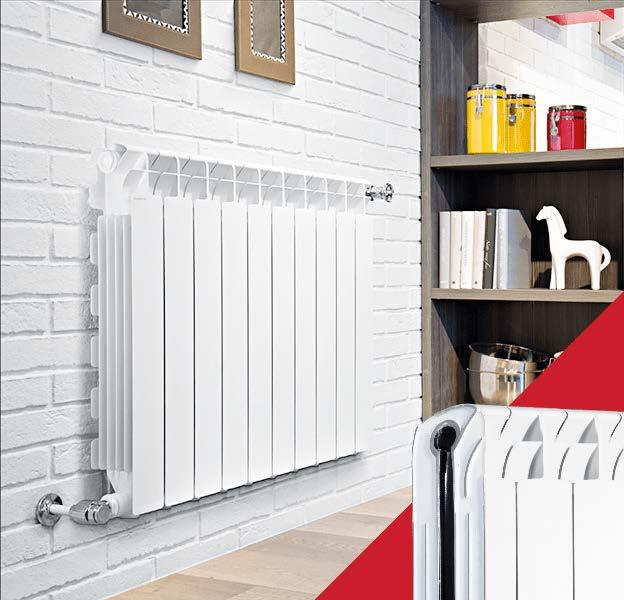
The pre-anaphoresis chemical treatment that enhances the corrosion resistance of Fondital’s radiators 126
COAT-IPS is developing an energy-efficient heated coating to improve aviation safety against icing JULY/AUGUST 2026
ON TECHNOLOGY
When scraps become a competitive advantage through paint stripping: the success case of G.James
134 HIGHLIGHT OF THE MONTH
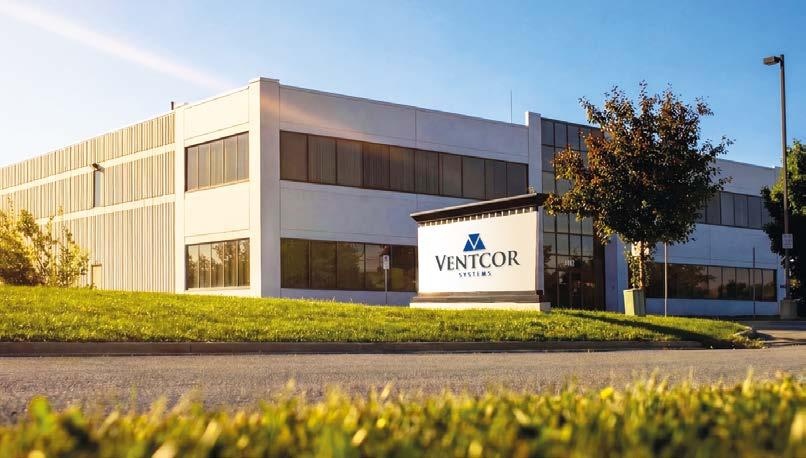
Redefining efficiency in the Canadian coating industry: the VentCor Systems approach
138 FOCUS ON TECHNOLOGY
When a bespoke powder coating becomes the standard for an entire supply chain
144 FOCUS ON TECHNOLOGY
VAFE: coating as a service, from shot blasting to customer support
150 THE CONTRACT COATING NETWORK
Specialisation and innovation: the growth journey of V.M.L. Verniciatura Metalli Lecco
154 RESEARCH BREAKTHROUGH
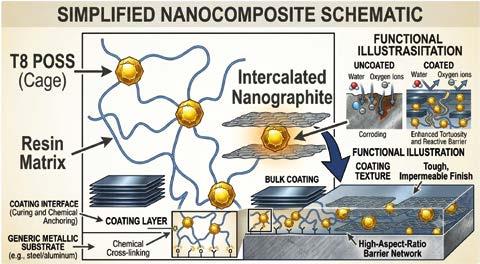
DOLLCOAT® GP 107
A new line of nanotechnologic conversion for corrosion classes C3H – C4H – C5H
DOLLCOAT® GP 107
Based on graphite engineered by
Multimetal no rinse product used at room temperature.
Compatible with any plant layout and applied by spraying, deep immersion or by nebulization modules.
Excellent pre-cataphoresis pretreatment.
JULY/AUGUST 2026
156 FOCUS ON TECHNOLOGY
Metalfab 5.0: Pramac’s smart factory with a new powder coating line
164 COLOUR STUDY
Surfaces to look at and feel: soft touch as a language of contemporary design
166 FOCUS ON TECHNOLOGY
From outsourced operation to strategic process: why Somefer has invested in a new coating shop to double its production capacity
172 ADVANCEMENTS
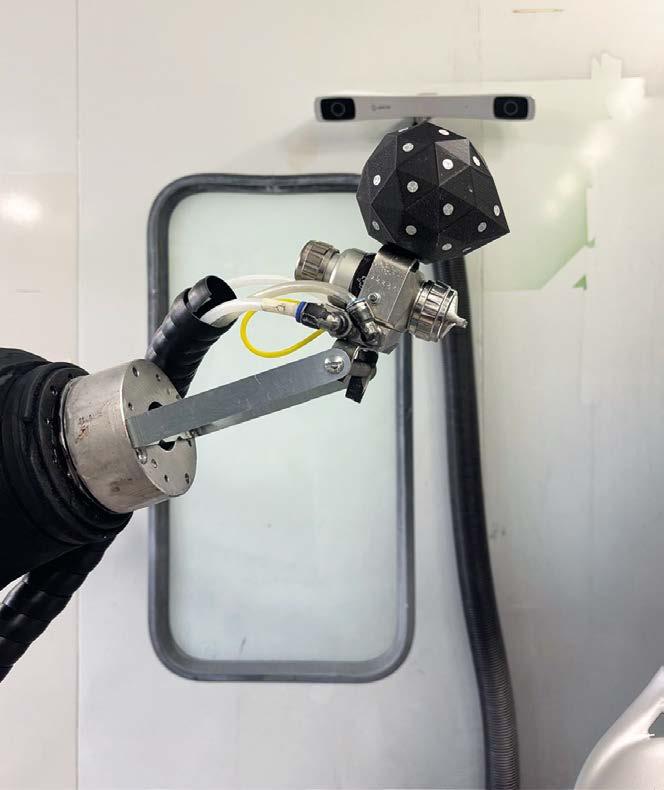
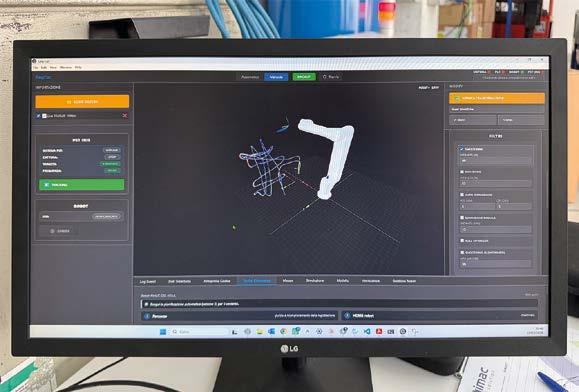
CAT is rewriting the rules for articulated robot programming
176 RESEARCH BREAKTHROUGH
Plasmatreat and Fraunhofer IFAM collaborate on rapid industrial implementation of PFAS-free coating technologies
178 FOCUS ON TECHNOLOGY
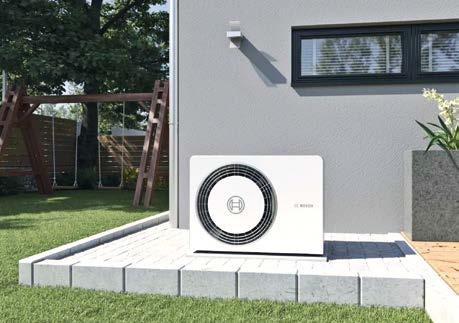
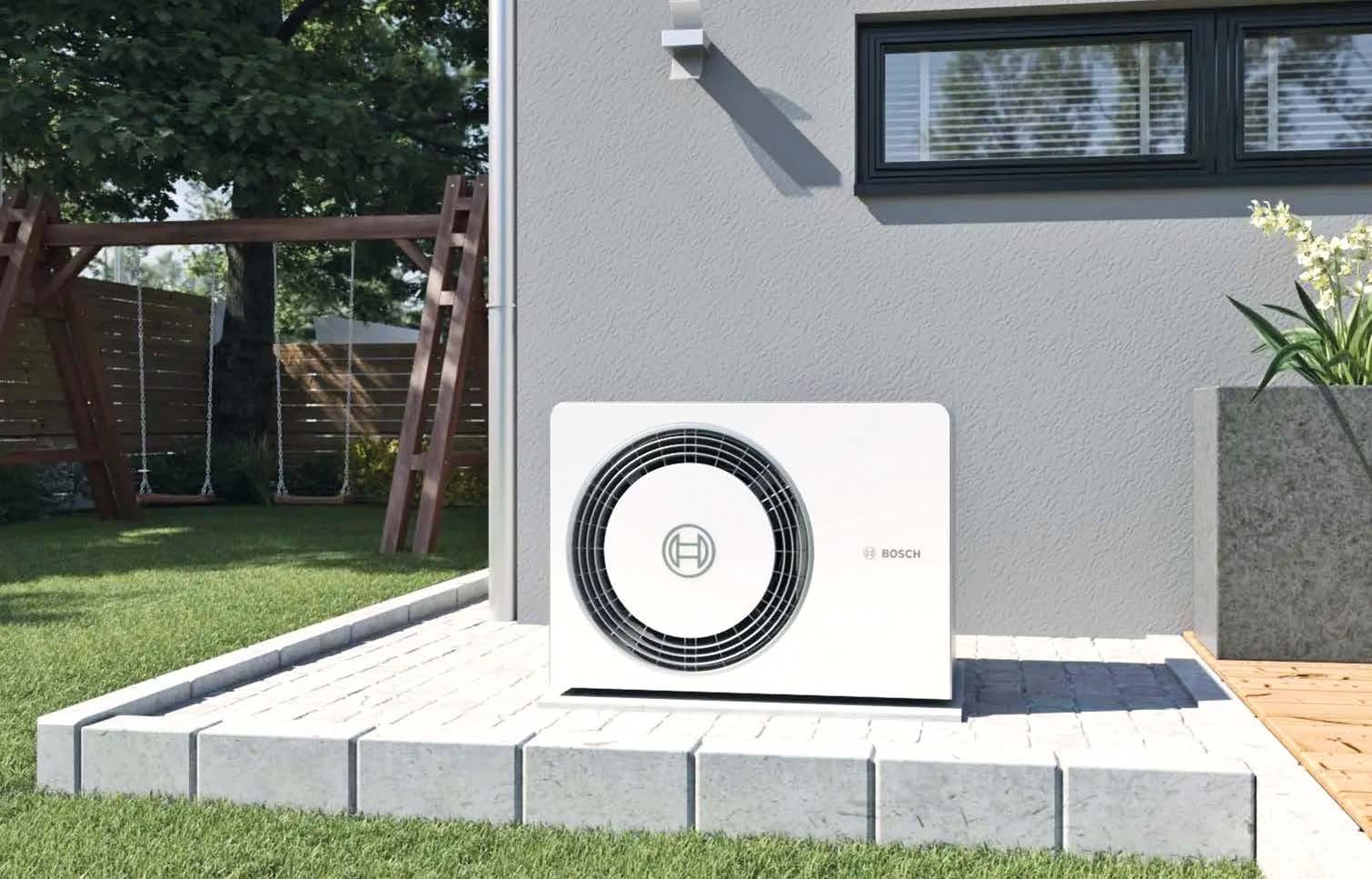
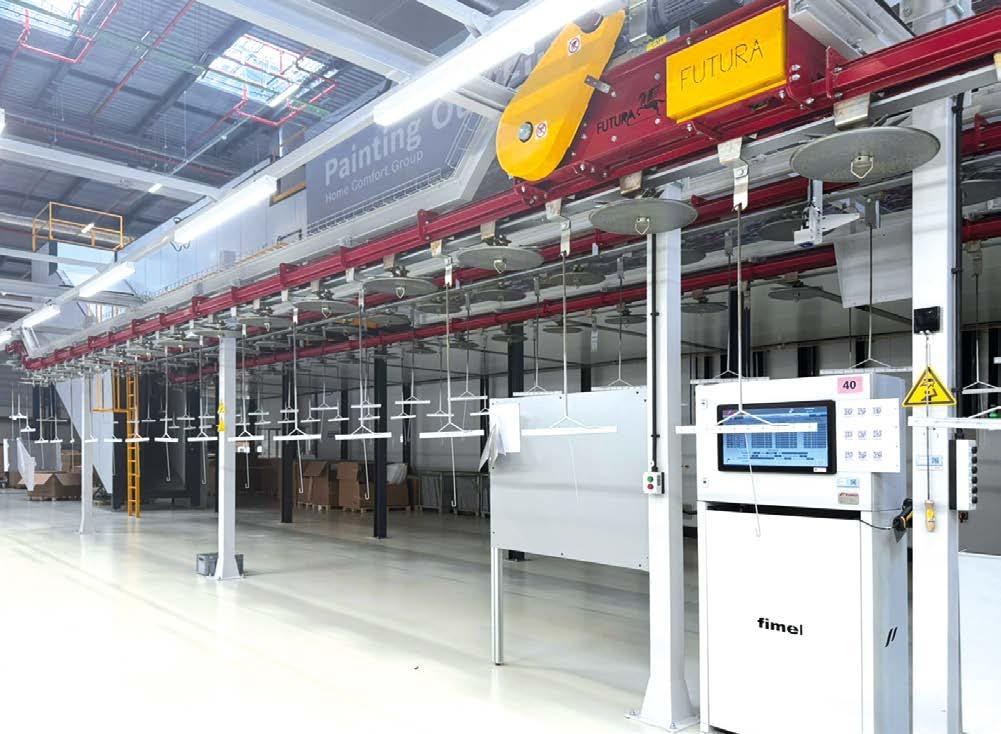
Bosch Home Comfort: a new powder coating line for heat pump components, supporting the European energy transition
184 HIGHLIGHT OF THE MONTH
Guerra: a single-source partner for every industrial coating need
186 HIGHLIGHT OF THE MONTH
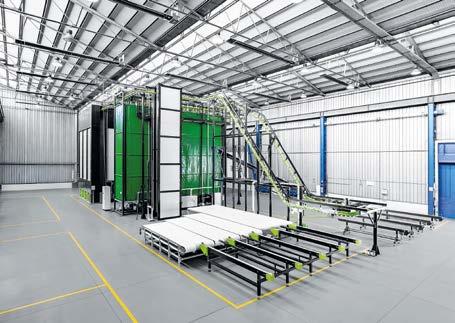
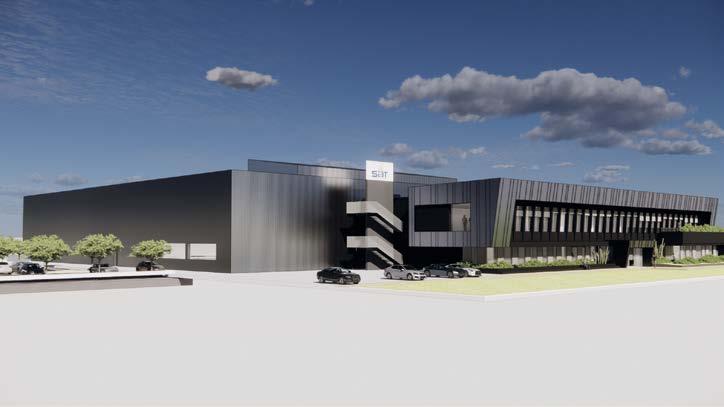
Maestro: SAT’s new plant concept that reduces vertical coating line installation to just three weeks
190 FOCUS ON TECHNOLOGY
A strategic choice for growth: TML invests in boiler enamelling
196 SPECIALIZED TRAINING
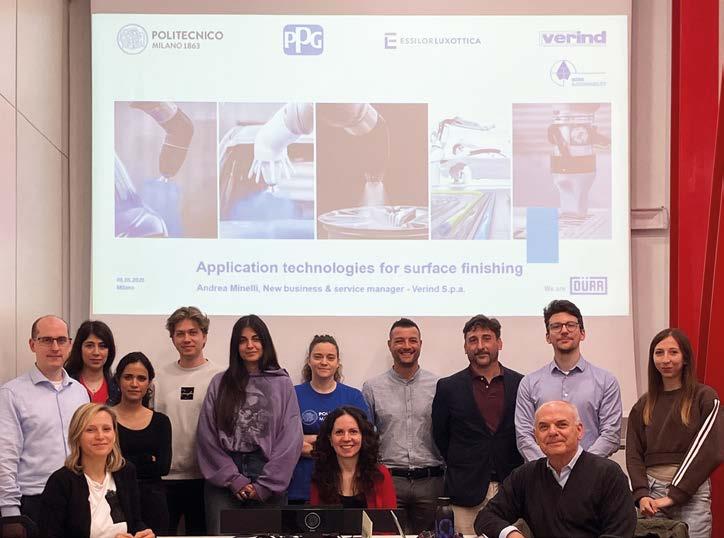
University and industry: a dialogue focused on growth through innovation, research, and digitalisation
198 UCIF INFORMS
How product value is created: quality and consistency
200 MEETING THE INDUSTRY
COMMITTED TO INDUSTRIAL PAINTING SINCE MORE THAN 60 YEARS
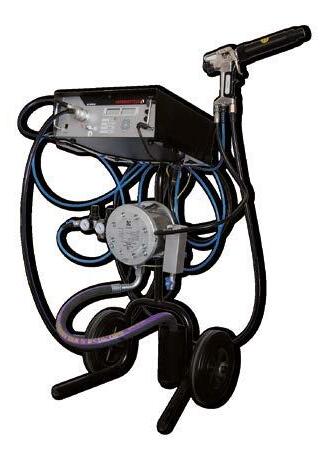
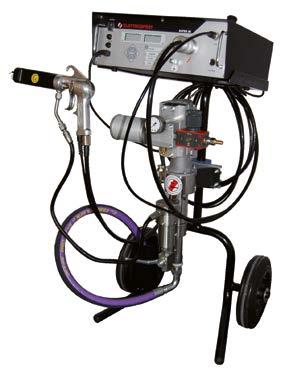
The ELETTROSPRAY® manual and automatic painting equipment both for liquid and powder paints application are fully designed and made by RAVARINI CASTOLDI & C. S.r.l. and are on the market since 60 years.
ELETTROSPRAY® electrostatic generators in particular represent a “unicum” in the solvent and water based painting equipment market.
The ELETTROSPRAY® are compliant with CEI/CENELEC standards to guarantee the maximum working safety.
Ravarini Castoldi & C. S.r.l. ELETTROSPRAY ®
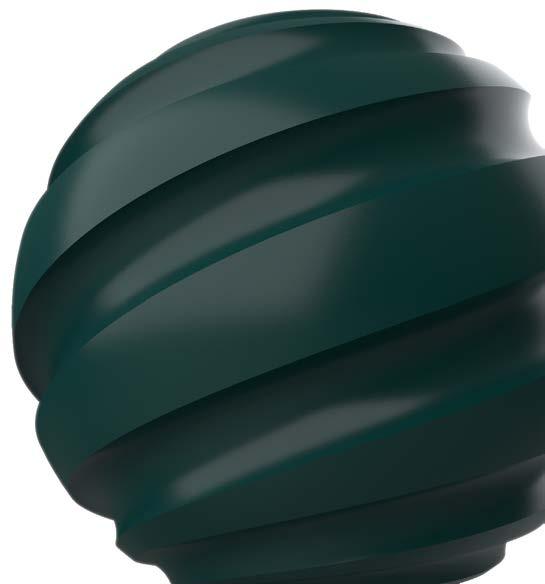
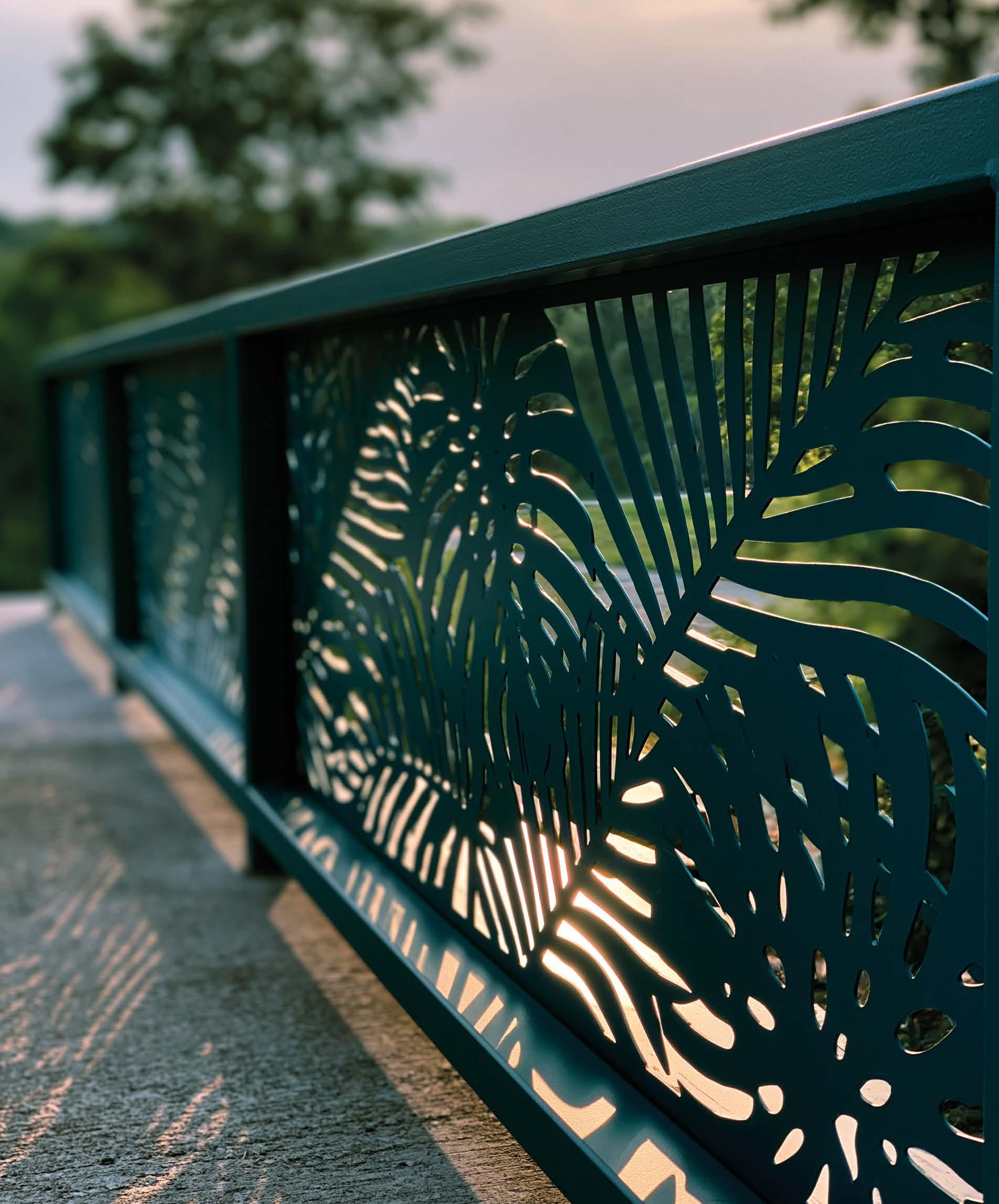
Deep, sophisticated and grounded in nature, Mystic Forest – Trend Color 2026 symbolizes calm, growth, and enduring strength. Its rich dark green brings harmony and stability to surfaces while conveying a sense of quality and resilience.
With TIGER Drylac® powder coatings, this character unfolds across a wide range of applications –from elegant radiators and interior elements to bicycles, sports equipment, agricultural machinery, fittings and fences. Every surface combines lasting protection with refined aesthetics, proving that functionality and design can grow together. www.tiger-coatings.com
In symbolic terms, 100 represents the pinnacle of perfection, totality, infinite potential, the completion of a full cycle.
With this July-August 2026 edition, ipcm® reaches its 100th published issue. It almost seems incredible that a project born of dissatisfaction and a desire to do things well – to change the approach in a stagnant sector by applying the dynamism, speed, and creative power of digital media while focusing on information reliability – has come this far.
Yet, looking back, we can clearly trace the entire journey: obstacles and pleasures, difficult choices and exhilarating moments, hard work and responsibilities, but also the endless rewards that make us forget everything else.
Behind these one hundred issues lies a company founded by three partners, Paola, Francesco, and Alessia, who, over seventeen years in business, have tackled every challenge with a constructive spirit and a shared vision.
As with any entrepreneurial journey, there have been difficult moments and differing opinions. But mutual trust, combined with a passion for this work, has enabled us to continue growing.
Behind these one hundred issues lies a passionate editorial team, united even when opinions diverge and committed to pursuing the goals of editorial accuracy, factual precision, aesthetic quality, and meticulous attention to detail.
Behind these one hundred issues lies a sales team that tirelessly covers kilometres, attends trade fairs and events to be where it matters most, and builds customer loyalty through service, advice, and a visible presence.
Behind these one hundred issues lies a rigorous administration that has never bitten off more than it could chew, has always looked to the future without compromising stability, and has protected the company, its employees, and its suppliers.
Behind these one hundred issues lie thousands of hours of travel, airports, hotels, exhibitions, interviews, articles written late at night, photographs, revisions, phone calls, and deadlines met. Because an international magazine is not born in an editorial office: it is born wherever there is an innovation to talk about.
This issue is dedicated to everyone who has helped write this story: contributors, clients, partners, readers, and friends who have, over the years, believed in our vision.
To open the issue, a collective article brings together reflections from those who have played a key role in these first one hundred issues and who wished to share a thought linking ipcm® to their own story. It is a long read, but well worth the time.
Richiedi la versione in italiano a info@ipcm.it
It is no easy task to give a preview of the other content in this issue, because it covers so many topics that it is impossible to pick out the main ones. It is as though the most significant innovations that have transformed our industry in recent years have all converged on these pages.
Over the past seventeen years, we have not merely reported on the sector: we have followed it wherever it was taking shape. We have travelled across continents, visited plants, and met entrepreneurs, technicians, and researchers, firmly believing that the credibility of information stems first and foremost from being on the ground. This is also one of the most international editions yet: it features reports and contributions from Canada to Australia, from Portugal to Spain, from Sweden to Germany.
The first one hundred issues of ipcm® are a milestone, but above all, they mark the start of the next chapter. With the next edition, a new cycle of one hundred issues will begin. New ideas, new people, new generations, new clients, and new markets around the world to engage with, and to whom we can offer information, insights, suggestions, and updates.
I like to think that in another seventeen years’ time, I will still be here, writing about it with all of you, looking back with the same sense of wonder.
#ipcm100: one hundred issues, one vision
Alessia Venturi ipcm®
Some milestones are measured in terms of time. Others in terms of the ability to turn a vision into tangible, lasting results.
For a magazine launched in 2009, in the midst of one of the deepest financial crises of the modern era, publishing its 100th issue proves that a vision, when backed by expertise, determination, and foresight to anticipate the future, can endure even in the most challenging times. When ipcm® was launched, we had a clear objective: to create an international magazine that would provide Italian companies in the surface treatment and coating sectors with a platform to communicate beyond national borders, supporting them precisely where the market was expanding.
The sector’s response was not long in coming, and the appeal of ipcm® –with its thorough, up-to-date information, case studies offering a snapshot of the industrialisation of the most diverse technological innovations, and its presence at all the most significant events for the surface treatment industry – grew to such an extent that, within a few years, it had become a valuable reference point for the global surface finishing industry, eventually establishing itself as the only trade journal published entirely in English and distributed across all the major international markets. For eos Mktg&Communication, the publisher of ipcm®, reaching this 100th issue means having built a publication that has evolved alongside the market, weathered economic crises, industrial transformations, technological revolutions, and geopolitical shifts, without ever compromising its identity, independence, and, above all, its values, credibility, and expertise. This achievement stems from our belief that technical information should foster dialogue among companies and forge links between expertise, technologies, and people. That is why we have decided to mark this issue in a different way. Rather than telling our own story, we asked our clients, whether they have been with us from the very beginning or have, over time, chosen to share their journey with us, to tell it in our place. We asked them to recount an innovation, a project, or a significant moment in their company’s history, linking it to the one hundred issues of ipcm®. We did not want to simply collect testimonials, but to understand the role our magazine has played in the evolution of their businesses and in promoting their innovations. The result is a collective narrative that shows how a technical magazine can be much more than a means of communication: it can be a meeting place, an archive of industrial history, a tool for growth, and a hub for an entire professional community.
Reading these testimonials moved us deeply. Because they reminded us that the value of a publishing project is not measured solely by the number of printed pages, the readership reached, or the countries in which it is distributed. Above all, it is measured by the relationships it builds and the trust it earns over time.
We at Adapta are truly proud to see ipcm® reach the milestone of 100 published issues. We have had the pleasure of supporting this magazine since its inception: our first copy dates back to 2010, a memory that bears witness to a shared journey that has evolved over time. As we mark this significant milestone, we would like to extend our best wishes to the entire ipcm® team and the magazine, in the hope that it will continue to serve as a benchmark for the sector for many years to come.
David Pellicer, Adapta Color
Congratulations to ipcm® on reaching the milestone of 100 issues. Over the years, the magazine has become much more than a source of technical information: it has established itself as a trusted reference for the surface finishing industry, helping to build knowledge and promote a culture of innovation and sustainability within the powder coatings sector. One innovation we were pleased to see featured was Interpon D Low-E, AkzoNobel’s low-energy powder coating range for architects and specifiers. As the first Qualicoat Class 1 and 2 certified powder coatings capable of curing at temperatures as low as 150 °C, Interpon D Low-E marked an important step forward, enabling customers to reduce energy consumption, lower carbon emissions and improve production efficiency without compromising performance. As Interpon D Low-E was introduced to the market, ipcm® helped turn innovation into shared knowledge through its ability to explore technical topics in depth and foster qualified dialogue among companies, applicators, and industry professionals. We wish ipcm® continued success in the years ahead, inspiring the industry and supporting its transition towards an increasingly innovative and sustainable future.
Stefania Alberta, AkzoNobel Powder Coating
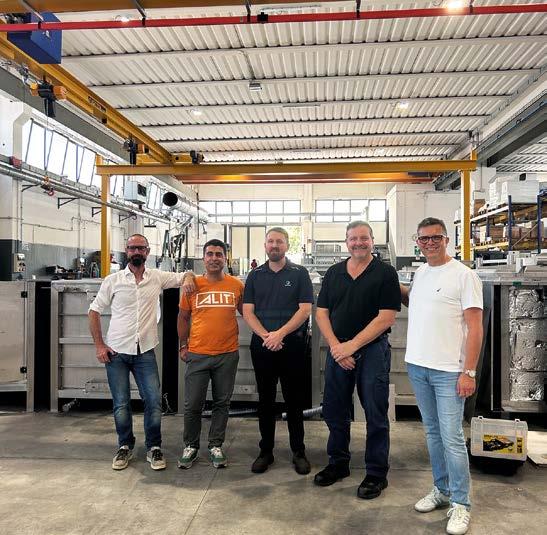
When I look back over these 17 years and the 100 issues of ipcm® , the first memory that springs to mind is my first meeting with Francesco. He presented the project to me with great humility, but also with a very clear vision: to create something significant for our industry. We chose to believe in that project, and over time we have built a relationship grounded in trust and mutual respect. After all, our work is not just about systems and technology, but above all about people.
First as Alufinish Italia and later as ALIT Technologies, we have had the pleasure of supporting ipcm® on this journey, helping to raise awareness of industrial paint stripping through articles and in-depth analyses on a topic that has, over the years, become increasingly important, particularly in relation to sustainability and the circular economy. I particularly enjoy recalling the numerous articles devoted to our FASTRIP ISP in-line paint stripping machines, as this technology has, over time, revolutionised the cleaning of hooks used in vertical aluminium profile coating lines and is now attracting growing interest for the in-line cleaning of load bars and frames in powder coating plants.
ipcm®’s growth has been extraordinary, both in terms of visibility and international reputation. Even today, it is a pleasure to meet at trade fairs in Europe and overseas and to see how that initial project has become a point of reference for the sector. I wish the whole team every success as
they continue to showcase innovation with the same curiosity, expertise, and empathy that have set them apart from the outset. I sincerely look forward to another 100 issues like these!
Loris Rossi, ALIT Technologies
Over the past 17 years, ipcm® has documented the transformation of the surface finishing industry from traditional quality control towards increasingly digitalized and globally connected processes. As BYKGardner, one milestone we would like to highlight is the remarkable progress in measurement technology, particularly the level of inter-instrument agreement achieved today. This development has enabled globally consistent and highly precise colour and appearance measurements, creating the foundation for digital quality standards across sites, companies, and supply chains. At the same time, innovation in instrumentation has continuously supported this transformation. A project we are particularly proud of is the development of the spectro2guide, which integrates the world’s smallest fluorimeter into an industrial-grade spectrophotometer. This unique innovation has significantly improved the reliable measurement and quality control of fluorescent materials and reflects the industry’s ongoing drive towards
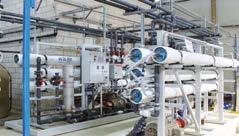
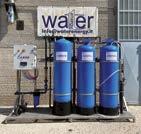
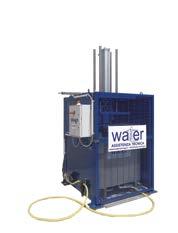
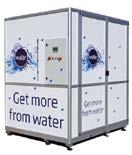
Turn key solutions for industrial wastewater treatment - Design and manufacturing of plants and chemicals for industrial wastewater treatment Chemical-physical plants - Sludge treatment and compactor systems - Ion exchange demineralization systems and reverse osmosis systems - Oil separators - Filtering systems
Batch type systems - Flotation units - Chemicals and spare parts for water treatment - Technical service, support and maintenance of wastewater treatment plants
We don’t just treat water — we give it a second life. Every drop matters: our ongoing commitment to zero discharge and total water reuse drives every solution we design.
greater precision, comparability, and digital integration—an evolution that ipcm® has accompanied and showcased throughout its 100 issues. We sincerely thank ipcm® for its longstanding commitment to our industry and for providing a platform that has connected, informed, and inspired the surface finishing community over these years.
Carola Gaulke, BYK-Gardner
ipcm® and Chemtec were founded almost at the same time, just one year apart. As start-ups, we shared the challenges and enthusiasm of the early days, growing together while contributing to the evolution of the surface treatment industry. Over the past 17 years, the most significant change has not been the introduction of a single technology, but rather a new way of thinking about the coatings industry.
At Chemtec, we have embraced this evolution by developing technologies that rethink the pre-treatment process. TORAN 3® has demonstrated that it is possible to achieve a single-stage pre-treatment process operating at ambient temperature, without using water or generating sludge. PRONORTEC® has proven that long-established technologies such as zinc phosphating can be replaced by nanotechnology-based conversion coatings that are more effective, efficient, and sustainable. For us, innovation means simplifying processes while improving product quality, manufacturing efficiency, and industrial sustainability, because ‘innovating pre-treatment means rethinking it.
Carlo Guidetti, Chemtec
Once upon a time, but not so long ago, a meeting took place that smelled of fresh paper and clean air: 17 years ago, Alessia Venturi and Francesco Stucchi introduced ipcm®, their new publishing venture, to the world. Their infectious energy set Defil’s heart racing. On the very morning our advert appeared in the first issue, a customer knocked on the door: it marked the start of a long-standing partnership that continues to this day. Buying the cover of the second issue was the foundation stone of a building intended to last. Since then, our paths have crossed through shared successes and a few inevitable storms, which we have always weathered with clear communication – the very thing that has kept us close. We still vividly recall the launch of Max Paint Filter, the first selfextinguishing honeycomb filter: it was a European breakthrough that opened unexpected horizons for us. Then came the 4.0 pleating machine, which transformed our workflow and halved order fulfilment times, establishing us as industry leaders. We raised a toast together to our first 40 years, celebrating hard work, innovation, and mutual loyalty. The latest chapter for now, also presented in collaboration with ipcm®, is the DFTDIE K series: a rigid-pocket filter with extraordinary filtration properties, compact and environmentally friendly.
Today, Defil’s future is increasingly intertwined with corporate eco-
sustainability projects, a choice that is not only strategic but also moral. Across the pages and through the filters, ipcm® and Defil continue to write a story worth telling, because it is made up of people, visions, and a shared commitment to the air we breathe .
Pellegrino Family, Defil
We warmly congratulate ipcm® magazine on reaching its remarkable 100th issue. It has been a pleasure to be part of this success story from the very beginning. One highlight of our shared journey was our first feature in Issue 5, where we introduced the groundbreaking EcoDryScrubber1. With this innovation, Dürr fundamentally transformed coating technology. As the first system of its kind on the market, it enabled the dry separation of overspray, establishing a more sustainable standard by eliminating the need for water and chemicals while significantly reducing energy consumption and emissions.
The EcoDryScrubber saves up to 60% of energy and allows process air to be reused, reducing the environmental footprint while creating tangible added value through more efficient processes and lower operating costs. We look forward to many more milestones together with ipcm® , to continuing to showcase our innovations, and we wish the magazine continued success in the years ahead.
Eisenmann GmbH has its roots in a company established in the 1950s. Following its realignment, a spirit of innovation and unwavering team spirit ensured the company’s continued successful growth. ipcm® magazine has accompanied us on this journey, and we would like to express our sincere thanks. We wish them all the best for the next 100 issues.
Daniela Kiefer, Eisenmann
In 2026, Euroimpianti celebrates a major milestone: 50 years in business. This anniversary coincides with the 100th issue of ipcm®, a magazine that, over the years, has chronicled the evolution of the surface treatment sector, giving voice to the companies, technologies, and people who have driven its development. Founded in 1976 as a local business, Euroimpianti has grown without compromising its core values, gradually expanding its international presence with offices in Brazil, Spain, the United States, Germany, and Poland. Over these 50 years, we have witnessed profound changes, from the evolution of coating technologies to a growing focus on sustainability, energy efficiency, and the digitalisation 1 https://www.ipcm.it/en/open/ipcm/2010/5/79.aspx
Sunia Lausberg, Dürr
of production processes. Leafing through the pages of ipcm®, we have often come across themes, challenges, and perspectives that have also characterised our own journey. Celebrating these two milestones together reflects the value of continuity, the capacity for innovation, and the relationships built over time, all of which provide a solid foundation for looking to the future with confidence.
Gianluca e Marta Baruffaldi, Euroimpianti
When the editorial team invited us to contribute to this special issue with an article dedicated to our company, we were delighted to accept. At the same time, it seemed natural to shift the perspective: milestones such as this deserve, above all, to be recounted by those who have built them, issue after issue. That is why we have chosen to focus on the magazine itself, its journey, and the value it has generated over time, describing our role as part of a broader, shared story. Reaching the 100th issue is a milestone of great significance for any publication and is even more so in this case. 100 issues are not merely a sequence of numbers but the tangible result of an editorial vision, continuity, and the ability to interpret, over time, the developments of a sector undergoing constant transformation. Our company has had the privilege of supporting this project from its earliest stages, recognising its potential and quality from the outset. In a context where specialised information requires expertise, authority, and innovation, this magazine has established itself as a point of reference for professionals and industry players. The journey we have shared over the years has been built on solid, constructive collaboration grounded in common values: quality, openness to change, and a focus on the sector’s development. For us, supporting this publishing venture has meant investing not only in a project but also in a community built on expertise and experience. On this significant milestone, we would like to extend our sincere congratulations to Alessia, Francesco, and their entire team, whose commitment, vision, and passion have made this achievement possible. They deserve credit for building a solid and well-regarded publishing venture. Finally, we would like to reiterate our appreciation for a partnership that has grown stronger over time, demonstrating how essential it is to build relationships based on trust and shared objectives. We are confident that the future will bring new opportunities for growth and innovation. In the same spirit that has characterised these first 100 issues, our hope is that this milestone represents not an end in itself but a stepping stone towards even more ambitious achievements.
Marco Guarino, Europolveri
To mark the prestigious milestone of the 100th issue of ipcm® , Eurotherm S.p.A. regards these 17 years as a reflection of its own growth. From our perspective as manufacturers, innovation has taken the form of a process of evolution and gradual adaptation to market demands.
Our industrial journey has been one of continuous transformation: - the beginnings: focused on producing individual machines, such as ovens and coating booths;
- development: the transition to designing the first integrated systems with manual configuration;
- the present: the engineering of complex, fully automatic coating lines, designed to meet the stringent production standards of leading multinational companies.
Throughout this journey of growth, the technical principle that has defined Eurotherm’s essence has been to combine rapid design with fully bespoke development. The ability to interpret our client’s specific requirements and translate them into customised configurations has been the constant that has guided our evolution and that will continue to shape, together with ipcm®, the future of coating systems.
Paolo Ghiazza, Eurotherm
100 issues. 17 years. Over 3,000 articles.
Having worked on this magazine since issue 6, these figures mean to me hundreds of thousands, perhaps millions, of words translated; countless hours of research; an impossible-to-quantify number of emails; and also many fond memories. But for the coatings industry, in Italy and around the world, they represent an extraordinary wealth of information, news, data, knowledge, insights, and ideas, made available to every professional to help them better understand the market in which they operate. Every page of these magazines has allowed us to discover businesses we would otherwise never have come across, to explore every aspect of the world of surfaces, and at least in our imagination, to travel from one end of the globe to the other alongside the extraordinary team at ipcm. Here’s to many more successes… and 100 more issues!
Chiara Foppa Pedretti, ipcm® International translator
Congratulations on the 100th issue of ipcm®! The 100th issue of ipcm® marks an extraordinary milestone. For many years, the magazine has supported the international coatings and surface treatment industry with expert knowledge, a spirit of innovation, and a keen eye for the trends and challenges shaping our sector. This anniversary holds special significance for us, as we are also celebrating our own centenary this year. Since 1926, FreiLacke has stood for quality, innovation, and sustainable
development – values that have likewise been at the heart of a successful trade journal for decades. In keeping with our anniversary celebrations, we had the opportunity to share our company’s history and vision for the future with readers in the March/April 2026 issue through the article ‘A Century of Colour, Progress and Family Spirit’2. The fact that we can now both look back on the number 100 highlights the importance of continuity, adaptability, and passion for our industry. We look forward with enthusiasm to many more years of successful collaboration. Here’s to the next 100 milestones – congratulations on this anniversary edition!
FreiLacke team
in their respective industries, enabling us to adopt a technical approach that builds credibility and reliability with potential clients, many of whom have since become our partners. When companies recount their own experiences, communication is more effective: the reader is naturally more engaged and more inclined to evaluate the proposed solution, making the process more direct and seamless for everyone. To mark the 100th issue of ipcm®, I am also pleased to share a personal memory: I attended your 10th anniversary as a guest of Alessandro Pancaldi, the CEO of ILSA-MC, when I was early in my career and had little experience of the sector and its dynamics. Today, however, I am participating as an active member of the company, directly involved in its operations, a testament to a personal growth journey that has run parallel to that of your magazine.
Veronica Pancaldi, ILSA-MC
Rather than a single project, I would like to highlight the collaboration we have built over the years through the numerous workshops organised by our company. The involvement of ipcm® as a moderator and editorial partner has enhanced the value of their technical content, fostered dialogue amongst industry professionals, and raised the profile of these events, thereby contributing to their success and growth over time.
Mario Ferro, Gema Europe
When training, athletes are often urged by their coach to focus on the upcoming attack or defence, or the next match to be played. They train, therefore, to put the past behind them, as it could have a negative impact on the next phase of the game. They clear their minds and focus on the present, looking towards the near future. This also applies to some professions. The goal to be achieved by the end of the year is the target one must think about and aspire to at every moment. The past is quickly filed away and consigned to deep oblivion. All this can cause discouragement, given the lack of sufficient time to reflect on and examine what has happened, with whom it was shared, and what has been experienced. On this occasion, however, the time has come to look back at what we have shared with ipcm®, a partner who has been able to make the most of our efforts to improve the efficiency of coating lines through better paint adhesion and proper masking solutions.
Adriano Antonelli, IBIX
Among the most significant projects for us over the course of these 100 issues of ipcm®, we would like to highlight the case studies developed with Sweden&Martina (Padua)3, active in the dental and medical sectors, and with Mikron Tool (Switzerland)4, which specialises in PVD coating for tools. Both experiences have served as a real springboard for ILSA-MC
Among the moments we remember with the greatest pride is the launch of our Industry 4.0 solutions, i4paintshop and i4smallparts, which marked a turning point for Imel in how we approach coating systems: no longer just about production efficiency, but also digital control, sustainability, and predictive maintenance. Throughout this journey, ipcm® has been much more than a publishing platform: it has been the voice through which we have communicated this evolution to an international audience of technicians and decision-makers. In a B2B sector where reputation is built over time and through the quality of content, a presence on ipcm® has helped us position ourselves as credible partners in new and increasingly competitive markets. Thank you for 17 years of genuine collaboration. The 100 issues of ipcm® are also part of our history.
Marco D’Angela, Imel
ipcm® has been a long-standing partner for us, accompanying our journey over many years and playing an important role in sharing our know-how and development with the industry. One milestone we would particularly like to highlight is our evolution in powder coatings – from a European specialist to a global player. This transformation has been shaped by strategic expansion, continuous development, and, most recently, by a key step into local production in Ohio, USA5. This journey not only marks an important chapter for KANSAI HELIOS but also reflects the broader transformation of the coatings industry – a development that ipcm® has closely documented and actively supported over the past 17 years.
In recent years, Kenosistec has undergone a profound transformation that has reshaped how we view the surface treatment market. We have chosen to invest in solutions that meet the industry’s new requirements, ensuring greater sustainability, new surface properties, and a focus on quality. In this context, we have developed solutions such as Hi.P.Po., a high-performance sputtering system, and Chrome+, our PVD technology for coating plastics, both of which reflect our commitment to offering future-oriented alternatives. At the same time, our mindset has shifted: from equipment suppliers to PVD suppliers. Thanks to the expansion of our factory and the launch of our service and finishing centre, we have also been able to offer coating services to customers who were unable to install their own equipment on-site. We still have many new projects to share, and ipcm® will be one of our regular partners in communicating the latest developments over the coming years!
Simone Colombo, Kenosistec
If we were to identify a common thread to bear in mind while reading these pages of issue 100 of ipcm®, it would undoubtedly be the journey by which Lechler has transformed innovation into a driving force for tangible sustainability. From low-environmental-impact coating technologies to the development of the Lechler Product Sustainability Index and right through to the latest high-tech colour collections, our company has demonstrated that research, design, and responsibility can go hand in hand. A significant milestone was our shift towards increasingly sustainable products and processes, without compromising performance, aesthetic quality, or reliability. Our vision looks to the future of the coatings industry: creating value through colour, anticipating market changes, and contributing to a culture of innovation centred on people, the environment, and business competitiveness. Along this journey, ipcm® has served as an authoritative voice: a magazine capable of covering the sector with technical depth, a focus on processes, and an awareness of market developments.
Claudia Lietti, Lechler
When I founded M.E.C. 35 years ago, the watchword was ‘ecology’: it is no coincidence that M.E.C. stands for Cryogenic Ecological Methodologies. Today, sustainability is a hot topic, but for us it is the natural evolution of a philosophy that has guided us from the outset. Over the years, we have consistently invested in technologies to reduce the environmental impact of our processes: from solar power and smart energy storage systems to thermal energy recovery from furnaces and projects to produce renewable electricity and reduce CO₂ emissions. Even our choice of raw materials, such as nitrogen and biogenic carbon
dioxide, aligns with this vision. To mark the 100th issue of ipcm®, we wish to acknowledge the role this magazine has played in reporting with rigour and impartiality on the sustainable evolution of the coating industry. This journey has accompanied us for many years and has helped promote a principle that is essential to us: innovation does not simply mean improving performance, but doing so in an increasingly environmentally responsible manner.
Attilio Bernasconi, M.E.C.
For 17 years, ipcm® has been documenting the evolution of the surface treatment sector. Over the same period, we at MEG have experienced that change first-hand every day, transforming new production requirements into solutions and technologies.
Year after year, we have seen industrial cleaning become an increasingly strategic part of production processes. Greater precision, repeatability, automation, and a focus on sustainability have become essential requirements, particularly in high-precision sectors. This evolution has encompassed technologies, materials, and design approaches, profoundly transforming our work and the entire sector. Throughout this journey, ipcm® has played a key role in chronicling this change and in raising the profile of the companies that have experienced and driven it. That is why we are particularly delighted to be featured in this 100th issue, a symbol of a journey of growth that, in some way, we have shared. Because innovation is not just about developing new solutions, but also about knowing how to communicate and share them.
Erika Ligugnana, MEG
Looking back over these years, I personally have very positive memories of my time in the Nordson ICS division. Even though I am no longer part of that division today and now focus on other markets within Nordson, I still look back on that time with great appreciation. It was a period marked by exciting developments, inspiring projects, and valuable exchanges. I also had the great pleasure of working from time to time with Alessia and her team on case studies. In particular, I truly enjoyed working with Alessia – our collaboration was always both professional and very pleasant. Even when we met at various international trade fairs, we always made a point of meeting in person, which I appreciated a lot. These moments of direct exchange and connection are, in my opinion, a vital part of what makes this industry so special. Once again, congratulations on this remarkable achievement. I wish you and the entire team continued success for the next 100 issues and beyond.
Corinna Hellwig, Nordson
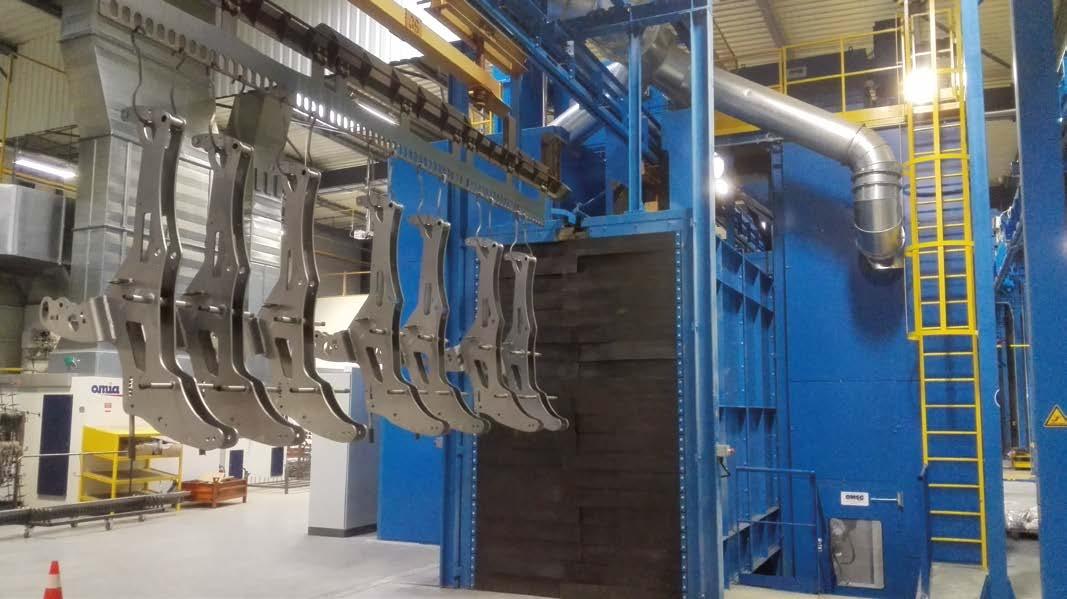
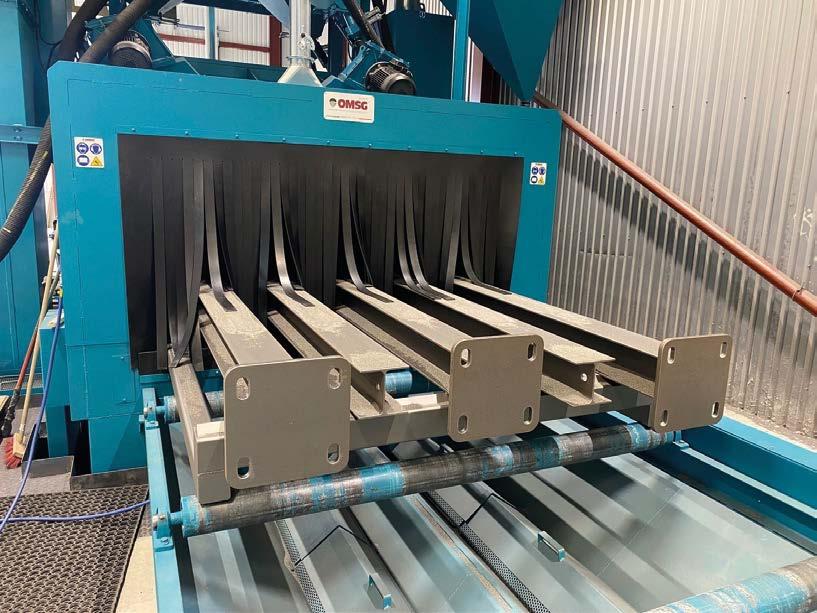
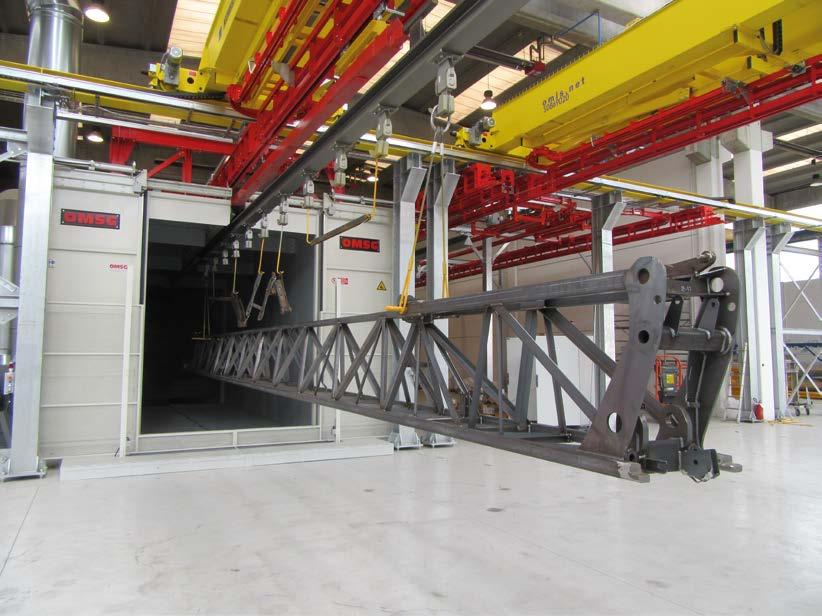
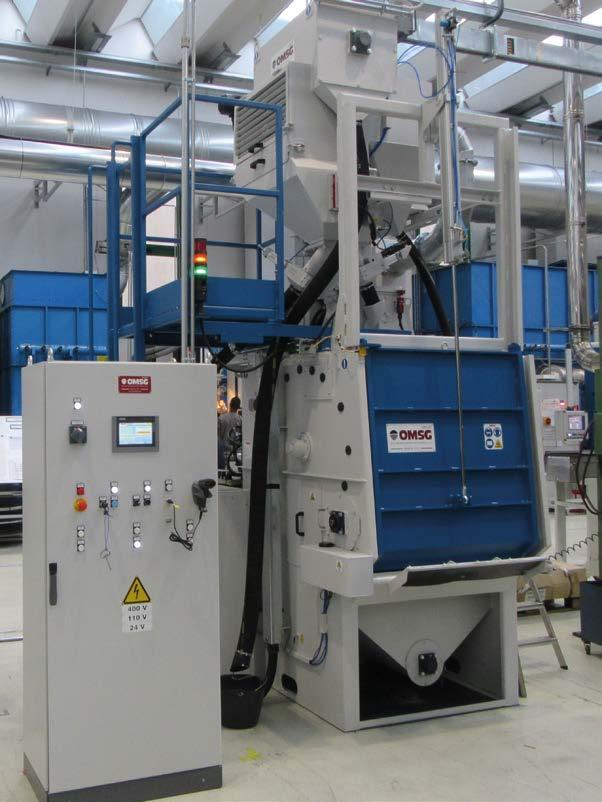
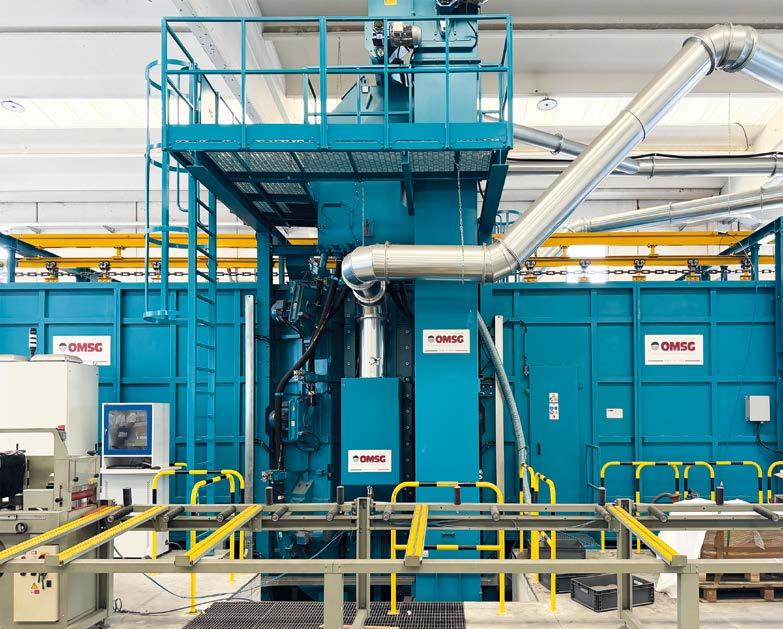
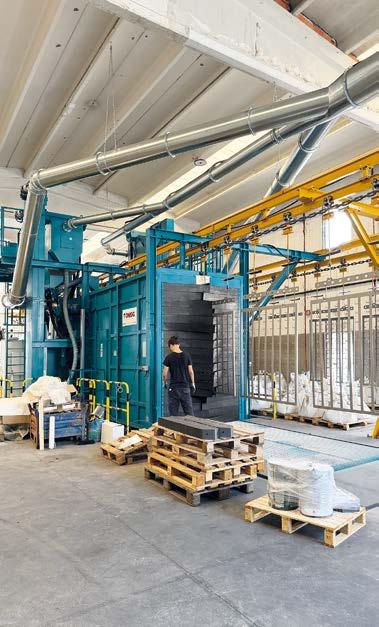
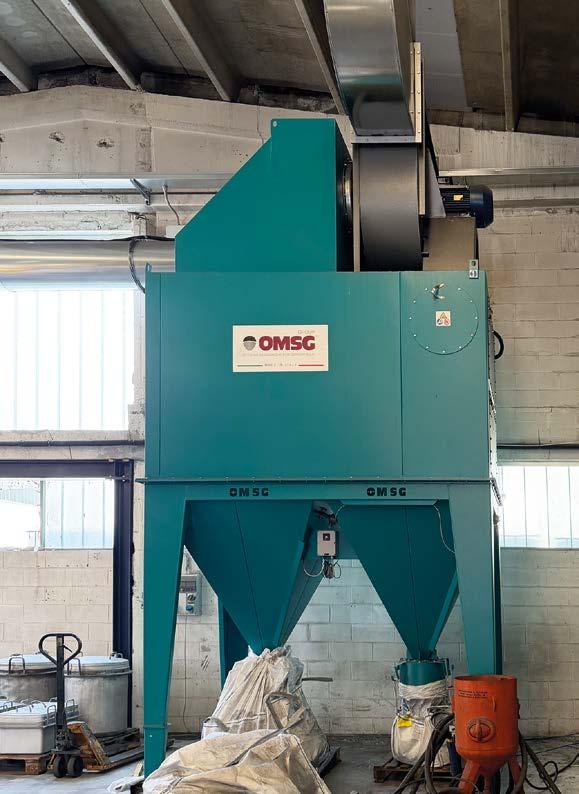
Looking back over the 100 issues of ipcm® and the key developments that have shaped our industry over the last 17 years, one of the most significant milestones in the recent history of OMSG - Officine Meccaniche San Giorgio is undoubtedly the acquisition of our long-standing competitor, Carlo Banfi, finalised in 2017. This was a strategic move that represented much more than mere expansion in size: it enabled us to bring together two long-established players in the shot blasting sector, combining their expertise, know-how, and technological assets. The integration has strengthened OMSG’s presence in national and international markets, broadened our range of technical solutions, particularly for the treatment of wire and of boilers in preparation for enamelling, and consolidated our ability to meet the needs of an everevolving industry. Years on, this acquisition has proved to be a forwardthinking decision that has generated value and helped to strengthen OMSG’s role as an international benchmark in the shot blasting technology sector.
Enzo Dell’Orto, OMSG - Officine Meccaniche San Giorgio
First of all, we would like to congratulate Alessia, Francesco, and the entire ipcm® team on the prestigious milestone of issue number 100. Achieving this result means having become, over time, an authoritative point of reference for our sector, reporting on its evolution with expertise and passion. Among the moments we remember most fondly from these years of collaboration, one holds particular significance for our company: the cover of issue 73, dedicated to celebrating our 60th anniversary. That issue represents not only a corporate milestone but also encapsulates the history and values that have guided us for over six decades and across three generations: a passion for our work, a constant pursuit of innovation, a focus on people, and the strong family ties that have always characterised our company. Looking back at that cover today means retracing a journey marked by growth, challenges, and shared successes, and it reminds us of the importance of continuing to invest in the future while keeping our roots firmly in place. Thank you for sharing, over the years, the stories of companies in our industry and for helping to highlight their achievements. We hope this 100th issue is just the latest milestone in a long series of successes.
Matteo Roda, Orbita
Over the years, our relationship with ipcm® and the entire editorial team has developed in a very positive way. Being members of the UCIF association has fostered an even more direct and constructive dialogue, centred on the future of this industry. We have always found the team
to be knowledgeable and approachable, starting with Alessia Venturi and Francesco Stucchi, who have provided professional support for our communication and outreach activities regarding Rösler Italiana’s systems, processes, and solutions. This collaboration, now spanning over a decade, has been consistently positive, not only because of the editorial support we have received, but also because of the professional exchange that has developed over time. On several occasions, we have shared our thoughts on market trends, exchanging ideas, opinions, and perspectives that have helped us better understand the sector’s evolution. For this reason, this magazine remains an important partner for us and a valuable resource for showcasing and promoting Rösler’s presence within the industrial landscape.
Federico Milazzo, Rösler Italiana
We are delighted to look back on the launch of Cyclomix® Evo, not least because ipcm® helped showcase this important innovation for Sames. Thanks to the magazine’s coverage of developments in surface treatment technologies, we were able to share the benefits of this solution with the industry and reach an international audience of highly qualified professionals.
Marie-Anne Guilldou, Sames
Throughout SAVIM’s journey of growth and transformation, ipcm® has remained a constant and invaluable presence. Over the years, the magazine has not only reported on our company’s technological evolution but also on the people, decisions, and milestones that have shaped the Scavini family’s history. We have felt this support particularly keenly on the occasion of our company anniversaries, when ipcm® has dedicated space, attention, and empathy to us, helping to highlight significant milestones for our entire corporate community. More than a simple editorial relationship, a dialogue has developed over time, grounded in mutual understanding, trust, and a shared desire to provide expert coverage of the industrial finishing world and the companies that drive its growth every day.
Scavini Family, SAVIM
One of the most significant milestones in Se.Po.’s 50-year history was undoubtedly the generational handover, which, from July 2025, saw Marco Pozzi assume full charge of the company as its Sole Director. Since then, a major transformation has been underway to make Se.Po. increasingly efficient, competitive, and forward-looking. The implementation of an ERP system is now facilitating the gradual integration and optimisation of business processes, while investment in state-of-the-art technology and machinery is contributing to the
continuous improvement of its production quality standards. During this period of change, a significant contribution has come from our collaboration with ipcm® magazine, which has, for years, highlighted Se.Po.’s experience and expertise in the surface treatment sector, fostering new opportunities for dialogue and development. Indeed, it was within this context that the decision was made to participate in PaintExpo 2026 as exhibitors, seizing valuable opportunities for visibility and international networking. One year on from embarking on this journey, we look forward with confidence to the opportunities ahead, aware that our main strength lies in the experience we have gained over time and in the values that continue to guide every decision and investment we make.
Marco Pozzi, Se.Po.
The ‘significant moment’ we would like to highlight is, quite simply, the journey we have undertaken together: a venture into the world of powder coatings that began just a few years ago and has continued as we have worked to develop and promote a sector of infinite nuance. Our journey has progressed first at a national level and then across Europe, shaped by experiences, projects, and innovations that have enhanced the value of surface treatment. Being part of this story means reflecting on a path defined by a constant focus on research, quality, and innovation, factors that unite us in how we interpret the market and respond to its challenges. To mark issue number 100, we would like to thank ipcm® for its work in giving voice to the sector, and we wish the magazine a future full of new successes and authoritative stories to share.
Enrico Dall’Igna, ST Powder Coatings
Over the years, ipcm® has established itself as a key communications partner for Sherwin-Williams - General Industrial EMEAI, supporting us in communicating our technological evolution with expertise and consistency. Through features dedicated to projects developed in collaboration with our clients, we have highlighted not only our solutions but also the partnerships behind them. The ability to translate complex technical content into a clear, structured narrative has helped strengthen our market position and raise the profile of our innovations among a specialist audience. Our partnership with ipcm® reflects a well-established relationship, founded on dialogue, reliability, and a shared vision for the sector.
Nada Karaivanova, Sherwin-Williams
Over the past 17 years and across the 100 issues published by ipcm®, we have witnessed the ongoing evolution of the surface treatment industry and the technological advances that have underpinned its growth. The magazine has captured this transformation by giving voice to the companies, projects, and innovations that have helped shape our industry’s present and future.” We are proud to have been part of this journey and to have had the opportunity to share some of our most innovative solutions with its readers. To mark this anniversary, we would like to highlight the launch of our Autocoater 3000 booth6, which reflected our commitment to innovation and continuous improvement. We congratulate ipcm® on this significant milestone and wish them many more years of success as a benchmark for this sector.
Oscar García, Spray S.A.
Over the past 17 years, one of the defining developments for the surface treatment industry has been the transition toward more sustainable technologies. Innovations such as Oxsilan, VIANT and, most recently, Gardolene® D – the world’s first chromium- and fluoride-free passivation technology for copper foils – mark important milestones in that journey, which have been duly documented by ipcm®. These advances have enabled customers to meet increasingly demanding performance, sustainability and regulatory requirements while opening new opportunities in areas such as e-mobility and energy storage. As we begin a new chapter as Surventis, we remain committed to advancing surface treatment through close collaboration with our partners and customers.
Congratulations on this significant milestone and on the steady growth that has made you a leading name in the coatings industry. Among the many memorable moments we have shared over the years, I fondly recall our first meeting in 2010, after a talk I gave at a conference at the University of Trento. On that occasion, Alessia introduced me to the newly launched ipcm® magazine, which immediately struck me by the quality of its content and its innovative design. I was also impressed by her resourcefulness, ideas, and strong determination to forge partnerships and create new opportunities for growth. From then on, we collaborated on numerous projects, the most interesting and significant of which included:
- the 2012 Fuori Salone in Milan’s Brera District, at Piazza Castello: a splendid venue that gave us the opportunity to showcase the effects achieved with our pigments, thanks also to the collaboration of some of our partners and clients, including Europolveri, Cebos, Pulverit, and
Inver. The highlight was the display of Valentino Rossi’s Ducati, made possible by Cristian Lucano from Inver, now a brand of The SherwinWilliams Company. This event was an extraordinary opportunity to promote Merck and our innovative special-effect products, and it helped to consolidate, both within our Group and beyond, our division’s reputation as one of the most innovative, enterprising and creative. - The Colour Consulting Day workshop organised in 2014 on Milan’s Via Solferino. I remember it as perhaps our most successful event in terms of attendance, content, technical and cultural exchange, and networking. It was certainly an important moment for both personal growth and our business development in the coating market: a seed that bore fruit and yielded results in the years that followed.
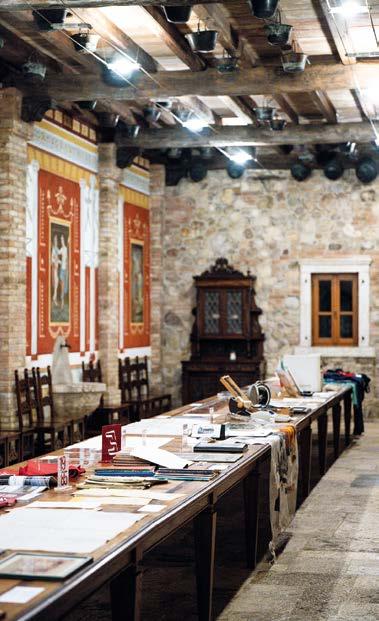
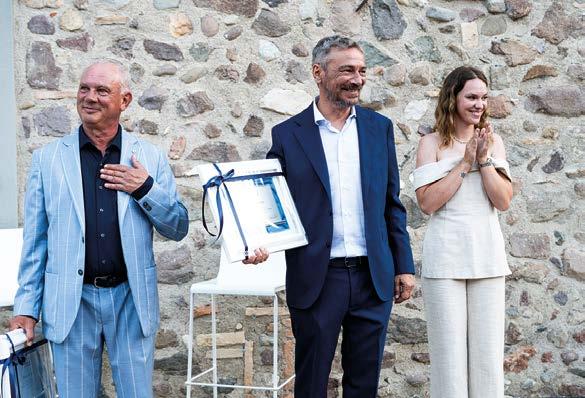
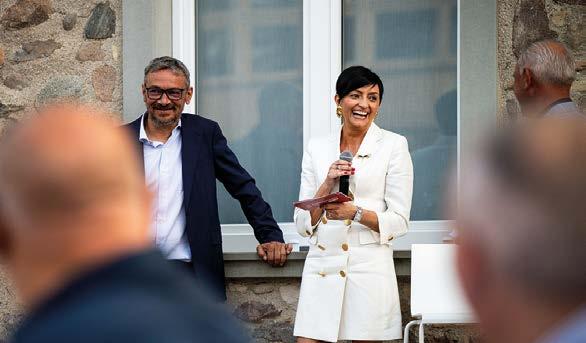
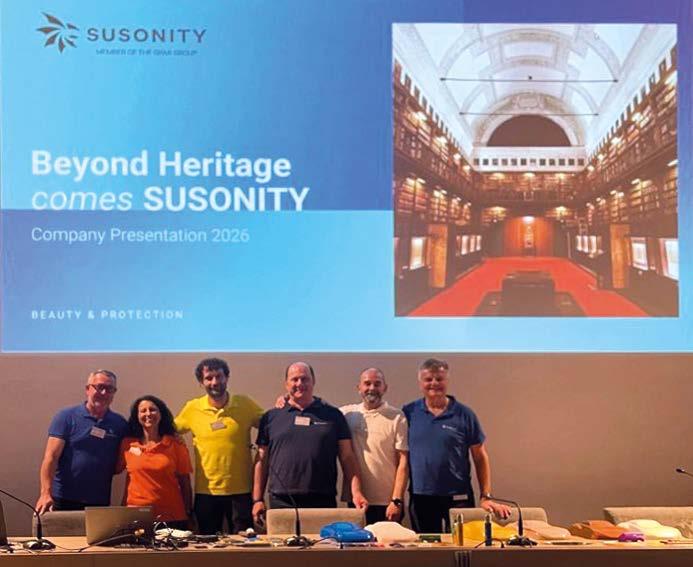
Stefano Corrado, Susonity
We would like to thank the whole ipcm® team for their support over the years and for the enthusiasm with which they follow our work, especially Alessia Venturi, who has accompanied us with numerous reports and through years of momentous change. Despite a world that has shifted from the real to the virtual, blurring relationships and humanity, she has remained a constant presence, a real-life partner who is there at all times: at trade fairs, with clients, with clients’ clients, and at anniversaries, such as ours last year – the 75th anniversary of Tecnofirma Technology. An example for us all of the future that lies ahead: let us not forget that we will always be both ahead of and behind technology and science. Thank you and congratulations on this important milestone!
Giovanna Goi, Tecnofirma
Some collaborations begin at a specific moment. For UCIF and ipcm®, that moment has a name and a place: a UCIF conference in late 2009, where Alessia, Francesco, and Paola used informal breaks to approach members, one by one, to tell them about their project, which was still taking shape. No stage, no formal presentation, just the power of an idea and the courage to share it face-to-face, with the passion of those who know they are holding something important in their hands. It was not yet an established magazine: it was a vision. And that vision, over time, has become a benchmark for the entire industrial finishing sector. Today, ipcm® is already celebrating its 100th issue. A milestone that belongs to those who dreamed it up, built it, and nurtured it, issue after issue, and to those who have walked alongside them throughout these years! From UCIF, a big hug to Alessia, Francesco, Paola, and the entire editorial team. Thank you for choosing that occasion – and UCIF – to get things started!
Manuela Casali, UCIF
Scan& Spray
Dynamic Contour Detection
Programming-free coating of any shape!
The second generation of Dynamic Contour Detection detects the object contour fully automatic and positions the guns individually even for thin objects and at high conveyor speeds. Due to the programmingfree adaption of all relevant line settings the application range is significantly extended.
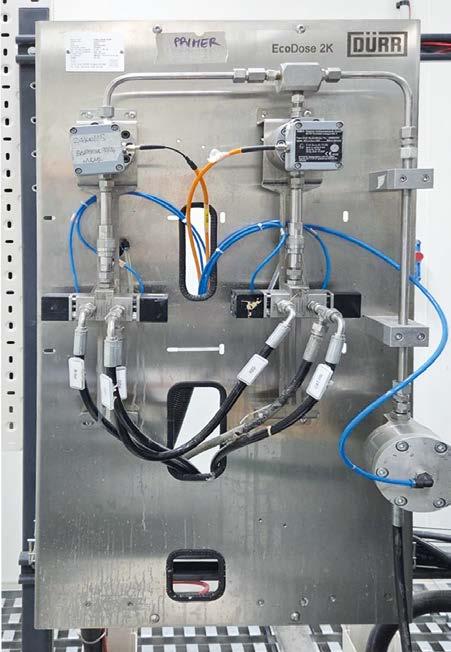
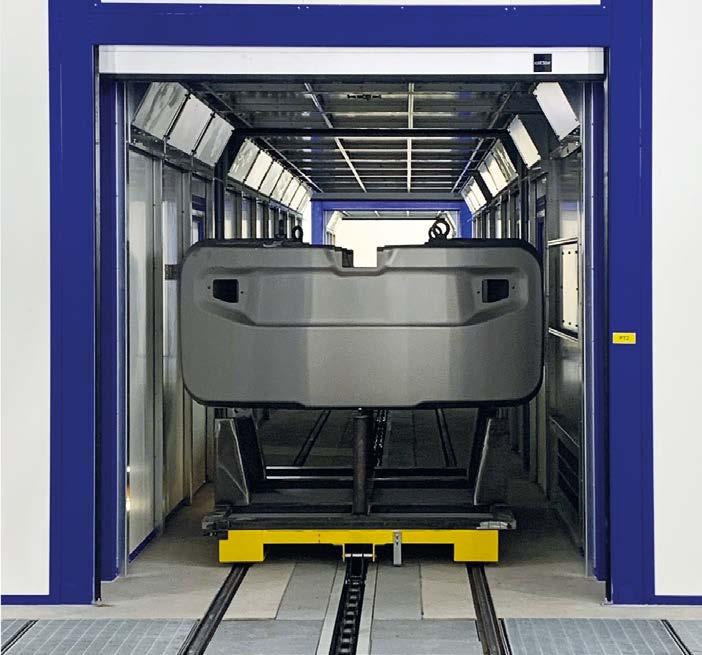
The last decade has been characterised by major technological changes, including the rise of smartphones, apps, social media, and AI; by health crises such as the pandemic, which have led to a shift towards working less in-person and more remotely; by major economic upheavals, including Brexit and significant inflationary pressures; by widespread movements for the protection of rights; and by geopolitical instability and turmoil, which are causing energy uncertainty, planning difficulties, and increasing global complexity. In such a rapidly changing environment, Verind has decided to invest heavily in human capital, enabling it to adapt swiftly to external changes and to develop sustainable, innovative, and technologically advanced industrial solutions. The surface treatment sector lies at the heart of the industrial strategy of the Dürr Group, of which Verind is a part. The numerous feature articles published over the years in ipcm® bear witness to this path of innovation and continuous evolution. Among these, we would like to highlight two in particular, which clearly illustrate the technological changes that have characterised the past decade: - for the automotive sector, we recall the articles dedicated to the technologies implemented at Ferrari, including a low-temperature clear coat7 and a powder primer8; - for the industrial sector, we would like to highlight the article on robotic coating of CNH-TTF tractor bodies9, a project that integrated Process Arm robots, the EcoBell electrostatic application system using bell technology, and electronic 2K metering via volumetric pumps, a highly innovative solution for the ACE market.
Matteo Minelli, Verind
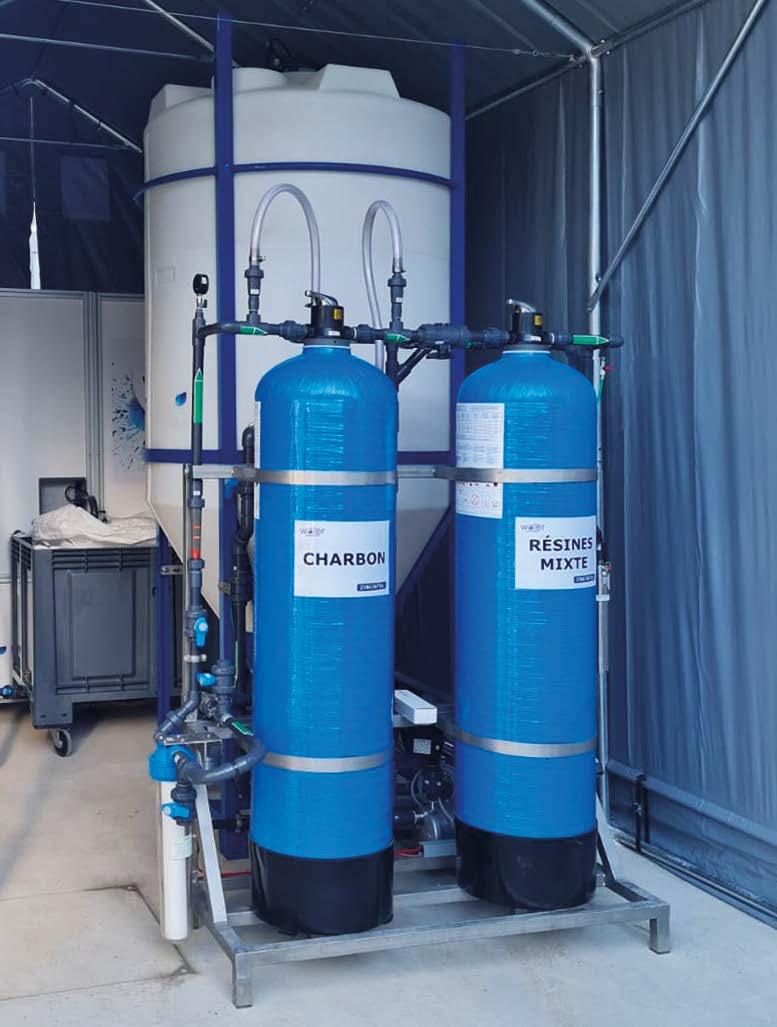
Throughout Water Energy’s 20 years in business, ipcm® has been a loyal partner. It has proved to be much more than an authoritative voice in the surface treatment sector: it has been our ally at international trade fairs and the megaphone that has helped us showcase our water treatment solutions in complex and distant markets, thereby consolidating our international presence. One particularly significant memory is tied to the celebration of our first 10 years in business: in June 2016, at the Misano Adriatico racetrack, coinciding with the Superbike race, we shared that first major milestone with you, our customers and friends. That day was immortalised in a feature article in issue 40 of the magazine10, a testament to a journey forged through our ongoing collaboration. For this reason, as we celebrate your 100th issue, we would like to thank you: together we have written important chapters in our history and in the evolution of a sector that continues to grow.
Over the past 17 years, ipcm® has been one of our most important partners in communicating our innovations and technological developments to the international surface treatment industry. Through professional reporting, the magazine, newsletters, and website have helped position Weber Ultrasonics as a trusted innovation leader, while providing an excellent platform to showcase our projects, application expertise, and technological milestones to a highly relevant audience. Beyond media coverage, ipcm® has also supported us in building valuable connections within the Italian market and has accompanied and promoted our events, helping us strengthen our presence and network in one of Europe’s key industrial regions. What we particularly value about ipcm® is its ability to consistently deliver insightful, forward-looking content that highlights emerging trends and future developments in our industry. Looking back on 100 issues of ipcm®, we are proud to have been part of this journey and look forward to continuing this successful partnership in the years to come.
Claudia Meder, Weber Ultrasonics
CHEMICAL MAKING SOLUTIONS
TRATTAMENTO ACQUE
WATER TREATMENTS
PREVERNICIATURA
E NANOTECNOLOGIE
COATING PRETREATMENT AND NANOTECHNOLOGIES
SGRASSANTI INDUSTRIALI DEGREASERS
SVERNICIANTI
PAINT STRIPPERS
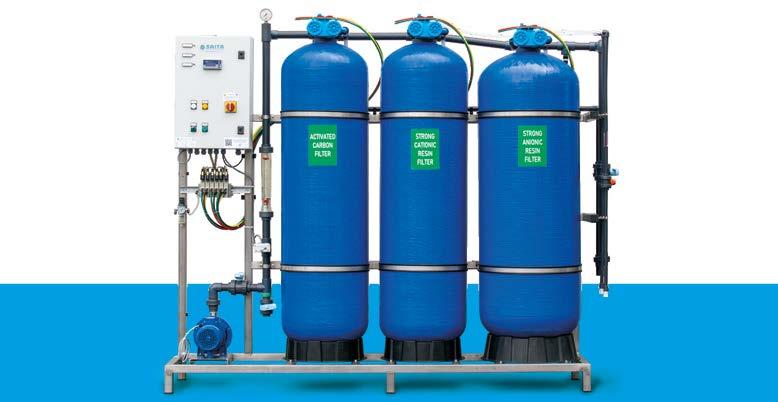
SAITA installs a containerised evaporator system for paint pretreatment wastewater recovery
Vacuum evaporation and activated carbon filtration enable the recovery of more than 90% of wastewater generated during the pretreatment process.
SAITA, headquartered in Limena (Padua, Italy) and specialised in the design and manufacture of systems for the purification, recycling, and treatment of industrial wastewater, has developed a new compact solution for the treatment and recycling of wastewater generated by paint pretreatment tunnels.
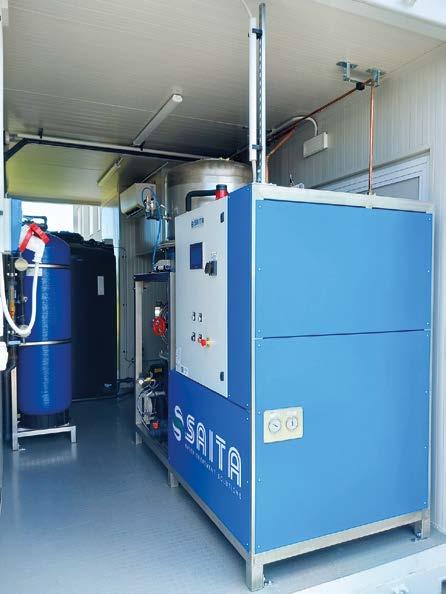
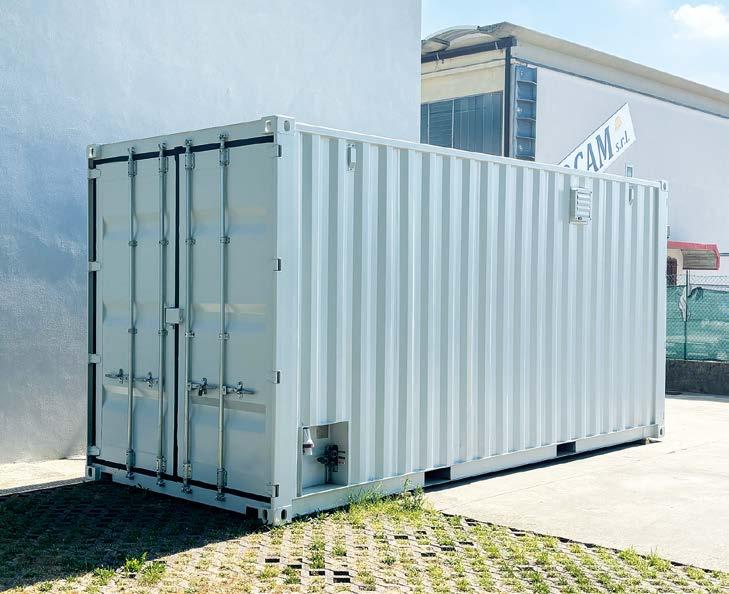
The new containerised module incorporates an EV Series heat pump vacuum evaporator with a treatment capacity of approximately 1,500 litres per day. The container also houses wastewater collection tanks, distilled water storage and transfer tanks, as well as an activated carbon filtration system for the final treatment of the recovered water.
Designed for outdoor installation, the insulated container is equipped with an air conditioning system capable of maintaining operating conditions within a temperature range of +2°C to +40°C. It also features internal lighting and service power outlets. The system can optionally be equipped with remote monitoring via an Ethernet connection, enabling continuous supervision of operating parameters.
Thanks to its heat pump vacuum evaporation technology, the system allows the customer to recover more than 90% of the wastewater, making it suitable for reuse within the pretreatment process.
In addition, the solution concentrates the residual waste requiring disposal, significantly reducing both fresh water consumption and the associated operating costs.
Developed for companies seeking to optimise wastewater management without occupying valuable production space, the SAITA containerised system provides a self-contained, easily transportable solution that is ready for quick outdoor installation.
For further information: www.saitaimpianti.com
AkzoNobel Aerospace Coatings lands Airbus defence and space’s sustainability future award
The primer supports Airbus Defence and Space’s wider sustainability ambitions by helping reduce the use of hazardous materials in aircraft manufacturing processes, while maintaining the corrosion protection and durability required for aerospace applications.
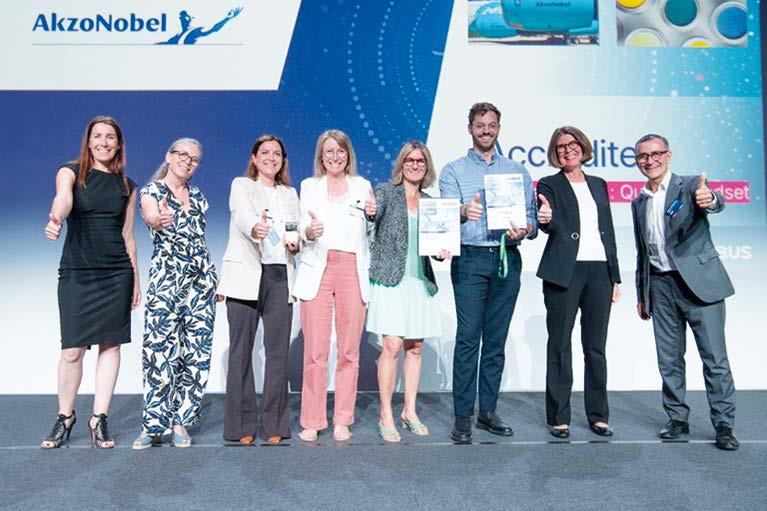
AkzoNobel Aerospace Coatings has received the Sustainability Future Award from Airbus Defence and Space (ADS) in recognition of the successful qualification and delivery of a new, chrome-free aircraft primer in just six months.
The Sustainability Future Award recognises the successful collaboration between the AkzoNobel and ADS teams, which enabled the primer to be
qualified and brought into production within six months while meeting Airbus’ stringent technical, operational and sustainability requirements.
Within the program for Airbus, AkzoNobel demonstrated its commitment to rapidly scale production of its primer for multiple classes of aircraft and supply it globally as Airbus responds to future customer demand.
With ADS planning to increase production volumes across several aircraft programs over the next three years, AkzoNobel will continue to work closely with ADS to support production speed, quality and sustainability performance as output increases.
“This award reflects the strength of our collaboration with Airbus Defence and Space and our shared commitment to advancing more sustainable aerospace manufacturing. Qualifying and industrializing chrome-free technologies at this pace, while demonstrating the ability to support future production ramp-up, is an important milestone for the aerospace industry. Alongside innovations such as chromefree technologies, we have also continued to strengthen our wider sustainability performance to become one of Airbus’ top performing suppliers,” has stated Frédéric Perret, Global Key Account Lead at AkzoNobel Aerospace Coatings.
For further information: www.aerospace.akzonobel.com/en
Surventis launches as an independent global leader in automotive coatings and surface treatment
With around €3.9 billion in annual sales, around 10,700 employees and more than 42,000 customers, Surventis ranks among the world’s leading suppliers of coatings and surface treatment solutions. Surventis will strategically focus on reliability, quality, service, and performance for its customers.
Surventis, formerly BASF Coatings, has launched as an independent company, completing its carve-out from BASF. The business is majority-owned by funds managed by global investment firm Carlyle (NASDAQ: CG) in partnership with Qatar Investment Authority. BASF holds a 40% stake in Surventis.
The Surventis corporate brand reflects the identity of a company built on superior science, a constant drive for innovation, and the agility of a newly independent business, shaping the industry through technological leadership and close collaboration with its partners. With a new name and brand identity, Surventis will continue to develop, produce, and market coatings and surface treatment solutions for industrial, automotive, and refinish customers worldwide. Its portfolio spans well-known brands such as Chemetall®, Glasurit®, and R-M®
Built on deep expertise and decades of trusted relationships, Surventis serves more than 42,000 customers across over 140 countries from a network of more than 30 production and development sites, anchored by its headquarters in Muenster, Germany, which hosts the world’s largest integrated paint manufacturing site.
As a standalone company, Surventis will operate with greater speed, agility, and focus. Carlyle will support the business through targeted investments in its global capabilities and local operations, drawing on its track record in carving out and building standalone industrial companies. Surventis will strategically focus on entrepreneurship, performance, and growth - helping customers succeed in today’s demanding and fastevolving markets.
“Today begins an exciting new chapter for Surventis and for all our
employees around the world. I want to thank the entire team whose dedication and hard work have brought us to this milestone. We are building on more than 130 years of coatings expertise and some of the most trusted brands in the industry as we begin our journey as an independent company. Our customers will benefit from a faster, more focused partner, with our full attention on the surfaces they make and sell. Their success is our success. We are already a leader in this industry, and our ambition is clear: to become the leading coatings technology company,” has stated Jens Luehring, Chief Executive Officer of Surventis.
“As an independent company, Surventis is exceptionally well-positioned to accelerate innovation, deepen customer partnerships, and capture global growth opportunities. We are looking forward to supporting Jens, and the Surventis management team in their next chapter,” has added Tanaka Maswoswe, Partner at Carlyle.
Surventis will continue to operate with the same products, technologies, brands and technical teams that customers rely on today. The portfolio across all three businesses remains unchanged, ensuring continuity in reliability, quality and service. Surventis will be led by its Executive Committee, headed by Chief Executive Officer Jens Luehring.
Joining the Executive Committee are Chief Financial Officer Michael Pontzen and Chief Transformation Officer Ewout van Jarwaarde. Together with Nils Lessmann, Executive Vice President Operations Mobility/Refinish, and the leaders of the company’s three business units - Frank Naber, Executive Vice President Surface Treatment, Patrick Zhao, Executive Vice President Mobility Coatings, and Steve Arndt, Executive Vice President Refinish Coatings - they form an experienced and complementary Executive Committee, combining fresh external perspective with strong business continuity.
For further information: www.surventiscoatings.com
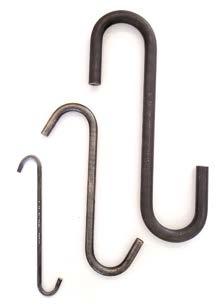
For over 50 years, we have been designing and manufacturing precision HOOKS for industrial coating. Tailor-made solutions engineered to optimize your line's productivity, ensuring superior stability and durability batch after batch.
Jens Luehring, Chief Executive Officer of Surventis. Tanaka Maswoswe, Partner at Carlyle.
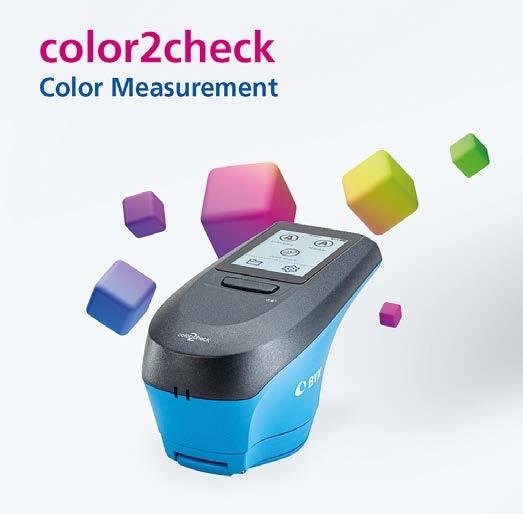
Portable colour quality control for basic entry-level use standards
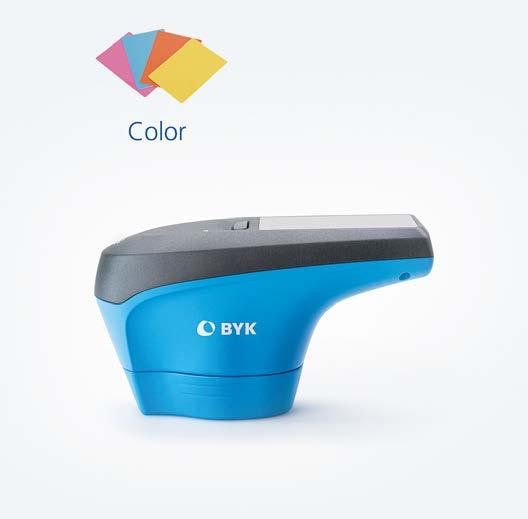
BYK-Gardner – worldwide partner of the automotive, paint and plastic industries for quality control of colour, appearance and physical properties – is introducing the new color2check, a portable spectrophotometer that offers a simple and affordable start to colour quality control. The instrument complements the newly introduced color2go and expands BYK-Gardner’s portfolio of portable spectrophotometers to meet customer needs, ranging from basic entry-level use to professional applications.
The color2check features a lightweight and rugged design with horizontal alignment, making colour measurements simple, stable, and secure. Its 2.8inch colour touchscreen with icon-based menus, clear data tables and graphical displays ensures intuitive operation. “Touch and swipe” can be used as on a smartphone — even when wearing gloves — enabling efficient use in laboratory, production, or field environments. To ensure long-term protection, the instrument is delivered with a dedicated garage. When not in use, the color2check can be safely stored to protect it from dust. The garage also provides space for the test standard box so that it’s always close at hand.
The color2check focuses on reliable colour measurement and represents a practical solution for customers who do not require gloss measurement and are satisfied with wider specifications. Digital standards cannot be exchanged, meaning physical working standards must be measured as a reference with every color2check. This makes the instrument well suited for internal quality control tasks with less stringent specification demands. The instrument benefits from proven BYK LED illumination, providing excellent short-term, long-term, and temperature stability. No calibration is required for up to three months, and the LED light source comes with a 10-year warranty, eliminating the need for lamp replacement during the instrument’s life.
With its combination of essential measurement capability, intuitive operation, and attractive price, the color2check provides a robust and accessible starting point for establishing colour quality control. It is a practical option for users seeking a reliable entry-level solution while maintaining the expected BYK-Gardner quality. For professional users with more advanced requirements, the color2 family also includes the color2go, featuring additional gloss measurement, a digital standard, and two software licenses.
For further information: www.byk-instruments.com
Cambium launches ApexShield 3000: a dual-use protective coating engineered for high-temperature performance
Cambium, a global high-performance materials innovator delivering products at unprecedented speed, announced the launch of ApexShield 3000, a high-temperature phthalonitrile coating engineered for metallic and composite substrates operating in extreme thermal environments. The coating supports applications from hypersonic flight to EMI and RF shielding for electronics and commercial programs requiring wavelength-tunable performance.
ApexShield 3000 is a sprayable, solvent-based 1-part liquid that cures at temperatures as low as 215°C (419°F) and delivers sustained operational performance up to 315°C (600°F), with short-duration capability up to 427°C (800°F). The system requires no refrigerated storage and is available in quarts, gallons, and drums, supporting both prototype development and production-scale programs.
The coating accepts conductive and non-conductive fillers, enabling engineers to customize performance characteristics for specific program requirements1. Cambium’s differentiation is not any single class of advanced materials but a unique development approach, offering customers every aspect of molecular discovery, product development, certification and qualification, and rapid scalable manufacturing across the US and Europe, all under one roof.
“ApexShield 3000 gives engineers a practical, high-performance solution for protecting structures that operate in environments where standard coatings fail,” said Cambium CTO, James Griffin.
“The combination of sprayable application, room-temperature storage, and validated high-temperature performance makes this a deployable tool for defense and aerospace manufacturers working under real production constraints.”
1 Technical data sheet available at www.cambiumglobal.com.
ApexShield 3000 builds on Cambium’s growing portfolio of phthalonitrilebased materials, including the ApexShield 1000 resin system, which reduced carbon-carbon parts fabrication cycles by 70-80% for hypersonic applications.
About Cambium
Cambium is redefining how advanced materials are discovered, designed, and manufactured. The company develops advanced materials for high-performance applications across land, air, sea, and space. This also includes molecular innovation, combining AI-driven molecular design with state-of-the-art chemistry, materials science, and biology. The company delivers exceptional speed from concept to production and qualification. Manufacturing is carried out through a secure, flexible, and scalable domestic supply chain, enabling defense and commercial innovators to move from prototype to full-scale production fast.
For further information: www.cambiumglobal.com
hubergroup Chemicals showcased advanced solutions for paints and coatings at Paintistanbul 2026
hubergroup Chemicals presented its sustainable, high-performance solutions for paints and coatings at Paintistanbul.
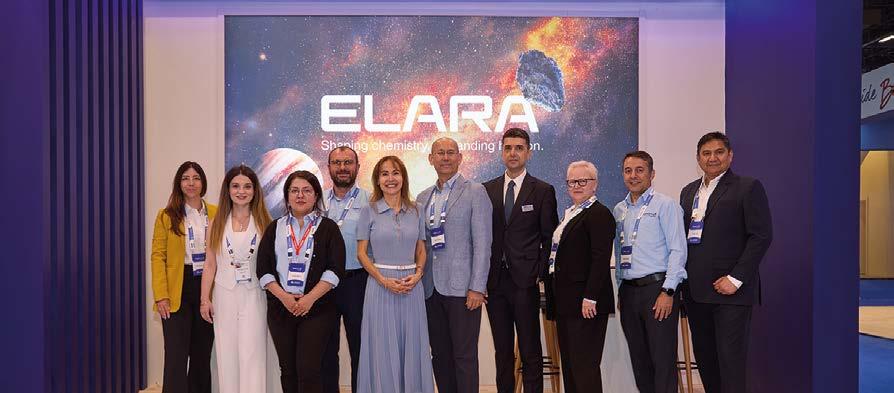
hubergroup Chemicals, a manufacturer in the specialty chemicals sector, concluded its exhibition at Paintistanbul, which took place from June 17–19, 2026, at the Istanbul Fuar Merkezi (Turkey). Among the key highlights at the company’s stand were the new ELARA additive series and the recently launched UHVPI-222200 UV oligomer. At Paintistanbul 2026, hubergroup Chemicals presented its broad, advanced portfolio tailored for the coatings industry. The displayed range included resins, pigments, concentrates, UV monomers, UV oligomers, and additives, all designed to meet demanding performance and regulatory requirements. Two major product innovations took center stage at the event:
ELARA Additive Series: developed for paint and coatings applications, this high-performance range addresses increasing technical and regulatory demands. The series is largely PFAS- and VOC-free, enabling more sustainable formulations without compromising on performance.
UHVPI-222200 UV Oligomer: this newly introduced amine-modified polyether acrylate oligomer enhances the curing behaviour and surface quality of modern
UV-curing systems. Thanks to its high reactivity and robust performance under challenging conditions, it proved to be well-suited for a variety of energy-curable applications, including industrial coatings.
Paintistanbul remains one of the premier industry events in the region, bringing together manufacturers, suppliers, and experts from across the coatings and chemicals value chain. For hubergroup Chemicals, the exhibition served as a valuable platform to strengthen existing relationships, explore new business opportunities, and gain deeper insights into regional market developments.
“We were pleased to participate in Paintistanbul for the second time and to engage directly with our partners and customers in this dynamic market. The event offered an excellent opportunity to present our portfolio and discuss how we can support our customers with high-performance and sustainable solutions,” has stated Burak Sezerel, Sales and Marketing Director at hubergroup Chemicals.
Interpon launches Eco+ Cure energy calculator to help manufacturers cut energy use, costs, and emissions
Interpon, a brand of AkzoNobel Powder Coatings, has launched the Eco+ Cure energy calculator – a new expert-led, advanced analysis tool designed to help manufacturers uncover practical ways to reduce energy consumption, lower operating costs, and shrink their carbon footprint across powder coating operations.
Manufacturers across industries are prioritizing energy efficiency and emissions reduction alongside productivity and product quality. By unlocking deeper insights into coating processes, Eco+ Cure can help them optimize performance and drive more sustainable operations.
The Eco+ Cure energy calculator is used as part of an assessment carried out by Interpon’s Technical Services team, providing customers with clear insight into their curing process and how to improve energy efficiency and performance.
The calculator is part of Interpon’s Eco+ Services – a suite of technical, digital and data-driven services that help manufacturers better understand, measure and improve the sustainability of their coating operations. By analyzing real operating data – including gas usage, oven temperature and throughput – it reveals optimization opportunities that are often invisible in day-to-day production. It also helps manufacturers better understand the potential impact of innovations such as lower cure technologies. Eco+ Cure combines advanced analytics with expert interpretation. Interpon’s technical experts work directly with customers to translate
data findings into practical recommendations that can be implemented quickly and effectively, helping reduce energy consumption, lower carbon emissions, improve productivity and enhance overall line performance. This hands-on approach means customers can make informed decisions with confidence, giving them the clarity and control to own their impact while turning sustainability efforts into measurable operational gains.
Jorrit van Rijn, Global Marketing Director at AkzoNobel Powder Coatings, explains: “Manufacturers don’t just want to be more sustainable; they need solutions that improve performance at the same time. But without clear data, it’s difficult to know where to start. The Eco+ Cure energy calculator changes that. It gives customers real insight into their operations, helping them identify what works, what doesn’t, and where they can improve. It’s about making sustainability practical, and delivering real business value.”
For further information: www.interpon.com
Quinacridone pigments in coatings: durable performance meets intense chroma
Sun Chemical’s quinacridone pigments ensure high chroma, strong colour intensity and excellent durability. They are used in automotive and industrial coatings across a wide red-to-violet range and are suitable for waterborne and solventborne systems.
High-performance coatings require pigments that deliver high chroma, long-term durability and consistent quality with tightly controlled product specifications. Sun Chemical’s portfolio of quinacridone pigments is designed to meet the highest requirements in automotive OEM, refinish and industrial coatings, offering excellent chromatic depth alongside outstanding durability in demanding exterior applications.
With Sun Chemical’s Cinquasia® and Fastogen® , formulators can access high-performance quinacridone pigments that combine intense colour with proven durability, supporting premium coating solutions across a wide range of demanding applications.
The product range spans red to violet colour space and is tailored for coatings requiring high colour strength and tuneable transparency and opacity in waterborne and solventborne paints. Highly transparent grades deliver exceptional chroma and colour strength for mica and aluminium effect shades, particularly in automotive coatings. These pigments provide outstanding durability, making them ideal for solid automotive finishes, as well as powder and coil coatings.
For further information: www.sunchemical.com
iGM Resins launches Photomer® SC91, a new photoactive resin chemistry
iGM Resins announces the launch of Photomer® SC91, introducing a breakthrough in UV curing technology. This innovation represents a new chemistry that fundamentally changes how photoinitiation is delivered in UV and LED systems.
A new approach to photoinitiation
Photomer® SC91 is a self-curable acrylate resin with built in photoinitiator functionality. Unlike conventional systems, it enables UV Hg or UV LED curing with no or only minimal addition of external photoinitiators. This is achieved by integrating the photoinitiating groups directly into the resin backbone.
This Type II photoactive concept combines acrylate and photoinitiator technologies in a single polymeric material. As a result, the photoinitiator part remains chemically bound within the structure.
Designed for today’s regulatory and performance needs
Photomer® SC91 addresses key formulation challenges in modern UV systems:
Reduced or eliminated need for added photoinitiators
Low migration potential for sensitive applications
No detectable extractable photoinitiator under test conditions
Polymer classification with molecular weight above 1000 Da. This makes it particularly suitable for applications such as indirect food contact packaging, where control of migration is critical.
Performance without compromise
Photomer® SC91 delivers strong technical performance across multiple dimensions:
Efficient curing under both UV Hg and LED systems
Excellent formulation compatibility
Liquid form for easy handling and processing
Typical use levels between 10 and 20 percent in formulations. As a Type II system, it requires the presence of a synergistic amine or hydrogen donor to achieve optimal curing performance.
Broad application versatility
Photomer® SC91 is designed for a wide range of UV and LED applications, including:
Printing inks and packaging
Overprint varnishes
Industrial coatings
Adhesives
Electronics and advanced materials.
Its flexibility allows formulators to simplify systems while maintaining high performance.
The start of the Photomer® SC Series
The launch of Photomer® SC91 marks the beginning of a new Photomer® SC series. This platform is based on self-curable resin technology and will expand to address evolving market requirements in performance, sustainability, and regulatory compliance. iGM Resins is developing additional materials within this series to support next generation UV formulations.
A new standard in UV chemistry
Photomer® SC91 introduces a new way of thinking about UV curing. By embedding photoinitiation directly into the resin, it simplifies formulation design while supporting low migration requirements and efficient processing.
This launch establishes a strong foundation for future innovations and confirms iGM Resins’ commitment to advancing UV curing technologies.
For further information: www.igmresins.com
SINCE 1950
EVERY SURFACE
A TECHNOLOGICAL MASTERPIECE
INNOVATION THAT STANDS THE TEST OF TIME, PRECISION BEYOND BOUNDARIES. We do not merely treat surfaces: we transform them into symbols of efficiency and beauty. For more than 75 years, Tecnofirma has been a global partner, enhancing your products with customized solutions and state-of-the-art technologies in the fields of washing, coating, and impregnation. From Italy to the world, we shape excellence with the meticulous craftsmanship of the past and the technological precision of the future.
“Tecnofirma: where technology meets beauty and performance”
HIGHLIGHT OF THE MONTH
MEC, over thirty-five years of innovation: from cryogenic paint stripping to the new frontiers of industrial cryogenics
Founded in the early 1990s, following Attilio Bernasconi’s insight into applying cryogenics to surface treatment, MEC (Caltignaga, Novara, Italy) has developed its research on liquid nitrogen and dry ice applications into the specialist Group MECCrios, which currently holds fourteen patents and maintains a strong focus on sustainability.
When, between the late 19th and early 20th centuries, the first studies into the liquefaction of gases led to the production of liquid oxygen and nitrogen, it was difficult to imagine how profoundly these technologies would transform the industrial world. Throughout the 20th century, advances in air separation systems made the production of liquid nitrogen progressively more efficient and cost-
effective, encouraging its use across numerous sectors, from metallurgy to medicine and biopreservation.
In the 1980s, cryogenics began to be applied to industrial paint stripping as well, as it was observed that rapid cooling of components with liquid nitrogen caused contraction between the coating and the metal substrate, generating internal stresses capable of embrittling paint and facilitating its subsequent removal. This paved the way for the development of the first cryogenic paint-stripping techniques.
Among the pioneers of this technology was Attilio Bernasconi, who founded MEC – an acronym for Metodologie Ecologiche Criogeniche, or ‘ecological cryogenic methods’ – more than thirty-five years ago in Caltignaga. Together with his spouse and son Andrea, Bernasconi established what is now the MECCrios Group, which specialises in the industrial applications of cryogenics, primarily using liquid nitrogen at −196 °C and carbon dioxide in the form of dry ice at −78 °C.
From an interview with Attilio Bernasconi, MEC - Caltignaga (Novara), Italy
As early as the 1980s, Attilio Bernasconi was a pioneer in using liquid nitrogen for paint removal, developing and patenting cryogenic paint stripping technology. With the establishment of MEC in 1991, his vision evolved into an industrial structure capable of growth and continuous expansion of its scope by developing new applications based on liquid nitrogen and CO₂. Today, it operates in four main sectors: industrial paint stripping (cryogenic, thermal, and mechanical); the production of dry ice in various forms; the design and manufacture of machines that produce dry ice for technical cleaning; and the production of freezers using liquid nitrogen or liquid carbon dioxide for the food industry. “It all began with the use of liquid nitrogen for paint stripping,” explains Attilio Bernasconi. “I wanted to make use of its extremely high cooling rate: when the parts to be treated are immersed in a tank at −196 °C, the thermal shock causes the coating and the metal substrate to contract at different rates. Exposed to the cold, paint shrinks to a much greater extent than metal, causing cracks that allow it to be removed by a subsequent gentle mechanical action. The component is thus left perfectly clean and ready to be returned to the production cycle.” This process alters neither the geometry nor the metallurgical properties of the substrate and helps extend the service life of components, with clear benefits for the management of coating shops. “It is also environmentally friendly and sustainable, as it does not require chemical solvents and does not generate liquid waste or waste water.” Over the years, the company has complemented its cryogenic paint stripping solutions with automatic shot blasting machines for mechanical paint stripping and high-performance pyrolytic furnaces for thermal paint stripping, ensuring that every customer’s needs are met and all application requirements are satisfied.
The development of new applications
Over the years, MEC has developed numerous innovative applications. One of these is dry ice blasting, or cryogenic cleaning, a technology that uses solid carbon dioxide particles, propelled
MECCrios headquarters in Caltignaga (Novara, Italy).
Paint stripping process using liquid nitrogen. The thermal shock causes the coating and the metal substrate to contract at different rates. The parts are immersed in a tank at −196°C for the cryogenic paint stripping process.
as pellets, microgranules, or carbon dioxide snow, via specialised industrial equipment. Unlike traditional abrasive blasting, dry ice removes contaminants without altering the surface structure of the treated material and without leaving any residue. It can be used on a wide range of materials, including steel, aluminium, plastics, wood, and even stone. The effectiveness of this process is based on a combination of three physical principles. The first is the kinetic energy of compressed air, which propels the dry ice particles at high speed. The second is thermal shock caused by the −78.5 °C temperature, which cools the contaminant and makes it brittle. The third is sublimation, i.e. the direct transition from a solid to a gaseous state, which increases the volume of CO₂ by approximately 750 times and generates microscopic explosions capable of dislodging impurities. Thanks to the combined action of these three factors, surfaces can be cleaned effectively without producing any abrasive residues or waste water.
Another key area of expertise is cryogenic separation, which enables the recovery and recycling of waste materials by separating their components, particularly in applications involving metals, plastics, elastomers, and polyurethanes. Among the main applications developed by MEC in this field are cryogenic plastic removal, used to recover components for the automotive, electrical cable, sports equipment, and sealing industries; cryogenic rubber removal, applied to anti-vibration mounts, industrial tyres, offset printing rollers, and other rubber products; cryogenic elastomer removal, which eliminates elastomer and PVC coatings from electroplating tanks and numerous industrial components; and tank stripping, aimed at removing wear-resistant coatings for maintenance and refurbishment operations.
Performance adaptability and sustainability
Cryogenic technologies can be used across a wide range of sectors. In addition to the surface treatment and coating industries, MEC operates in the fields of food preservation and transport, cold chain logistics, vaccine and biological sample transport, and cooling for various industrial
processes. “Among the most recent and interesting applications is the use of dry ice to sanitise and regenerate wooden barriques used for the ageing and storage of wine. This makes it possible to eliminate tartrates and other residues, remove the outermost layer of the wood, restore the aromatic characteristics imparted by the toasting process, and eliminate bacteria and microorganisms, helping to extend the service life of barrels. This demonstrates, once again, that our technology can be adapted to any industry and application,” Attilio Bernasconi states.
MEC’s history shows that the versatility of cryogenic technologies, together with ongoing research and the ability to translate insights into practical applications, is the main driving force behind this company’s development. Its journey began with a single innovation that, more than thirty-five years later, continues to evolve while preserving the pioneering spirit that characterised its origins.
The evolution of the business is also tied to the Bernasconi family’s commitment to finding ever more efficient and sustainable options. These include a 100 kW photovoltaic system integrated with a smart 250 kW battery storage unit, and a solution for recovering hot air from the flue of the pyrolytic furnace used for thermal paint stripping: the recovered heat is used to power the burners at 250 °C, resulting in reduced natural gas consumption and CO₂ emissions.
Research and experimentation underpin all these technologies and lie at the heart of MEC’s activities. It is no coincidence that this company was founded around a patent and now holds no fewer than fourteen, all primarily linked to the industrial use of nitrogen and carbon dioxide. Its aim for the future is to continue innovating and to develop a fifteenth patent, following the path of growth that has always characterised its journey.
Colourific Coatings’ industrial project for transforming the North American powder coating market
Alessia Venturi ipcm®
For decades, the North American architectural aluminium market has favoured liquid paints. Today, advances in powder coating technology, together with investment in digitalisation and automation, are shifting the balance. Colourific, a long-established Canadian coating contractor specialising in architectural aluminium profiles and panels, has chosen to lead this transformation by building one of the continent’s most advanced vertical production lines in collaboration with Euroimpianti.
For over forty years, liquid coating has been the standard process for architectural aluminium in North America. Today, the evolution of powder coatings using fluoropolymer technology has set new benchmarks for performance and quality, while a focus on sustainability and the growing digitalisation of processes are reshaping market trends. Colourific Coatings, Canada’s leading coating contractor for architectural aluminium finishes, has invested heavily in its plant in Woodbridge (Vaughan), Ontario to stay ahead of this transformation, working with Euroimpianti (Valeggio sul Mincio, Verona, Italy) to develop a vertical line designed to European standards. This project was not simply aimed at increasing production capacity, but at building a new industrial model based on quality, automation, traceability, and process control.
Colourific is a long-established Canadian coating contractor specialising in aluminium profiles and panels.
More than just a new coating line: a statement of intent
Colourific’s goal was not to increase the number of profiles processed each day, but to build a technological platform to underpin its growth in the coming years. This choice reflects a firm conviction: the future of architectural coating in North America will increasingly shift towards powder coating technology. For decades, the Canadian and US markets have followed a different path from Europe. Whereas powder coating has gradually become the standard technology for architectural aluminium in the latter, liquid coating processes have continued to dominate the former, supported by established specifications, designer preferences, and an industrial supply chain developed around this technology. In recent years, however, the balance has begun to change.
Founded thirty-five years ago, Colourific has decided to take the lead in this transformation by building a new site in Vaughan as part of an industrial strategy to redefine quality standards in the sector.
“The dominant position of liquid coatings in North America has never
been linked solely to technological performance,” says Majdi Rayyan, COO at Colourific. “For many years, the market was driven by technical specifications and architects. The major manufacturers of liquid paints invested extensively in developing specifications and certifications, which helped consolidate their position. Today, however, technological differences are gradually narrowing.
“Modern fluoropolymer powders can meet the AAMA 2605 standard. Modern chromium-free pretreatment systems can provide corrosion protection comparable to traditional hexavalent-chromium conversion pretreatments, while eliminating the environmental and occupationalhealth concerns associated with hexavalent chromium and other heavymetal-containing treatment processes. Alongside performance and environmental impact, the aesthetic characteristics of powder coatings have also evolved. New formulations enable increasingly sophisticated textural and metallic effects and finishes. Today, therefore, powder coating is no longer a compromise.”
From left to right: Overview of the vertical coating line supplied by Euroimpianti; The seven-stage pre-treatment tunnel; Euroimpianti developed an automatic dosing system that was fully integrated into the line.
“More and more iconic buildings and monumental projects are being completed with powder coatings. Every new project boosts market confidence and demonstrates that powders provide a viable alternative to liquid systems from a technical, economic, and environmental perspective,” adds Colourific CEO Garrett Clyne. “European companies have played a decisive role in this shift. Many European groups, already accustomed to working with powder coating, such as Permasteelisa, now operate permanently in North America. This helps promote a different technical culture and accelerates the evolution of design specifications. However, I believe that the uptake of powder coating in North America will depend not only on the evolution of materials but, above all, on the ability of applicators to deliver more controlled, more repeatable, and fully traceable processes.”
An investment intended to transform Colourific’s production model
The new vertical coating line in Woodbridge (Vaughan), which complements Colourific’s existing horizontal coating lines, was designed to establish a production model capable of supporting the company’s
long-term growth. The vertical line is dedicated primarily to architectural aluminium extrusions, while the horizontal lines continue to process architectural panels and steel products. “Our objective is to help bridge the gap between the standards that currently characterise powder coating in Europe and those in North America. That requires investment in technology, systems, automation, and processes,” states Garrett Clyne. “This is the first vertical production line we consider to have been built to European standards, but it will not be the last. We intend to build further lines of this kind and create a production platform that can be replicated across North America, maintaining the same quality standards and collaborating with leading technology partners.”
Behind this project lies the transformation process initiated by Colourific five years ago, following the entry of Cassiar Partners Limited Partnership, a Canadian private equity fund that acquired the company to support its industrial development. “Typically, private equity funds buy and consolidate businesses with a view to reselling them. Cassiar, by contrast, acquired Colourific to build a solid industrial future. The aim was not simply to coat more parts,” confirms Majdi Rayyan. “Rather, it was to improve working procedures, raise quality standards, ensure greater
From left to right: The physical-chemical water treatment plant with a filter press, designed by Saita; The demineraliser; On the left, profiles exiting the pre-treatment tunnel; on the right, profiles leaving the drying oven and moving towards the coating booth.
process repeatability, and create a structure that would enable us to grow while maintaining the same standards across all future plants.”
To realise this vision, Colourific chose Euroimpianti as its technology partner. The new vertical line, capable of coating bars up to 7.62 m (25 ft) in height, serves as the starting point for a development programme, with further investment in Canada and the United States. However, for it to be truly replicable, every stage of the process must be standardised, monitored, and documented.
A plant designed not to discard a single profile
“As a coating contractor, Colourific cannot afford to discard even a single profile, as every wasted workpiece is a cost. Our entire design process was guided by this principle, aiming to minimise every possible source of error,” explains Nicolò Baruffaldi, Project Manager at Euroimpianti. “Colourific is a fully data-driven company. Everything that can be monitored is recorded and entered into its management system. That is why our line’s loading area, although maintaining a traditional layout, is already set up for the future integration of automatic profile recognition systems using cameras.”
This focus on digitalisation spans the entire plant. The pre-treatment tunnel, chemical dosing systems, coating segment, and process controls have been designed as components of a single digital ecosystem, in which every parameter is continuously recorded, archived, and made available to the company’s management system. Euroimpianti and Colourific are also developing an artificial intelligence-based system that will match each profile to the parameters recorded during its production cycle. “The goal is to continuously monitor the plant’s performance and develop tools for predictive quality analysis. Each profile will be matched with its complete production history,” adds Baruffaldi. “This design philosophy perfectly reflects Colourific’s approach: to use technology not merely as a production tool, but as a key element to ensure consistent quality, traceability, and process standardisation.”
The technological heart of the line
Achieving consistent coating quality begins with a robust pretreatment process. For this reason, Euroimpianti designed the pretreatment system with a strong focus on process stability, automation, and repeatability, ensuring compliance with the stringent requirements of Qualicoat and
AAMA 2605. The pretreatment line is fully integrated with automated process controls and chemical management systems to maintain stable operating conditions and support consistent coating performance. Process stability is achieved through a combination of advanced pretreatment design, automated chemical control, and continuous process monitoring. The line has been engineered to maintain consistent operating conditions and ensure repeatable performance while meeting the requirements of Qualicoat and AAMA 2605 specifications. Water treatment also follows the same philosophy. The chemical-physical system supplied by Saita (Limena, Padua, Italy) treats cleaning water in continuous flow, while concentrated effluent from the pre-coating tunnel and eluates from the demineraliser regeneration process are treated separately. The process includes flocculation, decantation, sludge dewatering in a semi-automatic filter press, and final filtration with pH control at a flow rate of 6,000 l/h before discharge into the sewer system. Saita also supplied a closed-loop duplex demineralisation plant for the continuous recirculation of demineralised water through the cleaning tanks at a maximum flow rate of 10-12,000 litres per hour, maintaining conductivity in the tanks below 20 microsiemens. This dual-
line demineraliser ensures round-the-clock operation, even during resin regeneration.
The factory’s geographical location also required specific design solutions. “In Vaughan, winter temperatures are extremely low. The passivation tank is configured to be heated via a heat exchanger, and the mains water pipes are insulated to prevent condensation. These details are not immediately obvious, but they are essential to maintaining consistent operating conditions throughout the year.” Indicates Baruffaldi.
Energy recovery and process optimisation
After pre-treatment, the profiles pass through a dedicated dripping area before entering the drying tunnel. Unlike traditional set-ups, which feature an oven dedicated exclusively to drying, this line features a single system in which heat recovered from the curing oven is utilised to feed the drying tunnel. “The goal was to reduce energy consumption without compromising process quality,” explains Nicoló Baruffaldi. “Drying is carried out using air curtains that limit heat loss within the department, further improving the plant’s energy efficiency. The workpiece’s route has been designed to avoid interference between the various production
Euroimpianti’s
Gema’s
From left to right:
The two ovens are integrated into a single system, in which the heat recovered from the curing oven is used to heat the drying tunnel.
The coating booth is housed in a pressurised clean room.
patented Diamond® coating booth.
powder coating centre featuring dense-phase technology.
stages: after drying, the profiles move to the application booth and then to the curing oven. The curing oven’s inlet and outlet are completely separate. If a part treated with a white colour is being handled at the inlet and one treated with a black colour at the outlet, there is absolutely no chance of contamination between the two.” Reducing the risk of contamination was indeed one of the project’s main objectives, particularly given the variety of colours and finishes demanded by the architectural market.
The line is equipped with a Diamond® application booth, a patented Euroimpianti design characterised by a diamond shape, housed within a clean room. “We wanted a fully enclosed and pressurised clean room. In particular, pressurisation compensates for the air extracted from the booth and prevents dust from entering from outside, further improving the quality of finishes. When observing the booth during production, the level of cleanliness is immediately apparent. This result is achieved thanks to the correct extraction balance and the automatic cloth cleaning system.”
The booth is equipped with a Gema OptiSpeeder powder centre featuring Smart-In-Line paint feeding technology and 24 spray guns.
Great attention was also paid to maintenance. All the main sections of the line are easily accessible via walkways above the tunnel and the booth,
allowing operators to carry out maintenance work quickly and safely without compromising the plant’s productivity.
Safety features designed in accordance with NFPA standards
A high level of automation and meticulous design characterise every detail of the line. However, one of the most significant engineering challenges of the project lay in designing its safety systems, which had to comply with the stringent requirements set out by the North American NFPA (National Fire Protection Association) standards. Unlike in Europe, where many plant engineering solutions follow established but less prescriptive criteria, in the United States and Canada every component must meet extremely rigorous requirements, verified by both the relevant authorities and insurance companies.
“Many North American lines use passive explosion venting systems consisting of rupture panels that burst open when overpressure occurs. In Ontario, and in many other parts of North America, however, there is a growing demand for active suppression systems,” illustrates Nicolò Baruffaldi. “To meet these requirements, we fitted the line with a system
Colourific
coating
supplied by TAMA, which protects not only the filter unit but also the powder recovery cyclone. The system instantly detects pressure changes and activates cylinders containing an extinguishing agent, preventing the explosion from spreading. It is more complex and more expensive than traditional solutions, but it currently represents the highest level of safety available.”
Implementing this system required significant design work. “Simply protecting the filter is not enough. The cyclone must also be equipped with its own suppression system, and the entire circuit must be designed to avoid any risk of contamination during colour changes. This was one of the most challenging aspects of the project, not least because NFPA compliance covers not only explosion-proof systems but the entire line. The combustion system, for example, was built with a dual gas train for the main and pilot flames. All pressure regulators are located outside the process areas, and every safety device is redundant. Opening a door, pressing an emergency button, or any fault detected by the sensors triggers an immediate shutdown of the plant. When building a plant for the
North American market, the design must take into account inspections by the relevant authorities from the outset. Every detail must comply with the requirements. This allows the customer to operate with complete peace of mind and to pass all the checks required by the authorities.”
The line is also equipped with a laser system for the automatic paint stripping of the conveyor’s hooks, another of the cutting-edge technologies offered by Euroimpianti to the aluminium industry.
Quality is built on data
Every stage of the process includes systematic quality controls. “Quality is not something you check at the end; rather, it is built in throughout the entire process,” points out Majdi Rayyan. “Our laboratory constantly checks coating thickness, gloss, colour, adhesion, curing, and other parameters covered by the Qualicoat and AAMA 2605 specifications. At the same time, production follows an extremely rigorous inspection programme. Every two hours, we take samples directly from the line and subject them to laboratory testing. The oven’s performance is also checked frequently:
From left to right:
measures
thicknesses in real time before curing.
The NFPA-compliant active fire suppression system installed by TAMA.
The line is completed with an in-line laser paint stripping system for the hanging hooks.
From left to right: Garrett Clyne, Nicoló Baruffaldi, and Majdi Rayyan.
once a day at least, the thermal profile is monitored using the Datapaq system, and three temperature measurements are taken (at the top, centre, and bottom of the load) at every colour change to ensure uniform curing throughout the entire height of the profiles. Just reaching the required temperature is not enough: we need to ensure that every part of the batch receives the same thermal energy and that the coating cross-links correctly.”
One of the most interesting aspects of the quality system adopted by Colourific concerns the management of documentation. “We retain physical samples of every production run for ten years. Should a dispute arise even several years after delivery, we can retrieve the original sample, compare it with the customer’s sample, and trace the operating conditions recorded during processing. This is made possible
by the line’s complete digitalisation. Every parameter recorded during the cycle is archived and linked to the relevant batch, creating a database that enables us to trace the complete history of every order at any time,” comments Rayyan. “For many years, coating has been regarded as a mere commodity. Today, customers are primarily buying reliability. They want to know that the process has been carried out correctly and that the coating will maintain its performance over time. Traceability is an integral part of this guarantee.”
Digitalisation, therefore, is not just about monitoring tools; it is an essential element of this company’s industrial strategy: a wealth of data designed to support continuous process improvement and, looking ahead, the development of predictive analytics systems based on artificial intelligence.
From the in-stock small and thin hook to the special hook Ø30 with EU certification and loading capacity calculation, for both small and heavy parts to be coated.
HOOKS & CE HOOKS
Hooks & CE Hooks
A platform for growth
Among the projects already underway is a new horizontal coating line, also developed in collaboration with Euroimpianti, conceived to further expand the company’s production capacity. “We are designing a line with two separate pre-treatment tunnels for aluminium and steel, two independent conveyors, and mobile booths to manage colour changes and different product types with greater flexibility,” says Majdi Rayyan. Colourific’s development plan also looks beyond Ontario’s borders. “Demand for powder coating continues to grow,” notes Garrett Clyne. “The automotive industry, particularly the electric vehicle sector, is also increasingly adopting this technology. We believe the potential for growth remains enormous. In Canada, we have not yet seen regulatory changes capable of significantly accelerating the transition from liquid to powder coating: for this reason, we must compete every day on quality, service, finishes, and production efficiency. If new environmental regulations come into force in the future, they will certainly be welcome. In the meantime, we must win over the market by demonstrating the value of our offering.” That is precisely where the collaboration with Euroimpianti comes in. “We
are very pleased with its team’s work,” Clyne concludes. “Euroimpianti has been a reliable partner throughout the project and will continue to be so in the next stages of our development.”
In a rapidly evolving market, this Canadian company has chosen to invest not only in new equipment but also in a new industrial culture that regards quality as the outcome of process design, data collection, and continuous improvement. “Anyone can produce a beautiful colour. Very few can guarantee it will last twenty years,” states Majdi Rayyan.
Overview of the plant’s unloading area.
CUSTOMIZED SOLUTIONS
CIRCULAR ECONOMY & GREEN APPROACH
ECO-FRIENDLY CHEMICALS
CHEMTEC’S technologies are designed to have a very limited environmental impact, to reduce consumption of resources and for a greater operational simplicity.
CHEMTEC develops customized solutions that aim to maximize the customer’s satisfaction.
NANOTECHNOLOGICAL CONVERSION COATING
WATER PURIFICATION AND RECIRCULATION
ONE STEP METAL PRETREATMENT
PAINT STRIPPERS
DISCOVER MORE ON WWW.CHEMTEC.IT
An advanced robotic system to ensure repeatable UV coating results on heat exchangers treated with ElectroFin® technology
Monica Fumagalli ipcm®
Robotics is not always used to speed up production: in the case of Modine CIS Italy, which has specialised in thermal management solutions for over a century, the integration of two coating robots supplied by CMA Robotics was driven by the need to ensure greater uniformity, repeatability, and control over the application of a UV top coat on heat exchangers with highly complex geometries and stringent performance requirements, which are treated using the patented ElectroFin® process.
Heat exchangers are essential for temperature control across a wide range of industrial, commercial, and domestic applications. Designed to transfer thermal energy between two fluids at different temperatures without allowing them to mix, these systems, whose size can vary considerably depending on the end application, optimise heating, cooling, and refrigeration processes, improve energy efficiency, and reduce energy consumption. Heat transfer generally occurs via a metal surface that keeps the fluids separate while promoting thermal contact between them, ensuring a controlled and continuous exchange.
ElectroFin® is a water-based e-coat process designed to provide long-term corrosion protection for heat exchangers. This proprietary method ensures complete protection of metal components, even in highly aggressive environments.
From a design perspective, these elements are characterised by geometries that are often highly complex, developed to maximise the heat transfer surface area and enhance thermal performance. Fins, microchannels, manifolds, and pipes must operate under particularly demanding conditions, especially when components are exposed to corrosive environments, atmospheric agents, salt spray, or ultraviolet radiation. In these cases, the system’s durability depends not only on heat transfer efficiency but also on the surfaces’ ability to withstand inevitable degradation over time.
The surface protection of heat exchangers is no less complex than their design and manufacture. Uniformly coating structures with dense fin networks and internal cavities requires highly specialised processes to ensure that not only the most accessible surfaces are covered, but also that the treatment penetrates even the most critical areas. This need gave rise to ElectroFin®, a technology developed by Modine Manufacturing Company, a firm founded in 1916 and specialising in thermal management solutions, to enhance the corrosion resistance of heat exchangers designed for demanding applications. To support this, the Modine Group’s
Italian plant has recently integrated a robotic coating system developed in collaboration with CMA Robotics, a company specialising in the design, manufacture, and installation of articulated robots and industrial coating systems, and capable of providing complete turnkey solutions. This investment was driven not only by production efficiency requirements but, above all, by the need to ensure the repeatability of a particularly complex application, in which the coating’s thickness, spray angle, and penetration capacity directly affect the performance of the final product.
Over a century of innovation and the 80/20 vision
“Modine Manufacturing Company was established by Arthur Modine in the United States in the second decade of the 20th century, with the aim of designing advanced heat exchange solutions,” explains Cristian Michelin, marketing & advertising specialist at Modine CIS Italy. “From the outset, it distinguished itself for its highly innovative approach, going on to collaborate with Henry Ford to supply radiators for the famous Model T car and thus contributing to the development of the automotive sector. This technological DNA has remained unchanged over time and has enabled
The cataphoretic coating is applied by dipping at Modine’s San Vito al Tagliamento plant in Italy.
The loading area where components are placed onto the conveyor.
the company to establish itself as a leading manufacturer and industrial partner in the field of thermal management.”
Over more than a century, it has followed a path of steady growth, expanding globally from the 1980s onwards and gradually consolidating its presence in the HVAC-R and industrial markets. At the same time, Modine has continued to develop its technological offering, increasingly focusing on energy efficiency and sustainability. In recent years, it has also embarked on a major strategic reorientation based on the Pareto principle, or the 80/20 rule1, which advocates concentrating resources on the
1 The Pareto principle, also known as the 80/20 rule, states that in many phenomena, about 80% of the effects stem from 20% of the causes. In an industrial context, it is often used to identify the products, customers, or processes that generate the most significant share of results, enabling resources and investments to be concentrated on the activities with the greatest impact.
activities and products that generate the greatest value for the company and its customers.
Today, Modine is a global organisation operating in over twenty countries, with a high degree of diversification both geographically and across its target sectors.
The patented ElectroFin® coating process
ElectroFin® is an electro-deposition coating process that provides complete surface protection, ensuring uniform coverage even in the most complex and hard-to-reach areas (see below the technical information box). This technology offers highly effective protection against corrosion, even in particularly aggressive environments, and helps preserve the
TECHNICAL INSIGHTS INTO THE ELECTROFIN ® E-COAT PROCESS
The ElectroFin® cathodic electrodeposition process differs from traditional spray or dip coating operations by forming a thin yet uniform protective film, even on the most complex geometries, ensuring complete coverage without compromising heat transfer performance. Each component is inspected; approved parts are then assigned a unique code to ensure full traceability throughout the process and for their entire life cycle. Before treatment begins, all manifolds, tubes, and fittings are carefully masked to prevent paint or chemicals from entering the system.
The heat exchangers are then subjected to an alkaline cleaning stage to remove oils, dust, metal particles, and other contaminants generated during manufacturing, handling, and transport. This is followed by two rinsing stages.
During the process, the positively charged resin particles migrate under the influence of an electric field towards the workpiece’s metal surface, which is connected to the negative terminal. The system developed by ElectroFin® has been specifically designed to ensure uniform electric field distribution and complete coverage of the component. Unlike conventional technologies, the electrodeposition process exhibits self-limiting behaviour: as the film forms, the coated surface becomes electrically insulating and progressively slows further deposition. This enables extremely uniform thicknesses to be achieved, preventing localised build-up of material, surface defects, and bridging between fins. The result is continued protection even in the most difficult-to-reach areas, such as cavities, edges, and finned areas.
The entire process is managed by a digitalised control system that continuously monitors operating parameters and enables operators to verify that the film has been applied correctly. This ensures virtually complete coverage of the heat exchanger’s external surface and a level of quality consistency that is difficult to achieve with manual application methods.
Once the coating phase is complete, the component undergoes a final rinse and is transferred to the drying chamber. Here, the coating is gradually heated to the cross-linking temperature, allowing the epoxy resin to cure fully. The result is a continuous, compact, uniform film with high adhesion to the metal substrate and excellent resistance to corrosion, chemicals, salt spray, moisture, and pitting. Controlled cross-linking also eliminates the risk of sagging, dripping, or film failure, ensuring a smooth, uniform surface finish.
One of the distinctive features of ElectroFin® technology is its extremely thin coating layer, designed to maintain heat transfer capacity and maximise airflow through the finned pack. Despite its thinness, the protective film combines hardness, flexibility, and mechanical strength, enabling it to protect both traditional tube-and-fin systems and microchannel heat exchangers (MCHEs).
For applications installed in environments subject to intense solar radiation, the process can be completed by applying a UV top coat. This additional layer helps preserve the epoxy film’s aesthetic appearance and colour stability over time, reducing the effects of discolouration caused by prolonged exposure to ultraviolet radiation.
Thanks to its properties, the ElectroFin® coating is used in particularly demanding applications, such as coastal and offshore facilities, power stations, refineries, wastewater treatment plants, and industrial or urban environments characterised by high humidity, atmospheric contaminants, and corrosive atmospheres. Under these conditions, it significantly extends the service life of heat exchangers, reducing maintenance requirements and operating costs throughout their life cycle.
thermal performance of heat exchangers over time, extending their service life. Its value lies in its ability to combine thermal efficiency with durability throughout the system’s life cycle. “The process has been designed to ensure uniform, complete coverage of the entire heat exchanger while maintaining an extremely thin coating, typically just a few microns thick,” explains Claudio Mazzariol, manufacturing engineer at Modine CIS Italy. “This preserves the system’s original efficiency and prevents localised build-up and bridging between the fins.”
The cycle follows a controlled sequence of stages, beginning with alkaline cleaning to remove surface contaminants and continuing with the immersion of components in a cataphoresis bath. After coating, each part is rinsed and transferred to a drying oven, which hardens the coating into a uniform, adherent, and corrosion-resistant epoxy film. “Depending on the application conditions,” adds Mazzariol, “the cycle can be completed with a UV top coat to improve resistance to sunlight exposure. It was precisely to optimise this operation that we implemented the two robots supplied by CMA Robotics, replacing the previous manual spray application equipment, which we still use for particularly large components.”
The outside of the UV top coat application booth.
The
During application, the robotic arm precisely replicates the operator’s movements, ensuring the same sequence of actions is performed consistently and repeatably.
The implementation of the robotic system has reduced ergonomic issues associated with manual operations and increased production efficiency for strategic product ranges, in line with the Pareto principle.
The angle of the robotic spray guns and the adjustment of the spray pressure allow the paint to penetrate a few millimetres into the fins, ensuring uniform protection across the entire surface.
ElectroFin®: high precision thanks to innovative application technology
Thanks to the development of ElectroFin® technology, the company can treat heat exchangers for the HVAC-R segment, the power generation industry, and highly specialised applications in the offshore and aerospace sectors. “In these environments, corrosion protection is crucial to operational continuity and asset durability,” says Michelin. “The high levels of corrosion resistance achievable with the ElectroFin® process are comparable to the requirements of the most severe corrosivity class (CX). The defining feature of this treatment is its high precision, which in turn calls for significant automation. The decision to partner with CMA Robotics therefore stemmed from the need to improve the consistency of our treatment, increase productivity, and reduce the variability associated with manual processes, particularly in complex operations.”
A robotic solution for consistent results
The primary objective of integrating a robotic system for applying UV top coats (currently water-based) was to achieve a level of repeatability
that the previous manual process could not match. “Factors such as the operators’ actions, their posture, and the length of working shifts can have a significant impact on the final quality of the coating,” explains the team at Modine CIS Italy.
CMA thus developed a robotic station comprising two opposing articulated devices, precisely calibrated to the line’s production requirements. This made it possible to retain the existing conveyor system and, therefore, automate the process without resorting to highly invasive modifications. “The results achieved have confirmed the effectiveness of this solution,” Michelin emphasises, “also facilitating its gradual roll-out to the Group’s other plants.”
“The system consists of two GR680 series articulated robots positioned opposite each other and mounted on the ceiling with a seventh positioning axis, each managed by its own control panel,” describes Marco Zanor, the CEO of CMA Robotics. “They feature a scanning system, also mounted on a seventh axis, and an enclosed buffer area to protect the sensors from overspray, ensuring they are not affected by the sprayed product. The system is also equipped with a CPR-S control panel for managing the scans.”
From left to right:
two articulated robots installed by CMA Robotics.
The GR-680 robots are electronic machines with six axes of movement, designed to automatically perform all the processes required for surface treatment, such as liquid or powder coating on surfaces including metal, wood, plastic, ceramics, and resin applications. “Greater flexibility,” continues Zanor, “is achieved thanks to the exceptional design of the robot arms, which allow each axis to rotate through 360°, thus reaching every point on the workpiece.”
The challenges of the automation project
The implementation of the automated system featuring two opposing robots marked a significant evolution in the application process, prompted by the switch to a water-based UV coating. This transition from solventbased products has led to changes in the process management system and in the control of environmental conditions. “The use of water-based coatings has introduced new variables into the drying phase, making it necessary to work jointly with CMA to optimise temperature and humidity settings,” explains Mazzariol. Unlike solvent-based systems, which are more flexible during the drying phase, water-based formulations require an extremely
precise balance of parameters: drying too quickly can cause surface defects, whereas an excessively slow process compromises film quality. “Collaborating with CMA, we have developed an application system that ensures maximum deposition precision, even on complex geometries such as those found in microchannel heat exchangers. The angle of the spray guns and the adjustment of the spray pressure allow the coating to penetrate a few millimetres into the fins, ensuring uniform protection across the entire surface. Our goal is to maximise the paint’s penetration capacity: the greater the coverage in the internal areas of the heat exchanger, the higher the overall level of protection,” emphasises Michelin. The line’s current semi-automatic configuration is an intermediate stage of development: the aim is to move progressively towards a fully automated system to cope with increasing production volumes. “This set-up already allows for a high degree of operational flexibility,” confirms Michelin, “as it enables us to handle different product types with varied sizes and shapes. This is particularly important in a market characterised by significant fluctuations in demand and the need to rapidly adapt production to a wide range of industries.”
When robots do not equal higher speeds
The purpose of introducing robotics at the Italian ElectroFin® plant was therefore not to increase coating speed, but to ensure the consistency and repeatability of operating parameters. Applying a UV top coat requires very precise process parameters: excessive speed would compromise the paint’s ability to penetrate between the fins and reach the internal surfaces of the heat exchanger. For this reason, the robots operate with cycle times essentially similar to those of the best specialist operators, but with absolute consistency in their trajectories, spray angles, and application distances. “In the manual process,” explains Mazzariol, “the operator was required to carry out a complex sequence of steps, adjusting the spray gun to different angles to ensure complete coverage of the component: a complex task, made even more difficult by the typical operating conditions in the coating booth. Automation has transferred these tasks to the robot, which repeats them identically on every part, eliminating variables linked to
human judgement and ensuring a higher finishing quality.” The resulting benefits include not only greater consistency of application but also a significant reduction in rework: the colour of the paint product makes it particularly difficult to spot coverage differences during application, and any defects often only become apparent after drying. “The greater precision and repeatability guaranteed by the system developed with CMA have definitely helped reduce the need for corrective measures.”
Advanced technical solutions
In addition to application automation, the project developed with CMA Robotics has included the integration of advanced sensor technology to continuously monitor key consumption figures, with the aim of building an increasingly comprehensive database to support programme optimisation over time. “We intend to gradually extend this system to other stages of the ElectroFin® process as well, to further reduce operational variables and
The outside of the drying oven.
The control unit with the PLC managing the two articulated robots.
improve control over them,” says Michelin. Another distinctive feature of this project is the three-dimensional scanning system: unlike a solution based on two-dimensional scanners, which can only detect the presence of components, this can identify the three-dimensional geometry of incoming parts and any protrusions they may have. “The coating sequences are programmed using a scanning system fitted with a set of Wenglor sensors,” explains the CEO of CMA Robotics. “Individual points are recorded and, with the help of proprietary software, converted into a continuous and coordinated coating process. Point corrections, movement speeds, connection elements, and process parameters can be adjusted at any time. The vision system can detect any protruding areas, and the robot will adjust the programme to maintain a safe distance from the pipes, increasing the spraying distance if necessary.”
The mobile panel.
“This feature is particularly useful for heat exchangers with manifolds, fittings, or other protruding elements,” points out Mazzariol. “The scanner generates a 3D map that enables the robot to automatically adapt the application trajectories, avoiding potential collisions and focusing the application exclusively on the surfaces to be treated.” This has also proved particularly advantageous when handling different product types loaded simultaneously onto the same bar. The system can identify the position and geometry of each component, automatically adjust the spray guns’ path, and optimise the application of the coating without requiring substantial changes to the line’s programming. The addition of a dedicated axis for depth detection has also made it possible to handle components with particularly complex three-dimensional geometries with greater precision.
Conclusions
“This automation project is still evolving,” says Michelin. “We are already considering further developments to introduce new features and gradually increase the system’s level of integration. Plans include automating the loading stage, extending UV treatment to other types of heat exchangers, and possibly implementing colour-change equipment should further tints be required to meet the market’s customisation needs.”
“Looking to the future,” concludes the marketing & advertising specialist, “Modine will continue to invest in developing sustainable, high-value technologies, with a particular focus on advanced cooling and the most cutting-edge sectors. The integration of automation into production processes will increase, as part of a vision to drive the sustainable transition of the entire HVAC-R sector. On this journey, collaboration with technology partners such as CMA Robotics will become increasingly central, enabling us to make our processes faster, more efficient, and better controlled, reducing waste and contributing to sustainability objectives aligned with our vision, summed up in the motto ‘Engineering a Cleaner, Healthier World’.”
The storage buffer for parts awaiting unloading before packaging and final dispatch.
Heat exchangers are characterised by highly complex geometries, and their durability depends not only on heat transfer efficiency but also on their surfaces’ ability to withstand inevitable degradation over time.
Galstaff Multiresine unveils its new digital identity
Edited by Galstaff Multiresine Spa Mornago (Varese, Italy) sales@galstaffmultiresine.com
With the launch of its new corporate website, Galstaff Multiresine aims to strengthen its digital presence and clearly communicate the values that guide its business: innovation, technical expertise, sustainability, quality, and longterm collaboration. The new platform has been designed to deliver a user-friendly browsing experience and to showcase the company’s expertise in specialty resins and additives for paints and inks.
Galstaff Multiresine is taking a new step forward in its journey of growth and innovation with the launch of its new corporate website, designed to showcase more effectively the technological expertise, industrial experience, and international vision that have characterised it for over fifty years. More than just a graphic redesign, the new platform has been created as a fully fledged digital ecosystem, offering customers, partners, and stakeholders immediate access to the expertise, technologies, and solutions that have made Galstaff Multiresine a leading name in the sector of speciality resins and additives for paints and inks.
The five pillars of the company’s new digital presence Galstaff Multiresine’s new online identity is built on five strategic pillars that reflect its philosophy and the value it aims to deliver to its stakeholders.
Tailor-made solutions for an ever-evolving market
Visitors are greeted by the slogan ‘Tailored Solutions for a Dynamic Market’, which encapsulates the company’s distinctive approach. Galstaff Multiresine positions itself not merely as a resin manufacturer but as a technical partner capable of developing bespoke solutions for specific application requirements. The ability to support customers through co-development, formulation consultancy, and problem-solving is a key element of its positioning.
High performance as an added value
Another key aspect is performance. Communication focuses not only on the products but also on the results they deliver. Innovation, reliability, and specialisation are critical to the company’s offering, which is designed to generate value through advanced technologies and high-performance formulations.
Health, safety, and sustainability at the heart of the strategy
From the homepage, the new website places strong emphasis on health, safety, and sustainability. This choice underscores that environmental and social responsibility is not an afterthought but an integral part of Galstaff Multiresine’s corporate culture. The focus on regulatory compliance, ESG principles, and sustainable development thus takes centre stage in the brand’s narrative.
Quality and certifications as a guarantee of reliability
For a company operating in international markets, quality is essential. The new website highlights Galstaff Multiresine’s commitment to monitoring production processes, complying with international standards, and maintaining high quality. This approach ensures continuity, reliability, and consistency in supply to its customers.
Long-term partnerships
The concept of lasting collaboration rounds off the picture. Rather than mere commercial relationships, Galstaff Multiresine focuses on partnerships built over time, grounded in trust and shared objectives. This is particularly important for multinationals, distributors, formulators, and OEMs seeking a reliable partner committed to mutual growth.
Application expertise and customer focus
The new website also showcases the company’s formulation know-how through a clear overview of the main application sectors it serves: industrial coatings, automotive coatings, coil and can coatings, wood coatings, printing inks, and other specialist highperformance technologies. The content structure and intuitive navigation help users quickly find technical information, solutions, and areas of expertise, improving the user experience and facilitating dialogue between the company and the market.
A website that looks to the future
Ample space is also devoted to research and development, which has always been the driving force behind Galstaff Multiresine’s innovations and a key means of anticipating the needs of the most advanced markets.
The launch of the new website also marks the first phase of a broader digital transformation journey undertaken by Galstaff Multiresine. The platform has been designed with a long-term vision and will continue to evolve with new content, features, and tools aimed at supporting dialogue with the market and further enhancing the company’s expertise. The new digital identity also reinforces the company’s international standing, highlighting its ability to support customers and partners across the world’s major markets through established technical expertise and a global business vision. With a modern design, a user-centred layout, and a strong focus on technical content, the new website serves as a meeting point for industrial tradition and digital innovation. More than a corporate showcase, it acts as a tool for interaction and collaboration, connecting expertise, markets, and new opportunities for growth.
Engineering specialized in the supply of systems for surface treatment, painting and coating
COATING SYSTEMS SELF-LEARNING ROBOTS FOR AUTOMATED PAINTING
SYSTEMS FOR THE TREATMENT OF VOCs EMISSIONS .
Asturmadi Doors improved the efficiency of its coating line through the seamless integration of manual and automated handling solutions
Monica Fumagalli ipcm®
The project to improve the efficiency of Asturmadi Doors’ coating line arose from the need to meet growing production requirements and increasingly stringent regulatory standards in the fire-rated door sector. The design and installation of the new powder application plant, carried out by Cabycal in collaboration with Nordson, involved a complete reorganisation of its layout, with particular attention to integrating manual and automatic handling systems and optimising production flows.
Asturmadi Doors (Avilés, Spain) specialises in the manufacture of certified fire-resistant metal doors.
Afire door is a technical closure designed and certified to ensure fire compartmentalisation between adjacent spaces, limiting the spread of flames, smoke, and heat for a defined period in accordance with specific fire resistance classes. An essential component of building safety, it differs from other door types in two fundamental ways: fire resistance and the ability to self-close. It consists of a door leaf and a frame made from materials such as steel, aluminium, plaster, wood, or glass, selected to ensure structural integrity and thermal insulation during exposure to fire; the system is complemented by certified accessories, including hinges, locks, automatic closing devices, and intumescent seals, which expand in the event of a fire to help seal the joints and contain flames and smoke. Fire doors undergo rigorous laboratory testing and must comply with current European regulations, including CE marking and the relevant EN standards. In particular, the key certifications that govern their performance under real fire conditions and the safety of escape routes are EN 1634-1 for fire resistance and EN 1634-3 for smoke control. “In recent years, an increase in industrial fires, as well as several incidents, has drawn international attention to the importance of passive fire protection systems, such as the fire at the Wang Fuk Court residential complex in Tai Po (Hong Kong) and the one still fresh in the collective memory that occurred in CransMontana (Switzerland) during the New Year’s celebrations,” says Iván González Candañedo, Head of Production and Purchasing at Asturmadi Doors, a company based in Avilés, in the Spanish region of Asturias, specialising in the manufacture of certified fire-resistant metal doors. “These examples highlight the importance of having effective passive fire protection systems in place, particularly certified and properly maintained fire doors. This is not merely a regulatory requirement but an integral part of containing the spread of fire, protecting people by enabling their evacuation, and minimising damage in industrial facilities, public spaces, and private homes.”
The two robotic manipulators in the loading and unloading area: integrating automatic and manual handling devices was one of the main challenges of the project for the new plant.
The power & free conveyor features 5 independent drive systems, allowing the load bars to follow different paths along the route.
The growing focus by designers and regulators on these safety systems has increased demand for suitable solutions: “That is one of the reasons why we have recently upgraded the plant equipment at our site in Avilés, including its powder coating line. In addition, although our end products do not have the same visual appeal as decorative doors for domestic use, the demand for ever-higher aesthetic standards has begun to affect our sector as well. Today we work with a highly efficient, fully digitalised line designed in collaboration with Cabycal (Alaquàs, Valencia, Spain), which specialises in bespoke coating systems and was able to provide us with a plant that meets industry demands, delivers high production throughput, and integrates perfectly with our business management system.”
Asturmadi Doors: over 30 years of specialisation in passive fire protection
Founded over 30 years ago, Asturmadi Doors has specialised in the design and manufacture of certified fire-resistant metal doors, developing solutions that comply with the main European and international standards for passive fire protection. Over time, it has expanded its range to include complementary components such as certified door frames, hardware, and accessories. “Our ability to adapt to regulatory changes and market demands while offering customised solutions has been a key factor in our growth,” adds Iván González Candañedo. Today, Asturmadi Doors exports its products to over 70 international markets across Europe, Latin America, and Africa, with a consolidated commercial presence in more than 40
Each load bar can accommodate door leaves in groups of 4 for standard sizes or 3 for larger products.
On the left, the entrance to the 3-stage pre-treatment tunnel; on the right, the exit from the curing oven.
countries. Alongside its production expansion, it has invested in optimising its industrial processes and using materials that meet the latest environmental requirements to combine reliability, regulatory compliance, and production efficiency.
A production facility designed to handle high volumes
Asturmadi Doors’ production facility integrates 2 dedicated lines for door components: one for frames and the other for door leaves. “For us, it is essential to synchronise their flows, planning the production of frames in advance of door leaves,” explains Iván González Candañedo. “We operate in relatively compact spaces compared with the volumes we handle, so every component must be ready for immediate assembly at the end of the line. We manufacture the door leaves in the panelling and
profiling department, where we installed the powder coating line, and then fit them to the frames during final assembly.”
In recent years, this company has embarked on a major project to automate its entire production facility, introducing robotic manipulators for automatic loading and unloading, alongside new profiling and panelling machines. “We realised that the previous panelling line was inadequate for the volumes required by the market, despite working 3 shifts, 5 days a week. At the same time, the growing diversification of colour batches was turning the coating process into a bottleneck.” To overcome these limitations, Asturmadi Doors’ management launched a major investment programme covering both its coatings and machining departments, along with an expansion of its production spaces. “We removed some machinery belonging to another company in the Group to install
Leading companies rely on vacuum distillation systems for the sustainable treatment of industrial wastewater.
Do you want to benefit from a zero liquid discharge production with VACUDEST aswell?
Just contact our Experts!
The pre-treatment tunnel integrating Proquimia’s ProSpray Air atomisation system and ProGuard System control solution.
The Nordson dense-phase coating booth on the left and, on the right, the rear of the Cabycal drying oven.
the new coating plant developed in collaboration with Cabycal; once our coating capacity had been increased, the need to also upgrade the door panel machining line to support the rise in volumes became immediately apparent.”
Although the existing line remained fully operational, the manufacturer had ceased trading, so Asturmadi Doors could no longer rely on that solution alone. Therefore, it decided to install a second line of the same length, over 30 metres. However, the increase in production capacity has brought new logistical challenges. “With the rise in volumes, the line’s output station has become the new bottleneck: the number of doors produced exceeds the capacity of the roller conveyors used for handling. Currently, we are considering introducing an automatic storage system.”
A new coating line designed to improve efficiency and productivity
The new powder coating plant was designed with two main objectives: to increase production capacity by reducing throughput times and to integrate manual and automatic loading systems efficiently. “Previously, we were using a monorail conveyor operating across 3 shifts a day,” indicates Iván González Candañedo.
“With the new power&free configuration, we can now coat higher volumes in one and a half shifts, keeping the process cycle unchanged.” To support the increase in production capacity, Cabycal designed an advanced buffering system comprising 5 storage stations distributed along the line. Handling in the loading and unloading area is assisted by 2 robots capable of managing up to 160 door leaves, whereas the frames are loaded manually. The door leaves are attached to the conveyor’s load bars in groups of 4 for standard sizes and 3 for larger products.
The coating process begins in a 3-stage pre-treatment tunnel that incorporates a ProSpray Air nanotechnology spraying system developed by Proquimia. This device sprays a nanotechnology passivation solution onto the parts, ensuring uniform surface coverage while minimising product consumption. The combination of the nanotechnology product with the ProSpray Air system increases the corrosion resistance of the treated surfaces by 2 to 4 times, achieving exposure classes C4H or C5H, depending on the coating system used. The plant also incorporates Proquimia’s ProGuard System, a management and control platform that automatically regulates chemical concentrations in the baths and enables real-time process monitoring and traceability, both of which are key to meeting the repeatability requirements of industry certification standards.
The exit from the Nordson ColorMax®3 booth featuring the PowderPilot® control panel and the Spectrum® HD powder centre.
Nordson’s Encore® HD system with HDLV technology for coating Asturmadi Doors’ frames.
“We also installed a reverse osmosis unit to ensure greater process stability,” says González Candañedo. “Although water quality in Asturias is already very high, we opted for this solution to further enhance the reliability and repeatability of our rinsing stages.”
The components then pass through the drying oven, where they dwell for about 20 minutes at 135 °C before reaching the powder coating booth equipped with Nordson’s dense-phase HDLV technology. “We asked Nordson for a robust, reliable system that requires minimal maintenance, but above all, one designed to operate 24/7; it also had to be fully automatic, not dependent on the skills of coating operators, and capable of rapid colour changes, with various automated processes. Nordson installed a booth with 7 guns on each side and 1 fixed gun, with automatic adjustment of parameters and application programmes, the ability to communicate with Cabycal’s control panel, and process control through Nordson’s HDLV technology,” explains González Candañedo. “Thanks to this dense-phase solution, we have complete control over coating thicknesses. This is only possible thanks to Nordson’s Encore® HD system, which delivers maximum penetration, process repeatability, exceptional uniformity, and excellent finish quality while eliminating the need for rework. Similarly, the Spectrum HD powder feeding centre ensures a stable supply of coating product, reducing maintenance and downtime. “This configuration has doubled our production capacity, ensured a high degree of repeatability in the application process, and significantly reduced powder consumption.”
The plant handles an average of 4 colour changes per day: 2 standard colours account for around 80% of volumes, with the remaining tints used for small batches and bespoke orders. After powder application, the components pass through the curing oven, which operates at 200 °C for about 35 minutes for door leaves and 30 minutes for frames.
The Spectrum® HD centre and the PowderPilot® control panel, with Cabycal’s auxiliary control panel.
The Nordson ColorMax®3 booth, the extraction unit, and the Big Bag with an automatic fine powder discharge function.
The coated parts are finally transferred to the final storage buffer, where an unloading robot conveys them to the roller system for automatic assembly or to intermediate stations for special processes, such as the assembly of peepholes or tubular sections for double doors. “Our line can reach a speed of 3 m/min, with a complete cycle of around 1.5 hours and a coating time of 2.5 minutes per door leaf. Until a few years ago, we considered such performance unattainable.”
A project developed through co-engineering
The design of the new coating shop was developed through a coengineering process, with the direct involvement of Asturmadi Doors’ production manager from the outset. The joint effort between Cabycal’s
technical team and the company’s staff enabled the design of a plant solution aimed at significantly boosting production performance. “It was a very close collaboration, with our technicians working side by side with Asturmadi Doors’ personnel to achieve their improvement targets,” says the managing director of Cabycal, Emilio Ferrando.
One of the most complex aspects of the project was integrating manual and automatic loading systems. “With a conveyor designed with 5 independent drive systems, the load bars’ paths intersect at several points along the route, making full traceability essential. The challenge was addressed by integrating management software linked to the company’s MES, developed in line with Industry 4.0 principles,” says Kepa Soto, Cabycal’s area manager for Northern Spain.
Parts entering the Cabycal curing oven.
On the left, the drying oven; on the right, the curing oven.
“We completely transformed the management of our production flow,” notes González Candañedo. “In the past, the system did not allow full identification of parts in production. Today, we have complete control over incoming and outgoing load bars, their route, the number of door leaves and frames being processed, and the coating cycles for each batch.”
The integration between the line and the company’s digital system also streamlined management of the pre-treatment tunnel through the automatic adjustment of parameters according to the type of component being treated. An operational monitoring solution for daily recording of coated parts was also implemented, fully interconnected with the loading and unloading robots, to ensure ongoing process control.
✔ Thickness from 0.6 to 4 mm ✔ Wide range of colors suitable for bending/folding
✔ Perfect color matching with other metallic elements
✔ Fast leveling and cutting service
From left to right: Kepa Soto and Emilio Ferrando from Cabycal, Iván González Candañedo from Asturmadi Doors, and Alessia Venturi from ipcm®
The coating team is currently considering integrating an additional application booth for small colour batches – another option made possible by the flexibility of the power & free conveyor.
A winning choice to ensure safety
This project went beyond replacing the old coating line, serving as the starting point for a complete reorganisation and redesign of the entire production facility. The revamp enabled Asturmadi Doors to double its production capacity while reducing the number of shifts by 50%.
During the preliminary phase, the company evaluated various suppliers of coating systems and booths and ultimately chose Cabycal and Nordson. “We selected Cabycal because we observed significant growth within the company, both in technological innovation and industrial maturity. As for Nordson, we were already familiar with its reliable technology and were confident it would ensure excellent plant robustness and operational continuity in the long term. Materials, thicknesses, and build quality were the main assessment criteria that guided us in selecting the best technologies available on the market.”
This choice of technology was also driven by the need to meet increasingly stringent quality and regulatory requirements in the fire-rated door market. Asturmadi Doors’ products must meet rigorous certification standards for fire resistance values and application cycles, as well as the legal requirements of the Spanish market. In addition, manufacturers must hold EN 1125 certification for anti-panic devices intended for emergency
evacuation. “This places a very high barrier to entry for other producers, as maintaining certification involves numerous instrumental tests, periodic checks, and ongoing audits designed to ensure the consistency and traceability of production processes.”
The coating of fire doors also falls within this rigorous certification system. For each production batch, the physical and chemical characteristics of the paints used and the applied thicknesses must comply with predefined parameters. “Thanks to Cabycal’s collaboration, we have installed a line that supports high production volumes and enables us to meet our clients’ increasingly stringent quality requirements. This is particularly relevant in light of the tragic events we have unfortunately witnessed, which have led to ever-stricter certification standards for our products to ensure people’s safety.”
The control PLC for monitoring the entire coating process.
Cleaning water as a new production resource: Water Energy’s contribution to Cimentol’s circular economy model
What connects the water used for cleaning in production facilities with a high-performance paint made largely from recycled materials? At first glance, very little. Yet the recovery and reuse of resources traditionally regarded as waste is precisely what has given rise to one of the most concrete examples of the circular economy in the paint industry.
The concept behind the circular economy appears simple: transforming what is considered waste into a new resource. In practice, however, implementing this model requires specialised technologies, investment, and a strategic vision to rethink the value of resources throughout the entire production chain. Nonetheless, the coating industry is demonstrating that this approach can deliver tangible results. One resource that can now be recovered is industrial cleaning water generated during the various stages of paint production, which has traditionally been regarded as waste requiring treatment and disposal.
Close-up of the water quality control system developed by Water Energy.
Thanks to advanced treatment and purification systems, however, this liquid can instead be recovered and reintroduced into the production cycle, reducing water consumption and, consequently, the overall environmental impact.
Water Energy, a company based in San Pietro in Casale (Bologna, Italy) specialising in the design and manufacture of plants and chemicals for treating and recovering industrial process water, has recently installed a line at a paint manufacturer’s site to treat cleaning water effectively and to enable its reuse within the plant.
The case of Cimentol
Paint manufacturer Cimentol (Houdan, France) has developed a new high-performance coating made from up to 86% recycled raw materials. This innovative formulation stems from efforts to create a truly sustainable product, enabled by a unique approach to the entire manufacturing process. To minimise its carbon footprint, the company uses resins and raw materials of biological origin to formulate its product, Up’Cyclo; prioritises packaging made from recycled materials; and adopts circular-economy solutions at every stage of production. Water management also plays a central role: with Water Energy’s system,
the water used to clean the paint production machines is recovered, treated, and recirculated into the process.
The role of technology: from solid separation to water reuse
The system developed by Water Energy is designed to automatically treat the cleaning water generated during paint production. During the manufacturing process, equipment is frequently rinsed to maintain product quality and prevent cross-contamination between different formulations. The resulting water is collected in a dedicated storage tank: when a preset fill level is reached, the system automatically initiates the treatment cycle. In the first stage, the parameters of the incoming water are monitored and adjusted, beginning with the pH, which is corrected if it does not meet the optimal process conditions. The required reagents are then dosed to facilitate the chemical-physical reaction necessary to separate the pollutants. Once the mixing and reaction phase is complete, the water enters the sedimentation tank, where the liquid and solid phases are separated. Resins, pigments, and other suspended particles aggregate and settle at the bottom as sludge, leaving the clarified water in the upper part of the tank.
The treated water is then transferred to a storage section, where it undergoes further filtration to prevent any residues from compromising the quality of the recovered water. Before reuse, continuous checks are carried out on the main quality parameters, including pH, conductivity, and turbidity. If any measured value falls outside the preset limits, the water is automatically diverted back to the initial tank and treated again there to prevent non-compliant water from being reintroduced into the production process.
The plant is also designed to manage recovered volumes flexibly: if not required for production, the treated water can be discharged into sewers in accordance with regulatory limits. When production requires fresh process water, the system automatically recirculates the recovered water through a final treatment stage comprising quartz filters, activated carbon, and resins. This last step further improves water quality and reduces the microbiological load without the need for additional chemicals.
Environmental and economic benefits
Integrating process water recovery systems enables companies to combine environmental sustainability with industrial efficiency. In applications such as the one implemented at Cimentol, the benefits include:
reduced consumption of water from external sources;
lower volumes of waste water requiring treatment and disposal;
greater overall plant efficiency;
better use of resources within the production cycle;
a concrete step towards sustainability and decarbonisation objectives.
The demineralisation and filtration plant.
Overview of the production facility where the wastewater treatment system is installed.
LIVE A NEW FUTURE
FOCUS ON TECHNOLOGY
Filtration solutions that make a difference in metallising processes for cosmetic packaging
Martina Stucchi ipcm®
In the cosmetics packaging sector, every detail matters, and even microscopic contamination can compromise a product’s aesthetic quality. This is why Eurocoating, a company based in Mezzago (Monza e Brianza, Italy) specialising in the coating and metallising of plastic and glass components, has been relying on Defil, based in Sesto San Giovanni (Milan, Italy), for air filtration in its spray booths for over fifteen years. This helps it maintain a controlled-contamination production environment, ensuring flawless finishes, process continuity, and high quality standards.
Since ancient times, containers for perfumes, ointments, and cosmetics have been crafted from precious materials such as gold, silver, and bronze, symbols of luxury, prestige, and refinement. Over the centuries, metal has remained a distinctive feature of cosmetic packaging, but high processing costs and production limitations have restricted its use to high-end products. From the post-war period onwards, the widespread adoption of polymeric materials, such as ABS, revolutionised the sector, enabling the production of lighter, more durable, easily mouldable, and cost-effective containers. At the same time, metallising technologies were developed that could give plastic surfaces the appearance and lustre of precious metals without sacrificing the advantages of polymers.
The adoption of PVD (Physical Vapour Deposition) technologies and the growing strategic importance of packaging in enhancing the value of cosmetic products have further raised the quality standards the market demands. For companies specialising in metallising and finishing, quality has become a decisive competitive factor, closely linked to control at every stage of the production process. To meet these requirements, Eurocoating (Mezzago, Monza e Brianza, Italy) has identified filtration as a key element in ensuring flawless coatings and minimising surface defects. For over fifteen years, it has been relying on Defil (Sesto San Giovanni, Milan, Italy) to supply filtration systems for its
Eurocoating (Mezzago, Monza e Brianza) specialises in coating and metallising plastic and glass components.
coating booths. This long-standing partnership helps it maintain high quality standards, production continuity, and consistent performance.
A long history of striving for perfection
Drawing on more than forty years of family experience in the metallising sector, Carlo Martini founded Eurocoating in 2000. Initially, the company focused on transferring its know-how in alloy wheel metallising. Over time, however, customers of the former family business began to demand increasingly specialised processes. “These requests prompted us to insource metallising operations, using the equipment we had previously employed for R&D,” explains Carlo Martini, the sole director of Eurocoating. “We started with the lighting segment for the motorcycling industry, manufacturing parabolic reflectors. Subsequently, in 2008, we installed our first coating line dedicated to cosmetic packaging, designed by MI DUE (Besana in Brianza, Monza e Brianza). This semi-automatic line, with manual loading and unloading stations, has enabled us to achieve levels of quality that traditional thermal metallising processes could not.”
Over the years, production capacity has grown in line with market demand. Today, Eurocoating uses three coating lines, all built by MI DUE, while metallising is handled as a separate process. Two lines can operate in an integrated manner, with one dedicated to premetallising and the other to post-metallising stages,
or they can be configured to suit different production requirements.
In cosmetic packaging, aesthetic quality is essential. The aluminium layer deposited by PVD is less than one micron thick, making it imperceptible to the touch. For this reason, any contamination – even a microscopic speck of dust – can become a clearly visible defect on the component’s mirror-like surface. “In metallising, even the tiniest particles are magnified by the mirror effect,” states Martini. “That is why we have to pay much more attention than we would with a standard matt coating. With traditional coatings, defects are much more tolerable, and the reject rate generally remains below 1%. In metallising, however, it can rise to 5–20%, especially when working for customers that demand zero defects. In such cases, every single part is checked individually.”
FLAT BED
To meet these quality standards, monitoring the production environment has become integral to the process. The coating booths are installed within insulated chambers, where air is continuously filtered to remove dust and other contaminants that could compromise the surface finish. “We have designed controlled-contamination environments, in which air is constantly treated using dedicated filtration systems,” says Martini. “We use different types of filters depending on specific requirements: synthetic fibre bag filters for dust removal, filters for treating process air, and combined systems with activated carbon for
CUSTOM REUSABLE MASKING WITHOUT TOOLING COST
• 3D Masks by cutting Silicone
• Max precision
• Multiple materials for multiple uses and industries
• No minimum order quantities
The workpieces undergo rigorous durability testing to ensure the coatings retain their properties. The booths are fitted with Defil’s Max Paint Filters.
purifying exhaust air. Filtration quality is one of the factors that enables us to guarantee process continuity and meet the high standards demanded by the cosmetics sector.”
Choosing the right partner for filtration
Since even a microscopic particle can compromise finishing quality during metallising, air control is crucial to the process. The plastics used for cosmetic packaging tend to become electrostatically charged, attracting dust and impurities that settle on their surfaces. Once the primer has been applied, followed by the metallic layer, even the smallest contaminant becomes immediately visible, resulting in a cosmetic defect. “This is why we need a ‘dust-free’ environment with constantly filtered air,” points out Martini. “At the same time, filtration is not just about the incoming air: the outgoing air must also be treated in accordance with environmental regulations. Solvents are removed using activated carbon systems, and solid particles are trapped by dedicated filters.”
The system’s efficiency also depends on regular maintenance. The coating booths are fitted with instruments that continuously monitor pressure drops across the filters, enabling operators to determine when they approach saturation and need replacing to maintain consistent system performance. To ensure this, Eurocoating has been relying on Defil, which specialises in filtration systems for industrial applications, for over fifteen years. “The coating booths are fitted with our Max Paint Filter honeycomb filters,” confirms Alfredo Pellegrino, sales manager at Defil. “These are the first self-extinguishing honeycomb filters we have launched, designed to capture overspray from liquid paints. Thanks to the unique honeycomb structure made of synthetic fibre, they offer significantly greater dust-holding capacity and a longer service life than traditional fibreglass filters or previous-generation systems, helping maintain consistent booth efficiency and process quality.”
Although it could take advantage of these filters’ long service life, Eurocoating has chosen to replace them weekly, before their filtering capacity is fully exhausted. This decision prioritises process stability over mere cost-saving, thereby minimising the risk of contamination.
Advances in paint technology also make filtration an even more strategic process. Alongside traditional high-solids and twocomponent products, the company is gradually rolling out water-based paints, which have different characteristics. In particular, they are generally less volatile and tend to clog filters more quickly, which calls for even more precise performance monitoring.
A further added value of the partnership with Defil is the logistics service, which guarantees a constant supply without long waiting times, thanks to careful planning tailored to each customer’s needs. “Nowadays, the immediate availability of materials is far from a given,” notes Martini. “Being able to rely on a supplier that maintains a dedicated stock and ensures rapid deliveries is a significant advantage, enabling us to schedule maintenance without the risk of halting production due to the lack of an essential component such as a filter.”
High levels of specialisation for an increasingly fast-growing sector
In this industry, product aesthetics are not the only factor that can make a difference: coatings must also guarantee high functional performance. In addition to a flawless finish, components must be highly durable. Therefore, they undergo rigorous tests, including synthetic sweat resistance, water immersion, and light stability tests, to ensure there is no yellowing or colour change over time. Added to these are bulk tests for compatibility with the cosmetic product intended to be contained in each packaging, which are essential to ensure that the coating retains its properties throughout the product’s entire life cycle. Eurocoating is responding to these demands by expanding its laboratory, with the aim of carrying out all the tests requested by customers in-house and ensuring ever more comprehensive quality control.
In such a sophisticated process, once again, everything starts with one fundamental prerequisite: a clean work environment. “When we encounter problems with pinholing or micro-pinholing,” says Martini, “the first thing we check is the filtration system. High-quality metallising requires working in an environment with perfectly clean air. That is where excellent results come from.”
Filtration has thus become an indispensable part of the metallising and coating process, as finishing quality, production continuity, and waste reduction all depend on it. The collaboration between Defil and Eurocoating, consolidated over more than fifteen years of working together, demonstrates how a user-supplier relationship can evolve into a genuine technological partnership, capable of sustaining competitiveness even in a sector where quality standards are constantly evolving.
Ideal System: twenty years of innovation in nanotechnology-based pre-treatments
Martina Stucchi ipcm®
From a small business serving a single client to a growing industrial Group in the contract coating sector, Ideal System has made innovation the driving force behind its success. Its collaboration with DN Chemicals, spanning more than twenty years, has shaped the evolution of its nanotechnologybased pre-treatment processes, culminating in the recent adoption of Dollcoat® GP 107, a state-of-the-art product that delivers robust results in corrosion protection and process reliability while reducing consumption. In short, this is an example of how joint research and technological development can generate value for both companies.
In the contract coating sector, standing out requires continuous investment in specialisation, innovation, and technological development. This is the key to transforming a small business into a market leader. Ideal System (Gambettola, Forlì-Cesena, Italy) is a prime example. Founded by Marco Sfienti, its sole director, the company began in a simple shipping container equipped with a manual spray gun, coating components exclusively for the well-known sports equipment brand Technogym. Located near the Motor Valley and the Wellness Valley, two districts of excellence that define the identity of Italy’s Emilia-Romagna region, Ideal System has experienced rapid, highly structured growth. It now operates a large powder coating plant capable of handling products up to 6 metres in length and weighing up to 2,500 kg, alongside a cataphoresis plant with similar capabilities. This production capacity has enabled it to expand into new markets and serve customers across various industrial sectors.
Ideal System has been operating in the contract coating sector for more than 30 years, serving various industrial fields.
develop increasingly advanced and technologically innovative solutions for material pretreatment.
A specific objective has always driven Ideal System’s growth: to develop innovative solutions that guarantee consistent, controlled, and repeatable coating quality. In this context, pre-treatment plays a strategic role, as excellent surface preparation is the foundation of a durable coating that retains its aesthetic and performance characteristics over the long term. For over twenty years, the company has been collaborating with DN Chemicals (Caleppio di Settala, Milan, Italy) to develop increasingly advanced pre-treatment technologies. Now, following a year of testing and experimentation, it has implemented the nanotechnology-based pretreatment product Dollcoat® GP107, a new-generation specialty chemical that utilises engineered graphite integrated into a polymer matrix to create a highly conductive, durable, and extremely corrosion-resistant protective coating.
From a small local business to an organised Group
Founded in 1989 by Marco Sfienti, drawing on the experience he had gained as an in-house coater at Technogym, Ideal System began as an exclusive coating partner of the sports equipment manufacturer. Following the move to its current production site in Gambettola in 2002 and the installation of two large-scale systems for powder coating and cataphoresis, designed by Visa Impianti (Triuggio, Monza e Brianza, Italy) and featuring a power&free conveyor from Futura (Robecco Pavese, Pavia, Italy), the company has progressively expanded its
expertise and diversified its client portfolio. It also installed an automatic TUNNELBLAST 1525/12 SP shot blasting machine from OMSG (Villa Cortese, Milan) for the surface preparation of heavy components. Today, Ideal System operates across numerous industrial markets. While Technogym remains one of its long-standing clients, it also serves major manufacturers of earth-moving machinery, including Manitou, John Deere, and CNH, as well as companies in the furniture sector. Over the years, it has also developed a high level of specialisation in manufacturing and assembling noise-reducing barriers for railway and motorway infrastructure.
The company’s growth led, in October 2025, to the creation of Cromia, a Group founded by Marco Sfienti together with two other companies in the contract coating sector, Arco (Padua, Italy) and VP Verniciatura (Ponzano, Treviso, Italy), and backed by the Xenon fund. “This project has brought together complementary businesses, each with distinct facilities and areas of expertise, to offer customers an increasingly comprehensive, flexible, and high-quality service,” explains Sfienti. “Cromia’s strategy is to build synergies across its companies, to make production processes, from pre-treatment to coating, more consistent, and to ensure uniform, repeatable quality standards. Thanks to the complementary nature of its equipment and know-how, the Group is now aiming to expand its market presence, welcome new industrial partners, and continue on a shared path of growth.”
From left to right: The exterior of the nanotechnology-based pretreatment tunnel using DN Chemicals’ Dollcoat® GP107; The power&free conveyor was designed by Futura Convogliatori and is capable of transporting large-sized components; Ideal System has been collaborating with DN Chemicals for over twenty years to
A long-standing partnership
The partnership between Ideal System and DN Chemicals has endured for over twenty years and has been characterised by joint research and technological development. As early as the beginning of the 2000s, Ideal System invested in nanotechnology, adopting what were then pioneering solutions for surface pretreatment. “The first significant step forward in Ideal System’s pre-treatment process was the use of synthetic oligomers derived from silanes,” says André Bernasconi, general manager of DN Chemicals. “Since then, this has evolved constantly to respond to market changes, the advent of new materials, and the growing demand for ever-higher levels of corrosion protection. In 2023, we jointly decided to implement a pre-treatment process based on a new family of products, which was then in the industrial development phase. Adopting this technology was a bold decision and a vote of confidence in DN Chemicals, as it was based primarily on the promising results obtained in semi-industrial trials.”
The first product in this new technological range to be adopted by Ideal System was Dollcoat® RS 103, followed by the more recent Dollcoat® GP 107, which is now in regular use in its production cycle. “The industrialisation of the Dollcoat® RS 103 took over a year to optimise the plant and fine-tune every stage of the process,” explains Mara Pege, DN Chemicals’ laboratory manager. “Crucial to this was the collaboration between our laboratory and Ideal System’s technical staff, which enabled us to refine both the plant engineering and process control aspects through continuous lab tests, electrochemical tests, salt spray tests, and constant monitoring of the treatment bath.
“Once the process using Dollcoat® RS 103 had been established, the introduction of Dollcoat® GP 107 was a natural progression. The improvements already developed enabled an even more effective implementation of the new product. This has been in regular production use for about a year and a half, leading to further improvements in the performance of the applied coatings, particularly in cataphoresis. At the same time, a joint project has been launched to create a technical reference ‘dashboard’ that collects results obtained on different materials and at various stages of the production cycle. The aim is to provide clients with objective, easily accessible data on the performance of the various types of pre-treatment applied to steel, galvanised steel, and aluminium (rolled, extruded, and die-cast).
“The results achieved are particularly significant: when applied to steel, the complete cycle, which includes shot blasting, pre-treatment, cataphoresis, and powder coating, consistently guarantees over 3,000 hours of salt spray resistance, with a maximum penetration of 2 mm at the notch. The latest tests have even achieved 4,500 hours of resistance, with penetration of less than 1 mm. On aluminium components, results exceeding 1,500 hours have been obtained: a level of performance that demonstrates the maturity and reliability of this technology,” concludes Pege.
The Gambettola plant houses two large-scale systems for powder coating and cataphoresis designed by Visa Impianti (Triuggio, Monza e Brianza, Italy).
From left: Mara Pege, Head of DN Chemicals’ laboratory; André Bernasconi, General Manager of DN Chemicals; Marco Sfienti, Managing Director of Ideal System; and Gessica Filippi, Production Manager at Ideal System.
High performance and cost reduction
Innovation in pre-treatment processes inevitably goes through an experimental phase. Tests, checks, and continuous adjustments turn initial challenges into opportunities for improvement, leading to increasingly reliable and efficient solutions. This is exactly what happened at Ideal System, where the joint efforts of the in-house technical team and DN Chemicals progressively optimised the process. Thanks to a series of improvements to the plant and treatment management procedures, consumption has been reduced by 70% compared with the initial phase of the project, bringing operating costs down to less than a third of the original level. This result now makes it possible to combine high pretreatment performance with sustainable operating costs – a fundamental requirement for competitiveness in this industry.
“Dollcoat® RS103 has already been awarded Qualisteelcoat certification up to class C5H, and Dollcoat® GP107 is currently undergoing qualification to the same standard,” points out André Bernasconi. “Qualicoat certifications are also underway for new products designed for treating aluminium profiles and coils. At the same time, we are developing a new generation of solutions, scheduled for launch in the first half of 2027, to make the pre-treatment process even more effective, particularly for pre-cataphoresis applications.”
MADE IN ITALY
A journey of evolution and synergy
Over the years, Ideal System’s pre-treatment cycle has seen several generations of nanotechnology-based products come and go: Dollcoat® SA 1111 was followed by Dollcoat® SA 115, then Dollcoat® SA 118, before moving on to Dollcoat® RS103 and the current Dollcoat® GP107. Each new formulation was the result of experience gained in the field and ongoing research and development, designed to respond to developments in materials, production requirements, and the performance standards demanded by the market. Today, this journey has led to the development of a pre-treatment system considered among the most advanced in the sector. In addition to its high performance, one of the most highly valued aspects is its reliability: the process guarantees consistent and repeatable results even when operating conditions or processed materials vary, streamlining production management and significantly reducing the critical issues typically associated with delicate operations. Behind these results lies not only technological innovation but also, above all, a technical collaboration that has been consolidated over time.
1 As described in the article “The development of nanotechnology processes: a plus for optimising painting cycles” in ipcm® 40, Vol. VII, July-August 2016, by Monica Fumagalli. https://www.ipcm.it/en/open/ipcm/2016/40/86-94.aspx
“The relationship between our two teams has always been based on mutual trust and a commitment to tackling every challenge together,” emphasises Marco Sfienti. “The support we receive in analysing problems and finding solutions has been a key added value, and it demonstrates that the success of an industrial project depends not only on product quality but also on the strength of relationships between companies and the passion of the people who work there.”
This synergy can be seen as mutually beneficial: on the one hand,
Ideal System has been able to rely on increasingly high-performance and innovative solutions; on the other hand, DN Chemical’s laboratory has gained new industrial expertise and has continued to improve its processes thanks to ongoing consultation with a daily user of its technologies. Of course, this journey does not end with the introduction of Dollcoat® GP107, but it will continue with new technological challenges, always aiming to develop solutions that are increasingly well-suited to the needs of a constantly changing market.
DOLLCOAT technology based on FLG-LD graphite
The new DOLLCOAT product range, already featured in this magazine, is based on FLG-LD technology, a dispersion of exfoliated graphite developed by ENI and subsequently optimised for surface pre-treatment processes. It stemmed from the idea of developing a polymer matrix modified with polysilsesquioxanes (POSS) with a ‘cage-like’ structure (Figure 1). A suspension of FLG-LD graphite is dispersed within this matrix to produce a coating that increases the film’s impermeability, improves corrosion resistance, and enhances the adhesion of subsequently applied paint.
To achieve these objectives, a polymer was selected characterised by:
the ability to be emulsified;
high corrosion resistance;
excellent mechanical properties, even in applications involving post-forming operations, such as coil pre-treatment;
the ability to promote the adhesion of different coating systems;
full compatibility with cataphoresis processes.
Once the most suitable polymer matrix had been identified, it was functionalised with specific polysilsesquioxanes, as Dollmar has extensive experience in their synthesis and development (Figure 2).
The first product based on FLG-LD technology is DOLLCOAT GP 107, distinguished by a number of unique characteristics:
a no-rinse multi-metal pre-treatment that can be used at room temperature;
high resistance to bath contamination, allowing recirculation for extended periods without any decline in performance;
applicability with suitably adapted atomisation systems;
no sludge formation during the process.
DOLLCOAT GP 107 has proved particularly effective in the pre-treatment of carbon steels, galvanised steels, and aluminium alloys, preparing them for the subsequent application of liquid, powder, or cataphoresis coating systems, with which it is highly compatible.
Development of the DOLLCOAT range continues with the launch of the QUALISTEELCOAT certification process in class C5H for DOLLCOAT GP 107, as DOLLCOAT RS 103, the precursor to this new technology, has already obtained it. At the same time, DN Chemicals has initiated the QUALICOAT certification process for DOLLCOAT AL 108 and is conducting industrial trials on DOLLCOAT IL 101, which has been specifically formulated for the pre-treatment of aluminium coils using a chemcoater.
Global Presence, Local Expertise
SUPERIOR EQUIPMENT MEANS SUPERIOR COVERAGE FOR ALL YOUR POWDER COATING NEEDS
FOCUS ON TECHNOLOGY
When finishes and colours turn playthings into design icons
Ilaria Paolomelo ipcm®
RS Barcelona, a leading name in the world of table games such as table football, table tennis, billiards, and shuffleboards, has radically transformed these products, elevating them from recreational items to genuine design pieces. Today, its creations are designed to blend seamlessly into high-end settings such as hotels, luxury residences, offices, and hospitality spaces. To meet design requirements that are increasingly focused on design and architecture, it has been collaborating for over fifteen years with AkzoNobel, which supplies a wide range of high-performance powder coatings for architectural applications.
Play is one of the oldest and most natural human activities. Even before it became a form of entertainment, it was a tool for learning, building relationships, and discovery. Through play, we develop creativity, intuition, strategic thinking, and a collaborative spirit; we break down barriers, set aside our usual roles, and genuinely connect with others. It is no coincidence that philosophers, educationalists, and neuroscientists recognise play as an essential component of our emotional and social well-being. As we reach adulthood, however, play tends to disappear from our daily lives, as if it were something to be consigned to childhood or leisure time. Yet its power remains undiminished. A game of table football, a spot of table tennis, or a break spent playing pool can change the rhythm
of the day, stimulate the mind, encourage interaction, and spark new ideas. Whether at home, in the office, or in hospitality settings, play thus becomes a catalyst for positive energy and relationships. In recent years, this realisation has profoundly transformed the role of playing tables, which have evolved from simple recreational items once kept in garages or out-of-the-way spaces into pieces of furniture designed to take centre stage in contemporary interiors. Today, football, tennis, and pool tables are centrepieces of sophisticated interiors, perfectly integrated into the language of design and architecture. This shift has elevated playing tables to design objects and, in many cases, to genuine luxury items. Fine materials, meticulous craftsmanship, and attention to every detail define their aesthetic and functional value. Surface finishes play a crucial role in this context, as coating quality not only guarantees protection and durability but also lends character, depth, and uniqueness to products. It is precisely on this vision that RS Barcelona (Barcelona, Spain) has built its identity, transforming play into an aesthetic
and social experience capable of bringing beauty, conviviality, and wellbeing to the most unexpected spaces. The collaboration with AkzoNobel, which has lasted for over fifteen years, has played a key role in this journey: its powder coatings enhance any surface, highlighting the purity of shapes, the texture of metals, and the elegance of design.
From metalworking to the art of play
The history of RS Barcelona began in 1975, when Rafael Rodríguez Castillo set up a small sheet-metal workshop in Viladecans, on the outskirts of Barcelona. Thanks to the quality of its manufacturing and a deep understanding of metalworking, the company grew over time into a well-established industrial enterprise. However, with the entry of his sons Rafael and Sergio, a new ambition emerged: to move beyond contract manufacturing and create products that would fully express the family’s design expertise and creative spirit. “Working for others provided stability,” says Maria Carrasco, marketing manager at RS Barcelona. “However, we
felt a desire to create something of our own. We had the know-how, the experience, and the production capacity. All that was missing was the courage to turn them into a project that truly represented us.”
The opportunity arose almost naturally. For years, the company had been manufacturing metal components for gaming tables, and drawing on this experience, the Rodríguez Sevillanos decided to rethink the traditional table football game with a completely new approach.
“It was not an immediate success. Unveiled at a trade fair in the entertainment sector, our first prototype proved too sophisticated and expensive. But what for many would have been a failure became a strategic turning point for RS Barcelona. We realised that our product did not belong in the world of traditional gaming. To find its place, it had to speak the language of design,” explains Carrasco. This is how the RS2 came into being – the football table that would change the history of RS Barcelona forever. Elegant, minimalist, and meticulously crafted in every
detail, it is designed to fit into homes and complement other furnishings. “We aimed to take playing tables out of home garages or traditional bars and turn them into centrepieces of living spaces,” continues Carrasco. In the years that followed, the company gradually broadened its creative range to include tennis tables, pool tables, shuffleboard tables, portable barbecues, and furniture accessories.
Every product is created with the same mission: to integrate play into domestic, workplace, and hospitality environments, creating spaces that are more dynamic, inclusive, and people-oriented. At the same time, RS Barcelona has consolidated its overseas presence, particularly in the United States, where start-ups and major companies in Silicon Valley have adopted its products as tools for well-being and socialising in the office. Today, RS Barcelona defines itself as a brand specialising in the ‘art of play’, blending design, craftsmanship, innovation, and well-being to create objects that enhance the quality of everyday life.
Manual coating with Wagner spray guns is essential to ensure precision on complex geometries and structural details.
Components inside the coating booth.
The production cycle
Production at RS Barcelona begins with the arrival of raw materials, mainly steel and aluminium, which undergo a thorough quality control process. Depending on the component’s intended use and the required manufacturing processes, the material is directed to different stages, some of which are carried out by external partners: processes such as laser cutting, cataphoresis, and shot blasting of stainless steel are outsourced to selected suppliers capable of guaranteeing high technical and quality standards. Afterwards, all components are returned to the factory in Olesa de Montserrat, where the core of production takes place.
All the key machining processes, including punching, bending, and welding, are indeed carried out in-house. These stages enable the complex shapes that characterise RS Barcelona’s products to be achieved. Once these operations are complete, the parts are transferred to the coating shop.
“The decision to insource the finishing process was strategic, driven by the need to maintain maximum control over both quality and productivity,” the company’s marketing manager states. “Outsourcing the coating process to external contractors did not provide us with the flexibility
needed to handle small batches, frequent colour changes, and a high level of customisation. Additionally, for products aimed at the premium and luxury segments, finishing quality and colour accuracy must be absolutely consistent.”
Textured and glossy finishes
After the manufacturing stages and previous surface treatments, the components are sent to the coating department. Here, they are manually hoisted onto an overhead crane and transferred to the cleaning booth, where any surface residues are thoroughly removed with chemicals supplied by Proquimia. The parts are then transferred to the drying oven and, using the overhead crane, moved back to the coating booth.
“Applying the paint products manually, using equipment supplied by Wagner Spraytech, is critical for us. Our products feature complex shapes, recesses, and structural details that require a very high level of precision. Only manual application can guarantee uniform coverage, flawless surfaces, and a colour quality that an automated process would often fail to achieve.”
This is followed by a curing stage in the oven, manual unloading, assembly, quality control, packaging, and shipping.
“RS Barcelona primarily uses polyester powder coatings for architectural applications, designed to ensure high performance even when used outdoors. Most of the company’s collections are, in fact, designed for use both indoors and outdoors and therefore require finishes capable of withstanding environmental stresses, wear and tear, and climatic variations over time. That is why the systems applied meet at least the Qualicoat Class 1 quality standard or higher,” says Nadia Garcia Criado from AkzoNobel.
RS Barcelona’s collaboration with AkzoNobel is indeed a strategic partnership focused on developing high-performance finishes that combine technical durability with aesthetic appeal. Over time, the company’s use of finishes has evolved significantly, moving gradually from high-gloss surfaces to a wider use of matt and textured finishes.
“These are now the most popular choice, particularly for products intended for outdoor use, as they offer greater resistance to wear and
tear and atmospheric agents, ensure a more uniform colour appearance, reduce glare, and emphasise clean lines. At the same time, gloss finishes continue to be used selectively to create accents of light and add further sophistication to products. At the latest edition of Salone del Mobile, we presented a new collection of stools with a glossy finish that was very well received,” notes Carrasco.
Colour as a language of design
RS Barcelona’s colour palette comprises around twenty-one shades, ranging from neutral, understated colours such as white, black, and ivory to more distinctive shades such as terracotta, Nordic Green, and Steel Blue. Alongside these, there are also ‘wow-effect’ colours with strong visual impact, such as fluorescent yellow, orange, and rich reds like Traffic Red, designed to inject energy and character into spaces. “Colour trends arise primarily from dialogue with the worlds of interior design and architecture, but we also interpret them through a geographical and cultural lens: some colours work best in specific markets, whereas others are better suited to hospitality or corporate settings.”
In every project, colour becomes a distinctive element, making each playing table a true design statement. In recent years, its importance has grown with the introduction of the monochrome concept, a design solution that uses a single shade throughout an entire product. To make this possible, RS Barcelona has gradually replaced components previously made from HPL with coated aluminium parts, achieving total colour consistency and an even more minimalist, refined aesthetic. “With monochrome design, colour has become the absolute focal point of the product,” explains Maria Carrasco. “Having our own booth has enabled us to coat each component directly and no longer be dependent on the starting material’s natural colour. This has given us much greater design freedom and made even more extensive customisation possible.”
From left to right:
After application, an overhead crane transfers the parts to the curing oven.
Coated components dwelling in the unloading area.
Sustainability and performance: the role of EPDs and VOC-free paints
This journey of technological and stylistic evolution was also made possible by the collaboration with AkzoNobel, which over the years has supported RS Barcelona not only as a supplier of powder coatings but also as a true technical partner. “When we decided to insource the coating process, we found ourselves facing a whole new world,” says Carrasco. “AkzoNobel’s technical team guided us every step of the way, advising us on the most suitable coating technology for our production and helping us define a workflow. Today, we can rely on high-performance finishes and a colour range that allows us to fully express our design vision.”
This collaboration also extends to sustainability, which is now increasingly central to contract and hospitality projects, as well as to high-end developments.
Discover cutting-edge biopolymer-based and advanced products for efficient water/ wastewater treatment and paint coagulation
SUSTAINABLE Eco-friendly biopolymer solutions
EFFICIENT Improved water clarity & treatment efficiency
COST-EFFECTIVE Reduced chemical usage & operational costs
VERSATILE
Optimized for industrial & municipal applications
EXPLORE OUR SOLUTIONS
Discover how CHEMBION can achieve cleaner water, sustainably
www.chembion.se
CHEMBION aqua AB Stadiongatan 65
21762 Malmö, Sweden
+46 40 620 7070
Architects, interior designers, and general contractors are increasingly requesting detailed technical and environmental documentation for the materials and components used, to meet the requirements set out in the main sustainable building protocols and the ESG policies of end clients. “Our playing tables and furniture do not have a single environmental certification: we collect and provide declarations and certificates for all the materials and processes involved, including the finishes. In this respect, AkzoNobel’s support is particularly important.”
“Some of the powder coatings supplied by AkzoNobel also come with Environmental Product Declarations (EPDs) verified by independent bodies, which transparently report the environmental impact of the paint product throughout its life cycle, from the sourcing
of raw materials to end-of-life. Based on a Life Cycle Assessment (LCA) compliant with international standards, EPDs are a vital tool for meeting the documentation requirements of the most demanding projects,” confirms Nanet Tamayo Durango, specification sales representative at AkzoNobel. “A further environmental benefit stems from the very nature of the powder coatings used. Systems such as those in the Interpon D range, developed for architectural and outdoor applications, are solvent-free and contain no volatile organic compounds. The absence of VOCs helps reduce the environmental impact of the coating process and improve working conditions, making these solutions a particularly sustainable choice without compromising on performance, durability, and aesthetics.”
In addition to playing tables, RS Barcelona has developed a furniture collection, including benches inspired by traditional sports seating, designed to enhance the experience of play and socialising.
Outdoor components coated with systems designed to ensure long-term resistance and durability.
ROAD TO 2050
Dürr implementing a CO2-efficient paint shop with cross-plant system integration
Carina Lachnit
Dürr Systems AG - Bietigheim-Bissingen, Germany carina.lachnit@durr.com
Dürr is building a turnkey paint shop for Volkswagen Autoeuropa while simultaneously implementing a comprehensive software solution. The project combines state-of-the-art application and drying technologies designed to maximize CO2 reduction, along with an innovative SCADA integration that unifies three separate paint shops in a single system.
In 2024, a total of 236,100 vehicles – an average of 955 per day rolled off the production line at Volkswagen Autoeuropa. The factory in the Portuguese town of Palmela is currently preparing for future model launches with the addition of a new paint shop and advanced process optimization software.
Resource-efficient painting with the EcoBell4 Pro Volkswagen Autoeuropa uses the EcoBell4 Pro Hu with 2x2K technology for its clear coat process. It specifically selected the 2x2K variant to enable the application of both glossy and matte clear coats using a single applicator, while also minimizing rinsing agent consumption during product changes. The high-speed rotary atomizer works according to the “High Transfer Efficiency” (HTE) principle developed by Dürr, achieving application efficiencies of up to 90 percent. The HTE-optimized operating parameters along with the specialized bell disc and shaping air ring system, enable a lower rotational speed, a shorter painting distance, and a 30 percent reduction in shaping air consumption. This results in less clear coat being used per body. At the same time, the reduced overspray lowers the demand for air treatment, resulting in additional energy savings.
Low-energy intelligent drying
Body drying is performed by an electrically heated EcoSmartCure system.
With the EcoBell4 Pro and the HTE process, clear coat consumption per body is reduced.
The straight-through oven, designed with stop-andgo operating concept, provides targeted heating –particularly for electric vehicles – and reduces energy consumption through demand-based temperature control. The result is shorter drying times and reduced CO2 emissions.
Centralized SCADA system for three paint shops
In parallel with the plant engineering, Dürr is implementing a modern, future-ready software architecture: DXQcontrol connects the new paint shop as well as two existing buildings – the main paint system and the separate two-tone system for roof painting – within a single, unified SCADA environment. The integration is challenging, because it involves both migrating third-party software and upgrading an outdated system to the latest generation of DXQcontrol. “With the cross-plant software solution, we are bringing together three separate paint shops with different technological baselines – an extremely complex task,” says Felix Losch, Senior Manager Digital Products at Dürr. “But it is precisely this integration that adds the greatest value for the customer: one system instead of three, one user interface instead of multiple platforms, and full transparency across all processes. This not only cuts
costs but also makes production significantly more flexible and efficient.”
Precise planning for the model launch
The turnkey project also includes an offline measurement cell, a paint mixing room, as well as work platforms and internal conveyor systems. In its role as general contractor, Dürr is coordinating all trades and project activities. “The launch of the paint shop project coincides with the market introduction of a new model, requiring precise planning and close coordination across all construction phases,” explains Marcus Treppschuh, Senior Vice President Sales & Marketing at Dürr. “Drawing on our experience from numerous turnkey projects, we will reliably deliver on this commitment and provide Volkswagen Autoeuropa with a paint shop that sets new benchmarks both technologically and environmentally.” The project will run in three phases and is scheduled for completion by mid-2027.
The EcoSmartCure straight-through oven reduces energy consumption through demand-based temperature control.
WHERE WE HAVE BEEN
HIGHLIGHT
Engineering the future of aerospace finishing
From
an interview with Andreas Michalske, Responsible for the sales of the BU Industry AeroSpace, Venjakob
The aerospace industry places some of the highest demands on industrial coating technologies. From visible cabin components to structural elements and exterior aircraft parts, every coated surface must meet extremely strict requirements in terms of durability, corrosion resistance, weight optimization, aesthetic quality and process repeatability. At the same time, manufacturers are facing increasing pressure to improve sustainability, reduce VOC emissions and eliminate hazardous substances such as hexavalent chromium from pretreatment processes, without compromising safety or long-term performance. To achieve these objectives, automation and precise process control are becoming essential tools for ensuring consistent coating quality across a growing variety of substrates, including plastics, aluminium, steel and advanced composite materials. Aerospace applications also require the ability to manage highly complex geometries while maintaining full traceability and compliance with rigorous certification standards.
With expertise spanning coating technology, pretreatment, robotics, conveyor systems, drying and exhaust-air purification, Venjakob Maschinenbau develops integrated solutions for a broad range of aerospace applications, from passenger aircraft and private jets to helicopters and military platforms. In the following interview, we explore the technological challenges shaping aerospace finishing today and discuss how advanced automation is helping manufacturers achieve safer, more efficient and more sustainable production processes across both civil and dual-use aerospace applications.
Aerospace components are manufactured from a wide variety of substrates. What are the main coating challenges associated with these different materials, and how does Venjakob adapt its process technology to ensure consistent adhesion, surface quality and longterm performance?
AM: Aerospace components are manufactured from a wide variety of substrates, including aluminium, titanium, steel and advanced composite materials. Each of these materials presents specific challenges for the coating process and requires an individual treatment strategy. The most critical factor is pretreatment. Different substrates require different surface preparation methods to ensure reliable coating adhesion, corrosion protection and long-term performance. For this reason, identifying the exact material at the beginning of a project is essential when designing a coating line.
Beyond the substrate itself, the final coating system also influences the process design. Whether the component is intended for interior or exterior use, whether primers and clear coats are required, and the number of coating layers to be applied all affect the configuration of the coating line.
Close collaboration with coating suppliers is crucial during the early project stages. The coating system, component geometry and performance requirements must be evaluated together to define the optimal process. Venjakob operates a technical centre where complete coating processes can be simulated under realistic production conditions.
Real components are coated using the actual paint systems and the intended machine technology, allowing process parameters to be validated before implementation. Customers can physically inspect the coated components, conduct testing and verify whether all quality requirements have been met. This practical validation provides a far more reliable basis than purely theoretical assessments.
Drying technology must also be adapted accordingly, as different materials and coating systems may require specific temperature profiles and curing conditions. To address these requirements, Venjakob integrates a range of pretreatment technologies, including ionization, CO₂ cleaning systems, flame treatment and plasma technologies. The selection of the most suitable process depends on the substrate material, component function and coating specifications.
In aircraft interiors, aesthetic quality and reproducibility are critical, especially for visible components. Which process parameters are most important to guarantee homogeneous coating results on complex threedimensional geometries?
AM: Aircraft interior components require exceptionally high standards of appearance and repeatability. To achieve homogeneous coating results, precise process control is essential throughout the entire coating operation. The most important parameters include humidity, temperature, application distance, spray angle, material flow rate, atomization air
volume and pressure, coating thickness, and paint viscosity. These factors must be continuously monitored and controlled to ensure consistent coating quality and reproducible results across all components. Equally important is the ability to document all process parameters, providing complete traceability and quality assurance.
In addition to the application process itself, drying conditions play a critical role. Parameters such as drying temperature, and airflow within the oven must be carefully controlled, as they have a direct impact on the final coating appearance and performance.
While colour-change frequency may influence production efficiency, it is generally not considered a critical factor for coating quality. Modern coating systems can be configured to achieve rapid colour changes without affecting process stability.
Composite materials are increasingly used in both structural and exterior aircraft parts. How should coating systems and curing processes evolve to meet the specific thermal and chemical sensitivities of carbon-fibre-reinforced composites and other advanced materials?
AM: At Venjakob, we believe it is essential to focus on minimizing thermal stress while ensuring high flexibility and chemical resistance of components. Carbon-fibre-reinforced composites (CFRP), which are widely used in aerospace applications, are particularly sensitive to
elevated temperatures, solvents and unsuitable pretreatment methods such as sandblasting or acidic chemical treatments. These processes can negatively affect both the substrate and coating performance. Excessive thermal stress can be equally detrimental.
It is therefore important that aerospace designers and engineers develop materials and components that integrate seamlessly into the coating process chain and can be coated efficiently. The drying process is also a key consideration. Paints and coating systems should be formulated for low curing temperatures and without aggressive solvents that could attack sensitive surfaces. These are among the most important criteria for the future development of advanced aerospace components.
Aerospace manufacturing is subject to extremely strict quality and traceability requirements. How does Venjakob integrate robotics, control technology and process monitoring to ensure repeatable coating quality and full process documentation?
AM: The integration of intelligent robotics, control technology and process monitoring into the production infrastructure enables the continuous acquisition, regulation and monitoring of process parameters. This provides a reliable basis for maintaining stable coating conditions and ensuring process security. Process-controlled equipment management and digital data acquisition allow comprehensive documentation of all relevant parameters. Automated application sequences ensure repeatable
movements and reproducible results. This creates transparent and traceable processes, guarantees coating quality and minimizes process variability.
At Venjakob, these functions are integrated into our systems as standard. We can also implement control solutions within complete production lines that include third-party equipment and devices. The scope of integration is always defined in consultation with the customer. In addition, process data can be transferred to higherlevel customer control systems, enabling centralized monitoring, analysis and long-term documentation of all production data.
Pretreatment plays a decisive role in the durability and corrosion resistance of coated aerospace components. How do pretreatment strategies differ when working with aluminium, steel and polymer-based substrates, and what trends are currently shaping this phase of the process, particularly in light of hexavalent chromium replacement?
AM: Pretreatment requirements vary significantly depending on the substrate material. For aluminium, the focus is on controlled oxide removal and the application of corrosion-inhibiting conversion coatings. Surface preparation must be carefully controlled to ensure reliable coating performance. For steel, the objective is to create a robust corrosion-protection base. Processes such as abrasive blasting are often used to generate a suitable surface profile that promotes strong coating adhesion.
Polymer-based materials such as CFRP and GFRP require a completely different approach. Aggressive cleaning or pretreatment methods can damage the surface and even weaken the structural integrity of the component. Excessive treatment may expose or degrade the fibre structure, leading to coating challenges and potential loss of mechanical performance.
Regarding the phase-out of hexavalent chromium (Cr(VI)) under European regulations, the industry is actively developing alternative pretreatment technologies. These include trivalent chromium systems, nanoceramic coatings and plasma-based technologies. The challenge is to balance regulatory compliance with the performance requirements expected by aerospace customers.
Aircraft exterior components such as outer-skin elements and antennas require coatings that combine appearance, environmental resistance and aerodynamic performance. What are the main technological challenges in achieving defect-free coating on these large and highly sensitive surfaces?
AM: One of the main challenges lies in coating large and highly sensitive components. These parts are particularly susceptible to disturbances during the coating process. Air turbulence, for
example, can cause airborne particles to settle on freshly coated surfaces before drying, creating visible coating defects. As a result, application technology, airflow management and drying processes must be precisely coordinated. At the same time, the coating process must not compromise aerodynamic properties or the functionality of critical components such as radomes and antenna systems. Advanced process control systems continuously monitor and record all relevant parameters, ensuring reproducible quality and complete traceability. This effectively provides real-time quality assurance throughout the production process.
Sustainability and process efficiency are becoming increasingly important in aerospace production. How are technologies such as exhaust-air purification, optimized drying systems and automated paint application contributing to reducing material consumption, VOC emissions and energy use?
AM: Automated coating processes and precisely controlled application parameters significantly reduce paint consumption and overspray. This contributes directly to lower VOC emissions and more efficient use of coating materials.
Optimized drying processes are developed in close cooperation with paint suppliers. Drying temperatures, curing times and solvent content are carefully matched to minimize energy consumption and emissions while maintaining coating quality.
A further contribution comes from exhaust-air treatment systems. Contaminated process air can be routed to thermal oxidation systems, where pollutants are concentrated and destroyed. Once operating temperature is reached, these systems can often sustain the process with minimal additional energy input, further improving overall efficiency.
Venjakob supplies coating solutions not only for civil aviation, but also for military aircraft and other dual-use applications. How do the technical requirements and certification standards differ between civilian and defence aerospace projects, and what additional challenges does this create for coating process design and automation?
AM: The fundamental difference between civil and military aerospace projects lies in their primary objectives.
Civil aerospace programmes typically focus on high production volumes, stringent quality requirements, surface appearance and compliance with extensive regulatory standards.
Military projects place greater emphasis on functional performance. Coatings may be required to provide specialized properties such as radar, infrared or visual signature reduction, environmental protection, or other mission-specific functions. These requirements often necessitate specialized coating systems and corresponding adaptations to the application technology.
Another key distinction is production volume. Defence projects generally involve smaller production runs but place equally high importance on process documentation and traceability.
For both sectors, project-specific documentation is critical. All process data must be recorded, archived and retrievable at any time. This ensures complete traceability of when and how a component was manufactured, including all relevant process parameters.
The ability to collect data in real time is valuable not only for documentation but also for process optimization. Immediate access to process information enables rapid adjustments whenever deviations occur.
The exact coating requirements within the defence sector depend heavily on the specific component and application. For example, external vehicle surfaces, aircraft structures and ammunition components all have different performance requirements. Corrosion resistance is often a particularly important factor, especially for components that must be stored for extended periods under varying environmental conditions.
HMG Paints joins global ‘Cool Roofs. Smarter Choice’ initiative to tackle rising temperatures
HMG Paints takes part in the international “Cool Roofs. Smarter Choice” campaign, promoting its Retroflect technology for solar-reflective surfaces.
HMG Paints, the UK’s leading independent paint manufacturer, announced its participation in the international ‘Cool Roofs.
Smarter Choice.’ campaign. This initiative, launched in collaboration with the Nova Paint Club in Vancouver in May, aims to accelerate the adoption of solar-reflective coatings to combat rising urban temperatures, improve building comfort, and reduce energy consumption across the UK and around the globe.
While the campaign marks a new global push, HMG Paints brings a wealth of expertise to the table. The company has a storied history in solarreflective technology, having supplied its Retroflect coatings since 1974 through its long-standing partnership with W.H. Screetons, which is now a proud part of the HMG Paints Group.
A smart solution for modern challenges
Cool roof coatings reflect a high percentage of sunlight and minimise heat absorption. Due to their high reflectance and thermal emissivity, these solutions keep roof surfaces significantly cooler, reducing interior building temperatures and lowering the demand for air conditioning.
“Extreme heat is a significant health risk in our cities,” says Dr. Aditi Bunker, an epidemiologist at the University of Heidelberg in Germany who has been doing global studies on cool roofs and health. “As temperatures continue to rise, adapting to heat is becoming a public health priority. Cool roofs are an example of an evidence-based solution that can reduce indoor heat exposure, thus improving health, wellbeing and comfort of people exposed to extreme heat.” Cool roofs have been shown to lower internal temperatures by 2-5°C, making it more comfortable for students to learn, workers to be more productive, and for people to sleep better at night. They also lessen the thermal stress on roofing materials and improve the efficiency of solar panels.
They offer an accessible cooling solution for low-income communities, who are disproportionately exposed to severe overheating and cannot afford air conditioning.
HMG is currently working closely with its Nova Paint Club partners to ensure this proven technology is more accessible than ever to the UK market. By sharing knowledge and best practices with independent manufacturers globally, HMG is reinforcing the role of coatings as a vital tool for an eco-efficient future.
“At HMG, we believe innovation should have a real-world impact,” says Jonathan Falder, Sales Director for HMG Paints. “By supporting this global campaign, we are highlighting ‘cool roofs’ as a simple, low-cost, yet highimpact solution to the climate challenges affecting our cities, towns and villages. Whether it’s a commercial warehouse or a residential rooftop, a simple coat of solar-reflective paint can improve comfort and contribute to a more sustainable environment.”
Key benefits of cool roof technology
The technology featured in the Retroflect range and supported by the Nova Paint Club offers immediate advantages for building performance and sustainability:
Greater energy efficiency: average reduction of 2 to 5°C in indoor temperatures, potentially reducing cooling energy consumption by up to 15%.
Asset longevity: lower surface temperatures reduce thermal stress on roofing structures, extending their useful life and optimising the performance of solar panels.
Professional value: architects, engineers, and facilities managers can offer clients a cost-effective solution to improve a building’s EPC rating and sustainability profile.
Combating urban heat: by reducing the “Urban Heat Island” effect, these coatings help lower the average temperature of densely built-up areas.
Environmental protection: lower energy consumption leads to fewer greenhouse gas emissions, helping to mitigate global warming.
“For building professionals, cool roofs are not only climate-smart but business-smart,” says Paolo Giaccone, Secretary General of Nova, whose members are spread out in Europe, Asia and the Americas. “As temperatures get higher, keeping heat out will be fundamental to building design. Cool roofs are a simple way to build in heat resiliency and future proof buildings that will need more cooling without using energy.”
“They lower operating costs for clients, extend roof life and can help get ahead of future building regulations to address extreme heat,” he adds. “Whether it’s retrofitting a school or designing a new residential complex, cool roofs deliver immediate and long-term value.”
Founded in 1983, the Nova Paint Club is an international alliance of leading independent paint and coatings manufacturers and is spearheading the ‘Cool Roofs. Smarter Choice.’ campaign. The group facilitates the global exchange of technology, research, and sustainability initiatives, allowing members like HMG Paints to remain at the forefront of industry innovation and drive innovations such as Cool Roof technology.
For further information: www.hmgpaint.com and www.novapaint.org
Verona Impianti designs, manufactures, and installs tailor-made coating plants, pretreatment lines, and drying systems.
Reliability, competence, and experience: these are the three nouns that best describe the team of VERONA IMPIANTI 2002.
ACET METHOD: scientifically measuring corrosion resistance in 24 hours
The ACET method represents a significant advancement in evaluating the corrosion resistance of protective coatings, overcoming the limitations of the traditional salt spray test. In this article, Chemtec outlines its history, advantages, limitations, and the range of industrial applications in which it can be used.
Salt spray test
The most widely used technique in the world for assessing the corrosion resistance of protective coatings is the salt spray test. This test was developed by Charles Thomson and Rees Wilson in 1899, later refined during the first decades of the twentieth century and regulated by ISO and ASTM standards. The salt spray test owes its widespread use not only to its long history, but also to its simplicity: the equipment is relatively inexpensive, the test is easy to manage, and the results are visual, easy to interpret and easy to explain even to non-specialists. However, this test has very significant limitations:
Duration: 500–1,000 hours of testing mean weeks, if not months, of waiting time, which increase further when sample preparation and conditioning times are added.
Subjectivity: despite the reference standards, interpretation of the results is still subjective.
Repeatability: the same samples tested in different chambers may lead to slightly different results.
In short, the salt spray test is a test that measures the effects of corrosion subjectively and empirically over very long periods, without studying its mechanism: it is a traffic light that takes weeks, if not months, to turn on and, if the light is red, the test provides no indication of the cause of the problem.
The ACET method History
About 15 years ago, a group of professors from the Polytechnic University of Valencia, Spain, developed a new method for measuring the corrosion resistance of metal substrates coated with protective paints or coatings: the ACET method. ACET stands for Accelerated Cyclic Electrochemical Test.
The potentiostat/galvanostat, equipped with electrodes and a Faraday cage to house the samples.
This method is based on measuring the impedance of samples, which in alternating current is the equivalent of electrical resistance. For approximately 10 years, this method has been regulated by ISO 17463. Chemtec began using this technique in 2017 and is now a pioneer in its use and application in industrial coating.
How it works
The instrument required to perform tests according to the ACET method is a potentiostat/galvanostat, equipped with electrodes and a Faraday cage to house the samples. It applies a controlled potential difference to the sample and measures the electric current generated by its electrochemical response. Each cycle consists of four phases:
measurement of the initial impedance of the sample;
application of a controlled electrical stress (-4 V) for 30 minutes, accelerating coating degradation;
measurement of the sample’s potential difference after stress for 3 hours and 30 minutes;
measurement of impedance at the end of the cycle. Each cycle lasts 4 hours and is repeated 6 times. The test is completed in 24 hours and the results are ready for interpretation.
Advantages and benefits
This method offers many advantages compared with the salt spray test:
The test lasts 24 hours.
The results are graphs and numbers, and are therefore objective.
The test is scientific: the same samples tested on different instruments provide identical results.
The ACET method provides a detailed study of the corrosive mechanism of the tested sample. Thanks to the ACET method, it is no longer necessary to wait weeks or months for a result: within 24 hours it is possible to obtain an in-depth study of the electrochemical behaviour of a sample and, in the vast majority of cases, understand the causes of a problem.
The ACET method makes it possible to determine whether the problem is due to incorrect paint application, coating porosity or hydrophilicity, or to the metal-coating interface, and therefore to the
pretreatment. Corrective action can therefore be identified quickly and applied effectively.
Industrial applications
The ACET method can be used to compare the corrosion resistance of metal samples in numerous industrial applications, with particular value for manufacturing companies, laboratories, industrial coaters and quality managers.
Thanks to the ACET method, in just 24 hours it is possible to:
Compare, on the same substrate, the corrosion resistance of different liquid or powder coatings, for example to assess new suppliers, new colours or new coating cycles.
Assess, with the same substrate and coating, the effectiveness of different pretreatment processes on corrosion resistance.
Carry out real-time quality control on the anticorrosive performance of production samples.
Support formulators of liquid or powder coatings in analysing the impact of different components, or their concentrations, on corrosion resistance. Several companies that use salt spray corrosionresistance testing according to internal specifications now combine it with the ACET method, through collaboration with Chemtec, to obtain detailed
information on the corrosive mechanism of samples, improve process control, select suppliers with greater accuracy and rapidly verify compliance with quality standards.
Over more than nine years of daily use of this analytical technique, CHEMTEC has developed a proprietary mathematical algorithm that, in certain specific cases — ferrous metals and aluminium of certain series with single-layer coatings — makes it possible to correlate ACET method results with salt spray test results.
In these cases, thanks to the ACET method, it is possible to estimate how many hours of salt spray testing a sample may withstand.
Limitations
The ACET method has several limitations.
At present, this test can only be performed on small, flat metal panels. Samples with different shapes cannot be tested. The ACET method and its instrumentation are not immediately straightforward to manage: an experienced electrochemist is required to interpret the data correctly and provide reliable results. Finally, the cost of the instrumentation is higher than that of a salt spray chamber.
Conclusion
Measuring corrosion resistance with the salt spray test means waiting weeks or months for subjective, debatable results which, in the event of non-compliance, provide no information on the cause of the problem. If results do not meet the required standards, new samples must therefore be prepared through an intuitive and largely trial-and-error process, hoping that the outcome will be positive — while waiting further weeks or months. Scientific innovation has led to the development of the ACET method, an analytical technique used by Chemtec since 2016 and regulated by ISO since 2015, which makes it possible, in just 24 hours, to perform an in-depth electrochemical study of the sample, assess its ability to resist corrosion and understand the causes of any non-compliance. For manufacturing companies, laboratories, industrial coaters and quality managers, the ACET method is therefore a tool of high practical value: it drastically reduces response times, makes analysis more objective and enables targeted, rapid and efficient intervention on products, processes and suppliers.
Numerical and graphical results of An ACET test.
WATER SOLVENT MODIFIED ALCOHOL
SUCCESS STORIES
Optimisation of the overspray treatment system: performance enhancement and reduced chemical consumption
The management of overspray is a critical factor in coating operations, as it directly influences material waste, finish quality, and disposal costs. The YTAB case demonstrates how an optimisation of the overspray treatment system and process chemistry, originally developed under the INWACO brand (today part of CHEMBION), can significantly enhance process stability, reduce chemical consumption, and improve overall operational continuity.
In paint booth water treatment systems, process stability is a key requirement to ensure consistent production output and high-quality finishing. When overspray management is not properly controlled, its effects rapidly propagate across the entire coating process, resulting in higher chemical consumption, unstable solids separation, increased maintenance requirements, and reduced overall plant efficiency.
At YTAB, a painting company based in Näsum, Sweden, operating in the automotive and general industry sectors, the overspray treatment system had progressively developed operational inefficiencies that negatively affected overall performance. To address these challenges, the treatment system underwent a progressive optimisation program originally developed by INWACO - today a brand of CHEMBION, a Swedish innovation company specialising in sustainable process solutions for paint detackification, industrial water and wastewater treatment.
By combining proprietary chemistry, engineering expertise and process optimisation, CHEMBION helps manufacturers improve performance while reducing operating costs and environmental impact., with the objective of restoring stable operating conditions and improving overall control of the overspray management process.
Operational challenges of the existing system
A detailed system analysis identified several recurring issues impacting plant performance. In particular, overspray removal efficiency was
The painting process at YTAB, where effective overspray management ensures coating quality and process stability.
CHEMBION's upgraded automated dosing system, ensuring precise chemical dosing and improved process control.
insufficient, and paint detackification was not fully effective, leading to unstable solids separation within the system. Additional critical issues included foam formation, high cleaning and maintenance requirements, and excessive chemical consumption during operation. Moreover, the treatment strategy was based on a generic, non-tailored chemical approach, relying on conventional biocides and a basic dosing system with limited automation. This configuration resulted in low process flexibility and high variability in operational performance.
The intervention: towards an integrated and controlled treatment system
To address these issues, an approach was developed based on transforming the treatment system from a simple chemical unit into an engineered and controlled process.
“The solution involved the introduction of a high-performance innovative biopolymer-based coagulant developed by CHEMBION’s R&D team, designed to improve paint detackification and stabilise system behaviour. This was combined with an innovative water-based flocculant developed to optimise solids separation and increase overall process efficiency. A further key element was the introduction of a biopolymer-based biological micro-control system, which enabled the complete replacement of conventional biocides while also improving operational safety conditions,” states Daas Jabbour, Founder & CEO of CHEMBION, whose earlier work in this field was carried out under the INWACO brand.
At the same time, with the chemical optimisation, the dosing system was upgraded to increase automation levels and ensure greater precision in treatment management. CHEMBION’s process specialists also supported personnel through technical consultancy and training activities to consolidate competencies related to the new process.
From audit to continuous improvement
The project implementation followed a progressive and structured pathway, starting with a technical audit of the existing system in 2017, followed by a detailed analysis of operational conditions.
“Subsequently, we carried out testing activities and a pilot phase, during which the proposed solutions were validated directly in the field. Once the system’s effectiveness was confirmed, full industrial implementation was carried out,” continues Jabbour. From 2019 to today, the system has been continuously monitored, with a focus on performance tracking and progressive process improvement.
Results achieved
The system optimisation led to significant improvements across multiple process levels. Overspray removal efficiency increased by more than 50%, while chemical consumption was reduced by over 75% for coagulants and over 90% for flocculants.
Efficiency
Quality
Sustainability and Service
At the same time, cleaning and maintenance activities were reduced by more than 25%, contributing to greater plant operational continuity and reduced downtime.
From an environmental perspective, the project enabled a reduction in CO₂ equivalent emissions of more than 35%, as well as the complete substitution of previously used hazardous biocides. An improvement in first time fix (FTT) rate was also recorded. “CHEMBION significantly improved the mechanical, operational, and chemical aspects of the overspray removal system. Coating quality, removal efficiency, operator safety, and reduced maintenance activities have contributed to superior performance and a significant reduction in total cost of ownership,” states Mats Karlsson, Managing Director of YTAB.
Conclusions
The YTAB case demonstrates that overspray management cannot be considered a secondary function of the coating process, but rather a strategic element for overall plant efficiency.
Through an integrated approach combining advanced chemistry, dosing system automation, and continuous technical support, the project transformed a previously inefficient and unstable system into a controlled, stable, and sustainable process.
New sustainable waxes for industrial coatings enable instant emulsions with high performance and a fully biodegradable, microplastic-free profile. They combine self-emulsifying technology and renewable raw materials for easy integration and future-proof compliance.
The coatings and formulations industry stands at a critical juncture where environmental sustainability and regulatory compliance have become as important as technical performance. As global regulations increasingly target synthetic polymers and non-biodegradable additives, manufacturers across industrial coatings, care products, and agricultural sectors are actively seeking alternatives that deliver both environmentally responsible properties and superior functionality. This article introduces a groundbreaking new class of easy dispersible waxes that address these dual imperatives through innovative formulation chemistry designed for rapid instant emulsion preparation.
The challenge: balancing performance with sustainability
Conventional wax additives have long served essential functions in coatings and formulations, providing critical properties such as surface protection, scratch resistance, matting effects, and texture modification. However, they traditionally rely on synthetic polymers or contain components that contribute to microplastic pollution, an area of growing concern that has captured the attention of regulators worldwide. The European Union and other jurisdictions are implementing increasingly stringent restrictions on microplastics1 and non-biodegradable additives, creating urgent pressure for the industry to innovate.
Formulators simultaneously demand practical solutions that integrate seamlessly into existing production processes without requiring significant capital investment. The challenge, therefore, is to develop wax additives that are environmentally compliant, biodegradable, microplastic-free, and capable of rapid dispersion - all while maintaining or exceeding the performance standards of conventional products.
Innovative solution: two complementary developments
Clariant’s new class of easy emulsifiable sustainable waxes encompasses two distinct but complementary developments. The first is a novel, self-emulsifiable technology based on rice bran wax, distinguished by a unique chemical nature that makes the wax inherently self-emulsifiable in hot water. Unlike conventional products requiring external emulsifiers or dispersing aids, these waxes possess built-in surface-active properties enabling spontaneous emulsion formation. This eliminates additional emulsification of chemicals, simplifying formulation, reducing costs, and minimizing environmental footprint by offering solutions based on renewable raw materials free from microplastics.
The self-emulsification mechanism is engineered at the molecular level, incorporating both hydrophobic and hydrophilic segments
that naturally orient at the oil-water interface. Formulators can simply add the wax to hot water and achieve stable, fine-particle colloidal emulsions suitable for immediate use or further formulation.
In addition, a second development is based on conventional, but completely renewable, emulsifier containing rice bran wax technology, demonstrating that established wax chemistry can be reimagined using renewable raw materials to achieve the same sustainability goals without requiring entirely new processing approaches. Together, these two developments offer formulators a broad and flexible toolkit for meeting modern sustainability requirements. In table 1 you can see typical specifications of the new developments.
The resulting colloidal wax emulsions exhibit exceptional compatibility, with fine particle sizes and stable colloidal nature making them highly effective when mixed with clear wax emulsions or other solutions. This compatibility expands formulation possibilities and allows precise tailoring of properties without concerns about phase separation or stability.
Figure 1 demonstrates how clear and stable a 30% wax emulsion looks like with the novel and self-emulsifiable wax.
Figure 2 illustrates a nonionic wax emulsion formulated exclusively from renewable ingredients.
1 Commission Regulation (EU) 2023/2055 - Restriction of microplastics intentionally added to products
Self-emulsifiable rice bran wax ester Pale yellowish fine grain ~ 59 °C < 5 mg KOH/mg
Table 1 - typical specifications of the new developments.
As with the self-emulsifiable development, preparation is straightforward: the wax is simply added to hot water, as the so-called “instant wax” already contains all necessary emulsifiers within its composition, requiring no additional processing steps or external additives.
Performance benefits: comprehensive functionality
These easy emulsifiable waxes deliver an impressive range of performance benefits. Their self-shining appearance provides instant gloss and aesthetic enhancement without polishing or buffing steps, particularly valuable in floor care, furniture care, and automotive applications. The waxes also exhibit exceptional smooth leveling properties, creating uniform, defect-free surfaces that ensure consistent film formation without streaking or other irregularities. In coating applications, this contributes to improved coverage, reduced material consumption, and enhanced durability.
Excellent mold release properties make these waxes highly effective in industrial manufacturing processes involving molding, casting, or forming operations, creating a thin, uniform release layer that facilitates easy part removal while preventing surface defects. Additionally, the waxes function as effective retarding and fixing additives, providing control over drying rates, film formation, and surface characteristics across applications ranging from printing inks to textile treatments.
Solubility characteristics: flexibility in formulation
A distinctive feature of the self-emulsifying rice bran wax ester is the carefully engineered solubility profile for the wax solution. The protective wax film can be slightly dissolved or removed with cold water, offering a unique advantage where temporary protection, easy cleaning, or film modification is desired, without harsh solvents or aggressive mechanical action.
The wax can also be dissolved in common alcohols including methanol, ethanol, and propanol, opening additional formulation pathways for solvent-based systems, quick-drying applications, or specialized coatings. This dual solubility, water-based emulsification for primary formulation and alcohol solubility for specialized applications, enables a single wax product to serve multiple formulation platforms, reducing inventory complexity and providing consistency across product lines.
Sustainability credentials: fully compliant with microplastic regulations
A defining feature of both wax classes is its complete compliance with microplastic regulations. These waxes are entirely microplastic-free and biodegradable2, ensuring compliance not only with current regulations but also with anticipated future restrictions across the European Union, North America, and other jurisdictions.
The biodegradable profile ensures natural breakdown in environmental conditions without persistent residues. The self-emulsifiable nature further
2 According to OECD guideline 301
enhances environmental performance by reducing the total chemical burden and simplifying ingredient declarations. For manufacturers, this compliance-by-design approach provides regulatory certainty, protecting against the risk of reformulation or market withdrawal as environmental standards evolve, without sacrificing performance.
Versatile applications across industries
The versatility of these waxes extends across diverse industrial sectors. In industrial coatings, they provide self-shining appearance, scratch resistance, and smooth leveling, integrating seamlessly into existing production lines. In care product formulations such as floor, furniture, and automotive care the self-shining appearance enhances consumer convenience, while cold water removability facilitates easy maintenance. The biodegradable, microplastic-free profile aligns with the “clean-label” expectations of environmentally conscious consumers.
In manufacturing, excellent mold release properties make these waxes valuable for plastics processing, rubber molding, and composite manufacturing.
Say
Overspray free paint application with EcoPaint Jet
Revolutionar y pr e cision in automatic appl ic ation br ings ef f icienc y to pr o duc t customization. Dürr’s solution EcoPaintJet applies sharp-edged paint lines on surfaces, pushing the limits for efficient and resources av ing co ating: No over spr ay, no mor e masking of your product
Agricultural coatings represent another important application area, where these waxes provide effective protective layers for seeds, fertilizers, and controlled-release systems that fully biodegrade in soil environments, as well as temporary plant coatings that shield crops against adverse environmental conditions such as frost, drought, and UV exposure, as well as biological threats. Another very important aspect is the improvement of flowability of coated seeds, which is critical both during processing and during field application. The emulsifier containing rice bran wax coating reduce surface friction between seeds, preventing bridging and blockages in processing equipment such as conveyors, drums, and seeders. Graphic 1 shows the flowability of coated wheat seeds through a standardized funnel test, clearly demonstrating that wax-coated seeds flow significantly more smoothly and consistently than seeds coated with a traditional polymer. This improved flowability directly reduces operational issues and ensures more precise and even seed distribution during planting.
Conclusion:
Future-proofing
formulations through innovation
The introduction of this novel class of easy emulsifiable sustainable waxes signals a fundamental shift toward solutions that anticipate rather than react to regulatory and market pressures. By combining self-emulsification in hot water with a complementary renewable technology, these two developments together offer outstanding performance benefits, including self-shining appearance, smooth leveling, excellent mold release, and versatile solubility, while delivering immediate practical value to formulators.
Full compliance with microplastic regulations and a biodegradable profile ensures long-term market success regardless of how environmental standards evolve. For manufacturers across industrial coatings, care products, manufacturing, and agricultural applications these waxes offer a practical, high-performance pathway to meet today’s demanding requirements while preparing confidently for tomorrow’s standards, demonstrating that environmental responsibility and technical excellence are complementary objectives that drive meaningful competitive advantage.
Graphic 1 - Flow time of 50 g coated wheat seed through a standardized funnel.
Licocare™ RBW VITA - Discover natural-based rice bran waxes for sustainable solutions in coatings, inks, consumer and care
FOCUS ON TECHNOLOGY
The pre-anaphoresis chemical treatment that enhances the corrosion resistance of Fondital’s radiators
Monica Fumagalli ipcm®
The corrosion resistance of aluminium radiators depends on the effectiveness of a three-stage coating process: surface preparation, anaphoretic coating, and powder coating. In this article, we take a behind-the-scenes look at the Fondital factory to explain why its pre-anaphoretic chemical treatment, developed in collaboration with Condoroil Chemical, is crucial for achieving high levels of corrosion protection and a longlasting finish.
Among the available industrial finishing processes, anaphoresis has long been an established technology for applying anti-corrosion primers to metal components. This technology is based on the electrodeposition of anionic resins dispersed in an aqueous solution. When subjected to an electric field, the paint particles migrate towards the workpiece, which is connected as the anode.
Fondital is the world’s leading manufacturer of aluminium radiators and a key international player in the heating systems sector.
Here, electrochemical reactions that locally alter the pH cause the particles to lose their solubility and subsequently deposit onto the surface, forming a continuous, uniform, and adherent film. Thanks to its high penetration power, consistent thickness, and ability to coat even cavities and complex geometries, anaphoresis remains one of the leading processes for the corrosion protection of numerous metal products, including die-cast aluminium radiators.
“Corrosion is an electrochemical phenomenon that causes the gradual degradation of materials, depending on the operating environment,” explains Aldo Levrangi, coating line manager at Fondital, the world’s leading manufacturer of aluminium radiators and one of the main international players in the heating systems industry. “Corrosion leads to irreversible degradation of the material’s properties and, consequently, of the product’s performance. For radiators, protection against it is therefore a vital requirement. That is why Fondital has adopted a two-coat coating
system consisting of an anaphoretic primer, essential for protecting the metal, and an epoxy-polyester powder finish, which further enhances the coating’s durability and gives the product the required aesthetic appearance. Today, this combined process is our best calling card, a guarantee of our products’ durability.”
Although this is an effective system, its success does not depend solely on the electrophoretic deposition stage: coating quality also depends on the performance of the surface preparation process. For this reason, Fondital’s pre-treatment cycle consists of a complex sequence of cleaning, degreasing, and chemical treatments designed to remove all contaminants from the substrates and to achieve optimal conditions for the adhesion of the anaphoretic film and, consequently, its corrosion resistance. “Around three years ago, we began a close collaboration with Condoroil Chemical (Varese, Italy), which has been manufacturing and selling chemical products and recovery and regeneration units for
The ramp leading to the upper level, where the radiators are transported to begin the pre-treatment process.
Parts emerging from the rinse tanks before the etching stage.
metal surface treatment for over fifty years, to identify the most suitable chemical solution for our pre-anaphoresis treatment. The quality of the results achieved is constantly verified through laboratory tests conducted in accordance with the main reference standards for assessing corrosion resistance,” adds Levrangi. “In particular, the coating systems applied are subjected to salt spray tests with exposure times of up to 216 hours, in order to monitor their behaviour under highly aggressive conditions and validate their performance over time: coating durability is one of the aspects that has made Fondital’s products renowned worldwide, an international achievement rooted in over sixty years of industrial history.”
Silmar Group: a growth strategy based on diversification Fondital’s history began in 1970, when its first factory for die-cast aluminium radiators opened in Vestone (Brescia, Italy), marking the start of a period of growth that would see the company become a leading European player in the HVAC sector. Diversification has been a key strategic element from the outset: alongside radiators, Fondital has gradually expanded its product range to include gas boilers, heat pumps, solar thermal systems, fan coils, heat pump water heaters, and HVAC accessories. The company is also active in the automotive sector, where it manufactures structural castings in aluminium alloy, including those intended for electric mobility applications.
Fondital is now part of the Silmar Group, an industrial Group wholly owned by the Niboli family, which has grown over the years through strategic acquisitions and investments in production. Among its key companies are Raffmetal (1979), now Europe’s leading producer of recycled aluminium alloys, and Valsir (1987), which specialises in plumbing, heating, and water treatment systems, alongside OLI, Marvon, and Alba.
Over time, the Group has expanded its production capacity through new industrial sites, including a second plant in Vestone dedicated to extruded radiators, a site in Vobarno (Brescia), now the Group’s headquarters and home to the automotive division’s production of structural aluminium castings since 2020, and major international facilities such as the plant in Lipetsk (Russia), which opened in 2019. Among its most recent projects, the expansion of the Vobarno site was completed in 2022, with upgrades to the machining and surface treatment departments.
A certified sustainability programme that combines innovation and supply chain management
The Silmar Group’s growth is underpinned by an industrial vision centred on innovation, sustainability, and the creation of long-term value. Recently, it has also embarked on a structured ESG (Environmental, Social, and Governance) programme to align with European sustainability guidelines. Its commitment is reflected in investments to improve manufacturing
Condoroil Chemical’s supply includes products for degreasing, etching, and passivation.
efficiency, develop solutions with a lower environmental impact, and drive the energy transition. Its industrial plan includes significant investments in renewable energy sources, with the aim of achieving climate neutrality by 2050.
“Our ambition is to be a leading company in the development of efficient and sustainable products, able to build strong, lasting relationships with stakeholders while celebrating our local roots, with a view to becoming a global benchmark supplier,” states Massimiliano Savalli, head of Fondital’s coating testing laboratory at the Vobarno site. “The diversification of our activities now enables us to operate across several strategic sectors, from heating components to structural aluminium castings for the automotive sector, contributing to the development of increasingly efficient and sustainable vehicles, including those designed for electric mobility.”
A distinctive feature of the Silmar Group’s production model is the integration of the entire aluminium supply chain, enabled by Raffmetal, which specialises in recovering and producing aluminium alloys from recycled materials. This allows the Group to make the most of secondary raw materials, reducing the environmental impact of production processes and ensuring high product quality across its various target markets. The commitment to an increasingly responsible industrial model is also demonstrated by the international
Innovazione e qualità nelle finiture superficiali
Con impianti tecnologici di ultima generazione e un impegno costante verso l’eccellenza, trasformiamo le vostre esigenze in realtà con lavorazioni eco-compatibili e consulenze su misura.
certification programme developed over the years, covering quality, the environment, energy, health and safety, the automotive sector, information security, and sustainability.
In the heating systems sector, corrosion protection is essential not only for products intended for particularly aggressive environments, but also for domestic applications characterised by moisture, such as bathrooms and other spaces with high exposure to water vapour. It is no coincidence that technologies such as anaphoresis are used particularly in indoor applications, ranging from household appliances and lighting to metal furniture and industrial components.
Anti-corrosion coatings in these fields are also subject to specific certification standards. “Among the accreditations obtained by Fondital
is the French NF mark, one of the leading European standards for radiators,” explains Savalli. “This certification sets out precise performance requirements for coatings, including accelerated corrosion resistance tests: 216 hours in salt spray tests, as mentioned earlier, supplemented by 200 hours in a constant-humidity environment, confirming alignment between Fondital’s internal standards and those required by the NF standard. The decision to apply a dual-protection coating cycle responds, above all, to our need to offer increasingly high-performance, durable radiators. Depending on the product range and intended use, the warranty on our radiators can extend up to fifteen years.”
Most Fondital radiators are therefore subjected to Fondital’s standard process, consisting of anaphoresis followed by powder coating, although some aesthetic variants require different workflows. “Radiators with a black finish are treated in our cataphoresis plant, usually devoted to
The drip segment leading to the anaphoresis tank. Radiators during the anaphoresis stage.
automotive parts, because the primer colour must match the final finish. For these products, a black primer is applied, followed by powder coating; for the other ranges, light-coloured primers are used. Here in Vobarno, we only apply white paint: when different colours are requested, we subject the radiators to anaphoresis and then send them to the Vestone site, which has a powder coating booth with a rapid colour-change system,” explains Giuseppe Gugliotta, Fondital’s production manager.
Surface preparation prior to anaphoresis
After die-casting, machining, and assembly, the components are transferred to the coating shop, which houses a 1.2 km-long line designed by IMEL (Codroipo, Udine, Italy) and arranged over two levels. A manual loading system manages the inflow of parts according to the production schedule. The surface preparation cycle begins with a hot cleaning stage in a spray tunnel, where the radiators are treated with water at 50 °C to remove surface contaminants. This is followed by a spray pre-degreasing stage, which prepares the components for subsequent treatment by immersion in a 20,000-litre degreasing tank maintained at 51 °C. This stage ensures the complete removal of residues from previous processing phases, creating optimal conditions for the adhesion of subsequent treatments. Once degreasing is complete, the components undergo a series of counter-current rinses with demineralised water to maintain the cleaning liquid’s high quality while reducing consumption. The water then flows to a closed-loop purification plant, where it is treated, recovered, and recirculated into the process, in line with the Group’s commitment to the increasingly efficient use of water resources. The pre-treatment cycle continues with the etching stage, also carried out in a 20,000-litre tank and followed by countercurrent rinses. The final stage is chemical conversion at 32 °C, again followed by rinses in demineralised water, which directly precede the radiators’ entry into the anaphoresis tank.
The anaphoresis immersion stage, lasting about 2–3 minutes, enables uniform resin deposition on the radiators’ surfaces, thanks to the electric field generated in the tank.
The coating booth is equipped with 10 spray guns on each side, plus 2 at the front for the heads.
A specific pre-treatment cycle for aluminium
To ensure the effectiveness of its anaphoresis treatment, Fondital relies on products developed by Condoroil Chemical, which has designed a pretreatment cycle specifically for aluminium components. “As mentioned, the process consists of three main stages, and Condoroil Chemical has developed specific products for each of them,” explains Mario Rossi from Condoroil Chemical’s technical sales and service assistance department. “The first stage is degreasing, carried out using the same formulation in both the spray pre-degreasing and immersion steps: the product used is Condorine SG544 AL, a liquid alkaline detergent formulated to operate at lower alkalinity than traditional, highly caustic systems. This allows operation at lower temperatures and ensures greater degreasing effectiveness. The detergent also contains the VOC-free surfactant
Mix 1312. This additive is particularly suitable for spray degreasing processes and etching baths, as it enhances the removal of oils, lubricants, dust, and residues from die-casting and machining operations.” As the products are made entirely of aluminium, the process continues with two acid-based treatments: etching and chemical conversion. “The former is carried out by immersion in the Descal P86 degreasing and etching agent, specifically designed for cleaning aluminium surfaces. It triggers a controlled chemical attack on the substrates, creating microroughened surfaces that enhance adhesion of subsequently applied organic coatings. Finally, the chemical conversion stage is carried out with CondorCoat AL 16, a formulation specifically developed for the nanotechnology-based, titanium-zirconium conversion of aluminium and light alloys. The treatment produces a conversion layer that increases
Coated radiators ready for dispatch to the automatic packaging department.
From left to right: Mario Rossi from Condoroil Chemical, Massimiliano Savalli from Fondital’s testing laboratory, Moreno Zuccarelli from Condoroil Chemical, and Aldo Levrangi and Giuseppe Gugliotta from Fondital.
corrosion resistance and further improves paint adhesion. “This is a well-established cycle that is now widely used in industrial plants specialising in aluminium treatment.”
Anaphoretic coating to improve the corrosion resistance of radiators
After chemical pre-treatment, the radiators pass through a drip segment before entering the anaphoresis tank, which has a capacity of approximately 60,000 litres. During immersion, the electric field within the tank ensures the coating is deposited evenly on the radiators’ surfaces. Once the electrophoretic coating process is complete, the components are rinsed with ultrafiltrate. They are then transferred to the anaphoresis curing oven, where the coating is polymerised; the coating products’ technical specifications determine the curing temperatures. On exiting the oven, before the parts enter the powder coating booth, operators inspect each radiator’s surface and remove any remaining imperfections. At this stage, minor touch-ups can still be made to correct any surface defects before the subsequent powder coating cycle. After inspection, the radiators are transferred first to the powder application booth and then to the associated curing oven, before being automatically moved to the automatic unloading and packaging stations. The entire treatment cycle takes about three hours.
Daily quality checks
The quality of the pre-treatment and anaphoresis process depends not only on the choice of chemicals and the correct management of operations, but also on a comprehensive system of checks, which Fondital carries out daily throughout the production line. The pre-treatment baths’ parameters are monitored daily against the reference values defined by Condoroil Chemical. Further monitoring includes checking for any contaminants left by previous processing stages. The cleaning station’s water is analysed every morning to prevent impurities or residues from compromising pre-treatment quality. Chemicals are dosed fully automatically using dosing pumps, and the laboratory constantly monitors the key chemical and physical parameters of the solutions, ensuring that any necessary corrections are made promptly. At the same time, checks are carried out on the coated products, including coating thickness, gloss, colour, and above all, adhesion, which is tested daily. In addition to process controls, Fondital periodically conducts laboratory tests to verify the corrosion protection performance of its coating system. The standard tests are the salt spray and constant humidity tests. Test duration is measured in 24-hour cycles, and coating degradation is monitored in accordance with the criteria set out in relevant standards.
All products undergo the salt spray test, while durability requirements and acceptance limits vary depending on the certifications required by different countries. “The radiators show the first signs of degradation after just 96 hours of exposure,” explains Florina Musat, head of Fondital’s laboratory. “The use of a combined cycle consisting of an anaphoresis primer and a powder coating finish significantly increases our coating system’s corrosion resistance, preserving over time not only the radiator’s aesthetic appearance but also the integrity of the metal substrate and, therefore, the product’s functional performance.”
A partnership built on process validation
The adoption of the pre-treatment cycle developed by Condoroil Chemical was the result of a comprehensive technical qualification process. As with every new supplier, Fondital subjected the products to a preliminary validation phase, carried out jointly by the laboratories of the two companies. The first treatments and subsequent paint applications were carried out on radiator samples, followed by laboratory tests, including salt spray tests, to verify the products’ performance in terms of adhesion and corrosion resistance. “Changing a pre-treatment cycle is never easy,” notes Aldo Levrangi. “For this reason, we wanted to carefully assess the products’ behaviour through a series of joint tests before introducing them into production. The results confirmed the effectiveness of the solution offered by Condoroil Chemical.”
“Fondital has a strong strategic vision that translates into clear choices, including those relating to its production cycle,” says Moreno Zuccarelli, industrial paint sales manager at Condoroil Chemical. “Not only did it give us the opportunity to test our products, but it also placed its trust in our team to tackle such a major change. It was not an obvious choice. Based on the results achieved during the validation phase, we consolidated our collaboration and established a partnership that continues to this day and that we hope to strengthen in the future through new projects and ongoing exchange aimed at further improving process efficiency.”
The dual-protection cycle ensures improved performance and greater durability for the radiators.
Fondital
YOUR SOLUTION PROVIDER
When scraps become a competitive advantage through paint stripping: the success case of G.James
Monica Fumagalli ipcm®
Investing in a paint-stripping system has enabled G.James Aluminium Products, an Australian company specialising in the extrusion, machining, and surface finishing of aluminium profiles, to turn the management of nonconforming parts into a competitive advantage. The project, developed in partnership with ALIT Technologies, revolutionised the company’s scrap management processes and created new opportunities for growth in the Australian market.
In such a highly production-intensive sector as the aluminium extrusion industry, the management of non-conforming parts plays an increasingly strategic role: recovering the material rather than discarding it reduces production costs, minimises raw material consumption, and improves the sustainability of the finishing process, which is particularly resource-intensive. Finally, it fits within the recycling process for this material, which can be 100% recovered rather than disposed of.
These aspects take on even greater significance in Australia, where the construction market is currently experiencing strong growth.
G.James Aluminium Products, specialising in the extrusion, machining, and surface finishing of aluminium profiles for the manufacture of windows, doors, and curtain walls, is one of the leading suppliers of extruded profiles to the Australian market and the Asia-Pacific region, with a confident outlook for growth in the coming years.
The glazing systems designed and manufactured by G.James Aluminium Products for the façade of the Swanston Square Apartment Tower in Melbourne.
G.James manages all the main stages of its production process in-house, including designing and manufacturing the required dies, extruding the profiles, machining, anodising, and powder coating.
“Our country is experiencing a period of strong economic and industrial expansion, which is opening up particularly promising prospects for the construction sector and, consequently, for the entire supply chain for windows and doors and their surface treatments,” explains Michael Oxenham, the company’s surface finishing manager.
“Population growth, fuelled by high levels of immigration – around one million new residents over the last three years – is driving up demand for housing at a rate that exceeds the market’s capacity to meet it. Added to this are the infrastructure investments linked to the 2032 Olympic Games in Brisbane, which will provide a further driver of growth for the sector in the coming years.”
The country’s extraordinary abundance of natural resources also contributes to this growth, with large reserves of iron ore, bauxite, uranium, diamonds, and other minerals. While Australia can count on abundant raw materials and a strong drive for investment, it continues to look to Europe, and Italy in particular, for technological know-how and the experience gained over more than a century of manufacturing advances, particularly in the field of surface finishing. That is precisely why G.James Aluminium Products chose ALIT Technologies (San Bonifacio, Verona, Italy) to install a new profile paint stripping system, which will enable the company to recover non-conforming parts through a process seamlessly integrated into its production line and, at the same time, to offer a paint stripping service to its own customers, opening up new market opportunities. To find out more about the reasons behind this investment and the features
of the new system, we met with G.James’ team during their visit to ALIT Technologies’ headquarters, where the final stages of packing the system modules for shipment to Australia were underway.
G.James: the journey towards an integrated production model for glass and aluminium
The origins of G.James date back to 1917, when George James founded a glass-trading business in Brisbane. Throughout its history, the company has kept pace with the evolution of the Australian construction sector, expanding its expertise from glass processing to the sale and, subsequently, the manufacture of aluminium windows and doors, and eventually into profile extrusion. From the 1960s onwards, following a generational handover and the Saragossi family taking the helm of the company, G.James embarked on a period of significant industrial and technological growth. During this period, it acquired its first European aluminium extrusion press and, in 1987, installed its first vertical powdercoating line, supplied by an Italian manufacturer.
The company’s long-standing Eagle Farm site in Brisbane, previously used as a wartime vehicle manufacturing facility, has now become the Group’s main production hub.
The coating line installed in 1987 remained in operation for about twenty years, until the implementation, between 2005 and 2006, of a second vertical line and an anodising plant, both supplied by Italian manufacturers. In the years that followed, the site was further expanded with the addition,
in the early 2010s, of a horizontal coating line, leading to the current corporate structure, which sees aluminium extrusion and finishing operations, including anodising and powder coating, carried out at the company’s facilities in both the Brisbane and Perth plants.
“Today, G.James operates across a diverse range of sectors including residential, commercial and high-rise construction, glass processing, transport, defence, rail, marine, mining and industrial applications. Our integrated manufacturing model allows us to deliver solutions across a broad range of customer and project requirements throughout Australia”, says Oxenham.
With over 1700 employees across 30 production and sales sites, it controls all the main stages of the production chain in-house, including the design and manufacture of dies, the extrusion of profiles, machining, anodising, and powder coating, as well as the production of glass, the fabrication of curtain walling, and the manufacture of windows and doors for residential and commercial applications. This integrated production model enables the Group to provide the construction sector with comprehensive solutions while maintaining a high level of control over processes and quality.
Scrap management in profile coating
“Aluminium extrusion and machining are highly challenging processes, but powder coating is no less so, particularly for profiles intended for the architectural sector, which are characterised by complex geometries and installation,” explains Oxenham. “There is
always the likelihood of having to deal with a non-conformity: a colour change that is not executed perfectly, an application defect, or other operational variables can result in substandard parts. A key difference compared with anodising lies in the management of scrap: in the case of anodising, the layer can be easily removed and the treatment repeated. Powder coating, with its polymeric nature, requires more structured remedial work.”
It was precisely this need that led the company, in 2015, to consider an in-house solution for stripping paint from parts leaving its horizontal line. This was when it first made contact with the team at ALIT Technologies. At the time, however, specialist operators in the Brisbane area were still available for aluminium paint stripping, and insourcing the process was not yet a priority. A few years later, one of these companies ceased trading. In 2023, the company re-established contact with ALIT, and the new plant project was launched between late 2023 and early 2024.
When non-conforming parts become an asset
In recent years, ALIT’s growth and the gradual consolidation of its market presence have made chemical paint stripping technology a viable option for G.James’ production requirements. Indeed, technical and economic assessments have shown that the cost of recovering a non-conforming component is far lower than that of manufacturing a new one by extrusion, making paint stripping a particularly advantageous alternative.
electrostatic systems for liquid painting
electrostatic systems and spraying booths for powder coating
pneumatic systems for high-, medium-, and low-pressure painting
robot and reciprocators IR and UV drying systems
The vertical powder
The FASTRIP MT paint stripping system destined for G.James' facility in Brisbane, Australia. The new paint stripping system will be capable of processing up to 250 kg of coated profiles per cycle.
coating line at the Brisbane plant.
“The integration of internal paint-stripping capability is a strategic investment for in our entire production process,” states Michael Oxenham.
“When a coated profile fails to meet specifications, being able to act inhouse internally avoids the need to rework the extruded workpiece, which is a costly operation. Thanks to the paint stripping process, the component can be quickly recovered, subjected to a new cycle of pre-treatment and coating, and reintroduced into the production flow within a few hours, ensuring that delivery times are met and maintaining the quality standards required by customers, without them noticing any delays or any difference in quality resulting from the rework.” The plant will be installed near the powder coating line, enabling all profile recovery and coating operations to be carried out within the same facility, thereby reducing lead times, handling operations, and reliance on external suppliers.
“At the same time, the vision of our management team, led by Lewis Saragossi, goes beyond the recovery of non-conforming parts,” adds Oxenham. “The goal is to transform this technology into a complementary service that we can offer to the market to expand our offering and create new opportunities.” Therefore, this investment has value beyond economics. Although direct benefits in terms of reduced production and labour costs are difficult to quantify precisely, the in-house availability of this technology will improve service quality and even enable the development of a new business segment targeting other companies in the sector.
Technical description of the paint stripping plant
The system to be installed belongs to the FASTRIP MT series. “The project was developed in collaboration with Ryonex Group, the Australian distributor of ALIT’s solutions. It centres on a system capable of processing up to 250 kg of coated profiles per cycle, thanks to a basket measuring 7200 × 600 × 600 mm and a paint stripping time of approximately one hour, depending on temperature and paint thickness,” explains ALIT’s product manager, Claudio Burato. “The line comprises four process tanks, which ensure a continuous, optimised flow, reducing downtime while maintaining high standards. The cycle consists of a series of successive stages: paint stripping at 50-55 °C, alkaline rinsing, acid neutralisation, and final rinsing. The final basket-unloading station is designed to perform an additional manual spray rinse on profiles, should this be necessary.” The chemicals to be used are developed in ALIT’s laboratories and will be supplied to G.James with support from Ryonex Group.
“At the heart of the project is the basket-handling system, operated by an overhead crane, which enables the loading, transfer, and immersion of the profiles into the paint stripping tank with high precision and complete safety. The basket-swinging system, a proprietary technology of ALIT Technologies, maintains controlled oscillation during immersion, promoting faster, more uniform paint removal than conventional methods, increasing process efficiency, and reducing cycle times.”
The line comprises four process tanks, which ensure a continuous, optimised flow, reducing downtime while maintaining high standards.
The G.James team visiting ALIT’s headquarters. From left to right: Claudio Burato and Pietro Mandorino from ALIT, Lance Muller and Michael Oxenham from G.James, and Loris Rossi, CEO of ALIT Technologies.
The plant also incorporates a filtration system specially specifically designed by ALIT, which uses an in-house-developed powdered flocculant to form fully dewatered sludge. “This means that operators do not need to replace the chemical bath, but only have to monitor its level and ensure the correct alkalinity values. Product losses are solely due to carry-over between tanks and not to evaporation, thanks to an organic, non-aqueous formulation.”
The
project’s history
“The project has been developed over the past two years in close collaboration with the customer to identify a solution that is both technically effective and economically viable,” says ALIT’s area sales manager, Pietro Mandorino. “During this phase, numerous chemical tests were carried out on the noncompliant profiles collected by G.James over time, and various treatment scenarios were assessed, including optimising the hanging and hooking devices.”
The collaboration also required significant technological adaptation on ALIT’s part, particularly in terms of automation. “At the customer’s request, we integrated a control system based on the Allen-Bradley platform. That marked a step forward from the standards we were used to and now opens up new application opportunities in other markets,
including North America, where such systems are often in demand.”
From a plant engineering perspective, again at the customer’s request, a work area fully protected by safety barriers was designed: opening any access point triggers the machine’s automatic shutdown. The plant also includes a dedicated fume extraction section, and the customer has independently installed an extraction system for atmosphere venting. The paint stripping area has also been located in a dedicated space, separate from the other production departments, to ensure safety and proper workflow management.
A partnership focused on the future of the Australian market and beyond
For ALIT Technologies, the project developed with G.James goes far beyond the mere supply of a plant: it is the result of a shared journey of technological development and adaptation to the needs of the particularly complex Australian market. “G.James’ choice to install an in-house paint stripping line stemmed from a long-term vision,” emphasises Loris Rossi, CEO of ALIT. “The direct economic benefits are difficult to quantify, but the true value of this investment lies in the opportunity to expand the services it offers to customers and increase its production flexibility. It is precisely this prospect that convinced G.James’ owners and management to commit to it.”
Another project by G.James: the Sky Tower in Auckland, New Zealand.
Ryonex Pty Ltd, ALIT’s new partner for Australia and New Zealand, also played a key role in the project’s success. Thanks to its extensive local presence, the distributor will now provide technical assistance, ensure the local availability of spare parts and chemicals, and offer prompt support throughout the plant’s life cycle. “For a market so far from Europe, simply providing reliable technology is not enough,” says Rossi. “It is essential to establish a local presence that can ensure operational continuity and support. Only in this way is it possible to build a lasting relationship of trust with customers.”
G.James also fully shares this vision of a close relationship between supplier and customer: the project developed in partnership with ALIT is a concrete example of how collaboration between a plant manufacturer and an end-user can evolve into shared innovation, driving developments in a rapidly growing market. “The visit to ALIT’s headquarters also gave us the opportunity to gain an in-depth understanding of the technologies it develops and to assess their potential for future applications,” concludes Michael Oxenham. “We are already looking into adopting a solution for stripping paint from the hooks used in our coating lines, as well as a water treatment system. It is essential for us to continue improving the environmental performance of our plants and to manage all aspects of our finishing processes ever more efficiently. The technologies we have seen here offer interesting opportunities for future advancement.” Demand for new homes, the rise of modular and prefabricated construction, and the infrastructure investments planned ahead of major international events, such as the 2032 Olympic Games, point to particularly promising prospects for both companies in the construction sector, such as G.James, and European suppliers, such as ALIT Technologies.
Over twenty years of G.James’ construction history in Brisbane’s Central Business District: Comalco House (1983) on the left; Central Plaza One and Two (1988 and 1990) on the right; and Riparian Plaza (2005) in the centre.
The Manunda Place commercial precinct in Darwin, whose glazing was recognized with the 2021 Australian Glass and Glazing Association (AGWA) Award for G.James.
Redefining efficiency in the Canadian coating industry: the VentCor Systems approach
Federico Melideo ipcm®
VentCor Systems is a Canadian engineering company and manufacturer specialising in industrial coating equipment and systems. The company designs, builds, and installs custom washers, ovens, paint spray booths, and air make-up units tailored specifically for the powder coating industry. Their engineered systems are developed to provide superior quality finishes for a wide range of products, including metal furniture, automotive components, and other metal and plastic parts.
Over the past decade, the Canadian manufacturing industry has undergone a profound transformation. Although historically based on robust automotive, aerospace, and heavy machinery sectors, today’s industrial landscape - particularly the paints and coatings sectorfaces a dual challenge: complying with stringent environmental and safety regulations issued by organisations such as TSSA (Technical Standards and Safety Authority)1 and CSA (Canadian Standards Association)2 , while simultaneously managing urgent market pressures to contain rising energy costs.
However, the era of standardised, mass-produced coating systems is over. Modern North-American industry requires smart, efficient, and structurally robust technological solutions that perfectly balance high productivity and environmental sustainability.
Headquartered in Vaughan (Ontario), VentCor Systems is at the forefront of addressing these crucial market changes, designing bespoke, highly customised solutions for the future of manufacturing.
1 TSSA is a regulatory authority (primarily in Ontario) that enforces safety legislation and oversees regulated equipment and activities.
2 CSA Group is a standards and certification body that develops standards and certifies products to demonstrate compliance with those standards
VentCor Systems: a history of design
Every successful engineering company is built upon a foundation of practical experience and a clear vision. The company’s roots trace back to 1999, when it was originally founded as GLM Management Inc., acting as a specialised engineering and design house for the industrial finishing industry with a core focus on powder coating systems. During its early years, GLM worked alongside premier system integrators to supply robust finishing lines to major industrial names.
In 2007, reflecting its growth into a full-scale equipment manufacturer, the company changed its operating name to VentCor Systems. The name itself perfectly describes their technical focus by blending two Italian words, reflecting the Italian heritage of its owner: ‘Vent’ from ‘Vento’ (Wind or Air), and ‘Cor’ from ‘Corrente’ (Current or Draft), directly mirroring their expertise in air handling and thermal dynamics.
Today, under the leadership of owner Pino Martella, this evolution has solidified the Vaughan-based company as a premier engineering group, crafting durable components that balance complex fluid dynamics, thermal efficiency, and mechanical reliability. “This journey has led us to become the largest integrator in Canada. Building on this solid national foundation, we have expanded our presence and today we are proud to
serve the Canadian, US, and Mexican markets, offering our customised engineering solutions across the North-American continent,” comments Pino Martella, President of VentCor Systems.
Engineering excellence “Powered by Design”
At the core of VentCor Systems’ operational philosophy is a commitment to tailored engineering rather than mass production. The company positions itself not merely as an equipment manufacturer, but as a specialised engineering group that collaborates concurrently with the end-user and chemical or coatings suppliers from the very inception of a project. “We believe that a truly reliable coating line must be treated as an interconnected ecosystem. Our motto - ‘Powered by Design’ - reflects this exact principle. If the initial stages of a line are poorly engineered, the final coating quality will inevitably suffer. Our focus is building high-quality, durable, and fully automated systems tailored to the precise specifics
of each application, ensuring trouble-free operation for many years to come,” states Pino Martella.
It all starts with pretreatment
This philosophy is highly evident in VentCor’s approach to pretreatment, widely recognised as the most critical stage for securing optimum coating adhesion. The company designs and manufactures an extensive range of industrial pretreatment washers, scaling from simple batchtype operations to fully autonomous, conveyor-based automated lines. A key proprietary design feature is their split-top housing, which completely removes the conveyor from the harsh chemical environment, significantly extending the lifespan of the material handling infrastructure. For exceptionally aggressive chemical pretreatments, a pressurised conveyor tunnel can be integrated into the system.
“Maintenance and downtime are major cost drivers for any finisher. Because of this, we have integrated practical engineering features like toolfree clip-on risers and nozzles, vertical submersible pumps with stainless steel protective screens, and dedicated maintenance platforms at each drain zone, complete with dock lighting,” explains Martella. VentCor also incorporates counter-flow technology to drastically minimise water consumption and chemical waste. This is paired with advanced automation options, including VFD pump motor controls with closed-loop technology, continuous pH and conductivity monitoring, and automated chemical metering.
Increasing thermal efficiency in curing and drying
Moving further down the finishing line, curing and drying processes represent the most energy-intensive stages of production. VentCor addresses this challenge through its advanced Class A and B convection ovens, designed to ensure a full cure while optimising thermal dynamics.
Built using 4 to 6-inch insulated wall construction with tongue-and-groove assembly, these ovens use specialised standard and soft seal air seal designs at product openings to significantly reduce heat loss into the plant floor. The factory-assembled combustion chambers feature hightemperature fans, burners, and gas trains engineered to optimise airflow and energy transfer.
“Energy efficiency is no longer optional. By incorporating PLC controls with PID temperature regulation, automatic early morning start-up and cool-down cycles, and VFD oven exhaust systems, we allow finishers to accelerate purging cycles while lowering heat loss during normal operations,” notes Martella.
The infrared ovens revolution: footprint and speed
To complement their thermal line, VentCor has introduced a highly specialised range of Infrared (IR) ovens. IR technology represents a massive step forward for facilities looking to reduce their physical
footprint. By rapidly boosting the part temperature via radiant energy, the time and convection oven energy required to achieve a complete curing are drastically reduced.
Recognising that different coatings and substrates react uniquely, VentCor offers three tailored IR options:
Electric infrared: these achieve up to 95% energy-to-IR conversion with a near-instantaneous response time of under one second, managed via multi-zone control for ultra-precise curing profiles.
Gas-fired infrared (RHT): operating at radiant face temperatures between 1050°F (565.56 °C) and 1650°F (898.89 °C), these highintensity burners are ideal for rapid moisture removal, paint drying, and powder coating - producing low to Ultra-low NOx and CO levels.
Catalytic infrared: Featuring advanced flameless thermal emitters, these modular, pre-plumbed and wired systems are certified for potentially explosive atmospheres and reach operating status in under ten minutes using natural gas or propane.
Controlling the ambient: cleanrooms and cooling tunnels
The final parameters of a world-class coating line involve environmental containment and product throughput. VentCor’s environmental rooms for powder coating systems focus tightly on humidity and temperature control. Built with 3-inch-thick insulated polyurethane panels, these cleanrooms are engineered to maintain a slight positive pressure, ensuring factory dirt and airborne contaminants cannot migrate into the coating zone. Furthermore, ductwork is precisely designed to ensure that cross-drafts near the powder booth openings always remain under 60 ft/min, protecting the integrity of the spray pattern.
At the exit of the curing systems, VentCor implements heavy-duty cooling and flash-off tunnels using modulated ambient outdoor air or secondary rooftop A/C zones.
“A cleaner environment always yields a better product. By combining positive-pressure environmental rooms with automated cooling tunnels, we protect the coating from contamination, as well as minimise valuable floor space and significantly shorten the time required to safely unload finished parts, thus boosting the facility’s overall throughput,” concludes Martella.
FOCUS ON TECHNOLOGY
When a bespoke powder coating becomes the standard for an entire supply chain
Alessia Venturi ipcm®
Carrer SNC and TIGER Coatings have developed a customised formulation to address issues with colour matching, quality consistency, and surface durability in the furniture sector.
In the metal furniture sector, finishing quality is not only an aesthetic requirement but also a functional feature that affects productivity, waste management, and product perception. This sector moves fast and is constantly evolving: trends shift rapidly, and product customisation is an essential service that influences purchasing behaviour. As a result, product development cycles are becoming shorter, putting the entire supply chain under pressure. For manufacturers and coaters of furniture components, this means managing an increasing number of colours, finishes, and surface effects, often sourced from different suppliers, which in turn poses challenges for colour matching and maintaining consistent quality.
These needs led to a joint project between Carrer, a producer of metal components for high-end furniture, and TIGER Coatings, culminating in the development of a powder product called M9. With a metallic grey shade, it offers superior resistance to fingerprints and scratches and delivers excellent quality consistency both between batches and across different production lines. Its bespoke formulation now serves as the benchmark for an entire network of manufacturers.
Carrer SNC specializes in the production of high-end metal components for the furniture industry. The M9 metallic grey colour was formulated by TIGER Coatings to meet Carrer's customers' application requirements and the desired final coating quality.
The industrial context
Carrer SNC was founded in 1996, but its roots lie in the Carrer family’s more than fifty years’ experience in metalworking. This expertise has enabled them to build a solid company that combines manufacturing tradition with artisan quality, supported by continuous investment in technological innovation and process optimisation.
“Over the years, we have specialised in the production of metal components for the furniture sector, developing specific expertise in the manufacture of parts that must meet high functional and aesthetic standards,” explains Rosanna Carrer, who now runs the company alongside her sister Paola.
“Today, we partner with several leading companies in the furniture industry that market their products across major national and international markets. This means we are constantly faced with increasingly demanding quality standards and tighter delivery times, as well as new requirements for sustainability and innovation,” adds Rosanna Carrer. “For this reason, we continue to invest in the latest technologies and in partnering with reliable suppliers who can guarantee not only high quality but also product consistency, which is a key factor in our line of work.”
Carrer carries out all stages of production in-house, including laser cutting, bending, welding, coating, assembly, and packaging. It processes metal sheets and tubes using a technologically advanced equipment fleet comprising laser cutting systems, punching machines, press brakes, and
tube benders. “By managing all production processes in-house, we can supply leading furniture manufacturers with fully finished components, guaranteeing maximum precision, flexibility, rapid response times, and above all, a high standard of quality control for every order.”
It was precisely for this purpose that the company insourced its coating process in 2014 by establishing Iride Verniciatura, which also operates on a contract basis. “Over time, contract work has become increasingly prevalent, so we decided to set up a second coating line exclusively for products bearing our own brand,” Carrer emphasises. “In our sector, everything must be perfect. If a part has a defect, it goes back to the coating line: it cannot be delivered to the customer. The finishing stage is therefore one of the most critical phases of the entire production process. That is why we could no longer share our coating equipment with other customers, sometimes even our competitors, whose requirements took precedence over those of Carrer. We thus installed a new automatic powder coating line that meets Industry 5.0 requirements for monitoring, traceability, and sustainable production.”
The line, which came into operation in March 2025, was designed by Deteco (Porcia, Pordenone, Italy). It is equipped with a monorail conveyor; a 5-stage pre-treatment tunnel featuring multi-metal degreasing and nanotechnology-based passivation; a Wagner application booth with a SuperCenter EVO powder management unit for rapid colour changes, high application efficiency, and maximum process repeatability; and a manual
Overview of the coating plant designed and installed by Deteco of Porcia (Pordenone), Italy.
The pretreatment tunnel.
application booth with a separate extraction unit to handle just-in-time requests, small colour batches, or re-coating tasks without compromising productivity on the main line. In line with Industry 5.0, Deteco incorporated an automatic part recognition system that enables the pre-setting of specific processing parameters and the monitoring of the entire finishing cycle in real time, ensuring complete traceability and tracking of actual costs and consumption.
The challenge: inconsistent quality from batch to batch
The partnership with TIGER Coatings, previously a minor supplier to Iride Coating, strengthened when Carrer faced a quality issue with a particular grey metallic finish widely used by its main customers. “The product we had been using up to that point was starting to show increasingly apparent limitations,” explains Rosanna Carrer. “Colour variation from one batch to another was the biggest issue, but colour differences between components made of steel and aluminium, the instability of the metallic
From top left, clockwise:
The curing oven.
Parts exiting the drying oven.
The automatic powder coating booth equipped with Wagner's SuperCenter EVO powder management system.
effect, and a surface with poor scratch resistance that easily retained fingerprints also contributed to increasing our rework and scrap rates. The fact that several suppliers within the same supply chain were producing different components for the same piece of furniture made these problems even more critical.” Among the companies consulted to resolve the issue, TIGER Coatings presented the formulation that most closely matched the original colour, and Carrer chose it to embark on a joint development programme.
The solution developed by TIGER
The result was the development of M9, which transformed the previously used product, a metallic epoxy-polyester dry-blend coating, into a Qualicoat Class 2 bonderised polyester, utilising TIGER’s Flat Matt base technology to deliver scratch resistance and anti-fingerprint properties. The new formulation provided greater uniformity and consistency in the metallic effect, along with perfect multi-metal colour matching.
“We did not want to simply replicate the colour. We had to maintain the hue while improving performance,” explains Marzia Brambilla, chief operating officer at TIGER Coatings. “In addition, consistent quality is a key requirement for both Carrer’s and our market philosophy. Many can deliver
high quality: the difference lies in maintaining it consistently from batch to batch. Such production consistency is enabled by rigorous process controls at our factory in Wels (Austria), careful selection of raw materials, and the use of advanced bonderising technology, which guarantees superior quality in metallic and special-effect products and greater application stability.”
From technical solution to industry standard
Once the new powder coating was approved, Carrer began offering it not only to its own customers but also to other suppliers producing the same furniture components. The aim was to achieve a consistent finish across all parts, regardless of material or manufacturer. “Replacing the previously used coating with M9 was not straightforward, partly because the new formulation is more expensive. We chose to absorb the costs of the testing and colour sampling required to validate the new process, ensuring a seamless transition for our customers without any additional charges,” explains Rosanna Carrer.
“Rosanna’s approach is unique in the contract coating sector: few go beyond simply purchasing paints on their customers’ behalf,” adds Marzia Brambilla.
“In contrast, she goes the extra mile for her customers and their designers, proposing solutions to their problems and keeping them informed about colour trends. This ‘sales-oriented’ approach has helped make the M9 an industry benchmark and foster customer loyalty.”
“Since we introduced the M9, we have not had any issues with quality consistency,” states Rosanna Carrer. “This supports a different view of the physiological price difference between the M9, an advanced product, and other powder coatings. The reduction in rework, complaints, and production stoppages more than compensates for the higher cost of the M9 formulation, especially as we treat high-added-value products, on which we can absorb some cost fluctuations.”
A partnership focused on innovation
The M9 project is a concrete example of co-development between the end user and the paint manufacturer. Carrer and TIGER’s collaboration extends beyond product supply to include technical consultancy, support for developing new finishes, and updates on aesthetic trends in the sector.
“Solutions like M9 reflect a principle that has always guided TIGER Coatings: the pursuit of uncompromising quality,” points out Alberto Zancan, sole director of TIGER Coatings Italia.
“This objective translates into formulations that deliver consistent performance, high application reliability, and excellent aesthetic results, helping to reduce waste, rework, customer complaints, and production downtime while improving process efficiency and contributing to the customer’s long-term profitability.”
“We always strive to stay ahead of the market, anticipate our customers’ needs, raise the bar for quality, and encourage others to embrace change,” concludes Rosanna Carrer, “in the belief that if our customers grow, so do we.”
Parts undergoing automatic powder
The M9 and M4 finishes, formulated and supplied by TIGER Coatings to Carrer.
From left: Gianni Turrin, coating line operator, Filippo Zaia of Carrer, Alessia Venturi of ipcm®, Marzia Brambilla of TIGER Coatings, Rosanna Carrer and Francesco Zaia of Carrer.
VAFE: coating as a service, from shot blasting to customer support
Martina Stucchi ipcm®
For VAFE, contract coating is not a simple production process but a service built on expertise, organisation, and innovation. The installation of a new OMSG tunnel shot blasting machine has reinforced this philosophy, improving the surface preparation of iron components and increasing the flexibility of the entire cycle. The result is a system capable of responding swiftly to market demands while maintaining high-quality standards, even for large-sized parts.
Markets are changing at an unprecedented rate. Standing out in an increasingly competitive environment requires offering much more than a high-quality product. What makes the difference is responsiveness, customer focus, flexibility in order management, and production capacity suited to increasingly complex processes. These are the elements on which companies build solid relationships with a diverse client base over time. This is evident, for example, in the history of powder coating contractor VAFE (Grassobbio, Bergamo, Italy), which, over more than sixty years in business, has grown by consistently investing in the innovation of its production processes.
VAFE has been operating in the contract coating sector for over sixty years.
Part of this journey was the decision, at the end of 2025, to install a new tunnel-type shot blasting machine manufactured by OMSG Officine Meccaniche San Giorgio (Villa Cortese, Milan, Italy), a system designed to prepare even large-scale products for coating while increasing productivity, operational flexibility, and surface treatment quality.
The decision to specialise in powder coating
“Contract coating has now, in all respects, become a customer service,” says Matteo Gritti, head of administration at VAFE. “That is why we have always chosen to focus exclusively on powder coating, a specialisation that enables us to concentrate our resources and expertise on technological development and process optimisation.”
Founded in the 1960s by the grandfather of the current owner and now in its third generation, VAFE boasts over sixty years of history in the contract coating sector. The company currently operates three coating lines: a compact monorail line for lightweight components requiring high-quality finishes, such as aluminium for coffee machines or the automotive sector, and two larger two-rail lines. One of these can handle load bars weighing up to 3,000 kg and measuring up to 13 metres in length, 1.5 metres in width, and 3 metres in height.
The third plant, redesigned after 27 years of operation in 2021 in
collaboration with OMSA (Besana Brianza, Monza e Brianza, Italy), this system incorporates a power & free conveyor from Futura Convogliatori (Robecco Pavese, Pavia, Italy) and two coating booths, one of which was developed in collaboration with GEMA Europe. Its layout comprises two booths in sequence, separated by a pre-curing oven that enables partial cross-linking of the first coat of paint before the next is applied. Following pre-treatment, the coating cycle therefore consists of three stages: primer application, pre-curing, and top coat application. This solution produces a particularly smooth, uniform powder coating layer of high aesthetic quality. “Pre-treatment is also crucial for us,” adds Gritti, “we carry out chemical pre-treatment on all parts, and each line is equipped with degreasing, phosphodegreasing, and drying units. On the latest plant developed, in particular, we have a seven-stage pre-treatment plant that, in addition to degreasing and phosphodegreasing, performs titanium passivation, which has replaced the previous off-line chromate conversion treatment carried out in a horizontal immersion tank.”
This configuration enables VAFE to serve a broad and diverse customer base: its primary target market is the construction sector (walls, suspended ceilings, cladding, profiles, and expanded and perforated metal sheets), followed by the industrial machinery segment and the lighting, automotive, and railway sectors. In particular, for the railway industry,
The shot blasting machine designed by OMSG for treating workpieces up to 13 metres in length (left) and the outlet pre-chamber fitted with rubber flaps with a spring steel core, preventing the escape of metallic abrasive.
thanks to a certification recognised at the European level, VAFE treats the aluminium windows of high-speed trains with the complete pre-treatment cycle, including a final titanium-based conversion treatment, as described above.
Off-line shot blasting
Preparing materials before coating is crucial to achieving high-quality results. However, the workpieces VAFE handles are often very large, making the treatment process more complex to manage. For this reason, in the spring of 2025, the company began searching for a new shot blasting machine capable of processing any type of component, including the largest. This led to a partnership with OMSG, which provided a solution that met VAFE’s requirements in terms of both technology and technical assistance.
“The shot blasting stage is necessary for all iron components,” explains Gritti. “We have chosen to install an off-line shot blasting machine so that all incoming materials can be fed into it and subsequently sorted among our three coating lines. This stage, therefore, is the first step in our entire production process, and its characteristics ensure greater operational flexibility and faster processing times.”
Installed in December 2025, the shot blasting machine is a TUNNELBLAST 1520/12 84G-400 RE tunnel-type system, handling parts up to 1,500 mm in width and 2,000 mm in height. “The workpieces enter via a loading area and pass through an inlet pre-chamber fitted with rubber strips with a spring steel core, which prevent the metal abrasive from escaping – the same configuration as the outlet pre-chamber. They then move along the shot blasting chamber, fitted with 12 direct-drive 7.5-kW turbines with single-disc impellers,” illustrates Enzo Dell’Orto, CEO of OMSG.
The tank containing the angular grit used for treating the components.
The Morris closed-loop monorail conveyor.
“All the turbines are controlled by inverters, allowing operators to increase or, more often, decrease the rotational speed depending on the type of workpiece being treated; reducing the revolutions per minute lowers the kinetic energy of the abrasive stream, thereby adjusting the intensity of the treatment. Downstream of the machine, there is an external abrasive recovery unit: in the final stage, when operators clean the outgoing workpieces with compressed air, the deposited abrasive is recovered via a hopper-screw conveyor system and recirculated to the shot blasting cycle. The distinctive feature of this plant, being an off-line solution, is the conveyor: a closed-loop Morris monorail system with 84 fixed hooks, each with a load capacity of 400 kg. Its configuration was determined following consultation with VAFE, and settling on this solution was not easy. Initially, several alternatives were considered, partly due to the size of the workpieces to be treated, which can be up to 13 metres in length. Indeed, a lengthy collaborative effort was required before selecting the final design.”
For the shot blasting process, VAFE uses 100% angular shot. The finish grade is SA 2½ in accordance with ISO 88501-1.
The importance of customer service
As stated earlier, standing out from the crowd today means offering more than the product itself: a philosophy shared by both VAFE and OMSG. “We designed and installed this system with Industry 5.0 in mind: one of the features that sets Officine Meccaniche San Giorgio apart is the ability to monitor its machines remotely,” notes Dell’Orto. “Thanks to the remote support connection, we can now resolve many technical issues without sending a technician to the customer’s premises, thereby avoiding a cost that both parties would otherwise bear. Our software engineers connect remotely and, through a series of guided checks, are often able to quickly identify the cause of the fault: a reversed wire, a loose cable, or a sensor that has lost contact. In fact, they have more than just IT skills: they are all-round professionals, capable of understanding the mechanical aspects of our machines and providing comprehensive, reliable diagnostics. This advantage is especially important in the Italian market, where the shortage of skilled labour is a challenge faced by the entire industry: the use of remote software engineers enables us to manage our technical resources more effectively, reserving on-site interventions only for cases where they are genuinely required.”
Another factor that sets OMSG’s shot blasting machine apart is the careful positioning of the turbines, which ensures uniform coverage of the entire surface and guarantees thorough processing, even for large workpieces.
The technology developed by OMSG integrates seamlessly with VAFE’s philosophy, which is geared towards providing customers not only with a high-performance system but also with a comprehensive service characterised by quality, flexibility, and rapid response. Indeed, meeting customer needs depends not only on the installed technology but also on internal organisation: at VAFE, production is carefully planned in collaboration with customers, yet urgent requests still require rapid response times. Thanks to a flexible production setup and the new shot blasting machine, which treats even large components up to 13 metres in length, the company can handle these without compromising delivery times.
“The aim is to provide a service that combines technical expertise, operational flexibility, and transparency: from scheduling to final results, every stage of the process is designed to ensure that each customer can rely on a trusted partner with the know-how to meet even the most complex requirements. This approach sets us apart in a market where few
companies specialise exclusively in powder coating,” concludes Gritti. “In most cases, coating is a secondary activity to manufacturing, whereas for VAFE it is the core of our business. This specialisation is also reflected in our organisation: we have a team of 53 staff members, 8 of whom work in the technical and administrative departments, including 2 engineers and a chemical technician.”
This wealth of expertise enables VAFE to position itself not merely as a coating contractor but as a technology partner that can support customers throughout the entire process, guaranteeing quality, reliability, and ever-faster response times.
The conveyor is fitted with 84 fixed hooks, each with a load capacity of 400 kg.
The loading area of the TUNNELBLAST 1520/12 84G-400 RE shot blasting machine, designed to handle even large workpieces.
Specialisation and innovation: the growth journey of V.M.L. Verniciatura Metalli Lecco
The history of V.M.L. Verniciatura Metalli Lecco is closely intertwined with that of the Italian contract coating industry. For more than seventy-five years, the company has kept pace with the sector’s evolution by investing in automation, innovation, and increasingly complex coating processes, eventually becoming a technology partner for numerous industrial sectors.
The history of coating in Italy is closely intertwined with the country’s industrialisation and the evolution of its manufacturing sector. Rather than being a segment in its own right, coating emerged as a specialised service supporting the metalworking, furniture, lighting, and later, the automotive industries, as we have often reported in the pages of our magazine.
In the early decades of the 20th century, when coating technologies and paint chemistry were still in their infancy, this work was carried out
mainly within factories or in small, specialised workshops. In the postwar period, amid the rapid industrial expansion that characterised Italy’s economic boom, more and more manufacturing companies began to outsource activities deemed non-strategic, including coating. This led to the emergence of numerous family-run businesses dedicated exclusively to industrial coating on a contract basis. During the 1970s and 1980s, the spread of powder coating, the introduction of the first automated systems, and the emergence of industrial clusters profoundly transformed the sector. Coating contractors no longer confined themselves to offering a simple finishing service but began to develop specific expertise in pre-treatment, coating cycles, and quality management, increasingly becoming valuable strategic partners for the Italian manufacturing sector. This evolution has enabled many family-run businesses to grow alongside their customers by investing in technology and specialisation.
The history of V.M.L. Verniciatura Metalli Lecco (Brivio, Lecco, Italy), founded in the 1950s by Vittorio Magni, the grandfather of the current managing director, Andrea Magni, also traces back to this period of extraordinary industrial development. Today, the company stands as a
V.M.L. Verniciatura Metalli Lecco is a company based in Brivio (Lecco) that specialises in industrial coating, special finishes, and high-performance pre-treatments.
The company operates across a wide range of sectors, fostering continuous research and innovation.
prime example of the sector’s transformation, having evolved from a small artisanal business into a technological partner for industry. Over more than seventy-five years in business, V.M.L. has grown by investing in process innovation, plant automation, and increasingly sophisticated coating cycles, specialising in special finishes and high-performance pretreatments for numerous sectors.
From civil engineering to specialised industry
In the 1950s, V.M.L. was founded with two operational divisions, one for construction and domestic paintwork and the other for industrial coating. “When my father took over the company, he decided to focus exclusively on the industrial division,” says managing director Andrea Magni. “I had embarked on a different career path, and he was nearing retirement. In 1992, however, I decided to join the company to ensure the continuity of the family business. We started again with two small manual systems, one for powder coating and the other for liquid coating, and we have not looked back since: we have grown from a 300 m² facility to our current 5,000 m² site.”
Since the late 1990s, V.M.L.’s growth has been supported by a regular investment programme. After installing its first automated line, built by MI DUE Srl (Besana in Brianza, Monza Brianza, Italy), which remains in use at its original Lecco plant, the company moved to Brivio in 2001, where it set up a second coating system. “In 2015, we invested in a third automated line,” adds Magni. “We then reorganised our production layout by relocating the manual departments and the workshop to a dedicated building and converting one of the existing lines into a multi-purpose plant suitable for different processes.” Today, V.M.L. has four automated coating lines, alongside two manual departments equipped with a total of four powder application booths and three liquid application booths. With around forty-five employees and an annual turnover of €5 million, the company is a well-established player in the
Italian contract coating sector, known for its ability to develop complex coating cycles and its ongoing commitment to innovation.
Diversification as a driver of innovation
One of V.M.L.’s defining characteristics is its ability to operate in highly diverse markets, a strategic choice that has become one of its key strengths over the years. “Diversification has always set us apart,” emphasises Andrea Magni. “Working across different sectors has enabled us to acquire cross-cutting skills and to approach every new project with a wealth of experience. If you always work on the same workpieces, you tend to become familiar only with that particular process; we, on the other hand, are constantly seeking new challenges that encourage us to develop innovative solutions.”
V.M.L. currently operates across numerous sectors, including lighting, automotive, electrical engineering, and motorcycling. It handles a wide range of materials, including aluminium, steel, iron, Zamak, and plastics, and can adapt its cycles to the characteristics of each substrate and the specific requirements
of each application. Experience with diverse materials, markets, and applications has enabled the company to develop particularly sophisticated coating processes. One of these is a fully automated process that combines powder and liquid coating on the same line. The cycle includes pre-treatment, powder primer application using a robot from Lesta (Dairago, Milan, Italy), curing, automatic transfer via a robot from HUBO Automation (Civate, Lecco, Italy), liquid top coat application with a second Lesta robot, final baking, and automatic unloading.
Integrating these technologies has enabled V.M.L. to provide solutions for particularly complex applications. “These days, customers are not simply looking for a service provider to apply a coating, but for a partner that can help them design a suitable finishing process. For example, we were asked to coat wheel rims that would undergo further machining after coating, including drilling,” explains sales engineer Mattia Losa. “The coating had to withstand subsequent machining operations without chipping or compromising the finish. After numerous tests, we developed a combined powder-liquid process that met these requirements.”
The company’s facilities also include two manual coating departments, equipped with a total of four powder application booths and three liquid application booths.
The company has installed a robot developed by HUBO Automation (Civate, Lecco) to transfer parts from one line to another for the application of both powder and liquid coatings.
Paint application is carried out using robots from Lesta (Dairago, Milan).
Another challenge was coating polycarbonate components for backlit buttons. In that case, controlling film thickness was crucial: after coating, the component was laser-engraved and backlit, so even minor variations in the amount of product applied could compromise the aesthetic and functional outcomes. “It is precisely these niche processes that have defined our identity,” concludes Losa. “Every project drives us to experiment, develop new processes, and continually expand our knowhow.”
New applications and specialist expertise
V.M.L.’s openness to experimenting with new applications is also evident in its most recent projects for the anti-corrosion sector, a field in which the company sees promising growth prospects. “One of the latest challenges we have tackled was coating electric actuators for the petrochemical sector,” says Andrea Magni. “We developed an innovative, entirely powderbased coating system comprising a primer, an intermediate coat, and a top coat. The results have fully satisfied the customer and enabled us to acquire expertise in a highly specialised and particularly stimulating sector.”
To support these activities, V.M.L. maintains an in-house laboratory where salt spray tests, adhesion tests, colourimetric checks, gloss measurements, and dimensional and process checks are carried out. Each production batch is accompanied by reference samples and comprehensive documentation of the controls performed. In addition, key process parameters, such as pH, tank temperatures, and curing cycles, are recorded every thirty minutes, and all measuring equipment is periodically calibrated to ensure maximum data reliability.
“The adoption of increasingly advanced technologies and ISO 9001:2015 certification are just some of the steps we have taken to provide our customers with a reliable, consistent service,” continues Magni. “Over the years, we have invested in making our company increasingly self-
sufficient: we design and develop our own masking kits in-house, produce the demineralised water required for our processes, and manage our own waste water treatment. Since 1999, we have also been using processes with low environmental impact and pre-treatment chemicals free from chromium compounds.”
A focus on service is another key distinguishing feature of V.M.L. In addition to coating, it handles final inspection, packaging, and for some customers, direct dispatch to the assembly plants. “When a component leaves our factory without needing to be re-inspected by the customer, it means we have built a relationship of trust based on the quality and reliability of our work. It is an important acknowledgement, but also a great responsibility,” concludes Magni.
After more than seventy-five years in business, V.M.L.’s history shows that growth in contract coating is not achieved solely through facility expansion but, above all, through the ability to tackle ever-new applications, transforming every customer request into an opportunity for technological development and the acquisition of new skills.
From left to right:
V.M.L. has four automatic coating lines manufactured by MI DUE Srl (Besana in Brianza, Monza Brianza).
New TIXO Clear and TIXO Filler. Superior quality for carbon fiber surfaces.
The Tixo line redefines the finishing of carbon surfaces, both glossy and matte. Specifically designed for this material, TIXO products offer extraordinary thixotropy and fullness, allowing for the application of considerable thicknesses with excellent levelling and impeccable aesthetic appearance. Thanks to their high resistance, these UHS paints reduce the number of coats required, ensuring faster and more efficient processing. The exceptional gloss and scratch resistance of TIXO paints elevate quality standards to a superior level.
Discover all Vernici Caldart products designed for Automotive on our website.
RESEARCH BREAKTHROUGH
COAT-IPS is developing an energy-efficient heated coating to improve aviation safety against icing
Edited by AIMPLAS Plastic Technology Centre
Paterna - Valencia, Spain
OMAR Coatings, AIMPLAS and INTA are working on a pioneering solution based on a coating that is applied like paint and can be repaired on-site. This research project, co-funded by the Ministry of Science, Innovation and Universities and ERDF funds, addresses the aviation sector’s challenge posed by ice formation and its serious operational consequences.
Ice formation in flight remains one of the greatest challenges to aviation safety and efficiency. A thin layer of ice on the wings can reduce lift by up to 30% and increase aerodynamic drag by 40%, compromising the aircraft’s performance. Furthermore, aircrafts are exposed to icing conditions for approximately 15% of their service life, which exacerbates the impact on fuel consumption, stability and maintenance.
To address this challenge, the COAT-IPS project, led by OMAR Coatings, the AIMPLAS Plastics Technology Centre and the National Institute of Aerospace Technology (INTA), has developed an anti-icing protection system based on a Joule-heating coating. This coating is formulated as a technical paint, with low energy consumption, capable of acting in both anti-icing and de-icing modes, providing a rapid and efficient response to icing conditions.
As explained by Blai López, researcher on Coatings, Adhesives and
Converting at AIMPLAS, “in a sector moving towards more efficient and sustainable mobility, it is essential to develop solutions that reduce energy impact without compromising safety”. The fact is that current anti-icing systems (hot air from the engine, pneumatic boots and electrothermal technologies) have significant limitations, such as high energy consumption, added weight, difficulty in control, potential overheating and limited efficiency under certain conditions.
“The solution we are presenting represents a significant innovation in the aeronautical field, as it allows for direct application onto the aircraft’s surface and adapts easily to areas with complex geometries,” highlighted Blai López.
In addition to its energy efficiency, the coating offers advantages such as compatibility with commonly used aircraft paints, its lightness as it requires no auxiliary systems or transformers, and its reparability, which allows repairs to be carried out directly at the point of damage without the need to discard and replace the entire system.
As a result, COAT-IPS provides an optimised formulation and a system specifically applied and validated for use on aircraft, of particular interest to structural manufacturers, unmanned vehicle producers and companies in the coatings sector.
A collaborative project involving three key players
The development of COAT-IPS involves three key partners who provide the necessary capabilities to take the heatable coating from formulation through to validation under real-world conditions. AIMPLAS contributes the original development of the heatable formulation and its solid expertise in
advanced polymer technologies, laying the foundations for the system.
OMAR COATINGS complements this work by taking the formulation to an industrial development level, optimising the coating and its application process to ensure its scalability and its use as an on-site repair solution. Finally, INTA brings its in-depth knowledge of the aviation sector, defining the technical requirements the product must meet and carrying out characterisation and validation tests in environments representative of end-use. The previous collaboration between AIMPLAS and INTA also facilitates the optimal design of the heating system and its performance under real operating conditions.
“COAT-IPS provides a direct response to the aeronautical sector’s need for lighter, more efficient and sustainable technologies that enable reduced fuel consumption and improved flight safety,” concluded the AIMPLAS researcher.
The COAT-IPS project is funded by the Ministry of Science, Innovation and Universities, through the 2024 Public-Private Partnership call for proposals by the State Research Agency (AEI) and is co-funded by the European Union through the ERDF.
3165-VentCor-IPCM-HalfPageAd1.qxp_Layout 1 2026-07-15 9:37 AM Page 1
FOCUS ON TECHNOLOGY
Metalfab 5.0: Pramac’s smart factory with a new powder coating line
Monica Fumagalli ipcm®
Pramac, a company specialising in the manufacture of generator sets and material-handling equipment, has opened a new site, insourcing, among other operations, its powder coating process. For the new line, it has chosen Silvi as the plant engineering partner, Futura as the conveyor system supplier, and Wagner for the application technology. The most innovative feature of the resulting plant is its two-lane curing oven, which automatically adjusts the dwell time of workpieces according to their mass, ensuring the coatings cure correctly without disrupting production continuity.
Pramac specialises in manufacturing generator sets and material-handling equipment.
The rapid spread of generative artificial intelligence is fuelling unprecedented growth in data centres. These digital infrastructures, however, require substantial processing, storage, and data management capabilities to train and operate AI models. Ensuring the operational continuity of such extremely energy-intensive facilities requires a highly reliable power supply, in which generator sets and energy storage systems play a vital role. Demand for these technologies continues to grow, driving investment from the sector’s leading operators. Among these is Pramac, a Tuscan company now part of the Generac Group, which has decided to expand its production capacity with an investment of €22.5 million in its new ‘Metalfab 5.0’ site in Casole d’Elsa (Siena, Italy), designed to centralise the production of sheet metal components for generator sets and energy storage systems.
“Metalfab 5.0 is a strategic investment for Pramac, strengthening the Italian industrial supply chain by insourcing key processes, implementing highly automated processes, and supporting growth in the energy, data centre, and energy transition-related technology sectors,” says Omar Chesi, Pramac’s costing and SGS NPI sourcing manager. The new site in Casole d’Elsa integrates the entire production cycle for sheet metal components used in generator manufacturing, from machining to powder coating. For this final stage, in particular, Pramac has installed a line designed by Silvi (Lesmo, Monza Brianza, Italy) and fitted with a power & free conveyor from Futura (Robecco Pavese, Pavia, Italy) and application equipment from Wagner Spa (Valmadrera, Lecco, Italy). The plant comprises a seven-stage spray pre-treatment tunnel performing a nanotechnologybased conversion treatment, a manual booth for primer application,
two automatic coating booths, and a two-lane curing oven capable of managing different dwell times depending on the type and mass of the parts to be treated.
Pramac’s evolution: from construction machinery to Metalfab 5.0, the new energy systems hub
“Pramac’s history began in 1966 in Tuscany,” explains marketing specialist Matilde Furenti, “when the Campinoti family founded a business specialising in the manufacture of construction machinery.” From the outset, the company distinguished itself by its strong commitment to innovation and entrepreneurial spirit, which would guide its development over the following decades.
Between the 1980s and 1990s, it underwent a strategic transformation that marked a decisive turning point in its growth. “The Pramac Lifter brand was launched, and the company expanded its scope by entering the power generation and material handling sectors,” Furenti adds.
Diversifying the product range enabled rapid expansion into international markets and laid the foundations for the Group’s global development.
“In 2002, the brand also entered the world of MotoGP with the launch of Pramac Racing, a project that has over the years become a key tool for international visibility and for conveying our values of performance, innovation, and competitive spirit.”
Another milestone was reached in 2016, when Pramac was acquired by the Generac Group, a world leader in energy solutions. The deal consolidated its international presence, accelerated investment in research and innovation, and expanded its capacity to meet emerging
Overview of the coating shop with the power & free conveyor installed by Futura.
One of the conveyor’s loading/unloading elevators: these systems provide maximum operational flexibility.
market demands. Backed by sixty years of experience, the company continues to lead the evolution of energy solutions, combining technological innovation, manufacturing excellence, and a global vision firmly rooted in the Tuscany region.
“Operating in power generation, energy storage, uninterruptible power supply, and material handling, Pramac is now an international company with over 1,100 employees, a commercial presence in more than 150 countries, and an industrial network spanning Europe, Asia, and the Americas. As a global Group, we aim to lead the evolution towards increasingly resilient, efficient, and sustainable solutions by developing a range of products that support the energy transition,” emphasises Chesi.
The latest, decisive step in the Group’s growth journey fits perfectly with this strategy: the launch of Metalfab 5.0. “This new site constitutes Pramac’s most significant industrial investment in recent years. Spanning approximately 20,000 m², it has strengthened our manufacturing presence in the Valdelsa area and brought in-house processes previously outsourced to other plants, thereby increasing our production capacity for international markets,” says Furenti. Designed in accordance with Industry 5.0 principles, the new production hub brings together the entire production cycle for sheet metal components used in generator sets and energy storage systems on a single site. This includes laser cutting, punching, panelling, automatic and manual bending, welding using a new MIG system and a high-precision laser welding system, and powder coating, as well as the assembly and finishing stages. The entire production flow is supported by automatic and semi-automatic machinery designed to optimise workpiece handling, guarantee operational continuity, and ensure high quality standards.
The inside of the pre-treatment tunnel.
The drying oven, designed and installed by Silvi.
Material handling is managed by a control system based on Siemens Safety technology, featuring a PLC, Profinet communication, a touchscreen panel, and comprehensive diagnostics for operating parameters.
Silvi
Silvi
A new coating shop designed to meet a specific need
The new coating line installed at the Metalfab plant is a fully automated system for applying epoxy and hybrid epoxy-polyester powder paints, designed to handle components of varying weights and dimensions while maintaining consistent process parameters.
“One of the most important aspects of the project was our need to implement a flexible line that could adapt to the variety of parts we produce while ensuring high quality standards and production continuity,” emphasises Chesi.
This was a critical point not only for the application phase but, above all, for the subsequent curing of parts of varying weights. “To ensure the coating cures correctly, heavier components, which have greater thermal inertia, require longer dwell times in the oven, whereas smaller ones can complete the cycle in significantly less time.” Managing both types without slowing the line was therefore one of the main design challenges. To meet this requirement, Silvi and Futura have developed a twolane curing oven that automatically adjusts dwell times based on the components’ mass: heavier parts follow a longer path, while lighter ones complete curing on a shorter path. If necessary, the two paths can operate simultaneously, increasing production capacity without compromising coating quality.
The new plant’s configuration
The workpieces are handled via a high-capacity power & free conveyor from Futura, designed to support up to 1,000 kg per load bar. Each bar can carry up to 10 jigs, enabling the handling of even large, heavy panels and structures. The line is also fitted with a high-strength bi-planar chain, designed to operate in environments with temperatures of up to 250 °C, such as those found in the curing oven.
“The conveyor system has been developed to ensure maximum flexibility in flow management through automatic transfers and holding stations, which allow routes, storage buffers, and dwell times to be defined according to production requirements,” point out Chesi. “The advancement speed, in both stop-and-go and continuous-flow modes, ranges from 4 to 10 m/min. The vertical and horizontal movement of the workpieces is handled by automated loading and unloading elevators, and an automatic lubrication system helps reduce component wear and maintain high system uptime.”
Futura has relied on a control system based on Siemens Safety technology, featuring a PLC, Profinet communication, a touchscreen panel, and comprehensive diagnostics of operating parameters. A dedicated software system featuring virtual tracking of the load bars enables the digital monitoring of component flows without the need for additional hardware devices. It also manages alarms, controls
Overview of the application area equipped with Wagner automatic coating booths. The booth for manual primer application.
accumulation points, ensures automatic restart procedures in the event of line stoppages, and communicates with Pramac’s ERP system.
Pre-treatment designed to optimise adhesion and protection
The cycle begins with a seven-stage pre-treatment phase comprising degreasing, phosphodegreasing, the associated rinses, nanotechnology-based passivation, and a final rinse with osmotised water. “The nanotechnology-based passivation product is applied via 2 spray bars fitted with air-assisted atomising nozzles; this station also includes a 100-litre collection tank for recovering the solution. The final stage involves a rinse with reverse osmosis-treated water, produced by a system with a permeate capacity of 2 m³/h and fitted with a 3 m³ storage tank,” says Daniele Fumagalli, the CEO of Silvi. The entire pretreatment phase is managed automatically via a PLC. “The tunnel is also equipped with high-efficiency stainless steel plate heat exchangers for heating the tanks to 50–65 °C, and with a water filtration system to enhance the nozzles’ durability and reliability.”
At the end of the pre-treatment stage, the components are manually blown dry with high-pressure air jets, and residual water is extracted to prevent build-up. The subsequent drying stage takes place in a twostation natural gas-fired convection oven with directfired burners, where the parts are left at 130 °C for approximately 20 minutes. The oven is fitted with a temperature control system featuring a probe, which ensures temperature regulation throughout the cycle.
“Right from the design stage of the pre-treatment phase, we have been working to define a cycle capable of guaranteeing high levels of adhesion and corrosion resistance, even on components intended for use in harsh operating conditions,” notes Chesi.
A high-tech application system
The powder coating application stage is carried out in 3 Wagner booths: a manual booth for primer application and 2 automatic booths for black and coloured finishes, respectively; the latter is equipped with a SuperCenter EVO powder management unit.
“Our standard cycle involves the application of one coat of paint. However, for heavier components intended for the most demanding conditions of use, some
The gelling oven and the post-finishing station for black paint.
Silvi
The reciprocators for powder application.
customers’ specifications require the use of a two-coat system; in these cases, the process includes primer application, oven pre-gelling for 20 minutes at 120 °C, and top coat application using a dry-on-fused process. The primer is applied to only around 5% of the components we produce, mainly the heavier, black ones, which are more exposed to mechanical stress and the risk of damage during handling and installation,” explains Chesi.
In the standard single-layer cycle, on the other hand, the parts pass through the gelling oven without heat treatment and reach the transfer junction, which directs them to the 2 automatic booths for either coloured or black finishes. The one applying the black product is equipped with an automatic three-dimensional scanning system. “The booth fitted with a 3D scanning system is one of the most advanced features of this line, as it automatically detects the geometry and position of parts to adjust the application parameters for black, which is one of the most challenging colours to manage,” says Chesi. “This technology optimises the movement of the spray guns, improves surface coverage, and reduces powder consumption, ensuring a more uniform coating even on components with complex shapes or varying sizes.”
The SuperCenter EVO system manages the preparation and feeding of powder to the application guns, while also optimising the recovery of undeposited material. This technology helps maintain stable process conditions, reducing waste and facilitating colour changeovers and system cleaning, all of which are particularly important in a high-volume
production environment with varying product configurations. Supplied with Data Production 4.0 software, it monitors the coating cycle by collecting data on powder consumption, colour change times, and predictive maintenance. This data, which can be viewed by operators and transferred to a PC, enables the process to be managed easily and effectively, facilitating the optimisation of parameters and the implementation of solutions to improve efficiency and performance.
The key technological solution: a two-lane curing oven
After powder coating, the components pass through the gelling prechamber, fitted with double doors to prevent heat loss. From here, they enter the two-lane accumulation curing oven, the line’s defining feature. The solution developed by Silvi and Futura features two lanes with different dwell times: about 20 minutes for lighter components and 40 minutes for heavier ones. The accumulation of workpieces and the automated management of their paths allow parts with different heat absorption capacities to be processed simultaneously. “The distinctive feature of this oven, also a hot-air convection type with direct-fired burners, is the ability to manage different dwell times within the same system: heavier parts can undergo a longer cycle at 180 °C, while lighter ones can be processed more quickly with a shorter curing phase at higher temperatures, reaching up to 220 °C. In addition, when necessary, the two lanes can operate simultaneously, thereby increasing the line’s production capacity,” illustrates Fumagalli.
The decision to entrust Silvi with the construction of the coating plant, Futura with the conveyor system, and Wagner with the application technology stemmed from Pramac’s commitment to integrating complementary technologies into a single, highly efficient solution. “We chose Silvi for the quality and robustness of its line’s structure, Futura for the durability and intelligent control of its power & free conveyor, and Wagner for its high application efficiency. The combination of these three systems has provided us with a fully automated, stable, and traceable production cycle, with consistent quality and reliable lead times. It guarantees production continuity, reduced downtime, and maximum repeatability of results,” comments Chesi.
The coating line was also designed with future expansion in mind. “We have set aside an off-line area for shot blasting, although at present mechanical pre-treatment is not necessary because we can meet the requirements for class C5M by applying a primer in our two-coat system. Following the same philosophy, we have allocated space within the manual booth for the future implementation of automatic reciprocators. The aim of this project was, in fact, to achieve a line configuration that would not require further disruptive modifications. To this end, it was necessary to conceive a plant with the greatest possible flexibility. The seamless coordination among the teams at Silvi, Futura, and Wagner during the design and installation phases made this possible,” concludes Chesi.
The value of the installed line lies precisely in the synergy among the conveyor system, the process line, and the application architecture, resulting in a plant capable of precisely managing cycle times, downtime, and production flows, and designed to evolve alongside Pramac and support the expansion of its production capacity within the constantly changing energy solutions industry.
From top to bottom:
The storage buffer at the end of the line.
The unloading station’s elevator.
From left to right: Michael Cennamo, head of Pramac’s coating shop, Omar Chesi from Pramac, Alessia Venturi from ipcm®, and Daniele Fumagalli from Silvi.
Surfaces to look at and feel: soft touch as a language of contemporary design
Edited by Lechler Spa
Ultra-matt and soft-touch surfaces are among the key trends in contemporary design, where aesthetics and sensory perception contribute to the perceived quality of products. With Clear Soft Ess&re and Clear Velvet Ess&re, Lechler Tech presents two transparent finishes that combine tactile experience, durability, and sustainability, broadening design possibilities across a range of application sectors.
Surfaces are no longer merely elements to be observed. In contemporary design, they have become sensory interfaces through which we perceive a product’s qualities, comfort, and identity. Interior design, fashion, consumer electronics, transport, and product design all share the same goal today: creating experiences in which sight and touch interact coherently, turning materials and finishes into expressive tools. Ultra-matt and soft-touch finishes play a central role in this context. Reduced reflections, textural depth, and tactile quality all contribute to defining a minimalist and contemporary design language that enhances forms, details, and volumes through perception.
Two interpretations of sensory surfaces
In response to this market trend, Lechler Tech has developed 31555 Clear Soft Ess&re and 31556 Clear Velvet Ess&re, two ultra-matt transparent finishes that achieve a soft-touch effect through different sensory experiences. Clear Soft Ess&re offers a softer, warmer, and more enveloping feel, promoting comfort and ergonomics. Clear Velvet Ess&re, on the other hand, has a drier, silkier, and velvety feel, ideal for products seeking formal elegance, perceptual precision, and minimalism. Two distinct personalities with a shared objective: to transform surfaces into an active element of the design experience.
Light, matter, and perception
Ultra-matt finishes alter how light interacts with materials. The significant reduction in reflections emphasises shapes and details, creating a more uniform, sophisticated, and authentic perception of the object. In the interior and contract industries, this approach helps create balanced, contemporary spaces; in product design, it enhances perceived quality; and in the fashion, premium accessories, and consumer electronics sectors, it serves as a distinguishing feature, helping products stand out through the language of surfaces. Moreover, the ability to achieve uniform ultra-matt effects even on three-dimensional forms further expands design freedom while maintaining aesthetic consistency across complex components.
Technical performance at the service of design
The tactile and visual experience must be long-lasting. That is why the new Ess&re finishes have been developed to overcome limitations traditionally associated with soft-touch surfaces, such as loss of textural effect, localised polishing, vulnerability to scratches, and coating degradation. The technology behind Clear Soft Ess&re and Clear Velvet Ess&re combines high scratch resistance with excellent chemical and mechanical stability, helping preserve the surface’s aesthetic uniformity and tactile quality over time. In addition to these characteristics, this technology provides more than three times the depolymerisation resistance of the previous generation, direct adhesion even on complex plastic substrates such as ABS, PC, and PC/ABS blends, and a completely TIN-free formulation.
These performance characteristics ensure that the products’ tactile effect remains unchanged even under intensive use and frequent contact.
Sustainability as a design value
Today, sustainability is integral to design quality. The Clear Soft Ess&re and Clear Velvet Ess&re products are part of the Ess&re range, developed using raw materials from renewable sources to reduce environmental impact without compromising performance or aesthetic appeal. The entire application system – finish, hardener, and thinner – contains significant amounts of modern bio-based carbon and enables a reduction in CO₂ emissions of approximately 1.42 kg per kilogram of product applied compared with traditional processes. In addition, low emissions, the absence of tin-based compounds, and greater coating durability all help extend the life cycle of surfaces.
When a surface becomes an experience
Today, design does not rely solely on form. Surfaces are the first point of contact between objects and users: they convey quality, evoke emotions, and strengthen the bond with products. The ultra-matt Clear Soft Ess&re and Clear Velvet Ess&re finishes reflect this evolution by offering designers new expressive tools in which aesthetics, sensory experience, sustainability, and performance coexist in perfect balance. The most advanced surfaces are not just pleasing to the eye but are designed to be experienced, touched, and remembered.
Clear Soft Ess&re offers a soft, warm, and enveloping feel, enhancing comfort and ergonomics.
The Ess&re product range was developed using raw materials from renewable sources to help reduce environmental impact without compromising performance or aesthetic appeal.
The technology behind Clear Soft Ess&re and Clear Velvet Ess&re combines high scratch resistance with excellent chemical and mechanical stability, helping preserve the surface’s aesthetic uniformity and tactile quality over time.
From outsourced operation to strategic process: why Somefer has invested in a new coating shop to double its production capacity
For a manufacturer of ballast weights for earth-moving machinery, coating might seem a mere functional treatment. For Somefer, however, it has become a strategic element in meeting the quality standards of major manufacturers in this industry. That is why it insourced this process and doubled its production capacity by setting up a new coating shop featuring a 12.5-tonne skid conveyor designed by Eurotherm, a Lesta robot mounted on an 11-axis overhead gantry, and Verind paint management and automatic application equipment.
Ballast or counterweights are additional weights used to balance earth-moving or agricultural machinery and keep them stable. They work in various ways. In lifting equipment such as cranes, a counterweight balances the load being lifted and prevents the crane from tipping forward. On vehicles such as tractors, ballast prevents them from tipping over when heavy implements are used at the front or rear. It also increases the tyres’ grip on the ground.
Alessia Venturi ipcm®
Somefer designs and manufactures counterweights and ballast for a wide range of industrial sectors.
Counterweights and ballast weights certainly do not appear to be products whose finish plays a significant aesthetic role. Subjected to heavy-duty tasks and used in corrosive and mechanically stressful environments, one might assume that their coating serves a purely protective function, since its appearance is destined to fade after just a few uses. However, this is not the case: these additional weights, usually made of iron, steel, or concrete, which can easily exceed 10 tonnes, are considered highly important to the machine’s appearance and design because they typically bear the manufacturer’s logo; therefore, their finish must be of the same quality as the rest of the vehicle. Somefer was founded in 1980 and has since been designing and manufacturing counterweights and ballast weights for numerous industrial sectors. Today, this business accounts for around 90% of its turnover. “We produce components ranging from a few kilograms to 30 tonnes, using various fill materials – steel, lead, concrete, or others –depending on the application and customer requirements. We supply companies across a wide range of industries, but a significant share of our production is destined for Europe’s leading manufacturers of earth-moving machinery,” says Federico Ferrero, managing director of Somefer.
“In recent years, coating has become increasingly important to us. From a functional point of view, counterweights simply balance machines, but they are also among the most visible components: as the element bearing the manufacturer’s logo, they play a decisive role in the perceived quality of the entire vehicle. For this reason, customers are demanding ever-higher aesthetic standards, often on a par with those in the automotive sector,” points out Ferrero. “At the same time, it is not just a matter of aesthetics. Customers also want controlled, repeatable, and documentable processes. Recently, this market trend has prompted us to double our coating capacity, aiming to guarantee consistent quality, greater process control, and a better ability to meet each customer’s specifications. This was also a significant investment in our corporate image, demonstrating the high degree of industrialisation achieved by Somefer and helping to consolidate our position as one of Europe’s leading manufacturers of counterweights.” The company has built a new factory hall to house the plant designed by Eurotherm in collaboration with Lesta and Verind (companies of the Dürr Group), which were responsible, respectively, for the handling, coating, and baking processes; the automation of the coating phase; and the waterbased paint feeding, 2K dosing, and electrostatic application technologies.
Overview of the coating line supplied by Eurotherm (Volpiano, Turin) and the automatic coating booth featuring the LEBOT MV A6 self-learning articulated robot, programmed with Lesta PAINT STUDIO CAD/CAM software.
The production process
“Our process begins with the machining of sheet metal coils, from which we fabricate the counterweight structure before ballasting it with the specified material. This is followed by finishing operations: automatic shot blasting, sanding, grinding, filling, and finally electrostatic coating, for which we use exclusively water-based systems specified directly by our end customers,” explains Federico Ferrero. “The main aim of this investment was to combine automation and flexibility. It may seem contradictory, but that is precisely the nature of our work. No two coating cycles are the same: every manufacturer defines its own approved paints, technical specifications, and quality standards to be met. For this reason, we asked Eurotherm to design a line that was highly automated yet capable of adapting to very different production workflows, and compact enough to fit the available space.”
The process begins with automatic shot blasting, carried out off-line, to achieve a surface preparation grade of SA 2½, and continues with manual mechanical surface finishing operations in the line’s first bay, before the loading station, where the parts are arranged on skids that transport them along the coating line. Depending on customer requirements, Somefer applies either a two-coat system comprising primer + top coat (wet-on-wet or with full drying between the two coats) or a more complex system comprising a texture coating phase carried out in the manual booth, followed by further sanding and touch-up stages. “Texture coating involves applying a very thick coat of paint using a lowpressure spray gun with a large-diameter nozzle to create a dotted surface. It is normally used on cast components to mask surface irregularities,” adds Ferrero. “In our case, from a technical point of view, it would often be unnecessary, but some customers request it to harmonise the aesthetics of all machine components.”
From top to bottom:
The LEBOT MV A6 robot is mounted on an XYZA 11-axis overhead gantry and is equipped with 2 Dürr spray guns.
The paint management area.
The flexible, modular system for electrostatic application, dosing, and dispensing of water-based paints was designed by Verind, a Dürr Group company.
“We typically perform one of two cycles. The high-quality cycle includes primer application, drying, inspection, sanding where necessary to improve gloss and reduce orange peel, top coat application, and final drying; in this case, the part travels along the line twice, bypassing the manual booth. If the required level of surface finish is standard, on the other hand, we carry out a quicker cycle comprising primer application, flash-off for around 15 minutes, wet-on-wet top coat application, and final drying; this is made possible by the Lesta LEBOT MV A6 robot being fitted with 2 spray guns, one for the primer and one for the top coat, which avoids the need for the parts to make a second pass along the line. In short, the parts only stop in the manual booth if they require texture coating.”
Plant features
The flexibility of Eurotherm’s line enables Somefer to meet a broad range of surface finish requirements, sometimes almost artisanal, while maintaining an industrial approach to the process. The plant was designed to handle a wide variety of coating systems and even very heavy components. “Its handling system is rather unique,” says Rocco D’Aloia, Eurotherm’s project manager, who oversaw the line’s design, assembly,
and commissioning. “We opted for a skid conveyor system with groundlevel shuttles because we need to handle components weighing up to 12.5 tonnes. It was the safest and most reliable solution for managing these weights while maintaining the necessary precision throughout all cycle phases.
“The automatic spray booth is equipped with a LEBOT MV A6 robot mounted on an XYZA overhead gantry, programmed via self-learning and using Lesta’s proprietary CAD/CAM software, Lesta PAINT STUDIO, and fitted with 2 spray guns, one for the primer and one for the top coat. This enables Somefer to switch between products quickly without constantly cleaning the circuit, improving both productivity and process quality. The paint management unit, designed by Verind, is adjacent to the automatic coating booth. This is followed by a flash-off area and a baking oven. The line is completed by a manual booth for touch-ups and texture coating and a third oven dedicated solely to drying the texture-coated parts.”
The paint management unit
At Somefer’s premises, Verind has engineered and installed a flexible, modular system for the electrostatic application, dosing, and dispensing of water-based paints. The system architecture uses automotive-grade
The EcoDose 2K mixing unit fitted with high-precision fibre-optic flow meters.
components, engineered to meet the very high standards of efficiency, precision, and repeatability typical of the car industry.
“The high-efficiency electrostatic application process is managed using Dürr air-assisted airless spray guns mounted on an insulated robotic arm, operating at an atomisation air pressure of 1 bar and an applied voltage range of 10–50 kV,” says Marco Assorgia, area manager at Verind. “The dosing and dispensing of coatings are handled by the EcoDose 2K unit (in remote configuration). This is an automatic electronic system for mixing two-component (2K) products, equipped with high-precision fibre-optic flow meters for the volumetric measurement of coating and cleaning product flows.” The EcoDose 2K unit incorporates D.I.T. (Direct Injection Technology), a dual-channel (A and B) system with fully independent cleaning circuits.
“The dosing system ensures high performance standards through a catalysis ratio adjustable on a stoichiometric basis from a minimum of 1:1 to a maximum of 30:1; storage capacity for over 1,024 work recipes; dosing tolerance strictly below 1%; automatic colour change; and dynamic management of pot life and pot time, including predictive monitoring and advanced control of the chemical and physical state of the premixed compound within the pipework upstream of the automatic spray guns.”
Flexibility: Somefer’s new competitive edge
“We are pleased with the result achieved,” concludes Federico Ferrero. “The plant is still in the final stages of optimisation, but it has already met the objectives we set. The collaboration between Eurotherm, Lesta, and Verind has enabled us to implement a line that combines automation, quality, and flexibility, all of which are critical characteristics for a company like ours. Today, we can tackle new projects and new customers with greater confidence, having full control over a process phase that has become integral to our products’ value.”
The plant’s layout.
CAT is rewriting the rules for articulated robot programming
Ivan Conti CAT Srl – Val della Torre, Turin (Italy) engineering@cat-automation.com
A new smart platform is set to revolutionise the way articulated robots are programmed and application parameters are acquired: less complexity, greater flexibility, and a more natural, user-friendly approach to pattern management for operators. Its innovative approach aims to overcome the limitations of current robot programming systems for surface treatment.
Articulated robots are now a key technology in industrial automation, thanks to their high flexibility and their ability to handle components with complex geometries and diverse production requirements. Used in numerous application areas, from coating and bonding to surface finishing, they help to improve the quality, repeatability, and efficiency of processes. However, their flexibility also poses one of the main challenges that remains to be overcome: programming operational patterns is often a complex, time-consuming task that is heavily dependent on the operator’s skills.
The limitations of traditional robot programming
At the current state of the art, robots designed for surface treatment can be programmed using various approaches: via dedicated offline programming software, through pointto-point programming directly from the robot’s interface, or using laser-scanning or self-learning systems. Although each of these technologies offers specific advantages, they all have limitations that can hinder the widespread adoption of articulated robots, particularly in industries characterised by high production variability.
The self-learning system, for example, requires the operator to manually guide the robot, equipped with a coating gun or a process tool, along the desired trajectory. The robot records the resulting pattern and replicates it automatically. However, this method has shortcomings in precision, pattern optimisation, and result repeatability, as it depends on the operator’s experience and skills.
Point-to-point programming, carried out using a teach pendant, enables the manual definition of individual robot positions. The programme must then be tested on the actual component and, if necessary, modified by correcting any points that require it, which results in longer set-up times.
Laser-scanner systems are mainly used on components that are flat or have low three-dimensional complexity, but they are less effective with intricate geometries.
Finally, off-line programming enables patterns to be generated from the workpiece’s digital model using dedicated software. This is an advanced solution, but it requires specialist expertise in both the application technology and the programming of the various automation systems. Despite their technological differences, all these systems share a number of common challenges:
a heavy reliance on staff with specialist expertise in programming and in operating coating equipment;
long set-up times and consequent production downtime;
limited flexibility for production changes and process reconfigurations;
complexity in human-robot interaction.
To address these issues, CAT Automation has analysed multiple vision systems capable of dynamically managing the morphological complexity of workpieces, with the aim of automating pattern creation.
The new intelligent platform developed by CAT
To overcome these limitations, CAT is developing an intelligent platform for creating patterns, designed to make programming simpler, faster, and more accessible, even for operators without advanced robotics skills. The project, currently in the final stages of development and industrialisation, is based on the automatic acquisition of the data required to define patterns and application parameters, and it drastically reduces the manual intervention required during programming. The platform features two complementary operating modes, designed to adapt to different part shapes and production requirements.
Path detection and recording using a dedicated tool
The first solution is particularly suitable for components with complex geometries. The path to be followed by the robot, including the associated process parameters, will be determined by the manual application performed by the operator using a spray gun or other dedicated tools, depending on the specific application. A tracking system will acquire the equipment’s movements, spatial orientation, and process parameters in real time, transmitting the information to a PC equipped with a graphical user interface.
In this configuration, the system does not scan the workpiece directly, but instead tracks the movement of a specific tool operated by the operator, enabling the required pattern to be defined naturally and straightforwardly. The vision system progressively detects the position and orientation of the tracking tool and generates an organised representation of the path in space. The acquired data is then processed by dedicated software, which reconstructs the pattern and makes it usable by parameterising it for the application process (e.g. speed, and activation and deactivation of process elements) and converting it into instructions compatible with the robot and the plant management system. This overcomes many of the challenges associated with traditional programming methods,
CAT is developing an intelligent platform for creating robot paths and trajectories, designed to make programming simpler, faster, and accessible even to operators without advanced robotics expertise.
reducing the time required for format changes and simplifying trajectory management. The operator can define the path intuitively by directly observing the movement and process the robot is to replicate, without the need for advanced programming skills. At the same time, the system delivers consistency, repeatability, and uniformity of the final results. Multi-brand compatibility is also ensured by a post-processing software layer that, based on the generated pattern, automatically produces the output in the format and language required by the robot and its programming environment. This solution is therefore scalable and applicable to different brands and models of articulated robots, reducing technological constraints and maximising the technology’s industrial transferability.
Surface scanning and automatic path generation
The second method is designed for flat surfaces or surfaces with limited three-dimensional complexity.
In this scenario, trajectory generation is carried out using a scanning camera that provides the geometric information required to reconstruct the object. This operation can be performed on both stationary and moving parts.
The 3D point cloud representing the detected geometry is then transferred to dedicated software for data analysis and pre-processing (which includes cleaning and filtering, noise reduction, and any necessary alignment and normalisation). The aim is to obtain a reliable and consistent digital representation of the surface to be treated. Subsequently, based on the application strategy defined by the operator and the process parameters—such as application distance, orientation, path overlap, feed rate, speed, areas to be included or excluded, and
The dedicated tool, manually moved by the operator, enables the tracking system to capture position, orientation, and process parameters in real time, generating the path that will subsequently be followed by the robot. The software developed by CAT processes the paths and converts them into instructions for the robot.
coverage criteria—the software processes the point cloud to generate an ordered mesh on which the robot paths are defined. The calculated trajectories automatically incorporate the required application rules, including motion continuity, smooth transitions between different areas, and management of process activation and deactivation parameters. This results in repeatable trajectories that can be easily adapted to different production scenarios. This approach reduces setup times and limits the manual intervention required during the programming phase, while preserving the flexibility to make manual adjustments.
Towards more accessible and flexible robotics
The two methods developed by CAT, currently undergoing industrialization, are not intended as a universal replacement for existing programming technologies, but as complementary tools to broaden the scope of automation in surface treatment. The goal is to make programming articulated robots more user-friendly, reduce reliance on highly specialised skills, and increase production flexibility while maintaining high standards of quality and process repeatability. This approach aligns with CAT’s philosophy, as the company has always been committed to researching and developing solutions for the surface treatment industry by integrating different areas of expertise
and disciplines. The ability to combine technological, application-related, and engineering knowledge is a key factor in tackling the complexity of industrial processes and in developing solutions geared towards quality and efficiency.
In a market increasingly focused on customisation, smaller production batches, and process sustainability, this type of intelligent system represents a concrete step towards a new generation of robots: simpler to use, quicker to reconfigure, and capable of truly putting technology at the operator’s service.
industrial coating plants impianti di verniciatura industriale
spray booths for car body shop cabine di spruzzatura per carrozzeria
sandblasting booths cabine di sabbiatura
all the load-bearing structures of our coating plants are realised in aluminium tutte le strutture portanti dei nostri impianti di verniciatura sono in alluminio
industrial coating booths cabine di verniciatura
YOU CAN SEE MORE THAN 1000 PHOTOS AND VIDEOS
Plasmatreat and Fraunhofer IFAM collaborate on rapid industrial implementation of PFAS-free coating technologies
Martina Ohle
Fraunhofer Institute for Manufacturing Technology and Advanced Materials IFAM, Bremen – Germany martina.ohle@ifam.fraunhofer.de
Plasmatreat GmbH and the Fraunhofer Institute for Manufacturing Technology and Advanced Materials IFAM are expanding their collaboration specifically in the field of environmentally friendly coating technologies. The focus is on technology transfer and the rapid industrial implementation of the PFAS-free low-pressure plasma coating systems PLASLON® and UltraPLAS®, which were developed by Fraunhofer IFAM. Plasmatreat contributes its system and application expertise, acts as a contract coater and equipment manufacturer, and thus enables the application of these technologies in various industrial fields.
From laboratory testing through sample and pilot coatings to turnkey production systems, companies receive end-to-end access to the technology. While Fraunhofer IFAM contributes its long-standing expertise in the development, characterization, and optimization of plasma-based surface coatings, Plasmatreat, with its proven experience in the development and manufacture of plasma systems, handles scaling and integration into existing production lines, as well as staff training and service provision. In this way, the two partners combine scientific know-how with targeted industrial implementation.
Technology transfer ready for series productionfor key industries
The collaboration provides companies in the plastics processing, tool and mould making, as well as food, packaging, and medical technology sectors with rapid access to turnkey, environmentally friendly, PFAS-free non-stick coatings.
“With this partnership, we are opening new opportunities for the industry to efficiently utilize innovative and sustainable, PFAS-free coating technologies. Through targeted technology transfer – from research to series production – we are bringing PLASLON® and UltraPLAS® to where the need exists, thereby enabling our customers to quickly and with low risk adopt the technology,” explains Magnus Buske, Managing Director of Plasmatreat GmbH. Fraunhofer IFAM also highlights the benefits:
Development of a magnetic carrier for pan coating with PLASLON®
“The collaboration combines research and application at the highest level. Together, we ensure that our PFAS-free developments do not re-main in the lab but are integrated into industrial production as qualified coating systems. “We thus offer complete coating solutions that make production economical and future-proof,” says Dr. Klaus Vissing, project manager at Fraunhofer IFAM.
PLASLON®-technology: Fluorine- and PFAS-free non-stick coating with high temperature resistance
PLASLON® is a functional coating produced in a low-pressure plasma that combines excellent non-stick properties with high temperature and media resistance – all while being fluorine- and PFAS-free. The thin, uniform layers can also be applied to complex geometries and enable:
a durable, PFAS-free alternative to conventional non-stick systems
significantly reduced food adhesion due to a low-energy surface
outstanding coating adhesion with high resistance to undercoating.
The plasma-assisted application does not require volatile organic solvents and enables re-source-efficient, reproducible processes
– ideal for companies seeking to combine non-stick performance, PFAS-free properties, and sustainability.
UltraPLAS®-technology: PFAS-free, non-transferring non-stick effect for demanding plastic processing
UltraPLAS® is an innovative mould coating specifically developed for industrial applications. It is primarily used in thermoplastic and elastomer processing and is designed to significantly reduce demoulding problems, buildup, and cleaning requirements for injection moulds. Technical advantages of the UltraPLAS® coating:
easy demoulding and no transfer of coating components to the moulded part
PFAS-free functionality combined with high process reliability
highest reproduction accuracy, e.g., for high-gloss surfaces
reduced cleaning intervals, shorter downtime, and increased process stability.
UltraPLAS® thus enables process-reliable, clean, and sustainable applications in plastics pro-cessing and related industries.
ITALESTER 500 SERIES
NEXT-GENERATION POLYESTER PERFORMANCE FOR CAN COATINGS
Oil-free polyester technology engineered to deliver superior coating integrity, dynamic toughness and reliable protection under demanding mechanical and thermal conditions.
BPA-NI & BPA-Free Compliance
Designed for safe and reliable food-contact applications - in compliance with EU Reg.10/2011 and FDA 21 CFR 175.300
High Molecular Weight (MW) Technology
Enhanced film toughness and superior cohesive strength.
Tunable Glass Transition Temperature (Tg)
Optimized Tg range (55–70°C) for balanced flexibility, hardness and retort resistance.
Oil-Free Architecture
Pure polyester chemistry for excellent metal adhesion.
Processing Versatility
Optimized for modern coating lines and consistent performance.
Bosch Home Comfort: a new powder coating line for heat pump components, supporting the European energy transition
Ilaria Paolomelo ipcm®
Bosch’s Aveiro plant was the focus of an investment plan aimed at expanding production capacity for heat pumps destined for the European market and supporting the energy transition in the construction sector towards highefficiency models. A new powder-coating line designed by Fimel was installed as part of the project and integrated with a hybrid curing oven fitted with Infragas’ BOOSTERCAT® catalytic IR panels.
In recent years, the European construction sector has undergone a profound transformation. Buildings are no longer conceived solely as living or functional spaces but as complex energy systems, designed to reduce consumption, interact with the surrounding environment, and progressively reduce their carbon footprint. The paradigm of Nearly Zero Energy Buildings (NZEB) is increasingly prevalent and is now a cornerstone of European energy transition policies.
An NZEB is not simply a ‘more efficient’ building; it is the result of an engineering balance between its envelope, services, and energy generation solutions. Indeed, reducing energy consumption begins with the quality of the building envelope: advanced thermal insulation, thermal bridge control, high-performance windows and doors, and excellent airtightness significantly reduce energy loss. This is complemented by the building services systems, where every technology must operate at maximum efficiency. For example, controlled mechanical ventilation systems with heat recovery units ensure air exchange without compromising the building’s energy performance by recovering much of the heat from the exhaust air. Heat pumps, on the other hand, transfer thermal energy from low-temperature sources to the building’s interior via an electrically powered thermodynamic cycle, enabling Seasonal Coefficient of Performance (SCOP) values that are significantly higher than those of traditional systems. The widespread adoption of these technologies is closely linked to the decarbonisation of the European construction sector, a key driver for achieving climate targets. This scenario is now a reality in many Northern European countries and is rapidly taking hold in Germany, France, Spain, and Italy, where the transition to low-emission buildings continues at a steady pace.
The widespread adoption of heat pumps and their role in the energy transition also became evident during the ipcm® team’s visit to Bosch Home Comfort’s site in Aveiro (Portugal). The plant was recently the focus of an investment plan to increase production capacity and strengthen an industrial ecosystem designed to meet growing demand for energy-efficient technologies. The goal was to consolidate Bosch’s role in the European heat pump supply chain and support the market’s shift towards increasingly sustainable and electrified solutions. As part of this development plan, a new powder coating plant was also installed, designed and built by Fimel (Águeda, Portugal), featuring a hybrid curing oven fitted with BOOSTERCAT® catalytic infrared panels from Infragas (Mappano, Turin, Italy).
The expansion of the Aveiro plant
The history of Bosch in Portugal is, in fact, the story of an industrial transformation that mirrors the evolution of the European energy sector. It began in 1977 in Aveiro with the founding of Vulcano Termodomésticos, a company specialising in the manufacture of gas water heaters, which quickly became a leading player in the local market. The decisive turning point came in 1988, when Bosch acquired the business and integrated
Overview of the new coating line installed by Fimel.
the plant into its international production network. “From that moment onwards, our site adapted to the varying needs of the German and Northern European markets: production shifted from water heaters to wall-mounted boilers, solar thermal systems, and on to heat pumps and advanced solutions for home comfort. Today, this plant is one of the strategic locations of the Bosch Home Comfort division and a key industrial hub for technologies relating to air conditioning and domestic hot water production,” says José Oliveira, a process engineer at Bosch. The Aveiro site is also a technology laboratory: it has been the birthplace of pioneering solutions, such as the first connected water heater, controllable via an app – a sign of a transformation that has steered air conditioning and hot water production towards an increasingly digital and integrated model. Its R&D team works on projects ranging from heating systems to IoT solutions and remote diagnostic tools. It is therefore no surprise that
the Aveiro site is now one of Bosch’s leading European centres for the development and production of heat pumps, technologies set to play an increasingly central role in the evolution of energy-efficient buildings.
The new coating line
The production cycle for heat pumps begins with the receipt of raw materials, mainly steel sheets, some of which are stamped, machined, and coated in-house. At the entrance to the line, the loading area is where components are manually placed onto a monorail conveyor designed by Futura (Robecco Pavese, Pavia, Italy). The load bars, developed jointly by Fimel and Bosch, are tailored to the geometry of the components to be treated. Each load bar is fitted with a code-based identification device that is scanned immediately after loading, enabling the plant’s management system to recognise the parts and automatically set the correct treatment
Components entering the pre-treatment tunnel.
Before entering the coating booth, the conveyor can rotate by 90° depending on the component’s geometry.
cycles. The components then enter the pre-treatment tunnel, which performs 8 stages.
“The tunnel is equipped with a waste water treatment system, featuring redundant pumps to ensure operational continuity in the event of a fault, as well as ultrafiltration and automatic dosing units,” explains Virgilio Direito, a sales engineer at Fimel. “After pre-treatment, the parts pass through a hybrid drying oven powered by both gas and electricity, then transfer to the coating booth, which is installed in a cleanroom under controlled conditions. Before entering the booth, the conveyor can rotate by 90° depending on the component’s geometry, allowing the spray guns to evenly cover all surfaces to be treated.”
“The Wagner automatic booth is fitted with SuperCenter EVO powder management unit and designed to ensure rapid colour changes, high reliability, and zero contamination", Direito illustrates. The spray guns are
fed by a Polifluid® system from Eurosider (Grosseto, Italy) which uses dry nitrogen as the carrier gas rather than standard compressed air. This technology enables more stable powder transfer, high deposition efficiency, reduced waste, and greater application uniformity, thereby improving process stability and coating quality.
The curing phase
After paint application, the conveyor transfers the components to a belltype hybrid curing oven fitted with Infragas BOOSTERCAT® panels. These are advanced, ventilated, gas-fired catalytic infrared panels with a BOOST effect (IR energy + air), ideal for promoting powder gelling on components requiring high-quality finishes. They combine catalytic heating with a forced ventilation system comprising built-in air ducts or air supply flanges positioned at the rear of the burner. This solution ensures uniform,
controlled heating of workpieces and improves energy efficiency and process stability.
As well as significantly reducing thermal processing times compared with a single hot-air oven, the BOOSTERCAT® catalytic infrared panels enable rapid powder curing, with three key benefits: preventing dust formation, saving energy, and protecting the environment. Environmental friendliness is in fact inherent in Infragas’ catalytic technology, which converts gas into infrared energy without producing a flame. This chemical-physical reaction ensures that no unburned fuel or carbon monoxide is released. The innovative BOOSTERCAT® infrared panels thus enable equipment manufacturers to reduce oven length, shorten processing times, increase productivity, and improve the quality of their finishes.
Digitalisation and predictive maintenance in line with Industry 4.0
The coating line at Bosch’s Aveiro plant operates in line with Industry 4.0 principles, integrating automated systems, advanced sensor technology, and digital data management to enable continuous monitoring and
traceability throughout the cycle. “The key parameters, i.e. temperatures, cycle times, chemical and physical conditions, and operational variables, are monitored in real time via a network of sensors distributed along the line and transmitted to the company’s MES system, where they are recorded, analysed, and archived,” says the process engineer.
The production system is based on a recipe-driven approach: each component is identified on incoming by a QR code and linked to a specific coating programme. This automatically sets all process parameters, including pre-treatment cycles, application settings, and the type of coating product, eliminating manual intervention and ensuring full process repeatability. Control also extends to colour management via an automatic cross-check system that verifies the match between the part code and the powder loaded into the SuperCenter Evo device: if an inconsistency is detected, it prevents the cycle from starting.
The data is also transmitted in real time to Bosch’s maintenance department. “Our approach is based on condition-based and predictive strategies, achieved through the continuous analysis of data from the line. Any deviations from the set parameters, such as changes in
From left to right: the curing oven fitted with Infragas BOOSTERCAT® panels; overview of the bell-type oven; the spray guns are fed by the Polifluid® system, which uses dry nitrogen as the carrier gas rather than standard compressed air.
TECHNICAL SPECIFICATIONS OF THE BOOSTERCAT® PANELS INSTALLED AT BOSCH’S SITE
Dimensions: 492x1841x311 mm
Electrical absorption in the pre-heating phase: 1210 W
Propane consumption: 1.87 kg/h max – 1.12 kg/h min
temperature, pH values, or other critical indicators, trigger automatic alerts that enable us to take prompt, targeted action,” explains Rui Rodrigues, maintenance manager at Bosch. “Maintenance activities are carried out by a small number of specialist suppliers, including Fimel for the coating line and other technical partners for the various plants installed within the factory, with the aim of standardising maintenance procedures and increasing their effectiveness. All our systems are equipped with sensors and connected to a centralised platform, enabling continuous monitoring of motors, devices, and even energy variables, in collaboration with the infrastructure department for the analysis of gas and electricity consumption. This complex organisation has facilitated the transition from reactive to predictive maintenance, significantly reducing plant downtime. In coating processes, the ability to anticipate faults is a critical factor for production continuity. An additional level of automation is also being implemented, which involves the automatic generation of maintenance orders based on sensor alarms and their assignment to the relevant suppliers, thereby progressively reducing the need for manual intervention.”
Conclusions
The development of the Bosch plant in Aveiro aligns with the European industry’s shift towards increasingly digitalised, automated, and efficiencyfocused production models. “We chose our technology partners, particularly Fimel and Infragas, for the proven reliability and quality of their products. Fimel is a long-standing partner, having also built our previous coating line 23 years ago", says Oliveira. “Our collaboration with Infragas is also built on a long-standing relationship, which has evolved from the installation of traditional infrared panels on our original plant to the integration of the latest BOOSTERCAT® technology into the new curing oven.”
Guerra: a single-source partner for every industrial coating need
Edited by Guerra Srl
Zelo Buon Persico (Lodi, Italy) info@guerrasrl.it
From filtration and masking devices to hooks, protective equipment, and complete systems: Guerra supports companies in the coatings sector with bespoke solutions, short lead times, and an approach tailored to each customer’s specific needs.
Being a leading player in the industrial coating sector today entails more than simply supplying products. It demands an understanding of each customer’s needs, prompt support, and comprehensive solutions that support every stage of the process. This is the vision of Guerra Srl, which specialises in supplying products and solutions for the coating sector, combining technical expertise, in-house production, and a high degree of operational flexibility. Thanks to a streamlined structure and a customer-focused organisation, this company based in Zelo Buon Persico (Lodi, Italy) can quickly adapt to market demands, offering both standard products and tailored solutions with short lead times and a high level of customer support.
In-house production of filters, masking devices, and coating hooks
One of Guerra’s key strengths is its in-house production capacity, which enables it to develop and manufacture some of the key items required for coating processes.
Filters for booths and coating systems
Filtration is essential for achieving high-quality finishes, maintaining plant efficiency, and ensuring optimal working conditions. Guerra has an in-house workshop dedicated to producing a range of filters for industrial coating, including:
Columbus® paint collection filters;
glass fibre filters;
pleated filters;
ceiling filters;
filter cells;
filter cartridges.
The ability to manage production in-house enables this company to offer solutions tailored to different plant configurations and to guarantee rapid delivery times, even for specific requirements.
Standard and bespoke masking devices for every application
During the coating process, protecting surfaces that are not to be painted is essential to prevent defects and minimise further finishing operations. For this reason, Guerra offers a wide range of masking solutions designed to meet the requirements of both powder and liquid processes. The range includes conical plugs, silicone caps and tubes, screw-on plugs, adhesive coils, and other customised solutions developed to meet specific needs. The silicone components can withstand temperatures up to 315 °C, making them suitable even for the most demanding coating cycles.
Coating hooks:
tailor-made solutions for handling workpieces
Another area in which Guerra has extensive experience is the manufacture of hooks for hanging and handling workpieces on coating lines. The factory has a dedicated area for producing hooks and load bars, designed to meet diverse production requirements. The range includes hooks with wire diameters from 1.5 to 25 mm and internal lengths of 50–1000 mm. On request, Guerra can also produce solutions with different diameters and dimensions, tailored to the characteristics of each workpiece and coating cycle.
A comprehensive range of products to support every stage of the process
Guerra’s philosophy is to serve as a one-stop shop for all industrial coating requirements. Alongside its in-house manufactured products, Guerra offers a comprehensive range of complementary items and technologies to support every stage of the coating process. The range includes personal protective equipment for operators, such as overalls, gloves, and various types of masks, as well as products designed for plant maintenance and
efficiency optimisation. These include greases and lubricating oils for chains, available in high-temperature formulations to protect coating lines and ensure their smooth, continuous operation. The range is rounded off with specific thinners for cleaning booths, which are essential for preserving plant performance and maintaining high quality standards. Finally, Guerra’s offering is not limited to consumables but also includes plant solutions such as:
coating ovens;
application robots;
spray guns and application systems for liquid and powder coatings.
In a sector increasingly focused on customisation and downtime reduction, the ability to respond quickly to requests is a key differentiator.
Guerra’s agile structure enables direct relationships with customers, rapid handling of requests, and the ability to develop bespoke solutions without the constraints typical of more structured organisations. From left to right:
The workshop dedicated to filter production.
The ability to manage filter production in-house enables the company to guarantee rapid delivery times, even for specific requirements.
The new factory building houses the area reserved for the production of hooks and load bars.
Guerra manufactures hooks with wire diameters from 1.5 to 25 mm and internal lengths from 50 to 1000 mm.
Maestro: SAT’s new plant concept that reduces vertical coating line installation to just three weeks
Alessia Venturi ipcm®
Maestro is far more than a new vertical coating line for aluminium extrusions. For SAT, it represents a paradigm shift encompassing the design, installation, and commissioning of vertical coating plants, while also driving an internal reorganization and the expansion of the company’s Verona headquarters.
Maestro is a plug-and-play plant concept that, thanks to its modular design and pre-assembly approach, allows up to 70% of the installation work to be completed at SAT’s facilities. The various line components are pre-assembled, pre-wired, and fully tested before shipment, significantly reducing on-site complexity, risks, installation time, and costs. As a result, installation and commissioning can be completed in just three weeks.
Maestro is also a fully integrated coating ecosystem. The Coating Suite
combines SAT’s most advanced technologies into a single solution designed to deliver outstanding performance, maximum flexibility, and ease of use. At its core is the C-EXPERT powder coating booth, intelligently integrated with Gema’s latest powder application technologies, including the OptiCenter OC10/OC11 powder management centre, Gema cyclone, and Gema final filter.
The project originated two years ago from observing how profoundly the market had changed.
“What we constantly strive to do is develop new products based on the needs emerging from the market and communicated directly by our customers,” explains Andrea Trevisan, CEO of SAT. “Over the past few years, the global business environment has become far more complex. We’ve learned that we can no longer take for granted the ability to travel anywhere or always have technicians available around the world. That’s what led us to completely rethink the way we design, build, and install our coating plants.” SAT set itself an extremely ambitious goal: maintaining the same technological excellence that distinguishes its vertical coating systems
while drastically reducing the time and complexity associated with installation and commissioning.
“The challenge we set ourselves two years ago seemed simple only on the surface: deliver highly advanced coating plants while dramatically reducing installation and start-up times, eliminating the need for these activities to depend entirely on on-site teams.”
Behind Maestro lies not only a new plant concept but also a new industrial philosophy that has driven SAT to evolve through organizational restructuring, strengthened expertise, and the expansion of its production facilities.
Faster installation without compromising technology
Traditionally, most of the assembly work for a vertical coating line was carried out directly at the customer’s site. Maestro completely overturns this approach.
SAT now pre-assembles large modules at its Verona manufacturing facility, shipping them ready to be connected together on site.
“Where thousands of individual components previously had to be assembled at the customer’s premises, today the customer receives just a few dozen fully assembled modules. Once delivered, they simply need to be connected together. That’s the real breakthrough,” says Andrea Trevisan. “This approach dramatically simplifies project management, reduces the amount of work required on site, and makes installation schedules and results much more predictable.”
Prefabricating the modules dramatically shortens installation times.
“A conventional vertical coating line typically required around four months for installation and commissioning. With Maestro, our goal is
to complete the entire process in approximately three weeks. Naturally, all commissioning, training, and start-up activities typical of any complex industrial installation remain unchanged. However, by significantly reducing assembly time, the commissioning phase also becomes much faster.”
This approach offers a major advantage, particularly in markets where deploying technical personnel is difficult or especially costly
“In certain situations, the Maestro system can even be assembled by the customer with our remote support during commissioning.”
A new benchmark - not an entry-level system
Although Maestro introduces a greater degree of standardization, it is by no means a simplified solution. Instead, it is a concept built around two complementary strengths.
“The system is designed with a high level of technological sophistication and includes, as standard, SAT’s VISICOAT vision system for automated coating, together with two independent curing ovens equipped with our proprietary air distribution and thermal profile control technology,” says Andrea Trevisan. “Ten years ago we introduced the Cube concept as an entry-level solution intended for relatively modest production capacities and designed to compete with horizontal lines. Maestro, by contrast, has been developed for the production speeds most in demand today and was conceived from the outset as a premium solution.”
Maestro’s second defining feature is its modularity, making it an ideal solution for revamping projects. Each pre-assembled module can be incorporated not only into a completely new coating line but also into existing vertical installations.
“One of our very first orders involves the revamping of an existing line, where we will install two Maestro booths. Since they arrive from Verona fully pre-assembled, production downtime is significantly reduced. The same principle can be applied to other plant components such as booths, curing ovens, or pretreatment sections.”
From process validation to the first commercial orders
The new concept has required a profound internal transformation within SAT itself.
“In the past, approximately 90% of the assembly work was carried out at the customer’s site. Today, with Maestro, around 70% of the work is completed at our own facility. That means rethinking production areas, logistics, and the interaction between our engineering department and manufacturing,” Trevisan explains.
To support this new approach, the company is expanding its headquarters by building new offices adjacent to the pre-assembly area, encouraging continuous production monitoring and even closer collaboration between engineering and manufacturing.
“The project was developed over a two-year period, and the first Maestro system has been installed at SAT’s Verona technology centre, where it is now used for technical demonstrations and customer visits,” Trevisan adds. “At the same time, we launched a validation program for the pretreatment process, carrying out testing together with Alufinish to certify the chemical treatment cycle. This validation activity will gradually be extended to additional suppliers.”
The market’s response has already been encouraging.
“Orders are beginning to come in, and we are seeing tremendous interest in this faster, leaner, and more efficient approach. Initially, we planned to officially launch Maestro at the upcoming Aluminium show in Düsseldorf, but our customers’ enthusiasm convinced us to bring the launch forward.”
Maestro complements - rather than replaces - SAT’s custom engineering
Although Maestro represents a significant milestone, it does not change SAT’s engineering philosophy.
The company will continue to develop fully customized coating plants, including FOX lines with flash anodizing, advanced pretreatment systems, and tailor-made solutions designed around specific production requirements.
“Just as Maestro has two complementary strengths, SAT itself now embraces two equally important approaches. On one hand, we continue developing highly customized coating systems; on the other, we offer a standardized solution that delivers enormous advantages in terms of installation speed, simplicity, and efficiency. The aluminium extrusion market is extremely diverse, and our strength lies in being able to provide the most suitable solution for every customer,” concludes SAT CEO Andrea Trevisan.
“Even the name reflects this philosophy. We wanted to incorporate a distinctly Italian identity into the product. Above all, we wanted to convey the idea that, thanks to the vision system and all the integrated engineering solutions, every customer can truly become a master of powder coating.”
20 – 23 October 2026
Hanover, Germany
FOR A STRONGER FUTURE
SMART & SUSTAINABLE
Be part of the sheet metal industry’s most important event.
FOCUS ON TECHNOLOGY
A strategic choice for growth: TML invests in boiler enamelling
Starting as a small family business and growing into an international company, TML has built its success on strategic investments, insourcing individual production stages, and direct quality control. Today, the company produces around 50,000 domestic hot water boilers a year and has chosen to insource its tank enamelling process by installing an automated system designed by Trasmetal. This forward-thinking investment has increased its autonomy, flexibility, and control over a crucial stage of the production process.
The Italian industrial fabric was built on stories like TML’s: businesses founded by people capable of turning an idea into a concrete project, a dream into a business, and a small family enterprise into a company that can compete in international markets. These are stories of sacrifice, determination, and courage, often originating far from the major industrial centres, in provincial areas where practical skills, trade knowledge, and the courage to look beyond were the real assets on which to build the future. This has been the journey of many Italian companies, which, starting small and facing years of challenges and continuous investment, have managed to grow without compromising their original values: family ties, a passion for the product, and a long-term entrepreneurial vision.
Ilaria Paolomelo ipcm®
TML’s story fits perfectly into this model. “The company was founded by my father, Salvatore Loddo, who was originally from Sardinia and moved to Abruzzo in the 1960s after gaining extensive experience in the plumbing sector. He took his first steps in the family garage, driven by sacrifice, intuition, and the desire to build something of his own,” says Riccardo Loddo, the export managing director and a member of the second generation at the helm of the company. Over the years, that small artisan business has grown into an industrial Group comprising three production sites: one plant in Civitella del Tronto (Teramo, Italy), one in Floriano di Campli (Teramo, Italy), and one in Abbasanta (Oristano, Italy), with over 140 employees and a strong international presence. This growth has been built step by step through technological investments and strategic decisions that have enabled the company to become a leading player in the sector of hot and cold water production and storage systems, for both domestic and technical applications. Among these decisions was the creation of an in-house enamelling department dedicated to carbon steel boilers, made possible by a significant investment supported by Trasmetal (Milan, Italy), which supplied the surface treatment plant – and which fully shares TML’s philosophy, based on anticipating future needs through innovation, process control, and a commitment to quality.
An integrated production process for domestic hot water boilers
In recent years, the sector of cold water and domestic hot water (DHW) tanks, solar systems, and heat exchangers has grown significantly. “Today, TML produces around 50,000 boilers a year and expects to achieve a turnover of €41-42 million, with exports accounting for 75% of production,” says Loddo. The company’s international presence now extends to numerous European and non-European markets, including the United States, the United Arab Emirates, Morocco, Jordan, and Chile. These results are the outcome of a production model that maintains in-house control over all key manufacturing stages. The cycle begins with sheet metal (carbon and stainless steel) being processed through cutting and drilling. A roll bending stage then forms the cylinder. In about 40-50% of products, a heat exchanger is fitted inside the tank. “In line with our strategy of gradually insourcing our production stages, we have also been manufacturing heat exchangers in-house since 2024, further strengthening our direct control over the entire supply chain and the quality standards of our products,” emphasises
Overview of the enamelling plant supplied by Trasmetal.
The boiler pre-treatment cycle consists of eight stages.
Loddo. The cylinder is finally sealed with end caps and transported to the welding department. The process then continues with the installation of fittings, test inspections, and the subsequent finishing and final assembly stages.
The technological heart: the enamelling cycle
“Only the internal surfaces of carbon steel boilers undergo the enamelling process carried out by the new Trasmetal plant. This is a crucial stage in protecting surfaces in contact with domestic water and ensuring corrosion resistance, reliability, and a long service life. Stainless steel boilers, on the other hand, do not require this treatment thanks to the material’s intrinsic properties. Otherwise, the production process remains unchanged,” adds Loddo. The plant engineering company designed this fully automated system to meet TML’s specific requirements and ensure precise control of all process parameters. “After being hung on the conveyor, the components undergo an eight-stage pre-treatment cycle comprising degreasing, two rinses, pickling, further rinses, and passivation,” explains Paolo Colombo, head of Trasmetal’s enamelling department. The decision to adopt a spray pre-treatment system before applying porcelain enamel was the result of careful consideration by both TML and Trasmetal, aimed at defining a solution to meet the product’s specific requirements and the company’s quality objectives. “In this type of enamelling plant, immersion pre-treatment processes are usually employed, in which the entire boiler is immersed in various tanks containing the solutions required for surface
preparation stages. However, only the internal surfaces of the tanks come into contact with domestic water and therefore need to be coated with enamel and thus pre-treated. Treating the entire product would have resulted in higher chemical consumption and more complex management of the waste water generated. For this reason, a spray application was chosen, making it possible to treat only the tanks’ inner surfaces and thereby reducing chemical consumption and environmental impact,” explains Colombo.
The boilers then reach the in-line automatic application systems, where two flow coaters apply liquid porcelain enamel. This is followed by a drying stage, essential for removing residual moisture before firing. “This step is particularly crucial for boilers fitted with multiple heat exchangers, as more complex geometries may require different drying times compared to simpler tanks,” notes Colombo. The cycle ends with the components entering the firing kiln, where the product undergoes three main stages: pre-heating, firing at about 800–850 °C, and controlled cooling. Gradual temperature control during both heating and cooling helps prevent thermal shock and preserve the integrity of the enamel layer.
“As regards the boilers’ external finish, the treatment varies by capacity: small to medium-sized models do not require any coating, as they are subsequently covered with insulating polyurethane foam, which forms the product’s final finish. For larger sizes, ranging from 800 to 2,000 litres, the tanks are cleaned of residual scale generated during the manufacturing process and then protected with a coating system,” says Loddo.
Investing in the future despite the figures not yet supporting it
The decision to install a new enamelling plant arose from a specific need: to support TML’s production growth by gaining greater control over a stage considered critical to product quality. “Before this system was installed, we relied on external contractors. With the increase in volumes and market demand, this solution began to show its limitations, particularly in terms of logistics management, production flexibility, and the ability to directly adjust process parameters,” indicates Loddo. “However, the main reason was to gain greater autonomy and guarantee total quality.”
Insourcing the enamelling process was another step towards greater direct control over the production chain. The ability to monitor every variable in the process enables TML to tailor it to each product’s specific characteristics, from the boiler’s capacity to the heat exchanger’s geometry. “Contractors inevitably have to deal with different components and a multitude of variables,” adds Loddo. “We, on the other hand, can adapt every process parameter to our specific production requirements, taking into account the size of the boilers, the thickness of the steel, and the construction characteristics of the products. This gives us direct control over the workflow and enables us to guarantee consistent quality across every tank. One of the most important parameters is undoubtedly the density of the enamel, which directly affects application uniformity and coating quality. That is why our technicians carry out daily checks to ensure the process is always operating under optimal conditions.”
The investment in this enamelling plant aligned with TML’s long-term vision. “When we decided to purchase it, we did not yet have the production volumes to justify such a significant investment in the short term. However, this choice proved strategic, supporting our growth and pursuing a clear objective: never to compromise on quality.” The plant became operational in 2022, perfectly timed to capitalise on the extraordinary boom that swept through the market. It was a highly forward-thinking decision: without the in-house enamelling plant, or if work had started later, TML would not have had the production capacity and flexibility needed to ride that wave, nor would it have achieved the extraordinary success it subsequently attained.
Skills sharing and the human factor in entrepreneurship
The construction of the new plant resulted from ongoing exchanges between TML and Trasmetal, aimed at sharing their respective areas of expertise. “We had known Trasmetal for some time, and the decision to install an enamelling plant had been maturing for years,” says Riccardo Loddo. “The project was complex, but the collaboration was constructive and focused on finding the best technological solutions. We know our product and its requirements very well. Therefore, we needed a partner to design a bespoke system tailored to our specific needs, which in the tank sector are particularly complex due to high thicknesses and operating pressures.”
From
The boilers reach the in-line automatic application machines, where two flow coaters apply the liquid porcelain enamel.
The internal surfaces of carbon steel boilers are enamelled in the Trasmetal plant to ensure corrosion protection, reliability, and durability.
The boilers are conveyed to the drying oven.
left to right:
The enamel is fired at temperatures of approximately 800–850 °C.
The plant was designed by Trasmetal to meet TML’s specific requirements and ensure precise control of every process parameter.
This interaction sparked a process of mutual growth. Although Trasmetal had previously developed similar systems for boilers and tanks, the challenges posed by TML pushed its technology further. A prime example was the optimisation of the enamel drying cycle before firing: the presence of multiple coils within the same boiler required a joint study to precisely calibrate drying times (which range from around 30 minutes for empty products to 1.5 hours for those fitted with two or three heat exchangers) and to prevent residual moisture from compromising final quality. “The value of projects like this,” Colombo emphasises, “lies precisely in the ability to combine two complementary perspectives: the plant engineer brings technological expertise, and the manufacturer has detailed knowledge of how its product behaves. TML has helped us understand where we could make technological advances, developing a process that is more efficient and, at the same time, has a lower environmental impact thanks to the reduction in chemicals and waste.”
The success of this project also owes much to the Loddo family’s forwardthinking approach and their ability to look ahead, turning a technological challenge into an opportunity for growth. These are precisely the decisions, often made before the market has clearly signalled the need for them, that chart the course for companies seeking to build their own future.
“A key factor in the success of this partnership was the owners’ direct involvement. When working with people who have an in-depth understanding of their product and a clear vision of their goals, dialogue becomes more effective, and the project takes a clear direction right from the start. We were able to engage directly with those involved in the production process, learn about the company’s real challenges, and work together to develop a solution capable of supporting its growth,” concludes the head of Trasmetal’s enamelling department.
From the left:
University and industry: a dialogue focused on growth through innovation, research, and digitalisation
Technological innovation, digitalisation, and research are now among the key areas where industry and academia are increasingly collaborating, combining their expertise to advance sustainability and energy efficiency. An example of the growing convergence of these two worlds was the seminar held at the Politecnico di Milano as part of the Advanced Organic Coatings course, featuring technical contributions from Verind, PPG, and EssilorLuxottica.
May 2026 marked the end of the second semester of classes at the Politecnico di Milano, Italy’s leading university for technical and scientific education and one of the top twenty universities in the QS World University Rankings in the Engineering & Technology category1
Students on the Master’s Degree Course in Materials Engineering and Nanotechnology, which aims to train new technicians with broad-ranging knowledge in the areas of production, processing, and application of materials, as well as in the more innovative field of nanotechnology, recently had the opportunity to meet companies from the surface finishing sector.
The meeting addressed a number of industrial concepts across the automotive and general industry sectors, with a focus on:
paint production and film quality assessment
– PPG
paint application technologies and equipment – Verind
a high-productivity plastic eyewear coating line from a customer’s perspective –EssilorLuxottica.
Held by Andrea Minelli and Alessandro Soba from Verind S.p.A. (Dürr Group), Francesca Di Costanzo from PPG S.p.A. (Quattordio plant), and Alessandro Giacetti from EssilorLuxottica
S.p.A., the seminar organised for the Advanced Organic Coatings class was a concrete
example of collaboration between students and companies.
Under the guidance of Raffaella Suriano, a lecturer in the Politecnico’s Department of Chemistry, Materials, and Chemical Engineering
“Giulio Natta”, the students were particularly engaged and asked questions both during and at the end of the seminar.
PPG: from colour theory to coating analysis
“During our speech,” says Francesca Di Costanzo from PPG, “we first presented PPG as a whole and described its presence in Italy. We then covered colour theory from both physical and chemical perspectives, focusing on the development and production aspects of colour.
We devoted considerable space to colour control, its subjective aspects, and the methods developed over the years for objective measurement. Finally, the PPG team illustrated the application systems we use at our plants and devoted the final part of the presentation to analysing some test panels and types of coating defects.”
Coating
efficiency and cost savings with the most innovative application equipment
Regarding application technologies, Andrea Minelli of Verind states: “We illustrated Dürr’s latest solutions, including the EcoBell electrostatic device, the EcoDose 2k electronic dosing tool with Coriolis mass flowmeters for 2K and 3K coatings, PIG systems, and process arm robots. These are designed to improve efficiency and reduce costs in coating operations. Using videos of painting and coating lines and plants in the automotive and general industry sectors, along with a classroom presentation of specific equipment for automatic and manual coating, we addressed several current topics related to application technologies with a view to process sustainability, efficiency, and digitalisation.”
EssilorLuxottica: a 2K coating line for plastic components
Finally, the students listened to a technical report from EssilorLuxottica, the French-Italian world leader in the eyewear industry, as an example of a company operating in the general industry that implements numerous coating processes. “After introducing the various technologies and surface treatment processes used in the eyewear supply chain,” Alessandro Giacetti from EssilorLuxottica explains, “we focused on our automatic 2K coating line for glasses and plastic components. We examined all process
stages in detail, from surface preparation to paint application and baking, and highlighted the key feature of this process, namely the need for continuous-flow formulation due to the short pot life of two-component coatings. In the final part of the presentation, we placed emphasis on solutions and tools for process control, which are essential to ensure the high level of productivity and quality required in a manufacturing department. The discussion addressed the role of engineers - particularly junior engineers - in today's industrial landscape, engaging the students in a stimulating and constructive exchange between academia and the world of industry."
Conclusions
As Raffaella Suriano, a lecturer at the Politecnico, points out, “Such a synergy between university and industry was made possible thanks to the collaboration with PoliEfun, an association of the Milan university that promotes business culture in the surface treatment sector. In particular, it encourages collaboration between industry and academia, including through face-to-face and online seminars. Thanks also to the support of the School of Industrial and Information Engineering and the Master’s Degree Course in Materials Engineering and Nanotechnology, the Advanced Organic Coatings class could once again devote 70% of lecture hours to laboratory teaching during the 2025-26 academic year, further strengthening the skills and technical-scientific know-how of our future engineers through practical experience and experimental tests.”
UCIF INFORMS
How product value is created: quality and consistency
There comes a moment in the life of every industrial product when everything that has been designed, engineered, and assembled finally becomes visible and tangible. That moment is the finishing stage. Before this point, the value of a component exists only on paper, in technical drawings and design specifications: it is potential value. It is the surface, with its finish, that makes it real, ‘fixing’ it in the form in which it will reach the hands of its users.
Whether it is a kitchen appliance, a handle, or an automotive component, end users will never see the metal alloy chosen by the designers, nor the precision of the upstream machining processes: they will only see and touch its surface. That surface will instantly tell them whether they are holding a high-quality product. A uniform coating without drips or colour variations, a surface free from micro-defects, a finish that stands the test of time without discolouring or
flaking: these subtle signs translate industrial value into customer confidence.
But finishes are not just a matter of aesthetics: they are also, above all, about protection and performance. A well-designed coating plant, a correctly calibrated surface treatment cycle, and a quality control system integrated into the manufacturing process all determine the product’s ability to withstand corrosion, wear and tear, and the elements. In this perspective, the finishing stage is where engineering meets perception: where the technical properties of a material become a tangible experience for its everyday users.
However, there is a second, equally crucial element to finishing: repeatability. Obtaining an excellent result just once is not enough. The real industrial challenge is to achieve it consistently, part after part, batch after batch, regardless of who is operating the plant or which team is on duty. This is where the technological expertise
that manufacturers of finishing plants make available to the Italian production chain comes into play: automation and robotic systems that reduce variability linked to the human factor; real-time control technologies that detect defects before they result in scrap; and traceable, documentable treatment cycles that ensure consistency from one plant to another, even months or continents apart.
Repeatability, after all, is the industrial expression of trust: it enables a manufacturer to guarantee to its customers that part number 1 and part number 10,000 will have the same quality, the same aesthetic finish, and the same protective properties. The maturity of a manufacturing segment is measured precisely by this consistency: the ability to transform a delicate, inherently variable process involving temperature, viscosity, drying, and environmental factors into a reliable, repeatable, and certifiable system.
That is why finishing deserves to be described not as the final, marginal stage of a production process, but as its culmination: the point where technical expertise, technology, and a culture of quality converge to give industrial value its final form. It is a timeless theme, as it concerns every manufacturing sector and every technological era, but one that today, thanks to artificial intelligence, advanced sensor technology, and digital twins, is being addressed with increasingly sophisticated tools and, above all, reliable results.
SMART’26 – Sustainability creates value: how innovation, AI, and digitalisation are driving change
On 20 May 2026, the Fondazione Cariplo Conference Centre in Milan hosted the latest edition of SMART – Surface Manufacturing, the biennial conference dedicated to surface treatment and industrial finishing organised by UCIF (Italian Association of Finishing Systems Manufacturers). The event brought together industry professionals to discuss the latest innovations and technological advances shaping the finishing sector.
The conference featured a full day of presentations and discussions, with 12 high-level technical papers delivered by leading companies, industry experts, and research centres. The programme focused on four key themes:
Technical and Cultural Innovation
Innovative solutions applied to plants, machinery, or products;
New developments in design, functionality, manufacturing, and process technologies;
Organisational and management innovations.
Digitalisation
Digital solutions for plants and machinery;
Smart factories, productivity, flexibility, and cost reduction;
Enabling technologies, including IoT, Machine Learning, Big Data, advanced robotics, augmented reality, cybersecurity, simulation, 3D printing, and virtual commissioning.
Sustainability
Environmental: reducing energy consumption, CO₂ emissions, pollution, and the use of natural resources;
Social: improving employee well-being and creating positive impacts within local communities;
Economic: increasing efficiency, promoting circularity, and supporting regenerative business models.
Artificial Intelligence (AI)
AI applications in engineering, product development, manufacturing, and plant management;
Automation, data analysis, virtual assistance, image and voice recognition, and machine translation.
The conference took place at the historic Palazzo Confalonieri, a 17thcentury building located in the heart of Milan’s historic district and surrounded by the city’s vibrant financial hub. It was a fitting venue for
SMART, an event that has become an important platform for the surface treatment industry, enabling companies to exchange experience, present their latest innovations, and discuss both current challenges and future opportunities. Events such as SMART not only encourage the sharing of knowledge and best practices but also help foster a culture of innovation and sustainability throughout the industry.
Conference presentations
The presentations delivered during SMART’26 are available for download from www.smart-ucif.it.
Enamelling tanks and boilers: comparing different pretreatment technologies, enamel application methods, firing furnaces, and the latest innovations in the sector – Paolo Colombo, Trasmetal
Innovation serving sustainability in metal surface pretreatment before coating – Carlo Guidetti, Chemtec
New automation software for aluminium anodising plants featuring AI tools for production optimisation – Davide Marconi, Monti Engineering
How innovation and sustainability concepts developed in the automotive industry are being successfully applied to industrial manufacturing – Alessandro Molé, Verind-Dürr
A critical analysis of sol-gel technology based on green chemistry metrics – Michele Cecchin, Siltea
Social sustainability and high-performance organisations – Alessio Volonté, Wagner
Cleaning without polluting – Sabino Di Pierro, Fismet Industriale
Turning wastewater into a resource: a new industrial strategy for the European surface finishing industry – Samuele Cherubin, Circular Materials
Industrialising coatings towards 2030: qualification, recipe transfer, and digital twin/AI for multifunctional films – Antonio Angolemme, Kenosistec
Management and monitoring systems for wastewater treatment plants
– Matteo Pozzi, Rösler Italiana
Chemical paint stripping: from taboo to a sustainable future – Lorenzo Marocco, Alit Technologies
Paint Express: the smart future of industrial coating – Pietro Bortolotto, Geico
Networking and collaboration
Participating in SMART is not only an opportunity to keep up to date with technological developments and exchange expertise, but also an excellent occasion for networking. The conference brings together industry specialists, professionals, and enthusiasts to discuss the latest trends and innovations in surface finishing.
Through plenary sessions, coffee breaks, and a networking lunch, participants had the opportunity to establish meaningful professional connections, exchange ideas, and identify potential partnerships and business opportunities.
Following the conference, UCIF organised a social programme featuring a guided tour exploring Milan’s legends and ancient traditions, followed by an aperitif at the exclusive Galleria Vik Milano. Participants discovered the city’s fascinating folklore, culinary heritage, and historic traditions through stories, medieval landmarks, legends, ghosts, superstitions, anecdotes, and customs that continue to characterise the streets and squares of Old Milan today.
A successful event to be repeated in 2028
With 140 registered participants, the 2026 edition of S.M.A.R.T. (Surface Manufacturing Advanced Research Trends) was one of the most successful and well-attended editions ever held.
This year’s theme, “Sustainability Creates Value: How Innovation, AI and Digitalisation Are Driving Change,” clearly resonated with the audience. The lively discussions, the high quality of the presentations, and the exchange of ideas among participants confirmed that the industrial finishing sector is ready to address future challenges with both vision and practical expertise.
The next edition of S.M.A.R.T. will take place in 2028.
For further information, visit www.smart-ucif.it
Euroimpianti celebrates 50 years of industrial evolution through innovation, people, and responsibility
Some milestones are measured in years. Others are measured in people.
The event organized by Euroimpianti on May 29 was much more than a celebration of the company’s 50th anniversary: it was a tribute to family values, passion for one’s work, and dedication to the company. Above all, it was a celebration of the people who have been part of Euroimpianti’s journey over the past five decades and who have contributed to its growth and success.
A journey shaped by challenges, growth, trust, friendships, and shared achievements. Because Euroimpianti is more than a company—it is a family that has grown together, generation after generation.
Fifty years in business represent an industrial journey built over time through consistent strategic choices, the ability to adapt, and an
unwavering commitment to quality. Over the decades, the company has established a strong identity in the industrial painting and surface treatment equipment sector, founded on engineering expertise, reliability, operational continuity, and continuous innovation.
Alongside its technological development, Euroimpianti has consistently invested in strengthening its organization and nurturing in-house expertise. At the same time, the company has progressively expanded its international presence, building a global footprint step by step through long-term professional relationships and a pragmatic, project-oriented approach.
Held at Borgo La Caccia, a charming wine estate in Mozambano, surrounded by unspoiled nature and remarkable architecture, the anniversary celebration brought together more than 150 guests, including employees, customers, suppliers, family members, and friends from around the world for an evening of celebration and togetherness. One of the highlights of the event was an exhibition of historical memorabilia and company keepsakes, retracing Euroimpianti’s history and allowing every guest to rediscover a personal connection with the company’s remarkable journey.
Following the welcome aperitif, accompanied by the elegant performance of an all-female string ensemble, and before the seated gala dinner, Gianluca and Massimo Baruffaldi delivered a heartfelt speech thanking their father, Osvaldo Baruffaldi—the company’s founder and driving
force—as well as the employees, the new generation already contributing to the business, and the many customers and suppliers who attended the celebration.
As a tangible expression of appreciation for their entrepreneurial journey and for preserving and enhancing the family’s legacy, Gianluca and Massimo Baruffaldi were presented with commemorative plaques. The awards recognized their commitment to transforming the heritage they inherited into fifty years of growth, dedication, and continuity—a legacy that is now proudly being carried forward by the third generation. The evening concluded with lively dancing that continued well into the night, bringing a fitting end to a celebration dedicated not only to Euroimpianti’s past achievements, but also to the people who will shape its future.
On 24 June 2026, the prestigious Biblioteca Ambrosiana in Milan (Italy) hosted the SUSONITY Effect Day 2026, an event dedicated to the latest innovations in the world of colour. The day focused on digitalisation, new pigments, and the trends that will drive the evolution of the coating, plastic, and printing sectors.
The SUSONITY Effect Day 2026 took place against the impressive backdrop of the prestigious Biblioteca Ambrosiana in Milan on 24 June 2026. Organised by SUSONITY’s Italian Sales & Marketing team, the event was dedicated to the latest colour trends and the most innovative applications of functional pigments in the coating, plastic, and printing fields. Confirming its importance as a forum for professionals and partners in the industry, it offered an overview of the new creative and technological opportunities that are transforming the world of special effects and colours.
Participants were able to attend a session led by digital technology manager Christoph Breitling, who joined the event via video link from SUSONITY’s new laboratories in Germany, where he explored the topic of the digitalisation of colours and effects in great depth. Jean-Philippe Gautier, SUSONITY’s sales head for Southern Europe, also contributed with his insights into the prospects for the European market.
The conference programme covered a wide range of highly topical issues, from the launch of the new Leopard White pigment from the XIRALLIC® NXT range to innovations in the Iriodin® SPK range, right through to the Luxetallic & Golden Inspirations collection. Ample attention was also given to sustainability, with an in-depth look at the recyclability of packaging in accordance with the EU Packaging and Packaging Waste Regulation (PPWR) and the latest developments on the Surface Portal.
One of the most appreciated moments was the presentation on RoboChromatics, the project exploring colour trends for the world of robotics. With the growing spread of artificial intelligence and robots in everyday life, at work, and in care settings, SUSONITY shared some thoughts on how design and colour will help shape the relationship between humans and machines. Rounding off the programme was a look at the Cosmetic Colour Forecasts, which highlighted how colour trends originating in the beauty sector are increasingly influencing other industries, alongside an analysis of the evolution of the market for effect pigments in 2026.
What made the day even more special was the guided tour of the Biblioteca Ambrosiana and its museum, which houses masterpieces by Leonardo da Vinci, Caravaggio, and Titian. Highlighting the connection between art, culture, and innovation, this experience further reinforced the event’s message: when colour becomes art, art creates an impact.
The SUSONITY team, from left: Jean-Philippe Gautier, Laura Zanini, Fabio Carati, Cristiano Casiraghi, Michele Oliveri, and Stefano Corrado; The Veneranda Biblioteca Ambrosiana in Milan; The hall where the presentations for SUSONITY Effect Day 2026 took place.
The finishing touch: surface technology at ALUMINIUM 2026
The world’s leading aluminium event returns to Düsseldorf this autumn. A broader conference programme and closer dialogue with key stakeholders are moving the 2026 edition beyond a technological showcase into deeper strategic engagement. For coatings and finishing professionals, the dedicated Surface Pavilion in Hall 3 serves as the central point of contact.
Aluminium professionals around the world are preparing for ALUMINIUM 2026, taking place from 6 to 8 October 2026 at Messe Düsseldorf (Germany). Over three days, production and processing experts can find the suppliers, solutions and critical conversations that turn business goals into deliverable outcomes.
A growing role in industrial transformation
For surface specialists, the show comes against a backdrop of rising demands on aluminium finishing, as the material is used more widely in mobility, architecture and industrial applications, where durability, regulatory compliance and sustainability carry increasing weight. “Our sector has done exceptional work on innovation and sustainability – and now it is moving from exploration to execution,” says Patrick Herman, Event Director of ALUMINIUM at RX. “Visitors arrive with sharper questions: who can deliver against compliance and market realities, who can be trusted with critical supply, and whose technology makes a measurable difference on the shop floor. ALUMINIUM 2026 is built to make those conversations efficient and commercially meaningful.”
Connecting the global value chain
More than 800 exhibitors are expected to connect with 20,000+ trade visitors from over 100 countries – 73% of them involved in purchasing decisions. The line-up spans global players such as Alcoa, AMAG, Elval, Emirates Global Aluminium, Ma’aden, Norsk Hydro, Novelis, Rio Tinto, Speira, and Trimet, alongside specialist SMEs and start-ups. Six exhibition halls cover the full production and processing chain: from raw materials and semi-finished products to machinery, software and toll services – with a strong spotlight on sustainability throughout.
Surface Pavilion in Hall 3
The Surface Pavilion brings the full range of surface treatment and finishing solutions together in one location, including anodising, coating and chemical treatment. Applications range across virtually every industry that relies on finished aluminium, from automotive, architecture and industrial finishing to household goods. The Surface Pavilion is one of five Themed Pavilions – alongside Foundry, Primary, Magnesium and Sustainability – each gathering specialist expertise for in-depth exploration and networking. In addition, the Country Pavilions from Denmark, Norway, and Aluminium Scandinavia open direct access to key regional markets.
A programme that matters
New themes and initiatives lend the 2026 programme its strongest profile yet. The ALUMINIUM Conference, organised by official partner Aluminium Deutschland, addresses key issues defining the next decade of industrial transformation: circular economy, raw materials security, and economic competitiveness, as well as innovation across aerospace, mobility, and defence. On a second track, the new Sustainability & Recycling Conference, hosted with CRU, expands into low-carbon production and greener processing, complemented by the Sustainability & Recycling Area in Hall 6 – a dedicated exhibition zone, showcase and networking lounge. The brand-new ALUMINIUM Innovation Awards are now open for entries across three categories – low-carbon manufacturing, product innovation, and smart, connected manufacturing – with public voting in September and winners announced at the show. The acclaimed Women with Metal Awards have already drawn strong nominations, with an expert jury preparing to select this year’s finalists over the coming weeks.
Visitor Information
Exhibitor and Product Directories are now live online, giving visitors a first preview of who and what to expect. Tickets are sold as a 3-day pass for €52 when booked in advance, compared with €105 on site – a saving of more than 50%. The pass provides full access to the exhibition, all conferences and award sessions.
For further information: www.aluminium-exhibition.com
Paint & Coatings Italy brings together the entire coatings supply chain for two days dedicated to technical content, product discovery, and valuable industry connections. From raw materials to formulation technologies, through to testing and applications, the exhibition offers a clear view of the innovations shaping the future of coatings.
2,200+
CONFERENCE
TECHFOCUS
SUSTAINABILITY ACADEMY
NEXT-GEN SURFACE TECH
Paint & Coatings Italy returns to Milan in October
Paint & Coatings Italy will take place on 28–29 October 2026 at Allianz MiCo in Milan, Italy. The exhibition returns to Milan with a larger venue, an expanded technical programme, and an even broader industry focus.
Paint & Coatings Italy 2026 returns to Milan on 28 and 29 October with a bigger venue, a broader technical programme and an even stronger focus on the future of the paint, coatings and surface technology industry.
Following a record-breaking 2025 edition, Paint & Coatings Italy moves to Allianz MiCo for 2026, creating a larger and more dynamic meeting point for professionals working across paints, coatings, inks, adhesives, sealants, construction materials and surface treatments.
This year’s event is designed around one clear idea: helping the coatings industry connect innovation with practical application. Across two focused days, visitors will be able to discover new raw materials, explore formulation technologies, meet specialist suppliers, compare testing and production solutions, and follow a rich programme of scientific and technical content.
For formulators, chemists, R&D teams, manufacturers, technical managers, product developers, procurement professionals and industry decision-makers, Paint & Coatings Italy 2026 offers a concentrated opportunity to understand where the sector is heading and what that means for future products, processes and performance.
A bigger stage for coatings innovation
One of the biggest changes for 2026 is the move to Allianz MiCo in Milan.
The new venue gives Paint & Coatings Italy the space to build on the momentum of last year’s edition, which brought together more than 150 leading brands and 2,227 visitors over two days.
That growth reflects the increasing importance of focused, technical events for the coatings sector. As the industry responds to changing regulations, sustainability expectations, performance demands and cost pressures, professionals need more than a general trade show. They need direct access to the suppliers, experts and technologies that can help them solve real formulation, production and compliance challenges.
Paint & Coatings Italy 2026 has been shaped with that need in mind. The exhibition will cover the full value chain, from raw materials, resins, binders, additives, pigments and fillers to laboratory equipment, testing systems, measuring technologies, production solutions and application tools. This wider scope is especially important for visitors who want to understand not only what new chemistries are entering the market, but also how those materials can be tested, validated, scaled and optimised.
A programme built around the future of the industry
The 2026 agenda brings together different content formats, each designed to offer a specific type of insight.
The main Conference will focus on the regulatory, technological and strategic changes transforming the paints, coatings, adhesives and construction materials sectors. Sessions will address some of the most urgent topics facing the industry, including REACH restrictions on microplastics and PFAS, environmental certifications, greenwashing rules, packaging regulation, VOC management, product compliance and chemical legislation. Alongside the Conference, the TechFocus programme will offer two days dedicated to innovation, sustainability and formulation technology. These short, targeted sessions are designed to help visitors discover new products, new ingredients and new performance solutions directly from the companies developing them.
The agenda also introduces dedicated specialist areas including Adhesives Forum, Sustainability Academy, Inks Academy and Wood Industry, giving visitors more ways to explore the topics most relevant to their work. Together, these streams make the event more than an exhibition. They create a technical knowledge platform for the coatings industry, connecting market direction, regulatory change and practical formulation innovation in one place.
Regulation, sustainability and new chemistry
For many companies in the paint and coatings industry, 2026 is a critical moment.
Regulatory pressure around PFAS, microplastics, VOCs, labelling, packaging and product compliance is reshaping how coatings are developed, tested, communicated and brought to market. At the same time, customers and end users are demanding products that deliver high performance with lower environmental impact. This combination of pressure and opportunity is driving a new generation of coatings chemistry.
At Paint & Coatings Italy 2026, visitors will be able to explore alternative technologies and emerging solutions across areas such as bio-based materials, low-VOC binders, water-based systems, PTFE and microplasticfree additives, PFAS alternatives, UV curing systems, sustainable wood coatings, anti-corrosion primers, dispersants, rheology, waterproofing technologies and high-performance resins.
TechFocus: practical innovation in short, targeted sessions
TechFocus is set to be one of the most important parts of the 2026 visitor experience.
Across 28 and 29 October, the programme will feature presentations covering a wide range of formulation and performance topics, including
wood coatings, acrylic resins, epoxy curing agents, biocide reduction, bio-based waxes, polyaspartic technology, polyurethane dispersions, modern additive approaches, catalyst innovation, dispersibility, packaging solutions, waterborne resins, UV curing systems, anti-corrosion primers, waterproofing technologies, graphene hybrids, ink innovation, PFAS alternatives, AI in coatings R&D and more.
For technical visitors, this format is especially useful because it provides a fast, focused way to compare innovations and identify relevant supplier conversations. Rather than spending the day trying to piece together what is new across the exhibition floor, visitors can use TechFocus to quickly understand which technologies are entering the market and how they may support their own development projects.
A stronger focus on specialist sectors
Paint & Coatings Italy 2026 also expands the agenda with dedicated formats for key specialist areas.
Adhesives Forum: advanced raw materials and formulation solutions for adhesives and sealants, with a dedicated space to explore performance, compliance and innovation.
Sustainability Academy: a focused stream for visitors who want to understand where sustainability is heading and how to make products and processes greener, more competitive and more resilient.
Inks Academy: new printing technologies, new inks and evolving standards, giving professionals in the inks and printing sector a clear view of changes shaping their market.
Wood Industry: a dedicated focus on engineered panel production, coatings and industrial finishes, supporting one of the key application areas for coatings innovation.
Together, these specialist formats make the agenda more relevant to a wider range of visitors, while still keeping the event focused on technical value and real industry needs.
A meeting point for the coatings industry
By combining a comprehensive exhibition with a high-level technical programme, Paint & Coatings Italy 2026 aims to provide professionals with practical insights into the latest technological developments, regulatory changes and market trends.
The October timing of the event offers companies an ideal opportunity to identify new suppliers, evaluate emerging technologies and gather ideas that can support product development and strategic planning for 2027.
For further information: www.paint-coatings.it/en/
InnoTrans 2026 launches international AI Hackathon with Alstom, Wabtec, and Siemens Mobility as main sponsors
InnoTrans 2026, the international trade fair for transport technology, taking place from 22 to 25 September in Berlin, Germany, is launching an international AI hackathon with Alstom, Wabtec, and Siemens Mobility as its main sponsors.
I
nnoTrans 2026 is expanding its innovation program with a new highlight: with the international hackathon “AI on Track”, the world’s leading trade fair for transport technology will bring together developers, start-ups, and industrial companies for the first time in a compact format from September 23 to 25, 2026, to solve concrete challenges in the mobility industry using digital tools and artificial intelligence.
As main sponsors, Alstom, Wabtec, and Siemens Mobility are supporting the new format and contributing their own practical challenges. Around 60 to 80 hackers from around the world are expected to work on innovative solutions during the trade fair at the “Großer Stern” location on the Berlin Exhibition Grounds.
“Accelerating practical, data-driven solutions”
“Rail generates data at scale–value emerges when this data drives better decisions and more reliable train operations,” says Henri Badaro, Vice President Data & AI at Alstom. “Drawing on deep rail know how across trains, signalling and infrastructure, we turn data into concrete actions that improve punctuality, availability and energy efficiency. The InnoTrans hackathon ‘AI on Track’ builds directly on this approach, combining fresh perspectives with proven operational expertise to accelerate practical, data driven solutions. I am looking forward to the exchange with rail enthusiastic hackers – this is exactly the curiosity and mindset our industry needs.”
“As urbanization and global transportation demand accelerate, transport operators are challenged to deliver more capacity, higher reliability, and better passenger experience, all while optimizing lifecycle costs”, says Devina Pasta, CEO of Siemens Mobility Software: “Data and AI are the driving forces behind meeting these needs. AI-driven solutions for disruption management, train planning systems, revenue management and many more will play a key role in the future success of the public transport industry. On this transformation journey, we need spaces for innovative experimentation, which is why we are pleased to support the InnoTrans Hackathon as a sponsor. The event brings together young talents, start-ups, and industry to jointly develop new ideas! For Siemens Mobility, this exchange is an exciting source of inspiration and an opportunity to share our deep experience.”
“Wabtec is calling for the development of innovative AI solutions that meet ethical standards and operate efficiently”, says Paolo Pagliero, Group Vice president engineering Wabtec Transit: “The InnoTrans Hackathon “AI On Track” focuses on real-world challenges in passenger transport – from data-protection-compliant training methods to energy-efficient comfort systems. Wabtec’s goal for this event is to promote forward-thinking ideas and drive sustainable change.”
Exemption for the “AI On Track” Hackathon during InnoTrans
“The hackathon underscores InnoTrans’ role as a key international platform for future mobility trends,” says Kerstin Schulz, Director of InnoTrans: “It specifically expands our program with an interactive innovation format. By focusing on artificial intelligence, we are reflecting the noticeably growing relevance of this topic for our exhibitors. We are very grateful to have secured three industry heavyweights – Alstom, Siemens Mobility, and Wabtec – as main sponsors, all of whom have been integral parts of InnoTrans for many years.”
Participants benefit from a particularly inspiring work environment. In 2024, InnoTrans attracted 2,946 exhibitors from around the world and nearly 170,000 trade visitors as well as decision-makers from politics and business.
A specially established exemption allows the teams to work at the exhibition grounds until 11 p.m. on Wednesday (September 23) and Thursday (September 24) – as the only visitor group. The hackathon begins one day after the official opening of InnoTrans and concludes with the awards ceremony on the final day of the event (September 25).
A jury of industry experts will award the winning teams prize money of up to 5,000 euros. “We are looking forward to exciting days filled with creativity and international flair,” says Director Schulz. “With InnoTrans, we want to be not only hosts but also a platform for exchange and innovation. The launch of the ‘AI on Track’ hackathon is therefore a logical next step.”
For further information: https://www.innotrans.de/en
FABTECH returns to Las Vegas October 21–23 at the Las Vegas Convention Center, where manufacturing professionals will gather to explore the latest technologies, industry trends, and business opportunities shaping the future of metal fabrication and finishing.
Coinciding with FABTECH 2026, CCAI will unveil its rebranding to the Industrial Finishing and Coating Association (IFCA), signaling a renewed commitment to serving the evolving industrial finishing and coating marketplace. “Changing an association name and rebranding is a major undertaking, and one we take very seriously,” notes CCAI/IFCA Executive Director Anne Goyer. “But our board and members believe that our new name, the Industrial Finishing & Coating Association, much better reflects who we are today. We are working hard to bring new and much needed benefits to the industry, and we think the IFCA brand will carry our messages further than in the past.”
FABTECH 2026 FINISHING Conference
CCAI/IFCA’s FINISHING Pavilion and Conference continue to thrive and offer great educational opportunities on all aspects of industrial surface finishing. Whether a company is just getting into finishing, looking to solve existing challenges, or upgrading their finishing lines, FABTECH provides a wealth of products and services to help companies meet their finishing needs. Ongoing education and workforce development remain central to CCAI/IFCA’s mission. The CCAI/IFCA FINISHING Conference Program at FABTECH provides an important platform for members to share their expertise and deliver practical insights for both emerging and experienced finishing professionals. Led by respected industry experts, the FINISHING technical conference consistently earns high marks from attendees and are designed to provide knowledge that participants can apply to improve finishing processes, enhance operational performance, and stay current with evolving industry trends. This year’s FINISHING Conference includes 21 sessions covering a wide range of topics from fundamental to advanced concepts designed to engage and inform all levels of finishing professionals.
FAB to FINISH Production Experience
Since 2017, CCAI/IFCA has brought the FAB to FINISH Production Experience to the FABTECH show floor, where it has become a highly anticipated annual attraction. This interactive program gives attendees a firsthand look at the complete manufacturing journey of a metal part through the finishing process. Participants follow a designated production path to participating FINISHING exhibitors’ booths, where they experience each stage, including cleaning, powder coating, curing, and quality testing. Year after year, the program continues to gain momentum, attracting growing interest and participation from both exhibitors and attendees.
FABTECH 2026 FINISHING Pavilion Exhibitors
Set to be CCAI/IFCA’s largest FINISHING Pavilion outside of Chicago, everything attendees could want to see and learn will be showcased in this year’s FINISHING Pavilion. The FINISHING Pavilion and Conference sessions are both located in South Hall. Show floor admission is FREE for those who register by October 16; registration after this date is $50. In partnership with onPeak, FABTECH has negotiated discounted hotel rates for exhibitors and attendees in Las Vegas. Attendees can reserve their rooms through onPeak, the official hotel provider for FABTECH.
For further information: www.fabtechexpo.com and www.fabtechexpo.com/track/finishing
Material Engineering and Industrial Technologies, University of Trento - Product Design
Kevin Biller ChemQuest Powder Coating Research
Gianmaria Guidi Consultant for industrial and anticorrosive coating processes
Gianmaria Gasperini
Head of the Paint&Coatings Laboratory of Innovhub SSI Divisione Oli e Grassi
Paolo Rami
Director of ipcm®Academy, expert in anticorrosion, coating defects analysis, and process optimization
SUBSCRIPTION SERVICE / SERVIZIO ABBONAMENTI
Sale only on subscription - Vendita solo su abbonamento E-mail: info@ipcm.it
Subscription Rates 2026
Annual subscription print + digital:
EMEA €110,00 (postage included)
Rest of world €350,00 (fast airmail shipping included)
Single copy: €15,00
EMEA (postage included) - Rest of world (postage excluded)
Back issues: €30,00
EMEA (postage included) - Rest of world (postage excluded)
Subscriptions can be made via payment online at www.myipcm.com. Subscription and the sale of individual issues are exempt from VAT under Italian law: Article 74.1, letter C of DPR 633/72, DM 29/12/1989.
Tariffe Abbonamento 2026
Abbonamento annuale cartaceo + digitale:
EMEA €110,00 (spese postali incluse)
Rest of world €350,00 (spedizione via aerea inclusa)
Fascicolo singolo €15,00
EMEA (spese postali incluse) - resto del mondo (spese postali escluse)
Arretrati €30,00
EMEA (spese postali incluse) - resto del mondo (spese postali escluse)
Gli abbonamenti possono essere sottoscritti con carta di credito sul sito: www.myipcm.com. L’Iva sugli abbonamenti, nonchè sulla vendita di singole copie è assolta ai sensi dell’art.74 comma 1 lett. C DPR 633/72, DM 29/12/1989.
Magnify your efficiency with our automation solutions
Since it was founded in 1988, HUBO Automation has always focused the attention to the market needs and to the technological evolution. This allowed the company to establish itself as a leader for the industrial automation and painting. Thanks to the experience of the technical staff and to the continuous investment in new technologies, HUBO is able to satisfy dynamically the requests of a wide range of industries.
HUBO core business is the painting division. The wide range of automation solutions fully meets any need of automatic painting; in addition, the combination of special systems can satisfy particular requests and can guarantee a flexible and reliable painting system from all points of view.
Futura 2026-2029 Collection
Where comfort meets adventure - and the future takes shape.
In a world that never stands still, and where what came before shapes what comes next, balance is everything. It’s this sense of harmony — between the familiar and the new — that shapes the Futura 2026–2029 Collection from Interpon. Two palettes bridge comfort and curiosity: High Serenity, grounded in calm and connection, and Bold Adventure, alive with energy and exploration. Together, they offer a spectrum of superdurable finishes with fine and coarse textures, soft metallics, and rich tones.
Each finish delivers exceptional color retention and film integrity, proven to withstand time, weather, and wear.
Part of our Eco+ portfolio Interpon D2525 Futura Collection supports the sustainability goals across the construction supply chain by reducing the total energy consumed, enhancing production line efficiencies and lowering carbon footprint while still delivering the optimum level of performance to leave a lasting legacy and protect the world around us.
Available with up to a 25-year global warranty when applied by an Interpon D Approved Applicator, the range carries Qualicoat Class 2 and GSB Master certifications and meets the requirements of AAMA 2604.