A Peer-Reviewed Journal | Vol. LXXXI, No. 3 | SEP.OCT.NOV.DEC. 2026
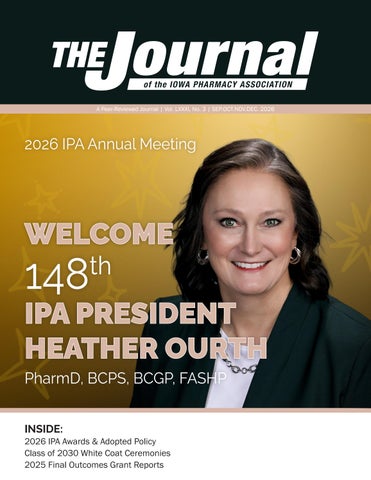
2026 IPA Annual Meeting
WELCOME
148
th
IPA PRESIDENT HEATHER OURTH PharmD, BCPS, BCGP, FASHP INSIDE: 2026 IPA Awards & Adopted Policy Class of 2030 White Coat Ceremonies 2025 Final Outcomes Grant Reports
Insurance guidance built around your needs. MORE OPTIONS. MORE GUIDANCE. ONE INSURANCE RESOURCE. Helping pharmacy professionals explore insurance options for business and life. PMC Advantage Insurance Services helps pharmacy professionals understand their risks, explore available options, and identify insurance solutions that align with their individual needs. With access to a broad network of trusted carrier partners, PMC Advantage can help with both commercial and personal insurance needs, giving pharmacists one resource to turn to as their business and life evolve.
Insurance doesn’t have to be one-size-fits-all. Let PMC Advantage help you explore your options. 800.258.4408 pmc.advantage@pmca.agency pmca.agency/pharmacy SCAN THE QR CODE TO LEARN MORE
WHY WORK WITH PMC ADVANTAGE? Pharmacy Knowledge More Insurance Options Business + Personal Support
INSURANCE SOLUTIONS MAY INCLUDE Commercial Insurance • Business and property • General & professional liability • Workers compensation • Cyber • Commercial auto • Employee Benefits
Personal Insurance • Home, auto, life, disability & personal umbrella
Shared as part of a promotional relationship between State Pharmacy Association and PMC Advantage Insurance Services. ©2026 PMC Advantage Insurance Services, Inc. All rights reserved. PMC Advantage Insurance Services, Inc. is a wholly owned subsidiary of Pharmacists Mutual Insurance Group. Insurance products offered through PMC Advantage may be underwritten by subsidiary affiliates of Pharmacists Mutual Insurance Group or other insurers. Availability, terms, and conditions vary by state. See policy for details.
TABLE OF CONTENTS 2570 106th Street, Unit D, Urbandale, IA 50322 Phone: 515.270.0713 | Fax: 515.270.2979 Email: ipa@iarx.org | www.iarx.org
PUBLICATION STAFF Allison Hale Luther, Managing Editor Matthew Pitlick, PharmD, BCPS Brian Wall, PharmD, CAE Lyndi McVey, PharmD, BCPS Laura Miller Kellie Staiert, MPA
COVER STORY More Is Waiting for Those Who Reach pgs. 4-6
OFFICERS CHAIRMAN Wes Pilkington, PharmD — Cedar Falls PRESIDENT Heather Ourth, PharmD, BCPS, BCGP, FASHP — West Des Moines PRESIDENT-ELECT Laura Knockel, PharmD, BCACP, FAPhA — North Liberty TREASURER Kristin Meyer, PharmD, BCGP, CACP, FASCP — Marshalltown SPEAKER OF THE HOUSE Micaela Maeyaert, PharmD, BCPS, DLPA — Spirit Lake VICE SPEAKER OF THE HOUSE Angie Spannagel, PharmD, BCACP — Dubuque
TRUSTEES REGION #1 Ben Miskle, PharmD — Iowa City REGION #2 Dana McDougall, PharmD, BCPS, BCOP — Hudson
IPA Annual Meeting pgs. 8-9
White Coats pgs. 16-19
FEATURES 2027 Standard of Care Symposium . . . . . . . . . . . . . . . . . . . . . 11 2026 IPA Professional Awards . . . . . . . . . . . . . . . . . . . . . . . . . . 12 Speaker’s Address: One Shared Commitment . . . . . . . . . . . . . 14 2026 SOC Tank Project Updates . . . . . . . . . . . . . . . . . . . . . . . . 24
REGION #3 Wendy Mobley-Bukstein, PharmD, BCACP, CDCES, CHWC, NASM-CPT, FAPhA, FADCES — Clive
Emergence of Drug-Induced Neurotoxicity with Cefepime . . . 30
REGION #4 Andrew Wagner, PharmD — Eagle Grove
2025 Outcomes Grant Final Reports . . . . . . . . . . . . . . . . . . . . 42
AT LARGE Ginelle Bryant, PharmD, BCPS — Urbandale Kathy Stone, PharmD, BCSCP — Missouri Valley Omobola Thompson, RPh, MPH — Clive Mylo Wells, PharmD — Bloomfield HONORARY PRESIDENT Susan Shields, RPh — Altoona
2026 Adopted IPA Policy . . . . . . . . . . . . . . . . . . . . . . . . . . . . . . 38 2026 Executive Internship Reflection – Amanda Prins . . . . . . 45 Iowa HHS Naloxone Distribution Program . . . . . . . . . . . . . . . . 48
IN EVERY ISSUE President’s Page . . . . . . . . . . . . . . . . . . . . . . . . . . . . . . . . . . . . . . 4
PHARMACY TECHNICIANS Kimerly Metcalf, CPhT-Adv — Cedar Falls Jennifer Simmons, CPhT, CMA — Des Moines
CEO’s Column . . . . . . . . . . . . . . . . . . . . . . . . . . . . . . . . . . . . . . . 10
STUDENT PHARMACISTS Noriac Dathis — Drake University Noah Hensley — University of Iowa
Public Affairs . . . . . . . . . . . . . . . . . . . . . . . . . . . . . . . . . . . . . . . 39
The Journal of the Iowa Pharmacy Association is a peer-reviewed publication. Authors are encouraged to submit manuscripts to be considered for publication in The Journal. For author guidelines, see www.iarx.org/journal. “The Journal of the Iowa Pharmacy Association” (ISSN 1525-7894) publishes 3 issues per year: January/February/March/April issue; May/June/July/August issue; and September/October/November/ December issue by the Iowa Pharmacy Association, 2570 106th Street, Unit D, Urbandale, IA 50322. POSTMASTER: Send address changes to: The Journal of the Iowa Pharmacy Association, 2570 106th Street, Unit D, Urbandale, IA 50322. Published tri-annually, The Journal is distributed to members as a regular membership service paid for through allocation of membership dues. Subscription rates are $80 per year, single copies are $30. Printed by Mittera; Graphic design by the Iowa Pharmacy Association.
Practice Advancement . . . . . . . . . . . . . . . . . . . . . . . . . . . . . . . . 20 IPA Foundation . . . . . . . . . . . . . . . . . . . . . . . . . . . . . . . . . . . . . . 42 IPA in Action . . . . . . . . . . . . . . . . . . . . . . . . . . . . . . . . . . . . . . . . 45 Members’ Section . . . . . . . . . . . . . . . . . . . . . . . . . . . . . . . . . . . 49 Calendar of Events . . . . . . . . . . . . . . . . . . . . . . . . . . . . . . . . . . . 50 Time Capsule . . . . . . . . . . . . . . . . . . . . . . . . . . . . . . . . . . . . . . . 51
Mission Statement The Iowa Pharmacy Association empowers the pharmacy profession to improve the health of our communities. SEP.OCT.NOV.DEC. 2026 |
3
PRESIDENT’S PAGE
More Is Waiting for Those Who Reach Presidential Address — June 11, 2026
Heather Ourth, PharmD, BCPS, BCGP, FASHP 2026-2027 IPA President Clinical Pharmacy Manager, MercyOne Des Moines
I am humbled to be here today as the 148th president of IPA. Thank you all for your support as I work to lead the association this year. I’d like to recognize my son, Logan, and my friend, Stephanie, who are here with me today. Their support is important in all aspects of my life, and I appreciate being able to share this experience with them. There’s a pharmacist I want you to think about. Maybe you know her. Maybe you are her. She’s working in a small town. It is one of those Iowa towns where the grain elevator is the tallest thing on the skyline. She knows her patients by name. She knows their families. She knows which ones won’t take their medication the way they’re supposed to and which ones will tell her things they won’t tell their doctor. One day, a patient comes in. He is an older gentleman, a retired farmer and not much for talking. He picks up his prescriptions, same as always. But something is off, she notices. She asks one more question than she had to. She follows a hunch and what she finds changes the course of that man’s life. She didn’t do that because a protocol told her to. She didn’t do it because someone gave her permission. She did it because she reached a little further than the transaction required and more was waiting on the other side. That is the story of our profession. That is the story of Iowa pharmacy. And that is what I want to explore with you today.
THE REACH THAT BUILT THIS PROFESSION Everything we have as a profession, every expanded clinical role, every seat at the table, every moment of authority and trust we’ve earned, came because someone decided to reach for it before anyone told them they could. Think about what that looked like. There was a time when pharmacists didn’t give immunizations. Someone thought they should. Someone made the case, built the rationale, and
4 | The Journal of the Iowa Pharmacy Association
pushed through the resistance. Now, across this country, pharmacists are the most accessible immunization providers. In Iowa alone, hundreds of thousands of people have been protected because a pharmacist was there, ready and willing. There was a time when collaborative practice agreements between pharmacists and physicians were a novel idea, albeit a controversial one. Someone believed patients would be better served if those two professionals worked side by side rather than in separate silos. Someone reached across that divide. There was also a time when medication therapy management was not a recognized or billable service. Pharmacists said, “Patients need this, and we are the ones who can provide it.” They reached. And today, Iowa pharmacists are managing chronic disease, adjusting therapy, and improving outcomes in ways that would have seemed extraordinary a generation ago. None of these things happened because the healthcare system woke up one morning and decided pharmacists deserved more. They happened because pharmacists decided it first. Then they proved it, advocated for it, and refused to let it go. We are standing today on ground that someone had to fight for. I don’t want us to forget that. Because the fight isn't over. And the reach isn’t finished.
WHAT "MORE" LOOKS LIKE RIGHT NOW So, what does “more” look like right now? I want to get specific with you. Because “more” is not an abstraction. It is not a distant horizon we’ll someday approach. It is close and visible. And in some cases, it is already happening right here in Iowa. It looks like provider status and payment for services. Iowa pharmacists have been delivering clinical care at a provider level for years and now the Iowa Pharmacy Practice Act outlines full practice authority for pharmacists and the standard of care regulatory model. The gap between what we do and how the system recognizes and reimburses it is a gap in policy. That gap can be closed. It
PRESIDENT’S PAGE Heather Ourth installed as president by outgoing president Wes Pilkington
will be closed, if we reach for it with the same persistence that Iowa pharmacy and IPA led the country in immunization authority, MTM, and now standard of care and full practice authority, along with other milestones in our profession’s history. Appropriate payment for clinical services will be achieved by showing up in legislative offices, by telling our stories, by making it impossible for decision-makers to ignore the value we deliver every day. It looks like rural Iowa. There are communities in this state where access to healthcare is eroding. Clinics are closing. Physician shortages are deepening. Patients now driving an hour for care that used to be five minutes away. In those communities, the pharmacist is often the most accessible, most trusted healthcare professional left. That is not a burden. That is an invitation. Pharmacists have an opportunity to be the connective tissue of rural healthcare. The provider who bridges the gap, coordinates the care, and keeps people healthy closer to home. That work is already underway. It needs to be scaled. It looks like the patients no one else is reaching. Medication non-adherence costs this country hundreds of billions of dollars a year. More importantly, it costs patients their health, their independence, and sometimes their lives. Mental health access in Iowa, particularly in rural areas, is a quiet crisis. Chronic disease management is overwhelmed and underfunded. These problems will be solved in communities, in conversations, in the
kind of longitudinal relationships that pharmacists are uniquely positioned to build. Pharmacists are the ones positioned to reach these patients. It looks like the next generation of Iowa pharmacists. In our colleges of pharmacy right now, there are students who chose this profession because they believed it meant something. They are watching us. They are deciding, based on what we do and what we say and what we fight for, what kind of profession they have entered. We owe them a reach.
THE REACH WE TAKE TOGETHER I want to say something about what makes the Iowa Pharmacy Association worth your time, your membership, and your energy. I think it comes down to this: Individually, each of us has a reach. We can serve our patients better. We can advocate in our own communities. We can mentor one student, take on one more clinical service, have one more conversation with a skeptical physician who doesn’t yet understand what a pharmacist can do. That reach matters and is incredibly impactful. But together, this is where it gets interesting. Together, our reach goes to the statehouse. Together, our reach shapes the
SEP.OCT.NOV.DEC. 2026 |
5
PRESIDENT’S PAGE policy conversations that determine what pharmacists are allowed to do, and how they are paid to do it. Together, our reach funds the advocacy, the education, the research, and the relationships that no single pharmacist could sustain alone. Together, we are not just individual practitioners doing good work in individual practices. We are a profession with a voice, a presence, and a claim on the future of healthcare in this state. That is what an association is for. Not just continuing education and networking although those things matter. It is the mechanism by which individual reach becomes collective power. I want to ask you directly: Are you reaching through this organization the way you could be? Are you bringing colleagues in who aren’t yet part of this community? Are you showing up for the advocacy days, for the committees, for the conversations that feel slow and unglamorous but are the ones that actually move things? Because more is waiting for those who reach, and the reach is further when we extend it together.
THE REACH THAT IS YOURS ALONE I want to close with something personal. I’ve been fortunate to spend my career alongside many individuals who had the vision and reach to provide the professional foundation we find ourselves on today. I’ve been a part of pushing boundaries and expanding clinical pharmacy practice. But there is more work to do. Every person in this room has a reach that belongs only to you. Your community is not my community. Your patients are not my patients. The trust you have built over years of showing up, of knowing names, of staying late, of catching what others missed, that is yours alone. It is specific and irreplaceable. And there is more waiting on the other side of it. I am not asking you to do more in the sense of working harder in a profession that has already asked so much of you. I know the
exhaustion is real. I know the reimbursement pressure is real. I know there are days when the system feels designed to grind you down rather than lift you up. I am asking you to reach differently. Deeper and further into the possibility of what you already know how to do. Ask one more question. Knock on one door you haven’t knocked on. Offer one service your community needs and doesn’t know you can provide whether that’s in a community pharmacy, a health-system, or a clinic setting. Say yes to one leadership opportunity that scares you a little. Mentor one student who needs to see what this profession looks like when it is lived with purpose. The more that is waiting for you is not always dramatic. Sometimes it is quiet. Sometimes it is the look on a patient’s face when they finally understand their medications. Sometimes it is the colleague who stays in the profession because you showed them it was worth staying. Sometimes it is the small town that keeps its pharmacy because you fought to keep it viable. That is more. That is the more this profession is made of. In closing, when I think about the pharmacists who came before us, the ones who gave immunizations before it was accepted, who built collaborative practices before anyone had a template, who stayed in their rural communities when it would have been easier to leave, I don’t think of people who were waiting for the world to hand them something. I think of people who reached. And I think of everything that was waiting on the other side. We are the beneficiaries of that reach. And the ones who come after us will be the beneficiaries of ours. So here is my charge to you as your president, and as your colleague, and as someone who believes in this profession and in the people in this room. Go back to your pharmacy. Go back to your health-system, your clinic, your classroom, your community. And reach. Reach for the patient who needs more than a transaction. Reach for the policy that has taken too long to change. Reach for the student who needs someone to believe in what they chose. Reach for the seat at the table that has always belonged to us and that we are still, some days, having to claim. More is waiting. It has always been waiting. And Iowa pharmacy—you— were made to reach for it. Thank you. ■
Learn more about President Ourth!
6 | The Journal of the Iowa Pharmacy Association
protect your patients. protect your pharmacy.
The PQC+ QA program provides tools to improve efficiency and patient safety and to meet accreditation, Part D, and state quality assurance requirements. Med-safety resources, safe practice tips, and training Legal protection for your QA work Practical tools to collect and analyze patient safety data
Learn more at www.medicationsafety.org or call us at (866) 365-7472. The Alliance for Medication Safety (APMS) is a federally listed Patient Safety Organization (PSO).
IPA ANNUAL MEETING
2026 IPA Annual Meeting Over 230 pharmacy professionals from across the state gathered June 11-12 in Coralville, IA, for the 2026 IPA Annual Meeting, celebrating leadership, innovation, and the future of pharmacy practice.
OTC Challenge Trivia
Attendees heard from two engaging keynote speakers: Dr. Erika Michalski, Founder & Chief Encouragement Officer at Strategically Authentic, and Iowa pharmacist Randy McDonough, PharmD, MS, BCGP, BCPS, FAPhA, CEO & co-owner of Towncrest Pharmacies and 20252026 APhA President. Michalski presented on the “Science of Satisfaction,” sharing insights related to neuroscience, positive psychology, and emotional intelligence to help enhance personal and professional satisfaction. McDonough delivered “Redefining What Is Possible,” encouraging pharmacy professionals to embrace innovation, technology, and new opportunities to advance patient care.
Keynote Erika Michalski
IPA Board member installation
Keynote Randy McDonough
2026 Sponsors
IPA Foundation Poster Presentation winner Andrew Miesner
8 | The Journal of the Iowa Pharmacy Association
Pharmacists Mutual Insurance Group McKesson Amplify Alliance for Patient Medication Safety Bayer Cardinal Health CPESN Iowa Iowa Total Care J&J Innovation Medicine PharmServ Staffing MercyOne SafeNetRx
IPA ANNUAL MEETING
Three Years of Change Limerick by Chairman of the Board Jim Hoehns
The IPA House of Delegates met to discuss and act on important policy issues affecting pharmacy practice. Delegates considered topics regarding 340B drug pricing program restrictions, evidence-based immunization guidance, direct-to-consumer pharmacy models, and pharmacist credentialing infrastructure. The House adopted 11 policy statements, helping guide the future direction of the profession. See complete policy statements on page 38.
For three years, we’ve witnessed great change, With IPA’s future in range. When Kate Gainer moved on, A new search carried on, And Matt Pitlick stepped in to arrange. Brian Wall’s professional affairs thrive, Helping pharmacy grow and arrive. A new Practice Act too, Opened pathways anew, Keeping patient care strong and alive.
Poster presenter Amanda Prins
The meeting also showcased the future of the profession through resident research presentations, poster sessions highlighting innovative pharmacy practices, and a residency and career showcase. A panel discussion featuring Iowa’s standard of care pioneers provided practical insights into implementing expanded pharmacist services. Lastly, but certainly not least, the Annual Meeting recognized outstanding leadership and service during the IPA Annual Awards Banquet and celebrated the installation of the association’s new president, Heather Ourth, PharmD, BCPS, BCGP, FASHP, and Board of Trustees. Networking events, the IPA Foundation Silent Auction, and collaborative discussions reinforced the meeting’s focus on advancing pharmacy practice while strengthening connections among Iowa’s pharmacy community. ■
Heather Ourth we are proud to acclaim, As IPA president taking aim. While Wes Pilkington led, With great vision ahead, Leaving service deserving of fame. In Galena, new leaders took flight, At Decker-Temple shining bright. Stacy Johnson and Ian Patterson, Served the Board with great passion, Showing pharmacy’s future is bright.
Outgoing president Wes Pilkington and Matt Pitlick
IPA is a family indeed, With advocacy meeting each need. Our staff lead the way, Every single day, Helping pharmacists flourish and succeed. And looking ahead, we can see, What the future perhaps yet may be. In 2046, John Swegle’s last mix With the Foundation’s long legacy.
Poster presenter Spencer Short
Let’s also applaud leaders anew, Whose vision and service ring true. Jill Kolesar at Iowa stands, Erik Maki at Drake commands, Helping shape what our profession can do.
SEP.OCT.NOV.DEC. 2026 |
9
CEO’S COLUMN
Steady in Purpose, Together in Action There is a lot coming at pharmacy right now. Continued PBM reform, reimbursement pressures, changes in practice and new technology all demand our attention. Some days our task list looks like it was written by someone who doesn’t sleep.
Matthew Pitlick, PharmD, BCPS Executive Vice President & CEO, Iowa Pharmacy Association
At IPA’s Annual Meeting, Speaker of the House Ryan Jacobsen offered a reminder worth carrying forward. He quoted Marcus Aurelius’ Meditations: “We were born to work together like feet, hands, and eyes, like the two rows of teeth, upper and lower.” We work in different settings and bring different experiences and perspectives, but we share one commitment: improving patient care. That message pairs well with another Stoic idea. Epictetus put it simply: “Some things
Standard of care and practice authority opens the door. Turning that authority into services that meet patient needs takes continued learning, sound clinical judgment, and collaboration. It also takes payment that makes those services sustainable. Demonstrating our value and advocating for fair reimbursement belong to the same effort.
New technology is coming. Tools are arriving faster than most of us can read the user agreements. We can help decide how those tools are used. Through IPA’s Emerging Pharmacy Practice & Technology Task Force, we’re asking thoughtful questions now about safety, access, and patient care. During the 250th anniversary of American independence, there is a historical connection worth remembering. George Washington drew inspiration from Joseph Addison’s Cato, a play about the Roman statesman and Stoic. Washington quoted it often, and it was performed at Valley Forge in 1778. Its themes of discipline and public duty offered perspective during a time when the outcome was far from certain.
are in our control and others not.”
Easy to say, but hard to practice when a claim comes back underwater, a patient faces another barrier to care, or collaboration with other healthcare providers is not working the way we want it to. We still control how we show up for the patients and colleagues in front of us. We control our preparation, our actions, and our willingness to stay involved. When we act together, our ability to influence what happens next grows.
The lesson still holds: we Matt Pitlick with Arkansas Pharmacists Association (APA) staff at Eighth Circuit Court
SF 383 is a clear example. In September, the Eighth Circuit heard arguments over Iowa’s PBM reform law. We cannot determine the court’s decision or when it comes. We can document what pharmacies and patients are experiencing. We can support the law’s defense. We can keep those realities in front of policymakers. None of that waits on a ruling.
Standard of care is an opportunity we can shape.
10 | The Journal of the Iowa Pharmacy Association
have work to do before we know how everything will turn out.
And, as Speaker Jacobsen reminded us, we do that work together. Each of us can contribute through the care we provide, the experiences we share, and the relationships we build. Through IPA, those individual efforts help shape the direction of our profession. We will keep facing circumstances beyond our control. We still have a voice, professional judgment, and a responsibility to the people we serve. Steady in purpose. Together in action. ■
January 30, 2027 West Des Moines, IA 8:00-8:45 AM
Networking Breakfast, Registration & Exhibit Hall
8:45-9:00 AM
Welcome & Opening Remarks
9:00-10:00 AM
10:00-11:00 AM 11:00-11:15 AM
11:15 AM-12:15 PM
12:30-1:00 PM
1:30-2:30 PM
2:30-3:30 PM
3:30-4:00 PM 4:00-5:00 PM 5:00-5:15 PM
6.5 Hours of CE* *
Accreditation Pending
Keynote
The Standard of Care Model: What It Is, What It Isn’t, and What Comes Next Krystalyn Weaver, PharmD, JD, Executive Vice President and CEO, NASPA
Professional Judgment in Action: Practicing with Confidence and Competence Todd Sorensen, PharmD, FAPhA, FCCP, Executive Director, Alliance for Integrated Medication Management; Professor, University of Minnesota College of Pharmacy
Networking & Exhibit Hall Lab Values for Patient Monitoring and Clinical Decision-Making
SOC Success Stories: Lessons from Early Adopters
Geoffrey Wall, PharmD, FCCP, BCPS, CGP, Professor, Drake University CPHS
Panel Discussion – Department of Veterans Affairs, Iowa City VA Medical Center
Networking Lunch & Exhibit Hall
The SOC Tank Competition Pharmacy Opportunities in Cancer Prevention
From Idea to Launch: Building a Service Implementation Roadmap
Robert Nichols, PharmD, BCPS, Pharmacist, Greenwood Pharmacy
Stevie Veach, PharmD, BCACP, Clinical Associate Professor, University of Iowa COP
Pharmacy’s Role in CardiovascularKidney-Metabolic Health Wendy Mobley-Bukstein, PharmD, BCACP, CDCES, CHWC, NASM-CPT, FAPhA, FADCES, Professor, Drake University CPHS
Building SOPs That Support Practice Transformation Monica Nikseresht, PharmD, CPT, Clinical Director/Manager, Medicap Pharmacy
Networking & Exhibit Hall Medical Billing and Sustainable Revenue for Patient Care Shanna O’Connor, PharmD, BCACP, Department Head of Pharmacy Practice, Associate Professor, South Dakota State University College of Pharmacy and Allied Health Professions
Closing Remarks
WWW.IARX.ORG/SOC_SYMPOSIUM SEP.OCT.NOV.DEC. 2026 |
11
IPA ANNUAL MEETING
2026 IPA Awards IPA takes great pride in recognizing individuals for their contributions of leadership, patient care, professional involvement, and public service. These awards serve to capture Iowa pharmacy’s spirit of service and its culture of professionalism.
Bowl of Hygeia
Robert G. Gibbs Distinguished Pharmacist
Temple Mentorship
Honorary President
Diane Reist, BS Pharm, PharmD, RPh, Cedar Rapids
Wendy Mobley-Bukstein, PharmD, BCACP, CDCES, CHWC, NASM-CPT, FAPhA, FADCES, Clive
Greg Johansen, RPh, Cumming
Excellence in Innovation
Distinguished Young Pharmacist
Health-System Pharmacist
Patient Care Partner
Monica Nikseresht, PharmD, CPT, Glenwood
Benjamin (Ben) Miskle, PharmD, Iowa City
Morgan Herring, PharmD, BCPS, FAPhA, West Des Moines
Appreciation Award (Corporate)
Appreciation Award (Individual)
Pharmacy Technician of the Year
Jerry Karbeling Leadership
SafeNetRx
Kate Gainer, PharmD, Clive
Erin Halvorson, CPhT, Ladora
Stacy Johnson (Drake) Volta Adovor (Iowa, Not Pictured)
Gerald (Jerry) Fleshner, RPh, Carroll
12 | The Journal of the Iowa Pharmacy Association
Primary Health Care (PHC)
AMPLIFY
PATIENT FIRST. PHARMACY FORWARD.
You are here to serve, McKesson is here to amplify At McKesson, our core belief is that the patient comes first. Pharmacists are the healthcare providers that patients see most often. We are committed to protecting and elevating the profession, ensuring pharmacists can continue providing critical services to meet each patient’s needs.
Use Your Voice! • Get active with your state association • Contact your elected officials Download your guide to advocacy here
• Meet your elected officials or give them a tour of your pharmacy
© 2025 McKesson Corporation and/or one of its subsidiaries. All rights reserved. All other products mentioned may be trademarks, service marks or registered trademarks of their respective owners. ISMC-3874250-0125
SPEAKER’S ADDRESS
One Shared Commitment Speaker’s Address — June 11, 2026 Good morning and welcome to the 62nd session of the House of Delegates of the Iowa Pharmacy Association!
To empower the pharmacy profession to improve the health of our communities. Ryan Jacobsen, PharmD, BCPS 2025-2026 IPA Speaker of the House Clinical Associate Professor, University of Iowa College of Pharmacy
This is the mission of the Iowa Pharmacy Association, a mission that is ultimately about people. Communities are foundational to our daily lives. We live in communities. We work in them, serve in them, learn in them, and depend upon them every day. The health of each of these communities is dependent on the individuals within. Individuals with different perspectives, values, goals, and beliefs. Differences that contribute to the richness and vitality of each community. Honoring and respecting our collective differences contribute to healthy communities.
2026-2027 Speaker of the House Micaela Maeyaert with 2025-2026 Speaker Ryan Jacobsen
14 | The Journal of the Iowa Pharmacy Association
When we can listen intently and strive to understand another’s perspective, our community is healthier for it. Individually, we are healthier for it. In times of deep polarization within certain communities, our attention to this aspect of healthy communities is more important than ever. The tensions and divisions we witness in communities today are not uniquely modern challenges. Throughout history, societies have struggled to reconcile differing beliefs, identities, and perspectives. Nearly two thousand years ago, the Roman emperor and Stoic philosopher Marcus Aurelius reflected on this enduring reality in his work, Meditations, when he wrote, “We were born to work together like feet, hands, and eyes, like the two rows of teeth, upper and lower.” His words remind us that human flourishing has always depended upon cooperation, not division. Diversity within a community is not a weakness to overcome, but a strength that reflects the
SPEAKER’S ADDRESS fession in profound and impactful ways. Many of those decisions may seem ordinary today—perhaps even taken for granted—yet they fundamentally shaped the profession we care so deeply about. In a moment, you will have the opportunity to do the same as we consider proposed policy statements from the Policy Committee on Public Affairs, chaired by Adam Baird, on the topics of 340B drug pricing and immunizations. Then we will consider proposed policy statements from the Policy Committee on Professional Affairs, chaired by Lacey Ferguson, on the topics of direct-to-consumer pharmacy models and pharmacist credentialing infrastructure. Approved policy statements will guide the Board of Trustees and association, and ultimately shape our profession in the years to come while improving the health of our communities. complexity of humanity itself. Just as the body depends upon different parts functioning together, societies thrive when individuals with different experiences, cultures, and viewpoints recognize their shared responsibility to one another. Polarization may be an ancient condition of human society, but so too is the enduring hope that people can choose unity, understanding, and common purpose over conflict.
The Iowa Pharmacy Association is the respected voice for all pharmacy professionals in Iowa and the leader in transforming the practice of pharmacy. This is the vision of the Iowa Pharmacy Association, and our collective voices represent pharmacists, technicians, students, and business partners across diverse pharmacy settings, including community, health systems, academia, ambulatory care, and industry. As the respected voice for pharmacy professionals across Iowa, our strength lies in both our diversity and our unity. Different practice settings. Different experiences. Different perspectives. Yet one shared commitment: improving patient care and advancing our profession. This House has had many a spirited debate, and we are better for it. Our communities are better for it. The patients we serve are better for it. So I ask you, please share your perspective, your thoughts, your insight as we consider the proposed policy statements today. Ask questions, listen intently, strive to understand. Your voice matters. As I reflected on and prepared for my role here today as your speaker, I marveled at those that have stood at this podium before me, and those delegates that have served in this House before you. This House and this association has shaped our pro-
To highlight just a few examples of how IPA is empowering us all to improve the health of our communities and transform the practice of pharmacy, we see the mission and vision come to life every day in efforts to address the opioid crisis, expand rural health transformation, advance test-andtreat services, improve cardiovascular care, increase immunization access, strengthen cancer prevention initiatives across Iowa, and establish the Pharmacy Practice Standards Institute. Before I open the floor to today’s business, I want to express my sincere gratitude for the opportunity to serve as your Speaker of the House. Working side by side with many of you and IPA’s leadership and staff has been a tremendous honor and will leave an indelible mark on my career. I have made countless memories and forged new friendships that I will be eternally grateful for. The work we do here today will shape our profession, strengthen our communities, and improve the lives of the patients we serve. Thank you for the privilege of serving alongside you. Now, let us begin. ■
Adopted policy statements are available on page 38. 26-U1 340B Drug Pricing Program Restrictions 26-U2 Evidence-Based Immunization Guidance 26-R1 Direct-to-Consumer Pharmacy Model 26-R2 Pharmacist Credentialing Infrastructure
SEP.OCT.NOV.DEC. 2026 |
15
WHITE COAT CEREMONIES
Bright Futures Take Shape for New Students August 25, 2026 The future looks bright for incoming students at the University of Iowa (UI) College of Pharmacy as the 2026-27 school year begins. Ninety-nine first-year Doctor of Pharmacy (PharmD) students and nine graduate students pursuing their Doctor of Philosophy (PhD) received warm welcomes from faculty and staff as they took the first steps of their journey to becoming pharmacists and researchers. PharmD students settled into the college during Engagement Week during which they got to know fellow classmates and faculty. Through information sessions and interactive activities, they learned what it means to be a Hawkeye and how to get the most out of their time at the College of Pharmacy.
Opening Doors The class of 2030 concluded the week with the long-awaited Welcome to the Profession White Coat Ceremony at UI’s Hancher Auditorium. Representatives from the college and Iowa Pharmacy Association (IPA) were present to watch students don their coats for the first time. “The White Coat Ceremony is more than a tradition—it is a rite of passage. It symbolizes your entry into the health care profession and the responsibilities that come with it,” said Dean, Jean M. Schmidt Chair, and Professor Jill Kolesar. “You are embracing a
16 | The Journal of the Iowa Pharmacy Association
commitment to your patients, your community, and your future self as a pharmacist.” Keynote speaker and Executive Vice Chancellor for Academic and Student Affairs, Provost, and Chief Academic Officer for the University of Colorado Anschutz Laura Borgelt, ’95 BSPh, PharmD, MBA, reminisced on her unexpected journey into academia. She reminded students that their futures might look very different than they imagined. “That is one of the wonderful truths about a pharmacy education: it opens doors you cannot yet see.” Clinical Associate Professor and IPA President-Elect Laura Knockel emphasized the importance of building relationships with the people around you. Fellow students and current professors may become future colleagues, collaborators, and lifelong friends. Or, in Knockel’s case, former students become future supervisors. “Pharmacy needs your ideas, your talent, and your energy,” she said. “Don’t wait until graduation. Get involved now.”
WHITE COAT CEREMONIES
Ready for Research Nine graduate students had their own introduction to the College of Pharmacy. During orientation week prior to classes beginning, they become acquainted with one another, faculty, and the building in a low-stakes environment. Hansel Alexander, Gauri Rajendra Chavarkar, Ahmed Gharaibeh, Tyler Holmes, Niranj H. Ram, Anzhou Wang, and Zeyu Xia began their pharmaceutics degrees. The Drug Discovery and Experimental Therapeutics (DDET) program welcomed Aisling Dolan, while Eugene Boafo joined the Health Services Research program. Six different countries are represented among the students: Ghana, Indonesia, India, Qatar, China, and the United States. Dolan chose the UI to pursue her PhD due to the diversity of research within the college. “I feel suited to the DDET program because I want to participate in the drug development process from a creative angle. I’m excited about the range of research topics and methods among the faculty and the culture of collaboration and care.” ■
Photos and news release by the University of Iowa College of Pharmacy
SEP.OCT.NOV.DEC. 2026 |
17
WHITE COAT CEREMONIES
2026 Coating Ceremonies Welcome Drake’s Newest Future Pharmacists, Occupational Therapists, and Nurses September 11, 2026 Drake University’s College of Pharmacy and Health Sciences (CPHS) has welcomed its newest cohort of professional students into the nursing, occupational therapy, and pharmacy programs. The College held its annual Coating Ceremonies on August 21, 2026, in Sheslow Auditorium. Since 1988, these ceremonies have signified the beginning of a journey for Drake CPHS students. Incoming graduate students received a white or blue coat, representing their entry into the healthcare profession. CPHS Dean Erik Maki encouraged incoming students to reflect on the “profound symbolism” of receiving their coat. “In the health professions, a white coat has come to symbolize the authority of science and the art of healing,” Maki said. “It is the symbol of commitment, compassion, and care.” This year, a new and meaningful tradition was introduced to the Coating Ceremonies. Each student was coated by their faculty mentor, who will guide them through their professional education. In addition, each student received a card in the pocket of their white or blue coat naming their coat sponsor, the individual(s) who gifted them the coat on their chairs to symbolize
18 | The Journal of the Iowa Pharmacy Association
their long-term support of the student’s journey in the health professions. Across three ceremonies, CPHS inducted 20 students into the Nursing Class of 2027, 19 students into the Occupational Therapy Doctorate (OTD) Class of 2028, and 59 students into the Doctor of Pharmacy (PharmD) Class of 2030. Twenty students entered the Accelerated Bachelor of Science in Nursing program this year. This is the third cohort of students entering the one-year program, which began in 2024. Hannah Crocker, Nursing Clinical, Skills & Simulation Learning Lab Instructor, announced the students as faculty members Dr. Katie Scott, Dr. Abby Rail, and Dr. Amanda McGraw bestowed white coats to the incoming students alongside Dean Maki. Lance Schmitt, Chief Nursing Officer at Broadlawns Medical Center, congratulated the students on their entrance into the nursing profession and led them in the Pledge of Professionalism. “This ceremony symbolizes just the beginning of your journey into nursing,” Schmitt said. “Broadlawns is happy to partner with you during that journey and allow you to learn what it takes to be a nurse.”
WHITE COAT CEREMONIES This year, Drake welcomed 59 new PharmD candidates with their traditional white coats. Dean Maki emphasized the importance of entering the pharmacy profession at a time when pharmacists are being called upon more than ever to care for their communities. “It’s a very exciting time to be a pharmacist in the state of Iowa with the implementation of the new standard of care for Iowa’s Pharmacy Practice Act,” Maki said. “The Act allows pharmacists to practice at the top of their skill level to truly meet the healthcare needs of their communities at a time when access to care in many areas is limited.” Before the presentation of white coats began, a moment was taken to remember Jeffrey Lee, a former classmate of the Pharmacy Class of 2030 who passed away earlier this year. Lee’s mother, Jinsook Kim, joined Dean Maki on the stage to accept Jeffrey’s honorary white coat and share a few words about him. Dr. Charles Phillips, Associate Dean of Curriculum & Assessment, announced the twenty students inducted into the Doctor of Occupational Therapy program, who crossed the stage to receive a blue coat from OT faculty member Dr. Ashley Murray and Department Chair Dr. Rachel Allen-McHugh alongside Dean Maki and their faculty mentors. The blue coats honor “reconstruction aides,” a group of civilian women who provided occupational therapy to soldiers in World War One. “The uniform of these reconstruction aides was a slate blue, which led the army to refer to these aides as the bluebirds,” Maki said. “It is with pride in honoring the beginning of the profession that we also use the color blue.” These students will graduate Drake’s three-year OTD program in the spring of 2029. Dr. Mara Jaupon, Drake OTD alumna and working Occupational Therapist, welcomed the students into the profession and led them in the Pledge of Professionalism. “Look around and see the faces of your classmates, family, and friends,” Jaupon asked the students. “You all have a story. An invisible world that we currently know nothing about. And that is exactly where our role as occupational therapists begins. Looking beyond what we can see and taking the time to understand the person behind the patient.” Current OTD student and president of Drake’s chapter of the Pi Theta Epsilon occupational therapy honor society, Ally Anderson (OTD ‘28), congratulated her new classmates on their entrance to the program and reflected on her own blue coat ceremony one year ago and all that she’d learned and experienced since. “Looking back now, I can confidently say it was one of the most inspiring, thought-provoking, and motivating years of my life,” Anderson remarked. “Over the past year, I’ve discovered strengths in myself that I didn’t know I had and found some of my best friends along the way. One year from now, you will have the opportunity to look back and see just how much you have grown.”
“Jeffrey truly loved learning,” Kim said. “During his time at Drake, he worked hard, achieved excellent academic results, and looked forward with great excitement to beginning the professional phase of the pharmacy program. Although he was unable to complete his journey, you have chosen to honor him with a white coat. This extraordinary gesture means more to our family than words can express.” As Dr. Phillips announced the names of each coat recipient, pharmacy faculty members Dr. Michelle Bottenberg and Dr. Sarah Grady joined Dean Maki and the faculty mentors who helped the students put on their coats for the very first time. Joining them on the stage for the presentation of coats was Laura Knockel, President-Elect of the Iowa Pharmacy Association. Knockel offered her words of wisdom to the new pharmacy students before leading them in the Pledge of Professionalism. “Be involved,” Knockel urged in her address. “But don’t wait until graduation. Start now. Pharmacy needs your ideas, your talents, and your energy.” Abby Axell, 2027 PharmD Candidate, encouraged the incoming students to take advantage of the endless opportunities they’ll be offered during their time in the program. “This experience is what you make of it,” Axell said. “Join a pharmacy fraternity, get involved in intramural sports, join committees at the school or the state level, travel to Italy on a J-Term…” This year’s cohort of PharmD candidates will graduate in four years, in the spring of 2030. ■ Photos and news release by Drake University CPHS
SEP.OCT.NOV.DEC. 2026 |
19
PRACTICE ADVANCEMENT Cardiovascular Improvement Grant August marked the start of IPA’s fourth year of involvement in the cardiovascular improvement grant with Iowa HHS. The initiative focuses on strengthening the role of community pharmacies in cardiovascular disease prevention and management, with an emphasis on hypertension, high cholesterol, health disparities, and social determinants of health.
The primary focus of the project is supporting and maintaining NaloxoneIowa.org, Iowa’s central online resource for naloxone access and overdose prevention information. IPA will assume website ownership and maintenance responsibilities, ensuring continued access to timely resources while working alongside Iowa HHS communications and program staff to support updates and coordination.
A key focus of Year 4 is strengthening ambulatory care pharmacy services through a workgroup established in 2025. The workgroup brings pharmacists together from diverse practice sites across the state to identify practical opportunities to expand pharmacist involvement in outpatient care and develop resources that can be implemented in community pharmacy settings. IPA’s Director of Pharmacy Practice & Innovation, Lyndi McVey, PharmD, BCPS, is working with the group to develop templates, policies, standard operating procedures (SOPs), and other tools to help pharmacies establish, implement, and sustain clinical services and integrate more effectively within healthcare teams. A second priority is expanding and supporting the pharmacy-based Community Health Worker (CHW) Workforce. IPA is recruiting additional pharmacy professionals for CHW training and welcomed another community pharmacy to the pilot project this year. Since 2025, twenty-five pharmacy-based CHWs have completed certification through CEimpact, with additional cohorts participating in 2026. IPA is also collaborating with the Iowa Community Health Worker Alliance to develop community-specific resource guides and other tools that help CHWs connect patients with local health and social and community services. Three pharmacies are currently serving as pilot sites to develop and refine sustainable cardiovascular care workflows, with another pharmacy slated to join by the end of the year. Through the pilot, pharmacies implement blood pressure, point-of-care cholesterol screening, social determinants of health (SDOH) screening, and/or statin adherence services. The pilot is helping IPA identify effective approaches in real-world pharmacy settings, provide technical assistance to improve workflows and patient engagement, and develop tools and processes that can be scaled to additional pharmacies. Through these efforts, IPA is building the clinical and workforce infrastructure needed to help community pharmacies provide more comprehensive cardiovascular care and connect patients with the resources they need to improve their health. If you would like to participate in the workgroup or the pilot project, please contact Lyndi McVey (lmcvey@iarx.org).
Overdose Data to Action (OD2A) Grant As part of the federal Overdose Data to Action (OD2A) grant administered by Iowa HHS, IPA has received funds to continue its role in advancing overdose prevention, harm reduction, and other public health initiatives through pharmacies across Iowa. The initial agreement will provide funding beginning in the fall of 2026 with the potential for additional funding based on project expansion and other prevention initiatives within Iowa HHS.
20 | The Journal of the Iowa Pharmacy Association
HHS is also encouraging IPA to strengthen pharmacy-based education and awareness efforts related to overdose prevention and infection prevention. Promoting pharmacy participation in the Iowa HHS naloxone distribution program, increasing awareness of syringe access without a prescription, and supporting utilization of the Prescription Monitoring Program and naloxone co-prescribing alerts are some of the planned activities. As the project rolls out, IPA will develop educational materials, host webinars, and create community resources for pharmacy teams. Through these efforts, IPA continues to highlight the role of pharmacies in overdose prevention, infectious disease prevention, and expanding access to harm reduction services. Together, these efforts strengthen pharmacies as accessible, trusted points of care and public health support in communities across Iowa. If you have questions about this project, would like to access resources or participate in an upcoming webinar, or have experiences, insights, or guidance to share, please contact Kellie Staiert, Director of Grants & Partnerships (kstaiert@iarx.org).
Healthy Hometowns Healthy Hometowns is Iowa HHS’ Rural Health Transformation Program funded through the federal Centers for Medicare & Medicaid Services (CMS) Rural Health Transformation Program. This initiative is designed to create a sustainable, high-quality rural healthcare system by improving access to care, strengthening the workforce, expanding technology infrastructure,
PRACTICE ADVANCEMENT and addressing critical health challenges across Iowa’s rural communities. In early 2026, Iowa received approximately $209 million in first-year funding, with the potential to receive up to $1 billion over five years if program goals are achieved. Healthy Hometowns is organized around five key areas: Hometown Connections, Combat Cancer: Prevent and Treat, Communities of Care, Health Information Exchange, and EMS Community Care Mobile. Together, these efforts support provider recruitment and retention, development of regional Health Hubs, expansion of telehealth services, cancer prevention and screening, chronic disease management, community health worker programs, enhanced data sharing, and mobile healthcare delivery.
Iowa HHS: Healthy Hometowns Interactive Dashboards Several Requests for Proposals (RFPs) and funding opportunities are expected as additional program components are implemented, creating opportunities for participation related to innovative models of care, workforce development initiatives, community-based services, and rural health transformation projects. IPA is monitoring the following RFPs: • Cardiovascular Health Hub and Spoke Networks of Care (request for information was released in June): IPA submitted comments related to pharmacy involvement in prevention of cardiovascular health as well as treatment of cardiovascular disease. • Best and Brightest Workforce funding to support healthcare recruitment and retention.
care coordination needs, this year’s work places particular emphasis on identifying mental health needs and opportunities for expanding behavioral health services in rural communities. In addition to supporting survey outreach and engagement, IPA will assist in organizing an in-person statewide summit scheduled for February. The summit will bring together healthcare leaders, providers, educators, pharmacists, pharmacy technicians, student pharmacists, policymakers, and community stakeholders to review findings, identify priorities, and develop strategies for strengthening Iowa’s rural healthcare system. Dr. Robert Kruse, State Medical Director and Division Director of Public Health for Iowa HHS, will lead another central area of focus for the group: Graduate Medical Education (GME). A GME workgroup will be formed to explore opportunities to strengthen Iowa’s healthcare workforce pipeline, including expanding training opportunities and strengthening rural residency experiences. The group will examine strategies to increase exposure to rural practice, build stronger connections between education and training programs and rural communities, and encourage healthcare professionals—including physicians, pharmacists, pharmacy technicians, and other members of the healthcare team—to establish long-term careers in rural Iowa.
Iowa Rural Healthcare Workforce Initiative Townhall Comparison Brief If you would like to participate in the GME workgroup or attend the summit in February, please contact Kellie Staiert.
IPA Establishes Two New Task Forces
IPA remains actively engaged in Iowa’s Healthy Hometowns initiative, working with healthcare organizations, public health partners, and key stakeholders to identify opportunities for pharmacists and pharmacy involvement in emerging Healthy Hometowns projects. We will continue advocating for the inclusion of pharmacists and pharmacies in these projects!
During the summer of 2026, the IPA Board of Trustees established two task forces to address emerging opportunities and challenges facing the pharmacy profession. Both groups will begin their work in the fall of 2026 and continue into 2027, developing recommendations to guide IPA’s future policy, advocacy, and professional development efforts.
Iowa Rural Healthcare Workforce
Immunization Policy Task Force
For the past several years, IPA has participated in the Rural Healthcare Workforce Taskforce in collaboration with the Iowa Medical Society (IMS), Iowa Hospital Association (IHA), Iowa Primary Care Association and Iowa HHS, all in efforts to advance rural health care across Iowa. These organizations are working collaboratively to strengthen health care access, develop and retain the rural healthcare workforce, and improve health outcomes in underserved communities. A primary focus of the current year is gathering broad stakeholder input to better understand health care needs and priorities across rural Iowa. IPA is helping promote statewide surveys designed to capture perspectives not only from healthcare professionals and association members but also from the patients, families, and communities they serve. While previous efforts have highlighted workforce shortages, access challenges, and
As Iowa continues implementing its pharmacist standard of care regulatory framework, the Immunization Policy Task Force will evaluate IPA’s existing immunization policies and identify opportunities for modernization. This task force emanated from newly adopted policy at the 2026 IPA House of Delegates. The task force will develop policy recommendations for consideration by a future IPA House of Delegates and advise the Board of Trustees on potential legislative and regulatory priorities for 2027. Its work will help ensure IPA’s immunization advocacy reflects evolving pharmacy practice and patient care needs.
Emerging Pharmacy Practice & Technology Task Force The Emerging Pharmacy Practice and Technology Task Force will explore how innovations such as artificial intelligence,
SEP.OCT.NOV.DEC. 2026 |
21
Fuel Exam Confidence with Official PTCB Practice Tools Candidates using PTCB’s Practice Tools consistently report higher passing rates, giving them the confidence to soar.
Pre-PTCE
PTCE Practice Bank
Employers and educators can easily support candidates by using PTCB's direct billing service to purchase vouchers online. Get started at ptcb.org
PRACTICE ADVANCEMENT automation, robotics, digital health, and interoperability are reshaping pharmacy practice in Iowa. The group will develop a forward-looking roadmap for Iowa to inform the IPA Board of Trustees on how IPA can support this future direction for its members. Additionally, the task force will identify emerging policy priorities and recommend education and workforce development strategies to prepare pharmacists and pharmacy technicians for evolving roles. These recommendations will help guide IPA’s strategic initiatives, partnerships, and efforts to position Iowa pharmacy for the future.
Payer Update: Iowa Medicaid
opportunities under SOC, discuss common barriers such as credentialing, medical billing and workflow integration, and identify actionable steps toward practice transformation. Participants were introduced to the Pharmacy Practice Standards Institute (PPSI), an IPA initiative launched in January 2026 to provide resources to support the development and implementation of pharmacist-provided services. As PPSI resources continue to be developed, disease state practice resources, billing guidance, educational materials on standard of care, and practice implementation case studies will be provided to help pharmacy teams confidently expand patient care.
Medicaid Provider Revalidation Underway Iowa Medicaid launched a statewide provider revalidation initiative beginning July 1, 2026, with plans to review all enrolled Medicaid providers by June 30, 2028. The initiative, prompted by federal requirements from the Centers for Medicare & Medicaid Services (CMS), aims to strengthen program integrity, improve provider enrollment data, and reduce fraud, waste, and abuse. Pharmacists and pharmacies are both included in the revalidation process. Iowa Medicaid’s initial phase, running through June 2027, prioritizes providers overdue for revalidation, those with atypical identifiers, and higher-risk enrollments. Remaining providers will be included in the second phase, running from July 2027 through June 2028. Providers will receive individual notices by mail and have 30 business days to submit required documentation. Failure to complete revalidation may result in deactivation of Medicaid enrollment and interruption of claims payment. IPA encourages pharmacists and pharmacy leaders to verify their enrollment information, monitor communications from Iowa Medicaid, and respond promptly when notified.
Vice President of Professional Affairs Brian Wall presenting at IPA Goes Local
SOC implementation was also highlighted during IPA’s Annual Meeting in June through the panel discussion “From Idea to Implementation: Early Lessons from Iowa’s Standard of Care Pioneers.” Featuring Heather Ourth, PharmD, BCPS, BCGP, FASHP; Wendy Mobley-Bukstein, PharmD, BCACP, CDCES, CHWC, NASM-CPT, FAPhA, FADCES; and Allison Hanus, PharmD, the session showcased the experiences of Iowa pharmacists advancing innovative care models and encouraged attendees to consider opportunities within their own practice settings.
Pharmacy Benefit Carve-Out Iowa Medicaid is still on track to transition its pharmacy medication benefit from Iowa’s three managed care organizations back to the Iowa Medicaid fee-for-service program by December 1, 2026. IPA has attended several Iowa Medicaid Provider Town Hall sessions to track progress of this transition and has shared questions with Iowa Medicaid Pharmacy Consultant Abby Cate, who is coordinating the transition. IPA will continue to track the implementation of this transition into 2027.
Standard of Care Implementation Efforts to help pharmacists and pharmacy teams translate Iowa’s standard of care (SOC) regulatory framework into meaningful patient care opportunities continued over the summer months. A central component of these efforts was IPA’s 2026 Goes Local series, featuring the educational program “The SOC Playbook: Tools, Templates, and Peer Solutions.” These interactive sessions brought pharmacy professionals together to explore
L to R: Allison Hanus, Wendy Mobley-Bukstein, Heather Ourth
IPA remains committed to supporting innovation, sharing practical solutions, and helping the profession realize the opportunities created by Iowa’s modernized regulatory framework. If you have questions on how to approach implementing new services in your practice setting or would like to learn more about PPSI, please contact Lyndi McVey (lmcvey@iarx.org).
SEP.OCT.NOV.DEC. 2026 |
23
THE SOC TANK 2026
The SOC Tank: Project Updates The SOC Tank is a live innovation competition designed to give pharmacies the chance to pitch creative, SOC-aligned service ideas that elevate patient care and advance the practice of pharmacy under Iowa’s evolving standard of care model. The following projects were awarded grant funding during the 2026 Standard of Care Symposium’s SOC Tank Competition.
Implementing a PharmacistLed Travel Health Service Under Standard of Care Allison Hanus, PharmD During the 2026 Iowa Pharmacy Association Standard of Care Symposium SOC Tank Competition, I proposed a full-service travel health clinic operating within an independent pharmacy. I chose this service as my residency research project because I wanted to explore how the standard of care regulatory model could support its implementation. The service has now been operational at Towncrest Pharmacy for nearly ten months, providing valuable insight into what it takes to implement and sustain a travel health service in an independent pharmacy. The service was designed to provide a comprehensive pre-travel consultation for international travelers, including individualized education, vaccination administration, and pharmacist-prescribed travel medications. Patients scheduled consultations through the pharmacy’s existing online scheduling platform and completed pre-consultation paperwork covering their medical history, travel itinerary, and more. The pharmacist then met with the patient in a private patient care room to review recommendations and provide counseling. Existing pharmacy resources, including the scheduling platform, patient care room, vaccination supplies, electronic health record, and documentation software, were incorporated into the service, allowing implementation with minimal additional infrastructure.
What We Learned One of the most important lessons from implementation was the value of having well-developed policies and procedures. Because travel health consultations were relatively infrequent, detailed operational guidance helped ensure that important steps in the workflow were not overlooked. At the same time, the clinical portions of the policies and procedures needed to allow pharmacists to use their professional judgment based on each patient’s individual needs. This balance provided structure without unnecessarily limiting pharmacist autonomy. Generating demand for the service proved more challenging than providing the care itself. The primary barriers were limited referral sources, inconsistent travel-related healthcare needs, competing physician-run travel health clinics, hesitation around the out-of-pocket consultation fee, and limited patient under-
24 | The Journal of the Iowa Pharmacy Association
standing of the service. Many patients expressed interest when they learned about the service but did not have upcoming international travel. Others misunderstood what a pharmacy travel health consultation included. Many patients were unaware that pharmacists in Iowa could independently prescribe medications, so pharmacists at Towncrest were given many opportunities to educate patients both about the service and about pharmacists’ scope. Marketing within the pharmacy appeared particularly useful. Flyers generated questions and conversations with patients, and two of the three patients who ultimately used the service were existing Towncrest patients who had seen the flyers. The third patient discovered the service through an online search. These experiences suggest that both in-person and virtual approaches can help build awareness. We also believe that establishing referral partnerships with groups systematically sending travelers abroad (travel agents, churches, school, etc.) will be essential to driving more consistent service utilization.
Patient Experience and Outcomes Three patients have used the service so far. Two were traveling to Africa, and one was traveling to Southeast Asia (Table 1). Consultations addressed malaria prevention, treatment of traveler’s diarrhea, vaccinations, and other travel health topics, including food and beverage safety, insect precautions, sun protection, animal safety, and over-the-counter medications. Table 1. Prescription Outcomes from Travel Health Consultations Destination(s)
Medications Prescribed
Vaccinations Prescribed
Patient #1
Botswana, Mauritius, South Africa, and Zimbabwe
-Atovaquone-proguanil -Azithromycin
-Covid -Oral typhoid -Tdap
Patient #2
Kenya
-Atovaquone-proguanil -Azithromycin
-Covid
Patient #3
Thailand and Vietnam
-Atovaquone-proguanil -Azithromycin
-Covid -Flu -Hepatitis A -HPV -Varicella (dose 2)
The consultations also demonstrated the value of taking a comprehensive approach. The patients traveling to Africa
THE SOC TANK 2026 initially expressed particular interest in malaria prevention but were pleasantly surprised by the breadth of recommendations discussed. The patient traveling to Southeast Asia received five vaccines, all of which were routine vaccinations. This reinforced the importance of addressing routine care gaps during travel health consultations rather than focusing only on travel-specific vaccines. Closing these gaps can keep patients healthy during travel and after they return home. Patient feedback was uniformly positive. All three patients agreed or strongly agreed that the service was convenient, cost-effective, trustworthy, and informative. All patients also reported that the pharmacist was knowledgeable and communicated information clearly, reinforcing the pharmacist’s role as a trusted healthcare professional. Table 2. Select Patient Satisfaction Survey Prompt Responses Survey Prompt
Respondents who agreed or strongly agreed, n (%)
The travel health consultation provided value for its cost.
3 (100%)
Completing a travel health visit in the pharmacy was more convenient than other options (such as a doctor’s office).
3 (100%)
I was able to receive prescriptions for all the medications and vaccinations that I needed/wanted during my appointment.
3 (100%)
The pharmacist who led my consultation was knowledgeable about travel health.
3 (100%)
The pharmacist explained things in a way that was clear and understandable to me.
3 (100%)
I felt prepared to remain healthy and safe during my upcoming travel.
3 (100%)
From a financial perspective, each patient paid the cash-based consultation fee, and reimbursement for prescriptions filled at Towncrest exceeded the pharmacy’s costs. No problems were encountered when processing pharmacist-prescribed medications through patients’ insurance. Because the service relied primarily on infrastructure already available at the pharmacy, the limited utilization did not negatively affect its financial viability.
Looking Ahead Overall, implementing this service demonstrated that comprehensive travel health care can be integrated into an independent community pharmacy under Iowa’s standard of care model. The project showed that the clinical and operational pieces of the service were feasible and that the service was well-received by patients. The greater challenge was connecting the service with patients who needed it. Continued efforts to
build awareness and referral relationships may help establish the service’s visibility within the community. ■
Closing the ‘Glucagon Gap’ in Diabetes Care Wendy Mobley-Bukstein, PharmD, BCACP, CDCES, CHWC, NASM-CPT, FAPhA, FADCES
Project Overview The Glucagon Therapy Management (GTM) Program is a pharmacist-led clinical service addressing the critical, yet often overlooked, “glucagon gap” in diabetes care. While the American Diabetes Association (ADA) Standards of Medical Care recommend glucagon prescriptions for all patients at risk of Level 2 or 3 hypoglycemia, national data reveals a stark public health disparity: fewer than 15% of individuals with Type 1 Diabetes have an active, filled glucagon prescription, and fill rates for individuals with Type 2 Diabetes on insulin or sulfonylureas are frequently below 5%. The humanistic and financial tolls of this gap are substantial. According to CDC data, hypoglycemia is responsible for approximately 100,000 emergency department (ED) visits annually. Critically, 30% of these visits result in full hospital admissions, carrying an average cost of $10,000 per stay. Furthermore, patients aged 80 and older are five times more likely to face hospitalization for insulin-related hypoglycemia than younger cohorts. The GTM Program bridges this gap by empowering pharmacists across all practice settings to independently prescribe modern ready-to-use glucagon products (such as nasal powders and pre-filled autoinjector pens) and deliver high-touch clinical education to patients and caregivers.
Key Learnings and Outcomes During project implementation, several key clinical and operational milestones have been achieved. First, a formal glucagon prescribing protocol was successfully developed, establishing a standardized legal and clinical framework for independent pharmacist-led prescribing. Second, institutional insulin order sets were updated to automatically include a glucagon prescription whenever insulin is ordered, systematically hardwiring clinical safety into the electronic health record. Operationally, the program is designed to utilize multiple screening triggers to identify high-risk patients: pharmacy database reports for active insulin/sulfonylurea therapies, monitoring new prescriptions, tracking early refills of blood glucose test strips, and analyzing Continuous Glucose Monitor (CGM) data. The service relies on a structured four-step clinical workflow: identification, medication assessment, tailored prescribing, and hands-on caregiver training. By transitioning from passive dispensing to active clinical outreach—modeled after benchmarks
SEP.OCT.NOV.DEC. 2026 |
25
THE SOC TANK 2026 like Duke University Health, where glucagon prescribing rose from under 1% to over 56%—our site is positioned to close local care gaps and deliver a projected 74% relative risk reduction in severe hypoglycemic events.
Key Performance Metric Highlight: Clinical literature demonstrates that implementing active, pharmacistdriven clinical protocols and structured patient preparedness planning yields a 74% relative risk reduction in severe hypoglycemic events (SHEs), showing the profound impact of active clinician outreach over traditional passive dispensing models.
Challenges and Next Steps While clinical outcomes are promising, several critical operational and financial challenges have emerged since the project’s inception. First, on the reimbursement front, pharmacist payment for prescribing within the Iowa Medicaid network is now actively occurring; however, payment cycles remain slow, presenting cash-flow barriers that require ongoing administrative management. Second, securing broader insurance coverage remains a significant hurdle: the profession must continue working to advocate for and establish pathways for Medicare and commercial insurance carriers to pay pharmacists for these clinical services. Third, to test the model’s adaptability in diverse settings, a key operational challenge is to find a partnering CPESN (Community Pharmacy Enhanced Services Network) pharmacy to work with to evaluate how the program operates from a community pharmacy point-of-view and workflow.
Patient and Provider Reception
Closing Thoughts
The reception from both patients and healthcare providers has been highly encouraging, though strategic navigation of initial professional barriers was required. Healthcare providers have been receptive to this shift in glucagon prescribing as it takes some pressure off them as they care for persons with diabetes, demonstrating that the GTM Program serves as a vital safety net. Establishing collaborative care coordination—where pharmacists immediately communicate detailed encounter documentation and preparedness plans to the patient’s primary care provider—has strengthened professional trust. On the patient side, reception has been overwhelmingly positive. Patients and caregivers report significantly elevated confidence and reduced anxiety, appreciating the accessible, high-touch training that addresses critical health equity gaps.
The Glucagon Therapy Management Program represents a highly sustainable, high-impact clinical paradigm. By addressing a high-cost medical emergency with a low-cost, preventative, pharmacist-driven intervention, the program aligns perfectly with the healthcare system’s broader shift toward value-based care. While slow Medicaid reimbursement and commercial payer barriers persist, our clinical successes—including the development of a prescribing protocol and automated order sets—demonstrate that pharmacist-led services can fundamentally close critical care gaps, prevent medical emergencies, and deliver clinical excellence to our community. ■
Figure 1: Comparison of National Baseline Glucagon Fill Rates vs. Post-Intervention Pharmacist Prescribing Performance.
26 | The Journal of the Iowa Pharmacy Association
THE SOC TANK 2026
MediClinic by Medicap Pharmacy: Increasing Access to Women’s Health Services Monica Nikseresht, PharmD, CPT Women’s healthcare has always been a passion of our women-led independent pharmacy here at Medicap Pharmacy in Glenwood, IA. Similar to many independent pharmacy teams across the nation, the majority of our tiny but mighty team are moms, friends, pharmacy professionals, daughters, and the heart of all those we care for around us. But who cares for the woman who takes care of everyone in her orbit? In our project, our team aims to provide high-quality care in a convenient and accessible way to women in our community. We are one of many in Iowa without a hospital in our county and limited access to specialized care for women at local clinics. Since I last left the SOC Tank in January at the IPA SOC Symposium, we have focused on putting our passion into practice by laying the groundwork for the program, including: • Pursuing additional clinician training related to women’s health conditions across the lifespan • Partnering with a third-party lab that recognizes the SOC-granted authority to pharmacists in Iowa to order necessary lab work for patients • Cross training as a certified phlebotomy technician to draw samples in the convenience and comfort of our private patient space • Implementing screening, assessment, and evaluation protocols and policies for a variety of conditions • Obtaining an individual DEA and CSA registration to provide expanded HRT options for our patients • Collaborating with local women’s health practitioners for referrals related to preventative health screenings, mental health needs, and family planning We have made meaningful progress in helping patients by doing what we do best as an independent pharmacy team: create a safe, welcoming environment for patients to share their concerns, ask questions, and navigate what options are available to help manage a variety of conditions. Some highlights include: • A 16-year-old female patient newly sexually active presented with her mom with questions about birth control options. After identifying heavier than normal menstrual bleeding during her monthly medication check in, providing education on STI screening and prevention, and discussing the variety of birth control options available to her, she determined the IUD was the most appropriate option. Education was provided on available medications prior to IUD placement to manage pain. I put in a referral to an OB/GYN in the area, she received appropriate pain management therapy for the procedure, and her menstrual bleeding has significantly improved 3 months later.
Monica Nikseresht in the MediClinic by Medicap Pharmacy; what was once a storage room in her family pharmacy has been transformed into a private, welcoming space to care for patients
• A 52-year-old female patient presented with an upper respiratory tract infection who currently smokes cigarettes and shared her struggles with hot flashes in her daily life. We reached out to her primary care provider, requested a script for a non-hormonal medication to help manage hot flashes covered by her insurance, and she has noticed a drastic improvement at her 1-month follow-up already. Quitting smoking is her next goal that we are working towards supporting her in! • A 56-year-old female patient presented with symptoms of a UTI. After appropriate screening of her medical history and symptoms, in conjunction with a urine culture and tailored antibiotic therapy treatment, we initiated vaginal estradiol cream to help with the underlying vaginal dryness as a suspected culprit for her recurrent UTIs. She has seen significant improvement in her symptoms thus far, and is scheduled to reestablish care with an OB/GYN in the next month for further evaluation and preventative health screenings. • A 23-year-old female patient referred to me from her primary care provider who is planning to expand her family. She is scared to come off a medication that has helped her significantly with her postpartum depression symptoms from her last pregnancy 2 years ago. Her new OB/GYN strongly advised discontinuing the mental health medication with no shared clinical decision-making discussion on the risks
SEP.OCT.NOV.DEC. 2026 |
27
THE SOC TANK 2026
Educational brochures and resources in the MediClinic to share with patients for different pharmacy services and conditions
and benefits. I equipped the patient with the knowledge and evidence-based resources she needs to go back to her care team to advocate for herself and her mental health to create a safe, evidence-based, and tailored care plan for her. • A patient without the financial means to purchase feminine hygiene products called our pharmacy for help. We checked with community resources with no immediate assistance in our area to help women gain access to pads and tampons. We put in a referral to the community health worker (CHW) with public health to apply for financial assistance. Our pharmacy will be starting a community supply drive for menstrual products this fall to help fill this gap for women in our community. Progress does not come without barriers; we continue to fight the good fight with educating patients, insurance companies, and prescribers alike that our accessibility as community pharmacists should not constitute as permission to receive high quality, high touch compassionate care without appropriate and adequate compensation to keep our lights on and stay an accessible resource to our communities. I am immensely grateful for the collaboration between the Iowa Pharmacy Association and CEimpact for hosting the inaugural SOC Tank Competition, CPESN Iowa for their generous award to launch this vision into practice, and for all state and national pharmacy associations advocating for our profession. We at Medicap in Glenwood hope to inspire other pharmacists and technicians to expand their practice to meet the needs of their patients in a meaningful and sustainable way, one patient and one day at a time! ■
Submit a proposal for 2027!
The SOC Tank Competition January 30, 2027 Project Focus: • The proposed service must be SOC-aligned, meaning it should: • Demonstrate professional judgment and accountability rather than rigid adherence to protocol. • Advance pharmacist-led care consistent with Iowa’s standard of care model. • Support patient-centered outcomes, access, or care quality improvement. • Projects may be new services or enhancements to existing services. • Examples: expanding chronic disease management under SOC, collaborative care models, or reimagined reimbursement strategies that empower pharmacy autonomy.
Applicant Requirements: • Must be an active member of IPA. • Must represent a pharmacy located in Iowa. • Teams may consist of up to three individuals, including pharmacists, pharmacy technicians, pharmacy staff/ management, or students. • Each individual or pharmacy may submit only one proposal.
More Info: www.iarx.org/SOC_Symposium
28 | The Journal of the Iowa Pharmacy Association
Created by the Iowa Pharmacy Association
$600 Annual Subscription
$350 Discount for Engaged Pharmacist Members
Features
Join Today
Practice Resources Billing Resources Case Studies Disease-Specific Training E-Newsletter
Coming Soon Peer Review Service Additional Resources
www.RxStandards.com
LITERATURE REVIEW
Emergence of Drug-Induced Neurotoxicity with Cefepime in Patients with Decreased Kidney Function: A Systematic Review Authors:
Introduction
Stacy Johnson PharmD Candidate 2027, Drake University College of Pharmacy and Health Sciences
Cefepime-induced neurotoxicity (CIN) is an increasingly recognized adverse event associated with the use of cefepime, a widely prescribed fourth-generation cephalosporin with broad gram-negative and anti-pseudomonal activity.1 Although early safety data suggested that neurotoxicity was rare,2 more recent systematic reviews and cohort studies have reported a broader range of symptoms associated with CIN.3-5 These include altered mental status and confusion, myoclonus, non-convulsive status epilepticus, seizures, and coma. Neurotoxicity may affect a notable proportion of patients, with some estimates suggesting up to nearly 15% of adult patients treated with cefepime.3 Risk factors include impaired renal clearance, excessive dosing relative to renal function, older age, and pre-existing neurologic or critical illness. Symptoms typically emerge about 2-5 days after initiation and resolve within 1-3 days of cefepime discontinuation or appropriate intervention.4
Basil Elayadom PharmD Candidate 2027, Drake University College of Pharmacy and Health Sciences Jay Mangels PharmD Candidate 2027, Drake University College of Pharmacy and Health Sciences Charles Phillips, PharmD, PhD Professor, Drake University College of Pharmacy and Health Sciences
Abstract Background: Cefepime-induced neurotoxicity (CIN) is an increasingly recognized adverse effect, particularly in hospitalized patients with renal dysfunction. Clinical manifestations include altered mental status, encephalopathy, myoclonus, and seizures, typically occurring within 2-5 days of initiation and resolving after discontinuation. This review evaluates the incidence, risk factors, and management of CIN in adults with renal impairment. Methods: A systematic search of MEDLINE (PubMed) and Cochrane Library (January-March 2026) identified cohort studies involving adults (≥18 years) with renal insufficiency and cefepime-associated neurotoxicity. Case reports and pediatric studies were excluded. Data extraction focused on study characteristics, patient demographics, and clinical outcomes. Results: Nine retrospective cohort studies (n=1,660) were included. CIN occurred in 251 patients (15.1%), with rates ranging from 4.4% to 50%. Renal dysfunction, especially acute kidney injury (AKI), was the most significant risk factor, with additional risk factors including age >65 years and ICU admission. Elevated cefepime concentrations were strongly associated with toxicity, with trough levels >35-49mg/L observed in affected patients. Common presentations included encephalopathy and confusion. Management primarily involved cefepime discontinuation, with most patients improving within days. Conclusion: CIN is a clinically significant and likely underrecognized complication in patients with renal impairment. Current dosing strategies may not fully mitigate risk, even when adjusted for renal function. Prospective studies are needed to define optimal dosing and monitoring strategies, including the role of therapeutic drug monitoring, to improve patient safety.
30 | The Journal of the Iowa Pharmacy Association
The literature is dominated by case series and retrospective analyses rather than large prospective studies. The available mortality data, while limited, indicate that a minority of patients with neurotoxicity die during hospitalization, although death is generally attributed more to underlying illness.5 Adverse drug reactions, of which cefepime-induced neurotoxicity is a subset, are known to increase hospital length of stay and healthcare costs. Studies of adverse drug events suggest average additional costs per serious event frequency exceed several thousand U.S. dollars. Adverse drug events are associated with prolonged hospitalization.6 In general, daily inpatient care can itself contribute significantly to total expenditures, and adverse events such as drug-induced encephalopathy likely add to this burden. Cefepime was introduced to the U.S. market in 1994 with a relatively favorable safety profile.7 Early reports of neurotoxicity emerged as its use expanded into complex and critically ill patients. CIN is thought to be mediated by its ability to cross the blood-brain barrier and antagonize gamma-aminobutyric acid (GABA) neurotransmission at high concentrations.3 This mechanism may be exacerbated in the setting of reduced renal clearance and increased central nervous system (CNS) penetration. Clinically affected patients present with a spectrum of neurologic signs, and progression can be insidious, often mimicking other causes of encephalopathy in hospitalized patients. Cessation of cefepime with supportive care constitutes the mainstay of management.8 Despite growing recognition of cefepime-induced neurotoxicity, key knowledge gaps persist regarding optimal prevention and
LITERATURE REVIEW management strategies. There is limited evidence defining the safest and most effective dosing approach for patients with renal impairment. It remains unclear whether standard renal dose adjustments adequately prevent toxic serum concentrations in high-risk populations, especially in critically ill patients with fluctuating renal function. Additionally, management strategies beyond prompt drug discontinuation are not well standardized. The roles of dose reduction, therapeutic drug monitoring, early hemodialysis to enhance drug clearance, and adjunctive antiepileptic therapy are primarily supported by case reports and small observational studies.9-11 This review aims to determine the incidence of neurotoxicity associated with cefepime in patients with renal insufficiency and outline potential management skills to limit and treat the effect.
Methods Systematic searches of MEDLINE (PubMed) and Cochrane Library were conducted from January 2026 to March 2026 and utilized the MeSH database to identify potentially relevant studies. MeSH term search strategies consisted of the following: (("Neurotoxicity Syndromes"[Mesh]) AND "Cefepime"[Mesh]) AND “Kidney Diseases"[Mesh]. The terms “Acute Kidney Injury” and “Renal Insufficiency” are included within the term “Kidney Diseases” and using such terms in its place yielded fewer overall results with all studies presenting within the larger search. An ancestry approach was then applied to retrieved studies to ensure inclusion of other applicable studies. Inclusion criteria were: English-only randomized control or cohort studies, using adults ≥ 18 years of age, with documented renal insufficiency, and any form of neurotoxicity with concomitant cefepime use. Exclusion criteria included pediatric-only studies, no renal function data or neurotoxicity definition, case studies, and administration of kidney replacement therapy (KRT). Following study collection, three researchers independently reviewed all titles and their abstracts prior to eligibility assessments. CIN was defined as any neurotoxicity that was definitely or probably caused by administration of cefepime and determined through systematic diagnostic criteria. Neurotoxicity was defined as the abrupt onset of delirium, seizures, confusion or altered mental status (AMS), or coma. Renal impairment definitions referred to clinical presentation of chronic kidney disease (generally estimated glomerular filtration rate (eGFR) < 60 mL/ min/1.73 m2 or creatinine clearance (CrCl) equivalent for three months of more)12 or acute kidney injury (usually ≥ 0.3 mg/dL in 48 hours or ≥ 1.5 times the baseline within 7 days).13 Extracted data included (1) study characteristics, (2) participant characteristics, (3) study outcomes, (4) performed methodology, and (5) reasons for exclusion of the study. Other information included renal insufficiency measurement classifications and definition, manifestations of neurotoxicity and diagnosis, presence of compounding risk factors (previous brain injury, concomitant neurotoxic medications, and seizure disorder), and toxicity thresholds using therapeutic drug monitoring (TDM). Discrepancies between investigators were resolved through the consensus of all authors. Studies were evaluated for risk of bias
independently using the Downs and Black checklist evaluation,14 modifying question 27 to whether a power analysis was performed (yes/no) and averaging the score for each study (see Table 1).
Results Study Selection A total of 218 studies were identified (see Figure 1). No relevant systematic literature reviews were identified. Of the total, 194 studies were removed after applying relevant filters. Additionally, one was excluded due to non-English language, two were pediatric populations, one did not have documented renal insufficiency, and eight were case studies. An additional study was unavailable via the research library or online searching. Finally, one study was excluded for use of hemodialysis patients and another for lack of standardized CIN diagnostic parameters. After applying all criteria, nine studies were included in this systematic review.15-23
Characteristics of Studies and Participants All nine investigations were retrospective cohort studies.15-23 They investigated the factors associated with the emergence of CIN: intensive care unit (ICU) admission, acute kidney injury (AKI), chronic kidney disease (CKD), neurologic events, and concomitant neurotoxic agents. In total, the nine studies encompassed 1,660 patients who received cefepime during hospital administration with similar participant characteristics across studies.15-23 Due to the retrospective nature of the studies, it is difficult to account for compounding risk factors. Relevant history was collected with renal dysfunction (including CKD, AKI, and general term renal impairment) prior to or during cefepime administration noted the most in patients’ health records (686, 41.3%).15,16,17,2022 Seizure or traumatic brain injury was noted for 157 (7.1%) patients.18,22 History or current presentation of ischemic stroke was only present in the study reported by Baalbaki, et. al. and accounted for 1.1% of total participants across the studies.15 Additional study and participant demographics can be found in Table 2.
Association of Cefepime-Induced Toxicity With Renal Dysfunction Of the patients included in all studies, 251 (15.1%; range 4.450%) developed neurotoxicity attributed to cefepime administration with all reporting significant CIN emergence with renal insufficiency (p < 0.05 for each study).15-23 Of note, Baalbaki et. al. determined the only significant risk factors for prevalence of CIN were AKI during cefepime administration and ICU stay.15 The nine studies also described an inverse relationship between neurotoxicity and CrCl, suggesting that the extent of renal dysfunction is a good indicator of CIN development in patients.15-23 Baalbaki et. al. evaluated the emergence of CIN in patients with or without a history of seizures (HOS) and identified associated risk factors through a matched cohort study.15 One-hundred and fifty patients (75 with a HOS and 75 without a HOS) were
SEP.OCT.NOV.DEC. 2026 |
31
LITERATURE REVIEW included who received cefepime treatment for at least 48 hours matched on a 1:1 ratio based on age, sex, and month of admission. Between the two groups, 16 (10.7%) CIN cases were identified with no statistically significant difference in emergence of CIN. Multivariable analysis resulted in only three significant risk factors for CIN: age > 65, ICU stay, or AKI during cefepime administration. AKI had the strongest association (OR 13.8, [95% CI 2.528-75.206]) with development of CIN for both HOS and non-HOS groups. Confusion (68.8%), AMS (62.5%) and encephalopathy (37.5%) were the most common symptoms out of the 16 patients with neurotoxicity. Similarly, Fugate et al. evaluated the relationship between renal dysfunction and CIN in critically ill patients receiving cefepime in the ICU.16 One-hundred patients were included with 84 presenting with renal insufficiency (40 CKD, 77 AKI) in which 15 displayed symptoms consistent with CIN at a median of three days after treatment initiation and for median treatment duration of six days (interquartile range (IQR) 4-10 days). Cefepime dosing was considered appropriately adjusted for renal function according to renal dosing recommendations. Among patients with evaluable dosing, appropriate renal adjustment occurred in 4 of 14 patients (28.6%) patients who developed CIN compared with 64 of 85 (75.3%) patients without CIN (p = 0.001). Neurologic symptoms included depressed levels of consciousness (86.7%), myoclonus (73.3%), and disorientation (60%). Analysis determined those with CIN development were more likely to have CKD (66.7% vs. 35.3%, p = 0.04). Median peak creatinine, AKI, and age were all above the significance level of p = 0.05 and therefore not attributable to CIN in this population.16 Whereas Fugate et al. primarily focused on ICU patients with renal dysfunction, Khan et al. further explored the influence of cefepime dosing and severity of renal impairment on neurotoxicity risk in a larger cohort of 200 patients.17 Patients were stratified based on cefepime dose (108 lower-dose group, 92, higher-dose group) and severity of renal dysfunction (73% moderate, 27% severe). Higher cefepime exposure was defined as ≥8 g during the first 48 hours in patients with moderate renal dysfunction and ≥4 g during the first 48 hours in those with severe renal dysfunction, with lower exposure defined as doses below these thresholds. Mean total cefepime exposure during the first 48 hours was 7.7 ± 2.2 g in the higher –dose group compared with 3.7 ± 1.6 g in the lower-dose group (p < 0.001). CIN occurred in 6.5% of the cohort and included symptoms of AMS (92%) and agitation, delirium, and encephalopathy (15%). While there was no difference in CIN frequency between the dose levels (p = 0.093), the severe renal dysfunction group appears to be at a greater risk for CIN development when administered a higher dose (0% vs. 16%). However, rates were similar between higher- and lower-dose groups in patients with moderate renal dysfunction (7% vs. 5%; p = 0.72). Median hospital length of stay was the only significant factor for CIN development (p = 0.04) possibly due to receiving more doses of cefepime, supporting the authors’ recommendation for TDM in populations with renal insufficiency receiving higher doses of cefepime.17
32 | The Journal of the Iowa Pharmacy Association
Unlike Khan et al., who evaluated doses in patients with renal dysfunction, Lamamri et al. focused on cefepime overexposure and therapeutic drug monitoring as predictors of CIN.18 Their CEFTOX study included 162 patients categorized by renal clearance of which 67.3% had suffered a traumatic brain injury (TBI). Of the 121 clinically evaluable patients, 36.1% experienced CIN across all categories with the highest prevalence occurring in the mild impairment group (60%, p = 0.01). Somnolence, including life-threatening coma, was the most common symptom (33.1%). Other significant risk factors for CIN included cefepime overexposure (> 35 mg/L) and age > 33 years. Despite most patients presenting with a TBI, it was not associated with emergence of CIN. Consistent with Lamamri et al., Lau et al. also investigated the relationship between cefepime concentrations and the development of neurotoxicity.19 While the primary outcome was to identify a cefepime threshold for CIN through TDM, an analysis was conducted to identify risk factors for CIN development. The authors found 12.5% of the 90 included courses experienced probable CIN with significant associations for high serum creatinine (p = 0.005) and low creatinine clearance at baseline (37.7 vs. 82.7 mL/min; p = <0.001). The authors also simulated a comparable patient population administered cefepime based on clinical guidelines for renal function adjustments and found a substantial difference in the projected levels of cefepime, suggesting a need for TDM in these patients. While previous studies emphasized cefepime exposure and pharmacokinetic parameters, Li et al. examined clinical and electroencephalographic characteristics associated with CIN.20 A 10-year matched cohort study included patients developing encephalopathy following cefepime therapy. The study aimed to determine factors associated with development of CIN including electroencephalogram (EEG) characteristics. Forty-two patients with CIN were isolated and matched 1:1 for a total of 84 patients. Median eGFR, AKI, CKD, and maintenance hemodialysis were recorded for each group. Lower eGFR was the only significant factor (22.4 mL/min vs. 42.5 mL/min; p = 0.03). Of the 42 patients who developed CIN, 32 (76%) received cefepime dosing that was appropriately adjusted for renal function compared to the 100% in the matched group (p = 0.001). The authors also found that maintenance hemodialysis (p = 0.05) and duration of cefepime therapy (p = 0.002) may be predictors of CIN development. EEG readings showed nonconvulsive status epilepticus (NCSE) in 64%, clinical seizures in 36%, and myoclonus in 24% of patients. As a result, antiepileptic drugs were administered to 86% of patients with CIN. Despite its utilization, the study did not establish an independent association between antiepileptic treatment and neurological recovery. Jean-Michel et. al. also looked at cefepime therapeutic courses with TDM performed in the first 24 to 48 hours of treatment initiation.21 The independent associative factors for cefepime overdose included creatinine clearance < 60 mL/min (p = 0.01, OR 8.0, 95% CI [1.52-42.6]) and a daily dose of cefepime > 5 g (p = 0.001, OR 11.2, 95% CI [ 2.44-51.28]). CIN assessments occurred in 52 of these courses, and 30.8% were associated
LITERATURE REVIEW with CIN, including AMS (n = 8), confusion (n = 7), and reduced consciousness (n= 3) as the most common symptoms. While concomitant neurosedative drugs and neuroleptic antipsychotics were administered, they did not significantly impact the emergence of CIN. Analysis found that chronic renal failure (p = 0.02, OR 7.0, 95% CI [1.27-38.6]) and a cefepime plasma concentration ≥ 60 mg/mL (p = 0.02, OR 5.6, 95% CI [1.24-26.1]) were risk factors for occurrence of CIN. Expanding upon the association between cefepime concentrations and neurotoxicity, Venugopalan et. al. conducted the largest study included in this review and aimed to determine CIN incidence and its association of clinical factors including renal function and other comorbidities.22 Of the patients receiving cefepime and individual hospital encounters, 4.4% of cases developed CIN. Indicators of neurotoxicity included encephalopathy (73%), diminished level of consciousness (59%), disorientation/agitation or myoclonus (36%), and seizure (32%). Patients with CIN were more likely to have renal dysfunction comparatively (p = 0.0049, OR 5.24, 95% CI [1.55-17.7]), including AKI (59% vs. 15%, p < 0.0001) and CKD (52% vs. 15%, p < 0.0001). Cefepime trough concentration was the only other significant predictor of CIN (p = 0.013, OR 1.02, 95% CI [1.00-1.03]).
concentration of 63.85 mg/L compared to those who did not.21 Lau et. al. and Venugopalan et. al. discussed the significance of trough levels for predicting CIN, with the former noting a maximum Cmin of 49.5 mg/L (p = < 0.001)19 and the latter recording a trough of 61.8 mg/L in CIN patients compared to 30 mg/L in non-CIN patients (p = 0.013).22 Trough boundaries were identified by Boschung-Pasquier et. al., finding that a trough of >38.1 mg/L was correlated with CIN while a trough < 7.7 mg/L was associated with no CIN emergence. Additionally, the cefepime trough concentration required for a 50% likelihood of developing CIN was ≥ 16 mg/L (See Table 4).23
Discussion The findings from this literature review highlight a consistent and clinically significant association between cefepime use and the development of CIN, particularly among patients with renal dysfunction. Across the nine retrospective cohort studies, approximately 15.1% of patients (ranging from 4.4-50%) developed neurotoxicity attributed to cefepime, a rate that aligns with previously reported ranges (6-23.2%). These results reinforce the clinical relevance of CIN as an underrecognized but important adverse drug reaction, especially in hospitalized and critically ill populations.
Likewise, Boschung-Pasquier, et. al. aimed to assess the incidence of neurotoxicity and its correlation with renal function, co-morbidities, and cefepime plasma trough concentrations.23 Of the 319 individuals, 74 developed symptoms possibly related to cefepime. Forty-six had confusion, agitation, or hallucinations, 32 had reduced consciousness or coma, and 6 had myoclonus. Significantly associated factors included high cefepime plasma trough concentrations (p < 0.001, OR 1.31), ICU stay during hospitalization (p < 0.001, OR 1.68) and eGFR (0 < 0.001, OR 0.71). Particularly, the incidence of neurotoxicity increased as eGFR decreased, ranging from 4% in patients with an eGFR > 90 mL/min to 54% in patients with an eGFR < 30 mL/min (See Table 3).
A major theme emerging from the data was the strong trend between impaired renal function and increased risk of neurotoxicity. Multiple studies demonstrated statistically significant associations between CIN and conditions such as acute kidney injury (AKI) and chronic kidney disease (CKD).15-23 Patients with AKI, in particular, had markedly increased odds of developing CIN, with one study reporting a 13.8-fold increased risk.15 This relationship is pharmacokinetically plausible, as cefepime is primarily renally eliminated, and reduced clearance leads to drug accumulation and elevated serum concentrations. Supporting this, studies evaluating therapeutic drug monitoring found that higher cefepime plasma concentrations (i.e., trough levels >3549 mg/L) were predictive of neurotoxicity.
Association of Cefepime-Induced Toxicity With Cefepime Levels
Despite the well-established need for renal dose adjustment, the reviewed literature suggests that appropriate dosing may reduce, but does not eliminate, the risk of CIN. Fugate et al. found appropriate renal dose adjustment was significantly less common among patients who developed CIN (28.6% vs. 75.3%; p = 0.001), although four patients developed CIN despite appropriate adjustment.16 Similarly, 76% of patients with CIN in Li et al. had received appropriately renally adjusted cefepime.20 Khan et al. observed a numerically higher incidence of CIN among patients with severe renal dysfunction receiving higher cefepime exposure (16% vs. 0%), although this difference did not reach statistical significance.17 Collectively, these findings suggest that renal dose adjustment is important for minimizing risk but may be insufficient in some high-risk patients. Variability in renal function estimation and dynamic changes in kidney function during hospitalization may further complicate dosing precision.
Five of the nine studies measured cefepime plasma concentration thresholds with emergence of CIN.18,19,21-23 Lamamri et. al. focused on a steady-state level with a toxicity threshold of 35 mg/L. In their analysis, 44.4% of patients experienced overexposure during administration with 36.1% of patients developing CIN. This suggested an overall association of high cefepime levels with neurotoxicity (p. 0.0001, OR 5.76, 95% CI 2.42-13.72). Furthermore, incorporation of therapeutic drug monitoring results obtained within 48 hours identified a greater proportion of patients at risk for CIN, suggesting that early monitoring may facilitate earlier recognition of cefepime overexposure and neurotoxicity.18 Jean-Michel et. al. also utilized a threshold of 35 mg/L and found the average cefepime levels of 85.7 mg/L in the CIN group and 55.8 mg/L in the non-CIN group (p = 0.005). The cut-off for patients experiencing CIN was a steady-state plasma
A practical barrier to the TDM-based strategies proposed by several included studies is that cefepime assays are not routinely available on site. They frequently require send-out testing with
SEP.OCT.NOV.DEC. 2026 |
33
LITERATURE REVIEW turnaround times that may exceed the two-to-five-day window in which CIN typically develops. This can likely lead to gaps between the evidence supporting TDM and its limited adoption in practice. Until in-house or rapid assays become more widely accessible, clinicians must solely rely on indicators of risk (trends in renal function, cumulative dose, and duration of therapy), coupled with close clinical monitoring for early neurologic changes. Clinical presentation of CIN was relatively consistent across studies, with the most common manifestations including encephalopathy, altered mental status, confusion, myoclonus, and seizures. Electroencephalogram findings frequently demonstrated generalized periodic discharges and triphasic waves, supporting the diagnosis in ambiguous cases. However, diagnosis remains largely clinical and retrospective, often requiring exclusion of alternative etiologies and reliance on temporal associations with cefepime initiation and discontinuation. This lack of standardized diagnostic criteria introduces variability and potential misclassification across studies. Another important finding is the role of additional factors beyond renal dysfunction. Advanced age (>65), ICU admission, concomitant neurotoxic medications, and preexisting neurologic conditions were all associated with increased risk of CIN. These factors likely contribute synergistically, making it difficult to isolate cefepime as a sole causative agent in many cases. The frequent presence of confounders, particularly in critically ill populations, represents a major limitation of the available evidence. Management strategies identified in the literature emphasize the importance of early recognition and prompt discontinuation of cefepime. Symptom resolution was commonly observed within days of drug cessation, and early discontinuation was associated with improved clinical outcomes and functional recovery. In severe cases, particularly those involving significant drug accumulation or renal failure, hemodialysis has been shown to effectively reduce cefepime levels and hasten recovery. Antiepileptic drugs were administered in patients with CIN and electrographic seizure activity; however, the available retrospective evidence does not establish an independent effect of adjunctive antiepileptic therapy on neurologic recovery. While case studies were ultimately excluded from this literature review, they were still analyzed to determine relevance and contribution to this review’s primary and secondary outcomes. A total of eight studies were found along with the search method described previously. Supporting the findings described here, 17 patients were found to have new-onset neurologic symptoms following administration of cefepime, and 15 had documented renal insufficiency. Patients had similar confounding factors associated with CIN within this review, including chronic renal failure, advanced age, and neurotoxic medication administration. The findings of this review also have important implications for clinical practice. Patients at highest risk for cefepime-induced neurotoxicity include those with acute kidney injury, chronic
34 | The Journal of the Iowa Pharmacy Association
kidney disease, advanced age (>65 years), intensive care unit admission, fluctuating renal function, elevated cefepime serum concentrations, and concomitant use of medications that may affect neurologic function. In these populations, clinicians should maintain a heightened awareness for new-onset confusion, encephalopathy, myoclonus, altered mental status, or seizure activity developing during cefepime therapy. More frequent assessment of renal function, consideration of therapeutic drug monitoring when available, and prompt evaluation of new neurologic symptoms may facilitate earlier identification of CIN and reduce the severity of toxicity. When cefepime-induced neurotoxicity is suspected, discontinuation of cefepime remains the primary intervention. However, alternative antimicrobial therapy is often necessary to maintain appropriate treatment for the underlying infection. Selection of a replacement agent should be guided by infection source, microbiologic data, local susceptibility patterns, and patient-specific factors. Potential alternatives may include piperacillin-tazobactam, ceftriaxone, ceftazidime, meropenem, or other agents with comparable antimicrobial coverage. In critically ill patients requiring continued antipseudomonal therapy, consultation with infectious diseases specialists may be warranted to optimize antimicrobial selection while minimizing the risk of recurrent neurotoxicity. Several limitations of the current literature must be acknowledged. All included studies in this systematic review were retrospective in nature, limiting the ability to establish causality and increasing susceptibility to selection bias and confounding factors. Sample sizes varied widely, and many studies were single-centered, reducing generalizability. Each study also administered different dosages and durations of cefepime with some accounting for renal dysfunction adjustments, making it difficult to determine how renal dysfunction impacts CIN in absence of potential over- or undertreatment. Additionally, inconsistent use of diagnostic criteria (i.e., WHO-UMC vs. modified Delphi) and incomplete data on serum drug levels and EEG findings further limit comparability across studies. The exclusion of case reports, while methodologically appropriate, may also omit clinically relevant insights into rare or severe presentations. Not all literature related to CIN in renal dysfunction may have been found or accessible through the databases, contributing to search limitations. This was mitigated by reviewing the references of all retrieved studies (ancestry search) in order to identify any studies that might have been found in additional databases. Furthermore, author subjectivity in the Downs and Black checklist likely contributed to inconsistent interpretations due to the complex criteria for bias assessment. Finally, a meta-analysis was not performed due to the varied designs and outcomes addressed in the literature. The studies did use uniform research goals and outcomes which affected the specific populations included in the studies. Future prospective studies are needed to establish concentration-guided dosing strategies, validate toxicity thresholds, and develop standardized diagnostic and management protocols. Until such data are available, clinicians should maintain a high
LITERATURE REVIEW index of suspicion for neurotoxicity in at-risk patients receiving cefepime, closely monitor renal function, and consider early intervention strategies to minimize harm while preserving antimicrobial efficacy.
Conclusion This systematic review demonstrates that CIN is a clinically meaningful and relatively common adverse event, particularly among patients with renal dysfunction. Overall, 15.1% of patients developed neurotoxicity attributed to cefepime, with reported incidence ranging from 4.4% to 50%. The findings consistently identified renal impairment, particularly acute kidney injury and chronic kidney disease, as the primary risk factors for CIN, with additional contributions from advanced age, ICU admission, and elevated cefepime concentrations. The available evidence supports prompt recognition of neurologic symptoms and discontinuation of cefepime as the cornerstone of treatment, with most patients experiencing symptom resolution within days of drug withdrawal. Preventive strategies include appropriate renal dose adjustment, close monitoring of renal function, consideration of therapeutic drug monitoring in high-risk populations, and heightened vigilance for neurologic symptoms in older adults and patients with impaired kidney function. Further prospective research is warranted to establish standardized diagnostic criteria, validate concentration-guided dosing strategies, and define evidence-based monitoring protocols to improve the safe use of cefepime in patients with renal dysfunction.
Conflict of Interest: All authors have no financial disclosures or conflicts of interest in this study.
References: 1. Barradell LB, Bryson HM. Cefepime. A review of its antibacterial activity, pharmacokinetic properties and therapeutic use. Drugs. 1994;47(3):471-505. doi:10.2165/00003495-199447030-00007 2. Neu HC. Safety of cefepime: A new extended-spectrum parenteral cephalosporin. The American Journal of Medicine. 1996;100(6):68S-75S. https://doi.org/10.1016/S0002-9343(96)00110-6 3. Vercheval C, Sadzot B, Maes N, Denooz R, Damas P, Frippiat F. Continuous infusion of cefepime and neurotoxicity: a retrospective cohort study. Clinical Microbiology and Infection. 2021;27(5):731-735. doi:https:// doi.org/10.1016/j.cmi.2020.07.003 4. Payne, L.E., Gagnon, D.J., Riker, R.R. et al. Cefepime-induced neurotoxicity: a systematic review. Crit Care 21, 276 (2017). https://doi. org/10.1186/s13054-017-1856-1 5. Ajibola O, Aremu TO, Dada SO, Ajibola O, Adeyinka KO, Ajibola A, Oluwole OE. The Trend of Cefepime-Induced Neurotoxicity: A Systematic Review. Cureus. 2023 Jun 26;15(6):e40980. doi: 10.7759/cureus.40980. PMID: 37503476; PMCID: PMC10370502 6. Abu SF, Shafie AA, Chandriah H. Cost Estimations of Managing Adverse Drug Reactions in Hospitalized Patients: A Systematic Review of Study Methods and Their Influences. Pharmacoepidemiology. 2023; 2(2):120139. https://doi.org/10.3390/pharma2020012
7. Drugs@FDA: FDA-Approved Drugs. Fda.gov. Published 2021. https:// www.accessdata.fda.gov/scripts/cder/daf/index.cfm?event=overview. process&ApplNo=050679 8. Weber C, Toglia G, Panaccione S, Cohen D, Caminos M. Cefepime-induced neurotoxicity. ACP Hospitalist. July 12, 2023. Accessed March 6, 2026. https://www.acpjournals.org/doi/10.7326/ acph-20230712-cefepime-induced-neurotoxicity 9. Nguyen DD, Lai S. Prolonged Cefepime-Induced Neurotoxicity in a Patient with End-Stage Renal Disease. Am J Case Rep. 2022;23:e934083. Published 2022 Jan 24. doi:10.12659/AJCR.934083 10. Chatellier D, Jourdain M, Mangalaboyi J, et al. Cefepime-induced neurotoxicity: an underestimated complication of antibiotherapy in patients with acute renal failure. Intensive Care Med. 2002;28(2):214-217. doi:10.1007/s00134-001-1170-9 11. Huwyler T, Lenggenhager L, Abbas M, et al. Cefepime plasma concentrations and clinical toxicity: a retrospective cohort study. Clinical Microbiology and Infection. 2017;23(7):454-459. doi:https://doi.org/10.1016/j. cmi.2017.01.005 12. Chronic kidney disease (CKD). National Kidney Foundation. (2023, September 11). https://www.kidney.org/kidney-topics/chronic-kidney-disease-ckd 13. Goyal A, Daneshpajouhnejad P, Hashmi MF, et al. Acute Kidney Injury. [Updated 2023 Nov 25]. In: StatPearls [Internet]. Treasure Island (FL): StatPearls Publishing; 2026 Jan-. Available from: https://www.ncbi.nlm. nih.gov/books/NBK441896/ 14. Downs SH, Black N. The feasibility of creating a checklist for the assessment of the methodological quality both of randomised and non-randomised studies of health care interventions. J Epidemiol Community Health. 1998;52(6):377-384. doi:10.1136/jech.52.6.377 15. Baalbaki N, Hogge C, Mohsen M, Dar A, Sackey J, Salim T. Cefepime Induced Neurotoxicity in Patients With or Without a History of Seizures: A Retrospective Matched Cohort Study. J Pharm Pract. 2025;38(1):115121. doi:10.1177/08971900241273163 16. Fugate JE, Kalimullah EA, Hocker SE, Clark SL, Wijdicks EF, Rabinstein AA. Cefepime neurotoxicity in the intensive care unit: a cause of severe, underappreciated encephalopathy. Crit Care. 2013;17(6):R264. Published 2013 Nov 7. doi:10.1186/cc13094 17. Khan A, DeMott JM, Varughese C, Hammond DA. Effect of Cefepime on Neurotoxicity Development in Critically Ill Adults With Renal Dysfunction. Chest. 2020;158(1):157-163. doi:10.1016/j.chest.2020.01.051 18. Lamamri M, Rutman C, Codorniu A, et al. Safety concerns associated with high-dose continuous infusion of cefepime among critically ill patients with mild renal impairment to augmented renal clearance at a level 1 trauma center: CEFTOX study. Antimicrob Agents Chemother. 2026;70(3):e0173525. doi:10.1128/aac.01735-25 19. Lau C, Marriott D, Schultz HB, et al. Assessment of cefepime toxicodynamics: comprehensive examination of pharmacokinetic/pharmacodynamic targets for cefepime-induced neurotoxicity and evaluation of current dosing guidelines. Int J Antimicrob Agents. 2021;58(6):106443. doi:10.1016/j.ijantimicag.2021.106443 20. Li HT, Lee CH, Wu T, et al. Clinical, Electroencephalographic Features and Prognostic Factors of Cefepime-Induced Neurotoxicity: A Retrospective Study. Neurocrit Care. 2019;31(2):329-337. doi:10.1007/s12028019-00682-y 21. Jean-Michel V, Homey C, Devos P, et al. Continuous Infusion of High Doses of Cefepime in Intensive Care Unit: Assessment of Steady-State Plasma Level and Incidence on Neurotoxicity. Antibiotics (Basel). 2022;12(1):69. Published 2022 Dec 30. doi:10.3390/antibiotics12010069 22. Venugopalan V, Casaus D, Kainz L, et al. Use of therapeutic drug monitoring to characterize cefepime-related neurotoxicity. Pharmacotherapy. 2023;43(1):6-14. doi:10.1002/phar.2744 23. Boschung-Pasquier L, Atkinson A, Kastner LK, et al. Cefepime neurotoxicity: thresholds and risk factors. A retrospective cohort study. Clin Microbiol Infect. 2020;26(3):333-339. doi:10.1016/j.cmi.2019.06.028
SEP.OCT.NOV.DEC. 2026 |
35
LITERATURE REVIEW Table 1: Risk of Bias Rankings Utilizing the Downs and Black Checklist Authors
Average Score
Classificationa
Baalbaki, et. al.15
20
Good
Fugate, et. al.
18
Fair
21
Good
Lamamri, et. al.
20.5
Good
Lau, et. al.19
21
Good
Li, et. al.
19.5
Fairb
Jean-Michel, et. al.21
20
Good
Venugopalan, et. al.
20
Good
Boschung-Pasquier, et. al.23
20.5
Good
16
Khan, et. al.17 18
20
22
Scoring classification: excellent (26–28), good (20–25), fair (15–19), and poor (≤ 14) quality Rounding down
a
b
Table 2: Study and Participant Characteristics Authors
Location
Sample Size
Male Sex (%)
Age (years)
Kidney Function
Baalbaki, et. al.15
Newark, NJ
150
48.0
Mean: 54
Mean CrCl: 86.5-91.9 mL/min
Fugate, et. al.16
Rochester, MN
100
61.0
Mean: 66-69
Median eGFR: 22.5-27.5 mL/min/1.72 m2
Khan, et. al.17
Chicago, IL
200
47.5
Mean: 62.7-64.2
Median CrCl: 40-43 mL/ min
Lamamri, et. al.18
Clichy, France
162
79.0
Median: 44
Median CrCl: 69-172.5 mL/min
Lau, et. al.19
Sydney, Australia
90
63.3
Median: 56.5-61
Median CrCl: 37.7-82.7 mL/min
Li, et. al.20
Linkou, Taiwan
84
31.0
Mean: 73.1-75.8
Median eGFR: 22.4-42.5 mL/min/1.72 m2
Jean-Michel, et. al.21
Tourcoing, France
52
69.2
Mean: 68-72.3
Mean CrCl: 67.8-90.9 mL/min
Venugopalan, et. al.22
Gainesville, FL
481
58.8
Mean: 52.4
Mean CrCl: 55.6-101.7 mL/min
Boschung-Pasquier, et. al.23
Bern, Switzerland
319
70.5
Median: 62-67
Median eGFR: 35-82 mL/min/1.72 m2
Table 3: Incidence of Neurotoxicity in Patients According to Renal Function (Boschung-Pasquier et. al.)23
Table 4: Cefepime Plasma Trough Concentration Cut-off Thresholds for CIN (Boschung-Pasquier et. al.)23
eGFR (mL/min)
Incidence of CIN
Cefepime Trough Concentration (mg/L)
Probability of CIN (%)
>60 to ≤90
11/69 (16%)
<7.7
0
>30 to ≤60
28/87 (32%)
12
25
< 30
31/57 (54%)
16
50
eGFR (mL/min)
Incidence of CIN
≥38.1
100
Abbreviations: CIN, cefepime-induced neurotoxicity; eGFR, estimated glomerular filtration rate
36 | The Journal of the Iowa Pharmacy Association
Abbreviations: CIN, cefepime-induced neurotoxicity
LITERATURE REVIEW Figure 1: PRISMA Study Selection Flow Diagram
SEP.OCT.NOV.DEC. 2026 |
37
ADOPTED IPA POLICY L to R: Matt Pitlick, Steve Firman, Ryan Jacobsen, Micaela Maeyaert
2026 Adopted Policy Statements IPA’s House of Delegates serves as the policy-making body of the association, meeting each June to debate and adopt policy during the IPA Annual Meeting. The following policy statements were adopted by the 2026 IPA House of Delegates.
26-R1 Direct-to-Consumer Pharmacy Model 1.
IPA calls for “Direct-to-Consumer” pharmacy models to be patient centered and committed to patient safety.
26-U1 340B Drug Pricing Program Restrictions
2.
IPA calls for a requirement that distribution of prescription drugs to patients via a “Direct-to-Consumer” pharmacy model must include a pharmacist as part of the healthcare team who is accessible to patients.
3.
IPA supports that any willing pharmacy should be allowed to participate in “Direct-to-Consumer” pharmacy models under fair and equitable terms.
4.
IPA supports that patients have equitable access to medications and pharmacist services within “Direct-to-Consumer” pharmacy models.
5.
IPA supports patients having an option to share their health information with their healthcare team, including their local pharmacy, as a critical component of safe medication use and continuity of care when using “Direct-to-Consumer” pharmacy models.
1.
IPA encourages advocacy efforts to legislators and other stakeholders on the purpose and use of the 340B drug pricing program in Iowa.
2.
IPA supports policies that protect 340B covered entities or contract pharmacies from being subject to administrative conditions or extra-statutory credentialing that are not required of non-340B pharmacies or under existing federal law.
3.
IPA supports legislation prohibiting restrictions or discrimination against 340B contract pharmacies.
26-U2 Evidence-Based Immunization Guidance 1.
2.
IPA supports a standard of care approach to immunization recommendations and the usage of evidence-based immunization guidance. IPA encourages the formation of a task force to review all current immunization related IPA policy in the context of Iowa’s standard of care regulatory framework.
38 | The Journal of the Iowa Pharmacy Association
26-R2 Pharmacist Credentialing Infrastructure 1.
IPA encourages the development of strategies and tools for pharmacists, employers, and institutions in their initial and ongoing credentialing process.
PUBLIC AFFAIRS
State Update Abortion Medication Dispensing House File 2788, signed May 19 and effective July 1, requires abortion-inducing drugs to be dispensed in person, directly to the patient, in a health care setting, which the law defines as a pharmacy, clinic, medical office or hospital. The requirement does not apply in a medical emergency. The law states that treatment for miscarriage and ectopic pregnancy is not considered abortion.
Accessible Prescription Labels House File 2585, signed May 19, directs the Board of Pharmacy to adopt rules so that by January 1, 2027, pharmacies provide accessible prescription labels, bag tags, and medical guides on request to people who are blind, visually impaired or have print disabilities, or refer them to a pharmacy that does, at no additional cost. Pharmacies must give public notice of these options in an audible format. The law exempts institutional, correctional, and donated drug program pharmacies, and the Board must publish a list of participating pharmacies each year.
Iowa Medicaid Pharmacy Transition and Carve-Out Iowa Medicaid moved its fee-for-service pharmacy benefit administrator from Change Healthcare to Optum Rx on July 27, with claims, prior authorizations, and help desk calls moving to Optum Rx systems. Effective December 1, the Medicaid pharmacy benefit will move from the managed care organizations to fee-for-service. Pharmacies should review Iowa Medicaid informational letters for claims, prior authorization, and preferred drug list instructions.
Grassley/Hinson Roundtable On August 12, Senator Chuck Grassley and Representative Ashley Hinson met with several Iowa pharmacists at Hawkeye Community College in Waterloo to discuss PBM practices. IPA coordinated the roundtable with Representative Hinson’s office. Pharmacists described reimbursement below cost and specialty prescriptions moved to PBM-affiliated pharmacies.
Ivermectin Without a Prescription House File 2676, signed May 20 and effective July 1, allows a pharmacist or pharmacy to distribute ivermectin for human use as an over-the-counter medicine under Iowa law. The law protects pharmacists and pharmacies from professional discipline and civil or criminal penalties for distributing ivermectin. FDA-approved oral ivermectin products remain labeled as prescription drugs under federal law.
State Auditor Releases PBM Report On June 10, State Auditor Rob Sand released an investigative report on pharmacy benefit manager (PBM) practices in Iowa Medicaid managed care from 2019 through 2021. The report found PBMs used effective rate pricing to recover money previously paid to pharmacies through year-end reconciliations, and one PBM’s reconciliations totaled about $100 million over three years. Auditors said they could not determine the full financial impact because requests for records were refused as proprietary. The report recommended prohibiting annual reconciliations and requiring full access to PBM payment data.
Board of Pharmacy Opens Early UMPJE Option Iowa began requiring the Uniform Multistate Pharmacy Jurisprudence Examination (UMPJE) on April 1, replacing its state-specific law exam. Beginning July 1, students who have completed the didactic portion of the PharmD curriculum may apply to take the UMPJE before or during their Advanced Pharmacy Practice Experiences (APPE). Pharmacists who have already passed the UMPJE do not need to retake it when transferring a license to Iowa.
Eighth Circuit Hears Oral Argument in SF 383 Appeal On September 22, the U.S. Eighth Circuit Court of Appeals heard oral argument for Iowa Association of Business and Industry v. Ommen, the appeal of the July 2025 preliminary injunction that blocks parts of SF 383, Iowa’s 2025 PBM law, as applied to the plaintiffs and their members. Pharmacies may continue to file PBM complaints with the Iowa Insurance Division.
SEP.OCT.NOV.DEC. 2026 |
39
PUBLIC AFFAIRS Before the First Vote: Help IPPAC Put Pharmacy in the Room
At the Capitol and in the Courtroom: Support the Legislative Defense Fund
Every law that shapes healthcare starts as a conversation. Long before a bill reaches the floor, lawmakers decide whose voices to trust. The Iowa Pharmacy Political Action Committee (IPPAC) makes sure pharmacy is one of them. Funded by personal contributions, the IPPAC supports legislators and candidates who value pharmacy’s role in patient care. Our giving is nonpartisan, and pharmacy policy guides every decision.
IPA’s Legislative Defense Fund (LDF) supports the advocacy and legal work it takes to protect pharmacy. Unlike IPPAC, the LDF accepts contributions from businesses and corporations as well as individuals. LDF dollars do not go to candidates; funds help with lobbying and consultant efforts as well as Pharmacy Day on the Hill. They also helped fund IPA’s amicus brief and attorney support in the SF 383 case.
The reimbursement floor in SF 383 and Iowa’s standard of care law came from lawmakers who understood pharmacy. When a pharmacy benefit manager pays you below cost or a payer won’t cover your clinical services, the fix runs through the capitol. Now Iowa will welcome a new governor in January, legislative leadership has changed, and many new lawmakers will arrive without a single vote on pharmacy policy behind them. The relationships behind those wins must be built again.
SF 383 remains in litigation, and our legal support must continue as the case moves forward. With a new governor and many new legislators arriving in January, steady professional advocacy keeps pharmacy’s voice clear while new relationships take shape. Every pharmacy depends on fair payment and the freedom to practice. The LDF is how you protect both.
The IPPAC is only as strong as the members behind it. A personal contribution of any size helps, and so does your time. Meet the candidates in your community and invite them behind the counter. Lawmakers remember the pharmacist who showed them how care happens. Help every new lawmaker meet pharmacy before the first vote.
WWW.IARX.ORG/IPPAC
40 | The Journal of the Iowa Pharmacy Association
WWW.IARX.ORG/LDF
NEW Podcast – Coming January 2027 Tune into the IPA Happy Hour Podcast, covering everything from legislative and regulatory updates to emerging practice trends, leadership insights, and real-world conversations with Iowa pharmacy professionals.
PUBLIC AFFAIRS
Federal Update CDC Reestablishes Immunization Advisory Committee On May 19, the Centers for Disease Control and Prevention (CDC) reestablished the charter of the Advisory Committee on Immunization Practices (ACIP) after it lapsed. A March federal court order blocking HHS changes to ACIP membership and the childhood immunization schedule remained on appeal, and CDC canceled the June ACIP meeting, citing the litigation.
Main Street Pharmacy Access Act Advances in House Committee On May 21, the House Ways and Means Committee approved an amended version of H.R. 3164 by voice vote. The bill, formerly the Ensuring Community Access to Pharmacist Services (ECAPS) Act, would establish Medicare Part B payment for pharmacist testing and treatment of influenza, COVID-19, respiratory syncytial virus, and strep throat, consistent with state law. As of October, the bill has not passed the House.
CMS Proposes Regulations for Medicare Drug Price Negotiation On June 12, the Centers for Medicare & Medicaid Services (CMS) proposed placing Medicare Drug Price Negotiation Program policies into regulation for negotiated prices taking effect in 2029 and later. The proposal would require Part D plans to cover selected drugs and would keep the price paid to pharmacies at or below the maximum fair price plus dispensing fees. Comments closed on August 17 with a final rule expected this fall.
Federal Appeals Courts Rule on Arkansas Pharmacy Network and Payment Rules On June 29, the Eighth Circuit held in Flowers v. Caremark that the Employee Retirement Income Security Act (ERISA) preempts Arkansas regulations setting geographic access standards for pharmacy networks. The court left open whether the underlying statute is preempted. On August 26, the Seventh Circuit held in Central States v. McClain that ERISA does not preempt Arkansas Insurance Department Rule 128, which allows the state to require additional dispensing fees when pharmacy compensation is not fair and reasonable. The court also upheld the rule’s reporting requirements.
Medicare GLP-1 Bridge Begins July 1 The Medicare GLP-1 Bridge began July 1, giving eligible beneficiaries enrolled in Medicare Part D plans access to certain GLP-1 medications for weight management through a temporary CMS demonstration. The program runs through December 31, 2027, and operates outside standard Part D plan coverage. A central processor handles prior authorization, claims and pharmacy payment. Pharmacies should follow the program’s billing instructions when filling these prescriptions.
FTC Reaches Settlements in PBM Insulin Case On July 14, the Federal Trade Commission (FTC) announced a settlement with Caremark in its case alleging that pharmacy benefit managers (PBMs) inflated insulin list prices through rebate practices. Express Scripts settled in February, and in June, the FTC paused its case against Optum Rx to consider a proposed consent agreement. The proposed Caremark order requires the PBM to offer retail community pharmacies an option for reimbursement based on actual acquisition cost plus a dispensing fee no later than January 1, 2028. The order was released for a 30-day public comment period.
340B Rebate Pilot Returns On July 21, the D.C. Circuit ruled that drug manufacturers may not replace upfront 340B discounts with rebates without approval from the Department of Health and Human Services (HHS). On August 3, HHS published notice of a revised 340B Rebate Model Pilot for drugs selected for Medicare price negotiation, effective January 1, 2027. Separately, CMS proposed in July to require 340B covered entities to report Part D 340B claims data for dates of service beginning January 1, 2027.
FDA Advisory Committee Recommends Six Peptides for Compounding On July 23 and 24, the Food and Drug Administration (FDA) Pharmacy Compounding Advisory Committee voted to recommend six peptides, including BPC-157 and TB-500, for the 503A bulk drug substances list. The recommendations are not binding on FDA.
SEP.OCT.NOV.DEC. 2026 |
41
OUTCOMES GRANT
2025 Outcomes Innovative Pharmacy Grant: Final Reports The IPA Foundation Outcomes Innovative Pharmacy Endowment was established by the original investors of Outcomes Incorporated to support innovative pharmacy initiatives in the state of Iowa. Each year, the Outcomes Innovative Pharmacy Grant Program provides financial support for research, education, and promotion of innovative pharmacy practice initiatives.
Evaluation of a Community PharmacistProvided Hormone Replacement Therapy (HRT) Consultation Service
Allison Hanus, PharmD
Fabiola M. Gallardo Penchi, PharmD
The aim of this project was to implement a full-service travel health clinic at Towncrest Pharmacy in Iowa City, Iowa, leveraging standard of care legislation. The CDC recommends that international travelers consult a travel health specialist at least 4-6 weeks before departure to receive destination-specific education, vaccinations, and medications necessary for safe travel. Pharmacists with specialized training in travel health are well positioned to provide these services in an accessible and convenient community pharmacy setting.
University of Iowa PGY1 Community-Based Pharmacy Resident Osterhaus Pharmacy $2,000 As women age, hormonal levels decline, leading to irregular menstrual cycles that ultimately cease entirely. Menopause is defined as the natural and permanent cessation of menstruation due to decreased estrogen production. Prior to menopause, there is a transitional period, referred to as perimenopause which may occur between the ages of 45 and 56 years in most women. Hormone replacement therapy (HRT) is used primarily to treat symptoms of menopause. Vasomotor symptoms are the most common symptom and affect up to 80% of women during menopausal transition. Making decisions about HRT can be overwhelming for these individuals. This provides an opportunity for pharmacists to provide education and tailored recommendations to those seeking treatment. Pharmacists can inform about the different types of HRT, their benefits and risks, and assist patients in making informed decisions about their care. A pharmacist consultation service with a focus on HRT can include education, medication review, laboratory test review, treatment recommendation, and follow-up care. This study aims to evaluate a recently initiated consulting service at Osterhaus Pharmacy located in Maquoketa, Iowa. The objectives of this study are to: describe the service process, describe patient needs and pharmacist recommendations, and assess patient satisfaction and feedback of the pharmacist-led consultation service. ■
Implementation of a Community Pharmacist-Provided Travel Health Clinic in an Independent Pharmacy
42 | The Journal of the Iowa Pharmacy Association
University of Iowa PGY1 Community-Based Pharmacy Resident Towncrest Pharmacy $2,000
To support implementation, a comprehensive policies and procedures document was developed to outline expectations for pharmacist training, medications and vaccines available through the service, the consultation workflow, documentation, reporting, and reimbursement. The service was promoted through flyers distributed in pharmacy locations and throughout the community. Information about the service was also shared with direct primary care providers, travel agents, schools, and churches to increase awareness and attempt to establish a source of referrals. To date, one patient has utilized the service prior to traveling to four countries in Africa. Following a comprehensive travel health consultation, the patient was prescribed tetanus, diphtheria, and acellular pertussis (Tdap) and oral typhoid vaccines. COVID-19 vaccination was recommended but declined. The patient was also prescribed azithromycin for traveler’s diarrhea and atovaquone/proguanil for malaria prophylaxis. Revenue was generated through a cash-based consultation fee and prescription copayments, with reimbursement for each prescription exceeding acquisition costs. Initial patient feedback was positive, with the first patient strongly agreeing that the service was convenient, trustworthy, informative, and cost-effective on the post-consultation survey. Overall, this project demonstrated the feasibility of implementing a community pharmacy-based travel health clinic, including pharmacist-prescribed medications, under standard-of-care legislation. The primary barriers to implementation were related
OUTCOMES GRANT to patient awareness and understanding of the service. Future efforts will prioritize establishing referral partnerships, employing new marketing strategies, and increasing patient awareness of pharmacists’ scope of practice. ■
sizing the need for sustainable reimbursement models, expanded pharmacist billing recognition, and scalable workflows to support long-term service growth and improve hypertension management in underserved populations. ■
Expanding Clinical Services: Evaluation of Pharmacist-Led Remote Blood Pressure Monitoring in Community Pharmacy
Evaluation of a Pharmacist-Led Intervention to Reduce Immunization Gaps Among Patients Treated with Immunosuppressive Medications for Rheumatological and Dermatological Conditions
Noemy Penafiel, PharmD
University of Iowa PGY1 Community-Based Pharmacy Resident Greenwood Pharmacy $2,000 This project evaluated the implementation of a pharmacist-led remote blood pressure monitoring (RBPM) service at an independent community pharmacy, described pharmacist interventions, and explored billing opportunities and financial sustainability. Eligible patients were adults with a diagnosis of hypertension who were prescribed at least one antihypertensive medication and had access to a smartphone. Enrolled patients received a Bluetooth-enabled blood pressure monitor and education on proper home blood pressure monitoring techniques. Blood pressure readings were transmitted electronically through a mobile application and reviewed by pharmacists. Follow-up visits, conducted by phone or in person, focused on blood pressure assessment, medication adherence, tolerability and lifestyle counseling. Follow-up frequency was individualized based on patient needs and blood pressure control. A total of 37 patients were identified as eligible for participation. Of these, 15 enrolled in the service, while 22 were excluded due to lack of interest, inability to contact, technology limitations, pregnancy, or enrollment errors. Among enrolled patients, 9 completed at least one follow-up encounter. Pharmacist interventions included medication reviews, patient education, blood pressure trend monitoring, adherence assessments, and chronic disease management support. Several implementation challenges were identified, including limited patient engagement, lack of smartphone access, digital literacy barriers, scheduling difficulties, and socioeconomic constraints. Despite these barriers, the program successfully obtained reimbursement for blood pressure monitors and generated revenue through medication therapy management services. Financial analysis demonstrated that reimbursement opportunities were primarily available through Medicaid, highlighting ongoing challenges related to pharmacist provider status and billing limitations. Overall, this project demonstrates the feasibility of pharmacist-led RBPM services in community pharmacy while empha-
Bethany Reed-Jahncke, PharmD
PGY1 Walgreens Specialty Pharmacy Resident $600 The focus of this project was to increase immunization adherence for patients with rheumatological and dermatological conditions being treated with immunosuppressive medications through a specialty pharmacy. Immunosuppressive therapies are becoming first-line treatments for autoimmune diseases such as psoriasis, atopic dermatitis, and rheumatoid arthritis. Immunosuppressed patients are at an increased risk of infections such as COVID, influenza, and shingles. Additionally, the disease severity heightens when these infections are contracted, leading to both immediate and long-term impact on health outcomes. As more patients begin these therapies, the need for increased immunization awareness is only going to increase. While vaccine guidelines exist for these patients, they are inconsistently followed. Community-based specialty pharmacists are in a unique position to create positive change in this population, due to their collaborative relationship with providers and focus on whole-patient health through clinical disease state monitoring. All patients clinically managed at the site have an initial consultation with a specialty pharmacist and a follow-up evaluation every six months to discuss effectiveness of therapy and current quality of life. Patient immunization gaps were identified using IRIS during the initial and follow-up evaluation by the pharmacists at the site using both immune status and age. Additionally, the patients were sent reminders with their prescription to assist with immunization scheduling and to facilitate conversations with their providers. The recommendations were made during peak respiratory season in the hopes that patients who were already receiving flu or COVD immunizations would participate in coadministration to increase adherence with minimal excess effort. The intervention did have a positive impact on immunization adherence but also highlighted how much room for improvement still exists. This study will hopefully provide a framework for all pharmacists in the state to increase immunization adherence by providing comprehensive, patient-focused recommendations through repeated conversations and frequent monitoring. ■
SEP.OCT.NOV.DEC. 2026 |
43
IPA FOUNDATION
2026 IPA Foundation Silent Auction At IPA Annual Meeting 2026, the IPA Foundation Silent Auction featured 67 items up for bid and the ever-popular wine ring toss. New this year, silent auction baskets highlighted the hometowns of IPA members, including unique experiences, specialty foods, local wines, town merchandise, and other small business items. Thank you to everyone who donated items, placed winning bids, threw rings, and provided monetary donations. This year’s silent auction raised over $9,000 to support student pharmacists, leadership development, and practice advancement across the state.
2026 Decker-Temple Leadership Pharmacy Conference In late July, rising pharmacy leaders from Iowa and Wisconsin gathered in Galena, Illinois, to develop their leadership skills and engage in critical discussions to expand their potential as pharmacy leaders. Every year, ten pharmacists in their first 3-15 years of practice are selected to participate from each state. Participants engage in active learning, explore the Galena area, and learn how they can support pharmacy practice at the local and state levels.
Leadership Pharmacy Class of 2026 Jacqueline Cicchese, PharmD, MBA, BCACP, Ambulatory Clinical Pharmacy Manager, University of Iowa Health Care Matthew Craig, PharmD, Clinical Pharmacy Director, Infinity Health Jocelyn Faircloth, PharmD, BCPS, BCACP, Clinical Pharmacy Specialist, University of Iowa Health Care Kole Gallick, PharmD, Pharmacist-in-Charge, Osterhaus Pharmacy
2026 STEP, CYCLE, SWING for Student Scholarships The IPA Foundation’s Step, Cycle, Swing fundraiser allows pharmacy professionals to get active however they enjoy to support student pharmacists at Drake University and the University of Iowa. This year’s event raised nearly $3,000, benefiting student scholarships, leadership development, and practice advancement across the state. Amanda Prins, P3 at Drake University College of Pharmacy and Health Sciences (L), logged over 20,200 steps to win our 2026 Step Up for Students competition. We thank Amanda’s sponsors, Morgan Herring and Matthew Pitlick. Additionally, Michelle Moore, a member of the University of Iowa College of Pharmacy team who got active and posted over 50 times, won our social media drawing. Thank you to all who participated!
44 | The Journal of the Iowa Pharmacy Association
Boyd Higgins, PharmD, MBA, Executive Director, Synchrony Pharmacy Christina Hols, PharmD, Director of Pharmacy, Mahaska Health Amanda Johnston, PharmD, BCACP, Clinical Pharmacy Specialist, University of Iowa Health Care Emily Peterson, PharmD, BCACP, Clinical Pharmacy Specialist, University of Iowa Health Care Grace Schwaller, PharmD, Staff Pharmacist, Spencer Hospital Kaitlyn Yeates, PharmD, Director of Clinical Operations & Pharmacist-in-Charge, Towncrest Pharmacy
IPA IN ACTION
Advocacy in Action: Max W. Eggleston Executive Internship Most student pharmacists experience the Iowa Pharmacy Association from the outside: attending Pharmacy Day on the Hill, reading weekly Top 5 updates in our inboxes, or preparing for the UMPJE exam. For a while, that was my perspective too.
Amanda Prins 2026 Max W. Eggleston Summer Executive Intern 2028 PharmD Candidate, Drake University College of Pharmacy and Health Sciences
Stepping into my role as the 2026 Max W. Eggleston Summer Executive Intern completely reshaped my perspective. Over twelve weeks, I moved from pharmacotherapy lectures to exploring the ins and outs of executive association management, state health policy, and regulatory navigation. The experience complemented my classroom education in ways I hadn’t expected, deepening how I think about our role in patient care and our leadership in the pharmacy profession. In the first few weeks, I was awestruck by how many different programs, events, and task forces IPA takes on. I quickly learned that effective advocacy is rarely reactive. Representing the profession, from independent rural pharmacies to large health systems expanding clinical services, takes careful, intentional planning. Sitting in on IPA Board of Trustees discussions gave me a front-row seat to how leaders navigate these diverse needs to build consensus and keep the profession moving forward. In pharmacy school, we focus heavily on clinical decision-making, drug mechanisms, and evidence-based guidelines. But my time at IPA showed me that clinical knowledge only takes us so far if
we cannot use it to practice to the full extent of our training and experience. My core projects this summer focused on that gap. I began drafting a suite of SOPs designed to help guide pharmacist-led clinical services in diabetes management and analyze policy around Iowa’s standard of care regulatory model. I also saw firsthand how IPA works alongside the Iowa Board of Pharmacy, lawmakers, and allied healthcare groups. Real advocacy is not a one-time visit to the capitol. It is an ongoing dialogue built on credibility, data, and trusted relationships. Serving as an intern named in honor of Max W. Eggleston comes with a real sense of responsibility. Although I never had the chance to meet him, I’ve heard that Max embodied visionary, service-driven leadership and believed pharmacy should always keep moving forward. I saw that same spirit in the daily mentorship I received from the IPA team. Whether we discussed long-term strategy or dug into the details of government affairs and communications, I was entrusted with meaningful responsibilities, offered honest feedback, and was encouraged to contribute. They showed me that true servant leadership means investing in the next generation well before graduation. That commitment is part of what makes Iowa stand out in the pharmacy profession: leaders and association members who keep working to move the profession forward. Returning to Drake University for my P3 year, I view our profession with a new perspective. Leadership is an ongoing commitment to show up with passion for our work and the patients we serve. Every expanded scope of practice and fair reimbursement model we have today exists because pharmacists before us stepped out of their clinics and dispensaries to advocate for change. I hope my fellow student pharmacists recognize the opportunities pharmacy professionals have worked so hard to give us. I sincerely thank the mentors, leadership, and IPA members who support the Eggleston Internship. Thank you for investing in student leaders. Serving as your 2026 intern has been a true honor. The lessons I learned here will guide my work for years to come. ■
SEP.OCT.NOV.DEC. 2026 |
45
IPA IN ACTION 2026 NAPLEX-UMPJE Review Course In May, IPA hosted the first NAPLEX-UMPJE Review Course, as passage of the Uniform Multistate Pharmacy Jurisprudence Examination (UMPJE) became required for pharmacist licensure in Iowa on April 1, 2026. Iowa’s newest practitioners joined virtually to review key areas of interest for preparation of the NAPLEX and UMPJE exams. This review course is held annually by IPA, Drake University College of Pharmacy and Health Sciences, and the University of Iowa College of Pharmacy to support pharmacist licensure candidates. An on-demand version of the course is available for purchase at iarx.org/naplex-mpje_review.
2026 NASPA Leadership Conference tem pharmacy practice, and professional service over many years of service. The Harvey A.K. Whitney Lecture Award was established in 1950 and is health-system pharmacy’s highest honor. Letendre’s lecture, titled “The Power of Mentorship,” highlights the transformative power of mentorship in advancing pharmacy practice and developing future leaders. Through personal reflections, Letendre emphasizes empathy, trust, active listening, and professional guidance. As artificial intelligence reshapes healthcare, preserving human connection and investing in meaningful mentorship remain essential to pharmacy’s future. Read a transcript of Letendre’s speech or listen to the full lecture online through the QR code below. In May, IPA President-Elect Heather Ourth, PharmD, BCPS, BCGP, FASHP, and IPA CEO Matt Pitlick, PharmD, BCPS, traveled to Washington, D.C. to participate in the annual National Alliance of State Pharmacy Associations (NASPA) Leadership Conference, hosted at the United States Pharmacopeia (USP) headquarters and sponsored by Pharmacists Mutual. This year’s conference centered on association leadership and management best practices, drawing heavily from principles established by the American Society of Association Executives (ASAE). Discussions emphasized that strong associations do not happen by accident. They require intentional governance, healthy relationships between volunteer leaders and staff leaders, strategic thinking, sound financial stewardship, and a willingness to continually evolve.
2026 ASHP Pharmacy Futures ASHP held its Pharmacy Futures meeting June 13-17 in St. Louis, MO. A highlight of this meeting is always Iowa delegates engaging in policy development, but the 2026 session was a special one for Iowa pharmacy as Donald E. Letendre, PharmD, FASHP, was recognized as the 2026 Harvey A.K. Whitney Lecture Award recipient. Letendre was recognized for his significant contributions to clinical pharmacy education, patient-centered research, health-sys
46 | The Journal of the Iowa Pharmacy Association
2026 Harvey A.K. Whitney Lecture: The Power of Mentorship The following Iowa pharmacists were elected to serve in ASHP’s House of Delegates: Adam Jones, MBA, PharmD, BCSCP; Jessica Nesheim, PharmD, BCPS; Heather Ourth, PharmD, BCPS, BCGP, FASHP; Brianne Bakken, PharmD, MHA (Alternate Delegate); and Jennifer Williams, PharmD, BCPS (Alternate Delegate). ASHP’s House of Delegates adopted policy on the following topics: • Optimizing Career Fulfillment in Pharmacy • Quality of Pharmacy Education • Advancing Technology Innovation and Vendor Accountability in Health-System Pharmacy • Standard of Care Regulatory Model • Promoting Environmental Sustainability in Healthcare • Body Size Inclusivity • Pharmacy Workforce Leadership in Improving Vaccine Access • Pharmacy Workforce Right of Conscience and the Patient’s Right of Access to Therapy • Safe and Effective Compounding • Role of the Pharmacy Workforce to Combat Public Health Disinformation and Misinformation • FDA’s Public Health Role • Protecting the Pharmacy Workforce Against Unauthorized Synthetic Media
IPA IN ACTION • Tobacco and Nicotine Cessation and Control • Safe and Effective Use of Long-Acting Injectable Antipsychotics • Dosing of Combination Antibiotics • Evidence-Based Medicine
NABP Executive Committee Member Diane Halvorson, RPhTech, CPhT-Adv, CSPT, highlighted national initiatives focused on clarity, safety and mobility, including PULSE by NABP, the UMPJE exam, and progress on the Pharmacist Interstate Practice Privilege initiative.
Elections for Iowa delegates for the 2027 ASHP House of Delegates will be held in early January. Watch for more information.
AACP President Margarita DiVall, PharmD, RPh, MEd, FNAP, BCPS, detailed progress under AACP’s 2024-2026 strategic plan, which included launching an AI in Pharmacy Education Institute and hosting a Medical Billing 201 workshop on contracting and credentialing. Caroline Gaither, PhD, FAPhA, presented findings from the 2024 National Pharmacist Workforce Study, including recommendations that health system and community pharmacy leaders should evaluate workplace safety climate, examine workload stressors, and consider implementing de-escalation training.
2026 IPA Board Retreat
Additionally, a panel of student pharmacists, residents, and fellows from Minnesota examined curriculum modernization and workforce preparation, expressing interest in practical guidelines for navigating patient reliance on AI tools. Students overwhelmingly signaled that they would prefer practicing in states with autonomous, full scope of practice authority over restrictive regulatory environments.
2026 Compass Patient Safety Conference & Annual Forum
The IPA Board of Trustees met for its annual retreat in July. Board members engaged in IPA-style Family Feud, strategic planning, and discussions surrounding the 2027 legislative session. Guest speakers Michael Murphy, PharmD, MBA, Senior Advisor for State Government Affairs at the American Pharmacists Association (APhA), and Kate Walton, IPA lobbyist at Eide & Walton Lobbying and Government Relations, shed light on the legislative landscape nationally and in Iowa. Additionally, the Board voted to convene an immunization policy task force to review current IPA policy related to immunization guidance and authority.
2026 NABP/AACP District 5 Meeting IPA Summer Executive Intern Amanda Prins attended the 89th annual NABP/AACP District Five meeting, held August 6-8 in Hastings, Minnesota. This year’s theme was “Convergence at the Confluence.” NABP President Nicole Chopski, PharmD, and
IPA staff attended the 2026 Compass Healthcare Collaborative Patient Safety Conference and Annual Forum in July at the Meadows Event Center in Altoona, IA. This two-day conference brought together multidisciplinary practice, industry, and thought leaders in patient safety and quality improvement. Highlights included local and national speakers on evidence-based patient safety strategies, innovation, patient-centered care, and growth through sustainable change. Congratulations to two IPA members on their poster presentations: Megan Snyder-Hawkins, PharmD, and team from Greene County Medical Center with “MAR Barcode Compliance: When ‘100%’ Isn't Good Enough” and Ann Miller, PharmD, BCSCP, and team from Mary Greeley Medical Center with “Optimizing Safety in Peripheral Vasopressor Use: A Guideline-Driven Approach.”
SEP.OCT.NOV.DEC. 2026 |
47
NALOXONE PROGRAM
100% Free
Iowa HHS Naloxone Distribution Program
Your organization can help prevent overdoses by giving out naloxone in your community!
Fill out an online application. Most Iowa organizations are eligible, including law enforcement, pharmacies, healthcare providers and more.
Place an online order. Once your application is approved, you will receive a link to order naloxone, shipped directly to your organization.
Distribute free naloxone in your community. Find more resources at NaloxoneIowa.org.
Track and report monthly impact. Reporting is simple and helps ensure the program continues!
Questions? Contact sor@hhs.iowa.gov Iowa HHS Naloxone Programs FAQ Iowa HHS Naloxone Programs
48 | The Journal of the Iowa Pharmacy Association
Be Prepared To Save A Life Monthly Report: # of naloxone trainings provided # of individuals trained # of kits distributed # of naloxone administrations / reversals (if available)
MEMBERS’ SECTION
Member Milestones Congratulations to Korey Kennelty, PharmD, MS, PhD, BCGP, Patrick E. Keefe Associate Professor in Pharmacy at the University of Iowa College of Pharmacy, on her renewed five-year appointment. Congratulations to Dustin Villhauer, PharmD, who was awarded Hy-Vee’s highest honor, the Richard N. Jurgens Legendary Customer Service Award. This award recognizes employees who go above and beyond every day to help customers and provide them with exemplary service. Congratulations to Laura Knockel, PharmD, BCACP, FAPhA, who received the Laboratory Innovation and Teaching Excellence (LITE) Award from AACP’s Laboratory Instructors Special Interest Group (SIG) for her report titled “Artificial Intelligence Activity – Self-Care Counseling Skills.” Additionally, Knockel received the 2026 Immunization Champion Award for the state of Iowa. Congratulations to Kimerly Metcalf, CPhT-Adv, who was appointed to ASHP’s Section of Community Pharmacy Practitioners’ Advisory Group on Education and Patient Excellence for the 2026-2027 term. Congratulations to Kathryn Smith, PharmD, BCACP, who was awarded Manuscript of the Year by AACP’s Leadership Development Special Interest Group (SIG) for her paper titled “Shifting the Leadership Assessment Paradigm in Doctor of Pharmacy Curricula.” Congratulations to Erika Ernst, PharmD, on her promotion to Professor of Pharmacy at the University of Iowa College of Pharmacy. Congratulations to Erin Jensen, PharmD, on receiving HyVee’s Helpful Smiles Award, recognizing team members who go above and beyond to provide outstanding customer service. Congratulations to Benjamin Miskle, PharmD, on his promotion to Clinical Associate Professor at the University of Iowa College of Pharmacy. Congratulations to Felix Gallagher, PharmD, who was presented the Luther T. Glanton and Willie Stevenson Glanton Justice, Leadership and Legacy Award, recognizing individuals whose leadership creates lasting impact through service, equity, and community advancement.
Congratulations to Mary Ray, PharmD, on her promotion to Clinical Professor at the University of Iowa College of Pharmacy. Additionally, Ray received AACP’s Assessment Special Interest Group (SIG) Collaborative Publication Award for “An Examination of the NAPLEX Blueprint Changes and Implications for the Academy.” Congratulations to Mary Schroeder, PhD, on her promotion to Professor of Pharmacy at the University of Iowa College of Pharmacy. Congratulations to Samantha Shaffer, CPhT, ODS, on her nomination to serve as the Pharmacy Technician Trustee on the APhA Board of Trustees. Congratulations to Deanna McDanel, PharmD, BCACP, who received the University of Iowa’s 2026 Department of Pharmacy Practice and Science (PPS) Excellence in Teaching Award, recognizing outstanding teaching conducted by a PPS faculty member. Congratulations to Matthew Witry, PharmD, PhD, who earned the University of Iowa’s 2026 Department of Pharmacy Practice and Science (PPS) Excellence in Scholarship Award for “The Role of Community Pharmacists in Point-of-Care Testing and Treatment for Influenza and Group A Streptococcus – A Narrative Review Using Ecological Systems Theory.” Best of luck to Megan Myers, PharmD, in her role as a Clinical Pharmacy Specialist at Telligen. Congratulations to Mike Brownlee, PharmD, recognized as one of 101 hospital and health system chief pharmacy officers to know by Becker’s Hospital Review. Congratulations to Lorin Fisher, PharmD, BCACP, who was named Director of the Professional Experience Program at the University of Iowa College of Pharmacy. Congratulations to Ginelle Bryant, PharmD, BCPS, who was recognized as a 2026 Fellow of ACCP. Congratulations to Dean Jill Kolesar, PharmD, on receiving the University of Wisconsin-Madison School of Pharmacy’s Citation of Merit Award. The award recognizes significant contributions to pharmacy through research, teaching, and professional involvement.
Welcome New IPA Members (May 1-August 31, 2026) ENGAGED Pharmacists: Sabrina Beck, Steven Berdovich, Gerald Fleshner CONNECTED Pharmacists: Jasjit Gill Pharmacy Technicians: Alicis Jaramillo, Tamera Kacer
SEP.OCT.NOV.DEC. 2026 |
49
CALENDAR OF EVENTS
UPCOMING IPA EVENTS To find additional details for these events and more, visit www.iarx.org. Click on “Calendar of Events” under the Events tab. Events are subject to change.
December 2026 6-9
ASHP Midyear Clinical Meeting & Exhibition (Orlando, FL)
7
Iowa Reception at ASHP Midyear (Orlando, FL)
8
2/2/2 Webinar: Supply Chain Safety in Pharmacy-to-Pharmacy Marketplaces
Onnen Company has been serving our customers’ needs since 1964. Fourth generation owned and operated, we offer endless industry knowledge through dedicated sales reps, management and owners with well over 100 years combined experience. We have a knowledgeable, unparalleled, and dedicated customer service staff to help you through the order process. Thank you for trusting us to continue to serve your prescription packaging and pharmacy supply needs.
What can Onnen do for you? Prescription Labels and Forms. Laser and Thermal formats available.
January 2027 12
2/2/2 Webinar
15-17 Southeastern Pharmacy Leadership Weekend (Asheville, NC)
30
Standard of Care Symposium (West Des Moines, IA)
February 2027 9
2/2/2 Webinar
17-20 NCPA Multiple Locations Conference (Clearwater Beach, FL)
19
Insight to Advocacy – State Update
24
Pharmacy Day on the Hill (Des Moines, IA)
March 2027 9
2/2/2 Webinar
12
Insight to Advocacy – Funnel Update
19-22 APhA Annual Meeting & Exposition (Charlotte, NC)
50 | The Journal of the Iowa Pharmacy Association
Vials in most brands. Save money on Secure brand. Free logo on Secure caps. Wide selection of Prescription Equipment and Compounding supplies.
Pill Cards in both Cold Seal and Heat Seal versions.
Stock and Custom printed bags for pharmacy.
Rx Tape • Dosing Supplies • Custom Forms • Checks Envelopes • Padded Mailers • Shipping Supplies Toners • Printer Supplies • Pens • Calendars Magnets • Ad Specialties • and much more!
Phone Toll Free 800.373.7162 Local Phone 515.276.0479 Fax Toll Free 800.373.7163 Local Fax 515.276.8341 www.onnencompany.com email: sales@onnencompany.com
PHARMACY TIME CAPSULE
19 73
Issues & Events That Have Shaped Iowa Pharmacy (Or Are Fun To Remember!)
MARCH New FDA regulations regarding the dispensing of methadone took effect on March 15. These regulations restricted the dispensing of the drug to methadone maintenance programs, hospital pharmacies for patients with severe pain that were approved by the state and the FDA, and community pharmacies in remote areas (with no hospital) for analgesic use that were approved by the state and the FDA. On March 29, APhA students at the University of Iowa College of Pharmacy held a first-of-its-kind symposium on non-prescription drugs, recognizing a need for more knowledge on OTC medications and their place in health care. Their goal was to better equip health care teams to counsel the public on OTC medications for minor ailments.
APRIL The Iowa Pharmaceutical Association (IPhA) (now IPA) acquired its first lobbyist, Roger Hudson, a graduate of Drake University Law School. The IPhA Executive Committee felt it was “absolutely essential” after an unprecedented number of bills were introduced in the first session of the 65th General Assembly.
JUNE Gill T. Hartliep was inaugurated as the 96th President of the Iowa Pharmaceutical Association. He started his term wanting to remind members of the importance of the House of Delegates and improve involvement in IPhA committees. On June 15, the Bureau of Narcotics and Dangerous Drugs (BNDD) (now the DEA) published regulations that assigned anorectics to Schedule III and IV of the Controlled Substances Act of 1970. This move was made after the BNDD found evidence of illicit drug users substituting these products for amphetamine and
methamphetamines. This change required pharmacists to take an estimated inventory count for containers that held less than 1,000 tablets or capsules and follow other record keeping and security measures applicable to scheduled substances.
JULY The Drug Enforcement Agency (DEA) was created after President Richard Nixon declared “an all-out global war on the drug menace” and sent the Reorganization Plan No. 2 to Congress. The new DEA replaced the Bureau of Narcotics and Dangerous Drugs (BNDD).
AUGUST Douglass Pharmacy, a recreation of the 1872 Postville, Iowa, pharmacy on the Iowa State Fair grounds, drew crowds for its second year. An estimated 120,000 people visited the attraction, which included a 1900 soda fountain and backbar, a display of several hundred crude drugs, and demonstrations on the percolation process for making liquid pharmaceuticals and the hand rolling of pills.
SEPTEMBER The DEA announced the proposed inclusion of Librium, Libritabs, and Valum under Schedule IV of the Controlled Substance Act.
NOVEMBER The Iowa Board of Pharmacy put a variety of new rules and regulations into effect on November 14. These included requiring a sign that states the price of prescriptions and professional services are available upon request, that pharmacists must verify the authenticity of all prescriptions for Schedule II controlled substances, that pharmacies may unit dose medications, and rules regarding the physical separation of the pharmacy department from other departments within stores.
The Iowa Pharmacy Association Foundation is committed to the preservation of the rich heritage of pharmacy practice in Iowa. By honoring and remembering the past, we are reminded of the strong tradition we have to build upon for a prosperous future for the profession.
SEP.OCT.NOV.DEC. 2026 |
51