Micaela Maeyaert, PharmD, BCPS, DLPA — Spirit Lake
TRUSTEES
REGION #1
Kelly Kent, PharmD — Williamsburg
REGION #2
Dana McDougall, PharmD, BCPS, BCOP — Hudson
REGION #3
Helen Eddy, RPh, MBA — Des Moines
REGION #4
Andrew Wagner, PharmD — Eagle Grove AT LARGE
Betsie Frey, PharmD, BCPS — Cedar Falls
Andy Stessman, PharmD — West Des Moines
Omobola Thompson, RPh, MPH — Clive
Mylo Wells, PharmD — Bloomfield
HONORARY PRESIDENT
Greg Johansen, RPh — Cumming
Kimerly Metcalf, CPhT-Adv — Cedar Falls
Kelly Andersen, CPhT — Des Moines
STUDENT
Stacy Johnson — Drake University
Ian Patterson
University of Iowa
The Journal of the Iowa Pharmacy Association is a peer-reviewed publication. Authors are encouraged to submit manuscripts to be considered for publication in the Journal. For author guidelines, see www.iarx.org/journal
“The Journal of the Iowa Pharmacy Association” (ISSN 15257894) publishes 3 issues per year: January/February/March/ April issue; May/June/July/August issue; and September/ October/November/December issue by the Iowa Pharmacy Association, 2570 106th Street, Unit D, Urbandale, IA 50322.
POSTMASTER: Send address changes to: The Journal of the Iowa Pharmacy Association, 2570 106th Street, Unit D, Urbandale, IA 50322. Published tri-annually, The Journal is distributed to members as a regular membership service paid for through allocation of membership dues. Subscription rates are $80 per year, single copies are $30. Printed by Mittera; Graphic design by the Iowa Pharmacy Association.
Oversight or Overreach?
Wes Pilkington, PharmD
2025-2026 IPA President Owner & Pharmacist in Charge, Evans Crossing Pharmacy
Recently, Matt Pitlick shared with me Max Eggleston’s 1961 presidential message from the Journal of the IPA. In that piece, Max eloquently addressed the need for a professional service fee—a battle that, more than sixty years later, our profession continues to fight. His words serve as a reminder that the challenges facing pharmacy are rarely new. They evolve. And they demand continued leadership. Today, I write about another issue confronting many of our members: the modern PBM audit.
Audits were originally designed to detect fraud and protect the integrity of the system. When conducted appropriately, audits serve an important function. They ensure that claims are processed in good faith and that public and private dollars are paid responsibly. Yet despite these protections, current audit tactics bypass the spirit of the law.
“
A typical onsite PBM audit now begins with a document that pharmacists are required to sign. This document states that if the pharmacist declines any portion of the audit, the total reimbursement for all prescriptions under review may be forfeited. That is not collaborative oversight. That is financial coercion. Pharmacists are then required to provide exhaustive documentation for a list of selected prescriptions. Even minor documentation omissions—such as failing to note why a 30-day supply was dispensed from a prescription written for 90 days—can result in recoupment, regardless of whether the medication was appropriately prescribed, dispensed, and received by the patient.
than fourteen days ago. Keep in mind, many of these prescriptions are for patients who are not beneficiaries of the auditing PBM. I have even had an auditor comb through the shelves of inventory to make sure there are no expired medications. An auditor who is not registered with the Board of Pharmacy or DEA should not be financially coercing pharmacies into providing them with access to their inventory and will-call bin.
We all understand the importance of oversight and fraud prevention. But when audit practices expand beyond fraud detection and into broad operational scrutiny, the purpose of the audit must be questioned.
I recently shared these experiences with pharmacy leaders across our state. Many in the room had never witnessed the modern PBM audit firsthand. They were astonished by the scope and intensity of modern PBM audits.
“Leadership is not confined to elected positions; it resides in every member willing to act.”
Iowa has often led the nation in advancing the profession of pharmacy. We must continue that leadership by strengthening audit protections to ensure fairness, transparency, and the protection of professional judgement and patient access.
In his 1961 message, Max Eggleston wrote, “Perhaps those of us who have been actively engaged in pharmacy have ignored our primary responsibility to the profession.” That challenge remains more relevant than ever.
My most recent onsite audit included an inspection of licenses, refrigerator temperature, and even the most recent controlled substance inventory. I have had auditors check the will-call bin to ensure there are no prescriptions that were processed more
If you are experiencing practices that undermine your ability to care for patients, I encourage you to engage. Share your experiences. Participate in association efforts. Support advocacy initiatives. Leadership is not confined to elected positions; it resides in every member willing to act. The challenges we face today will define the profession our successors inherit tomorrow. Let us meet them with clarity, unity, and purpose—in the spirit Max envisioned. ■
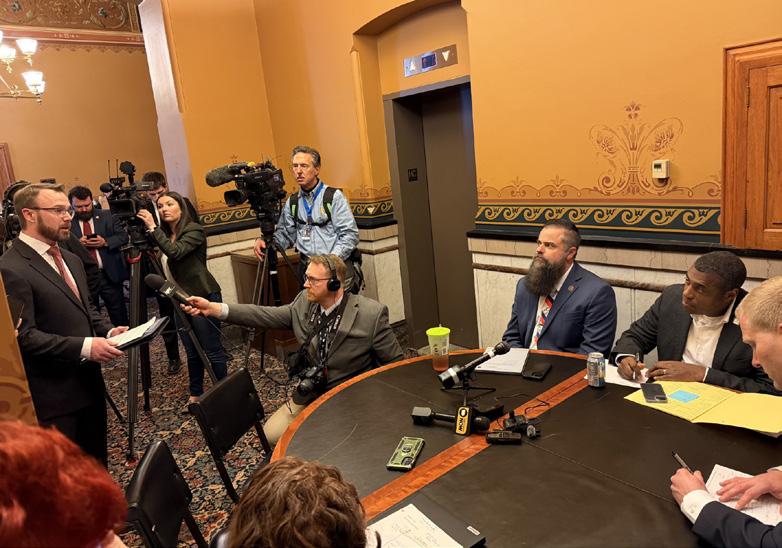
Wes Pilkington providing comments on legislation affecting pharmacy to House subcommittee
From Standard to Practice
Matthew Pitlick, PharmD, BCPS
Executive Vice President & CEO, Iowa Pharmacy Association
The biggest changes in pharmacy usually do not come with a big announcement. They show up in the day-to-day work. A cleaner workflow. Better documentation. A patient who gets the right care sooner because your pharmacy or clinic was ready.
That is what standard of care implementation looks like. It is not a switch flipping. It is progress you can see in real practice. And I am truly excited about what Iowa is building.
Standard of care is not a slogan. It is a professional framework that asks us to do what we have always said we do. Use our education, training, and competence with consistency, judgment, and accountability. It gives clarity to pharmacists and confidence to patients, partners, and regulators.
But here is the truth: standard of care only matters if it becomes usable in the real world.
That is why we launched the Pharmacy Practice Standards Institute, PPSI. Our focus is straightforward: turn standard of care from an idea into everyday practice with tools you can actually use.
What PPSI is Meant to Do
Across community pharmacies, health systems, long term care, clinics, and everything in between, I keep hearing the same message. We want to provide more care. We just need clearer paths to do it well and do it consistently.
PPSI is our answer to that.
Think of PPSI as the hands-on implementation side of standard of care. It will create templates, guides, and practical resources that help you take the standard and apply it to your daily work.
What You Will See From PPSI This Year
We are going to stay focused on a few deliverables that make a real difference.
First, implementation templates you can actually use. Not theory. Not a binder that sits on a shelf. Real examples of documentation, SOP outlines, patient communication language, workflow check-
lists, and decision support prompts that you can adapt to your setting.
Second, practice standards that support consistency. Standard of care asks for professional judgment. PPSI helps make that judgment more consistent across teams so you can show your work, defend your decisions, and reduce variation that creates confusion or risk.
Third, a home base for the profession. A place to find the resources without digging, asking around, or rebuilding what already exists. Your time is too valuable for that.
Why This Matters Right Now
Implementation is where credibility is built.
If we want others to take pharmacist-provided care seriously, we have to make it easier to deliver that care in a way that is repeatable. We have to show what good looks like and make it easier to do.
This is also how we protect what we have gained. A profession with a clear standard and the tools to support it can move faster, speak more confidently, and stand up to scrutiny.
Use the tools as they roll out. Tell us what is missing. Tell us what would save you time. Share what you have built so we can lift it up, improve it, and showcase it. Stay engaged and keep pushing the profession forward.
Standard of care sets the direction. PPSI helps build the path. And you are the ones who make it real.
We have defined the standard. Now, we make it routine. ■
Learn more about the Pharmacy Practice Standards Institute and PPSI resources on pgs. 8-13.
Celebrate Professional Achievements in Iowa Pharmacy
ANNUAL MEETING
Hyatt Regency Hotel & Conference Center, Coralville, IA
Thursday, June 11, 2026
8:00-8:50 AM Registration & Continental Breakfast
8:00-8:50 AM Exhibit Hall & Poster Presentations
8:50-9:00 AM Welcome
9:00-10:00 AM
Keynote: The Science of Satisfaction by Dr. Erika Michalski, Founder and Chief Encouragement Officer, Strategically Authentic
10:00 AM-12:00 PM IPA House of Delegates: Session II
12:00-12:30 PM Exhibit Hall & Poster Presentations
12:30-1:45 PM Leadership Luncheon
1:45-3:00 PM Exhibit Hall & Poster Presentations
3:00-5:00 PM Resident Research Presentations
3:30-5:00 PM Reverse Exhibit
6:00-7:00 PM President’s Reception
IPA Annual Awards Banquet
Silent Auction & Dessert Reception
Friday, June 12, 2026
7:00 AM 2026 STEP, CYCLE, SWING Kick-off
8:00-8:30 AM Registration
8:30-9:30 AM Breakfast Program
9:45-10:45 AM
Keynote: Redefining What Is Possible by 2025-2026 APhA President and Iowa Pharmacist Randy McDonough, PharmD, MS, BCGP, BCPS, FAPhA
11:00 AM-12:00 PM OTC Challenge Trivia
12:15-1:15 PM Lunch Program
1:30-2:00 PM IPA House of Delegates: Session III
2:00 PM Adjourn
From Law to Practice: Iowa Pharmacy’s Next Chapter Under Standard of Care
Author: Brian Wall, PharmD, CAE, Vice President, Professional Affairs, IPA
In April 2024, the Iowa pharmacy profession crossed a milestone years in the making.
With the passage of House File 5551 and the modernization of Iowa’s Pharmacy Practice Act paired with a refresh of regulatory oversight through updated administrative code,2 Iowa3 is the third state shifting pharmacy regulation toward a standard of care4 regulatory framework. This framework aligns the pharmacy profession with how medicine, nursing, and other health professions have long been regulated.5 The change marked a significant moment for pharmacists across the state. After decades of practicing under highly prescriptive regulations, Iowa pharmacists now operate under a framework that recognizes their education, training, and professional judgment.
But once the legislation was signed and rules were adopted, another question quickly emerged among pharmacists across Iowa:
What does this actually mean for practice?
Passing the law was an essential step, but it was not the final one. A regulatory framework can create authority, but it does not automatically define how a profession should use it. The dayto-day decisions pharmacists make, such as how they assess a patient, when they initiate therapy, and how they document clinical judgment, are shaped not only by statutes and rules, but also by professional standards, shared expectations, and peer-informed practice
Recognizing this reality, the Iowa Pharmacy Association (IPA) has launched a new initiative designed to help the profession translate regulatory flexibility into confident, patient-centered practice: the Pharmacy Practice Standards Institute (PPSI). 6
At its core, the Institute represents the next phase of Iowa’s modernization of pharmacy practice, not legislation, but implementation. It is a step toward ensuring that pharmacists across the state have the guidance, tools, and professional support necessary to practice effectively under a standard of care regulatory framework.
For many pharmacists, this moment represents more than a regulatory change. It represents a shift in how the profession defines itself.
From Framework to Function
For most of modern pharmacy history, practice has been shaped by what are often called bright-line rules, 7 or detailed regulatory requirements that specify exactly what pharmacists can and cannot do.
Bright-line rules provide clarity. They make compliance straightforward. But they also limit flexibility and can prevent practice from evolving as healthcare changes.
Under Iowa’s new framework, the model is different. Instead of relying primarily on prescriptive rules, pharmacy practice is now evaluated according to a standard of care4—the level of care that a reasonably competent pharmacist with similar training and experience would provide under similar circumstances.
The change brings greater professional autonomy, while placing greater emphasis on professional judgment
In practical terms, pharmacists must now regularly consider questions such as:
• Is this action consistent with my education, training, and experience?
• Would a reasonable pharmacist in a similar setting make the same decision?
• Is this consistent with accepted professional practice?
These are the same kinds of questions physicians, nurses, and other clinicians have long navigated in their daily practice.
For pharmacists accustomed to decades of highly specific rules and restrictive practice authority, this shift can feel both exciting and unfamiliar. Greater flexibility creates new opportunities—but it can also raise practical questions about consistency, documentation, and professional expectations. This is precisely where professional leadership becomes essential.
Regulation sets the outer boundaries of practice. Professional standards and the evolution of pharmacy practice help define what excellent practice looks like within those boundaries.
Introducing the Pharmacy Practice Standards Institute
To support pharmacists as they navigate this transition, IPA has established the Pharmacy Practice Standards Institute (PPSI), a new initiative dedicated to developing and advancing
About PPSI
The Pharmacy Practice Standards Institute (PPSI) is an initiative dedicated to advancing modern pharmacy practice through clear standards, practical guidance, and real-world implementation support. We help translate outcomes-based standard of care frameworks into day-to-day practice so pharmacists can deliver high-quality care with confidence across community, health system, ambulatory, and rural settings.
We bring together practitioners, educators, and healthcare stakeholders to develop evidence-based practice guidance, share applied case examples, and support responsible innovation. PPSI is grounded in a simple idea that pharmacy practice should be defined by professional judgment, patient outcomes, and accountability supported by resources that are usable in the real world and trusted across the healthcare system.
professional pharmacy services in Iowa. The Institute will also be an asset for pharmacy practice across the country as other states approach adoption of a similar regulatory framework.
The goal is simple but important: to ensure pharmacists have the guidance and support necessary to confidently practice under a standard of care regulatory framework.
In many ways, the Institute reflects a natural evolution of the profession. As pharmacy practice continues to expand from immunizations and point-of-care testing to chronic disease management and pharmacist prescribing, pharmacists increasingly function as direct patient care providers. With that expanded role comes a need for clear, profession-led direction that supports high-quality, consistent patient care.
PPSI is designed to fill that gap.
Rather than creating new policy recommendations, the Institute will focus on developing practice guidance, educational resources, and real-world implementation support that help pharmacists translate regulatory flexibility into everyday practice. These resources are intended to support pharmacists in
a wide range of settings including community pharmacies, hospitals, health systems, ambulatory clinics, and rural healthcare environments.
PPSI cannot enforce the new regulatory framework in Iowa, this remains the responsibility of the Iowa Board of Pharmacy. Instead, PPSI facilitates a pathway to practice implementation. This pathway complements the Board of Pharmacy’s purpose for public protection and represents the profession taking an active role in shaping how pharmacists practice within the framework that Iowa law now provides.
Building Standard of Care Guidance, the Pharmacy Way
A key principle behind PPSI is that practice standards should be developed by pharmacists, for pharmacists. More broadly speaking, these standards will be influenced by the evolving healthcare landscape and will continue to change based on peer-reviewed research, practice guidelines, and reports from national and state pharmacy partners.
The Institute brings together practicing pharmacists, technicians, students, and subject-matter experts to collaboratively develop guidance that reflects real-world pharmacy practice. These conversations draw on evidence-based practice, clinical guidelines, and the experiences of pharmacists working across diverse practice environments.
This collaborative approach is critical. Pharmacy practice today is remarkably diverse. The day-to-day work of a rural community pharmacist, a health-system clinical specialist, and an ambulatory care pharmacist may look different—but each plays an essential role in patient care.
Professional standards must therefore be flexible enough to apply across practice settings, while still providing meaningful guidance. Will there be a single “these are the standards” resource? No. Pharmacy practice is too complex to sum up into a single, end-all be-all resource.
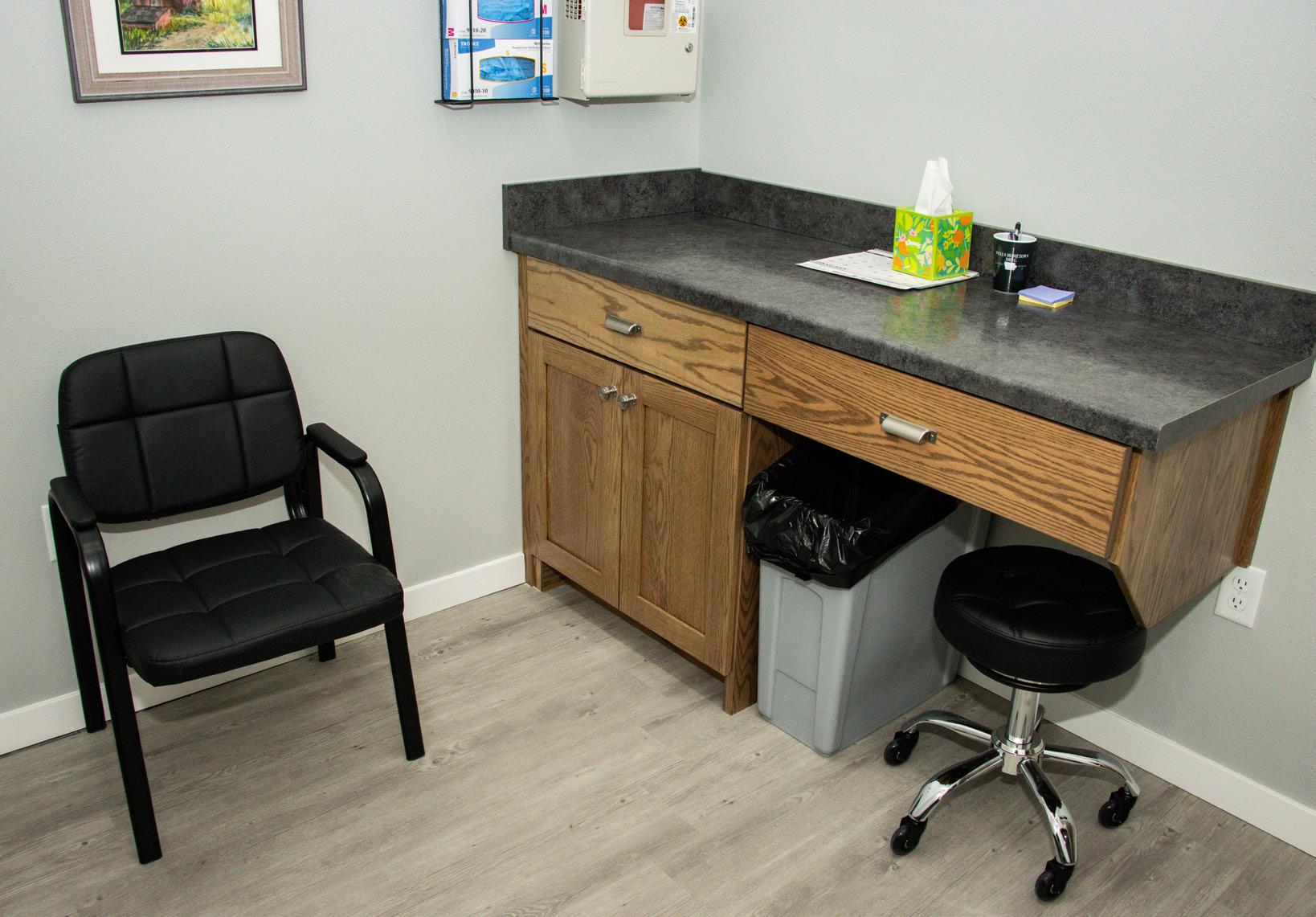
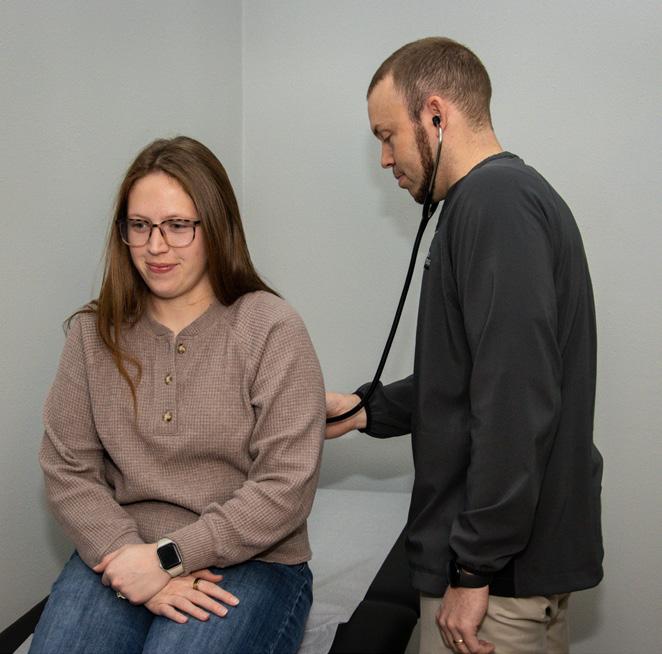
Patient care room at Wells Hometown Clinic in Bloomfield, IA
STANDARD OF CARE
With this in mind, another essential element of PPSI’s work will be the development of case-based education and practical implementation resources. Rather than focusing solely on abstract policy discussions, the Institute aims to help pharmacists think through real clinical scenarios and decision-making processes.
• How should pharmacists approach prescribing decisions under standard of care?
• What documentation supports sound clinical judgment?
• How can pharmacists ensure consistency while maintaining individualized patient care?
By focusing on practical applications—check lists, one-pagers, links to advanced education, case studies, constructive peer review support, and billing resources—PPSI aims to make the transition to a standard of care model not only understandable, but usable.
What This Means Across Practice Settings
The implications of Iowa’s new regulatory framework will vary somewhat depending on where pharmacists practice, but the underlying opportunity is shared across the profession.
Community Pharmacy
For community pharmacists, the shift toward standard of care opens the door to expanded clinical services and greater professional autonomy.
Pharmacists now have greater flexibility in areas such as therapeutic substitution, medication management, and prescribing authority consistent with their training, education, experience, and the accepted standard of care. In practice, this means pharmacists can more fully utilize their clinical expertise to address patient needs in real time—often without unnecessary administrative barriers.
Pharmacists are among the most accessible healthcare professionals with more than 95% of Americans living within five miles of a pharmacy, according to data from 2022.8 The ability to provide more comprehensive care directly through the pharmacy can improve access for patients while strengthening the role of the pharmacist within the healthcare team.
“My goal was to go to the highest level that we could under the new law, because this is exactly what it was meant for—helping with provider shortages in rural areas like ours.”
The flexibility inherent in a standard of care model is especially meaningful for rural pharmacies. These pharmacies often serve communities with limited healthcare access or unique needs.
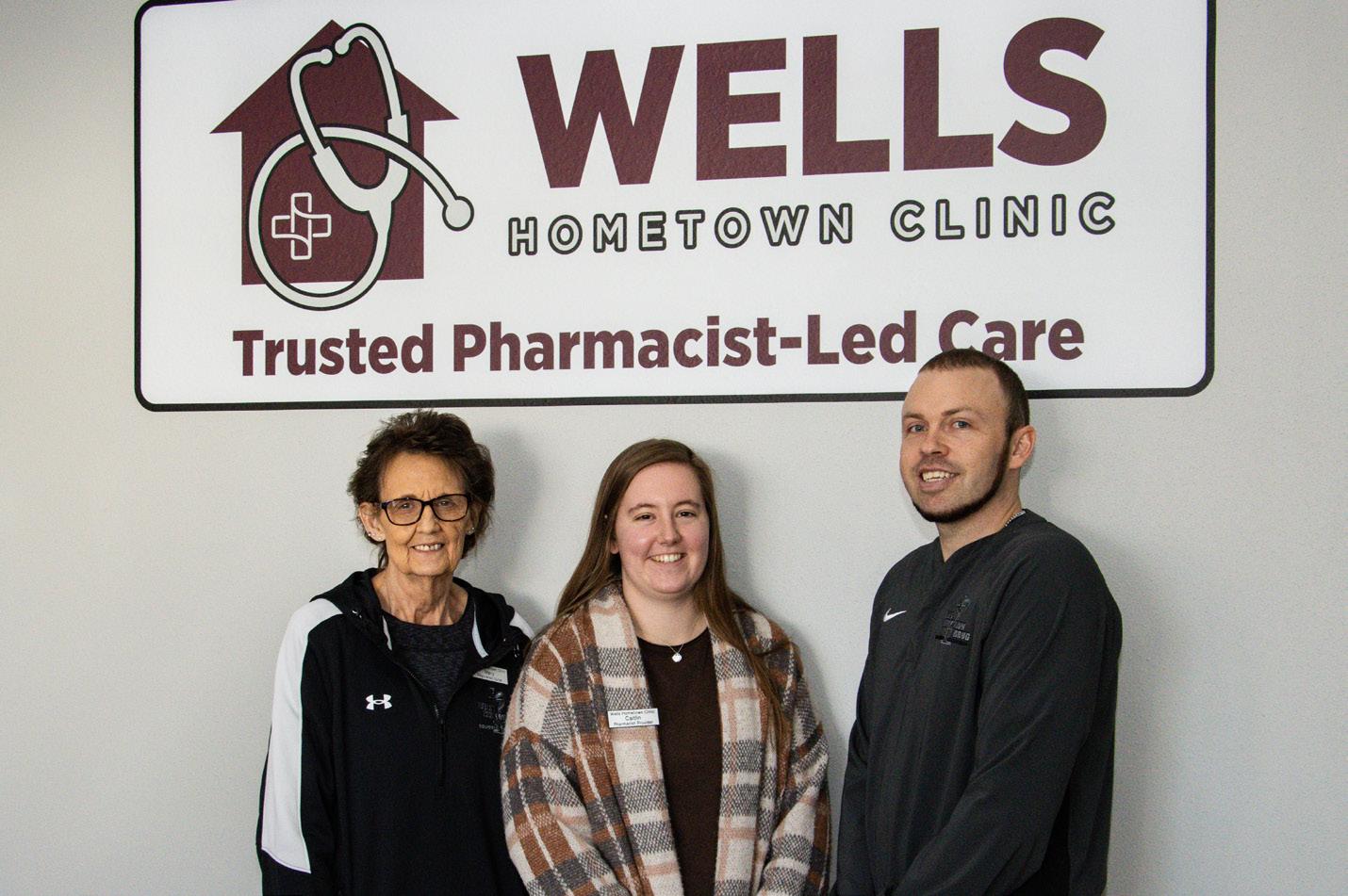
PPSI’s first case study on Wells Hometown Clinic highlights the impact a rural community pharmacy can have on the local community.9
Greater professional autonomy allows pharmacists to respond more directly to local healthcare needs, whether that means managing chronic conditions, addressing medication access challenges, or providing preventive services.
Health-System and Ambulatory Care Practice
For pharmacists practicing in hospitals and ambulatory clinics, many aspects of clinical decision-making already operate within a standard of care framework through credentialing, privileging, and collaborative practice models.
Implementation of the new pharmacy rules in these practice settings also creates an opportunity for discussion with other providers. Pharmacists can leverage this new standard of care regulatory framework by identifying areas where other providers may need additional support due to their own workforce shortages.10
Iowa’s regulatory modernization helps bring statutory authority into closer alignment with the clinical reality that many pharmacists already experience. It reduces the friction between what pharmacists are capable of doing and what regulations previously allowed.
Team-Based Care
Standard of care also reinforces the importance of team-based pharmacy practice. Pharmacists rely on skilled pharmacy technicians and support staff to ensure safe and efficient operations.
At the inaugural Standard of Care Symposium event in February 2025, participants reviewed examples from Idaho, where
STANDARD OF CARE
establishing a technician product verification program increased efficiency of the hospital’s central pharmacy and allowed for reallocation of almost six full-time equivalents (FTE) of pharmacists into clinical roles. This process was based on research that showed pharmacy technicians demonstrated a higher level of accuracy when checking final prepared items as compared to pharmacists.11
As pharmacy services evolve, thoughtful delegation and teambased workflows will remain essential. Clear professional standards can help support these evolving practice models while maintaining patient safety and quality of care.
Professional Autonomy and Professional Responsibility
With greater autonomy comes greater responsibility. Standard of care does not mean “anything goes.” Instead, it emphasizes that clinical decisions should be grounded in professional judgment, training, and accepted practice.
For pharmacists, this means continuing to prioritize key elements of professional practice:
• Ongoing education and competency development
• Careful clinical documentation
• Clear standard operating procedures and policies
• Clear communication with patients and other healthcare professionals
• Awareness of the limits of one’s expertise
To highlight this transition to greater autonomy and responsibility, student pharmacist education and training is more broadly emphasizing expanded roles in diagnosis and prescribing.12 Several new required elements of the Doctor of Pharmacy Curriculum in the Accreditation Council for Pharmacy Education (ACPE) “Standards 2025”13 include application of clinical laboratory data to disease state management, medication prescribing, preparation, distribution, dispensing, and administration, and pharmacotherapy including diagnosing and prescribing. These elements emphasize the future of the profession, and the shift toward a standard of care regulatory framework allows future graduates to apply this education and training.
Pharmacists are increasingly exercising clinical judgment within the context of professional standards and peer expectations. The result is a profession that is not simply defined by rules but by expertise, accountability, and commitment to patient care
Iowa’s Leadership Moment
Iowa has long played a leadership role in advancing pharmacy practice.
From early legislative milestones to innovations in technician roles, immunization authority, and collaborative practice, pharmacists in Iowa have consistently worked to expand the ways in which pharmacy contributes to patient care. The adoption of a standard of care regulatory framework continues that tradition.
What makes Iowa’s approach particularly notable is the proactive focus on implementation by the profession. While legislative and regulatory change can open doors, it is professional engagement that determines how those opportunities translate into real-world practice.
The launch of the Pharmacy Practice Standards Institute reflects that commitment. By investing in implementation support, Iowa pharmacists are helping shape a model that other states may look to in the future.
What Comes Next
As Iowa continues implementing the new regulatory framework, IPA and the Pharmacy Practice Standards Institute will focus on several key priorities.
These include developing practice and billing resources for different practice settings, creating case-based educational resources, and engaging pharmacists across the state in conversations about implementation.
The Institute will also serve as a source of constructive peer review for pharmacists to share experiences, raise questions, and ensure they are providing the standard of care in their settings.
Ultimately, the success of a standard of care regulatory framework depends not only on legislation or policy, but on the engagement of the profession itself.
Pharmacists across Iowa will play a central role in defining what excellent practice looks like under this new model.
A Profession Shaping Its Own Future
Every profession reaches moments when it must decide how it will evolve.
For pharmacy in Iowa, the transition to a standard of care regulatory framework represents one of those moments. It reflects trust in the education, training, and judgment of pharmacists, and it emphasizes the profession’s expanding role in clinical healthcare practice.
The Pharmacy Practice Standards Institute represents the next step in that journey. It is an effort to ensure that as healthcare practice and patient needs continue to evolve, the pharmacy profession evolves with it, guided by practice resources, access to education, thoughtful leadership, and a commitment to patient care.
For pharmacists across Iowa, the question is no longer simply what the law allows. The question is how the profession will choose to practice within that opportunity.
And most importantly, pharmacists themselves will shape the answer. ■
References:
1. Iowa General Assembly. House File 555 – An Act Relating to the Practice of Pharmacy. 90th General Assembly; signed April 19, 2024. Effective July 1, 2024. https://www.legis.iowa.gov/legislation/BillBook?ga=90&ba=HF%20555
2. Department of Licensing, Inspections, and Appeals. Board of Pharmacy - Ch. 550-557. February 2026. https://www.legis.iowa.gov/docs/iac/ agency/02-04-2026.481.pdf
3. Iowa Pharmacy Association. Standard of Care Resource Center. Iowa Pharmacy Association. August 2025. https://www.iarx.org/soc
4. Moffett P, Moore G. The standard of care: legal history and definitions: the bad and good news. West J Emerg Med. 2011;12(1):109e112.
5. Adams AJ. Transitioning pharmacy to “standard of care” regulation: Analyzing how pharmacy regulates relative to medicine and nursing. Research in Social and Administrative Pharmacy. 2019;15(10):12301235. https://doi.org/10.1016/j.sapharm.2018.10.008
6. Iowa Pharmacy Association. Pharmacy Practice Standards Institute (PPSI). January 2026. https://www.rxstandards.com/
7. Cornell Law School Legal Information Institute. Wex legal definitions and encyclopedia. https://www.law.cornell.edu/wex.
8. Berenbrok, Lucas A. et al. Access to community pharmacies: A nationwide geographic information systems cross-sectional analysis. Journal of the American Pharmacists Association, Volume 62, Issue 6, 18161822.e2 https://doi.org/10.1016/j.japh.2022.07.003
9. Iowa Pharmacy Association. A New Front Door to Care: How One Iowa Pharmacy Launched a Pharmacist-Led Walk-in Clinic - Pharmacy Practice Standards Institute. Published January 2026. https://www. rxstandards.com/case-study-mylo-wells
10. Frost T, Richards M. 2025 Policy Strategies for Full Practice Authority. Cicero Institute. Published October 24, 2025. https://ciceroinstitute. org/research/2025-policy-strategies-for-full-practice-authority/
11. Snoswell CL. A meta-analysis of pharmacists and pharmacy technicians' accuracy checking proficiency. Res Social Adm Pharm. 2020 Jun;16(6):760-765. Epub 2019 Aug 12. https://doi.org/10.1016/j. sapharm.2019.08.028
12. Farland MZ, Smith KJ, Ramos CL, et al. Implementing Standards 2025: Recommendations to Prepare Graduates for Advancements in Practice and Enhance Program Quality. Am J Pharm Educ. 2026;90(2):101927. doi:10.1016/j.ajpe.2026.101927
13. Accreditation Council for Pharmacy Education. Accreditation Standards and Key Elements for the Professional Program in Pharmacy Leading TO The Doctor of Pharmacy Degree - Standards 2025. June 12, 2025 https://www.acpe-accredit.org/wp-content/uploads/ACPEStandards2025.pdf.
2026 IPA Board Election Results
Laura Knockel, PharmD, BCACP
Clinical Associate Professor, University of Iowa College of Pharmacy
Benjamin Miskle, PharmD
Clinical Pharmacy Specialist, University of Iowa Hospitals and Clinics
Professor of Pharmacy Practice, Drake University College of Pharmacy & Health Sciences
President-Elect
Laura Knockel, PharmD, BCACP
Laura Knockel is a Clinical Associate Professor and Director of Pharmacy Practice Laboratories at the University of Iowa College of Pharmacy (UICOP) and a community pharmacist at UI Health Care outpatient pharmacies. She received her PharmD from UICOP in 2005 and completed a PGY-1 Pharmacy Practice Residency with an Emphasis in Community Care with UICOP and Hy-Vee Pharmacy in Cedar Rapids, Iowa. She teaches in the pharmacy practice skills laboratory, focusing on community pharmacy skills, including coordinating immunization and self-care topics. She was chosen as Teacher of the Year for the P1 class in 2018 and 2022. Prior to joining the faculty at the University of Iowa in 2015, she worked as a pharmacist at Hy-Vee Pharmacy in Iowa City, Iowa, for 9 years. Knockel is a long-standing member of IPA and other professional organizations, including APhA and AACP. She was the 2024-2025 IPA Speaker of the House of Delegates. She also served on the Policy Committee for Public Affairs for 8 years, including as Vice Chair and Chair from 2021-2022; elected Trustee At-Large on the Board of Trustees from 2014-2016; IPA House Delegate since 2015; and is a past participant of the IPA Leadership Pharmacy Conference.
Trustee Region 1
Benjamin (Ben) Miskle, PharmD
Ben Miskle is a Clinical Pharmacy Specialist at the University of Iowa Hospitals and Clinics, and a Clinical Assistant Professor at the University of Iowa College of Pharmacy. Prior to arriving in Iowa, he completed a psychiatric pharmacy residency program at the Chillicothe Veterans Affairs Medical Center, in Chillicothe, Ohio. He has published articles on addiction treatment services across the United States, substance use and stigma in pregnancy, older adult first-time admissions for substance use disorders, and cannabis use disorder treatment, to name a few. Miskle helped start the Naloxone in Schools project to assist schools across the state of Iowa on overdose and naloxone education.
Wendy Mobley-Bukstein is a Professor of Pharmacy Practice in the College of Pharmacy and Health Sciences at Drake University. She received her Doctor of Pharmacy degree from Drake University in 1999 and is a Certified Diabetes Care and Education Specialist, Board-Certified Ambulatory Care Pharmacist, Certified Health and Wellness Coach, and a Certified Personal Trainer. She teaches a Medication Management elective, coordinates and co-teaches the Advanced Diabetes Care elective, and coordinates the Intermediate Pharmacy Skills and Applications 2 lecture and lab. She maintains a clinical practice at Primary Health Care East Side Clinic, where she precepts third- and fourth-year student pharmacists, focusing on interprofessional ambulatory care and diabetes as a specialty practice. Her areas of interest in practice and scholarship are diabetes, diabetes technology, and community education. She is a Past President of APhA’s Academy of Pharmacy Practice and Management (APhA–APPM) and an active member of the Association of Diabetes Care and Education Specialists (ADCES), where she sits on the Awards Committee and Technology Committee. She was named the ADCES 2025 Diabetes Care and Education Specialist of the Year. She is an active member of the Iowa Pharmacy Association, where she participates on the Legislative Committee. She has been an active member of the IPA Policy Committees, Education Advisory Committee, and served as a member of the House of Delegates for more than 10 years.
Kathy Stone, PharmD, BCSCP
Critical Access Hospital Market Director, CommonSpirit Health
Ginelle Bryant, PharmD, BCPS
Professor of Pharmacy Practice, Drake University College of Pharmacy & Health Sciences
Jennifer Simmons, CPhT, CMA
Field Reimbursement Manager & Access Specialist, McKesson
Trustee At Large
Kathy Stone, PharmD, BCSCP
Kathy Stone has been a pharmacist in Iowa since 2004. She has worked in the community setting, performed long term care chart reviews, and currently serves as the Critical Access Hospital Market Director for CommonSpirit Health while managing the hospital pharmacy in Missouri Valley. Stone was selected to attend IPA’s Decker-Temple Leadership Pharmacy Conference in 2018, where she broadened her network of pharmacy leaders across the state. Stone was appointed by the Governor to the Iowa Board of Pharmacy in 2019, where she served until 2025 and had been elected to the Chair position for the last 3 years. She was also elected to be the Chair of NABP District 5 for 2025. Stone holds a Doctor of Pharmacy degree from Creighton University School of Pharmacy and Allied Health Professions and is a Board-Certified Sterile Compounding Pharmacist. She has a passion for sterile compounding and compliance and has emerged as a subject matter expert in her organization and for the Board of Pharmacy. Stone is also an advocate for rural healthcare in her job and in her community.
Trustee At Large
Ginelle Bryant, PharmD, BCPS
Ginelle Bryant is a Professor of Pharmacy Practice at Drake University College of Pharmacy and Health Sciences. Bryant received her Bachelor of Arts degree from the University of Northern Iowa and her PharmD from the University of Iowa College of Pharmacy, followed by PGY-1 and PGY-2 residencies in ambulatory care at the University of Iowa Hospitals and Clinics. Bryant has been an active member of IPA, with long-standing service on an IPA committee nearly every year for the past 15 years. Bryant has served as Vice Chair, Chair, and Past Chair for the Policy Committee on Professional Affairs and has served on various other IPA policy and advisory committees.
Pharmacy Technician
Jennifer Simmons, CPhT, CMA
Jennifer Simmons is a Field Reimbursement Manager & Access Specialist at McKesson. She has over 15 years of experience in the healthcare field and has been a dedicated pharmacy technician since 2014. She also holds certification in Medical Assisting from Mercy College of Health Sciences. Simmons is passionate about improving patient access to essential medications and advocating for comprehensive pharmacy services. She works closely with and supports healthcare professionals to help strengthen collaboration across healthcare teams. Simmons is committed to advocating for fellow pharmacy technicians and advancing pharmacy’s role in patient-centered care.
These newly elected members of IPA’s Board of Trustees will be installed at the 2026 IPA Annual Meeting, June 11-12, in Coralville, IA. In addition, Heather Ourth, PharmD, BCPS, BCGP, FASHP, IPA’s current President-Elect from West Des Moines, will be installed as the association’s 148th President. IPA sincerely thanks all candidates for their leadership in running and demonstrating their willingness to serve the profession in this capacity.
SMOKING CESSATION
The Safety and Efficacy of N-Acetylcysteine for Smoking Cessation as an
Adjunct or
Monotherapy: A Systematic Review
Authors:
Sam Karrick*
PharmD/MSHIA Candidate 2026, Drake University College of Pharmacy and Health Sciences
Olivia Kube
PharmD Candidate 2026, Drake University College of Pharmacy and Health Sciences
Nicole Dacus
PharmD/MBA Candidate 2026, Drake University College of Pharmacy and Health Sciences
Charles Phillips, PharmD, PhD
Professor, Drake University College of Pharmacy and Health Sciences
*Corresponding Author: Sam Karrick
Email: karrick59@gmail.com
Disclosure: The authors have no conflicts of interest with this systematic review.
Abstract
Background: Smoking is the leading cause of preventable diseases, significantly impacting individual health, the environment, and the economy. Smoking costs the U.S. approximately $600 billion annually and reduces life expectancy by at least ten years in smokers compared to non-smokers. Despite the severe consequences of smoking, cessation therapies are still imperfect. This systematic review evaluates the safety and efficacy of N-acetylcysteine as a treatment for smoking cessation, either as a standalone or adjunctive therapy. The findings could broaden available treatment options and enhance the clinical application of N-acetylcysteine.
Methods: This review assessed the effectiveness of N-acetylcysteine for smoking cessation by analyzing studies from PubMed and a combined search engine with multiple databases. Only studies focusing on nicotine and cigarette smoking cessation (excluding e-cigarettes, nicotine pouches, and cannabis cessation) were considered. Additionally, studies in which N-acetylcysteine was administered orally as a primary or adjunctive therapy were included to ensure validity. Study quality was assessed using the GRADE scale to determine the strength and reliability of the findings, based on study design, consistency of results, and risk of bias.
Results: Of the 9 studies reviewed, 6 showed some level of efficacy. Studies varied significantly in their design, regimens,
patient populations, and lengths. Some studies demonstrated promising results, while others reported limited or no benefit.
Conclusion: N-acetylcysteine has shown promise in reducing relapse rates and exhaled carbon monoxide levels in individuals attempting to quit smoking. N-acetylcysteine appears to be both safe and effective as an adjunctive therapy, with potential as a monotherapy. However, further high-quality research is required to understand N-acetylcysteine’s clinical relevance and determine how to integrate it into current smoking cessation strategies and guidelines.
Introduction
Smoking is a leading cause of preventable death, disease, and disability worldwide.1 Cigarette smoking causes an estimated 480,000 deaths annually in the U.S. and decreases life expectancy by ten years.1 Of those deaths, 41,000 are caused by second-hand smoke, and more than 16 million Americans live with a disease caused by smoking.1
Diseases and related morbidities include, but are not limited to, a plethora of cancers, cardiovascular and lung diseases, type II diabetes, immune system dysfunction, vision problems, reproductive health issues, and the implications of these diseases.1 Not only does smoking have negative impacts on the health of the population, it also has significant costs associated with it.2
The environment is also negatively impacted by smoking. Tobacco smoking directly leads to 2,600,000 tonnes of carbon dioxide and 5,200,000 tonnes of methane emissions into the atmosphere, leading to air pollution.3 After a cigarette is smoked, physical pollution occurs with the cigarette butts, which are the most common discarded global waste and the most frequent litter item collected from global beaches and water edges.3 Hazardous substances found in the cigarette butts, including arsenic, lead, nicotine, and ethyl phenol can soak into the aquatic environment and soil, leading to chemical pollution.3
Understanding the epidemiology of smoking helps identify patterns, risk factors, and populations most affected by tobacco use. This knowledge is crucial for developing effective interventions and public health strategies aimed at reducing smoking rates, related health complications, and environmental pollution.
Smoking Cessation:
Smoking cessation improves health. Within minutes after quitting, heart rate drops, and within 24 hours, nicotine levels in the blood drop to zero.4 Several days after stopping smoking,
carbon monoxide levels in the blood drop to levels of nonsmokers, and months later, health improvements begin.4 Smoking cessation ultimately reduces the risk of premature death and can add up to ten years to the life expectancy.4
Along with the smoker, society also benefits from smoking cessation. Less secondhand smoke will reduce the health implications faced by non-smokers.1 Additionally, less smoke in the air means reduced environmental pollution from the harmful chemicals in cigarettes.3
Currently, one of the first-line pharmacological treatments for smoking cessation is varenicline.5 Varenicline works by blocking nicotinic receptors in the brain, reducing the pleasurable effects of smoking and easing withdrawal symptoms.6
Other first-line treatments include bupropion and nicotine replacement.5 Bupropion inhibits the reuptake of dopamine, serotonin, and norepinephrine in the brain, reducing nicotine cravings and withdrawal.7 A major concern with bupropion is the increased risk of seizures, along with dry mouth and insomnia.7 Nicotine replacement options include lozenges, patches, and gum, which provide low doses of nicotine to help with withdrawal symptoms without the harmful chemicals found in cigarettes.5
Nonpharmacological smoking cessation treatment options include self-help counseling, patient education, medication therapy management, exercise, yoga, and mindfulness exercises.8 Additionally, multiple sessions of call-back counseling have been proven to improve quit rates by offering ongoing support and accountability. Overall, combining pharmacological and nonpharmacological therapies is the most effective approach to optimizing smoking cessation.9
Smoking cessation treatment methods are crucial to help patients achieve optimal health outcomes and benefit public health and the environment. Providing high-quality, effective treatment options with minimal side effects is essential in combating this global health issue, as less than one in ten adults who smoke cigarettes succeed in quitting each year.10 While these pharmacological and nonpharmacological treatments have proven effective for many people, they have limitations, including side effects, cost, adherence, and accessibility.5 This highlights a need for investigation into additional therapy options, such as N-acetylcysteine, to improve patient adherence and motivation to successfully quit smoking.
N-acetylcysteine:
N-acetylcysteine is an over-the-counter (OTC) medication derived from the cysteine amino acid. N-acetylcysteine is used to treat acetaminophen overdose by serving as a glutathione substitute and enhancing the nontoxic sulfate conjugate of acetaminophen.11 It also is a mucolytic agent which helps clear the airways to treat respiratory conditions. Its potential role in smoking cessation lies in its ability to reduce oxidative stress and inflammation in the brain, as well as its capacity to restore glutamate transmission in the prefrontal cortex and nucleus accumbens, which are two brain regions that play a critical role in addiction and relapse.12 N-acetylcysteine is inexpensive, widely available
SMOKING CESSATION
over the counter, and has a well-documented safety profile with minimal, mainly gastrointestinal, side effects.11 These factors make it an attractive candidate for further research as a potential treatment for smoking cessation.
Background Research:
Two pre-clinical studies provide insights into N-acetylcysteine’s potential role in smoking cessation.13,14 Nall et al. tested combined N-acetylcysteine and varenicline therapy on nicotine-seeking behaviors in rats and found that N-acetylcysteine alone did not reduce nicotine self-administration or context-induced seeking during early abstinence.13 However, combining N-acetylcysteine with varenicline reduced cue-triggered nicotine relapse. The varenicline appeared to work during active use, while N-acetylcysteine helped prevent relapse of addiction, showing promise for combination therapy.
Similarly, Ramirez-Niño et al. examined N-acetylcysteine effects on nicotine addiction using higher doses (30, 60, and 90 mg/ kg) in rats.14 N-acetylcysteine reduced nicotine self-administration, with the highest dose being most effective, and did not affect food-seeking behavior, suggesting N-acetylcysteine's selective impact on addiction pathways. Repeated N-acetylcysteine treatment also decreased nicotine intake over time without tolerance. N-acetylcysteine attenuated relapse-like behavior triggered by cues, supporting its potential to modulate both nicotine reinforcement and relapse. These studies emphasize the need for human trials to validate N-acetylcysteine’s clinical relevance in smoking cessation, especially in preventing relapse triggered by environmental cues.
The objective of this systematic review is to assess the safety and efficacy of N-acetylcysteine as an adjunct or stand-alone treatment option for smoking cessation. Efficacy includes initial abstinence, time to relapse, abstinence at follow-up, exhaled carbon monoxide levels, and number of cigarettes smoked. The secondary outcome is safety, reviewing severe adverse effects (AEs) and therapy discontinuation rates.
Methods
The research was conducted in accordance with the principles of the Preferred Reporting Items for Systematic Reviews and Meta-Analyses (PRISMA) guidelines.
Definitions:
Abstinence is defined as a determined period of nonuse of any legal and illegal drugs before discharge from substance use disorder treatment.15
The GRADE approach (Grading, Recommendations, Assessment, Development, and Evaluation) is used to determine the certainty of evidence across the body of evidence for each outcome identified as critical or important for decision-making.16
A relapse happens when a person stops maintaining his or her goal of reducing or avoiding the use of alcohol or other drugs and returns to previous levels of use.17
SMOKING CESSATION
Smoking Cessation refers to the process of quitting smoking.18 Many studies measure smoking cessation by exhaled carbon monoxide (COexh) and abstinence rates.
Tobacco use may be defined as any habitual use of the tobacco plant leaf and its products. Smokeless tobacco refers to a variety of tobacco products that are either sniffed, sucked, or chewed.19
Eligibility Criteria:
Studies included in this review consisted of clinical trials, meta-analyses, and randomized controlled trials. All were published in English. Excluded studies were animal studies, case studies, and unfinished studies. Studies with other types of nicotine products, such as injections, electronic cigarettes, oral nicotine pouches, and vaping, were excluded. Additionally, studies focusing solely on cannabis cessation were excluded. Participants were adults aged 18 and older including both males and females. Lastly, the pediatric and pregnant populations were excluded from all studies.
References & Search Strategies:
A systematic search was conducted in the PubMed search engine using the MeSH database and the advanced search tool. This search was conducted in February 2025. The keywords “Acetylcysteine” and “Smoking cessation” were used to populate the results, and no filters or date restrictions were applied. An additional search was conducted using a combined search engine that covered additional databases (Annual Reviews Biomedical Collection, BioMed Central, Cochrane Library, Dyna Med, Journal of the American Medical Association, New England Journal of Medicine, ScienceDirect, and Web of Science) using the same search terms and criteria.
Study Selection:
Three authors screened titles and abstracts independently to identify potentially eligible studies. Full-text articles were retrieved for all studies that met the inclusion criteria or where eligibility was unclear. Discrepancies between reviewers were resolved through discussion.
Data Abstraction Methods:
The GRADE scale was used to evaluate studies. The tool allowed the authors to rate the quality of evidence based on factors such as study design, consistency of results, and risk of bias.16 Each reviewer provided a GRADE for all studies and then compared their GRADE scores to decide on a final GRADE for each article collectively.
Results
Studies in this review varied significantly in their design, regimens, patient populations, and lengths, possibly contributing to mixed findings. Some studies demonstrated promising results, while others reported limited or no benefit.
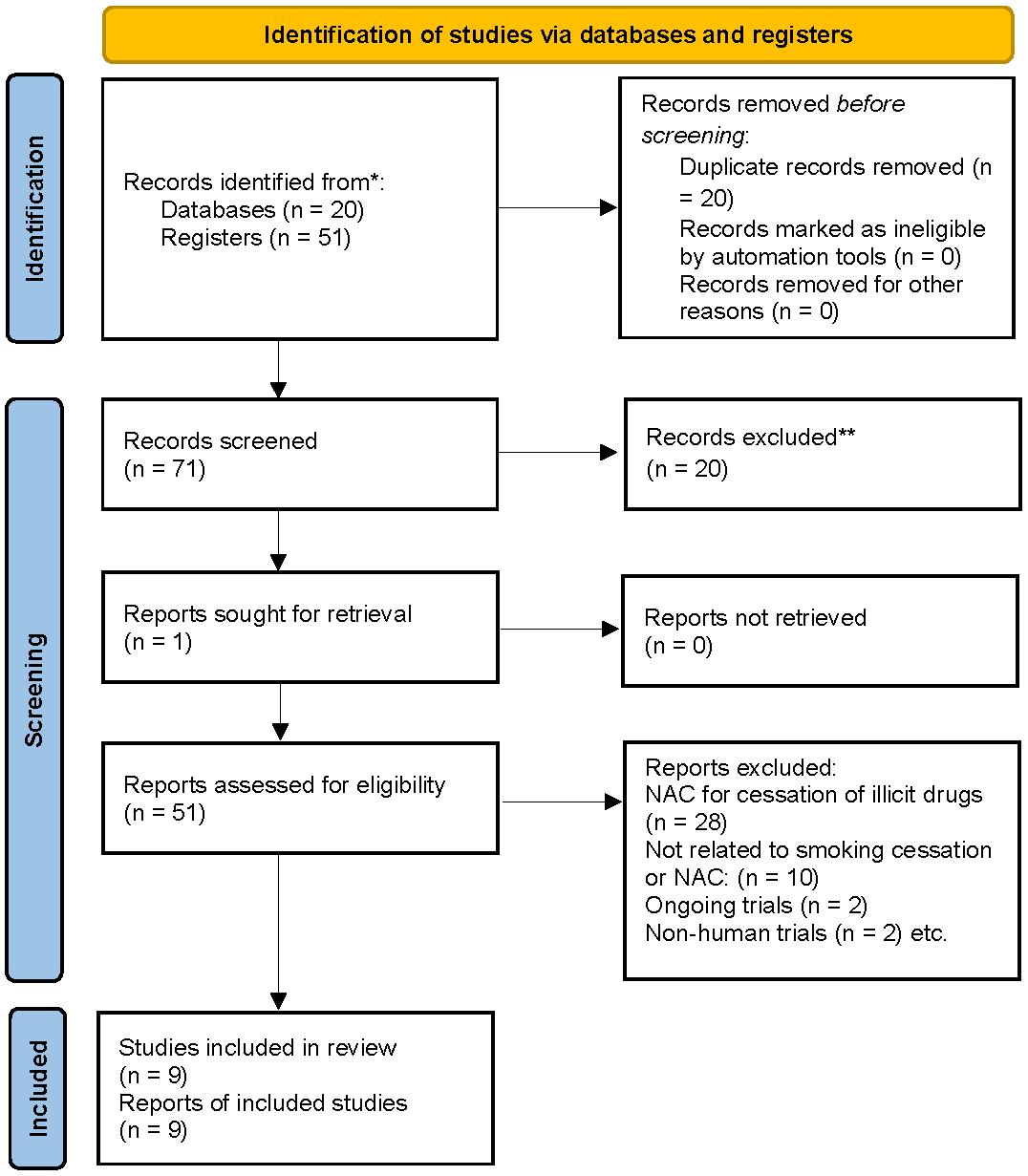
Twenty studies were initially identified in the original PubMed database search. Of these, ten were excluded that were not related to smoking cessation or the use of N-acetylcysteine. Two were excluded because they were performed on rats. Eight studies were included from this search. An additional search of the combined search engine resulted in 51 studies. Twenty were duplicates of the previous search. Two were excluded because they were nonhuman and did not focus on smoking cessation. Further, 28 were excluded that primarily focused on cessation of illicit drugs. One study met the inclusion criteria. Thus, a total of nine studies were included in the final review (Figure 1).
Harlivasari et al. (2024) performed a randomized, placebo-controlled, intention-to-treat study comparing the effectiveness and safety of N-acetylcysteine 1200 mg, taken twice daily for four weeks, against a placebo in 90 male smokers over 18 years of age.20 Both treatment groups also received a behavioral counseling session each week. This study measured abstinence rate by COexh. Secondary outcomes included withdrawal score, craving score, and AEs based on the Minnesota Nicotine Withdrawal Score (MNWS) and the Questionnaire on Smoking Urges (QSU). Participants receiving N-acetylcysteine were five times more likely to quit smoking than those on placebo (37.7% vs. 6.6% abstinence rates, p = 0.02). Additionally, cigarette consumption per week was significantly lower in those taking N-acetylcysteine than placebo (10 vs 46; p <0.001). The authors found that while the withdrawal score did not change significantly between the groups (8 (1-31) vs 11 (0-43); p = 0.178), craving scores did. The N-acetylcysteine group reported an average craving score of 6, while the placebo group’s average score was 12, (p-value = 0.04). No significant adverse or life-threatening events were noted; however, thirteen participants in the N-acetylcysteine group and four in the placebo group reported GI discomfort. The study suggests that in addition to counseling, N-acetylcysteine may be a feasible treatment for smoking cessation while also having a favorable side effect profile. With few limitations and a good study design this study received a moderate GRADE score rating.
Prado et al. found similar results to Harlivasari et al. Their double-blind, randomized controlled trial, conducted over 12 weeks, compared the clinical effectiveness of N-acetylcysteine 3 grams per day versus placebo in 34 therapy-resistant tobacco-use disorder patients (TUD).21 Patients also received monthly group behavioral therapy treatments before and during treatment. The daily number of cigarettes was significantly lower in the N-acetylcysteine group compared to placebo. The change in the daily number of cigarettes in the N-acetylcysteine group was −10.9 ± 7.9 versus −3.2 ± 6.1 in placebo-treated patients (p = 0.006). There was a significantly decreased COexh in the N-acetylcysteine group compared to the placebo group. The change in COexh from baseline to three months later was −10.4 ± 8.6 in the N-acetylcysteine group, compared to −1.5 ± 4.5 in the placebo group (p = 0.002). Additionally, subjects treated with N-acetylcysteine saw a significantly higher quit rate (defined by COexh < 6 ppm). Eight of seventeen participants in the N-acetylcysteine group quit (p = 0.008), compared to three of fourteen in the placebo group (p = 0.250). Finally, no serious AEs were report-
ed, and there were no significant differences in AEs between the N-acetylcysteine or placebo groups. While this study yields positive findings and scores a moderate rating using the GRADE scale, it has limitations, including a small sample size, a high dropout rate, and limited generalizability due to the somewhat strict inclusion and exclusion criteria.
Similarly to Harlivasari et al. and Prado et al., Machado et al was also scored a moderate rating. In a 12 week randomized clinical trial by Machado et al., the efficacy of NAC as an adjunctive treatment for smoking cessation was evaluated in 34 adult smokers also receiving standard behavioral therapy, who were randomized to NAC 1,800 mg/day or placebo. The primary outcomes included smoking cessation rates and reductions in cigarette consumption, with abstinence verified by COexh levels. At the end of the study period, there was a significant difference in COexh between the NAC and placebo groups. Additional health benefits were observed in the NAC group, such as a significant decrease between baseline and week 12 sTNF-R2 levels (p = 0.01). Indicating NAC reduces inflammatory cytokines. The NAC group also saw significant reductions in Castelli risk indexes I and II, total cholesterol and LDL between baseline and week 12, indicating possible cardiovascular benefits.12
McClure et al. conducted an open-label pilot study of N-acetylcysteine and varenicline in adult cigarette smokers that corroborated findings by Prado et al.22 They researched the feasibility and safety of administering N-acetylcysteine and varenicline together. Nineteen participants received 1200 mg of N-acetylcysteine twice daily (total daily dose: 2400 mg) and 1 mg of varenicline twice daily (total daily dose: 2 mg) for 4 weeks, followed by a 5-week follow-up appointment. Sixteen participants reported a total of 40 AEs. However, a medical review suggested that only 23 of the 40 were likely related to study medications. Most AEs were mild, the most common being nausea, increased appetite, and headache. The mean number of daily cigarettes decreased from 16±2 at the start, to 5±1 at the follow-up visit (p < 0.001). Efficacy data revealed a reduction in cigarettes per day and smoking rewards/smoking urges during active treatment. This study provides evidence not only for the safety of co-administration of N-acetylcysteine and varenicline but also for N-acetylcysteine's possible effectiveness as an add-on therapy. Limitations of this study include a small sample size, short study duration and no blinding, For the aforementioned reasons, this study received a low GRADE score.
Further evidence supporting the use of N-acetylcysteine as a smoking cessation therapy came in a study by Froeliger et al.23 The study aimed to determine whether N-acetylcysteine reduced nicotine withdrawal symptoms and its ability to promote short-term smoking abstinence. Sixteen adult smokers were randomized to a double-blind course of either 2400 mg of N-acetylcysteine or placebo for 3.5 days. Compared to placebo, smokers in the N-acetylcysteine group reported fewer cravings and higher positive affect (p values all < 0.01). Throughout the study, 17 AEs were reported, with 12 occurring in the placebo group. These results further support the safety of N-acetylcysteine, although limited by a small sample size, an extremely short trial, and patients receiving monetary incentives for abstinence
SMOKING CESSATION
throughout the study. Therefore, this study was rated low on the GRADE scale.
In contrast, two 2021 studies found no significant benefit of using N-acetylcysteine as a mono-pharmacotherapy for smoking cessation.24, 25 McClure's double-blinded randomized clinical trial enrolled 114 daily smokers to assess the efficacy of N-acetylcysteine in promoting early and end-of-treatment abstinence and preventing relapse among adult smokers.24 The study achieved an 80% power level. Similar to previous studies, patients were randomized to receive either a placebo or 1200 mg of N-acetylcysteine twice daily. During the eight-week study, both groups received cessation counseling for the first three days of the quit attempt. The primary outcome was abstinence during the first three days of the quit attempt, confirmed by measuring COexh levels. No statistically significant differences were found in early abstinence rates (11% in the N-acetylcysteine vs. 15% in the placebo (p > 0.11)). Additionally, there was no significant difference in the abstinence rates at the end of treatment. The authors concluded that while N-acetylcysteine was well-tolerated, it is unlikely to be effective as monotherapy. McClure et al. received a moderate rating on the GRADE scale.
In the double-blind, placebo-controlled Arancini trial, participants were also allocated to a placebo group or an N-acetylcysteine group (1800 mg per day).25 This study included 84 participants and a 16-week treatment phase with the primary outcome being sustained abstinence through biological measures such as salivary cotinine and COexh. The study used a modified intention-to-treat design and included all patients who could record one valid post-baseline outcome for primary and secondary analyses. There was no evidence to support N-acetylcysteine as a therapy for smoking cessation. However, the authors recognized that the negative outcome could be due to limitations, such as a small sample size, a high dropout rate, and possible subtherapeutic dosing, among others. Arancini et al. received a low rating on the GRADE scale.
In a double-blind, placebo-controlled pilot study by Schmaal et al., 34 treatment-seeking smokers were randomized to receive either N-acetylcysteine (3000 mg/day) or a placebo for four weeks.26 The primary outcome examined the reduction in daily cigarette consumption, which was assessed by self-reporting and validated with COexh levels. Participants in the N-acetylcysteine group showed a greater mean decrease in cigarettes smoked per day compared to the placebo (8.8 vs 5.5 cigarettes/day); this difference was not statistically significant. Similarly, reductions in COexh levels and improvements in secondary outcomes such as craving, withdrawal symptoms, and depressive symptoms did not differ significantly between groups. N-acetylcysteine was well tolerated and showed potential for smoking cessation therapy. However, the study had many limitations and lacked statistical significance. Thus, the quality of evidence from this study was rated low on the GRADE scale.
In a randomized, double-blind, placebo-controlled trial, the effect of N-acetylcysteine on brain glutamate and gamma-aminobutyric acid (GABA) concentrations and smoking cessation outcomes was investigated in 48 treatment-seeking smokers.27
SMOKING CESSATION
Participants received either N-acetylcysteine 2400 mg/day or a placebo for 14 days. While N-acetylcysteine significantly increased glutamate concentrations compared to placebo (p < 0.05), no significant changes were observed in GABA levels. No differences were observed in self-reported smoking behavior, craving, or withdrawal symptoms. Findings suggest that N-acetylcysteine may modulate glutamatergic function in the brain, although its impact on short-term smoking cessation was limited. The quality of evidence from this study was rated as low despite randomization, the study's 80% power, and objective neuroimaging measures and outcomes. The very short duration and modest sample size limit the overall strength of this study.
Discussion
Key Findings:
This literature review suggests that N-acetylcysteine may be a viable option for smoking cessation, either as a monotherapy or adjunctive therapy. Six studies supported N-acetylcysteine for smoking cessation; three received a moderate grade, and three received a low.12,20,21,22,23,26 Of the six, three used N-acetylcysteine as an adjunct to another treatment (varenicline or behavioral therapy), and three were monotherapy. The most notable efficacious study, due to its moderate grade and study design, was by Harlivasari et al. (2024).20 The study demonstrated significant positive outcomes on COexh, abstinence, and cigarette consumption/day. These results corroborated the 2015 Prado et al. study, which also reported a significantly higher quit rate.21 N-acetylcysteine’s potential as a smoking cessation option was further supported by Machado et al. (2021), who found significant effects on abstinence rates and COexh reduction in combination with first-line treatment options.12
McClure et al. (2015), also found a significant decrease in the number of cigarettes smoked per day.22 However, due to several limitations and a low GRADE rating, this result should be interpreted with caution.
Not all the studies in this review had positive results. Schulte et al. (2017) was inconclusive since both the placebo and N-acetylcysteine groups aided in smoking cessation.27
Further, N-acetylcysteine was non-efficacious for smoking cessation in the other two studies, both monotherapy.24,25 Arancini et al. received a moderate grade, the other, McClure et al. received a low grade. The trials found no significant benefits from N-acetylcysteine as monotherapy for early or end-of-treatment abstinence rates. These findings highlight the complexity of using N-acetylcysteine, with outcomes varying based on factors such as dosage, treatment duration, incentives, and factors outside the control of the studies.
For this review’s secondary outcome, there was no mention of adverse events in Arancini et al. (2021), or Schulte et al. (2017).25,27 However, six studies reported adverse effects.20,21,22,23,24,26 In all six, the adverse effects were mild and gastrointestinal-related, mainly diarrhea and nausea, or consistent with those of smoking withdrawal. The most significant percentage of adverse events occurred in McClure et al. (2021),
with half of the participants experiencing at least one adverse event, primarily gastrointestinal. Thus, N-acetylcysteine may help alleviate the side effects of smoking withdrawal while only having mild gastrointestinal side effects.
The lack of previous research allows this review to fill a knowledge gap. N-acetylcysteine’s use in smoking cessation appears to potentially benefit patients with tobacco use disorder who are attempting to quit smoking. Its use would allow for both improved availability and accessibility of treatment options. Additionally, it would promote long-term health risk reduction and may benefit the public and the environment. N-acetylcysteine’s OTC status may give patients more opportunity to quit. However, the limited amount of research makes it challenging to make a definitive judgment on the effectiveness of N-acetylcysteine.
Strengths and Limitations:
All nine studies had small samples (fewer than 150 participants), with the smallest being 16 in a pilot study.23 Small sample sizes can contribute to sampling bias and power issues as they can skew the results and struggle translating to the broader population. Of the nine studies, one moderate GRADE study (McClure et al. 2021) and one low GRADE study (Schulte et al.) achieved significant power levels.24,27 However, the power likely did not significantly impact the conclusions due to the small sample sizes.
Four studies received a moderate GRADE score, while the remaining studies received a low GRADE. Within the moderate rated studies, two found significance with N-acetylcysteine being used as an adjunct therapy to non-pharmacologic options (psychotherapy/counseling).12,20 One found significance of N-acetylcysteine’s use as a monotherapy.21 The remaining study found no evidence of N-acetylcysteine efficacy as a monotherapy.24 Despite small sample sizes in all studies, the limitations were minimal in these four studies, and therefore, they hold more weight in drawing a conclusion.
Other limitations focus on aspects within the studies, including discontinuation of participants, various dosing regimens, unfinished studies, and use of monetary incentives.
The nine studies each had different durations of treatment and strengths of N-acetylcysteine. The doses ranged from 1.8 grams to 3.2 grams, and the durations from two to sixteen weeks of treatment. These varying doses and durations can lead to a wide range of outcomes and may lead to under- or overtreatment. This can make it difficult to draw generalizable conclusions.
Lastly, there were a handful of studies that used monetary incentives to obtain participants. Financial incentives can increase the risk of both selection and response bias and limit generalizability.
The reviewed studies also had many strengths. These included randomization, blinding, and well-defined methodology for most of the studies. Of the nine, eight were blinded and randomized. Additionally, the studies had well-defined inclusion and exclu-
sion criteria, increasing validity, reliability, and confidence in the findings.
The subjectivity and complexity of the GRADE system was a limitation of this review. There were multiple subjective steps and criteria used to assess each study, contributing to inconsistent use of the system and varying interpretations.
Implications for Practice and Future Research:
Overall, more research is needed to determine N-acetylcysteine’s efficacy as both a monotherapy and adjunct treatment for smoking cessation. Of the studies reviewed, the limitations were too impactful to definitively state its place as monotherapy in smoking cessation. However, N-acetylcysteine is seemingly more promising when used as an adjunct to varenicline and behavioral therapy rather than as monotherapy.
N-acetylcysteine is attractive because of its inexpensive, OTC status and limited side effects, which can improve accessibility and adherence. Future research should include larger sample sizes, more human studies, and minimize monetary incentives to participants. More research comparing N-acetylcysteine to other medications is also warranted. Additionally, more research needs to be done on route, dose, duration and what is the ideal regimen for smoking cessation.
Conclusion
This systematic review found that N-acetylcysteine may be useful as an adjunct to varenicline or behavioral therapy for smoking cessation. Additionally, N-acetylcysteine is a promising monotherapy option for smoking cessation with minimal side effects, however, more research needs to be conducted to assess this finding.
References:
1. Cigarette smoking. Centers for Disease Control and Prevention. Accessed March 5, 2025. https://www.cdc.gov/tobacco/about/index. html.
2. Barnett PG, Wong W, Hall S. The cost-effectiveness of a smoking cessation program for out-patients in treatment for depression. Addiction. 2008;103(5):834-840. doi:10.1111/j.1360-0443.2008.02167.x
3. Novotny TE, Bialous SA, Burt L, et al. The environmental and health impacts of tobacco agriculture, cigarette manufacture and consumption. Bull World Health Organ. 2015;93(12):877-880. doi:10.2471/ BLT.15.152744
4. Benefits of quitting smoking. Centers for Disease Control and Prevention. Accessed March 10, 2025. https://www.cdc.gov/tobacco/about/ benefits-of-quitting.html.
5. Giulietti F, Filipponi A, Rosettani G, et al. Pharmacological Approach to Smoking Cessation: An Updated Review for Daily Clinical Practice. High Blood Press Cardiovasc Prev. 2020;27(5):349-362. doi:10.1007/ s40292-020-00396-9
6. Varenicline. Lexi-Drugs. UpToDate Lexidrug. UpToDate Inc. https://online.lexi.com. Accessed February 20, 2025.
7. Bupropion. Lexi-Drugs. UpToDate Lexidrug. UpToDate Inc. https://online. lexi.com. Accessed February 20, 2025.
8. Schmelzle J, Rosser WW, Birtwhistle R. Update on pharmacologic and nonpharmacologic therapies for smoking cessation. Can Fam Physician. 2008;54(7):994-999.
SMOKING CESSATION
9. Lancaster, T., & Stead, L. F. (2017). Individual behavioural counselling for smoking cessation. The Cochrane database of systematic reviews, 3(3), CD001292. https://doi.org/10.1002/14651858.CD001292.pub3
10. Centers for Disease Control and Prevention. Smoking Cessation: Fast Facts. Published September 17, 2024. Accessed April 15, 2025. https://www.cdc.gov/tobacco/php/data-statistics/smoking-cessation/ index.html
11. Acetylcysteine. Lexi-Drugs. UpToDate Lexidrug. UpToDate Inc. https:// online.lexi.com. Accessed February 20, 2025.
12. Machado RCBR, Vargas HO, Baracat MM, et al. N-acetylcysteine as an adjunctive treatment for smoking cessation: a randomized clinical trial. Braz J Psychiatry. 2020;42(5):519-526. doi:10.1590/1516-4446-20190753
13. Nall RW, Beloate LN, Meyerink ME, et al. Assessing combined effects of varenicline and N-acetylcysteine on reducing nicotine seeking in rats. Addict Biol. 2022;27(2):e13151. doi:10.1111/adb.13151
14. Ramirez-Niño AM, D'Souza MS, Markou A. N-acetylcysteine decreased nicotine self-administration and cue-induced reinstatement of nicotine seeking in rats: comparison with the effects of N-acetylcysteine on food responding and food seeking. Psychopharmacology (Berl) 2013;225(2):473-482. doi:10.1007/s00213-012-2837-3
15. Frimpong JA, Guerrero EG, Kong Y, Kim T. Abstinence at Successful Discharge in Publicly Funded Addiction Health Services. J Behav Health Serv Res. 2016 ;43(4):661-675. doi:10.1007/s11414-016-9497-8
16. Chapter 7: Grade criteria determining certainty of evidence. Centers for Disease Control and Prevention. Accessed March 10, 2025. https:// www.cdc.gov/acip-grade-handbook/hcp/chapter-7-grade-criteria-determining-certainty-of-evidence/index.html.
17. Relapse. Relapse - Alcohol and Drug Foundation. Accessed March 10, 2025. https://adf.org.au/reducing-risk/relapse/.
18. NCI Dictionary of Cancer terms. Comprehensive Cancer Information - NCI. Accessed February 23, 2025. https://www.cancer.gov/publications/dictionaries/cancer-terms/def/smoking-cessation.
19. Al-Ibrahim MS, Gross JY. Tobacco Use. In: Walker HK, Hall WD, Hurst JW, editors. Clinical Methods: The History, Physical, and Laboratory Examinations. 3rd edition. Boston: Butterworths; 1990. Chapter 40. Available from: https://www.ncbi.nlm.nih.gov/books/NBK362/
20. Harlivasari AD, Susanto AD, Taufik FF, Ginting TT. The Role of Twice-Daily N-acetylcysteine (NAC) 2400 mg in Smoking Cessation: A Randomized, Placebo-Controlled Trial in Indonesia. Cureus. 2024;16(2):e54322. Published 2024 Feb 16. doi:10.7759/cureus.54322
21. Prado E, Maes M, Piccoli LG, et al. N-acetylcysteine for therapy-resistant tobacco use disorder: a pilot study. Redox Rep. 2015;20(5):215-222. do i:10.1179/1351000215Y.0000000004
22. McClure EA, Baker NL, Gipson CD, et al. An open-label pilot trial of N-acetylcysteine and varenicline in adult cigarette smokers. Am J Drug Alcohol Abuse. 2015;41(1):52-56. doi:10.3109/00952990.2014.933 839
23. Froeliger B, McConnell PA, Stankeviciute N, McClure EA, Kalivas PW, Gray KM. The effects of N-Acetylcysteine on frontostriatal resting-state functional connectivity, withdrawal symptoms and smoking abstinence: A double-blind, placebo-controlled fMRI pilot study. Drug Alcohol Depend. 2015;156:234-242. doi:10.1016/j.drugalcdep.2015.09.021
24. McClure EA, Wahlquist AE, Tomko RL, et al. Evaluating N-acetylcysteine for early and end-of-treatment abstinence in adult cigarette smokers. Drug Alcohol Depend. 2021;225:108815. doi:10.1016/j.drugalcdep.2021.108815
25. Arancini L, Mohebbi M, Berk M, et al. A placebo-controlled, randomised pilot trial of N-acetylcysteine or placebo for cessation of tobacco smoking. Eur Neuropsychopharmacol. 2021;53:120-126. doi:10.1016/j. euroneuro.2021.10.002
26. Schmaal L, Berk L, Hulstijn KP, Cousijn J, Wiers RW, van den Brink W. Efficacy of N-acetylcysteine in the treatment of nicotine dependence: a double-blind placebo-controlled pilot study. Eur Addict Res. 2011;17(4):211-216. doi:10.1159/000327682
27. Schulte M, Goudriaan AE, Kaag AM, et al. The effect of N-acetylcysteine on brain glutamate and gamma-aminobutyric acid concentrations and on smoking cessation: A randomized, double-blind, placebo-controlled trial. J Psychopharmacol. 2017;31(10):1377-1379. doi:10.1177/0269881117730660
SMOKING CESSATION
Figure 1
Table 1
Harlivasari et al. (2024)20
Prado et al. (2015)21
Machado et al. (2020)12
McClure et al. (2015)22
Froeliger et al. (2015)23
McClure et al. (2021)24
Arancini et al. (2021)25
Schmaal et al. (2011)26
Schulte et al. (2017)27
Testing is the gateway to HIV prevention & treatment— and you hold the key.
Health care providers are essential to ending the HIV epidemic in Iowa. The best first step you can take? Offering routine HIV screening as part of your practice.
Diagnosing HIV quickly and linking people to treatment immediately are crucial to reducing HIV transmissions and improving health outcomes for all.
Testing for HIV empowers patients, no matter their status. For people living with HIV, diagnosis is the first step in connecting to HIV resources and care. For people who do not have HIV, testing can begin an ongoing conversation about their prevention needs.
Scan our QR code to learn more or visit stophiviowa.org/providers
Pharmacists Help Reduce Harm: HCV
Surveillance Project
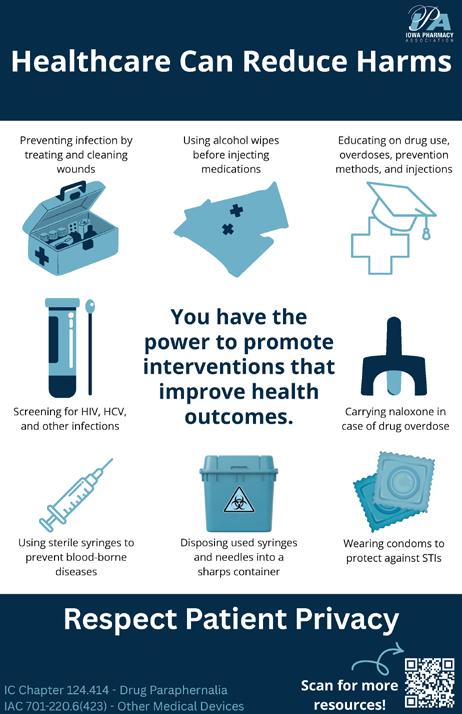
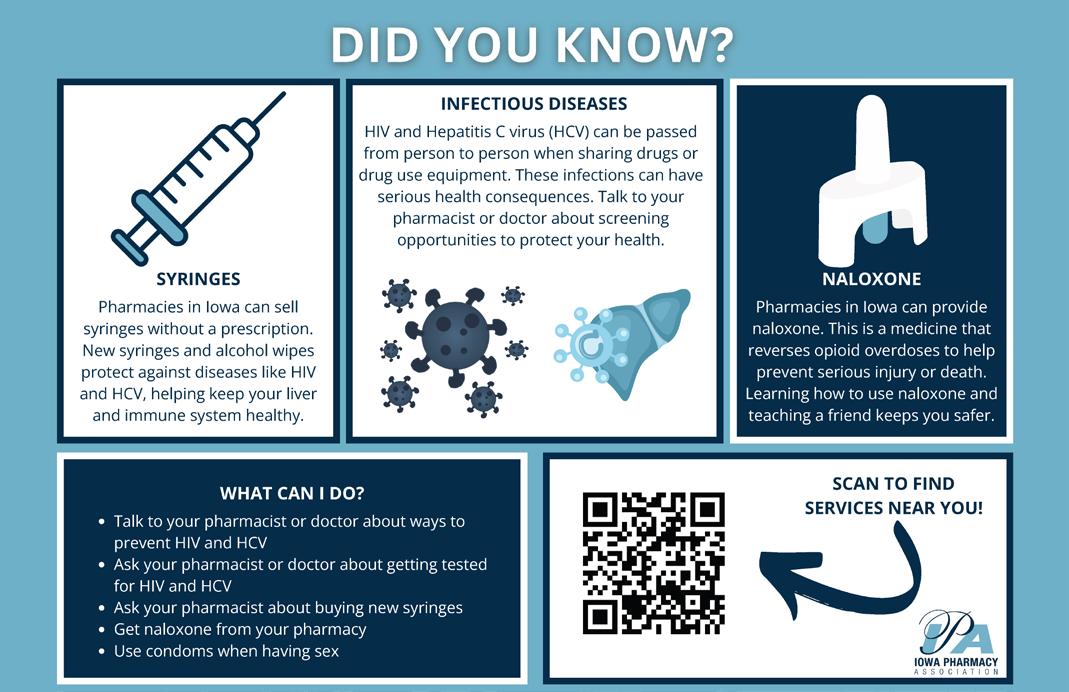
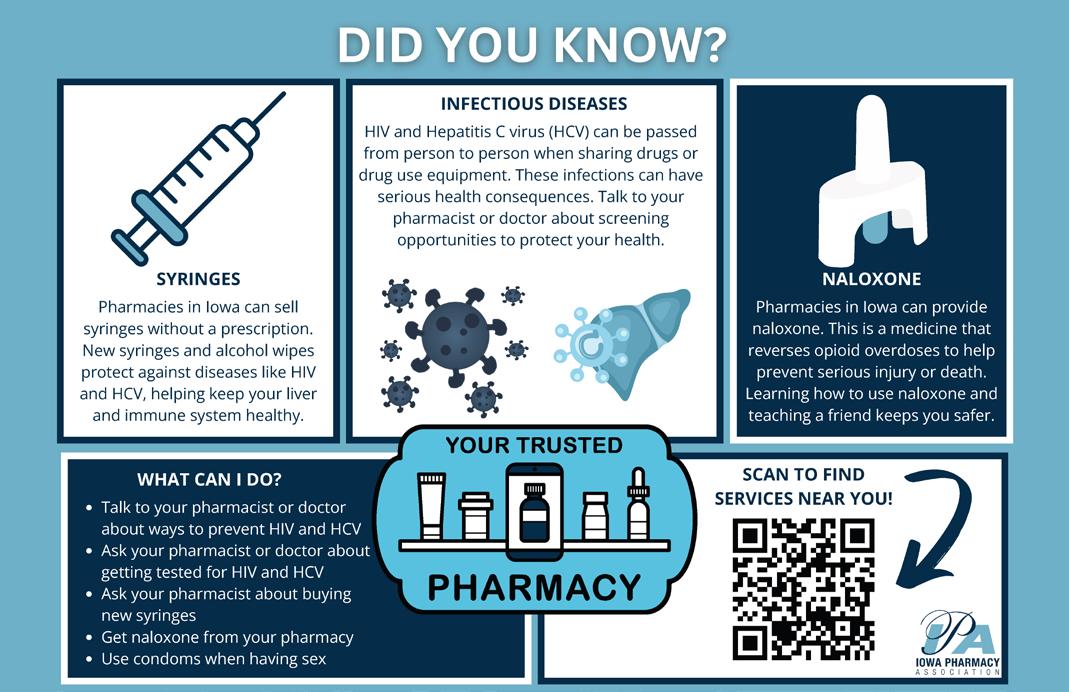
As part of the HIV and HCV testing project in community pharmacies, in collaboration with Iowa HHS, IPA received funds in 2022 to provide technical assistance and capacity building to pharmacists in Iowa related to nonprescription syringe sales and naloxone distribution. Over the years, IPA has used these funds to develop continuing education webinars on navigating state laws in harm reduction, create workflows for Screening, Brief Intervention, Referral to Treatment (SBIRT), and offer incentives to complete online skill building.
With grant funding coming to an end in April 2026, Iowa HHS encouraged IPA to move beyond web-based materials and develop a tangible, public-facing resource that would endure after funding ends. Taking that direction to task, IPA created pharmacy-facing and community-facing posters to educate how pharmacists can play a role in harm reduction. The posters are designed to position pharmacies as accessible, stigma-free environments where individuals can seek information, services, and support. IPA rotation students and IPA’s Executive Fellow garnered input from community members as well as pharmacists to create eye catching, infographic posters.
Scan the QR code to watch IPA’s 2/2/2 webinar titled “Navigating State Laws in Harm Reduction – Impactful Guidelines for Pharmacists and Pharmacy Technicians.”
Rural Health: Healthy Hometowns
In late 2025, Iowa HHS announced their Healthy Hometowns Grant initiative, funded through the state’s Rural Health Transformation efforts tied to CMS funding at the federal level. This grant initiative is designed to support community-driven strategies that improve population health, prevent disease, and strengthen local healthcare infrastructure. IPA is actively exploring opportunities for pharmacies to participate in and support the Healthy Hometowns initiative. IPA continues to work with partners to identify where and how pharmacy can be positioned as a contributor to this important statewide effort.
Iowa Workforce Task Force
In December, IPA staff attended a Rural Healthcare Workforce Town Hall in Ames. This town hall session, among several others held across Iowa, is part of a collaborative approach between the Iowa Medical Society, IPA, Iowa HHS, Iowa Hospital Association, and the Iowa Primary Care Association. IPA has supported efforts of this collaboration for over six years with the goal to address the many workforce issues impacting the healthcare workforce in Iowa.
Topics of note included a lack of providers across the healthcare spectrum, specifically related to specialty services in rural settings. Reimbursement structures, technology, and time constraints were also discussed. Several pharmacists were in attendance and further highlighted the difficulty obtaining preceptors for training current students.
IPA & University of Iowa Partnership: Lung Cancer Screening Initiative
In a groundbreaking effort to improve early detection of lung cancer across Iowa, the University of Iowa College of Pharmacy partnered with IPA to develop a continuing education module designed to equip community pharmacists to screen for lung cancer. The project is part of a larger initiative funded through a grant from Eli Lilly and Company and led by University of Iowa College of Pharmacy Dean Dr. Jill Kolesar. Its goal is to embed lung cancer screening conversations, assessments, and shared decision-making follow-up pathways directly into community pharmacy workflows.
Lung cancer remains a significant public health challenge in Iowa. According to the American Lung Association’s 2025 “State of Lung Cancer” report, Iowa’s rate of new lung cancer cases— approximately 60.3 per 100,000 people—exceeds the national average, and survival rates lag national figures. These statistics underscore the urgent need for innovative, community-based approaches to early detection, particularly in rural and underserved areas of the state.
IPA’s January 2026 2/2/2 webinar, presented by Dr. Emily J. Sadecki, MD, MBE, Rob Nichols, PharmD, BCPS, and Dana McDougall, PharmD, BCPS, BCOP, aimed to empower pharmacists and pharmacy technicians to play a greater role in lung cancer prevention and early detection. Participants learned about current lung cancer screening guidelines, the benefits and risks of low-dose CT scans, and how to identify patients eligible for screening. The session also covered shared decision-making and billing opportunities, as well as effective smoking cessation strategies and local resources to support patient success. By participating in the training, pharmacy teams gained the knowledge and tools needed to help improve lung cancer screening and cessation rates in their communities.
By equipping pharmacists with these tools and skills, IPA and the University of Iowa are helping transform preventive care delivery in communities where patients visit their pharmacy far more frequently than they see a physician. This collaboration reflects a growing commitment to expanding the pharmacist’s role in public health and advancing early cancer detection across Iowa.
To learn more about this project, contact Kellie Staiert at kstaiert@iarx.org
Scan the QR code to watch IPA’s 2/2/2 webinar titled “Lung Cancer Screening in Community Pharmacies.”
Payer Update
Iowa Medicaid Provider Enrollment
In late September, IPA promoted a re-launched Medicaid Provider Training session to support updates to IPA Medicaid resources and clarify enrollment processes. Of note, enrollment is separate for Iowa Medicaid fee-for-service billing and for each of Iowa’s three managed care organizations (MCOs): Amerigroup Iowa, Iowa Total Care, and Molina Healthcare of Iowa.
Following this training session, IPA updated its website with enrollment information and links to resources that support enrollment for pharmacies and pharmacists. IPA will continue to update its website with future Medicaid and MCO coverage or enrollment process changes.
If you have or are experiencing any issues enrolling or billing for services with Iowa Medicaid fee-for-service claims or with any of Iowa’s three MCO partners, please contact ipa@iarx.org.
90-Day Supply Requirement
Beginning December 1, 2025, Iowa Medicaid transitioned its optional 90-day supply allowance to a required 90-day supply prescription list. The original list of medications, available on Iowa Medicaid’s Preferred Drug List (PDL) website, has not changed, but now medications on this list must be filled with a 90-day supply. Updates to the ‘90-Day Supply Prescription List’ will continue to go through the Iowa Medicaid Pharmacy DUR Commission and the state.
Iowa Medicaid did note several exceptions where beneficiaries in long term care facilities and residential programs and those who are identified as medically needy will be excluded from the 90-day fill requirement. The first two fills of medications may also be filled at a 30-day supply (for up to 60 days) before the 90-day supply is required. Lastly, after assessing a patient, a pharmacist may use an override code of “SCC 02” in the event an exception to the 90-day supply requirement is determined. Pharmacists are advised to document their rationale for usage of the override code in patient or prescription notes.
IPA collected member feedback and submitted comments to Iowa Medicaid regarding the impact this change will have on patient care and access to pharmacy care.
L to R: Alison Urvalek, Executive Director, NSCLC Strategy Lead, Eli Lilly; University of Iowa College of Pharmacy Dean Jill Kolesar; IPA member Rob Nichols, Clinical Pharmacist, Greenwood Pharmacy
An Update From the Deans
Dr.
Dean & Professor, Drake University College of Pharmacy & Health Sciences
Spring is a time to look forward, and there is much this spring to look forward to at Drake University. As I write this message, we will soon get a chance to celebrate our students at Health Professions Day. Since I get to be a part of the award selection, it gives me a chance to be reminded of the amazing students we are blessed with here at Drake. Speaking of amazing students, I also have the opportunity to review nominations for our alumni awards, and these are even more impressive. We’ll celebrate these awards at our CPHS Awards Ceremony during Relays week on Wednesday, April 22. I would love to see you there or at two other Relays events we are offering: a continuing education session and a “Drinks with
In 2025, the College of Pharmacy experienced a year of extraordinary momentum, innovation, and growth. The PharmD Class of 2025 achieved a 96% PGY1 residency match rate, demonstrating the high level of clinical preparation that defines our graduates. Over two years, PharmD enrollment grew by 49% and is strengthened by the launch of the First Gen Success Network, which provides tutoring, leadership development, and scholarship support to first-generation students. The approval of the Bachelor of Pharmacy Sciences degree by the Board of Regents has broadened our academic footprint and provides pathways for students pursuing careers in pharmaceutical and biomedical sciences.
Our research portfolio also expanded dramatically, achieving an unprecedented 440% increase in grant funding and signaling the College’s rising national prominence in drug discovery, development and practice-based research. This momentum was reinforced by the exceptional strength of our faculty, with nearly one-third of our tenured and tenure-track members holding endowed positions or recognized among the world’s top 2% of scientists. The College also celebrated significant achievements in research training, with six NIH T32 trainees and two NIH F31 fellowship recipients advancing our commitment to cultivating the next generation of scientific leaders.
Our alumni continued to make a national impact, with distinguished leaders such as Randy
the Dean” event, both of which I would encourage you to attend. This year, we are bringing back continuing education for pharmacists and offering it for free as our gift for all the support we receive from our alumni. “Drinks with the Dean” will take place as part of the Drake Relays Painted Street Party for alumni again this year. Both of these events are on Friday, April 24, and I hope to see many of you there. Registration and details can be found on the University’s Relays Events page (https://alumni.drake.edu/relays/alumni-events). I hope you all have many things to look forward to this spring as well. Thank you for supporting our students. ■
McDonough serving as President of APhA and Rick Gates as President of NACDS. This tradition of excellence was further visible in a range of national awards. Dean Jill Kolesar was named to the Forbes 50 Over 50 list, Assistant Professor Tze Ning Hiew earned the APhA - APRS Ebert Prize Award, and Clinical Associate Professor Stevie Veach was honored with the APhA Community Pharmacy Residency Excellence in Precepting Award. We are also proud to share that Emeritus Dean Don Letendre was honored with the prestigious Whitney Award, one of the profession’s most distinguished recognitions. In addition, our AAPS student chapter earned the National AAPS Student Chapter Award, and the College partnered with APhA and the APhA Foundation to establish the national Zada Cooper Leadership Medal Award, reflecting our continued influence on the future of pharmacy leadership.
UI Pharmaceuticals expanded its capabilities through major upgrades to its sterile fill line, including screw -top vial technology, an expanded R-type vial range, and PUPSIT functionality, which increased operational flexibility, enhanced batch-size options, and ensured compliance with evolving EU regulatory standards. These advancements further strengthened our capacity to support global drug development and industry partnerships.
We’re especially excited about our growing partnership with the Iowa Pharmacy Association (IPA).
Erik D. Maki, PharmD
Dean & Professor, University of Iowa College of Pharmacy
Dr. Jill M. Kolesar, PharmD, MS
DEANS’ COLUMNS
Together, we launched a pioneering initiative to advance the standard of care by integrating lung cancer screening into community pharmacies. This collaborative model positions pharmacists as frontline practitioners, expands access to early detection, and directly addresses disparities in cancer outcomes across Iowa.
Building on this strong foundation, we now look ahead to the next phase. The six pillars of our 2026–2028 strategic plan reflect a bold, collaborative vision shaped through inclusive engagement with faculty, staff, students, alumni, our Executive Leadership Board, and community partners. Together, we are poised to further advance excellence, expand our impact, and lead the future of pharmacy education, research, and practice. ■
Learn more about IPA’s partnership with the University of Iowa through the CHAMP lung cancer screening initiative on pgs. 24-25.
CPESN IOWA UPDATE
2026: The Year of the Fire Horse
As I sat down to write this article to reflect on the previous year with CPESN IOWA, I noticed on the calendar it was the start of the Chinese New Year. Since I tend to gravitate toward rabbit holes, I took a few minutes to review the outgoing and the incoming Zodiac. According to a quick Google search, 2025 was the Year of the Wood Snake, associated with wisdom, intelligence, and a more cautious, introspective energy compared to previous years. The Wood element evidently adds a layer of growth and flexibility and may bring increased, unpredictable, and sometimes chaotic, situations, demanding careful decision-making and adaptability
WOW! Those words definitely described 2025 (and let’s be honest, it feels like about every year since 2020)! Most notably in 2025, the unpredictable, chaotic and demanding legislative session that led to the passing of SF 383 (PBM bill) was intense. And then experiencing the subsequent lawsuits and injunctions against that bill led to more chaos and uncertainly for the future of community pharmacy practices.
Later in 2025, rules were adopted (after a slight hiccup) to shift the Iowa Pharmacy Practice Act to a standard of care (SOC) model to align pharmacy practice with a pharmacist’s training and education. This uncertain road of opportunity feels uncomfortable and unpredictto many pharmacists who feel most content with black and white answers and rules to follow. Implementing the SOC model of practice does require some careful decision-making about policies and procedures, development and implementation of services and what may be possible for the future, but it also creates momentum to change and leverage adaptability and transformation of pharmacy
CPESN IOWA community pharmacists have been adapting and transforming their businesses following the Flip the Pharmacy practice transformation model over the past few years to grow their capacity, enabling practice change and engagement in clinical services to generate additional revenue to sustain and further grow their business. It hasn’t been easy, but it has been beneficial both professionally and financially to those that adopted those changes.
An analysis last year showed CPESN IOWA pharmacies that completed a Flip the Pharmacy practice transformation cohort earned 63% more clinical service revenue in one year than pharmacies that had not completed the practice transformation process. In fact, for many of our CPESN practices, overall profitability is directly tied to robust medication synchronization programs and clinical services delivery.
As we begin 2026, the Year of the Fire Horse, we are in a rare, once-in-60-year combination symbolizing intense energy, rapid change, passion and independence. It is a year for taking bold action, seeking freedom and embracing fast-paced developments, according to Google. This seems well timed for the changes needed in pharmacy and healthcare currently.
According to Google, 60 years ago pharmacy practice underwent a major shift from product-focused compounding to patient-centered care, marked by the birth of “clinical pharmacy,” the introduction of patient medication profiles, and Eugene White’s office-based community pharmacy practice—all indicating bold actions, rapid change, passion and independence were occurring. Ironically, about 60 years ago, PAID Prescriptions was established as one of the first third-party payment systems (a.k.a. PBM). While a lot has changed over the past 60 years, a lot has stayed the same.
In the state of health care today, we (Iowa Pharmacy) must embrace this Year of the Fire Horse and take bold action with intense energy, rapid change, passion and independence. We need to drive the change needed in healthcare delivery by changing community pharmacy practice, and we need to do it NOW. We need Iowa pharmacists and their pharmacy practices to embrace bold changes that have been enabled now in our stan-
Executive Director, CPESN IOWA
Lindsey Ludwig, BS Pharm
dard of care model and share those transformations with our colleagues. We can leverage and engage underutilized resources, specifically pharmacists, technicians and community health workers, to help optimize and manage patient outcomes and utilize pharmacies as community healthcare hubs for preventive and primary care sites that reach into the heart of Iowa’s rural and underserved communities.
We need pharmacy students as well as new and seasoned pharmacy practitioners to “lean into” the opportunities that innovative pharmacy practices can offer and CHOOSE to practice at the top of their education and training by searching out positions fueling their passion and allowing them to be an active PROVIDER of care for their patients. We also need community pharmacy owners to encourage and enable pharmacists and non-pharmacist staff to practice at the top of their education and training.
I encourage you all to embrace fast-paced developments in the Year of the Fire Horse, utilizing your individual passions and professional independence through SOC to take bold action and create rapid change. I hope to look back on 2026 and be able to highlight the rapid changes CPESN IOWA pharmacists employed to embrace standard of care, undertake bold transformative actions and pursue freedom from health plan or PBM restrictions. Together, we can create intense energy leading to rapid change and a professionally satisfying future for pharmacy practice in Iowa. ■
CPESN Iowa is a local, community pharmacy network and part of the nation's first, and only, Accountable Pharmacy Organization (APO). Learn more at www.cpesniowa.com.
Healthcare Hot Topics
Pharmacy Technicians as CHWs
Approximately 90% of the U.S. population lives within five miles of a community pharmacy, making pharmacists and their staff uniquely positioned to address healthcare needs. Rural communities tend to have worse health outcomes than urban populations due to factors such as higher incidence of chronic conditions, more health risk behaviors, increased uninsurance rates, less healthcare providers, and longer travel distances to care. One way to address healthcare disparities is by training pharmacy technicians as community health workers (CHW). Technicians trained as community health workers are equipped to screen patients for health disparities or unmet social needs that may affect their health outcomes and medication adherence, such as food insecurity, unreliable transportation, and housing concerns. Community health workers are then able to connect patients with resources to address these disparities.
Pharmacy Deserts & Patient Access
Pharmacy deserts are a growing problem across the nation. As pharmacies close, access to healthcare decreases for many patients, especially those in rural counties. There is at least one pharmacy desert in 46% of counties in the U.S. The inability to access medications causes nonadherence, poor chronic disease state management, and reduced access to preventive care, adding hundreds of billions in annual avoidable healthcare expenditures. To curb these expenditures and health disparities, pharmacies must adapt their services in order to stay open and close patient care gaps.
Technology, policy changes, and mail delivery all offer potential opportunities to prevent pharmacy closures and reduce the number of pharmacy deserts. Telepharmacy provides the opportunity to reach patients who otherwise may not be able to come in for a consultation with a pharmacist. Policy changes that promote incentives and fair reimbursements for opening and running pharmacies in locations that would otherwise become pharmacy deserts can prevent pharmacy closures. Mail delivery can offer patients convenience while ensuring they receive their medications to promote medication adherence. Additionally, Iowa’s standard of care regulatory framework may allow pharmacies to fill other healthcare gaps in their communities and provide additional services to generate revenue.
Med Spas & Patient Safety
As of late 2023, there are approximately 10,500 med spas in the U.S. As med spas become more popular and the industry grows, the question of patient safety and regulations has come up, as these facilities tend to operate with little regulation or oversight. As of September 2025, only 13 states have enacted med spa regulations, with only four of those states requiring licensure or registration. Due to unregulated practices and lack of oversight, patient safety is put in danger from expired or counterfeit medications, infections, and scarring. Policies that regulate med spas by promoting patient safety and pharmacist involvement are essential to reducing health risks.
Legislative & Regulatory Priorities
Fully Fund Iowa Medicaid Pharmacy Reimbursement
Protect 340B Drug Pricing Program
SF 383 Enforcement
Across the country, state Medicaid programs and Governors look to Iowa Medicaid’s prescription drug policies in managed care. Iowa Medicaid’s current model utilizes a state managed survey, which prevents the abuses prevalent in private sector PBM relationships and ensures sustainable, predictable, and transparent prescription drug reimbursement under Medicaid. This includes maintaining patient access by paying pharmacies at Average Acquisition Cost (AAC), plus the Average Cost of Dispensing (COD) fee.
IPA supports Medicaid funding for prescription drug reimbursement, in alignment with the increase calculated from Iowa’s 2024 cost of dispensing survey.
The 340B drug pricing program enables covered entities to stretch scarce federal resources as far as possible, reaching more eligible patients and providing more comprehensive services.
IPA supports regulations to ensure the intent of the 340B program is not eroded by PBMs or drug manufacturers, including an any willing pharmacy standard that allows qualified, compliant pharmacies to participate as 340B contract pharmacies without discrimination or steering.
Iowa’s PBM law, SF 383, must be actively enforced to deliver its promised protections against underpayment, steering, spread pricing, and discriminatory network practices. IPA will collaborate with the Iowa Insurance Division to ensure clear guidance, a transparent complaint process, and timely investigations.
IPA supports rigorous, data-driven enforcement by the Iowa Insurance Division, including clear remittance standards, prompt-pay compliance, restitution for underpaid claims, anti-retaliation safeguards, public reporting of enforcement actions, and swift action on documented violations.
PBM Reform (SF 383) Update
Signed by Governor Kim Reynolds on June 11, 2025, SF 383 is intended to address PBM practices that affect patient access, patient choice, and pharmacy sustainability. The law focuses on fair reimbursement using NADAC plus a dispensing fee, improved transparency, and stronger oversight of PBM conduct.
On June 23, 2025, opponents of SF 383, including the Iowa Association of Business and Industry and the Iowa Bankers Association, filed suit in federal court. A temporary restraining order was granted on June 30 for the named plaintiffs, followed by a preliminary injunction that limited enforcement of key provisions for the ERISA regulated plans involved in the case.
On October 14, 2025, Wellmark filed a separate lawsuit and obtained a preliminary injunction, effective October 28, 2025, restraining enforcement of the same provisions as applied to Wellmark insured or Wellmark administered plans.
A third federal lawsuit was later filed by Optum entities challenging SF 383. These cases are proceeding on separate tracks and will continue to shape how and where SF 383 can be enforced while litigation continues.
Looking Ahead
The core SF 383 appeal is now in the Eighth Circuit. The expected path includes briefing, potential oral argument, and a decision later in 2026, although court timelines can shift. IPA remains focused on implementation and enforcement wherever the law is currently applicable. Members can help by documenting PBM issues and submitting complaints through the appropriate channels, so regulators have clear, specific examples to evaluate.
State Regulatory Update
Several regulatory changes have advanced in Iowa affecting professional licensure and administrative oversight, along with the continued rules review required by Executive Order 10. The Board of Physician Assistants promulgated Chapter 780 on licensing, effective October 8, 2025, reducing the minimum physician supervision requirement to two years before physician assistants may practice independently. This change was later mirrored by the Board of Medicine, which adopted a corresponding rule requiring oversight only during the first two years of licensure, effective December 17, 2025. In addition, the Board of Veterinary Medicine increased civil penalties for violations, raising the maximum fine to $10,000.
State agencies continued implementing Executive Order 10 through rulemaking and public engagement. On October 21, the Department of Inspections, Appeals, and Licensing (DIAL) held a public hearing to rescind Chapter 73 and adopt Chapter 83, establishing investigative authority and procedures for the Medicaid Fraud Control Unit under Iowa Code section 10A.402. A separate public hearing was scheduled for November 18 to repromulgate Chapter 5, outlining procedures for public records requests in alignment with Iowa Code chapters 10A, 22, and 272C. As part of the Red Tape Review process, multiple administrative chapters were rescinded without replacement when
2025 IPPAC & LDF Donors
statutory authority was lacking, and others were consolidated, leaving some chapter numbers unused.
IPA has continued to monitor the outcomes of Executive Order 10 as departments finalize their reviews. Under the Department of Management, the Board of Appeals condensed its rules from seven chapters to five, streamlining administrative processes. Additionally, the Department of Health and Human Services proposed new and revised rules, including 441—Chapter 74 defining the Iowa Health and Wellness Plan and updates to 441—Chapter 73 on Managed Care, aimed at standardizing terminology and eliminating restrictive language.
Finally, changes to Iowa Medicaid policy took effect late in the year. Beginning December 1, a 90-day supply requirement became mandatory for select medications under Iowa Medicaid. IPA gathered and shared feedback with Iowa Medicaid regarding implementation challenges, particularly related to medically necessary exclusions.
Stay up to date on pharmacy regulation and law with IPA’s Law & Information Resource Center (LIRC).
Thank you to the following individuals and organizations for supporting IPA’s advocacy efforts through the Iowa Pharmacy Political Action Committee (IPPAC) or Legislative Defense Fund (LDF).
Ryan Frerichs
Betsie Frey
Carol Anderson
Michael Andreski
George Appleseth
Adam Baird
Brent Bovy
Eric Carlson
Cheryl Clarke
Jane Clausen
Kyra Corbett
Heather Darling
Sarah Derr
Amber Douglass
William Drilling
Amy Drumm
Michele Evink
Dalton Fabian
Steve Firman
Kate Gainer
Timothy Goodhall
Robert Greenwood
Nathan Harold
Charles Hartig
Morgan Herring
Jim Hoehns
Joel Hoyman
Ryan Jacobsen
Jennifer James
Kelly Kent
Wendy Kinne
Jill Kolesar
Aurora Korfist
Emma Kraayenbrink
Catherine Lilienthal
Craig Logemann
April Lundquist
Edward Maier
Erik Maki
Ryan McClellan
Karen Merrill
Kristin Meyer
Dawn Morse
Jen Moulton
Jessica Nesheim
Marilyn Osterhaus
Matthew Osterhaus
Lisa Ploehn
Michael Pursel
Diane Reist
Joshua Roehrick
Chelsea Schott
Michael Schweitzer
Susan Shields
Jennifer Simmons
Heather Storey
Nicholas Strickler
Jessica Strobl
Marla Tonn
Amy Van Gorp
Nickolas Vogel
Susan Vos
Andrew Wagner
David Weetman
Bradley Weis
Mylo Wells
Jennifer Williams
LDF
Booth Pharmacy
Clayton Drug
Daniel Pharmacy
Hy-Vee Corporate Office
Koerner-Whipple Pharmacy
Mahaska Drug
Medicap Pharmacy 8034
Meyer Pharmacy
South Side Drug Inc
Wagner Drug
Wells Hometown Drug
Drilling Morningside Pharmacy
Greenwood Pharmacy
Parkersburg Pharmacy
Reinbeck Pharmacy
Scott Pharmacy
Katherine Linder
Ryan Weber
Mylo Wells
Timothy Welty
Federal Regulatory Update
Most Favored Nation Drug Pricing Agreements
Significant federal policy developments affecting pharmacy practice, drug pricing, and patient access have been seen in recent months. On September 30, Pfizer reached a most favored nation (MFN) pricing agreement with the White House following President Trump’s May Executive Order directing manufacturers to lower drug prices. Under the agreement, Pfizer committed to MFN pricing for Medicaid and newly launched medications and agreed to participate in TrumpRx.gov, which the company says will offer average consumer savings of 50%. This effort expanded on October 10, when the White House announced a similar MFN agreement with AstraZeneca.
FDA Removes HRT Black Box Warnings
In November, the FDA took action to begin removing black box warnings from certain hormone replacement therapy (HRT) products used to treat menopause, following a comprehensive review of scientific evidence, expert input, and public comments. On February 12, the Administration announced the approval of drug labeling changes to six HRT products in the following categories: systemic combination therapy (estrogen and progestogen), systemic estrogen-alone therapy, systemic progestogen-alone therapy for women with a uterus using systemic estrogen, and topical vaginal estrogen therapy. The FDA continues to work with manufacturers to update product labeling, while maintaining black box warnings on estrogen-only products related to endometrial cancer risk.
Medicare Drug Price Negotiation Program
CMS continued to prepare for the implementation of the Medicare Drug Price Negotiation Program (MDPNP), which took effect on January 1, 2026. Under the MDPNP, enrollment in the Medicare Transaction Facilitator (MTF) is mandatory for all pharmacies contracted with Medicare Part D. Failure to enroll would prevent pharmacies from submitting claims and receiving reimbursement for the 10 drugs subject to negotiation. CMS has acknowledged potential pharmacy cashflow concerns during reimbursement delays, encourages communication with manufacturers regarding cashflow or claim concerns, and commits to monitoring compliance with the negotiated Maximum Fair Price (MFP) reimbursements. CMS has also announced the 15 medications that will be included in the third cycle of the MDPNP, identifying 15 drugs—spanning both Medicare Part B and Part D—for negotiation, with negotiated prices set to take effect in 2028.
340B Rebate Model Pilot Program
HRSA’s 340B Rebate Model Pilot Program, originally scheduled to take effect on January 1, 2026, remains under litigation. On December 29, a federal district court issued a preliminary injunction halting implementation of the program nationwide. As of January 20, the Department of Health and Human Services has stopped its efforts to appeal the injunction.
Congressional Recap
In September, Senators Chuck Grassley (IA) and Ben Ray Luján (NM) introduced the bipartisan Pharmacy and Medically Underserved Areas Enhancement Act (S. 2800). This legislation would recognize pharmacists practicing in medically underserved areas as Medicare Part B providers, allowing reimbursement for covered services within their scope of practice. Similarly, the bipartisan Preserving Patient Access to Long-Term Care Pharmacies Act (H.R. 5031) proposed a supplemental supply fee to increase pharmacy reimbursements under Medicare Part D.
The Ensuring Community Access to Pharmacist Services (ECAPS) Act (H.R. 3164, S. 2426) continues to gain bipartisan support, including co-sponsorship from Iowa Representatives Ashley Hinson, Zach Nunn, and Randy Feenstra. This legislation would recognize pharmacists as Medicare Part B providers for testing and treatment of COVID-19, influenza, strep throat, and RSV.
IPA has continued to monitor several PBM-related bills, including the PBM Reform Act (H.R. 4317), the Fair Pharmacies for Federal Employees Act (H.R. 4409), the PBM Price Transparency and Accountability Act (S. 3345), the Pharmacists Fight Back Act (H.R. 6609, H.R. 6610), and the Rx ACCESS Act (H.R. 6400). These bills are primarily focused on increasing PBM transparency and providing more federal oversight of PBMs, while ensuring fair pharmacy reimbursements.
Additionally, the Rebuild America’s Health Care Schools Act (H.R. 1708, S. 1087), aimed at restoring and protecting pharmacy residency funding while preventing CMS from clawing back funds, continues to gain sponsors in the House. As bills progress and are introduced, we encourage our members to share questions, comments, and concerns.
Sixth-Month Reflections: A Thousand Experiences
The last six months have been filled with a thousand experiences I never thought I would have. Last spring, I had the honor of being selected for the Iowa Pharmacy Association’s Executive Fellowship in Association Management, following my graduation from Ohio Northern University. With my start date set near the end of June, I made the move from Cleveland, Ohio, to Des Moines, Iowa, leaving family and friends behind to pursue training from a unique opportunity and build new relationships.
This fellowship has provided me insight into the pharmacy profession no other fellowship could. Coming from Ohio, I didn’t know what a standard of care regulatory framework was or the doors it opens for the advancement of the pharmacy profession. Witnessing the amazing things that IPA members do as they implement standard of care into their practice settings has been a highlight of my fellowship. From walk-in clinics, to point of care testing and treatment, to increased autonomy and collaboration in health systems, I’ve seen pharmacists in Iowa advance the profession and fill healthcare gaps.
Throughout my fellowship there has been no shortage of activity within the pharmacy profession. In just the first 30 days, I witnessed developments with SF 383 (PBM reform), participated in the IPA Board of Trustees annual retreat, and saw the Administrative Rules Review Committee delay the adoption of the revised Board of Pharmacy rules. Over the past six months, I’ve had the opportunity to attend some pretty amazing conferences, from the NABP/AACP District 5 meeting, to the American Public Health Association (APHA) conference, to ASHP Midyear. These conferences have showcased
innovative pharmacists and providers bridging healthcare gaps through a variety of services.
At the District 5 meeting, there was Dr. Chakolis-Hassan’s presentation describing a train-thetrainer program for opioid use disorder and a panel on pharmacy standard of care moderated by IPA’s CEO Matt Pitlick. At the APHA conference, there were many innovations in pharmacy and healthcare. These included public health AI-related advancements, safe drug disposal opportunities to curb opioid overdoses, STI testing in community pharmacies, alternative ways to provide overdose education, and many more. At Midyear, I had the opportunity to recruit during the residency showcase and found potential opportunities for IPA to develop standard of care resources.
These past months have provided me with the opportunity to grow both personally and professionally from the mentorship of Matt and Brian, along with the hands-on teaching and side-by-side work from the rest of the IPA staff. The projects I’ve had the pleasure of working on have honed many of the skills learned outside of the classroom, and IPA is in no short supply of projects to apply that knowledge. I’ve had the opportunity to develop standard of care resources, engage members, plan events, increase our outreach to technicians, work with committees, create marketing plans and resources, participate in CE development, collaborate with stakeholders, and execute grant projects—all in the effort to support our members, elevate their voice, and showcase the amazing work they are doing while working toward the achievement of IPA’s mission.
The staff at IPA have built me up through their support in my successes and encouragement in my failures. I could not have asked for a better fellowship experience. While I look forward to the remaining six months, I don’t know what excitement the future holds. What I do know is that IPA and its members will continue to amaze me as they push beyond the status quo to empower the pharmacy profession to improve the health of our communities. ■
2025-2026 IPA Executive Fellow
Spencer Short, PharmD
ASHP Midyear Residency Showcase
Evans Crossing Pharmacy Visit District 5 Meeting
PAAS National Tip
Do Not Let Santyl® Cause a Wound in Your Pocket
By Trenton Thiede, PharmD, MBA, President at PAAS National® ,
expert third party audit assistance, FWA/HIPAA and USP 800 compliance
Santyl® instructions for application, which carries high audit risk and po tential recoupment from your pocket. Pharmacies need to follow the guidance below to help reduce their audit risk.
Most topical medications are billed as grams per application, maximum number of grams per day, or if the area of application and frequency is known, the finger-tip unit application method can be used. These scenarios cannot be used when billing and dispensing Santyl based calculator ( ers, and pharmacies, to help calculate how much ointment is needed to cover the wound for the duration of therapy pre scribed.
Prior to dispensing any Santyl the pharmacy must obtain the wound size(s) via a measure ment of length and width (in centimeters) from the prescriber’s office, along with the intended duration of treatment. Once you
have this information, document it on the prescription with a clinical notation. When prescribed for a burn, the total body surface area and number of applications are required. The Santyl® online calculator or the PAAS Rx Days’ Supply Calculator app (https://paasnational.com/app) can then be used to accurately find how much medication should be dispensed to the patient for the indicated duration of treatment.
prescriptions have wound size(s) and duration of treatment documented on the prescription prior
Clinical notes should have the date/time of the call, name/ title of who you spoke with, specific details about the clarification, and initials or name of pharmacy employee making prescrip-
Print the screen with the calculator results and attach to
Prior to refilling, consult the prescriber for any wound size changes. Pharmacies may need to obtain a new prescription with documented changes in wound size and duration,
Fuel Exam Confidence
Newly Certified Iowa Pharmacy Technicians
Congratulations to the following individuals who achieved pharmacy technician certification from September 1–December 31, 2025.
Richar Abel
Mohammed Abunibe
Nabila Adamu
Rogelio Jr. Aguana
Yousif Alabayechi
Sabah Alhaj
Aubrey Anderson
Peyton Anderson
Anna Barnes
Emily Bleile
Laura Blome
Janea Blomquist
Adama Bockarie
David Boland
Grace Boles
Lauren Brand
Tracy Breuer
Danielle Broege
Shaiona Brown
Kylee Buckles
Alex Builta
Rachel Byars
Ethan Carpenter
Anthony Chahine
Derrick Climer
Ellie Collins
Greta Cooper
Calvin Cope
Megan Cowles
Jeri Curtis
Riley Curtis
Elycia Davidson
Taran De Jong
Allison Dyer
Jordana Feauto
Esther Flores
Kodee Fraise
Susan Freeze
Abigail Gienapp
Erika Gilligan
Tiffani Graham
Melissa Green
Leah Groeneweg
Joseph Harney
Hanna Harrington
Maggie Harris
Tracy Height
Deshaye Henderson
Natalie Hering
Madison Hildebrand
Julia Hilz
Caitlin Hofer
Trenton Hogue
Trisha House
Andrew Hulme
Laura Huskey
Jennifer Johnson
Ellery Johnson
James Kelly
Jared Kennedy
Analise Khanthaphengxay
Crystal Kim
Melissa King
Ingyin Ko Ko
Joseph Lindamood
Nina Linkletter
Nicole Listorti
Mallorie Machholz
Michelle Mackey
Kaitlyn Mahany
Mikaila Matheson
Isabella Mathias
Abigail McKay
Dominique McQueen
Samantha Medland
Stephanie Milone
Dina Mohamed
Hayley Newburn
Nhu Nguyen
Kaitlyn Oxenreider
Mandi Pate
Alianna Pena
Aditya Pethe
Steven Powers
Keegan Preston
Rhayna Putney
Khadija Ramadan
Gisel Ramirez-Yllescas
Hydra Ressler
Samantha Richards
Xiomara Salgado
Haley Sass
Leanna Saxon
Laura Scheffert
Kylie Shackelford
Ashley Shepherd
Carrie Sherwood
Aria Smith
Britney Solis
Bryce Spalding
Robin Staricha
Nolan Stiles
Laura Stogdill
Marquelle Stoskopf
Mark Sturtz
Jordyn Sullivan
Daniel Swartzel
Kailah Thompson
Joselyn Torres
Karan Upadhyay
Elysia Valerio
Mary Wacha
Eugenia Ward
Serena Webb
Andrea Wence
Jennifer Wilhelm
Payton Wilson
Wendy Winger
Megan Woods
IPA Foundation Memorial Contributions
Memorial gifts are a great way to carry on the contributions and legacy of a pharmacist, technician, or someone close to the pharmacy family. These gifts are designed to remember an individual’s contributions to the profession of pharmacy. Learn more at www.iarx.org/IPAFWaysToDonate
Bernard Sorofman Al Shepley Gary Clark Boyd Granberg
IPA Foundation News
2025 Eggleston-Granberg Golf Classic
The 2025 Eggleston-Granberg Golf Classic took place in September at Blank Golf Course in Des Moines. The 100 pharmacists and pharmacy friends in attendance helped raise $11,000 for the IPA Foundation and student scholarships.
2025 Winners
Longest Drive Male – Graham Henkel
Longest Drive Female – Abby Greenwood
Longest Putt Male – Matt Buchanan
Longest Putt Female – Lindsey Ludwig Closest to Pin Male – Joe Greenwood
Eggleston Bracket (Competitive)
1st Flight – 1st Place
Bob Greenwood, Abby Greenwood, Steve Firman, Stefan Mullins
1st Flight – 2nd Place
Ben Jagow, Paul Weis, Matt Hubble, Lauren Adair
2nd Flight – 1st Place
Robbie Schwenker, Jeff Kofmehl, Graham Henkle, Logan Schmalfeldt
2nd Flight – 2nd Place
Tom Halterman, Ray Buser, Jim Miller, Matt Osterhaus
Granberg Bracket (Noncompetitive)
1st Place
Nick Lund, Pamela Wiltfang, Jason Wiltfang
2nd Place
Matt Pitlick, Jamie Pitlick, Nic Lehman, Justin Rash
2025 Outcomes Grant Recipients
Each year, the Outcomes Innovative Pharmacy Grant Program provides financial support for research, education and promotion of innovative pharmacy practice initiatives in the state of Iowa. The following projects were awarded for 2025:
Implementation and Evaluation of a Community Pharmacist Provided Travel Health Service ($2,000)
Allison Hanus (Eikenberry), PharmD, University of Iowa PGY1 Community-Based Pharmacy Resident, Towncrest Pharmacy
Evaluation of a Community Pharmacist Provided Hormone Replacement Therapy (HRT) Consultation Service ($2,000)
Fabiola M. Gallardo Penchi, PharmD, University of Iowa PGY1 Community-Based Pharmacy Resident, Osterhaus Pharmacy
Pharmacist Remote Monitoring for Blood Pressure: Expanding Clinical Services in Community Pharmacy ($2,000)
Noemy Penafiel, PharmD, University of Iowa PGY1 Community-Based Pharmacy Resident, Greenwood Pharmacy
Identification of Immunization Gaps Among Patients Treated with Immunosuppressive Therapies for Dermatologic and Rheumatoid Conditions ($600)
The IPA Foundation’s inaugural Day of Giving, held on September 25, 2025, exceeded all expectations and marked an important milestone in advancing the Foundation’s mission. With an initial goal of raising $3,000 and engaging at least 30 donors, the campaign generated an impressive $8,038.50 from 46 generous supporters. The effort also benefited from two matching gifts totaling $1,550, amplifying the impact of member generosity. Beyond fundraising success, the Day of Giving strengthened member engagement, reaching 3,600 users across social media platforms, and established a strong foundation for continued annual growth in both participation and support.
2025 IPA Foundation Donors
Thank you to the following individuals and organizations for supporting the future of the profession through the IPA Foundation.
Platinum Level ($1000+)
Bruce Alexander
Carl Chalstrom
Renae & Eddie Chesnut
Cheryl Clarke
Connie & Chris Connolly
Jay & Ann Currie
Michele & Michael Evink
Kate & Bob Gainer
Bob & Chery Greenwood
Jim & Barb Hoehns
TJ Johnsrud
Rick Knudson
Jill Kolesar
Erik Maki
Stephen Mullenix
Matt & Jamie Pitlick
Andrew Ploehn
Lisa Ploehn
Susan Shields
Andrew Wagner
Mylo Wells
Gold Level
($500-$999)
Bill Baer
Brian Benson
Tom Halterman
John Hamiel
Morgan Herring
Ben Jagow
Greg Johansen
June Johnson
Kelly Kent
John L’Estrange
Lindsey Ludwig
Nick Lund
Gene & Susan Lutz
Matt & Marilyn Osterhaus
Rachel Otting
Chuck Phillips
Wes Pilkington
Anthony Pudlo
Robbie Schwenker
Bob Stessman
Dave Weetman
Silver Level ($250-$499)
Adam Baird
Bri Bakken
Brett Barker
Steve Firman
John Forbes
Felix Gallagher
Betty Grinde
Nathan Harold
Ryan Jacobsen
Terry Jacobsen
Julie Kuhle
Craig Logemann
Kristin Meyer
Laura Miller
Ben Miskle
Bob & Ann Osterhaus
Heather Ourth
Diane & Jeff Reist
John & Sarah Swegle
Omobola Thompson
Stevie Veach
Brian Wall
Lisa Wienclaw
Pamela Wiltfang
Bronze Level ($100-$249)
Anna Amos
Nancy Bell
Bernie Cremers
Helen Eddy
Erika Ernst
Peter Fay
Betsie Frey
Danette Gibbs
Sarah Grady
Sandra Guckian
Jill Guetersloh
Elise & Grant Houselog
Terry Johnson
Sandra Johnson
Laura Knockel
Savana Kriener
Nic Lehman
Patrick Lester
Milo Lines
Steven Martens
Deanna McDanel
Dana McDougall
Karen Merrill
Wendy Mobley-Bukstein
Rob Nichols
Charles Porter
Mike Pursel
Justin Rash
Emily Rogers
Doug Schara
David Scott
Anna Shook
Heather Storey
Joan Stover
Nicholas Strickler
Megan Szalay
Stephanie Tjaden
Nick Vogel
Ben Wagner
DeeAnn Wedemeyer Oleson
Sara & Terry Wiedenfeld
Silent Auction Donations
IPA is collecting silent auction items for the 2026 Annual Meeting in Coralville, June 11-12. Consider a basket of homegrown favorites—unique experiences, specialty foods, local wines, town merch, and other small business items that capture the heart of your community.
Please contact Laura Miller (lmiller@iarx.org) with a short description and approximate value of the item(s) you plan to donate.
OR let IPA do the shopping! Scan the QR code to provide a monetary donation.
Business Partner Contributors
Bral Niedert Private Wealth Advisors
Clayton Drug
Decker-Temple Leadership Graduates – Class of 2017
Decker-Temple Leadership Graduates – Class of 2023
Drake University College of Pharmacy and Health Sciences
Eide-Walton
Greenwood Pharmacy and Compounding Center
Hartig Drug Company
Jacobsen & Company LLP
Maquoketa Pharmacy, Inc., dba Osterhaus Pharmacy
MedOne Pharmacy Benefit Solutions
Nucara Management Group, Inc.
Onnen Company
PharmServ Staffing
SafeNetRx
Thrifty White Pharmacy
Towncrest Pharmacy
University of Iowa College of Pharmacy
2025 IPA Residents Meeting
On October 7, IPA held its annual Residents Meeting at Drake University College of Pharmacy and Health Sciences. This event gives residents the opportunity to meet one another, build connections, and participate in a variety of leadership discussions led by IPA members. The meeting featured conversations on navigating a world of change and turning residency into a career launchpad. The highlight of the event was the round table discussion topics, including embracing the evolving pharmacy landscape, career mapping, building confidence in clinical decision making, financial wellness, organizational involvement, and meeting new practitioner needs. Speakers included IPA President Wes Pilkington, IPA Chairman of the Board Jim Hoehns, Brandon Gerleman, Anna Shook, and Craig Ford.
Following the Residents Meeting, IPA held its annual Residency Showcase. Nineteen residency and fellowship programs participated in the showcase to recruit their next cohort of residents, with seven programs being out of state. Forty students from Drake University College of Pharmacy and Health Sciences and the University of Iowa College of Pharmacy learned about a variety of post-graduate residency and fellowship opportunities.
2025 NCPA Annual Meeting
IPA staff along with numerous Iowa pharmacists and students attended the National Community Pharmacy Association’s (NCPA) 2025 Annual Meeting and Convention in New Orleans, LA. IPA staff shared the association’s experience implementing Iowa’s new standard of care regulatory framework with other state pharmacy association staff and highlighted the success of the inaugural Standard of Care Symposium meeting.
In addition to learning from and networking with other attendees, Iowans helped to celebrate the achievements of Bob Greenwood, who was awarded the 2025 John W. Dargavel
Medal. Greenwood was honored for his exceptional career as a pharmacy leader, former NCPA and IPA President, and positive stewardship of the pharmacy profession. Student pharmacists were also recognized for their outstanding work by the NCPA Foundation. Ellie Twedt (University of Iowa) was honored with a Presidential Scholarship, and Armin Dogic (Drake University) was awarded the Partners in Pharmacy Scholarship.
2025 Bill Burke Student Pharmacist Leadership Conference
The 30th Annual Bill Burke Student Pharmacist Leadership Conference was held on October 25-26, at the Wildwood Hills Ranch in St. Charles, IA. Thirteen student pharmacists from Drake University and the University of Iowa participated in the two-day leadership retreat. Participants engaged in discussion and activities on finding their purpose, advocating for the profession, leveraging their purpose into advocacy, storytelling, change-management models, and navigating pharmacy practice issues. Participants also engaged in a low-ropes team building course and had the opportunity to explore the beautiful Iowa countryside on the ranch.
Congratulations to the 2025 Bill Burke Student Pharmacist Leadership Class!
Drake University
Ryan Amundson, Abby Axell, Olivia Heerkes, Dania Larios, Hanna Lester, Lilly Morphew, Olivia Rapp, Emma Wells
University of Iowa
Volta Adovor, Noah Hensley, Morgan Koch, Jeanie Le, Armin Sarajlija
2025 Iowa Reception at ASHP Midyear
Iowa had a strong showing at ASHP Midyear in Las Vegas, with the highlight being the Iowa Reception on December 8. Cohosted by the Iowa Pharmacy Association, Drake University College of Pharmacy and Health Sciences, and the University of Iowa College of Pharmacy, the reception welcomed more than 150 pharmacists, student pharmacists, residents, faculty, and alumni who took time to reconnect and meet new colleagues. It was a great reminder that Iowa pharmacy is a community that comes together, shares stories, and encourages the next generation of pharmacists.
IPA Receives Funding from McKesson Amplify Program
The Iowa Pharmacy Association has been selected to receive funding through the McKesson Amplify program in 2026. This support will strengthen IPA’s advocacy efforts to improve patient care and help ensure a sustainable future for the pharmacy profession in Iowa.
The McKesson Amplify program began supporting state pharmacy associations in 2025 to help associations take action to advance the profession and create pathways for lasting change. More information about the McKesson Amplify program is available at www.mckesson.com/commitments/public-policy/ mckesson-amplify.
IPA is grateful to McKesson for this support and partnership, which will help advance our priorities and strengthen pharmacy care for patients across Iowa.
In 2026, IPA will focus on:
• Supporting PBM reform through policy and enforcement, with an emphasis on implementation and accountability;
• Developing resources that help pharmacies implement practice transformation under Iowa’s standard of care framework; and
• Supporting Iowa pharmacists with enrollment and billing pathways in Iowa Medicaid.
2026 IPA Goes Local
IPA will visit 10 cities in 2026, bringing “The SOC Playbook: Tools, Templates & Peer Solutions.” This is a working session for pharmacists and teams who want to move from we should to we did. Join IPA for an overview of standard of care (SOC) building blocks, a demonstration of Pharmacy Practice Standards Institute (PPSI) resources, and peer-to-peer roundtables focused on the practical realities of implementing services. Come ready to ask questions and leave with a clear next step. Attendees will: develop a “next 30 days” implementation checklist; understand how PPSI resources support practice transformation; and discuss peer-shared solutions to common barriers to implementing pharmacy services.
Join us in a city near you!
Algona – April 28, 2026
Council Bluffs – May 14, 2026
Quad Cities – May 21, 2026
Dubuque – July 28, 2026
Ottumwa – August 13, 2026
Waterloo – September 24, 2026
Sioux City – October 8, 2026
Iowa City – November 5, 2026
2025-2026 IPA Practice Forums
IPA hosted three virtual forums last fall, providing an open forum to help pharmacy professionals navigate Iowa’s new regulatory landscape, implement practice opportunities, ask questions about difficulties they’re experiencing, and discuss solutions to complex issues.
The Long-Term Care Pharmacy Practice Forum in October was facilitated by Dr. Kristin Meyer, Professor of Pharmacy Practice at Drake University College of Pharmacy and Health Sciences and Pharmacist Consultant at Right Dose. Dr. Meyer facilitated discussion on age-friendly healthcare and ways to implement standard of care in long-term care settings, with a focus on deprescribing.
In November, IPA hosted its first-ever Student Pharmacist Practice Forum. IPA Student Pharmacist Board members Stacy Johnson (Drake University) and Ian Patterson (University of Iowa) facilitated an introductory discussion on standard of care for students. Attendees had the opportunity to ask all kinds of questions regarding standard of care, as well as provide feedback to IPA on how to better engage them in the future.
IPA’s Health System Pharmacy Practice Forum in December was facilitated by Dr. Heather Ourth, Clinical Pharmacy Manager at Mercy One, and Dr. Chayla Morris, Ambulatory Care Clinical Pharmacy Coordinator at Broadlawns Medical Center. The forum discussed credentialing and privileging, the role of collaborative practice agreements, and the potential for expanded technician roles under standard of care.
Join us for an upcoming IPA Practice Forum!
Specialty Pharmacy Forum
April 27, 2026, 3:00-4:00 PM
Industry & Managed Care Pharmacy Forum
May 5, 2026, 12:00-1:00 PM
2026 NAPLEX-UMPJE Review Course
Each year, the Iowa Pharmacy Association, Drake University College of Pharmacy and Health Sciences, and the University of Iowa College of Pharmacy bring together various faculty and pharmacy experts for a virtual review course. This event is developed with participant input, highlighting key areas of interest for preparation of the NAPLEX and UMPJE exams. Register for the 2026 review course on Tuesday, May 19, at www.iarx.org/ naplex-mpje_review.
Additionally, a Uniform MPJE (UMPJE) Study Guide is now available for purchase in the online IPA Store. The digital guide includes printable flashcards to supplement your studying. Visit www.iarx.org/store_home.asp to purchase ($100 for members, $150 for nonmembers).
Member Milestones
Congratulations to Donald Letendre, PharmD, FASHP, who has been awarded ASHP’s 2026 Harvey A.K. Whitney Lecture Award, health-system pharmacy’s highest honor. The award will be presented at ASHP’s Pharmacy Futures meeting in June.
Congratulations to Dean Jill Kolesar, PharmD, MS, FCCP, who has been awarded AACP’s 2026 Volwiler Research Achievement Award. The award will be presented at AACP’s Pharmacy Education meeting in July.
Additionally, congratulations to Dean Jill Kolesar, PharmD, MS, FCCP, for her recognition as the Texas Society of Health-System Pharmacy’s (TSHP) 2026 Robert G. Leornard Memorial Lecture Award recipient.
Congratulations to Lynn Kassel, PharmD, for 2026 Rufus A. Lyman Award Honorable Mention recognition by AACP for her co-authorship of “NAPLEX Practice Analysis and Determining the Knowledge and Skills Expected of an Entry-Level Pharmacist.”
Additionally, congratulations to Lynn Kassel, PharmD, who was awarded the 2026 Diversity Catalyst Faculty Award at Drake University College of Pharmacy and Health Science’s Health Professions Day.
Congratulations to Kathryn (Kate) Smith, PharmD, on her 2025 AACP election win, serving as Council of Faculties (COF) Representative at Large.
Congratulations to Sarah Grady, PharmD, BCPS, BCPP, who was recognized as the 2026 Mentor of the Year at Drake University College of Pharmacy and Health Science’s Health Professions Day.
Congratulations to Laura Knockel, PharmD, BCACP, and Kelly Brock, PharmD, who were selected as 2026 APhA Fellows.
Congratulations to Valerie Koch, PharmD, who was recognized as the 2026 Pharmacy APPE Preceptor of the Year at Drake University College of Pharmacy and Health Science’s Health Professions Day.
Best of luck to Brian Seifert, PharmD, MBA, in his new role as a Clinical Pharmacy Team Leader at Wellmark.
Best of luck to Monica Nikseresht, PharmD, with her new business venture, CurateRX LLC!
Welcome New IPA Members
September 1–December 31, 2025
ENGAGED Pharmacists
Jeffrey Barnable
Kirsten Brockhoff
Don Cassady
Lindsay Charon
Mallory Eilts-Bright
Allison Hanus
Morgan Hayslip
Tracey Hessel
Susan Horton
Carmen Mertens
Tyler Miller
Marta Neill
Noemy Penafiel
Alison Rowley
Crystal Smith
Wendal Speake
Sarah Thompson
Julie Wagenknecht-Burken
CONNECTED Pharmacists
Daniel Aistrope
Dean Gruber
Pharmacy Technicians
Andrew Custer
Cassandra Doyle
Karla Eilts
Melodie Estes
Erin Flynn
Briana Gersdorf
Hannah Heiserman
Tammi Hewitt
Kaci Holmgren
Scott Hurley
Diane Jensen
Nichole Jones
Sandra Losee
Karyn Luskey
Jenny McWilliams
Paula Mennenga
Stacy Moore
Lori Nosbisch
Barbara Perez
Taylor Pettit
Marlene Sherod
Skyler Simmons
Kristy Smith
Rachel Stephan
Angela Trembly
Ashley Vogel
Lisa Waknitz
To find additional details for these events and more, visit www.iarx.org. Click on “Calendar of Events” under the Events tab. Events are subject to change.
the
for Your
Company has been serving our customers’ needs since 1964. Fourth generation owned and operated, we offer endless industry knowledge through dedicated sales reps, management and owners with well over 100 years combined experience. We have a knowledgeable, unparalleled, and dedicated customer service staff to help you through the order process. Thank you for trusting us to continue to serve your prescription packaging and pharmacy supply needs.
19 Issues & Events That Have Shaped Iowa Pharmacy (Or Are Fun To Remember!)
JANUARY
The American Pharmaceutical Association (APhA) and American Hospital Association approve The Minimum Standard for Hospital Pharmacies proposed by the American Society of Hospital Pharmacists (ASHP).
FEBRUARY
Hilary Koprowski administers the first polio vaccine to be tested on human beings.
MARCH
Terramycin® (oxytetracycline) is approved by the FDA and becomes the first pharmaceutical product sold under Pfizer’s label in the U.S.
MAY
academic.oup.com
Pharmacologist Frank Berger and chemist Bernard John Ludwig synthesize a tranquilizing compound, meprobamate, that is a longer-acting drug related to the tranquilizer mephenesin.
www.hartigdrug.com
JULY
Hartig Drug purchases and builds a new store at 1st and Locust Street in Dubuque, adjacent to the original location.
NOVEMBER
A U.S. Court of Appeals rules in Alberty Food Products Co. v. United States that the directions on a drug label must include the purpose for which the drug is offered.
IOWA LEADERSHIP
www.pfizer.com
In 1950, Iowa pharmacist Dallas Bruner served as President of the National Council of State Pharmacy Association Executives (NASPA). C. Boyd Granberg joined Drake University as a faculty member before serving as Dean of the College of Pharmacy (1977-1984). Walter D. Myers served as President of IPA.
news.drake.edu
The Iowa Pharmacy Association Foundation is committed to the preservation of the rich heritage of pharmacy practice in Iowa. By honoring and remembering the past, we are reminded of the strong tradition we have to build upon for a prosperous future for the profession.
At Pharmacists Mutual, we understand the unique challenges you face because we’ve been serving pharmacy professionals for over a century. Our in-depth industry knowledge enables us to deliver insurance solutions tailored specifically to your needs.
Whether you’re navigating rising risks, staffing shortages, or regulatory pressures, our customized coverage is built to support your day-to-day reality, not just your bottom line.
From professional liability and businessowners policies to cyber protection and workers compensation, we’re more than an insurer. We’re your partner in peace of mind.