MARKET DEVELOPMENT | Growing Global Demand for Iowa Corn
RESEARCH | New Uses. New Markets. New Demand.
EDUCATION | Q&A with Corn Refiners Association CEO John Bode
Iowa Corn Directors
EXECuTIVE TE aM
ICGA President Waverly
T wo orG anIZ aTIonS, onE SH ar ED
MISSIon
Comprised of the Iowa Corn Growers Association (ICGA) and Iowa Corn Promotion Board (ICPB), Iowa Corn works to unlock the potential of corn in a sustainable manner to meet the global need for food and energy. Both organizations work on the joint mission to create opportunities for long-term Iowa corn grower profitability.
STU SWANSON ICGA Chair Galt
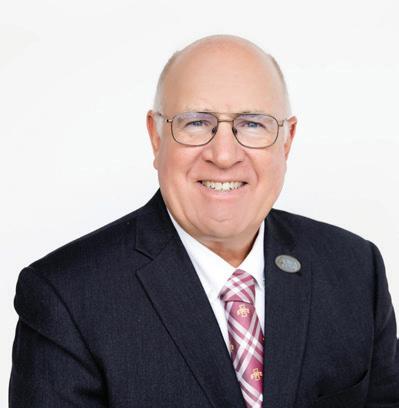
MARK MUELLER
STEVE KUIPER ICGA First VP Knoxville
RALPH LENTS ICPB Chair Menlo
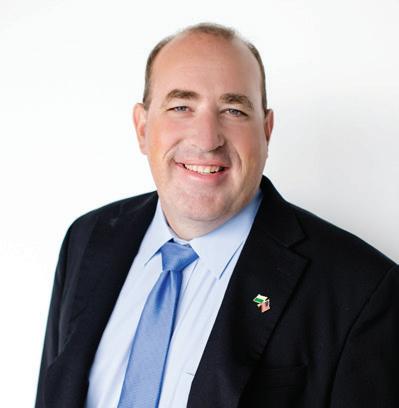
JOE ROBERTS ICPB President Belmond
PAUL GIESELMAN ICPB First VP Morning Sun
JERRY MAIER ICPB Eagle Grove
RUSTY OLSON ICGA Garner
MIKE VER STEEG ICGA Inwood
CHAD HARMS ICPB Milford
RYAN STEFFENSEN ICPB Guthrie Center
LAURA FOELL ICGA Schaller
ELLIOTT HENDERSON ICGA Independence
JASON ORR ICPB Rowley
DISTrICT FIVE
WILL CANNON ICGA Prairie City
DISTrICT SEVEn
ADAM BIERBAUM ICGA Griswold
DISTrICT nInE
KEITZER ICGA Mediapolis
ERIC WEUVE ICPB McCallsburg
DISTrICT SIX
LOUIE ZUMBACH ICGA Coggon
DISTrICT EIGHT
DARIN PROFFIT ICPB Essex
VANDENBERG ICPB Farmington
KEVIN SMITH ICGA Bussey
arGE
RIESSEN ICGA Ida Grove
MIKAYLA COLEHOUR ICPB Anamosa
JEROD FLAHERTY ICPB Osceola
NELSON ICPB Middletown
ICPB EX - oFFICIoS
RYAN FRANKLIN
Homeland Energy Solutions
BRENDA KOCHANNY Cargill
MICHAEL NAIG
Iowa Department of Agriculture & Land Stewardship
DAN ROBISON
ISU College of Agriculture & Life Sciences
DAVID
DAN
STAN
JOLENE
As I reflect on the past year, it’s clear that the strength of the Iowa Corn Growers Association (ICGA) lies in the dedication and enthusiasm of our members. Through active participation, collaboration and a shared commitment to advancing Iowa’s corn industry, we saw grassroots membership working together to create real change.
Our policy development process started off strong with many policy surveys being returned and a record number of members showing up and engaging at roundtables to bring forward policy ideas. When our members are called to show up, they answer and make their voices heard. Across the state, Iowa Corn also hosted and provided numerous ag tours and events to engage membership at the local level. We hope these events provided an opportunity to meet other farmers in your area and serve as a thank you for all you do on behalf of our industry and organization.
Finally, we had another successful year of member celebrations at the Iowa Corn 350 NASCAR race, the Iowa Corn Day at the Fair and the Iowa Corn Cy-Hawk Series where we host our ICGA members and also reach a large number of consumers at each event.
On the policy front, we continue to make progress on the issues that matter most to Iowa farmers. At the Statehouse, we secured a new tax credit of up to 25 cents per gallon for the production of Sustainable Aviation Fuel. We also successfully extended the E15 tax credit through 2027, and despite a tight budget year, we protected $10 million in funding for the Renewable Fuels Infrastructure Program, which helps
Mark Mueller
ICGa
PrESIDEnT waVErLy, Iowa
upgrade biofuel pumps across the state. Thanks to support from the Governor, we have the opportunity to reframe legislation for our state’s infrastructure and the pipeline. We had healthy discussions on both sides, but as farmers, it’s more important than ever that we stand united and shaped policies that work for both our industry and our farms.
At the federal level, ICGA has been hard at work with our partners at the National Corn Growers Association to ensure our priorities are part of the 2025 tax package; including raising the corn reference price to around $4.10 and increasing funding for Market Access Program (MAP) and Foreign Market Development (FMD) programs in the Farm Bill for export programs that are critical to promoting U.S. corn and meat exports through the U.S. Grains & BioProducts Council and the U.S. Meat Export Federation.
We also helped secure improvements to the estate tax exemption, raising it to $30 million for a married couple. And finally, we were pleased to see the EPA’s summer announcement maintaining the Renewable Fuel Standard at 15 billion gallons for corn ethanol. That’s a strong signal for our market and our future.
We continue to have policy challenges in the ag industry, making our united voice more valuable than ever. Representing only one percent of the U.S. population as farmers, we know that our voice is stronger together than just one farmer trying to do it alone. Thank you for being an ICGA member and for sharing your voice and engaging on important policy priorities.
Mark Mueller, ICGA President
2026 ICGA LEGISLATIVE PRIORITIES
2026 ICGa STaTE PrIorITIES (aLPHaBETICaL)
• Conservation/Water Quality – Maintain legislative funding stream for Iowa Nutrient Reduction Strategy, including Maximum Return to Nitrogen.
• Ethanol – Support all efforts to lower carbon intensity score of corn-based ethanol and promote ethanol as a carbon reduction solution across all markets while maintaining property rights.
• Pesticide labeling.
• Property tax reform.
2026 ICGa FEDEraL PrIorITIES (aLPHaBETICaL)
• Carbon – Support carbon intensity reduction initiatives and credit programs for global market access.
• Ethanol – Support a nationwide E15 fix and an Octane Bill. We support retaining the RFS.
• Farm Bill – Improve crop insurance and protect/ funding for Market Access Program (MAP) and Foreign Market Development Program (FMD) within the USDA process.
• Trade – Expand new and protect existing bilateral and multi-lateral trade agreements.
• Transportation - Improve transportation infrastructure including but not limited to locks and dams, roadways, etc.
Advocating for Corn Growers: The ICGA PAC
For the agriculture sector, policy and regulations can make or break our success and ultimately the ability to do our jobs at all. The ICGA Political Action Committee (PAC) was formed to endorse candidates who support and advocate for corn farmer priorities. The ICGA PAC is widely recognized and respected for its nonpartisan approach to achieving the policy objectives of Iowa’s corn growers.
THE PaC STruCTurE
The PAC is comprised of 10 members appointed by the ICGA President, members include one representative from each of the nine crop reporting districts and one ICGA board member, serving as committee chair. The committee is divided equally between Democrats, Republicans and Independents. Committee members must be able to evaluate candidates objectively, regardless of party affiliation, and all decisions must be supported by a majority vote which ensures endorsements are non-partisan.
a C oMMITTEE wITH a MISSIon
The PAC is an important and necessary tool in the political process. This committee reinforces the value of lobbying efforts on behalf of policies that matter to farmer members. Voluntary ICGA PAC contributions amplify ICGA member voices to educate and influence policy decisions made at the state and federal level. Participation is key to ensuring that agriculture issues are heard.
How IT worKS
Grassroots members help guide and establish ICGA legislative policies and priorities. It is these ICGA priorities that serve as the criteria the PAC uses to make candidate endorsements. The committee is recognized and respected for its non-partisan approach to achieving the policy objectives for Iowa corn growers by supporting lawmakers who work to implement ICGA member priorities.
MEMBErSHIP
The PAC contributes monetary donations to select political leaders who have demonstrated their support in helping our policy goals. The ICGA PAC provides members with another tool to educate and influence policy decisions made at the state and federal levels.
Endorsements and political contribution decisions are non-partisan and based on candidate voting records that support ICGA policies. Candidate positions are determined by a written candidate survey, voting records and careful research.
DECIDInG THE FoCuS
ICGA members determine PAC policy priorities by participating in the following:
• The annual policy survey every spring.
• Face-to-face roundtables in every crop reporting district each June.
• A final policy vote and prioritization of issues at the Annual Grassroots Summit every September.
Our policy priorities are based solely on member participation which is why we strongly encourage attendance at as many events as possible to share your voice.
PaC FunDInG
Voluntary contributions can be accepted from any U.S. citizen. However, solicitation for PAC contributions is limited to ICGA members. Participation is key to ensuring that agriculture issues can be solved.
ICGA membership dues and Iowa corn checkoff dollars are both separately collected and are in no way related to PAC contributions. Again, ICGA membership dues and corn checkoff dollars are NEVER used as PAC contributions. In fact, it is illegal for the ICGA, a nonprofit organization, to contribute to the PAC or candidates directly and checkoff dollars are not allowed under Iowa Code to ever be used for any lobbying efforts or PAC related business.
Ultimately, you make the choice in the voting booth. The job of the ICGA PAC is to help you know which candidates are on your side as a corn farmer. To learn more about the PAC or to contribute to this important tool, please visit iowacorn.org/icga-pac/.
Standing Up to Fertilizer
The Iowa Corn Growers Association (ICGA) continues to prioritize creating profitability for corn farmers. Within the last couple of years ICGA has put the pressure on the fertilizer industry to address the rising costs of input prices for our farmers and will continue until solutions are found.
Over four years ago, Iowa Corn was already raising concerns. In December 2021, ICGA signed onto a letter to Mosaic asking them to withdraw their request for protective tariffs on phosphate coming into the U.S. That same month ICGA put together a letter to then Attorney General Tom Miller to look into fertilizer pricing matters.
Iowa Corn knew that this would not be a quick or simple solution, and the ICGA Board made fertilizer a top priority for our organization. The Iowa Corn government relations team has worked on this issue continuously since.
In the summer of 2022, ICGA continued meeting with our Congressional members to discuss the concerns around fertilizer prices. ICGA farmer leaders hosted a roundtable with Senator Joni Ernst’s team to hear farmers’ concerns about historically high fertilizer prices. Other attendees at the roundtable included area farmers, government officials, state legislators and industry representatives. ICGA leaders shared
the impact high input prices have on farmers and possible solutions to reduce costs. Shortly after, Iowa Corn worked with Congressman Randy Feenstra and provided input for him to testify in front of the International Trade Commission (ITC), encouraging them to reduce tariffs on fertilizer imports.
The following year, Iowa Corn and fellow corn states held a USDA meeting related to high fertilizer pricing. Iowa Corn was also in the media highlighting the real issues that farmers were facing. In an article in the Iowa Capital Dispatch, then ICGA President Denny Friest shared, “We as farmers feel very offended that just because corn prices went up, the fertilizer prices went up. They have total control over whatever price they charge.”
ICGA was also among 57 agricultural organizations that signed a letter in December 2023 to the ITC, urging the reconsideration of tariffs on phosphate fertilizers imported from Morocco, arguing that tariffs exacerbate rising fertilizer prices and strain farmers’ finances. At the end of 2023, Senator Chuck Grassley introduced the Fertilizer Research Act that Iowa Corn initiated by taking input from ICGA members and economists and submitting the suggestions to Senator Grassley’s office. The Fertilizer Research Act will require the Department of Agriculture (USDA) to conduct a study on competition and trends in the fertilizer market and their subsequent impacts on price.
In September of 2025, Iowa Senators Grassley and Ernst, along with Wisconsin Senator Tammy Baldwin, reintroduced this bipartisan legislation to shine a light on market factors driving the high cost of fertilizer.
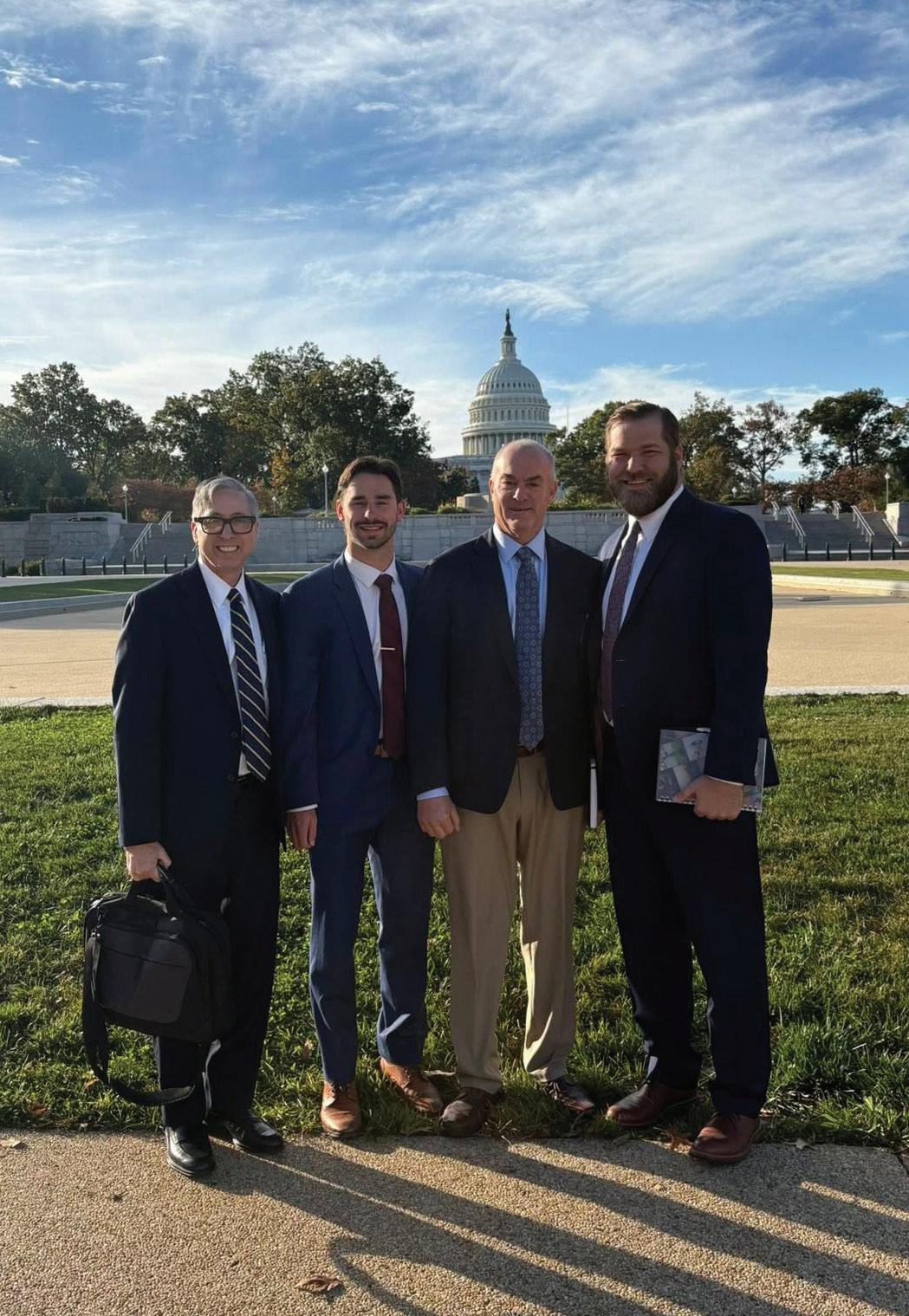
Recently, ICGA submitted testimony on high fertilizer costs to the Senate Judiciary Committee. ICGA President Mark Mueller, and the Iowa Corn government relations staff were present at the Senate Judiciary Committee hearing in Washington, D.C., where a written testimony was submitted on competition issues in the fertilizer industries. Grassley, who chairs the committee, led the hearing to examine how market consolidation drives up production costs.
“The massive increase in the cost of fertilizer is crushing corn growers in Iowa, and they aren’t alone. Growers across the country are facing an impossible decision: buy fertilizer or stay solvent,” stated Mueller’s
testimony. “This is not sustainable, and it is well past time to stop ignoring the role of the fertilizer monopolies that dominate critical input markets. Right now, the price of our most essential input, fertilizer, is squeezing the life out of the American farmer like a vise.”
ICGA remains steadfast in our commitment to addressing the rising cost of fertilizer and ensuring the long-term profitability of Iowa’s corn farmers. Through persistent advocacy, and direct engagement with policymakers, ICGA will continue to elevate farmer concerns. Our voice is stronger together, become a member of the Iowa Corn Growers Association today.
Legacy of Leadership: Honoring Bill Northey
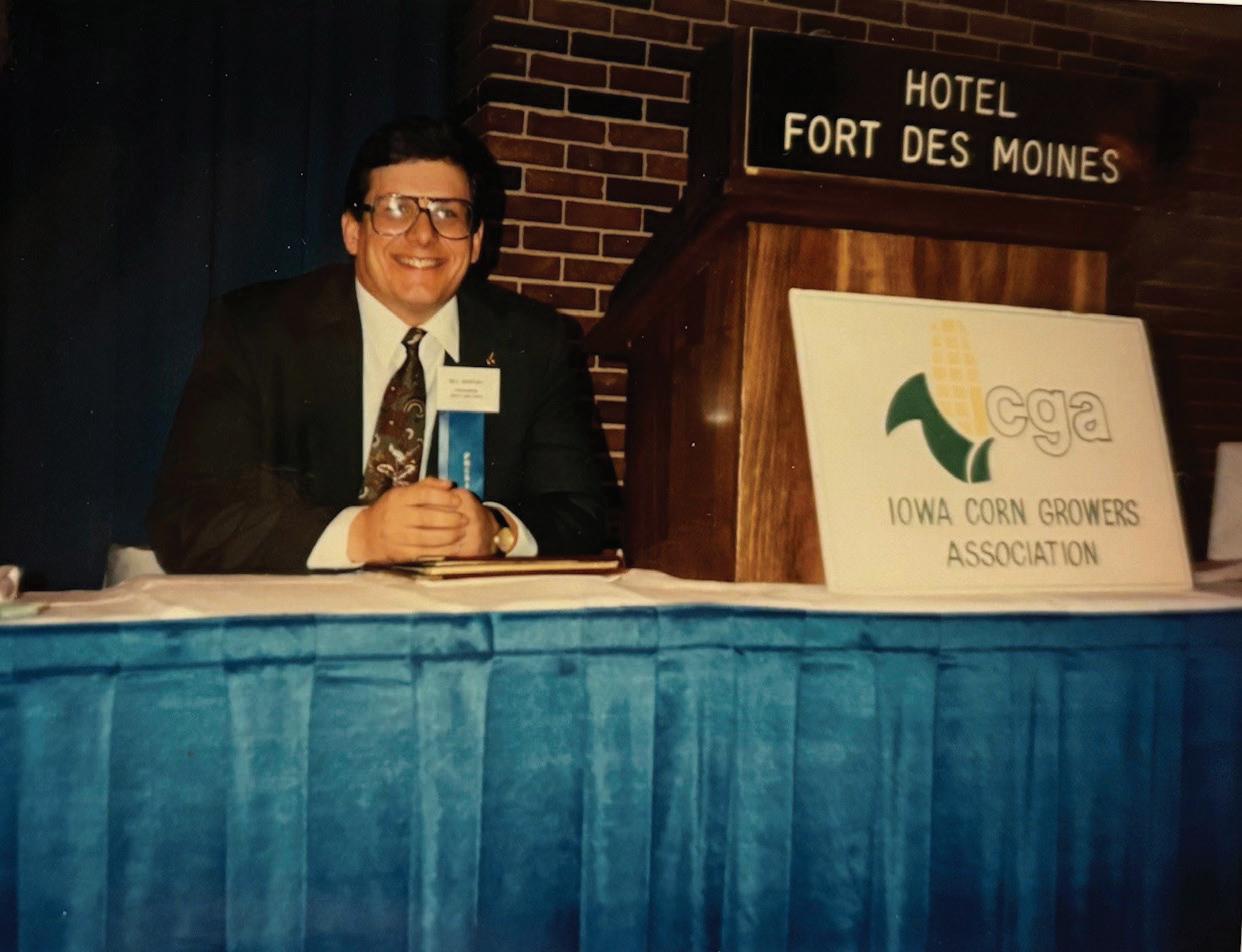
In 1985, a young District Field Manager for Iowa Corn, Rod Williamson, drove four hours to Spirit Lake with a stack of invitations, a list of phone calls made and the hope of rallying a roomful of Dickinson County farmers. Only one showed up. That farmer was Bill Northey.
Driving back to Des Moines, Rod believed the trip had been a waste of time. What he didn’t know then was that single farmer who walked through the door was about to shape Iowa agriculture for decades to come.
When Iowa Corn’s elections rolled around a short while later, one director reached out to Bill. Telling him, they just needed a name on the ballot. This launched Bill’s involvement in Iowa Corn, serving on the ICGA Board and becoming heavily involved in the organization and advocating for Iowa’s corn farmers as ICGA President. Bill and others often told this story, how simply one person who shows up can change everything.
In 1995, Bill became the youngest National Corn Growers Association President at just 36 years old. He was a natural leader who viewed everyone as a friend, making his ability to network and build relationships his strongest asset. Yet Bill was always willing to deal with the tough issues and make his voice heard.
During his time on the board, he was especially passionate about soil conservation and water quality, often seen with cutout magazine articles in hand, ready to discuss the latest on the topic. When asked how he found time to read it all before his meeting, he’d simply reply, “I read this one on the way down.” Bill went from cutouts to the internet treating it as an open field of knowledge and enjoyed sharing that knowledge with those around him.
Bill was always deeply committed to stewardship of the land, playing a pivotal role in advancing conservation practices and advocating for Iowa’s corn farmers. Bill was instrumental in authoring and leading the Iowa Nutrient Reduction Strategy, bringing conservation and land stewardship to the forefront of Iowa agriculture. He championed a long-term, public-private approach that emphasized collaboration over deadlines, ensuring the effort would transcend politics and endure generations.
“What truly stood out was how Bill built connections beyond the work itself. He made the effort to engage, to mentor and to care. He didn’t have to do that, but he did, and it made all the difference,” shared Craig Floss, Iowa Corn CEO. “For me, Bill Northey stands out as one of the most influential people in my corn career. Bill wasn’t just a colleague; he was a friend, a mentor and a leader who shaped the future of agriculture by lifting up the people around him.”
After completing his term with NCGA, Bill Northey continued his unwavering support for Iowa farmers by becoming Iowa Secretary of Agriculture in 2007. His gift for connecting with people wasn’t just professional;
it was personal. Whether serving on a board or visiting with farmers, Bill’s presence left a lasting impact.
Bill’s service extended to the national level when he was appointed USDA Undersecretary of Farm Production and Conservation from 2018 to 2021 under Secretary Sonny Perdue, a role many considered a “slam dunk” fit. He had to leave his post at IDALS for this opportunity, with his deputy, Mike Naig, stepping in to carry on the work they had begun together. After his time in D.C., Bill returned to Iowa and continued serving agriculture through his leadership at the Agribusiness Association of Iowa.
Bill’s dedication to agriculture was rooted in family. His wife Cindy and their daughters always knew that Bill would stay to talk with every last person and quickly learned to drive separately to events. His mother, Margaret, shared how proud she was when she got to vote for both her husband, Wayne, who was running for Dickinson County Supervisor, and son, Bill, running for Iowa Secretary of Agriculture on the same ballot. Bill came by his talent for connection honestly, and he used
it to make a lasting difference. Nearly everyone who worked with Bill has a story about how he always made you feel like the most important person in the room.
From farmer to state leader to national advocate, every step of Bill’s career was driven by his commitment to serving agriculture. Bill was a friend and mentor to many in the agriculture community, and through his years of dedicated service, he helped shape the industry into what it is today.
Though he is no longer with us, Bill’s legacy is enduring, a true reflection of a life well-lived in service to others and our industry. It is a heartfelt honor that we recognized Bill Northey with the 2025 Iowa Corn Walter Goeppinger Lifetime Achievement Award in recognition of his lifelong passion, service and unwavering commitment to Iowa agriculture.
The Iowa Corn Promotion Board (ICPB) continues to build demand domestically and around the world for corn products through market development efforts. Abroad, ICPB and our partners at the U.S. Grains & BioProducts Council (USGBC) had several wins in the past year. First, Japan announced moving to an E10 (10% ethanol fuel blend) level by 2030, and Vietnam is now testing E10 at fuel stations with plans to begin importing ethanol in January of 2026. Another win is Canada’s Clean Fuel Standard that continues to build demand for more imports of ethanol, up 17% in this current marketing year. On DDGS exports, ICPB has been actively engaged to show the importance of India as a destination for this feed. Last fall Iowa Corn participated in the Governor’s trade mission to India, where we learned India was asking for U.S. DDGS to be allowed into their country. Following that, Iowa Corn led a letter signed by members of the U.S. House Ag Committee addressed to the U.S. Trade Representative encouraging DDGS to be included in any potential trade deal with India. These efforts proved successful and while a trade deal with India is still uncertain, we remain hopeful that our government will finalize a deal benefiting corn farmers.
On the domestic front, ICPB is working to expand the use of E15 across the nation, with a focus on replacing E10 with E15. In the past year, we partnered with Growth Energy and fuel retailers, such as Loves, to place an ethanol tank in Little Rock, Arkansas, to offer E15 in that market. It is our hope that all of these domestic efforts will continue to increase use for ethanol right here in the U.S.
Joe Roberts
ICPB PrESIDEnT BELMonD, Iowa
The ICPB continues to be a leader in researching new uses for corn. Recently, our contractor completed operations on our prototype reactor for the Vinyl Acetate Monomer (VAM) project, demonstrating nearperfect alignment between the lab and the digital twin. The process utilizes corn to make foams like Crocs, flip-flop soles, flutter boards and yoga blocks. This prototype will continue to generate data for our one-ofa-kind process. In addition, Iowa Corn has connected with 96 companies and organizations to evaluate new technologies, fund new product development and promote the benefits of corn.
Finally, the ICPB continues to meet consumers and farmers through education efforts across the state. This summer we held another successful consumer event promoting Unleaded 88 at the Iowa Corn 350, Powered by Ethanol NASCAR race. Consumer audiences were exposed to the power and performance of Unleaded 88 and heard from the farmers that grow it right here in Iowa.
Reflecting on the past year, it’s clear that the impact of our corn checkoff dollars goes far beyond just these few projects. Our checkoff dollars are strengthening demand for our products, actively pursuing new uses for corn and engaging consumers and farmers alike. Thank you for continuing to support the Iowa Corn checkoff and for staying connected and involved in our industry.
Joe Roberts, ICPB President
Growing Global Demand for Iowa Corn
MarKET DEVELoPMEnT
The Iowa Corn Promotion Board’s (ICPB) investment in the U.S. Grains & BioProducts Council (USGBC) has helped increase demand for U.S. corn and co-products around the world, therefore increasing Iowa corn farmer profitability. The USGBC works to develop export markets for U.S.grown corn, barley, grain sorghum and related products like ethanol and dried distillers grains with solubles (DDGS). By acting as a bridge between U.S. suppliers and international customers, USGBC increases exposure and builds demand for U.S. and Iowa-grown crops.
This was an exciting year for the U.S. ethanol industry, and the USGBC is proud to have supported international demand for ethanol that saw 2.1 billion gallons of ethanol exported in marketing year (MY) 2024/25, a new record.
Global demand for biofuels also led the Council to propose a vote to its members at the organization’s summer meeting, with them agreeing to amend the Council’s name to include bioproducts to improve access to international meetings and events focused on energy and transportation.
The Council’s shift to include ethanol in its promotional efforts in the mid-2010s and that new name will now mark an exciting new chapter in its mission to develop markets, enable trade and improve lives.
Record exports in MY 2024/25 are cause for celebration, but even greater numbers may be on the horizon. In November, Vietnam announced an expansion of its biofuel policy taking effect next month that will open a market of up to 160 million gallons to U.S. producers.
Nearby, Malaysia also announced a reduction of trade barriers for both denatured and undenatured U.S. ethanol, improving access to a market consuming 4.5 billion gallons of gasoline annually.
The Council’s regional office for Southeast Asia & Oceania has been working with the Vietnamese and Malaysian oil and transportation industries about expanded ethanol integration for years and these breakthroughs will make swift impacts on demand for U.S. ethanol.
Cooperation with fellow national and state-level agricultural partner organizations is a fundamental part
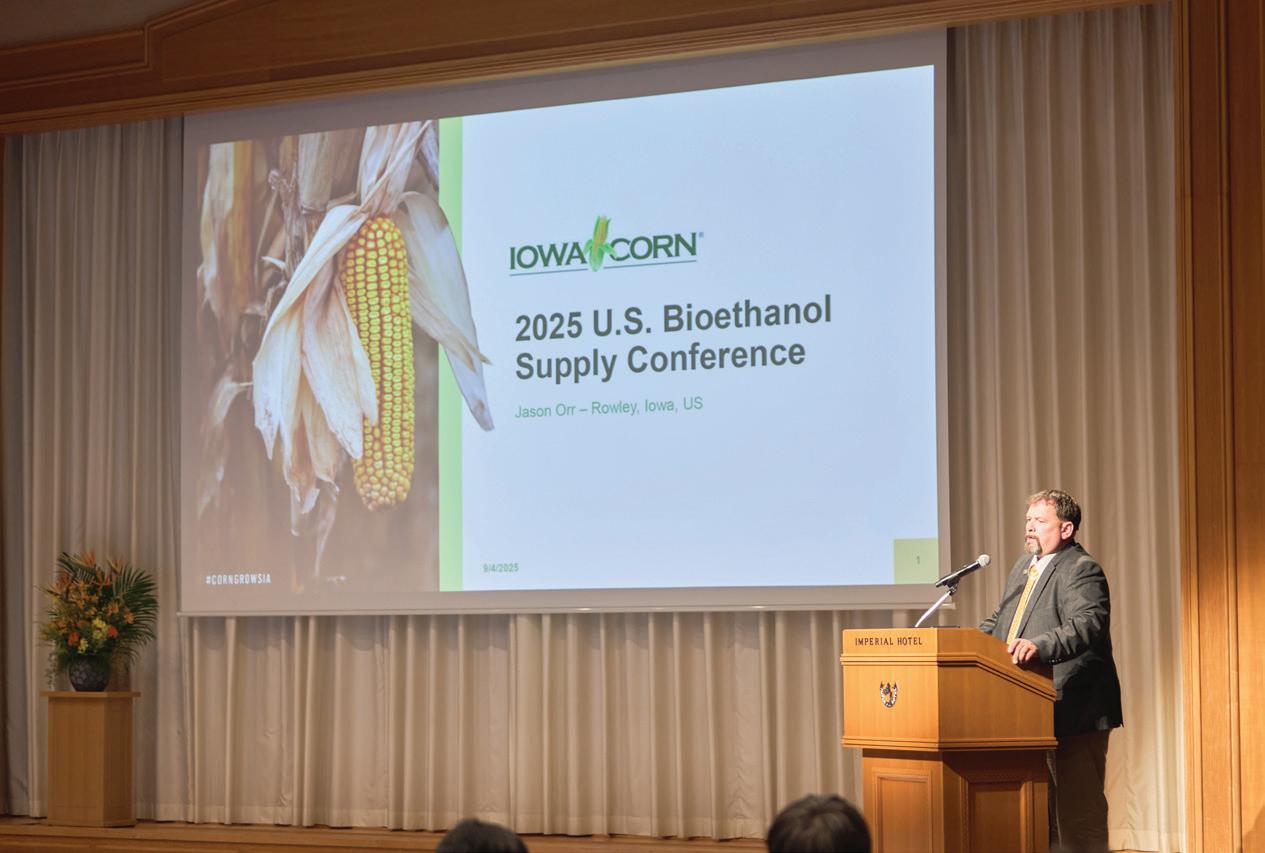
of the Council’s identity, and Iowa Corn was a critical part of the Council’s work in 2025. A highlight was ICPB District 3 Director Jason Orr’s participation in the Council’s U.S. Biofuel Supply Conference, held in Tokyo, Japan in September. International customers are always eager to hear from U.S. farmers about the practices that make U.S. ethanol a high-quality commodity that significantly improves environmental and human health.
Domestically, the Council held the Global Ethanol Summit 2025 in October, drawing more than 450 buyers, end-users and policymakers from more than 40 countries to Washington, DC. The meeting highlighted ethanol’s broad applications from onroad to sustainable aviation fuel to clean cooking and beyond, stimulating international interest and fostering business connections between foreign attendees and domestic producers.
The Council is deeply committed to the U.S. ethanol industry and the growers who support it. The entire organization, from its board of directors to its membership, is eager to keep pushing for another record export year in 2026.
To learn more about Iowa Corn’s work with the USGBC, visit iowacorn.org/corn-market-development/.
New Uses. New Markets. New Demand.
Iowa Corn is a driving force in the advancement of corn-derived products, championing the use of corn far beyond its traditional role as a staple crop for feed and fuel. Recently, Iowa Corn’s strategic efforts have expanded into innovative territory, targeting emerging markets such as textiles and biomanufacturing. Through participation in highprofile industry events, such as the Textile Exchange Conference, support for pioneering ventures like Qore and collaboration with advocacy bodies like the Plant Based Products Council (PBPC), Iowa Corn is shaping both commercial and legislative landscapes to grow demand for corn.
According to the Textile Exchange, today 69% of textiles are made from petroleum, and 59% of all textiles are made from a single petroleum-based, synthetic fiber: polyester. Natural fibers, such as cotton, silk and wool, do not dominate the industry with animal fibers making up only 1% and cotton making up 19%. In 2022, Iowa Corn Promotion Board developed and sold its patents and technology to convert corn sugar into MEG (monoethylene glycol), a key building block for polyester. This innovation helped to grow interest in corn for textile production and expanded Iowa Corn’s involvement with brands and the textile value chain.
Since then, Iowa Corn has been engaged with the Textile Exchange through the Textile Exchange Conference, which brings together brands, farmers, manufacturers and suppliers that focus on sustainable solutions for the textile industry. Iowa Corn has attended three of these global conferences with, Stan Nelson, a farmer from Des Moines County, participating in a 2024 panel at the Conference alongside wool and cotton farmers from around the world to discuss the history and future of regenerative corn production in Iowa.
Iowa Corn has also supported demand drivers closer to home. Qore, a chemical manufacturer in Eddyville, Iowa, utilizes corn sugar to produce BDO (1,4-butanediol), a drop-in replacement for petroleumbased BDO used to make spandex for athleisure wear and other products. Iowa Corn had a leading presence
at the Qore grand opening in July 2025 and plays a vital role in hosting and educating potential Qore customers, ranging from global brands to material processors. These farm visits provide firsthand exposure to the scalability and reliability of Iowa’s corn supply. Steve Kuiper, a farmer from Marion County, hosted a farm tour that has been showcased in publications highlighting the partnership between The Lycra Company and Qore on the solution corn offers to the textile industry.
As the market for plant-based products grows, so does the need for enabling policies that foster innovation, scale and competitiveness. The PBPC is a national coalition advocating for the development and adoption of plant-based products; Iowa Corn and the National Corn Growers Association (NCGA) are both members of PBPC.
The Iowa Corn Growers Association and NCGA policy support PBPC’s mission to advocate for the Biomanufacturing and Jobs Act, a federal legislative initiative aimed at strengthening the U.S. biomanufacturing sector, supporting R&D and creating new jobs in rural communities. The Act will: 1) strengthen federal procurement of biobased products, 2) expand data collection to quantify the economic impact of biobased chemicals and 3) ensure consumer confidence in biobased products.
The Ag BIO Act (Agricultural Biomanufacturing Opportunities for Innovation) is another important piece of legislation under consideration in the U.S. Congress. The Act is designed to create a supportive regulatory and funding environment for the expansion of made-in-America biobased chemical manufacturing and to compete directly with China.
Iowa Corn is committed to creating long-term opportunities for corn farmer profitability. Researching new uses and developing markets are key to our programs and the focus of our investments.
To learn more about Iowa Corn’s efforts in the new uses space, visit iowacorn.org/newuses.
Q&A with Corn Refiners Association CEO John Bode
The Corn Refiners Association (CRA) is the national trade association representing 100% of the U.S. corn wet-milling industry that manufacture sweeteners, starch, advanced bioproducts, corn oil and feed products from corn components such as starch, oil, protein and fiber.. CRA has been at the forefront of recent conversations around High Fructose Corn Syrup (HFCS) and the Make America Healthy Again (MAHA) campaign. Iowa Corn sat down with CRA President and CEO John Bode to learn more about the impact to Iowa’s corn farmers and the corn industry.
Q: The MAHA movement has been creating a lot of buzz in the media. What impact is this having on our food system?
A: MAHA has been helpful in recognizing specific public health challenges in the U.S., yet many of its ideas looking ahead could unintentionally translate to damaging outcomes as a result of falling short on dedication to clear science and risk-based principles. It is imperative that all changes to American food policy are dictated by science and with a rigorous assessment of evidence as its foundation. Promoting distrust and baseless fears concerning our food supply undermines the achievements and crucial efforts of our nation’s farmers and the agricultural sector more broadly. Substituting far-fetched ideas and concepts for objective evidence on what we eat is a disservice to public health.
We aim to work with the nation’s leaders on smart policies and practices that translate to feeding the world securely and responsibly. CRA believes food policy should work toward solutions plainly backed by data and a commitment to measurable outcomes.
Q: Why does misinformation create more challenges for both the food industry and farmers?
A: The bond of trust between consumers and farmers is strong and should be preserved. America’s farmers are committed stewards, deeply invested in the quality of the products they deliver to both American communities and the global market. Unfortunately, inaccurate claims regarding the food supply can often weaken this confidence in our food supply, and unscientific claims are a primary driver of often unnecessary cases of public uncertainty and worry.
Furthermore, we’re seeing how misguided claims are getting converted into conversations about actual policy. For instance, state mandates for new food labels risk adding doubts that contradict what the science tells us. It’s also concerning how heavyhanded mandates create compliance challenges from one state to another. In truth, we need to guard against rules that will add new financial burdens on consumers, potentially amounting to thousands of dollars in added costs, even for consumers who don’t live in those states. A patchwork of state laws would be unworkable for companies and unaffordable for consumers.
Q: What does the science tell us about ingredients produced by corn refiners? What are some of the key messages that consumers should know about HFCS?
A: All of the trusted, expert scientific organizations that have studied this topic agree on one core fact: HFCS and regular sugar are nutritionally equivalent. At CRA, we fully understand that, based on how active most Americans are today, many people would
benefit from eating fewer calories overall. Therefore, we are not suggesting anyone should increase their HFCS consumption. Instead, we are calling for common-sense rules and regulations that are based purely on scientific evidence and facts, not on misinformation or newly asserted opinions.
HFCS consumption per capita has declined more than 40% since 2000; at the same time, American obesity rates have increased. This just underscores how misguided it is to launch overgeneralized attacks on many nutritious ingredients. Furthermore, contrary to some new claims, ingredients like corn oil and other seed oils are beneficial for a healthy heart, primarily because they naturally contain less saturated fat than many alternatives.
Q: HFCS is a product made by corn refiners – your members. What does this market mean for corn farmers?
A: The corn refining business is a huge part of our economy, responsible for producing more than $61 billion in economic output and creating about 10,000 jobs directly. This economic power is especially strong in places like Iowa. In that state alone, the industry’s output is over $15.7 billion, supporting 3,000 direct workers and paying out $434 million in wages.
However, this market is vulnerable to major losses. Studies by agricultural economists warn that if the HFCS market were lost, it would directly hurt farmers’ bottom lines. They could lose 34 cents on every bushel of corn, plus an extra price premium of up to 50 cents per bushel that many farmers, particularly in Iowa, get from selling straight to refineries.
The HFCS market typically uses about 400 billion bushels of corn per year, around 3% of the annual American corn crop. If it disappeared, Iowa would suffer the biggest hit, facing an estimated total loss of $925 million. For Iowa farmers, losing this market could cost them $71.74 for every acre they farm.
Learn more about the work of the Corn Refiners Association at corn.org.
Iowa Corn Staff
CRAIG FLOSS
Chief Executive Officer
BRIAN JONES
Chief Operating Officer
DENISE FORNEY
Vice President of Talent and Organizational Development
CHRIS BENGTSON Manager of Economic Analysis and Investments
SHANNON TEXTOR
Vice President of Communications
AMANDA FORTMAN
Publications Manager
SYDNEY GARRETT
Public Relations Manager
MADDI KLEMME
Social and Digital Media Manager
BECCA AHRENDSEN Market Development Manager
KEVIN STUDER Vice President of Government Relations