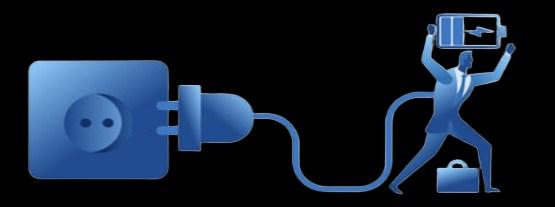
Work and Personal Pressures | Work-SMARTey | Digital Fatigue
Occupational Health Value
iOH Partners
admin@ioh.org.uk
From the President
LynnPratt
Dear Members,
March is one of the busiest months in our calendar and this Spring edition mirrors the direction we’ve been driving together at iOHPrevention first, Data-driven insight, and Psychologically safe, inclusive workplaces.
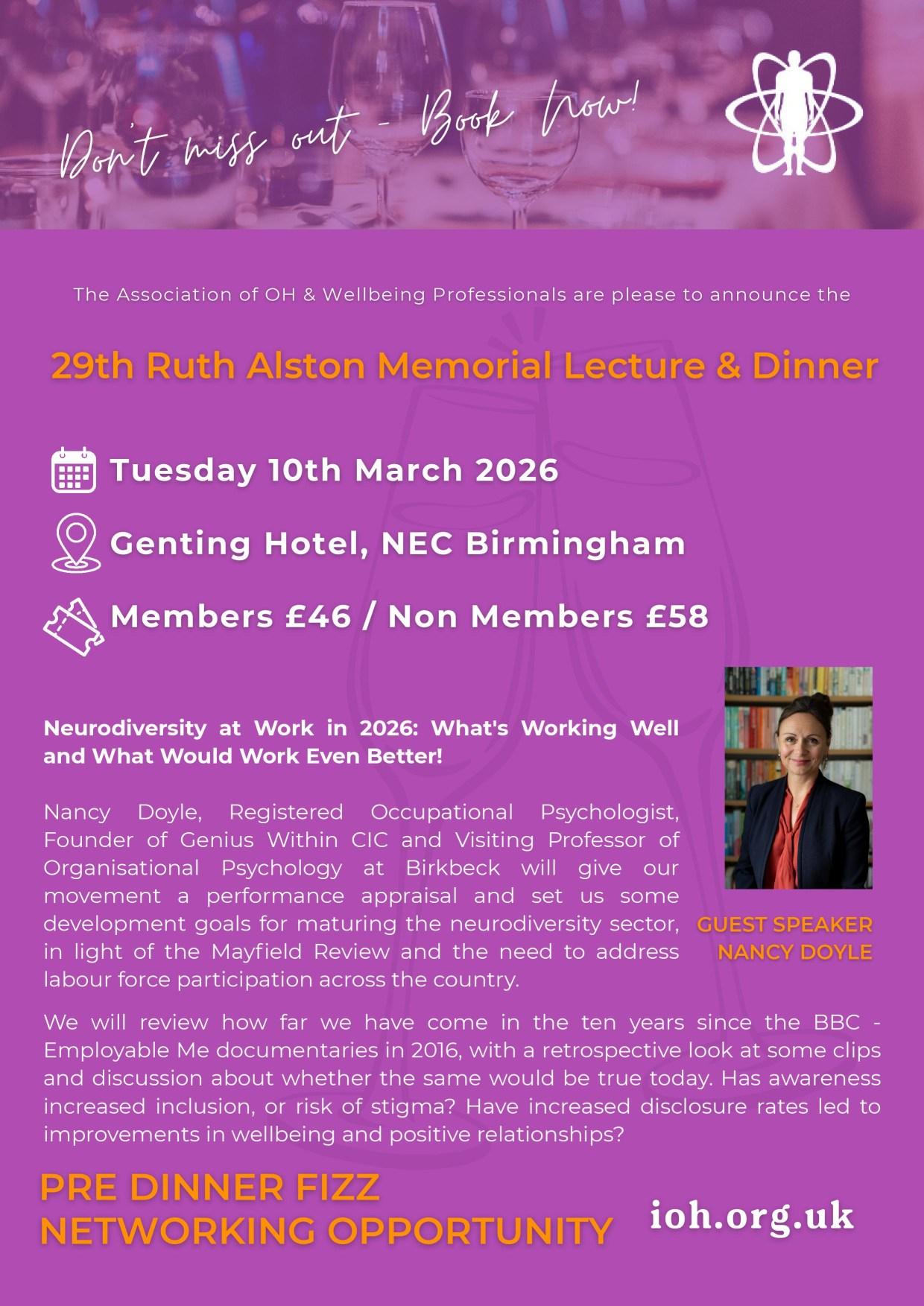
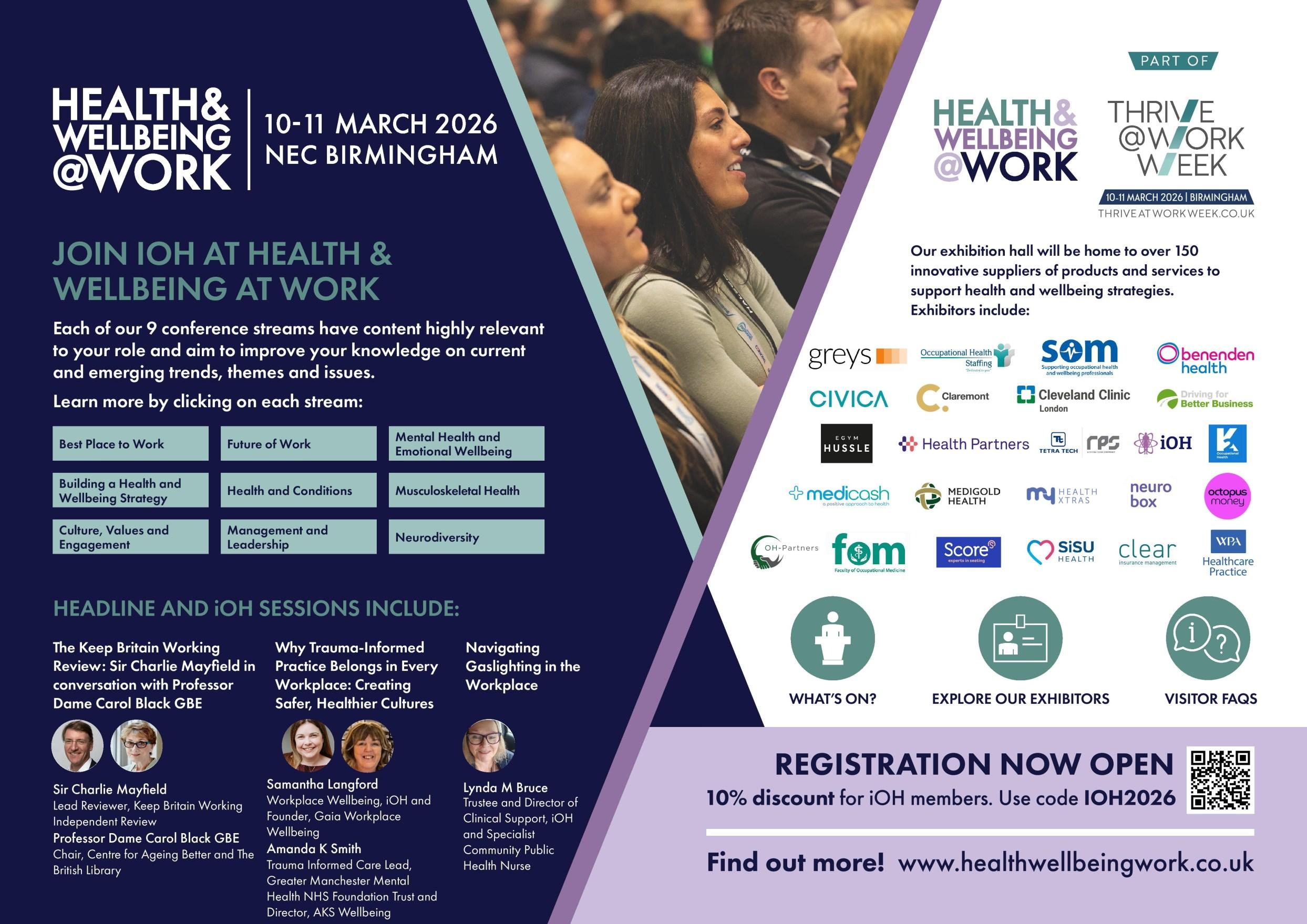
As we head to Health & Wellbeing at Work conference (10–11 March, NEC) – don’t forget to use your member code IOH2026 when booking your ticket - and we hope you will join us at our Ruth Alston Memorial Lecture and Gala Dinner with Dr Nancy Doyle to continue these conversations on the evening of 10 March.
Across the issue, your submissions reinforce iOH’s new offers and partnerships. Launching on 2 March, a 24/7 Health & Wellbeing Helpline and Wellness platform from PAM and the Career Self-Coaching Portal give timely support that complements pieces on workload, recovery and capability—helping members translate insight into everyday practice and progression.
A strong thread is the move from reactive casework to systemic prevention. The rail sector’s rise in CVD referrals highlights the case for consistent screening and integrated health intelligence, while the shift to lead indicators strengthens OH’s organisational impact—both themes we’re amplifying in member learning and events. Clinical features deepen this: proprioception in sustainable return to work, digital fatigue in hybrid teams, and aeromedical fitness for frequent flyers and safety critical roles.
Culture matters
Articles on sickness absence and the “silent architecture” of organisational safety underline how compassionate, consistent leadership turns OH advice into action exactly the behaviours we champion across iOH networks. The new EAP offering from PAM and their Wellness piece on personal pressures reinforces why round the clock support is so valuable.
Inclusion runs throughout
This edition’s neurodiversity framework aligns with our RAML focus and was echoed at IGPP Manchester where Lucy Kenyon and Janet O’Neill showcased OH’s role in neuroinclusive, prevention focused workplaces—evidence of iOH’s growing national voice.
Finally, we will continue to enable practical change through our CPD partnerships.
Warmest wishes
Lynn Pratt, President iOH
Introduction
Neuroinclusion is not a charitable gesture but a strategic necessity. As the first generation of formally diagnosed neurodivergent adults enter the workforce, organisations face growing pressure to support cognitive diversity through meaningful, structured strategies that create equitable, psychologically safe, and inclusive environments. Sniderman et al. (2023) note that students who were part of neuroinclusive classrooms 10 to 20 years ago are now progressively joining the labour market.
The concept of neurodivergence, introduced by Australian sociologist Judy Singer in the 1990s, reframes conditions such as autism, ADHD, dyslexia, dyspraxia, dyscalculia, OCD (obsessive compulsive disorder), and Tourette’s syndrome as natural variations in how people think and process information. Despite representing 15–20% of the global
In Ireland, only 32.6% of people with disabilities are employed, nearly twenty points below the EU average, while in the UK the rate is 53.1%, leaving a 28-point gap compared to non-disabled workers. Globally, unemployment among autistic adults exceeds 80%, and in the UK only around 30% are employed. (Disability federation Ireland, 2024; DWP, 2024; Disability Policy center, 2025)
Recent findings from the Dublin City University Institute of Education indicate that around one quarter of employees in corporate settings are neurodivergent, based on a survey of more than 1,500 workers across three different organisations. The study shows that these employees either self identify as neurodivergent or have received a formal diagnosis (Gormley et al, 2026).
“Neurodivergent Employees in Ireland: Key Evidence from 1500 employees (DCU, 2026)”
• 25% (1 in 4) of employees were found to be neurodivergent.
• 18.5% show significant depressive symptoms.
• Only 40% feel supported at work.
• 80% need accommodations, but only 25% request them.(All DCU findings.)
Advancing Neurodiversity
Recent Occupational Health data reinforce this disparity: A PAM Group analysis of 135,000 OH referrals (April 2024–March 2025) identified neurodivergence as the third leading reason for referral, following mental health and musculoskeletal conditions Personnel Today, 2025), highlighting rising diagnosis rates and persistent workplace challenges.
This qualitative research emerged from growing concerns within Occupational Health (OH) that organisations remain underprepared, lacking the capability to effectively support and leverage neurodivergent talent, a gap that threatens workforce resilience, retention, and innovation. Without adequate strategies, businesses risk losing access to a significant talent pool and undermining diversity-driven performance advances, while leaving individuals vulnerable to isolation, burnout, and career breakdown. Evidence suggests deficiencies in support at this phase, impacting the transition into the workforce, employment, and employee retention.
Kim et al, (2022) note that the merit of a neurodiverse workforce is acknowledged and gaining traction with employers, but the lack of support complicates the employment process and retention. A report by AsIAm and IrishJobs in 2023 found that 94% of employers believe that with the appropriate support, neurodiverse individuals can be valuable assets to any business or organisation. In a 2023 study conducted by Birkbeck’s UK Research Centre for Neurodiversity at Work, the research team surveyed 1,117 people, including 127 employers and 990 neurodivergent employees. It reported remarkable capabilities and work strengths within the neurodivergent workforce, and employers agreed: over 80% reported hyperfocus, 78% creativity, 75% innovative thinking, 71% detail processing, and 64% of people being authentic at work. (McDowall et al 2023).
The research investigations originated at the university-to-employment transition; as the research broadened, findings revealed systemic issues spanning all stages of employment. Semi-structured interviews across industry and academia stakeholders,
Neurodiversity in the Workplace
including industry leaders, HR professionals, university access specialists, learning and development experts, and neurodivergent talent recruiters, produced thematic insights. Results highlight the benefits of neurodiverse workforces, including innovation, productivity, and team performance, yet persistent challenges remain around disclosure, recruitment bias, onboarding, progression, organisationalenvironment and culture.
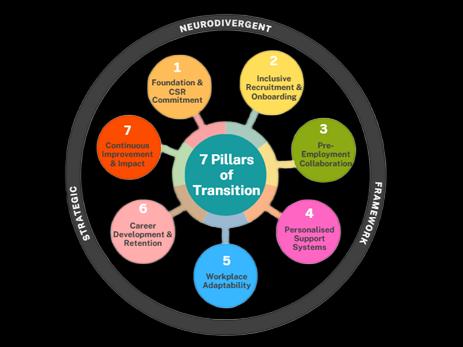
Drawing on these insights, the proposed seven-pillar Strategic Transition Framework (STF) spans
• pre-employment collaboration,
• inclusive recruitment, personalised support systems,
• workplace adaptability, leadership engagement,
• continuous improvement, and
• integration within health, safety, and wellbeing strategies.
The framework positions neuroinclusion as a strategic asset central to talent retention, innovation, and corporate responsibility.
Research Question:
The overarching research question to be answered was ‘Whatarethebenefits,barriers,andbestpracticesfor implementingaworkplacetransitionprogramfor neurodivergentemployeestransitioningtoandwithin theworkplace?’
Advancing Neurodiversity
Methods
The research design implemented a qualitative methodology through interviews with business and specialist stakeholders to explore how neurodivergent employees transition within the workplace. The research was based on a constructivist approach, using inductive reasoning to build understanding. Semi-structured interviews were conducted to explore organisational practices and challenges related to neurodivergent inclusion. Goal-directed sampling ensured a cross-sectional representation of business, neurodiverse organisations and perspectives. Participants were drawn from both industry and academia to capture a broad perspective on the university‑to‑employment transition and wider employment lifecycle. Stakeholders included senior organisational leaders, HR professionals, university access specialists, learning and development experts, and recruiters specialising in neurodivergent talent.
Interviews were conducted using open questions to allow participants to elaborate on experiences, barriers, and strategies for inclusion. Data was collected until thematic saturation was achieved. All interviews were recorded, transcribed verbatim, and anonymised to ensure confidentiality.
Thematic analysis was applied to identify recurring patterns and insights, following Braun and Clarke’s six-step approach. Coding was repetitive and reflective, with themes refined through constant comparison and peer review to enhance validity.
Neurodiversity in the Workplace
Findings
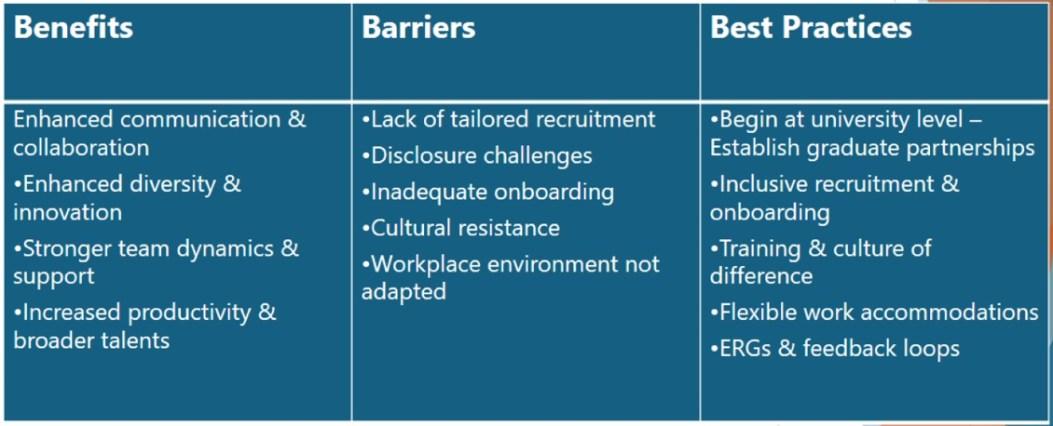
The thematic analysis revealed three key areas in developing a strategic framework for supporting neurodivergent employees:
Benefits: -
• Stronger cross-functional communication through strategic thinking.
• Greater innovation driven by diverse perspectives.
• Improved collaboration and problem-solving.
• Overall increase in productivity.
Barriers: -
• Reluctance or fear around disclosure
• Recruitment processes that are not tailored to neurodivergent needs
• Inadequate or inconsistent onboarding experiences
• Cultural resistance within organisations to change or adapt
Advancing Neurodiversity
Effective strategies (best practice): -
• Early collaboration with universities to support neurodivergent students transitioning into work
• Inclusive recruitment practices that reduce bias
• Targeted training for managers to build awareness and confidence
• Flexible work accommodations tailored to individual needs
• Structured supports such as Employee Resource Groups (ERGs), to provide peer connection and advocacy.
Securing leadership commitment: The key to success
The responsiveness of leadership teams is important for integrating neuroinclusion into the workplace, especially when reviewing strategic business blueprints for the future. Neuroinclusion may be dismissed as not essential or a “nice to have.” The impact on workplace innovation, creativity, and overall team performance must be emphasised as a direct correlation to business success (Kim et al., 2022; McDowall, et al 2023). These concerns can be conquered with a strategic mindset by preparing for the demanding situations that workplaces will come across in establishing a neuroinclusion shift in the workplace. (Davies et al, 2023, McDowall et el, 2023, Sniderman et al 2023, Stenn, T. et al. 2023).
Bias, stigma and disclosure
Bias and lack of awareness of neurodiversity are a potential barrier when implementing a transition program. The lack of awareness and understanding from all members of an organisation would require support and education to increase knowledge and empathy and reduce discrimination, as it could impede the transition program's success. In the 2023 study conducted by Birkbeck’s UK Research Centre 65% of neurodivergent employees expressed fear of discrimination from management, while 55% were apprehensive about facing discrimination from their
Neurodiversity in the Workplace
colleagues. These results emphasise significant barriers and the need for greater awareness and support (McDowall et al., 2023). The program’s successful outcome would require acceptance and inclusion, otherwise any discrimination may limit opportunities for the graduates.
AsIAm and IrishJobs 2023 report highlighted that 6 in 10 autistic people are afraid to disclose their diagnosis in the workplace. In the findings of a UK study of 238 autistic individuals, Romualdez et al, (2021) report that the literature on disclosure shows mixed outcomes and rarely gives voice to autistic people. Conflicting with this argument Turnock, et al, (2022) identify that there is growing evidence that diagnostic disclosure can lead to more positive attitudes, more positive affective responses, and greater acceptance of inappropriate social behaviours, as well as reduced stigma. Disclosure would enhance effective communication channels for employees as social interactions may be difficult for them, and team dynamics and workplace communication could also prove challenging. Flexible work arrangements and reasonable adjustments would be essential for neurodivergent employees and may be a barrier in each organisation business model.
A strategic transition framework for neurodivergent employees
The fourth theme from the analysis of the research was recommendations, which directly informed STF development.
The framework offers a structured approach with seven pillars to span the entire employment lifecycle, from Corporate Social Responsibility (CSR), graduate transition, and pre-employment collaboration to continuous improvement.
Unlike existing approaches, this framework offers a scalable, strategic pathway for organisations to support neurodivergent employees across all career stages.
Policy integration: Embed neurodiversity into HR policies, diversity statements, and strategic plans.
CSR & brand value: Align neuroinclusion with corporate social responsibility and employer branding.
2. Inclusive recruitment & onboarding
Clear, bias-free job ads: Use inclusive language and avoid jargon that may deter neurodivergent applicants.
Neurodiversity in the Workplace
Alternative assessments: Provide options beyond traditional interviews, such as work trials or portfolios.
Disclosure-safe processes: Create safe environments for candidates to disclose neurodivergence.
Customised onboarding: Adapt onboarding processes to individual needs for smoother transitions.
3. Pre-employment collaboration
University partnerships: Collaborate with universities to identify and transition neurodivergent talent early.
Outreach & access programmes: Develop initiatives that improve visibility and access opportunities.
Tailored placements: Offer internships and mentorships designed to accommodate neurodivergent needs.
4. Personalised support systems
OH needs-assessment: Conduct assessments to identify individual support requirements.
Individual transition plans: Develop tailored plans to guide employees through their early career stages.
Mentorship & peer networks: Connect neurodivergent employees with mentors and structured preceptorship programmes to support professional growth and confidence.
Referral pathways: Provide access to specialist services such as occupational therapy and neurodiversity consultants who avail of Work & Access supports & Grants.
Advancing Neurodiversity
5. Workplace adaptability
Flexible work arrangements: Consider remote work, flexible hours, and autonomy where possible.
Sensory-friendly spaces: Design universal workspaces that reduce sensory overload and promote comfort for all.
Inclusive communication: Use clear, direct communication and provide information in multiple formats.
6. Career development & retention
Manager & team training: Educate teams on neurodivergence and inclusive collaboration.
Career progression opportunities: Ensure neurodivergent employees have access to growth pathways.
Feedback loops & employee resource groups (ERGs): Foster psychological safetyestablish feedback mechanisms and employee resource groups for ongoing support.
7. Continuous improvement & impact
Data & metrics: Track pre- & post-engagement outcomes to measure success, participation & satisfaction.
• Review & Adaptation: Regularly update practices based on feedback and evolving needs.
• External Validation & Societal Change: Seek accreditation and contribute to broader inclusion efforts.
Conclusion
Creating inclusive workplaces for neurodivergent employees requires more than isolated initiatives! It demands a sustained cultural and strategic shift. This research demonstrates that effective support must be embedded across organisational systems, with leadership commitment, inclusive recruitment, personalised adjustments, and continuous improvement at the core.
Dr Nancy Doyle’s work through Genius Within provides organisations with a platform of consultancy, coaching, and evidence-based tools to embed universal design into HR and workplace systems, reducing reliance on disclosure and enabling neurodivergent employees to thrive. In Ireland, the new WIDE platform developed by AHEAD and Employers for Change offers a national, government-funded framework that employers can use to access evidence-based guidance and self -review tools. These support them to implement and optimise inclusive recruitment pathways, workplace adjustments, and mentoring supports. While Genius Within operates as a practice-based consultancy model and WIDE functions as a systemic employment initiative, both give organisations structured platforms to strengthen neuroinclusion. Together, they demonstrate how research-driven practice and national policy can align to create a continuum of support for neurodivergent employees across the employment lifecycle.
For OH professionals, the findings highlight both the risks of underprepared workplaces and the opportunities of structured neuroinclusion. OH plays a dual role: supporting individuals through confidential, person-centered assessments while also helping employers turn policy into practice. By guiding leadership, equipping
Advancing Neurodiversity in the Workplace
managers, and fostering psychologically safe environments, OH can ensure that neurodivergent employees feel understood and supported. In doing so, organisations not only protect wellbeing but also unlock resilience and innovation across their teams.
Ultimately, neuroinclusion is not a charitable gesture but a strategic necessity. Companies that embrace universal design and integrate neurodiversity into their culture gain a competitive advantage, fuel creativity, and future-proof their workforce.
The challenge now is one of intent: will organisations lead proactively, embedding neuroinclusion into their systems, or remain reactive and risk losing access to a vital talent pool? The answer will shape not only workforce resilience but the future of innovation and organisational success.
Niamh Watson | Linkedin
Niamh is an experienced occupational health nurse manager with 30 years of clinical, occupational health, acute, and critical care nursing experience. She has a proven track record in designing and managing comprehensive health programs across industries like medical devices, chemical manufacturing, FMCG, and distilleries. Her work across the UK and Ireland has resulted in high-impact initiatives that significantly enhance workplace safety and employee health.
Proprioception at Work: The Invisible Sense That Shapes Safety, Performance, and Recovery
By Olawale Faleye
When we talk about work-related health, the conversation usually centres on posture, ergonomics, workload, and fatigue. Yet there is a quieter system underpinning all these factors, one that is rarely named but constantly at work. That system is proprioception.
Proprioception is our body’s ability to sense position, movement, and force without conscious effort. It allows a person to know where their limbs are in space, how much effort to apply, and how to move efficiently without constantly watching themselves. In the workplace, this “invisible sense” plays a critical role in safety, task performance, and injury resilience.
Proprioception in Everyday Work Tasks
Most occupational tasks rely on proprioception more than we realise. A warehouse worker lifting a box, a nurse repositioning a patient, an office worker reaching repeatedly for a mouse, or a driver coordinating foot pressure between pedals, all of these depend on accurate sensory feedback from muscles, joints, and connective tissue.
When proprioception is functioning well, movements are smooth, efficient, and well-coordinated. The body automatically adjusts to small changes in load, speed, or surface without the worker needing to think about it. This is what allows experienced workers to perform tasks confidently and with minimal strain. However, when proprioception is reduced or disrupted, the body becomes less precise. Movements may feel clumsy, effort increases, and the risk of overload or injury rises, even during routine tasks (Gianatti, 2019).
How Proprioception Becomes Compromised at Work
Several workplace-related factors can negatively affect proprioception:
• Pain and injury: Pain alters sensory feedback. When a joint or muscle is painful, the brain receives distorted information, reducing movement accuracy and control.
• Fatigue: Prolonged physical or mental fatigue dulls sensory awareness, increasing reaction time and reducing coordination.
• Prolonged static postures: Long periods of sitting or standing reduce joint movement and sensory input, leading to poorer body awareness over time.
• Previous injury or surgery: Even after tissue healing, proprioceptive deficits can persist, particularly around the spine, ankle, knee, and shoulder.
• Reduced physical conditioning: Low activity levels and deconditioning weaken the sensory-motor system needed for precise movement control.
Importantly, a worker may appear “fit for duty” on paper while still operating with compromised proprioception, especially in roles that demand balance, precision, or rapid responses.
Why Proprioception Matters for Occupational Health
From an occupational health (OH) perspective, proprioception influences three key areas:
1. Injury risk
Reduced proprioception increases the likelihood of slips, trips, manual handling injuries, and re-injury following return to work. The body simply reacts more slowly and less accurately to unexpected demands.
2. Task tolerance and confidence
Workers with poor proprioceptive awareness often report feeling unsure, stiff, or guarded in their movements. This can reduce confidence, increase avoidance behaviours, and prolong recovery.
3. Sustainable return to work
A return-to-work plan that restores strength, but neglects proprioception may leave the
individual physically capable yet functionally vulnerable. This gap often explains why some employees “relapse” despite apparently successful rehabilitation.
Supporting Proprioception in the Workplace
The good news is that proprioception is adaptable. With the right approach, it can be retrained and strengthened at any stage of working life (2015; Valdes et al, 2024, Winter et al, 2022).
Effective strategies include:
• Movement variability rather than prolonged static positions.
• Graded balance and coordination exercises as part of rehabilitation and conditioning.
• Task-specific training that mirrors real work demands.
• Early movement exposure following injury, where appropriate, to restore sensory feedback.
• Education that helps workers reconnect with body signals rather than overriding them.
In office-based roles, this may be as simple as regular posture changes and movement breaks. In physically demanding roles, it may involve structured conditioning and functional task rehearsal.
A Shift in How We Think About Work and the Body
Proprioception reminds us that the body is not just a mechanical system needing correct positioning but a sensing system that must stay engaged and responsive. When we ignore this, we may address symptoms without addressing the underlying cause of repeated strain or injury.
For OH professionals, acknowledging proprioception adds depth to assessment, rehabilitation, and workplace design. It helps explain why two people can perform the same task with quite different outcomes and why recovery is not just about healing tissues but also about restoring trust and awareness within the body.
Proprioception is the bridge between physical capacity and functional confidence at work. With supported proprioception, workers move better, feel safer, and remain productive for longer.
Olawale Faleye | Linkedin
Olawale is a specialist musculoskeletal and occupational health physiotherapist. Olawale helps people move better, feel stronger, and stay productive, whether that is in the clinic, the workplace, or everyday life. With years of experience across both NHS and private sectors, he combines evidence-based rehab, acupuncture, and occupational health principles to support individuals and organisations in reducing pain, preventing injury, and optimising performance.
Summary of “Occupational Health Referrals for Cardiovascular Disease in the Rail Industry” (RSSB, Oct 2025)
By Niamh McMahon Introduction
This discussion paper examines a recent rising trend of occupational health (OH) referrals for cardiovascular disease (CVD) within the UK rail industry. In January to June 2025, 9.09% of OH referrals were due to cardiovascular disease. Drawing on benchmarking data from the Rail Safety and Standards Board’s (RSSB) Health Insights platform and input from biannual workshops, the paper explores potential contributory factors, current practices, emerging debates, and opportunities for improvement. The aim is to support more effective prevention and management of cardiovascular risk among rail workers.
CVD has become a growing focus for OH services in rail. This is set against a wider public health backdrop in which 7.6 million people in the UK live with heart or circulatory conditions and where CVD remains a leading cause of death and economic burden.
1It is worth noting that there was a different sample group in this round due to new joiners submitting data and original pilot companies not being able to submit this round. This factor could be a contributor to the significant change observed.
Background and Context
Health Insights is the rail industry’s platform for recording and analysing health data, and the Health Insights Benchmarking workshops bring together representatives from GB rail (train operating companies, infrastructure and supply chain organisations, and freight operators), to discuss health data trends and share best practice. The discussion on CVD referrals emerged due to recent increases in referral rates and concerns about under‑recognised cardiovascular risk in rail.
CVD covers a wide spectrum of conditions including coronary heart disease, atrial fibrillation, heart failure, congenital heart disease, stroke, and heart attacks—many of which have subtle or asymptomatic onset, making early detection challenging.
The economic and societal consequences are significant:
• Healthcare costs associated with CVD are estimated at £12 billion annually.
• The total economic impact including premature death, disability, and informal care is around £28 billion.
• Individuals with heart disease are more likely to leave the workforce, with a 22% exit rate, higher than for those with cancer or mental health conditions.
These trends reinforce the importance of proactive CVD management within safety critical‑critical industries like rail.
Key Insights from Benchmarking Discussions
1. Rising referral rates and affected groups
An uptick in CVD referrals was noted in this round of reporting where several patterns emerged:
• Ethnic minority employees: one organisation observed increased CVD referrals among Black, Asian, and Minority Ethnic (BAME) workers. This aligns with national evidence that some ethnic groups experience higher rates of hypertension, diabetes, and associated CVD risk.
• Younger employees: one organisation reported an increase in stroke cases among younger employees, highlighting growing concerns about shifting epidemiological patterns. National data verifies this trend, with stroke rates among adults under 55 rising by 67% between 2002 and 2018, while rates among older adults declined.
The patterns emerging from the Health Insights platform suggest a need for targeted health
interventions and enhanced health monitoring for specific groups within the workforce.
2. Potential contributory factors
Several factors may be contributing to the observed increase in CVD referrals within rail.
Risk factors for CVD can be prevalent among rail employees, where sedentary work, poor dietary habits, insufficient physical activity, chronic stress, and inadequate sleep collectively elevate the risk of hypertension, metabolic syndrome, and, ultimately, cardiovascular events. These modifiable risk factors are well-established contributors to CVD and are often exacerbated by the structure and demands of contemporary work routines.
Stress, which was mentioned during benchmarking discussions can also play a role in cardiovascular health outcomes. Prolonged stress has been linked to increased blood pressure, elevated cortisol levels, and adverse cardiac outcomes. A 2024 study published by Harvard Health further confirmed that individuals reporting work-related
stress had significantly poorer cardiovascular health metrics.
These interrelated factors highlight the need for the industry to consider a more holistic and preventative approach to workplace cardiovascular health.
3. Surveillance and data challenges
Barriers to accessing and collecting appropriate health data appear to be hindering the effectiveness of CVD prevention and management strategies in rail workplace settings. These barriers include:
• Insufficient investigation into this issue.
• limited proactive or preventative health monitoring.
• Inadequate data capture. This lack of integration makes it difficult to report in clear and consistent ways and could limit the ability to identify emerging CVD risks at a population level. It could also undermine efforts to implement targeted interventions.
4. Variability in preventative and investigative practice
Approaches to CVD screening varied widely across rail companies and include:
• Service biometric screening (e.g., proactive health screening which enables employees to voluntarily monitor biometric indicators such as body mass index, blood pressure, and QRisk scores)
• Intensive screening models which incorporate routine electrocardiograms (ECGs) and cardiology referrals
• Minimal referral activity where most cases are managed through temporary workplace adjustments.
5. Emerging debates
This benchmarking group discussion highlighted increasing interest in GLP‑1 receptor agonists such as semaglutide (Ozempic, Wegovy, Mounjaro), widely publicised for their effectiveness in treating obesity and type 2 diabetes (both linked to CVD).
Clinical trials show these drugs:
• Reduce cardiovascular events.
• Produce significant weight loss.
• Improve metabolic health.
However, there are wider concerns with these drugs including:
• Lack of clarity around long-term safety remains remains uncertain.
• Effects may diminish when treatment stops.
• Access and cost are variable.
• They should supplement not replace lifestyle interventions.
NICE guidance echoes these concerns, emphasising that medication should be paired with long-term diet and physical activity programmes.
Beyond medication, organisations reported modest gains from internal health promotion initiatives and cardiovascular risk scoring through tools like QRisk and SCORE2. However, it was acknowledged during benchmarking that measurable outcomes in relation to CVD may take years to materialise,
underscoring the need for early, long-term data collection and evaluation frameworks.
Implications and Challenges
The rail industry appears to face several challenges in managing CVD risk through OH pathways.
1. Current lack of integrated data systems
Poor integration across healthcare and OH limits the ability to track individual cases or identify emerging population level ‑level risk patterns.
2. Variation in OH practices across rail
Differences in referral criteria and the consistency of health promotion efforts create an uneven landscape for managing CVD risk.
3. Complex diagnosis pathways
Establishing a direct link between CVD, or indeed other health conditions, and occupational exposures is often difficult. This challenge can delay appropriate interventions and complicate decisions about fitness for duty in relation to CVD risk.
4. Socioeconomic factors
Employees may enter the industry with existing CVD risk factors, such as hypertension or poor diet, or develop these during employment, which may not be identified or addressed through standard health screening assessments.
Together, these challenges highlight the opportunity for a more coordinated, standardised approach across the sector.
Step approach to tackling CVD risk in rail.
Four practical steps are proposed below that could be used to tackle CVD risk more effectively across the rail industry:
1. Improve health screening and promote healthy habits
Introduce consistent checks for blood pressure, heart health, and QRisk scores across the industry. Data sharing across system health providers (i.e. NHS, consultants, and OH) would support earlier detection and suitable follow-up. Portable health kiosks (e.g., SiSu) can be used to facilitate regular health checks.
These measures should be complemented by targeted interventions focusing on diet, physical activity, smoking cessation, and stress management to support uptake. These measures should be complemented by targeted interventions focusing on diet, physical activity, smoking cessation, and stress management to support long‑term cardiovascular health.
2. Support high risk ‑risk groups
Prioritise support for high-risk groups, including senior managers experiencing high levels of stress, BAME employees, and newly appointed shift-based staff, as evidenced in international research. Use demographic segments from RSSB’s Health Insights platform to support categorisation.
3. Review medication use
Monitor the use of drugs like Ozempic for obesity and diabetes through trusted self-report systems. Combine medication advice with lifestyle advice to support longer term and sustainable impact to avoid over-reliance on these interventions.
4. Collaborate across the industry
Share data and best practice across the industry. Attend industry discussion forums to explore implications and challenges and share best practice with sector peers and other rail organisations. Additionally, insights and best practice from other sectors and OH can be brought into rail through these forums.
Conclusion
CVD presents a growing challenge for the rail industry, reflecting both broader public health trends and sector-specific risk factors. The benchmarking insights gathered through the RSSB Health Insights platform underscore the opportunity to address CVD through a coordinated, evidencebased workplace health strategy. Rising referral rates—particularly among senior managers, ethnic minority workers, and younger employees highlight the complex interplay between lifestyle, psychosocial stressors, and workplace conditions.
Despite the availability of screening tools and emerging pharmacological interventions, the effectiveness of current practices is limited by fragmented data systems, inconsistent referral protocols, and a current lack of long-term outcome tracking.
To respond effectively, the industry could look to strengthen screening frameworks, target high-risk groups with tailored interventions, and promote preventative interventions through integrated behavioural and clinical approaches.
This industry discussion highlighted that a shift in the management of such health conditions from reactive case management to proactive, system-wide prevention and early intervention may be needed. This would help ensure that cardiovascular health along with other common chronic health conditions that affect rail employees become a core component of occupational wellbeing screening, promotion, and interventions in the rail industry.
Read the complete paper here
Niamh McMahon is a Senior Health and Wellbeing Specialist at RSSB. Follow Niamh on LinkedIn
The recently published CIPD report (2025) indicates that UK sickness absence rates are at their highest level for 15 years, with long-term mental health being a major contributing factor. Current absence levels were reported at an average of 9.4 days per employee, incurring significant costs for employers.
By Cathy Brough
There is clear evidence that work is good for people (Waddell & Burton, 2006). Being in work is better for health and wellbeing than being out of work.
When looking at sickness absence data and thinking about strategies for reduction, it must be understood that not all sickness is avoidable. We are human, and humans will get sick from time to
Brough
time. People who are recovering post-operatively or acutely unwell may be genuinely unable to work. Data suggests that 78% of the reported average number of UK sick days relate to short-term absence (CIPD, 2025)
There is evidence that presenteeism is a significant cost to organisations in terms of loss of productivity (IPPR, 2024), with
multifactorial reasons contributing to people working when they are unwell (Kinman & Grant, 2025). Is it possible to bring down sickness absence rates without driving up presenteeism?
Absence Targets
Many organisations use sickness absence targets to support their absence management programmes, often with an arbitrary 3% figure as a target. It needs to be understood that this is a management tool and not a legal requirement. The 3% is a benchmark, often formed using industry averages.
Within that average there will be different extremes. If someone has a surgical procedure and needs even a conservative two-week recovery period, they will likely breach this. An individual with an underlying health condition may also breach a 3% target, whereas another individual may have no sickness absence at all.
Getting to the 3% marker shouldn’t be an automatic trigger for an occupational health (OH) referral, and any nominated target needs to
be treated intelligently. While it can be a useful tool to measure against and to facilitate supportive conversations, it should not be punitive, and it should not become an administrative burden generating unnecessary disciplinary hearings or OH referrals.
Absence Management
Good absence management should not be about pushing people back to work before they are ready; it should be about:
Removing barriers to people returning to work
Using absence data and incident reports to help inform prevention and action
Having a compassionate approach including return to work conversations
Both the Health and Safety
Executive (managing absence and disability) and NICE offer guidance on best practice in relation to managing sickness absence and supporting people back to work.
Sickness absence is not necessarily an isolated issue; it can be an
indicator of workplace culture issues. Higher levels of sickness absence in certain areas of a business might be evidence of a systems issue there. Use of data can identify high-risk areas, allowing leaders to identify actionable insights and tackle culture issues. Effective people management can be key in absence management; effective leadership should drive attendance rather than simply process absence. Stretched teams with tight margins and unrealistic workloads are likely to experience increased stress and be less resilient. If a team member takes genuine sick leave, stretched teams may fall more quickly.
With some long-term sickness, especially relating to mental health or musculoskeletal problems, there may be early signs of issues developing, such as ad hoc missed days, signs of stress, or reduced function in comparison to usual.
People who feel valued as part of a team are likely to be more committed and less likely to take unnecessary sick leave.
A strategy to reduce sickness absence needs to be multifactorial and include Prevention:
• Are workloads realistic and achievable?
• Are appropriate tools, equipment, and training provided to carry out required tasks?
• Is there good team morale?
• Do staff surveys indicate workers are happy in their work?
• Is it a good place to work?
Early Intervention:
• Are people managers trained to spot early signs of someone struggling, and are they aware of available support resources to signpost workers to?
• Do people managers have adequate time in their job plans to manage effectively?
• Have people managers been trained to have sensitive and well -meaning conversations?
• Do people managers understand their organisation's policies, and
do they follow them sensitively and consistently?
Access to Support:
• Is there provision of early access treatment options, and do workers know how to access them? This may include access to mental health support (CBT / counselling) or MSK support (physiotherapy) or even cashback health schemes or private medical insurance.
• Is there an agreed method and frequency of contact with someone when they are off sick for more than a few days?
Access to Occupational
Health:
• Is this available and used appropriately?
• Is any referral discussed with the worker prior to being made?
• Is adequate information provided on the referral to help inform the consultation?
• Are relevant questions asked to support management of the worker?
• Are workers supported in attending the appointment?
• Is time made to go through the outcome report with the worker afterwards to discuss recommendations and adjustments?
Return to Work:
• Are compassionate return-towork conversations carried out to include: -
• Asking how the worker is
• Making sure they know they were missed.
• Asking if there is anything the employer can do to help
• Assessing if the absence is possibly work-related
• Assessing for any pattern to absences
• Ensuring robust documentation to allow monitoring of absence trends.
• Putting in place any required support measures or adjustments
Effective management:
• This can be compassionate while still business focused.
• Support adjustments when reasonable to do so.
• Develop policies and procedures that reflect relevant laws.
• Have set business boundaries, including absence targets.
• Follow policy fairly and consistently, even if this leads to dismissal.
• Keep robust records to spot trends.
To support a reduction of sickness absence, a holistic approach is needed, coupled with an investment in an organisation's culture, the development of people manager capability, and a clarity of process. Sickness absence management should be streamlined and efficient but also effective and compassionate.
CathyBrough | Linkedin
Cathy is a SCPHN Occupational Health Nurse with more than 25 years' experience across NHS and commercial organisations. Cathy currently works as Health Benefits Manager at John Lewis Partnership.
Affordable Healthcare Compliance and Training Courses. Get affordable healthcare compliance, training courses including PMVA and Occupational Health
The Silent architecture Of organisational safety: An Occupational Health perspective
Occupational Health (OH) has always existed at the intersection of safety, culture, and human experience. While the visible elements of an OH service, immunisation clinics, health surveillance, case management, risk assessments, and policies and others form the outer structure, it is the silent architecture beneath these functions that truly determines whether an organisation is safe, inclusive, and healthy.
This silent architecture consists of the unwritten norms, the cultural signals, the emotional infrastructure, and the everyday leadership behaviours within organisations, that shape how staff experience work and health. It influences whether they speak up about risk, disclose health conditions, feel psychologically protected, and trust the systems designed to keep them safe and healthy at work.
In the NHS, one of the most complex workforces in the world, this isn’t optional. It is the foundation of effective
Occupational Health practice. If the culture does not support openness, fairness, and trust, even the best designed OH strategies will struggle to deliver impact. But when the culture is strong, Occupational Health becomes far more than a service it becomes a driver of workforce resilience, safer care, and long-term organisational health.
This article explores the structural elements of organisational safety through an OH lens, highlighting what leaders, practitioners, and systems must understand to build safer, more equitable and effective workplaces.
1. Occupational Health:
Where safety, culture and behaviour converge
OH services are uniquely positioned within organisations. Unlike many clinical services, OH does not simply treat; it prevents. It does not only respond; it anticipates. It does not serve patients; it serves the entire workforce ecosystem.
Because of this, OH professionals see the gaps in the organisational
structure long before others do. They see:
• where culture suppresses incident reporting
• where inequities influence sickness absence
• where blame culture affects return-to-work conversations
• where staff do not feel confident raising safety concerns
• where psychological safety is fragile
• where governance frameworks exist “on paper only”
• where lived experiences contradict leadership narratives
These insights are not always visible in dashboards or board papers, but they are embedded in the emotional and cultural landscape of the workforce, and this is precisely where the silent architecture becomes critical.
2. Safety begins where policy ends
Policies, procedures, and SEQOHS standards provide an essential framework for OH, but they cannot create safety alone. Safety is an
outcome of behaviour, not documentation.
OH teams repeatedly encounter this gap when policies say one thing, but practice reveals another:
• A risk assessment is completed but never embedded.
• A vaccination policy exists, yet uptake is low due to mistrust or messaging failures.
• A sickness absence policy outlines supportive processes, but line managers default to punitive approaches.
• Equality data is collected, but inequity persists in disciplinary outcomes or return-to-work pathways.
The silent architecture is how leaders act, not what documents say, and it determines whether the policy is alive or static.
OH practitioners often serve as the early warning system. They recognise when the culture contradicts the written framework. They feel the strain when staff do not feel psychologically safe to engage honestly in clinical OH consultations.
Thus, the work of OH does not need to be only clinical but can also be cultural, looking at the space between policy and lived experience and feeding insights back to the organisation.
3. Emotional Infrastructure:
The real foundation of health at work
Organisations invest heavily in physical and digital infrastructure, yet the greatest predictor of staff health outcomes is emotional infrastructure, the psychological and interpersonal environment that shapes everyday experience.
For OH, emotional infrastructure determines:
• Whether staff disclose mental health challenges
• Whether managers have compassionate conversations
• Whether teams trust OH advice and recommendations
• Whether individuals attend health surveillance “in good faith”
• Whether staff feel safe reporting an incident or needlestick injury
• Whether return-to-work plans succeed or fail
This infrastructure is formed quietly, through:
• Relational leadership
• Trauma-informed interactions
• Transparent communication
• Fairness in processes
• Visible care for staff wellbeing
• Responsiveness to concerns
• Cultural humility
OH clinicians are acutely aware of how emotional infrastructure affects clinical outcomes. A workforce that feels valued will seek support earlier, engage more openly, and recover, returning to work more quickly.
This is where OH holds organisational mirrors to leadership. Emotional safety must be engineered intentionally brick by brick through everyday leadership behaviours.
4. Leadership as architects, not inspectors
Leadership has a profound influence on organisational safety.
While inspections, compliance checks, and audits are important, safety is constructed through leadership behaviour, not oversight.
Leaders in the NHS and across healthcare often operate under immense pressure, but it is architecture, not inspection, that defines the culture.
Great leaders enable Occupational Health influence.
a. Design clarity
Unclear expectations fuel anxiety, poor decision-making, and inconsistent management responses. When managers do not understand their role in attendance management, health surveillance, vaccination, or risk mitigation, this can compromise safety.
b. Anticipate pressure points
In organisations, winter pressures, campaign cycles (flu, COVID-19), staff shortages, and rising caseload complexity can be predicted.
Failure to plan for these predictable stressors leads to burnout, backlogs, and risk.
c. Embed equity
Leadership must ensure equitable access to OH services, fair treatment in sickness and disciplinary processes, and unbiased return-to-work pathways. Data repeatedly shows ethnicity disparities in outcomes. Leaders must confront these patterns, not explain them away.
d. Model respect and psychological safety
Staff watch closely how leaders respond to difficulty and to sickness absence, to errors, to complaints, and to challenging feedback. These moments shape whether people feel safe to speak openly about their health, workload, and concerns.
For OH, psychological safety is not an abstract leadership concept. It directly affects clinical engagement and outcomes. When staff fear judgement or career consequences, they under-report stress, delay disclosing health conditions, minimise symptoms in OH consultations, or avoid attending health surveillance. When managers approach absence
conversations with suspicion rather than support, recovery is delayed and trust erodes.
Leaders who model respect, curiosity, and fairness create the conditions where OH advice can work. When leaders respond to absence with inquiry rather than blame, when they act consistently on OH recommendations, and when they treat wellbeing as part of operational risk management rather than a side issue, they strengthen both safety and performance.
Psychological safety is therefore not "soft." It is a risk control mechanism. It determines whether hazards are surfaced early, whether reasonable adjustments are implemented properly, and whether return-to-work plans succeed. OH can advise and recommend, but leadership behaviour determines whether those recommendations translate into safer working conditions.
5. The architecture of silence in healthcare
Silence is one of the most dangerous elements in healthcare culture, and OH sees it more clearly than most.
Silence emerges when staff:
• Fear judgement or consequence
• Believe nothing will change
• Have been dismissed previously
• Experience discrimination or microaggressions
• Feel they must “just cope”
• Perceive OH as management’s tool rather than an independent service
This silence impacts everything from incident reporting to mental health disclosures to return-to-work honesty. Silence is not passive; it is structural. It is engineered by culture, reinforced by power dynamics, and sustained by a lack of psychological safety. OH plays a pivotal role in identifying and dismantling silence.
From staff surveys to casework notes to informal conversations, OH professionals hear the truth
that staff seldom share elsewhere. When culture suppresses voice, health deteriorates, and risk escalates.
A silent workforce is never a safe workforce!
6. Data as a structural beam in OH systems
Data is one of the strongest structural supports in modern OH practice. It enables:
• Trend analysis
• Risk identification
7. Conclusion: Turning insight into architecture
OH sits in a unique position within healthcare systems. It sees the data, the patterns, the inequalities, and the lived experiences that do not always appear in performance reports. It hears what staff will not say elsewhere.
The question for leaders is not whether this insight exists; it does. The question is whether they are prepared to use it.
Leaders can strengthen organisational safety by:
• Treating sickness absence as a workforce capacity signal, not just a cost pressure.
• Inviting OH into strategic conversations, not just case management.
• Acting on patterns in health data, not waiting for crises.
• Modelling fairness, respect, and curiosity in everyday leadership moments.
The silent architecture of organisational safety is built daily through behaviour, decisions, and culture. Occupational Health is not merely a service within that architecture; it is one of its structural beams.
When leaders tap into OH insight and act on it, safety stops being performative and becomes structural.
Author: Nicola Bullen, Director, Occupational Health Liaison, iOH/ Deputy Chair, The NHS Health at Work Network/Associate Director, Occupational Health and Wellbeing, Nottingham University Hospitals NHS Trust.
Aeromedical Issues in the Workplace: An Occupational Health Perspective
Dr Clare Hunter BSc MB BS DAvMed MRAeS MRCGP DOccMed
Introduction
Air travel is now a routine part of working life for many employees, including business travellers, offshore and maritime workers. Aeromedical issues also apply to those working in the aviation sector and those involved in drone and remotely piloted aircraft operations. Occupational health (OH) professionals may be asked to advise on fitness to fly, manage health risks associated with air travel, and assess workers whose roles have aviation safety implications.
While aviation medicine is a specialist field, many of its principles overlap with core OH practice. A working understanding of the physiological, psychological, and regulatory aspects of flight can help OH clinicians provide clearer, safer, and more consistent advice. This article outlines key aeromedical issues relevant to occupational health.
What Does “Fit to Fly”
Mean?
The term fittoflyis often used imprecisely. It may refer to fitness to travel by air as a passenger, or fitness to perform a specific role during flight, such as pilot, cabin crew member, or air traffic controller. These meanings are not interchangeable. An individual may be fit to fly as a passenger but not fit to undertake aviation duties. OH advice should therefore be role
-specific and journey-specific, taking into account flight duration, aircraft type, altitude exposure, and lack of access to medical support.
Physical Hazards of Air Travel
Commercial air travel exposes individuals to reduced barometric pressure, vibration, noise, cold, and relative immobility. Pressure changes may cause sinus, middle ear, or dental issues.
Relative immobility, particularly on flights longer than four hours, is associated with an increased risk of venous thromboembolism (VTE), estimated at approximately 1 in 6,000 passengers. Risk mitigation includes regular movement. There is no evidence to support routine aspirin use for travel-related thromboprophylaxis. Compression stockings or anticoagulation may be appropriate in selected higherrisk individuals following specialist haematology assessment (NB overthe-counter compression stockings are not the same as surgical compression stockings).
Physiological Effects of Altitude
At sea level, atmospheric air contains approximately 21% oxygen, but oxygen delivery depends on the partial pressure of oxygen, which decreases with altitude as barometric pressure falls. Commercial aircraft cabins are pressurised to the equivalent of around 6,000–8,000 feet. Although oxygen concentration remains unchanged, reduced partial pressure leads to lower
alveolar and arterial oxygen tension.
Healthy individuals compensate through increased ventilation and cardiac output. Those with respiratory or cardiovascular disease, anaemia, or reduced physiological reserve may have limited compensatory capacity. Symptoms of altitude-related hypoxia include dyspnoea, fatigue, headache, impaired concentration, impaired colour vision and even collapse.
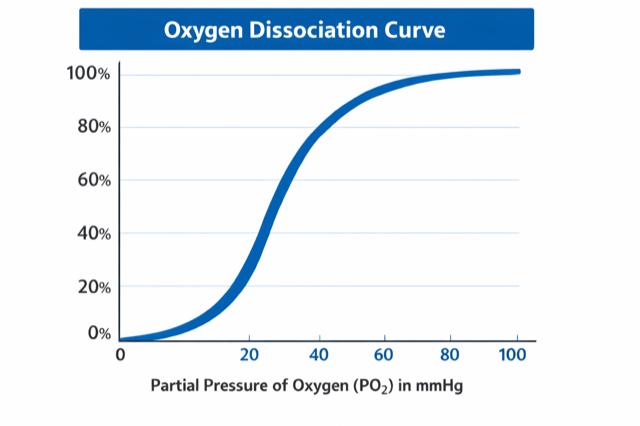
Figure 1
The oxygen–haemoglobin dissociation curve, see Figure 1, explains why small reductions in oxygen pressure at cabin altitude can cause clinically significant desaturation in susceptible individuals. Those with preexisting hypoxaemia may operate on the steeper portion of the curve, where small pressure changes lead to disproportionate falls in oxygen saturation. This underpins the need for careful clinical assessment and, in some cases, in-flight supplemental oxygen, guided by specialist advice such as the BritishThoracicSociety guidanceonairtravel https://www.britthoracic.org.uk/qualityimprovement/clinicalstatements/air-travel/ Altitude physiology also intersects with emergency egress. Rare evacuation events demonstrate that smoke exposure, cognitive impairment, limited mobility and normal human behaviour
can significantly affect survivability. Conditions impairing cardiorespiratory reserve, cognition, vision, or mobility may therefore be relevant not only for routine travel but also for emergency scenarios.
Cosmic Radiation
Exposure to cosmic ionising radiation increases with altitude, latitude, aircraft type, and flight duration. A transatlantic flight delivers approximately 0.08 mSv, compared with an average UK annual background dose of around 2.7 mSv.
Under the IonisingRadiation Regulations2017 , workers exposed to radiation in the course of their duties require appropriate risk mitigation, with particular consideration for pregnant workers. For occasional business travellers, exposure is small, but OH professionals advising frequent flyers should be aware of cumulative exposure and regulatory responsibilities.
Biological and Chemical Hazards
Aircraft cabins are enclosed environments, raising potential concerns about airborne infection transmission. Modern ventilation systems are highly effective, and infection risk is best managed using standard public health principles.
Hypoxia remains the principal chemical hazard of flight. The concept of aerotoxicsyndrome is occasionally raised but remains controversial, with limited supporting evidence.
Psychological Hazards
Jet Lag
Jet lag results from circadian rhythm disruption and commonly presents with insomnia, fatigue, gastrointestinal disturbance, and impaired cognitive performance. Westward travel is generally better tolerated than eastward travel, with recovery taking approximately 1–1.5 days per time zone
crossed. Daylight exposure and sleep scheduling are key management strategies. Melatonin may benefit some individuals but is not licensed in the UK.
Flying-Related Anxiety
Flying anxiety ranges from mild anxiety to true phobia. Common fears include crashing, confinement, loss of control, and the unknown. Management may include behavioural strategies or fearof-flying courses.
Benzodiazepines are generally not recommended due to impaired reaction time, paradoxical effects, interaction with alcohol, and reduced ability to respond in emergencies.
Medical Support in Flight
Commercial aircraft carry Emergency First Aid Kits for cabin crew use and Emergency Medical Kits, which may be opened only with the captain’s authority and are intended for use by medical professionals.
Equipment and medications are limited and vary by regulator/operator/aircraft.
Most airlines have access to ground-based medical advisory services, such as MedAire or MedLink, providing real-time advice and guidance on diversion decisions. In-flight medical care should not be equated with hospital-level support.
In-Flight Incapacitation and Medical Diversions
Despite preventive measures, in-flight incapacitation can occur. Screening opportunities include pre-flight medical declarations and informal observation at check-in or boarding.
Medical diversion decisions are made by the aircraft captain, informed by medical advice. Considerations include the suitability of diversion airfields, availability of medical facilities, aircraft performance limitations, and fuel management. These factors may be relevant when advising
employers on travel planning for employees with complex medical conditions.
Regulatory Medicine and Occupational Roles
Aviation medicine is regulated by bodies including the UK Civil Aviation Authority (CAA), EASA, ICAO, and IATA, underpinned by UK legislation such as the AirNavigation Order2016and UKPart-MED regulations .
Pilots
and Air Traffic Controllers
Medical certification is regulated by the CAA and undertaken by approved Aeromedical Examiners (AMEs). Applicants are considered unfit until evidence demonstrates the required standard is met, reflecting the very low acceptable risk of incapacitation.
Cabin Crew
Cabin crew medical standards are regulated by the CAA and may be assessed by AMEs or
authorised occupational health medical practitioners. Standards are broadly comparable to DVLA Group 1, with a higher acceptable incapacitation rate due to team-based working.
Drone Operators
Medical requirements for drone operators are outlined within CAACAP722https:// www.caa.co.uk/data-andpublications/publications/ documents/content/cap-722/ . These emphasise fitness principles similar to those applied to driving and represent an expanding area of OH practice.
Conclusion
Aeromedical issues intersect with occupational health more frequently than is often recognised. While specialist aeromedical assessments remain the responsibility of those with the appropriate skills, OH professionals play a key role in advising on fitness to fly, managing travel-related risk, and supporting employers
in policy development. A practical understanding of aviation-related hazards and regulatory frameworks can enhance the quality and safety of OH advice.
Dr Clare Hunter is an occupational physician with experience across military maritime and aviation, commercial aviation, the NHS, and local authority sectors. A former GP and CAA Authorised Medical Examiner, she now works as an independent practitioner and part-time with EOPH. She holds the Diploma in Aviation Medicine and is currently undertaking an MSc in Organisational Psychology, with an interest in human factors and safety-critical work.
Managing Work and Personal Pressures
By David Umpleby, Managing Director
PAM
Wellness
In today’s fast-paced world, the boundary between work and personal life is increasingly blurred. Technology keeps us connected 24/7, workplaces often expect high performance under pressure, and our home lives are full of emotional, logistical, and relational demands. For many employees and their
managers, the challenge is not simply “work-life balance” but navigating a complex ecosystem of responsibilities, relationships, and expectations. When problems arise at home, the effects often spill into the workplace, influencing performance, wellbeing, and team dynamics. It is tough to “leave problems at the door.” In a fast-
paced world, the boundary between work and personal life is increasingly blurred. Technology keeps us connected to life balance, but navigating a complex ecosystem of responsibilities, relationships, and expectations. When problems arise at home, the effects often spill into the workplace, influencing performance, wellbeing, and team dynamics.
Understanding these challenges is the first step toward building healthier teams and more resilient organisations. PAM’s work with clients suggests there are several drivers for personal stress that employers and managers should be aware of:
Families can be a major source of emotional support, but they can also be a significant source of stress. Issues such as caring for parents, financial pressures, or navigating family conflict can create an ongoing mental load. When these stressors accumulate, it becomes harder for employees to maintain focus and energy at work. Emotional fatigue will certainly
impact concentration, decisionmaking, and the ability to manage complexity, critical skills in most roles. In the case of older generations in the workforce, they are often dealing with all these things at the same time, the socalled “sandwich generation,” making the ability to manage complexity a critical skill in most roles.
Relationships are deeply intertwined with emotional wellbeing. When relationships become strained through conflict, communication breakdowns, separation, or divorce, employees can experience heightened anxiety, sleep disruption, and reduced resilience. These emotional pressures follow people into the workplace, even when they are trying to compartmentalise. For managers, understanding that emotional stress is not something an employee can simply “switch off” is essential to providing support.
Parenting is rewarding, but it is also demanding, unpredictable,
and often exhausting. Illness, behavioural issues, school pressures, childcare problems, and the constant juggle of schedules can create chronic stress. A recent study by the pan-European campaign group Make Mothers Matter found that 71% of UK mothers feel overloaded, 47% suffer from mental health issues, and 31% feel motherhood has a negative effect on their careers. I imagine the outcomes for dads are equally stark.
Many parents feel guilty on both sides, worrying they are not present enough at home while also fearing they are not performing optimally at work. This dual pressure can lead to burnout, distraction, and a sense of overwhelm. More recently we are seeing an increasing number of issues from parents who are struggling to manage work alongside children who have behavioural issues.
During a recent PAM webinar on this issue, a comment surfaced that suggested we should keep work and personal lives separate. We should not raise these issues at
work. The reality, though, is stress is not just an emotional state; it has physiological effects that directly influence cognitive function. When individuals are worried or distressed, the brain allocates energy to emotional regulation rather than higher-order thinking. This can manifest as forgetfulness, difficulty concentrating, slower problem-solving, and poorer decision-making.
When employees are struggling personally, their mental bandwidth decreases. Tasks take longer, mistakes become more frequent, and creative thinking suffers. Employees who normally contribute ideas and energy may become withdrawn or disengaged. In extreme cases, personal stress can lead to absenteeism or presenteeism. Physically present but mentally distant.
Emotional stress often makes people more sensitive, reactive, or withdrawn. Employees dealing with turmoil at home may have less patience, be more prone to conflict, or communicate less effectively. This can affect team cohesion and
collaboration, sometimes creating tensions that have nothing to do with the work itself.
Chronic personal stress combined with workplace pressure significantly increases the risk of burnout. The body can only operate in a heightened stress state for so long before physical symptoms begin to surface, such as exhaustion, headaches, illness, and sleep disruptions. Left unaddressed, these issues compound and can result in longterm leave or decreased job satisfaction. I wonder how often managers have been quick to flag underperformance without thinking to connect it to any or all the above
In terms of how to best manage this, there is not, sadly, a silver bullet, but there are things that we can consider making lives easier.
Set healthier boundaries. It is important for employees to define personal boundaries both at home and at work. That may include limiting after-hours work, creating quiet time for family or rest, or communicating availability more clearly. Boundaries help reduce
overload and create space to recover emotionally. This is particularly important for some neurodivergent colleagues.
Seek support early. Talking to a trusted colleague, a manager, or an HR representative can make a significant difference. PAM offers an Employee Assistance Programme (EAP) as well as counselling resources and wellbeing platforms. Often EAPs are seen as a last resort, but using these services early helps prevent problems from escalating, often to a point where they are more difficult to treat.
Practice self-care. Sleep, exercise, healthy eating, and time for hobbies are not luxuries, they are fundamental to emotional resilience. Employees often deprioritise these activities during personal crises, but doing so only deepens stress. Even small, consistent habits can help rebuild stability and mental clarity.
Communicate openly. Employees do not need to share personal details but letting managers know that they are experiencing a period of increased stress can create room
for understanding. Simple adjustments, such as flexible hours, redistributed tasks, or temporary workload reductions, can relieve immediate pressure.
What managers can do to support their teams
Foster a culture of psychological safety. When employees feel safe to raise concerns, share challenges, or admit when they are struggling, it creates an environment where problems can be addressed early. Managers who listen with empathy and without judgment build trust that pays dividends when stressful situations arise. Moreover, leaders who openly share their own concerns will give others permission to do the same.
Train leaders in emotional awareness. Managers do not need to be therapists, but they do need emotional intelligence. Recognising signs of stress, including withdrawal, irritability, fatigue, and missed deadlines, enables managers to intervene constructively before performance deteriorates. Training in active listening, compassionate
conversations, and wellbeing awareness can make a profound difference.
Offer flexibility where possible. Flexible schedules, remote work options, and autonomy over workload can dramatically improve an employee’s ability to manage personal challenges. When flexibility is built into team culture, employees feel empowered to balance home responsibilities without compromising professionalism. Work options and autonomy over workload can dramatically improve an employee’s ability to manage personal challenges.
Promote fair workloads and realistic expectations. During times of personal strain, even high performers may need temporary adjustments. Managers can redistribute tasks, extend deadlines, or prioritise essential work to prevent burnout. This approach not only supports the individual but also protects team performance in the long term.
Encourage use of support resources. Many employees do not use wellbeing programs because they are unsure what’s available or are uncomfortable seeking help. Managers who openly champion these resources and normalise their use help break down stigma and encourage healthier habits. Work and personal life will always influence each other. The key is not to eliminate this overlap but to understand it, acknowledge it, and manage it with compassion and clarity. Employees have a responsibility to communicate their
needs and care for their wellbeing. Managers and organisations, in turn, have a responsibility to build cultures where people can thrive even when life outside the office becomes challenging.
By promoting openness, flexibility, and emotional awareness, organisations can create workplaces where people feel supported as whole human beings. In doing so, they not only protect performance and productivity but also help individuals navigate some of life’s most stressful moments with confidence and resilience.
David Umpleby | Linkedin
David is a member of the Institute of Employability Professionals and chair of the Board of Trustees for Unity Works Social Enterprises as well as managing director at PAM Wellness. He is a senior leader with broad experience developing and leading skills and employability operations across DWP, DfE, and EFA.
By Dr Alistair
Alistair Turvill
Work-SMARTey: Physical Pain, Role Demands, and
Those working in the field of Occupational Health (OH) know that workplace challenges are highly diverse, shifting according to the role, the environment, and the individual. Consequently, creating effective, positive change for workers and organisations can be an often a complicated task.
In some cases, occupational hazards are well understood, surveilled, and managed. This attention can reduce risk of injury and improve outcomes such as workforce attendance, productivity, and retention. However, many other risks do not receive the same degree of awareness or intervention.
Moore’s ‘Knowledge to Action’ theory (2018) helps explain this disparity stating that: before effective action can occur, knowledge must first be developed and synthesised. A
robust evidence base is the essential foundation upon which change and improvement are built. This article is the first in a series telling the story of the ‘Work-SMARTey’ (Supporting Musculoskeletal Awareness, Research and Training, in the Early Years) project. It describes one such example of considerable workplace risk that is both widely overlooked and misunderstoodMusculoskeletal Disorders (MSD’s) in the Early Years sector. Demonstrating how discernible risks are often ‘hiding in plain sight’, adding significant harm and contributing to wider systemic issues in the workplace.
The scale and burden of musculoskeletal disorders
Musculoskeletal disorders (MSDs) and musculoskeletal pain (MSP) are among the
Musculoskeletal disorders musculoskeletal (MSP) are leading disability
and the overlooked need in the UK early years sector
Musculoskeletal disorders (MSDs) and musculoskeletal pain are among the leading causes of disability worldwide
leading causes of disability worldwide, with an estimated 1.7 billion people living with these conditions (Cieza et al., 2021). Low back pain alone accounts for nearly half a billion cases, representing the single largest contributor to years lived with disability in many nations (Vos et al., 2020).
In the workplace, MSDs remain the primary health challenge, accounting for approximately 60% of OH complaints across the EU (EUOSHA, 2019). Closer to home, work-related MSDs in the UK affect around 543,000 workers annually, leading to 7.8 million lost working days (HSE, 2024). When broader musculoskeletal conditions are included, this figure rises to nearly 30 million days lost (Public Health England, 2020; NHS England, 2024). Global data shows ergonomic risks in the workplace to be one of the
largest single contributing factors in the development of MSDs (WHO & ILO, 2021). Concurrently, work-related MSP has predominantly been approached from a biomechanical perspective, identifying physical load and tissue strain as the primary drivers of pain and injury (Pomarensky et al., 2021). Consequently, workplace regulations and guidance tend to focus on acute, visible risks (such as heavy manual handling, falls from height, or machinery operation) and on task-specific standards designed to prevent ‘catastrophic’ harm (HSE, 2024) These are important measures that have been crucial in reducing serious traumatic injuries. However, the risks posed to workers by smaller but more common and frequent injuries can also be the cause of considerable strain, physical demand and
Work-SMARTey: Physical Pain, Role Demands, and
injury. Particularly in cases where individuals are routinely required to work in ergonomically challenging positions or environments. Yet these risks are not given the same oversight and guidance. These figures underscore the immense impact MSDs and MSP have on an individual’s ability to work and participate fully in daily life. Beyond the personal toll, they are a major driver of work limitation, reduced labour market participation, and substantial economic cost (Public Health England, 2020; House of Commons Library, 2024). It is accurate to say these data present a stark picture of the problems and challenges faced, but they also offer a clear and realisable opportunity to improve the working lives of millions.
The UK Early Years sector
Exposure to small physical demands such as those mentioned above is routine in Early Years education, where the role demands physical closeness, responsiveness, and interaction at the child’s level (Department for Education, 2025). Research into the daily reality of nursery and childcare workers highlights a pattern of frequent lifting, working at low tables or on the floor, repeated kneeling, stooping, and twisting, often within cramped spaces designed for children rather than adults (Grant et al., 1995; Tsuboi et al., 2002; Shi et al., 2022). The health risks associated with repeated exposure to these cumulative demands are well established (da Costa & Vieira, 2010).
International research supports this, reporting widespread MSP, particularly
Kindergarten staff reported of low back, neck, and arm pain staff working children
and the overlooked need in the UK early years sector
Kindergarten and nursery reported higher rates neck, shoulder, pain compared to working with older children
among those working with the youngest children. A US study found that 61% of Early Childhood Education workers reported back pain linked to awkward or heavy lifting and static postures (Grant et al., 1995). Notably, staff caring for infants (six weeks to 18 months) performed more lifting and adopted more awkward postures than those working with older children (3–4 years). Although small in scale, this study highlighted clear physical strains and the urgent need for environmental and occupational change. Larger studies from Japan mirror these findings. Kindergarten and nursery staff reported higher rates of low back, neck, shoulder, and arm pain compared to staff working with older children, with the highest prevalence again found among infant caregivers (Tsuboi et al., 2002; Ono, 2002). Here, pain was
associated with frequent lifting, high workload, and poor working conditions, further underlining the cumulative nature of the risk.
In the UK, anecdotal reports of work-related pain are commonplace among practitioners. However, at the inception of this project, it became apparent that no independent research had specifically investigated the scale and nature of this problem in the UK Early Years population. The closest available measure was the Labour Force Survey (LFS) for Education workers in England and Wales which reported an MSD incidence rate of just 0.9% (HSE, 2022). Compared to the global data reported above, this number appeared strikingly low. Closer inspection of the LFS methodology helped explain this discrepancy: the survey only records cases where an
Work-SMARTey: Physical Pain, Role Demands, and
individual formally takes sick leave due to an MSD. It fails to capture the incidence of actual health events and the reality of "presenteeism" (staff continuing to work while managing significant pain). Without accurate data, the problem remains invisible, and the path to addressing it remains obscured. The Work SMARTey project set out to begin addressing this blind spot and begin developing a foundation of knowledge upon which change and improvement might be built.
Project Approach:
Over the following months, the team designed and delivered the UK’s first empirical study into work-related MSP in the Early Years sector. Beyond simply establishing prevalence, this study gathered detailed measures on pain severity, frequency, duration, onset, and crucially 'bothersomeness'.
The study design also allowed for key comparisons between those in leadership or management positions and those in primarily ‘practitioner’ roles. Furthermore, the application of regression analyses enabled the work to identify specific factors that predict an increased likelihood of MSDs.
A cohort of 196 Early Years practitioners and leaders was recruited from across the UK and invited to complete an online questionnaire. This survey explored their workrelated pain experiences, their specific daily duties, and the link between their roles and their work-related MSP. We also investigated the wider professional impact of MSP, asking participants about sick leave, reporting procedures, and whether pain had led them to consider leaving the sector entirely.
and the overlooked need in the UK early years sector
Project findings:
Our analysis of the findings revealed a situation more severe and widespread than we had anticipated. A staggering 98% of participants reported experiencing workrelated pain, with the lower back being the most common site (89%). This was not fleeting discomfort; for most, the pain had a long history (onset >12 months ago), recurring on average every 7–14 days, with episodes lasting on average 1–2 weeks.
Regression analysis provided further insight: frequent exposure to physically demanding tasks significantly predicted both higher pain frequency and earlier onset. Notably, we found that the longer an individual works in the Early Years sector, the greater the number of painful body locations they report. Crucially, this finding was independent of the
practitioner’s age; while older participants did report longer durationsof pain events, the data showed that the spread of pain across the body was associated with job demands, not by aging. Finally, while leaders and practitioners both reported performing high-risk musculoskeletal activities at similar frequencies, their perceptions of workplace safety differ. Practitioners expressed a strong need for greater protective measures. In contrast, leaders who possess more years of service (median 22 years vs. 18) were more likely to believe adequate safety resources are already available.
The occupational impact of this is profound.
Unsurprisingly, intense pain and high-risk activities (such as lifting, stooping, or working at floor level) were identified as major drivers of sickness
Work-SMARTey: Physical Pain, Role Demands, and
absence. Furthermore, and particularly worrying for the sector, the combination of frequent, bothersome pain and a perceived lack of protective action from employers emerged as a significant factor in staff considering leaving the profession entirely.
In sum, the results provided a clear and strong indication of what many had already known. There exists a significant and unmet need for many working in the Early Years sector regarding the risks faced and harm associated with the demands of their roles and working environments. For the first time in the UK, we had robust data to back up those suspicions.
Recommendations and actions
The findings from the quantitative phase of the ‘Work-SMARTey’ project provide a clear mandate for change. For Occupational Therapists (OTs) supporting this
sector, the data suggests that generic manual handling training is insufficient. Instead, interventions must be sectorspecific, acknowledging the unique ergonomic reality of the Early Years environment where working at low heights and lifting moving children are unavoidable tasks.
To reduce the burden of MSDs, the sector requires a "prehabilitative" approach, shifting focus from reactive management of injury to proactive prevention. This relies on development in several key areas:
• Tailored Risk Assessment: Standard assessments are illsuited for nursery settings. We need protocols that specifically evaluate "low-height working" and tasks such as floor-based play.
• Ergonomic Investment: Providing ergonomically congruent supports and
and the overlooked need in the UK early years sector
furniture for adults (such as low -height stools with lumbar support) can significantly reduce the cumulative strain of static postures.
• Leadership Education: Our data indicated a discrepancy between the support leaders believed they provided and the protection practitioners felt they received. Closing this gap requires training leaders to recognise the early warning signs of MSDs and to foster a culture where reporting pain is encouraged, not stigmatised.
Study Limitations
As is essential in all research, it is important to acknowledge the limitations of this study. As a cross -sectional survey, it provides a snapshot of the workforce at a single point in time, meaning we cannot yet causally link specific tasks to the development of pain over time (only report their strong association). Additionally, the sample was self-selected, which
may have attracted individuals with more pain experiences. Finally, the sample was predominantly female (97%), although it is also fair to say that this accurately reflects the gender composition of the UK Early Years workforce.
What questions remained
While this study successfully indicated the scaleof the problem, wider questions remained regarding other aspects of the nature of this phenomenon.
Crucially, the data highlighted a paradox: despite very high levels of pain reported, sickness absence rates remained relatively low. This may suggest a high degree of "presenteeism," where staff continue to work through the pain. Why do skilled educators remain in roles that are physically breaking them? Why do so many choose not to report their pain to management? And how does the "culture" of a nursery setting influence an individual’s decision
Work-SMARTey: Physical Pain, Role Demands, and the overlooked need in the UK early years sector
to seek help or suffer in silence? To answer these questions, we must look beyond the statistics and listen to the lived experiences of the workforce. In the next article in this series, we will explore the qualitative study and findings of the ‘Work-SMARTey’ project, uncovering the "safety silence" that pervades the sector and the human stories behind the numbers.
You can find a full, open-source copy of the published academic report described in this article by searching for the following reference:
Turvill, A. J., Sheffield, D., & Taylor, L. (2024). Musculoskeletal pain and working practices in the UK early childhood education workforce. SafetyScience , 178 , 106592. https://doi.org/10.1016/j.ssci.2024.106592
If you would like a fully copy of the reference list for this article, please email the author directly at AlistairTurvill@ResearchWell.co.uk
Following 13 years as a Senior Academic leading curriculum development for health and research-focused provision across a range of programmes at the University of Derby, Dr. Alistair Turvill now specialises in the synthesis and application of data through empirical and secondary investigation at the research consultancy he founded, Research Well, offering expertise within the health and education sectors.
Work SMARTey is a multi-partner project that includes the University of Derby, The Early Years Alliance, The National Education Union, and Jolly Back, with contribution and support also offered from the UK Health and Safety Executive. For more information or if you have any questions about Work SMARTey, visit www.researchwell.co.uk.
Digital Fatigue: The occupational health implications of prolonged screen time and virtual work.
By Dr Riya John
Digital fatigue is evolving as a crucial occupational health concern, with persistent screen time and virtual work contributing to physical, cognitive, and emotional strain. This article explores its implications, underlying mechanisms, and strategies for mitigation, grounded in recent research.
The digital transformation of the workplace has enhanced dramatically in recent years, driven by remote work, virtual collaboration, and the ubiquity of
screen-based tools. While these changes offer flexibility and efficiency, they also introduce a growing occupational health challenge. The term “digital fatigue” encompasses various dimensions, including mental exhaustion, reduced productivity, and physical strain due to prolonged screen time and constant connectivity. In recent years, remote work and hybrid work models have exacerbated this phenomenon, as employees are increasingly expected to manage multiple digital communication channels (Supriyadi T, 2025).
Understanding digital fatigue
Digital fatigue is not merely a subjective feeling of tiredness, it incorporates a collection of symptoms including eye strain, headaches, irritability, reduced attention span, and sleep disturbances (Paigude, 2024). It arises from continuous engagement with screens, multitasking across digital platforms, and the cognitive load of processing vast amounts of information.
Key contributors include:
• Blue light exposure from screens, which disrupts circadian rhythms and contributes to sleep issues.
• Lack of physical movement, as virtual work often reduces opportunities for walking, stretching, or changing posture.
• Cognitive overload, due to constant notifications, multitasking, and virtual meetings.
• Social isolation, which can exacerbate stress and reduce emotional resilience.
Occupational Health Implications
1. Visual and Musculoskeletal Strain
Prolonged screen use is associated with Computer Vision Syndrome (CVS), characterized by dry eyes, blurred vision, and neck or shoulder pain (Acosta, 2024). Poor ergonomics and static postures further contribute to musculoskeletal disorders, especially in the neck, back, and wrists.
2. Mental Health and Cognitive Decline
Digital fatigue can impair executive functioning, reduce productivity, and increase the risk of burnout. A study by Murugan and Rashadh (2024) found that remote workers experiencing digital fatigue reported higher levels of anxiety, reduced job satisfaction, and impaired decision-making.
3. Sleep Disruption and Circadian Misalignment
Exposure to screens late into the evening suppresses melatonin production, leading to insomnia and poor sleep quality. This not only affects recovery but also impairs daytime performance and increases susceptibility to chronic conditions.
4. Reduced Engagement and Workplace Productivity
Employees suffering from digital fatigue often experience decreased motivation, lower engagement, and increased absenteeism. The constant cognitive demand of virtual work can lead to emotional exhaustion, undermining team cohesion and innovation (Paigude, 2024)
Vulnerable Populations
• Remote workers especially those without dedicated workspaces or ergonomic setups.
• Knowledge workers who rely heavily on digital tools for communication and analysis.
• Young professionals, who may lack boundaries between personal and professional screen use.
• Older adults, who may experience greater visual strain and cognitive fatigue.
Organisational impact
From an occupational health perspective, digital fatigue poses risks not only to individual wellbeing but also to organisational performance. It can lead to increased healthcare costs due to stressrelated illnesses, sickness absence, presenteeism and musculoskeletal complaints, higher turnover rates, as employees seek roles with a better work-life balance, and reduced innovation, as cognitive overload stifles creativity and problemsolving.
Policy and leadership considerations
Occupational health policies must evolve to address digital fatigue. This includes risk assessments for screenrelated hazards, training programs on digital wellbeing, leadership modelling, where managers demonstrate healthy digital habits and data monitoring, using anonymised
analytics to track screen time and engagement patterns. According to Paigude et al. (2024), organizations that integrate digital wellbeing into their occupational health frameworks report higher employee satisfaction and lower burnout rates (Mbata, 2024).
Strategies for mitigation
1. Ergonomic interventions
Employers should provide guidance on ergonomic workstation setups, including adjustable chairs, screen positioning, and keyboard placement. Regular posture breaks and stretching routines can reduce physical strain.
2. Digital hygiene and boundaries
Encouraging screen breaks, limiting meeting durations, and promoting simultaneous communication can reduce cognitive load. Tools like the Pomodoro Technique or scheduled “focus time” help manage attention and reduce multitasking.
Occupational policies must to address fatigue.
Occupational health must evolve address digital fatigue.
3. Blue light management/ education
Using blue light filters, adjusting screen brightness, and education on avoiding screens before bedtime can mitigate sleep disruption. Some organisations provide blue light-blocking glasses as part of wellness initiatives.
4. Mental health support/ education
Access to employee assistance programs (EAPs), mindfulness training, and virtual counselling can help workers manage stress. Creating a culture of openness around mental health reduces stigma and fosters resilience. Education on managing optimal mental health as a prevention, use of the HSE management standards to reduce work related stress and stress risk assessments to identify work related factors.
5. Flexible work design
Hybrid models that combine remote and in-person work allow for greater autonomy
and reduced screen dependency. Encouraging outdoor meetings, walking calls, or tech free brainstorming sessions can reintroduce physical movement and social interaction.
Future Directions
As technology continues to shape the workplace, future research should explore the longitudinal effects of digital fatigue on cognitive health, as well as the potential of AIdriven tools to monitor and enhance digital workloads. There is also a need to examine personalised interventions, tailored to individual screen use patterns and health profiles. The integration of wearable technology, biometric feedback, and adaptive scheduling may offer new avenues for managing digital fatigue proactively (Bondanini, 2024).
Conclusion
Digital fatigue is a multifaceted occupational health issue that demands attention from employers, clinicians, and policymakers. By recognising its symptoms, understanding its mechanisms, and implementing targeted interventions, organisations can foster healthier, more sustainable virtual work environments. As we navigate the digital age, prioritising human wellbeing alongside technological advancement is not just ethical, it’s essential for long-term productivity and resilience.
References
Acosta, Z. (2024). Digital Fatigue: The Hidden Threat to Workplace Productivity and Well-being. . EOSGlobalExpansion .
Bondanini, G. G. (2024). The Dual Impact of Digital Connectivity: Balancing Productivity and Well-Being in the Modern Workplace. InternationalJournalof EnvironmentalResearchandPublicHealth , 845.
Mbata, O. (2024, November). TheImpactofProlongedVisualDisplayScreenExposure onWorkerHealthandWorkplaceProductivity . Retrieved from LinkedIn: https:// www.linkedin.com/pulse/impact-prolonged-visual-display-screen-exposure-workeronyinye-mbata-buwpe/
Murugan, K. R. (2024). A Study on Reducing Digital Fatigue in Remote Work. InternationalJournalofForeignTradeandInternationalBusiness, 153-159.
Paigude, S. P. (2024). Occupational Health in the Digital Age: Implications for Remote Work Environments. ResearchGate .
Supriyadi T, S. S. (2025). The Impact of Digital Fatigue on Employee Productivity and Well-Being: A Scoping Literature Review. Environment and Social Psychology 2025;. ResearchGate, 10.
Dr Riya John is a Medical Assessor for the Department for Work and Pensions. Follow on LinkedIn
Occupational Health Undergraduate Placement Toolkit
NSOH and SOM have developed a toolkit to support OH departments in hosting undergraduate placements. Most universities with undergraduate programs will have a placement lead who will be more than willing to help. The toolkit supports OH teams in setting up meaningful and structured student placements for nursing and AHP students. For more information, please contact janet.oneill6@nhs.net
What’s Included:
1. Example Student Induction Document (Northamptonshire)
2. Template student objectives (University of Manchester)
3. Sample digital weekly planner
4. Example of a placement learning contract (University of Derby)
5. Timetable example (Newcastle NHS OHS)
6. Sample HEI partnership learning agreement (University of Derby)
- Download the Toolkit from the NSOH website https://eastmidlandsdeanery.nhs.uk/occupationalhealth/nsoh-training-education-placements OR SOM careers > placements https://www.som.org.uk/ careers
- Adapt documents to suit your needs and the type of student. Always get support from your HEI placement lead
- Link students to specific learning opportunities such as audits or training days
Contacts for Support:
- Placement Learning Lead at your local university
- ICS Practice Learning Facilitator (for NHS teams)
Available Training:
Online Supervisor and Assessor Course- Anglia Ruskin University and Northamptonshire University. These flexible, self-paced courses provide the essential skills and knowledge required to supervise and assess students in clinical placements.
Occupational Health (OH) professionals have long been indispensable in ensuring the productivity and welfare of the UK workforce. Yet the traditional model of OH engagement, often characterised by remedial case management following illness or injury, limits the profession’s strategic potential. As Dr. Dee Edington famously urged in his seminal work ZeroTrends1 , organisations must stop operating on a model of “waiting for defects and then fixing the defects”. His observation highlights the futility of viewing an impaired individual merely as a faulty component. As Edington warned, “You can't put a
changed person back into the same environment and expect the change to hold.” Fixing the component only to return it to the malfunctioning system is a predictable path to future failure— the environment will win every time.
The timely publication of Sir Charlie Mayfield’s Keep Britain Working Review further underscores this urgency, framing workforce health as a vital component of national economic strategy, with ill-healthrelated economic inactivity costing the UK an estimated £ 212 billion per year. The review calls for a "fundamental shift" where employers must lead on prevention
From Fixing Defects to Systemic Prevention
Harnessing Lead Indicators to Redefine Occupational Health Value
By Mike Tyler Chairman and Co-founder, Fruitful Insights
and early intervention, emphasising the need for robust data to guide continuous improvement and support the creation of a Workplace Health Intelligence Unit. For OH to truly deliver its mandate, the promotion and maintenance of the highest degree of physical, mental, and social wellbeing of workers, it must move beyond remediation and adopt systemic prevention. This requires transitioning the evidentiary basis of OH practice from reactive lag indicators to proactive, high-quality lead indicators.
The Imperative of Foresight
Lag indicators, such as accident statistics, absence rates, and utilisation of clinical services, only quantify what has already gone wrong. The enduring scale of workrelated ill-health in the UK, exemplified by the millions of working days lost annually due to non-fatal injuries and musculoskeletal disorders, demonstrates that this reactive model is failing to identify and neutralise underlying systemic risks.
By contrast, lead indicators offer foresight. High-quality, validated data allow OH professionals to
intervene strategically before individual health declines or organisational performance deteriorates. The quality of this data is paramount; in the field, flawed data inevitably leads to flawed outcomes.
Defining Data Quality and Actionable Intelligence
For data to serve as the foundation of a new generation of OH practice, it must adhere to three defining characteristics:
• Dual Perspective
• Granularity
• Continuity
Dual Perspective ensures that the subjective experience of the employee combines with objective organisational and environmental data. Granularity is the critical ability to segment risk and identify those cohorts (by age, tenure, or work type) most severely affected. Collecting the data regularly facilitates continuity, i.e., the trend analysis required for a genuine cycle of continuous improvement.
In addition to informing organisational interventions, leadindicator data also equip OH providers to more accurately scope the scale of work required within client organisations. By understanding which cohorts are most at risk and the trajectory of future demand, providers can resource their Multidisciplinary Teams (MDT) efficiently and offer clearer expectations around workload, capacity, and timelines. Benchmarking across employers further strengthens this predictive capability, enhancing both planning and value delivery.
Crucially, data alone does not drive improvement; insight does. The OH professional’s unique clinical role involves translating complex analytics into actionable intelligence, evidence that directly informs targeted interventions. This requires evolving the professional role from case manager to strategic data interpreter, capable of distinguishing between individual vulnerabilities and organisational root causes.
The Data-Driven MDT -
Collaboration Over Silos
The evidence is clear that a wholesystem approach achieves improved health outcomes. This demands an MDT approach, recognised as the "gold standard" in care delivery, integrating OH with HR, leadership, and financial risk management.
Lead indicator data acts as the objective common language for the MDT. It moves conversations beyond philosophical agreement to targeted operational implementation. For example, by quantifying the link between leadership practices and reported stress levels, OH professionals gain the evidence needed to influence HR policy or leadership accountability. This objective evidence is essential to counter the phenomenon of "wellbeing washing," where organisations implement tokenistic, unproven initiatives (the "Spangle Trap") that lack verifiable return on investment (ROI). Data quality provides the necessary rigour to ensure employers direct investment toward
systemic changes with measurable impact.
The Economic Case for Multidisciplinary Risk Prevention
The lens of long-term disability (LTD) prevention demonstrates the necessity of collaboration. LTD claims represent severe, chronic system failures. By using predictive data that links systemic inputs (e.g., extreme work demands, inadequate recovery patterns) to potential output metrics (attrition, presenteeism, claims), OH can proactively advise on systemic adjustments.
Partnerships with the insurance sector illustrate this shift effectively. Use of aggregated wellbeing data can identify systemic risk factors influencing LTD claims. This allows OH to deploy expertise for earlier support, enabling better claim prevention and precise risk management. This collaboration exemplifies a fundamental shift from simply insuring risk (risk pooling) to actively reducing it (risk prevention), generating shared
value for the employer, the insurer, and the employee. This model validates OH as a strategic, valueadding function, rather than merely a cost centre.
Applying Data for Systemic Change - The Role of the OH Professional
The responsibility of the OH professional in this new landscape is to use quality data not just to identify a problem but to prioritise its solution and frame the necessary organisational action. The Prioritisation Matrix (Figure 1, the Four-Box Wellbeing Grid) allows the immediate triage of organisational issues by measuring the interplay between performance and the variability of responses. Issues with low scores and high variance signal acute, concentrated risk, demanding immediate and focused OH intervention in specific cohorts, whereas low scores and low variance signal a companywide generalised issue.
Furthermore, conceptual frameworks like the SCALE approach (Self, Cohort, Alignment, Leadership, Environment) provide
the operational map needed to translate data findings into organisational action. If data reveals poor leadership alignment, for instance, the MDT knows that organisational change must target the management layer rather than offering a generalised EAP service.
A Call for Literacy and Accountability
Embracing a data-driven, preventive model will enhance the future success of OH. This transformation requires two critical components: organisational accountability and professional data literacy.
Organisations must accept accountability for the systemic conditions that affect employee health, moving past the impulse to merely fix individuals’ health issues. Concurrently, OH professionals must invest in the requisite analytical skills. As evidenced by specialised certification programs now available in data literacy for the health and safety sector, the skills to interpret, communicate, and apply complex data are essential.
Identifying wellbeing priorities
Source - Fruitful Insights
By championing data quality, adopting lead-indicator frameworks, and collaborating cross-functionally, the OH profession secures its status as a critical strategic partner. It gains the tools necessary to fulfil Dr. Edington’s enduring principle and move beyond the 'break-fix' cycle to enable systemic improvement, ensuring people thrive and allowing organisations to prosper.
References
1. Edington, D. W. (2009). Zero Trends: Health as a Serious Economic Strategy. Ann Arbor, MI: Health Management Research Center, University of Michigan.
Figure 1
S (Self)
C (Cohort)
A (Alignment)
L (Leadership)
E (Environment)
Individual clinical and behavioural support Offer personalised acute personal stress.
Localised interventions based on specific risk segmentation and group needs. Run bespoke mental stress. Targeted
Strategic integration of wellbeing goals with overall business strategy and values.
Manager training and accountability for supportive, data-informed management practices.
Mike Tyler is the Chairman and Founder of Fruitful Insights, a UK-based organisation pioneering datadriven approaches to workplace wellbeing. Drawing on a career spanning occupational health, insurance, actuarial/benefits consulting and organisational performance, Mike advocates for evidence-based methods that connect employee wellbeing, productivity, and business sustainability.
Intervention
personalised guidance on recovery (sleep/nutrition) or targeted clinical referral for employees with stress.
mental resilience workshops for Fee-Earners, employees under 30 identified with acute training for managers of high-attrition teams.
wellbeing indicators into executive business KPIs/ESG reporting. Formal MDT collaboration HR, and Finance to manage long-term disability risk.
training for all managers on fostering "safe and early conversations" about health issues. Link performance reviews to team workload balance scores.
adjust workload policies or increase autonomy in departments reporting consistently low job crafting approaches across the business
Figure 2
actionable intelligence
Insights SCALE Framework
Fruitful Insights is an independent digital, data and analytics company specialising in the measurement and analysis of corporate workplace wellbeing. The company partners across all business sectors to provide actionable intelligence designed to help companies precisely identify and target wellbeing issues. info@fruitfulinsights.co.uk