WWW.EUROPEACTIVE.EU
EUROPEACTIVE MAGAZINE INSIGHTS IN INSUDTRY AND TRENDS
Highlights
SEPTEMBER 2026
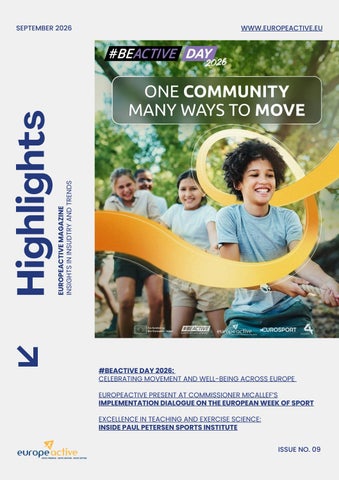
#BEACTIVE DAY 2026: CELEBRATING MOVEMENT AND WELL-BEING ACROSS EUROPE EUROPEACTIVE PRESENT AT COMMISSIONER MICALLEF’S IMPLEMENTATION DIALOGUE ON THE EUROPEAN WEEK OF SPORT EXCELLENCE IN TEACHING AND EXERCISE SCIENCE: INSIDE PAUL PETERSEN SPORTS INSTITUTE ISSUE NO. 09
EUROPEACTIVE MAGAZINE
ISSUE NO. 09
INTRODUCTION The health and physical activity sector is evolving faster than ever, driven by new technologies, changing consumer expectations, policy developments, and a growing recognition of the vital role movement plays in healthier societies. In this edition of the Highlights Magazine, we bring you the latest insights, sector updates, inspiring stories, and key developments shaping the future of fitness, wellness, and physical activity across Europe. From industry trends and policy milestones to education, innovation, and community impact, this issue highlights the people, ideas, and initiatives helping to move our sector forward. Whether you are a fitness professional, industry leader, or passionate advocate for physical activity, we hope this edition provides valuable perspectives and inspiration for the journey ahead.
A Conversation with Prof. Dr Richard Bailey: Mental Wellbeing
Active Denmark Organisation: Rethinking Prevention
Thank you for being part of our community. We invite you to explore the latest developments and join us in shaping a more active, healthier Europe.
Excellence in Teaching: Paul Petersen Sports Institute 02
HIGHLIGHTS
CONTENTS: EU AND PUBLIC AFFAIRS 6
#BEACTIVE DAY 2026: Celebrating movement and well-being
10
The Experience Matters: A Conversation with Prof. Dr Richard Bailey
14
Partner in Spotlight: Physical activity must be a “need to have”
17
EuropeActive at the 17th HEPA Europe Conference
19
Implementation Dialogue on the European Week of Sport
EVENTS 22
EuropeActive’s 2026 Events
23
Exercise for Health 2026
24
International Standards Meeting 2026
25
EuropeActive opens Registration for “Next Level Leaders”
FITNESS FRONTLINES 28
Member Updates
29
Navigating the New Era of Fitness: Fitness Sector Growth Strategies
EDUCATIONAL SERIVICES 32
Training Provider in Spotlight: Paul Petersen Sports Institute
35
EuropeActive and Fitness.be Strengthen Cooperation
03
EUROPEACTIVE MAGAZINE
EU AND PUBLIC AFFAIRS
01
EU AND PUBLIC AFFAIRS
#BEACTIVE DAY 2026: CELEBRATING MOVEMENT AND WELL-BEING ACROSS EUROPE
Taking place each year on 23 September and throughout the European Week of Sport (EWoS), the sixth edition of the #BEACTIVE DAY campaign is, once again, mobilising European fitness and physical activity stakeholders to bring mouvement closer to people, across the entire continent, to celebrate the joy of exercise together. As EuropeActive’s flagship initiative, #BEACTIVE DAY has grown into a truly continental movement, reaching over 25 countries across the continent this year: Albania, Austria, Belgium, Bulgaria, Czech Republic, Denmark, Finland, France, 06
Germany, Greece, Hungary, Ireland, Italy, Kosovo, Latvia, Lithuania, Netherlands, North Macedonia, Portugal, Romania, Serbia, Slovenia, Spain, Sweden and, Ukraine. From fitness clubs and studios to schools, workplaces, community organisations, municipalities and other local initiatives, this year’s campaign brings together a wide range of stakeholders and activities, providing people of all ages and abilities opportunities to be active in ways that suit them. Across Europe, organisers create spaces to move, connect and enjoy the fun of physical activity.
EU AND PUBLIC AFFAIRS
With every edition, #BEACTIVE DAY seizes the opportunity to look at what inclusion means in practice across the sector. Previous editions have focused on different groups and aspects of inclusion: from women and girls to intergenerational activities, to accessibility of people with disabilities to adapted activities for the prevention and management of NonCommunicable Diseases, to finally give centre stage to mental health and wellbeing in 2026.
Mental health and well-being at the heart of the campaign
In doing so, the campaign raises awareness around these topics and shares good practices among peers, ultimately laying the foundations for cross-sectoral collaborations and fostering more inclusive activities at local level. This is notably how the campaign honour’s EuropeActive’s mission to get more people, more active, more often.
Campaign event organisers benefitted from the academic expertise of Prof. Dr Richard Peter Bailey, Dr Ra'ed Ali Mohammaed Al-Khamaiseh and Dr Nadia Samsudin of UCSI University, who wrote an accessible yet comprehensive Mental Health and Well-Being Guide, that further benefits from expert insight contributions from Dr Karlie Intlekofer, global research scientist and certified personal trainer at Matrix Fitness.
The scale and diversity of the #BEACTIVE DAY campaign is only possible thanks to the commitment of the organisations and people who bring it to life on the ground. A huge thank you to all our National Associations, partners, members and sector stakeholders for bringing the campaign to life.
How to create positive experiences through and around physical activity? In 2026, #BEACTIVE DAY brought mental health and well-being under the spotlight, by exploring how physical activity can support people’s well-being, but also how the environment in which activities take place play a quintessential role in making those experiences positive or negative ones.
The guide opens with a foreword by former world number two and Eurosport tennis expert Alex Corretja, who shares his personal perspective on the importance of staying active for both physical and mental well-being. Available in 10 languages, the Guide reinforces the campaign’s core message: movement is one of the most accessible tools available to improve how we feel, connect with others and build resilience throughout life. 07
EU AND PUBLIC AFFAIRS Eurosport and EuropeActive join forces to inspire Europe to move The 2026 edition of the European Commission's European Week of Sport marked the first year of collaboration between Eurosport (part of WBD Sports) and EuropeActive, joining forces behind a shared ambition: encouraging people across Europe to embrace physical activity and make movement part of everyday life. Built around the campaign message #BeActive – Then. Now. Always., the collaboration combines the reach of Europe's leading sports broadcaster with the expertise of EuropeActive's national association members to deliver on the Commission's vision of healthier, more active lifestyles for all. Eurosport has developed a dedicated panEuropean awareness campaign centred on a new 30-second television and digital spot celebrating movement at every stage of life. Throughout September, the spot is broadcasted across Eurosport's continental channels, reaching millions of fans through television, digital platforms and social media. Its message is simple: being active is not reserved for elite athletes or specific moments in life. Whether through sport, walking, cycling, fitness activities or everyday movement, every move counts.
08
"At WBD Sports, we believe sport has a unique ability to inspire positive change far beyond competition. Through Eurosport's unrivalled reach across Europe, we are proud to support the European Week of Sport and help amplify the #BeActive message to millions of people." David Bernard-Bret, VP Marketing & CSR, WBD Sports "Physical activity is one of the most powerful investments we can make in our physical health, mental wellbeing and social connections. Through this partnership, we have a unique opportunity to bring the #BeActive message directly into people's daily lives." Kai Troll, CEO, EuropeActive
Closing celebration at the Exercise for Health 2026 Event For the second year, #BEACTIVE DAY will celebrate its achievements by revealing this year’s overall campaign numbers and reach at EuropeActive’s Exercise for Health event, taking place on Wednesday 2 December 2026 in Brussels. In doing so, the campaign reaches new audiences and sits at the heart of EU policy discussions. Following a strong 2025 edition, which reached 22 countries, where 25,778 events took place and welcomed 829,707 participants; measuring impact remains a key element of #BEACTIVE DAY. And for the third year in a row, EuropeActive is proud to partner with 4GLOBAL who enable real-time collection and projection of results, ensuring the impact of #BEACTIVE DAY is accurately measured and effectively communicated.
EU AND PUBLIC AFFAIRS
08
EU AND PUBLIC AFFAIRS
THE EXPERIENCE MATTERS: A CONVERSATION WITH PROF. DR RICHARD BAILEY Professor Dr Richard Bailey from UCSI University is a leading expert in the fields of physical activity, education, mental health and wellbeing. He was the lead author of 2026 #BEACTIVE DAY Mental Health and Wellbeing Guide, developed to provide practical, evidence-informed guidance for gym owners and fitness professionals looking to create more supportive and welcoming environments.
Physical activity supports mental health and wellbeing is widely accepted, but what does research tell us? Is this relationship always positive and straightforward? The evidence is encouraging, but the relationship is more complicated than the simple message that “exercise is good for mental health”. Research consistently associates physical activity with better mental wellbeing and with lower levels of depression and anxiety. Our report found that regular physical activity was generally associated with fewer depressive symptoms among adolescents, while prolonged sedentary behaviour was associated with poorer outcomes.
This suggests that more activity is not necessarily better in every circumstance. Some studies also found associations between excessive exercise and poorer mental-health outcomes.
Sport and fitness can also introduce pressures involving appearance, performance, comparison and social judgement. So, the message should not However, physical activity is not a single, simply be “do more exercise”. It should be uniform experience. The type, intensity, to create opportunities for people to be frequency, setting and social context can active in ways that are enjoyable, all matter. Our research identified appropriate, sustainable and some curvilinear relationships (relationships psychologically supportive. The quality of that change direction rather than simply the experience matters alongside the increasing or decreasing in a straight line). quantity of activity. 10
EU AND PUBLIC AFFAIRS You were the lead author of the 2026 #BEACTIVE DAY Mental Health and Wellbeing Guide. Where did you see the greatest need for guidance within the fitness and physical activity sector? Are any aspects of mental health insufficiently understood or addressed in fitness environments?
The Guide is deliberately practical rather than clinical. Its purpose is to help professionals work responsibly within their scope of practice (the responsibilities and activities they are qualified and authorised to undertake).
The greatest need was not convincing the sector that physical activity matters. That message is already well established. The greater challenge was translating evidence into everyday practice. Fitness professionals influence much more than the exercise programme itself. They influence the atmosphere, language, expectations, relationships and culture surrounding participation. That is why the Guide places considerable emphasis on psychological safety (feeling safe to participate, ask questions and make mistakes without fear of embarrassment or judgement), inclusion, communication and organisational culture. A fitness environment can support wellbeing, yet it can also create pressure through judgement, comparison, unrealistic expectations or an excessive emphasis on appearance and performance. The Guide addresses how environments, organisational culture and programme design can influence mental wellbeing. I also think the sector needs greater clarity about professional boundaries. Fitness professionals are not mental-health clinicians. They do, however, have an important role in recognising when someone may be struggling, responding appropriately, creating supportive conditions and knowing when to signpost (direct someone towards an appropriate source of additional help) specialist services.
The Guide includes a section dedicated to children and adolescents – why does this group need to be specifically addressed? Children and adolescents require specific attention because physical activity takes place during a particularly important period of biological, psychological and social development. Adolescence involves substantial changes in the brain, identity, relationships and behaviour. Our report describes adolescence as both a period of considerable opportunity and increased vulnerability. The evidence also indicates that physical activity can support young people's wellbeing, while inactivity and excessive sedentary behaviour are associated with poorer mental-health outcomes. Our review of published studies found generally protective associations between physical activity and depressive symptoms, while also emphasising that the optimal type and intensity of activity remain uncertain. There is another important issue. Young people entering fitness environments can encounter adult assumptions about bodies, appearance, performance and exercise.
11
EU AND PUBLIC AFFAIRS These experiences can influence how they understand themselves and their relationship with physical activity. So, this is not simply about giving young people smaller versions of adult programmes. It is about creating developmentally appropriate, safe and positive experiences. That includes appropriate communication, safeguarding (protecting children and young people from harm), supportive relationships and opportunities to develop confidence and competence. Early experiences can shape attitudes towards movement across the life course. The Guide therefore gives particular attention to the developmental needs of younger participants and appropriate safeguarding practices. What would your key advice be for fitness professionals who want to put their members' mental wellbeing at the heart of their practice? My advice would be to start by recognising that the experience of exercise matters as much as the exercise itself. Ask yourself: “How does this person experience being here?” Do they feel welcomed? Do they feel competent? Can they ask questions without embarrassment? Can they progress at their own pace? Do they feel judged? Psychological safety (feeling able to participate and make mistakes without fear of embarrassment or judgement) should become part of everyday professional practice. That means creating environments where people feel comfortable, respected and included. he Guide emphasises supportive communication, confidence-building and recognising when someone may need additional assistance.
12
Young people entering fitness environments can encounter adult assumptions about bodies, appearance, performance and exercise. These experiences can influence how they understand themselves and their relationship with physical activity.
Professor Dr Richard Bailey
Professor of Education and Deputy Dean at UCSI University
Second, pay attention to language. Avoid unnecessarily reinforcing anxiety about body shape, weight or appearance. Focus on what people can do and how activity can contribute to health, confidence, enjoyment and connection. Third, understand your professional boundaries. Fitness professionals do not need to diagnose mental-health conditions. They do need to recognise when someone may require additional support, understand their safeguarding responsibilities and know where appropriate referral or signposting (directing someone towards suitable additional support) is available. Finally, look beyond individual trainer behaviour. Mental wellbeing should be reflected in organisational culture, staff development, communication, safeguarding procedures and programme design. The objective is to make a supportive participant experience part of normal professional practice.
EU AND PUBLIC AFFAIRS The Guide concludes by introducing the IMPACT Framework. Could you walk us through it and explain how it supports stakeholders? The IMPACT Framework is intended to help translate the Guide's principles into practical action. Its central purpose is to help stakeholders move from asking whether physical activity can support mental wellbeing to asking how their organisation can create conditions in which that benefit is more likely to occur. The framework encourages stakeholders to consider the environment in which activity takes place, the practices that shape people's experiences, the people involved and the actions that can be taken to improve those experiences. It encourages organisations to think about inclusion, communication, psychological safety, safeguarding, programme design and appropriate support as connected elements rather than separate issues.
This matters because responsibility is shared. A fitness professional influences an individual's immediate experience. A manager influences staff development and organisational culture. An operator influences policies, facilities and programmes. Educators influence professional preparation. Health and community partners can provide appropriate referral and support pathways. The framework therefore provides a common way of thinking and acting. It helps stakeholders identify what they can influence, take practical steps, review their practice and learn from experience. This reflects the wider purpose of the Guide: helping the sector create environments that are safer, more inclusive and more responsive to mental health and wellbeing. You can find the 2026 #BEACTIVE DAY Mental Health and Wellbeing Guide here.
13
EU AND PUBLIC AFFAIRS
PARTNER IN SPOTLIGHT
ACTIVE DENMARK ORGANISATION: PHYSICAL ACTIVITY MUST BE A “NEED TO HAVE” - NOT A “NICE TO HAVE” ARTICLE PROVIDED BY ACTIVE DENMARK ORGANISATION Active Denmark Organisation (ADO) has represented Denmark’s commercial fitness and exercise sector for more than 20 years. We bring together fitness operators and industry stakeholders across Denmark and work to strengthen the sector’s political voice and framework conditions. Our ambition is to move physical activity higher up the political agenda - across health, business, and employment policy and to position fitness as a strategic part of prevention, public health and a more sustainable healthcare system. Through our collaboration with EuropeActive, we also bring the Danish perspective into the wider European conversation on physical activity and health. In Denmark, new VAT rules for fitness and physical exercise in 2026 became the starting point for a much bigger political discussion. A series of rulings by the Court of Justice of the European Union meant that Denmark had to change its previous VAT treatment of certain fitness and exercise instruction. And in Denmark, the impact is significant: VAT is 25%. For ADO, the issue quickly became about much more than VAT. Because if we politically recognise physical activity as essential to public health and prevention, why do we continue to treat it economically and politically as a “nice to have”? For us, physical activity must be a “need to have”.
14
Prevention starts while we are healthy Denmark, like the rest of Europe, is facing major health challenges. Physical inactivity, overweight, chronic diseases and poor mental health are putting increasing pressure on individuals and our healthcare systems. At the same time, we have an ageing population and a workforce where sickness absence has consequences for businesses, productivity, and the wider economy. We cannot treat our way out of all these challenges. We also must prevent them. But prevention is not only about people who already have a diagnosis or are at risk of developing one. It is also about the much larger group of people who are healthy today.
EU AND PUBLIC AFFAIRS
PARTNER IN SPOTLIGHT
If we can help more people maintain strength, fitness, and physical function throughout life, we are not only investing in individual quality of life. We are investing in healthy ageing, a stronger workforce, and reducing future pressure on our healthcare systems. And when we exercise, we are not only building physical capacity. Regular physical activity can also contribute to mental wellbeing and resilience. If illness does occur, our starting point matters. Someone who is already physically active and has built strength, fitness and established exercise habits enters illness and treatment with a stronger physical foundation - and with habits that can support the path through rehabilitation and back to an active life. This perspective is still too often missing from the political debate. Physical activity tends to become relevant to health policy once illness has already occurred. We believe it should matter long before that. That is why ADO sees physical activity as an investment throughout life: to keep healthy people healthy, to help people stand stronger physically and mentally if illness occurs, and to create the best possible foundation for returning to an active life after treatment. 15
EU AND PUBLIC AFFAIRS
The infrastructure is already there The commercial fitness and exercise sector can play a much bigger role in this. Denmark already has a strong exercise culture and an extensive fitness infrastructure. We have the facilities, the professional expertise, and the capacity. And perhaps most importantly: We reach people while they are healthy. Every day, our sector helps people build strength, improve their physical capacity, and invest in their own health. Now we need to make better use of this existing infrastructure and build stronger bridges between the fitness sector, workplaces, and the healthcare sector. Our ambition is not for the fitness sector to take over the responsibilities of healthcare. Our ambition is to help fewer people need healthcare in the first place - and to help those who do stand stronger before, during and after treatment. From VAT to a broader political agenda For ADO, VAT was therefore not the end of a debate. It became the beginning of a much broader political agenda. We are working to move physical activity higher up the political agenda in Denmark - across health, business, and employment policy and to create stronger connections between our sector, workplaces, and healthcare. 16
PARTNER IN SPOTLIGHT
Our goal is to change the way physical activity is viewed politically: from a leisure activity to a strategic investment in public health, prevention, and a stronger workforce. That also requires something from our own sector. If we want to play a bigger role in prevention, we must be ready to take responsibility, demonstrate our contribution, strengthen professional standards, and build new partnerships. ADO does not simply want better conditions for the fitness sector. We want to demonstrate what our sector can contribute to society. If we recognise physical activity as an essential part of the solution to Europe’s health challenges, our political and economic frameworks should reflect that too. This is also why European cooperation matters. #BEACTIVE DAY 2027 puts physical activity and healthy ageing at its core, including the role of physical activity in preventing chronic disease and functional decline. The future of health policy cannot only be about how we treat more people. It must also be about how we keep more people healthy for longer. ADO’s ambition is clear: physical activity must move from “nice to have” to “need to have” and fitness must be recognised as a strategic part of prevention, public health, and a more sustainable healthcare system for the future.
EU AND PUBLIC AFFAIRS
EUROPEACTIVE AT THE 17TH HEPA EUROPE CONFERENCE This year’s 17th HEPA Europe Conference took place in Ljubljana, Slovenia. The event brought together more than 450 stakeholders from across health, physical activity, research and urban planning to put the spotlight on the role of physical activity and supportive environments in promoting health and tackling noncommunicable diseases (NCDs). EuropeActive was delighted to participate in the conference, which focused on the theme of green spaces and 24-hour movement behaviours and their contribution to healthier communities. HEPA Europe, a WHO/Europe network, provides a forum for advancing healthenhancing physical activity (HEPA) research, policy and practice for better health and well-being across the WHO European Region. This year’s discussions explored how green spaces can encourage physical activity, reduce sedentary behaviour and support mental well-being, while also contributing to healthier sleep. The conference emphasised the importance of taking a holistic approach to movement behaviours and creating environments that make active lifestyles accessible to all.
Ms. Lynch also highlighted the forthcoming Strategy on the Future of EU Sport Policy, expected by the end of 2026, and the revised Council Recommendation on HEPA, expected in the first half of 2027. Together, these upcoming policy developments are expected to give greater prominence to grassroots sport and physical activity, alongside - and beyond - the traditional focus on organised and elite sport. The broad range of new indicators in the Council Recommendation on HEPA also signals the importance of cross-sectoral collaboration, recognising that increasing physical activity requires action across health, education, workplaces, urban planning, sport, and other policy areas.
An important EU policy update was provided by Sarah Lynch (DG Sport, European Commission), who highlighted several upcoming developments. The European Commission’s 2026 Eurobarometer on Sport and Physical Activity provides updated data on physical activity levels across population groups. The findings indicate a small increase in activity levels across the EU. 17
EU AND PUBLIC AFFAIRS
The role of physical activity in the context of GLP-1 medications was another key topic. Dr. Kremlin Wickramasinghe (Division of Noncommunicable Diseases and Health Promotion, WHO/Europe) stressed that physical activity must remain central to conversations around obesity and health. He highlighted concerns around the loss of muscle mass during GLP-1 treatment and the importance of maintaining physical activity as part of a broader, long-term approach to health.
EuropeActive actively contributed to the programme, with the presentation of their Erasmus+ project Healthy Lifestyles for Europe during a session on “Shaping Physical Activity through Policy, Systems and Cross-Sector Collaboration.” EuropeActive also participated in the HEPA Europe Working Group on Active Ageing, bringing the perspective of the fitness and physical activity sector into discussions with stakeholders from research, policy, and practice. Being part of this forum is important for ensuring that the fitness and physical activity sector has a voice in European public health discussions. Through active participation and contributions, EuropeActive is helping to ensure that the sector’s expertise, experience, and potential contribution to healthier, more active populations are recognised in the wider public health agenda. The conference concluded with awards celebrating achievements in physical activity research, policy, and practice, before the baton was passed to next year’s host. The 2027 HEPA Europe Conference will take place in Lleida, Catalonia, Spain, from 6-8 October.
18
EU AND PUBLIC AFFAIRS
EUROPEACTIVE PRESENT AT COMMISSIONER MICALLEF’S IMPLEMENTATION DIALOGUE ON THE EUROPEAN WEEK OF SPORT
Launched in 2025, Implementation Dialogues are a new format of stakeholder consultation that seek to gather feedback about EU policies in sight of potential simplification. Each European Commissioner is required to hold two sessions per year and focus on a key initiative of their portfolio. Commissioner for Intergenerational Fairness, Youth, Culture and Sport, Glenn Micallef, welcomed key stakeholders to his Implementation Dialogue on the European Week of Sport and #BeActive campaign on 23 June 2026 in Brussels. Kiera Wason-Milne, EuropeActive’s EU Affairs Manager, represented the European fitness’ position, takeaways and proposals
in regard to the European Week of Sport’s (EWoS) first decade and its future. These included sharing practical insights and lessons learned on implementation challenges, suggestions to further grow the campaign’s impact and outreach (both in terms of engaged individuals and visibility) and, how to improve planning and coordination behind the scenes. Increased and simplified support, boosting crosssector collaborations and, fostering greater collaborations within the EWoS community itself, were among the key elements discussed. The official summary conclusions of the Implementation Dialogue can be consulted on the European Commission’s Sport webpage. 19
EU AND PUBLIC AFFAIRS
Inaugurated in 2015, EuropeActive was a founding partner of the European Week of Sport and has proudly stepped up its annual contribution since 2021 through our sectoral #BEACTIVE DAY campaign, in sight of enabling more people to be physically active. The Commission is growing its flagship initiative with the launch of #BeActive Winter edition, as a means to promote exercise throughout the entire year, and is set to take place over the first two weeks of February 2027. The #BeActive EU Sport Awards ceremony took place the very same day in Bozar, showcasing meaningful local initiatives from across the continent dedicated to physical activity, inclusion, peace, across generations and, volunteering. These awards turn the spotlight on inspiring individuals or organisations, and best practice, creating change across the continent through sport and physical activity that reflect the Union’s shared values. The 2026 #BeActive EU Sport Awards applications are now closed, with results expected for next March, while the 2027 Awards’ Call is foreseen to open over summer 2027.
The first was the Presidency’s Conference on Traditional Sports and Games, which the Gaelic Athletic Association (GAA) hosted in Croke Park, Ireland largest stadium and a venue as steeped in history, culture and identity as its sport and games. 200 participants enjoyed sessions that considered the role of sport as cultural heritage, key considerations to generate greater diversity and inclusion, challenges linked to growing participation and changing demographics. The event demonstrated how traditional sport and games are intertwined with Deputy Head of the European Commission’s Sport Unit, Sarah Lynch, presented the main findings of the 2026 Eurobarometer on Sport and Physical Activity that, among others, show: 38% of citizens exercise several times a week, a 6 percentage point increase from 2022, 39% never exercise, a 6% pp decrease, Health and fitness facilities are the second most popular environment to exercise for 39%, an increase of 6% pp, 44% cite improving or maintiaing physical health as While a positive trend clearly stands out over the years, much work remains to be done to continue to reduce the number of individuals across Europe who never exercise.
Over 100 attendees from 24 countries and Ireland discovered Sport Ireland’s Campus for the official launch of the European Week of Sport on 23 September, with the notable Irish Presidency of the EU hosted the presence of Minister O’Donovan, Minister of 11th European Week of Sport Opening State McConalogue, Sport Ireland CEO Dr. Ceremony Úna May, and the European Commission’s Director for Culture, Creativity and Sport With the Irish Presidency of the EU in full Georg Häusler. Prior to the opening swing, European sport and physical activity ceremony, delegates enjoyed a series of policymakers and stakeholders gathered in sport activations onsite and learned more Dublin on 22-23 September 2026 for two about the Campus and its future plans for distinct events. expansion and improvement 20
EUROPEACTIVE MAGAZINE
EVENTS
02
EVENTS
UPCOMING EUROPEACTIVE EVENTS 2026 CONFERENCE
02 DEC
The Exercise for Health Summit connects the fitness sector with health and public policy to make physical activity essential to societal health.
2026
03 DEC The ISM unites academics, employers, and education providers to align training with workforce needs. Focused on skills, standards, and career pathways, it features insights, research, and case studies to drive industry collaboration.
2027
07 APR The leading event for industry leaders, EHFF sets the stage for innovation and collaboration as the opening event for the FIBO International Trade Show.
2027 1st week of
(exact date TBC soon)
JUN
The premier executive gathering, bringing together leaders from top companies to discuss the future of the fitness and physical activity industry.
2027 NEXT LEVEL LEADERS:
Unleashing Potential, Multiplying Impact
27 JUN-02 JUL
The premier executive gathering, bringing together leaders from top companies to discuss the future of the fitness and physical activity industry.
22
EVENTS
EXERCISE FOR HEALTH (EFH)
FROM DIALOGUE TO COLLABORATION Third Edition | Wednesday 2 December 2026 | Brussels The evidence for physical activity is clear. The challenge now is turning it into practice. On 2 December, Exercise for Health brings together the people who can make that happen. Physical inactivity is a leading driver of noncommunicable diseases and premature death, placing a heavy burden on people, healthcare systems, the economy and society. Yet despite strong evidence, physical activity remains overlooked in many public health strategies. Our sector is ready to help change that. Fitness and physical activity providers hold untapped potential to support disease prevention, improve health outcomes and strengthen healthcare systems. As medical weight loss changes how Europeans manage their health, the case for physical activity as part of the solution has never been stronger. Realising this potential depends on closer collaboration with policymakers and the wider health community, and on recognising physical activity for what it is: a proven and cost effective tool for public health.
A New Chapter Previous editions built a platform for structured dialogue between policymakers and the fitness, health and sport sectors. In 2026, the focus moves from dialogue to delivery, with practical examples of cross sectoral collaboration that pave the way to a healthier, more active Europe.
Programme Themes Healthcare through movement: Exercise in prevention, and the case for greater investment. Medical weight loss: How fitness is being redefined, and why resistance training is essential, including a lived experience perspective. Standards: Quality for people and places, from EREPS to FITcert®. Mental health and youth: Supporting mental health and engaging young people in exercise. Digital, AI and innovation: Turning data into action, responsibly. Around the Table Representatives of the European Commission, the European Parliament, the Presidency of the Council of the EU and Permanent Representations, joined by health, patient and medical associations, academic experts and leaders from across our sector. Attendance is by invitation only. More information: https://www.europeactive.eu/efhs
23
EVENTS
INTERNATIONAL STANDARDS MEETING (ISM)
THE WORKFORCE BEHIND EUROPE'S HEALTH 15th International Standards Meeting | 3 December 2026 | Brussels Europe's health ambitions depend on the professionals who deliver them. On 3 December, ISM2026 brings together the people who hire, train and represent them. As our sector shifts from fitness to health, expectations of exercise professionals have never been greater. Technological change, the rise of medical weight loss, longevity as a career choice and health systems under growing pressure are redefining the competences the sector requires. The 15th International Standards Meeting brings employers, education providers, national associations and researchers together in Brussels to explore how workforce supply and demand can be matched effectively, and how the sector can prepare its professionals for what comes next. Who Should Attend Operators, including decision makers, workforce and studio managers; national associations, including standard setting, education and accreditation leads; EuropeActive accredited training providers; and employers, educators and researchers working in fitness, physical activity and health. ISM2026 is a key opportunity to shape EuropeActive's approach to education, regulation and professional registration, and to help set the direction for the European workforce. 24
Programme Themes Workforce readiness: how employers keep their teams fit for purpose as client needs change. Education and training: aligning programmes with the exercise for health model of coaching. National collaboration: how national associations work together to protect and maintain professional standards. Standards for people and places: EREPS, the European Register of Exercise Professionals, and FITcert®, the European certification scheme for fitness clubs based on EN 17229. The Exercise for Health Coach: an emerging role safeguarding rewarding career pathways across Europe.
Registration opens on 1 October. Places are limited. Further information and registration: https://www.europeactive.eu/ism
EVENTS
NEXT LEVEL LEADERS
EUROPEACTIVE OPENS REGISTRATION FOR “NEXT LEVEL LEADERS” — EDITION 2
Building on a Successful Launch, the Next Cohort of Global Health & Fitness Leaders Following the successful launch of its first edition, EuropeActive is now opening registration for the second cohort of Next Level Leaders, its executive development programme delivered in partnership with IESE Business School, a globally recognised institution for executive education. Designed for high-potential talent across the health, fitness and wellbeing sector, Next Level Leaders equips participants with the strategic, globally minded leadership capabilities needed to navigate a fast-changing industry and help shape its future. While the programme is rooted in Europe, the first edition attracted participants from across the globe, including the Middle East, Asia and North America. The second edition continues this international approach, with capacity limited to 40 participants worldwide. This ensures an intimate and high-impact learning experience, supported by IESE’s world-class faculty and a diverse network of industry professionals. 25
EVENTS
NEXT LEVEL LEADERS
A Focus on Female Leadership For this second edition, EuropeActive is particularly encouraging applications from female leaders in the sector, as part of a broader commitment to strengthening gender diversity in senior roles across the fitness industry. Next Steps Organisations and individuals interested in joining the second cohort of Next Level Leaders can submit an application of interest now.
Further information, including programme details, admission timelines, application forms and testimonials from participants in the first cohort, is available via the Programme Registration Website and the Official Brochure. For further enquiries, please contact Emilia Happel from the EuropeActive team at emilia.happel@europeactive.eu.
NEXT LEVEL LEADERS: Unleashing Potential, Multiplying Impact
PROGRAMME FEES EARLY BIRD
€8,999
Until 30 November 2026
GENERAL ADMISSIONS
€10,999
1 December 2026 – 31 January 2027
FINAL ADMISSIONS 1 February 2027 – 31 March 2027
26
€11,999
EUROPEACTIVE MAGAZINE
FITNESS FRONTLINES
03
FITNESS FRONTLINES
MEMBER UPDATES Basic-Fit expands its corporate wellness offering across France and Benelux. Basic-Fit has partnered with Wellhub to expand access to fitness and wellbeing services for employees across France and Benelux. The collaboration connects employees with Basic-Fit’s network of clubs and Wellhub’s wider wellness offering, bringing fitness and wellbeing closer to the workplace. Read more
FITNESSLAND acquisition set to reshape Germany’s fitness market. All Inclusive Fitness is set to become Germany’s largest gym chain through its planned acquisition of FITNESSLAND. The deal marks a significant development in the German fitness market and reflects the continued consolidation of the sector. Read more
Fitness Park could be the next major addition to Providence’s fitness portfolio. Providence Equity Partners, the owner of VivaGym, has reportedly made a €600 million bid for Fitness Park France. The potential acquisition highlights continued investment and consolidation in the European fitness market. Read more
The Gym Group reaches one million members as revenue continues to grow. The Gym Group has reported a 10% increase in revenue for the first half of 2026, with membership reaching one million. The results highlight the continued growth of the UK-based fitness operator and the demand for accessible gym memberships. Read more
Russell Barnes leaves David Lloyd Leisure. Russell Barnes has left David Lloyd Leisure, marking a change in the leadership of the premium health and fitness club operator. Read more 28
FITNESS FRONTLINES
NAVIGATING THE NEW ERA OF FITNESS: GROWTH STRATEGIES FOR EUROPE'S FITNESS SECTOR ARTICLE PROVIDED BY WELLHUB Europe's fitness industry is experiencing record growth, yet businesses across the ecosystem face intensifying competition. Drawing on exclusive data from Wellhub's Fitness Business Growth Report 2026, this article unpacks the trends reshaping the European market and what they mean for operators, national associations, tech suppliers, and the trainers who support them. The European Growth Story Europe's fitness industry is accelerating. According to joint research from EuropeActive & Deloitte, the European market reached 75.5 million members and €39.1 billion in revenue by the end of 2025— up 9.1% year over year, with 83% of European gym and studio owners rating their current business situation as good. Yet this momentum comes with sharper commercial pressure: Wellhub's Fitness Business Growth Report 2026 finds that 96% of European operators say local competition has intensified over the past three years. The Barriers: Rising Costs The clearest hurdle across the region is the cost of growth. 78% of European fitness business owners report that acquiring a new member (CAC) has become more expensive over the past 12 months. Furthermore, only 40% say revenue is rising faster than costs, even as 69% report their business is more expensive to run than it was a year ago.
The pressure shows up in how operators spend their time, too: 98% say they personally handle up to half their working hours on marketing, yet only 8% have a dedicated marketing expert on staff. Consumer Trends: Flexibility and Holistic Wellness Member expectations are evolving quickly. While 83% of European operators observe real price sensitivity, 85% report that members value contract flexibility even more than they did a year ago. The traditional gym model is broadening as well: 64% of European operators say their facilities must become holistic wellness destinations to stay relevant. 29
FITNESS FRONTLINES
To meet this demand, facilities are expanding high-value, coach-led services: over the past two years, 85% of European operators have added personal training and 79% introduced nutrition coaching— creating expanded career pathways for trainers and fitness professionals across the continent. Practical Lessons and Strategic Actions To offset rising costs and capture new demand, the sector is rethinking its expansion playbooks: Invest in technology and AI: 70% of European facilities invested in new technology this past year, and 53% now view AI as essential to member acquisition. This represents a growing market for digital and tech suppliers while giving operators smarter tools for lead management and automated CRM workflows. Build corporate wellness partnerships: According to the Wellhub report, 84% of European operators confirm corporate wellness reaches demographics their own marketing cannot, and 78% report this revenue is entirely additive. Consequently, 71% of European operators now rate corporate wellness as very important or critical to growth. 30
The Wider Significance Europe's physical activity sector—its operators, associations, fitness professionals, and technology partners— has immense opportunity ahead. Closing the gap between rising operational costs and revenue, adopting targeted digital technology, and expanding workplace wellness partnerships are strategies that strengthen the resilience of the entire European fitness ecosystem. To explore the complete regional dataset and insights, download the full Wellhub Fitness Business Growth Report 2026.
EUROPEACTIVE MAGAZINE
EDUCATIONAL SERVICES
04
EDUCATIONAL SERVICES
TRAINING PROVIDER IN SPOTLIGHT
EXCELLENCE IN TEACHING AND EXERCISE SCIENCE: INSIDE PAUL PETERSEN SPORTS INSTITUTE ARTICLE PROVIDED BY PAUL PETERSENS IDRÆTSINSTITUT Since 1878, Paul Petersen Sports Institute (Paul Petersens Idrætsinstitut) has been dedicated to educating students in human movement, physical activity, and sports science. Building upon nearly 150 years of tradition in developing high-caliber sports professionals, we launched our dedicated Personal Trainer program in 2019.
To maintain this high standard, our faculty members typically hold a Master’s degree in Exercise Physiology or Human Kinetics. Alternatively, they bring decades of extensive practical experience, having spent years refining the art and science of personal training.
Our educational philosophy blends a rigorous, evidence-based approach to exercise science with the nuanced craftsmanship and practical intuition that only comes from real-world experience.
Across the board, our educators share a passionate commitment to high-impact teaching and ensuring every student maximises their learning potential.
32
EDUCATIONAL SERVICES
TRAINING PROVIDER IN SPOTLIGHT
Program Structure and Comprehensive Curriculum Unlike conventional part-time or weekend certification courses, our program is structured as a full-time, one-year academy profession degree. The curriculum provides a robust academic foundation through core theoretical disciplines, including: • Functional Anatomy • Exercise Physiology • Sport & Exercise Psychology • Didactics and Coaching Methodology This theoretical framework equips future personal trainers with the necessary critical thinking tools and scientific depth to operate safely and effectively. However, true coaching excellence lies in translating complex science into actionable, understandable guidance for clients, grounded in deep interpersonal empathy. We bridge this gap by integrating theory directly into hands-on practical modules covering strength training, anaerobic conditioning, and cardiovascular endurance programming. Through practical case studies, real-time coaching exercises, and exposure to diverse training modalities, students broaden their movement awareness and refine their communication skills by coaching one another under expert supervision. As students build technical mastery and practical confidence, they progress to working with real external clients in a structured internship environment. Receiving continuous feedback from faculty, students undergo a periodised journey of professional growth—applying the principle of "progressive overload" to their own educational and personal development throughout the year.
Learning Philosophy Our pedagogical model emphasizes immersive, face-to-face learning within small cohort sizes. Combining interactive classroom instruction with immediate practical execution yields exceptional knowledge retention and deep conceptual understanding. Coupled with targeted individual preparation and self-study, this immersive structure empowers students to absorb maximum value and evolve into elite exercise professionals. The Human-Centric Approach At Paul Petersen Sports institute, our enduring legacy is built on a holistic, human-centric worldview. We cultivate strong, meaningful relationships between faculty and students, establishing a supportive learning community. This close connection enables our educators to stay fully attuned to each individual's unique learning curve, offering tailored guidance precisely where needed. Personal development is deeply woven into the institute's DNA and is intrinsically linked to developing skilled personal trainers. 33
EDUCATIONAL SERVICES
TRAINING PROVIDER IN SPOTLIGHT
Paul Petersens Idrætsinstitut Copenhagen, Denmark There is a reason the profession is called Personal Training—it begins with the ability to form authentic human connections. To inspire and guide others, a coach must be more than just well-versed in anatomy and physiology; they must be developed as a whole person. At Paul Petersen Sports Institute, that personal growth happens naturally. Why We Do It: Our Purpose & Passion At the heart of our mission is a profound passion for human growth and transformation. We are driven by the privilege of watching young aspiring professionals evolve—not only into skilled fitness experts, but into whole, wellrounded individuals who possess the critical thinking skills necessary to navigate a complex health landscape. 34
By cultivating reflective, highly educated trainers, we aim to make a lasting impact beyond the classroom. We firmly believe that when trainers operate with deep scientific understanding, empathy, and integrity, the ultimate beneficiary is the health and well-being of the broader population. Educating exceptional trainers is our contribution to fostering a healthier, more active, and better-guided society.
EDUCATIONAL SERVICES
EUROPEACTIVE AND FITNESS.BE STRENGTHEN COOPERATION WITH NEW EREPS AGREEMENT A new agreement between EuropeActive and Fitness.be is creating a clearer pathway for Belgian fitness professionals to gain European recognition of their qualifications. Through a Service Level Agreement (SLA), eligible FE-Certified professionals can apply for registration with the European Register of Exercise Professionals (EREPS), strengthening the link between Belgium’s certification framework and European professional standards. The agreement reinforces the shared commitment of both organisations to professional standards, recognition and quality across the Belgian fitness and physical activity sector. Under the new pathway, professionals holding a valid FE-Certified certificate can apply for EREPS registration at EQF Level 3 as a Fitness Instructor and/or Group Fitness Instructor, subject to EREPS registration requirements. The pathway connects Belgium’s sectoral certification framework with EREPS, allowing eligible professionals to have their qualifications and professional status recognised within the European register. Fitness.be verifies FE-Certified credentials, while EREPS assesses applications and confirms registration. The agreement applies specifically to the Belgian pathway and the two EQF Level 3 qualifications covered by the SLA.
Fitness.be is the Belgian professional association for the fitness sector, representing and supporting fitness professionals and businesses while driving professionalisation, education and quality across the industry. Its ambition is to establish fitness as a fully recognised economic sector and an integral partner in preventive healthcare. Fitness.be believes that fitness, group fitness and personal training can play a vital role in addressing the growing levels of physical inactivity in society. By providing safe, effective and enjoyable ways for people to stay active, the sector can contribute significantly to a healthier population. Through advocacy, education, collaboration and quality standards, Fitness.be works with fitness professionals, industry partners and public authorities to raise awareness of the health benefits of physical activity and strengthen the role of fitness within preventive healthcare.
Applications for other EREPS qualifications or levels follow the relevant EREPS application and assessment procedures. 35
WWW.EUROPEACTIVE.EU
SEPTEMBER 2026
Highlights
VISIT US ONLINE
EUROPEACTIVE MAGAZINE Looking to promote your brand? Explore our advertising and sponsorship opportunities. Contact us today!
ISSUE NO. 09