Two sides, one conversation: a story of crossborder democracy
citizens
’ jury on the future of carlingford lough
With thanks to



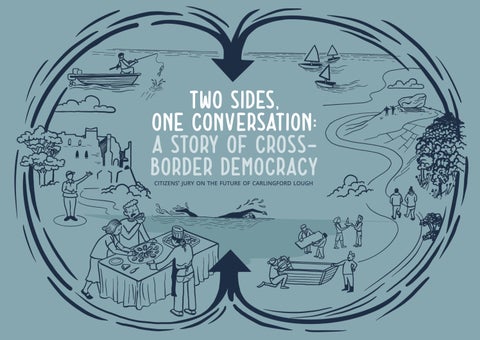
Two sides, one conversation: a story of crossborder democracy
citizens
With thanks to
All meaningful work takes a village, and this landmark project was only possible with the support, trust, and time of many people working together.
Thank you to Creative Ireland for funding this project.
Thank you to The Wheel for convening it, and for giving Involve the opportunity to organise such a landmark democratic innovation.
Thank you Alex McMaster, and Heidi McIlvenny for attending the sessions as ‘experts on tap’ providing ad hoc support to jury members as they worked through complex and sometimes incomplete information.
Thank you to our Advice and Impact Group - Aidan, Colum, Conor, David, Declan, Heidi, Niall, Richard, and Sarah - you brought a range of views and expertise while grounding the process in a shared vision of a healthier Carlingford Lough ecosystem and more empowered communities. We are grateful for your work so far and your ongoing commitment to the impact of this process.
Thank you Anna from Ulster Wildlife for helping with the letters from other species which you can see in the appendix, and, with Aoife Butler from the NI Marine Task Force, for bringing a table of beautiful specimen that helped the jury understand the underwater world of Carlingford Lough better.
Thank you to Rich and Hannah at Sortition Foundation for all of your work delivering the first ever cross-border democratic lottery process on the island of Ireland.
Thank you also to the many local residents and community groups who helped us to get the word out about the postal delay on the southern shore that meant invitations to the Jury arrived later than planned. We overcame that challenge only because of your willingness to jump into action.
Thank you to all our speakers (see appendix for the full list) for bringing a wide range of perspectives and evidence to bear on the jury’s deliberations.
Thank you Eimear McNally for your beautiful illustrations that bring the Jury’s vision alive on these pages.
And our very special thanks to Suzie Cahn who made all of this happen: your vision for Shifting Tides and your active, deep listening to the community members encountered throughout, you surfaced the need for stronger local democracy developed on a crossborder basis.

you gave generously of your time, energy, curiosity, empathy, and wisdom to ensure that there could be solid, locally shaped, fair, and practical recommendations for change on the shores and in the waters of Carlingford Lough.

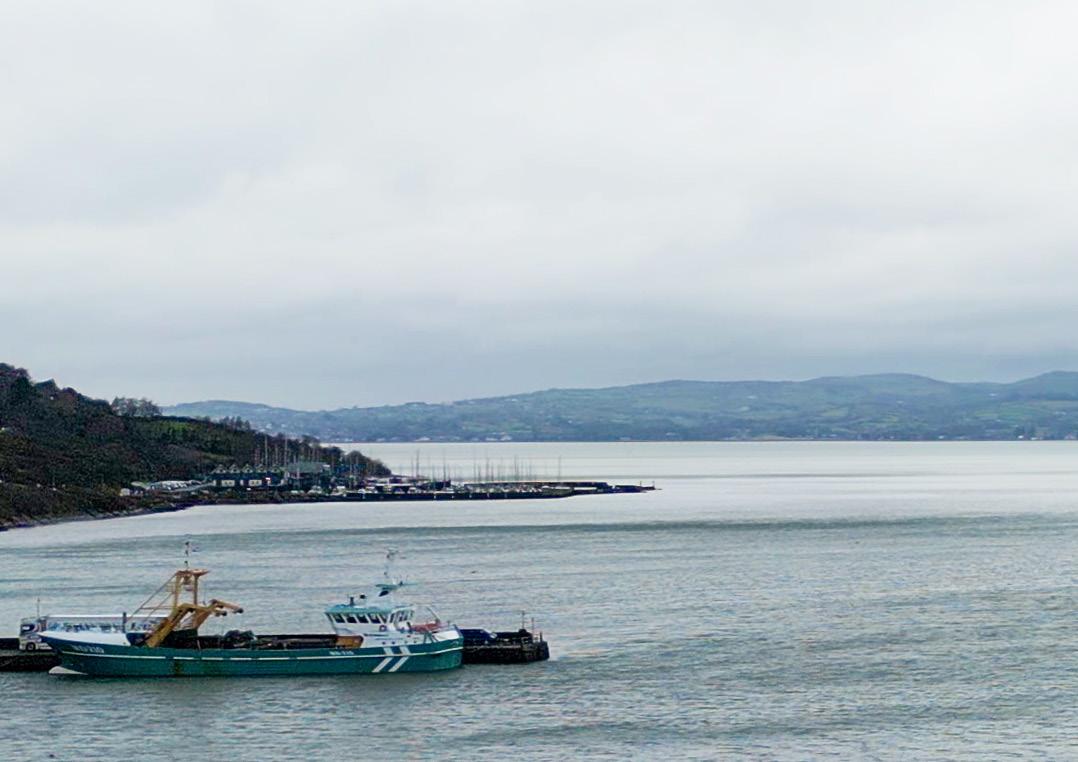
Carlingford Lough is one of Ireland’s most distinctive coastal environments - ecologically rich, culturally significant, and uniquely trans-boundary.
Its governance arrangements are complex. Straddling the border between Northern Ireland and the Republic of Ireland, the lough is jointly overseen by Loughs Agency, established under the Good Friday Agreement to protect fisheries, improve water quality, and support biodiversity within Carlingford Lough.
Government departments in two jurisdictions make decisions that directly impact the lough, planning decisions are made by two councils operating within different systems, and a complex mosaic of public and private landowners shapes what happens on its shores and in its catchment.
This fragmentation has real consequences: data is siloed, enforcement is uneven, and communities on both shores have long felt disconnected from the decisions that shape the place they call home.
The lough is also under pressure. Native oyster populations have collapsed, seagrass meadows are declining, and the people who have known it all their lives have watched these changes happen, often without any meaningful say in what comes next.
In early 2026, thirteen people from those communities came together to change that. Selected by democratic lottery to broadly represent the diversity of life around the lough, they formed the Carlingford Lough Citizens’ Jurythe first ever cross-border democratic lottery process on the island of Ireland.
Facilitated by Involve, in partnership with The Wheel’s Shifting Tides project and supported by Creative Ireland, the jury met across three full in-person days and a final online evening session between February and March 2026.
The jury was convened to answer a single calling question:
The future of Carlingford Lough depends on finding the right balance between economic development and bringing nature back to good health. How do we strike that balance, and how can local people help shape and safeguard the lough for the long term?
Over the course of their deliberations, jurors heard from scientists, port representatives, community activists, business representatives, cooperative development practitioners, and crossborder governance specialists. They debated, drafted, and negotiated.
The jury concluded their work by agreeing three guiding principles and seven recommendations, each supported by a supermajority of at least 80% of jury members.
»Jump to page 10 for more information on what a citizens’ jury is
» Jump to page 30 to read more about how the process actually worked

The three principles are:
Ecological protection;
The Lough is one community, with equality and parity between the two shores;
Accessible and inclusive information, under one consistent voice.
The seven recommendations call for:
Investment in cross-border community partnerships;
Improved infrastructure for tourism and residents;
Structured youth engagement and education;
Restoration of native species and habitats;
A public data portal for monitoring the health of the lough;
Support for local economic actors through a Community Wealth Fund;
And stronger trans-boundary governance to ensure the lough is managed as a single, thriving ecosystem.
» Jump to page 16 to read the recommendations in full
The process also had a measurable impact on the people who took part. Before-and-after surveys show that jurors left with a stronger understanding of local decision-making, a greater sense of their own ability to influence it, and increased confidence in civic participation.
Six out of nine expected to be more active in their community as a result. Nobody expected to be less.
» Jump to the evaluation section on page 34 to read more about the experience of participating and the impact of the process on participants.
→ THESE RECOMMENDATIONS ARE NOT THE END OF A CONVERSATION.
They are the beginning of one: grounded in local knowledge, shaped by genuine deliberation, and offered in the hope that the people, the economy, and the ecology of Carlingford Lough will be considered together rather than in competition.
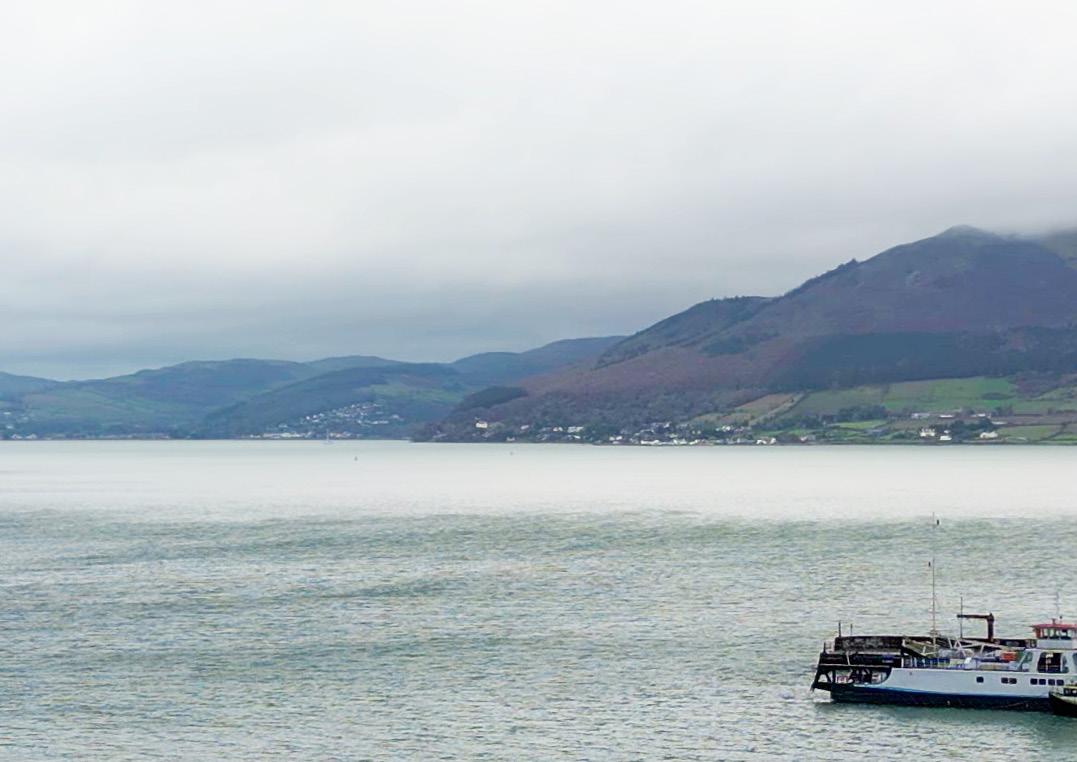
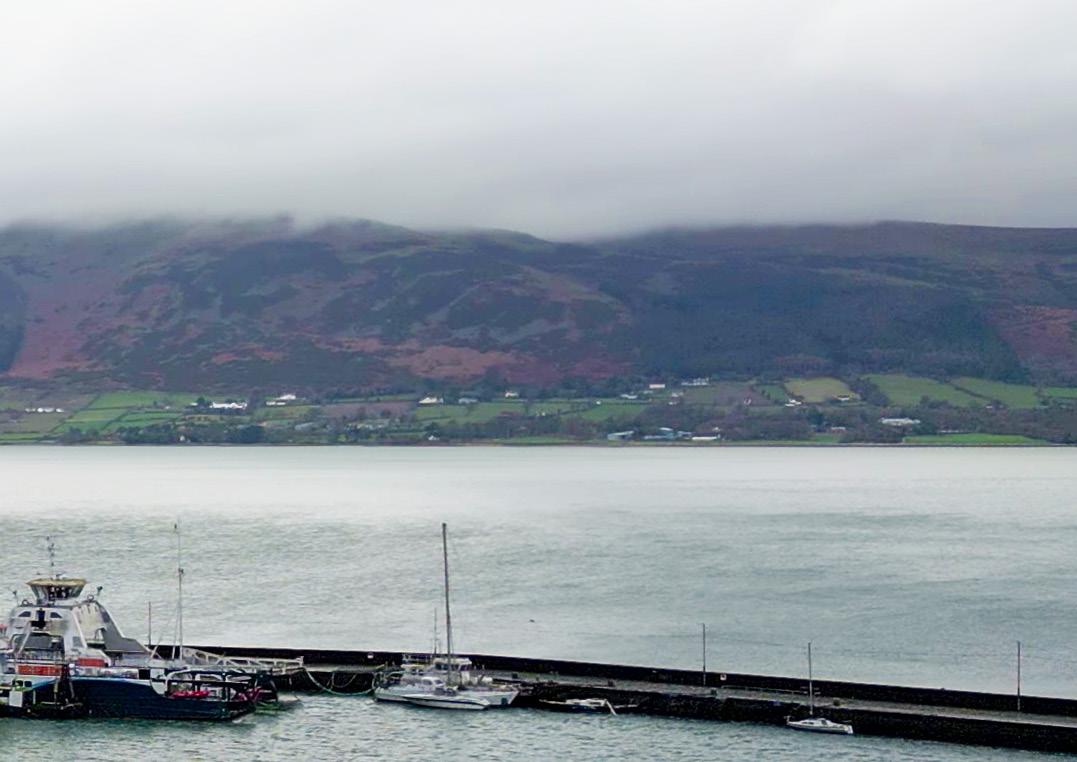
Carlingford Lough is a special place. Tucked between the Cooley and Mourne Mountains, it is one of Ireland’s most beautiful stretches of coastline. Beneath its surface lies a remarkable underwater world, seagrass meadows, rocky reefs, and a rich variety of marine life.
For generations, local people have fished its waters, farmed its shores,
This section provides the context that brought the jury into being: the ecological, political, and community story of the lough. Readers already familiar with Carlingford Lough may wish to skip to page 10.
Like so many coastal places, it is feeling the effects of climate change, pollution, and habitat destruction. Native oyster populations have collapsed. Seagrass, which stores carbon and shelters marine life, is declining. People who have known the lough all their lives have watched these changes happen.
At the same time, the lough sits on the border between Northern Ireland and the Republic of Ireland, which brings its own complications.
Responsibility for managing it, is shared between two jurisdictions and multiple bodies. Established under the Good Friday Agreement, Loughs Agency works to protect fisheries, improve water quality, and support biodiversity within Carlingford Lough. Alongside its environmental responsibilities, the Agency promotes sustainable tourism, angling, and recreational activities throughout the area.
Through this balanced approach, Loughs Agency seeks to support both environmental protection and local development.
However, Loughs Agency is not responsible for managing all aspects of the Lough.
Despite the range of bodies with a governance role in the relation to the lough, local communities have often felt far removed from the decisions that affect their lough and their lives. This is starting to change. Both governments are now committing to protect more of their marine environments, and there is growing recognition across the world that healthy seas matter for all of us.
Decisions about the future of Carlingford Lough are being made right now. The question is whether the people who know and love it best will have a say in those decisions.
That question brought the Shifting Tides Project into being. Over two years, the project brought communities around Carlingford Lough together through collaborative and creative ways of collecting and sharing knowledge, reflecting the many different layers of a complex seascape that can only be understood from multiple perspectives.

Through citizen science workshops, coastal foraging, oral heritage recordings, scientific diver training, arts workshops, performances, podcasts, exhibitions and short films, the project explored different ways of knowing the lough.
By involving artists, supporting community participation and creating spaces for shared learning, the project deepened understanding of interconnected issues including climate change, pollution, habitat destruction and biodiversity loss.
It also built new relationships, networks and momentum towards increased community involvement in decisions as people became more concerned about the future of the lough.
But concern alone is not enough. People need real opportunities to shape what happens next. Towards the end of the Shifting Tides project, it became clear that something more was needed: a way to take all the knowledge, energy and connection that had been built up, and channel it into a genuine conversation about the lough’s future.
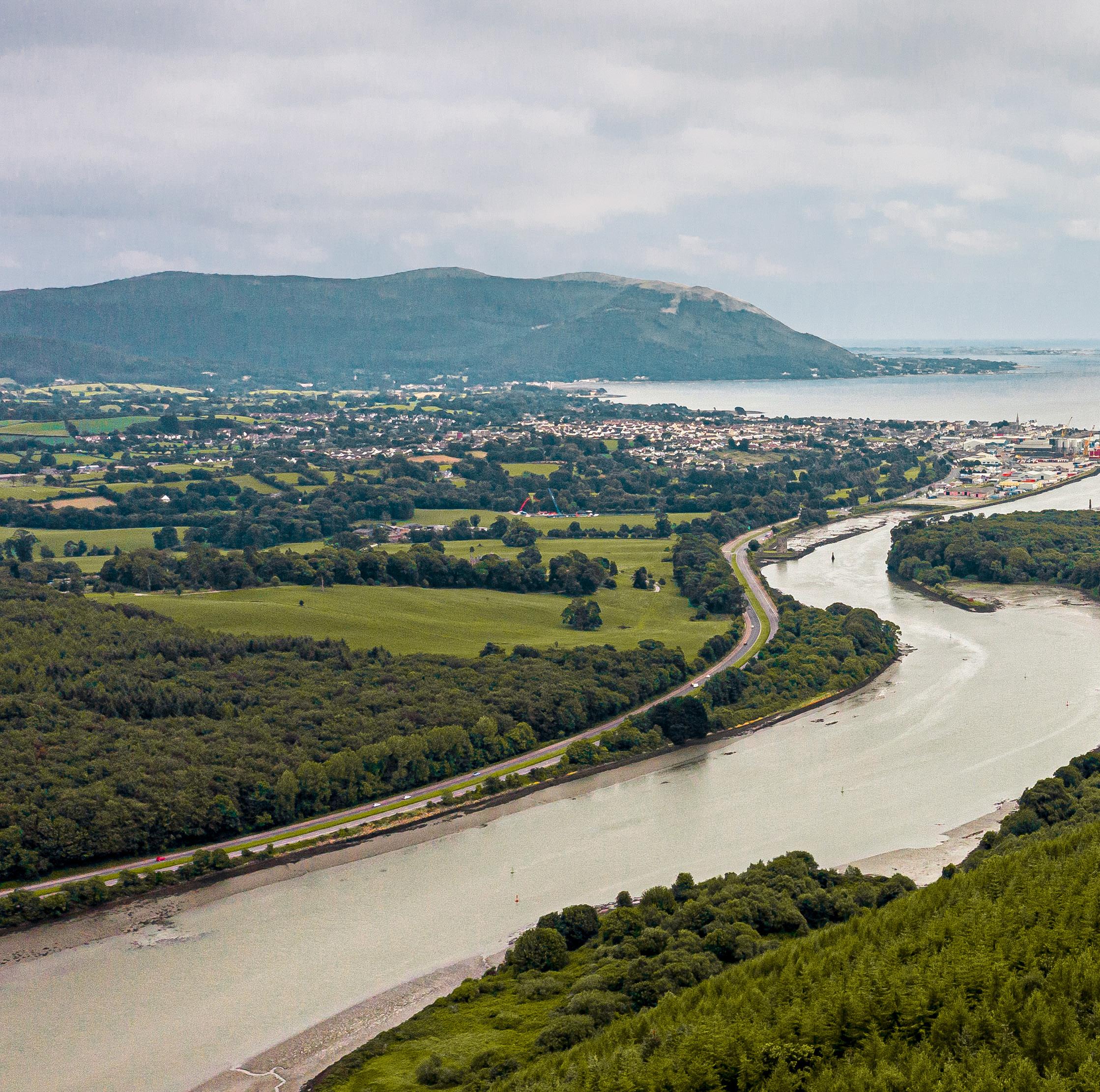

A citizens’ jury is an established democratic process used all over the world. It is a group of people selected by civic lottery, who broadly represent the make-up of the local communities. The people who take part learn about the issues and discuss them with one another.
They then make recommendations about what should happen and how things should change.
In December 2025 and into January 2026, 5,000 households across both shores of Carlingford Lough received a letter in the post, inviting them to take part in a citizens’ jury. It is the first time this method has been used for a cross-border process in the UK or Ireland. Due to postal disruption on the southern shore, we supplemented the letters with door-knocking, social media, and local community groups, who circulated the invitations via their mailing lists.
Understanding why a citizens’ jury was the right response to that challenge requires a brief explanation of what one is and how this particular one was put together.
If the recipient of an invitation wanted to participate and were able to commit to the time, we asked them some questions, such as:
• Their gender
• How old they are
• If they are disabled
• Whether they live on the northern or southern shore of the lough
• Whether their income is above or below the median for where they live
• What their highest educational attainment is
• How they feel about the balance between economic development and ecological health on Carlingford Lough

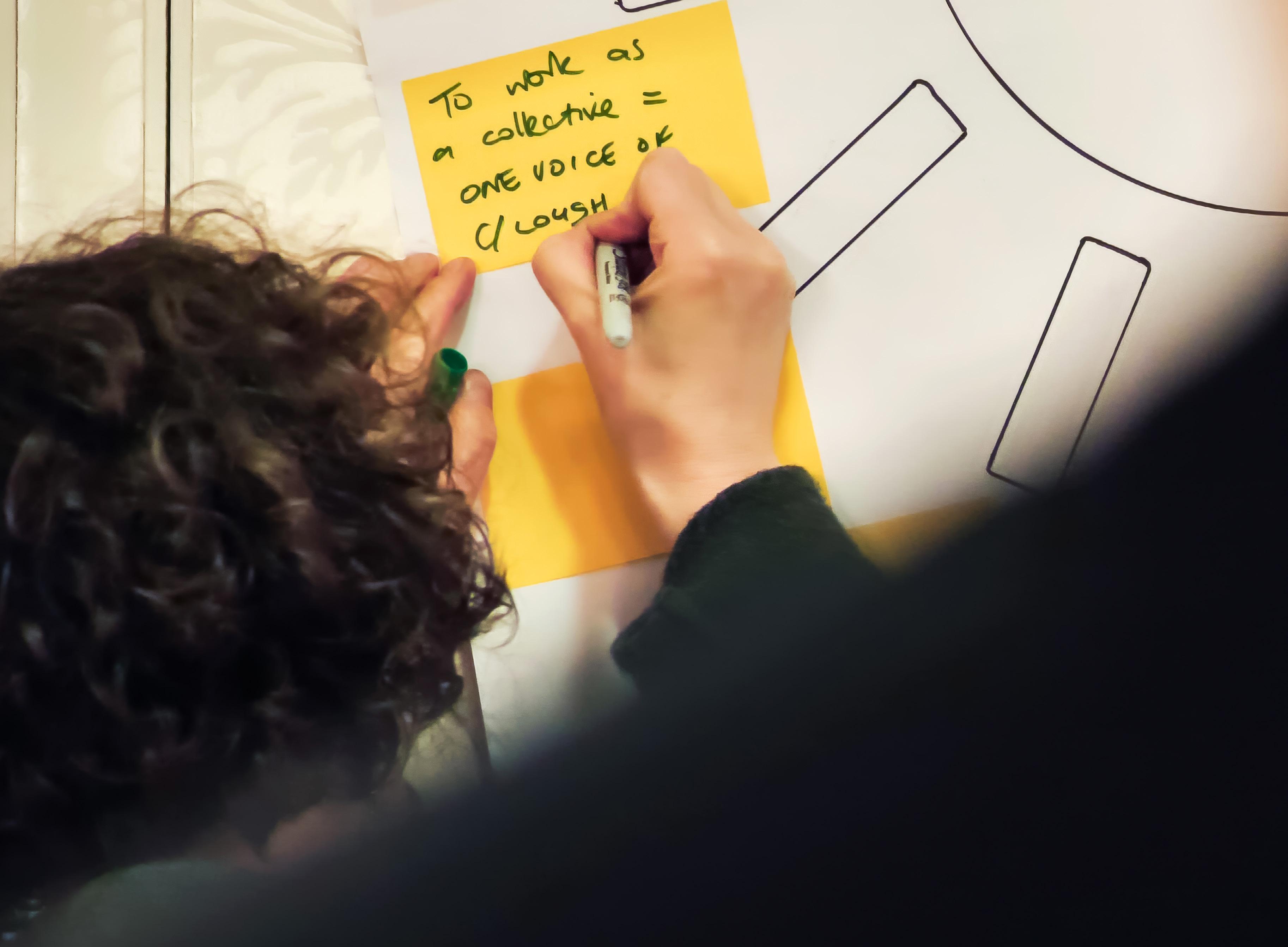
→ MEMBERS OF THE JURY
Alison from Rostrevor
Anna from Omeath
Antán from Rostrevor
Darcy from Rostrevor
Eimear from Warrenpoint
Garreth from Carlingford
Justin from Warrenpoint
Maria from Warrenpoint
Patricia from Carlingford
Petrina from Carlingford
Rihards from Carlingford
Teagan from Warrenpoint
Tom from Carlingford
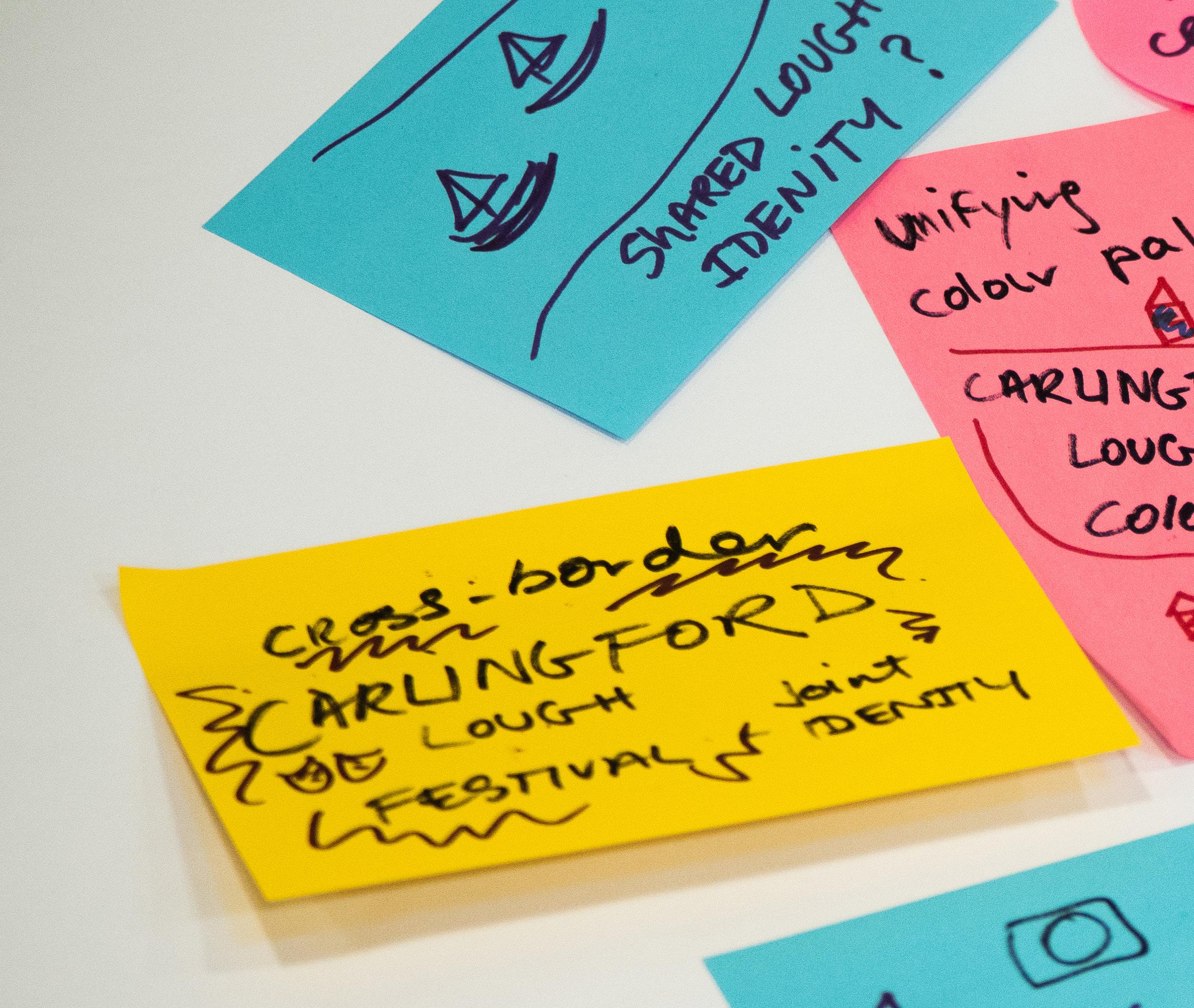
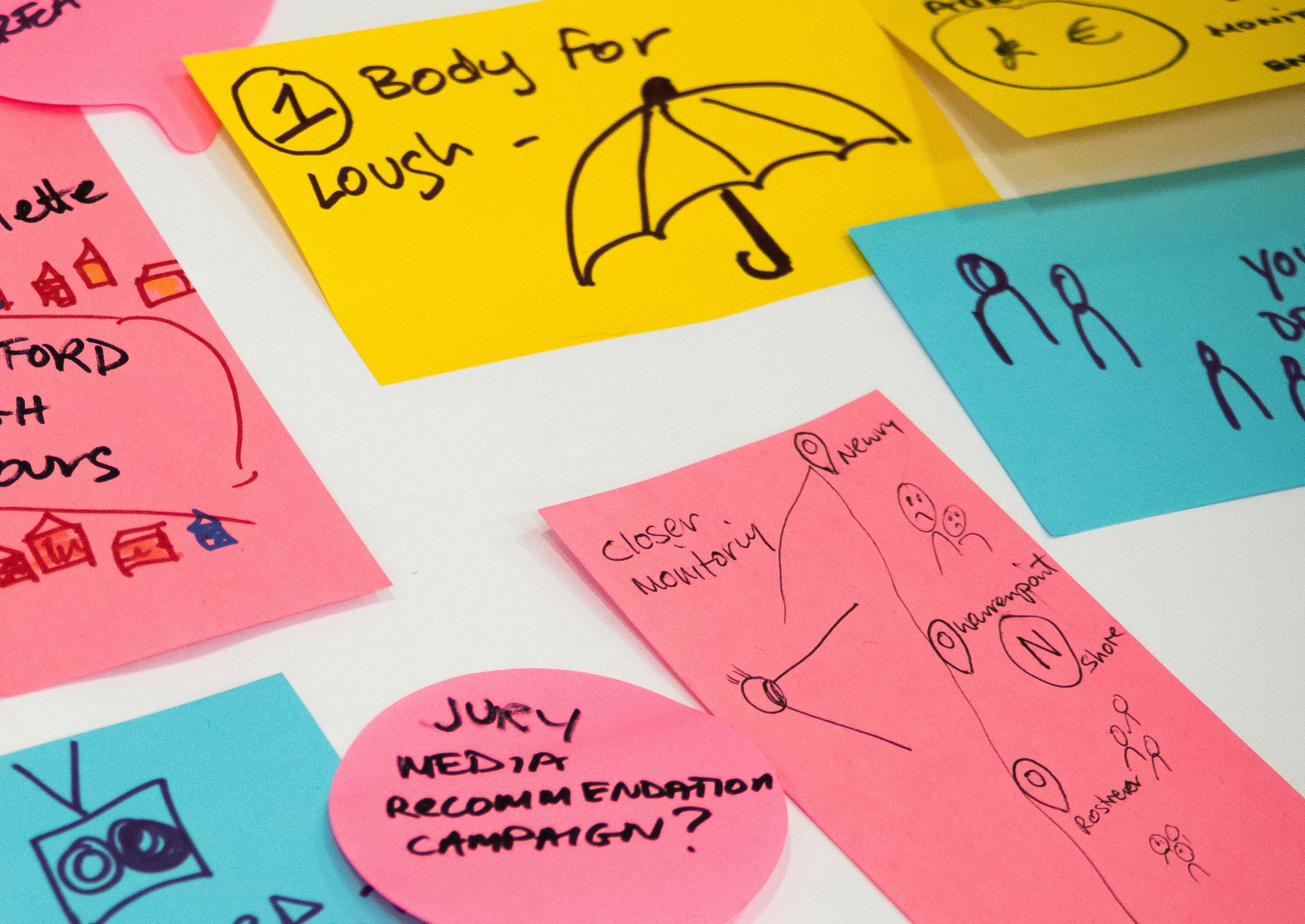
The Jury was convened to answer an important question:
Lough depends on finding the right balance between economic development and bringing nature back to good health.
How do we strike that balance, and how can local people help shape and safeguard the lough for the long term?
The Jury spent three days together, getting to know each other and their different experiences of living on the Lough. They learned about the ecology of Carlingford Lough, its history, and the challenges it faces.
They listened to speakers from the area who brought different ideas and perspectives for what would help to make a difference.
They concluded their deliberations by agreeing three principles that should guide future decisions about Carlingford Lough, and seven recommendations for how things should change.
These two different types of output reflect different aspects of the jury’s thinking. The principles came first, in the sense that they reflect the values the jury kept returning to throughout their deliberations. The recommendations flow from them.
Together they form a coherent whole: the principles set the standard, and the recommendations show what meeting that standard looks like in practice.



A principle is a value or commitment that should underpin all decisions about the lough going forward. The jury’s three principles are meant to act as a test: any future decision about the lough should be measured against them.
Ecological protection; The Lough is one community, with equality and parity between the two shores;
Accessible and inclusive information, under one consistent voice.
A recommendation is a specific call for action: something concrete that should happen, with a view on what it would look like, who should do it, and what difference it would make.
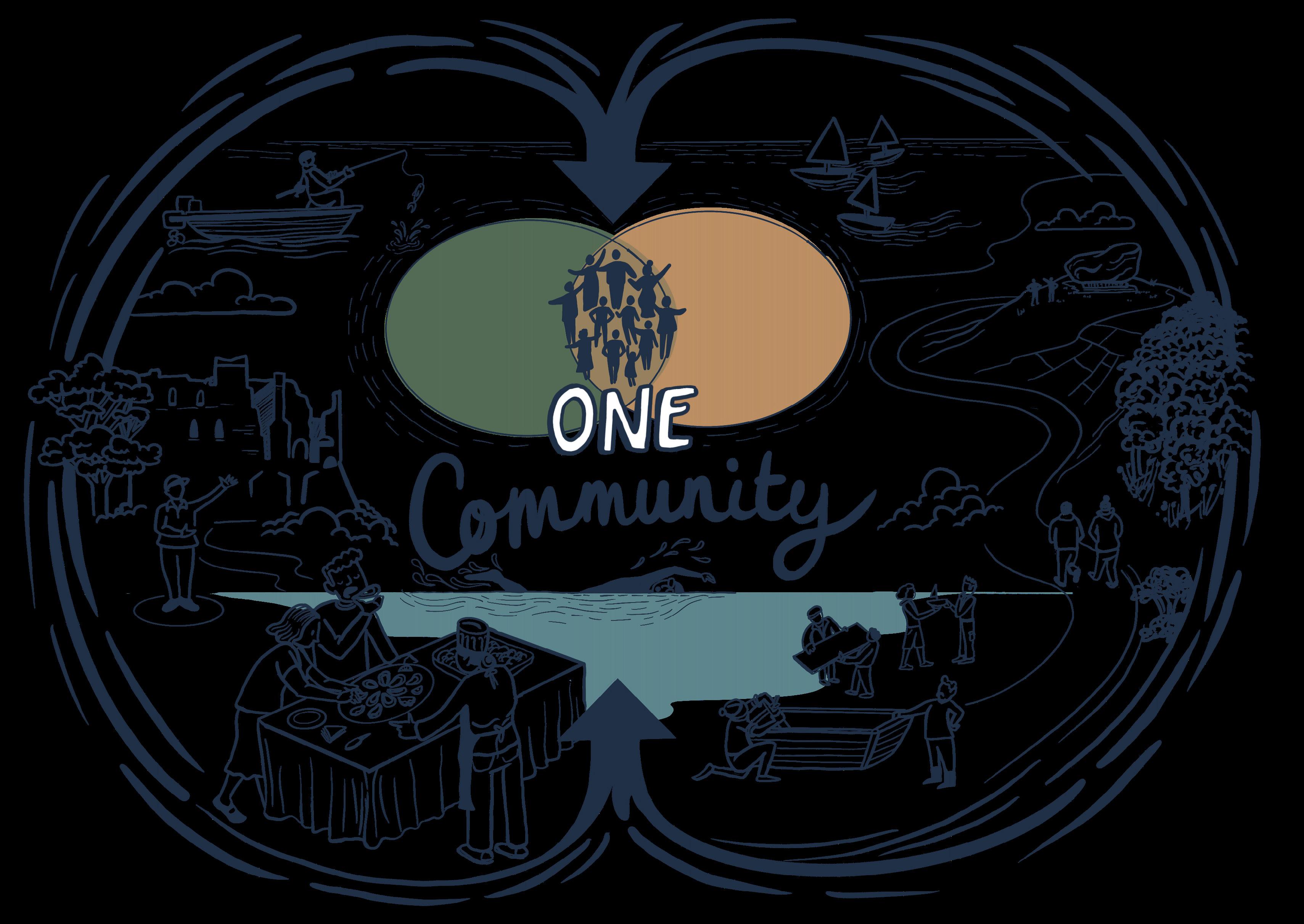
what We call for investment in sustainable, community-led cross-border partnerships and projects, building relationships and shared community for people living along the lough shore.
why This will support people living along the lough shore to build strong connections as well as taking action towards shared goals, based on place-based identity, pride, and a shared future.
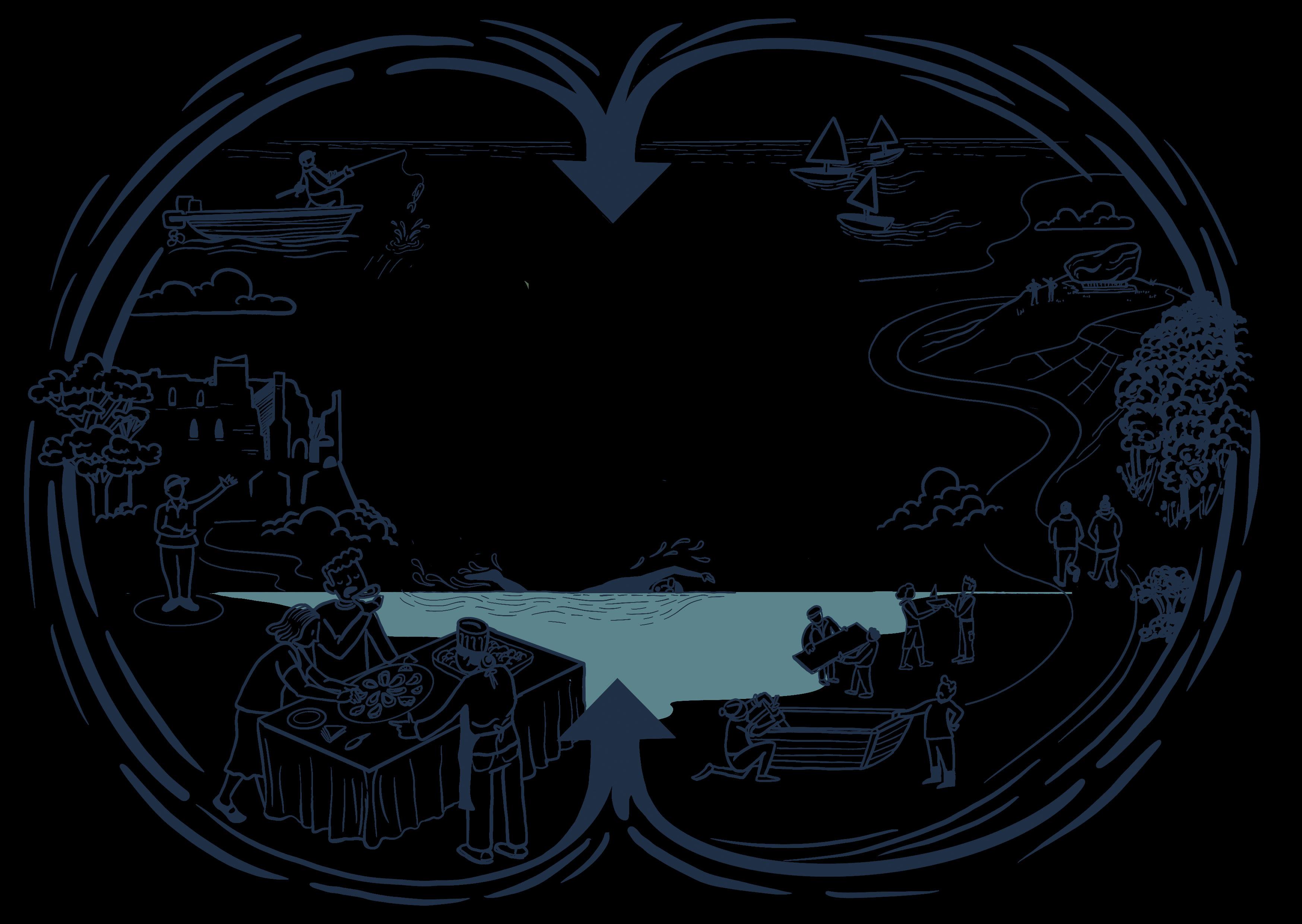
how This could look like festivals and experiences that are coordinated across the Lough, encompassing sailing, waterbased activities, open water swimming, and historical and cultural events. This should include a food and drinks tour showcasing both sides of the Lough, an Oyster Taste Fest, and a traditional boat crafting and tourism experience.
100% support
who Councils; Tourism Ireland; Failte Ireland; Community Groups; Sporting Clubs; Local business involvement through sponsorship; Tidy Towns groups; Love Your Lough; Clean Coasts.
so what The difference this would make for local people are the strengthened bonds across the Lough, building connections between the communities of the Lough, empowerment for locals, and the economic impact of increasing local spending and positive tourism.
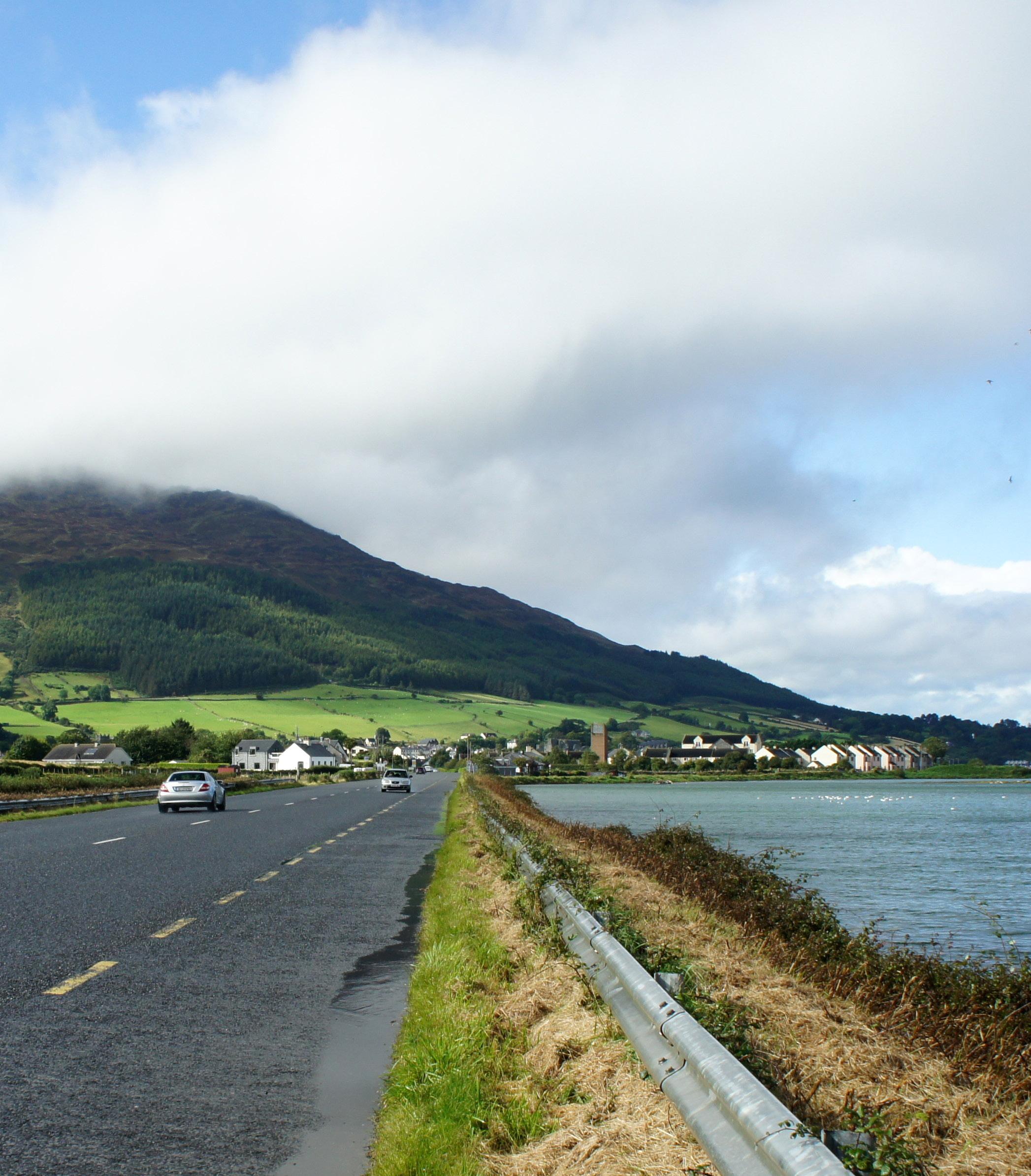
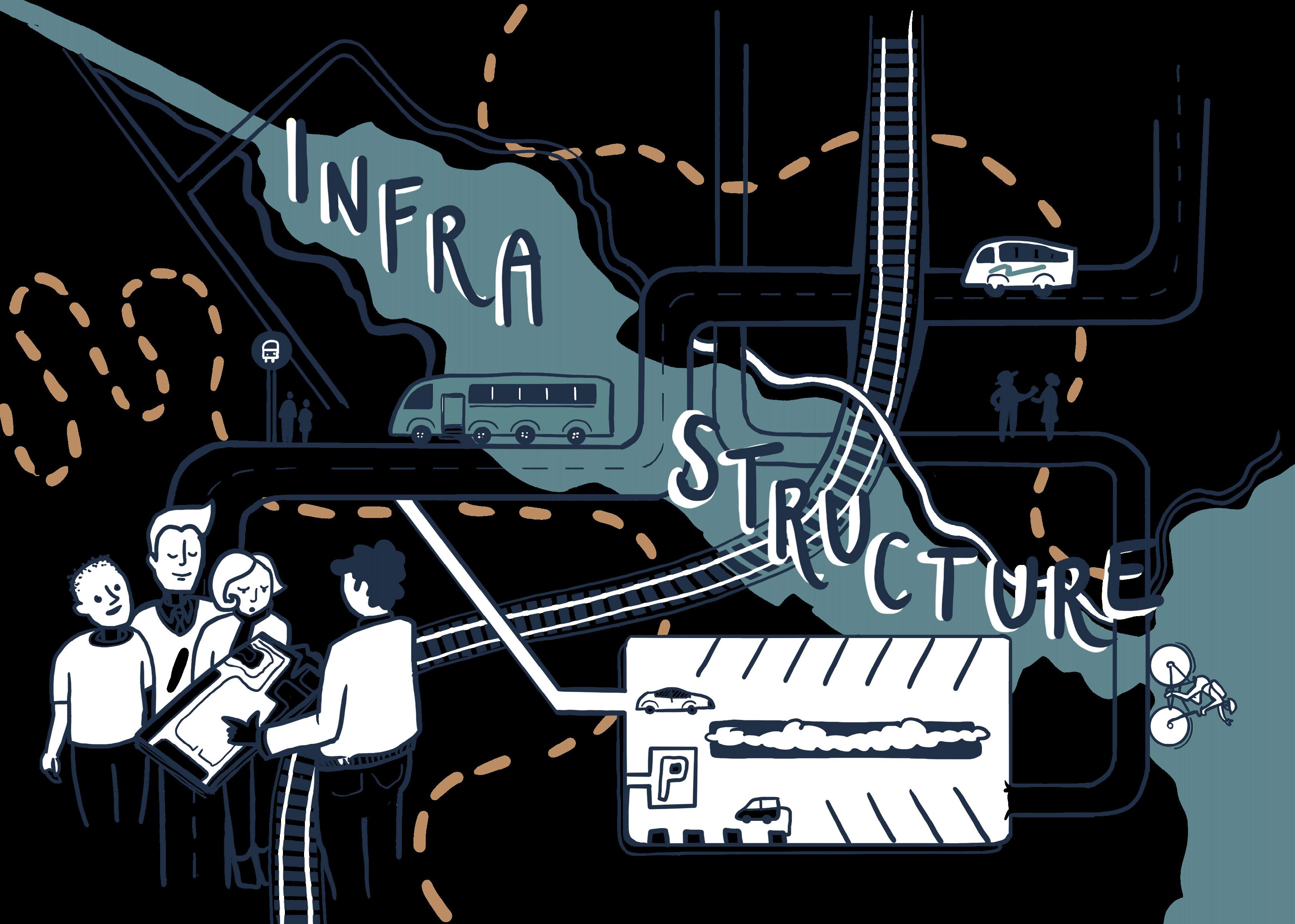
what We call for improved infrastructure to support tourism, economic development and resident living standards by improving roads and parking, expanding public transport, and increasing awareness and engagement in planning decisions.
why This would improve and maintain standards in safety, ease of travel, and access and egress. It would encourage investment in tourism, and improve perceptions of the region.
how This would address the shortage in parking and improve public transport. Increase and improve mooring facilities in Warrenpoint. Improve signage across the area.
100% support
who Department for Infrastructure; Local/ County Councils; Chambers of Commerce; Loughs Agency
so what This would improve the standard of living for local people;
Improved visitor experience; Generate revenue; (tourism; parking)
Address safety issues and improve local opportunities.
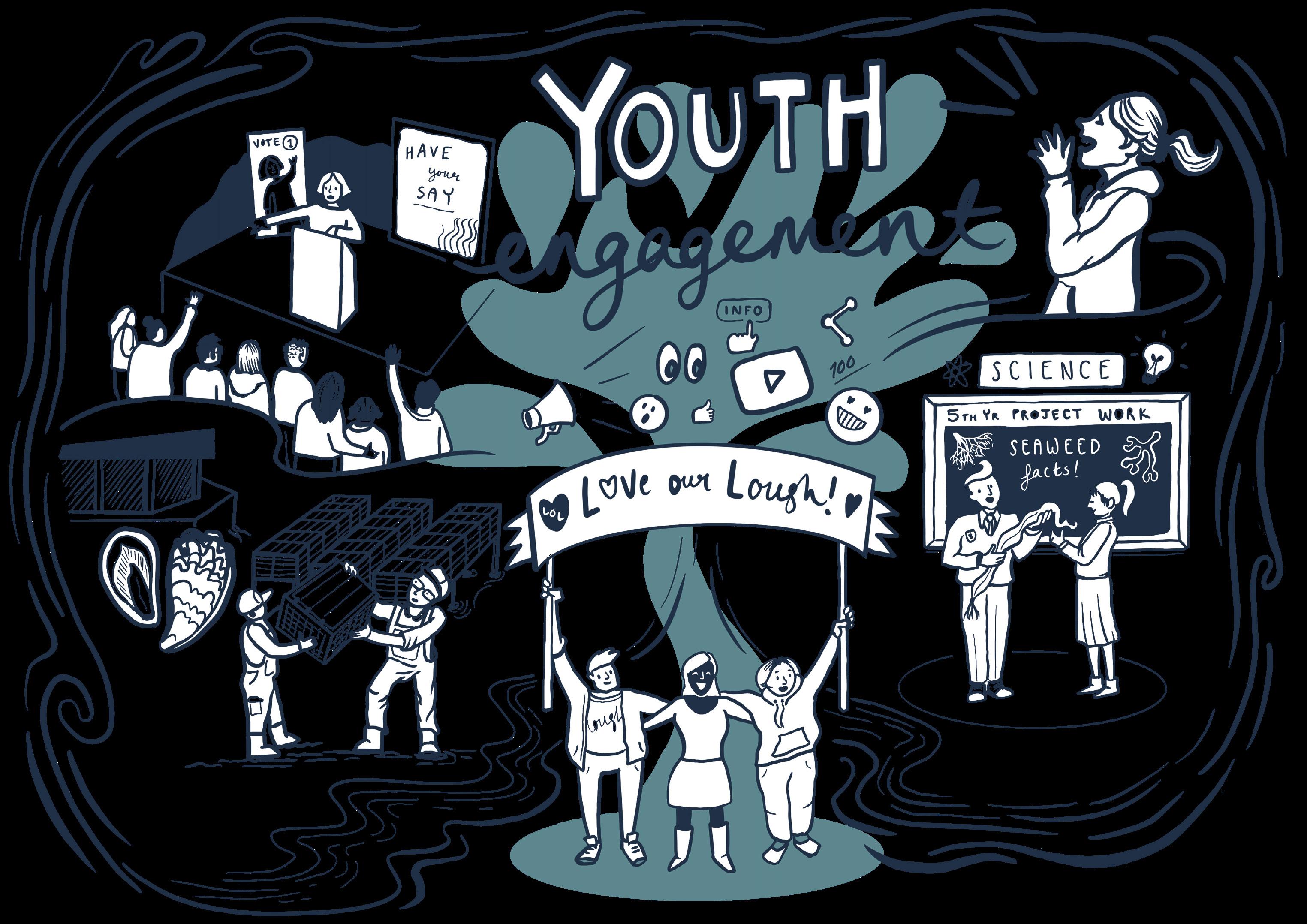
what We call for the creation of opportunities for structured youth engagement and education about the Lough, as well as greater youth participation in local decision making.
why Young people are the stewards of the Lough’s future. Connecting people to their places through education helps to keep people in the country. It will create a greater sense of ownership of the Lough, leading to investment in its future.
how We want to see this happen through volunteering opportunities, work experience places, and by local schools and other existing youthfocused organisation engaging more with the Lough
100% support
who Online Hub (Social Media); Local businesses / Water Sports; Social enterprises; Volunteer Now; Funders
so what This would positively impact communities through greater opportunities, more positive attitudes towards where we live, and healthier lifestyles.
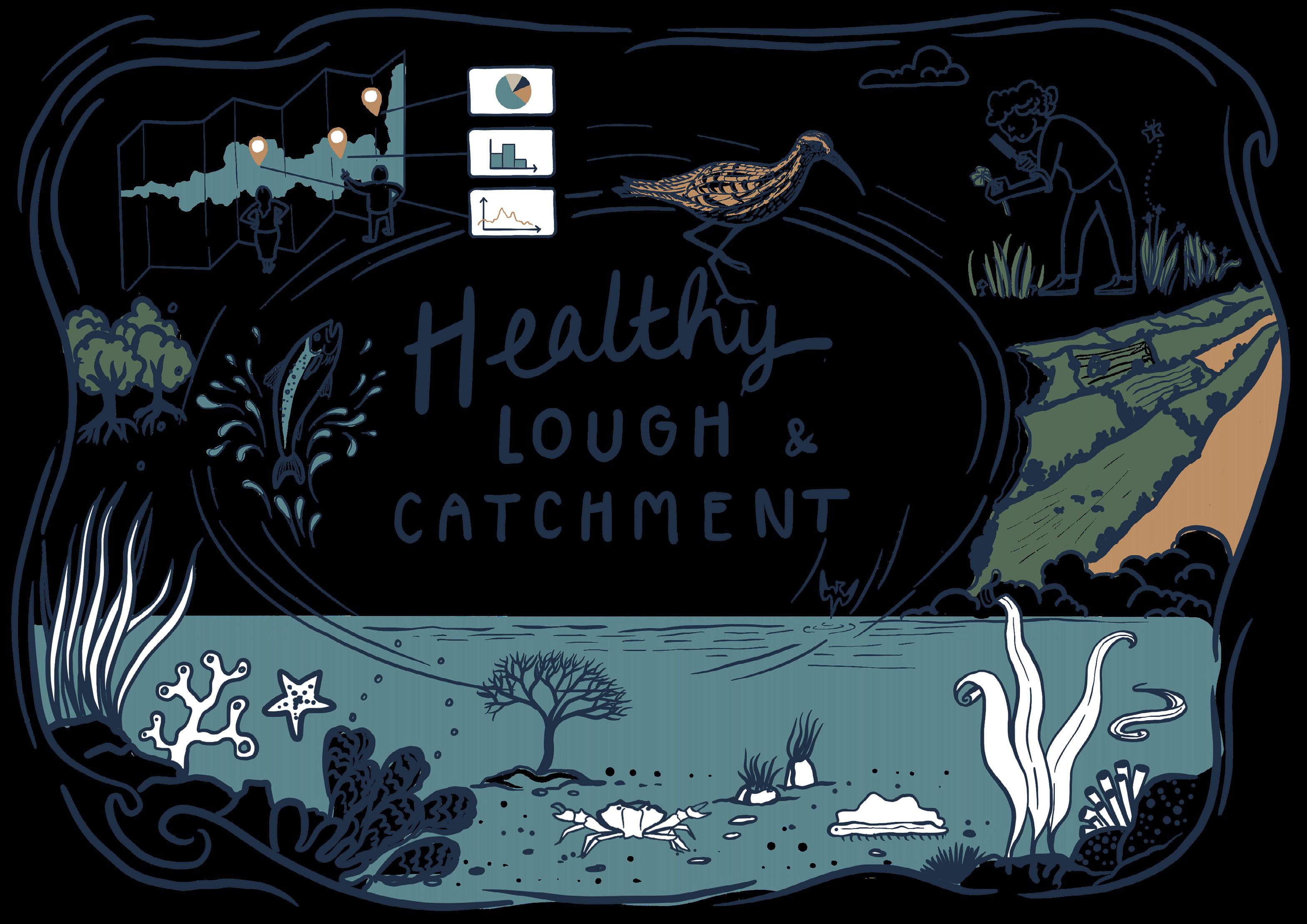
what We call for the restoration of the lough’s native species and habitats creating a thriving lough and eco-system.
why This will increase biodiversity, improve water quality, increase carbon capture, address flooding and stop the chemical run off and pollution of our beaches.
how As a first step, we recommend the mapping of the Lough to better understand its current condition for planning and prioritising restoration. We encourage a diversity of projects including restoring seagrass, native oyster beds, creating/monitoring protected areas and investing in citizen science to support the regeneration of ecosystems.
100% support
who Government depts, local industries, DAERA, NGOs, Loughs Agency, communities, scientists, citizen scientists.
so what This would repair the damage to the lough and its catchment, increase biodiversity, reduce carbon emissions and help tackle climate change.
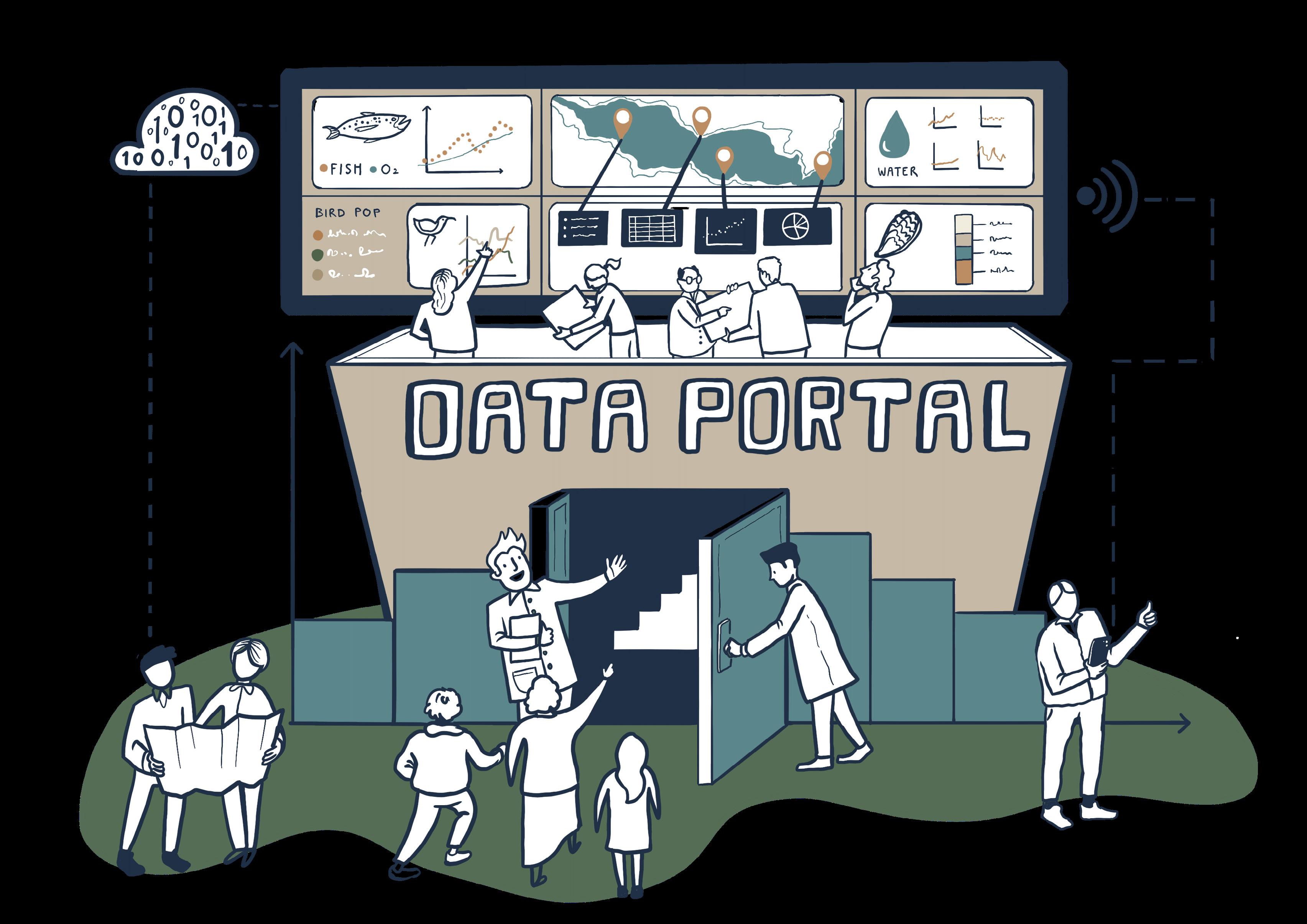
what We call for the establishment of a public regularly-updated portal for data on the health of the Lough and its catchment. The portal should include information about recreational, economic and cultural activities around the lough shore, as well as all reports on water quality information and data collected by all actors across the lough and its surrounds, as well as identifying which species have been recorded in the lough.
why This will allow local residents to see what is happening in and around the Lough and hold decision makers accountable and ensure effective data sharing.
how We want to see this happening by making existing information and data available to all residents.
91% support
who UK and Irish governments; local Councils so what This will improve information sharing, cooperation and coordination on a cross border basis.
what We call on support for local economic actors to contribute to the Lough’s health and promote community wealth building.
why This will encourage those using the Lough to contribute to its improvement and preservation.
how We want to see this happening through the establishment of a Community Wealth Fund financed through mechanisms such as the offering of time, tax incentives and tourist levies.
who SMEs, large corporations, Councils and anyone involved in economic activity around the Lough including individuals, tourists and schools
100% support
so what This will sustain and create better livelihoods for local people whilst restoring the lough’s health.
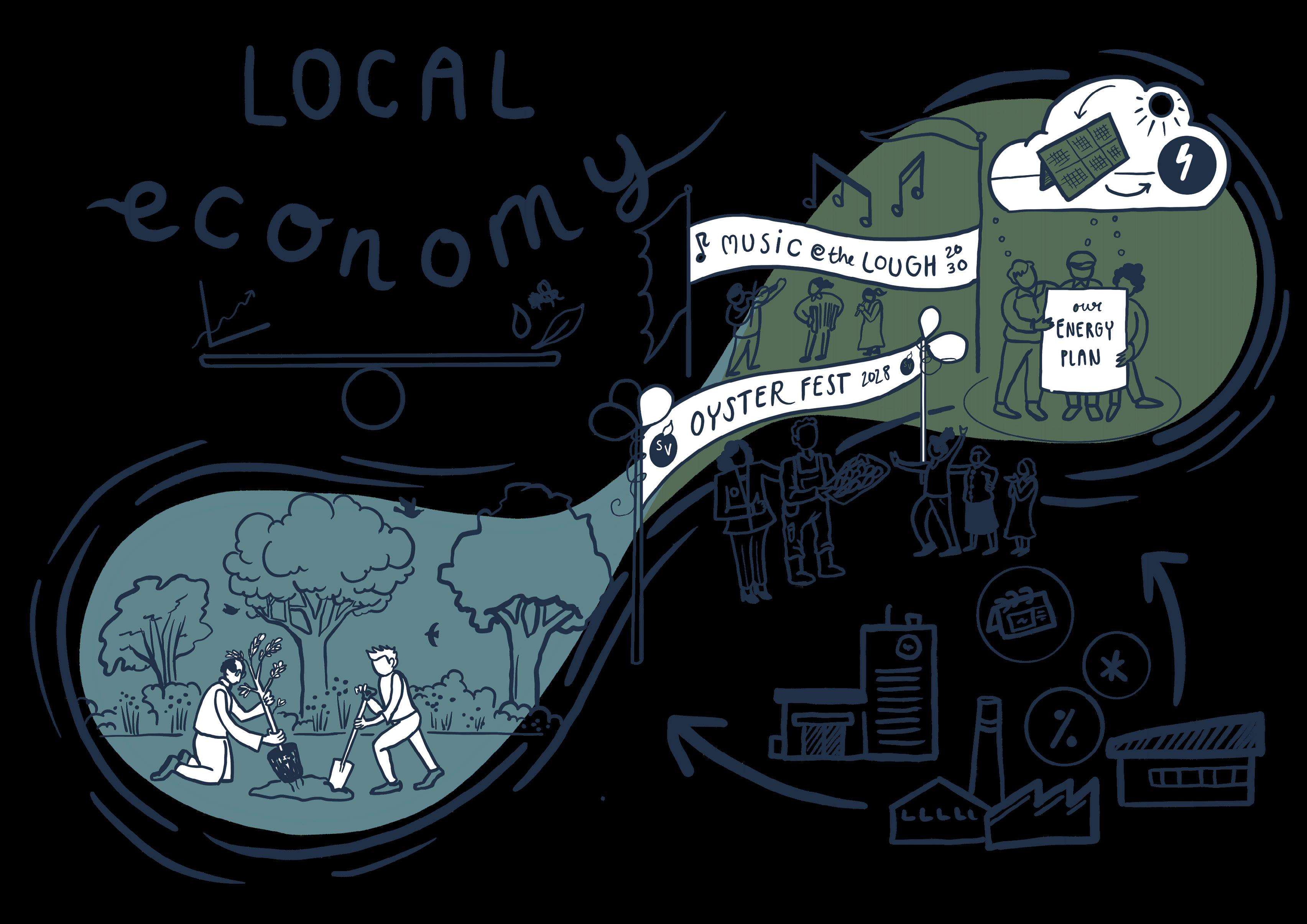
In their deliberations, jury members identified a significant gap in the governance of the Lough. Among the issues they raised:
• How might trans-border governance, accountability and transparency be strengthened;
• Where are the decision making spaces where people, the economy and the Lough are thought with and about together, trade offs considered with good information and long-term thinking;
• The need for clear and connected information about the Lough’s health and species found in one place mapping cumulative impacts and trends;
• Better cooperation between ports, agencies, local and central government and communities;
• Importance of young people’s participation in local decision making.
Developing a recommendation to address these issues, while accounting for the complexity of governance across two national jurisdictions, was challenging and, at points, contentious.
When developing this recommendation, the jury considered three potential pathways:
Pathway one: Enhance what exists: build on current governance structures; improve without replacing
Pathway two: Create something new: Establish a new dedicated governance body for the lough
Pathway three: Name the need, not the form: set out what governance must achieve; leave structural decisions open
A majority opted for pathway three — name the need, not the form — and Recommendation 7 reflects that decision.
One member took a stronger position, arguing that existing governance structures need to be replaced entirely rather than built upon. This view is included as a minority report in the report’s appendix.
The decisions made by a citizens’ jury are intended as advice and guidance.
They are calls to action grounded in evidence, shaped by genuine deliberation, and carrying the legitimacy that only a diverse group of ordinary people, selected precisely because they represent the full range of a community, can offer.
Elected representatives and public bodies make decisions on behalf of citizens every day. Here, citizens have done the work themselves. These recommendations deserve to be met with the same seriousness with which they were made.
On publication of this report, formal presentations of the jury’s findings will be made to the bodies best placed to respond: Loughs Agency, Newry Mourne and Down District Council, Louth County Council, and ministers in DAERA, Department for Economy, DCEE, and DAFM. TDs, MLAs, civil society organisations, and local community groups will also receive the recommendations directly. They are invited to engage seriously with what local people have said, and to account for how their conclusions will be taken forward.
The organisers, Involve, and the convenors, The Wheel and NICVA, will follow up with each of these bodies to seek a formal response to the recommendations. The jury’s work deserves to be met with a clear account of what decision-makers intend to do, what they are not in a position to do and why, and where they see the greatest opportunities for action.
The Advice and Impact Group, which supported the jury throughout this process, will continue to play a role in ensuring that momentum is maintained and that the recommendations remain visible in the right spaces. Their ongoing commitment is part of what gives this process its reach beyond the sessions themselves.
The jury members have done their part. The conversation they started belongs to everyone who cares about the future of Carlingford Lough. What it becomes next is up to all of us.

The Carlingford Lough Citizens’ Jury met across three full in-person days and one final online evening session. The process was designed to move through three distinct phases: getting to know the lough and each other, building a shared body of knowledge, and turning that knowledge into recommendations while leaving room for the jury to shape its own direction at every stage.
This section sets out how the jury was designed and run, for those who want to understand the process that produced the recommendations earlier in our report.
Day one: meeting the lough
Saturday 7 February 2026, Rostrevor
The first day was about arrival. Not just of the jurors as individuals, but of the jury as a group with a shared task. Before anything else, each member was paired with a companion being: a species that lives in and around the lough, chosen as a reminder to carry a wider perspective into the room. The jury had been convened to make recommendations about the lough’s future, and from the very first session the more-than-human world, which is directly affected but cannot speak for itself, was given a seat at the table. These companions were referred back to throughout the process as an additional consideration in decision making. You can see the companion beings and their letters in the appendix.
After introductions and ice-breakers, jurors heard from the Shifting Tides project director - Suzie Cahn - about the work that had brought the jury into being. They also heard from a marine scientist - Robert Walsh from the Northern Ireland Marine Task Force - about the current state of the lough, its ecology, its pressures, and what is at stake if nothing changes. By the end of the day, jurors had begun to identify the questions they most wanted answered, shaping the agenda of evidence they would hear on day two.
Day two: learning together
Saturday 21 February 2026, Carlingford
The second day was structured around three themes: ecology, local economy, and community. Before listening to any information, the jury members had a short session on biases and critical thinking, and were reminded through the day to question others and themselves, to be alert to cognitive shortcuts so that they could access more information and weigh up data more thoroughly.
Each of the themes was explored through a panel of speakers with direct knowledge of the lough and its challenges. The full range of voices is set out below, and included scientists, port representatives, divers, cooperative development practitioners, cross-border specialists, and local activists.
Panel 1- Economy
• Conor Patterson (via video)- Newry & Mourne Cooperative & Enterprise Agency
• David Holmes - Warrenpoint Port
• Colleen Dowdall & Mark CummingWarrenpoint, Burren and Rostrevor Chamber of Commerce
Panel 2 - The Lough and its Catchment
• Sarah McClean - Loughs Agency
• Sandra Woods - Local Diver
• Heidi McIlvenny, Queen’s University Belfast & Irish Ocean Literacy Network
Panel 3 - Community Stewardship
• Colum Sands - RARE
• Francis Donnelly -Carlingford Sailing Club
• Tiziana O’Hara - Co-operative Alternatives
Rather than simply listening, jurors worked between and after the panels
to discuss what they had heard, identify points of tension or uncertainty, and develop questions to put directly back to the speakers. The format meant that evidence was worked through with the jury rather than passively presented at them.
Day two ended with a reflective sense-making exercise, which helped the group to organise their thoughts, feelings, and observations before coming back for the final in-person day.
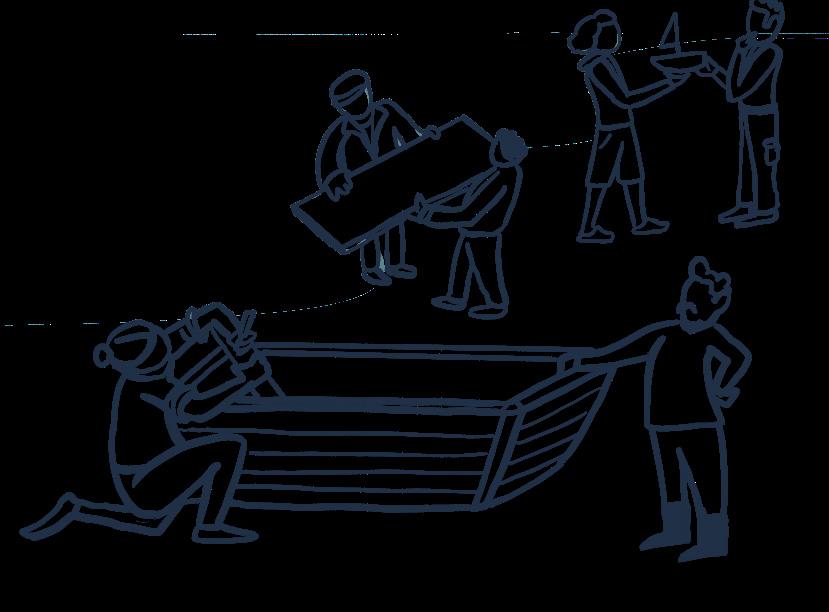
Day three: deliberating and drafting Saturday 28 February 2026, Rostrevor
The third day opened with a reflection back to the jury of the journey they had taken together, the themes that had emerged, the lines of questioning they had pursued, the areas of agreement and unresolved tension. This gave the group a shared map of where they had arrived before the harder work of deciding what to do with it began.
The process of developing recommendations started with generating lots of ideas, and then clustering them into themes. The jury, working in smaller groups, divided the themes between them and began developing them into ideas for recommendations, using a template, which can be found in the appendix.
Working in small groups and then together as a full jury, members drafted the wording of their recommendations collectively, negotiating language, testing ideas against each other’s experience, and gradually arriving at shared positions. Some wording was vigorously debated.
The drafting process was itself a form of deliberation: the act of finding the right words forced clarity about what the jury actually believed and wanted to say.
Perfect consensus was not the threshold; what the facilitators did ask for in the rounds of feedback to refine the recommendations, and what jurors confirmed, was that the final wording reflects the fullness of the jury’s deliberation: that every perspective that had been genuinely held and seriously argued had found its way into the recommendations, even where individuals might have landed somewhere slightly different on their own.

At the end of the day, the facilitation team took the draft wording away, made some minor changes for clarity, and circulated it online in an interactive document, inviting feedback from all members. That feedback was integrated and the revised draft returned to the jury for a final session.
The final evening: filling gaps and agreeing the last recommendation Monday 16 March, online
One significant gap had emerged from day three. The question of cross-border governance, how Carlingford Lough is managed across two jurisdictions, and how that might be improved, had surfaced as both urgent and genuinely complex. To address it properly, the jury reconvened online and heard from two further speakers specifically on the theme of trans-boundary governance. Those speakers were:
• Aidan Campbell, Centre for Cross Border Cooperation
• Matthew Service, Agri-food and Biosciences Institute (AFBI)
Supported by those new perspectives, the jury debated the most contested of their recommendations. Three possible approaches were considered: building on existing governance structures, creating an entirely new body, or setting out what good governance must achieve and leaving the structural question open. A majority opted for the third path, naming the need rather than prescribing the form, and the final recommendation reflects that choice. One member took a stronger position, arguing that existing structures need replacing entirely rather than improving. That view is recorded as a report in the appendix.
By the end of the evening, the jury had agreed three principles and seven recommendations in response to their calling question: how to strike the right balance between economic development and ecological restoration, and how local people can help shape and safeguard the lough for the long term.

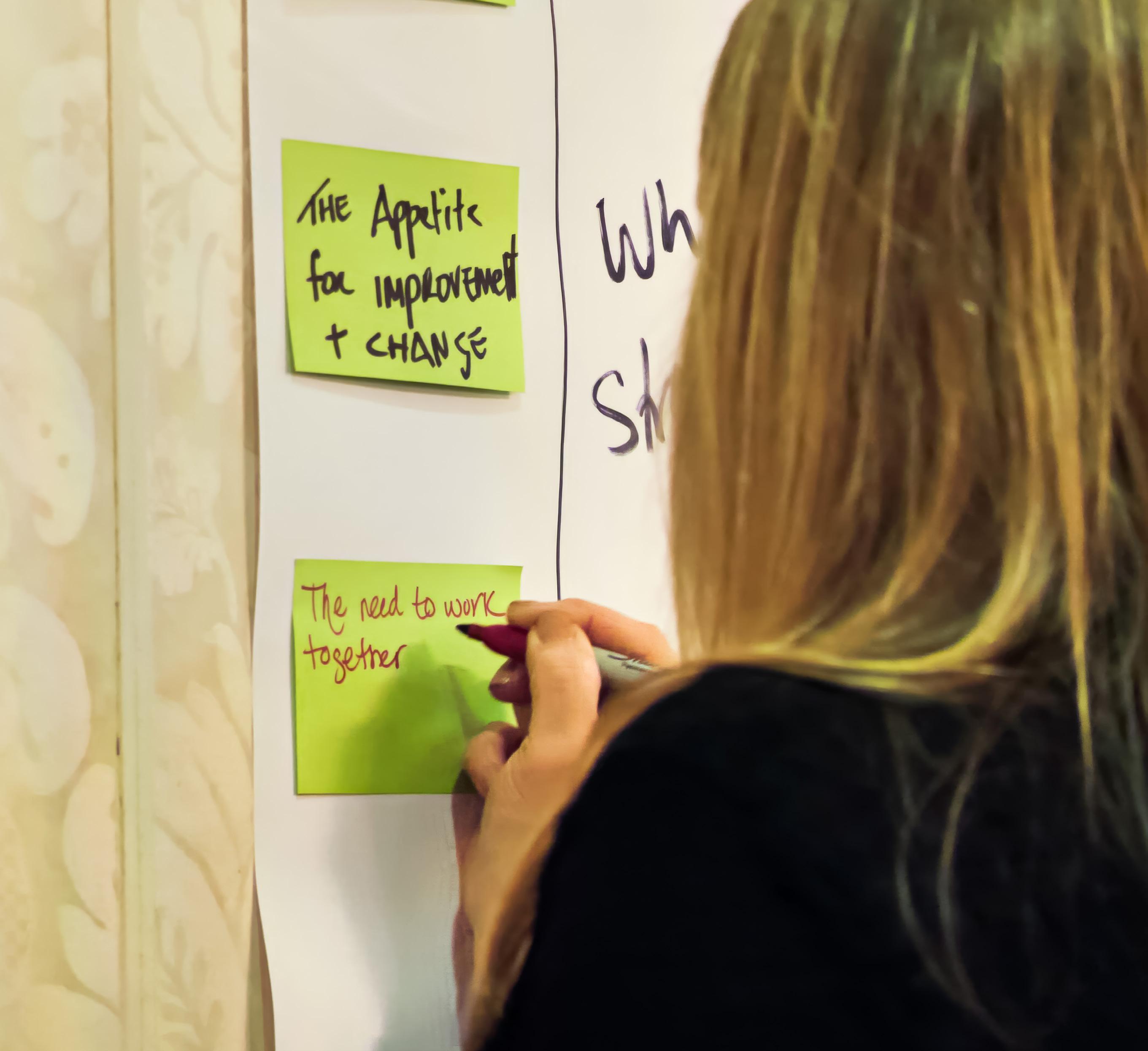
The member experience questionnaires, completed after each of the three sessions, capture what it actually felt like to be part of this process from the inside. Across all responses to three questionnaires, a consistent picture emerges, not of a smooth or frictionless experience, but of one that people found genuinely worthwhile and wanted more of.
The following section draws on feedback collected from jurors throughout the process. It is an account of what the experience felt like from the inside, including what worked, what was difficult, and what it left behind.
The facilitators were praised warmly and without exception. Twenty-eight out of twenty-nine responses said they received all the support they needed, and the qualitative comments went further than that: “highly skilled, empathetic and intelligent,” “absolutely amazing,” “I have never been to a more informative, organised and supportive set of sessions.”
What comes through is a sense that jurors felt genuinely cared for as people, not just managed as participants.
The experience of being in the room with other jurors was also consistently positive. People felt heard by their peers, understood each other well, and rated the respect shown across the group highly, all scoring between 4.5 and 4.8 out of 5 across all three sessions. The small group discussions worked.
That matters in a room that brought together people from both sides of a border, with different relationships to the lough, different economic interests, and different starting positions on the calling question.
The main frustration, raised in every session and in almost identical terms, was time. Not the quality of the time (the organisation and facilitation were rated highly throughout) but the quantity of it. Jurors felt the task they had been given was larger than the process could fully accommodate. “Two more days at the very least,” wrote one.
“The lack of time allotted for such an immense task was a serious problem,” wrote another. This is worth taking seriously not as a criticism of how the sessions were run but as a signal about the scale of what citizens’ juries are being asked to do, and what they need to do it well.
The one area where scores were lower, and where they dipped further as the process progressed, was around information. Scores for having enough information and feeling that it was balanced were the lowest overall, and both fell in the final session. Some jurors felt the evidence leaned toward an environmental perspective; others wanted economic and ecological speakers in the room at the same time, so that competing claims could be tested against each other directly.
One juror was still waiting on information from Loughs Agency when the final in-person session ended. These are not trivial concerns.
Designing an evidence base is difficult in a cross-border context when data and expertise are incomplete, diffuse, and asymmetric across jurisdictions.
The fact that jurors noticed and pushed back on those gaps is itself a sign of how seriously they took the task.
Recommendations reflect the best judgement possible with the information available.
Some of these issues were resolved by fact checking and seeking additional information between the second and third in-person weekend, and by adding an online evening session, which had not been part of the original delivery plan. That decision reflects that when gaps emerged, they were taken seriously and addressed rather than papered over.
In this case, as is often the case, those choices were constrained by resources and a compressed delivery window, including a shortened lead-in time
that limited what could be put in place before the jury began. The frustration jurors expressed about time and information was an honest encounter with the complexity of the task within the boundaries of what was possible.
For anyone designing a similar process, the lesson is practical rather than cautionary. Citizens’ juries work best when the time allocated matches the genuine scale of the question being asked and when there is enough flexibility in the design to respond to what emerges.
The Carlingford Lough jury achieved a great deal within real constraints. With more time and resources, it could go further still and the foundations it has laid make that next conversation worth having.
Citizens’ juries and other deliberative processes are often evaluated on their direct outputs: the recommendations they produce, the decisions they inform. But some of their most important effects are harder to see and slower to emerge.
They show up in how people relate to civic life afterwards, in the connections made across divides, in the shift from feeling like a bystander to feeling like someone with a legitimate voice.
The surveys carried out before and after the Carlingford Lough Citizens’ Jury were designed with this in mind. The baseline responses paint a clear picture of where jurors started: most felt they had far too little influence over local decisions, little confidence in how their environment was being managed, and limited connection to the processes that shape the lough they live beside. That starting point matters.
It reflects something widespread about how disconnected people feel from institutional decisionmaking, but it is particularly sharp here, in a border area where governance is genuinely complex and communities have historically had little formal say.
The following findings are drawn from surveys completed by jurors before and after the process.
Given the small sample size (n=9), they should be read as indicative rather than statistically conclusive.
Understanding improved significantly. Before the jury, five respondents said they understood local decision-making “not very well” and one said “not at all.” Afterwards, two said “very well” and the “not at all.” response disappeared entirely.
A similar pattern emerged in people’s understanding of their own relationship with the natural world: those saying they understood “a great deal” tripled from one to three, and the single “a little” response disappeared.
The sense of agency around environmental decisions showed the biggest shift. Before, five out of nine felt they had “very little” opportunity to influence decisions about the local environment. Afterwards, only two said this, with five now saying they had “some opportunity” and one saying “a good amount.”
Perceived influence over local decisions in general also improved. Seven respondents had said they had “far too little” influence before; this fell to four, with four now saying “somewhat too little” and one saying “about the right amount.” The three “don’t know” responses to the satisfaction question disappeared entirely, replaced by clearer views in both directions.
Confidence in civic participation strengthened. More respondents strongly agreed that ordinary citizens are capable of playing a role in public life.
The single “strongly disagree” response on personal confidence disappeared, and the distribution shifted toward “ agree. ”
Future engagement looks strong. Six out of nine expected to be “a bit” or “a lot” more active in their community as a result of taking part. Nobody expected to be less active.
There are persistent concerns too. Most jurors remained dissatisfied with the overall state of local decisionmaking, and many still felt they had too little influence. These findings reflect an honest assessment of how far the system still has to go and make the case for processes like this to become more regular rather than exceptional.
One further question asked jurors which view came closer to their own: whether government works better with wide public involvement in day-to-day decisions, or with just a few people directly involved.
Before the jury, four respondents favoured wide involvement, one favoured fewer people, and two said they agreed with both equally, with two saying they didn’t know. Afterwards, the “don’t know” responses disappeared entirely, the number favouring wide involvement held steady, and the number favouring fewer people rose slightly from one to two.
The most telling detail is the disappearance of uncertainty.
People who came in unsure about how democracy should work left with a clearer view and the fact that those responses resolved in both directions, rather than all shifting toward wide involvement, suggests the jury didn’t push people toward a particular political conclusion. They formed their own views.
The stability of those who already believed in wide public participation is also worth noting: that conviction, held before they arrived, was confirmed rather than shaken by the experience of actually doing it. This question is not included in the comparative table because the response options don’t sit on a straightforward positive-tonegative scale.
It measures a view about how democracy should work rather than a shift in confidence or agency, and the colour-coded format would misrepresent what it is actually capturing.

Most jurors remained critical of how local decisions are made. What shifted was something more personal: a stronger sense of their own capacity to participate, a clearer understanding of how decisions work, and a greater feeling that influence is possible even if it remains hard won.
Six out of nine expected to be more active in their community as a result of taking part.
Nobody expected to be less.
The session feedback tells a complementary story.
Jurors felt heard, respected by their peers, and well supported throughout. Their frustrations, consistently, across all three sessions, were not with the process itself but with its limits: not enough time, not enough evidence, not enough opportunity to go as deep as the task deserved.
That kind of frustration is worth noting. It comes from people who are genuinely invested, who want more rather than less.
→ Together, the surveys and session feedback offer a grounded account of what it means to bring people into a serious conversation about a place they care about, in a context as layered and contested as Carlingford Lough.
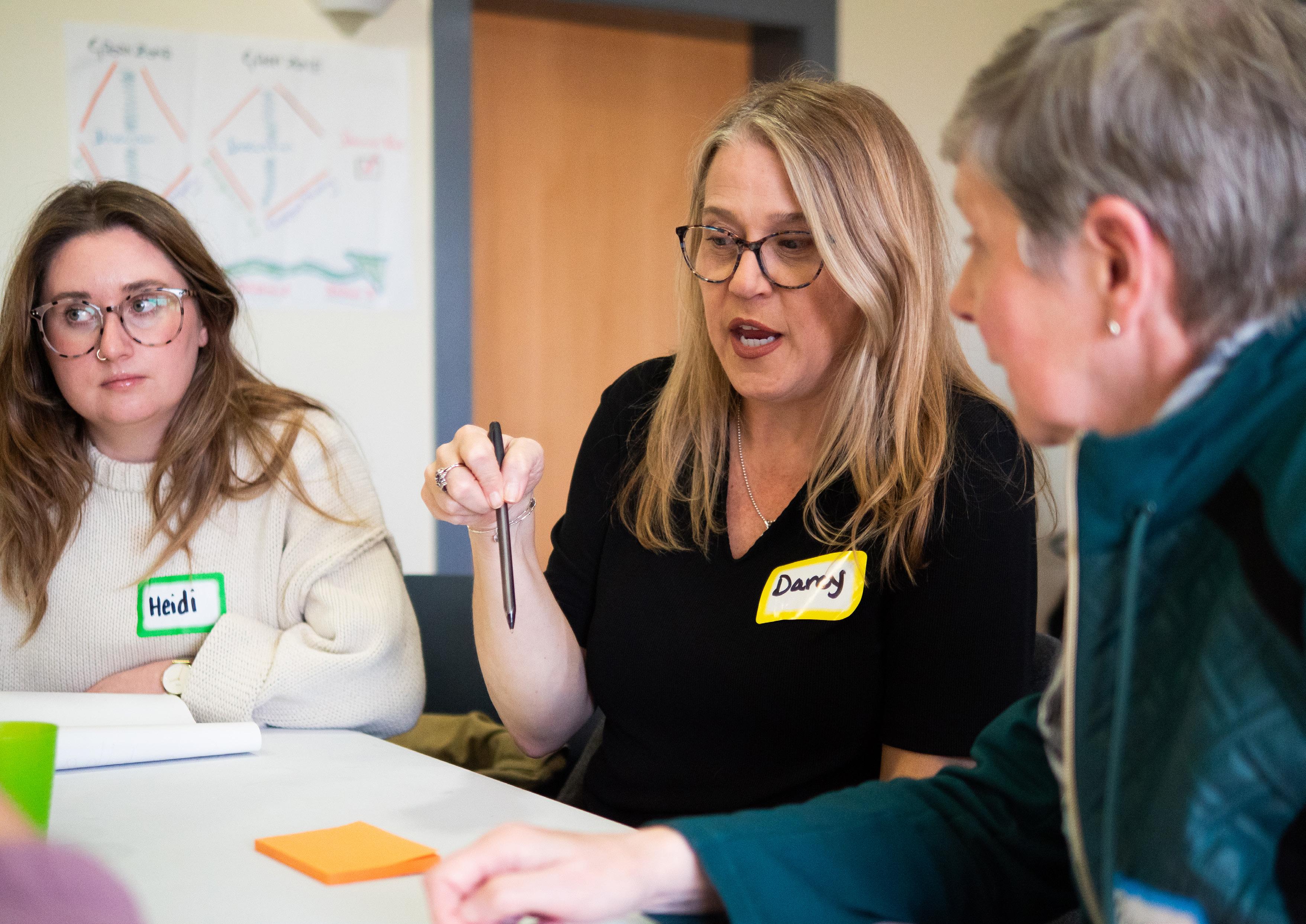
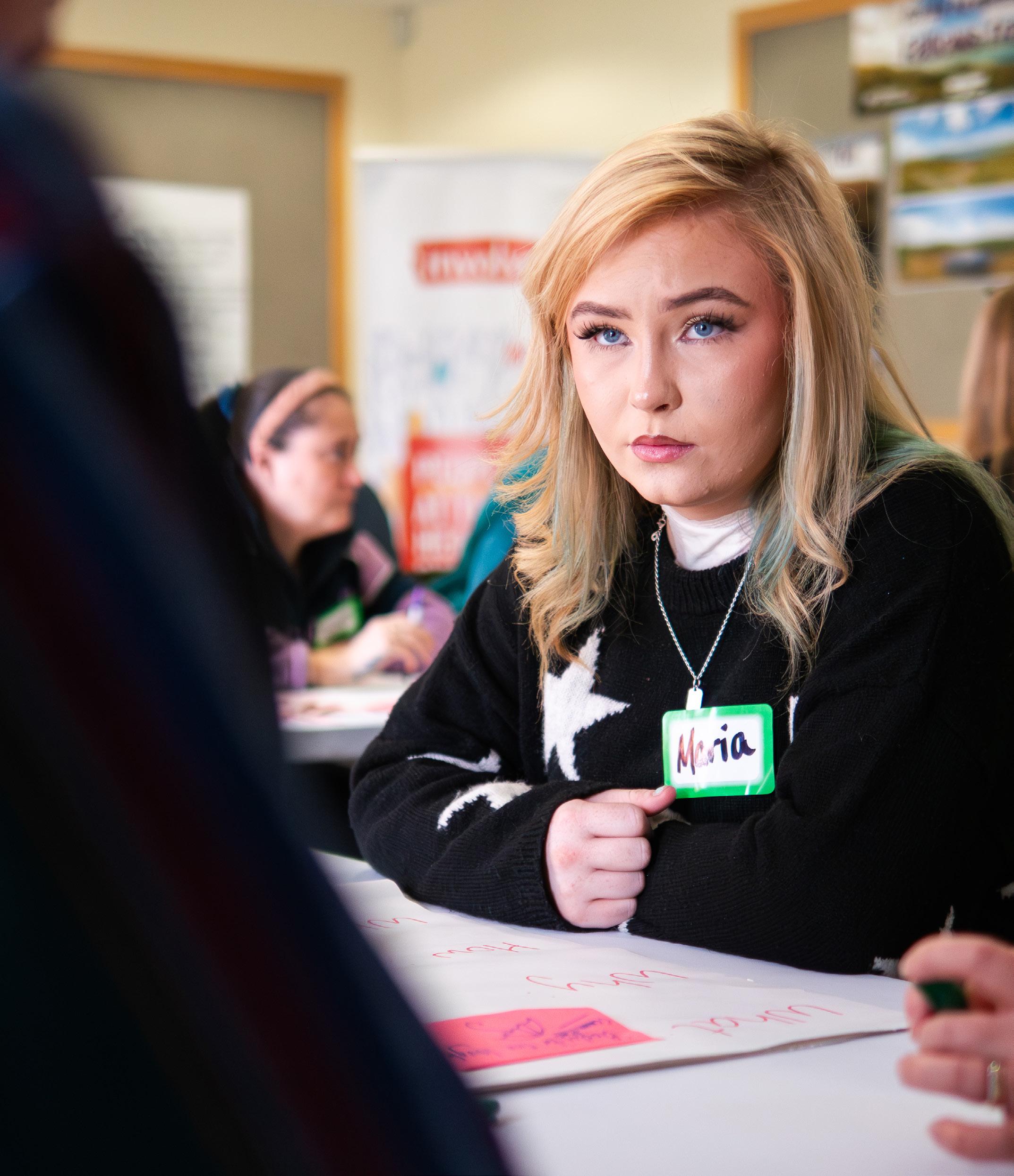
Advice and Impact Group: role and composition
The Advice and Impact Group support this process by providing oversight of the whole project, bringing their subject-matter, policy, and local expertise to ensure that the project is balanced and impactful.
The role of the Advice and Impact Group is:
• To help ensure that the public deliberation is balanced and accurate in terms of its content.
• To act as a sounding board for potential activities or decisions about the process or content.
• To help guide the deliberative outcomes so that they are useful and impactful for policy makers.
• To act as an informal ambassador for the work and help disseminate the project findings.
Advice and Impact Group members were asked to provide feedback to Involve on key aspects of the design, including:
• How to secure institutional buy-in from key actors and decision makers with responsibility and/ or influence on Carlingford Lough
• What information is presented to the deliberation sessions.
• Who is invited to present that information (where information is given by speakers).
• What outputs will be most useful to policy makers.
• How best to disseminate the project findings so that its impact is maximised.
The Advice and Impact Group were selected to offer a range of perspectives and expertise.
Aidan Campbell Centre for Cross Border Co-operation
Colum Sands Rostrevor Action Respecting the Environment
Conor Patterson Newry and Mourne Enterprise Area
David Holmes Warrenpoint Port
Declan Owens Ecological Justice Ireland
Heidi McIlvenny Queen’s University Belfast
Niall McCarthy Greenore Port
Richard Nairn Author
Sarah McLean Loughs Agency
Suzie Cahn The Wheel
Robert Walsh Northern Ireland Marine Task Force
David Holmes Warrenpoint Harbour
Sarah McLean Lough’s Agency
Conor Patterson Newry and Mourne Enterprise Area
Colleen Dowdall and Mark Cumming Warrenpoint, Burren, and Rostrevor Chamber
Sandra Woods Local diver
Heidi McIlvenny Queen’s University Belfast
Francis Donnelly Carlingford Sailing Club
Tizianna O’Hara Co-Operative Alternatives
Colum Sands Local Activist
Aidan Campbell Centre for Cross Border Co-Operation
As part of the process, each member of the Jury received a ‘letter’ from the creatures who live in the Lough.
This was to inform them of the voices that don’t have the ability to advocate for themselves.
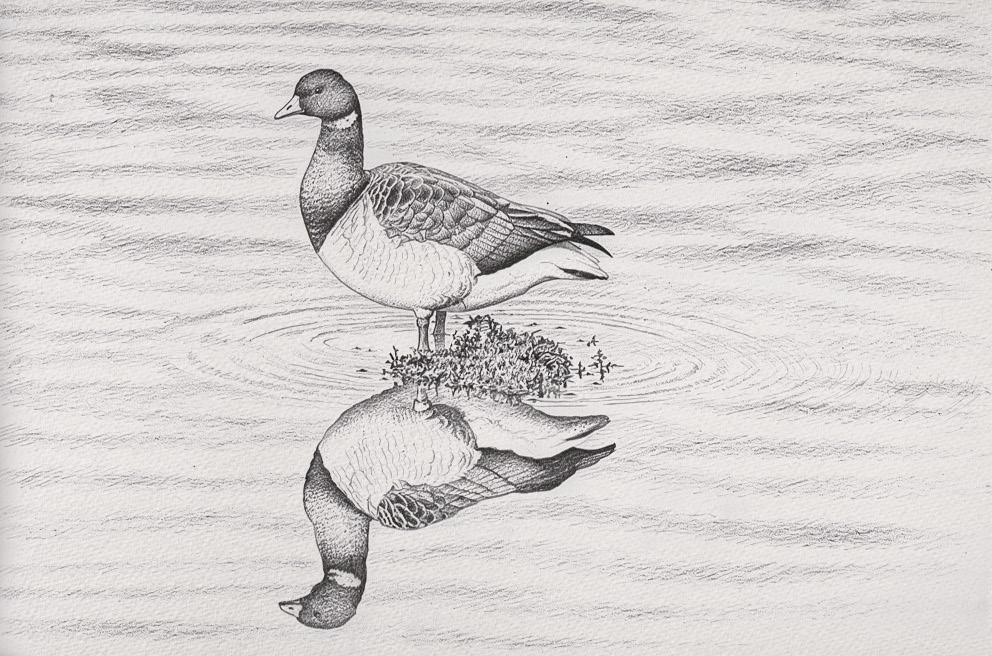
Each autumn I arrive at Carlingford Lough, bone-tired from the Arctic winds, carrying the memory tundra, and long light. The wide mudflats here give me space to rest. The eelgrass beneath the tides of the lough feed my body. I have come back to this lough for generations.
My parents came here. Their parents before them. We remember this place in our bodies.
But when eelgrass thins, shores harden, and disturbance from noisy engines increase...
...I must work harder for less.
That strain affects whether I survive, breed, and whether my young will ever learn this route. I share this place with you. Care for the water and leave room for tides to move.
If I stop returning,something ancient has been broken.

To: From: Light-bellied Brent Goose
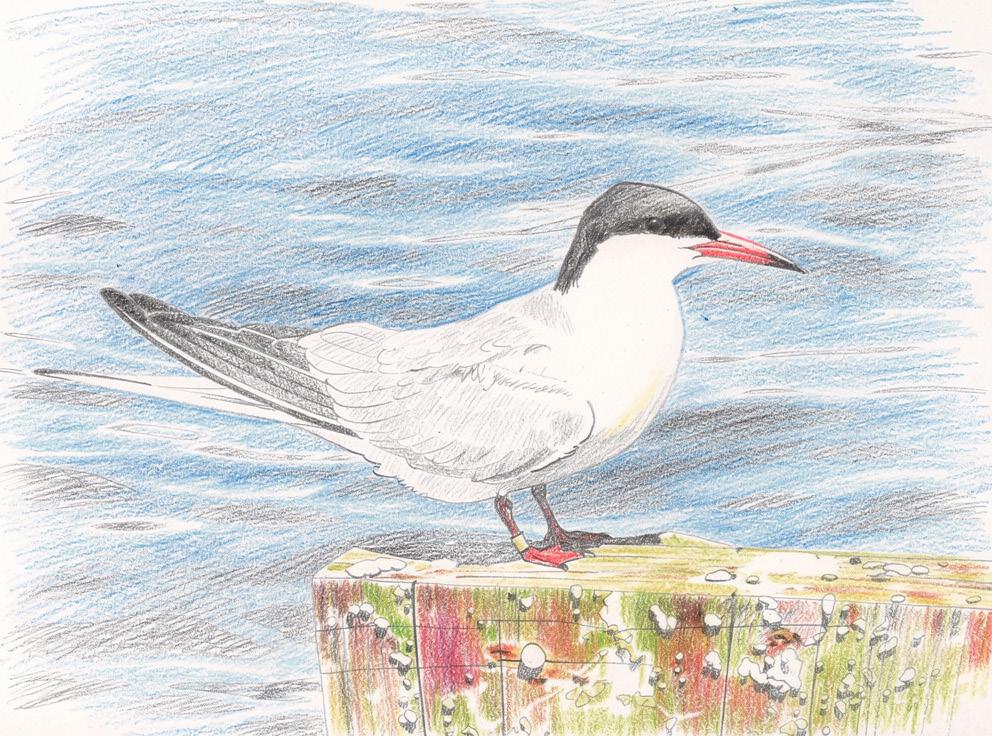
Each autumn I arrive at Carlingford Lough, bone-tired from the Arctic winds, carrying the memory tundra, and long light.
The wide mudflats here give me space to rest. The eelgrass beneath the tides of the lough feed my body. I have come back to this lough for generations.
My parents came here. Their parents before them. We remember this place in our bodies. But when eelgrass thins, shores harden, and disturbance from noisy engines increase... ...I must work harder for less. That strain affects whether I survive, breed, and whether my young will ever learn this route. I share this place with you. Care for the water and leave room for tides to move.
If I stop returning, something ancient has been broken.
To: From: European Eel
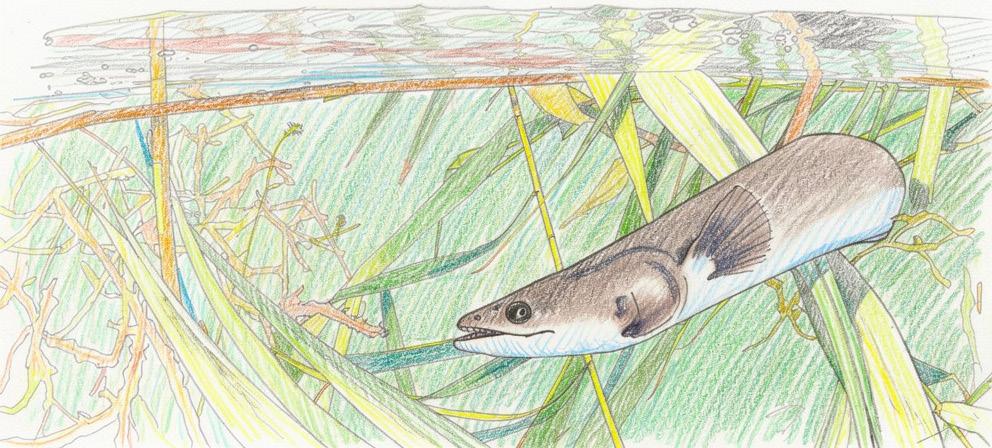
The fates of my ancestors and yours have been closely entangled for centuries.
I hatch far away in the Sargasso Sea and spend many years growing in places like this Lough before returning to spawn. My journey depends on connected waters, clean channels, and safe resting places.
When migration routes are blocked, waters polluted, or beds disturbed, fewer of us survive to complete our life cycle. This Lough is not just habitat to me, it is part of a migration that has existed for millions of years.
We are struggling now - if this chain breaks it may never be repaired.
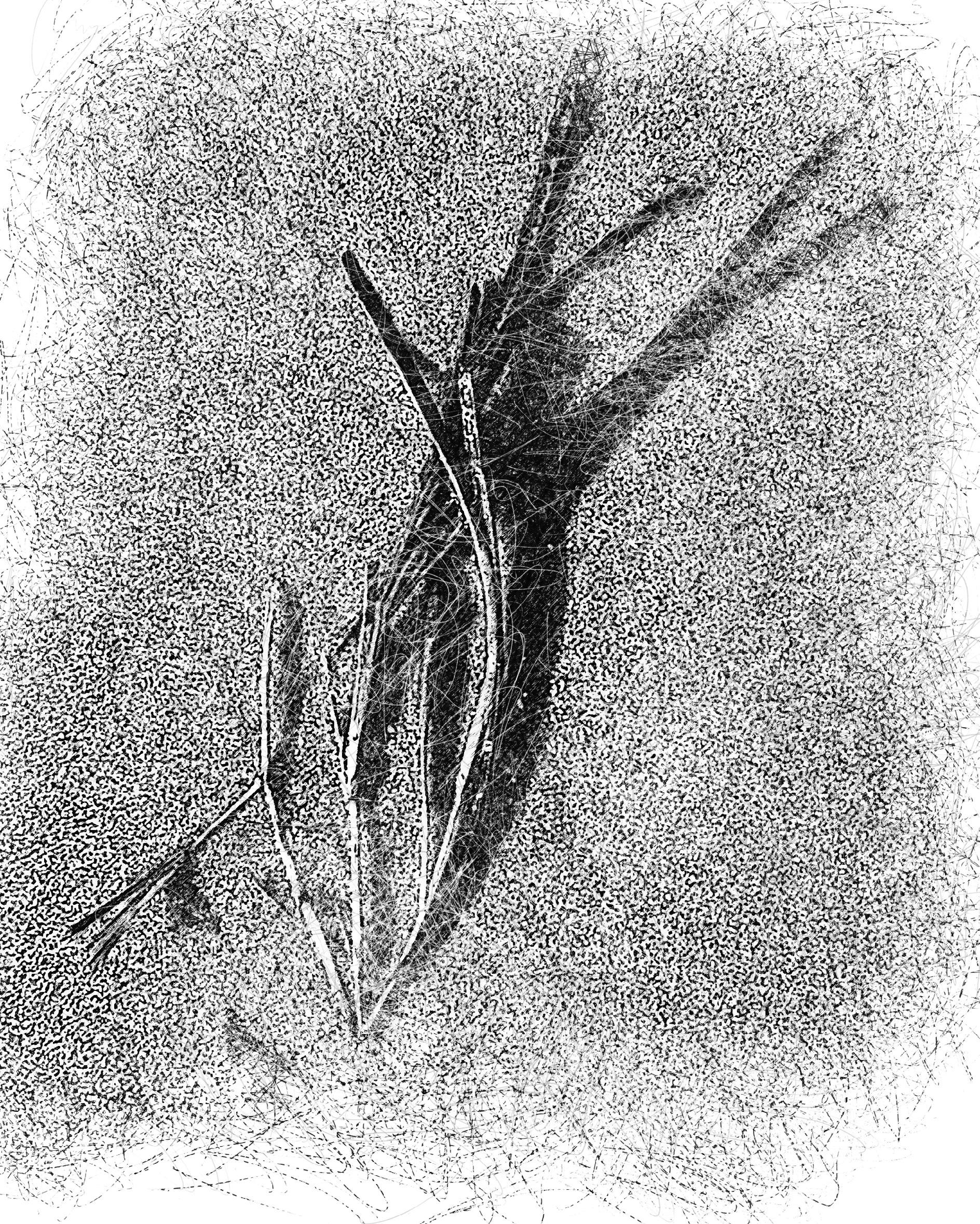
I grow just beneath the surface.
I stabilise sediments, improve water clarity, and provide food and shelter for birds, fish, and invertebrates. Brent geese depend on me directly, and many others rely on the calmer conditions I create.
To:
From: Dwarf Eel Grass
I am sensitive to pollution, dredging, shading, and changes in water flow. When I disappear, erosion increases and the whole system becomes less resilient.
Protecting me protects far more than a plant.
To:
From: White Lobe Shell
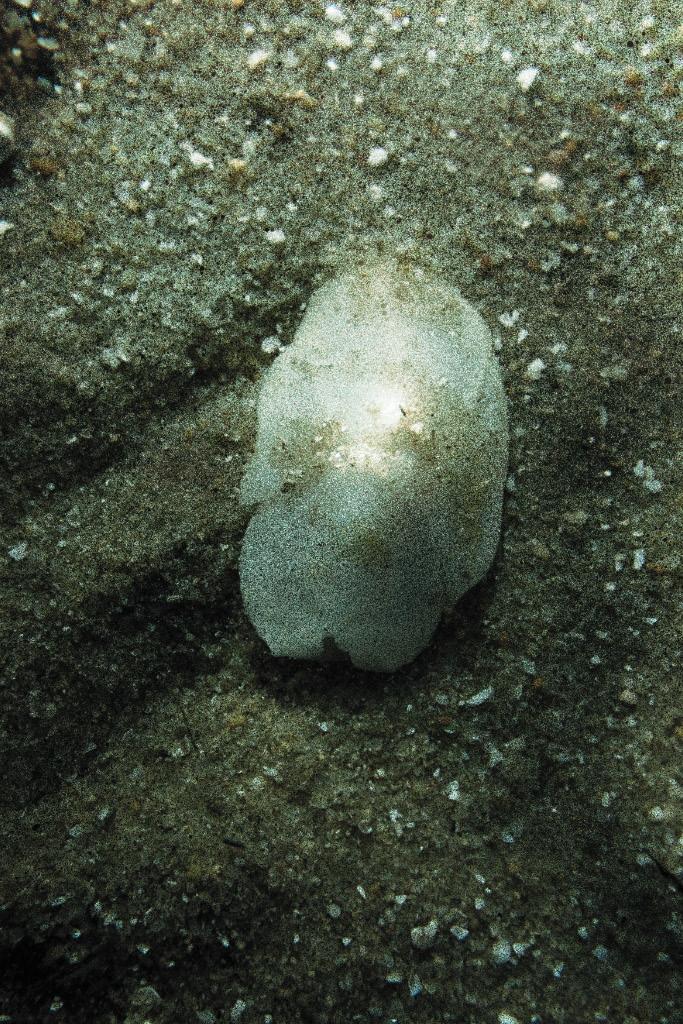
I
live buried in the sediments of the Lough.
When I eat, I keep the seabed alive by turning over the mud and silt. I need sheltered, protected places. I cannot move away from disturbances in the lough bed. If sediment is repeatedly churned, polluted, or compacted, I simply die where I am.
Because I am small and quiet, my loss is rarely noticed - but it signals declining seabed health long before larger species are affected.
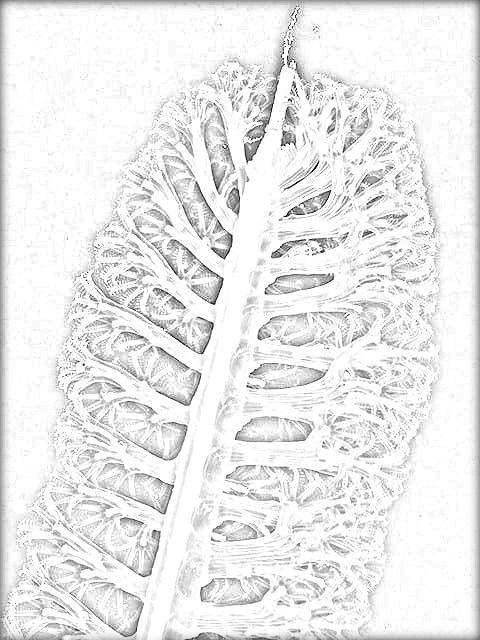
Slender Sea Pen
anchor myself in soft, undisturbed mud and grow slowly, rising like a small flame.
I need stable conditions and low disturbance to survive.
In turn, I provide shelter for young fish, snails, and other tiny creatures. Trawling, dredging, or repeated seabed disruption destroys my habitat instantly.
When I am present, it means the seabed has been allowed to remain intact.
When I am gone, it often means disturbance has become routine.
To:
From: Oyster Plant
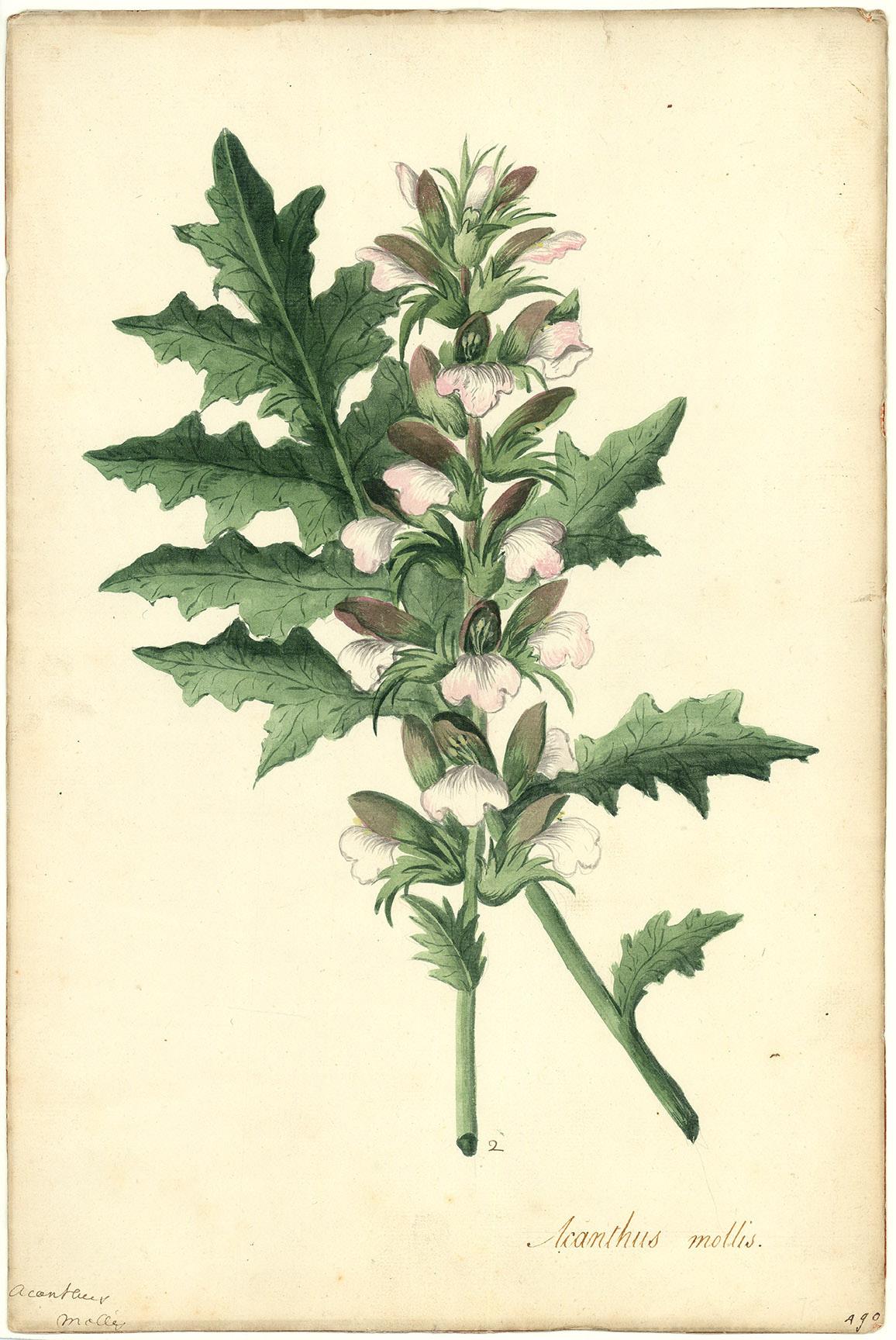
I grow along the shingle and upper shore where few plants can survive.
I help hold these shifting edges together, softening wind and salt and making space for other life to take hold. I depend on open, undisturbed ground and natural movement of the shore. I am hardy , but when beaches are trampled, built over, or cleared too thoroughly , I disappear.
I cannot relocate easily , and I do not return quickly .
My presence tells you the shoreline is still allowed to move and recover in its own time.
When plants like me are lost, the shore becomes poorer and less resilient.
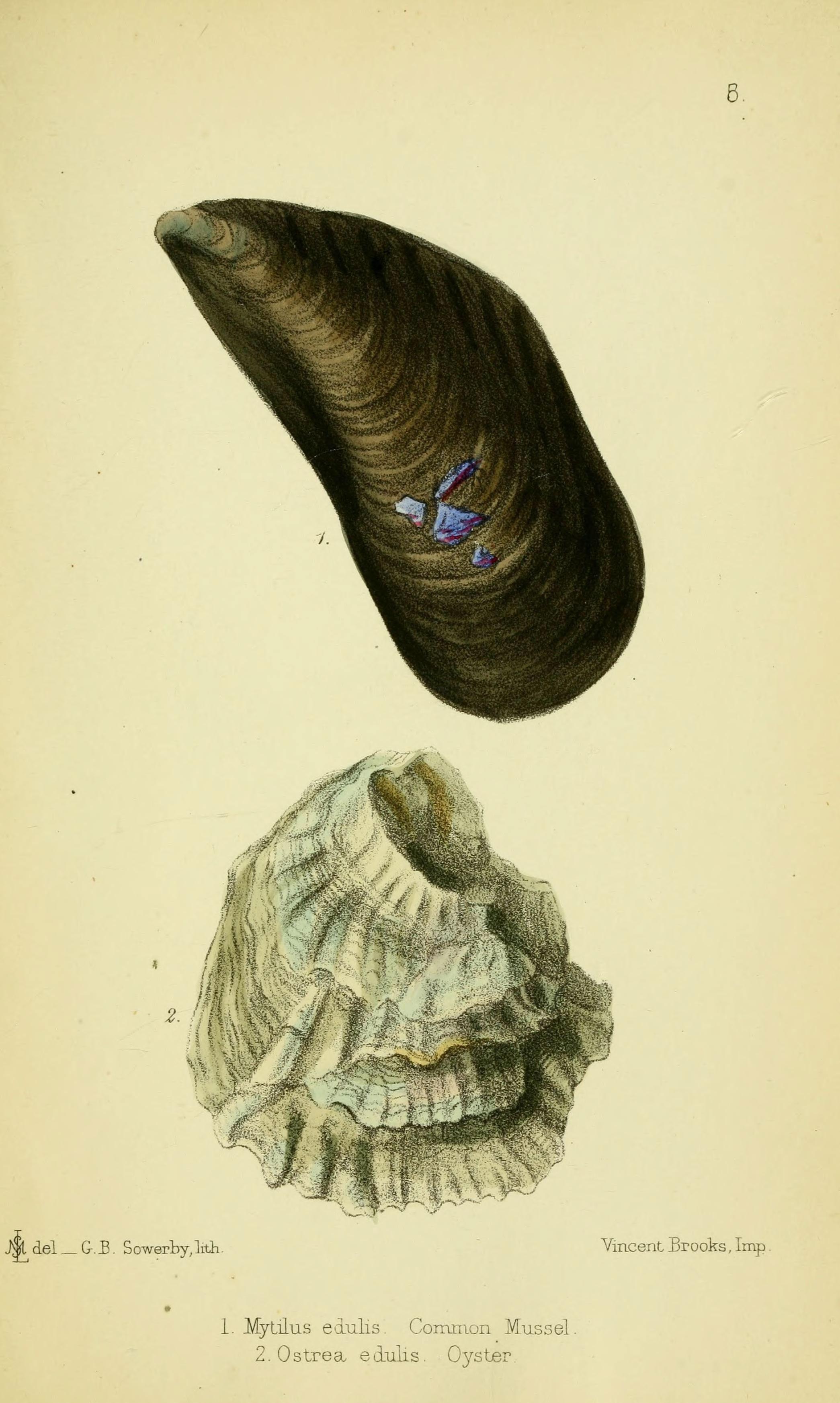
I once formed reefs here that filtered water, supported fish, and created complex habitats.
We held the seabed together.
Overharvesting and disease removed us almost entirely. Where restoration is attempted, clean water and gentle seabed conditions are essential.
If we are allowed to recover, we improve water quality for the whole Lough.
We are not just a specieswe are infrastructure.
To:
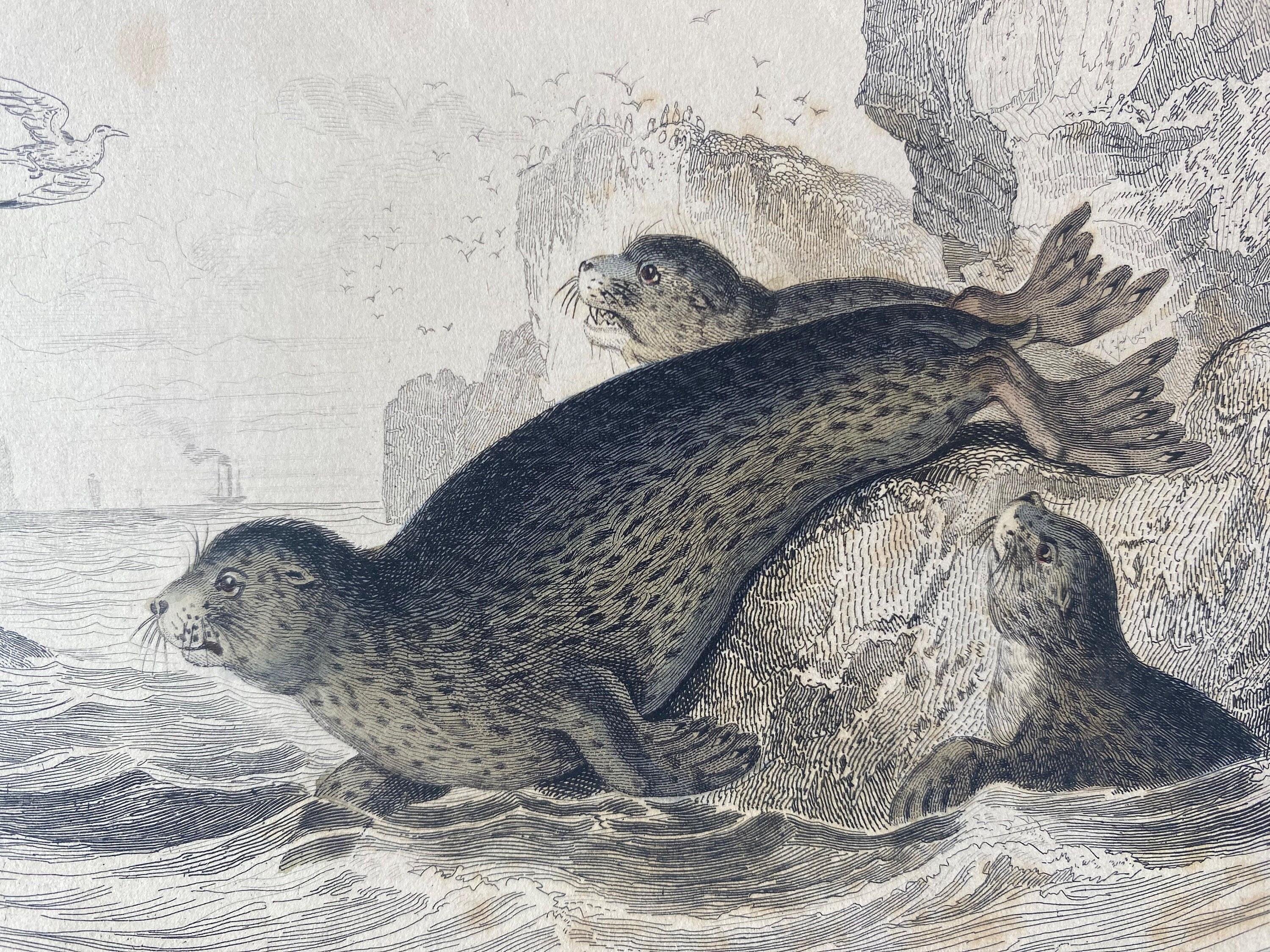
From: Harbour Seal
I live in and around the Lough year-round.
I need quiet haul-out sites to rest and raise pups, and healthy fish populations to feed. Noise, repeated disturbance, and changes in prey availability affect where I can safely remain.
When I leave an area, it is usually because the balance has tipped too far. My presence is a sign that the system is still functioning.
From: Six-spotted Burnet
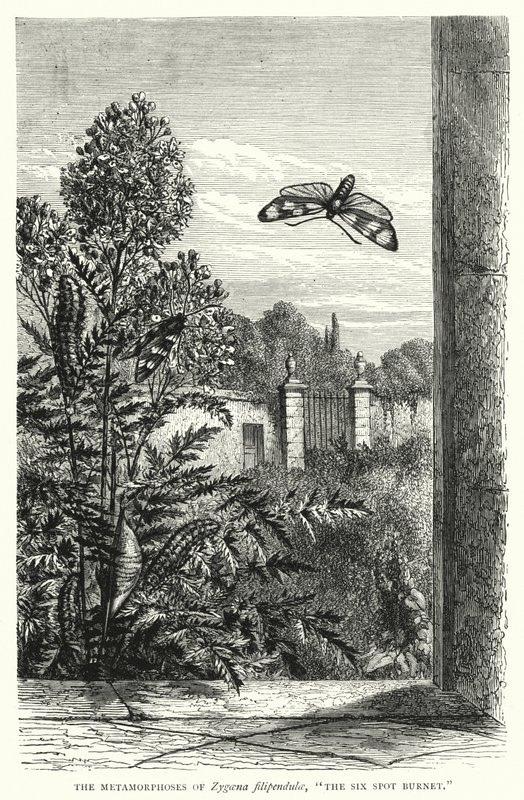
I am a day -flying moth found in coastal grasslands.
I depend on specific plants and gentle use of the land.
Pesticides, habitat loss, and o verly tidy landscapes remo ve what I need to survive.
Look after me and I will help your harvest grow. When species like me disappear, it often means the margins - the places between uses - are no longer being cared for.
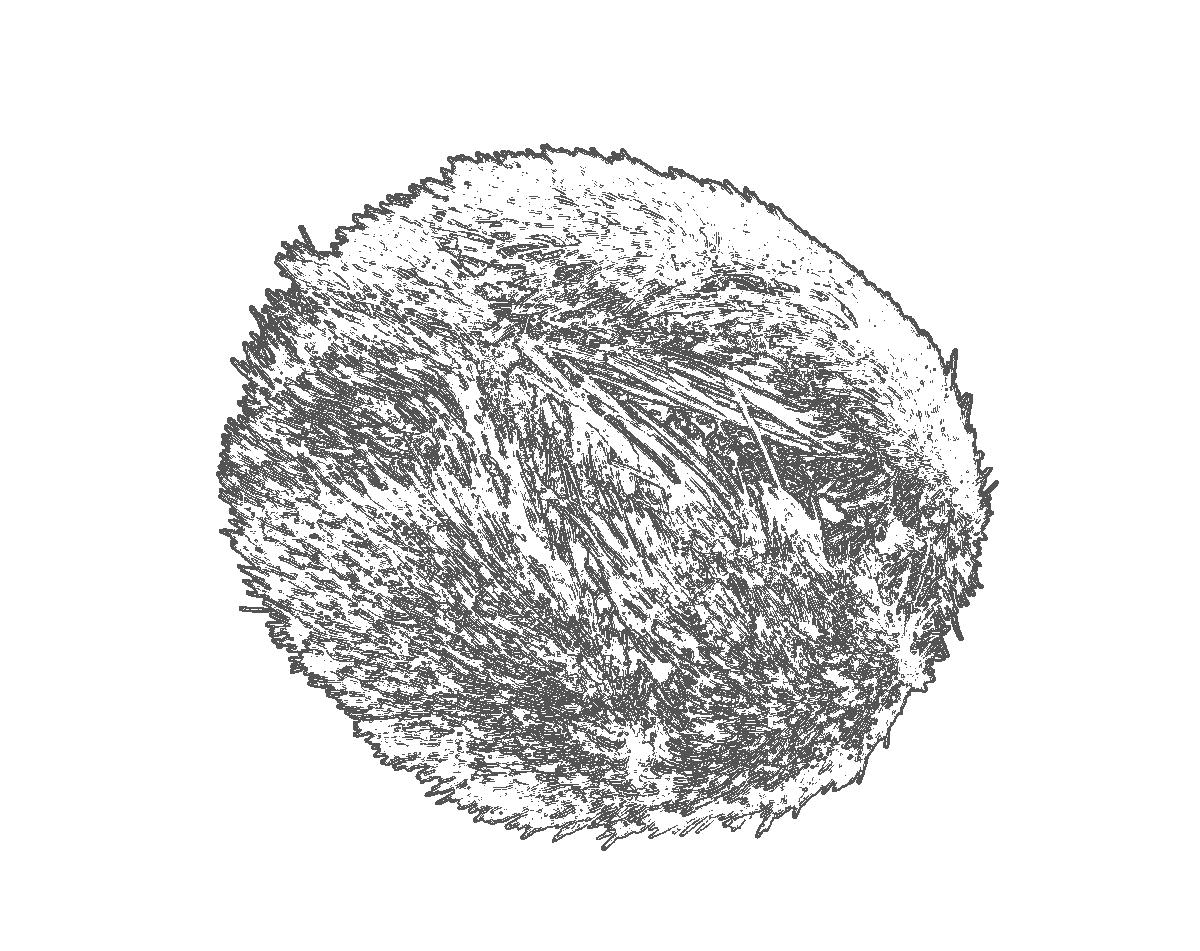
To: From: Sea Potato
I keep sedimentsoxygenated and healthy by burrowing and feeding. This helps other seabed life survive. I’m a prickly creature that lives beneath the sand.
When the seabed becomes compacted, polluted, or smothered, I cannot breathe. A lifeless seabed often starts with the loss of animals like me.
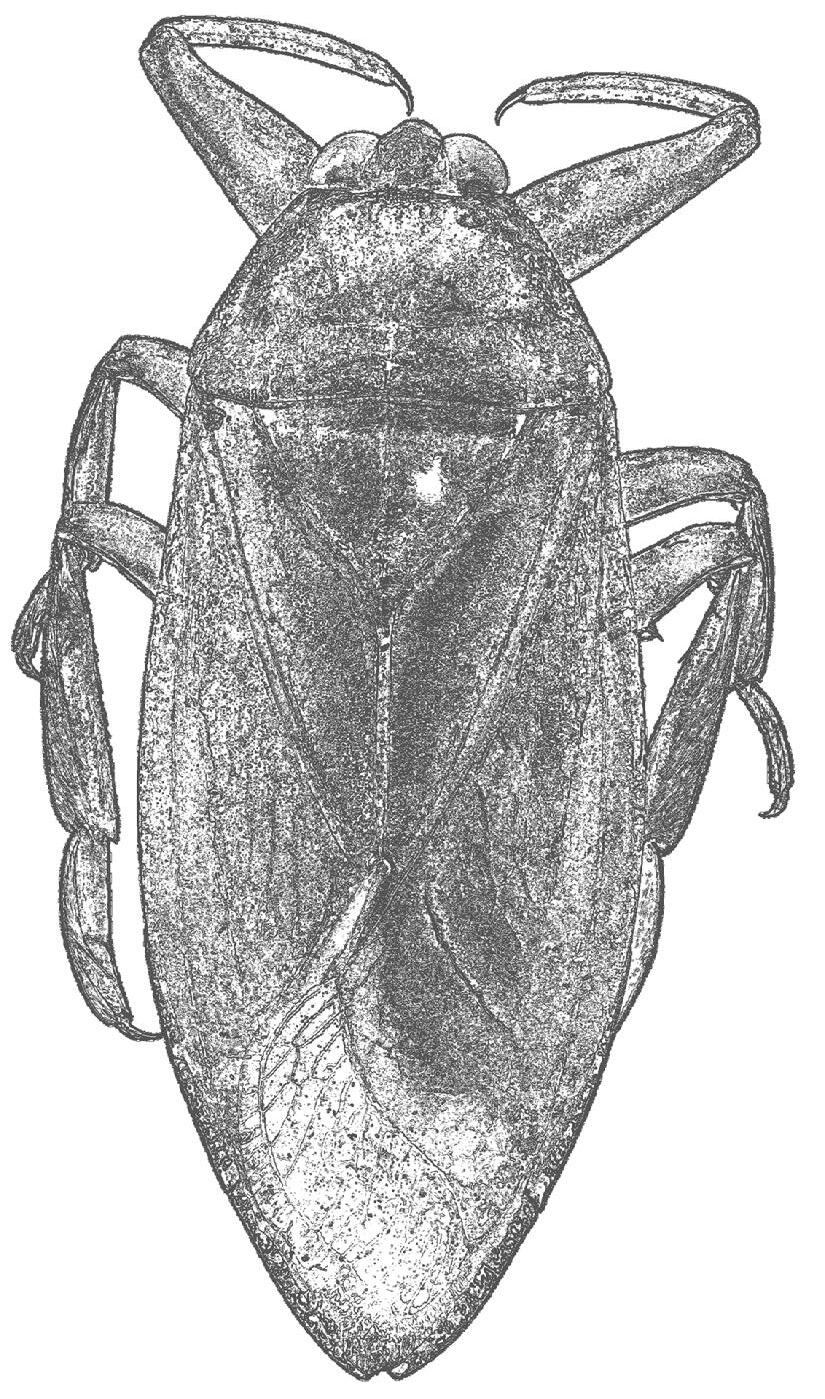
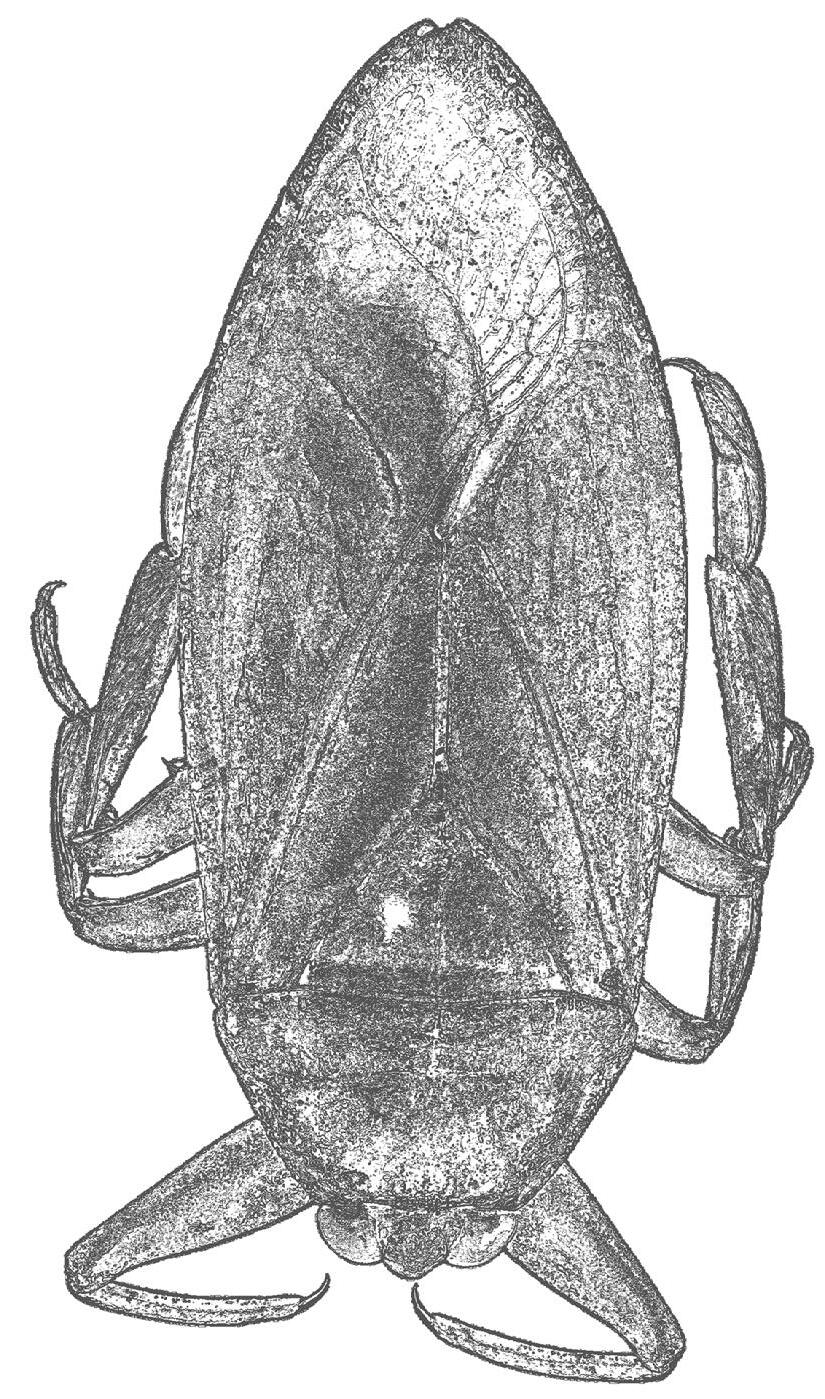
To: From: Brackish Water Beetle
I live in water that is er fully fresh nor y salty like the small that form in arshes or in pools ed by Spring tides. here are not many places ke Carlingford Lough. This nd of habitat is rare and asily damaged. Changes in ainage, pollution, or linity can wipe out my tire population in one place. otecting small, specific bitats protects biodiversity at cannot simply move elsewhere.

To:
From: Sea Lamprey
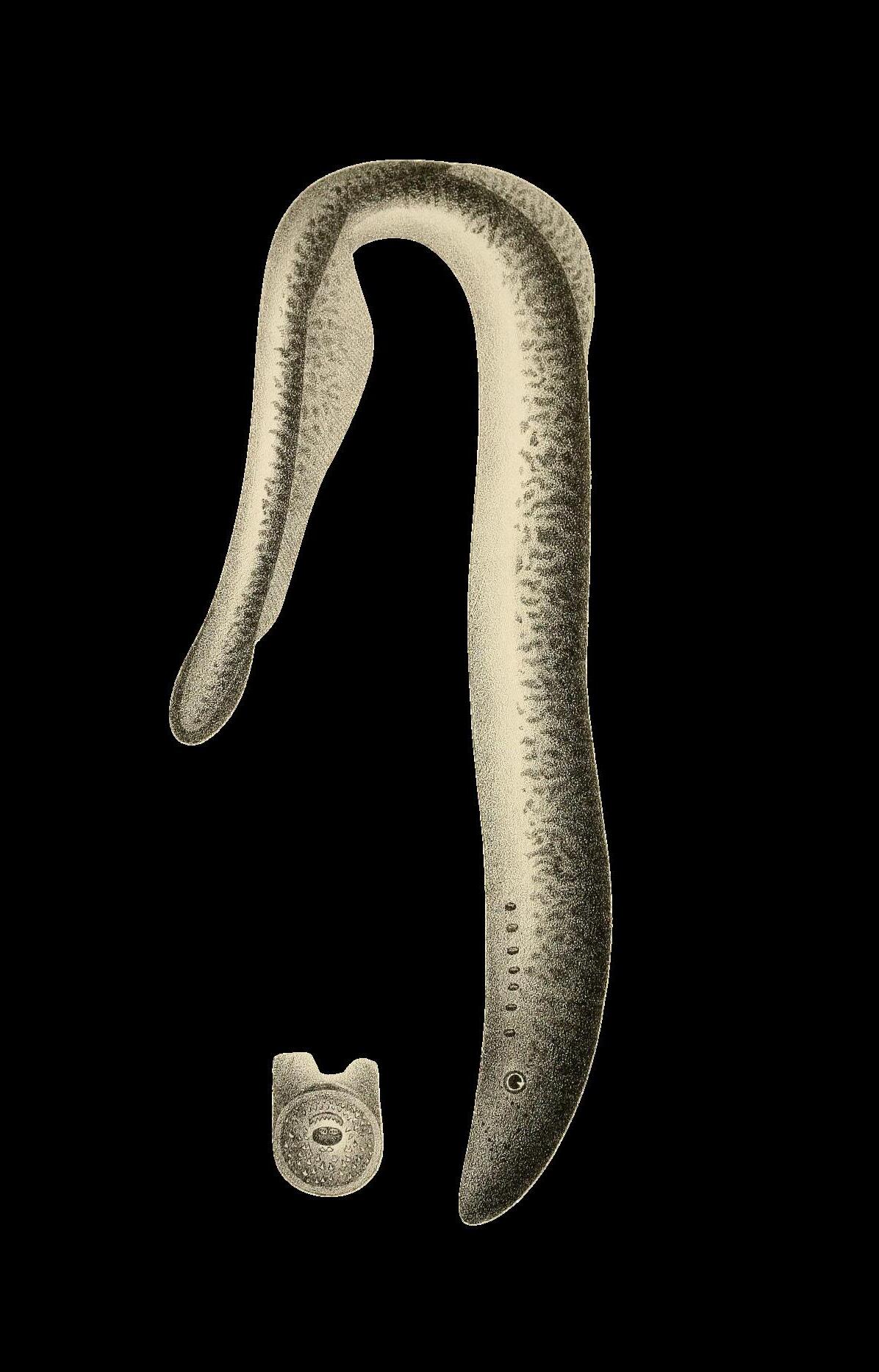
I have existed since before most modern fish evolved. I build my nest from the stones of the riverbed before it empties into Carlingford Lough.
If that river is polluted, or if its connection to the sea is blocked, I cannot spawn and 360 million years of survival will come to an end.
Barriers, siltation, and poor water quality prevent me from completing my life cycle. When ancient species like me decline, it signals rapid, unprecedented change. We have survived extinctions and ice ages, but we may not survive this moment.
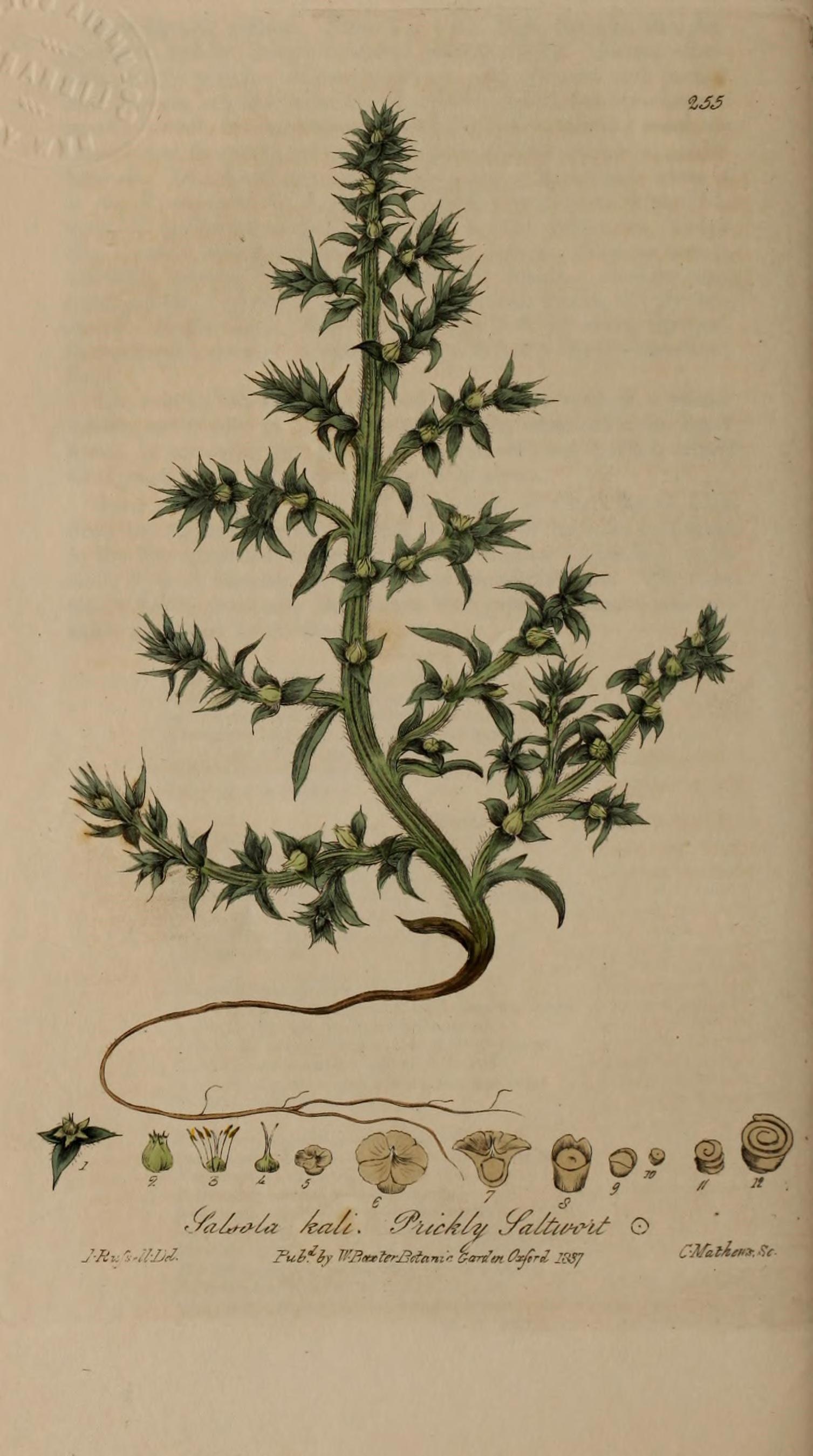
You know me, even if you don’t know my name.
I grow in clumps along the edges of the Lough where land and saltwater meet.
I help stabilise shorelines and absorb flood energy.
I need space to shift naturally as tides and sea levels change. When shorelines are hardened or squeezed, there is nowhere left for me to grow. Losing plants like me makes flooding and erosion worse for everyone.
In deliberative democracy, a minority report is a recognised and valued part of the process. It exists because the goal of a citizens’ jury is not to manufacture unanimity but to ensure that all serious arguments have been heard, tested, and recorded. Where a juror or group of jurors holds a well-reasoned position that the majority did not adopt, that position is given formal space alongside the majority conclusions.
This matters for two reasons.
A report that presented only the majority view would erase the genuine complexity of what was deliberated and misrepresent the process.
Deliberative processes are most valuable when they capture the full range of seriously held positions, because the questions a jury considers rarely have a single right answer, and the public debate they feed into is always ongoing.
The minority report included here concerns the question of governance, where one jury member argued for a more fundamental overhaul of existing structures than the majority recommendation calls for.
It is included as a substantive contribution to an ongoing conversation about the future of Carlingford Lough.
Loughs Agency as lead body
I oppose the suggestion that Loughs Agency should take overall precedence for all stakeholders on and around Carlingford Lough, and I propose an alternative.
The Agency’s stated mission concerns only the fisheries and marine resources of the Foyle and Carlingford catchments, and its attention is divided between two loughs. I have noted a clear, likely unintentional, bias towards Lough Foyle in its monitoring and activity, with its headquarters in Derry. Our jury, by contrast, is dedicated solely to Carlingford Lough and its environs.
In my discussions with fellow jurists, I noted a common consensus, echoed in the secondday presentations, that there is a serious lack of communication and coordination among stakeholders, and that a body is needed to take on a coordinating role. As currently structured, Loughs Agency cannot fulfil that role — its remit is not wide enough — and I do not believe it can be restructured to do so. It is a statutory body created through 1998 legislation; major change would require agreement from all parties at Stormont and Dublin, and adding industry and lobby groups creates a bureaucratic quagmire.
Even if the Agency could be fundamentally changed, fairness would demand equal input from citizens around Lough Foyle, drawing us into a larger debate in which, on population grounds alone, our area would inevitably become the junior partner. I do not believe the jury wishes to see that.
I do support strengthening Loughs Agency so it can work without obstruction and with full stakeholder cooperation — but only as one first-tier agency under the umbrella of a new body.
My proposal: a Carlingford Lough Central Committee
The Committee I propose would facilitate cooperation, coordination, deliberation, mediation and outcomes for the entire Carlingford Lough region, with the One Community approach and the protection and improvement of the natural environment paramount. It would involve all stakeholders: DAERA, Parks and Wildlife, DfI, Louth County Council, Newry, Mourne & Down Council, chambers of commerce, sporting organisations, Warrenpoint and Greenore port authorities, marinas and sailing clubs, aquaculture, fishing and the farming community, along with the many relevant departments in Dublin and Stormont.
Tourism would be strongly represented, with eco-tourism offering a sustainable source of employment and income.
Poor communication is stakeholders’ greatest gripe, followed by lack of action and little obvious accountability. A Committee able to address all issues would maximise efficiency, connections, transparency, accountability and outcome.
Since no group would accept being left out, I propose a sector system: divisions such as Tourism, Aquaculture, Infrastructure, Governments (statutory bodies), Loughs Agency, Harbour Authorities, Chambers of Commerce, Sporting Clubs and local Councils, each receiving one seat. Residents, entitled to proportional representation, would receive four seats — two each from north and south.
The posts of Chairperson, Secretary, Treasurer and Outreach/PRO would always be held by resident members with no membership of any other sector, serving fixed terms of perhaps two to three years.
In this way no single sector would have undue influence, with local people controlling the discussions. A five-year residency requirement would be a requirement. Funding can come largely from governments and local councils, with additional streams such as the Lottery and the Shared Island initiative. Though unorthodox, a successful Committee and sector system would create a workable template for other areas — not only Lough Foyle but areas within single jurisdictions across Ireland and abroad — seamlessly marrying environmental protection with sustainable economic development while including local citizenry in decision-making.
The website as an instrument of accountability
Integral to this proposal is the website already agreed by the jury. It would publicise the Committee’s work; serve as a noticeboard for events, news, campaigns, sport and music (even local obituaries); provide access to data, including on the health of the natural environment; and publish Committee motions, debates and decisions. It would also receive articles and feedback from local people, ensuring ongoing local input. Any sector not fulfilling its responsibilities could be held to account both in Committee and via the website.
We need accountability. No one will comply otherwise. Bad publicity scares decisionmakers and any who act with callous disregard for the health of our area and its people. Let’s ensure they have no place to hide.
Advertising and small service fees should fund the website and at least one full-time post — someone unattached to any sector, answerable to the Committee but editorially free within agreed parameters. No bias, but no censorship. In time, a local radio station and online newspaper could follow, further forging the One Community we all desire.
Although these suggestions may seem considerable, I strongly feel they are within easy reach of all who reside in, work in or make decisions for the Carlingford Lough area.
We all agree on the need to get stakeholders working together, and I see no other means of achieving this than one central committee. Loughs Agency will not meet the needs of this jury as I understand them. A Carlingford Lough Central Committee will.
With thanks to