“LIMITS LIKE FEARS ARE OFTEN JUST AN ILLUSION” - MICHAEL JORDAN
HAYWOOD
HIGHSMITH JR. The Hidden Gem of the Philadelphia 76ers
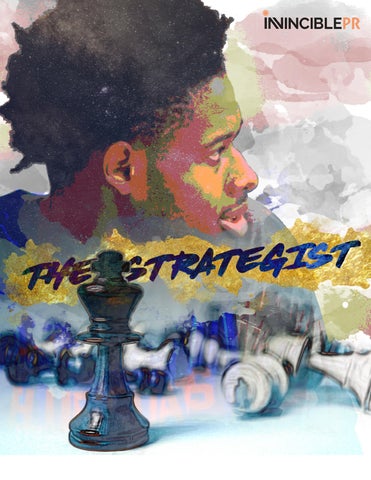
Chess, also known as the “royal game”, is recognized as one of the most sophisticated yet rewarding games to play. Imagine a chessboard where each black and white piece has been strategically placed by the players as they patiently wait for the right moment to strike. As each rook, bishop, pawn, and king glides from square to square, the ticking sound of the clock grows deafening as the seconds intensify. Suddenly, as the knight forces the opponent’s king into a corner, the checkmate is delivered. Now there is only one outcome…Victory! That is exactly what Haywood Highsmith, Jr. achieved as he recently became a player for the Philadelphia 76ers’. In our interview with this hidden gem, we explore how his strategic moves led him to the NBA, the key component to making your dreams come true, and why D1 schools are not always the better option.
InvinciblePR: Hi. Very nice to meet you.
IPR: You’ve had a chance to experience a couple sweet victories while at Wheeling as well, tell me a bit about those.
Haywood Highsmith Jr.: [ Grins] Nice to meet you as well. IPR: First off, congrats on becoming an official Philadelphia 76ers player. I know the NBA is always the ultimate goal, so again congratulations.
HHJ: [ Smiles] yeah, I’ve had a couple victories. I’ve been a 2x 1st-Team All-Mountain East Conference (MEC) in 2016 and 2018, 1st-Team Division II All-American in 2018, and MEC tournament Most Valuable Player in 2018.
HHJ: [Smiles] Thank you. IPR: I’ve been following your story for quite some time, and it has been one wild adventure. Would you say the adventure began in high school when you had to decide which school to play for, Archbishop Curley or Mount Saint Joseph? Having to be able to foresee which school was going to give you the most playing time and take you one step closer to your dream which ultimately lead you to where you are now?
IPR: Would you agree that senior year was your explosive year? HHJ: I would say the end of my freshman year through the end of my sophomore year were more of my explosive years. I think my senior year people just began to acknowledge it and gave me credit for my “explosiveness” [laughs]. IPR: Why do you say the end of your freshman year through your sophomore year, verses your senior year?
HHJ: Kind of. I believe I was going to get where I am today regardless because I believe in my grind, but it did teach me how to foresee my moves before taking them and figuring out which moves would get me closer to my dream.
HHJ: I’d say the end of my freshman year only because the guy in front of me, Timothy Goff, became injured and had to sit out for a while. So when given the
IPR: I heard that you did your own college recruiting, is that true. Was that a foreseeing moment as well? HHJ: Yeah I would say it was a foreseeing moment, for sure. I knew I wanted to play college basketball and although I was getting some attention I don’t believe my high school coaches helped me enough to get me the level of exposure and attention I wanted, so I took the initiative myself to talk to some coaches. I emailed them directly, some replied and some didn’t. I think I made a good decision. I received a little bit more attention and a couple of interest actually came out to see me play. Now-a-days I think it’s better to just do things yourself; just because colleges aren’t sending you brochures and tons of information doesn’t mean they’re not interested it just means they don’t know about you. It’s all about being independent and taking steps in the right way. If you want to play college basketball take the steps to do that. Reach out. These coaches... they will reply! You may not get replies back from the top Division 1 schools but lower level D1’s and D2’s they will reply and will even come to one of your games if it’s local. IPR: That doesn’t happen often, that’s what coaches are for—they are supposed to be the bridge between you and the colleges. What were the coaches’ initial responses to you when deciding to recruit
for yourself? HHJ: Some of the colleges respected me for doing it, especially those who replied to the emails because a lot of people don’t do that. Some coaches even came to a couple games and if they weren’t interested passed me along to some others and it helped me in the long run. IPR: From there you attended Wheeling University? HHJ: [Shakes his head in agreement] Yeah. IPR: How was that experience for you, both on and off the court? HHJ: [ A soft grins covers his face] It was a great experience, I think. I’m glad I went to Wheeling; it’s definitely changed me as far as who I am. IPR: [ Smiles] How so? HHJ: The cultures (West Virginia and
Baltimore) are just so different and I never would have been exposed had I not left Baltimore. I’ve gotten to see so many different cultures and the different ways they do things. It’s good to see a variety of people doing things differently, because it than expands your mind beyond the “normal” that goes for on the court as well. Overall I loved it and it wasn’t too far from my hometown so my parents could come and visit me, but far enough where I could get away and not be involved with what was going on in Baltimore. IPR: I am one that’s for going away to school and exploring what other cities and states have to offer whether it’s for educational purposes, career advancement, or like you said just being exposed to a different culture which in itself opens up a completely different world. I’m glad you took full advantage of everything West Virginia had to offer. HHJ: For sure; I completely agree.
chance, I took full advantage and made the most out of that situation. The summer following freshman year I really got into the grind mode and just practiced and practiced. When I went back sophomore year I was even better than when I left and received more playing time. By junior and senior year my coaches knew what I was capable of and that’s when all of the awards came. So for me it was freshman and sophomore year and just receiving the “honor” senior year. IPR: After receiving some recognition, it’s my understanding that colleges were more interested in you, and even asked you to transfer... is that right? HHJ: [sarcastically grins] yeah a couple of D1 coaches reached out and asked if I would consider transferring into their program, but I wasn’t interested. IPR: D1 schools are a big deal, why did you make the decision not to transfer and to stay at Wheeling? HHJ: Some are, yes, but I’m all about loyalty. If you weren’t with me from the beginning, I’m not one to let you ride the coattail of my success after you didn’t want
to give me a chance. I’m a very loyal person. I believe in being loyal to my coaches, loyal to my teammates, and school. I also didn’t think it was wise to go to a Division 1 school and risk the possibility of maybe being their 4th or 5th option to come off the bench. Like you said, I was already being recognized so I decided to stay and make the most of this situation and whatever happens, happens. Just because I played at a Division 2 school doesn’t mean my opportunities were limited. I made the most out of every opportunity given, but I believe in being loyal to the people that stuck with me from the beginning and that was Wheeling. IPR: During your senior year you had a major obstacle to overcome that included your forward, Patrick Moseh (respectfully known as Pat). Tell me about that. HHJ: [Pauses] Pat tore his ACL (Anterior Cruciate Ligament) senior year and wasn’t able to play in the MEC tournament. IPR: Do you remember getting the news? What were you and your teammates thoughts? HHJ: I was shocked and didn’t know how
toughest people become tougher. I think that was adversity and I became who I am. IPR: Are you still close to everyone from College? HHJ: Yeah, very close. We have a group chat on Snapchat and Instagram and we text each other. I also talk to my college coach probably once a week, and I go to see him when I can. His kids and I still talk often. It’s one big family [ smiles]. IPR: Let’s fast forward a little. January 8, 2019, you considered that as one of the best days of your life, and you replay that day over in your head every day, at least once a day. HHJ: [His face lights up as he tries to hold back his smile] Wow, you really did your research with this one, for sure, [laughs]. Yes, it will forever be one of the best days of my life.
“WHEN ADVERS ITY
HITS
, THAT'S WHEN TH E TOUGHEST PE OPLE
BECOME
TOUGHER.”
of the game you all hugged outside of the locker room. To see your family outside of the locker room anxiously waiting to see you and then hugging them, did that seal the deal for you and you thought “this is real”? HHJ: That moment was one of the moments where you’re in the moment. Emotions just took over my body. I remember as soon as I saw them, the first person I hugged was my mother (I’m a momma’s boy). She’s always spoiled me and gave me the best life—I hugged her and we immediately started crying. There was a picture taken of us, in that moment and I look at that from time to time, because I wouldn’t be in this position without her. She made me the person I am; my father made me
day I picked up a basketball I believe I was 2 or 3 years old. I don’t remember the specific day, but I remember it being special because I was playing with my father. Actually, I picked up a football and basketball at the same time I just never put the basketball down [smiles]. Overall, playing sports with my father was just fun for me at a younger age and it helped to build our bond and to make it stronger and in the process I found my love for basketball. My dad taught me the game and I don’t think I would be where I am without him either. He’s definitely my guy. IPR: Did your parents devote a lot of their time and extra attention to you playing the game so you could be the best you could be or was it all left up to you?
IPR: Why, do you replay that day at least once a day?
to react, honestly. The first thing I did was pray for him because he’s my brother first. Before any game, title, awards, etc., he’s my brother first and his well-being and mental head space is important to me. IPR: It’s a brotherhood? HHJ: Absolutely. IPR: What I loved most about that moment in your life is what you said to Pat, what did you say? HHJ: We goin’ get this ring for you. IPR: “We’re going to get this ring for you!” I feel that’s when your love and maturity for the game went to the next level. You were very selfless during that year; a year when you should have been focused on just you. You wanted to get your teammate a ring because he wasn’t able. I thought that was amazing. HHJ: Thank you, I completely agree. That entire situation was tough but things happen. I just wanted to do my best to make him try to be there with us somehow, someway. We wouldn’t have been in that predicament without him; he was definitely one of the best players on the team and because of it he was right there with me receiving awards as well. It was tough losing him, I had to bring out more of who I am—the guy from Baltimore who overcomes hardship so I could get that ring for him. When adversity hits that’s when the
HHJ: Growing up as a kid we all have dreams and aspirations about things we want to do when we get older. That day was one of those moments where I’ve dreamt that day as a kid and then it happened. That day I played in my first NBA game, scored my first NBA bucket. My family was there-mother, father, brothers, everybody was there and it was just a great day. It was just so much joy throughout that whole day, so much love and support. I received so many messages—so many people reached out to me and told me how proud they are of me. I really think about that day a lot. It’s going to be one of the best days of my life until I die. IPR: Did you replay that day in your head today? HHJ: Yeah, for sure. Before I went to the gym today, I sat and thought about it, actually. You don’t forget something monumental when it happens to you; to see something manifest that you dreamt as a kid. As a child I remember watching games on television and telling my mother and father “I want to be that one day” and I did it. Dreams do come true. IPR: You mentioned that your family came to watch your first game and at the end
the person I am, my family did a lot for me; they gave me a good life. That was just a special moment; a lot of emotions, a lot of joy, a lot of crying but tears of joy. When you’re so happy for something like that all you can do is cry because you know it was nobody but God. IPR: It’s funny you say your parents helped to shape who you are. Can you take me back to when you first picked up a basketball and how you knew that this was the game you wanted to play for the rest of your life? HHJ: My father played basketball in his former years, so of course he wanted me to pick up a basketball. But he didn’t force it on me, I did it on my own time. The first
HHJ: Yes, my parents devoted a lot of time to me. Growing up I was kind of the only child. My brother and I are 10 years apart, so he had moved out when I was 8 or 9 years’ old, which left me to be my parents main focus. They found a way to balance their work schedules and attend most of my games to support me and sometimes it wasn’t easy but they found a way to make it happen. Even in college, I played in West Virginia which is 4 hours away from Baltimore and they drove up to every home game and a couple away games. They got a lot of miles on their car just because they drove up so much[laughs]. They are definitely a great support system. Me coming out that gym, looking into the stands and seeing my mother and father
IPR: If you could boil your principles down to three words what would they be? HHJ: [Pauses] Humbleness. Selflessness. Hardworking. It’s very good to be humble just because you never know who you’ll encounter, who knows more than you that you can glean from, or who can open up doors for you. Selflessness because the picture is always bigger than me. If I can help or change someone’s life, I did my job; and hardworking because nothing is given only earned. I want people to see me and know that I earned everything I have.
“IT’S A MARATHON, NOT A SPRINT... SO I’M GOING TO KEEP ON RUNNING UNTIL I HIT THAT FINISH LINE.”
IPR: What do you want your legacy to be? HHJ: That’s a good question. Never giving up, making a difference, and motivating others. I want to be known as the guy who never gave up. Just because the road is bumpy doesn’t mean I can’t make it. I want to be known for accepting adversity instead of running from it. I want to make a difference and not just on the court, but off, as well by helping others. I want to motivate others. I want someone to look at my story and say “wow he’s been through it all, but still found a way to achieve his goals. If he can do it, so can I.” Those three things definitely-- Never giving up, making a difference, and motivating others is what I want my legacy to be. IPR: Speaking of helping others and leaving a legacy. Did you hear that Mickey Williams is considering attending a HBCU (Historically Black College or University)? HHJ: (excitingly interjects) yeah I saw that. IPR: How do you feel about him considering to attend an HBCU with his caliber of excellence?
was just love-- I felt so loved. I couldn’t ask for anything better than that. My parents are A+ at everything, for sure. IPR: When you first decided to sign the two-way contract what was your parent’s initial reaction? HHJ: My parents were actually on the call when we decided so they were the first to know. I could tell through the phone that my father was happy [smiles]. He was just so excited to see his son actually become an NBA player. It probably was his dream growing up to make it to the big leagues, but it didn’t work out, so to see his son do it—he was just overjoyed on the phone.
My mother was just as proud of me, she was just so loving and grateful. When I first knew I was signing it, it didn’t really hit me until I actually played in my first game, that’s when the emotions came and my excitement matched my parents. My parents were definitely more excited for me when it first happened; they were so happy; so proud. They still watch video of the day I signed. IPR: Talk to me a little bit about the life you’re living now and everything you’re doing—the path and the journey that you’re walking now, does it feel like yours, do you feel that you’re exactly where you are supposed to be?
HHJ: Yes, I think right now I am where I am supposed to be. I’ve had my peaks, I’ve had my not so great moments but it’s all about consistency and just staying the course. My time is going to come. I worked too hard to give up now. At the end of the day, hard work beats anything and I’m one of the hardest workers I think some people know. After workouts I will go in a room to sit and relax and I’ll start doing push-ups, sit-ups, stretches etc. just constantly doing things that can help me on the basketball court; it’s the little things. In my mind, I see it as it’s a marathon not a sprint so I’m going to keep on running until I hit that finish line.
HHJ: I was just reading his Instagram post actually. I love it. A lot of these big time schools are making a lot of money off these top notch athletes that comes to their schools, which is just adding to their wealth. An HBCU could definitely benefit as well as the African American community as a whole. Contributors would give in support of Mickey, making the college financially wealthy and capable to give to other HBCU’s helping to advance the African American educational system. I think what he said was key “If you’re a pro than you’re a pro no matter what college you go to, even if you don’t go to college. If you’re a killer you are going to kill anywhere” just because you go to a small school doesn’t mean you’re not going to make it. You can make it through an HBCU as well.
IPR: What’s your plan after basketball? HHJ: I received my degree in Business Administration so when the time presents itself I’ll be going back to get my masters (MBA) and do something with that. I’m definitely interested in diversifying my portfolio. I’ve already started investing in some different things and working with a couple of financial advisors trying to make the most out of my money and to make it work for me in the long run. I’m considering owning a couple of businesses, but I’m still contemplating. I would love to be a basketball coach, manager, or scout for the NBA in the future. I’m going to stick to the plan and keep learning about different things because basketball is definitely going to end one day. IPR: I know it’s so far away and I promise you I’m not trying to push you off the court before you really get on but, how do you want to be remembered on your last day playing the game you love? HHJ: I want to walk off the court with my own two feet [laughs] I don’t know when that will be, I pray I play a long time. I think everyone knows when it’s time to hang it up {laughs}. I want to tell myself when to stop and not somebody else, and definitely be able to walk off the court--so we’ll see. IPR: How did you feel when you heard about Kobe’s death? HHJ: [Deep breath] Very shocked. I was taking a nap when I woke up to several text messages in one of my group chat’s saying “Kobe’s dead”. It’s tough, but Kobe left a lasting legacy. He’s one of the greatest of all time and he will never be forgotten. IPR: When you have children what players will you tell them about and why? HHJ: Michael Jordan because he’s the greatest, LeBron James and Kobe Bryant because they changed basketball for the next generation and not just on the court but off the court as well. LeBron Built a school to give inner-city students opportunities they wouldn’t have had elsewhere. Kobe built Mamba Sports Academy to help individuals to become better at basketball, and me because he needs to know that his father was a “dog” on the court [laughs]. IPR: Like many great teams there are usually “3 kings” who make the magic happen. The Miami Heat had LeBron, Wade, and Bosh; The Chicago Bulls had
Jordan, Pippen, and Rodman. If you could name 2 other players to share that journey with; to play 254 days together; learning and developing, and winning a championship who would they be?
film; almost every day in the NBA it’s very important.
HHJ: Kobe and Kevin Durant
HHJ: [ Shakes his head in agreement] Absolutely.
IPR: Kobe is great, I’m sure everyone who didn’t get a chance to play with Kobe or against him wishes they had that opportunity. His energy, passion and methodical ways are unlike anything I’ve ever seen before. And I’ve always loved Durant since his days with OKC. He has a “make it happen” attitude that I simply love. But If you would pick another player besides Kobe who would it be?
IPR: [Smile] You know I have to ask, are you currently seeing anyone or are you single?
HHJ: Michael Jordan
HHJ: The love story? The love story is we met in Miami in February of this year and have been seeing each other ever since. She’s amazingly supportive. We’re supportive of each other’s dreams, but she’s taking the time to learn and understand the basketball culture and it’s no cake-walk, so she allows me to lock-in and focus on my dream.
IPR: The G.O.A.T., huh? [laughs]. After watching The Last Dance, I think playing with Michael would be extremely intense, but also very rewarding. Do you think you could handle a lot of the pressure that he dished out to his teammates? HHJ: Of course. He was only doing that to help them. How can you become better at something you say you love without someone holding you accountable and/or pushing you to do better? We all need to be pushed, it helps us to see what we’re made out of. IPR: What has been your biggest sacrifice for the game? HHJ: My biggest sacrifice has been missing birthdays, holidays, or family events. I am big on family, like I stated earlier, I’m a momma’s boy so family means everything to me and when I can’t be with them on special occasions its hard [pauses] it’s really tough. IPR: What does your schedule look like now that we’re being quarantined. Has your workout schedule changed and if so what does it look like now versus before? HHJ: It has definitely changed. I’m actually in Miami right now, training with a couple of guys. We run about 3 miles every other day. When I was in Baltimore, gyms weren’t opened so it was tough to get a workout in, but I have to stay in shape. I rode my bike, jogged between 2-5 miles, and ran some hills. I’m doing a lot more outdoor activities as opposed to the gym. While at home I did push-ups, sit-ups, dips, and dumbbells. Its definitely different when you can’t go to the gym to lift, play basketball, or shoot around but, now that the Coronavirus is starting to settle down and gyms are beginning to open up I will go back to doing my daily workouts and just begin to lock in for the upcoming season. IPR: Do you do homework on yourself? HHJ: Yeah for sure. When the Coronavirus first started and I was stuck in the house, I told the coaches to send me all of my game tapes so I could see what I needed to improve on, but to also see what I did well on. Watching film is so important. We watch a lot of
IPR: I hear that film is very important and if you really want to master your craft, watching film is a start.
HHJ: [laughs]. I am dating. I’m actually staying in with her while working out in Miami [laughs]. I am definitely not single, not at all. IPR: What’s the love story?
IPR: What do you love about her? HHJ: Besides the fact that she’s beautiful and caring she’s a ride or die. She pushes me to be a better person, but doesn’t leave when I’m not that great person in the moment [grins from ear to ear]. IPR: [ Grins] Well I think that’s a good note to end on. Thank you for sitting down with me. HHJ: [smiles]. Thank you for your time. I appreciate the interview. ~ Traveya Brown
“BASKETBALL IS AN EASY GAME TO PLAY, BUT A DIFFICULT GAME TO MASTER” - JAMES NAISMITH