



A challenging year that is not over yet, many questions remain to be answered, in this edition we try to answer some of the international investor community biggest doubts. For instance, African Stocks, the most fascinating options now (p.10). Also, Chile that despite the pandemic managed to attract a record amount of foreign investment during the first half of 2021 and is now focusing on new opportunities to attract foreign companies (p.25).
Whereas the devastating effects of the pandemic have been seen everywhere in the world, forecasts are predicting a staged recovery and evidence already showing a return to pre-covid trade levels, Euro Exim Bank is the best example in how recovery is possible (p.40). In the MENA markets, Invest in Sharjah CEO Mohamed Juma Al Musharrkh explains how to swiftly respond to the shifting needs of global investors (p.54).
Apart from the pandemic, climate change is the next challenge that needs to be tackled. Maersk shows how this challenge has become a strategic imperative. The industry leader is stepping up efforts to decarbonise shipping with the first carbon-neutral vessel to hit the waters in 2023, seven years ahead of initial plan (p. 66.) In that line, the European Bank for Reconstruction and Development (EBRD) is launching its own Energy Compact to support the energy transition, focussed on investments within its flagship urban sustainability programme, EBRD Green Cities (p. 70).
Finally, a big thank you and sincere congratulations to our winners of this edition. Without them International Investor Magazine wouldn’t be possible (p. 84).

11
Take a Look at These 6 Rising African Stocks Now
The most fascinating options in Africa at the moment.

25
Chile: the rise of Latin America’s foreign investment hub
14
Post-Issuance Reporting in the Green Bond Market 2021
Post-issuance series: 3rd iteration
Chile managed to attract a record amount of foreign investment 35 The best Stock Exchange
Tokyo Stock Exchange is established as the central stock market of Japan

18
Meet the real might of Maersk
From sea and air to terminals and land, A.P. Moller - Maersk is made of many well-run parts.
44
AIAMS launches rebrand in conjunction with anniversary
The Association has built a diverse, collaborative community of over 80 active member firms
48 Meet the new Mini Electric Collection
The new MINI Electric welcomes a new edition
40
Euro Exim Bank and how to thrive in uncertain times
Euro Exim Bank stands ready to service the huge Tier 2-3 SME and corporate market
54
Invest in Sharjah builds on robust plan to boost postpandemic
CEO Mohamed Juma Al Musharrkh explains how the entity is responding to the shifting needs of global investors
58 The Asian Stock Exchange you need to know right now
With rapid movements and solid growth, this mix of emerging and developed markets holds plenty of opportunities within Asia.
61 Report uncovers $913bn in ‘Hidden’ Sustainable Investment Opportunities
Report provides a comprehensive analysis of the global unlabelled climate-aligned bond market
66
Climate action: a strategic imperative
As expectations from customers, investors and employees intensify, climate action has become a strategic imperative

70 EBRD launches Energy Compact for its urban sustainability programme
The European Bank for Reconstruction and Development (EBRD) is launching its own Energy Compact to support the energy transition


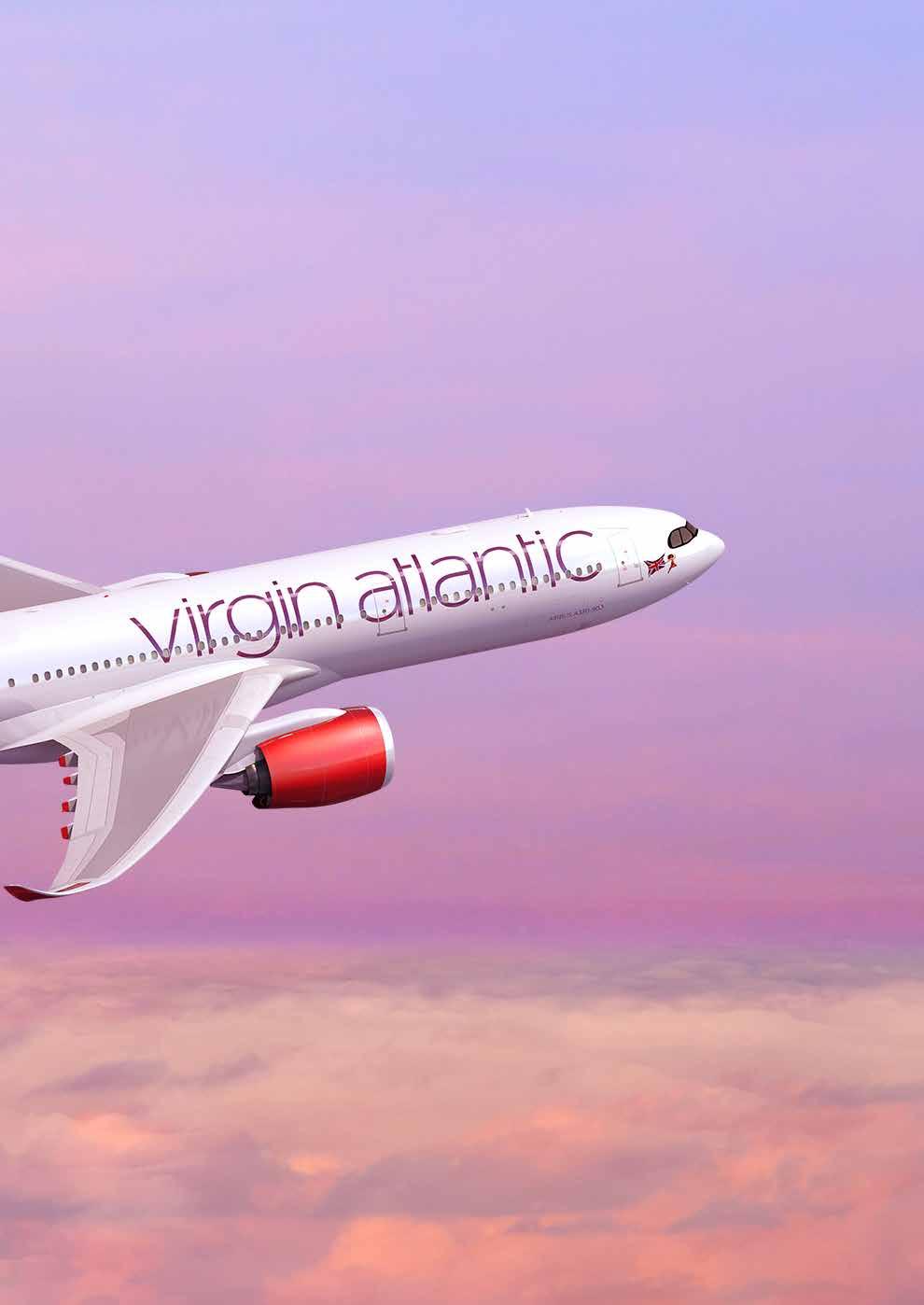
74 Virgin Atlantic expands its offering with new services
Virgin Atlantic has announced a significant expansion to its Caribbean portfolio
80
Sustainable Finance Soars in North America
This report is Climate Bonds’ first standalone State of the Market for the North America



The most fascinating options in Africa at the moment.
Understanding the stock market is not so easy, you start by trying to have a complete awareness on how things work, all without ignoring the potential macroeconomic consequences of any decision. Indeed, knowing trading strategies is good, but quick execution is certainly critical.
Many people may move past African stocks, and some investors may forget about the real potential of this emerging market and look elsewhere; but companies within this continent are making remarkable progress, offering outstanding opportunities to those who are willing to face the risks.
To understand the strong value that some African stocks embody today, it is necessary to understand the whole picture. To help you navigate this whole process, we made a list for you, here are the top 6 African stocks you need to look at right now.
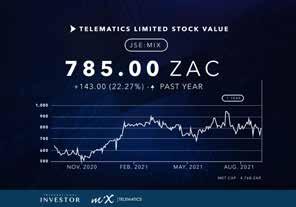
MiX Telematics (NYSE:MIXT) is a powerful worldwide provider of various asset management solutions for fleets and mobile vehicles. It can support large and small fleets while helping consumers with solutions for protection and compliance. The firm arrived on the scene in 1996 and has a presence worldwide. It has presence in Africa, the Uk, the US, South America, Australia and the Middle East.
It has a staying power as it is a subscription based service with over 750,000 subscribers in more than 100 countries. But it also has over a 28% EBITDA margin.
With subscription revenues of $30 million and regular subscriber additions, this company will have enough room to run. It is fairly valued and represents a fantastic business opportunity.
Sasol Limited (NYSE: SSL) is an integrated energy and chemical firm based in South Africa. The firm is highly motivated to improve its balance sheet by investing in the right operations. Proof of that is how they successfully managed to increase its revenue, net income, and its diluted EPS by a wide margin.
It’s been a tough time for this integrated energy company but it is turning the ship around. The firm has shed down its debt, is improving its credit rating, and is seeking to bring back dividends.
Analysts note that this company is undervalued and could certainly outperform the market in the near future.
Sibanye Stillwater (NYSE:SBSW) is a precious metals mining company. Now, this may not seem as exciting as technology stocks but there’s hidden value here. This multinational has mining properties in the USA and South Africa, and here’s why it is so interesting: The firm has a market cap of $10.9B, recent earnings of over $40B, a fantastic net profit margin of over 24% and a positive net income. here is the kicker: it only has a P/E ratio of around 3.60. It will grow its dividends over time as well.
With its headquarters near Johannesburg, South Africa, Standard Bank Group (NYSE: SGBLY) holds the status of being a very notable bank and financial services entity within the region. It is the leading African bank based on the size of its assets ($140B), and just had $8B in yearly revenue. We can say that the SBG remains steady, stable, and will stay strong in future downturns.
If you really want to be on the cutting edge of technology without taking much of the risk, check out Naspers (OTCMkTS:NPSNY). This South African giant made impressive moves early on by investing in Tencent. Naspers provides less than .20% dividend yield, but grants you exposure to other fairly significant tech platforms. Its worldwide reach, mixed with the right investments provide Naspers with over $3.5B in earnings per year.
With MTN Group (OTC:MTNOY), prospective investors get access to the developing South African and Asian markets. This firm develops communications services that range from broadband to internet-oriented products.
This firm has the privilege of working with Facebook, in order to implement a large subsea cable that will help improve fast data transfers in Asia and Africa. Make no mistake, the MTN Group is a heavy hitter in the industry.
It has over 270M subscribers and was able to post a recent first quarter revenue of $2.93B. The company’s stock is on a tear as more investors realize the value of these emerging markets. The firm will continue to be valuable as it provides key infrastructure services, hyper valuable to the digital learning world.



by Liam Jones
POST-ISSUANCE SERIES: 3RD ITERATION – REPORTING IS COMMONPLACE, BUT HARMONISATION NEEDED
Climate Bonds has released the Post-issuance reporting in the green bond market 2021 report, our third iteration, looking into the availability and attributes of use-ofproceeds (UoP) and impact disclosure for green bonds.
Supported by IDB, UniCredit and Lyxor ETF, it is an indepth review of green bond reporting, shedding light on post-issuance reporting practices and identifying avenues for further improvement in this space.
The analysis is based on a review of green bonds included in the Climate Bonds Green Bond Database issued between Q4’17 and Q1’19, with the bulk of the research conducted during 2020.
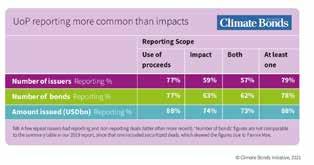
Availability of post-issuance reporting is widespread, but UoP reporting remains more prevalent than impact reporting.
• 77% of issuers, representing 88% of the amount issued, provided use-of-proceeds (UoP) reporting
• 59% of issuers and 74% of the amount issued provided impact reporting
57% of issuers and 73% of the amount issued have both UoP and impact reporting
• Larger issuers are more likely to report: reporting is higher when assessed by % of amount issued rather than by % of issuers
• Reporting share has increased versus early stages of the market (especially on impacts) and the share continued to increase in recent years, albeit by a smaller margin
Research was conducted just over one year after the end of issue cut-off period; the figures cover bonds issued between Q4’17 and Q1’19, with the bulk of the research conducted in mid-2020. This allows for more than a year since the end of the issue date cut-off, but less than the two-year maximum recommended by the Green Bond Principles(link is external).
Greenwashing is rare. From our estimates, almost all non-reporting issuers at the time of research have now reported at least UoP. Our estimates indicate reporting would be close to 100% if repeated now for the same bonds.
In addition, no bonds were excluded from our database following the post-issuance research, reflecting our robust database methodology and the fact that issuers genuinely finance green projects/assets.
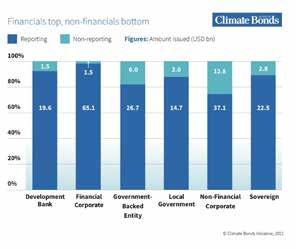
Improvements in post-issuance reporting can be targeted at some weaker issuer types and geographies, as well as tackling the lack of standardisation in impact reporting. It is rare to find any segment of the market with more non-reporting than reporting issuers, but there are variations in availability of reporting depending on deal size, external reviews, issuer type and geography. For example:
Reporting share is higher among larger deals and larger issuers, as well as in deals with external review (especially post-issuance)
• Private sector issuers are most polarised in terms of reporting availability, with financial corporates ranking first and non-financials last – in broad terms, public sector issuers exhibit more consistency
Developed Markets (DM) tend to have higher share (and quality) of reporting, but there are several exceptions (especially in small markets due to low number of deals/issuers)
Features of quality reporting include providing clear, easily accessible and granular information, as well as reporting in line with commitments at issuance and obtaining external reviews.
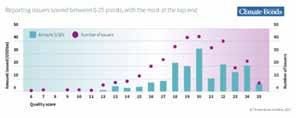
We used an internally developed methodology to score issuers out of a total of 25 points, and found that:
• Large deals do not necessarily have higher-quality reporting, as average, median and maximum scores are relatively constant for all deal sizes; however, there is a clear increase in minimum scores, suggesting larger deals less likely to have poor-quality reporting
• European entities are most consistent in quality, with 110 issuers ranging between 10–25 points; Asia-Pacific has a 6–25 range, and North America’s range is also wider than Europe’s even though its issuer count is about half
• More than just having high scorers; more mature green bond markets have consistently good-scoring issuers
• Spain is the country with most high scorers (previously France), with four issuers scoring at least 24 points; Hong Kong follows with three
An expanding market, together with increasing guidance and developments in reporting practices, have
contributed to a rich and varied reporting landscape –now, harmonisation of disclosure must be the priority.
In the absence of a common framework to report within, issuers must independently plan, create, and publish green bond reports. This creates a market characterised by fragmented approaches to reporting, posing problems especially for impact comparability and aggregation.
The real evolution is therefore yet to come, in the form of a common standardised reporting framework and platform leading to greater availability, quality and consistency of disclosure globally.
Several promising efforts exist, including some platforms already launched or under development focusing on impact reporting such as ICMA Impact Reporting Working Group(link is external). The EU Green Bond Standard(link is external) may also have potential to drive the creation of a globally adopted reporting framework for thematic debt instruments. Climate Bonds is set to expand its efforts in this space.
A successful framework targeting UoP instruments would be beneficial in the interim, but the current approach to impact measurement among UoP instruments does not provide a real and full picture of impacts.
There is a need to assess impact holistically, use absolute – not relative – metrics, and look beyond UoP instruments for entity-level assessments.
There are growing calls for globally consistent, comparable and reliable sustainability disclosure standards, and a wealth of existing work, tools and resources could be leveraged to this end. The EU is
leading the drive towards comprehensive sustainability reporting from a regulatory perspective through NFRD(link is external) and more recently CSRD(link is external), supported by the EU Taxonomy for Sustainable Activities(link is external), SFDR(link is external) and TCFD(link is external).
Overall, economic systems are man-made, and we can adjust them. Redesigning our system by changing the fundamental rules that drive environmental – and social –degradation will enable us to become sustainable, achieve net-zero and limit warming to 2°C (and much quicker than under current trajectories); but it will also allow us to go beyond this, expanding the common good indefinitely in a process of continuous and holistic evolution. however, a paradigm shift is needed to achieve this.
In this light, comprehensive sustainability reporting under a common framework has the power to create a purposedriven economy with impact at its core, driving a real transition economy- and worldwide.

Phillip
Edward Lewin, Communication Advisor & Editor
Jesper Toft Madsen, Key Publications Manager & Editor
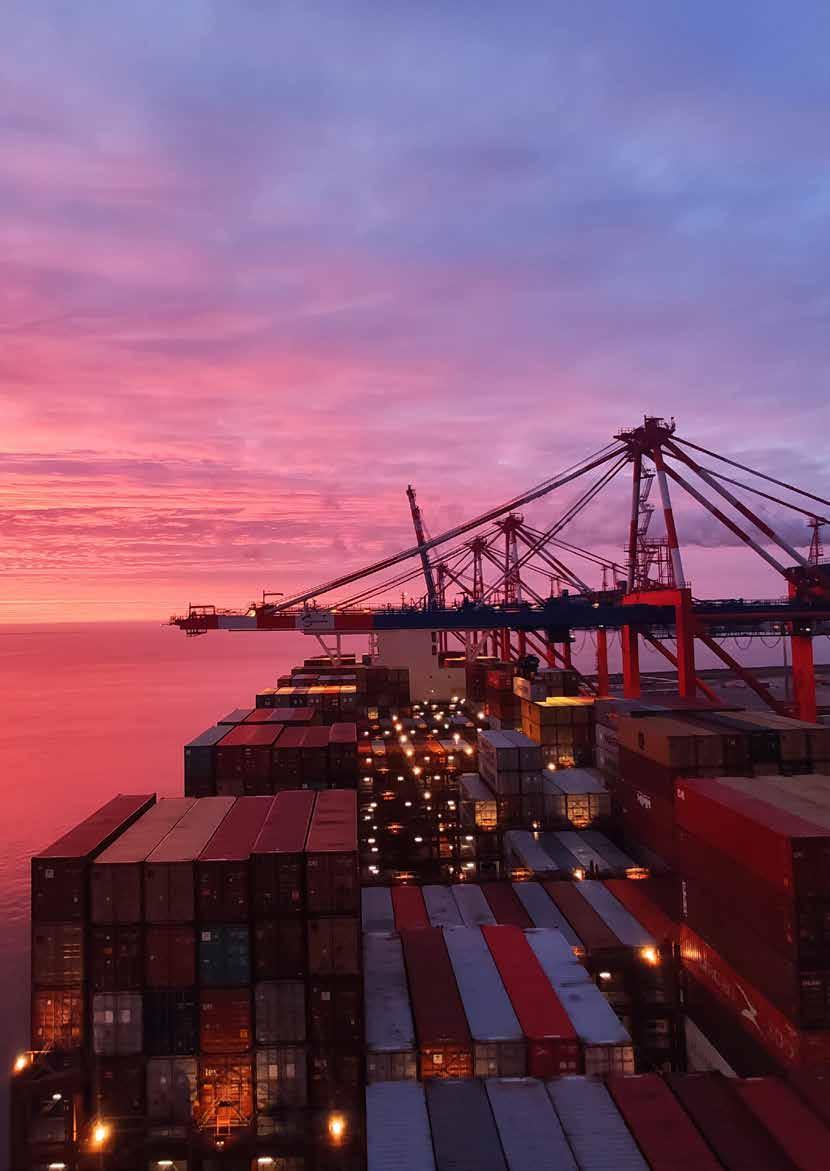
From sea and air to terminals and land, A.P. Moller - Maersk is made of many well-run parts. But it is the synergies between these parts that create the real firepower.
The progress Maersk has made since 2016 on its transformation journey towards becoming the global integrator is an important dimension of how they create value today.
This progress includes the transformation of Ocean business, the foundation of the company, from an asset operator and capacity player in a highly commoditised market to a customer-centric leader in differentiated solutions. It includes the transformation of their APM Terminals business from a greenfield developer into a world-class operator. Finally, it includes an organic and inorganic build-up of their Logistics & Services capabilities - from the transformation of their legacy Damco freight forwarding business into a profitable and scalable air cargo offering and the acquisition of new warehouse, distribution and customs services.

The heart of the value creation framework is built around Maersk’s leadership position in Ocean - the broad reach of our global network and the highly qualified seafarers who run these vessels.
The framework logic around how they create value looks at the synergies between this Ocean core and Logistics & Services that create value for customers, and the synergies between Ocean and APM Terminals that create financial and operational efficiencies in how we deliver that value.
The common enabler between all of these elements is digital. Maersk is also undergoing a massive technology transformation, not only in terms of developing dataempowered solutions but becoming a truly data driven and integrated organisation. This means standardised processes for speed and efficiency and one single source of truth instead of data scrambled across many formats and standards.
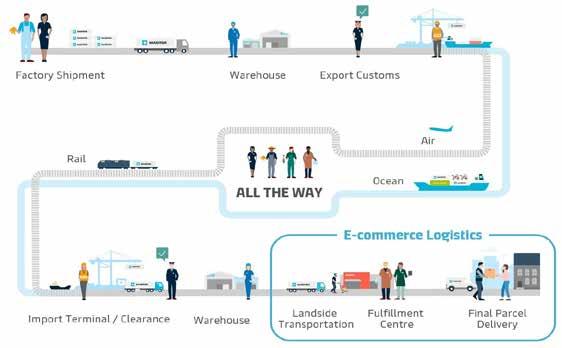
One illustration of the way these synergies bring all elements together is their current product portfolio. Maersk is now able to introduce products and services that help customers connect and simplify their supply chains with speed and a seamless, end-to-end experience on proven platforms.
“We’ve added global capabilities to provide customers with comprehensive logistics services along their supply chains, and the ability to integrate those services with our core Ocean product to create integrated solutions;
essentially redefining what we sell to our customers at a very critical time for the world’s supply chains,” says Aymeric Chandavoine, head of Logistics & Services.
The left-hand side of the framework is all about customer synergies, Maersk’s aspiration to continue disrupting the industry and create better customer outcomes as an integrated logistics supplier. Much of this comes from moving beyond their historic core in Ocean to help customers confront the complexities of running a global supply chain – from trade wars and weather disruptions to better matching production and demand in rapidly evolving markets.
These challenges existed before the CovId -19 pandemic. But in 2020, the entire industry was turned on its head as manufacturers scrambled to keep their supply chains running, despite lower capacity, border closures and unprecedented restrictions. 2020 served as a wakeup call for many who realised their supply chains were too fragmented and vulnerable to disruptions, and that they lacked the flexibility and ability to cope with relentless change.
Traditional supply chain performance drivers like speed and cost are still key today. But the pandemic and the ripples it sent through the industry have brought new players like accountability and resilience to the forefront.
“These newer value drivers present a significant opportunity for Maersk to change the conversation with

our more than 70,000 customers about the role we play in their supply chains. The synergies unlocked by combining Ocean and inland Logistics & Services into integrated solutions will help customers tick all the boxes – predictability, reliability, simplicity, flexibility, speed and cost,” says kim Pedersen, head of Sales & Marketing at a. P. Moller - Maersk.
Digital naturally has a critical role in this conversation, as companies fast track new technologies to boost resilience and flexibility. This has resulted in a massive increase in the flow of end-to-end data in supply chains,
as companies look to make better use of data from demand forecasting and inventory management to logistics scheduling. Platforms that can provide standard and granular access to all this data across integrated solutions - yet at the same time do so with simplicity - will be a major disruptor in the world’s supply chains. Maersk’s ambition is to lead these conversations.
With the acquisition of Visible Supply Chain Management and the intention to acquire B2C Europe, Maersk has set out to quickly build strong E-commerce Logistics capabilities that expand its offering and complement its

existing end-to-end supply chain offering. It is about addressing customer needs and unlocking a growth and earnings potential.
Customers face inefficiencies and complexities every day. They are subject to different regulatory regimes, bottlenecks, weather disruptions and trade tensions. The longer the supply chain, the more loss of control and things that can go wrong.
Too often, customers’ supply chain is subject to inefficiencies, waste, and complexity that they cannot control, created by their partners. Customers tell us that their main problems are manmade, and therefore, Maersk’s ability to solve them through integrated logistics presents a huge opportunity.
“Our right to win begins with our 70,000 customers. The trust and the relations we have with them is our foundation and biggest asset to build a customercentric global integrator at scale. Success will be defined by our growth and profitability as proof points that what we do for customers meets or exceeds their needs and creates value,” says Vincent Clerc, CEO of Ocean & Logistics.
While customer needs are evolving rapidly, the importance of agility, operational excellence and technology has been reconfirmed. The challenge remains to increase quality and stickiness in Ocean, and how to differentiate through the Logistics & Services offering.
“Taking on this challenge represents a huge opportunity for us. By creating value for our customers through differentiated value propositions, we will see a ripple effect that will change our customer experience and relationships, make us more reliable in our delivery, and enable us to grow and create a stable and profitable business,” explains Vincent Clerc.
Maersk is not the only one on to it – but none has yet built the customer relationships, the presence along the supply chains, the people, the technology and the resources to capture it, at scale.
“We stand in an enviable place to capture this. That is the journey we are on, the company we are building for the future. We have a lot to be proud of, and a lot to look forward to for the journey ahead.”


…and moving forward with projects on green hydrogen, 5G, data centers, astronomical observatories, research centers, plastic recycling, food technology, green mining and more.
Discover the all-new business opportunities that Latin America's leading country offers!
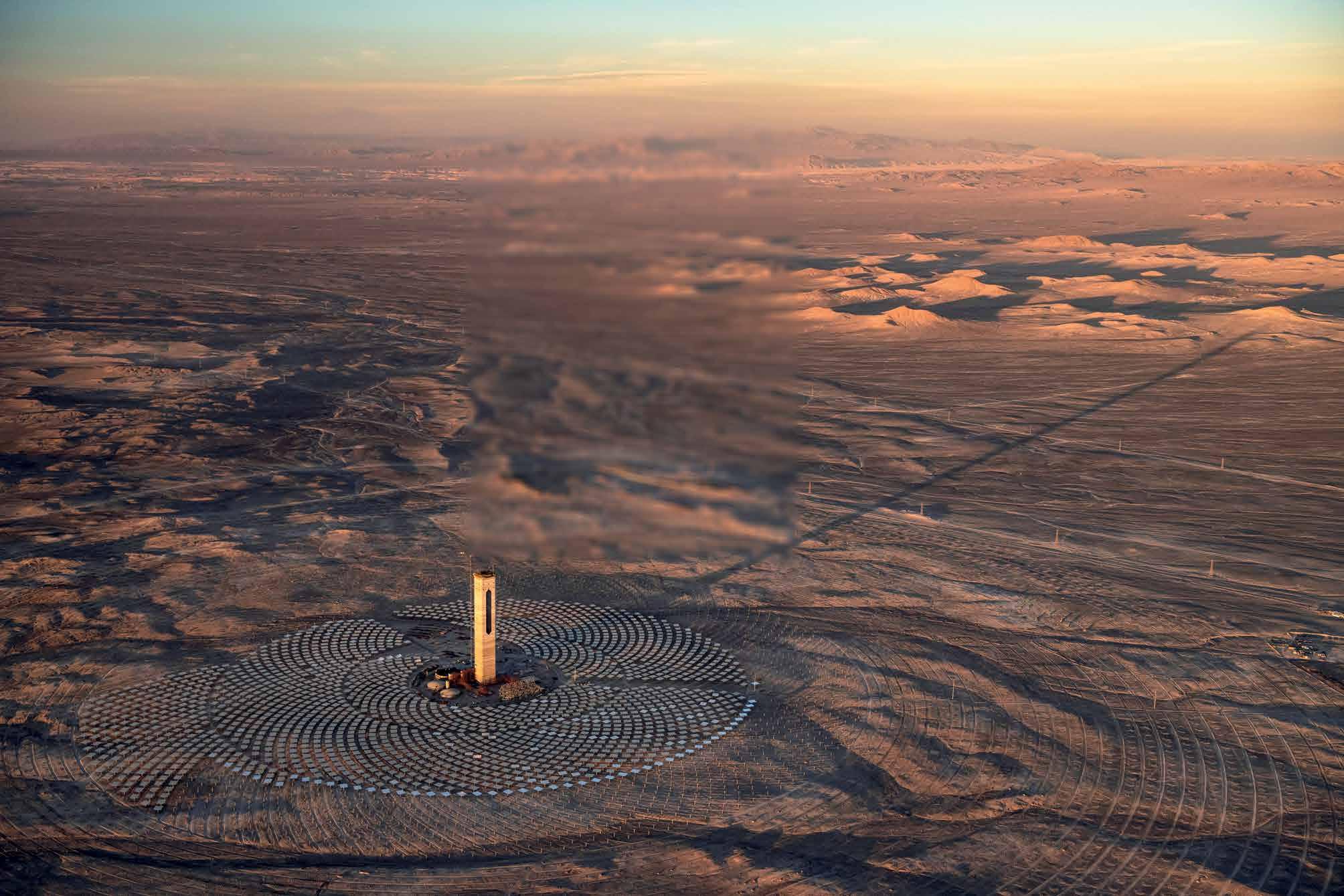
CERRO DOMINADOR, Latin America's first concentrated solar power plant.


Despite the pandemic, Chile managed to attract a record amount of foreign investment during the first half of 2021 and is now focusing on new opportunities to attract foreign companies.
Foreign direct investment (FDI) is going through a particularly dynamic time in Chile. According to official data, a record amount of uS$13.7 billion was invested in the country between January and June 2021. This amount not only marks a 66% increase compared to the first half of 2020, but also exceeds the total FDI amount registered in that entire year (US$8.5 billion).
Although the pandemic caused an overall drop of 45% in foreign investment in the region, investment in Chile is showing positive and stable growth. This can be attributed to a variety of factors, such as the multitude of market opportunities, a solid track record as an investment recipient, economic openness, and the work being done by InvestChilethe country’s investment promotion agency.
InvestChile, which is managing projects worth over US$24 billion, is now committed to promoting opportunities in sectors like clean energy, technology, 5G, green hydrogen and even vaccine laboratories.
We spoke with the Managing Director of InvestChile, Andrés Rodríguez, to learn more.
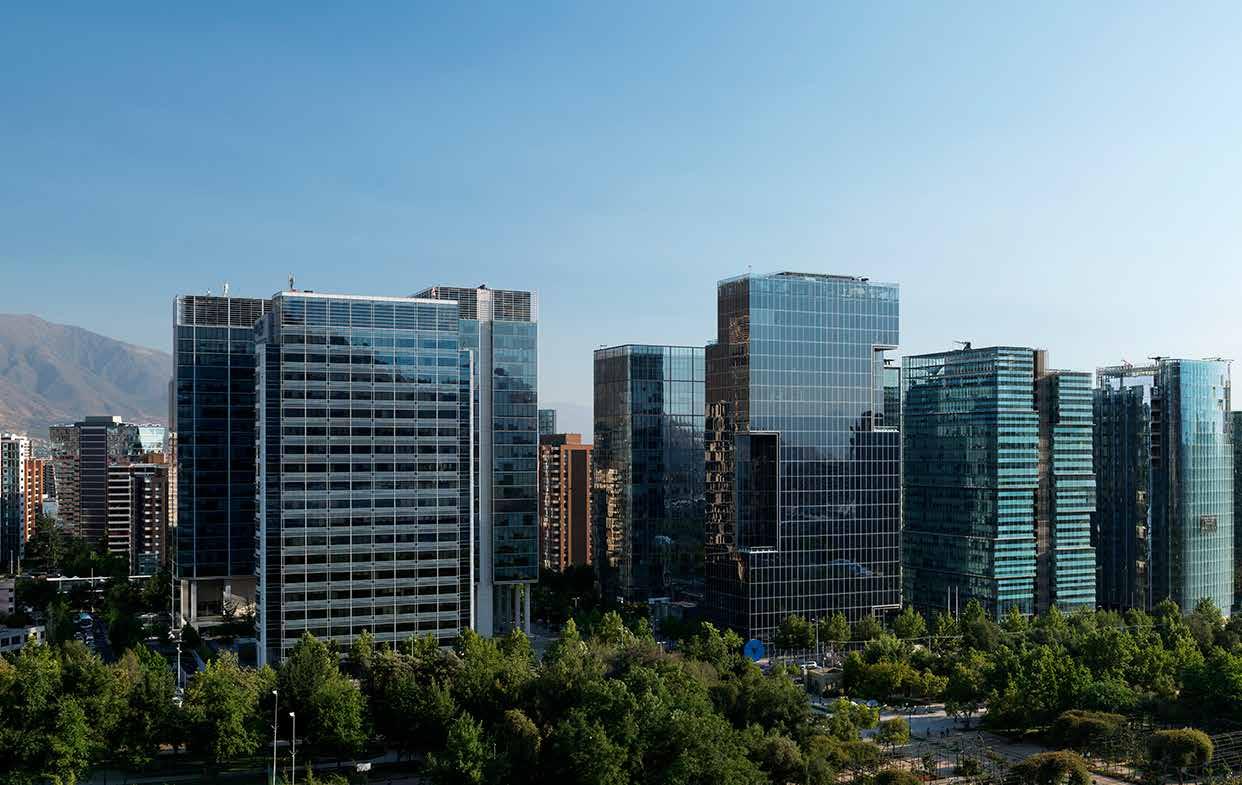
Chile has an excellent track record as a foreign investment recipient. This is extremely important for companies with a long-term vision. Although our country faces many challenges, we have been able to consistently maintain various positive qualities. These include an excellent business environment, the best competitiveness indices, access to clean energy, and the ease of setting up a company in the country (something that has been recognized by major international rankings). Additionally, our different industries are economically open, we have an export vocation (with a network of 30 commercial agreements with 65 economies), and very high-level professionals. As a result, international companies see Chile as an attractive market to set up in, as well as a strategic jumping-off point to grow their activities in other parts of Latin America.
We also have the ability to effectively manage and support foreign companies’ projects and offer them business opportunities in highly attractive and innovative sectors. Chile takes a leading role, spearheading innovation and is always willing to explore opportunities in new areas.
InvestChile is managing a project portfolio of more than US$24 billion. Each year, we advise more than 700
companies in order to facilitate their arrival in Chile. We offer a range of services that include delivering tailor-made sector reports, performing field visits and developing meeting agendas with key industry stakeholders. Our team is able to meet foreign companies’ needs in 8 different languages, thus facilitating their decision-making process and speeding up their arrival in our country.
while the pandemic caused a 35% drop in FdI flows worldwide in 2020, InvestChile’s portfolio grew 23%. We can attribute this to the implementation of an aggressive strategy that allowed us to maintain the dynamism of the projects that were already under development, while also working on innovating our digital marketing strategies, using business intelligence tools, and attracting investment from a distance. This included one-on-one meetings with the heads of established companies, including some that hadn’t been considering investing in Chile. We developed new services and began holding online events like seminars, webinars and roadshows in markets of interest. We also created a series of new sector e-books, which are a good way to initiate business conversations with companies.
In 2021, we have strengthened our work by focusing on

accelerating companies’ decision-making processes. We have implemented strategies such as “Invest in Chile Now,” where we proactively contact leading companies (such as Tesla, Alibaba or Amazon) to discuss business and invite them to develop business in Chile.
One of InvestChile’s primary areas of focus in 2021 is a new strategy to attract investment from the Middle east. This marks the first time the agency is prioritizing this market. We are working with investment funds that together manage more than US$2 trillion. Our team is also contacting a series of companies from India, exploring the potential of Food and Technology sectors.
Until the end of this year, we will be developing an aggressive agenda with more than 30 business activities in key markets, including roadshows in the United States and Europe.
unCTAd projects a recovery in FdI flows of around 10% for this year. Our goal is to exceed that number and we’re working hard to that end.
Chile is attracting attention with its new business opportunities, such as those offered in the digital economy sector. According to InvestChile’s portfolio figures, the number of technology sector projects has
tripled from 52 projects worth US$1.6 billion in 2017 to 173 worth US$4.3 billion in 2021.
“Over the past few years, companies like Google, Microsoft, AWS, Oracle, Ascenty and huawei have installed technological infrastructure in Chile. Only last December, Microsoft announced its biggest investment in the country of the last 28 years, with potential profits of US$11.3 billion over the next four years. Oracle has also launched its Cloud Region, which will serve clients in Argentina, Peru, Uruguay, Paraguay and Bolivia, as well as Chile. And that’s not all: this year, via its Starlink subsidiary, SpaceX chose Chile to launch its Latin American satellite internet operations. These are clear signs of the opportunities that Chile has on offer,” Rodríguez comments.
Chile also leads Latin America in terms of clean energy. Bloomberg’s Climatescope ranking places the country first among the emerging economies with greater investment potential in the area. The last ten years have seen significant clean energy development in Chile. In 2011, the country had 540 MW of NCRE installed capacity; today, this figure has increased eleven-fold.
In this regard, Rodríguez highlights that “Chile’s goal was for its renewable energy plants to have the capacity to generate 20% of the country’s energy matrix by 2025. Well, we’ve surpassed that goal and will reach 25% this year.

But there’s still plenty of room to grow and innovate: Latin America’s first concentrated solar plant, Cerro dominador, was inaugurated in mid-2021 and it is set to produce 210 MW of solar energy. Clean energy is, in fact, currently leading InvestChile’s portfolio, with projects worth more than uS$9 billion.
And, while we’re on the subject of energy, Chile is in a race to develop its green hydrogen production capacity. Labeled the “energy of the future”, companies like Engie from France, Siemens from Germany and Spanish companies Enel, Acciona and Enagás are already developing projects in Chile. Thanks to its abundance of clean energy, Chile hopes to become the world’s cheapest green hydrogen producer by 2030.
“All these sectors, together with the more traditional ones like mining and infrastructure, are opening up new possibilities both for developing large-scale projects and for auxiliary industries and suppliers. Chile now offers a dynamic business ecosystem in which innovation is highly valued,” Rodríguez comments, adding that InvestChile is also opening new markets. “We’ve focused on supporting sectors like Venture Capital, in order to attract foreign investors to the innovation and development that is happening here. We want to help Chilean talent grow with the aid of investors who support the potential we have today,” he added.
InvestChile is also supporting the development of food industry sectors with high potential. Chile is a world leader in food exports, with annual shipments of more than US$18 billion (especially fresh fruit and salmon). The country is now embracing technology and innovation in order to develop healthier foods. “We have food industry projects worth more than US$1.2 billion and we’re now focusing on promoting opportunities in areas like agtech and foodtech. Chile is set to become an important supplier of functional foods and ingredients, as well as food innovation, and foreign companies can now be part of this development,” Rodríguez said.
Speaking of new sectors, InvestChile played a key role in Sinovac’s decision to come to Chile. The Chinese company has announced that it will set up not only a vaccine production plant (initially for CovId -19 vaccines and later it will also produce vaccines for other diseases), but also as an R+D center that will allow Chilean scientists to develop new formulas that can be exported to the rest of the region. “Our idea is to generate a hub for setting up different research laboratories and technology companies. We’re already talking about this with European and American companies,” Rodríguez explains.
These are just some of the investment opportunities that Chile is working hard to develop with a view to attracting even more investment, regardless of the challenges presented by the pandemic. To judge by the figures to date, InvestChile’s work is achieving good results.

Founded in 1992, The loM Financial group is an awardwinning publicly-held, international financial services company, providing a complete range of private investment services and products. headquartered in Bermuda, with offices in Bahamas, grand Cayman, Asia and the uk, loM truly has the global presence to meet client needs.


For almost 30 years we have provided brokerage, custody, asset management and corporate finance services to high net-worth individuals and institutional clients around the world. We pride ourselves on offering a highservice alternative to the world’s largest private banks and investment managers. With a wealth of services at your fingertips, loM is your premier destination for independent advice from a tax neutral global platform.
Fiduciary Responsibility
We have extensive measures in place to protect your assets. We will not leverage our balance sheet and will maintain a conservative balance.
Privacy
We take our clients’ security and privacy seriously. We go to great lengths to safeguard your assets and your information from the minute you are accepted as a client.
Objectivity & Independence
We act in your best interests and will provide independent advice; we are not influenced by the interests of a parent bank or investment dealer.
Professional Service
Your dedicated private client relationship management team or broker will provide personal attention to your financial and account administration needs.
The Lines Family have been in the private wealth, trust and banking business for over 7 decades; LOM at its roots is a Family office. we look at every new relationship as the start of a long-term, intergenerational relationship. These relationships are our core business.
We specialise in developing and managing customised investment strategies. By leveraging our international branch offices, private bankers, and highly qualified Chartered Financial Analysts (CFAs), we are able to facilitate clients’ investment needs from each of the jurisdictions in which they are located, as well as offer a diverse range of products and portfolios designed to meet individual investment objectives. Our products include
award winning 5 star Morningstar rated mutual funds.
LOM is guided by an experienced management team from within an efficient corporate structure. our in-house portfolio managers, private advisors and trading professionals ensure excellent execution of your investment strategy. We take security and privacy seriously, going to great lengths to safeguard client assets and information from the minute you are accepted as a client.
In addition to experienced in-house managers, our open architecture platform allows us to work hand-in-hand with top-tier third party asset managers in the course of achieving our clients’ goals.
Our primary concern is meeting your needs, with an eye to growing and preserving your capital. Our success is measured by your success. At LOM we know it’s not just your portfolio’s performance that matters, it’s what your portfolio can do for you and your family. It’s our aim to help our clients build a lasting legacy.
“As a future-facing company it is our responsibility to act on the critical concerns of our generation and the next. Ocean conservation is an urgent global issue that is magnified in the jurisdictions we serve, and it demands our support.” Scott G. S. Lines, CEO & President
At LOM we are passionate about building a sustainable future. Our social responsibility is dedicated to ocean conservation — a commitment that is embedded in the spirit of our brand. we contribute annually to nonprofits making a difference to the health of our oceans, the largest ecosystem on our planet that supports all forms of life and absorbs nearly a third of our carbon emissions.
The LOM Financial Group is a publicly-held, international financial services company, providing a complete range of private investment services and products, with subsidiaries in Bermuda, Bahamas, Cayman, Manila and the UK. In business for almost 30 years, LOM provides brokerage, custody, asset management, and corporate finance services to its primarily high net-worth individual and institutional customers around the world. LOM Financial Limited is publicly listed on the Bermuda Stock Exchange (symbol LOM.BH), and is the parent to its regulated subsidiaries – LOM Financial (Bermuda) Ltd, LOM Financial (Bahamas) Ltd, LOM Asset Management Ltd, and Global Custody & Clearing Ltd. www.lom.com

1) INTRODUCTION
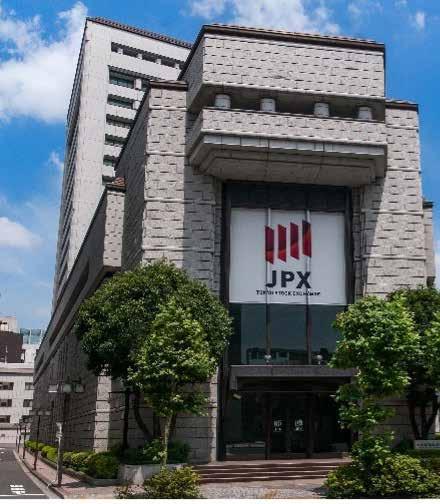
Tokyo Stock Exchange is established as the central stock market of Japan in terms of number of listed companies, trading volume and market liquidity. Its aggregated market value is the 6th largest in the world and the third in Asia.
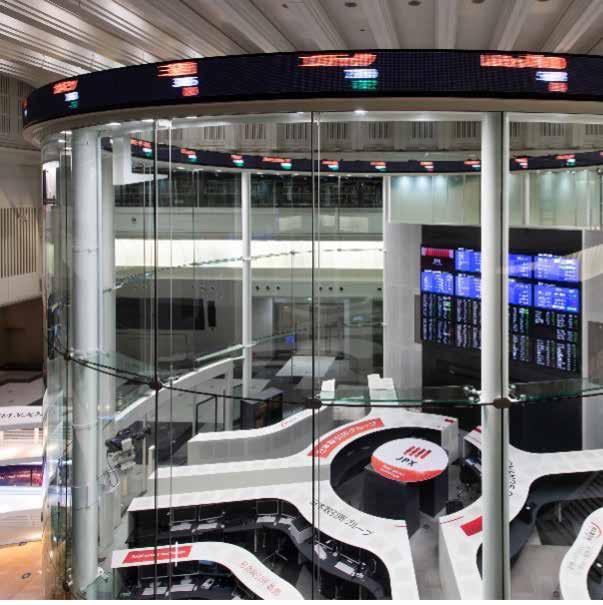

The TSE cash equity market open to all investors is currently made up of four segments – First Section, Second Section, Mothers, and JASDAQ. The First Section is comprised of about 2,200 of the most liquid companies, and about 3,800 companies altogether.
TSE’s aggregated market value of USD 6.71 trillion as of 2020 is the 6th largest in the world, next to New York Stock Exchange, NASDAQ, Shanghai Stock Exchange, Euronext and hong kong Exchange and Clearing.
Its stock trading value of USD 6.15 trillion, which is an indication of market liquidity, is the fifth largest in the world.
And to enhance its attractiveness as a marketplace, TSE has constantly increased its product line-up including its varieties of Exchange Traded Funds, Exchange Traded Notes, and Real Estate Investment Trusts.
Not only domestic traders, but market participants all over the world including institutional investors, funds, individual investors, and others are taking part in the TSE markets. In 2020, overseas investors made up about 65% of all trading volume.
TSE’s mission is to contribute to the realization of an affluent society, partially through improved convenience for market participants and all other stakeholders.
One of our biggest challenges at the moment is restructuring the market, currently made up of four divisions, into three new segments starting April 4, 2022, to incentivize listed companies to improve their corporate value over the medium to long term and thereby achieve even higher levels of support from diverse investors around the world.
The new market segments are “Prime”, “Standard“ and “Growth”.
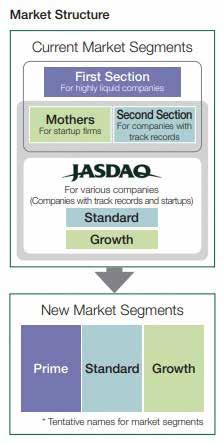
The Prime Market is for companies which have large market capitalization (liquidity) enough to be investment instruments for many institutional investors, keep a higher quality of corporate governance, and commit to sustainable growth and improvement of medium- to long-term corporate value, putting constructive dialogue
with investors at the center.
The Standard Market is for companies which have appropriate levels of market capitalization (liquidity) to be investment instruments in the open market, keep the basic level of corporate governance expected of listed companies, and commit to sustainable growth and improvement of medium- to long-term corporate value.
And the Growth Market is for companies which have a certain level of market value by disclosing business plans for realizing high growth potential and their progress towards these appropriately and in a timely manner, but at the same time pose a relatively high investment risk from the perspective of business track record.
Along with the market restructuring, TSE will revise the Tokyo Stock Price Index (TOPIX), which is currently comprised of all the domestic common stocks listed on the TSE First Section. With the new constituent selection, TSE is cutting TOPIX loose from market segments and aims to further improve its functionality as an investable index in addition to its representation of the market.
The revisions will be carried out in stages from October 2022 to January 2025, taking into account the large amounts of capital in TOPIX-based passive funds and the impact on the market.
4)
The history of TSE goes back to 1878. It was established soon after the Meiji Restoration, a political event that practically restored imperial rule to Japan in 1868 under Emperor Meiji, by the Japanese so-called “father of capitalism” Eiichi Shibusawa and his allies. In the same year, Tomoatsu Godai established Osaka Stock Exchange (OSE) in a commercial city in western Japan. Both TSE and OSE have contributed to driving sustainable growth in the Japanese economy.
Later, in 2013, Japan Exchange Group (JPX) was formed through a merger between TSE and OSE. After the merger, TSE focused on cash equity stock trading and oSe on financial derivatives trading.
In 2019, JPX acquired Tokyo Commodity exchange (TOCOM), a commodity futures exchange, and made it a 100% subsidiary. Through this acquisition, JPX became a comprehensive exchange which offers cash equity, financial derivatives, and commodity derivatives trading.
Under rapid innovation and global dynamics, JPX aims to evolve into a “total smart exchange”, where anyone can trade any products in a secure and easy way. JPX will also make a more active contribution to building a sustainable society.
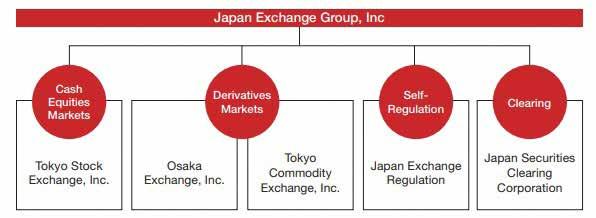
It is JPX’s corporate philosophy to contribute to the realization of an affluent society through sustainable market development, and by extension, contribute to the future envisioned in the Sustainable Development Goals (SDGs).
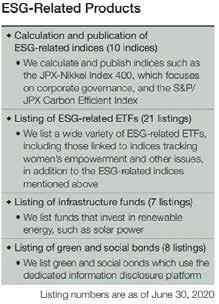
JPX as a whole works to promote and to support ESG investment; for example, TSE calculates ESG indices, lists ESG-related ETFs, and has set up an infrastructure fund market and an information disclosure platform for green and social bonds. And of course, JPX is endeavoring to enhance its own ESG disclosures.
Moreover, to combat climate change, JPX has pledged to switch 100% of electricity consumed by the Group to renewable energy by FY2024 and aim for carbon neutrality across Group companies on the same timeline.
We live in uncertain times. Whilst the devastating effects of the pandemic have been seen across all economies and are well documented, forecasts are predicting a staged recovery and evidence already showing a return to precovid trade levels. The way we conduct business, where, when, if and how safely we may travel with complex evolving quarantine rules remains challenging.
We are not out of the woods yet. Reliance on silos of technology, shortage of liquidity, extra paperwork at customs, export bans, foreign exchange cost and fluctuation, retail group failures and general confidence continue to affect international supply chains.
Far from eradicating Covid, current thinking supports living with variants, with constant vigilance. Companies still need to maintain all important cash-flow, with challenges of huge rises in container and transport costs, staff shortages and rising trade overheads leaving smaller margins and economic strain. To remain globally competitive, importers are having to absorb costs rather than passing them to end consumers, although how long this may be sustained remains questionable.
however, confidence is growing, and industries and economies will bounce back. We stand ready to service the huge Tier 2-3 SME and corporate market, supporting the re-vitalising of business and supply chains through our innovative product set especially in emerging markets hit by lack of liquidity, trust and experience.
As a supervised and authorized financial institution, under the robust, respected framework and oversight of our St. Lucia regulator, Euro Exim Bank (EEB) is a renowned, specialist company similarly exercising strong compliance and due diligence in all business dealings.
We have purposefully created a digitised technology-
based business model to assist this under-serviced sector through digitalisation of processes, requirement for appropriate collateral, fast on-boarding and issuance, cost-effective pricing, all underpinned by a blockchain supported trade platform.
Our core business remains the issuance and relay of a growing array of trade finance instruments, namely letters of credit, standbys, performance bonds and guarantees merchant accounts and immutable payment delivery using RippleNet products and services.
Through the Ripple xCurrent application, the bank tracks real-time payments accurately and effectively, without complexity, delays or cost of multiple routing paths. The additional On-Demand Liquidity (ODL) services help clients gain unlimited, low-cost access to liquidity, retaining local currency control, throughout the transaction lifecycle. The XRP digital asset provides guaranteed exchange rates and blockchain based immutability with frictionless transfer and settlement.
Today, EEB’s network of agents and partners spans across almost 30 countries and is witnessing a huge increase in the volume, variety and value of transactions.
Major banks have traditionally been the mainstay for trade finance business, dealing with high value, high volume business, funding lucrative corporate and Government-led infrastructure projects.
however, we have witnessed increased lack of trust, complexity of smaller deals, protectionism, tariffs, limitations on liquidity, expensive access to fiat currencies such as dollars, constant regulatory pressure, risk mitigation and reduced appetite to deal with smaller entities and trade values.
As large players redirect their cost bases and resources, away from emerging markets in Africa and Asia, the path has become clearer for smaller niche providers such as EEB to service the millions of corporates and SME’s dependent on competing effectively and economically, improving financial inclusion and providing the opportunities to raise economies from debt.
Recognition and reputation are built on exceptional service, professionalism and flexibility. eeB is built on just such cornerstones, with experience, trust, leadership, personal relationships, strong CSR policy, country expertise, speed of response, cost-effective instruments and continued contact and information sharing.
EEB serves clients in over 100 countries, assisting importers to fulfil their obligations in often challenging jurisdictions, regularly dealing with the ever-present complexity, burden, financial pressures and transport issues in international trade.
The trade finance sector is fraught with risk, with a high incidence of failed transactions. Market demand has attracted untested short term profit seekers, keen to exploit eager buyers where non-compliance, minimal checking, lax attention to regulation and artificially low fees prove too attractive an opportunity for cash-strapped importers to resist.
We are increasingly approached by buyers who seek secure, trusted services, having experienced significant financial losses from dealing with unscrupulous companies offering unrealistic fees, hiding behind cloned fraudulent websites and ultimately operating with a complex web of deception.
our team have years of experience in financial markets and have contributed to major financial publications on topics such as impacts of Free Trade Agreements, the opportunities in Africa as alternative markets, emerging market liquidity, resolving the stifling of international through sanctions, and innovative payment solutions for emerging economies.
Our professional team of speakers have been able to discuss key topics at GTR, TXF, Caribbean Association of Banks, Ripple and other key financial conferences.
The team have also created information sharing campaigns through our website, and knowledge-sharing videos. These break down the complexity of the trade sector and provide valuable insight to companies looking to import for the first time, where local barriers make it traditionally difficult to compete. The Bank offers varied banking services including guarantees for bids and big budget tenders to contractors and exporters and is certified to issue Bid Bonds, Retention guarantees and Tender Guarantees.
Our articles, video conference appearance, panel discussions, opinions and experience are valued by the trade community, culminating in international recognition of our product innovation, service delivery and strong executive support, resulting in numerous awards and citations.
Our brand has become instantly internationally recognized and we retain a leading position as key sponsor in conferences, with publications and video output providing not only information, but valued analysis and access to experienced professionals.
This year will also see contributions regarding trade issues through television networks as we outline the challenges and opportunities in the sector and raise market awareness of our world class products and services.
With our thought leaders, speed of turnaround, employment of the latest technology (blockchain and Ai), competitive issuance rates, close relationship with clients and growing global presence we are moving swiftly towards our goal of being the pre-eminent “go-to” bank for trade.


The Association of Independent Asset Managers Singapore, the representative industry body for External Asset Managers and Multi-Family offices in Singapore, today announced its rebrand to the Association of Independent Wealth Managers (Singapore). Established in 2011, the Association has built a diverse, collaborative community of over 80 active member firms from leading banks, external asset managers, family offices and service providers in Singapore.
Coinciding with the Association’s 10th anniversary this year, the rebranding initiative reflects the Association’s commitment to promote the growth of Singapore’s independent wealth management industry, and better represent the distinct interests and work of AIWM Singapore’s members, which focuses more holistically on wealth management. In addition to advising on investments and asset allocation, members examine a client’s overall financial situation to achieve the objectives of long-term wealth preservation and accumulation, and it often encompasses services such as legacy, estate and retirement planning. As part of the rebrand, AIWM Singapore unveiled a new logo, video and website (http://aiwm.sg/).
Commenting on the rebrand, Lucie hulme, President, AIWM Singapore said: “This nuanced change reflects the growth and evolution of the Association since its inception in 2011, and it will make us more inclusive and representative of a thriving community of independent wealth managers, external asset managers and multi-family offices in Singapore. we took this opportunity to rethink not just the Association’s name, but our entire brand promise to make us a better fit for the future in a wealth landscape that has evolved far beyond asset or fund management alone. This will also put us in a stronger position to drive the long-term growth of Singapore’s independent wealth management ecosystem.”
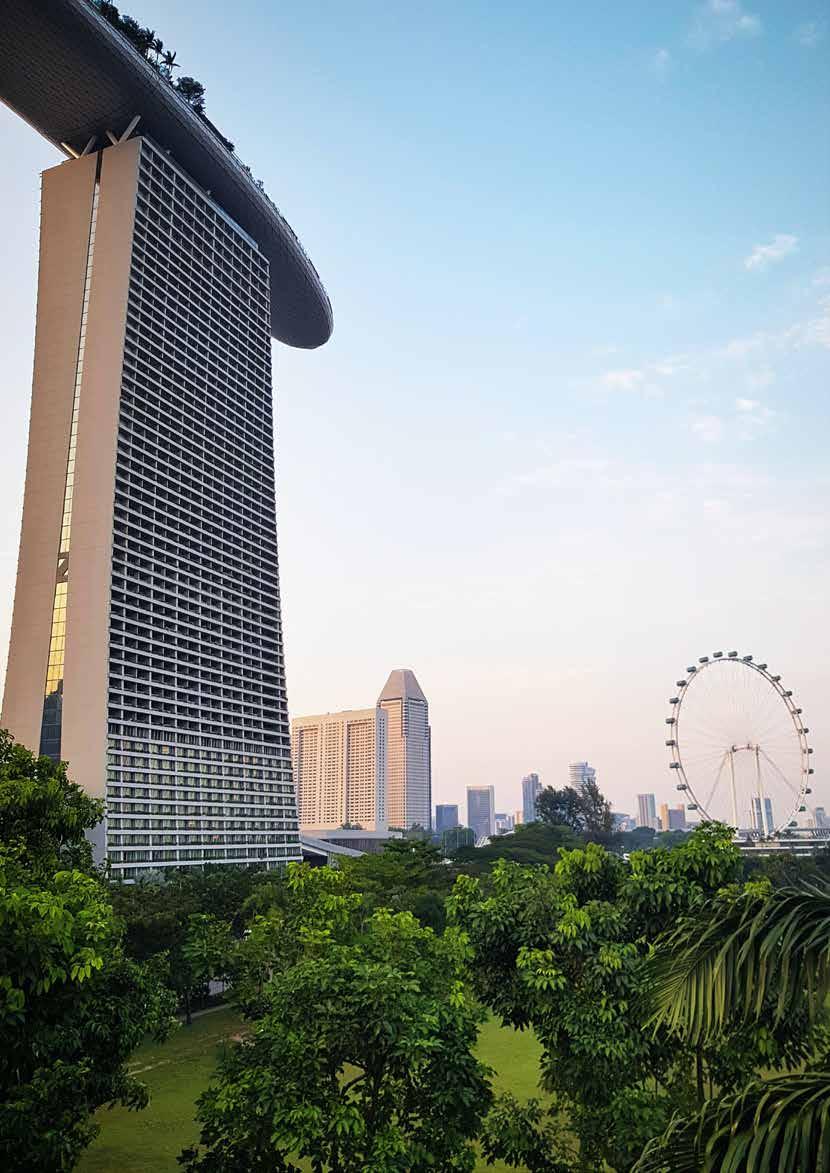

“The number of independent wealth managers has been steadily increasing in Singapore and the rapid growth in Asia’s private wealth in recent years has created a favourable backdrop for the continued expansion of the independent wealth management industry. As investors reassess their investment priorities and objectives in the post-pandemic environment, this is a timely opportunity for us to raise awareness about the role of independent wealth managers in meeting the evolving needs of new and affluent investors, open to different models of wealth management,” Jolene Tan, Vice President, AIWM Singapore added.
AIWM Singapore is committed to championing best industry practices, fostering collaboration among industry peers and empowering members through continuous education and training development. To learn more about the Association’s upcoming events, activities, and training opportunities, please visit: https://www.aiwm.sg/eventsaiwm/
Established in 2011, the Association of Independent Wealth Managers (Singapore) is the representative industry body for External Asset Managers and MultiFamily offices in Singapore. Recognised by the Monetary Authority of Singapore, it is a diverse and consultative trade association that drives the development of Singapore’s independent wealth management industry.
As the leading industry advocate for independent wealth managers, AIWM Singapore actively promotes dialogue and engagement between regulators and various stakeholders within the community.
AIWM Singapore is also committed to championing best industry practices, strengthening the visibility and reputation of independent wealth managers, fostering collaboration among industry peers, and empowering members through continuous education, training development and networking opportunities.

The new MINI Electric welcomes a new edition: the MINI Electric Collection. Created as the ‘Designers Choice’ from MINI, the Collection is a truly unique MINI Electric. Coming with a fixed standard specification apart from an exterior colour personalisation option, the new MINI Electric Collection is based on the Level 3 and includes some unique features such as the 17” Electric Collection Spoke alloy wheels and Collection exterior graphics. It’s also the only MINI Electric which includes the new exterior paint colours, perfectly partnered with the new multitone roof and Piano Black Exterior. The interior design complements the exterior of the car, thanks to sport seats upholstered with cloth/leatherette in Light Grey and Aluminium interior trim.
STANDARD EQUIPMENT HIGHLIGHTS
In Addition To The New Mini Electric Level 3 Standard Equipment
Personalisation No Additional Cost Exterior:
• Island Blue metallic exterior paint colour
• Multi-tone roof
• Black mirror caps
17” Electric Collection Spoke alloy wheels
• Piano Black Exterior
• Collection exterior graphics (Bonnet and doors)


INTERIOR:
Cloth/leatherette upholstery in
• Light Grey
• Anthracite headlining
Aluminium interior trim
• Walknappa steering wheel with
EASY HOME CHARGING OR CHARGING ON THE GO
The new MINI Electric includes AC for easy home and public charging and DC for rapid public charging. MINI Charging is your gateway to one of the world’s largest public charging networks. You will have access to more than 11,000 public charging points in the Uk across a range of providers, using just one RFID card or via a mobile app. What’s more, your MINI Charging account is also valid across Europe. You can monitor your charging history directly from your account, and you can find MInI Charging locations via the MINI Charging App or on MINICharging.com
MINI Charging also comprises a one-year free upgrade to include a bp pulse subscription package, offering discounted and preferential charging rates at bp pulse points (normally worth £7.85 per month).
HOW MUCH DOES IT COST TO OWN A NEW MINI ELECTRIC?
FINANCIAL PERKS.
The government currently offers £2,500* towards your new MINI Electric as it’s classed as a low-emission vehicle. Plus, if you’re considering the new MINI Electric as your company car, it will have a BIk tax rate of 1% for the year 2021/22.
CHARGING COSTS.
The cost per mile for the new MINI Electric is only 4p, which is approximately 2 to 4 times cheaper than cars with a petrol or a diesel engine
IDEAL FOR SHORTER OR LONGER JOURNEYS.
Your life may evolve. Your schedules may vary. But the new MINI Electric will accommodate you for shorter or longer journeys.

BECAUSE WE LOVE TO FEEL ELECTRIC.

Invest in Sharjah CEO Mohamed Juma Al Musharrkh explains how the entity is building on Sharjah’s notable 2020 performance by swiftly responding to the shifting needs of global investors
While the global economy faced unemployment and contraction of unprecedented proportions since the onset of the Corornavirus pandemic, some countries including the uAe have been flexible enough to navigate the troubled waters to adapt quickly to a fast-changing business environment.
The UAE proved its resilience by continuing to grow through 2020 and early 2021 despite the CovId -19- crisis.
Sharjah’s diverse economy, business-friendly environment and low operating costs were among the competitive advantages that attracted 24 foreign direct investment (FDI) projects worth $220 million (AED 808.6 million) in 2020, as per a WAVTEQ study. With tech-enabled businesses taking centrestage during the pandemic, Sharjah pivoted to focus on sectors such as e-commerce, health and medical research, and personal protective equipment, among others. This not only led to a 60 percent increase in the number of FDI projects between Q3 and Q4 last year, it also drove the creation of 1,117 new jobs in the emirate.
The role of Sharjah FdI office (Invest in Sharjah), the emirate’s investment promotion agency, in boosting the emirate’s FdI profile remained pivotal. Through a wide range of services and facilities, including a real-time analysis of local markets, Invest in Sharjah helps investors identify suitable opportunities to establish or expand their business.
Speaking about the nation’s creditable performance, Mohamed Juma Al Musharrkh, CEO, Invest in Sharjah, said: “UAE has proved that it is not only resilient but also flexible, moving quickly to remove redundant regulations and introduce new ones to adapt to the changing economic scenario. This included the new commercial companies law that allow foreign companies and investors up to 100% ownership, as well as new residency laws allowing for long-term residence in the emirates.”
To mitigate the effects of the pandemic on the economy, the UAE approached the situation strategically by creating a $2.7 billion stimulus package for affected businesses. Sharjah created its own comprehensive $1.1 billion stimulus programme for all businesses, in the form of government subsidies, fee reductions, and tax exemptions. Invest in Sharjah was a key advisor to businesses on how to utilise their stimulus allocations from the government, helping businesses renew licences and registrations remotely, facilitating government approvals, and more. Loans were also facilitated through banks owned by the Sharjah government.
“Startups and SMEs also received incentives through our free zones including reduced cost of establishing companies as well as renting warehouses and offices. In collaboration with Sharjah Entrepreneurship Center (Sheraa), incentives were offered to companies from all over the world to come and invest in Sharjah’s diverse sectors” Al Musharrkh added.
FACILITATING GREATER INVESTMENT OPPORTUNITIES ACROSS SEVEN SECTORS
Al Musharrkh said: “Apart from the need to increase investment in future industries, 2020 taught us that we must focus on SMEs, start-ups and emerging innovationdriven businesses which have a direct impact on microeconomic indicators. We partnered with PwC to restructure our entire approach in terms of FDI attraction, revising our strategy for the sectors that Sharjah was set to focus on post-CovId -19.”
Invest in Sharjah is now focused on seven sectors: health and wellbeing, mobility and logistics, culture and tourism, agritech, green tech, human capital and innovation, and advanced manufacturing.
“These are in alignment with the UAE’s overall strategy and the sectors that UAE is focusing on. In terms of advanced manufacturing, the Ministry of Industry and Advanced Technology has recently announced

a comprehensive 10-year industrial strategy called ‘Operation 300 Billion’ that aims to empower and expand the industrial sector in the UAE by inviting global manufacturers to invest in the advanced manufacturing sector. We are also focused on the ‘Made in the UAE’ programme that seeks to attract companies to the UAE to manufacture and export to the whole world. The Sharjah Research Technology and Innovation Park (SRTIP) in particular aims to attract different companies and technology in manufacturing, 3D printing, blockchain, and so on,” said the IIS CEO.
Elaborating on Sharjah’s focus on green energy in the post-pandemic period, Al Musharrkh said: “Sharjah is eager to develop green technology through Bee’ah, one of the leading environmental companies with great ambitions in hydrogen energy and renewable energy. Bee’ah is working on two vital programmes that can prove to be game-changers. One is a project in collaboration with Masdar to produce energy from waste, and the other is in partnership with Chinook, to produce hydrogen power, also from waste.”
Sharjah’s transformation into a modern investment ecosystem has been aided in large part by its six free zones that offer specialised focus on key industries such as innovation and technology, publishing and media, and education, among many others and this has led to joint ventures and partnerships with international investors for technology transfer in diverse fields.
hamriyah Free Zone (hFZ) and the Sharjah Airport
International Free Zone (SAIF Zone) are the two major free zones with focus on industry.
The emirate has also developed free zones with nonindustrial focus to further support the growth and diversification of its economy. For instance, Sharjah Research Technology and Innovation Park (SRTIP) bonds academia with industry and government to create a self-contained ecosystem that is home to companies across many sectors such as advanced industry, space, healthcare, virtual reality, artificial intelligence, and 3d printing, among others. Sharjah Publishing City Free Zone, the world’s first free zone dedicated exclusively to serving the global publishing and printing industry, has contributed immeasurably to growing the emirate into one of the biggest educational hubs in the Middle East.
The Sharjah Media City (Shams) is a tax-free zone with modern infrastructure and services which focuses on the media and creative industries, while Sharjah healthcare City is a free zone dedicated to healthcare and healthcarerelated activities.
“Sharjah enjoys one of the world-leading free zone infrastructures as each one offers a wide range of industry-focused benefits and opportunities. The emirate also ranks high in terms of mobility, logistics and infrastructure, with three sea-ports, the Sharjah International Airport, and the free zones in close proximity to our ports and airport,” said Al Musharrkh.
As the investment promotion office of Sharjah, Invest in Sharjah offers a wide range of services and facilities that

include the Sharjah Investors Services Centre (Saeed), to provide strategic and innovative solutions to support global as well as local investors.
Al Musharrkh said: “Saeed is part of our endeavour to boost foreign investors’ ease of entry into our markets. It is a one-stop-shop offering fully-integrated government solutions that enable investors to establish their businesses conveniently. Saeed is a fully tech-driven, onewindow service that will help clients set up a business in less than 60 minutes.”
Apart from this, the entity’s Sharjah Investment Tracker is a game changer for investors. This plug-and-play website publishes real time investment statistics of Sharjah and maps out the investment landscape in the emirate through analysing FdI flows.
To identify top challenges and keep abreast of development globally, Invest in Sharjah participated in 14 major local and international events and webinars in 2020, covering a wide range of subjects across sectors including real estate, technology, trade, entrepreneurship, industrial manufacturing, health-tech, agriculture and technology.
The entity also organised more than 11 virtual discussions throughout the year to highlight high potential investment opportunities to investors in key markets across the world.
“Invest in Sharjah is keen on identifying the top challenges in setting up business in the UAE and Sharjah, and analysing facts to arrive at solutions that support
a smooth and transparent business set-up process. These events also serve to provide us with feedback and suggestions from the business community which will not only help the public sector tailor the process according to their priorities, but also aid Sharjah to qualitatively build on its investor services,” said Al Musharrkh.
In its capacity as the regional director of the MENA chapter of the World Association of Investment Promotion Agencies (WAIPA), Invest in Sharjah led a regional members’ meeting which provided a unique opportunity to learn from regional investment leaders about the approaches various organisations had been taking to overcome challenges posed by the pandemic.
The entity also organised a series of panel discussions and roundtables with a host of international investment and business leaders from South korea, India, China, USA, Austria, and Italy. Apart from exploring investment prospects and challenges, the events also showcased the success stories of foreign businesses which have expanded from Sharjah to the regional and global markets.
“I believe we are on the cusp of an even greater recovery, backed by Dubai Expo 2020, which the whole world has been waiting for. FDI attraction and retention is part of the solution to support economic recovery and we at Invest in Sharjah are dedicated to the continued transformation and economic diversification of the emirate and committed to guiding local and foreign investors through a bespoke step-by-step facilitation process,” Al Musharrkh concluded.
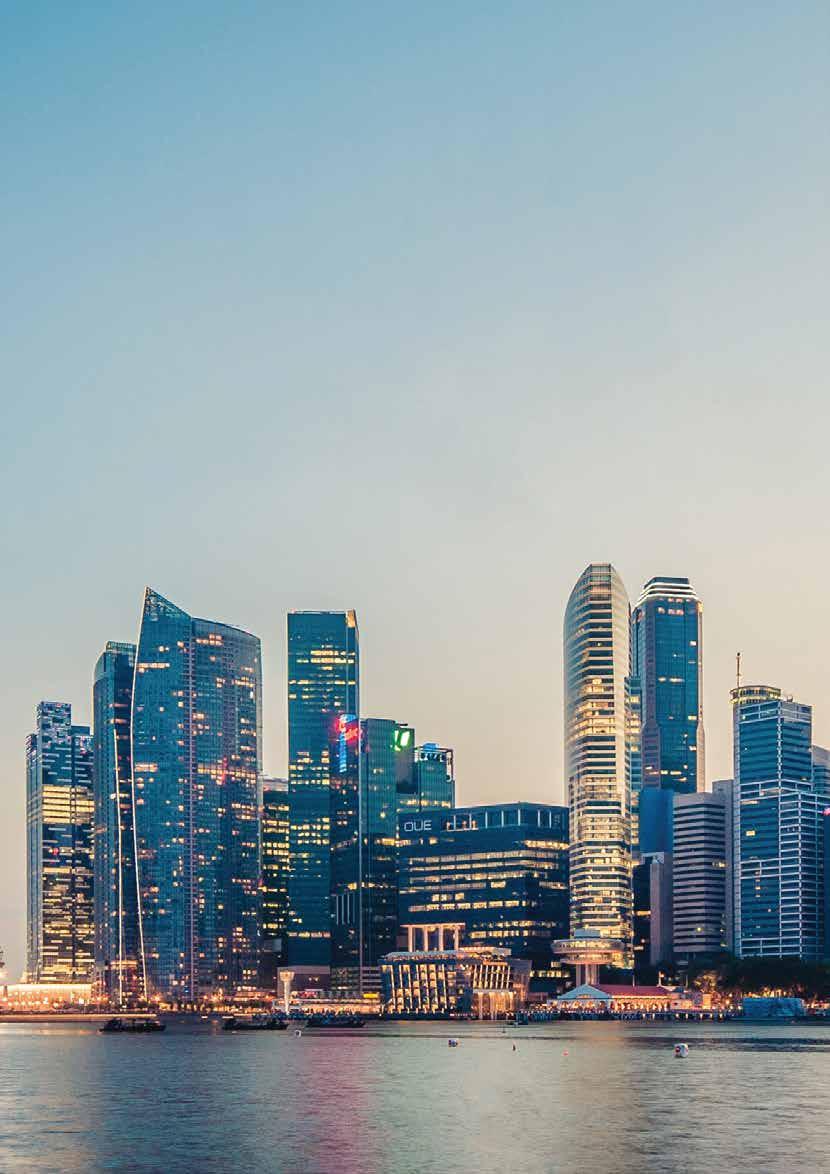

Make the most out of your stock investments with these remarkable options.
The so-called “old world” has been the subject of fascinating and super interesting perspectives throughout history. Asia, without a doubt will reclaim the throne of the most influential and economically powerful area in the next 50 years; a crown that it used to have and is now seeking without any delays whatsoever.
With rapid movements and solid growth, this mix of emerging and developed markets holds plenty of opportunities within Asia. In turn, if you manage to become a specialist in the financial market within that region, you may surely find the rewards very quick.
In order to get the most out of Asian stocks, it’s important to learn about the latest macroeconomic trends. Fortunately, that is not an impossible task to achieve, since we made a very comprehensive list for you to look upon. here’s a summary of the top 6 Asian stocks you need to buy right now.
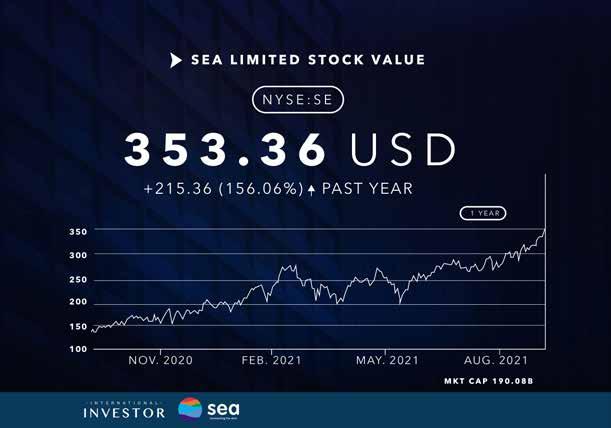
Riding high on Q2 2021 results, Singapore’s Sea Limited (NYSE: SE) has made its mark in the Asian stock sphere. Identifying as a consumer internet company, Sea Limited has become a tech conglomerate in the past few years.
With expansion in markets such as India and the U.S., the firm is making the most out of its products. Sea limited’s Free Fire game recently ranked as the No. 1 grossing game for Google Play in these markets. Whereas, its eCommerce app Shopee became the No. 2 most downloaded app in Brazil.
When it comes to its recent growth, the company’s stock has more than doubled in value from a year ago. On August 31, 2020, SE traded at a price of a little over $152. A full year later, it stands at the price of over $353.36.
Pinduoduo Inc (NASDAQ: PDD) is an agritech company that operates mainly in China. Over the past few years, the company has made massive headway in a highly competitive sector. Since its IPo in 2018, the firm also stands front and center when it comes to investing in Asian stocks.
By gamifying online discount deals, Pinduoduo Inc has turned the whole notion of internet purchasing on its head, but in a very remarkable way. Most recently, it recorded upwards of 788 million users in 2020, leaving Alibaba’s 779 million figure in the dust.
There has not been much difference for PDD year over year. August 31, 2020 recorded a stock price of $89, with the price going up to over $99 a year later. nonetheless, stock value went up to nearly $196 in February 2021.
When it comes to Asian stocks investments, you cannot complete the list without mentioning JD.com (NASDAQ: JD). As one of China’s leading tech conglomerates, JD.com has its reach across various consumer and business fields. The company’s success has continued over the past few years to establish further milestones.
With JD.com’s continued growth, consistent expansion, and breakthrough innovation, the company has become a staple in Asian stock options. JD.com is also known for its
strength, where it surpasses many other stocks in terms of holding its price. This makes it an important asset to hold for specialists and general investors alike.
On August 31, 2020, JD traded at a price of over $78. A complete year later, it traded at almost the same price. While JD.com’s stock reached the heights of $106 in February 2021.
Based in South korea, Coupang Inc (NYSE: CPNG) holds the status of being the country’s largest eCommerce platform. As a direct equivalent to Amazon and since its NYSE debut in March 2021, it has stood out for those who want to invest in Asian stocks.
As a company, Coupang has recently gone through major milestones such as launching its grocery and food delivery divisions. The firm is banking on these initiatives so much that it noted its first write-down in 16 consecutively successful quarters. But those who believe in the power of these programs hope for major improvements in the future.
Coupang’s March 11, 2021 debut marked a stock price of over $49. But it has since fallen to $29 as of August 31. however, this is just the first year of one of the biggest IPOs of its kind. In addition to the newly launched divisions, this makes Coupang a great Asian stocks investment. It’s especially true if you want to invest in alternatives to Amazon (NASDAQ: AMZN) or DoorDash (NYSE: DASh).
If you want to start investing in Asian stocks, your portfolio cannot be completed without China’s premier, Alibaba (NYSE: BABA). As China’s leading eCommerce company
that also holds its footing on various tech sectors, Alibaba needs no introduction.
Alibaba has grown year over year, which makes it a surefire investment for anyone looking towards the Asian market. Since the firm deals in both B2B and B2C sectors, it also holds a multifaceted advantage. With several opportunities for growth, the company stands apart as one of the most prominent options for international investors.
NIO Inc (NYSE: NIO) is a Chinese automobile manufacturer. In a day and age where electric vehicles (EVs) reign supreme, the company’s EV offerings stand apart from the crowd. With popular operations across the u.S., the u k., and germany, the firm has its hold across multiple continents.
NIO Inc has been consistent in terms of its scaling, which makes it a remarkable option for Asian stocks investments. With its reliable operations and vast outreach, it is a very safe bet for investors of all kinds.
on August 31, 2020, nIo traded at a price of over $19. on August 31, 2021, it continued with a price of over $39. This marks the type of improvements that you may expect from a very promising project.
Many of these companies have shown great progress over recent months. But according to market watchers, this is just the start of their success stories. With various products or expansion plans in the near future, the sky’s the limit for these stocks. If you want to reap the rewards of investing in Asian stocks, these names need to be on your radar.

by Liam Jones
The Climate Investment Opportunities: Climate-Aligned Bonds & Issuers 2020 report provides a comprehensive analysis of the global unlabelled climate-aligned bond market, revealing investment opportunities that extend beyond the thematic bond market.
Climate-aligned investment opportunities extend well beyond the Green, Social and Sustainability (GSS) bond market. These are opportunities for climate-aligned issuers to refinance their business operations in the gSS bond market and benefit from a broader investor base as well as the extra visibility offered by the green label. unlabelled instruments are difficult to identify, and labelling is an important signposting tool for investors. These instruments are identified via a proprietary methodology developed by Climate Bonds and support for this publication was provided by DBS Bank.
The report identifies over uSd913bn from 420 climatealigned issuers based in 45 countries, an extraordinary volume; almost half the size of the labelled Green, Social and Sustainability (GSS) bond market, which reached a cumulative USD1.7tn in 2020.
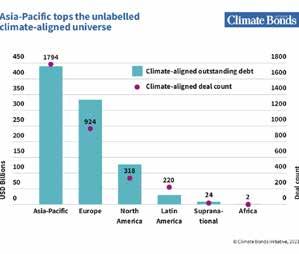
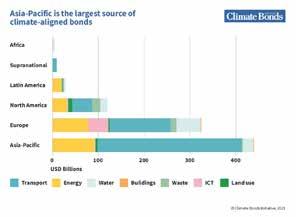
The climate-aligned bond universe is about equally split between developed and emerging markets, with 1% of volume coming from supranational institutions. AsiaPacific is the top region, accounting for uSd436.6bn (48%) brought to market by 183 climate-aligned issuers. Bonds from China represent the vast majority of issuance from Asia-Pacific (74%), and 36% of the global total. europe ranks second in regions, accounting for USD321.3bn (35%), with 121 issuers.
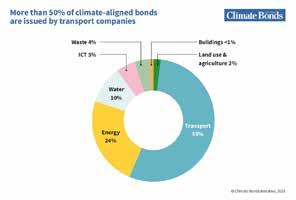
The ‘Transport’ climate theme dominates the climatealigned universe, followed by Energy and Water. Railway companies are the most widespread, accounting for almost all the transport related climate-aligned volume.
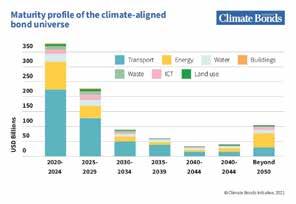
Over 40% of the climate-aligned volume will mature in the short term, which raises opportunities for refinancing climate-aligned business operations in the GSS bond market. As many climate-aligned companies identified in the report have already issued labelled bonds, refinancing opportunities can contribute towards the expansion of the labelled bond universe.
• DM account for USD464.8bn from 203 climate-aligned issuers spread across 21 countries
• Europe is the largest source of climate-aligned volumes with USD319bn from 112 issuers domiciled across 14 countries
• Transport sector leads climate-aligned opportunities in developed markets, followed by Energy and Water
• France is the largest source of DM climate-aligned bonds; SNCF, EDF, Orange SA are the top issuers
• More than half of the volume will mature within eight years, which shows huge potential for scaling-up the labelled green bond market
• China is the largest source of climate-aligned bonds, with USD325bn from 96 climate-aligned issuers
Asia-Pacific dominates EM issuance with 73% of volume, followed by Latin America at 24%
• Energy is the top sector for climate-aligned opportunities, followed by transport and water
• EM (excluding China) account for 14% of the global climate-aligned universe, with USD123.3bn issued by 121 climate-aligned issuers domiciled across 23 countries
• South Korea is the largest source of EM climate-aligned bonds; Korea Electric Power Corporation, Indian Railway Finance Corporation and Korea Rail Network Authority are the top issuers
• Almost half of the climate-aligned outstanding debt will mature in the short term, offering opportunities to scale up the EM GSS market, with an additional USD40bn (33%) maturing by 2029
If the production of hydrogen fuel can be decarbonised cost-effectively, hydrogen can play a substantial role across the energy system. To reach widespread adoption of green/low-carbon hydrogen, public sector investment is required to provide the necessary infrastructure to attract private investment and drive down costs. Climate-aligned companies, especially those in the Energy sector, are wellpositioned to raise finance for the development of green hydrogen activities and adapt business practices in light of the global transition towards carbon neutrality.
Identifying the share of revenue streams associated with highly energy-efficient green buildings is tricky. Industry certification schemes and metrics to quantify energy efficiency and/or improvements vary substantially across building types and across countries, which makes it difficult to compare and evaluate the climate alignment of these companies.
Better and more standardised disclosure will help pinpoint climate-aligned investment opportunities to the investors. There is also considerable scope for real estate companies to use green finance tools to fund low-carbon real estate projects. Green bonds can demonstrate that an entity is developing a green building portfolio to limit its environmental footprint.
Climate-aligned companies can help direct increased funding towards low-carbon vehicles. Despite the growth of investments in low-carbon mobility in recent years, substantial emissions reductions in the transport sector are still necessary to meet the 1.5°C target.
USD913.2bn
USD1.7tn
Increasing capital flows towards investments that address climate factors and contribute to reaching national emissions targets must be amongst the priorities for both policy makers and finance sector stakeholders in emerging economies.
Identification of climate aligned bond issuers, moving some refinancing offers to the labelled market has a benefit greater than the individual issuance itself.
Expanding green and sustainable debt markets, increasing the depth and diversity of green bonds, loans and sukuk, benefits both issuers and investors while supporting low carbon economic development paths.
Investors have an opportunity to make choices that respond directly to their ESG mandates, as well as protect their portfolios against adverse risks coming from climate change. A closer focus on climate aligned corporations offers another pathway to assist in achieving these goals.


Jesper Tot Madsen. Key Publications Manager & Editor
Phillip Edward Lewin, Communication Advisor & Editor
As expectations from customers, investors and employees intensify, climate action has become a strategic imperative for A.P. Moller - Maersk. The industry leader is stepping up efforts to decarbonise shipping with the first carbon-neutral vessel to hit the waters in 2023, seven years ahead of initial plan.
BOLD ACTION IS NEEDED NOW FOR AN IN-TIME TRANSITION
Transport and logistics account for a considerable part of CO2 emissions globally with shipping alone accounting for 2-3 percent. A strong and clear regulatory framework is needed to guide liners towards the carbon neutral fuels that most effectively curbs emissions across the entire value chain.
A.P. Moller – Maersk agrees with the IPCC’s Sixth Assessment Report that, it is very important to emphasize all greenhouse gases, not just CO2, and we believe it is key they are addressed from a life cycle perspective with a view on both the 20 year and 100 year Global Warming Potential (GWP).
ENERGY TRANSITION, STILL A MAYOR CHALLENGE
“Fossil fuels remain easily available, reliable, and cheap. Governments must regulate and incentivize shipowners, operators, and fuel providers, so that investments in new fuels and technology are prioritized,” emphasizes Morten Bo, head of decarbonization at Maersk..
In that sense, Maersk supports a Market Based Measure of a sufficient price level as to cover most of the competitiveness gap between fossil and renewable fuels. We estimate that this gap is of at least at least 150 USD per ton CO2 in the medium term at current oil price.
There remain many unknowns and complexities to decarbonising supply chains, however it is evident that very good solutions are already available today that can have an immediate impact in the shipping industry. Alcohols (methanol and ethanol), alcohol-lignin blends and ammonia are Maersk´s main candidates for now – amongst others due to cost and scalability potential.
Maersk does not believe in transition fuels to get to zero. The global integrator of container logistics does not see lng as a viable solution for the Maersk fleet. They want to leapfrog directly to carbon neutral fuels such as Green Methanol, for which the technology is already proven and available.
Our 2050 net zero ambition for shipping is a challenging target, but clearly possible to reach


“It is still too early to say which candidate fuels will come to dominate, and it is also likely that several fuels will reach significant scale as shipping fuels. key deciding factors include availability, price levels, fuel sustainability, and safety in operation,” explains Ole Graa Jakobsen, head of Fleet Management at A.P. Moller – Maersk
In 2020, Maersk has fully integrated its sustainability priorities into the business strategy, adopting an integrated approach that fits the strategy and transformation towards one company and matches expectations from stakeholders.
Ambitions have been reassessed and elevated, most notably with the world’s first liner vessel operating on carbon-neutral biomethanol to hit the waters in 2023, seven years ahead of the original schedule. In addition, all newly built, Maersk-owned vessels will be able to operate on green fuel.
By achieving this, Maersk will be able to pilot a scalable, carbon-neutral solution to customers and incentivise manufacturers to scale the production of new, sustainable fuels. In other words, create a market that does not exist yet.
“Pioneering this technology, it will be a significant challenge to source an adequate supply of proper carbonneutral methanol within this timeline. Our success relies on customers to embrace this groundbreaking product as well as fuel suppliers, technology partners and developers to ramp up production fast enough,” says henriette hallberg Thygesen, CEO of Fleet & Strategic Brands, A.P. Moller - Maersk.
It is still too early to say which candidate fuels will come to dominate, and it is also likely that several fuels will reach significant scale as shipping fuels. key deciding factors include availability, price levels, fuel sustainability, and safety in operation.
A key collaboration partner is the Mærsk Mc-kinney Møller Center for Zero Carbon Shipping, an independent, nonprofit research and development center that works across sectors, organisations, research areas and regulators to accelerate the development of new energy systems and fuel technologies.
To drive efforts within Maersk, a new Decarbonisation Function was launched in January 2021, tasked with ensuring collaboration across commercial, operational, technological, and corporate entities. With the new setup, decarbonisation will be an even stronger strategic priority across the business.
As part of this effort, Maersk continues to work towards net-zero emissions from its ocean activities in 2050 as well as a 60% relative reduction in emissions from shipping by 2030, compared to 2008.
While expectations and ambitions continue to rise, the green transition of the global transport and logistics industry remains a monumental challenge. As Maersk grows its logistics presence on land, the company is investigating how to expand its net-zero ambition to cover its full operations across the supply chain.
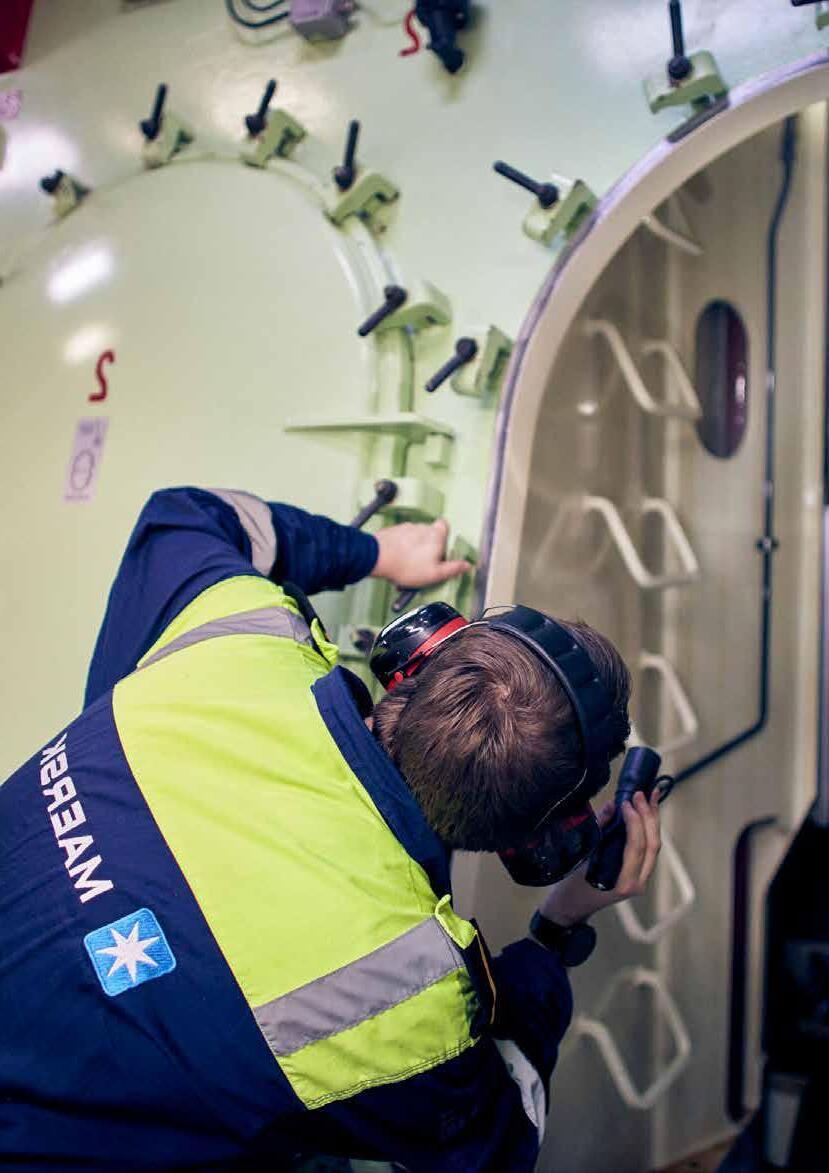
At the same time, the wider industry is coming together to develop carbon-neutral fuels, vessels and products. This poses challenges creating the right infrastructure and supply of new fuels at scale, while ensuring that framework conditions and regulations reinforce a level playing field that also awards early movers.
Through forums such as the Getting to Zero Coalition and Clean Cargo, the industry’s key players are leading by example to solve the challenges together and inspire the rest of the value chain to.
Although the task ahead is excessive, it is clear when we look to the future that this does not just pose challenges. It also brings along opportunities that businesses, customers and decision makers must seize. As an integrated logistics and transport company, A.P Moller- Maersk is ready to do its part. The company has actually embarked on a journey to create a change that they believe is both responsible and the right path for the company, its customers and not least for the planet.


By Vanora Bennett
The European Bank for Reconstruction and Development (EBRD) is launching its own Energy Compact to support the energy transition, focussed on investments within its flagship urban sustainability programme, EBRD Green Cities. The Compact is a response to the United Nations’ Sustainable Development Goal (SDG) 7, which aims to provide clean and affordable energy for all.
Under this pledge, the EBRD commits itself to almost double investments in EBRD Green Cities’ priority investments to around €1.9 billion by end-2023 from €1,011 million as of August 2021. In the same period, the number of Green City Action Plans – the plans each city draws up after joining the programme, identifying priority environmental issues to address – is to rise to 50 from 19 currently completed.


On Friday in New York, the UN is hosting a high-Level Dialogue on Energy, whose outcomes will include a global roadmap towards the achievements of SDG 7 by 2030 and net zero emissions by 2050, as well as a series of Energy Compacts from member states and non-state actors such as the EBRD. The Dialogue is preceded by three days of multi-stakeholder pre-summit events.
Nandita Parshad, Managing Director, Sustainable Infrastructure Group, EBRD, announced the EBRD Energy Compact for Green Cities at a Wednesday event and stressed the importance of the focus on energy:
“When it comes to addressing the climate emergency, cities must be front and centre: they account for over 70 per cent of global emissions, and the megatrend towards urbanization especially in the developing world, will place even more focus – quite rightly so – on the need for clean air, decarbonised urban transportation, and green and reliable energy access for all.”
With cities growing but their leaders aware of the need to slow the pace of climate change, a key task for planners is to work out how to provide energy to expanding urban populations without aggravating climate problems or worsening air quality. This applies particularly to cities around the EBRD regions – central and eastern Europe, Central Asia, and the southern and eastern Mediterranean. The numerous challenges they face include insufficient infrastructure investment, demographic changes and poor air quality, all linked to a historical legacy of high energy and carbon intensity.
Solving these problems in a multi-faceted way was the inspiration behind the EBRD Green Cities programme, set up in 2016, which aims to help cities identify, prioritise and tackle these urban challenges to create more sustainable living spaces. It has proved so popular that, in its first five years, it has grown to include 49 cities.
The eBRd energy Compact is based on the flagship eBRd Green Cities programme designed to introduce bottomup planning through Green Cities Action Plans for green priority investments for cities. These include planning and financing aimed at forwarding Sdg7, such as improving energy efficiency in buildings, supporting green urban mobility, water, waste management and digitalisation of city services.
The annual impact of Green Cities investments already translates into significant energy savings, estimated to be 2.4 million Gigajoules annually.


Ready, jet, go: Virgin Atlantic expands its Caribbean offering with new services from Edinburgh to Barbados, Manchester to Montego Bay, and a return to St Lucia

• 70% increase in Barbados flying with a new route from Edinburgh, Scotland’s only service to the Caribbean, five flights per week from Manchester and 11 flights per week from Heathrow
• Seasonal winter services flying three times a week from London Heathrow to St Lucia commence on 18th December
• Launch of three flights per week from Manchester Airport to Montego Bay on 6th November
To demonstrate its continued commitment to the region, and to meet an increase in customer demand, virgin Atlantic has announced a significant expansion to its Caribbean portfolio. For the first time, it will fly to the idyllic island of Barbados from Edinburgh Airport, providing Scotland’s only direct gateway to the Caribbean. The new route marks the first time virgin Atlantic has flown international flights from the Scottish capital in its 37-year history. The airline is also delighted to be returning to the beautiful island of St lucia, flying from London heathrow, whilst there will be new services from Manchester to vibrant Montego Bay, Jamaica.
As travel restrictions begin to ease, the new services aim to respond to the pent-up demand from consumers looking to head off on a relaxing holiday to a sunny Caribbean destination. The routes will complement Virgin Atlantic’s recently announced heathrow to Bahamas service, which launches on 19th november and the launch of Europe’s only service direct to the gorgeous St Vincent and the Grenadines on 13th October 2021.
JUHA JARVINEN, CHIEF COMMERCIAL OFFICER AT VIRGIN ATLANTIC, COMMENTED,
“The Caribbean is such an important destination for us and for our customers and we couldn’t be more excited to announce our new routes, as we continue to grow our ever-expanding portfolio.
“We know customers are keen to get away on their next adventure after a challenging year and these Caribbean destinations offer the perfect escape for those travellers looking to either simply relax or explore a new corner of the world.
“For customers based around the Uk, we are also thrilled to be able to offer additional routes from both Edinburgh and Manchester. Commencing international flights from Edinburgh marks an exciting new chapter and I know our teams can’t wait to show Edinburgh the famous Virgin Atlantic spirit and flair.”
DEWAR, CHIEF EXECUTIVE OF EDINBURGH AIRPORT, SAID;
“A premier city like Edinburgh deserves premier airlines and we are extremely excited to welcome our newest partner Virgin Atlantic to Scotland’s capital city.
“To be able to deliver flights to Barbados, Scotland’s only direct route to the Caribbean, and Orlando is a fantastic boost to us as we prepare for the post-Covid recovery, and it is a huge show of confidence in edinburgh Airport’s ability to deliver for passengers across the country.
“We look forward to the new routes launching and watching passengers head off on the holiday of a lifetime from Edinburgh Airport with Virgin Atlantic.”
With the spectacular landscape of the Pitons set against the backdrop of the lush rainforest and the stunning Caribbean Sea, St Lucia is undoubtedly one of the Caribbean’s most romantic islands. Virgin Atlantic is delighted to start a new seasonal winter service operating three times a week starting from 18th December 2021 on the airline’s A330-300 aircraft boasting 31 Upper Class, 48 Premium and 185 Economy Delight, Classic and Light seats. Services will go on sale from 18th August 2021 with return economy flights starting from £462 per person.
Virgin Atlantic has a new home in Scotland. Launching on the 5th December and on sale from 18th August, edinburgh’s new Caribbean flights will operate twice weekly on an Airbus A330. Fares will start from as little as £419 per person. The airline will also fly twice weekly to Orlando, Florida from April 2022. As the gateway to the highlands, the new services from Edinburgh Airport will provide travellers from Florida and the Caribbean with a direct link to Scotland’s fascinating historic capital city, alongside easy access to the country’s dramatic, world-famous countryside. Similarly, Barbados offers easy onward connections to the wider Caribbean, with seamless links to Grenada, St Vincent and Tobago available with Virgin Atlantic.
As well as flying customers, virgin Atlantic will offer a fast, efficient cargo service, enriching the global supply chain and presenting new opportunities for companies looking to export and import famous Scottish goods, such as whisky and smoked salmon, between Scotland and the Caribbean.

home of rhythm and sway, Jamaica boasts luscious rainforest, stunning beaches, and a unique culture. It is a land of activities, breath-taking landscapes, and warm, welcoming locals, making the island a haven of sight and sound. Virgin Atlantic will launch thrice-weekly seasonal winter services from Manchester Airport commencing on 6th November on the airline’s Airbus A330-300 aircraft boasting 31 Upper Class, 48 Premium and 185 Economy Delight, Classic and Light seats. Services will go on sale from 18th August 2021 with return economy flights starting from £428 per person.
With 16 major islands surrounded by the world’s clearest waters, the Bahamas is an unrivalled destination boasting beautiful white sand beaches, sailing adventures, fishing and diving as well Exuma’s world-famous swimming pigs! Virgin Atlantic will launch twice-weekly services from London heathrow commencing on 20th November on the airline’s Boeing 787-9 aircraft boasting 31 upper Class, 35 Premium and 192 economy delight, Classic and light
seats. Services will go on sale with return economy flights starting from £713 per person.
From 31st October, Virgin Atlantic will increase its services to the much-loved island of Barbados. Flights from Manchester to Barbados will increase from three times a week to five times and from heathrow, daily flights will increase to 11 times a week. Virgin Atlantic will also be increasing its heathrow services to Jamaica, from three flights up to daily.
In addition to its Caribbean expansion, Virgin Atlantic is also expanding its portfolio in hong kong and India. For the remainder of August, the airline’s Mumbai route will operate on an A350, the largest in the airline’s fleet, which will increase capacity by 30%. Meanwhile from September, capacity to hong kong will rise by 80%, with 4 additional weekly flights and an A350 operating the route.
For further information or to book please visit www. virginatlantic.com

by Liam Jones
AVERAGE ANNUAL GROWTH AT 76% AS GREENIUM STILL APPARENT IN NORTH AMERICA
Climate Bonds has released the North America State of the Market report, revealing the remarkable growth of green finance in the uS and Canada.
This report is Climate Bonds’ first stand-alone State of the Market for the north America, encompassing established green markets and a first of its kind analysis of the expanding social and sustainability bond labels, support was provided by Moody’s ESG Solutions and Amundi Asset Management.
Reaching a cumulative USD311bn at the end of Q1 2021, North America has seen 6,000 instruments issued under Green, Social and Sustainability (GSS) labels since 2011. The majority of issuance is from the well-established green label with volume reaching USD271.4bn. Sustainability bonds hit a volume of USD24.3bn and social bonds reached USD15.5bn, both labels are in their infancy but growing quickly.
In the 5-years (2016-2020), the North American GSS market grew by an astonishing 76% year-on-year average and by 10% for the first 3 months of 2021. The uS is the second-largest source of cumulative GSS debt globally (behind supranational issuance) and the largest single country, while Canada ranks eleventh overall, and is the tenth-largest country.
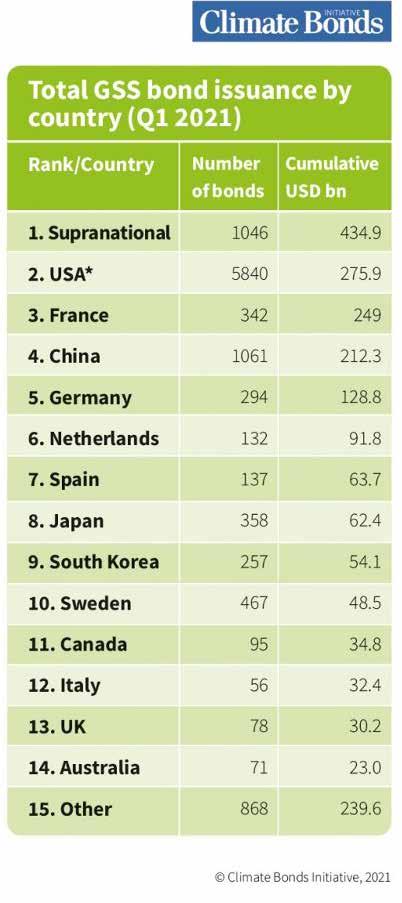
Between 2016 and December 2020, there were eight qualifying bonds originating from issuers based in Canada and 48 from the US. The analysis shows that green bonds from the US and Canada attract larger book cover and achieve greater spread compression compared to vanilla equivalents.
Three-quarters of green bonds achieved a greenium and around half of green bonds were allocated to investors
describing themselves as green. In the immediate secondary market, green bonds tended to tighten by a greater magnitude than vanilla equivalents and matched indices after 28 days. This suggests that green bonds offer value to both issuers and investors.
In the 5 years between 2016-2020, the US GSS market grew by an average of 72% a year and by 11% in the first 3 months of 2021.
Cumulative market totals are as follows:
Green USD241.4bn, Social USD14bn, Sustainability USD21bn.
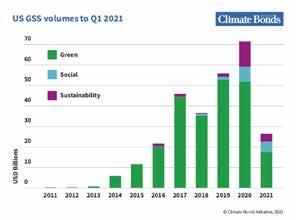
The market has several unique features, including the large volume of green Mortgaged Backed Securities (MBS) from Fannie Mae, which accounts for 39% of overall issuance, without which the US would fall behind China and France in national rankings. Green US Municipal bonds issued by local government authorities and government-backed entities make up 23% of the total volume.
The US GSS market remains largely characterised by numerous small deals, or tranches, mainly from municipal issuers which are mostly purchased by domestic retail or institutional investors.
The US social bond market is still in its infancy and the private sector has dominated issuance to date, but there is huge potential for the state sector to contribute to the growth of this market. The Biden administration’s emphasis on addressing social inequalities is expected to result in further development of this market.
The US sustainability bond market was opened in 2016 with Starbucks issuing a pair of bonds worth USD1.25bn. In 2019, new bonds totalled uSd1.9bn and later in 2020, there was a dramatic increase that led to an extra USD12bn of bonds. 2021 began in a similar vein, with new bonds worth uSd3.9bn having been issued by the end of Q1.
Strengthening reporting standards will ensure greater confidence and transparency in labelled markets. The uS was found to be one of only four countries with postissuance reporting below 80% and more than USD1bn issued, in a recent Climate Bonds report.
In the 3-years 2018-2020 the Canadian GSS market grew by an average of 70% year-on-year and the first 3 months of 2021 saw 8% growth. The green finance total sits at uSd30bn, the social finance total is uSd1.5bn, and the sustainability total is USD3.3bn.
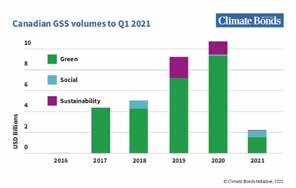
The Canadian market is populated by larger deals compared to the US, with an average size of USD366m. Larger deals help attract a broader range of international investors, which was also reflected in the fact that Canadian GSS bonds had been issued in six currencies.
Since the inception of the Canadian green bond market in 2014, the market has been dominated by financial corporates and local governments every year, except for 2015. The social and sustainability themes like the US, are in the early stages of development, with 15 bonds issued by the end of Q1 2021, cumulatively worth USD4.8bn.
The US and Canada have recently introduced economywide emissions reduction targets at the highest levels of government, as well as publicly reaffirming their commitment to work together on emissions reductions.
Due to a continued reliance on fossil fuels to power much of their economies, there is a need for the public as well as private sector to transition to low-carbon energy systems. labelled bonds present an opportunity to finance transitions that require companies to drastically change their business models.
The US must lead Sovereign GSS debt. Multiple countries have already taken the plunge, and Canada has stated its intention to come to the market in 2021.
• A broader range of Canadian and American GSS bond issuers will create a more diverse investment pool, thereby enabling more high-profile investors to participate in this market.
Clear transition pathways will enable issuers from a broader range of sectors to be active in the North American GSS bond market.
• Benchmark-sized, labelled deals create critical mass and encourage investors with dedicated mandates to drive policy change. More large bonds are needed to bring scale to the North American GSS bond market.
Repeat issuance introduces economies of scale for both issuers and investors. Entities who have issued GSS bonds should return to the market regularly.
• Clear, accessible, and consistent pre-and post-issuance reporting will support investor confidence in the credibility of the GSS themes.
The US campaign to tackle climate change is being revived through major policy commitments which are poised to send sustainable debt skyward. We hope the US joins the ranks of other sovereign GSS issuers like its close neighbour in the north, a move that’s proven to bolster domestic sustainable debt markets and also, demonstrates real climate intent.
Sean kidney, CEO, Climate Bonds Initiative: “The USA has led national green bond rankings for several years, however, significant upside potential and unmet demand remains, in both the municipal and corporate markets. This demand will only grow as large investors continue to seek sustainable investment opportunities, align towards emissions reduction goals and reduce long-term carbon exposure in their portfolios.”

CovId -19 change the way businesses work, the investment community had to take a step further and reinvent in many ways. In order to recognise the effort behind every individual and company during this time, we selected champions from a wide range of businesses.
The awards are open to any business, large, mid-size or small, established or start-up, provided they display first rate service, opportunity, innovation and performance. The following pages celebrate organisations that drive forward the world of international business and investment.



Best Banking Group // MENA 2021, Excellence in Corporate Governance // Bahrain 2021
Al Baraka Banking Group B.S.C. (“ABG”) is licensed as an Islamic wholesale bank by the Central Bank of Bahrain and is listed on Bahrain Bourse and NasdaqDubai. It is a leading international Islamic banking group providing its unique services in countries with a population totaling around one billion.
The Group has a wide geographical presence in the form of subsidiary banking units and representative offices in 17 countries, which in turn provide their services through around 700 branches. Al Baraka Banking Group has operations in Jordan, Egypt, Tunis, Bahrain, Sudan, Turkey, South Africa, Algeria, Pakistan, Lebanon, Saudi Arabia, Syria, Morocco and Germany, in addition two branches in Iraq and two representative offices in Indonesia and Libya.
ABG and its Units offer retail, corporate, treasury and investment banking services, strictly in accordance with the principles of the Islamic Shari’a. The authorized capital of ABG is US$ 2.5 billion.
S&P global Ratings has affirmed its ‘BB-/B’ long- and short-term ratings on Al Baraka Banking Group B.S.C (ABG) on 8 July 2021, while it revised its outlook on ABG to negative from stable.
ABG has also been rated BBB+ (long term) / A3 (short term) by Islamic International Rating Agency (IIRA). IIRA has also rated ABG on the national scale at A+ (bh) / A2 (bh) with a fiduciary score of 81-85, the highest level amongst Islamic Financial Institutions in the region.
Best Offshore Bank // CARICOM 2021
Caye’s history begins in 1996 as a Belizean mortgage company, and after continued success over several years, became an international bank on September the 29th, 2003. Caye is now the only International Bank headquartered on the beautiful island of Ambergris Caye in Belize, Central America. Our bank license permits us to conduct financial services with both individuals and corporations located outside of Belize.
We offer a full range of traditional and non-traditional banking services and accounts in multiple currencies. An application for account opening is a simple process and can be facilitated online from anywhere in the world.
Private Banker of The Year // CARICOM 2021
Luigi Wewege is the Senior Vice President, and head of Private Banking of Belize, Central America based Caye International Bank, published author of The Digital Banking Revolution - now in its third edition, has co-authored economic research which was presented before the United States Congress and currently serves as an Instructor at the FinTech School in California. he holds an Italian Master of Business
Administration with a major in International Business, as well as a BSBA with a triple major in Finance, International Business, and Management from the University of Missouri - St. Louis.


Most Innovative Global Trade Services Bank // 2021
Euro Exim Bank Ltd, is a regulated, supervised bank, authorised with a Class ‘A’ international banking license from the Financial Services Regulatory Authority of St. Lucia (FSRA), and a proud member of the Caribbean Association of Banks (CAB) and the International Chamber of Commerce (ICC).
we are an innovative financial institution serving registered SME’s and corporates engaged in import and export businesses, facilitating authenticated trade finance instructions around the globe. Geographical presence St. Lucia office is our registered headquarters, managing regulatory reporting, audit, providing compliance checks. With local staff, a resident director and MLRO there, activity includes overseeing the fitness and supervisory health of the company including management approvals for all transactions.
We also have a registered Representative office in london, and work with a developing network of agents and partners support local buyers for full trade service offerings in multiple jurisdictions. Back-office software development and additional processes are managed in Chennai, with further agents and partners in 30 countries, including UAE, India, Malaysia, Zambia, USA, South Africa, specifically to serve the markets and opportunities across the Africa and Asia continents.

Best Comprehensive Offshore Financial Services // 2021
For almost 30 years the award-winning LOM Financial Group has provided brokerage, custody, asset management and corporate finance services to individuals and institutional clients around the world. headquartered in Bermuda, with offices in Bahamas, grand Cayman and the Uk, LOM truly has a global presence.
Customised investment strategies are our specialty. By leveraging our international offices, private bankers, and highly qualified Chartered Financial Analysts (CFAs), we facilitate clients’ investment needs from the jurisdictions in which they are located, and offer a range of products designed to meet individual investment objectives. Our products include award winning 5 star Morningstar rated mutual funds.
Our in-house portfolio managers, private advisors and trading professionals ensure excellent execution of your investment strategy. We take security and privacy seriously, going to great lengths to safeguard client assets and information from the minute you are accepted as a client.
Our primary concern is meeting your needs, with an eye to growing and preserving your capital. At LOM we know it’s not just your portfolio’s performance that matters, it’s what your portfolio can do for you and your family. It’s our aim to help our clients build a lasting legacy.
Investment Promotion Agency of The Year // Asia 2021
Invest kOREA (Ik) is the korean national investment promotion agency under the korea Trade-Investment Promotion Agency (kOTRA) that supports foreign companies doing business in korea.
Ik provides information to potential investors abroad regarding investment in korea as well as comprehensive services to foreign companies ranging from consultation, support for establishing corporations and business activities, and complaint handling.
In our 36 overseas offices, we have specialists consisting of kOTRA employees, public officials dispatched from related government ministries and agencies, and private sector experts to support your successful business in korea.



Founder and Chairman of Sawari Ventures, named as one of the most creative people in the world by Fast Company, Ahmed el Alfi has been an early stage/growth investor for over 30 years, translating to an extensive experience in funding and nurturing early stage companies. In 1990, he founded hybrid Capital Partners, a private investment partnership which funded, helped grow and exited several successful companies. From 2010 to 2013 he founded Sawari Ventures, Flat6Labs, Nafham, and TATP. Flat6Labs is the MENA region’s leading startup accelerator. TATP took over management of half of the American University in Cairo’s Tahrir Square campus to form The GrEEk Campus; a 25,000 m 2 office park where over 130 companies work and collaborate.
In addition to Sawari Ventures’ portfolio of investments, his current portfolio includes neuroTrainer, Pacific Toxicology, as well as Zignal Labs.
Best Ethical Investment Firm // Saudi Arabia 2021
SEDCO Capital is a global, Shariahcompliant, and ethically led asset management and investment advisory firm.
Our investment philosophy is built on three pillars: Principles, Partnership, and Performance. We provide clients with responsible investment solutions through a dynamic asset allocation process across diversified asset classes that deliver strong risk-adjusted returns. By adopting a global view to investing while looking through the lens of our proprietary Prudent Ethical Investment (PEI) approach, an integration of Shariah-compliant and Responsible Investment principles, we provide our clients with unparalleled global access to investments across developed and emerging markets, including Saudi Arabia, in alignment with their investment objectives. We cultivate longstanding, trusted relationships with our clients and currently oversee more than $5.2 billion in total assets under management (AUM) built on the back of a long successful track record.
FDI Agency Of The Year // MENA 2021 Most Innovative Investment Projects // MENA 2021
As the Sharjah FdI office, we are dedicated to the continued transformation and economic diversification of the emirate and committed to guiding foreign investors through a bespoke step-by-step facilitation process.
Leveraging our superior market knowledge and intelligence, we guide investors to the right opportunities in Sharjah and provide bespoke advice and guidance, that help individuals and organizations establish successfully in the emirate.
Working actively and collaboratively with public institutions and private companies, we help guide your business, growth and success by identifying, promoting and facilitating investment in all sectors, with a focus on Travel & Leisure, Transport & Logistics, healthcare, Environment, Education and Light Manufacturing.