FILMER FORGE is the annual industry program of the IN THE PALACE International Short Film Festival.
FILMER FORGE is traditionally running: educational modules, industry meetings, short film co-production market, pitching training and sessions, an interdisciplinary conference, and formal and informal networking opportunities. The platform brings together emerging and established filmmakers, producers, distributors, agents, broadcasters, exhibitors, festival programmers, representatives of funding bodies, to find collaborators for their current and upcoming projects.
As part of the FILMER FORGE industry program, IN THE PALACE annually provides financial, technical, and institutional support for new national and international short film projects.
2026 FILMER FORGE PROGRAM
22 – 25 JUNE
09:00 – 19:30 Hall 2 / Studium, Palace of Culture – Pernik
EAVE ON DEMAND Training
*for previously selected participants
Tutors: Geoffroy Grison, Radu Stancu, Sofia Tocar
25 JUNE FRIDAY
09:00 – 10:00 Hall 3 / Forum, Palace of Culture – Pernik
ITP MATCH BAKERY
Informal networking gathering
10:00 – 12:30 Marquee, Palace of Culture – Pernik
FILMER FORGE: NEXTDOOR NETWORKING Training
*for previously selected participants
Tutors: Faisal Qureshi, Martin Kudláč, Ştefan Aneculăesei
10:00 – ∞ Atrium, Palace of Culture – Pernik
VIDEO ART EXHIBITION
New Experimental Shorts
10:30 – 11:00 Hall 4 / Library, Palace of Culture – Pernik
5th ITP CONFERENCE:
Short Films, Big Questions: Festivals, Politics, and Public Engagement
Opening Remarks
Rita Capucho, Skadi Loist, María Paz Peirano, Rich Warren
11:00 – 12:30 Hall 4 / Library, Palace of Culture – Pernik
5th ITP CONFERENCE:
Short Films, Big Questions: Festivals, Politics, and Public Engagement
Panel 1
Programming as Practice: Curatorial Decision-Making
Chair: Rich Warren
Franciszek Drąg
“What Is Appropriate? Short Film Programming for Youth as a Practice of Care and Cultural Negotiation”
Oluranti Babatunde
“Thematic Preoccupation and Curatorial Practices in Selected Nigerian Film Festivals”
Meral Ozcinar
“Curating Vulnerability: Short Film Festivals as Mediators of Public Discourse and Cultural Value”
2026 FILMER FORGE PROGRAM
14:30 – 16:00 Hall 4 / Library, Palace of Culture – Pernik
5th ITP CONFERENCE:
Short Films, Big Questions: Festivals, Politics, and Public Engagement
Panel 2 Festivals, Economics & Sustainability: What Keeps Festivals and Short Film Ecologies Going Chair: María Paz Peirano
Xinyu Yu
“Festival without Industry? Managed Visibility, Casino Capital, and Short Film Festivals in Macao”
Federica Carbone
“Ecosystems of Sustainability in Italian Short Film Production”
Ezra Winton
“Solidarity Now: Documentary Film Festivals in the Age of Neoliberalism”
16:00 Hall 3 / Forum, Palace of Culture – Pernik
SHOWCASE PANEL
DIRTY TALKS
Code: Documentary with Simon Panay, moderator Ştefan Aneculăesei
16:00 – 18:00 Marquee, Palace of Culture – Pernik
FILMER FORGE: NEXTDOOR NETWORKING Training
*for previously selected participants
Tutors: Faisal Qureshi, Martin Kudláč, Ştefan Aneculăesei
16:30 – 17:30 Hall 4 / Library, Palace of Culture – Pernik
5th ITP CONFERENCE:
Short Films, Big Questions: Festivals, Politics, and Public Engagement
Special Presentation:
The Political Economy of Cultural Production Chair: Rich Warren
Junhan (Julian) Wang
“The Political Economy of Cultural Production: An Ethnographic Case Study of the VITA SHORTS Film Festival” (incl. a 40-min documentary screening)
22:00 – ∞ Hall 3 / Forum, Palace of Culture – Pernik
IN THE PALACE PARTY
Digging Great Sounds with The STEFAN informal networking gathering and dance
2026 FILMER FORGE PROGRAM
26 JUNE FRIDAY
09:00 – 10:00 Hall 3 / Forum, Palace of Culture – Pernik
ITP MATCH BAKERY
informal networking gathering
10:00 – 12:00 Hall 2 / Studium, Palace of Culture – Pernik
MASTERCLASS in cooperation with EAVE
Market-Ready: Building a Film Project That Travels by Rodolphe Sanzé
10:00 – 12:30 Marquee, Palace of Culture – Pernik
FILMER FORGE: NEXTDOOR NETWORKING Training
*for previously selected participants
Tutors: Faisal Qureshi, Martin Kudláč, Ştefan Aneculăesei
10:00 – ∞ Atrium, Palace of Culture – Pernik
VIDEO ART EXHIBITION
New Experimental Shorts
10:30 – 12:00 Hall 4 / Library, Palace of Culture – Pernik
5th ITP CONFERENCE:
Short Films, Big Questions: Festivals, Politics, and Public Engagement
Keynote Lecture
Chair: Skadi Loist
Dorota Ostrowska
“Short, experimental and arts film festivals: which festive chronotope are they?”
13:00 – 16:00 Hall 2 / Studium, Palace of Culture – Pernik
MASTERCLASS in cooperation with EAVE
First Steps in International Co-Production by Radu Stancu
14:00 – 16:00 Hall 4 / Library, Palace of Culture – Pernik
5th ITP CONFERENCE:
Short Films, Big Questions: Festivals, Politics, and Public Engagement
Panel 3 Circulation, Visibility & Infrastructure: How Short Films Move (or Do Not Move) Beyond the Festival
Chair: María Paz Peirano
2026 FILMER FORGE PROGRAM
Carlos Navarro
“Awarded and Erased: The Structural Contradiction Between Festival Recognition and Algorithmic Suppression in Palestinian Women’s Short Cinema”
Mara M. Marxsen
“The Distributor’s Gaze: Working Towards an Ethics of Short Film Distribution”
Lavinia Brydon
“The 2012 Cultural Olympiad and ‘State of the Nation’ Shorts”
Claudy Op den Kamp
“Beyond the Festival, Beyond the Market – Distributing Short Audiovisual Work through a Videographic Monograph”
16:00 Hall 3 / Forum, Palace of Culture – Pernik
SHOWCASE PANEL
DIRTY TALKS
Code: Fiction
with Lee Knight, moderator Ştefan Aneculăesei
16:30 – 18:00 Hall 4 / Library, Palace of Culture – Pernik
5th ITP CONFERENCE:
Short Films, Big Questions: Festivals, Politics, and Public Engagement
Panel 4 Festival Politics & Negotiated Space: Festivals
Navigating Political Constraints in Different Contexts Chair: Skadi Loist
Merve Nur Özçelik & İlker Özçelik
“2023 Antakya International Film Festival in the Rubble: Short Films as Vehicles for Community Healing and Disaster Recovery”
Antonio Peláez-Barceló
“Short Films as Political Practice: The Festival de Cine de Madrid–PNR and the Evolution of Spanish Short Cinema since the 1990s”
17:00 – 18:00 Marquee, Palace of Culture – Pernik
NEXTDOOR NETWORKING SHOWCASE PANEL
DIRTY TALKS
Code: Co-Production with Bogdan Mureșanu, moderator Kaloyan Vasilev
2026 FILMER FORGE PROGRAM
18:00 – 18:30 Hall 4 / Library, Palace of Culture – Pernik
5th ITP CONFERENCE:
Short Films, Big Questions: Festivals, Politics, and Public Engagement
Closing Remarks
22:00 – ∞ Hall 3 / Forum, Palace of Culture – Pernik IN THE PALACE PARTY
Digging Great Sounds with The STEFAN informal networking gathering and dance
27 JUNE SATURDAY
09:00 – 10:00 Hall 3 / Forum, Palace of Culture – Pernik
ITP MATCH BAKERY
informal networking gathering
10:00 – 11:30 Hall 2 / Studium, Palace of Culture – Pernik
5th ITP CONFERENCE: Short Films, Big Questions: Festivals, Politics, and Public Engagement
Round Table: Film Festivals, Public Engagement and Contemporary Challenges
moderator Stefan Prohorov, Bulgarian National Film Center
Anca Păunescu – DOK Leipzig, Germany
Jakov Poposki – DRIM International Short Film Festival, North Macedonia
Mark Brennan – Exit 6 Film Festival, UK
Matevž Jerman – FEKK International Short Film Festival Ljubljana, Slovenia
Rita Capucho – Porto Femme, Portugal
Tiziana Pelusi – Internationale Kurzfilmtage Winterthur, Switzerland
Tzanko Vasilev – IN THE PALACE International Short Film Festival, Bulgaria
Zurab Diasamidze – TOFUZI International Animated Film Festival, Georgia
2026 FILMER FORGE PROGRAM
10:00 – 17:00 Hall 4 / Library, Palace of Culture – Pernik
PITCHING TRAINING in cooperation with EAVE by Sarah Schlüssel
*for previously selected participants
10:00 – 11:00 Marquee, Palace of Culture – Pernik
FILMER FORGE: NEXTDOOR NETWORKING Pitch
Pitching Session 1
10:00 – ∞ Atrium, Palace of Culture – Pernik
VIDEO ART EXHIBITION
New Experimental Shorts
11:30 – 12:30 Marquee, Palace of Culture – Pernik
FILMER FORGE: NEXTDOOR NETWORKING Pitch
Pitching Session 2
13:00 – 16:00 Hall 2 / Studium, Palace of Culture – Pernik
MASTERCLASS in cooperation with EAVE
Script development: How to Prepare for a Marathon by Geoffroy Grison
16:00 Hall 3 / Forum, Palace of Culture – Pernik
SHOWCASE PANEL
DIRTY TALKS
Code: Animation with João Gonzales, Konstantin Bronzit and Mónica Santos, moderator Ştefan Aneculăesei
16:00 – 18:00 Marquee, Palace of Culture – Pernik
FILMER FORGE: NEXTDOOR NETWORKING Training
*for previously selected participants
Tutors: Faisal Qureshi, Martin Kudláč, Ştefan Aneculăesei
22:00 – ∞ Hall 3 / Forum, Palace of Culture – Pernik
IN THE PALACE PARTY
Digging Great Sounds with The STEFAN informal networking gathering and dance
2026 FILMER FORGE PROGRAM
28 JUNE SUNDAY
09:00 – 10:00 Hall 3 / Forum, Palace of Culture – Pernik
ITP MATCH BAKERY
informal networking gathering
10:00 – 11:30 Hall 3 / Forum, Palace of Culture – Pernik
FILMER FORGE Pitch
Session 1
moderator Sarah Schlüssel
10:00 – 18:00 Hall 4 / Library, Palace of Culture – Pernik
FILMER FORGE: NEXTDOOR NETWORKING Training
*for previously selected participants
Tutors: Faisal Qureshi, Martin Kudláč, Ştefan Aneculăesei
10:00 – ∞ Atrium, Palace of Culture – Pernik
VIDEO ART EXHIBITION
New Experimental Shorts
13:00 – 14:30 Hall 3 / Forum, Palace of Culture – Pernik
FILMER FORGE Pitch
Session 2
moderator Sarah Schlüssel
16:00 Hall 3 / Forum, Palace of Culture – Pernik
SHOWCASE PANEL
DIRTY TALKS
Code: Producer with Marta Sousa Ribeiro and Nati Juncal, moderator Mark Brennan
22:00 – ∞ Hall 3 / Forum. Forum, Palace of Culture – Pernik
IN THE PALACE CLOSING & PARTY
Digging Great Sounds with The STEFAN informal networking gathering and dance
2026 FILMER FORGE
22 – 25 JUNE
09:00 – 19:30
Hall 2 / Studium, Palace of Culture – Pernik
EAVE ON DEMAND Training
*for previously selected participants
EAVE on Demand Bulgaria in cooperation with IN THE PALACE
In 2026 IN THE PALACE and EAVE on Demand present 4-days EAVE workshop for 6 teams of producers + directors/writers and their projects, including group and individual training approaches in topics as marketing, script development, successful film producing, international co-production, etc. Tutors: Geoffroy Grison, Radu Stancu, Sofia Tocar
INTERNATIONAL CO-PRODUCTION
First Steps in International Co-Production
by Radu Stancu
Radu Stancu is a Bucharest-based producer and founder of the production company deFilm, established in 2009. With a background in film production, editing and sound design, his work has grown out of long-term collaborations with filmmakers and an ongoing curiosity for building international co-production ecosystems.
Radu is a member of the ACE Producers Network and an alumnus of EAVE Producers Workshop, Ties That Bind and Puentes. In 2023 he was selected as a Producer on the Move at the Cannes Film Festival and currently serves as EAVE’s Romanian National Representative.
Alongside his producing work, Radu is also a Board Member of the Romanian Producers Alliance (APF) and actively involved in initiatives shaping the Romanian film industry, contributing to policy discussions and reforms aimed at strengthening the national cinema ecosystem.
TRAININGS /WORKSHOPS / MASTERCLASSES
SCRIPT DEVELOPMENT
Script Development: How to Prepare for a Marathon by
Geoffroy Grison
Geoffroy Grison is a European screenwriter and script consultant. His recent credits include Laguna, directed by Šarūnas Bartas and selected for Giornate degli Autori at Venice 2025; Champ de Bataille, a VR experience directed by François Vautier and selected for the Cannes 2025 Immersive Selection; and The Dam, directed by Lebanese artist Ali Cherri and selected for the Quinzaine at Cannes 2022. He has also worked as a script consultant on numerous projects and writing labs.
Geoffroy grew up and studied in Strasbourg, graduating with a Master's degree in Ancient Greek and Latin Literature. His first job was at ARTE as a script advisor, before he moved on to filmmaking. He has written or produced over a dozen international feature films which have premiered at major festivals such as Cannes, Berlinale, Venice, and Locarno.
FESTIVAL DISTRIBUTION AND SALES
Finding the Right Path: Festival Distribution and Sales for Short Films by Sofia Tocar
Sofia Tocar is a film distributor and festival agent, leading the short film distribution slate at Square Eyes - a Viennabased agency known for bold, non-mainstream cinema.
Previously, she was part of the Institute of Documentary Film in Prague, where she coordinated the East Silver Caravan and East Doc Market. With a background in art history, Sofia also works as a curator and co-creator of craftivist and artivist projects.
2026 FILMER FORGE
25 – 28 JUNE
10:00 – 18:00 Marquee, Palace of Culture – Pernik
FILMER FORGE:
NEXTDOOR NETWORKING Training
*for previously selected participants
NEXTDOOR NETWORKING: Film Students Training and International Co-Production Project Development Program
An intensive training course for young directors, writers/scriptwriters, producers, and film critics from the Balkans and the Black Sea region is once again taking place during the 23rd festival edition in Pernik, Bulgaria, in 2026.
The program aims to support the youngest generation of filmmakers in these regions, helping them grow as competitive professionals in the short film industry immediately after graduating from film academies. The training fosters professional communication and creates an environment that facilitates better cooperation and exchange in film production between the local short film industries of the Balkans and the Black Sea region.
The festival invites established professionals actively working in the short film industry to lead working and training processes and teams in Film Directing, Scriptwriting, Film Production, and Film Criticism labs.
Alongside trainings, participants, guided by international tutors, will be able to further develop their film projects as international co-production. The program concludes with a pitching session where projects are presented to a professional audience and decision-makers at the 23rd IN THE PALACE in 2026
Tutors: Faisal Qureshi, Martin Kudláč, Ştefan Aneculăesei
TRAININGS /WORKSHOPS / MASTERCLASSES
Faisal Qureshi
Faisal Qureshi is a producer and scriptwriter with over 20+ years in the industry. His short film work has screened at Pucheon, Huesca, London and Leeds that led him to mentor filmmakers in Pakistan, Syria and Uzbekistan. When not focusing on his own work, Faisal has helped produces films and documentaries such as the BAFTA award winning feature, FOUR LIONS (Film4/Warp Films), the BAFTA and Emmy award winning documentary, LEAVING NEVERLAND (Channel 4/HBO/AMOS Productions), IN THE SHADOW OF 9/11 (PBS Frontline/Channel 4/AMOS Productions) and the comedy, THE DAY SHALL COME (See-Saw/Film 4/BFI). He is also a researcher and has worked on shows such as LOCKERBIE: A SEARCH FOR TRUTH (Sky Drama/Carnival Films) starring Colin Firth and ENCOUNTER (Raw Films/Amazon Studios) starring Riz Ahmed.
Martin Kudláč
Martin Kudláč is a freelance film journalist covering audiovisual industry as an industry correspondent for Cineuropa and writing about world cinema as a contributing writer for ScreenAnarchy. His writings have appeared across a variety of international outlets including MUBI's Notebook, Eastern European Film Bulletin, Film International, China Film Insider, Filmatique, Offscreen, De Filmkrant, Senses of Cinema among others.
He led cinema-related courses as a lecturer at a university and served as a member of the editorial board for the scholarly peer-reviewed journal Art Communication & Popculture. He is a co-author of the book Images of Hero in the Cultural Memory (University of Constantine the Philosopher, 2017) and a contributing author to Body and Text: Cultural Transformations in New Media Environments (Springer, 2019).
2026 FILMER FORGE
Ștefan Aneculăesei
Ștefan Aneculăesei is a Romanian journalist, editor, radio host, and cultural professional with a background in journalism and more than 15 years of experience in media. He started his career in Iași, Romania, working in newsrooms and radio, before continuing with Bucharest's national stations including Radio Guerrilla, One FM, and Magic FM. His work has included film reviews, music and event reviews, interviews, cultural coverage, and editorial coordination.
For IN THE PALACE, he works with the young film critics within Nextdoor Networking, mentoring them in review writing, interview preparation, and festival journalism.
26 JUNE
1 10:00 – 12:00 Hall 2 / Studium, Palace of Culture – Pernik
MASTERCLASS in cooperation with EAVE
Market-Ready: Building a Film Project That Travels
by Rodolphe Sanzé
A session that is not about marketing in the traditional sense: it gives filmmakers and producers a practical framework to think strategically from the very first stages of development, how to structure a project so that artistic choices, international positioning, co-production logic and distribution strategy all work together as a coherent whole. How to position a project, how to build credibility with international partners, how to think about market entry strategically – the masterclass is directly applicable to producers preparing their first feature, and offers a useful professional framework for those committed to short film who want to understand how the broader market operates.
13:00 – 16:00 Hall 2 / Studium, Palace of Culture – Pernik
MASTERCLASS in cooperation with EAVE
First Steps in International Co-Production
by Radu Stancu
With a background in film production, editing and sound design, Radu Stancu`s work has grown out of long-term collaborations with filmmakers and an ongoing curiosity for building international co-production ecosystems. His recent productions include I Only Rest in the Storm by Pedro Pinho (2025, winner of Best Actress in Un Certain Regard at Cannes), Milk Teeth by Mihai Mincan (2025, Venice Orizzonti Competition), Mailin by Maria Silvia Esteve (2025, IDFA International Competition), and Atlas of the Universe by Paul Negoescu (2026, Special Mention in Berlinale Generation) and Titanic Ocean by Konstantina Kotzamani (Un Certain Regard, Cannes 2026).
For him, producing is not only about making films, but about building the conditions in which films, and the people behind them, can thrive.
2026 FILMER FORGE
27 JUNE
10:00 – 17:00 Hall 4 / Library, Palace of Culture – Pernik
PITCHING TRAINING in cooperation with EAVE
*for previously selected participants
FILMER FORGE PITCH Training
by Sarah Schlüssel
Sarah Schlüssel from Germany will lead a specialized pitching training and moderate the festival pitching session. Her workshop will provide participants with the knowledge, skills, and guidance needed to deliver strong and engaging pitches.
Sarah is a cultural worker, film curator, and programmer focusing on short film and talent development. She is a member of the Berlinale Shorts selection committee, a co-founder of the film and conversation series shorts/ salon, and supports filmmakers as a pitching trainer and project advisor.
27 JUNE
13:00 – 16:00 Hall 2 / Studium, Palace of Culture – Pernik
MASTERCLASS in cooperation with EAVE
Script development: How to Prepare for a Marathon
by Geoffroy Grison
A talk about development and writing, covering different themes, such as the writing steps, the time frame, the documentary question, the consultations, the labs, the moodboard and intentions, when to keep on fighting and when to give up… Geoffroy Grison is sharing professional experiences and tips.
The session is also presenting a small case study about The Dam - director Ali Cherri & writer Geoffroy Grison (Cannes Quinzaine 2022) - including examples on specific issue of the writing from personal experience.
2026 FILMER FORGE
SHOWCASE PANELS
25 JUNE
16:00 Hall 3 / Forum, Palace of Culture – Pernik
SHOWCASE PANEL
DIRTY TALKS
Code: Documentary with Simon Panay, moderator Ştefan Aneculăesei
26 JUNE
16:00 Hall 3 / Forum, Palace of Culture – Pernik
SHOWCASE PANEL
DIRTY TALKS
Code: Fiction with Lee Knight, moderator Ştefan Aneculăesei
26 JUNE
17:00 Marquee, Palace of Culture – Pernik
NEXTDOOR NETWORKING SHOWCASE PANEL
DIRTY TALKS
Code: Co-Production with Bogdan Mureșanu, moderator Kaloyan Vasilev
27 JUNE
16:00 Hall 3 / Forum, Palace of Culture – Pernik
SHOWCASE PANEL
DIRTY TALKS
Code: Animation with João Gonzales, Konstantin Bronzit and Mónica Santos, moderator Ştefan Aneculăesei
28 JUNE
16:00 Hall 3 / Forum, Palace of Culture – Pernik
SHOWCASE PANEL
DIRTY TALKS
Code: Producers with Marta Sousa Ribeiro, Nati Juncal Portas (Cósmica Producións) and Oliver Sertić (Restart), moderator Mark Brennan
2026 FILMER FORGE SHOWCASE PANELS / PARTICIPANTS
Bogdan Mureșanu
Bogdan Mureșanu wrote, directed and produced „The New Year That Never Came“, winner of 23 international awards including Best Film at Venice‘s Orizzonti section and the FIPRESCI Award, plus 10 Gopo Awards. He debuted as screenwriter in 2008 and wrote/directed shorts including „Trimmed, Shaved and Milled“ and „Spid“. His short „The Christmas Present“ (2018) won the European Film Academy Award, received over 200 festival selections and 72 awards, and was Oscar shortlisted.
João Gonzalez
João Gonzalez (Porto, 1996) is an Oscar-Nominated director, animator, illustrator and musician with classical training in piano. He is a member of COLA Animation, and has a great interest in combining his musical background with his artistic practice in animated cinema.
In 2022 he premiered his last short film ICE MERCHANTS in Cannes, winning Best Short Film in Competition at the Critics Week, later becoming the first Portuguese film to be nominated for an OSCAR®, and the second to win the Annie Award. ICE MERCHANTS is currently the most awarded Portuguese film in history, with more than 150 international awards at film festivals around the world. In 2023, João was invited to become a member of The Academy® of Motion Picture Arts and Sciences.
Konstantin Bronzit
Konstantin Bronzit was born 12th April 1965 in St. Petersburg in Russia. In 1983 he graduated from Art school. In 1992 Bronzit graduated from High institute of Art and Design and two years later, in 1994 he graduated from High Courses of scriptwriters and directors in Moscow (master Fjodor Khitruk).
In total his animated films won about 200 different awards. He was nominated by prestigious forums, including the French Academy award Cesar in 2001 and three nominations for the Oscar in 2009, 2016 and 2026. Konstantin Bronzit is a member of the French and American Film Academies.
Lee Knight
Lee Knight is a 2026 Academy Award–nominated writer, director, and actor working across stage and screen. His writing and directorial debut, A FRIEND OF DOROTHY—starring Miriam Margolyes and Stephen Fry—earned him an Academy Award nomination for Best Short Film and is available on Disney+ and airlines worldwide. The film received international acclaim on the festival circuit, winning twenty three awards globally including Best Director at the HollyShorts Film Festival and the Cannes Short Film Festival. He is currently developing the project into a feature film.
Following the film’s success, Knight was named to Attitude Magazine’s LGBTQ+ 2026 Trailblazers List alongside Zack Polanski. Lee Knight is also an actor, performing in film, TV and on stage.
Alongside his creative work, Knight is a dedicated coach and mentor. He has served on audition panels for leading drama schools and has directed and taught at institutions including London Academy of Music and Dramatic Art (LAMDA), Drama Centre London, Identity School of Acting, and Arts Educational Schools London (ArtsEd). Lee trained at Drama Centre London.
Marta Sousa Ribeiro
Marta Sousa Ribeiro (1992, Lisbon, Portugal) did the 1st year of the Lisbon Film School, later attending the European Film College. She was one of the co-founders of the production company VIDEOLOTION (2014-21). She has produced shorts, features, video-installations, series, and more.
As a director, she premiered her debut feature SIMON CALLS, in 2020. She was one of the selected for the Advanced Directing Course for Film and Television (Gulbenkian & Catholic University of Porto). She was head of the film & TV department at the production company Playground (2024–25). She was part of the board of the association MUTIM – Women Workers of Moving Images (2024–26). Currently, she works as an independent film director and producer.
2026 FILMER FORGE SHOWCASE PANELS / PARTICIPANTS
Mónica Santos
Mónica Santos is a multifaceted author with two Sophia Awards from the Portuguese Film Academy, a César nomination from the French Film Academy, and over 70 international distinctions, including selections at festivals such as Hiroshima, Palm Springs, Clermont-Ferrand, Annecy and Curtas Vila do Conde.
Her work reinvents reality through a poetic and surreal gaze, creating worlds that suspend the familiar and expand the visible. Moving between fiction, animation and documentary, she explores the border between the tangible and the dreamlike with a singular visual language.
After completing her degree in Sound and Image at the Portuguese Catholic University and her master‘s at the Royal College of Art on a Gulbenkian scholarship, she has gone on to work across a range of film genres.
She currently divides her time between filmmaking and art direction. She is a member of the Portuguese Film Academy and the American Academy of Motion Picture Arts and Sciences, and a regular juror at national and international festivals.
Nati Juncal Portas
Nati Juncal Portas is a producer and co-founder of Cósmica Producións (Galiza, Spain). She has produced titles such as As Neves (Sonia Méndez, 2024), which premiered in the Official Competition of the Málaga Film Festival 2024 and won the Mestre Mateo Award for Best Feature Film, A poeta analfabeta (THE ILITERATE POET, 2020), and the series Antes de perder (RATHER THAN LOSING, Mestre Mateo Award 2020). She is currently preparing Lucía Estévez’s debut feature As Defensas and finalizing Desgarrada (TORN), by Flávio Ferreira, which she co-produces with Fado Filmes. She is also developing, together with Pedro Neves (RED DESERT), the next documentary by Melanie Pereira.
She has previously worked as Line Producer on acclaimed Galician auteur films such as Lúa Vermella (RED MOON TIDE) by Lois Patiño, Longa Noite (ENDLESS NIGHT) by Eloy Enciso, Matria by Álvaro Gago and Prefiro condenarme by Margarita Ledo.
She is the Galician delegate of CIMA (Association of Women Filmmakers and Audiovisual Media) and a member of the Galician Association of Independent Producers (AGAPI). In 2024, she won the Mestre Mateo Award for Best Line Producer and was recognized by Variety as one of the 10 Spanish emerging producers to watch.
Oliver Sertić
Oliver Sertić is a documentary producer and festival programmer from Croatia. Until now, he has produced and co-produced around 40 feature and short documentary and experimental films. For 18 years, worked as a journalist and editor-in-chief in different media and as an organizer of cultural events. The founder of the organization RESTART (2007), where he established Restart Laboratory, Dokukino, and the distribution department Restart Label. The last 15 years has been tutoring at the School of Documentary Film in Zagreb. Has cooperated with numerous film festivals as a PR, programmer, producer, and advisor (Zagreb FF, ZagrebDox, DokuFest, Vukovar FF, Makedox, DORF, RAF, Supetar Super FF, Moldox…). Since 2007, he has worked as a selector and programming director at the Liburnia Film Festival, a Croatian documentary film festival in Opatija.
Simon Panay
Son of winegrowers, Simon Panay ventured at the age of eighteen into independent cinema and was named Young Talent of the Year 2014 by ARP (the French Guild of Authors, Directors, and Producers). He began working in West Africa, particularly in Burkina Faso, where he gradually developed his cinematic voice through documentary filmmaking.
In 2016, he directed NOBODY DIES HERE, a documentary exploring the world of artisanal gold mining. The film received widespread international acclaim, screened in 71 countries, and awarded 134 prizes. As a recipient of the JeanLuc Lagardère Foundation Documentary Grant and the CNC’s Auteur Support Program, he spent five years creating his first feature-length documentary, IF YOU ARE A MAN, shot in full immersion within a gold mine in Burkina Faso. Released in French theaters in 2023, the film was met with critical acclaim for its emotional depth and striking realism.
His first fiction short film, THE BOY WITH WHITE SKIN, which continues his immersive work in gold mines, has been awarded at numerous festivals, including Clermont-Ferrand, Flickerfest, and Rhode Island. It was also shortlisted for the 98th Academy Awards® and for the César Awards. He is now developing two feature-length fiction films.
2026 FILMER FORGE SHOWCASE PANELS / MODERATORS
Kaloyan Vasilev
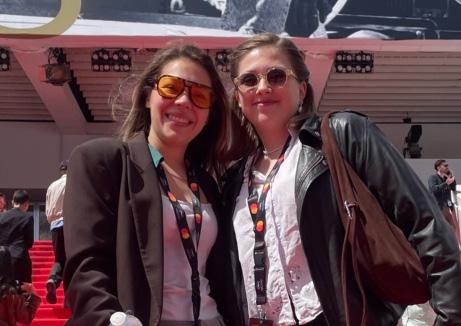
IN THE PALACE International Short Film Festival team member Kaloyan Vasilev has been part of the festival for 15 years. He currently heads FILMER FORGE - the festival’s film project support program and student training initiative. He is also an annual member of the festival’s representative delegations at the film markets in Clermont-Ferrand International Short Film Festival and Cannes Film Festival, and contributes critical writing to the festival’s specialized media outlets.
Mark Brennan
Mark Brennan is a UK-based filmmaker who has been working on short films and features since 2014.
After successfully taking his first short film, Tea For Two, on to the film festival circuit, he later co-founded the Exit 6 Film Festival in 2015. This festival became a mainstay on FilmFreeways‘ Top 100 Best Reviewed Film Festivals list and a BIFA-qualifying festival in 2023.
He is also a Festival Strategist & Liaison at the internationally renowned Festival Formula, an agency specialising in short film festival strategy. Most recently, he became a writer for Directors Notes, BIFA qualifying platform that curates the best of independent cinema alongside exclusive filmmaker interviews.
Ștefan Aneculăesei
Ștefan Aneculăesei is a Romanian journalist, editor, radio host, and cultural professional with a background in journalism and more than 15 years of experience in media. He started his career in Iași, Romania, working in newsrooms and radio, before continuing with Bucharest‘s national stations including Radio Guerrilla, One FM, and Magic FM. His work has included film reviews, music and event reviews, interviews, cultural coverage, and editorial coordination.
For IN THE PALACE, he works with the young film critics within Nextdoor Networking, mentoring them in review writing, interview preparation, and festival journalism.
2026 FILMER FORGE PITCHING
27 JUNE
10:00 – 11:00 Marquee, Palace of Culture – Pernik
FILMER FORGE: NEXTDOOR NETWORKING Pitch
Session 1
27 JUNE
11:30 – 12:30 Marquee, Palace of Culture – Pernik
FILMER FORGE: NEXTDOOR NETWORKING Pitch
Session 2
NEXTDOOR NETWORKING Pitch
As part of FILMER FORGE, NEXTDOOR NETWORKING presents an intensive training course for young directors, writers/scriptwriters, producers, and film critics from the Balkans and the Black Sea region.
The program aims to add partical value and thus enhance the participants' academic training and skills, while running alongside the environment of Oscar® Qualifying IN THE PALACE Festival.
Alongside trainings, participants, guided by international tutors, are able to further develop their film projects as international co-production. The program concludes with a pitching session where projects are presented to a professional audience and decision-makers at the 23rd IN THE PALACE in 2026.
The awarded film project will benefit:
• € 1,000 for production expenses;
• a premiere screening of the completed work at the next edition of Oscar® Qualifying IN THE PALACE;
• international promotion at the Short Film Market (Clermont-Ferrand ISFF) and The Marché du Film (Cannes) as part of IN THE PALACE annual participation and presence
2026 FILMER FORGE
NEXTDOOR NETWORKING Pitch
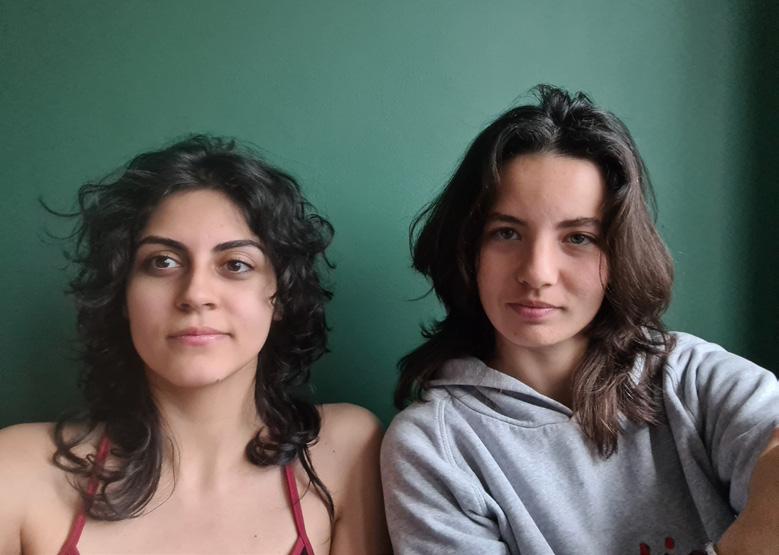
Project Title: BURIA
Producer: n/a
Director: Maria Dimova and Dea Tchipeva
Production Country: Bulgaria
Genre: animation
Running Time: 8 min
Total Budget (euro): 10 300
Logline: A human attraction towards a chaotic and untamed force of nature.
Project Title: MISSES NEVIN’S FLOWERS
Producer: Tüvana Savaş
Director: Gülçin Şahin
Production Country: Türkiye
Genre: fiction
Running Time: 20 min
Total Budget (euro): 25 000
Logline: When a new high-rise building blocks her sunlight and withers her beloved flower, 65-year-old Nevin, grieving her husband and her daughter’s move abroad, begins carrying the plant on daily walks in Istanbul through a frustrated community, a mission that ultimately leads her out of isolation
Project Title: THE STONES
Producer: Kateřina Špálová
Director: Valér Futej
Production Country: Czech Republic/Slovakia
Genre: fiction
Running Time: 15 min
Total Budget (euro): 17 700
Logline: In a 1950s stone quarry, a young worker must choose between cold conformity and a dangerous act of loyalty to the co-worker he cares for.
Project Title: THE SWEET TEETH OF ANA AND HER MAMA
Producer: Katarina Putić
Director: Đorđije Petrović
Production Country: Montenegro
Genre: fiction
Running Time: 19 min
Total Budget (euro): 44 000
Logline: A failed actress with a rotten tooth can’t satisfy her mother’s cravings, so she escapes using a pair of household pliers.
Project Title: TIRAMISU
Producer: Kalina Dimitrova
Director: Aleksa Trayanova and Kalina Dimitrova
Production Country: Bulgaria
Genre: animation
Running Time: 9 min
Total Budget (euro): 42 670
Logline: What could tiramisu and mountain peaks possibly have in common? Blind runner Viktor Asenov knows the answer - and while it might take a lifetime to tell, he reveals it through one extraordinary recipe.
Project Title: WAYS OF GOING HOME
Producer: Mina Adamović
Director: Vanja Vujin
Production Country: Serbia
Genre: fiction
Running Time: 17 min
Total Budget (euro): 33 045
Logline: After learning she cannot have children, a woman traveling through rural Banat is mistaken for someone else and quietly steps into a stranger’s life in search of belonging.
2026 FILMER FORGE FILMER FORGE PITCH
28 JUNE
10:00 – 11:30 Hall 3 / Forum, Palace of Culture – Pernik
FILMER FORGE Pitch
Session 1, moderator Sarah Schlüssel
28 JUNE
13:00 – 14:30 Hall 3 / Forum, Palace of Culture – Pernik
FILMER FORGE Pitch
Session 2, moderator Sarah Schlüssel
FILMER FORGE PITCH
IN THE PALACE’s FILMER FORGE PITCH is designed for filmmakers, writers and producers seeking production, co-production, funding, and development opportunities for their current or upcoming short film.
The program presents an educational module on how to pitch a film project led by international facilitators; a project pitching session; and formal and informal networking with accredited film industry representatives and decision makers.
Each project team/representative have a fixed time to present their project and answer questions raised by the panel and the professional audience. The competition is focused on the originality of the concept, the artistic and production potential of the project, and on how convincing was the pitch itself.
The Pitching Trainer of 2026 FILMER FORGE PITCH is Sarah Schlüssel. A cultural worker and film programmer, she heads the Short Form Station of Berlinale Talents, and is a member of the Berlinale Shorts selection committee.
As an award, FILMER FORGE presents a 6 000 euro financial grant for production expenses. Additionally, our partners, MIDPOINT Institute, are generously providing a special opportunity for FILMER FORGE PITCH participants: one spot on the selection shortlist for MIDPOINT Shorts 2026-2027 will be granted to one of the awarded projects.
As part of the FILMER FORGE industry program, IN THE PALACE provides annual financial, technical, and institutional support for new national and international short film projects.
Project Title: A QUIET NIGHT
Producer: Bogdan Mureșanu /Kinotopia/
Director: Bogdan Mureșanu
Production Country: Romania
Genre: animation
Running Time: 9 min
Total Budget (euro): 154 403,06
Logline: In the winter of 1917, a German soldier on an urgent mission wanders through a devastated front, only to confront his own mind and the absurdity of war in the darkness of a church
Project Title: BEYOND THE BUSHES
Producer: Hanhee Oh
Director: Johee Oh
Production Country: Germany/Vietnam/Korea
Genre: fiction
Running Time: 20 min
Total Budget (euro): 45 000
Logline: After escaping North Korea and being stuck in Vietnam, Sang-Rok makes one final bet at a cockfighting ring to bring his family from North Korea.
Project Title: DOWN THERE
Producer: Ivan Popov-Zaeka /ROBO Lab/
Director: Krum Petrov
Production Country: Bulgaria
Genre: animation
Running Time: 6 min
Total Budget (euro): 42 231
Logline: There’s nothing more trivial than a metro commute early in the morning. Even Death can’t change that. Or can he?
Producer: Ivan Stepanović /3films/ Director: Sava Reljin
Production Country: Serbia
Genre: fiction
Running Time: 19 min
Total Budget (in euro): 71 500
Logline: During the course of a single night, childhood friends Vuk and Isidora engage in a game of make-believe that evolves into an act of guerilla subversion.
Logline: A teenage girl who dreams fragments of the future discovers her estranged uncle has the same ability, drawing them into a shared encounter with light and perception.
Project Title: MUTT
Producer: Viktor Ivanov /SOME COSMIC BUSINESS/
Director: Viktor Ivanov
Production Country: Bulgaria
Genre: fiction
Running Time: 24 min
Total Budget: 60 000
Logline: After coming to terms with the failure of his marriage and his attempts to train his dog Rex, will police officer Marian Radoslavov be able to accept the fact that his drug investigation has led him to his fifteen-year-old son?
Logline: As the last tenant of a condemned building, Vera begins hearing her father in the empty apartment above and must finally face the grief and guilt she buried with him before the walls come down.
Project Title: THE RIFTS
Producer: Felix Lambot /Initial Films/ & Nevena Semova /Attic Films/
Director: Gogo Vanev
Production Country: Belgium/Bulgaria
Genre: documentary
Running Time: 20 min
Total Budget (in euro): 65 000
Logline: Legend has it the Spirit of The Home is the reincarnation of a family member who passed away, so when I reopen our empty old village house, I look for traces of our past with the hope to reconnect.
Project Title: TIGERS BAY
Producer: Vicki Rock /Enter Yes/
Director: Kris Kelly
Production Country: Ireland
Genre: fiction
Running Time: 9 min
Total Budget (in euro): 69 300
Logline: In a divided Belfast estate against a backdrop of bonfires, anti-immigrant tensions, a teenage boy Micheal struggles the news that his friends, Arjun and Lakshmi are preparing to leave Ireland.
Project Title: UNTIL THE SUN SETS
Producer: Ajsela Vojka
Director: Gledis Bica
Production Country: Albania
Genre: fiction
Running Time: 10 min
Total Budget (in euro): 80 000
Logline: Bound by a rigid code of honor, an Albanian village watches in silence as 18-year-old Jeta bleeds out in the square forbidden from receiving help until sunset to atone for her family‘s shame.
Project Title: WE CAN’T ALWAYS NAME THE THINGS WE FEEL
Producer: Kasiyana Angelova
Director: Ventsislav Sariev
Production Country: Bulgaria
Genre: fiction
Running Time: 20 min
Total Budget (in euro): 51 129
Logline: A dark, emotional portrait of trauma, shame, and silence surrounding sexual violence, where what cannot be named continues to shape everyday life.
Project Title: WILDFLOWER
Producer: Mary Kolonia
Director: Mary Kolonia
Production Country: Greece
Genre: fiction
Running Time: 18 min
Total Budget (in euro): 70 000
Logline: Margarita, an unconventional tech scientist in her forties, is forced to return to Athens after Brexit upends her life abroad. As she struggles to find work and piece her life back together, a discarded mimosa plant she rescues from the garbage offers her an unexpected new purpose.
2026 FILMER FORGE FILMER FORGE Pitch / JURY
Faisal Qureshi
Faisal Qureshi is a producer and scriptwriter with over 20+ years in the industry. His short film work has screened at Pucheon, Huesca, London and Leeds that led him to mentor filmmakers in Pakistan, Syria and Uzbekistan.
When not focusing on his own work, Faisal has helped produces films and documentaries such as the BAFTA award winning feature FOUR LIONS (Film4/Warp Films), the BAFTA and Emmy award winning documentary LEAVING NEVERLAND (Channel 4/HBO/AMOS Productions), IN THE SHADOW OF 9/11 (PBS Frontline/Channel 4/AMOS Productions) and the comedy THE DAY SHALL COME (See-Saw/Film 4/BFI).
He is also a researcher and has worked on shows such as LOCKERBIE: A SEARCH FOR TRUTH (Sky Drama/Carnival Films) starring Colin Firth and ENCOUNTER (Raw Films/Amazon Studios) starring Riz Ahmed.
Kaloyan Vasilev
IN THE PALACE International Short Film Festival team member Kaloyan Vasilev has been part of the festival for 15 years. He currently heads FILMER FORGE - the festival’s film project support program and student training initiative. He is also an annual member of the festival’s representative delegations at the film markets in Clermont-Ferrand International Short Film Festival and Cannes Film Festival, and contributes critical writing to the festival’s specialized media outlets.
Soňa Morgenthalová
Soňa Morgenthalová has been managing training programs for film professionals at the MIDPOINT Institute since 2017, focusing on the development of feature and short films as well as the skills development of emerging script consultants and producers.
She also initiated the Focus Queer program, a training initiative dedicated to promoting LGBTQ+ stories in cinema. She is also involved as an expert with institutions and initiatives including the Czech Film Center, the Kosovo Cinematography Center or PITCH_IT.
Before that, she worked in international service production and casting, contributing to films and series such as Snowpiercer, Ophelia, The Death & Life of John F. Donovan, Underworld: Blood Wars, Knightfall, Britannia or Crossing Lines.
5TH ITP CONFERENCE ON THE SHORT FILM
SHORT FILMS, BIG QUESTIONS: FESTIVALS, POLITICS, AND PUBLIC ENGAGEMENT
SHORT IS TOUGH and this is why needs a whole scientific conference to dedicate. Short films and their festival circuits have become key sites for negotiating aesthetic innovation, social engagement, and cultural politics. This two-day conference in conjunction with the IN THE PALACE International Short Film Festival, invites contributions that examine the role of short cinema and short film festivals within contemporary media ecologies, with particular attention to their function as mediators of values, platforms for public discourse, and instruments within institutional and policy frameworks.
IN THE PALACE Conference on the Short Film was established by initiative of the festival back in 2018 as part of the FILMER FORGE – festival`s annual industry program. First interdisciplinary international conference`s edition, titled THE SHORT FILM: A GENRE SUI GENERIS, was devoted to the short film genre and thus was be focused on the themes, trends, issues, and perception of contemporary short films.
Each year BA, MA, PHD students, academics, researchers, practicians, etc. in the short film world, literature, language, philosophy and more are invited to take part to explore and offer their renditions of a shared material and initiate an enriching debate on the genre of the short film. Conference proceedings are being published in a thematic printer collection and distributing academia and the short film industry. The international scientific conference of IN THE PALACE was established with the idea and with the purpose to create an interdisciplinary working space bringing together young and established academics from the fields of film, literature, language, etc.
2026 FILMER FORGE
2026 SCIENTIFIC COMMITTEE
María Paz Peirano
Rich Warren
Skadi Loist PROGRAM
DAY 1 – Thursday 25 June
10:30 – 11:00 Opening Remarks
Rita Capucho, Skadi Loist, María Paz Peirano, Rich Warren
11:00 – 12:30 Panel 1
Programming as Practice: Curatorial Decision-Making
Chair: Rich Warren
Franciszek Drąg
“What Is Appropriate? Short Film Programming for Youth as a Practice of Care and Cultural Negotiation”
Oluranti Babatunde
“Thematic Preoccupation and Curatorial Practices in Selected Nigerian Film Festivals”
Meral Ozcinar
“Curating Vulnerability: Short Film Festivals as Mediators of Public Discourse and Cultural Value”
14:30 – 16:00 Panel 2
Festivals, Economics & Sustainability: What Keeps Festivals and Short Film Ecologies Going
Chair: María Paz Peirano
Xinyu Yu
“
Festival without Industry? Managed Visibility, Casino Capital, and Short Film Festivals in Macao”
Federica Carbone
“Ecosystems of Sustainability in Italian Short Film Production”
Ezra Winton
“Solidarity Now: Documentary Film Festivals in the Age of Neoliberalism”
16:30 – 17:30 Special Presentation
The Political Economy of Cultural Production
Chair: Rich Warren
Junhan (Julian) Wang
“The Political Economy of Cultural Production: An Ethnographic Case Study of the VITA SHORTS Film Festival” (incl. a 40-minute documentary screening)
2026 FILMER FORGE
DAY 2 – Friday 26 June
10:30 – 12:00 Keynote Lecture
Chair: Skadi Loist
Dorota Ostrowska
“Short, experimental and arts film festivals: which festive chronotope are they?”
14:00 – 16:00 Panel 3
Circulation, Visibility & Infrastructure: How Short Films Move (or Do Not Move) Beyond the Festival
Chair: María Paz Peirano
Carlos Navarro
“Awarded and Erased: The Structural Contradiction Between Festival Recognition and Algorithmic Suppression in Palestinian Women’s Short Cinema”
Mara M. Marxsen
“The Distributor’s Gaze: Working Towards an Ethics of Short Film Distribution”
Claudy Op den Kamp
“Beyond the Festival, Beyond the Market – Distributing Short Audiovisual Work through a Videographic Monograph”
16:30 – 18:00 Panel 4
Festival Politics & Negotiated Space: Festivals Navigating Political Constraints in Different Contexts
Chair: Skadi Loist
Merve Nur Özçelik & İlker Özçelik
“2023 Antakya International Film Festival in the Rubble: Short Films as Vehicles for Community Healing and Disaster Recovery”
Antonio Peláez-Barceló
“Short Films as Political Practice: The Festival de Cine de Madrid–PNR and the Evolution of Spanish Short Cinema since the 1990s”
18:00 – 18:30 Closing Remarks
2026 FILMER FORGE
DAY 3 – Saturday 27 June
10:00 – 11:30 Round Table
Round Table: Film Festivals, Public Engagement and Contemporary Challenges
Moderator: Stefan Prohorov, Bulgarian National Film Center
Anca Păunescu – DOK Leipzig, Germany
Jakov Poposki – DRIM International Short Film Festival, North Macedonia
Mark Brennan – Exit 6 Film Festival, UK
Matevž Jerman – FEKK International Short Film Festival Ljubljana, Slovenia
Rita Capucho – Porto Femme, Portugal
Tiziana Pelusi – Internationale Kurzfilmtage Winterthur, Switzerland
Zurab Diasamidze – TOFUZI International Animated Film Festival, Georgia
Short Films as Political Practice: The Festival de Cine de Madrid–PNR and the Evolution of Spanish Short Cinema since the 1990s
Founded at the end of the 1980s, Plataforma de Nuevos Realizadores – PNR (New Filmmakers Platform) was created to support, promote and exhibit the work of emerging Spanish filmmakers, with short cinema occupying a central place in its cultural mission. This paper examines the Festival de Cine de Madrid–PNR (FCM-PNR), launched in 1991, as a case study to understand how short film festivals can foster artistic autonomy, professional access, and socio-political discourse.
The research asks how the festival has articulated the relationship between short cinema, public engagement and political change in Spain from the 1990s to the present. It also asks how broader social, political and institutional transformations have reshaped the festival itself, while PNR’s discourse has continued to defend short films as autonomous cultural forms rather than merely as stepping stones towards feature filmmaking.
Methodologically, the project combines archival research into internal PNR sources, analysis of publicly available festival programs and PNR materials, the researcher’s positionality as a former PNR member, and semi-structured interviews with programmers, PNR representatives and filmmakers selected by the festival. The analysis is organized chronologically, comparing changes in festival structure and programming with key moments in recent Spanish socio-political history, including the cultural visibility of 1992, alternating socialist and conservative governments, the 2008 financial crisis, feminist and memory politics, the pandemic and the current crisis of visibility in audiovisual culture.
By comparing programming patterns, curatorial discourse and filmmakers’ testimonies, the paper argues that FCM-PNR has not only functioned as an industry platform for new talent but also as a cultural mediator that has helped shape the public value of short cinema in Spain. Its evolving sections and institutional priorities reveal how a short film festival can negotiate between artistic independence, professional development and public engagement.
Keywords: short film festivals, Spanish cinema, programming, public engagement, Plataforma Nuevos Realizadores
Author: Antonio Peláez-Barceló
Institution: Independent Researcher, Spain
Biography: Antonio Peláez-Barceló is a researcher, programmer, and cultural worker specialising in Spanish cinema and film festivals. His work focuses on the history of short film culture, exhibition practices, and the role of festivals in supporting emerging filmmakers. He has collaborated with several cultural organisations and audiovisual initiatives dedicated to the promotion of Spanish short cinema.
2026 FILMER FORGE
Awarded and Erased: The Structural Contradiction Between Festival Recognition and Algorithmic Suppression in Palestinian Women‘s Short Cinema
Short film festivals routinely claim to do what dominant distribution cannot: to make visible what the market obscures, to programme what algorithms do not promote. This paper questions that claim by examining a structural contradiction that the festival field has largely declined to name. These are not marginal works circulating outside institutional recognition: the short films of Shayma‘ Awawdeh, Nisreen Yaseen, and Rehab Nazzal have circulated through the circuits that define short film legitimacy — IDFA, BFI London, Clermont-Ferrand, Boston Palestine Film Festival, among others — while remaining subject to systematic suppression on the platforms that programmers, curators, and audiences now use as primary research infrastructure.
Drawing on digital rights documentation from 7amleh, Access Now, and Amnesty International (2021–2024), the paper maps the mechanisms through which this suppression operates: content moderation policies that disproportionately flag Arabic-language material, shadowbanning of Palestinian visual testimony, and the removal of accounts belonging to filmmakers whose work depicts everyday life under occupation. It then traces the epistemic consequences for festival programming: when the discovery process is mediated by platforms that have already filtered out Palestinian visual culture, the diversity commitments of even the most politically conscious festival remain structurally dependent on a colonial archive.
The paper argues that this is not a problem of curatorial intention but of curatorial method — and that decolonising festival programming requires, as a first step, naming the infrastructure through which knowledge about films is produced and what that infrastructure systematically cannot find. It concludes with concrete proposals for counter-archival discovery practices grounded in Palestinian-led distribution networks and digital rights literacy.
Keywords: algorithmic suppression, colonial archive, Palestinian short cinema
Author: Carlos Navarro González
Institution: Université du Littoral Côte d‘Opale, France
Biography: Carlos Navarro González is a researcher and lecturer at the Université du Littoral Côte d‘Opale (France), specialising in decolonial visual studies, Palestinian women‘s cinema, and digital coloniality. He is the author of Disputing the Archive: Palestinian Women Filmmakers, AI, and the Battle over Representation (Wiley-Blackwell, 2026) and has presented at ICA, NECS, and AE-IC conferences. His work combines film analysis, practitioner interviews, and digital methods research.
Beyond the Festival, Beyond the Market – Distributing Short Audiovisual Work through a Videographic Monograph
This paper presents FIRST: Archival Encounters That Set History in Motion, an academic videographic monograph comprising 24 written essays and accompanying short-form audiovisual works. The project centres on “first-ness” as an archival and legal construct, addressing the identification of the first motion picture registered for US copyright. By reconstructing the 130-year archival trajectory of Edison Kinetoscopic Records (1893), it corrects the long-standing misidentification of Fred Ott’s Sneeze and examines how such errors circulate across scholarship, exhibition, and public discourse.
Each chapter takes the form of a letter to Ainsworth Rand Spofford, the sixth Librarian of Congress, combining historiographic inquiry with an autoethnographic and practice-based approach. The project’s twenty-four short video essays are embedded in the printed book through QR codes, creating a hybrid and distributed scholarly form.
The paper asks what happens to short-form films when they are removed from festival circuits and re-situated within a scholarly monograph. How does this shift reconfigure their role as public-facing works, their relationship to institutional frameworks, and their capacity for policy engagement? The paper argues that the videographic monograph functions as a complementary infrastructure to festivals rather than a replacement for them, extending the temporal life, accessibility, and interpretive framing of short-form audiovisual works.
Keywords: videographic criticism, short films, film festivals, archives, circulation
Author: Claudy Op den Kamp
Institution: Bournemouth University, United Kingdom
Biography: Claudy Op den Kamp is Principal Academic in Film and Deputy Director of the Centre for Intellectual Property Policy & Management (CIPPM) at Bournemouth University. A former Kluge Fellow at the Library of Congress, she is the author of The Greatest Films Never Seen (2018). Her work focuses on copyright, archives, and the circulation of moving images. She is also a video essayist whose recent works include The Shadow Line (2022) and Dear Anne (2026).
2026 FILMER FORGE
Short, experimental and arts film festivals: which festive chronotope are they?
Speaker: Dorota Ostrowska
The festive chronotope emerges at the intersection of space, programming and curating practice, and audience, and shapes the character and cultural politics of film festival event. Rooted in Mikhail Bakhtin‘s concepts of the chronotope and the carnivalesque, originally developed in relation to literature, the framework is here adapted and extended to the specific conditions of the film festival seen as a spatio-temporal cultural form, and proposes film festivals not just as events but as experiences.
As a modern-day carnival, a film festival is shaped by the centripetal forces (hierarchical, state-run, ideological, homogenising) and centrifugal forces (disruptive, critical, countercultural), constituting the carnivalesque dynamic that renders most festivals potentially transgressive social and political rituals, with varying degrees of intensity and public impact. Festive chronotopes capture these dynamics as distinct spatio-temporal modes of contemporary festival culture, connecting the symbolic value of the festival space with the symbolic value of its programmed films and their reception — first by programmers, then by critics, and ultimately by audiences.
This talk applies the festive chronotope framework to short, experimental, and arts film festivals and short film sidebars for the first time. Drawing on a typology that includes migrant, crisis, and indigenous festive chronotopes, it asks: can short film festivals be mapped onto an existing chronotopic category? Do they embody a hybrid mode drawing on several chronotopes simultaneously? Or do they constitute an entirely new chronotopic form within the broader ecology of contemporary festive culture? The implications for how we understand the cultural, political, and civic function of short film festivals — and this festival — are considerable within the festive chronotopic framework.
Biography: Dorota Ostrowska is Senior Lecturer in Film and Modern Media at Birkbeck, University of London, where she directs the MA Film and Screen Media at the School of Creative Arts, Culture and Communication. She is the author of The European Film Festival: Carnival, Audiences and Spaces (Bloomsbury, 2026) and Reading the French New Wave: Critics, Writers and Art Cinema in France (Wallflower/Columbia University Press, 2008), and co-editor of Shaping Film Festivals in a Changing World: Practice and Methods (AUP, 2025, open access), Popular Cinemas in Central and Eastern Europe: Film Cultures and Histories (Bloomsbury/I.B. Tauris, 2017), and European Cinemas in the Television Age (EUP, 2007). Her research examines the cultures, spaces and practices that shape our experience of cinema across different exhibition contexts and historical periods. Alongside this, she champions writing-rich pedagogical practice and explores the critical and ethical dimensions of AI in education. Dorota was a CLASP Fellow at the Institute for Writing and Thinking, Bard College, OSUN (2023–2025) and is Senior Fellow Advance HE (SFHEA) (2023).
Solidarity Now: Documentary Film Festivals in the Age of Neoliberalism
Film festivals are dynamic sites where culture, politics, discourse and values intersect among a diverse range of stakeholders. In my recently completed monograph on the Hot Docs Film Festival in Toronto, I interrogate the commercialization of documentary through a neoliberal framework and explore how film festivals are uniquely positioned to resist dominant sociopolitical and economic forces while simultaneously being shaped by them.
This presentation shares findings from a curatorial analysis of thirty years of programming at one of the world’s largest documentary film festivals, encompassing 4,753 films. The research includes a close examination of content, form, filmmakers and institutional contexts. Although the project does not focus specifically on short films, it reflects on the ways in which short documentaries often sit uneasily within commercially driven festival models.
The analysis approaches neoliberalism as a conceptual apparatus that shapes both the institution of the film festival and the films themselves. It explores expectations surrounding documentary cinema, particularly its long-standing associations with social justice, community engagement and solidarity. The research argues that these values have gradually weakened at Hot Docs, where public interest and activism have increasingly been displaced by entertainment-oriented and commodified approaches.
As solidarity offers an antidote to neoliberalism, the paper argues for a shift in cultural politics at Hot Docs and other documentary festivals influenced by similar pressures. It advocates for a renewed commitment to documentary’s capacity to convene political communities and create spaces for transformative social engagement.
Keywords: neoliberalism, cultural politics, documentary, solidarity
Author: Ezra Winton
Institution: American University in Bulgaria
Biography: Ezra Winton is a cultural scholar, film critic and curator whose research examines documentary film, film festivals, identity and ecology, particularly the intersections of representation, neoliberalism and cultural politics. His work combines close film analysis with institutional and media studies approaches. He is Assistant Professor at the American University in Bulgaria and co-founder of Cinema Politica.
2026 FILMER FORGE
Ecosystems of Sustainability in Italian Short Film Production
In the contemporary audiovisual industry, the short film emerges as a production form that is difficult to reconcile with traditional economic logics based on commercial distribution and direct financial return. Yet its persistent vitality points to the existence of alternative models of sustainability, grounded in hybrid funding networks, festival circuits, and forms of symbolic capital.
This paper examines the Torino Short Film Market, a project by Centro Nazionale del Cortometraggio, Torino Film Industry and Torino Film Festival, as an emblematic case study of an ecosystem that supports the production and circulation of short films beyond market logic.
Rather than functioning simply as a showcase event for films, the festival is interpreted as a platform of cultural and economic intermediation, capable of connecting emerging filmmakers, public institutions, distributors, industry professionals and audiences.
Through a mixed approach combining literature review and social listening analysis using data from the Blogmeter research institute, the paper addresses the following question: how can the sustainability of short film production rely on a plurality of resources, such as European and Italian public funding, networking practices, industry programmes, and mechanisms of symbolic legitimation?
In this context, can the value of short films be understood not only through their capacity to generate profit, but also through their role as relational and formative devices within the audiovisual field?
The analysis contributes to current debates on cultural economies by proposing a broader understanding of sustainability that includes economic, social, institutional and symbolic dimensions.
Keywords: short film, Turin festival, sustainability
Author: Federica Carbone
Institution: Catholic University of the Sacred Heart, Milan, Italy
Biography: Federica Carbone is a PhD candidate at the School of Media and Communication at the Catholic University of the Sacred Heart in Milan. Her research focuses on the relationship between sustainability communication and film festivals. She holds a bachelor‘s degree in Communication and Marketing and a master‘s degree in Digital Marketing. She previously worked for Blogmeter, an Italian research institute, and has been a Visiting Researcher at Utrecht University.
What Is Appropriate? Short Film Programming for Youth as a Practice of Care and Cultural Negotiation
Short film programming for young audiences is often treated as a technical or educational task: selecting “appropriate” content for a given age group. Yet what counts as appropriate exposes a field of constant negotiation. Drawing on my curatorial practice at Ale Kino! International Young Audience Film Festival and my work in cultural studies, this paper argues that programming for children and young people is never neutral. It is a site where competing values, institutional expectations, and assumptions about childhood are tested, affirmed, and/ or challenged.
The paper traces decision-making behind short film selection in three areas: (1) criteria used to balance artistic risk with age-specific sensitivity; (2) the moving boundary of “appropriateness” and who decides about it; and (3) the role of the curator as a mediator between filmmakers, institutions, educators, parents, and young viewers. Rather than approaching children as passive recipients requiring protection, I propose understanding youth programming as a practice of care that acknowledges young audiences as capable cultural participants. By reflecting on specific programming dilemmas and festival contexts, the paper demonstrates how short film festivals become spaces where broader social debates about representation, responsibility, and agency are negotiated. In doing so, it contributes to discussions on public engagement by positioning youth-focused curation as a form of cultural and ethical practice.
Keywords: young audience, censorship, curation, audience mediation
Author: Franciszek Drąg
Institution: Adam Mickiewicz University / IYAFF Ale Kino!
Biography: Franciszek Drąg is a cultural and film studies scholar, doctoral student at the Doctoral School of Humanities at Adam Mickiewicz University in Poznań, and a member of the Memory Studies Association. His academic research focuses on the cultural memory of epidemic crises in visual culture. He is a short film curator, a long-term collaborator of the Ale Kino! International Young Audience Film Festival, and an occasional film critic.
2026 FILMER FORGE
The Political Economy of Cultural Production: An Ethnographic Case Study of the VITA SHORTS Film Festival
This paper examines the political economy of cultural production through an ethnographic case study of the VITA SHORTS Film Festival, an independent short film festival operating within the complex media landscape of contemporary China. Drawing on fieldwork, participant observation, interviews, and visual ethnographic methods, the study explores how cultural producers negotiate institutional constraints, censorship mechanisms, market pressures, and artistic aspirations.
The paper investigates the festival as a site where cultural, economic, and political forces intersect. It analyses how organisers, filmmakers, and audiences participate in processes of cultural production and circulation while navigating state regulation and limited opportunities for independent exhibition. Particular attention is given to the tensions between creative autonomy and institutional dependency, as well as the strategies employed by cultural actors to sustain alternative spaces for film culture.
The presentation combines academic analysis with visual ethnographic material and includes excerpts from a documentary produced as part of the research. Through this approach, the paper highlights how short film festivals function not only as exhibition platforms but also as spaces of negotiation, resistance, and community building within constrained cultural environments.
By focusing on the everyday practices of festival organisation and participation, the study contributes to broader debates on political economy, independent cinema, cultural labour, and the role of film festivals in shaping public engagement.
Keywords: independent film festival, cultural production, visual ethnography, political economy of media, censorship
Author: Junhan (Julian) Wang
Institution: Temple University, United States
Biography: Junhan (Julian) Wang is a PhD candidate at Temple University whose research focuses on media industries, cultural production, visual ethnography, and independent film cultures. His work explores the relationship between media institutions, state regulation, and creative practices, particularly within contemporary Chinese audiovisual culture. Combining ethnographic and audiovisual research methods, he examines how filmmakers, festival organisers, and cultural workers negotiate political and economic constraints while creating spaces for alternative forms of cultural expression.
The 2012 Cultural Olympiad and ‘State of the Nation’ Shorts
This paper examines the four short films commissioned and co-funded by BBC Films and Film4 as part of the 2012 Cultural Olympiad, a programme of activity that ran across the United Kingdom in the lead-up to the 2012 Summer Olympic and Paralympic Games. The unique partnership produced four very different films that cut across forms and genres while reflecting the distinct interests of their respective filmmakers: Mike Leigh, Lynne Ramsay, Asif Kapadia, and Max and Dania.
The paper argues that the content of these films positions them, to varying degrees, as “state of the nation” shorts. While Kapadia’s The Odyssey is the most explicitly political, reflecting on challenges such as the 7/7 bombings, the 2008 financial crisis, and the 2011 riots, the remaining films similarly displace the Olympics from the centre in favour of broader artistic, cultural, and social concerns.
Alongside textual analysis, the paper considers the exhibition and circulation of the four films. Premiering at the Edinburgh International Film Festival before screening as part of the London 2012 Festival, they were subsequently broadcast on BBC2 and Channel 4. This unusually high level of institutional support and public visibility raises important questions about the role of short film, cultural policy, and public service broadcasting in articulating national identity and fostering public engagement during major global events.
Keywords: State of the Nation, Cultural Olympiad, London 2012
Author: Lavinia Brydon
Institution: University of Kent, United Kingdom
Biography: Lavinia Brydon is Senior Lecturer in Film at the University of Kent. Her research centres on questions of space and place, extending from issues of representation to debates surrounding exhibition sites, location filming, and screen media tourism. She recently led the British Academy-funded project Imagining Ordinary Cities: Arts, Placemaking and Everyday Urban Lives with colleagues from the Universities of Cape Town and Oxford. She serves on the editorial board of Short Film Studies.
2026 FILMER FORGE
The Distributor‘s Gaze: Working Towards an Ethics of Short Film Distribution
Drawing on Laura U. Marks‘ concept of the „ethical presenter,“ this paper proposes a critical inquiry into the selection processes and representational responsibilities of short film distributors. While curators and programmers have received growing scholarly attention as cultural gatekeepers, distributors remain a largely overlooked intermediary — despite the fact that their decisions fundamentally shape which short films get seen, by whom, and for how long, well beyond the festival circuit.
This proposal asks: What ethical frameworks, whether implicit or explicit, govern short film distribution, and how do these shape whose work gets circulated, to whom, and under what conditions?
The paper is grounded in professional practice and in a roundtable initiated specifically to address these questions from within the field. Bringing together peers from across the short film distribution sector, the roundtable proceeds from the conviction that ethical frameworks are best developed collectively, through open reflection on the criteria, assumptions, and responsibilities that shape distribution decisions in practice. Taking place shortly before the conference, it serves as a first step in an ongoing process of critical reflection.
Anticipated findings suggest that selection criteria in distribution remain largely tacit and unarticulated — with significant consequences for the diversity of short films entering long-term circulation. The research aims to develop a framework for ethical distribution: one that foregrounds responsibilities towards filmmakers, audiences, exhibition contexts, and the broader cultural image of short film as an art form.
By bringing professional practice and critical reflection into dialogue, this inquiry opens space for a field-wide conversation on accountability and representation in short film distribution.
Keywords: visibility, distribution, ethics, circulation, gatekeeping, responsibility, public engagement, representation
Biography: Mara M. Marxsen is part of the distribution team at Kurzfilm Agentur Hamburg. She holds an MA in Preservation and Presentation of the Moving Image, has worked as a research associate at the University of Hamburg, and co-authored The Literariness of Media Art (Routledge, 2019). As a short film curator, Mara brings a queer-feminist perspective to her programmes, foregrounding work that entertains and challenges audiences in equal measure. In 2024, she defended her doctoral thesis on the willful poetics of Sadie Benning, Sarah Jacobson, and Jennifer Reeder.
Curating Vulnerability: Short Film Festivals as Mediators of Public Discourse and Cultural Value
This paper examines short film festivals not merely as exhibition platforms, but as cultural and institutional spaces that actively shape public discourse through curatorial practices. Focusing on the Izmir International Short Film Festival as a case study, the research explores how programming decisions, thematic selections, and evaluation processes contribute to the circulation and legitimisation of socially engaged narratives within contemporary short cinema. Drawing on festival studies and cultural mediation approaches, the paper argues that short film festivals function as sites where aesthetic value, political sensitivity, and public engagement intersect. In this context, festivals do not simply present films to audiences; they actively construct frameworks through which issues such as vulnerability, social exclusion, and cultural diversity become visible and discussable.
The study highlights the role of curators as mediators who negotiate between filmmakers, institutions, audiences, and broader social concerns. By examining the relationship between curation and public discourse, the paper contributes to ongoing debates about the social and cultural responsibilities of film festivals within contemporary media ecologies.
Keywords: short film festivals, cultural mediation, public engagement, curatorial practices, festival studies
Author: Meral Özçınar
Institution: Manisa Celal Bayar University
Biography: Prof. Dr. Meral Özçınar is a media and cinema researcher whose work focuses on storytelling, soundscape narration, and participatory media practices. She has extensive experience in EU-funded projects dedicated to cultural participation and vulnerable groups. Her work includes soundwalk-based practices in Ferrara and interdisciplinary storytelling workshops that explore listening, space, and narrative as tools for social and cultural engagement.
2026 FILMER FORGE
2023 Antakya International Film Festival in the Rubble: Short Films as Vehicles for Community Healing and Disaster Recovery
The devastating earthquakes that struck Türkiye and Syria on 6 February 2023 created not only an unprecedented humanitarian crisis but also a profound cultural rupture. In the aftermath of the disaster, the 2023 Antakya International Film Festival emerged as a significant platform for collective memory, community rebuilding, and cultural resilience.
This paper explores how the festival utilised short films as vehicles for community healing and post-disaster recovery. Drawing on trauma theory, memory studies, and film festival scholarship, the authors analyse the festival‘s programming strategies, audience engagement practices, and public discourse surrounding the event. Particular attention is given to the ways in which short films enabled local communities to process loss, articulate experiences of displacement, and re-establish social bonds within a context of collective trauma.
The paper argues that the festival functioned not merely as a cultural event but as a civic and therapeutic space, where cinema became a tool for emotional recovery and community solidarity. Through its focus on local voices and experiences, the Antakya International Film Festival demonstrates the potential of short film festivals to contribute to social reconstruction and public engagement in times of crisis.
Keywords: collective memory, 2023 Türkiye-Syria Earthquakes, film festivals, trauma theory
Authors: Merve Nur Özçelik & İlker Özçelik
Institution: Süleyman Demirel University, Türkiye
Biography: Merve Nur Özçelik is a researcher in cinema and media studies whose work focuses on film festivals, cultural memory, audience studies, and the social role of cinema in contexts of crisis and transformation. Her recent research explores the relationship between festivals, collective trauma, and public engagement.
İlker Özçelik is a researcher and lecturer whose work addresses cinema, communication, and cultural studies, with a particular interest in memory, identity, and media representation. Together, they have collaborated on research examining the role of film festivals in processes of social recovery and cultural resilience.
Thematic Preoccupation and Curatorial Practices in Selected Nigerian Film Festivals
The Nigerian film festival scene, over more than three decades, has witnessed the emergence of numerous festivals. Beginning with the establishment of the National Film Festival (now Zuma International Film Festival) in 1992, private practitioners soon entered the field, creating and curating festivals that have played a significant role in nurturing the Nigerian film industry, popularly known as Nollywood.
This study examines the thematic preoccupations and curatorial practices employed by selected Nigerian film festivals, namely the Zuma International Film Festival, iREP Documentary Film Festival, and Abuja International Film Festival. Using a qualitative research methodology based on thematic and content analysis, and drawing on African Perspectives and Film Festival Theory, the study explores how festival themes, programming decisions, and curatorial strategies shape audience engagement and industry development.
The findings suggest that, much like European film festivals, Nigerian festivals function as important cultural platforms that not only showcase films but also stimulate social dialogue, promote activism, and contribute to the visibility of local and regional narratives.
Keywords: thematic, social activism, curator
Author: Oluranti Babatunde
Institution: National Film Institute, Jos
Biography: Oluranti Alice Babatunde lectures at the National Film Institute, Jos, Nigeria, where she teaches Scriptwriting, Adaptation, and Film Theory & Criticism. She attended the DW-Akademie training programme for film festival organisers in 2007 while working as a Desk Officer for the Zuma Film Festival. She is currently a PhD student in the Department of Theatre and Film Arts at the University of Jos. Her research interests include literature, feminism, culture, and film festivals.
2026 FILMER FORGE
Festival without Industry? Managed Visibility, Casino Capital, and Short Film Festivals in Macao
Short film festivals are often regarded as entry points through which small cities enter public cultural discussion. Yet in cities with underdeveloped film industries, they may function less as neutral platforms for local expression than as mechanisms that organise visibility. Taking the Macao International Film Festival and the Galaxy Entertainment Group Macao International Short Film Festival as case studies, and drawing on participants’ perspectives, this essay examines how Macao produces cultural visibility and public engagement.
Macao has long occupied a tense position between “screen presence” and “narrative absence” in regional cinema. Its casino spaces, colonial architecture, and cross-cultural textures frequently appear on screen, but often as substitutes for other cities. Wong Kar-wai’s 2046 (2004), for example, uses Macao’s old buildings and dim interiors to reconstruct a nostalgic image of old Hong Kong, while Macao’s histories and narrative agency remain marginal.
Drawing on Chris Berry and Luke Robinson’s concept of Chinese film festivals as “sites of translation”, this essay understands Macao’s festivals as spaces of cultural translation and institutional negotiation. It argues that local visibility does not necessarily signal the growth of a local film ecology, but is shaped by casino capital, government cultural policy, university-based cultural labour, and Mainland Chinese media networks.
The Macao International Film Festival constructs an international cinematic image through awards, red carpets, and celebrity attendance, yet largely depends on Mainland Chinese and overseas film networks. The Galaxy short film festival includes local sections such as “Macao Shorts”, but its connection to casino capital, integrated resort spaces, and tourism consumption limits local shorts’ circulation beyond festival circles.
Together, these cases reveal a paradox faced by regions with weak film industries: festivals can create cultural prosperity while transforming industrial absence into festival performance and reabsorbing local culture into urban branding, capital legitimacy, and policy display.
Keywords: Macao short film festivals, public engagement, managed visibility
Author: Xinyu Yu
Institution: University College London (UCL), United Kingdom
Biography: Xinyu Yu is an MA Film Studies student at University College London and holds a BA in Film and Television Production from Macau University of Science and Technology. Her research focuses on regional film cultures, short film festivals, and urban screen representation. Her practical experience with the Macao International Film Festival and Macao International Short Film Festival informs her interest in local visibility and public engagement.
27 JUNE
10:00 – 11:30 Hall 2 / Studium, Palace of Culture – Pernik
ROUND TABLE:
FILM FESTIVALS, PUBLIC ENGAGEMENT AND CONTEMPORARY CHALLENGES
2026 ITP Conference topics:
. The role of short films in addressing sensitive, vulnerable or contested issues
. Short film as a tool for social awareness, advocacy and public engagement
. Film festivals as mediators of values, themes, and social discourse
. The relationship between artistic curation and socially-driven programming
. The “politicization” of contemporary short cinema
. Short films and festivals as instruments of institutional or policy agendas
. Funding structures and their influence on themes and narratives in short film production
. The balance between artistic expression and socially engaged content
. Representation of sexuality and the body within broader social and political frameworks
. The role of short film festivals in shaping audience perception, knowledge, and attitudes
. Sustainability of short film production beyond traditional market logic
. Programming strategies in short film festivals: trends, constraints, and responsibilities
. Institutional influence on festival programming and curatorial decision-making
. Circulation, distribution, and visibility of short films in contemporary media ecosystems
. The responsibility of festivals in long-term cultural and social impact
Moderator: Stefan Prohorov, Bulgarian National Film Center
2026 FILMER FORGE
5TH ITP CONFERENCE ON THE SHORT FILM ROUND TABLE
Participants:
Anca Păunescu – DOK Leipzig, Germany
Jakov Poposki – DRIM International Short Film Festival, North Macedonia
Mark Brennan – Exit 6 Film Festival, UK
Matevž Jerman – FEKK International Short Film Festival Ljubljana, Slovenia
Rita Capucho – Porto Femme, Portugal
Tiziana Pelusi – Internationale Kurzfilmtage Winterthur, Switzerland
Zurab Diasamidze – TOFUZI International Animated Film Festival, Georgia
Poposki
Brennan
Anca Păunescu
Jakov
Mark
Matevž Jerman
Rita Capucho
Tiziana Pelusi
Zurab Diasamidze
Tsanko Vasilev – Head of Organization Committee
Mr. Tsanko Vasilev`s master degree in Culture Management and Audiovisual Communication follows his Bachelor in Cinema and TV Directing, which made him a desired lecturer for many festivals in Bulgaria and abroad as well as for educational programmes for young film professionals in film producing, creative industries and entrepreneurship. He is a producer of shorts, feature films, documentaries and music videos, but also is the founder and director of IN THE PALACE International Short Film Festival (Bulgaria). Tsanko Vasilev is also co-founder and member of board of Bulgarian Festival Association. He is also an experienced juror as he has been a jury member for different festivals in Europe and beyond.
Liliya Kucheva
Liliya Kucheva holds a BA in Cultural Studies and Culture Management, as well as an MA in Management and Socialization of Cultural Heritage. With over 15 years of experience in the fields of arts, culture, cultural management, and non-formal education, she has built a diverse and impactful career.
Liliya has mentored and supervised numerous university students through internships and academic practice programs. She has developed and curated panels and international initiatives aimed at promoting the Bulgarian short film industry and European cinema at large. Her work consistently supports the visibility and representation of various organizations, festivals, and cultural forums.
For over a decade, she has played a key role in the IN THE PALACE International Short Film Festival, where she oversees overall event management, content programming, team coordination, and serves as a member of the selection committee.
María Paz Peirano
María Paz Peirano is a Professor in Film and Cultural Studies at Universidad de Chile. She holds a PhD in Social Anthropology from the University of Kent (UK) and was a Marie Skłodowska-Curie Postdoctoral Fellow at the University of Antwerp (Belgium). Her research examines Chilean cinema, film festivals, cultural diplomacy, and the formation of audiences and film cultures in South America. She has published extensively on these topics, including the book Film Festivals and Anthropology (2017). She was the principal investigator of the projects Film Festivals: Experiences of Formation and Expansion of the Chilean Cultural Field (Fondecyt 11160735) and Chilean Film Audiences (Fondecyt 1211594), bridging academic research, cultural policy, and public anthropology. She also co-curated the exhibition Cine en Chile: Historia(s) en Movimiento (Cinema in Chile: Histories in Movement, Santiago, 2026).
2026 FILMER FORGE
5TH ITP CONFERENCE ON THE SHORT FILM / ORGANIZATION COMMITTEE
Rich Warren
Rich Warren is a Senior Lecturer in Creative Media at Bath Spa University (Bath School of Art, Film and Media) and a PhD researcher exploring how short films and emerging filmmakers circulate through international festival networks.
His Network Effects project uses data-driven methodologies, including the analysis of rejection patterns alongside acceptances, to evidence the artist development impact of festival ecosystems. As part of this research, he is developing a data visualisation prototype to help festival organisations evidence their cultural impact to funders and policymakers.
Rich is the former CEO and Festival Director of Encounters Film Festival (2008–2023), one of the UK‘s leading short film and animation festivals and brings over fifteen years of industry experience to his research. https://networkeffects.myportfolio.com/network-effects https://www.bathspa.ac.uk/our-people/rich-warren/ https://www.linkedin.com/in/rich-warren-r1ch/
Rita Capucho
Rita Capucho is one of the founders and director of Porto Femme International Film Festival, and programme director of Femme Sessions. She works as a curator, cultural producer, project manager, and trainer for various cultural organisations, with over 16 years of experience in film festivals, cultural programming, and audience development. She has served as a jury member at several international film festivals.
She is a founding member and board member of MUTIM – Association of Women Workers of the Moving Image and a board member of TELA – Association of Film Festivals in Portugal.
Rita is currently a PhD candidate in Communication and Activism at Lusófona University and the University of the Basque Country, with research focused on women’s film festivals as spaces of feminist artivism.
Skadi Loist
Skadi Loist (they/them) is Associate Professor of Film Studies at the Norwegian University of Science and Technology (NTNU), Trondheim. Hailing from (East) Germany, they previously worked as Assistant Professor for Production Cultures at the Film University Babelsberg. Their research focuses on film festivals and circulation, labor conditions, diversity, sustainability, and queer film culture. They have led major research projects such as Film Circulation on the International Film Festival Network (BMBF, 2017–22) and Gender Equity Policy (GEP) Analysis (DFG/ESRC/SSHRC, 2021–24). Loist has published widely in leading journals and co-edited collections and special issues, including Film Festivals: History, Theory, Method, Practice (Routledge, 2016). They co-founded the Film Festival Research Network in 2008 and worked with queer film festivals for over a decade in various capacities spanning archive intern, pre-selection, anniversary book editor, and board member. They regularly serve on festival juries, e.g. at Uppsala, the Berlinale Teddy Award, Prix Jeunesse. https://orcid.org/0000-0002-8299-4103