5 minute read
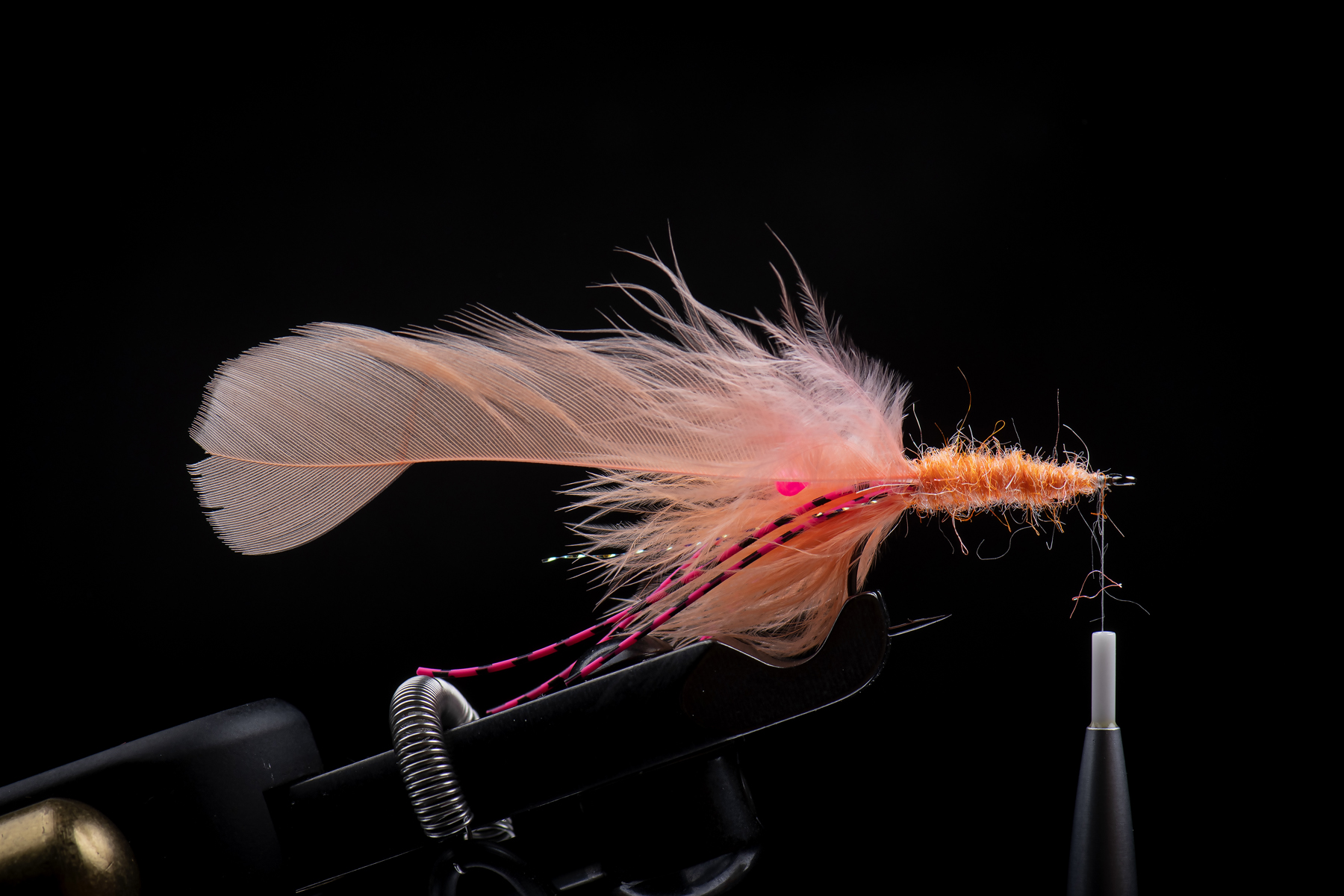
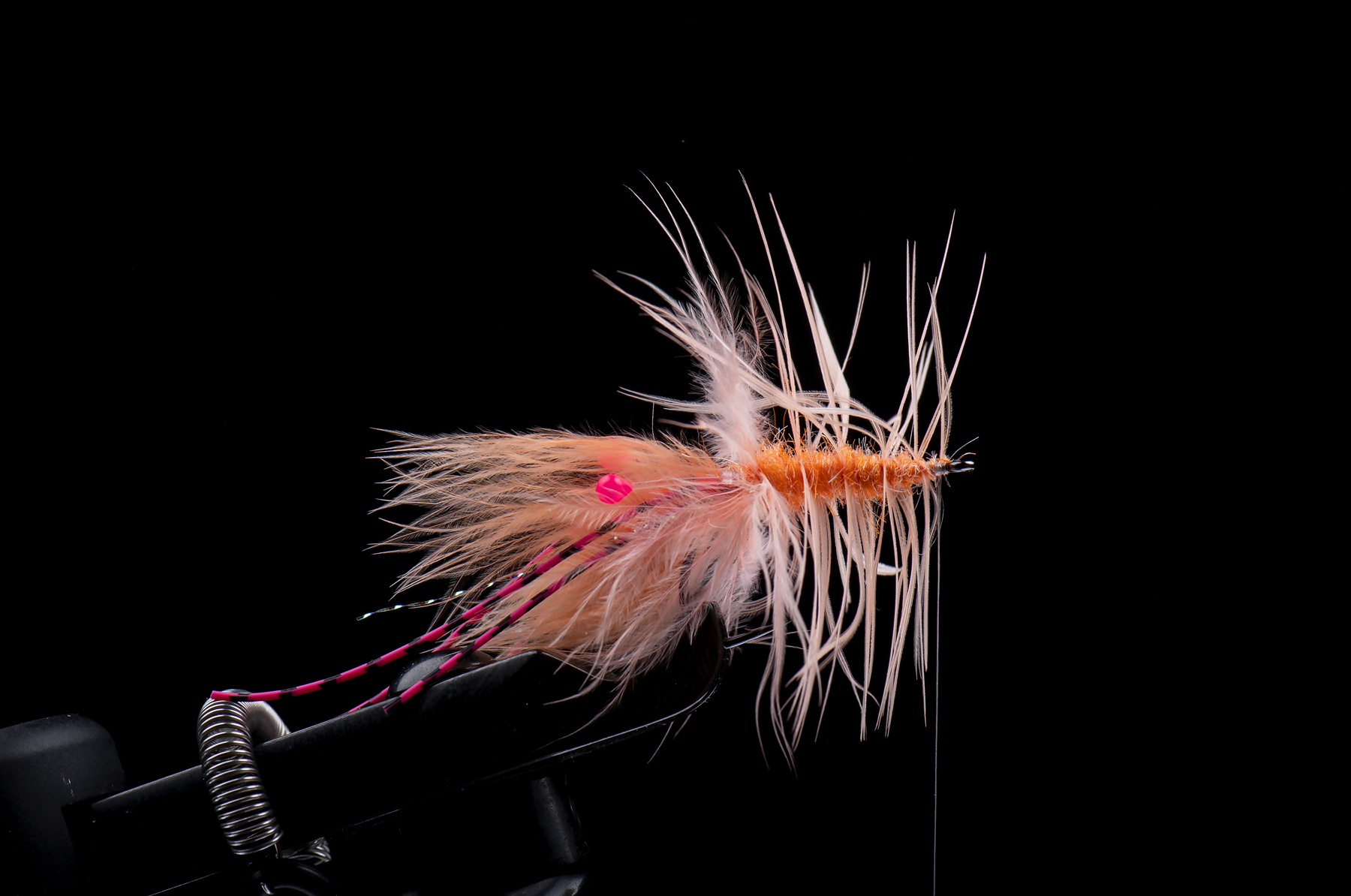
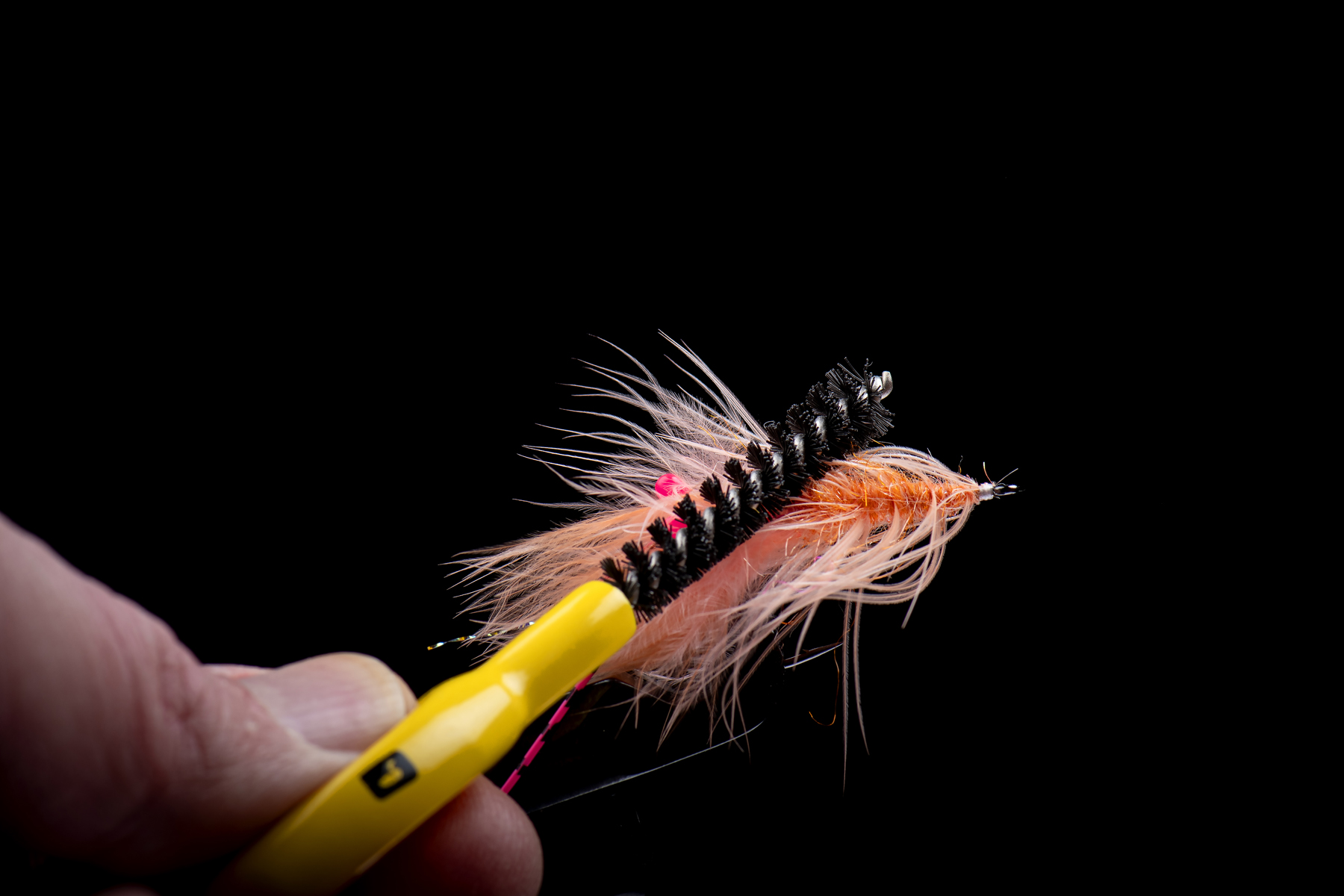
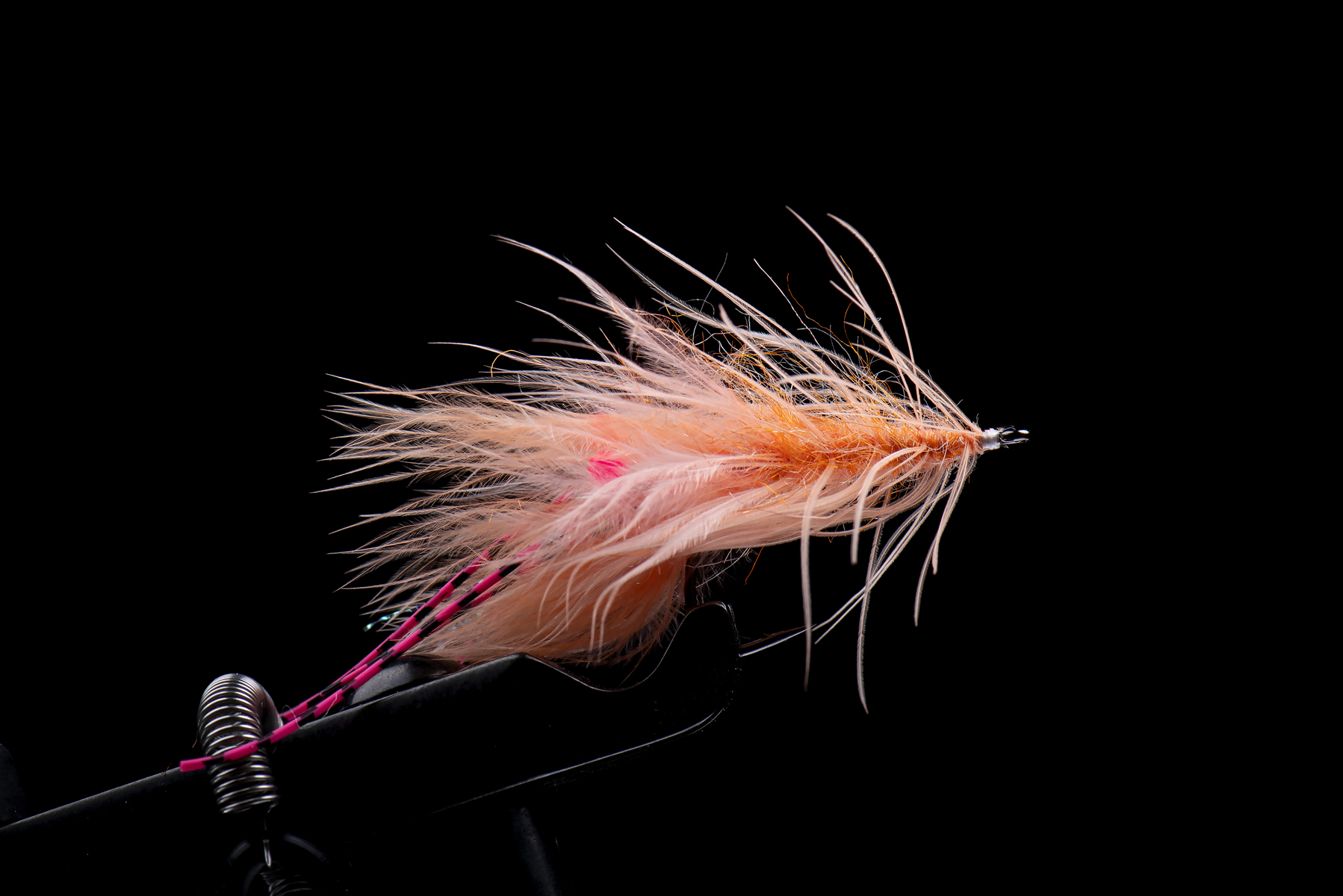
PE-MO (Peach-Monster): A WINTER SEATROUT FLY

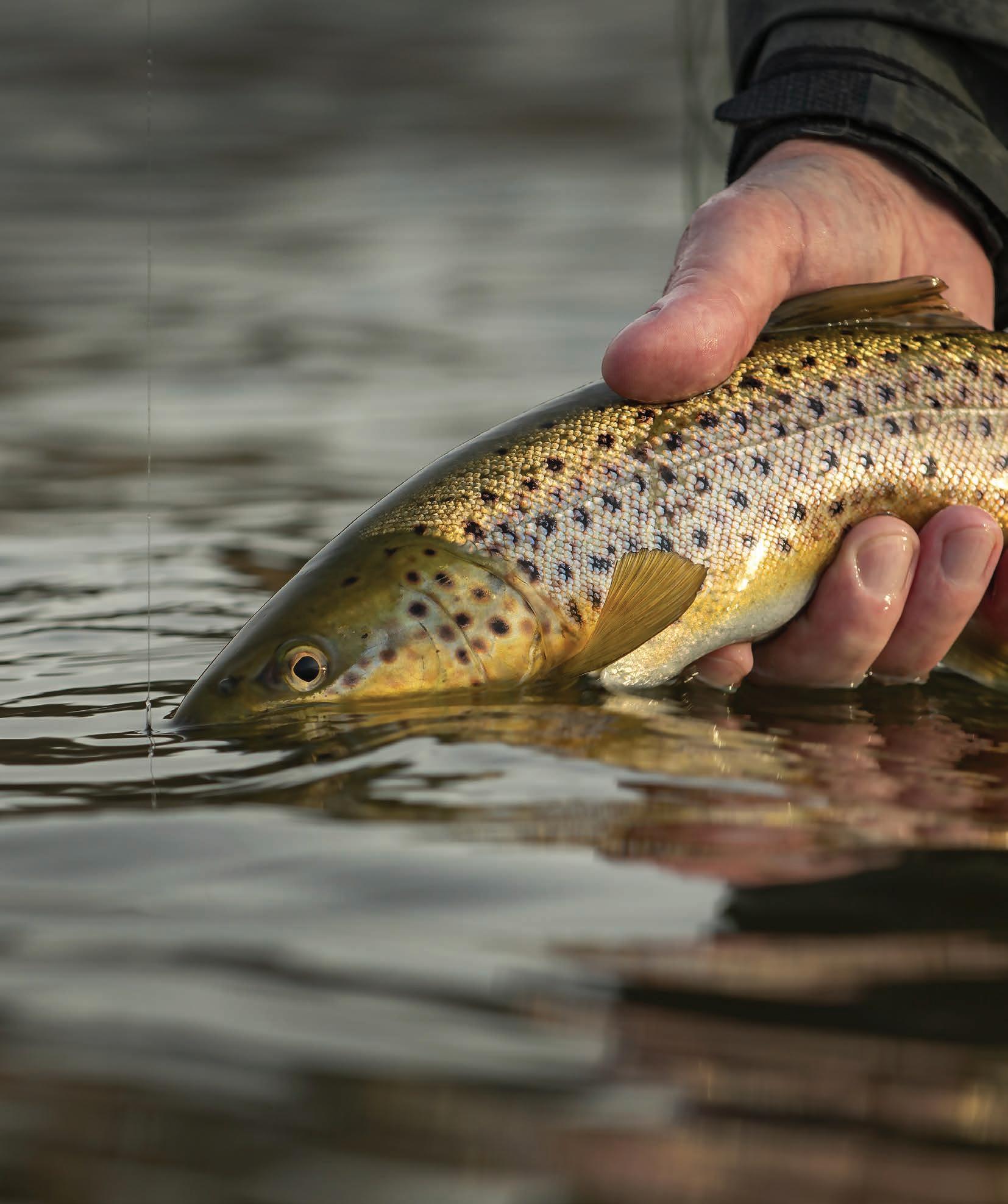
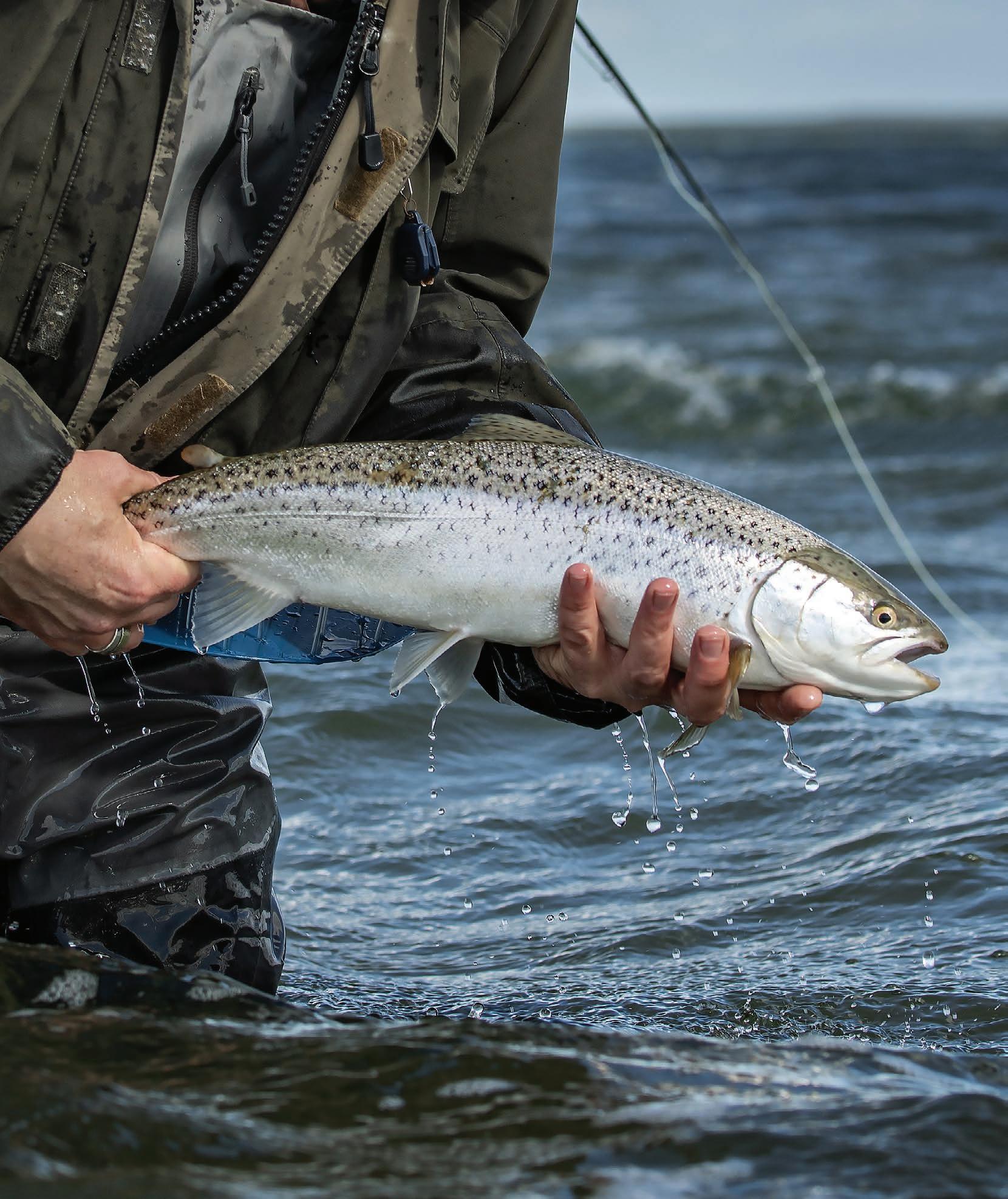
For many fly anglers, winter is a time for fly tying and relaxing by the fireplace. However, for those eager to fish, a trip to neighboring Norway offers year-round seatrout fishing, with plenty of opportunities across numerous locations. Similarly, in southern Sweden, coastal fishing begins early, with the season opening as early as January 1st.
By MORTEN VALEUR
Winter seatrout fishing stands out due to the often extremely low water temperatures, which mean the fish aren’t actively hunting for food. Instead, success hinges on locating the fish and presenting a fly with a pulsating motion that can catch their attention from a distance.
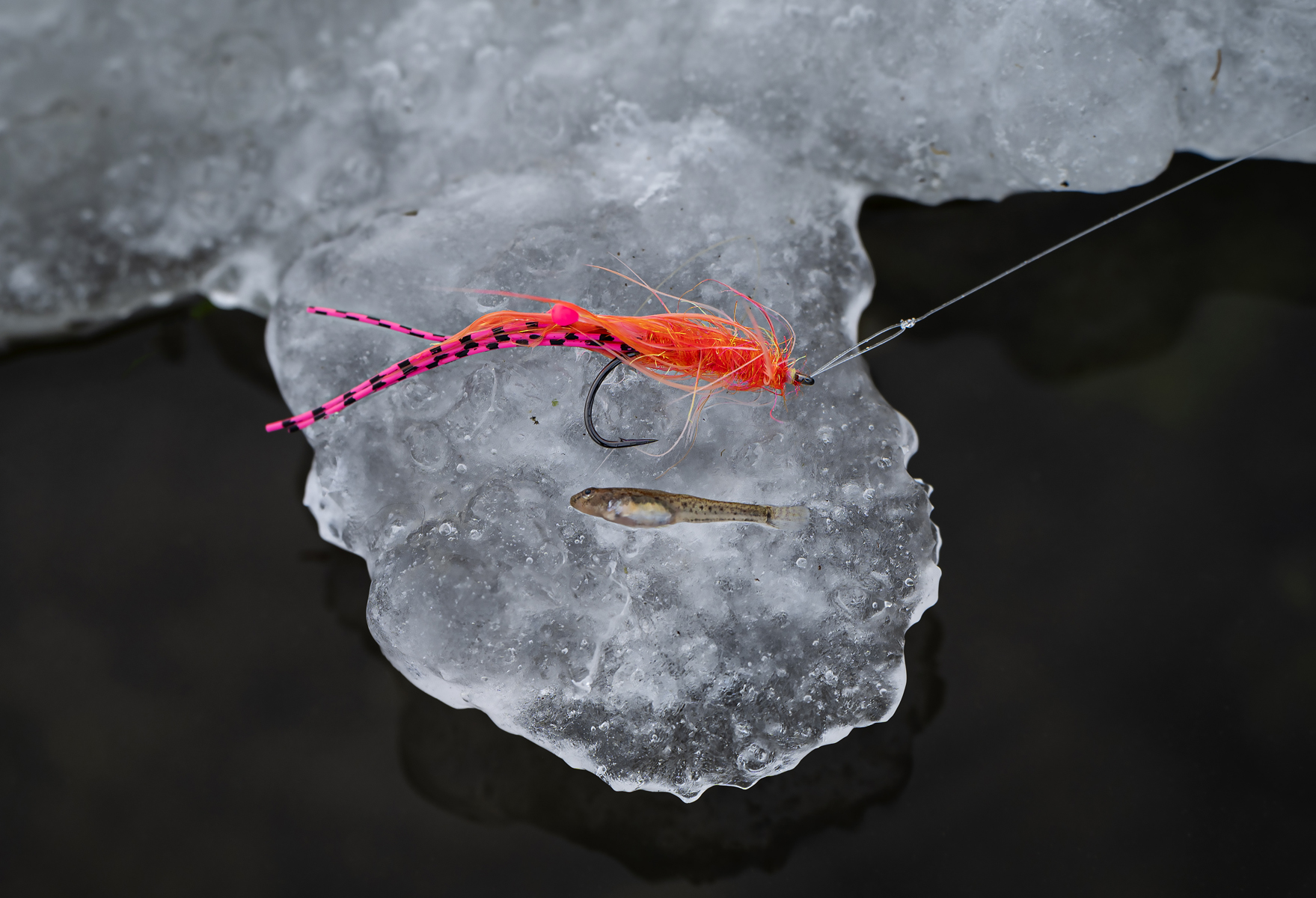
Popular patterns during this time include Pattegrisen and Woolly Bugger, tied in bright colors like fluorescent pink, orange, and magenta. Patience is key, as well as the ability to retrieve the fly extremely slowly. Fly anglers have a clear advantage here over spin anglers, as a properly tied fly paired with the right line and leader can hover enticingly in the water.
Choosing the Right Materials
For winter coastal fishing, soft and mobile materials are essential. The Pattegrisen, with its enticing Spey hackle, is an excellent choice for this type of fishing. However, sourcing these feathers can be challenging since Whiting often struggles to meet demand, and the necks and skins can be quite expensive - if available at all. Fortunately, Whiting offers other products in the same salmon-pink shade specified by the original Pattegrisen recipe. One such product is Rooster Softhackle/Chickabou, which is taken from the rooster’s breast and thighs.
The breast feathers resemble oversized hen hackle with broad, incredibly soft fibers, making them ideal for flies requiring hen hackle, especially on larger hooks. Meanwhile, the fluffy Chickabou feathers, found along the rooster’s thighs, are like miniature marabou feathers. Unlike marabou, Chickabou feathers have relatively thin stems, allowing them to be wound like hackle.
Color and Movement
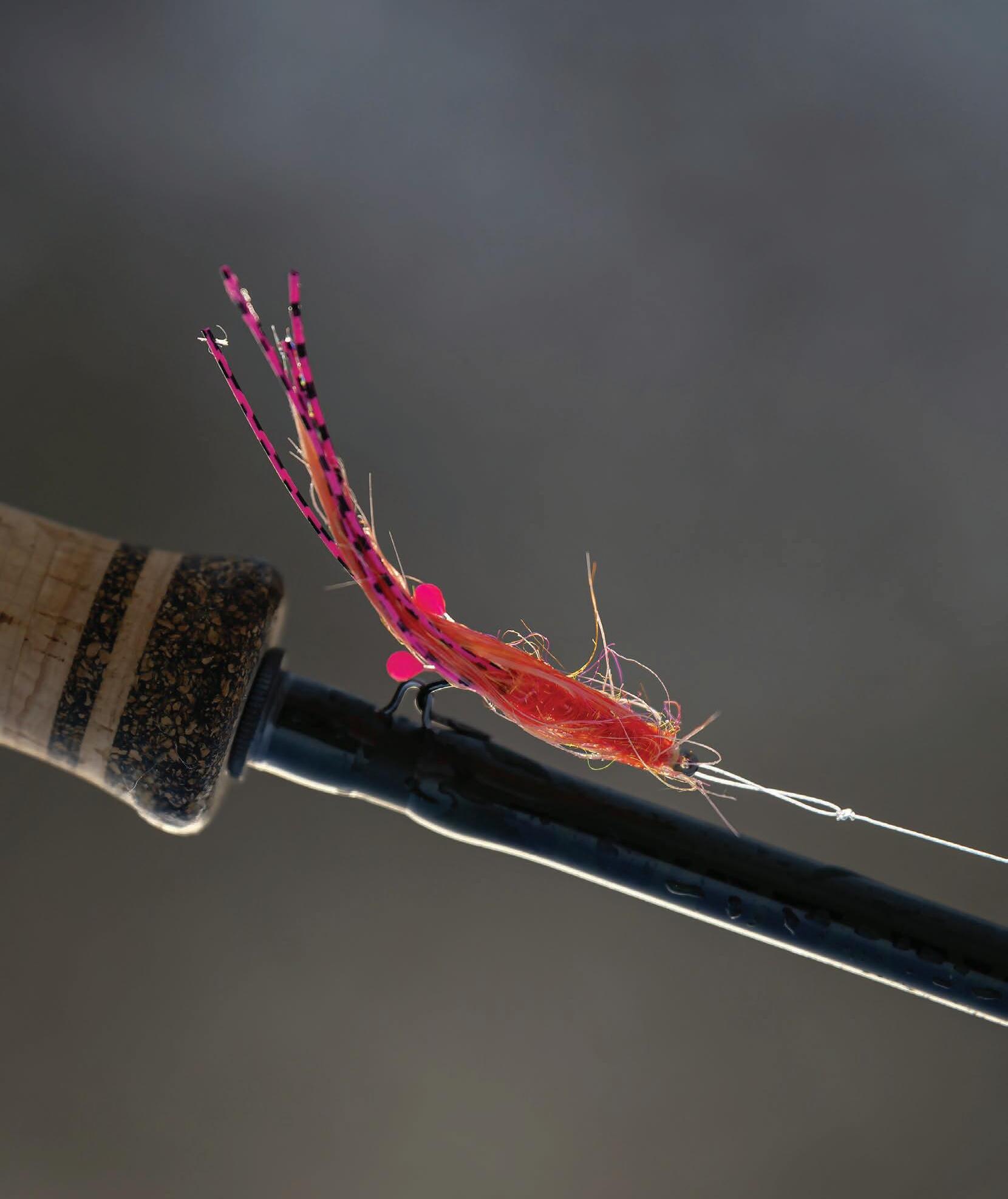
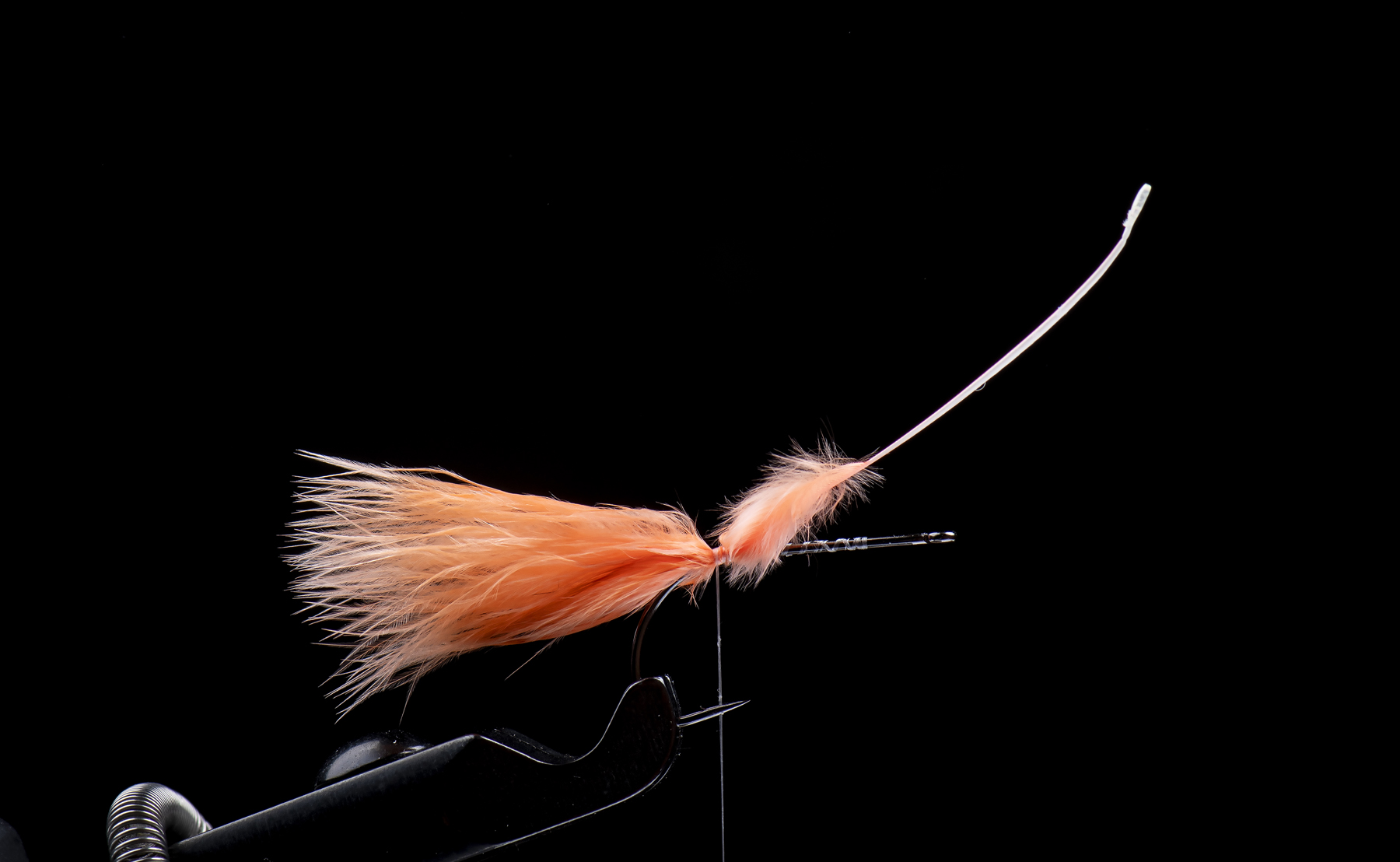
Bright colors such as pink and orange are preferred for winter fishing. The salmon-pink shade is less intense and has a nearly translucent appearance when wet. The soft hackle fibers move seductively in the water.
To enhance the colors and movement, the PE-MO fly incorporates rubber legs that catch the fish’s eye and pique their curiosity.
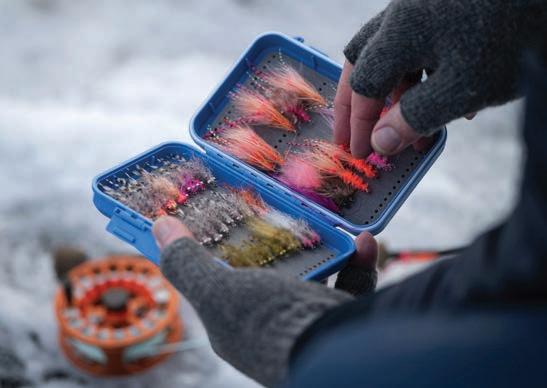
The fly is typically tied on size 4 – 8 hooks. For additional weight, lead can be added to the underside of the hook to ensure proper orientation. Most of the time, a floating or intermediate line is used, as the fly is often fished in shallow waters with slow retrieves.
Fishing the PE-MO
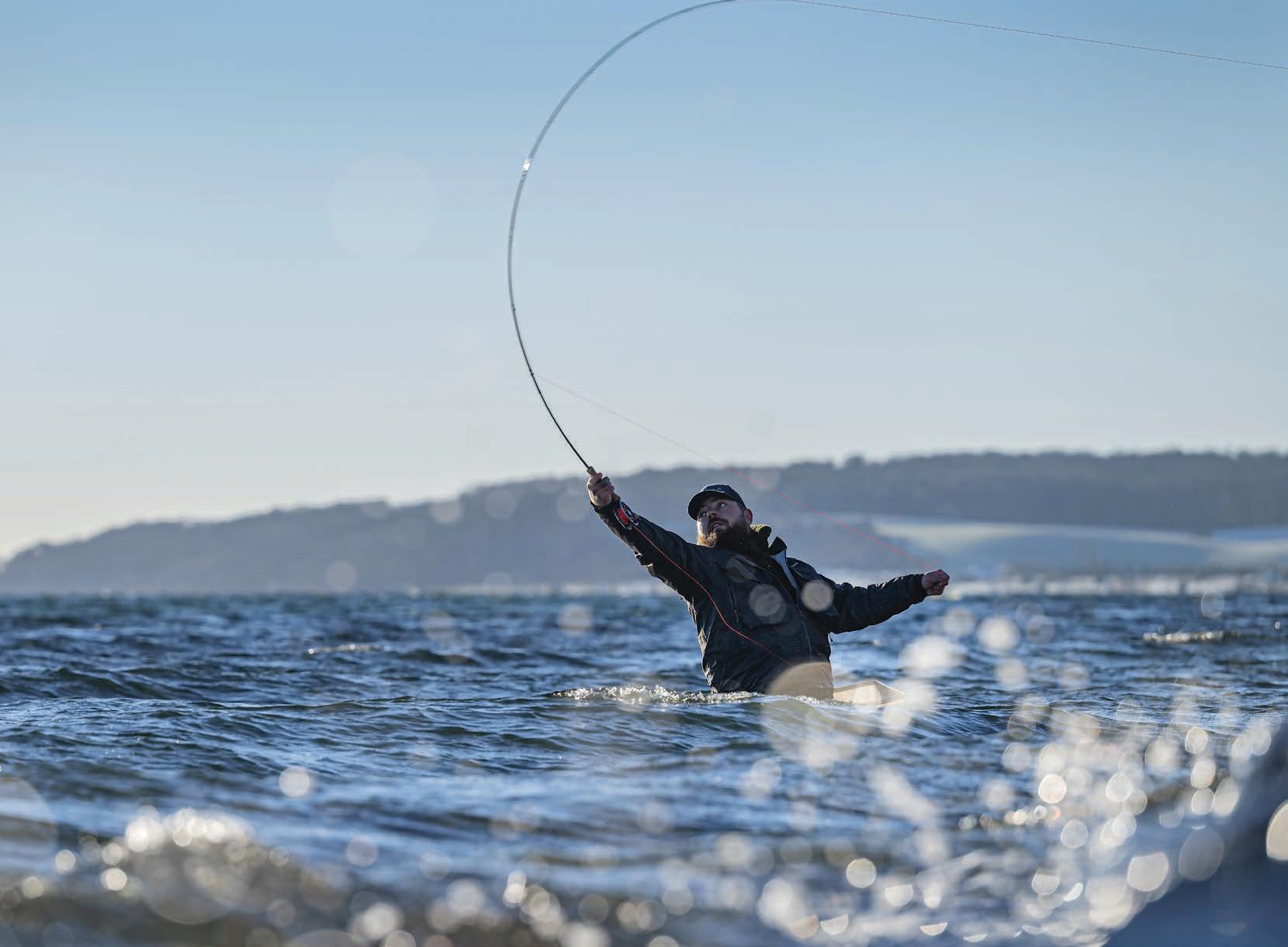
The PE-MO is most effective with a slow handtwist retrieve or short, sharp pulls that mimic the pulsing movement of shrimp or baitfish.
Thanks to the foam hackle and rubber legs, the fly’s motion is highly visible, even in murky waters. It can also be fished with longer pulls, where it dives slightly and then rises during pauses - an effective technique to trigger aggressive strikes from sea trout.
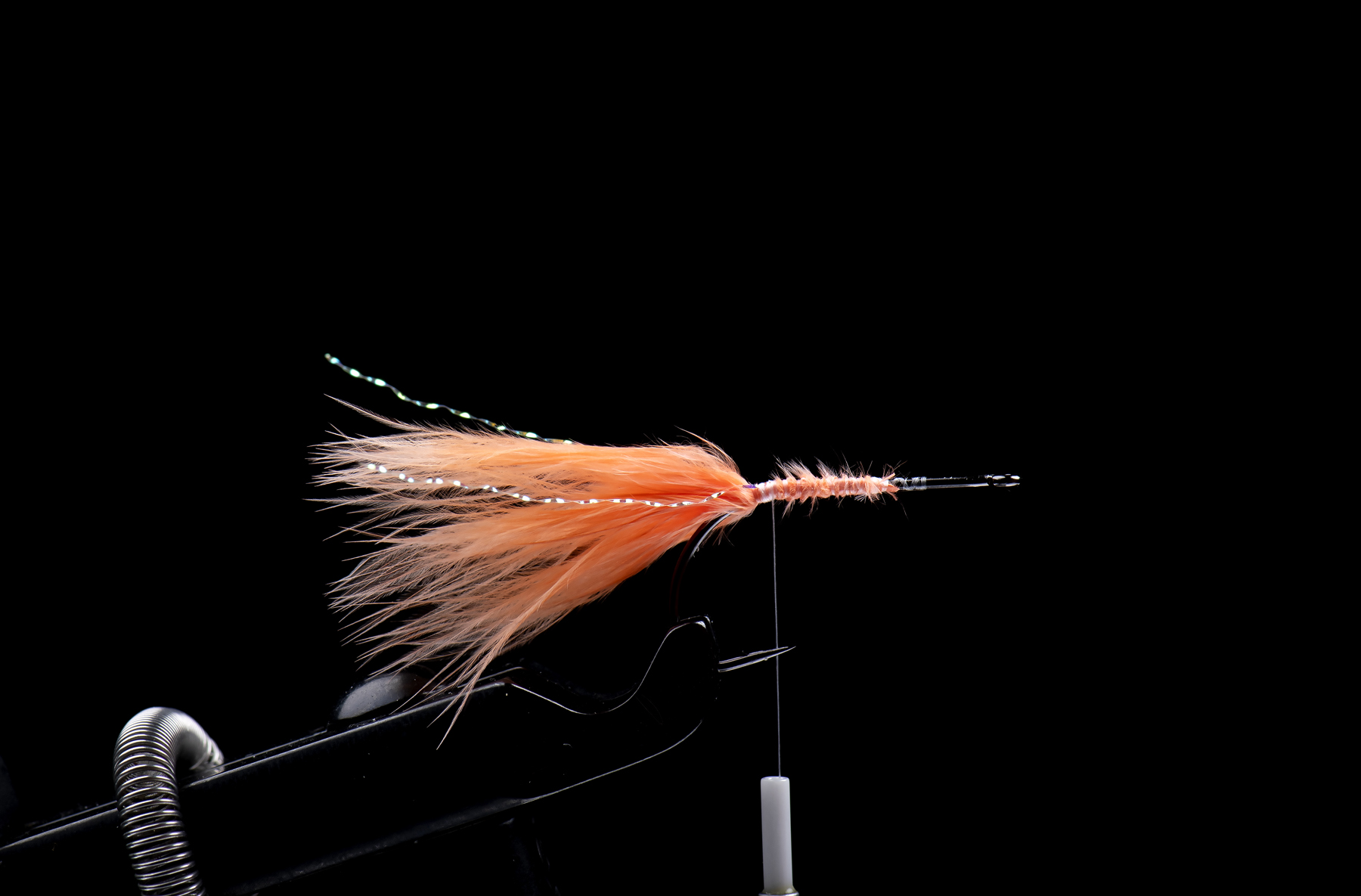
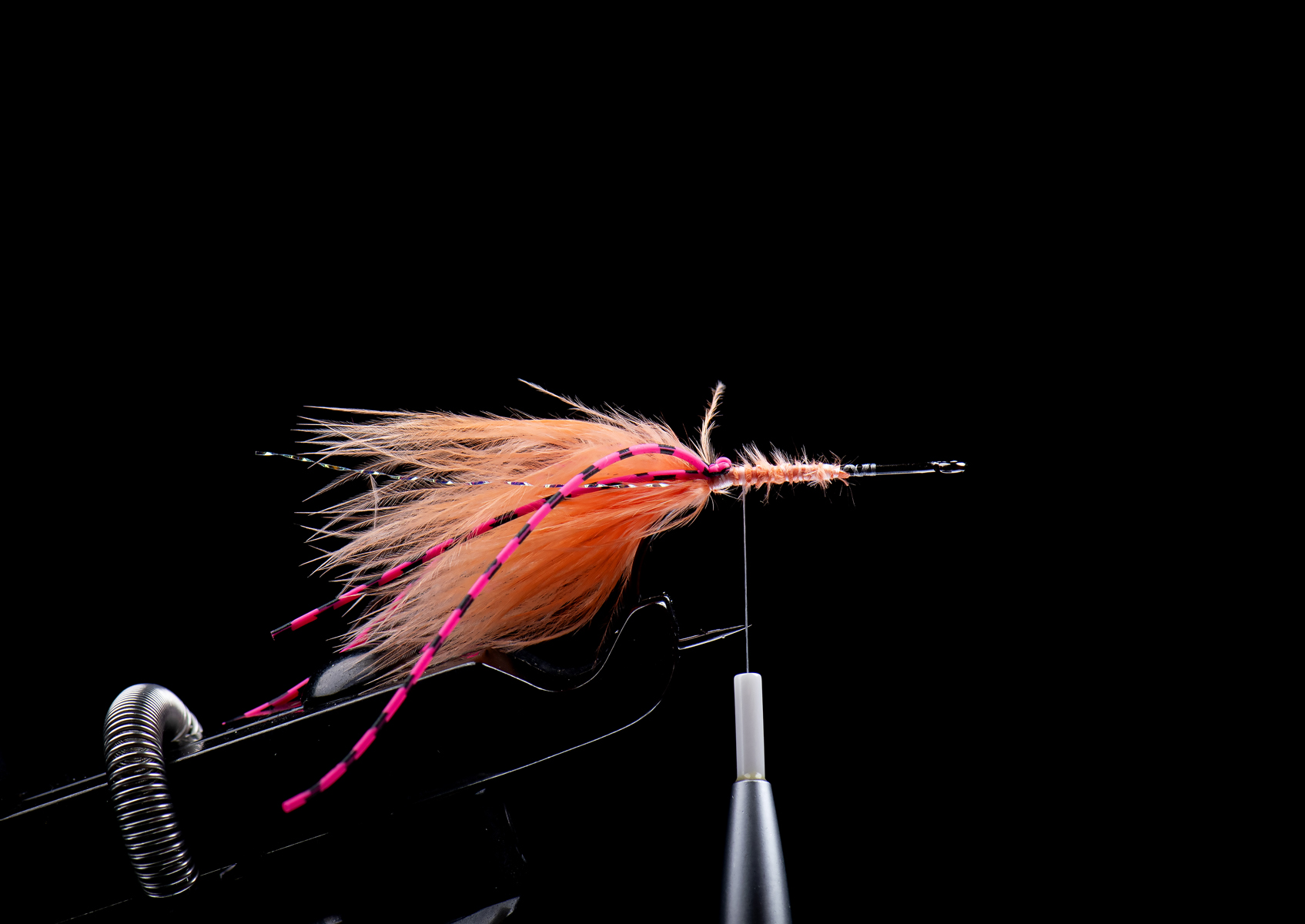
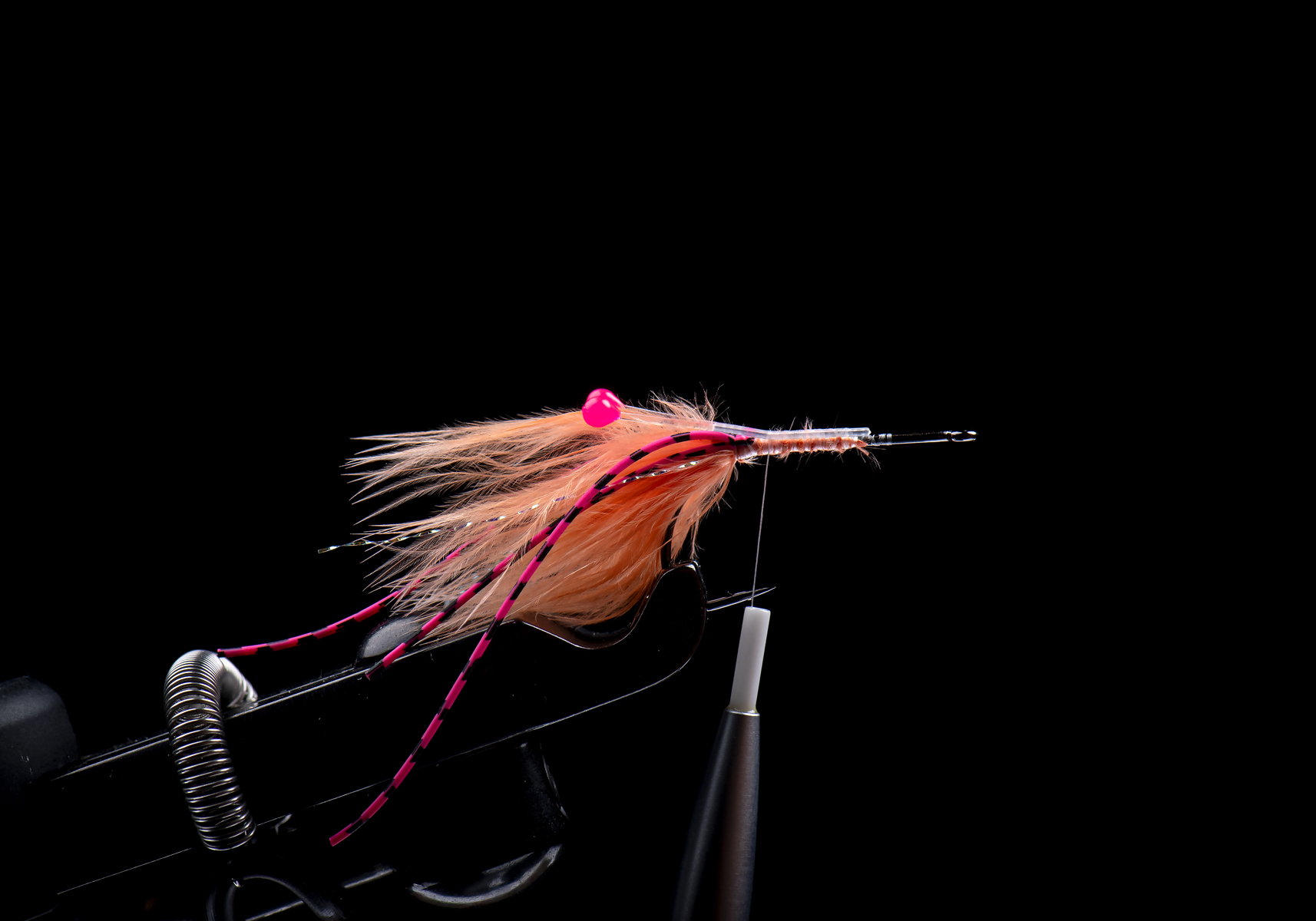
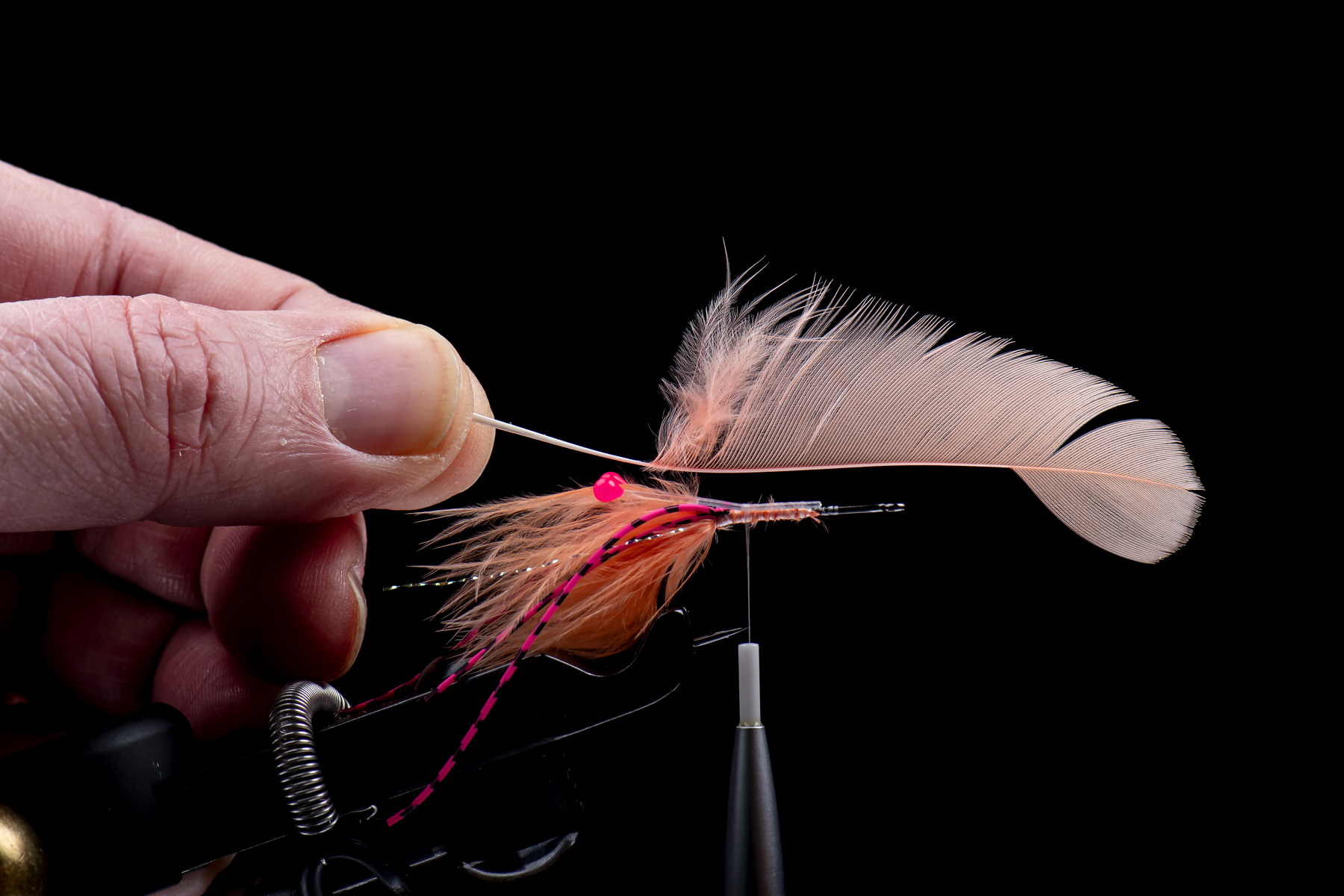
Watch the tying video for the PE-MO fly on Ahrex’s YouTube channel: https://youtu.be/QRrH_yhKOo4