12 minute read
Surf’s Up in Finland: Brown Trout & Fry-Feeding Frenzies

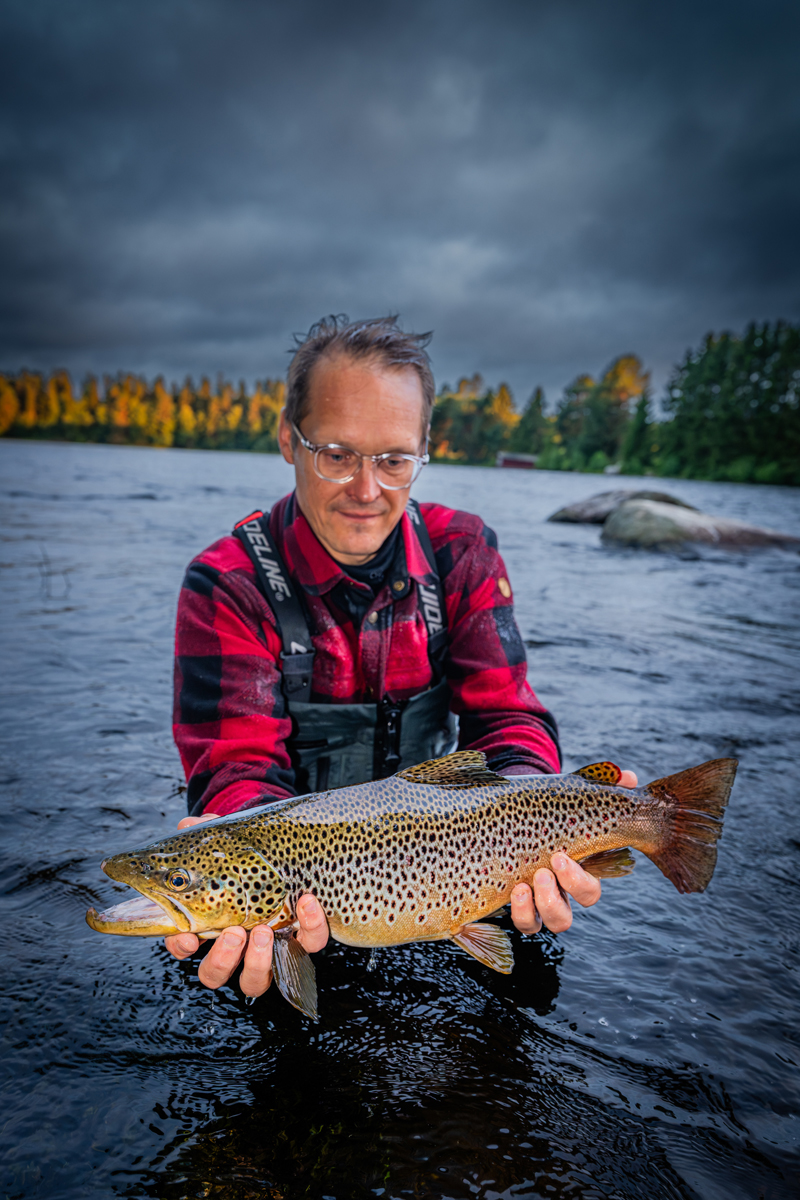
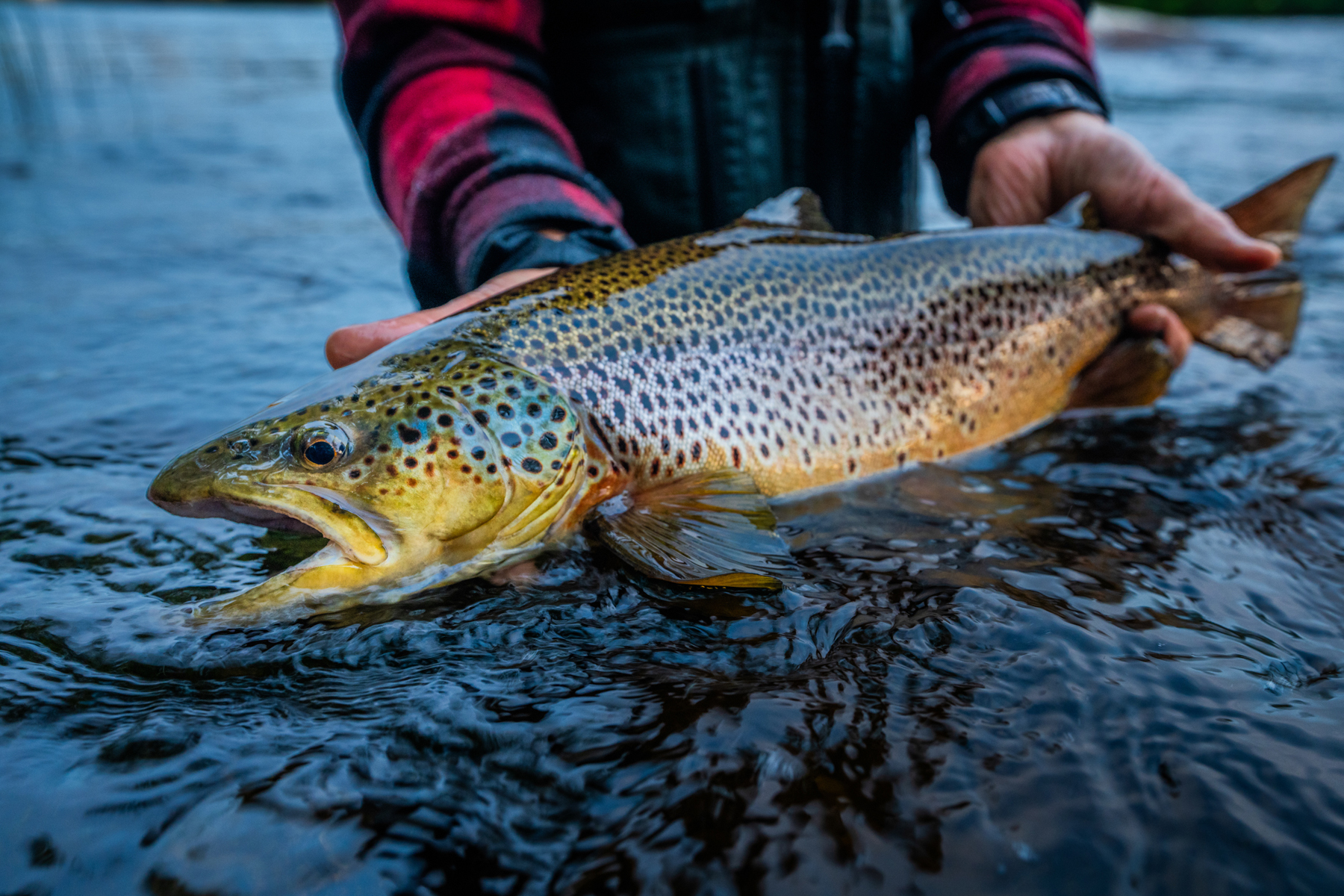
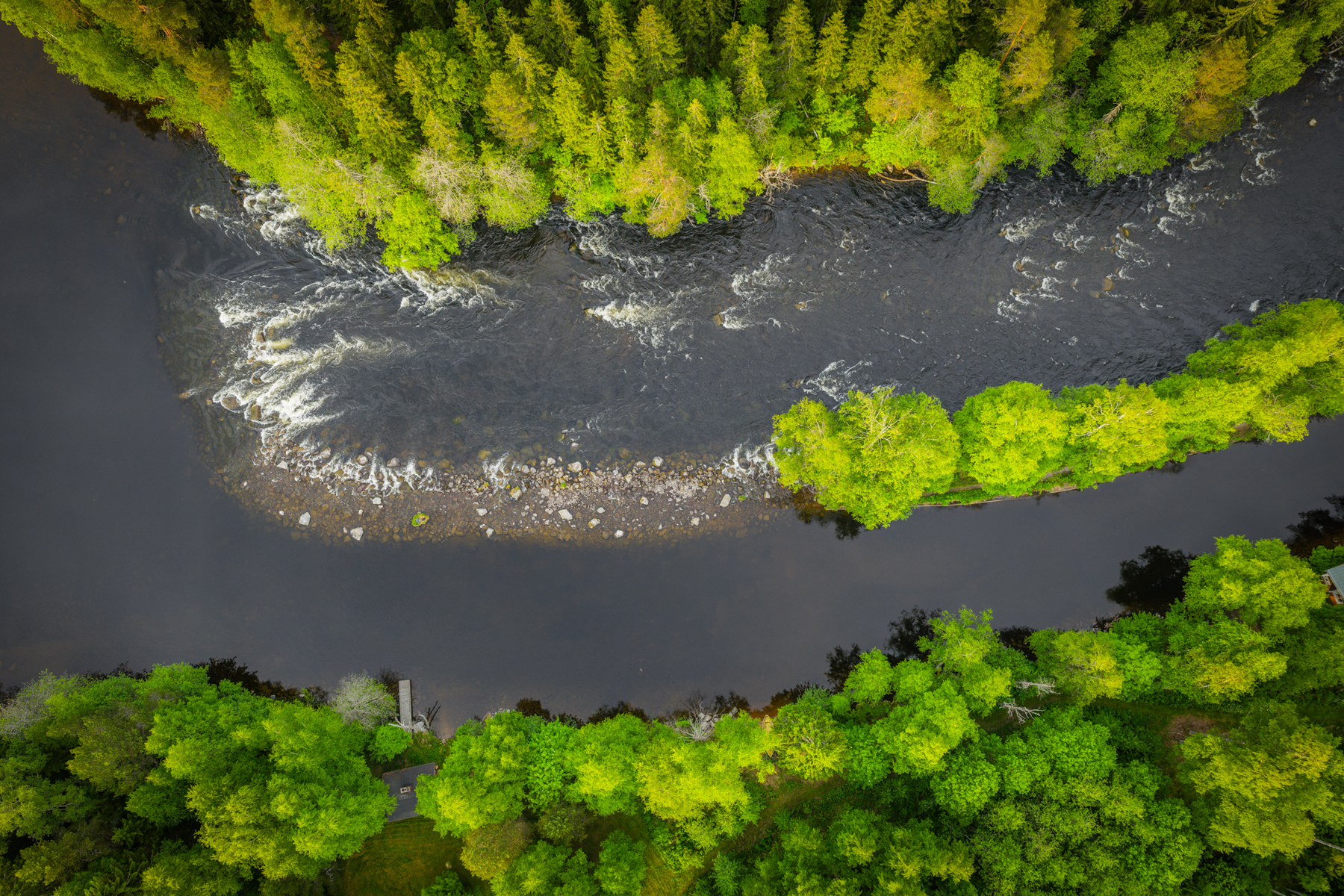
In early June when winter’s icy grip starts to loosen its hold and the lakes of central Finland start to wake from their slumbers, something special happens. When the water temperature reaches around 6 degrees, big shoals of small roach migrate from the lakes into the fast, powerful rapids that connect them, and the big brown trout desert the lakes to follow them.
By MATT HARRIS // With additional images by PASI VISAKIVI
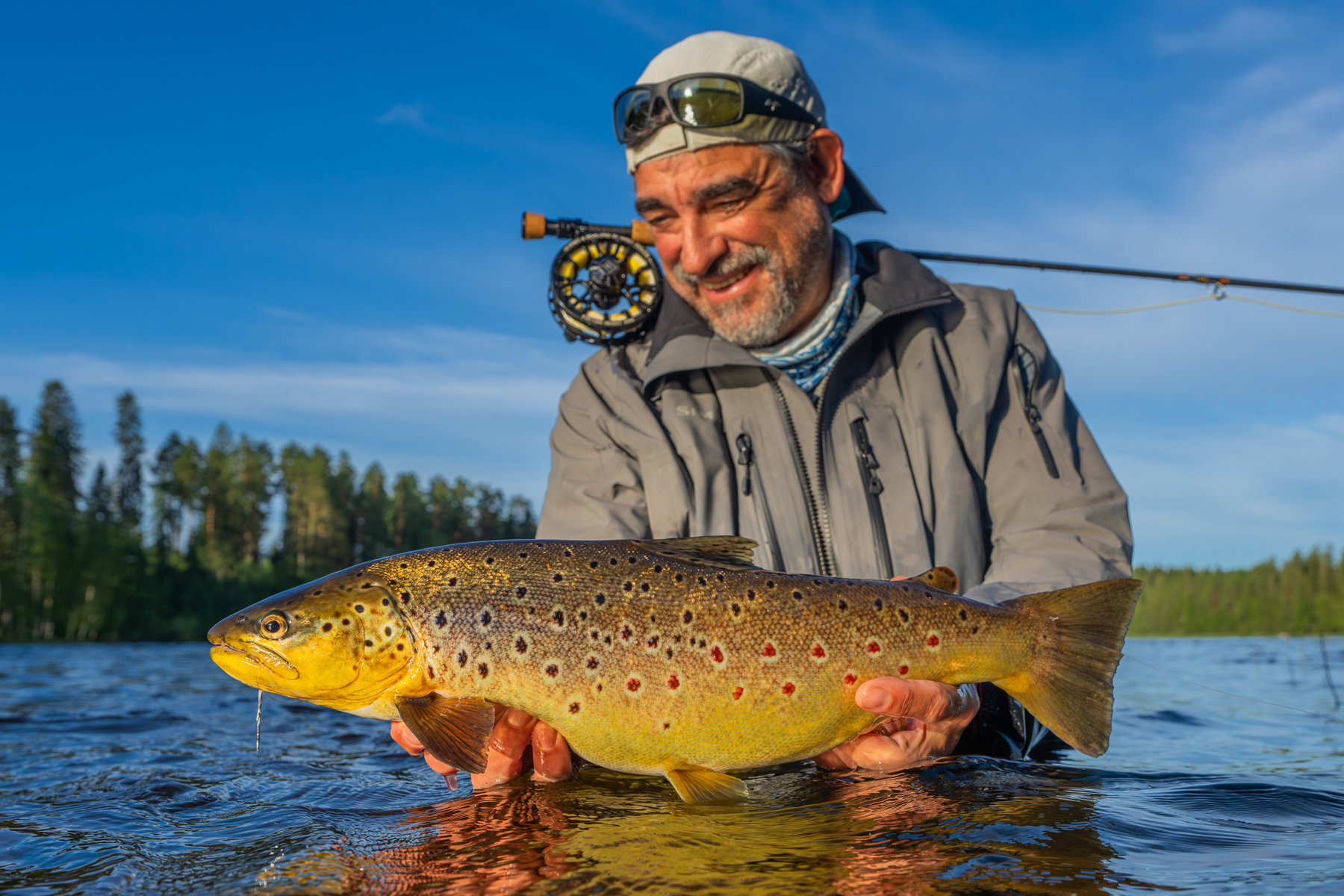
As the water warms further, other baitfish species including perch and various whitefish follow the roach, and when the water temperature hits 12 degrees, the huge shoals of bleak join the party. This is the trigger for the trout to go absolutely nuts. With their metabolism now fully ‘warmed up’, and the rapids full of all kinds of highly nutritious baitfish, they go into a wild feeding frenzy, crashing into the huge schools and sending baitfish exploding into the air with a violence that would make a tuna blush. For the avid trout angler, now is the time to catch a trophy…
The big browns are famished after the long Northern winter, and they set about the baitfish with voracious abandon. These big, wily, old hunters are never easy to fool, but in this state of depraved bloodlust, they become uncharacteristically vulnerable.
For the patient angler
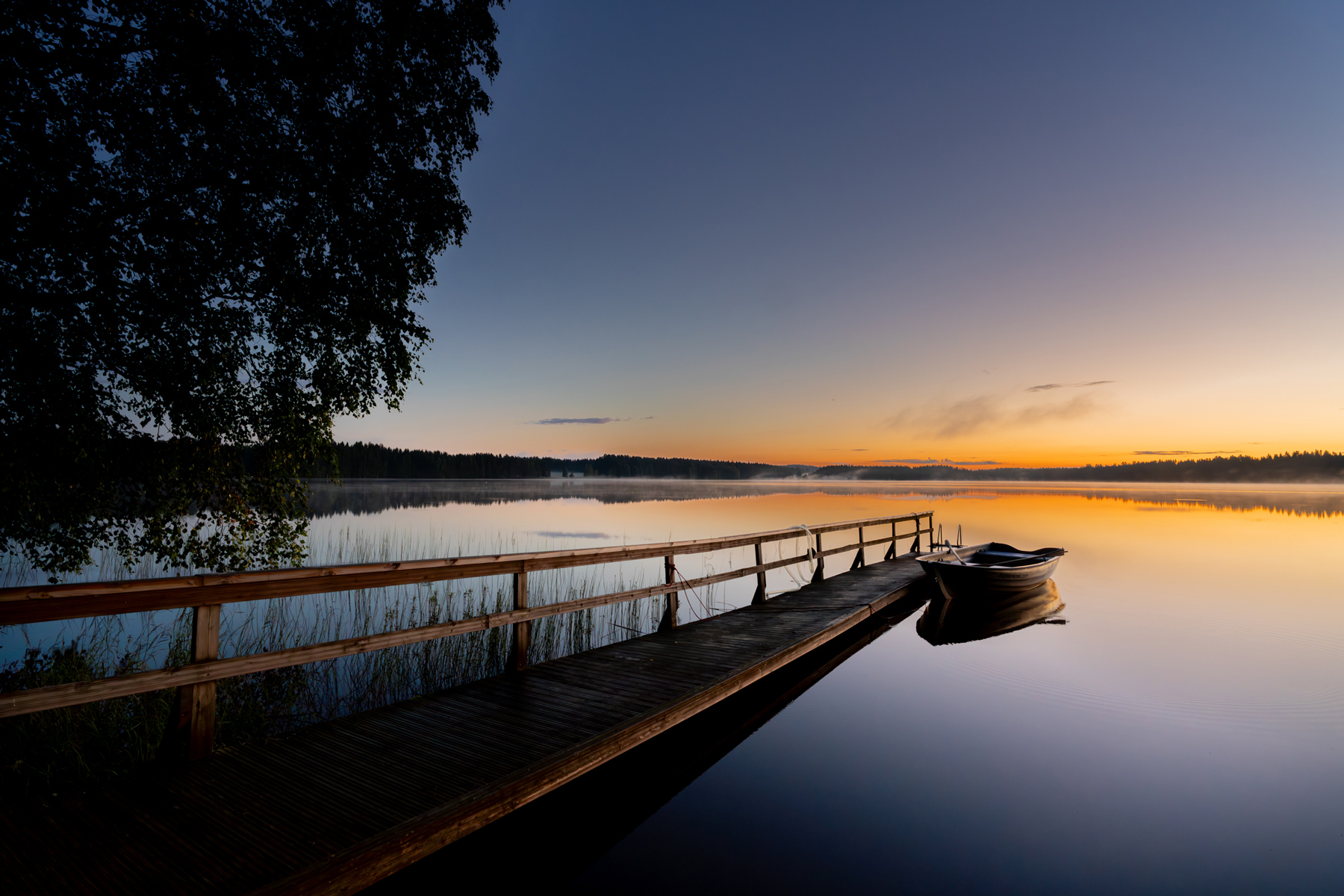
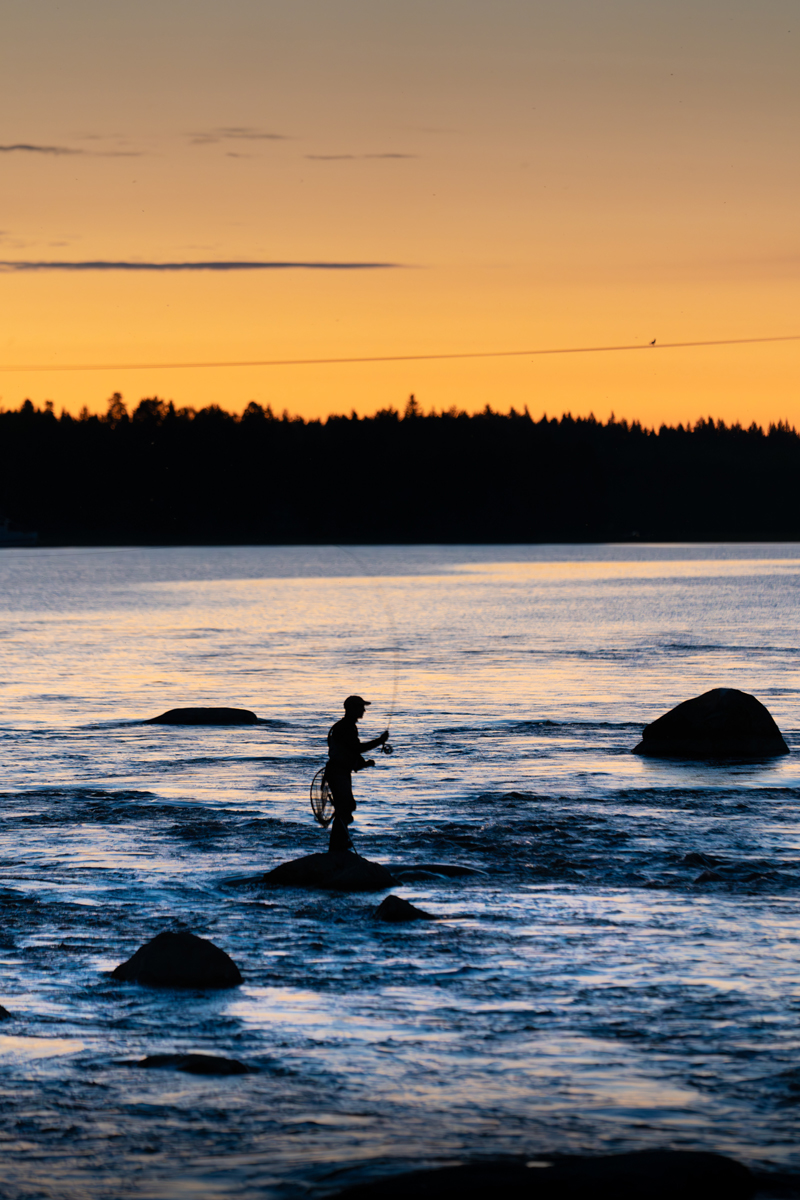
The lakeland of Central Finland is not quite in the Arctic Circle but it is a long way North. As the summer solstice approaches, it becomes possible to fish throughout the night. This is often the best time to target these big fish. Once the sun drops low into the west and only occasionally comes flickering through the birch forest, the fish become exceptionally active. Don’t rush in…take your time and watch the water.
Usually, the patient angler should be rewarded soon enough by the sight of large numbers of sparkling silver roach and bleak bursting into the warm night air as their tormentors terrorize them from below. Dead and dying fish are everywhere and watching the big trout mop them up with casual indolence is utterly extraordinary.
The Surfboard
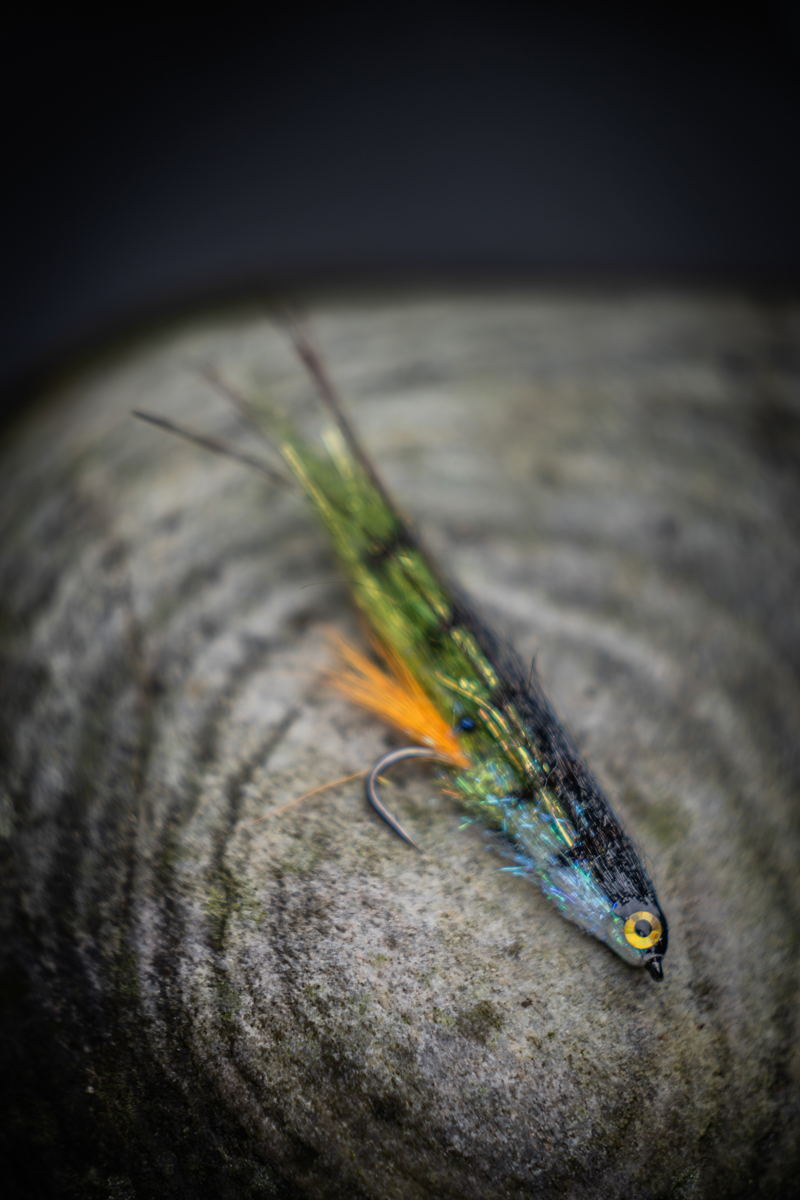
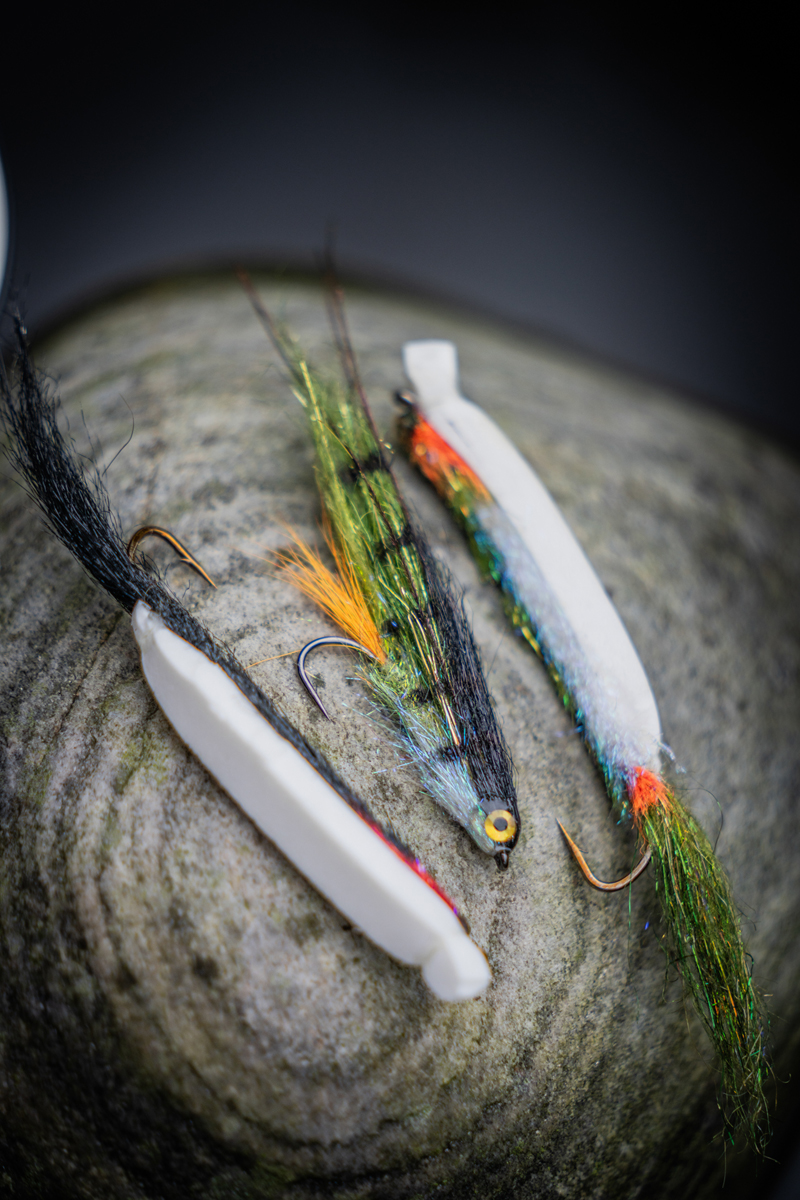
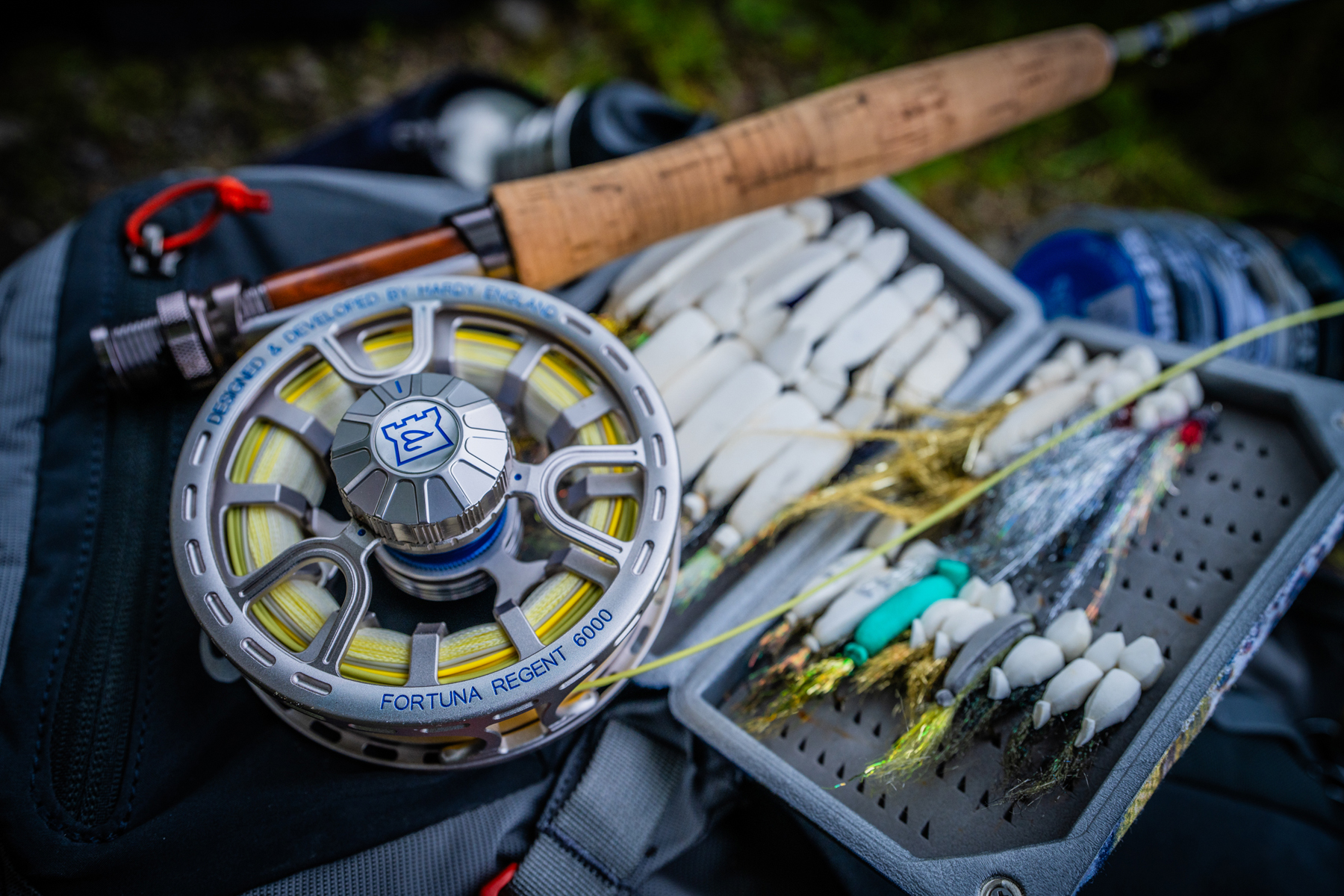
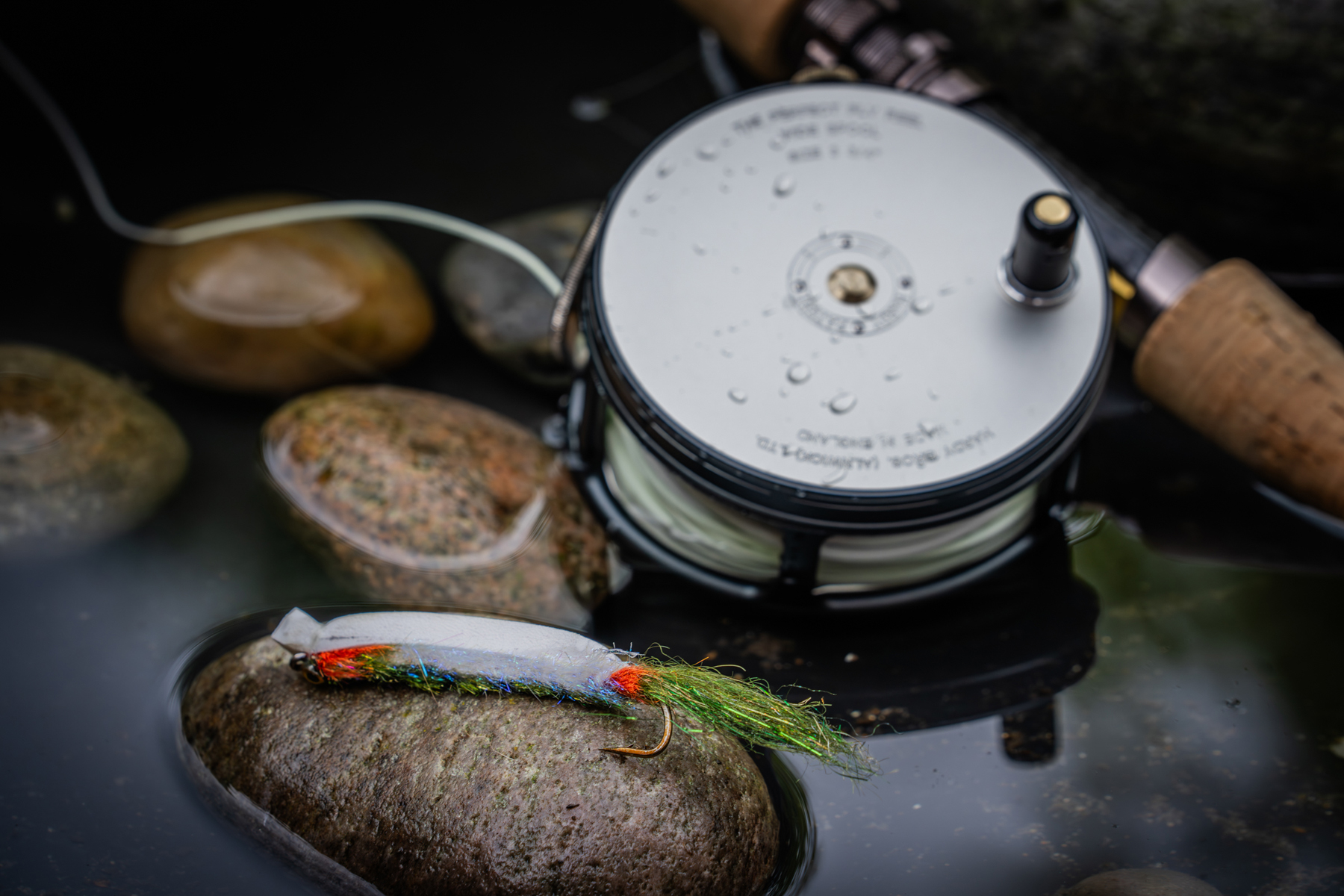
The Finns have pioneered an enormous surface pattern known as the Surfilauta or Surfboard. This is a huge floating fry imitation that can be anything from 2 to 6 inches long. While it can and does work in the conventional manner, skated and popped across the surface while swinging the pattern downstream and across, the deadliest way to fish this pattern is actually to fish it dead drift in the fashion of a classic dry fly presentation.
While most local anglers like to fish the pattern on an ultra-longshank hook, I found this technique led to too many fish being lost due to the leverage of that ultra-long shank. Instead, I chose to tie the same patterns on a plastic tube and paired the tube with a short shank ultra-strong carp hook. This pattern served me well and allowed me to hook - and land - a succession of beautiful fish.
A heart-stopping experience
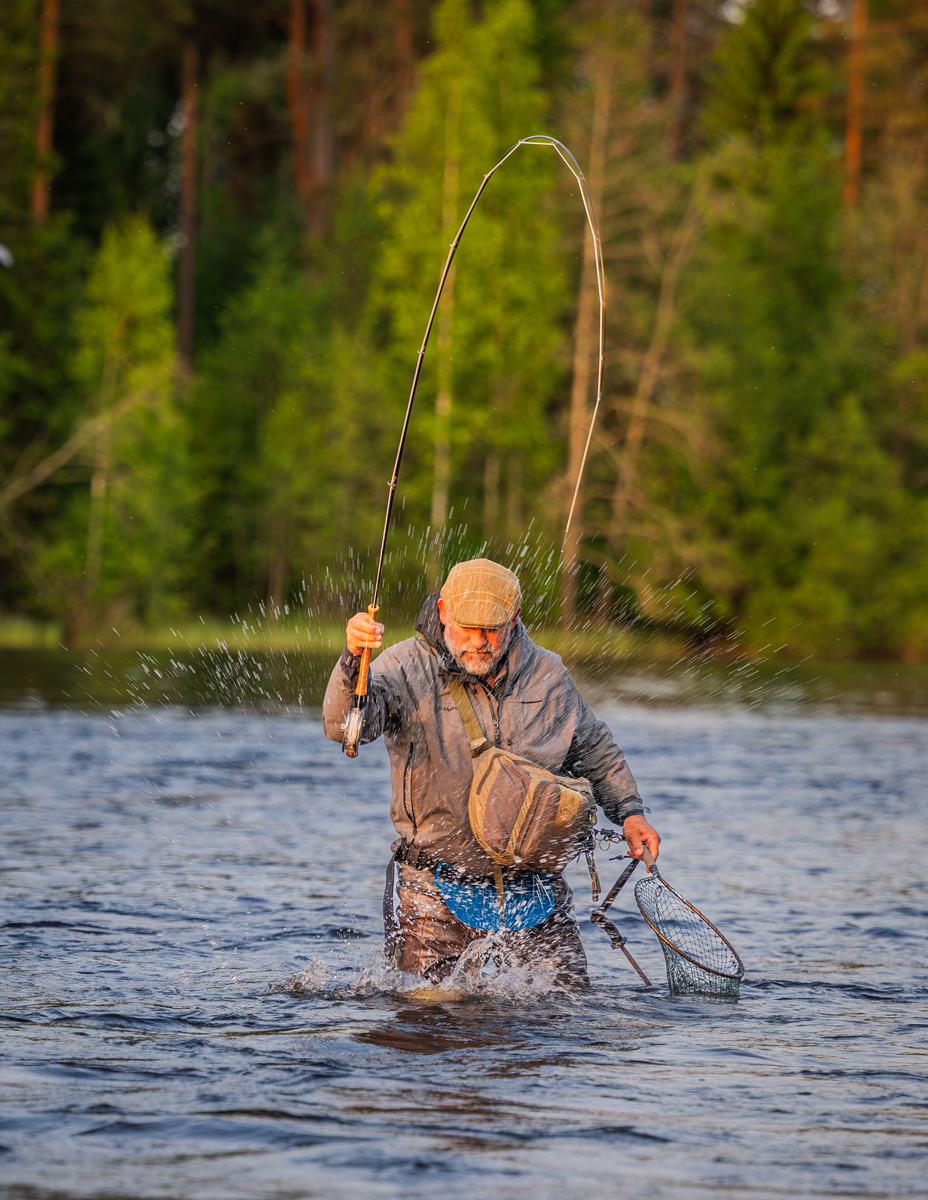
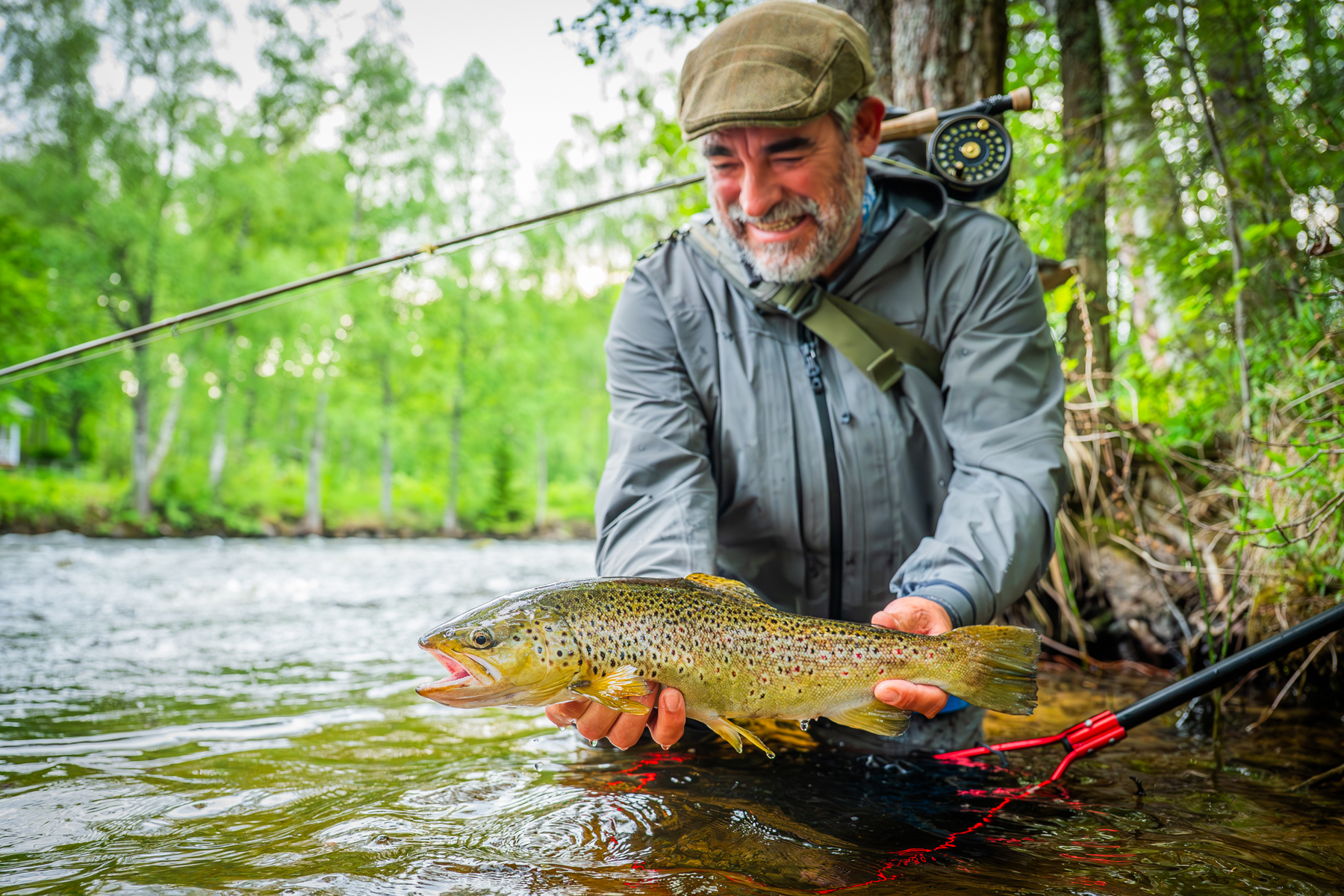
It is truly exhilarating fishing. The sight of your big surface pattern bouncing down the churning white water and then being devoured in a split-second, as a big broad-shouldered trout crashes up through the brawling currents to nail it, is a heart-stopping experience.
“Once hooked these big, brawny fish fight powerfully”
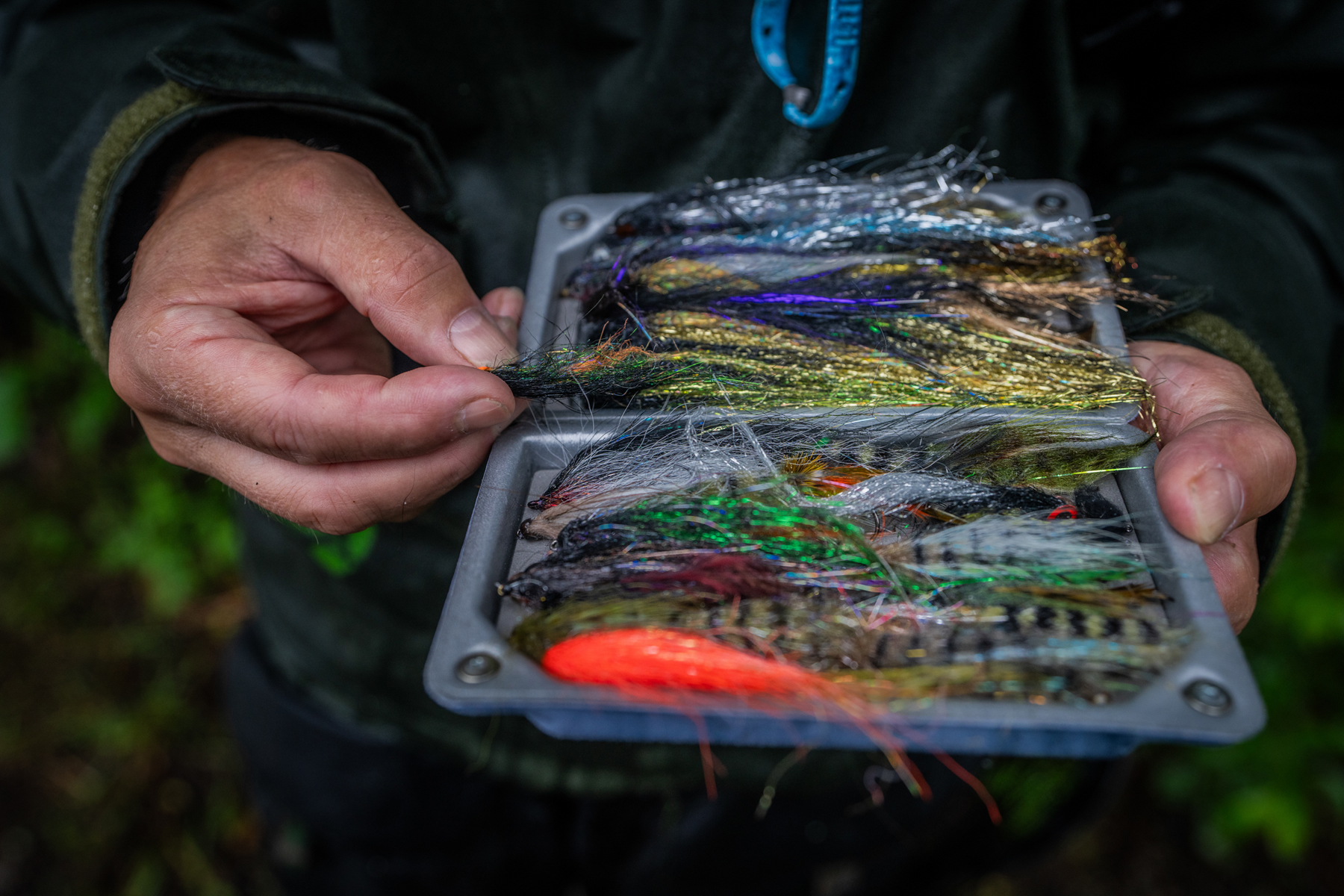
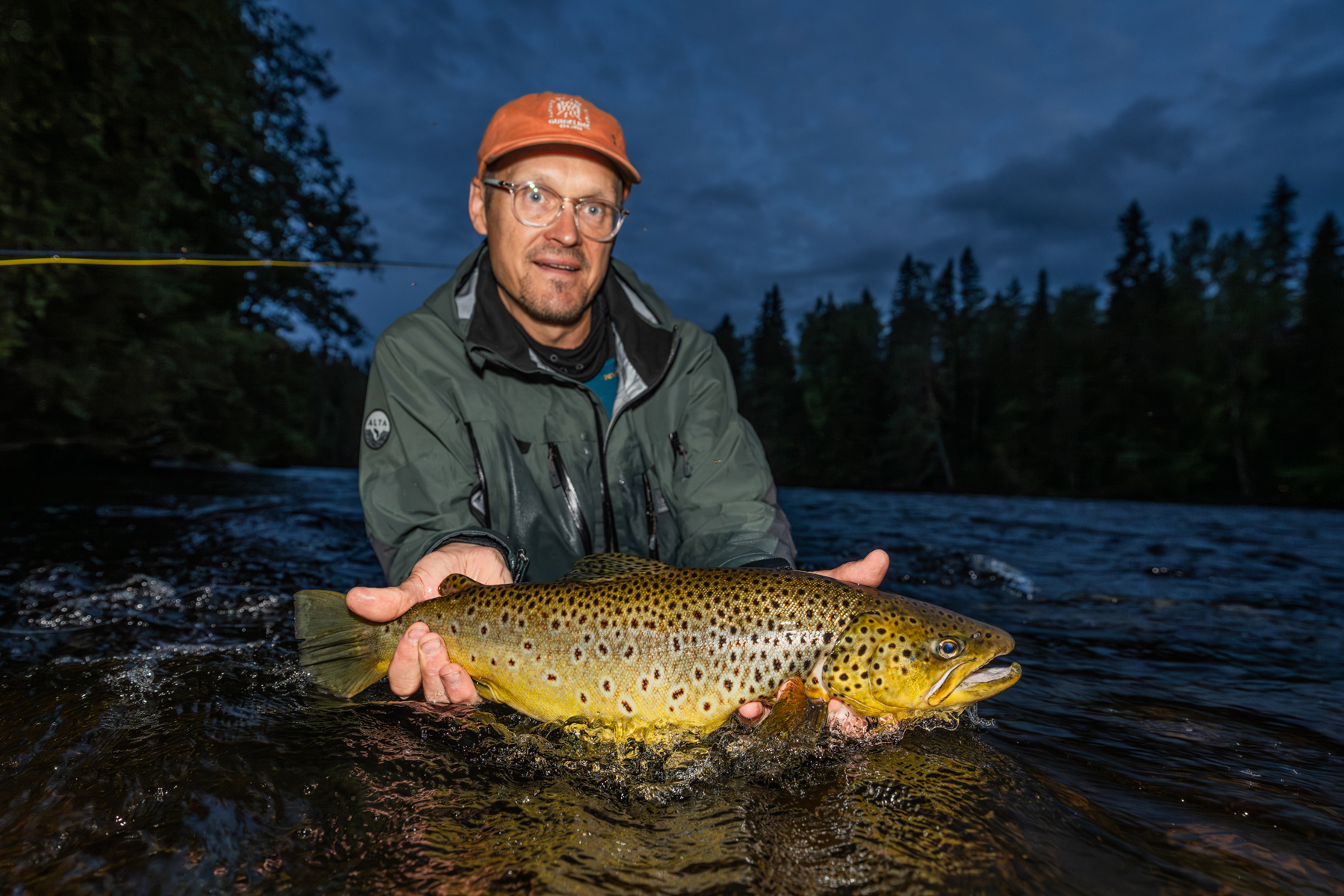
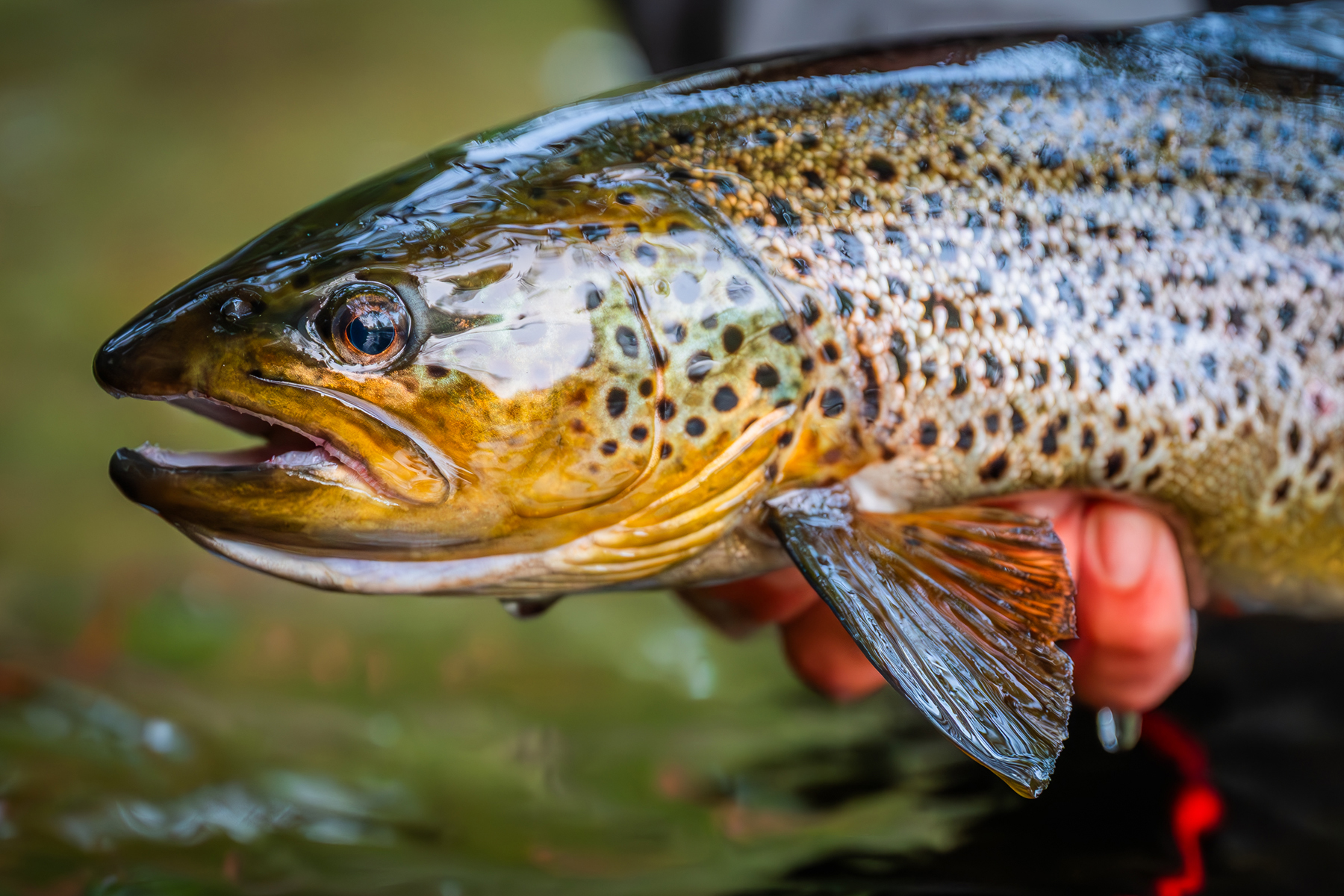
Once hooked these big, brawny fish fight powerfully in the heavy water. My friend Jani Himako runs the fishing here, and he knows these waters well. He recommends that you use nothing less than 0.40 mm tippet for this style of fishing. This may seem heavy but there are double-figure brown trout here. Once you have seen one of these hefty brutes cartwheeling in the white waters of the rapids, you’ll really appreciate the stout tippet, believe me… If you move a fish that refuses to come back, consider switching to a different surfboard pattern and if the fish still resists, tie on a large streamer pattern like the beautiful fry imitations tied by master tyer, Ville Ritvanen. Stripping them fast downstream can also often bring results.
A bit of variation
I also did well using various UK fry patterns, including variations on my own “Minky Gurgler” pattern. I also used a pattern introduced to me by my good friend, Llewelyn Claven, on the banks of Jurassic Lake in Argentina, the balanced leech. On a hunch, I tied one in the classic humungous livery and used it to catch a particularly handsome specimen that had resisted a number of other patterns.
I caught it by dead-drifting the streamer nymph-style into a small pocket where the fish had repeatedly shown to various other flies while steadfastly refusing to take any of them. This capture was particularly satisfying, as it showed that experimenting with fry patterns the fish haven’t been exposed to can really reap dividends.The fishing is technical and satisfyingly demanding. It really helps to think ‘outside’ the box here about how and what to present to these magnificent fish.
Tackling central Finland
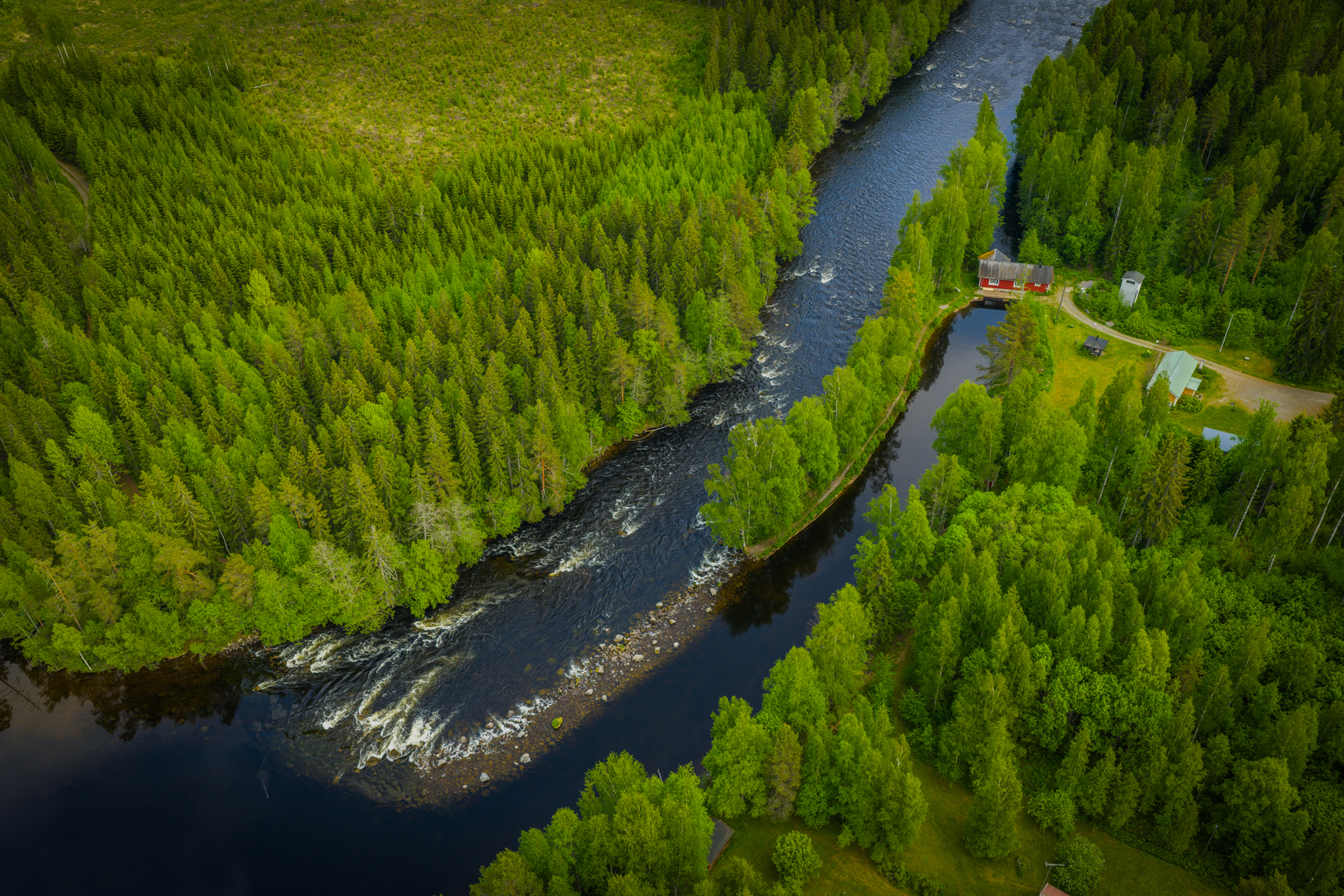
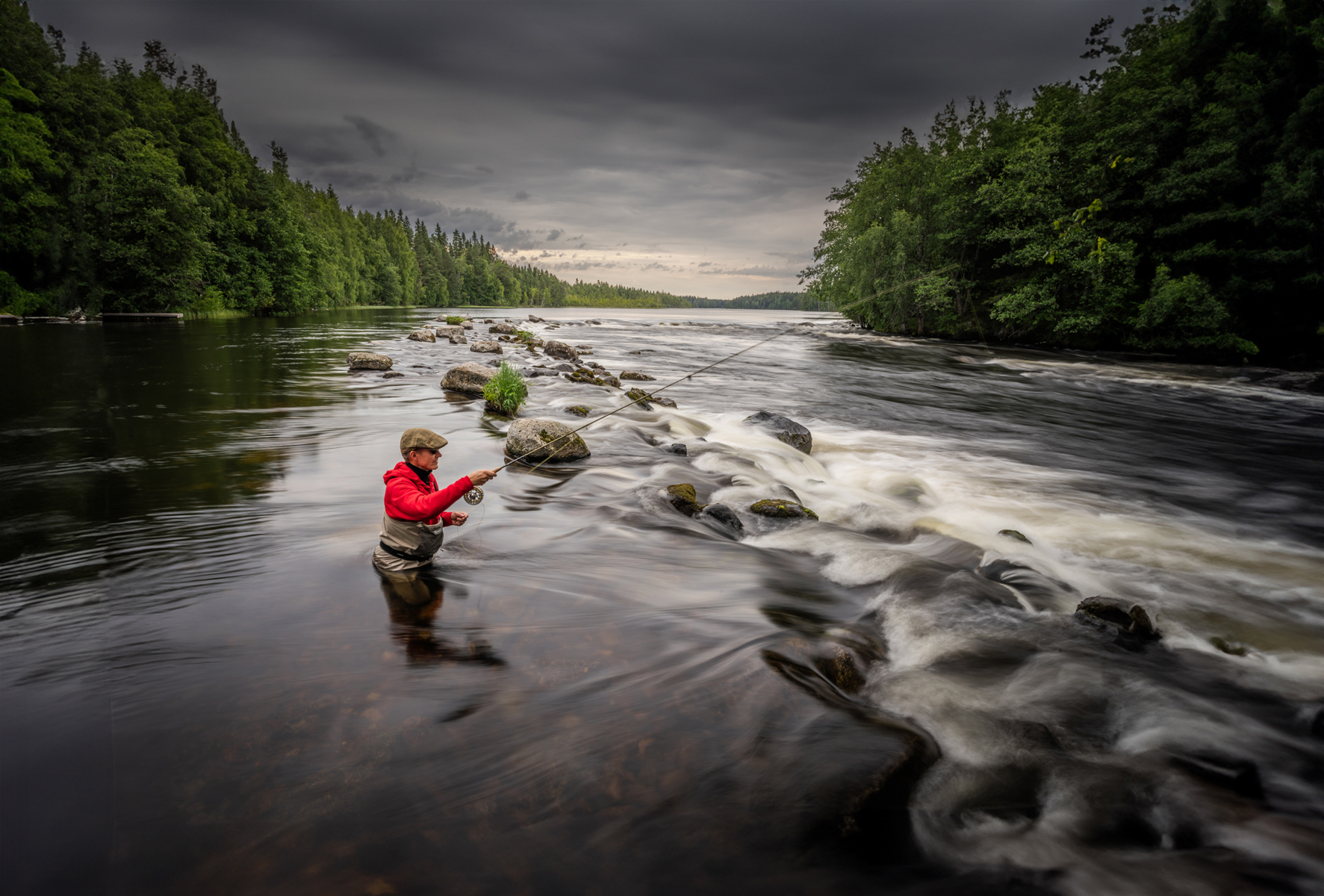
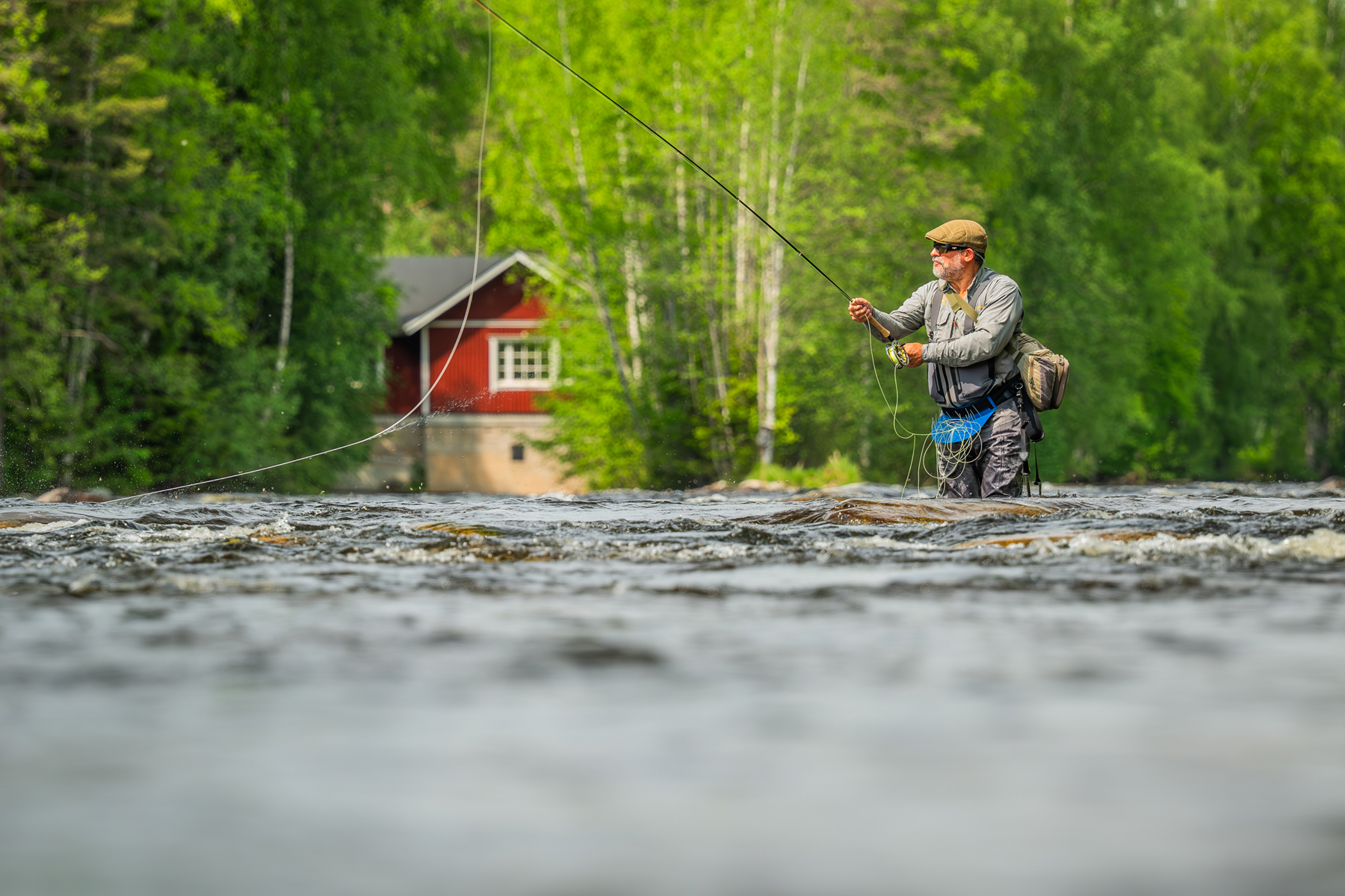
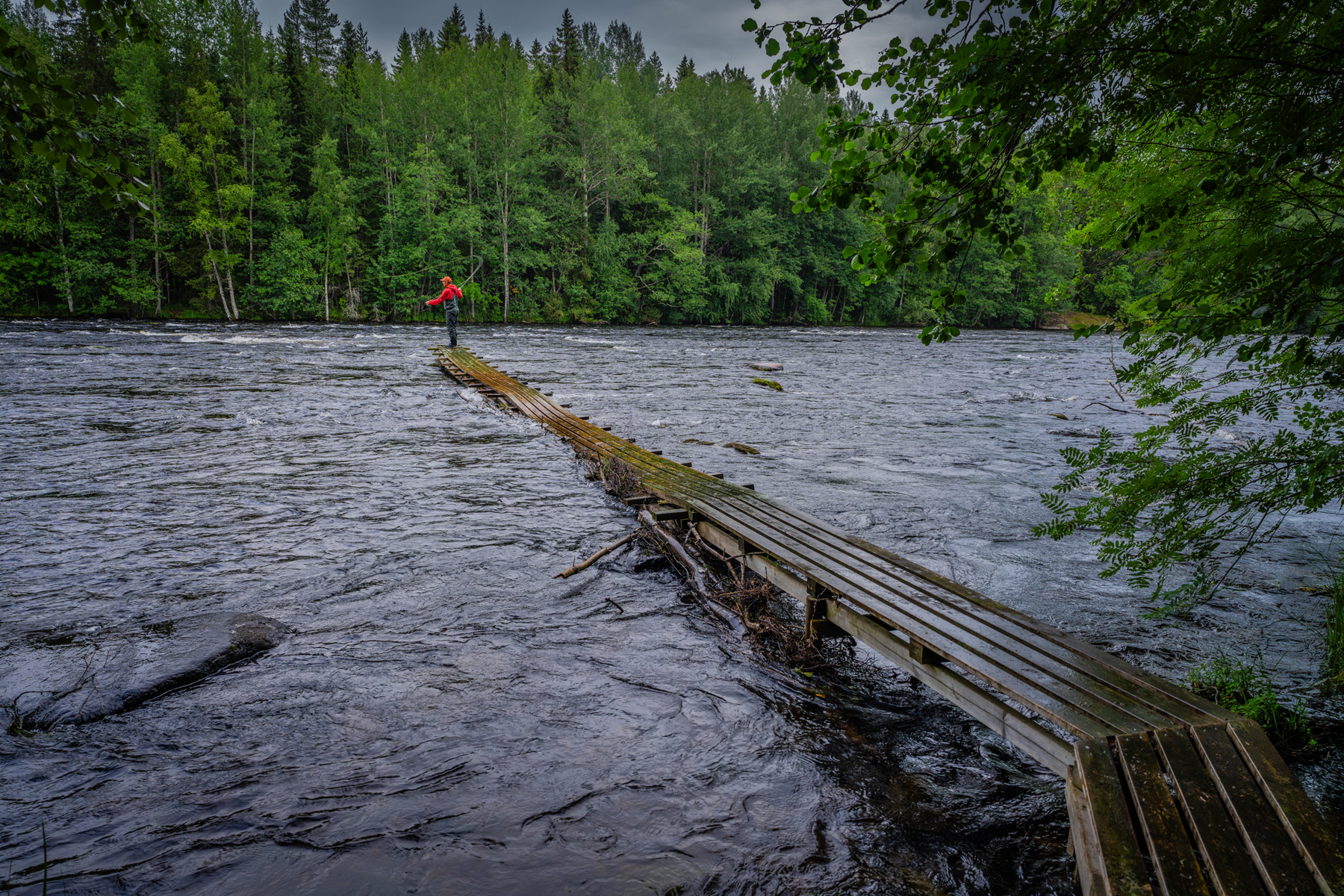
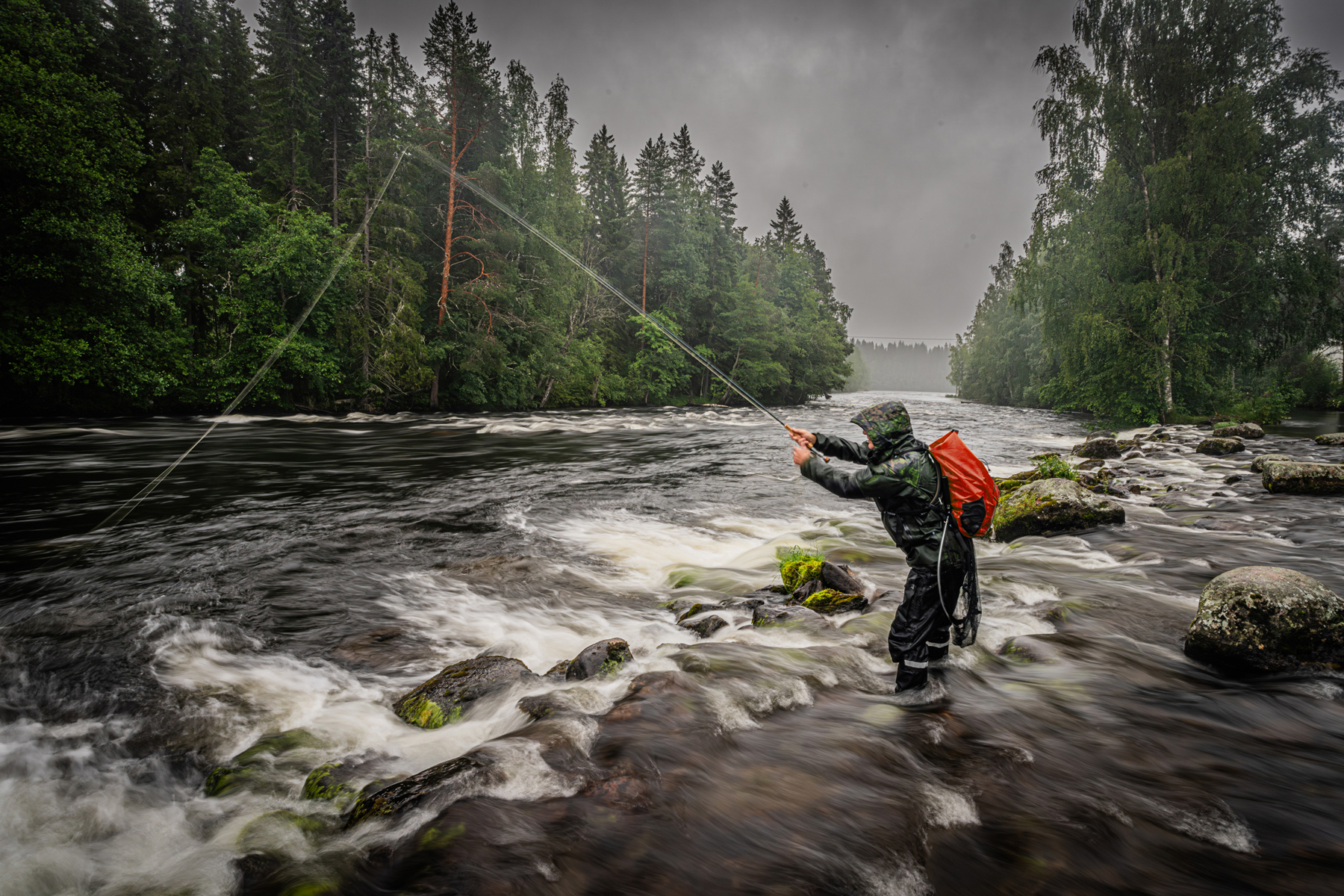
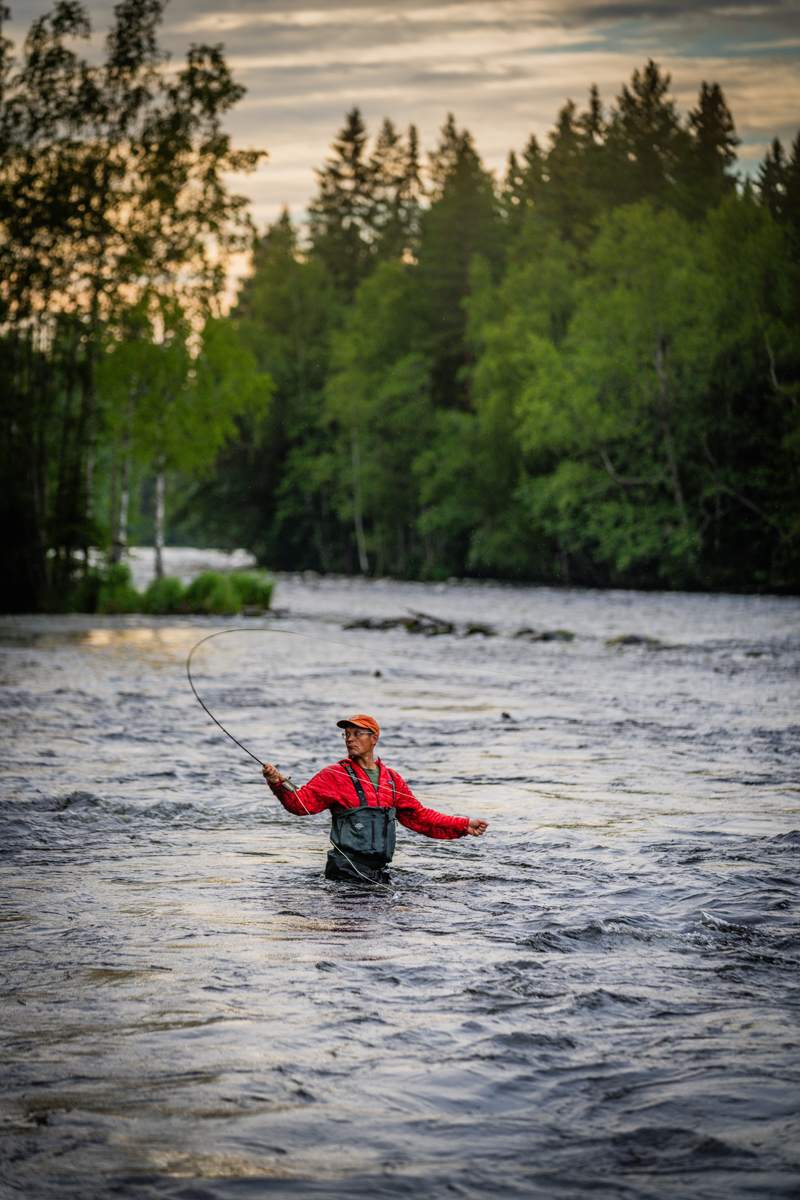
The rivers scythe through thick birch forest, and in all but the lowest water, it is tricky to wade far out into the powerful current. In some spots, there are elegant, long wooden platforms that allow you to get well out into the river, but these spots are few and far between, and I believe that the fish may well start to avoid them due to the concentrated pressure that they effectively create.
In most other spots, with trees directly behind you, overhead casting is often impossible. While my friends Jari and Jani flicked expert roll casts into the maelstrom, I was able to cover far more water by spey-casting with an 11’ Hardy Aydon 7-weight Switch rod, teamed up with a RIO ‘Fluffchucker’ integrated one piece Skagit line designed specifically for Switch rods. This set up really bossed the big surface flies and meant that I could access a lot of spots that weren’t regularly covered by other anglers.
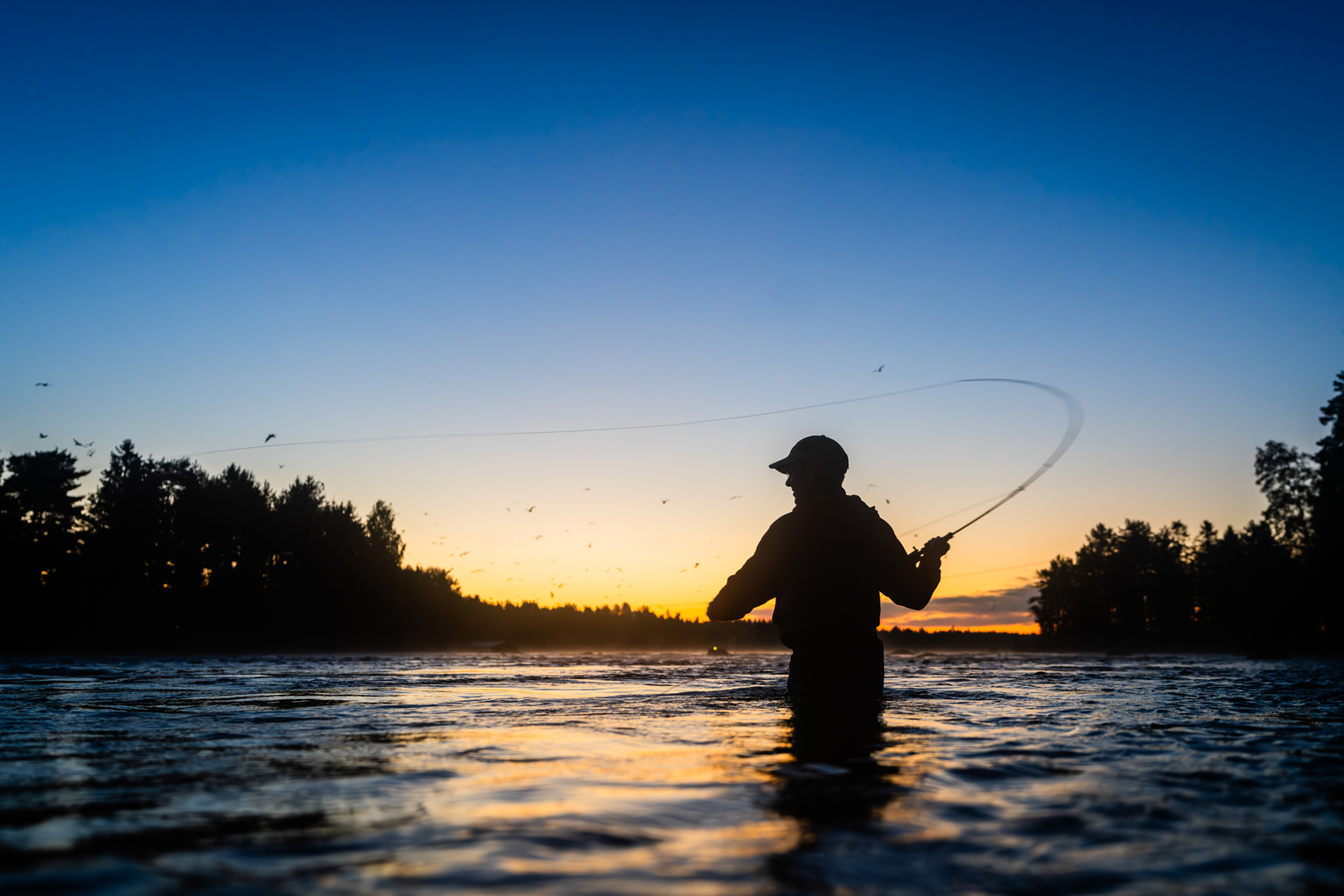
The extra length also allowed me to mend the line effectively and ease the fly around boulders and micro-currents. It was an extremely efficient way to fish the rivers, and I was rewarded with some handsome fish. The trick with this set-up was to really use it as a true Switch rod - i.e. start casting short using a one-handed presentation, and then, only after thoroughly covering the closer spots, start to involve your other hand as you progressively start to cover more distant waters.
The waters closest to you are often highly productive, so it is really important not to overlook them in a rush to start making big double-handed ‘hero’ casts, thereby ‘lining’ the fish close to you and, almost certainly, spooking them.
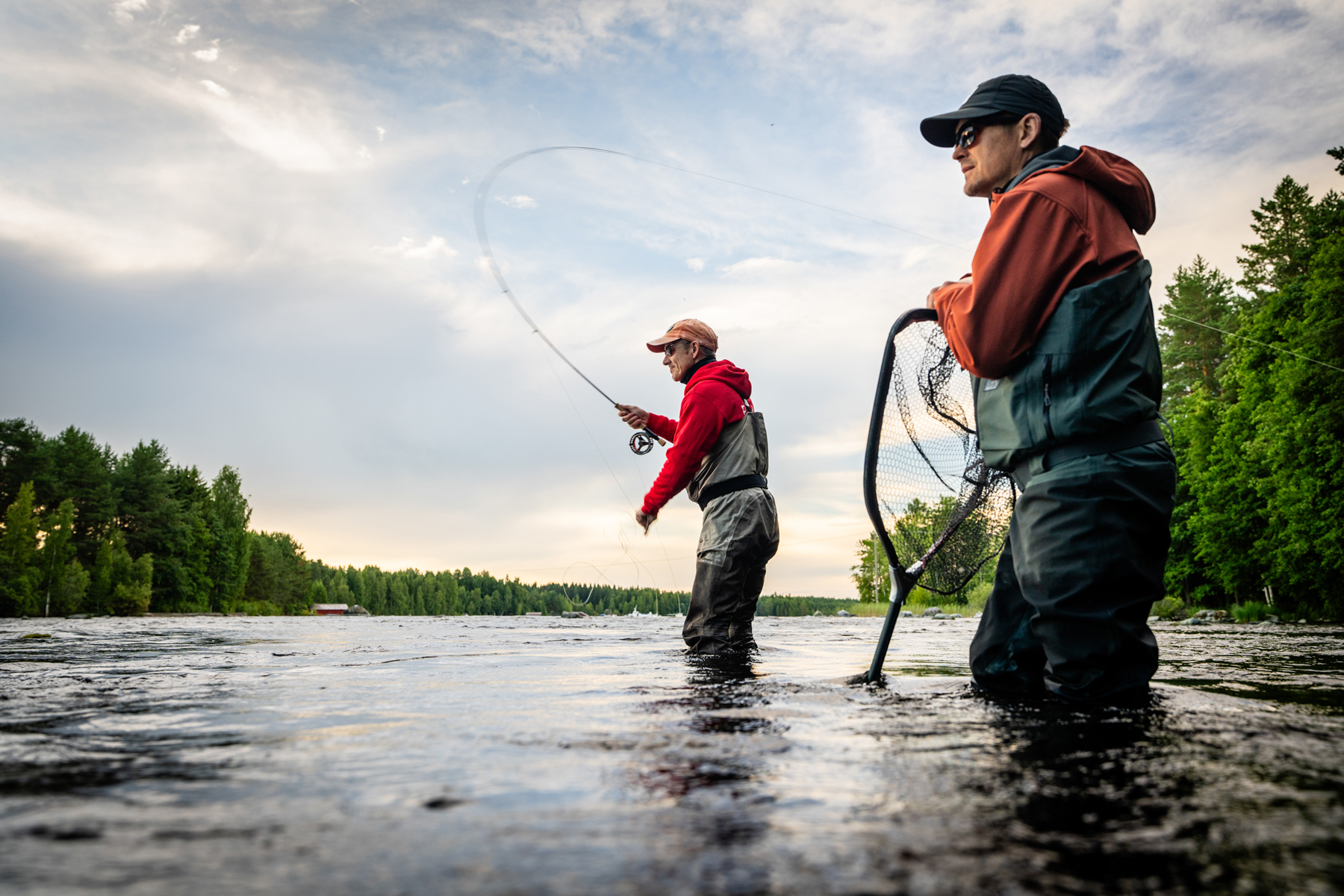
I should say that Jani and Jari both caught plenty of handsome fish by concentrating on the water closest to them and fishing it comprehensively with their single-handed rods, so a Switch rod is by no means a necessity, but I certainly feel that it is a useful weapon in tackling these waters.
One last spot
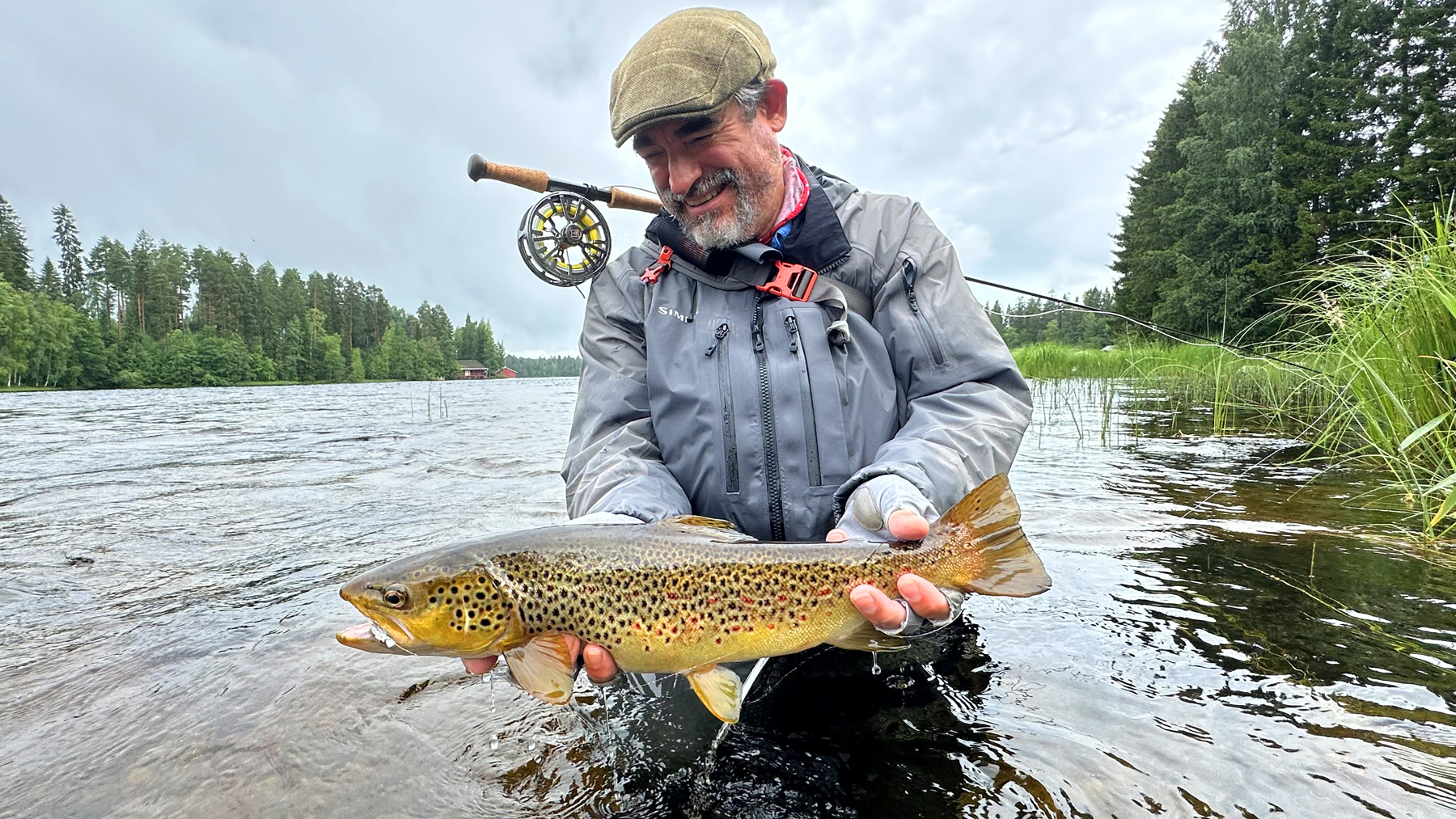
I caught some splendid fish, but did I catch a double-figure brown? Well, on the last morning, with a long drive back to Helsinki ahead of me and my great friend and fishing partner, Jari Arfman, I was in the process of breaking down my rod after an exhilarating morning session when our host Jani arrived and insisted he show us one last spot.
I was about to protest that we would be cutting it fine to make my flight when Jani said with a grin: “This spot has some real monsters”. I capitulated of course, and very soon, Jani was rowing us into a big brawling rapid in a drift boat he keeps at the spot. Having broken down my single hander, I improvised, making single-handed casts with my switch rod to cover the innumerable pockets that stretched across the broad rapid. The water was particularly heavy and having learnt where the big predatory trout liked to hold, I hurriedly tied on the big Surfboard pattern that Jani pressed into my hand and pitched it into the tumbling waters. “This looks great” I said, “why didn’t you bring us here sooner?” I chided Jani. The words were barely out of my mouth when a huge fish - certainly more than ten pounds - came rocketing up through the water to t-bone my surfboard fly.
The fish thrashed straight into the air, and the fly was clearly visible, clamped squarely across the jaws of the huge trout. The fish shot down into the depths, and I bent the rod hard into him, and tried to draw him out of his lie. There was another violent head shake, and then the fly came flying back towards me, the fish very much NOT attached. I groaned.
“The fish thrashed straight into the air”
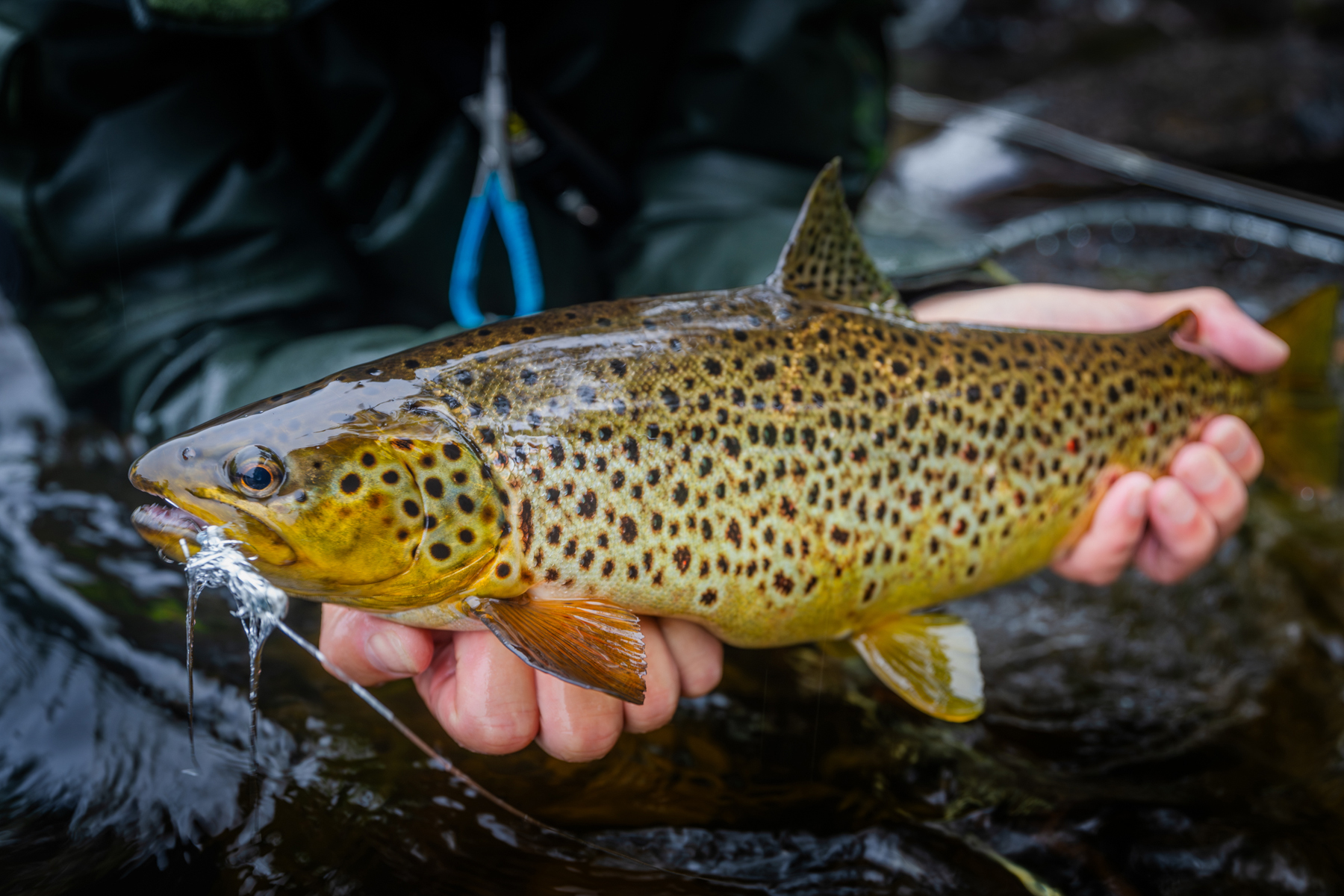
In truth, I’m not sure the hook was ever actually IN the fish. When I saw the fly clamped in its jaws, I think the hook point was actually outside the mouth of the fish, but I guess I’ll never know. The loss rekindled the good-natured but passionate debate I’d been having with Jani about long shank hooks. In fairness, Jani was soon claiming the higher ground after I lost ANOTHER big fish very shortly afterwards having tied on one of my own tube patterns. Pride comes before a fall, as always.
There is no doubt that you will lose some of these big fish when using these big patterns, irrespective of whether you fish long shank hooks or tubes. The fish won’t always take the fly accurately as it flies past them on the erratic boiling currents, and they often miss the fly altogether. Using smaller patterns is certainly a viable tactic, but the biggest fish do seem to be drawn to the biggest, 6-inch versions of the Surfilauta.
Aching to go back
I know I will be thinking about these conundrums all through the long winter as I tie my own versions of the Surfilauta and contemplate my return to Troutland. I really cannot wait - Finland in mid-summer is a truly beguiling place, the pristine landscape jeweled with berries, wildflowers and chanterelle mushrooms. The land has an almost enchanted feel to it. In truth, while I enjoyed some of the most exciting brown trout fishing that I have ever experienced, I think I was there a little late to see the absolute best of “Troutland”’s incredible fry-feeding frenzies.
Other engagements had meant that I was unable to attend when Jani suggested, in mid-June, and by the time I arrived in early July, I think that the fish had gorged themselves silly on the baitfish and were also getting wise to angler’s flies.
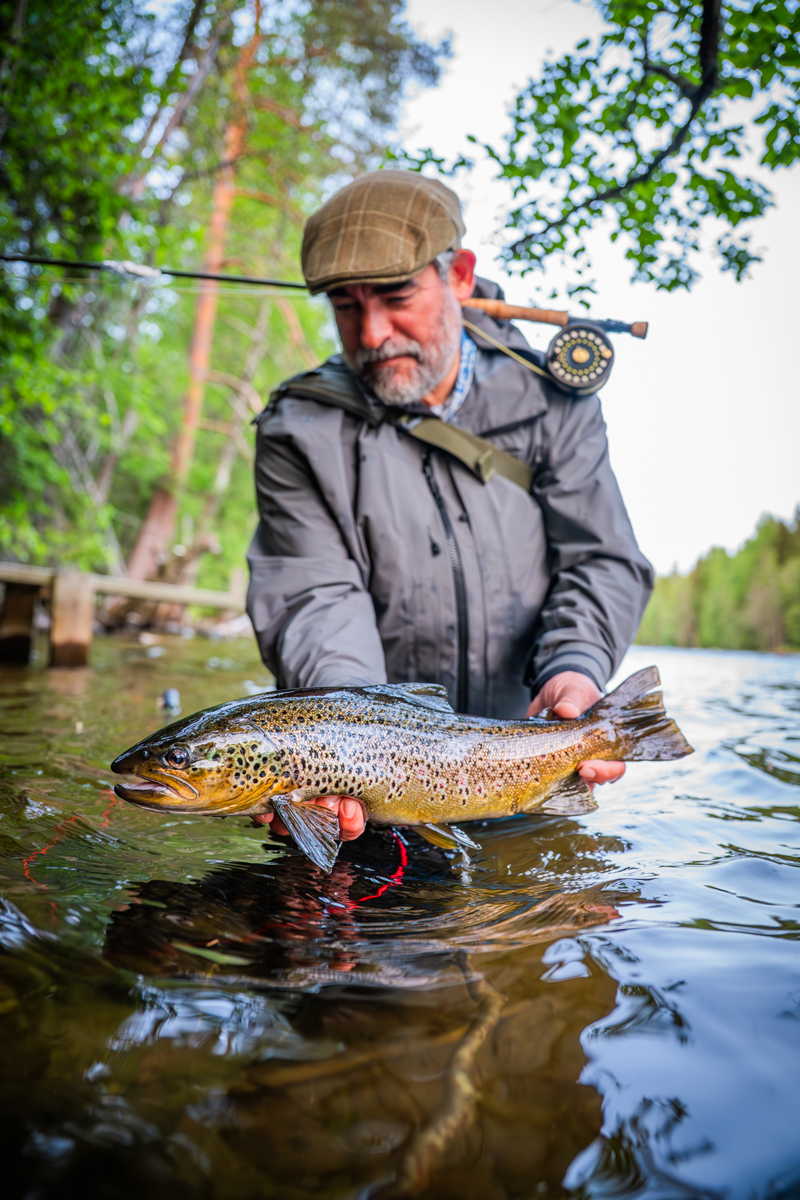
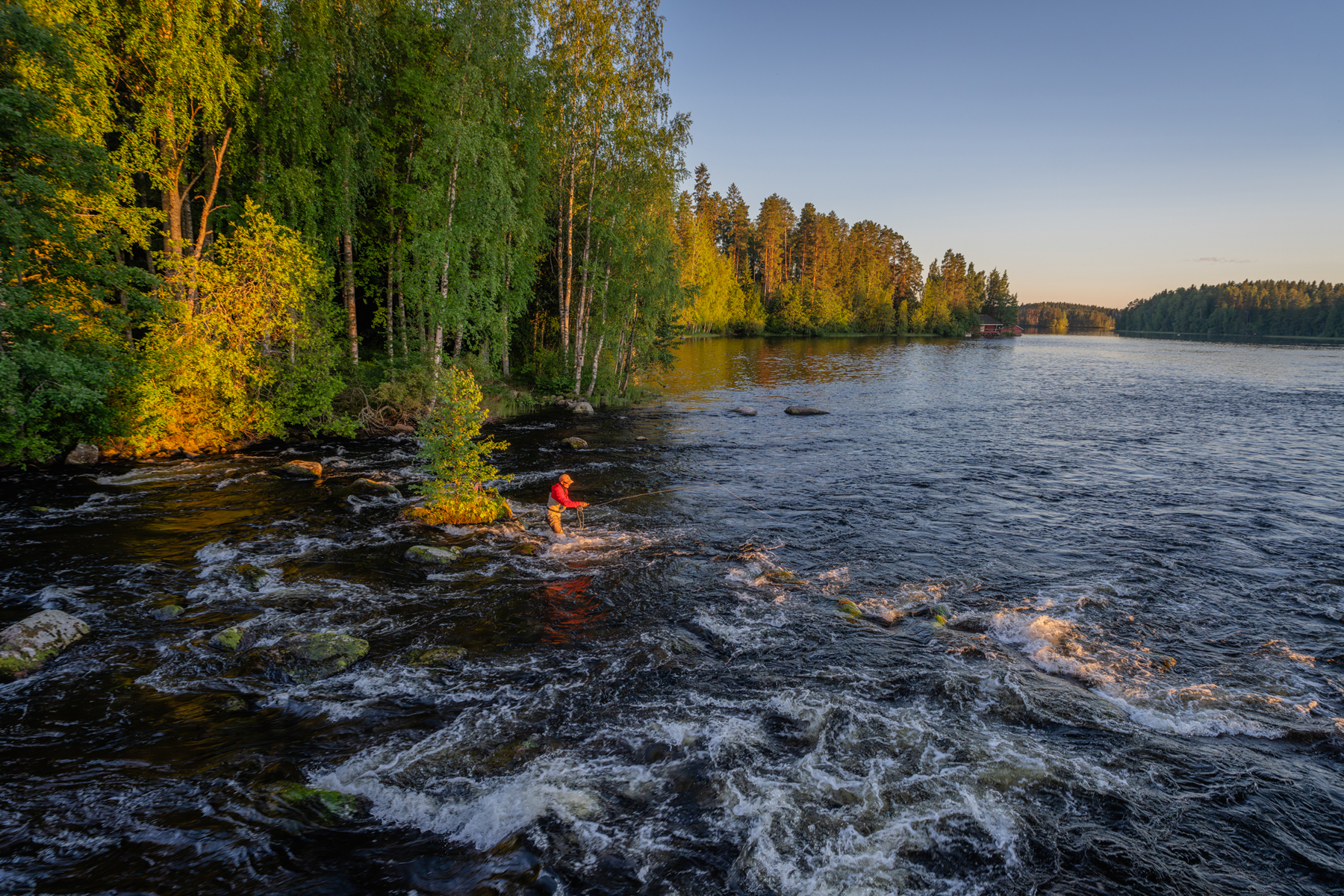
The fish are also starting to turn their attention to the blizzard-like caddis hatches, and while this can make for some unforgettable dry fly fishing, the lighter tippet required can mean that the very biggest trophies become much harder to land in the ultra-heavy water. I am really keen to see the fry feeders at the height of their feeding frenzies. If there is a more exciting way to catch big brown trout, I have yet to see it.
Anthropologists say that the people of Finland are the happiest folk on earth. I’m starting to understand why…
Contact Matt is returning to Finland in 2026 in midJune and has booked Kellankoski Lodge for this time. If you are interested in joining Matt, contact him at mattharris@mattharris.com
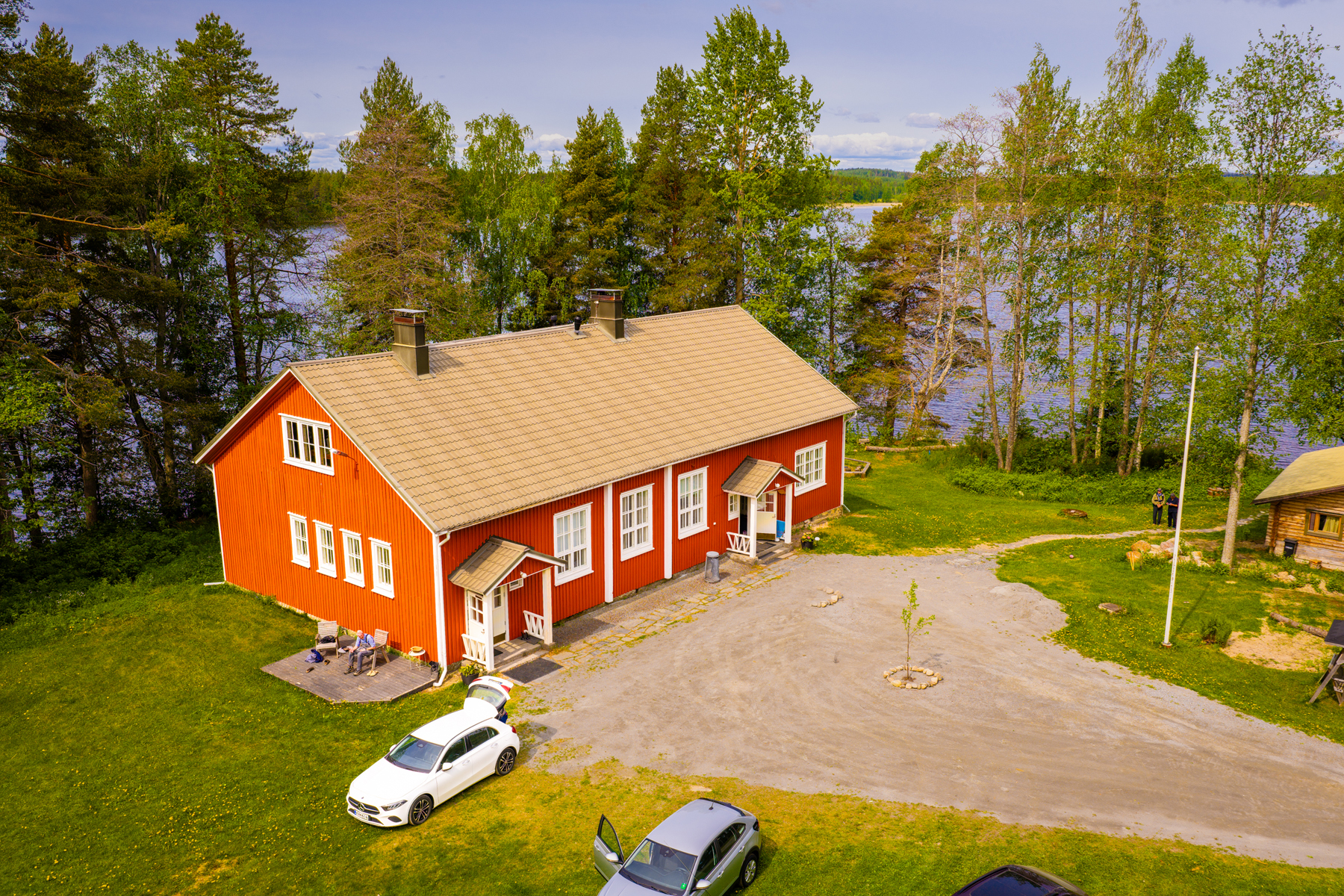
You can read all about the fishing and the beautiful accommodation on the shores of Lake Liesvesi at www.kellankoski.fi/troutland