
¡NO PASARÁN! `
International Brigade Memorial Trust 2-2025 £5


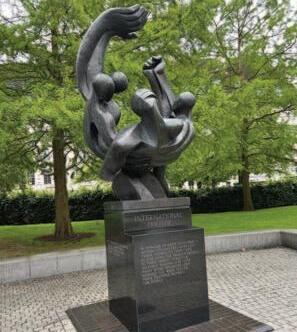
40 years of the national memorial
1pm-2pm Saturday 5 July
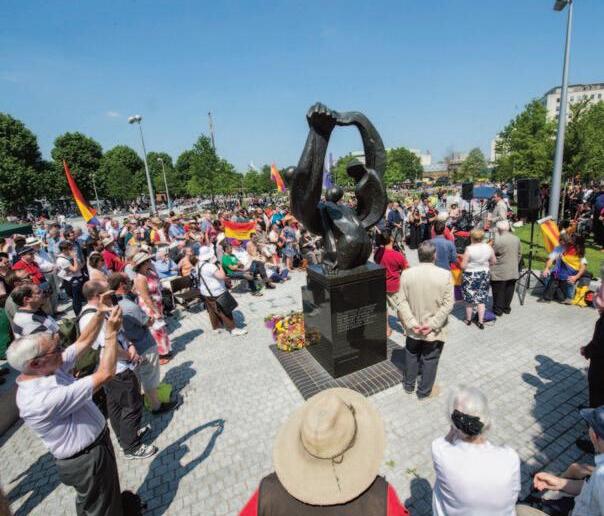

Keeping alive the memory and spirit of the men and women who volunteered to fight fascism and defend democracy in the Spanish Civil War of 1936-39
Photo: Andrew Wiard
JUBILEE GARDENS, BELVEDERE ROAD, LONDON SOUTHBANK
¡NO PASARÁN!
Magazine of the International Brigade Memorial Trust No.69 l 2-2025
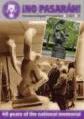
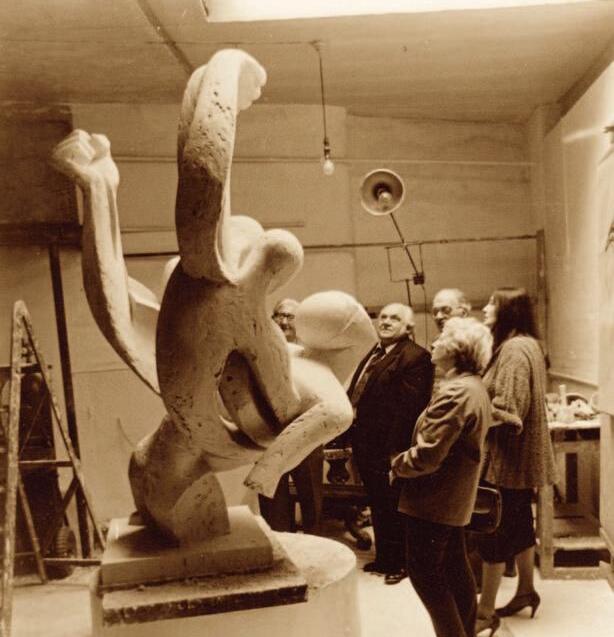
t Committee members of the International Brigade Memorial Appeal inspect the then unfinished sculpture for London’s Jubilee Gardens in 1985. Marx Memorial Library.
6 New IBMT teaching resource
l David Grant introduces a schools module focusing on women in the Spanish Civil War.
7 Doncaster memorial
l Jim Jump reports from a recent unveiling.
9 George and Nan Green
l Dan Carrier reviews Crispin Green’s graphic novel about his grandparents’ time in Spain.
12 National memorial
l Jim Jump recounts the tumultuous tale of its creation 40 years ago.
15 Battlefield tour
l Robert Hargreaves on a recent visit to Madrid.
16 Chrissie Wallace
l Liam Turbett describes the sad fate of one Scottish nurse.
19 Christopher Caudwell
l David Margolies celebrates his contribution to Marxism.
20 Books
l Reviews of ‘The Bones in the Forest’ and ‘The Spy Who Helped the Soviets Win Stalingrad and Kursk: Alexander Foote and the Lucy Spy Ring’ .
22 Meaning behind the mosaic
l Two new plaques added to the memorial on London’s Portobello Road.
¡NoPasarán!(formerly the IBMTMagazineand the IBMTNewsletter) is published three times a year. Back numbers can be downloaded from the IBMT website. All content is the © of the IBMT and credited contributors and cannot be reproduced without written permission. Views expressed are not necessarily those of the IBMT.
Editor Helen Oclee-Brown admin@international-brigades.org.uk
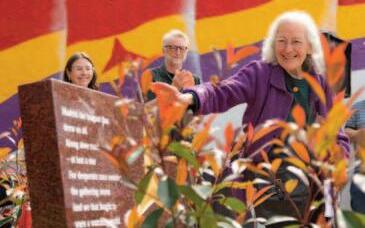
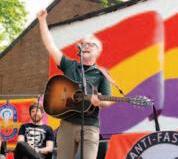
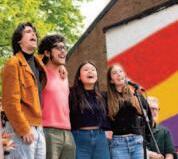
Songs for the Newham volunteers:
p On 26 April a memorial to the International Brigade volunteers from what is now the London Borough of Newham was unveiled at Clapton Community Football Club’s Old Spotted Dog ground in Forest Gate: Top: IBMT President Marlene Sidaway with the memorial featuring lines from the poem 'I Sing of My Comrades' by her late partner and International Brigader David Marshall, a long-time Newham resident.
Above right: students from the East 15 Acting School sang songs from the Spanish Civil War.
Above left: Billy Bragg performing at the unveiling.
All photos Clapton Community Football Club
Digital future for the Brigaders’ archive
T he International Brigade archives at the Marx Memorial Library (MML) are to be fully digitised and put online in a major project that will run for the next 10 years.
The London-based library will partner with international digital publishing company Adam Matthews to digitise its Spanish Collection, the most extensive Spanish Civil War archive in Britain, totalling 100,000 pages.
Materials to be digitised will be sent to Adam Matthews in batches and for the first 10 years the publisher will be able to sell access to un iversities and other institutions.
IBMT and MML members will be able to consult and make use of the online archive free of charge throughout this period. After 10 years full ownership will revert to the library.
An editorial board is being set up to oversee the project. Members will include IBMT Historical Consultant Richard Baxell and MML Director Meirian Jump.
IBMT Chair Jim Jump welcomed the MML’s announcement. ‘The digitisation of the Marx Memorial Library’s Spanish Collection, which is the single most important archive of the International Brigades in Britain, has long been wished for by the IBMT,’ he said.
He added: ‘We are also delighted that IBMT members will enjoy privileged access to the digital archive during the 10 years when it will be managed by Adam Matthews.’
The basis of the MML’s Spanish Collection is the donation of papers and documents made
The International Brigade Memorial Trust keeps alive the memory and spirit of the men and women who volunteered to fight fascism and defend democracy in Spain from 1936 to 1939
International Brigade Memorial Trust
37a Clerkenwell Green, London EC1R 0DU
Executive Officer Helen Oclee-Brown admin@international-brigades.org.uk 07865 272 639
www.international-brigades.org.uk
Registered charity no.1094928
President Marlene Sidaway
president@international-brigades.org.uk
Chair Jim Jump
chair@international-brigades.org.uk
Secretary Megan Dobney secretary@international-brigades.org.uk
Treasurer Paul Coles treasurer@international-brigades.org.uk
Ireland Secretaries Luke O’Riordan & Lynda Walker ireland.international.brigades@gmail.com
Scotland Secretary Mike Arnott scotland@international-brigades.org.uk
Wales Secretary David McKnight wales@international-brigades.org.uk
Other Executive Committee members
David Chanter, Alex Gordon, John Haywood, Jonathan Havard, Alan Lloyd, Dolores Long.
Founding Chair Professor Sir Paul Preston
Patrons Professor Peter Crome, Professor Helen Graham, Ken Livingstone, Len McCluskey, Christy Moore, Jack O’Connor, Maxine Peake, Baroness Royall of Blaisdon, Mick Whelan
Historical Consultant Richard Baxell
FROM PREVIOUS PAGE
by the International Brigade Association in 1973. It has since grown substantially thanks to donations from families and other bodies.
The IBMT and MML will be looking to contact families and rights holders for permissions in the coming months.
Plaque dedicated to Nan Green
A good 50 people braved the cold to gather outside Nan Green’s birthplace in Beeston, Nottinghamshire, on 9 February, for the dedication of a plaque to this former Secretary of the International Brigade Association, volunteer in the Spanish Civil War and peace activist.
Marlene Sidaway, IBMT President, laid flowers by the plaque, which is attached to the fence in front of Surrey Cottage, 12 Glebe Street,
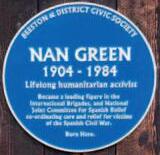
which was Green’s childhood home. Tamar Feast of Beeston & District Civic Society gave a warm tribute to the work Green undertook in Spain and accompanying refugees to Mexico. Feast has campaigned for more ‘Lady Plaques’ and Nan Green’s is the second in the series.
lSee ‘Meeting trouble halfway’: pages 9 to 11.
Fuencarral Cemetery: the search goes on
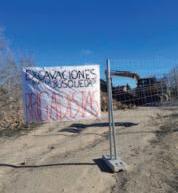
Forensic archaeologists are undertaking another survey at the Fuencarral Cemetery in Madrid in search of the remains of International Brigaders whose bodies are known to have been dumped there following Franco’s victory in the Spanish Civil War.
Supported by AABI, the Madrid-based Friends of the International Brigades, this latest survey is being conducted by a team from ArqueoAntro, a specialist archaeological research group. Spain’s Ministry of Territorial Policy and Democratic Memory is supervising the work.
This third attempt to locate the mass grave comes after unsuccessful excavations in August 2024 and January this year. The investigation currently underway is taking place in an area that was not added to the cemetery until 1964 and
has been identified with the use of aerial imagery.
The bodies of 451 Brigaders, including several Britons, are recorded as having been buried at the cemetery. They were later exhumed and dumped in a mass grave beyond the cemetery’s 1941 perimeter.
The existence of a mass grave came to public attention after Madrid City Council announced plans to build a waste facility adjacent to the cemetery. Backed by the IBMT and other International Brigade memorial associations, AABI launched a campaign to halt the plans of the city council, which is run by the right-wing Popular Party.
The international outcry forced the Madrid authorities to freeze their project. Meanwhile, surveys were mandated by Spain’s PSOE Socialist-led government under the country’s Democratic Memory Law.
AABI noted, however, that the areas designated for excavation were chosen by Madrid City Council, which also delayed the survey as much as possible.
Among those believed to be buried at the cemetery is the poet Julian Bell, a nephew of Virginia Woolf, killed driving an ambulance on 17 July 1937 during the Battle of Brunete.
The names of at least three more Britons appear in the register of burials:
l Samuel Walsh, a cook from Newcastle, who died on 27 July 1937 from wounds received at Brunete;
l Arnold Jeans, a commercial traveller from Lancashire. He was killed around 23 December 1936 in fighting outside Madrid at Boadilla del Monte;
l Edward Burke, from Croydon, a journalist and Unity Theatre actor. Burke died in a Madrid hospital on 12 February 1937 from wounds sustained in fighting at Lopera, near Córdoba.
The identity of scores of others buried there remains unknown. They were listed as 'desconocido' (unknown).

Excavations underway to search for the remains of Brigaders near Fuencarral Cemetery, Madrid.
AABI
New list of Battle of Ebro dead
A list with the 872 names of International Brigaders who died during the 1938 Battle of the Ebro has been compiled and published by the Memorial Democràtic agency of the Catalan government (Generalitat de Catalunya).
In English and Catalan, the new list identifies 95 volunteers from the UK and 15 from Ireland –though there is some overlap between the two categories. Each name has a link containing information on the volunteer’s death.
This latest development is part of the agency’s Alvah Bessie Programme – named after a famous US volunteer – to locate the remains of all the Brigaders who died during the battle or as a result of injuries sustained in it. Last year a list of 522 volunteers, including 86 from Britain and six from Ireland, was published.
As part of the programme, family relatives are being invited to come forward and register in Memorial Democràtic’s census of those who died or went missing in the fighting in Catalonia. They will have the option of providing a DNA sample for its genetic identification project. Anyone interested in taking part should contact the IBMT.
Tribute to peace unveiled in Sheffield
On 12 April Jayne Dunn, Lord Mayor of Sheffield, unveiled the 'Boy with Dove' statue in the city's Weston Park.
Created by artist Anthony Padgett, the statue is a tribute to Picasso – who attended the Second World Peace Congress in Sheffield in 1950 – as well as to the local International Brigade volunteers, the Basque children given sanctuary in Sheffield and the city’s workers and citizens who supported the Spanish Republic.
The project was supported by the IBMT, the Basque Children’s Association UK ’37 and Sheffield Trade Union Council.
Among the speakers were Megan Dobney, IBMT Secretary and Dolores Long, IBMT Executive Committee member.
Bringing solidarity home
Artist Rob MacDonald of Solidarity Park in Malgrat de Mar, Catalonia (where there is a memorial to the victims of the sinking of the Ciudad de Barcelona, including up to 60 Brigaders), is continuing his art initiative about the volunteers on home soil.
In addition to Solidarity Surrey (see right), MacDonald has launched two other campaigns: Solidarity Cymru to highlight the legacy of the Welsh volunteers and Solidarity Sunderland to plan and erect a memorial for the volunteers from the North East of England.
The annual Solidarity Park Festival in Malgrat de Mar will take place at the end of May.
A statue for Townsend Warner
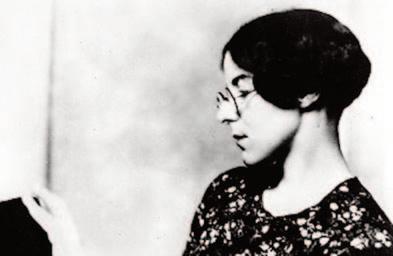
The novelist and poet Sylvia Townsend Warner (right), who was an active supporter of the Spanish Republican cause, will be honoured with a statue in Dorchester on 14 December this year.
During the Spanish Civil War, Townsend Warner, a lifelong communist, worked briefly in 1936 in the British Medical Unit’s office in Barcelona, along with her lesbian partner Valentine Ackland. They also attended an international anti-fascist writers’ congress in Valencia in 1937.
The life-size statue, cast in bronze, will sit on a new public bench in South Street. Townsend Warner and Ackland lived nearby in the village of East Chaldon.
Over £57,000 has already been donated to a Crowdfunder campaign, which is being led by the charity Visible Women UK.

Long
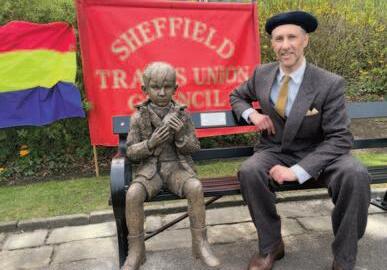
created by Padgett, is in Picasso's birthplace of Málaga.
t The Solidarity Surrey memorial, dedicated to militiawoman Felicia Browne, the first British casualty of the Spanish Civil War, was unveiled in Reigate, in Unison’s Memorial Garden, on 28 April.
p Artist Anthony Padgett sits alongside the ‘Boy with Dove’. A similar version of the statue, also
Gideon

memorial group
The IBMT supports the work of affiliated local International Brigade memorial groups. Annual IBMT affiliation costs £40. You can affiliate through our website: www.internationalbrigades.org.uk/membership.
l Aberdeen XV International Brigade Commemoration Committee
Contact: Tommy Campbell tommy.campbell@outlook.com
l Belfast International Brigade Commemoration Committee
Contact: Ernest and Lynda Walker lyndaernest@btinternet.com
l IB Cymru
Contact: Mary Greening ibcymru@gmail.com facebook.com/groups/314892162181123
l Hull International Brigades Memorial Group
Contact: Gary Hammond thehutpeople@gmail.com
l North East Volunteers for Liberty
Contact: Tony Fox NEVolunteersforliberty@gmail.com
l North West International Brigade Memorial Group
Contact: Dolores Long doloreslong@fastmail.fm twitter.com/ibgtrmanchester
l Oxford International Brigade Memorial Committee
Contact: Colin Carritt colin.carritt@tiscali.co.uk
l Sussex Brigaders Remembered
Contact: Pauline Fraser pbf262@myphone.coop International Brigade Memorial Trust
www.international-brigades.org.uk
Women at war: our new teaching resource
By David Grant
Members and supporters may already be familiar with the excellent teaching resources on the IBMT website: Why did so many people volunteer to fight in the Spanish Civil War? The IBMT is now pleased to announce a recently added unit, entitled Women and the Spanish Civil War. The units are designed to be taught in UK state schools in History lessons for students aged 13 to 14.
Historians have generally overlooked the role of women in the Spanish Civil War, with some notable exceptions, such as Angela Jackson, Linda Palfreeman
from Britain, but also references volunteers from Australia, Spain and the US. The changing status of women in society is well illustrated by the variety of volunteer roles carried out during the Spanish Civil War, which included nursing, administration, fundraising, campaign organising, supporting refugees and, in some cases, fighting in militia units.
Both sets of materials available on the website were written by current and former history teachers.
The IBMT also welcomed the input and advice of academic specialists at the University of Leeds.
Although it is recognised that in England, as opposed to the rest of the UK, the National Curriculum is heavily prescribed, it is hoped that teachers can find space in their non-statutory optional units to offer opportunities for their students to learn about the Spanish Civil War.
and Emily Mason. Moreover, the war itself is rarely taught in secondary schools – and the part women played in that conflict, probably not at all, being overshadowed by the two world wars and the rise of fascism and Nazism.
The Spanish Civil War is an inspiring and engaging topic that allows school students to explore an overlooked aspect of 20th century history. The subject is important considering the significant contributions women made during the war, both in their home countries and in Spain.
The teaching aid focuses primarily on women
Materials
With this in mind, the materials provided consist of guidance notes for teachers, a knowledge organiser, a PowerPoint, short biographies of many of the women volunteers and a Historical Enquiry booklet containing source material and questions.
The resources will hopefully guide students to reach a better understanding of this important but neglected event in history while providing supporting materials to enable educators to effectively deliver the unit in the classroom. If you are not a History or Humanities teacher yourself but know someone who is, please bring this new and exciting resource to their attention so they can share the inspirational stories of the International Brigades with their students.
This latest addition to the Trust’s online Education pages is part of the IBMT’s Schools Project, which aims to help teachers bring the story of the Spanish Civil War into classrooms. It has received funding from the Lipman-Miliband Trust and individual donations from IBMT members.
DavidGrantisaPhDstudentattheUniversityof Leeds.HeauthoredtheWomenandtheSpanishCivil WarteachingmoduleontheIBMTwebsite.
Eighty-eight years ago today, 12 February 1937, the British Battalion of the International Brigades went into action for the first time in the Jarama valley, south-east of Madrid.
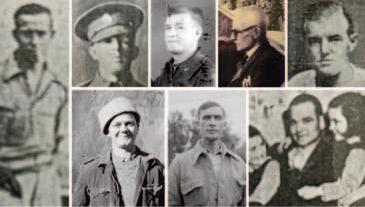
The battalion paid a heavy price: 150 men were killed, including one of the volunteers from Doncaster, Herbert Tagg of King’s Road, Doncaster. He was 43 and left a widow and three children.
Sheffield’s Daily Independent reported the death under the headline ‘Doncaster man killed in Spain fighting’, mentioning also a Leicester man, Fred Sykes, who was living in Sheffield before he travelled to Spain.
The report said: ‘Both men met their death in the decisive battle at Jarama on 27 February, when the British Battalion of the International Brigade successfully resisted the attempt of Franco’s forces to break through the Madrid-Valencia road.’
Last letter
The report went on to say that in his last letter home Tagg wrote: ‘Here there is a fine army, a fine people and a fine purpose. I don’t want to come back until fascism is beaten.’
Herbert Tagg was a miner, born in Oakerthorpe, Derbyshire. He had worked in collieries in the Mansfield area and been politically active for many years, including receiving three months’ hard labour after being arrested on a strike picket.
In that sense he was typical of many volunteers – working-class political and union activists who resisted the wage cuts of the 1920s and 30s, took part in Hunger Marches and rent strikes and fought Britain’s home-grown fascists.
Olive tree honours Doncaster volunteers
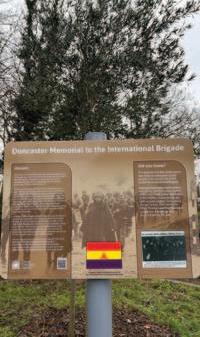
Words spoken by IBMT Chair JIM JUMP at the unveiling of the memorial to the Doncaster International Brigade volunteers.
They were, as film director Ken Loach has said, ‘the cream of their generation’.
In the IBMT’s records there are 16 volunteers who went to Spain who were born or who died in Doncaster or who were living here when they set off to join the International Brigades.
There may well be more. The records are often patchy. Many gave false names or temporary addresses. They were after all defying their own government, which threatened to prosecute them for fighting in a foreign war.
‘Here there is a fine army, a fine people and a fine purpose. I don’t want to come back until fascism is beaten.’
Of the 2,500 volunteers from the British Isles, the fatality rate was more than one in five – 530 of them died in total. But there must have been a lucky star over Doncaster at that time. Out of the local volunteers, only Herbert Tagg made the ultimate sacrifice.
Like him, six others were miners: Hector Barber, born in Doncaster in 1906, was a wood saver canvasser in the coal mines and a member of the Yorkshire Miners’ Federation. He was wounded in the Battle of the Ebro in the summer of 1938 and spent several weeks in hospital in Vic. He is listed as a ‘Good comrade’ in the British Battalion files. He died, aged 78, in Doncaster in 1985.
Jack Foster, born in Hemsworth, lived in Grange Road, Moorends, Doncaster. He served in the John Brown Battery in Spain and is believed to have died in 1953.
Steve Gilks was born in Chesterfield and gave an address in Mansfield Crescent, Shelton. He died in Sheffield, aged 50, in 1951.
p Clockwise from left: Ralph Nicholas, Herbert Tagg, Clarence Wildsmith, Eugene Fogarty, Hector Barber, Tom Nottingham being greeted by his daughters on his return home, Thomas McNulty and Harold Horbury.
u The memorial olive tree and information board in Doncaster’s Elmfield Park.
Charles Giles was an unemployed miner when he arrived in Spain, giving an address in Greendyke Lane, Doncaster. He was medically discharged in March 1937 soon after enlisting. However, he served in the West Yorkshire Regiment during the Second World War and was taken prisoner by the Japanese in Malaya in 1942. He died, aged 51, in Doncaster in February 1957.
Harold Horbury was born in Doncaster in 1904 and was a colliery surface worker. He gave an address in Barnsley when he arrived in Spain. He served in the British Battalion in the battles at Jarama, Brunete, Belchite, Aragón and Teruel and in the 15th Brigade’s kitchen from May 1938 until returning home in September of that year. He died in Barnsley in 1974, aged 70.
Tom Nottingham was born in Grimethorpe, but during the Spanish Civil War was living in Doncaster, where he died in 1960, aged 56. In Spain he was captured when the British Battalion was ambushed by Mussolini’s troops at Calaceite in March 1938. He was a prisoner of war for 10 months at the notorious San Pedro de Cardeña prison camp near Burgos before returning home in an exchange for Italian POWs.
The other nine Doncaster men were: Frank Ayres , born in Doncaster, was a railway worker and active trade unionist. Aged 29, in 1925 he visited the Soviet Union as chair of Doncaster Trades Council. He spoke three languages and in Spain worked at Valdeganga hospital at Albacete and at Uclés hospital in Cuenca. He also fought with 129th Artillery Division. He married a Spanish nurse, Anita
de Ginar, both moving to live in Battersea, London, in 1939. He died, aged 86, in retirement in southern France.
Eugene Fogarty was born in Washington DC and was a medic in Spain, working for seven months at Villanueva hospital. After the war he was a nurse at St Mary’s Hospital, London, until 1950 when he left for a similar position in Doncaster, where he died, aged 68, in 1968.
Thomas Greenfield ’s service details are sketchy, but he gave an address in Catherine Street, Doncaster, when he arrived in Spain.
William Hooton was a Doncaster-born painter. His service was brief and he was repatriated in May 1937. He emigrated to Australia in 1959, where he died seven years later, aged 67.
Thomas McNulty was born in Hanley, Staffordshire, but died in Doncaster, aged 71. He was a merchant seaman and fought with British and Lincoln Battalions at Brunete, Quinto, Belchite and Fuentes de Ebro.
Ralph Nicholas was a motor mechanic, born in Hitchen, but was living in Doncaster when he went to Spain in January 1937. He was wounded at the Battle of Brunete in 1937 and again at the Ebro in the following summer. It is not known when he died.
William Parlett was a labourer, born in Sunderland, but who died in Doncaster in January 2000 at the age of 88. He was taken prisoner at the Battle of Teruel in the winter of the 1937/38 and was a held at the San Pedro de Cardeña prison camp. In the Second World War he was decorated for his service in the merchant navy, which included the Arctic convoys to Russia.
Edward Whittaker was a fitter and
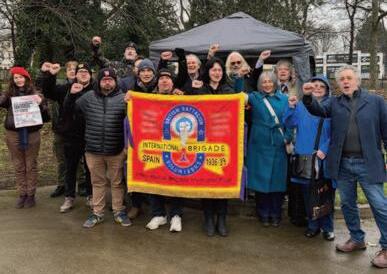
t At the unveiling on 12 February are Councillor David Shaw (right) and former Councillor Tosh McDonald (fifth from right), who helped persuade Doncaster City Council to raise the memorial. Also pictured is Jim Jump (back, centre).
mechanic, born in Pontefract in 1906, and known to be living in Doncaster in 1939 soon after he arrived back from Spain. He died in Doncaster, aged 84. In Spain he served as a company armourer.
Clarence Wildsmith was an electrician and billiard hall manager, born in Barnsley. His address was in Worcester Avenue, Wheatley. He fought with the 15th Brigade’s Anti-Tank Battery. He died in Doncaster, aged 83, in October 1988.
Today we remember these 16 men and all those who fought alongside them in Spain. We remember too all those who supported them at home as part of a mass ‘Aid for Spain’ movement. The movement showed – not for the first or last time – that millions of ordinary British people had more sense than their government at the time.
They knew that fascism, that Hitler and Mussolini, had to be defeated in Spain or else there would be another world war.
Lessons
There are many lessons here for today. Fascism has not gone away. Nor has the predilection of many liberal democracies to side with fascist or authoritarian regimes rather than with progressive governments and forces.
While in Doncaster, talking about the Spanish Civil War, we must mention one of its favourite sons, Rodney Bickerstaffe, former Unison general secretary and trustee and patron of the IBMT. He would have been proud to have been here today.
The final word should go to one of the Doncaster volunteers, Tom Nottingham. The Doncaster Gazette reported his return home on 16 February 1939.
A photo shows him with fellow volunteers Ralph Nicholas and Clarence Wildsmith being greeted by supporters including Mr AE Hall, Doncaster divisional Labour Party chairman, and Mrs Tagg, widow of Herbert Tagg.
Soon afterwards he wrote a full-page article for the Gazette headlined ‘Ten months in Franco prison’, telling of his time as a POW. He concluded by saying: ‘It has been a big ordeal and I feel very weak through having insufficient food for so long – I lost 31lbs during my imprisonment – but I would go out and fight again if the call came, in the interests of democracy against fascism’.
FROM PREVIOUS PAGE
Meeting trouble halfway
DAN CARRIER welcomes Crispin Green’s graphic novel about the fate of his grandparents in the Spanish Civil War.
The fascists were advancing.George Green, a cellist from King’s Cross, had seen it all as an ambulance driver and veteran of the International Brigades. He knew he had a right eous cause on his side.
But his enemies were armed with the latest technology from their backers in Nazi Germany, and, with battle-hardened troops from Morocco, General Franco’s forces were on the march.
The Republican government, desperate to cling on, had a plan: in July 1938, with the war going against them, they launched a major attack at the Ebro river in north-east Spain.
It would lead to the longest and bloodiest battle of the Spanish Civil War and on the British Battalion’s last day of action, in September 1938, George was killed as he sought to help injured comrades.
George was joined in Spain by his wife, Nan Green, and now their grandson, Crispin, has produced a stunning graphic novel that lays bare what his grandfather and grandmother went through.
The stories of those who gave up their lives to fight fascism in Spain have long captured imaginations, he explains.
From across Europe, volunteers poured into the country in 1936 after General Franco’s fascist rebels launched a coup. A bloody civil war ensued, with Nazi Germany and fascist Italy using the conflict to test their murderous war machines against innocent civilians.
For artist Crispin the Spanish conflict has always been personal: he knew George died
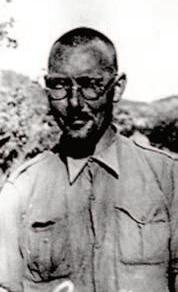
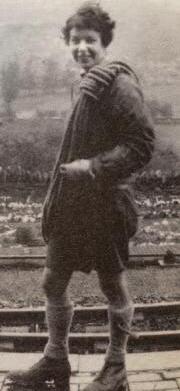
l Above left: George Green in Spain.
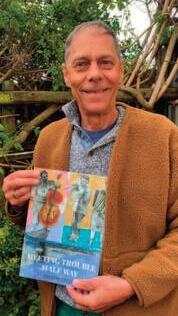
l Above right: author and illustrator Crispin Green holding a copy of ‘Meeting Trouble Halfway’.
l Left: a young Nan Green.
‘The stories of those who gave up their lives to fight fascism in Spain have long captured imaginations.’
while fighting for democracy and Nan worked tirelessly with a medical unit saving the lives of frontline Republican fighters.
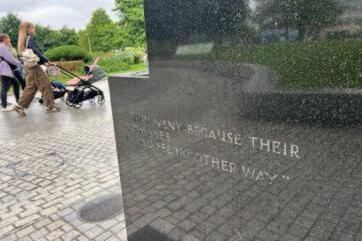
He wanted to chart the stories of those brave volunteers who went to fight, as the poet C Day Lewis wrote, ‘because our open eyes could see no other way.’
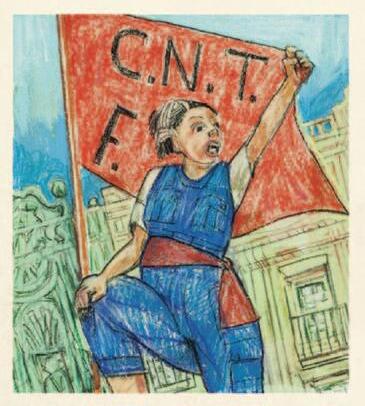
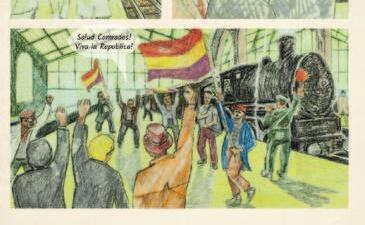
An art school graduate who studied fine art, Crispin has used his retirement to spend more time with his easel. With around nine images per page, Crispin had a large number to create. His answer was to do each oversized, so he could include as much detail and texture as possible. ‘I pinned large sheets of paper to an easel and used pencil,
GEORGE & NAN GREEN
PREVIOUS PAGE
watercolour and chalk,’ he says.
The narrative was not mapped out in advance. ‘I was not sure where the story was going until I started writing it’, he says.
The stories of Spain have been a constant in Crispin’s life, but his family’s involvement has only come to him slowly.
Records show that when George applied to join the brigades he gave his address as Heathcote Street, next to Coram’s Fields. As Crispin describes, the starting point was a trip to the King Street offices of the Communist Party, where volunteers could sign up.
Nan had moved to London having been brought up in the Midlands. George was from Manchester. A cellist, he headed south to find work. When the war began, George volunteered to drive an ambulance from London to Spain.
He was joined by politician Wogan Philipps, and when Philipps was wounded and returned to London, he told Nan how desperately short-staffed the hospitals were.
‘The stories of Spain have been a constant in Crispin’s life, but his family’s involvement has only come to him slowly.’
She headed to Spain and Wogan paid for her children – Crispin’s father Martin and his aunt Frances – to be educated at the progressive Summerhill school.
George joined the British Battalion of the International Brigades. Tragically his body was never recovered, and when Nan died in 1984 her ashes were scattered on the battlefield where her husband breathed his last.
Once the Republican government had fallen, Nan travelled to Mexico with Spanish refugees, returning to London in 1939. She got involved in the international peace movement and lived in China during the 1950s, and came back to London in 1960.
She later worked for publishers Lawrence and Wishart and was secretary of the International Brigade Association.
Crispin says he has found parallels of his father’s experience with his own. ‘After I was born, Martin and my mother Sheila, who lived in Camden Town, separated,’ he explains.
‘My mother took us to live in Canada. I
was aged around five – the same age Martin lost his father in Spain. I didn’t really meet my father until I was an adolescent. I only knew him through his letters to me.’
On the family’s return to England, Crispin, aged 14, began quizzing his father.
‘I asked about my grandparents and Martin said he did not know much about it himself.
I was told George had died in Spain as he
drove an ambulance at the battle of the Ebro. I had always had this image of my grandfather driving an ambulance and being blown up,’ he says.
‘My father and his sister Frances essentially became orphans as George never came back from Spain and Nan sent them to boarding schools while she worked in China. Martin only really got to know his own mother later in life.’
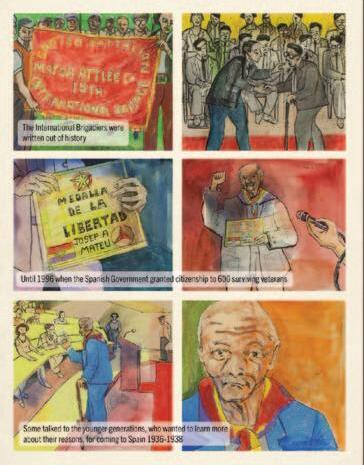
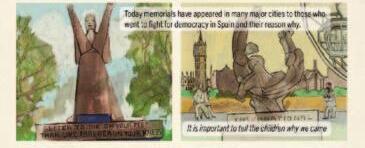
And growing up in Canada further removed him from his family’s story.
‘No one in Canada knew about the Spanish Civil War – my generation growing up were taught about the Second World War but with no mention of Spain. It was not on the curriculum and not seen as important’, he says. ‘But on our return, I began to see Nan and got to know her.’
‘Martin persuaded her to write her memoir. She said, “why would anyone want to read this?”’
Nan was very much about the here and now and didn’t see the point of dwelling on the past. But thankfully she did write it all down.Ω‘Over the last 10 years of her life, I got her to open up about what had happened in Spain.’
Crispin travelled to the Ebro with his father in 2005 to see a memorial unveiled.
‘I wanted to pay homage to the many brave people, and the incredible stories they created fighting for freedom.’
‘Visiting the sights of civil war battles and the conflict’s history, I got an almost physical reaction. You could really sense what had happened – the stories, the danger, the passion. It had all been building up in me.’
There were further clues Crispin could draw on when writing his Spanish story. His father had written a play based on George’s experience, but never told Crispin about it. ‘I only discovered it after he had died,’ he says. ‘It was his way of dealing with his father’s story.’
Crispin’s book references various other elements of the Spanish conflict: Republican government clerk Arturo Barea became known as the Voice of Madrid for his basement broadcasts during the siege. He would escape with his life, get to England and write ‘The Forging of a Rebel’ trilogy, one of the best books about the Spanish crisis ever written.
Other characters in the story are drawn on those who went to fight: a Welsh miner, a Jewish East Ender and an Oxford college student show the breadth of support for Spain. An opening scene has them meeting as volunteers keen to enlist.
We also visit the Battle of Cable Street, when the East End turned out to stop Oswald Mosley’s fascists marching through Jewish communities.
And finally, another true element to Crispin’s story involved a volunteer called Jim Higgins who saved the life of a 10-yearold during a battle.
‘I wanted to pay homage to the many brave people, and the incredible stories they created fighting for freedom,’ says Crispin.
In doing so he has discovered the sacrifice his own flesh and blood made to fight the far right.
Meeting Trouble Half Way’ (82 pages) was published by Glass Spider in 2024.

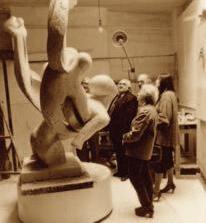
p Committee members of the International Brigade Memorial Appeal inspect the unfinished sculpture in Ian Walters’s studio in Battersea. From left are Brigaders Robert Walker (partly hidden) and Joe Monks, Betty Birch (foreground), Solly Kaye and Ann Mildwater.
u 5 October 1985: Michael Foot MP with his hand on the memorial shortly after he unveiled it. From his left to right are: Norman Willis (TUC General Secretary), Brigader Jack Jones, Tony Banks and Gordon McLennan (Communist Party General Secretary). With her hand on the plinth is Dame Janet Vaughan and, next to her, Bill Alexander.
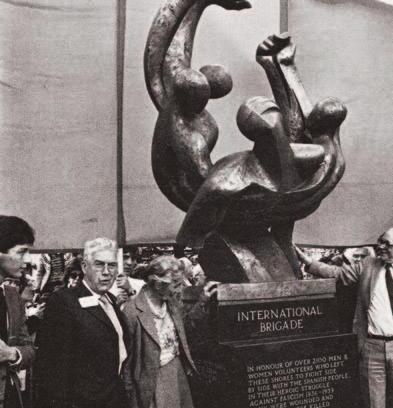
Capital tribute that only just made it in time
On the 40th anniversary of the unveiling of the International Brigade memorial in London’s Jubilee Gardens, IBMT Chair JIM JUMP looks back at the drama behind its creation.
Linger by the International Brigade memorial on London’s Southbank and you’ll soon notice tourists stopping to find out what this imposing piece of public art is all about. Standing four metres high, it’s the only sculpture or memorial in Jubilee Gardens, a green oasis facing onto the Thames and squeezed between the London Eye and the Royal Festival Hall.
As these curious tourists read the inscriptions, some, especially Spaniards, are clearly surprised. How come a memorial of this sort, dedicated to a cause still considered controversial in some official and rightwing circles, should be located on a prime site in the heart of the capital?
It’s a good question. Little do most people know the politics and cliff-hanging drama that led up to its unveiling 40 years ago on 5 October 1985.
The impetus for a national memorial emerged in the years following Franco’s death in 1975 and the process of restoring democracy in Spain.
Through the International Brigade
Association, the veterans had, until Spain’s often fraught transición, concentrated on campaigning against the country’s brutal dictatorship and on behalf of its many political prisoners.
Now, with the approach of the 50th anniversary of the start of the Spanish Civil War in 1986, they could devote efforts to a national memorial to their more than 500 fallen comrades and to all those anti-fascist volunteers who had, as the memorial in Jubilee Gardens states, ‘left these shores’ to go to Spain. These were carefully chosen words to include all the Irish, Cypriots and those from the dominions and colonies who didn’t count themselves as ‘British’.
Supporters in Scotland had led the way. In August 1980 Glasgow City Council raised the landmark Pasionaria memorial to the International Brigades. Created by Liverpool sculptor Arthur Dooley, the figure of legendary Spanish Republican leader Dolores Ibárruri faces south across the Clyde, arms outstretched.
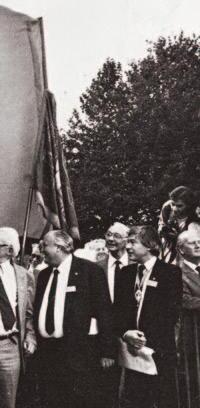
Something equally impressive was needed nationally. And in the leftwing Labour-run Greater London Council, the Brigaders found friends, notably leader ‘Red’ Ken Livingstone, chair Illtyd Harrington and arts committee chair Tony Banks.
The GLC agreed to provide a site for the memorial in Jubilee Gardens, which it owned and was located next to its headquarters in County Hall.
The International Brigade Memorial Appeal (IBMA) was set up and began raising the necessary funds, including an £18,800 grant from the GLC.
Six leading sculptors were asked to submit ideas for the memorial, and in December 1984 the commission was given to Ian Walters, creator of, among other works, the bust of Nelson Mandela on London Southbank and the statue of Harold Wilson in Huddersfield.
Meanwhile, Red Ken was becoming a thorn in the side of Conservative Prime Minister Margaret Thatcher. Typically, the GLC hoisted a massive banner on top of County Hall, clearly visible across the river from the Houses of Parliament, with a running total of the growing number of unemployed in London.
Thatcher was not amused and she characteristically went for the political
Symbol of respect for those who stood up for their ideals
BillAlexander,secretaryoftheInternationalBrigade Association and former British Battalion commander, welcomed the memorial with these words in the December 1985 newsletter of the IBA.
‘In honour of over 2,100 men and women volunteers who left these shores to fight side by side with the Spanish people in their heroic struggle against fascism 1936-1939.’
The erection of the memorial, in the centre of London, with these words inscribed on it is of wide and lasting significance.
It symbolises, together with the many local memorials, the respect and admiration for those who stood up for their ideals and struggled against reaction and war at a critical point of mankind’s history.
The tribute paid to the International Brigades and ‘all those who left these shores’ expresses the solidarity and brotherhood between all peoples, regardless of colour, creed or nation, united in their aims of liberty and peace.
The memorial was made possible by the generous help of so many people and organisations of the widest range of political views and philosophies. The breadth of this support shows the deep, lasting commitment to the ideas of democracy and peace – from this we can draw more courage and confidence for the struggles of today.
The memorial in London, the capital city of what was the greatest imperialist power at the time, is of particular significance. (Only the capital cities of the GDR and Sweden have a similar distinction.) The British ruling class played a decisive role in defeating the peoples of anti-fascist Spain.
Since then the Establishment have made continuous and wide efforts to distort, denigrate and slander the achievements of the Spanish people and especially the role and motives of the international volunteers. The poison from Hugh Thomas, George Orwell and others is served up to all children at school. We were dupes, adventurers taking part in a ‘civil war’ – and the lessons of the struggle never mentioned.
The Tories and reactionaries did what they could, to the very last moment, to prevent the memorial coming into being.
Its erection, its visible presence, seen by people from all parts of Britain and every country, will remind all of the eternal lesson of Spain – unity in struggle can halt reaction and war.
October 5th 1985 was a proud day for all democratic, peace-loving people
‘The Tories and reactionaries did what they could, to the very last moment, to prevent the memorial coming into being.’
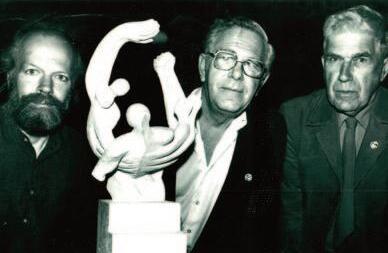
From
sculptor Ian Walters with his maquette for the memorial and Brigaders Jimmy Jump (secretary of the International Brigade Memorial Appeal) and
Alexander (chair of the IBMA).
left,
Bill
40th ANNIVERSARY
nuclear option, announcing in 1983 that she would abolish the GLC.
Two years later royal assent was given to the Local Government Act, which on 31 March of 1986 dissolved the GLC and its powers were distributed to the London boroughs.
County Hall was to be sold off – it’s now a leisure hub for attractions such as the Sea Life London Aquarium and London Dungeon – and Jubilee Gardens was eventually handed over to a specially formed charitable trust.
Thatcher’s attack on the GLC galvanised campaigners for the International Brigade memorial. At the meeting of the IBMA on 8 January 1985 appeal chair Bill Alexander said it was now ‘essential to hold the unveiling ceremony while the GLC is still in control’. Illtyd Harrington urged it to be held ‘the sooner the better’, the meeting heard.
With the clock ticking, plans for an unveiling on 19 July 1986 were scrapped and Ian Walters was told to speed things up for the new deadline in October 1985.
Even after the unveiling uncertainty still hung over the memorial’s future.‘It is intended to hold a public event at the memorial on 19
July 1986, 50th anniversary of the fascist revolt,’ wrote Bill Alexander in the International Brigade Association’s newsletter.
‘But the GLC, whose many sided and generous support made the memorial possible, will have been replaced by a governmentappointed quango who will control the Southbank,’ he said. ‘The character and form of
Help keep their memory alive
Please consider leaving a legacy to the International Brigade Memorial Trust when you make or renew your will.
We depend wholly on donations and support from people who believe the example of solidarity and anti-fascism set by the International Brigades must be preserved for future generations.
Any gift, however small or generous, will fund our vital educational and commemorative work.
Thank you for thinking of us.

the event cannot therefore yet be decided.’
Thankfully, not only did the 1986 event go ahead but a commemoration has taken place in July ever since. And, with excellent relations with the Jubilee Gardens Trust, the IBMT is confident that the volunteers will continue to be remembered at the memorial for many years to come.
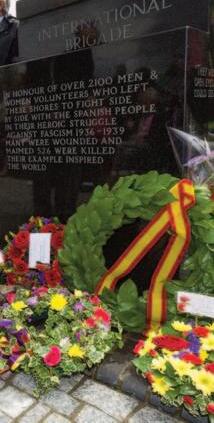
The memorial today with its inscription inspired by Cecil Day Lewis’s poem ‘The Volunteer’.
Braving the rain to honour heroes of Madrid
ROBERT HARGREAVES reports on a rain-soaked battlefield tour of the Spanish capital.
While England basked in warm spring sunshine, visitors to Madrid were caught in a torrential downpour as they paid homage to the heroes of the International Brigades on a walking tour of the city’s Spanish Civil War battlefields.
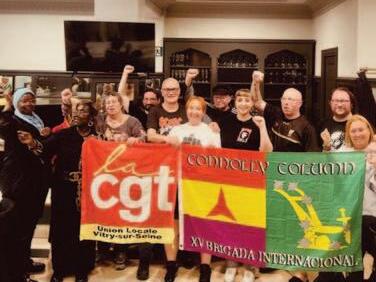
But, undeterred by the rain, members of the 50-strong group, from Britain, Ireland and France, organised by the North West Trade Union International Committee (NWTIC), pressed on.
Day one took in the site of the hospital that treated wounded Brigaders, the headquarters of the famous Fifth Regiment of the Republican Army, and the site of Montana barracks, pivotal in the events that rallied Madrileños behind the battlecry ¡No pasarán! as Franco’s army attacked the Spanish capital.
Stephanie Turner, retired Unison member and IBMT stalwart from Manchester, commented: ‘We were soaked
to the skin, but we wanted to carry on. The Brigaders showed great bravery and made huge sacrifices, and we felt we’d be letting them down if we gave up.’
En route, walkers heard detailed narratives of the battle from leaders Mark Hoskisson, Danny Payne and Andy Brown, while Steve Farley explained the significance of the Atocha memorial to lawyers murdered by fascists in 1977.
Fascinating facts about the Fifth Regiment – whose members helped relieve pressure on the British Battalion at the
‘We were soaked to the skin, but we wanted to carry on. The Brigaders showed great bravery and made huge sacrifices, and we felt we’d be letting them down if we gave up.’
Battle of Jarama – were related by Georgina Andrews and Micaela Tracey-Ramos.
Later, the group were guests of the Partido Communista de España, and heard talks on the important contribution of women such as Lillian Urmston and Felicia Browne to the anti-fascist cause.
Fortunately, the rain held off during the second day’s walk through the Casa de Campo, where Brigaders defended strategic bridges over the River Manzanares.
Afterwards, flowers were laid at the memorial to Brigaders at the university campus, scene of bitter hand-to-hand fighting that halted the fascist advance. Expert and insightful narrative was provided by our Spanish guide.
On the final day, a small party, including French comrades, visited Fuencarral Cemetery for a ceremony at the International Brigade memorials.
NWTIC organiser Kevan Nelson paid tribute to the help to the Republic provided by the Soviet Union, both in men and materials, and interpreter Andy Brown spoke at the memorial about exiled Spaniards who fought with the Allies against Germany and Italy in the Second World War.
Leader of the French trade union delegation Isabelle Voisin thanked British counterparts for organising the trip, declaring: ‘We come together despite obstacles of language and borders. Your tenacity in paying tribute to the International Brigaders galvanises us in our urgent need to fight contemporary fascism. Together we affirm ¡No pasarán!’.
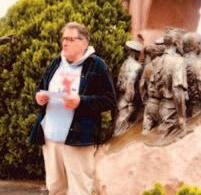
p Kevan Nelson speaks at the memorial to the Soviet fighters in the Spanish Civil War in Fuencarral Cemetery in Madrid.
t French, Irish and British trade unionists drying out.
CHRISSIE WALLACE
LIAM TURBETT shares the story of Chrissie Wallace, the only Scottish woman to die in the Spanish Civil War, and her son’s quest to find out what happened to her.
In the early months of 1938, a typhoid epidemic swept through the Catalan city of Vic. Among the victims was Chrissie Wallace, a young Glaswegian nurse. She was just 23 years old and had travelled to Spain to assist the embattled Republic as it neared the second year of its brutal civil war.
There was no shortage of tragic events in Spain in 1938, yet Chrissie’s passing deeply affected those who knew her: the staff and patients of the hospital where she worked, the citizens of Vic, and the wider milieu of international volunteers in the region.
But the circumstances of the period – with the Nationalist victors in the civil war suppressing any memory of the anti-fascist struggle, and the rapid advent of the Second World War – meant her story was lost for more than 80 years, even to her own family.
Thanks to the diligent efforts of a Catalan historical researcher, Chrissie’s story has recently come to light. And, remarkably, her son – now in his late 80s – has also been able to learn of his mother’s fate, after a lifetime of searching.

In July 1936, Spain was plunged into civil war. A military uprising, led by rightwing military figures under General Franco and backed by Hitler and Mussolini, sought to overthrow the country’s elected socialist government.
While the European democracies and the United States refused to intervene, enforcing an arms embargo under the guise of ‘non - intervention’, tens of thousands of volunteers on the political left answered the
‘The circumstances of the period meant her story was lost for more than 80 years, even to her own family.’
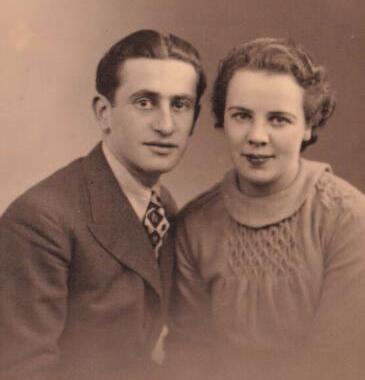
p Chrissie Wallace with her husband, Simon Bulka, in Paris in March 1937.
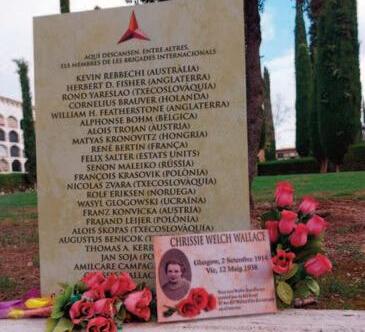
q The memorial to the International Brigade volunteers in Vic Cemetery, Catalonia, with the plaque to Chrissie Wallace alongside.
The Scottish nurse who never came home
call of the besieged Republic and journeyed to Spain in defence of democracy.
The heroic contribution of the International Brigades, of whom over 500 came from Scotland, is rightly the subject of celebrations and remembrance to this day.
From the early days of the war, medical volunteers also travelled to Spain. Around 70 nurses are believed to have gone from Britain over the course of the war, alongside hundreds from elsewhere. Prior to the war, nursing roles in the country’s hospitals had largely been fulfilled by nuns, many of whom had gone over to the side of Franco’s Nationalists.
Chrissie had followed her husband, Simon (or Schmul) Bulka to Spain. Bulka, born in Poland to a Jewish family, was a medical doctor and a communist. He had lived in both London and Scotland at different times, and spent periods in Spain working at different field hospitals. In 1937, Chrissie and Simon had a son. They named him Walter, after the famed General Walter, a Polish Red Army commander who played a leading role in the International Brigade.
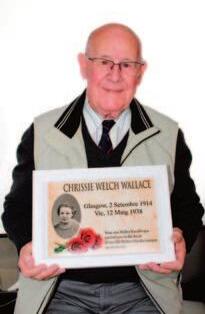
The following year, Simon was drawn back to Spain, and Chrissie followed. They arrived in the city of Vic, around half way between Barcelona and the Pyrenees, where an international hospital had been established to tend to the ever-growing numbers of wounded from the front. It was here that Chrissie died.
On the day of her funeral, Vic came to a standstill. ‘Her passage intensely moved all of us who saw her,’ an onlooker would write many years later, having witnessed the funeral as a child. ‘The body of the dead girl, dressed in white like a bride… was solemnly accompanied by hundreds of companions, with music, songs and flags, in the midst of the silence of the crowd that contemplated its passage. Never again have I seen a funeral as emotional as that one, so sad and beautiful. I still believe today that it was more than just a funeral. It was a true tribute to friendship, youth and beauty – and to their ideals.’
Shortly after the funeral, a note appeared in a local newspaper from Simon Bulka,
‘How Bill Wallace came to be reunited with his parents’ story is a testament to the power of archival research.’
Bill Wallace, born Walter Bulka, holding a copy of the plaque honouring his mother.
expressing his gratitude to the people of Vic for the send-off that Chrissie received. A touching write-up of the events was also contributed by a Republican soldier who was on leave in the town for a few days. He said, stirringly: ‘And a day will come when the son of this woman, this fallen mother, is asked where and how the one who gave him his being died. He will be able to answer with noble and justified pride that his mother died defending the freedom of the people.’
That day would eventually come, but not for another 85 years. Walter Bulka, living with relatives in Glasgow, had his first birthday just a few days before his mother died. Raised as Bill Wallace, the first major shock for him came when he was 15. On applying to join the Royal Navy, he discovered that the name on his birth certificate was Walter Bulka, with his father’s address given as a hospital in Barcelona.
Surprised to find out that his aunt and uncle were not actually his parents, he learned that his father had died in the Spanish Civil War, and that his mother had passed away soon after he was born – or so he was told.
How Bill Wallace came to be reunited with the story of his parents is a fascinating testament to the power of archival research and historical digging over many decades.
Manel Montero is a police officer in Vic. He was on duty one day when a young woman approached him and asked in English where she could find the grave of an Australian International Brigade soldier called Kevin Rebbechi, who she believed was buried in the local cemetery.
His interest piqued, Montero began investigating Kevin’s story, publishing a book titled ‘Looking for Kevin’ in 2014. The publication was a success, provoking interest in Vic’s links to the International Brigades and the stories of those who passed through – and in some cases passed away – in the city.
He continued looking into the identity of the other international volunteers buried in the same common graves, and was struck by
CONTINUED OVERLEAF
Manel
Montero
CHRISSIE WALLACE
FROM PREVIOUS PAGE
the moving account of the funeral of a young nurse he encountered in local records. This story could easily have ended there if not for a fortunate turn of events.
Based in Australia since the late 1950s, Bill Wallace did not give up searching for his parents, and, while progress was sometimes slow, he eventually made some key breakthroughs.
Though trips to the UK and Spain in the 1990s yielded little in the way of firm evidence about their fate, contact with academics led to the discovery that his father may have survived the Spanish Civil War, as records emerged of him as a prisoner in France during the Second World War, service with the British Army, and a marriage in post - war France.
A link to Nice was established and, from there, a friend of Bill made a cold call to the only Bulka in the city’s telephone directory. It was answered by his half-brother. Bill learned that their father had not only survived both the civil war and the Second World War, but had lived until 1998, just a few years before his sons would make contact, and later meet.
Bill set all of this out in 2004 in an article for the Kosher Koala , the newsletter of the Australian Jewish Genealogical Society. In a stroke of luck, the article has remained online since, waiting to be discovered 18 years later by the researcher in Vic, Manel Montero.
After firing off an email to the Genealogical Society, within 24 hours he had heard back from Bill, with an ‘expression of gratitude from an 85-year-old man’ who had just learned the whereabouts of his mother. Bill sent on the one photograph that he has of his parents, taken in Paris in 1938, while Manel filled him in on all of the findings of his extensive research – a satisfying conclusion to a local history project.
The efforts of those in Vic to remember and bring to life the history of the civil war in the city, including the role of the International Brigades there, are impressive. Recently, Montero collaborated on a play performed in the building that was once the international hospital where Chrissie worked, in which she featured as
one of its characters. The story of Chrissie and Bill Wallace even made television news in Catalonia.
These acts of remembrance have doubtlessly been aided by a supportive political environment in Catalonia. The regional government has established a specific programme to record and locate the remains of international volunteers, with living relatives invited to give DNA samples to allow remains to be matched during excavations of mass graves.

A list of 86 anti-fascist volunteers from the UK who it is believed died or disappeared in Catalonia was published by the Catalan government in 2024, as part of its commitments under Spain’s Democratic Memory Law.
This legislation was introduced nationally by the left coalition government in 2022 to address the ‘pact of forgetting’ that underlay Spain’s transition to democracy in the late 1970s, which saw decades of fascist suppression brushed under the carpet.
Recent efforts to place on record the horrors of Franco’s dictatorship have been fiercely contested by the right. The conservative Popular Party have obstructed the implementation of the Democratic Memory Law in regions where they govern, while the far-right Vox party have attempted to roll the clock back even further, bringing back street names associated with Franco-era figures.
In this context, it is all the more important that we remember the likes of Chrissie Wallace, the only Scottish woman who did not make it home from the Spanish Civil War – that ‘noble and justified struggle for freedom’, to paraphrase the tribute paid by her fellow Brigadista all those years ago.
Despite the great volumes that have been written about the war, including from a Scottish perspective, it is remarkable that new stories continue to come to light, allowing the conflict to be seen through a fresh lens of both people and place. That this has allowed a man in his 80s, living on the other side of the world, to discover his mother’s final resting place is all the more astounding.
‘Despite the volumes that have been written about the war, it is remarkable that new stories keep coming to light.’
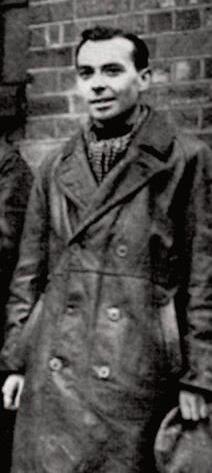
a convoy of lorries through France taking medical supplies to Spain.
p London volunteer Christopher Caudwell joined the British Battalion in December 1936, having driven one of
Gallery
Oldham
Marx Memorial Library
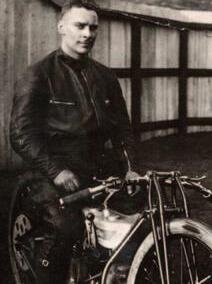
q Caudwell’s friend and travelling companion, Oldham volunteer Clem Beckett.
A fine theorist and friend
Christopher
Caudwell’s Marxist legacy and
his
unlikely friendship with sports hero Clem Beckett
By David Margolies
Today, the reputation of Christopher Caudwell (the penname of Christopher St John Sprigg) is primarily that of a Marxist cultural critic, one of the many brilliant young intellectuals who joined the International Brigades to defend the Spanish Republic. He died in the Battle of Jarama alongside Clem Beckett, his machine-gun partner.
Although he is recognised both as a hero and an important contributor to Marxist studies, his reputation as a ‘superintellectual’ has meant that he is commonly regarded as too abstract to be approachable. This view was reinforced comically in Neil Gore’s witty dramatisation of the life of the motorcycle champion Clem Beckett, ‘Dare Devil Rides to Jarama’.
In 1936, both Beckett and Caudwell drove ambulances to Spain (medical equipment was the exception to the ban on military aid). In one scene, Gore has Beckett and Caudwell repairing the ambulance they are driving together to Spain. And while Beckett gets on with the repair, Caudwell is in another world with his nose in a book, only occasionally re-entering the immediate reality when he has to hand Beckett some tool or other.
Label
The intellectual label certainly fits Caudwell. Only 29 when killed, he had already written a great deal under his real name, Christopher St John Sprigg. But he was no abstract intellectual – he had also demonstrated considerable practical nous, inventing an infinitely variable gear, as presented in an article in Automobile Engineer in 1929.
He wrote two flying instruction manuals and had gained his own pilot’s license. Familiarity with flying is central to the best of his seven crime novels, ‘Death of an Airman’, which then somewhat unusually, had a woman as its central character. It was praised at the time by Dorothy L Sayers as having ‘a most ingenious and exciting plot’ and republished in the British Library Crime Classics series in 2015). He also wrote one ‘serious’ (his own description) novel under the name of Caudwell (‘This My Hand’, 1936).
As Caudwell he wrote his two significant works of Marxist theory. The first was ‘Illusion and Reality: A Study of the Sources of Poetry’, in press when he
left for Spain. The second was a collection of essays, later published in two volumes as ‘Studies in a Dying Culture’ and ‘Further Studies in a Dying Culture’, concerned with how the culture of his contemporary Britain was shaped by the structures of capitalism, a system which he saw as experiencing terminal decline.
Robert Hargreaves, in his meticulously researched and fascinating biography, ‘Clem Beckett: Motorcycle Legend and War Hero’ (2022), presents a lively picture of the close relationship between Beckett and Caudwell.
On the surface, the friendship between the middle-class intellectual Caudwell and the working-
‘Caudwell was no abstract intellectual: he had also demonstrated considerable practical nous.’
class sporting hero Beckett seems unlikely. But both were distinguished figures when they joined the International Brigade: Beckett as a renowned dirt track champion and Caudwell as a successful crime novelist (his Marxist texts had not yet been printed).
Hargreaves shows their similar responses to the practical needs of the war and their doubts about ideologically driven images of reality, which made their friendship quite natural.
Clem Beckett had a history of ‘irreverence’ for authority and, as Hargreaves suggests, they shared a critical attitude that probably would have been seen as challenging by their fellow volunteers.
Yet, while it may have distanced them from the others, it was a bond between the two of them. They died on what the Brigaders had named ‘Suicide Hill’, covering the retreat of their comrades with their First World War French machine-gun, so poorly designed that it kept jamming. Tom Wintringham called it ‘the worst light machine-gun ever devised’ (Hargreaves, page 178).
As might be expected of a sound Marxist, Caudwell saw a dialectical relation between theory
and practice, and his concern for material practice is evident in his theoretical work. It is that quality, I think, that gave his ‘Illusion and Reality: A Study of the Sources of Poetry’ a wide readership on the left from its publication in 1937 through to the 1960s.
Literature
Whereas much study of literature in schools and universities is still often directed towards gathering information for examinations – facts about works or authors or movements – Caudwell focused on its social effect – how readers were moved or reorientated by works of literature. An examination context encouraged a view of works as static: they didn’t do anything.
Works of literature, in Caudwell’s view, came out of social contexts that shaped the way authors constructed their subjects; readers, through their experiencing those structures, had to accept a degree of reorientation. That is, to follow the novel or poem, readers have to accept (however tentatively) the structure of the imagined society.
Literature deals with relationships – part of social practice – and, through the experience of readers, feeds back into that practice. This is perhaps obvious in social realist novels such as Upton Sinclair’s ‘The Jungle’, which is credited with getting the US to legislate meat-packing controls because readers were so disgusted by the terrible practices of the industry that it described.
Even children’s literature, often regarded as ‘neutral’, presents a vision of social being affecting young readers. Winnie the Pooh, for example, offers narratives that readers (and listeners) can follow with pleasure, and part of that pleasure is entering a simple world of positive social relations. Without any sermon from the author, good social relations become naturally more important, more valued.
It is because of this understanding of social effect that Caudwell deserves to be recognised as an innovative Marxist theorist, and why his theoretical argument in ‘Illusion and Reality’ and practical examples in ‘Studies in a Dying Culture’ and ‘Further Studies in a Dying Culture’ continue to make an important contribution to Marxism.
David Margolies is the editor of ‘Culture as Politics: Selected Writings of Christopher Caudwell’ and is Emeritus Professor of English at Goldsmiths, University of London.

Forgetting and remembering in 21st century Aragón
‘The Bones in the Forest’ by Michael Eaude (The Clapton Press, 2024)
The story is set in 2007 when the Law of Historical Memory came into effect in Spain. It follows Julia, a biology teacher from Barcelona, on a journey that eventually results in the excavation of an unmarked grave in a small village, Valeria, in the mountains of Aragón. The grave contains three victims of the Spanish Civil War killed by Franco’s forces, one of whom, Rogelio, is distantly related to Julia. The three are then reburied in the village cemetery. Sounds simple enough, except that we are not introduced to Julia until chapter two…
‘ The man who was not yet a killer climbed the mountain track with long strides’ are the intriguing opening words of chapter one of
‘The Bones in the Forest’. The rest of the chapter tells us how the killer carries out the murder of the local mayor and attempts to cover up his tracks.
When we meet Julia, we are left wondering if there is a link between the present murder and those of the victims of the civil war.
Rogelio took part in an anarchist strike on the Barcelona docks and in the anarchists’ attempts to collectivise the countryside during the earlier part of the war.
Family stories suggest Rogelio might have
‘One of the most convincing aspects of the novel was the device of using flashbacks to the civil war instead of faded memories.’
fled to France and made a life for himself there. But no one had heard from him.
But one day, Julia’s elderly mother phones to tell her that someone in Valeria has contacted Julia’s cousin to tell her that Rogelio was in fact killed in that village and his remains lie in the forest, together with those of two others. Julia’s mother asks her daughter to get in touch with the contact as her cousin is too ill to take it on.
When Julia visits Valeria for the first time, she is in for a shock. The village is traumatised by the killing of the mayor a month before. Apparently, it was all over national television, but Julia does not watch TV.
When she returns to Barcelona she makes it her business to discover all she can about this recent murder. Although everyone in the village has been visited by the police, some of them multiple times, no arrest has been made.
Julia meets her contact, Jaime, the great nephew of Juanita, another of the three people whose remains lie in the unmarked grave. Jaime has been trying for years to get the three reburied in the village cemetery. Bit by bit, Jaime tells Julia the story of Rogelio and Juanita.

The more Julia investigates, the more divisions she finds in the village between descendants of those who were Republicans or fascists during the civil war.
Julia feels that there is a link between the current murder and those from 1936. Motivations for conflict may have changed, but the same people are still in charge, even though the generations have changed.
Julia meets the current mayor, who is the widow of the murdered mayor. She tells Julia that her grandfather was mayor of the village during the civil war and was killed by anarchists. This resonated with me as I was once tearfully confronted by the granddaughter of a Carlist killed by Republican forces who demanded to know why my father had come to Spain to fight for the Republic.
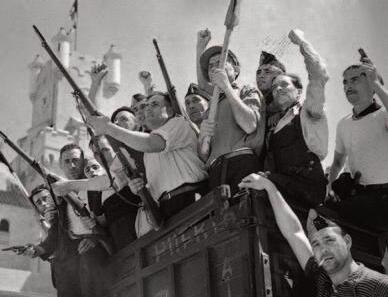
t Anarchist militiamen in Barcelona; their role in the war is woven into the novel’s narrative around historical memory in Spain.
Antoni Campañà
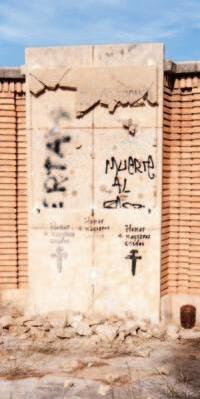
t A contested space: graffiti on a vandalised memorial in Belchite, Aragón, as witnessed on the IBMT-organised visit of the area in 2014. More recently, the rightwing regional government of Aragón decided to repeal a Law of Democratic Memory in 2024.
The ‘Mr Big’ of the village, a wealthy elderly man by the name of Teodoro Pérez, is an example. If he wants something to happen, it happens; if he doesn’t, it won’t. Pérez is portrayed as a ‘civilised’ fascist; yet he was a volunteer in the División Azul, the Blue Division, fighting for Hitler’s Nazis against the Soviet Union under the leadership of General Muñoz Grandes.
These volunteers were mostly committed Falangists, so I found this portrayal of Pérez, somewhat unconvincing.
Julia has been unable to move on with her life since the accidental death of her only daughter, Ana, some years previously. Getting involved in the campaign to get great-uncle Rogelio reburied has given her new purpose in life.
One of the most convincing aspects of the novel, for me, was the device of using flashbacks to the civil war, rather than as the handed-down and fading memories of family members. The author must have read widely on anarchist history and archives to produce scenes with such a ring of authenticity.
‘Motivations for conflict may have changed, but the same people are still in charge, even though the generations have changed.’
There are some fine descriptive passages in the book, related to the village and its setting, reflecting Julia’s love of the natural world and its meaning to other key players, but sometimes they felt overlong and threatened the flow of the narrative.
I found the denouement, presumably written to rev up the tension towards the end of the book, unconvincing, and from this point, for me, the plot descended into melodrama.
How to end a novel satisfactorily is a skill that even the most seasoned writer may struggle with. Michael Eaude has made a brave attempt in this, his first novel, to explore some powerful and important themes, from the civil war to the Spain of the 21st century.
International Brigader turned Soviet spy

I‘The Spy Who Helped the Soviets Win Stalingrad and Kursk: Alexander Foote and the Lucy Spy Ring’ by Chris Jones (Pen & Sword, 2025).
found Chris Jones's book intriguing and a little sad. As its introduction says, in any analysis of spies and the truth, it is often difficult to get at what really happened. Yet, the story had me gripped throughout, with added information recording how International Brigader Foote was treated and the speculation about Russian spies during the Harold Wilson era and afterwards, released to the National Archives. Many years ago, I listened with a sense of admiration and surprise to René Cutforth’s radio programmes on the Red Orchestra and Soviet intelligence on the Eastern Front during the Second World War.
More recently, an analysis of the Battle of Kursk showed how the Red Army was able to penetrate the weaker parts of the German defences along the whole front because they knew the German deployments.
Whoever was running the spies and the spy networks, it is clear that intel ending in Russian military hands clearly helped defeat Germany at Stalingrad and Kursk.And, as the book’s title says, Foote was one of those spies.
Foote had absconded from the RAF to join the International Brigade, working as the driver of the British commander. He then went to Germany and was recruited as a Russian spy. As the Second World War broke out, Foote then went to Switzerland, where he helped
‘The book shows how those who like Foote became disillusioned never lost their core principle of fighting fascism in Spain, Germany and Italy.’
establish a communications centre to send information purportedly from anti-Hitler members of the German senior command, which included details of troop deployments on the Eastern Front.
While this book is full of history, including information only recently made available, it also shows how those like Foote never lost their core principle of fighting fascism in Spain, Germany and Italy.
Foote started with Marxist views but became disillusioned with the Soviet Union and returned to the UK. I can relate to this process, being a member of what Dennis Healy described as the largest political party of the UK: ex-members of the Communist Party!
The world is once again in danger from farright populist extremism. If we are not to see the world descend into mob rule, we need those who seek a better world of truth and social justice to stand together to defeat the common enemy.
ALAN SHORT
PAULINE FRASER
M eaning b ehind the mosaic
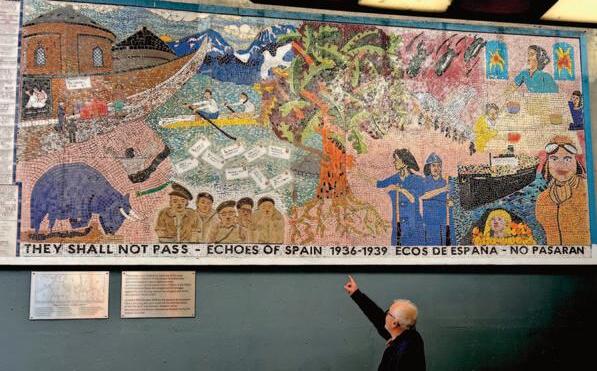
Located under the Westway flyover in the heart of the famous Portobello Road street market, the Echoes of Spain mural depicts the links between the Spanish Civil War and the Notting Hill area of West London. Several local volunteers joined the International Brigades and many Spanish Republican exiles settled in the neighbourhood.
The mosaic now has two plaques explaining the significance and origins of the memorial.
One of the plaques is a key, indicating the people and events that appear in the mosaic. A second plaque records that it was unveiled on 18 October 2005 by Spanish Ambassador Carlos Miranda and International
Brigade veteran and IBMT President Jack Jones.
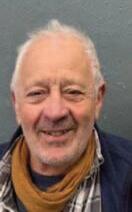
The new plaques have been funded by the Westway Trust, which has worked with local activists who help look after the memorial. Manuel Moreno, son of local Republican refugees, says the group plans to add three further plaques and a QR code linking to more information.
‘We want to give details about the International Brigades, the Basque refugee children and the Spanish Republicans who fought in the British Army in the Second World War, many of whom made this part of London their home.’ He adds: ‘We also want to remember Eddie Adams, a prominent local progressive activist, who was the driving force behind the memorial.’
Measuring
Titled ‘They shall not pass – Echoes of Spain –1936-1939 – Ecos de España – No pasarán’ and measuring five metres in length and more than two metres high, the mosaic pictures Portobello Road itself, on which are ‘Aid Spain’ campaigners and a red flag with the hammer and sickle, while the road disappears into a horizon of Basque mountains.
In the centre is the Gernikako Arbola (Tree of Gernika), with bombs raining down on it, and, further right, the Habana, with refugee children crammed on the deck. Elsewhere are some of the volunteers in the International Brigades from North Kensington, which includes Notting Hill, historically a working-class area, but now one with extensive pockets of expensive housing.
Also in the foreground is Mari Pepa Colomer (full name María Josep Colomer i Luque), among the first Spanish women to qualify as a pilot. She served with the Spanish Republic’s airforce during the Spanish Civil War and chose to live in England after the war.
The mosaic was created by students of Kensington and Chelsea College under the direction of artists Maureen Pepper and Barbara Gorton. Its dedication reads: ‘This mosaic commemorates the Spanish refugees who fled fascist Spain and those men and women from Kensington who fought in the International Brigade and supported the Spanish Republic during the Spanish Civil War of 1936-39 against Franco and his fascist allies.’
JIM JUMP
Manuel Moreno.
Proceeds help fund the commemorative, educational and publicity work of the International Brigade Memorial Trust.
Free postage & packing on goods totalling £30 or more for orders within the UK.
Send orders, including your name and address, a size and colour where appropriate, and a cheque payable to the IBMT to: IBMT Merchandise, 37a Clerkenwell Green, London EC1R 0DU.
For multiple orders in the UK up to a value of £30 (excluding p&p) calculate total p&p by taking the highest p&p among items ordered, halving the p&p of the remaining items and adding them together.
For orders outside the UK or to pay online, go to the merchandise page on our website, (www.internationalbrigades.org.uk/ shop), where there are also other items listed for sale.

The IBMT shop
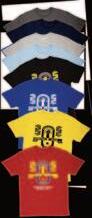
British Battalion t-shirt: Based on the original British Battalion banner brought back from Spain towards the end of the Spanish Civil War. Design comes in full colour or monochrome. Produced by merchandise specialists Red Molotov. Available in sizes: XXL, XL, L, M, S £20 plus £3 p&p.
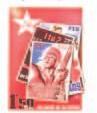
Spanish Civil War postcards: Collection of 20 cards based on designs originally made in 1937 by the Sindicat de Dibuixants Professionals. Produced in collaboration with art reproduction specialists Past Pixels. £12 plus £3 p&p.
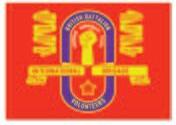
Replica British Battalion flag: Replica double-sided British Battalion flag with 50mm flagpole sheath. Limited product run produced by Red Molotov. Size: 150 cm x 120 cm. £35.
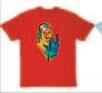


Felicia Browne t-shirt:
A tribute to the women who volunteered to support the cause of anti-fascism in the Spanish Civil War. Based on a sketch of a militiawoman by Felicia Browne, a British artist who was herself a militiawoman in Spain. Produced by merchandise specialists Red Molotov. Available in sizes:
XXL, XL, L, M, S £20 plus £3 p&p.I

IBMT classic badge:
A vintage badge design in purple, red, blue and gold, with the IBMT name in a banner across the foot of the badge. 25mm x 20mm. £5 plus £3 p&p.
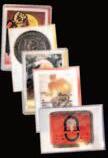
International Brigades greetings cards: Featuring five different pieces of International Brigade-themed artwork. Produced in collaboration with art reproduction specialists Past Pixels. 10 cards and envelopes per pack. £10 plus £3 p&p.

International Brigades cloth badge: Iron-on cloth badge with the three-pointed star of the International Brigades in the colours of the Spanish Republic. £5 plus £3 p&p.
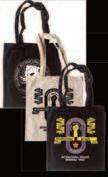
Tote bags: High-quality cotton canvas tote bag with designs based on the British Battalion banner, the International Brigade emblem or celebrating Irish, Scottish or Welsh volunteers. Available in a range of colours. Produced in collaboration with Red Molotov. 38 x 42cms. £12 each plus £3 p&p.
International Brigades mug:

2,500 volunteers from Britain and Ireland joined the legendary International Brigades to fight fascism in the Spanish Civil War. This quality ceramic mug features the emblem they wore with pride. Produced by radical merchandise specialists Red Molotov for the IBMT. £13 plus £3 p&p.
British Battalion mug:

This quality ceramic mug features a design based on the original British Battalion banner brought back from Spain towards the end of the Spanish Civil War. Produced by radical merchandise specialists Red Molotov for the IBMT. £13 plus £3 p&p.
Help us inspire
with the story of the men and women who fought fascism and defended democracy in Spain from 1936-1939.
International Brigade Memorial Trust
37a Clerkenwell Green, London EC1R 0DU
07865 272 639
admin@international-brigades.org.uk
www.international-brigades.org.uk