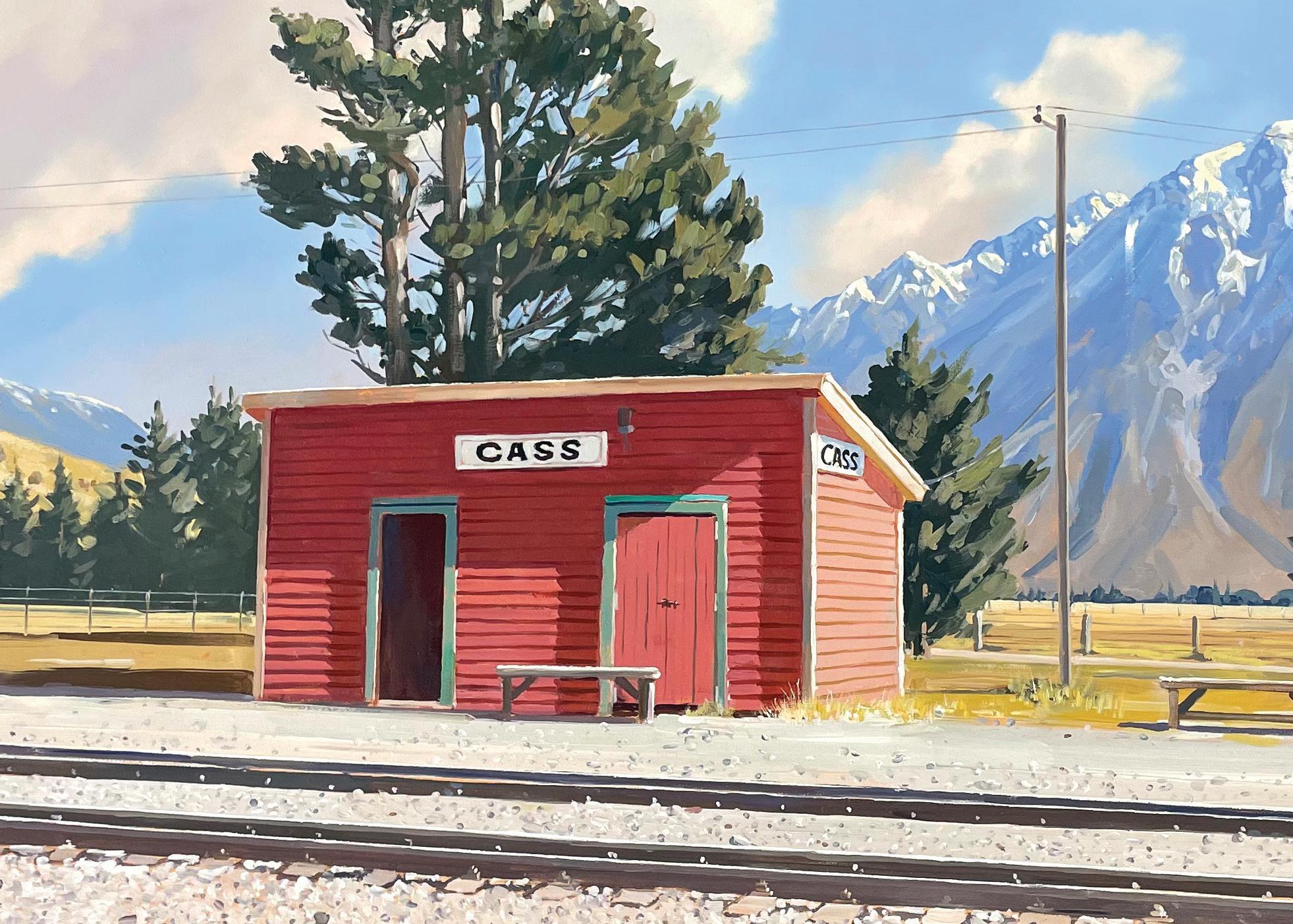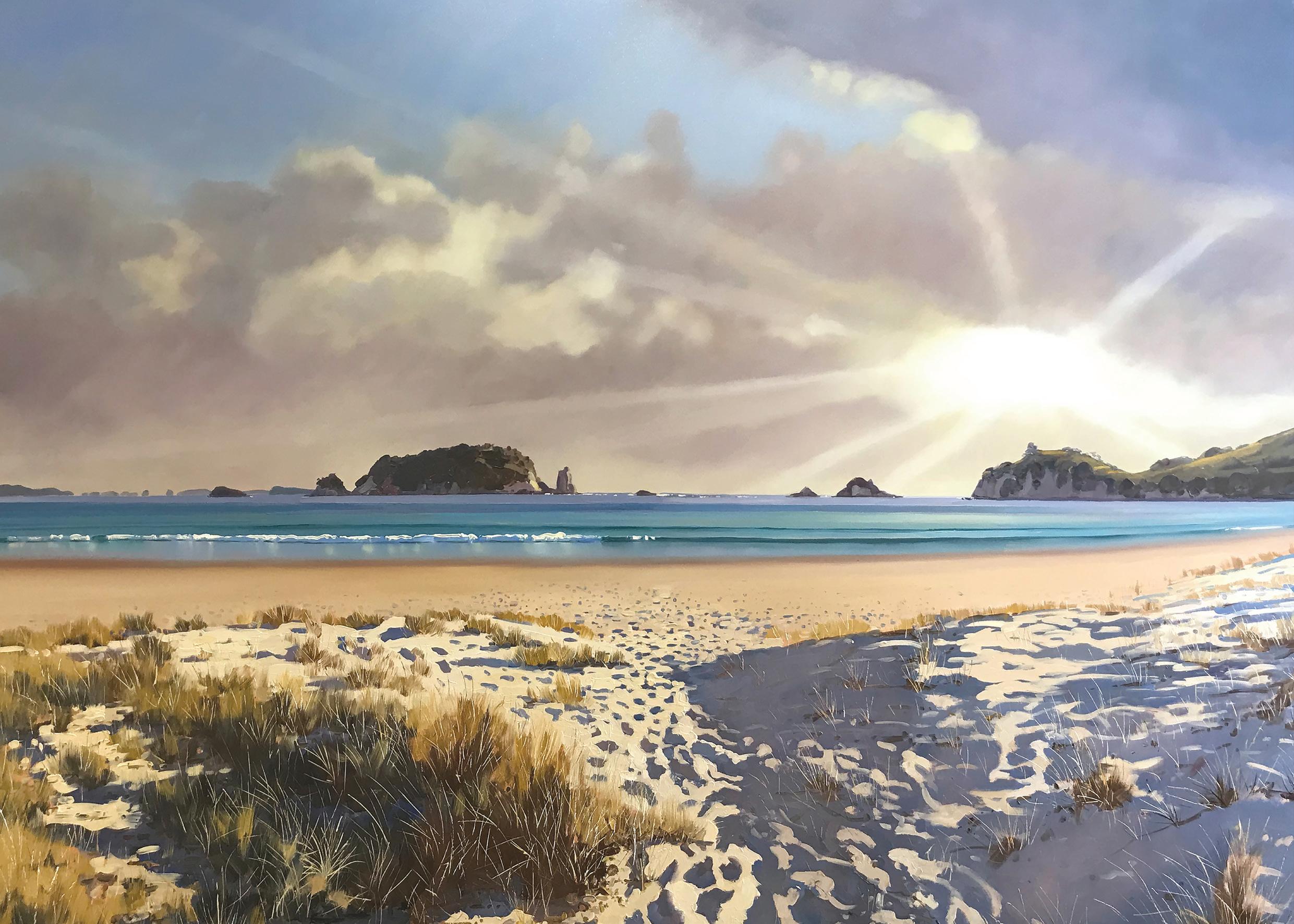
The title Our Beloved Land echoes the emotion that many of us, both here and abroad, feel towards the land of our birth or adoption, a bond that has been strengthened through the prism and perspective of recent world events. This awareness, love and understanding of the land resonates to great effect in the paintings of Master New Zealand landscape artist, Simon Williams.
What a rare gift it is, to capture and convey a slice of heaven on earth through an arrangement of brilliantly placed brushstrokes. To transform a blank canvas into an exceptional work of art endowed with the ability to transport the viewer through time and space to the green, green grass of home and beyond. The value and benefits of a special work of art are immeasurable and there is no doubt that certain paintings speak to us on many levels. The paintings featured in this collection, both large and small speak volumes.
For over 30 years Dunedin born Simon Williams has painted what I see and feel, working in England, Australia, the United States, Italy and New Zealand. His paintings are enjoyed by an international clientele, many of whom are expats. These are paintings that fly the New Zealand flag. They are both touchstones and visual ambassadors for our country. From a Lucerne boardroom to an icon painter’s studio on the Isle of Crete, Simon’s paintings are hung and the word is spread.
Our Beloved Land is an exhibition par excellence. Over two year’s of planning, travel, preparation and countless studio hours results in this exceptional offering of paintings, both large and small. Here we see a freshness and refinement of technique with diverse subject matter from throughout the North and South Island. The mustering and droving scenes remind us of New Zealand’s rural foundation and future, whilst other works bring to life the vineyards of Central Otago and the Hawkes Bay. This is an exhibition that gets to the heart of the matter and celebrates Our Beloved Land.
Frances Davies - Director

The
in Bon Accord
on the
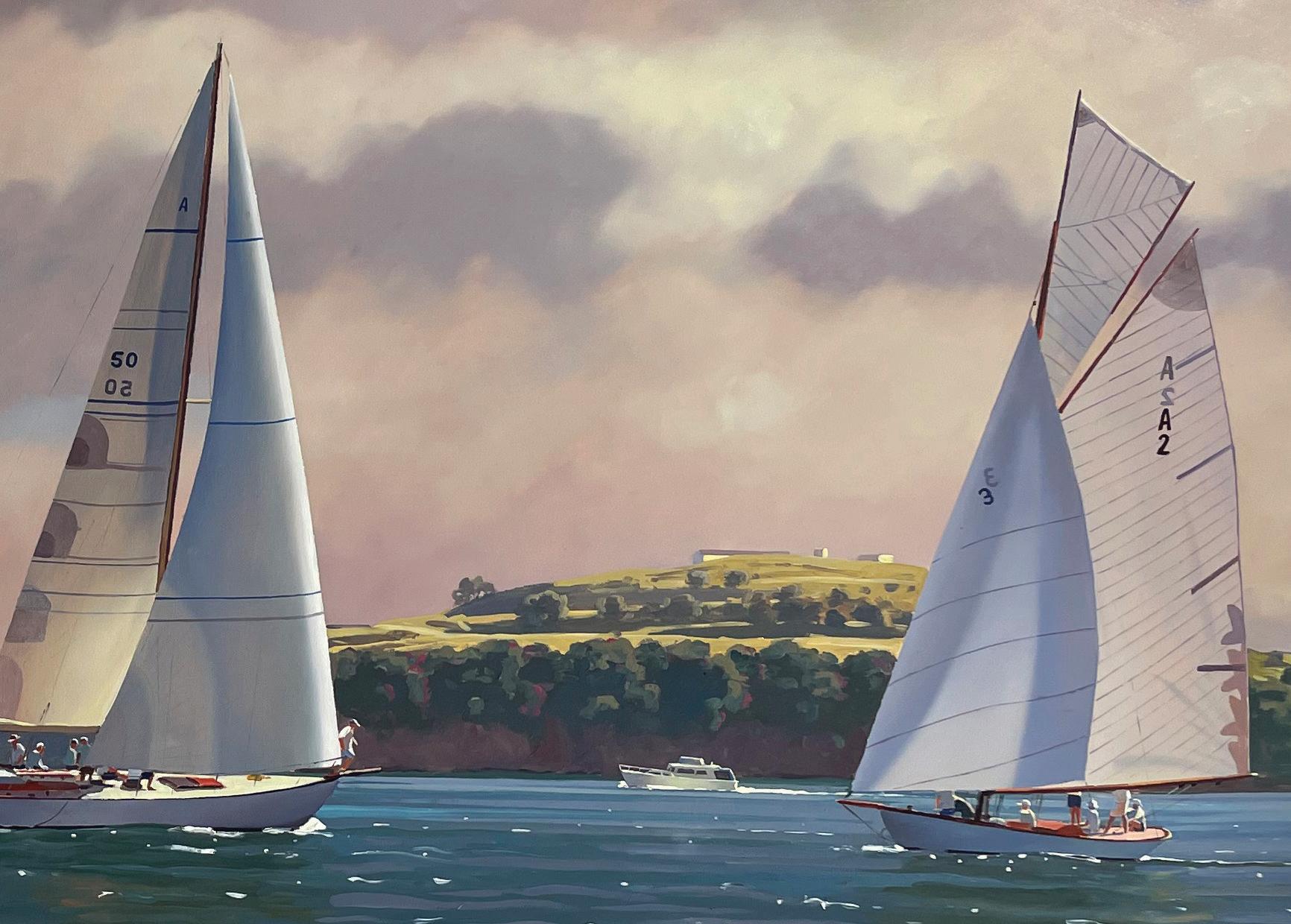
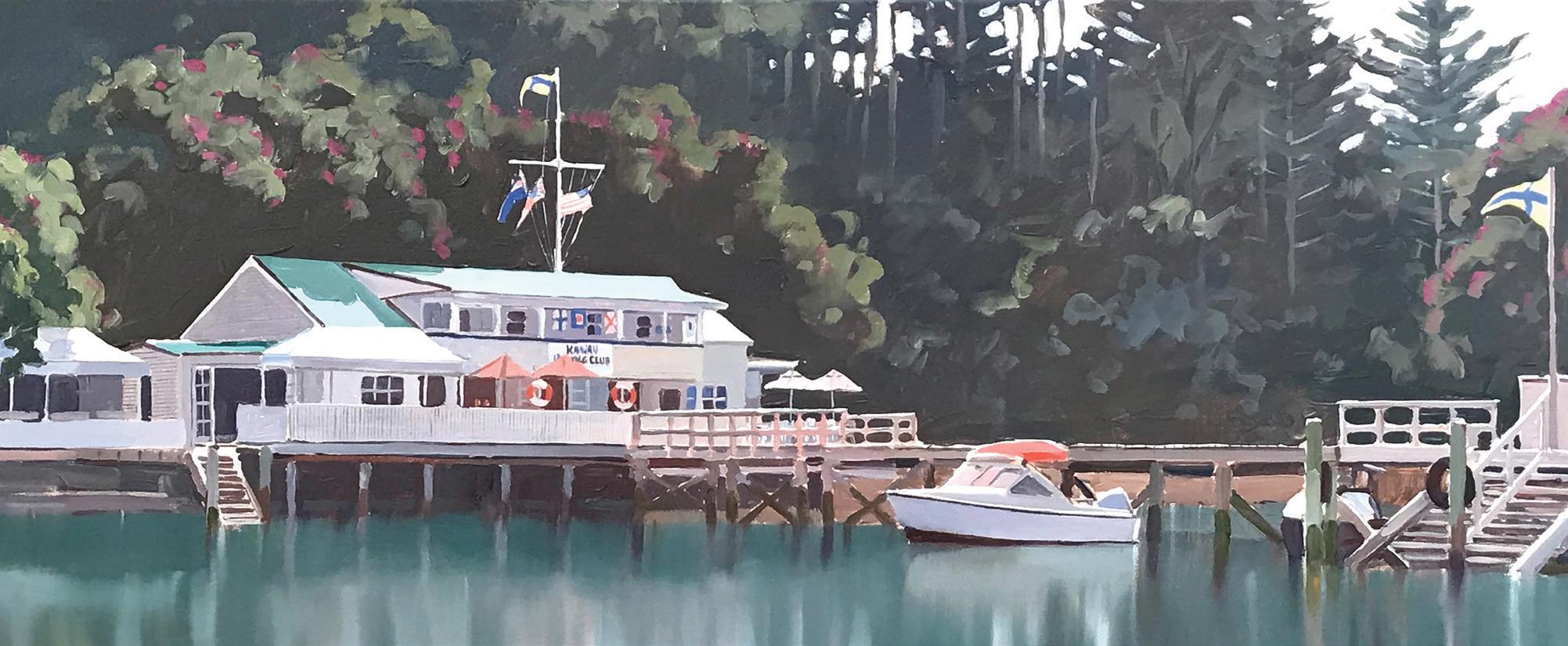
has long flown the flags of international yachting and maritime events. A great meeting place and a safe and sheltered haven.
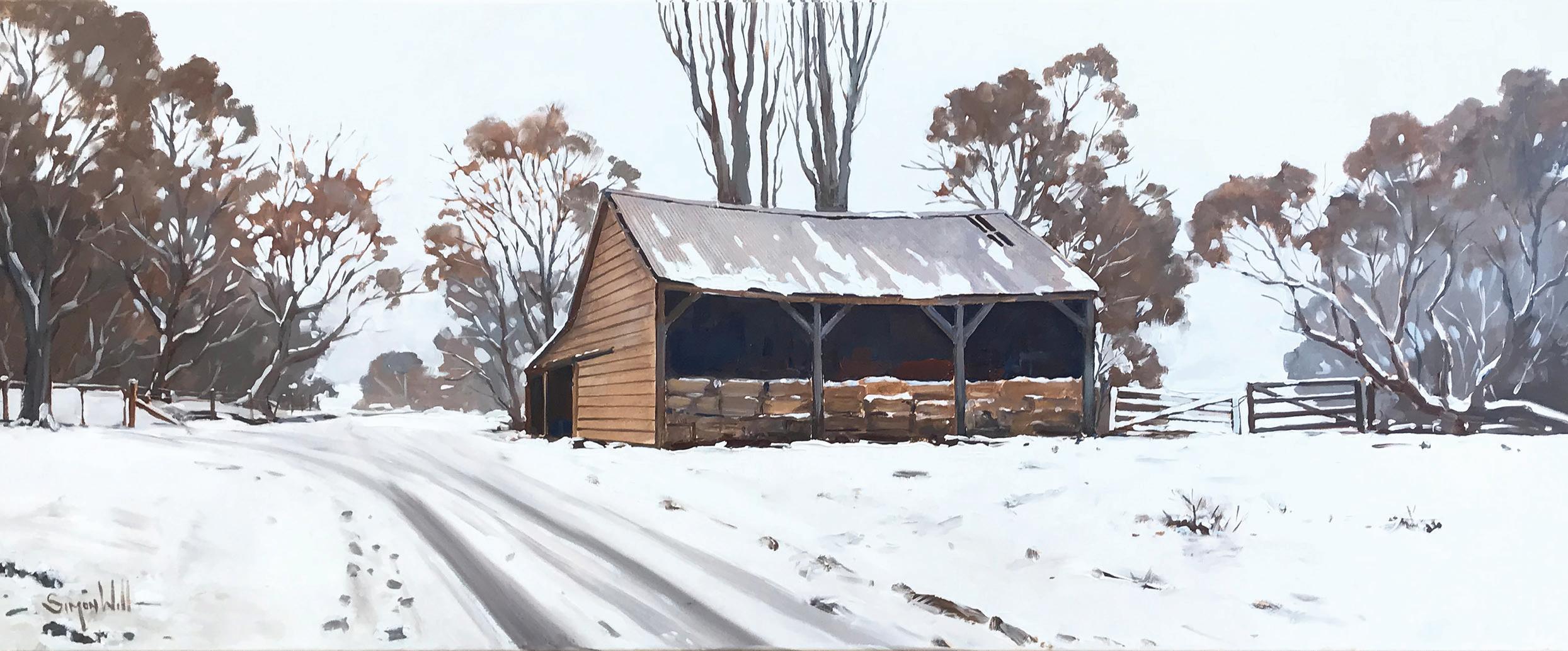
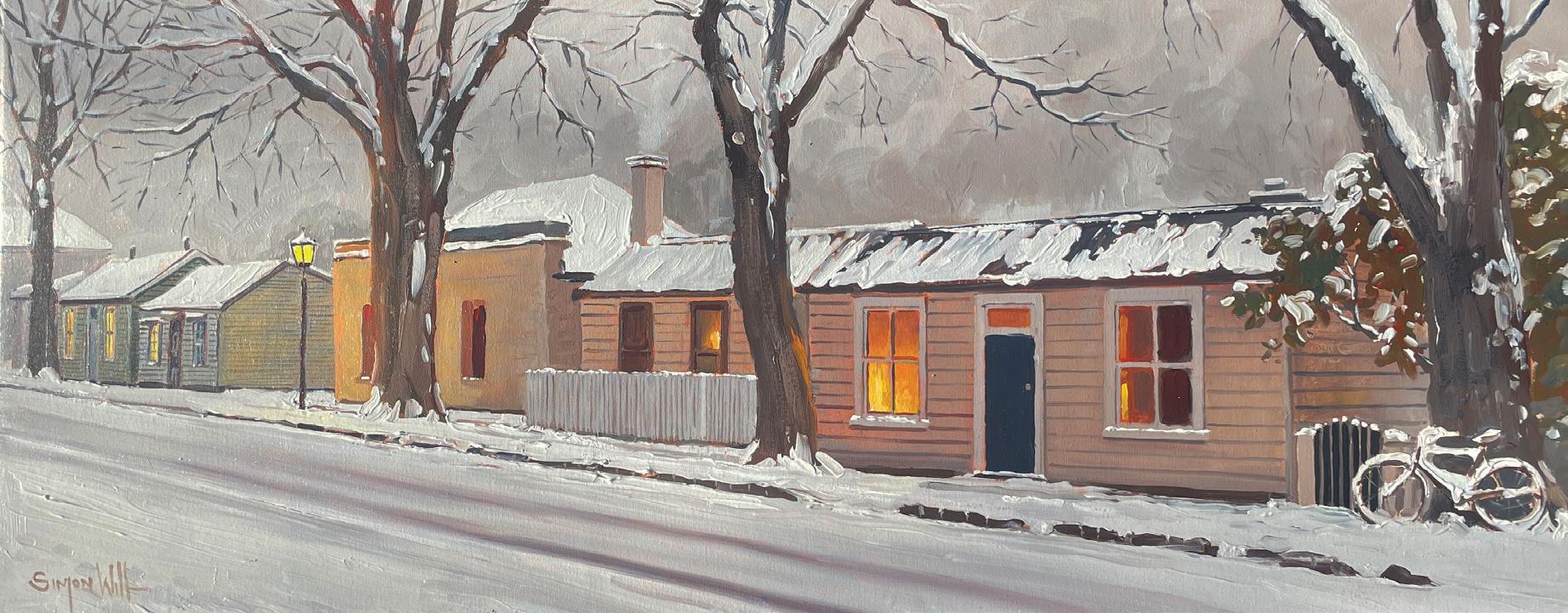
A limited winter palette is captured and conveyed in this small work of a corrugated iron roofed shelter on the road to Cardrona. Snow falls upon oak and poplar trees beneath an oyster grey sky.
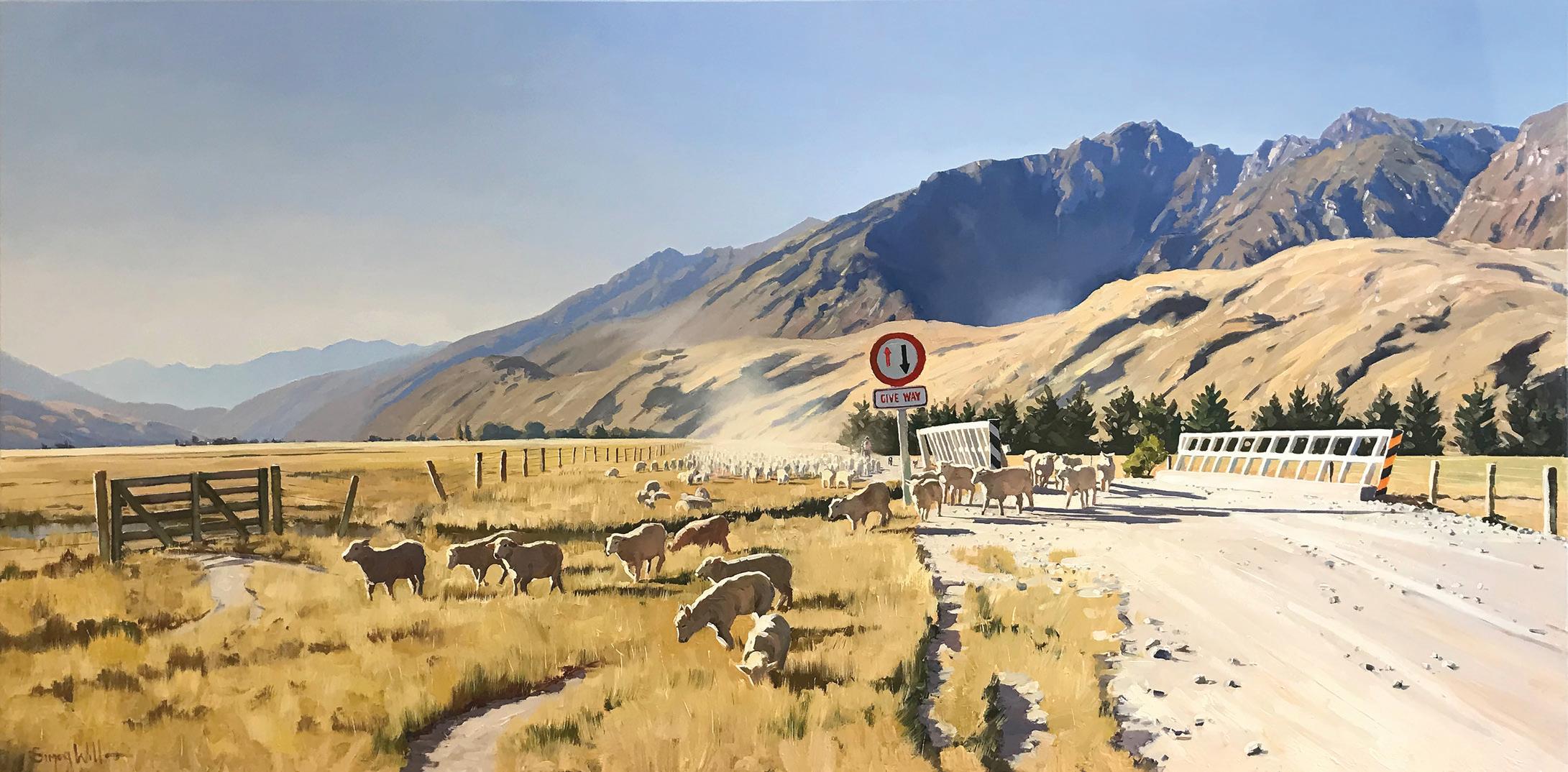
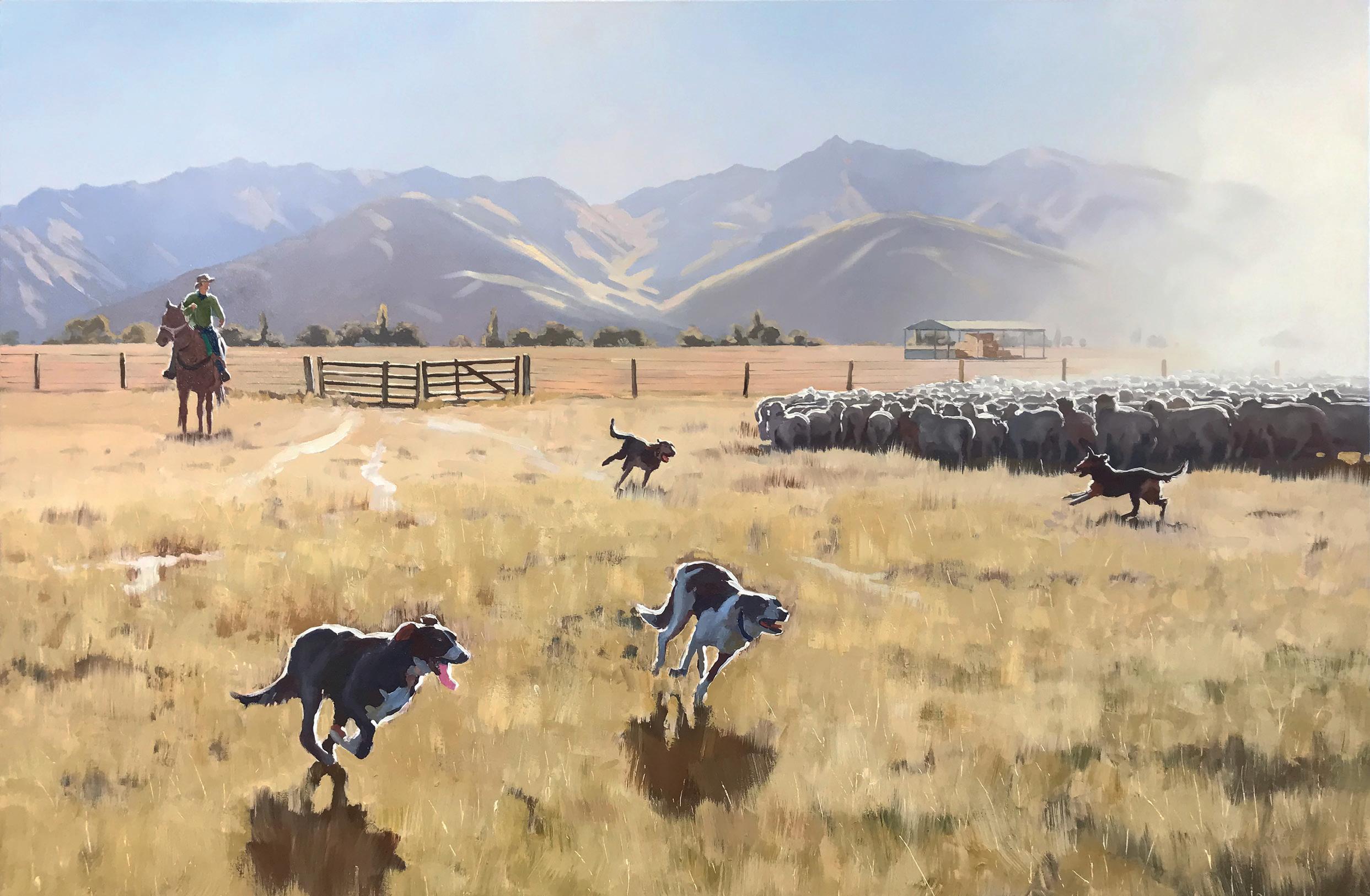
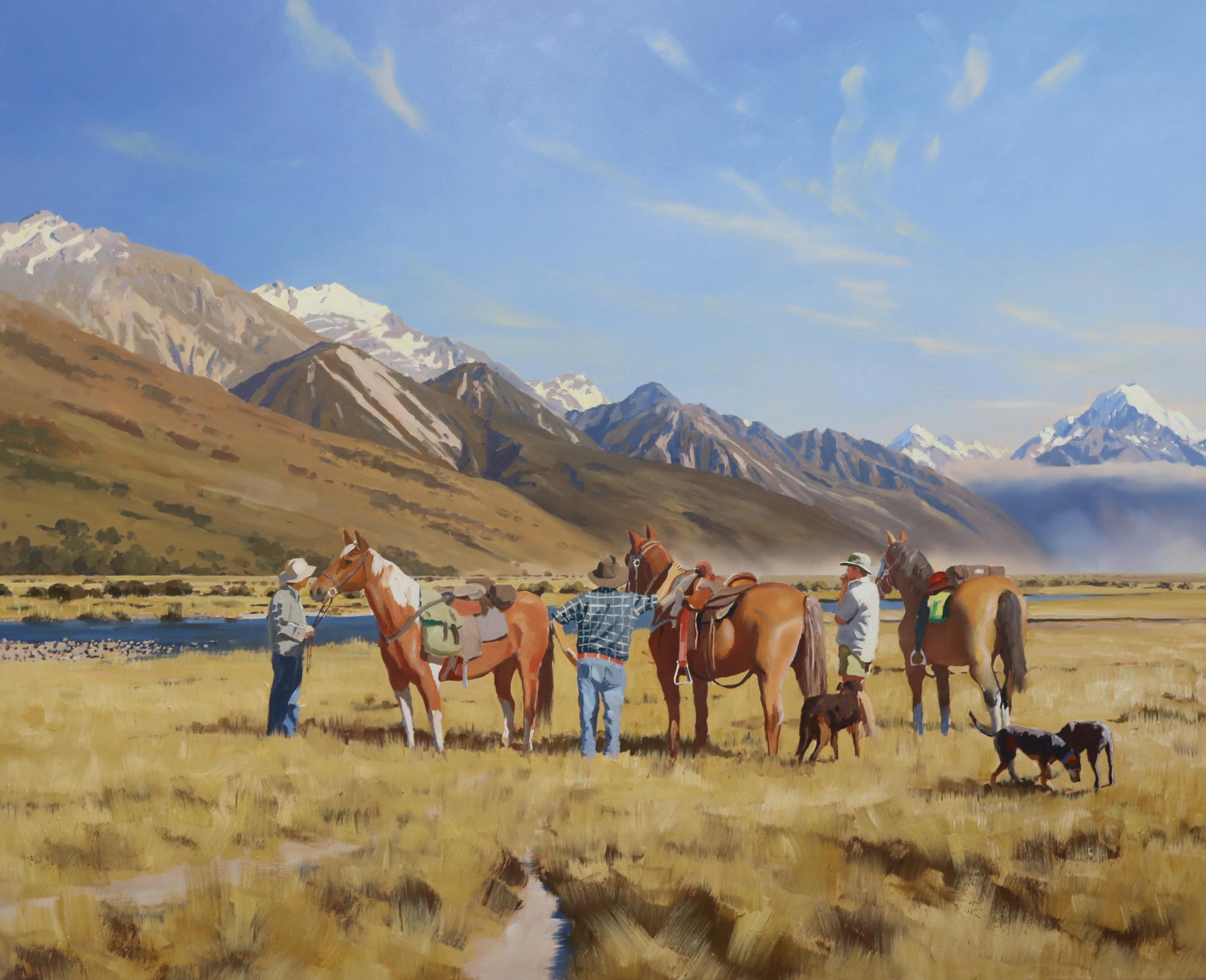
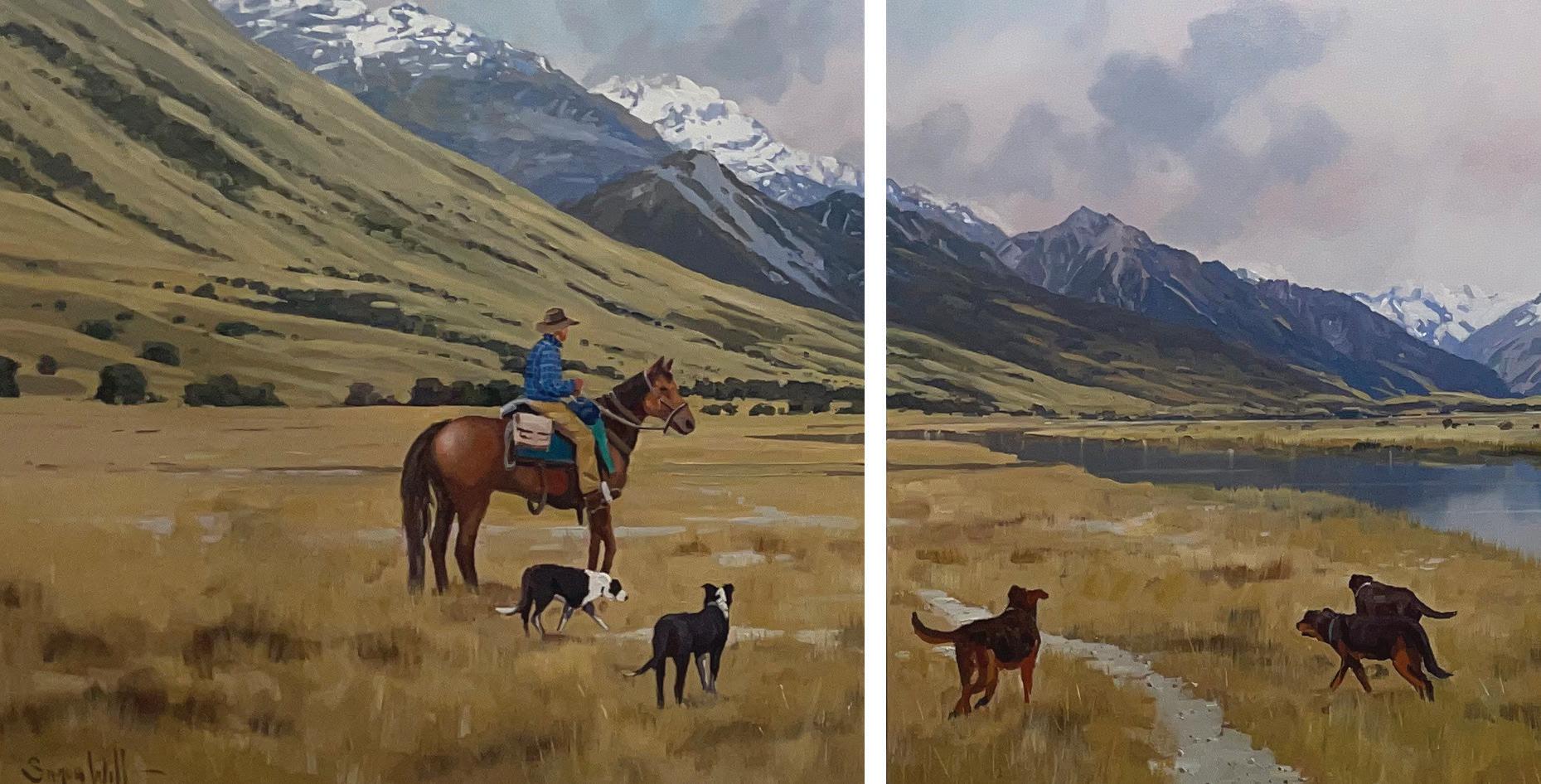
The heat and dust of a Central Otago sheep muster is captured in this blue and gold painting of men at work. Gold tussock, blue horizon and blue skies. The rural backbone of New Zealand, immortalised in this brilliant painting.
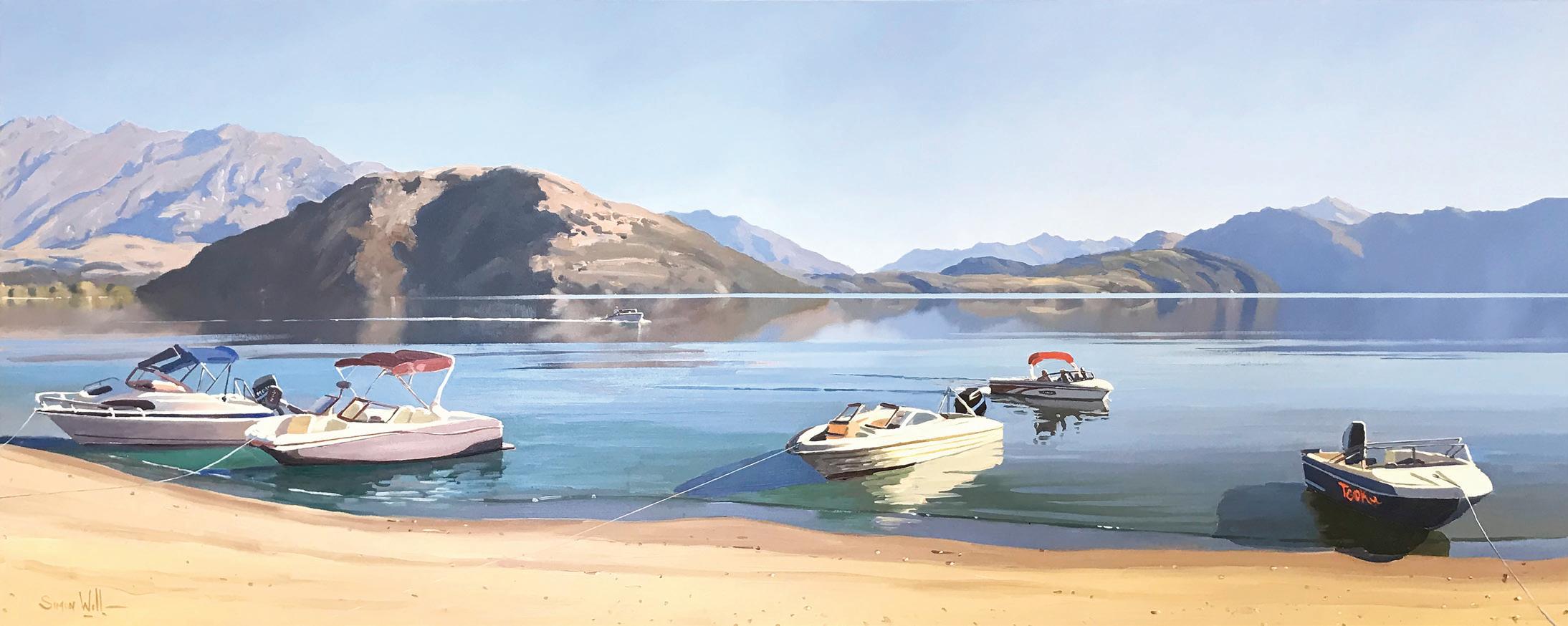
Boats are moored on the white shoreline of Glendhu Bay, Lake Wanaka. Glendhu Bay is a long crescent shaped stretch of reflective, crystal clear water and a popular lakeside launch point for boats.
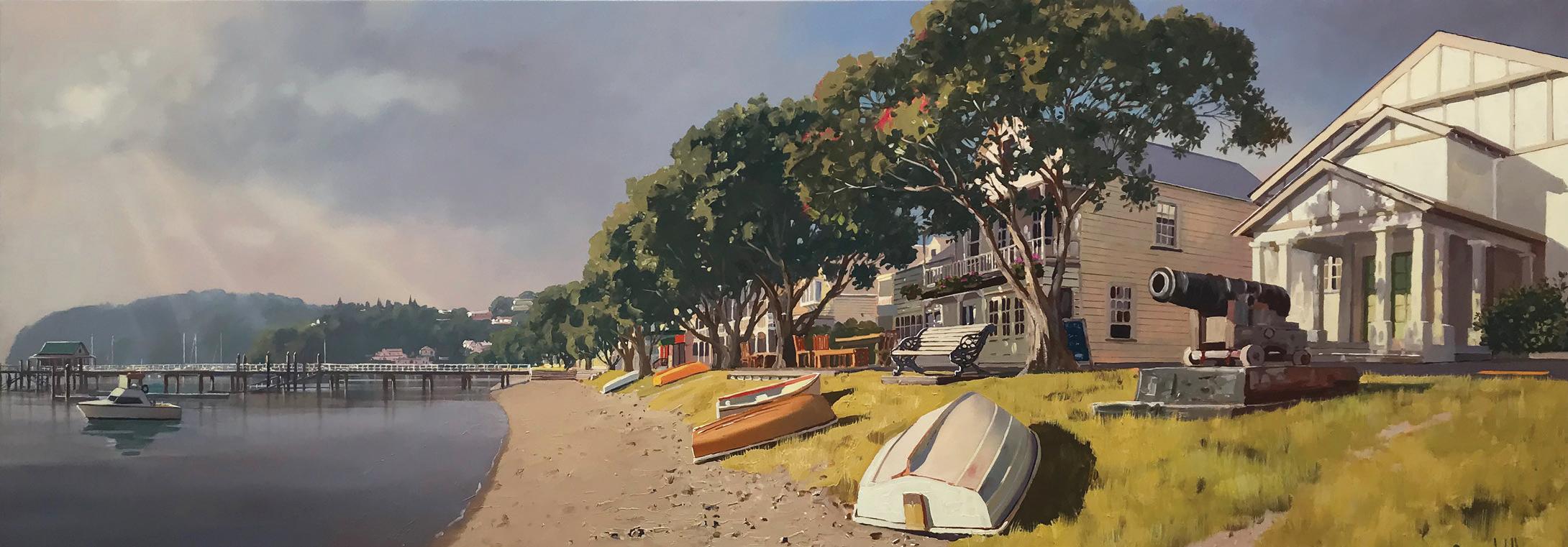
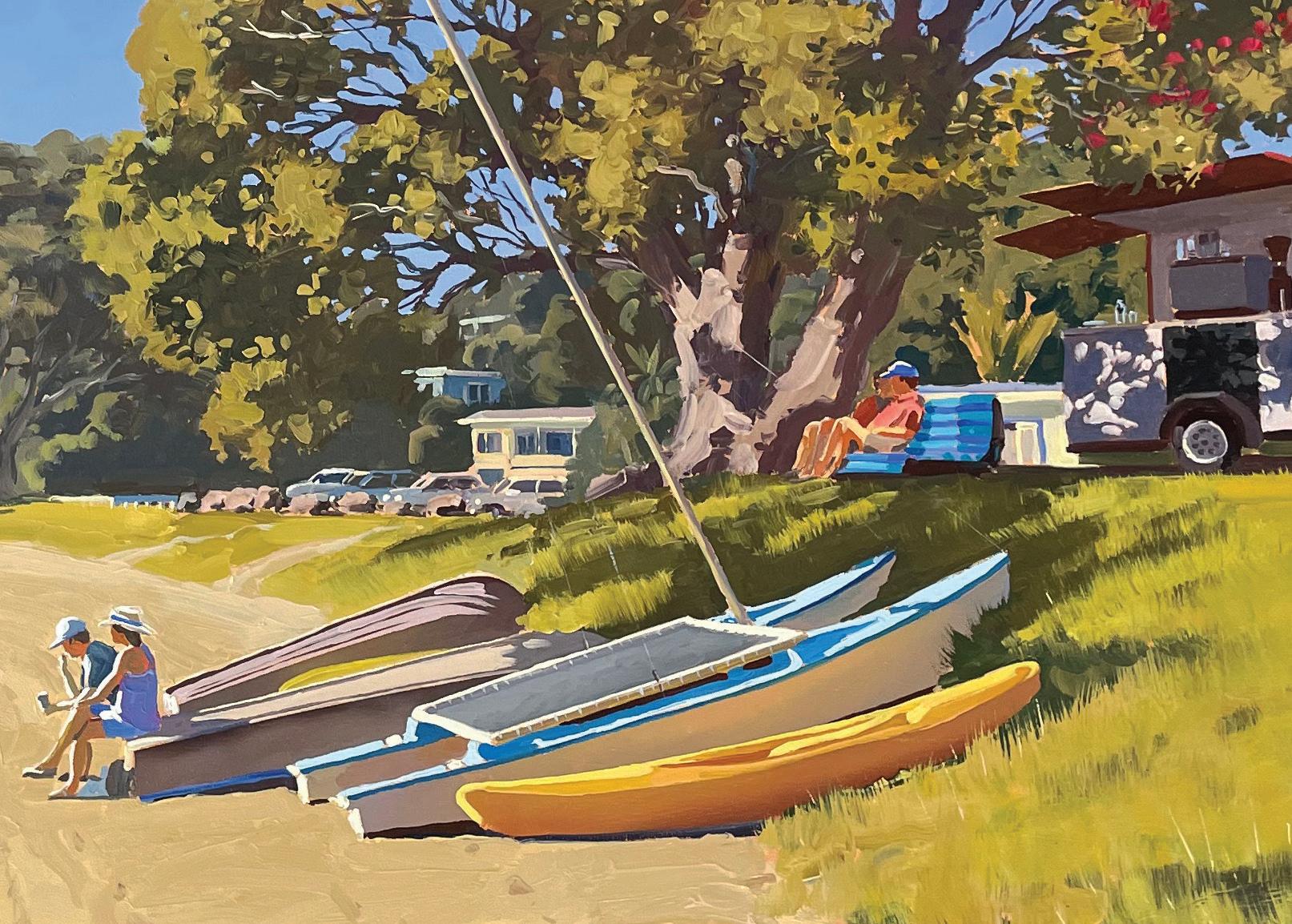
The viewer is invited to take a stroll along Russell’s historical waterfront. Kororareka beach is bordered by a bank of soft gold grasses above which stands a long row of pohutakawa trees. Covered with crimson blossoms at Christmas time, these magnificent trees were planted by pupils of Victor Lindauer. Victor was the son of portrait painter, Gottfried Lindauer, and in 1931 he was headmaster at the local Russell primary school.
In front of the white washed, green-trimmed Town Hall, stands a cannon which saw action in the 1845 defence of Te Maiki against the warrior chief, Hone Heke, a reminder of the region’s volatile history. Our stroll continues to the popular balconied restaurant known as The Gables. Originally constructed in 1847 from pit-sawn Kauri on whalebone foundations, the establishment once welcomed ashore hard-drinking whalers and seafarers. In the distance the wharf awaits as the welcoming point for ferry passengers from Paihia.


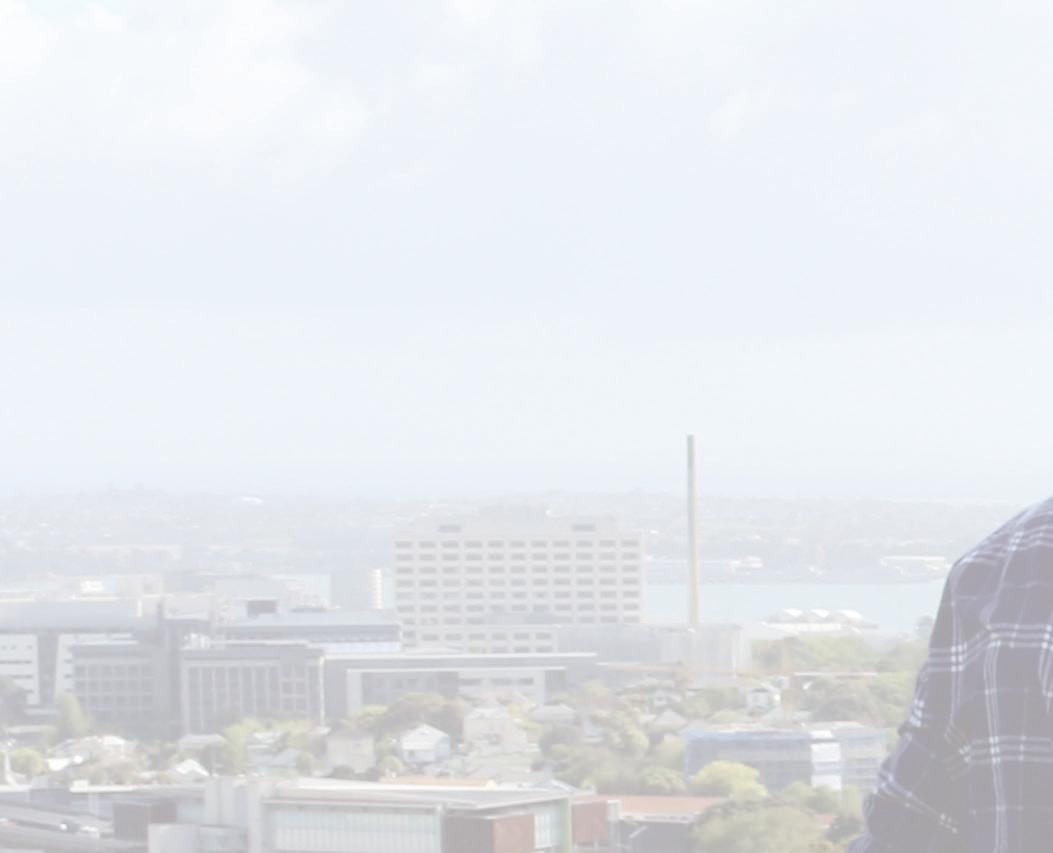
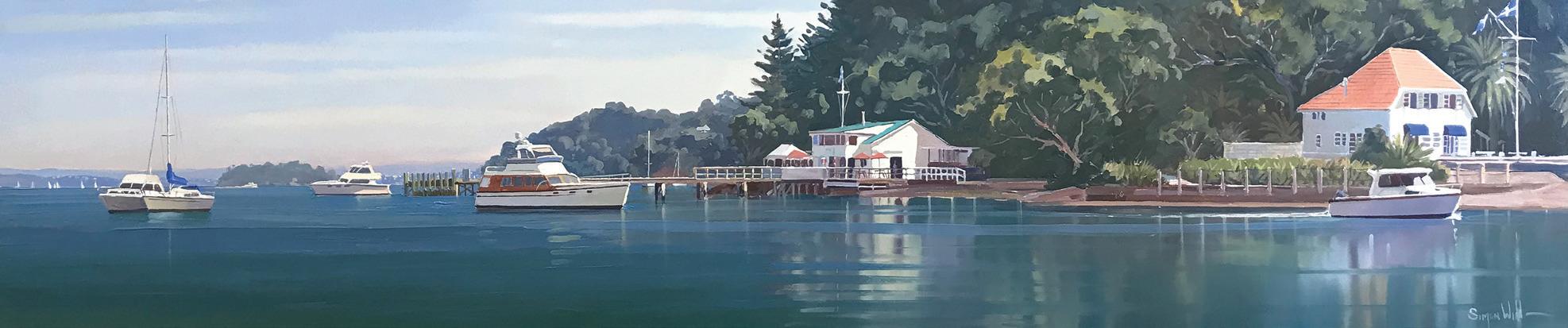
Across an expanse of calm Waitemata waters, the Chelsea Sugar Refinery nestles amongst bush on the edge of Auckland’s North Shore. Following an 1881 visit by Edward Knox, Chairman of the Colonial Sugar Refining Company, an initial 76 hectares of land were purchased and 150 men employed. By 1884 the refinery was completed and has operated 24 hours a day ever since. The name Chelsea was bestowed on the site by the refinery’s first customs officer, who named it after his birthplace of Chelsea, London. Today the Chelsea Refinery, with its welcoming cafe, visitors centre and surrounding bush walks remains very much a part of the community. Listed as a heritage site, and painted in distinctive Tuscan Red, the Chelsea Refinery is a perfect Simon Williams subject.
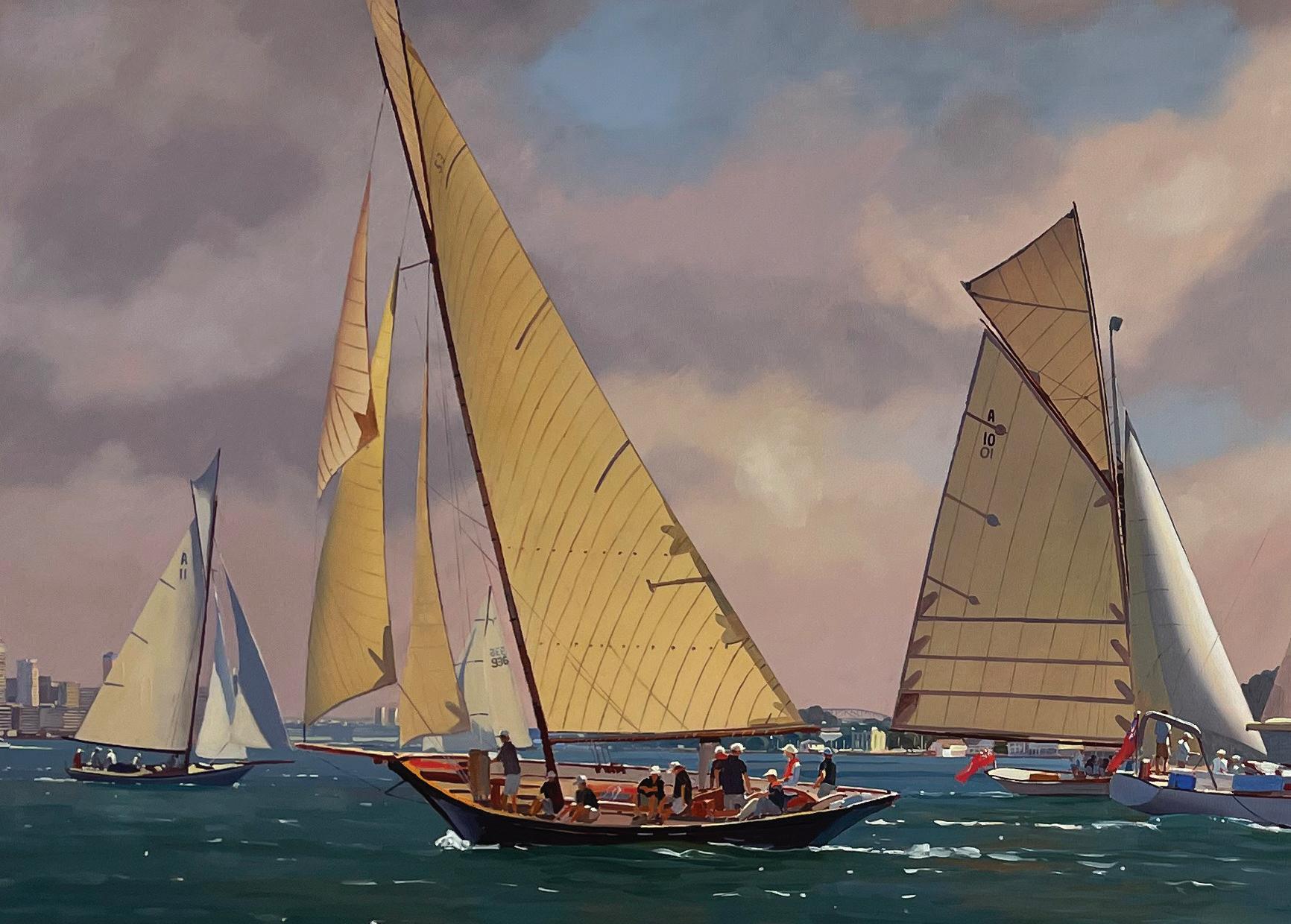
City of Sails, Auckland | Oil on canvas | 76 x 213 cm | $12,500