IMPORTANT & RARE ART
Auction 6:00pm Tuesday 16 November 2021
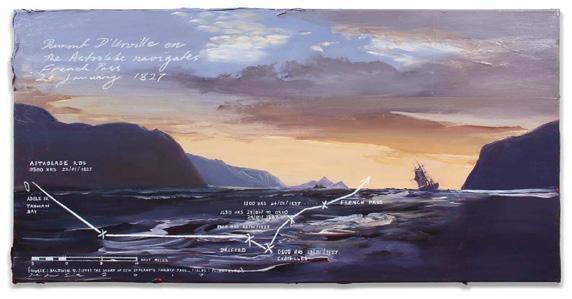
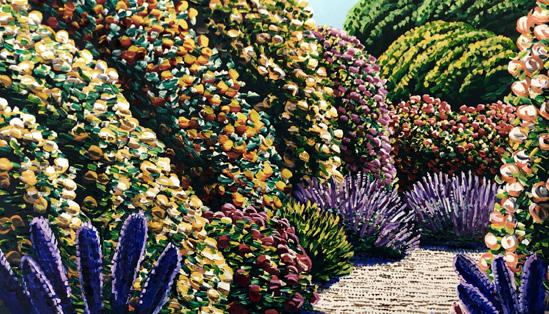
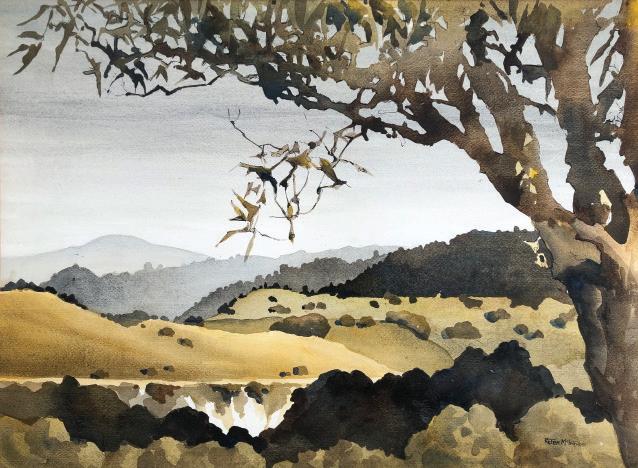
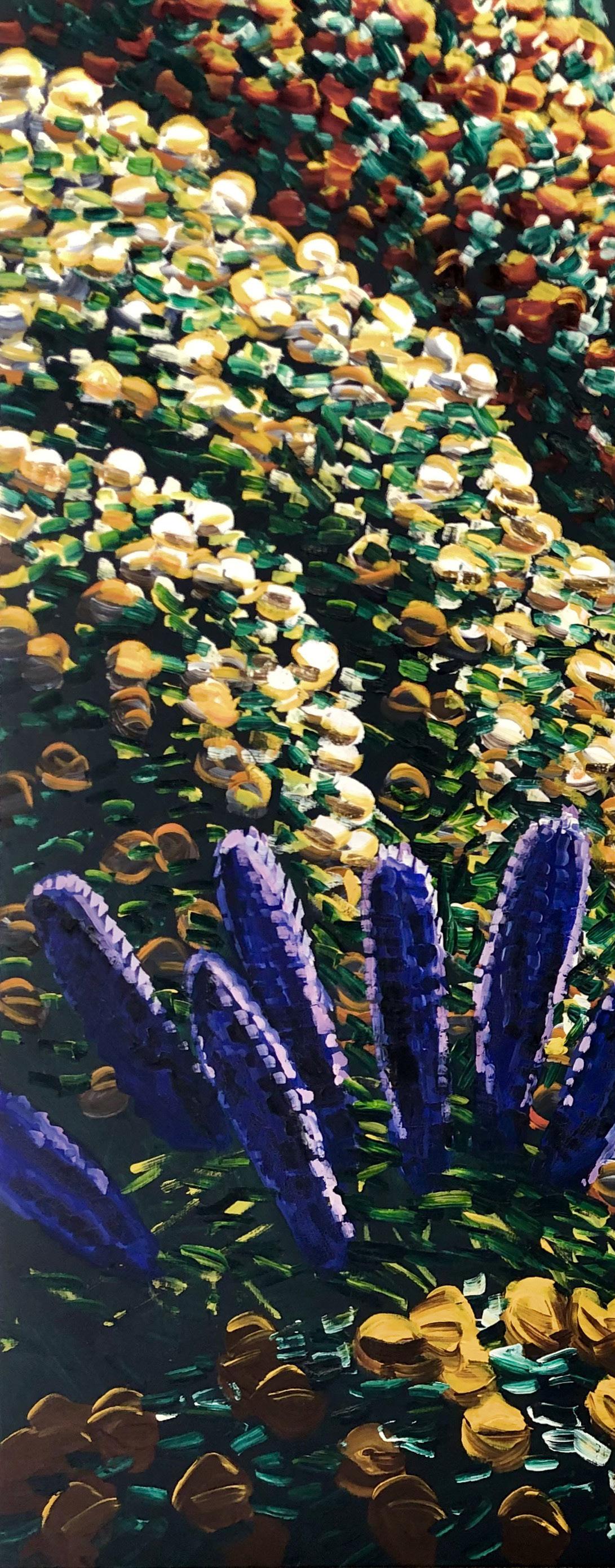
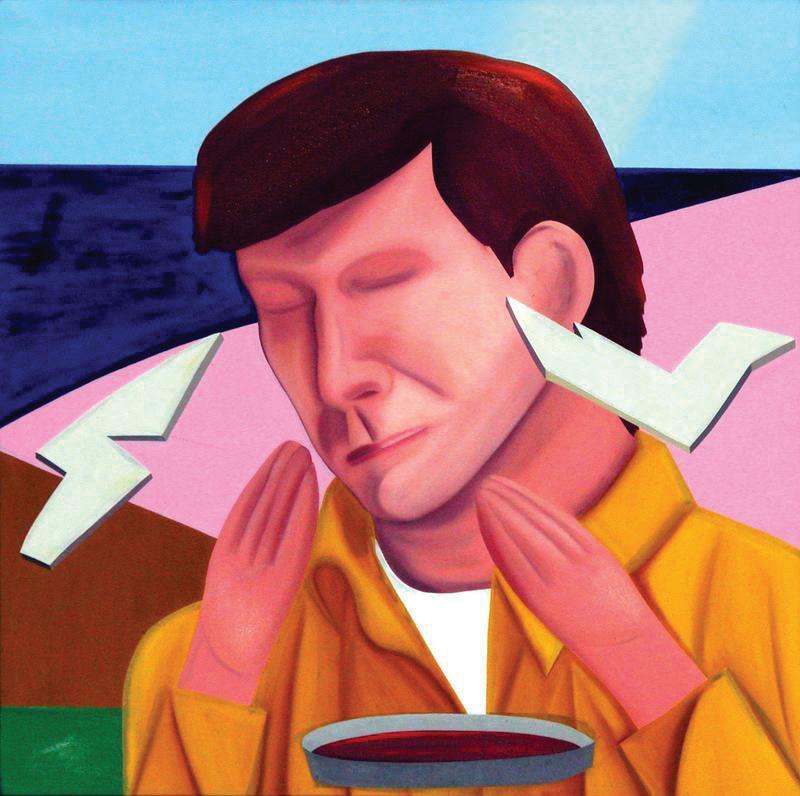
Lot 24 Stanley Palmer
CELEBRATING 50 YEARS OF ART AUCTIONS IN PARNELL SINCE 1971

Auction 6:00pm Tuesday 16 November 2021
CELEBRATING 50 YEARS OF ART AUCTIONS IN PARNELL SINCE 1971
Auction 6:00pm Tuesday 16 November
Viewing Times & Other Information
Viewing times:
Wednesday 10 November 10:00am - 4:00pm Thursday 11 November 10:00am - 4:00pm
Friday 12 November 10:00am - 4:00pm
Saturday 13 November 11:00am - 2:00pm
Sunday 14 November 11:00am - 2:00pm
Monday 15 November 10:00am - 4:00pm
Tuesday 16 November 10:00am - 6:00m
Directors Richard Thomson & Frances Davies 202 Parnell Road, Auckland, New Zealand
Telephone + 64 9 379 4010 Toll Free 0800 800 322 www.internationalartcentre.co.nz
Contacts and Condition Reports
Richard Thomson
Ph +64 9 379 4010
richard@artcntr.co.nz
Mobile 0274 751 071
Maggie Skelton
Ph +64 9 379 4010 maggie@artcntr.co.nz
Luke Davies
Ph +64 9 379 4010 luke@artcntr.co.nz
Please register on our bidding platform to participate remotely https://auctions.internationalartcentre.co.nz
Conditions of Sale p. 139
Absentee & telephone bids p. 133
202 Parnell Road, Auckland, New Zealand
Telephone + 64 9 379 4010 Toll Free 0800 800 322 www.internationalartcentre.co.nz
With two consecutive five million dollar sales, International Art Centre continues to celebrate it’s 50th Anniversary year with the achievement of new art auction records and market highlights in both our Summer and Winter Important & Rare Art auctions.
The recently rediscovered and repatriated Rialto Steps by Frances Hodgkins, from a family collection in Italy, made $313,300 against an estimate of $70,000 - 100,000. Michael Illingworth’s iconic Mr & Mrs Piss-Quick, doubled the previous record
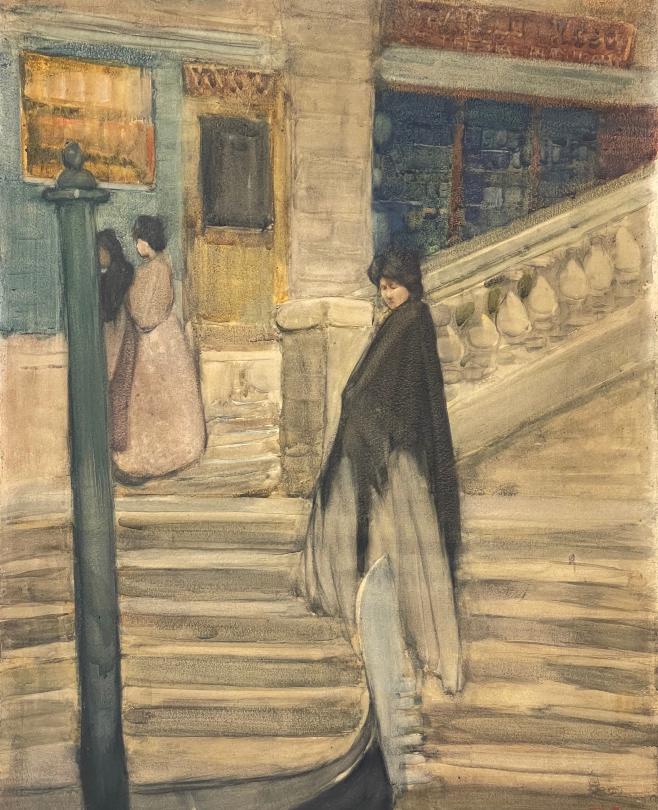
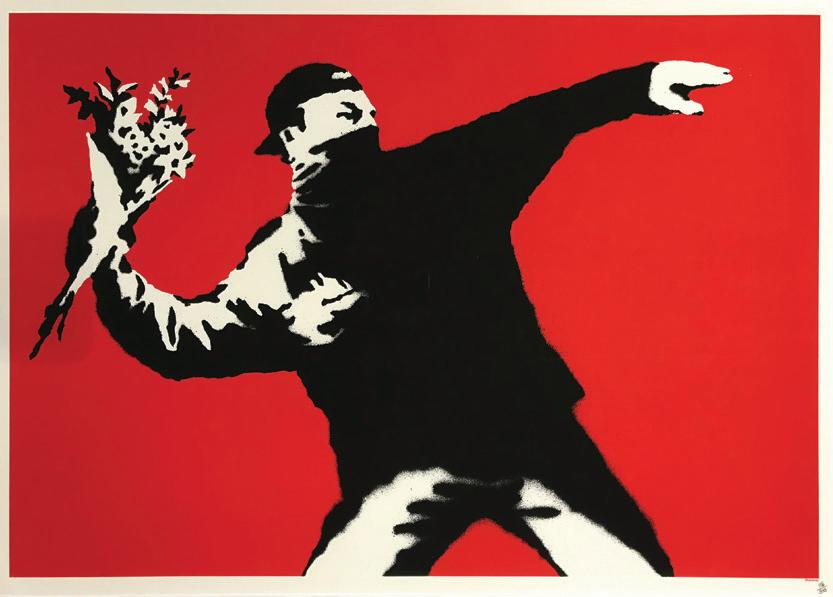
price for a work by this artist when is achieved $468,400. The Widow, one of two works by Charles Frederick Goldie featured in the sale, realised $666,500. This was the second highest price of the year achieved for a work sold at auction. The highest being Banksy’s Keep It Real which fetched $1.7 million in our March sale. A smaller work of an Arawa Chieftainess by Charles Frederick Goldie sold for $444,400. The sale also saw over $650,000 worth of Banksy’s screenprints find new homes.
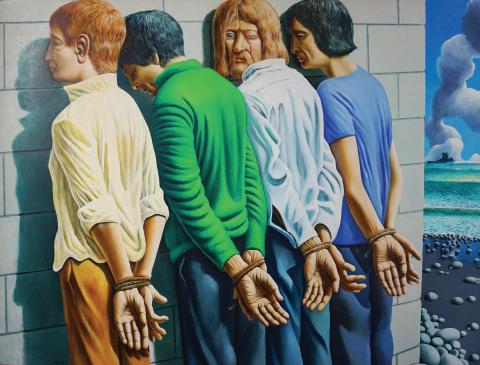
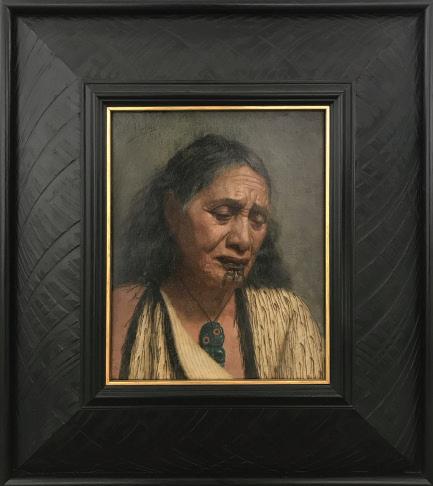
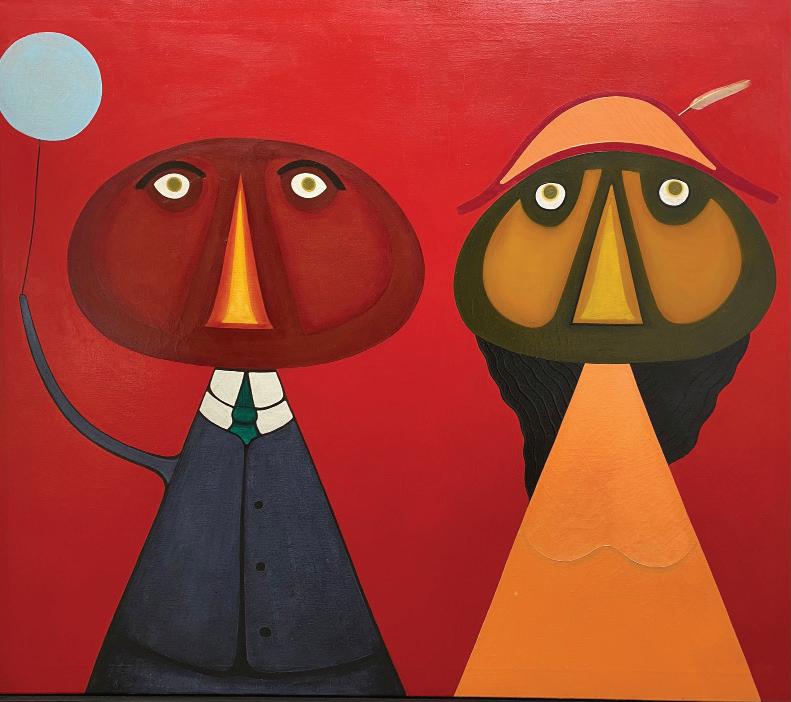
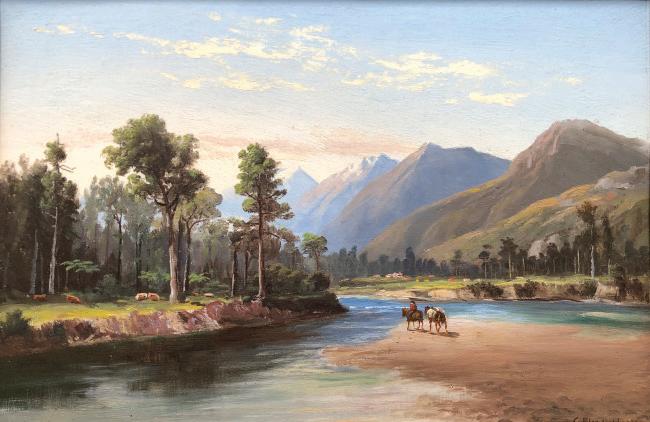
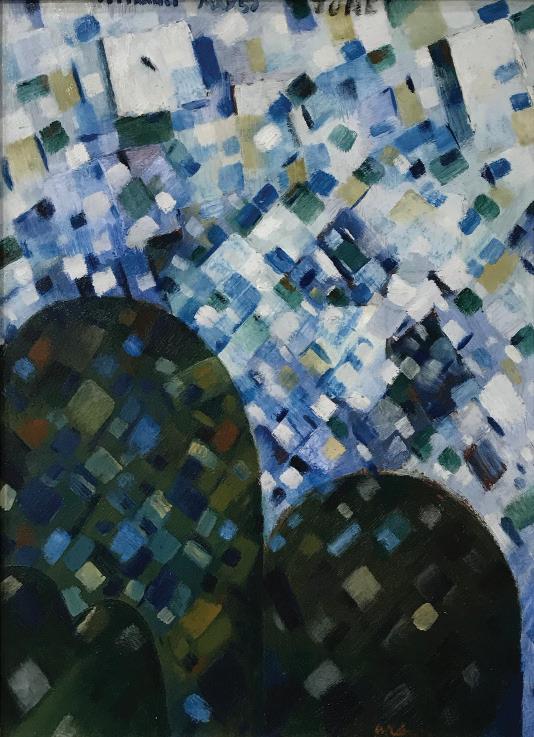
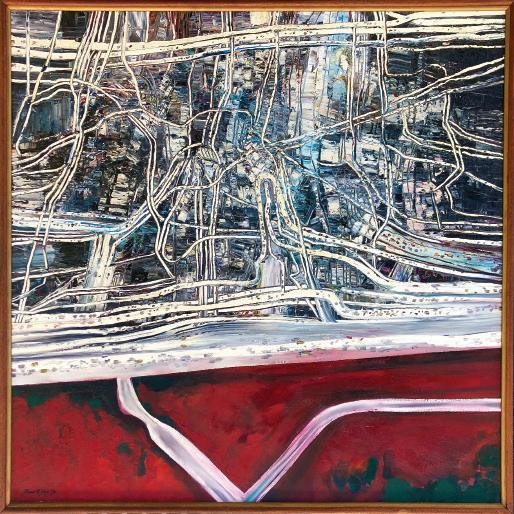
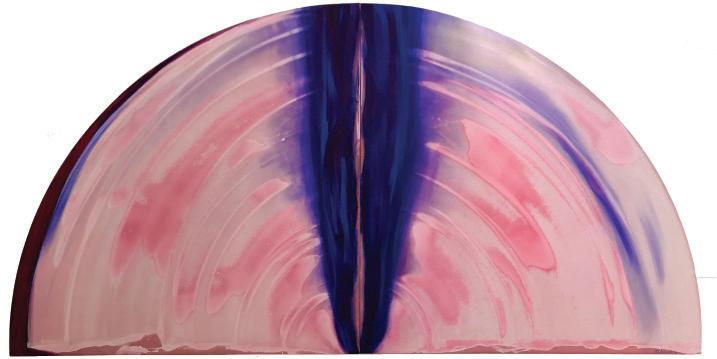
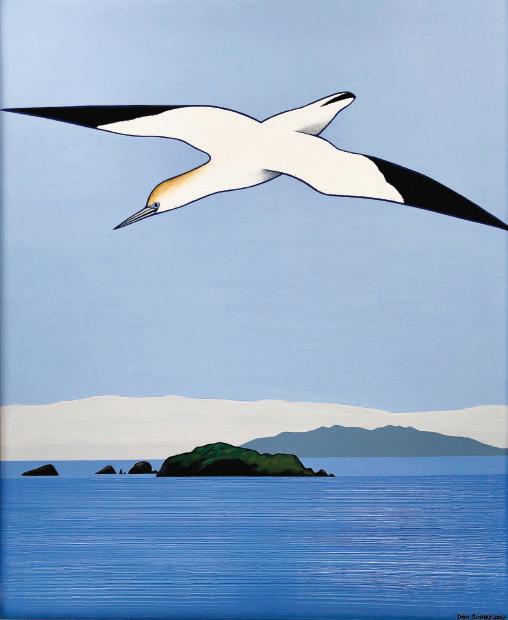
Excitingly this virtual auction was one of the busiest in our 50 year history. Adapting to the current climate, paintings were placed on view in the extensive windows of our Parnell Road gallery. This sparked interest and lifted the spirits of many. Encouragingly record registrations on our bidding platform and widespread downloading of the International Art Centre App ensued.
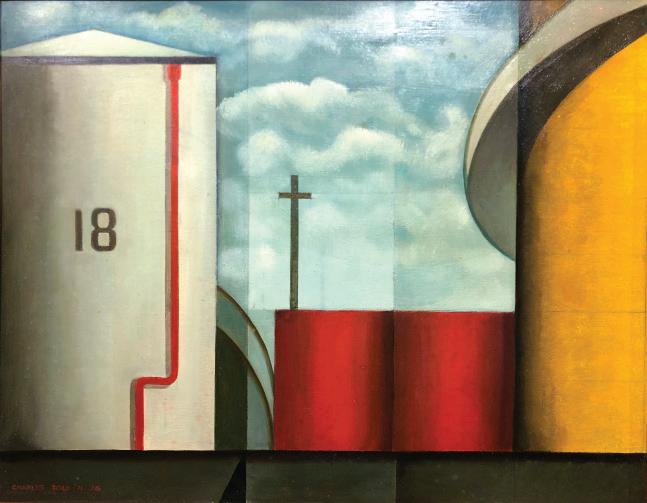
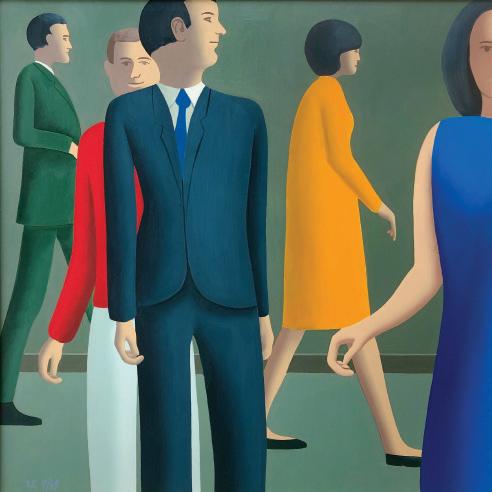
Online action coupled with phone and absentee bidding resulted in a night to remember. A number of new auction records were set as numerous bidding duels took place. A 95% sell rate with over half the offering exceeding top-end estimates was clear confirmation of technology enabling commerce and the public’s positive response to quality works of art.
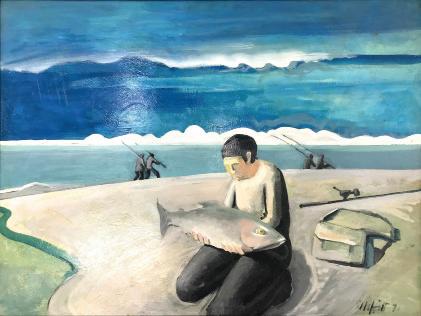
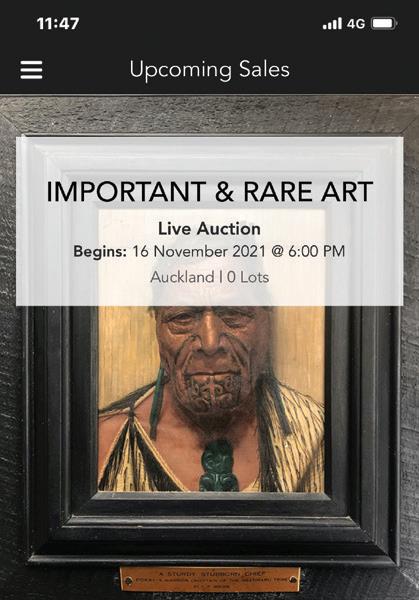
• Visit https://auctions.internationalartcentre.co.nz to register on our online bidding platform
• Apple users may download the International Art Centre App from the App store
• Android users download from Googleplay
• Our bidding platform allows you to browse catalogues, enjoy auctions in real time and place bids from anywhere in the world
• Watch and participate in the auction remotely





Please note there is no surcharge to use this bidding option for Live auctions or Timed auctions
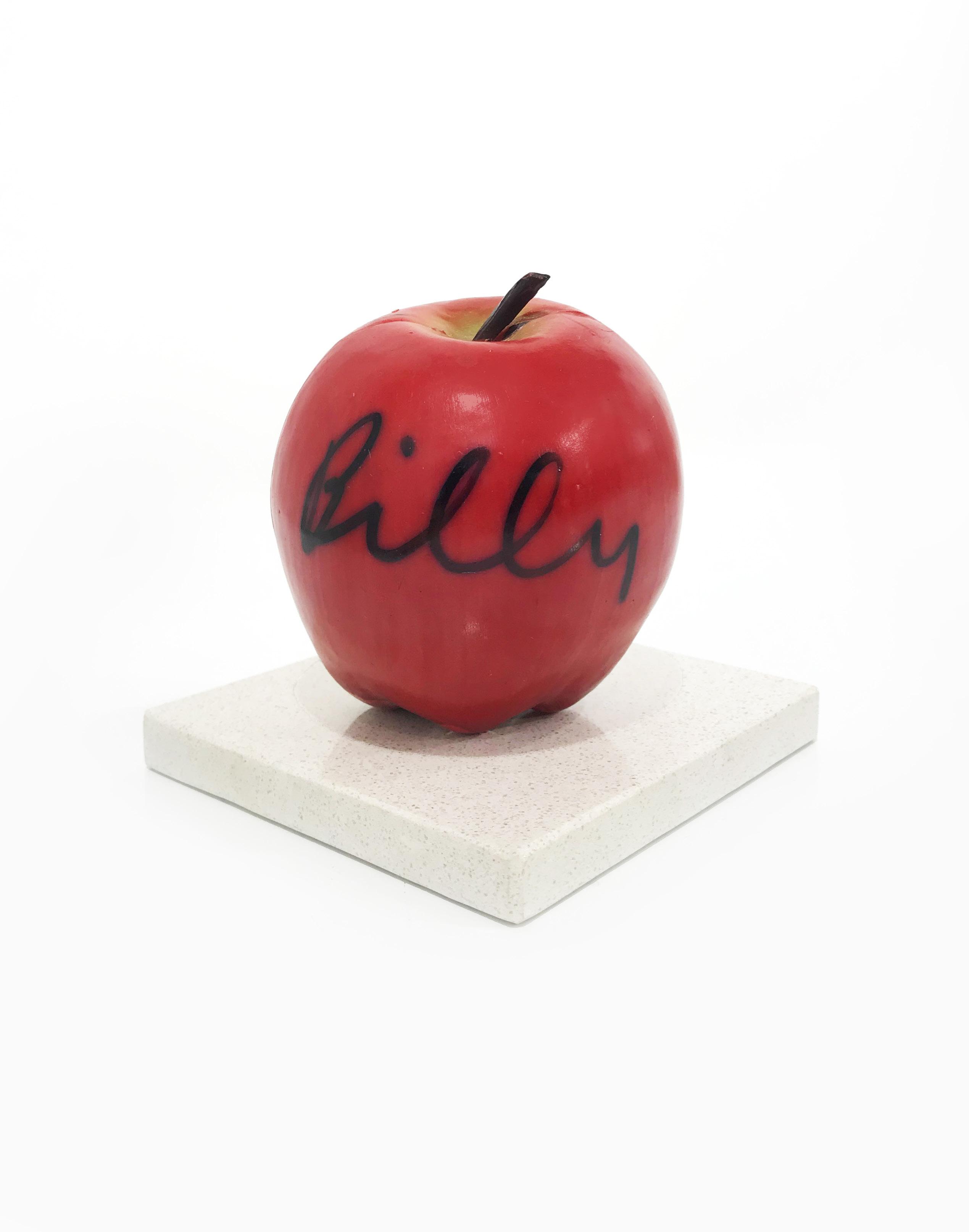
A PRIVATE COLLECTION OF WORKS BY BILLY APPLE INCLUDED IN ART at HOME ONLINE ONLY AUCTION 25 - 30 NOVEMBER


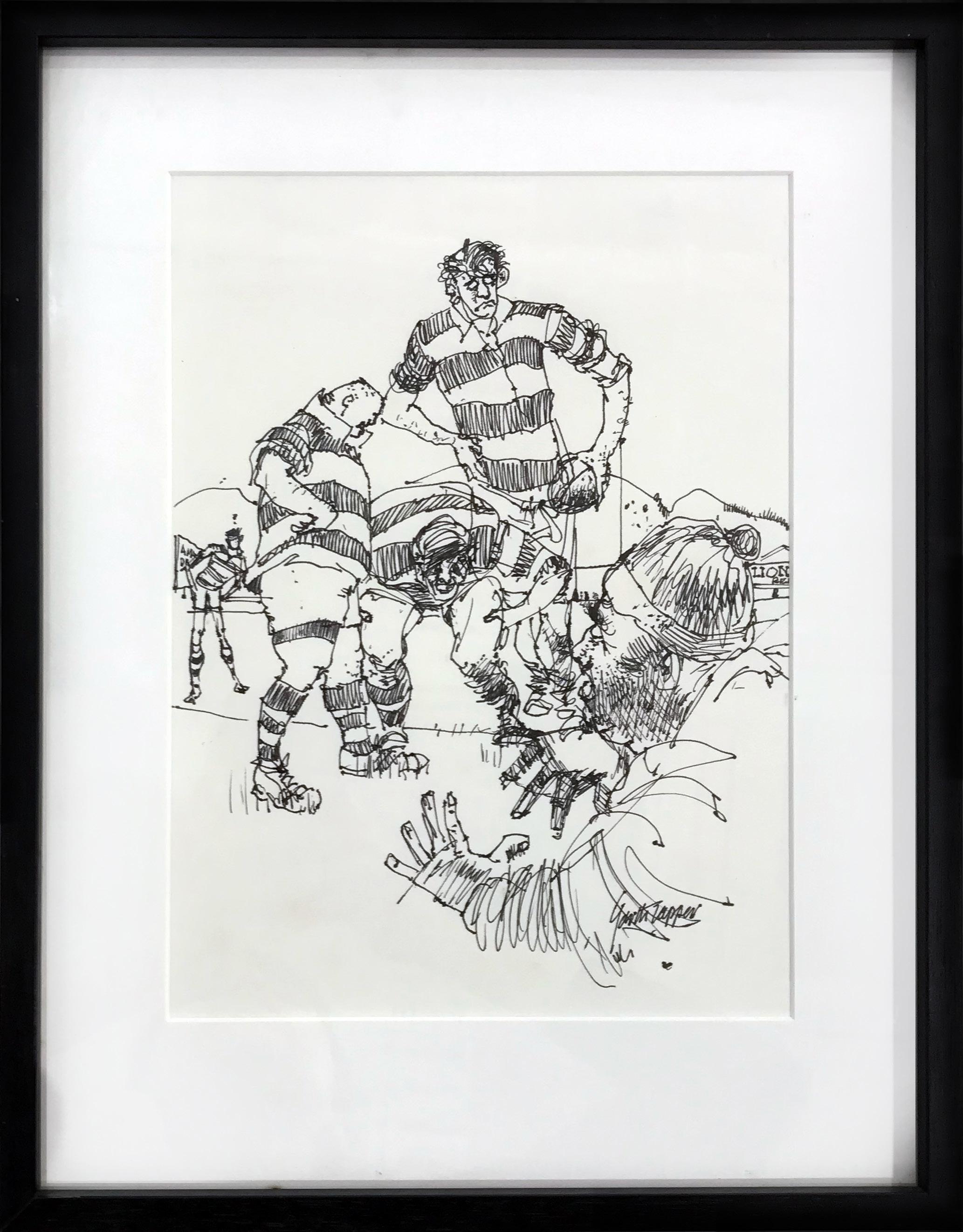
Sketches from the Collection of the late Kevyn Male TIMED ONLINE ONLY AUCTION 25 - 30 NOVEMBER
01 PETER
Two Cones, 1973
Oil on board 39 x 60
(1935 - 2011)
Signed & dated 1973
$4,000 - 6,000
PROVENANCE
Artist’s Estate Collection
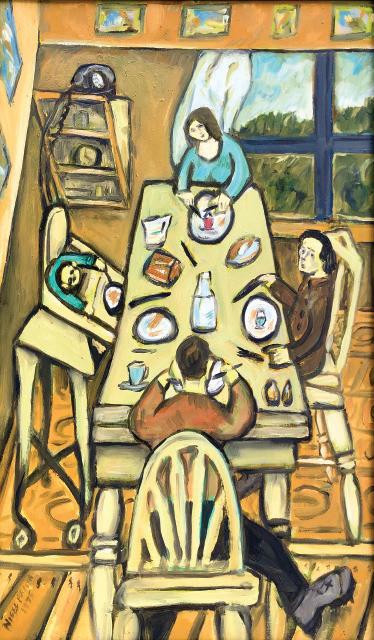
Family Table from the Table Series
Oil on board 58.5 x 34
Signed & dated 1975
$8,000 - 12,000
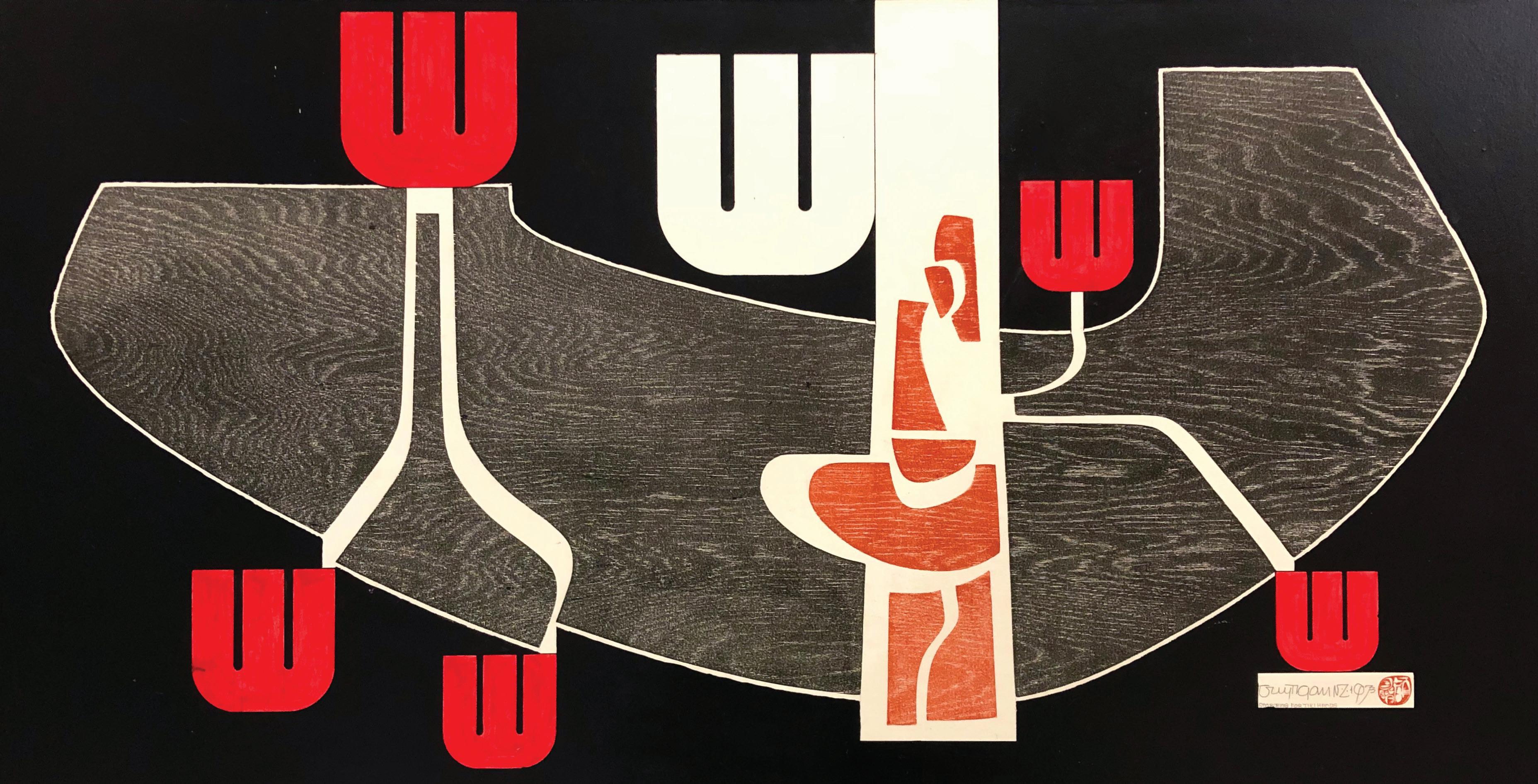
03 GUY NGAN (1926 - 2017)
Searching for Tiki Hands
Acrylic, oil, woodcut on board 61 x 119.5
Signed, inscribed Searching for Tiki
Hands & dated 1973
$18,000 - 26,000
PROVENANCE
Private Collection, Auckland
Ex Collection of Artist’s Estate
Cordy’s
EXHIBITED
Guy Ngan: Journey: Aluminium Panel, Tiki Hands, and Anchor Stones
City Gallery, Wellington, 18 June–24
September 2006
Exhibition label affixed verso
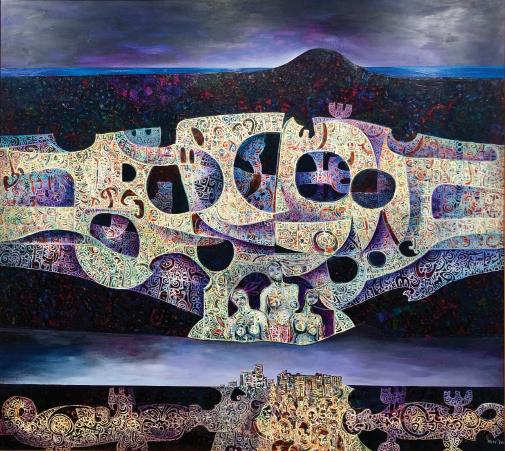
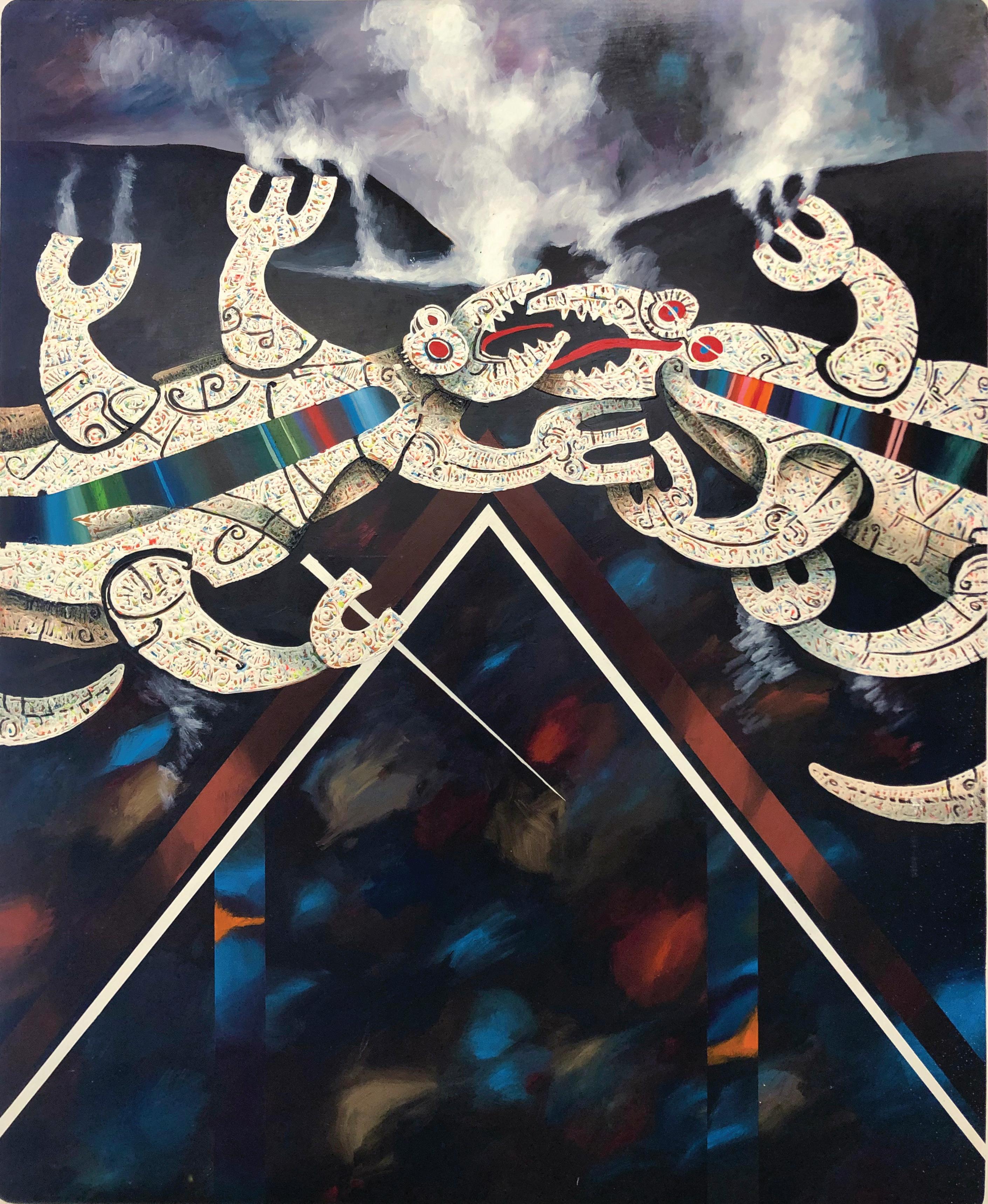
04 BUCK NIN (1942 - 1996)
Tuatara Landscape - the Fighting Tuataras of Putararu Over the Marae
Acrylic on board 124 x 100
Signed & dated 1990
$30,000 - 50,000
PROVENANCE
Private Collection, Auckland Important, Early & Rare, International Art Centre 30/03/2011
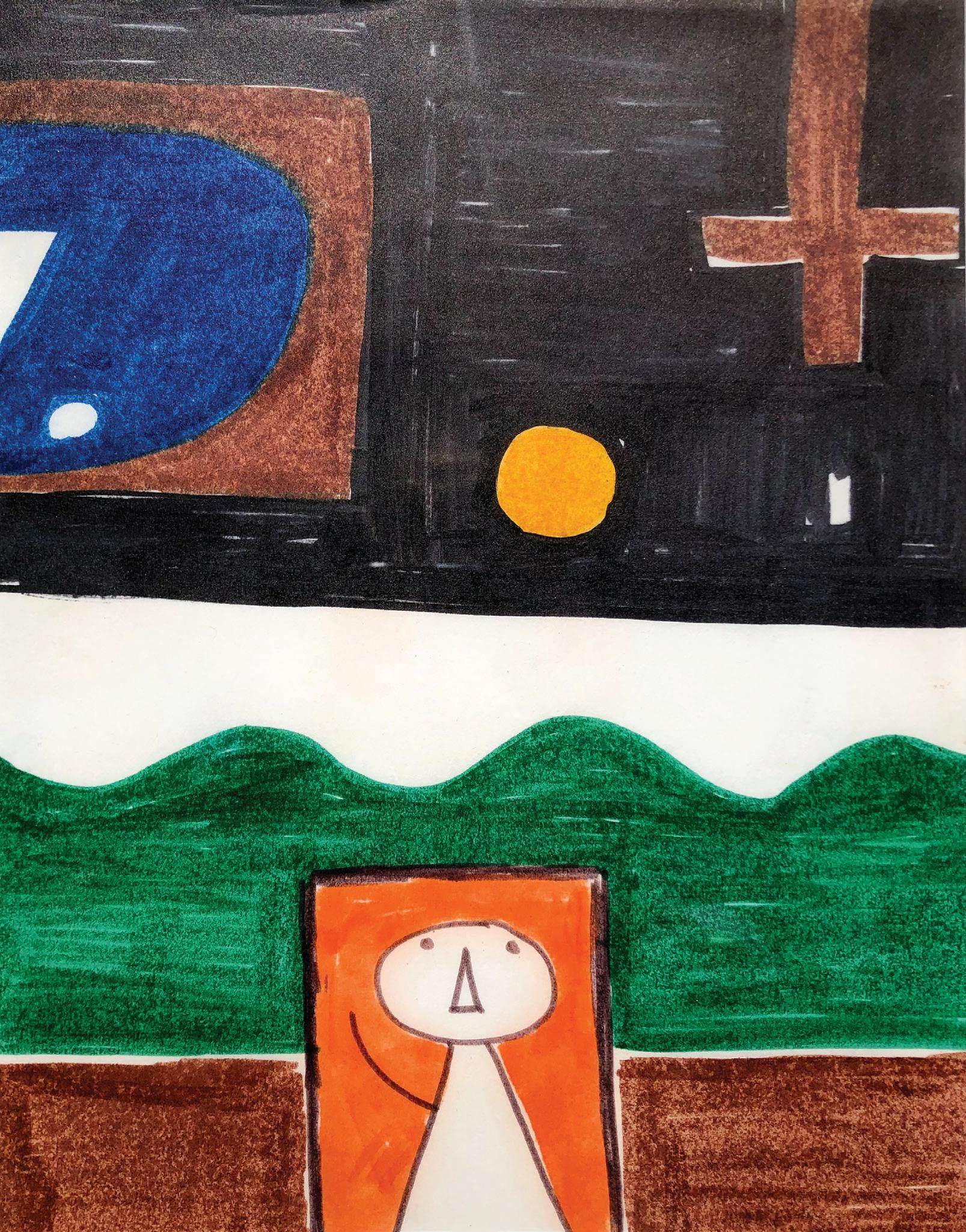
Tawera Figure Study
Coloured ink on paper 26 x 20.5
$8,000 - 12,000
Private Collection, Auckland
Ex Artist’s Estate Collection
The Estate of Michael Illingworth, Art + Object, 14/09/2017
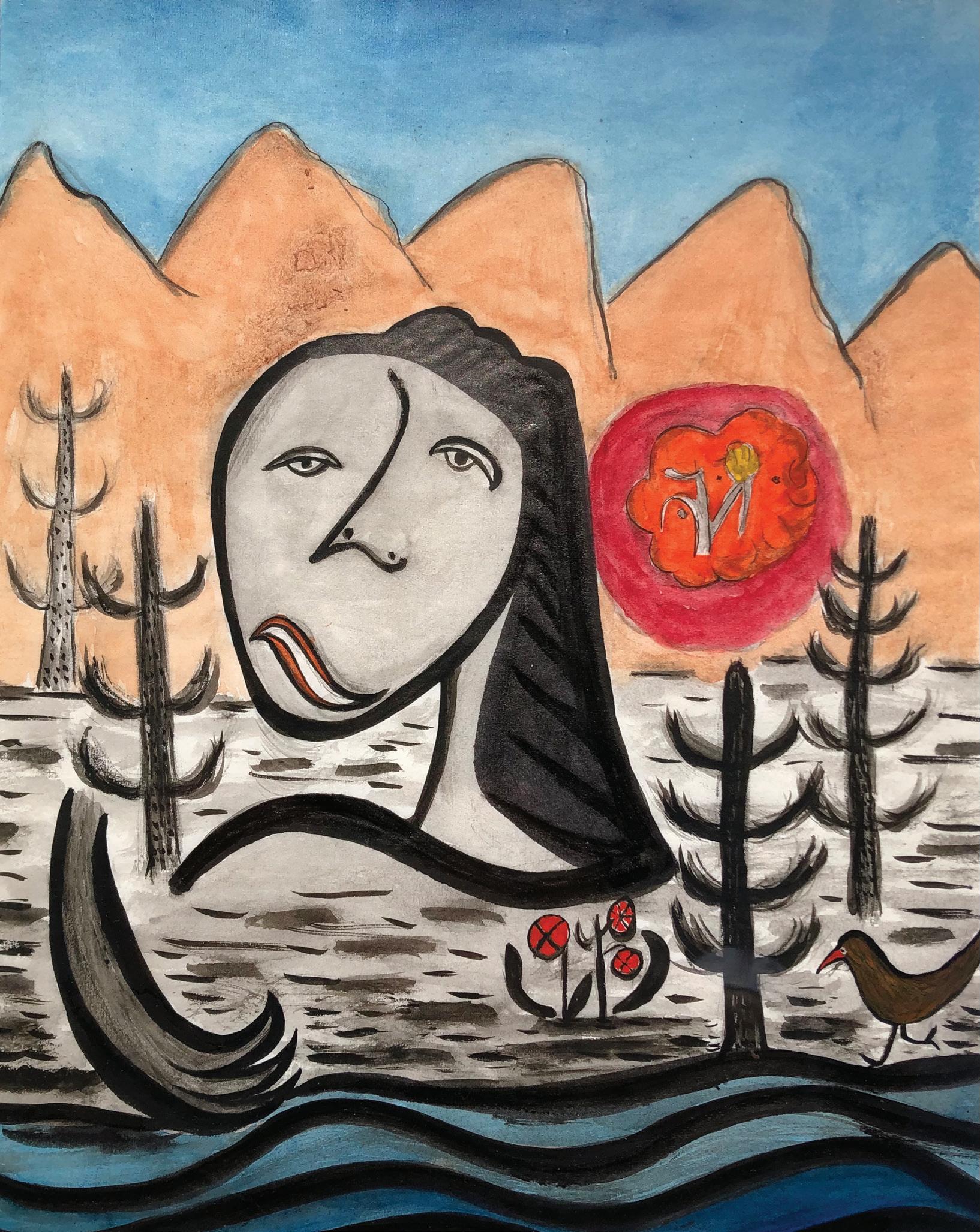
06 MICHAEL ILLINGWORTH (1932 - 88)
Untitled Acrylic and watercolour on paper 25 x 20
$8,000 - 12,000
Private Collection, Auckland
Ex Artist’s Estate Collection
The Estate of Michael Illingworth, Art + Object, 14/09/2017
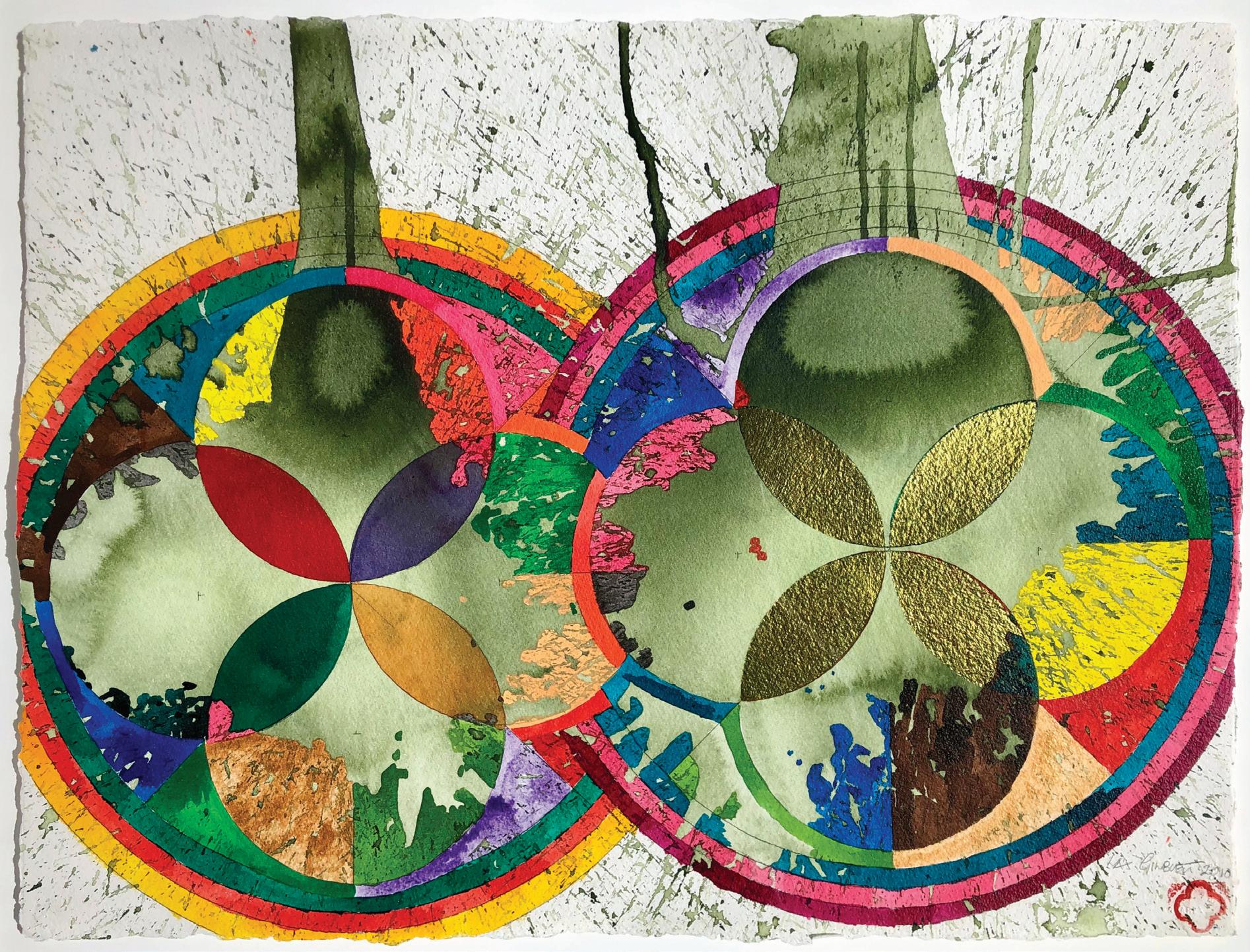
07 MAX GIMBLETT (b. 1935)
Double Entry
Mixed media, foils on paper 60 x 75
Signed & dated 2010
$8,000 - 12,000
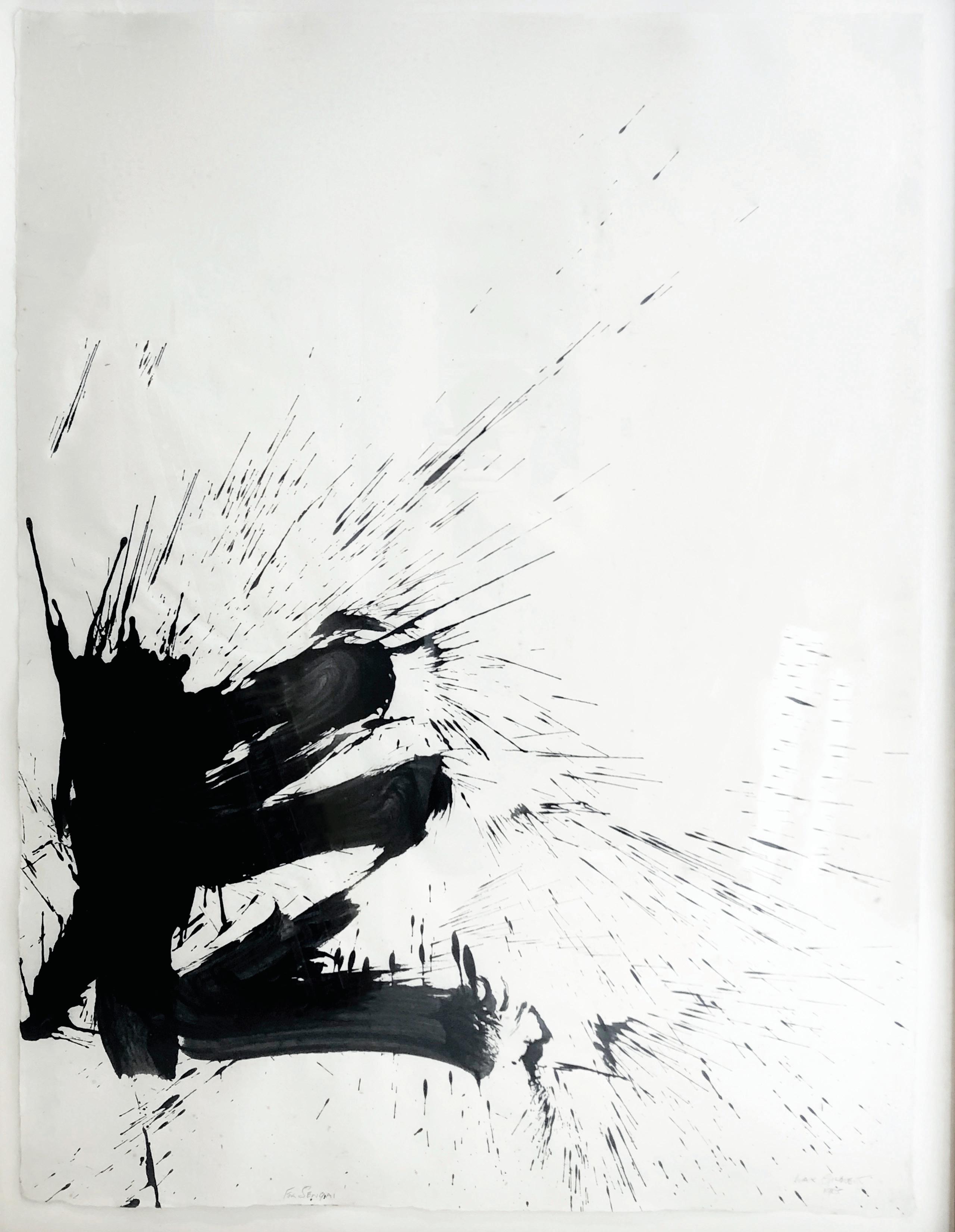
08 MAX GIMBLETT (b. 1935) For Sengai Ink on paper 120 x 90
Signed, inscribed & dated 1985
$4,000 - 6,000
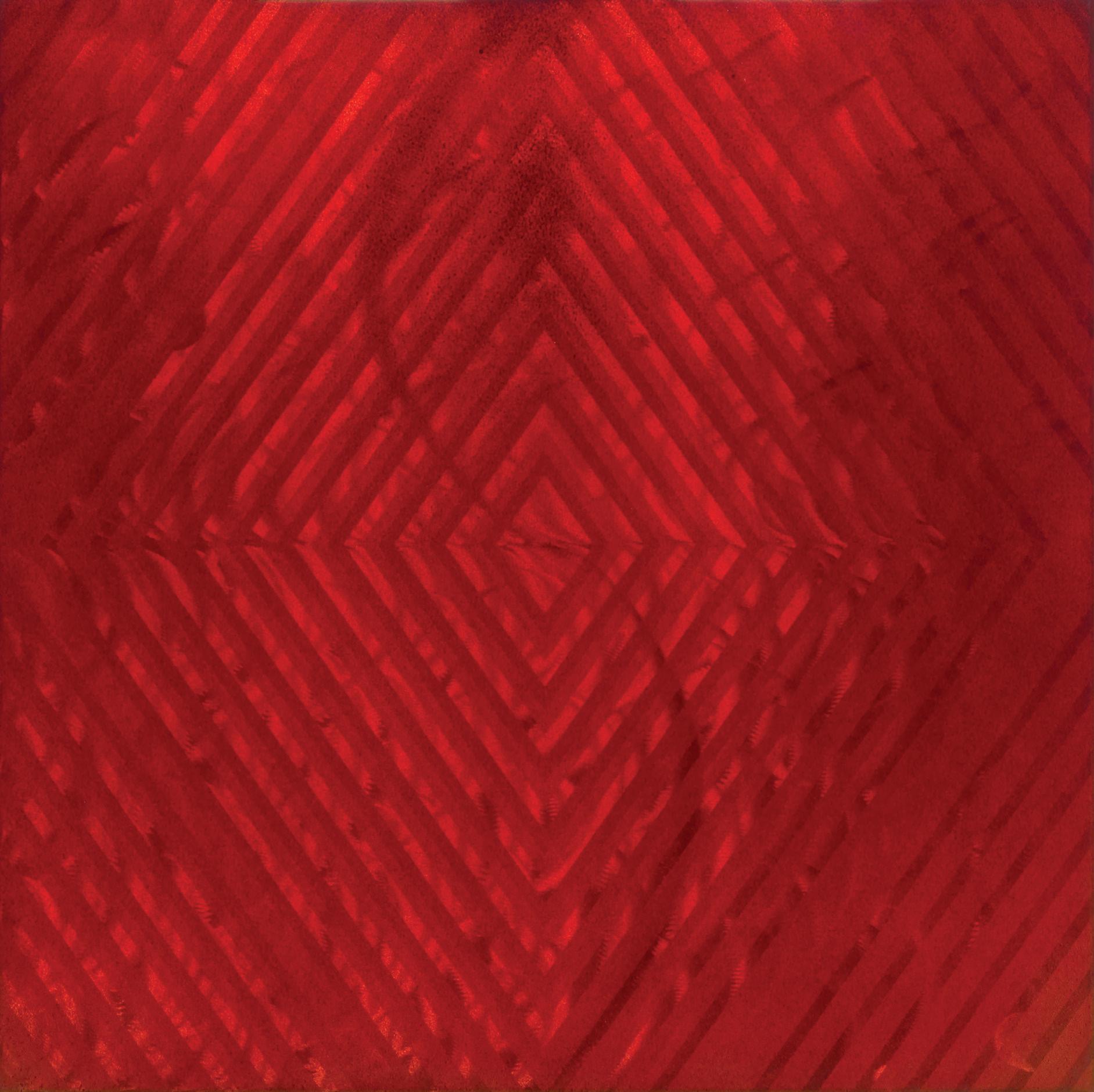
Mauri, 2018/19
Pigments, lacquer on etched stainless steel 80 x 80 x 4
Signed, inscribed Mauri & dated 2018/19 verso
$8,000 - 10,000
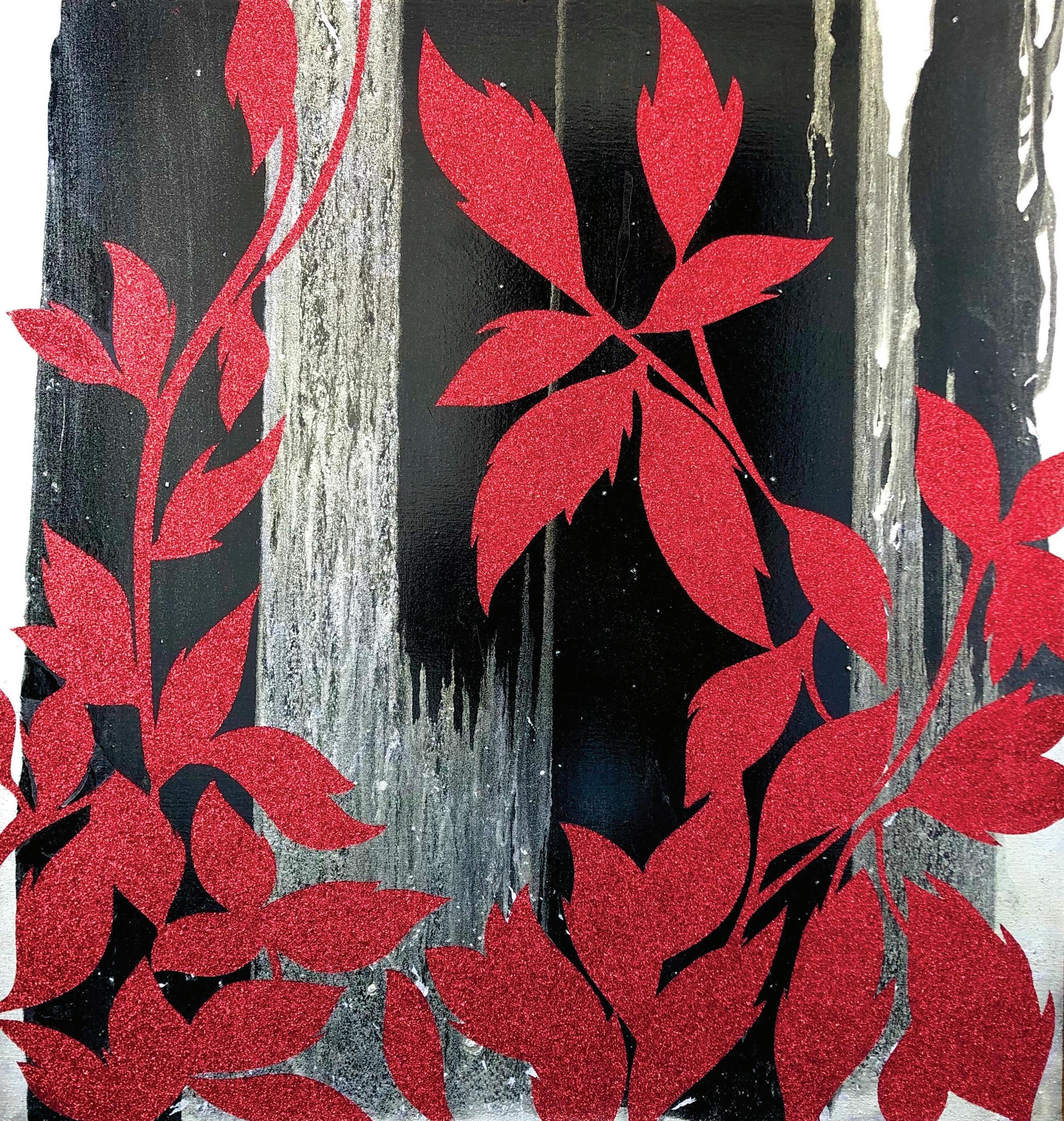
Freedom off the Shelf
Glitter, aluminium dust, gloss enamel & polyurethane varnish on canvas 106.5 x 101.5
Signed, inscribed & dated 2008 verso
$10,000 - 15,000
PROVENANCE
Private Collection, Wellington
Purchased from Milford Galleries, 2008
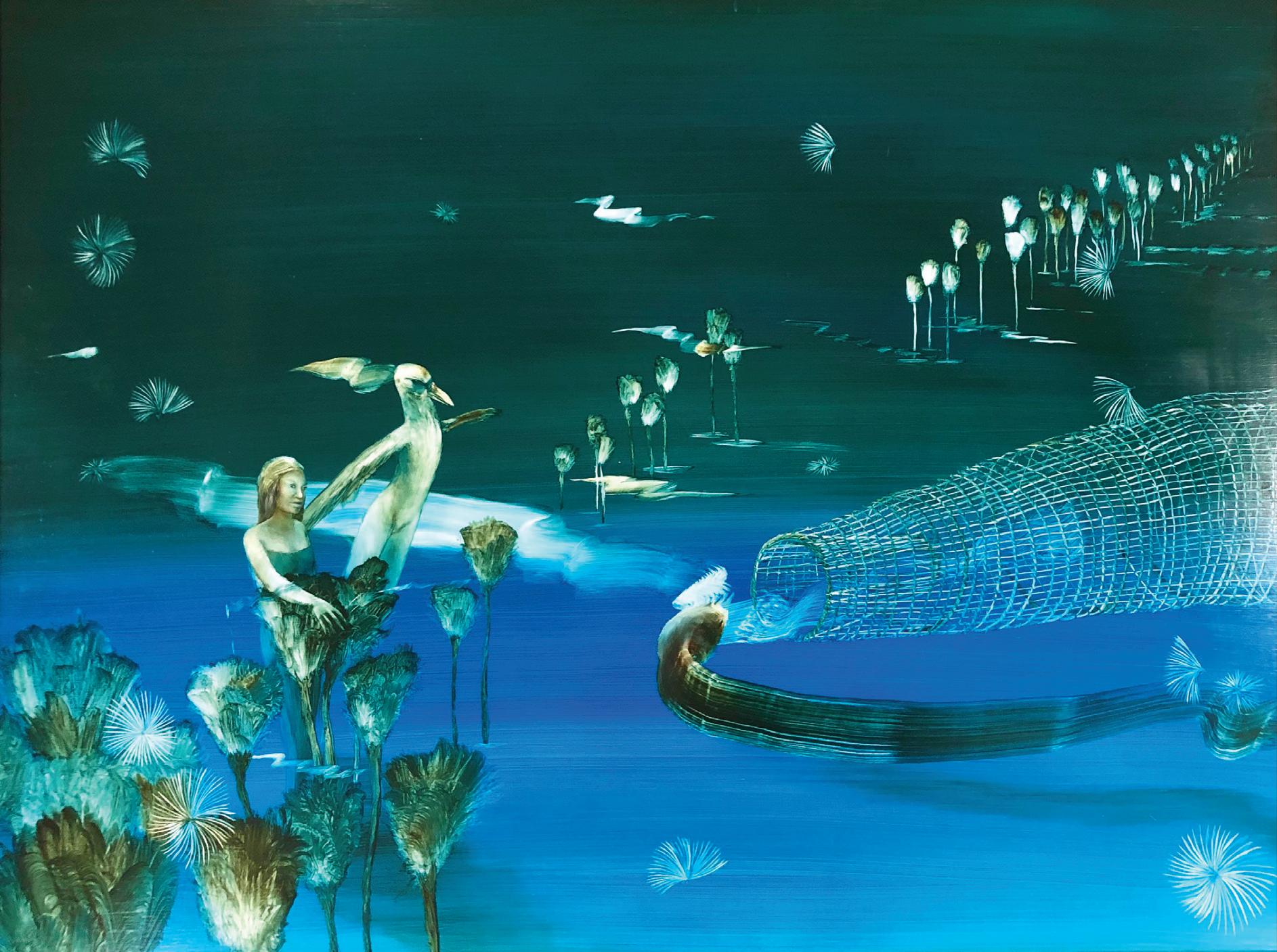
Policy on Eeling
Oil on board 90 x 120
Signed, inscribed & dated 2005
$15,000 - 20,000
PROVENANCE
Private Collection, Auckland
Purchased from John Leech Gallery
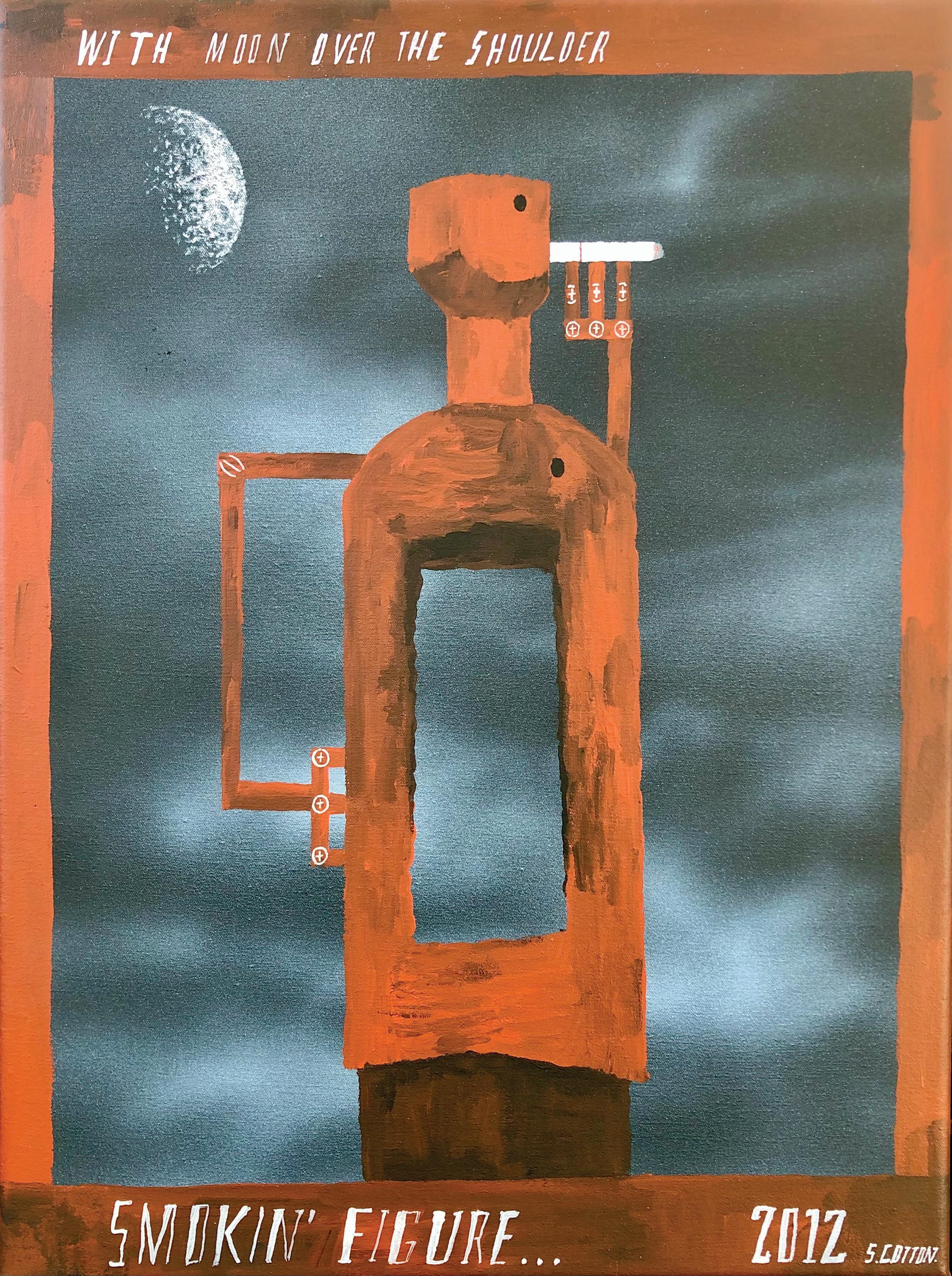
Smokin’ Figure
Acrylic on canvas 40 x 30
Signed, inscribed & dated 2012
$10,000 - 15,000
PROVENANCE
Private Collection, Wellington
Purchased from Black Barn Gallery, 2013
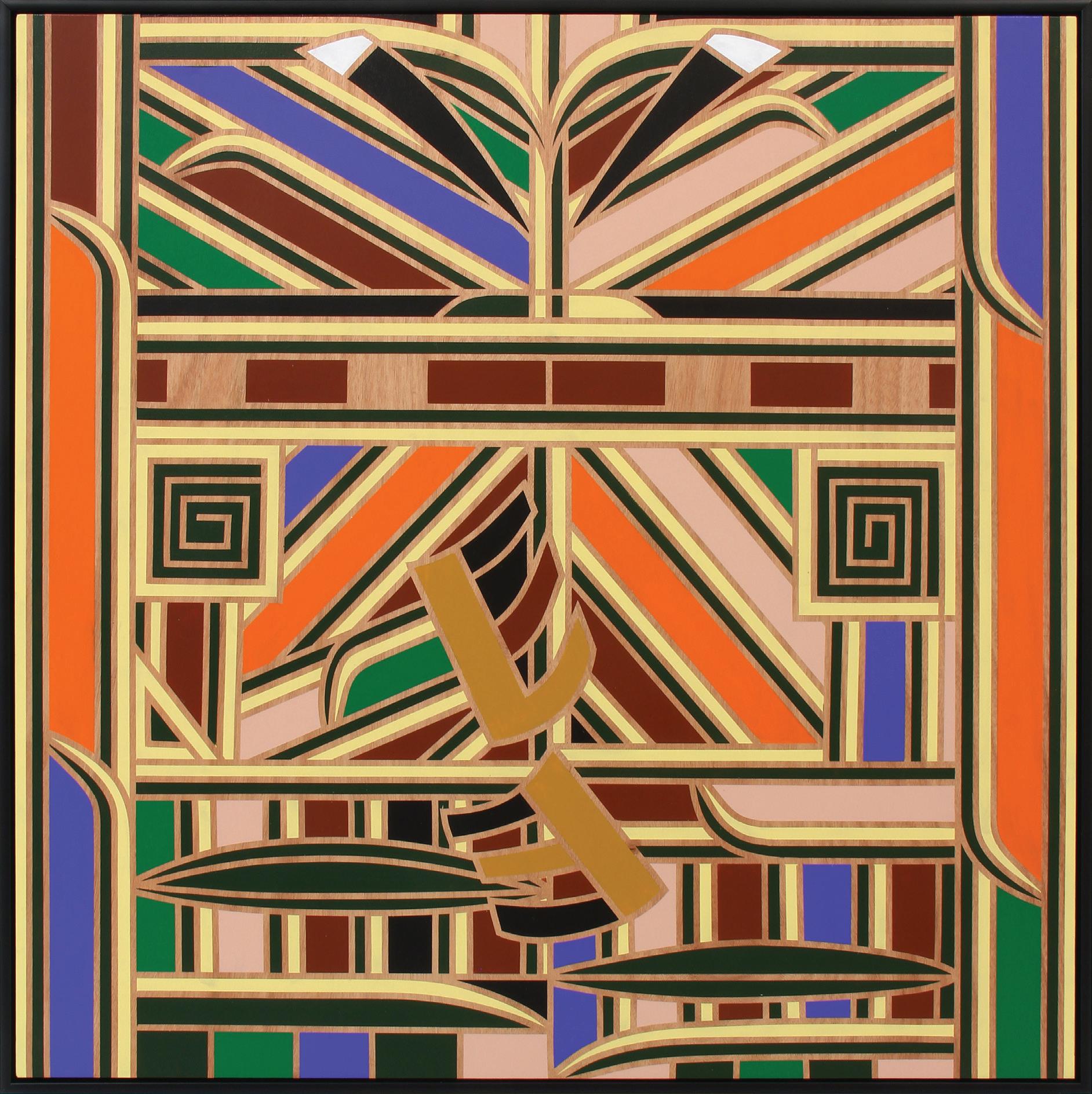
Aroha,
Spray paint & acrylic on marine ply 100 x 100
Signed, inscribed Aroha & dated 2015 verso
$5,000 - 7,000
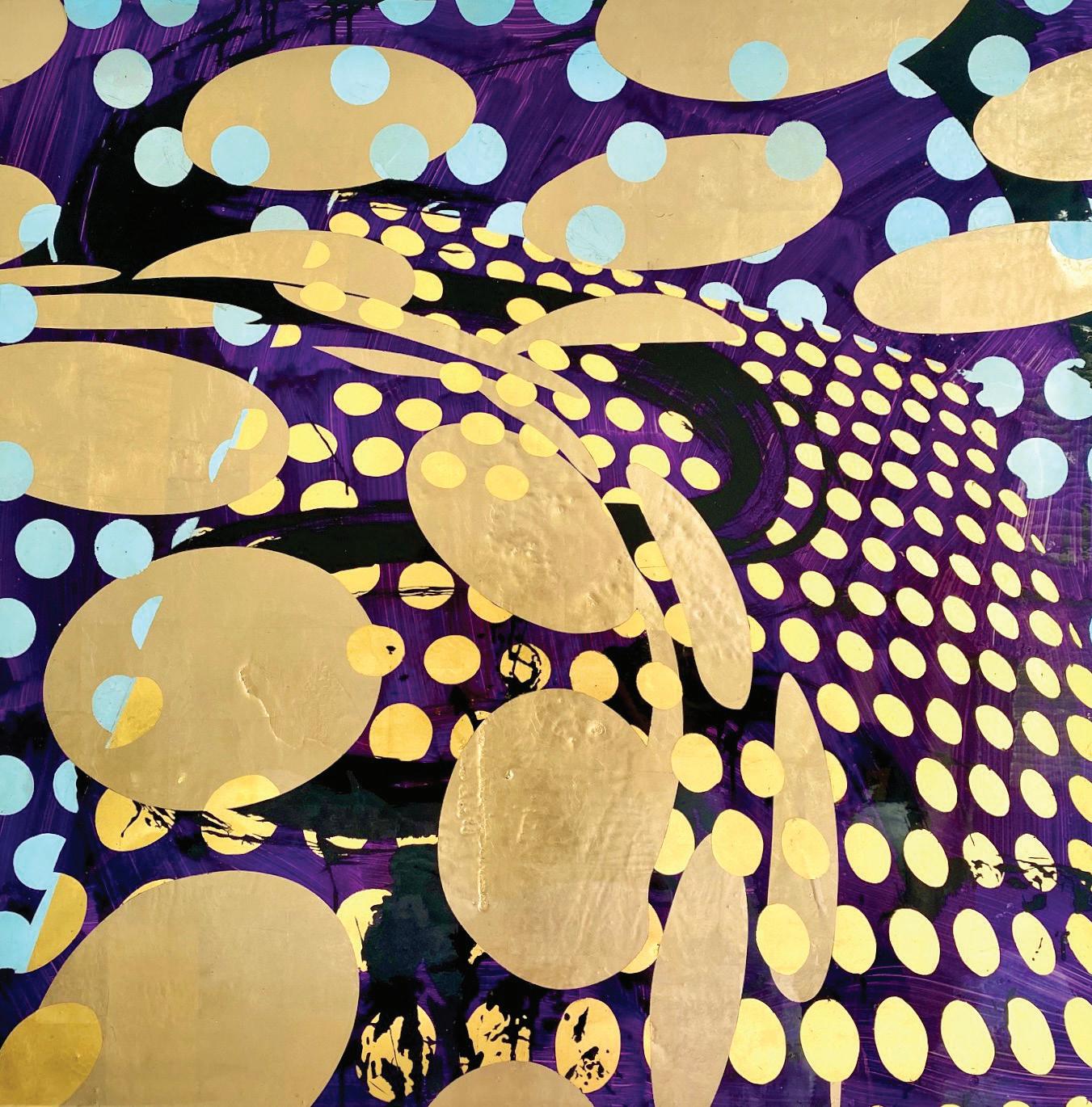
I Have Seen Many Wifes in this World of Men. Yet None So Beautiful & Wise as She
Gesso, acrylic & polymers 100 x 100
Signed & inscribed “I Have Seen Many Wifes in this World of Men. Yet None So Beautiful & Wise as She” verso
$50,000 - 60,000
PROVENANCE
Private Collection, Auckland
Purchased from Gow Langsford Gallery
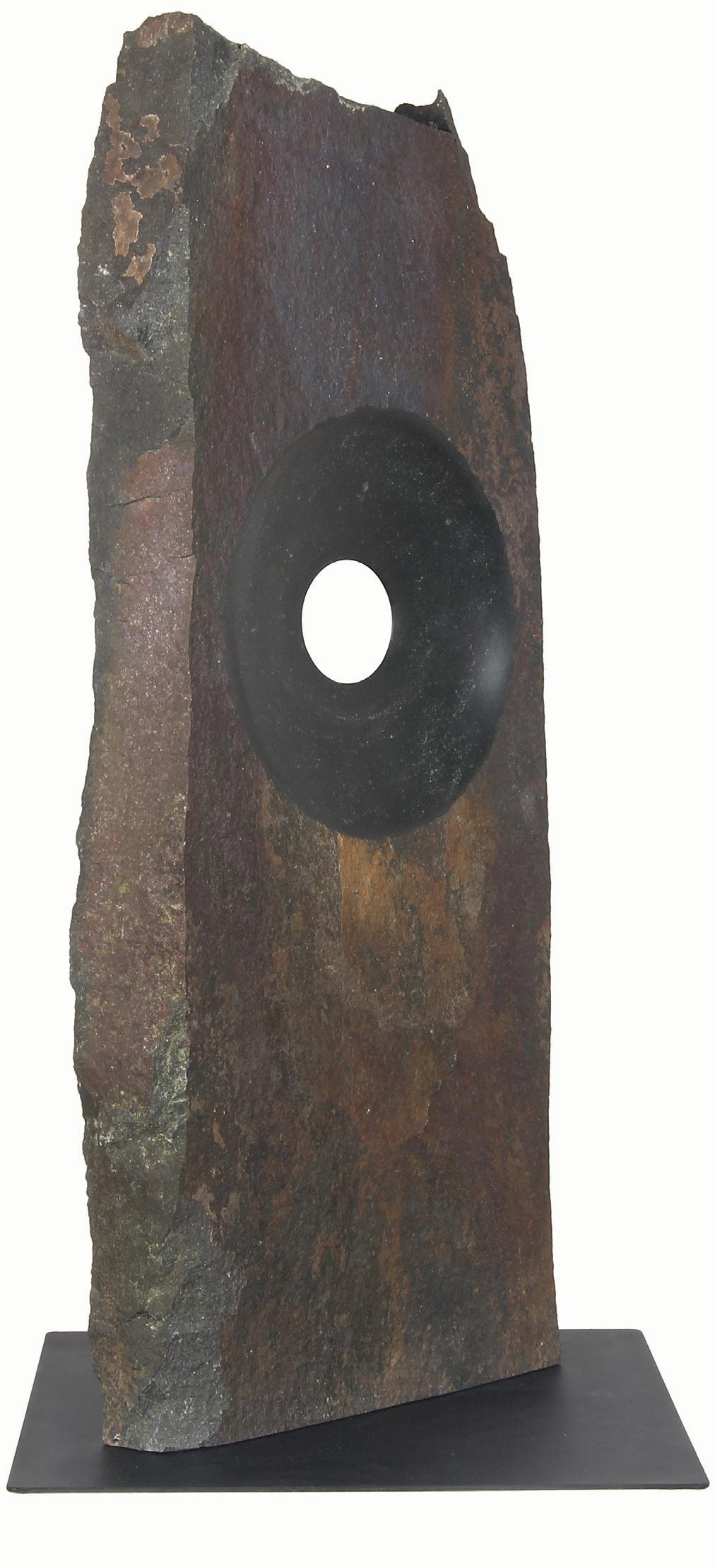
15 CHRIS CHARTERIS (b. 1966)
Stillness, 2019
Coromandel andesite
sculpture 102.8 x 48.5 x 9.2
$10,000 - 15,000
16
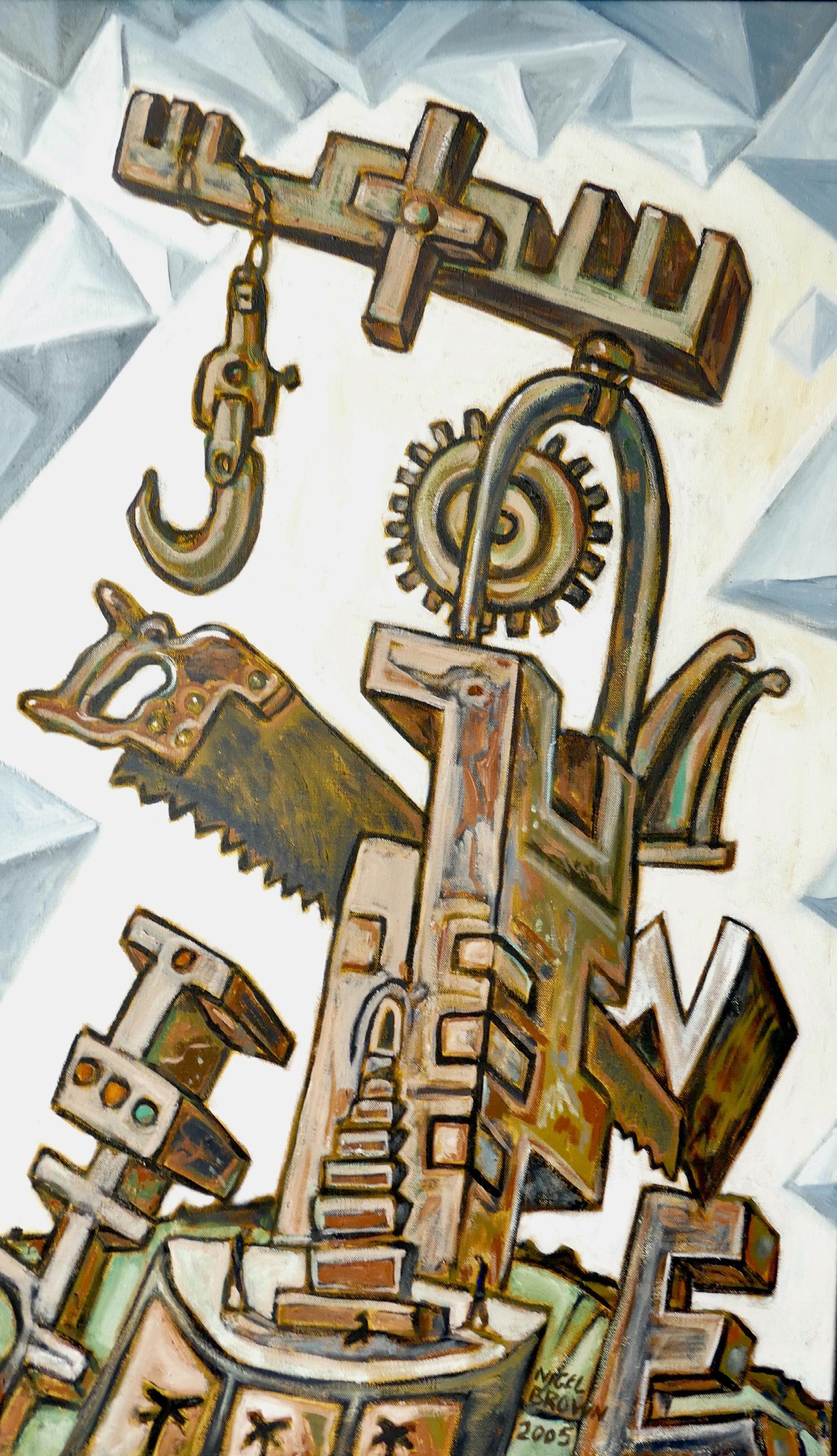
NIGEL BROWN (b. 1949)
Saw This Coming Oil on linen 135 x 80
Signed & dated 2005
$15,000 - 22,000
This work shows Pahia Hill, Southland with a large imaginary monument, a vision of mechanical and vernacular redundancy. Living in a rural situation I amassed a certain amount of farm junk and eventually started making small assemblages. Recycling, going to Russia, old southern towns and Barry Brickell’s Driving Creek were all influences upon my work at this time. The title is something of a pun - Nigel Brown
Afternoon Waikaro
Oil on board 60 x 108
Signed & dated 2003
$16,000 - 22,000
PROVENANCE
Private Collection, Wellington
Purchased from Janne Land Gallery, Wellington, 2003
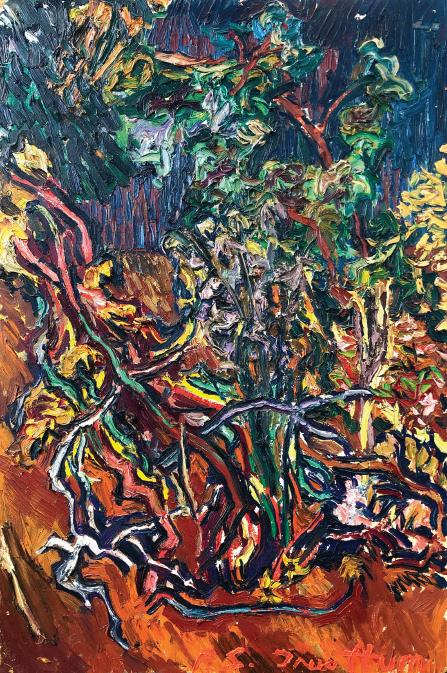
Garden Series
Oil on board 74 x 49.5
Signed & dated 1973
$10,000 - 15,000
PROVENANCE
Collection of New Zealand Potter
Frederika Ernsten
Purchased directly from the artist, 1973
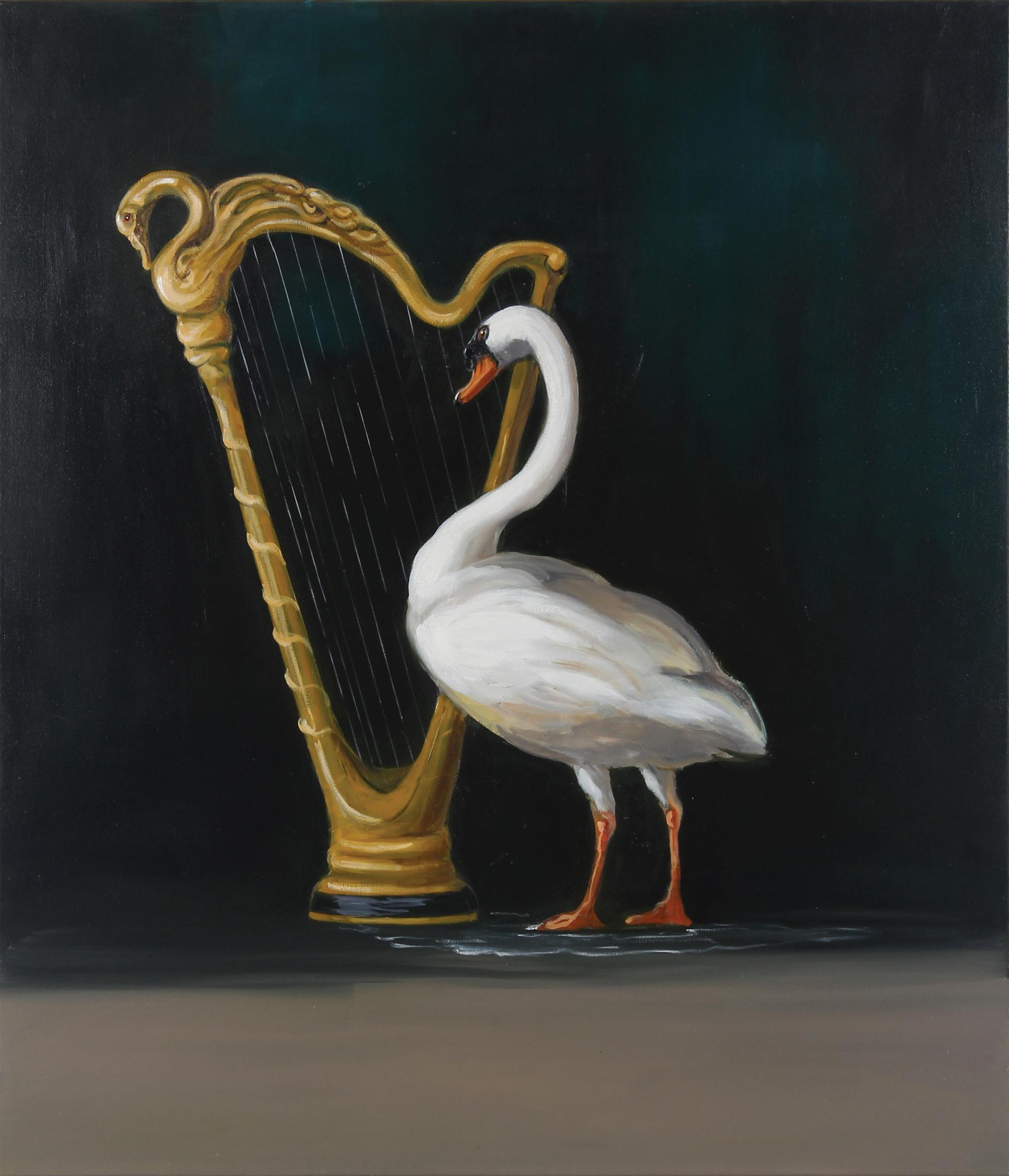
Signed, inscribed Virtuoso II & dated 2019 verso
$10,000 - 14,000
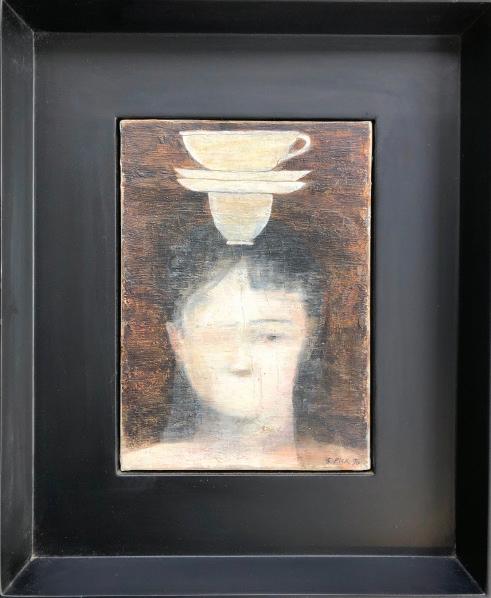
20 SERAPHINE PICK (b. 1964)
Balance
Oil on canvas 35 x 26
Signed & dated 1996
$8,000 - 12,000
PROVENANCE
Private Collection, Wellington
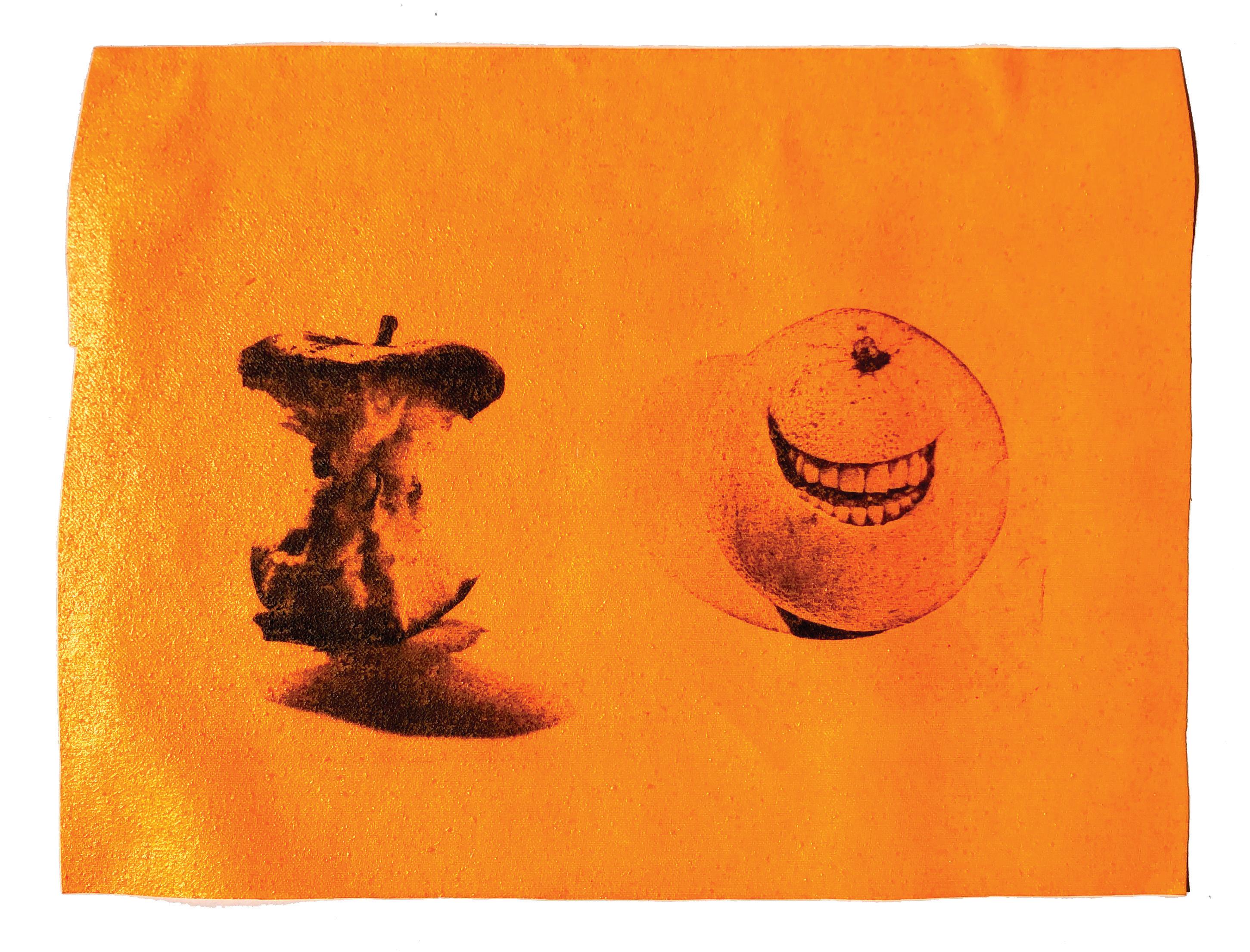
21 BILLY APPLE (1935 - 2021)
Untitled, 1966
Xerography on canvas 25 x 34
$25,000 - 35,000
PROVENANCE
Fine New Zealand Paintings, International Art Centre, 24/03/2004
EXHIBITED
Billy Apple in Idaho, 352A Street Idaho Falls, USA, 1966
Sue Crockford Gallery, Auckland, 2001
Untitled features the apple core that appeared in his 1966 work titled Apple Core (2 minutes 33 seconds) made that same year on a stretched rayon fabric. That piece illustrated p. 88, Billy Apple: Life/Work, Christina Barton, Auckland University Press, 2020. It was made when Billy Apple was on his Ford Foundation Residency in 1966 and was exhibited later that year in Idaho.
In 1959 based in London and attending the Royal College of Art, Barry Bates the young graphic designer from Auckland met fellow student David Hockney. The two were part of London’s vibrant art scene and amongst the pioneers of Pop Art. In 1962 Barry Bates reinvented himself as the art persona, Billy Apple. The intention of this self-branding, and one that was fully realised by Apple over six decades, was to remove any division between his art and life.
Moving to New York, Apple exhibited in the legendary 1964 American Supermarket at the Bianchini Gallery
before going on to become a key figure in the development of conceptual art having opened APPLE, a not-for-profit space (1969 -1973). As director of 112 Greene Street Gallery in 1975 he gave Ana Mendieta her first New York show. In the 1980s his text-based works drew attention to relations between artist, dealer and collector and were called Pop Conceptual by gallery owner Leo Castelli, arguably the first use of the term.
Billy Apple became a registered trademark in 2007, formalizing his art brand status and his interest in intellectual property. Apple was awarded a ONZM in 2018. True to his creative and entrepreneurial spirit, Apple was collaborating with scientists on a variety of projects that range from biomedicine to marine geology until his death at age 85, in September 2021.
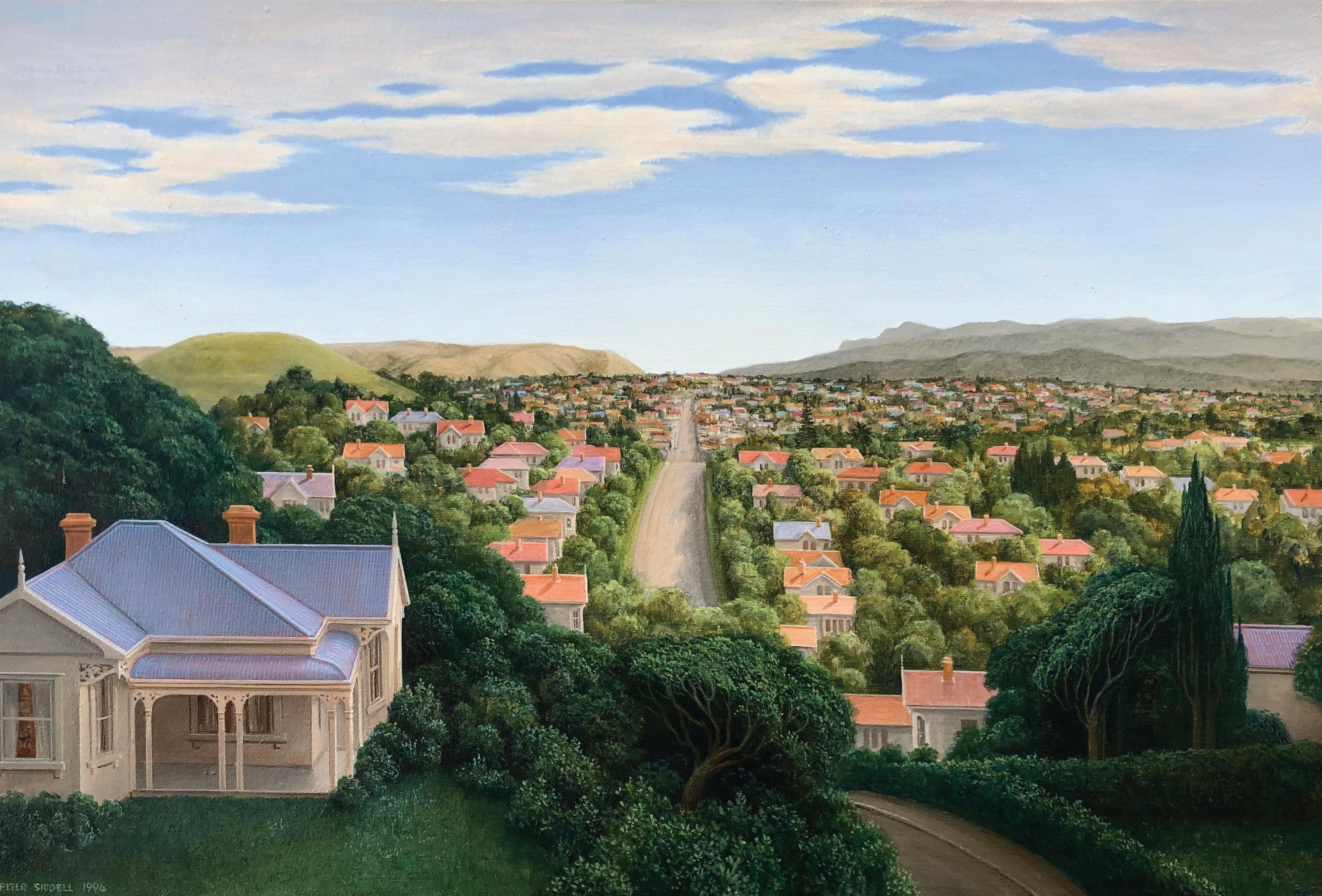
Western Road
Oil on canvas 38.5 x 58.5
Signed & dated 1994
$25,000 - 35,000
PROVENANCE
Artis Gallery, Auckland
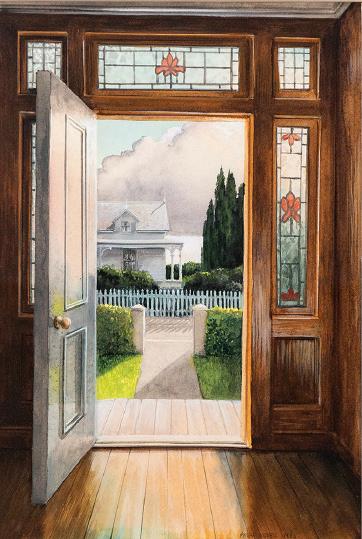
Doorway
Watercolour 34 x 23
Signed & dated 1984
$10,000 - 15,000
PROVENANCE
Private Collection, Wellington
24
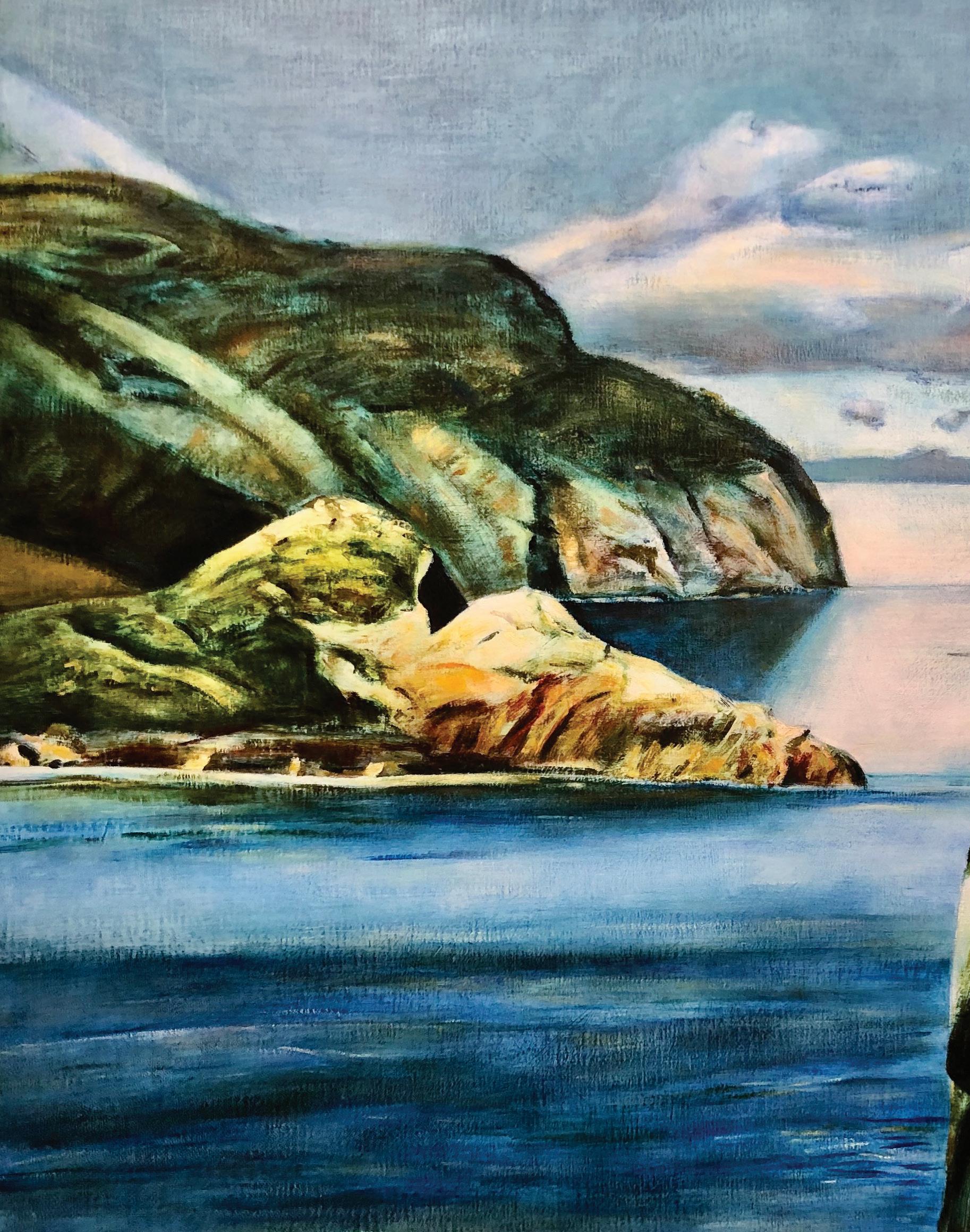
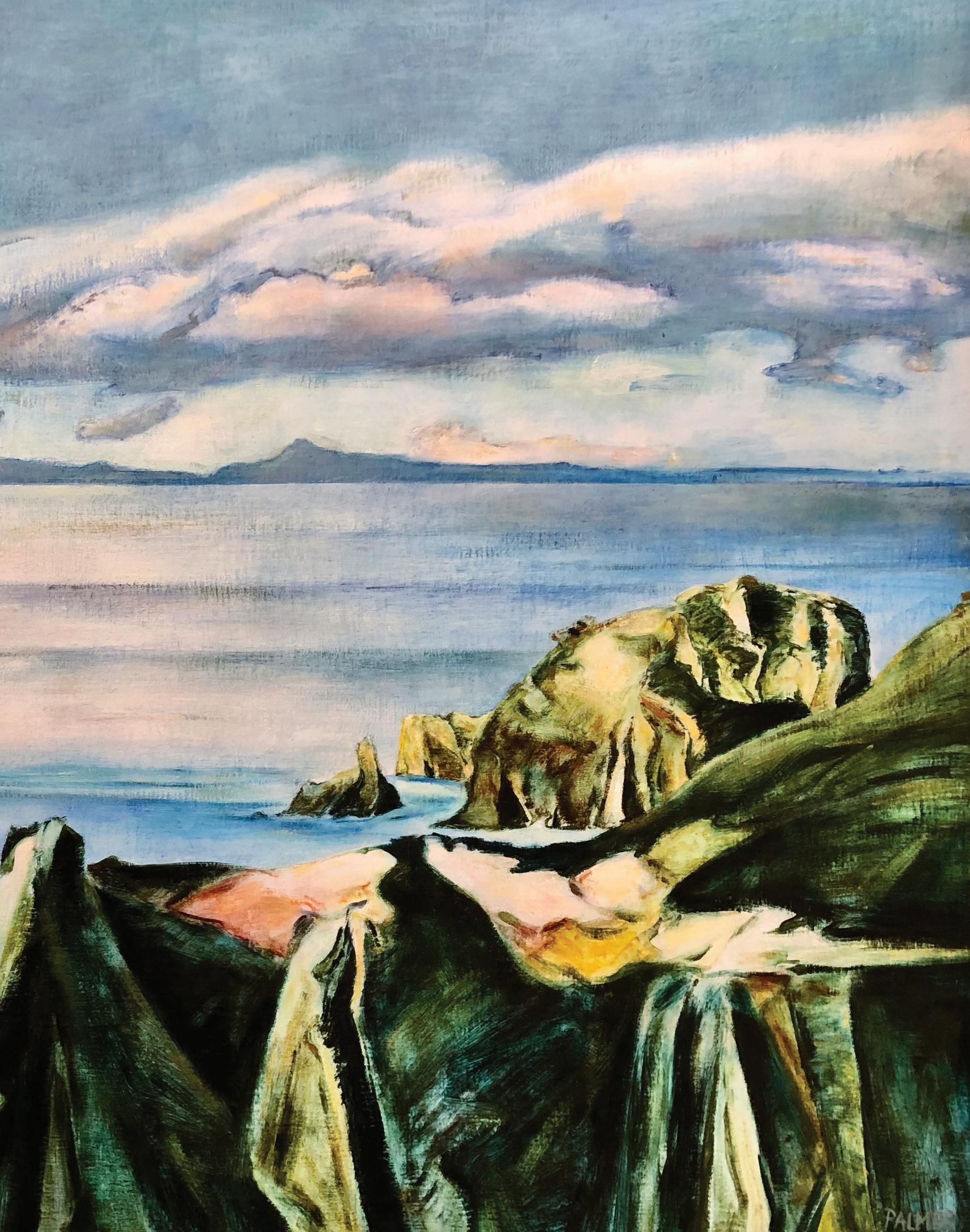
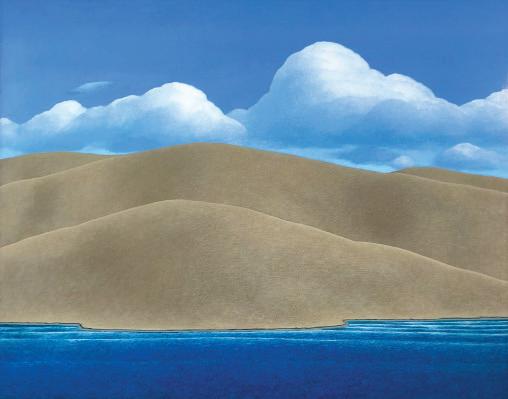
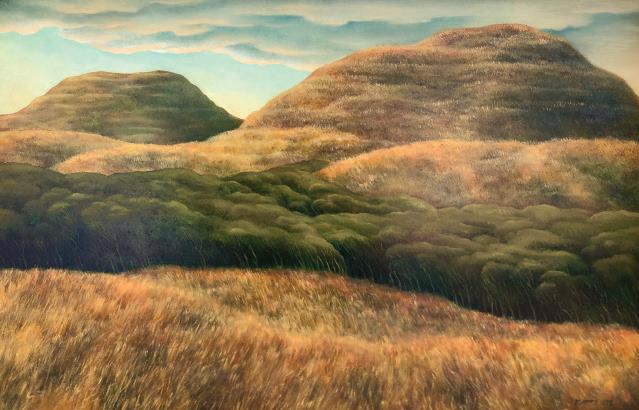
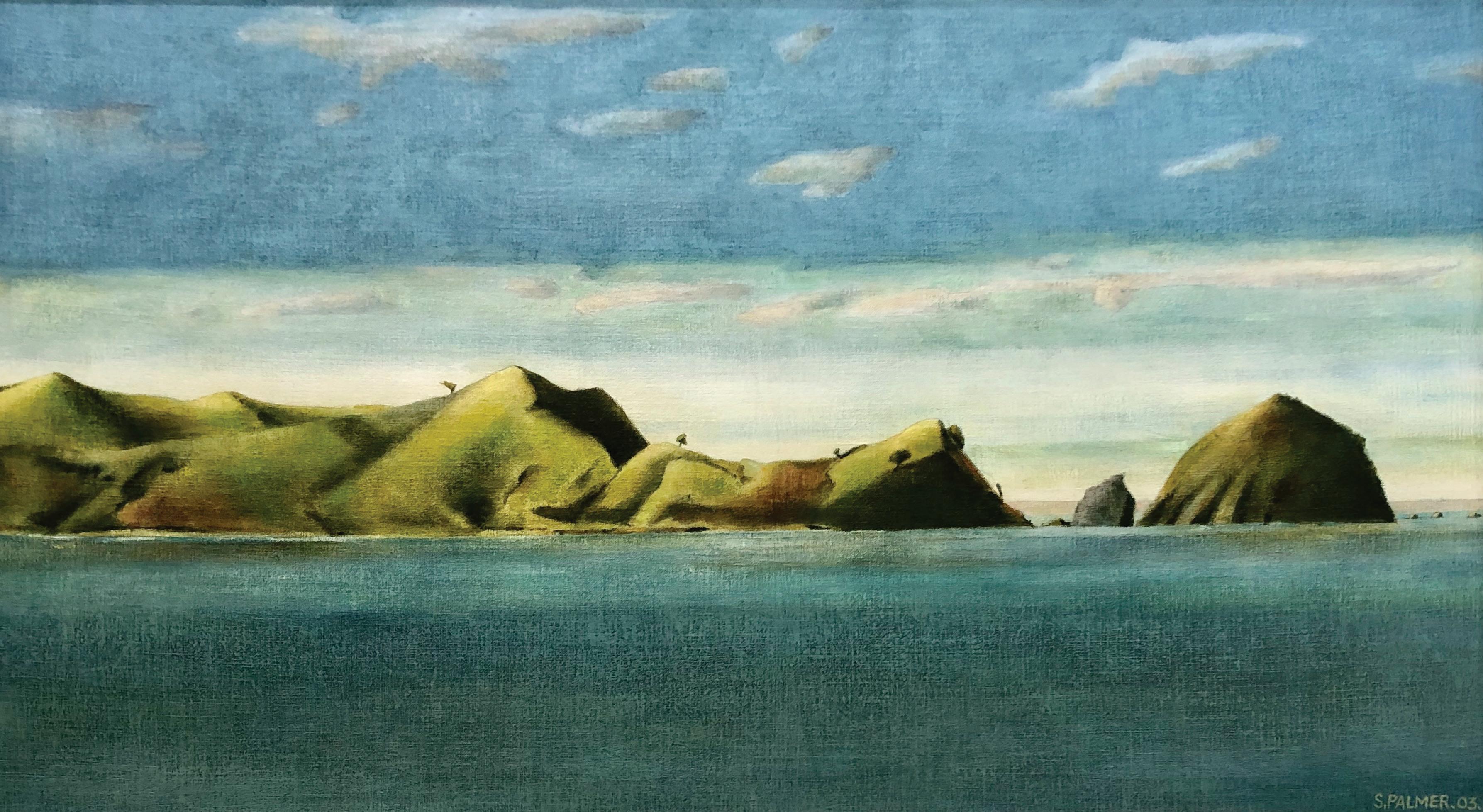
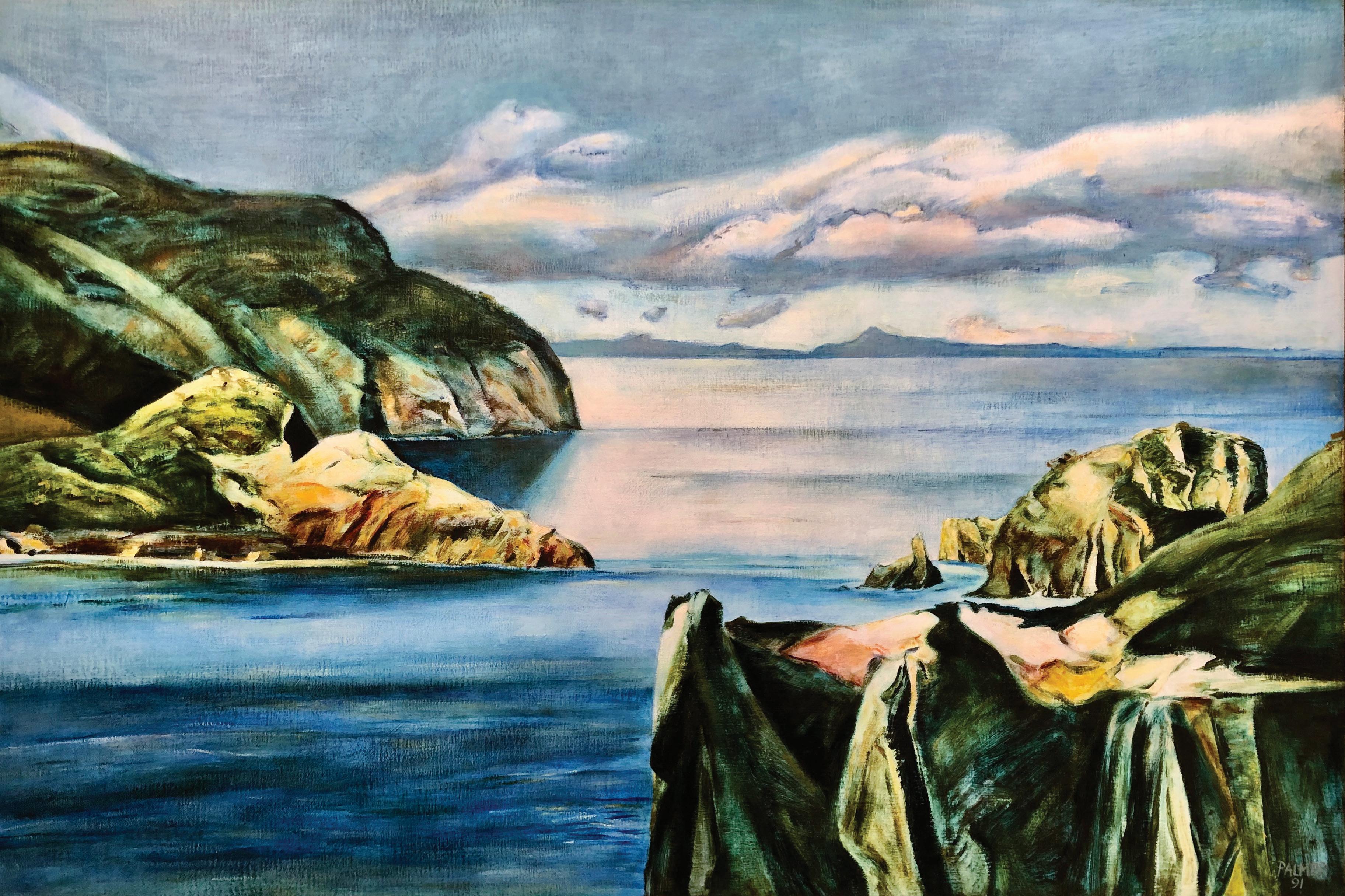
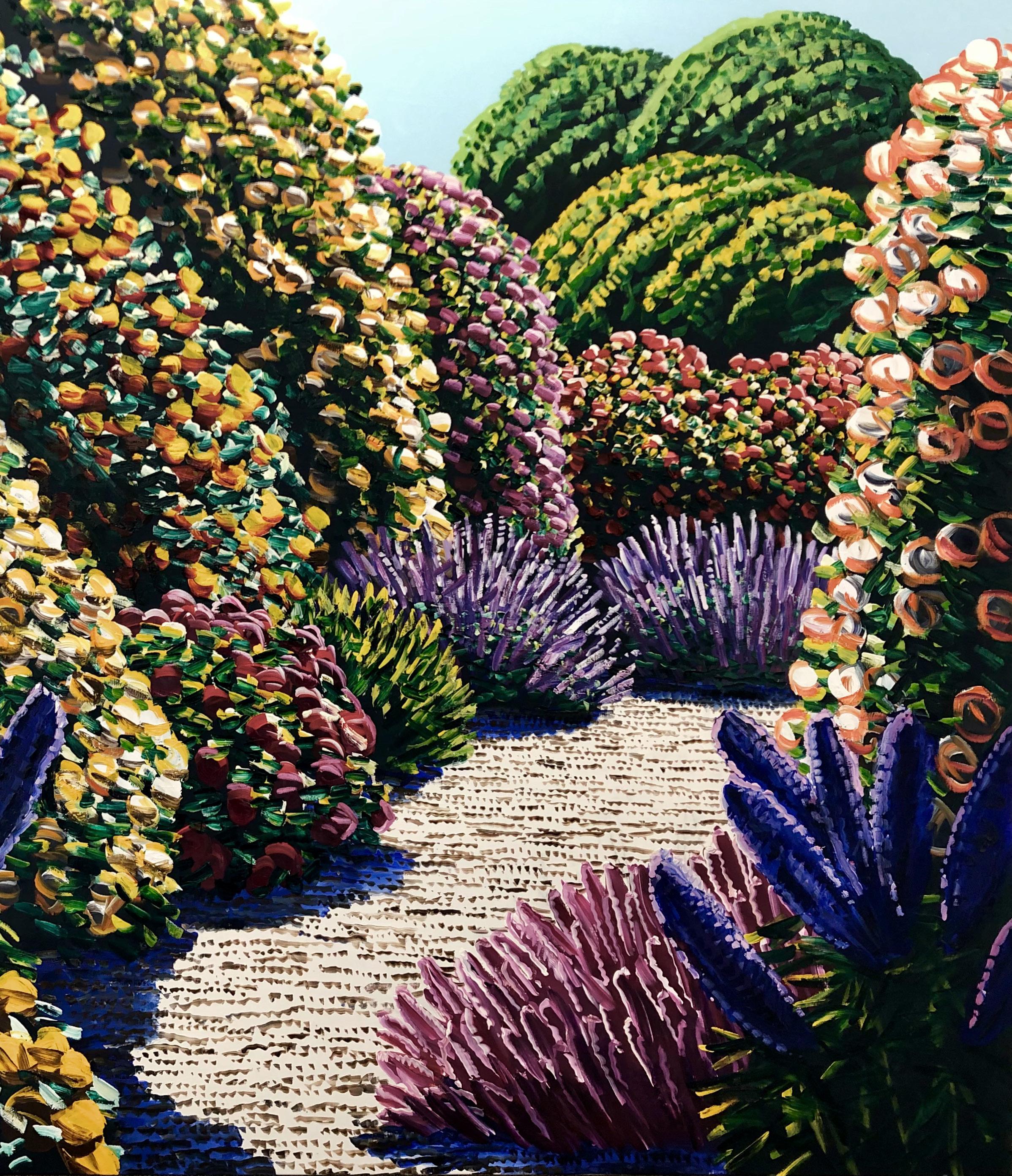
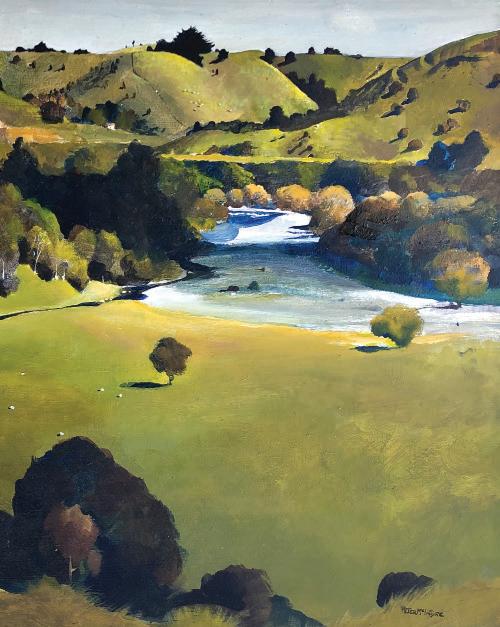
STANLEY PALMER (b. 1936)
Late Afternoon - from Tawhiri Rahi
(From Hoiho Point towards Urupa Point on Aorangi )
Oil on linen 119 x 180
Signed & dated 1991
$20,000 - 30,000
25
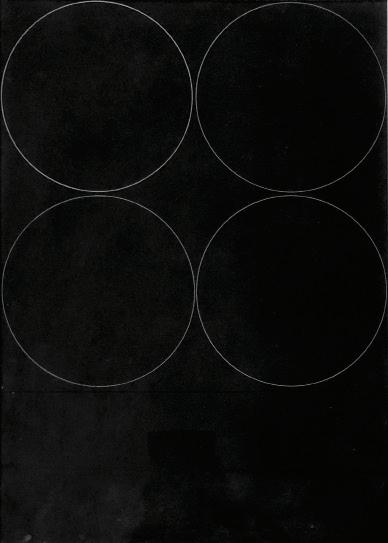
MILAN MRKUSICH (1925 - 2018)
Four Circles Dark, 1977
Acrylic on paper 60 x 41.5
Signed & dated 1977 on card affixed verso
$18,000 - 26,000
PROVENANCE
Bosshard Galleries, Dunedin
Private Collection, Auckland
Fine New Zealand Paintings, International Art Centre, 27/11/2003
Purchased by the current owner from the above auction
EXHIBITED
Collective Voice Exhibition
August 1981, Bosshard Galleries, Dunedin
26
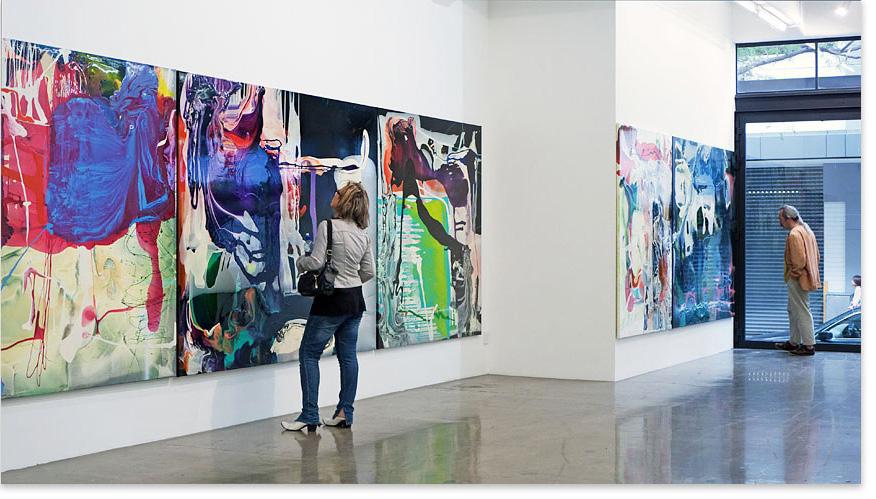
Wesley’s Turtle Neck and Turtle Head
Resin & varnish on linen 200 x 200
Signed & dated 2009 verso
$65,000 - 85,000
PROVENANCE
Private Collection, Auckland
EXHIBITED
Devon Is My Favourite Luncheon Meat, Gow Langsford Gallery, 2012
Purchased from the above exhibition by the current owner
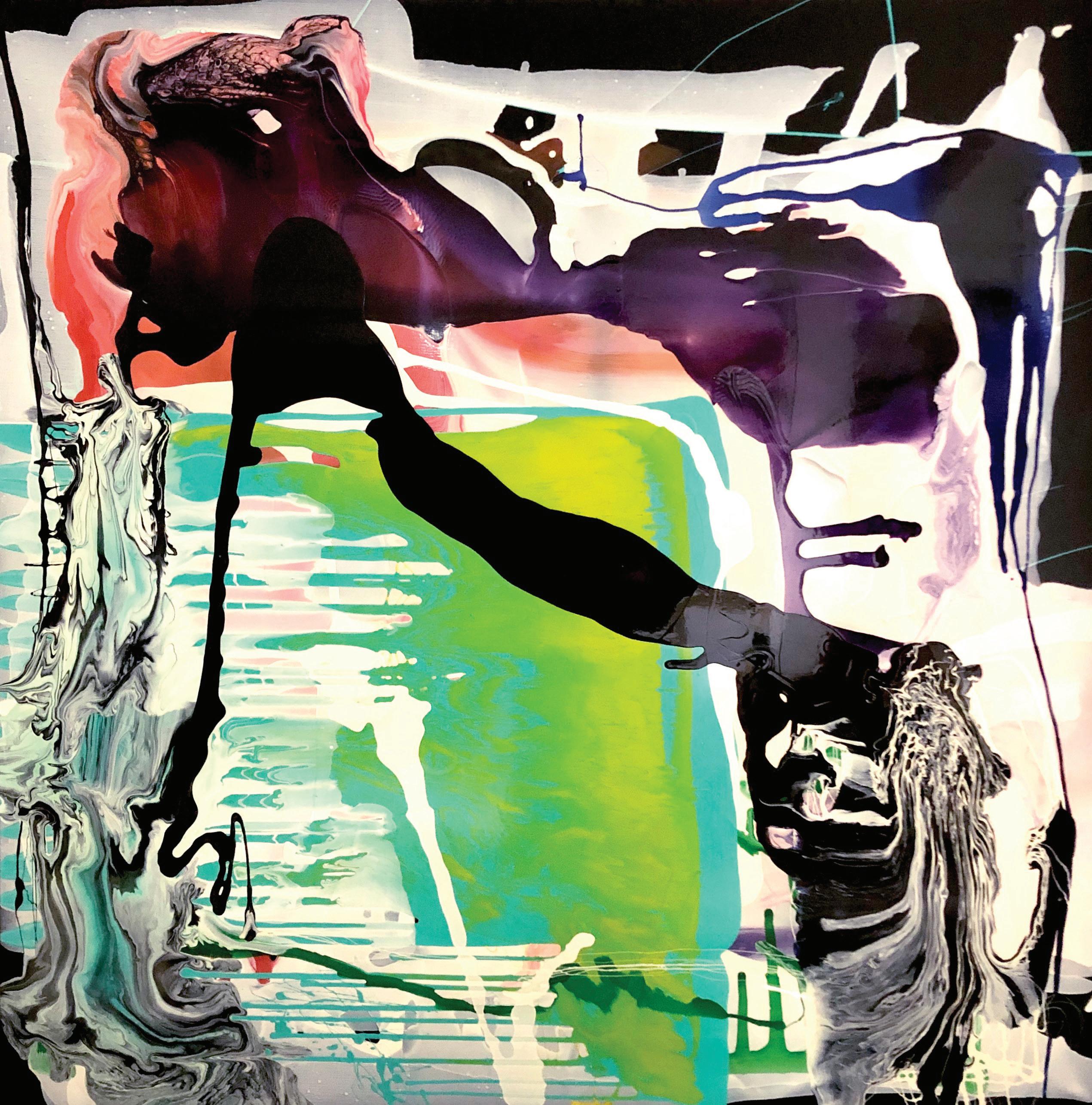
There was a time when abstract art was new territory in this country. What was a frontier is now occupied in many forms. There was also a time when a big exhibition by an Australian artist would have been a rare event. The work by Dale Frank at the Gow Langsford Gallery would once have been something new in subject and material.
The show, Devon Is My Favourite Luncheon Meat, is surprising only for the sheer size of the work. Frank’s style is well-known: abstractions in thick, highly coloured resin varnish. The medium allows him to achieve colours of great intensity and a highly polished surface. The fluidity of the varnish enables him to mix colours in huge, interacting swirls and contrast these with linear, dripped trails. It is a dazzling form of abstract impressionism and the results are symphonic in a vividly visual, lollipop way.
Any solemnity is tempered by the improvised quality of the forms and by the titles. The titles are less indecent than previously, but still have the feeling of afterthoughts rather than a statement of intent. Wesley’s Turtle Neck and Turtle Head has bold, thrusting forms that reach across the picture space.
The paintings are spectacularly colourful and one of their great merits is the sense the viewer has of participation in the multitude of decisions involved in their making. Although every form has an unpredictable originality, one is constantly reminded of a controlling mind at work with huge experience in this unusual medium. The seven works are hung together as one huge mural. This adds to the overall impact, but emphasises the lack of a distinctly individual atmosphere in each one.
TJ McNamara: From the Sublime to the Meticulous NZ Herald, 4 March 2012
27
Jesus in Furs
Paradise Lost Series Oil on board 70 x 51
Signed, inscribed Jesus in Furs & dated 2005 verso
$30,000 - 40,000
PROVENANCE
Private Collection, Auckland
Purchased from Paradise Lost, Jonathan Smart Gallery, Christchurch 2005
EXHIBITED
Paradise Lost - Heather Straka
Jonathan Smart Gallery, March 11 - April 2, 2005
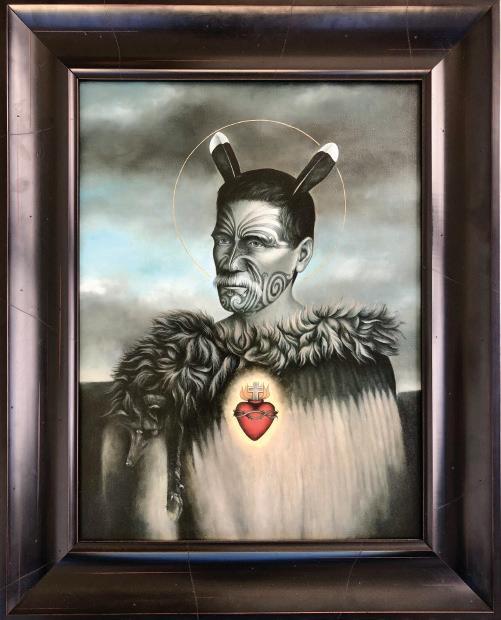
The great Ngati Maniapoto chief, Rewi Maniapoto, was painted by Gottfried Lindauer in 1882. Come the new millennium, Heather Straka re-works the painting. The huia feathers of the rangatira have their white tips within and without the gold rim of a clear halo. His prized kuri skin cloak is topped now with a fox; while a flaming heart burns at the centre of his being - a devotional image that is both Catholic and high camp.
Jesus in Furs. But is she really painting the unthinkable? After all, Maniapoto was a terrific and fearless leader of men and like many of his peers, he was in his lifetime greatly influenced by missionary teaching – while working keenly and strategically between the King Movement, North Island iwi, and the various governments of his day. In other words, Maniapoto was hybrid in attitude and dress.
Here he is rendered sensitively and with dignity –Straka’s careful painting begging the question, just who is saintly and who is to be feared here? Or, at the behest of the exhibition title, whose paradise has been lost, and what has been the gain?
Straka’s blend of European and it’s indigeneity is cheeky, brazen and knowing. She sees a similar mix of cross-cultural influences layering our society today. For her, the power of art to be provocative, to ask questions, is an important prerogative. With elegance and care, Heather Straka in Paradise Lost is very deliberately referencing contemporary society by acknowledging aspects of our past.
Text from exhibition Paradise Lost - Heather Straka
Jonathan Smart Gallery, 2005
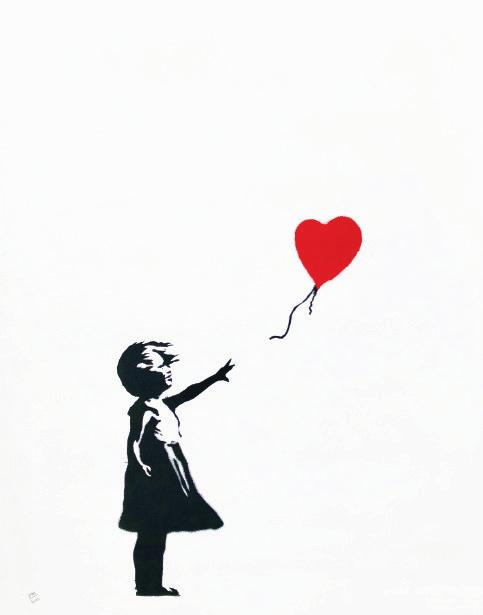
Nobody ever listened to me until they didn’t know who I was - Banksy

28
BANKSY (British b. 1974)
Girl With Balloon
Screenprint, edition 290/600 70 x 50
Numbered on unsigned embossed
POW stamp
$250,000 - 350,000
PROVENANCE
Private Collection Wellington
Purchased from Pictures on Walls by current owner 2005
This work is accompanied by a Certificate of Authenticity from Pest Control
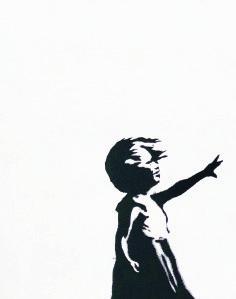
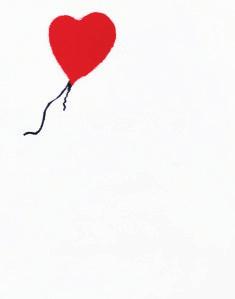
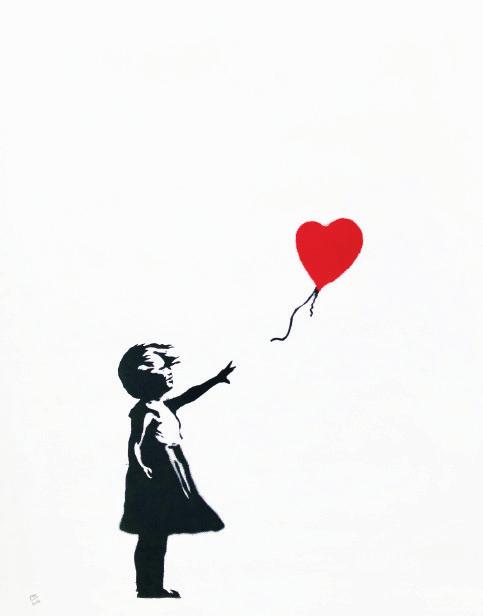
Girl With Balloon, is one of Banksy’s most important works, demonstrating the artist’s graffiti stencil technique, it was released in small editions of unsigned and signed prints in 2004/2005. There are just 150 Girl With Balloon signed prints, and 600 unsigned making it one of the artist’s most sought-after works.
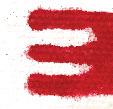
Banksy depicts a young girl reaching for, or releasing, a red heart-shaped balloon that has slipped from her grasp. The gesture and the red balloon, an archetypal symbol of childhood and freedom, present a powerful message that can be read in a number of ways. Whether you see the little girl as losing the balloon, or about to catch it, the meaning can be interpreted as a portrayal of loss or the arrival of new hope and love. In 2002, when the original mural appeared in London’s Southbank, it was accompanied by Banksy’s quotation There is always hope. The street souvenir was later painted over by the council.
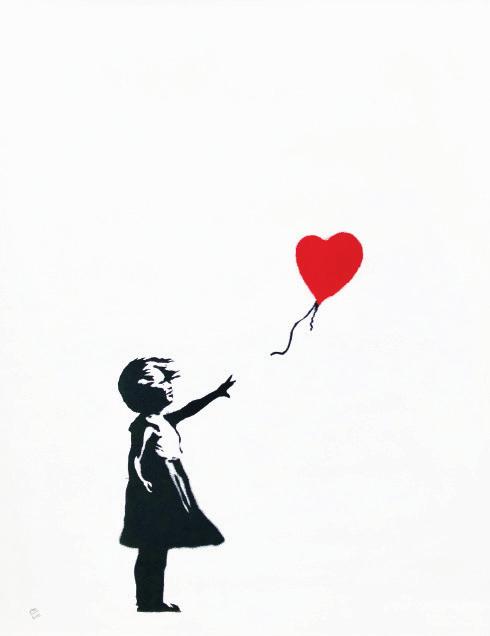
In 2017 Girl With Balloon was voted the UK’s favourite work of art. The following year, Girl with Balloon was the subject of the now infamous public art stunt. As the Sotheby’s auctioneer brought the hammer down on a US$1.4M bid, the work partially self-destructed through the activation of a mechanism installed in the frame. Later that same day, Banksy posted an image on his instagram account of the work shredding itself with the caption: Going, going, gone. The successful female bidder proceeded with her purchase, commenting that while at first she was shocked, she realised that she would end up with a piece of her own art history.
In October 2021 the shredded and renamed Love is in the Bin was offered through Sotheby’s auction, realising NZ$35M. Pest Control, Banksy’s only authentication body, retitled the work.
29
BANKSY (British b. 1974)
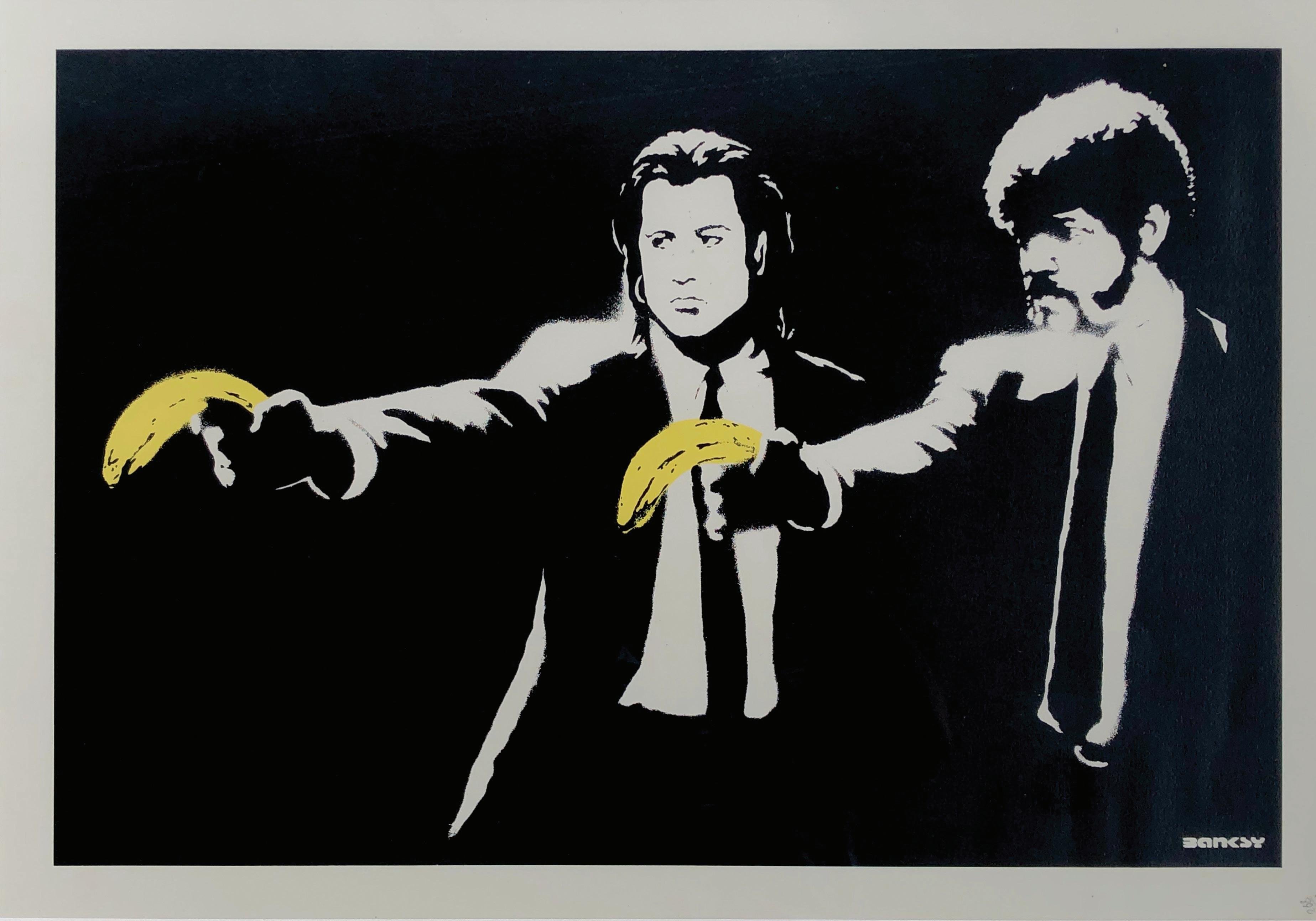
Pulp Fiction
Screenprint, edition 419/600, 50 x 70
Numbered, unsigned (Signed in plate)
$90,000 - 150,000
Private Collection, Otago
Purchased from Outré, Melbourne 4/02/2005 by current owner. Original purchase receipt available for inspection Comes with facsimile copy of Outré catalogue
This work is accompanied by a Certificate of Authenticity from Pest Control
Banksy’s Pulp Fiction depicts a famous scene from Quentin Tarantino’s 1994 blockbuster film Pulp Fiction. The work depicts the two main characters played by actors Samuel L. Jackson and John Travolta. Rendered in white stencilled forms on a black background, Banksy presents the protagonists Vincent and Jules, side-by-side and aiming their firearms in synchronisation. In a humorous twist, their pistols have been replaced by bright yellow bananas, the only touch of colour in the otherwise monochrome composition.
Pulp Fiction first appeared in 2002 as a stencilled composition near Old Street tube station, London. It was visible until 2007 when Transport for London painted over the wall, later estimated at £300,000, on the grounds that the work lent an atmosphere of social decay and neglect in the capital. When the mural was covered, a local street artist sprayed COME BACK in its place, addressed to Banksy. Banksy then re-tagged his original Pulp Fiction in exactly the same place, but this time the characters were holding real pistols and wearing banana costumes instead.
In January 2007, graffiti artist Ozone wrote over the new piece with the words If it’s better next time I’ll leave it. Shortly afterwards, the 19-year-old artist and his close friend, Wants, were both hit and killed by an underground train in Barking, East London. Banksy then created another piece over his original Pulp Fiction mural in tribute to the two young graffiti artists. This work depicted an angel wearing a bulletproof vest and holding a skull in his right hand. Banksy posted a note on his website . . . When we lost Ozone we lost a fearless graffiti writer and as it turns out a pretty perceptive art critic. Ozone - Rest in Peace.
The tribute mural was quickly referred to as Ozone’s Angel. Subsequently, Banksy’s original Pulp Fiction mural also became immediately popular, and was mass-reproduced on commercial merchandise. Pulp Fiction was released in 2004 as an edition of 150 signed and 600 unsigned prints.
30 BANKSY (British b. 1974)
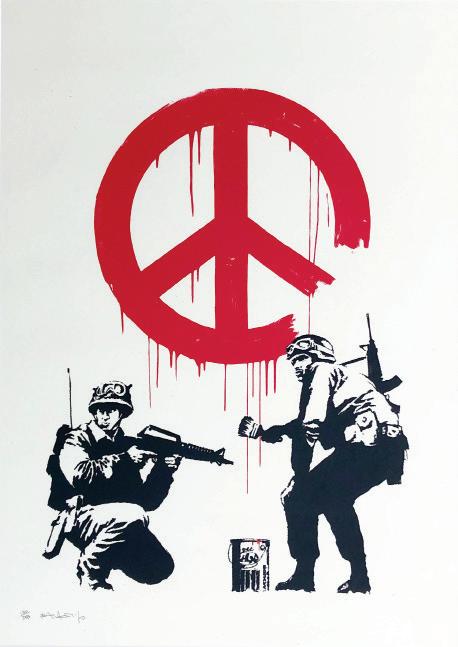
CND Soldiers
Screenprint, edition 130/350, 70 x 50
Signed & numbered
$80,000 - 120,000
Private Collection, Wellington
Purchased from Pictures on Walls by current owner, 2005
This work is accompanied by a Certificate of Authenticity from Pest Control
Banksy’s powerful anti-war work, CND Soldiers is a limited edition silkscreen print released by Pictures on Walls of London in 2005, in an edition of 350 signed, and 350 unsigned prints. The image first appeared in 2003 as a mural outside the Houses of Parliament during an anti-war protest led by Brian Haw, an English peace campaigner who lived for a decade in the Westminster peace camp. At the time the UK’s involvement in the Iraq war had been brought to light, and the fact that millions of people, including soldiers, protested against the invasion was reportedly ignored. The anti-war art statement was later removed by the authorities.
The work depicts two soldiers painted in the artist’s black and white stencil trademark style on a monochromatic background. Whilst one soldier holds a machine gun on lookout, the other is painting a large peace symbol in red paint – the only coloured element in the image. The satirical juxtaposition of soldiers and their guns alongside the iconic, almost completed peace sign is intended to make the viewer question the army’s role of keeping the peace.
Questioning the validity of the nanny state is a central theme in Banksy’s work. The red peace sign originally symbolised the British Campaign for Nuclear Disarmament (CND) of 1957 and is now widely known as an international symbol of peace. Banksy’s inclusion of it here, painted in dripping red paint, overtly evokes the bloodshed and human cost of war. Further contrasts are drawn as the soldiers, who act on behalf of the government, are now represented as activists and vandals, graffitiing the wall in protest.
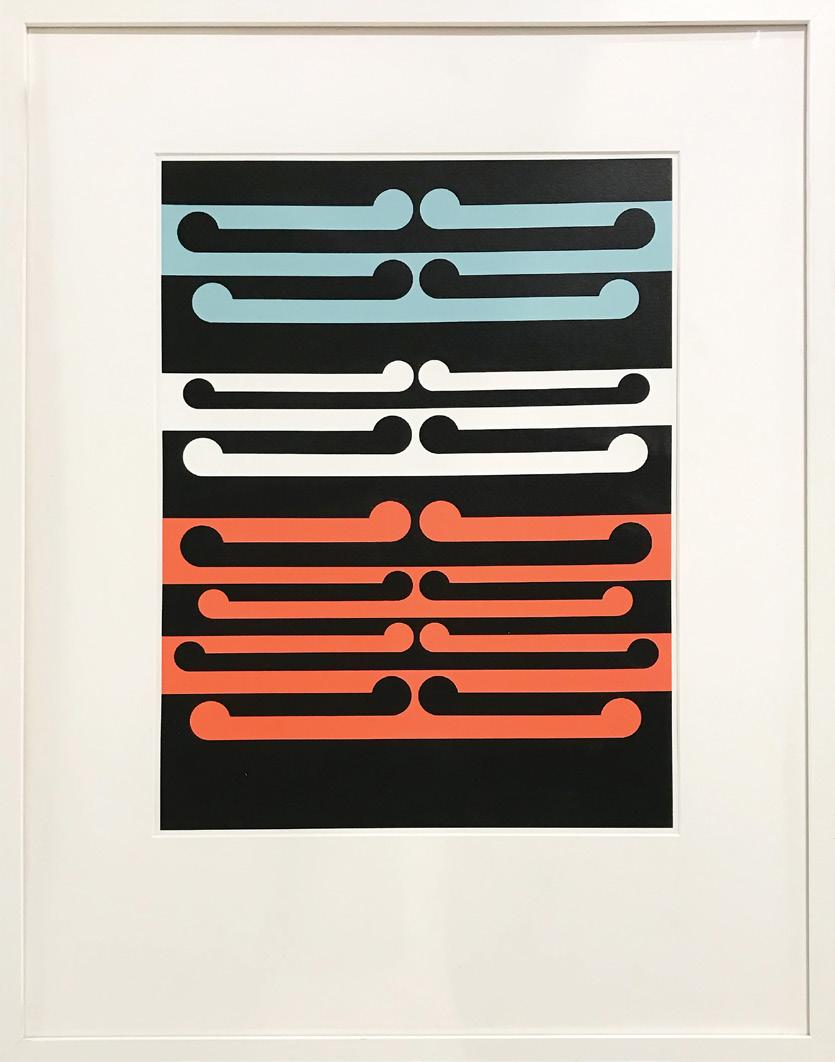
I believe that dynamic relations are most clearly expressed by the repetition of a few simple elements - Gordon Walters
Gordon Walters was one of New Zealand’s most influential modern artists. For over four decades he explored the potential and effect of simple geometric elements, and by doing so created his own unique visual language and legacy.
Born in Wellington, Walters attended Wellington Technical College studying and working as a graphic artist from 1935 to 1939. A 1946 visit to the South Canterbury studio of fellow artist, Theo Schoon had far reaching effects. At the time, Schoon was photographing Maori rock art at Opihi River. Walters was intrigued and began introducing Maori cultural themes into his work.
In March 1950 Walters left for London to study abstract painting. In Paris he was influenced by the works of Paul Klee, Giorgio Morandi, Victor Vasarely and Piet Mondrian. In 1951 he returned to Australia and based in Melbourne, painted his first non-figurative works in a style influenced by European geometric abstraction. On his return to New Zealand in 1953, the artist began to fuse abstract modernism with traditional Maori art. Working at the Government Printing Office in Wellington, Walters made regular visits to Auckland, keeping in touch with Theo Schoon as well as young artists such as Dennis Knight Turner.
The geometric spiral form of the koru began appearing consistently in his work from the late 1950s. He first exhibited this series in 1966 at Auckland’s New Vision Gallery. By now Walters was able to paint full-time, and his important relationship with the Wellington dealer Peter McLeavey began in 1969.
After living in Auckland in the early 1970s the family moved to Christchurch. In 1983 a major retrospective of his work was held at the Auckland City Art Gallery and toured throughout New Zealand. In his later years Walters focused on abstract paintings in which the neutral forms of the rectangle were predominant. In such works he responded to contemporary American abstraction, whilst expressing his long-held belief in art as a universal means of expression.
Gordon Walters died in Christchurch on 5 November 1995. His place in our art history is memorialised in the bi-annual Walters Prize exhibition and award at the Auckland Art Gallery Toi o Tamaki.
Pictured:
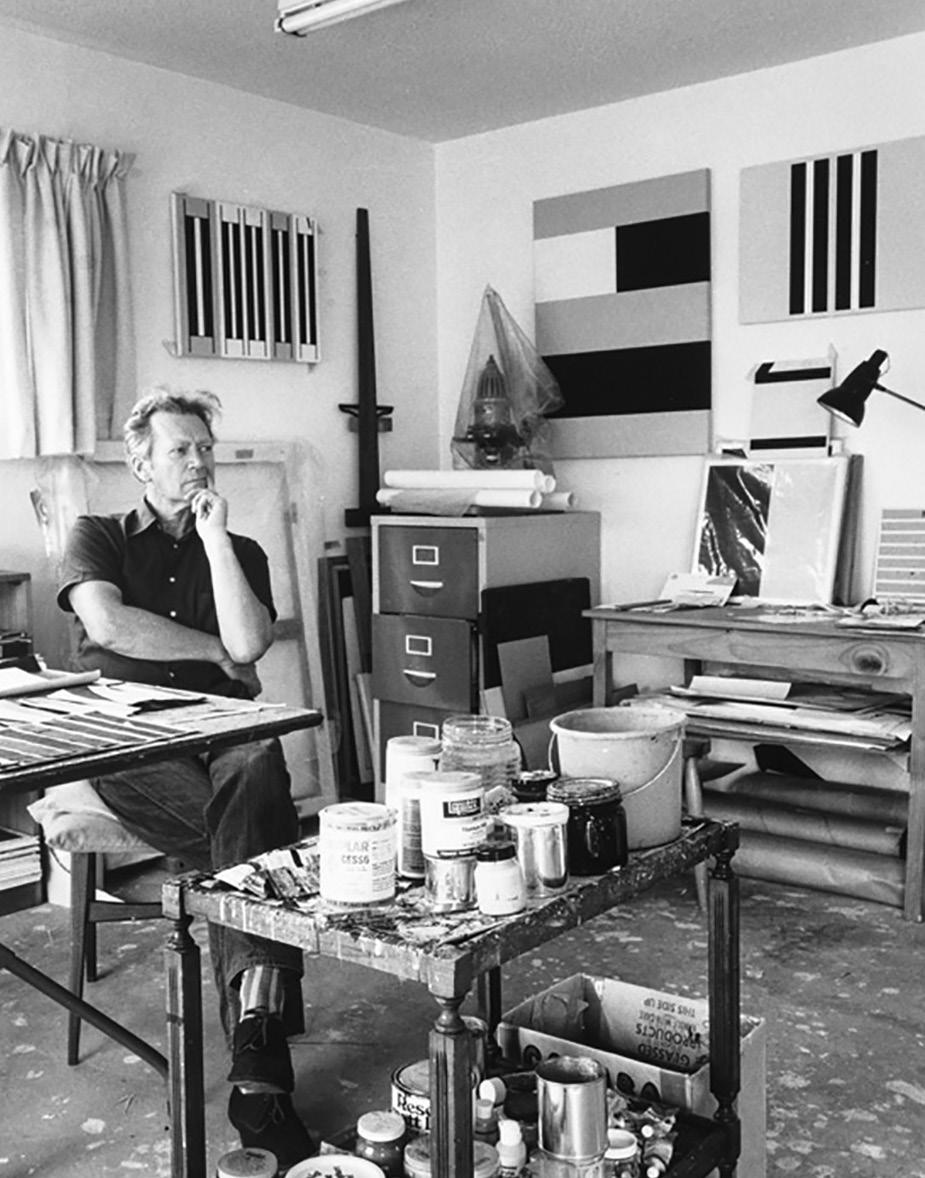
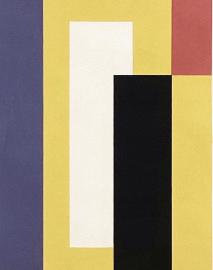
Gordon Walters in his studio. Untitled, which hangs above the artist, was sold by International Art Centre on behalf of The Fletcher Trust, 2014
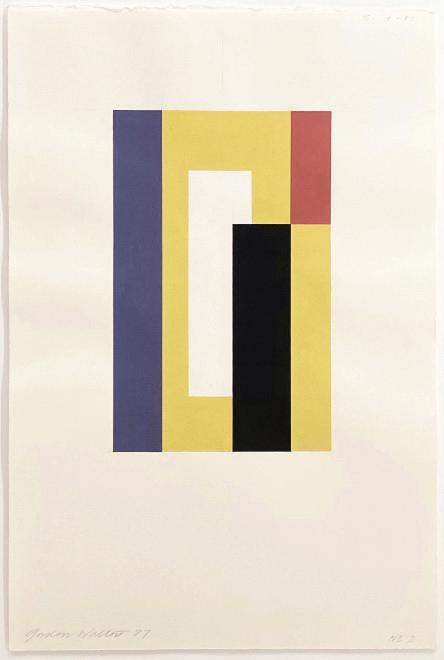
31 GORDON WALTERS (1919 - 95)
Untitled, 1987
Acrylic on paper 60 x 40
Signed, inscribed No.2 & dated 15-10-87
$25,000 - 30,000
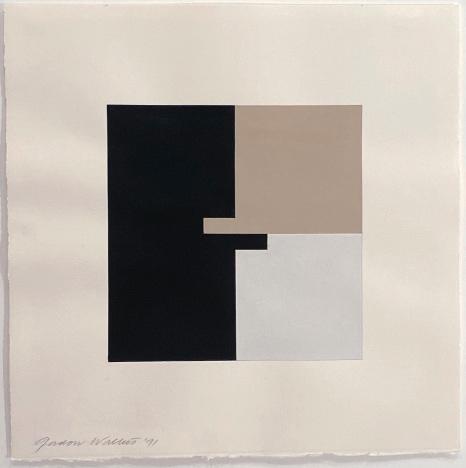
- 95)
Untitled, 1991
Acrylic on paper 40 x 40
Signed & dated 1991
$15,000 - 20,000
33
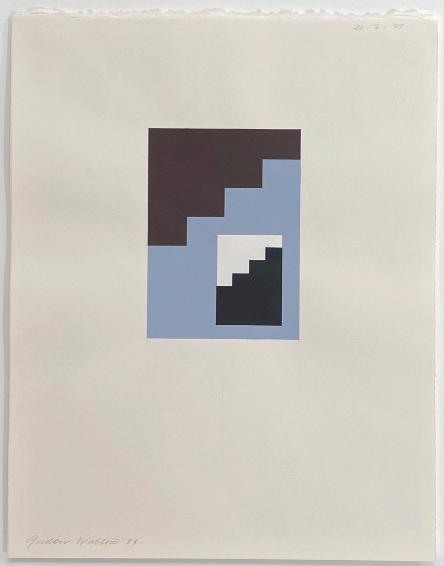
(1919 - 95)
Untitled, 1988
Acrylic on paper 20 x 14
Signed & dated 22-3-88
$15,000 - 20,000
34 GORDON WALTERS (1919 - 95)
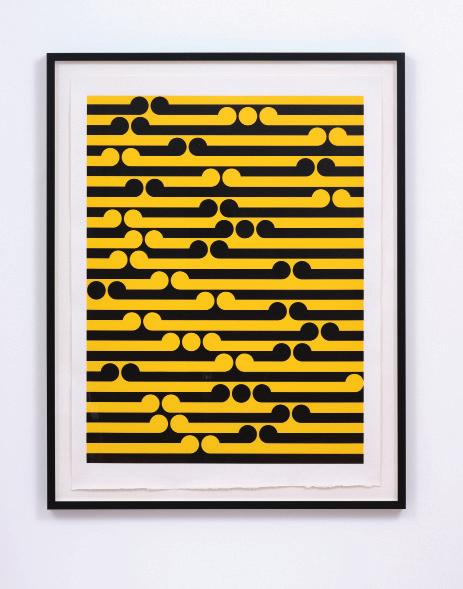
Tahi, 1967 (2021)
Screenprint, edition of 100, 106 x 80
Walters Estate blindstamp
$8,000 - 12,000
35 GORDON WALTERS (1919 - 95)
Untitled, 1978 (2018)
Screenprint on archival paper, edition of 100, 105 x 80.5
$8,000 - 12,000
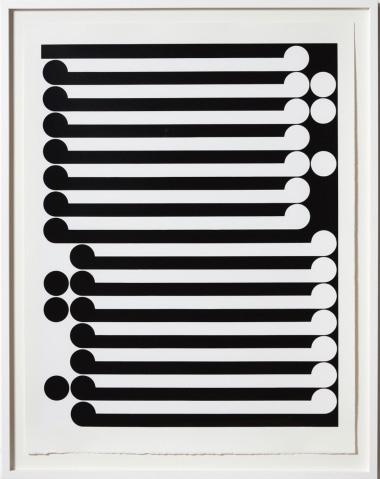
36 GORDON WALTERS (1919 - 95)
Painting No. 7 (2016)
Screenprint, edition of 100, 51 x 38.5
$5,000 - 7,000
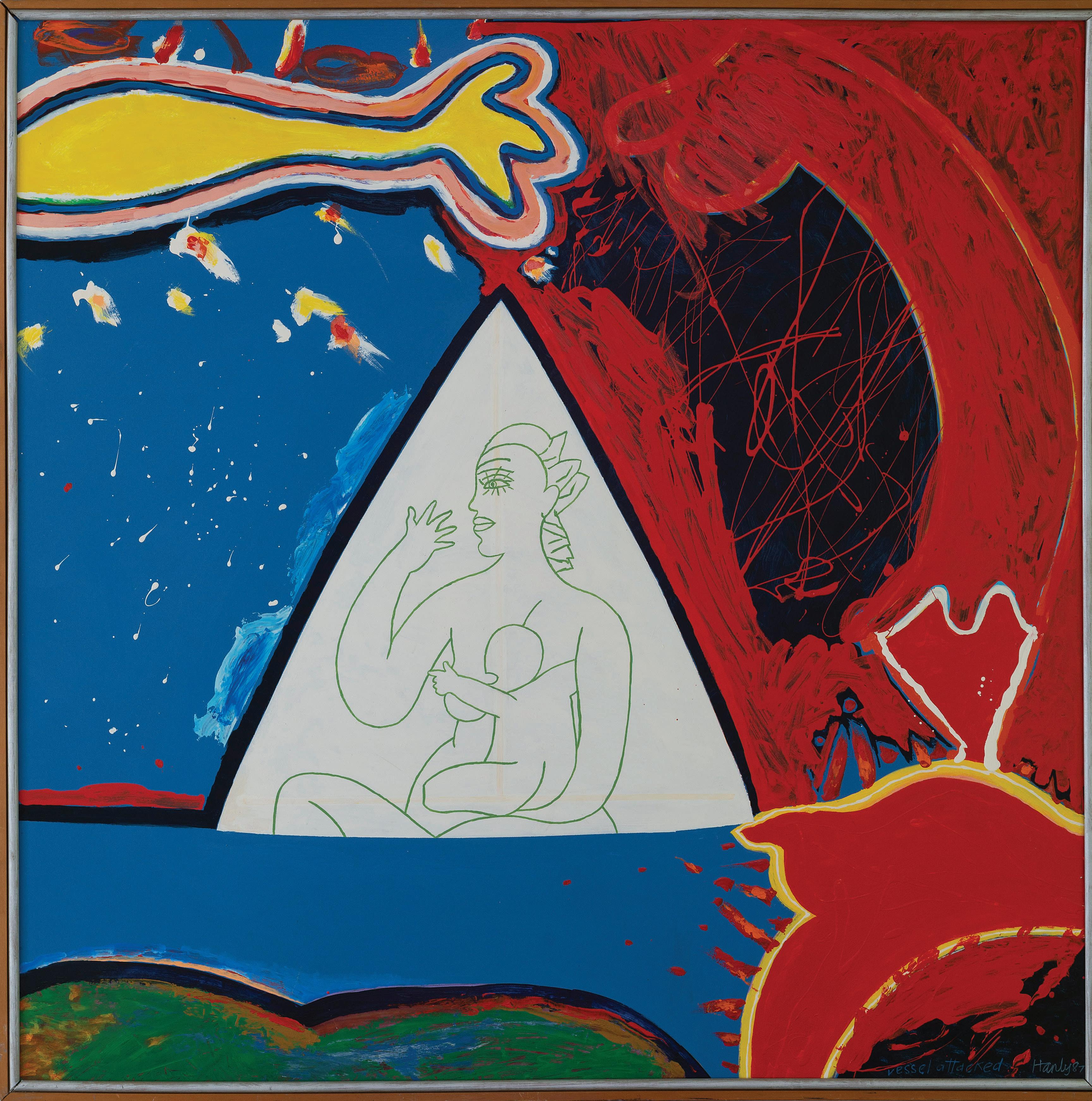
37 PAT HANLY (1932 - 2004)
Vessel Attacked, 1987
Enamel on board 120 x 120
Signed, inscribed Vessel Attacked & dated 1987, also inscribed RKS 3 & Post Rainbow Warrior verso
Original Fisher Gallery label affixed verso
$150,000 - 250,000
PROVENANCE
Private Collection, Wellington
Born in Palmerston North, Hanly completed his Diploma in painting at the School of Fine Arts at the University of Canterbury in 1952 before escaping provincialism for the bright lights of London. There he had the opportunity to work in clubs in Soho where he honed his figure drawing skills, and enrolled in classes at the Chelsea School of Art at a time when the impact of American experiments with Abstract Expressionism were being felt. Returning to Auckland in 1962, he developed a characteristic style of Pacificinflected painting using bright primary colours and bold expressionist gestures.
Hanly and his photographer wife Gil were both driven by their social consciences to campaign against the Springbok tour in 1981 and were prominent peace activists. They often brought their politics into the creation of their art. Keen sailors, they set out on the Waitematā as part of the flotilla of boats protesting against the visit of the American nuclear-powered cruisers and submarines in the 1970s and 1980s.
The triangular shape at the centre of this composition is a sail containing a drawing of a naked mother and her suckling baby, emblematic of vulnerability needing protection, but also recalling the pyramidal construction of Italian Renaissance depictions of the Madonna and Child. Dark reds and blacks menace the harmony within the white triangle, representing the sacred vessel under attack referred to by the work’s title. Hope is offered by the yellow arm of salvation reaching across from the left to push back against the dark forces in a composition inspired by the close connection the Hanlys had with a shocking tragedy.
On the night of 10 July 1985, Gil Hanly had been on board Greenpeace’s boat as it lay moored at Marsden Wharf in Auckland, meeting with the PortugueseDutch photographer Fernando Pereira (1950-1985). Hours later he was dead, killed by the bombs planted by French secret service agents to thwart the vessel’s interference in the French government’s nuclear testing on Mururoa Atoll in the Pacific. Named The Rainbow Warrior after the North American Cree prophecy when the world is sick and dying, the people will rise up like Warriors of the Rainbow, ironically the bow of this boat bore a painted dove of peace carrying an olive branch.
Pat Hanly was outraged by what he viewed as a government-sanctioned act of terrorism, and he painted a series of works to convey his feelings. Using stencils and enamel paint, he flicked, splattered and poured his medium onto a flat board, relishing the chance effects caused by using cans with holes drilled in the bottom and the way its liquidity conveyed his energy. A Hanly retrospective was being nationally by Manawatu Art Gallery at the time, and the artist added in these works for the Fisher Gallery, Pakuranga, iteration of the exhibition in 1987. The next year Hanly exhibited the important new series with his dealer Rodney Kirk Smith in Victoria Street. Here, it was this painting which was identified by critic Terry McNamara as the outstanding piece. The whole work sings he wrote in the New Zealand Herald (28 July 1988). It is indeed a powerfully-conceived perfect square of Hanly at the peak of his powers.
LINDA TYLER
38
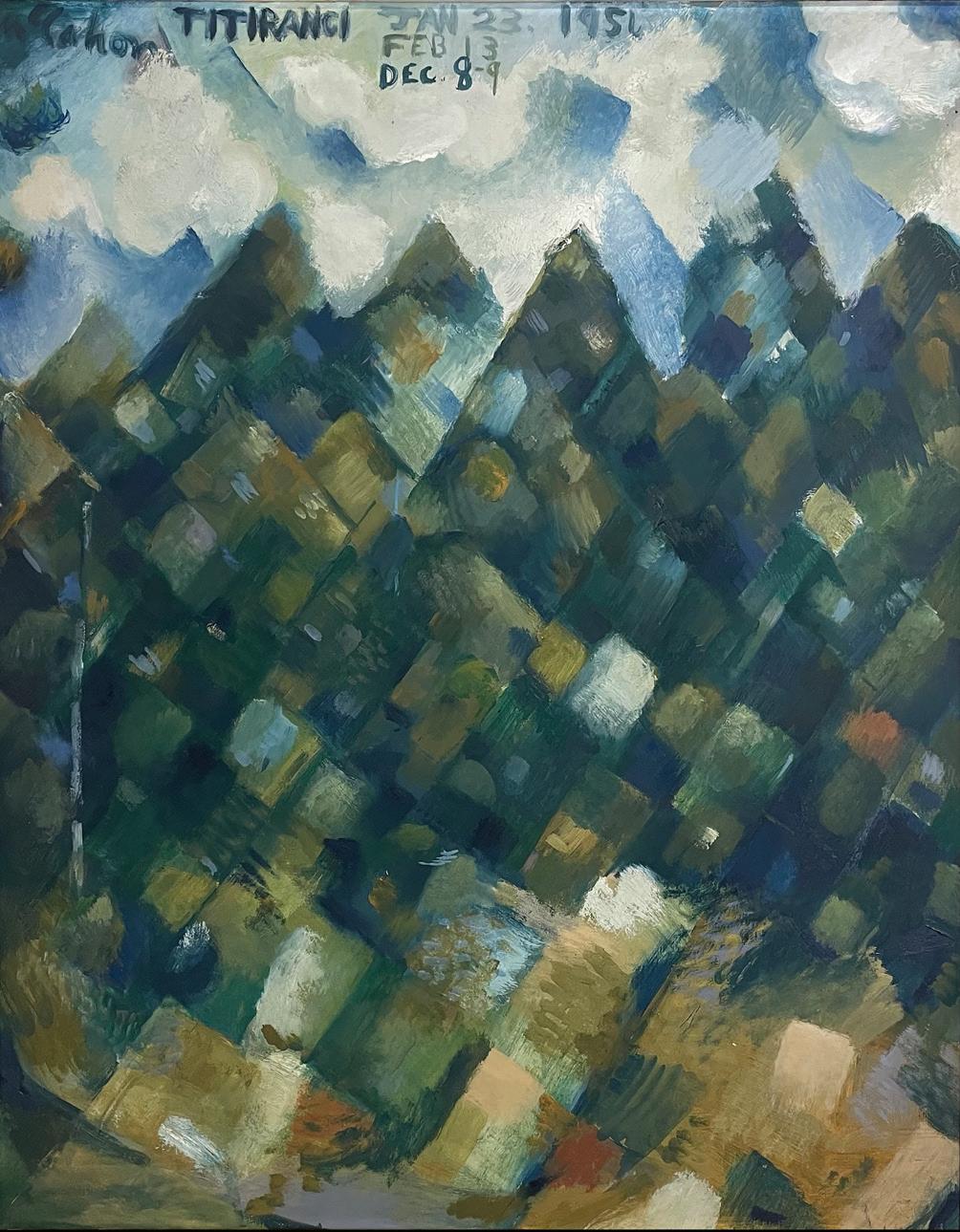
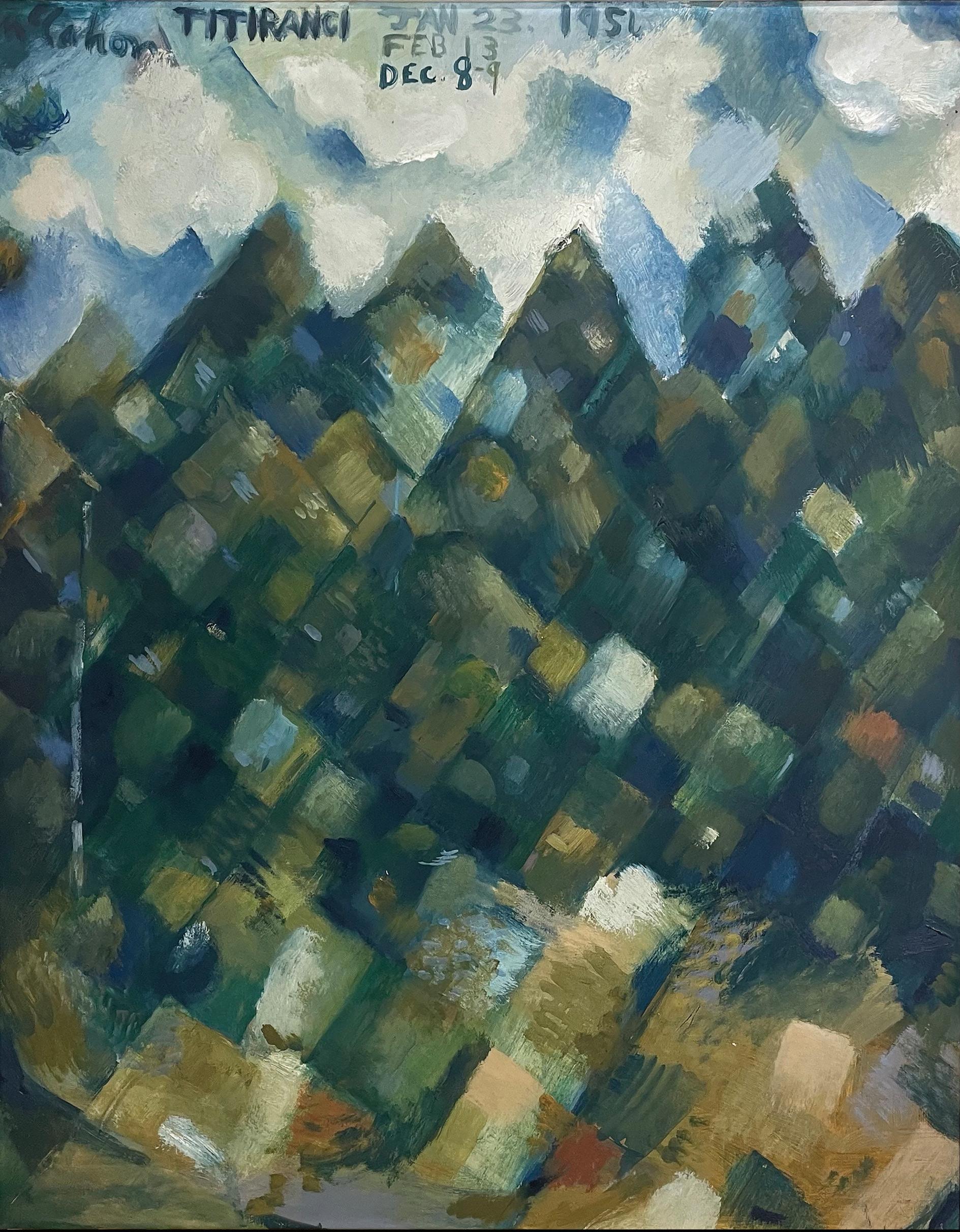
COLIN MCCAHON (1919 - 1987)
Titirangi
Oil on hardboard 63.5 x 52.5
Signed, inscribed Titirangi, Jan 23, Feb 13, Dec 8 - 9 & dated 1954
$250,000 - 300,000
PROVENANCE
Mr W B Brandford, Taumarunui
Purchased from John Leech Gallery, c. 1990 from the current Auckland owner
Colin McCahon database number cm001435 www.mccahon.co.nz
EXHIBITED
Colin McCahon: Gates and Journeys
Auckland City Art Gallery 11/11/1988 - 26/2/1989 - Cat. no. T15
REFERENCE
p. 86 Colin McCahon: Gates and Journeys pub. Auckland City Art Gallery, 1989
Moving to Auckland to work at the Auckland Art Gallery in the winter of 1953, Colin McCahon settled his family in Titirangi. After the denuded pastures of the Canterbury plains where he had been living, the towering kauri trees that populated the lush garden of his property in French Bay were a revelation to this South Islander, and they began to feature prominently in his work. Just as Montagne SainteVictoire overlooking Aix-en-Provence became a recurrent motif in the late paintings of French artist Paul Cézanne, so the Titirangi bush become the key theme for McCahon in the mid-1950s. He produced a series of works based on the kauri trees, his house and French Bay itself, exploring different angles, lighting and compositions, in which he created a harmony of contrasts.
His motivation was to explore the nature of perception as well as to study his surroundings. A contemporary of McCahon’s from Christchurch, Harry Scott (1918-1960), moved to Titirangi in 1956, taking up a position as the head of the new Psychology Department at Auckland University College in 1957. Scott’s experiences of imprisonment as a conscientious objector during World War II led to post-war PhD research at McGill in Montreal on sensory deprivation. He discussed with McCahon
how the eye and mind respond when seeing light after a long period of darkness, and inspired the artist to experiment with his own vision. McCahon would wake at dawn and dash outside to gaze at the light coming through the trees, and then try and paint what he saw later, with sunshine from the summer sky and clouds above dematerialising the forms of the vegetation into patches of colour. He restricted his palette to complements of blue, green and muted orange, setting up a syncopated rhythm across verticallyoriented compositions. Brushwork flattens recession, distancing his painting from representation.
With specific days inscribed on this work, our attention is drawn to the time of year – mid, late and early summer. This contrasts with a similar Titirangi painting, formerly owned by Dunedin poet and philanthropist Charles Brasch (1909-1973), which was painted in winter and is inscribed August, September 1. This shows that McCahon was interested in exploring how the light through the trees changed with the different seasons, (although not as tied to depicting specific times of day as Impressionists had been in the previous century). This is a key work in McCahon’s development as modernist painter, showing the path he took to abstraction which would dominate his practice in later decades. LINDA TYLER
Hori Pokai - A Sturdy Stubborn Chief, 1919
$500,000 - 750,000
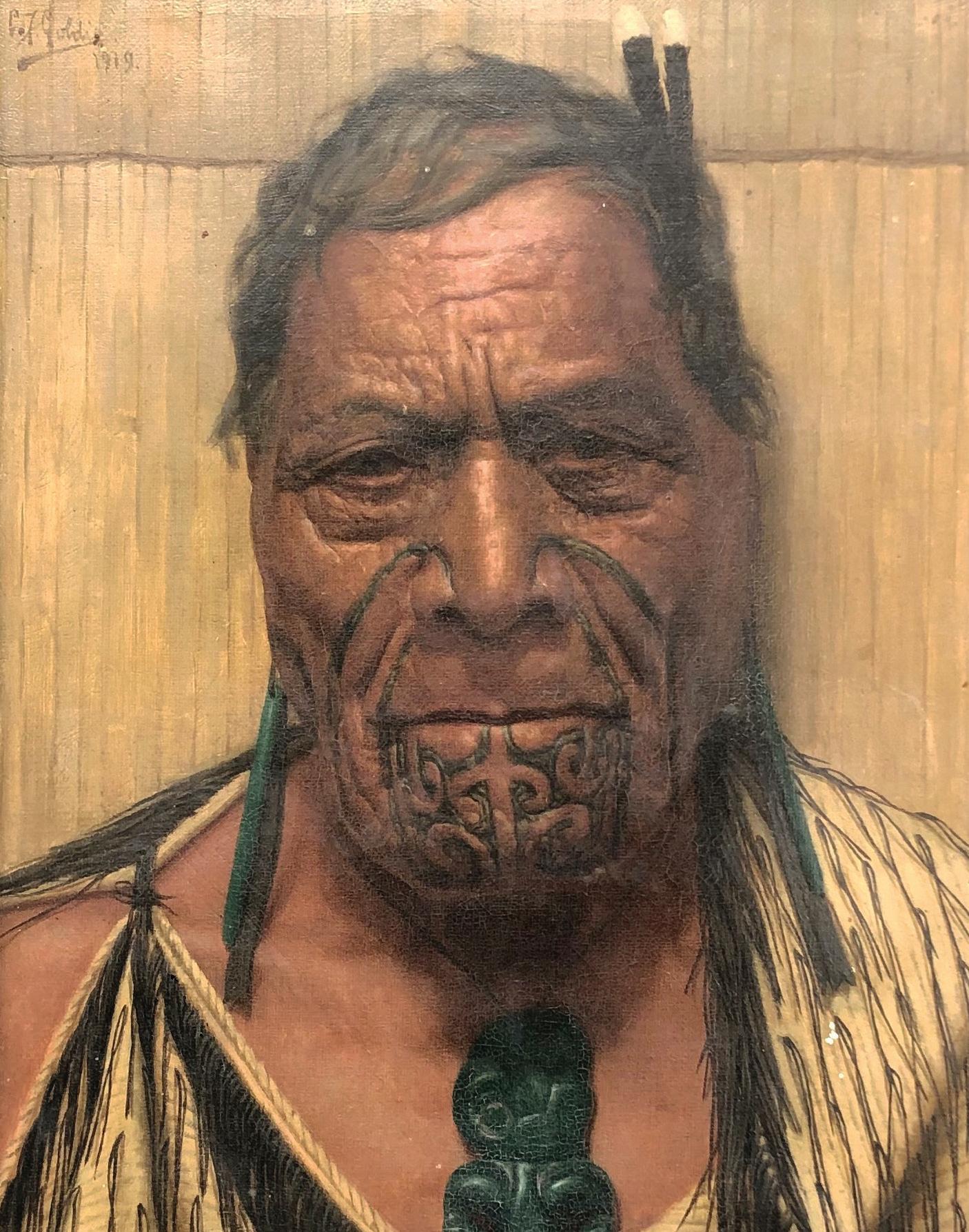
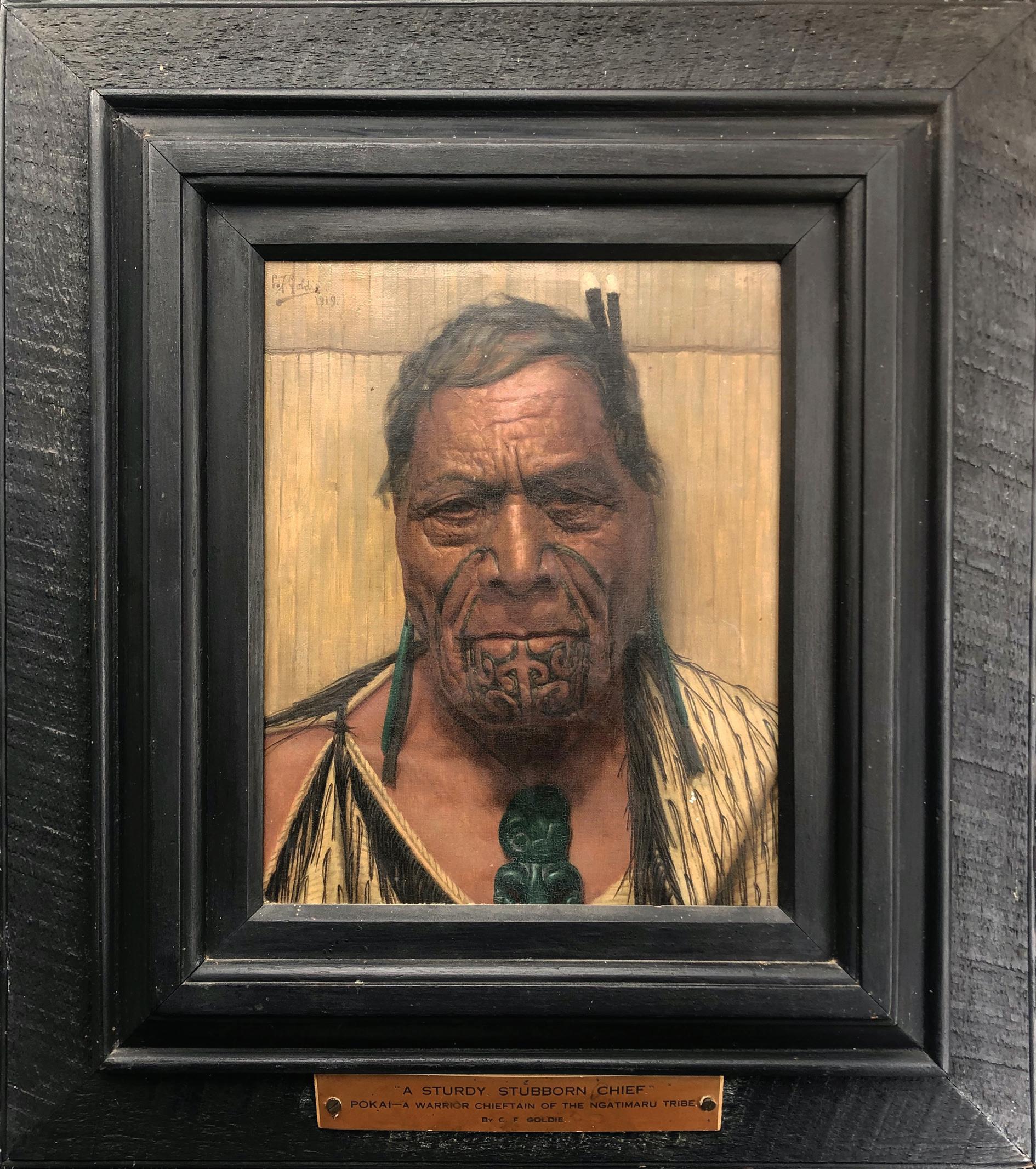
(1870 - 1947)
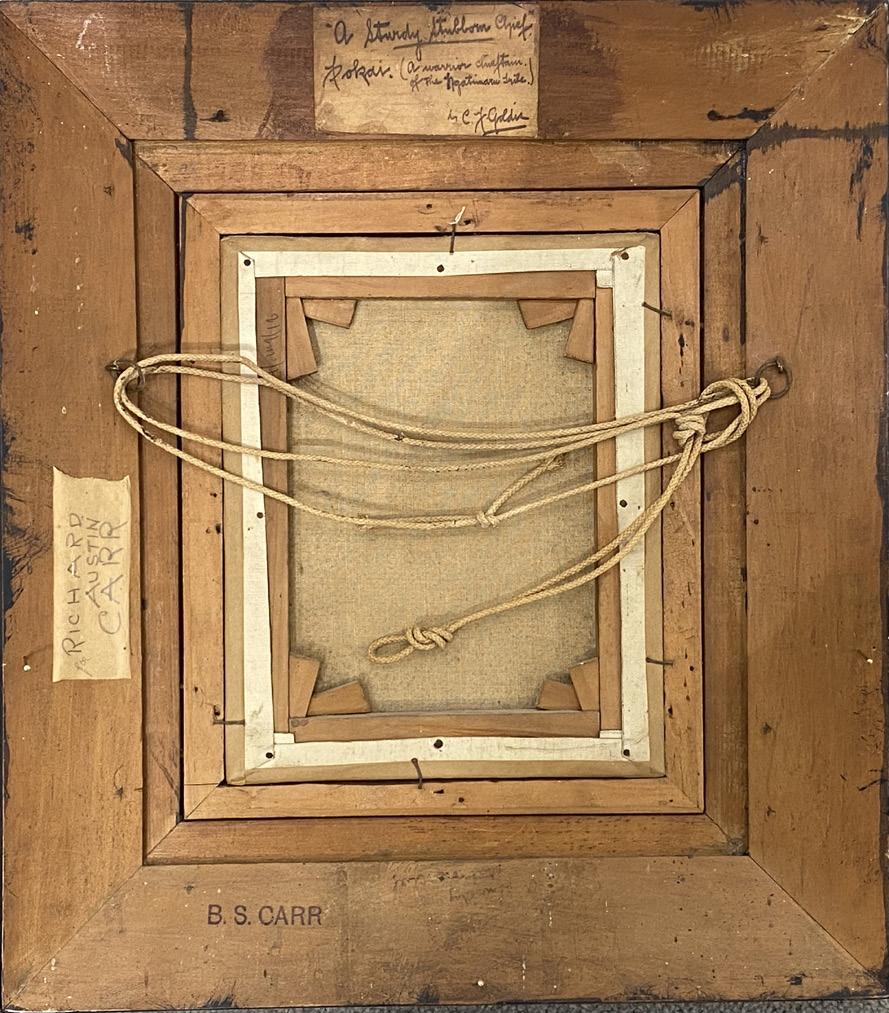
Hori Pokai - A Sturdy Stubborn Chief Oil on canvas 26 x 21
Signed & dated 1919
$500,000 - 750,000
Inscribed on original artist’s label affixed verso
PROVENANCE
Private Collection, Bay of Plenty
ILLUSTRATED
Full colour plate and p. 252 C F Goldie His Life & Painting, Alister Taylor & Jan Glen, 1977
Hori Pokai lived beside the Kauaeranga Stream in the Thames district. His father, Tauri Netana, escaped from Hongi Hika’s attack on Te Totara Pa in 1821. He was later captured by a Ngapuhi raiding party and taken to the Bay of Islands, where Pokai was born, instead of his native Arawa.
Although Hori Pokai’s tattoo was incomplete, he was considered to be the last tattooed Maori in the Thames district. When Mr W Hammond came to photograph the chief, he painted Pokai’s tattoo with Indian ink to ensure that the finer lines would show up more clearly. Pokai was so pleased with Hammond’s artwork that he paraded daily down the main street of Thames until the ink finally wore off. Pokai was an avid story teller and would relate how, on several occasions his love affairs brought him close to death. He told of the time he paid too much attention to another man’s wife and the aggrieved husband challenged him to a fight. The whole tribe assembled to watch Pokai’s punishment. Pokai, as the offender, had to rest on one knee, with a sharp stick in his hand, and defend himself against his opponent, who was armed with a long spear. The offended husband was allowed to make two thrusts at Pokai, in an attempt to impale him. Pokai parried the first attack and deftly brushed aside the second. He was a man of great pride, with a keen sense of humour. His physical strength is clearly mirrored in his face, particularly the set of his jaw. He was an able warrior and leader, but few stories of his battles have survived.
Goldie first painted Hori in 1905, after a visit to Thames. He took a series of photographs at the time, and these were used for portraits in 1917 and 1919 and for several in the 1930’s. The 1936 portrait Pokai Perturbed or Suspicion was submitted to the Royal Academy, and the 1937 study A Midsummer’s Day, Maoriland was exhibited at the Paris Salon in 1938. Goldie also had access to the photographs of Hori Pokai taken by Hammond.
C F Goldie His Life & Painting, Alister Taylor & Jan Glen, 1977
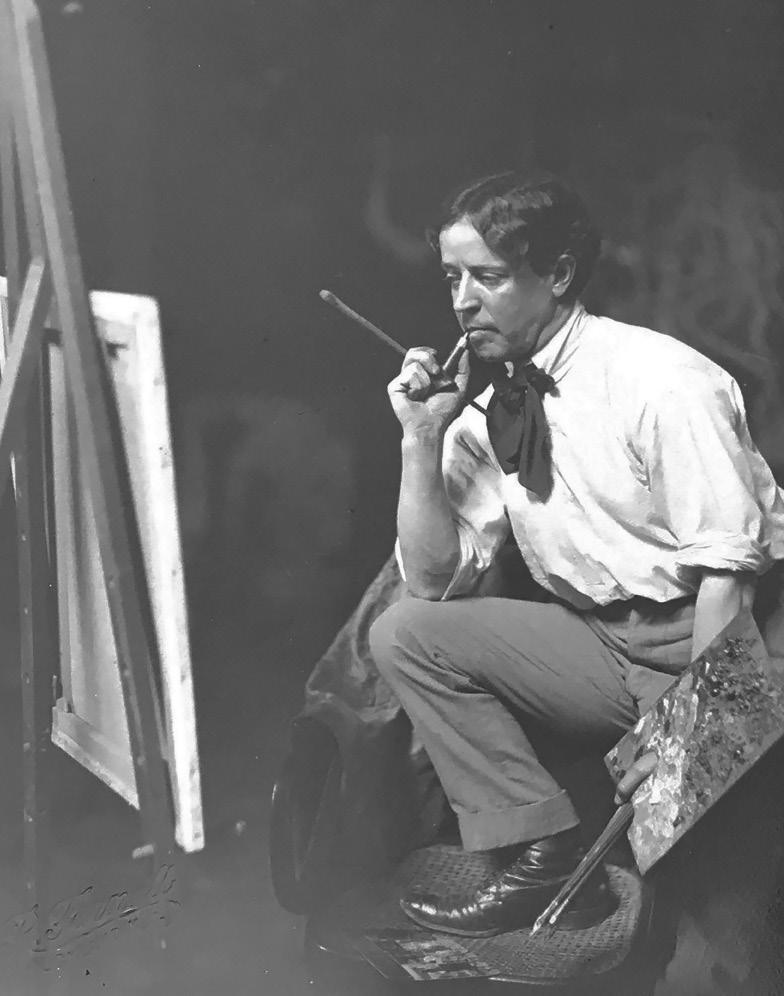
Through his lifetime and legacy, Charles Frederick Goldie greatly influenced our nation’s artistic and cultural consciousness. Born in Auckland on 20 October 1870, one of eight children from the marriage of Maria Partington and David Goldie, he was named after his maternal grandfather, Charles Frederick Partington, builder of the landmark Auckland windmill.
In 1883 the young Goldie was enrolled at Auckland Grammar School. His youthful artistic talents shone, and it was not long before he was winning prizes at the Auckland Society of Arts. On leaving school, Louis John Steele became his mentor and tutor. Two of the young artist’s still life paintings so impressed Sir George Grey, that he convinced David Goldie to allow his 22 year old son to attend the Académie Julian in Paris. Goldie spent over four years at the Académie Julian tutored by leading lights of the Paris Salon such as William-Adolphe Bouguereau.
In 1898, fully informed in the French academic style, the artist returned to New Zealand and began collaborating with his former tutor Louis John Steele. The two worked on a number of paintings including The Arrival of the Maoris in New Zealand, a large scale history painting after Gericault’s Raft of the Medusa. Before long, however, the relationship deteriorated likely caused by tensions around the former student’s growing success. Goldie went on to open his own studio and establish himself as a successful portraitist of Maori.
A visit to Rotorua in 1901 was the first of several field trips during which the artist was introduced to local Maori and persuaded them to sit for portraits. Goldie’s works from this point forward strongly reflect the European tradition in which he was trained, and possess a stunning power and visual clarity. On the one hand, his remarkable dedication to realism belies an ethnographic interest. At the same time, he was also striving to capture the mana of his sitters who included chiefs, tohunga and kaumatua.
Goldie formed long-standing relationships with several Maori he met and painted around this period, including Wiremu Patara Te Tuhi and Te Aho-o-terangi Wharepu (Ngati Mahuta), Ina te Papatahi (Nga Puhi), and Wharekauri Tahuna (Ngati Manawa).
Over the next two decades, Goldie gained national and international acclaim and steady demand formed a strong market for his portraits, a number of which would later be exhibited at the Royal Academy of Arts in London and the Paris Salon throughout the 1930s.
In 1920 the artist moved to Sydney, where despite original plans to continue on to Paris, he was married, at age fifty to thirty five year old Olive Cooper. Marriage in Sydney circumvented the Goldie family disapproval of the relationship between Auckland’s famous artist and the milliner from Karangahape Road. After two years in Sydney, apparently disillusioned with his work at this time and suffering from health problems Charles and Olive returned to New Zealand.
Goldie’s return to Auckland in 1924, ultimately represented a moment of artistic reckoning. Goldie received encouragement to resume painting from Governor General Lord Bledisloe. Devoting himself once again to his work, he began to apply a more liberal, impressionistic approach to the realisation of his portraits and repainted a number of his former subjects. Works from this later period are distinguished by their soft luminescence, offering a rhythmic departure and disconnection from the rigours of formalism to which he had so strictly adhered in the past.
Goldie died in Auckland in 1947, his exquisite, spiritually-charged, often unsettling and ever powerful portraits of Maori having made an unsurpassed contribution to the history of art in New Zealand.
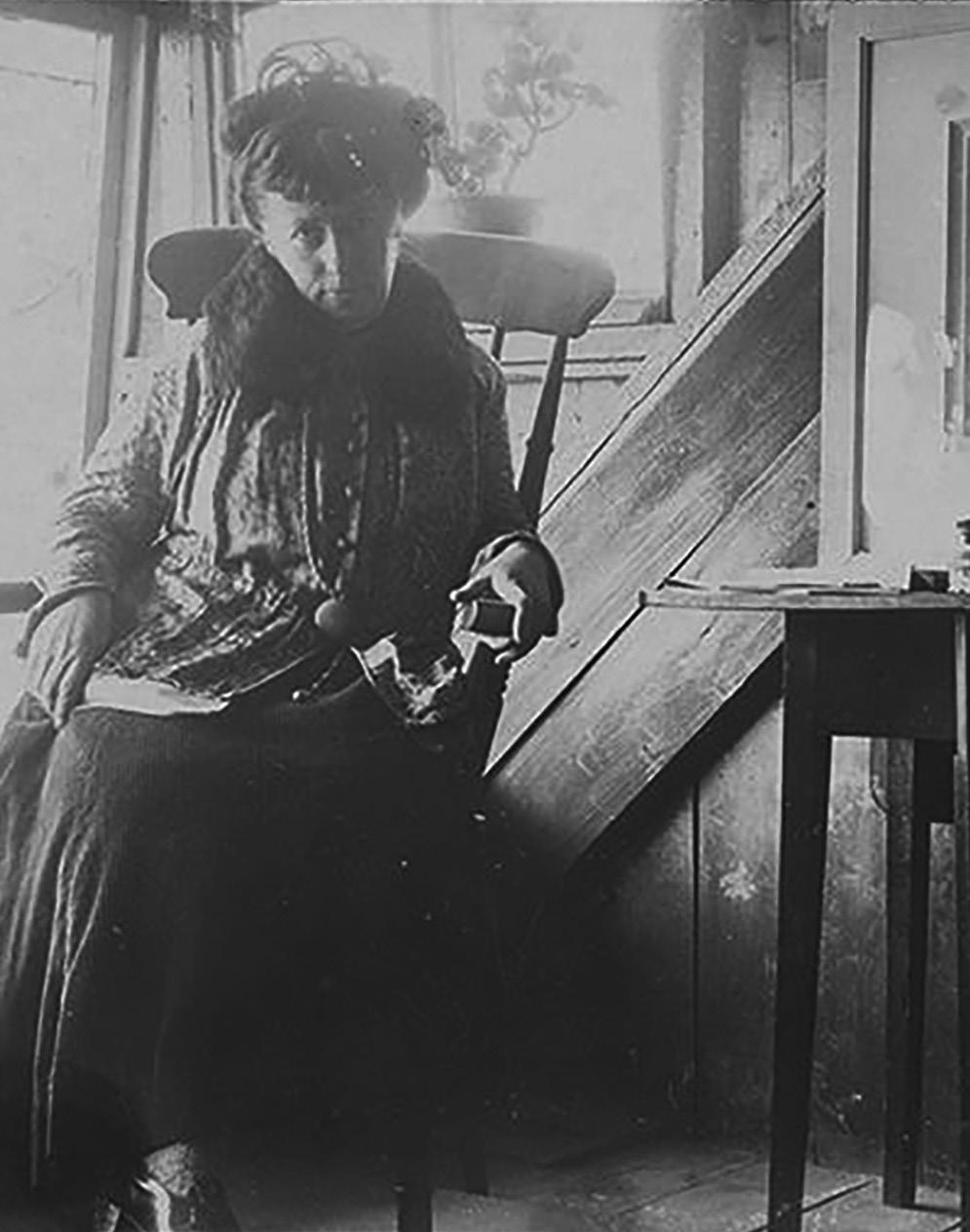
Frances Hodgkins in the Wharf Studio, St Ives, Cornwall
Image RC2015/4/4/42
https://completefranceshodgkins.com/objects?query=Wharf+studio
Two works by Frances Hodgkins with essays by Mary Kisler: St Ives Bradford-On-Tone
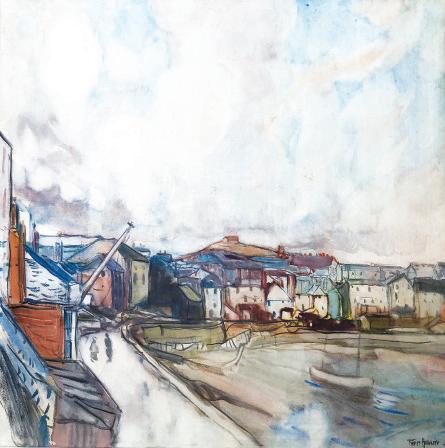
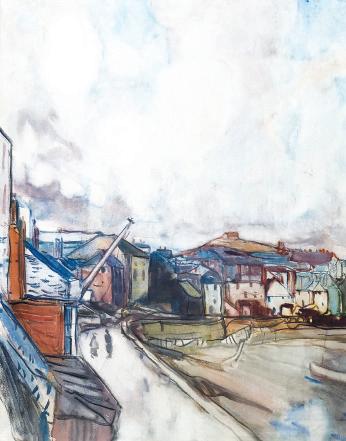
40 FRANCES HODGKINS (1869 - 1947)
St. Ives
Watercolour 66.5 x 66.8
Signed
$200,000 - 300,000
PROVENANCE
Private Collection, Auckland
Formerly Art Gallery of South Australia
Adelaide, [01614], Elder Bequest 1955
Leonard Joel, Melbourne, 1989
International Art Centre, 1991
Frances Hodgkins database number FH0580
EXHIBITED:
Anthony Hordern’s Fine Art Gallery, Sydney, October 1918 (no. 33) as Low Tide, St Ives
Forced to flee France in 1914 when war broke out, Frances Hodgkins eschewed London as too expensive (and too dangerous) and retreated to St Ives in Cornwall, and the comfort of familiar older faces such as fellow artists and supporters Moffat Lindner and his wife Augusta, known affectionately as Gussie.
Hodgkins had first visited Cornwall in 1902, drawn there by the long-standing artists’ community based around Penzance and Newlyn. Painting conditions were like those found in Brittany, which had been favoured by the Impressionists, where they could paint en plein air, capturing the constantly changing play of light on the water, and the activities of the fishing communities. Fishing boats in both communities favoured the red sails recorded in Hodgkins’ own European watercolours between 1902 and 1914.
Hodgkins and Dorothy Kate Richmond had returned from the Italian Riviera full of their experiences, and once settled in Penzance they braved the foul weather to make the brief journey to St Ives on 24th February 1902 to attend the local artists’ open day. Hodgkins wrote a hilarious letter to her mother describing the experience. She was somewhat dismissive of the general standard, the exceptions being works by John Arnsby Brown & Julius Olsson (the latter had taught Augusta Lindner), although she was too late to view paintings by Louis Grier. She wrote, ‘It was great fun going round – the Studios were hidden in the queerest places. Down dark subterranean passages up chicken ladders – in old boat houses, up sail lofts – anywhere where they could get a white-washed wall & a top light’. [Letter to Isabel Field, 7 March 1902]
By the time they had battled their way to the Dutch artist Gijs Bosch Reitz’s display in the late afternoon, they were too exhausted to study his paintings, instead wolfing down the afternoon tea he had provided. Finally, they dashed to the Ocean Wave Studio, only to find that the proprietor was drunk, before making their exhausted, bedraggled way back to Penzance. Things were not so lively when Hodgkins arrived in St Ives amid a ferocious winter blizzard at the end of 1914. With the help of Moffat Lindner she took over one of the Porthmeor studios and set to making it suitable for teaching, whitewashing the bright pink walls and decorating the space with knickknacks she picked up in the village. It’s large wall of windows overlooking the wild Atlantic seas provided the natural light essential for artists painting all year round.
At first, Hodgkins suffered from the isolation, particularly having to eat alone each evening, and wrote to her mother recalling her happy time in Concarneau. ‘Why was I so prodigal last year, travelling about as tho’ I had endless resources. Still, I don’t regret it. It was the first time, absolutely the first time I felt happy & secure & sure of myself. I was in full flight & full of aspiration! The war has put much that might have been quite out of reach. [Letter to Rachel Hodgkins from St Ives, February 25th 1915]
Magnificent in scale, Low Tide, St Ives demonstrates the immense skill in handling watercolour that Hodgkins had acquired during her years in France, its square format also seen in a number of her large oil paintings, such as The Edwardians (Auckland Art Gallery) and Loveday and Ann (Tate, London). Whether Hodgkins was able to source large sheets of watercolour paper in St Ives, or whether she had carried supplies with her from Paris, is unknown, although the latter is more likely as French paper was better quality.
Low Tide, St Ives must have been painted in the early part of 1915, for by June that year it was forbidden to paint out of doors in case you were a spy sending information regarding the coastline to the enemy. It shows the sweep of Wharf Road leading round the inner harbour. Only a single small craft is drawn up on the sand, as all the herring boats were currently at sea; once they returned the sand would have been invisible beneath a mass of hulls and masts.
Dominating the scene are billowing moisture-laden clouds rising above the village. Painted wet on wet, Hodgkins has left the white paper untouched in the palest areas, floating her pigments skilfully around these masses. She had perfected this technique during her time spent in France from 1808 to 1914. Wharf Rd and the shallow traces of water on sand are also painted wet on wet, unlike the buildings, where dry paper allowed a denser treatment of pigment. We can almost feel the moisture in the air.
Hodgkins animates some of the tight cluster of cottages, shops, inns, and ships chandlers that line Wharf Road with dabs and dashes of grey and black, a red wall adding warmth to the cooler tones. The buildings in the background are separated by a block of dark stone buildings clustered up the steep hill. Behind this line of buildings of the left runs Fore Street, which is mentioned by Hodgkins as her choice for walking, no doubt as the buildings gave some shelter from the elements, for storm waves regularly crash over Wharf Rd even today.
On the hill in the distance the tiny stone Chapel of St Nicholas, patron saint of children and sailors, stands in isolation against the sky. Also overlooking Porthmeor Beach, its wind-battered vantage point was a brief walk from Hodgkins’ studio. Eventually the cold of winter, and the vermin attracted to the herring sorting that took place under the building, proved too much for her, and she moved to Wharf Studio in the more sheltered environment of the inner harbour, to the right of this watercolour. MARY KISLER
(1) https://completefranceshodgkins.com/ objects/29258/letter-from-frances-hodgkins-torachel-hodgkins
(2) https://completefranceshodgkins.com/ objects/29257/letter-from-frances-hodgkins-torachel-hodgkins
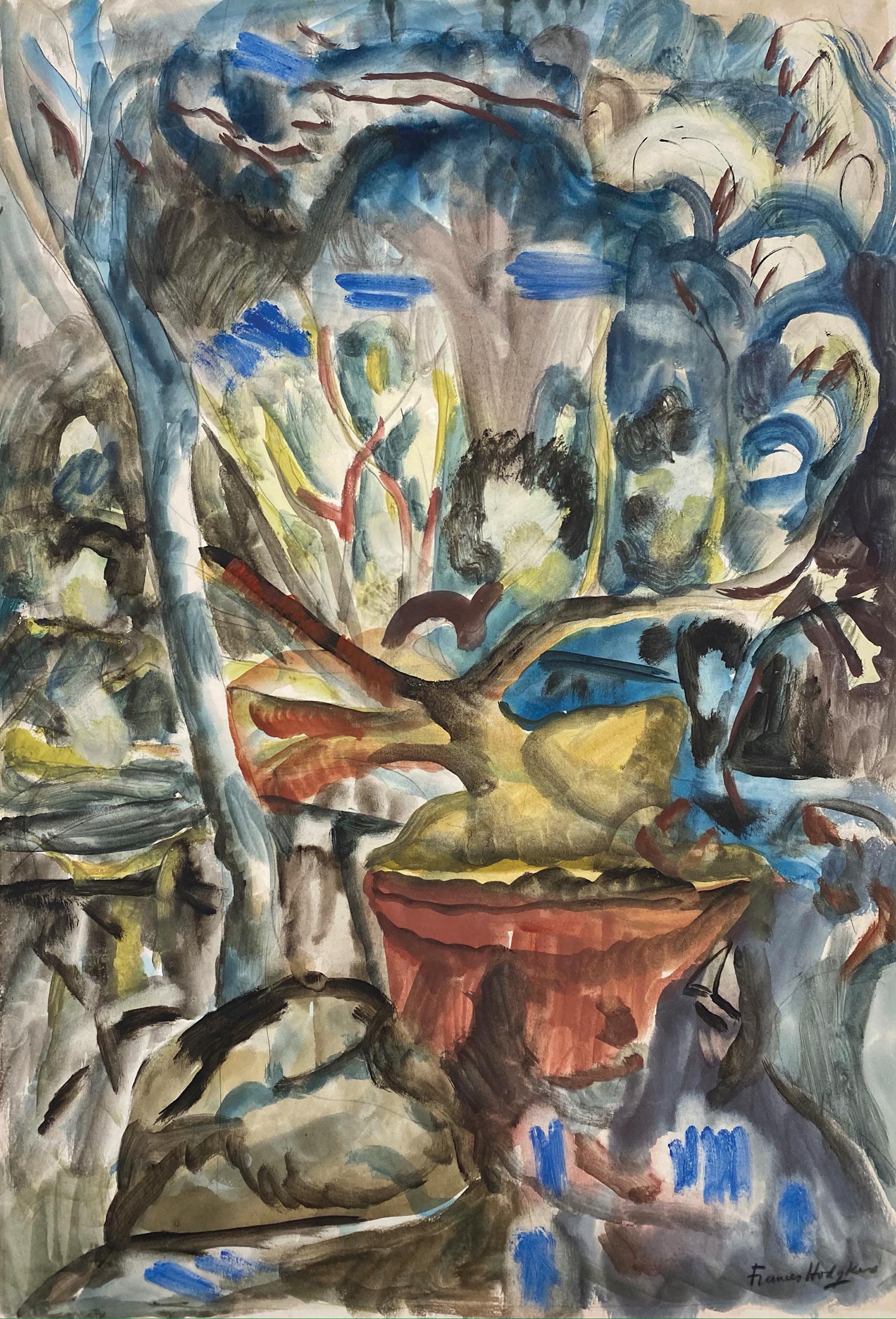
41 FRANCES HODGKINS (1869 - 1947)
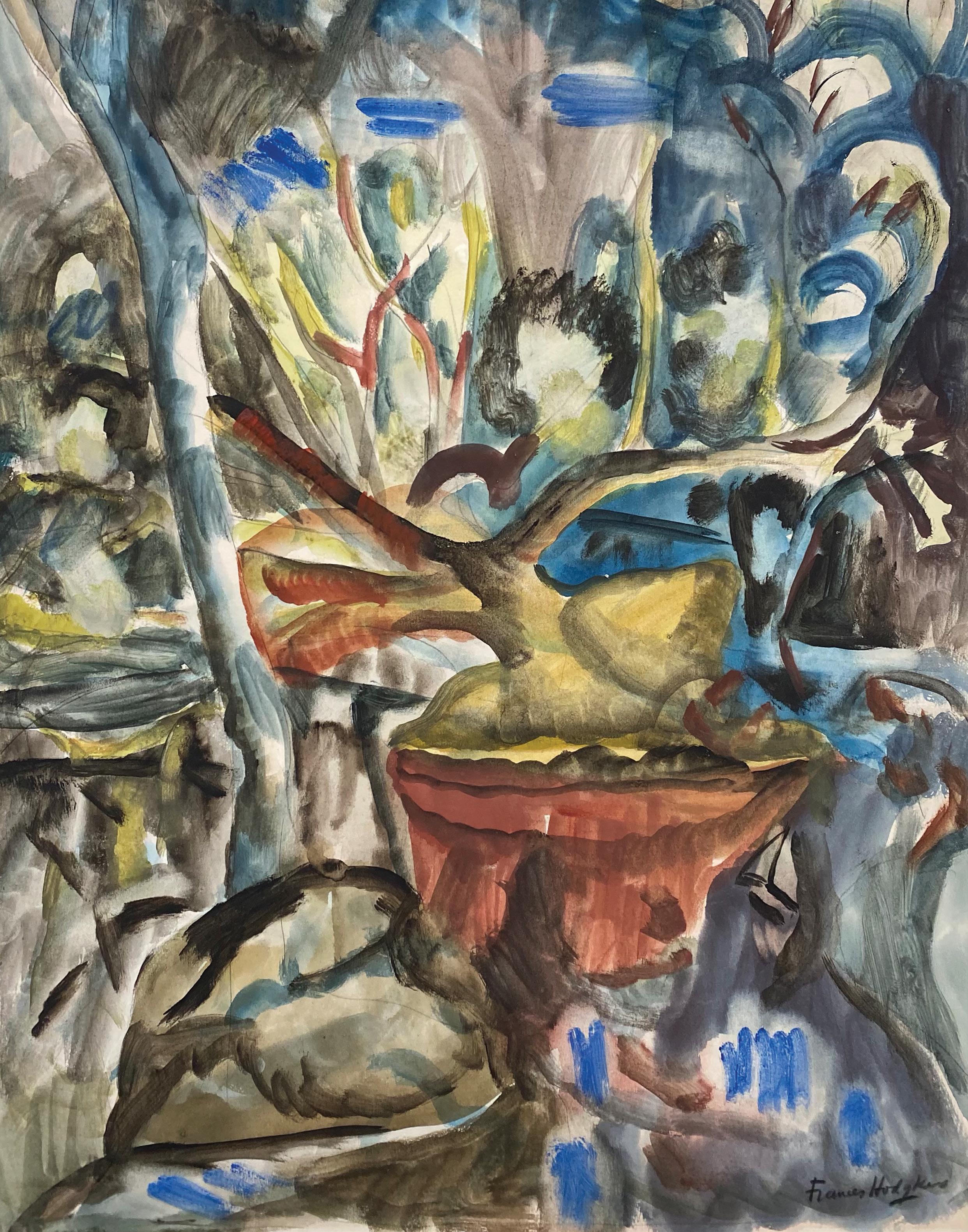
Bradford-on-Tone also known as No 4 River Tone, Somerset
Watercolour 55.4 x 38.5
Signed
$60,000 - 90,000
PROVENANCE
Collection of Dame Rebecca West, British author, journalist & travel writer Dunbar Sloane, 2/12/2009 Private Collection Wellington
ILLUSTRATED
Frances Hodgkins Works from Private Collections, Kirkcaldie and Stains Ltd, Wellington, August 1989
EXHIBITED
Frances Hodgkins Retrospective, 1947 Lent to this exhibition by Dame Rebecca West
Frances Hodgkins was first introduced to Geoffrey Gorer in 1927 at a party thrown by Cedric Morris and Arthur Lett Haines in London. Gorer went on to introduce her to the rest of his family, and his mother Rée and Hodgkins became very close friends. For the rest of her life, The Elms, the Gorer family home in Highgate, and the cottage Geoffrey acquired in Bradford-on-Tone in 1930 became two places that provided Hodgkins with sustenance, warmth, creative stimulation, and care in times of need.
It was the Croft, however, that had the greater influence on her painting. Situated just outside the village of Bradford-on-Tone on the road to Oake village, the cottage was cared for by Mrs Annie Coggan, who also cooked and cleaned when people were staying at the Croft. Her delicious food delighted Hodgkins, but she also loved her company, as well as the comforting presence of her young daughter Nancy. Mrs Coggan recalled in the 1950s that Nancy would be sent to sleep at the Croft overnight to keep Hodgkins company. Annie was the glowing subject of the two versions of Farmer’s Daughter painted around 1931-2. She recalled in a letter to Eric McCormick in 1966 that Hodgkins had been nervous of the cows grazing in the meadows, so that when time allowed, she would accompany Hodgkins with a picnic lunch, enjoying her witty company. Gradually they built up a deep friendship.
This awkwardness around farm animals may have influenced Hodgkins’ choice of the riverbank as a
favoured place for painting. Running along the side of river from the village carpark is a straight dirt path that is part of the West Deane Way. The field on its left was high with wheat in the spring and summer, whereas in winter the short stubble would have provided little shelter from the wind. Breaks in the underbrush on the riverbank allow views of the water and gave glimpses of the farm on the opposite riverbank, beside which flows a broad weir beside a rough-cut timber barn. Hodgkins painted the weir on several occasions, fascinated by the rapid pace of the water, and the challenge of capturing its constant sparkling movement.
However it was the tangle of willows, cow parsley and weeds on the riverbank that set her a greater challenge. Early on in her English career she had grumbled about the masses of pale greens in an English spring, preferring to capture the sculptural forms of twisted trunks and bare branches of trees stripped bare in the wintertime. And it was these that informed a series of watercolours painted at Bradford-on-Tone over several years in the 1930s, fascinating not least because Hodgkins had to clamber down among the stones, tree roots and branches to do so. But her work after the mid-1930s also respond to the challenge laid down in 1935 by Ben Nicholson and Barbara Hepworth in regard to the 7 & 5 Society to reject figurative subject matter and work in the abstract. While John Piper and Hodgkins both rejected this approach, there is no doubt that a certain degree of abstraction, not least in her arrangement of motifs, began to appear in her work.
In her riverbank works, including Bradford-on-Tone, one must spend time in contemplation studying their composition to be rewarded by a gradual understanding of her approach to her subject. The tall tree trunk on the left rises among clumps of rock, while another centrally placed forked trunk in soft yellow ochre is reminiscent of the vases used in her still life/landscape paintings of the early 1930s. The blue water, its movement in places defined by series of blue parallel brushstrokes, evoke its eddying among tree roots in the foreground, before wending its way across the upper reaches, while a broader blue area to the right suggests the broader water beyond the banks. Masses to the left suggest clumps of weeds among the rocks. Light filters through the landscape — brighter green strokes, highlighted by dashes of yellow and red ochre, suggest sunlight glancing across shrubbery. The overall composition is somehow reminiscent of a ‘bouquet’, with plant elements taking the place of cut flowers. MARY KISLER
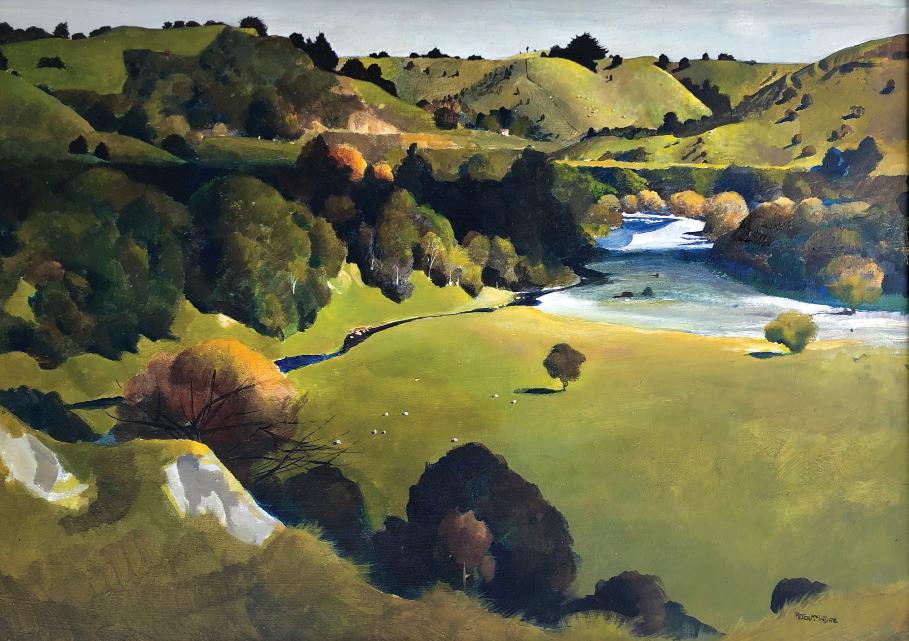
Wanganui River Oil on board 63 x 85
Signed $30,000 - 40,000
PROVENANCE
Private Collection, Taupo
Purchased from International Art Centre, c. 1976
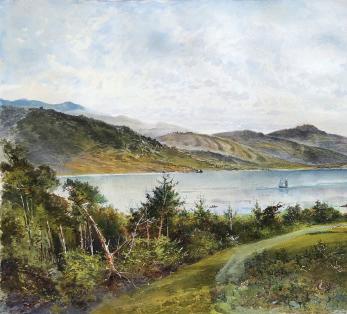
King Country
Watercolour 52 x 71.5
Signed
$20,000 - 30,000
PROVENANCE
Private Collection, Taupo
Purchased from John Leech Gallery, c. 1979
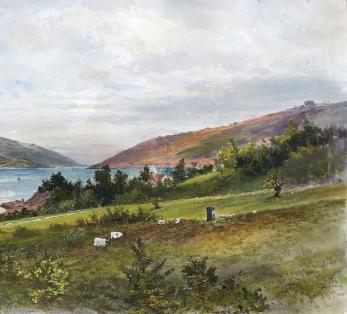
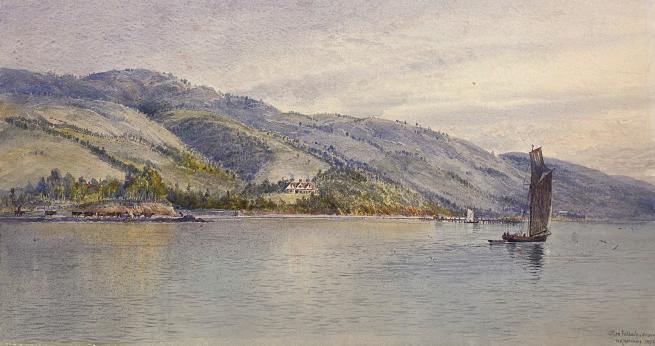
44 WILLIAM MATTHEW HODGKINS (1833 - 98)
Glenfalloch
Watercolour 37 x 75
Signed & dated 1885
$30,000 - 40,000
These important 19th Century watercolours (Lots 44 & 45) by William Matthew Hodgkins, a leading advocate of art in Dunedin, the founder of New Zealand’s
first art gallery and father of Frances Hodgkins is of historic Glenfalloch on the Otago Peninsula. Glenfalloch, Gaelic for hidden valley, was established in 1871 as the residence of English settler, George Gray Russell. Russell purchased a 100 acre block from James MacAndrew, the first Superintendent of the Otago Province. An early entrepreneur, Russell possessed a keen appreciation for beautiful gardens and oversaw the planting of English beech, oak, ash, walnut, elm and horse chestnut trees to complement
the thriving native foliage which included silver ferns and a precious thousand year old Matai tree, still standing today. This work by Hodgkins, one of the leading artists of his day, captures the rustic beauty of early Glenfalloch. The National Library of New Zealand holds a number of the artist’s pencil sketches of Glenfalloch, dating from 1885 to 1896. In this historic watercolour we see the homestead built from kauri and baltic pine with grazing sheep, a sailing ship and other small vessels on the waters below. In
the early days, access to and from the harbour-side settlements of the peninsula were severely restricted, George Russell had his own steamer the Moerangi and commuted to and from Dunedin, attending services at St Pauls Church on Sunday. Since 1967 the Otago Peninsula Trust, New Zealand’s first private charitable conservation trust, established to preserve the Otago Peninsula, have protected and nurtured the living legacy that is Glenfalloch.
- 98)
Glenfalloch
Watercolour 31 x 57
Signed & dated 1888
$8,000 - 12,000
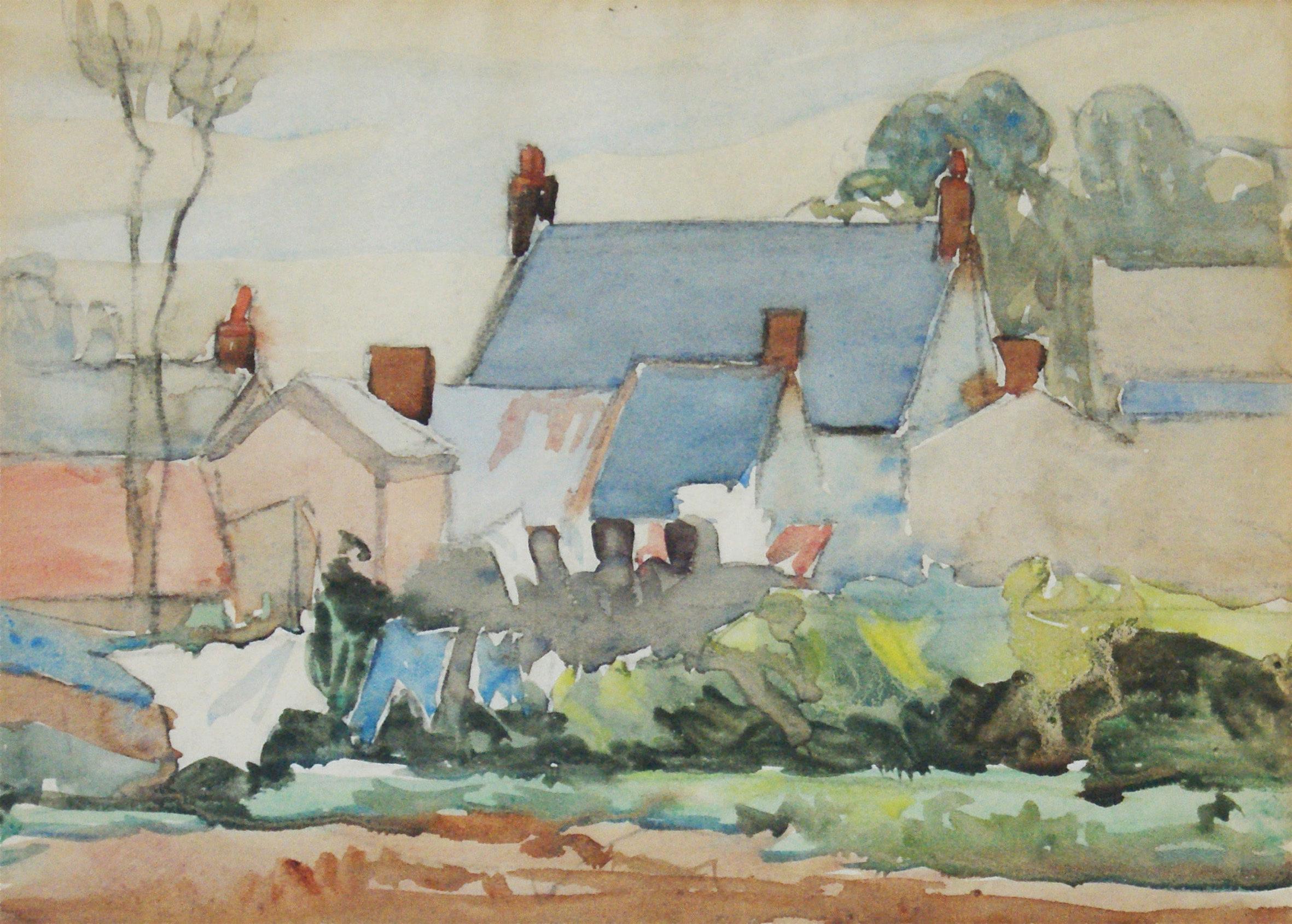
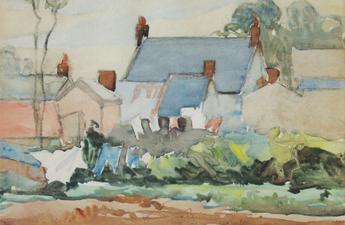
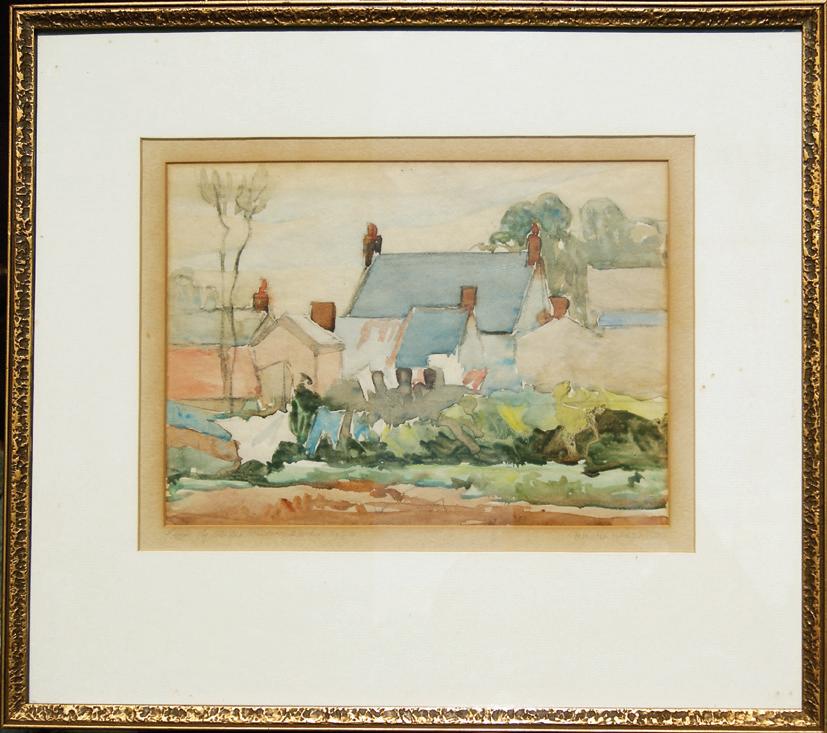
46 RHONA HASZARD (1901 - 31)
From My Studio Window, Sark
Watercolour 19.5 x 27
Signed, inscribed & dated 1926 on original mount - see framed image below $8,000 - 12,000
47
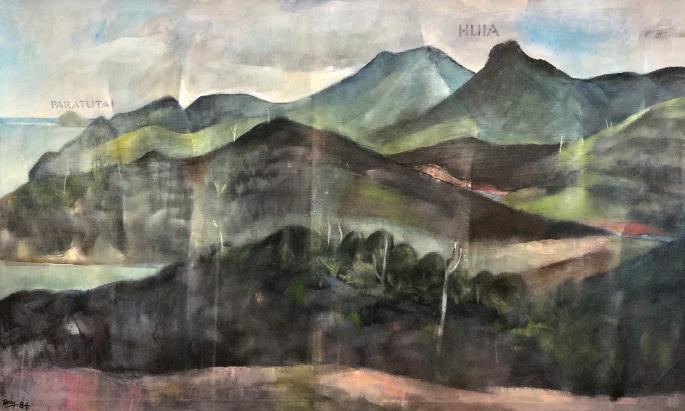
MELVIN DAY (1923 - 2016)
Huia
Oil on canvas 137 x 228
Signed, inscribed Huia and Paratutai & dated 1984
$25,000 - 35,000
Fletcher Trust Collection
Private Collection, Auckland
77 Works from the Fletcher Trust Collection
International Art Centre, 10/09/2014
Purchased from the above auction by current owners
Melvin Day was born in Hamilton and at 11 years old, and living in Auckland, began attending Saturday morning art classes at Elam School of Art. In 1939 he became a full-time student under the tutelage of John Weeks, Lois White and Ida Eise, graduating in 1942. Day’s war years were served with the New Zealand Army and in 1944 he was transferred to the Royal New Zealand Air Force. After the war Day spent a few years teaching and painting in the Rotorua area. Moving to Wellington in 1954 he gained a Bachelor of Arts degree from Victoria University while teaching at Hutt Intermediate School.
From the 1950s onwards Day exhibited widely throughout New Zealand and in 1961 his work featured in the Commonwealth Art Today exhibition in London. Based in London during the early 1960s Day studied art history at the Courtauld Institute, attending lectures by Professor Anthony Blunt. These studies ignited a fascination with the geometric precision featured in the works of the Italian Renaissance painter, Paolo Uccello, and lead to Day’s creation of his celebrated Uccello Series. In 1964 he exhibited alongside fellow New Zealand artists Ralph Hotere, Edward Bullmore and Gordon Browne in the Young Commonwealth Painters at Whitechapel Gallery, London.
For a time Day taught in London before returning to New Zealand in 1968 and his appointment as director of the National Art Gallery of New Zealand.
In 1978 he was appointed government art historian. Throughout this time Day painted prolifically. Two retrospective exhibitions were held, one at the
Dunedin Public Art Gallery in 1970 and the Dowse Art Gallery, Lower Hutt in 1971. A major survey exhibition, Full Circle was held at the Wellington City Art Gallery in 1984. A thoughtful and scholarly painter, Day’s interest in various periods of western art history is reflected in his work. He studied and utilised a wide variety of influences from the painters of the Italian Renaissance, to the modernist works of Cezanne and Braque.
In 2003 Day was awarded the CNZM for services to the arts. In 2004 a major survey exhibition Melvin Day - Continuum was held at City Gallery, Wellington. In 2009, along with Nigel Brown and John Walsh, he travelled to Fiordland to paint the landscape which had inspired Cook’s artist, William Hodges. The journey was documented in Peta Carey’s film The Waterfall. Day’s portrait of Donald McIntyre was gifted to the New Zealand Parliamentary Services in 2011. The artist died in Wellington on 17 January, 2016.
Melvin Day’s works are found in many national and international public and private collections including Te Papa Tongarewa, The Dowse Art Museum, the Rotorua Museum of Art & History, the New Zealand Ministry of Foreign Affairs and Trade, the State Services Commission, the Dunedin Public Art Gallery, the Auckland Art Gallery and the New Zealand Portrait Gallery.
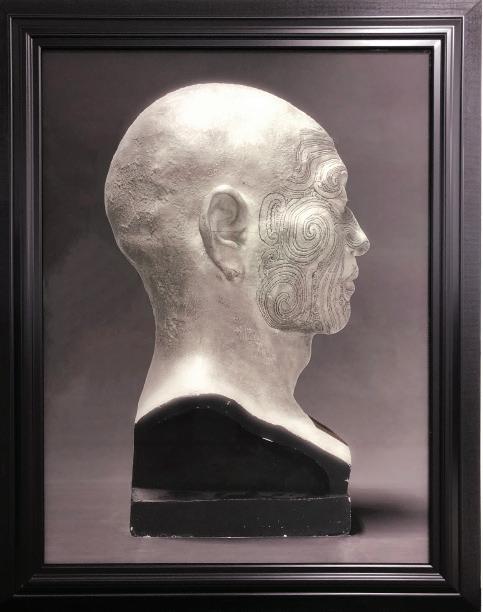
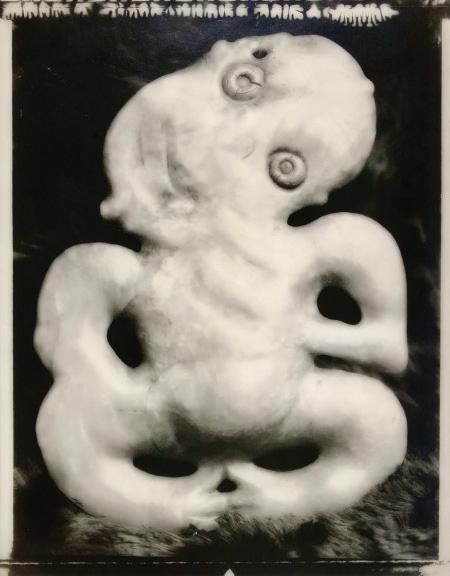
Portrait of a Matoua Tawai
Pigment inks on Hahnemule photo rag paper, edition of 10, 145 x 108.5
$40,000 - 50,000
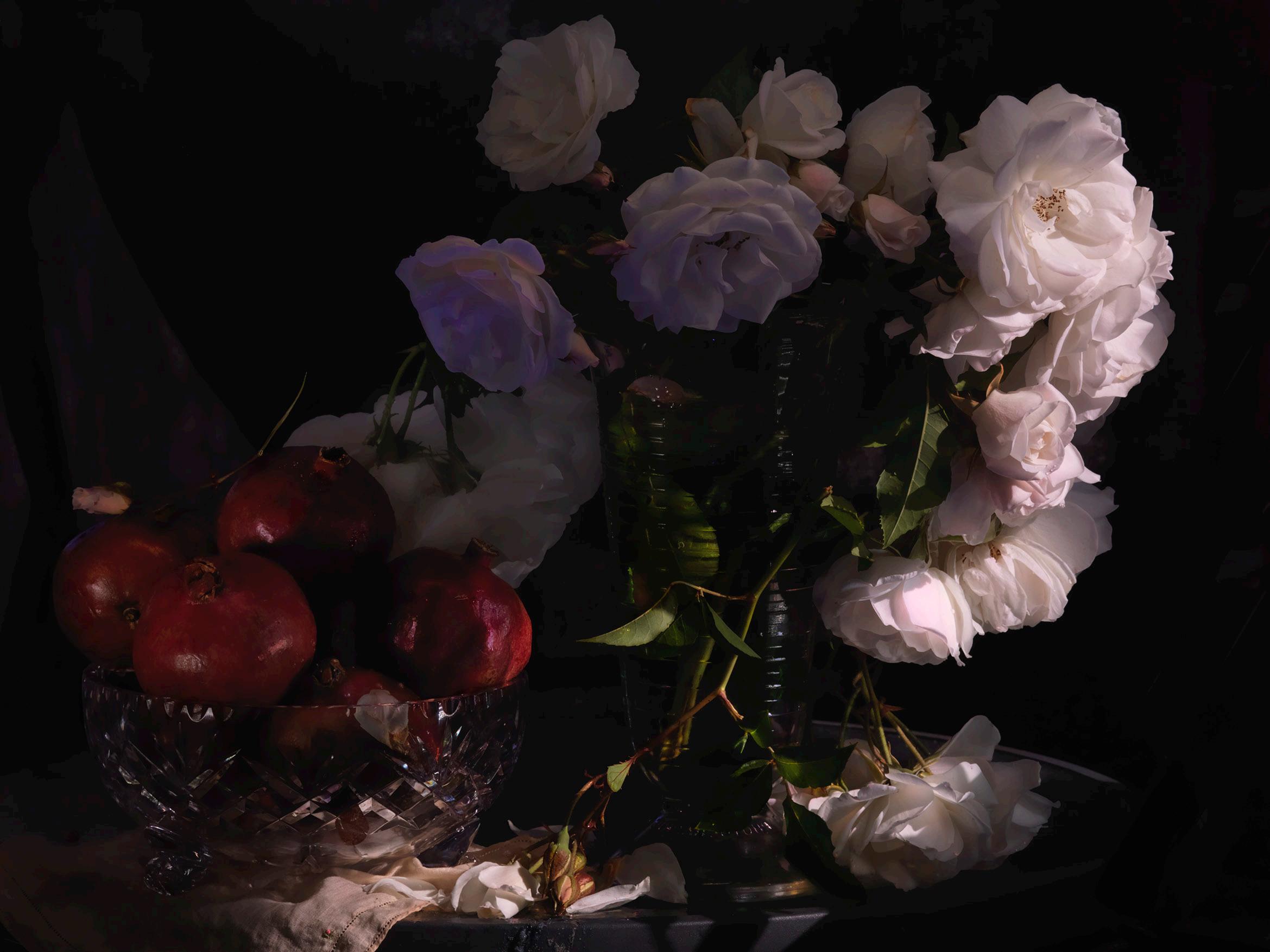
49 FIONA PARDINGTON (b. 1961)
Still Life with White Roses, Pomegranates in Crystal Bowl
Pigment inks on Hahnemuhle Photo
Rag 308gsm, Edition of 10 + 1 A/P
140 x 176
Signed & dated 2013 verso
$18,000 - 24,000
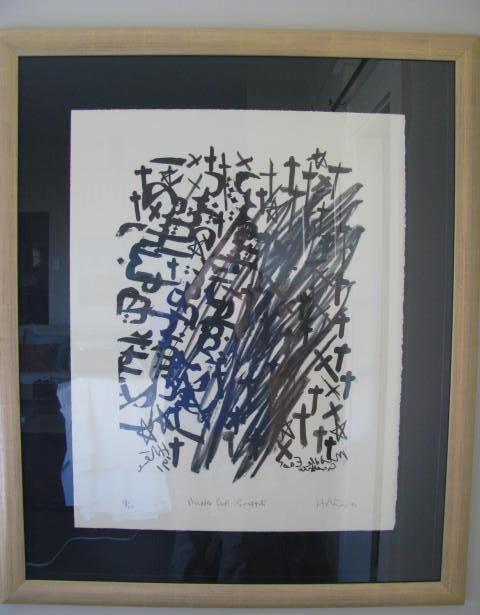
Middle East Graffiti
Lithograph, edition 18/20, 67 x 53
Signed, inscribed & dated 1991
$6,000 - 8,000
Maori and Colonial Museum
Silver gelatin print, edition of 5, 60 x 45
$8,000 - 12,000
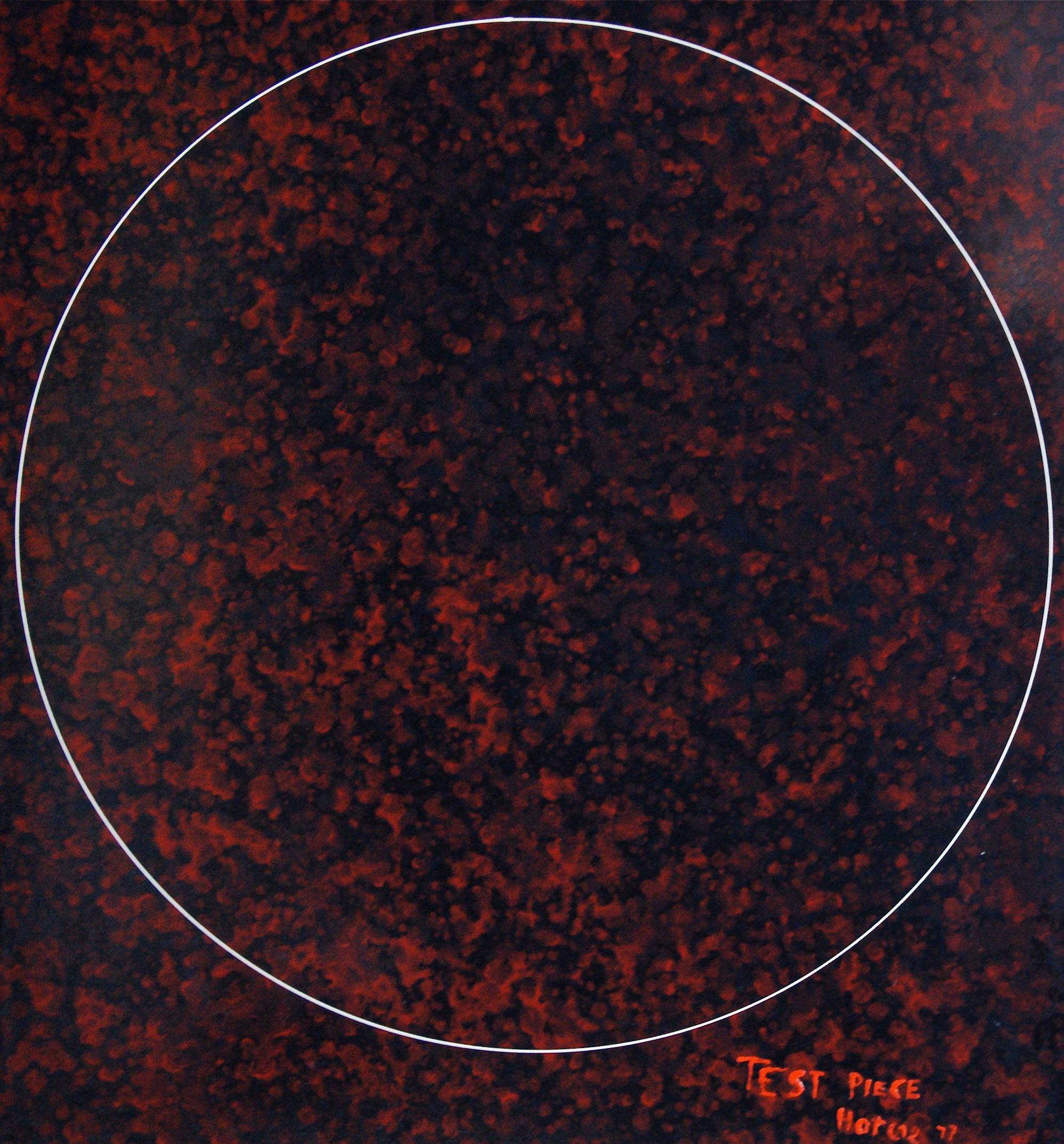
52 RALPH HOTERE (1931 - 2013)
Test Piece for Godwit/Kuaka
Enamel on board 62 x 57.5
Signed, inscribed Test Piece & dated 1977
$60,000 - 80,000
PROVENANCE
Private Collection, Waikato
Purchased from Fine New Zealand Paintings
International Art Centre, 15/10/2007
Test Piece relates to Hotere’s largest work, Godwit/Kuaka - an 18-metre long mural commissioned for the Arrivals Hall of the Jean Batten Terminal building at Auckland International Airport. The artist chose the painting’s theme to be a welcome to returning citizens and a greeting to visitors arriving at Aotearoa’s busiest airport. The artist wanted his painting to evoke nonstop, long-distance air travel.
Originally titled The Flight of the Godwit, Hotere’s mural remained in the welcoming area until 1996, when redevelopment of the terminal building began. The mural was removed from the airport’s art collection, purchased by the Chartwell Trust and lent to Auckland Art Gallery Toi o Tāmaki in 1996. At that time, Ralph Hotere renamed the mural Godwit/Kuaka. The kūaka (bartailed godwit, Limosa lapponica baueri) is a shore bird whose flight endurance is unparalleled.
Renowned for undertaking transoceanic aerial journeys between Alaska and New Zealand, it has the reputation of a ‘can do and go anywhere’ animal. Its physical stamina is legendary; travelling non-stop over 10,000 kilometres across the Pacific Ocean. It starts and ends its journey without once receiving the nourishment of food.
The artist’s father, Tangirau Hotere, taught his son the ancient Maori chant stencilled at the mural’s centre. Shortly prior to the artist’s death in 2013, he recorded part of the Muriwhenua chanting for installation of Godwit/ Kuaka
Selbourne Street
Oil on canvas 122 x 152
Signed, inscribed Selbourne Street & dated 2013 verso
$30,000 - 40,000
Private Collection, Gisborne
Purchased directly from the Artist
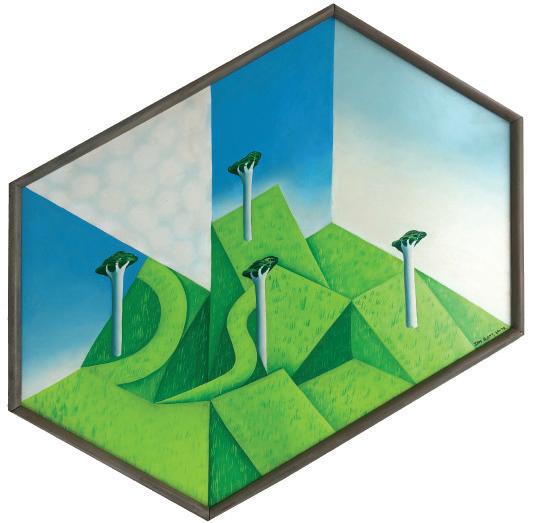
54 IAN SCOTT (1945 - 2013)
The V of Light No. 2, 1969-70
Oil on board 57.5 x 88
Signed & dated 1969 - 70
$20,000 - 30,000
PROVENANCE
Collection of the Artist’s brother since 1970
This early sub-series hexagon is likely one of Scott’s first geometric paintings. Significant in its own right, the importance of this work increases when taking into account the creative journey of the artist through the different series of his works. The V of Light No 2. 1969-70 long preceded, but clearly points the way to the well known Lattice paintings.
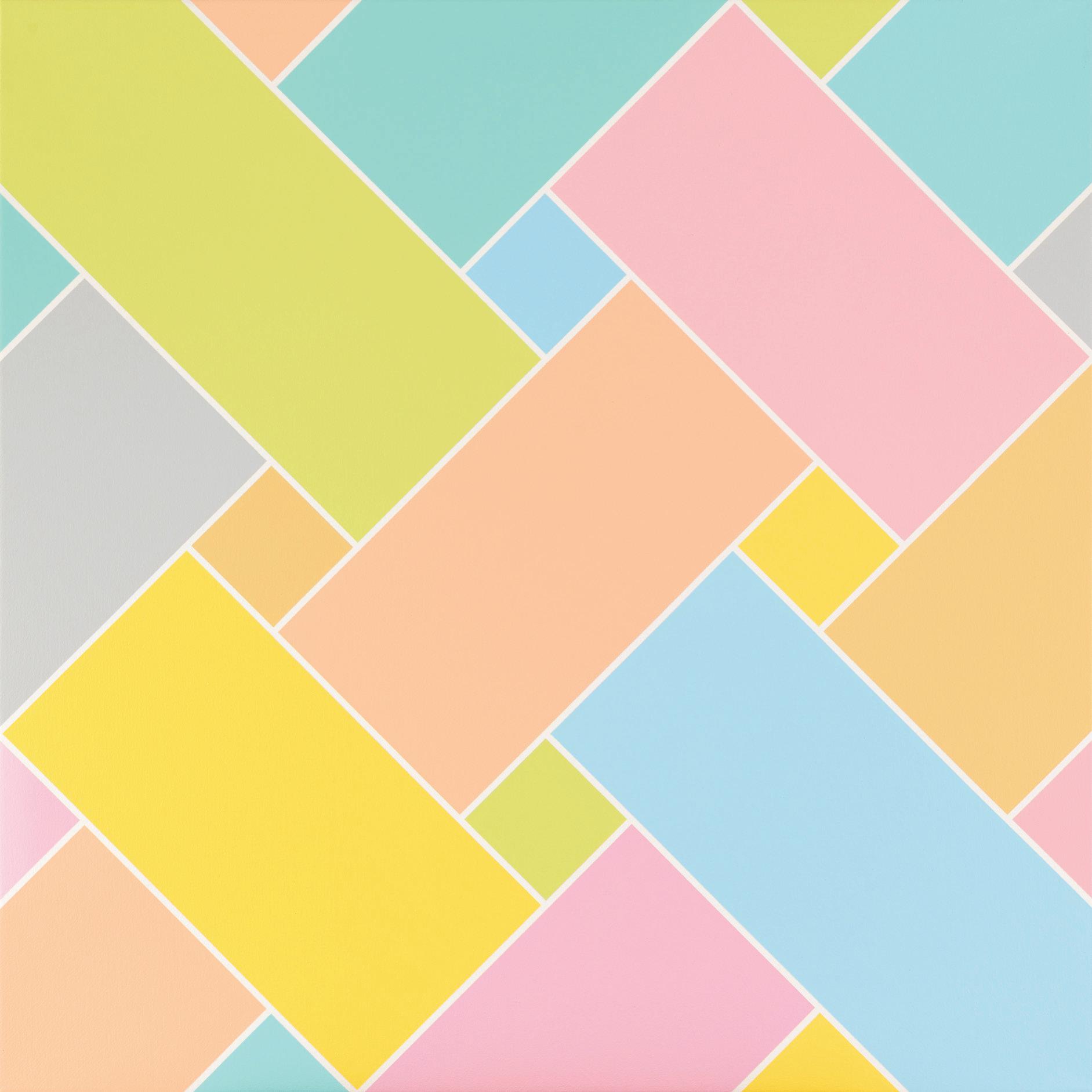
55 IAN SCOTT (1945 - 2013)
Lattice No. 163, 1987
Acrylic on canvas 106.9 x 106.8
Signed, inscribed Lattice No. 163 & dated 1987 verso
$25,000 - 30,000
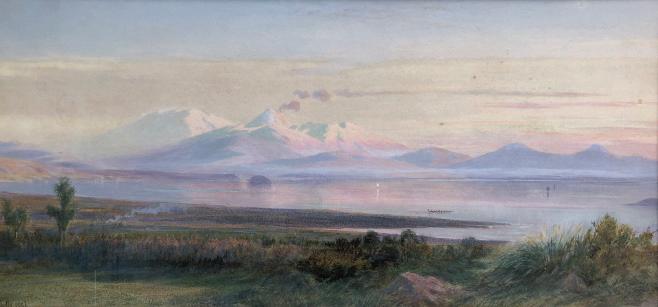
56 JOHN GULLY (1819 - 88)
Lake Taupo with Smoking Mt Ngauruhoe, Mt Tongariro & Mt Ruapehu
Watercolour 29.5 x 63
Signed & dated 1886
$10,000 - 15,000
PROVENANCE
Private Collection, Taupo
Purchased from International Art Centre c. 1980
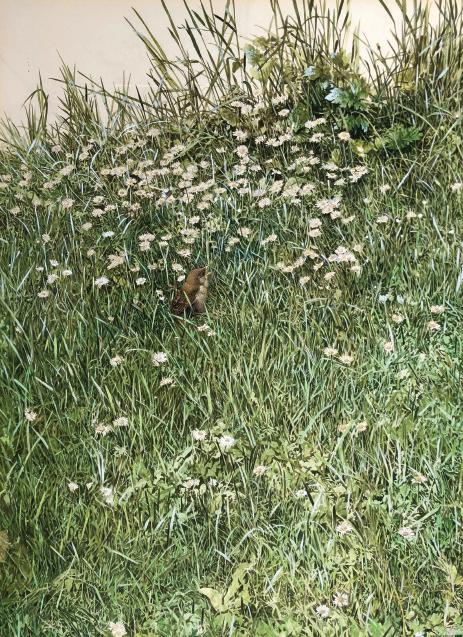
57 RAYMOND CHING (b. 1939)
Fledging Sparrow Amongst Daisies
Watercolour 73 x 53
Signed
$20,000 - 30,000
PROVENANCE
Private Collection, Taupo
Purchased from International Art Centre c. 1980
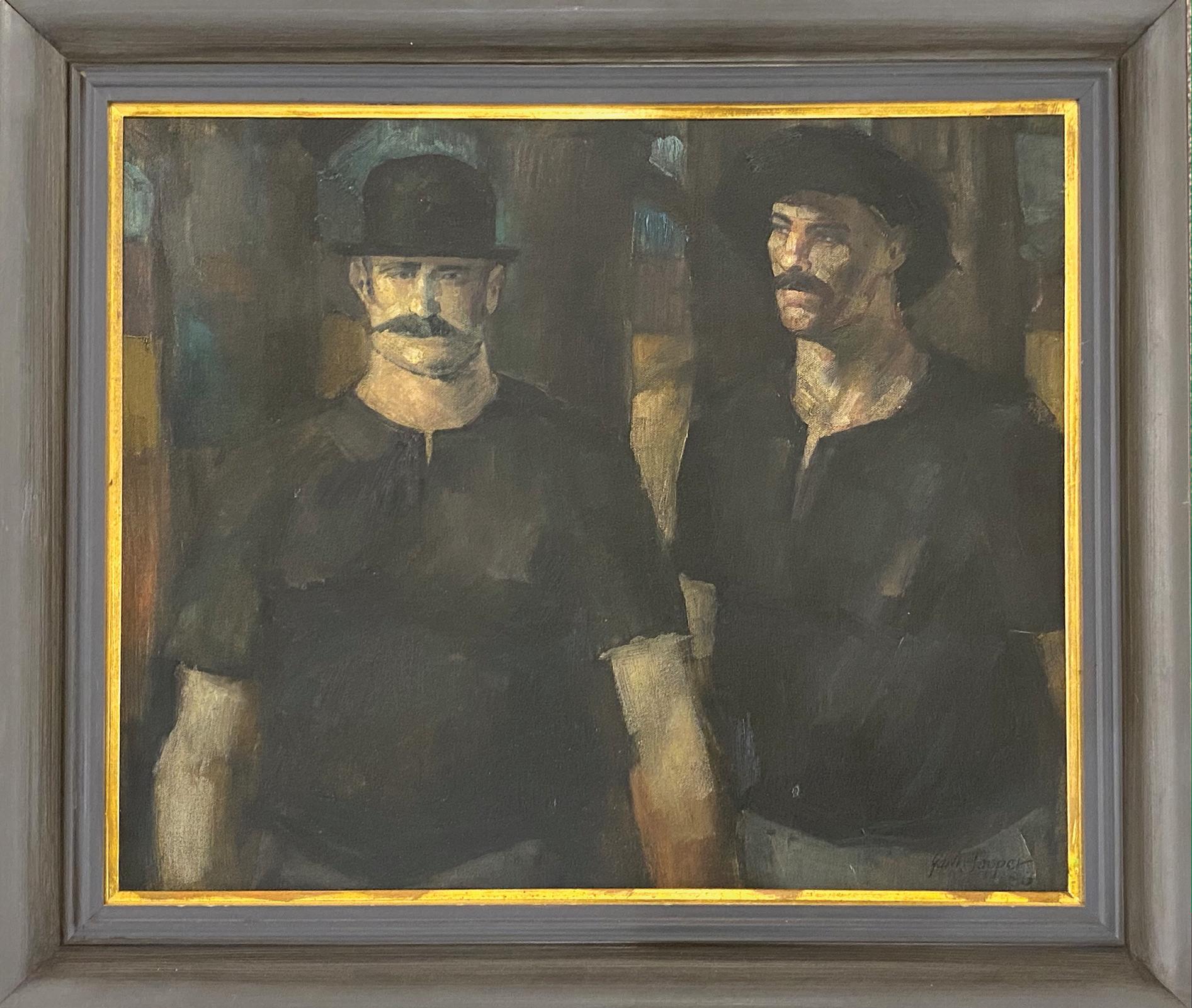
58 GARTH TAPPER (1927 - 99)
The Bushmen (Smaller version) Oil on canvas 47.5 x 80
Signed & dated 1986
$10,000 - 15,000
PROVENANCE
Private Collection, Auckland Purchased directly from the artist, 1986
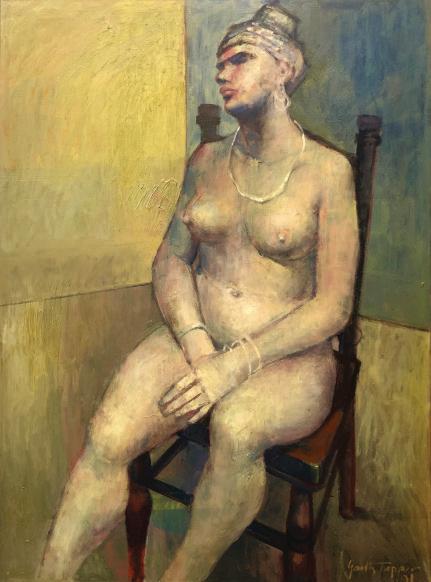
59 GARTH TAPPER (1927 - 99)
The Jewish Model Oil on canvas 99 x 72
Signed & dated 1991
$8,000 - 12,000
PROVENANCE
Private Collection, Auckland Purchased directly from the artist, 1986
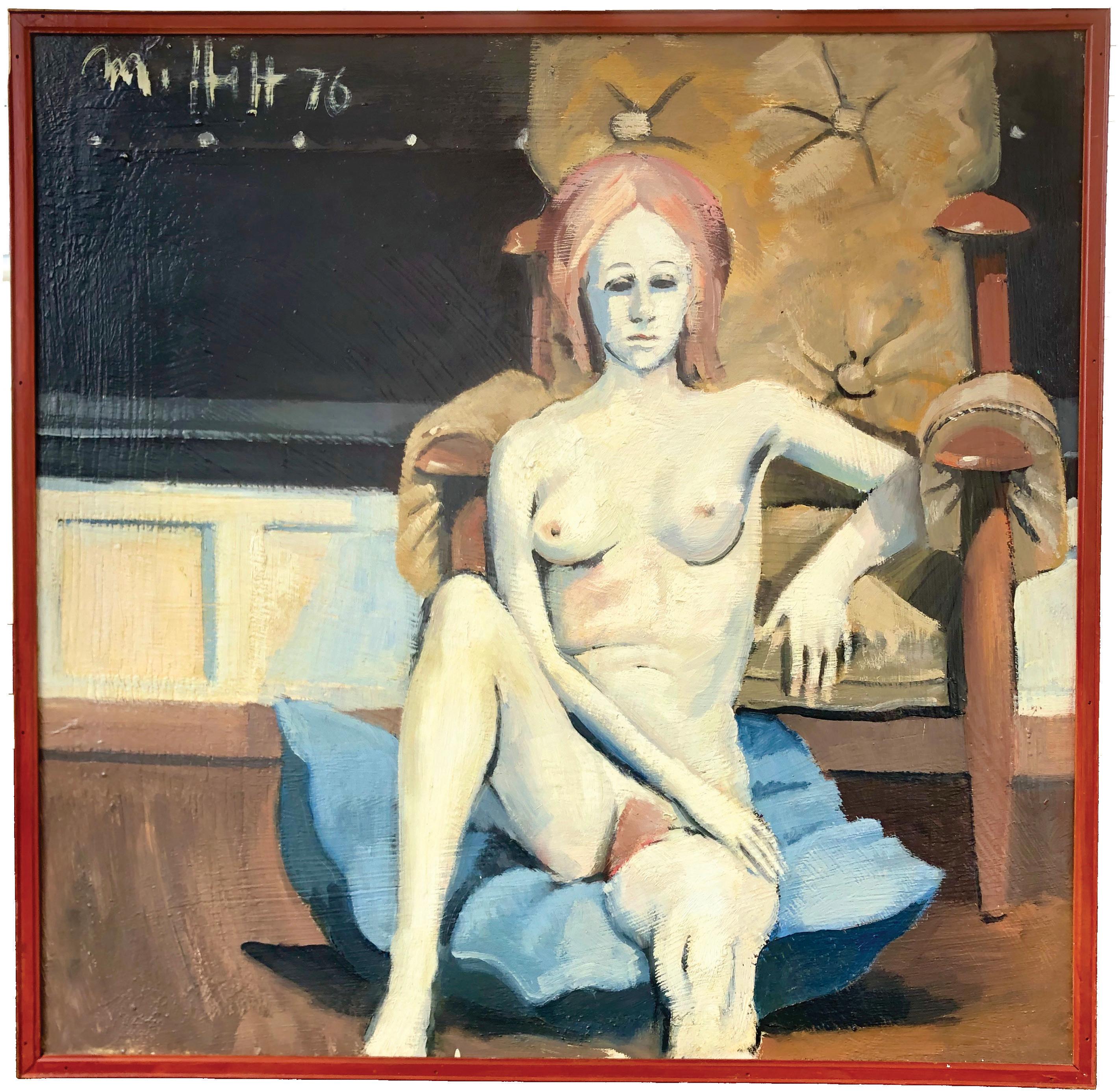
Julia No. 2
Oil on board 60 x 60
Signed & dated 1976
$7,000 - 10,000
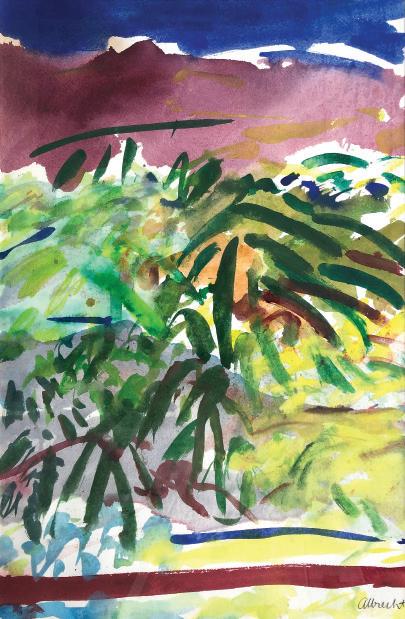
Garden Series, 1972
Watercolour 57.5 x 38
Signed Dated 1972 verso
$20,000 - 26,000
62 RAYMOND CHING (b. 1939)
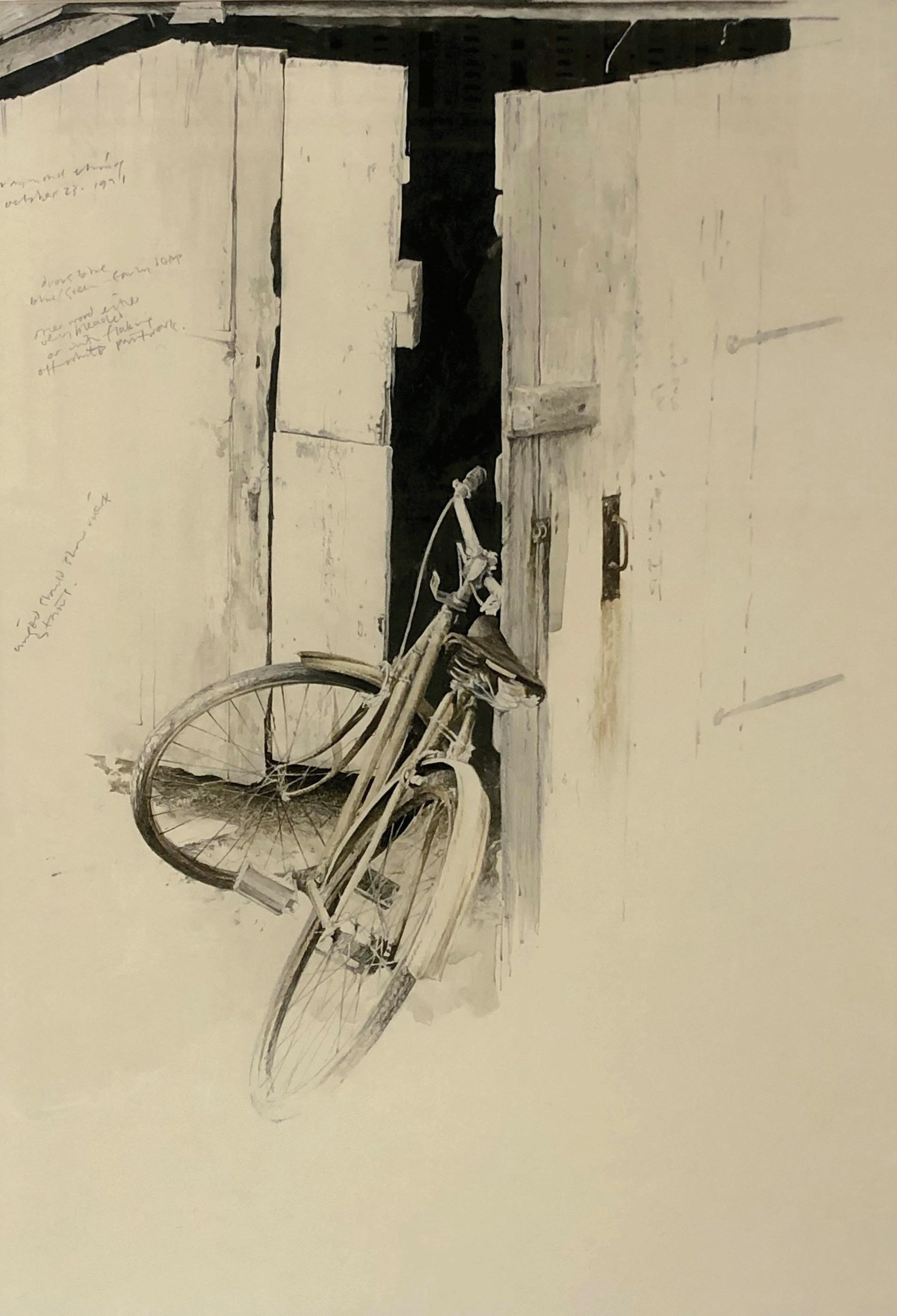
The Bicycle
Watercolour 53.5 x 38
Signed, inscribed & dated 1971
$8,000 - 12,000
PROVENANCE
Estate Collection, Dunedin
Traditional & Contemporary Art, International Art Centre, 22/07/1996
63 RAYMOND CHING (b. 1939)
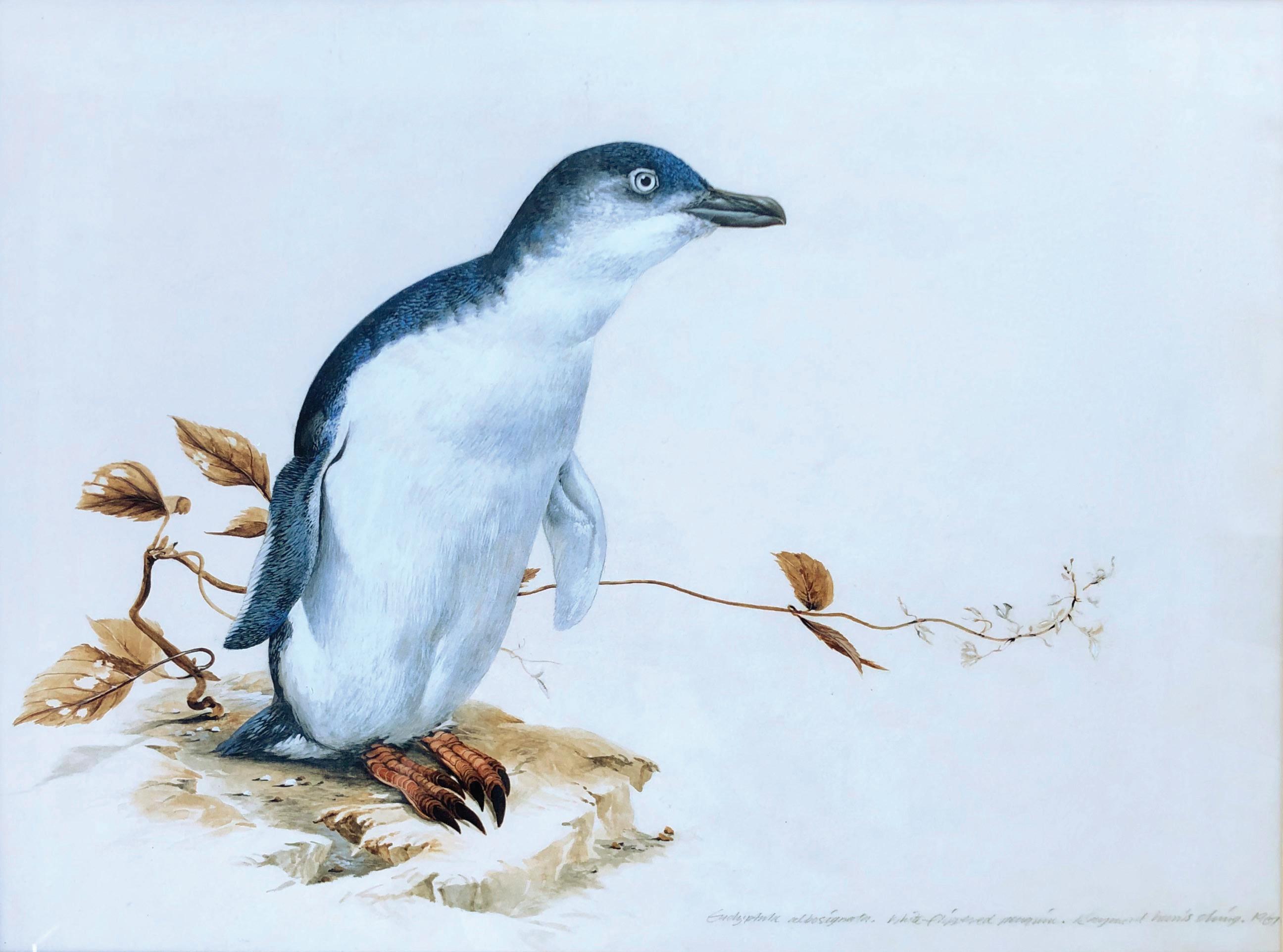
White Flippered Penguin
Watercolour 46.5 x 63
Signed, inscribed & dated 1967
$5,000 - 10,000
PROVENANCE
Estate Collection, Dunedin
Traditional & Contemporary Art, International Art Centre, 26/04/1995
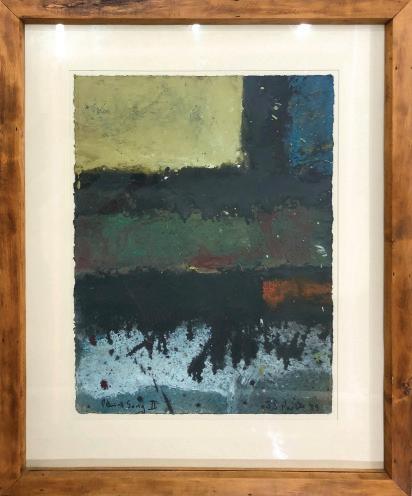
Mixed media on paper 75 x 57.5
Signed, inscribed & dated 1989
Presented in original Roger Hicken frame
$6,000 - 8,000
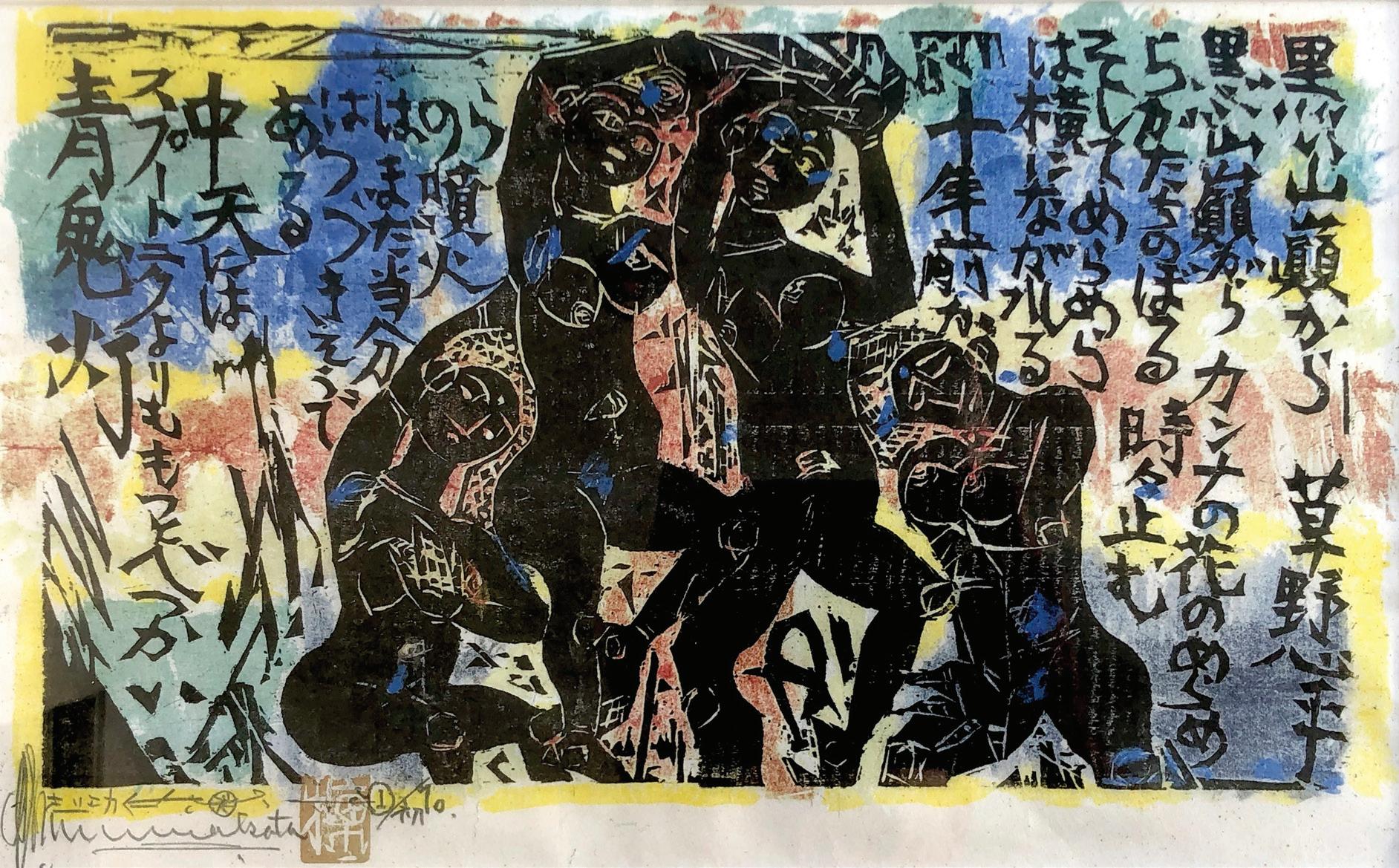
(Japanese 1903 - 75)
Women Rising
Hand coloured woodcut 19 x 33
Signed & dated 1970
$3,000 - 5,000
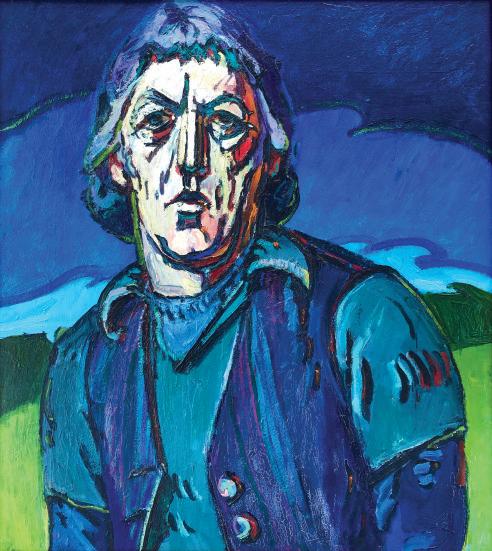
66 ALAN PEARSON (1929 - 2019)
Self Portrait as the Waikato Man, 1977
Oil on board 69 x 61
Signed & inscribed Self Portrait as the Waikato Man verso
$8,000 - 12,000
PROVENANCE
Private Collection
EXHIBITED
Anxious Images - Aspects of Recent New Zealand Art
Auckland City Art Gallery 27 June - 12 August 1984
ILLUSTRATED
p. 16 Alan Pearson - His Life and Art, Denys Trussell, Hazard Press, 1991
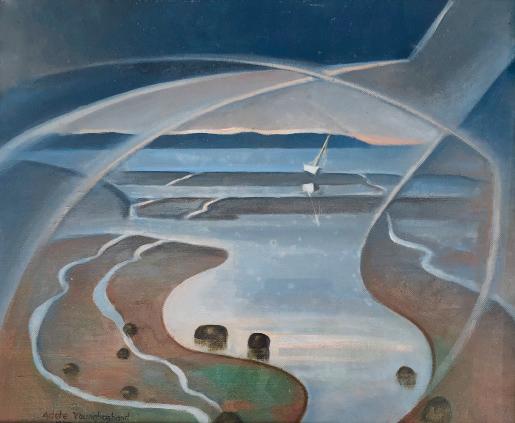
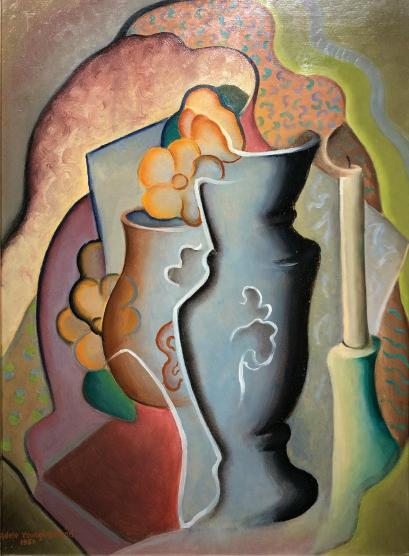
67 ADELE YOUNGHUSBAND (1878 - 1969)
Ebb Tide Oil on canvas board 48 x 60
Signed
Inscribed Ebb Tide on original artist label affixed verso
$10,000 - 15,000
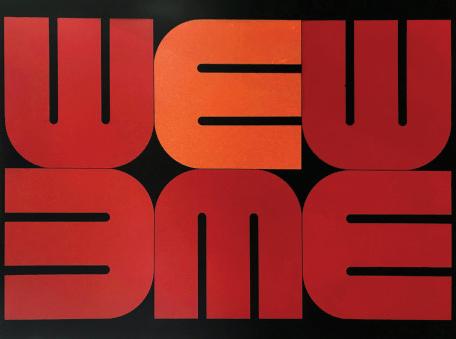
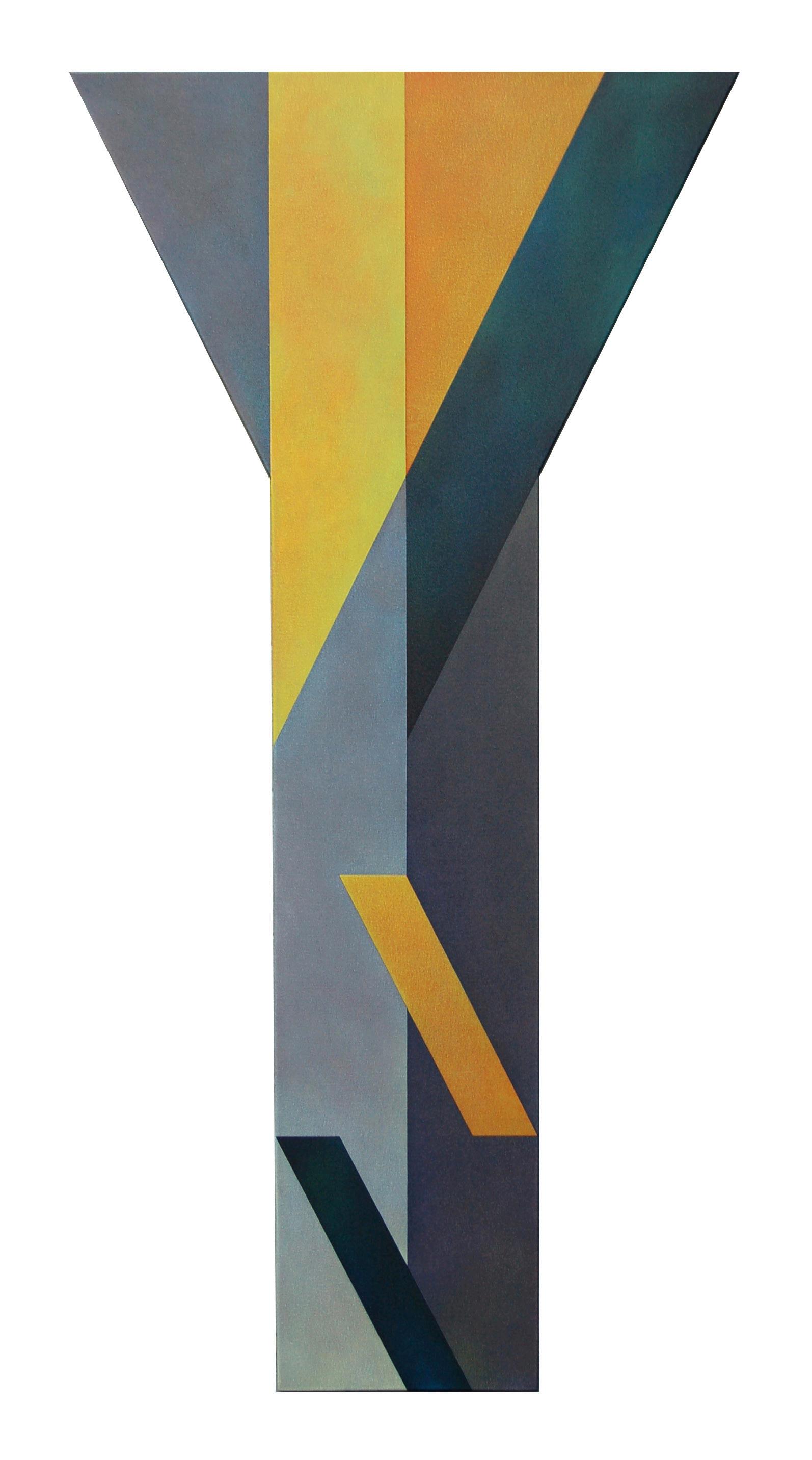
68 ROY GOOD (b. 1945)
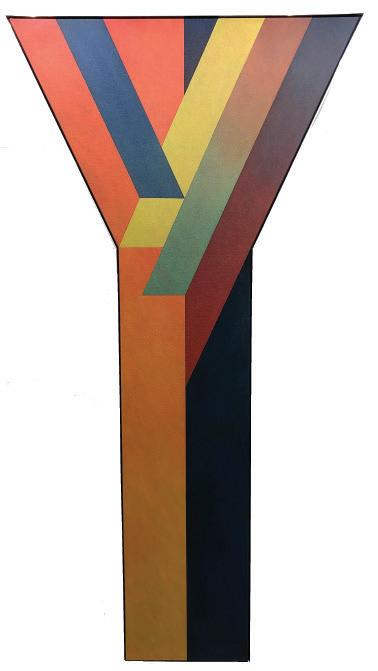
Modernism Meets Tane Mahuta No.1
Acrylic on canvas 180 x 90
Signed, inscribed & dated 2013 verso
$8,000 - 10,000
PROVENANCE
Purchased directly from the artist
Modernism Meets Tane Mahuta series of paintings shows Good at his simplest and “blockiest”, just five planes forming a column that flares out at the top, and four relatively pure and flat colours – the three primaries plus a dark almost-black. It is a throwback to the 1970s when Good’s style was more often based on stark interlocking geometries and contrasting colours (as opposed, say, to the interweaving, optically complex configurations of the late 1980s-early 2000s or the earthy palette that emerged in the early 1980s and only really brightened again around 2007, when Good began more earnestly to revisit his 1970s pictorial ideas). The way shapes are stacked vertically brings to mind works such as Colour Column (1973) and Untitled – Column (1974), as well as the Lintel and Column paintings of 1974 and 2009.
Perhaps the most striking comparison is with the large vertical rectangle, Doric (1972), with its glaringly bold primaries and angles that similarly stretch the central column structure. Doric, in title and form, signals an interest in parallels between painting and architecture, as well as finding a lineage for modernist abstraction in the elemental forms of ancient Greece. The tower, both fundamental and aspirational, often grandiosely utopian, is the ultimate modernist statement, from the Eiffel Tower completed in 1889, to Vladimir Tatlin’s unrealised, Constructivist
Monument to the Third International (1923), to Brancusi’s Endless Column (1918), Barnett Newman’s Broken Obelisk (1963-69), and the contrasting towers that came out of the Bauhaus’s drive for efficiency – austere concrete apartment blocks that often ended up being conspicuous reminders in Europe of social inequality, and the glittering glasswall “corporate modernism” of Philip Johnson and others who designed skyscrapers commensurate with the wealth and power of multinational corporations – monuments to capitalism, in contrast to Tatlin’s monument to Soviet communism. So Modernism Meets Tane Mahuta is itself a monument – to the history of modernism that Good has surveyed and effectively represented (a painting of modernism). ended up being conspicuous reminders in Europe of social inequality, and the glittering glass-wall “corporate modernism” of Philip Johnson and others who designed skyscrapers commensurate with the wealth and power of multinational corporations –monuments to capitalism, in contrast to Tatlin’s monument to Soviet communism.
Edward Hanfling Parallel Universe - the Art & Design of Roy Good Te Uru Publication 2018
69
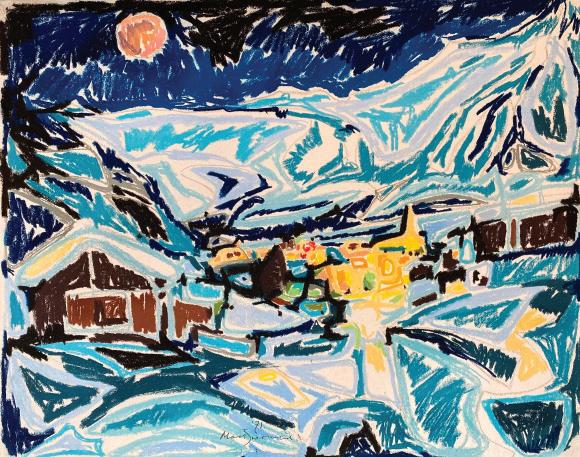
DOUGLAS MACDIARMID
(1922 - 2020)
Untitled
Pastel crayon on paper 45 x 56
Signed & dated 1971
$8,000 - 10,000
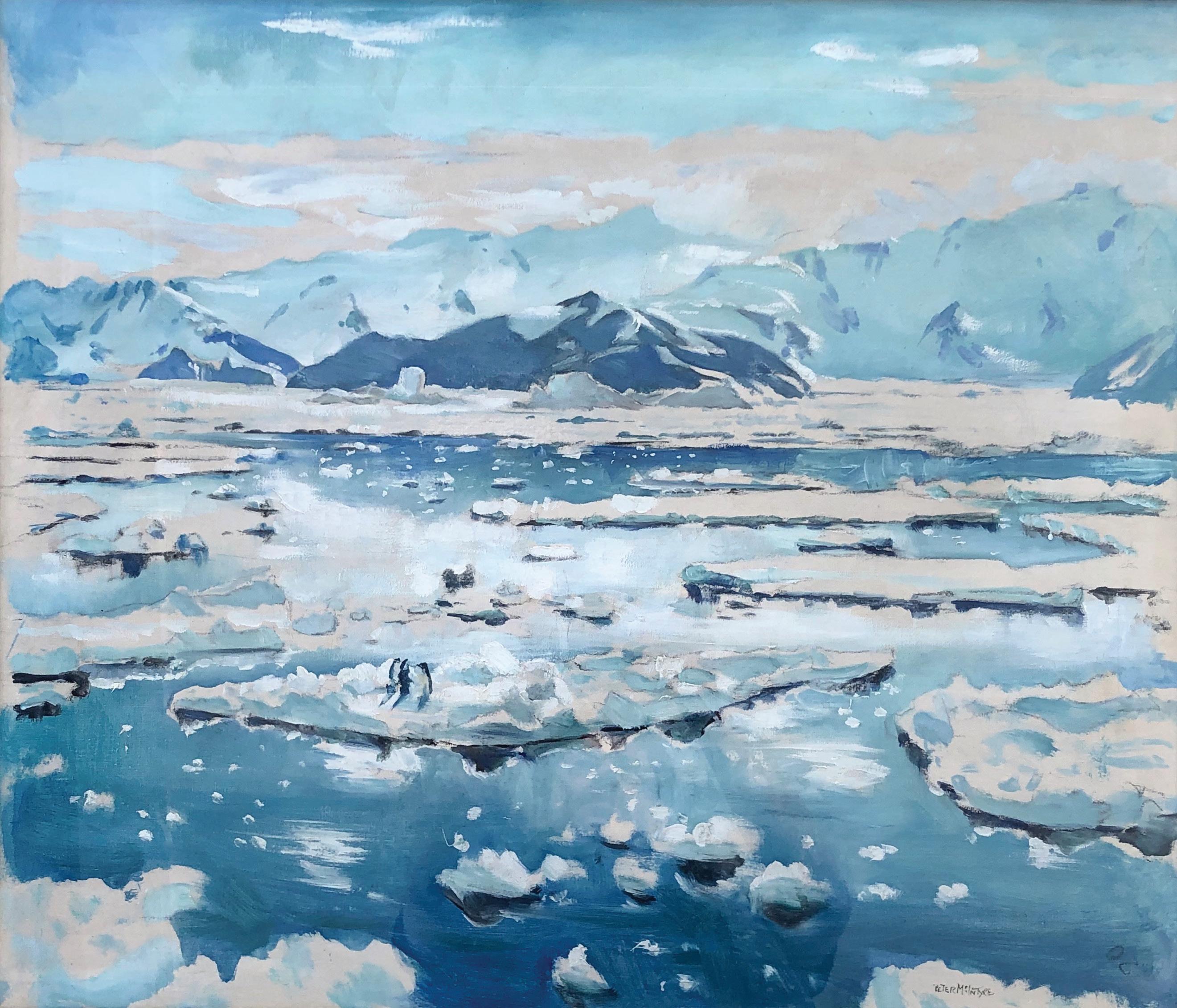
70 PETER MCINTYRE (1915 - 1995)
Hallett Bay, Antarctica Oil on canvas 60 x 70
Signed
$18,000 - 26,000
PROVENANCE
Private Collection, Auckland New Zealand Traditional & Contemporary Paintings & Watercolours, International Art Centre, 30/09/1991
I sailed into this bay on an American naval icebreaker and was enchanted. There was no night and a hundred thousand Charlie Chaplins in white ties and tails performed for me. This, and Cook’s Bay in Moorea, are two of the most beautiful bays in the whole of the Pacific.
Peter McIntyre, Peter McIntyre’s Pacific, A H and A W Reed, 1964
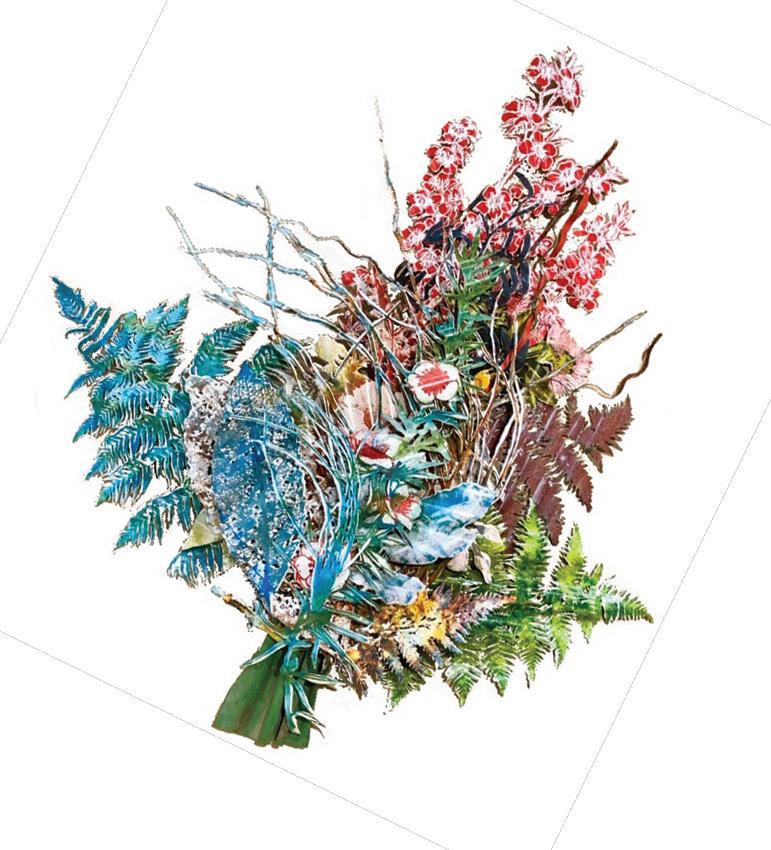
Large
Screenprinted corrugated metal sculpture 133 x 110
Signed & dated 2014
$3,000 - 5,000
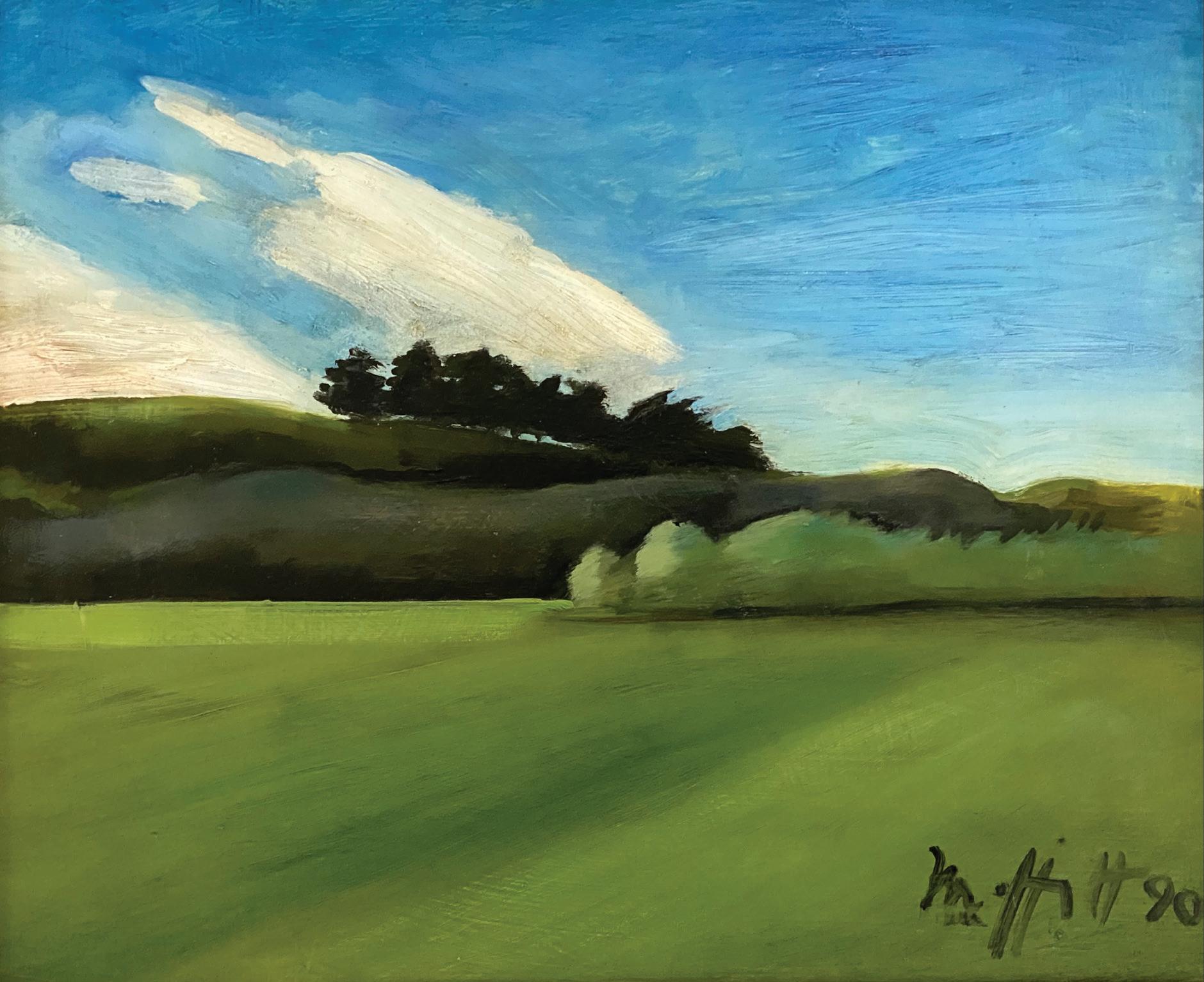
72 TREVOR MOFFITT (1936 - 2006)
Nor-wester
Oil on board 39 x 48
Signed & dated 1990
$4,000 - 6,000
Born in London in 1915, Hayman spent his formative years in New Zealand. He attended Dunedin School of Art and was fortunate to have as his tutor, the talented young British artist, R.N. Field. Field, the first President of the Otago Art Society, had been brought to New Zealand in 1925 under the La Trobe Scheme. Along with Hayman, fellow pupils included Doris Lusk, Tosswill Woollaston and Colin McCahon. Hayman was part of this group of young artists destined to revitalise New Zealand art. McCahon stayed in contact with Hayman and both artists used texts as an integral part of their work.
Returning to England in 1947, Hayman lived in a small cottage in Cornwall. In 1949, he met Barbara Judson, his life-long partner. They moved to Carabis Bay of which Hayman wrote; The dark pine trees, the azure sea, the hills and wide expanse of ocean reminded me of a miniature New Zealand.
Hayman became part of a the St Ives artists’ colony, and in 1952 the sculptor Barbara Hepworth wrote to Hayman; There are so many of your paintings that I would love to have. A daughter, Christina Conrad had been born in New Zealand in 1942. Also an artist, her paintings and clay icons were created without initial knowledge of her real father. Nevertheless, in many ways they bear a striking resemblance to some of her father’s work. Conrad is well known in New Zealand, Australia and the United States. Father and daughter were to meet years later in London.
Based in London during the 1960s, Hayman taught at the Croydon School of Art. Solo exhibitions were held in Cornwall, London and abroad. 1990 saw major retrospective at Camden Arts Centre. Hayman’s work is held in the Arts Council Collection and the Tate Gallery.
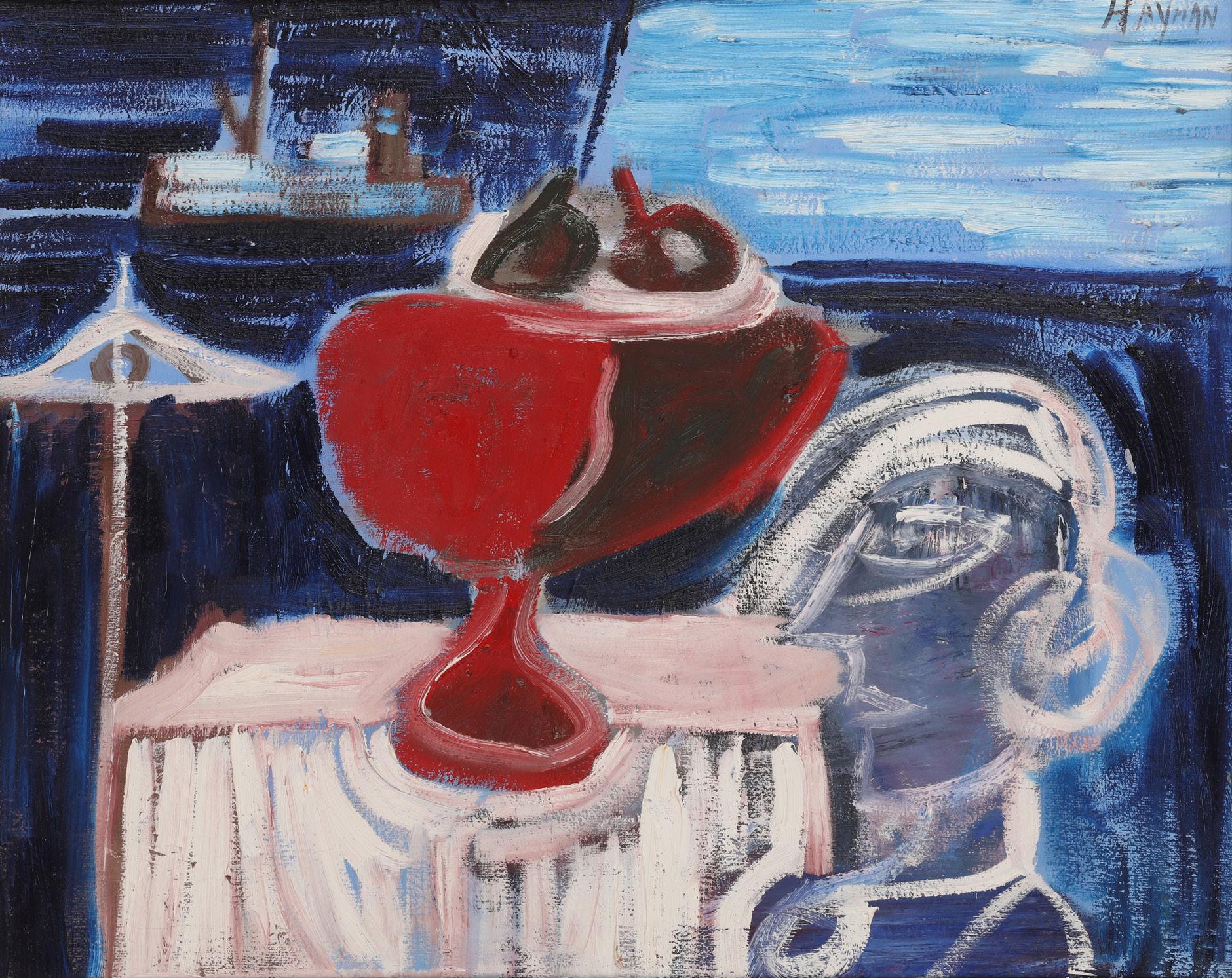
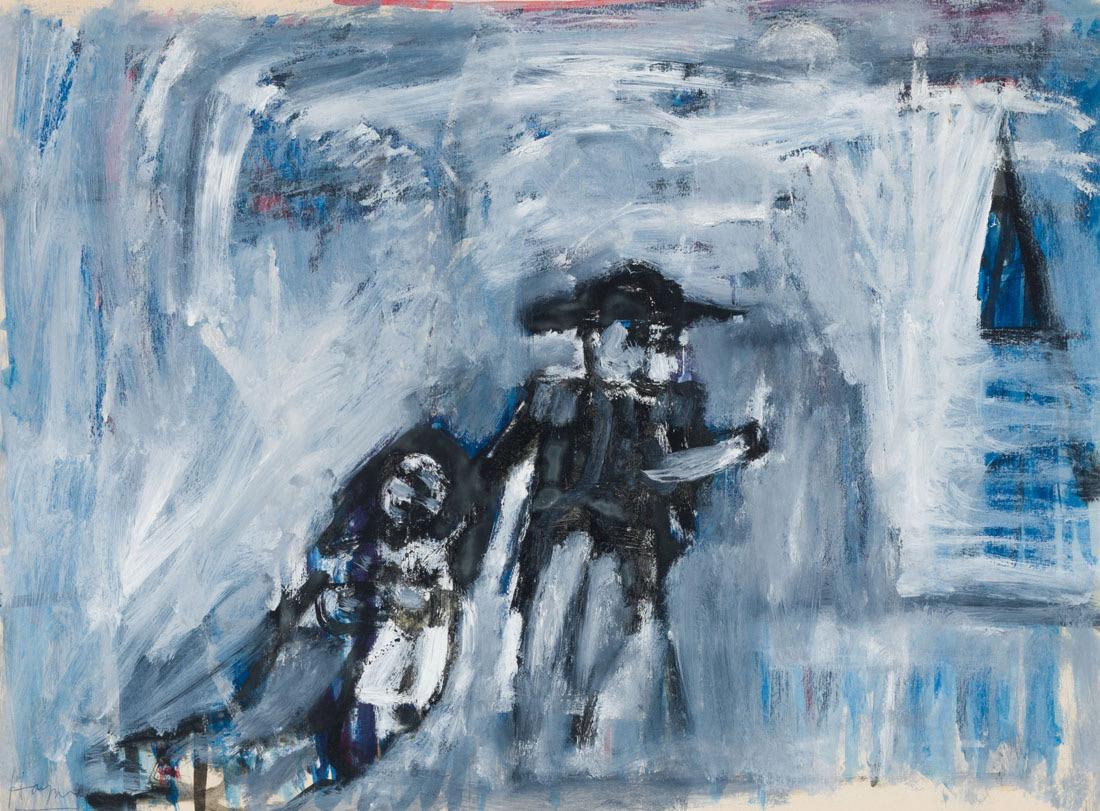
73 PATRICK HAYMAN (1915 - 88)
Still Life, Girl and Ship Oil on canvas 41 x 51
Signed, inscribed Still Life, Girl and Ship & dated 1984 verso
$8,000 - 12,000
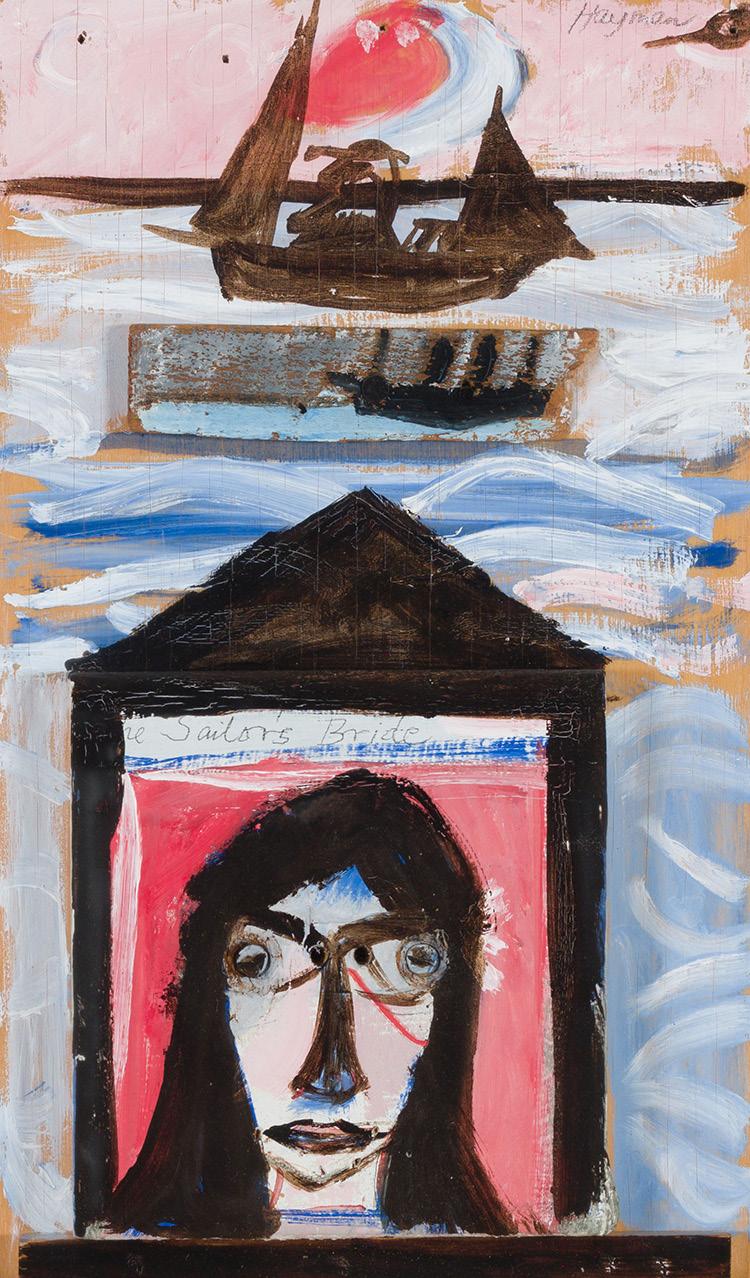
74 PATRICK HAYMAN (1915 - 88)
The Sailor’s Bride
Oil and assemblage on board 23 x 13
Signed, inscribed & dated 1970 verso
$2,000 - 3,000
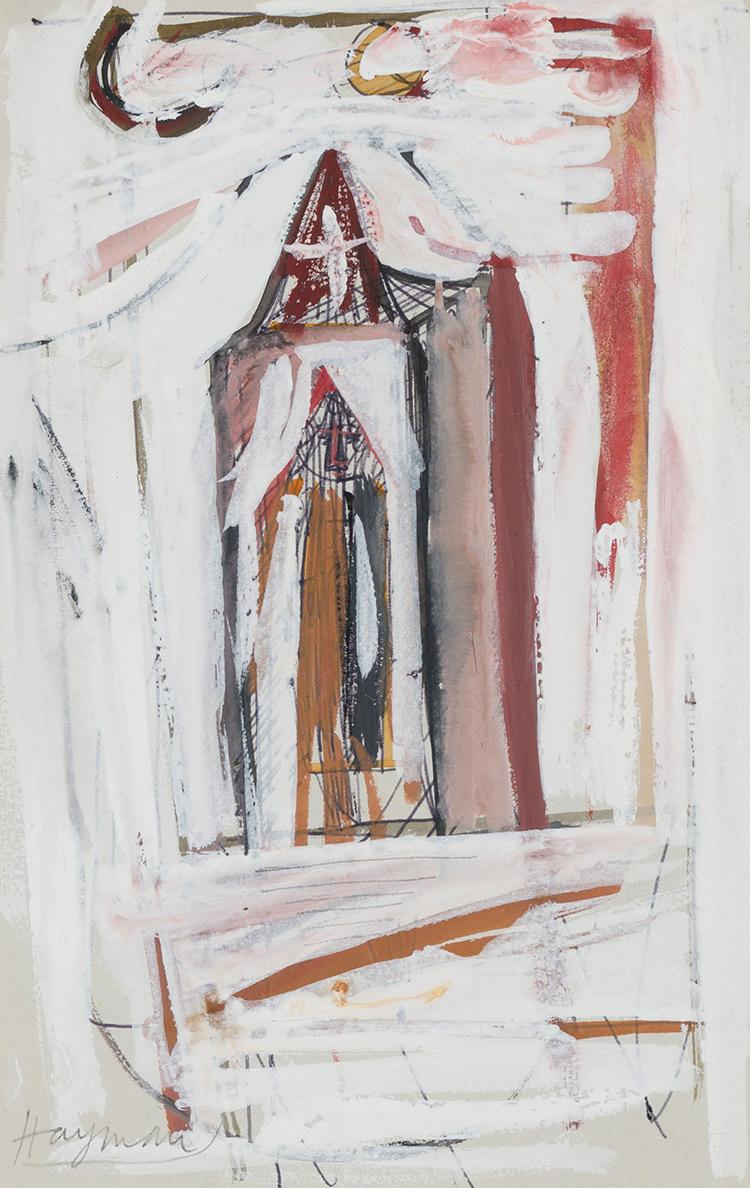
75 PATRICK HAYMAN (1915 - 88)
Doorway Gouache and mixed media on paper 17 x 11
Signed
$1,000 - 1,500
Signed
$2,000 - 3,000
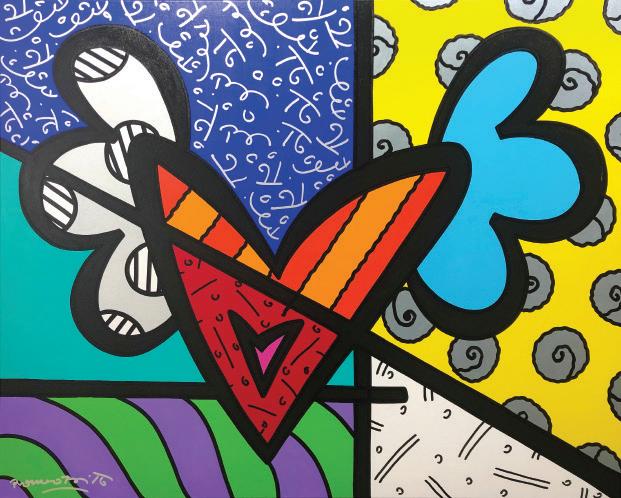
Oil & acrylic on canvas 121 x 151
Signed Signed, inscribed Free & dated 2007 verso
$8,000 - 12,000
PROVENANCE
Private Collection, Auckland
Purchased from Opera Gallery New Bond Street London, 2007
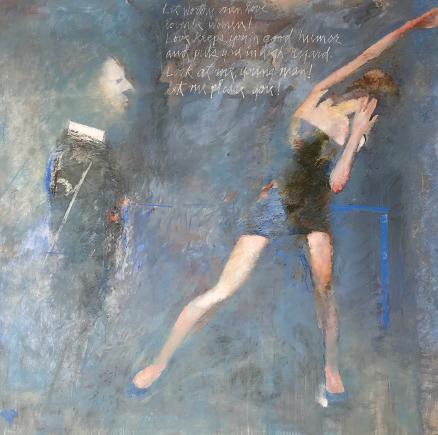
(American 1938 - 2005)
Loveable Woman
Pastel on paper 150 x 150
Signed & inscribed Let worthy men love loveable woman! Love keeps you in good humor and puts you in high regard. Look at .... young man! Let me please you!
$20,000 - 30,000
Private Collection, Auckland Halcyon Gallery, New Bond Street London
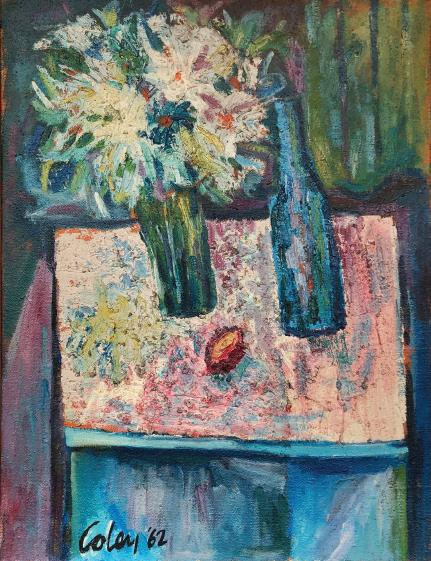
Still Life, Flowers and Bottle
Oil on hessian 55 x 50
Signed & dated 1962
$2,500 - 3,500
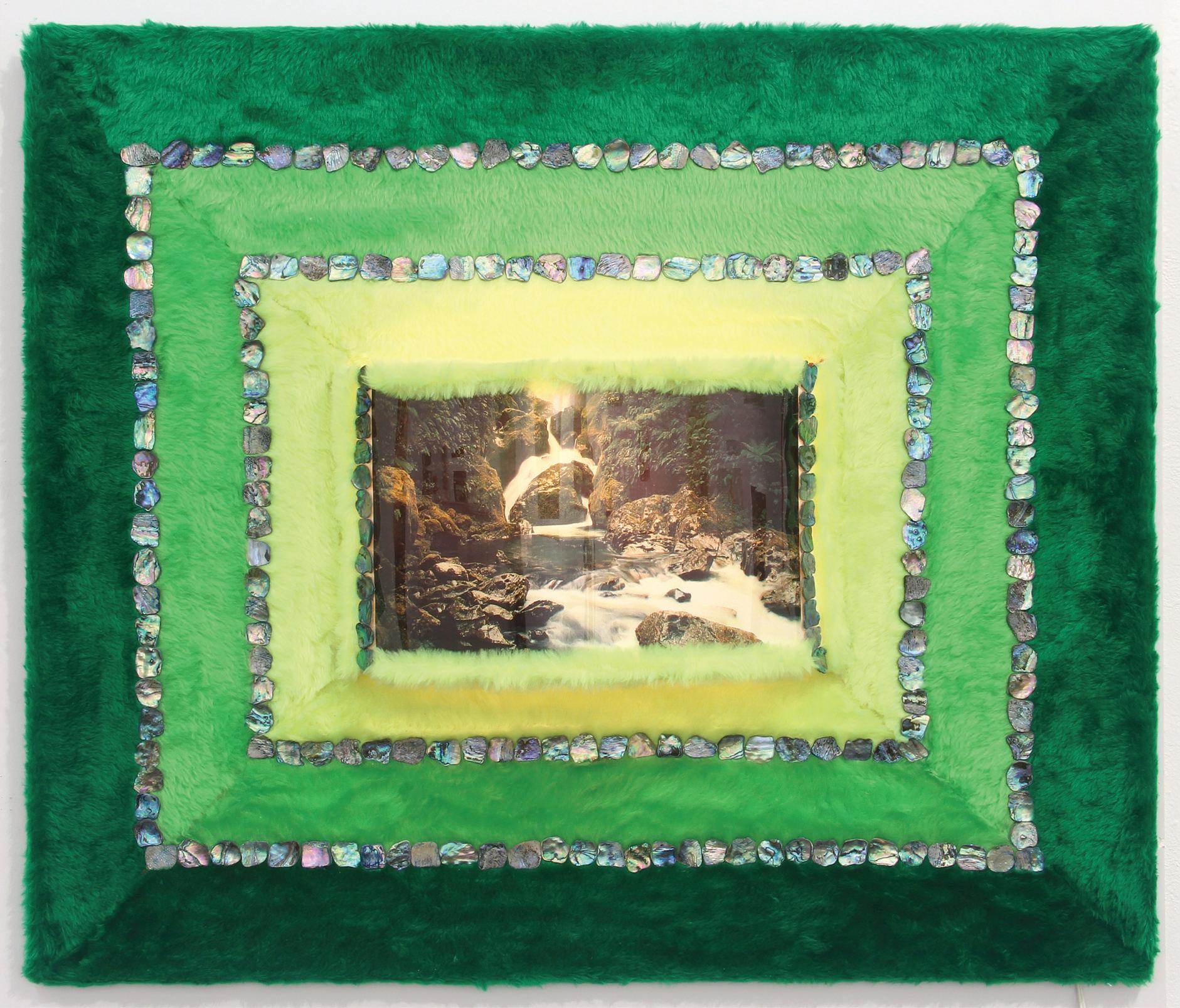
Riverscape, 1990
Synthetic fur, paua shells, transparency & light fitting on board 82.5 x 97
Signed & dated 1990 verso
$4,000 - 6,000
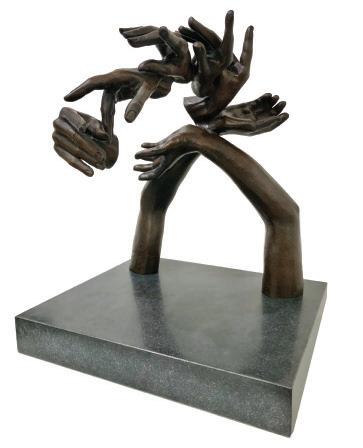
81 LORENZO QUINN (Italian b. 1966)
Multiple Hands
Bronze sculpture, edition 3/9, 44 x 30 x 35
Signed
$10,000 - 15,000
PROVENANCE
Private Collection, Auckland
Halycon Gallery New Bond Street London
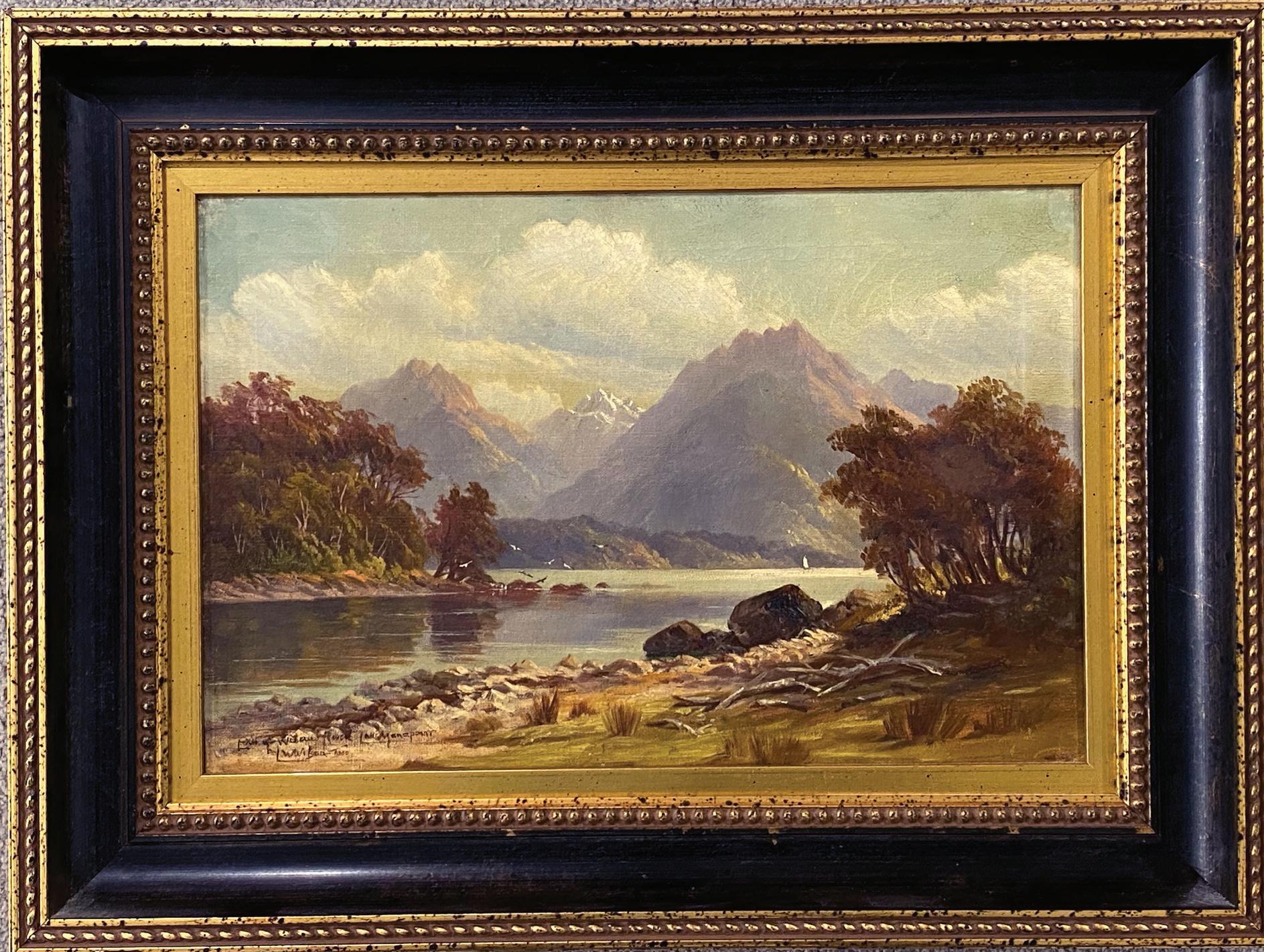
82 LAURENCE WILLIAM WILSON (1850 - 1912)
Exit of Waiau River, Lake Manapouri
Oil on canvas 29.5 x 45
Signed, inscribed & dated 1900
$2,000 - 4,000
PROVENANCE
Private Collection, Otago
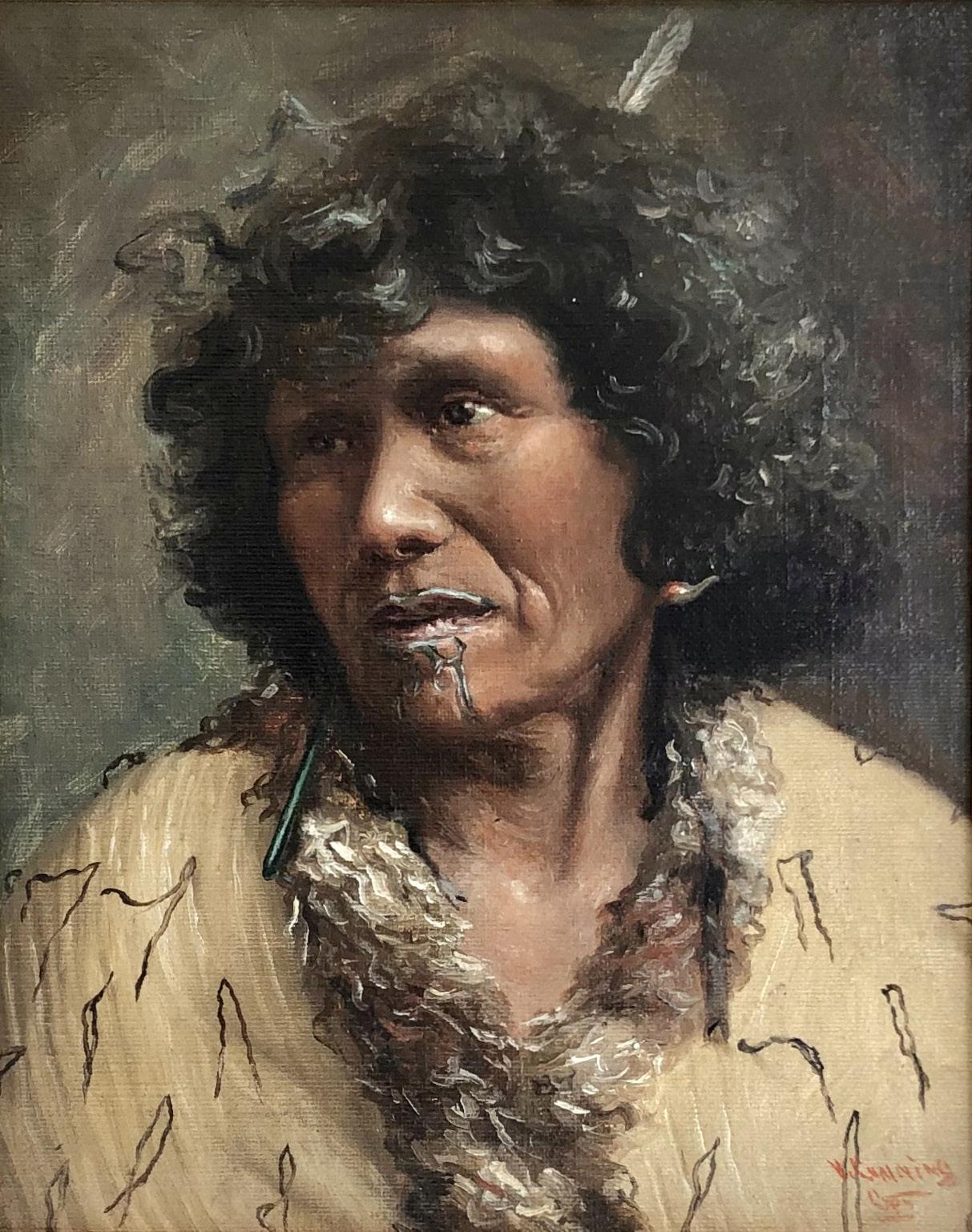
82A VERA CUMMINGS (1891 - 1949)
Chieftainess of the Arawa Tribe
(From Life)
Oil on canvas board 24 x 19
Signed
$18,000 - 24,000
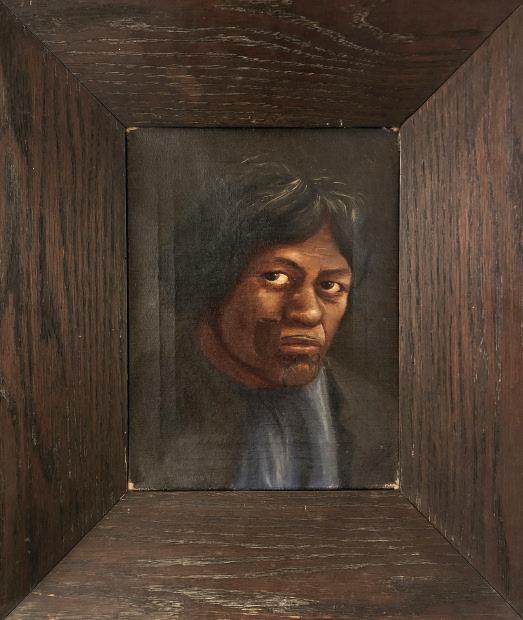
83 VERA CUMMINGS (1891 - 1949)
Patara Te Tuhi
Oil on canvas 28 x 23
Signed
$8,000 - 12,000
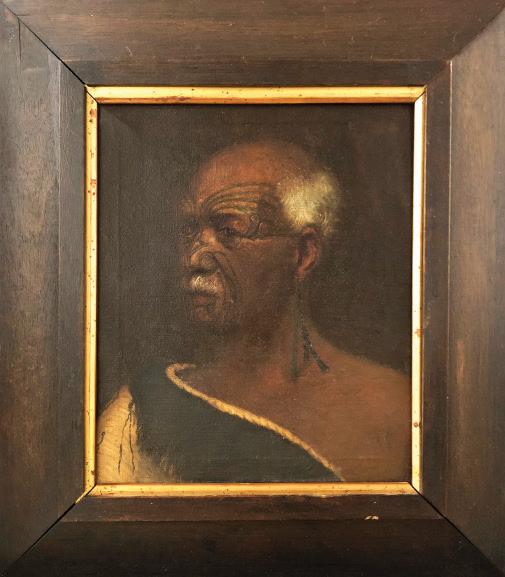
84 VERA CUMMINGS (1891 - 1949)
Maori Woman with Pipe Oil on canvas 30 x 22.5
Signed
$8,000 - 12,000
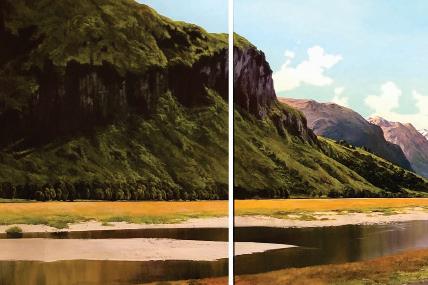
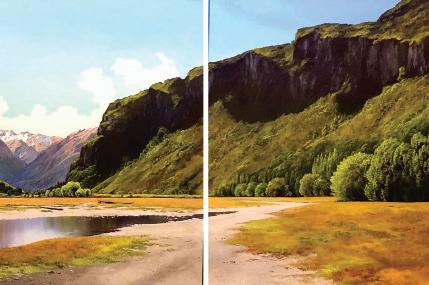
85 TIM WILSON (1954 - 2020)
Matukituki Triptych
Oil on three Belgian linen canvases
95 x 265
Signed, inscribed Matukituki & dated 1999
$25,000 - 35,000
PROVENANCE
Private Collection, Christchurch
Purchased from International Art Centre March, 1999 by current owner
86 RICHARD LAISHLEY (1816 - 97)
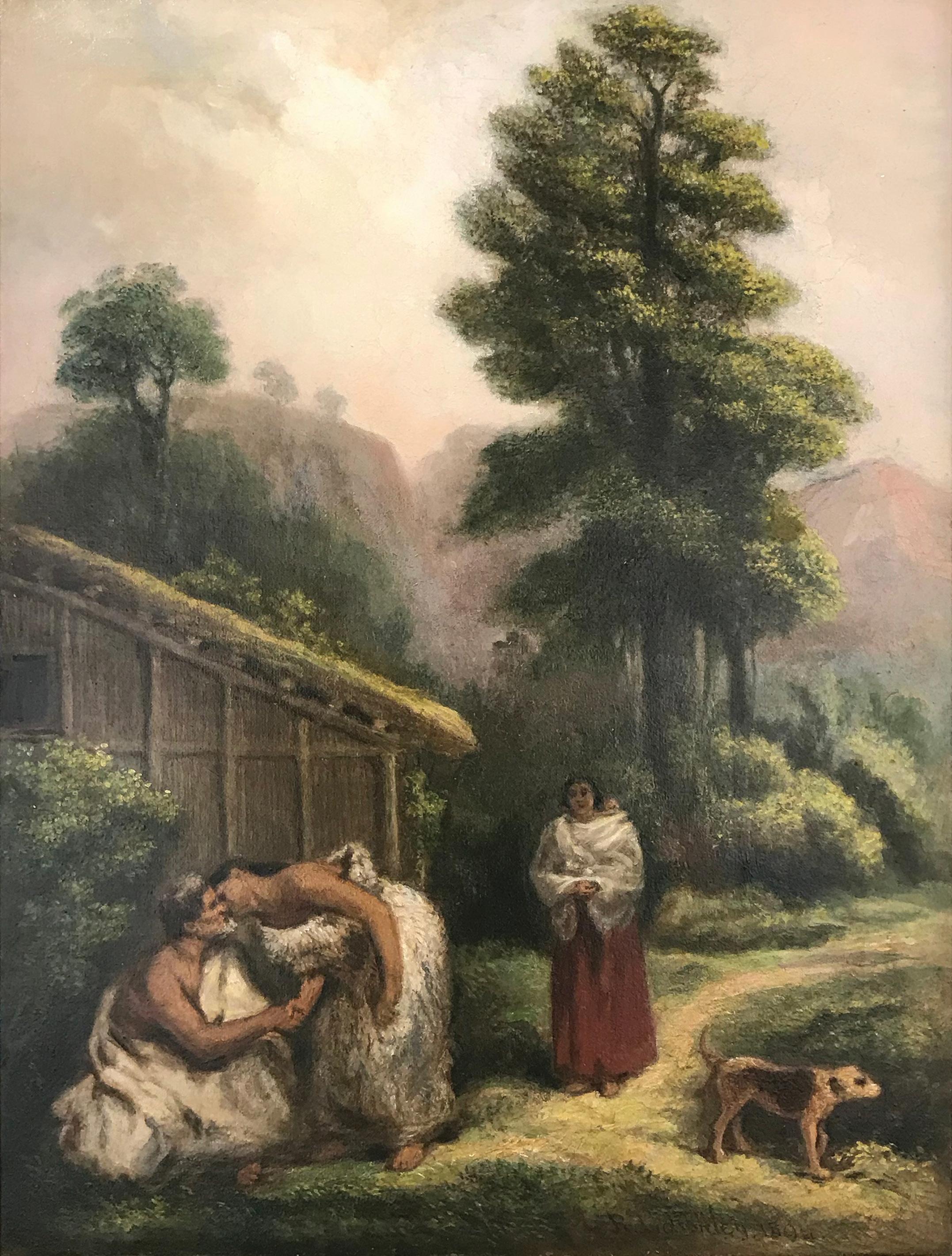
The Greeting, Thames, 1894
Oil on canvas 60 x 44
Signed & dated 1894
$3,000 - 6,000
PROVENANCE
Private Collection, Wellington
87 FRANCIS MCCRACKEN (1879 - 1959)
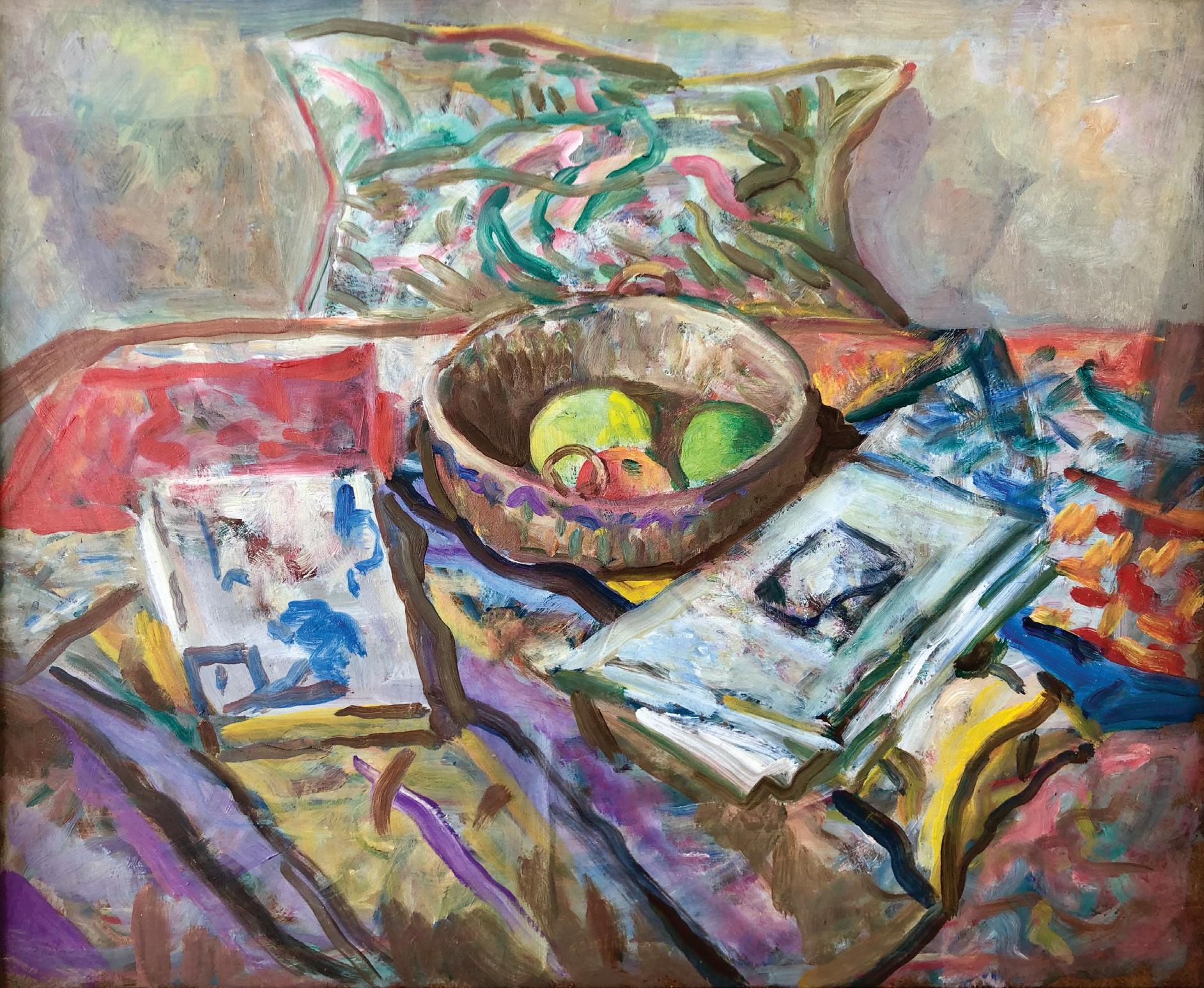
Still Life with Apples
Oil on board 40 x 50
Artist’s Studio stamp applied verso
$6,000 - 10,000
PROVENANCE
Private Collection, Hawkes Bay
88 TIM
(1954 - 2020)
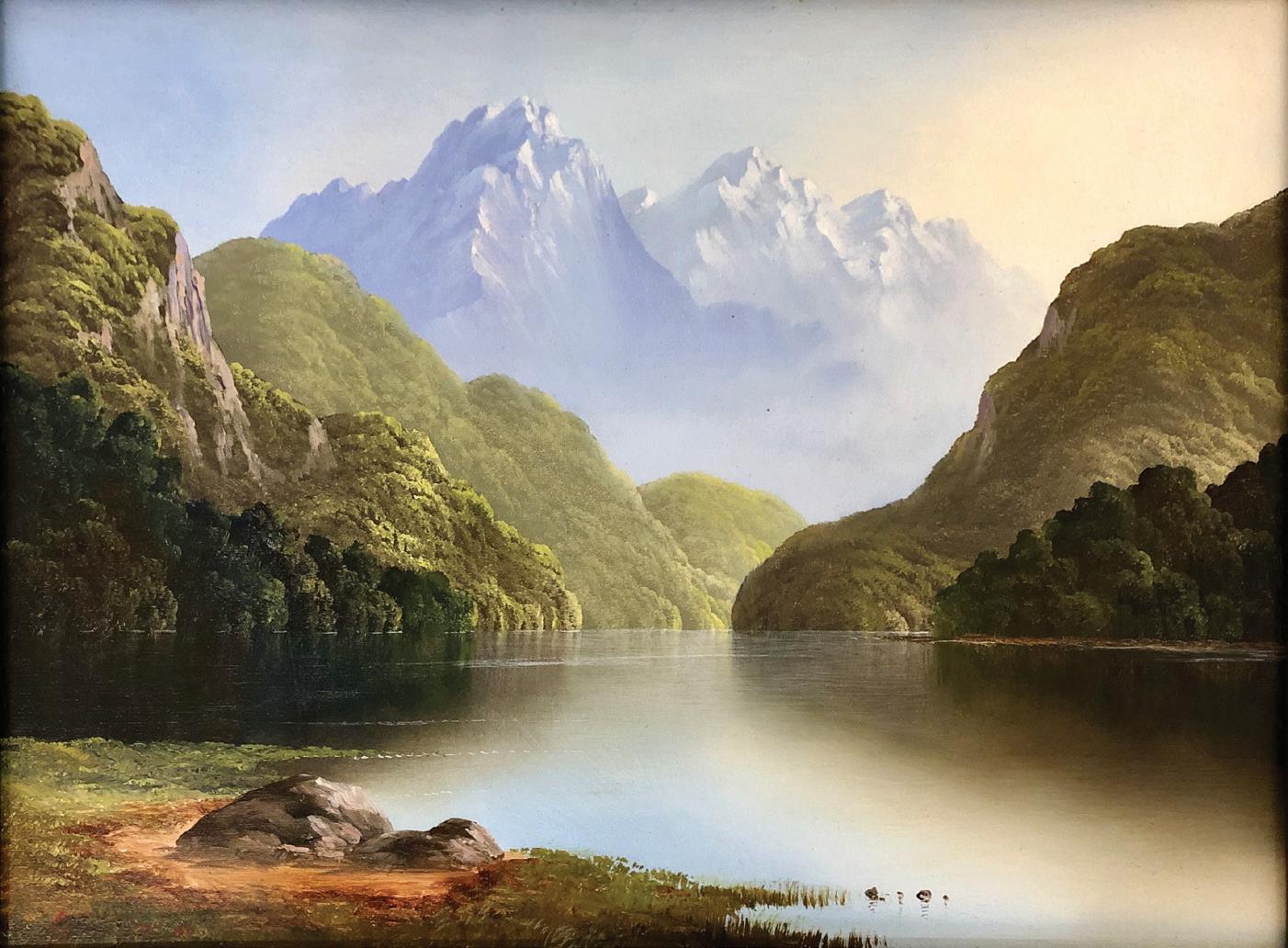
Lake Brunner
Oil on canvas board 44 x 60
Signed & dated 1986
$3,000 - 5,000
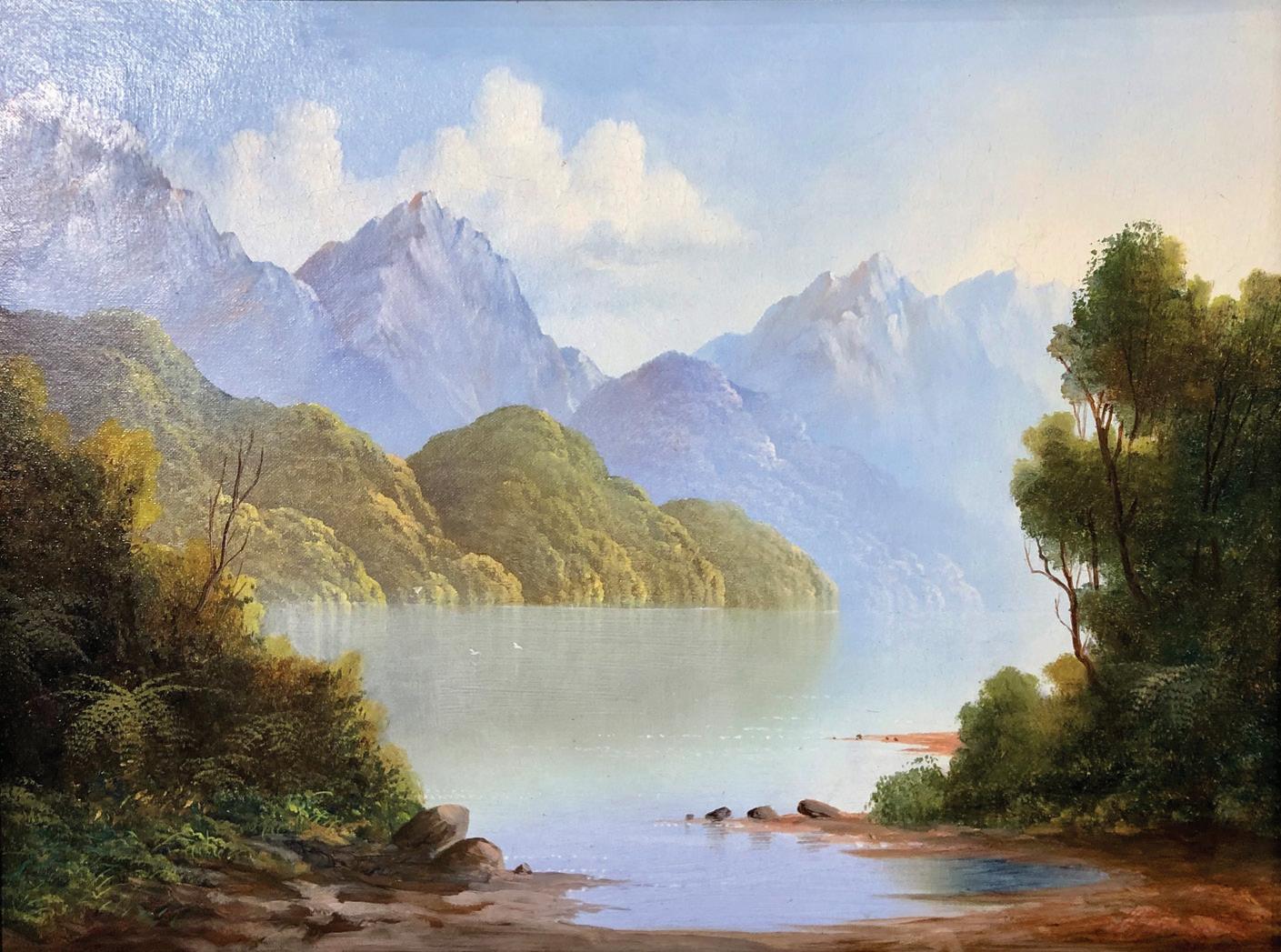
Lake Brunner
Oil on canvas board 44 x 60
Signed & dated 1986
$3,000 - 5,000
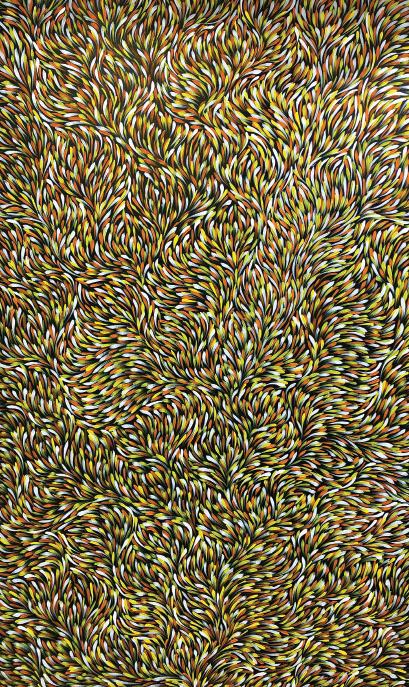
90 GLORIA PETYARRE
(Australian 1942 - 2021)
Bush Leaf Medicine
Purchased from Karlangu Aboriginal Art Gallery 90
PROVENANCE
Private Collection, Auckland
Acrylic on linen 196 x 120
Signed verso
Karlangu Aboriginal Art Gallery
stamp applied verso
$6,000 - 8,000
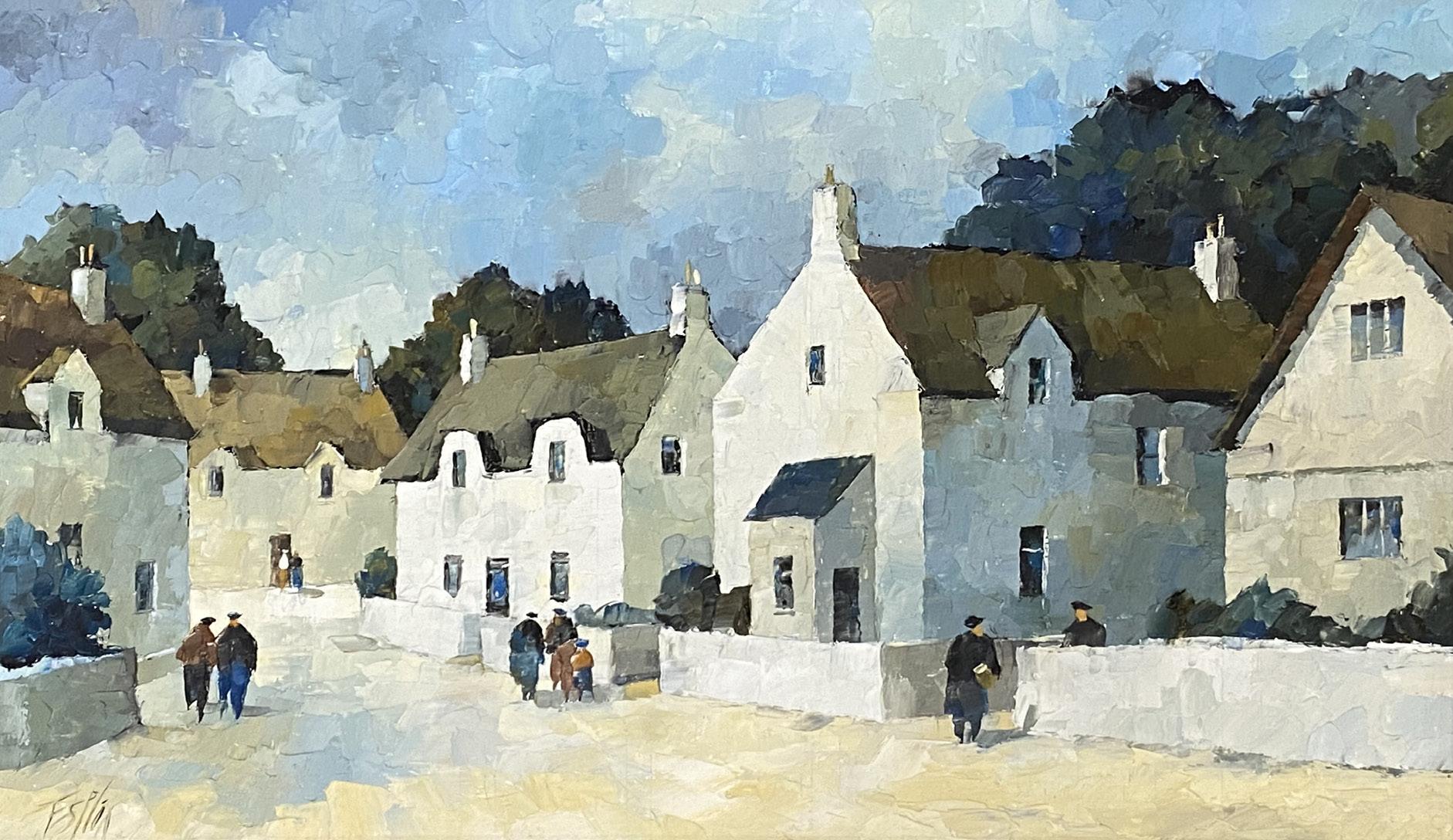
91 TOM ESPLIN (1915 - 2005)
Fortingall Estate, Scotland
Oil on board 23.5 x 39
Signed
$2,500 - 3,500
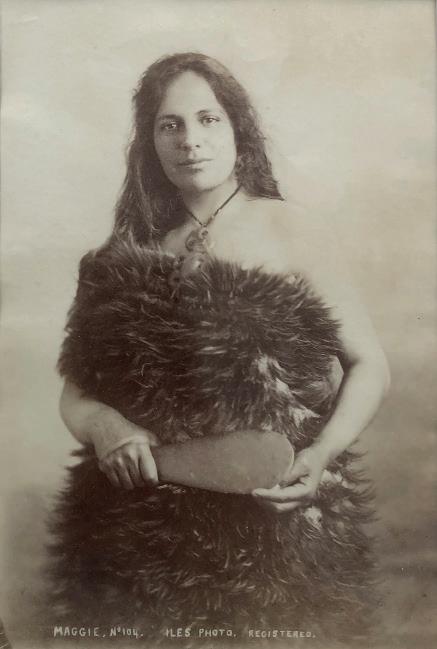
92 ARTHUR ILES (1870 - 1943)
Maggie Papakura
Vintage albumen print 19 x 13
Signed
$800 - 1,200
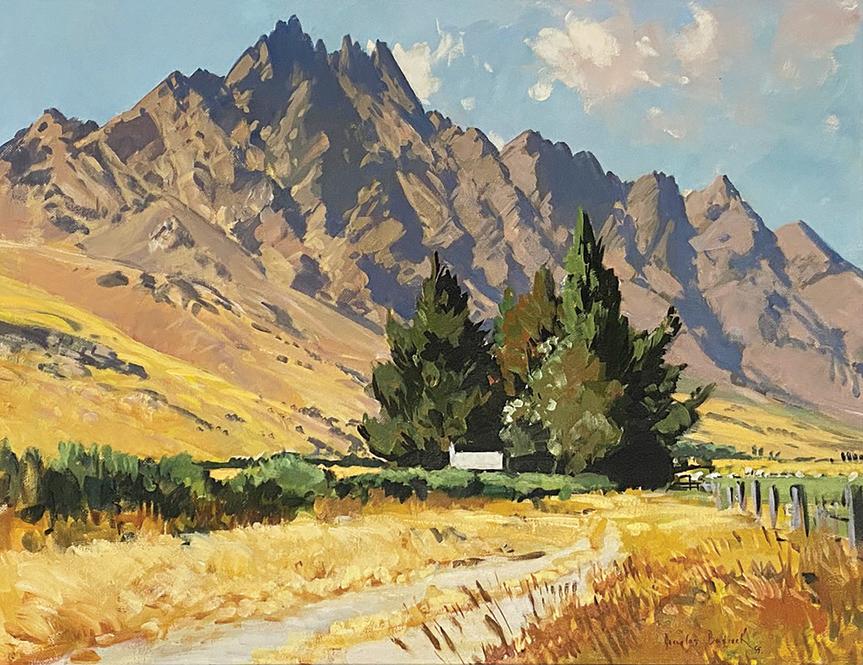
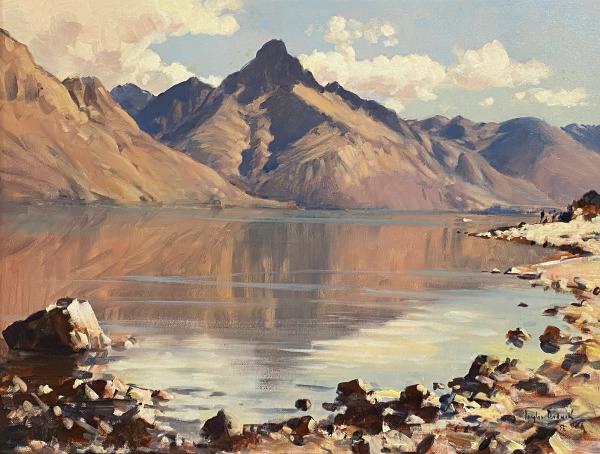
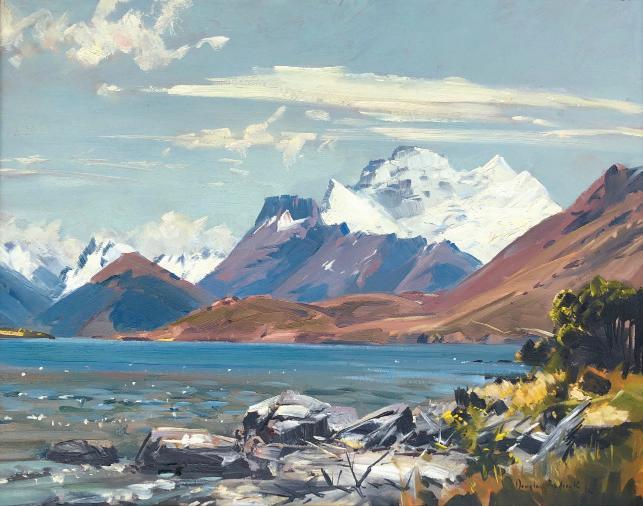
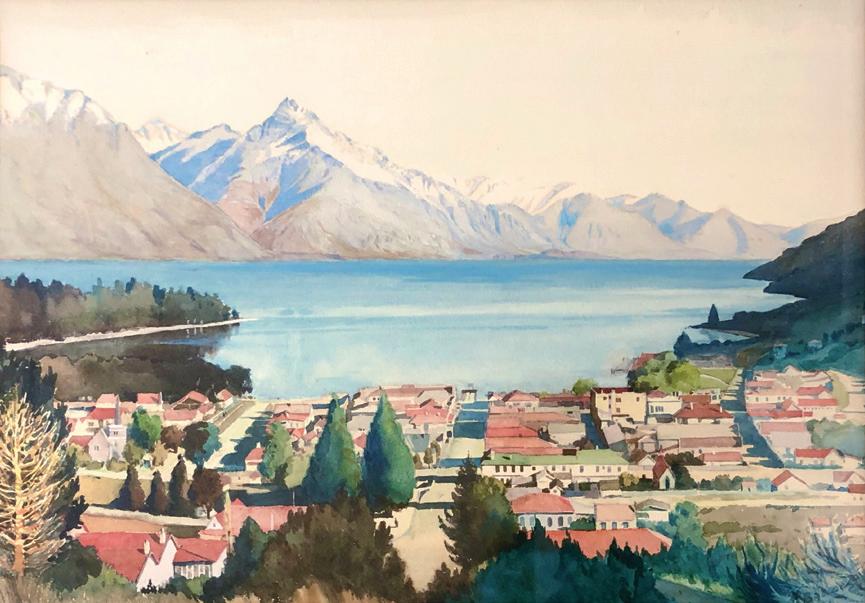
93
DOUGLAS BADCOCK (1922 - 2009)
The Remarkables from Frankton Flat, Summer Morning Oil on board 45 x 60
Signed & dated 1955
$3,000 - 5,000
94
DOUGLAS BADCOCK (1922 - 2009)
Mt Earnslaw, Head of Lake Wakatipu from Creighton Station Oil on board 47 x 60
Signed & dated 1966
$3,000 - 5,000
95
DOUGLAS BADCOCK (1922 - 2009)
Walter Peak, Lake Wakatipu, Still Summer Late Afternoon Oil on board 47 x 60
Signed & dated 1955
$2,500 - 3,500
96
DOUGLAS BADCOCK (1922 - 2009) Queenstown Watercolour 44.5 x 63
Signed
$2,000 - 3,000
End of Sale - Thank You
Important & Rare auctions are the proven, preeminent sale category for major works of art offered for sale in New Zealand. These auctions take place three times annually. Now in our 50th year in business, experience continues to equal results. 2014 saw Important & Rare auctions realise five of New Zealand’s top ten auction prices. The following year saw new records set with the two top prices in Auckland achieved. With the addition of the record $1.377 million paid for a C F Goldie in April’s 2016 sale, International Art Centre achieved the three highest art auction prices in New Zealand’s history. Due to an appreciative, and greatly valued clientele of nationwide and international buyers and sellers we look forward to breaking new ground.
The buzz generated by our Collectable Art auctions reflects the popularity of these sales: an event at which seasoned connoisseurs and budding collectors alike converge to appreciate one of the most eclectic and diverse offerings available to the market. Works span the vital period from mid-century modernism through to the cutting-edge of today’s Contemporary art in New Zealand.
This sale category is an increasingly significant event in our auction calendar. Offering a number of lowerpriced works from highly-sought after artists in print and edition form, as well as quality works from artists whose presence on the secondary market is just beginning to crystallise.
From time to time, the secondary market is fortunate enough to be exposed to one of those rare collections which transcends the value of its individual works of art, and stands to represent something iconic in its entirety. Our team is well-versed in the process of offering single-owner collections for sale, and take pride in the process of curating a single-owner sale when the opportunity arises. We offer a targeted marketing campaign and maximise the use of both electronic and print-based collateral to effectively showcase such collections to maximum effect. The strong networks we have established locally and internationally are reflected in some of the private collections which have been entrusted to us in recent years.
A quick, easy and reliable solution to affordable consignments. During the 2020 nationwide lockdowns we stayed connected to our clients, keeping them close to our art. The time was spent productively, resulting in the development of our own online bidding platform and App, successfully auctioning works of art with no exhibition viewing, no printed catalogue, while using state-of-the-art technology. All transactions were contactless and we reduced our carbon footprint along the way. While the personal service, excitement and atmosphere of our famous live Parnell Road auctions remain and will continue to grow, the success of this online only platform has encouraged us to retain this as a permanent sale category.
Richard Thomson
Ph +64 9 379 4010
M. 0274 751 071
E. richard@artcntr.co.nz
Maggie Skelton
Ph +64 9 379 4010
E. maggie@artcntr.co.nz
Luke Davies
Ph +64 9 379 4010
E. luke@artcntr.co.nz
www.internationalartcentre.co.nz
202 Parnell Road, Auckland
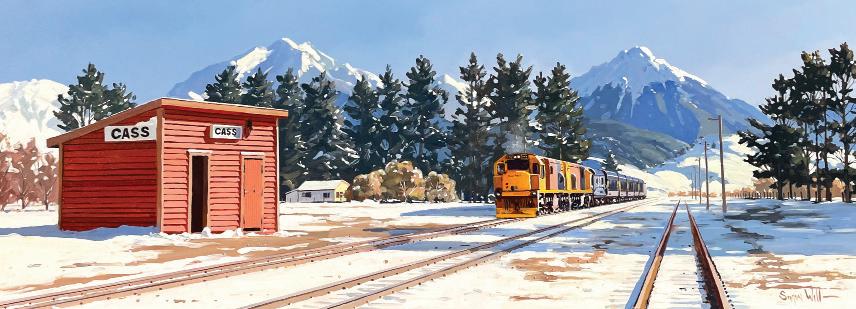
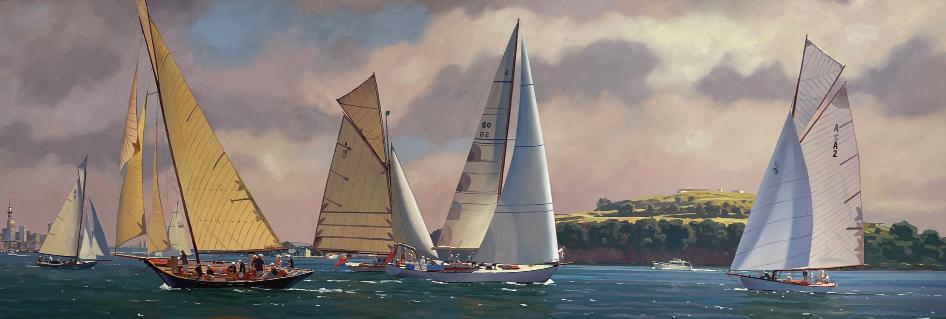
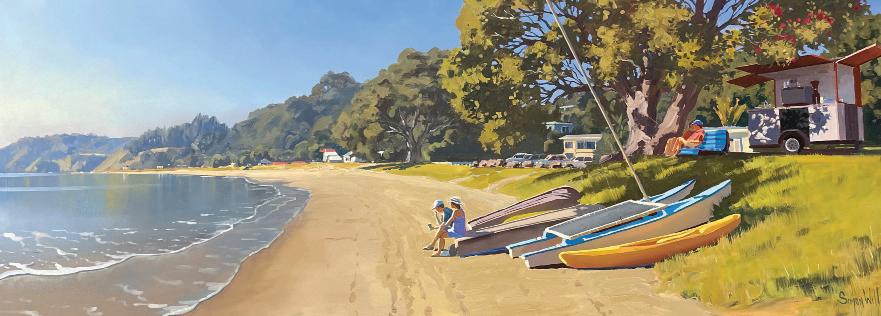
www.internationalartcentre.co.nz
International Art Centre provides formal valuations for insurance purposes, specialising in the preparation of catalogued and photographed inventories. Written valuations can be arranged by appointment. We provide free informal, verbal estimates for any of the works in your collection.
Tuesday 16 November 2021
I instruct International Art Centre to bid on my behalf for the following lots up to the prices indicated below. I understand my bids are to be executed at the lowest attainable price level. All bids are subject to Conditions of Sale printed in this catalogue.
REGISTRATION NUMBER
NAME
ADDRESS
TELEPHONE
We will allocate a bidding number if you don’t already have one
Signature ........................................................................................... / / 2021
I have read and understand the Conditions of Sale. International Art Centre offers this service to clients unable to attend sale and is not responsible for error or failure to execute bids.
Email to info@internationalartcentre.co.nz before 3pm day of sale
Alternatively, visit our website www.internationalartcentre.co.nz and place absentee bids online or our bidding platform to participate in the auction live and remotely https://auctions.internationalartcentre.co.nz
The highest bidder shall be the buyer. In the event of any dispute as to the bidding in respect of any lot, that lot may be offered again at the discretion of the auctioneer whose decision shall be absolute and final.
The auctioneer has the right -
(i) to refuse any bid;
(ii) to advance the bidding at his absolute discretion;
(iii) to place a reserve on any lot;
(iv) to place a bid or bids on behalf of the seller;
(v) to withdraw any lot from sale;
(vi) to require a successful bidder to pay forthwith the whole or any part of the purchase price.
The auctioneer acts as the agent of the seller and neither he nor the seller shall be responsible for any defects or faults in any lot or for any errors of description or for genuineness or authenticity of any lot and no compensation shall be paid in respect of same.
From the time of lot being sold, such lot will be the responsibility of the buyer.
Successful bidders are required to pay for purchases immediately on completion of sale unless otherwise arranged.
All intending buyers are required to register for a bidding number prior to auction commencing. Subscribers can use their permanent bidding number. We reserve the right to ask for identification if you are a first time client of International Art Centre.
Each lot shall be paid for and removed at the buyers expense by no later than 4:00pm Thursday 18 November 2021 unless otherwise arranged failing which the auctioneer and/or the seller shall have the right to forfeit any deposit paid by the buyer and to resell the lot either by public or private sale and any deficiency on costs of resale shall be borne by the defaulting buyer.
No lot may be collected whilst auction is in progress. Payment can also not be made until completion of auction.
When the auctioneer declares a lot ‘subject’ this means the bid is below the set reserve and is subject to vendor accepting, rejecting or negotiating the bid. International Art Centre will endeavour to make contact with the vendor immediately after sale or the following day. If the bid is accepted, the highest bidder is obligated to make purchase.
Estimates are provided for each entry and act as a guide only. They are prepared well in advance of sale and are subject to revision at any time. Estimates are based on hammer price and do not include buyers premium.
Absentee bidding arranged - please refer to absentee bidding in back of catalogue. Email to info@internationalartcentre. co.nz before 3pm day of sale. Please do not be offended if a member of our staff ask for your credit card details as security.
Absentee bids can also be left via our website to registered members. Our website www.internationalartcentre.co.nz acts as a useful auxiliary to the catalogue but we recommend inspection or a condition report prior to leaving a bid. Our staff will gladly supply you with a condition report on any lot.
Telephone bidding available to subscribers and registered bidders. There is no charge for this service.
PAYMENT FACILITIES
Eftpos: Available for transactions depending on your daily limit.
Bank deposits: Bank instructions on invoice if paying by direct debit. Quote the Lot number(s) purchased and surname as reference.
Credit cards: Visa and Mastercard with a 2% surcharge.
International Art Centre no longer accepts cheques.
PROTECTED OBJECTS ACT
Art objects over 50 years old made by an artist or maker born in or related to New Zealand may be protected New Zealand objects, and therefore require permission from the Ministry for Culture and Heritage in order to be exported. Applications for permission to export can be made at https://mch.govt.nz/ nz-identity-heritage/protected-objects/exporting
FREIGHT & PACKING
International Art Centre arrange door to door delivery both nationally and internationally. Please arrange insurance on your items prior to them leaving our premises.
OTHER ENQUIRIES
Should you have any questions relating to the sale or if we can be of any other assistance please contact us during business hours on (09) 379 4010, Toll Free 0800 800 322 or email info@internationalartcentre.co.nz
BUYERS PREMIUM
17.5% Buyers premium plus GST on premium applies to all lots. (Total buyers premium is 20.12% including GST)
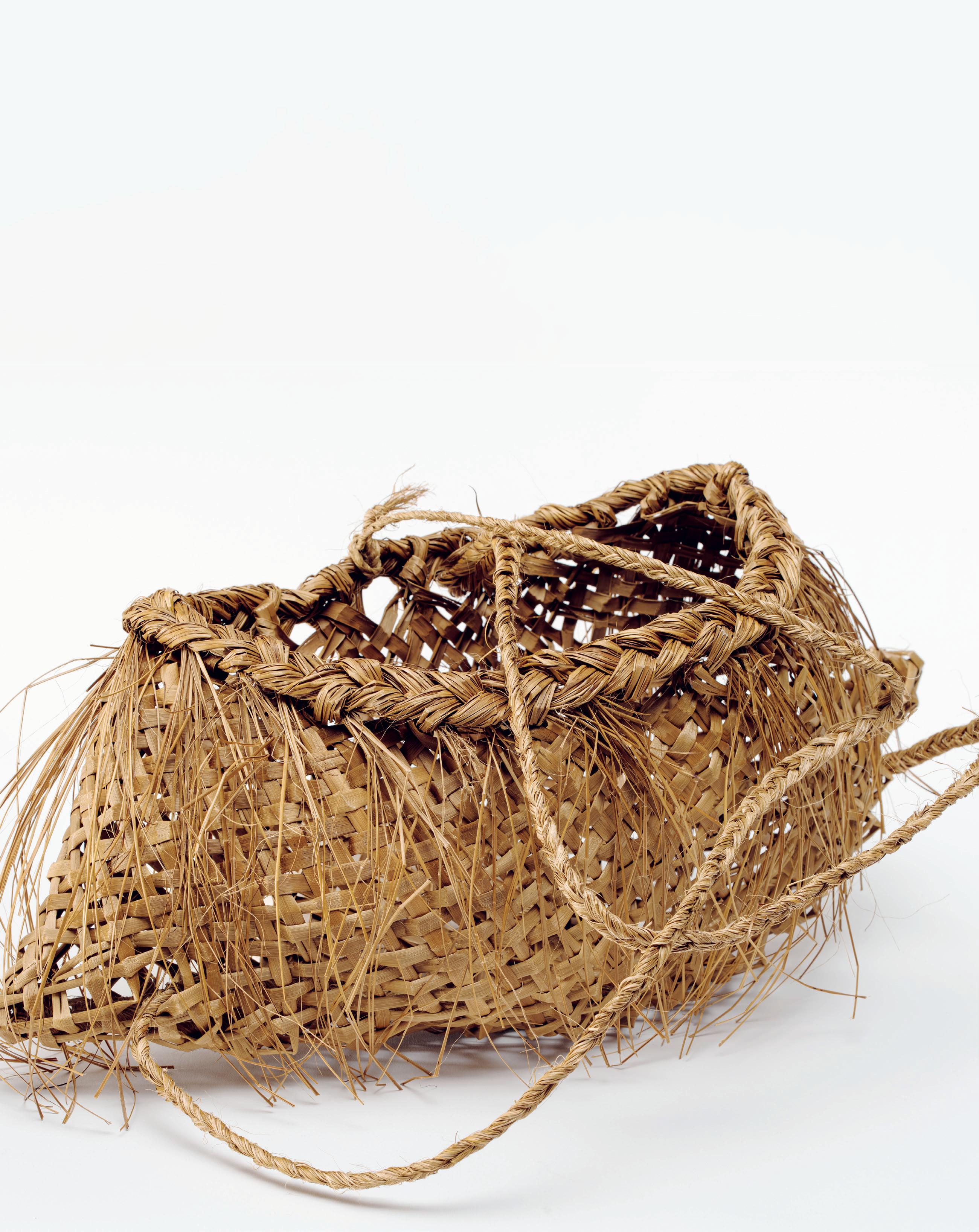
18 December 2021 – 3 April 2022 | Free entry

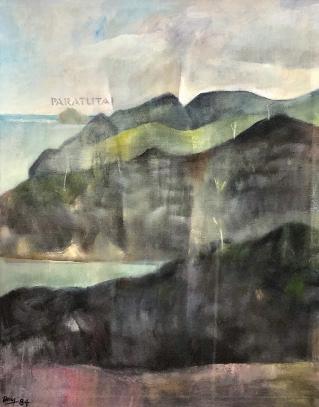
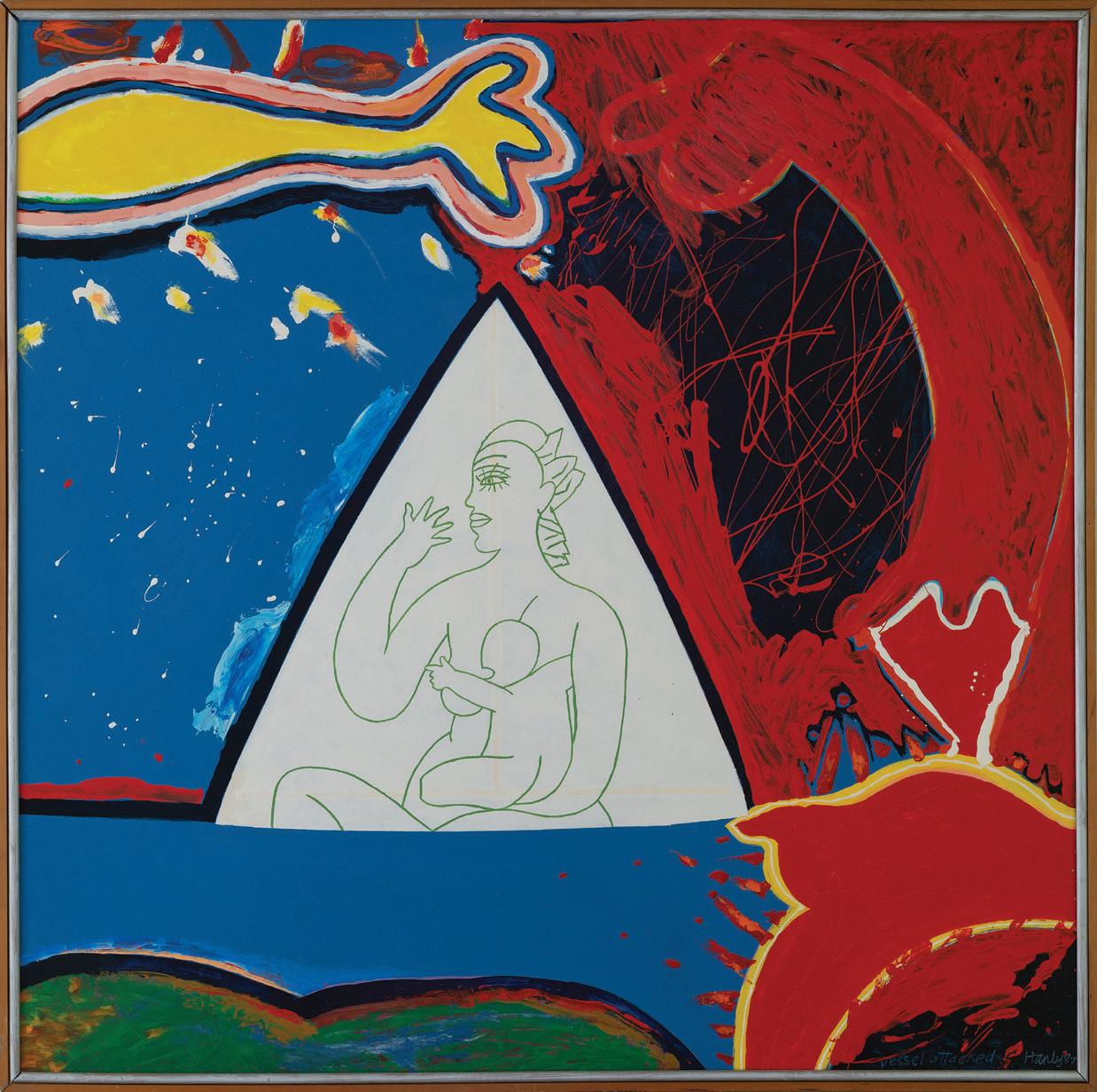
202 Parnell Road, Auckland, New Zealand Tel + 64 9 379 4010 www.internationalartcentre.co.nz