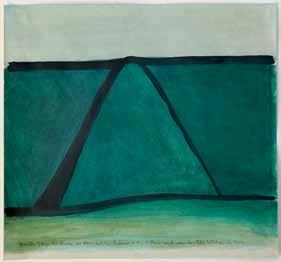
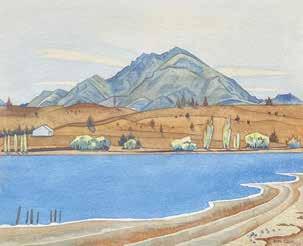
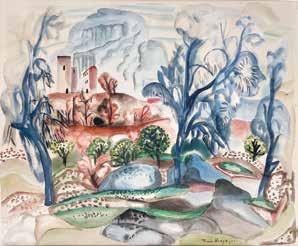
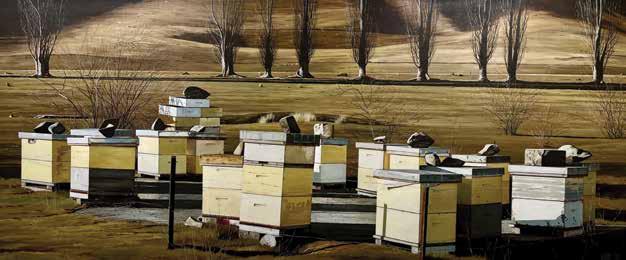
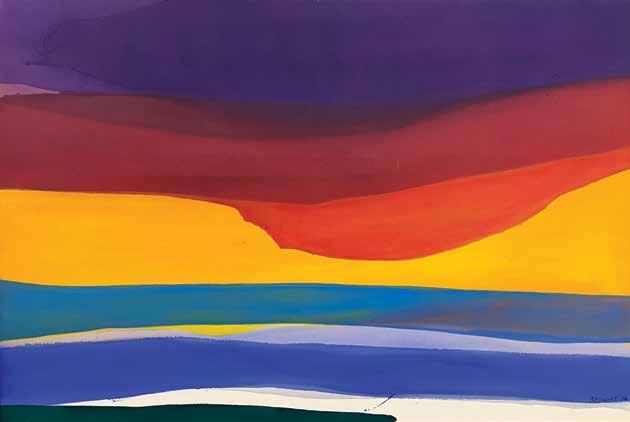
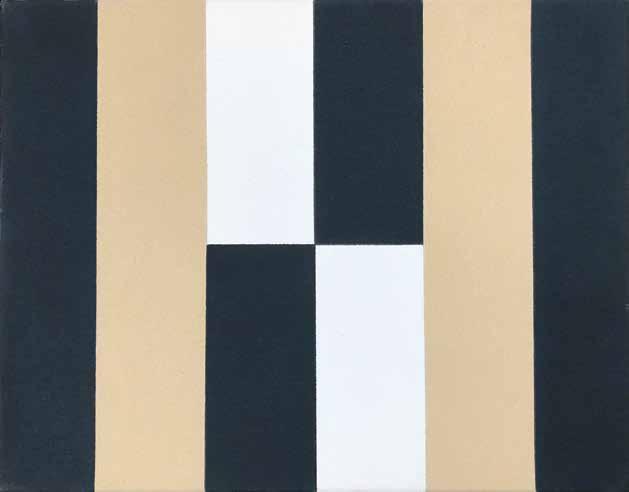
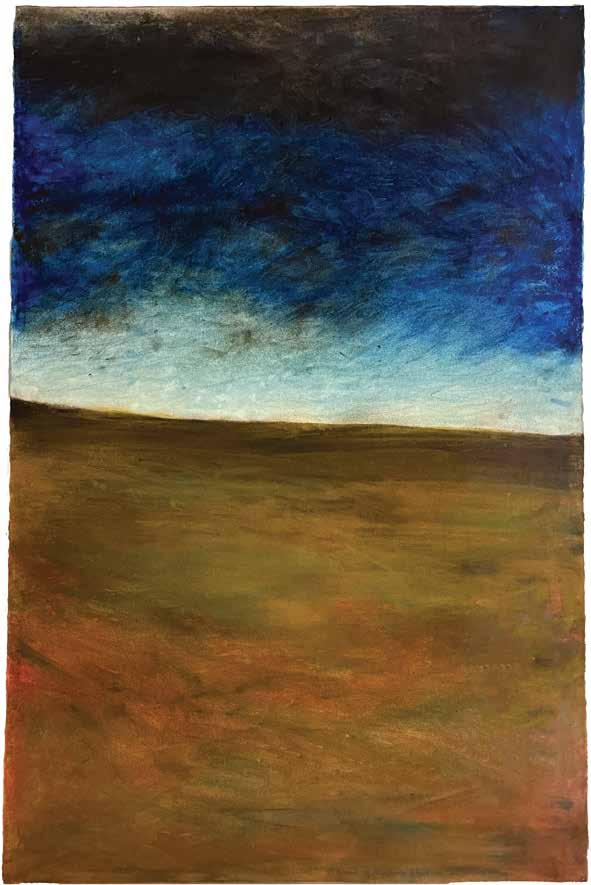
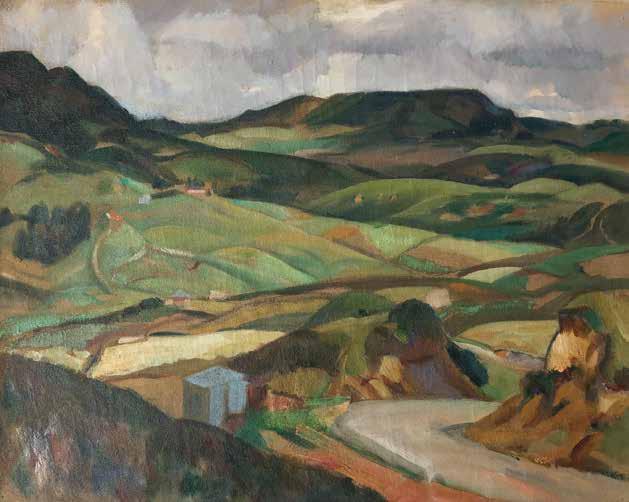
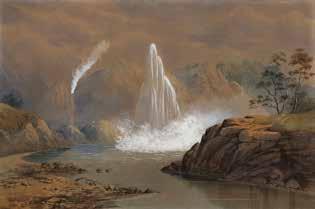
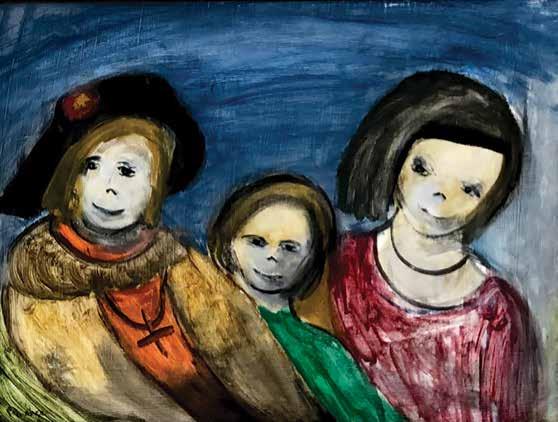
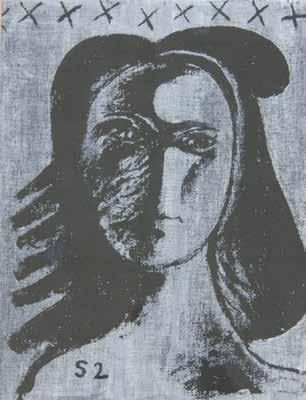
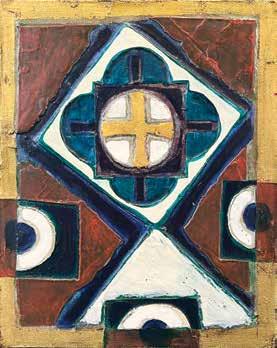
c: Colin McCahon North Otago Landscape Realised $156,200
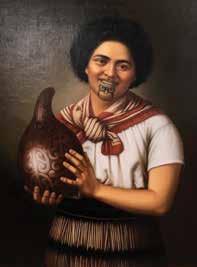
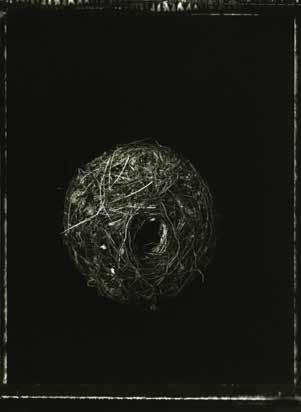
d: Gottfried Lindauer Girl with Gourd Realised $348,400 - auction record
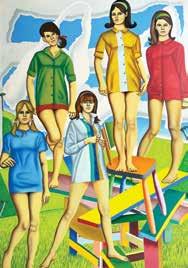
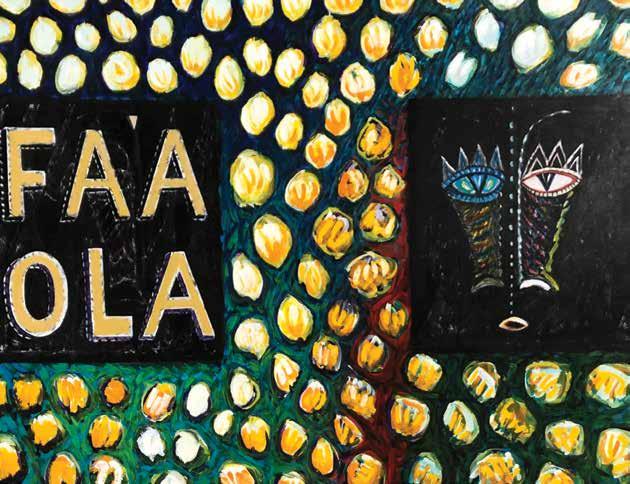
e: Ian Scott Five Miniskirts, 1969-70 Realised $138,150 - auction record
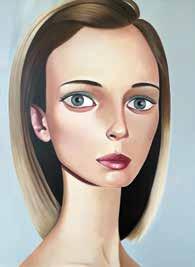
f: Peter Stichbury Abigail Realised $112,950 - auction record
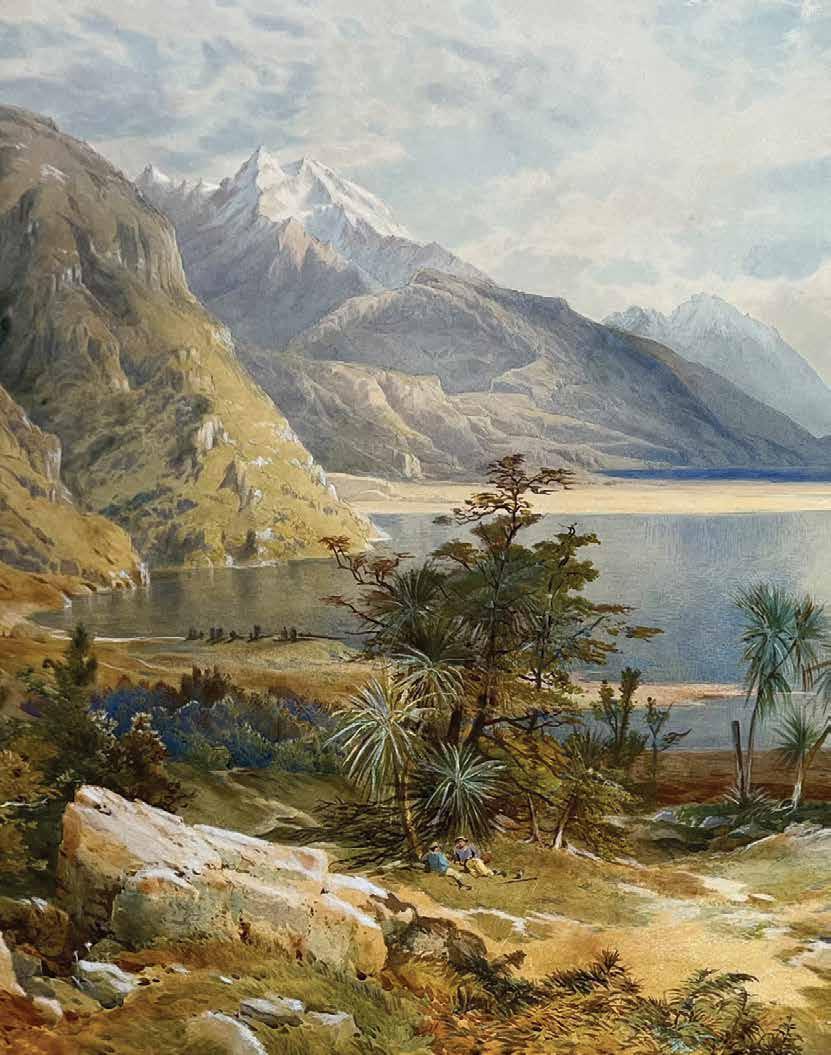
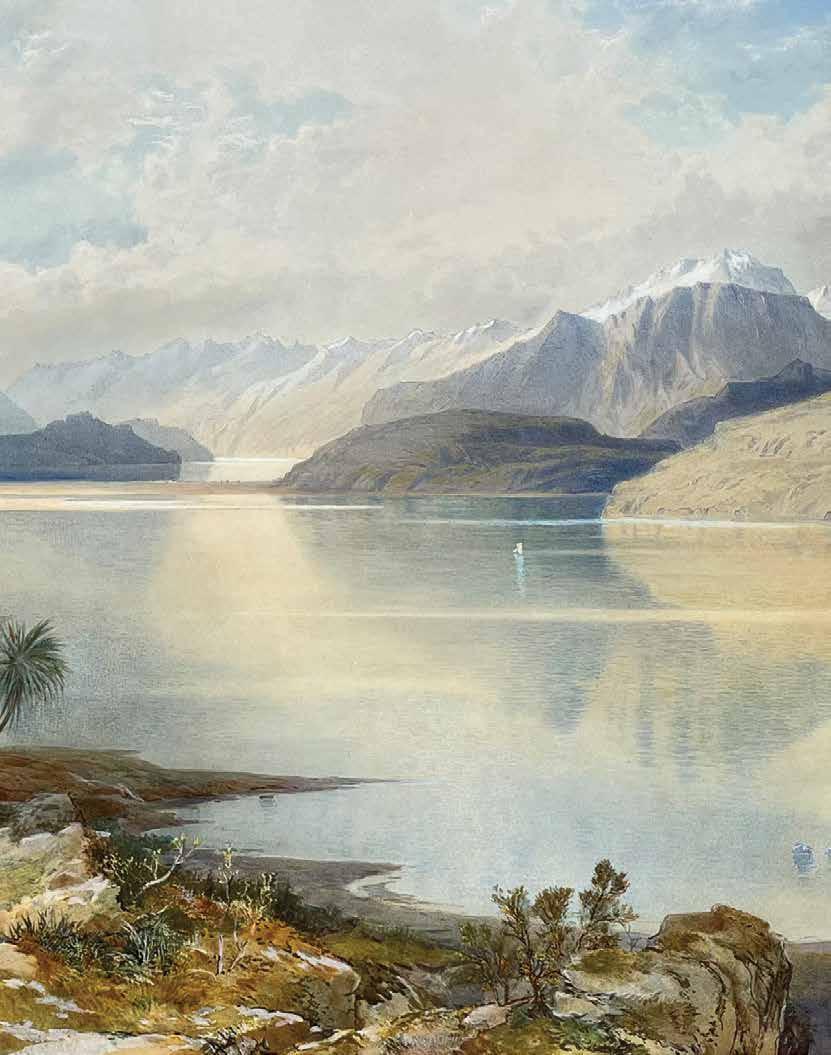
g: Rita Angus Lake Wanaka, Pembroke Realised $180,200 - auction record for work on paper
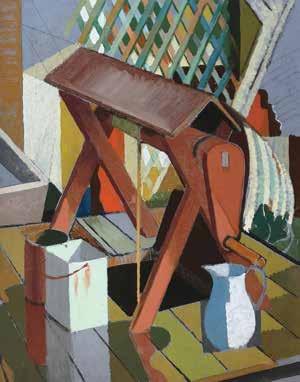
h: Frances Hodgkins The Summit Realised $103,300
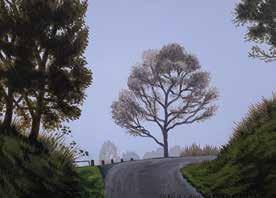
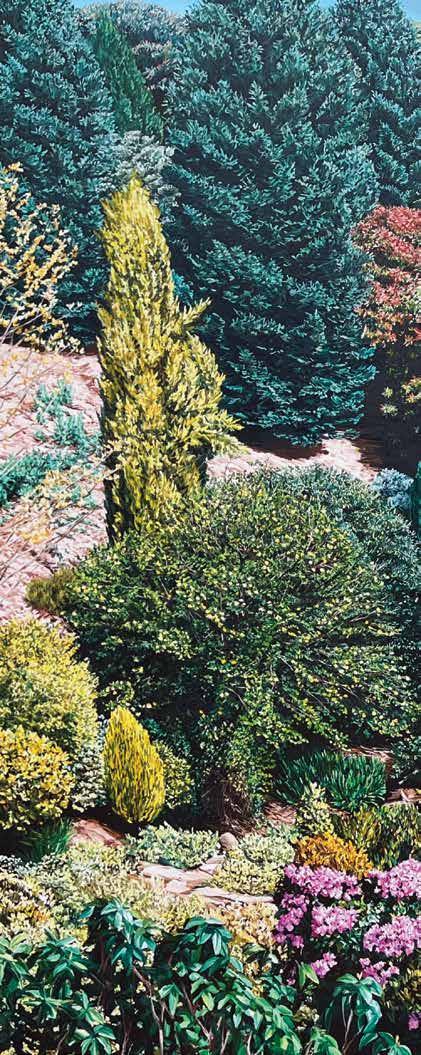
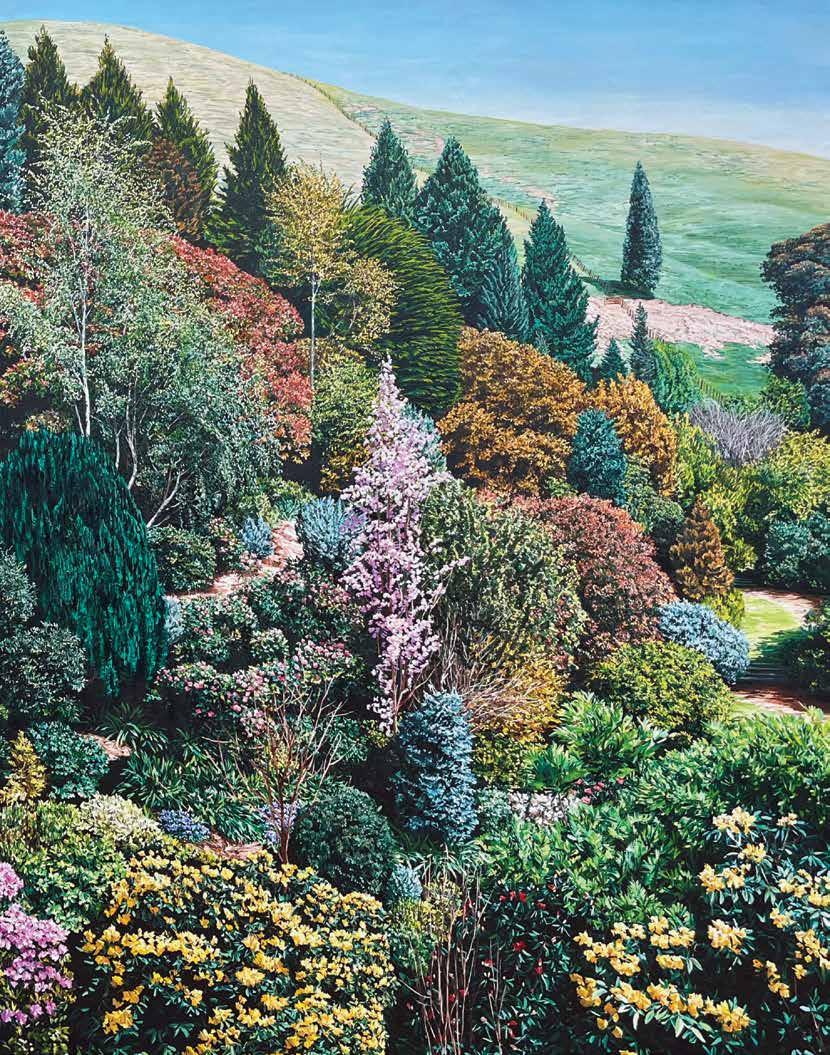
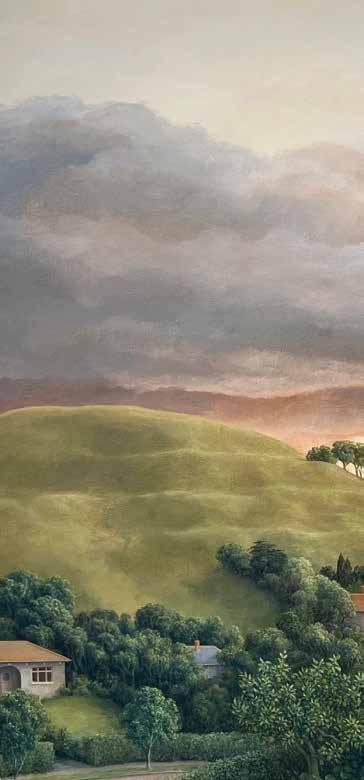
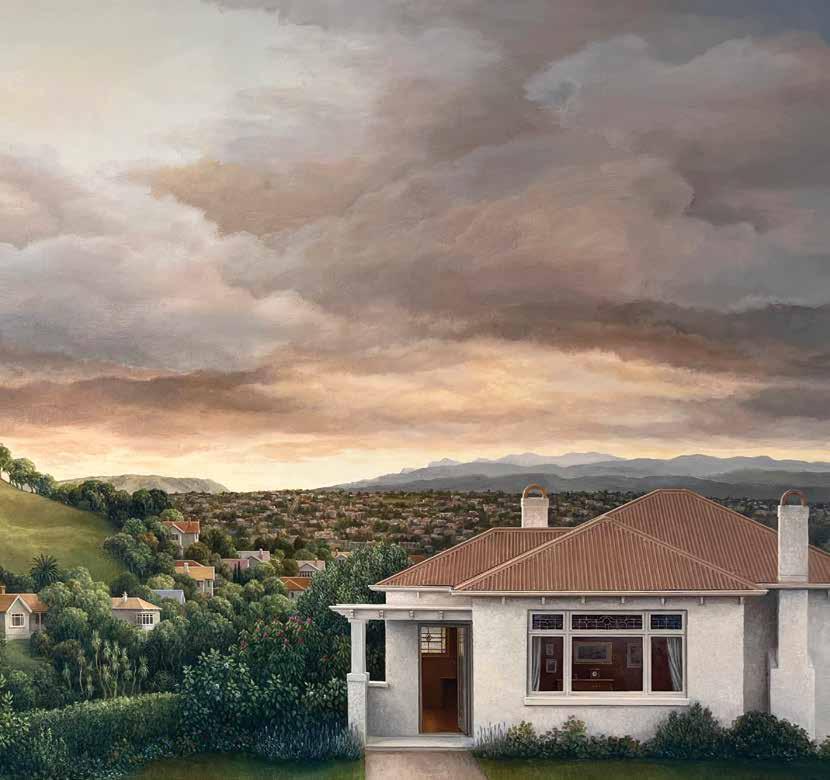
i: Michael Hight Willowburn Realised $42,000
Prices include buyers premium
a
Auction Highlights
SPARK FOUNDATION
Held 1 September
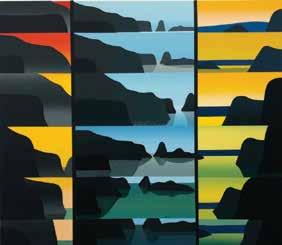
a: Gretchen Albrecht Inlet, West Coast
Realised $198,400 - auction record
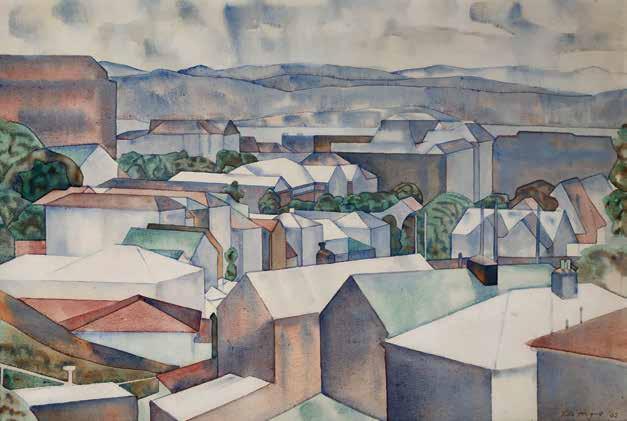
b: Rita Angus Wellington Rooftops
Realised $160,200
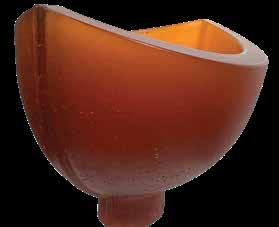
c: Ann Robinson Pod Realised $33,600
International Art Centre was delighted to partner with the Spark Foundation, offering it’s art collection by auction in September. The foundation’s commitment to a 5% living artist resale royalty was implemented. The landmark auction saw 100% of the offering sold.
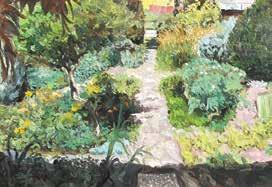
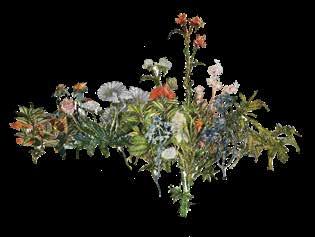
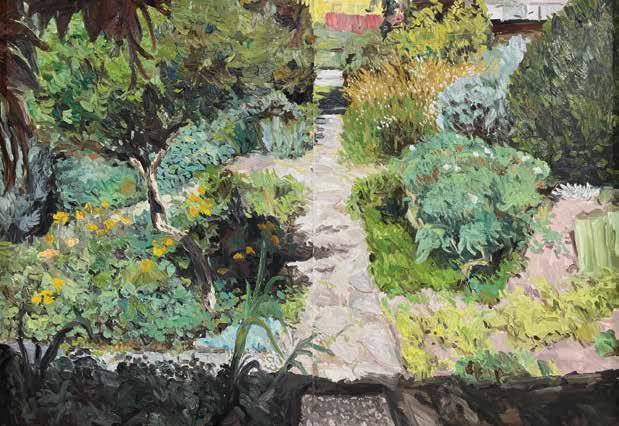
d: Karl Maughan Untitled Diptych, 1988 (The First Garden Painting)
Realised $28,800
e: Paul Hartigan Holocaustinals
Realised $17,400
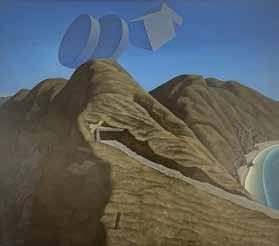
f: Brent Wong Study for Anniversary, 1969
Realised $92,500
Prices include buyers premium
b
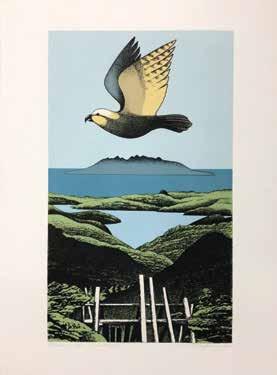
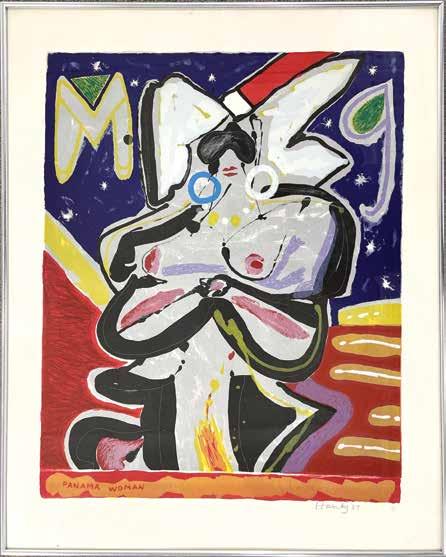
a: Don Binney Kaiarara Kaka, Great Barrier Screenprint Realised $39,640 ART at HOME 19
b: Michael Smither Views of St Kilda Screenprint Realised $2,260 ART at HOME 20
c: Colin McCahon Northland Screenprint Realised $36,030 ART at HOME 18
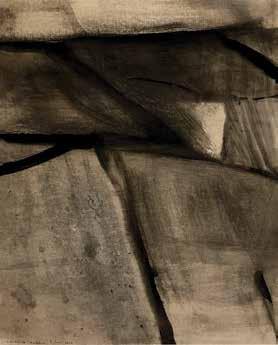
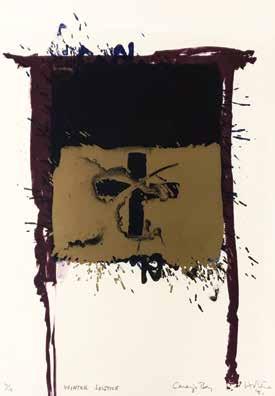
d: Ralph Hotere Winter Solstice - Carey’s Bay Lithograph Realised $17,090 ART at HOME 19
e: Jeff Thomson Spring Realised $5,645 ART at HOME 19
f: Nigel Brown Urewa Painting Realised $11,110 ART at HOME 19
g: Dick Frizzell Charlie’s Driveway Realised $18,020 ART at HOME 18
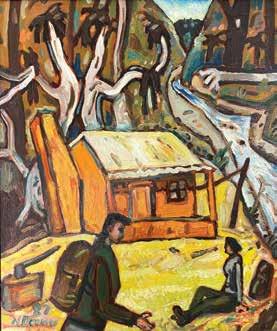
h: D Knight Turner Untitled Realised $10,420 ART at HOME 18
Prices include buyers premium
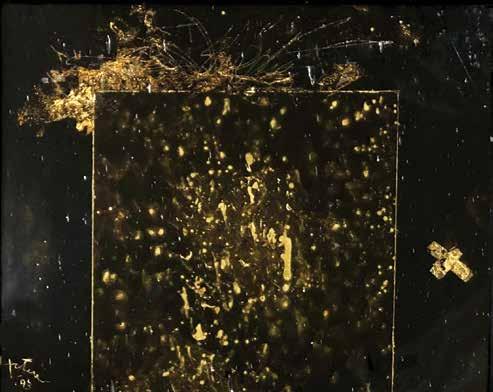
1 RALPH HOTERE (1931 - 2013)
Lo Negro Sobre Lo Oro (The Black Over the Gold)
Acrylic, lacquer and gold foil on glass
17.5 x 22
Signed & dated 1993
Also signed, inscribed Lo Negro Sobre Lo Oro (The Black Over the Gold), Port Chalmers & dated 1993 verso
$10,000 - 15,000
PROVENANCE
Private Collection, Auckland
Purchased from Fine New Zealand
Paintings, Jewellery & Decorative Arts, Webb’s, 06 April 2005
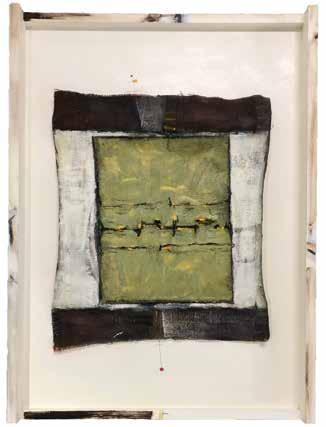
2 DON PEEBLES (1922 - 2010)
Across Acrylic and charcoal on canvas and wood 81 x 59.5 overall
Signed & dated 2002-3 verso
$4,000 - 6,000
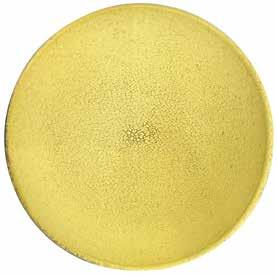
Large Inverted Volcano (Red)
Glazed earthenware 17 x 85
Initials impressed on base
$15,000 - 20,000
PROVENANCE
Private Collection, Northland
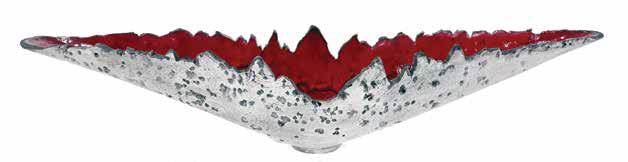
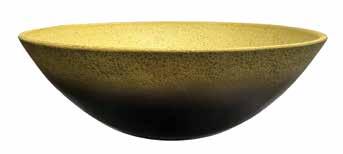
Sulphur Bowl
Glazed ceramic 17 x 44
Initials impressed on base
$7,000 - 10,000
PROVENANCE
Private Collection, Auckland
3 LEN CASTLE (1924 - 2011)
4 LEN CASTLE (1924 - 2011)
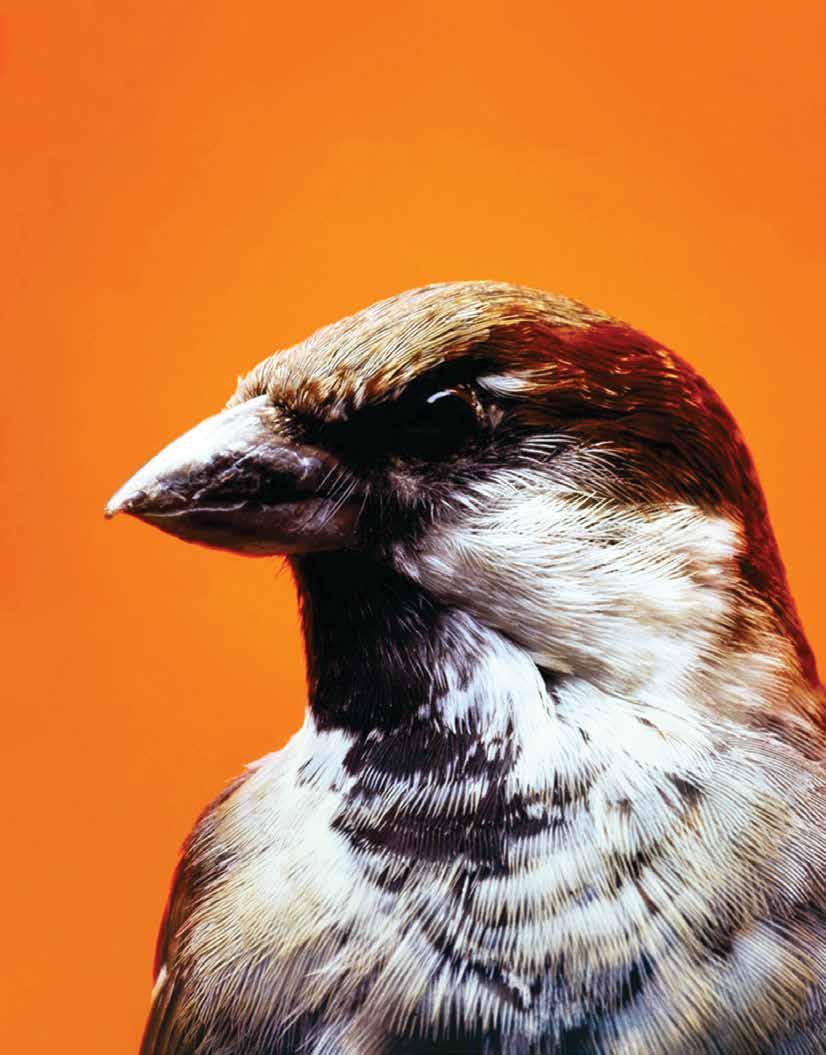
5 MICHAEL PAREKOWHAI (b.1968)
Portrait of Elmer Keith #1
C-type, edition of 10
125 x 101
$25,000 - 35,000
PROVENANCE
Private Collection, Auckland
Michael Lett Gallery
Portrait of Elmer Keith #1 comes from Michael Parekowhai’s The Beverly Hills Gun Club, which consists of a number of works involving taxidermy specimens of sparrows and rabbits all of which were shot against the same vivid background. Each rabbit and sparrow photographed was given a name: Elmer Keith, Ed Brown, Jimmy Rae, Larry Vickers and Lou Lombardi. Elmer Keith was the name of an American gun enthusiast who developed a new type of ammunition for revolvers, while Ed Brown is thought to be reference to Edwin Brown, a nineteenth-century English naturalist and taxidermy collector.
Parekowhai creates works from wide ranging media, intersecting sculpture and photograph.
Curator Justin Paton wrote that Parekowhai’s works; ... have a way of sneaking up on you, even when they’re straight ahead. Pick-up sticks swollen to the size of spears. A photograph of a stuffed rabbit who has you in his sights. In this work Portrait of Elmer Keith #1 it’s a common Sparrow. A silky bouquet that rustles with politics. Seemingly serene beneath their gleaming, factory-finished surfaces, Michael Parekowhai’s sculptures and photographs are in fact supremely artful objects. ‘Artful’ not just because they’re beautifully made ... but also because they manage, with a combination of slyness, charm and audacity, to spring ambushes that leave you richer
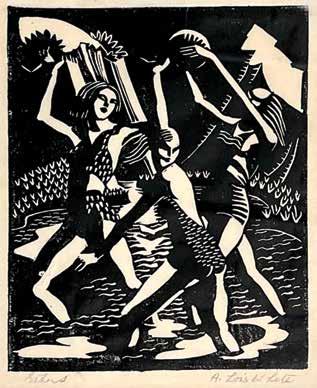
6 ANNA
Bathers
(1903 - 84)
Linocut on paper 19 x 14
Signed & inscribed Bathers
$2,500 - 3,500
8
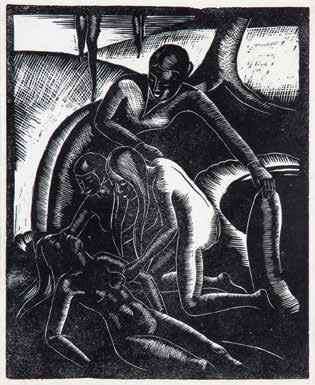
7 ANNA LOIS WHITE (1903 - 84)
Untitled Bathing Study
Woodblock on rice paper 25 x 20.5
$4,000 - 6,000
PROVENANCE
Ex Gilbert Estate, Webb’s 27 June 2000
Catalogued as A Reclining Nude with Three Women in Attendance
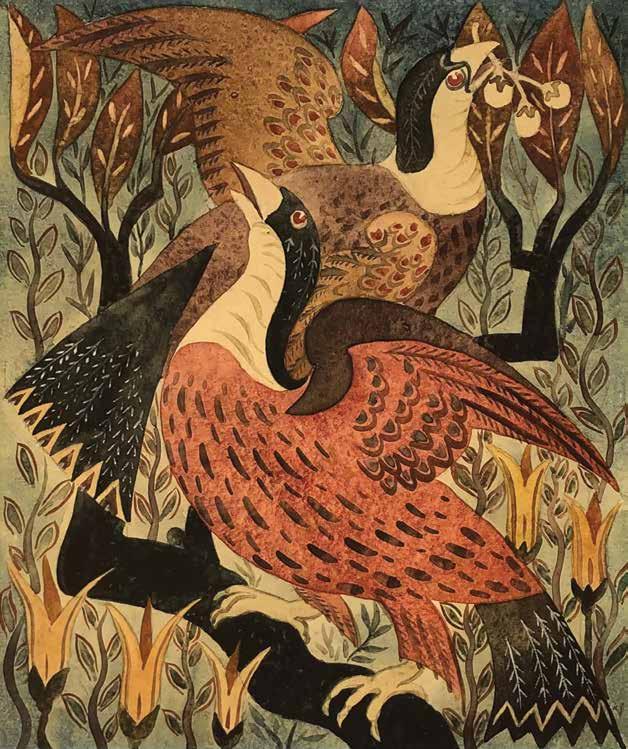
- 84)
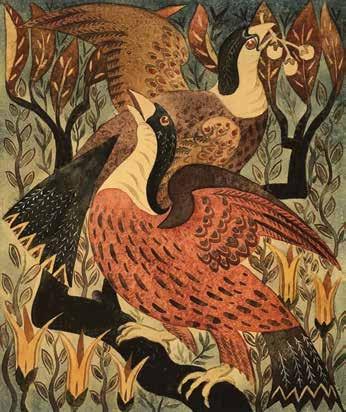
Birds
Varnished watercolour 30 x 25
Signed & inscribed Birds on original backing board affixed verso
$30,000 - 40,000
PROVENANCE
Private Collection
Purchased directly from the artist by the current owner
ANNA LOIS WHITE (1903
LOIS WHITE
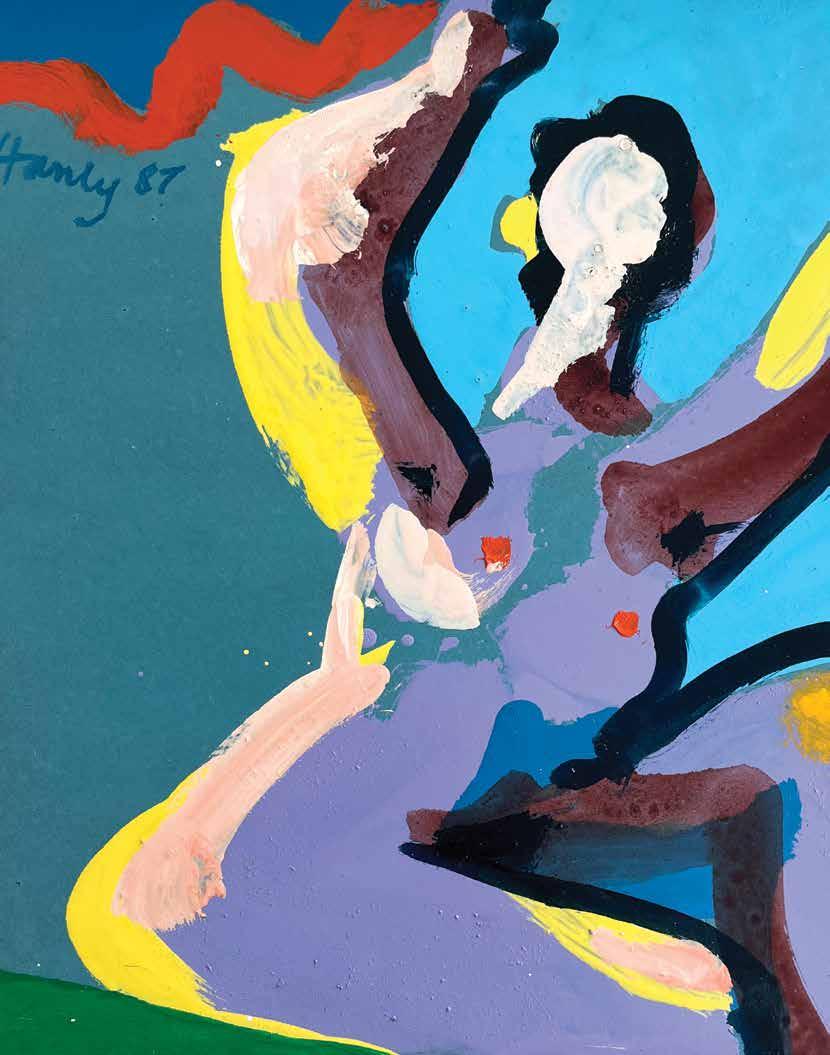
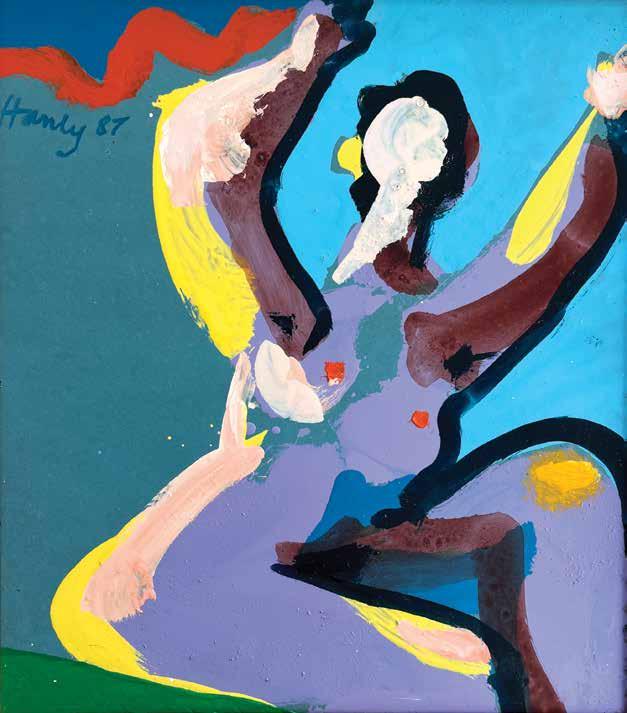
9 PAT HANLY (1932 - 2004)
Leaping Woman Study
Enamel on board 30 x 27
Signed, inscribed and dated 1987
$40,000 - 60,000
PROVENANCE
Private Collection, Auckland
Purchased directly from the artist 1987
Studying at the Canterbury College School of Art in Christchurch in the 1950s with fellow luminaries such as Jacqueline Fahey, Alan Pearson, Bill Culbert and Gil Taverner (whom he promptly married), Pat Hanly was a lively raconteur, one of the mainstays of Little Bohemia, a famous communal flat at 22 Armagh Street in the city centre.
His parents had pulled him out of the fourth form at Palmerston North Boys’ High School to complete a hairdressing apprenticeship. He spent his first wages on a book on Rembrandt, and then completed the Fine Arts Preliminary course at night school while working full time. He enrolled at Canterbury as a non-Diploma student in 1952, and by 1953 had beaten every other painter in the school to win the landscape painting prize.
Travelling to London with wife Gil, he found work in the bars and clubs of Soho, and took classes at the Chelsea School of Art. The couple later travelled through Europe to admire the works of Henri Matisse and Pablo Picasso before returning with baby Ben in 1962, when Hanly was 30. Settling in Auckland, Hanly was struck by the bright Southern Hemisphere light and the sparkling reflections of boats sailing in the Waitemātā. His Figures in Light series resulted, with male and female figures bounding across the picture plane naked like a Pacific Adam and Eve.
Winning prizes such as the Manawatu Award for Contemporary Art in 1966 brought Hanly to national attention and his paintings were curated into international exhibitions of New Zealand art as exemplary of modern practice here.
While he never became a fully abstract painter, he began incorporating elements of poured or splashed paint into his compositions, connecting his practice to the experiments with gestural paint application of the American Abstract Expressionists, especially the action painters such as Willem de Kooning and Arshile Gorky. He adapted their process which involved splashing, using gestural brushstrokes and dripping paint onto canvas.
A committed pacifist, Hanly used his painting as his voice against nuclear arms and visits to New Zealand waters by nuclear submarines, as well as showing opposition to the Springbok Tour in 1981. The stockmarket crash of 1987 occasioned optimism and yearning for a return to a purity of sensation when New Zealand was his Garden of Eden. In this painting, thick, broadly painted black outlines are used to frame bright enamel colour to convey the energy of the nude in flight.
An unabashed lover of women and the female form, nudes recur as a motif in his work, representing not a particular person, but the nurturant and generative role of women in society. An unreconstructed modernist, in the early 1990s, Hanly began carving up earlier works on board and re-presenting them as Bouquets for All Women. It was his own unique version of postmodern pastiche.
LINDA TYLER
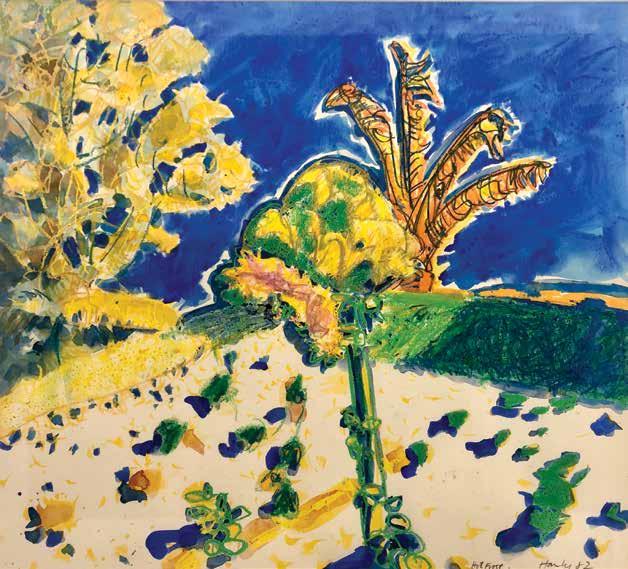
Signed, inscribed Hot Frost & dated 1982
$14,000 - 18,000
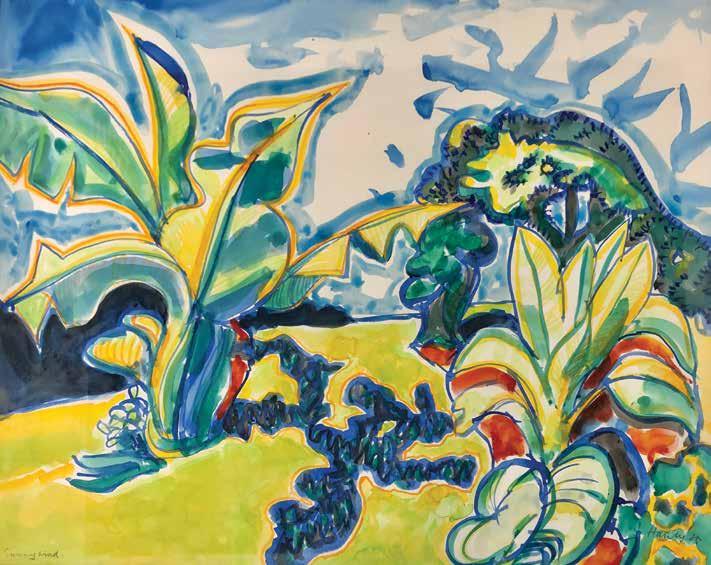
10 PAT HANLY (1932 - 2004) Hot Frost Oil pastel & watercolour 53 x 59.5
11 PAT HANLY (1932 - 2004)
Sunny Wind, Garden Series
Watercolour 54 x 68
Signed, inscribed Sunny Wind & dated 1985
$10,000 - 15,000
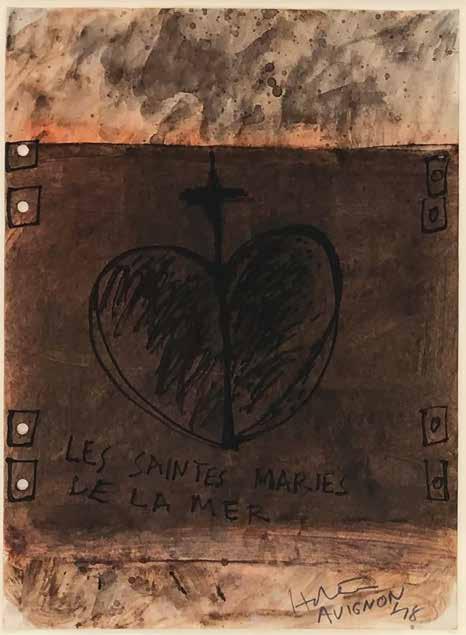
12 RALPH HOTERE (1931 - 2013)
Les Saintes Maries de la Mer
Watercolour and acrylic on paper
32.8 x 23.8
Signed, inscribed Les Saintes Maries de la Mer & dated Avignon 1978
$10,000 - 20,000
PROVENANCE
Private Collection, Auckland
Saintes Maries de la Mer is the capital of Camargue in the south of France and is named after the three Saint Marys: Mary Magdalene, Mary Salome and Mary Jacobe, who are thought to have disembarked in this location after the death of Jesus.
13
MILAN MRKUSICH (1925 - 2018)
Gouache 61-1, 1961
Gouache on paper 52.5 x 38
Signed & dated 1961
$15,000 - 20,000
An important influence for artists was the large abstract expressionist exhibition of American Art which toured Europe in 1959 presenting the new movement to the world. The show was supported by the US government and was a catalyst for the
changes that occurred in Milan’s work after 1959; namely dropping the trees theme from the mid 1950s which had influenced McCahon in relation to his Titirangi paintings.
Gouache 61-1 is a directly applied gouache rather than monotype, like some of the smaller works of the time. The decisions made are essential to this work, the subtlety of the colours chosen, the freedom of the method of application and the sparseness of the composition.
14 TOSS WOOLLASTON (1910 - 98)
Golden Bay
Watercolour 28 x 39.5
Signed & dated 1969
$4,000 - 6,000
15 TOSS WOOLLASTON (1910 - 98)
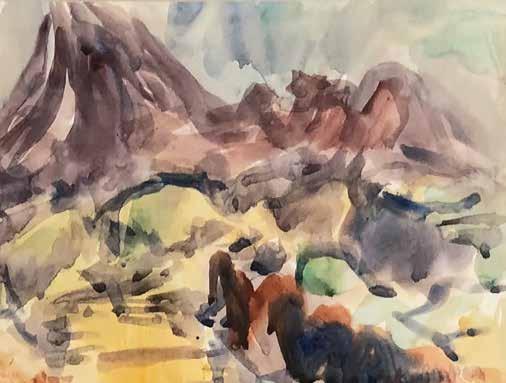
Mt Egmont
Watercolour 26.1 x 34.9
Signed & dated 1/2/1977
$4,000 - 6,000
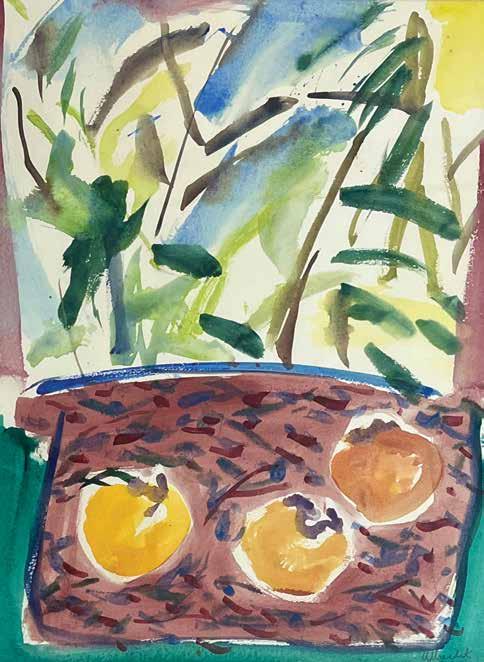
16 GRETCHEN ALBRECHT (b. 1943)
Persimmons on Cloth, 1969
Watercolour 53 x 39
Signed
$15,000 - 20,000
PROVENANCE
Private Collection since 1969
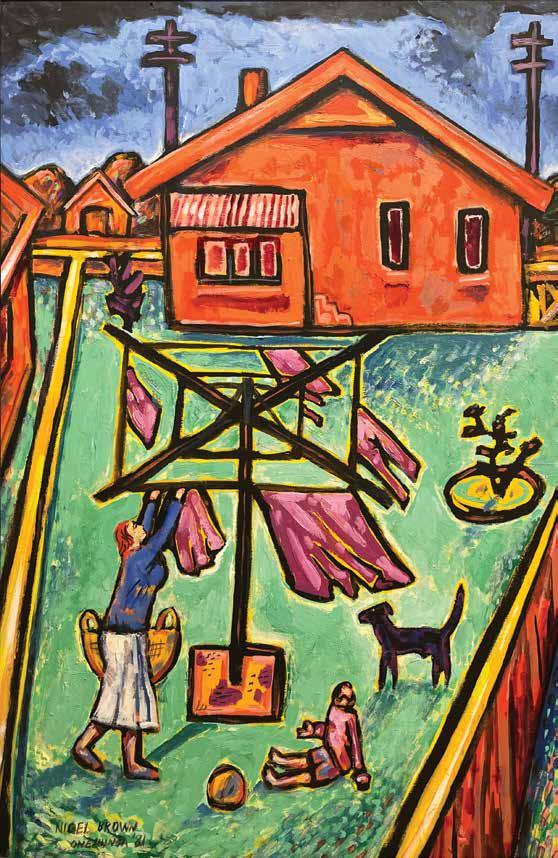
17 NIGEL BROWN (b. 1949)
Clothesline Painting No. 12
Oil on board 122 x 81.5
Signed, inscribed Onehunga & dated 1981
$14,000 - 18,000
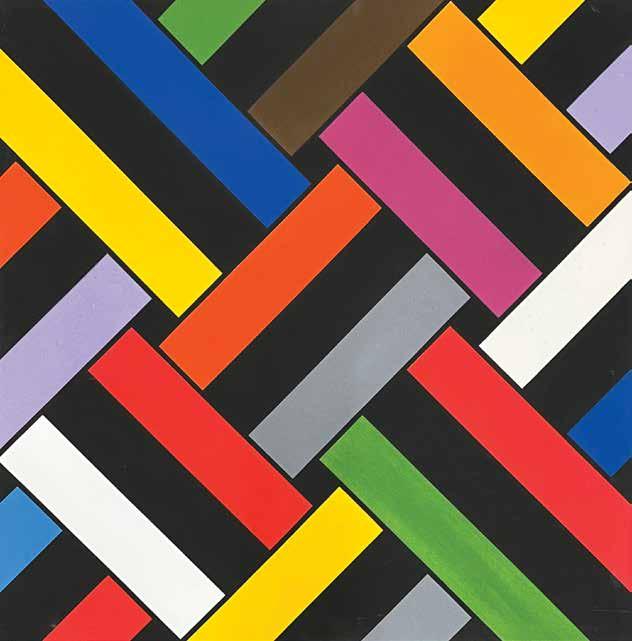
18 IAN SCOTT (1945 - 2013)
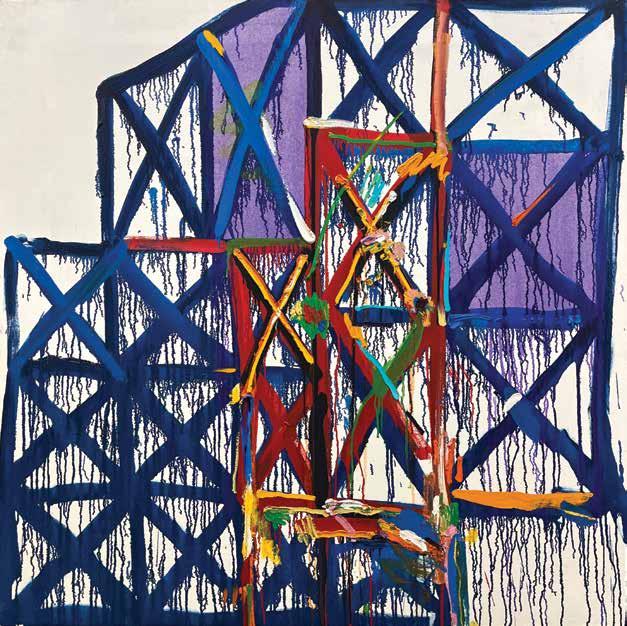
Small Lattice no. 45. Acrylic on canvas 76 x 76
Signed, inscribed & dated 1981 on stretcher verso
$18,000 - 25,000
PROVENANCE
Janne Land Gallery, Wellington Frank & Lyn Corner Collection Private Collection, Northland
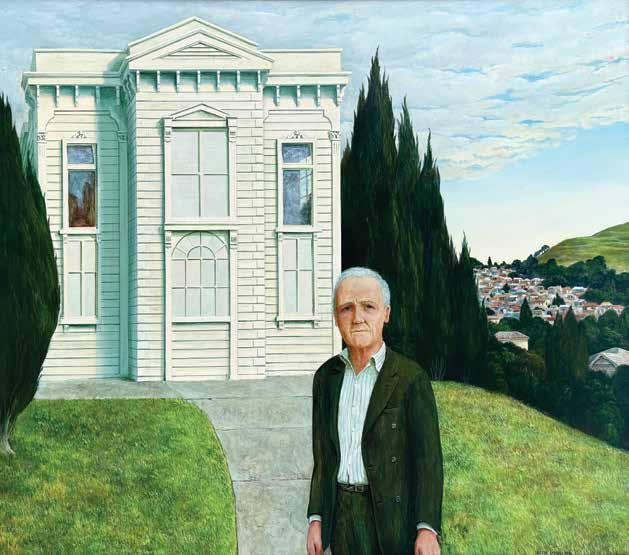
19 PETER SIDDELL (1935 - 2011)
Man with Building Oil on board 67 x 80
Signed & dated 1974
$15,000 - 20,000
PROVENANCE
Estate of Sir Peter & Lady Sylvia Siddell
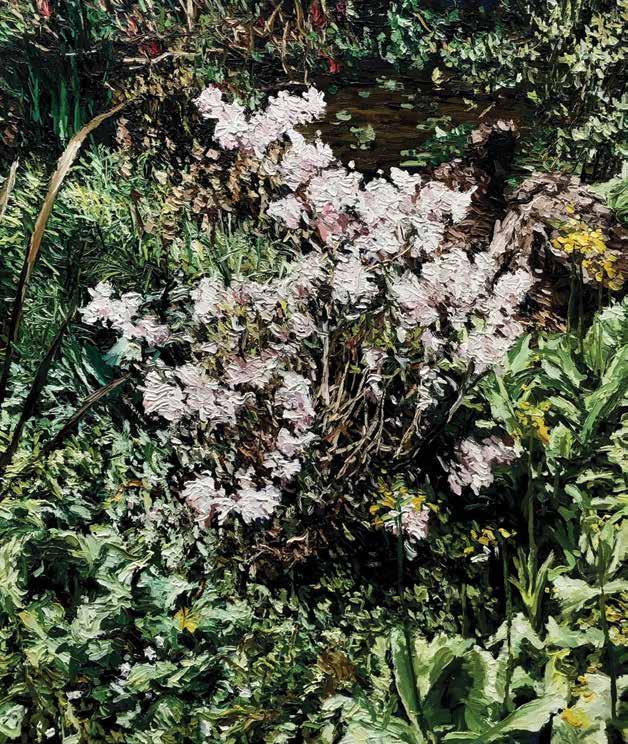
20 KARL MAUGHAN (b. 1964)
Pink Azalea Oil on Belgian linen 98 x 84
Signed, inscribed Pink Azalea & dated 10/06/88 verso
$20,000 - 30,000
PROVENANCE
Private Collection
Purchased from Gow Langsford Gallery, 1988 by current owner
Lithgow
Oil on canvas 122 x 183
Signed & dated 2006 verso
$50,000 - 70,000
PROVENANCE
Private Collection
Purchased directly from the artist, 2006
Kotare
Oil on canvas 141 x 118
Signed, inscribed & dated 2019
$12,000 - 18,000
PROVENANCE
Whitespace, label affixed verso
21 KARL MAUGHAN (b. 1964)
22 JACK TROLOVE (b. 1979)
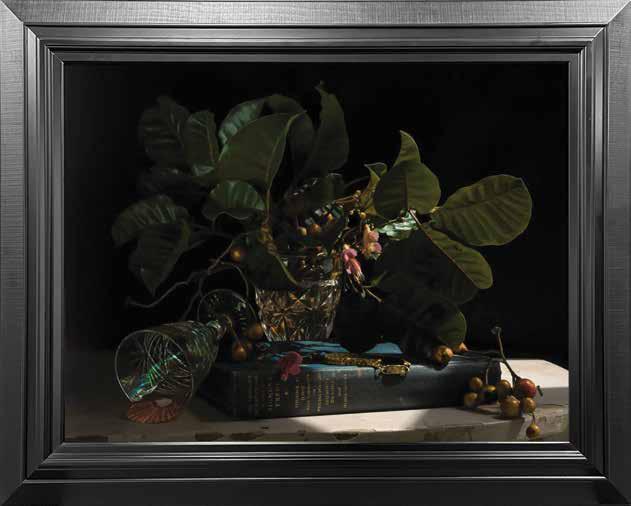
Still Life with Freud and Puriri, Waiheke, 2012 Pigment Ink on Hanemühle Photo Rag, edition 4/10, 82.5 x 110
$12,000 - 16,000
PROVENANCE
An Estate Collection, Rotorua
23 FIONA PARDINGTON (b. 1961)
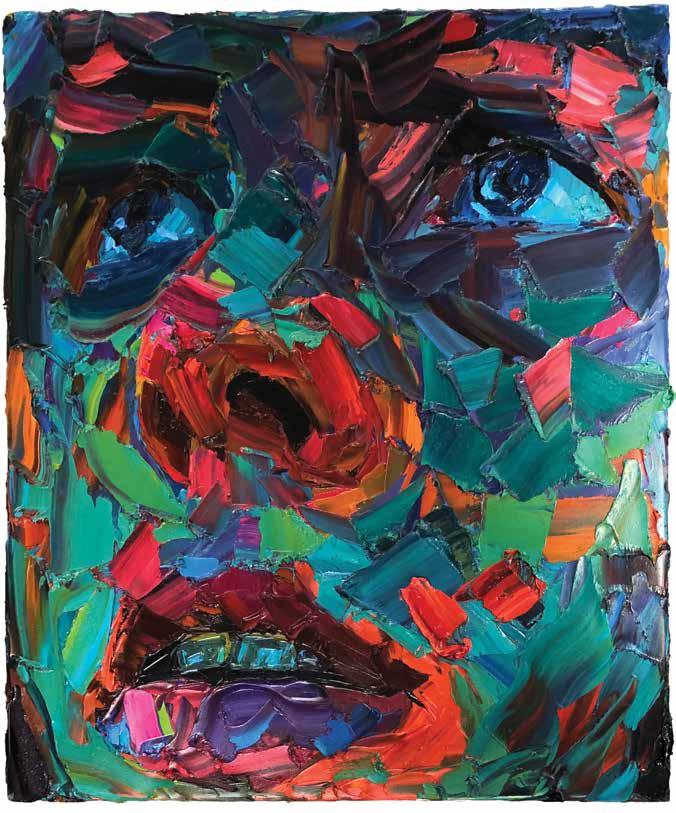
24 DALE FRANK (Australian b. 1959)
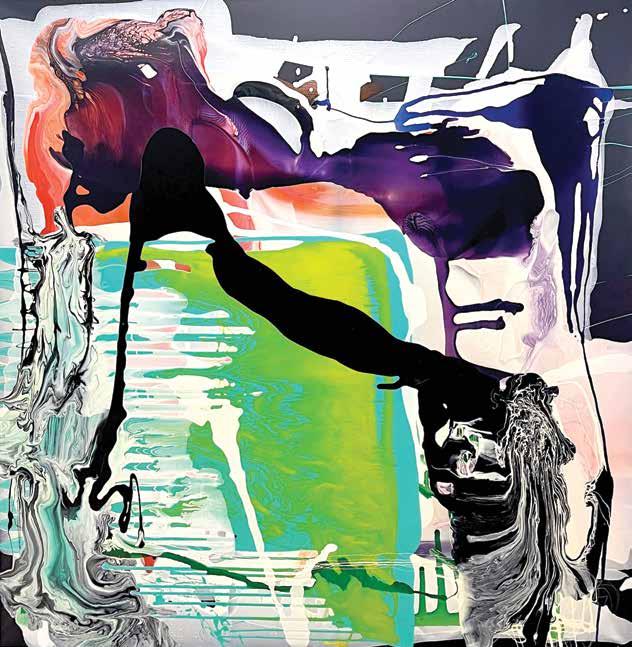
Wesley’s Turtle Neck and Turtle Head
Resin & varnish on linen 200 x 200
Signed & dated 2009 verso
$55,000 - 65,000
EXHIBITED
Devon Is My Favourite Luncheon Meat, Gow Langsford Gallery, 2012
Purchased from the above exhibition by current owner
25 PETER STICHBURY (b. 1969)
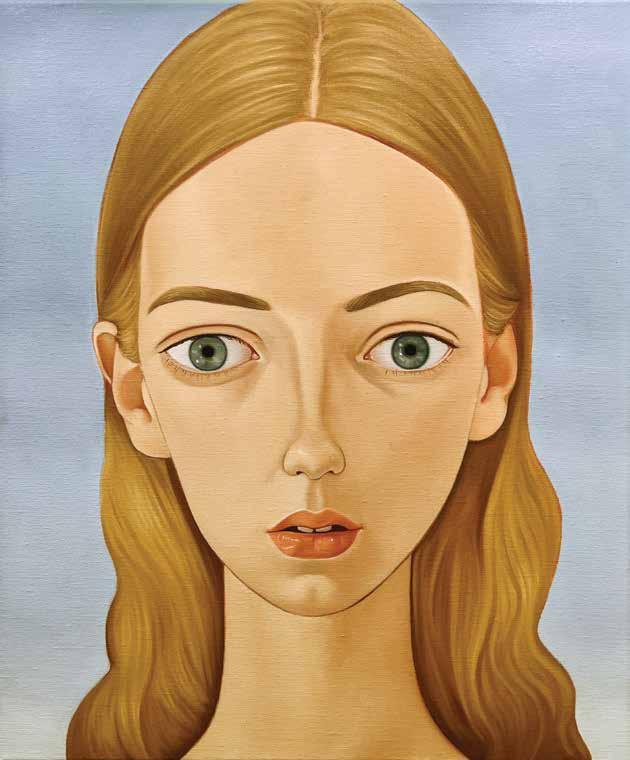
Hella Hammid Remote Viewing an Elephant Skeleton in a Museum 1983 10:12 AM, 2019 Oil on linen 60 x 50
Signed, inscribed & dated 2019 on stretcher verso
$40,000 - 50,000
In 1987 Peter Stichbury graduated from Elam School of Fine Art and won the James Wallace Art Award. Gathering ideas from magazines, the internet, popular culture and his childhood, the artist continues to develop a body of work exploring, interpreting and reflecting upon the nature of identity. Contrary to common opinion, Stichbury’s stunning paintings, art prints and sketches of gorgeous waifs, nerdy yet strangely cool boys or professors aren’t merely the musings of an artist obsessed with surface aesthetics. Whilst fascinated by appearances, his interest cuts deeper and a little darker. Stichbury’s talent lies in making beautiful people look interesting and interesting people look beautiful and it’s proving lucrative, at least for the collectors. Furthermore, the American market is taking notice, a fact reinforced by several appearances of his work at the influential annual ArtLA Fair and the burgeoning fanfare enjoyed through his NYC dealer, to the point where new works are rarely available in his home country.
Hella Hammid (1921 – 1992) was a German-American photographer whose career included teaching at UCLA. Her freelance photographs appeared in diverse publications including Life, Ebony, The Sun and The New York Times. Her softly backlit picture of two young Italian girls dancing, watched by other children in front of the abutments of a stone building, was chosen by Edward Steichen for his 1955 world-touring MoMA exhibition The Family of Man, which was seen by nine million visitors.
Hammid had a long professional career taking candid portraits of children and families for private clients as well as contributing to a number of book projects. Hammid’s photographic career is the subject of the book, Hella Hammid: Feminine Fate. One of her most widely circulated images is the Tree Poster, which portrays writer Deena Metzger, a close friend of Hammid’s.
Hammid worked as a remote viewer with Russell Targ and Harold E. Puthoff at SRI International doing work for the CIA. She also worked with Stephan A Schwartz on The Alexandria Project, considered to be psychic archaeology.
Hammid participated in the first Gateway Voyage program offered by Robert Monroe, founder of The Monroe Institute, that was held at the Esalen Institute at Big Sur, California 1973. This was a voyage of self discovery through the gateway of expanded awareness.
PROVENANCE
Private Collection, Wanaka
Purchased from Canterbury Gallery, 1995
26 ALLEN MADDOX (1948 - 2000)
Untitled, 1989
Oil on canvas 122.5 x 122.5
$28,000 - 38,000
27 DAMIEN HIRST (British b. 1965)
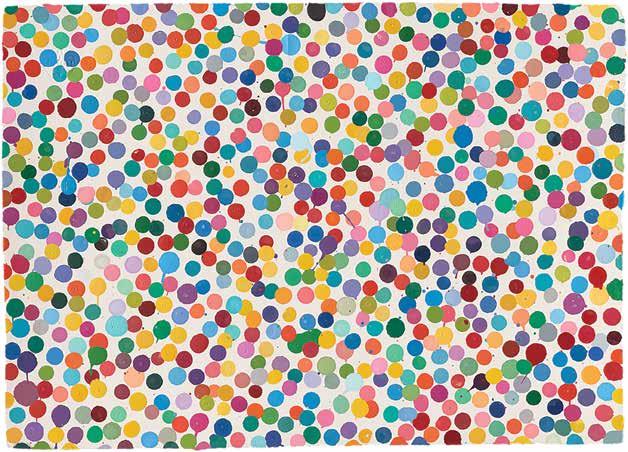
9765. Clear Hair - from The Currency
One shot enamel paint on handmade paper 20 x 30
Signed, inscribed 9765. Clear Hair verso
$18,000 - 25,000
PROVENANCE
Private Collection, Auckland
The Currency challenges the concept of value through money and art. Each of the unique 10,000 hand painted works were launched as NFTs on the blockchain. Each artwork is uniquely titled and numbered.
The artist announced a bold plan allowing buyers of his project The Currency to decide between owning the physical artwork or the digital NFT connected to it. The purchaser exercised options on how to use their art/currency. A majority 5149 opted to trade their NFT for the physical Hirst.
Our vendor opted for the physical - 9765. Clear Hair. This means the corresponding NFT no longer exists. The work comes with a travel box and frame.
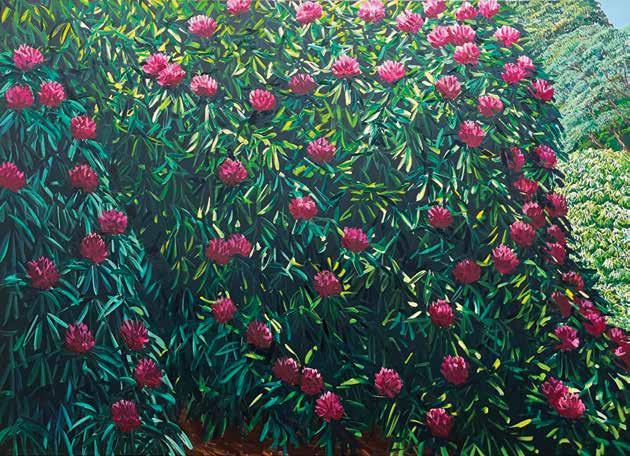
28 KARL MAUGHAN (b. 1964)
Titoki, 1998
Oil on canvas 180 x 210
Signed, inscribed Titoki & dated 8/1/98 verso
$140,000 - 180,000
PROVENANCE
Private Collection, Sydney
Purchased directly from the artist
ILLUSTRATED
plates 50 & 51
Karl Maughan, edited by Hannah Valentine & Gabriella Stead Auckland University Press in association with Gow Langsford Gallery, 2020
29 CHRIS HEAPHY (b. 1965)
Armstrong Tranquility
Acrylic on linen 228 x 170
Signed & dated 2008
$30,000 - 40,000
PROVENANCE
Private Collection, Auckland
Purchased from Gow Langsford Gallery, 2008
EXHIBITED
Sea of Tranquility - Chris Heaphy
Gow Langsford Gallery
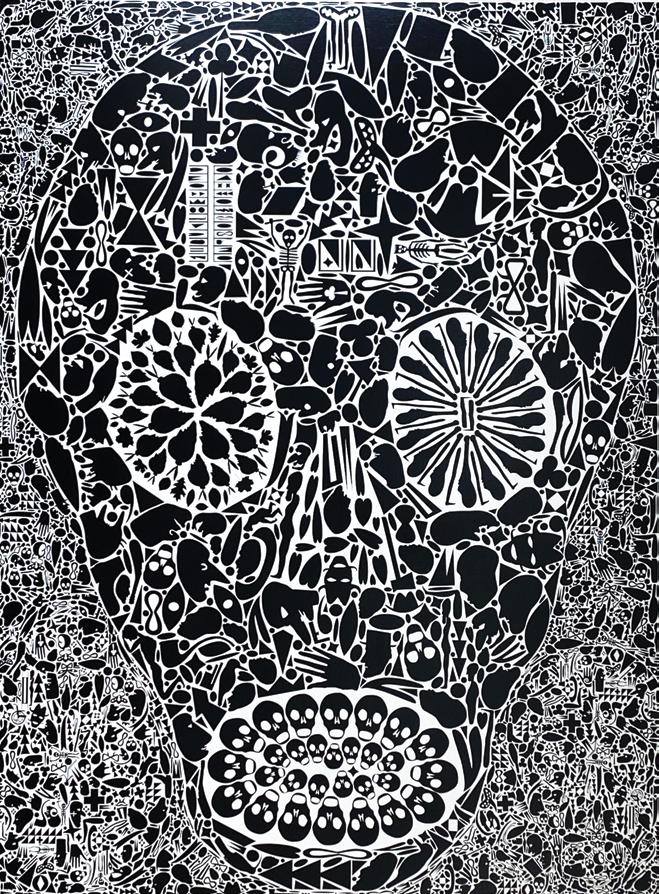
Sea of Tranquility takes its name from the vast plains on the surface of the moon formed by ancient eruptions once erroneously thought to have been oceans by early astronomers. Witnessing the Apollo spacecraft land on the moon in 1969 at age four turned out to be a defining moment for Heaphy, whose fascination with astronauts, astronomy and star gazing was at that moment cemented. Works in the 2008 Gow Langsford Gallery show acknowledged this celestial fascination, with playful titles paying homage to space exploration; Armstrong Tranquility (2008), Aldrin Tranquility (2008) and Collins (2008) referenced space explorers Neil Armstrong, Buzz Aldrin and Michael Collins of the Apollo lunar landings and Columbia (2008) the space shuttle voyages of the 80’s and 90’s and it’s final flight of 2003
The skull, a generic symbol whose meaning can vary according to cultural context, is in Western Art genres of the vanitas and memento mori a potent reminder of death and mortality. It is frequently used throughout Heaphy’s practise to apply to no man and every man. Although here too Heaphy acknowledges the specific alongside the general, the individual alongside the collective through symbolic portraits of the Apollo astronauts, their identities revealed in the work’s title.
Heaphy’s works ultimately allude to a wider human inquiry into the universe and our place within it. What makes us who we are - our patterns of behaviour and the small parts that comprise a whole being. Intimately tied to this idea, is the notion of identity and a self-reflective mortal yearning for life’s meaning.
Chris Heaphy was born in New Zealand in 1965 and is of Ngai Tahu and European extraction. He attended the Canterbury school of Fine Art (BFA, Painting 1991). In 1998 he graduated from the RMIT University in Melbourne Australia (MFA, Painting). Heaphy has been successful in securing a number of grants and fellowships including: Te Waka Toi (1993;1994), the Olivia Spencer Bower Fellowship (1995), Creative New Zealand (1999) and a WINTEC research grant which enabled him to undertake a residency at Melbourne’s RMIT University. Other residencies include Cité Internationale des Arts, Paris (20002001) and the Veuve Clicquot Ponsardin Residency, Champagne (2001). Heaphy has attracted significant international patronage and a stable presence within the competitive global art market. He enjoyed success at the 2007 Frieze Art Fair in London.
Heaphy has exhibited extensively throughout Australasia and Europe and his work is included in numerous major public and private collections in New Zealand and further abroad.
The companion piece from the Sea of Tranquility exhibition titled Aldrin Tranquility was purchased by the Chartwell Trust Collection.
Lees Valley Road
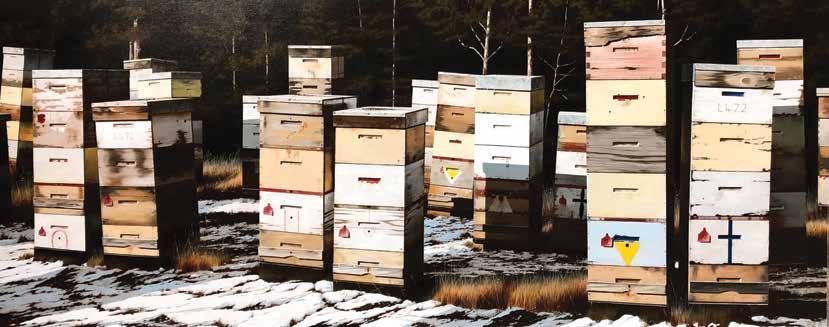
Oil on linen 60.7 x 152.5
Signed, inscribed Lees Valley Road & dated 2009
$20,000 - 30,000
PROVENANCE
Private Collection, Wellington
Purchased from Milford Galleries, Dunedin
30 MICHAEL HIGHT (b. 1961)
31 SHANE COTTON (b. 1965)
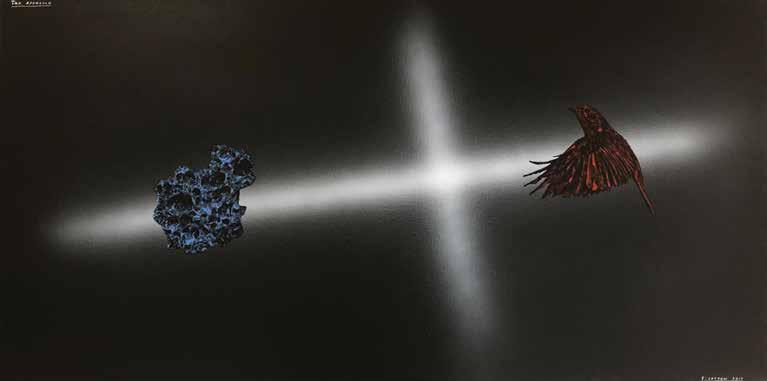
The Approach
Acrylic on canvas 70 x 140
Signed, inscribed The Approach & dated 2017
$50,000 - 70,000
PROVENANCE
Michael Lett Gallery, 2017 Private Collection, Wellington
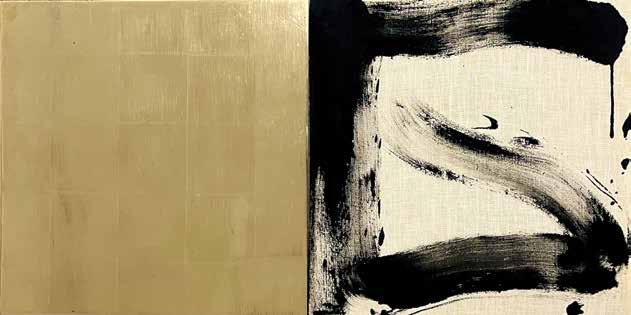
Acrylic polymer, gold foil & silver on linen and wood, diptych 38 x 76
Signed, inscribed & dated 1999 verso
$18,000 - 26,000
PROVENANCE
Private Collection, Northland
32 MAX GIMBLETT (b. 1935)
The Door That Contains the Night
33 GORDON WALTERS (1919 - 95)
Untitled
Acrylic on canvas 35.5 x 46
Signed & dated 1993 verso
$35,000 - 45,000
PROVENANCE
Private Collection, Auckland
Purchased from Starkwhite
34 PETER SIDDELL (1935 - 2011)
Stucco House
Oil on canvas 83 x 123
Signed & dated 1995
Inscribed Stucco House verso
$90,000 - 140,000
PROVENANCE
Private Collection, Auckland
Purchased from Artis Gallery, 1995
35 COLIN MCAHON (1919 - 87)
A Poem of Kaipara Flat, 1971
Synthetic polymer paint on paper
102.5 x 68.5
Signed, inscribed A Poem of Kaipara Flat & dated 1971
$150,000 - 200,000
PROVENANCE
Collection of Jeffrey Harris, artist Gow Langsford Gallery, 1996
Important, Early & Rare, International Art Centre, 22 Oct 2009
Private Collection, Auckland
Record Number cm000956
Colin McCahon Online Catalogue www.mccahon.co.nz
In the summer of 1971 Colin McCahon resigned from Elam School of Fine Arts where he had been teaching since 1964 and became, at age 52, a full-time artist, his sales by then sufficient to justify this bold move. He told Peter McLeavey: This business of living off painting is tough. So far – so good – but I’ve got to keep it up or Anne and I starve’ (Simpson, Is This the Promised Land?, p. 149).
An early manifestation of his new freedom was a flood of brilliantly coloured watercolours depicting scenes near his studio at Muriwai Beach, built in 1969. Several watercolour series painted in 1971 filled two exhibitions: 25 of them including the title series in View from the top of the cliff at Peter McLeavey Gallery in April 1971; and a further 10 (plus other paintings) at Dawsons Gallery, Dunedin in July-August 1971 –some entitled Helensville, others Poems of Kaipara Flat. Altogether there were at least 18 paintings in the latter series.
Kaipara Flats is on the shore of Kaipara Harbour north of Muriwai and Helensville. McCahon said of it: This is a shockingly beautiful area – I do not recommend any of this landscape as a tourist resort. It is wild and beautiful; empty and utterly beautiful. This is, after all, the coast the Maori souls pass over on their way from life to death – to Spirits Bay…The light and sunsets here are appropriately magnificent.’
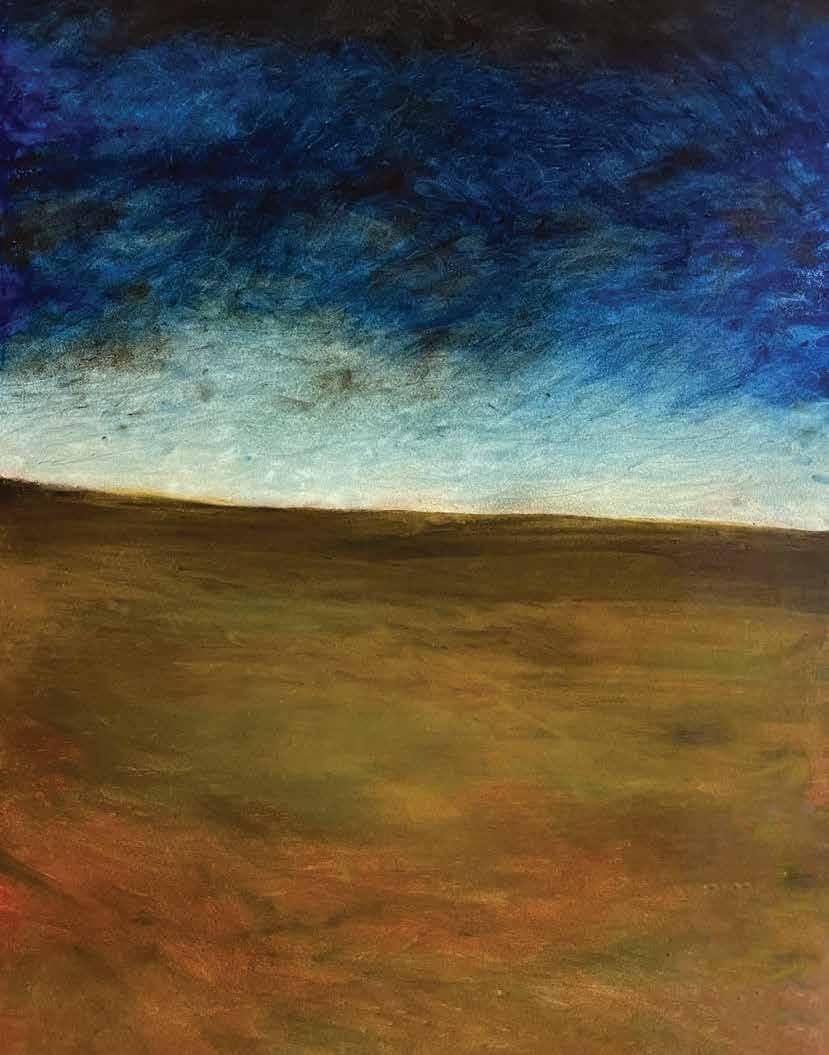
As the name implies, the landscape of Kaipara Flats is featureless (at least as McCahon depicts it); just land and sky with the horizon between. Generally in this series the horizon is a simple line fairly low in the picture resulting in a huge expanse of sky, while in some (as in this example) the horizon line falls close to the middle giving equal emphasis to land and sky. In this example the horizon is not dead straight but slopes gently to the right.
The simplicity of the landforms and the structure McCahon employs gives him maximum opportunity to exploit colour and light. He is not normally an artist we associate with strong colour (unlike, say, Pat Hanly). Very often, especially in his later work, colour is restricted to black and white. There are exceptions to this – the early Biblical paintings are often highly coloured as are many paintings done at Titirangi in the 1950s. But these Kaipara watercolours are exceptional, presenting a range of colour and variation of light more often associated with J M W Turner or Mark Rothko. McCahon remarked: All this colour & fun is a direct result of leaving the school.. Although the colour in these works is sometimes almost Fauvist in intensity, the artist keeps in touch with reality by depicting moments (such as early morning or sunset) when nature itself puts on a vividly colourful display. Here there is lovely variation in both parts of the picture: the sky zone is deep blue with darker touches and intense white light along the horizon; the land zone is a mixture of rich ochres from warm reddish tones through yellow to brown. The brush work is subtle and refined.
Why does McCahon call this painting (and others like it) a Poem? Hard to say. He was a keen reader of poetry: Hopkins, Rilke, Brecht, Robin Hyde, R.A.K. Mason –and had many poet friends (Brasch, Baxter, Caselberg, Hooper). Possibly the simple repeated structures of the pictures (sky/horizon/land) are analogous to the lines and stanzas of a poem; or maybe the lyricism of the colourful scenes simply reminded him of the effect of poetry. Whatever the reason, this one is (in Keats’s words), a thing of beauty and a joy forever
PETER SIMPSON
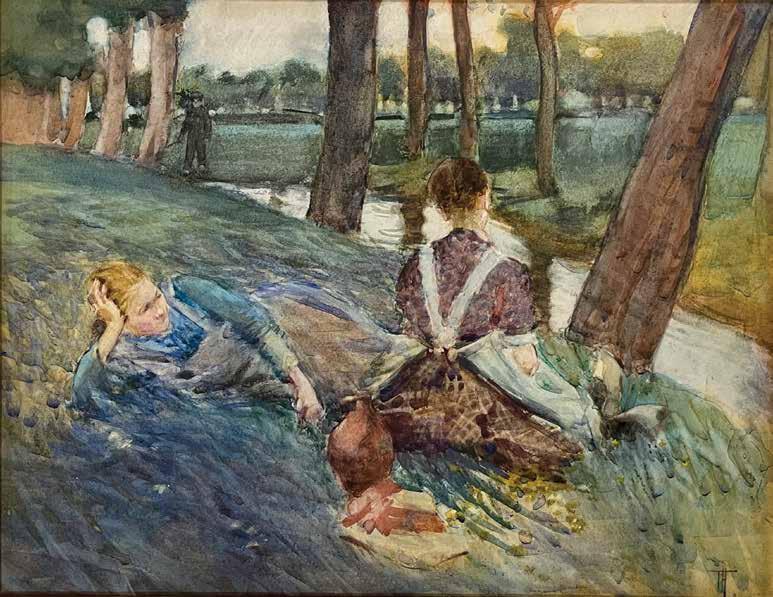
36 FRANCES HODGKINS (1869 - 1947)
Young Girls by a River Watercolour 34.3 x 44.5
Signed
$50,000 - 75,000
PROVENANCE
Private Collection, Auckland
Lot 87, Australian & European Paintings, Christies, Melbourne 27 April 1998
REFERENCE
Frances Hodgkins database number FH0835 completefranceshodgkins.com
In 1909, as indicated by a letter to her mother from Paris earlier in the year, Frances Hodgkins took a group to Montreuil-sur-Mer for the summer months. Although hampered at first by storms and pouring rain, by August the heat had descended like a fury. When possible, Hodgkins took her students, whose numbers swelled and shrank week by week, according to their needs, to spend their days sketching in the surrounding countryside.
The river Canche near Montreuil-sur-Mer divides and narrows around an island before widening once more, and it may have been the narrowing of the stream that Hodgkins has captured in this watercolour. The composition suggests the influence of French painter Jean-Baptiste-Camille Corot (1796—1875) whose paintings and prints of landscape, devoid of figures and focusing solely on quiet, timeless compositions of fields and streams were to be so influential on the development of the Impressionist movement.
In Hodgkins watercolour, the trunks of the trees punctuating the water’s edge create a vertical rhythm, their foliage while mostly out of sight provides the essential shade needed for artists working out of doors. Sadly, the original title of this lovely watercolour is currently lost, but the scene radiates the warmth of summer. The two young women sit directly on the grass rather than on a blanket, their long pinafores reinforcing the notion that they are two of Hodgkins’ pupils.
Masses of rapid brushstrokes of various sizes, in golds, greens and blues, invoke the thick summer grass on the bank leading down to the water. Its flow divides the composition, creating a diagonal which animates the horizontal elements of the background where the water doubles back, before disappearing with its tree-lined bank, painted with a broad sweeping wash, to the right. On the other side of the stream, Hodgkins has placed the small figure of a dark-clad man, who is possibly fishing with a line or net, adding weight and balance to the composition.
The artist is seated very close to her subject matter, one inattentive kick of her boot sufficient to send the straw hat with its brown ribbon flying. A large narrow-necked terracotta jar nestles in the grass, its form adding a pleasing patch of solidity and warmth to the softer hues adjacent, and no doubt containing the necessary water for their painting. The student on the right, her checked skirt and mottled blouse contrasting with the white of her pinafore, has rolled up her sleeves, either because of the heat, or to keep them from smudging her paper. She remains intent on her activity, whereas the young woman on the left has given up all pretence of work to lean on her elbow and gaze idly into the distance, absorbing the sounds and sights of the countryside, her fingers trailing through the lush green grass.
MARY KISLER
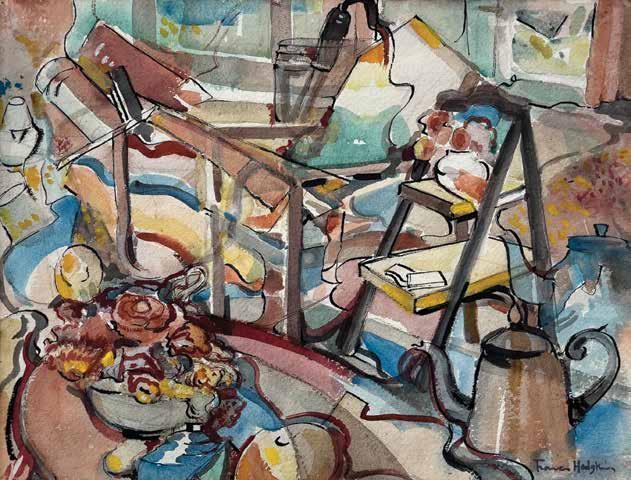
The 1920s was a decade of experimentation, at a time when Britain was in recession, causing many artists including Hodgkins periods of considerable hardship. Apart from two years in Manchester, which gave her a period of financial security working for the Calico Printing Association, she continued a peripatetic life, raising money through teaching and escaping to France whenever funds allowed. From June 1927 she stayed in the north of France with fellow artists Cedric Morris and Arthur Lett Haines. She experimented in gouache, producing paintings that were initially dark and fragmented, indicative of her emotional state after the death the year before of both her mother and Norman Garstin, her first mentor in France. The clouds lifting, she returned to her favoured medium of watercolour, her compositions are flooded with colour once more.
Atelier is a highly sophisticated composition. A summer work, as indicated by the bowl of flowers on the table in the foreground, Hodgkins is experimenting with the objects found in an itinerant artist’s studio. Note the ghosting of a second teapot of a different shape behind the one lower right, the way objects become translucent, showing the outline of the forms behind and below. The large windows perfect for an artist cast light on the interior. An electric water boiler rests in a cup, its cord snaking down out of sight. A second bunch of flowers perhaps, sits on the top of a set of steps, and a residual frame of chair, its rush seat removed, turns its back on us in the middle ground. Three wavy stripes give the impression of a beach towel or a rug insinuating its presence in the middle ground, and random vases and jugs tilt jauntily on the left.
The title of the watercolour, apart from its obvious reference to France, suggests it was done in Tréboul, where she gave Dorothy Selby and other students classes. I would suggest that the ‘clutter’ of Atelier, although arranged in an unnatural manner, may suggest that objects had been set up in the room for her students to study. Furthermore, the word ‘Atelier’ is telling, for though it describes a studio, it also refers to the role of teaching – cf. Atelier Colarossi in Paris, where Hodgkins had studied in 1909, and where she became Paris’s first woman watercolour teacher in 1910.
E H McCormick Papers, E H McCormick Research Library, Auckland Art Gallery Toi o Tāmaki, gift of Linda Gill, 2015
The vase of flowers is also important, signifying a new direction in still life that would evolve into studies out of doors, a compositional gambit that was to earn her fame in England.
Tréboul Landscape, 1927 shows a similar creative approach to delineating forms in the landscape. While the house in the background are clearly demarcated in grisaille, the foreground has an abstracted treatment, keeping us guessing as to whether we are looking at walls, rocks and a strange hybrid plant rising up before us, or whether they are influenced by something else entirely.
In September Hodgkins moved from Tréboul to Concarneau, describing the tiny room she now inhabited. One of the works painted there was Interior Scene. Once again, she depicts a chair from behind, the view from the narrow window framing the weeping branches of a tree beyond. Compared to Atelier, we sense the cramped dimensions of the interior, but the fluidity of paint for what is a sketch rather than a finished work suggests the same deftness seen in both Atelier and Tréboul Landscape.
When Rodney Wilson began working on a catalogue raisonné for Frances Hodgkins, he drew on Eric McCormick’s seminal research. Both included Atelier in their documentation, simply attributing the date to the 1920s.
MARY KISLER
37 FRANCES HODGKINS (1869 - 1947)
Atelier, c. 1927
Watercolour 30 x 39
Signed $35,000 - 45,000
PROVENANCE
Private Collection, Wellington
REFERENCE
Frances Hodgkins database number FH0835 completefranceshodgkins.com
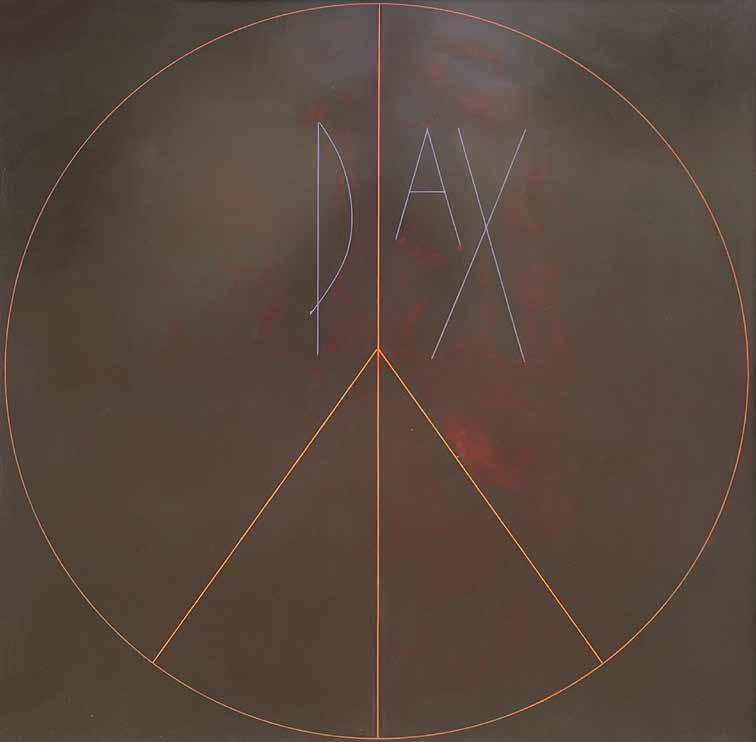
38 RALPH HOTERE (1931 - 2013)
Black Painting (Pax)
Brolite lacquer on board 89 x 89
Signed, inscribed Black Painting & dated 1969 verso
$70,000 - 100,000
PROVENANCE
Private Collection, Auckland
Purchased from Fine New Zealand Paintings, Jewellery & Decorative Arts, Webb’s, 06 April 2005
Painted in 1969 which was a watershed year for Ralph Hotere. He was awarded the Frances Hodgkins Fellowship at the University of Otago, which led to his permanent move to Dunedin and Port Chalmers.
This period remains at the cutting-edge of minimal geometric abstraction painting produced in New Zealand and equally, foreground conversations about the interplay between Maori aesthetics and consciousness and European cultural ideals and art practices.
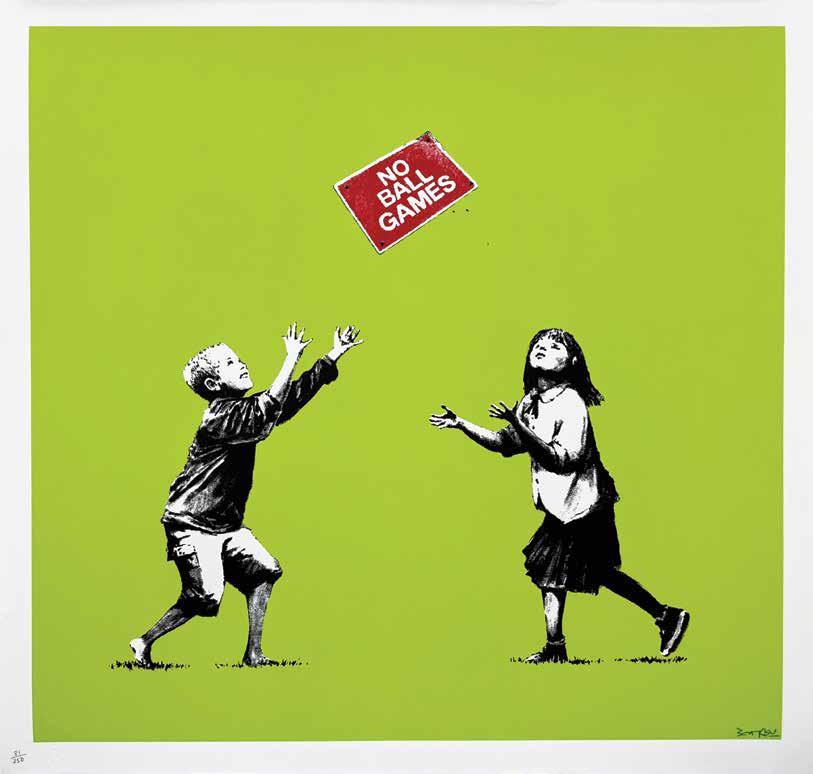
39 BANKSY (British b. 1974)
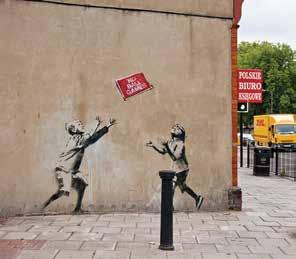
No Ball Games (Green)
Screenprint, edition 81/250, 70 x 70
Signed
$125,000 - 165,000
PROVENANCE
Private Collection, Auckland
Purchased from Pictures on Walls 2009
This work is accompanied by a Certificate of Authenticity from Pest Control
ILLUSTRATED
p. 124 The Art of Banksy, A Visual Protest Gianni Mercurio, Prestel, 2019
This work is a quintessential example of Banksy’s iconic stencil-style and depicts a tongue-in-cheek, ironic scene: the two children playing with a sign that says NO BALL GAMES, as if it were a ball. This is likely making a social commentary on the ‘nanny state’, and how even fundamental children’s activities such as play are now controlled and regulated. The children’s figures can also be interpreted as symbols for people in general, constantly under surveillance and regulation by a higher bureaucratic state power.
Banksy, famous for being a rule breaker himself, might be encouraging us all to break those sorts of rules. This work is an example of Banksy’s frequent use of children as symbols of innocence and a sense of freedom, to formulate subversive social critique, much like in his other prints Girl with Balloon and Nola No Ball Games originally appeared as a mural on the side of a shop at the junction of Tottenham High Road and Philip Lane, London in 2009. It was cut out of the wall and sold to raise funds for charity.
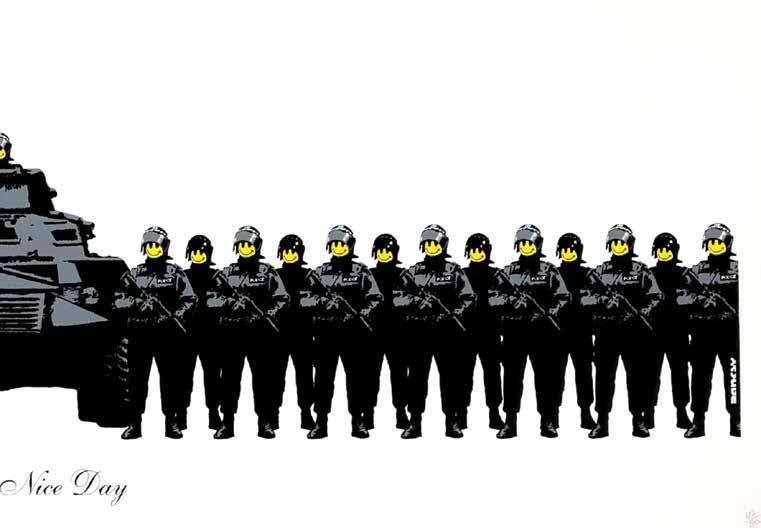
40 BANKSY (British b. 1974)
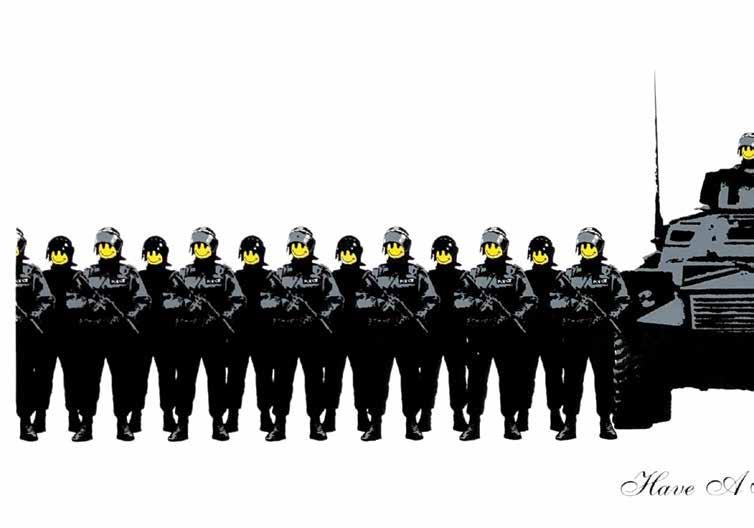
Have a Nice Day
Screenprint, edition 432/500
34 x 98.7
Unsigned
$65,000 - 95,000
PROVENANCE
Private Collection, Auckland
Originally purchased from Santa’s Grotto exhibition Dragon Bar, London, 2002
This work is accompanied by a Certificate of Authenticity from Pest Control
ILLUSTRATED
p. 73 The Art of Banksy, A Visual Protest Gianni Mercurio, Prestel, 2019
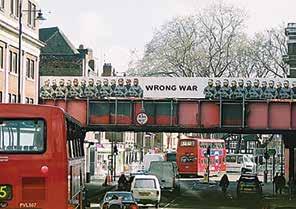
In one of the first screenprints released by Banksy, the artist portrays law enforcement in a bold and striking way. Have a Nice Day depicts twenty seven military or riot police in a single, intimidating line. In the centre of the group is a black and grey tank, underneath which the words Have A Nice Day are written.
The police are kitted out in riot gear, marching in unison against an unseen threat or infact towards the viewer.
The faces of the police, which in reality would be covered with protective visors, are covered with bright yellow acid-house style smiley faces; a motif we see fairly regularly in Banksy prints, particularly when it comes to portraying figures that use fear as a means of control.
Whether or not Banksy intended Have a Nice Day to intimidate or amuse, the artwork certainly speaks both to the idea that the police force are not all they seem, perhaps even hiding behind their smiles.
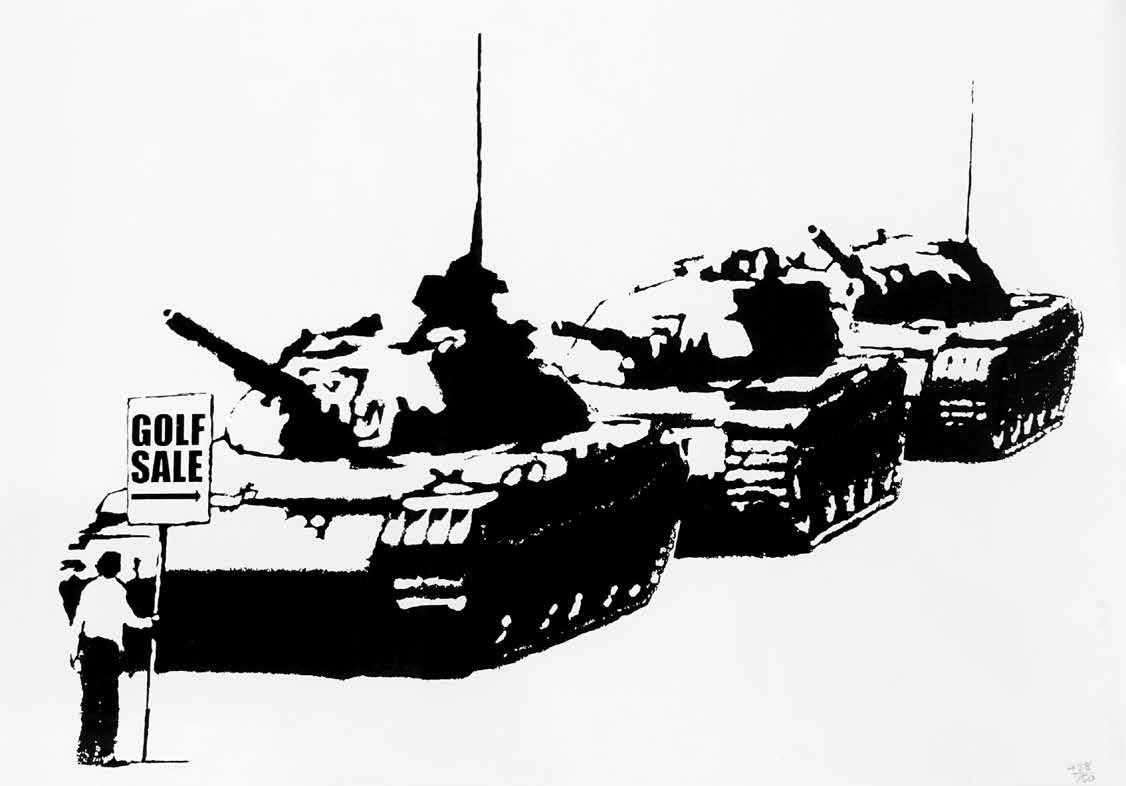
41 BANKSY (British b. 1974)
Golf Sale
Screenprint, edition 428/750, 32 x 47
Unsigned
$45,000 - 65,000
PROVENANCE
Private Collection, Auckland
Originally purchased from Santa’s Grotto exhibition Dragon Bar, London, 2005
This work is accompanied by a Certificate of Authenticity from Pest Control
ILLUSTRATED
p. 84 - 85 The Art of Banksy, A Visual Protest Gianni Mercurio, Prestel, 2019
Golf Sale was one of the first Banksy prints to be officially released. It was printed by Pictures on Walls of London as an edition of 750, comprising 150 signed and 600 unsigned prints. The work was distributed through Pictures on Walls, Art Republic and Santa’s Grotto.
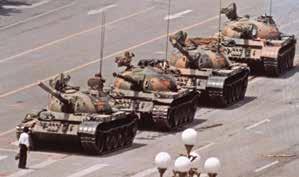
Golf Sale references the Tiananmen Square Tank Man photograph taken by press photographer Jeff Widener in 1989. Sometimes called the Unknown Protester, the incident took place in the aftermath of the Chinese military’s violent suppression of the Democracy Movement. A man stood directly and defiantly in front of Chinese tanks attempting to block their path through Beijing.
It is widely considered one of the most notable acts of non-violent intervention and is an iconic image of the 20th century. Banksy recreates the scene in black and white, as is typical of his style. The protester stands in front of three imposing tanks, and into his hand, Banksy has placed a placard, simply reading GOLF SALE.
In Banky’s 2001 publication Banging Your Head Against A Brick Wall, the artist said We can’t do anything to change the world until capitalism crumbles. In the meantime, we should all go shopping to console ourselves.
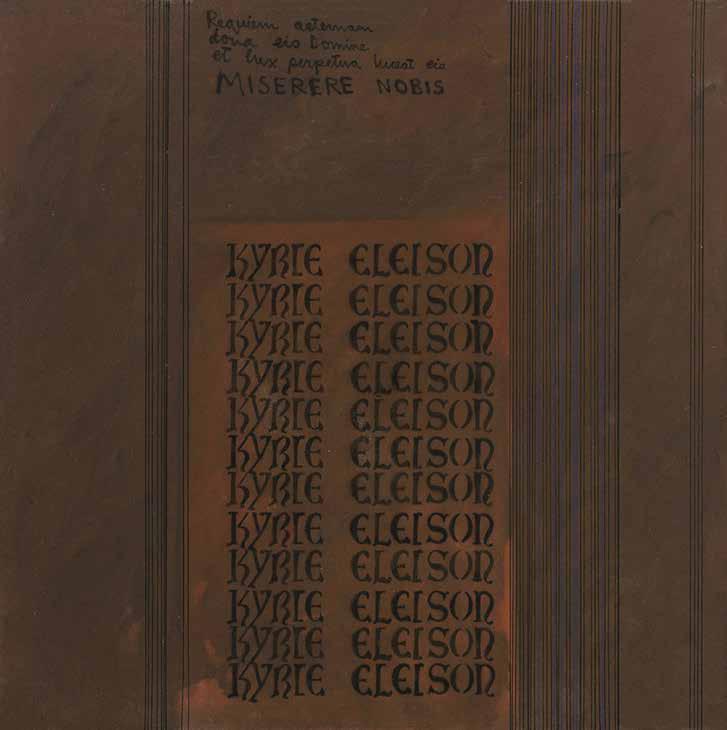
Hotere: Requiem Paintings, Barry Lett Galleries, 1974
The Kyrie, whose name comes from the ancient Greek
Κύριε ελέησον / Kyrie eléēson; in Modern Greek:
Κύριε ελέησον / Kýrie eléison, is a liturgical prayer of the Catholic and Orthodox Churches. In the liturgy of the Roman Church it is one of the most important liturgical prayers.
The phrase Kyrie eleison means Lord, Have Mercyofficial Catholic translation since Vatican II) or Lord, Have Mercy - Orthodox translation stopped in French by Russian and Greek liturgists at the beginning of the 20th century.
Ralph Hotere lived and worked in Port Chalmers for more than 40 years. Acknowledged as one of New Zealand’s most significant artists, Hotere was made A Member of the Order of New Zealand, the country’s highest honour in 2012.
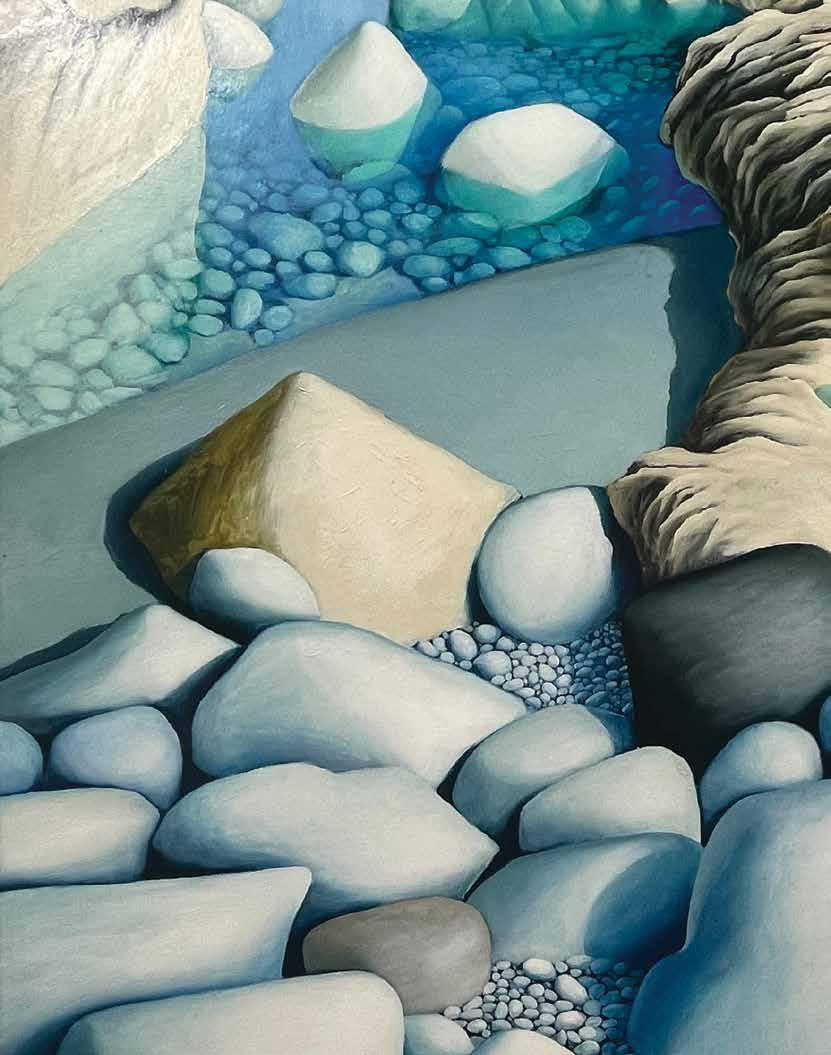
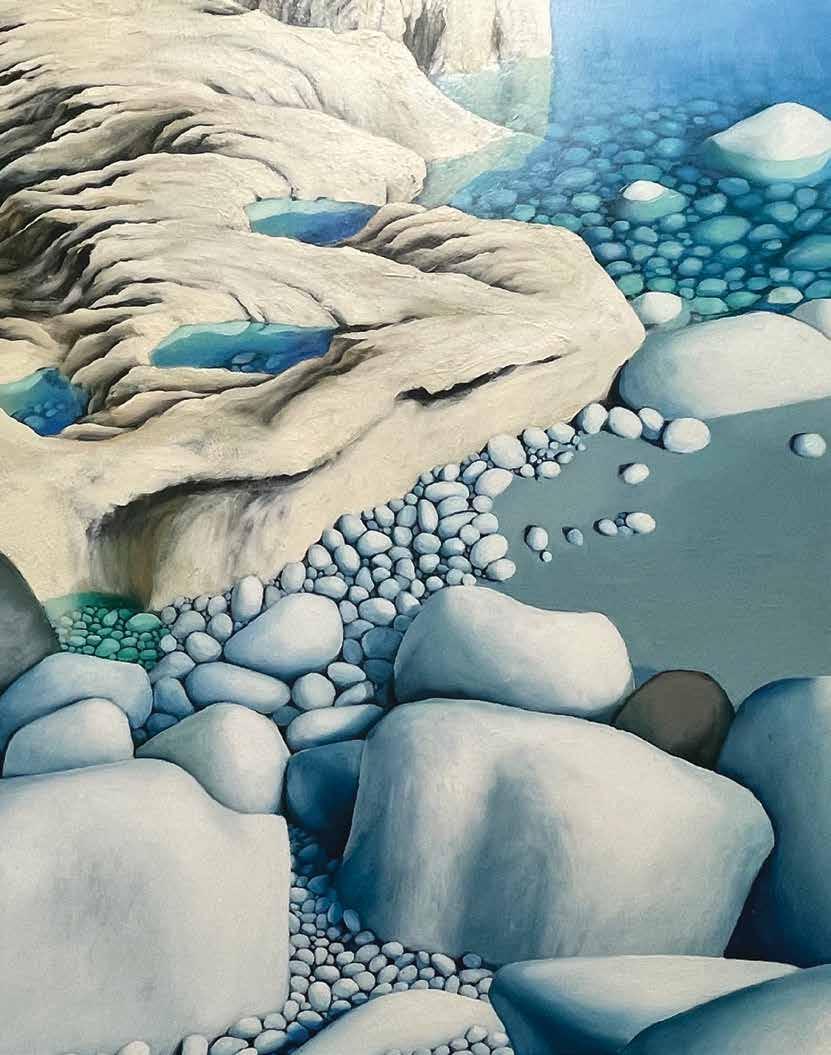
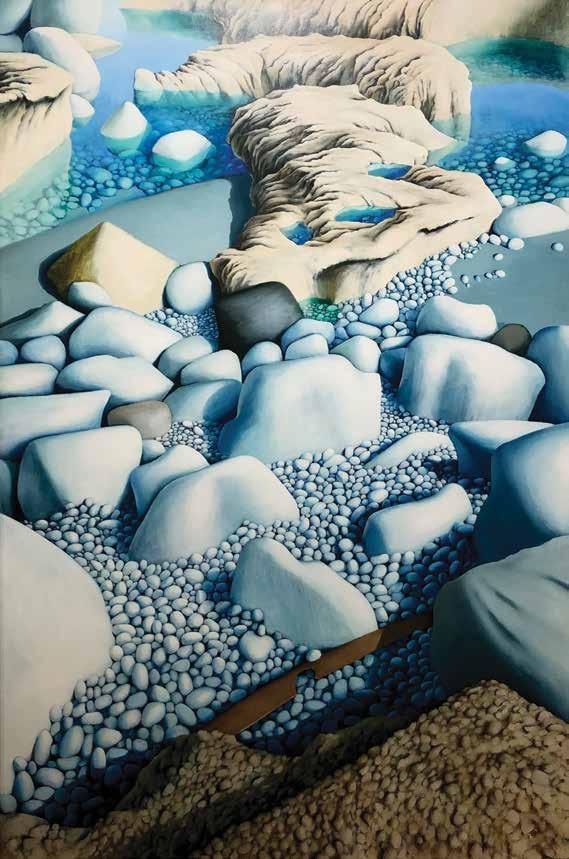
43 MICHAEL SMITHER (b. 1939)
Two Rock Pools, 1967-8
Oil on board 183 x 122
Signed, inscribed & dated 1968 verso
$500,000 - 750,000
PROVENANCE
Collection of R E Smither, New Plymouth
Private Collection, Canterbury
EXHIBITED
Taranaki Society of Arts 35th Annual Exhibition, 1967
Benson and Hedges Art Award, Barry Lett Galleries, 1968, cat. no. 23
Taranaki Review Govett-Brewster Art Gallery, cat. no. 46
Michael Smither, An Introduction, Govett-Brewster Art Gallery, 1 November - 16 December 1984
ILLUSTRATED
p. 49 Michael Smither, An Introduction, Govett-Brewster Art Gallery, 1984
p. 90 Michael Smither, Trish Gibben, Ron Sang Publications 2004
Smither spent a great deal of his youth exploring rock pools on the Taranaki coast, and they recur as a subject in his work: That I should go on to paint them was a completely natural and satisfying development and a great way to express my love of the environment. Based on keen observation and detailed pencil drawings made in his notebook, this painting is precise in its delineation of different colours and shapes of stones, offset by a thin diagonal of bull kelp lying across the foreground. Connecting the resemblance of the white rocks which jut out of the substrate to tooth stumps, some commentators have connected the origin of Smither’s rock paintings with an ongoing toothache which plagued the artist for many months in 1964.
Only by concentrating on repeatedly representing many similar stones on the beach could he reach a state of meditation where the tooth pain was forgotten. Smither wrote: My attempts to express the stillness and peace held deep within the rocks lent the sort of desperation that often attends a breakthrough in vision.
Brilliantly lit by bright sunshine, and filled with cobalt blue sea water, the rock pools of the work’s title do not dominate the scene. Instead they are relegated to the upper third of the work, subordinated to the stones which surround them. Tipped up with a kind of vertiginous perspective, the composition mimics the point of view of the studious naturalist who carefully examines what lies at their feet. There is difficult stony ground to be traversed before the oasis of the azure blue pools is reached. The monumental scale of the work accords the subject with considerable importance. Smither himself suggests that water flooding into the rock pools could be interpreted as relating … to my disturbed nature at the time…I was threatened with eviction from The Gables and had lost the battle to save the clock tower.
Making an abstract pattern, the depiction of the stones and water here show Smither’s skill at balancing colour, light and texture. Infinite in their variation, the stones snag the eye and lead it through the composition. The rough brown mudstone in the foreground gives way to a dynamic mid-section where a diagonal band of grey and white stones, contrasting in colour and size, extends beyond the picture frame in both directions. The limpid translucence of the pools beyond is heightened by the rough striations of the volcanic rock that bisects them. Carved by the action of sand and sea, the rocks here are timeless and enduring, and will certainly outlast any human passing by.
LINDA TYLER
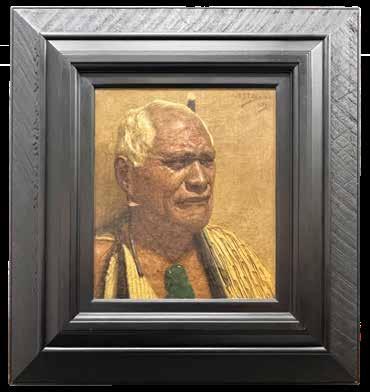
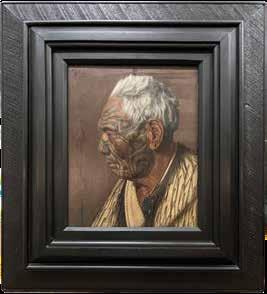
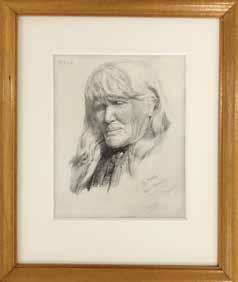
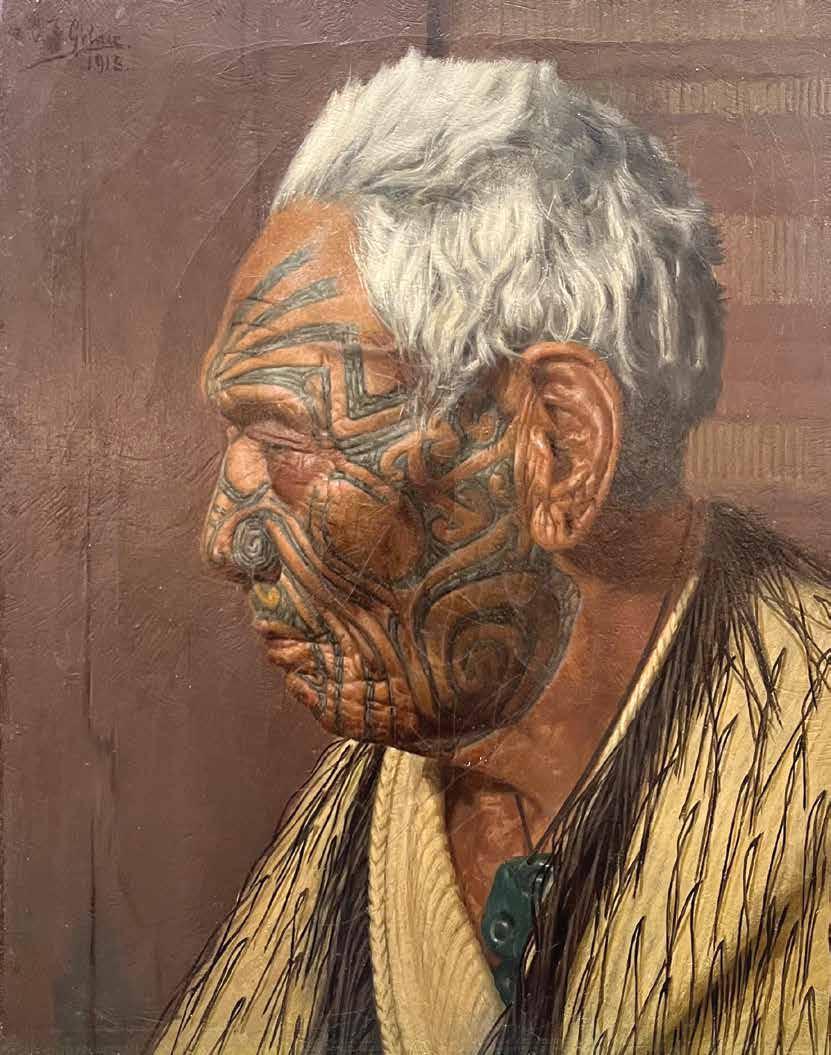
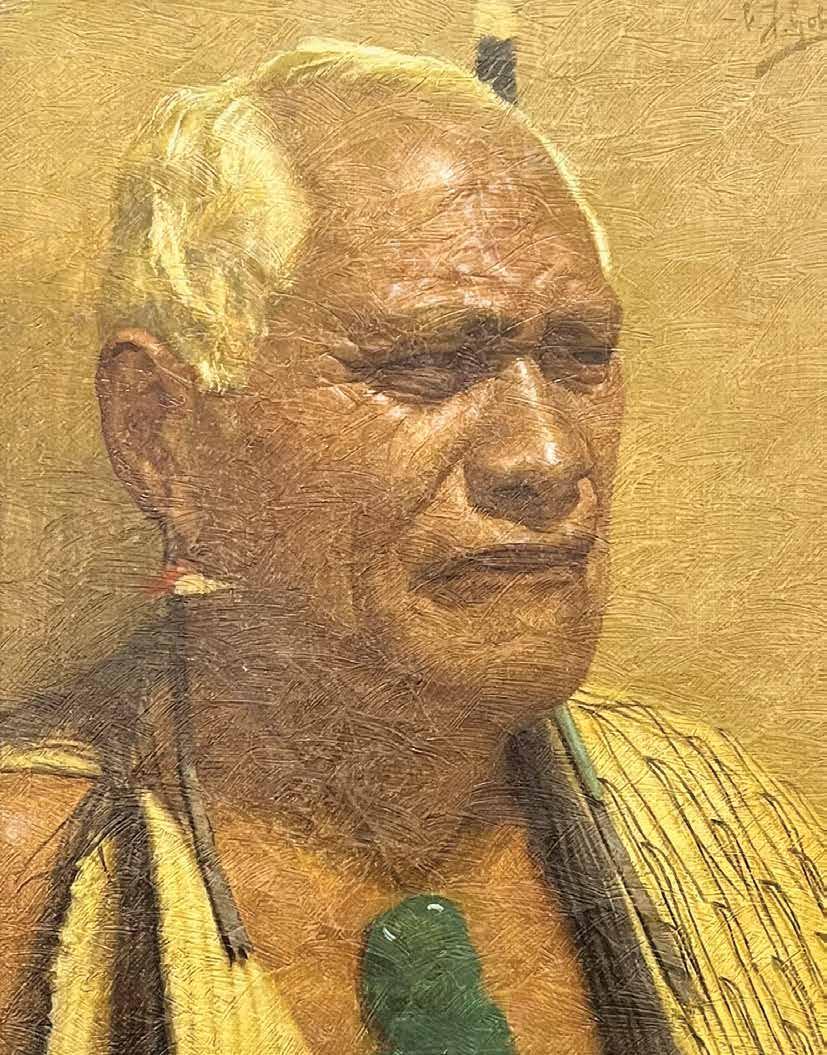
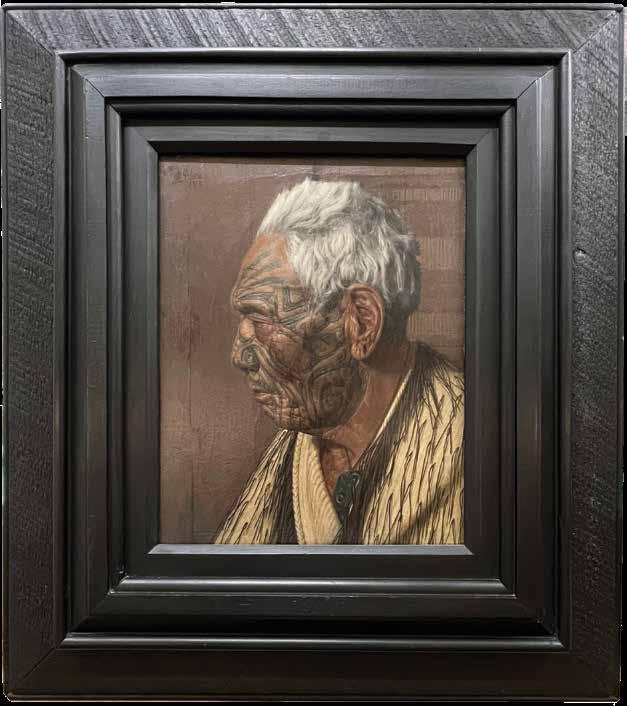
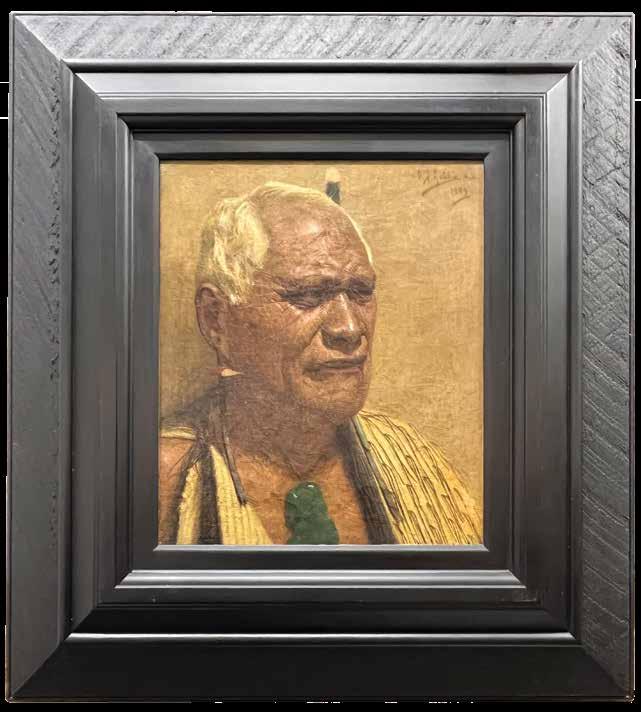
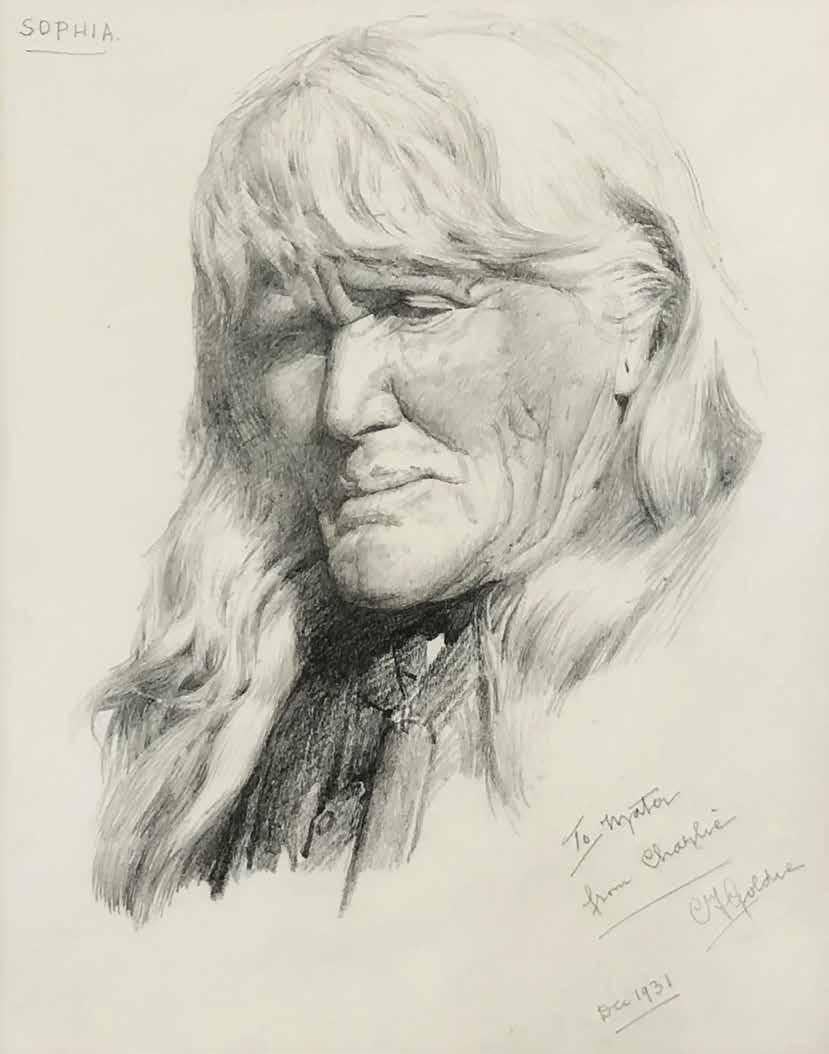
Three works by Charles Frederick Goldie
Sophia, 1931
Wharekauri Tahuna, 1918
Maori Chief with Hei-Tiki, 1939
44
CHARLES FREDERICK GOLDIE
(1870 - 1947)
The Calm Close of Valour’s Various Day (A Portrait of Chief Wharekauri Tahuna)
Oil on canvas 24.5 x 19
Signed & dated 1918
$600,000 - 900,000
PROVENANCE
Private Collection, Auckland
Purchased directly from the artist by the current family owners, sold within family 1965, held in same collection since then.
ILLUSTRATED
p. 250 C F Goldie His Life & Painting, Alister Taylor & Jan Glen, Waiura Marlborough, 1977
Goldie’s portraits of Maori are celebrated for their ability to realistically capture the mana and likeness of his sitters. This immortalised image of Wharekauri Tahuna, chief and tohunga of the Ngati-Manawa tribe, with full facial moko and greenstone adornments of his high status, does indeed embody both the mana of Wharekauri Tahuna and the skill of C F Goldie.
The two met in 1901, when Goldie visited Rotorua and asked local Maori to sit for him for the first time. Goldie painted a number of portraits of Wharekauri Tahuna over the course of his career and notably, this kaumatua was the subject of what is believed to have been the artist’s last ever portrait, completed in 1941. That work was sold by International Art Centre in 2016, at the time realising a new record for the artist, $1.175 million and the first time a painting sold for more than $1 million at auction in this country. Though it was not unusual for Goldie to paint multiple portraits of individuals with whom he had maintained good relationships, the significance of his connection and friendship with Wharekauri as one which bookended his artistic journey with Maori must not be understated.
Standing nearly seven feet tall, Wharekauri was a mightily impressive warrior and an inspiring subject for Goldie. He was one of the 1,600 warriors who made the full fighting strength of the Te Arawa against Te Tumu pa, the Ngai-te-Rangi stronghold on the coastal sandhills between Tauranga and Maketu.
In later life he became a recluse living in the Kai Mokopuna range. He was bought back to Murupara Pa to die at age 102.
Whakakauri Tahuna’s ancestral connection ties with Te Arawa, the Ngaiti Manawa tribal canoe which sailed across the Pacific arriving in New Zealand c. 1530.
When two Goldie paintings depicting Wharekauri and Atama Paparangi were accepted for the Paris Salon in 1935, the works (and, by association, his sitters) aroused great interest. Newspaper reviews meditated on the character of Wharekauri including his tohunga status. Wharekauri and Atama were described as the finest natives of which he has any records and Wharekauri (with the exception of one other subject) as the most fully tattooed Maori Goldie has ever painted.
The history of Te Arawa waka and Wharekauri’s iwi, the replication and dissemination of his identity nationally and internationally, and the artist’s decision to repeatedly draw artistic life from photographs of this last of the tohungas all inform this magnificent painting. Depicted in profile with his eyes downcast, the work untethers Wharekauri from any single moment in time to establish him within the collective consciousness of Aotearoa and his descendants.
45 CHARLES FREDERICK GOLDIE (1870 - 1947)
Maori Chief with Hei-Tiki Oil on canvas 34.5 x 29.5
Signed & dated 1939
$800,000 - 1,200,000
PROVENANCE
Private Collection, Auckland since 1950s
Through his lifetime and legacy, Charles Frederick Goldie greatly influenced our nation’s artistic and cultural consciousness. Born in Auckland on 20 October 1870, one of eight children from the marriage of Maria Partington and David Goldie, he was named after his maternal grandfather, Charles Frederick Partington, builder of the landmark Auckland windmill.
In 1883 the young Goldie was enrolled at Auckland Grammar School. His youthful artistic talents shone, and it was not long before he was winning prizes at the Auckland Society of Arts. On leaving school, Louis John Steele became his mentor and tutor. Two of the young artist’s still life paintings so impressed Sir George Grey, that he convinced David Goldie to allow his 22 year old son to attend the Académie Julian in Paris. Goldie spent over four years at the Académie Julian tutored by leading lights of the Paris Salon such as William-Adolphe Bouguereau.
In 1898, fully informed in the French academic style, the artist returned to New Zealand and began collaborating with his former tutor Louis John Steele. The two worked on a number of paintings including The Arrival of the Maoris in New Zealand, a large scale history painting after Gericault’s Raft of the Medusa. Before long, however, the relationship deteriorated likely caused by tensions around the former student’s growing success. Goldie went on to open his own studio and establish himself as a successful portraitist of Maori.
A visit to Rotorua in 1901 was the first of several field trips during which the artist was introduced to local Maori and persuaded them to sit for portraits. Goldie’s works from this point forward strongly reflect the European tradition in which he was trained, and possess a stunning power and visual clarity. On the one hand, his remarkable dedication to realism belies an ethnographic interest.
At the same time, he was also striving to capture the mana of his sitters who included chiefs, tohunga and kaumatua.
Goldie formed long-standing relationships with several Maori he met and painted around this period, including Wiremu Patara Te Tuhi and Te Aho-o-terangi Wharepu (Ngati Mahuta), Ina te Papatahi (Nga Puhi), and Wharekauri Tahuna (Ngati Manawa).
Over the next two decades, Goldie gained national and international acclaim and steady demand formed a strong market for his portraits, a number of which would later be exhibited at the Royal Academy of Arts in London and the Paris Salon throughout the 1930s.
In 1920 the artist moved to Sydney, where despite original plans to continue on to Paris, he was married, at age fifty to thirty five year old Olive Cooper. Marriage in Sydney circumvented the Goldie family disapproval of the relationship between Auckland’s famous artist and the milliner from Karangahape Road. After two years in Sydney, apparently disillusioned with his work at this time and suffering from health problems Charles and Olive returned to New Zealand.
Goldie’s return to Auckland in 1924, ultimately represented a moment of artistic reckoning. Goldie received encouragement to resume painting from Governor General Lord Bledisloe. Devoting himself once again to his work, he began to apply a more liberal, impressionistic approach to the realisation of his portraits and repainted a number of his former subjects. Works from this later period are distinguished by their soft luminescence, offering a rhythmic departure and disconnection from the rigours of formalism to which he had so strictly adhered in the past.
Goldie died in Auckland in 1947, his exquisite, spiritually-charged, often unsettling and ever powerful portraits of Maori having made an unsurpassed contribution to the history of art in New Zealand.
In Polynesian portraiture Mr C F Goldie stands pre-eminent in the world today. New Zealand has every reason to be proud of him.
Governor General Lord Bledisloe
46
CHARLES FREDERICK GOLDIE
(1870 - 1947)
Sophia Pencil drawing on paper 24.5 x 19.5
Signed, inscribed To Mater from Charlie & dated December 1931
$100,000 - 150,000
PROVENANCE
Estate of a private collector, Rotorua Formally in the collection of the Artist’s niece
ILLUSTRATED
p. 223 C F Goldie: His Life & Painting, Alister Taylor & Jan Glen, 1979
Guide Sophia Hinerangi was the principal tourist guide of the Pink and White Terraces at Lake Rotomahana.
Following their destruction during the Mt Tarawera eruption of 1886 she became a guide at nearby Whakarewarewa, Rotorua. Guide Sophie, as she was widely known, was well educated and bi-lingual. She introduced thousands of visitors to the beauty of the Terraces, acknowledged by Mark Twain as the eighth wonder of the world.
Sophia was born in Kororreka in the early 1830s. Her mother, Kotiro Hinerangi, was a Ngati Ruanui woman who had possibly been captured by a Nga Puhi raiding party. Kotiro married Alexander Grey (or Gray), a Scotsman who had arrived in the Bay of Islands in 1827. Mary Sophia Gray was baptised by William Williams at Kororareka in 1839. It is thought that Sophia was raised by Charlotte Kemp at the Kerikeri mission station before attending the Wesleyan Native Institution at Three Kings, Auckland. In 1851 Sophia married her first husband, Koroneho (Colenso) Tehakiroe, with whom she had fourteen children. Following her second marriage, to Hori Taiawhio in 1870, she had a further three children.
Tuhourangi tohunga, interpreted the devastating Tarawera eruption as a warning and reflected that the exploitation of the terraces as a tourist attraction showed scant regard for ancestral values.
Guide Sophia herself saw these omens as a sign that her time as a guide at Rotomahana was drawing to a close. On 10 June 1886, the night of the eruption, over sixty people took shelter in Sophia’s whare at Te Wairoa. Unlike many of the buildings in the village her home withstood the power of the eruption due to its high-pitched roof and reinforced timber walls.
Sophia continued her work as a guide when she moved to nearby Whakarewarewa. In 1895 she joined George Leitch’s Land of the Moa Dramatic Company, playing herself on a tour of Australia. In 1896 she was appointed caretaker of the Whakarewarewa Thermal Reserve. A number of royal parties were amongst the many thousands of visitors that Guide Sophia led through Whakarewarewa. She encouraged a number of local women to become guides, helping to establish this occupation as a lucrative form of employment for Tuhourangi women.
Remembered as a leading light of her generation and a unique personality of that time, Sophia fostered friendship between Maori and Pakeha and showed great courage in adversity. She was a friend and favoured subject the artist C F Goldie. Guide Sophia died at Whakarewarewa on 4 December 1911among the Rotorua elders.
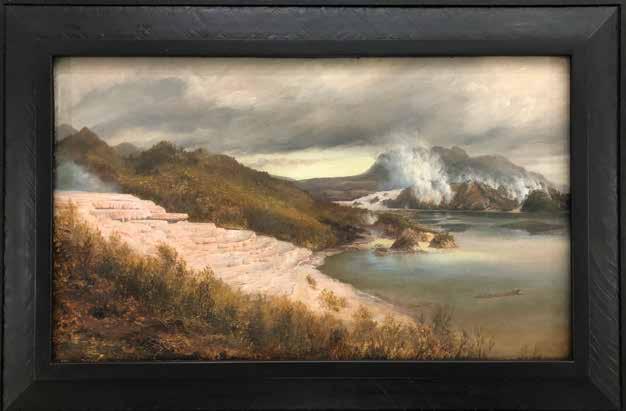
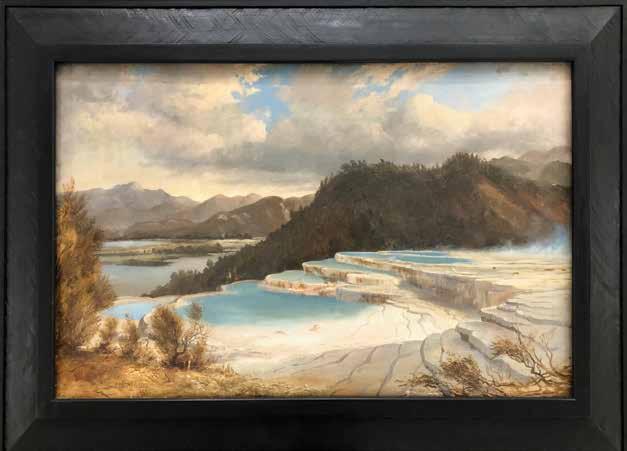
47 CHARLES BLOMFIELD
(1848 - 1926)
Pink & White Terraces, Rotomahana - A Pair
Oil on canvas 34 x 60
Signed & dated 1885
$80,000 - 120,000
PROVENANCE
Estate of a private collector, Rotorua
Prior to being acquired by the current collection, these works formed part of a family collection purchased directly from the artist, 1885
Charles Blomfield has long been recognised as the most popular early New Zealand painter of the Pink and White Terraces and the surrounding region of Rotorua and Lake Tarawera. This fine pair of works featuring two separate views of the Pink and White Terraces, dated 1885 pre-date the 1886 Tarawera eruption.
Blomfield first visited the region during a camping trip in December 1875, commenting that Tarawera and it’s Terraces were exceedingly beautiful and graceful. Returning in 1883 he spent six weeks documenting the Pink and White Terraces and their surroundings. Blomfield’s meticulous sketches and finished paintings are some of the most important historical records we have of the region. It was reported that by September 1885 orders for his work had been received from throughout Europe, America, Australia and other places.
Following the Tarawera eruption, Blomfield realised that the paintings he had made of the Terraces were a valuable record, and declined to sell them. He went on to paint and sell scale copies of these works, for which the prices soon trebled.
The story of the Tarawera eruption is a dramatic chapter in New Zealand’s history. Eleven days before the eruption, both Maori and European visitors, including the famous Guide Sophia, reported seeing a ghostly Maori war canoe paddling across Lake Tarawera. Guide Sophia consulted her tribe’s tohunga, or priest, Tūhoto Ariki, and he interpreted the phantom canoe as a bad omen. He believed Maori would be punished for exploiting the area for money without paying due respect to their ancestors.
In the early hours of 10 June, 1886 Tūhoto Ariki’s prophecy was fulfilled. At Te Wairoa village, about eight kilometres away from the Terraces, people were woken after midnight by a series of violent earthquakes. Around 2 am Tarawera erupted with fountains of glowing lava and a cloud of ash up to ten kilometres high, through which intense lightning flickered. At Te Wairoa, more than sixty people sheltered in Guide Sophia’s sturdy hut, which remarkably survived the eruption. Later, craters on the south-west side of the mountain blasted open and a crack 17 kilometres long emitted tons of mud and ash. The Tikitapu bush was completely covered by ash and earthquakes were felt throughout the North Island with the noise of the eruption heard as far south as Blenheim. At the time, many Aucklanders thought they were hearing distant cannon fire. Blomfield decided to see the devastation for himself and returned to the area in October to paint several scenes of the terrible destruction.
A world away, fourteen Charles Blomfield paintings were being greatly admired in South Kensington, London at the 1886 Colonial and Indian Exhibition. This major exhibition, which in the words of the Prince of Wales was intended to: stimulate commerce and strengthen the bonds of the British Empire was opened by Queen Victoria and received over five million visitors. Charles Blomfield died at his residence in Wood Street, Freemans Bay, Auckland in 1926.
These two fine works provide an accurate historical record of the beauty and splendour of the region. They were painted just a year prior to the Tarawera eruption.
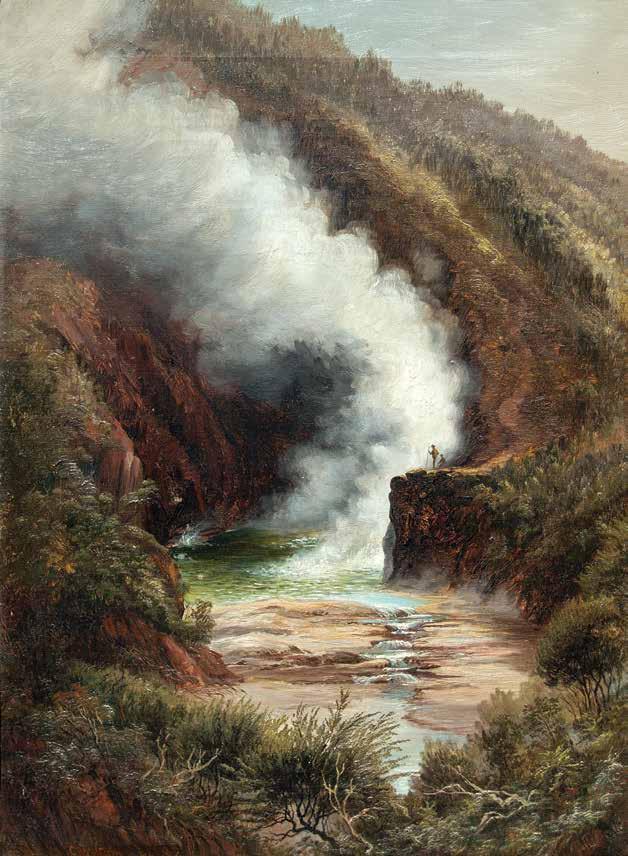
48 CHARLES BLOMFIELD (1848 - 1926)
Champagne Geyser, Wairakei
Oil on canvas 58 x 42
Signed
$25,000 - 35,000
PROVENANCE
Private Collection, Melbourne until 2008
Private Collection, Bay of Plenty
LITERATURE
A smaller study for this work features p. 105, Charles Blomfield, His Life & Times, Muriel Williams, Hodder and Stroughton, 1979
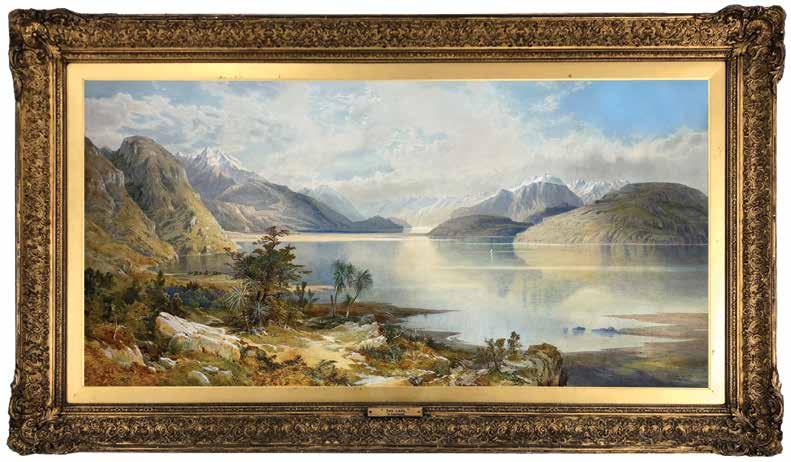
49
NICHOLAS CHEVALIER (1828 - 1902)
Lake Wakatipu
Watercolour 63 x 124
Signed & dated 1879
$50,000 - 75,000
PROVENANCE
Ex Collection Dr Neville Hogg
Private Collection, Auckland
Signed & dated 1970
$45,000 - 65,000
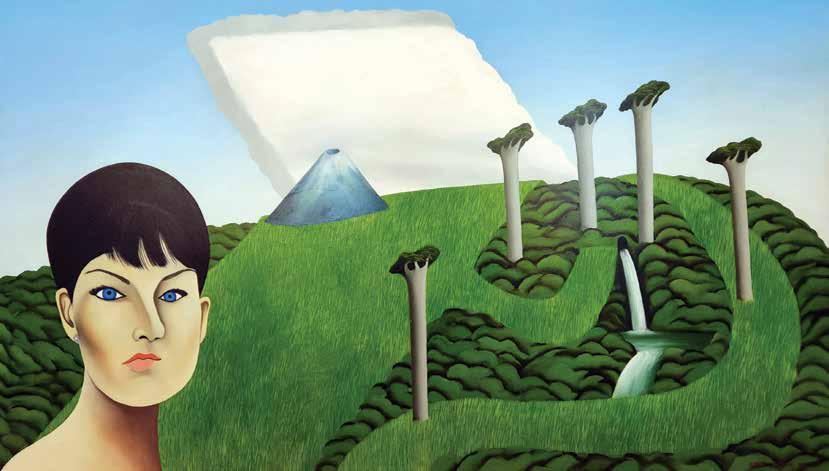
50 IAN SCOTT (1945 - 2013)
Cloud and Volcano, 1970
Oil on hardboard 65.3 x 114.5
Signed & dated 2012
$30,000 - 40,000
PROVENANCE
Private Collection, Auckland
51 ALVIN PANKHURST (b. 1949)
Spiritual Home Oil & acrylic on canvas 78.5 x 100
52
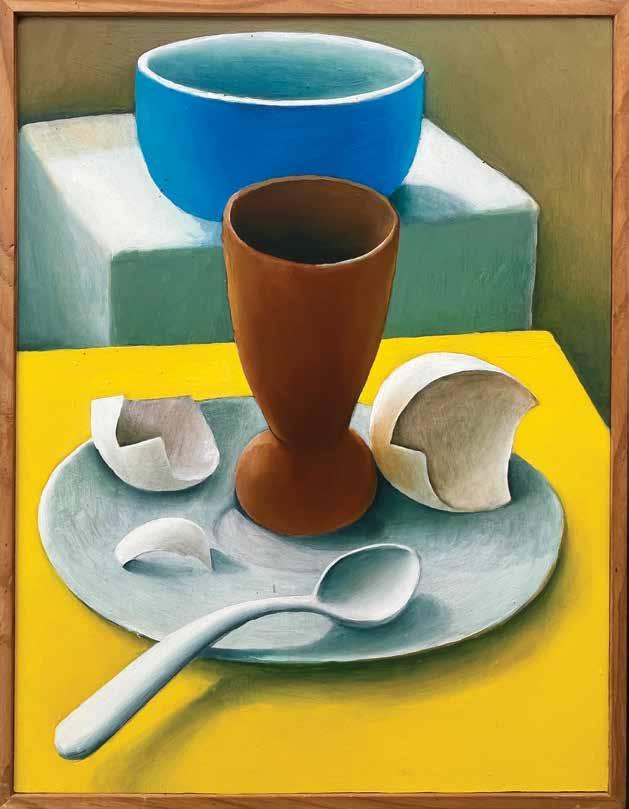
MICHAEL SMITHER (b. 1939)
Eggcup
Oil on board 60 x 46.5
Signed & dated 1967 verso
$35,000 - 45,000
PROVENANCE
Estate of Marjan van Paassen, New Plymouth
Purchased directly from the artist, 1967
A celebration of the beauty to be found in ordinary things, this painting shows Michael Smither returning to a detail of an earlier work to make it the subject of a work on its own. Centring the lathe-turned wooden egg cup of the work’s title in the composition and tilting it slightly to show the dark void of its perfectly spherical empty centre lends it a symbolic significance, pointing to the absence of the egg which once nestled within it. Eggs themselves represent new life and un-hatched potential and bring associations of hope and purity. In Renaissance paintings, they are often a symbol of fertility and the circle of life and featured as a part of pagan festivals celebrating spring. From a Christian perspective, Easter eggs are said to represent Jesus’ emergence from the tomb and resurrection. In this painting, we are witnessing how a simple boiled egg, consumed at breakfast, can offer a narrative of new beginnings.
Smither’s wife, poet Elizabeth Smither wrote at that time: The ascending Sun by clarity/Graces each morning thing,/Out of the darkness bestowing/Praises in pools of light. Here the light falls from above, causing the handle of the spoon to cast a shadow across the yellow square the saucer and egg cup are set upon. The empty blue bowl on the rectangular plinth behind echoes the geometric shapes of the objects in the foreground and complicates the composition giving it a sacramental quality.
This simple still life has been abstracted from Large Kitchen Composition, 1965, a painting in the collection of the Christchurch Art Gallery. There in the larger painting, the egg cup still has a broken egg in it, and seems to be part of Elizabeth’s breakfast, abandoned like the open book beside it so that she can feed baked beans to wriggling infant Sarah, imprisoned in her blue highchair in the kitchen at the family’s rented home, The Gables in New Plymouth. The blue bowl behind on its plinth sits in front of the window, bathed in morning light, a serene moment of beauty in a hectic scene.
Eggshells would stand Smither in good stead: in 1968, Smither’s painting, The Colander, an image of an aluminium colander filled with broken eggshells, tipped up towards the viewer on a beige tabletop with a dark background, won the H.C. Richards Memorial Prize of $1000 in Brisbane, and immediately entered the collection of the Queensland Art Gallery.
LINDA TYLER
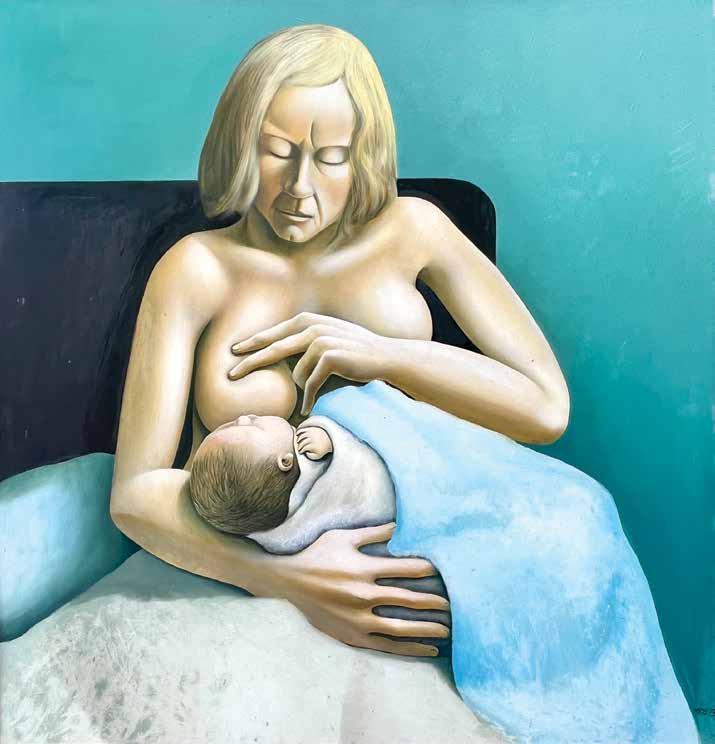
53 MICHAEL SMITHER (b. 1939)
Elizabeth Breastfeeding Thomas Oil on board 77 x 74.4
Signed & dated 1973
$90,000 - 120,000
PROVENANCE
Estate of Marjan van Paassen, New Plymouth
Purchased directly from the artist, 1973
Born in New Plymouth on the eve of the Second World War, Michael Smither was an only child, who was raised a Catholic, a religion which has inspired a rich tradition of devotional images of the Virgin and Child. He was encouraged in his creativity by teachers and by his parents, who enrolled him at the Elam School of Fine Arts in Auckland in 1959, but he found the conservatism of the methods used there stifling and left after the first year to return to Taranaki.
Marrying the New Plymouth poet Elizabeth Harrington in 1963, Smither’s depictions of his young family soon rivalled landscapes as the preferred subject for his work. The couple moved into The Gables, New Plymouth’s colonial hospital in Pukekura Park where they raised two children: a daughter, Sarah, born in 1964, who was the eldest, then Thomas who was the first born son, arriving 11 May 1967.
Smither’s first depiction of Elizabeth breastfeeding, Blue Mother and Child 1965, painted in Prussian blue thinned with mineral turpentine was the work chosen as the sole representation of the artist’s practice in the New Zealand Painting 1965 exhibition curated for the Auckland Art Gallery by Hamish Keith. As Smither remembers it, he learned to paint in thinner layers to save money since they were surviving on the Family Benefit of 35 shillings a week after Elizabeth had to leave her position as a librarian when Sarah was born.
The threat of eviction from The Gables prompted the family of four to move to where they could live more economically: in a rabbiter’s cottage in Patearoa in the Maniototo Plains of Central Otago.
Here Smither concentrated on his domestic paintings, emulating the British artist Stanley Spencer. He strove for Spencer’s simplification of form and use of pattern to create dynamics and volume. In Central Otago, Smither’s output was prodigious and in September of 1969, he applied to become the Frances Hodgkins Fellow at the University of Otago in 1970 and was successful. Sharing a studio with Ralph Hotere and Jeffrey Harris, Smither was able to experiment with form, supported by the fellowship stipend which was equivalent to the salary of a lecturer. Returning to New Plymouth in 1971, the family moved into a Lockwood home in Mt View Place which had a purpose-built studio at one end, and the youngest child, Joseph was born.
With its low viewpoint on its subject, Smither’s pyramidal composition here makes the mother and child monumental, with a faint echo of Michelangelo’s marble Pietà where the Madonna holds her adult son across her lap after he is taken down from the cross. Here, the painter’s wife Elizabeth, sits up against the headboard, the bedclothes massed like the drapery of the Virgin’s gown which supports Christ in St Peter’s Basilica. Like the Virgin Mary there, Elizabeth looks down, furrowing her brow in concentration, getting her baby to latch on. It is an image which seems to invite veneration, but Smither later wrote, It wasn’t long before I began to see another side to painting children which in everything I’d seen to date exuded crass sentimentality. I saw that, like so many women, Elizabeth was a good mother but often wondered what she was doing there.
LINDA TYLER
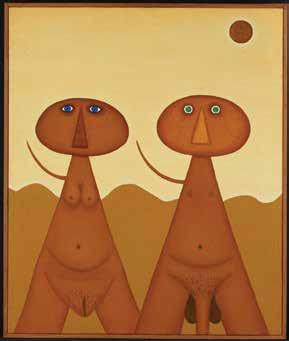
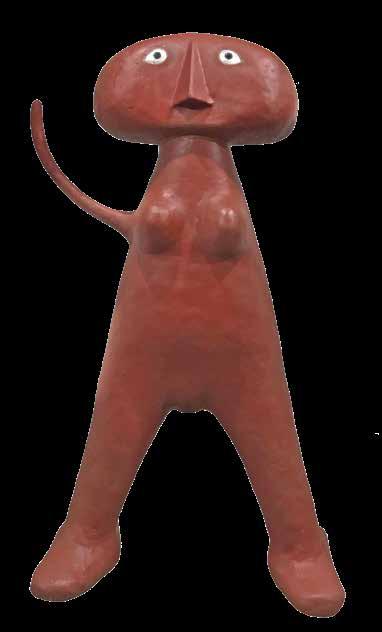
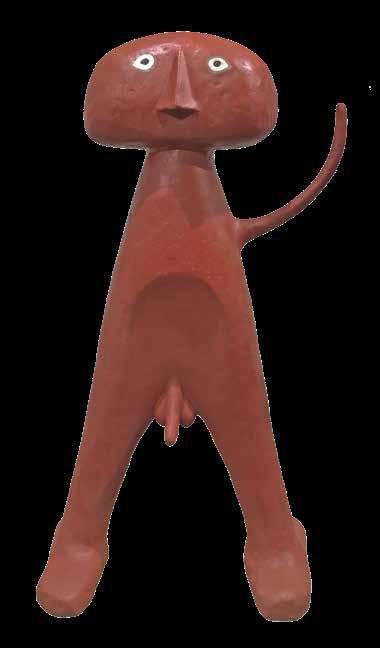
54 MICHAEL ILLINGWORTH (1932 - 88)
Tawera As Adam and Eve, c. 1963
Double sided fibreglass and applied pigment sculpture
145.5 x 90 x 48.7
$50,000 - 70,000
PROVENANCE
Ex Collection of Michael Illingworth Estate
The Estate of Michael Illingworth, Art & Object, 14 September 2017
Private Collection, Auckland
EXHIBITED
Illingworth: An Exhibition of Recent Work, Barry Lett Galleries, Auckland, 1–12 November 1965
Michael Illingworth Adam and Eve - Collection of Te Papa Tongarewa
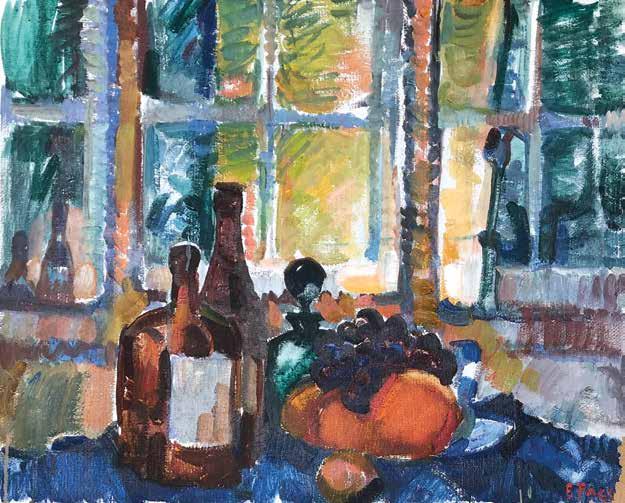
55 EVELYN PAGE (1899 - 1988) Still Life Oil on board 40 x 49.5 Signed $25,000 - 35,000
PROVENANCE
Private Collection, Wellington Dunbar Sloane, 21 July 2010
56
MICHAEL SMITHER (b. 1939)
Oil on board 62.5 x 120
Signed & dated 1994
$50,000 - 75,000
ILLUSTRATED
p. 220 Michael Smither, Trish Gibben, Ron Sang Publications 2004
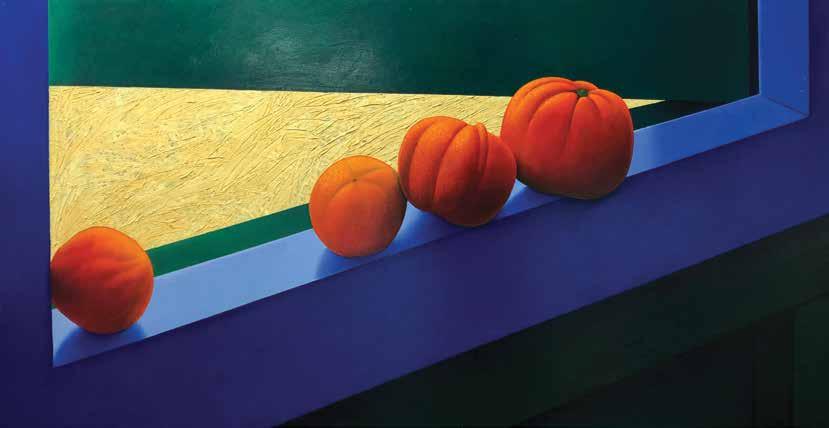
On rainy days in my little shack I painted what happened to my few utensils as well as the local fruit bought from roadside stalls.
Michael Smither, Trish Gibben, Ron Sang Publications 2004
Tangelos on a Window Ledge
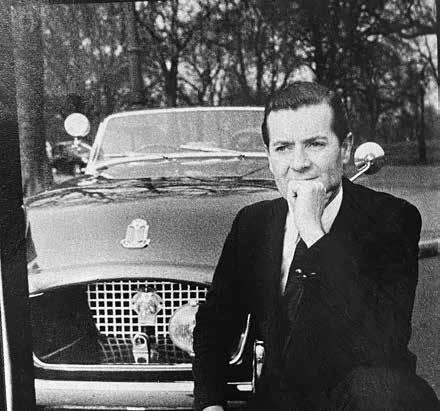
Felix Kelly is one of New Zealand’s most interesting expatriate artists. Born in Epsom in 1914 he claimed to be two years younger most of his adult life. Kelly studied briefly, and even seems to have taught drafting at Elam School of Fine Art. He was only 21 when he left New Zealand in 1935. He never returned. In London Kelly continued his New Zealand occupation of graphic design, working for Lintas, the advertising wing of Unilevers. He also freelanced as an illustrator and cartoonist, especially for Lilliput. His cartoons are not unlike those of the slightly younger Ronald Searle.
After the war and the RAF, the focus of his graphic art shifted to book illustration, dust-jacket design and contributions on interior decoration to such fashion magazines as Ideal Home and Harper’s Bazaar. In the 1950s and 60s he was acknowledged as one of England’s top designers for the theatre, working with the likes of Sir John Gielgud and Dame Sybil Thorndike. Kelly’s ambition had always been to succeed as a painter. Emerging in the context of Surrealism and British Neo-Romanticism, he exhibited alongside important British artists such as Lucian Freud, John Piper and fellow New Zealander Frances Hodgkins. He attracted the attention of the prominent critic and writer, Herbert Read.
Kelly’s paintings are characterised by his interest in a world forgotten by progress, great houses falling into dilapidation, windblasted trees, abandoned locomotives often invested with an eerie watchfulness. Rapidly, Kelly assembled a client list resembling a page from Who’s Who or De Brett’s. In late career, his knowledge of architecture led to involvement in house design, most notably his collaboration on the redesign of Highgrove for the Prince of Wales. His most celebrated project was, however, the mural cycle at Castle Howard associated with the filming of Brideshead Revisited in the 1980s.
Kelly travelled a great deal. Paintings of Spain and Italy in the 1940s were followed by West African scenes in the 50s and ante-bellum houses in America’s Deep South in the 60s and 70s. Trips to Russia, Thailand, India and Egypt in the 70s and 80s each led to an exhibition of exotic paintings.
In late career, Kelly would execute a small sketch characterised by loose brush-work, which would then be converted into a carefully executed big-scale painting. Both types of work appear for sale from time to time.
Kelly completed paintings of Auckland subjects done decades after he had left home. Auckland’s West Coast beaches or Takapuna with Rangitoto beyond, or paddle-steamers on the Waitemata, were evoked with an increasing degree of fantasy well into the 1960s.
A quirky humour pervades his work. Felix Kelly has to be one of New Zealand’s most individual artistic exports. A comprehensive exhibition of his earlier work, curated by Douglas Lloyd Jenkins and mounted by the Hawke’s Bay Museum and Art Gallery, toured several New Zealand centres in 2008-09.
A second edition of Donald Bassett’s book Fix; The Art and Life of Felix Kelly, was published in 2013.
Temple on the Island was chosen as the front cover piece for the 1974 Arthur Tooth & Sons exhibition, Felix Kelly: Recent Paintings of Thailand
Felix Kelly
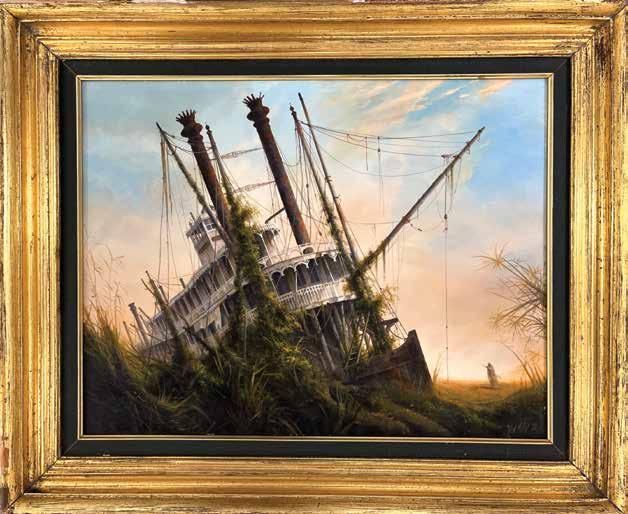
57 FELIX KELLY (1914 - 94)
Dying Sternwheeler, Mississippi
Oil on board 43 x 56
Signed & dated 1978
$20,000 - 30,000
PROVENANCE
Private Collection, Germany
EXHIBITED
Recent Paintings of India and other Places, 8 November - 1 December 1978, Partridge (Fine Arts) New Bond Street, London. cat. no. 14
REFERENCE
p. 281 Fix - The Art and Life of Felix Kelly, Donald Bassett Darrow Press 2006
Signed
$8,000 - 12,000
PROVENANCE
Private Collection, Auckland
Purchased at Peter McIntyre One Man Exhibition, John Leech Gallery, 1964 Original exhibition label affixed verso
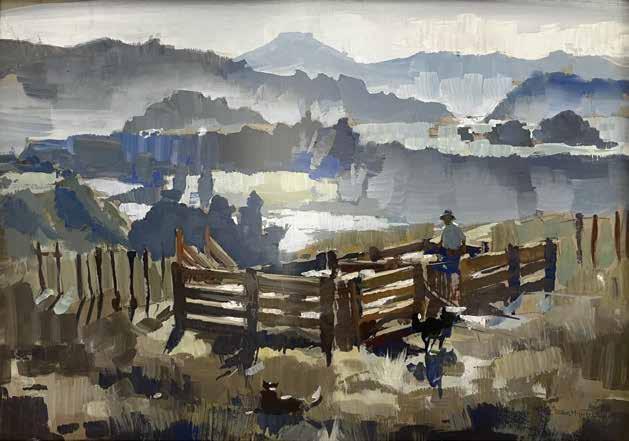
58 PETER MCINTYRE (1910 - 95)
The King Country Gouache on paper 53.5 x 73.5
Signed
$20,000 - 30,000
59 PETER MCINTYRE (1910 - 95)
Manuherikia River, Otago Oil on canvas board 60 x 75
Signed
$10,000 - 15,000
60 PETER MCINTYRE (1910- 95)
Okawa Bay, Lake Rotoiti
Watercolour 54 x 72
Signed & dated 1979
$25,000 - 35,000
PROVENANCE
International Art Centre, 1979
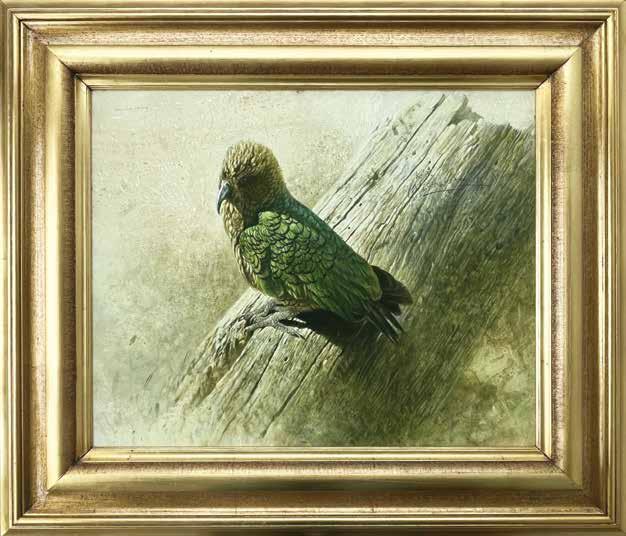
61 RAYMOND CHING (b. 1939)
Kea Oil on board 41 x 49.8
From an Estate Collection
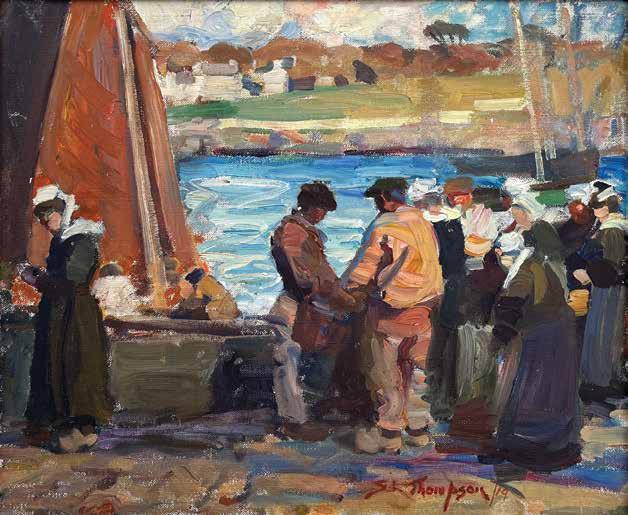
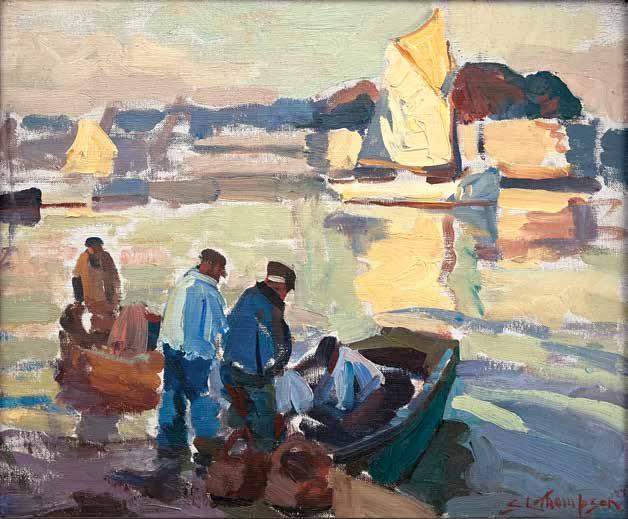
Lots 62 - 64
Arrival
Oil
Signed & dated 1919
$15,000 - 20,000
Three works by Sydney Lough Thompson
62 SYDNEY LOUGH THOMPSON (1877 - 1973)
of the Sardine Boats
on canvas 37 x 45
Signed & dated 1927
$15,000 - 20,000
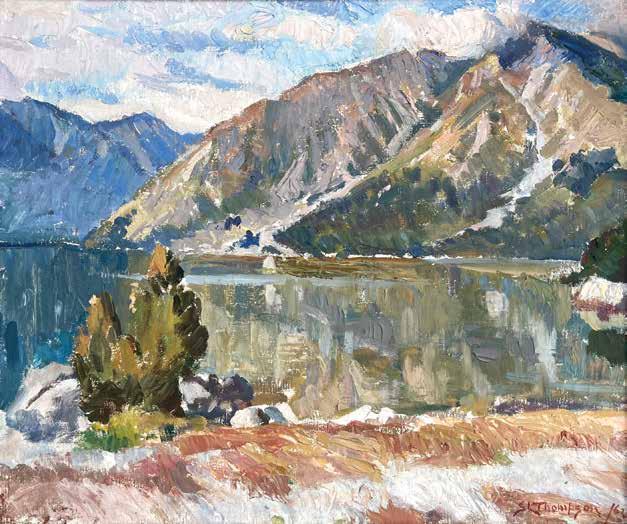
63 SYDNEY LOUGH THOMPSON (1877 - 1973)
Evening Light, Concarneau Oil on canvas 37 x 45
Lake Rotoiti, Nelson Lakes District
Oil on canvas 50 x 60
Signed & dated 1962
$7,000 - 10,000
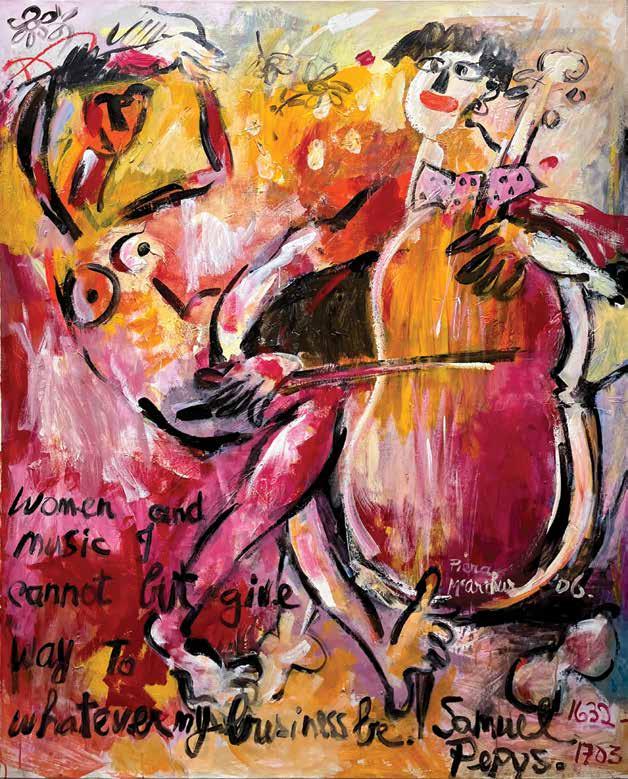
Women and Music
Oil on canvas 168 x 138
Signed, inscribed & dated 2006
$8,000 - 12,000
PROVENANCE
Purchased directly from the artist, 2006
64 SYDNEY LOUGH THOMPSON (1877 - 1973)
65 PIERA MACARTHUR (b. 1929)
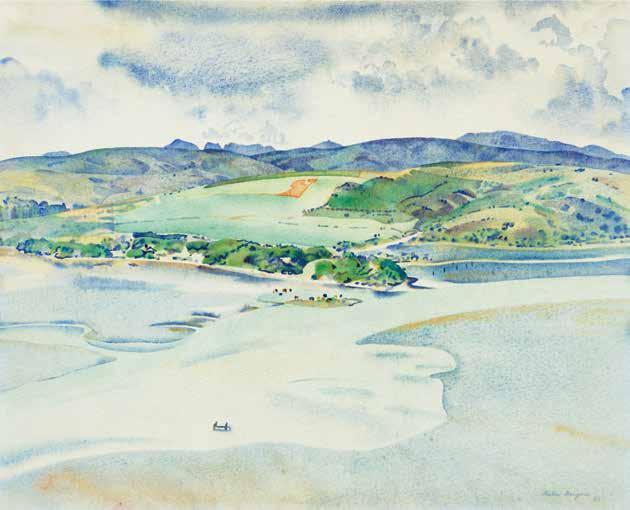
66 RITA ANGUS (1908 - 70)
Mangonui
Watercolour 28.5 x 35
Signed & dated 1953
$25,000 - 35,000
PROVENANCE
Purchased at Important, Early & Rare, International Art Centre, 2011 by current owner
Private Collection, France, until 2010
This work is a similar composition to Mangonui, a watercolour from the collection of Museum of New Zealand Te Papa Tongarewa, illustrated p. 143 Life & Vision, edited by William McAloon & Jill Trevelan, Te Papa Press, 2008
Rita Angus visited friends Roy and Joyce Milligan at Mangonui, Northland during the winter 1953 and again in December. By October 1954 she was living in a cottage there and working on landscapes of the surrounding area. Paintings produced at this time, including Mangonui, Northland were exhibited with The Group. When plans to purchase the cottage fell through the artist returned to Wellington in April of 1955
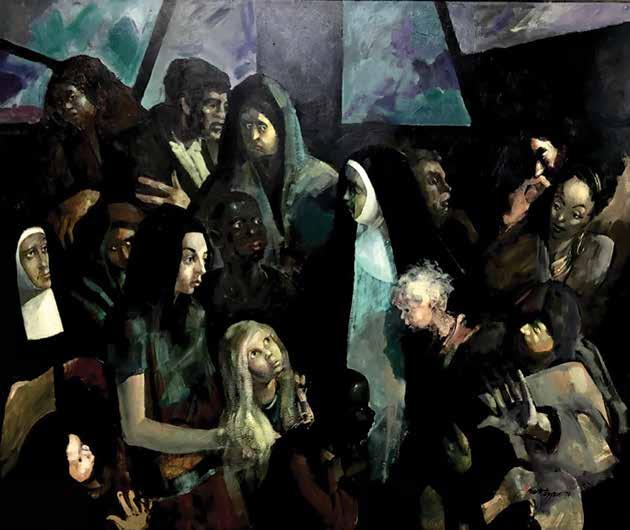
The Young Nun 1970 Oil on board 121 x 146
Signed & dated 1970
$30,000 - 40,000
67 GARTH TAPPER (1927 - 99)
Signed & dated 1992
$20,000 - 30,000
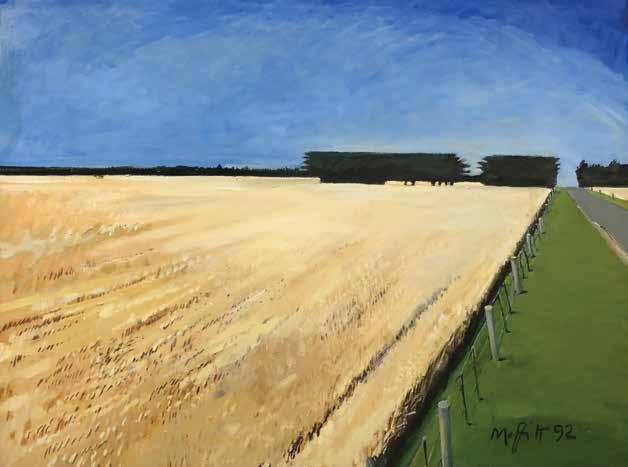
68 TREVOR MOFFITT (1936 - 2006)
Canterbury Paddocks, No. 18
Oil on board 90 x 120
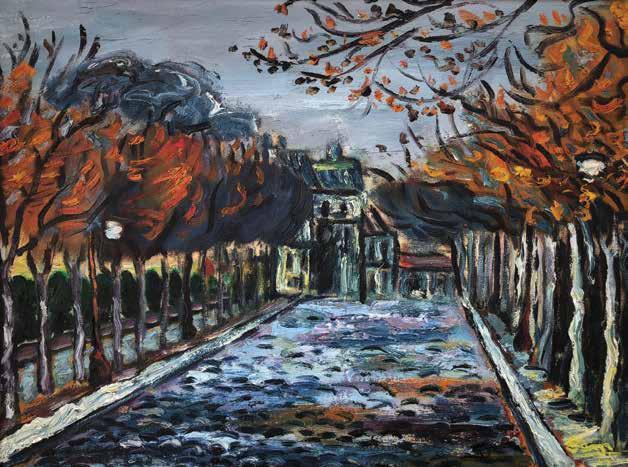
69 SAM CAIRNCROSS (1913 -76)
Avenue Andrè Rivoir Paris
Oil on canvas 44 x 59
Signed & dated Décemore 1947 verso
$6,000 - 8,000
PROVENANCE
Private Collection, Wellington
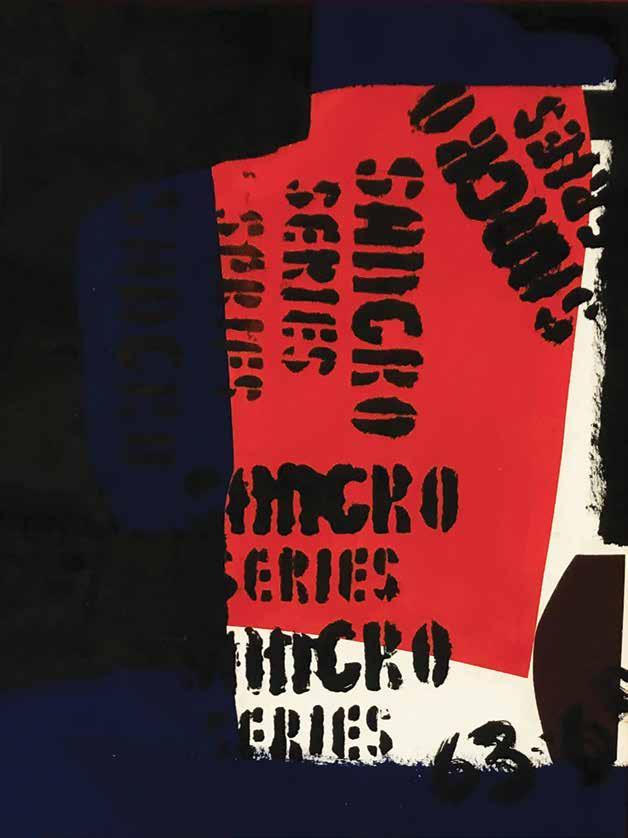
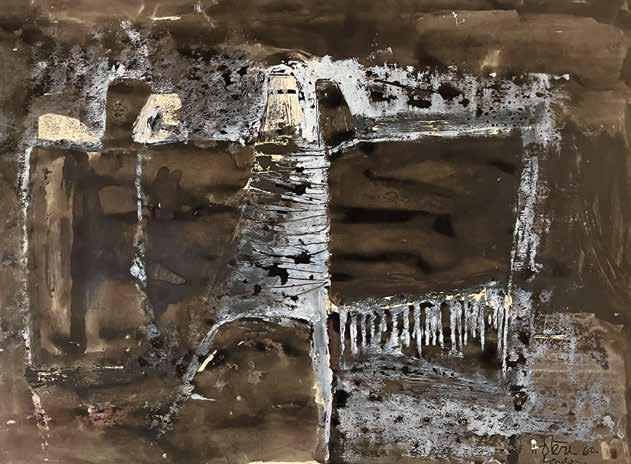
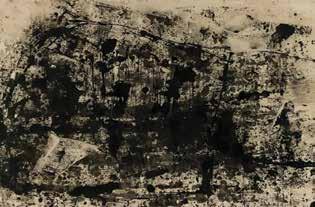
70 RALPH HOTERE (1931 - 2013)
Sangro Series
Acrylic on paper 80.5 x 60.5
Inscribed & dated 1963
$10,000 - 15,000
71 RALPH HOTERE (1931 - 2013)
London
Mixed media on paper 54.5 x 75
Signed, inscribed London & dated 1962
$18,000 - 25,000
72 RALPH HOTERE (1931 - 2013)
Untitled
Mixed media on paper 50.5 x 60
Signed & dated 1962
$8,000 - 12,000
PROVENANCE
These three early works were acquired directly from Ralph Hotere by the artist’s friend, archaeologist Dr Wallace Ambrose and his wife Janet in the mid 1960s. They have been held in the same family collection since. The Ambrose’s owned four works by Ralph Hotere, one of which was gifted to the National Gallery of Australia in 2013.
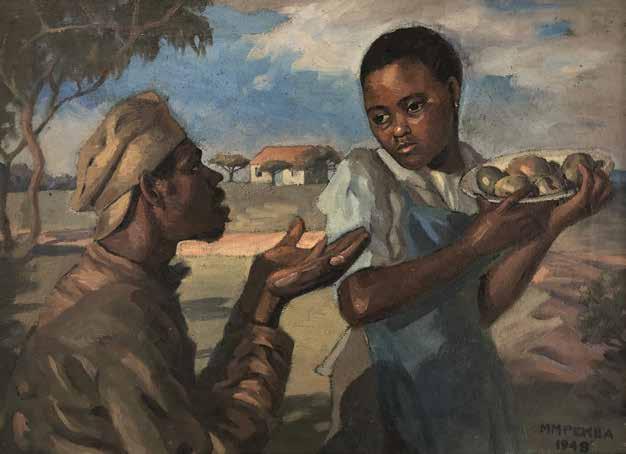
(South African 1912 - 2001)
Asseblief
Oil on canvas 60 x 70
Signed & dated 1948
$25,000 - 35,000
PROVENANCE
Private Collection, Canterbury, New Zealand
Purchased in South Africa circa 1960 by current family owners
Born in Port Elizabeth 1912, Milwa Mnyaluza ‘George’ Pemba developed an early love of drawing, encouraged by his parents. After winning a scholarship at the age of 16, Pemba developed his signature style, drawing portraits and depicting life around him.
Under the apartheid regime, Pemba continued to practice his art, thanks largely to the support of his wife Eunice, who ran a shop in the township. In 1990, a major exhibition of Pemba works at the Everard Read Gallery in Johannesburg brought him national attention. He is renowned for his unembellished honesty, fine draftsmanship, expressive colour and strong sense of composition.
My objective is to interpret the feeling of my people George Pemba
73
GEORGE PEMBA
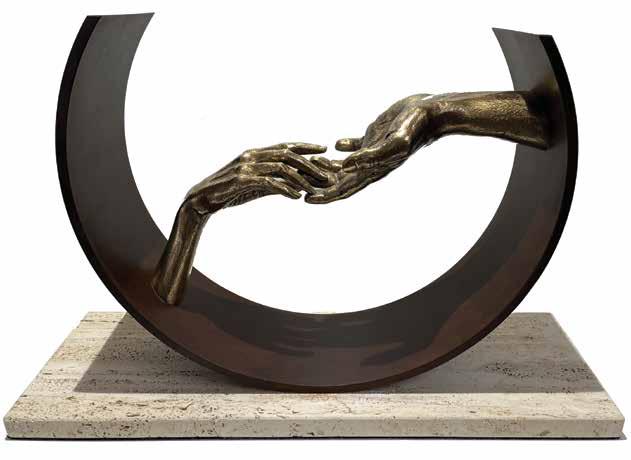
74 LORENZO QUINN (Italian b. 1935)
Finding Love
Bronze, corten steel on granite base 44 x 70
Edition of 99
$8,000 - 12,000
PROVENANCE
Private Collection, Auckland
Purchased from Halcyon Gallery, London
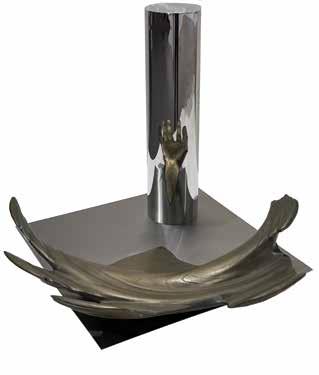
75 JONTY HURWITZ
(British South African b. 1969)
Hand That Caught Me Falling
Bronze & chrome, edition 5/9 10.5 x 51 x 48
Signed & dated 2017
$4,000 - 6,000
PROVENANCE
Private Collection, Auckland
Purchased from Walton Fine Art, London
Two works from the Collection of Gallerist
Judith Anderson
Lots 76 - 77
Open the Auckland Art Gallery visitors’ book for August 26, 1895, and there is the famous signature. Unwashed, tired, strapped for cash, the postimpressionist painter Paul Gauguin spent ten days in Auckland in August 1895, on his way to Tahiti for the second and last time. Gauguin had fled France for what he hoped would be a South Seas Eden, and in the Auckland Art Gallery and the Auckland Museum he made shorthand sketches of Maori carvings. Transported into paintings, they became emblems of the strange new beauty that Gauguin dreamed of finding in the Pacific.
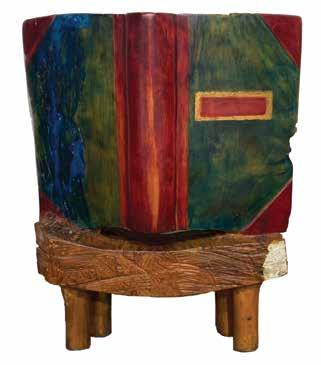
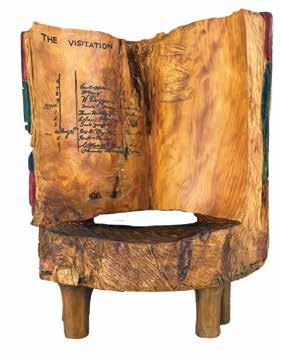
One hundred years later, Warren Viscoe has returned to the traces of Gauguin’s visitation and enshrined them in art. Carving into a big butcher’s block of kauri with a no-nonsense confidence that Gauguin might have admired, Viscoe has fashioned his own version of the Auckland Art Gallery visitors’ book. The kauri has a vital glow, and Gauguin’s signature is chiselled into the body of this indigenous wood as though it were a tattoo.
We are a long way from Viscoe’s art-as-evidence experiments of the ‘70s, but he is still reconstructing the traces of human habitation, still reading the grain of past events. Viscoe is fascinated not by the big bland abstractions that are passed down to us as history but by the marks and evidence that accumulate in history’s margins. This fascination is what led him, two years after making The Visitation for an exhibition commemorating Gauguin’s trip, to pick up the chisel again and surround Gauguin’s name with the names of those forgotten travellersThomas Hartley of Hokianga, Mr and Mrs Morris of New Plymouth - who preceded and followed him into the museum.
The sculpture resembles both a stool and a traditional Polynesian headrest, so Viscoe seems to be offering weary travellers - past or present - a place to rest or sleep en route. Gauguin died in Tahiti in 1903.
Text Warren Viscoe Life & Limb published by Sarjeant Gallery, 2000
76 WARREN VISCOE (b. 1935)
The Visitation, 1995
Stained kauri sculpture 67 x 50 x 19
Signed & dated 4/8/95
$3,000 - 4,000
PROVENANCE
Judith Anderson Collection
ILLUSTRATED
p. 48 & 49 Warren Viscoe Life and Limb Justin Paton, Sarjeant Gallery, 2000
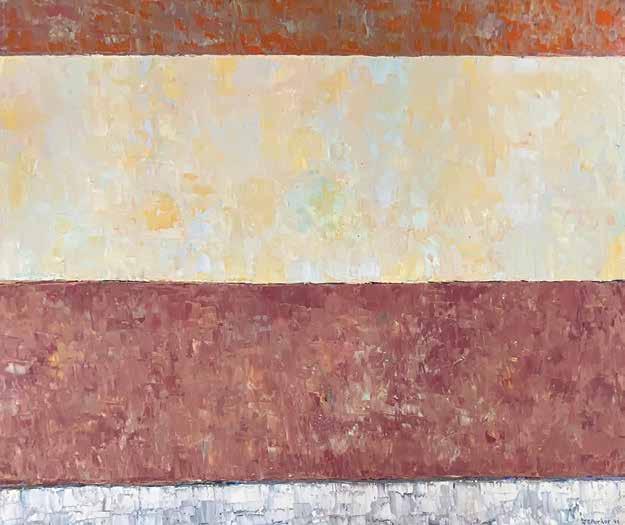
77 JOHN SHOTTON PARKER (1944 - 2017)
Plain Song ‘Hymns to Light’
The Broad Band of Light Oil on canvas 153 x 183
Signed & dated 1999
$10,000 - 15,000
PROVENANCE
Judith Anderson Collection
Purchased directly from the artist, 1999
He Roimata Ua He Roimata Tangata
Oil on canvas laid on board 64.5 x 88
Signed, inscribed & dated 1985
$8,000 - 12,000
PROVENANCE
Private Collection, Tauranga
79 EMILY KARAKA (b. 1952) Kaitiaki
Acrylic on canvas 203.5 x 89.5
Signed & dated 2004
$8,000 - 12,000
PROVENANCE
Silich Collection, Auckland
78 ROBYN KAHUKIWA (b. 1940)
80 BUCK NIN (1942 - 96)
Tuatara Landscape - the Fighting Tuataras of Putararu Over the Marae
Acrylic on board 124 x 100
Signed & dated 1990
$25,000 - 35,000
PROVENANCE
Private Collection, Auckland
81 SANDY ADSETT (b. 1939)
Paikea
Acrylic on hardboard 95 x 95
Signed, inscribed & dated 1979 verso
$15,000 - 25,000
PROVENANCE
Fine & Applied Art, Dunbar Sloane, 03 May 2006
Private Collection, Northland
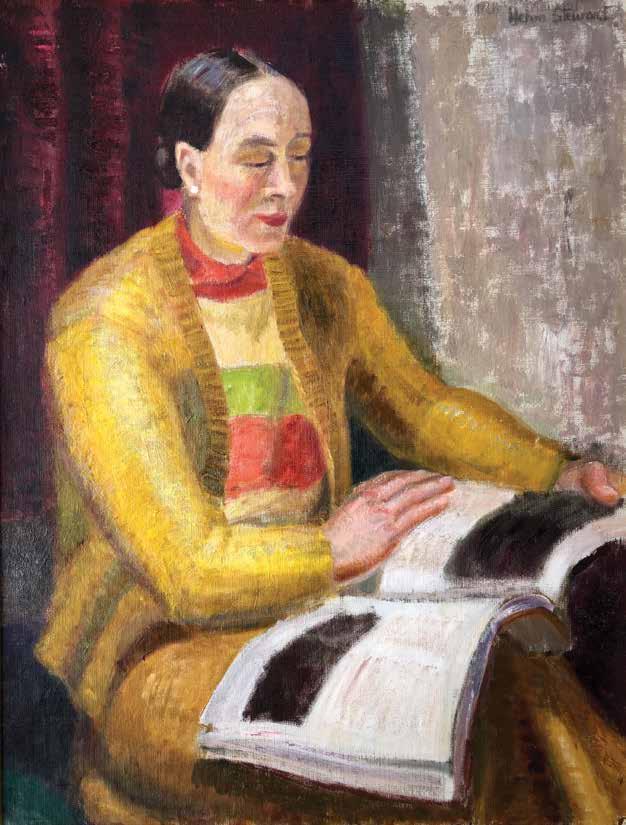
82 HELEN STEWART (1900 - 83)
Elsie Bristow
Oil on canvas 65 x 49.5
Signed
$10,000 - 15,000
PROVENANCE
Private Collection, Wellington
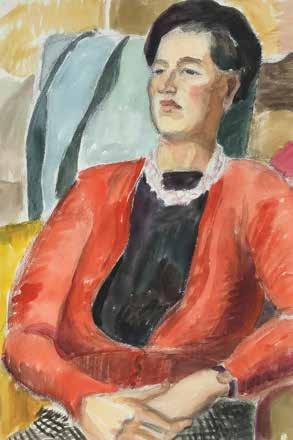
83 HELEN STEWART (1900 - 83)
Self Portrait
Watercolour & graphite on paper 48 x 32.5
$2,000 - 3,000
PROVENANCE
Private Collection, Wellington Beca Fine Arts - Certificate of Authenticity affixed verso
Helen Stewart studied under Harry Linley Richardson at the Technical School in Wellington in 1921. In 1927 she held her first exhibition leaving soon after to study in London.
The next year she lived in Paris and attended the Académie Colarossi and the Académie de la Grande Chaumière. She returned to the antipodes in 1930, arriving in Sydney to join her family who had moved from Wellington to live. She attended the Julian Ashton Art School.
In 1931 Stewart entered the Grosvenor School under Ian McNab. She returned to Paris in 1932 and had a full year studying with Yadav Vytllayl at André Lhote’s atelier.
Stewart was a modernist painter, influenced by European and British post-impressionist art, specifically Henri Matisse, Pablo Picasso, Fernand Léger and the Camden Town artists. While studying with André Lhote she developed an appreciation for the theory of the Golden ratio, the balancing of spatial and colour relationships.
Stewart was a contemporary of Dorothy Kate Richmond, Frances Hodgkins and Gwen Knight. After returning to Australia in 1934 she became a member of the avant-garde Contemporary Art Society. In 1938 150 Years of Australian Art anniversary catalogue featured her painting Freesias.
In Australia she exhibited with Margaret Preston and Grace Cossington Smith. Although she was initially rejected by the New Zealand Academy of Fine Arts she did later exhibit with them. She also exhibited with the The Group in Christchurch in 1948.
Stewart returned to New Zealand after the war settling in Lowry Bay, Wellington. She was a founding member of the Thursday Group art collective and continued to paint until her death in 1983. Stewart was included in Anne Kirker’s publication New Zealand Women Artists: a Survey of 150 Years.
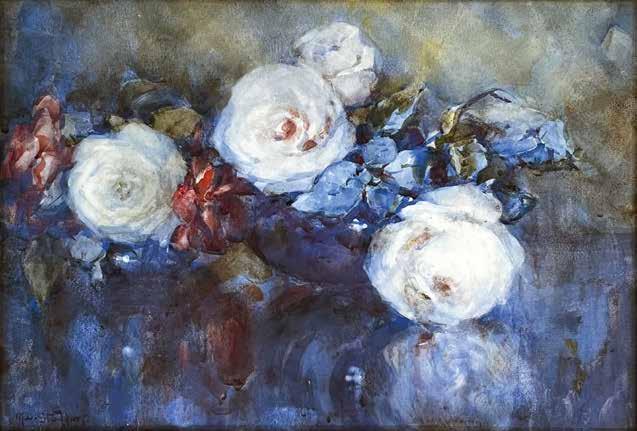
(1865 - 1934)
Watercolour 36.4 x 53
Signed
$15,000 - 20,000
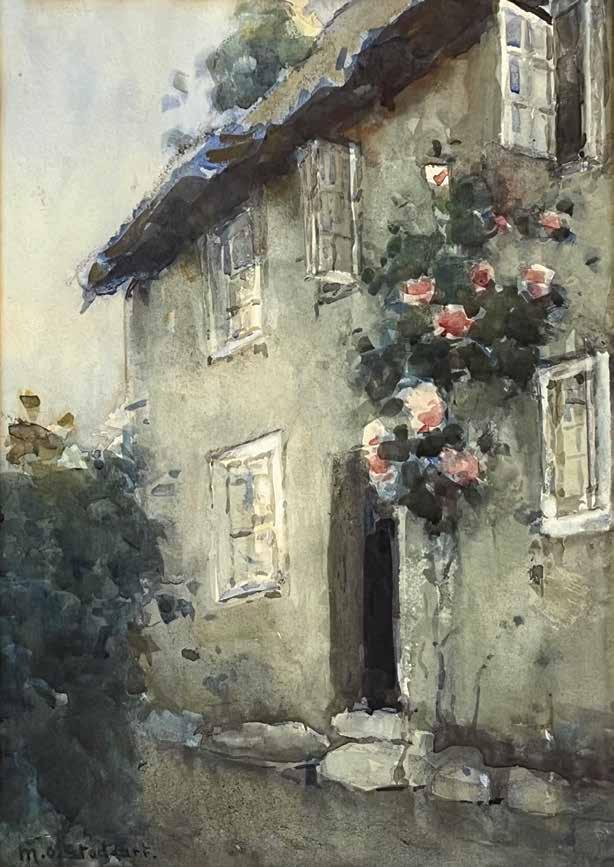
- 1934)
Watercolour 34.5 x 24
Signed
$8,000 - 12,000
84 MARGARET OLROG STODDART
Roses
85 MARGARET OLROG STODDART (1865
Rose Cottage
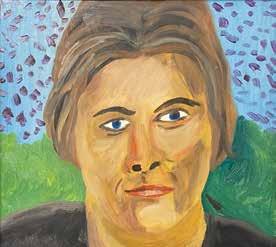
86 JEFFREY HARRIS (b. 1949)
Head of a Woman Oil on board 22 x 25
Signed, inscribed Head of a Woman & dated June 1972 verso
$8,000 - 12,000
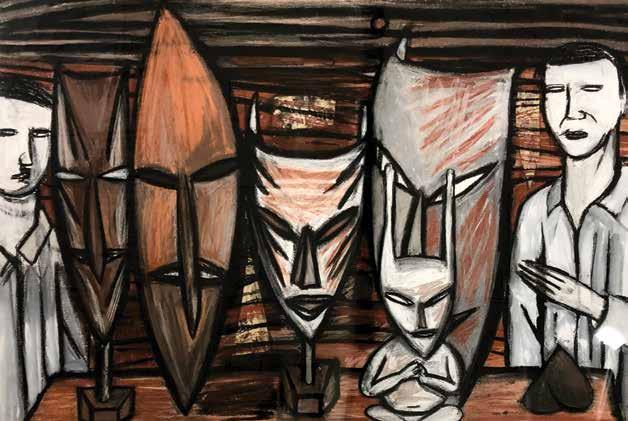
87 JEFFREY HARRIS (b. 1949)
Masks
Conté on paper 103 x 152
Signed & dated 1988 verso
$9,000 - 12,000
PROVENANCE
Private Collection, Auckland
Purchased from John Leech Gallery
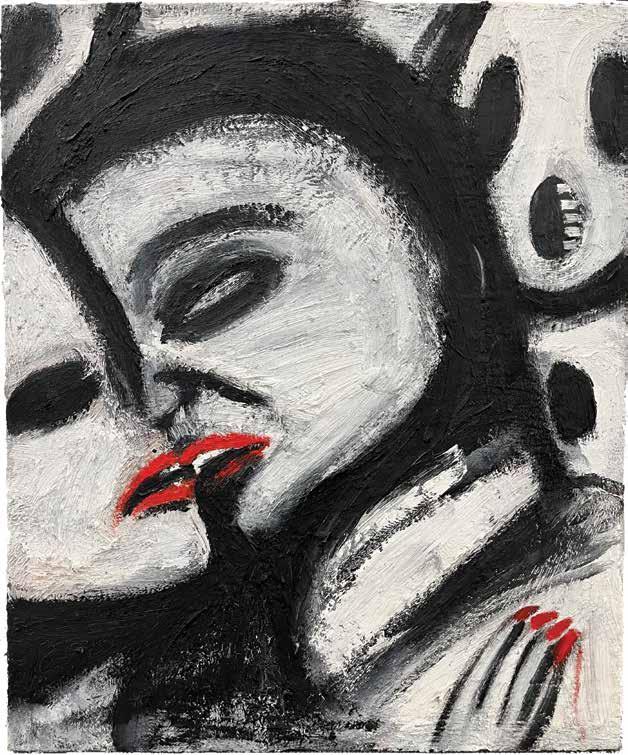
88 JEFFREY HARRIS (b. 1949)
Heads in White Oil on canvas 73 x 61
Signed, inscribed Heads in White & dated 1999
10,000 - 15,000
PROVENANCE
Private Collection, Wanaka
Purchased directly from Jeffrey Harris’s Melbourne Studio prior to the artist’s return to Dunedin, c. 2000
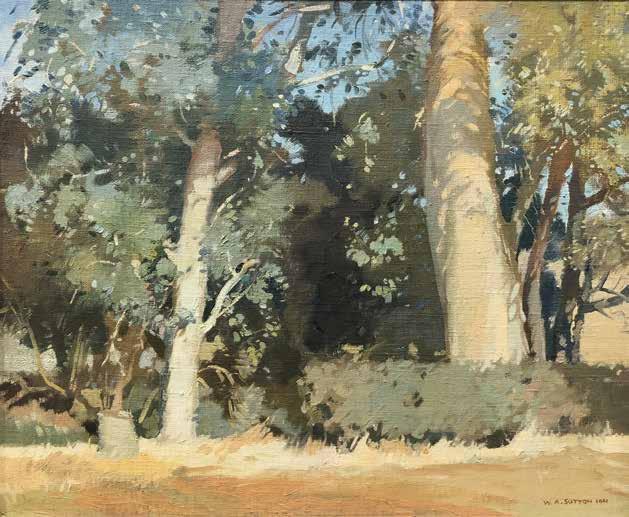
The Trees of the Road Oil on canvas board 37 x 44.5
Signed and dated 1941
Inscribed The Trees of the Road verso
$3,000 - 5,000
89 WILLIAM ALEXANDER (BILL) SUTTON (1917 - 2000)
90 JOHN WEEKS (1888 - 1965)
King Country Farmland
Oil on canvas 40 x 50
Certificate of Authenticity signed by the artist’s widow Hilda O’Connor & Alan Swinton, former director of John Leech
Gallery, affixed verso
$8,000 - 12,000
PROVENANCE
Ferner Galleries, Auckland, label affixed verso
91 FIONA PARDINGTON (b. 1961)
Rifleman’s Nest - Rifleman, Acanth
sitta chloris, AV 10290 Rifleman’s Nest, Otago Museum
Photographic print, edition 2/5
60 x 50
$5,000 - 8,000
PROVENANCE
Jonathan Smart Gallery
Two Rooms stamp verso
Private Collection, Wellington
EXHIBITED
The Heart Derelict; Fiona Pardington
Jonathan Smart Gallery
July 08 - August 02, 2008
92 JOHN WEEKS (1888 - 1965)
Wellhead
Tempura on board 50.5 x 40
Certificate of Authenticity signed by the artist’s widow Hilda O’Connor & Alan
Swinton, former director of John Leech
Gallery, affixed verso
$3,000 - 6,000
Acrylic on canvas 145 x 180
Signed and dated 2020
$8,000 - 12,000
Kete
Woven aluminium cans sculpture 38 x 46
Signed & dated 2012
$2,500 - 3,500
93 FATU FEU’U (b. 1940)
Fa’a Ola
94 JEFF THOMSON (b. 1957)
95 STANLEY PALMER (b. 1936)
Towards Mt Hobson from Mangawhau Oil on board 49 x 120.5
Signed & dated 1968
$8,000 - 12,000
96 JACQUELINE FRASER (b. 1956)
You Could Just Be a Flash in the Pan for All You Know…, 2006
Backlit photo, wig, pleated tulle, sequinned crown, diamantes, gold foil, lace, handbeaded organza, beaded silk - in boxed frame 123.5 x 83.5 x 16
$8,000 - 12,000
97 DOUGLAS MACDIARMID (1922 - 2020)
Mont Sainte Victoire III
Acrylic on paper 44 x 64
Signed & dated 2012
$5,000 - 8,000
PROVENANCE
Douglas MacDiarmid: An Artist Abroad
Jonathan Grant Galleries, October 2013
This painting comes from Douglas’ last exhibition of new work in New Zealand aged 92. One of three from his Love Letters to a Landscape series. An elemental view of Douglas’ favourite mountain — a distinctively craggy, white limestone mountain ridge in Provence that he sketched and worked in pastel, oil and acrylic in increasingly abstract form from the 1950s to 2012. Anna Cahill, author of Colours of a Life, the Life and Times of Douglas MacDiarmid, 2018
Mount
Watercolour 42.5 x 72.5
Signed & dated 1871
$8,000 - 12,000
100 CHARLES BLOMFIELD (1848 - 1926)
Buller River, Near Hampton
Oil on board 18.5 x 29
Signed & dated 1891
$2,500 - 3,500
Watercolour 41 x 66
Signed & dated 1874
$8,000 - 12,000
98 JOHN GULLY (1819 - 88)
Cook and Tasman
99 JOHN BARR CLARK HOYTE (1835 - 2013)
Otira Valley
98
101 AUSTEN A DEANS (1915 - 2011)
Tussock Grasses in the Mountains
Oil on board 53.5 x 89
Signed & dated 1969
$7,000 - 10,000
102 JOHN BARR CLARKE HOYTE (1835 - 1913)
Waimangu Geyser Watercolour 30 x 45
Signed
$2,500 - 3,500
The Mirror of Experience
Oil on board 45 x 60
Signed, inscribed For my dear friends George & Judy the mirror of experience TS Eliot the mirror of experience & dated 1993 verso
$7,000 - 10,000
104 PAT
Girls Head
(1932 - 2004)
Lithograph from glass plate printed on linen, edition 1/6 57.5 x 45
Signed, inscribed Girls Head & dated 1965
$3,000 - 5,000
103 PATRICIA FRANCE (1911- 1995)
HANLY
103
105 LEONARD FRENCH
(Australian, British, European 1928 - 2017)
Design for a Vestment
Enamel on board 26 x 21
Title and signature inscribed on card verso
$3,000 - 4,500
106 WILLIAM DOBELL
(Australian 1899 - 1970)
Untitled (Nude Studies) 1943
Ink on paper 24.5 x 36
Signed & dated 1943
$2,000 - 3,000
Icons of Auckland Exhibition
Now On View
Brian Dahlberg | The Ted Ashby o Rangitoto Island | Oil on board | 80 x 150 cm | $20,000
Icons of Auckland is a group exhibition by seven leading resident and visiting artists to our beautiful City of Sails. New Zealand’s most populous city and its largest port, Auckland occupies a narrow isthmus between the Waitemata Harbour of the Hauraki Gulf and the Manukau Harbour. It’s 48 volcanic cones create a unique landscapen while providing spec -
tacular views and vantage points for our artists. From the shores of Waiheke Island to the heights of the Sky Tower, Auckland’s well known landmarks and hidden geographical gems are captured on canvas through a prism of styles, palettes and artistic perceptions. Frances Davies - Director
Graham Kirk | Brian Dahlberg | Timon Maxey | James Watkins | Lawrence Leitch | Simon Williams | Kasey Sealy
IMPORTANT & RARE ART
Important & Rare Art auctions are the proven, preeminent sale category for major works of art offered for sale in New Zealand. These auctions take place three times annually. Now in our 51st year in business, experience continues to equal results. 2014 saw Important & Rare auctions realise five of New Zealand’s top ten auction prices. The following year saw new records set with the two top prices in Auckland achieved. With the addition of the record $1.7 million paid for a C F Goldie in November 2021 sale, International Art Centre achieved the three highest art auction prices in New Zealand’s history. Due to an appreciative, and greatly valued clientele of nationwide and international buyers and sellers we look forward to breaking new ground.
COLLECTABLE ART ALWAYS CONSIGNING ENTRIES NOW INVITED
The buzz generated by our Collectable Art auctions reflects the popularity of these sales: an event at which seasoned connoisseurs and budding collectors alike converge to appreciate one of the most eclectic and diverse offerings available to the market. Works span the vital period from mid-century modernism through to the cutting-edge of today’s Contemporary art in New Zealand.
This sale category is an increasingly significant event in our auction calendar. Offering a number of lowerpriced works from highly-sought after artists in print and edition form, as well as quality works from artists whose presence on the secondary market is just beginning to crystallise.
SINGLE OWNER AUCTIONS
From time to time, the secondary market is fortunate enough to be exposed to one of those rare collections which transcends the value of its individual works of art, and stands to represent something iconic in its entirety. Our team is well-versed in the process of offering single-owner collections for sale, and take pride in the process of curating a single-owner sale when the opportunity arises. We offer a targeted marketing campaign and maximise the use of both electronic and print-based collateral to effectively showcase such collections to maximum effect. The strong networks we have established locally and internationally are reflected in some of the private collections which have been entrusted to us in recent years.
ART AT HOME timed online auctions
During the 2020 nationwide lockdowns we stayed connected to our clients, keeping them close to our art. The time was spent productively, resulting in the development of our own online bidding platform and App, successfully auctioning works of art with no exhibition viewing, no printed catalogue, while using state-of-the-art technology.
All transactions were contactless and we reduced our carbon footprint along the way. While the personal service, excitement and atmosphere of our famous live Parnell Road auctions remain and will continue to grow, the success of this online only platform has encouraged us to retain this as a permanent sale category.
Contact a member of our team
Richard Thomson
Ph +64 9 379 4010
M. 0274 751 071
E. richard@artcntr.co.nz
Summer Masters
Ph +64 9 379 4010
E. summer@artcntr.co.nz
www.internationalartcentre.co.nz
Luke Davies
Ph +64 9 379 4010
E. luke@artcntr.co.nz
Grace Harris
Ph +64 9 379 4010
E. grace@artcntr.co.nz
valuation SERVICES
www.internationalartcentre.co.nz
International Art Centre provides formal valuations for insurance purposes, specialising in the preparation of catalogued and photographed inventories. Written valuations can be arranged by appointment. We provide free informal, verbal estimates for any of the works in your collection. For
Provenance: Ex Spark Foundation Collection
Purchased from International Art Centre, September 2022
International Art Centre | Appointed Valuers of The Fletcher Trust Collection
KARL MAUGHAN Garden Painting No. 1, Oil on board 101 x 148cm
I instruct International Art Centre to bid on my behalf for the following lots up to the prices indicated below. I understand my bids are to be executed at the lowest attainable price level. All bids are subject to Conditions of Sale printed in this catalogue.
REGISTRATION NUMBER
NAME
ADDRESS
TELEPHONE
We will allocate a bidding number if you don’t already have one
I have read and understand the Conditions of Sale. International Art Centre offers this service to clients unable to attend sale and is not responsible for error or failure to execute bids.
Email to info@internationalartcentre.co.nz before 3pm day of sale
Alternatively, visit our website www.internationalartcentre.co.nz and place absentee bids online or our bidding platform to participate in the auction live and remotely https://auctions.internationalartcentre.co.nz
ARTIST NAME
ART at HOME 22
The Christmas Edition timed online auction 7 - 13 December
Pat Hanly Panama Woman, 1987
,71,
SIDDELL
STEWART
STICHBURY
Conditions of Sale and A Guide to Buyers
The highest bidder shall be the buyer. In the event of any dispute as to the bidding in respect of any lot, that lot may be offered again at the discretion of the auctioneer whose decision shall be absolute and final.
The auctioneer has the right -
(i) to refuse any bid;
(ii) to advance the bidding at his absolute discretion;
(iii) to place a reserve on any lot;
(iv) to place a bid or bids on behalf of the seller;
(v) to withdraw any lot from sale;
(vi) to require a successful bidder to pay forthwith the whole or any part of the purchase price.
The auctioneer acts as the agent of the seller and neither he nor the seller shall be responsible for any defects or faults in any lot or for any errors of description or for genuineness or authenticity of any lot and no compensation shall be paid in respect of same.
From the time of lot being sold, such lot will be the responsibility of the buyer.
Successful bidders are required to pay for purchases immediately on completion of sale unless otherwise arranged.
All intending buyers are required to register for a bidding number prior to auction commencing. Subscribers can use their permanent bidding number. We reserve the right to ask for identification if you are a first time client of International Art Centre.
Each lot shall be paid for and removed at the buyers expense by no later than 4:00pm Friday 2 December 2022 unless otherwise arranged failing which the auctioneer and/or the seller shall have the right to forfeit any deposit paid by the buyer and to resell the lot either by public or private sale and any deficiency on costs of resale shall be borne by the defaulting buyer.
No lot may be collected whilst auction is in progress. Payment can also not be made until completion of auction.
SUBJECT BIDS
When the auctioneer declares a lot ‘subject’ this means the bid is below the set reserve and is subject to vendor accepting, rejecting or negotiating the bid. International Art Centre will endeavour to make contact with the vendor immediately after sale or the following day. If the bid is accepted, the highest bidder is obligated to make purchase.
ESTIMATES
Estimates are provided for each entry and act as a guide only. They are prepared well in advance of sale and are subject to revision at any time. Estimates are based on hammer price and do not include buyers premium.
ABSENTEE BIDS
Absentee bidding arranged - please refer to absentee bidding in back of catalogue. Email to info@internationalartcentre. co.nz before 3pm day of sale. Please do not be offended if a member of our staff ask for your credit card details as security.
Absentee bids can also be left via our website to registered members. Our website www.internationalartcentre.co.nz acts as a useful auxiliary to the catalogue but we recommend inspection or a condition report prior to leaving a bid. Our staff will gladly supply you with a condition report on any lot.
TELEPHONE BIDS
Telephone bidding available to subscribers and registered bidders. There is no charge for this service.
PAYMENT FACILITIES
Eftpos: Available for transactions depending on your daily limit.
Bank deposits: Bank instructions on invoice if paying by direct debit. Quote the Lot number(s) purchased and surname as reference.
Credit cards: Visa and Mastercard with a 2% surcharge.
International Art Centre no longer accepts cheques.
PROTECTED OBJECTS ACT
Art objects over 50 years old made by an artist or maker born in or related to New Zealand may be protected New Zealand objects, and therefore require permission from the Ministry for Culture and Heritage in order to be exported. Applications for permission to export can be made at https://mch.govt.nz/ nz-identity-heritage/protected-objects/exporting
FREIGHT & PACKING
International Art Centre arrange door to door delivery both nationally and internationally. Please arrange insurance on your items prior to them leaving our premises. Uber deliveries within the wider Auckland area can also be arranged.
OTHER ENQUIRIES
Should you have any questions relating to the sale or if we can be of any other assistance please contact us during business hours on (09) 379 4010, Toll Free 0800 800 322 or email info@ internationalartcentre.co.nz
BUYERS PREMIUM
17.5% Buyers premium plus GST on premium applies to all lots. (Total buyers premium is 20.12% including GST)