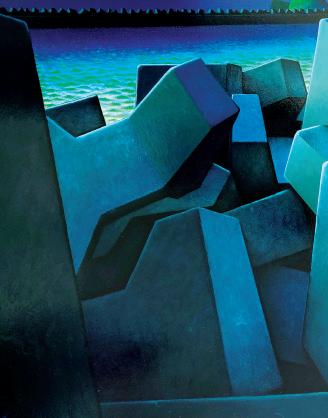
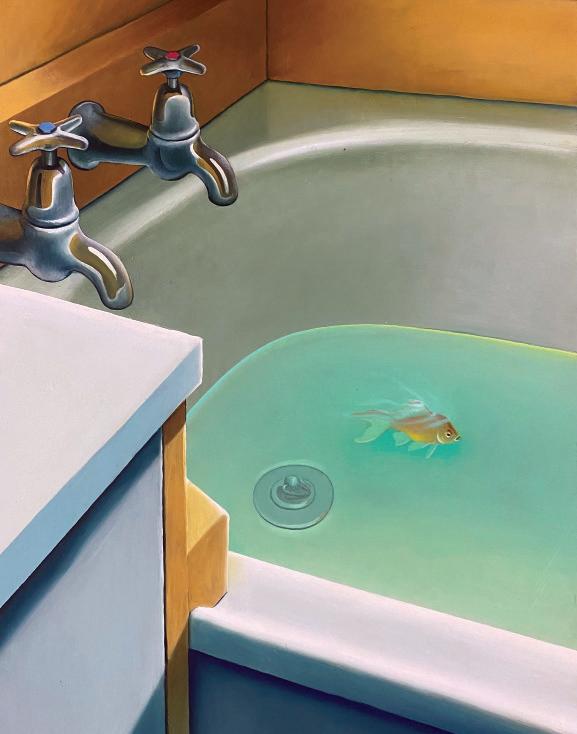
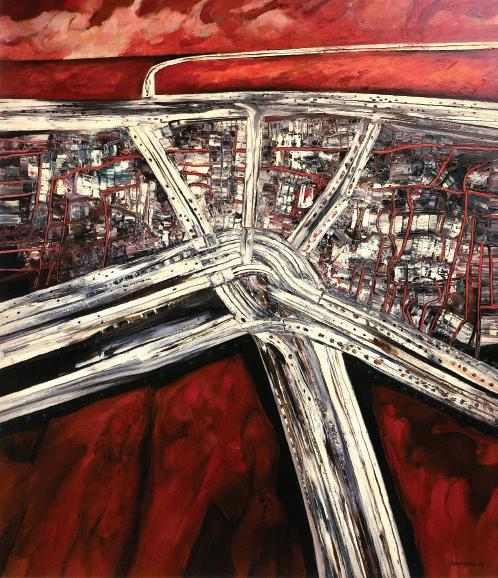
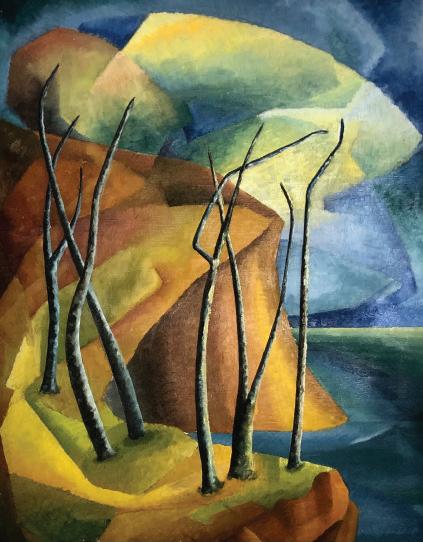
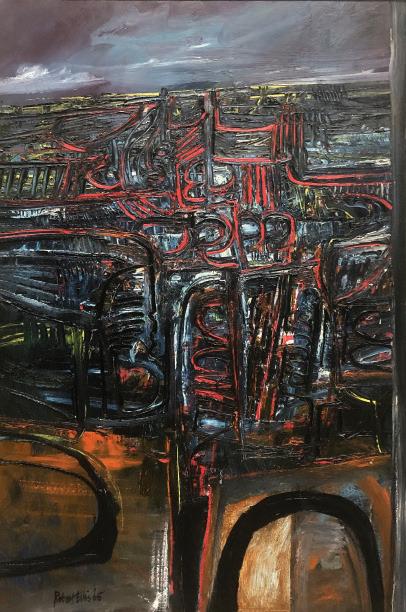
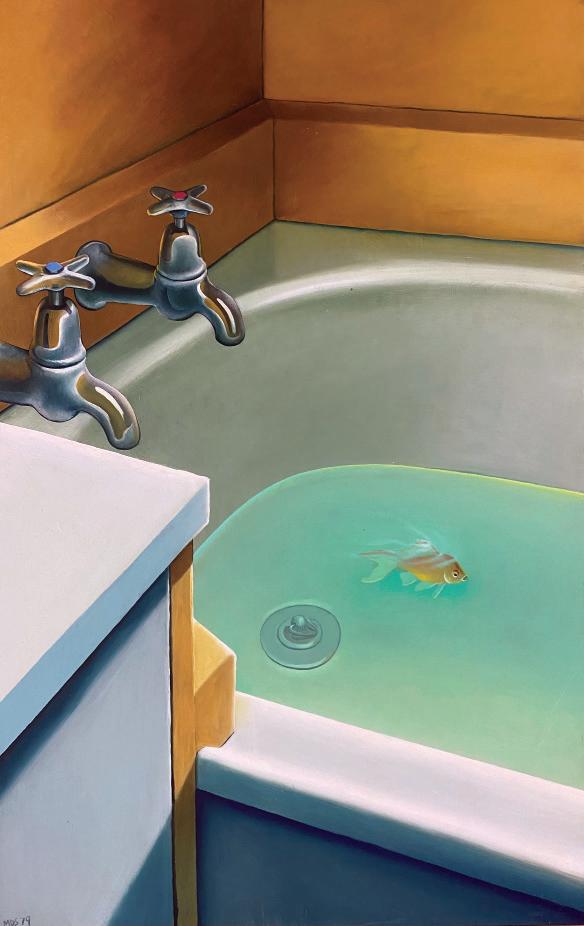
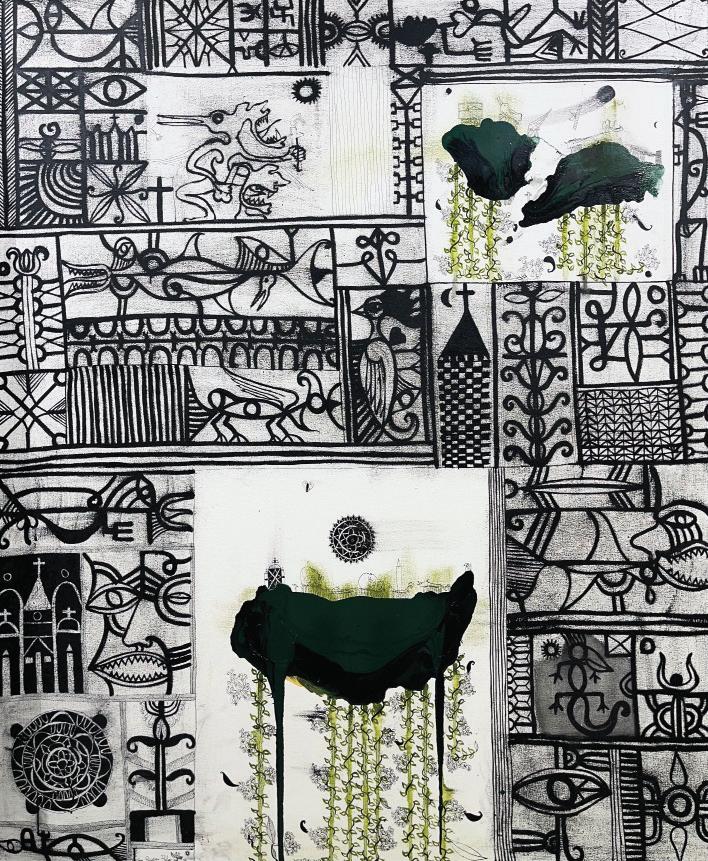
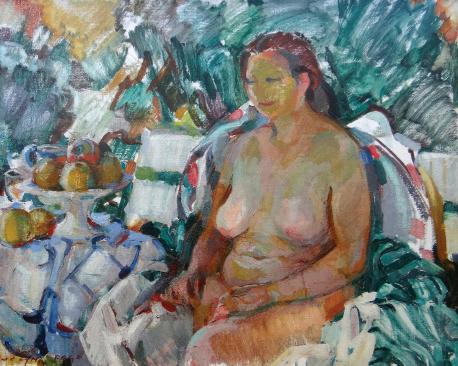
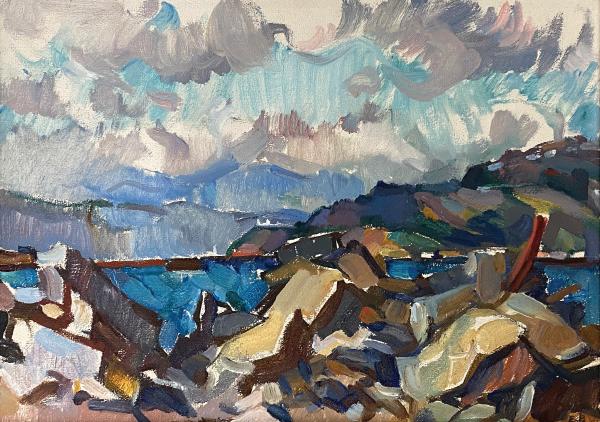
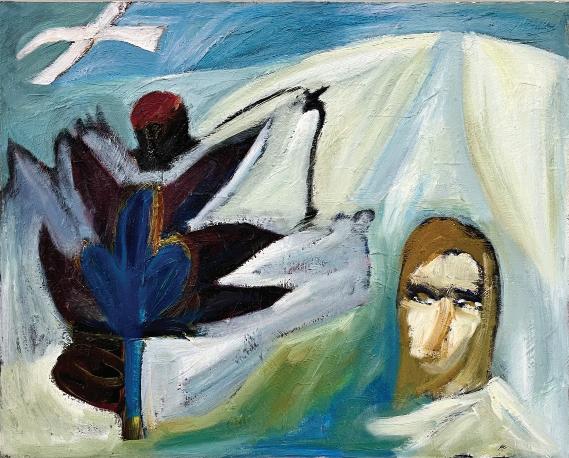
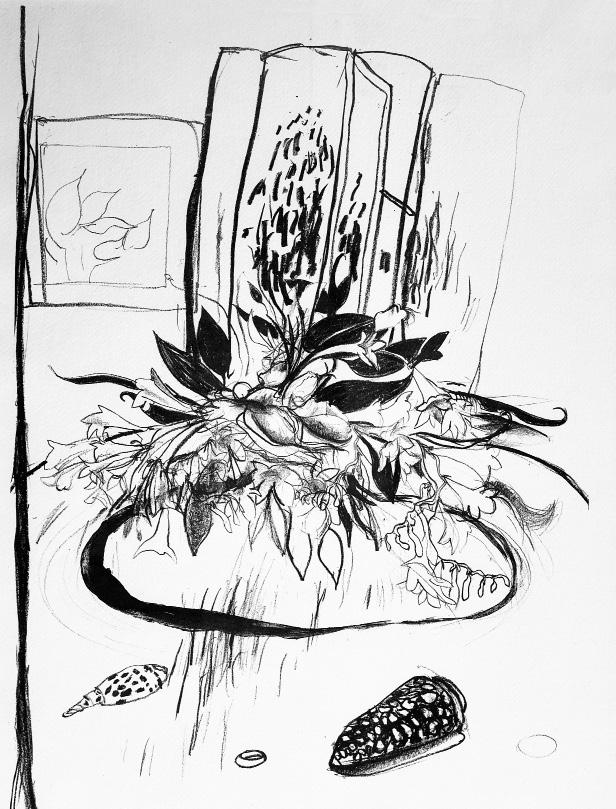
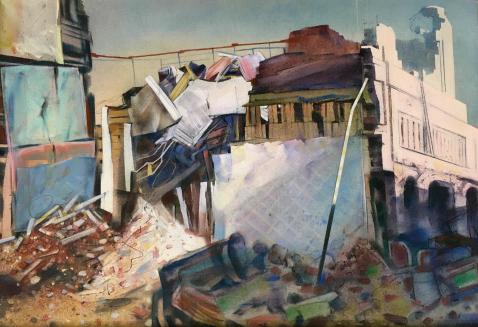
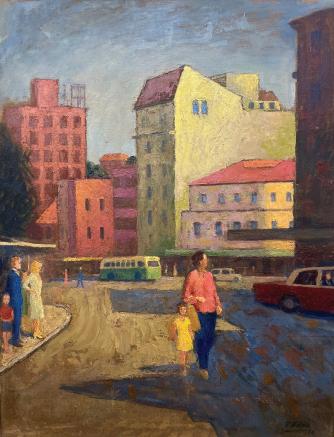
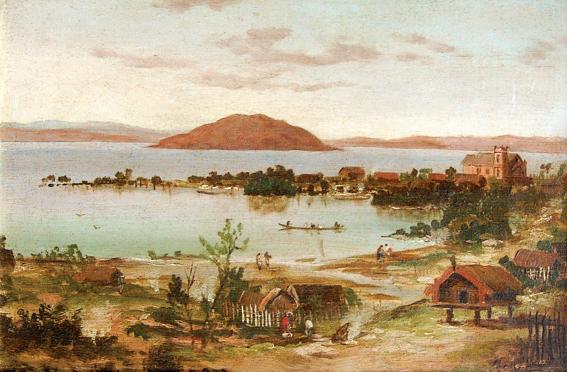
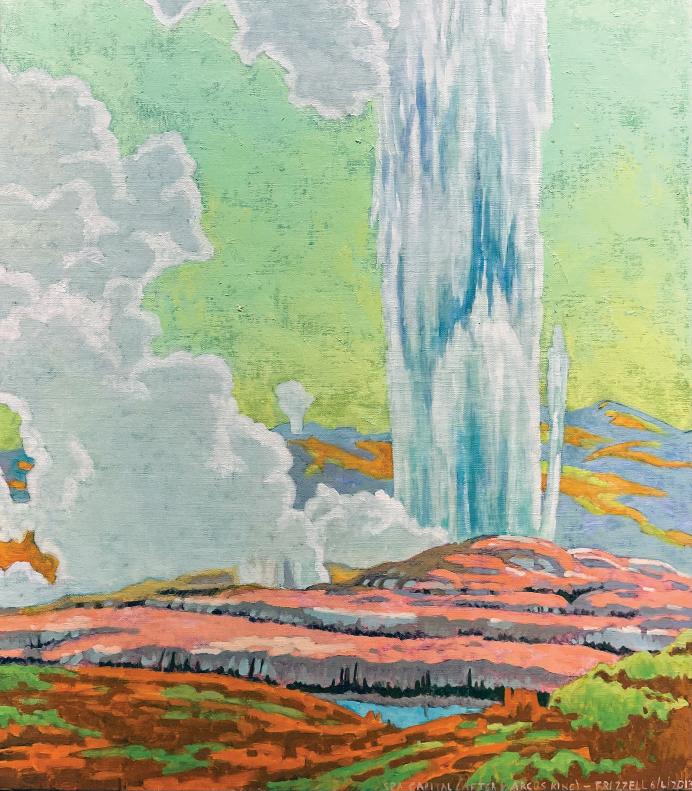
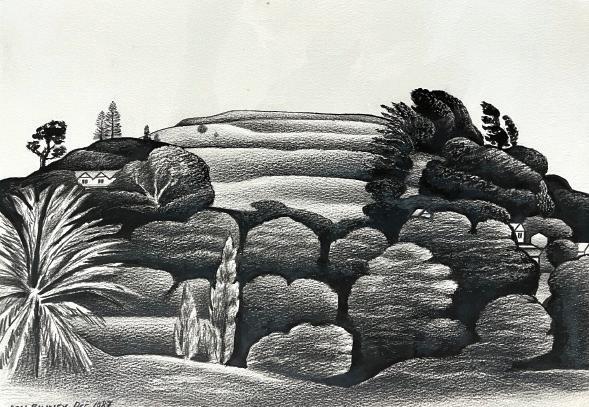
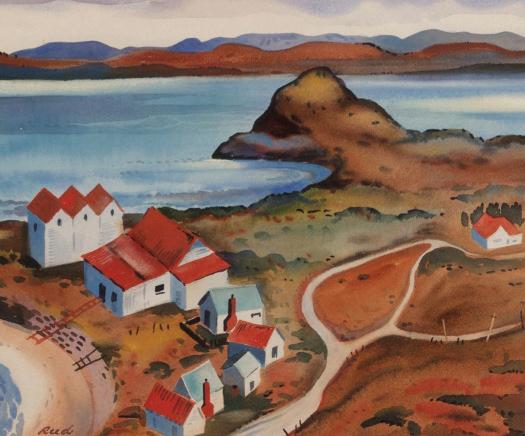
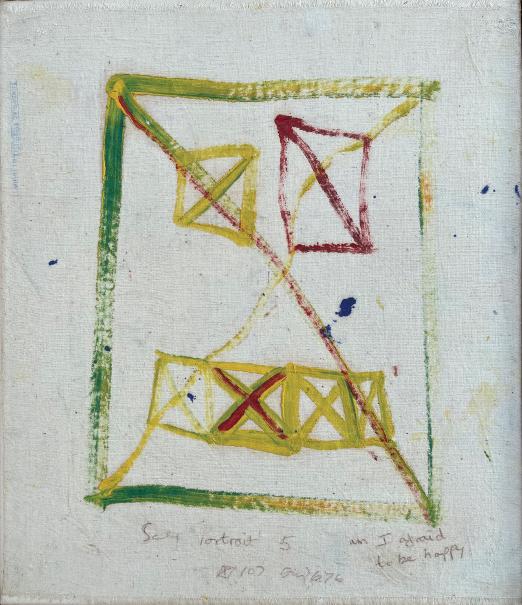
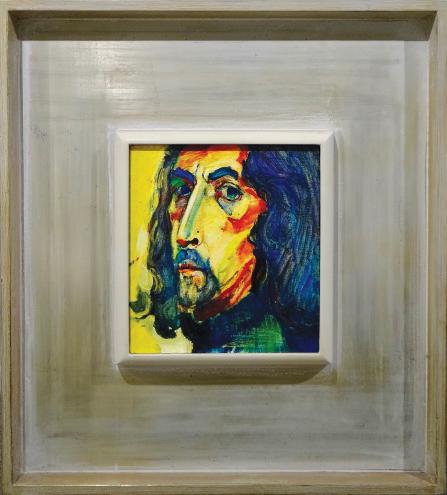
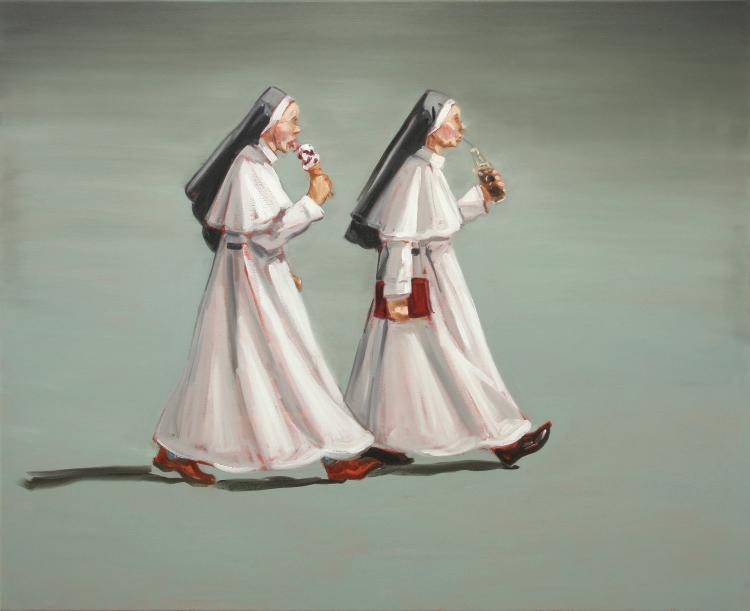
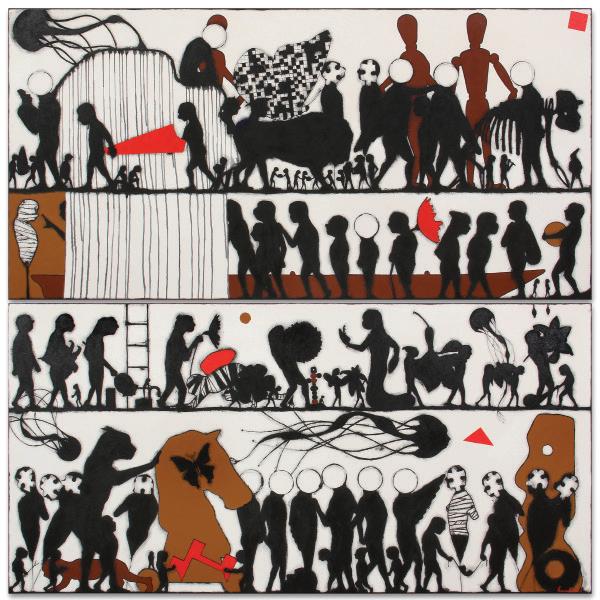
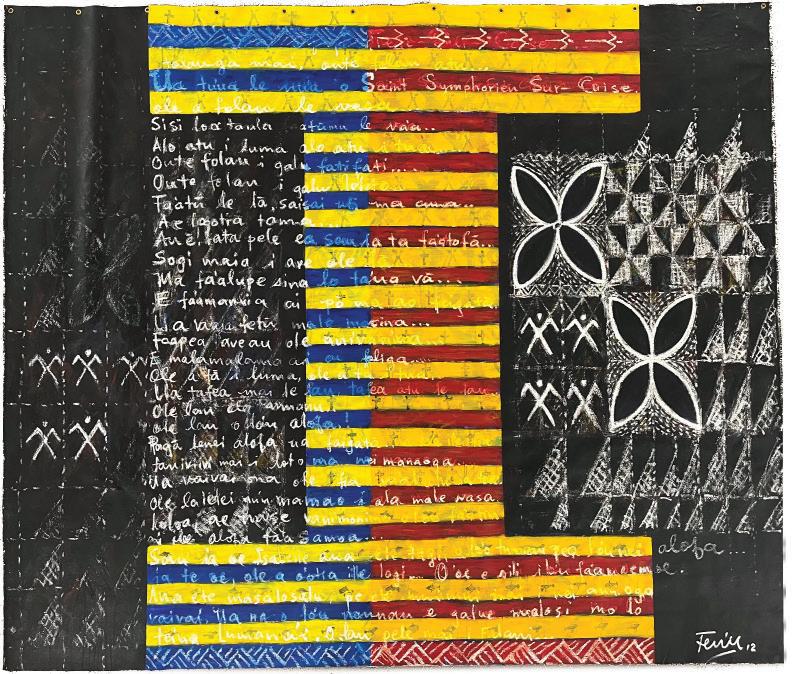
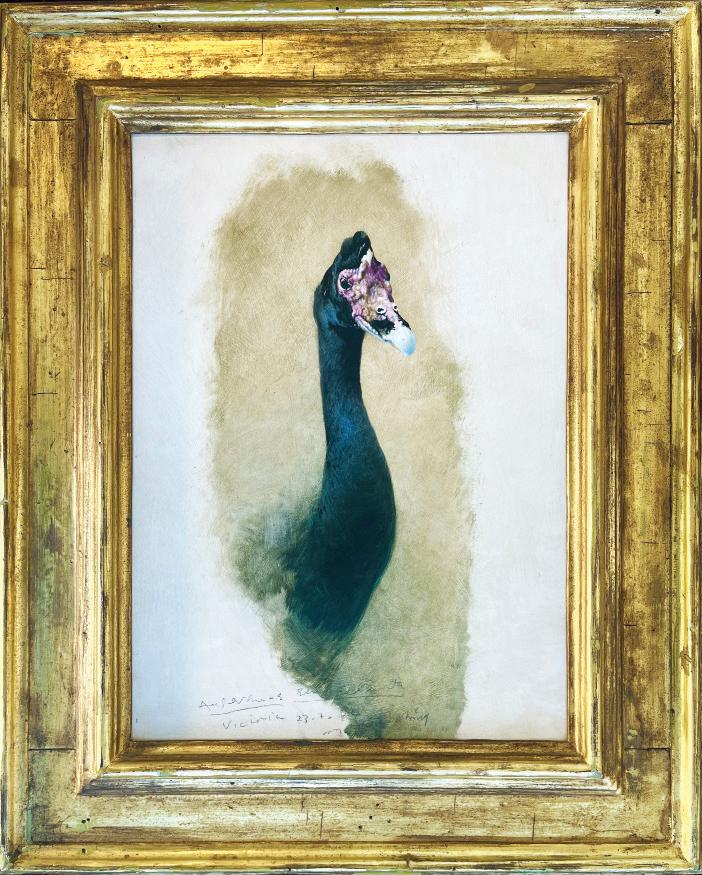
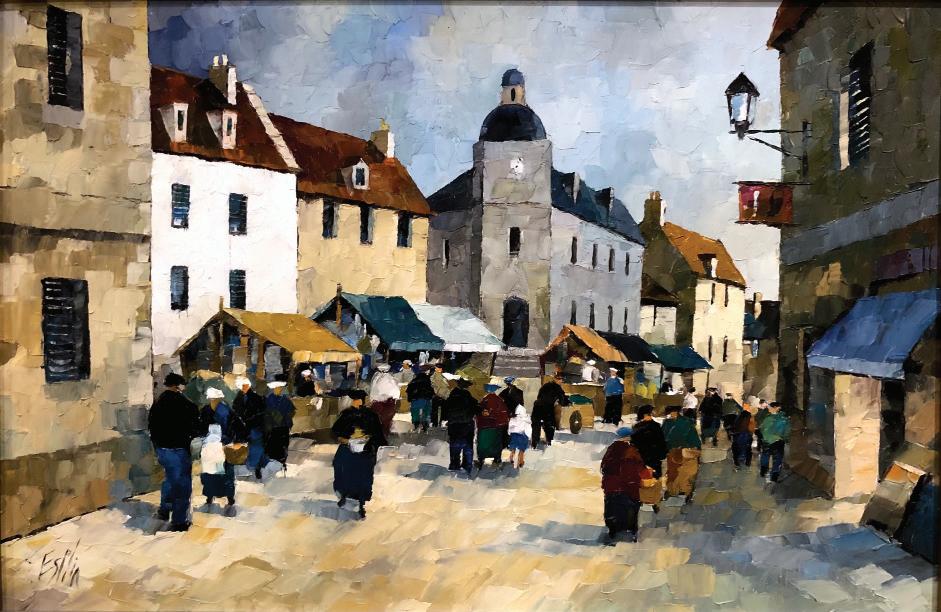
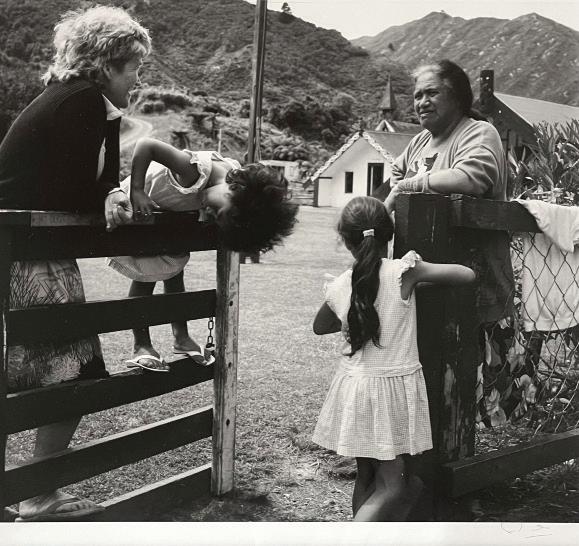
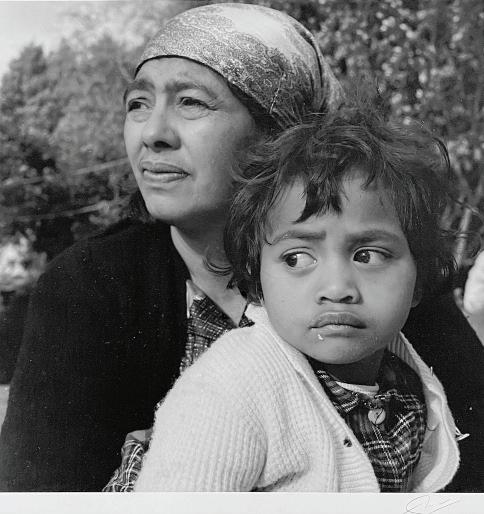
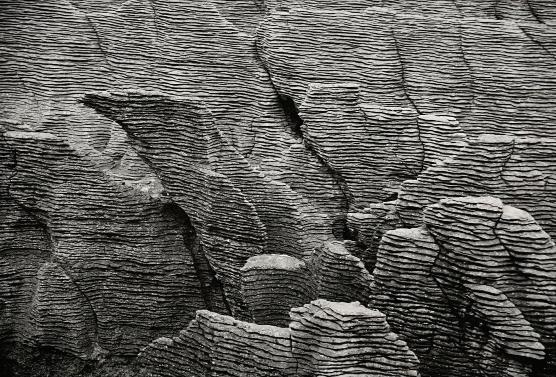
f: Robert Ellis No. 25 Motorway / City Realised $85,280 - an auction record
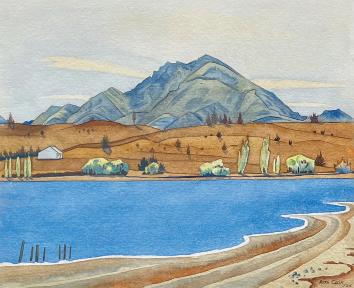
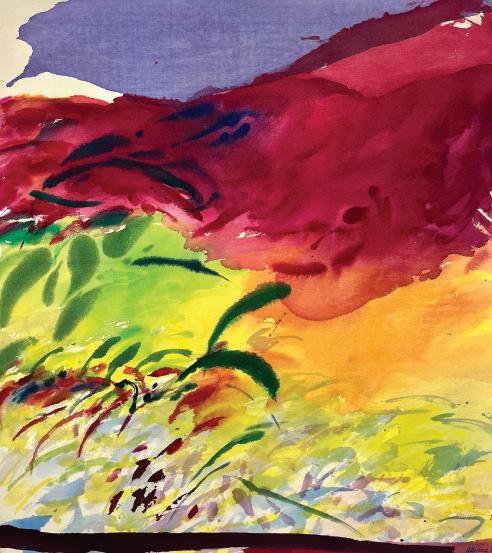
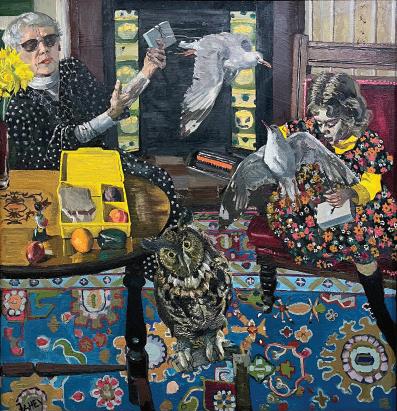
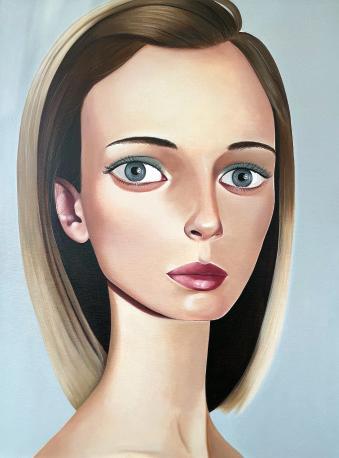
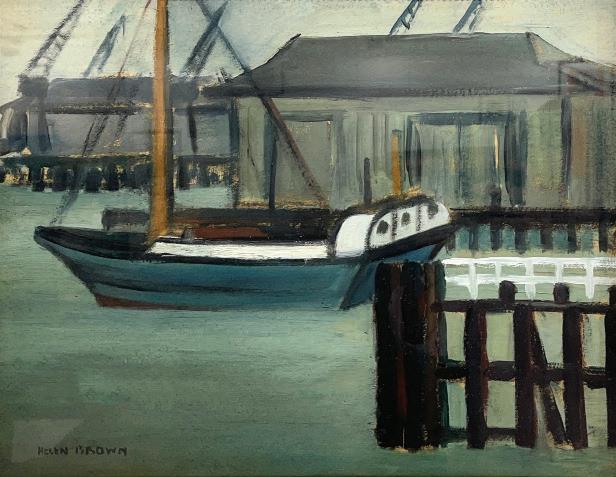
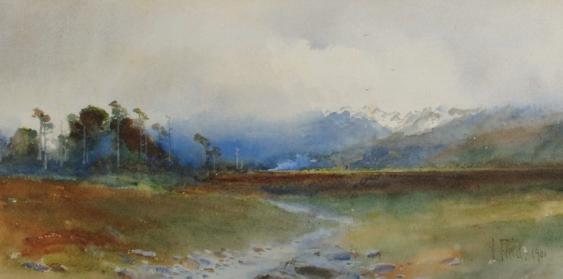
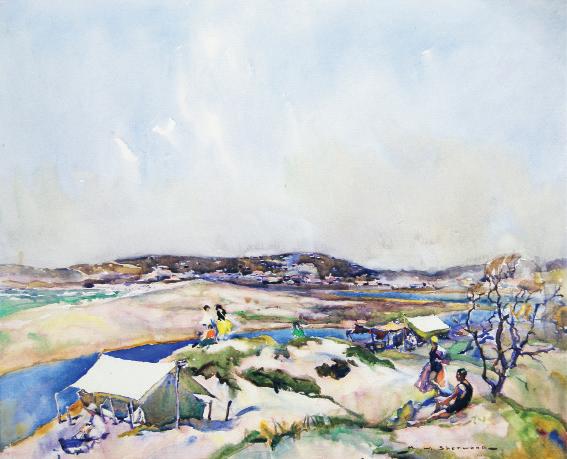
g: Ivy Grace Fyfe Cass Realised $132,130 - an auction record
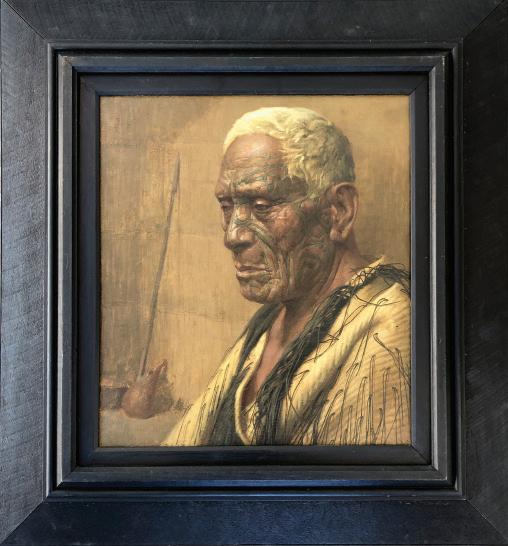
h: Charles F Goldie Te Hau-Takiri Wharepapa Realised $1.885 million - an auction record
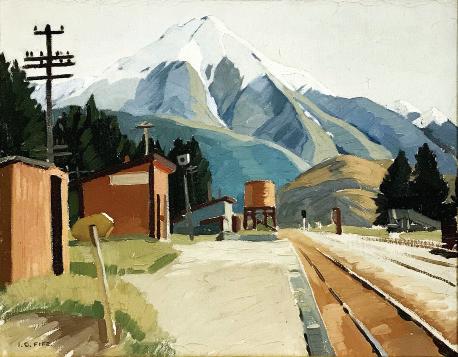
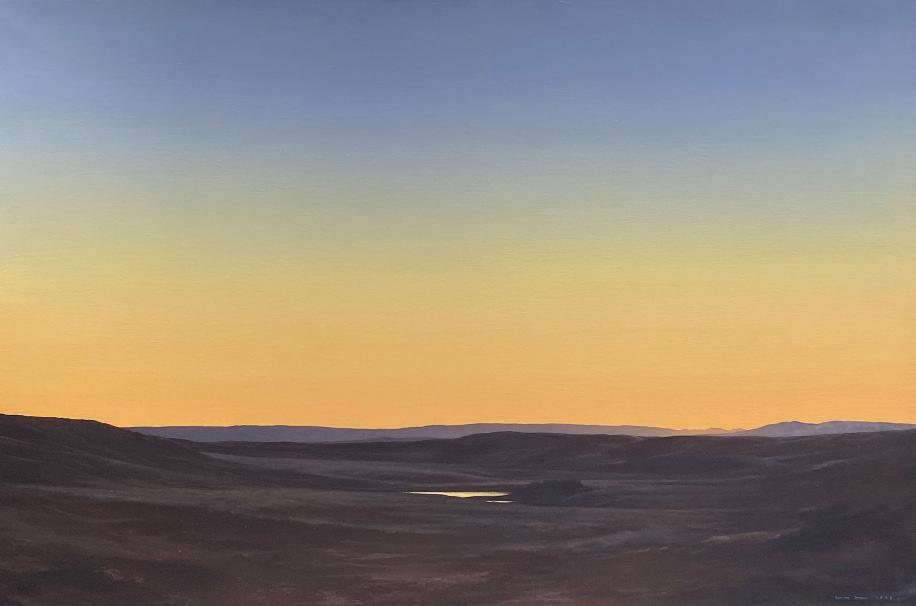
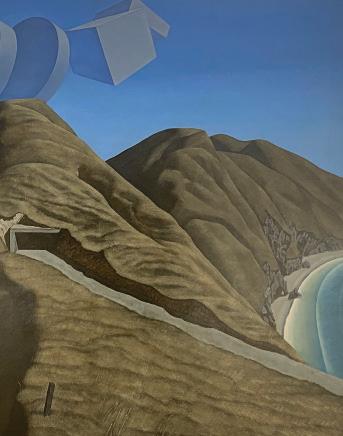
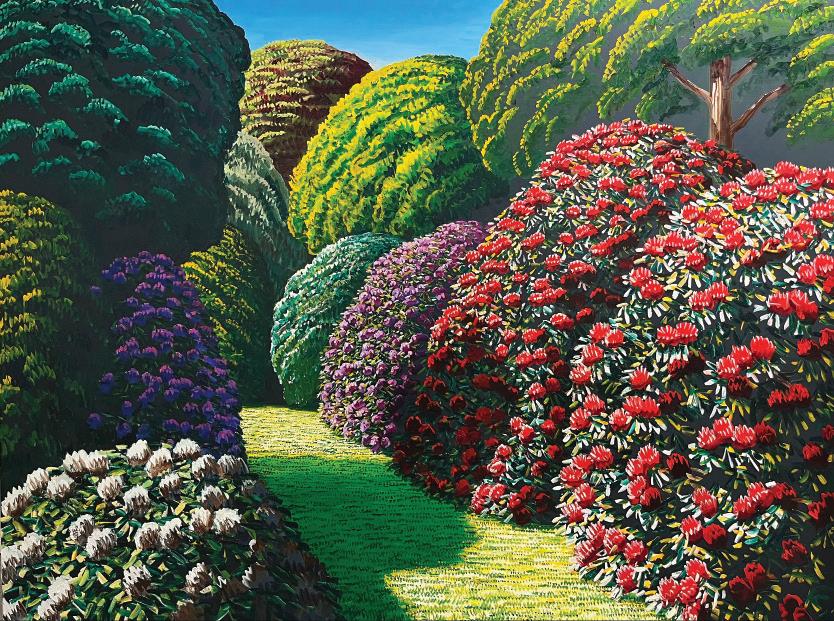
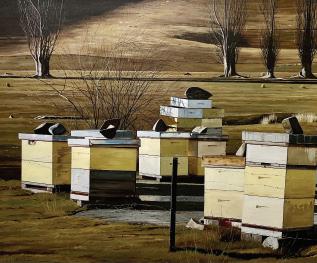
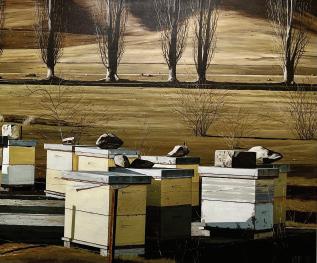
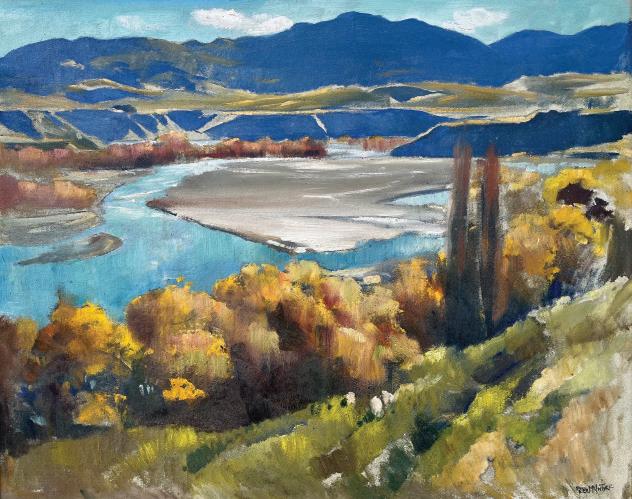
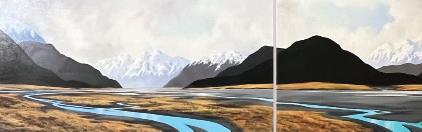
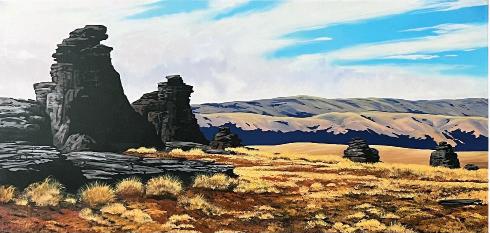
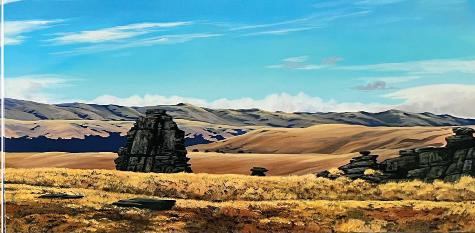
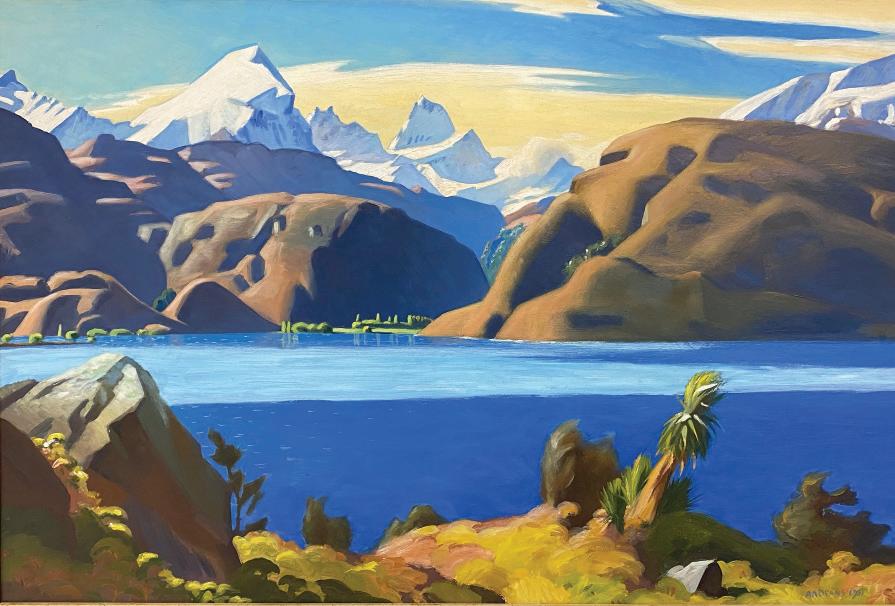
i: Grahame Sydney Away to the South Realised $192,200
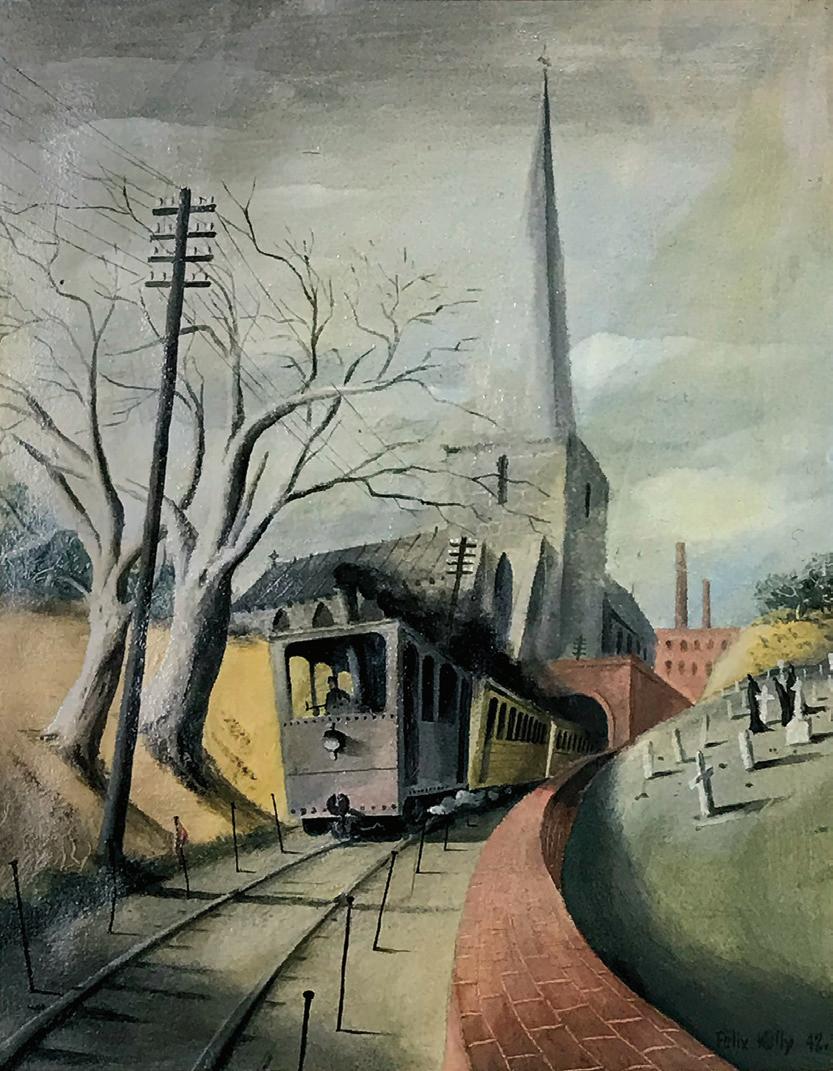
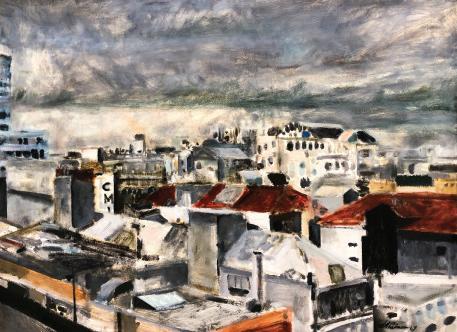
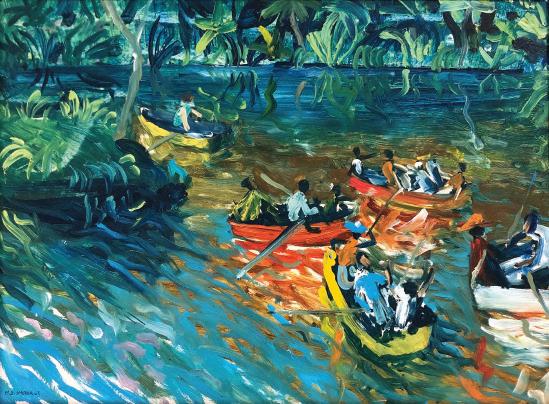
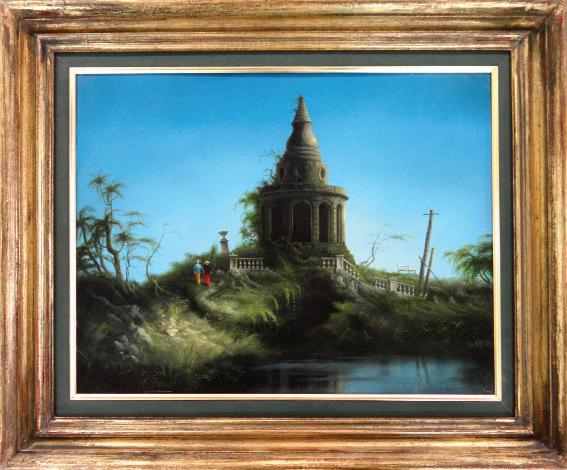
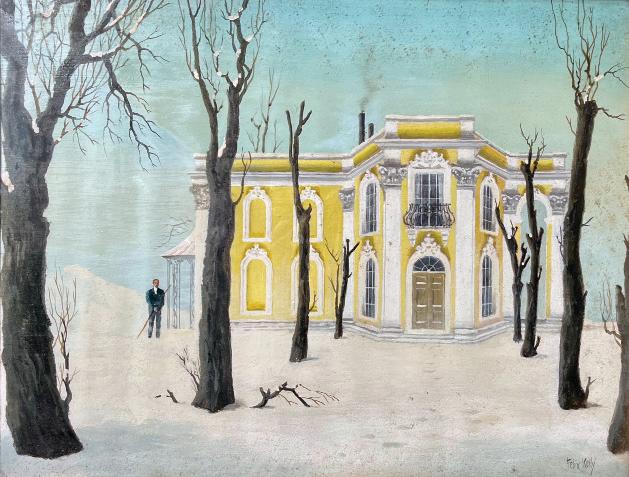
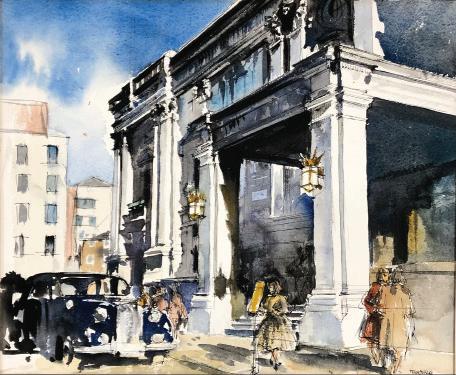
j: Felix Kelly Takapuna Tramway Realised $27,600
Prices include buyers premium
Invitation
A Talk by Gretchen Albrecht & Mary Kisler
11:00am - Friday 29 July
International Art Centre - 202 Parnell Road, Auckland
Influential artist Gretchen Albrecht CNZM will discuss her works from the Steiner Collection.
Art historian Mary Kisler MNZM will discuss works by Frances Hodgkins included in the auction.
Prior to arrival please collect your complimentary coffee from one of three nearby cafes: Biskit, 215 Parnell Road
Notting Hill Cafe, Heards Building Parnell Road Non Solo Pizza, 259 Parnell Road
Live Auction - 6:00pm Thursday 1 September
Catalogue available mid August
Viewing daily at International Art Centre from 26 August www.internationalartcentre.co.nz
1
Abattoirs,
Signed
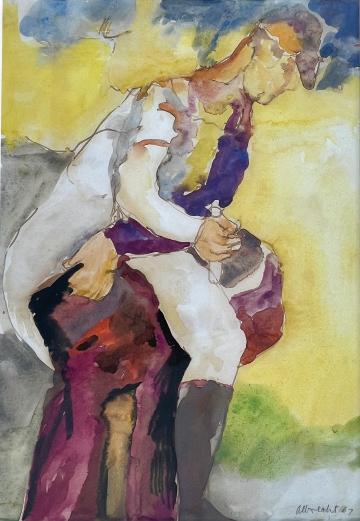
$15,000 - 20,000
PROVENANCE
Private Collection, Auckland
Purchased from John Leech Gallery
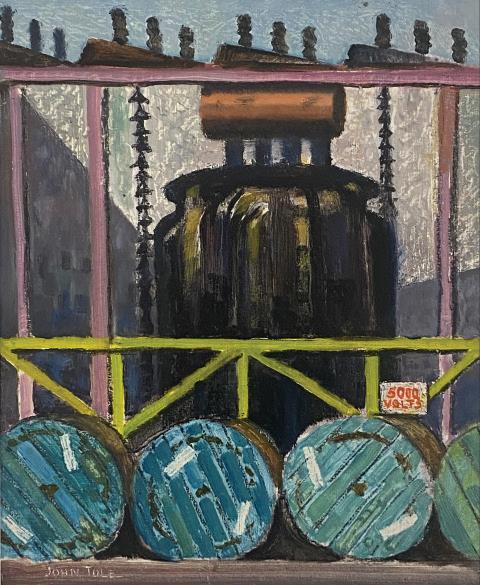
2
5000 Volts Oil on board 30 x 24.5
Signed $10,000 - 15,000
PROVENANCE
Private Collection, Auckland
Traditional & Contemporary Art, International Art Centre, 22/07/1996
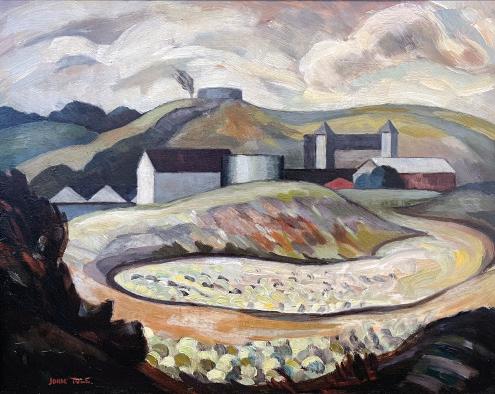
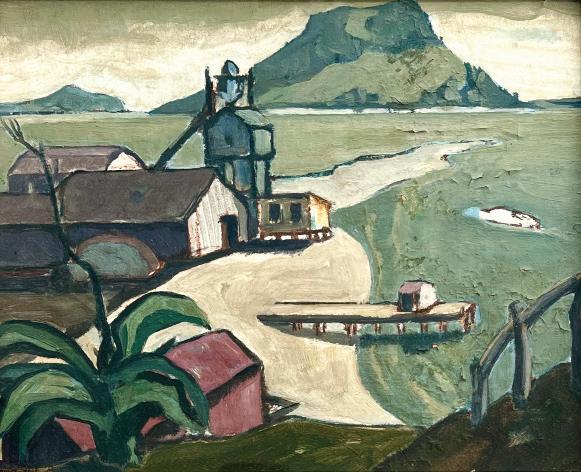
JOHN TOLE (1890 - 1967)
Otahuhu Oil on hardboard 39 x 49
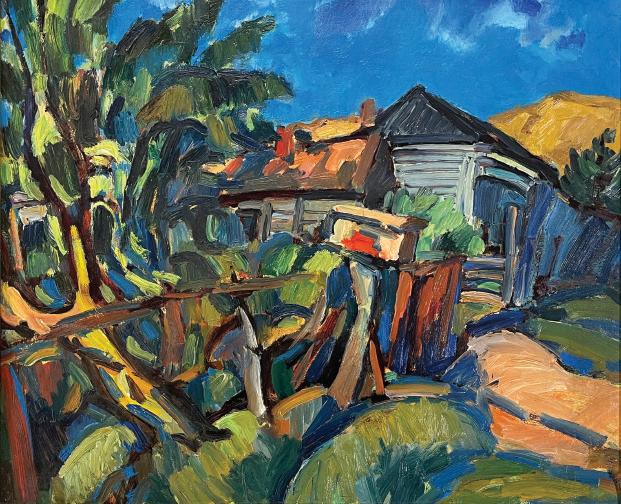
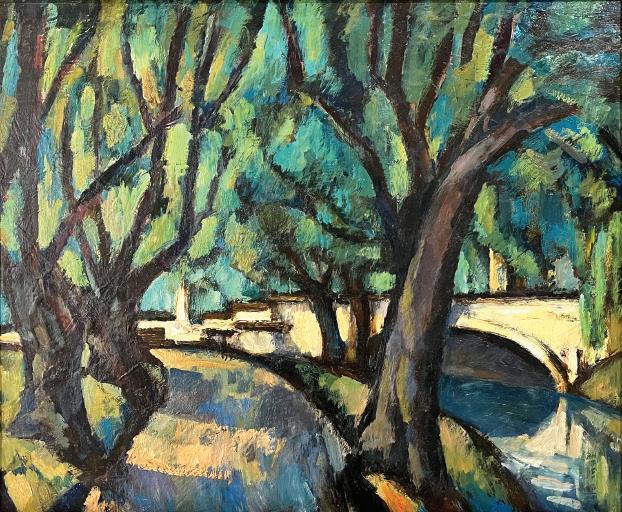
JOHN TOLE (1890 - 1967)
3 CHARLES TOLE (1903 - 1988)
The Mount Oil on board 22.5 x 28.3
Signed & dated 1940
$10,000 - 15,000
PROVENANCE
Private Collection, Auckland New Zealand & European Paintings Webb’s, 15/06/1994
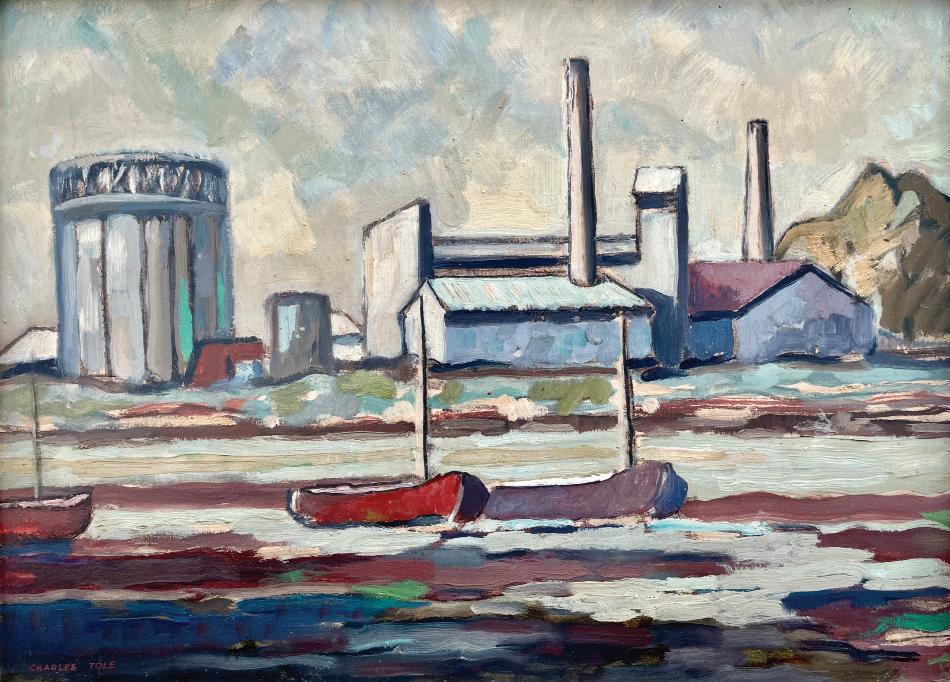
4 CHARLES TOLE (1903 - 1988)
Gasworks and Foreshore Oil on board 28.7 x 39.7
Signed
$10,000 - 15,000
PROVENANCE
Private Collection, Auckland Traditional & Contemporary Art, International Art Centre, 22/07/1996
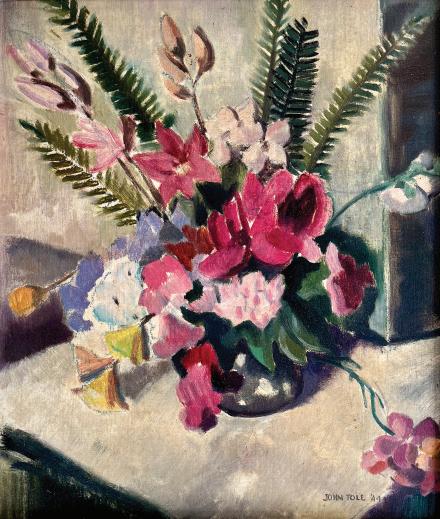
5 JOHN TOLE (1890 - 1967)
Still Life Oil on board 33.5 x 28.5
Signed & dated 1944
$4,000 - 6,000
PROVENANCE
Private Collection, Auckland Fine Art Auction, International Art Centre 15/10/2007
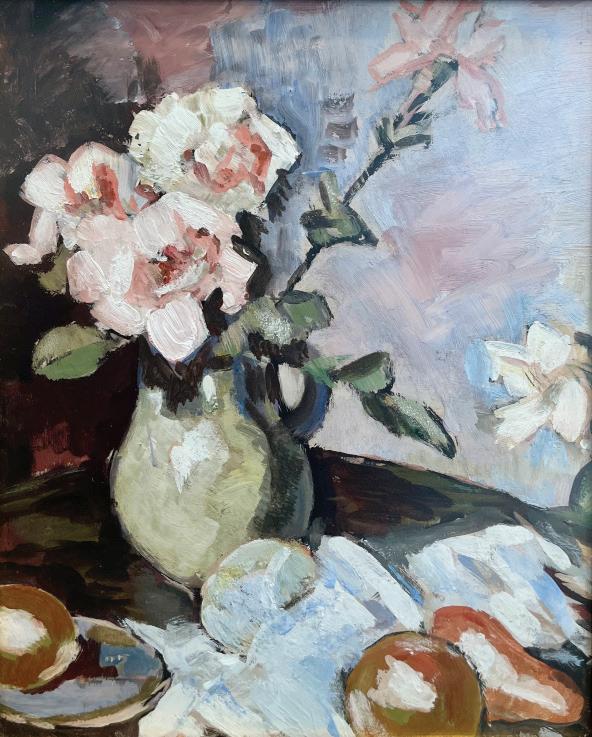
6 DR STANLEY WALLIS (1891 - 1957)
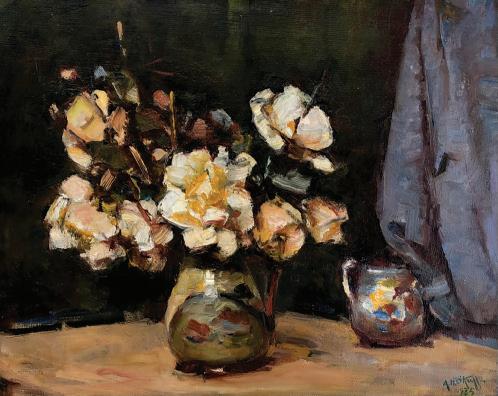
Still Life with Roses Oil on board 31.5 x 25.7
$3,000 - 5,000
PROVENANCE
Private Collection, Auckland
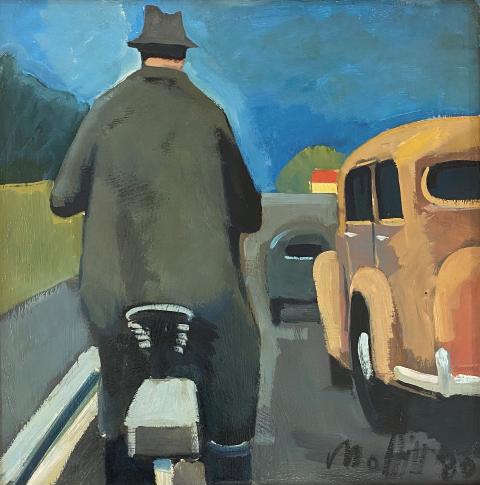
7 TREVOR
(1936 - 2006)
Going Home From Work Oil on board 59 x 59
Signed & dated 1980
Inscribed My Father’s Life Series #15 verso
$10,000 - 15,000
PROVENANCE
Private Collection
Purchased from Warwick Henderson Gallery c. 1986
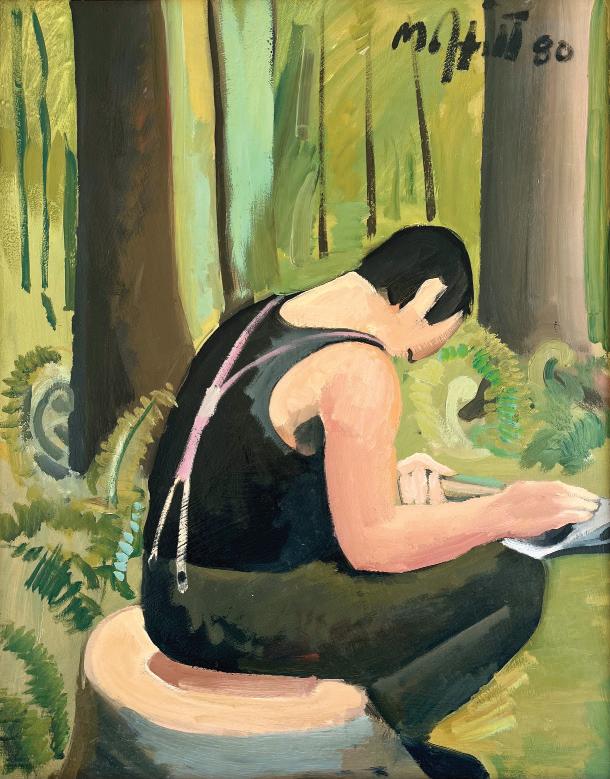
8
(1936 - 2006)
Sharpening the Axe Oil on board 75 x 59
Signed & dated 1980
Inscribed Sharpening the Axe verso
$15,000 - 20,000
PROVENANCE
Private Collection
Canterbury Gallery, Christchurch
MOFFITT
TREVOR MOFFITT
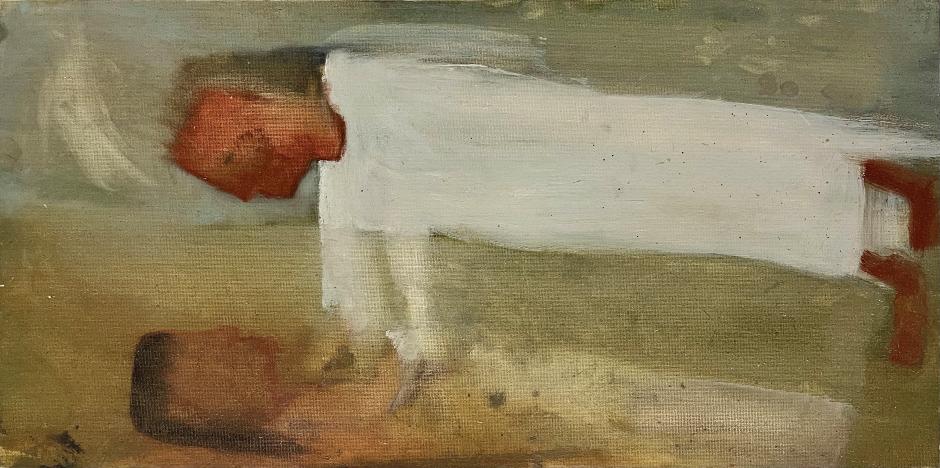
9 STAR GOSSAGE (b. 1972)
Dust
Oil on canvas on board 30.5 x 61
Inscribed & dated 2003 verso
$8,000 - 12,000
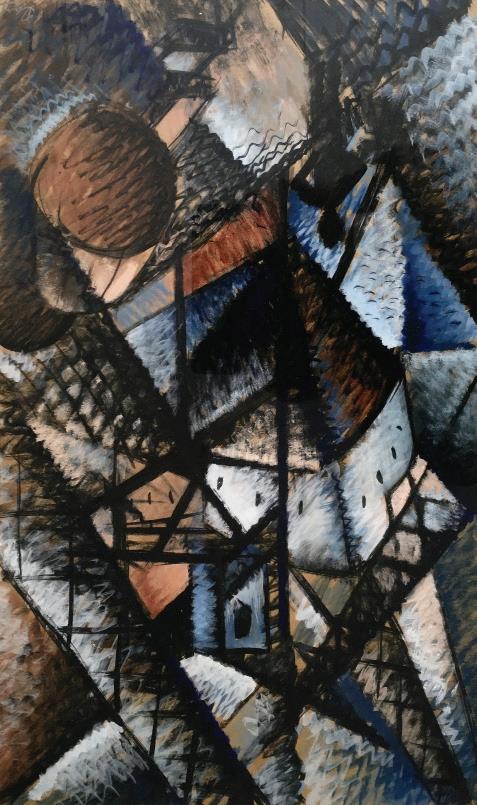
10 MELVIN DAY (1923- 2016)
Untitled - Homage to Braque
Mixed media on paper 67 x 34
Signed
$5,000 - 8,000
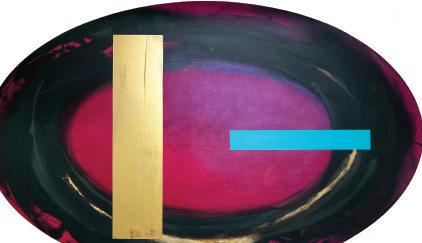
11 MAX GIMBLETT (b. 1935)
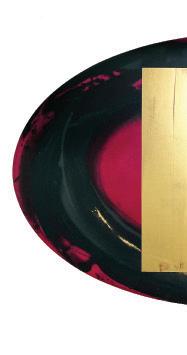
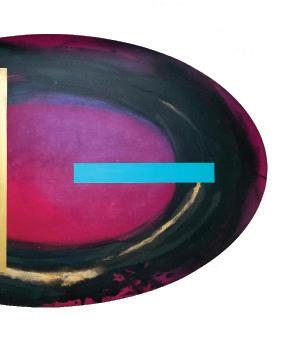
Oval Rising
Acrylic ink on paper 78 x 58
Signed & dated 2017
$9,000 - 13,000
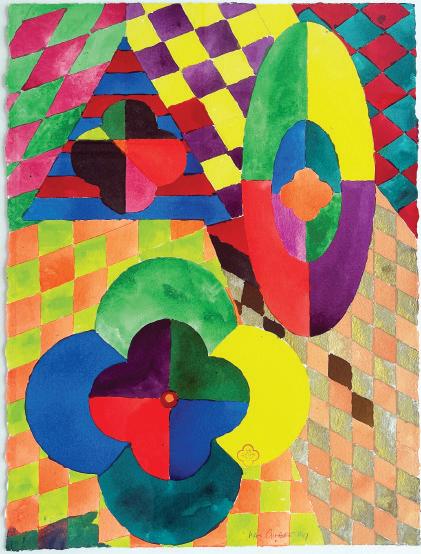
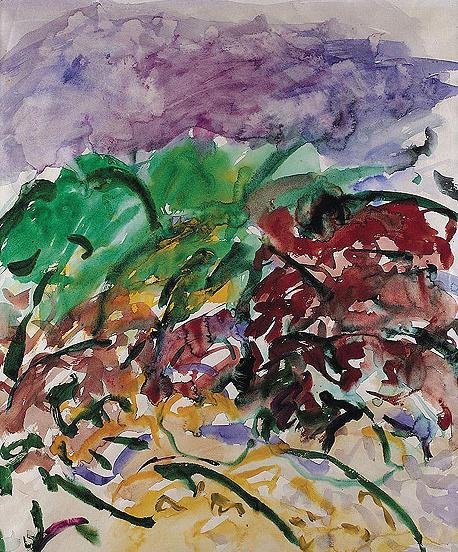
Untitled Watercolour, ink & pencil on paper 75 x 55
Signed & dated 1993
$20,000 - 30,000
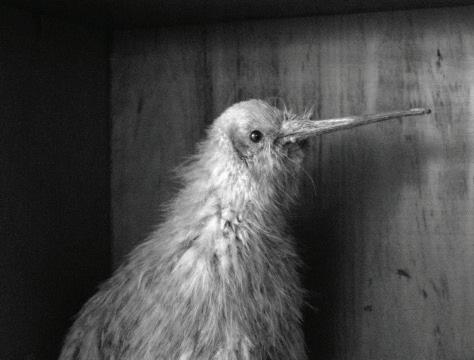
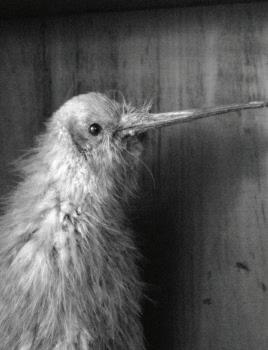
Andrew’s Albino Kiwi Pigment inks on Hahnemule photo rag paper, edition of 10, 140 x 176
$40,000 - 50,000
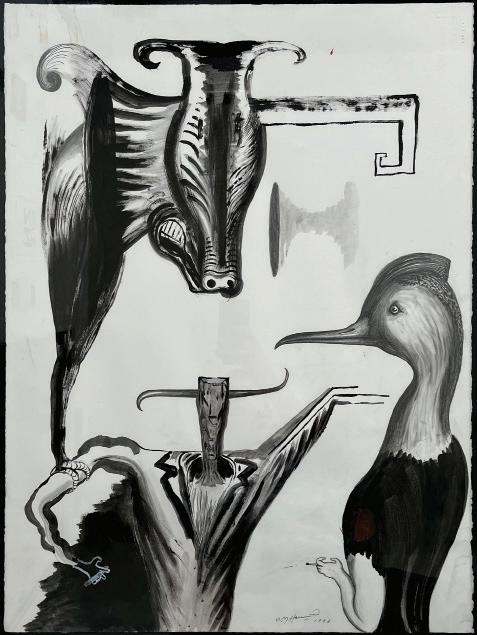
12 BILL HAMMOND (1947 - 2021)
13 FIONA PARDINGTON (b. 1961 )
The ELIZABETH STEINER
COLLECTION LOTS 14 - 35
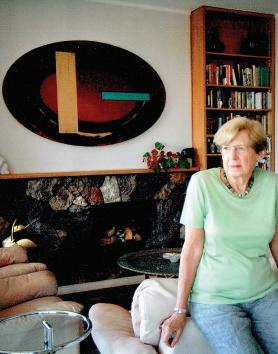
I first met Elizabeth Steiner in 1968 when I was living in Titirangi and supplementing my income by teaching evening classes in painting and ceramics at Kelston Girls High School in West Auckland. She has remained a close friend from that time. Elizabeth‘s talent in drawing and painting was immediately obvious and I discovered she had attended Canterbury School of Fine Arts for two years in the early 1950’s along with fellow students Pat Hanly, John Coley, Quentin McFarlane and Hamish Keith. Over the years we have kept in touch and in 1974 when I started a small private art teaching class, Elizabeth was one of five women who joined it over a three year period.
In the 1960’s, Elizabeth and her husband Trevor began collecting European limited edition prints by artists such as Victor Vasarely, Pierre Alechinsky and Sonia Delauney. Paintings by Frances Hodgkins and Colin McCahon were then added to their collection which gradually broadened to include paintings, works on paper and ceramics by other contemporary New Zealand artists.
Elizabeth and Trevor were early collectors of my art, amassing over the years a considerable collection. Among the first works of mine that they purchased was the 1967 watercolour and ink on paper preparatory study for the painting Wooden Horse that had been purchased by Auckland City Art Gallery in 1967.
The three major paintings of mine being presented in this auction were all bought from the exhibitions where they were first exhibited.
Garden no. 11, 1971 was purchased from my 1978 exhibition, Gardens, 10 Paintings from 1971 at Peter Webb Gallery in his Lorne Street premises. Violet Edge, 1976 was purchased from my solo exhibition Paintings 1975 – 1976, 1977 at Barry Lett Galleries. Measure (Jade) 1994 was purchased from my solo exhibition Gretchen Albrecht, 1994 at Sue Crockford Gallery.
Elizabeth had a remarkable eye for quality and her purchases were always focused on the best of my work, but more importantly she encouraged and supported my endeavours in this very positive and timely manner.
Elizabeth has maintained a lifelong interest in printmaking, bookbinding and handmade artist’s books. These became her main artistic practice and her books are represented in many important overseas museum collections.
The Steiners lived for over fifty years in their Kohu Road, Titirangi house surrounded by their art collection until Trevor’s death in 2007 and, more recently, Elizabeth’s need to move into care in Australia to be near her son and grandchildren.
GRETCHEN ALBRECHT
14
ELIZABETH STEINER (b. 1934)
Trees and Coast Oil on board 49 x 29
Signed, inscribed & dated 1969 verso
$1,500 - 2,500
PROVENANCE
Elizabeth Steiner Collection
15
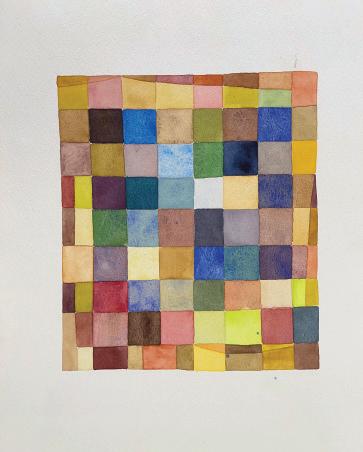
ELIZABETH STEINER (b. 1934)
Colour Study, c. 1970
Watercolour on paper 24 x 21
$800 - 1,200
PROVENANCE
Elizabeth Steiner Collection
16
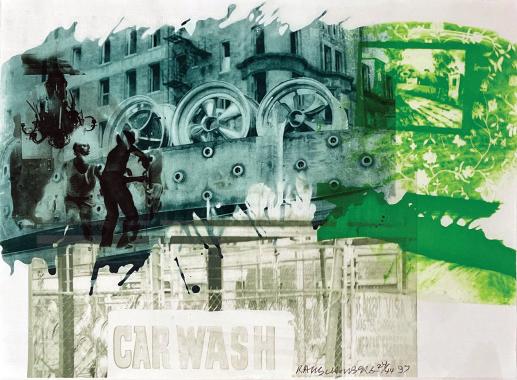
ROBERT RAUSCHENBERG (American 1925 - 2008)
Rotary Drive (Ground Rules)
Intaglio in 4 colours with photogravure on Fabriano 200g paper, edition 24/44 57.15 x 76.2
Signed, numbered & dated 1997
$2,000 - 4,000
PROVENANCE
Elizabeth Steiner Collection
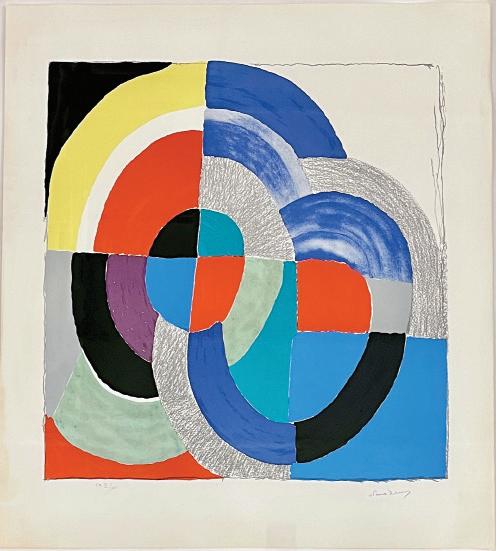
17
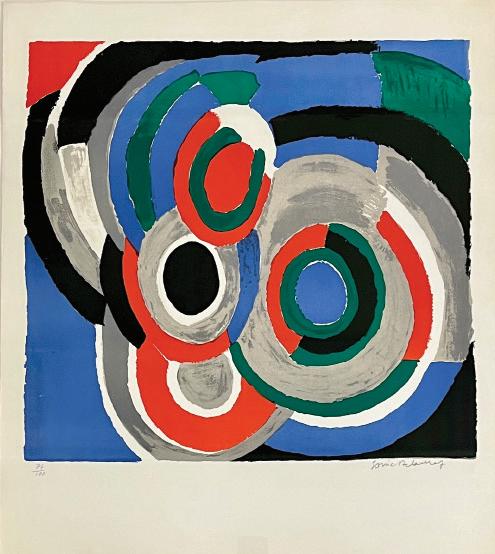
SONIA DELAUNAY
(Ukrainian born French 1885 - 1979)
Pâques Russes, c. 1970
Lithograph, edition III/XXU 54 x 51
Signed & numbered III/XXU
$1,500 - 2,500
PROVENANCE
Elizabeth Steiner Collection
18
SONIA DELAUNAY
(Ukrainian born French 1885 - 1979)
Composition in Red, Blue and Green
Lithograph, edition 75/100 55.5 x 53
Signed & numbered
$1,500 - 2,500
PROVENANCE
Elizabeth Steiner Collection
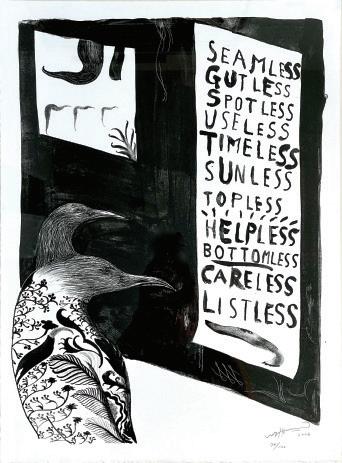
19 BILL HAMMOND (1947 - 2021)
Untitled
Lithograph, edition 79/100 57 x 42
Signed & dated 2006
$5,000 - 10,000
PROVENANCE
Elizabeth Steiner Collection
Purchased from Gow Langsford Gallery, 12/09/1989
20 GRETCHEN ALBRECHT (b. 1943)
Study for Wooden Horse, 1967
Watercolour and ink on paper 36.8 x 25.4
Signed & dated 1967
$3,000 - 5,000
PROVENANCE
Elizabeth Steiner Collection
This is the preliminary study for Albrecht’s Wooden Horse, Auckland Art Gallery Collection
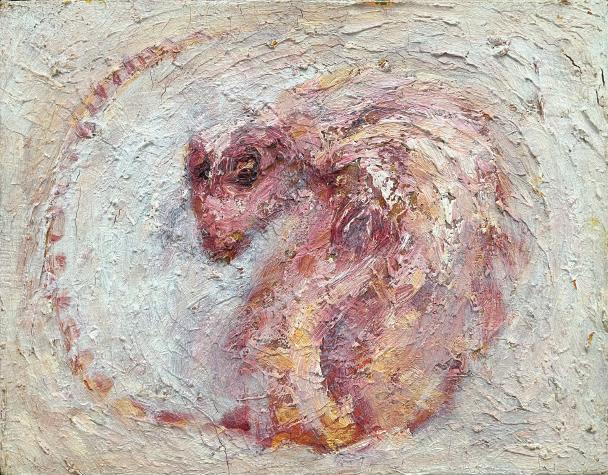
21 ALEXIS HUNTER (1948 - 2014)
Pink Beast
Oil on canvas 18 x 23
Signed
$1,000 - 2,000
PROVENANCE
Elizabeth Steiner Collection
Purchased from Gow Langsford Gallery, 12/09/1989
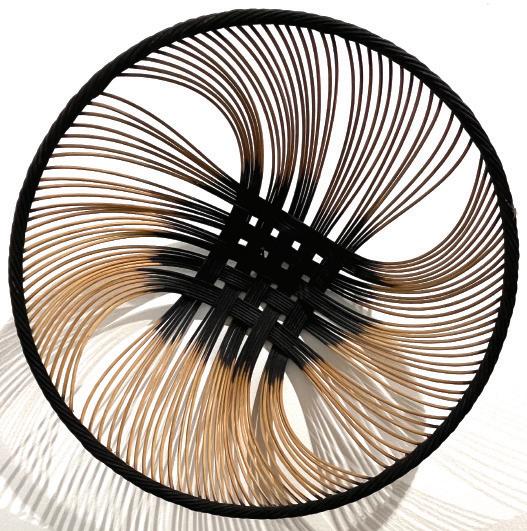
22 RUTH CASTLE (b. 1944)
Cane Platter
Dyed rattan core woven wall hanging 23 x 23
$250 - 350
PROVENANCE
Elizabeth Steiner Collection
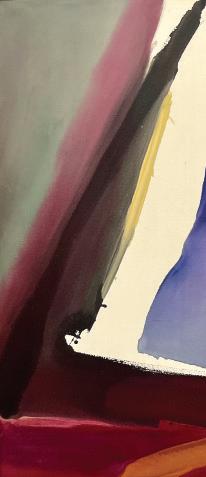
23 GRETCHEN ALBRECHT (b. 1943)
Violet Edge
Acrylic on canvas 139 x 182
Signed & dated 1976
$55,000 - 75,000
PROVENANCE
Elizabeth Steiner Collection
Purchased from Gretchen Albrecht Paintings 1975-1976 - Solo Exhibition, Barry Lett Galleries, 1977
EXHIBITED
Gretchen Albrecht Paintings 1975-1976
Solo Exhibition, Barry Lett Galleries, 1977
AFTERNature: Gretchen Albrecht
A Survey 23 Years
Sarjeant Gallery, Wanganui 1986
Original exhibition label affixed verso Robert McDougall Art Gallery, Christchurch, 1988
ILLUSTRATED
p. 90 Gretchen Albrecht Between Gesture and Geometry, Luke Smythe, Massey University Press, 2019
p. 72 AFTERNature: Gretchen Albrecht
A Survey 23 Years
Sarjeant Gallery publication, 1986
24
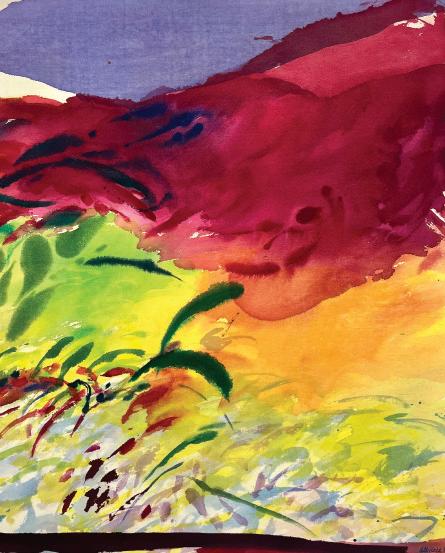
GRETCHEN ALBRECHT (b. 1943)
Garden No. 6
Acrylic on canvas 151 x 135.5
Signed & dated 1971
$50,000 - 75,000
PROVENANCE
Elizabeth Steiner Collection
Purchased from the exhibition
Gardens, 10 Paintings from 1971
Peter Webb Galleries, Lorne Street, 1978
EXHIBITED
Gardens, 10 Paintings from 1971
Peter Webb Galleries, Lorne Street, 1978
AFTERNature: Gretchen Albrecht
A Survey 23 Years
Sarjeant Gallery, Whanganui 1986
Original exhibition label affixed verso Robert McDougall Art Gallery, Christchurch, 1988
ILLUSTRATED
p. 72
AFTERNature: Gretchen Albrecht
A Survey 23 Years
Sarjeant Gallery publication, 1986
25
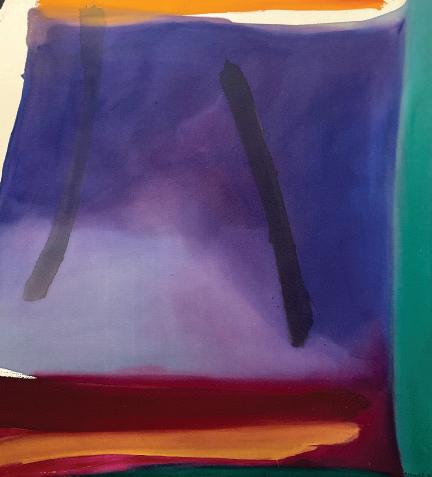
GRETCHEN ALBRECHT (b. 1943)
Measure (Jade)
Acrylic on canvas 115 x 182
Signed & dated 1994 verso
$60,000 - 80,000
PROVENANCE
Elizabeth Steiner Collection
Purchased from the exhibition Gretchen Albrecht, Sue Crockford Gallery, Auckland 1994
EXHIBITED
Gretchen Albrecht, Sue Crockford Gallery, Auckland 1994
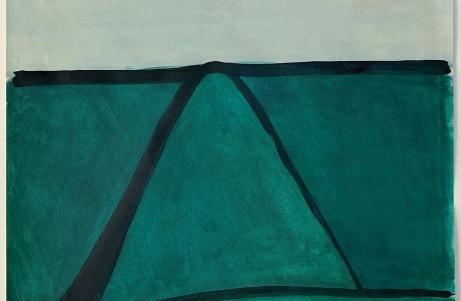
26
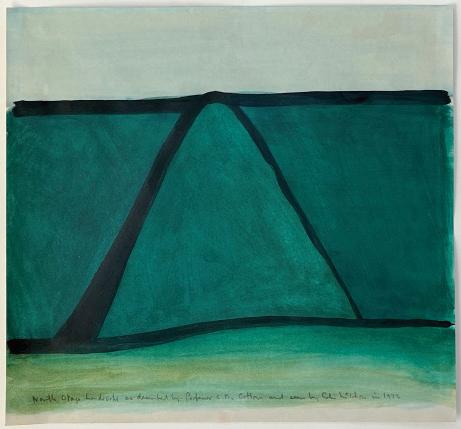
COLIN MCCAHON (1919 - 1987)
North Otago Landscape as described by C A Cotton and seen by Colin McCahon 1972
Watercolour 45.5 x 49.2
Signed, inscribed & dated 1972
$90,000 - 130,000
PROVENANCE
Elizabeth Steiner Collection
Purchased from Important New Zealand Works of Art, Webb’s, 18/4/1991
Colin McCahon database record number cm000535
Colin McCahon first got to know the austere North Otago region when he attended primary school in Oamaru for two years, and bonded with the local landscape. He often later revisited the region both in person and in paintings and in 1967 exhibited 25 North Otago Landscapes at Barry Lett Galleries in Auckland. In 1969 he produced a well-known screenprint called North Otago Landscape, one of the Barry Lett Multiples, which further simplified that landscape to a band of sky at top, a band of plain at bottom and, in between, a wider dark green band featuring a parabola shaped hill outlined in black.
Later again, this screen-print became the template for a group of eight watercolours, all inscribed with the unwieldy title: North Otago Landscape as described by Professor C. A. Cotton and seen by Colin McCahon in 1972; they were exhibited that year at Oamaru Public Library. The present work is one of this group.
Two factors seem to have stimulated McCahon to make this series in 1972. First, in the early seventies he taught several summer schools at Kurow in North Otago, thus renewing his familiarity with a loved landscape. Second, he had recently engaged in correspondence with his friend Ron O’Reilly about the early impact on his work of the illustrations of the geologist C A Cotton, author of a classic book about the New Zealand landscape entitled Geomorphology (1922);
McCahon and his wife were given a copy of the third edition as a wedding present in 1942 but he had already discovered the book at the Dunedin Public Library. He told O’Reilly: ‘I loved his drawings for the way they told about things. I have since then constantly referred to Cotton to explain what it is I have actually seen…I was interested in Cotton through having lived in North Otago for 2 years & having already started my love affair with the place; Cotton told me about it. Nobody told me about Cotton I just found him on a book shelf’ (quoted in Simpson, Colin McCahon: There is Only One Direction, AUP, 2019, p. 48).
Among the eight closely-related watercolours, this particular example is notable for the vibrant green of the central band enclosed by thick black lines which also inscribe the parabolic hill, and for the contrasting pale bands representing sky and plain. The painting has the lucid simplicity of a Cotton drawing, a diagram in a text book, a landscape reduced to essentials in order to explain how the landforms evolved. In such works McCahon was paying homage to one of his earliest mentors in the artistic treatment of the New Zealand landscape.
PETER SIMPSON
27 COLIN MCCAHON (1919 - 1987)
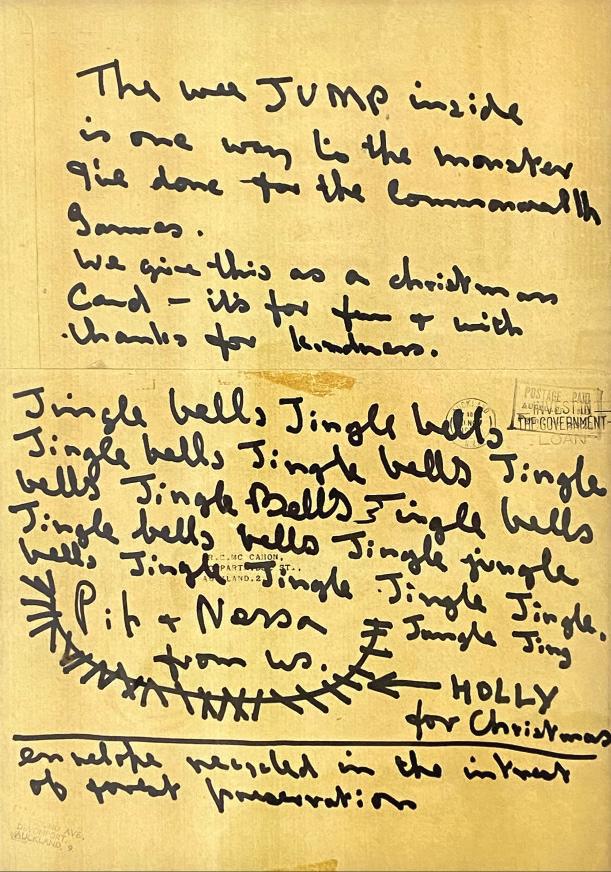
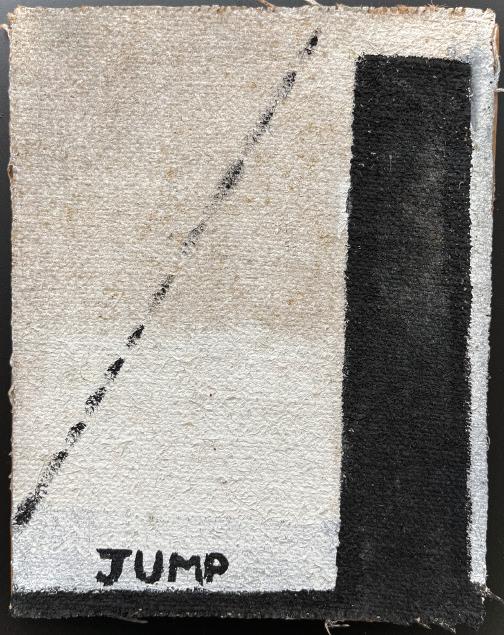
Jump
Synthetic polymer paint on unstretched jute canvas on board 20.3 x 16
Inscribed Jump
$35,000 - 45,000
PROVENANCE
Elizabeth Steiner Collection
Purchased from Fine New Zealand Paintings, Webb’s, 14/6/1995
Includes a facsimile of the envelope in which the painting was delivered to the original owner.
Colin McCahon database. record number cm000571
Building a studio on land purchased with his wife’s inheritance money in 1968, McCahon spent weekends and university holidays at the wild west coast beach. He became entranced by the return of gannets to Moturoa Island where they nested from August to March each year. After he left teaching at Elam at the end of 1970 and became a full-time painter, McCahon completed the Necessary Protection series that segued into the Jump series of 28 paintings.
This work appears like an abstract diagram with a diagonal dotted line, a black column on the right and the word JUMP at the bottom. Like the others in the Jump series, it was inspired by the leap of faith that the young gannets took as fledglings when they leapt off the rock in their first attempt at flying. For McCahon this jump was a metaphor for the need to take a risk in order to grow. He gifted miniature Jumps like this one to friends as Christmas gifts.
The Large Jump (now in the collection of the Auckland Art Gallery) was completed in 1973 in time to be shown at the Canterbury Society of Arts gallery in January-February 1974. It was included in the exhibition Art NZ ’74 which was organised to coincide with the Commonwealth Games being held in Christchurch. In that context, the word jump was mistaken for an allusion to athletics.
28
COLIN MCCAHON (1919 - 1987)
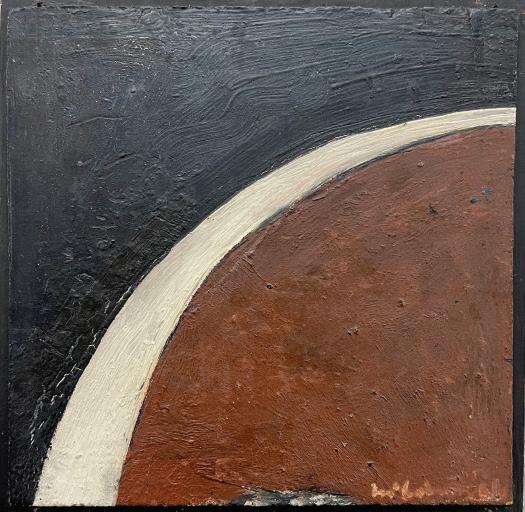
Waterfall
Oil on hardboard 22.4 x 22.7
Signed & dated 1964
$40,000 - 60,000
PROVENANCE
Elizabeth Steiner Collection
Colin McCahon database. record number cm000536
EXHIBITED
Small Landscapes and Waterfalls
Ikon Fine Arts, 14 - 25 September 1964
The exhibition in which this painting was first shown – Small Landscapes and Waterfalls at Ikon Fine Arts in Auckland in September 1964 - was something of a breakthrough for Colin McCahon in the sense that it was the first in which he achieved commercial success. Of the 44 works in the exhibition many were small like this one and sold for the relatively low price of 11 guineas, around $500 in today’s money (larger works sold for up to 50 guineas). To the artist’s great surprise most of the paintings sold; prior to this only a handful of works, if any, would sell from each of his exhibitions, mostly to friends and fellow artists. From this point on he reached an increasingly wider audience, eventually (from 1971) enabling him to paint full-time.
The waterfall image, first seen in this exhibition, became one of McCahon’s most popular and recognisable motifs. According to his own account, the waterfalls motif came both from art history and from direct observation.
At Auckland City Art Gallery he had recently viewed works by Captain James Cook’s artist William Hodges of waterfalls seen in Fiordland in 1772; he also was impressed by waterfalls in oriental art, especially Japanese woodcuts by Hokusai and Hiroshige. Then, too, there were many actual waterfalls in the Waitakere Ranges, in Auckland’s back yard, which he had observed closely.
In McCahon’s paintings the waterfall is usually a simple curve of white paint piercing the darkness, an image so simplified as to border on abstraction but also with symbolic implications. In this characteristic example, on a small square of hardboard, the gleaming white arc divides robustly painted areas of black and brown, the oil paint probably being mixed with sand to create a rougher texture. Though small in scale, this Waterfall punches well above its weight, so to speak, achieving an impact almost monumental.
PETER SIMPSON
29 COLIN MCCAHON (1919 - 1987)
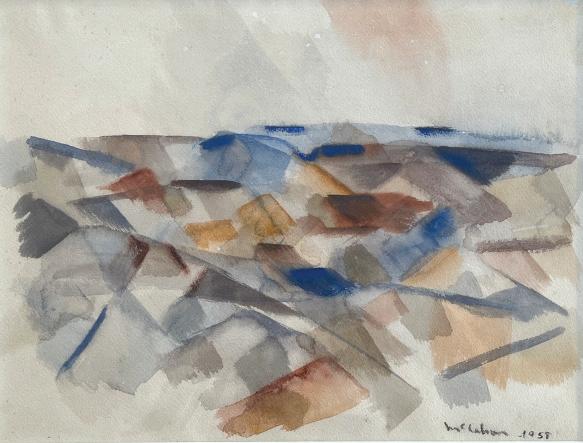
From Mt. Atkinson, Titirangi, 1958
Watercolour 28.5 x 37.4
Signed & dated 1958
$20,000 - 30,000
PROVENANCE
Elizabeth Steiner Collection
Colin McCahon database. record number cm000534
Watercolour was a medium which Colin McCahon utilised only occasionally, at least by comparison with such contemporaries as Woollaston, Angus, Lusk and Spencer Bower who used it frequently. Among the first paintings McCahon made when he moved to Auckland in 1953 was the 6-part watercolour series, Towards Auckland (1953-54). He wrote to his friend Ron O’Reilly: ‘I found a grid of diagonals helped hold the image on the paper & freed the imagination to let the image expand’ (quoted in Simpson, Colin McCahon The Titirangi Years, AUP, 2007, p. 32). This diagonal grid came from McCahon’s effort, influenced by Cubism, to find a new way of ordering space in a picture that did not rely on traditional perspective. From Mount Atkinson, Titirangi, five years later, still shows remnants of this grid in the clearly visible forward and backward leaning diagonal strokes in the picture. A device McCahon learned from Cézanne and Woollaston, his most important early mentors, was to tilt the landscape up towards the viewer in something approaching a bird’s eye view so as to bring distant things closer. An elevated perspective, such as the ’mountain’ named in the title also enhances this effect. These two devices – the grid and the tilted landscape – animate the watercolour.
Blues, greys, ochres and browns, mostly in pale tones but with occasional dark patches, dominate the colour palette. The light touch of the brush work, allowing plenty of white paper to show through, achieves a harmonious effect, and demonstrates the artist’s exceptional skill, even in this infrequently adopted medium.
Note: The McCahon website (www.mccahon.co.nz) lists this painting as being shown at the 1957 Group Show in Christchurch, but the date on the painting is clearly 1958. Certainly a painting of this title was shown in 1957, so either McCahon mis-dated it later or else the work shown in 1957 was a different painting. The 1958 Group Show included a work entitled Landscape from Mt Atkinson, so possibly this is that work. However, the price asked, 15 guineas, given his prices at that time, suggests that it was an oil painting not a water-colour. This small mystery has yet to be resolved.
PETER SIMPSON
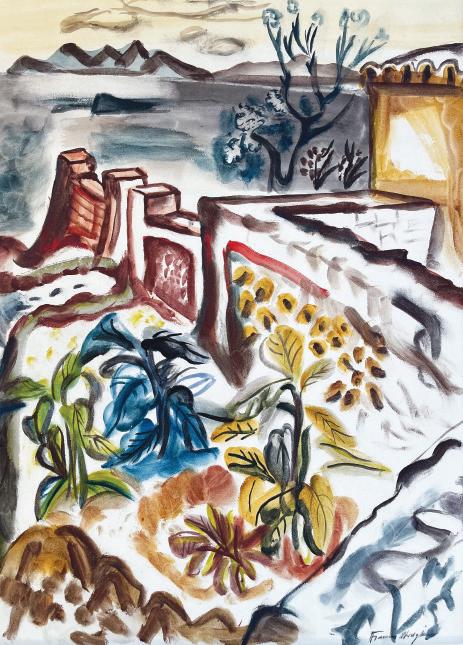
30 FRANCES HODGKINS (1869 - 1947)
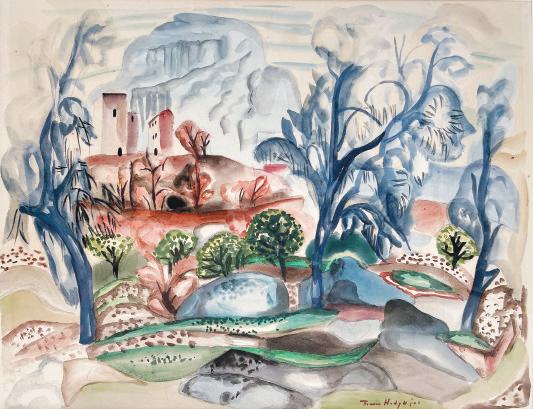
Terrace Garden, Ibiza
Watercolour 54.2 x 39.2
Signed
$100,000 - 150,000
PROVENANCE
Dame Rebecca West (Cicily Isabel Andrews
née Fairfield 1892-1983) London
Lot 82 Christie’s auction, London, 4/11/1983
Elizabeth Steiner Collection
EXHIBITED
New Water-colour Drawings
Alex Reid & Lefevre, London, England, October - November 1933
Original exhibition label affixed verso
New Paintings and Watercolours by Frances Hodgkins, Lefevre Gallery, London October 1937 - November 1937
REFERENCE
Frances Hodgkins database number FH1040 completefranceshodgkins.com
Frances Hodgkins arrived in Ibiza, Spain, in December 1932, remaining on the island for over six months. Once temperatures improved, Hodgkins regularly climbed to the walled citadel of Dalt Vila, that towers over the township below. From this vantage point she had numerous views on hand, and equally importantly, the advantage of solitude, allowing her to concentrate on her work. A favoured location was a rough path that led away from the citadel along the ridge overlooking the sweeping bay of Figueretas. As well as making studies of the windmills that lined the path, she pushed further afield, discovering a narrow set of precipitous steps leading towards the water, with little houses clinging to the hillside either side. She painted the lowest house on at least three occasions, focusing on the walled courtyard at the front. Each was painted from a different angle.
In Courtyard, Ibiza, Hodgkins paints a bird in a cage, basking in the sun, while in Ibiza, Balearic Islands, a cat stalks along the wall nearest the sea, animating the scene.
The same courtyard is referred to in Terrace Garden, Ibiza 1933, but Hodgkins has moved down a step or two so that the end wall stands out against the water. It is both a subtle and masterful composition in which nothing is left to chance. The diagonals of the wall and its crenelated outcrop is mirrored by the ochre wall of the house, while the undulating line of roof tiles on the roof’s edge leads our eye across the sweeping shoreline to the line of hills beyond, punctuated by the waving verticals of a tree whose branches stand out against the sky.
The rocky shoreline around the peninsula of Ibiza is covered with prickly pears and aloes that thrive in its salty environment. While it is impossible to identify the plants Hodgkins has painted, she translates their forms into a series of fluid, rapidly painted lines against the ochre dabs of the rocky wall.
In February 1934, two months after her major exhibition had concluded, Hodgkins was invited by Duncan Macdonald of Lefevre Galleries to lunch with the famous writer Rebecca West, the purchaser of Terrace Garden, Ibiza. Hodgkins replied, ‘… It sounds most terribly attractive meeting Rebecca West… –but I simply cannot promise to coming, feeling as I do at my very lowest ebb of intelligence…’. Although reluctant, she almost certainly succumbed, and West later acquired a second watercolour, Bradford-onTone, c.1937.
West’s married name was Cicily Andrews, née Fairfield, but she is more generally known by her publishing name of Rebecca West. Terrace Garden, Ibiza then passed via Christies into the collection of Trevor and Elizabeth Steiner, where it has remained ever since.
MARY KISLER
31 FRANCES HODGKINS (1869 - 1947)
The Summit, (St Jeannet) c. 1929
Watercolour 37 x 48
Signed
$80,000 - 120,000
PROVENANCE
Mr Hugh Scudamore, 1972
Alan Rowe, London, England, 1974
International Art Centre, 1975
Fran Cornes Collection, Wellington, 1976
Private Collection, Christchurch, 1978
Fine New Zealand Paintings, Jewellery & Decorative Arts, Webb’s 06/04/2005
Trevor & Elizabeth Steiner Collection
EXHIBITED
Frances Hodgkins European Journeys
4 May 2019 - 1 Sep 2019
Auckland Art Gallery Toi o Tamaki
ILLUSTRATED
Figure 6.22 Frances Hodgkins
European Journeys, Catherine Hammond and Mary Kisler
p. 43 Pastorale: The Pursuit of an Image in Paintings by Frances Hodgkins, Linda Gill, Bridgehill Books, 2015
REFERENCE
Frances Hodgkins database number
FH0914 completefranceshodgkins.com
When Frances Hodgkins arrived at the farm of La Pastorale, near St Jeannet, at the beginning of December 1929, she was overwhelmed by the environment. She wrote to Arthur Howell, St Georges Gallery; ‘I have been in this astounding place for 10 days - it is such a staggering change from London fog & gloom that I am getting down to it only now. Really it is so lovely upon on this misty mountain where the air is like wine and the wine like champagne. All is lovely all is peaceful not even the faintest whiff of a neighbour to spoil the absolute charm of the place. There is work enough for a life time…’ After Christmas, she moved into St Jeannet itself, as she was beginning to miss human company as well as the offer of a cooked meal at the only inn. The village clings to the side of a terraced valley that rises from the sea miles to the Alpes Maritimes, the tall stone houses dwarfed by the great rocky outcrop, known as the baou
The watercolours that resulted from this period are dominated by combinations of delicate lilacs, pinks, and mauves, reflecting the soft seasonal tones of the mountains before the summer sun returned in its vigour. Tucked among the rocky outcrops and winding lanes lay tiered groves of olives and grapes among patchwork fields, lined with walls built from the rocks cleared from the ground. Other patches of ground contained vegetables or graze a few sheep, goats or cows, and Hodgkins was fascinated by shards of pottery that indicated centuries of cultivation.
When painting The Summit (St Jeannet), Hodgkins has positioned herself down in the valley, so that the baou looms above the village, the deep channels on the face of the rock appearing from a distance like columns on an ancient temple. Created once it was warm enough to paint out of doors, her leafy trees rise like giants to the height of the mountain, their weeping foliage like so many dancers celebrating the rites of Spring. Their thrusting trunks anchor the composition and seem to embrace the tall pink buildings in their midst. The artist introduces a patterning effect by dabbing on pigment with brush point, a favoured technique that became a leitmotif in her Mediterranean paintings. Light ochres, greens and blues draw our eye back and forth among the different tiers of land that rise from the foreground, their differing foliage like emblems in a richly embroidered tapestry.
MARY KISLER
32 RUDI GOPAS (1913 - 1983)
Central Otago - double sided Oil on board 69.5 x 84
$8,000 - 12,000
PROVENANCE
Elizabeth Steiner Collection
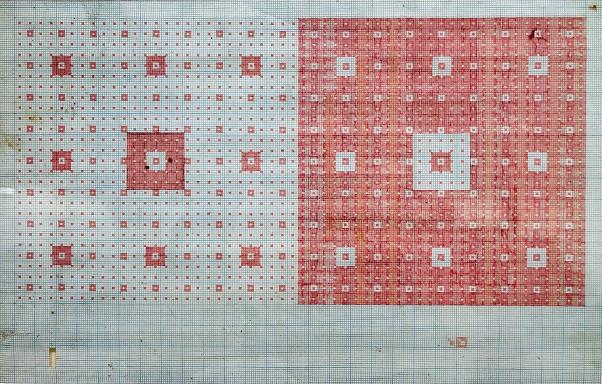
33 MARTIN THOMPSON (1956 - 2021)
Untitled Fibre-tip pen graph paper 18 x 28.2
$1,000 - 2,000
PROVENANCE
Elizabeth Steiner Collection
front
back
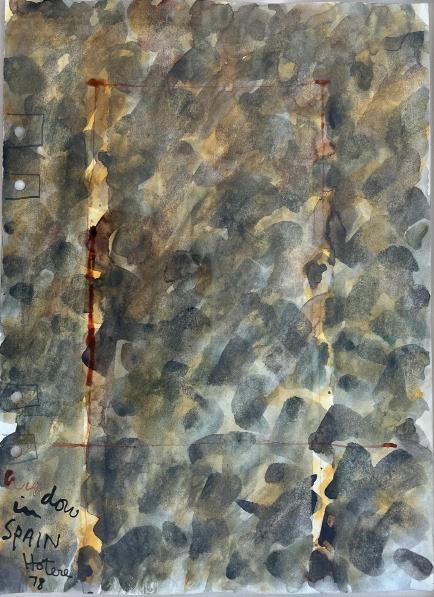
34 RALPH HOTERE (1931 - 2013)
Window in Spain
Watercolour 33 x 24
Signed, inscribed & dated 1978
$6,000 - 10,000
PROVENANCE
Elizabeth Steiner Collection
35 RICHARD LEWER (b. 1970)
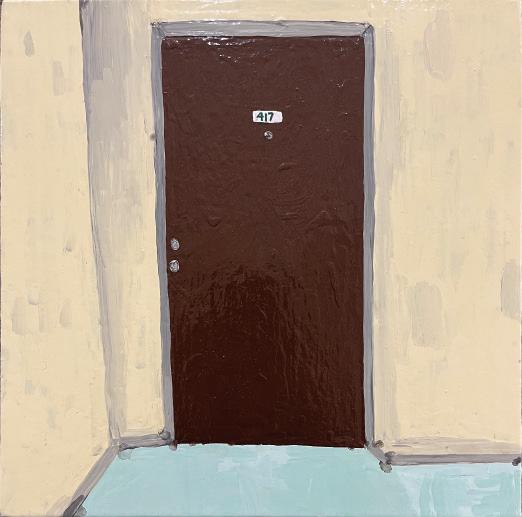
Apartment 417
Enamel on canvas 35 x 35
Signed & dated 2010 on label fixed verso
$2,500 - 3,500
PROVENANCE
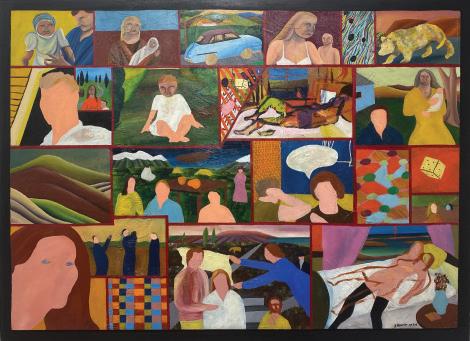
36 JACQUELINE FAHEY (b. 1929)
The Lunch Box, 1978
Drawing Room Scene with Grandma Oil on board 84.2 x 81
Signed, inscribed Drawing Room Scene with Grandma verso
$30,000 - 40,000
PROVENANCE
Private Collection, Auckland
EXHIBITED
Jackie Fahey Paintings,
Barry Lett Galleries, 28 May - 8 June, 1979
Anxious Images, Aspects of New Zealand Art, Auckland City Art Gallery, 1984
Exhibited as Drawing Room Scene with Grandma, Emily and Birds
Original label affixed verso
ILLUSTRATED
p. 26 Anxious Images, Aspects of New Zealand Art, Auckland City Art Gallery publication, 1984
The open school lunch box at the centre of this composition gives the work its title, but its vibrant yellow is also a point of focus which links key elements of the composition together. It is a colour picked up in the roll - necked sweater worn by the artist’s younger daughter Emily, the lunchbox’s owner, who sits on a the red velvet seat of the Victorian chair on the right. Opposite Emily is Margaret, the artist’s elderly mother, who, having had a fall was briefly living with her daughter Jacqueline’s family in one of the Carrington Hospital doctors’ houses. Freshly picked bright yellow daffodils, perhaps grown from bulbs in the grounds of the psychiatric hospital where Jacqueline’s husband Dr Fraser McDonald was Medical Superintendent, sit on the table at Margaret’s elbow. Rather than a traditional still life on the tabletop, Fahey has juxtaposed the packed school lunch with a green pepper, orange and nectarine, elements which enliven the composition with shape and gloss. Although it is spring time, the electric heater is glowing orange in the hearth, placed in front of the ornate Royal Doulton ceramic tiles which decorate the Victorian fireplace with tones of yellow, blue and green. In this way, the artist creates a diamond shape of yellow highlights to link her pictorial elements.
Both Margaret and Emily hold birds on stands in their hands, seagulls which have been taxidermied in attitudes of swooping flight. The birds were on loan at the time to the artist to assist with imagery to feature in her large anti-war painting The Hill of Bitter Memories completed in 1982, now in the collection of the Wallace Arts Trust. Emily is dismayed that the birds have died, and her face is cast down, while Margaret looks up at us, gesturing the bird she holds in her left hand, as if to show us that this is how a real bird might fly. Grandmother and granddaughter, young and old, bookend the trajectory of female life, while the European owl sits on a perch in the foreground, gazing out at the viewer with large, golden eyes, symbolising wisdom. The patterning of the blue Turkish carpet which stretches out across the floor vies for attention with the floral pattern of Emily’s frock, and the white print on Margaret’s more sedate dress. Behind, the vertical stripes of wallpaper in the background close off recession. Typically for Fahey’s works from the 1970s, this painting has been inspired by the artist’s domestic life, when caregiving responsibilities and art competed for her attention on a daily basis.
Jacqueline Fahey studied painting at Canterbury College School of Art in Christchurch, where she was taught by Cecil Kelly, Russell Clark, Bill Sutton and Colin Lovell-Smith, completing a Diploma of Fine Arts in 1952. Marrying, and having three daughters temporarily slowed her exhibiting career but her distinctive feminist perspective was apparent in her earliest works. Awarded the New Zealand Order of Merit for services to painting in 1997, a decade later her works Christine in the Pantry (1972) and Sisters Communing (1974) were selected for the major exhibition WACK! Art and the Feminist Revolution at the Museum of Contemporary Art in Los Angeles.
In 2013, she received an Arts Foundation Icon Award, an honour reserved to 20 living NZ artists, and her work from the 1970s was the subject of a book and exhibition titled Say Something! at Christchurch Art Gallery in 2019, organised to coincide with the 125th anniversary of women’s suffrage in New Zealand.
LINDA TYLER
37
STANLEY PALMER (b. 1936)
City in Grey and Black Oil on board 90 x 121
Signed & dated 1967
Inscribed City in Grey and Black on label affixed verso
$8,000 - 12,000
38 ROBERT ELLIS (1929- 2021)
City at the Night Time Oil on canvas 91.4 x 61
Signed & dated 1969
Inscribed No. 5 City at the Night Time on stretcher verso
$30,000 - 40,000
EXHIBITED
Eight New Zealand Artists: Binney
Ellis Garrity Hanly McCahon Mrkusich
Ritchie Twiss, Cat no. 10
National Gallery of Victoria, 1966
Bonython Gallery Adelaide, 1966
Rudy Komon Gallery Sydney , 1966
Curated by Hamish Keith
Bears original exhibition label verso
Note, the original exhibition catalogue incorrectly states this painting is oil on hardboard. A facsimile copy of the catalogue is included with this lot
Our thanks to Hamish Keith for his assistance in cataloguing this lot
39 JOHN WALSH (b. 1954)
He Kotahitanga
He Pouwhenua
He Kaihautu
Oil on canvas 122 x 150
Signed, inscribed & dated 2004 verso
$40,000 - 60,000
PROVENANCE
Private Collection, Wellington
40 MICHAEL SMITHER (b. 1939) Akmons
Oil on board 70 x 114
Signed, inscribed Akmons & dated 2006 verso
$120,000 - 160,000
PROVENANCE
Private Collection, Auckland
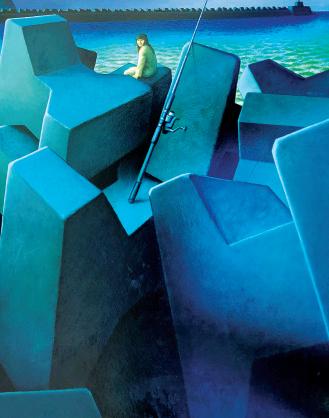
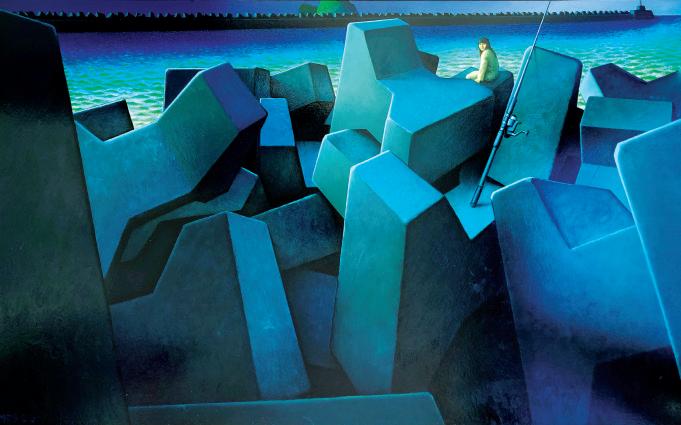
Stricken with toothache one day, so the story goes, Michael Smither started drawing rocks to take his mind off the pain. Studying the many shapes that looked the same, he realised how each one has to be rendered differently as it catches the light and creates shadow. In this painting, he has extended the technique of painting round-edged stones to encompass akmons, the name given heavy blocks of concrete designed in the Netherlands in the 1960s to reinforce seawalls. As he has done with the stones of the South Taranaki coastline in works like Rocks with Mountain (1968) in the collection of the Auckland Art Gallery, where a tiny tractor and Mount Egmont are dwarfed by grey boulders in the foreground, he uses a rapidly receding perspective in this painting to achieve a sense of the enormous size of the concrete formations. While the location is not identified in the title, it is recognisable as Port Taranaki. There, 13 tonne akmons are regularly lifted into place by huge cranes to shore-up the Main Breakwater, and 4.5 tonne akmons are used to protect the Lee Breakwater from the action of the Tasman Sea.
Reclamation for the Lee Breakwater was begun in 1966, and in 2006 when Smither painted these structures in this painting, they had been in position for forty years.
But Smither has a way of making the familiar seem strange. These concrete forms seem futuristic or extra-terrestrial, taking on a surreal or even menacing aspect. The mood is set by the way in which Smither has rendered them in cool blues which make it seem like evening, even though the sun is shining overhead. The akmons dwarf the woman seated on one of the surfaces, and make the fishing rod behind her seem fragile and unprotected. By comparison, the surface of the sea which she has been contemplating is inviting, reflecting the azure blue of the sky on a summer’s day. In the distance is the saw-toothed outline of the breakwater, with the Sugar Loaf islands beyond.
The beauty of this coastline – well-known by Smither, who grew up in New Plymouth - is contrasted with the frightening scale of human intervention, symbolised by the akmons. They pile up towards the viewer, threatening to tumble forward and crush us under their weight, perhaps acting as a metaphor for damages done by humans to the natural environment which will have their consequences in the future.
LINDA TYLER
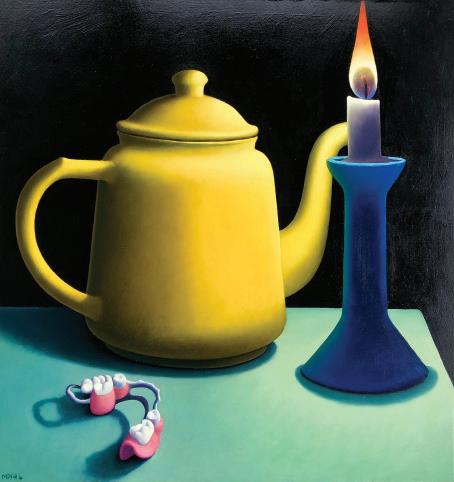
41 MICHAEL SMITHER (b. 1939)
Dark Night of The Teapot
Oil on board 64.8 x 61
Signed & dated 1994
$70,000 - 100,000
PROVENANCE
Private Collection, Wellington
Purchased from John Leech Gallery, 1994
EXHIBITED
Michael Smither John Leech Gallery, 1994
ILLUSTRATED
p. 229 Michael Smither Painter with Trish Gibbon, Ron Sang Publications, 2004
My inclusion of the partial plate is a realistic enough event as it spent so much of my time out of my mouth as in. The painting reaped the disfavour of my friend, the artist Tom Mutch. However, my experience with the unexpected popularity among dental surgeons of my Partial Plate painting made me confident to include this one in my show at the John Leech Gallery. It was the first to sell.
Michael Smither, Michael Smither Painter with Trish Gibbon, Ron Sang Publications, 2004
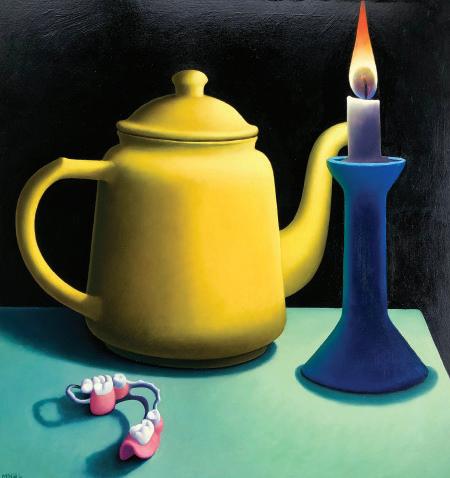
This deceptively simple composition features just three objects placed on a tabletop, but the colour relationships are what make this work sing. The primary colours of blue and yellow are complementary colours, as are the secondary colours pink and green used for the plastic denture and the plane it sits on. In this way the painting’s components link together to make an unforgettable image.
A composer and pianist as well as painter, Michael Smither is interested in the relationships between the visible spectrum of colour and sounds. Scanning a painting with your eyes should be like playing an instrument, where you hear the notes in succession. In that way, this is like an etude, a short musical piece, designed to keep playing in your mind.
Contre-jour (French for “against daylight”) is a technique which artists have used for centuries to define objects in silhouette created by a light source depicted in the painting. Seventeenth century French artist Georges de la Tour is famous for his moody
portrait of the penitent Mary Magdalene, seated at a table and gazing soulfully at the flame of a candle.
Here the yellow teapot is a proxy for the human figure, alluded to in the title, Dark Night of the Teapot. The term “dark night (of the soul” in Roman Catholic spirituality describes a spiritual crisis in the journey toward union with God, like that described by Saint John of the Cross. Michael Smither observes, “I grew up as a Catholic…, and probably the first influence for me were church art - the statues and holy pictures I grew up with… The Catholic symbols impressed me… At art school in the early 60s, I painted some religious pictures, such as Crucifixions – and that was very much frowned on! It was what I wanted to do because the ideas were so powerful.” Even though he has left the church, Smither retains the interest in symbolism – signs and portents – because of their ability to inscribe themselves in the memory.
Although the yellow teapot is personified here into having a “dark night”, any solemnity is undercut by the presence of the partial denture in the foreground. Taken out for the owner to sleep, it rests on the table like a stand-in for its wearer’s smile. There’s a reminder of the artist’s earlier humorous depiction of teeth, such as Joseph Showing His Teeth (Joseph Snarling) 1977 where the artist’s son proudly displays his second teeth coming through pink gums.
46 MICHAEL HIGHT (b. 1961) Willowburn Oil on canvas 100 x 244
FIVE SIGNIFICANT WORKS BY IAN SCOTT (1945
- 2013)
47 IAN SCOTT (1945 - 2013)
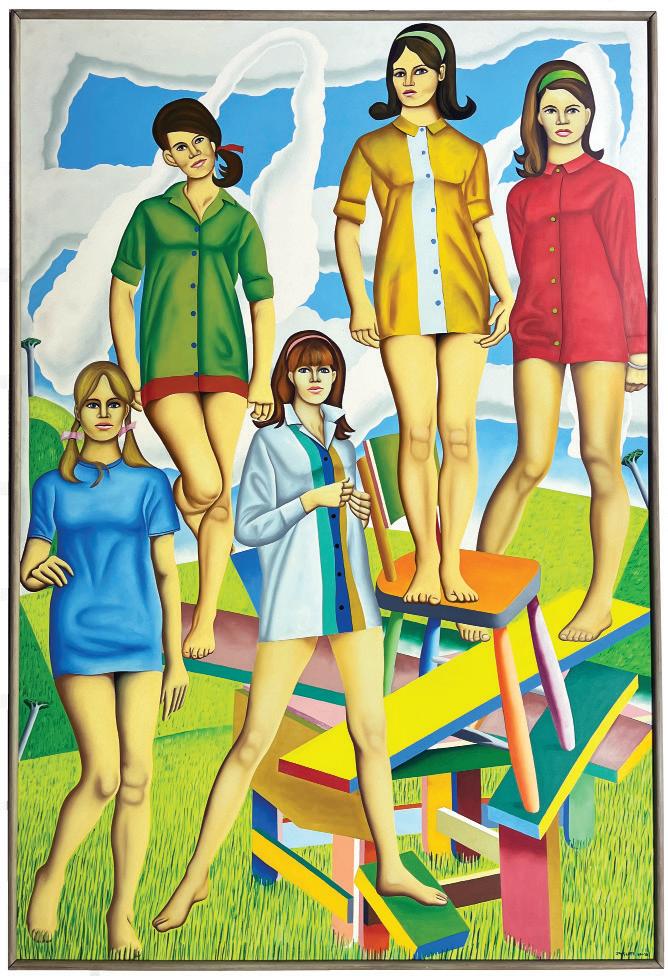
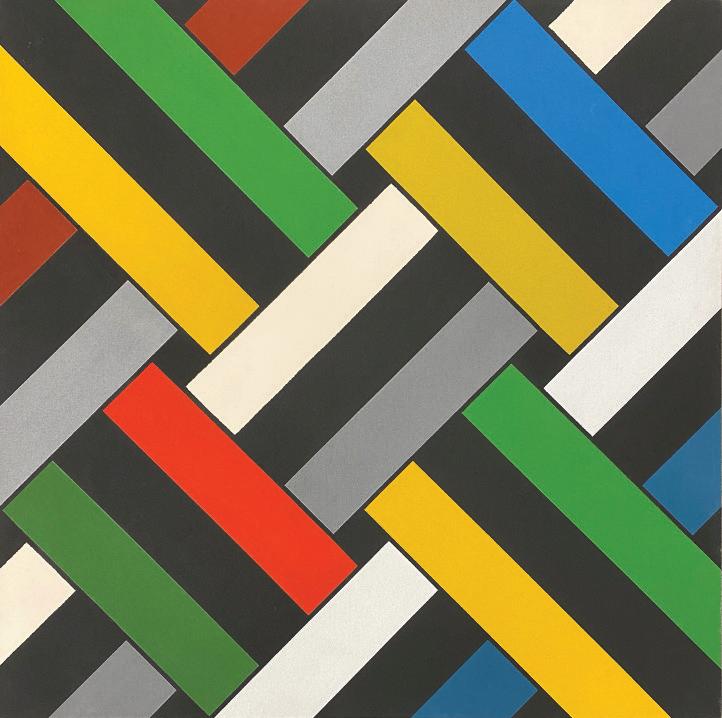
Five Miniskirts, 1969 - 70
Oil on board 205 x 135
Signed
$120,000 - 150,000
PROVENANCE
Private Collection, Auckland
Hamish Keith remarked of Ian Scott’s early stark, bright imagery that; it was as if someone had turned on the light, and in many ways Scott did just that, right throughout his career. Painting since childhood, he was only 24 years of age and newly graduated from Auckland’s Elam School of Fine Arts when he created this somewhat visionary work - visionary in that it clearly points the way forward to some of his later series of works.
Scott came of age during the ‘swinging sixties’ a decade when the energy and attitudes of an emboldened youth culture permeated music, art and fashion. London designer Mary Quant’s miniskirt took the world by storm becoming a symbol of women’s liberation and the most era-defining look of the ‘60s.
In Five Mini Skirts, a work from Scott’s Girlie Series it is evident that the young artist certainly had his finger on the pulse. The fresh, saturated colour of his Girlie paintings echoed the more radical use of colour to be seen in the works of British and American Op and Pop artists. Scott kept it local, referencing a photograph of ‘Teen Queen Beauty’ contestants from the New Zealand’s Woman Weekly.
If anything, the passing of time shines a brighter light on this five decades old work. A current perspective confirms its placement and importance in the career of one of New Zealand’s most significant painters. Scott was an artist of vision, innovation and originality, attributes embraced and embodied in this work
FRANCES DAVIES
48 IAN SCOTT (1945 - 2013)
Two Worlds, 1968
Oil on hardboard 76 x 120.7
Signed & dated 1968
$25,000 - 35,000
PROVENANCE
Private Collection, Auckland
Important Paintings & Contemporary Art, Art+Object, 06/08/2015
Like the British Pop artist David Hockney, Ian Scott was born in Bradford in Yorkshire. Emigrating to New Zealand in 1952 at the age of eight, he excelled at art as a youngster, becoming the youngest ever winner of the Kelliher Prize for landscape painting while still a teenager. He attended McCahon’s art classes at Auckland City Art Gallery before enrolling at Elam School of Art where he and friend Richard Killeen perfected their contemporary realist style. While Killeen located his images in suburbia, Scott opted for stylised West Coast landscape backgrounds.
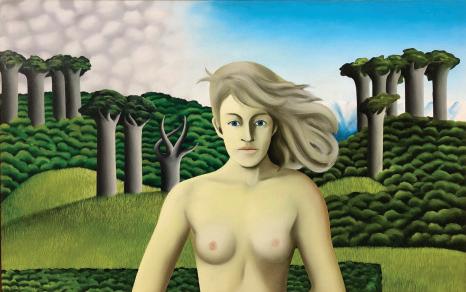
Two Worlds is a slightly earlier work than Five Miniskirts, showing a windswept modern nude as a half torso, situated in front of rolling green hills and kauri trees which appear like a stage set. This is the classic juxtaposition of nature and culture, showing the painter’s skilful conceptual development alongside his technical accomplishment.
LINDA TYLER
Ian Scott’s Girlie paintings of the late 1960s are rife with references to the works of other artists. They were produced at a time when the histories of New Zealand painting were being written and the identification of an authentic local tradition — one rooted in the landscape, the harsh New Zealand light and its clearly delineated forms — was paramount. Scott plays on this history, responding to his predecessors with wit and irony.
William McAloon, Te Papa curator (1969 - 2012)
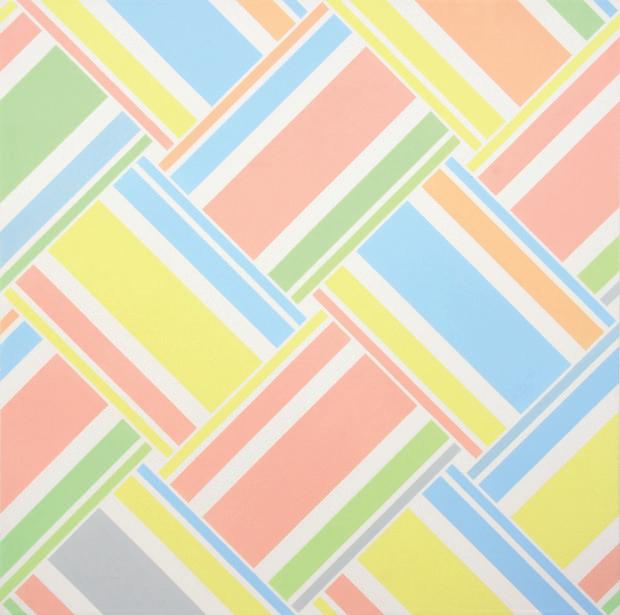
Small
Acrylic on canvas 92 x 92
Signed, inscribed Small Lattice No. 133 & dated November 1986 on stretcher verso
$25,000 - 35,000
PROVENANCE
Private Collection, Auckland
Fine New Zealand & European Paintings
International Art Centre, 30/10/2006
49 IAN SCOTT (1945 - 2013)
Lattice No. 133
Signed, inscribed Lattice No. 66A & dated 1979 verso
$25,000 - 35,000
PROVENANCE
Private Collection, Auckland
50 IAN SCOTT (1945 - 2013)
Lattice No. 66A
Acrylic on canvas 114.4 x 114.4
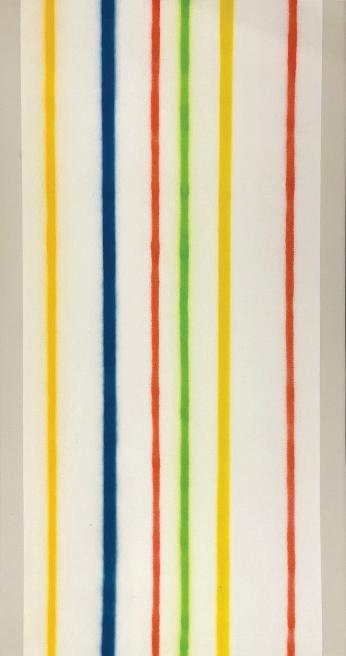
51 IAN SCOTT (1945 - 2013)
Sun Grille
Acrylic on canvas 173 x 91.5
Signed, inscribed Sun Grille & dated 1975 on stretcher verso
$35,000 - 45,000
PROVENANCE
Artist’s Collection
Private Collection, Auckland Collection of Peter Jarvis & Helene Phillips, Mossgreen Webb’s 30/11/2017
Sun Grille is a bold, reductive abstract work composed of intensely coloured, vertical lines, laid down quickly and decisively against a white ground on raw canvas. This sophisticated work was made with everyday materials: specifically, acrylic paint applied with a roller and spray paint purchased from the local hardware store.
Blurred lines made by the act of spray painting breathe and vibrate against the white ground of the picture plane. The eye skates across the surface, evaluating the pulsating primary colours, the spaces in between and the fractional variance in line width. Scott achieved this delicate variance by intuitively adjusting the height at which the spray can was positioned above the canvas.
The work is a not purely abstract, it is infused with Scott’s lifelong affection for the New Zealand landscape and his search for a meaningful way in which to depict it in a manner that was challenging and new. It was a response to his immediate environment, which at the time was Sunnyvale, West Auckland in the 1970s. The glare of the summer sun, mid-1970s West Auckland, apple orchards, bright green grass, freshly painted weatherboard houses, sand, surf and sensuality are palpably present in these perpendicular bars of light. The Sprayed Stripes series (1973–75) was first exhibited at Peter McLeavey Gallery, Wellington, in 1974, then at Petar/James Gallery in Auckland in 1975. This series comes after Scott’s 1960s’ pop culture Girlie series and was a precursor to his seminal Lattice paintings.
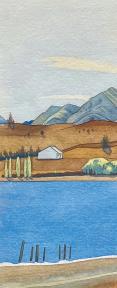
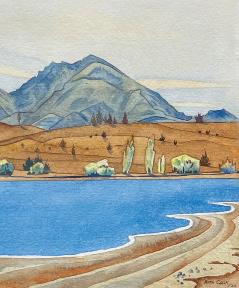
52 RITA ANGUS (1908 - 70)
Lake Wanaka, Pembroke
Watercolour 22.3 x 26.5
Signed Rita Cook & dated 1939
$90,000 - 130,000
PROVENANCE
Private Collection, Auckland since, c. 1989
EXHIBITED
The Group: Exhibition of Drawings, Paintings, Etc
Durham Street Art Gallery, The Society of Arts, Christchurch. Christchurch, 20/9/1940 - 26/9/1940
In 1939 Rita Angus spent four months staying in Wanaka with her friends Marjorie and William Marshall. Marjorie Marshall was a fellow painter, friend and former student who had met Angus at art school. Her husband William was the teacher at the local Wanaka school. During the visit, William would drive the two women out on weekend painting expeditions into the surrounding countryside.
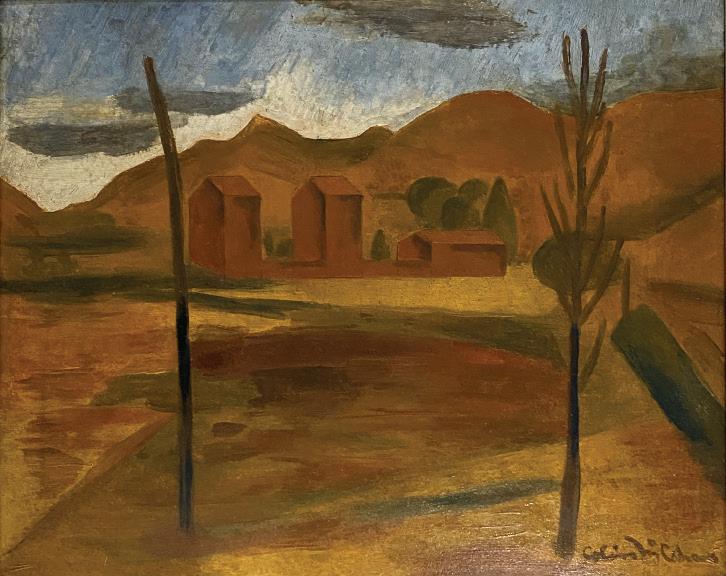
As early as 1938, the 19-year-old Dunedin painter Colin McCahon was exciting “considerable comment and discussion” in Wellington for his “very modern paintings”, as the reviewer for the Wellington Sketch Club exhibition pointed out. Just the previous year, the Dunedin School of Art had moved into a new building, and it was now headed by Gordon Tovey (1901-1974), a renowned educationalist and modernist. McCahon had left Otago Boys’ High School at mid-year and enrolled for tuition in painting from the English artist R N Field (1899-1987). Rejecting historical and conservative values such as the realistic depiction of subjects, McCahon was encouraged to restrict his palette to just a few colours and to innovate and experiment with form. The shapes, colours and lines which make up this early work – particularly the two silhouetted black trees which frame the buildings in the background like rugby posts – are reminiscent of the British surrealist painter and war artist Paul Nash (1889-1946). Nash’s optimistically titled We Are Making A New World (1918), now in the Imperial War Museum, also depicts angular red buildings viewed through the trunks of bare trees, with a blue sky and scudding clouds above.
For Nash, depicting the scarred fields of Ypres, the message conveyed is that from death springs rebirth. With his tobacco fields landscape, McCahon, a pacifist who would unsuccessfully appeal for exemption from active service during the Second World War on conscientious grounds, is also creating a wartime painting which alludes to the futility of war. Working in the sunny Nelson region in the early years of the war provided respite from the harsh Dunedin winters, but McCahon also recognised that rural New Zealand was a kind of paradise, remote from European theatres of battle. The two trees in the foreground, one with branches and one without, have a symbolic quality, anticipating the crucifixion imagery which would appear in his work in the next decade.
Two months after Germany invaded Poland in September 1939, McCahon arrived in Nelson on the steamer Matangi, accompanied by his friend, the sculptor Fred Jones. They immediately found work picking tobacco on Herbert Helm’s farm near Pangattara. Seasonal employment as a horticultural labourer was acceptable to pacifists as it was classified as “non-essential” to the war effort. McCahon wrote to his parents, “Pangatotara is a very beautiful place. Rather like West Coast scenery but not depressing.”
Christchurch writer Courtney Archer and artists Rita Angus and Chrystabel Aitken followed to work there the following year, and in 1943 Doris Lusk painted her majestic Tobacco Fields, Pangatotara, Nelson (Auckland Art Gallery) dominated by the peak of The Crusader in the background.
Work in the tobacco fields was easy to find as the local industry had flourished during the 1930s. During the war, the number of cigarettes made in New Zealand increased exponentially, taking over the market from overseas suppliers, but there were fewer people available to harvest the tobacco. Just like Christopher Perkins’ dairy factory, Rita Angus’s Cass railway station and Doris Lusk’s City Gas Works, McCahon’s depiction of tobacco-curing barns in the landscape, known as oasts, can be seen as a celebration of regional development and industry in the New Zealand hinterland.
The day that this painting went on display in The Group’s Spring 1940 exhibition alongside works by Evelyn Page, Louise Henderson, Ngaio Marsh, Rata Lovell-Smith, Olivia Spencer Bower, Margaret Anderson, Leo Bensemann and W H Allen, McCahon placed an advertisement in the Nelson Evening Mail: “Two young men with previous experience urgently require work tobacco planting or on orchard, willing to start immediately. Write Colin McCahon c/o GPO, Dunedin.”
Ten days later he again disembarked from the steamer in Nelson, his art materials under his arm, this time heading to the Drummond’s tobacco farm in the Riwaka Valley, a visit which occasioned another series of landscapes. Throughout the early 1940s, he would continue to return to the Nelson region, settling in Mapua with his wife and son in 1943, and beginning to explore figurative imagery and Christian themes.
LINDA TYLER
53 COLIN MCCAHON (1919 - 1987)
Nelson Landscape, Tobacco Kilns, c. 1940
Polyvinyl acetate and tempera on board
44.1 x 54.7
Signed
Detailed technical description of the artist’s restoration procedure verso
$50,000 - 75,000
PROVENANCE
Private Collection, Otago
Recently released from long term loan at Christchurch Art Gallery, Te Puna o Waiwhetu
Colin McCahon database record number cm001049
EXHIBITED
The Group: Exhibition of Drawings, Paintings, Etc Durham Street Art Gallery, Christchurch, 20/9/1940 - 26/9/1940
54
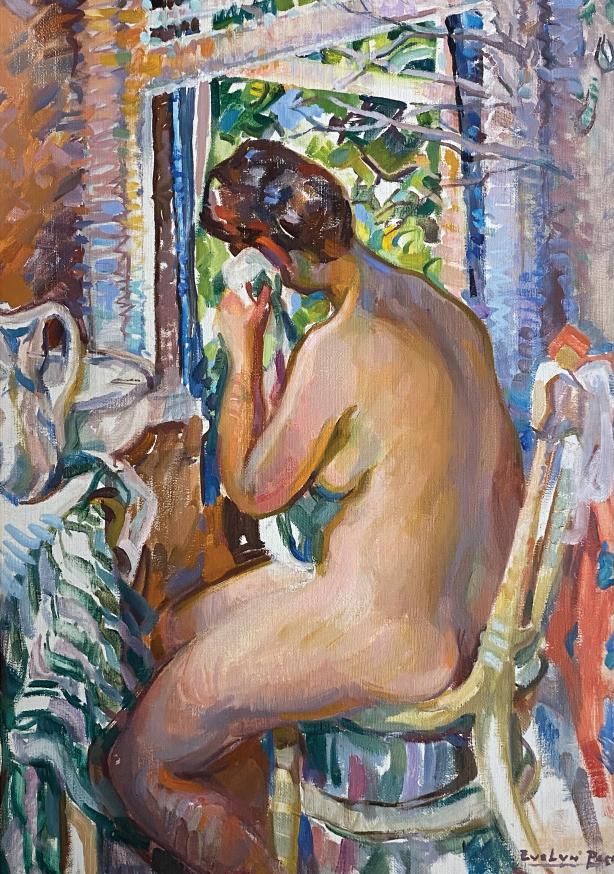
EVELYN PAGE (1899 - 1988)
Young Woman in a Bay Window Oil on canvas on board 75 x 51.2
Signed, inscribed Young Woman in a Bay Window & dated Jan 1982 verso
$150,000 - 200,000
PROVENANCE
John Leech Gallery Private Collection, Auckland
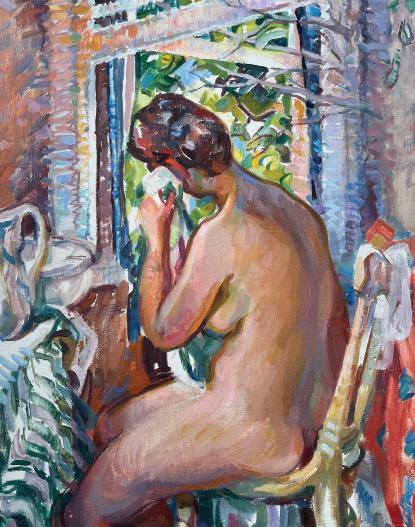
Famed for her uniquely lush and sensuous renditions of the female nude, Wellington painter Evelyn Page (née Polson) was born the youngest child of seven into a wealthy Christchurch family in 1899. Aged just 16 she enrolled at the School of Art Canterbury College, winning a medal for her skill in painting and completing her Diploma of Fine Arts in 1921. Always interested in the French Post-Impressionists, she was instrumental in founding The Group in 1927, an exhibiting society comprised mostly of younger painters who were interested in modernism. She taught for six years at the School of Art from 1930, becoming a foundation member of the New Zealand Society of Artists in 1933, which aimed ‘to interest the public in the living movements in art’.
Her soon-to-be husband Freddie Page won a scholarship to study at the Guildhall in London, and she accompanied him, spending time studying paintings in the Tate, National Gallery and Royal Academy before going on a camping tour of Europe in the summer. She began to paint in high-keyed colours, allowing the white primed canvas to shine through her brushstrokes. Returning to Canterbury, the couple married and set up house in the 1851 Dyer family homestead “Waitahuna” at Governor’s Bay on Bank’s Peninsula which they rented for seven years. Here she refined her techniques for portrait painting, depicting many of the talented artists, architects, writers and musicians who were part of the couple’s circle.
After the war, Fred Page was appointed to the School of Music at Victoria University in 1946, and by 1948 the family were living in a double-storeyed Edwardian villa at 20 Hobson Street, Thorndon, the setting for this painting. She loved to paint figures seated at the distinctive upper storey oriel window with characteristic double-hung sliding sashes, often nudes like this one, at their toilette. Returning to Britain and Europe in 1950 she had sufficient work for a solo exhibition in Dunedin in 1952, and she was part of a New Zealand Cultural Mission to China in 1956. Throughout the 1960s she concentrated on the female nude, her favourite subject, and was awarded a QEII Arts Council grant to study at the Kokoschka School in Vienna.
Page’s skill at enlivening a painting surface with dynamic brushwork is evident here in the treatment of the window surround, tablecloth and the towel that the model uses to dry her ear. The basin and ewer are props seen in many of Page’s paintings, and follow the precedent set by Degas and other French painters for a baigneuse or bather scene. Colours ranging from blue, purple and green through to pink and orange can be seen in the treatment of the model’s flesh, which is catching the dappled summer light filtered through the leaves of the magnolia tree outside. Capturing her subject from close range, Page re-creates the voluptuous, back-turned seated pose of Ingres famous Valpinçon bather from the Louvre and the bather playing the mandolin in The Turkish Bath, but rendered in her modern and dynamic style.
LINDA TYLER
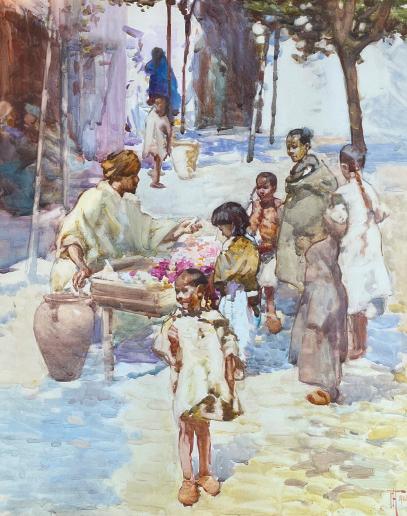
55 FRANCES HODGKINS (1869 - 1947)
Sweetstuff Stall, Tangier
Watercolour 56.7 x 46.8
Signed & dated 1904
$50,000 - 75,000
PROVENANCE
Mrs A L Wright Macclesfield, purchased
Wellington, New Zealand, 1904.
Mr W Ryle Wright, Swanage, England, 1974. In present collection by inheritance
EXHIBITED
Exhibition of Oil and Water Colour
Paintings by Miss Hodgkins and Miss D K Richmond, McGregor Wright Art Gallery, 24 February 1904 - 23 March 1904
New Zealand Academy of Fine Arts, 16th Annual Exhibition New Zealand Academy of Fine Arts Gallery
REFERENCE
Frances Hodgkins database number FH0431 completefranceshodgkins.com
Frances Hodgkins spent nearly five months in Morocco between the end of November 1902 and late April 1903. She fell in love with the architecture, the sparkling sunshine and the bustling, exotic nature of everyday life, not least in the medina and the souk with its ornately carved arched gateway and red tiled roofed shops. Fellahin who brought their produce in from the countryside simply spread out their wares on cloths in the open air. Hodgkins and her companion, a Mrs Ashington, were hounded by curious onlookers every time she tried to paint activities in there, until English artist Alfred East recommending setting up in a doorway. She had to work very fast, creating sketches that could be worked up later as well as more detailed watercolours for exhibition. Some she posted to her sister, Isabel Field, in Wellington, who inscribed Hodgkins’ initials on several in the hope of making sales that might boost her sister’s endeavours.
As the weather warmed in March, Hodgkins moved to Tétouan, at the base of the Riff Mountains. She wrote to fellow artist Dorothy Kate Richmond on 23 March; ‘Come to Tetuan . . . The whiteness & pearliness of the town simply defies you – you cant get it pure & brilliant enough & the shadows drive one silly – you race after them, pause one frenzied moment to decide on a blue mauve yellow or green shadow - when up &
over the wall & away & the wretched things gone for that day at least & you are gazing at a glaring blank wall & wondering why on earth you ever started to sketch it…’ She spent days in the medina’s narrow streets, and with fewer people about was able to make numerous studies of children and the town’s famous dye pits. Food stalls hugged the lanes either side, the traders and their produce protected from the late spring sun by striped awnings. Hodgkins was particularly taken by the bamboo poles used to support the cloth, their angular nature adding dynamism to depictions of the architectural surroundings.
Hodgkins returned to England at the end of April 1903, spending several months working up her sketches into exhibition quality watercolours. She had a major triumph when her portrait of ‘Fatima’ was hung on the line at the Royal Academy at the beginning of May, the first New Zealand artist to have that honour. Nine more Moroccan watercolours were part of a group show at the Fine Art Society, London, in July. But promises had to be kept, and Hodgkins returned to her mother in Wellington just before Christmas, bringing her remaining watercolours.
Sweetstuff Stall was first exhibited as Sweet Shop, Tetuan at McGregor Wright Gallery, Wellington 24 February - 23 March 1904. Almost certainly part of the composition was rapidly produced en plein air in Tétouan, producing an abstract effect on the periphery of the work, while the faces of the children and the sweet seller are highly worked up – we sense the brooding nature of the turbaned seller, well used to swarms of eager children. A beautifully delineated terracotta urn stands beside him, catching the viewer’s attention. The little boy in the foreground has turned away, his expression intent, as if wondering where he can get a coin, while a girl peers at the selection before her, determined to make the right choice before payment. Two boys look on from the back of the group, again each face highly individualised. It is a tight and dynamic composition. One boy who has his back to us appears to have had a pigtail added later. The watercolour was exhibited again later in 1904 at the New Zealand Academy of Fine Arts in October as Sweet Stuff Stall. Whereas in the earlier exhibition it was priced at only five guineas, it now bore the higher price of £21. It is possible that Hodgkins exhibited the work in a sketchier form earlier in the year, and when it didn’t sell, decided to work it up further into the polished watercolour we see today.
MARY KISLER
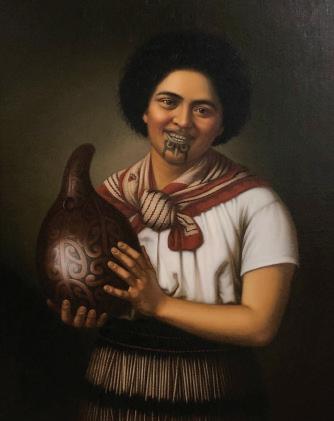
56
GOTTFRIED LINDAUER
(1839 - 1926)
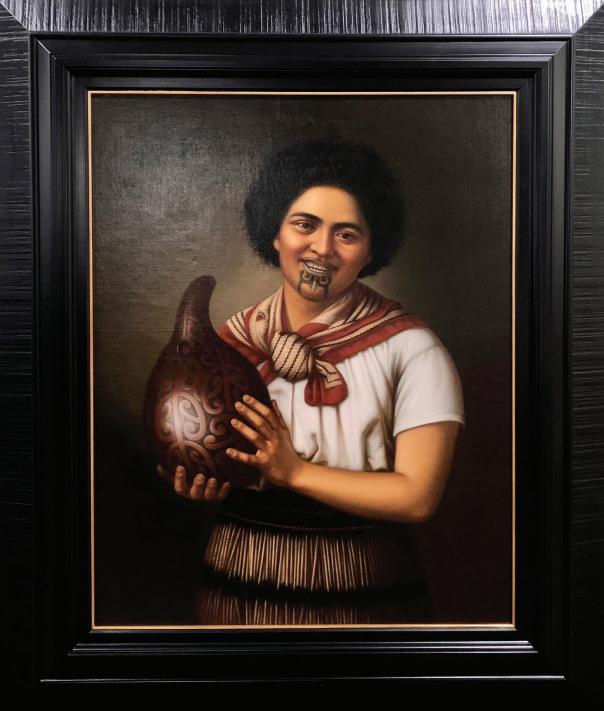
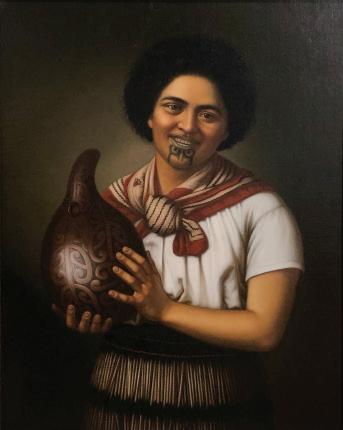
Girl with Gourd Oil on canvas 83 x 65.4
$220,000 - 320,000
PROVENANCE
Private Collection, Auckland
EXHIBITED
The Maori Portraits: Gottfried Lindauer’s New Zealand
Auckland Art Gallery 22 October 201619 February 2017
The Auckland Art Gallery label that accompanied this work in the exhibition The Maori Portraits: Gottfried Lindauer’s New Zealand read: The subject of this version of ‘girl with gourd’ is Mere Nireaha, daughter of chief Tamaki Nireaha from Rangitane and Ngati Kahungunu ki Wairarapa. Nireaha has been transformed from a photograph showing her holding a gourd, dressed in a waist garment. The subject is variously referred to as ‘laughing girl’ perhaps for breaking her smile.
This exceptionally fine work by Gottfried Lindauer is an engaging portrait of a young Maori woman holding an intricately carved gourd or hue. In summer the young fruit of the hue was gathered, baked and eaten. Larger hue were hollowed out and used as water vessels, food containers and musical instruments. The smiling subject of Lindauer’s portrait is attired in both European and traditional garments, her facial moko kaue being a sign of her mana.
Gottfried Lindauer, along with C F Goldie is the best-known painter of Maori subjects from the late nineteenth-early twentieth centuries. Born in Pilsen, Bohemia, then part of the Austro-Hungarian Empire he trained professionally at the Academy of Fine Arts in Vienna, migrating to New Zealand in 1874.
Lindauer’s first portraits of Maori were painted in Nelson. A move to Auckland in the mid 1870s proved crucial. There he met businessman, Henry Partridge (1848-1931), who over the next 30 years commissioned from Lindauer numerous portraits of eminent Maori, as well as large-scale depictions of traditional Maori life. The aim of the project was to create a pictorial history of Maori at a time when it was widely, though mistakenly, believed that Maori were dying out, either literally or as a distinct cultural group.
Lindauer travelled extensively throughout New Zealand living in a variety of locations besides Nelson and Auckland, notably Christchurch, Napier where he was closely associated with the photographer Samuel Carnell (1832-1920), also a well-known portraitist of Maori, and finally, from 1889, Woodville. Lindauer retained his European and Czech connections.
In 1886 he attended the Colonial and Indian Exhibition in London, where twelve of his Maori portraits were exhibited. The commissioner of the New Zealand pavilion was Walter Buller (18381906), a lawyer who represented both Maori and European clients, and an important patron of the artist. Lindauer and his family lived in Europe, mainly Germany from 1900 to 1902 and again from 1911 to 1914, with short visits to Bohemia. During this time several of his Maori portraits were placed in public and private collections there.
Besides Lindauer’s portraits of eminent Maori, he produced many of little-known or ordinary Maori people, most of whom wear European dress, as would have been the case in their daily life. Most, but not all, of these were probably commissioned by the sitters or their families.
Henry Partridge opened a gallery in Queen Street, Auckland, in 1901, which initially featured 40 of Lindauer’s Maori portraits. By the time Partridge gifted his Lindauer collection to the Auckland Art Gallery in 1915, there were 62 portraits. The historian, James Cowan (1870-1943) wrote a descriptive catalogue of the collection describing it as unrivalled in the world.
Lindauer’s contribution and legacy to the history of art in New Zealand is considerable and highly valued.
57 CHARLES FREDERICK GOLDIE
(1870 - 1947)
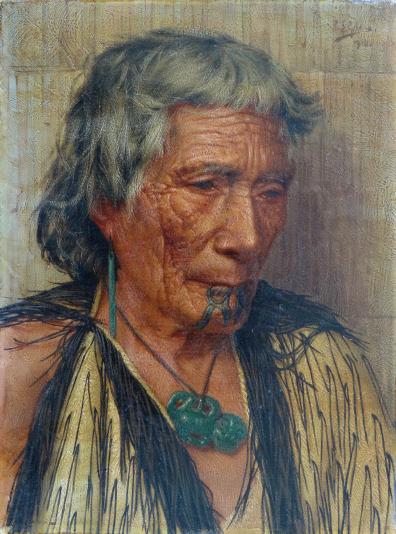
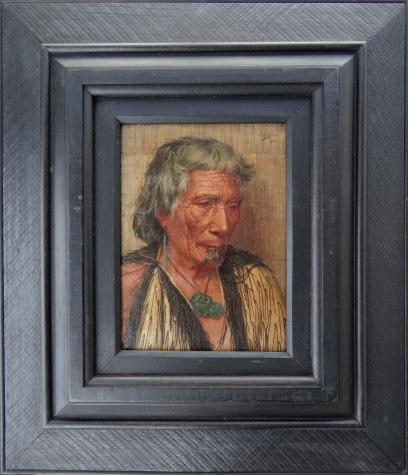
‘Memories’ RakapaAn Arawa Chieftainess Oil on panel 20.1 x 15.1
Signed & dated 1910
$400,000 - 600,000
PROVENANCE
Acquired by V E Donald, Masterton Private Collection, England until mid 1940s
A newspaper article affixed verso reads: London, May 24, 1927. Another of Mr C F Goldie’s three Academy pictures has been sold. The purchaser is a lady who lives in the South of England. She has chosen Memories, a Chieftainess of the Arawa Maori. Even before the Royal Academy opened to the public, Mr Goldie’s An Aristrocrat - Atama Paparangi A Chieftain of the Rarawas - bore the distinctive red seal which indicates ‘Sold’. Memories was priced on the official chart at £262.10.
Originally of Otaki, Rakapa married into the Arawa tribe. Rakapas’s family by marriage, fought for the colonial government in the North Island Land Wars of the mid-19th century.
C F Goldie chose to paint Rakapa on at least five occasions, three times in 1910 and twice in 1911. Another, but slightly smaller version is illustrated p. 215 C F Goldie: His Life & Painting, Alister Taylor & Jan Glen, 1979. Immaculately portrayed, the artist’s masterful treatment of wrinkled skin and greying hair encourages closer scrutiny. This favoured subject bears traditional moko, pounamu/greenstone earings and talisman tiki.
Rakapa was the daughter of Rangi-Topeora and Te Wehi-o-te rangi of Otaki. In the Wellington district Rangi-Topeora, of Ngati-Toa, was known as a great poetess. She gained celebrity for her masterful character and for the number of songs she composed and chanted, from affectionate addresses to her various lovers to virulent kai-oraora or cursing chants against her enemies.
Her daughter Rakapa, of Otaki, who became the wife of the late Petera te Pukuatua, of the Arawa, inherited Topeora’s poetic gifts, and her waiata are favourite songs among the Rotorua elders.
The work is offered in it’s original C F Goldie frame
Through his lifetime and legacy, Charles Frederick Goldie greatly influenced our nation’s artistic and cultural consciousness. Born in Auckland on 20 October 1870, one of eight children from the marriage of Maria Partington and David Goldie, he was named after his maternal grandfather, Charles Frederick Partington, builder of the landmark Auckland windmill.
In 1883 the young Goldie was enrolled at Auckland Grammar School. His youthful artistic talents shone, and it was not long before he was winning prizes at the Auckland Society of Arts. On leaving school, Louis John Steele became his mentor and tutor. Two of the young artist’s still life paintings so impressed Sir George Grey, that he convinced David Goldie to allow his 22 year old son to attend the Académie Julian in Paris. Goldie spent over four years at the Académie Julian tutored by leading lights of the Paris Salon such as William-Adolphe Bouguereau.
In 1898, fully informed in the French academic style, the artist returned to New Zealand and began collaborating with his former tutor Louis John Steele. The two worked on a number of paintings including The Arrival of the Maoris in New Zealand, a large scale history painting after Gericault’s Raft of the Medusa. Before long, however, the relationship deteriorated likely caused by tensions around the former student’s growing success. Goldie went on to open his own studio and establish himself as a successful portraitist of Maori.
A visit to Rotorua in 1901 was the first of several field trips during which the artist was introduced to local Maori and persuaded them to sit for portraits. Goldie’s works from this point forward strongly reflect the European tradition in which he was trained, and possess a stunning power and visual clarity. On the one hand, his remarkable dedication to realism belies an ethnographic interest. At the same time, he was also striving to capture the mana of his sitters who included chiefs, tohunga and kaumatua.
Goldie formed long-standing relationships with several Maori he met and painted around this period, including Wiremu Patara Te Tuhi and Te Aho-o-terangi Wharepu (Ngati Mahuta), Ina te Papatahi (Nga Puhi), and Wharekauri Tahuna (Ngati Manawa).
Over the next two decades, Goldie gained national and international acclaim and steady demand formed a strong market for his portraits, a number of which would later be exhibited at the Royal Academy of Arts in London and the Paris Salon throughout the 1930s.
In 1920 the artist moved to Sydney, where despite original plans to continue on to Paris, he was married, at age fifty to thirty five year old Olive Cooper. Marriage in Sydney circumvented the Goldie family disapproval of the relationship between Auckland’s famous artist and the milliner from Karangahape Road. After two years in Sydney, apparently disillusioned with his work at this time and suffering from health problems Charles and Olive returned to New Zealand.
Goldie’s return to Auckland in 1924, ultimately represented a moment of artistic reckoning. Goldie received encouragement to resume painting from Governor General Lord Bledisloe. Devoting himself once again to his work, he began to apply a more liberal, impressionistic approach to the realisation of his portraits and repainted a number of his former subjects. Works from this later period are distinguished by their soft luminescence, offering a rhythmic departure and disconnection from the rigours of formalism to which he had so strictly adhered in the past.
Goldie died in Auckland in 1947, his exquisite, spiritually-charged, often unsettling and ever powerful portraits of Maori having made an unsurpassed contribution to the history of art in New Zealand.
58 COLIN MCCAHON (1919 - 1987)
French Bay
Oil on board 62.7 x 42.8
Signed & dated 1956
$100,000 - 200,000
PROVENANCE
Collection of Mr and Mrs Russell
Auckland Private Collection, UK
ILLUSTRATED
pl. 38 Colin McCahon: The Titirangi Years 1953 - 1959, Auckland University Press, 2007
Colin McCahon database record number cm000401
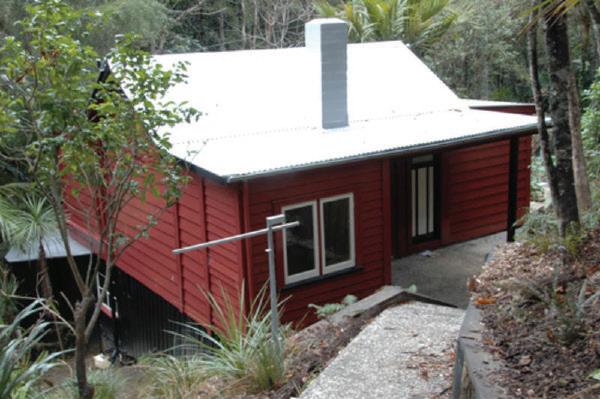
Otitori, French Bay was a short distance from the artist’s home and he chose it as the subject for a number of his works. Between 1953 and 1960 Colin McCahon, and his family, lived in this small,weatherboard house set among kauri trees and native bush in the Titirangi hills overlooking the bay.
The bush setting inspired some of his painting, including a large mural in the living room. In the early 2000s the home was purchased and preserved by the McCahon House Trust as an artists’ residency and the McCahon House Museum.
Colin McCahon’s house overlooking French Bay, Titirangi
59 MILAN MRKUSICH (1925 - 2018)
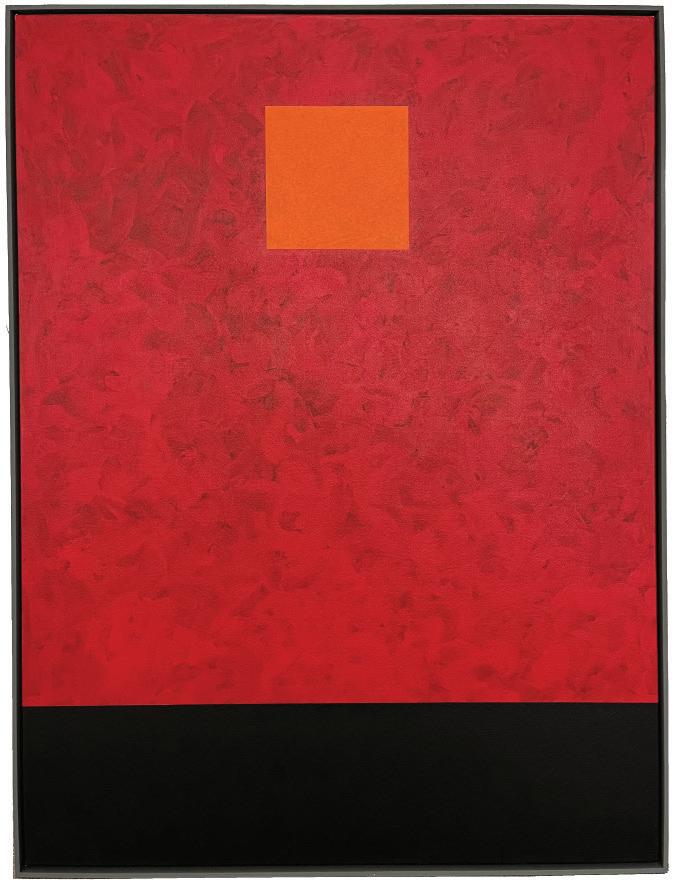
Painting III Red 2000
Acrylic - vinyl on canvas 122 x 91.5
Signed, inscribed & dated 2000 verso
$75,000 - 95,000
PROVENANCE
Private Collection
As the millennium arrived in 2000, Milan Mrkusich (1925-2018) continued to paint strongly into his seventies, just as he had done continuously since the mid-1940s, certainly with Gordon Walters the country’s leading abstract painters. In fact in that year 2000 he participated alongside Walters at Sue Crockford Gallery in Auckland in an exhibition of works from the 1950s.
At this stage of his career Mrkusich liked to paint in series – some small, some large – often characterised by utilising a repeated arrangement of geometrical forms in paintings usually identical in size and medium, and in a variety of different colours and combinations. Such is the case with the small series painted in 2000, identified by date and differentiated by a number and a dominant colour – in this case: Painting III Red 2000. There were at least three other paintings in this mini-series, which recall though in simplified format the well-known Emblem series of the 1960s; the other known examples are Painting I Silver 2000 (The Millennium Painting), which has a somewhat different character from the others which are formally identical: Painting II Yellow 2000 and Painting IV Purple 2000, the latter two being reproduced in Mrkusich: The Art of Transformation by Alan Wright and Edward Hanfling (Auckland University Press, 2009).
What the three works have in common is that all are painted in acrylic-vinyl on canvas; all have a wide black band across the bottom of the work; in all three cases the remainder of the painting is dominated by the colour named in the title (yellow, red, purple), apart from a small square of contrasting colour placed centrally towards the top of the picture. In Painting Yellow the small square is light purple; in Painting Purple, it is red; while in Painting Red, the small square is orange.
In Painting Red 2000 (the only example I have been able to examine ‘in the flesh’), a noteworthy feature is the widely different paint application of the three constituent elements. The band at the bottom is even, unmodulated black with a matte finish. In the expansive red areas of the painting, by contrast, the paint is unevenly distributed across the surface in dabs, swirls and smears of pigment creating a lively and informal effect. The small square differs again; the orange paint is variously stippled, speckled or brindled in manner. The three colours in combination are like a sustained chord in music.
Painting Red 2000 is an imposing and visually opulent work creating the impression of an artist in absolute command of his medium, knowing exactly how to achieve the desired outcome.
PETER SIMPSON
60 JOHN PULE (1962)
Winterland
Enamel, varnish, oil and ink on canvas 173.5 x 145
Signed, inscribed Raw Umber With Blue (linear series) & dated 1979 verso
$60,000 - 80,000
PROVENANCE
Private Collection
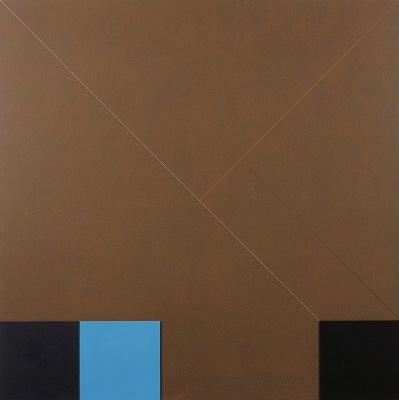
A feature of Milan Mrkusich’s sixty-plus year career as a painter was his engagement with continuous experiment and change. He never settled for long with a single format, repeated with variations across decades, as for example Gordon Walters did with his koru-based abstracts or Ian Scott with his lattices; even Mrkusich’s celebrated ‘corner’ paintings lasted for less than a decade (1968-76). He was continuously moving on, always trying out something new, in colour, structure, pigment, paint application, support. Someone closely familiar with his practice could probably date within a year or two any example from his vast output which came before their eyes.
The present painting is a case in point. Its close siblings, of which there are a few, as identified by the ‘Linear Series’ subtitle, were all painted within a year or so either side of 1979. Auckland Art Gallery has one, as does Dunedin Public Art Gallery and the Fletcher Trust collection; a few others are in private hands. Raw Umber with Blue is one of the stand-out paintings of the series – Mrkusich at his most refined and authoritative.
The features common to the Linear Series are, first, a dominating monochromatic ground, whether light or dark grey, blue, mauve, or, as here, raw umber – a pigment so named because it is made from crushed earth from Umbria in Italy combining iron and manganese oxides. Second, usually along the bottom edge of the (usually) square format is a row of small squares, either continuing the dominant colour or differentiated from it by other colours, as here with a light blue and two darker squares.
In this case the coloured squares are pieces of hardboard attached to the surface of the board, thus introducing an element of collage into the work. A third element in the Linear Series is thin diagonal (or parallel) lines themselves of different colours, originating in the top corners and at right angles to each other which have the effect of triangulating the surface of the painting. In Raw Umber with Blue three different colours are used for the diagonal lines: white, orange and dark brown.
Peter Leech has suggestively labelled these linear elements with the architectural term armature: ‘Mrkusich’s armatures are the consolidation of his built depths in colour: they give both frame and focusing structure to those depths’ (‘Milan Mrkusich: The Architecture of the Painted Surface’, Art New Zealand 19, Autumn 1981, pp. 34-39).
The effect of colour and line combining so subtly and harmoniously in this beautiful painting is elegant, coherent and deeply satisfying.
PETER SIMPSON
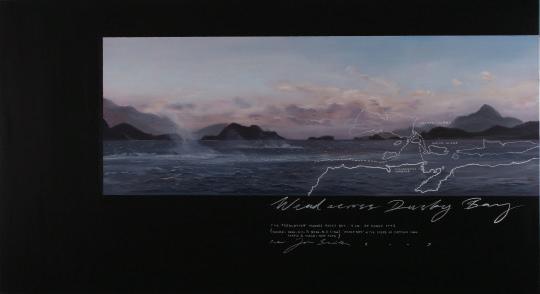
62 PETER JAMES SMITH (b. 1954)
Wind Across Dusky Bay
Oil on canvas 91.5 x 168
Signed, inscribed Wind Across Dusky Bay & dated 2007
$14,000 - 18,000
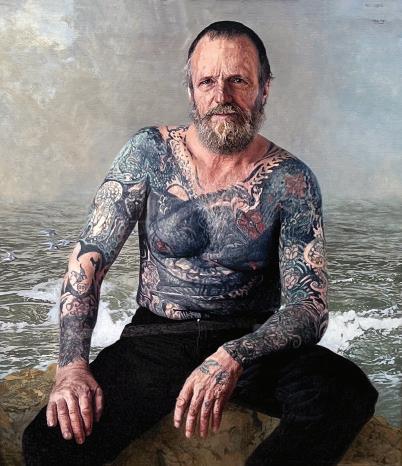
63 RAYMOND CHING (b. 1939)
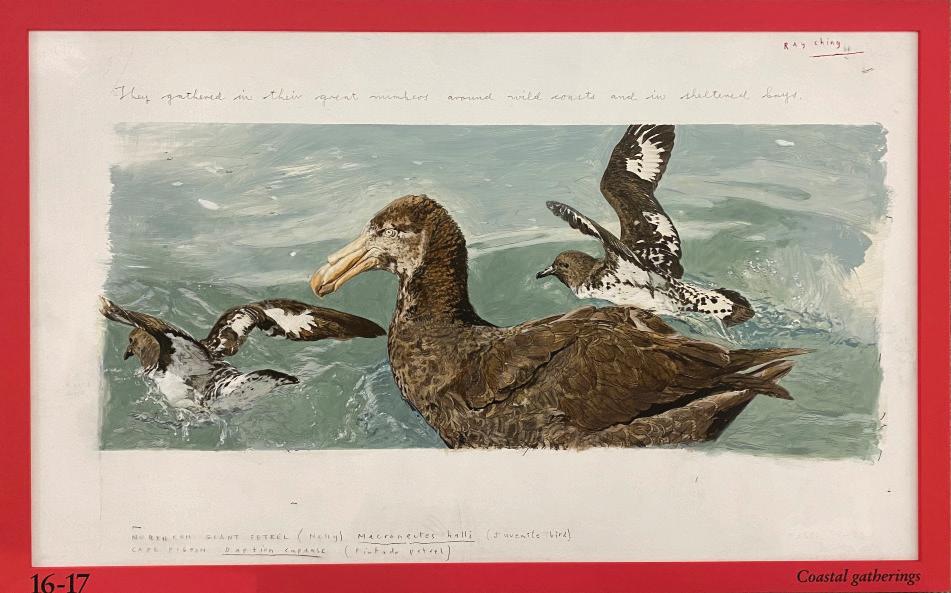
Sea Swallows (Wellington Man)
Oil on board 65.6 x 55.7
Signed & dated 1996 - 1997
$55,000 - 75,000
PROVENANCE
Private Collection, Hawkes Bay
EXHIBITED
Ray Ching, A True Story, London, Wellington, Auckland.
64
EVELYN PAGE (1899 - 1988)
Seated Nude, 1962
Oil on canvas board 60 x 75
Signed
$40,000 - 60,000
PROVENANCE
Estate of Sylvia Constance Ashton-Warner
Subject identifed as Khura Skelton, Denis Glover’s partner by Sarah Shieff, editor of Selected Letters of Denis Glover, ed. Sarah Shieff, Otago University Press, 2017
65
EVELYN PAGE (1899 - 1988)
The Heads Wellington Oil on canvas board 26 x 35.5
Signed
Signed, inscribed The Heads Wellington & dated August 1969 verso
$8,000 - 12,000
PROVENANCE
Private Collection since 1969
66 PATRICK HAYMAN (1915 - 88)
Moses and the Burning Bush Oil on board 40.5 x 50.8
Signed, inscribed Moses and the Burning Bush & dated 1966 verso
$6,000 - 9,000
67 BRETT WHITELEY
(Australian 1939 - 1992)
Flowers on the Table, 1977
Lithograph, edition of 75, 74.8 x 55.2
Signed
$8,000 - 12,000
ILLUSTRATED
P. 22 Brett Whiteley: The Complete Graphics 1961-1982, Art Gallery of South Australia, 1983
p.36 & 112 Brett Whiteley: The Graphics 1961-1992, Deutscher Fine Art, Melbourne, 1995
I am interested in beauty which can best be described as being on time for the appointment. Brett Whiteley
68 DORIS LUSK (1916-1990)
Tuam St I
Acrylic, pencil and coloured pencil on canvas 61.2 x 87.8
Paintings of Doris Lusk Lisa Bevan and Grant Banbury, Robert McDougall Art Gallery, 1996.
REFERENCE
p. 56 & 114 Landmarks - The Landscape
Paintings of Doris Lusk, Lisa Bevan and Grant Banbury, Robert McDougall Art Gallery, 1996.
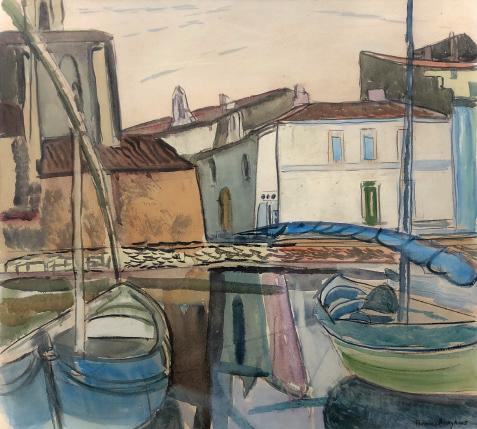
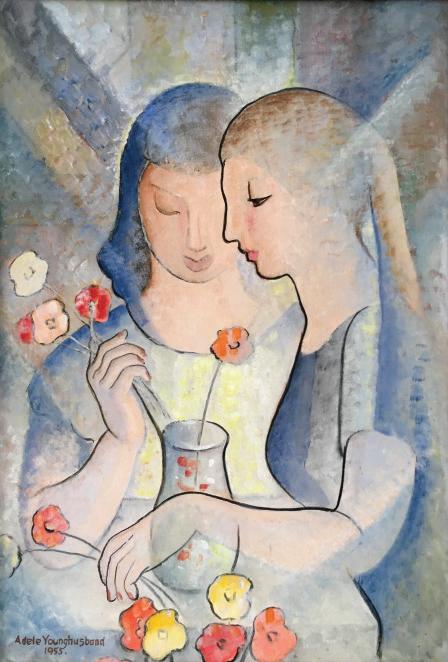
69 ADELE YOUNGHUSBAND
(1878 - 1979)
Sisters
Oil on board 61 x 41
Signed & dated 1955
$20,000 - 30,000
PROVENANCE
Private Collection
Ferner Galleries - label affixed verso
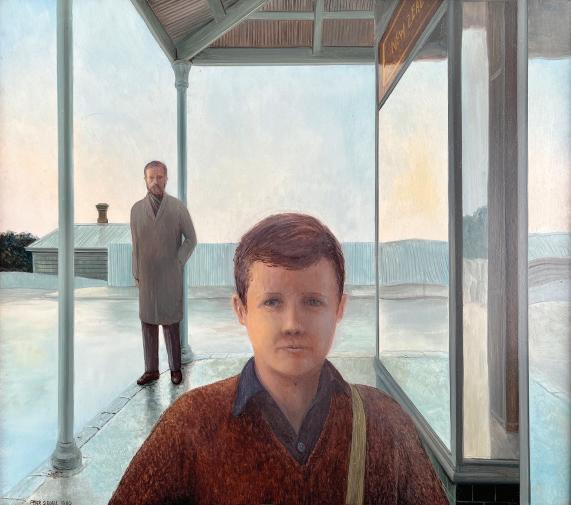
Man and Boy Oil on board 33 x 37.3
Signed & dated 1980
$12,000-18,000
PROVENANCE
Private Collection, King Country
Purchased by current owner, 1980
This softly- hued painting is a rare double self-portrait of the artist as man and boy. Signature Siddell touches are evident in the architectural framework of the composition - a brick chimney atop a weatherboard building, corrugated-roofed verandah and goldleafed signage in the plate-glass window. There is an intriguing sense of calm introspection in this work, but also a quiet confidence as both figures gaze outward from the painting.
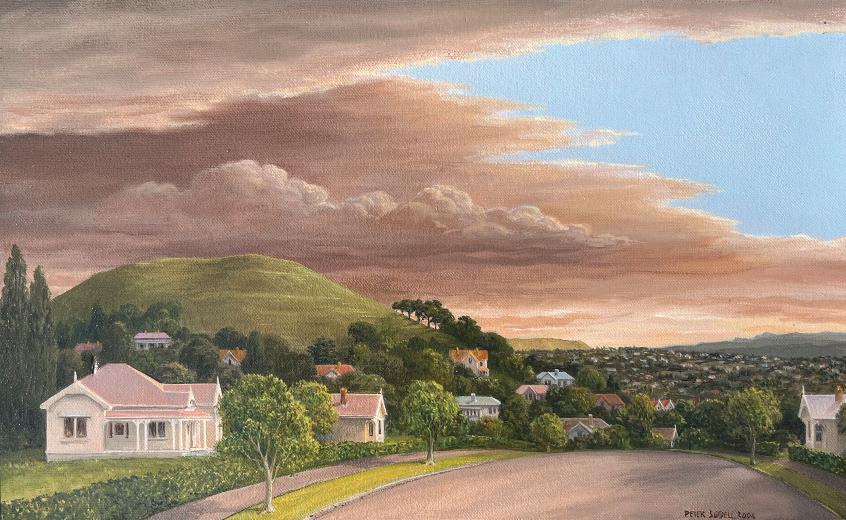
70 PETER SIDDELL (1935 - 2011)
Signed & dated 2004
$12,000 - 18,000
71 PETER SIDDELL (1935 - 2011)
Evening Cloud Oil on canvas 24.5 x 40
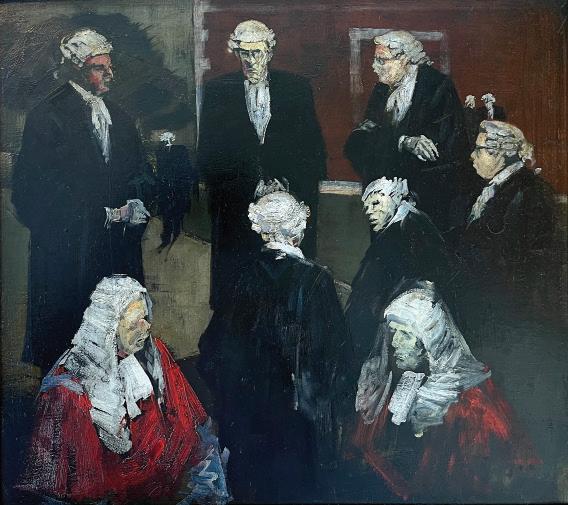
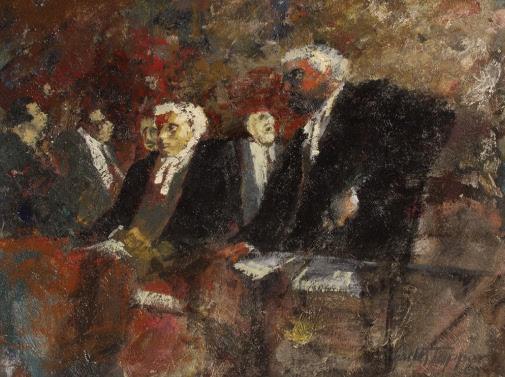
72 GARTH TAPPER (1927 - 1999)
Centennial Gathering Oil on board 34.2 x 38.5 Signed $10,000 - 15,000
PROVENANCE
Private Collection, Auckland
73 GARTH TAPPER (1927 - 1999)
The Final Address, 2nd May 1990
Oil on board 29.5 x 40
Signed & dated 1990
$10,000 - 15,000
PROVENANCE
Private Collection, Auckland
Felix Kelly is one of New Zealand’s most interesting expatriate artists. Born in Epsom in 1914 he claimed to be two years younger most of his adult life. Kelly studied briefly, and even seems to have taught drafting at Elam School of Fine Art. He was only 21 when he left New Zealand in 1935. He never returned. In London Kelly continued his New Zealand occupation of graphic design, working for Lintas, the advertising wing of Unilevers. He also freelanced as an illustrator and cartoonist, especially for Lilliput. His cartoons are not unlike those of the slightly younger Ronald Searle.
After the war and the RAF, the focus of his graphic art shifted to book illustration, dust-jacket design and contributions on interior decoration to such fashion magazines as Ideal Home and Harper’s Bazaar. In the 1950s and 60s he was acknowledged as one of England’s top designers for the theatre, working with the likes of Sir John Gielgud and Dame Sybil Thorndike. Kelly’s ambition had always been to succeed as a painter. Emerging in the context of Surrealism and British Neo-Romanticism, he exhibited alongside important British artists such as Lucian Freud, John Piper and fellow New Zealander Frances Hodgkins. He attracted the attention of the prominent critic and writer, Herbert Read.
Kelly’s paintings are characterised by his interest in a world forgotten by progress, great houses falling into dilapidation, windblasted trees, abandoned locomotives often invested with an eerie watchfulness. Rapidly, Kelly assembled a client list resembling a page from Who’s Who or De Brett’s. In late career, his knowledge of architecture led to involvement in house design, most notably his collaboration on the redesign of Highgrove for the Prince of Wales. His most celebrated project was, however, the mural cycle at Castle Howard associated with the filming of Brideshead Revisited in the 1980s.
Kelly travelled a great deal. Paintings of Spain and Italy in the 1940s were followed by West African scenes in the 50s and ante-bellum houses in America’s Deep South in the 60s and 70s. Trips to Russia, Thailand, India and Egypt in the 70s and 80s each led to an exhibition of exotic paintings.
In late career, Kelly would execute a small sketch characterised by loose brush-work, which would then be converted into a carefully executed big-scale painting. Both types of work appear for sale from time to time.
Kelly completed paintings of Auckland subjects done decades after he had left home. Auckland’s West Coast beaches or Takapuna with Rangitoto beyond, or paddle-steamers on the Waitemata, were evoked with an increasing degree of fantasy well into the 1960s.
A quirky humour pervades his work. Felix Kelly has to be one of New Zealand’s most individual artistic exports. A comprehensive exhibition of his earlier work, curated by Douglas Lloyd Jenkins and mounted by the Hawke’s Bay Museum and Art Gallery, toured several New Zealand centres in 2008-09.
A second edition of Donald Bassett’s book Fix; The Art and Life of Felix Kelly, was published in 2013.
Temple on the Island was chosen as the front cover piece for the 1974 Arthur Tooth & Sons exhibition, Felix Kelly: Recent Paintings of Thailand
Felix Kelly
74 FELIX KELLY (1914 - 94)
Temple on the Island Oil on board 43 x 56
Signed
$10,000 - 15,000
PROVENANCE
Private Collection, Victoria
Private Collection, Auckland
Important, Early & Rare, International Art Centre 22/11/2012
EXHIBITED
Felix Kelly: Recent Paintings of Thailand, 1-19 October 1974 Arthur Tooth & Sons Ltd, 31 Bruton Street, London, label affixed verso
ILLUSTRATED
Front cover: Felix Kelly: Recent Paintings of Thailand, 1-19 October 1974 with essay Traveller in an Antique Land by Robert Harling
REFERENCE
p. 279 Fix - The Art and Life of Felix Kelly, Donald Bassett Darrow Press 2006
75 FELIX KELLY (1916 - 94)
Viennese Pavilion
Oil on panel 33.5 x 44
Signed
$10,000 - 15,000
PROVENANCE
Mrs Gilliat - name on original Arthur Jeffress Gallery, London label affixed verso
The Lighthouse Oil on board 42 x 55
Signed & dated 1969
$8,000 - 12,000
PROVENANCE
Private Collection, Auckland
76 FELIX KELLY (1916 - 94)
77 FELIX KELLY (1916 - 94)
View of the Crystal Palace Oil on board 35.5 x 45.7
Signed & dated 1959
$8,000 - 12,000
PROVENANCE
Private Collection, Auckland
Arthur Jeffries, London
Sothebys, London 5/2/1982, label affixed
verso
EX Captain Kenderdine Collection, UK
Private Collection, United Kingdom
Oil on canvas 39.6 x 49.8
Signed & dated 1935
$7,000 - 10,000
78 ALFRED HENRY O’KEEFE (1858 - 1941)
Roses
79 ROLAND WAKELIN
(New Zealand born Australian 1887-1971)
Manly, 1964
Oil on canvas on board 112 x 86.5
Signed & dated 1964
$30,000 - 40,000
PROVENANCE
Private Collection, Melbourne
Important Australian and International Fine Art; Important Aboriginal and Oceanic Art, Deutscher and Hackett 27/11/2013
Private Collection, South Island
EXHIBITED
Society of Artists Annual Exhibition, Art Gallery, Department of Education, Sydney, 30 October - 13 November 1964, cat. 30 as ‘Manly Scene’.
Roland Wakelin: Master of Colour, Newcastle Region Art Gallery, New South Wales, 18 January - 9 March 2003, touring Macquarie Art Gallery and Muswellbrook Regional Art Gallery, New South Wales, May - December 2003.
REFERENCE
p. 40, 55, cat. 29 Roland Wakelin: Master of Colour, Newcastle Region Art Gallery, New South Wales
Throughout his long creative life, New Zealand born Roland Wakelin loved to paint Sydney, its busy harbour and surrounding suburbs, Manly, 1964 being a particularly interesting and large example. The scene was set early by three major paintings, The Fruit Seller of Farm Cove, 1915 National Gallery of Australia, Canberra, Down the Hills to Berry’s Bay, 1916, Art Gallery of New South Wales, Sydney, and Boat Sheds, 1918 Newcastle Region Art Gallery, in which he explored Post-Impressionist concepts of form and colour.
Even his brilliant experiments with artist Roy de Maistre on the relationship of colour and music were based on Sydney subjects. There was a brief period when he fell under the influence of Max Meldrum’s tonalism, but form and colour were his chief interests.
Wakelin did not limit himself to Sydney, exploring the rich coastal scenery at Terrigal, the geometric forms of the old convict bridge at Richmond in Tasmania, or Melbourne’s city skyline from across the Yarra; but it was Sydney that inspired him most - its buildings, people and absorbing landscape. As with many artists of his time, the Harbour Bridge featured in landscapes of the thirties. The stately buildings of Sydney University, the Showground Tower, and the modernist, glass-fronted Qantas House all attracted his brush, invariably peopled with Sydneysiders going about their various activities.
Manly, 1964 has a two-fold interest for today’s collector. First, it provides an historic view of Manly in the sixties, looking from the East Esplanade of Manly Beach across to the West Esplanade. The Hotel Manly is no longer standing, the style of the time being captured in the clothing the people wear, the big vehicle, and in the yellow-green of the Sydney bus. Manly is one of Australia’s most popular surf beaches. The first World Surfboard Titles were held there in 1964, the same year this work was painted.
Secondly, there are the formal interests and aesthetic appeal of the painting, of form analysed and built up in rich reds, pinks, yellows and blues. As in the central figure group, the focal point of the painting, Wakelin begins with the observed mother and child, and transforms them into a harmony of primary colours. It is by such gifted means that Wakelin translates a transcript of the everyday into an engaging work of art, for he was essentially a formalist, concerned with the structure of his paintings, the monumentality of the buildings in this painting being achieved by investing them with a masterly feeling of volume and weight.
Manly received its name from Captain Arthur Phillip of the First Fleet, taken from his reference to the ‘manly behaviour’ of its indigenous people. This apt description lived on, as seen in Wakelin’s view of the sixties.
Signed $20,000 - 30,000
PROVENANCE
Private Collection, Auckland
80 SYDNEY LOUGH THOMPSON (1877 - 1973)
Tunny Fishermen, Concarneau Oil on board 36 x 43.5
SYDNEY LOUGH THOMPSON (1877 - 1973)
Signed
$20,000 - 25,000
PROVENANCE
Private Collection, Auckland
81
Tunny Boats, Concarneau Oil on canvas 36.5 x 45
82 JOHN SHOTTON PARKER (1944 - 2017)
Untitled Oil on canvas 182 x 121
Signed & dated 1991
$8,000 - 12,000
PROVENANCE
Judith Anderson Gallery
Dame Kiri Te Kanawa Collection
83 LOUISE HENDERSON (1902 - 94)
Table Still Life Oil on board 58 x 87
Signed
$15,000 - 25,000
PROVENANCE
Dame Kiri Te Kanawa Collection
Contemporary & Traditional New Zealand & European Art, International Art Centre, 28/07/2000
94)
Cloud Series Oil on board 91.5 x 60.5
Signed, dated & inscribed Cloud Series, 1964, 22 Late Hour verso
$20,000 - 28,000
- 94)
Pub Party, c 1989
Gouache over charcoal on paper 67.5 x 42.5
$12,000 - 16,000
84
LOUISE HENDERSON (1902 -
85
LOUISE HENDERSON (1902
86
JOHN BARR CLARKE HOYTE (1835 - 1913)
The White Terraces, Rotomahana
Watercolour 31 x 53
$10,000 - 15,000
PROVENANCE
Collection of Dame Kiri Te Kanawa
Purchased from Fine Art Auction, International Art Centre, 26 July 2001
$10,000 - 15,000 88
87 CHARLES BLOMFIELD (1848 - 1926)
Mokoia Island from Ohinemutu Oil on board 20 x 29
Signed & inscribed Rotorua and Mokoia Island from the Maori Settlement, Ohinemutu verso
$8,000 - 12,000
88 DICK FRIZZELL (b. 1943)
Spa Capital (After Marcus King) Oil on canvas 85 x 75
Signed, inscribed Spa Capital (After Marcus King) & dated 6/4/2014
89 PETER MCINTYRE (1910 - 95)
Manuherikia River, Otago Oil on canvas board 60 x 75
Signed
$25,000 - 35,000
PROVENANCE
Private Collection, Auckland
90 PETER MCINTYRE (1910 - 95)
In and out Club - St James Square, London
Watercolour 49.6 x 59.7
Signed
$15,000 - 20,000
PROVENANCE
Ex estate of a former officer in the Office of Strategic Services during WWII
91 DON BINNEY (1940 - 2012)
Mt Eden, Auckland
Pencil & ink on paper 29.5 x 41.5
Signed
$10,000 - 15,000
92 WILLIAM JAMES REED (1908 - 1996)
Boat Sheds, Otago Harbour
Watercolour 27.5 x 34
Signed
$4,000 - 6,000
PROVENANCE
Private Collection, Auckland
Contemporary & Traditional New Zealand & European Art, International Art Centre 26/07/2001
93 ALLEN MADDOX (1948 - 2000)
Self Portrait 5
Oil on linen laid to canvas 43 x 37
Signed, inscribed Self Portrait 5 - am I afraid to be happy & dated 1976
$8,000 - 12,000
PROVENANCE
Gow Langsford Gallery label affixed verso
94 ALAN PEARSON (1929 - 2019)
Self Portrait
Oil on board 26 x 29
$4,000 - 6,000
PROVENANCE
Private Collection, Auckland
-1986)
Princess Wharf Oil on board 38 x 48
Signed
$5,000 - 8,000
96 ISABEL JANE FIELD (1867 - 1950)
Incoming Mist
Watercolour 23.5 x 49
Signed & dated 1900
$8,000 - 12,000
97 MAUD SHERWOOD (1880 - 1956)
The Camping Ground at Dee-Why, NSW
Watercolour 44 x 54
Signed
$7,000 - 10,000
PROVENANCE
Private Collection, Auckland Important, Early & Rare, Auckland, International Art Centre 30/03/2011
95 HELEN BROWN (1917
98 TIM WILSON (1954 - 2020)
Late Afternoon, Lindis Pass, triptych Oil on Belgian linen 46.5 x 272
Signed & dated 1999
$25,000 - 35,000
PROVENANCE
Dame Kiri Te Kanawa Collection
International Art Centre, 1999
99 TIM WILSON (1954 - 2020)
The God’s - Pig Root - diptych Oil on Belgian linen 61 x 243
Signed $20,000 - 30,000
PROVENANCE
Private Collection, Auckland Fishers Fine Arts label affixed verso
Pianist Waiting for Silence
Acrylic marouflage 103 x 72
Signed & dated 2000
$7,000 - 10,000
Food for Thought Oil on canvas 111.8 x 137.5
Signed, inscribed Food for Thought & dated 2009 verso
$10,000 - 15,000
100 PIERA MCARTHUR (b. 1929)
101 JOANNA BRAITHWAITE (b. 1962)
Uberrime People of Asefeka, (2016)
Acrylic on canvas, diptych 152.0 x 152.7
Signed $12,000 - 16,000
102 ANDY LELEISI’UAO (b. 1969)
Mixed media on canvas 180 x 214
Signed, inscribed & dated 2012 verso
$10,000 - 15,000
103 FATU FEU’U (b. 1946) Sur Coise
104
RAYMOND CHING (b. 1939)
Magpie Goose Oil on panel 44 x 31.5
Signed, inscribed Anseranas Semipalmata, Victoria & dated 23/7/1984
$8,000 - 12,000
105 RAYMOND CHING (b. 1939)
ILLUSTRATED
p. 176 Wild Portraits, Paintings and Drawings by Raymond Harris-Ching
Peter Hansard, Seto Publishing, 1988,
106 RAYMOND CHING (b. 1939)
Vanessa Pencil on paper 31.5 x 40.3
Signed
$6,000 - 10,000
ILLUSTRATED
p. 158 The Art of Raymond Ching: Paintings and Drawings 1972-1979
Peter Hansard, William Collins, 1981 104
Coastal Gatherings
Alkyd & acrylic on board 53.5 x 89.5
Signed & inscribed They gathered in their great numbers around wild coasts and in sheltered bays
$6,000 - 10,000
PROVENANCE
Artis Gallery
107 RAYMOND CHING (b. 1939)
Takahe Notomis Mantelli
Pencil on paper 53.3 x 36.8
Signed
$3,000 - 5,000
ILLUSTRATED
p. 199 Studies and Sketches of a Bird Painter, Paintings, Drawings and text by Raymond Ching, Errol Fuller, Landsdowne Editions, 1981
108 MARGARET OLROG STODDART (1865-1934)
Spring Flowers with Crocus and Jugs
Watercolour 70 x 52
Signed
$15,000 - 20,000
109 MARGARET OLROG STODDART (1865-1934)
Arthurs Pass Mistletoe in Bloom
Watercolour 25 x 35
Signed & inscribed Arthurs Pass Mistletoe in Bloom on original label fixed verso
$8,000 - 12,000
THE Walter Scott Blaikie
COLLECTION OF WORKS BY PETRUS VAN DER VELDEN
This rare collection of works by Petrus van der Velden have never before been offered for sale, having been held in the family of Timaru based friend of the van der Velden, Walter Scott Blaikie since painted. Cherry Baby was a gift to Walter directly from the artist and includes an original letter from the artist where it is referred to as Cherry Baby.
110 PETRUS VAN DER VELDEN (1837 - 1913)
Cherry Baby Watercolour 71 x 49
Signed
$10,000 - 20,000
ILLUSTRATED
p. 226 Petrus van der Velden, A Catalogue Raisonne Volume II, T L Rodney Wilson, Chancery Chambers Publishers 1979
Cat. no. 5.6.2.1
111 PETRUS VAN DER VELDEN (Attributed) Petrus with his wife Sophia Wilhelmina Eckhart painting a Self Portrait Oil on canvas 35 x 45
$3,000 - 6,000
112 PETRUS VAN DER VELDEN (1837 - 1913)
A Young Marken Girl Oil on board 13.8 x 11.8
$2,500 - 3,500
ILLUSTRATED
p. 38 Petrus van der Velden, A Catalogue
Raisonne Volume II, T L Rodney Wilson, Chancery Chambers Publishers 1979
Cat. no. 1.2.2.25
113 PETRUS VAN DER VELDEN (1837 - 1913)
Portrait of a Young Marken Women in Profile Oil on board 14 x 12
$2,500 - 3,500
ILLUSTRATED
p. 38 Petrus van der Velden, A Catalogue
Raisonne Volume II, T L Rodney Wilson, Chancery Chambers Publishers 1979
Cat. no. 1.2.2.26
114 PETRUS VAN DER VELDEN (1837 - 1913)
Windmill and Houses
Watercolour 35.5 x 24.7
$1,000 - 2,000
ILLUSTRATED
p. 57 Petrus van der Velden, A Catalogue
Raisonne Volume II, T L Rodney Wilson, Chancery Chambers Publishers 1979
Cat. no. 1.3.2.42
112
113 114
PETER
(1910 - 95)
The Grand Canal, Venice Watercolour 55 x 72
Signed $12,000 - 16,000
PROVENANCE
Acquired directly from the artist by the owner’s father who served with Peter McIntyre during World War II
115
MCINTYRE
116 NEIL FRAZER (b. 1961)
Table Rock (Green) (2018)
Acrylic on canvas 115.2 x 140.8
Signed, inscribed Table Rock (Green) & dated 2018 verso
$15,000 - 18,000
117
ANNA LOIS WHITE (1903 - 1984)
Ruth and Naomi
Watercolour 17 x 11.5
Signed & inscribed Ruth and Naomi
$8,000 - 12,000
118 ANNA LOIS WHITE (1903 - 1984)
James Turkington Oil on board 78.7 x 45.5
Signed
$6,000 - 10,000
119
MICHAEL SMITHER (b. 1939)
Wellington at Night
Acrylic on paper 35.5 x 25
Signed & dated 1987
Inscribed Wellington at Night verso
$2,500 - 3,500
117
118
Oil on board 60 x 90
Signed & dated 1961
$8,000 - 12,000
120 A AUSTEN DEANS (1915 - 2011)
Glendhu Bay, Lake Wanaka
121 SYDNEY LOUGH THOMPSON (1877 - 1973)
Mervyna Oil on canvas 51 x 40
Signed, inscribed Mervyna & dated 1907
$8,000 - 12,000
PROVENANCE
Private Collection, USA
122 DOROTHY KATE RICHMOND (1861 - 1935)
The White Cock Watercolour 41 x 39
$5,000 - 8,000
123 FRANCIS MCCRACKEN (1879 - 1959)
Cyclamen Oil on canvas 54 x 45
Signed
$8,000 - 12,000
PROVENANCE
Private Collection, Auckland
95)
Main Street Bulls, Looking South Oil on board 35 x 47.5
Signed
$10,000 - 15,000
2005)
Market Day, Auvergne Oil on board 30 x 45
Signed
$4,000 - 6,000
124 PETER MCINTYRE (1910 -
125 TOM ESPLIN (1915 -
126 ANS WESTRA (b. 1936)
Koroniti, Whanganui, 1991
Silver gelatin print 28 x 28
Signed
$4,000 - 8,000
127 ANS WESTRA (b. 1936)
Coronation Hui, Turangawaewae
Marae, Ngaruawahia, 1962
Silver gelatin print 30 x 30
Signed
$4,000 - 8,000
128 PETER PERYER (1941 - 2019)
Punakaiki Rocks
Gelatin silver print 34.1 x 50.3
Signed
$2,000 - 3,000
129 FRANK BARNES (1859 - 1941)
Tasman Liner Awatea, Passing the Tamahine off Pencarrow Oil on card 44 x 68.5
Signed & inscribed
$2,500 - 3,500
130 FRANK BARNES (1859 - 1941)
T.S.S. Tamahine of Pencarrow by Moonlight Oil on card 43.5 x 62
Signed & inscribed
$2,500 - 3,500
131 JOHN GULLY (1819 - 1888)
Cable Bay Watercolour 35 x 63.5
Signed & dated 1882
$10,000 - 15,000
Important & Rare Art
Important & Rare Art auctions are the proven, pre-eminent sale category for major works of art offered for sale in New Zealand. These auctions take place three times annually. Now in our 51st year in business, experience continues to equal results. 2014 saw Important & Rare auctions realise five of New Zealand’s top ten auction prices. The following year saw new records set with the two top prices in Auckland achieved. With the addition of the record
$1.7 million paid for a C F Goldie in November 2021 sale, International Art Centre achieved the three highest art auction prices in New Zealand’s history. Due to an appreciative, and greatly valued clientele of nationwide and international buyers and sellers we look forward to breaking new ground.
The buzz generated by our Collectable Art auctions reflects the popularity of these sales: an event at which seasoned connoisseurs and budding collectors alike converge to appreciate one of the most eclectic and diverse offerings available to the market. Works span the vital period from mid-century modernism through to the cutting-edge of today’s Contemporary art in New Zealand.
This sale category is an increasingly significant event in our auction calendar. Offering a number of lowerpriced works from highly-sought after artists in print and edition form, as well as quality works from artists whose presence on the secondary market is just beginning to crystallise.
COLLECTABLE ART ALWAYS CONSIGNING ENTRIES NOW INVITED
Single Owner Auctions
From time to time, the secondary market is fortunate enough to be exposed to one of those rare collections which transcends the value of its individual works of art, and stands to represent something iconic in its entirety. Our team is well-versed in the process of offering single-owner collections for sale, and take pride in the process of curating a single-owner sale when the opportunity arises. We offer a targeted marketing campaign and maximise the use of both electronic and print-based collateral to effectively showcase such collections to maximum effect. The strong networks we have established locally and internationally are reflected in some of the private collections which have been entrusted to us in recent years.
ART AT HOME ONLINE only Auctions
A quick, easy and reliable solution to affordable consignments. During the 2020 nationwide lockdowns we stayed connected to our clients, keeping them close to our art. The time was spent productively, resulting in the development of our own online bidding platform and App, successfully auctioning works of art with no exhibition viewing, no printed catalogue, while using state-of-the-art technology.
All transactions were contactless and we reduced our carbon footprint along the way. While the personal service, excitement and atmosphere of our famous live Parnell Road auctions remain and will continue to grow, the success of this online only platform has encouraged us to retain this as a permanent sale category.
International Art Centre provides formal valuations for insurance purposes, specialising in the preparation of catalogued and photographed inventories. Written valuations can be arranged by appointment. We provide free informal, verbal estimates for any of the works in your collection. For
GRETCHEN ALBRECHT Garden 1971, Watercolour on paper 72 x 54.5 cm Reproduced courtesy of Gretchen Albrecht & The Fletcher Trust Collection
International Art Centre | Appointed Valuers of The Fletcher Trust Collection
Absentee Bid Form IMPORTANT & RARE ART
6:00pm Wednesday 3 August 2022
I instruct International Art Centre to bid on my behalf for the following lots up to the prices indicated below.
I understand my bids are to be executed at the lowest attainable price level. All bids are subject to Conditions of Sale printed in this catalogue.
REGISTRATION NUMBER
NAME
ADDRESS
TELEPHONE
We will allocate a bidding number if you don’t already have one
I have read and understand the Conditions of Sale. International Art Centre offers this service to clients unable to attend sale and is not responsible for error or failure to execute bids.
Email to info@internationalartcentre.co.nz before 3pm day of sale
Alternatively, visit our website www.internationalartcentre.co.nz and place absentee bids online or our bidding platform to participate in the auction live and remotely https://auctions.internationalartcentre.co.nz
EMAIL
ARTIST NAME
MCCAHON C 26, 27, 28, 29, 53, 58
MCCRACKEN F .............................................. 123
MCINTYRE P 89, 90, 115, 124
MOFFITT T ..................................................... 7, 8
MRKUSICH M 59, 61
O’KEEFE A H.................................................... 78
PAGE E ................................................. 54, 64, 65
PALMER S 37
PARDINGTON F .............................................. 13
PARKER J S 82
PEARSON A ...................................................... 94
VAN DER VELDEN P ................ 110, 112, 113, 114
VAN DER VELDEN P (Attributed) 111
WAKELIN R ..................................................... 79
WALLIS DR S ..................................................... 6
WALSH J 39
WESTRA A ............................................... 126, 127
WHITE A L 117, 118
WHITELEY B ................................................... 67
WILSON T 98, 99
YOUNGHUSBAND A ....................................... 69
Lot 13 Fiona Pardington (detail)
Conditions of Sale and A Guide to Buyers
The highest bidder shall be the buyer. In the event of any dispute as to the bidding in respect of any lot, that lot may be offered again at the discretion of the auctioneer whose decision shall be absolute and final.
The auctioneer has the right -
(i) to refuse any bid;
(ii) to advance the bidding at his absolute discretion;
(iii) to place a reserve on any lot;
(iv) to place a bid or bids on behalf of the seller;
(v) to withdraw any lot from sale;
(vi) to require a successful bidder to pay forthwith the whole or any part of the purchase price.
The auctioneer acts as the agent of the seller and neither he nor the seller shall be responsible for any defects or faults in any lot or for any errors of description or for genuineness or authenticity of any lot and no compensation shall be paid in respect of same.
From the time of lot being sold, such lot will be the responsibility of the buyer.
Successful bidders are required to pay for purchases immediately on completion of sale unless otherwise arranged.
All intending buyers are required to register for a bidding number prior to auction commencing. Subscribers can use their permanent bidding number. We reserve the right to ask for identification if you are a first time client of International Art Centre.
Each lot shall be paid for and removed at the buyers expense by no later than 4:00pm Friday 5 August 2022 unless otherwise arranged failing which the auctioneer and/or the seller shall have the right to forfeit any deposit paid by the buyer and to resell the lot either by public or private sale and any deficiency on costs of resale shall be borne by the defaulting buyer.
No lot may be collected whilst auction is in progress. Payment can also not be made until completion of auction.
SUBJECT BIDS
When the auctioneer declares a lot ‘subject’ this means the bid is below the set reserve and is subject to vendor accepting, rejecting or negotiating the bid. International Art Centre will endeavour to make contact with the vendor immediately after sale or the following day. If the bid is accepted, the highest bidder is obligated to make purchase.
ESTIMATES
Estimates are provided for each entry and act as a guide only. They are prepared well in advance of sale and are subject to revision at any time. Estimates are based on hammer price and do not include buyers premium.
ABSENTEE BIDS
Absentee bidding arranged - please refer to absentee bidding in back of catalogue. Email to info@internationalartcentre. co.nz before 3pm day of sale. Please do not be offended if a member of our staff ask for your credit card details as security.
Absentee bids can also be left via our website to registered members. Our website www.internationalartcentre.co.nz acts as a useful auxiliary to the catalogue but we recommend inspection or a condition report prior to leaving a bid. Our staff will gladly supply you with a condition report on any lot.
TELEPHONE BIDS
Telephone bidding available to subscribers and registered bidders. There is no charge for this service.
PAYMENT
FACILITIES
Eftpos: Available for transactions depending on your daily limit.
Bank deposits: Bank instructions on invoice if paying by direct debit. Quote the Lot number(s) purchased and surname as reference.
Credit cards: Visa and Mastercard with a 2% surcharge.
International Art Centre no longer accepts cheques.
PROTECTED OBJECTS ACT
Art objects over 50 years old made by an artist or maker born in or related to New Zealand may be protected New Zealand objects, and therefore require permission from the Ministry for Culture and Heritage in order to be exported. Applications for permission to export can be made at https://mch.govt.nz/ nz-identity-heritage/protected-objects/exporting
FREIGHT & PACKING
International Art Centre arrange door to door delivery both nationally and internationally. Please arrange insurance on your items prior to them leaving our premises. Uber deliveries within the wider Auckland area can also be arranged.
OTHER ENQUIRIES
Should you have any questions relating to the sale or if we can be of any other assistance please contact us during business hours on (09) 379 4010, Toll Free 0800 800 322 or email info@internationalartcentre.co.nz
BUYERS PREMIUM
17.5% Buyers premium plus GST on premium applies to all lots. (Total buyers premium is 20.12% including GST)
Lot 56 Gottfried Lindauer
202 Parnell Road, Auckland, New Zealand Tel + 64 9 379 4010 www.internationalartcentre.co.nz