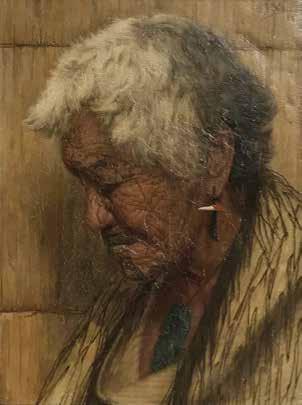
Estates
& Collectable Art held 4 July
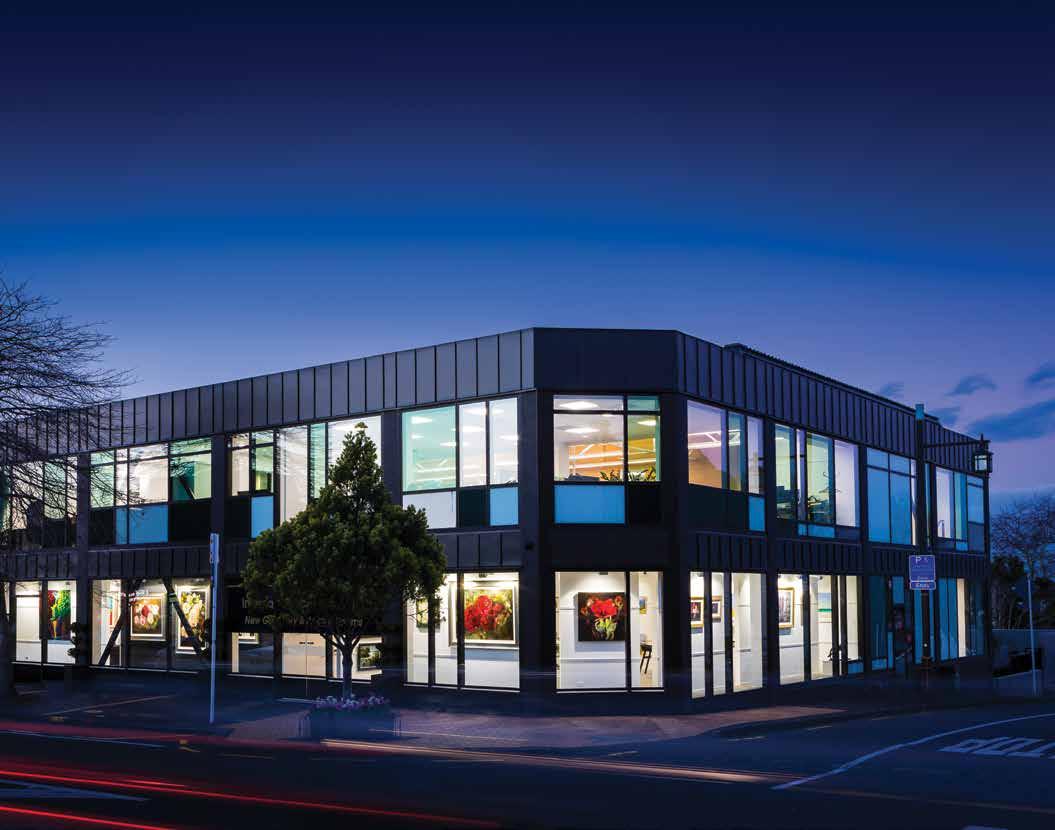
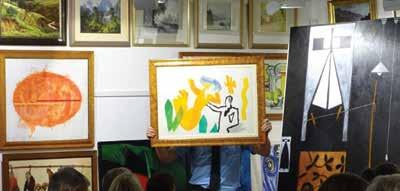
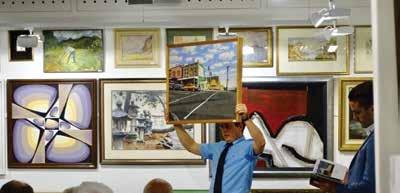
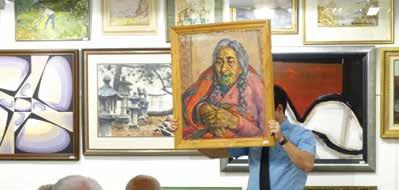
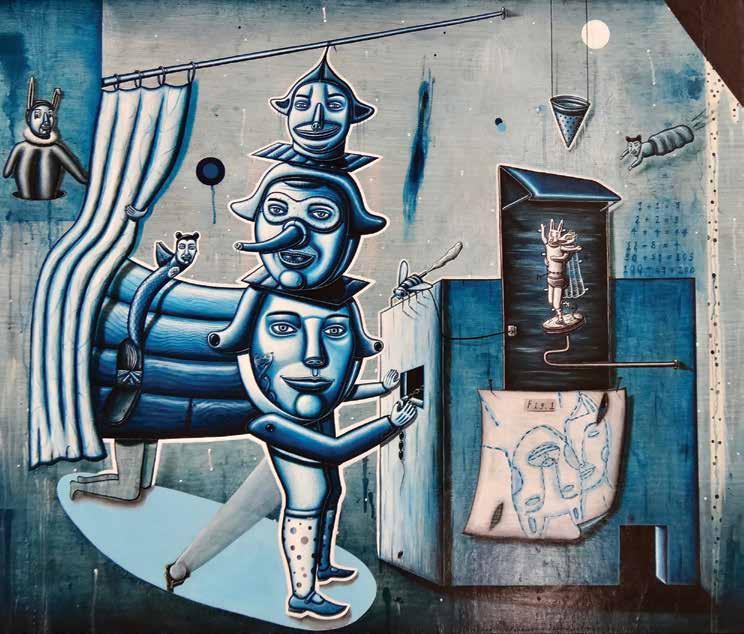
International Art Centre’s reputation for unmatched clearance rates was again witnessed at our July auction. 200 of the 217 works works found new homes in what was a fun-filled evening of action along with excellent buying for first time collectors.
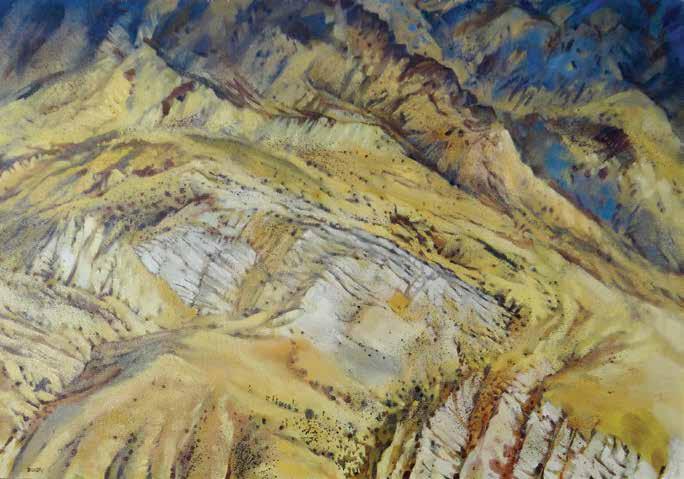
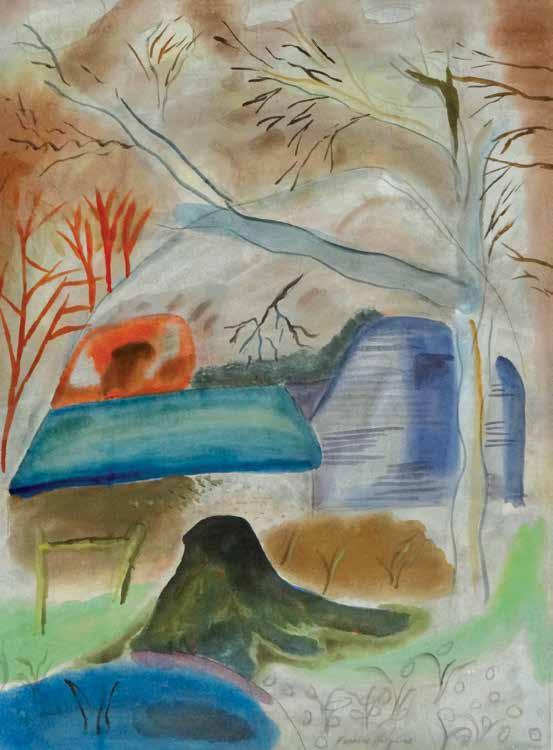
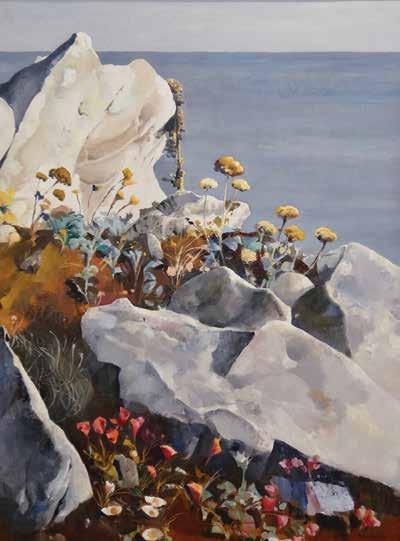
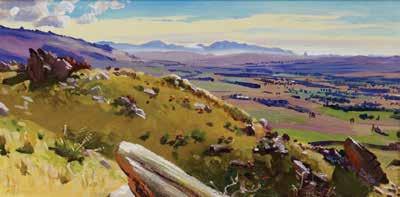
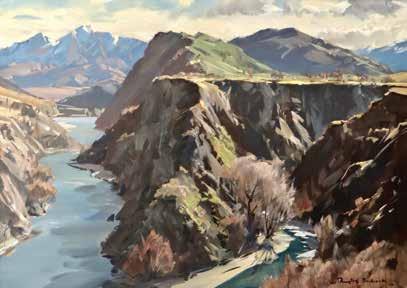
Peter Siddell Est.$2,000 - 4,000
$6,500
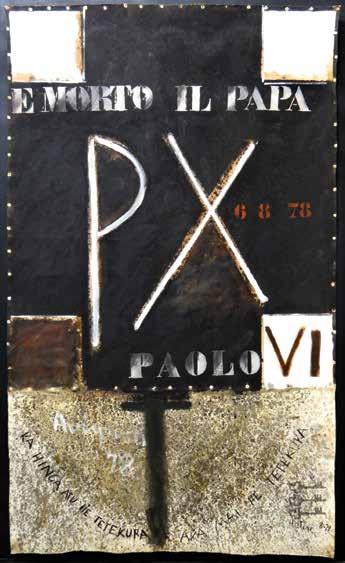
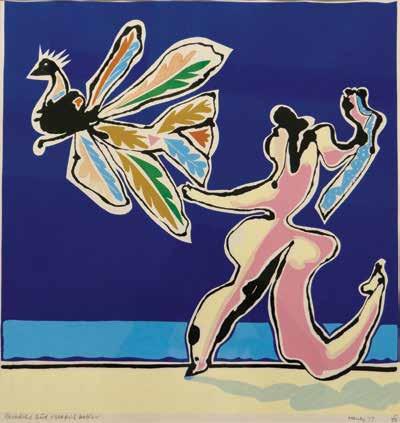
Pat Hanly screenprint fetched $4,400
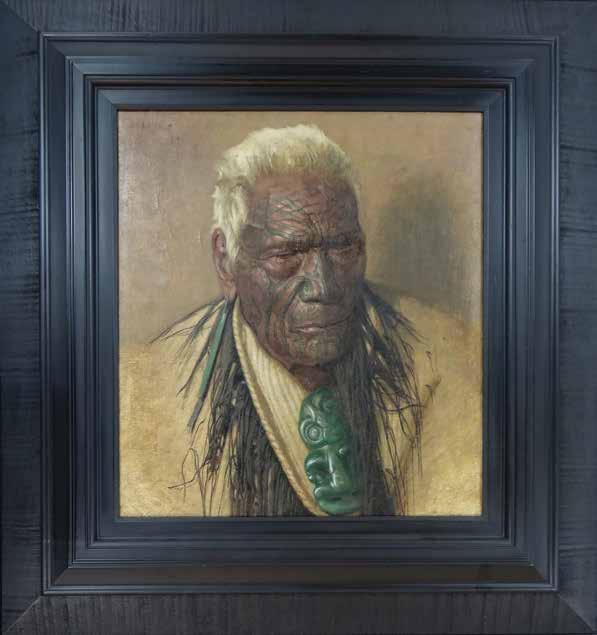
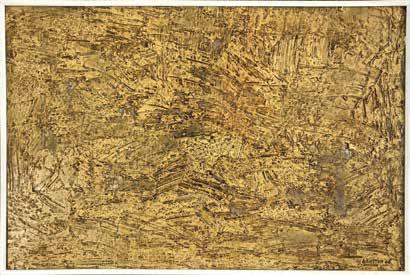
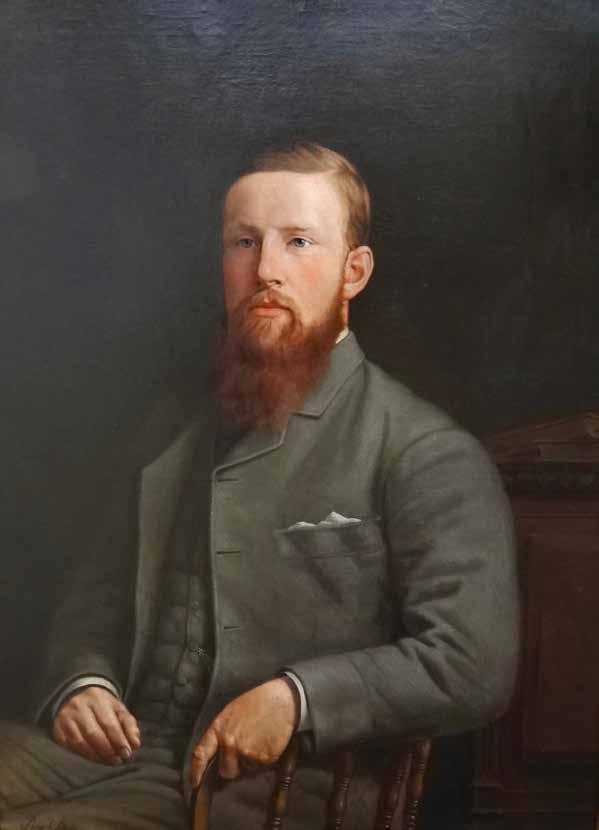
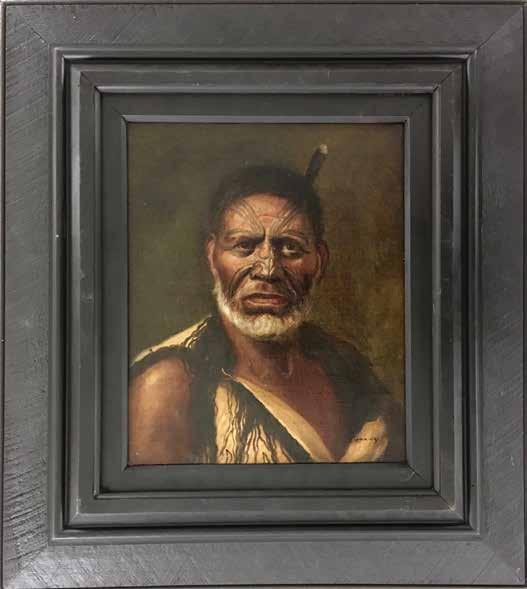
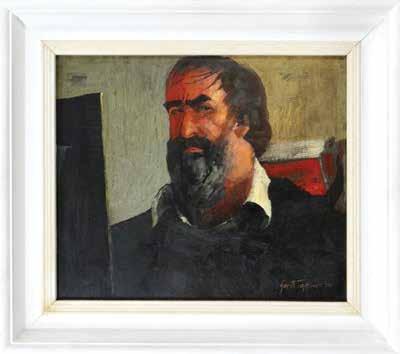
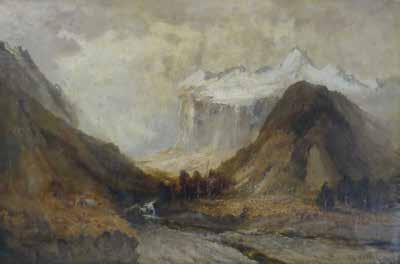
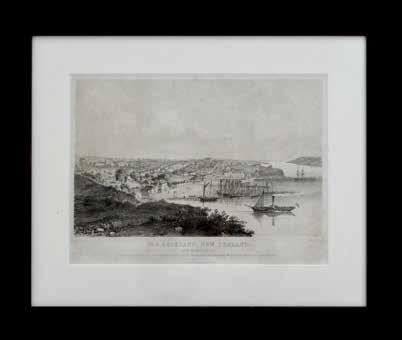
George Baloghy fetched $4,600
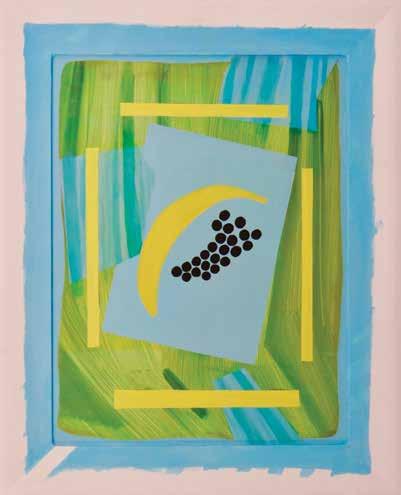
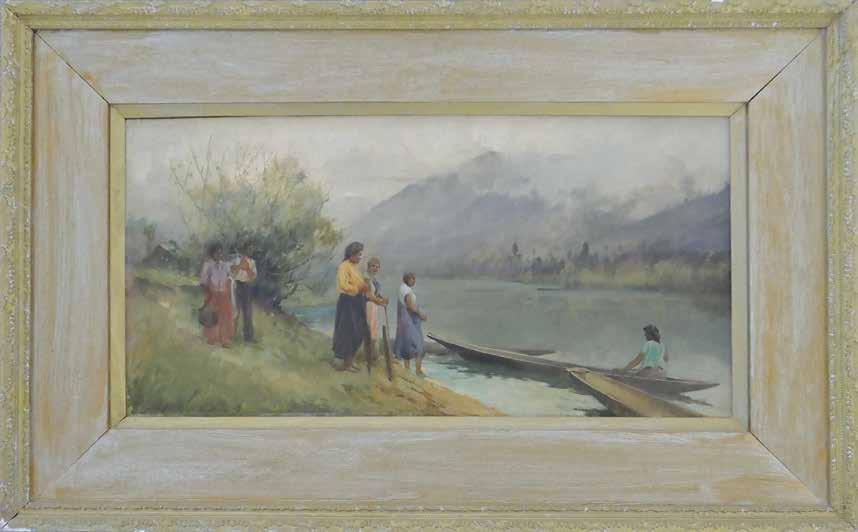
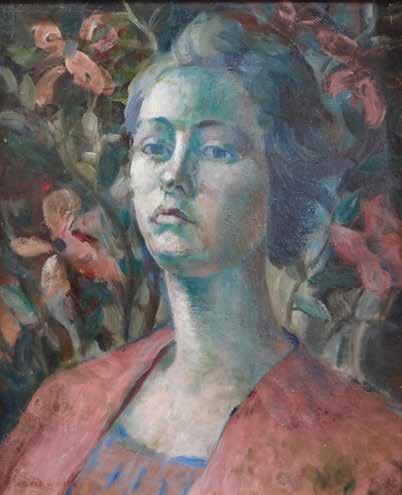
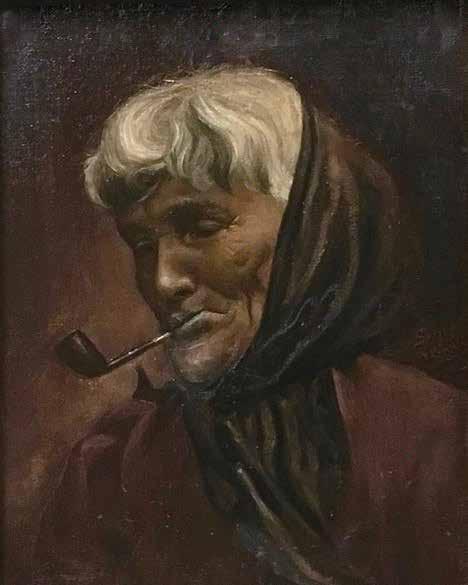
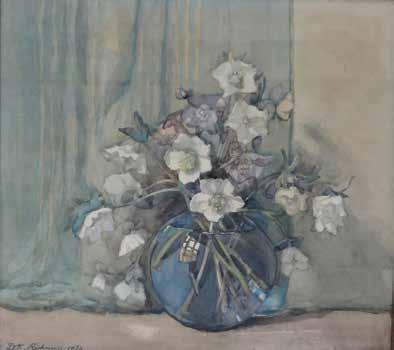
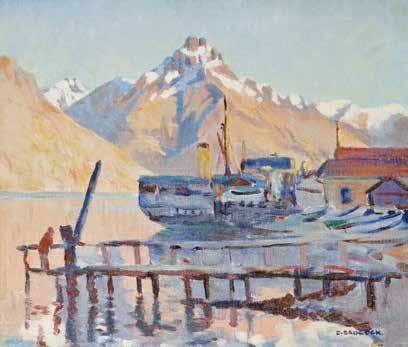
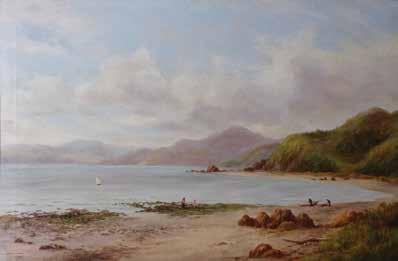
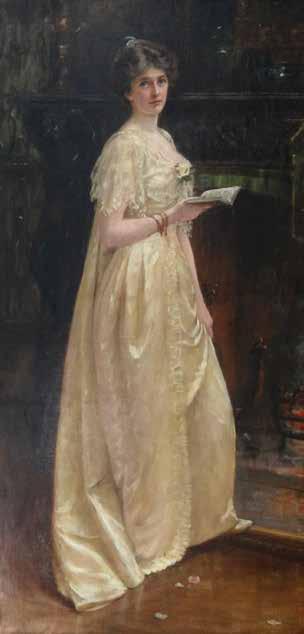
Ida H Carey fetched $2,600
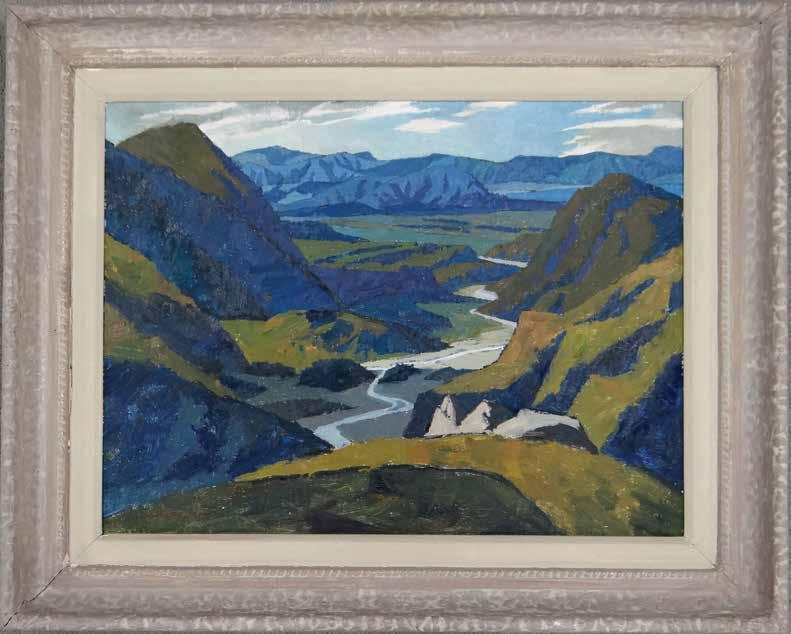
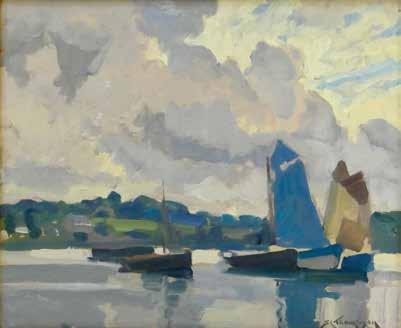
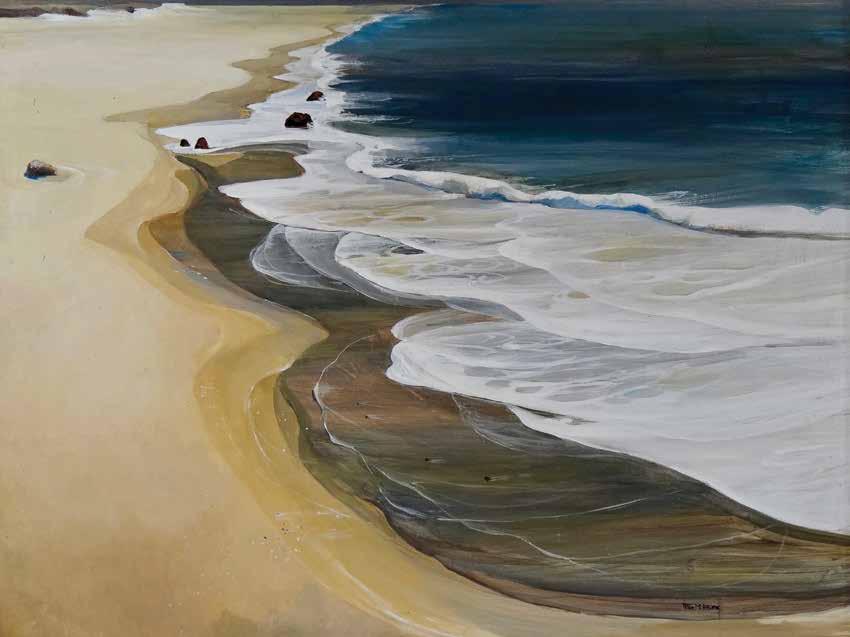
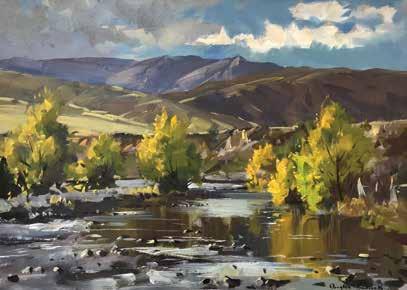
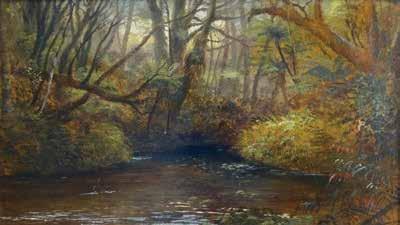
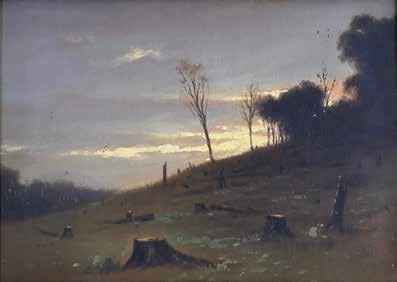
Charles McPhee Est.$1,500 - 2,500
$3,000
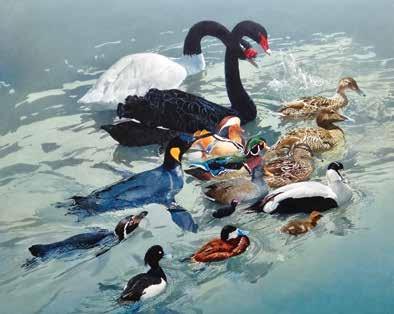
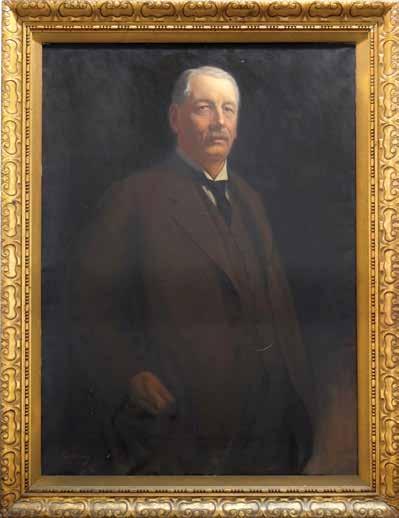
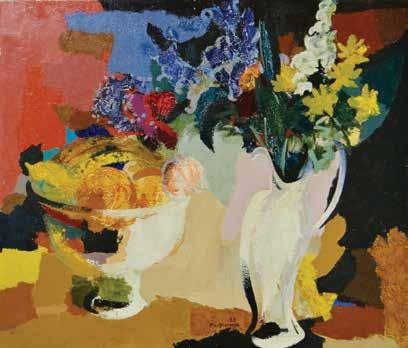
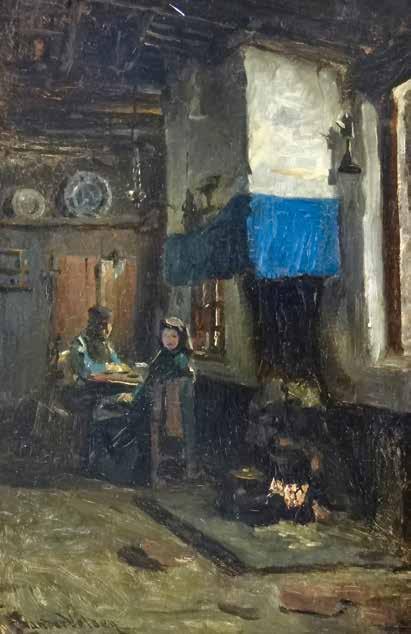
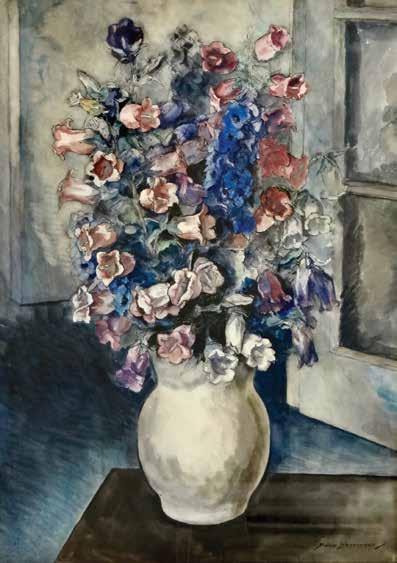
Paul Martinson Est.$1,000 - 2,000
$2,800
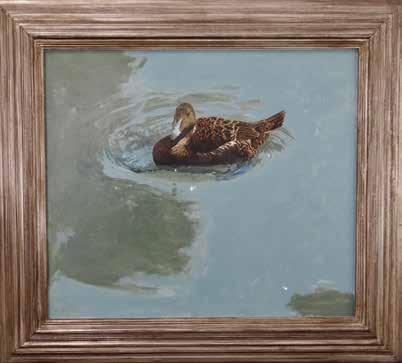
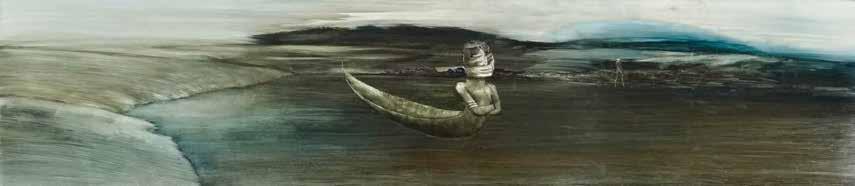
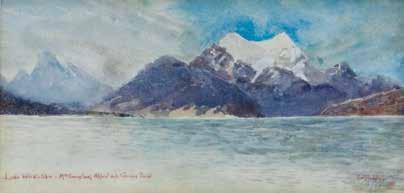
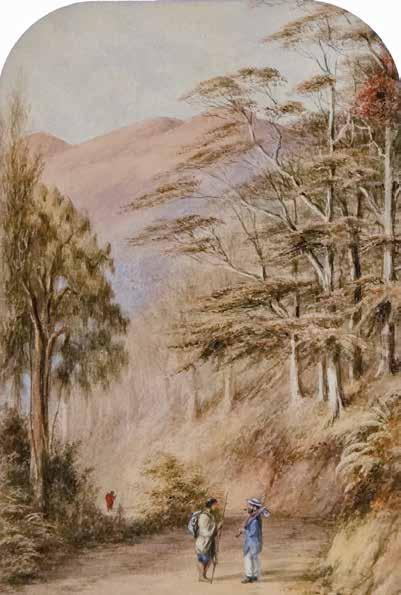
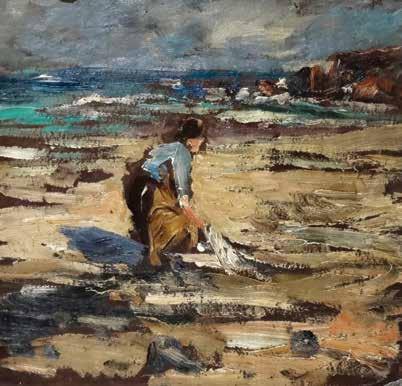
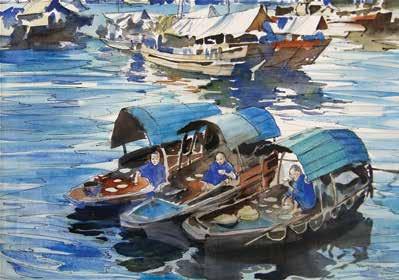
Peter Williams Est.$400 - 600 Fetched $1,700
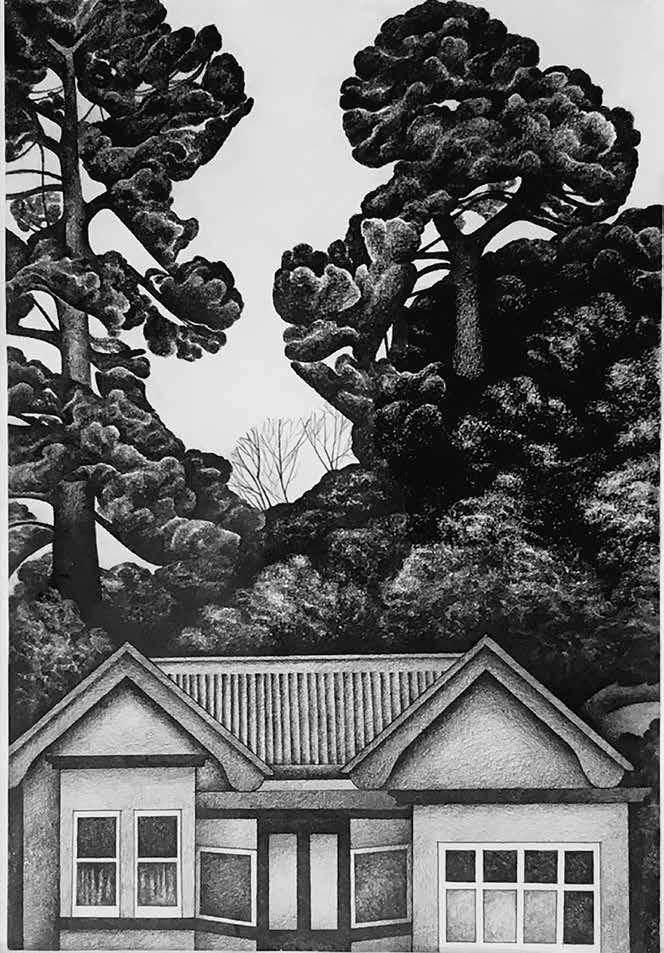
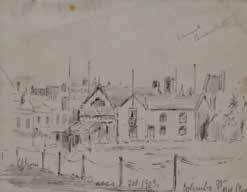
1 ROBIN WHITE b. 1946
Sketch for Over the Road from Anna’s Place, Dunedin Pencil on paper 45 x 31
$8,000 - 12,000
Provenance:
Private Collection, London Ferner Galleries label affxedverso
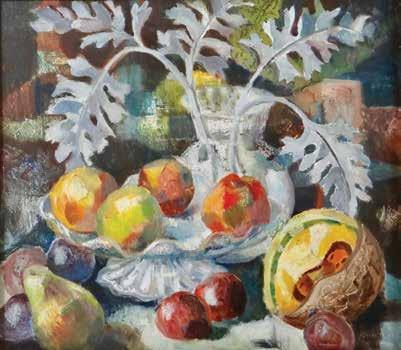
2 JOHN TOLE 1890 - 1967
Still Life With fruit Oil on board 34 x 40
Signed
$4,000 - 6,000
Provenance:
Ex Collection of Moyra Todd who gifted the painting to current owners as a house warming present in the 1960s
John Tole attended the Elam School of Art, Auckland, where he was influenced by the work of John Weeks (1886 - 1965). Tole often travelled to Rotorua, where he, like Weeks, was friends with Dr W Stanley Wallis, a local doctor who shared their interest in modern painting. Tole and his brother Charles were both fringe members of what the late Melvin Day called The Rotorua Connection. In 1945 Day had gone to the area to teach, whilst there he shared a studio with Wallis.
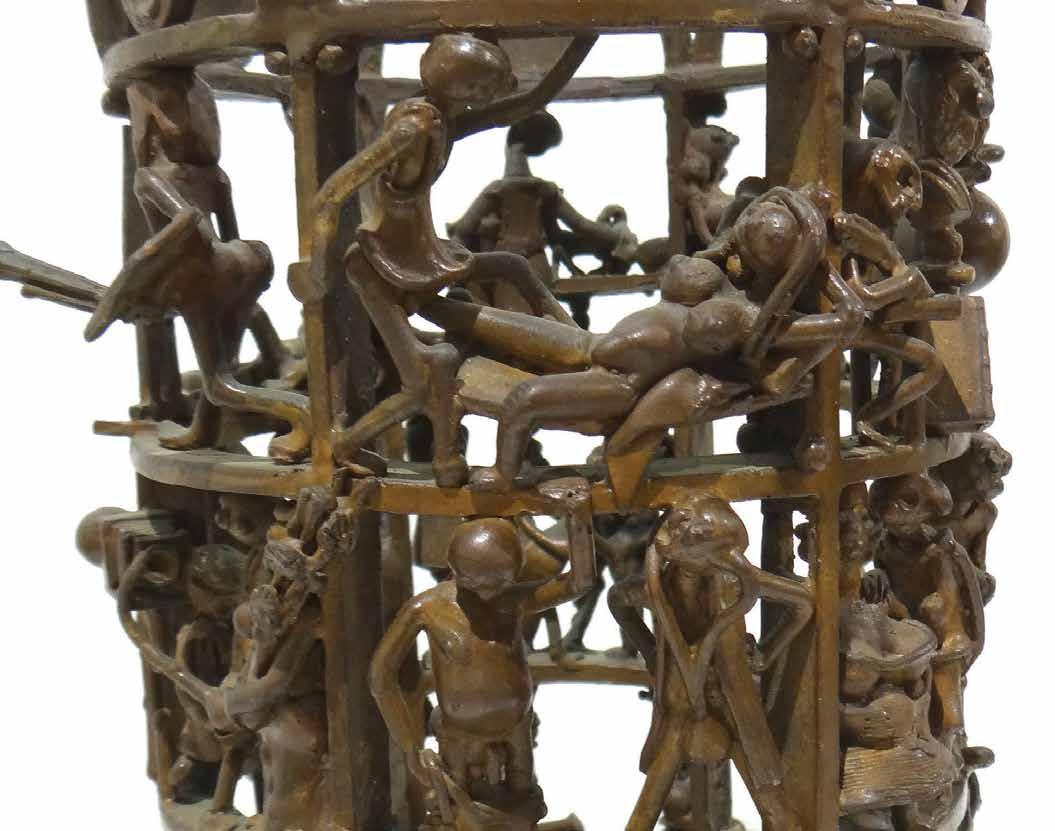
Paul Beadle was born in Berkshire, England. He studied at Cambridge Art School prior to enrolling at the London Central School of Arts and Crafts. He also studied privately under sculptor Alfred Southwick and in Copenhagen with Kurt Harald Eisenstein. During World War II Beadle served in the Pacific with the Royal Navy. At the end of the war he remained in Australia.
In 1960 he moved to Auckland to become Professor of Fine Arts at the University of Auckland. From 1961 to 1975 he was Dean of Elam School of Art. In 1962 Beadle was elected as foundation president of the New Zealand Society of Sculptors and Associates in Auckland. He was also a Fellow of the Royal South Australian Society of Arts and the President of the New Zealand Society of Industrial Designers. His artistic style had changed dramatically after his arrival in Auckland. He accepted a commission to create a chess set which became a catalyst for him to create technically complex sculptures on a smaller scale. These works often reflected his sense of humour, he was a keen observer of human nature. In an interview with Gil Docking he said: I see man as a rather funny little fellow - it is me too - and I accept, if not understand, most of his faults. Much of the vitality and anecdotal nature of Beadle’s work came from personal observtions of the world.
Professor Beadle’s work is included in the collections of the Auckland Art Gallery Toi o Tāmaki, Museum of New Zealand Te Papa Tongarewa, the Australian National Gallery and other Australian state galleries.
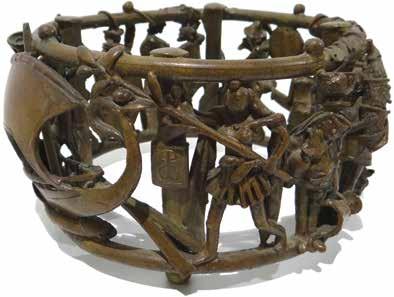
4 PAUL BEADLE 1917 - 1992
Untitled - A Story from the Viking Age
Unique bronze 12 x 18 x 18
Signed
$4,000 - 6,000
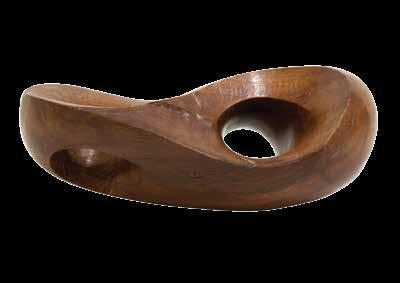
5 PAUL BEADLE 1917 - 1992
Homage to Moore, 1968
Carved wood sculpture 11.5 x 27.5
$3,000 - 5,000
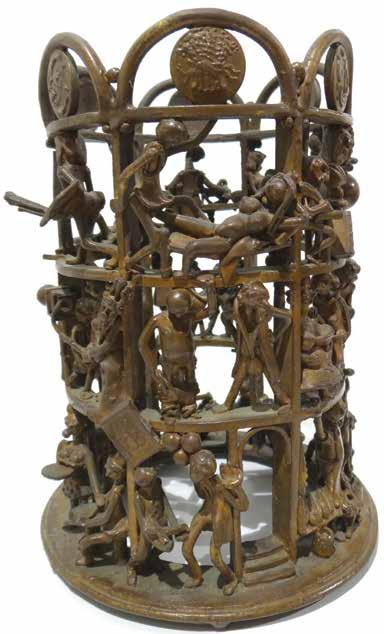
6 PAUL BEADLE 1917 - 1992
Rooms To Let
Unique bronze 24 x 18 x 18
Signed & inscribed
$10,000 - 15,000
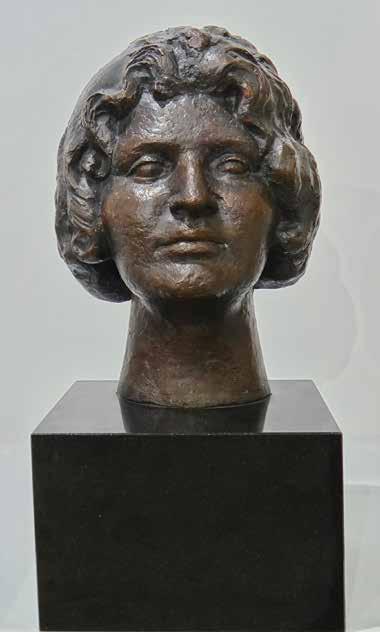
7 BETTY BEADLE 1924 - 2002
Louise (Tilsley) - Artist
Cast bronze 30 x 25
$1,000 - 2,000
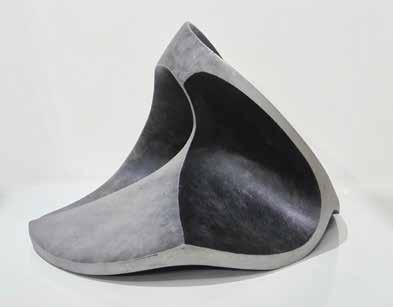
8
SZIRMAY b. 1946
Sculpture 76
Sand cast aluminium and Duco car paint
26 x 32 x 42
$1,000 - 2,000
Provenance: Exhibited Barry Lett Galleries, May 3 - 14 1976
MARTE
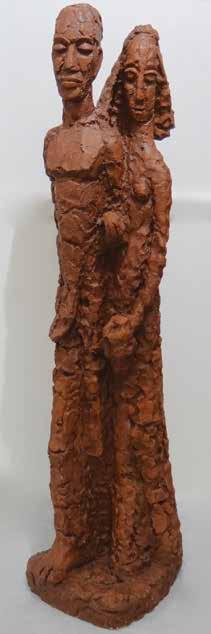
9 MOLLY MORELL MACALISTER 1920 - 1979
Partners
Painted concrete sculpture 115 x 33
Signed
$4,000 - 6,000
Invercargill born Molly Macalister was a passionate advocate for sculpture at a time when very little was made or exhibited in New Zealand. A founding member of the New Zealand Society of Sculptors and Associates (1961) and honorary life member from 1979, she was the prime mover behind the 1971 international sculpture symposium held in Auckland. Her public commissions include Maori Warrior, 1964 in Auckland’s Queen Street and Little Bull, 1967 in Hamilton Gardens. These two monumental bronzes have a quiet strength and power, conveying deep respect for their subjects – a characteristic of all Macalister’s work. Other works from this period are stone carvings for the ark in the Auckland synagogue and a bust of John A Lee for the Auckland Public Library.
In 1952 Macalister was a finalist in a competition for a sculpture of the Unknown Political Prisoner, and her maquette was exhibited at the Tate Gallery in London. With fellow sculptors Anne Severs and Alison Duff she began using cast and moulded concrete. The three women exhibited at Auckland City Art Gallery in 1959. Influenced by the work Henry Moore and the Italian sculptor, Marino Marini whose work she had seen at Auckland City Art Gallery in 1956, Macalister’s sculpture increased in scale. In 1962 and 1969 she travelled extensively with her husband to Europe, America and Japan.
Molly Macalister died in Auckland on 12 October 1979. She was survived by her husband, George Haydn and her son. In one of several published tributes, Colin McCahon wrote: Let us sing for Molly with the sculptured head – a head bearer for the many heads she made for the Queen Street Warrior: beautiful heads and perhaps she never really knew what she created. Few artists if any ever know this.
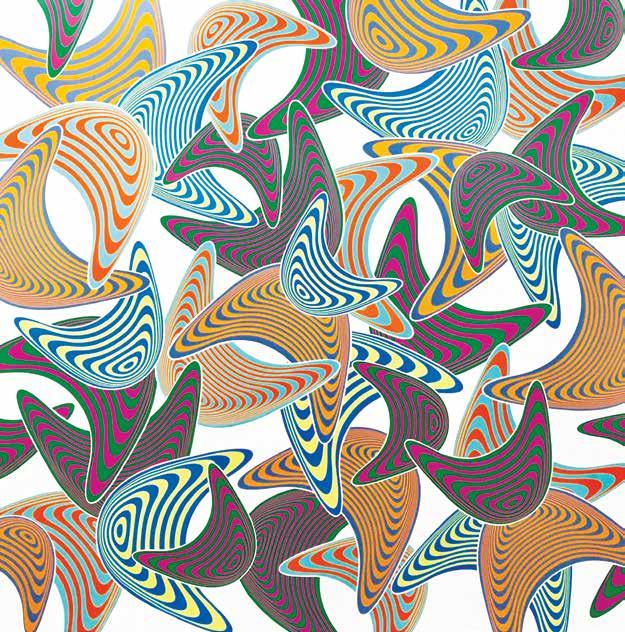
10 SARA HUGHES b. 1971 In the Wild Acrylic on linen 120 x 120 Signed, inscribed & dated 2007 verso
$10,000 - 14,000
Provenance: Gow Langsford Gallery, 2007 International Art Centre Auction, 2011
11
SARA HUGHES b. 1971
Sasser
Acrylic on canvas 80 x 80
Signed, inscribed & dated 2005
$4,000 - 6,000
Provenance: Patterns of Resistance
Criterion Gallery, Hobart, Australia
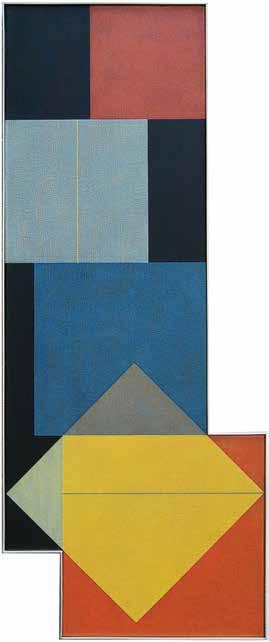
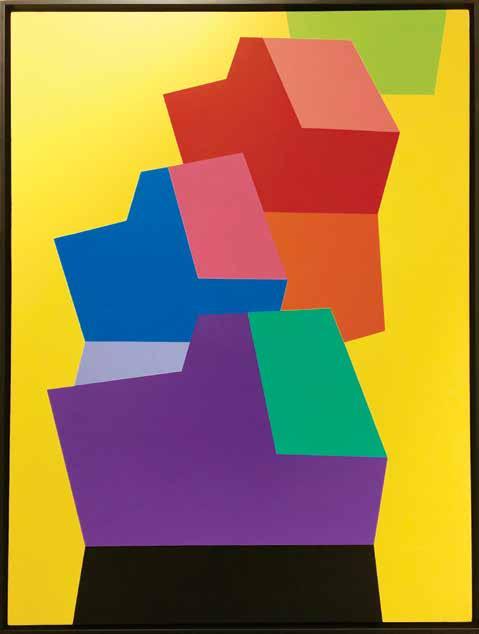
12 ROY GOOD b. 1945
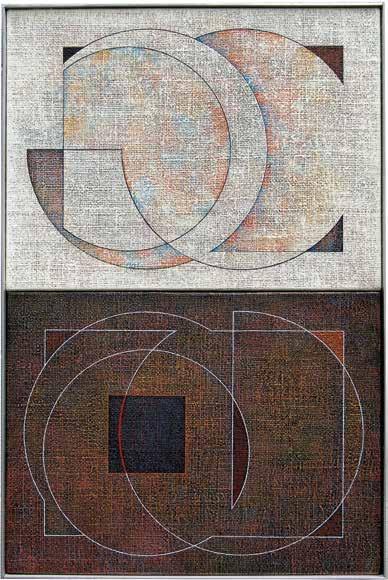
Column & Right Angle (Diamond Series)
Acrylic on canvas 111 x 46
Signed, inscribed & dated 2003 verso
$5,000 - 7,000
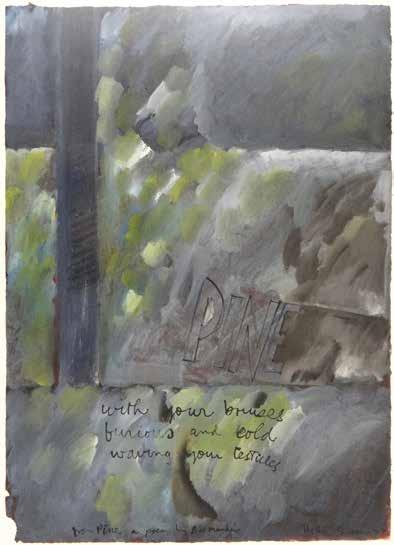
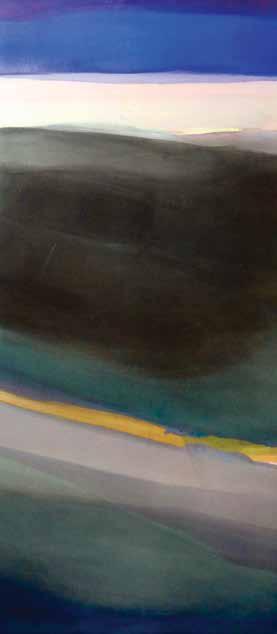
13 RALPH HOTERE 1931 - 2013
With Your Bruises Furious and Cold, Waving Your Testicles
From Pine - A Poem by Bill Manhire
Watercolour 70 x 50
Signed, inscribed & dated 1972
$12,000 - 16,000
Provenance:
Private Collection, Auckland
Acquired in 1972 by present owner
Previously unseen by the public, this compelling work casts an insightful lens on the formal and academic philosophies which drove Hotere’s practice in the 1970s. The word Pine is a testament to longing, quite literally, to pining for someone or something. But on perceiving the blue-grey of the pine tree in this work it also becomes so much more: a bruise, a documentation of personal and ecological trauma. To recall the tenderness of bruises, of violence, of flesh that needs to heal is to experience this painting. It is impressionistic in its treatment of colour and although the work is of and about nature, it carries the weight of words and the human spirit beneath its surface.
The tree trunk which is rooted in the canvas and rises through the upper two sections of the work offers both gravity and solidarity. We are reminded especially of McCahon’s Titirangi series and those gloriously faceted Kauri paintings of two decades earlier. Hotere has replicated the clarity of brushwork and light of these works and added to it a darkness - a darkness which implies the black of his canvases, and from which facets of light shine out.
14 ROY GOOD
Continuous Lines Series
Acrylic on jute 78 x 51
Signed, inscribed & dated 2001 verso
$4,000 - 5,000
Collection of the late John Malcolm
Acrylic on canvas 148.5 x 66.5
Signed, inscribed & dated 1972 verso
$10,000 - 15,000
Provenance: John Malcolm Collection since 1971
In the Metropolis Oil on canvas 91.5 x 61
Signed & dated 1966
Inscribed verso
$8,000 - 12,000
Provenance: Purchased directly from the artist, 1966
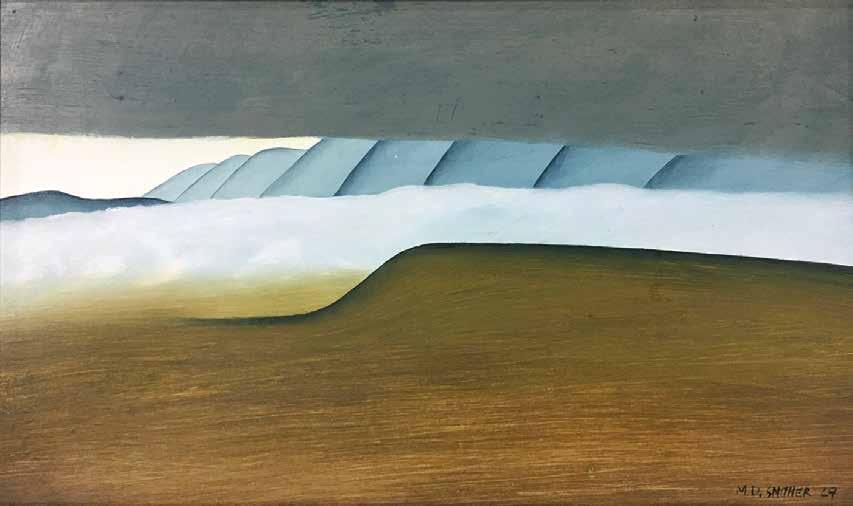
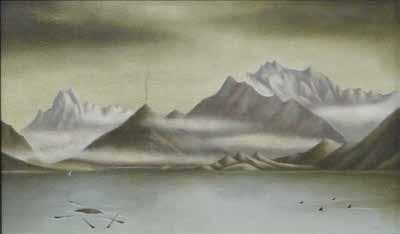
Winter Low Cloud and Mist Oil on board 25 x 41
Signed & dated 1969
$15,000 - 25,000
Provenance: Purchased at One Man Exhibition John Leech Gallery, 1970
16 ROBERT ELLIS b. 1929
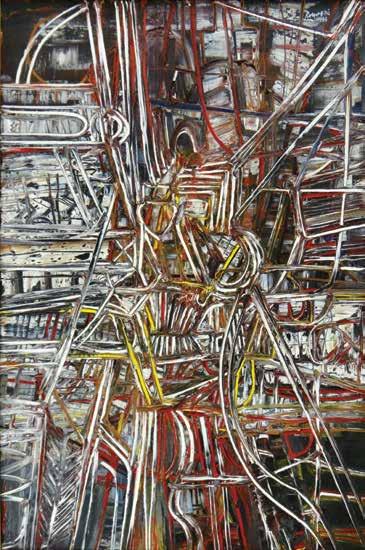
15 GRETCHEN ALBRECHT b. 1943
Grey Sky Winter
17 MICHAEL SMITHER b. 1939
18 DORIS LUSK 1919 - 1990
Detail, Remarkables, Queenstown Oil on textured board 60 x 86
Signed
$4,500 - 6,500
Provenance: Purchased at The Group Show, CSA Gallery, Christchurch November 1971, Cat. no. 42
Our thanks to Grant Banbury for his assistance in cataloguing this work
Collection of the late John Malcolm Former President of the Queen Elizabeth II Arts Council
19 PAT HANLY 1932 - 2004
Paradise Bird Escapes Bather
Screenprint, edition 5/50, 50 x 48
Signed, inscribed & dated 1977
$2,500 - 3,500
20 W A (BILL) SUTTON 1917 - 2000
Horizontal Composition 3
Mixed media on board 60 x 91
Signed & dated 1966
Inscribed verso
$2,000 - 3,000
Provenance: Acquired 1966
Signed & dated 2016 verso
$5,500 - 6,500
Provenance:
Purchased from Ivan Anthony, Auckland 2016
Exhibited: Williwaw
Ivan Anthony Gallery, Auckland May - June 2004
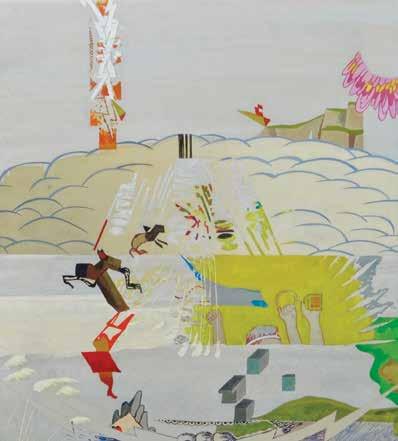
21 SASKIA LEEK b. 1970 Couch News #1 Oil on aluminium 58 x 47
22 JULIAN HOOPER b. 1966 Sandcracker Oil on linen 70 x 60
$2,800 - 3,800
23 HEATHER STRAKA b. 1972
Defenders of New Zealand VIII
Oil on board 34 x 50
Signed & inscribed verso
$4,000 - 5,000
Provenance:
Purchased from The Strangers’ Room Exhibition Trish Clark Gallery 2017
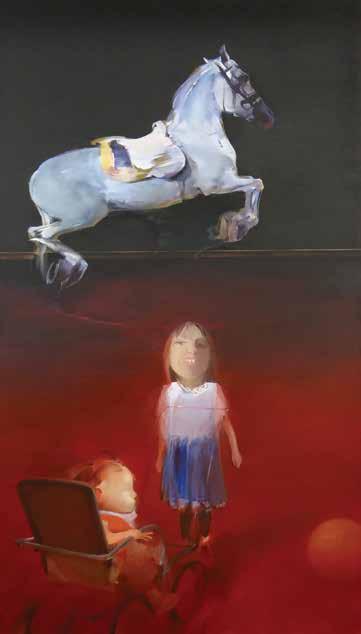
24 GARY WALDROM b. 1953
Horse and Girl with Infant Oil on canvas 183.5 x 107.5
Signed, inscribed & dated 1994-95 verso
$7,000 - 10,000
Provenance:
Ex Quilter Chamberlain Collection
On loan to the Govett-Brewster Art Gallery, New Plymouth 1998 - 2014
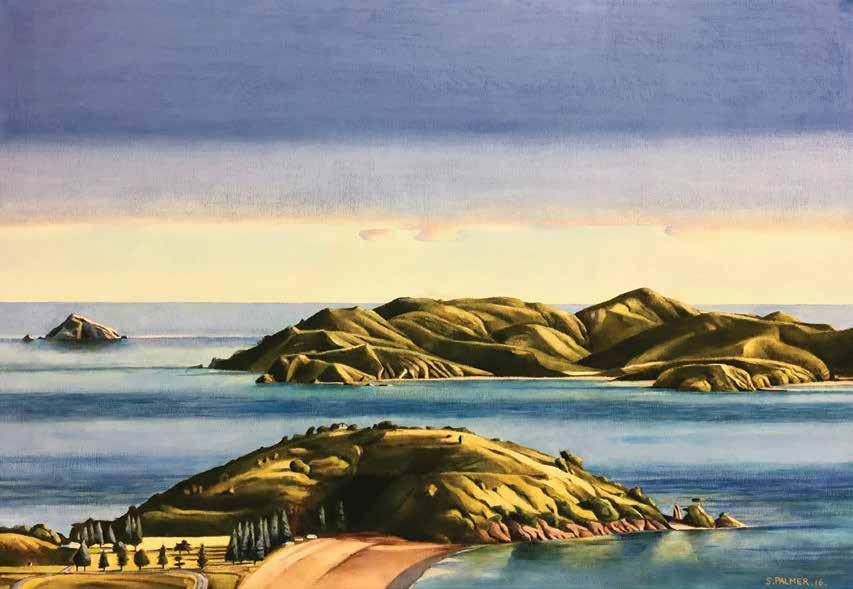
25 STANLEY PALMER b.1936
Study for Matauri - Motukawanui
Acrylic on canvas 80 x 107
Signed & dated 2016
Inscribed verso
$12,000 - 16,000
Provenance:
Acquired directly from the artist
26 MICHAEL SMITHER b.1939
Okahu Boats (Yellow)
Acrylic on canvas 123 x 93
Signed, inscribed & dated 2013 verso
$10,000 - 14,000
Provenance:
Purchased from Diversion Gallery, Picton
28 GRETCHEN ALBRECHT b. 1943
4am Maybe Later
Oil on canvas 70 x 83.5
Signed, inscribed & dated 2007
$7,000 - 10,000
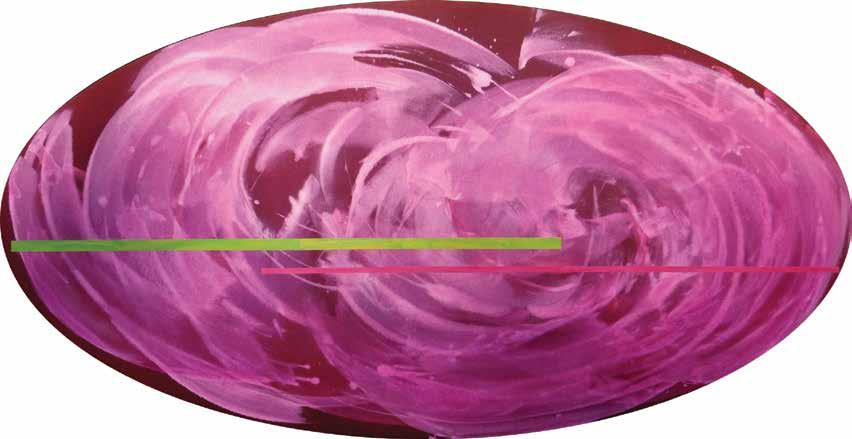
Rosa Concorde
Oil and acrylic on canvas 94 x 183
Signed, inscribed & dated 2010 verso
Original artist’s label affxedverso
$20,000 - 30,000
Provenance:
Private Collection, Auckland
International Art Centre, 2014
27 JENNY DOLEZEL b. 1964
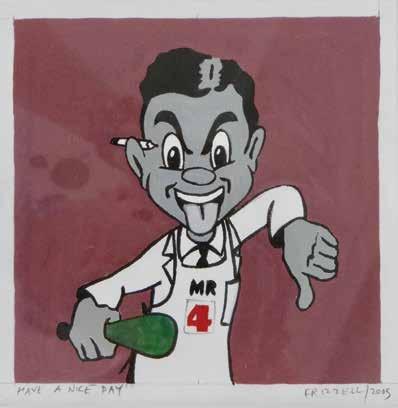
29 DICK FRIZZELL b. 1943
Have a Nice Day
Acrylic on paper 17 x 17
Signed, inscribed & dated 2005
$10,000 - 15,000
Provenance:
Private Collection, Auckland
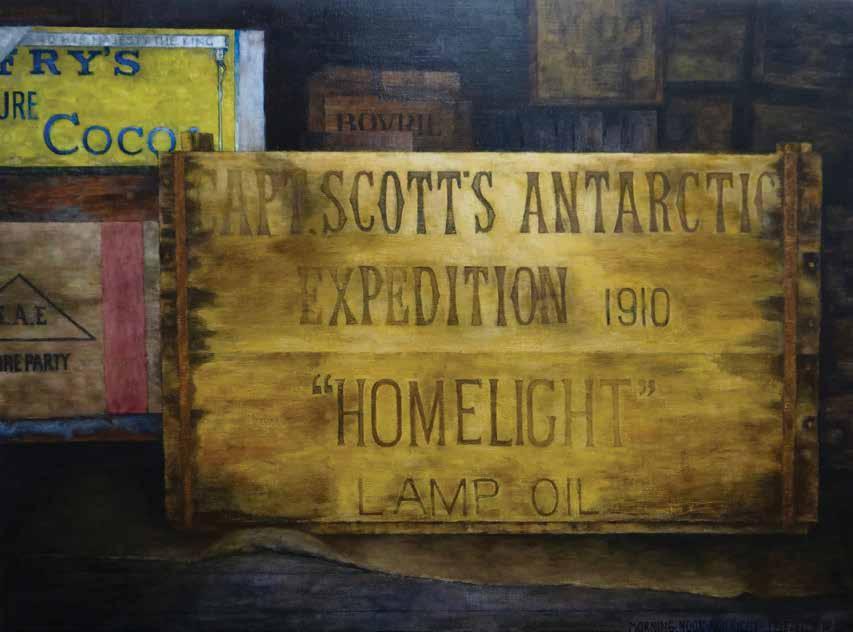
30 DICK FRIZZELL b. 1943
Morning, Noon and Night
Oil on canvas 100 x 135
Signed, inscribed & dated 31/10/2006
$12,000 - 18,000
Provenance:
Private Collection, Auckland
Purchased from an exhibition titled An Event of One - Dick Frizzell Gow Langsford Gallery, 2006
In 2005 Dick Frizzell was chosen to embark on the Invitational Artist Programme in Antarctica. Established in 1996, the Artists to Antarctica programme is a joint initiative between Antarctica New Zealand and Creative New Zealand. The programme encourages New Zealand artists in all disciplines to explore Antarctica through their work, in the hopes of increasing New Zealander’s understanding the value and global importance of Antarctica.
While in Antarctica, Frizzell soaked up the distinctive environment and architecture that existed there. Frizzell‘s title for the exhibition, An Event of One, materialised from the practice of each visiting party to Scott Base being allocated a number and being known as an Event, no matter how small the group. Being the only person in his group Frizzell was subsequently known as An Event of One.
While there Frizzell initially documented “grafftii” attheAmerican base camp, but soon turned his attention to the huts where the past inhabitants had lived, and now departed. The resulting works are reflective and brooding, evoking a sense of isolation in an unforgiving environment. Isolation is particularly manifest in the darkened empty interiors scattered with essential items necessary to basic human survival; food, warmth and shelter. As a body of work the paintings become a testament to the will of human endurance.
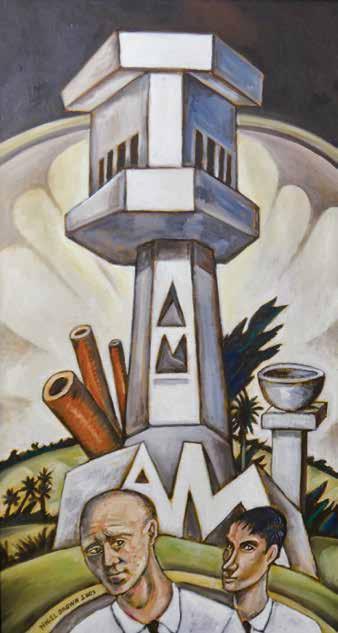
31 NIGEL BROWN b. 1949
Ambition
Oil on linen 150 x 82
Signed & dated 2003
$12,000 - 18,000
Towers have long held a fascination for Nigel Brown. This dates back to school holidays spent in Whanganui, home of the Durie Hill War Memorial Tower. At Elam, his tutor Colin McCahon encouraged students to study monuments on hills, particularly One Tree Hill with its obelisk. In later life, living at Cosy Nook, Southland a tower was to be constructed in order to view sunsets by a macrocarpa shelter belt. Ambition is the artist’s imaginary record of what that tower might look like. This painting marks the artist’s transition from his spiritually powerful I Am series of paintings into the realms of business, power and vanity.
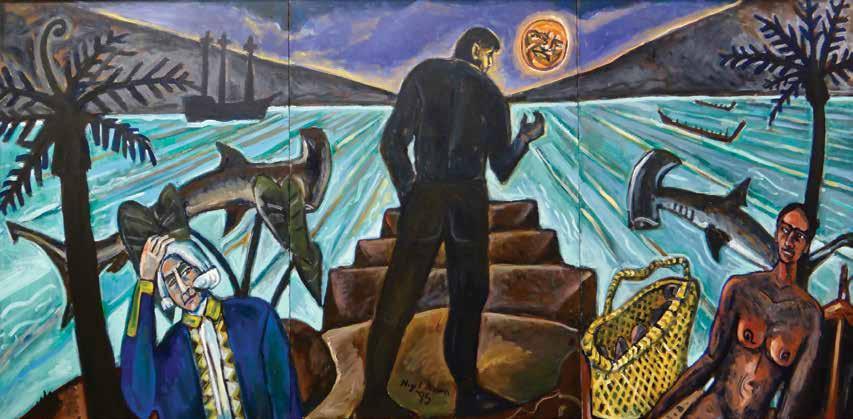
32 NIGEL BROWN b. 1949
Pull of the Moon Triptych
Oil on canvas 90 x 180
Signed & dated 1995
$15,000 - 24,000
The Pull of the Moon triptych was painted in 1995 whilst Nigel Brown was designing the awe-inspiring series of stained glass windows on the north face of Auckland’s Holy Trinity Cathedral, Parnell. Captain Cook along with the flax kite and hammerhead sharks are powerful images that appear in both the triptych and the massive cathedral windows. In Pull of the Moon we witness the reintroduction of familiar motifs such as the ponga tree and pah terraces seen in Brown’s earlier works. They are set against the vanishing perspective of the Tolaga Bay wharf. Brown visited Tolaga Bay in the 1990s and it was here that he first created his Cook paintings.
In the towering central figure, strong, monumental and clearly delineated we see the influence of Brown’s work with woodcuts. The hammerhead sharks are shown above the water while Cook’s Endeavour is severely simplified. These treatments are deliberate, seeking to challenge the viewer's expectations and suggest powerful forces beyond understanding. All this activity takes place beneath the luminous orb of the ever-mysterious moon. Brown's unique and readily-identifiable style resonate in this major work.
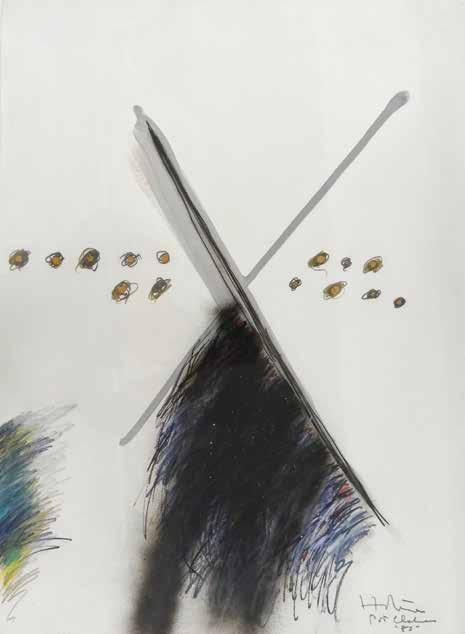
33 RALPH HOTERE 1931 - 2013
Untitled - Port Chalmers
Mixed media on paper 76 x 57
Signed, inscribed Port Chalmers & dated 1985
$18,000 - 25,000
Provenance: Private Collection, Wellington
When it comes to the formal quality and subject matter of Hotere’s work, the colour black and the artist’s local Port Chalmers inevitably come to mind. Consistently and right across the breadth of the artist’s oeuvre, these two elements re-appear in the most accomplished and spiritually-charged of painted unions.
This fine work on paper is no exception. The solemn presence of landmass as viewed from the artist’s studio descends into downwards dreaminess; studded details intersecting at the meeting of land and sky suggest the motion of avian life and civilisation.
Untitled – Port Chalmers offers an interesting departure from the darker foundations which ground many other works of this series, and Hotere’s physical contact with the work’s surface has been relatively minimal herein. The burnishing mark of the ‘X’ at the centre of the painting naturally demands visual focus. Tantalising in its presence, it seems to hover above the paper, the corresponding grey lines beneath it casting relief and shadow. At the same time, in the matte surface of the medium we also feel it on the canvas, and bleeding into it. Finally, this Trinitarian illusion completes itself in sinking down and piercing the canvas, a gesture which is emblematic of Hotere’s own visceral relationship with media, and recalls the physicality of Lucio Fontana’s slashed canvases.
34 RALPH HOTERE 1931 - 2013
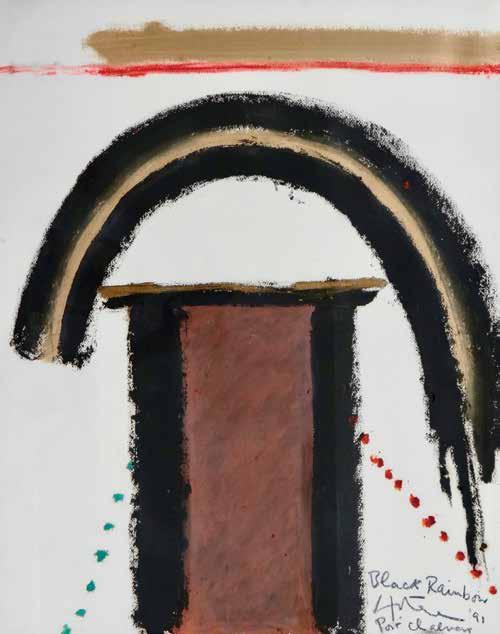
Black Rainbow
Oil stick on paper 65 x 50
Signed, inscribed Port Chalmers & dated 1991
$30,000 - 40,000
Provenance: Private Collection, Auckland
Hotere’s Black Rainbow series was originally conceived in the 1980s: these paintings comprised a didactic and elementally mournful response to the bombing of the Rainbow Warrior.
Several years later, in the early 1990s, Hotere renewed his engagement with the subject of the Rainbow Warrior and produced this newer version of Black Rainbow. Into that icon of hope and protest, the artist once again poured the black stickiness of pigmented tar, draining the rainbow of all life. But most strikingly, the return to form this time involved an infusion of colour into which he has added blue, brown, red and gold.
Through Black Rainbow, we are able to encounter the raw spirit of the artist as activist and protestor. Perhaps as a result of the circumspection offered by time, the work has been conceived through a more abstract lens than those earlier works. Religious imagery such as the dove and Sacred Heart have been replaced by more subtle deployments of geometric form: take the golden rectangle which brushes the upper-right edge of the canvas. This is the Rainbow Warrior itself, now a ghost ship, buoyed along by a neat red horizon of blood.
35 RALPH HOTERE 1931 - 2013
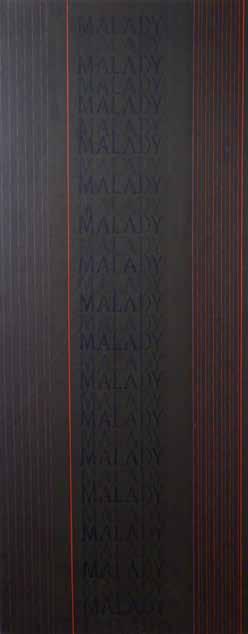
Black Painting VII from Malady
A Poem by Bill Manhire
Acrylic on canvas 178 x 71
Signed, inscribed & dated 1971 verso
$60,000 - 80,000
Provenance:
Acquired directly form the artist by present owner, 1971
Of the many gifts offered by Hotere to New Zealand art, it would be remiss not to acknowledge his contribution to the mediation between different art forms. Ekphrasis is an ancient Greek term which refers to literary descriptions of art. The modern definition of ekphrasis, according to the Oxford English Dictionary, is a detailed description of a work of visual art as a literary device. Not only did Hotere engage with the notion of ekphrasis, but actually turned it on its head: opening up a dialogue between art and literature and affrmingthepotentialofpaintingtodescribe the beauty of the written word. For the first time in Aotearoa’s art history, works such as Malady accomplished the great task of describing and illuminating literature.
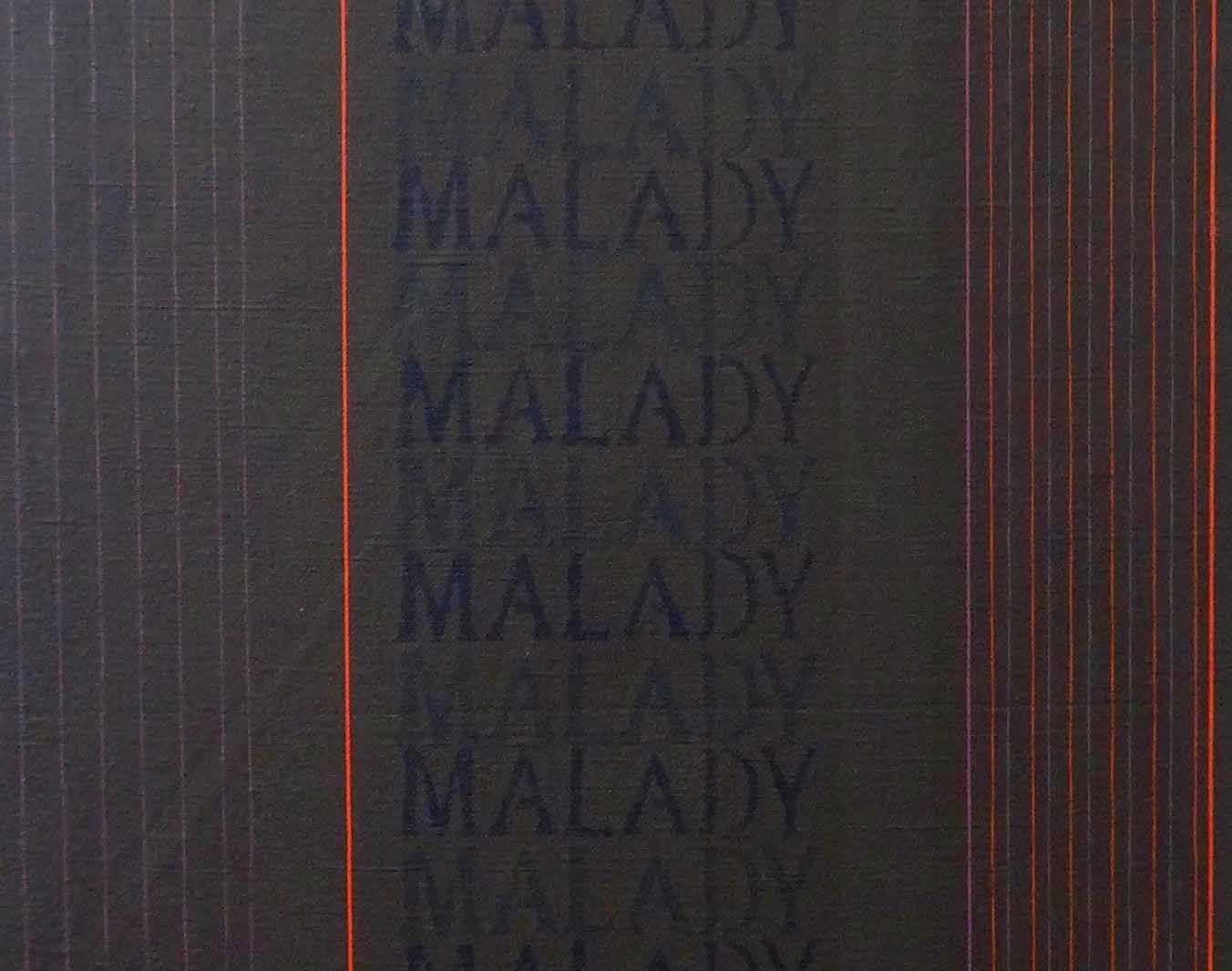
The Malady series is iconic and instantly recognisable. This work is a meditation; a study in the graduation of words and colour. It is striking to encounter, and as viewers we cannot help but feel some sense of release in following the work’s southwards trajectory of colour and gravity. Each word imprints itself on our mind: less as an echo than as a meaningful exercise in repetition, which alternates between bold and light. Of course, this is the essential melody of Malady. It lies in the interplay between each step, the inevitability of brightness and shadow.
The compelling red-orange zip which vertically penetrates the canvas cannot be ignored. It pulsates and seems to pierce through the canvas, as if we are being offered a glimpse into the fiery centre of the earth’s core. And, of course, there is the nuance of black. The deeply gorgeous and inviting subtlety which offers darkness and luxuriating comfort, and without which we would not know of this work as Hotere’s own.
36 RALPH HOTERE 1931 - 2013
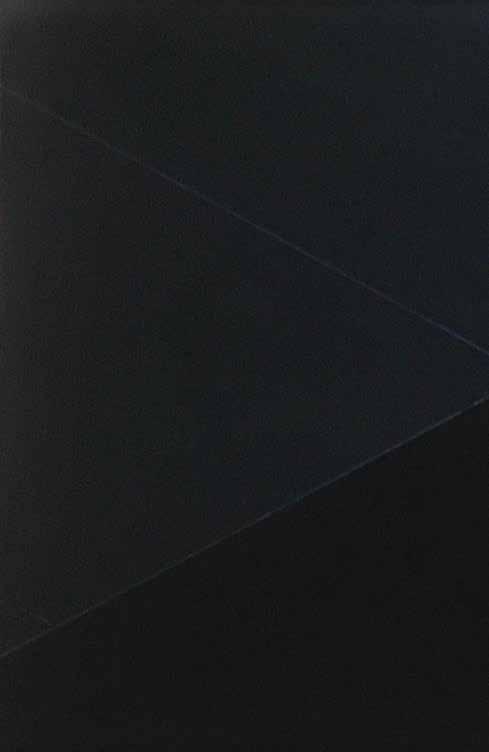
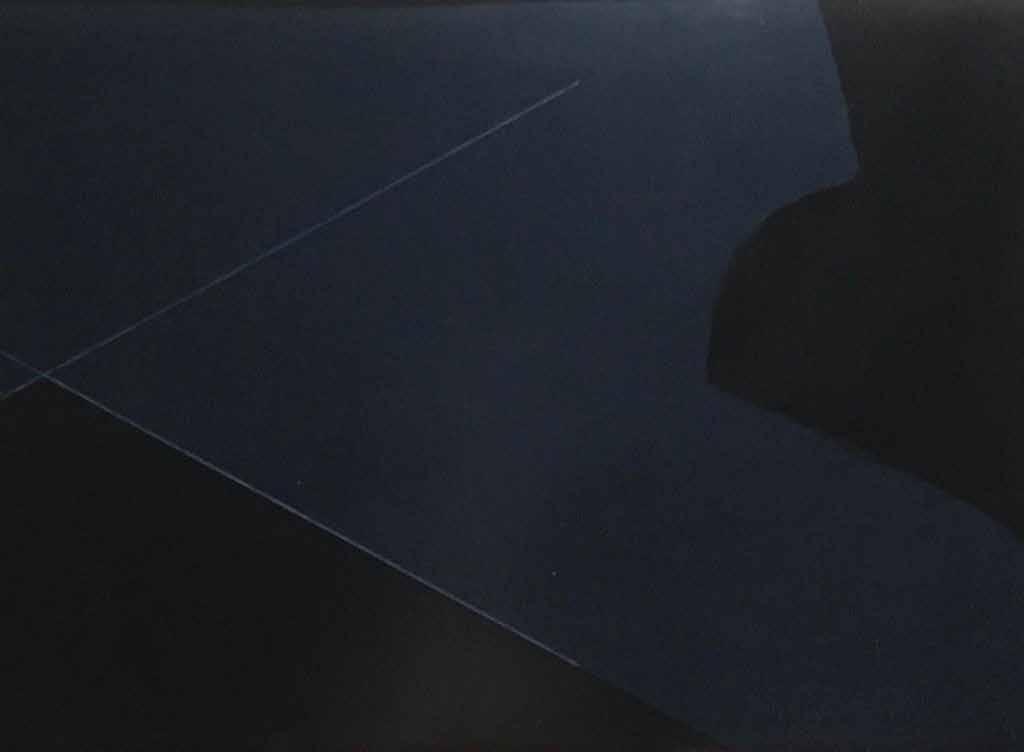
Black Painting
Lacquer on hardboard 60 x 120.5
Signed & dated 1969 verso
$50,000 - 70,000
Provenance: Private Collection, Wellington Purchased 1970 from Dawsons Gallery, Dunedin by the current owner.
Exhibited:
Ralph Hotere - Frances Hodgkins Fellowship Exhibition, Otago Museum, Dunedin 1969
1969 was a watershed year for Northland born Ralph Hotere. In this year he was awarded the Frances Hodgkins Fellowship at the University of Otago. This led to his permanent move to the Otago region and Port Chalmers. In his enigmatic series of Black Paintings from 1968 and 1969, pinstripe circles or lines pierce the void of the dark backgrounds.
Another work from the Frances Hodgkins Fellowship Exhibition was the first purely abstract painting to enter the collection of Christchurch Art Gallery. It was also the first contemporary painting by a Maori artist to be acquired by the gallery.
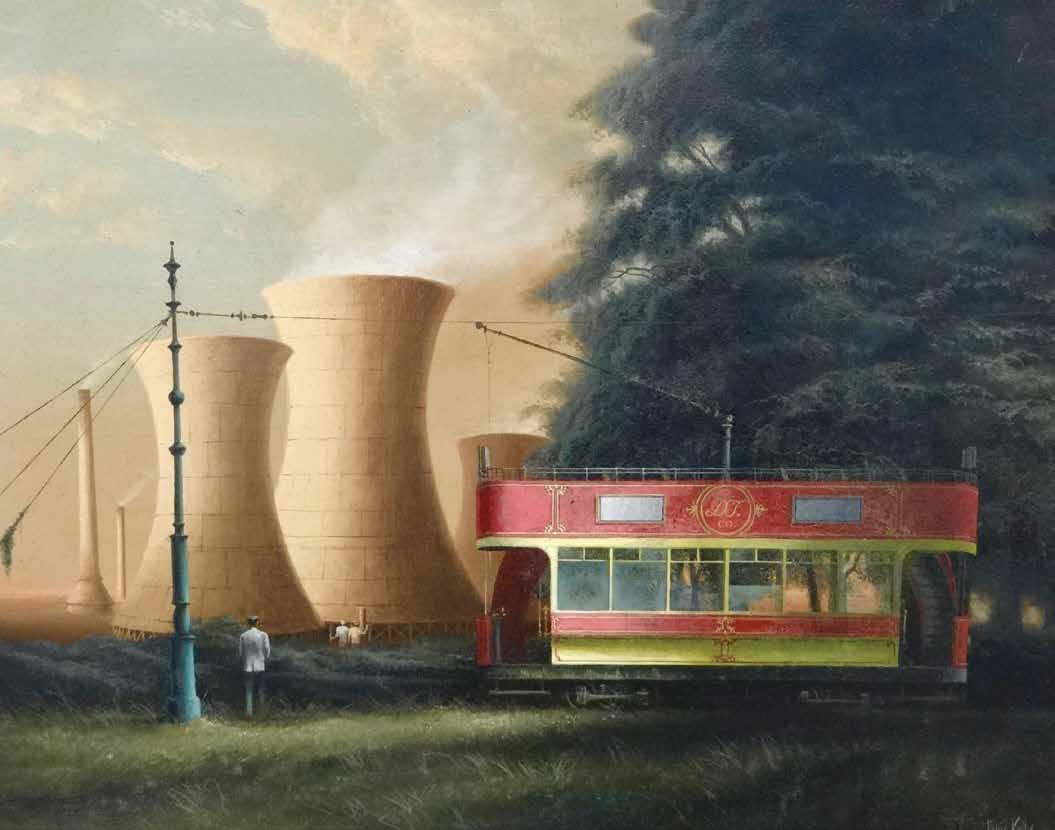
37 FELIX KELLY 1914 - 1994
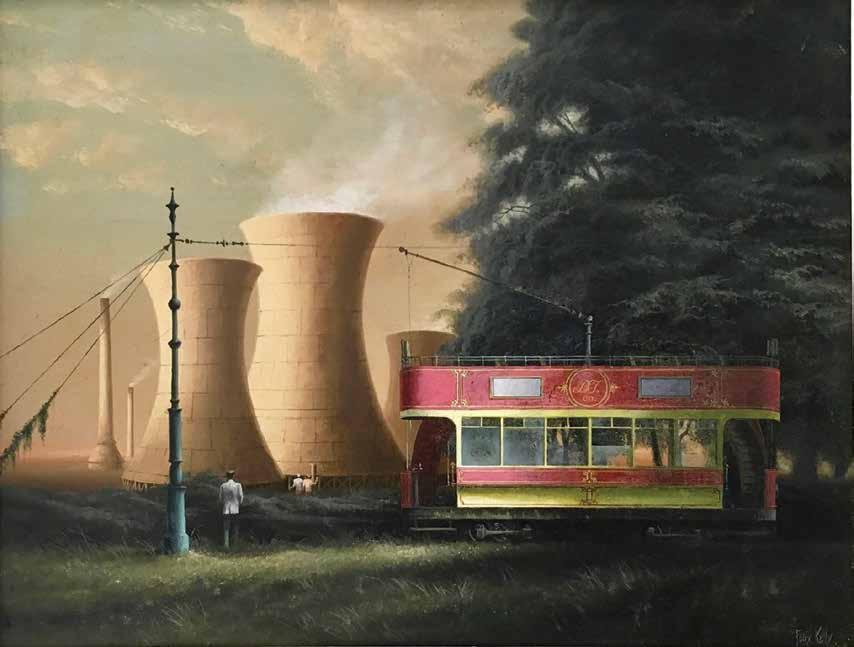
Tram and Coolers
Oil on board 43 x 51
Signed $12,000 - 18,000
Provenance: Private Collection, USA
Illustrated: p. 95 Fix, The Art and Life of Felix Kelly, Donald Bassett, 2007
Felix Kelly is one of New Zealand's most interesting expatriate artists. Born in Epsom in 1914 he claimed to be two years younger most of his adult life. Kelly studied briefly, and even seems to have taught drafting at Elam School of Fine Art. He was only 21 when he left New Zealand in 1935. He never returned. In London Kelly continued his New Zealand occupation of graphic design, working for Lintas, the advertising wing of Unilevers. He also freelanced as an illustrator and cartoonist, especially for Lilliput. His cartoons are not unlike those of the slightly younger Ronald Searle. After the war and the RAF, the focus of his graphic art shifted to book illustration, dust-jacket design and contributions on interior decoration to such fashion magazines as Ideal Home and Harper's Bazaar. In the 1950s and 60s he was acknowledged as one of England's top designers for the theatre, working with the likes of Sir John Gielgud and Dame Sybil Thorndike.
Kelly's ambition had always been to succeed as a painter. Emerging in the context of Surrealism and British Neo-Romanticism, he exhibited alongside important British artists such as Lucian Freud, John Piper and Frances Hodgkins. He attracted the attention of the prominent critic and writer, Herbert Read. Kelly's paintings are characterised by his interest in a world forgotten by progress, great houses falling into dilapidation, wind-blasted trees, abandoned locomotives often invested with an eerie watchfulness. Rapidly, Kelly assembled a client list resembling a page from Who's Who or De Brett's. In late career, his knowledge of architecture led to involvement in house
design, most notably his collaboration on the redesign of Highgrove for the Prince of Wales.
His most celebrated project was, however, the mural cycle at Castle Howard associated with the filming of Brideshead Revisited in the 1980s. Kelly travelled a great deal. Paintings of Spain and Italy in the 1940s were followed by West African scenes in the 50s and antebellum houses in America's Deep South in the 60s. Trips to Russia, Thailand, India and Egypt in the 70s and 80s each led to an exhibition of exotic paintings. In late career, Kelly would execute a small sketch characterised by loose brush-work, which would then be converted into a carefully executed big-scale painting. Both types of work appear for sale from time to time. Perhaps most interesting for a New Zealand audience are the paintings of Auckland subjects done decades after he had left home. Auckland's West Coast beaches or Takapuna with Rangitoto beyond, or paddle-steamers on the Waitemata, were evoked with an increasing degree of fantasy well into the 1960s. A quirky humour pervades his work.
Felix Kelly has to be one of New Zealand's most individual artistic exports. A comprehensive exhibition of his earlier work, curated by Donald Bassett and mounted by the Hawke's Bay Museum and Art Gallery, toured several New Zealand centres in 2008-9. A second edition of Donald Bassett's book Fix; The Art and Life of Felix Kelly, was published in 2013.
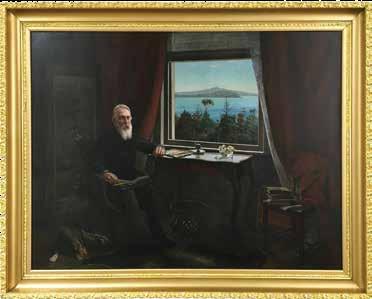
38 LOUIS JOHN STEELE 1842 - 1918
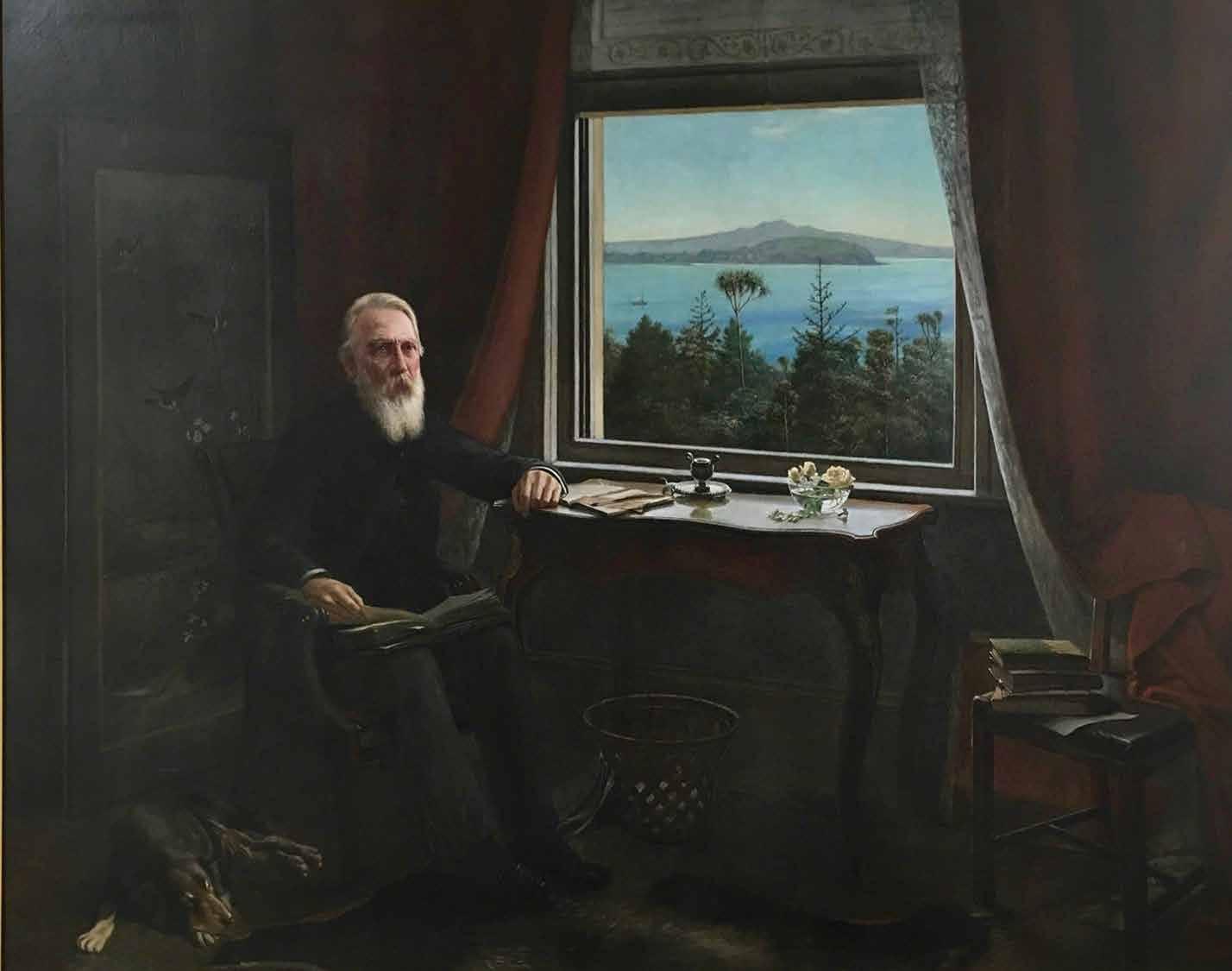
Sir John Logan Campbell at Kilbryde, Parnell c. 1902
Oil on canvas 110 x 140
Signed
$300,000 - 500,000
Provenance:
Private Collection, Auckland
Sir John Logan Campbell’s reputation precedes him. From the time of his arrival in New Zealand in 1840, he established himself as a central figure in his local community. This was a man whose ambition and far reaching endeavours contributed greatly to Auckland’s economic and cultural flourishment throughout the 19th century: for this reason, he is fondly remembered as the founding Father of Auckland.
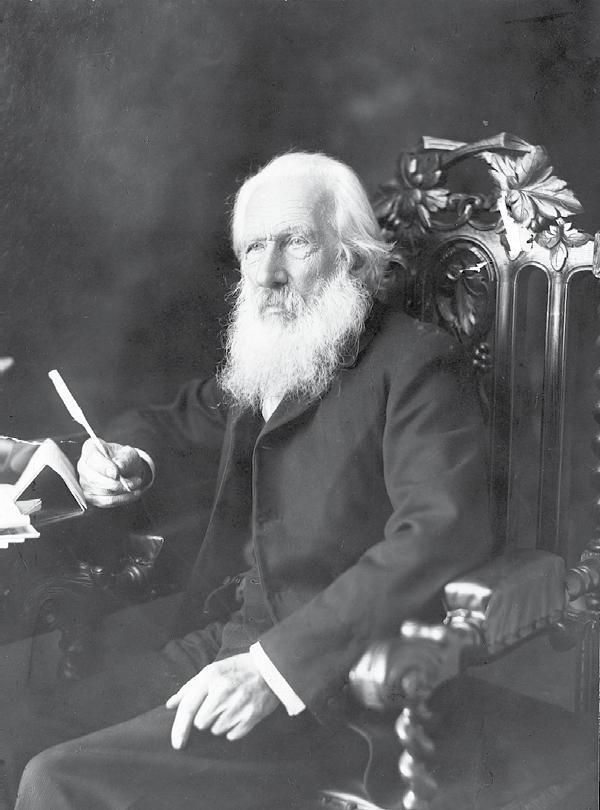
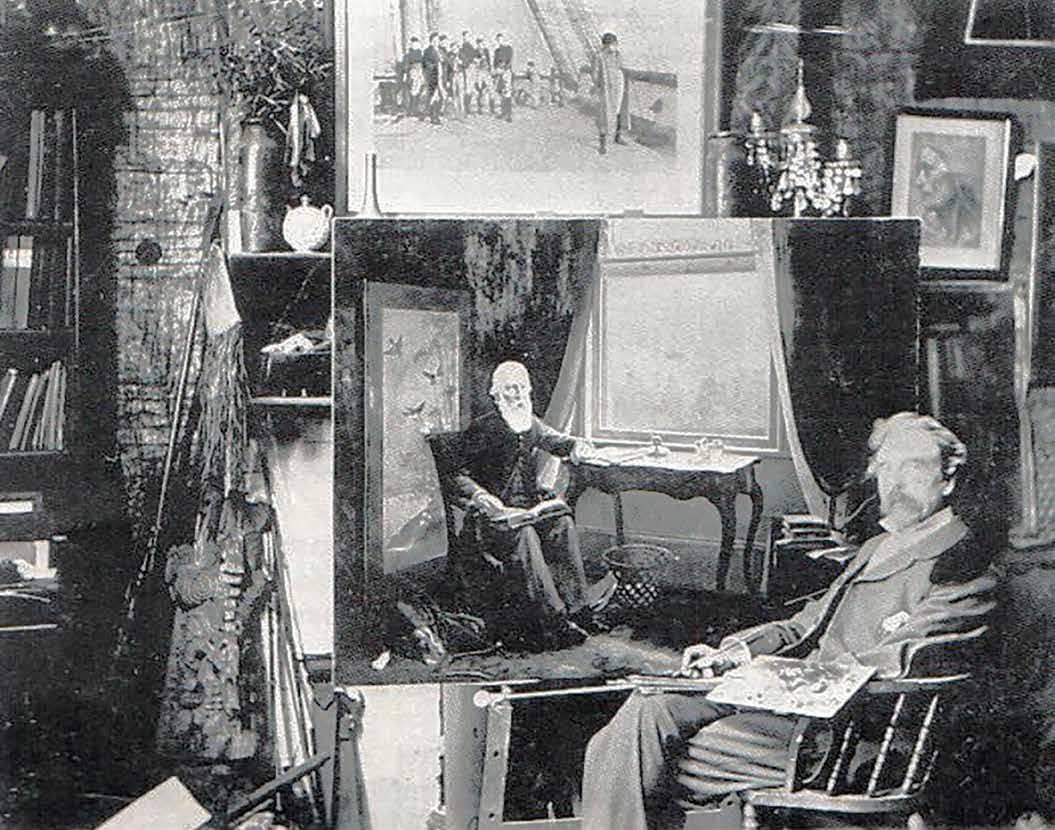
This splendid portrait of Campbell by Louis John Steele was painted in the early 20th-century and it is only now, over a century later, that the painting is making its first public appearance. Previously, the only known record of its existence was a studio photograph taken of Steele, proudly sitting in front of the major work.
By the time the portrait was completed, Campbell’s legacy was wellestablished. He had recently been appointed Mayor of Auckland in an honorary capacity (for the period of the Duke and Duchess of Cornwall’s visit), and used this opportunity to gift the significant landholding of Cornwall Park – so named at the time of donation – to the city.
Striking in its grandeur, this painting has all the characteristic traits of a portrait conceived in the grand historic tradition. Steele completed his artistic training between London, Paris and Florence, and the influence of these 19th-century schools on his style is evident. The scale of the work is particularly striking, and it conveys an academic seriosity and artistic ambition. Campbell is likely to have been around 90-years of age at the time he sat for this portrait, there is a sense of distinction in the way Steele has depicted him. His posture is upright; his demeanour both pensive and alert as he gazes beyond the picture plane. The formal arrangement, with a dog lying at his feet and book open on his lap, are familiar compositional devices signifying loyalty and learning.
Sir John Logan Campbell
Whilst the work draws heavily on the conventions of European formalism, it stands out in its freshness of approach. Consider, for example, the flowers on Campbell’s desk. The inclusion of flowers in paintings of this genre was generally confined to the tradition of memento mori, i.e, a reminder of the transience of time, and our own mortality. The white roses on Campbell’s desk defy this. They are floating in water; blossoming and very much alive. Their presence transports the viewer to a world beyond Campbell’s study and home.
We gaze upon his lush Parnell estate of Kilbryde. Fittingly, a section of this property now forms part of the Parnell Rose Gardens. The roses in the portrait may be read as a living, blooming testament to Auckland’s flourishment, and to the vivacity of the sitter and his legacy. In this same spirit, the harbour view from Campbell’s window featuring Rangitoto, has been rendered in particularly sharp focus, suggestive of the sitter’s significant contribution to the city around him.
More than anything, it is the suffusion of light, beautifully cold and soft, which seems to resonate when encountering this portrait. Casting the room into relief, Steele’s skilled treatment calls to mind the luminescent interiors of Johannes Vermeer. Campbell’s visage
is illuminated by the natural light of his beloved Auckland city and harbour, a light which simultaneously draws our attention beyond the window, in dialogue with and appreciation of the sitter’s service to the city. In this way, Steele has transcended the documentary function of portraiture and realised an important spiritual rendering of this historic New Zealand personage.
Over the course of his career, Louis John Steele was commissioned to paint a wide range of subjects and his work encompassed a number of genres. Famously, he tutored Charles Frederick Goldie and collaborated with him on a number of works including The Arrival of the Maoris in New Zealand in 1898. Portraiture comprised a significant component of Steele’s practice, and this extended to various Maori subjects and prominent New Zealanders including Sir George Grey and William Garden Cowie, the Bishop of Auckland. He is believed to have completed at least six portraits of Steele in various poses. The austerity of the example in Auckland Museum’s collection, painted about the same time, is in striking contrast to the gentle ode of reminiscence within this particular work. Louis Steele’s portrait of Campbell is without precedent in New Zealand art history, capturing a central early Pakeha figure in the place he is eternally credited with having shaped.
References:
Te Ara, The Encyclopedia of New Zealand, Louis John Steele http://www.teara.govt.nz/en/biographies/2s42/steele-louis-john
Te Ara, The Encyclopedia of New Zealand, John Logan Campbell http://www.teara.govt.nz/en/biographies/1c3/campbell-johnlogan
R C J Stone, A Victorian Friendship and Auckland’s First School of Art Art New Zealand 30, Autumn 1984 Bell, Leonard. John Logan Campbell: A Career in Images, Art New Zealand, no 67, 1993, p 88-92. Steele, Louis John, Cyclopedia of New Zealand. Volume Two: Auckland, Christchurch: Cyclopedia Company, 1902, p 21. [reproduces the portrait of Steele with the painting] http://nzetc. victoria.ac.nz/tm/scholarly/tei-Cyc02Cycl-t1-body1-d1-d35-d5.html
Our thanks to Jane Davidson-Ladd for her assistance with cataloguing of this lot. Jane is currently completing a PhD on Louis John Steele at the University of Auckland.
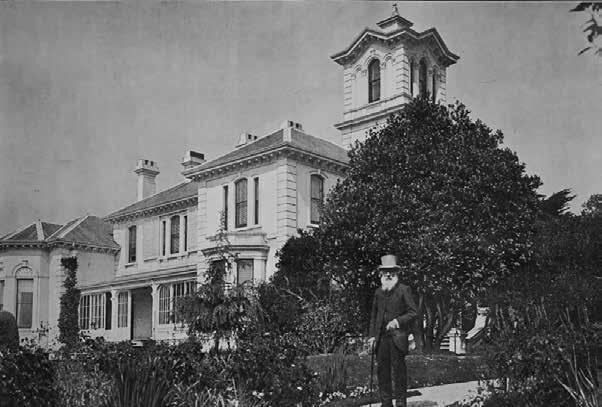
Sir John Cambell at Kilbryde, Parnell
Louis John Steele in his studio c.1903
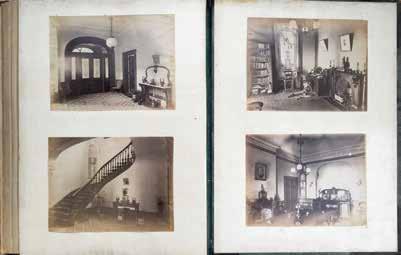
THE LARKWORTHY / LOGAN CAMPBELL ALBUM
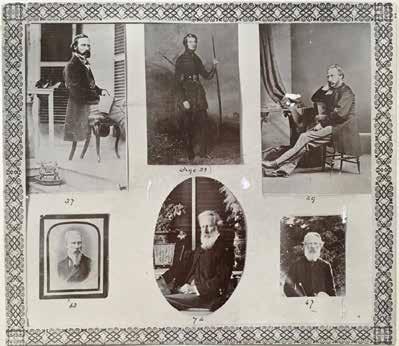
A bound photo album containing:
Six Interior shots of Kilbryde Mansion, Parnell
Two exterior views of Kilbryde, one with North Head beyond Various images of John Logan Campbell aged 21 - 74
Several Views from Kilbryde
Numerous early images of Waikato, Tirau, Kairapiro & Whitehall Quarry
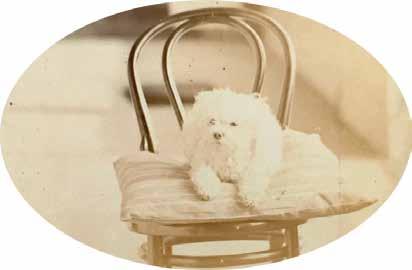
Two photographs of the Campbell pet dogs
A signed portrait drawing by Falconer Larkworthy Monochrome study
A signed letter dated 9/12/1887
$2,000 - 4,000
Some of the images in this album are reproduced in Fire & Decay, The Destruction of the Large New Zealand House, Terence E R Hodgson, Alister Taylor Publishing, 1978
All images in the album may be viewed www.internationalartcentre.co.nz
Provenance:
Purchased in London by the current owner
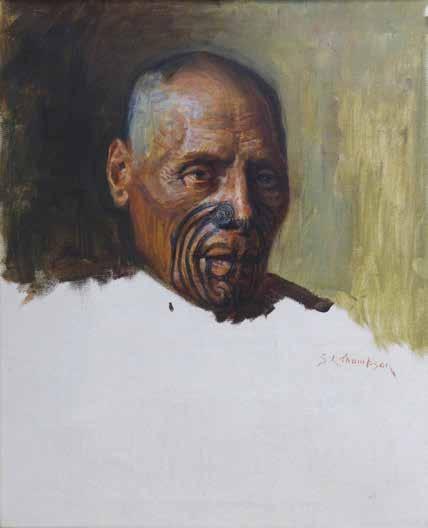
40 SYDNEY LOUGH THOMPSON 1877 - 1973
Aged Warrior, 1910 Oil on canvas 51 x 42.5
Signed
$8,000 - 12,000
Provenance:
Exhibited Canterbury Society of Arts, 1910 Reference p. 39, Sydney Lough Thompson, Home & Abroad, Julie King, Robert McDougall
Art Gallery 1990
Stock-in-Trade of Savill Galleries, Melbourne, Menzies 2016
Private Collection, Victoria
There are several known Maori portraits by Sydney Lough Thompson. One is a classic Mother & Child, similar in composition to Gottfried Lindauer’s Anna Rupene & Child in the collection of Christchurch Art Gallery. Another is a portrait inscribed Kokuhu To-oa A.L.D. Fraser 1907 in a private collection. Julie King, author of Sydney Lough Thompson, Home & Abroad, Robert McDougall Art Gallery 1990 say’s it is an intense realiszation of the man’s powerful presence, painted in a style derived from northern realist tradition.
On Thompson’s return to New Zealand, painting the Maori rather than the pioneer became a more significant subject for him. In 1908 Charles F Goldie’s nostalgic portrayals of the old time Maori had secured his position as the most popular painter in New Zealand. When Thompson showed at the Canterbury Society of Arts A Maori Belle in 1908 (whereabouts unknown) and Aged Warrior in 1910, the titles fell within established categories of the time which tended to idealise young Maori women and celebrate the old timers of the past.
Julie King, Sydney Lough Thompson, Home & Abroad, Robert McDougall Art Gallery 1990
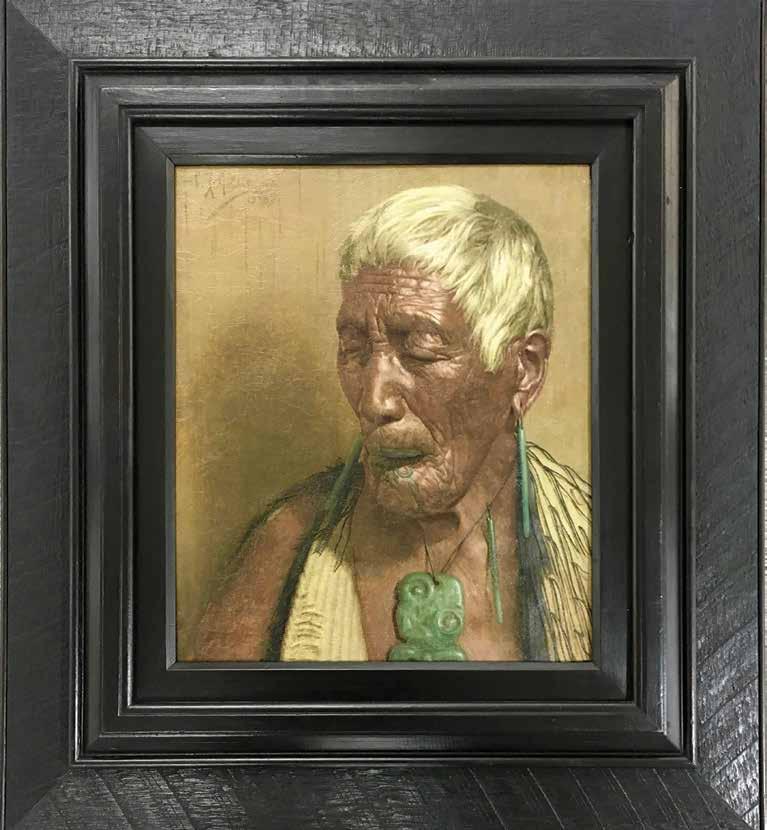
41 CHARLES FREDERICK GOLDIE 1870 - 1947
Time Tells
A Chieftainess of the Ngati Te Rori Te Rangi Hapu of the Ngatiwhakane Tribe, Rotorua - Mere Werohia
Oil on canvas 35.5 x 29
Signed & dated 1938
$400,000 - 500,000
Mere Werohia was Chieftainess of the Ngati te Rori te Rangi Hapu of the Ngatiwhakane Tribe, Rotorua
Provenance:
First purchased at John Leech Gallery, Auckland 1949
Acquired by present family, George Walker Auction
Auckland, 9 September 1963
On the market for the first time since then
Illustrated:
New Zealand Herald 11 September 1963
Auckland Star 12 September 1963
p. 283 C F Goldie: His Life & Painting and C F Goldie: Prints, Drawings & Criticism, Alister Taylor & Jan Glen, 1979
Reference:
With assistance from C F Goldie: His Life & Painting and C F Goldie: Prints, Drawings & Criticism, Alister Taylor & Jan Glen, 1979
Time Tells was painted in 1938, three years after Goldie was awarded the King George V Silver Jubilee Medal. Soon after, he was appointed an Offcerof the Order of the British Empire for services to art in New Zealand in the 1935 King’s Birthday and Silver Jubilee Honours.
In Polynesian portraiture Mr C F Goldie stands pre-eminent in the world today, and New Zealand has every reason to be proud of him
Governor General Lord Bledisloe
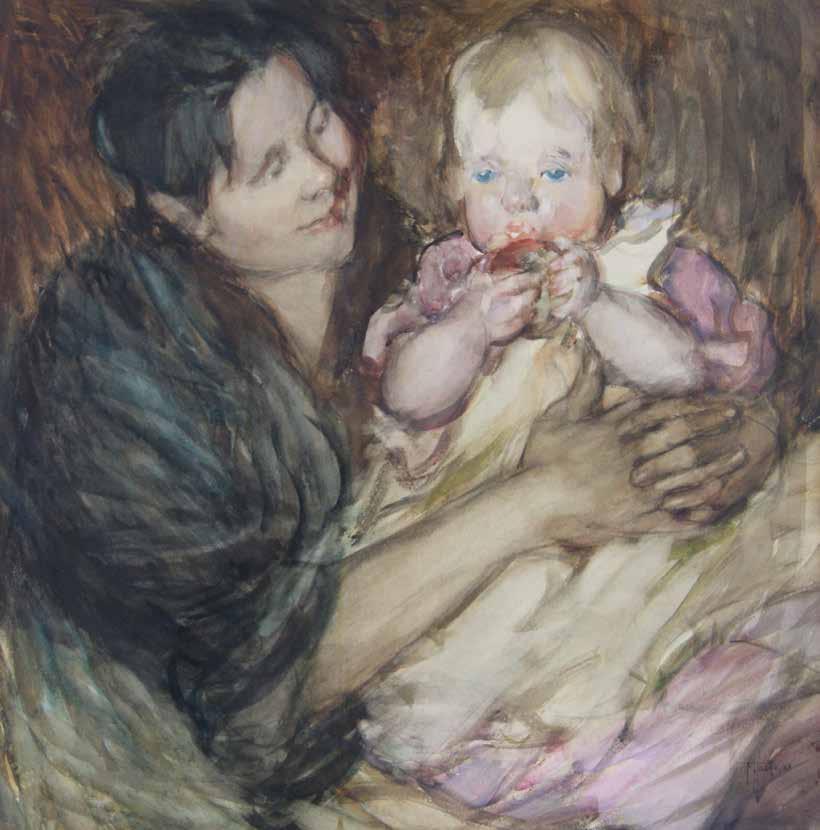
42 FRANCES HODGKINS 1869 - 1947
Mother & Child - Le Petit Choux
Watercolour 47.5 x 45.5
Signed
$65,000 - 95,000
Provenance: Private Collection
Exhibited:
Theosophical Society, Collins Street, Melbourne, Victoria November 1912 Cat no. 28
Painted in Paris, this was one of the works Frances Hodgkins chose to exhibit in Melbourne on her 1912 return to Australasia. The advent of war and her straitened economic circumstances made this her last visit. Hodgkins had written her mother a year earlier of her intention to permanently leave New Zealand as it is on the other side of the world that my work and future career lie.
Frances Hodgkins first port of call was Melbourne, before her intended tour of New Zealand. Here she exhibited seventy four watercolours in the Theosophical Society's Room in Collins Street. Opening on 21 November 1912, the show was received with much enthusiasm. Over 3,000 people visited it within three weeks and in a letter to Rachael Hodgkins dated 12 November, Frances writes that she was royally entertained by society and the centre of debate amongst artists.
The newspaper critics were ecstatic. The Argus wrote ...... she paints with a giant's strength, until she arrives at some terrific examples of the ultra-impressionism that almost take one's breath away. The Herald reported .....a breath from one of the more important of the modern French art movements. The dominant idea in her work is one of vibrating light and movement, the sense of which is preserved throughout in decorative colour schemes of brilliancy and beauty. Purchasers included the National Gallery of Victoria and the Governor of Victoria.
Mother & Child - Le Petit Choux, number 28 in the exhibition, was purchased by a Melbourne family who held it for seventy six years. Many of the paintings exhibited were sold or have subsequently entered public collections in New Zealand and Australia and are amongst Hodgkins most loved works. After the Melbourne show, Hodgkins packed the remaining works and continued on to Wellington for Christmas with her family. Before her final return to Europe in October 1913 she held solo exhibitions in Sydney, Adelaide, Dunedin and Wellington.
The portrayal of mother and child was a favourite subject of Impressionist artists such as Renoir, Mary Cassatt and Berthe Morisot. Hodgkins, who first departed New Zealand in 1901, had spent much of her time up until 1912, in France, painting, studying and teaching. Her watercolours of that latter period, particularly, express a buoyancy of feeling in their brushstrokes and enthusiasm for her subject matter. Le Petit Choux depicts the same figures as Dunedin Public Art Gallery's Woman and Child, c. 1912 and Summer, c. 1912. These people were possibly her landlady's family and Hodgkin's empathy with the intimacy of family life is palpable in the encompassing embrace, loving gaze and elevation of the beloved and seemingly indulged child. The child's serene face is bathed in light with eyes as blue as the sky. The painting’s title comes from the choux pastry treat which the little one has been given to enjoy. The mother's large hands speak of hard work contrasting with the child's softness. This vitally painted work of a humble woman and her infant expresses the adoration and expectancy of the classic Madonna and child.
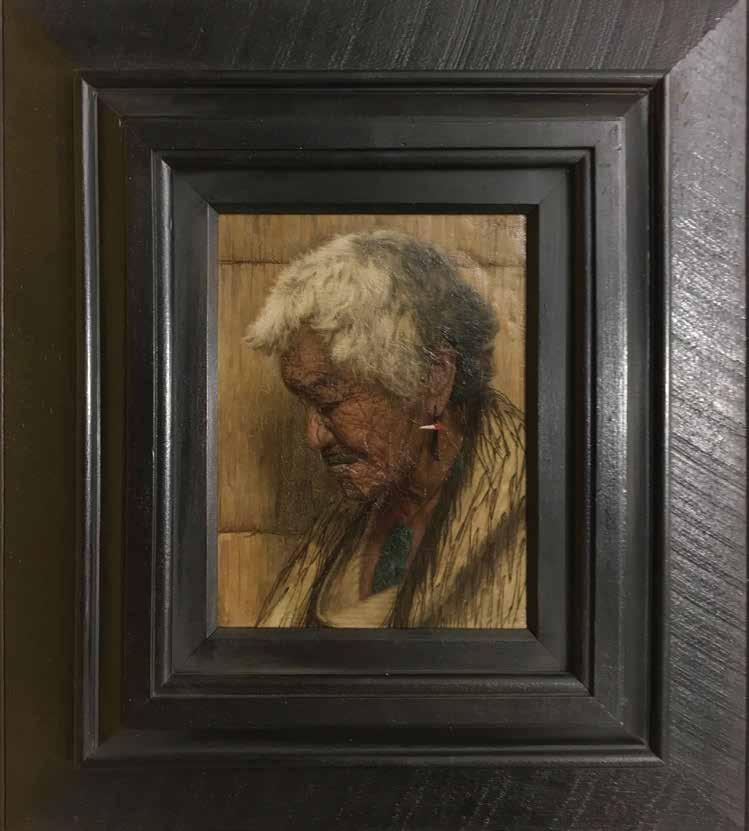
43 CHARLES FREDERICK GOLDIE
1870 - 1947
Weary with Age - Kapi Kapi aged 102 years
Oil on canvas 20 x 15
Signed & dated 1918
Inscribed on original label affxedverso
$260,000 - 300,000
Provenance:
Private Collection, Nelson since 2005
Prior to that Private Collection, United Kingdom
Ahinata Te Rangituatini, also known as Kapi Kapi, of Rotorua was one of Goldie's favourite sitters and he painted her at least twenty two times. She was an Arawa Chieftainess, a member of the Tuhourangi tribe living at Whakarewarewa. The sister of the Arawa chief Haerehuka, Kapi Kapi survived the 1886 Tarawera eruption and witnessed the assault of Pukeroa Pa at Ohinemutu. On her shoulders were scars of wounds self-inflicted with pieces of obsidian as a sign of mourning.
According to the historian and friend of Goldie, James Cowan, Kapi Kapi worked until the end of her long life, evidence, in his opinion, that the 'old-time Maori' were 'truly a Spartan race'. Kapi Kapi was renowned for her moko, which Goldie depicted in fine detail. According to Cowan, she was the only Maori woman painted by Goldie who had a rare spiral nostril tattoo. She died at the age of 102 after falling into a hot pool, it is said deliberately as was the custom among some of the aged Maori.
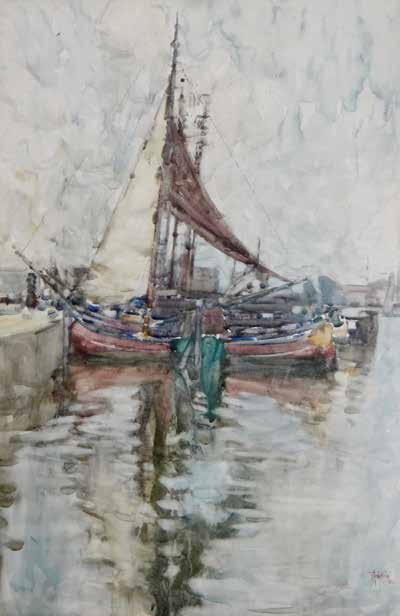
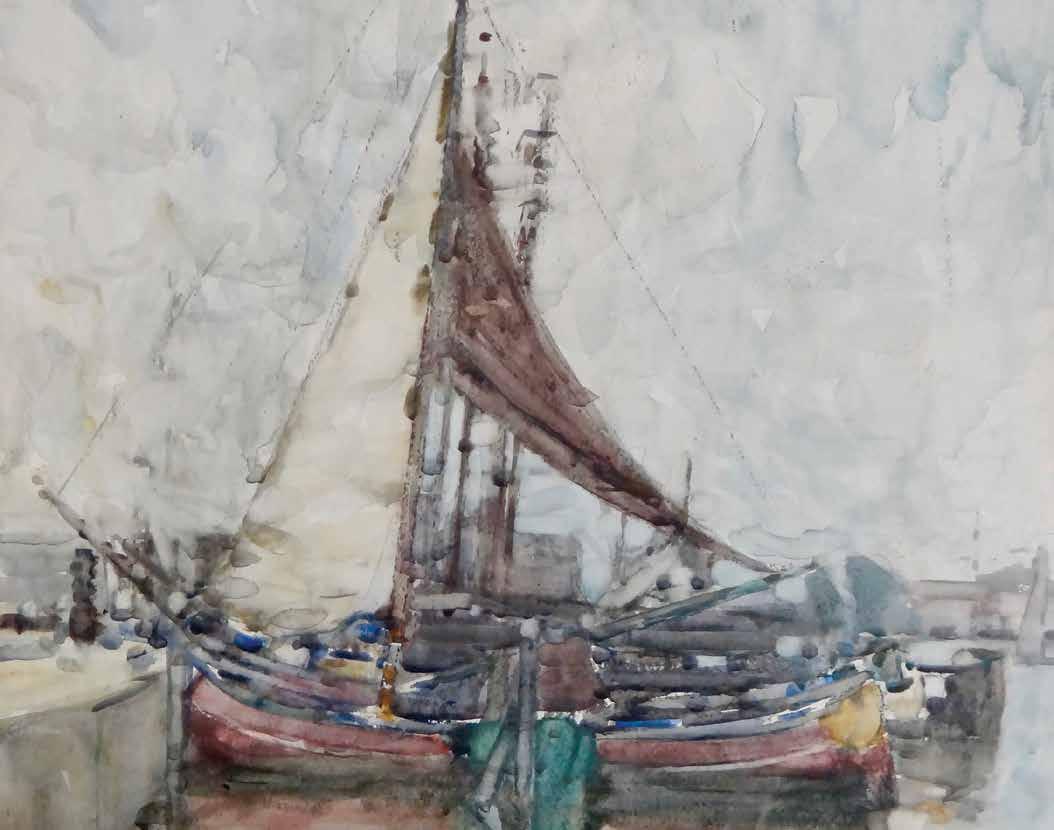
44 FRANCES HODGKINS 1869 - 1947
Dutch Harbour Scene
Watercolour 68 x 45
Signed & dated 1907
$45,000 - 65,000
Provenance:
Private Collection, Auckland
Frances Hodgkins Chronology 1907:
1 January - In Antibes
8 February - Leaves Antibes for London
April - In Scotland
24 May - Leaves London for Dordrecht, Holland
c.13 November - Leaves Holland to pay a short visit to London
c.11 December - Leaves England and returns to Dordrecht
Our thanks to Mary Kisler, Senior Curator, International Art, Auckland Art Gallery for her cataloguing assistance
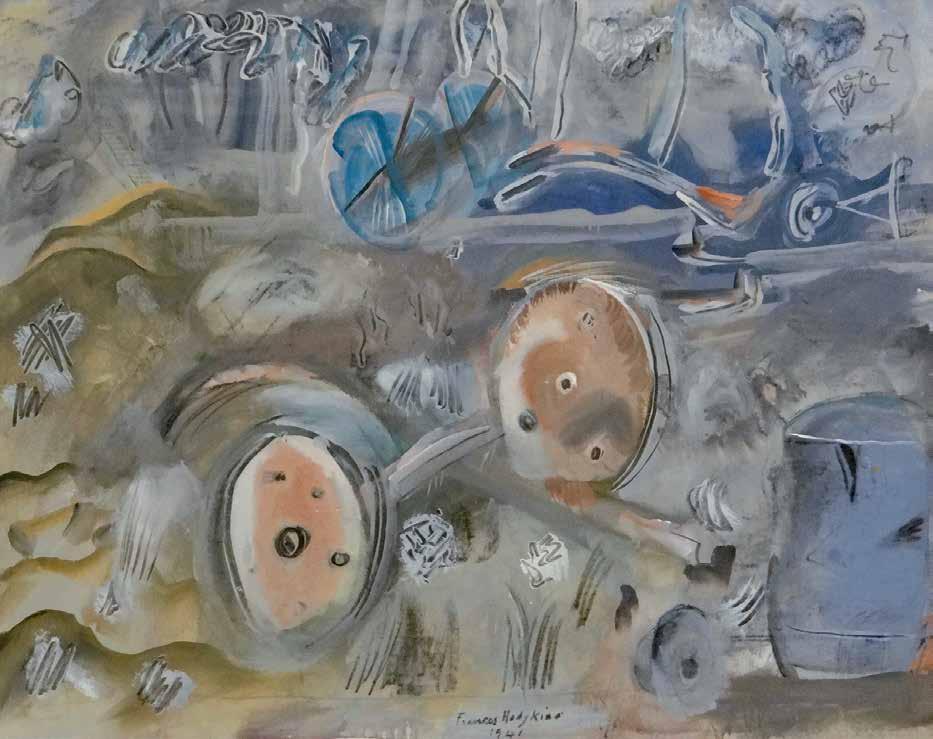
45 FRANCES HODGKINS 1869 - 1947
The Corner of the Woods
Gouache 40 x 51.5
Signed & dated 1941
$50,000 - 70,000
Provenance:
Private Collection, United Kingdom until 1979
Private Collection, Wellington
Sotheby’s, Modern British Drawings, Paintings & Sculpture, London, 27/06/1979, Lot No. 128
Exhibited:
Cat. no. 40 Frances Hodgkins, Works from Private Collections
The Gallery - Kirkaldie & Stains Ltd
An exhibition to celebrate the new store and gallery, Kirkaldie & Stains Ltd Lambton Quay, Wellington
46 FRANCES HODGKINS 1869 - 1947
Farm Piece, c. 1936
Watercolour 54 x 40
Signed
$35,000 - 45,000
Provenance:
Private Collection, Wellington
Dunbar Sloane Art & Pottery, 28/4/1998
Exhibited:
Leicester Galleries, London
Frances Hodgkins, The Isle of Purbeck Arts Club
March 1948
Original label affxedverso
Our thanks to Mary Kisler, Senior Curator, International Art, Auckland Art Gallery for her cataloguing assistance
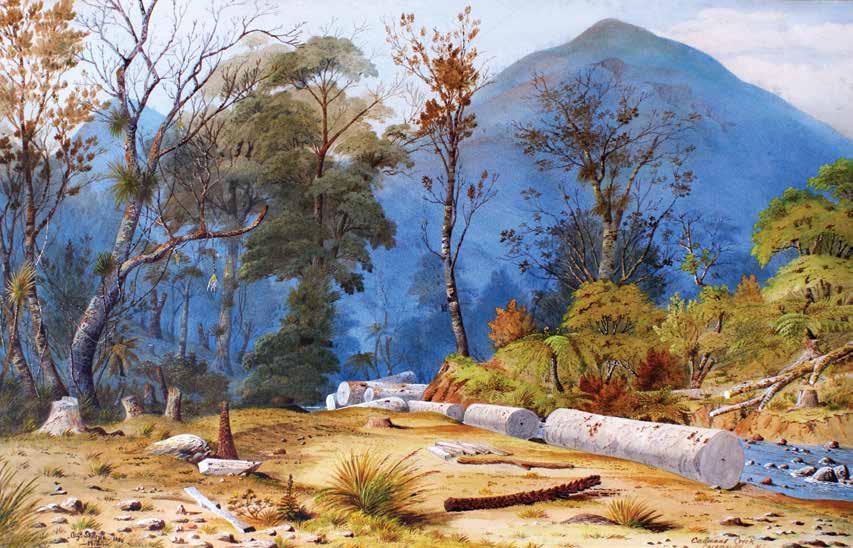
47 ALFRED SHARPE 1836 - 1908
Entrance to Cadman’s Creek, Coromandel, 1880
Watercolour 44.3 x 66.7
Signed, inscribed & dated 1880
$90,000 - 130,000
Provenance: Private Collection, Auckland
Reference: p. 47 The Watercolours of Alfred Sharpe, Published, Auckland City Art Gallery, 1973 p. 58 & 61 The Art of Alfred Sharpe, Roger Blackley, Auckland City Art Gallery in association with David Bateman Ltd, 1992.
Exhibited:
Alfred Sharpe
Auckland City Art Gallery - 5 March - 16 May 1993
Te Papa Tongarewa - 28 May - 1 August 1993
Dunedin Public Art Gallery - 12 August - 2 October 1993
Illustrated: p. 45 The Art of Alfred Sharpe, Roger Blackley, Auckland City Art Gallery in association with David Bateman Ltd, 1992
Alfred Sharpe’s original manuscript label reads:
Entrance to Cadman’s Creek, Coromandel, by Alfred SharpePrice £15.15.0 - This picture is a faithful delineation of the scene, down to the smallest objects - It gives a life like idea of the general appearance of the entrances to the mountain gorges of the Coromandel peninsula; & shows the way in which the stranded logs lie in the creeks, waiting for the next flood to carry them further down towards the booms. On the right bank the timber has been cleared for firewood & the debris burnt off; & the characteristics of the rapidity, are faithfully reproduced - The effects of the fire on the other side are shown in the trees on that side; some dead, and the others recovering - The foreground is closely-cropped grass, mixed with sand patches and tufts of coarser herbage; & littered with debris of the floods that occasionally cover it - The large trees represented are 3 Rewa Rewa, 1 Puriri, 2 Rata, and 1 Hinau - The logs are Kauri, felled miles up the creek, Alfred Sharpe, New Zealand.
Entrance to Cadman’s Creek is one of Sharpe’s most important watercolours produced in 1880. He painted it for the New Zealand Court of the Melbourne International Exhibition. It was on display for seven months and was one of the largest exhibitions held in Australasia, attended by around 1.5 million visitors.
Roger Blackley refers to Entrance to Cadman’s Creek in his book The Art of Alfred Sharpe, Auckland City Art Gallery & David Bateman Ltd, 1992. Late in June (1880) he had the picture framed at De Courcy’s, at the junction of Queen and Wakefield Streets, where it was exhibited briefly (‘for the inspection of connoisseurs and persons interested in art’) before being shipped to Melbourne.
The fllowing appeared in the New Zealand Herald 23 February, 1882 The drawing in the art union of ten water-colour pictures of Auckland scenery, by Mr. Alfred Sharpe, took place yesterday afternoon, at Mr Leech’s, Shortland Street. There were 124 subscribers at l0s each, and 10 prizes. The following was the result-1st prize, Sunset in the Kikowhakarere Gorge, Coromandel, Mr Goffe, Waitangi, Bay of Islands; 2nd prize, Entrance to Cadman’s Creek, Coromandel, Mr Leech; 3rd prize, A Peep at Coromandel from Whangapoua road, Mr J M Simcox; 4th prize, Up the Parsonage Ravine, Coromandel, Mr N G Lennox; 5th prize, Sulphur Islets Coromandel, Mr S M Herapath; 6th prize, On the Coast Near Auckland, Mr J Hall, Kawakawa; 7th prize, Old Windmill at Epsom, W E; 8th prize, Junction of Waikato and Mangawhero Rivers, Blank; 9th prize, Singular Puriri Tree, Coromandel, Mr W Busby, Waitangi, Bay of Islands; 10th prize, The Last of Fort Britomart, Mr Swift, Kawakawa.
The New Zealand Herald 29 June 1880 description is similar to Sharpe’s manuscript label. It read: It is an illustration of one of the scenes peculiar to this province, giving the peculiar features of the entrances to the mountain gorges on the Coromandel peninsula with perfect fidelity. The bush on the right hand side has been felled for firewood, and the debris burnt off; and the undergrowth, which springs up with marvellous rapidity on burnt bush land, is well represented. The effects of the fire on the trees on the opposite side, and the way the stranded kauri logs lie in the creeks awaiting the next fresh, are also shown, and the foreground is littered with the debris of various floods that occasionally cover it. The large trees represented are the puriri, rewarewa, hinau, and rata.
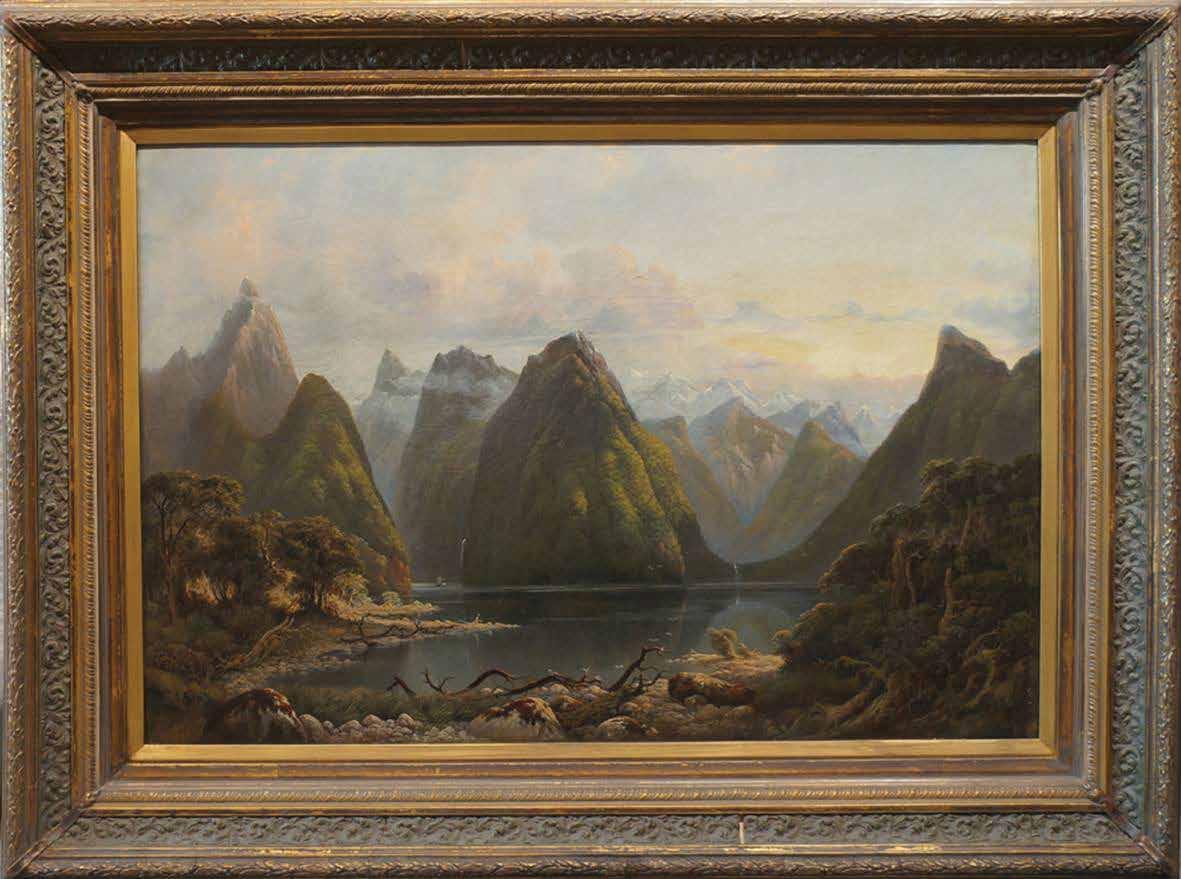
48 ISAAC WHITEHEAD 1819 - 1881
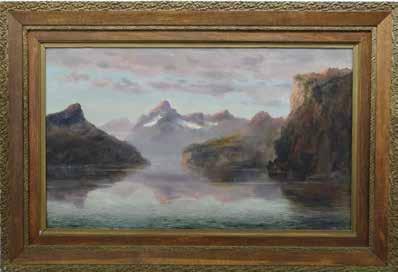
Milford Sound, New Zealand
Oil on canvas 60.5 x 91.5
Signed & dated 1878
$15,000 - 25,000
Provenance: Denis Savill Collection, Sydney
Purchased from Australian & International Paintings, Deutscher~Menzies, Melbourne 26/11/2003, Lot No. 32
The popularity of Eugene von Guerard's art today is so great that it has overshadowed that of all his contemporaries. Even Louis Buvelot, Victoria's most popular artist in the 1870s and eighties, has been eclipsed.
Another important and overlooked artist of the time is Isaac Whitehead, whose rare paintings, like the splendid one on offer, seldom come on to today's market. Whitehead involved himself in many activities and, ironically, is better known nowadays as the maker of first-class frames for Von Guerard and Buvelot than as a limner in his own right. In his day, Whitehead was Melbourne's leading frame maker. Significantly, Von Guerard and Whitehead have more in common in their painting than may, at first, be realised. They are supremely romantic painters given to transforming the topographical view to the picturesque; seeking the grand and the sublime in nature, rendering her glories on canvasses with an attention to detail that borders on the worshipful.
The panorama is their forte, and man is miniscule in the scheme of things. In Whitehead's Milford Sound, New Zealand 1878, the only sign of human existence is the ship to the left, far background, sails furled giving way to steam, as shown by the tell-tale issue of smoke; another very romantic notion taken to its greatest height by J M W Turner. Von Guerard painted the same scene, Milford Sound with Pembroke Peak and Bowen Falls, in 1877, one year before Whitehead. Celebrated as a great work when exhibited in Melbourne, Sydney and Paris, it is now in the collection of the Art Gallery of New South Wales, resplendent in its original Whitehead frame!
Irish-born Isaac Whitehead arrived in Melbourne in the late 1850s, working as a picture framer, decorator, print seller and colourman, as well as a painter. He was a regular contributor to the major colonial exhibitions, and the academies of art in New South Wales and
Victoria. In the 1875 Victorian Intercolonial Exhibition Preparatory to the Philadelphia Exhibition of 1876, he was awarded a medal for his five paintings. A silver medal followed at the 1878 Paris Universal Exhibition. Active as a member of the Victorian Academy of Arts, he contributed to the annual exhibitions, the third exhibition of 1873 being held at his business premises. Five years later he was elected to the Academy's council. Like his contemporaries, and especially Von Guerard and Nicholas Chevalier, Whitehead found inspiration in the grandeur of nature, painting the Buffalo and Dandenong Ranges, the Grampians, Mt Macedon and the ever-popular fern tree gullies. He was enthralled by spectacular scenery, the might and majesty of nature, as seen in such paintings as In the Sassafras Valley, Victoria c1870, in the collection of the Art Gallery of South Australia, and the even larger canvas in the National Gallery of Victoria, A Spring Morning Near Fernshaw 1880. It is not known when Whitehead visited New Zealand, although the dates on his New Zealand paintings indicate that it would have been in the late 1870s. It is very tempting to think that he may have visited Milford Sound with Von Guerard and other Melbourne visitors in January 1876, for the report in the Otago Daily Times offers a seasonal description of the scene compatible with both Von Guerard's and Whitehead's paintings.'
A painting titled Milford Sound, N.Z. was included in the 1877 exhibition of the New South Wales Academy of Art, and the following year Milford Sound During a Squall was shown in the Victorian Academy of Arts' annual exhibition. One can only speculate if the Milford Sound shown in the 1877 exhibition in Sydney is the same as the painting on offer and that the artist rriay have added the date '1878' later. Alternatively, because it is such a popular subject, Whitehead may have painted a second version. The price of Ł33.0.0 suggests a painting of similar or the same size, the Milford Sound during a Squall commanding the high figure of Ł63.0.0.
For the work on offer, Whitehead chose a different mood, of the tranquility that encompasses all nature at the end of the day. The waters of the sound are crystal calm, reflecting the mountains, vegetation and glorious sky, which evokes a majestic scene worthy of Olympus or Valhalla. The painting revels in the untouched splendour of nature, full of grandeur and nobility, with the attendant realism bathed in an enchanting light.
1. Otago Daily Times, 28 January 1876, quoted in Bruce C, Comstock, E, & McDonald, F., Eugene von Guerard: A German in the Antipodes, Alister Taylor Publishers, Martinborough, , 1982. p.269.
David Thomas
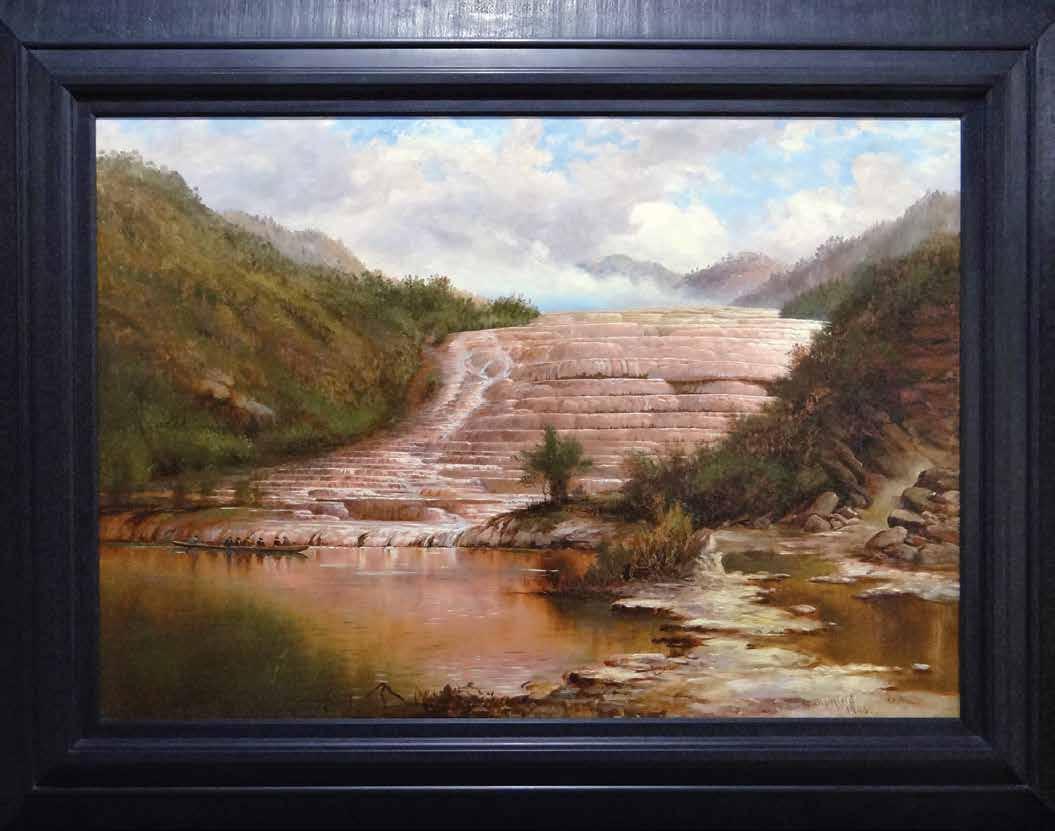
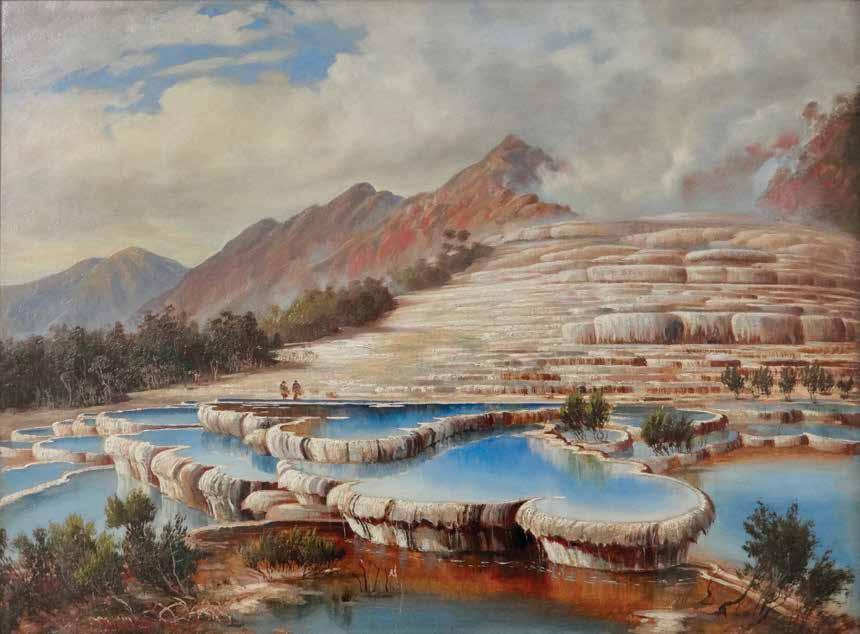
49 CHARLES BLOMFIELD 1848 - 1926
Tourists Visiting the Pink Terraces of Rotomahana Oil on canvas 72 x 102
Signed & dated 1905
$80,000 - 120,000
Provenance: Private Collection
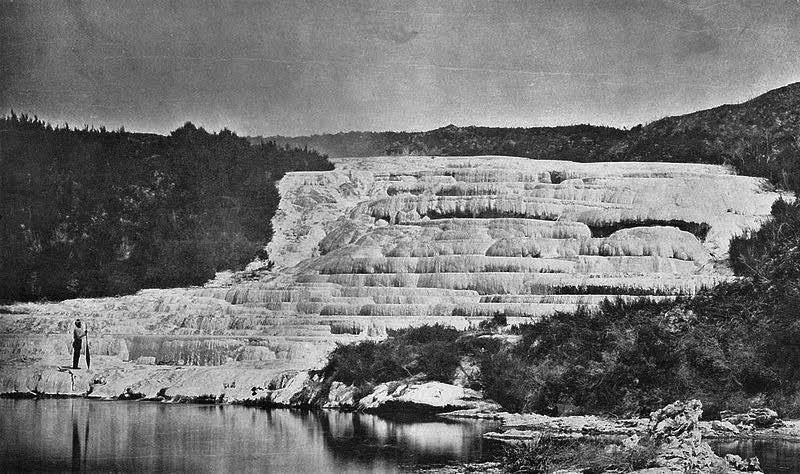
O-tū-kapua-rangi - fountain of the clouded sky - The Pink Terrace.
Charles Blomfield has long been recognised as the most popular early New Zealand painter of the Pink and White Terraces. Both these paintings are exceedingly fine works and pre-date the Tarawera eruption. Blomfiled first saw the Terraces during a camping trip in December 1875, and commented that they were exceedingly beautiful and graceful. Returning in 1885 he spent six weeks documenting the Terraces and surrounding landscape in a series of oil paintings. It was reported that by September 1885 orders for paintings had been received and completed from throughout Europe, America, Australia and other places. Early on the morning of 10 June 1886, Mount Tarawera erupted, burying the terraces. Blomfield was heartbroken and decided to see the devastation for himself. He returned to the area in October and painted several scenes of the terrible destruction. A world away, fourteen of his Rotomahana paintings were on display in South Kensington, London at the Colonial and Indian Exhibition. This major exhibition strengthening the bonds of the the British Empire was opened by Queen Victoria and received 5.5 million visitors.
Blomfield realised that the paintings he had made of the Terraces were a valuable record, and declined to sell them. He went on to paint and sell scale copies of these works. The prices soon trebled in value.
After 1886 Blomfield continued to travel throughout New Zealand painting pictures of mountains, rivers, lakes and cloud effects, but his greatest love remained the native bush, of which he wrote enthusiastically in his diary. Charles Blomfield died in Auckland in 1926.
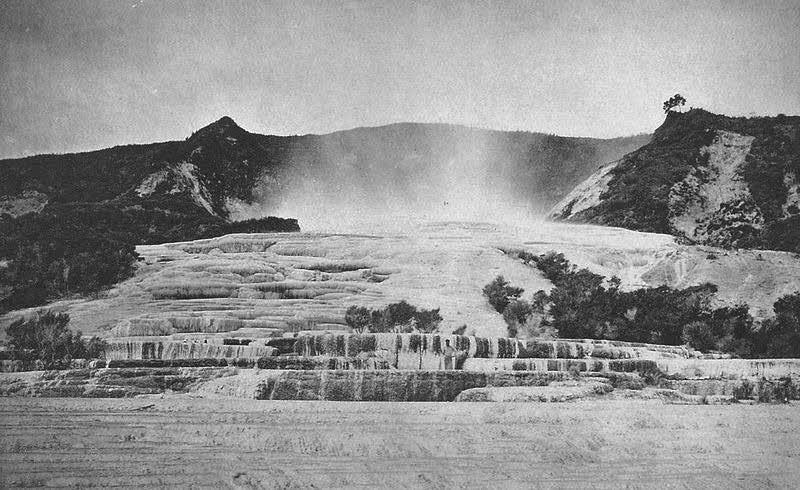
The Terraces were thought to be buried by the Tarawera eruption of June 1886. Separated by nearly a kilometre, the Pink Terraces were about two thirds of the way down the lake, sheltered from the harsh sun on the western shores, facing south-east. Their pink appearance was largely due to less exposure to sunlight, and therefore less bleaching. Tourists and locals bathed in the luke warm water on the lower level of the Pink Terraces.
In February 2011, a team including researchers from GNS Science, Woods Hole Oceanographic Institution, Lamont-Doherty Earth Observatory, and Waikato University were mapping the lake floor when they reported discovering part of the Pink Terraces. The lowest two tiers of the terraces were reported found at 60 metres. A part of the White Terraces was also reported as rediscovered in June 2011.
Researchers now believe they have found the terraces burial site and are calling for a full scale archaeological investigation.
Using reverse engineering and surveying works of 19th century geologist Dr Ferdinand von Hochstetter, researchers Rex Bunn and Dr Sascha Nolden deduced the Pink and White Terraces may have survived the 1886 Tarawera eruption.
Their paper, published June 2017 in the Journal of New Zealand Studies, plotted the three terrace locations beneath land, and not under Lake Rotomahana as imagined by 19th century colonists and accepted by some by some later researchers. These research and findings continue.
50 CHARLES BLOMFIELD 1848 - 1926
The White Terraces, Rotomahana
Oil on canvas 47 x 61
Signed & dated 1894
$25,000 - 40,000
Provenance:
Collection of Remuera Club
Formally Commerce Club, Auckland
Thought to have been in the collection for over 70 years
Te Tarata - the tattooed rock - The White Terrace
The White Terraces were at the north end of Lake Rotomahana and faced away from the lake at the entrance to the Kaiwaka Stream. They descended to the lake edge forty metres below. The additional sunlight received from facing north created their bleached white appearance. The White Terrace was the larger of the two formation, covering in excess of three hectares. They are reportedly the largest silica sinter deposits on earth.
Mrs Howard Vincent recalls seeing the White Terraces for the first time in The Colonist, 3 March 1886.
At last we could see them in their general outline —a silica formation of white terraces in circular steps. We thought it disappointing ; but not openly allowing so, we waded through the lukewarm water, about an inch deep, and stood at the bottom of Te Tarata, or the White Terrace. At the first step we came to we were ‘petrified ‘ with delight for a moment. Set in a basin of pure white silica, delicately carved and fretted, lay a pool of pale blue water, so pure in colour,’so opaque in substance. I wish I could convey to the sight of those who read this the merest reflection of that, heavenly colour, that pale tint found nowhere else upon earth. As we climbed upwards we saw terrace upon terrace, with each circular brim hanging with beautiful stalactites and sponge and coral formation. The sun, shining through the lace-like fringe on the coral-tipped edges set forth a hundred reflections, and we were dazzled by the snowy whiteness of the silica. The water percolates and trickles gently over the petrified drapery of each little cup and basin, each drop leaving its tiny deposit of silica, which in the course of ages has formed the terrace.
Papers Past, National Library of New Zealand
The White Terraces
Photo from The Wonderland of the Antipodes and other sketches of travel in the North Island of New Zealand by J Ernest Tinne, 1873
The Pink Terraces
Photo from The Wonderland of the Antipodes and other sketches of travel in the North Island of New Zealand by J Ernest Tinne, 1873
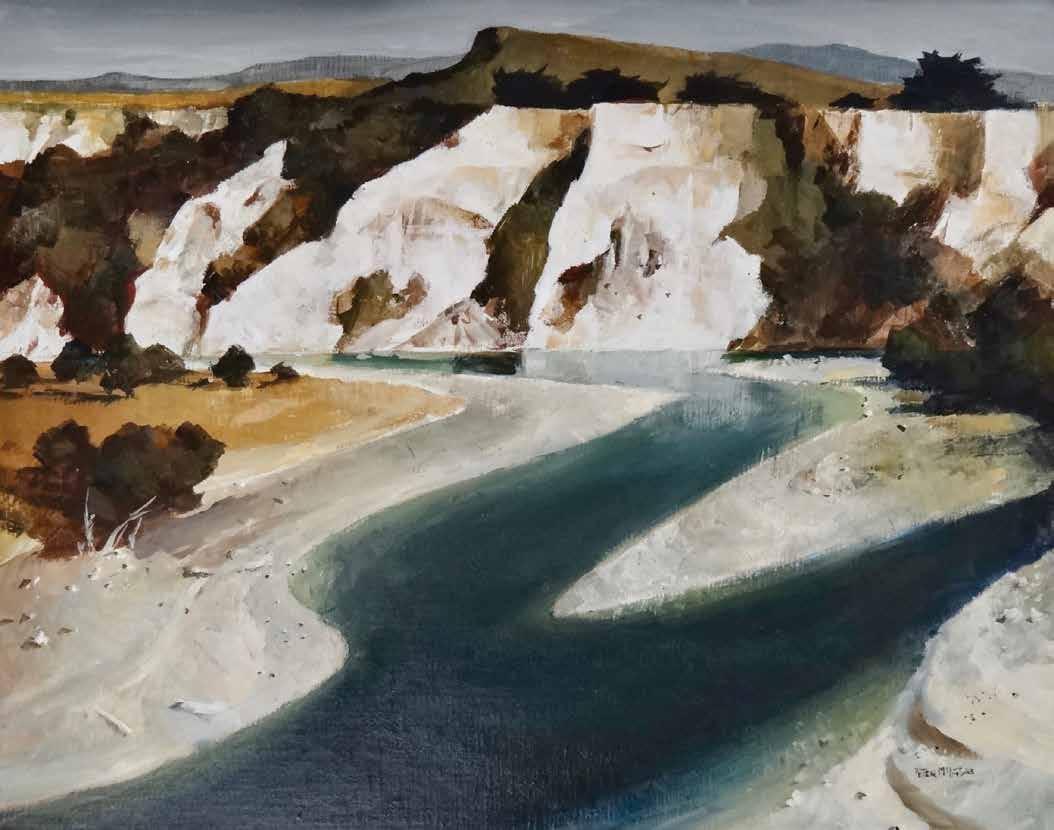
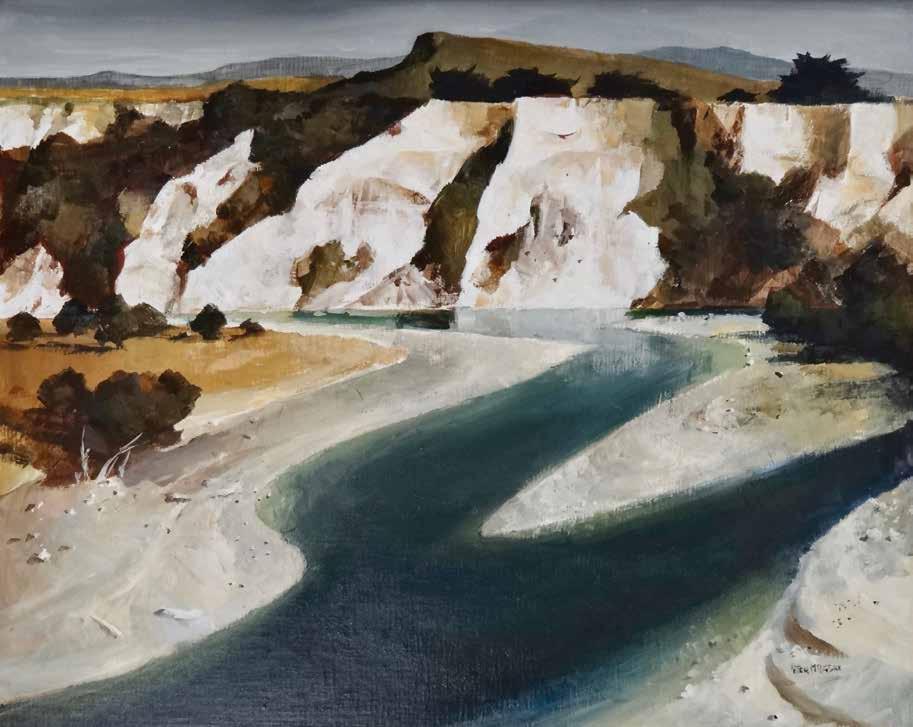
51 PETER MCINTYRE 1910 - 1995
Rangitikei River
Oil on board 60 x 75
Signed
$25,000 - 35,000
Provenance:
Private Collection since c. 1969
Years ago I went far up the Rangitikei beyond Taihape to visit my friend David Russell, whose farm at that time was as far as you could drive up the river into the bush. The river is so deep between high paapa cliffs that down at the bottom where the river flows there is only a sort of twilight, even on a sunny day. Once I crossed the gorge at a wider place in the bush in a tray slung on a logger’s wire rope, and we sat in mid-air watching a large trout feed in the river below where a patch of sun broke through the over-hanging bush. From that time on I have painted the river up and down its length, and always there has been delight in painting those lovely cliffs that are that most paintable of all colours - white.
Text: Peter McIntyre’s New Zealand, A H & A W Reed 1964
The Rangitikei River, it's headwaters located to the southeast of Lake Taupo in the Kaimanawa Ranges stretches 185 kilometres, making it one of the New Zealand's longest rivers.
It flows from the Central Plateau south past Taihape, Mangaweka, Hunterville, Marton, Bulls and to the South Taranaki Bight at Tangimoana, 40 kilometres southeast of Wanganui. The river gives its name to the surrounding Rangitikei District. In 1897 the river flooded and all six bridges over it were damaged or destroyed. The port at the mouth of the river was also washed away and never rebuilt.
The river is a popular leisure and recreation area for jetboating, white water rafting, kayaking, fishing and includes public camping grounds along its banks. Its sheer vertical paapa (clay) cliffs, unique to this part of New Zealand, and deep canyons provide the perfect setting for adventure activities.
The lush green bush is the crowning glory of my country and in its depths the tui and bellbird sing the purest song of them all.
The river in the painting flows out of the bush, cutting deep into the white paapa clay to make cliffs that catch the sun and the moon all along its course.
Text: Peter McIntyre's Pacific, A H & A W Reed 1966
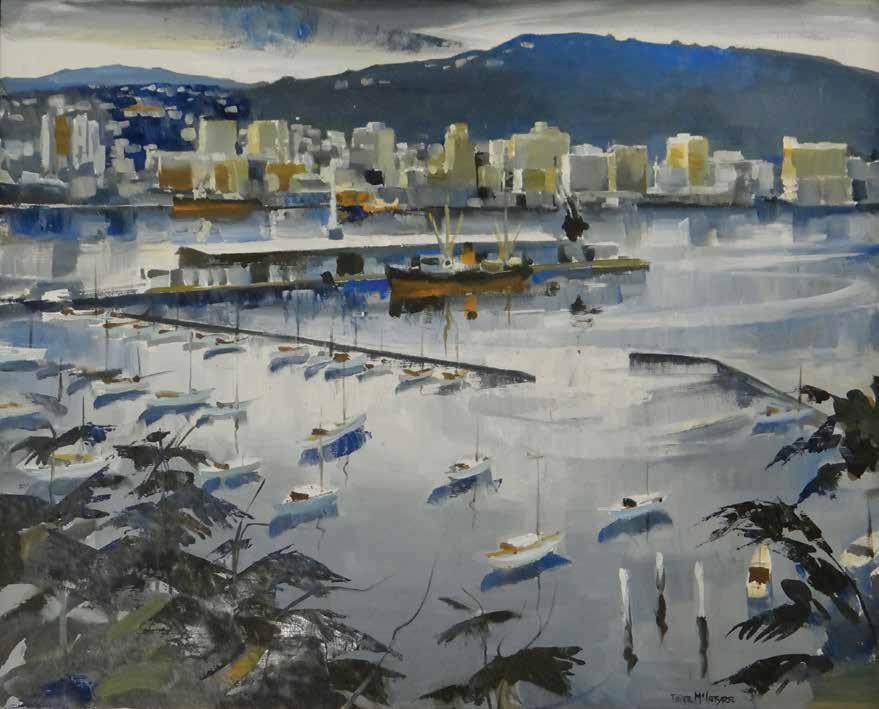
52 PETER MCINTYRE 1910 - 1995
Wellington Oil on board 60 x 75
Signed $18,000 - 26,000
Provenance:
Same family collection since 1966
Illustrated:
plate 34, Peter McIntyre’s New Zealand A H & A W Reed, 1964
When I was first married and we came to live in Wellington this was the view from our flat. I always liked it best just before darkness fell and the first lights began to appear on the wharves across the harbour. And so I have painted it.
This is the capital city and the seat of Government, clinging to its steep slopes and its ledge around the harbour, where geography never did intend a capital city to be.
Text: Peter McIntyre’s New Zealand A H & A W Reed, 1964
Peter McIntyre was born in Dunedin. His father, a lithographic artist, founded Dunedin’s Caxton Printing Company. Young McIntyre attended Otago Boys’ High School and the University of Otago. He studied painting under Dunedin artist Alfred O’Keeffe. McIntrye left New Zealand to study at London’s Slade School of Art from 1931 until 1934. He worked in Britain as a free-lance artist until enlisting in 1939 with the 34th Anti-Tank Battery, a New Zealand unit formed in London. In 1941 whilst serving in Egypt, he was appointed as New Zealand’s offcialwarartistbyGeneralFreyberg.From1941to 1945 McIntyre recorded action in Crete, North Africa and Italy. His work was exhibited in New Zealand and Europe and reproduced in magazines such as the Illustrated London News and New Zealand Listener. His work from this period belongs to the collection of war art at the National Archives in Wellington.
Returning to New Zealand in 1946 McIntyre began a long and illustrious post war career. He lived and exhibited in Wellington, frequently undertaking painting trips abroad. In 1962 A H & A W Reed published The Painted Years, the first of eight books he would illustrate and write between then and 1981. Travels to Antarctica, Hong Kong, the Pacific Islands and the American West provided material for these popular publications. McIntyre owned a holiday cottage in Kakahi which became both his studio and retreat. The King Country inspired some of the artist's finest work and he painted the landscape, inhabitants, native bush, rivers and farming scenes of the central North Island.
In 1970 McIntyre was awarded an OBE. A retrospective exhibition of McIntyre's war paintings was held at the City Gallery in Wellington in 1995. Opening on 22 July, the show had been visited by more than 22,000 people when the artist died in Wellington on 11 September. Today he is recognised as one of New Zealand's most important landscape artists.
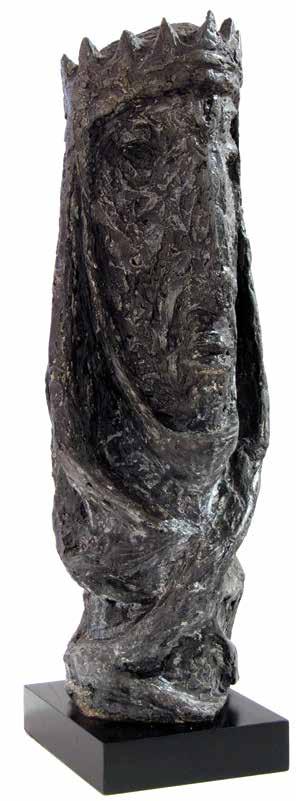
Four works from the Russell Clark Family Collection
53 RUSSELL CLARK 1905 - 1966
Head of Christ, c. 1960
Plaster sculpture 68.5 x 24 x 25.5
Signed
$12,000 - 18,000
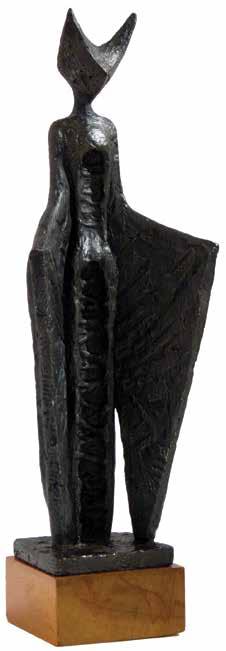
54 RUSSELL CLARK 1905 - 1966
Celestial Figure
Plaster sculpture 35 x 12.5 x 7.5
$4,000 - 6,000
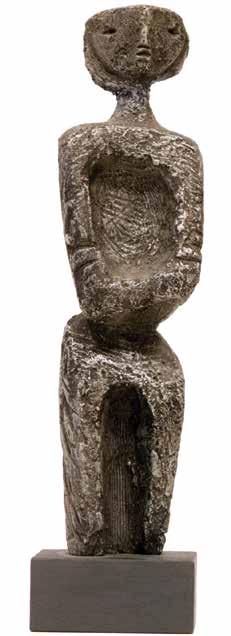
55 RUSSELL CLARK 1905 - 1966
Untitled - Standing Figure
Pigmented plaster sculpture 28.5 x 14
$2,000 - 4,000
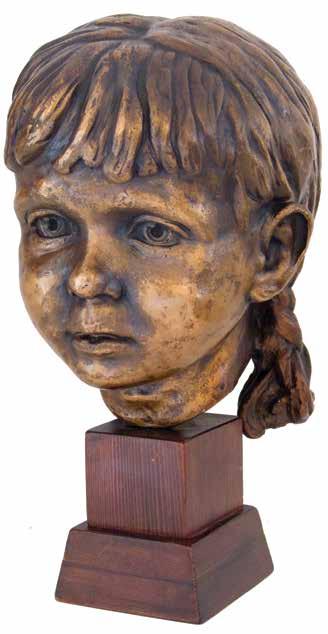
56 RUSSELL CLARK 1905 - 1966
Anna’s Head - Artist’s Daughter
Cast bronze sculpture 28.5 x 14
$4,000 - 6,000
57 RUSSELL CLARK 1905 - 1966
South Westland, 1957
Oil on board 46 x 61
Signed
$25,000 - 35,000
Provenance:
Estate of R G Glubb, Christchurch
Exhibited:
Russell Clark 1905 - 1966 A Retrospective Exhibition
Robert McDougall Art Gallery, Christchurch 1975
Catalogue no. 47
Original Robert McDougall Art Gallery label affxedverso
Christchurch born Clark began taking art classes as a sixteen year old at the Canterbury College of Art and by the age of twenty was teaching there part time. Though he began exhibiting and receiving mural commissions almost immediately, he also needed regular income and turned to commercial art through the 1930s in a restless succession of jobs in Christchurch, Dunedin and Wellington. The Second World War seemed to offer even wider horizons for the confident young artist and so he offered his services as war artist to then Prime Minister, Peter Fraser in 1942 and subsequently served with the 3rd New Zealand Division in the Pacific.
After his war service, he returned to Wellington and his career in advertising but he found this return to a former life unsatisfactory and quit Wellington and advertising for a job at the Canterbury School of Art and a life in Christchurch where he spent the remainder of his career.
South Westland is painted a good dozen years into Clark’s South Island life and reveals the depth of his confidence and the vibrancy of his joy in painting. During the late 1940s he abandoned atmospheric effects in his paintings for broad planes and bolder colour and the
1950s became his most experimental and productive phase as an artist. This painting, completed in 1957, comes at the pinnacle of his easel painting; and just at the moment before painting became secondary to sculpture for him; and it was in sculpture, that Clark became one of the most important pioneers of Modern public art in New Zealand. We see the move and the later achievements prefigured in South Westland. The treatment of the foreground clearly indicates his sculptural concerns and the lessons he was absorbing, even at this mature stage in his career, from the likes of Barbara Hepworth and Henry Moore with its bold, almost impasto facets, angular planes and strong chiaroscuro. It is an unusual case in which we can describe this work as coming from the peak of the artist’s painting career while also being transitional in relation to his sculptural career. Rob Garrett
In 1975 the Robert McDougall Art Gallery held a retrospective, Russell Clark 1905 - 1966 A Retrospective Exhibition. This work was illustrated in black and white on page 46 of the accompanying catalogue. At the time it was incorrectly catalogued as unsigned. However the work is signed lower left.
59 LOUIS JOHN STEELE 1842 - 1918
Auckland Merchant - The Late P. Dawson
Oil on canvas 110 x 85
Signed & dated 1898
$35,000 - 45,000
Louis John Steele was Auckland’s first resident portraitist – others artists such as Gottfried Lindauer came and went – but from his arrival in mid 1886, Steele made Auckland his home. He set the standard for portraits of the great and the good, as well as undertaking private commissions.
This painting is one such example: the sitter is believed to be P. Dawson. The date and subject align with published descriptions of the work of this title that Steele showed at the annual Auckland Society of the Arts exhibition in April 1898. The New Zealand Herald review commended the portrait as Steele’s most important work that year. The review continued: This portrait was painted after the decease of that gentleman, from the most slender materials, and the portrait has been eminently successful. There is all the artist’s usual care displayed, both in drawing and general tout ensemble…. Great praise is due to the general painting. The simple portrait is beautifully observed: the light falling on the face, the distinctive colouration of Dawson’s hair and beard, and the way he grips the chair with his left hand, a fondly remembered mannerism perhaps. Dawson is portrayed as a prosperous merchant, giving today’s viewer an impression of an Aucklander 120 years ago, when Auckland was just a burgeoning town. Jane Davidson-Ladd
Auckland Society of Arts Exhibition: Second Notice, New Zealand Herald, 30 April 1898
See also: Auckland Society of Arts’, Auckland Star, 29 April 1898
58 WALTER ARMIGER BOWRING 1874 - 1931
Ernest Rutherford
Oil on canvas 114 x 82
Signed & dated 1925
$4,000 - 6,000
Signed $12,000 - 18,000
Provenance: Purchased directly from the artist by the current owner
60 RAYMOND CHING b.1939
Eider Duck Oil on board 65 x 75
61 RAYMOND CHING b.1939
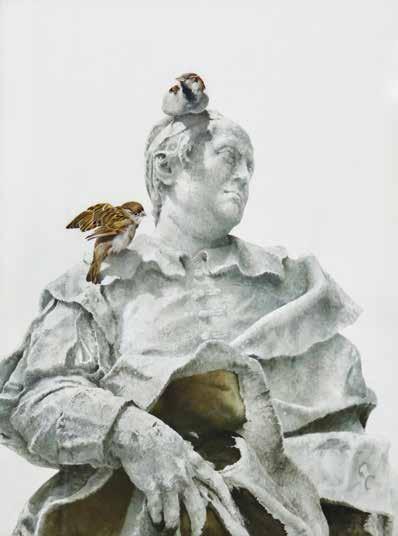
Sparrows
Watercolour 70 x 54
Signed
$8,000 - 12,000
Provenance:
Raymond Ching
Recent Paintings & Drawings
International Art Centre, 1979
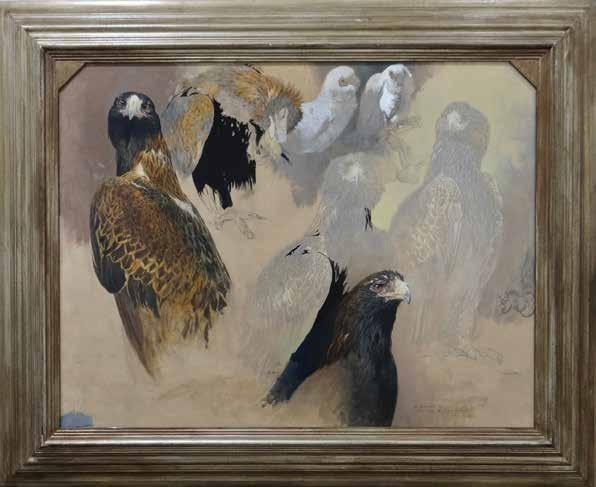
62 RAYMOND CHING b.1939
Wedgetail Eagles and Corellas
Oil on board 79 x 91.5
Signed, inscribed Victoria & dated 1981-89-96
$25,000 - 35,000
Provenance: Purchased from Everard Read Gallery, Johannesburg, South Africa.
62
Signed
$8,000 - 12,000
Provenance: Estate of Mr & Mrs Louis Shapiro, Chicago, Illinois, USA
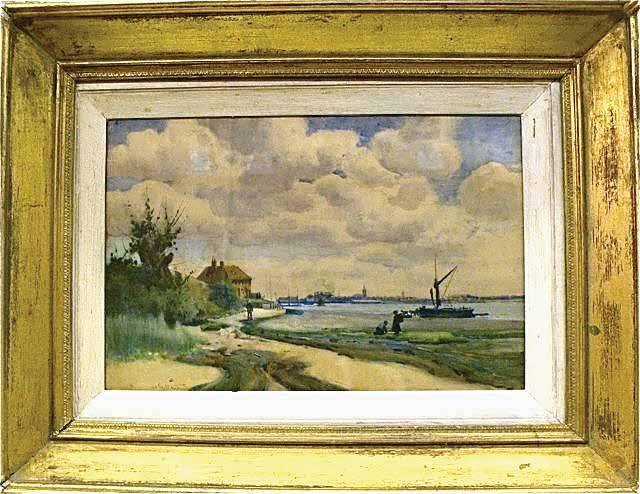
63 JAMES M NAIRN 1859 - 1904
A Spring Morning
Watercolour 30.8 x 46
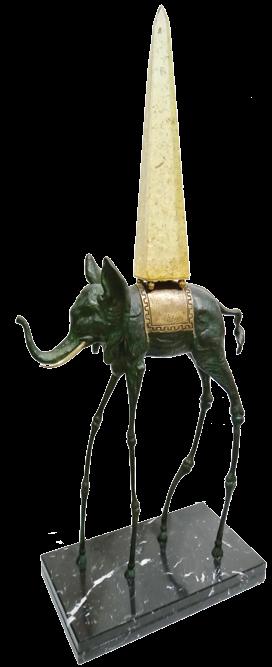
64 SALVADOR DALI Spanish 1904 - 1989
Space Elephant, 1980
Bronze & plexiglas on marble base,
edition 349/350, 93 x 41.9 x 15.2 cm
Signed
$15,000 - 25,000
Provenance:
Private Collection, Northland
Purchased Bonhams, Knightsbridge, Modern Pictures
London 20 May 2003, Lot 174 by current owner
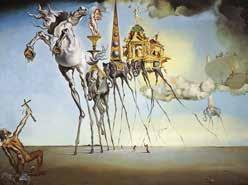
Space Elephant revisits the Dalinian symbol created in 1946 when the artist painted The Temptation of St. Anthony. Dalí created the image of an elephant in the Egyptian desert carrying an obelisk on its back, a symbol of the progress of technology in the modern world. Four elephants stand on spider like legs offering beauty, power, pleasure and knowledge.
For this sculpture, based on the elephants in The Temptation of St. Anthony, Dalí maintains the almost invisible spindle like legs, emphasizing the contrast between robustness and fragility, and contrasting the idea of weightlessness with structure. This fantastically surreal creature, moving through space towards the heavens, symbolizes a flight of fantasy in a mesmerizing and surrealistic universe. Space Elephant, was designed and created in 1980, the bronze casts were made in 1981.
Salvador Dali
The Temptation of St. Anthony, 1946
Royal Museums of Fine Arts of Belgium
65 WALTER WRIGHT 1866 - 1933 On the Waikato Oil on board 30.5 x 60.8 Signed $8,000 - 12,000
Provenance: Denis Savill Collection, Sydney
66 VERA CUMMINGS 1891 - 1949
Chief Tamarere from Tawhitinui, Whanganui River
Oil on canvas
30.5 x 25.5
Signed $10,000 - 15,000
Provenance: Denis Savill Collection, Sydney
This engaging portrait of Chief Tamarere is offered in its original kauri frame. As C F Goldie’s leading pupil, Vera Cummings enjoyed the endorsement and encouragement of her tutor with a small number of her selected works being presented in the ‘Goldie’ frame. This frame had been created specifically for C F Goldie by Auckland framer’s John Leech Framers est.1855.
Like C F Goldie, Vera Cummings showed talent from an early age. Delicate health and lack of money prevented her from studying overseas. However, at the age of eleven she was awarded a scholarship to attend Elam School of Fine Arts, one of Elam’s youngest pupils. From here she became a pupil of Goldie, and is considered the only one able to have reproduced the tonality of Goldie’s work, especially with regard to the skin tones of their shared Maori subjects. After graduating from Elam the two often painted side by side. Their models were generally elderly Maori who lived in the Maori hostel near Parnell. Vera herself lived in Parnell near Judges Bay for nearly 60 years.
As far as we can ascertain Cummings painted two versions of the noble Tamarere. The other, a smaller work on wood panel, was sold by International Art Centre in 2005. The previous whereabouts of this present painting was unknown.
67 PETER MCINTYRE 1910 - 1995
Coastal Scene
Oil on board 140 x 104
Signed
$10,000 - 15,000
68 A AUSTEN DEANS 1915 - 2011
The Kakanuis From Middlemarch
Oil on board 29 x 58.5
Signed & dated 1975
$4,500 - 6,500
69 PETER MCINTYRE 1910 - 1995
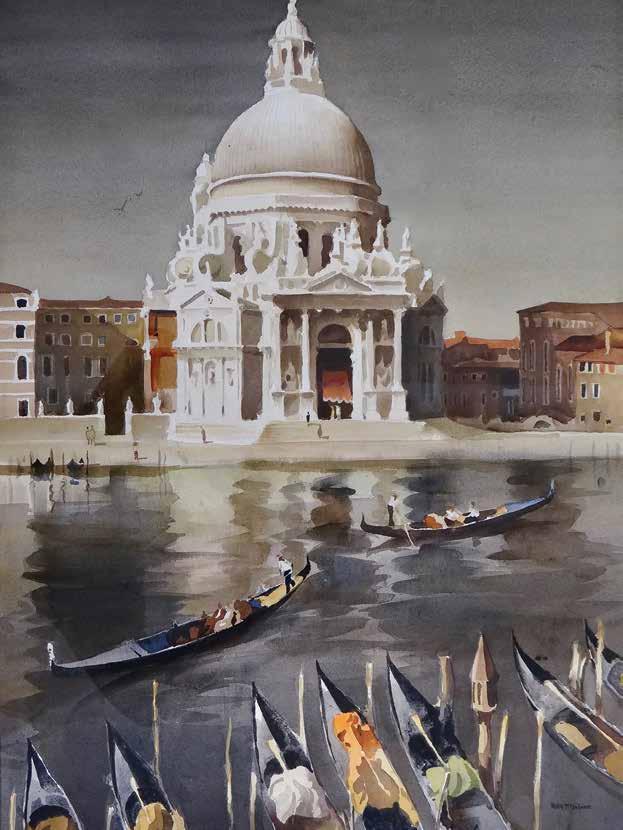
Santa Maria della Salute
Watercolour 71 x 53
Signed $12,000 - 16,000
Appointed by General Freyberg in 1941 as offcialNewZealandWarArtist,McIntyre recorded action throughout Italy. In his book, Peter McIntyre: War Artist he relates how General Freyberg commandeered the famous Daniele Hotel on the Grand Canal as a leave centre for New Zealand Troops. Years later, and at the height of his career, McIntyre revisits Venice and creates a memorable series of works immortalising La Serenissima’s famous historical landmarks such as Santa Maria della Salute.
70 JOHN WALSH b. 1954
Marakihau 2001
Oil on board 22.5 x 10²
Original John Leech label affxedverso
$3,000 - 4,000
71 DOUGLAS MACDIARMID b. 1922
Still Life
Oil on canvas 54 x 64.5
Signed & dated 1965
$4,000 - 6,000
$6,000 - 8,000
Signed
$4,000 - 6,000
Signed
$6,000 - 8,000
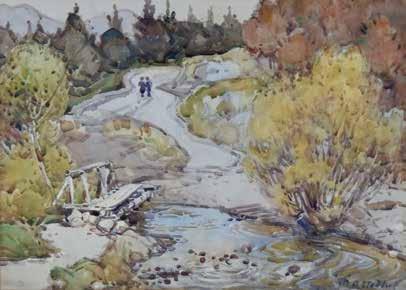
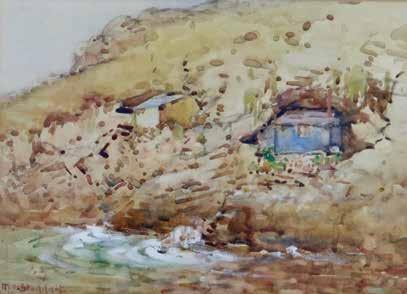
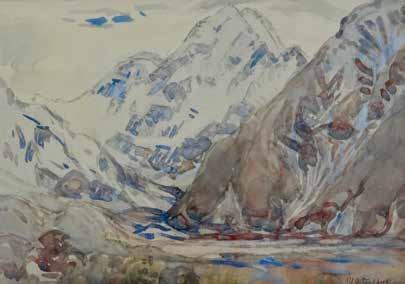
OLROG STODDART 1865 - 1934
Stream and Bridge
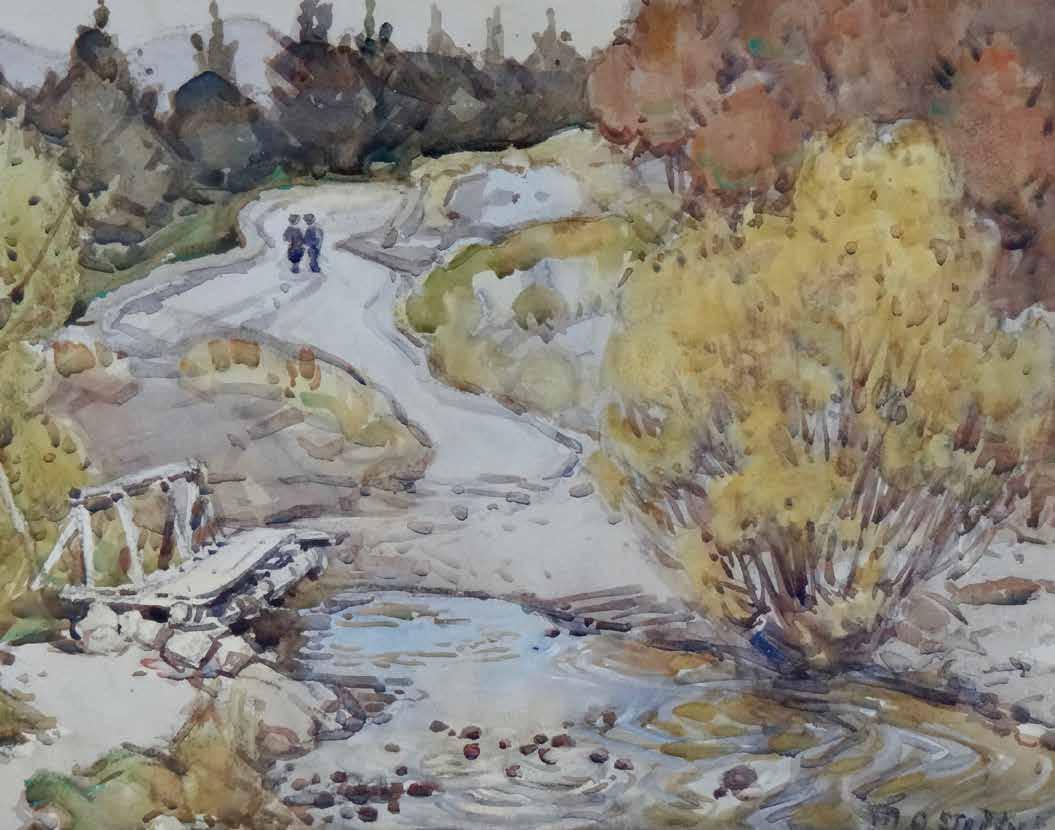
Watercolour 25 x 35 Signed
73
MARGARET OLROG STODDART Coastal Cribs
Watercolour 25 x 35
74
MARGARET OLROG STODDART
Mt Cook
Watercolour 25 x 35
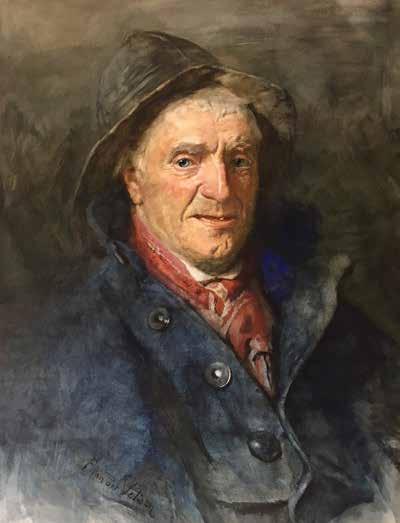
76
Portrait
Watercolour 57 x 44
Signed
$8,000 - 12,000
Fishing Boats, Concarenau Oil on board 37 x 45
Signed
$3,000 - 5,000
75 PETRUS VAN DER VELDEN 1837 - 1913
of a Fisherman
SYDNEY LOUGH THOMPSON 1877 - 1973
77 GARTH TAPPER 1927 - 1999
Peter Reid
Oil on board 35 x 42
Signed & dated 1979
Inscribed verso
$4,000 - 6,000
Provenance:
Private Collection, NSW
Purchased directly from the artist
Peter Reid and Garth Tapper were friends and colleagues, working together in Tapper’s Newmarket studio. In Tapper’s faithful rendition of Reid, the two artists placed their easels to face each other whilst painting each others portraits.
78 ANNA LOIS WHITE 1903 - 1984
Lady in a Garden Oil on board 44 x 34.5
Signed
$8,000 - 12,000
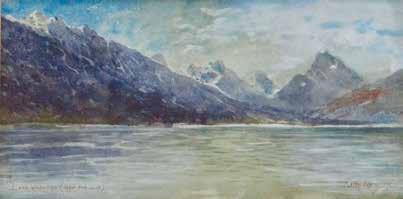
79 WILLIAM MATHEW HODGKINS 1833 - 1898
Lake Wakatipu (Mt Earnslaw, Alfred and Cosmos Peaks)
Watercolour 10 x 20.5
Signed, inscribed & dated 1896
$1,000 - 1,500
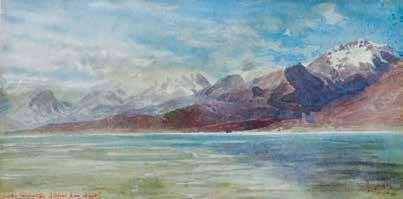
80 WILLIAM MATHEW HODGKINS
Lake Wakatipu (Upper Arm and Left)
Watercolour 10 x 20.5
Signed, inscribed & dated 1896
$1,000 - 1,500
81 WILLIAM MATHEW HODGKINS
Lake Wakatipu (Upper Arm and Right)
Watercolour 10 x 20.5
Signed, inscribed & dated 1896
$1,000 - 1,500
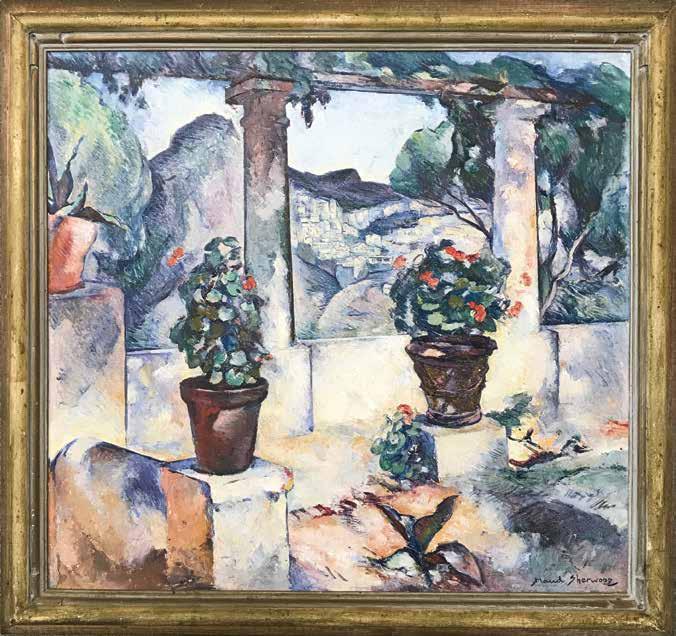
82 MAUD WINFIRED SHERWOOD 1880 - 1956
Portico, Capri Oil on board 60 x 64
Signed
$5,000 - 10,000
Provenance: Collection of Artist’s Family
84
Signed
Inscribed on stretcher verso
$2,500 - 3,500
Signed & inscribed
$3,000 - 4,000
Provenance:
Purchased Estate sale, California by its current USA based owner, c. 1987
Signed
85 PETER MCINTYRE 1910 - 1995
Wairarapa Coastal Scene Oil on board 60 x 80
$8,000 - 12,000
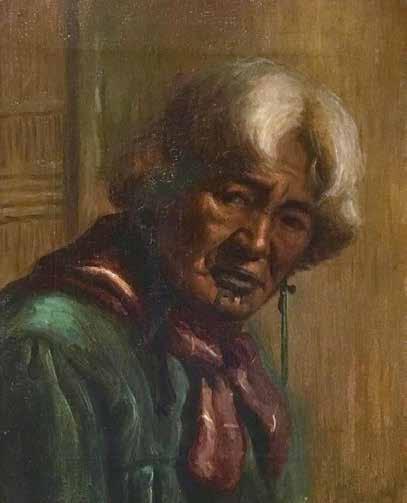
83 VERA CUMMINGS 1891 - 1949
Ngapuhi Chieftainess
Harata Rewiri Tarapata
Oil on canvas 25.5 x 20.5
VERA CUMMINGS 1891 - 1949
Sophia Oil on canvas 24 x 20
Signed, inscribed & dated 1890
$3,000 - 5,000
Dusky
Signed
$5,000 - 7,000
86 JAMES PEELE 1847 - 1905
Settlers Camp Oil on canvas 60 x 90
87 JAMES PEELE 1847 - 1905
Sound Oil on canvas 75 x 125
88 DOROTHY KATE RICHMOND 1861 - 1935
Christmas Roses
Watercolour 52 x 57.5
Signed & dated 1934
$4,000 - 6,000
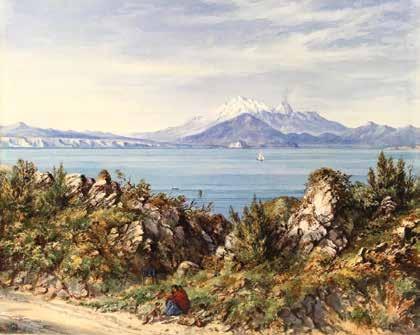
89 CHARLES DECIMUS BARRAUD 1822-1897
Lake Taupo with Tongariro and Ruapehu Beyond Maori Woman with Child and Dog Forground
Watercolour 31 x 40
Signed & dated 1879
$10,000 - 15,000
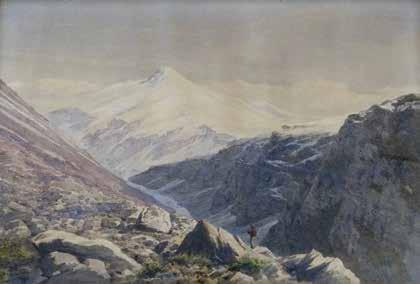
90 JAMES CROWE RICHMOND 1822- 1898
Mt Rolleston, Westland NZ
Watercolour 52 x 76
Signed, inscribed & dated 1873
$8,000 - 12,000
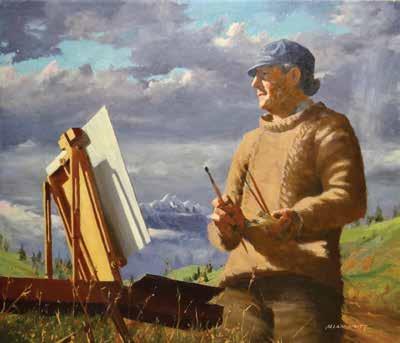
91 ALLAN WAITE 1924 - 2010
Douglas Badcock At His Easel
Oil on board 91 x 106
Signed
Inscribed Douglas Badcock of New Zealand verso
$2,000 - 4,000
Provenance:
Ex Artist’s Estate Collection, Australia
Exhibited:
Royal Easter Show Art Prize Exhibition Label affxedverso
92 DOUGLAS BADCOCK 1922 - 2009
Junction of Arrow and Kawarau Rivers
Oil on board 50 x 70
Signed & dated 1979
Incribed verso
$4,000 - 7,000
Provenance: Ex Allan Waite Estate Collection, Australia
93 DOUGLAS BADCOCK
Autumn in the Maniototo
Oil on board 41 x 56
Signed & dated 1978
$2,000 - 3,000
Born in Balclutha 1922 Douglas Badcock had a highly successful professional art career. Preferring to paint en plein-air, mostly in oil, Douglas earned a reputation as one of New Zealand's leading landscape painters. His paintings are included in the Queen of England's collection and King of Thailand's collection. Douglas was a Kelliher Art Award winner and several books have been published on his work. He came second in the 1959 Kelliher Art Award and third in the 1962 award.
Badcock held his first exhibition in Wellington in 1960, a sellout within two days. A review at the time described him as: a realistic painter and absolutely sincere with a natural talent and a high technical
94
DOUGLAS BADCOCK
Queenstown, c. 1955
Oil on board 27 x 31
Signed
$2,000 - 3,000
standard ... A master of the New Zealand landscape, he paints New Zealand as he sees it. He produced at least three publications: My Kind Of Country, My Kind of Painting and A Painter in Fiji.
In a 2004 Listener article, Badcock said: I paint seas, skies, mountains. I paint the world I know, as it appears to me. I have an image that is there and I have to record it. When I'm painting I let the subject reveal itself. Picasso said I don't seek, I find. And finding is a revelation - intellectually, emotionally, spiritually. The primary motivation is selfexpression, but if there's no vision, if we don't see beauty in nature any more, then we're nowhere.
95 CHARLES DECIMUS BARRAUD 1822-1897
Maori Meeting with Settler, Near Wellington Watercolour 38 x 26
Signed & dated 1861 N.Z
$4,000 - 6,000
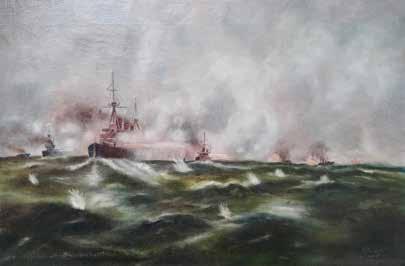
96 ARTIST UNKNOWN 19th Century
HMS New Zealand In Action, 29 August 1914, Battle of Heligoland Oil on canvas 42 x 60
Signed (llegible) & dated August 19th 1915
$1,000 - 3,000
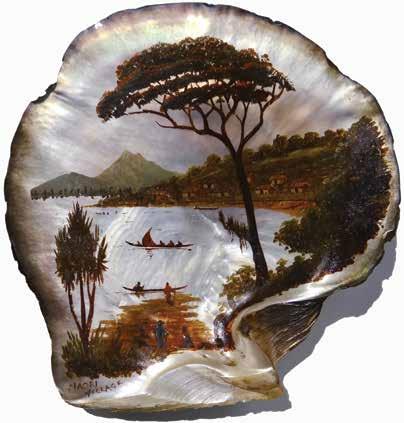
- 1947
Oil on shell 20 x 19
Signed & inscribed
$1,500 - 2,500
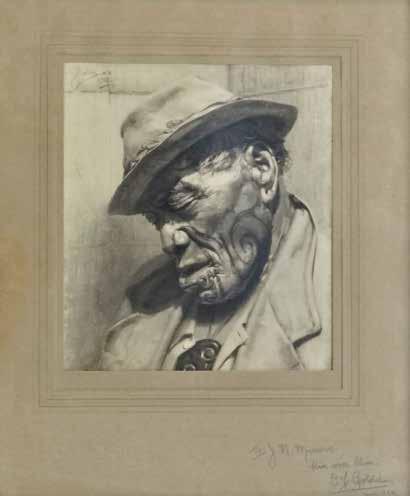
Sleep, ‘tis a Gentle Thing: Pokai, A Warrior Chieftain Of The Ngatimaru Tribe Thames’
Photographic reproduction print 21 x 18
Signed, inscribed To J N Munroe, Kia Ora & dated June 1938 on mount in C F Goldie’s hand
$2,000 - 3,000
97 JOHN PHILEMON BACKHOUSE 1845 - 1908
Maori Village
98 CHARLES FREDERICK GOLDIE 1870
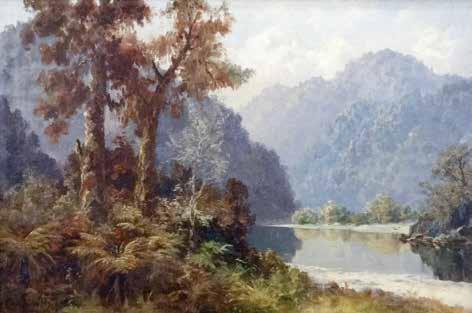
99 CHARLES HENRY HOWORTH 1856 - 1945
Wanganui River
Oil on canvas 50.5 x 76
Signed
$2,000 - 3,000
100 JOHN GIBB 1831 - 1909
Foveaux Strait
Oil on board 25 x 45
Signed
$1,000 - 2,000
101 JOHN ELDER MOULTRAY 1865 - 1922
Preservation Inlet Oil on canvas 29 x 45
Signed
$1,500 - 2,500
102 CHARLES BLOMFIELD 1848 - 1926
Sunset, South Island Oil on canvas 29 x 39
Signed
$2,000 - 3,000
103 CHARLES BLOMFIELD 1848 - 1926
Mirror Lakes, Fiordland
Oil on canvas 33.5 x 45
Signed
$2,500 - 3,500
104 WILLIAM GEORGE BAKER 1864 - 1929
Near Haitaitai Wellington
Oil on canvas 60 x 90
Signed & inscribed
$2,500 - 3,500
105 CHARLES BLOMFIELD 1848 - 1926
Waitakare Stream
Oil on board 20 x 34.5
Signed & dated 1886
$2,000 - 3,000
106 HERBERT IVAN BABBAGE 1875 - 1916
Mending the Nets Oil on panel 24 x 25.5
Original H I Babage label affxedverso
$1,200 - 1,600
107 PETRUS VAN DER VELDEN 1837 - 1913
Cottage Interior
Oil on panel 40 x 26
Signed
$3,000 - 5,000
108 CHARLES GOLDSBOROUGH ANDERSON
British 1865 - 1936
Mrs Goldsborough Anderson - The Artist’s Wife
Oil on canvas 217 x 104
Signed
$1,500 - 3,000
Provenance: Artist’s Family Collection. The Auckland based owners grandmother was sister of artist
109 IRONS 19th Century New Zealand
Nine Early views of Christchurch, Port Chalmers, Stewart Island & Arrowtown, c. 1903
Eight watercolours and one pencil drawing on paper 20 x 30
Signed, one dated 1903
$1,000 - 1,500
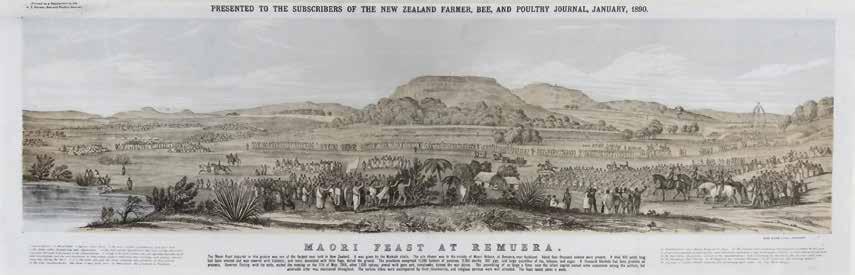
110 JOSEPH JENNER MERRETT 1816 - 1854
Maori Feast at Remuera, 1844
Coloured lithograph presented to the subscribers of the New Zealand Farmer, Bee And Poultry Journal, 1880, 28.5 x 88.5
Signed & inscribed
$1,500 - 2,500
Provenance:
Private Collection, Auckland
Purchased John Leech Gallery, 2005
In May 1844, Auckland was home to one of the largest Maori feasts ever recorded. Organised by Waikato Iwi some 4,000 guests assembled between Mt Hobson (Remuwera) and Mt St John (Titikopuke) for the Maori feast. For a week they dined on 9,000 sharks, 100 pigs and 11,000 baskets of potatoes. They also consumed large amounts of tea, tobacco and sugar. When Governor Fitzroy arrived on the first morning of the feast he witnessed two groups of 800 Maori warriors perform a thunderous haka before charging at each other in a mock battle armed with guns and tomahawks. The entire event was a spectacular display of Maori power and strength.
There was a good deal of uneasiness prevailed in Auckland over the assembly of such a vast number of natives, but the feast passed without disturbance of any sort, a conspicuous feature in connection with it being the regular observance of religious services by the assembled natives. New Zealand Herald
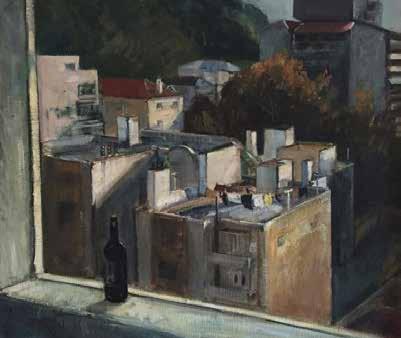
111 RUSSELL HOLLINGS b. 1948
The Washing Line, Rhana Flats, Wellington
Oil on board 55.8 x 63.5
Signed
$1,500 - 2,500
112 PETER MCINTYRE 1910 - 1995
Sampans, Hong Kong
Watercolour 50 x 74
Signed
$5,000 - 7,000
111
112
113
EDWARD WILLIAM PAYTON 1859 - 1944
Nihotupu Dam, Waitakere
Oil on board 24.5 x 35
Signed, inscribed & dated 1887 verso
$500 - 1,000
114
MAUD SHERWOOD 1880 - 1956
Canterbury Bells
Watercolour 65 x 48
Signed
$1,500 - 2,500
Provenance:
Ex Collection of Sir James & Lady Fletcher
113
114
115 PATRICK HOGAN 1804 - 1878
No. 1, Auckland, New Zealand
(From Hobson Street South) & No. 3, Auckland, New Zealand.
(From Britomart Barrack), A Pair
Lithographed by Standidge & Co, Old Jewry, London, 1852
Signed, inscribed & dated 1852
$2,000 - 3,000
Provenance:
Private Collection, Auckland
Purchased from John Leech Gallery, 2005
116
LOUIS AUGUSTE MARIE LE BRETON 1818 - 1866
Moullage de Korora-Reka, Entree de la Baie Des Iles, (Nouvelle Zelande),
Cases de Naturels. (Baie des Iles), (3)
Lithographed by Standidge & Co, Old Jewry, London, 1852
Signed, inscribed & dated 1852
$3,000 - 5,000
Provenance:
Private Collection, Auckland
Purchased from John Leech Gallery, 2005
117 JOHN KINDER 1819 - 1903
Grafton Cemetery
Original sepia photograph 16 x 21
Inscribed Auckland & dated 1866
$2,000 - 3,000
118 JOHN BARR CLARKE HOYTE 1835 - 1913
Doubtful Sound
Watercolour 23 x 58.5
Signed
$4,000 - 6,000
119 HORATIO GORDON ROBLEY 1840 - 1930
Letter with Maori Head Study
Ink on paper 25.5 x 30.5
Signed
$800 - 1,200
120 RAY THORBURN b. 1937
Modular Series -
Variations in a Square 5
Cellulose, lacquer on board 30.5 x 30.5
Signed, inscribed & dated 1973 verso
$1,500 - 2,500
Provenance: John Malcolm Estate