Important,
Early & Rare
6:30pm Wednesday 25 March 2015

6:30pm Wednesday 25 March 2015
6:30pm Wednesday 25 March 2015
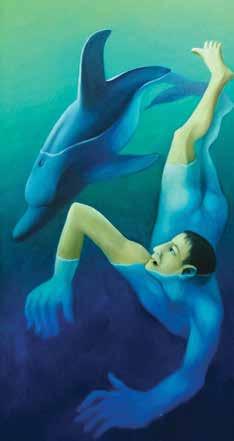
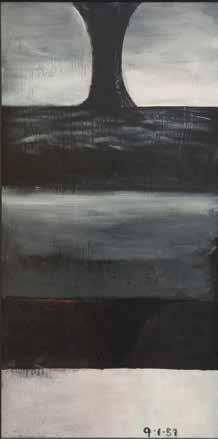
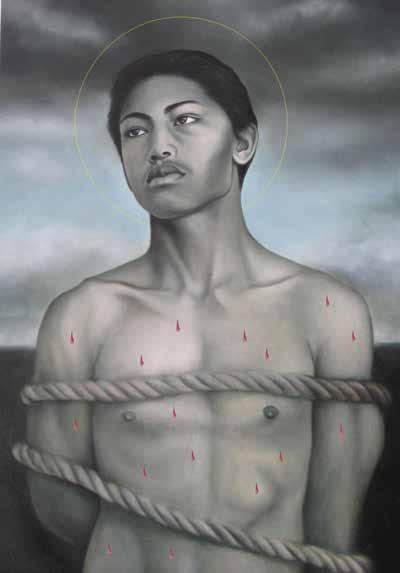
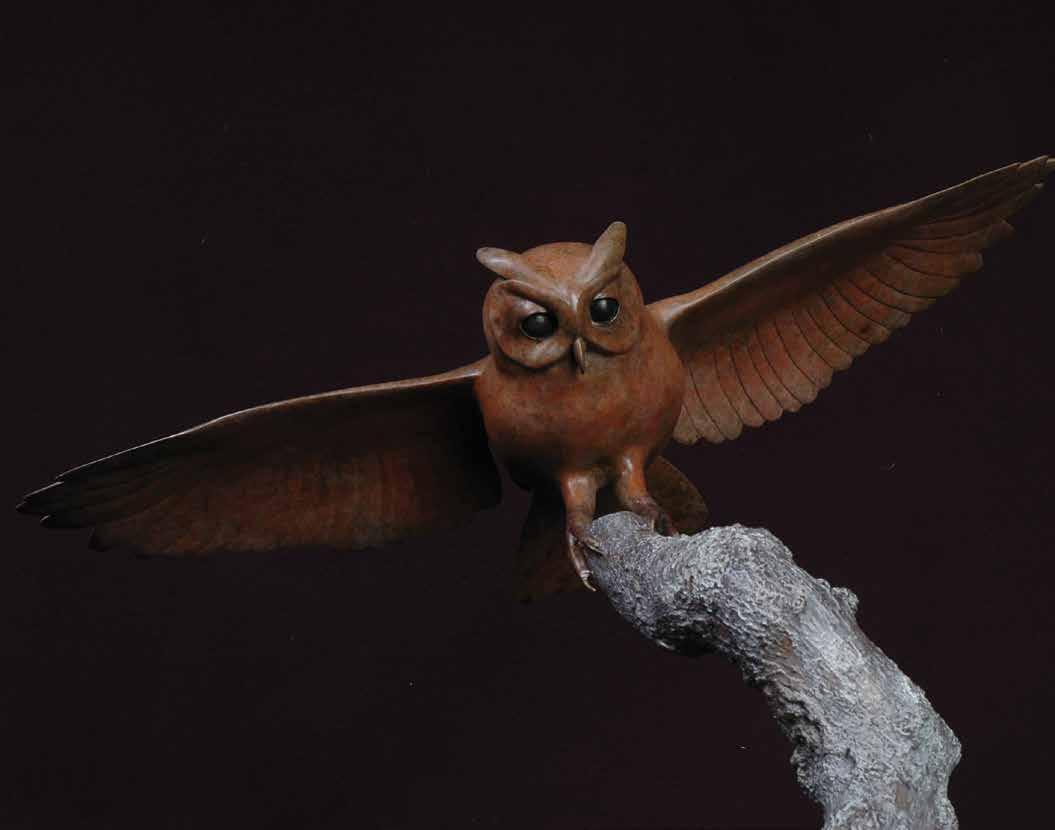
Front cover: Lot 26 Michael Smither
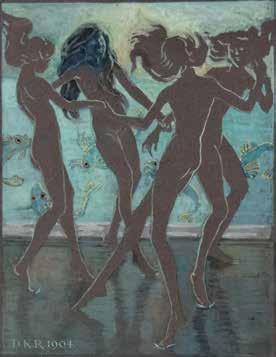
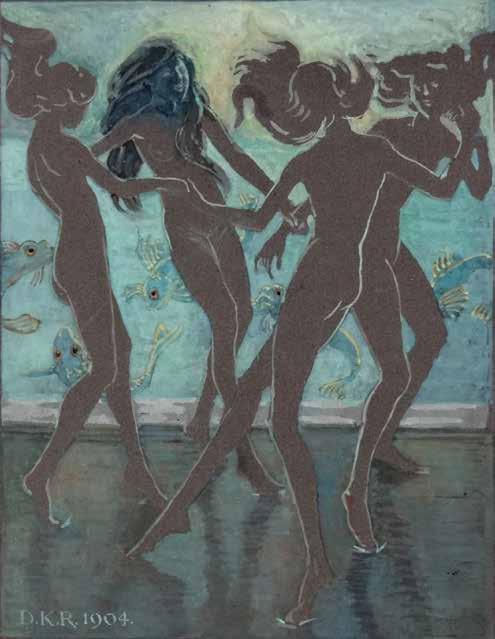
Back cover: Lot 61 D K Richmond
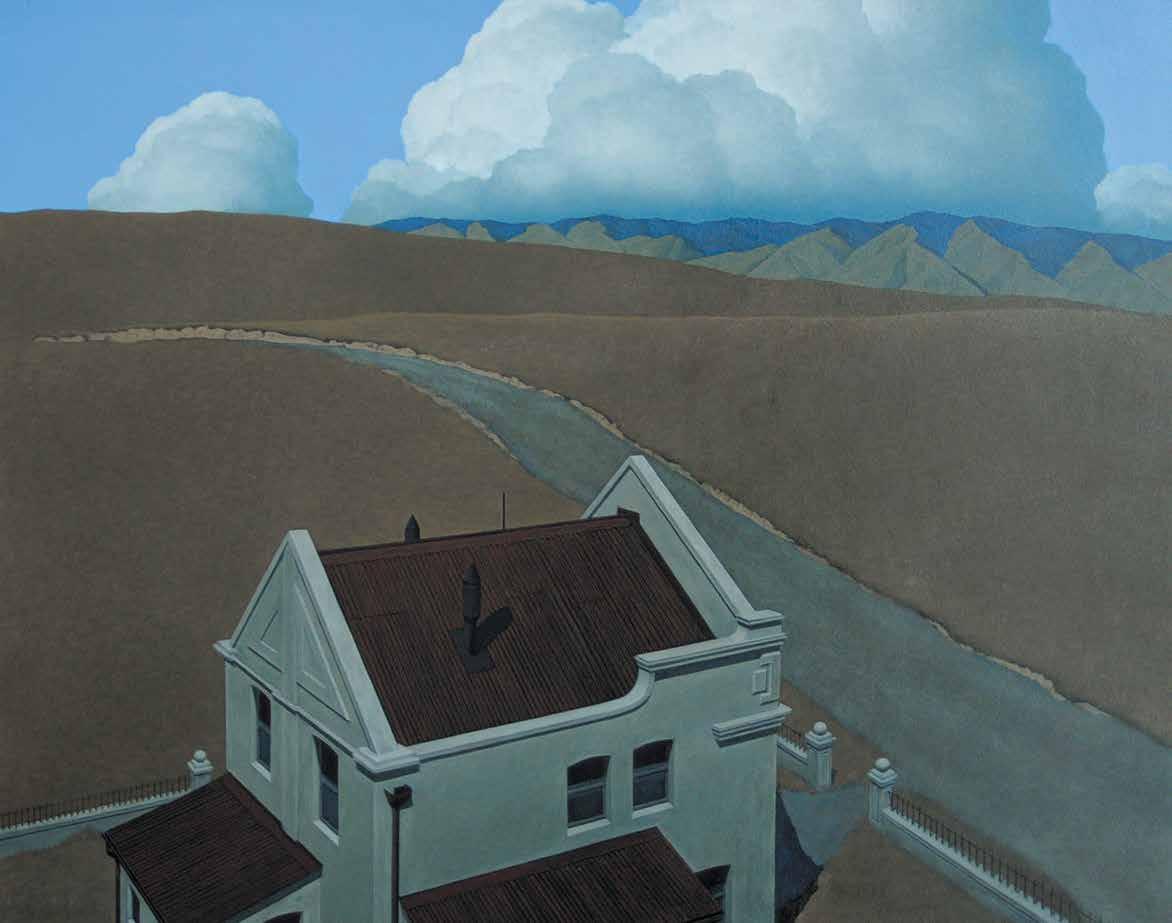
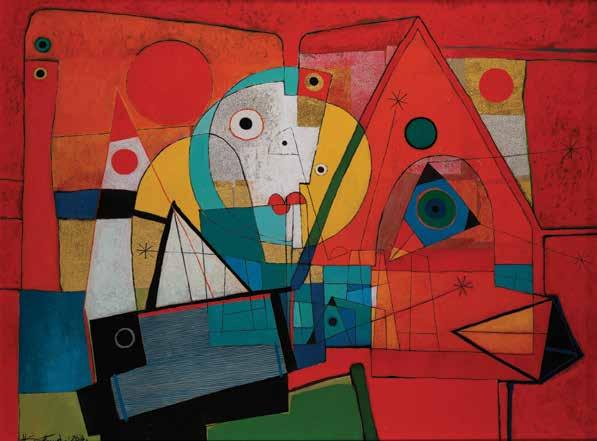
Inside front cover: Lot 36 Brent Wong
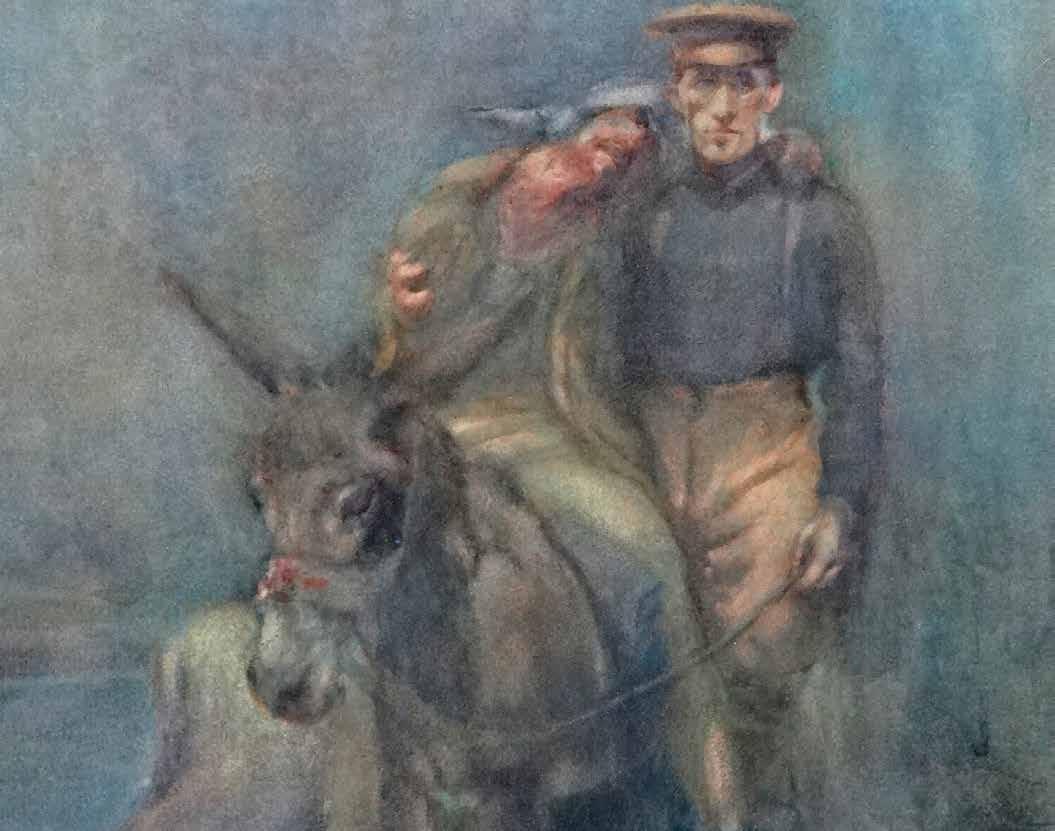
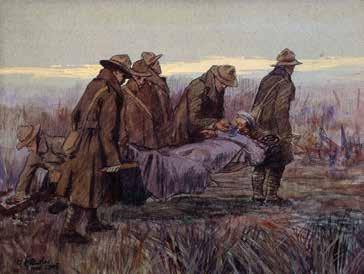
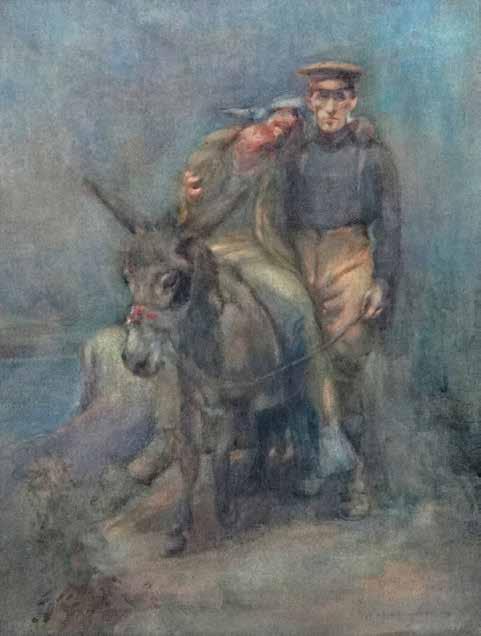
Inside back cover Lot 45 H Moore-Jones
Directors: Grahame Chote, Richard Thomson & Frances Davies 272 PARNELL RD, AUCKLAND, PO BOX 37 344 TEL +64 9 379 4010 FAX +64 9 307 3421 www.fineartauction.co.nz
Richard Thomson
Ph: +64 9 379 4010
richard@artcntr.co.nz
Mobile: 027 4751 071
Frances Davies
Ph: +64 9 379 4010 fran@artcntr.co.nz
Auction assistants and administration
Luke Davies
Ph: +64 9 379 4010
luke@artcntr.co.nz
James Watkins
Ph: +64 9 366 6045 james@artcntr.co.nz
www.fineartauction.co.nz info@internationalartcentre.co.nz
Skype: fineartauction
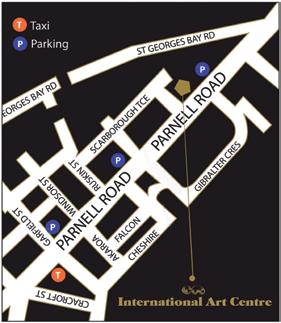
Parking During Viewing Days:
Available on site during weekend viewing, Saturday 21 & Sunday 22 March. Use Scarborough Lane entrance beneath main gallery. During other viewing times on site parking available on request.
Parking During Auction:
Limited parking is available on site. Use Scarborough Lane entrance beneath our main gallery to access these carparks on evening of sale. Parking on Parnell Road is free after 6:00pm. A secure two level pay and display carpark is located at 282 Parnell Road.
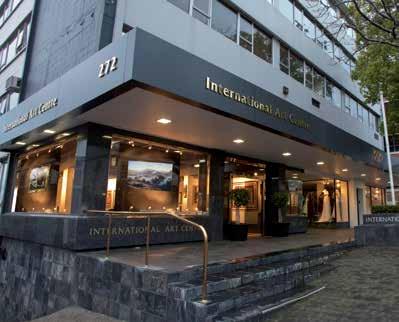
International Art Centre, Scarborough Gallery Lower Ground Level, 272 Parnell Road, Auckland.
On Evening of Sale:
Please join us in our main gallery from 5.30pm for a glass of wine and refreshments. Coffee served before and during auction. For your additional comfort our street level gallery remains open until end of sale.
& Rare 6:30pm Wednesday 25 March 2015
6:30pm Wednesday 25 March 2015
Viewing times
Thursday 19 March 9:00am - 5:30pm
Friday 20 March 9:00am - 5:00pm
Saturday 21 March 11:00am - 4:00pm
Sunday 22 March 11:00am - 4:00pm
Monday 23 March 9:00am - 5:30pm
Tuesday 24 March 9:00am - 5:30pm
Wednesday 25 March 9:00am - 1:00pm
Other times by appointment
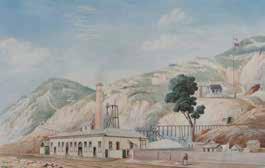
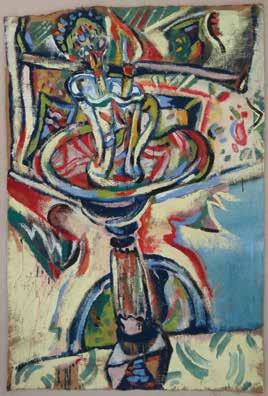
In 2014, 50% of the top 10 prices at auction were achieved by International Art Centre
For the second consecutive year International Art Centre achieved the highest price for a painting sold at auction. In 2013 C F Goldie’s Kawhena fetched a record $732,000 and in 2014 his A Noble Relic of a Noble Race made $416,000. Additionally International Art Centre achieved over $1.3 million in auction sales of C F Goldie paintings in 2014.
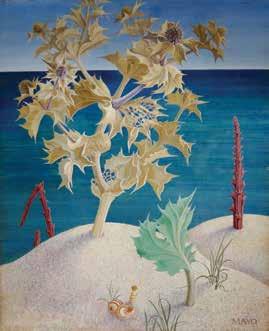
2014 was a year of continuing success with International Art Centre achieving 50% of the top ten prices at auction and around $7 million in total turnover. Highlights included September’s outstanding sale of works from the Fletcher Trust Collection. Seventy five of the seventy seven works offered have now sold. Raymond McIntyre’s Self Portrait fetched a record $103,000 and was one of three works by this artist sold in our 2014 sales. March saw his Untitled Lady in a Black Hat (Phyllis Cavendish) and Bois de Boulogne fetch $55,000 and $31,600 respectively. Another artist whose original works rarely appear at auction is Dame Eileen Mayo whose Sea Holly achieved a record $55,600. This memorable work was purchased by the Ilene and Laurence Dakin Bequest as a gift to Auckland Art Gallery. A further notable institutional acquisition was Felix Kelly’s The Kiln which fetched $14,070. Two works by Philip Clairmont attracted competitive bidding during the year, Still Life With Jug and Paint Brushes made $41,037 and Country Carnivore Carnival fetched $51,590.
Celebrating forty four years in Parnell, an exceptional sale rate, the attainment of numerous record prices including five of the top ten prices for auction sales in 2014, International Art Centre remain clear market leaders. We look forward to more exciting offerings throughout 2015 with continued success and commitment to the New Zealand art market. Should you be considering selling artworks we welcome your confidential, no obligation inquiry.
Prices quoted include buyers premium
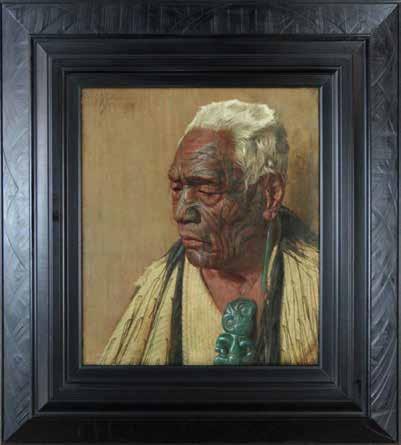
C F Goldie sold for $416,000 October 2014
Other significant C F Goldie Prices achieved in 2014
Atama Paparangi
$352,900 - April 2014
The Weariness of the Aged $257,950 - October 2014
No Koora te Cigaretti
$205,180 - October 2014
Toll Free 0800 800 322 or +64 9 379 4010
Richard Thomson richard@artcntr.co.nz
Luke Davies luke@artcntr.co.nz www.fineartauction.co.nz
Find us on Facebook and Instagram for regular updates
AUCTION: MAY 2015
A SIGNIFICANT SINGLE OWNER COLLECTION OF CONTEMPORARY NEW ZEALAND PAINTING PHOTOGRAPHY & SCULPTURE
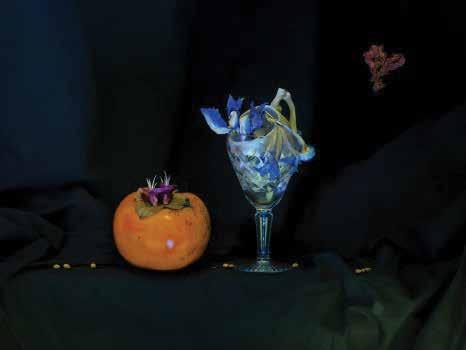
PARTINGTON
Still Life with a Persimmon, Puriri Flowers and a Skull Glass, Pigment inks on epson hot press natural 40 x 55 cm
Barry Pilcher’s Collection reflects fifteen years of extraordinary, diverse, passionate and considered acquisition.
Painting, sculpture and photography by emerging, mid-career and established contemporary New Zealand artists have long transformed the Manawatu home of taxation advisor, Barry Pilcher into a haven of artistic endeavour.
Although the Collection has featured in lifestyle and art magazines over the years, it will be exhibited for the first time in its entirety at International Art Centre, prior to auction in May 2015. Catalogue in preparation.
New Zealand artists in World War I
JENNIFER HAWORTH
Behind the Twisted Wire is a companion publication to Jennifer Haworth’s The Art of War: New Zealand war artists in the field 19391945, which has sold around 3,000 copies.
It tells the story of New Zealand artists who served in World War I. The two commissioned war artists, Wellingtonian Nugent Welch and ex-pat New Zealander George Butler, produced nearly 130 paintings of the Western Front. These are now in the National War Art collection in Wellington and most are reproduced in this book.
Also included are the paintings Horace Moore-Jones completed on Gallipoli and the story of his painting Simpson and his donkey.
The book presents the work of soldier-artists such as Arthur Lloyd, George Woolley, John Weeks, Archibald Nicoll, Francis McCracken, Robert Johnson, James Turkington, William Penlington W.H. Gummer and Walter Bowring who painted the home front. Through the work of these artists the book tells the story of how New Zealand artists responded to the war.
Jennifer Haworth is well known as both a writer of fiction and nonfiction. She has published three novels to date. The most recent is The Undone Years which tells the story of a New Zealand artist in Paris at the time of the Peace Treaties in 1919. Her fourth novel, No Victors, is based on the New Zealand experience in Italy in World War II and how their stories affected the attitudes of their children.
Order from Wily Publications www.wily.co.nz; jjhaworth@xtra.co.nz or all good bookshops. Pre-publication sales price from Wily $40.00 plus postage. RRP $49.99
You are invited to attend and learn more about key works in this catalogue at our
Dr Angela Mackie Cathedral Lectures www.duomo.ac.nz
Preview Lecture and Morning Tea 10:30am - 11:30am Friday 20 March
Dr Angela Mackie of the Cathedral Lectures will discuss key works in this catalogue
Please RSVP Luke Davies 09 379 4010 luke@artcntr.co.nz
6:30pm Wednesday 25 March
* Payment may not be made during sale
* Works purchased may be uplifted at close of sale or day after 10.00am - 5.00pm
* If attending sale, please register for bidding number at viewing
* Viewing Times p. 3
* Conditions of Sale p. 124
* Absentee Bidding Form p. 121
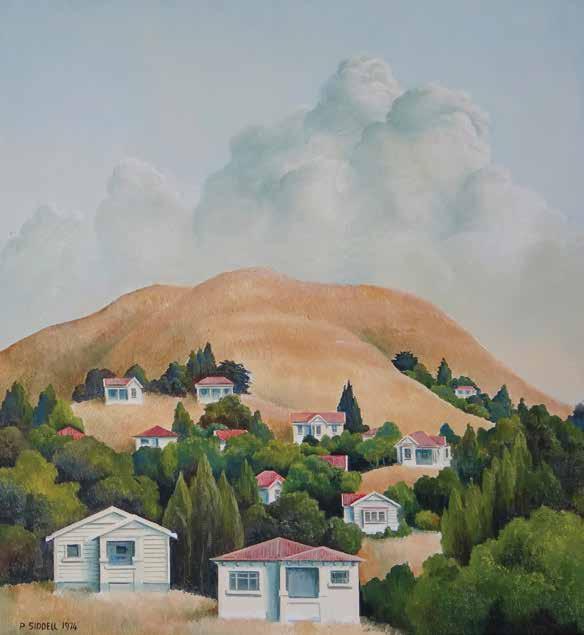
1 PETER SIDDELL
1935 - 2011
Mt Eden
Oil on board 39 x 36
Signed & dated 1974
ESTIMATE
$5,000 - 8,000
PROVENANCE
Private Collection, Auckland since 1974
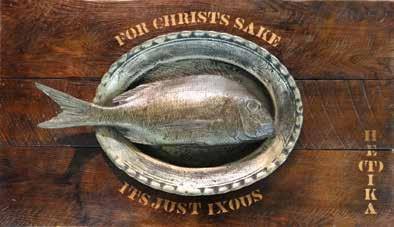
2 ROBERT JAHNKE
b. 1951
For Christs Sake, Its Just Ixous
Bronze plate and fish on three kauri panels 48.5 x 23.5
Inscribed He(t)ika
ESTIMATE
$3,000 - 5,000
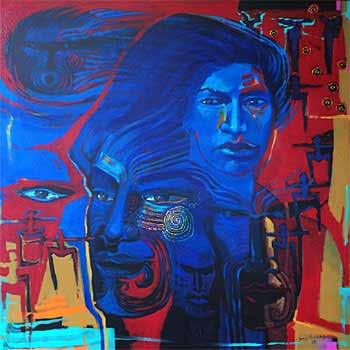
3 DARCY NICHOLAS
b. 1946
Te Arikinui - The High Born One
Acrylic on canvas 102 x 102
Signed & dated
ESTIMATE
$6,000 - 8,000
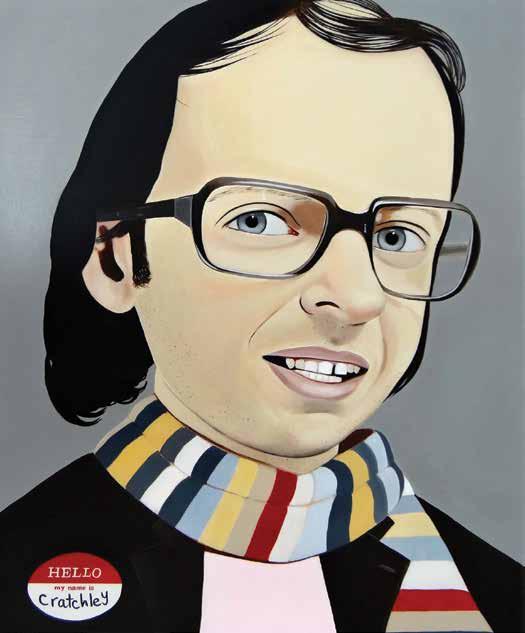
b. 1969
Cratchley Goes to Speed Dating
Acrylic on linen 60 x 50
Signed and dated 2007
ESTIMATE
$15,000 - 20,000
PROVENANCE
Private Collection, South Island
Purchased from Starkwhite, Auckland, 2007
EXHIBITED
‘Peter Stichbury: Less Than Absolute Zero’, Starkwhite, October 8 - November 7 2007
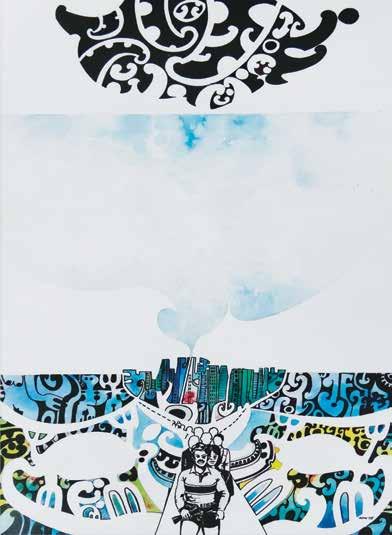
5 BUCK NIN
1942 - 1996
Untitled Watercolour 52 x 38
Signed & dated 1975
ESTIMATE
$2,500 - 3,500
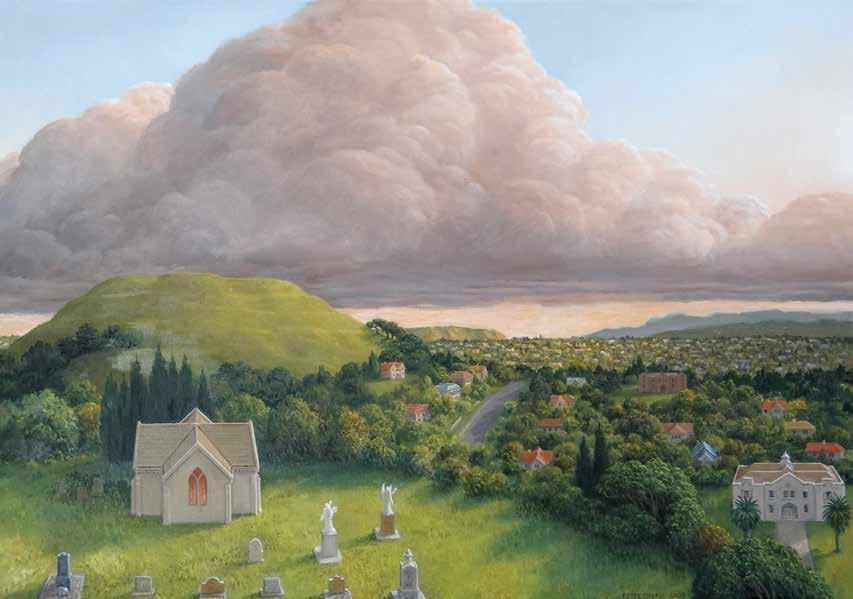
6 PETER SIDDELL
1935 - 2011
Looking West Oil on canvas 36 x 51
Signed & dated 2004
ESTIMATE
$8,000 - 12,000
PROVENANCE
Acquired directly from the artist for a Private Collection, Auckland 2004
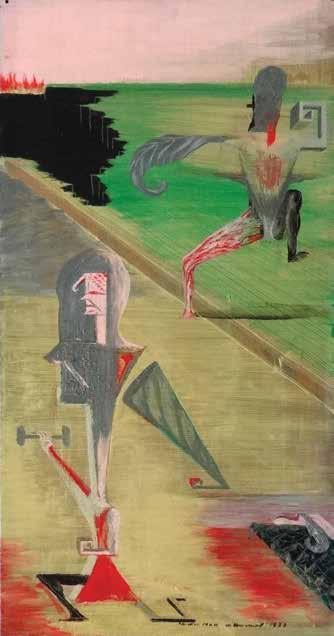
7 BILL HAMMOND
b. 1947
Pacific Map
Acrylic on metal panel 48.5 x 23.5
Signed, inscribed & dated 1988
ESTIMATE
$14,000 - 18,000
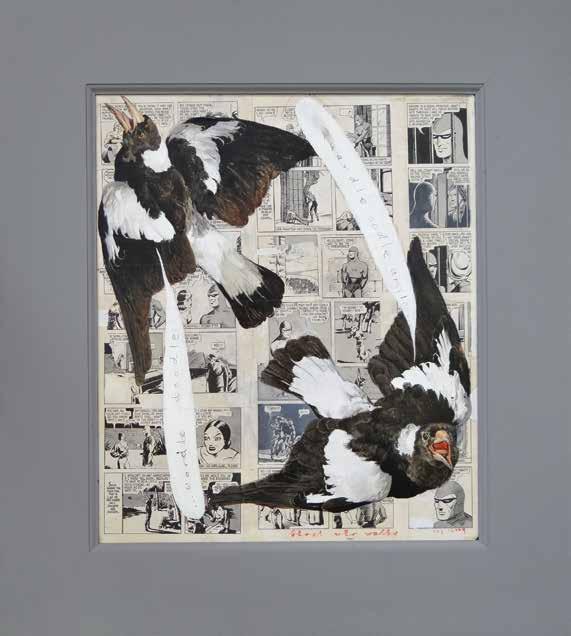
8 RAY CHING
b. 1939
Ghost Who Walks
Oil, ink & collage on board 58 x 50
Signed & inscribed
Dated 2007 verso
ESTIMATE
$8,000 - 12,000
PROVENANCE
Private Collection, Auckland
Purchased at exhibition entitled Ray Ching Autobiography, October 2008, Artis Gallery, Auckland by current owner.
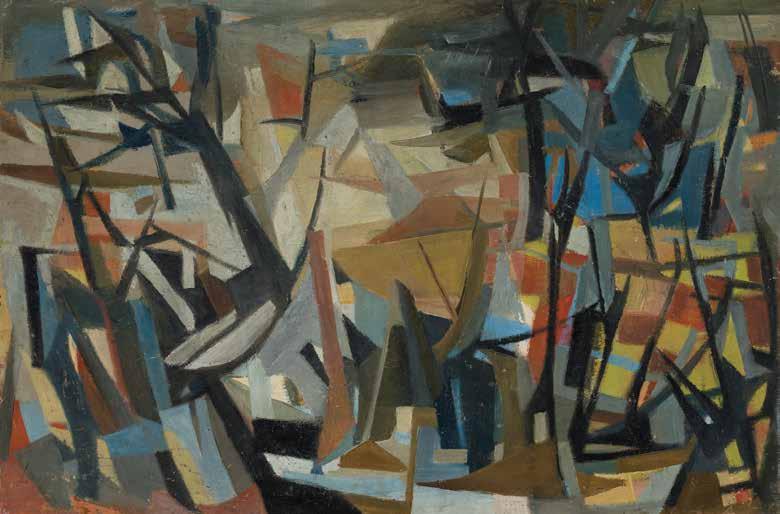
1902 - 1994
Landscape 1960
Oil on board 60.5 x 91
Signed, inscribed & dated 1960 verso
ESTIMATE
$7,000 - 10,000
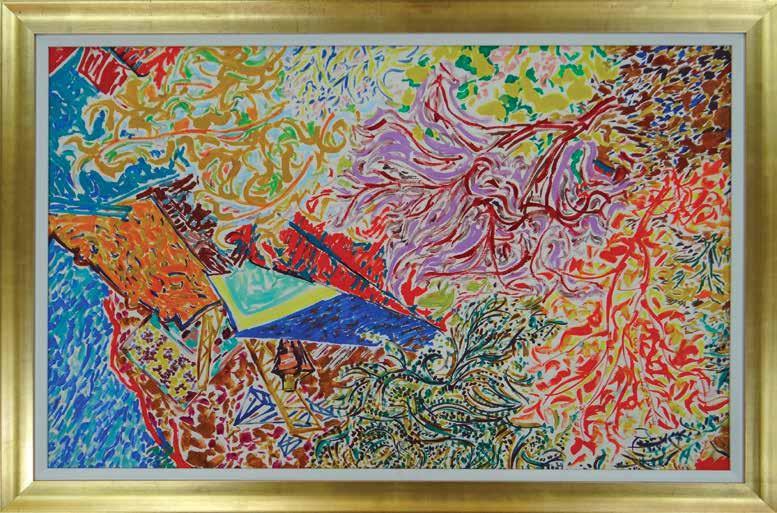
10 PHILIP TRUSTTUM
b. 1940
Garden Series No 5 “9.30”
Oil on board 75 x 120
Signed & dated 1974
ESTIMATE
$8,000 - 12,000
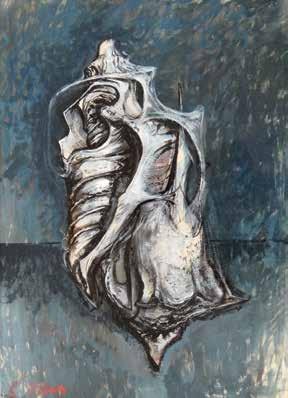
11 ROBERT ELLIS
b. 1929
Fused Seashells 1958
Gouache and indian ink on paper 71.5 x 52
Signed
ESTIMATE
$2,000 - 3,000
PROVENANCE
Private Collection, Helensville
One of several works based on the notion of seashells fused by nuclear action and transformed into new strange hybrid forms. Atomic bomb tests were being conducted in the Pacific at the time creating considerable anxiety in the region.
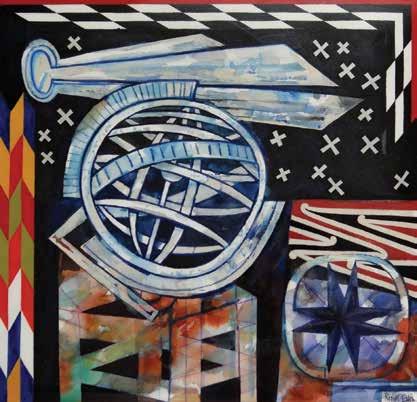
12 ROBERT ELLIS
b. 1929
Preparatory scheme for Nightscape with Armillary Sphere
Mixed media on paper 49 x 50
Signed
ESTIMATE
$3,000 - 5,000
PROVENANCE
Private Collection, Helensville acquired directly from the artist
Four large 2400 x 2400cm paintings were commissioned by Sky City in Auckland. The completed work, number three in the series, is featured on page 79 Robert Ellis, Ron Sang Publications, with explanatory texts. The preliminary working drawing gives a clear idea of the proposed painting, several minor modifications were later introduced to enhance the initial concept.
International Art Centre thanks Robert Ellis for his assistance in cataloguing these two works.
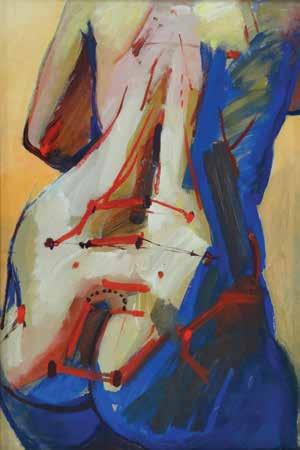
13
EDWARD BULLMORE
1933 - 1978
Nude Study No. 6
Acrylic on paper 76.5 x 51
Signed & dated 1965
ESTIMATE
$10,000 - 15,000
PROVENANCE
Purchased from Rotorua’s Art & History Museum exhibition, 1989
EXHIBITED
Edward Bullmore, One Decade On, The Bath-House, Rotorua’s Art & History Museum, 1989
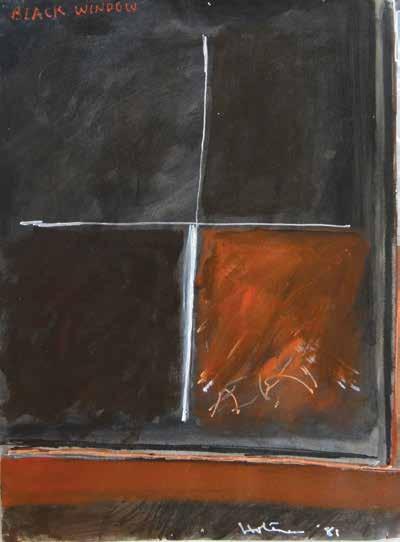
14 RALPH HOTERE 1931 - 2013
Black Window
Mixed media on paper 39 x 28
Signed, inscribed & dated 1981
ESTIMATE
$14,000 - 18,000
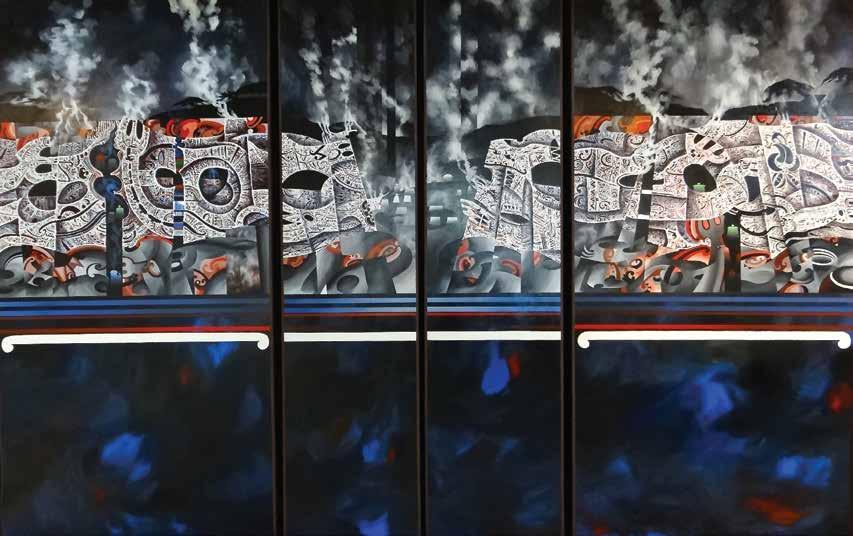
15 BUCK NIN
1942 - 1996
White Island, c. 1986
Acrylic on four panels 240 x 360 overall
Signed
ESTIMATE
$50,000 - 80,000
PROVENANCE
Private Collection, Auckland
Purchased 1999
EXHIBITED
Forever Buck Nin
Porirua Museum of Arts and Cultures, Wellington 1998 - 1999
Rotorua Museum, Rotorua Manawatu Art Gallery, Palmerston North Robert McDougall Art Gallery, Christchurch Waikato Museum, Hamilton
ILLUSTRATED
p. 19 Forever Buck Nin Porirua Museum of Arts and Cultures
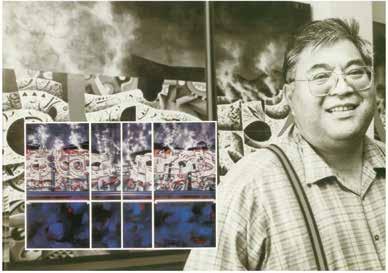
Born in Auckland in 1942, Buck Nin Ngati Ruakawa, Ngati Toa taught art at Hamilton College for more than twenty years. He graduated from the University of Canterbury in 1965, later gaining a Masters in Education from the University of Hawaii, then a Doctorate in Fine Arts from Texas Technical University. In the 1970s he tirelessly campaigned to raise the profile of Maori art. Dr Buck Nin's work was inspired by both his Maori and Chinese ancestry. His work is in the collections of University of Hawaii, Te Papa, The New Dowse, Manawatu Art Gallery, COCA, Aigantighe Art Museum, Rotorua Museum of Art and History and Waikato Museum of Art and History.
"Buck Nin became a major force in the contemporary Maori art movement with his strongly individual style of painting, his teaching, and his willingness to work with people from all walks of life.
Buck was a larger than life person not only because of his physical size but also because of his considerable intellect, his energy, his powerful and often large paintings, and his commitment to the development of art and its people.
The imagery in the work of Buck Nin is drawn from Maori carving, weaving and rafter patterns, spread across a minimalist landscape, like a sacred cloak, warming, embracing and caressing the earth. This is his Maori earth Papatuanuku.
History will show him as one of Maoridom's and subsequently New Zealand's great contemporary artists." Darcy Nicholas
Buck Nin along with Ralph Hotere, Selwyn Muru and Sandy Adsett were four of our major senior Contemporary Maori painters. Contemporary Maori sculptors like Arnold Wilson, Fred Graham, Cliff Whiting and Para Matchett were already a major part of the emerging contemporary Maori art movement in the late 50’s. Together these six artists formed the
dynamics of a contemporary Maori art movement that has expanded across the globe. Nin floated the imagery of Maori carvings across the land claiming spiritual ownership. When he died Maoridom lost one of its greatest sons.
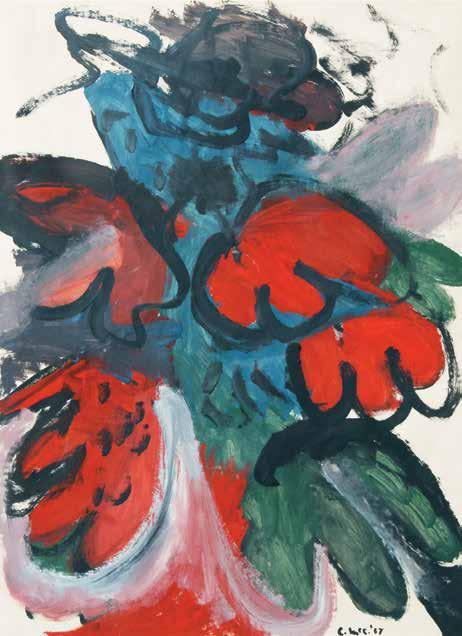
1919 - 1987
Flowers
Synthetic polymer paint on paper 74.2 x 54.5
Signed & dated1967
ESTIMATE
$40,000 - 60,000
PROVENANCE
Ex Collection of Brenda Gamble
Record number cm000385
Colin McCahon online catalogue www.mccahon.co.nz
Thinking back to my impression of Colin McCahon as a colleague and friend, my mind’s eye immediately produced a memory image of the first meeting I had with him. It was a morning in the winter of 1953. I was working as secretary to the director of the Auckland City Art Gallery, Mr Eric Westbrook. A man came into the offceandaskedifhecouldsee the director. A young, very thin, pale man, with dark eyes - worried eyes - a man who obviously had problems. It was Colin McCahon. He had arrived in Auckland the previous day to take up a job offered to him by the director while on a visit to Christchurch a short time earlier. Wintertime in Christchurch meant that there was not much work offering for gardeners; which was the job Colin was doing for a living at the time. No work meant no money to keep a wife and four healthy children, so what money he had he spent on transporting his family to Auckland to live. The staff at the Auckland City Art Gallery at that time consisted of the director, two offce staff and the attendants. As it turned out, contrary to his expectations, there was no specific job waiting for Colin. The director had suggested that Colin should work at the Gallery but I think he did not expect Colin to take him at his word: anyway, not immediately. All that could be offered to him was a job as a cleaner! This he agreed to take and started immediately.
Colin found a small summer bach - not nearly big enough, but at least cheap - in French Bay, one of the beautiful bush areas in Titirangi, and he, Anne and the four children settled in. He set about adding to the bach, which was built on a steep hillside among kauri trees, eventually making it into a delightful studio home.
Colin tackled the Gallery job with his usual integrity and soon became a tremendous asset, in that once his offcial duties’weredone,hedeveloped avenues of activities never before embarked on. As soon as the Auckland City Council decided that a professional curator was needed, Colin applied for the position and was selected from the other applicants and offered the post.
He organised painting classes, encouraged individuals and groups to use the Gallery, and soon had poetry readings, music and drama as regular additions to the Gallery’s programme. From the outset he made himself available to painters and sculptors who came to the Gallery seeking advice and practical help and was unstinting of his time and energy in every aspect of art and crafts: this, of course, as well as being responsible with the director for the selection of exhibitions, plus the hanging, packing and care of the temporary exhibitions and the permanent collections.
During all this time he somehow found time to paint and exhibit. Patronage and appreciation came mostly from the South Island where people such as Charles Brasch, Rodney Kennedy, Ron O'Reilly (to name a few collectors of New Zealand painting) and his old art school colleagues, were appreciative of some of the unique qualities of mind and spirit that manifested themselves in Colin's work. These friends, I am sure, sustained Colin at this diffculttimebecausethereceptionhisworkreceivedfrom the Auckland public was usually less than fair; in many cases it was hurtful and insulting.
Gallery visitors familiar with the predominantly nineteenth century European tradition of pretty scenery, galloping horses, ruminating cattle, leadinglady style women and literary based historical subjects were baffled and confused when confronted by Colin’s uncompromising, uniquely personal philosophy, his way of painting the New Zealand landscape with Christian theology placed in a New Zealand setting. Unfortunately, they certainly were not speechless, and this led to Colin being subjected to endless interrogations demanding him to explain’ his work and why he chose to paint the way he did. Eventually, when it could no longer be disputed that Colin’s work was important, the adverse criticism died down and his work gained public acclaim and acceptance in the time-honoured tradition of all unique, visionary artists.
In 1964 Colin resigned from the Gallery staff to take up a post as lecturer at the Elam School of Fine Arts, University of Auckland. During the years I worked with Colin I enjoyed his stimulating company and I grew to admire his work and respect him for his quality of mind; a generous spirit, creative energy, loving sympathy and positive criticism - the qualities one seeks and hopes for in close friends but rarely finds embodied in one soul.
, . . .For these that you have given me, thanks indeed.
I share in these words by Charles Brasch, from his 1948 poem To Colin McCahon quoted in the Manawatu Art Gallery’s catalogue, McCahon: Religious Works 1946 -1952. I saw this exhibition in 1975 at Barry Lett Galleries, Auckland. It was one of the most impressive exhibitions I have ever seen and experienced. Brenda Gamble, 1977
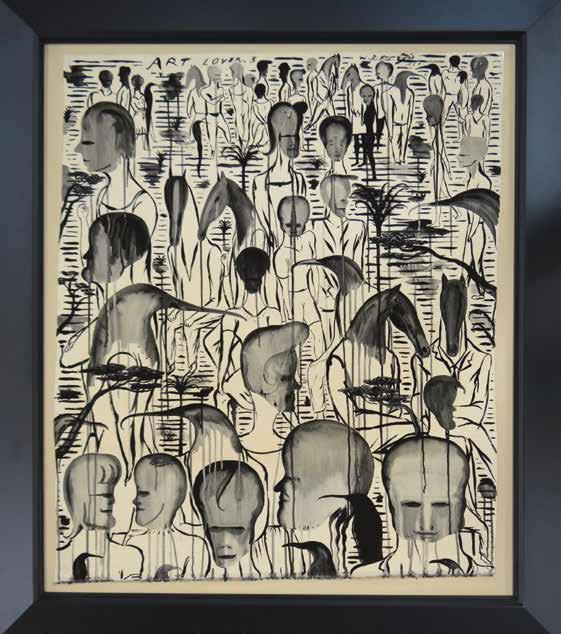
b. 1947
Art Lover. 3
Acrylic on linen 111.5 x 95
Signed, inscribed & dated 1997
ESTIMATE
$80,000 - 100,000
PROVENANCE
Gregory Flint Gallery 1997
Since 1991 when Bill Hammond repatriated the bird spirits from the Southern Oceans to the Mainland the ominous nature of an Avian waiting pervades his work. Whether passively as in Waiting for Buller (1994) where preserved birds are draped across a table; or aggressively in All Along the Heaphy Highway (1999) where a gang of giant birds sits on a hill watching a lonely and threatened car drive past far below; the sense that hooked bill and claw wait for a time of vengeance lies only thinly veiled below the surface of these and many other works.
The importance of the artist’s visit to the Auckland Islands, 320 kilometres south of Stewart Island, as a participant in the "Art in the Sub Antarctic" project is well-rehearsed. The experience was a revelation and opened a new romantic-gothic path for the artist. In an interview with Gregory O’Brien for Lands and Deeds (Godwit, Auckland, 1996), Hammond described the islands as a kind of lost world, ruled over by beak and claw: “The Auckland Islands are like New Zealand before people got here. It’s bird land [….] It's a beautiful place, but it's also full of ghosts, shipwrecks, death.”
The 1990s was also a haunted and tumultuous time; and perhaps the artist’s gradual processing of his experience of the Auckland Islands served as metaphor for a new decade of “ghosts, shipwrecks, death.” For the 1990s was also a time of loss and of waiting with uncertainty as the structures of the cold war unravelled; the internet emerged to give millennial apocalypse a new twist; the AIDS crisis ballooned; and progressive culture was under siege as strident neo-conservatives achieved success in shutting down exhibitions and museums. As a litmus paper of the time, it is no wonder Hammond’s 1990s works resonate with foreboding.
Even in Art Lover 3 Hammond’s birds – here with appropriated human bodies – wait with unsettling composure. Whether they wait for judgement day to see ripe justice meted out to those who brought about their extinction, or, for some of their own to return from haunted wandering, or, more whimsically for another art star to rise into their firmament, they exist in a kind of limbo. Spaced apart so as to fill the picture plane with as little overlapping as possible, and rendered in profile, they can remind us of other pictorial limbos: old-fashioned museum displays and printed sales catalogues. Equally their monochrome shapes recall the way paperand-scissors silhouette portraitists make folk art specimens of their subjects. In the Lover series of 1997, Hammond has transferred the same schemes waiting, spacing and profiles – to round-headed, puffball-coiffed and horse-headed people. Rob Garrett February 2015
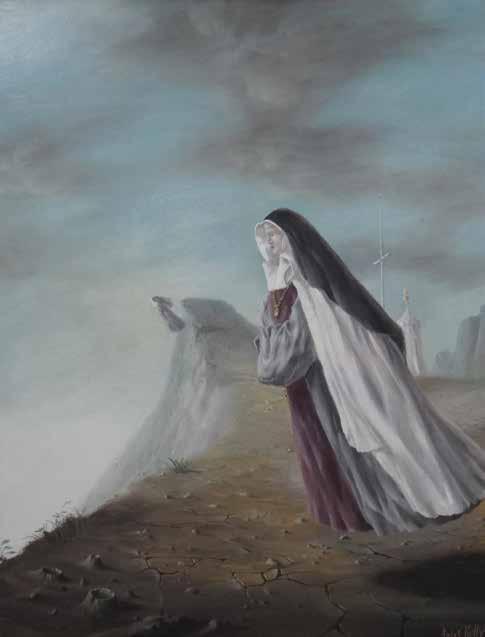
1914 - 1994
Nuns Floating Over a Dream Landscape, 1958
Oil on board 55 x 42
Signed
Inscribed & dated 1958 verso
ESTIMATE
$8,000 - 12,000
PROVENANCE
Ex Private Collection, United Kingdom
Private Collection, Melbourne
ILLUSTRATED
p. 64 Fix The Art and Life of Felix Kelly First & Second Edition
Darrow Press 2008 and Creative Educational Press 2013
Felix Kelly is one of New Zealand's most interesting expatriate artists. Born in Epsom in 1914 he claimed to be two years younger most of his adult life. Kelly studied briefly, and even seems to have taught drafting at Elam School of Fine Art. He was only 21 when he left New Zealand in 1935. He never returned. In London Kelly continued his New Zealand occupation of graphic design, working for Lintas, the advertising wing of Unilevers. He also freelanced as an illustrator and cartoonist, especially for Lilliput. His cartoons are not unlike those of the slightly younger Ronald Searle. After the war and the RAF, the focus of his graphic art shifted to book illustration, dust-jacket design and contributions on interior decoration to such fashion magazines as Ideal Home and Harper's Bazaar. In the 1950s and 60s he was acknowledged as one of England's top designers for the theatre, working with the likes of Sir John Gielgud and Dame Sybil Thorndike.
Kelly's ambition had always been to succeed as a painter. Emerging in the context of Surrealism and British Neo-Romanticism, he exhibited alongside important British artists such as Lucian Freud, John Piper and Frances Hodgkins. He attracted the attention of the prominent critic and writer, Herbert Read. Kelly's paintings are characterised by his interest in a world forgotten by progress, great houses falling into dilapidation, wind-blasted trees, abandoned locomotives often invested with an eerie watchfulness. Rapidly, Kelly assembled a client list resembling a page from Who's Who or De Brett's. In late career, his knowledge of architecture led to involvement in
house design, most notably his collaboration on the redesign of Highgrove for the Prince of Wales. His most celebrated project was, however, the mural cycle at Castle Howard associated with the filming of Brideshead Revisited in the 1980s.
Kelly travelled a great deal. Paintings of Spain and Italy in the 1940s were followed by West African scenes in the 50s and ante-bellum houses in America's Deep South in the 60s. Trips to Russia, Thailand, India and Egypt in the 70s and 80s each led to an exhibition of exotic paintings. In late career, Kelly would execute a small sketch characterised by loose brushwork, which would then be converted into a carefully executed big-scale painting. Both types of work appear for sale from time to time. Perhaps most interesting for a New Zealand audience are the paintings of Auckland subjects done decades after he had left home. Auckland's West Coast beaches or Takapuna with Rangitoto beyond, or paddle-steamers on the Waitemata, were evoked with an increasing degree of fantasy well into the 1960s. A quirky humour pervades his work.
Felix Kelly has to be one of New Zealand's most individual artistic exports. A comprehensive exhibition of his earlier work, curated by Donald Bassett and mounted by the Hawke's Bay Museum and Art Gallery, toured several New Zealand centres in 2008-9. A second edition of Donald Bassett's book Fix; The Art and Life of Felix Kelly, was published in 2013.
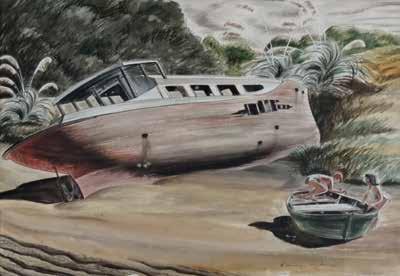
19 E MERVYN TAYLOR
1906 - 1964
On the Beach, Wellington
Watercolour 28 x 38
Signed & dated 1957
ESTIMATE
$2,500 - 3,500
Note: The two figures in the foreground are the artist’s children, Jane & Ted
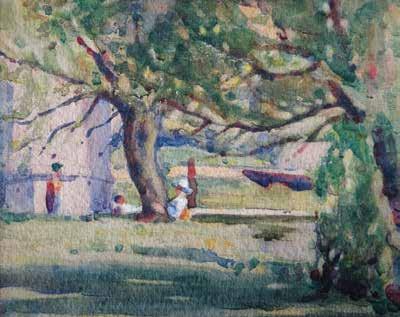
20 JOHN WEEKS
1886 - 1965
Luncheon in the Park Watercolour 13 x 16.2
Signed Weeks O’Connor Studio Stamp verso
ESTIMATE
$2,500 - 3,500
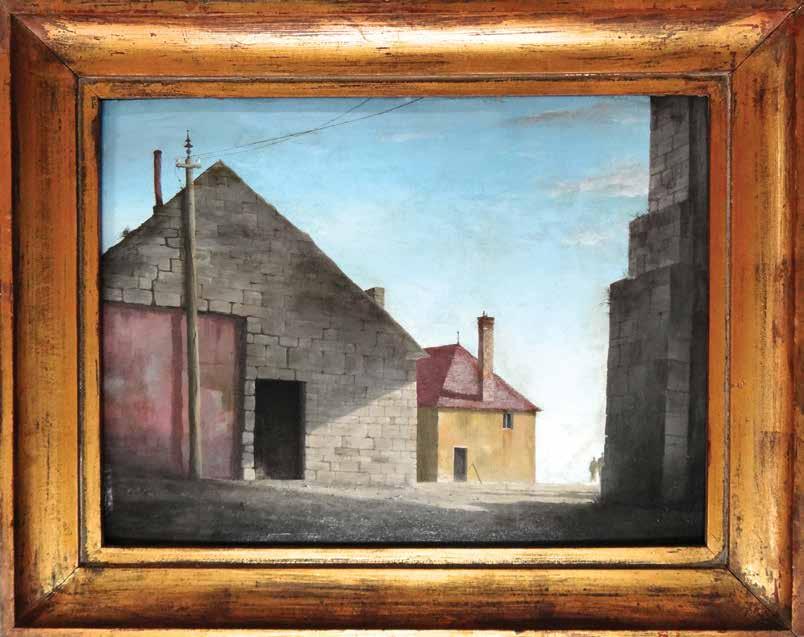
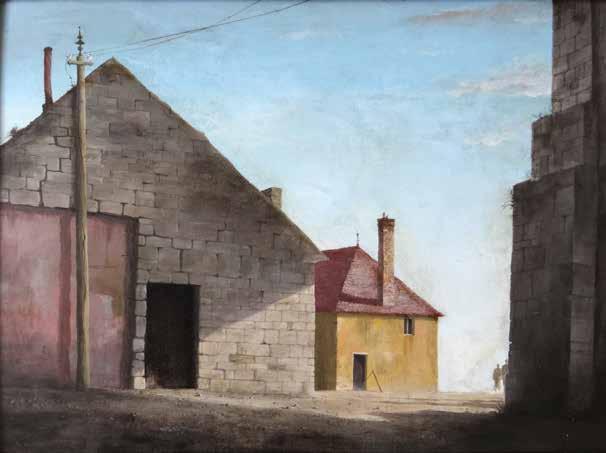
21 FELIX KELLY
1917 - 1994
Untitled, 1950 Oil on board 37.5 x 50.5
Signed & dated 1950
ESTIMATE
$7,000 - 10,000
1933 - 1978
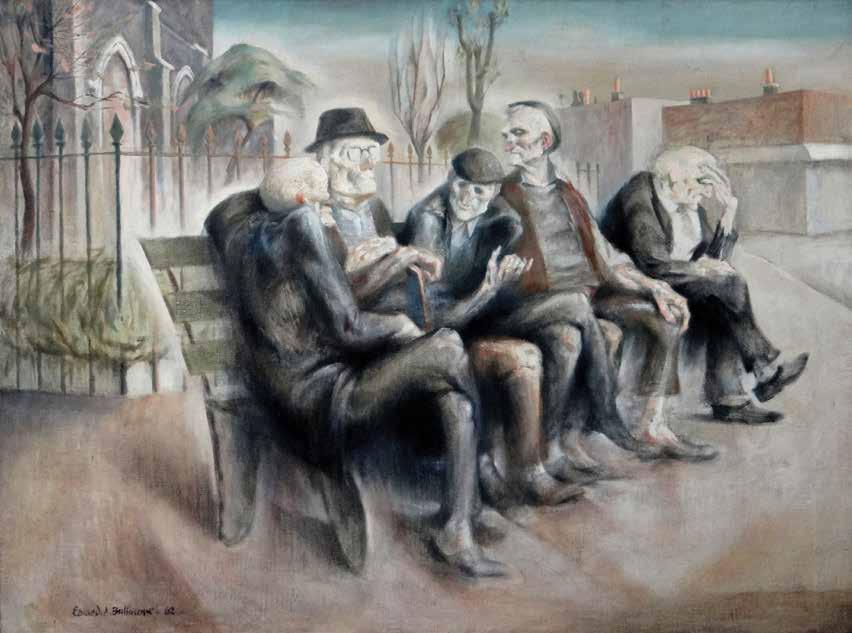
The Sitters - ‘End of the Road’ Oil on canvas 91.5 x 121.5
Signed & dated 1962 verso
ESTIMATE
$40,000 - 60,000
PROVENANCE
Private Collection, Northland
Purchased from Rotorua’s Art & History Museum exhibition 1989
EXHIBITED
Edward Bullmore, One Decade On, The Bath-House, Rotorua’s Art & History Museum, 15 November 1988 8 February 1989
Edward Bullmore: A Surrealist Odyssey, Tauranga Art Gallery 2008
Gus Fisher Gallery, University of Auckland 2009 Eastern Southland Gallery, Gore 2009
ILLUSTRATED
p. 70 Edward Bullmore: A Surrealist Odyssey, Penelope Jackson, Tauranga Art Gallery 2008
Edward Bullmore was born in Southland. He attended Canterbury University College alongside Pat Hanly, Bill Culbert and Michael Browne. Having taught at Tauranga Boys’ College in the late 1950s he headed to Florence with his wife Jacqueline. The Bullmores spent six months in Italy then lived in London from 1960 until 1969. During that time, apart from teaching at various art schools, Bullmore exhibited widely and attracted critical attention from the art world. Among his collectors from this era was filmmaker Stanley Kubrick, who featured two of Bullmore’s works in in his 1971 classic A Clockwork Orange
In between painting the Transition Series and the Cuba Crisis Series (1962), Bullmore completed a small suite of works that were clearly influenced by his immediate surroundings in London. The Sitters show his movement away from painting in a clean crisp manner to a looser handling of paint, helping to create an atmosphere of ambiguity. The subject of this painting can be related to his interest in the theatre; the old tramps in The Sitters could easily be characters from Samuel Beckett’s Waiting for Godot (1953). Bullmore’s bread and butter job at this time in London was as a screen shifter at the Royal Court Theatre, meaning he was familiar with contemporary theatre.
In The Sitters figures are seated on a park bench in close proximity to a church graveyard. His subjects are physically and psychology close to death, their despair is both individual and collective. Interestingly Bullmore’s backdrop of a gothic arched, Victorian church contrasts to the box-like warehouses of post-war London. The mood of the painting is further enhanced by the stark, leafless trees reaching skyward.
Both The Sitters and Transition No. 8 are offered with excellent provenance. The works are fine examples from the artist’s London years which culminated in his exhibiting with Pablo Picasso and Joan Miro in The Enchanted Domain: Surrealist Art at Exeter City Gallery and Exeter Gallery in 1967. Bullmore’s London period was characterised by experimentation and prolificacy. On his return to New Zealand his work would not meet with the same degree of acceptance as achieved during these London years. Penelope Jackson
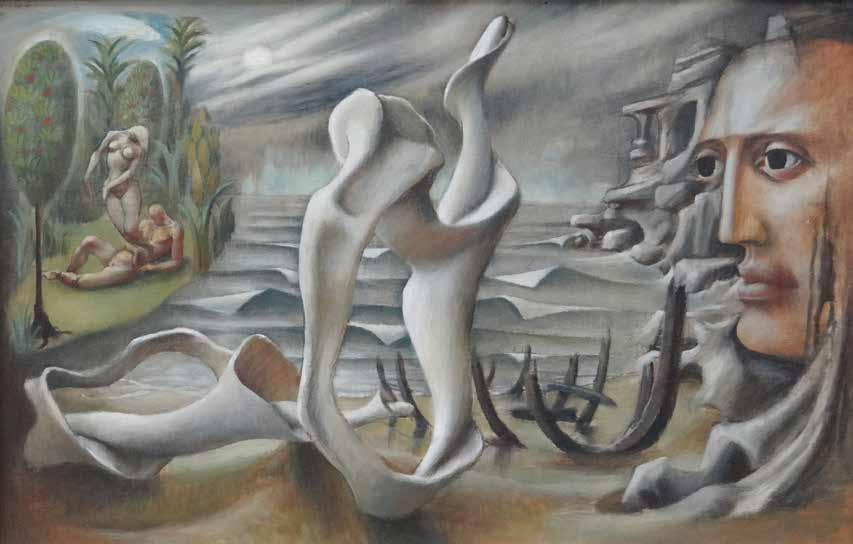
1933 - 1978
Transition No. 8 (Creation Cycle)
Oil on board 54.4 x 84.7
Signed & dated 1961 verso
ESTIMATE
$20,000 - 30,000
PROVENANCE
Private Collection, Northland
Purchased from Rotorua’s Art & History Museum exhibition 1989
Painted at 117 New Kings Road studio, Fulham, London
EXHIBITED
Edward Bullmore, One Decade On, The Bath-House, Rotorua’s Art & History Museum, 15 November 1988 8 February 1989
The Transition Series: London 1960-61, Canterbury Gallery, Christchurch
Edward Bullmore: A Surrealist Odyssey, Tauranga Art Gallery 2008
Transition No. 8 is representative of how Bullmore perceived London in the early sixties. As Bullmore’s political awareness grew he saw London and Britain as places in transition. The premonition of the nuclear age was very real and alarming for Bullmore and his expatriate artist friends such as Pat Hanly and Ralph Hotere. On April 18th, 1960 an estimated 100,000 people gathered in Trafalgar Square to protest against the H-bomb. This event made a huge impression on Bullmore.
Transition was the title he gave this major series, consisting of nine works painted between 1960 - 1961. These years marked Bullmore’s complete stylistic transition from regional realism with biomorphic objects (as in Self Portrait 1959) to a more highly developed surrealism in which he looked outwards at the world, depicting suffering and collective anxieties in a real sense rather than a personal or spiritual sense. The Transition Series also symbolised Bullmore’s personal transition from art teacher and part time provincial New Zealand artist, to that of a professional artist exhibiting in London.
The work is symbolic of his transitioning from the teachings of Bill Sutton and Russell Clark. More specifically, Transition No. 8 is about the transition between creation and death. Made up of three parts, this work is a narrative – an idea perhaps gleaned from works such as Masaccio’s (1401-28) The Rendering of the Tribute Money (which Bullmore would have been familiar with from his time in Florence). Bullmore’s Adam and Eve, alone and banished from the Garden of Eden, rest on a small island, marooned for their sins. On the right hand side, a large androgynous head acts as a surveyor of the scene; this head appears in other works from the same series and is a precursor to the more skeletal heads, that have been exposed to nuclear war, seen in the Cuba Crisis Series (1962). It would appear the sea is the only constant in this desolate scene.
There are recurring motifs throughout this series, such as the head, situated in imagined spaces, including landscapes. Each motif is symbolic such as the boat wreck, eroded over time, which references decline and death. Bullmore included Old Testament characters as metaphors, applying them to a greater and more contemporary issue, that of nuclear armament and warfare. Stylistically Bullmore’s work at this time was influenced by Italian artist, Giorgio de Chirico (1888 – 1978).
The current owner purchased Transition No. 8 in 1989, from One Decade On. Jacqueline Bullmore gave the subtitle, Creation Cycle to the work subsequent to Bullmore’s death. Penelope Jackson
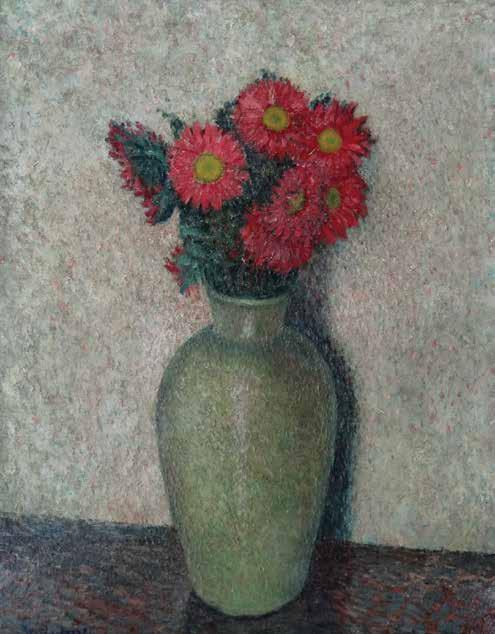
1877 - 1933
Asters
Oil on board 45 x 35
Signed also Signed & Inscribed Asters on original McGregor Wright’s label affxedverso
ESTIMATE
$12,000 - 18,000
PROVENANCE
Private Collection, Auckland
Original McGregor Wright’s label affxedverso
Asters is really a study of light. Even though the objects depicted – vase, flowers, table-top and wall – are rendered with a luscious impasto materiality, looking closely it is possible to see that McIntyre’s real love here is for the chromatic quality of light. Notice how the shadows are made deep and dark with blue, not black; and notice too how even the dark shadow on the wall, to the right of the vase, is flecked with the same warm crimson used in the flowers. In fact the whole grey wall is speckled with coloured light – pale celadon greens, tender blues, and rose and Paris pinks – that can only have originated as reflected light, bouncing off the flowers and the vase; and to a lesser extent the table. McIntyre has carefully placed the light source behind him for this study so that the whole still life is flooded with light; and so that he can play with all its chromatic effects and create a speckled colour field rather than be drawn into the more conservative and conventional job of rendering the objects’ forms through chiaroscuro.
The other noticeable and slightly discomforting aspect to the work is the almost claustrophobic treatment of space. It is as if McIntyre, in the true spirit of the post-impressionist avant-garde which he was to be deeply influenced by once he did get to Europe, wishes to shock us, at least a little. You can see that he wants to flatten the space as much as possible.
Asters was most likely painted just before McIntyre left for London in 1909 – yet it is a remarkably impressionist work at a time when there were few opportunities for artists to gain any experience of impressionism in New Zealand. McIntyre was not only lucky; he was an eager pupil. After studying at the Canterbury School of Art he shared a studio in Christchurch with Sydney Lough Thompson who had recently returned from four years studying and working in Europe; and then he was able to observe impressionism first hand, albeit the quieter English version, when twenty works by New English Art Club painters were shown at the New Zealand International Exhibition in Christchurch in 1906–1907.
Although he exhibited with the Canterbury Society of Arts from 1899 to 1910, his impressionist tendencies brought him scorn from the local critics. They called him a decorative’ painter; and while such criticism arises from a correct observation of the flattened space of his paintings and the all-over brushwork and colour effects, it misses the mark as a judgement of his talent. These so-called decorative paintings were uncomfortable or shocking because they were moving towards a radically new way of painting: ultimately towards the non-objective art of Kandinsky and Malevich’s Black Square. Rob Garrett
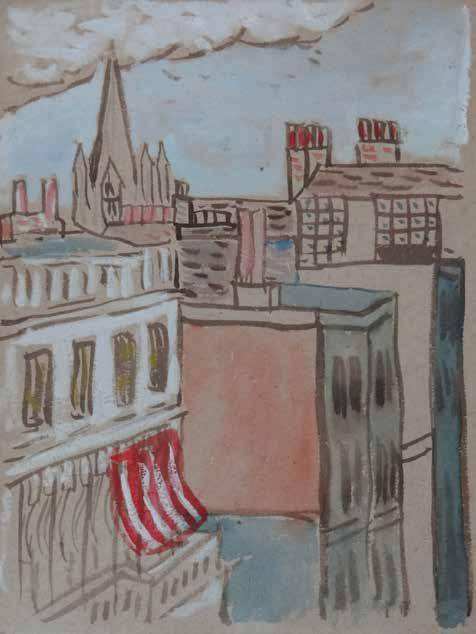
1877 - 1933
Cityscape with Red Awning
Watercolour 28 x 21
ESTIMATE
$15,000 - 20,000
PROVENANCE
Private Collection, Auckland
Certificate of Authenticity signed by Peter Webb affxedverso
Once Raymond McIntyre reached London in 1909 and began to immerse himself in the European art world his eyes were opened and his painting took strong and long strides in the direction of the post-impressionist avantgarde. Cityscape with Red Awning has all the confidence and informal character of en plein air sketching which the Barbizon school and then the impressionists – for whom working in natural light became particularly important – had made so influential from the mid-19th century. But there is more to this watercolour than immediacy. Following the direction of Les Nabis (1888-1896), who had in turn built upon the example of Cézanne and the encouragement of Gauguin, McIntyre arrived at the point where linear perspective and modelling almost disappear; and a flattened, decorative surface of grid-lines and colour planes emerges.
Composed by the artist from the high vantage point that a flat or an artist’s studio would afford, the cityscape is transformed into a composition of lines. The shapes of buildings, windows, roofs and steeples are recognisable but each is flattened – drawn in outline, patches of over-all pattern and confident planes of transparent colour. All this makes us acutely aware that we are looking at a flat painting surface rather than gazing into an illusionistic space. We know that one building is in front of the next, and the buildings are in front of the sky, and so on; and the artist knows we know all this so he needs to do very little to make this a city-scape. Instead he can pile all his attention into making this more artefact than mimesis. Plus he even has the audacity to contradict what we know: notice how the sky’ seems to come in front of the steeple.
The scene is cropped tight so that we do not see the ground plane recede into the distance. Diagonal lines are in the minority, making the painting a flattened grid of horizontal and vertical lines and rectilinear forms; and the patterns of windows reinforce this – especially the grids of studio skylights in the top right. Colours conspire to flatten the space too: white is introduced at the top to bring space forward; and the deepest blues which ought to be in the distance are reserved for the foreground buildings. McIntyre has made the visual language of the post-impressionist avant-garde all his own.
McIntyre left New Zealand to immerse himself in “the influence and stimulus of European art” and he would have probably, modestly, admitted that his work became, to use his own words, more interesting “viewed from the standpoint of modern artistic developments in Europe” as a result. Cityscape with Red Awning – a thoroughly modern work – confirms it. Rob Garrett
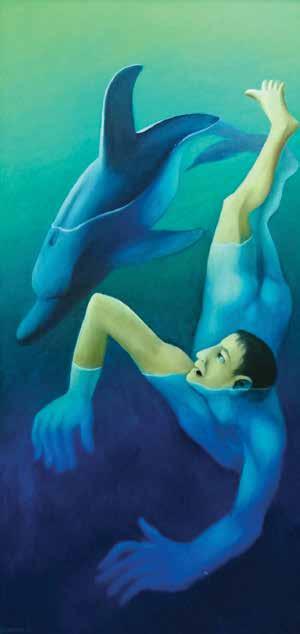
b. 1939
Boy and Dolphin
Oil on board 121 x 61
Signed & dated 1967
ESTIMATE
$90,000 - 150,000
PROVENANCE
Private Collection, acquired directly from the artist
ILLUSTRATED
p. 82 Michael Smither, Painter, Trish Gribben & Ron Sang, Ron Sang Publications 2004
As part of my research to draw and paint dolphins for a dust jacket commission for Maurice Shadbolt’s novel, This Summer’s Dolphin, I went through a steep learning curve in interspecies communication. I prepared a slate board to draw dolphins underwater (at the Napier aquarium). They crowded round to to get a look over my shoulder as I worked. I’m certain that they recognised themselves.
Michael Smither in Michael Smither, Painter, Trish Gribben & Ron Sang, Ron Sang Publications 2004
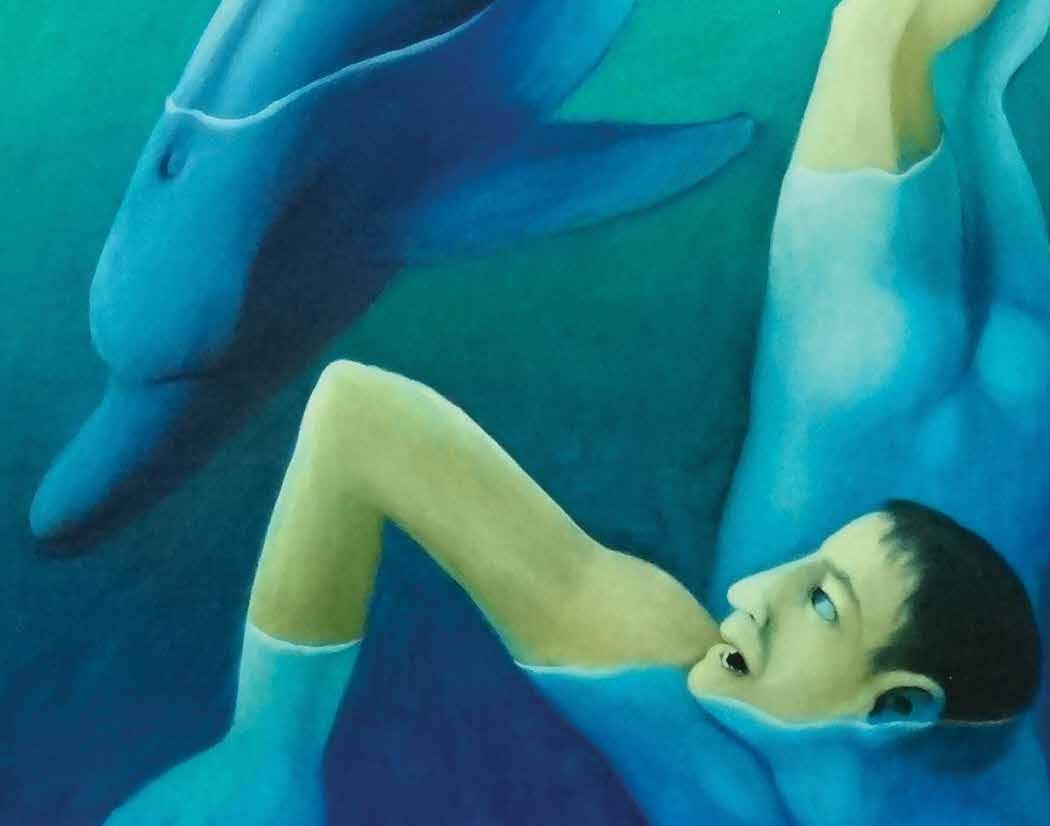
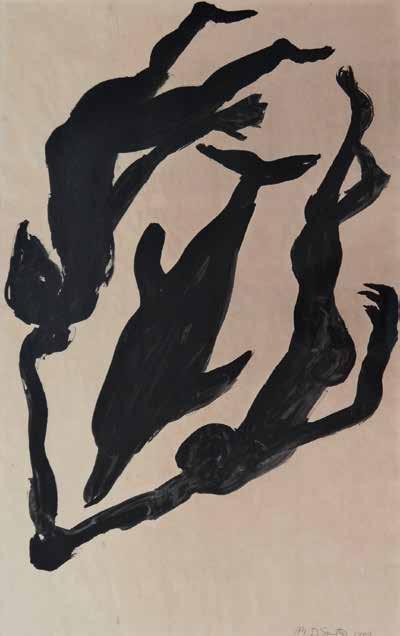
27 MICHAEL SMITHER b. 1939
Swimmers & Dolphin, 1969
PVA on paper 78 x 53.3
Signed & dated 1969
ESTIMATE
$4,000 - 6,000
EXHIBITED
Michael Smither, An Introduction Govett-Brewster Art Gallery 1 - 16 December 1984
EXHIBITED
Dolphins & Lovers, Barry Lett Galleries 1969
Canterbury Society of Arts 1971
Michael Smither, An Introduction Govett-Brewster Art Gallery 1 - 16 December 1984 - label affxed verso
ILLUSTRATED
p. 94 Michael Smither, An Introduction Govett-Brewster Art Gallery 1984
This work was used for the right hand panel in the screenprint Dolphins and Lovers 1969
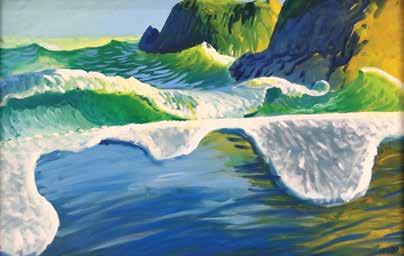
28
MICHAEL SMITHER
b. 1939
Waves onto Wet Sand Hump Oil on board 42 x 64.2
Signed & dated 1980
Inscribed verso
ESTIMATE
$4,000 - 6,000
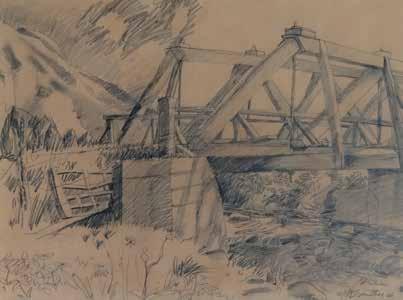
29
MICHAEL SMITHER
b. 1939
Study for Alfred Road Bridge
Pencil on paper 48 x 62
Signed & dated 1966
ESTIMATE
$1,000 - 2,000
This drawing is a study for Alfred Road Bridge, 1971, Ron Sang Collection. It features on the cover of Michael Smither, Painter
Trish Gribben & Ron Sang, Ron Sang Publications 2004
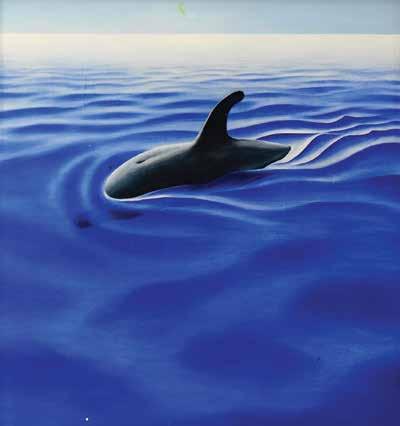
30
MICHAEL SMITHER b. 1939
Dolphin in Sea of Klein Blue & Harmonic Chart Painting, 1973
Double Sided Oil on board 93 x 93
Signed
ESTIMATE
$10,000 - 15,000
1919 - 1987
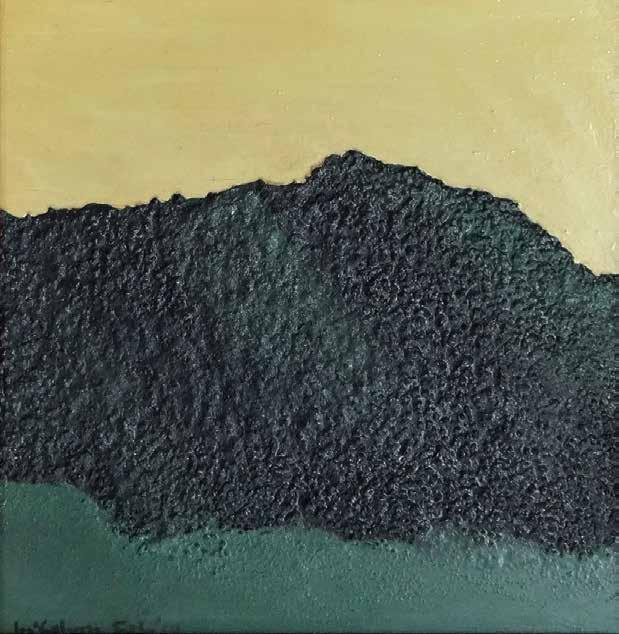
Uruwera 8 (Urewera)
Acrylic and sawdust on board 30.5 x 30
Signed & dated February 1969
Inscribed verso
ESTIMATE
$65,000 - 85,000
PROVENANCE
Private Collection, Nelson
Sutor Gallery, Nelson, Loan Collection, label verso
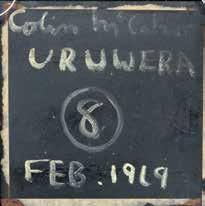
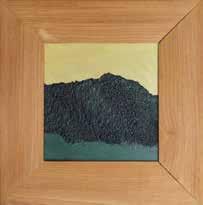
In 1968 Colin McCahon and his wife Anne were driving along Highway 38 past Lake Waikaremoana and through the Urewera Ranges. The small series of Urewera paintings of the following year are the artist’s attempt to analyse the thrill and terror he experienced on that road trip. For it was a landscape first seen’ in the face of possible calamity: “we came … through the Urewera country in pouring rain, wipers packed up, at least fifty slips, large and small on the road … and a great lot of luck not to slide sideways over the edge…. After our crossing I’m … scared to return but I think I must.”
In the 1960s McCahon had a newfound appreciation of the connection of Maori to their lands, gained as a result of his daughter’s relationship with a young Maori man, and he would have sensed the redemptive potential of going back to the place he was scared of; of going into the wilderness as a site for self-exploration. As Gordon H. Brown recorded, in the 1960s McCahon intended his landscapes “to throw people into an involvement with the raw land, and also with raw paint … like spitting on the clay to open the blind man’s eyes.”
What McCahon saw from behind the rain-washed car windscreen, and described in a letter to Anna Caselberg, was a land “for those who have learned how to cry.” A few years earlier he had experimented with adding sand and sawdust to synthetic polymer paint in a group of small, square, almost pure black paintings. He returns to these techniques to analyse his experience of the Urewera’s dark, wet, cold vertical bush bluffs. In Urewera 8 green-black synthetic polymer impregnated with sawdust dominates the hillside and a saturated yellow ochre fills the sky space.
Symbolically the sawdust permits McCahon to indicate, through the way the stipples catch and reflect light, that even the darkness’ will be penetrated by the light.’ But looking at the whole composition, it seems as if he has turned the landscape upside down.
During his drive he says he could not see the sky – it was blotted out – instead the light’ and terror came from a source below, indicated when he wrote that he was amazed they had not slid off the road several times and “down four or five hundred feet into foaming yellow ochre rivers and lakes.” Perhaps, and this may be startling, instead of looking up into a golden sky in this painting, we are looking down a steep slope and into the raging ochre waters. Perhaps. Nevertheless, whether we look down or up, it seems that McCahon is interested in creating an impression of instability and vertigo, resolved symbolically in the painting’s juxtaposition of a threatening black-green and a redemptive saturated golden light. Rob Garrett
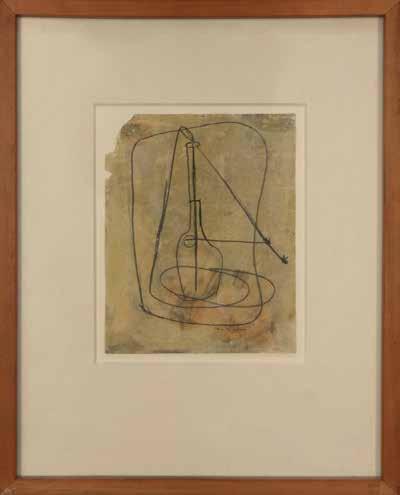
32 COLIN MCCAHON
1919 - 1987
Untitled
Pencil on paper 26 x 21
Signed & dated 1940
ESTIMATE
$8,000 - 12,000
1910 - 1998
The Hohonu Oil on board 81.1 x 121.5
Signed & dated 1965
ESTIMATE
$25,000 - 35,000
PROVENANCE
Private Collection, Nelson
Sutor Gallery, Nelson, Loan Collection, label verso
Woollaston’s path to the vigorously compressed space of The Hohonu is a journey of artistic discovery that begins with his first “excited” childhood glimpse of Paul Cézanne’s post-impressionism. Recalling the importance of this moment in 1988 Toss Woollaston said “for some reason I couldn’t stop looking at that painting” even though “I didn’t know the name of Cézanne; and the book said these painters were very doubtful indeed.’”
Hohonu is a range of mountains in Westland, rising abruptly behind the broad boulder-strewn Taramakau River next to the Otira Highway. It is less than an hour’s drive from Greymouth – which is where Woollaston had moved with his family in 1950 to take up his Rawleigh’s sales job in the hope that this would provide more secure income for his family that the seasonal orchard work in Nelson had done. Though the move was misjudged from a financial perspective, Greymouth provided artistic camaraderie at least as he joined the local sketching and painting group for regular excursions. This period was also when Woollaston had the courage to start painting larger works, on the encouragement of Christchurch’s first contemporary art dealer, Hungarian Andre Brooke. The Hohonu comes late in his Greymouth time, just a few years before he and the family returned to the Motueka area, buoyed by the new and highly supportive relationship with thenemerging gallerist Peter McLeavey.
Woollaston’s artistic achievement is heroic when seen in light of his almost total isolation from the European influences which set a course towards his own brand of modernism. The first painting that truly excited him – the small, black and white Paul Cézanne self-portrait reproduced in Arthur Mee’s The Children’s Encyclopaedia – was followed by his studies of Cézanne in “love and awe” in R. N. Field’s Dunedin studio where the young artist was permitted to “paint what you wanted to;” and then by his encounter with Munichtrained Flora Scales. Only a few sessions with Scales confirmed Woollaston’s distrust of vanishing point perspective; and reinforced the importance of “the flatness of the canvas, where objects lay against each other in a series of overlapping planes” and where “colours were no longer to imitate reality but to create harmonies.” Nowadays, the idea that an artist could find his
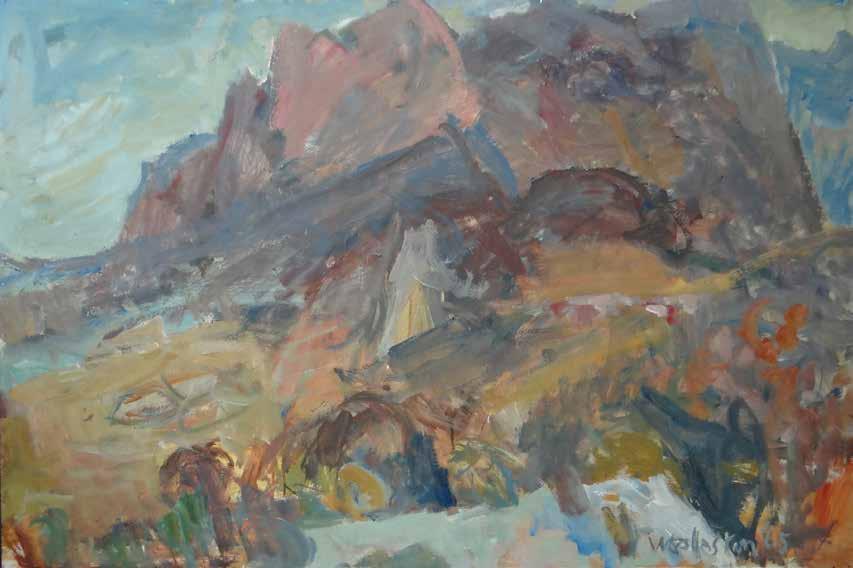
own way towards the avant-garde discoveries of modernism with so few and only second-hand exposures to key influences is extremely hard to imagine. Yet, in these few contacts Woollaston absorbed and surpassed the lessons of Cézanne. By the mid-1960s and The Hohonu he was piling
one leaning plan upon another; stacking the forms of the mountains –which rise above the up-tilted plane of the Taramakau River – so high that the summits press against the upper frame of the painting in a series of vigorous brush strokes that collapse distance and create painterly mass, presence and immediacy. Rob Garrett
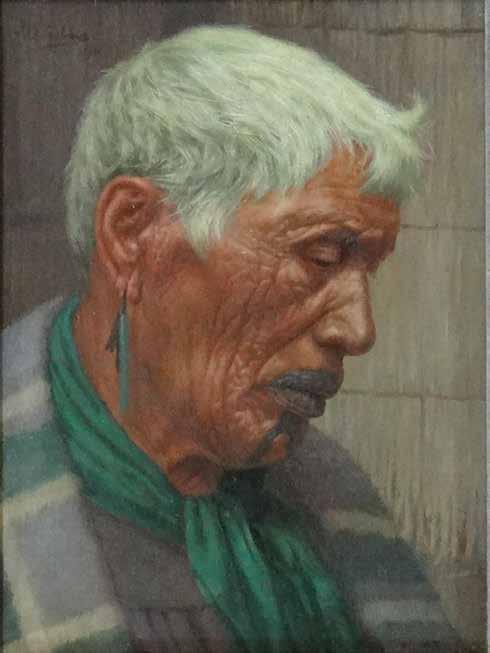
34 CHARLES FREDERICK GOLDIE
1870 - 1947
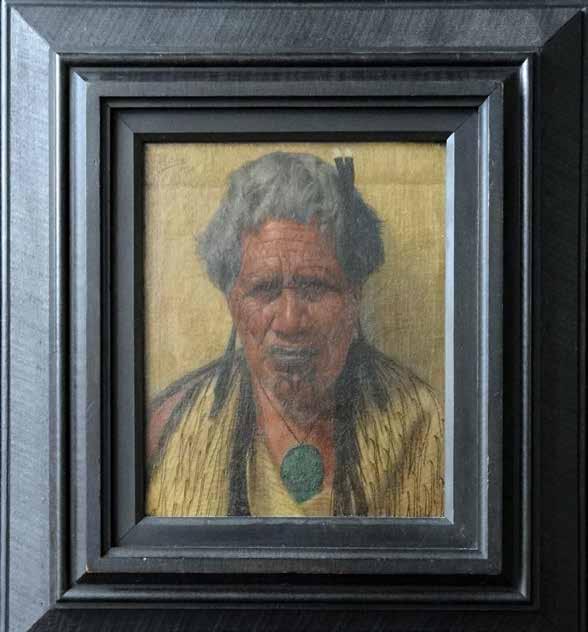
Drowsy - Wiripine Ninia, Ngati Awa
Oil on wood panel 19.1 x 14
Signed & dated 1911
ESTIMATE
$180,000 - 250,000
PROVENANCE
Private Collection, Nelson
ILLUSTRATED
p. 219 C F Goldie His Life & Painting, Alister Taylor & Jan Glen, Alister Taylor publishing 1977
EXHIBITED
GOLDIE - The Exhibition, 1997 - 1999 Auckland Art Gallery Toi O Tamaki, Catalogue no. 67
In this reflective portrait of Wiripine Ninia, C F Goldie conveys a mood of transition, not only in the life of the old Chieftainess, but of the times in which they both lived. Wiripine Ninia bears traditional moko and talisman greenstone earrings whilst draped in European clothing, emblems of two worlds. The close and sympathetic bond between artist and subject is evident in this work.
52 Important, Early & Rare 6:30pm Wednesday 25 March 2015
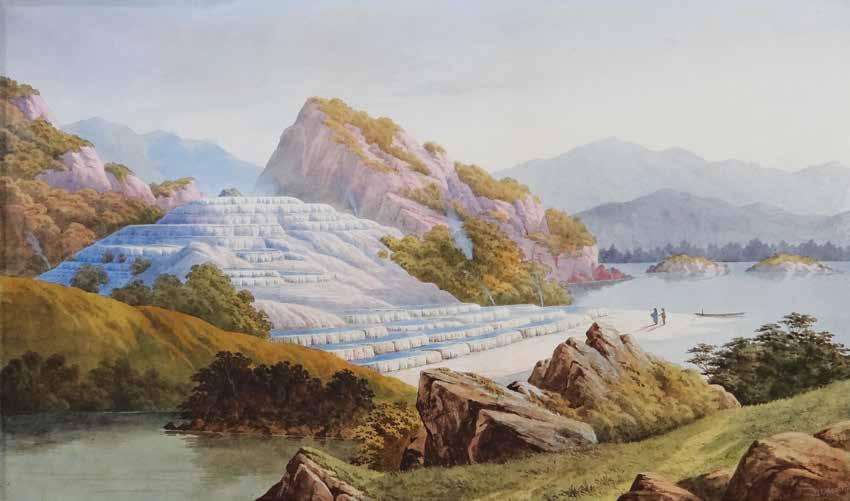
Building,
Signed
ESTIMATE
$18,000 - 25,000
Signed & dated 1976
Inscribed verso
ESTIMATE
$30,000 - 40,000
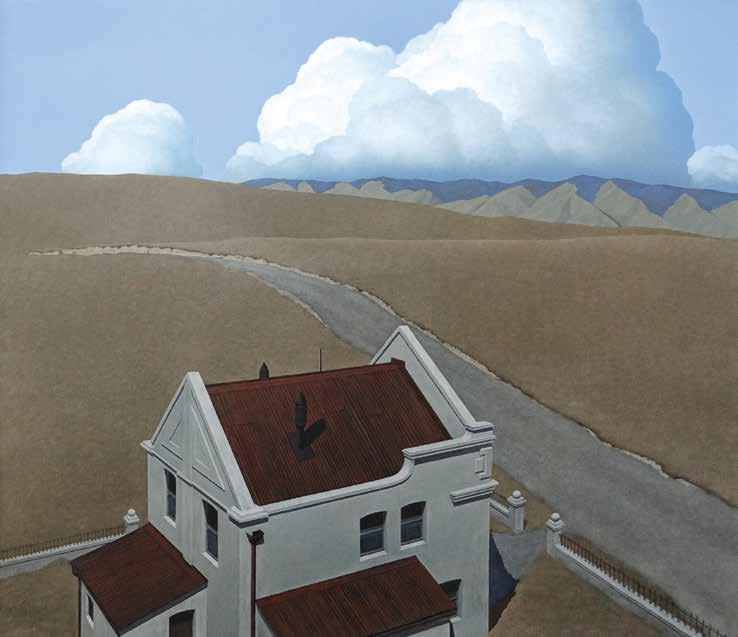
1927 - 1999
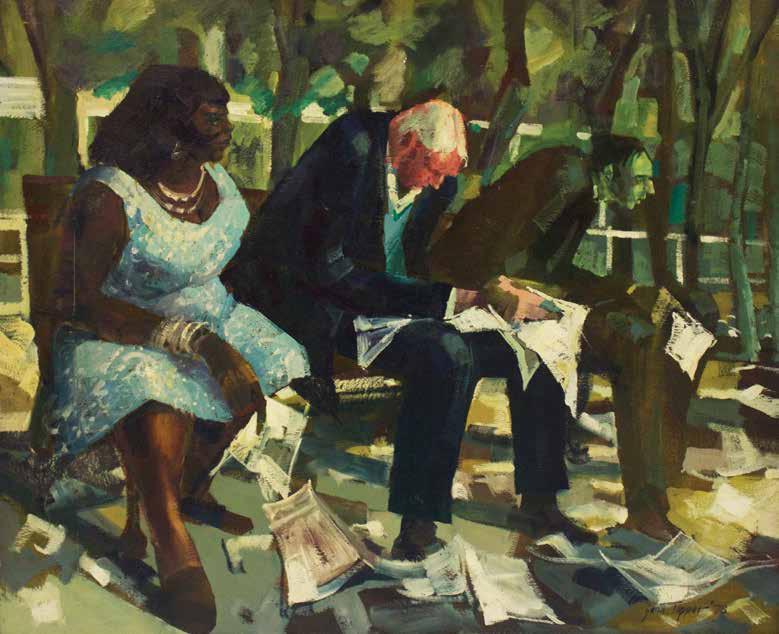
Racecourse
Oil on board 81 x 99
Signed & dated 1976
ESTIMATE
$25,000 - 35,000
Languid. An antipodean exhaustion – half pleasure, half resignation. The variety of haptic and emotional sensations conveyed by this painting are exquisitely nuanced given the strident tonal, colour and shape contrasts. Garth Tapper was a master of the gestures of every part of the body. An acute observer and constantly sketching his observations, he has captured the end-of-day, depleted-pockets postures of these three punters perfectly. Hands droop and barely have energy left to hold papers, betting chits, pens. Eyes gaze into the distance or into the form sheets, vacantly imagining what might have been. Bodies slump in on themselves with spent energy and heat-sapped resignation.
Garth Tapper studied at Elam in the late 1940s and then at the Slade – where he found the life drawing “intensive” – and Chelsea School of Fine Art in London in the early 1950s; and then took further studies in France, Spain and Italy, before returning to New Zealand where he taught and in 1964 commenced showing in solo exhibitions at the John Leech Gallery.
The Racecourse scene could almost be anywhere, any racetrack, any close-of-day. But it is not. It has a distinctly southern air to it and for Tapper, painted when it was, it draws from the sketches he made during a very happy spell in Sydney in the previous year when he came in contact with what he considered to be “the real world of painting.” That the three figures seem to take pleasure in this late afternoon heat and in this tired, worn out moment is resident in the artist’s precise observation of people and in his handling of light and shade, costumes, even skin tones. But it is also the result of the artist’s personal projection onto the scene as he looks back on his six months sabbatical in Australia (1974-75). In Sydney, where he and his family stayed in Clareville, North Sydney, and Tapper had exhibited at the Clareville Gallery and the Barefoot Gallery in Avalon, he was refreshed and revived. The new environment boosted his enthusiasm and gave him great motivation to paint.
The sabbatical was the moment he realised it would be possible to retire from teaching after 17 years at Elam and become a full-time artist at the age of 50; and a year after Racecourse was painted that is just what he did. In many ways, the handling of the punters – beaten but not down – and the significant scale of the work signal a new optimism in the artist. Even the sketches he made about this time, of his Elam students drawing, during his final year before retiring have a summery, optimist air. Tapper was ready for the change. Rob Garrett
38 CHARLES FREDERICK GOLDIE
1870 - 1947
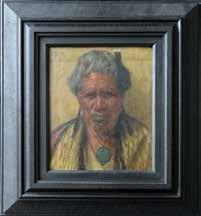
Te Hei, A Ngatiraukawa Chieftainess
Oil on canvas 26.5 x 22
Signed & dated 1920
ESTIMATE
$130,000 - 160,000
PROVENANCE
Private Collection, Melbourne
In Polynesian portraiture Mr C F Goldie stands pre-eminent in the world today, and New Zealand has every reason to be proud of him
Governor General Lord Bledisloe
Reproduced with kind permission of Alister Taylor. C F Goldie: His Life & Painting and C F Goldie: Prints, Drawings & Criticism, Alister Taylor & Jan Glen, 1979
58 Important, Early & Rare 6:30pm Wednesday 25 March 2015
39 EUAN MCLEOD
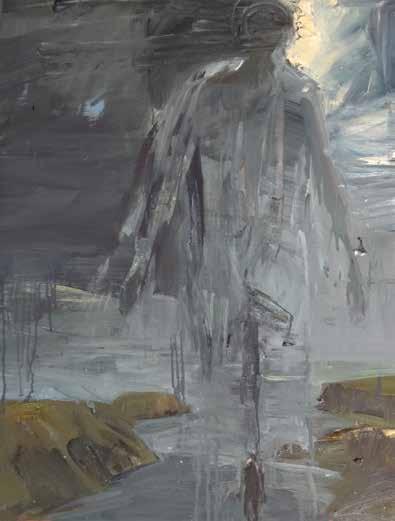
b. 1956
Study Over the Horizon Oil on canvas 76 x 56
Signed, inscribed & dated 1997 verso Brook Gifford Gallery label affxedverso
ESTIMATE
$5,000 - 7,000
40 MARK CROSS
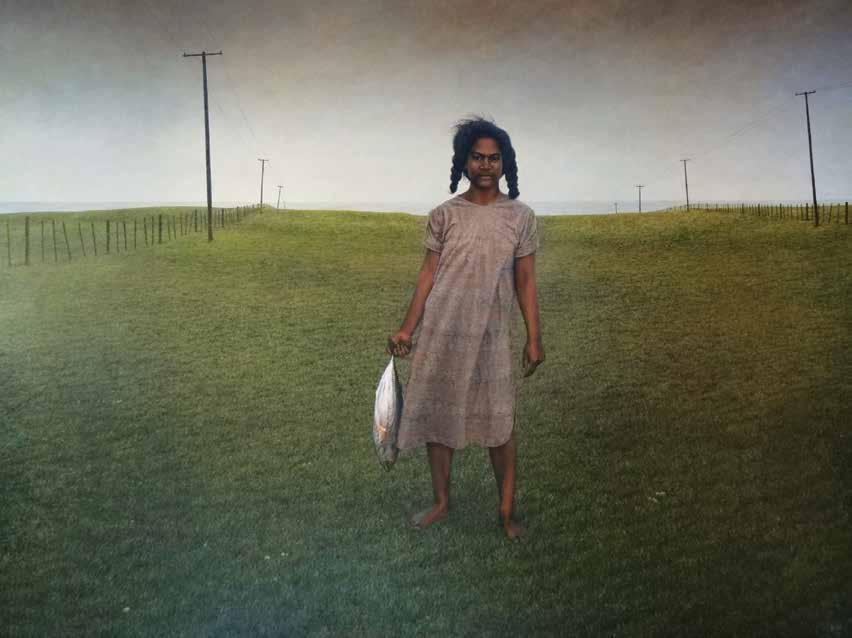
b. 1955
Conquest of Optimism, 1985 Oil on board 118 x 160
Signed
ESTIMATE
$40,000 - 50,000
At this time the world was in a depressing state of anxiety over the fragility of east/west relations and the senselessness of the arms race. We were bombarded with pessimistic media images and it seemed to me that this pessimism was more than a symptom of the potentiality for nuclear war but a major contributing factor to the possible cause. My protagonist in the painting became my pillar of strength and the exaggerated glow from the fish the source of optimism that she carried. The two energy-charged sets of power-lines are a symbol of the potential for constructive dialogue and communication. It was the first time I was confident enough to use a variety of non place-specific elements within a painting and thus break out of the subjectivity of place/identity restrictions that realism almost inevitably finds itself. Mark Cross
41 RALPH HOTERE
1931 - 2013
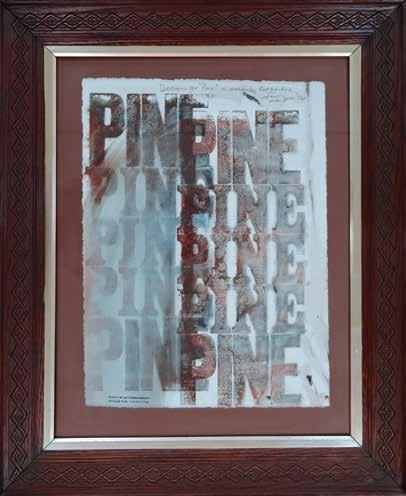
Design for Pine - A Poem by Bill Manhire
Watercolour and woodblock print on paper 56 x 42
Signed, inscribed & dated 1974
ESTIMATE
$5,000 - 8,000
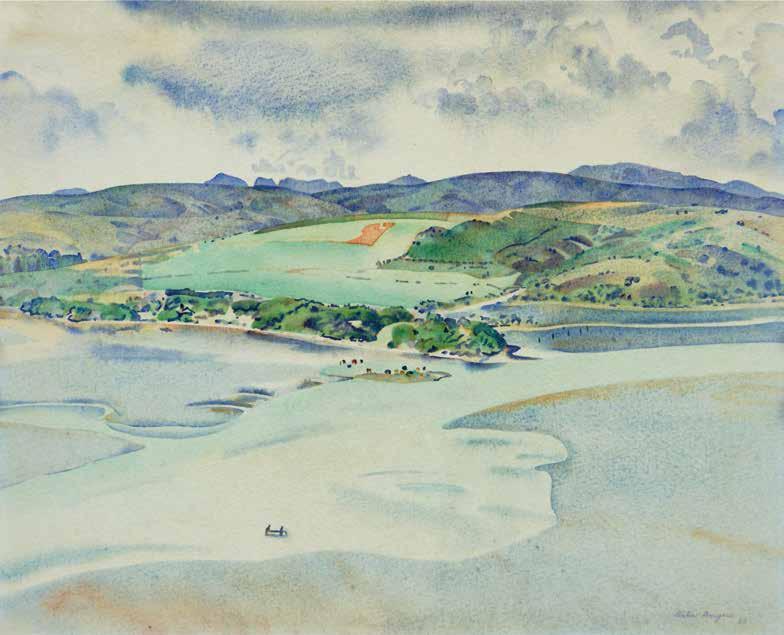
42 RITA ANGUS
1908 - 1970
Mangonui, Northland
Watercolour 28.8 x 35.8
Signed & dated 1953
ESTIMATE
$20,000 - 30,000
PROVENANCE
Private Collection, France, until returned to New Zeland in 2010.
Private Collection, Auckland
This work is a similar composition to Mangonui, a watercolour from the collection of Museum of New Zealand Te Papa Tongarewa, illustrated page 143 Life & Vision, edited by William McAloon & Jill Trevelan, Te Papa Press, 2008.
Rita Angus visited friends Roy and Joyce Milligan at Mangonui, Northland during the winter 1953 and again in December. By October 1954 she was living in a cottage there and working on landscapes of the surrounding area. Paintings produced at this time, including Mangonui, Northland were exhibited with The Group. When plans to purchase the cottage fell through the artist returned to Wellington in April of 1955.
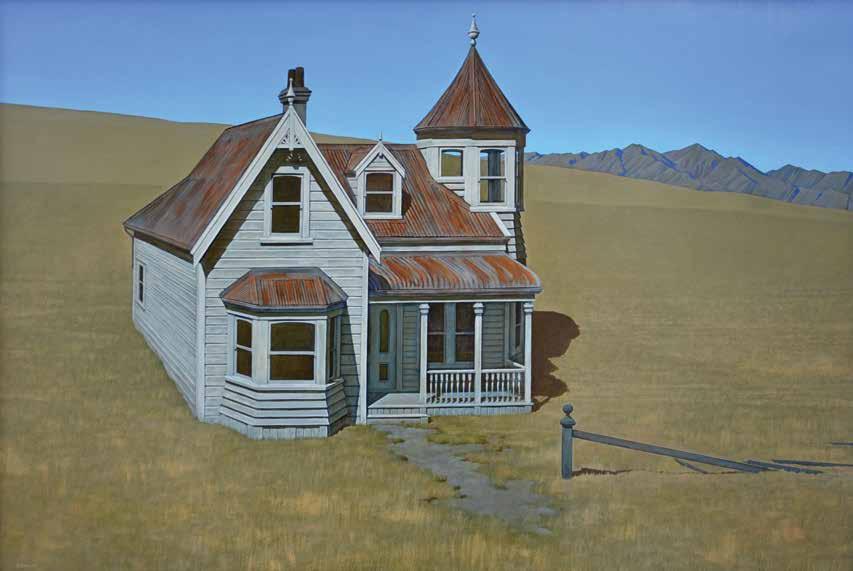
b. 1945
Untitled 1974 (Landscape With House + Mountains)
Acrylic on board 51.8 x 73.8 cm
Signed & dated 1974
Inscribed verso
ESTIMATE
$30,000 - 40,000
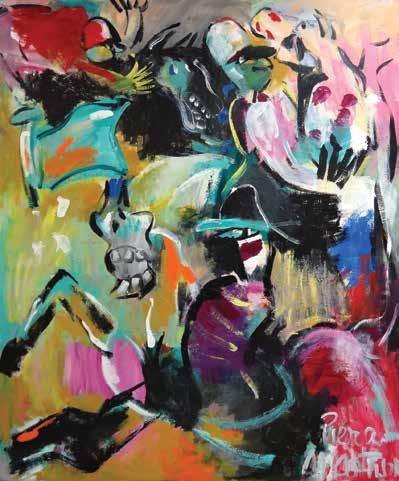
44 PIERA MCARTHUR
b. 1929
Three Horsemen & Flag
Acrylic on Canvas 183 x 152
Signed
ESTIMATE
$6,000 - 8,000
PROVENANCE
Purchased from SOCA Gallery, Auckland, label affxedverso
1868 - 1922
Simpson and His Donkey
Watercolour 34 x 28
Signed
ESTIMATE
$150,000 - 200,000
This World War I painting by Horace Moore-Jones shows a stretcher bearer supporting a badly wounded soldier perched astride a donkey. He is bringing him down a narrow winding path from the cliffs above ANZAC cove to a casualty clearing station. It is an action that probably saved the life of the soldier and it epitomises not only the horror and sacrifice of that disastrous campaign, but also the heroism and mateship’ of those who served. Here the stretcher bearer is portrayed as the good Samaritan’; the religious imagery is deliberate, particularly as Simpson lost his life bringing one of the wounded back to the beach.
In 1917 Moore-Jones toured the country giving lectures supported by his paintings and lanternslides of the Gallipoli campaign. He frequently made mention of the stretcher bearers like Simpson who had so bravely brought the wounded men from the frontline, and said how sad he was that he did not have an illustration of them. In Dunedin he was approached by Mr G.F. Jackson whose brother, serving on Gallipoli, had sent him a photo of a stretcher bearer using a donkey to carry the wounded. Moore-Jones almost immediately turned this photo into a painting which is now probably the version in the Aigantighe Art Gallery in Timaru. Further versions followed and two of them were sent to London to be made into lithographs.
Reproductions of the painting were popular in both Australia and New Zealand and by late 1915 stories began circulating of how Simpson had risked his own life to help his fellow soldiers – he had become a folk-hero. It was not until the 1930s that the Australians started to question the identity of the stretcher bearer – fellow soldiers in Western Australia said that their Simpson was a different man. Eventually James Jackson, the man who had taken the original painting admitted the man in the photo he had taken was Dick Henderson, an Auckland school teacher. Neither Jackson nor Henderson had spoken up earlier because they believed it would destroy the message of the painting. Moore-Jones who died in a Hamilton hotel fire in 1922 believed that he had painted Simpson.
This version of Simpson’ and his donkey was in the same family hands until sold in 2008 to the current owner. The figures of Simpson’, the wounded soldier and the donkey are very clear, because they are painted against a blue background. This serves to focus attention on the trio arranged in pyramid shape almost like a Renaissance study of the Pieta. The soldier and his donkey tread a narrow path on the edge of a steep precipice carrying the wounded; it’s the narrow ledge between life and death, which Simpson by his brave actions is defeating.
Moore-Jones was studying art in England in 1914 and enrolled in the New Zealand Expeditionary Force shortly after the war started. He was 47 years old and shaved off his greying moustache and darkened his hair so that he appeared younger. He enlisted as a 32 year old. He was sent to Egypt to train as a sapper, but soon after he landed on Gallipoli he was found sketching the landscape and was ordered to present himself and his sketches to Lieutenant-General Birdwood. He recognised that Moore-Jones could make the topographical sketches he so badly needed for his artillery to fire accurately. Until Moore-Jones was invalided in late November 1915, his role was to sketch and paint the landscape of the peninsula.
Moore-Jones was always known as Sapper’, even when he was in London in 1916 where his paintings were displayed and he gave a private audience to the King and Queen. That was his choice. He wanted to remain in the ranks to offer comfort to the sick and wounded while working as a field artist. When the possibility of a commission was raised, he reputedly replied, “Imagine an old chap like me trying to be a Lieutenant.”
Jennifer Haworth: Author of Behind the Twisted War - A Study of New Zealand Artists in World War I & The Art of War - New Zealand War Artists in the Field 1939 - 1945. Wily Publications
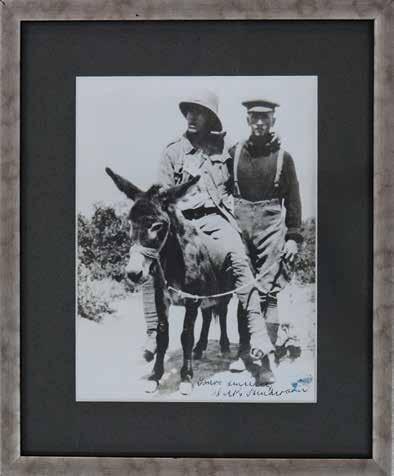
46 SERGEANT JAMES GARDINER JACKSON
‘Man with a Donkey’ 1915
Reproduction photograph bearing the original pen signed signature of Pte. Richard Alexander Dick’’ Henderson 20 x 15
ESTIMATE
$1,000 - 3,000
PROVENANCE
Collection of the late Ernest Esco Brooking, Wellington. Ernest Brooking was made an honorary member of the Wellington RSA in 1952 in recognition of his services to blind ex servicemen and returned servicemen generally. He was still chairman of trustees for the Blinded Services Funds when he died.
He was also president of the Wellington Commercial Travellers Association for four terms during World War II. His obituary is affxedverso
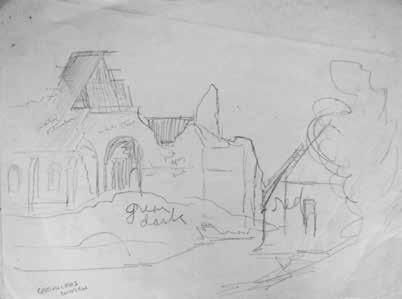
47 JOHN WEEKS
1886 - 1965
The Ruins of Grevillers Church, France
Pencil drawing on paper 16 x 19
Inscribed
ESTIMATE
$1,000 - 1,500
PROVENANCE
John Weeks Estate Collection
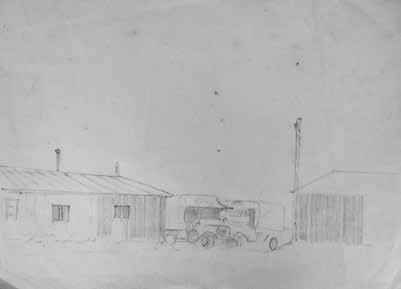
48 JOHN WEEKS
Ambulances at Grevillers, France1918
Pencil drawing on paper 16 x 19
ESTIMATE
$1,000 - 1,500
PROVENANCE
John Weeks Estate Collection
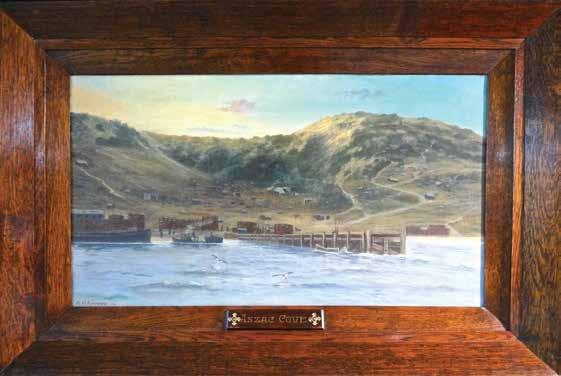
49 ALFRED AVERY FORRESTER
1895 - 1981
Anzac Cove, Gallipoli
Oil on board 43 x 80
Signed & dated 1918
$15,000 - 20,000
Alfred Forrester was born in Otago in 1895. The Forrester family immigrated from Kings Kettle, Fifeshire, Scotland on the ship Oamaru landing at Port Chalmers in 1879. His father, William Forrester, was a carpenter by trade and the family lived at 13 Percy Street, Weston. The youngest of eight children, Alfred Forrester was educated at Cave School. He married Hazel Isabel Mason of Dunedin in Columba Church, Oamaru 1916. The couple relocated to Dunedin where Forrester received tuition from fellow Scottish artist J C Veitch and W A Bollard. Forrester continued his training under A H O’Keefe in Christchurch. In 1920 he attended the Christchurch School of Art under Cecil F Kelly, and help found the North Otago Art Society that same year.
Forrester returned to Oamaru, establishing a studio where he taught landscape, flower and fruit painting’ to his students. He was also a regular exhibitor with the Otago Art Society. Forrester is buried in the Oamaru Cemetery.
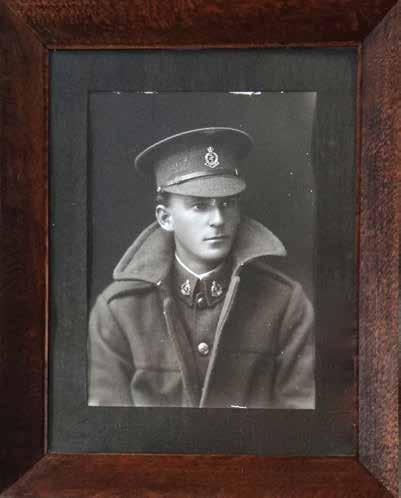
50 HERMAN JOHN SCHMIDT
1872 - 1959
John Weeks - New Zealand Medical Corps
Photograph 55 x 40
Inscribed Mrs Weeks, Northcote verso
ESTIMATE
$800 - 1,200
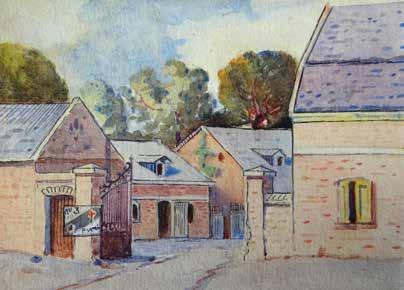
A Private Collection of watercolours by John Weeks from his time serving in France with the New Zeland Medical Corps
John Weeks enlisted in 1917 and served in France with the New Zealand Field Ambulance of the New Zealand Medical Corps. Medical personnel were part of all army operations and Weeks sustained injuries, breaking a leg and both arms. The Auckland Museum holds seven small watercolours painted by him whilst on active service in 1918. After the war, Weeks joined with fellow artists Francis McCracken and Robert Johnson touring some 250 paintings and drawings throughout New Zealand in The Soldiers’ Exhibition.
51 JOHN WEEKS
1886 - 1965
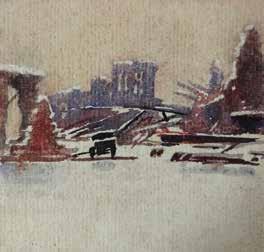
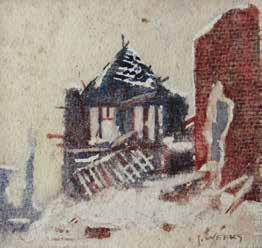
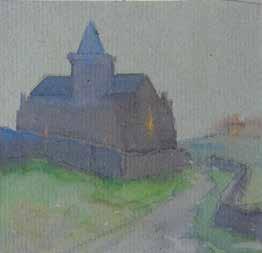
Two Bombed French Village scenes & A Normandy Church scene (3)
Watercolour 10 x 10
One signed Weeks O’Connor Studio Stamp verso
ESTIMATE
$2,500 - 3,500
52 JOHN WEEKS
No. 3 New Zealand Field Ambulance - possibly Louvecourt
Watercolour 11.5 x 15.5
Inscribed no. 3 on sign
Weeks O’Connor Studio Stamp verso
ESTIMATE
$2,000 - 3,000
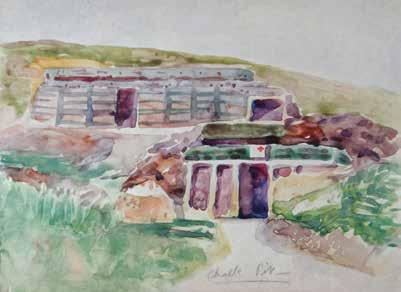
53 JOHN WEEKS
A Makeshift Hospital in Chalk Pit, France
Watercolour 13 x 17
Inscribed
Weeks O’Connor Studio Stamp verso
ESTIMATE
$2,000 - 3,000
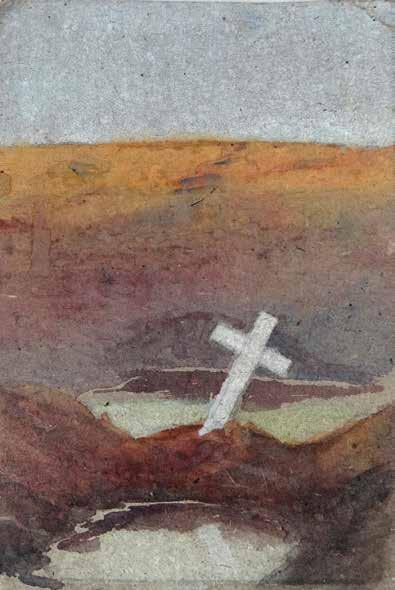
ESTIMATE
$1,500 - 2,500
PROVENANCE
Artist’s Estate Collection
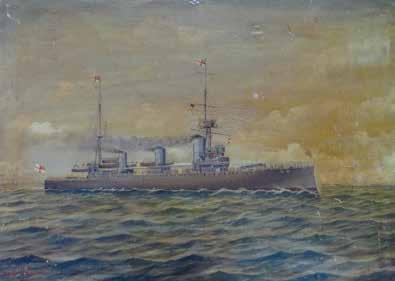
55
H.M.S New Zealand
Oil on board 45 x 62
Signed, inscribed & dated 1916
ESTIMATE
$2,000 - 3,000
PROVENANCE LOTS 55 - 58
Private Collection, Waikato
Same family collection since painted
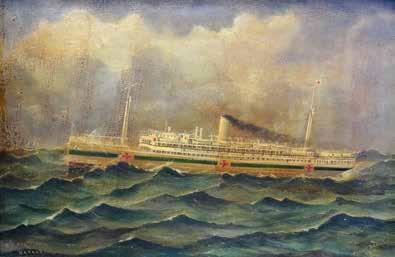
56 FRANK BARNES 1895 - 1981
NZ Hospital Ship Marama Oil on board 30 x 46
Signed, inscribed & dated 1916
ESTIMATE
$1,500 - 2,500
57 FRANK BARNES
NZ Hospital Ship Maheno Oil on board 29 x 45
Signed, inscribed & dated 1916
ESTIMATE
$1,500 - 2,500
58 FRANK BARNES
Maheno, H.M.S New Zealand & Marama
Oil on wood panel 14 x 69
Signed, inscribed & dated 1915
ESTIMATE
$1,000 - 2,000
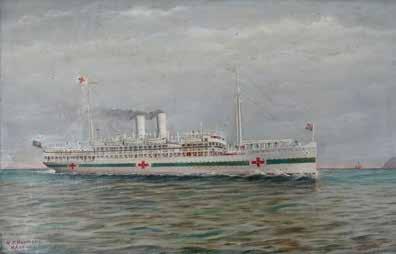

The Marama and Maheno were the poster ships of New Zealand’s First World War effort. Until 1915 these steamers had carried passengers on the Tasman route. As casualties mounted at Gallipoli, the government aided by a massive public fund raising campaign - converted them into state-ofthe-art floating hospitals.
With the encouragement of the Governor, Lord Liverpool, this fundraising effort helped ensure the ships were fitted out in good time and to the highest standards. OffciallyknownasHisMajesty’sNewZealandHospital Ship (HMNZHS) No. 1 and No. 2, these floating hospitals were crewed by a mixture of civilian seafarers and army medical staff, including nurses. During the Gallipoli Campaign the Maheno carried thousands of wounded soldiers from Anzac Cove to the nearby Greek islands of Lemnos and Imbros. The Marama entered service just after the Allied evacuation from Gallipoli. For the rest of the war - apart from a series of frantic dashes across the English Channel during the Battle of the Somme - both ships were tasked with carrying the seriously wounded from the Western Front on the long haul back to New Zealand. By the war’s end these distinctively marked white ships’ had transported 47,000 patients.
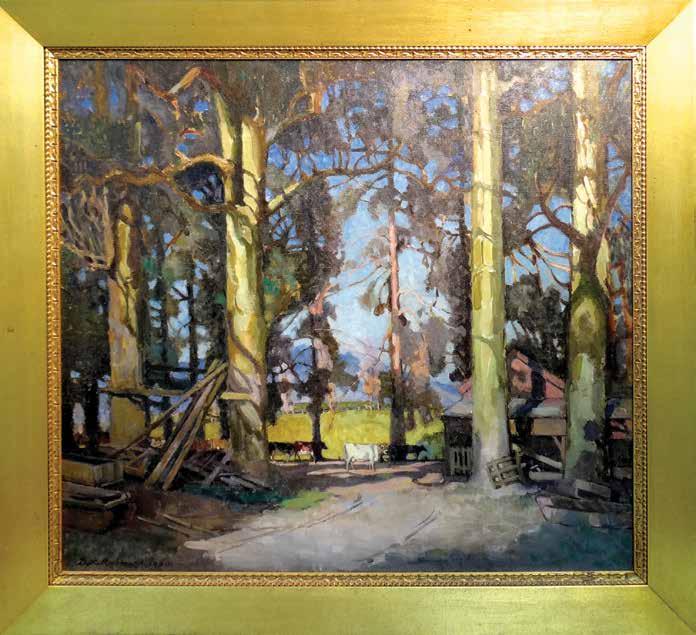
1861 - 1935
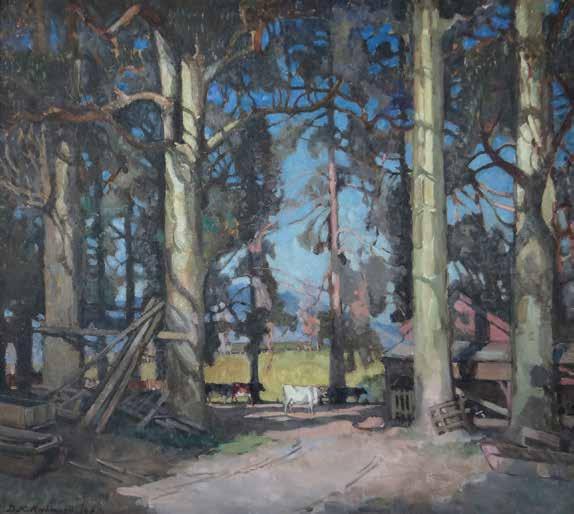
Milking Time, Te Awamutu
Oil on canvas 81 x 91
Signed & dated 1930
ESTIMATE
$25,000 - 35,000
PROVENANCE
Collection of the artist’s family since 1930
Dorothy Kate Richmond (known as Dolla) was born in Parnell in 1861, the daughter of artist James Crowe Richmond. When Dolla was four years old her mother died and the family moved to Taranaki, then to Nelson around 1869. From these early years, James Richmond passed on a love of drawing and painting to his daughter. In 1873 he took his three eldest children to London. The young Dolla spent time in Zurich and during 1875 and 1876 she was in Dresden. These early travels and a well rounded education of which drawing and painting comprised a key component, laid the foundation for two lifelong pursuits. In 1875, Dolla attended Bedford College for Woman in London and began a two year course at the Slade School of Fine Art. In 1880 the standard of her work gained a Slade scholarship. Returning to Nelson in late 1880 Dolla was one of a small group of New Zealand women artists to have received formal training.
On her return to Nelson she kept house for her father and in 1883 was appointed art mistress at the newly established Nelson College for Girls. Travels to study and paint in Europe took place in 1885 and with her father in 1889. By 1890 Dolla was working with the local sketch club and had become an artist member of the New Zealand Academy of Fine Arts. She moved with her father to Wellington in 1895 and by 1896 was studying with Glasgow born impressionist, James Nairn. The death of her father in 1898 left Dolla financially independent and once again she departed for Europe.
In 1901 Richmond met fellow expatriate Frances Hodgkins at a summer school at Caudebec, Normandy tutored by English watercolourist Norman Garstin. A close cameraderie developed and together they travelled to France and Italy painting scenes of village life, often en plein air. 1902 saw the pair in Cornwall at the Newlyn artists’ colony. The strong natural light and inexpensive cost of living in St Ives, Newlyn and Penzance attracted artists such as Elizabeth and Stanhope Forbes and New Zealander, Margaret Stoddart, all of whom Dolla worked with.
The following year Richmond and Hodgkins re- joined Garstin, traveling to Belgium and Holland. In a letter home, Hodgkins described Richmond as “the dearest woman with the most beautiful face and expression. I am a lucky beggar to have her as a travelling companion.” While Richmond spent time working in Scotland, Hodgkins painted in North Africa. They returned to Wellington in December 1903 and rented a studio in Bowen Street from which they gave lessons. Richmond is remembered as an admired and inspired teacher. A joint exhibition at McGregor Wright’s Gallery, featured over eighty works from the artists’ European travels. Hodgkins returned to England in 1906.
For the next thirty years Richmond played an active part in the Wellington art scene. From 1904 she was a council member of the New Zealand Academy of Fine Arts and honored with life membership in 1928.
Milking Time, Te Awamutu is a signifcant work. Oils by D. K. Richmond rarely appear on the market and nothing of this size has previously been offered. The painting features Te Rori, the farm belonging to the artists’ niece and a place Richmond regularly visited. The work has remained in the family collection since it was painted in1930. The broad brushstrokes and confident handling of the medium echo the impressionistic influences of her tutor, James Nairn.
Dorothy Kate Richmond never married and died in Wellington in 1935. Her work is represented in all the major New Zealand galleries including the Turnbull and Hocken Libraries.
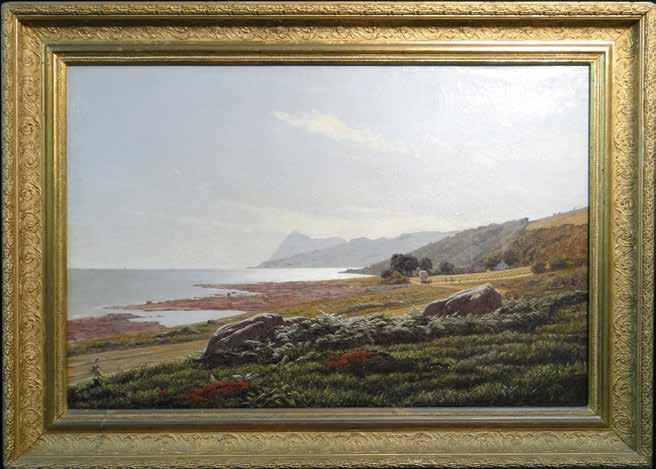
60 JAMES CROWE RICHMOND
1822 - 1898
The Shetland Isles Oil on canvas 50 x 76
Signed & dated 1856
ESTIMATE
$4,000 - 6,000
PROVENANCE
Collection of the artist’s family
61 DOROTHY KATE RICHMOND
1861 - 1935
Study for a Frieze Watercolour 39 x 30
Signed & dated 1904
ESTIMATE
$8,000 - 12,000
PROVENANCE
Collection of the artist’s family
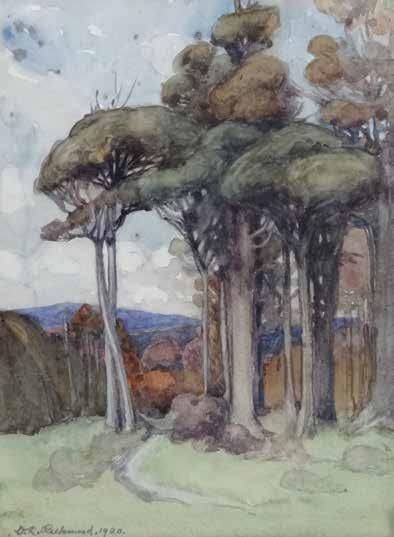
62 DOROTHY KATE RICHMOND
1861 - 1935
Rural Landscape - Near Te Awamutu
Watercolour 34 x 25
Signed & dated 1920
ESTIMATE
$2,500 - 3,500
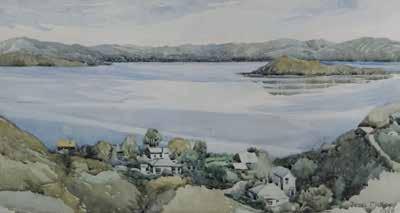
63 JEAN MCKAY
1881 - 1960
York Bay - Richmond Family Home in Foreground
Watercolour 29 x 53
Signed & dated 1928
ESTIMATE
$800 - 1,200
64 DOROTHY KATE RICHMOND
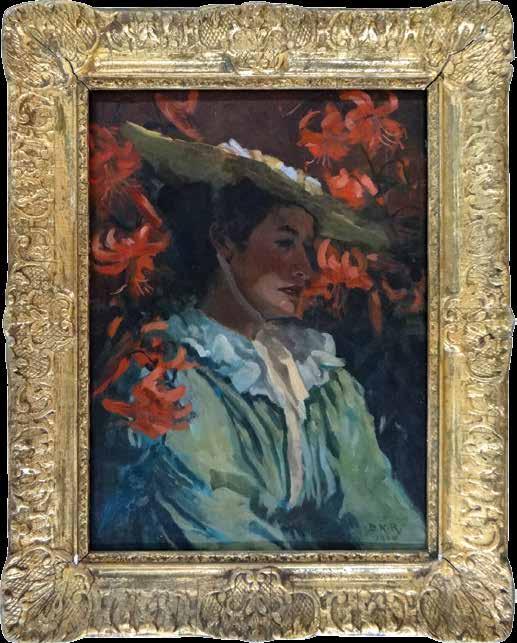
1861 - 1935
Lady of the Lillies Oil on canvas 64 x 48
Signed & dated 1900
ESTIMATE
$18,000 - 26,000
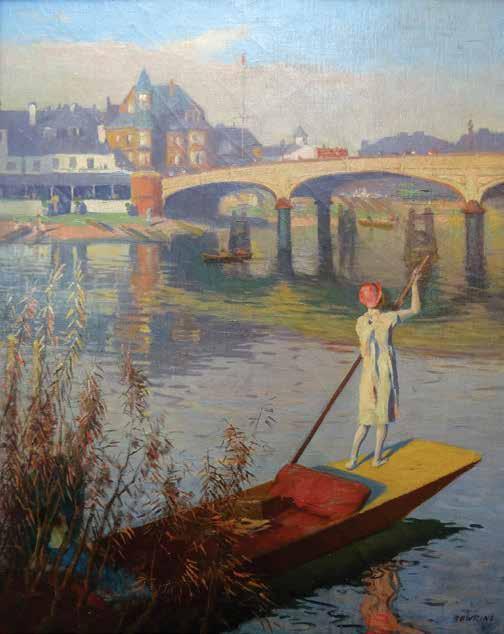
65 WALTER ARMIGER BOWRING 1874 - 1931
Hammersmith Bridge Oil on canvas 75 x 60
Signed. Inscribed verso
ESTIMATE
$8,000 - 12,000
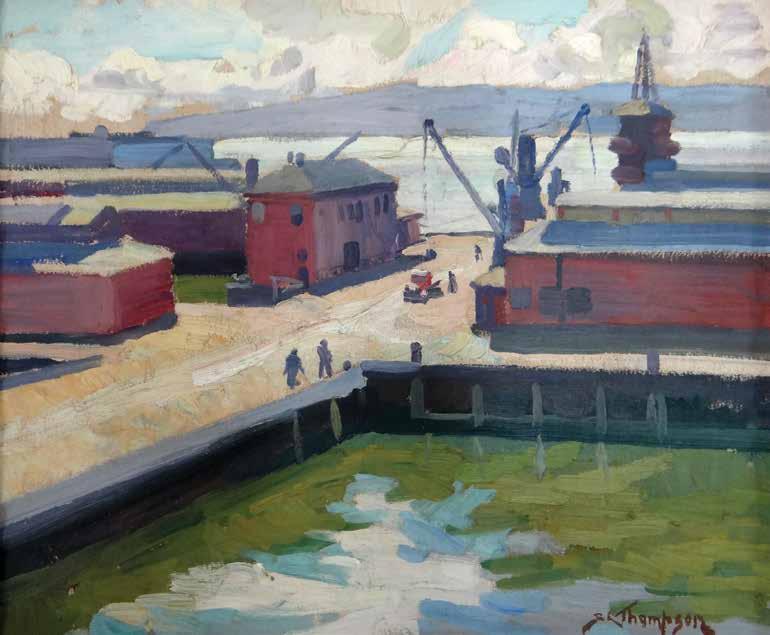
66 SYDNEY LOUGH THOMPSON 1877 - 1973
Wellington Harbour, 1936 Oil on board 38 x 45.9
Signed
ESTIMATE
$8,000 - 12,000
PROVENANCE
Private Collection
Exhibited at Sydney Lough
Thompson At Home and Abroad
Robert McDougall Art Gallery 1990, label affxedverso
ILLUSTRATED
Sydney Lough Thompson
At Home and Abroad, Julie King
Robert McDougall Art Gallery 1990
67
68
1933 - 1978
Mamaku, Rotorua series
Watercolour & Ink 38 x 57
Signed & dated 1977
ESTIMATE
$3,000 - 5,000
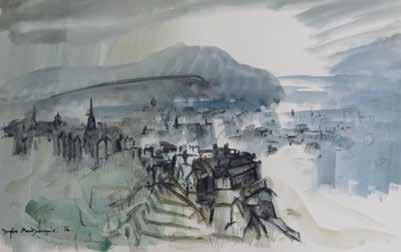
b. 1922
Edinburgh
Watercolour 30 x 58
Signed & dated 1956
ESTIMATE
$1,000 - 1,500
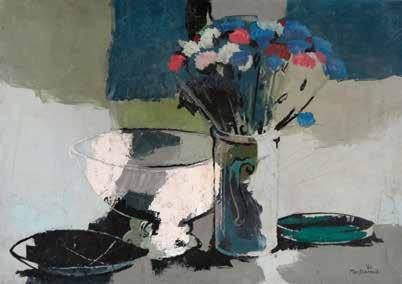
b. 1922
Flowers in a Vase
Oil on canvas 46 x 65
Signed & dated 1961
ESTIMATE
$3,000 - 5,000
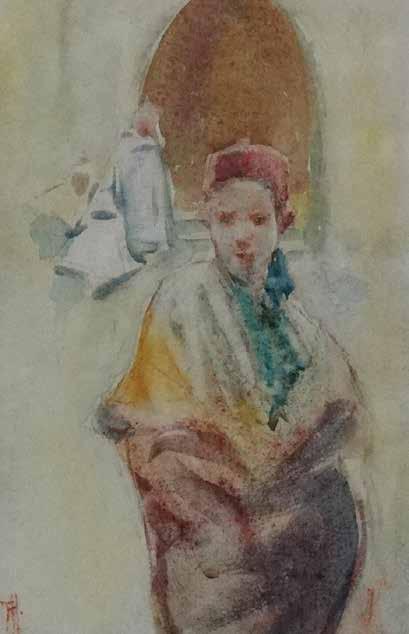
1869 - 1947
Tangiers Market Watercolour 17 x 11
Signed
ESTIMATE
$10,000 - 15,000
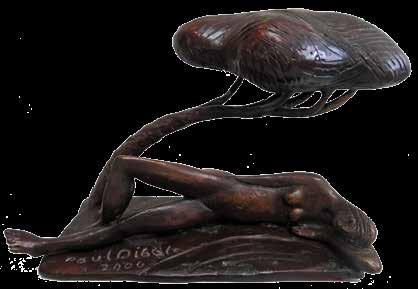
72 PAUL DIBBLE b. 1943
Reclining Nude
Bronze 20 x 38
Signed & dated 2006
ESTIMATE
$2,000 - 3,000
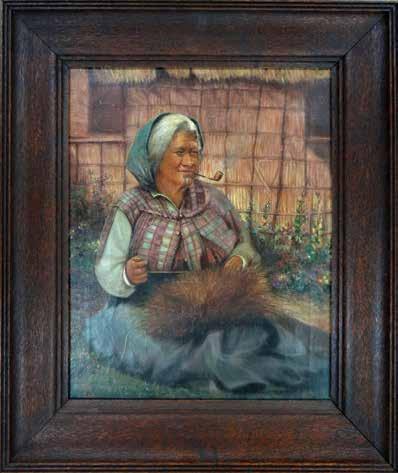
71 CHARLES HEMUS
1849 - 1925
Maori Woman Weaving
Oil on canvas 37 x 29
Signed & dated 1924
ESTIMATE
$2,500 - 3,500
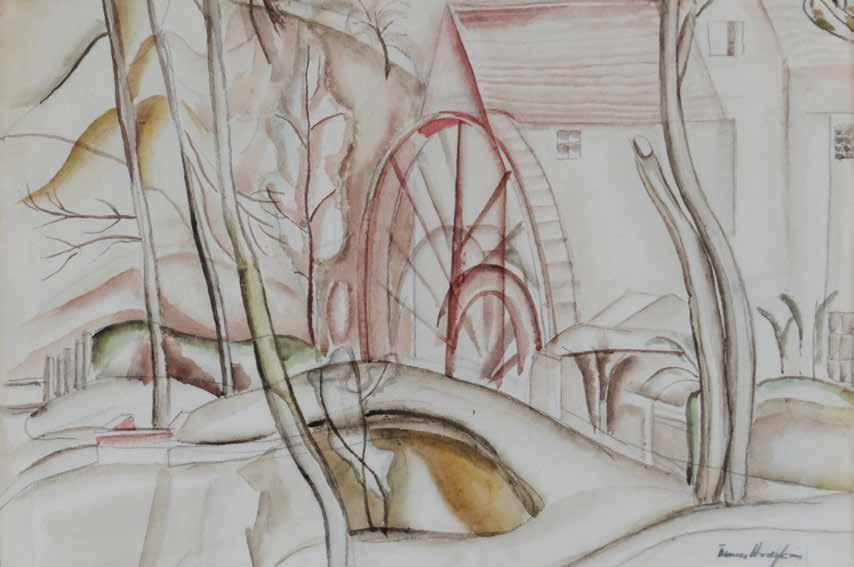
73 FRANCES HODGKINS
1869 - 1947
The Waterwheel, c. 1922
Watercolour 20 x 30.5
Signed
ESTIMATE
$20,000 - 25,000
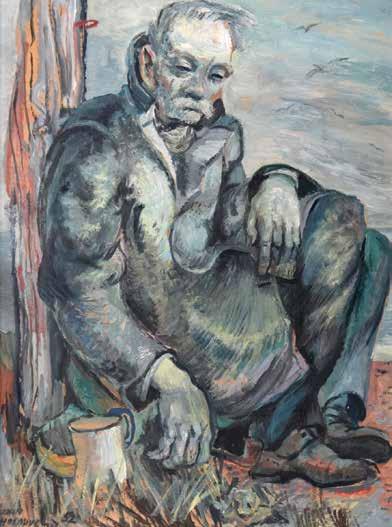
74 JOHN HOLMWOOD
1910 - 1987
Old Man
Oil on board 80 x 60
Signed & dated 1952
Inscribed verso
ESTIMATE
$3,000 - 5,000
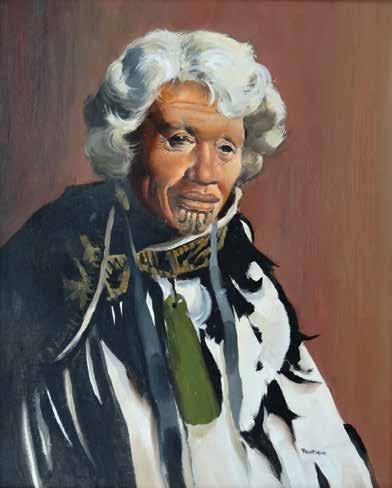
75 PETER MCINTYRE
1910 - 1995
A Maori Elder, Rotorua
Oil on canvas board 54 x 44
Signed
ESTIMATE
$9,000 - 12,000
76 PETER MCINTYRE
1910 - 1995
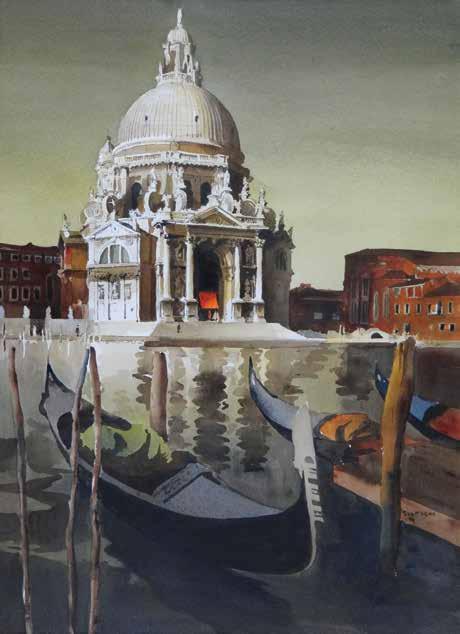
Santa Maria della Salute from Grand Canal
Watercolour 72 x 52
Signed
ESTIMATE
$8,000 - 12,000
PROVENANCE
Purchased from an exhibition McGregor Wright Gallery, Wellington, circa 1989
Original label with inscription affxedverso
Century New Zealand Landscapes in watercolour Lots 77 - 90
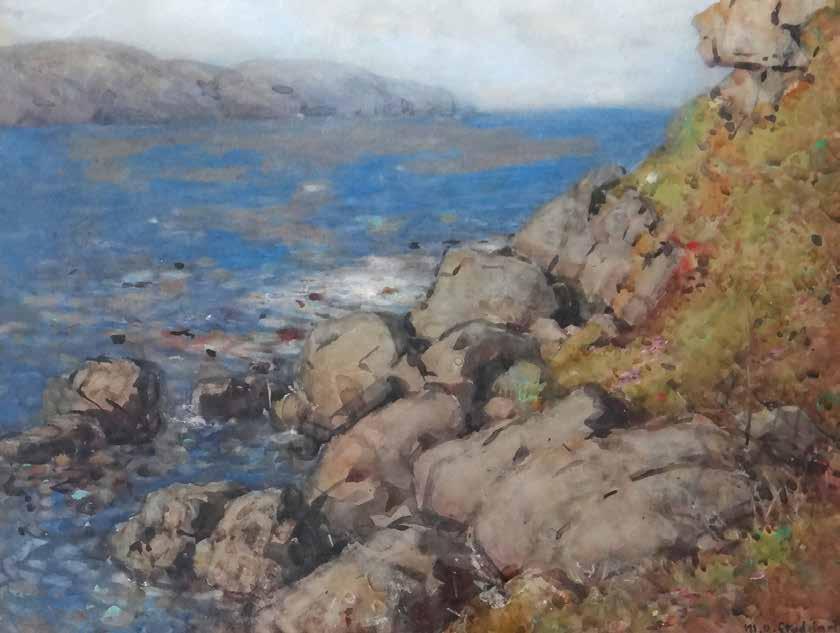
77 MARGARET OLROG STODDART
1865 - 1934
La Mer Pacifique - Akaroa
Watercolour 37.5 x 47
Signed ESTIMATE
$4,000 - 6,000
Whilst known as a flower painter Stoddart was also an accomplished landscape watercolorist. She was a member of the School of Art Sketch Club, the National Art Association of New Zealand and the Canterbury Women’s Club, as well as serving as vice president of the Canterbury Society of Arts and the Society for Imperial Culture.
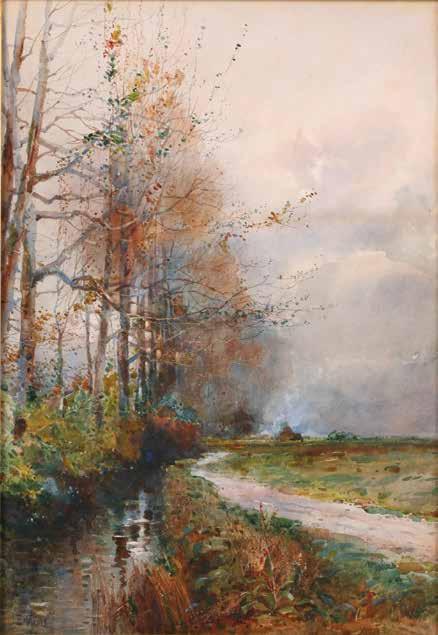
78 ISABEL JANE FIELD
1860 - 1926
Hedge & Stream, Canterbury
Watercolour 72 x 49.5
Signed & dated 1899
ESTIMATE
$9,000 - 15,000
PROVENANCE
By descent for the McLean Family, Dunedin
EXHIBITED
Frances Hodgkins and Her Circle
Auckland City Art Gallery, June 1954 No. 19
Lent by the Misses McLean/ Isabel Field/ Hedge & Stream, Canterbury; (inscription verso)
Isobel Field was the daughter of prominent watercolour artist William Mathew Hodgkins. Her watercolour landscapes are of exceptional quality. She was taught painting by her father and used to accompany him on sketching trips; her talents were recognised earlier than those of her sister Frances Hodgkins.
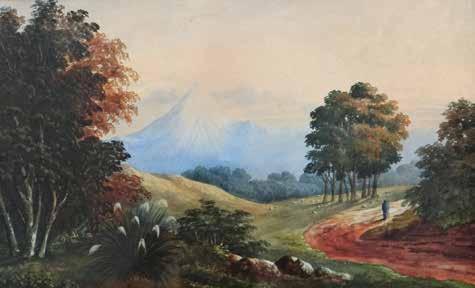
79 JOHN BARR CLARKE HOYTE
1835 - 1913
Mt Egmont, Taranaki
Watercolour 24 x 38
ESTIMATE
$3,000 - 5,000
80 JOHN BARR CLARKE HOYTE
1835 - 1913
Queen Charlotte Sound
Watercolour 17 x 32
Signed
ESTIMATE
$2,000 - 3,000
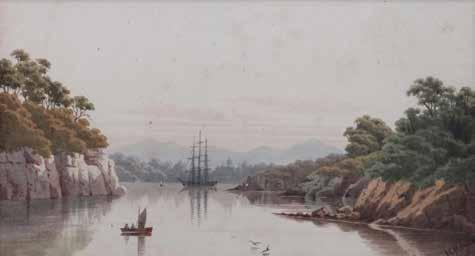
81 JOHN BARR CLARKE HOYTE
1835 - 1913
Coromandel
Watercolour 48 x 69
Signed
ESTIMATE
$20,000 - 30,000
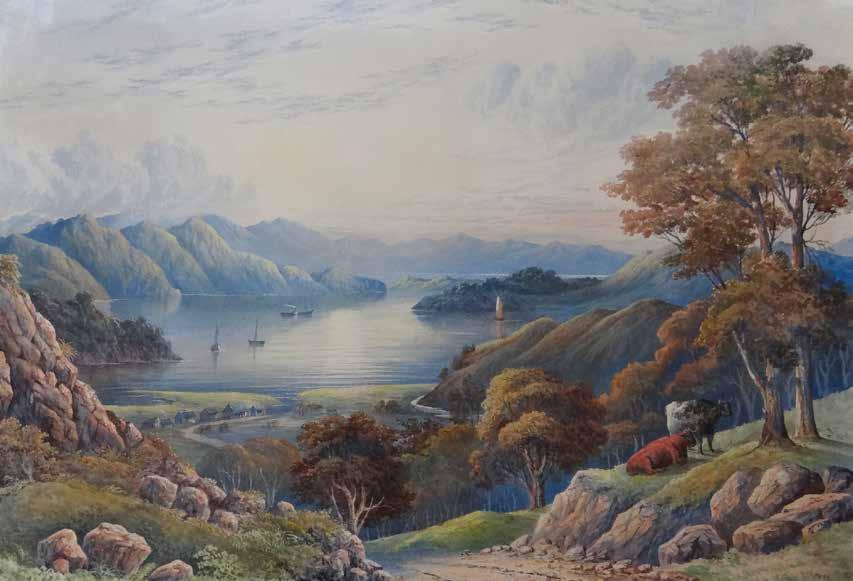
1822 - 1897
Lake
Watercolour 36 x 54
Signed & dated 1870
ESTIMATE
$12,000 - 16,000
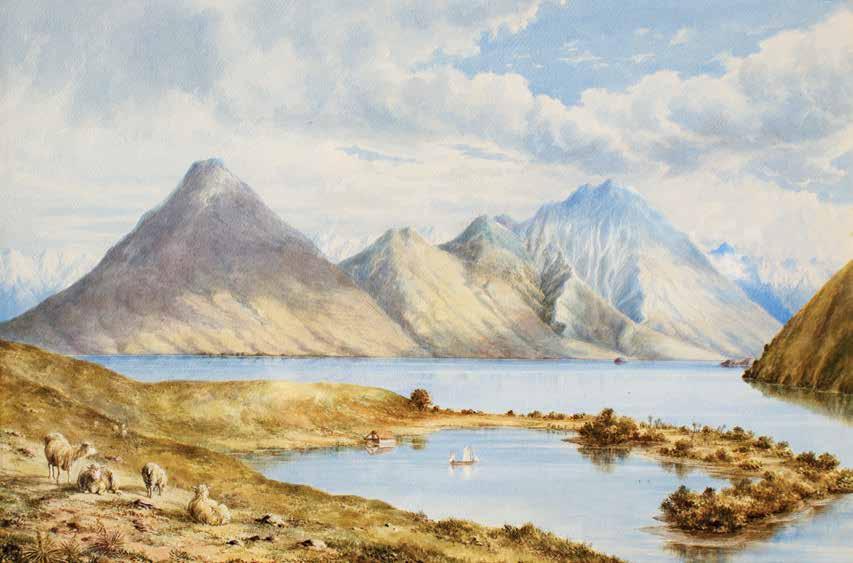
1835 - 1913
Marlborough Sounds
Watercolour 29 x 50
Signed
ESTIMATE
$12,000 - 16,000
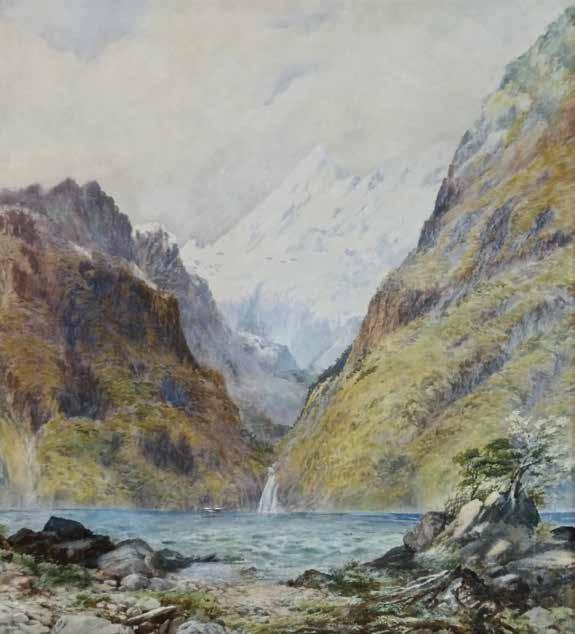
84 JOHN GULLY
1819 - 1898
Lady Bowen Falls
Watercolour 80 x 72.5
Signed & dated 1879
ESTIMATE
$14,000 - 18,000
Born in the South West of England, John Gully discovered his painting talents while studying under a watercolourist in Bristol. Despite having a love and understanding for watercolour painting, he later went on to become an accountant. His passion was reignited when he visited the Lady Bowen Falls in Milford Sound.
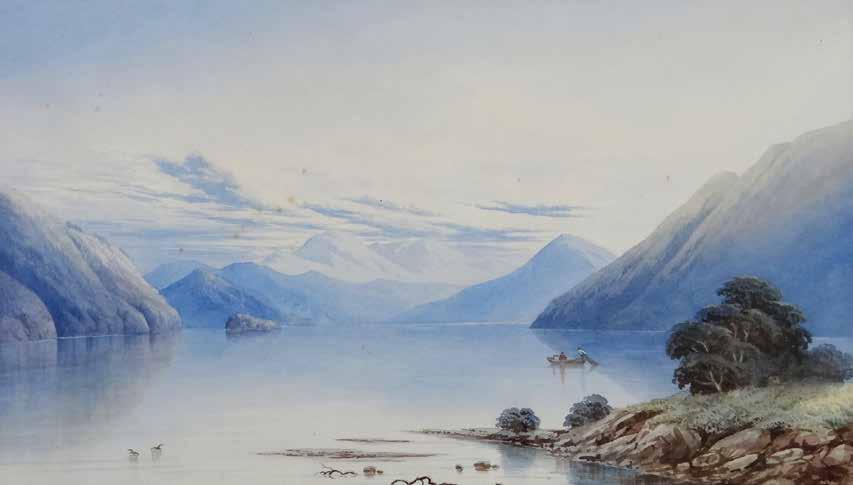
85 CHARLES DECIMUS
1822 - 1897
Lake Coleridge
Watercolour 36 x 52
Signed, inscribed N.Z & dated 1870
ESTIMATE
$12,000 - 16,000
Born in Surrey, England, in 1822, Charles Decimus Barraud arrived in Wellington in 1849, initially setting up as a chemist in Lambton Quay. For the next 26 years he travelled extensively throughout the North and South Islands, sketching the various provinces, and recording his watercolour impressions of New Zealand.
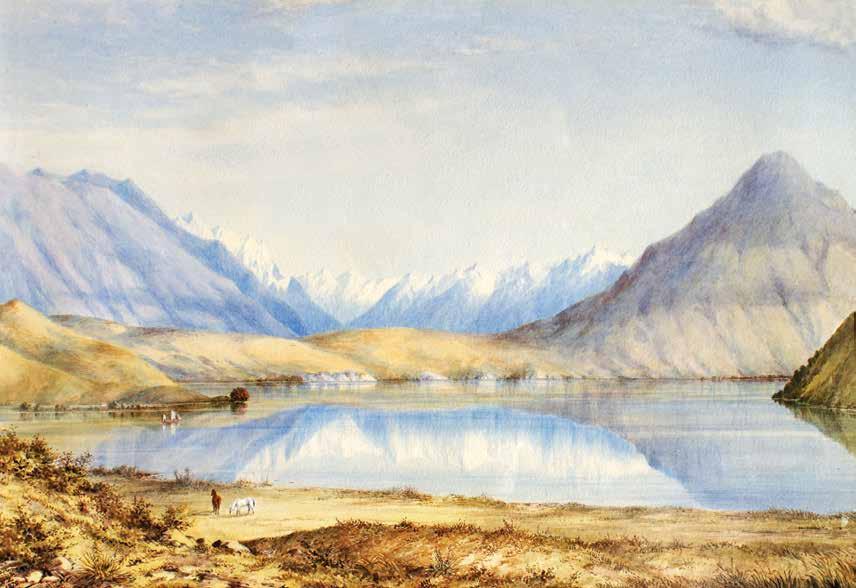
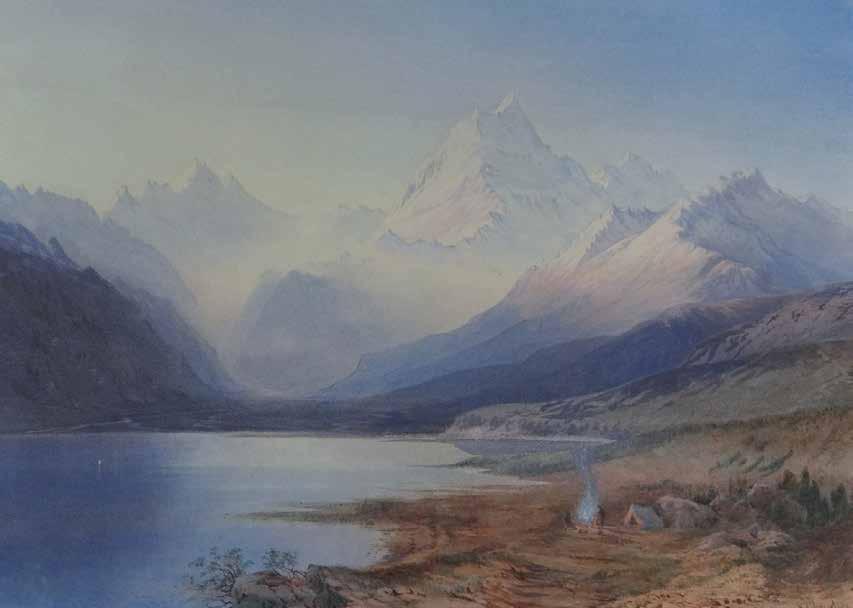
1828 - 1902
Mt Cook from Lake Pukati
Watercolour 50 x 70
Signed
ESTIMATE
$12,000 - 16,000
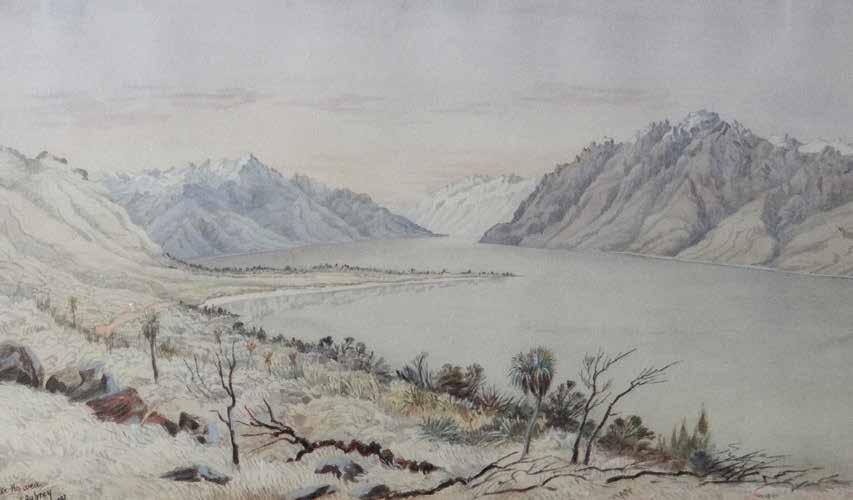
1830 - 1902
Lake Hawea
Watercolour 35 x 59
Signed & dated 1887
ESTIMATE
$10,000 -15,000
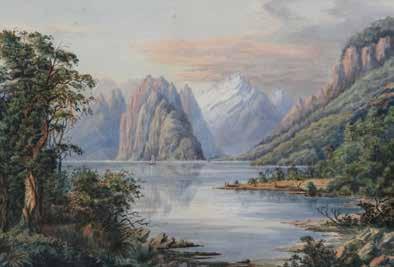
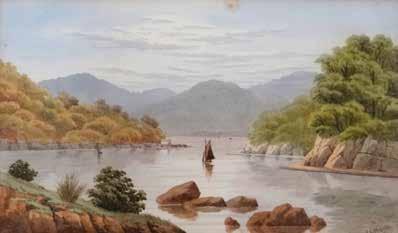
88 ERNEST ARTHUR CHAPMAN 1847 - 1945
Early Morning, Milford Sound Watercolour 34 x 50
Signed & dated 1904
ESTIMATE
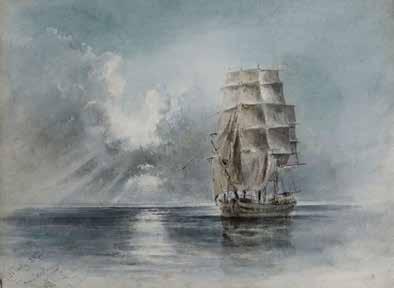
$800 - 1,200
89 NICHOLAS CHEVALIER 1828 - 1902
Hawkesbury off Lands End Watercolour 23 x 32
Inscribed & dated 1882
ESTIMATE
$1,500 - 2,500
90 JOHN BARR CLARKE HOYTE 1835 - 1913
Whangaroa Northland Watercolour 17 x 29
Signed
$1,500 - 2,500
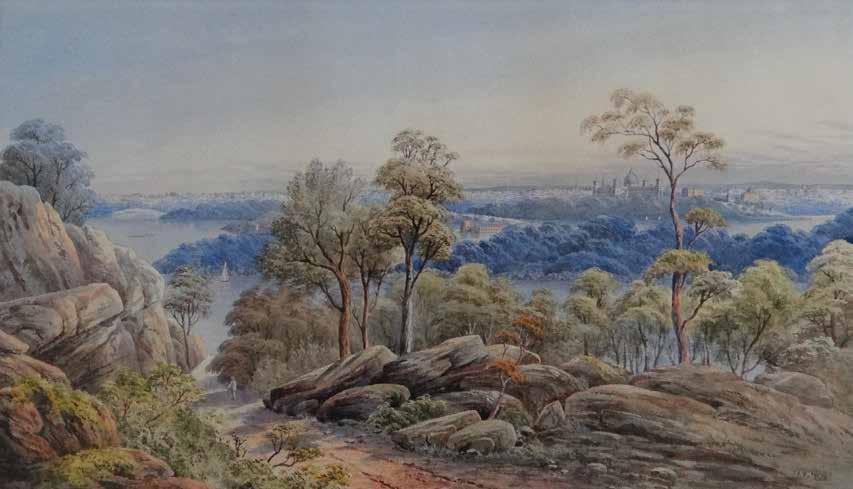
1835 - 1913
Watercolour 38 x 65 Signed
ESTIMATE
$8,000 - 12,000
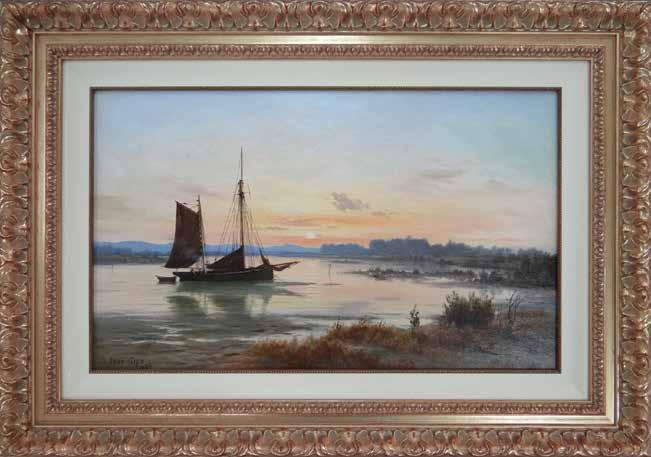
JOHN GIBB
1831 - 1909
Estuary at Sumner Oil on board 39 x 65 Signed & dated 1890
ESTIMATE
$5,000 - 8,000
100 Important, Early & Rare 6:30pm Wednesday 25 March 2015
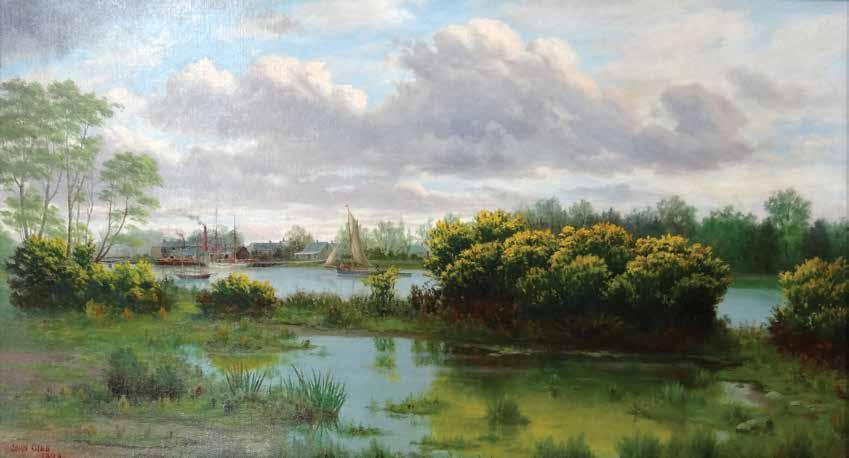
1831 - 1909
Signed & dated 1899
ESTIMATE
$12,000 - 18,000
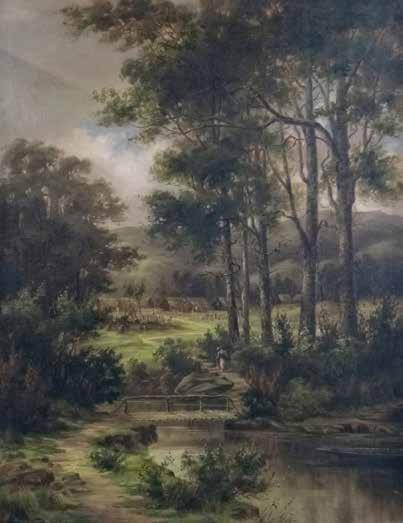
94 WILLIAM ALLEN BOLLARD
1869 - 1941
Gateway to the Pah, Waikato Oil on board 103 x 79
Signed & dated 1909
ESTIMATE
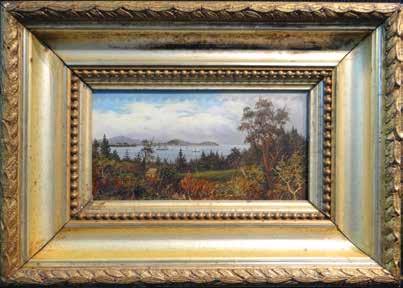
$5,000 - 7,000 95
95 ALBERT EDWARD ALDIS
1869 - 1921
Auckland Harbour from Ponsonby Oil on panel 11 x 20
Signed with monogram inscribed verso
ESTIMATE
$2,500 - 3,500
96 ALBERT EDWARD ALDIS
1869 - 1921
Untitled Landscapes - A Pair Oil on panels 20 x 30.5
Signed & dated 1889
ESTIMATE
$2,000 - 3,000
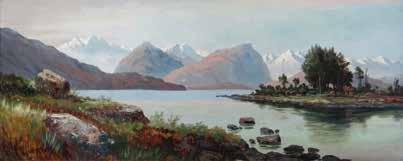
1848 - 1926
The Outlet to Lake Tekapo Oil on board 32 x 76
Signed & dated 1904
ESTIMATE
$2,500 - 3,500
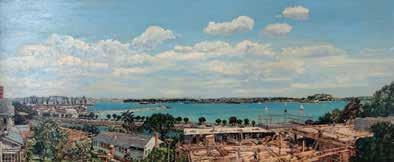
1903 - 1974
Building the White Heron Hotel, Parnell Oil on board 45 x 105
Signed
ESTIMATE
$2,500 - 3,500
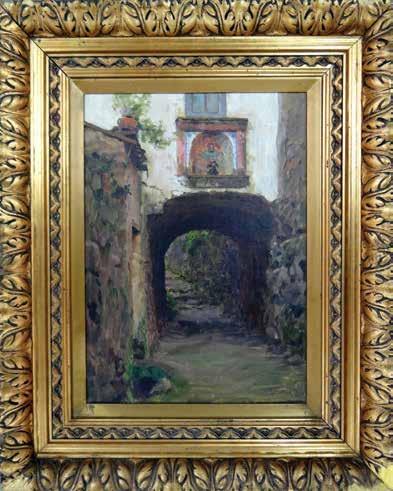
99 ROBERT PROCTOR 1879 - 1935
An Archway Oil on board 45 x 32
Signed
ESTIMATE
$1,000 - 3,000
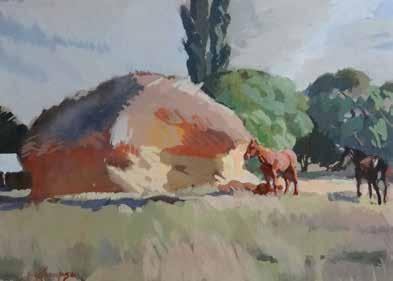
100
100 SYDNEY LOUGH THOMPSON 1877 - 1973
Canterbury Farm Gouache on paper 35 x 50
Signed
ESTIMATE
$3,500 - 5,500
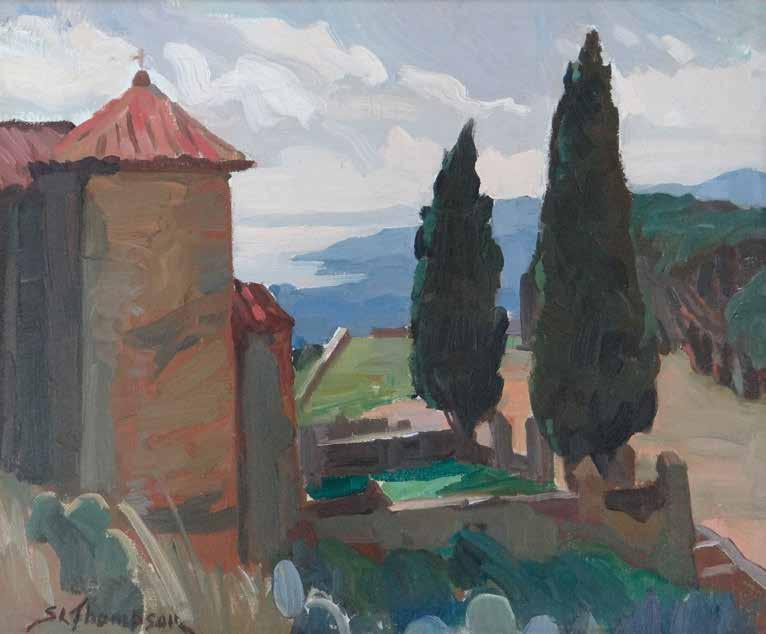
101 SYDNEY LOUGH THOMPSON 1877 - 1973
Chapel in Bormes, South France Oil on canvas 37 x 44
Signed
ESTIMATE
$8,000 - 12,000
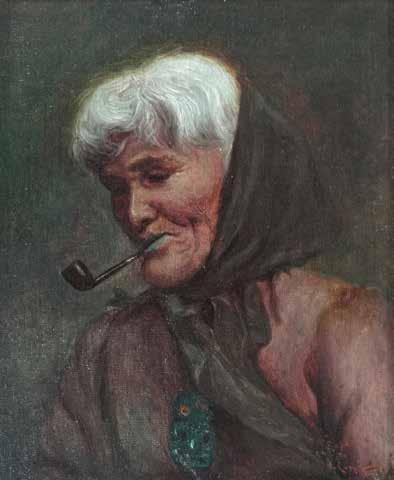
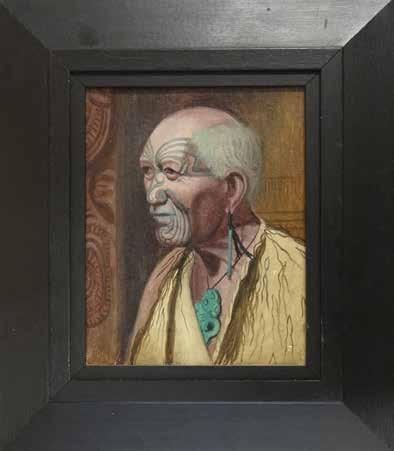
1891
Signed
ESTIMATE
$4,000 - 6,000
1891 - 1949
Signed
ESTIMATE
$4,000 - 6,000
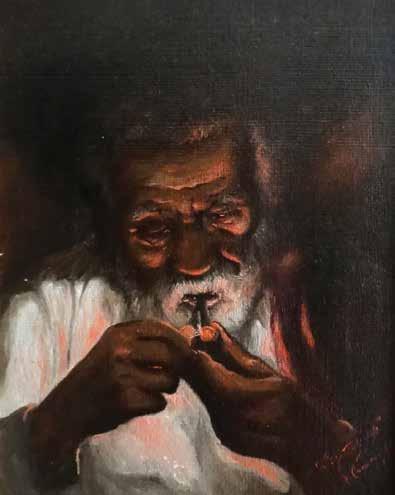
104
1891 - 1949
Lighting up
Oil on canvas 19 x 15
Signed
ESTIMATE
$3,000 - 5,000
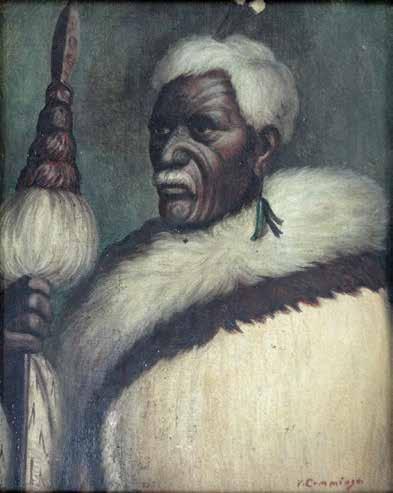
105
1891 - 1949
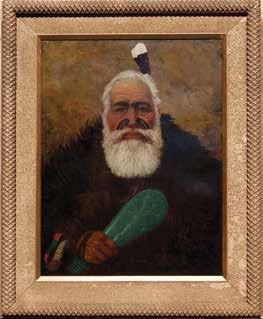
A Maori Chief
Oil on canvas 24 x 19
Signed
ESTIMATE
$4,000 - 6,000
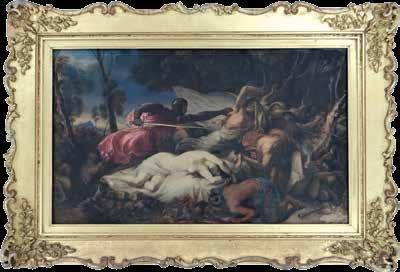
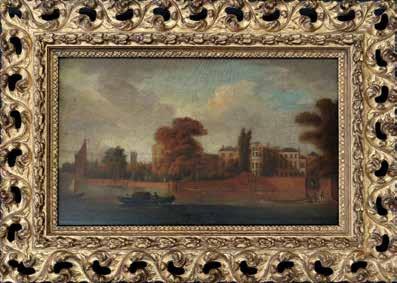
106 DANIEL MACLISE (ATTRIBUTED)
Irish 1806 - 1870
The Abduction of the Sabine Women
Watercolour on paper laid on linen 46 x 74
ESTIMATE
$5,000 - 10,000
107 ARTIST UNKNOWN
European19th Century
Le Grand Chateau
Oil on panel 23.5 x 38
Signed GSS
ESTIMATE
$500 - 1,000
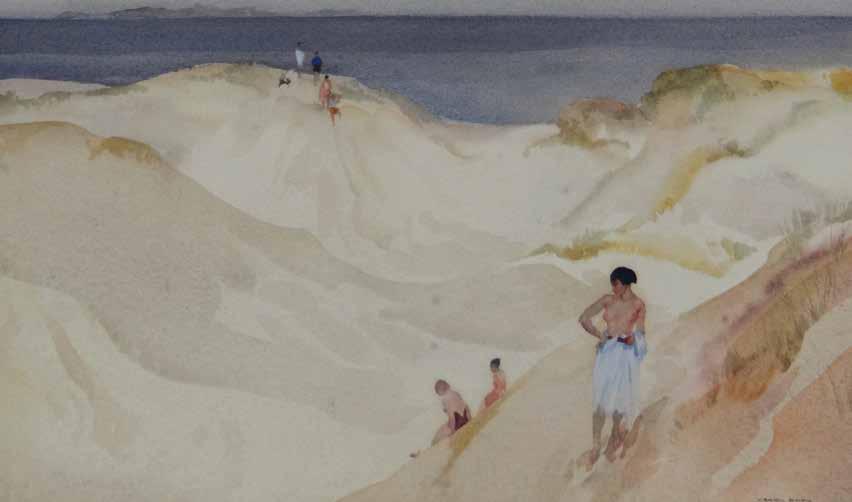
British 1880 - 1969
Girls in the Dunes
Watercolour 25 x 42
Signed
ESTIMATE
$8,000 - 12,000
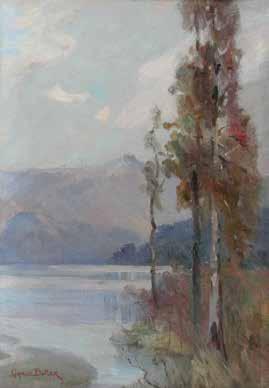
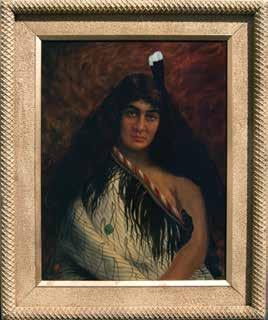
109 GRACE BUTLER
1886 - 1962
Lake Te Anau
Oil on board 35 x 24
Signed
ESTIMATE
$800 - 1,200
110 Important, Early & Rare 6:30pm Wednesday 25 March 2015
110 JOSEPH GAUT
1886 - 1962
Ratima Te Rongo, Chief Wairarapa & Miroa the Captive Maiden - A Pair Oil on canvas 65 x 50
One signed & dated 1904. Both inscribed verso
ESTIMATE
$4,500 - 6,500
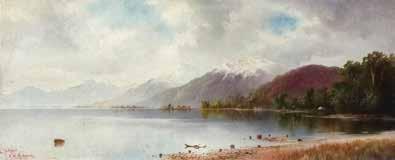
111 HENRY WILLIAM KIRKWOOD
1854 - 1925
Te Anau
Oil on board 24 x 46
Signed & inscribed
ESTIMATE
$1,000 - 2,000
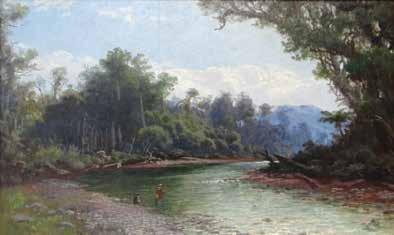
112
CHARLES BLOMFIELD
1848 - 1926
Tongariro River with Trout Fishermen
Oil on board 31.5 x 53
Signed & dated 1904
ESTIMATE
$4,000 - 6,000
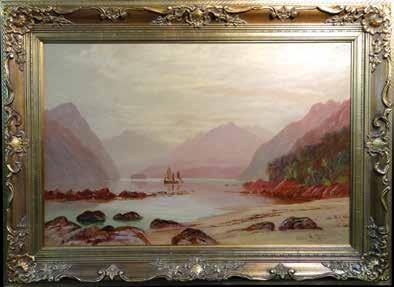
113 LAWRENCE WILLIAM WILSON
1850 - 1912
Preservation Inlet, Otago, New Zealand
Oil on canvas 50 x 76
Signed & inscribed
ESTIMATE
$4,000 - 6,000
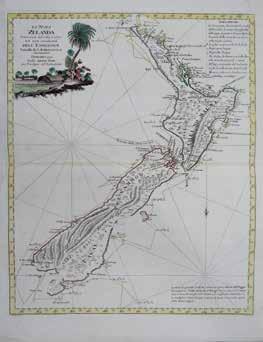
114 ANTONIO ZATTA
1722 - 1804
Nuova Zelanda 1778
Handcoloured copper plate engraving published Venice 1778
35 x 24
ESTIMATE
$4,000 - 6,000
A decorative and highly sought after edition of Cook’s mapping of New Zealand, this edition delineates two islands, tentatively identifying the Southern Island as separate. The map shows Cook’s tracks around the island, along with astronomical observations and includes native and European placenames. Zatta’s map was drawn from information provided in Cook’s Voyages. The decorative cartouche shows a Maori village scene.
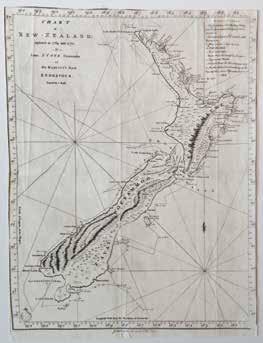
115 JAMES COOK
1728 - 1779
Chart of New Zealand, explored in 1769 and 1770 by Lieut: J Cook, Commander of His Majesty’s Bark Endeavor Lithograph with inscriptions
ESTIMATE
$1,500 - 2,500
The first complete map of all coastal New Zealand. The chart was made during Cook’s first voyage and shows the track of the Endeavour with dates and soundings. Although New Zealand had been discovered by Abel Tasman in 1642, it was Cook who discovered that it was not part of the great Terra Australis’. Arriving at Poverty Bay on October 7, 1769, Cook took six months to circumnavigate the islands. He sailed east of Banks Peninsula and mistook it for an island. Stewart Island is marked as a peninsula.
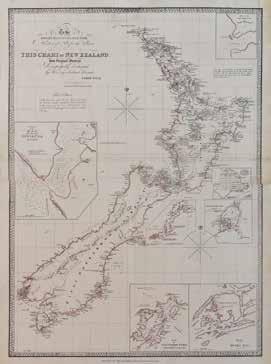
116 JAMES WYLD
1812 - 1887
Chart of New Zealand, c. 1879 Copper plate etching
ESTIMATE
$2,000 - 3,000
James Wyld’s Chart of New Zealand from Original Surveys. To the Right Honourable Secretary of State for the Colonies etc.
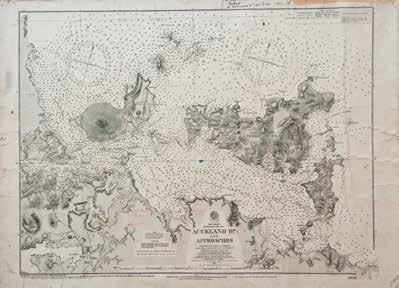
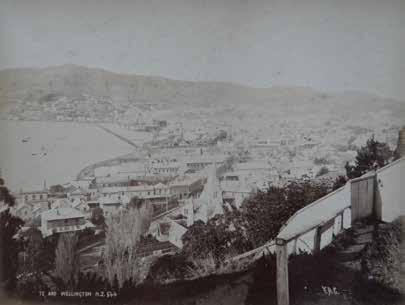
117 CAPT. J L STOKES AND COM. B DRURY
19th Century New Zealand
Auckland Harbour and Approaches
Surveyed by Capt. J.L. Stokes, Comr. B. Drury and the offcersofHMSAcheronandPandor
1849-55 and by Lieut. C.F. Oldham, HMS Lark, 1847
Cartiographic chart 46 x 62
ESTIMATE
$1,200 - 1,800
This edition of the chart is thought to be a version re-published in 1914. Other editions were republished in 1872 and 1885. It has similarities to Stokes and Drury’s Entrances to Auckland Harbour, 1896, Auckland Museum Collection.
118 FRANK COXHEAD
An Album Containing 52 Photographs of Early New Zealand Subjects and Beyond Gelatin silver prints all 14 x 19
Signed & inscribed
ESTIMATE
$500 - 1,000
All images may be viewed as a PDF on our website. The full album available for inspection at viewing. www.fineartauction.co.nz
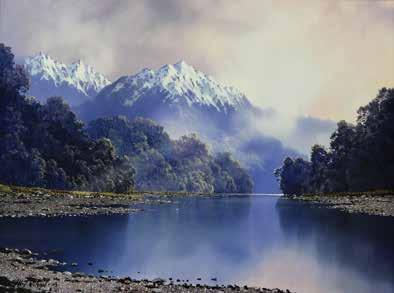
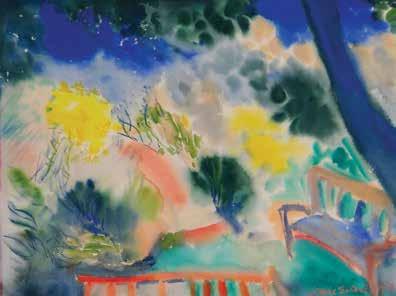
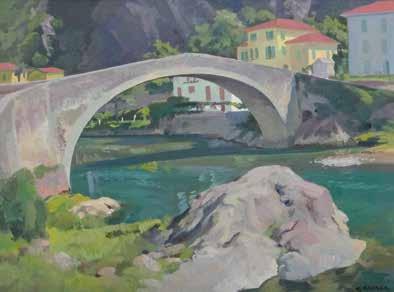
119 TIM WILSON b. 1954
Manapouri
Oil on canvas 48 x 62
Signed & dated 2003
ESTIMATE
$4,000 - 6,000
120 CEDRIC SAVAGE
1901 - 1969
Toledo Oil on canvas 45 x 55
Signed
ESTIMATE
$800 - 1,200
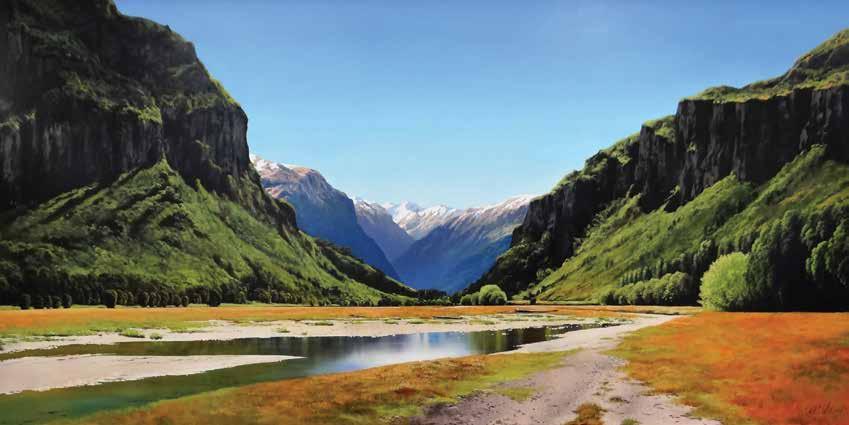
1946 - 2012 On the Terrace
Watercolour 51 x 72
Signed & dated 1987
ESTIMATE
$4,000 - 6,000
Matukituki Valley Oil on canvas 76 x 153
Signed
ESTIMATE
$15,000 - 20,000
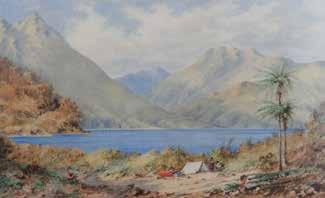
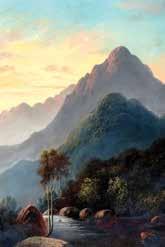
123 CHARLES DECIMUS BARRAUD
1822 - 1897
The Blue Lake Watercolour 25 x 40
Signed & dated 1874
ESTIMATE
$7,500 - 10,000
124 THOMAS REGINALD ATTWOOD
1865 - 1926
Fiordland
Oil on board 90 x 60
Signed
ESTIMATE
$2,000 - 3,000
125 F GREGORY
19th Century New Zealand
Browns Bay, Auckland
Watercolour 24 x 37
Signed
ESTIMATE
$2,000 - 3,000
126 JOSIAH MARTIN
1843 - 1916
Ariki, Rotomahana 1885
Gelatin silver print 14 x 21
Inscribed and numbered 152
ESTIMATE
$700 - 1,000
127 ROBERT NETTLETON FIELD 1899 - 1987
Untitled - Richard Field as a Baby Watercolour 23 x 22
Dated October 1944
ESTIMATE
$2,000 - 3,000
PROVENANCE
Listed p. 171 thesis R.N. Field: The Dunedin Years 1925 - 1945. Anna K C Petersen’s 1987 MA Art History, University of Canterbury
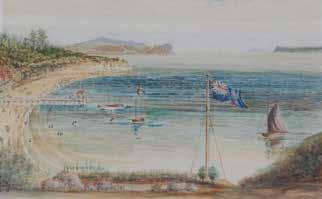
128 JOHN PHILEMON BACKHOUSE 1845 - 1908
War Canoe on Taupo Moana Oil on board 7.5 x 12.5
Artist’s Stamp & Inscribed verso
ESTIMATE
$800 - 1,200
129 ELLEN VON MEYERN
1883 - 1912
Maori Maiden Oil on canvas 60 x 50
Signed & dated 1901
ESTIMATE
$800 - 1,200
130 MARY E MORTON MASTERS 1884 - 1917
Study from Life Oil on canvas 22 x 30
Signed Inscribed verso
ESTIMATE
$800 - 1,200
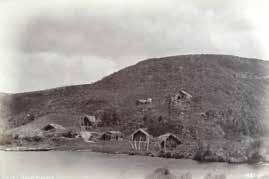
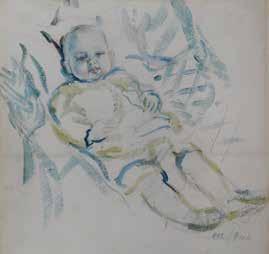
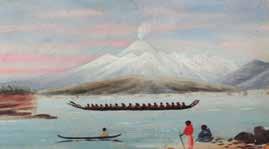
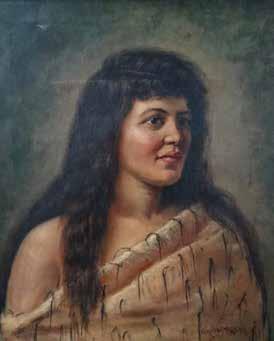
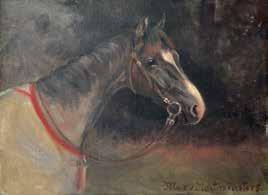
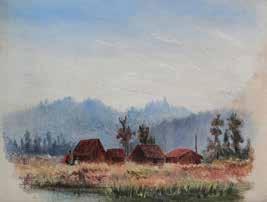
131
19th Century New Zealand
Maori Encampment
Waitekauri Rd &
Possibly Freemans Bay - A Pair
Oil on board 11 x 15
One inscribed Maori
Encampment Waitekauri Rd, New Zealand verso
ESTIMATE
$2,000 - 3,000
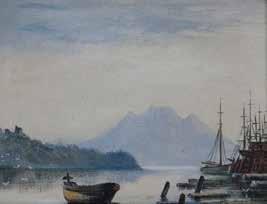
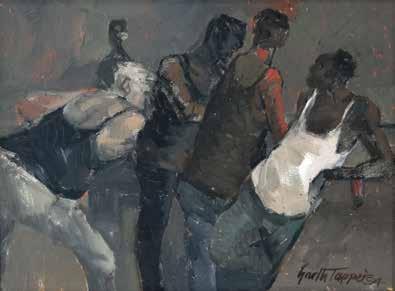
132 GARTH TAPPER 1927 - 1999
The Workers Oil on canvas 29 x 39
Signed & dated 1994. Inscribed verso
ESTIMATE
$3,000 - 5,000
133 GARTH TAPPER 1927 - 1999
The Beneficiary
Acrylic on paper 69 x 51
Signed & dated 1999
Inscribed verso
ESTIMATE
$1,000 - 2,000
Important, Early & Rare 6:30pm Wednesday 25 March 2015
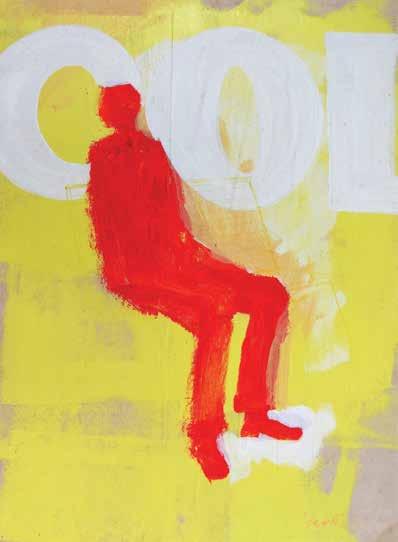
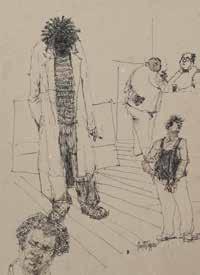
134 GARTH TAPPER
1927 - 1999
Public Bar
Ink on paper 36 x 26
Signed
ESTIMATE
$500 - 800
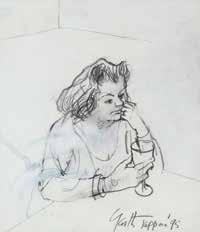
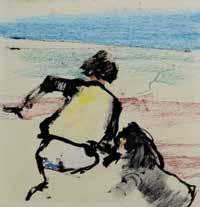
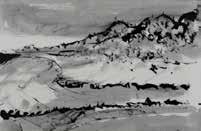
135 GARTH TAPPER
1927 - 1999
Anne at the Kitchen Table Graphite on gesso panel 36 x 26
Signed & dated 1995
Inscribed verso
ESTIMATE
$500 - 800
137 GARTH TAPPER
1927 - 1999
Karikari Far North
Ink & brush on paper 26 x 40
Signed, inscribed & dated 1994 verso
ESTIMATE
$300 - 500
136 GARTH TAPPER
1927 - 1999
The Girls Ink and pastel on paper 27 x 26
Signed, inscribed & dated 1992 verso
ESTIMATE
$800 - 1,500
138 GARTH TAPPER
1927 - 1999
No. 14 Cockfight
Monoprint 39 x 21
Signed, inscribed & dated 1997 verso
ESTIMATE
$400 - 600
Thank You - End of Sale
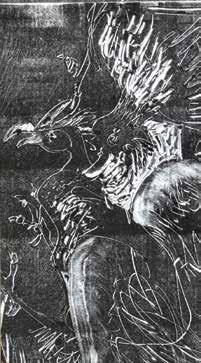
Subscription include: 4 Important, Early & Rare catalogues 4 Contemporary & Collectable catalogues
. Please charge my Visa /Mastercard find cheque enclosed
Expiry date ................/................. Signature .........................................................
Fax to +64 9 307 3421 or Post to International Art Centre PO Box 37344 Parnell Auckland 1151 Alternatively subscribe online www.fineartauction.co.nz or by calling Toll Free 0800 800 322 with credit card details
120 Important, Early & Rare 6:30pm Wednesday 25 March 2015
Important, Early & Rare Wednesday 25 March 2015
I instruct International Art Centre to bid on my behalf for the following lots up to the prices indicated below. My bids are to be executed at the lowest attainable price level. All bids are subject to Conditions of Sale printed in this catalogue.
Registration Bidding Number
Alternatively, register then bid online www.fineartauction.co.nz
Works from Fletcher Trust Collection held 10 September 2014, Important, Early & Rare held 29 October 2014 and Contemporary & Modern Art held 22 November
post auction negotiated sales. Prices quoted are fall of the hammer which attract buyers premium
The highest bidder shall be the buyer. In the event of any dispute as to the bidding in respect of any lot, that lot may be offered again at the discretion of the auctioneer whose decision shall be absolute and final.
The auctioneer has the right -
(i) to refuse any bid;
(ii) to advance the bidding at his absolute discretion;
(iii) to place a reserve on any lot;
(iv) to place a bid or bids on behalf of the seller;
(v) to withdraw any lot from sale;
(vi) to require a successful bidder to pay forthwith the whole or any part of the purchase price.
The auctioneer acts as the agent of the seller and neither he nor the seller shall be responsible for any defects or faults in any lot or for any errors of description or for genuineness or authenticity of any lot and no compensation shall be paid in respect of same.
From the time of lot being sold, such lot will be the responsibility of the buyer.
Successful bidders are required to pay for purchases immediately on completion of sale unless otherwise arranged.
All intending buyers are required to register for a bidding number prior to auction commencing. Subscribers can use their permanent bidding number. We reserve the right to ask for identification if you are a first time client of International Art Centre.
Each lot shall be paid for and removed at the buyers expense by no later than 5pm Friday 27 March 2015 unless otherwise arranged failing which the auctioneer and/or the seller shall have the right to forfeit any deposit paid by the buyer and to resell the lot either by public or private sale and any deficiency on costs of resale shall be borne by the defaulting buyer.
No lot may be collected whilst auction is in progress. Payment can also not be made until completion of auction.
When the auctioneer declares a lot subject’ this means the bid is below the set reserve and is subject to vendor accepting, rejecting or negotiating the bid. International Art Centre will endeavour to make contact with the vendor immediately after sale or the following day. If the bid is accepted, the highest bidder is obligated to make purchase.
Estimates are provided for each entry and act as a guide only. They are prepared well in advance of sale and are subject to revision at any time. Estimates are based on hammer price and do not include buyers premium.
Absentee bidding arranged - please refer to absentee bidding in back of catalogue. Fax to (09) 307 3421 or post to PO Box 37 344 Parnell before 3pm day of sale. Please do not be offended if a member of our staff ask for your credit card details as security.
Absentee bids can also be left via our website to registered members. Our website www.fineartauction.co.nz acts as a useful auxiliary to the catalogue but we recommend inspection or a condition report prior to leaving a bid. Our staff will gladly supply you with a condition report on any lot.
Telephone bidding available to subscribers and registered bidders. There is no charge for this service.
Eftpos: Available for transactions depending on your daily limit.
Bank deposits: Please ask for our bank details to be sent by fax or email if you wish to pay by direct debit. Quote the Lot number(s) purchased as reference.
Cheques: Accepted by known clients of International Art Centre or at our discretion. When posting cheques please ensure they are sent to the following address. International Art Centre PO Box 37 344 Parnell, Auckland 1151. Make cheque payable to International Art Centre’. International Art Centre reserves the right to release goods once cheque proceeds have been cleared.
Credit cards: Visa and Mastercard accepted with a 2% surcharge. American Express cards not accepted.
As a general rule, anyone exporting New Zealand works over 60 years of age should apply for an export certificate from the Ministry for Culture and Heritage to avoid disputes with customs. This does not apply to non New Zealand works. For full details visit www.mch.govt.nz
FREIGHT & PACKING
International Art Centre arrange door to door delivery both nationally and internationally. Please arrange insurance on your items prior to them leaving our premises.
Should you have any questions relating to the sale or if we can be of any other assistance please contact us during business hours on (09) 379 4010, Toll Free 0800 800 322 or email info@internationalartcentre.co.nz
15% Buyers premium plus GST on premium applies to all lots. (Total buyers premium is 17.25% including GST) www.fineartauction.co.nz