





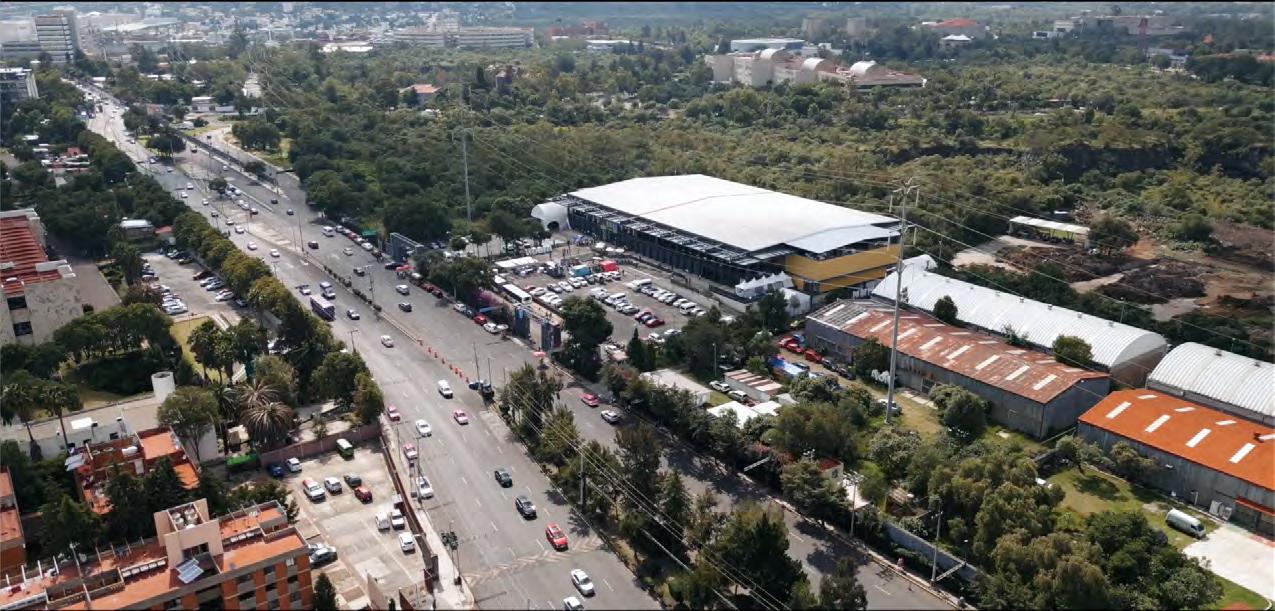

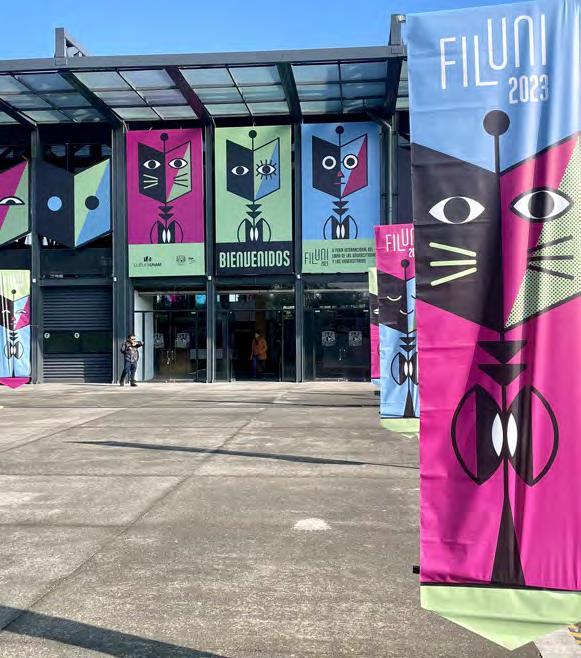
In 2023, The University of Texas at Austin became the first university from the United States to co-host La Feria Internacional del Libro de las Universitarias y los Universitarios (FILUNI). Hosted on the campus of the Universidad Nacional Autónoma de México (UNAM) in Mexico City, the fifth annual international book festival and conference featured more than 300 international publishers and attracted 42,000 attendees.
Sonia Feigenbaum, senior vice provost for global engagement and chief international officer, and Texas Global led the strategy, programming, and logistical efforts for UT Austin’s participation at FILUNI. Organizers developed the programming around the research pillars of
UT’s 10-year strategic plan, “Change Starts Here.” Themes included society and technology; health and well-being; energy and the environment; and culture and the arts. Feigenbaum and her team assembled a 32-member task force composed of dean-appointed representatives in order to include all UT colleges and schools in this unique transnational opportunity. The task force collected 150 proposals and, in partnership with the UNAM executive committee, selected 54 sessions that became an integral part of the FILUNI 2023 program.
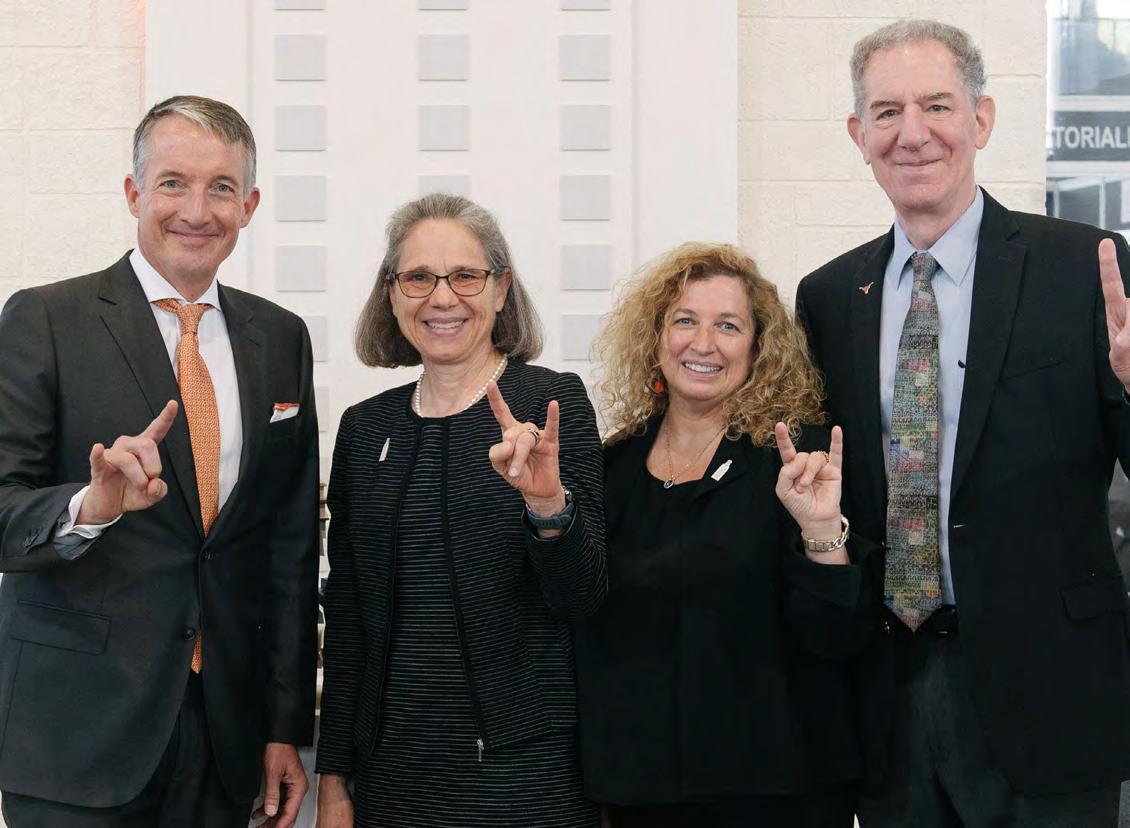


“Our motto at The University of Texas at Austin is, ‘What starts here changes the world,’ and we are deeply committed to providing connections and opportunities to serve not just Texas but all of the Americas, eventually spreading our influence across the globe.”
President
“FILUNI is a testament to the robust collaborations we have with peers in Mexico and Latin America, and it also gives us the opportunity to deepen our institutional partnerships and break down silos within our own institution.”
Sharon Wood Executive Vice President and Provost
“At UT Austin, we are confident that our participation in FILUNI will act as a significant catalyst for important initiatives and collaborations between our community and those of our fellow participating institutions. We are aligned in seeking solutions to the major problems affecting the world today, and we are committed to addressing the challenges that humanity faces.”
Sonia Feigenbaum
Senior Vice Provost for Global Engagement Chief International Officer

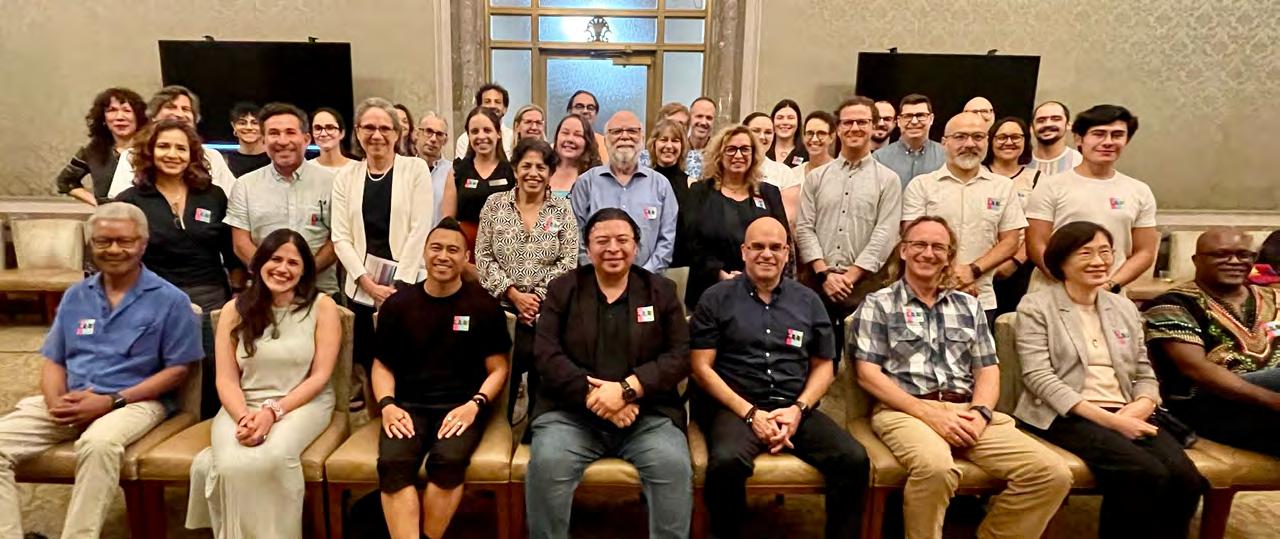
The UT Austin delegation was the largest in the University’s history, including more than 140 faculty members, graduate students, performers, campus leaders, staff members, and alumni representing 23 colleges, schools, and units. Roundtable discussions, research symposia, live podcast recordings, musical performances, film screenings, and exhibitions manifested the benefits of interdisciplinary and international collaboration.
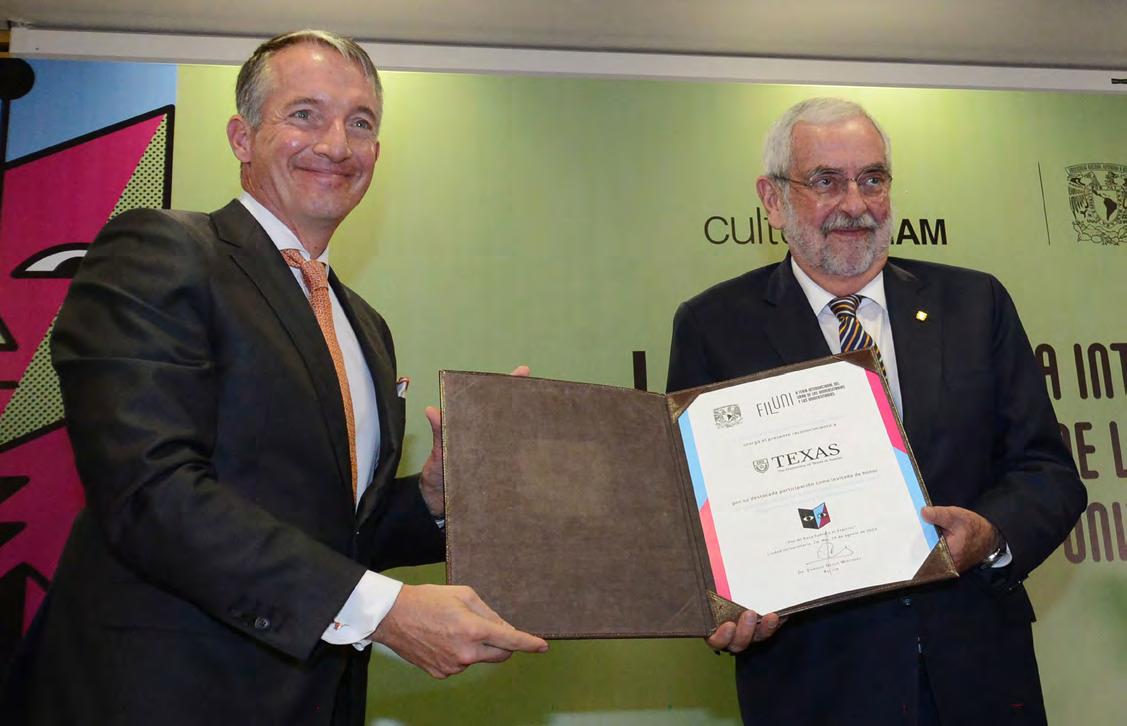
“I think I can speak for everyone on the [UT Austin] team when I say, aligning ourselves with UNAM and being distinguished guests of FILUNI has helped us see the world outside of ourselves a little clearer,” University President Jay Hartzell said at the opening ceremony. “We are on a journey to move past our own opinions and learning, and seek a broader vision. Each of us wants to change the world, to make it a better place, and this conference is an excellent place to work toward that goal together.” The welcome ceremony also featured remarks from UNAM President Enrique Graue Wiechers and other UNAM leaders.
FILUNI provided a unique opportunity to showcase the work of UT faculty, researchers, authors, and artists, as well as a dynamic platform to broaden the scope and strengthen the 50-year relationship between UT Austin and UNAM. Additionally, FILUNI bolstered historical ties between the U.S. and Mexico, as the two countries celebrated the bicentennial of their diplomatic relations.
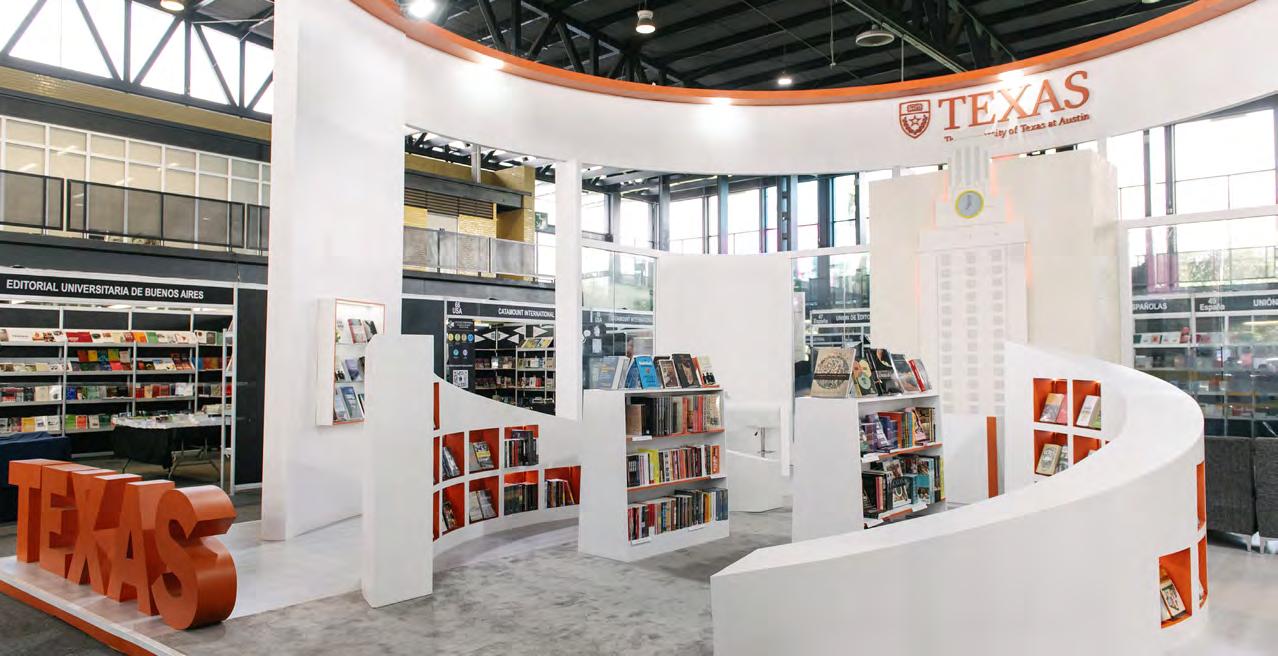
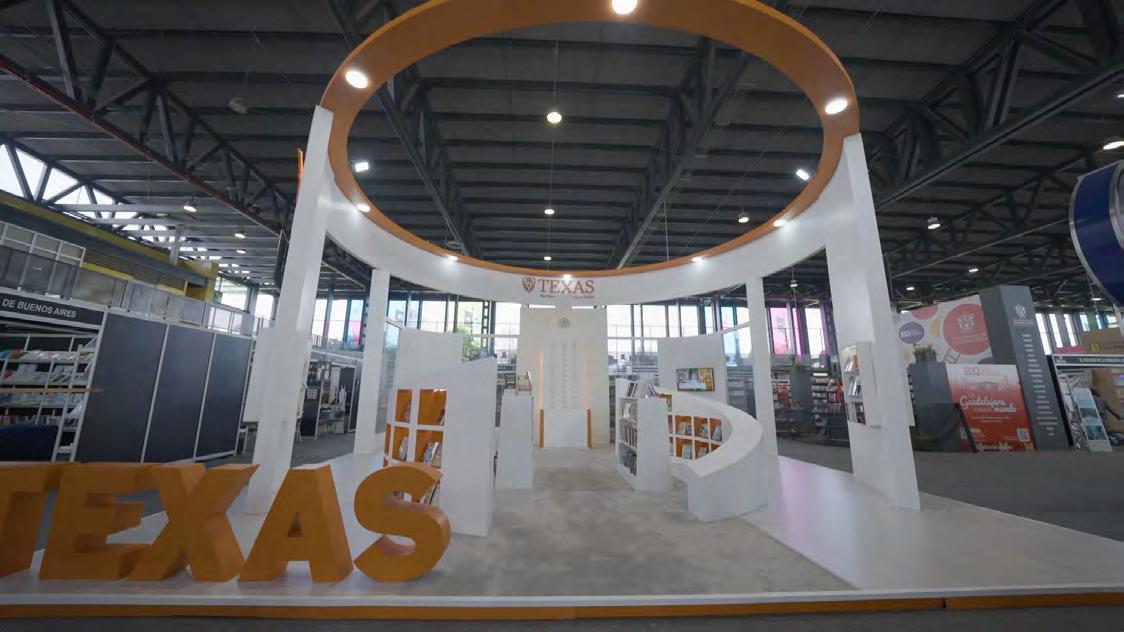
UT Austin’s impressive bookstand featured a customized design with global elements, a backlit replica of the iconic tower, and a lounge that served as an ideal gathering space for book signings, photo opportunities, and conversations between delegation members and colleagues. The University of Texas Press has participated in FILUNI since the festival’s inception in 2017, and as guest of honor this year, showcased 1,100 of its volumes for purchase.
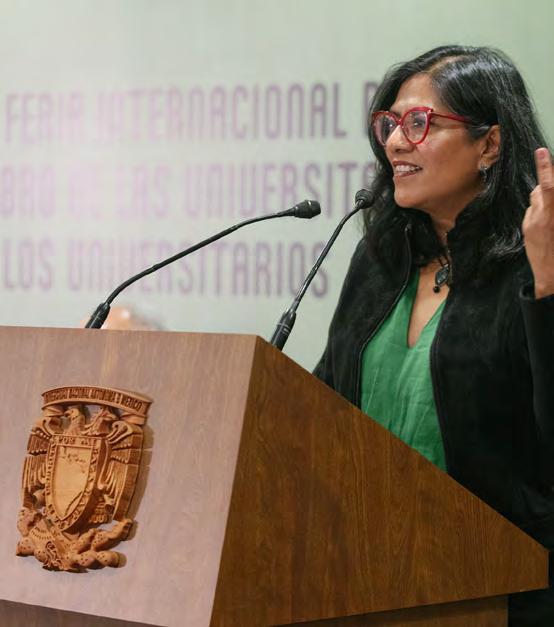
While in Mexico City, UT Austin leaders connected with colleagues from across the Americas to exchange perspectives and assess potential collaborations. Formal sessions and informal conversations among delegation participants promoted many of the strategic plan’s objectives: advancing interdisciplinary study and creative innovation around society’s most pressing challenges; propelling faculty members on meaningful career journeys; preparing graduate and professional students for a diverse array of paths; enhancing career opportunities for staff members; and preparing future leaders to solve problems in a dynamic world.
“Organizing FILUNI with The University of Texas at Austin has been one of the best work experiences of my life. Together, we built a program that truly showed the best of both universities and strengthened bridges across our borders. From here, we hope to broaden the path that’s been opened, leading toward a closer, more continuous, more joyful exchange between our communities. Long live our universities and the brotherhood of the word!”
Socorro Venegas
Directora General de Publicaciones y Desarrollo Editorial
Universidad Nacional Autónoma de México

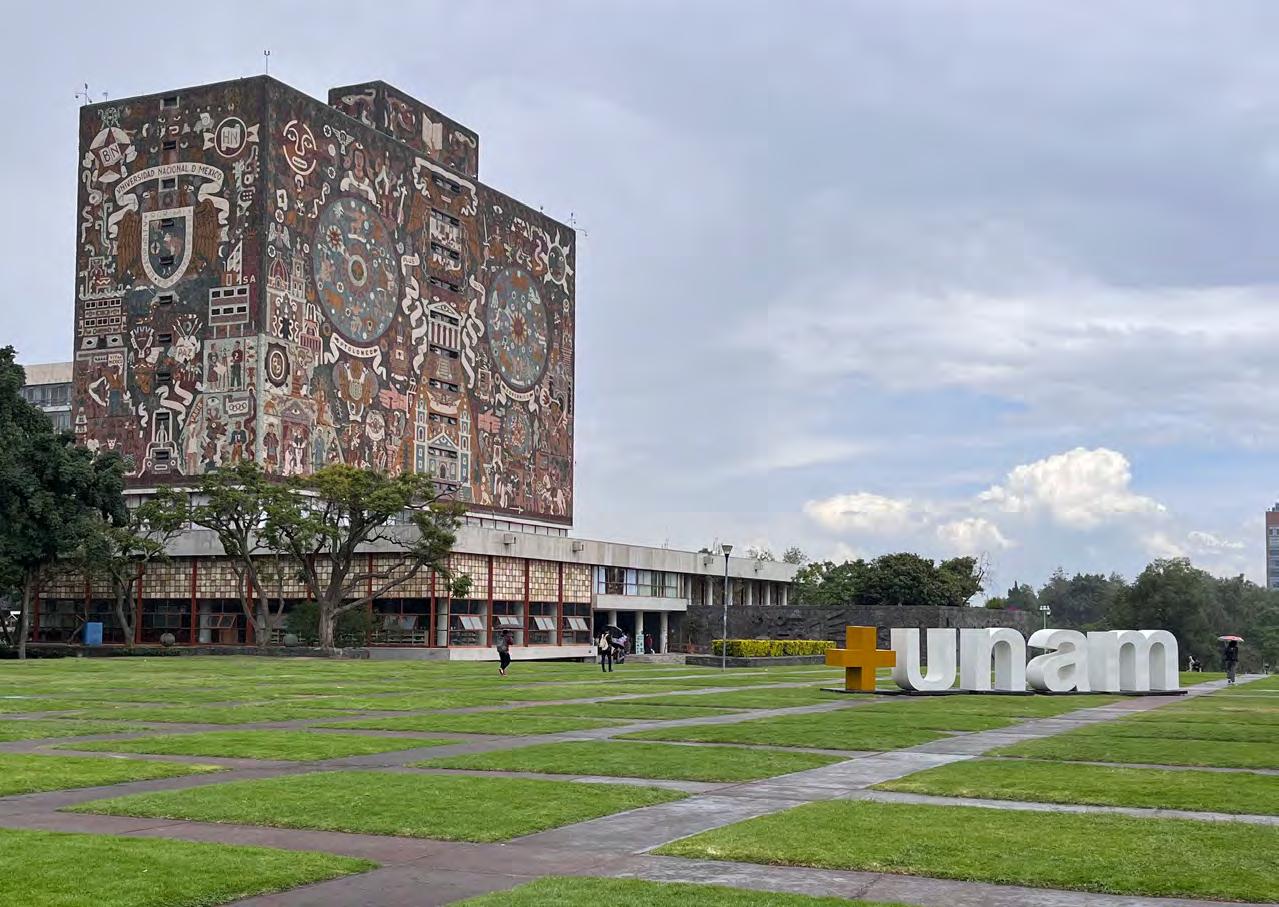
UT Austin and our partners in Mexico share more than a century of cooperative efforts in academic discovery and intercultural exchange. Mexico is home to the largest population of UT Austin students abroad and the largest concentration of alumni in Latin America. Each year, hundreds of Longhorns study, research, and intern in Mexico.
Located on the campus of the Universidad Nacional Autónoma de México (UNAM) in Mexico City, the Mexico Global Gateway connects UT Austin with universities, foundations, governments, businesses, and alumni to develop opportunities in Mexico and Central America and advance the global mission of the University.
“As we continue to advance the global reach of the University, Mexico is crucial as our neighbor, friend, and partner. We not only share a border, history, language, culture, and community, but also our ties continue to grow in innovation and entrepreneurship, manufacturing and digitalization, media, and trade. We face shared challenges in health, education, and civic participation. We never stop the exchange of people and knowledge.”
Sonia Feigenbaum Senior Vice Provost for Global Engagement Chief International Officer
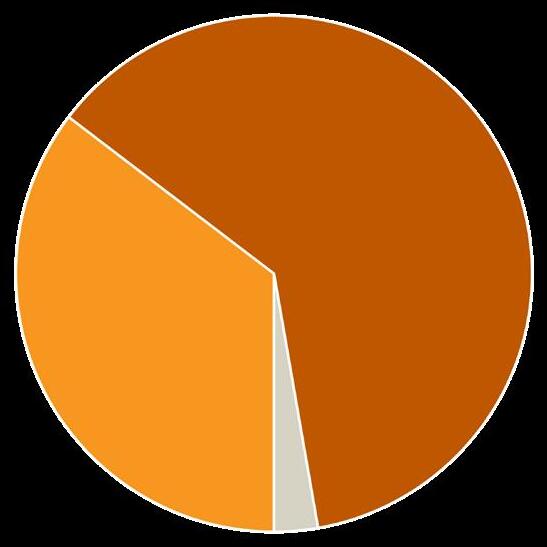
Total 1,462
Study abroad: 510
Research and experiential activities: 891
Internships: 61
*Statistics from 2012-2022.

International Students and Scholars
Total 5,775
International students: 5,157
International faculty and researchers: 322
English language students: 296
MOST POPULAR DESTINATION FOR UT STUDENTS STUDYING AND RESEARCHING ABROAD IS MEXICO
LARGEST POPULATION OF INTERNATIONAL STUDENTS AT UT AUSTIN IS FROM MEXICO
HIGHEST POPULATION OF FACULTY AND SCHOLARS AT UT AUSTIN IS FROM MEXICO
UT AUSTIN FACULTY ARE ENGAGED IN RESEARCH AND CREATIVE ACTIVITY, INCLUDING 140 JOINT PUBLICATIONS WITH FACULTY AT 30 UNIVERSITIES IN MEXICO
AUGUST 29 - SEPTEMBER 3, 2023
42,000 ATTENDEES
317 PUBLISHERS
84 BOOTHS REPRESENTING 11 COUNTRIES
140
20,000
100,000 AND BOOKS FOR PURCHASE TITLES
54 UT AUSTIN PARTICIPANTS REPRESENTING 23 COLLEGES, SCHOOLS, AND UNITS UT AUSTIN SESSIONS AND EVENTS
92 UT AUSTIN PRESENTERS WITH 95 PEERS FROM LATIN AMERICAN INSTITUTIONS


The University of Texas Press has participated in FILUNI since the book festival’s inaugural year in 2017. At the annual conference, the international publisher introduces hundreds of university librarians and readers from across Latin America to its vast array of books and journals covering topics that include the history, culture, arts, and environment of Texas, as well as Latin American and Latinx studies.
Established in 1950, UT Press has published more than 3,000 books over six decades, currently producing approximately 100 new books and 13 journals each year originating from authors around the globe. It issues both commercial and scholarly work, including original research conducted at UT Austin as well as across the United States, Latin America, and the world.
“For a publisher with such deep offerings on Mexico and Latin America, FILUNI has been a great match for us,” said UT Press Director Robert Devens. “It’s a way to meet those who use our books, whether students or librarians, and to explore partnerships for licenses and translations that will further disseminate our work.”
These relationships with academic publishers, librarians, and their audiences are paramount for many segments of UT Press, including the scholarly journals program, whose electronic and print journals reach more than 120 countries and feature work by authors from more than 40 countries.
The licensing of translation rights, allowing books from the UT Press catalog to be offered in Spanish, is a major aspect of press business, much of which is transacted at FILUNI and similar international book events.
“Our goal has always been to go out there and try to find new collaborations, new relationships with university presses in Latin America,” said Angelica Lopez-Torres, international rights manager at UT Press. “FILUNI has expanded our reach with those editors, those publishers.”
“Perhaps most important of all, participating in FILUNI alongside a large UT Austin contingent has connected us to colleagues across the Forty Acres and helped the world to see the central role of UT Press in the intellectual and cultural life of a great University.”
Robert Devens Director, University of Texas Press
UT Press staff participated in several events during FILUNI, including the Longhorn welcome ceremony and the breakfast for university librarians hosted at the National Botanical Gardens on the UNAM campus.
At the latter, Devens, Lopez-Torres and Journals Manager Chris Farmer offered an overview of UT Press. Devens presented a slideshow detailing areas of the globe from
which the authors originate and also where the press maintains sales representation. He emphasized the international scope and breadth of constituencies, which distinguish UT Press from many other university presses.
Audience response was so enthusiastic that later at the bookstand, sales staff wondered if librarians would buy out the entire UT Press stock before the conference’s first days were finished.
In previous years, logistical and space considerations limited the number of books the press could sell at FILUNI, but this year was different. With UT Austin’s leadership in the event and its status as guest of honor, UT Press was empowered to expand its offerings dramatically. The publisher proudly showcased 600 of its titles, offering more than 1,100 volumes for purchase among the 20,000 available at the festival.
“When we’d go to a regular scholarly conference — and we do dozens a year — on average, we would bring about 50 titles and display them all on one small table,” Devens said. “It’s safe to say that the number of books sold [at FILUNI this year] was 10 times what we would expect to sell at most scholarly conferences we attend.”
In keeping with this expansive scale, UT Press headquartered at the University’s showstopping bookstand in its honored space at the center of the exhibit hall. The custom-built stand — emblazoned with a backlit replica of the UT Tower that reached above tall windows to a burnt-orange ring above, offsetting the bespoke bookshelves and illuminated display cases —
600
TITLES
1,100
BOOKS FOR PURCHASE
UNIVERSITY
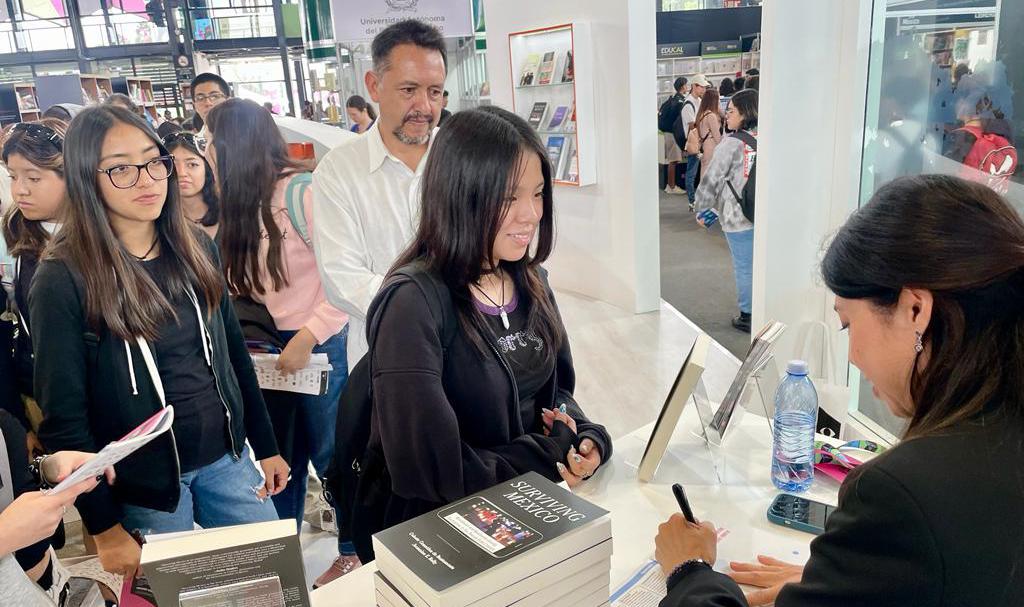
quickly became a popular photo backdrop for thousands of conference attendees.
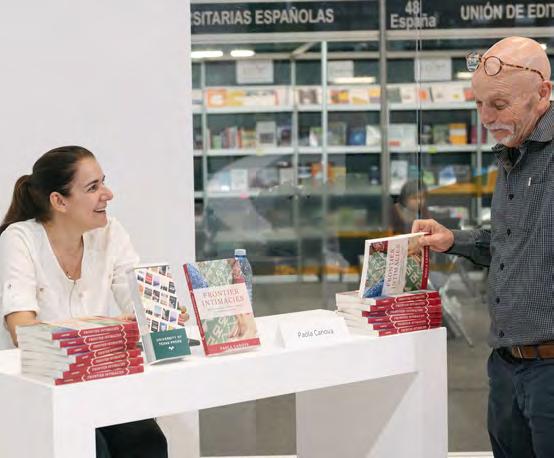
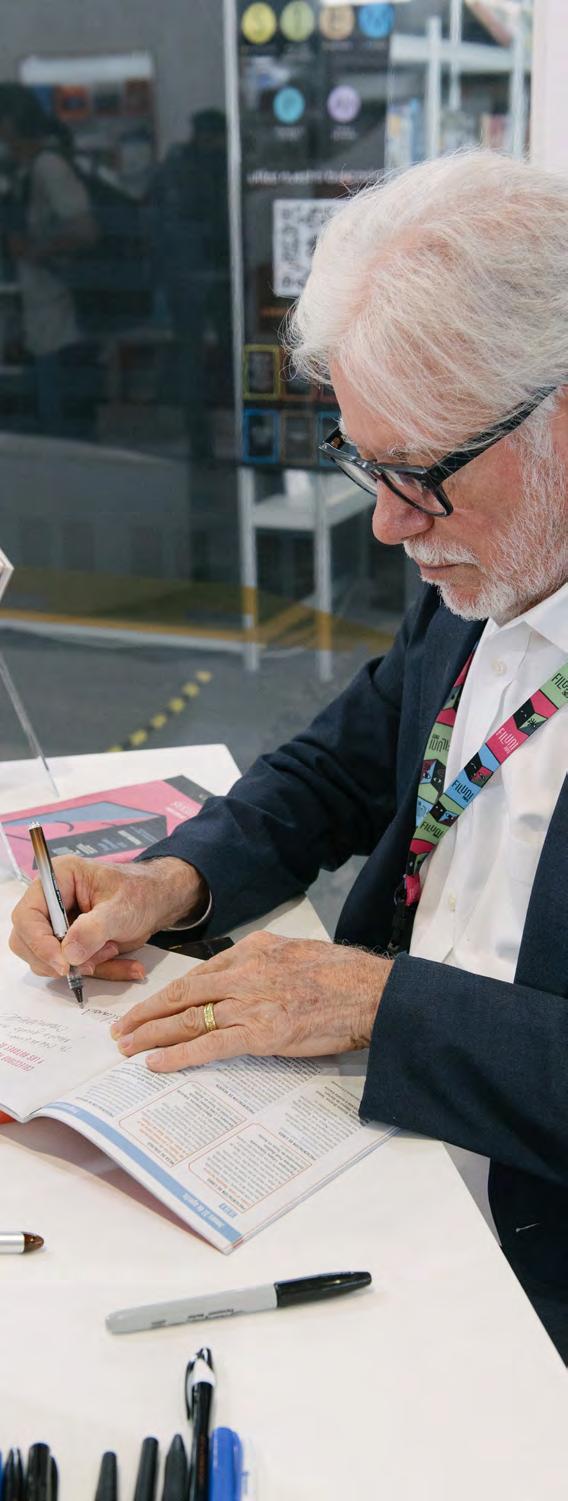
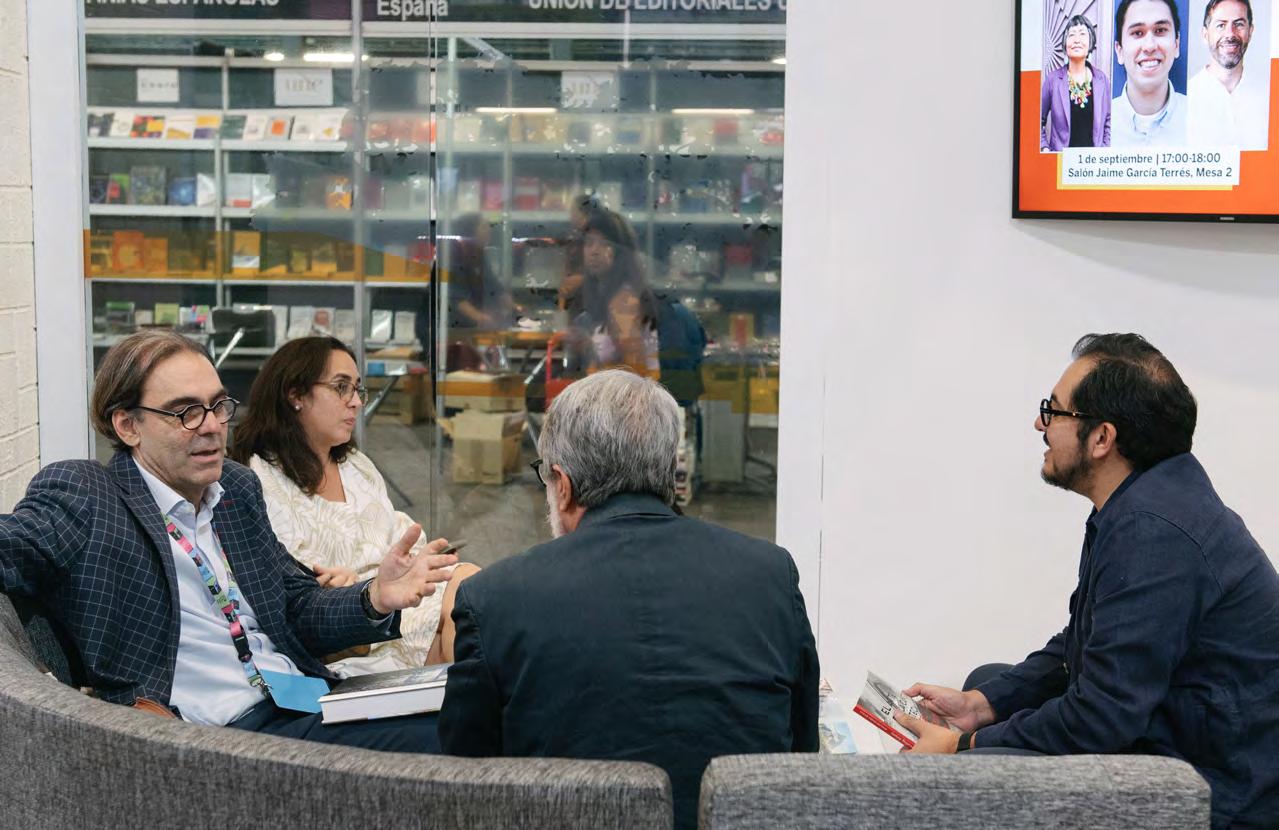
The bookstand’s bustling lounge served as an ideal gathering space for meetings between colleagues and dozens of impromptu conversations. Visitors enjoyed daily slideshows featuring UT Austin’s campus and pride points, conference sessions and featured books. Seven UT Press authors offered book-signing sessions there throughout the week, which thrilled their readers and fans.
“Most of our top sellers were books by UT faculty — including a few who were not present, but definitely all of the authors who were there,” said Devens.
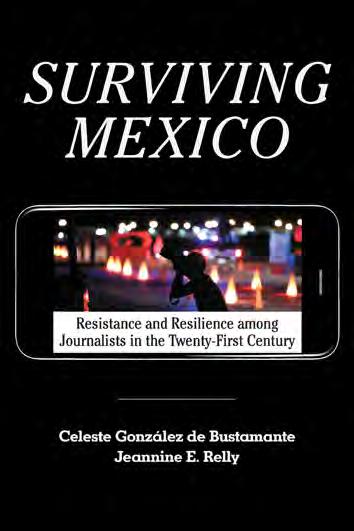
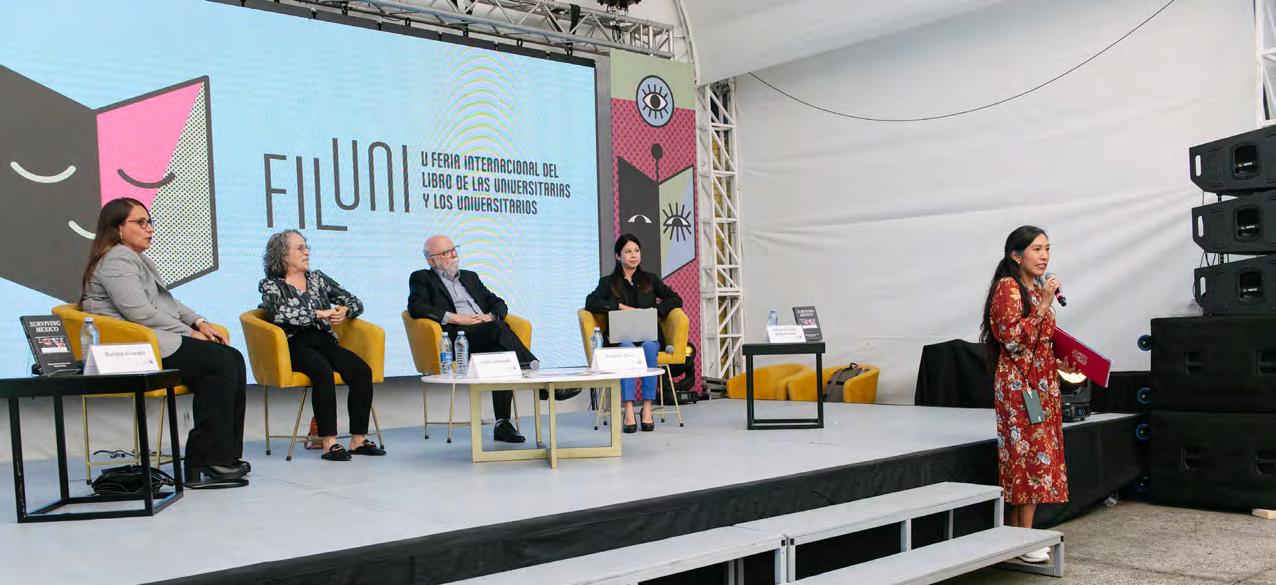
One of those authors, Celeste González de Bustamante, presented her book, “Surviving Mexico: Resistance and Resilience Among Journalists in the Twenty-first Century” for scholars and readers. She noted her appreciation for the chance to present her work in Mexico to members of her primary audience.
“Our book is about a dire situation that many journalists face in Mexico,” she said, “so I was grateful to have the opportunity to present our work to a Mexican audience, which is very informed about the subject and understands the importance of the issue of press freedom.”
The chance to witness these types of interactions — which occurred frequently during the week — was a chief benefit of utilizing the UT Press bookstand as both gathering place and collegial resource. The phenomenon of authors and readers spontaneously sharing ideas is a clear measure of success, said Devens.
“That’s related to the book. For us, it’s all part of the same package. It doesn’t get captured in sales, but it’s part of how we measure the success of what we’re doing,” Devens said. “How are we reaching the next generation — not just with the physical book itself but through an author voicing the ideas in that book? What’s so gratifying about an event like this is that we can see these exchanges happening and experience them firsthand.”
“I was pleased to be part of the largest contingent of UT Austin faculty, staff, and students ever to travel abroad together. As someone who has a longstanding relationship with academics in various parts of Mexico, I hope that UT’s participation in FILUNI will help to inspire even deeper and broader collaborations across both universities.”
Celeste González de Bustamante Associate dean for Diversity, Equity, and Inclusion, Moody College of Communication




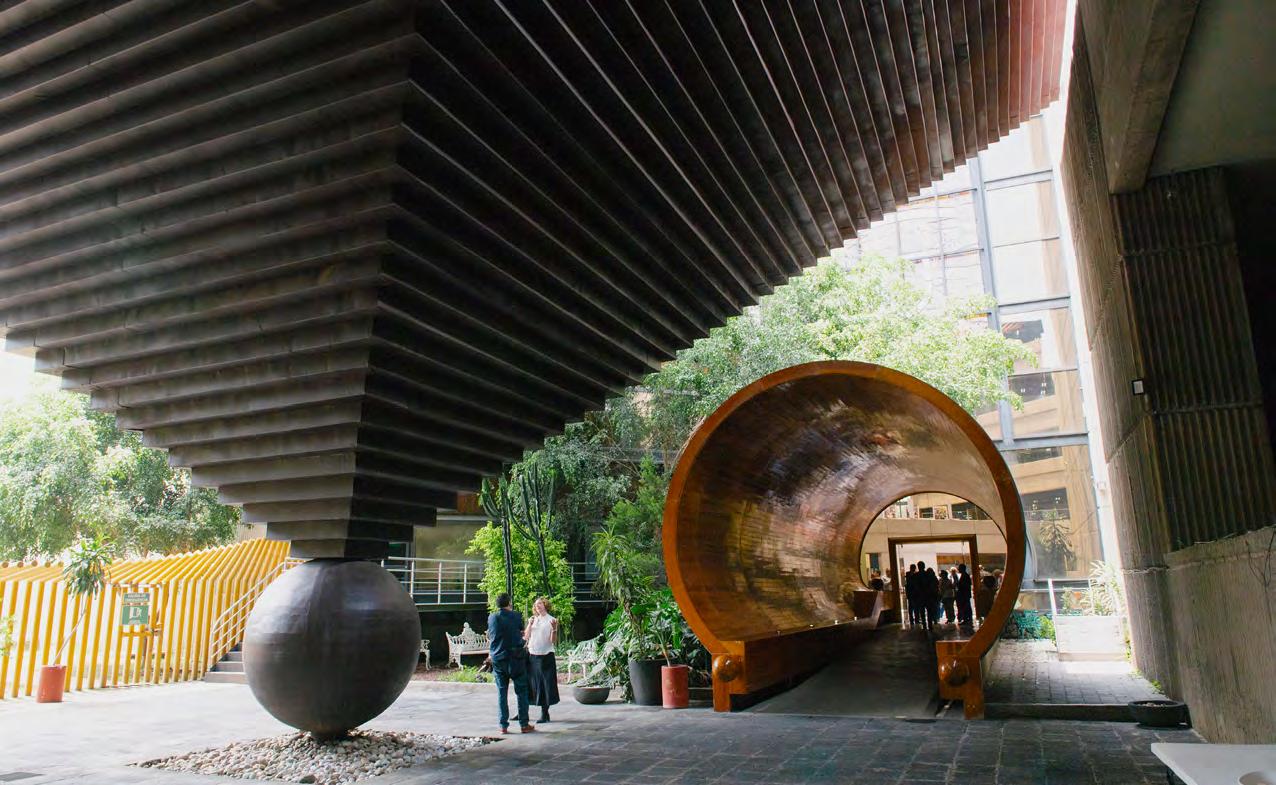
The University of Texas at Austin’s commitment to the creative arts and culture was evident at the FILUNI book festival and conference.
Longhorns contributed to FILUNI’s program with an impressive panoply of concerts, film screenings, podcast recordings, readings, exhibitions, master classes, and book signings. Faculty and graduate students presented their books and research alongside peers from the host university Universidad Nacional Autónoma de México (UNAM) and other institutions from across Latin America.
The week began with a mesmerizing performance by UT Austin’s string quartet in residence, the worldrenowned Miró Quartet. Bookending the program, FILUNI participants enjoyed concerts by two trombone ensembles: the 16-member UT Trombone Choir, directed by Nathaniel Brickens, and the 14-member UNAM Trombone Ensemble, directed by Marcia Medrano Serrano, who served at UT Austin as a 2023 COMEXUS Fulbright-García Robles Visiting Chair. This faculty partnership exemplifies UT and UNAM working in tandem to engage in cultural exchange, disseminate research and creative work across borders, and strengthen academic relations between the United States and Mexico.


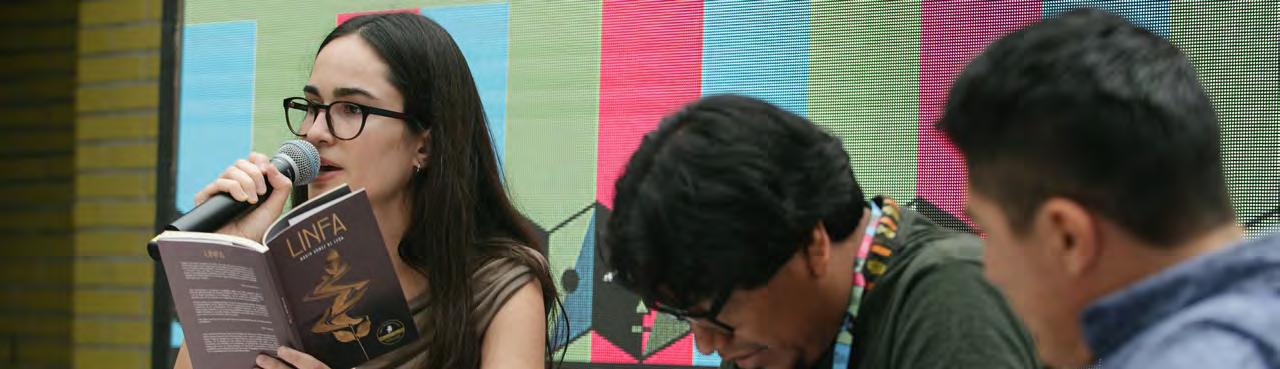
FILUNI highlighted commonalities across languages, nations, and populations in the forms of poetry and prose. Graduate student Maria Gómez de Léon, UNAM alumna and fellow at UT Austin’s Michener Center for Writers, led a multigenerational group of UNAM poets in a roundtable reading in Spanish. Internationally acclaimed author and Michener Center Director Bret Johnston offered an interactive creative writing master class in English to an enthusiastic room packed with students, faculty, and other attendees.
“Thanks to FILUNI, UT Austin students were able to come to the UNAM Faculty of Music to learn about and share their work, and both groups of students had a wonderful time. This type of meeting not only strengthens relations between our countries but also contributes to a deeper understanding of our own context and forms lifelong relationships. Many thanks to the organization of both universities for making this possible.”
Marcia Medrano Serrano
Professor of Trombone, UNAM Faculty of Music, UT Fulbright-García Robles Visiting Chair
Johnston counseled would-be writers against the oldest advice in the writing world. “Don’t write what you know. Instead, write what you’re afraid to understand,” he recommended. “That fear will lead you toward the most profound part of your being. Write to scare yourself, to challenge yourself, to understand more about your shadows. Write to become more than you think you are.”
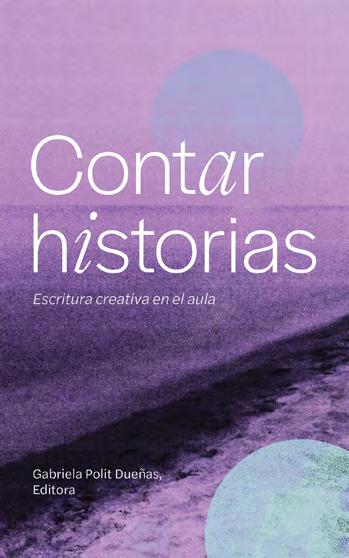
Echoing that bold sentiment and also underscoring the conference’s emphasis on a multiplicity of languages and experiences, Professor Gabriela Polit Dueñas and graduate students from the Department of Spanish and Portuguese discussed and read from their story collection, “Contar Historias: Escritura creativa en el aula (Telling Stories: Creative Writing in the Classroom),” published by the University of Texas Press.
The book’s poignant essays and stories were written in Spanish by students in the department’s Spanish Creative Writing Initiative, revealing a diversity of authors’ perspectives that spans an array of cultural, linguistic, and geographical backgrounds. Many had never before written a creative work in Spanish.
“This celebration of voices in Spanish, published by a press in the United States: It’s almost a political achievement,” said Polit Dueñas, editor of the book, which was funded in part by the Texas Global Publication Fund “Spanish is widely spoken in the U.S. but does not have comparable representation institutionally. Showing that Spanish is not only a working language but also a creative language with cultural richness — and doing this with the legitimacy of a U.S. university seal — is very important.”
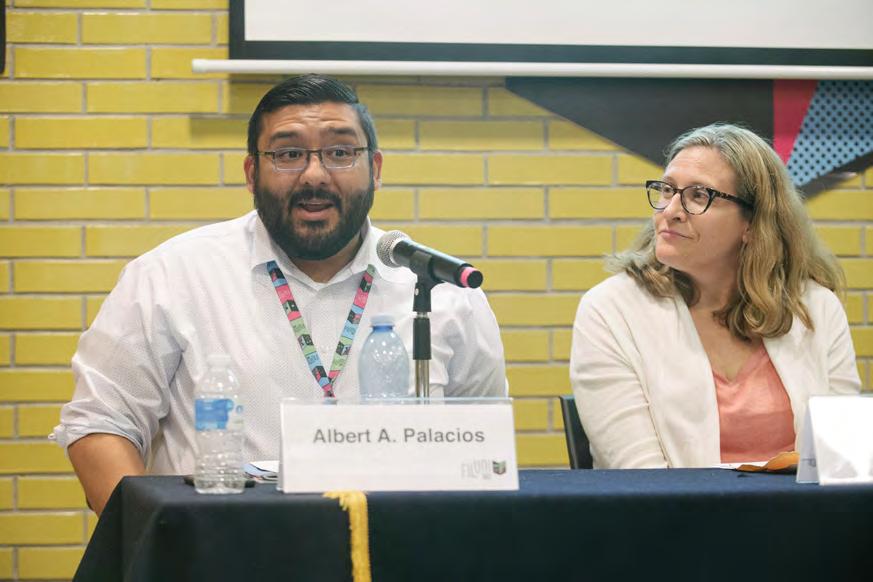
“Besides giving us a platform to share out the fruits of longstanding digital collaborations with our Mexican counterparts, the conference also brought us together in person after being separated for many years due to the global pandemic. The inspiration abounded before, during, and after FILUNI as we explored over dinners and coffee breaks innovative ways to digitally connect the cultural patrimony we preserve in our libraries and archives.”
Albert A. Palacios
Digital Scholarship Coordinator, LLILAS Benson Latin American Studies and Collections
“Participation in FILUNI allowed me to share my research with faculty, graduate students, and other FILUNI participants based in Mexico, which was an invaluable experience. I made new professional contacts as a result of the event — for instance, among academics studying local Indigenous musical traditions — and I hope to maintain and cultivate those relationships into the future. “
Robin D. Moore Professor of Ethnomusicology, College of Fine Arts
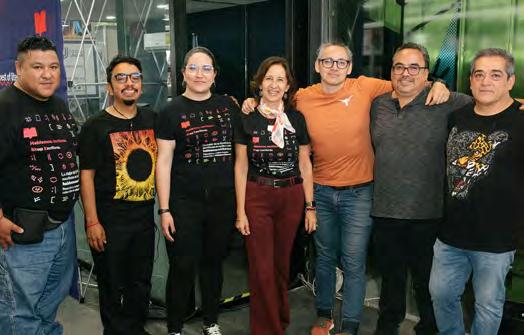
Another benefit cited by many FILUNI participants, including four Moody College cinematographers, was exposure to new audiences. Professors PJ Raval, Iliana Sosa, Miguel Alvarez, and Ya’Ke Smith each screened their films, which explored respectively the complicated realities of the trans community in the Philippines; elders in Mexico; migrant workers and veterans in Texas; and descendants of enslaved people in Texas.
Adela Pineda Franco, director of UT’s Teresa Lozano Long Institute for Latin American Studies (LLILAS), led a conversation with Senior Vice Provost for Global Engagement Sonia Feigenbaum and UNAM scholars about the revitalization of Indigenous languages in the Americas.
The LLILAS Benson Latin American Studies and Collections co-hosted a stunning exhibition at the National Library of Mexico. “A New Spain: Neo-Hispanic Jewels” featured facsimiles of holdings from the Nettie Lee Benson Latin American Collection and the C.L. Sonnichsen Special Collections Department at UT El Paso. Benson representatives also participated in sessions on digital collections and collaborative digital scholarship.
Adriana Pacheco — LLILAS fellow, member of the International Board of Advisors, and founder of the podcast “Hablemos, Escritoras” — conducted panel discussions and live recordings with numerous FILUNI participants, including UT Austin professors Stacey Sowards and Polit Dueñas, interviewing the authors about their books, writing processes, and aspects of the industry.
Pacheco convened several experts in Latin American publishing for a conversation about the challenges of literary translation. Legendary author Angelina MuñizHuberman, winner of multiple Mexican national literary prizes, graced the stage alongside Mexico City writers Mónica Lavín, Tanya Huntington, and UNAM’s Rosa Beltrán, in addition to editor Rose Mary Salum and translator Dorothy P. Snyder. The group offered their various experiences and illuminated many pitfalls in writing, editing, and translating works from Spanish to English and vice versa.
“If one translator is invisible, all the translators are invisible,” said Pacheco, summing up the weighty panel discussion. “If the producers are invisible, our writers are invisible. But readers can help with that ... so that the critics, the book clubs, researchers, master’s students, doctoral students, publishers, awards, all lead to writers. It seems to me that the only way to deal with this issue is to have more of these conversations.”
“FILUNI was a historic event, a celebration of productive U.S.-Mexico relations through the dialogue of two major institutions of higher learning (UT and UNAM). This encounter consolidated ongoing partnerships among faculty and students; opened new, unexpected ones; and provided us the opportunity to reconnect with our Mexico-based alumni. As LLILAS director and a Mexicanist scholar, I am truly thankful for this unique opportunity.”
Adela Pineda Franco Director, Teresa Lozano Long Institute of Latin American Studies
Art Exhibition
A New Spain: Neo-Hispanic Jewels
LLILAS Benson Latin American Studies and Collections, La Biblioteca Nacional de México
Book Presentations
“Codex of Love: Bendita Ternura (Blessed Tenderness)”
Liliana Valenzuela, Gabriela Polit Dueñas
“Contar Historias: Escritura Creativa en el Aula (Telling Stories: Creative Writing in the Classroom)”
Gabriela Polit Dueñas, Ricardo Castro, Yoel Villahermosa
“El Árbol de la Palabra: Revitalización de Lenguas Indígenas en Abya Yala (The Word Tree: Revitalization of Indigenous Languages in the Americas)”
Jocelyn Cheé Santiago, Adela Pineda Franco, Carolina Sánchez García, Socorro Venegas, Moderator: Luis Manuel Amador
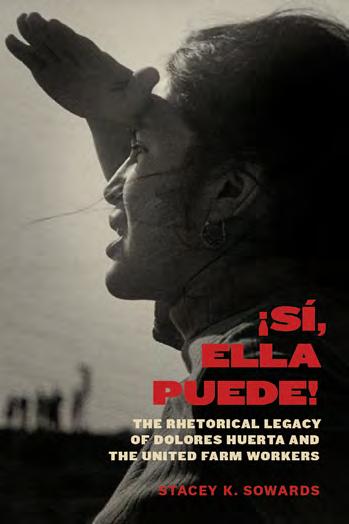
“¡Sí, Ella Puede! (Yes, She Can!) The Rhetorical Legacy of Dolores Huerta and the United Farm Workers”
Stacey K. Sowards, Aaraón Díaz
“Testigos No Deseados (Unwanted Witnesses)”
Gabriela Polit Dueñas, Leopoldo Maldonado, Daniela Rea, Marcela Turati, Patricia Zama
Film Screenings
“Call Her Ganda” Documentary Director: PJ Raval
Chicano Stories: A Selection of Short Films
Presenting Stories Through a Chicano Perspective Director: Miguel Alvarez
“Juneteenth: Faith & Freedom”
Director: Ya’ke Smith
“Lo Que Dejamos Atrás (What We Left Behind)”
Documentary
Director: Iliana Sosa
Masterclasses
Creative Writing: Exploring the Pillars, Characterization, and Historical Structure of Narrative Writing
Bret Johnston
Miró Quartet
Daniel Ching, William Fedkenheuer, Joshua Gindele, John Largess
Trombone Ensemble with UNAM Music Faculty
Nathanial Brickens, UT Austin Trombone Choir
Musical Performances
“A Dos Vientos (To Two Winds)” Trombone Performance
Nathaniel Brickens, UT Austin Trombone Choir, Marcia Medrano Serrano, UNAM Trombone Choir
Miró Quartet
Daniel Ching, William Fedkenheuer, Joshua Gindele, John Largess, Presenter: Alejandro León Suárez Plancarte
University of Texas at Austin Trombone Choir
Nathaniel Brickens, UT Austin students
Panels
Contemporary Writers: Moving All Obstacles in the Passage of Time
Adriana Pacheco, Aura Garcia-Junco, Gisela Kozak, Sandra Lorenzano
From Paper to Display: Books and Digital Works in Light of Copyright
Diego Echeverría, Angelica Lopez-Torres, Jesús Manuel Niebla Zatarain, Moderator: Miriam Alejandra Peña Pimentel
Behind the Indigenous Communal Lands: In Search of New Approaches and the Current State of Studies on Confiscation
Luis Arrioja, Napoleón Guzmán Ávila, Rebeca López, Alfredo Pureco, Moderator: Matthew Butler
Music and Activism in Latin America
Robin D. Moore, Mercedes Payán Ramírez, Leandro Stoffels, Pilar Villanueva Martinez
Hablemos, Escritoras. (Let’s Talk, Women Writers.): The Many Ways of Talking About Literature
Adriana Pacheco
Indigenous Languages: Documentation, Languages, and Memory
Emiliana Cruz Cruz, Roberto J. Young, Moderator: Sergio Romero
International Day of Librarians: Dialogue Between Old Funds and New Technologies
Melissa Guy, Pablo Mora Pérez-Tejada, Albert A. Palacios, Moderator: Daniel Jorge Sanabria Barrios
International Day of Librarians: The Development of Collections, Reading, and Critical Thinking in the Face of Artificial Intelligence
Sergio López Ruelas, Silvana Grazia Temesio, David Woken, Soo Young Rieh, Moderator: Guadalupe Vega Díaz
Maternity: Maternity Dimensions
Adriana Pacheco, Elvira Liceaga
Mexican Architecture: Its History from a Multidisciplinary Perspective
Mariano Del Cueto, Benjamin Ibarra-Sevilla, Fernando Peña, Nelly Robles
The Indigenous Language in Community Practice
Tajëëw Díaz Robles, Hubert Matiúwàa, Katherin Patricia Tairo Quispe, Moderator: Jermani Ojeda Ludeña
The Landscape of Creative Writing at UT Austin María Gómez de León, Bret Johnston
The Power of Translation: Filling the World with the Works of Female Writers
Adriana Pacheco, Rosa Beltrán, Tanya Huntington, Mónica Lavín, Angelina Muñiz-Huberman, Rose Mary Salum, Dorothy P. Snyder
Third Age: New Ways to Grow Old
Karen Fingerman, Angelina Muñiz-Huberman
Podcast Recordings
“Contar Historias: Escritura Creativa en el Aula (Telling Stories: Creative Writing in the Classroom)”
Adriana Pacheco, Ricardo Castro, Gabriela Polit Dueñas, Yoel Villahermosa
“¡Sí, Ella Puede! (Yes, She Can!) The Rhetorical Legacy of Dolores Huerta and the United Farm Workers”
Adriana Pacheco, Aaraón Díaz, Stacey K. Sowards
“Testigos No Deseados (Unwanted Witnesses)”
Adriana Pacheco, Gabriela Polit Dueñas
Poetry Reading
Intergenerational Meeting of Poets
Cruz Flores, María Gómez de León, Valeria List, Esteban López Arciga, Hubert Matiúwàa, Balam Rodrigo
Research Presentation
Digital Projects from the Nettie Lee Benson Collection
Daniel Arbino, Melissa Guy, Albert A. Palacios
Workshops
Digital Humanities
Albert A. Palacios
Representations of the Spanish-American War: How to Use Digital Humanities Tools to Create Digital Exhibitions Using Materials from Different Archives
Lauren Peña
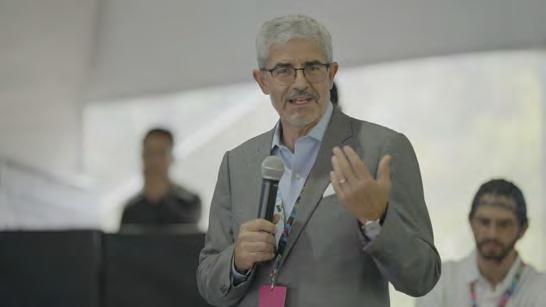
“We love engaging in live demonstrations of our brain-controlled exoskeletons; they may not lead to publications but reassure us of the robustness of our designs on our path to bring our technology out of the lab to patients and clinics. And audience feedback is so rich!”
José del R. Millán, Professor, Cockrell School of Engineering and Dell Medical School
Innovative technology and incisive research claimed the stage at FILUNI 2023 during the eight health and wellbeing sessions presented by UT faculty.
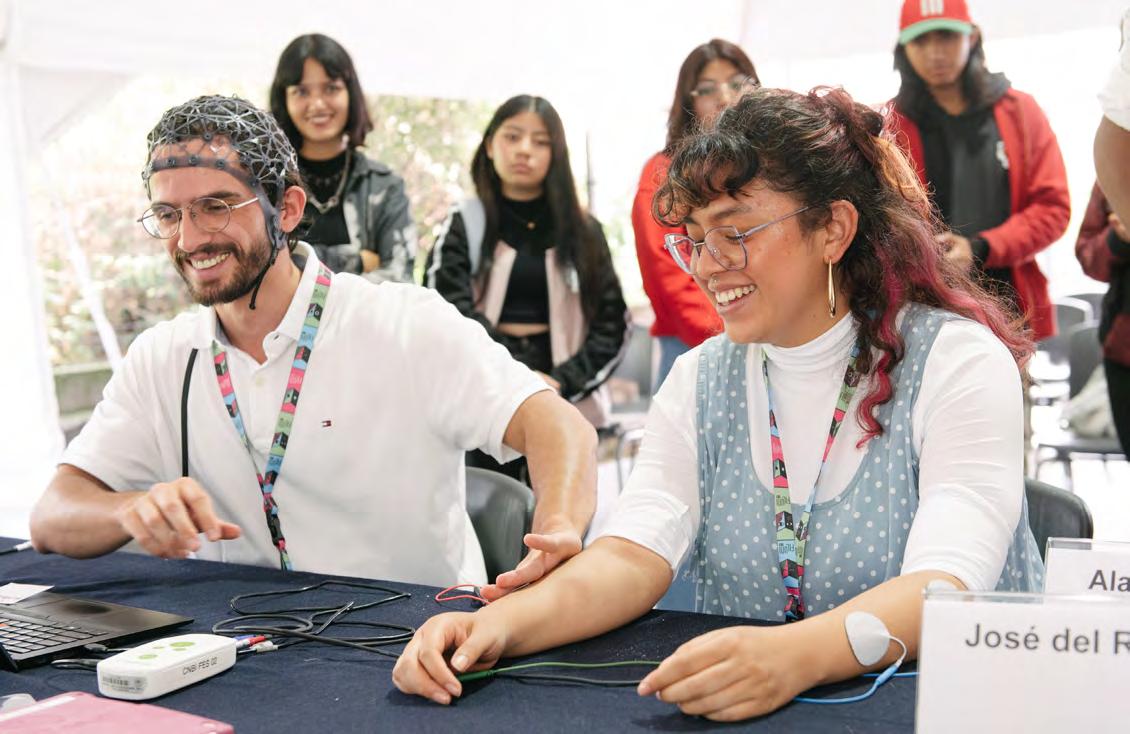
A consistent buzz of excitement emanated from “Brain Interface for Hand Control,” technology demonstrations led by Professor José del R. Millán, who holds positions in the Cockrell School, Dell Medical School and Texas Robotics. The interface — a feat of neurotechnology that transforms brain activity into gestural actions — enabled participants to move their digits using only conscious thought.
Aided by colleague Kumar Satyam, graduate student Hussein Alawieh donned a cap covered in electrodes that measured his brain’s electrical activity. The interface analyzed that activity, detecting Alawieh’s intent to make a hand gesture, sending small electrical currents to the nerves in his arm and contracting muscles to enact the desired movement of the hand. After witnessing the impulses registering on a computer screen, Millán invited spectators to test the interface by connecting directly to Alawieh via more electrodes. Wide-eyed reactions emerged from participants whose hands moved independently in accordance with Alawieh’s thoughts.
The implications for this technology could be gamechanging, especially for patients suffering from strokes, cerebral accidents, or spinal cord injuries that result in severe motor deficits. Millán emphasized that further progress and implementation will require multidisciplinary teams of engineers, neurologists, neurosurgeons, clinicians, and therapists.
This message of alliance and teamwork surfaced across all health and well-being sessions, with affirmations of cross-border commonalities and collaboration echoing repeatedly throughout the conference.
“Health and sickness know no borders; they are sin fronteras,” said Harold Kohl, founder and director of the UT Physical Activity Epidemiology Program. “Many health problems are similar in Texas and Mexico, and they shouldn’t be treated in isolation.”
Kohl accompanied lead researcher Deborah Salvo with Miguel Pinedo and Pablo Montero-Zamora from the Department of Kinesiology and Health Education in a panel discussion exploring the influence of sociocultural environments and urban settings on the health of Latino populations in Mexico and Texas. They were joined by faculty from the Universidad Iberoamericana Ciudad de México and the National Institute of Public Health of Mexico
“The University really wants to build our relationships between the two countries, and having the opportunity to bring so many people [to FILUNI] ... even just physically being in the place, getting to know other people from here and interacting with other professionals and colleagues at different schools in different regions — I think it’s part of the goal with the University. And I think that definitely was accomplished here.”
Julie Zuniga
Associate Professor, School of Nursing
Each presenter’s research addressed distinct environments and health issues: obesity, diabetes, sedentary lifestyle, and alcohol and drug abuse. Despite different areas of focus, the panelists reached a consensus: Social conditions in urban environments impose clear effects on human mental and physical health, and the most effective way to respond is with collective methods of training, mentoring, and study, scaled up to yield a greater capacity of response.
A similar emphasis on systemic impact and collective solutions appeared in “Health Disparities Experienced by the LGBTQIA Community,” a presentation of research by Julie Zuniga, associate professor in the School of Nursing, and graduate researcher Oscar Franco-Rocha.
The session focused on social determinants of health for transgender communities, then went further to propose human-level clinical interventions to redress medical inequities commonly perpetrated upon trans populations — stigmatizing, misgendering, or deadnaming patients — in a health care system originally built to heal.
Nursing School colleagues Alexandra Garcia, Heather Cuevas, and Bruce Machona, along with Brandon Altillo from Dell Med, shared their research in diabetes management with peers from the College of Medicine at Benemérita Universidad Autónoma de Puebla (BUAP), a longtime partner with UT in global health initiatives.
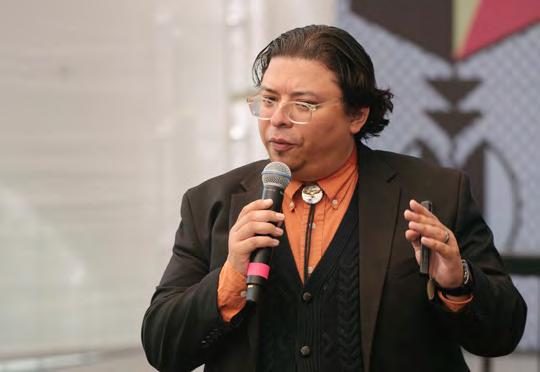
“Texas and Mexico, we are neighbors. We share a border. We share a similar disease profile. We share many of the same challenges, and we have a lot to learn from one another. Together we can better address these challenges to solve the pressing global health problems of our day and better improve the health of our communities.”
Tim Mercer Chief, Division of Global Health, Dell Medical School
Presenters cited social determinants, including poverty, food insecurity, and unstable housing, as direct links to the development of diabetes, which is rising in both the U.S. and Mexico.
Dell Med and BUAP partnered in another session examining the Academic Model Providing Access to Healthcare (AMPATH), or Modelo Académico para Proveer Acceso a la Salud (MAPAS). Established in Puebla, the well-regarded program is designed to address health issues that affect rural populations in chronic poverty and geographic isolation. Teams of UT and BUAP professors apply community-focused approaches and cross-border perspectives on mental health, nutrition, and health education issues.
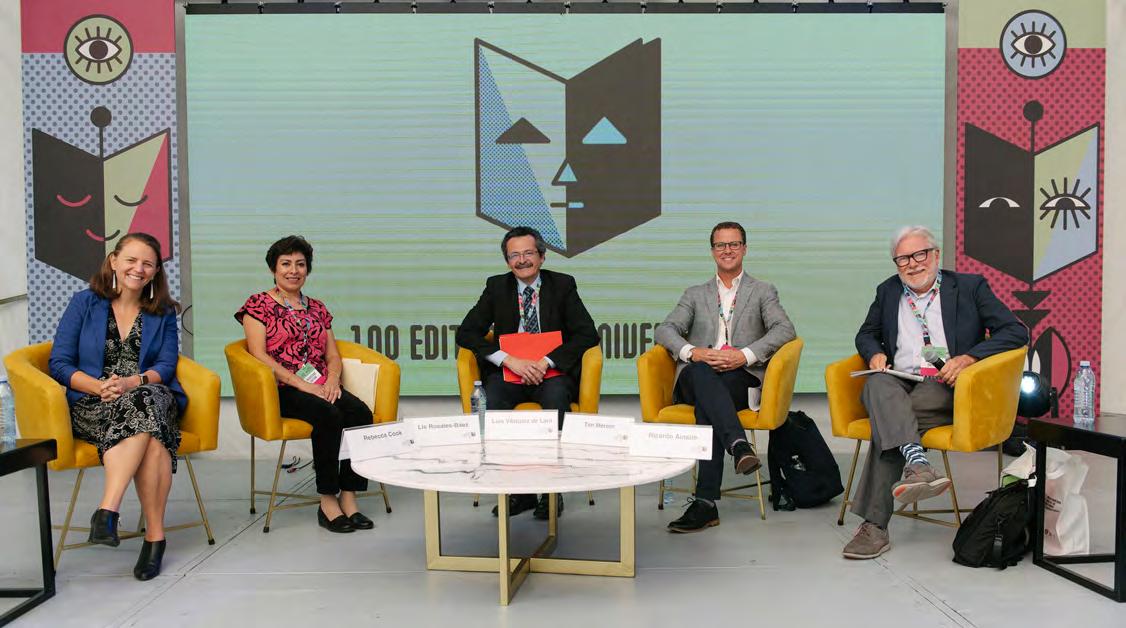
AMPATH Mexico Director Ricardo Ainslie and professors
Tim Mercer and Rebecca Cook shared their joint philosophy on working with communities in the fields of care, education, and research.
“For us at UT Austin, forming a collaborative partnership in Mexico is incredibly important, and we are thrilled with the opportunity to work and learn together with our BUAP [colleagues],” said Mercer. “Specifically, our goal is to partner together and engage with local communities in the Ministry of Health to transform primary health care in rural low-income communities, starting in Puebla, Mexico, that will be better able to address chronic diseases such as diabetes, heart disease, and cancer.”
Panels
AMPATH: A Global Health Initiative and Community Focus
Ricardo Ainslie, Rebecca Cook, Tim Mercer, Lis Rosales-Báez, Luis Vázquez de Lara
Diabetes Management and the Social Determinants of Health
Brandon Altillo, Heather Cuevas, Alex García, Elba González-Mejía, Bruce Machona, Enrique Torres Rasgado
Health Disparities Experienced by the LGBTQIA Community
Oscar Franco-Rocha, Julie Zuniga
Health in Context: Exploring the Influence of the Sociocultural Environment and Urban Settings on the Health of Latino Populations in Mexico and Texas
Célida Gómez, Alejandra Jáuregui, Harold W. Kohl III, Pablo Montero Zamora, Miguel Pinedo, Deborah Salvo
Living in the Background: Understanding, Helping, and Empowering At-Risk Youth
René Gaitan
Workshop
Brain Interface for Hand Control (3 sessions)
José del R. Millán, Hussein Alawieh, Kumar Satyam
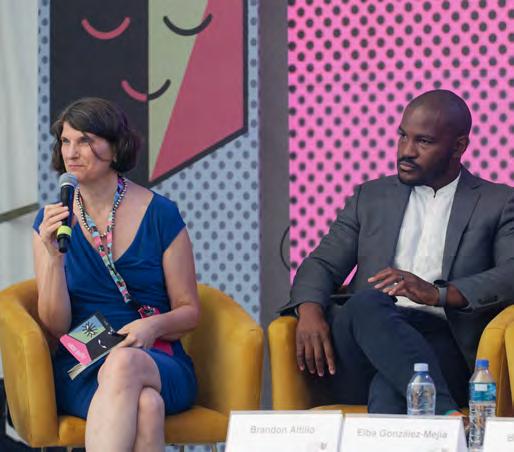
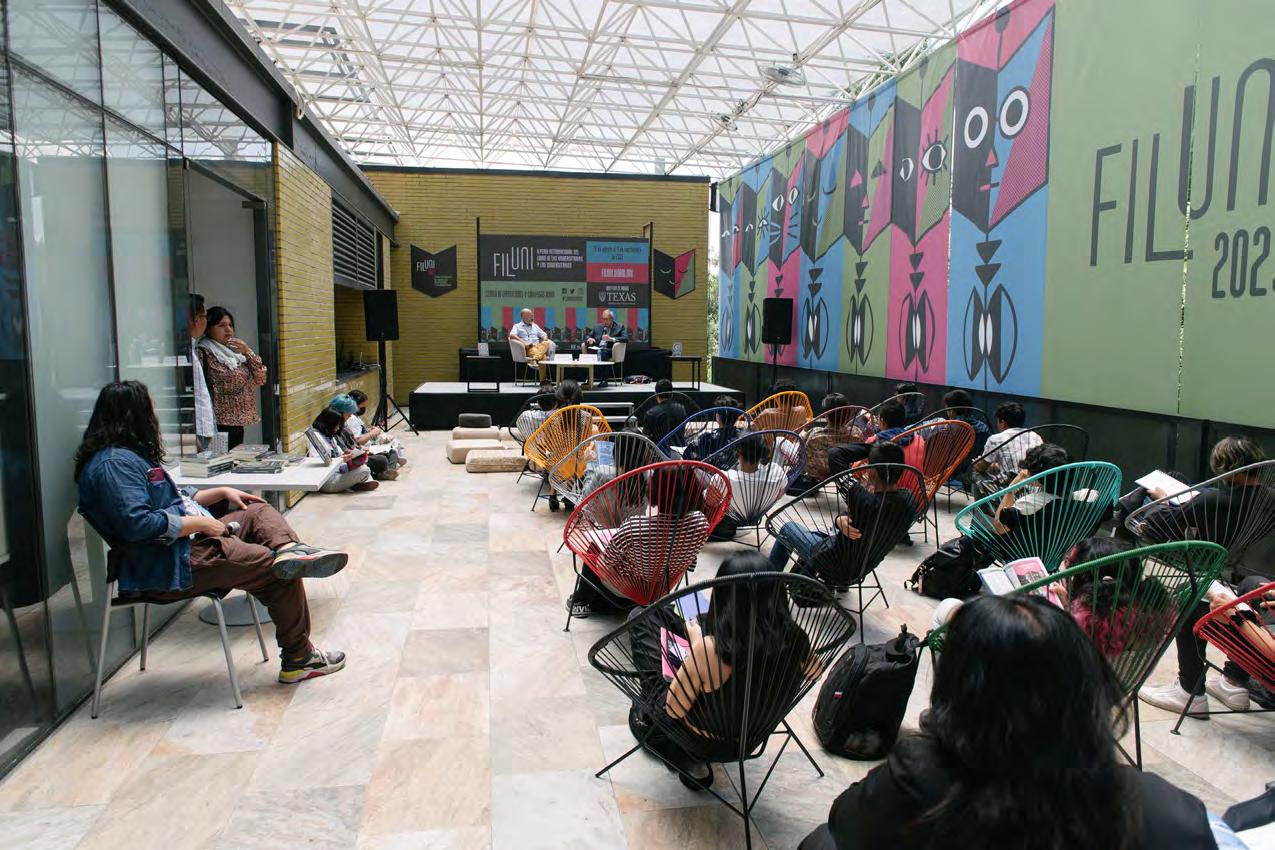
FILUNI’s 84 bookstands and throngs of browsing readers provided an inspiring setting for conference presenters to share groundbreaking research, address global challenges, and collaborate with institutions around the world.
Faculty, researchers, and performers from the Forty Acres presented 54 sessions and events, including 14 society and technology discussions on topics ranging from artificial intelligence and architecture to media security and global conservation efforts.
Benjamin Ibarra-Sevilla, associate professor of architecture and historic preservation at UT Austin, and Sergio Alcocer, research professor at UNAM’s Institute of Engineering, are just two prominent presenters who exemplified the strong ties between these institutions.
Before Ibarra-Sevilla arrived at UT Austin, he earned his professional degree in architecture from UNAM, while Alcocer took his career to UNAM after earning a Ph.D. from UT’s Cockrell School of Engineering. The two led a session with UNAM collaborators about the relevance of science, engineering, and architecture, as those disciplines relate to earthquakes in Mexico and the disastrous effects they have imposed around the country.
To forestall further cataclysmic damage in densely populated regions in Mexico, speakers discussed the need to increase the seismic resilience of communities and to develop public policies for prevention and restoration. In establishing a dialogue between the fields of applied sciences, natural sciences, social sciences, and the humanities, the panel aimed to identify areas of collaboration between UT Austin and institutions in Mexico to garner greater economic and social attention for the effects and mitigation of seismic phenomena across the region.
“FILUNI was impressive, with the range of events that included art exhibitions, colloquia, concerts, and a wide number of excellent presentations. As a school of social work, we had the honor of sharing the expertise of our faculty, as well as learning from the expertise of UNAM scholars and researchers. We are truly grateful for the working sessions that are already resulting in academic and research collaborations that we trust will have a lasting impact to the U.S. and Mexico.”
Ruben Parra-Cardona Associate Dean for Global Engagement, Steve Hicks School of Social Work
“I am beyond happy, not only because I am part of the UT Austin delegation, but also because I am an UNAM alumnus,” Ibarra-Sevilla said. “Seeing this point of convergence, seeing how these two institutions are working together toward cooperation, integration, and this exchange of knowledge, it’s just fantastic. I’m thrilled about this.”
Juana Salcedo, an assistant professor of practice in the School of Architecture, led a captivating roundtable discussion with UNAM colleagues in a session titled “Mapping the Jaguar Corridor: An X-Ray of Urbanization.” The panel identified the correlation between the phenomenon of urbanization and ensuing socio-environmental struggles facing conservation efforts of the jaguar.
After exploring the urban origins of the environmental crisis and resulting loss of biodiversity, the panel emphasized that a sense of urgency is needed for reimagining new landscapes to combat the jaguar’s shrinking habitat. The Jaguar Corridor Initiative, an unprecedented hemispheric integration project, proposes a series of continuous landscapes that connect the north of Argentina to the southern United States to ensure the survival of the largest feline in the Americas.
A distinguished panel of journalism professionals and researchers joined together to discuss potential methods to improve the conditions and support for media workers in Mexico and Latin America, one of the most dangerous regions in the world for journalists.
The session, titled “Supporting Resilience and Diversity in the Media in Latin America,” featured Rosental Alves, founder of the Knight Center for Journalism in the Americas and professor of journalism and media; Celeste González de Bustamante, associate dean for Diversity, Equity, and Inclusion in the Moody College of Communication who holds the Mary Gibbs Jones Centennial Chair in the School of Journalism and Media; and Liliana Valenzuela, online content coordinator at the Knight Center and editor of the ”LatAm Journalism Review.”
From the School of Architecture, assistant professor Ria Bravo, associate professor Kory Bieg, and associate professor Clay Odom led a timely discussion on the relationship between artificial intelligence and architecture. The panel took a deep dive into the potential benefits of utilizing AI algorithms in the design process as well as the ethical and philosophical implications that could come with relying on them.
“The whole idea [for the session] was based on a conversation between the two universities, planting a seed that could potentially grow into other things,” said Bravo. “We’re going to be meeting with UNAM faculty after this, and we’ll keep in touch and keep the conversation going.”
“I am beyond happy, not only because I am part of the UT Austin delegation, but also because I am an UNAM alumnus. Seeing this point of convergence, seeing how these two institutions are working together toward cooperation, integration and this exchange of knowledge, it’s just fantastic. I’m thrilled.”
Benjamin Ibarra-Sevilla Associate Professor, School of Architecture
Book Presentations
“Entre Líneas: Una Historia de Colombia en Mapas (Between the Lines: A History of Colombia in Maps)”
Santiago Muñoz Arbeláez, Juan Camilo González Galvis, Omar Olivares Sandoval, Guadalupe Pinzón Ríos
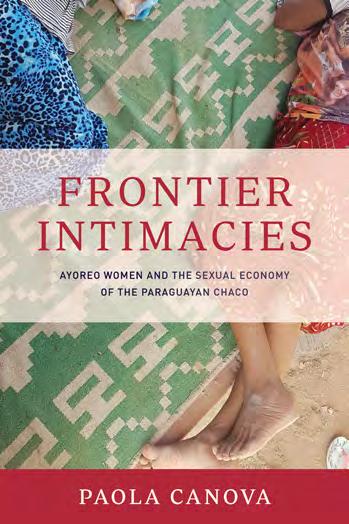
“Intimidades de Frontera: Mujeres Ayoreo y Economía Sexual del Chaco Paraguayo (Frontier Intimacies: Ayoreo Women and the Sexual Economy of the Paraguayan Chaco)”
Paola Canova, Patricia Islas Salinas
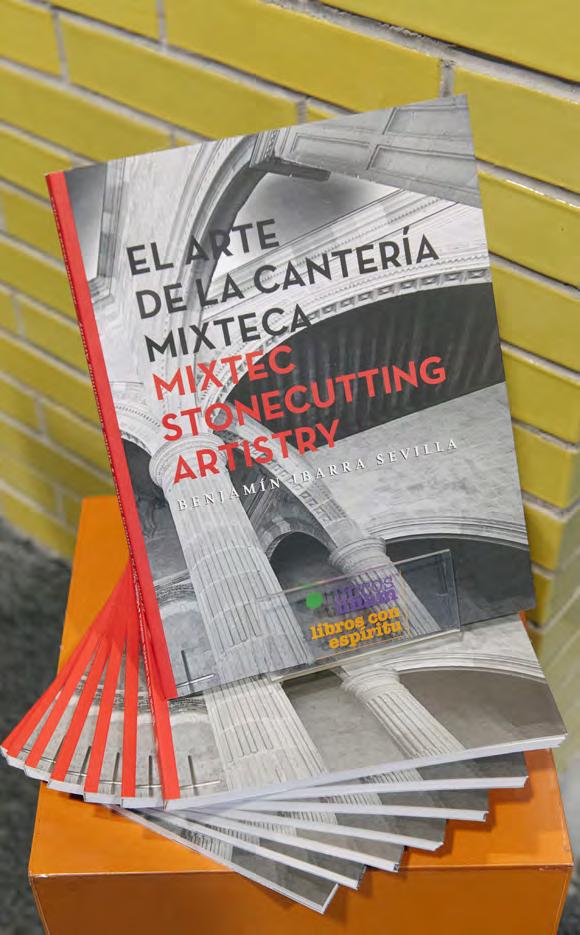
“The Art of Mixtec Stonework”: Contributions of the Indigenous Population to Colonial Architecture, Breaking the Myth of the Hispanic Builder
Benjamin Ibarra-Sevilla, Enrique Lastra, Fernando López Cortés, Yúmari Pérez Ramos
“Understanding Users”: A New Book on Design for a Better World
Andrew Dillon, Edgar Gómez-Cruz
Panels
Archive and Fund Projects: Collaboration Between University of Texas Austin and Fondo Real de Cholula
Lidia Gómez García, Eduardo Gorobets, Albert A. Palacios
Artificial Architecture
Kory Bieg, Ronan Bolaños Linares, Ria Bravo, Clay Odom, Vanessa Sattele Gunther
Earthquakes: The Relevance of Science, Engineering, and Architecture for Attaining Resilient Communities
Sergio Alcocer, Marcos Chávez, Víctor Cruz, Virginia García Acosta, Benjamin Ibarra-Sevilla, Yúmari Pérez
Fact and Fiction of the Asteroid that Extinguished the Dinosaurs
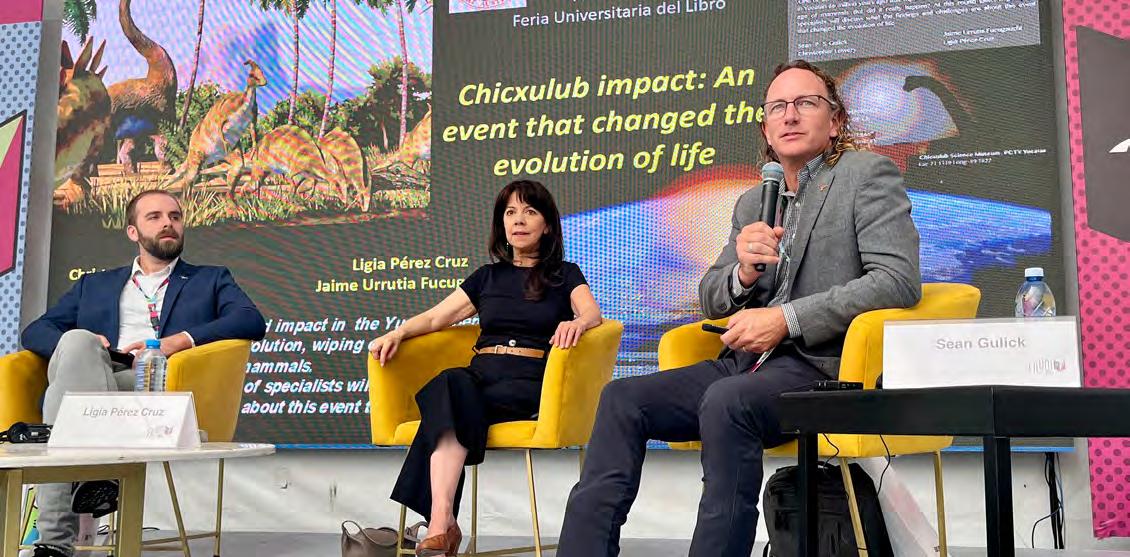
Sean Gulick, Christopher Lowery, Ligia Pérez Cruz, Jaime Urrutia
International University Colloquium: Artificial Intelligence in the Dissemination of Content
David Lankes, Alejandro Pisanty Baruch, Ernesto Priani Saisó, Alejandro Zenker, Moderator: Isabel Galina Russell
Supporting Resilience and Diversity in the Media in Latin America
Celeste González de Bustamante, Mariana Alvarado, Rosental Alves, Liliana Valenzuela
The Tri: Sports, Human Rights and Violence
Ariel Dulitzky, Alejandro Fernández Varela, Rogelio Flores
UT Press Publishing Catalog
Robert Devens, Angelica Lopez-Torres, Christopher Farmer
Vital Technologies: Thinking About Digital Cultures from Latin America
Edgar Gómez-Cruz, Raúl Trejo Delarbre
Workshop
Mapping the Jaguar Corridor: An X-ray of Urbanization
Juana Salcedo, Ricardo Nurko, Lorenzo Rocha
The University of Texas at Austin is committed to addressing the world’s most pressing energy and environmental challenges. With that ambitious goal, UT faculty and researchers leading the session “Water and the Environment in Mexico and the United States: Common Challenges, Shared Solutions” engaged a sizeable audience at FILUNI.
UT Austin’s multidisciplinary panel of distinguished speakers included David Eaton, Bess Harris Jones Centennial Professor in Natural Resource Policy Studies; Jane Cohen, Edward Clark Centennial Professor in Law; Norma Fowler, professor in the Department of Integrative Biology; and Isabel Keddy-Hector, senior research program coordinator and graduate student in the LBJ School of Public Affairs and Jackson School of Geosciences
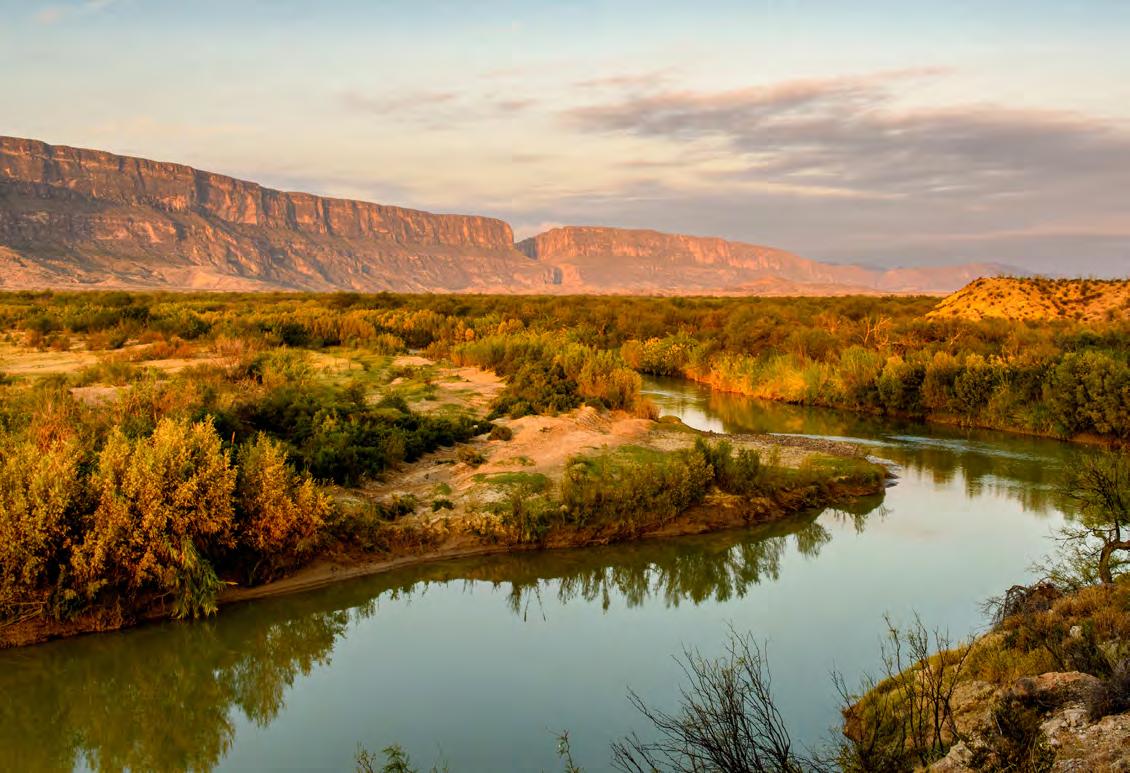
Eaton introduced the topic by calling attention to the exciting news that just three days earlier, the U.S. and Mexican governments had agreed to authorize an 18-month joint study to understand and respond to the increasing salinity in the lower Rio Grande River.
“I have a good story to tell you about cooperation between Mexico and the United States in solving a serious problem along our shared border, the Rio Grande,” Eaton said. “This is the first binational, transboundary research study funded and supported by six different binational, federal and state water agencies involving research teams from two universities, UNAM and UT Austin.”
The study will be implemented as a joint course between UT Austin and UNAM, allowing students to work with sponsoring agencies in the U.S. and Mexico.
The river border between Mexico and Texas stretches 279 miles from below the International Falcon Reservoir to the Gulf of Mexico. Periodic high salinity events in the Rio Grande diminish water quality, reduce crop productivity, and increase water treatment costs in a region where the current binational population of 2.7 million people is expected to double by 2045. These events implicate the region’s major water user and largest industry, agriculture, which in 2012 registered an economic impact of more than $1.6 billion in the U.S. alone.
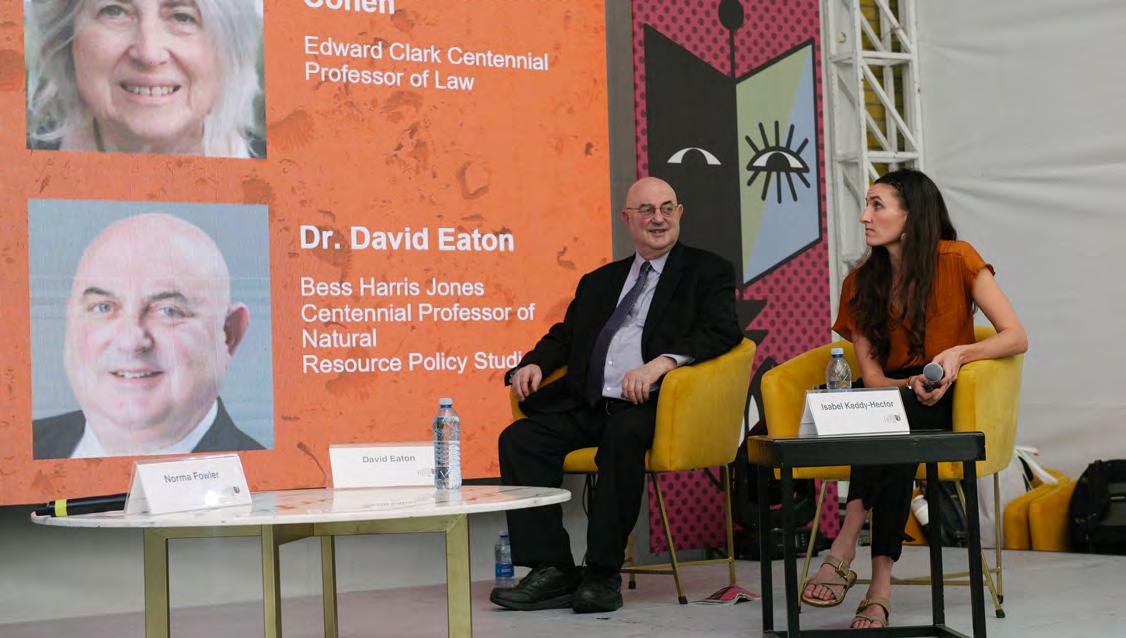
Keddy-Hector presented a 2022 case study on the silver mining industry in Zacatecas, Mexico, as it relates to water quality. With support from Texas Global, Keddy-Hector gained hands-on experience in a Global Career Launch internship, working with partners from the Texas Commission on Environmental Quality, and Mexico’s National Water Commission and Secretary of Environment and Natural Resources
Their joint research found contaminated water in aquifermonitoring sites near Mina Peñasquito, the fifth-largest silver mine in the world, with high measurements of iron and arsenic.
Fowler focused on the need for collaboration between both countries’ biologists to advance knowledge of plants, animals and environment at the border — specifically, how they are affected by construction of the border wall and recent addition of barriers in the Rio Grande.
Cohen furthered the discussion by sharing insight on a book in progress, titled, “To Save a Parched and Drowning City: Mexico City’s Water Crisis: New Actions and Ideas,” which she presented as an invitation to crowdsourcing.
“If you live in Mexico City, you know: You are parched during droughts, but there are also mudslides and flooding when it rains too much. There is not enough water, and the cost of water is also an issue,” Cohen said. “This has been an accumulation of problems for hundreds of years, dating back to the Aztecs and Conquistadors.”
“I have a good story to tell you about cooperation between Mexico and the United States in solving a serious problem along our shared border, the Rio Grande.”
David Eaton LBJ School of Public Affairs
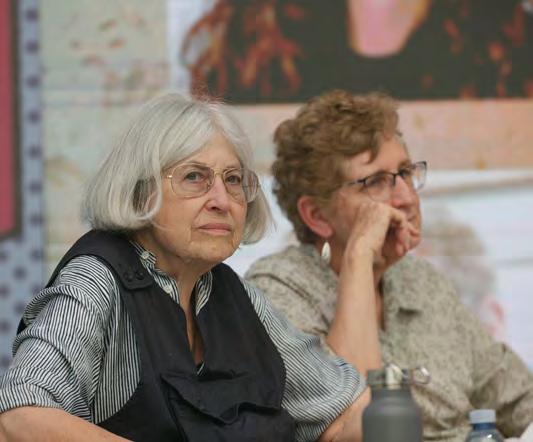
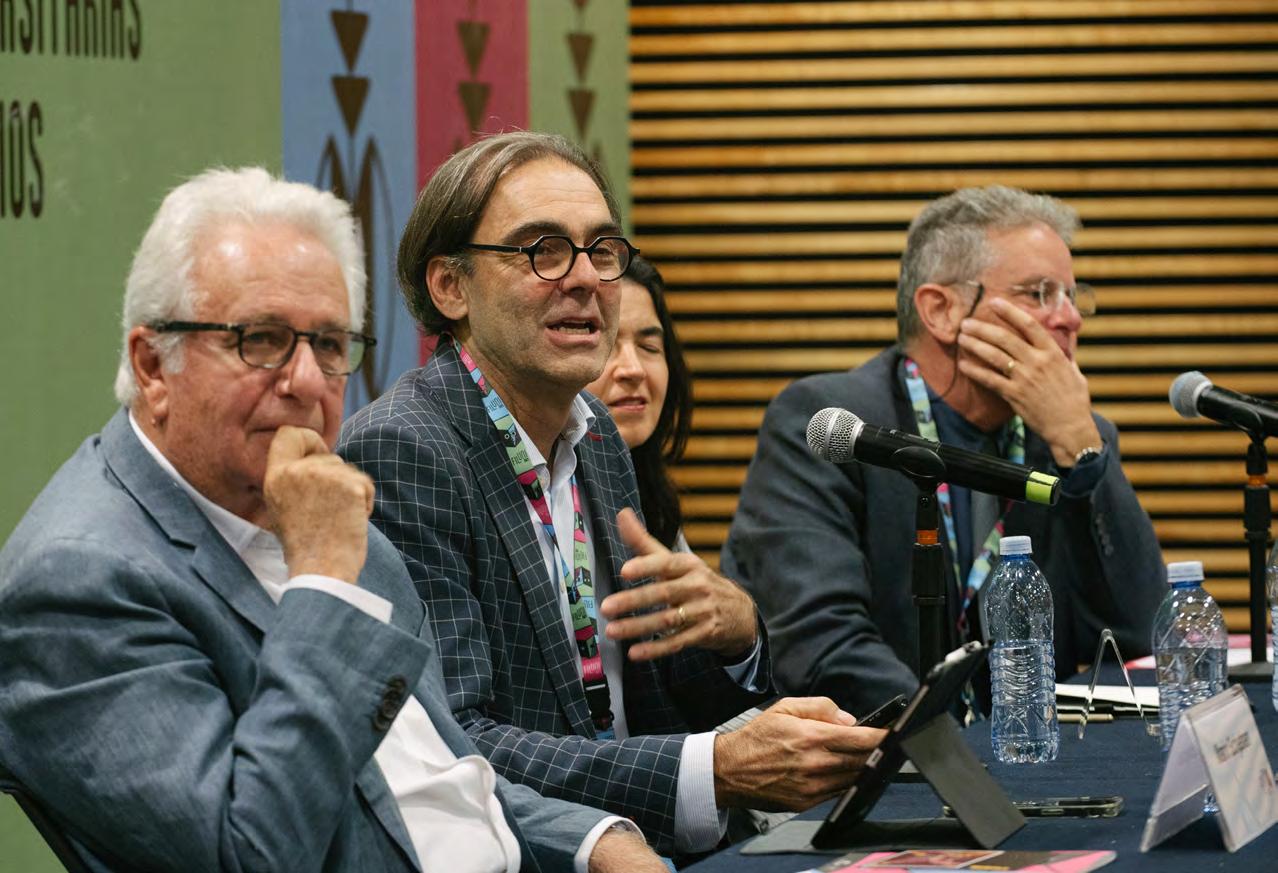
Cohen is interested in the views of people from all backgrounds working to address water issues in Mexico City, people she calls “civic brave hearts.” Her goal is to understand what affects people most and identify unconventional methods they employ to make improvements.
Additional sessions approached the concept of environment from a different perspective. Juan Miró, professor at the School of Architecture, presented the first monograph chronicling the work of his Austinbased studio, Miró Rivera Architects. He also engaged participants in a roundtable discussion about the Félix Candela Museum, dedicated to the brilliant SpanishMexican architect.
LLILAS Director Adela Pineda Franco and Matthew Butler, associate professor in the College of Liberal Arts, led a presentation on “Behind Indigenous Communal Lands,” a book resulting from the collaboration between UT Austin and Mexico’s Centro de Investigaciones y Estudios Superiores en Antropología Social
“For those of us with strong connections to Mexico and UNAM, UT’s participation in FILUNI served to share our work and past collaborations and to demonstrate both universities’ commitment to support further collaborations.”
Miró Professor, School of Architecture
This book provides a broad historical review of the privatization of Indigenous lands in the state of Michoacán.
Erika Bsumek, history professor in the College of Liberal Arts, presented her book, “Foundations of the Glen Canyon Dam,” analyzing the historical, political, and social context of the controversial structure on the Colorado River in Arizona. Addressing the intertwined stories of the area’s native peoples, the book also evaluates the legacy of the dam for a region whose future regarding water and energy has become uncertain.
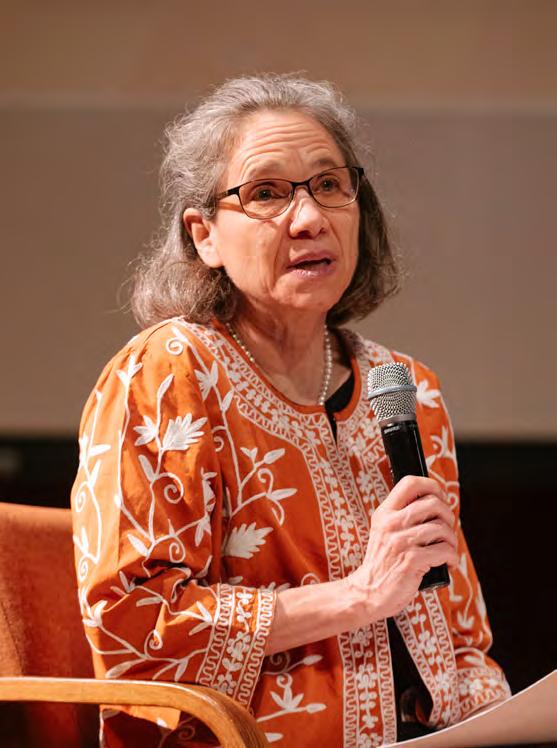
“Partnerships are essential to meeting our collective goals. Working together leads to critical research connections and transformative student experiences, and opens the doors of our University to talented scholars, students, and experts from around the world. To become the highest-impact research university in the world, we must collaborate both within our own institution and with international partners.”
Sharon Wood
Executive Vice President and Provost
Book Presentations
“Tras Las Tierras Comunales Indígenas: Los Libros de Hijuelas y el Liberalismo Decimonónico en Michoacán (Behind the Indigenous Communal Lands: Hijuelas' Books and 19th-Century Liberalism in Michoacán)”
Matthew Butler, Luis Arrioja, Romana Falcón, Moderator: Adela Pineda Franco
“Miró Rivera Architects: Building a New Arcadia”
Juan Miró, Fernanda Canales, Juan Ignacio del Cueto, Mario Schjetnan
“The Foundations of Glen Canyon Dam” Erika Bsumek
Félix Candela Museum: A New Life for the Old Stock Exchange
Elisa Drago, Juan Ignacio del Cueto, Dolores Martínez Orralde, Juan Miró
Water and the Environment in Mexico and the United States: Common Challenges, Shared Solutions
Jane Cohen, David Eaton, Norma Fowler, Isabel KeddyHector
Seminar
Behind the Indigenous Communal Lands: Territory in the Study of Indigenous Peoples
Hira de Gortari, Marta Martín Gabaldón, Martín Sánchez,
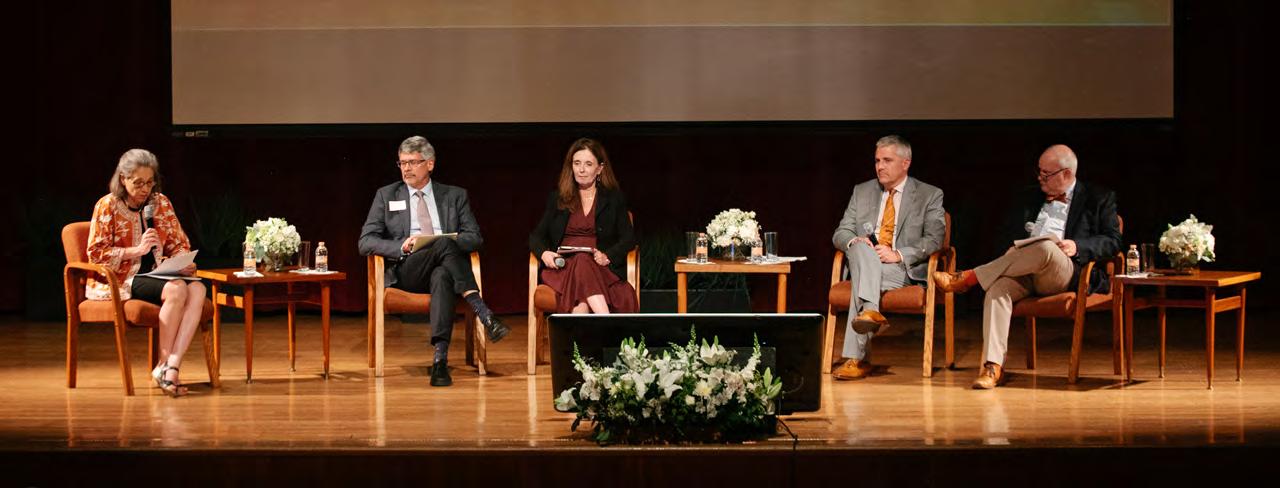
The University delegation to Mexico and leadership in FILUNI have propelled UT Austin’s engagement in Latin America to new levels, enhanced its visibility on a global stage, and reinvigorated the bond between the University and its largest concentration of alumni in Latin America.
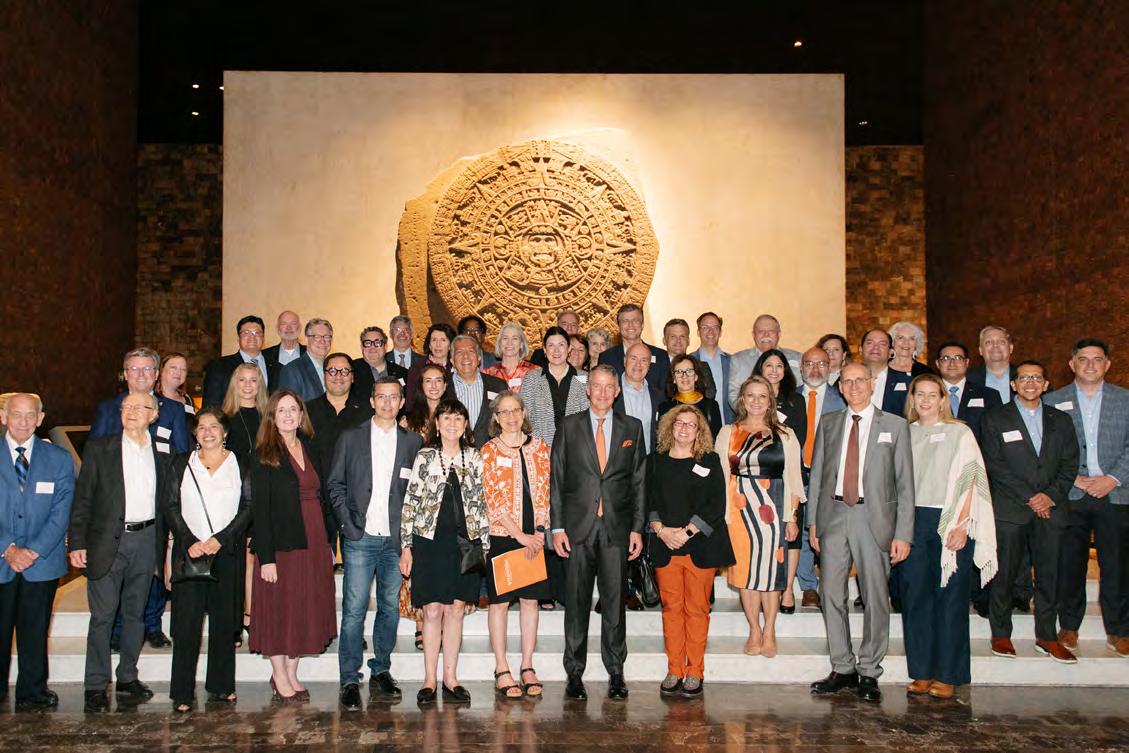
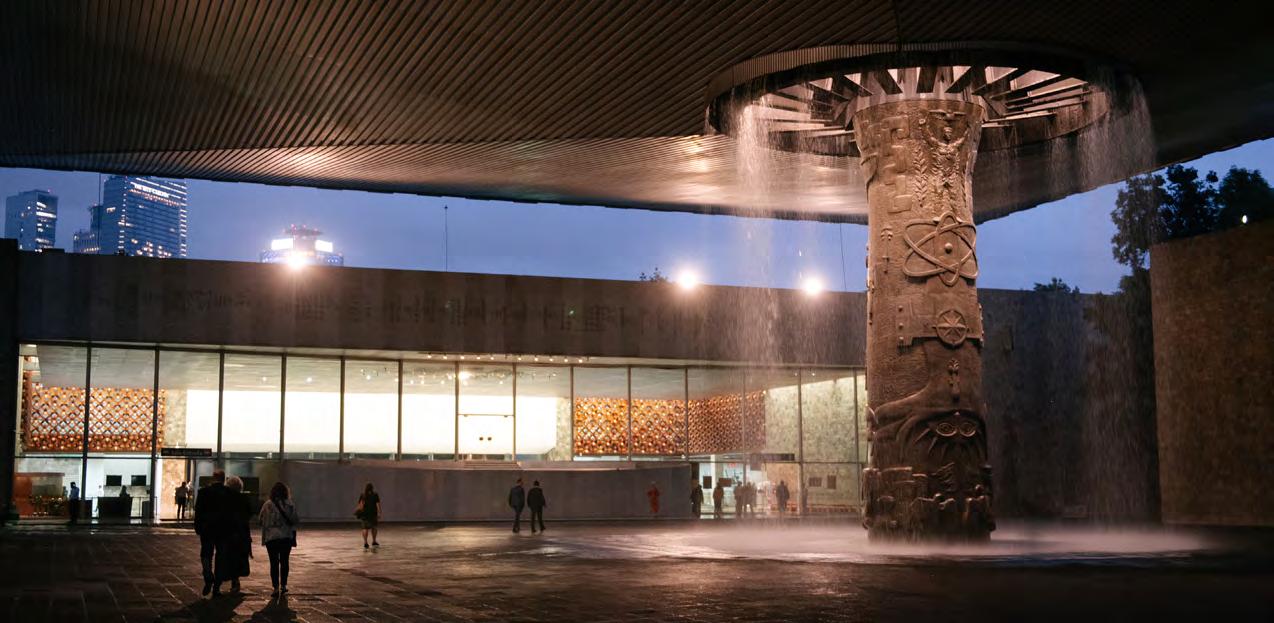
“Longhorns in Mexico City,” the alumni event held August 28 at the Museo Nacional de Antropología, was the first presidential event in Mexico City in six years, welcoming more than 215 alumni and friends to celebrate UT Austin’s leadership in FILUNI 2023 and its engagement in Mexico.
The program opened with a welcome from Antonio Barrera, vice president of the Texas Exes Mexico City Chapter, who introduced President Jay Hartzell.
In his first address to alumni in Mexico, President Hartzell emphasized the significance of the Mexican Longhorn community of more than 3,500 and the importance of the relationship between Mexico and the state of Texas. He applauded the Mexico Global Gateway and Texas Global’s tireless efforts in leading UT Austin’s participation as co-host and guest of honor at FILUNI 2023.
“With the UT Austin delegation here in force, I hope you get a sense of what [our alumni] and Mexico mean to us,” Hartzell said at the Texas Exes event. “We’re looking forward to finding out how we can further engage with our alumni base.”
President Hartzell provided an update on UT’s strategic goal of becoming the world’s highest-impact public research university, followed by a conversation about UT’s participation in FILUNI with Sonia Feigenbaum, senior vice provost for global engagement and chief international officer, and alumna Adriana Pacheco, executive committee member of UT’s International Board of Advisors.

“This event marked the beginning of a new chapter in UT Austin’s relationship with its alumni in Mexico. Together we will tackle challenges, advance discovery, inspire creative collaboration, attract top talent, and enhance the University’s reach and impact, all with the courage, strength, and pioneering spirit of the Texas Longhorn.”
Fiona Mazurenko Director, Global Initiatives and Alumni Relations, Texas Global
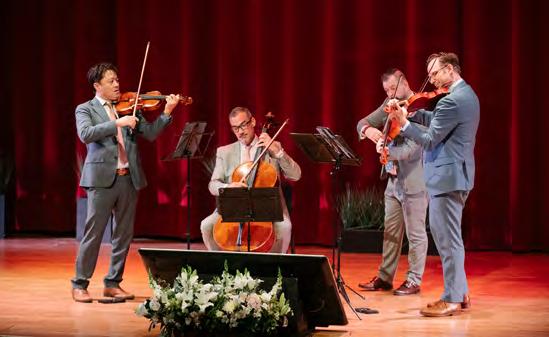
Executive Vice President and Provost Sharon Wood moderated a conversation between deans Roger Bonnecaze, Claudia Lucchinetti, David Vanden Bout, and Samuel Poloyac on the University’s unique strengths in health care, research, and innovation. To conclude the evening’s presentation, Chuck Harris, executive director of Texas Exes, introduced the Miró Quartet for a brief preview of their subsequent FILUNI concert.
To further sustain the University’s alumni engagement during FILUNI, Chuck Harris and Fiona Mazurenko, director of global initiatives and alumni relations, met with the leadership committee of the Texas Exes Mexico City Chapter to discuss their goals.
These events represent the culmination of two years of dedicated work by Texas Global and partners across campus to deepen and strengthen the University’s connection with its alumni in Mexico, particularly for major concentrations in Mexico City and Monterrey.
Sergio Alcocer helped shape FILUNI’s programming around seismic engineering. His session covered one of Mexico’s most pressing topics in a panel discussion titled “Earthquakes: The Relevance of Science, Engineering, and Architecture for Attaining Resilient Communities.” Panelists included architecture, engineering, and geophysics professors from UNAM, UT Austin, and other universities in Mexico.
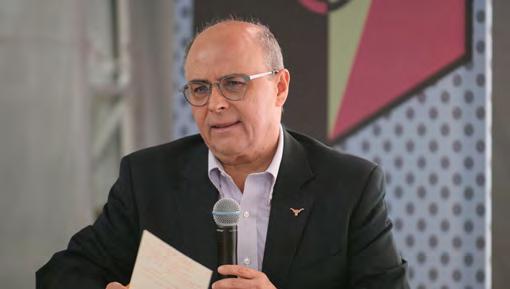
“If we want to prosper together, and we want to really make a difference to our countries, our societies, we have to work together.”
Sergio Manuel Alcocer Martínez de Castro (Ph.D. ’91) Research Professor, Institute of Engineering,

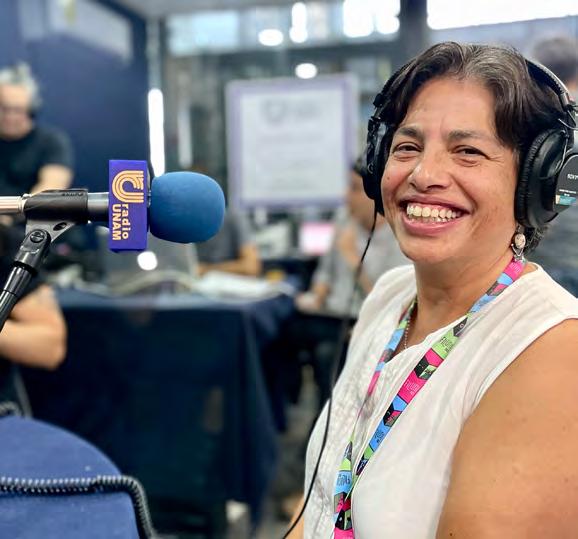
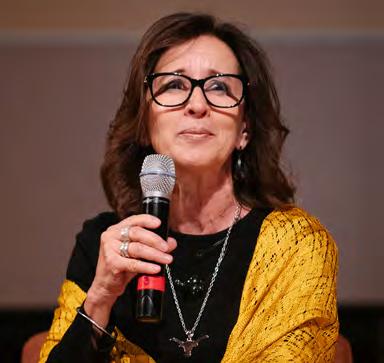
Adriana Pacheco is the founder of “Hablemos, Escritoras,” the first Spanish-language podcast and encyclopedia featuring women writers. Listen to her FILUNI podcast episode to hear her on-site interviews with several writers, editors, and translators from around the Americas.
“I have always taken great pride in being a Longhorn, but having the opportunity to participate in an event hosted in my home country was a reminder of the history and potential for our faculty to cultivate new projects with Mexico as a valued partner. The opportunity to record several podcasts for ‘Hablemos, Escritoras’ at Radio UNAM’s studio sparked meaningful dialogues. [I was able to] demonstrate that the knowledge and skills I acquired at the University gave me the tools to build a project which continues to grow. I left feeling invigorated and motivated to explore new opportunities for collaboration with both universities.”
Adriana Pacheco (Ph.D. ’19)
Member,
International Board of Advisors; Affiliate Research Fellow, LLILAS

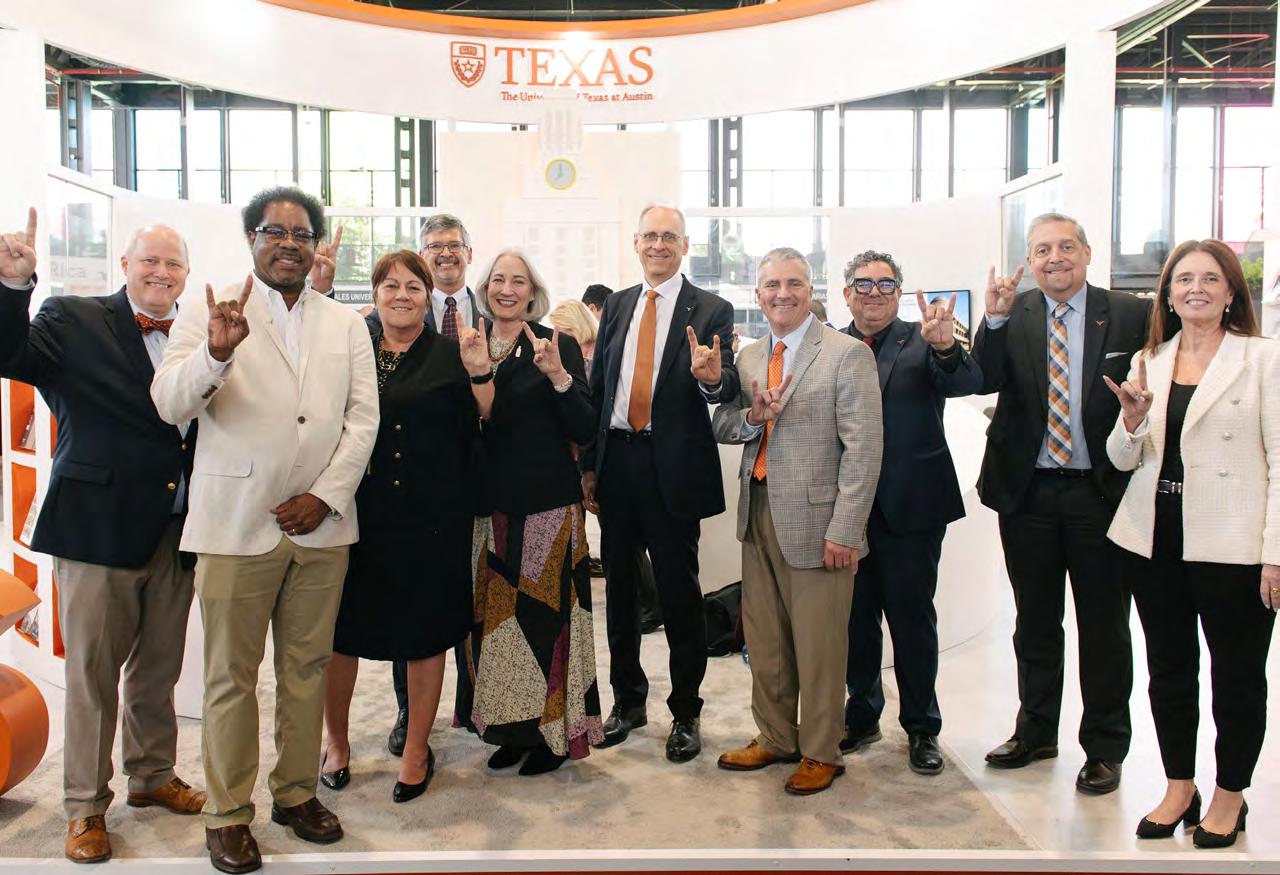
FILUNI ushered in a new chapter for global engagement at The University of Texas at Austin, particularly in Mexico. UT Austin’s leadership role in planning and executing the book festival and conference deepened our partnership with UNAM, highlighted our faculty’s research and creative endeavors, celebrated our collections and artists, and bolstered our relationships with alumni. FILUNI served as a springboard for engagement with institutions and partners across the Americas, giving UT Austin exposure to the more than 80 higher education institutions in attendance, thereby strengthening our brand globally.
Over the course of the conference, 19 University leaders gathered with their UNAM counterparts to discuss opportunities for expanded research and teaching collaborations. Together, they identified strategic opportunities that will benefit faculty, students, artists, and staff members at both institutions.
The FILUNI program’s direct alignment with the research pillars of UT Austin’s strategic plan ensured that our

pursuits will continue to advance University priorities. From research and faculty partnerships to master classes and student exchanges, FILUNI set the stage for new and enriched academic connections across disciplines and beyond borders. We are persuaded that the momentum precipitated by this historic institutional collaboration between UT Austin and UNAM will yield continued tangible outcomes in Mexico and the region for years to come.
“This is the first opportunity UNAM has had to receive such a large and important delegation from any country ... We both believe that together we can make a better world. Congratulations and thank you very much, President Hartzell.”
Enrique Graue Wiechers
Rector
Universidad Nacional Autónoma de México
“Academic institutions produce positive societal change by creating environments that bring together talented people who consider, explore, and develop ideas and solutions. FILUNI [provided] an opportunity for UT to lead these conversations on an international scale and present the groundbreaking works of our leading faculty members and scholars on pressing issues such as artificial intelligence, seismic engineering, and water and the environment.”
Jay Hartzell President
The University of Texas at Austin

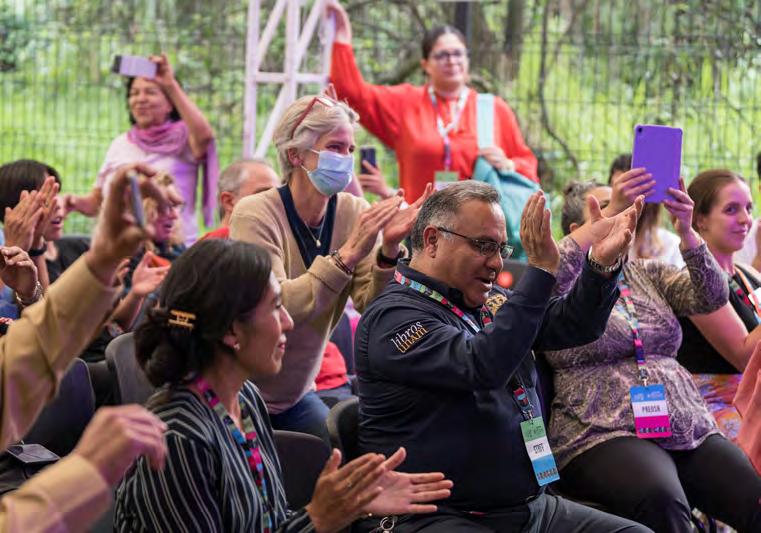
“The FILUNI gathering was impressive in its scope and in the opportunities for UT to showcase the faculty’s talents and interests. It was also extremely rewarding, given that so many of us had the opportunity to collaborate and learn about each other’s work. The effort was a stunning success on all fronts: As faculty, we had the opportunity to be part of Latin America’s most important book festival, but also the variety of programming and events made it a creative fusion of scholarship and performances, much like Austin’s annual SXSW festival.”
Ricardo Ainslie Professor, College of Education; Director, Mexico Center, LLILAS; Director of Research and Education, AMPATH Mexico, Dell Medical School
“The opportunity for the Steve Hicks School to participate in UT’s delegation to FILUNI served as the impetus for exploring meaningful collaborations with colleagues at UNAM. Our budding partnership presents research and curricular opportunities for our faculty and students that will help advance our school’s mission and have a positive impact on people’s lives, domestically and around the world.”
Allan Cole
Dean,
Steve Hicks School of Social Work
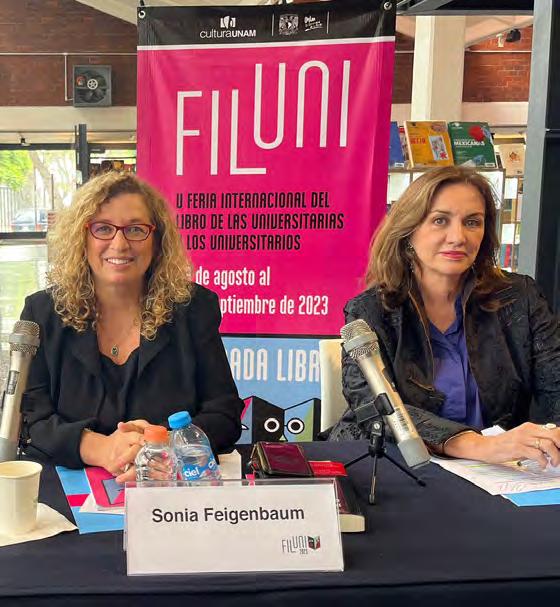
“Now that we have returned to campus, we will be consulting with faculty and academic leaders to expand upon UT Austin’s institutional engagement in Mexico. The excitement is palpable, and we look forward to what lies ahead.”
Sonia Feigenbaum Senior Vice Provost for Global Engagement
Chief
International Officer

“It is an honor to have UNAM welcome The University of Texas at Austin as this year’s guest of honor. We have a long history of engagement across disciplines, including student exchange, research collaboration, and the strengthening of our long-term strategic relationship.”
Rosa Beltran Coordinadora de Difusión Cultural Universidad Nacional Autónoma de México

212,000
876,000 TOTAL


429,000







235,000
IMPRESSIONS
librosunam




librosunam �� Welcome to #FILUNI 2023. The vibrant fair for university students. Inauguration ceremony with representatives of @unam_mx and the guest of honor, @utaustintx (see more)
August 29
20,000
likes, clicks, and shares on Libros UNAM FILUNI social media posts
librosunam
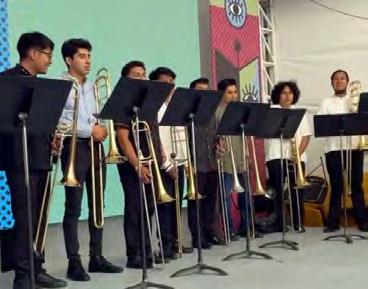
librosunam #Live Concert “A dos vientos”. Trombone choir by @unam_mx and @utaustintx /@utexasglobal under the direction of @marcia___med and Nathaniel Brickens (see more)
August 29

Libros UNAM @librosunam
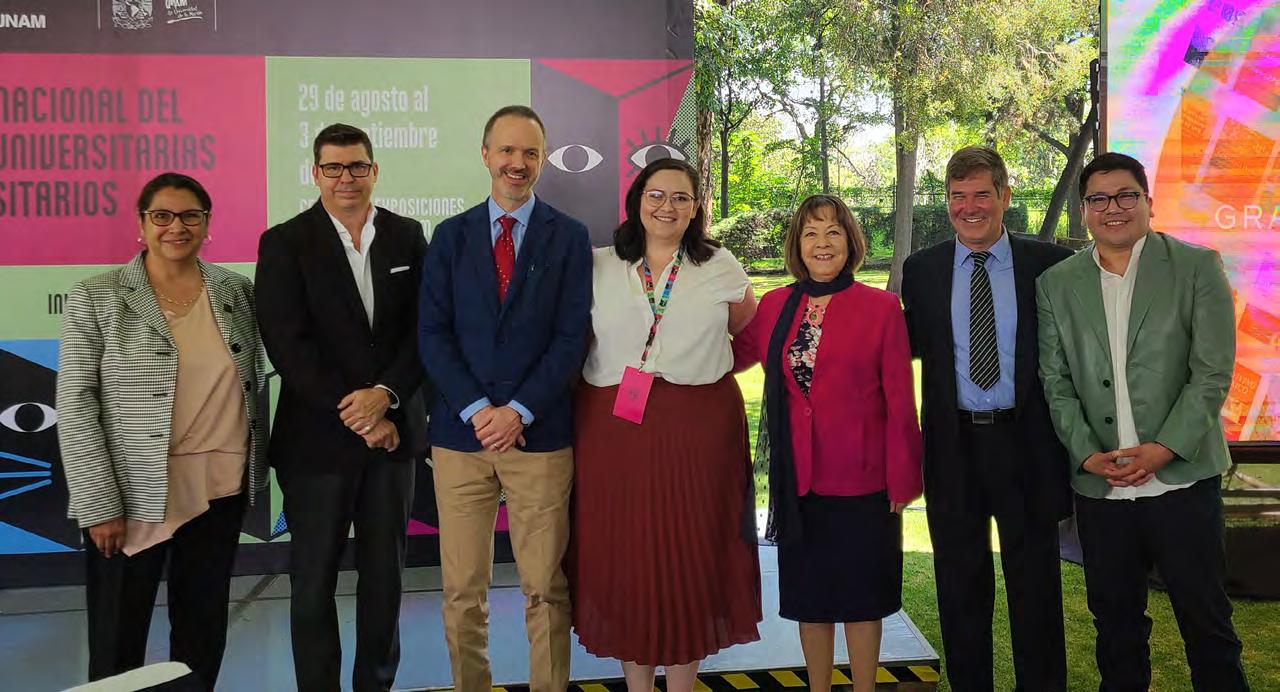
✨We are at the conference to present the details of #FILUNI! �� We are joined by Sonia Feigenbaum, Rosa Beltrán and Socorro Venegas... (see more)
August 16





Libros UNAM @librosunam
�� We closed the first day of #FILUNI with the @miroquartet concert. We listen to the “string quartet #3 in B flat, opus 64” in the Carlos Chávez Hall of the CCU. �� (see more)
August 29

Libros UNAM @librosunam
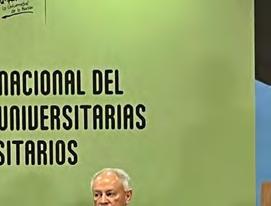
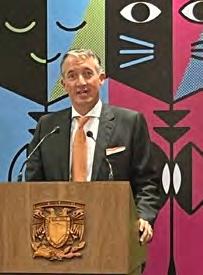
Jay Hartzell, president of @UTAustin, shares his excitement and happiness at being the first non-Spanish-speaking university to be the guest of honor at #FILUNI �� (see more)
August 28



Libros UNAM @librosunam
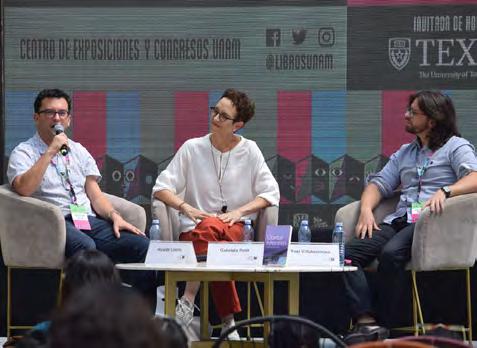
☺@polit_gabriela, Ricardo Castro and Yoel Villahermosa talk about creative writing and those who speak Spanish as a second language or those who consider it their mother tongue... (see more)
August 31


9,172 ENGAGEMENTS
183 POSTS

66 MENTIONS

jc.hartzell
159,911 IMPRESSIONS TOTAL
FILUNI-related content on Texas Global affiliated social media (July 27–October 15)



jc.hartzell Horns up from Mexico City! We’re here with deans and leaders from across @UTAustinTX for #FILUNI2023 (read more)
August 29


utaustintrombones




utaustintrombones Last weekend we travelled to Mexico City to perform at the 2023 FILUNI! (read more)
September 12

texasstevehicks
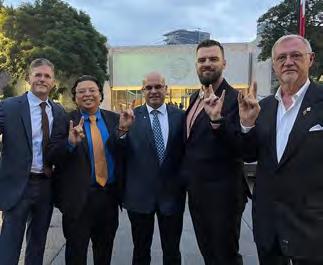
texasstevehicks Starting global opportunities with @unam_mx. Presenting keynote addresses on social work to international audiences. (read more)
August 31






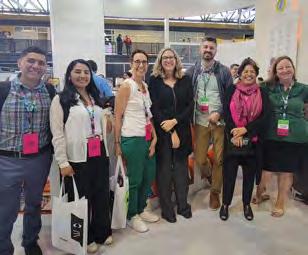
August
August 24

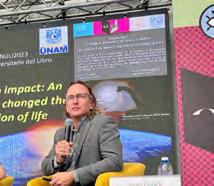
University of Texas Geophysics
@UTGeophysics
@UTGeophysics Chris Lowery and Sean Gulick were on stage with @UNAM_MX to talk about a very well known fossil-making event: the Chicxulub impact! (read more)
August 31




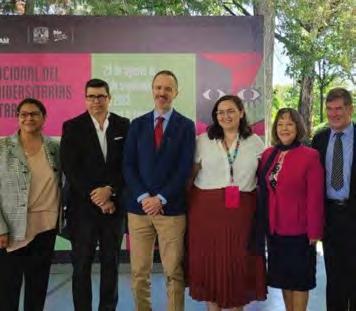
University of Texas Press
@UTexasPress
We shared some highlights from our publishing program at the #FILUNI2023 librarians luncheon yesterday! (read more)
August 31


Sharon Wood
@SharonLWood
Another busy day at #FILUNI2023! @TexasGlobal produced a beautiful booth to help us showcase our @UTAustin faculty authors. �� (read more)
August 30





Charles Martinez
@c_martinez
Looking forward to new collaborations with @UNAM_MX colleagues at #FILUNI2023 in Mexico City. (read more)
August 27






Sonia Feigenbaum
@SoniaFeigenbaum
Just left the largest gathering in history of @TexesExes outside of the U.S., with more than 300 at @mna_inah in Mexico City tonight! (read more)
August 28

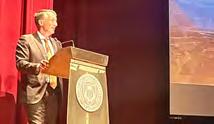



Jay Hartzell
@JCHartzell
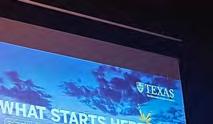
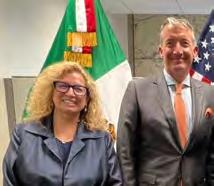
Kicking off #FILUNI2023 in Mexico City with @SoniaFeigenbaum, @SharonLWood and Minister Counselor for Public Diplomacy Silvio Gonzalez. (read more)
August 29


FILUNI TASK FORCE MEMBERS
Eloisa Acha, Cockrell School of Engineering
Sarayu Adeni, Dell Medical School
Ricardo Ainslie, College of Education
Teri Albrecht, Texas Global
Ria Bravo, School of Architecture
Valerie Cárdenas Dugal, Texas Global
Robert Devens, University of Texas Press
Ariel Dulitzky, School of Law
David Eaton, LBJ School of Public Affairs
Stephen Ennis, Harry Ransom Center
Raissa Fabregas, LBJ School of Public Affairs
Sonia Feigenbaum, Office of the Executive Vice President and Provost
Edgar Gómez-Cruz, School of Information
Celeste González de Bustamante, Moody College of Communication
Melissa Guy, Nettie Lee Benson Latin American Collection
Lorraine Haricombe, University of Texas Libraries
Anise Hawkins, College of Natural Sciences
Benjamin Ibarra-Sevilla, School of Architecture
Paloma Lopez, Texas Global
Angelica Lopez-Torres, University of Texas Press
Deirdre Mendez, McCombs School of Business
Tim Mercer, Dell Medical School
Raquel Monroe, College of Fine Arts
Claudia Mora, Jackson School of Geosciences
Jewel Mullen, Dell Medical School
Elizabeth Page, Harry Ransom Center
Ruben Parra-Cardona, Steve Hicks School of Social Work
Erika Payán Zanetti, Texas Global
Adela Pineda Franco, Teresa Lozano Long Institute of Latin American Studies
Victor Saenz, College of Education
Deborah Salvo, College of Education
Julie Zuniga, School of Nursing
Office of the President
Jay Hartzell
Office of the Executive
Vice President and Provost
Sharon Wood
Sonia Feigenbaum
Daniel Jaffe
Richard Reddick
Patrick Wiseman
Alumni
Sergio Alcocer
Adriana Pacheco
Cockrell School of Engineering
Roger Bonnecaze
Eloisa Acha
Hussein Alawieh
Satyam Kumar
José del R. Millán College of Education
Charles Martinez, Jr.
Ricardo Ainslie
Harold Kohl
Miguel Pinedo
Deborah Salvo
Pablo Montero Zamora College of Fine Arts
Ramón Rivera-Servera
Zachary Alling
Wyatt Andrews
Arsene Bien-Aime
Nathaniel Brickens
Lauren Casey-Clyde
Daniel Ching
William Fedkenheuer
Eric Garcia
Joshua Gindele
Jackson Hawk
Alvin Ho
John Largess
Dylan Dewitt Le
Simon Lohmann
Wuhyun Jo
Amber Minich
Robin Moore
Mercedes Alejandra Payán Ramírez
Billy Pickus
Brandon Reyes
Jared Sierra
Joshua Stout
Mason Wheeler
College of Liberal Arts
Adela Pineda Franco
Erika Bsumek
Matthew Butler
Paola Canova
Ricardo Jose Castro
Iyaxel Cojti Ren
Amy Cottengaim
Paloma Díaz
Karen Fingerman
Eduardo Henrique Gorobets Martins
Santiago Muñoz Arbeláez
Jermani Ojeda Ludena
Lauren Peña
Gabriela Polit Dueñas
Sergio Romero
Leandro Stoffels
Katherin Tairo Quispe
Yoel Villahermosa Serrano
Pilar Villanueva-Martínez
Roberto Young
College of Natural Sciences
David Vanden Bout
Norma Fowler
Andreas Matouschek
Melissa Taylor
College of Pharmacy
Samuel Poloyac
Dell Medical School
Claudia Lucchinetti
Brandon Altillo
Rebecca Cook
Tim Mercer
Claire Randall Selinger
Graduate School
Maria Juenger
Bret Anthony Johnston
María Gómez de León
Jackson School of Geosciences
Claudia Mora
Sean Gulick
Christopher Lowery
LBJ School of Public Affairs
David Eaton
Isabel Keddy-Hector
McCombs School of Business
Lillian Mills
Moody College of Communication
Rachel Davis Mersey
Celeste González de Bustamante
Miguel Alvarez
Rosental Alves
Laura Bright
PJ Raval
Ya’Ke Smith
Iliana Sosa
Stacey Sowards
Liliana Valenzuela
School of Architecture
Kory Bieg
Ria Bravo
Benjamin Ibarra-Sevilla
Juan Miró
Clay Odom
Juana Salcedo
School of Information
Eric Meyer
Andrew Dillon
Edgar Gómez-Cruz
R. David Lankes
Soo Young Rieh
School of Law
Lauren Fielder
Ariel Dulitzky
Jane Maslow Cohen
School of Nursing
Heather Cuevas
Oscar Franco-Rocha
Alexandra García
Bruce Machona
Julie Zuniga
Steve Hicks School of Social Work
Allan Cole
Ruben Parra-Cardona
René Gaitan
Texas Development
Megan Canney
David Livingston
Pedro Lozada
Texas Exes
Chuck Harris
Texas Global
Alex Briseño
Valerie Cárdenas Dugal
Caren George Paloma Lopez
Fiona Mazurenko
Darcy McGillicuddy
Thuy Nguyen
Erika Payán Zanetti
Bia Silva
Ellen Stader
University Events
Lee Bash
Sarah Miller
Vishanti Persad
Joshua Priedeman
University of Texas
Libraries
Melissa Guy
Daniel Arbino
Albert Palacios
Karina Sánchez
University of Texas Press
Robert Devens
Christopher Farmer
Angelica Lopez-Torres
Texas Global advances UT Austin’s academic mission by leading and coordinating the University’s international engagement efforts, fostering strategic partnerships on campus and abroad, supporting a community of impressive international students and scholars, and creating opportunities for students, faculty, and alumni to engage with peers and institutions around the world.
Visit global.utexas.edu to learn more about UT Austin’s global initiatives on campus and around the world.
@UTexasGlobal
@UTexasGlobal /school/utexasglobal
@utexasglobal
@TexasGlobal
