How VR and AR in Education Are Transforming the Way Students Learn
Introduction
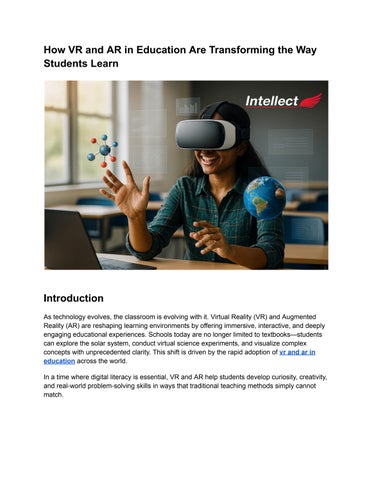
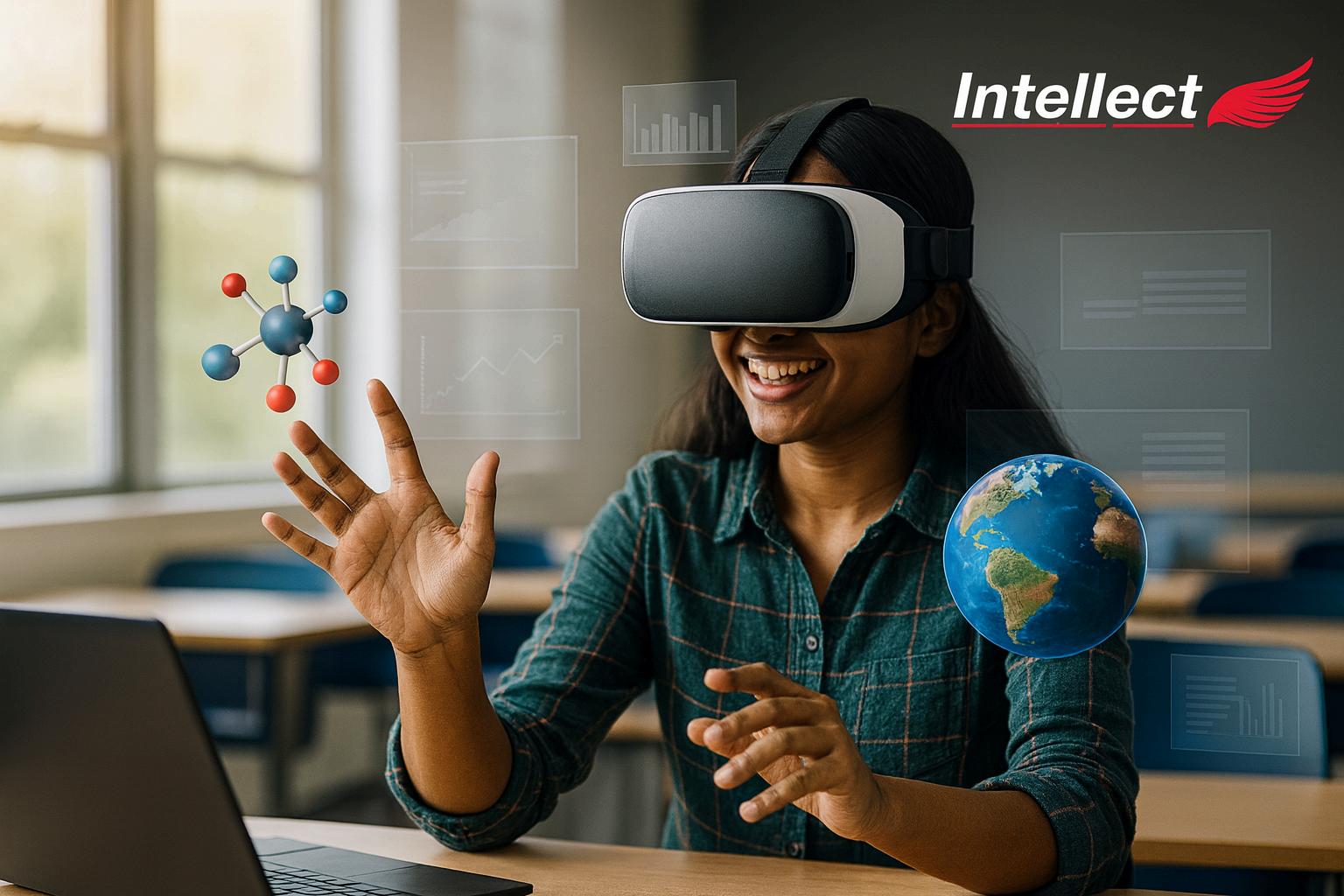
As technology evolves, the classroom is evolving with it Virtual Reality (VR) and Augmented Reality (AR) are reshaping learning environments by offering immersive, interactive, and deeply engaging educational experiences Schools today are no longer limited to textbooks students can explore the solar system, conduct virtual science experiments, and visualize complex concepts with unprecedented clarity. This shift is driven by the rapid adoption of vr and ar in education across the world
In a time where digital literacy is essential, VR and AR help students develop curiosity, creativity, and real-world problem-solving skills in ways that traditional teaching methods simply cannot match
What Makes VR and AR Powerful Learning Tools?
VR completely immerses students in a simulated environment, allowing them to experience lessons rather than just read about them
AR enhances the real world by overlaying digital objects, helping students visualize abstract concepts more easily
Together, these technologies transform learning into a multi-sensory experience.
VR Helps Students Understand Through Experience
● Explore historical events as if they were there
● Conduct science experiments safely
● Visit virtual museums, planets, and ecosystems
● Train in medical or engineering simulations
AR Helps Students Visualize What They Learn
● Interactive 3D models for biology, chemistry, and physics
● Real-time overlays for math and geometry
● Live virtual annotations during lessons
● Enhanced storytelling and creativity projects
These experiences make complex concepts simpler, clearer, and far more memorable
The Benefits of AR and VR in Education
The benefits of ar and vr in education extend far beyond engagement They fundamentally change how students absorb information.
1. Improved Understanding of Difficult Concepts
Students grasp challenging topics faster when they can see and interact with 3D simulations
Immersive environments hold attention better than traditional lectures
3. Enhanced Retention and Memory
Studies show that interactive experiences lead to longer-lasting knowledge retention
4. Safe Experimentation and Exploration
VR allows students to perform dangerous or impossible experiments in a safe, virtual setting
5. Personalized and Inclusive Learning
VR and AR adapt to different learning styles visual, auditory, or kinesthetic making learning accessible to everyone
Why Schools Are Adopting VR and AR Today
Educators are searching for modern ways to prepare students for future careers in fields such as robotics, medicine, aerospace, architecture, and data science. VR and AR provide real-world exposure, build technical confidence, and encourage curiosity-driven learning
Schools implementing vr and ar in education report:
● Better classroom participation
● Stronger student motivation
● Improved practical understanding
● More collaborative problem-solving
As industries become more technologically advanced, students with early exposure to immersive technologies gain a significant advantage.